Aviation News
-
U.S. Marine Corps Cpl. Cheyanne Magana, an aviation ordnance technician with Marine Fighter Attack Squadron (VMFA) 242, 31st Marine Expeditionary Unit, watches over ordnance during an ordnance load as a part of Talisman Sabre 25, aboard the amphibious assault ship USS America (LHA 6), in the Coral Sea, July 14, 2025. Marines with VMFA 242 arm F-35Bs with multi-discipline strike capabilities to support combined-joint all domain operations in key maritime terrain. Talisman Sabre is the largest bilateral military exercise between Australia and the United States advancing a free and open Indo-Pacific by strengthening relationships and interoperability among key allies and partners, while enhancing our collective capabilities to respond to a wide array of potential security concerns. Magana is a native of Nevada. (U.S. Marine Corps photo by Sgt. Peter Rawlins)

A U.S. Air Force HH-60W Jolly Green II assigned to the 106th Rescue Wing lands during exercise Resolute Force Pacific (REFORPAC) 2025 at Misawa Air Base, Japan, July 15, 2025. The 106th Rescue Wing is postured as a real-world rescue asset supporting REFORPAC, part of a first-in-a-generation Department-Level Exercise series designed to build capabilities and strengthen a more combat-credible deterrent force in contested, dynamic environments. (U.S. Air Force photo by Senior Airman Patrick Boyle)
A U.S. Air Force B-1B Lancer assigned to the 37th Bomb Squadron, Ellsworth Air Force Base, S.D., is parked at Royal Air Force Fairford, England, July 15, 2025. The Lancer is slated to participate in the Royal International Air Tattoo (July 18-20, 2025), which demonstrates U.S.-NATO-partner collaborative actions to strengthen strong and strategic relationships. (U.S. Air Force photo by Tech. Sgt. Robert M. Trujillo)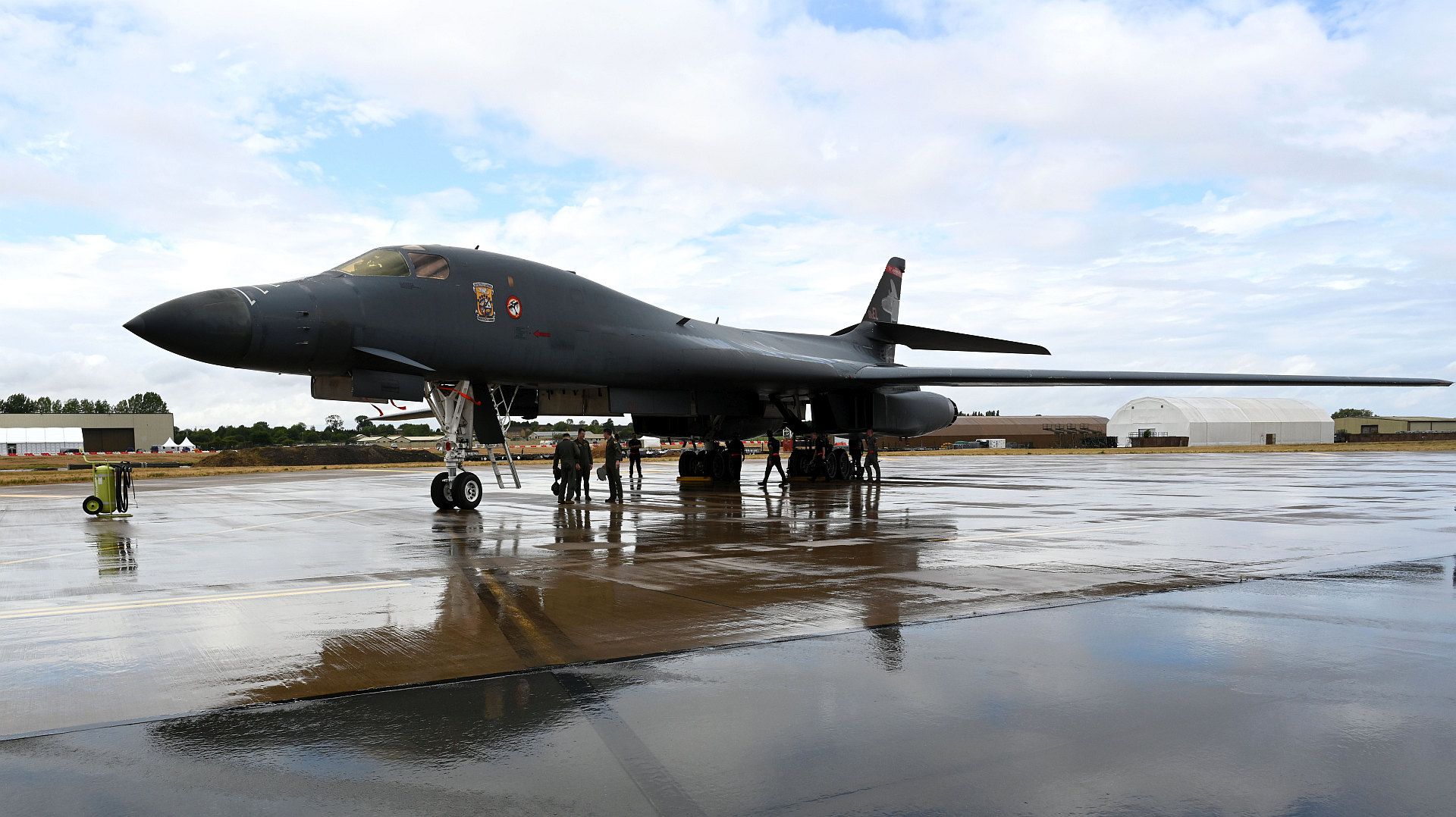
Munich, Germany / San Diego, USA 16 July 2025 – Airbus Defence and Space and US based Kratos Defense and Security Solutions (NASDAQ: KTOS) have entered into a partnership based on the Kratos XQ-58A Valkyrie, a flight-proven UCCA (uncrewed collaborative combat aircraft), which will be equipped with an Airbus made mission system, combat ready for the German Air Force by 2029.
The XQ-58A is a low observable, rail-launched drone with a maximum take-off weight of three tons. It is designed to deliver kinetic and non-kinetic effects, either in autonomous missions or employed with teaming capable fighter jets. The prototype has been in development for years and is able to travel 3,000 miles at an altitude of up to 45,000 ft.
Airbus‘ mission system, through its platform-agnostic system architecture, is designed to integrate seamlessly into the Valkyrie and other existing and future platforms in the growing ecosystem of crewed and uncrewed platforms.
“In the given disruptive geopolitical context, our customers have expressed an urgent demand for both attritable and non-attritable Collaborative Combat Aircraft. The collaboration of Kratos and Airbus, based on an existing and proven UAS platform and featuring a sovereign multi-platform mission system, will deliver crucial capabilities for our warfighters in Europe before the end of the decade. This partnership will help to accelerate Europe’s ability to defend itself while fostering NATO’s transatlantic ties,” said Mike Schoellhorn, CEO of Airbus Defence and Space.
“We have designed the Valkyrie system to be an affordable and formidable CCA paired in collaborative fashion with manned aircraft, a team of uncrewed aircraft, or a mix of both. Based on Valkyrie’s proven flight capability, first demonstrated in 2019, and the many mission systems, autonomy systems, and mission scenarios tested with the system over time, we’re excited about our partnership with Airbus which will result again in a first to market Valkyrie variant, now “tuned” for the European mission,” said Eric DeMarco, CEO of Kratos.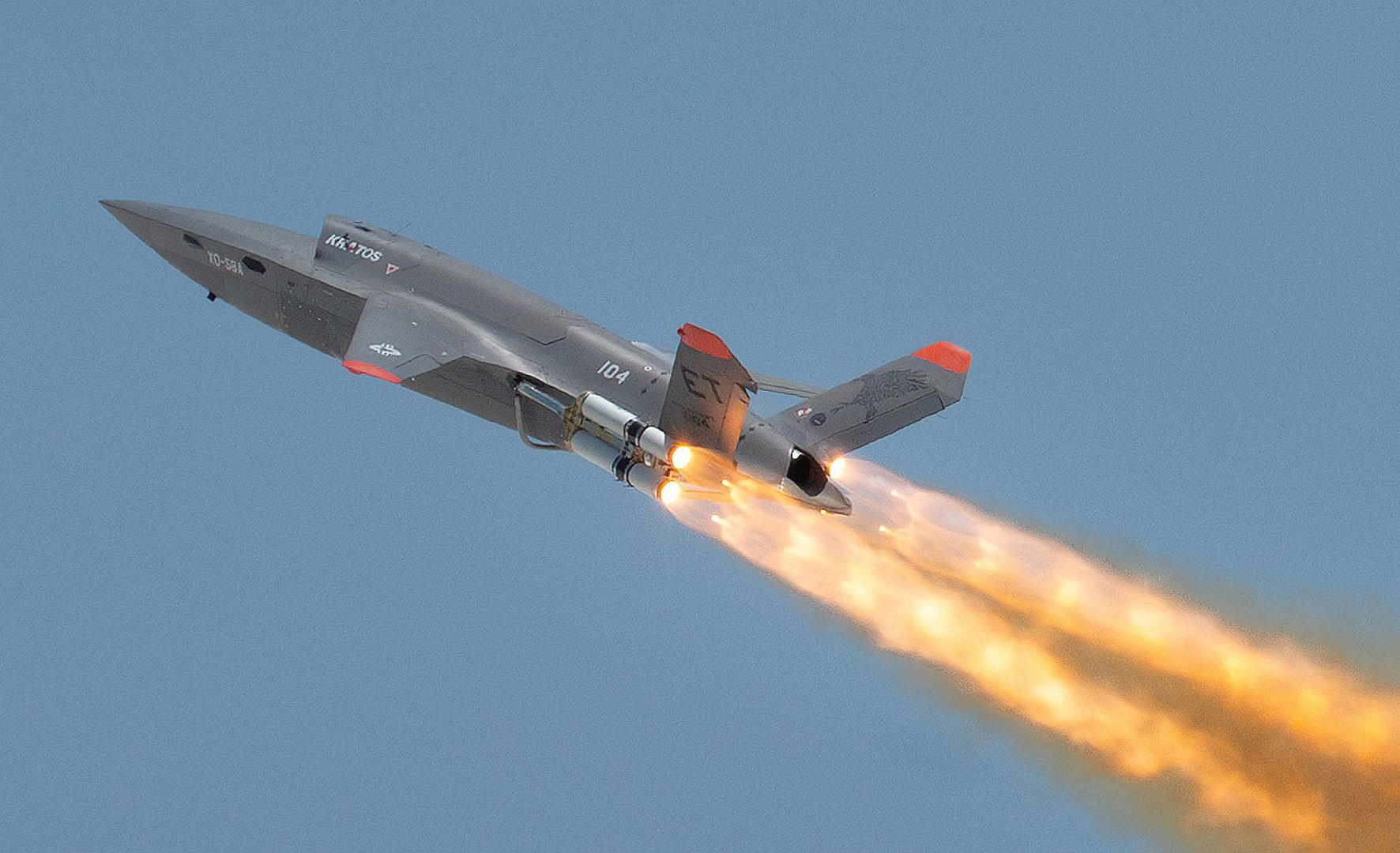
Last week, Royal Canadian Air Force CF-18 Hornet fighter jets operated out of Alaska with our partners in the Alaskan NORAD Region. Flying alongside United States Air Force F-16s with support from USAF KC-135 air-to-air refuellers and an E-3 Sentry, Canadian and American forces worked shoulder-to-shoulder to integrate our forces, practice operational procedures, and demonstrate our ability to defend both countries in the Arctic through the NORAD partnership.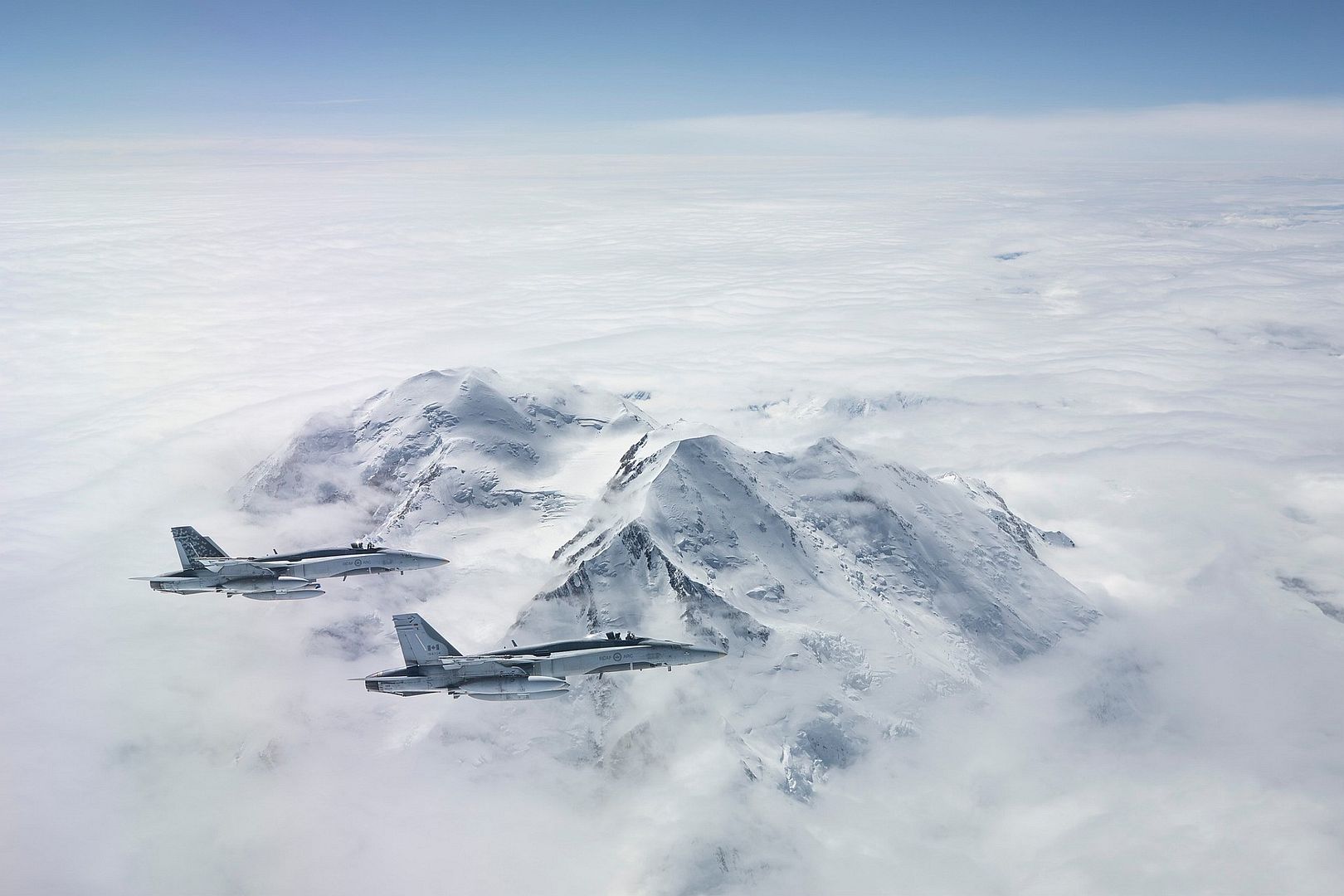
With support from a RCAF CC-150 Polaris air-to-air refueller, the CF-18 Hornets travelled nearly 7,000 kilometres from 3 Wing Bagotville, Que. for this exercise, further underscoring the capability and proficiency needed to train for and execute the NORAD mission over our two vast nations.
(Photos courtesy of the RCAF)
-
An E-2D Hawkeye, attached to Air Test and Evaluation Squadron (VX) 1, takes off at Naval Air Station Patuxent, River, Md., July 17, 2024. VX-1 is located at Naval Air Station Patuxent River and is under Commander, Naval Air Force Atlantic. The principal mission of VX-1 is to test and evaluate airborne anti-submarine warfare, maritime anti-surface warfare, and airborne command and control platforms as well as support systems, equipment and materials in an operational environment. (U.S. Navy photo by Mass Communication Specialist 2nd Class (SW) John T. Jarrett)

An F35C Lightning II, attached to Strike Fighter Squadron (VFA) 147, lands on the flight deck of Nimitz-class aircraft carrier USS George Washington (CVN 73) while underway in the Timor Sea in support of Talisman Sabre 2025, July 15, 2025. Talisman Sabre is the largest bilateral military exercise between Australia and the United States advancing a free and open Indo-Pacific by strengthening relationships and interoperability among key allies and partners, while enhancing our collective capabilities to respond to a wide array of potential security concerns. (U.S. Navy photo by Mass Communication Specialist Seaman Ana Souza Young)
A U.S. Air Force KC-46 Pegasus aircraft takes off at Andersen Air Force Base, Guam, in support of the U.S. Air Force’s 2025 Department-Level Exercise series, July 12, 2025. The DLE strengthens and demonstrates the U.S. Air Force’s ability to reach theater at speed and scale, sustain operations, and rapidly pivot to any theater of operation at a moment’s notice, while maintaining the strategic initiative. The DLE series encompasses all branches of the Department of Defense, along with Allies and partners, employing more than 400 joint and coalition aircraft and more than 12,000 personnel across more than 50 locations across 3,000 miles. (U.S. Air Force photo by Senior Airman Jade M. Caldwell)
U.S. Air Force Maj. Taylor Hiester, F-16 Viper Demonstration Team commander and pilot, performs aerial maneuvers during F-AIR 2025, the Colombia Feria Aeronáutica Internacional, at the José María Córdova International Airport in Rionegro, Antioquia, Colombia, July 11, 2025. The U.S. Air Force’s participation in international airshows, like F-AIR, builds upon the United States' longstanding cooperation with its international allies and partners, offering opportunities to showcase air and space capabilities abroad. (U.S. Air Force photo by Staff Sgt. Ariel O’Shea)
A U.S. Air Force F-22 Raptor assigned to the 90th Fighter Generation Squadron takes flight to support exercise Resolute Force Pacific 2025 at Joint Base Elmendorf-Richardson, Alaska, July 13, 2025. REFORPAC is part of the first-in-a-generation Department-Level-Exercise series, a new way of conducting operations in a contested, dynamic environment to build capabilities making a stronger, deterrent force. (U.S. Air Force photo by Airman 1st Class Moises Vasquez)
An F-15C Eagle assigned to the California Air National Guard's 144th Fighter Wing taxis the runway at Portland Air National Guard Base, Ore., July 9, 2025. The 144th is spending two weeks training alongside the 142nd Wing's F-15Cs and EXs. (U.S. Air National Guard photo by Master Sgt. Steph Sawyer)
Tokyo, Japan, 17 July 2025 – Japan’s Nagoya City Fire Bureau placed an order for an Airbus H160. The helicopter will be deployed for fire fighting, search and rescue missions, as well as disaster response operations, including reconnaissance of affected areas.
“We are honoured that our long-standing customer Nagoya City Fire Bureau has selected the H160 for their vital missions. This game-changing helicopter redefines safety, performance and design — ideally suited for demanding work of the Bureau,” said Jean-Luc Alfonsi, Managing Director of Airbus Helicopters in Japan. “We’re confident it will make a meaningful impact, and we remain fully committed to supporting their operations and deepening our partnership.”
The new H160 will be configured for search and rescue, and aerial firefighting missions, and can be installed with either a firefighting bucket or a belly-mounted water tank, enhancing its capability to support ground crew in wildfire suppression.
The Nagoya City Fire Bureau has been flying since 1973, when it introduced its first helicopter, an Allouette III, to protect and serve the community from the air. Today, it operates two AS365N3. With the newly ordered H160, one of the current helicopters will be retired, ushering a new era of aerial support for the city.
The H160 is one of the world’s most technologically advanced helicopters, designed and built to deliver the highest levels of operational safety while providing unmatched comfort for rotorcraft in its class. Capable of performing wide-ranging missions including law enforcement, offshore transportation, search and rescue, private and business aviation, and emergency medical services, the H160 has entered into service in Japan, Brazil, Canada, France, Malaysia, Philippines, Saudi Arabia, U.K., U.S. and many other European countries.
Airbus Helicopters has been a trusted partner in Japan for 65 years, with about 380 helicopters supporting a wide range of missions across the country. The innovative H160 is gaining momentum, with three units currently flying — two operated for law enforcement, and one for news gathering missions. This new H160 order is set to join the growing Japan fleet, reflecting the growing confidence in the helicopter’s versatility and performance among Japanese operators.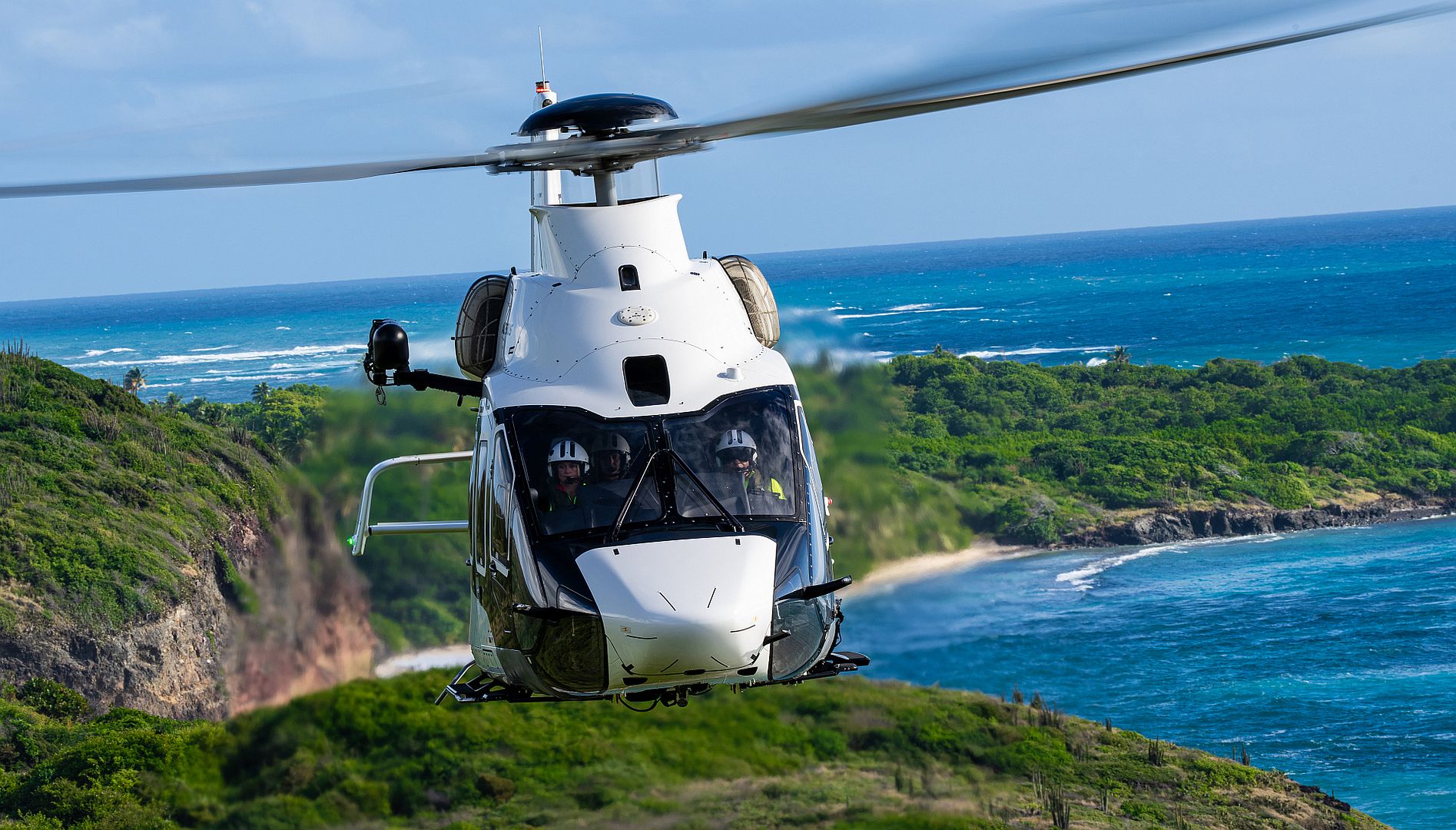
Industry partners, BAE Systems, Rolls-Royce and MBDA UK, together with the Ministry of Defence, have revealed the design of the UK’s flagship Combat Air Flying Demonstrator, as the aircraft reaches a major milestone, with two thirds of its structural weight now in manufacturing.
The piloted supersonic aircraft is the first of its kind to be developed in the UK in 40 years. The aircraft’s main structure, wings and tail fins are all taking shape using pioneering robotic and digital manufacturing and assembly technologies at BAE Systems’ sites in Lancashire, signifying the advanced stages of its development.
Designed to test a wide range of new technologies, including the integration of stealth compatible features, the Combat Air Flying Demonstrator is a crucial part of the work to develop manufacturing processes and de-risk the next generation combat aircraft that will be delivered through the Global Combat Air Programme with the UK, Italy and Japan.
By applying advanced new solutions and digital manufacturing technologies, such as 3D printing, cobotics, digital twins, model-based systems engineering and virtual simulation, BAE Systems engineers are at the forefront of the revolution in aircraft design and manufacture.
Test pilots from BAE Systems, Rolls-Royce and the Royal Air Force (RAF) have now flown more than 300 hours of the Combat Air Flying Demonstrator in a bespoke simulator. Using simulated flight trials, pilots and engineers can rapidly assess the flight control systems during more complex flight manoeuvres, capturing crucial data about how the jet will handle and perform, years before its first flight.
Collectively, this important work aims to dramatically reduce the time and costs involved in producing military jets, while maintaining the sovereign design, engineering and manufacturing capabilities needed to keep the UK at the forefront of global aerospace innovation.
For the first time, BAE Systems has launched a precision munition from a multi-rotor Uncrewed Air System (UAS) and successfully destroyed both air and ground targets during trials in the US.
This marks a major step forward in the development of a low-cost strike and counter UAS option for frontline troops.
The launch of munitions upgraded with BAE Systems’ APKWS® laser-guidance kit from a TRV-150, a modified version of the BAE Systems’ Malloy T-150, marks the first air to air engagement of an APKWS guidance kit from a UAS, building on its decades-long presence on combat aircraft including the F-16, F-18 and Apache helicopter.
The successful trials demonstrate the multi-role capability of the platform and are a significant boost to showcasing how advancements in drone technologies can be harnessed to offer militaries highly effective and affordable tactical options to tackle both emerging UAS threats and more traditional targets.
The tests took place at US Army Dugway Proving Ground in Utah using a modified version of BAE Systems’ Malloy T-150 adapted to meet the US Marine Corps logistics requirements known as the SURVICE TRV-150.
BAE Systems engineers in the UK provided expert weapons integration knowledge and experience to integrate the APKWS guidance kit. It transforms unguided rockets into precision-guided munitions and provides a low-cost, highly effective solution that has multi-role capabilities. With its integration onto the TRV-150 the tests exceeded expectations in all aspects, including platform performance and target engagements, with zero misses.
HIGH DESERT TEST RANGE, Calif. – 16 July 2025 – AFRL’s XQ-67A, a second-generation Autonomous Collaborative Platform (ACP), successfully demonstrated integration of government reference autonomy during a recent flight test in the California High Desert.
The flight showcased the integration of government-owned autonomy on the XQ-67A, paired with active tactical datalink communications, to enable dynamic mission execution and real-time coordination with both crewed and uncrewed systems. The event marked a major milestone in advancing scalable, modular autonomy and seamless interoperable crewed-uncrewed teaming (C/U-T).
“This successful test underscores the Department’s commitment to fielding autonomous systems that can integrate into joint operations using existing tactical networks,” said Mike Atwood, Vice President of Advanced Programs for General Atomics Aeronautical Systems, Inc. (GA-ASI). “Government owned autonomy on the XQ-67A is a concrete step toward deployable, combat-relevant autonomy that works with and alongside crewed platforms.”
During the flight, the XQ-67A executed test points to validate the integration of mission systems on the aircraft, including autonomy, mission computing, networking, power and thermal management, and datalinks. Through a tactical datalink, the aircraft received real-time updates and situational data, giving it the ability to coordinate seamlessly with crewed aircraft and other autonomous systems in the future.
The XQ-67A platform, built by GA-ASI under contract with AFRL, plays a critical role in exploring the platform sharing approach to achieving scalable affordable mass. Its performance in this flight test advances the Air Force’s vision for an integrated autonomous force that can support and augment current and future crewed platforms.
The successful demonstration in the high desert highlights the promise of combining government-owned autonomy with proven tactical communications infrastructure. This approach accelerates technology transition and supports AFRL learning objectives regarding the integration of mission systems within the context of the highly relevant XQ-67A testbed.
About GA-ASI
General Atomics Aeronautical Systems, Inc. is the world’s foremost builder of Unmanned Aircraft Systems (UAS). Logging more than 8 million flight hours, the Predator® line of UAS has flown for over 30 years and includes MQ-9A Reaper®, MQ-1C Gray Eagle®, MQ-20 Avenger®, and MQ-9B SkyGuardian®/SeaGuardian®. The company is dedicated to providing long-endurance, multi-mission solutions that deliver persistent situational awareness and rapid strike.
For more information, visit www.ga-asi.com
TalismanSabre25 is in full swing across a vast training ground in Australia.
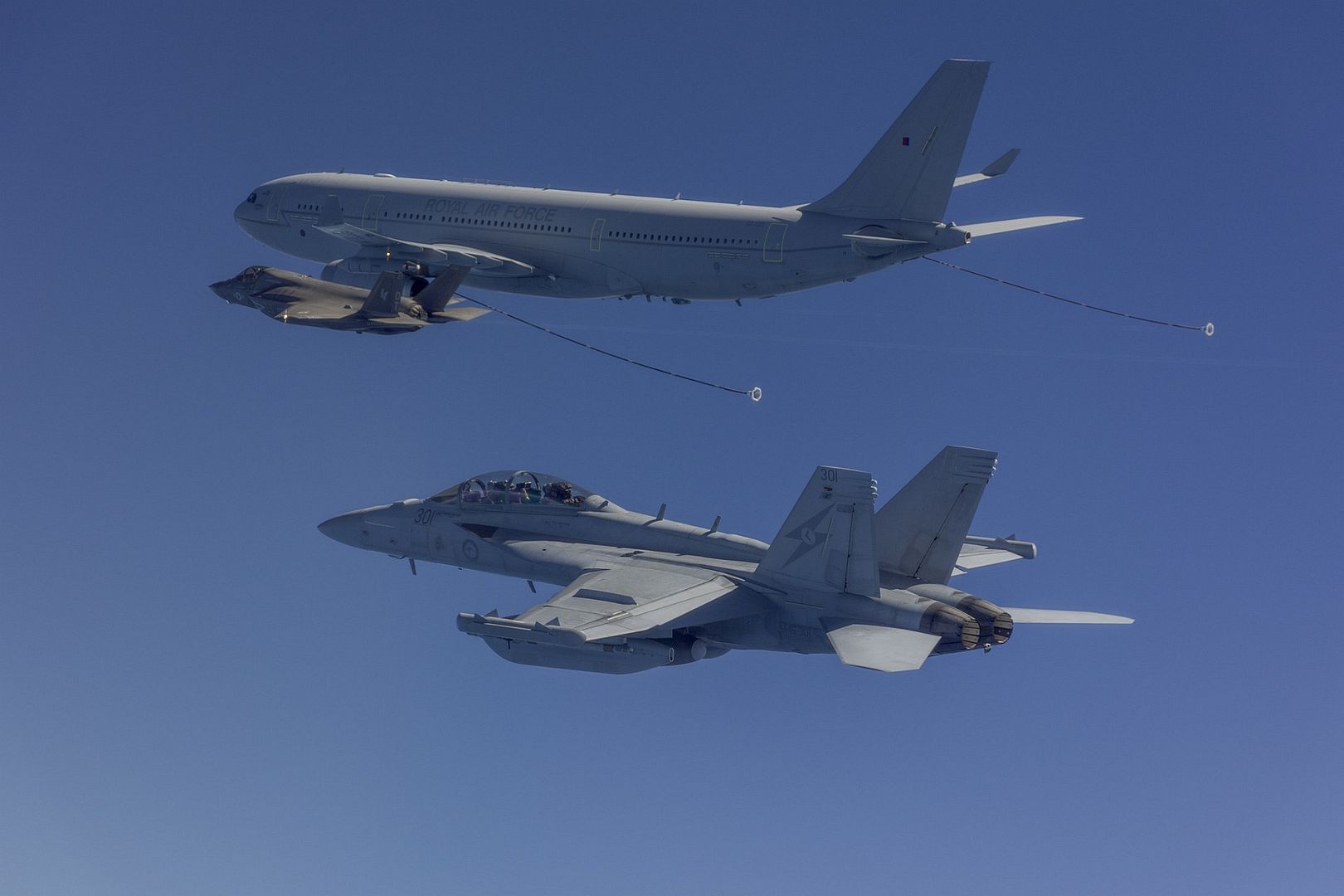
Spanning from New South Wales to the Northern Territory and even Papua New Guinea, Australia's closest neighbour!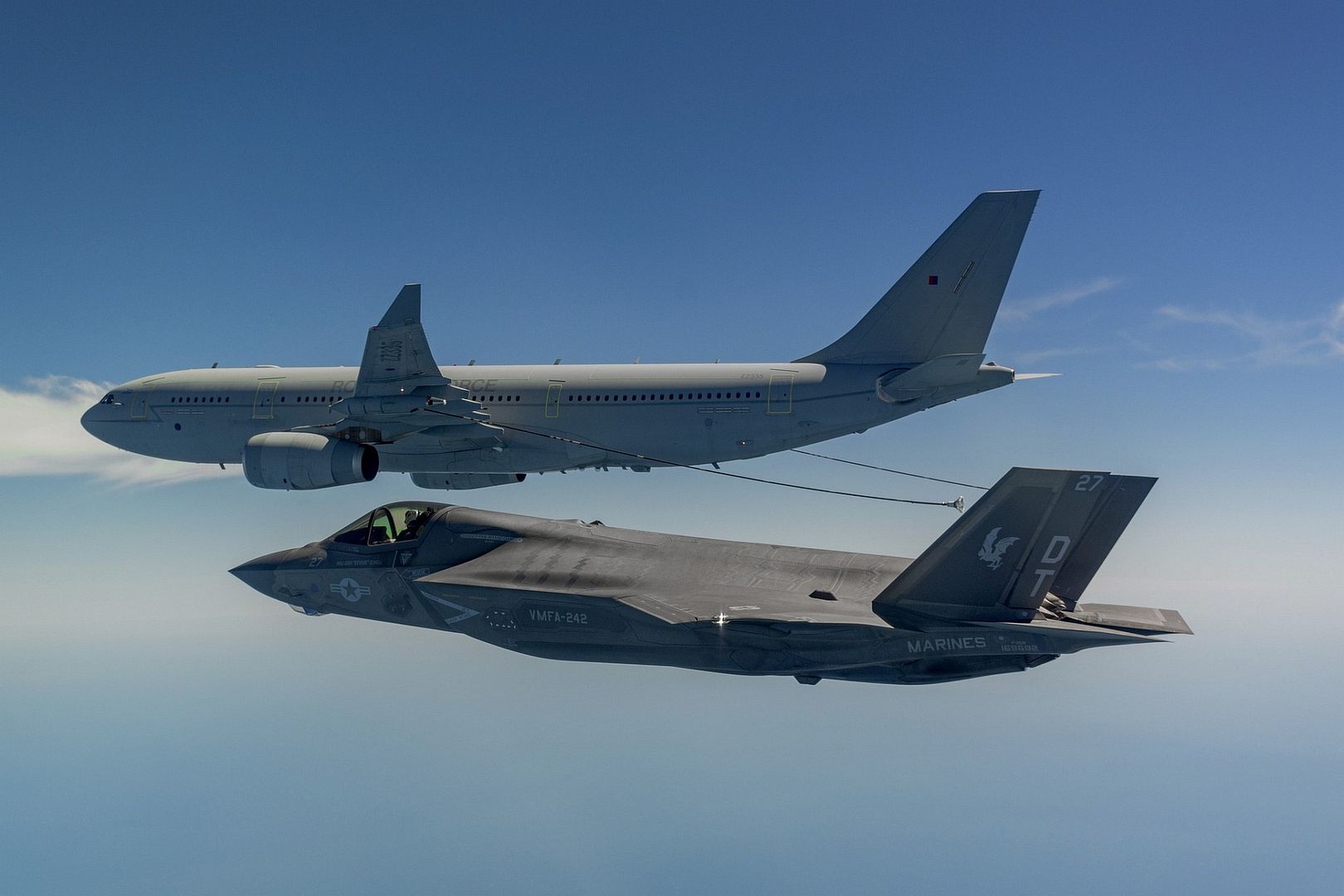

With more than 35,000 military personnel from 19 nations involved, it’s all about teamwork and the RAF stand beside our Indo Pac allies ready to #FlyandFight.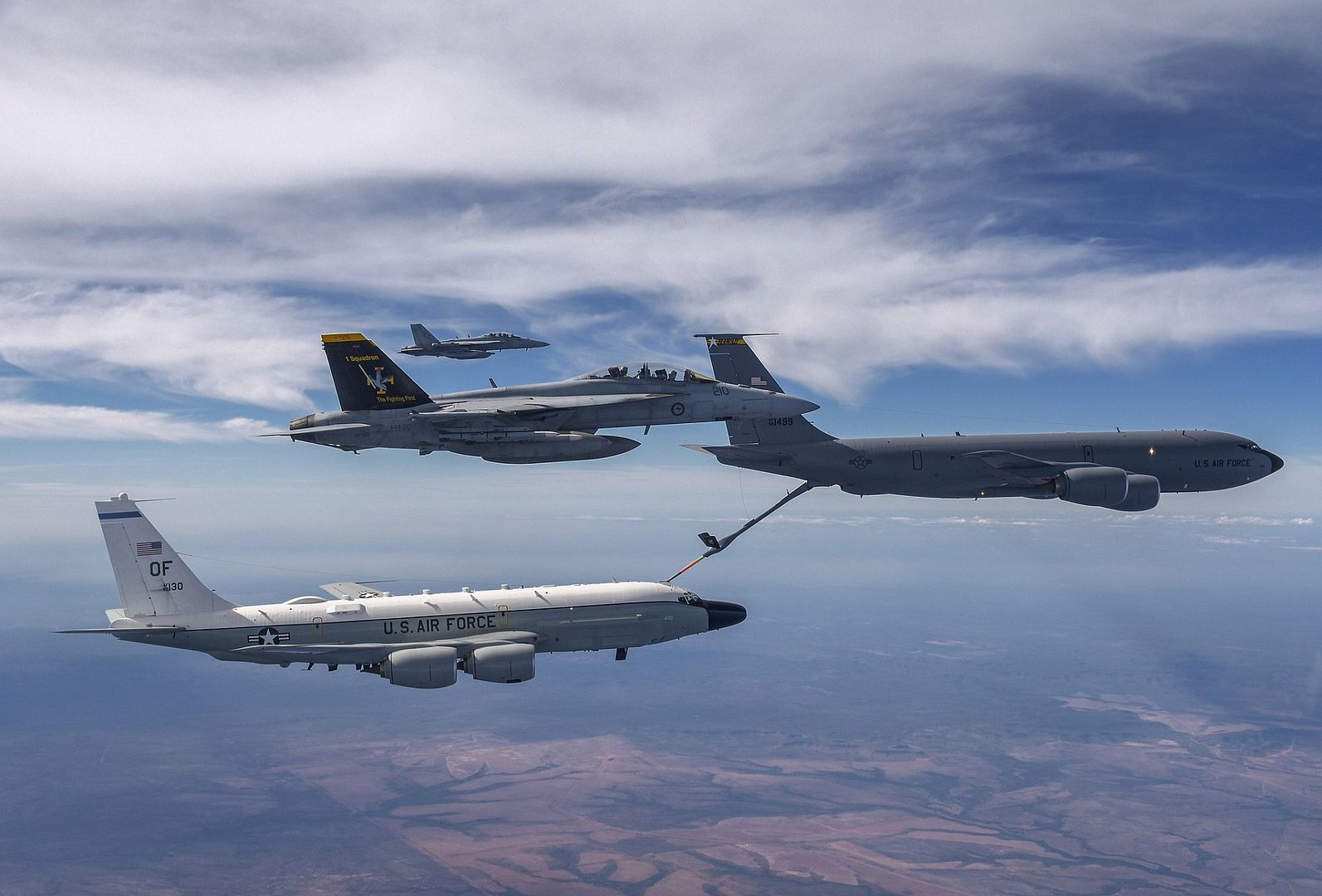

(Photos courtesy of the RAF and RAAF)

-
A U.S. Air Force C-5M Super Galaxy aircraft assigned to the 436th Airlift Wing taxis in during exercise Resolute Force Pacific (REFORPAC) 2025 at Misawa Air Base, Japan, July 16, 2025. REFORPAC is part of the first-in-a-generation Department-Level Exercise series, employing more than 400 Joint and coalition aircraft and more than 12,000 members at more than 50 locations across 3,000 miles. (U.S. Air Force photo by Senior Airman Patrick Boyle)

A U.S. Air Force F-15EX Eagle II, assigned to 85th Test and Evaluation Squadron, Eglin Air Force Base, Florida, lands at Kadena Air Base, Japan, July 16, 2025. The F-15EX plays a critical role in modern warfare, providing substantial additional capacity for long-range fires, sensors, and electronic warfare in contested areas, complementing 5th generation fighters. (U.S. Air Force photos by Airman Nathaniel Jackson)

CORAL SEA (July 16, 2025) Two U.S. Marine Corps F-35B Lightning II aircraft assigned to Marine Fighter Attack Squadron (VMFA) 242, 31st Marine Expeditionary Unit, prepare to land on the flight deck of the forward-deployed amphibious assault ship USS America (LHA 6) while conducting flight operations as part of Exercise Talisman Sabre 25, July 16. Talisman Sabre is the largest bilateral military exercise between Australia and the United States advancing a free and open Indo-Pacific by strengthening relationships and interoperability among key allies and partners, while enhancing our collective capabilities to respond to a wide array of potential security concerns. (U.S. Navy photo by Mass Communication Specialist Seaman Sam McNeely)
U.S. Navy George Washington Carrier Strike Group participates in dual carrier operations alongside Royal Navy HMS Prince of Wales Carrier Strike Group while underway in the Timor Sea, as part of Talisman Sabre, July 18, 2025. U.S. Navy Nimitz-class aircraft carrier USS George Washington (CVN 73) sails in formation with U.S. Navy Ticonderoga-class guided-missile cruiser USS Robert Smalls (CG 62), U.S. Navy Arleigh Burke-class guided-missile destroyer USS Shoup (DDG 86), Royal Navy Queen Elizabeth-class aircraft carrier HMS Prince of Wales (R09), Royal Navy Daring-class air-defence destroyer HMS Dauntless (D33), British Royal Fleet Auxiliary Tide-class tanker RFA Tidespring (A136), Royal Australian Navy Hobart-class air warfare destroyer HMAS Sydney (DDG 42), Royal Norwegian Navy Fridtof Nansen-class frigate HNoMS Roald Amundsen (F311), and Royal Canadian Navy Halifax-class frigate HMCS Ville de Québec (FFH 332).
Talisman Sabre is the largest bilateral military exercise between Australia and the United States advancing a free and open Indo-Pacific by strengthening relationships and interoperability among key allies and partners, while enhancing our collective capabilities to respond to a wide array of potential security concerns. (U.S. Navy photo by Mass Communication Specialist Seaman Nicolas Quezada and courtesy of the RN)
A U.S. Air Force F-15E Strike Eagle returns to combat air patrol over the U.S. Central Command area of responsibility, July 07, 2025. The F-15E Strike Eagle’s presence promotes regional stability and security, demonstrating the U.S. commitment to protecting its interests and maintaining a strong defensive posture in the region. (U.S. Air Force photo by Airman 1st Class Christopher Lyons)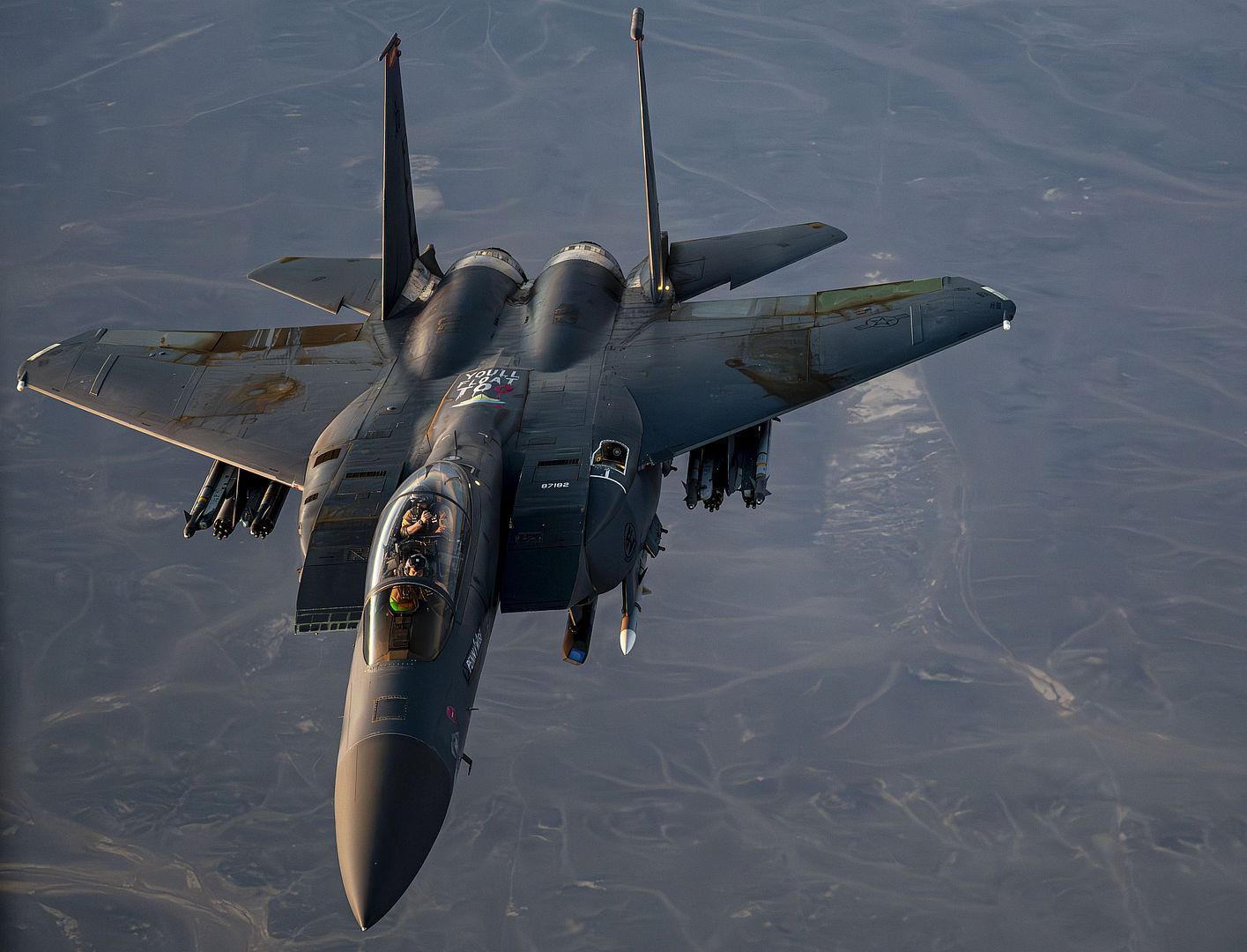
WASHINGTON, July 17, 2025 /PRNewswire(opens in a new tab)/ -- Boeing [NYSE: BA] and Gulf Air today announced an agreement for the purchase of 12 787 Dreamliner jets with options for six more as the Bahrain-based airline looks to further develop its international network. Once finalized, this order will bring the carrier's firm order book to 14 of the versatile widebody jets and will support 30,000 jobs across the U.S.
"This agreement marks a transformative step in Gulf Air's strategic growth journey as we expand our global footprint and modernize our fleet with one of the industry's most advanced and efficient aircraft," said Khalid Taqi, chairman of Gulf Air Group. "The Boeing 787 Dreamliner has proven to be an exceptional aircraft for our long-haul operations, and this new order reflects our confidence in its performance, passenger appeal and contribution to our sustainability goals. We are proud to deepen our partnership with Boeing and reaffirm our commitment to positioning Bahrain as a key global aviation hub."
The 787 Dreamliner, recognized for its fuel efficiency, range and passenger experience, already serves as the backbone of Gulf Air's long-haul operations connecting over 50 destinations. With 10 787 airplanes in service, the airline is well-positioned to grow its network, serving new and existing markets across Asia, Europe and the U.S.
"We are excited to build on our more than 60-year partnership with Gulf Air as we deliver the market-leading 787 Dreamliner to help the airline serve more passengers and connect more destinations," said Stephanie Pope, president and CEO of Boeing Commercial Airplanes. "This investment in the 787 Dreamliner demonstrates Gulf Air's commitment to new technology and sustainable development, reinforcing Bahrain's position in the aviation sector."
The 787 Dreamliner family has transformed global air travel by opening over 425 new nonstop routes and carrying more than 1 billion passengers worldwide since its commercial introduction in 2011. As Gulf Air's flagship airplane, the 787 features the largest windows of any widebody jet, air that is less dry and pressurized at a lower cabin altitude for greater comfort, and technology that senses and counters turbulence for a smoother ride.
From its first DC-3 in 1961, Gulf Air has taken delivery of 37 Boeing airplanes, including the 787 jets currently in its fleet.
A leading global aerospace company and top U.S. exporter, Boeing develops, manufactures and services commercial airplanes, defense products and space systems for customers in more than 150 countries. Our U.S. and global workforce and supplier base drive innovation, economic opportunity, sustainability and community impact. Boeing is committed to fostering a culture based on our core values of safety, quality and integrity.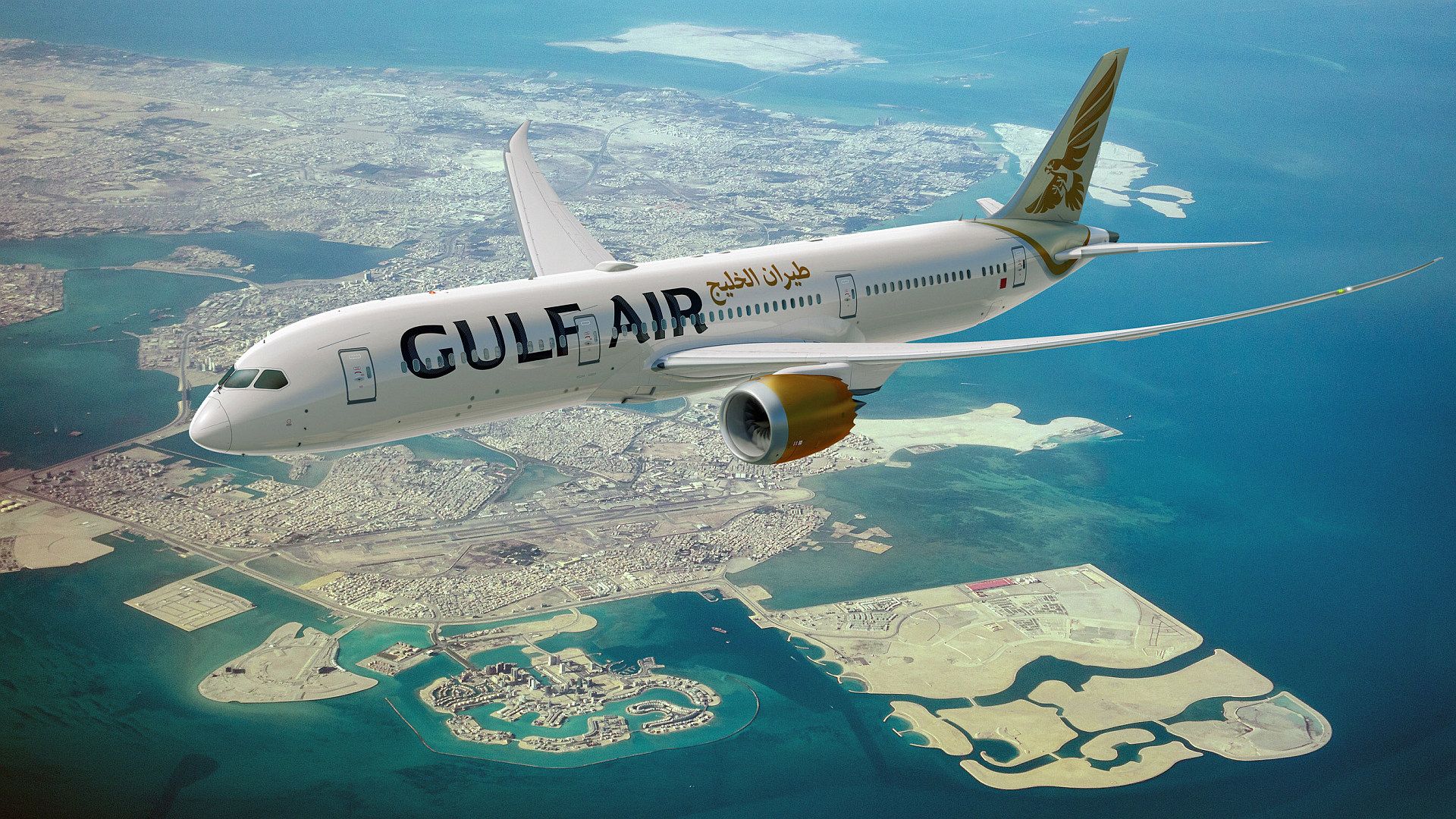
Gavião Peixoto, Brazil, July 17, 2025 – Embraer (NYSE: ERJ/ B3: EMBR3), a global leader in aerospace and defense, and the Portuguese Air Force (FAP) celebrated two major milestones today involving the KC-390 Millennium and A-29N Super Tucano programs: the delivery of the third KC-390 Millennium aircraft to the FAP and the launch of the A-29N flight test campaign, which included a historic joint flight of both aircraft.
The third KC-390 is part of an agreement between Embraer and the Portuguese government that will ultimately result in six aircraft in operation, with an additional ten purchase options available for allied and NATO (North Atlantic Treaty Organization) nations. The first A-29N is part of a 2024 order for 12 aircraft, making Portugal the launch customer for the Super Tucano variant designed to meet NATO requirements.
“Seeing both programs progressing steadily and fast gives us a sense of achievement and great satisfaction that enables us to proceed with the vision of having a more modern, capable and interoperable Air Force. The delivery of the third KC-390 will increase our operational capability and simultaneously consolidate experience in the aircraft, in progress to reach Full Operational Capability and establish new frontiers in the usage of this platform. The launch of the A-29N flight test campaign shows that we are in a good path to obtain a distinctive platform, with a configuration idealized by Portuguese Air Force, that will prove its capability in advanced training and operational usage,” said Portuguese Air Force’s Major-General João Nogueira, KC-390 Program Director.
“We are extremely proud to contribute meaningfully to enhancing the FAP’s operational capabilities with both the KC-390 and the A-29N. This delivery and joint flight represent major milestones that reflect our commitment to supporting Portugal’s defense with efficient and innovative solutions, always grounded in our strong, long-term partnership,” said Bosco da Costa Junior, President and CEO of Embraer Defense & Security.
The KC-390 Millennium offers superior payload capacity (26 tons) compared to other medium-sized military transport aircraft, and it flies faster (470 knots) and farther. It is capable of performing a wide range of missions, including cargo and troop transport and airdrops, medical evacuation, search and rescue, firefighting, and humanitarian operations. It can operate from temporary or unpaved runways, such as packed earth, soil and gravel. The aircraft can also be configured for air-to-air refueling, both as a tanker and as a receiver.
This game-changing aircraft fully meets NATO standards and requirements. In addition to Portugal, several European and NATO allies – including Hungary, the Netherlands, Austria, the Czech Republic, Sweden, Slovakia, and Lithuania – have selected the KC-390 to modernize their air forces. In total, 11 countries have chosen this state-of-the-art aircraft, including Brazil and South Korea.
The A-29 Super Tucano is a versatile and proven aircraft offering exceptional operational flexibility. It can perform a wide array of missions, including close air support, air patrol, special operations, interdiction, JTAC, forward air control (FAC), tactical coordination (TAC), armed ISR, border surveillance, reconnaissance, escort, and training at all levels – from basic to advanced, including transition to air superiority fighters and JTAC/LIFT and FAC training.
The A-29N Super Tucano variant will feature advanced avionics, NATO-specific communication systems, and other undisclosed capabilities tailored to meet NATO’s operational needs.
Recently, the global A-29 fleet surpassed 600,000 flight hours. With over 290 units ordered, the A-29 has already been selected by 22 air forces worldwide.
-
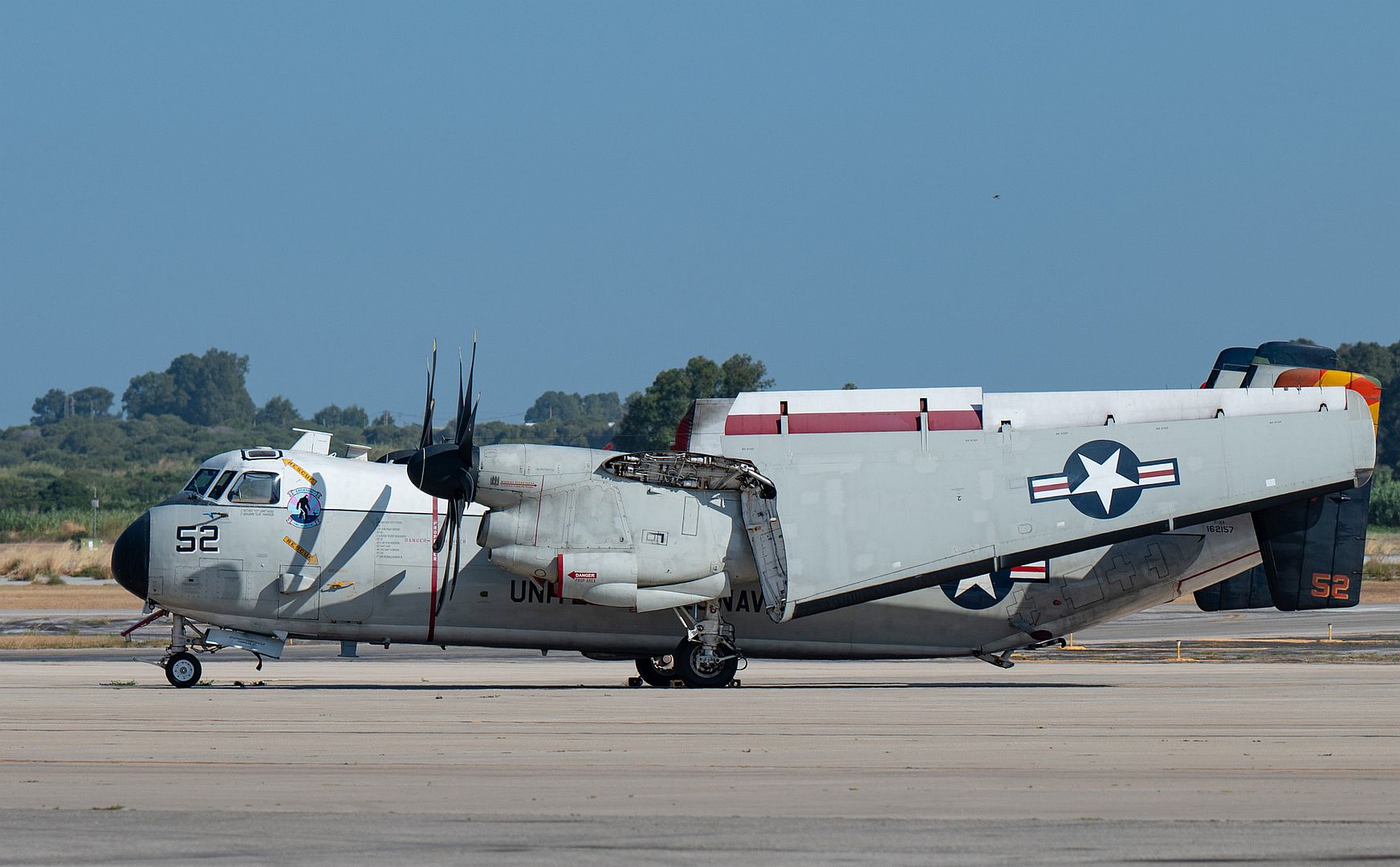
NAVAL STATION ROTA, Spain (July 17, 2025) A C-2A Greyhound, assigned to Fleet Logistics Support Squadron (VRC) 40 of the Gerald R. Ford Carrier Strike Group, stands by for mission tasking on board the Naval Station (NAVSTA) Rota airfield, July 17, 2025. As the "Gateway to the Mediterranean,” NAVSTA Rota provides U.S., NATO and allied forces a strategic hub for operations in Europe, Africa and the Middle East. NAVSTA Rota is a force multiplier, capable of promptly deploying and supporting combat-ready forces through land, air and sea, enabling warfighters and their families, sustaining the fleet and fostering the U.S. and Spanish partnership. (U.S. Navy photo by Mass Communication Specialist 1st Class Drace Wilson)
A U.S. Air Force F-22 Raptor assigned to the 3rd Air Expeditionary Wing conducts aerial maneuvers during exercise Resolute Force Pacific 2025 in Tinian, Northern Mariana Islands, July 17, 2025. REFORPAC demonstrates U.S. commitment to the region by building interoperability with our allies and partners, advancing common interests, and ensuring a free and open Indo-Pacific. (U.S. Air Force photo by Airman 1st Class Tala Hunt)
A U.S. Air Force U-2S assigned to the 99th Expeditionary Reconnaissance Squadron prepares to land during the Royal International Air Tattoo at RAF Fairford, England, July 19, 2025. One of the many benefits of RIAT is exposing allies, partner nations and the general public to our aircraft and the aircrews who operate them. These aircraft demonstrate our vast capabilities and ability to rapidly respond to threats and assure allies and partners. (U.S. Air Force photo by Airman 1st Class Cody J. A. Mott)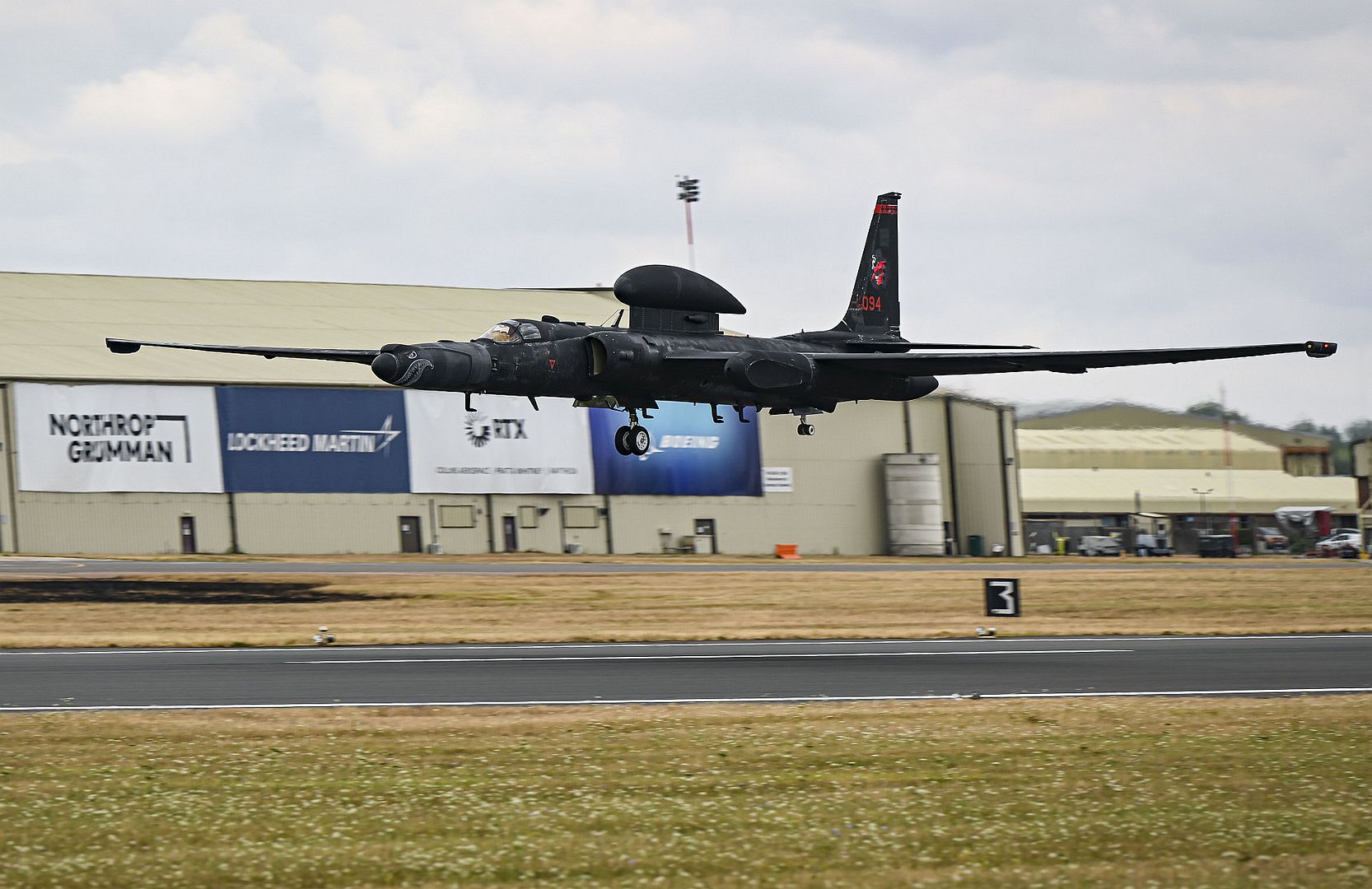
The 157th Air Refueling Wing flagship KC-46A Pegasus rest on the ramp at Pease Air National Guard Base, New Hampshire, July 18, 2025, under clear blue skies.
Distinguished by its specially painted tail, this aircraft represents the signature jet amongst the 12 KC-46As assigned to the New Hampshire Air National Guard which became the first unit to receive the KC-46 in 2019, marking a historic transition from the KC-135 to the next operation of air mobility. (U.S. Air National Guard photo by Tech. Sgt. April S. Jackson)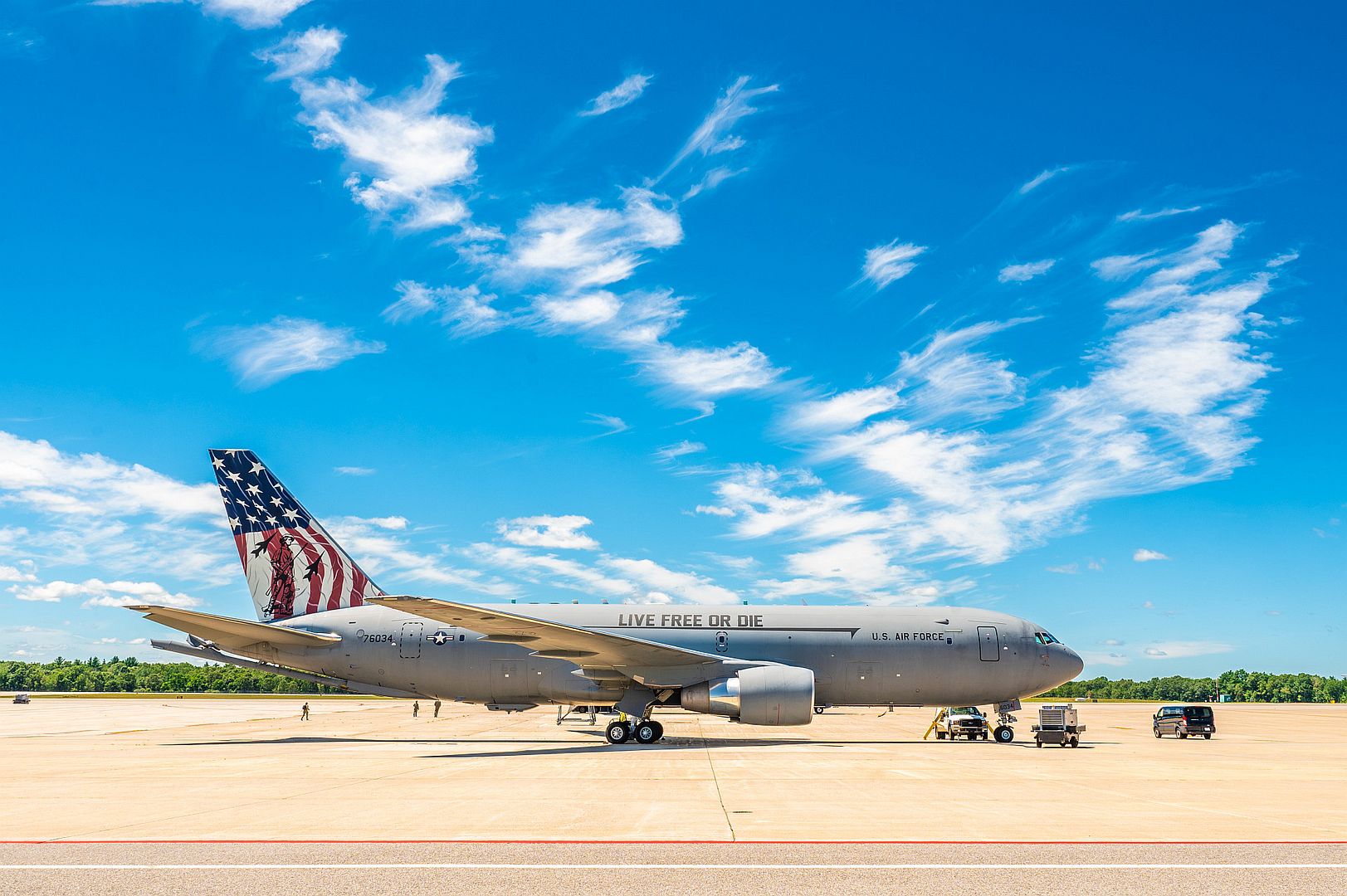
An F/A-18E Super Hornet, attached to Strike Fighter Squadron (VFA) 195, takes off from the flight deck of Nimitz-class aircraft carrier USS George Washington (CVN 73) while underway in the Timor Sea, July 15, 2025. Talisman Sabre is the largest bilateral military exercise between Australia and the United States advancing a free and open Indo-Pacific by strengthening relationships and interoperability among key allies and partners, while enhancing our collective capabilities to respond to a wide array of potential security concerns. (U.S. Navy photo by Mass Communication Specialist Seaman Nicolas Quezada)
An E-2D Hawkeye, attached to Airborne Command and Control Squadron (VAW) 125, lands on the flight deck of Nimitz-class aircraft carrier USS George Washington (CVN 73) while underway in the Timor Sea, July 15, 2025. Talisman Sabre is the largest bilateral military exercise between Australia and the United States advancing a free and open Indo-Pacific by strengthening relationships and interoperability among key allies and partners, while enhancing our collective capabilities to respond to a wide array of potential security concerns. (U.S. Navy photo by Mass Communication Specialist Seaman Nicolas Quezada)
An Avro Lancaster I bomber is flanked by a Hawker Hurricane IIc and Supermarine Spitfire to commemorate the Battle of Britain during the Royal International Air Tattoo at Royal Air Force Fairford, England, July 19, 2025. There are only two airworthy Lancasters in the world of the 7,377 built. (U.S. Air Force photo by Tech. Sgt. Robert M. Trujillo)
A U.S. Air Force F-22 Raptor assigned to the 199th Air Expeditionary Squadron sits beneath a hangar as the sun sets in Northern Territory, Australia, July 16, 2025, during Talisman Sabre 2025. Talisman Sabre is the largest bilateral military exercise between Australia and the United States advancing a free and open Indo-Pacific by strengthening relationships and interoperability among key allies and partners, while enhancing our collective capabilities to respond to a wide array of potential security concerns. (U.S. Air Force photo by Senior Airman Natalie Doan)
A Royal Australian Air Force F-35A Lightning II taxis on the flightline during Talisman Sabre 25 in Northern Territory, Australia, July 16, 2025. The F-35A was piloted by U.S. Air Force Maj. Colby “Burn” Kluesner, 388th Fighter Wing F-35A Lightning II evaluator pilot, as part of an international interfly between the RAAF, USAF, U.S. Marine Corps, and Royal Air Force. Talisman Sabre is the largest bilateral military exercise between Australia and the United States, that advances a safe and secure Indo-Pacific by strengthening relationships and interoperability among key allies and partners, while enhancing our collective capabilities to respond to a wide array of potential security concerns. (U.S. Air Force photo by Airman 1st Class Joseph Maye)
BAE Systems has received a $12 million contract from L3Harris to support the modification of two Gulfstream G550 aircraft into airborne electronic attack (EA) platforms for the Italian Air Force. When the airframes are fitted with modern EA mission systems, they will provide Italy with powerful, long-range capabilities that disrupt and suppress enemies’ command and control, communication, navigation, and air defense systems.
Under its contract, BAE Systems will provide hardware to modify the aircraft, including racks, radomes, cables, and harnesses to prepare for the installation of advanced electronic warfare mission systems that will enhance Italy’s ability to operate in the electromagnetic battlespace.
“This modification work is a critical step toward delivering advanced EA capabilities to the Italian Air Force,” said Cory Casalegno, director for Coalition Electronic Attack at BAE Systems. “Providing high-powered, long-range jamming capabilities to an important U.S. ally broadens the strength of the global allied fleet and supports the mission of the U.S. Air Force.”
BAE Systems’ airborne EA mission systems complement the range, altitude, and endurance attributes of the G550 business jets, providing long-range jamming from safer operational distances. The systems limit adversaries' situational awareness, disrupt their use of the electromagnetic spectrum for operations, and align with the capabilities of the U.S. Air Force.
BAE Systems has designed and developed advanced EA mission systems for decades, continually evolving the technology to address modern threats, and redesigning hardware for different airframes – carefully balancing the need for high-power output with size, weight, and power constraints.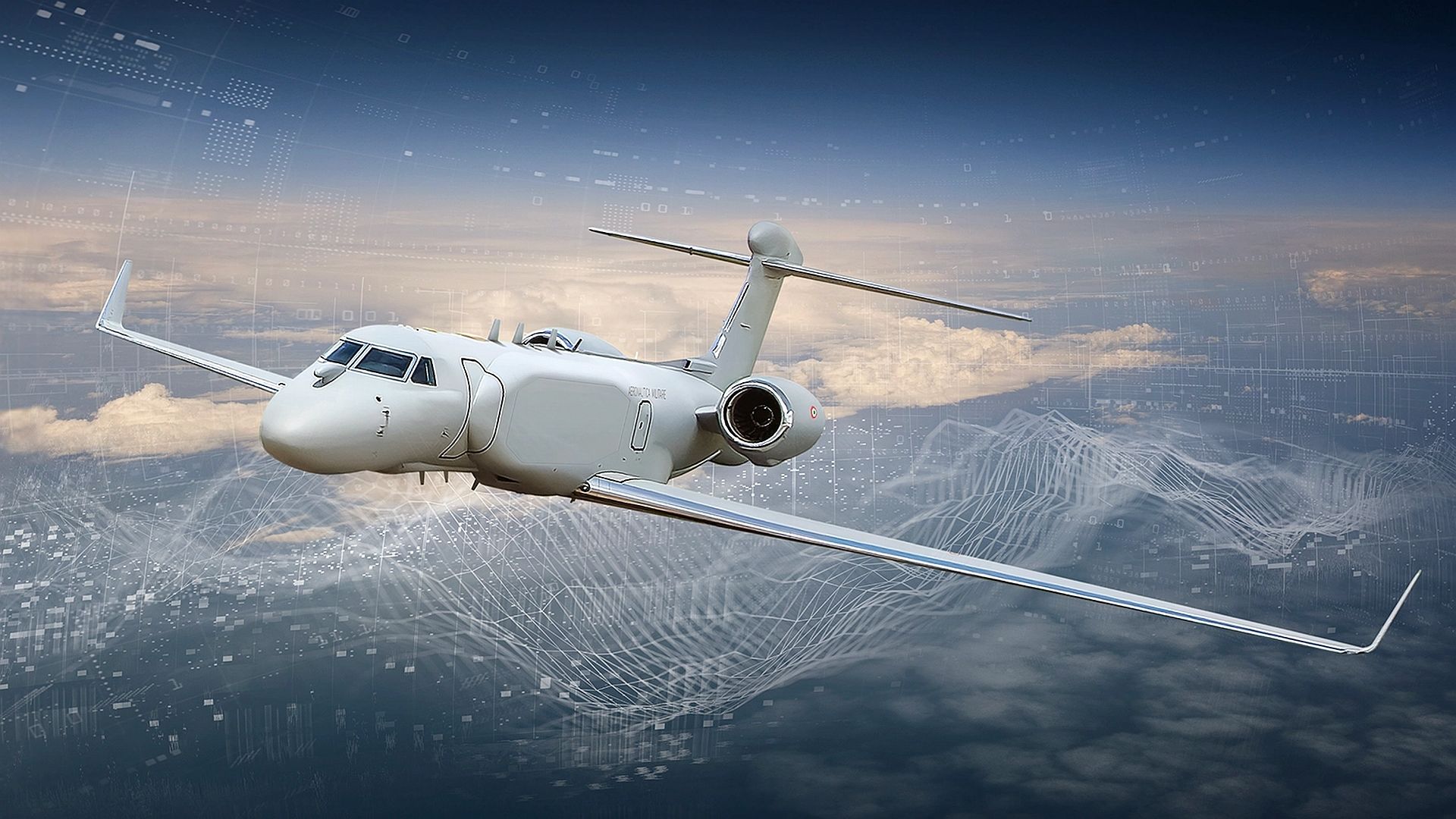
The Royal International Air Tattoo 2025, and some wonderful photos of the worlds #1 military aircraft show.


(Photos courtesy of the RAF and the Aeronautica Militare)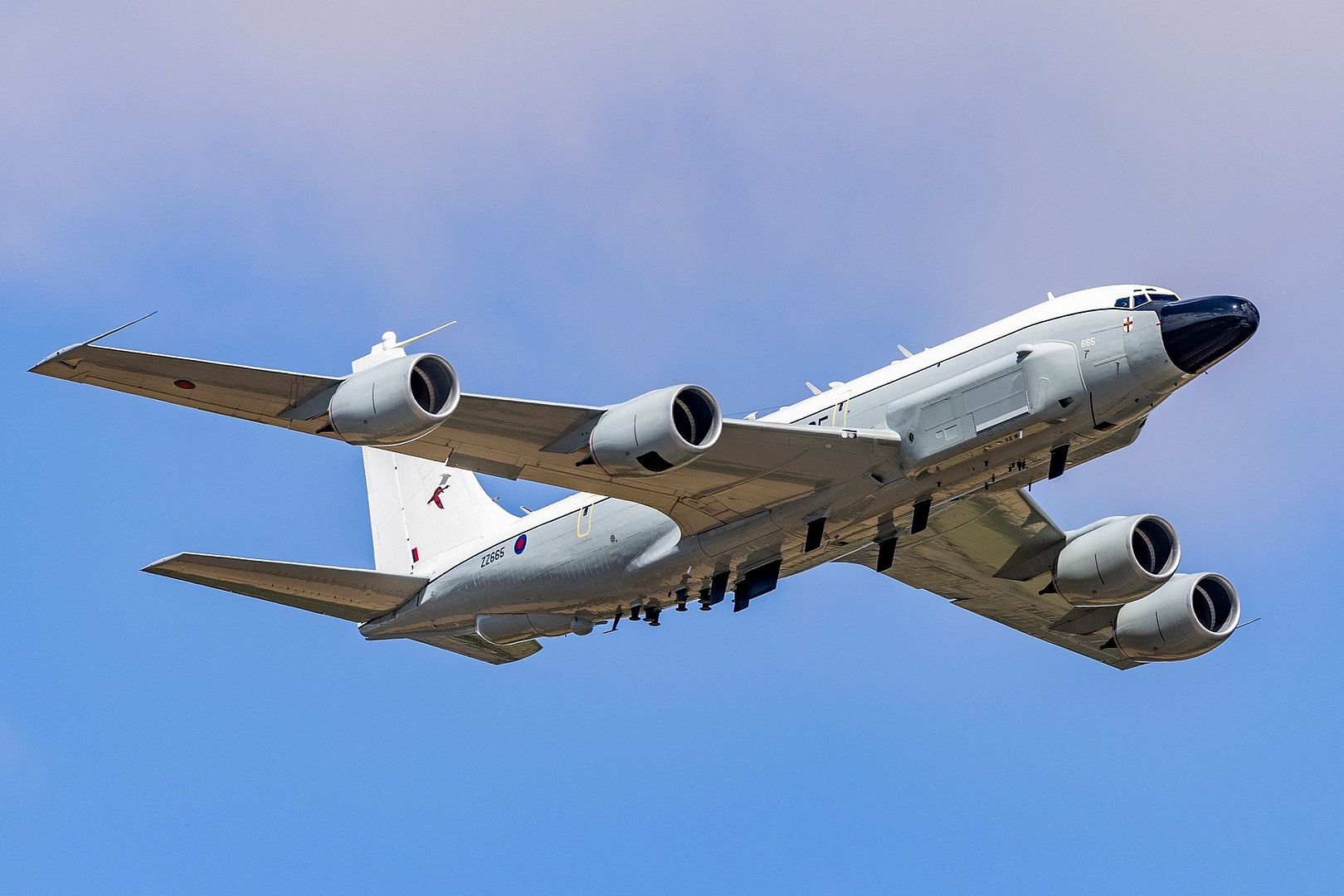


-
A U.S. Air Force KC-135 Stratotanker aircraft lands at Yokota Air Base, Japan, July 17, 2025, in support of Department-Level Exercise 2025 as part of the 374th Air Expeditionary Wing. Through this DLE, the Department of the Air Force is preparing to be a stronger, more lethal deterrent force, to provide an advantage against competitors and adversaries across all domains, and to ensure regional stability in the Indo-Pacific and beyond. (U.S. Air Force photo by Senior Airman Samantha White)

A Republic of Korea Air Force C-130H Hercules takes off from Andersen Air Force Base, Guam, July 21, 2025, to participate in a flyover for the 81st Liberation Day Parade. The parade is a celebration of U.S. forces liberating Guam during World War II and culminates in events and ceremonies held across the island. (U.S. Air Force photo by Senior Airman Audree Campbell)
Two Swiss F-18 Hornets fly alongside a U.S. Air Force KC-46 Pegasus, assigned to the 77th Air Refueling Squadron, after receiving fuel over Italy, June 26, 2025. Exercise Copper Arrow enhances U.S. Air Force, USEUCOM and Allies’ readiness and demonstrates the ability to rapidly deploy large combat-credible forces and equipment throughout Europe. (U.S. Air Force photo by Senior Airman Raya Feltner)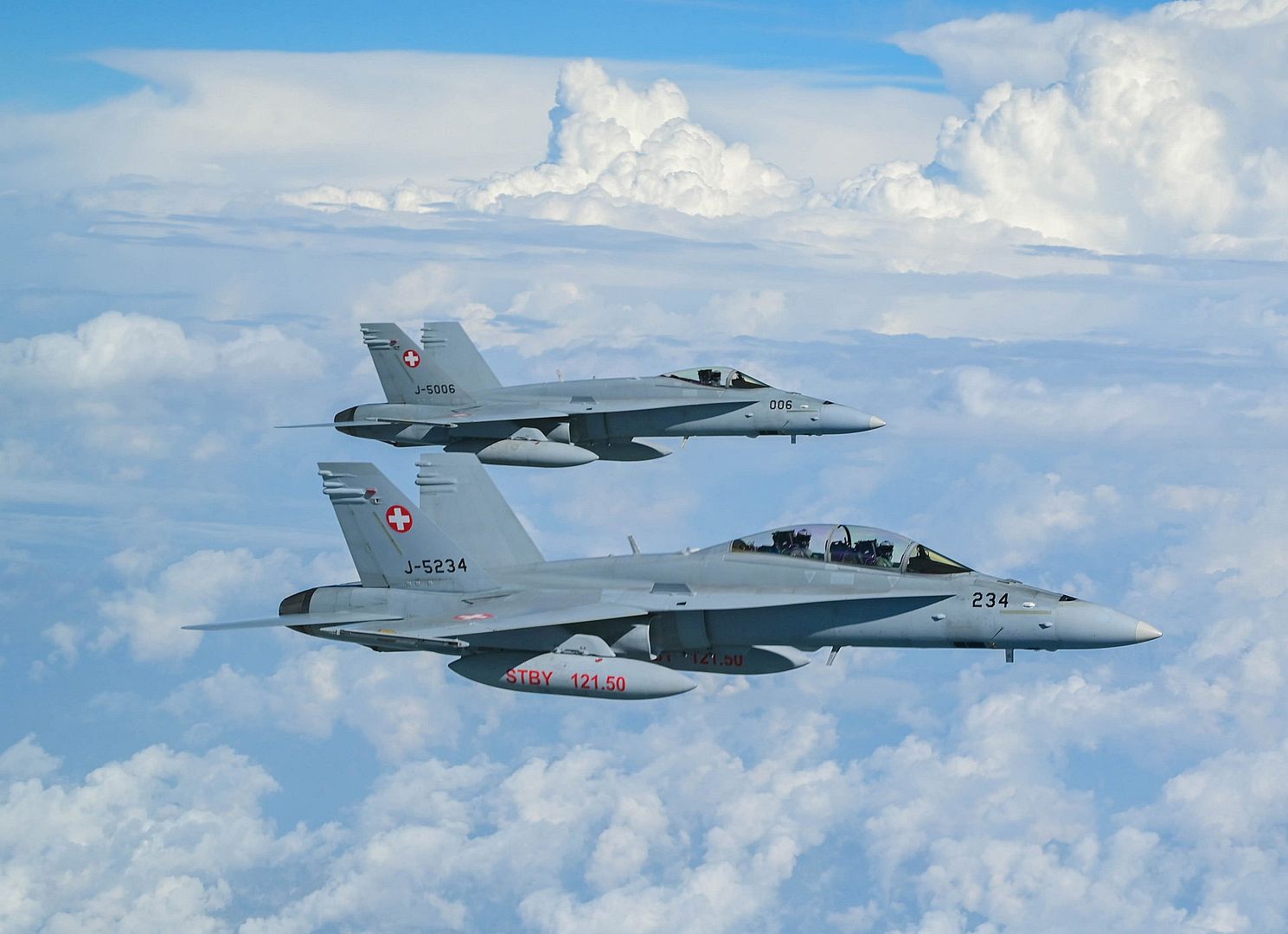
U.S. Air Force Col. Joseph Miranda, 31st Operations Group commander, flies an F-16 Fighting Falcon assigned to the 510th Fighter Generation Squadron in the skies above Italy, July 18, 2025. The 31st OG ensures the combat readiness of two F-16 fighter squadrons, one HH-60W rescue squadron, one Guardian Angel rescue squadron, one air control squadron and one operational support squadron conducting and supporting worldwide air operations. (U.S. Air Force photos by Airman 1st Class Zachary Jakel)
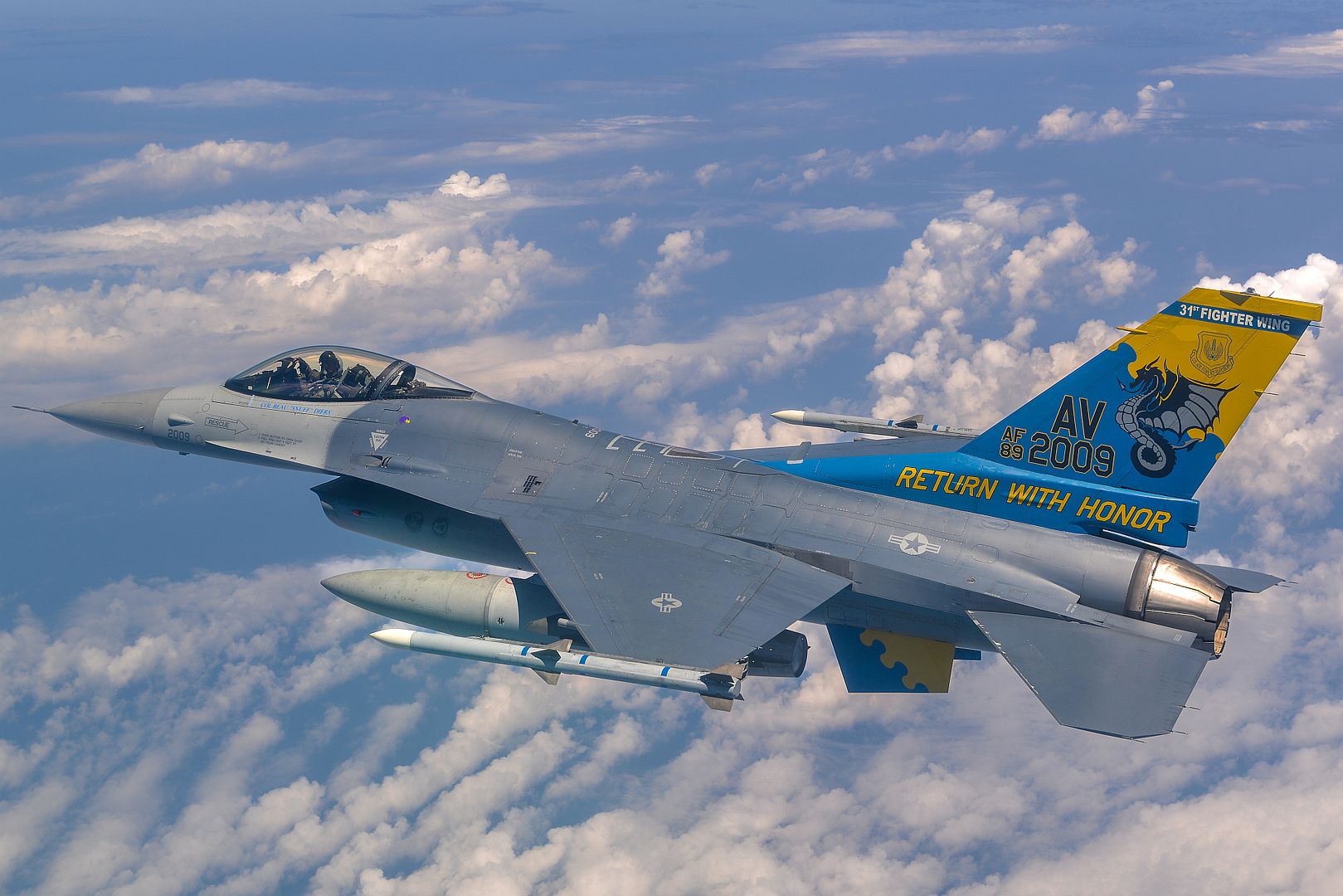

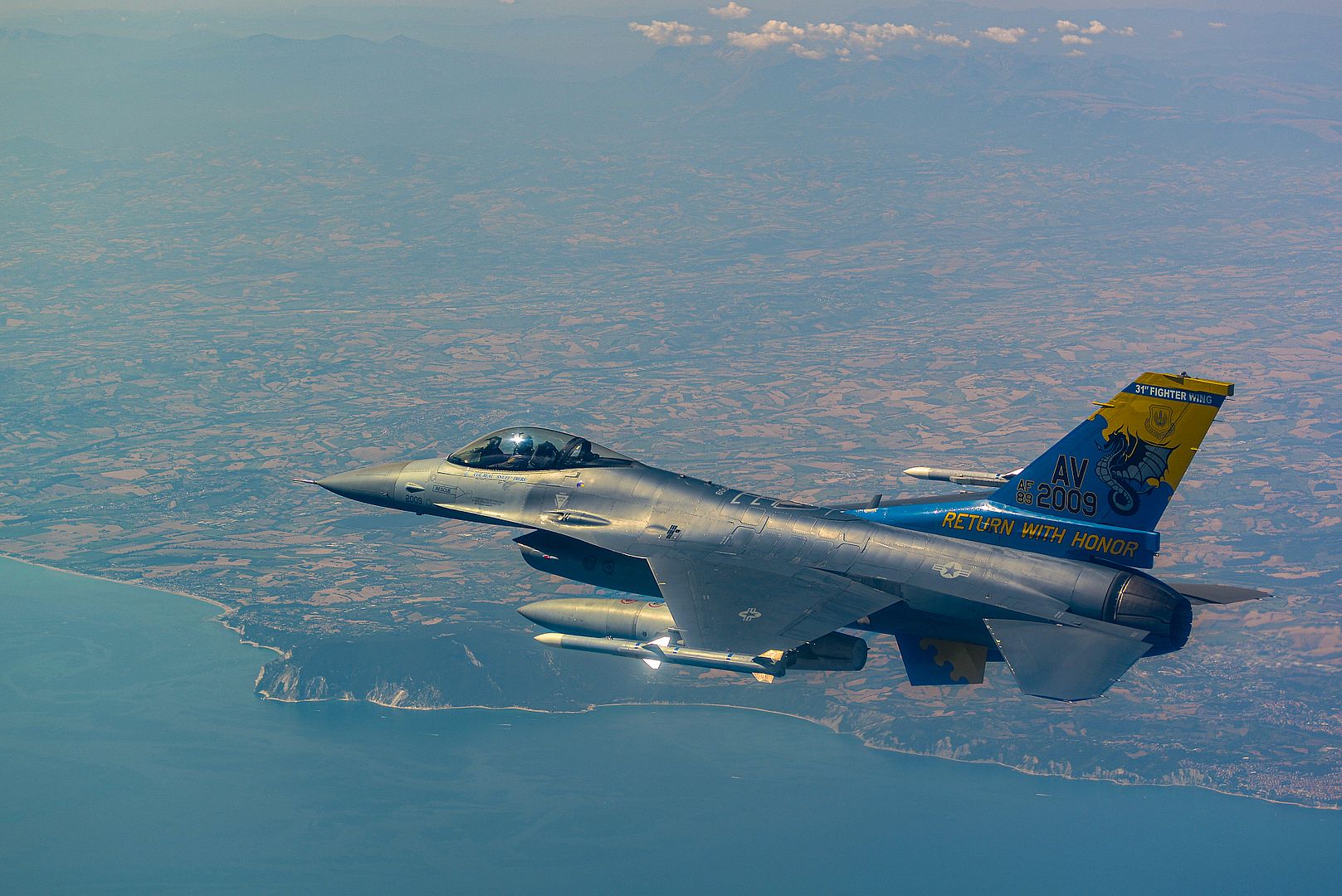
A U.S. Air Force F-22 Raptor is marshalled by Senior Airman Dylan Gurski, a crew chief, both deployed with the 3rd Air Expeditionary Wing, during exercise Resolute Force Pacific 2025 in Tinian, North Mariana Islands, July 17, 2025. REFORPAC is part of a first-in-a-generation Department-Level Exercise series, employing more than 400 Joint and coalition aircraft and more than 12,000 members at more than 50 locations across 3,000 miles. (U.S. Air Force photo by Senior Airman J. Michael Peña)
-
U.S. Marine Corps Cpl. Antonio Salazar, a fixed wing aircraft mechanic with Marine Fighter Attack Squadron (VMFA) 311, Marine Aircraft Group 11, 3rd Marine Aircraft Wing, and U.S. Marine Corps Maj. Cameron Teasley, an F-35C pilot with VMFA-314, MAG-11, conduct an engine check on an F-35C Lightning II assigned to VMFA-311 during Red Flag Alaska 25-2 on Eielson Air Force Base, Alaska, July 21, 2025. Red Flag Alaska is a joint exercise that enhances combat readiness and prepares units for deployments to austere environments. (U.S. Marine Corps photo by Lance Cpl. Michael Gavin)

PHILIPPINE SEA (July 22, 2025) An EA-18G Growler, attached to the “Gauntlets” of Electronic Attack Squadron (VAQ) 136, launches from the flight deck of the Nimitz-class aircraft carrier USS Carl Vinson (CVN 70), July 22, 2025. Vinson, the flagship of Carrier Strike Group ONE, is underway conducting routine operations in the U.S. 7th Fleet area of operations. (U.S. Navy photo by Mass Communication Specialist 1st Class Ryan D. McLearnon)
PHILIPPINE SEA (July 22, 2025) An F/A-18F Super Hornet, attached to the “Bounty Hunters” of Strike Fighter Squadron (VFA) 2, launches from the flight deck of the Nimitz-class aircraft carrier USS Carl Vinson (CVN 70), July 22, 2025. Vinson, the flagship of Carrier Strike Group ONE, is underway conducting routine operations in the U.S. 7th Fleet area of operations. (U.S. Navy photo by Mass Communication Specialist 1st Class Ryan D. McLearnon)
U.S. Air Force F-16 Fighting Falcons assigned to the 510th Fighter Squadron taxi on the runway during Thracian Star 25 at Bezmer Air Base, Bulgaria, July 21, 2025. The 510th Fighter Squadron provides combat airpower on demand to U.S. and NATO combatant commanders as well as the National Command Authority in order to meet National Security objectives. (U.S. Air Force photo by Staff Sgt. Jenna A. Bond)
A U.S. Air Force F-22 Raptor, assigned to the 3rd Air Expeditionary Wing, lands on Saipan in support of the Pacific Air Forces Community Day on Saipan during exercise Resolute Force Pacific on Saipan, Northern Mariana Islands, July 21, 2025. Exercise REFORPAC demonstrates U.S. commitment to the region by building interoperability with our allies and partners, advancing common interests, and ensuring a free and open Indo-Pacific. (U.S. Air Force photo by 1st Lt. Jeremiah Robinson)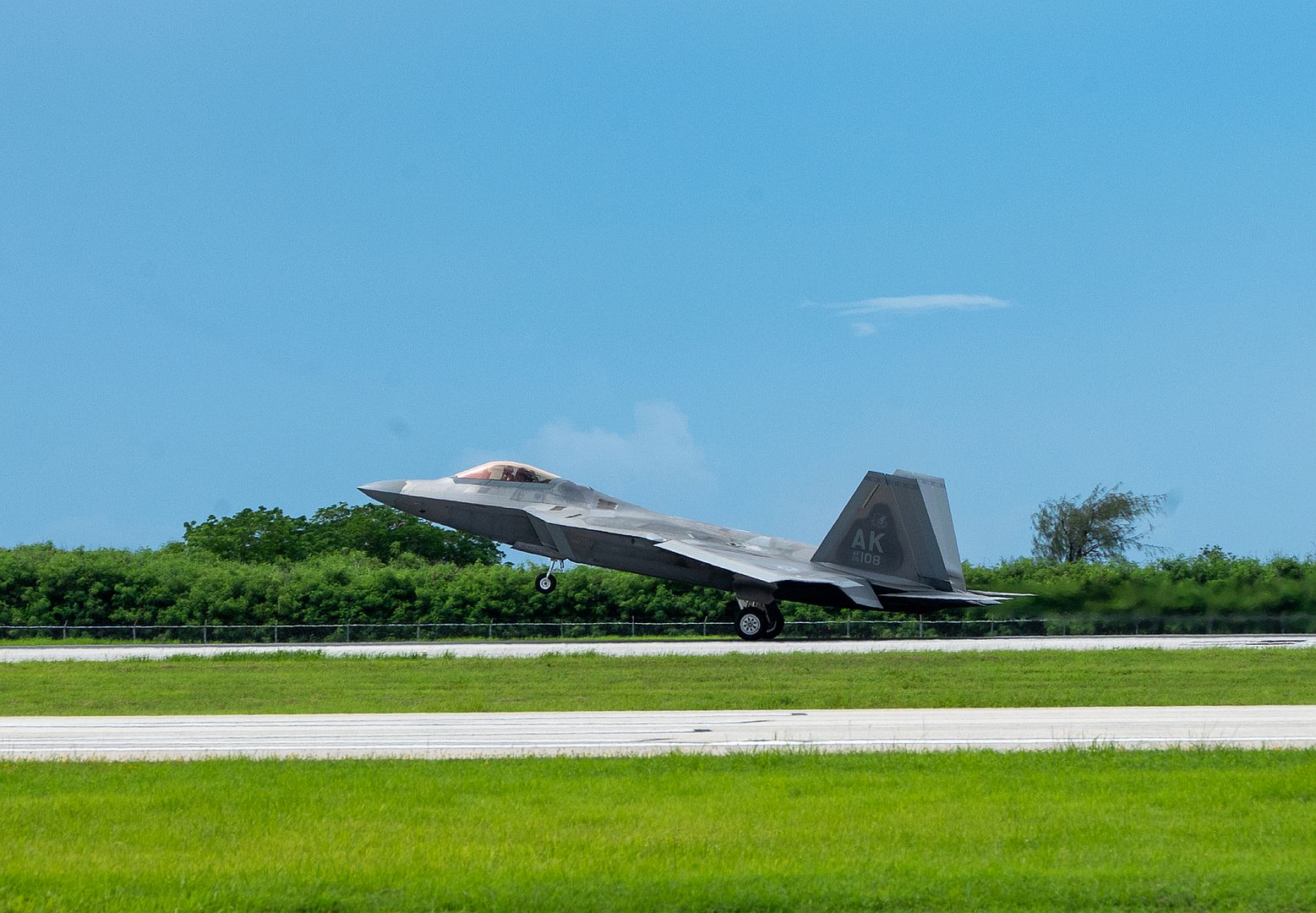
A U.S. Marine Corps KC-130J Super Hercules aircraft assigned to the Marine Aerial Refueler Transport Squadron 252, takes off from Hubbard landing zone, at Fort Huachuca, Arizona while attending the Advanced Tactics Aircrew Course at the Advanced Airlift Tactics Training Center, July 22, 2025. Since 1983 the AATTC based out of St. Joseph, Missouri, has provided advanced tactical training to airlift aircrews from the Air National Guard, Air Force Reserve Command, Air Mobility Command, U.S. Marine Corps and 17 allied nations. (U.S. Air Force photo by Master Sgt. Patrick Evenson)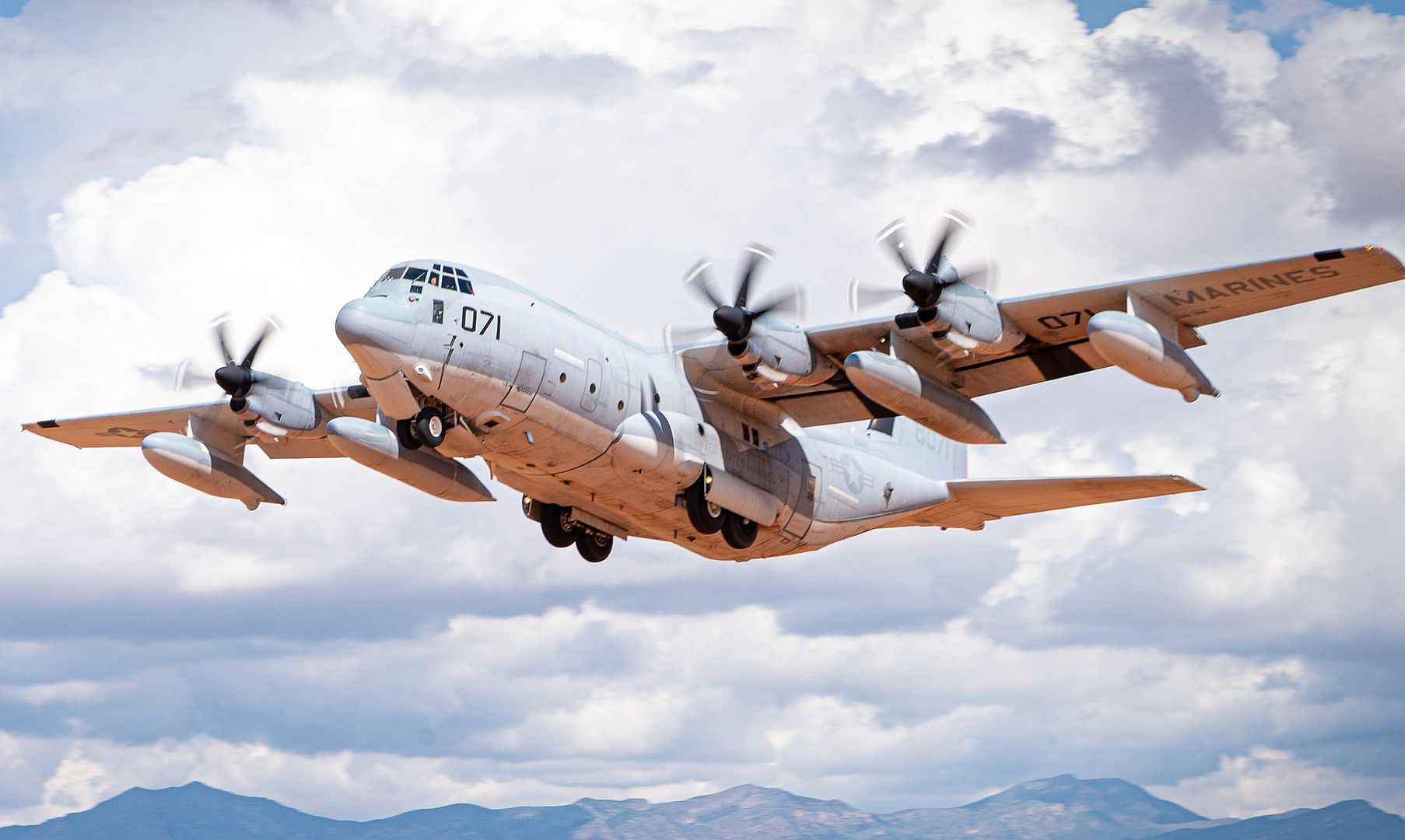
In the Atlas Mountains of North Africa, small wild cats known as caracals can be found roaming freely. In the sky above them, Atlas and Caracal might also be seen together, but for very different reasons...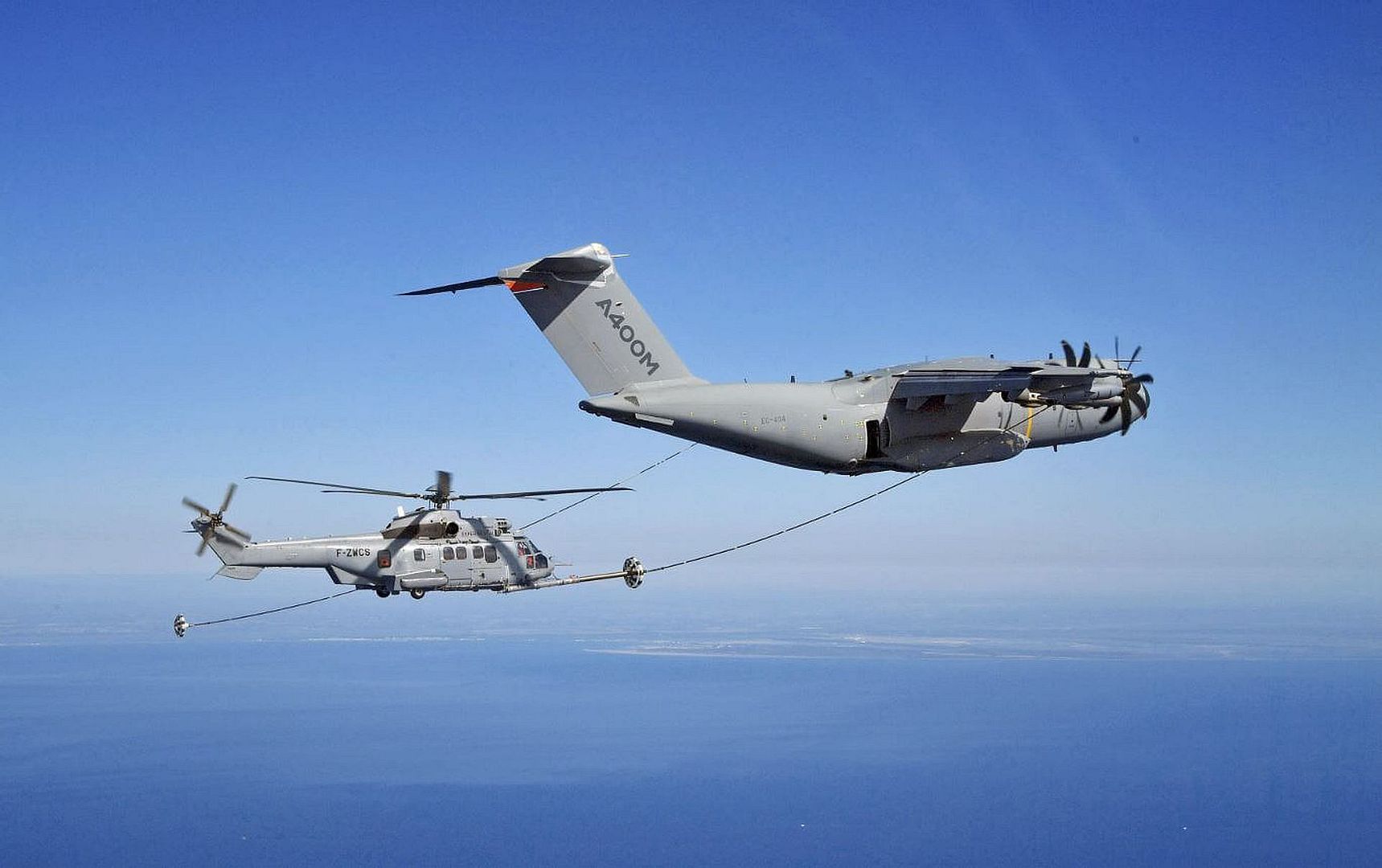
Atlas is the name given by the French Air and Space Force to the A400M heavy transport aircraft, while Caracal refers to the H225M, an 11-tonne helicopter. Both are multi-role aircraft developed by Airbus. Since the A400M’s in-flight refuelling capability was approved for the French Air Force in early 2025, the two aircraft have become fully compatible. The H225M, the only helicopter with in-flight refuelling capabilities in the French Armed Forces, can now fully benefit from this partnership.
The H225M is one of the most versatile helicopters in the world, designed for the most demanding missions, including special operations and search and rescue in combat zones. One of its strengths is its range, which can exceed 1,000 km under normal conditions. With in-flight refuelling, the H225M can go even further, with flights lasting over 10 hours. The French Air and Space Force has repeatedly demonstrated the potential of in-flight refuelling, both in operations and on exercise. The A400M has also proven its worth many times in operations and on exercise on every continent with the French Armed Forces: transporting troops and equipment, performing parachute drops, medical evacuations and evacuations of citizens. Its list of capabilities is long, but until recently there was still one left to validate; the Air and Space Force’s A400Ms have been refuelling fighter jets for several years, but their ability to refuel helicopters had not yet been tested by the French Armed Forces. That milestone has now been achieved.
Airbus had already demonstrated the A400M’s ability to refuel helicopters in flight. Still, moving from an industrial qualification to a military qualification can take several months or even years. For the French Air Force, this process began in June 2023 with preliminary tests carried out by the Air Warfare Centre (Centre d’Expertise Aérien Militaire) and the French Defence procurement Agency (DGA). Two further test campaigns followed in February and March 2024. In early 2025, the capability was deemed fully mature, and the Air and Space Force is now authorised to refuel its H225M Caracal helicopters in flight from its A400Ms in operations. France will eventually have five helicopter refuelling kits that can be adapted for the A400M. “Giving the A400M this capability was a remarkable achievement,” explains Lieutenant Colonel Nicolas, A400M officer for the French Air and Space Force. “Imagine an aircraft with a maximum weight of 140 tonnes flying close to its stall speed of 110 knots so that it can match a helicopter’s speed.”
According to the Air Force pilot, it is the A400M’s excellent electronic flight controls that make this feat possible. Airbus had to update the A400M’s flight control systems to adapt them to this very specific flight regime. The refuelling pods and handles were also specially adapted for helicopters. With the A400M and H225M, the French Air and Space Force has projection capabilities that are virtually unmatched worldwide. This is all the more impressive given that the H225M can be loaded onto the A400M and deployed anywhere in the world in a matter of hours. The Air Force can therefore quickly deploy both aircraft to carry out operations deep behind enemy lines, whether that involves deploying commandos or recovering ejected pilots. These capabilities far exceed what was predicted in theory, as was clearly demonstrated very recently during Exercise Athena, which took place from 12 to 23 May 2025 and saw the winning A400M Atlas - H225M Caracal duo in action for the first time in such an exercise.
Oshkosh, WI, July 22, 2025 — Piper Aircraft, Inc. is proud to announce today a historic new fleet agreement for up to 188 aircraft, valued at approximately $155M, with the University of North Dakota’s John D. Odegard School of Aerospace Sciences (UND Aerospace). This contract solidifies a partnership of nearly four decades that will continue to shape the future of pilot training for the next eight-to-ten years, positioning both organizations at the forefront of aviation training and innovation.
The contract includes an initial order of 145 aircraft, comprised of both the Archer TX and Seminole, over an eight-year term beginning in 2027, with the potential for up to 188 total aircraft through an optional two-year extension into 2036. This agreement surpasses UND’s 2016 order for 112 aircraft, concluding in 2026. “Piper remains a vital collaborator in the continued success of flight training at UND,” said Robert J. Kraus, PhD, PfMP, Dean of UND John D. Odegard School of Aerospace Sciences. “We look forward to strengthening our relationship as we prepare the next generation of pilots for careers in the airlines, business aviation, and the U.S. military. The entire Piper team has been outstanding—responsive to our needs and collaborative in enhancing the components and capabilities of the Archer TX and Seminole.”
In today’s dynamic training market, flight schools worldwide rely on robust, cost-effective aircraft and collaborative customer support to maximize fleet utilization. Piper credits much of its success in meeting these customer support demands through 24/7 technical support, parts availability, and a seamless customer experience.
“The Piper Archer TX and Seminole are a perfect fit for UND Aerospace. The Piper team is great to work with and continues to provide top-notch customer service for our students and aviation program,” stated Jeremy Roesler, Director of Flight Operations at UND Aerospace. “The aircraft are dependable and play a big part in keeping our students safe in all of their phases of pilot training. Without a doubt, Piper is the leading manufacturer for the commercial pilot training community.”
For many years, Piper and UND Aerospace have maintained a strong working relationship, with UND consistently selecting Piper trainers for their dispatch reliability and ease of maintenance, innovative technology, and overall suitability for a high-use flight training environment. “Piper values the relationship we share with UND at the highest level,” said Ron Gunnarson, Vice President of Sales, Marketing, Customer Support, and Quality at Piper, and a UND Aerospace alum. “The world-class flight training at UND sets the standard for the entire industry. To see them once again choose our aircraft and
associated support systems is the ultimate point of pride for the 1,500 hard working men and women at Piper Aircraft.”
“UND Aerospace is thrilled to deepen our collaboration with Piper Aircraft, a company that not only delivers reliable and advanced training platforms like the Archer TX and Seminole at a fair price, but also stays ahead of the curve with innovative safety and convenience features,” said Chad Martin, Aircraft and Fleet Sales Manager, UND Aerospace. “Piper’s exceptional customer support and their downright fun-to-fly aircraft make them an ideal fit for our program—and the people behind the planes make the experience even better.”
UND Aerospace operates a training fleet that totals 176 aircraft and devices, including the 20 Archer TX and Seminole aircraft delivered in 2025. Between the 1,300 flight hours per airframe averaged annually per Archer TX, with approximately 900 hours per Seminole, UND’s choice of fleet aircraft must be able to withstand the rigors of a high-use flight training environment, while taking into account the unique needs of a program of UND’s size. “The teamwork between Piper and UND Aerospace is first rate,” said Dan Kasowski, UND Aerospace Director of Maintenance. “This partnership and willingness to work together has helped craft the Archer TX and Seminole into the preeminent training aircraft for UND and the rest of the flight training world.” UND Aerospace utilizes their Piper fleet to achieve 125,000 flight training hours each year at their flagship Grand Forks campus in North Dakota, and an additional 65,000 hours at its Phoenix, Arizona campus, demonstrating its scale and focus on producing skilled pilots.
About Piper Aircraft
Piper Aircraft Inc., headquartered in Vero Beach, Fl., offers aviators throughout the world efficient and reliable single and twin-engine aircraft and is the first general aviation aircraft manufacturer in the world to certify Garmin® Emergency Autoland. The single-engine M-Class series – the M700 FURY, M500, and M350 – offers businesses and individuals elegant performance, value and a superior ownership experience. The Personal Class Archer LX and Archer DLX balance proven performance, efficiency, and simplicity in a piston-powered light aircraft. The Trainer Class Pilot 100i, Archer TX, Archer DX, and Seminole aircraft form the most complete, technically advanced line of pilot training aircraft in the world. Piper is a member of the General Aviation Manufacturers Association. To learn more about Piper Aircraft, visit the company’s website at www.piper.com.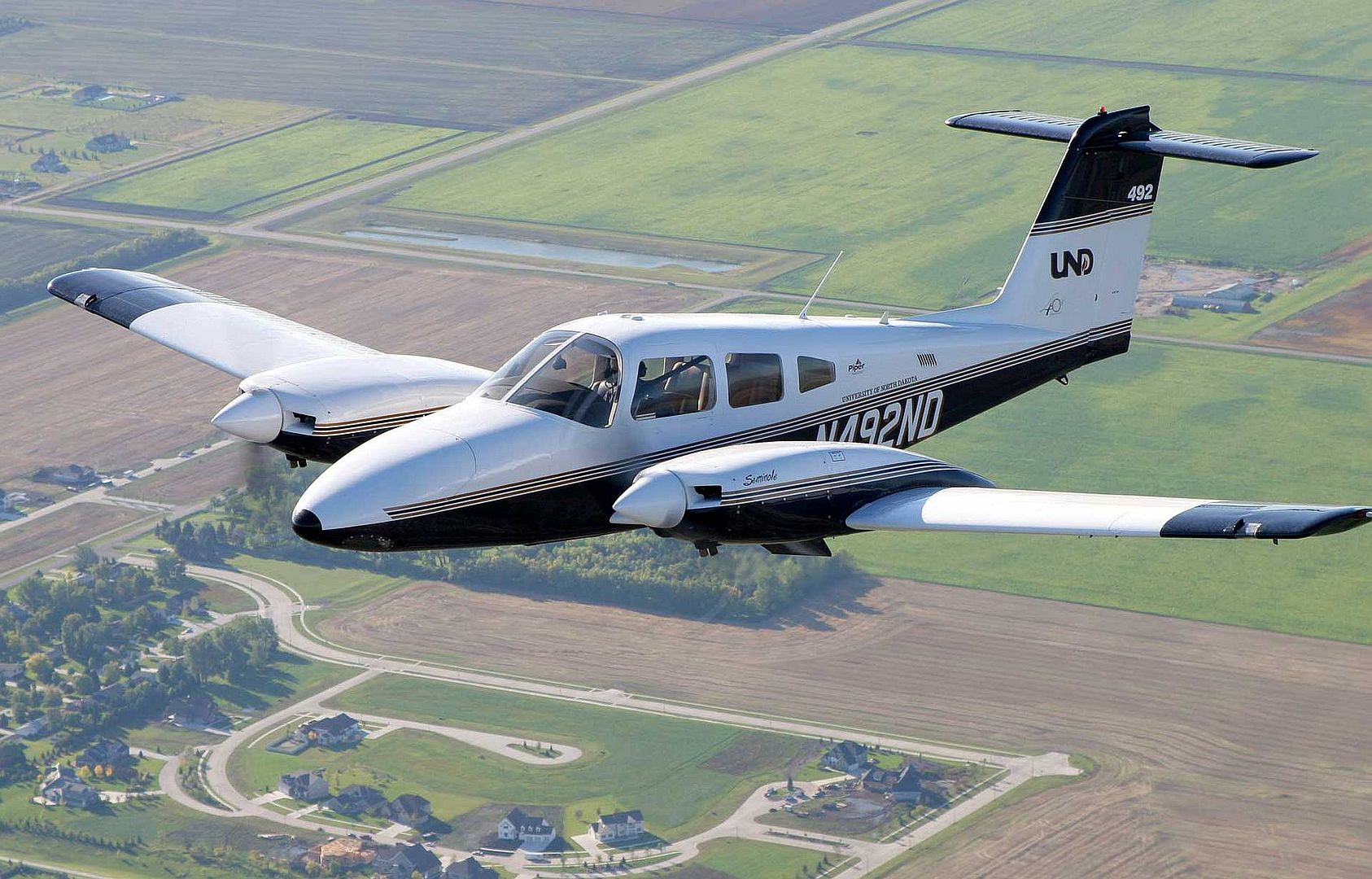
SAN DIEGO – 23 July 2025 – Denmark and the NATO Support and Procurement Agency (NSPA) have announced the procurement of four MQ-9B SkyGuardian® Remotely Piloted Aircraft (RPA) from General Atomics Aeronautical Systems, Inc. The purchase includes three Certified Ground Control Stations.
Denmark joins a growing list of European countries that have selected MQ-9B for its multi-domain capabilities with exceptionally long range and endurance. The platform provides pole-to-pole satellite control and de-icing capabilities to enable missions in the harsh conditions of the Arctic in support of Denmark and its NATO Allies. Additionally, MQ-9B’s in-house-developed Detect and Avoid System aids MQ-9B’s ability to fly in unsegregated airspace for domestic civilian operations, making it highly versatile for operations from Denmark.
MQ-9B recently became the first large remotely piloted aircraft to obtain a Military Type Certificate (MTC) from the UK’s Military Aviation Authority, certifying its safe operation without geographic restrictions, including over populous areas.
“It’s been a very productive year for our MQ-9B platforms,” said GA-ASI President David R. Alexander. “First, we earned MTC and now we’ve added Denmark to the U.K., Belgium, and Poland as MQ-9B customers in Europe. I believe the extensive waters of the North Sea, Norwegian Sea, and Baltic Sea of the Nordic countries make the MQ-9B a very effective tool for national maritime surveillance and security.”
MQ-9B SkyGuardian is the first and only unmanned system to offer multi-domain Intelligence, Surveillance, Reconnaissance, and Targeting (ISR&T) as an internal payload that can search the ocean’s surface and its depths in support of Fleet Operations. MQ-9B can also be fitted with a number of payloads including a maritime surveillance package with a 360-degree maritime radar and/or sonobuoy dispensing pods.
This sale was aided and supported by NSPA, which has developed a contractual framework for supporting cooperation amongst its member nations and promoting the proliferation of MQ-9B in Europe. NSPA has added MQ-9B to its portfolio of defense systems to contract on behalf of European nations, with the goal of enhancing interoperability while facilitating training and joint operations.
“This procurement demonstrates how NSPA enables efficient, effective and responsive multinational acquisitions for advanced, interoperable capabilities. We are proud to support Denmark in this strategic investment for national maritime surveillance and security,” said Ms. Stacy A. Cummings, NSPA General Manager.
About GA-ASI
General Atomics Aeronautical Systems, Inc. is the world’s foremost builder of Unmanned Aircraft Systems (UAS). Logging more than 8 million flight hours, the Predator® line of UAS has flown for over 30 years and includes MQ-9A Reaper®, MQ-1C Gray Eagle®, MQ-20 Avenger®, and MQ-9B SkyGuardian®/SeaGuardian®. The company is dedicated to providing long-endurance, multi-mission solutions that deliver persistent situational awareness and rapid strike.
For more information, visit www.ga-asi.com -
A U.S. Air Force KC-46 Pegasus takes off from Joint Base Elmendorf-Richardson, Alaska, July 22, 2025, in support of RED FLAG-Alaska 25-3. Red Flag is a Pacific Air Forces-directed training exercise focused on improving combat readiness and reinforcing the nation’s commitment to a free and open Indo-Pacific region. (U.S. Air Force photo by Staff Sgt. Ireland Summers)

A U.S. Marine Corps F-35B Lightning II assigned to Marine Fighter Attack Squadron (VMFA) 121 prepares to taxi during Red Flag-Alaska 25-3 at Eielson Air Force Base, Alaska, July 19, 2025. RF-A training spans from individual skills to complex, large-scale joint engagements. RF-A provides unique opportunities to integrate various forces into joint, combined training from simulated forward operating bases. (U.S. Air Force photo by Senior Airman Alexzandra Gracey)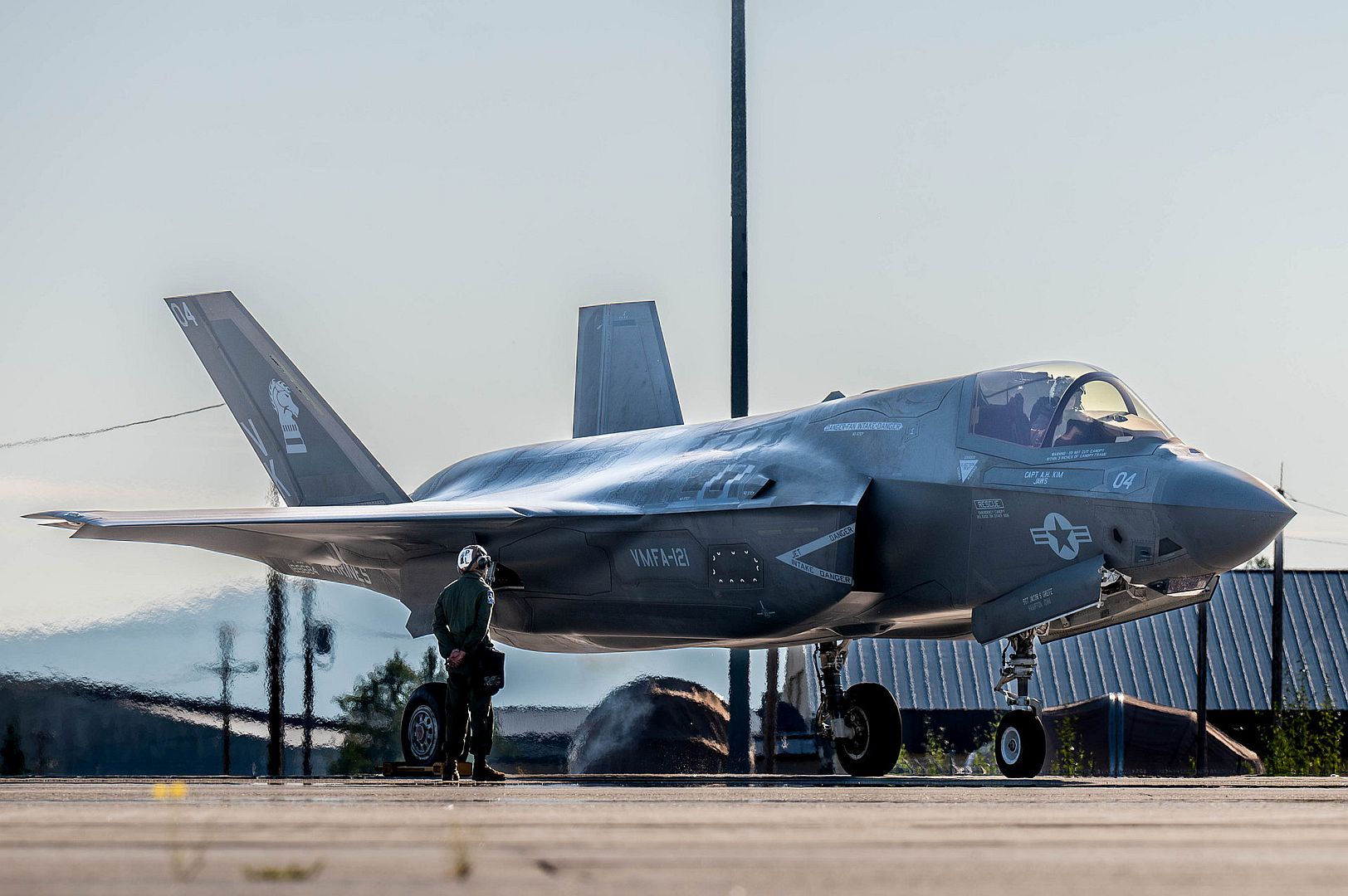
A U.S. Navy EA-18G Growler assigned to the Electronic Attack Squadron (VAQ) 138 takes flight during Red Flag-Alaska 25-3 at Eielson Air Force Base, Alaska, July 19, 2025. RF-A simulates the complexities of potential scenarios, providing unique opportunities to integrate various forces into joint, coalition, and multilateral training from simulated forward operating bases, enhancing the ability to respond effectively to contingencies. (U.S. Air Force photo by Senior Airman Alexzandra Gracey)
Lt. Col. Ian Lee, Air Force Thunderbirds right wing pilot, Thunderbird 3, lands the Air Force Thunderbird’s number three F-16 Fighting Falcon at the Wyoming Air National Guard Base, July 22, 2025. The Air Force Thunderbirds are the Air Force’s premier aerial demonstration team, performing precision maneuvers to showcase the capabilities and professionalism of Airmen serving around the world. (U.S. Air Force photo by Staff Sgt. Michael A. Richmond)
North American Aerospace Defense Command (NORAD) F-16 Fighting Falcon fighter aircraft positively identified and intercepted Russian Tu-95 and Su-35 military aircraft over the Bering Sea, 22 July 2025. NORAD employs a layered defense network of satellites, ground-based and airborne radars and fighter aircraft to detect and track aircraft and inform appropriate actions. NORAD remains ready to employ a number of response options in defense of North America and meeting presence with presence. (U.S. Department of Defense photos)

A U.S. Air Force F-22 Raptor assigned to the 3rd Air Expeditionary Wing taxis on the flightline prior to take-off during exercise Resolute Force Pacific 2025 in Tinian, Northern Mariana Islands, July 19, 2025. REFORPAC is part of a first-in-a-generation Department-Level Exercise series, employing more than 400 Joint and coalition aircraft and more than 12,000 members at more than 50 locations across 3,000 miles. (U.S. Air Force photo by Airman 1st Class Tala Hunt)
Toulouse, France, 24 July 2025 - Avolon, a leading global aviation finance company, has placed an order for 90 Airbus aircraft, comprising 15 A330neo and 75 A321neo. This incremental order brings Avolon’s total to 79 A330neos and 264 A321neos.
Andy Cronin, Avolon CEO, commented, “This order demonstrates our strong confidence in the long-term demand for new aircraft. Our scale and balance sheet position us to support our airline customers’ expansion and replacement needs into the next decade. Both the A321neo and A330neo are in high demand, and we expect this to continue given the long-term growth trajectory for the aviation sector. We are delighted to be expanding and extending our long-term partnership with Airbus with this order.”
“Lessors are excellent barometers of the aircraft market, and we are grateful to Avolon for expanding its commitment for the A320 Family and A330neo, so soon after an earlier order two years ago. This endorsement illustrates the strong attractiveness to a wide variety of customers of these two aircraft, the most efficient in their category with the latest technologies embedded, covering the market space from domestic to regional to long haul routes. We value this partnership which has helped open new markets and broaden the customer base for both aircraft types”, said Benoît de Saint-Exupéry, Airbus EVP Sales of the Commercial Aircraft business.
Powered by the latest generation Rolls-Royce Trent 7000 engines, the A330-900 has a range of 7,200nm / 13,300 km non-stop and reduces fuel burn, CO2 emissions and operating cost by 25% compared to the previous generation aircraft. The A330neo features the award-winning Airspace cabin, which offers passengers a unique experience, high level of comfort, ambience, and design. This includes more individual space, enlarged overhead bins, a new lighting system and access to the latest in-flight entertainment and connectivity systems.
The A321neo is the largest member of Airbus’ best-selling A320neo Family, offering unparalleled range and performance. By incorporating new generation engines and Sharklets, the A321neo brings a 50% noise reduction and more than 20% fuel savings and CO₂ reduction compared to previous generation single-aisle aircraft, while maximising passenger comfort in the widest single-aisle cabin in the sky.
-
A CH-53K King Stallion with Marine Heavy Helicopter Squadron (HMH) 461, Marine Aircraft Group 29, 2nd Marine Aircraft Wing (MAW), carries a sling load at Naval Air Station Key West, Florida, July 23, 2025. Marines with 2nd MAW and 2nd Distribution Support Battalion (DSB) trained alongside elements of the U.S. Army, U.S. Navy, and U.S. Customs and Border Protection to refine humanitarian assistance and disaster relief capabilities while also refining the CH-53K King Stallion's ability to support distributed aviation operations in a joint environment. (U.S. Marine Corps video by Cpl. Mya Seymour)

A 302d Airlift Wing C-130H Hercules aircraft departs for Klamath Falls, Oregon, July 23, 2025 at Peterson Space Force Base, Colorado. The aircraft was outfitted with a Modular Airborne Fire Fighting System enabling crews to provide surge support for existing fire suppression efforts. (U.S. Air Force photo by Tech. Sgt. Justin Norton)
U.S. Air National Guard F-16 Fighting Falcon assigned to the 148th Fighter Wing takes off, Duluth, Minn. July 23, 2025. The 148th Fighter Wing is a North American Aerospace Defense Command, or NORAD, aerospace control alert-trained unit capable of defending the air sovereignty of North America. (U.S. Air National Guard photo by Staff Sgt. Tylin Rust.)
A U.S. Air Force KC-135 Stratotanker of the 185th Air Refueling Wing is parked on the flightline prior to departure at the 185th ARW in Sioux City, Iowa, July 23, 2025. Pilots regularly train and fly to maintain flying currency. (U.S. Air National Guard photo by Staff Sgt. Tylon Chapman)
PACIFIC OCEAN (July 24, 2025) – An F/A-18E Super Hornet, assigned to the “Fist of the Fleet” of Strike Fighter Squadron (VFA) 25, lands on the flight deck of Nimitz-class aircraft carrier USS Theodore Roosevelt (CVN 71), July 24, 2025. Theodore Roosevelt, flagship of Carrier Strike Group (CSG) 9, is underway conducting exercises to bolster strike group readiness and capability in the U.S. 3rd Fleet area of operations. (U.S. Navy photo by Mass Communication Specialist Seaman Adam Barnett)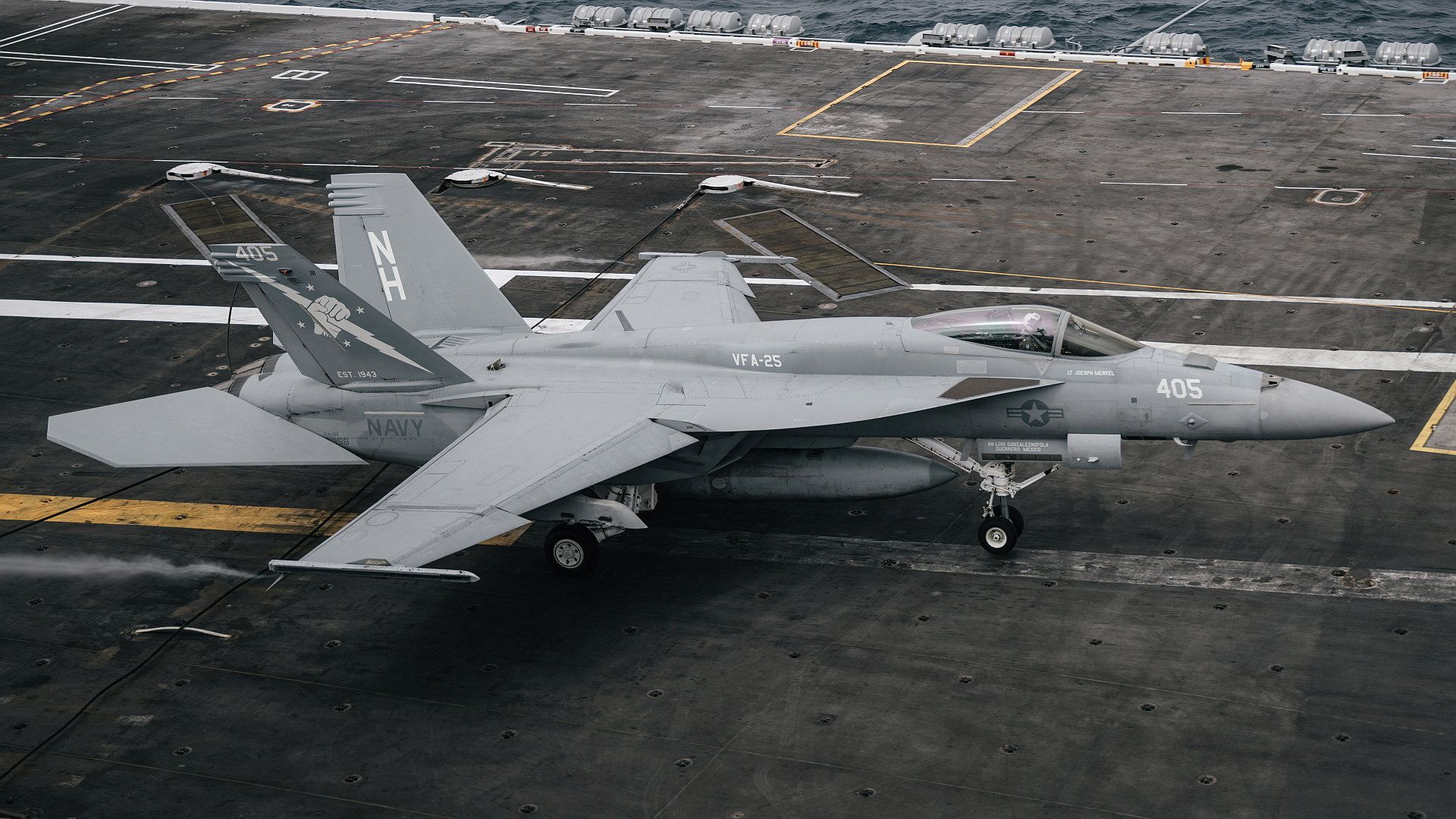
A U.S. Marine Corps KC-130J Super Hercules aircraft, assigned to the Marine Aerial Refueler Transport Squadron 252, executes evasive maneuvers, in response to a simulated threat, during a training sortie while attending the Advanced Tactics Aircrew Course at Fort Huachuca, Arizona, July 23, 2025. Since 1983 the Advanced Airlift Tactics Training Center, based out of St. Joseph, Missouri, has provided advanced tactical training to airlift aircrews from the Air National Guard, Air Force Reserve Command, Air Mobility Command, U.S. Marine Corps and 17 allied nations. (U.S. Air Force photo by Master Sgt. Patrick Evenson)
A Royal Air Force A400M Atlas aircraft assigned to the RAF Air Mobility Force takes flight as part of the U.S. Air Force's first-in-a-generation 2025 Department-Level Exercise series at Andersen Air Force Base, Guam, July 17, 2025. During the DLE, the RAF joined the U.S. Air Force and other allies, including the Royal Australian Air Force, Royal New Zealand Air Force, Royal Canadian Air Force, Japan Air Self-Defense Force, and Republic of Korea Air Force, in exercising their airlift and aeromedical evacuation capabilities. The DLE encompasses all branches of the Department of Defense, Allies, and partners, employing more than 400 joint and coalition aircraft and more than 12,000 personnel across more than 50 locations spanning 3,000 miles. (U.S. Air Force photo by Senior Airman Jade M. Caldwell)
Bombardier today announced the delivery of its first Challenger 3500 business jet in Costa Rica, marking a significant milestone for the company in Central America. With a platform that has consistently led the super-midsize segment for over two decades, the Challenger 3500 aircraft offers the ultimate combination of performance, comfort and reliability to customers around the world.
“With its high reliability, modern cabin and exceptional runway performance, the Challenger 3500 has quickly established itself as the aircraft of choice for customers around the world as well as in Central America,” said Michael Anckner, Vice President, Worldwide Pre-owned, Fleet, Defense, & Latin America. “The Challenger 3500 aircraft is a proven, across-the-board performer that delivers on Bombardier’s promise to take the passenger experience to new heights. This delivery marks an important growth milestone for our fleet in Central America and clearly demonstrates the trust that clients in the region have in Bombardier.”
With its impressive combination of range and speed, the Challenger 3500 enables seamless connectivity between key Central American capitals and major cities across the Americas. From San José, operators can efficiently reach destinations such as Los Angeles, New York, Santiago, and Buenos Aires — demonstrating the jet’s remarkable capability for regional and long-range travel. This first delivery in Costa Rica particularly highlights the aircraft’s ability to connect the country to essential business and leisure hubs. Since its introduction in 2022, the Challenger 3500 has quickly become a preferred choice for Bombardier’s customers, building on the Challenger 300 family long-standing success as the most delivered super-midsize jet in the world.
As a company with a global presence, Bombardier has been well established in Costa Rica since 2015, employing over 100 people to support its finance and billing departments.
-
U.S. Marine Corps C-130 Hercules aircraft with Marine Aerial Refueler Transport Squadron (VMGR) 352 lands during Service Level Training Exercise 4-25, on Marine Corps Air-Ground Combat Center, Twentynine Palms, California, July 25, 2025. SLTE 4-25 is designed to be a challenging, realistic training environment that produces combat-ready forces capable of operating as an integrated Marine Air Ground Task Force across all domains of military operations. (U.S. Marine Corps photo by Lance Cpl. Judith Ann Lazaro)

An F-35A Lightning II assigned to the 95th Fighter Squadron takes flight during Red Flag-Alaska 25-3 at Eielson Air Force Base, Alaska, July 19, 2025. RF-A simulates the complexities of potential scenarios, providing unique opportunities to integrate various forces into joint, coalition, and multilateral training from simulated forward operating bases, enhancing the ability to respond effectively to contingencies. (U.S. Air Force photo by Senior Airman Alexzandra Gracey)
U.S. Air Force Airmen assigned to the 95th Fighter Generation Squadron prepare a F-35A Lightning II for takeoff during Red Flag-Alaska 25-3 at Eielson Air Force Base, Alaska, July 25, 2025. In addition to aircrew, RF-A provides training for deployed maintenance and support personnel to sustain large-force deployed air operations. (U.S. Air Force photo by Senior Airman Alexzandra Gracey)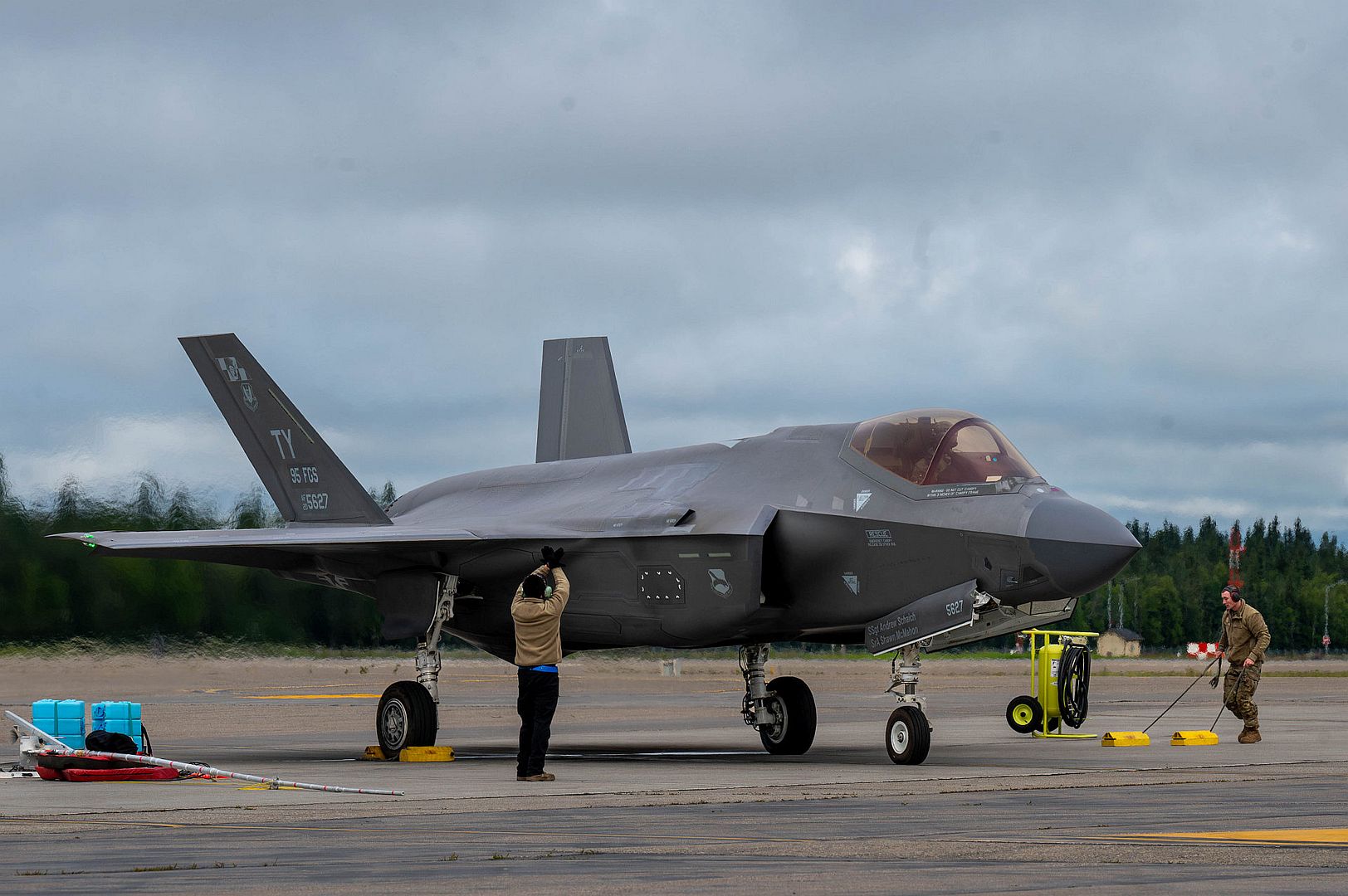
PACIFIC OCEAN (July 25, 2025) – An E-2D Hawkeye, assigned to the “Liberty Bells” of Airborne Command and Control Squadron (VAW) 115, lands on the flight deck of Nimitz-class aircraft carrier USS Theodore Roosevelt (CVN 71), July 25, 2025. Theodore Roosevelt, flagship of Carrier Strike Group (CSG) 9, is underway conducting exercises to bolster strike group readiness and capability in the U.S. 3rd Fleet area of operations. (U.S. Navy photo by Mass Communication Specialist Seaman Maddix Almeyda)
U.S. Air Force Capt. Rhett Spongberg, 510th Fighter Squadron F-16 Fighting Falcon pilot, prepares for takeoff during Thracian Star 25 at Bezmer Air Base, Bulgaria, July 24, 2025. The 510th Fighter Squadron, based at Aviano Air Base, provides combat airpower on demand to U.S. and NATO combatant commanders as well as the National Command Authority in order to meet national security objectives. (U.S. Air Force photo by Staff Sgt. Jenna A. Bond)
KENNEDY SPACE CENTER, Fla., July 28, 2025 /PRNewswire(opens in a new tab)/ -- The Boeing [NYSE: BA]-built X-37B Orbital Test Vehicle (OTV) is preparing to launch its eighth mission (OTV-8) from Florida's Space Coast, with liftoff scheduled no earlier than August 21. This milestone comes less than six months after the successful completion of OTV-7.
"With each successive flight, the X-37B has demonstrated adaptability and flexibility by hosting diverse experiments and pioneering new orbital regimes," said Michelle Parker, vice president of Boeing Space Mission Systems. "This mission continues that legacy by fielding cutting-edge technologies that advance our nation's space capability and improve the resilience of future architectures."
OTV-8 will fly with a service module, expanding capacity for experiments and opening new opportunities for mission partners, which include the Air Force Research Laboratory and the Defense Innovation Unit.
The mission will host demonstrations of high-bandwidth inter-satellite laser communications technologies, as well as the highest performing quantum inertial sensor ever tested in space. The U.S. Space Force will leverage insights from this mission to inform future space architectures.
"OTV-8's laser communications demonstration will mark an important step in the U.S. Space Force's ability to leverage commercial space networks as part of proliferated, diversified, and redundant space architectures," said U.S. Space Force Chief of Space Operations, Gen. Chance Saltzman. "In so doing, it will strengthen the resilience, reliability, adaptability, and data transport speeds of our satellite communications architectures."
The revolutionary quantum inertial sensor will demonstrate precise positioning, navigation and timing in a GPS-denied environment. Quantum inertial sensors, useful for navigation in deep and cis-lunar space, promise to push the technological frontiers of long-distance space travel and exploration.
"OTV 8's quantum inertial sensor demonstration is a welcome step forward for the operational resilience of Guardians in space," said Space Delta 9 Commander Colonel Ramsey Hom. "Whether navigating beyond Earth-based orbits in cis-lunar space or operating in GPS-denied environments, quantum inertial sensing allows for robust navigation capabilities where GPS navigation is not possible. Ultimately, this technology contributes significantly to our thrust within the Fifth Space Operations Squadron and across the Space Force guaranteeing movement and maneuverability even in GPS-denied environments."
Boeing and Space Force teams are preparing the spaceplane for launch at Boeing's facility at Kennedy Space Center, Florida. Since its inaugural launch in April 2010, the spaceplane has spent more than 4,200 days in space.
A leading global aerospace company and top U.S. exporter, Boeing develops, manufactures and services commercial airplanes, defense products and space systems for customers in more than 150 countries. Our U.S. and global workforce and supplier base drive innovation, economic opportunity, sustainability and community impact. Boeing is committed to fostering a culture based on our core values of safety, quality and integrity.
-
A P-8A Poseidon attached to Air Test and Evaluation Squadron (VX) 1 approaches to land at Joint Base Pearl Harbor-Hickam, Hawaii, July 27, 2025. VX-1 sent two of their Maritime Patrol and Reconnaissance planes, the P-8A, to Joint Base Pearl Harbor Hickam to test new Antisubmarine Warfare (ASW) systems before these systems are fielded in the Fleet. The principal mission of VX-1 is to test and evaluate airborne anti-submarine warfare, maritime anti-surface warfare, and airborne command and control platforms as well as support systems, equipment and materials in an operational environment. (U.S. Navy photo by Mass Communication Specialist 2nd Class (SW) John T. Jarrett)

A P-8A Poseidon attached to Air Test and Evaluation Squadron (VX) 1 taxis on an airfield at Joint Base Pearl Harbor-Hickam, Hawaii, July 27, 2025. VX-1 sent two of their Maritime Patrol and Reconnaissance planes, the P-8A, to Joint Base Pearl Harbor Hickam to test new Antisubmarine Warfare (ASW) systems before these systems are fielded in the Fleet. The principal mission of VX-1 is to test and evaluate airborne anti-submarine warfare, maritime anti-surface warfare, and airborne command and control platforms as well as support systems, equipment and materials in an operational environment. (U.S. Navy photo by Mass Communication Specialist 2nd Class (SW) John T. Jarrett)
Beechcraft M-346N unveiled as ready-now solution for U.S. Navy Undergraduate Jet Training System
Introducing the Beechcraft M-346N for the future of Naval aviation
WICHITA, Kan. (July 28, 2025) — Textron Aviation Defense LLC, a Textron Inc. (NYSE: TXT) company, today announced its offering of the Beechcraft M-346N jet as a “ready-now” solution from an iconic American company for the U.S. Navy Undergraduate Jet Training System (UJTS) program. The U.S. Navy has released several Requests for Information related to an upcoming Request for Proposals for a new aircraft for the UJTS program.
Textron Aviation Defense and Leonardo have entered into a teaming agreement to work together to meet the Navy’s requirements for its new jet trainer. The Beechcraft M-346N is part of a proven integrated training system based on the original M-346 aircraft developed by Leonardo. More than 100 Leonardo M-346 aircraft are already meeting the demanding student pilot training needs for 4th and 5th generation air forces worldwide, including at Italy’s globally renowned International Flight Training School (IFTS).
"With our heritage deeply rooted in the strength and reliability of American manufacturing, the Beechcraft M-346N joins a proud lineup of aircraft built on 95 years of aviation excellence. The aircraft can be the cornerstone for the Navy’s future of undergraduate jet training, combining operationally-proven performance with cutting-edge technologies."
- Travis Tyler, president and CEO, Textron Aviation Defense
Textron Aviation Defense, headquartered in Wichita, Kansas, manufactures Cessna and Beechcraft aircraft for military missions around the world. Since World War II, militaries have relied on these iconic brands for high-performance training and tactical aircraft.
About the Beechcraft M-346N
The Beechcraft M-346N — a twin-engine, tandem-seat aircraft with fully digital flight controls and avionics — is equipped with a fly-by-wire flight control system with quadruple redundancy, a cutting-edge human-machine interface with Head-Up Display and Large Area Display in each cockpit, hands on throttle and stick (HOTAS) controls and innovative safety features such as the Automatic Ground Collision Avoidance System (Auto-GCAS).
Fitted with two Honeywell F124-GA-200 turbofan engines, the M-346N delivers an inherently high level of safety along with impressive performance, including a maximum cruise speed of more than 590 knots and a service ceiling of 45,000 ft.
The aircraft’s advanced aerodynamic design enables exceptional maneuverability and energy management, while the elevated rear cockpit gives instructors excellent visibility in all phases of flight. The result is a trainer that effectively bridges basic instruction and the high-performance world of carrier-based fighter operations.
Advanced integrated training: A complete ecosystem
The comprehensive M-346N integrated training ecosystem, which has been validated and continuously improved through the global operational experience of the M-346 integrated training system, is poised to provide the Navy with a complete solution that enhances student readiness and operational effectiveness while reducing training costs and risks.
The Beechcraft M-346N leverages the operationally-proven Embedded Training System avionics suite for basic to advanced tactical training emulating sensors, weapons and Computer Generated Forces. This enables students to interact in real-time through a Live-Virtual-Constructive (LVC) training architecture that links aircraft in flight (Live), simulators (Virtual) and computer-generated friendly and adversary forces (Constructive). The innovative system also features adaptive training powered by Artificial Intelligence which continuously analyzes student pilot performance data to personalize learning paths, automate evaluations and tailor instruction to individual strengths and areas for improvement
Together with its full spectrum of high-fidelity ground-based training devices — comprising simulators, computer training devices, mission planning / management tools and a carrier-based LVC environment — the Beechcraft M-346N offers a complete solution for training the next generation of Navy and Marine Corps aviators.