Aviation News
-
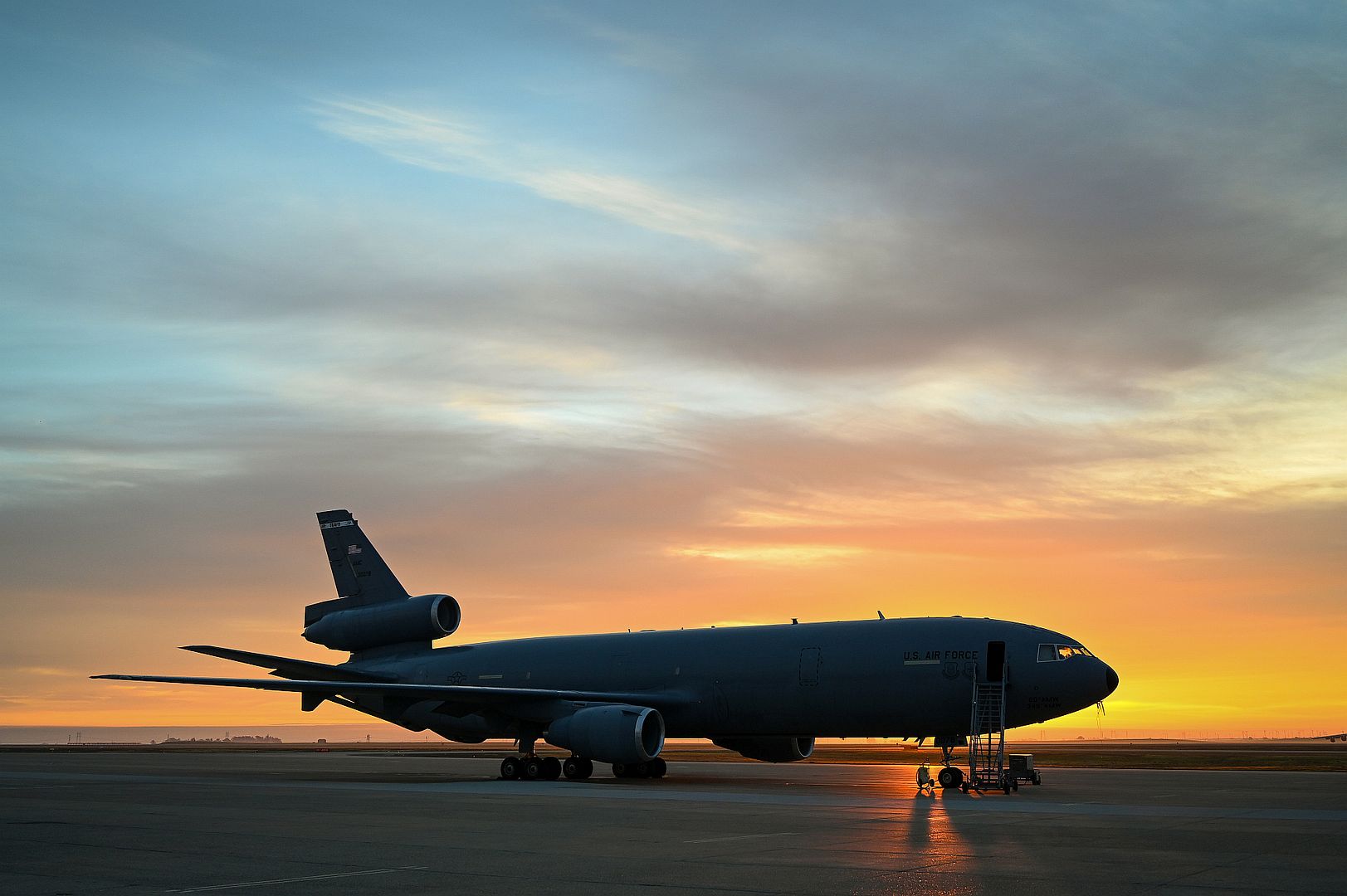
A U.S. Air Force KC-10 Extender is parked at the flight line on Travis Air Force Base, California, Jan. 23, 2020. The KC-10 Extender is capable of refueling other aircraft in the air, transporting litter and ambulatory patients using patient support pallets during aeromedical evacuations and it can transport up to 75 people and nearly 170,000 pounds of cargo. (U.S. Air Force Photo by Nicholas Pilch)
NASA?s ER-2 weather research plane lands at Hunter Army Airfield Jan. 15. The plane is flying missions out of Hunter through March 1 to study east coast winter storms. (Photo by Kevin Larson)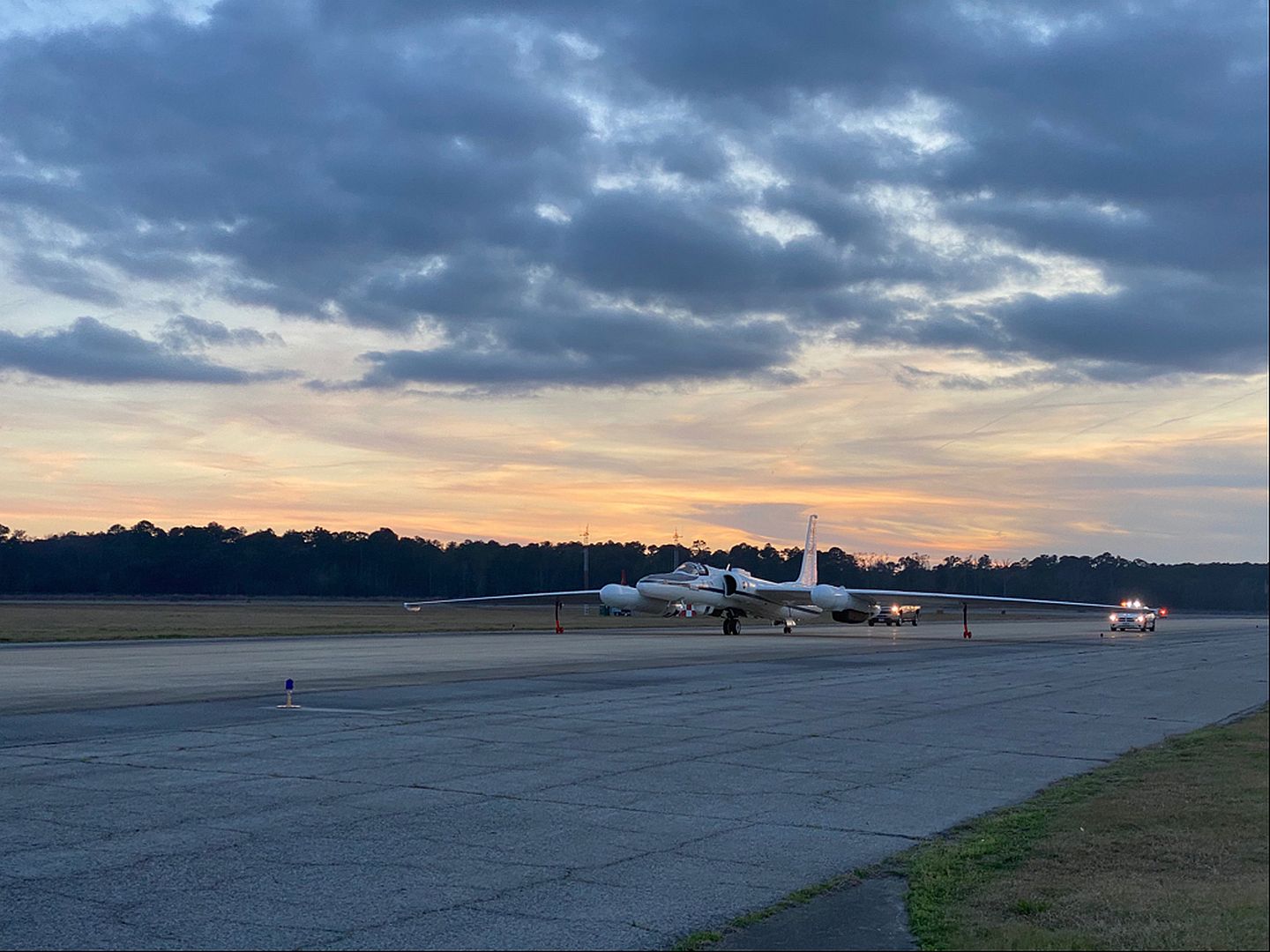
ATLANTIC OCEAN (Jan. 22, 2020) An EA-18G Growler, assigned to Air Test and Evaluation Squadron (VX) 23, approaches USS Gerald R. Ford's (CVN 78) flight deck. Ford is currently conducting Aircraft Compatibility Testing to further test its Electromagnetic Aircraft Launch Systems (EMALS) and Advanced Arresting Gear (AAG). (U.S. Navy photo by Mass Communication Specialist 3rd Class Ryan Carter)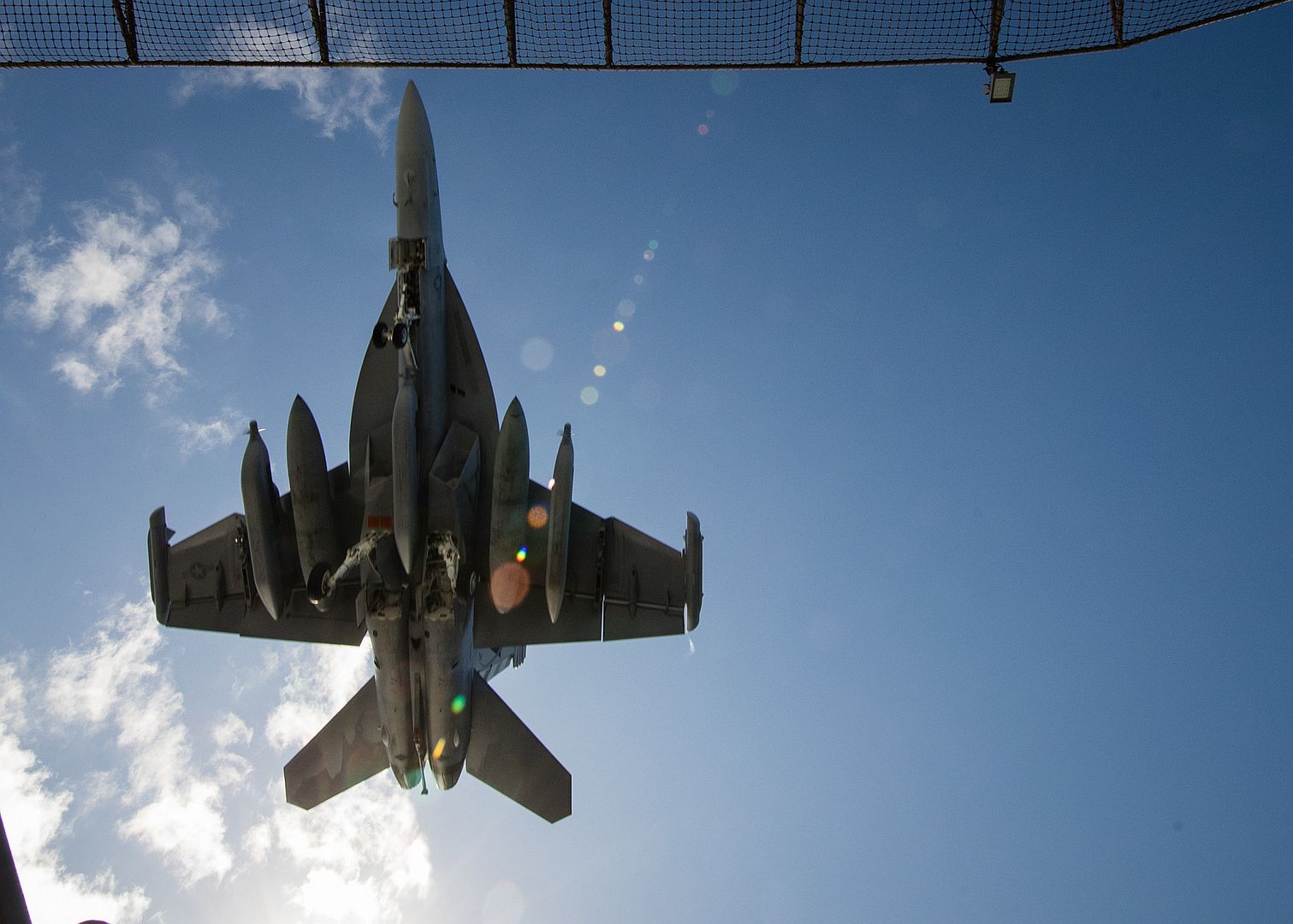
An MC-130J Commando II assigned to the 17th Special Operations Squadron, 353rd Special Operations Group, is prepped for flight before participating in Exercise Westpac Rumrunner Jan. 10, 2020, at Kadena Air base, Japan. The 18th Wing and its joint partners executed the first WestPac Rumrunner exercise, which focused on counter air capabilities and joint interoperability using agile combat employment concepts. (U.S. Air Force photo by Staff Sgt. Benjamin Sutton)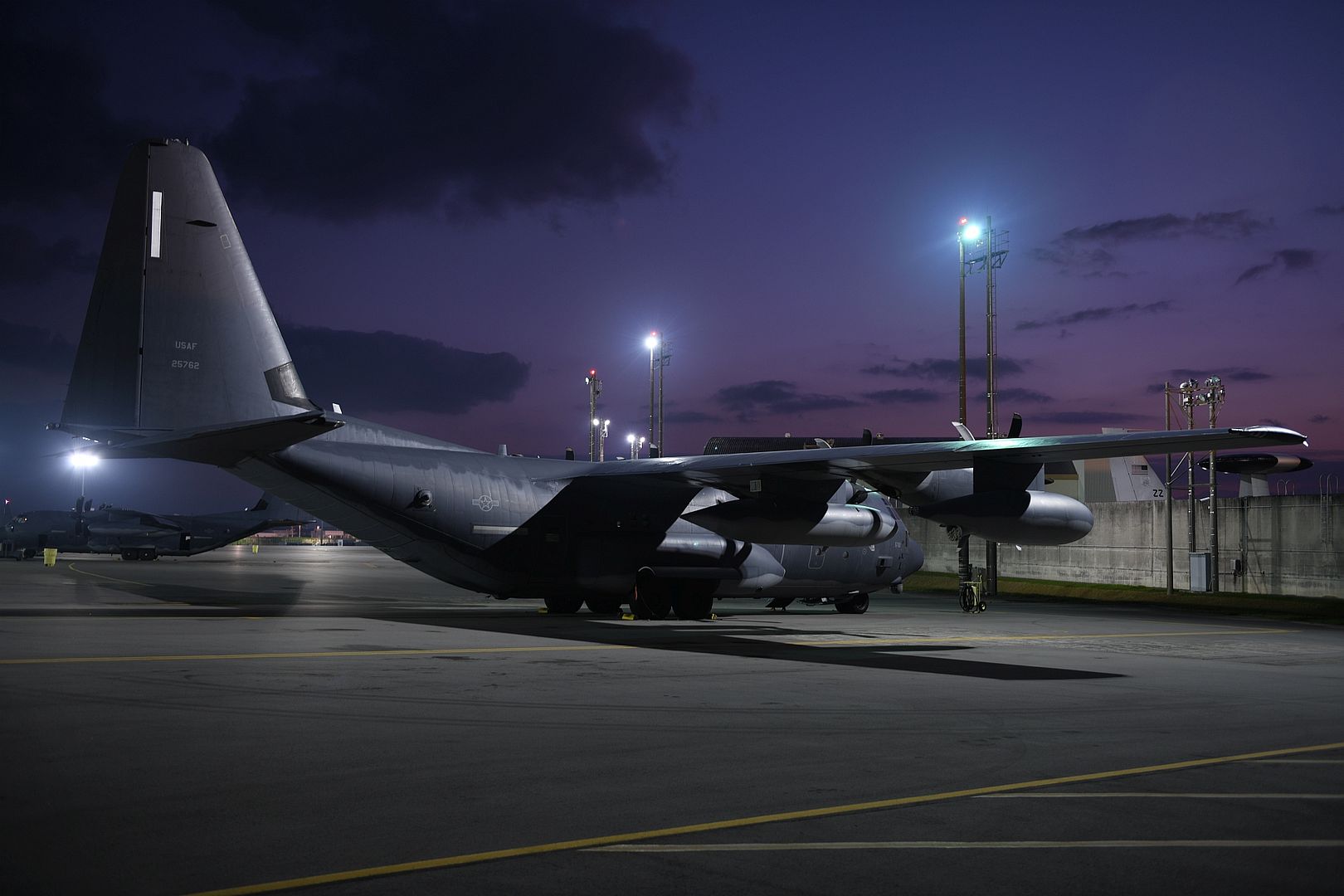
Nordic Aviation Capital (NAC), the leading lessor of regional aircraft, signed at the end of 2019 a firm order for 20 A220 Family aircraft.
This latest order from NAC, counted in the 2019 order-book, is a huge endorsement and affirms the strong market demand for the state-of-the-art, fuel-efficient A220 Family.
?NAC?s order for the A220 shows this aircraft is just as relevant in the regional world as it is in the mainline one,? said Christian Scherer, Airbus Chief Commercial Officer. ?We are delighted to work with NAC going forward, we thank them for their confidence and congratulate them on their new offices in Limerick.?
NAC is today the largest lessor of regional aircraft in the world, managing and owning 500 aircraft on lease to 78 airline customers in over 50 countries.
The A220 is the only aircraft purpose-built for the 100-150 seat market; it delivers unbeatable fuel efficiency and widebody passenger comfort in a single-aisle aircraft. The A220 brings together state-of-the-art aerodynamics, advanced materials and Pratt & Whitney?s latest-generation PW1500G geared turbofan engines to offer at least 20% lower fuel burn per seat compared to previous-generation aircraft, along with significantly lower emissions and a reduced noise footprint. The A220 offers the performance of larger single-aisle aircraft. At the end of December 2019, the A220 had accumulated 600 orders and over 100 aircraft in service with seven operators worldwide.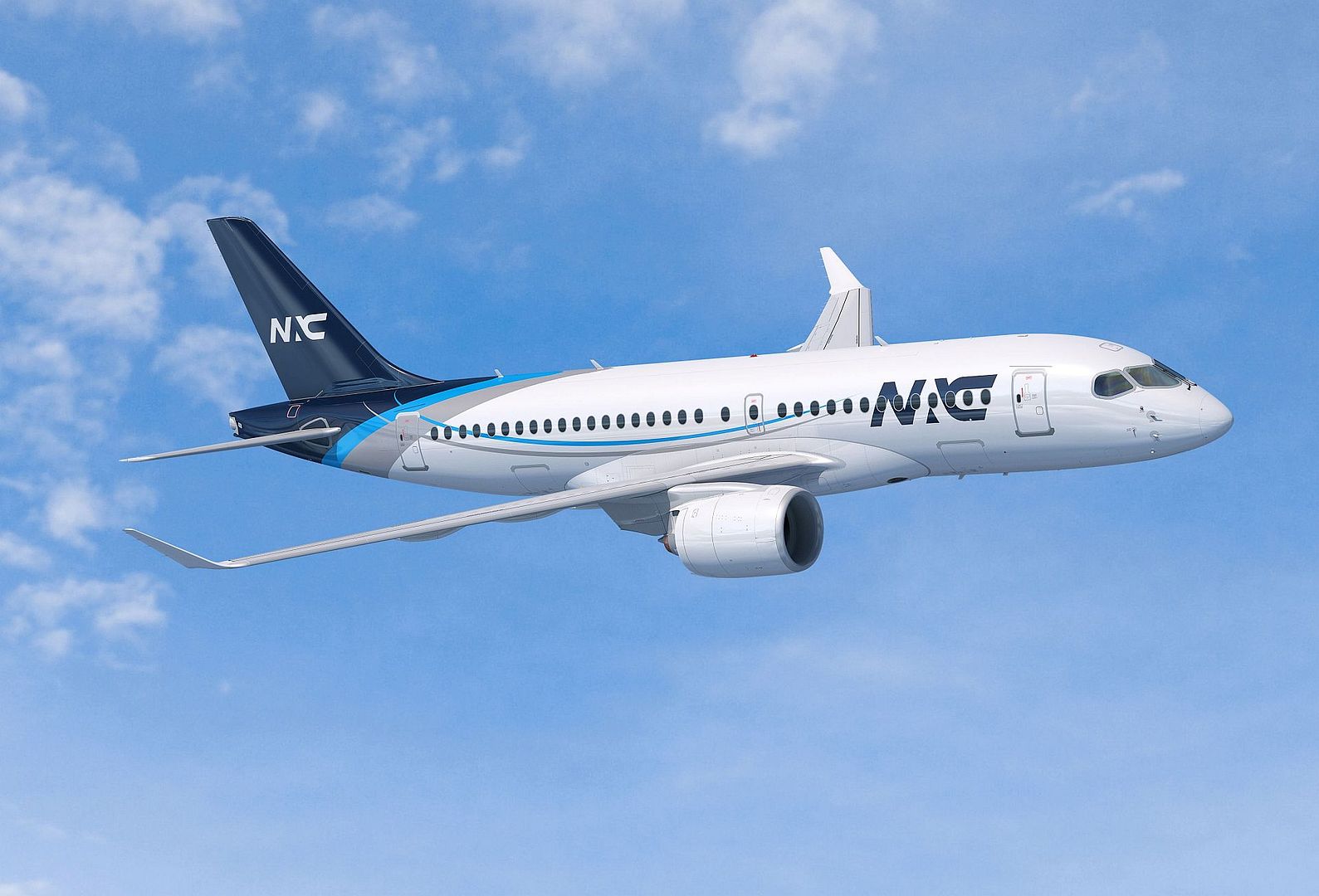
-
NAIROBI, Kenya --- The United States Embassy in Nairobi announces the sale of six MD-530F helicopters to the Kenya Defence Forces (KDF) made possible through the United States Foreign Military Sales (FMS) Program.
U.S. Army Major General Michael D. Turello, commanding general of Combined Joint Task Force-Horn of Africa, attended the ceremony. U.S. Ambassador Kyle McCarter hailed the purchase as an important moment in the U.S.-Kenya relationship.
?The six MD-530F helicopters are emblematic of the decades-long security partnership between Kenya and the United States. These helicopters are tangible examples of our joint commitment to the fight against terrorism, and Kenya?s willingness to invest in its own security,? Ambassador McCarter said. ?The United States is here to support the KDF?s ongoing modernization efforts and realize our mutual security objectives in the region.?
The sale of the helicopters is representative of the U.S. ?total package approach? of the United States Foreign Military Sales program, which includes not just the equipment but also a comprehensive spare parts and multi-year sustainment package to ensure the longevity of the aircraft. The United States defense industry produces the highest quality equipment in the world and these helicopters will support Kenya?s security needs for decades to come.
(U.S. Air Force photo by Tech. Sgt. Ashley Nicole Taylor)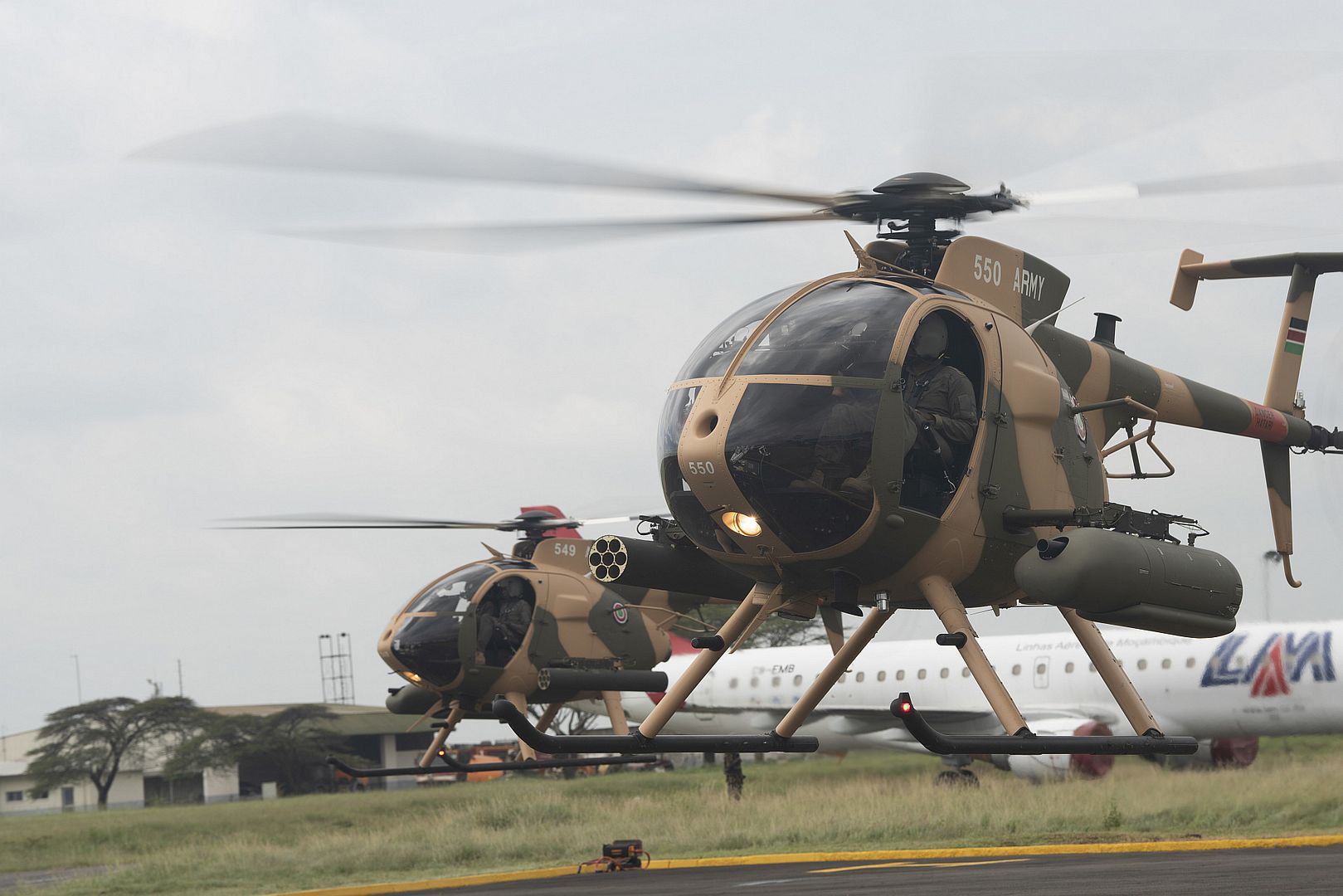
A crew chief assigned to the 158th Maintenance Group marshals an F-35 for departure to training known as Southern Lightning at Eglin Air Force Base, Florida, from the Vermont Air National Guard Base, South Burlington, Vt., Jan. 23, 2020. Over 100 Airmen will fly and maintain F-35 operations at Southern Lightning, utilizing their training and developing their skills while executing flying operations off-station. (U.S. Air National Guard photo by Miss Julie M. Shea)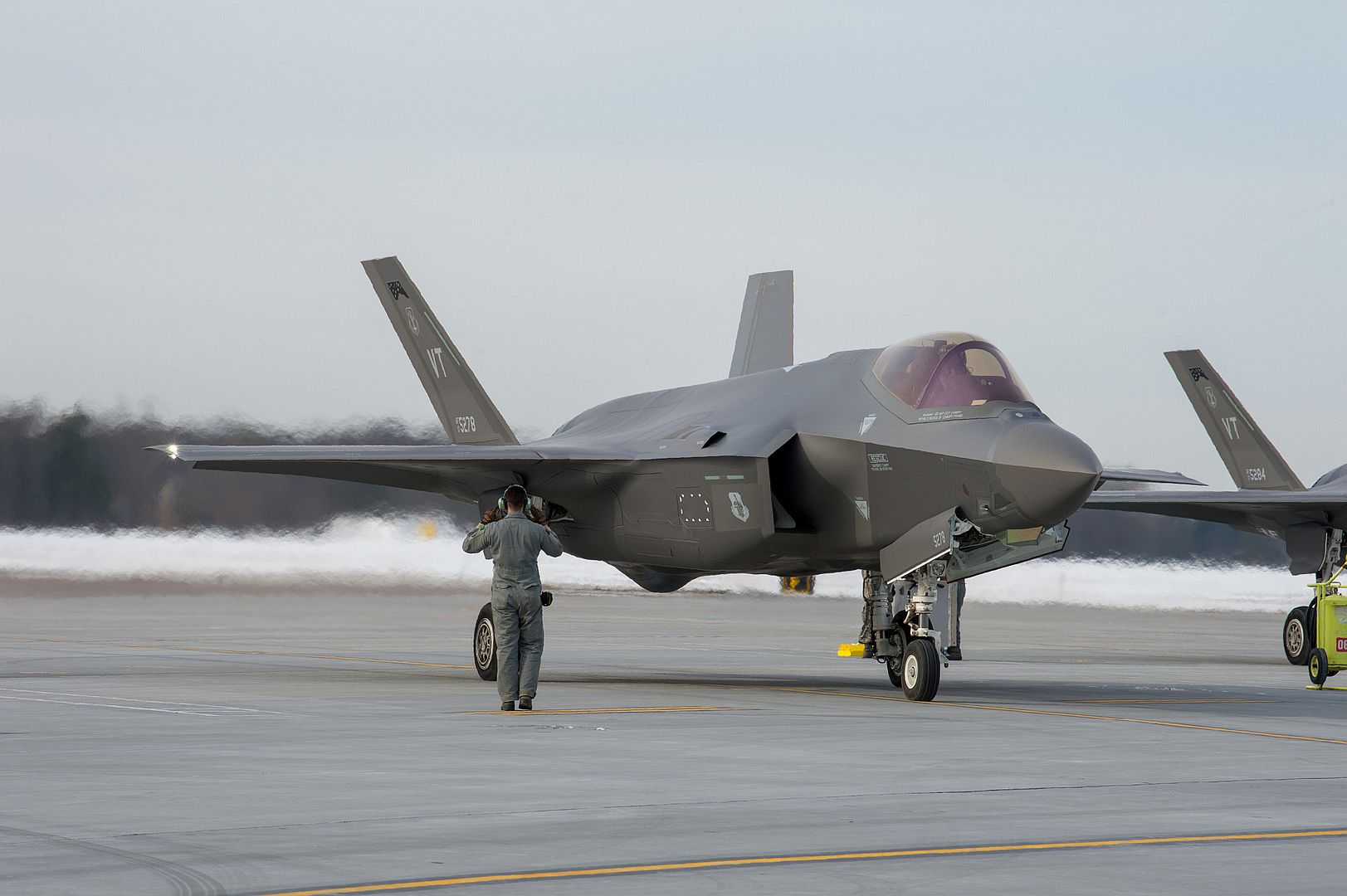
U.S. Airmen from the 52nd Fighter Wing finish fueling and arming F-16 Fighting Falcons on the flightline at Ramstein Air Base, Germany, Jan. 22, 2020. The effort was in support of an Agile Combat Employment Exercise. The goal of ACE is to generate airpower in any environment with minimal personnel and equipment, and deter threats. (U.S. Air Force photo by Airman 1st Class Valerie Seelye)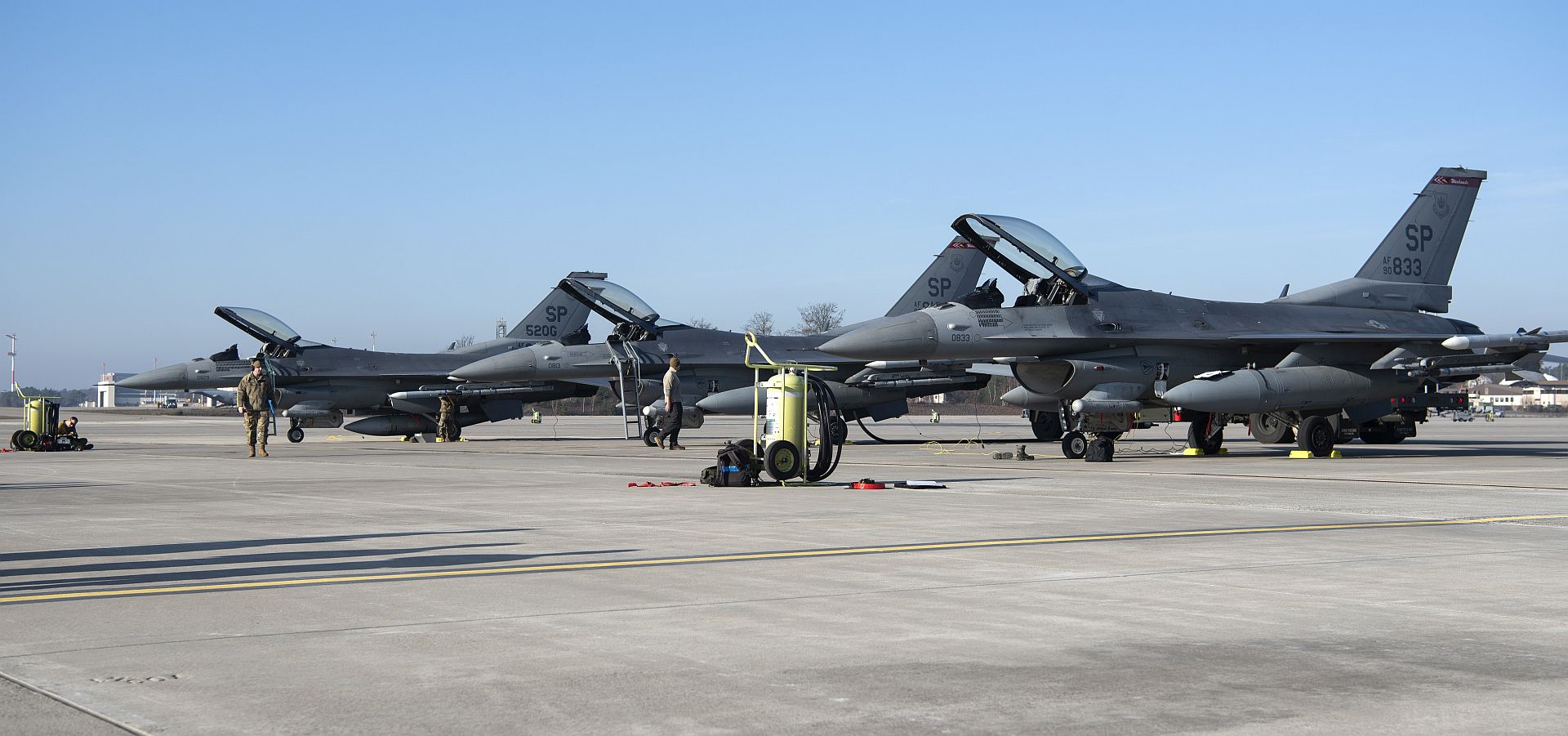
ATLANTIC OCEAN (Jan. 24, 2020) An EA-18G Growler, assigned to Air Test and Evaluation Squadron (VX) 23, is guided into position to be chocked and chained to USS Gerald R. Ford's (CVN 78) flight deck. Ford is currently conducting Aircraft Compatibility Testing to further test its Electromagnetic Aircraft Launch Systems (EMALS) and Advanced Arresting Gear (AAG). (U.S. Navy photo by Mass Communication Specialist 2nd Class Ruben Reed)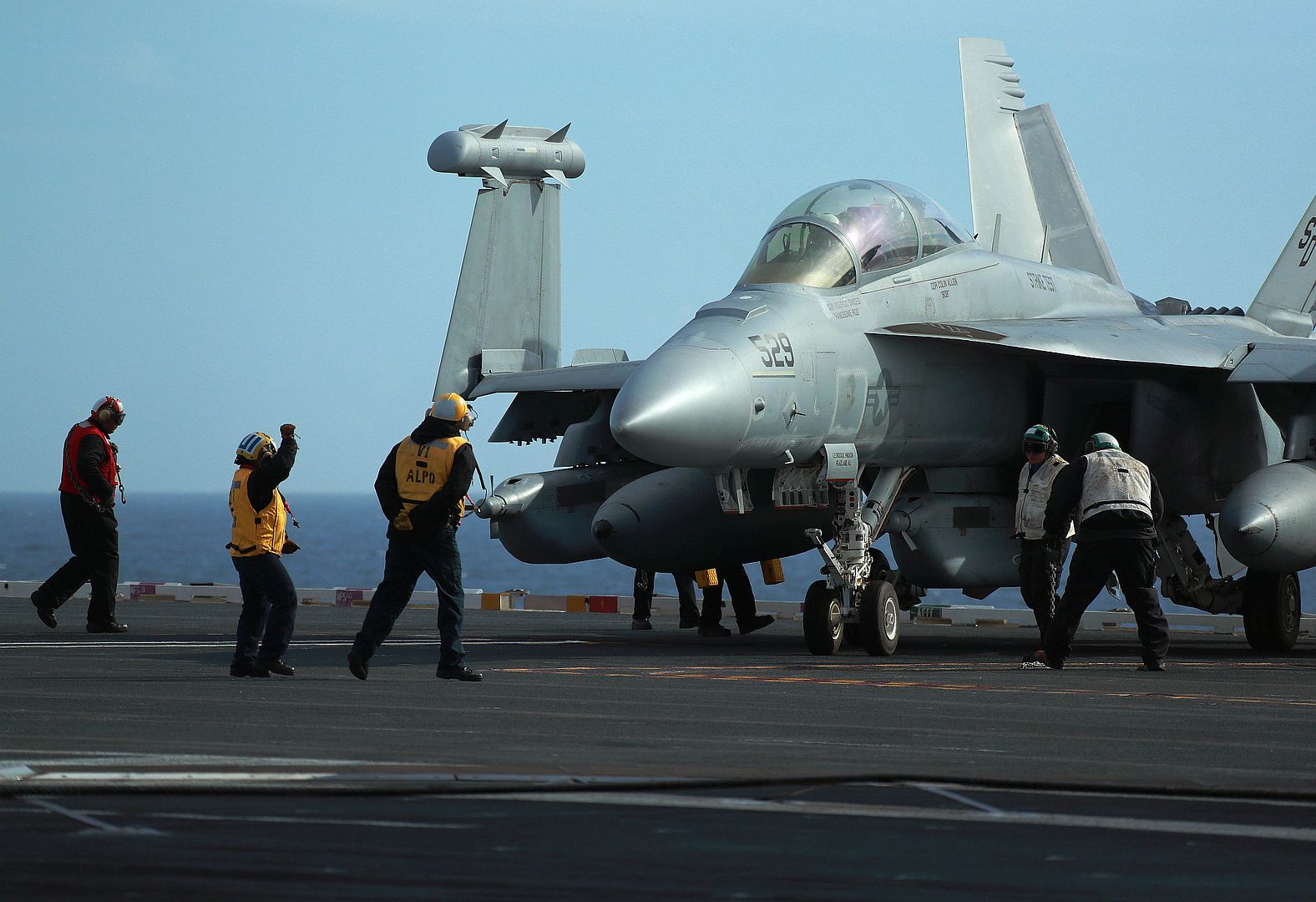
PACIFIC OCEAN (Jan. 23, 2020) An F/A-18E Super Hornet, assigned to the ?Tomcatters? of Strike Fighter Squadron (VFA) 31, launches from the flight deck of the aircraft carrier USS Theodore Roosevelt (CVN 71) Jan. 23, 2020. The Theodore Roosevelt Carrier Strike Group is on a scheduled deployment to the Indo-Pacific. (U.S. Navy photo by Mass Communication Specialist 2nd Class Pyoung K. Yi)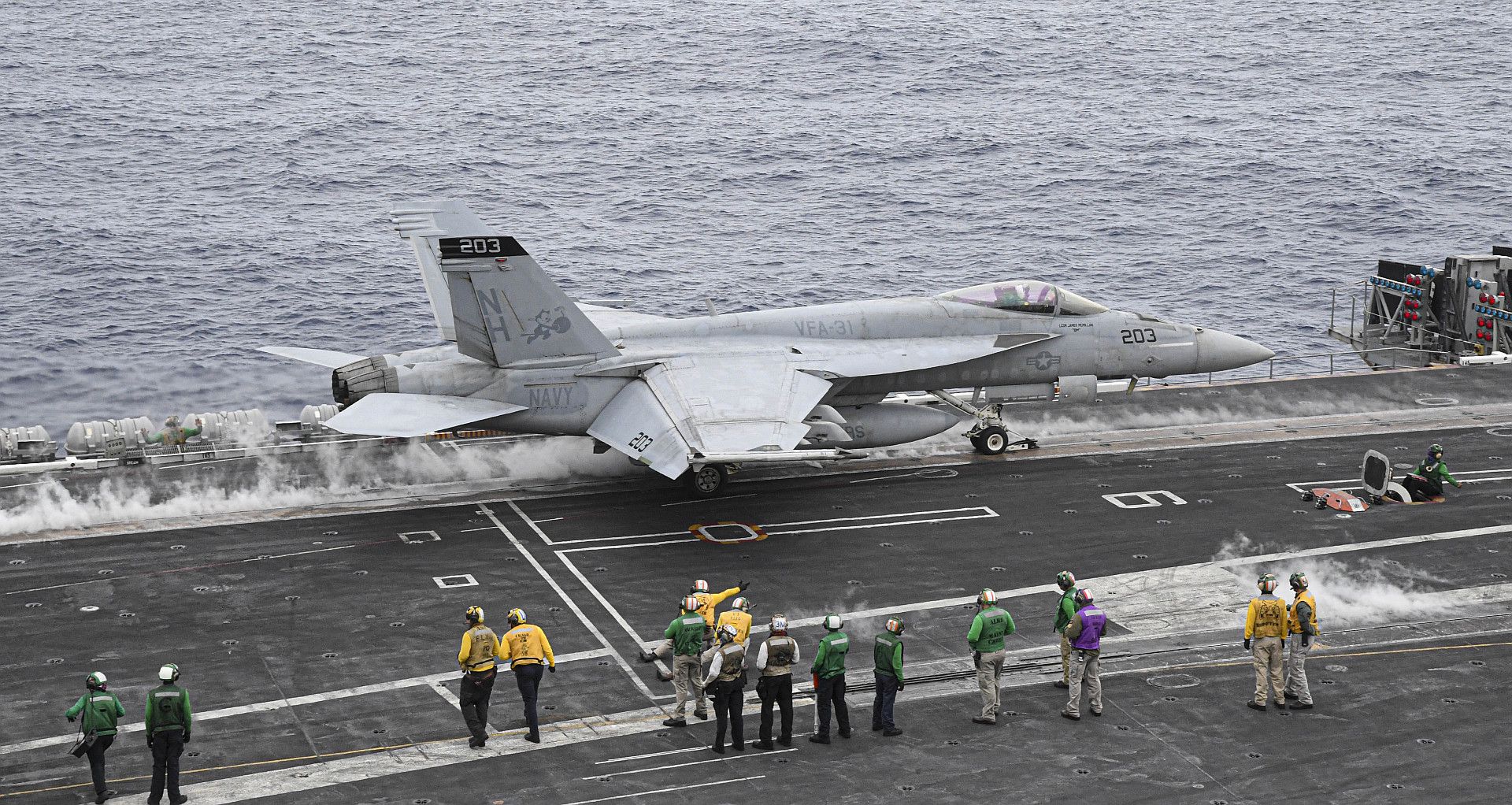
-
ATLANTIC OCEAN (Jan. 25, 2020) An E-2D Hawkeye, assigned to Air Test and Evaluation Squadron (VX) 20, prepares to land aboard USS Gerald R. Ford's (CVN 78) flight deck. Ford is currently conducting Aircraft Compatibility Testing to further test its Electromagnetic Aircraft Launch Systems (EMALS) and Advanced Arresting Gear (AAG). (U.S. Navy photo by Mass Communication Specialist 2nd Class Ruben Reed)
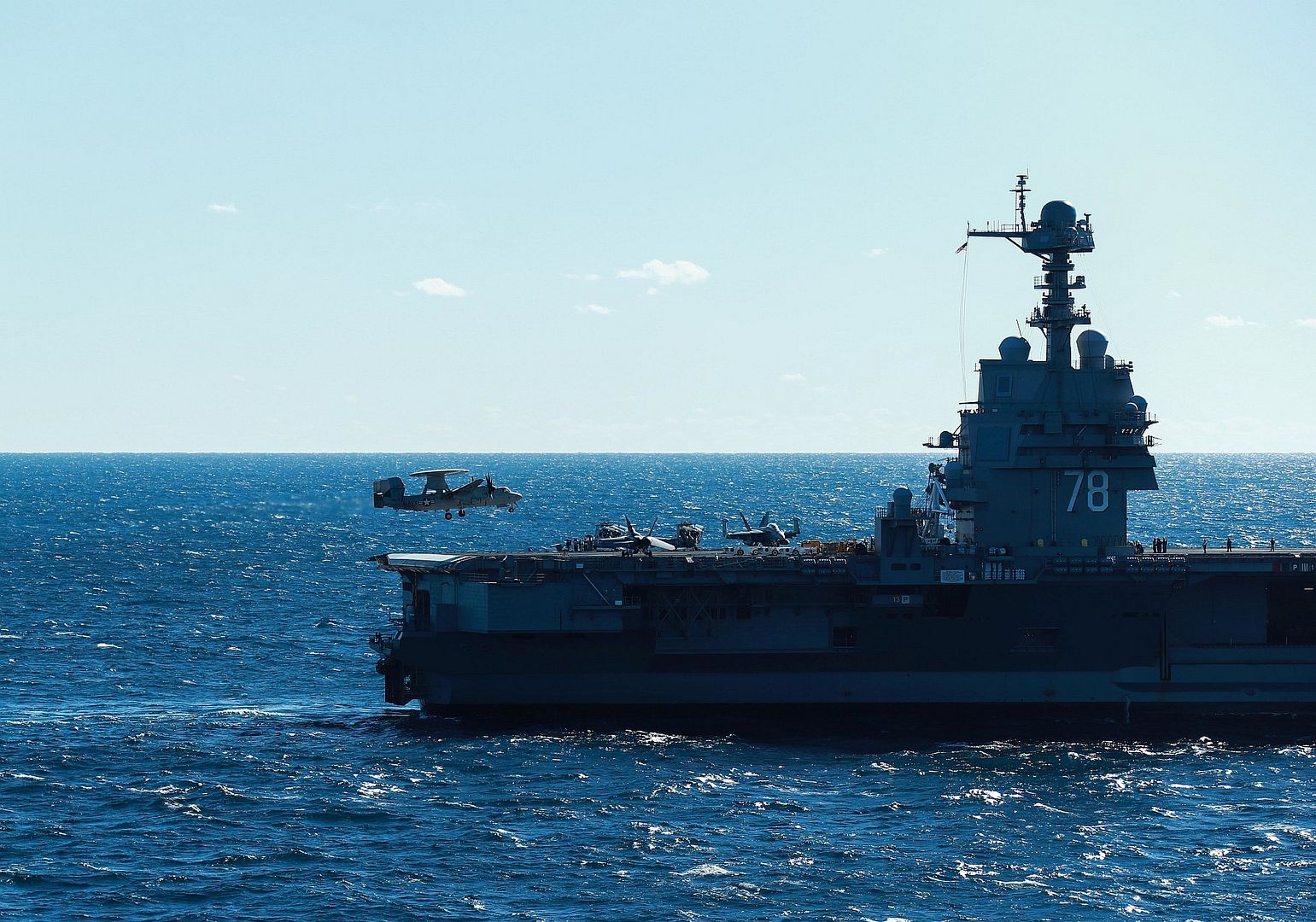
ATLANTIC OCEAN (Jan. 25, 2020) A E-2D Hawkeye, assigned to Air Test and Evaluation Squadron (VX) 20, approacshes USS Gerald R. Ford's (CVN 78) flight deck. Ford is currently conducting Aircraft Compatibility Testing to further test its Electromagnetic Aircraft Launch Systems (EMALS) and Advanced Arresting Gear (AAG). (U.S. Navy photo by Mass Communication Specialist 3rd Class Ryan Carter)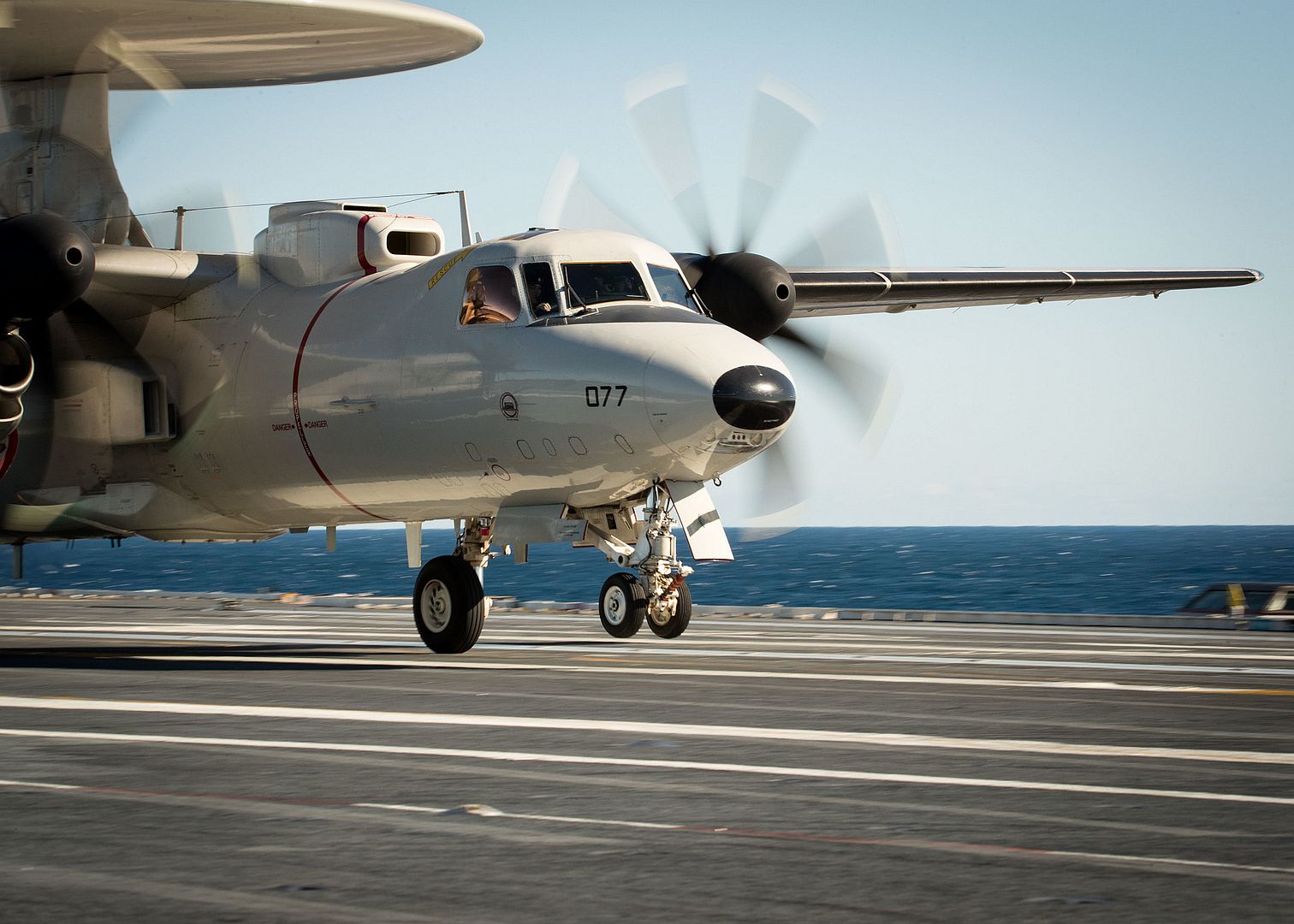
PACIFIC OCEAN (Jan. 25, 2020) The Theodore Roosevelt Carrier Strike Group transits in formation Jan. 25, 2020. The Theodore Roosevelt Carrier Strike Group is on a scheduled deployment to the Indo-Pacific. (U.S. Navy photo by Mass Communication Specialist Seaman Alexander Williams)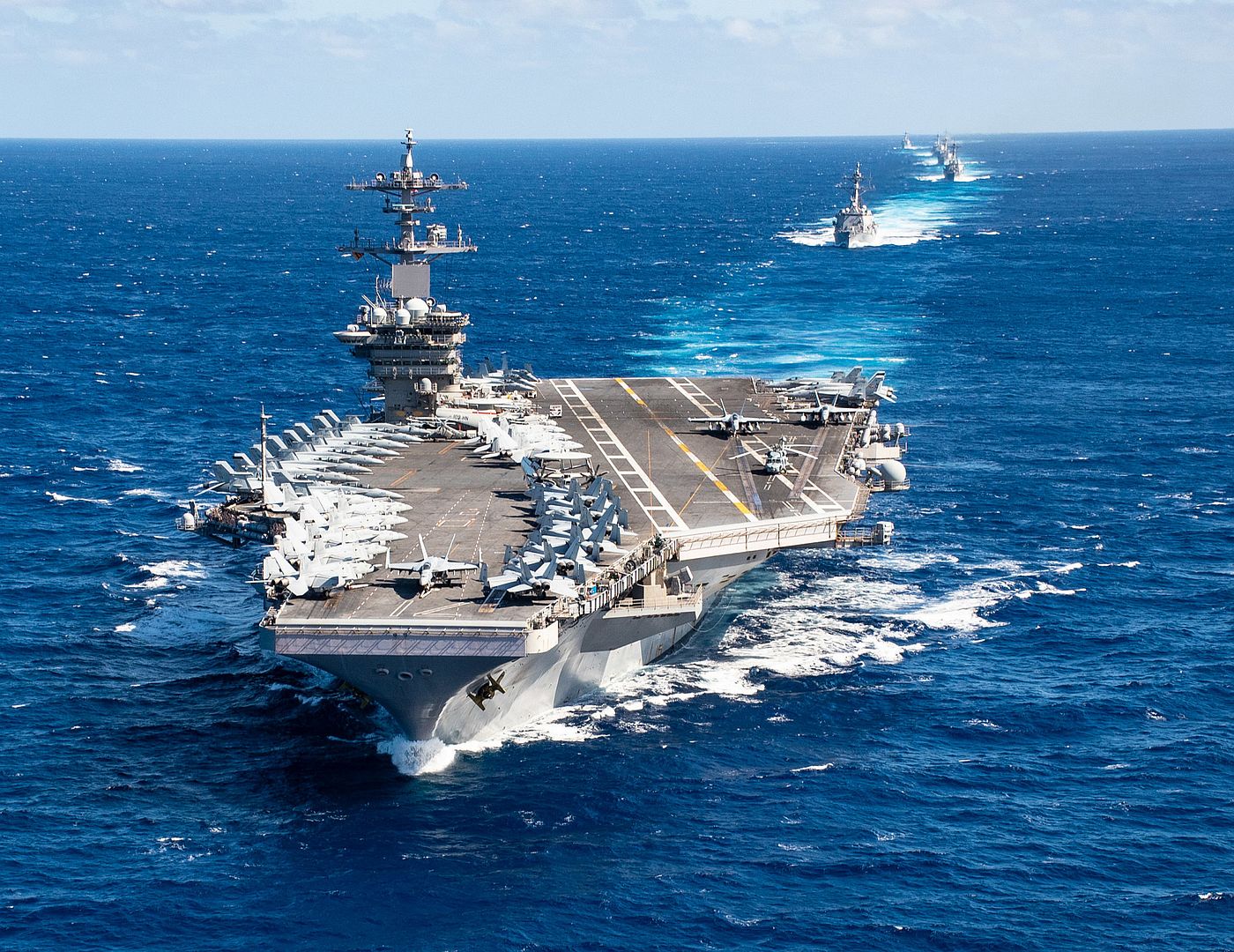
JOINT BASE PEARL HARBOR-HICKAM, Hawaii (AFNS) -- More than 1,000 personnel from the U.S. Air Force?s active, national guard and reserve components participated in the decade?s first Sentry Aloha exercise Jan. 8-22, at Joint Base Pearl Harbor-Hickam.
The air-to-air combat exercise, designated as Sentry Aloha 20-1, is hosted by the Hawaii Air National Guard and designed to train Airmen from around the country in a joint and interoperable venue on a large scale.
By incorporating more than 35 aircraft, the participating units demonstrated their abilities to equip, launch, engage, refuel and monitor warfighters within the training airspace.
California Air National Guard F-15 Eagles, assigned to the 194th Fighter Squadron, teamed up with the local ?Hawaiian Raptors,? a total-force unit comprised of the Hawaii ANG?s 199th FS and active duty?s 19th FS, in a series of training sorties. Together, they practiced combat scenarios against this iteration?s ?aggressors,? the F-16 Fighting Falcons from the 18th Aggressor Squadron based out of Eielson Air Force Base, Alaska.
?When you put Eagles and Raptors together in air-to-air combat, we basically build on each other?s strength,? said Lt. Col. Pete Weidner, 144th Fighter Wing alert commander, ?and it?s more than one plus one equaling two ? it?s more like one plus one equals five.?
The 128th Air Refueling Wing?s KC-135 Stratotankers from General Mitchell Air National Guard Base, Wisconsin, also provided a pivotal warfighting role. Tanker aircraft provided in-air refueling to all three fighter jets. As pilots performed battle tactics, command information was channeled through an E-3 Sentry, which monitored aircraft activity within the battlespace. The airborne warning and control aircraft is operated by aircrew from the 960th and 970th Airborne Air Control Squadrons, from Tinker Air Force Base, Oklahoma.
Flying squadrons rely on mass-training opportunities such as Sentry Aloha to test and improve warfighting skills with partnered units to ensure air superiority in any possible conflict. Mission planners consider every possible variable when designing exercise details to include transportation, logistics, maintenance, weather, scheduling, health requirements, fighter capabilities and more.
?Sentry Aloha provides a unique opportunity for ?fourth-gen? units to operate in ?5th gen? fighter aircraft integration with the F-22 Raptors," said Lt. Col. Matthew Ohman, Sentry Aloha exercise director. "Fighter integration in dissimilar air combat, simply put, is when they operate together and are on the same team, they achieve better results than alone.?
While the primary goal of Sentry Aloha is to develop proficiencies of fighter pilots, the professional development of Airmen of every level is necessary in order for the exercise to become a complete success.
Airman 1st Class Nate Johnsen, a 128th ARW maintainer, discovered how the exercise environment provides more experience than just his drill weekends.
?I?m a traditional guardsman back home,? Johnsen said. ?So being out here in a deployment situation is more interesting because you have one or two (Stratotankers) going out every day.?
With a seemingly endless body of water surrounding Hawaii, JB Pearl Harbor-Hickam has been deemed an optimal training location due to its unique geography and expansive base resources.
?The location has perfect weather for flying, in excess of 300 days a year,? Weidner said. ?You get great training.?
(U.S. Air Force photo by Senior Airman Beaux Hebert)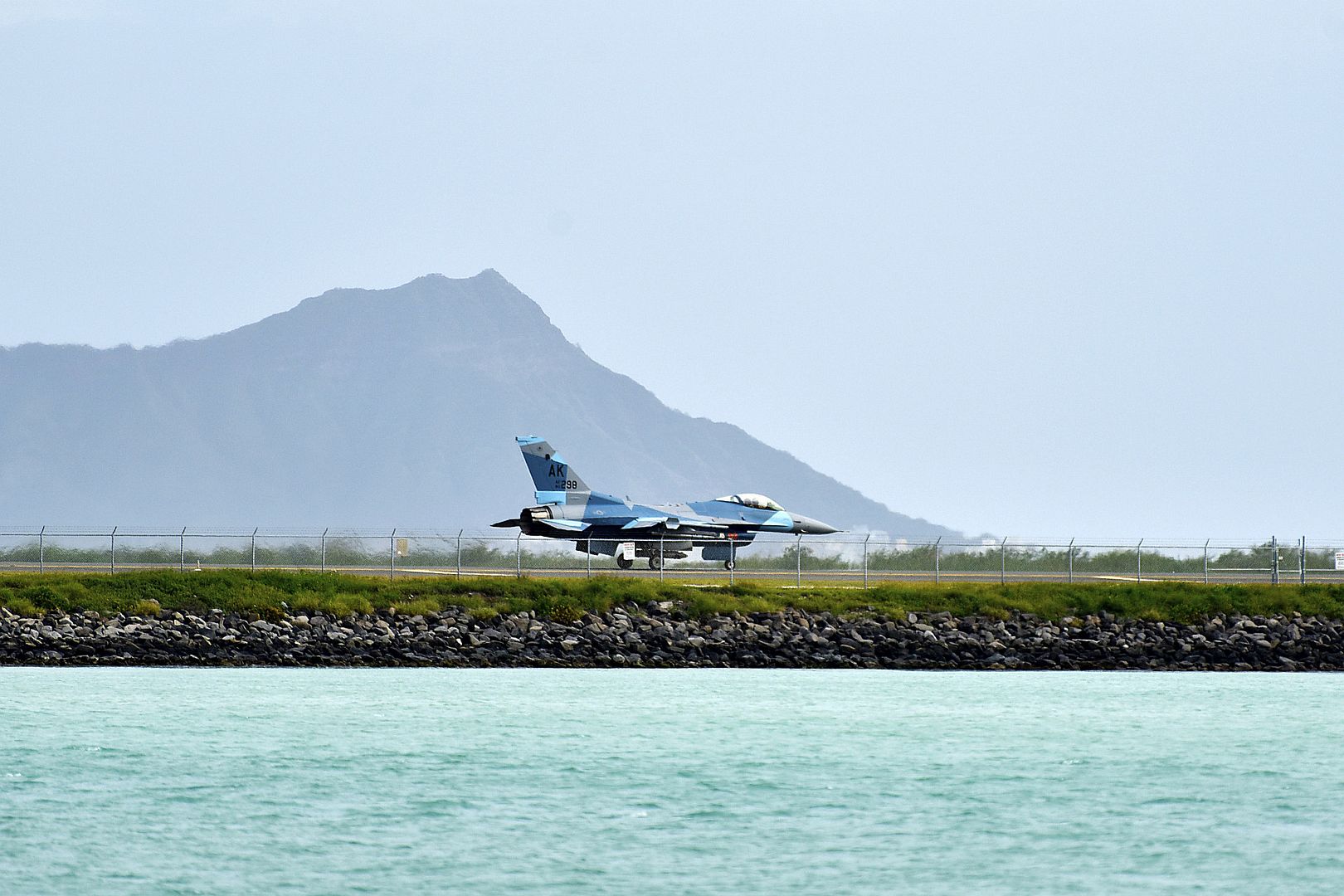
SAN DIEGO ? Jan. 27, 2019 ? Northrop Grumman Corporation?s (NYSE: NOC) MQ-4C Triton unmanned aircraft system deployed for the first time Jan. 26, to provide military commanders in the Pacific greater maritime intelligence, surveillance and reconnaissance (ISR) data to inform critical decision-making in one of the most strategically important regions in the world.
?This is a significant milestone in the MQ-4C Triton program,? said Doug Shaffer, vice president and program manager, Triton program, Northrop Grumman. ?Our partnership with the U.S. Navy has been crucial in developing this system that will help commanders build a better common operational picture.?
The U.S. Navy?s newest and most technologically advanced ISR platform, Triton?s autonomous suite of maritime sensors allows operators to detect, track, classify and identify vessels on the ocean or in the littorals in some of the world?s busiest shipping lanes.
Triton?s ability to fly at high altitude and remain airborne in excess of 24 hours allows commanders to surveil a larger maritime area than ever before. Designed to operate in a manned-unmanned teaming concept, Triton provides an unblinking eye over massive swaths of ocean and littoral areas, enabling manned aircraft such as the U.S. Navy?s P-8 Poseidon to focus on anti-surface and anti-sub-surface warfare.
Unmanned Patrol Squadron One Nine, or VUP-19, is the first squadron to operate the MQ-4C.
Northrop Grumman solves the toughest problems in space, aeronautics, defense and cyberspace to meet the ever evolving needs of our customers worldwide. Our 85,000 employees define possible every day using science, technology and engineering to create and deliver advanced systems, products and services.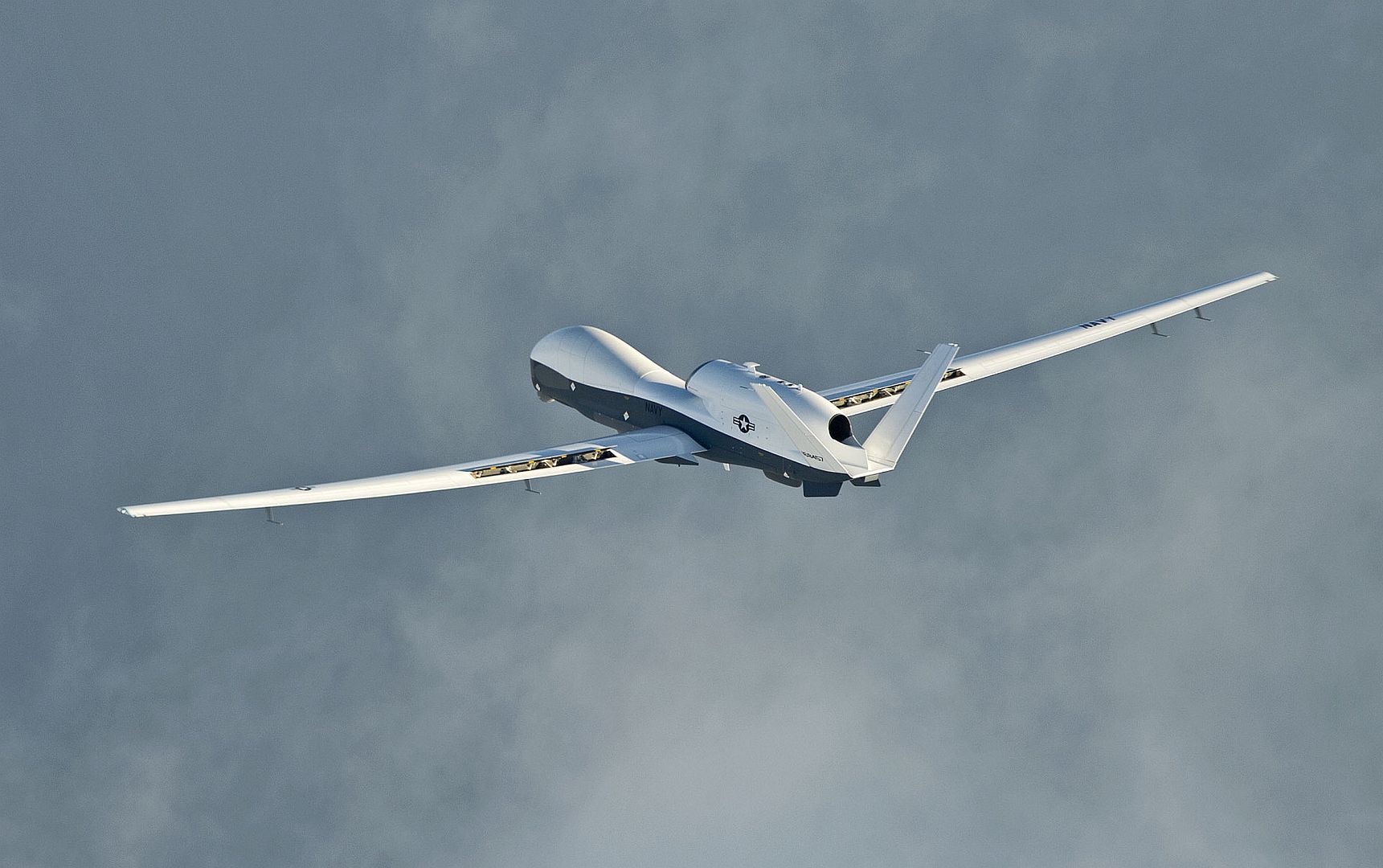
SEATTLE, Jan. 25, 2020 /PRNewswire/ -- The new Boeing (NYSE: BA) 777X jetliner took to the skies today, entering the next phase of its rigorous test program. Based on the popular 777 and with proven technologies from the 787 Dreamliner, the 777X took off in front of thousands at Paine Field in Everett, Washington, at 10:09 a.m. local time for a three hour, 51 minute flight over Washington state before landing at Seattle's Boeing Field.
"The 777X flew beautifully, and today's testing was very productive," said Capt. Van Chaney, 777/777X chief pilot for Boeing Test & Evaluation. "Thank you to all the teams who made today possible. I can't wait to go fly your airplane again."
Capt. Chaney and Boeing Chief Pilot Craig Bomben worked through a detailed test plan to exercise the airplane's systems and structures while the test team in Seattle monitored the data in real time.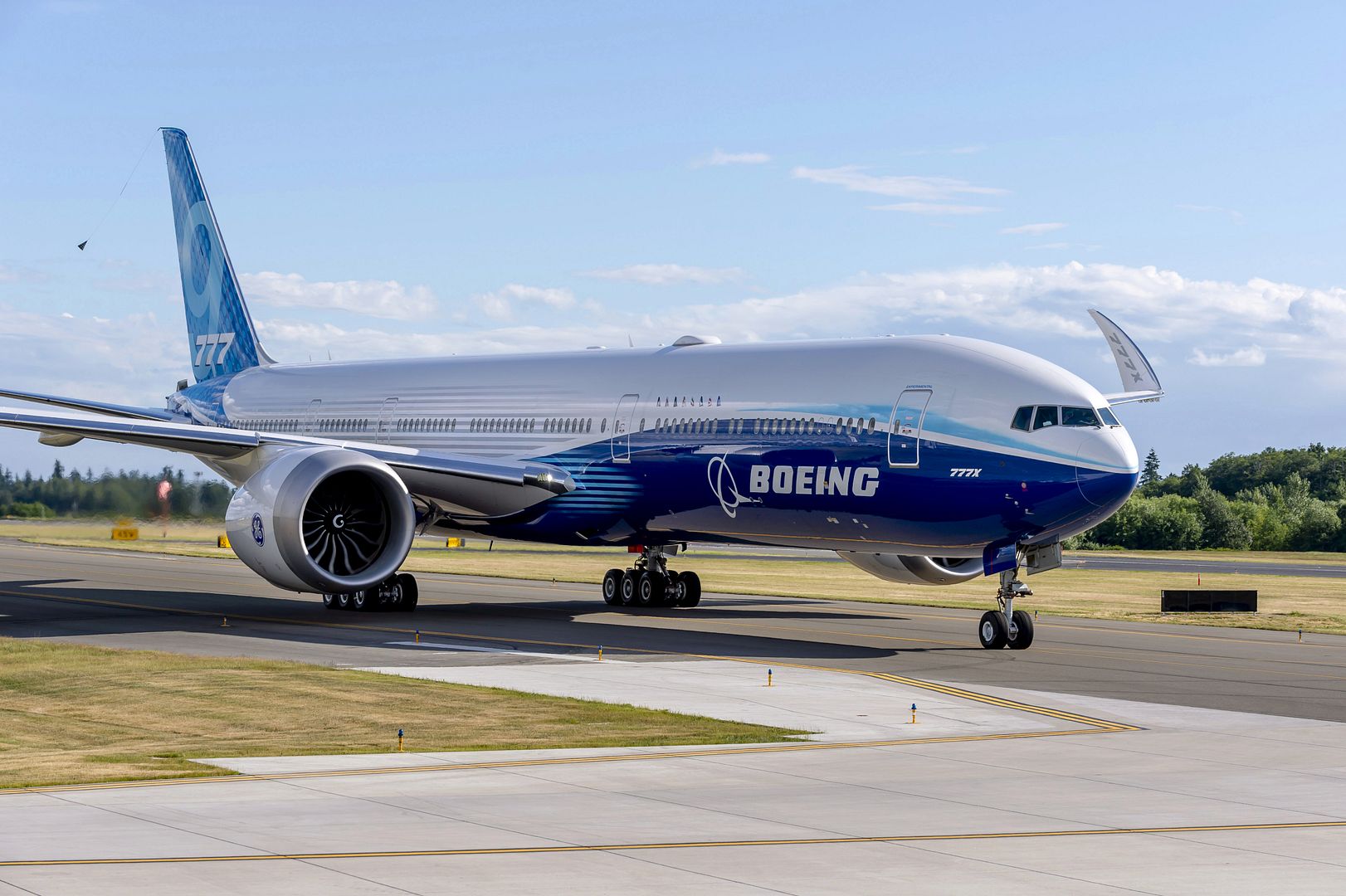
"Our Boeing team has taken the most successful twin-aisle jet of all time and made it even more efficient, more capable and more comfortable for all," said Stan Deal, president and CEO of Boeing Commercial Airplanes. "Today's safe first flight of the 777X is a tribute to the years of hard work and dedication from our teammates, our suppliers and our community partners in Washington state and across the globe."
The first of four dedicated 777-9 flight test airplanes, WH001 will now undergo checks before resuming testing in the coming days. The test fleet, which began ground testing in Everett last year, will endure a comprehensive series of tests and conditions on the ground and in the air over the coming months to demonstrate the safety and reliability of the design.
The newest member of Boeing's market-leading widebody family, the 777X will deliver 10 percent lower fuel use and emissions and 10 percent lower operating costs than the competition through advanced aerodynamics, the latest generation carbon-fiber composite wing and the most advanced commercial engine ever built, GE Aviation's GE9X.
The new 777X also combines the best of the passenger-preferred 777 and 787 Dreamliner cabins with new innovations to deliver the flight experience of the future. Passengers will enjoy a wide, spacious cabin, large overhead bins that close easily for convenient access to their belongings, larger windows for a view from every seat, better cabin altitude and humidity, less noise and a smoother ride.
Boeing expects to deliver the first 777X in 2021. The program has won 340 orders and commitments from leading carriers around the world, including ANA, British Airways, Cathay Pacific Airways, Emirates, Etihad Airways, Lufthansa, Qatar Airways and Singapore Airlines. Since its launch in 2013, the 777X family has outsold the competition nearly 2 to 1.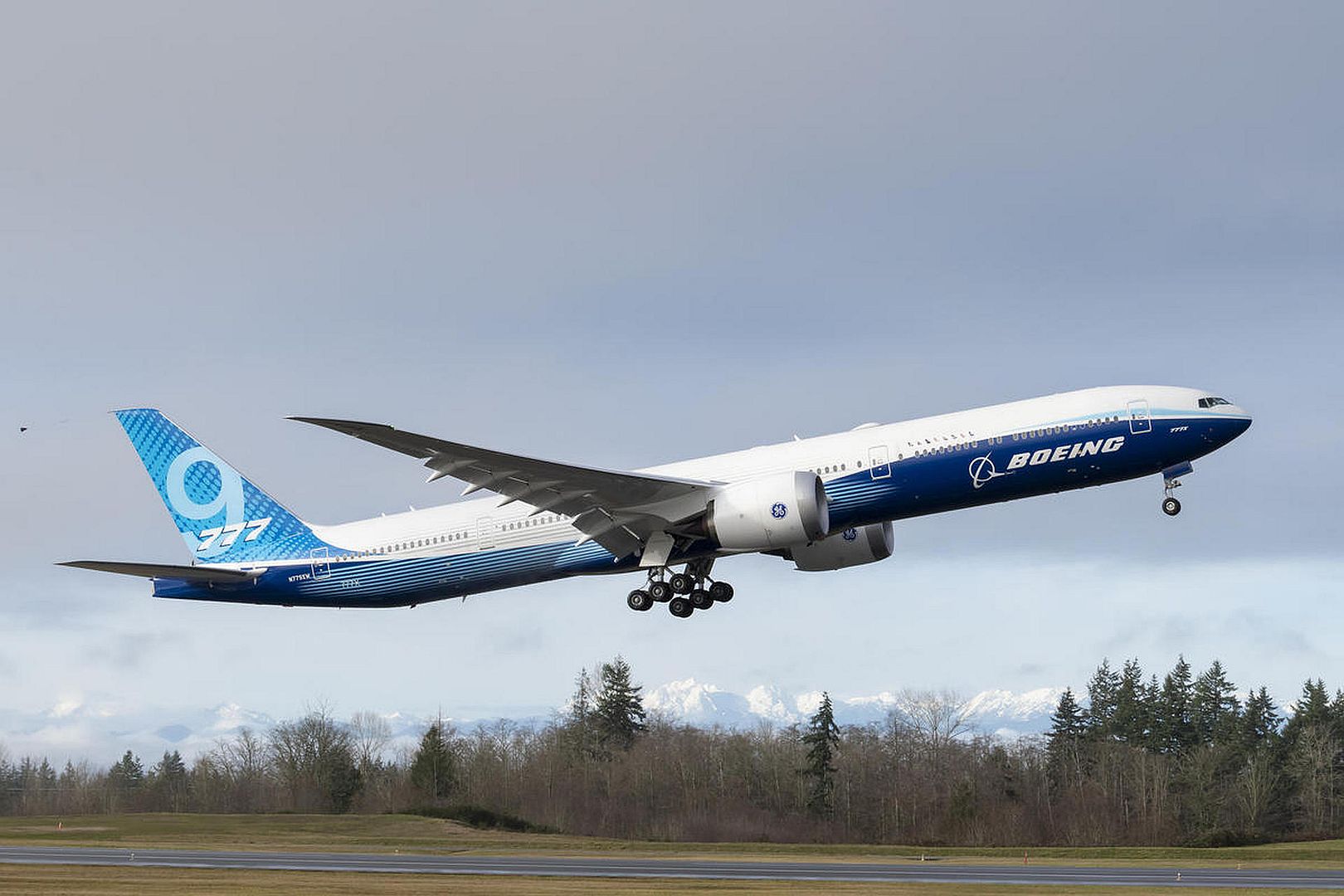
-
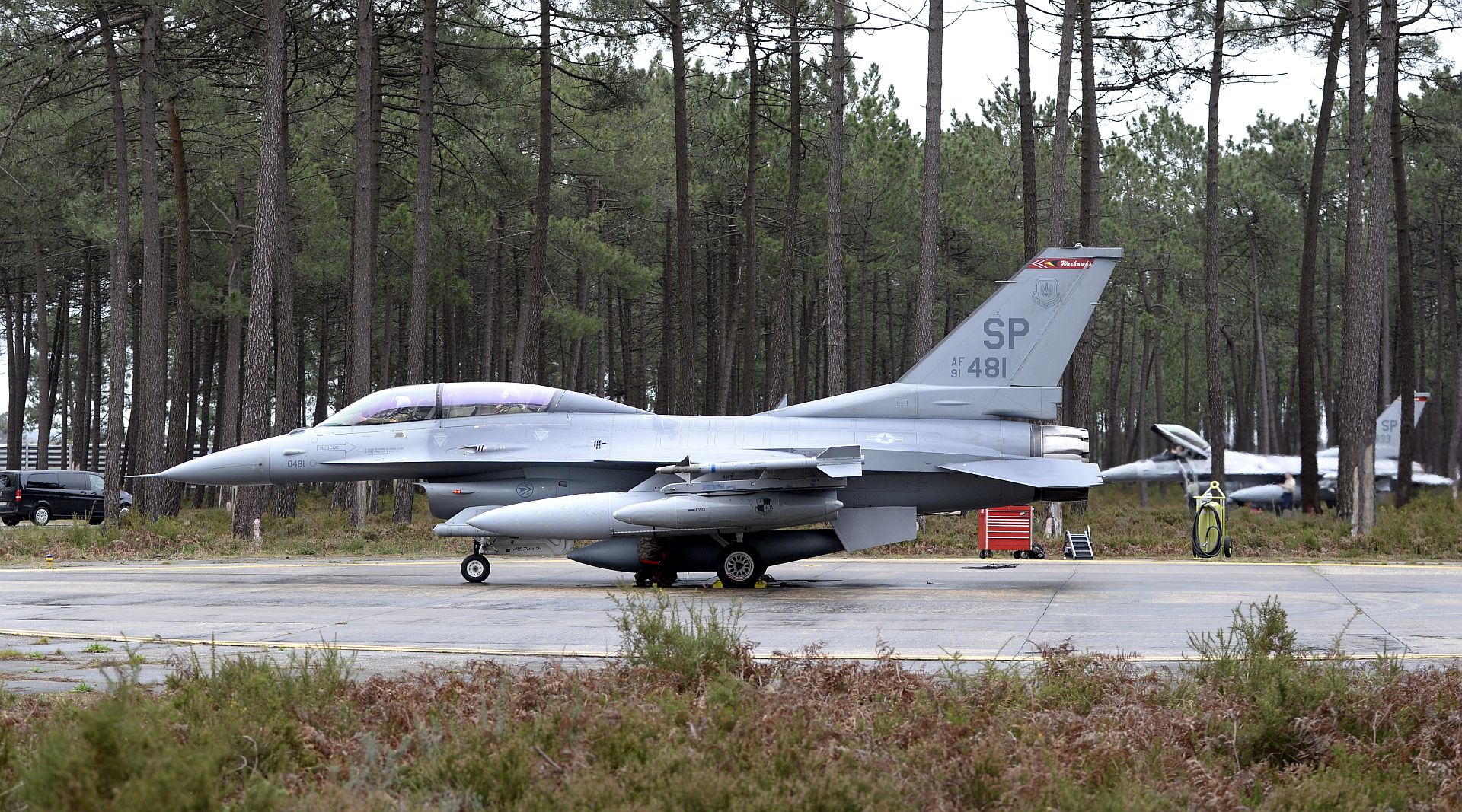
An F-16D Fighting Falcon from the 480th Fighter Squadron, Spangdahlem Air Base, Germany, arrives in Monte Real, Portugal, Jan. 28, 2020. The aircraft is one of several scheduled to arrive in Portugal from Germany to participate in a Flying Training Deployment with the 201st and 301st FS from the Portuguese air force at Monte Real Air Base throughout the month of February. (U.S. Air Force photo by Master Sgt. Austin M. May/released)
ATLANTIC OCEAN (Jan. 28, 2020) An F/A-18F Super Hornet, assigned to Air Test and Evaluation Squadron (VX) 23, prepares to land aboard USS Gerald R. Ford's (CVN 78) flight deck. Ford is currently conducting Aircraft Compatibility Testing to further test its Electromagnetic Aircraft Launch Systems (EMALS) and Advanced Arresting Gear (AAG). (U.S. Navy photo by Mass Communication Specialist Seaman Apprentice Angel Thuy Jaskuloski)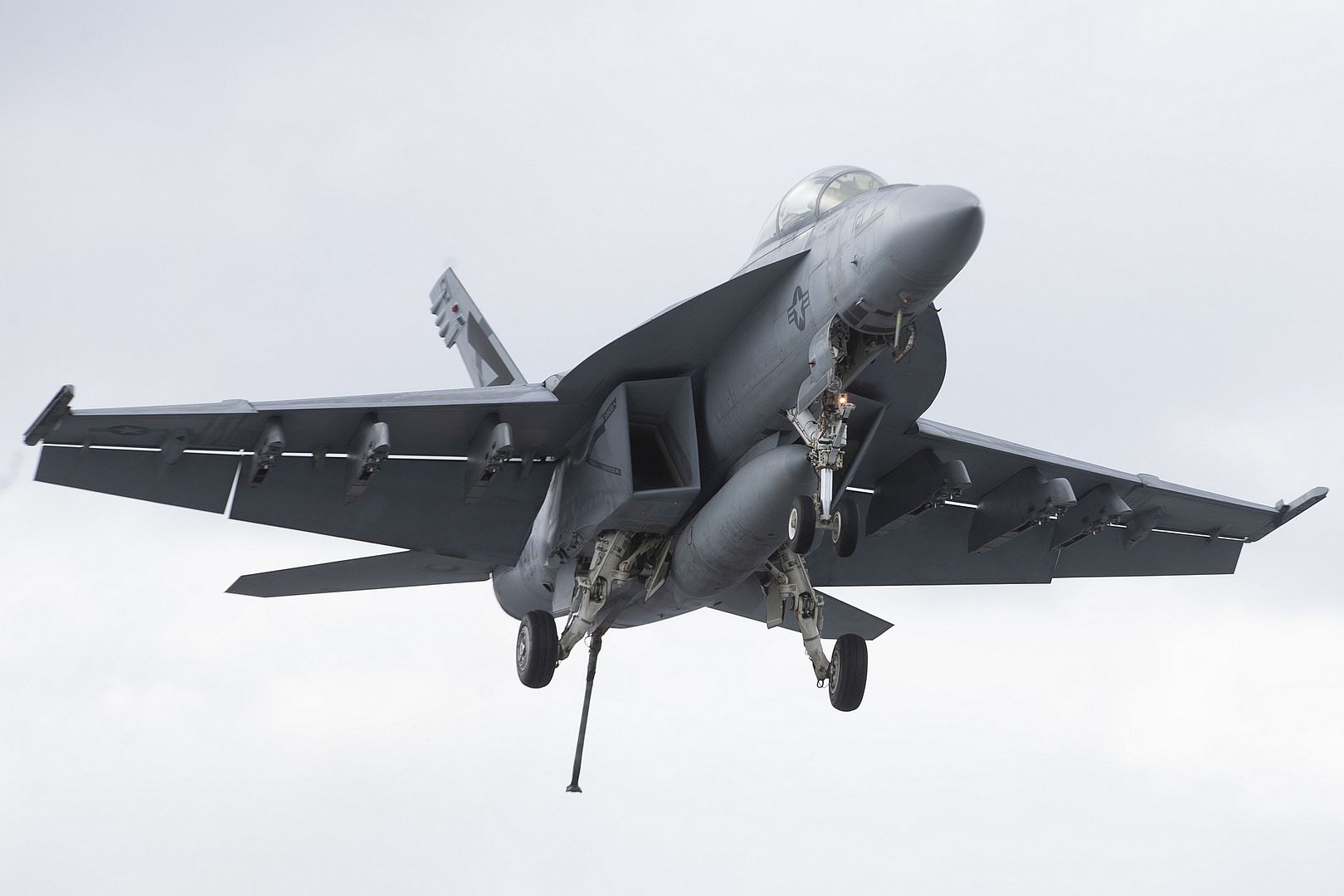
ATLANTIC OCEAN (Jan. 28, 2020) Sailors assigned to USS Gerald R. Ford's (CVN 78) air department move an EA-18G Growler, assigned to Air Test and Evaluation Squadron (VX) 23, on the ship's flight deck. Ford is currently conducting Aircraft Compatibility Testing to further test its Electromagnetic Aircraft Launch System (EMALS) and Advanced Arresting Gear (AAG). (U.S. Navy photo by Mass Communication Specialist 3rd Class Connor Loessin)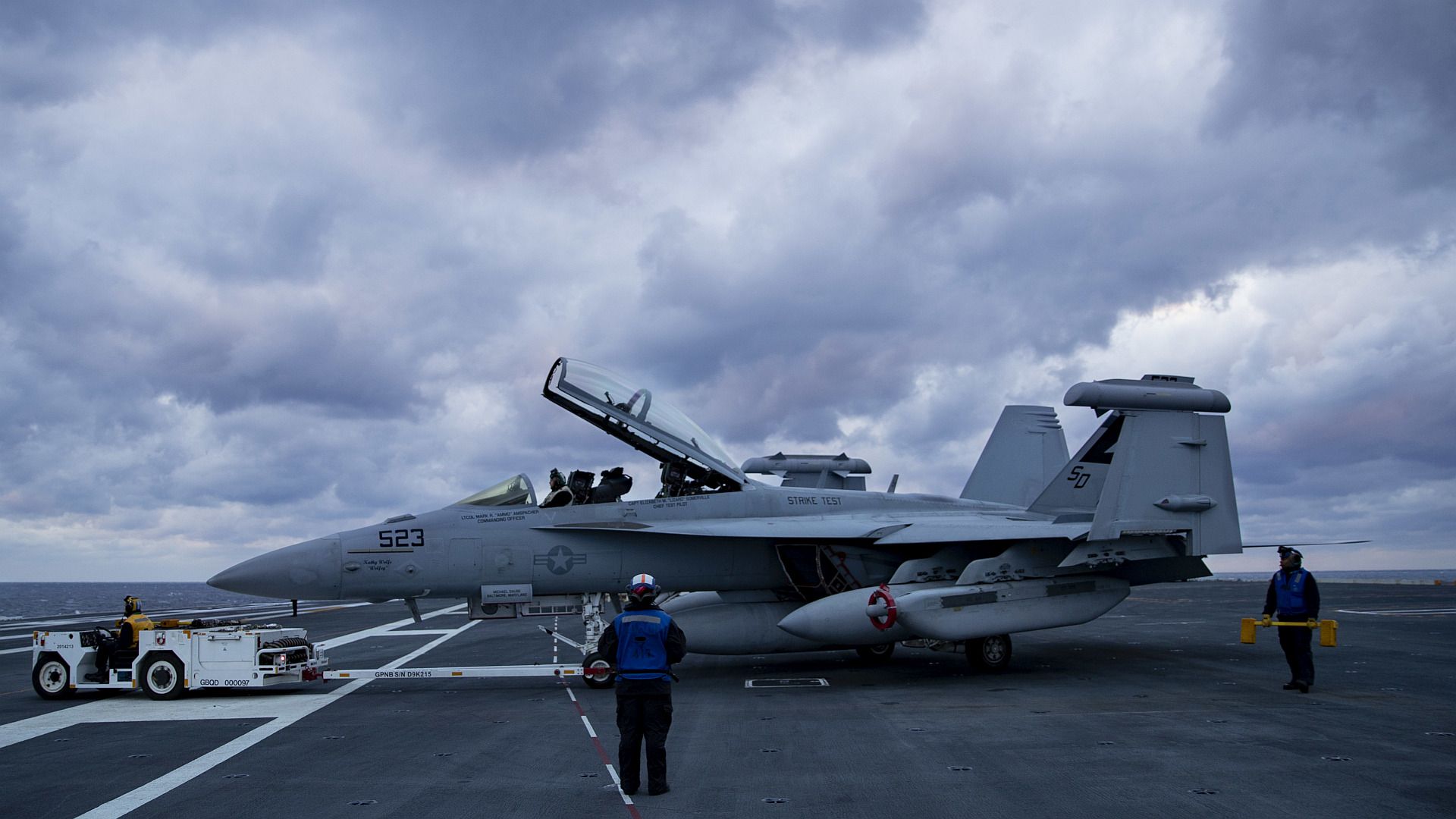
ATLANTIC OCEAN (Jan. 27, 2020) An F/A-18E Super Hornet, assigned to the "Rampagers" of Strike Fighter Squadron (VFA) 83, prepares to take off from the flight deck of the aircraft carrier USS Dwight D. Eisenhower (CVN 69). Ike is conducting operations in the Atlantic Ocean as part of the USS Dwight D. Eisenhower Carrier Strike Group. (U.S. Navy photo by Mass Communication Specialist 2nd Class Gian Prabhudas/Released)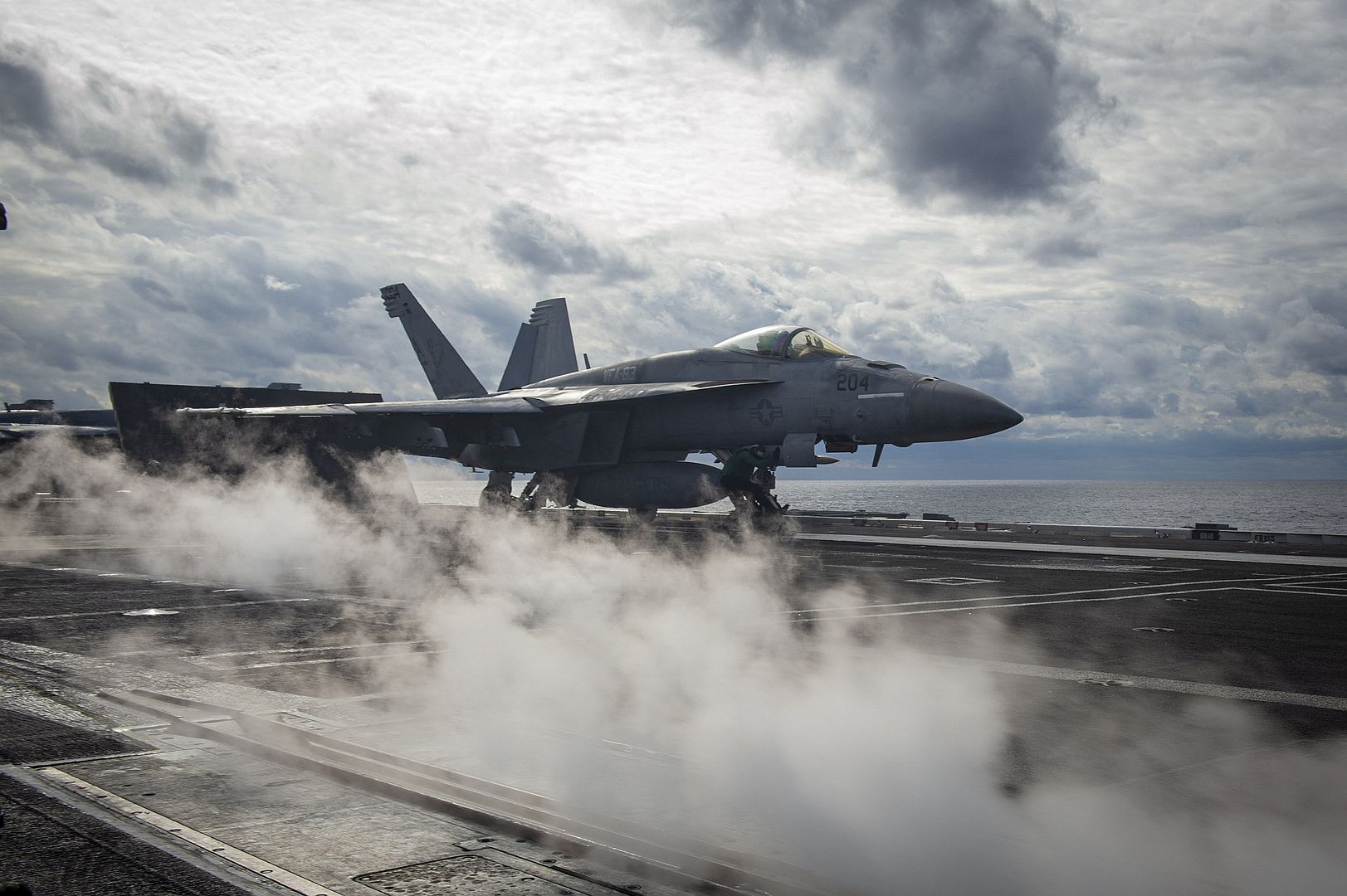
28 Jan 2020.
British F-35B Lightning jets have flown from the decks of HMS Queen Elizabeth in UK waters, the first time fighter jets have operated from a British carrier in home waters in a decade. HMS Queen Elizabeth is in the North Sea, conducting Carrier Qualification for Royal Navy and Royal Air Force pilots from the UK Lightning Force, based out of RAF Marham in Norfolk.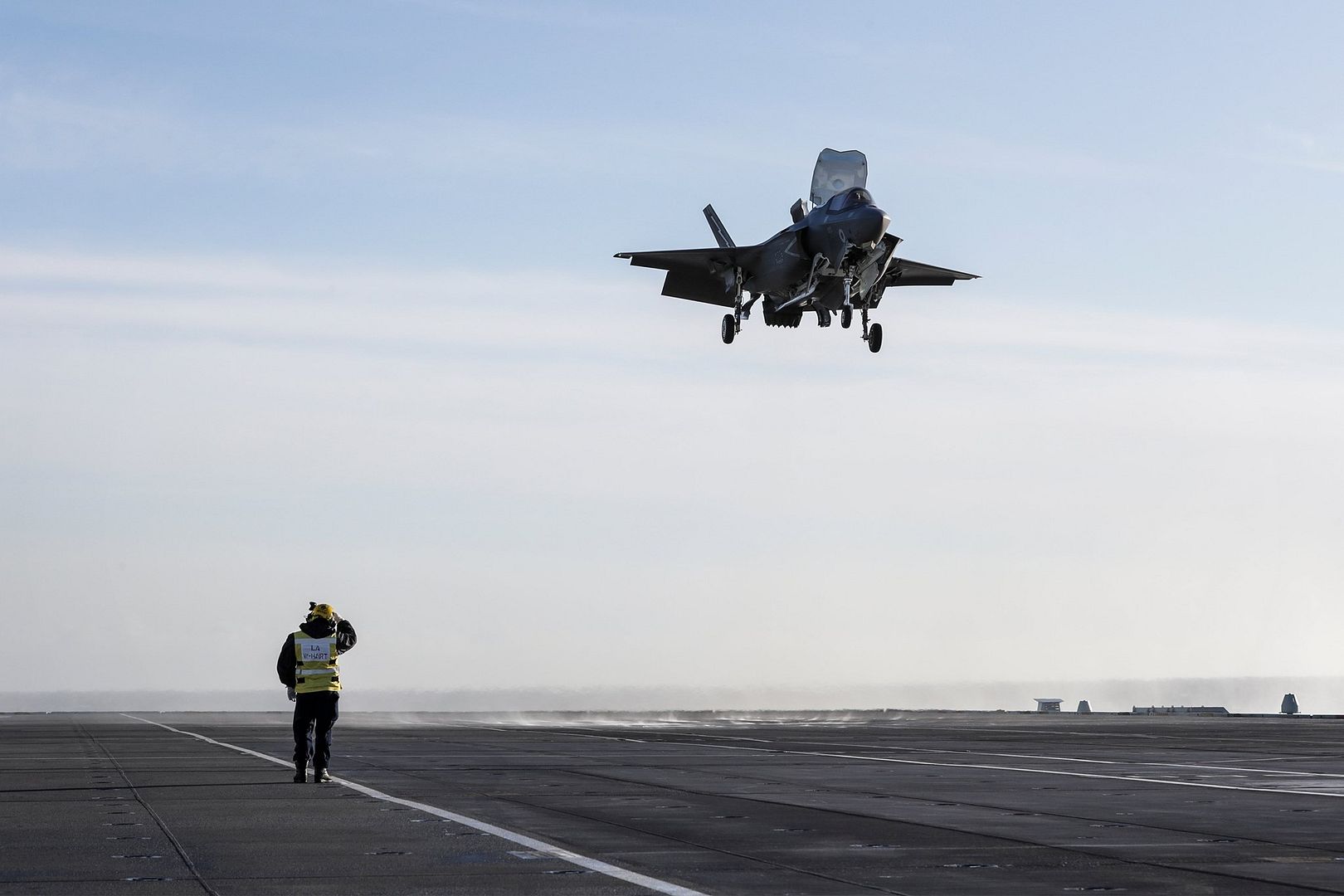
The jets are flying daily to and from the ship?s 4.5-acre deck, giving the pilots vital experience in operating from a floating airfield in both daylight and at night, some for the very first time. It also provides further training for the ship?s crew, who have previously conducted trials with UK and US Marine Corps Lightnings in the USA.
HMS Queen Elizabeth and the Lightning Force will continue training through the year, ahead of their first operational deployment together, along with a squadron of F-35B Lightnings from the US Marine Corps, to the Far East in 2021.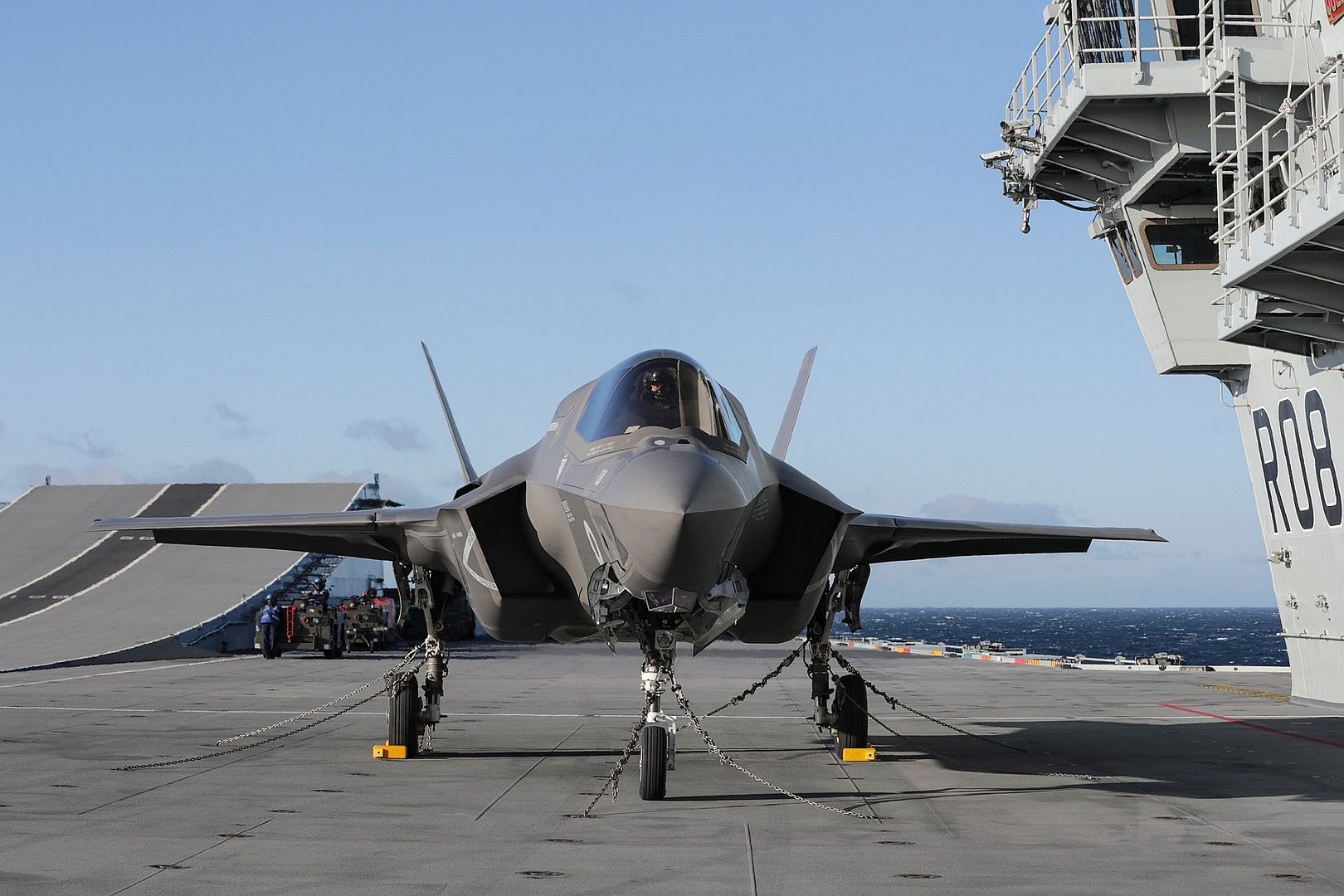
-
CH-47 Chinook from 3rd Battalion, 25th Aviation Regiment, conducted air assault operations alongside Soldiers from 1st Battalion, 27th Infantry Regiment, 2nd Brigade Combat Team, 25th Infantry Division from Wheeler Army Airfield, Hawaii Jan. 27, to kick off their week of realistic training. Readiness determines our ability to fight and win our nation?s wars; it is the capability of our forces to conduct the full range of military operations to defeat all enemies.
(U.S. Army photo by Sgt. Sarah D. Sangster)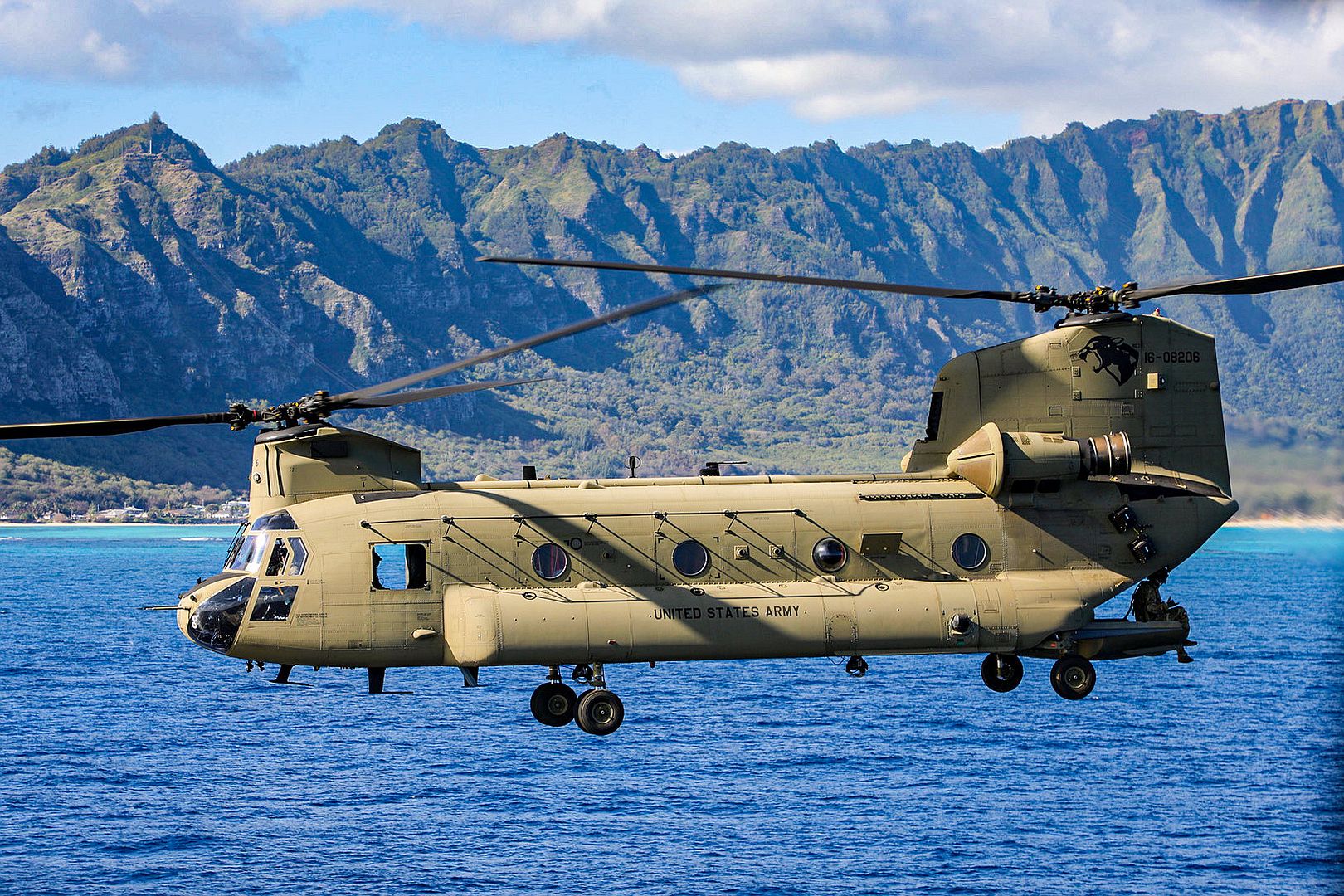
ATLANTIC OCEAN (Jan. 28, 2020) An F/A-18F Super Hornet, assigned to Air Test and Evaluation Squadron (VX) 23, transits USS Gerald R. Ford's (CVN 78) flight deck. Ford is currently conducting Aircraft Compatibility Testing to further test its Electromagnetic Aircraft Launch Systems (EMALS) and Advanced Arresting Gear (AAG). (U.S. Navy photo by Mass Communication Specialist Seaman Jesus O. Aguiar)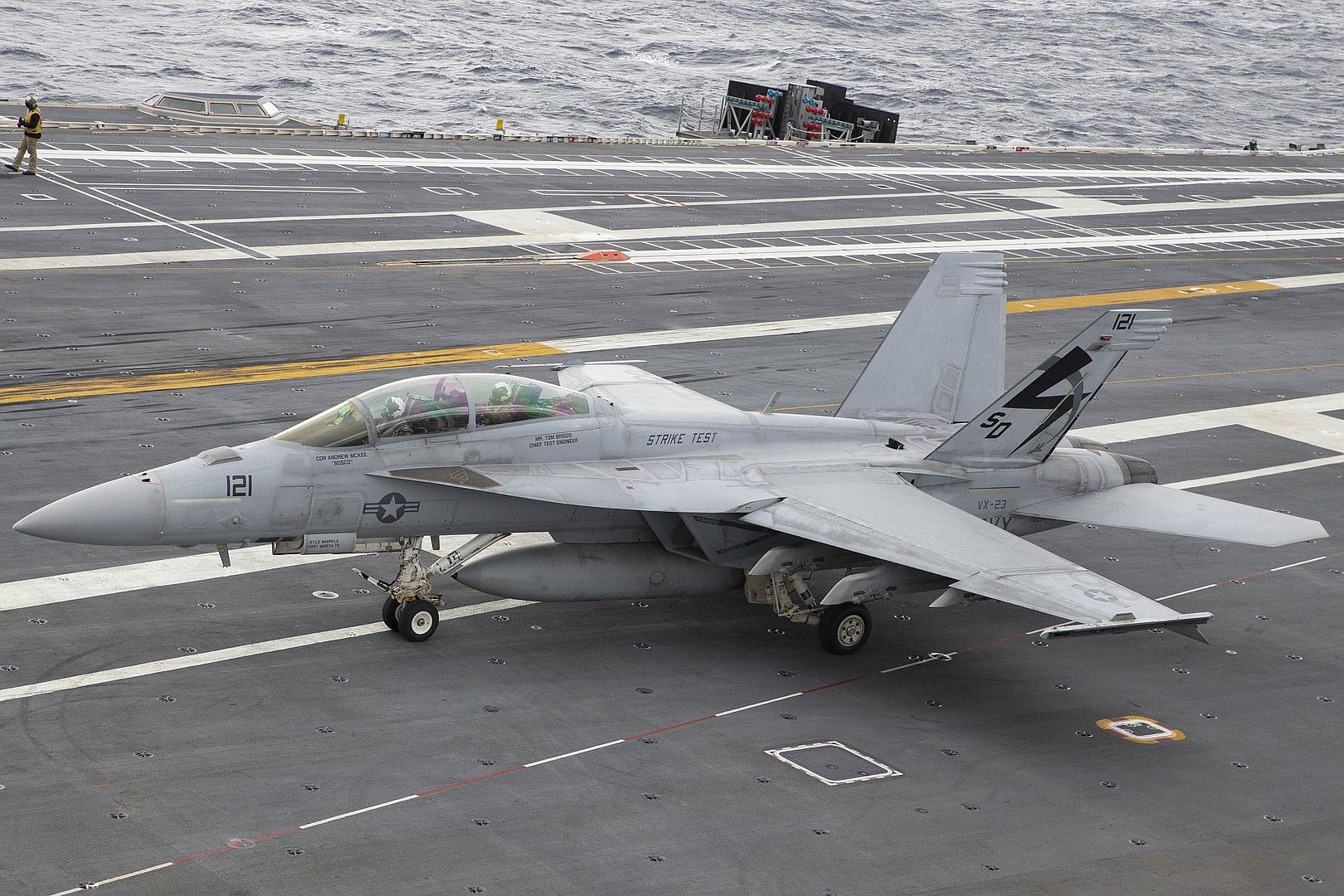
ATLANTIC OCEAN (Jan. 28, 2020) New arrivals to USS Gerald R. Ford (CVN 78) step off Ford's flight deck onto the cat walk. Ford is currently conducting Aircraft Compatibility Testing to further test its Electromagnetic Aircraft Launch System (EMALS) and Advanced Arresting Gear (AAG). (U.S. Navy photo by Mass Communication Specialist Seaman Jesus O. Aguiar)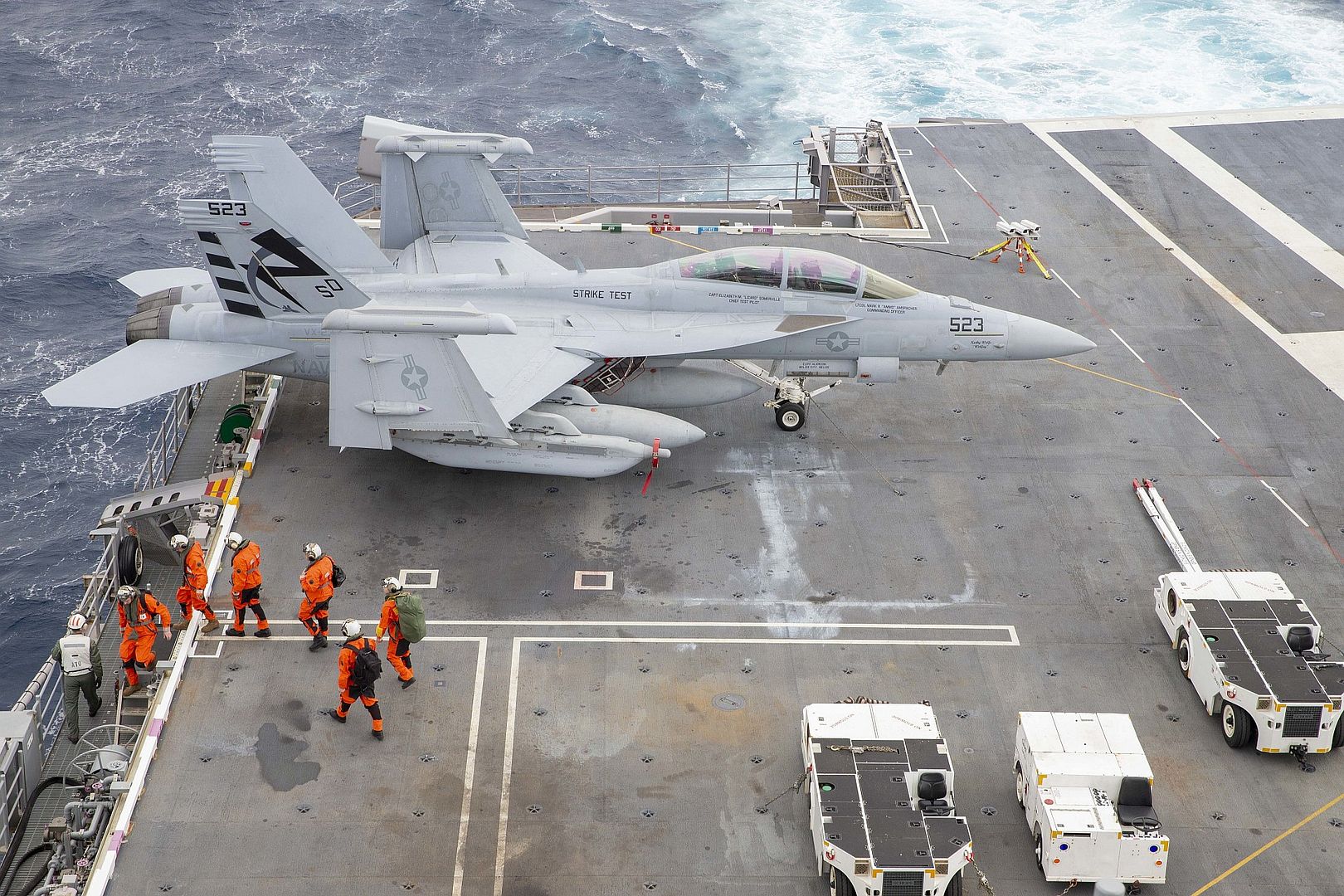
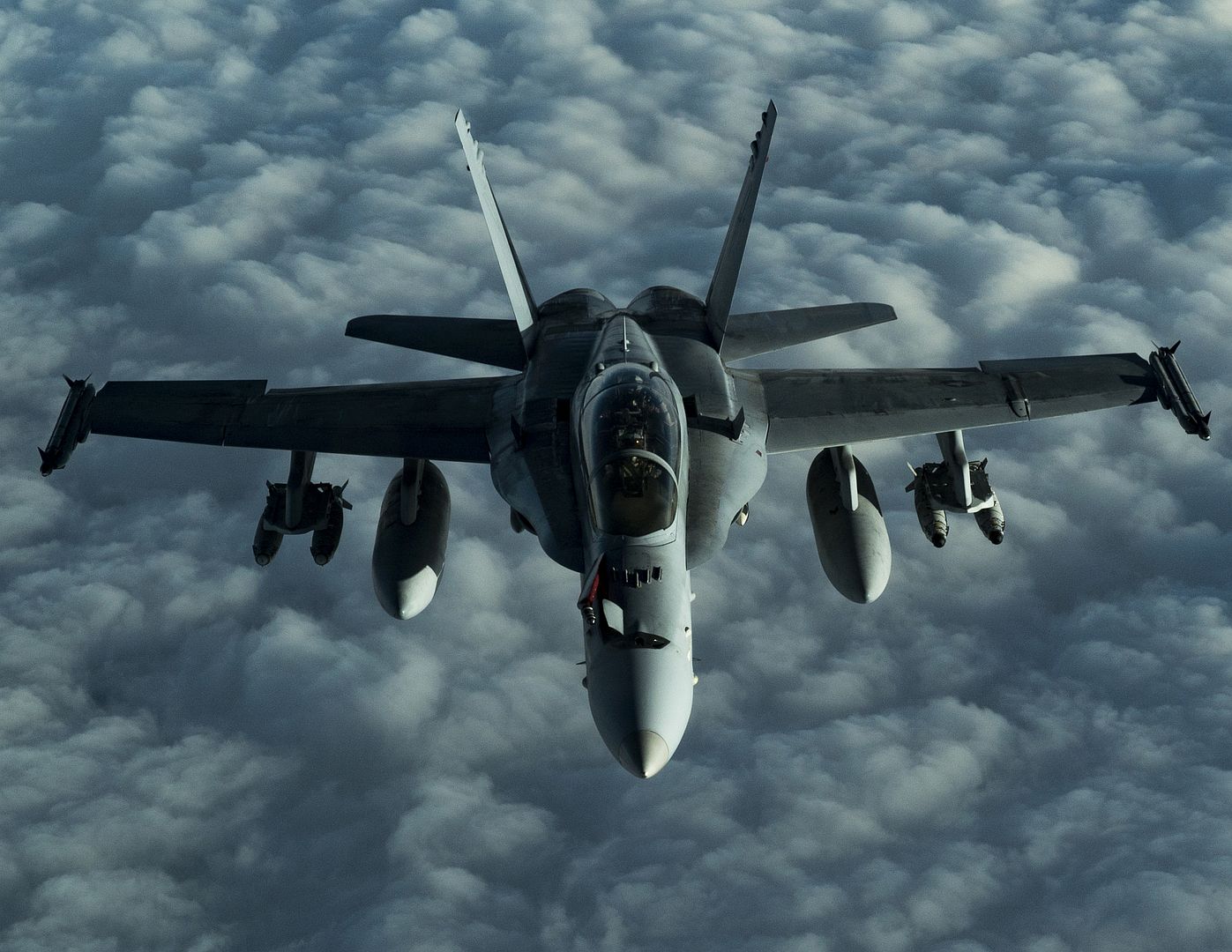
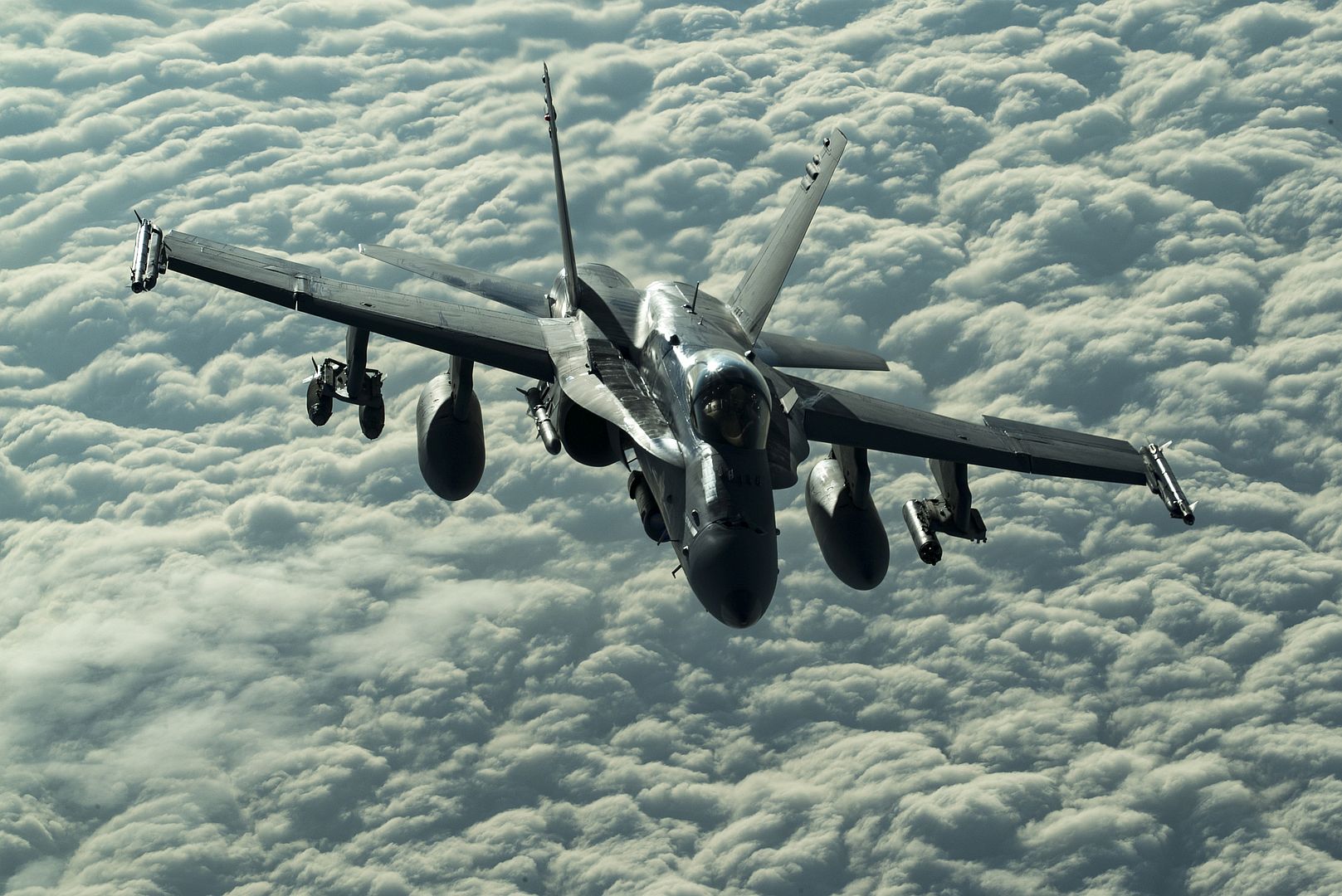
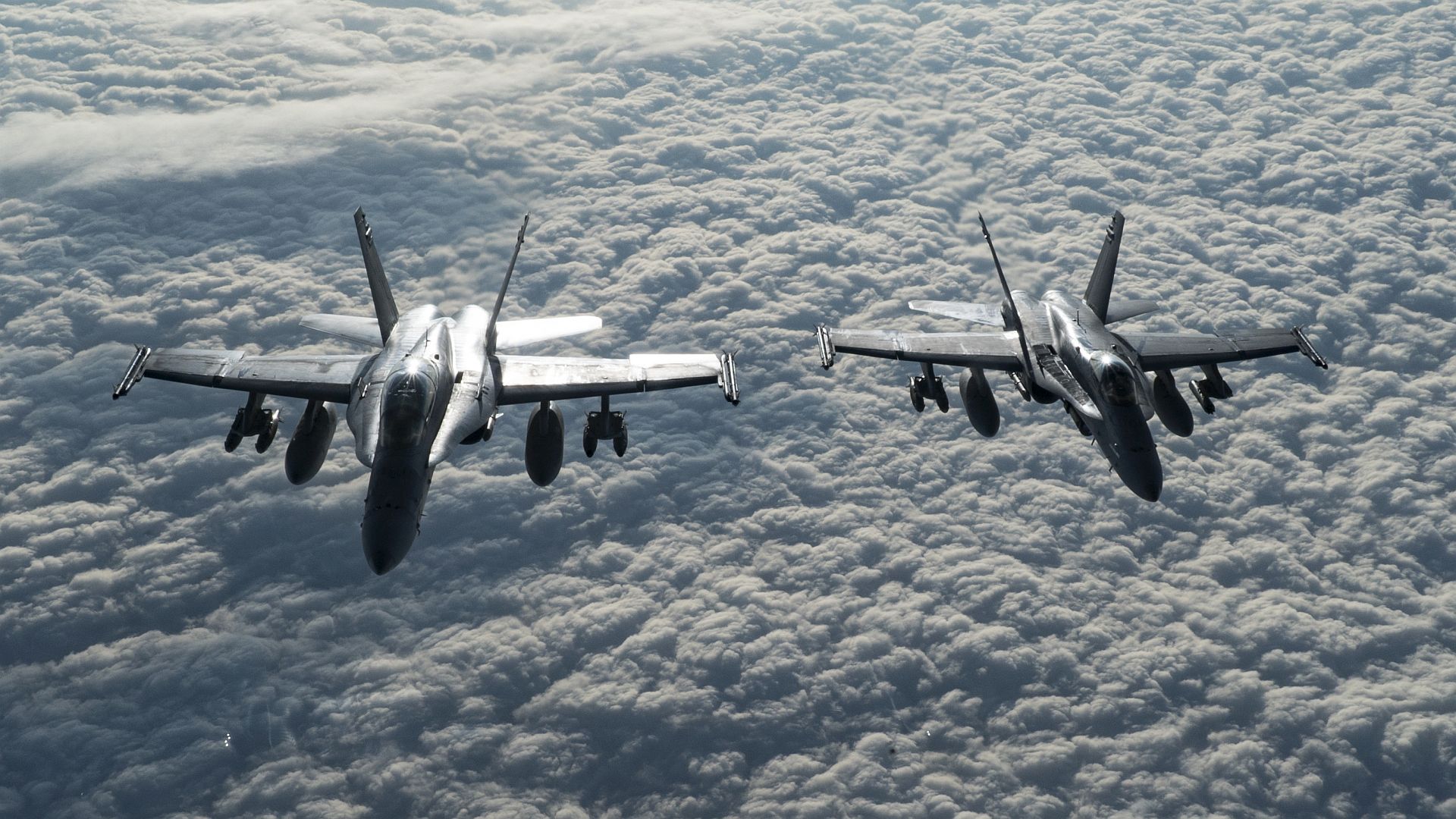
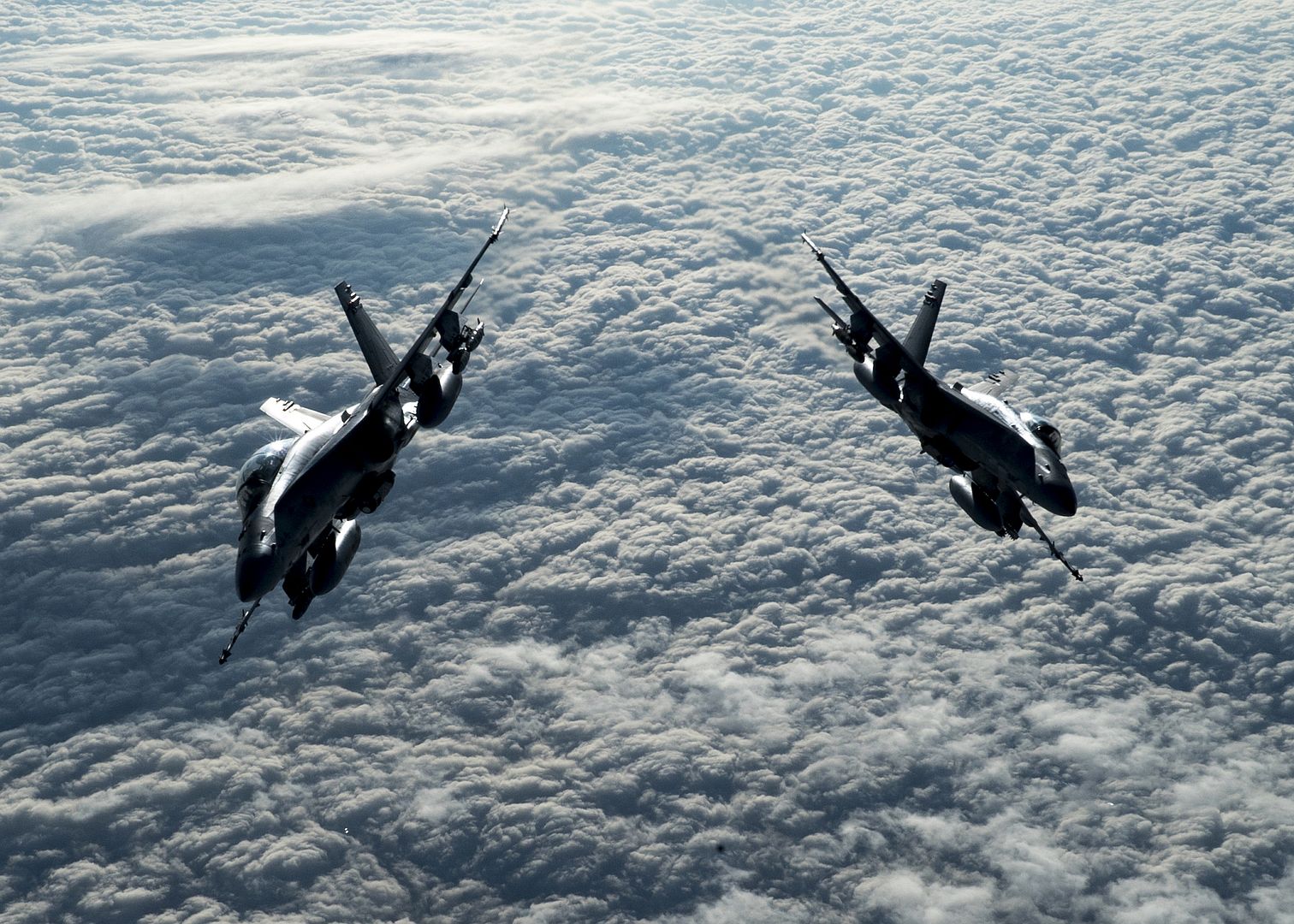
Two U.S Marine Corps F/A-18 Hornets assigned to the Marine Fighter Attack Squadron (VMFA) 251 fly over the U.S. Central Command area of responsibility, Jan. 22, 2020. The Hornet is the Marine Corps primary strike and air superiority aircraft providing force projection, interdiction, and close and deep air support. (U.S. Air Force photo's by Senior Airman Brandon Cribelar)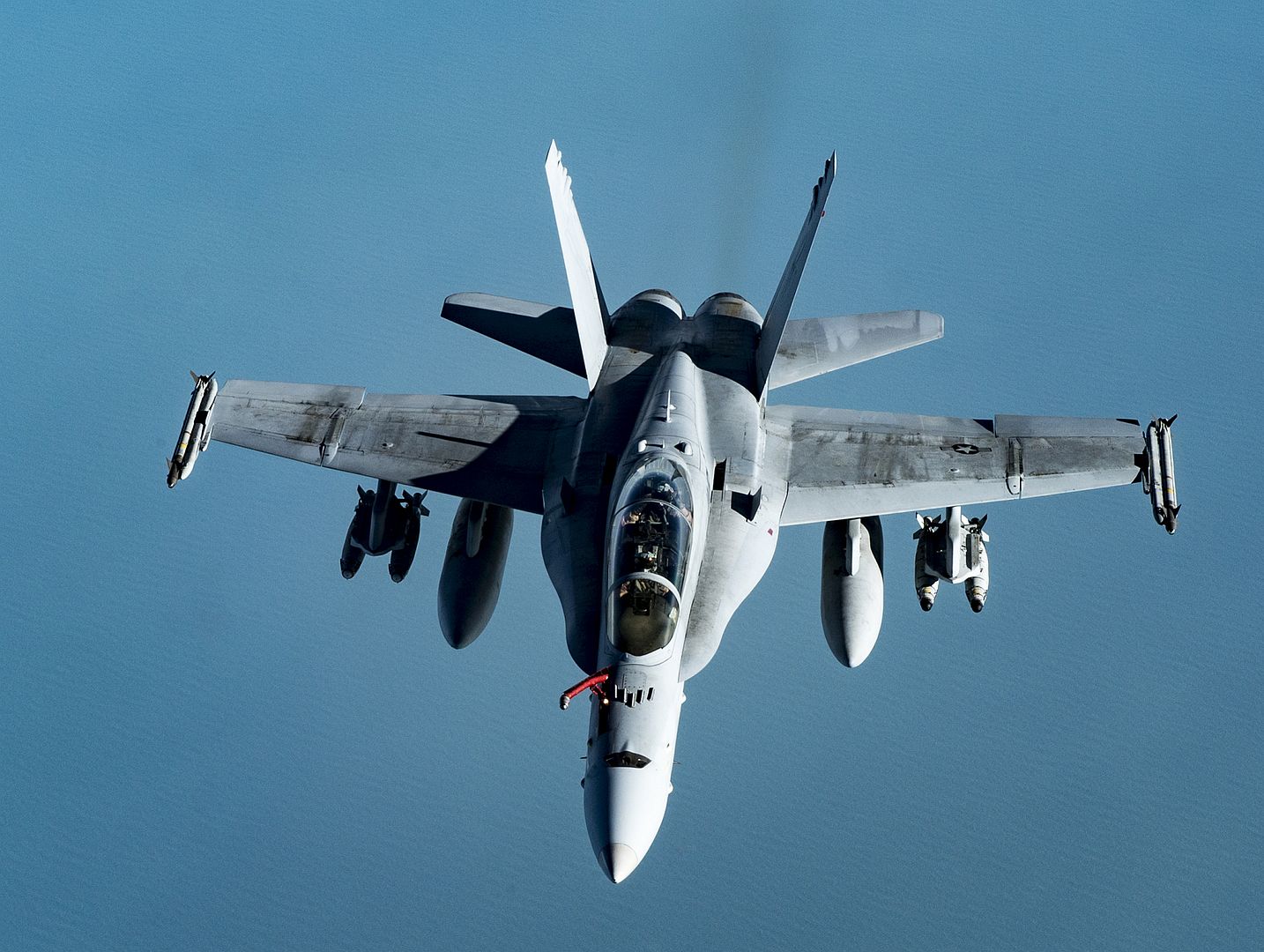
ATLANTIC OCEAN (Jan. 28, 2020) Sailors tow an E-2C Hawkeye, assigned to the "Screwtops" of Carrier Airborne Early Warning Squadron (VAW) 123, into the hangar bay on the aircraft carrier USS Dwight D. Eisenhower (CVN 69). Ike is conducting operations in the Atlantic Ocean as part of the Dwight D. Eisenhower Carrier Strike Group. (U.S. Navy photo by Mass Communication Specialist 2nd Class Elizabeth Cohen/Released)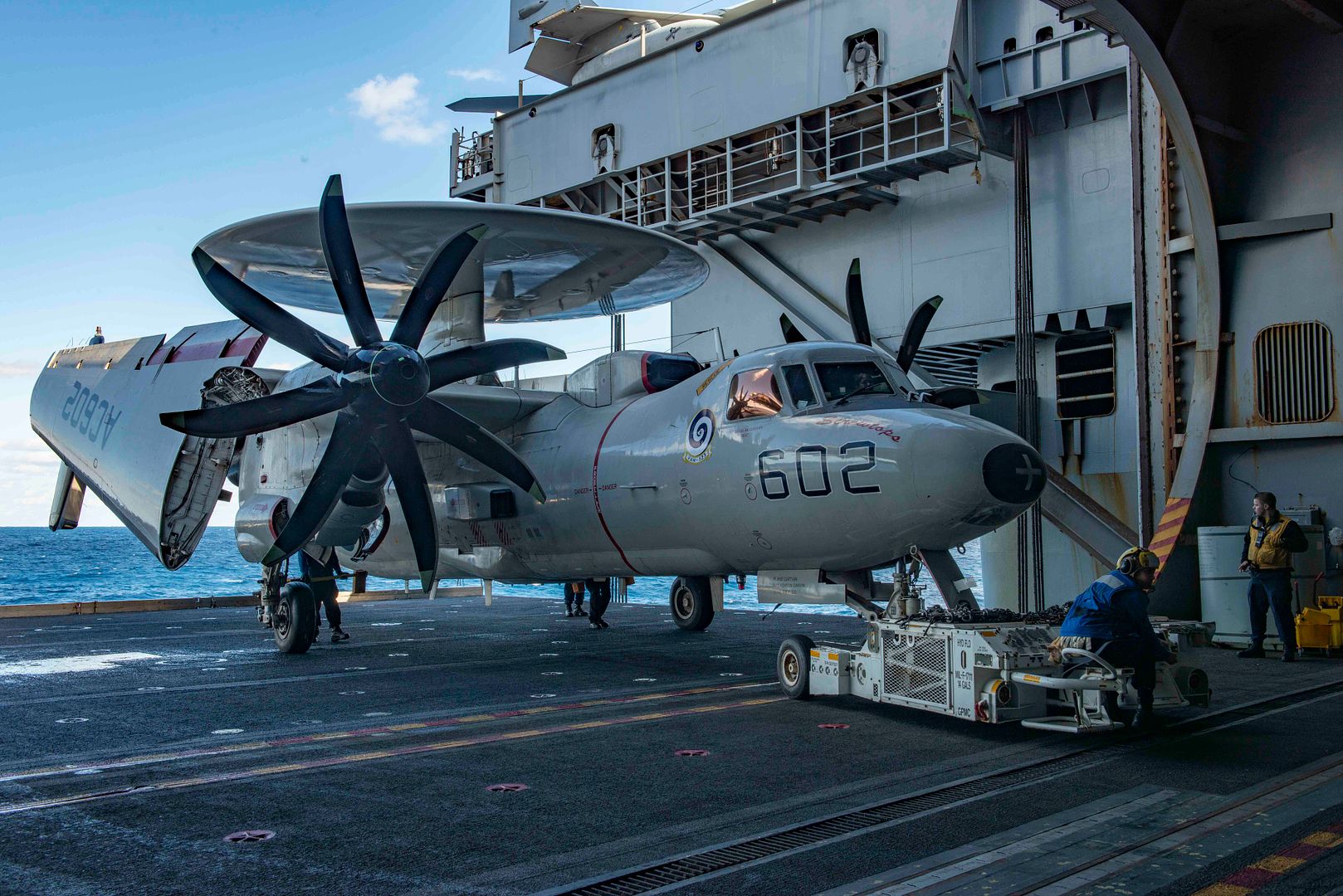
Getafe, 29th January 2020 ? The Airbus C295 tactical airlifter has successfully achieved its first wet contacts during an air-to-air (AAR) tanker flight test campaign. First dry contacts of this flight test took place in December 2019 and were achieved using a closed ramp configuration, 100ft hose and remote vision system. The wet contacts, conducted out of Seville, Spain, took place in January 2020, between one Airbus C295 aircraft in tanker configuration and a Spanish Air Force C295 acting as receiver at flight speeds between 100-130 knots.
In total, the aircraft fitted with the removable AAR kit, performed five wet contacts transferring a total 1.5 tons of fuel. Tests were conducted in day-light conditions.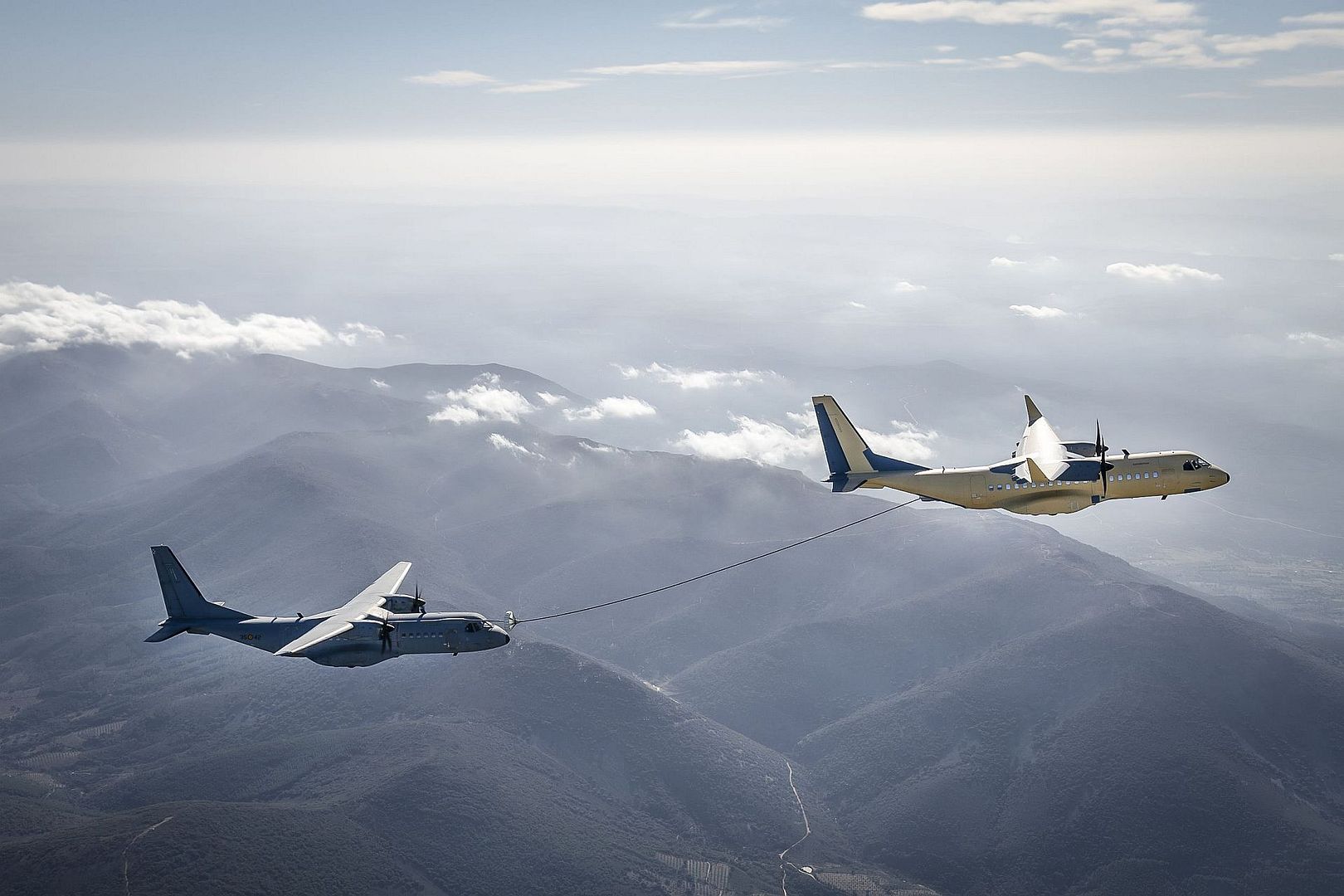
Captain Gabi?a, the Spanish Air Force pilot who participated on the test campaign, said: ?The degree of difficulty in flight test is always high since it involves performing manoeuvers that no one has done before. It should be noted that due to the positive behaviour of the aircraft, the operation has been good and straight forward?.
The flight test campaign also included night flight operations and the successful proximity test in pre-contact position with a Spanish Air Force F18 fighter at a flight speed of 210 knots.
The successful tests will expand the C295?s trademark versatility for tactical operations to include refuelling missions for helicopters, transport and fighter aircraft.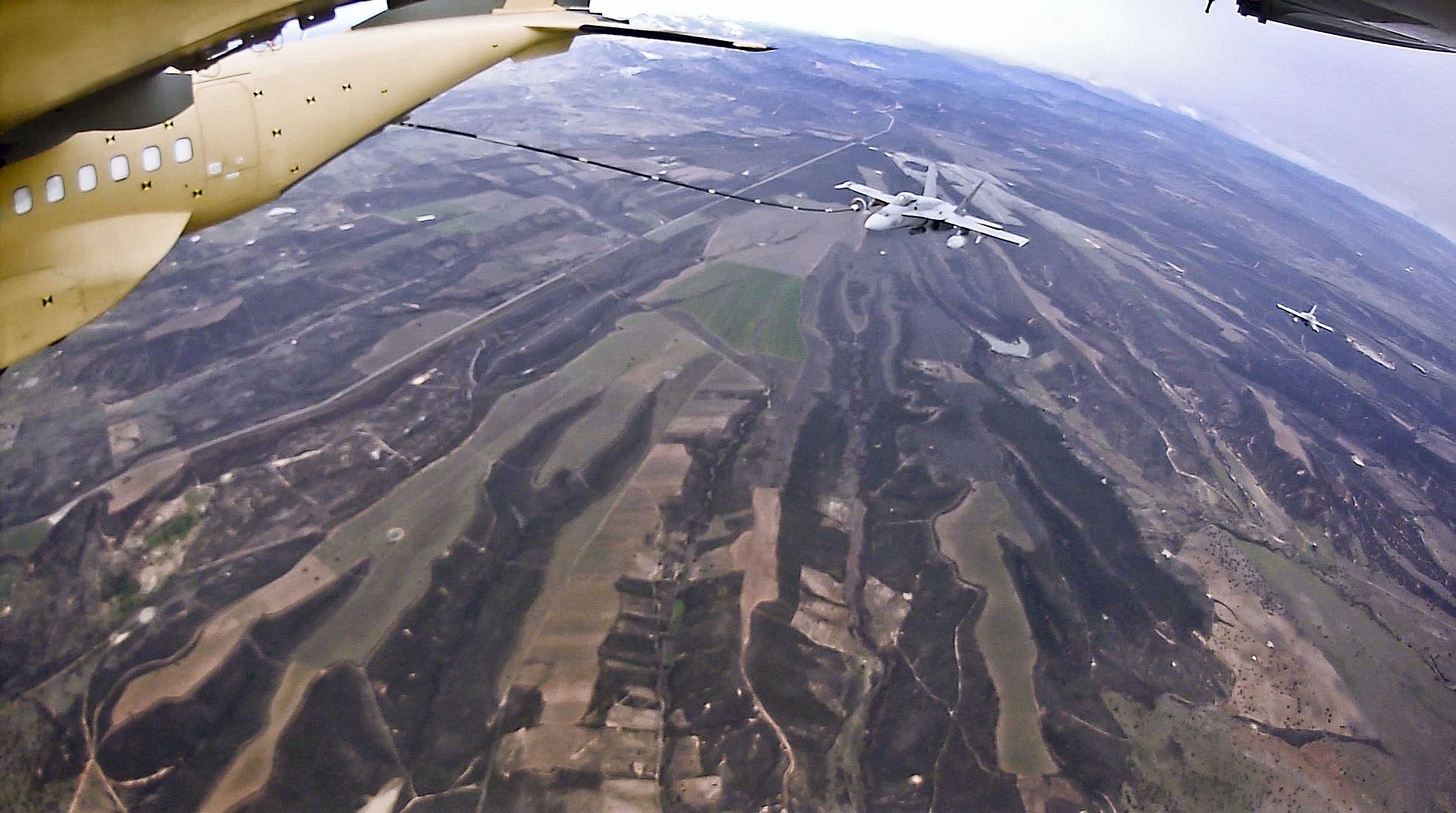
Anaheim, 28 January 2020 ? The National Aeronautics and Space Administration (NASA) has placed an order for three H135 helicopters, marking the first-ever partnership between the U.S. space program and Airbus Helicopters. The order was announced today at the Airbus booth at the Heli Expo Trade show in Anaheim, California.
The H135s will be operated out of the Kennedy Space Center in Florida for a variety of missions, including rocket launches, security, emergency medical services, and passenger transport. Two of the helicopters are scheduled for delivery later this summer, with a third planned for early 2021.
?NASA chose the H135 because Airbus was able to meet all the NASA mission requirements which include personnel movements, airborne law enforcement roles, aerial firefighting, weapons training, and overwater operations,? said Dave Ramsey, NASA?s Chief of Flight Operations at the Kennedy Space Center. ?The H135 provides a modernized airframe that performs well in the Florida environment and will serve to protect NASA assets and personnel for years to come.?
As part of a fleet replacement initiative, NASA will acquire the aircraft through Davenport Aviation, an SBA-certified woman-owned small business and HUBZone contractor specializing in the supply of aerospace equipment to federal, state and local government agencies.
?These new helicopters will help support NASA and the men and women who advance space exploration, scientific discovery and aeronautics research,? said Romain Trapp, President of Airbus Helicopters Inc. and Head of the North America region. ?We look forward to partnering with NASA to provide them with the best products and services to complete their important mission.?
The H135 is the market leader among light twin-engine helicopters, known for its endurance, reliability and versatility. It boasts the Airbus-developed Helionix avionics suite designed by pilots specifically for helicopters. The H135?s advanced cockpit improves pilots? situational awareness, and the high-set main rotor and Fenestron shrouded tail rotor enhance operational safety. Globally, the H135 operates in more than 60 countries and has flown more than 5 million flight hours.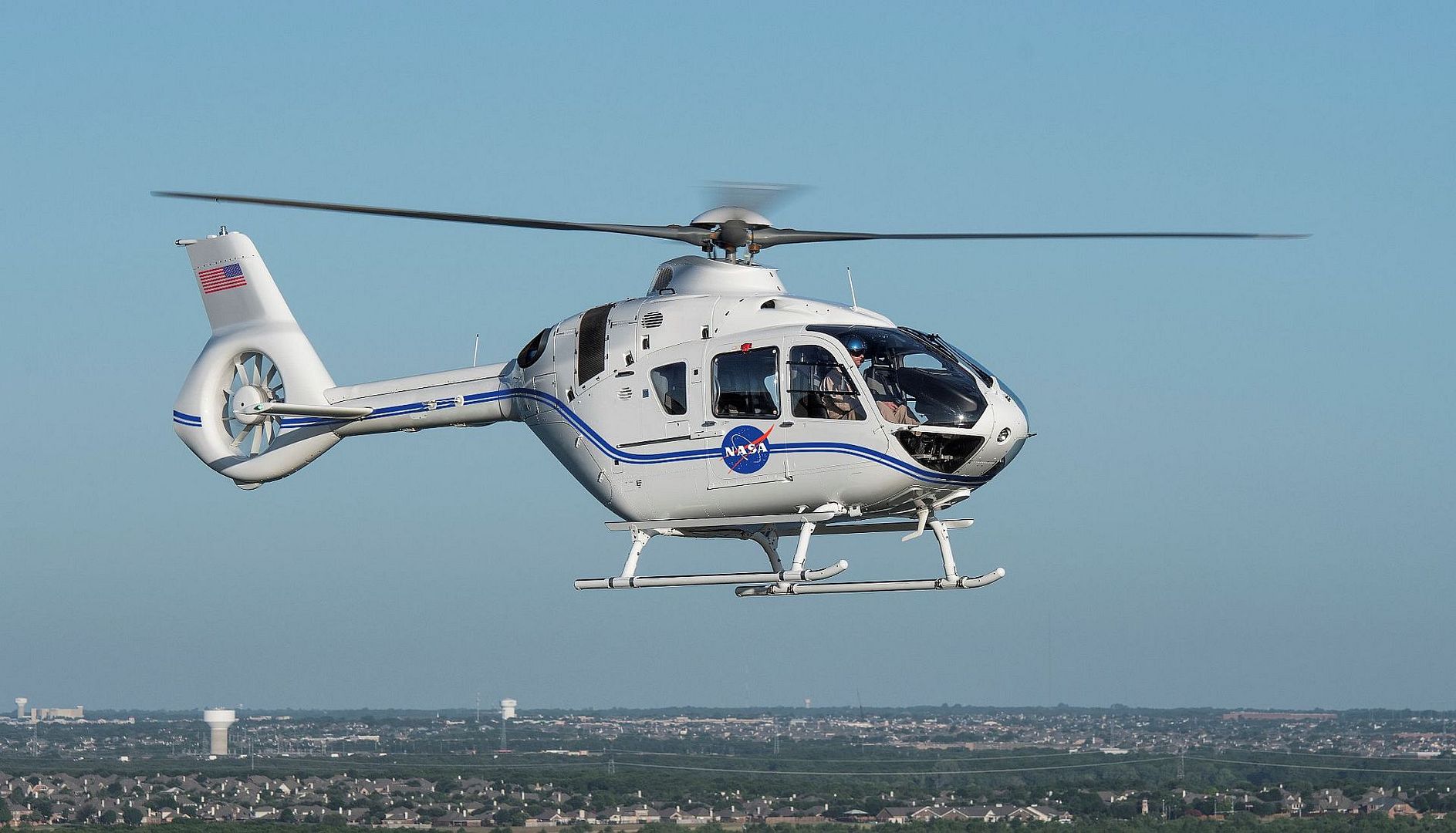
-
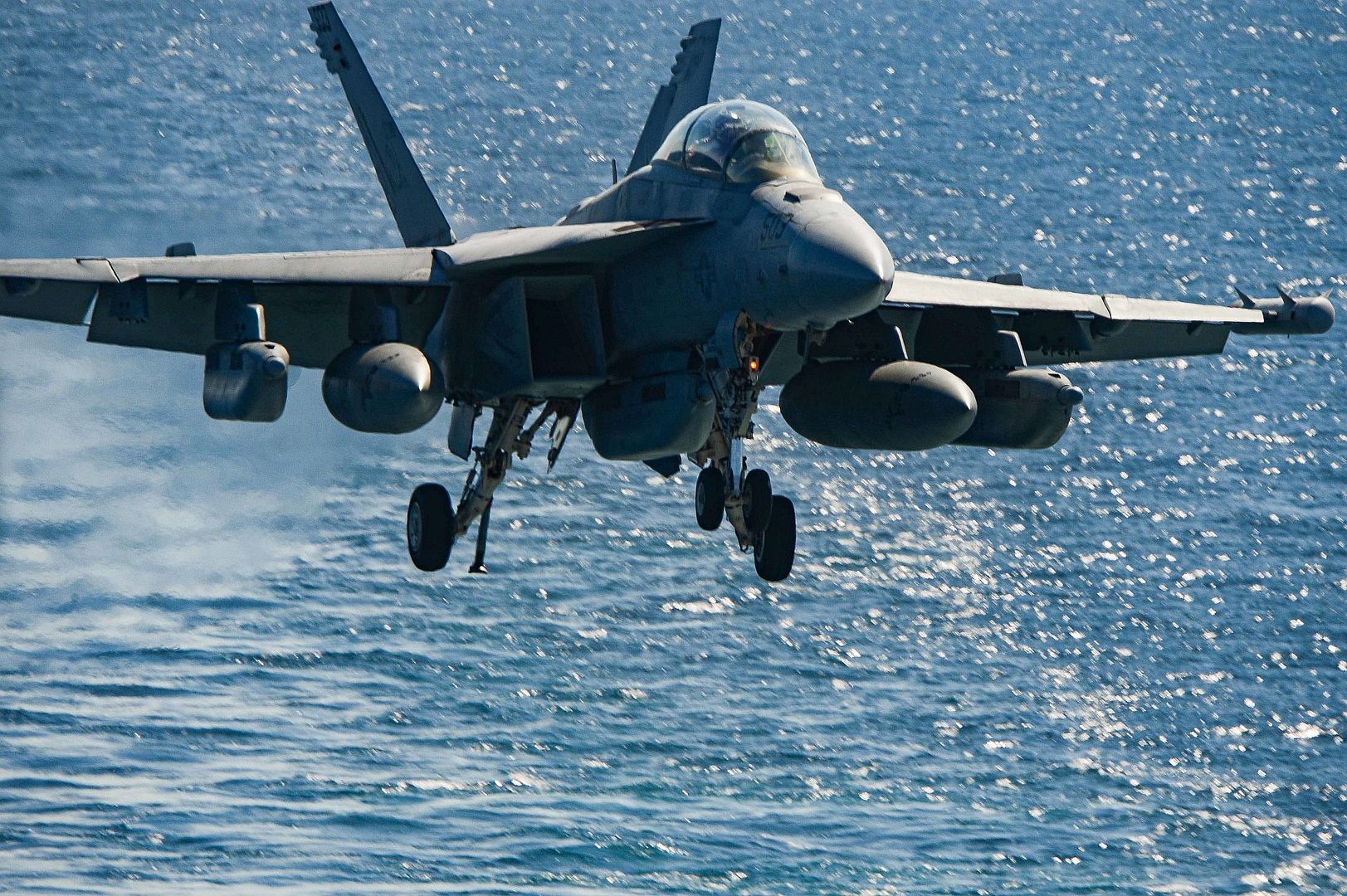
ARABIAN SEA (Jan. 29, 2020) An EA-18G Growler, attached to the "Rooks" of Electronic Attack Squadron (VAQ) 137, approaches the flight deck of the aircraft carrier USS Harry S. Truman (CVN 75), not pictured, in the Arabian Sea Jan. 29, 2020. The Harry S. Truman Carrier Strike Group is deployed to the U.S. 5th Fleet area of operations in support of naval operations to ensure maritime stability and security in the Central Region, connecting the Mediterranean and the Pacific through the western Indian Ocean and three strategic choke points. (U.S. Navy photo by Mass Communication Specialist 3rd Class Kaysee Lohmann)
ATSUGI, Japan (Jan. 29, 2020) An F/A-18F Super Hornet assigned to the ?Diamondbacks? of Strike Fighter Squadron (VFA) 102 conducts flight operations. VFA-102 is attached to Carrier Air Wing (CVW) 5, forward-deployed to the U.S. 7th Fleet area of operations in support of security and stability in the Indo-Pacific region. (U.S. Navy photo by Lt. Alex Grammar)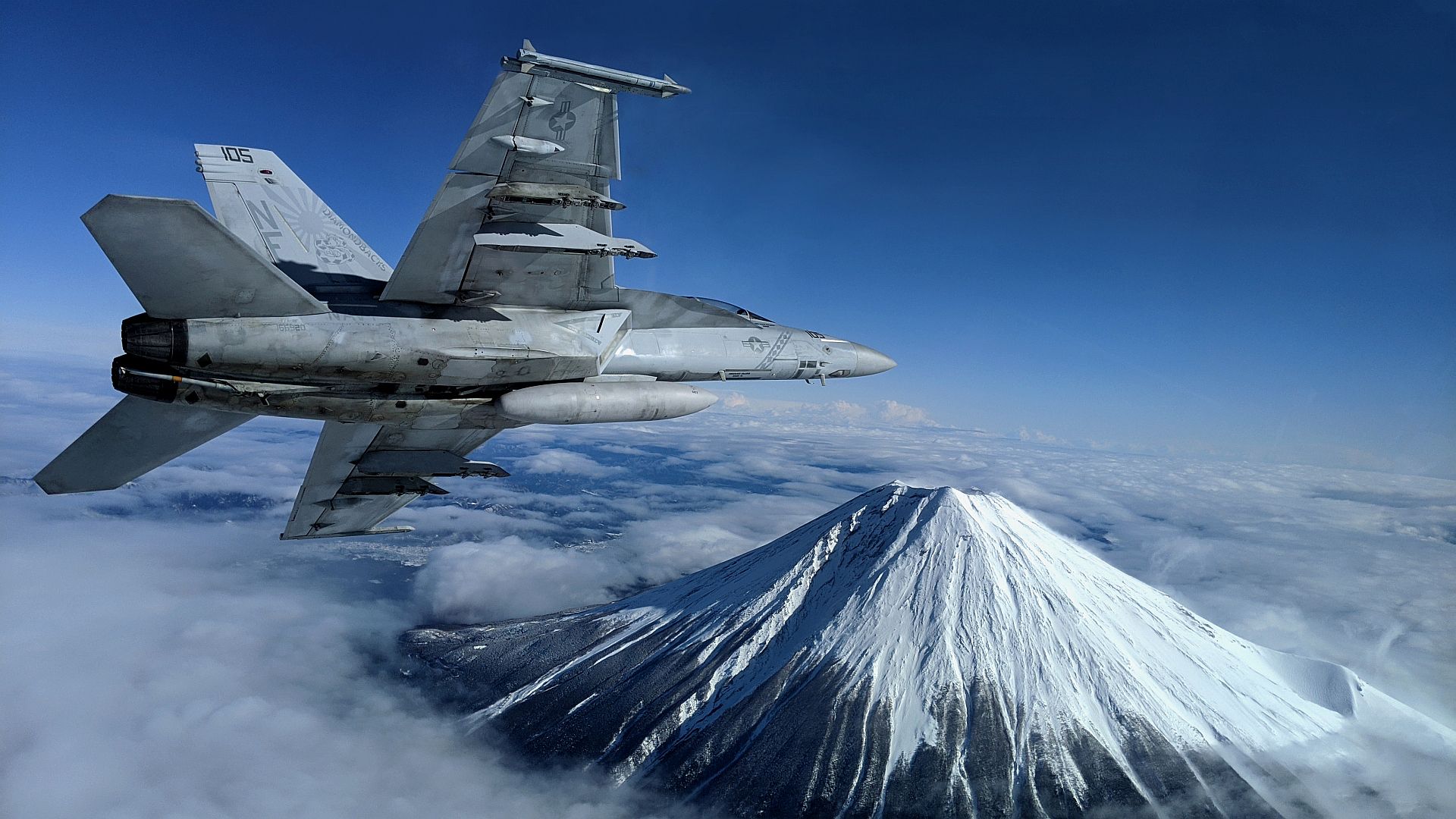
An F-15C Eagle assigned to the 493rd Fighter Squadron takes off in support of exercise Point Blank 20-1 at Royal Air Force Lakenheath, England, Jan. 30, 2020. Point Blank is a bilateral exercise that enhances professional relationships and improves overall coordination with allies and partner militaries. (U.S. Air Force photo/ Airman 1st Class Mikayla Whiteley)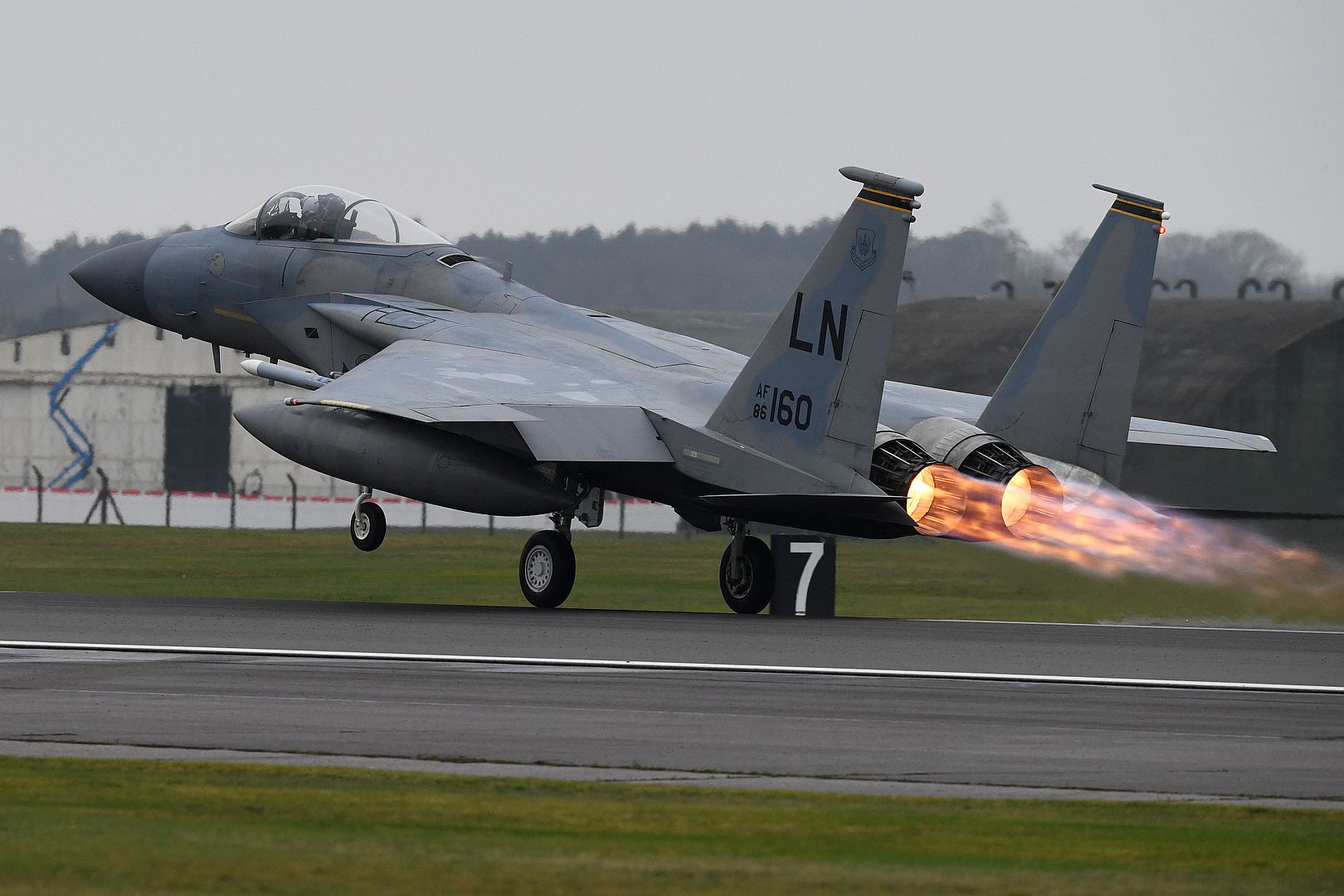
A U.S. Air Force F-15C Eagle assigned to the 48th Fighter Wing, RAF Lakenheath, England, flies away from a KC-135 Stratotanker from the 100th Air Refueling Wing, RAF Mildenhall, England, after receiving fuel during exercise Point Blank off the English coast, Jan. 30, 2020. Point Blank is a recurring, low-cost exercise initiative designed to increase tactical proficiency of U.S. Air Forces in Europe ? Air Forces Africa and Ministry of Defence forces. (U.S. Air Force photo by Tech. Sgt. Emerson Nu?ez)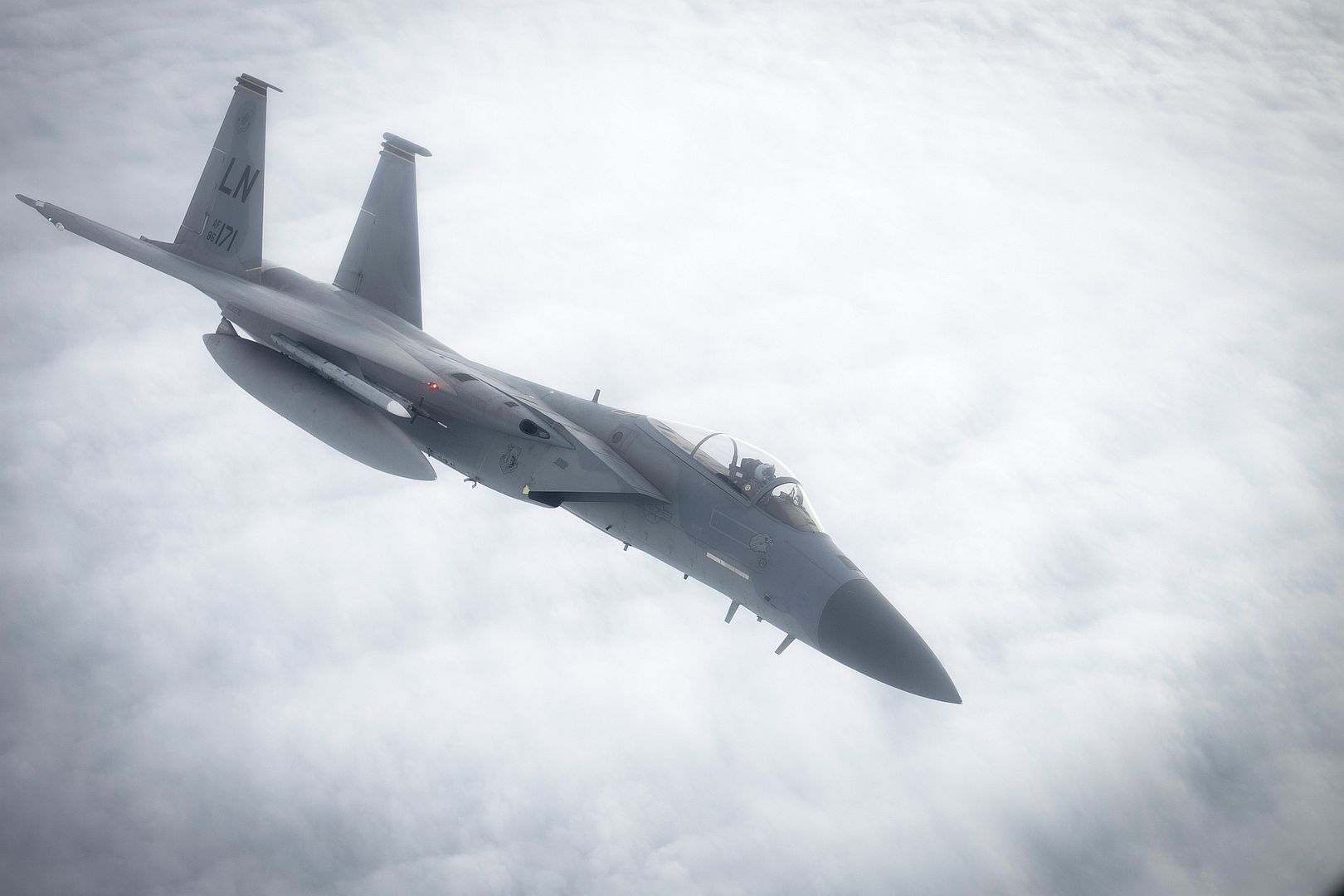
S?o Jos? dos Campos, Brazil, January 30, 2020 ? Embraer and SkyWest, Inc. (NASDAQ: SKYW) signed a firm order for 20 E175 jets in a 76-seat configuration. The order has a value of USD 972 million, based on 2019 list prices, and is already included in Embraer?s 2019 fourth-quarter backlog. Deliveries are expected to begin in the second half of 2020.
?Embraer and SkyWest enjoy a partnership marked by a longstanding history of service to the mainline carriers, and we relish the opportunity to break new ground,? said Charlie Hillis, Vice President, Sales & Marketing, North America, Embraer Commercial Aviation. ?Today, we are excited to announce that these 20 new aircraft will be the first E-Jets operated by SkyWest within the American Airlines network.?
?We?re pleased to continue advancing our position in the industry with this latest order of new Embraer aircraft,? said Chip Childs, President and Chief Executive Officer of SkyWest, Inc. ?We appreciate the long-standing partnership with Embraer and look forward to operating this outstanding aircraft for all four of our mainline partners.?
Embraer?s relationship with SkyWest dates back to 1986, when SkyWest began operating the EMB 120 Brasilia turboprop. With this additional order for the E175, SkyWest has purchased more than 180 aircraft of this model since 2013 alone.
Embraer is the world?s leading manufacturer of commercial jets with up to 150 seats. The Company has 100 customers from all over the world operating the ERJ and E-Jet families of aircraft. For the E-Jets program alone, Embraer has logged almost 1,800 orders and 1,500 deliveries, redefining the traditional concept of regional aircraft.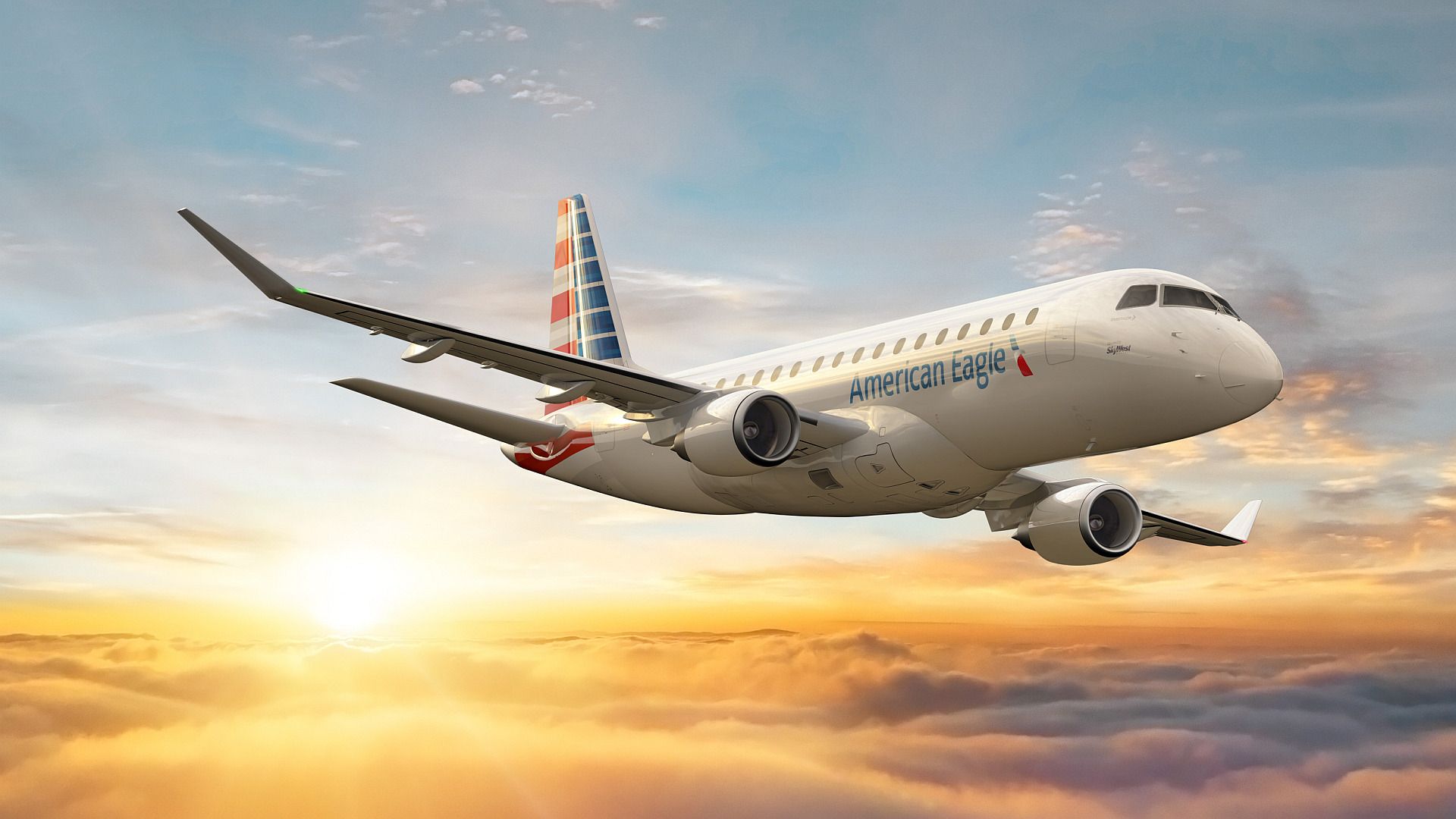
Melbourne, FL ? January 31, 2020 ? Embraer?s Phenom 300 series, the most successful business jet of the past decade, is made even better with enhancements in performance, comfort and technology. In the Embraer tradition of constantly striving to deliver even more value to customers, the Phenom 300E is now the first single-pilot jet to reach Mach 0.80, offering a quieter cabin and upgrades to its avionics that include predictive windshear and a runway overrun awareness and alerting system, Embraer exclusive intellectual property and the first technology of its kind to be developed and certified in business aviation.
To deliver the best performance in the category, the Phenom 300E now has more speed. The enhanced aircraft is the first single-pilot jet to reach Mach 0.80, making the fastest and longest-ranged single-pilot jet in business aviation even faster. With the new enhancements, the Phenom 300E now delivers a high-speed cruise of 464 knots and a five-occupant range of 2,010 nautical miles (3,724 km) with NBAA IFR reserves.
In terms of comfort, the Phenom 300E now enjoys an even quieter cabin, pilot and co-pilot seat tracking that?s close to 40% more, thus providing more legroom in the cockpit and a brand-new premium interior option, known as Bossa Nova. The noise-reduction improvements lower overall in-flight cabin noise, high-frequency noise and significantly reduce noise during boarding.
To deliver unparalleled technology in the category, the Phenom 300E is receiving an avionics upgrade to include a runway overrun awareness and alerting system, predictive windshear, Emergency Descent Mode, PERF, TOLD, FAA Datacom and many others. The runway overrun awareness and alerting system acts as an additional pilot and warns if the aircraft?s approach is too steep or too fast, increasing situational awareness. Embraer has patented this technology and is the first OEM in business aviation to develop and certify it. New predictive windshear warns pilots about windshear conditions in advance to help them prepare and maneuver the airplane in order to best minimize adverse conditions. Additionally, the Phenom 300E now comes with a 4G connection via Gogo AVANCE L5.
?Despite the Phenom 300?s extraordinary success in the past decade, our team of visionaries is always striving to deliver the ultimate experience to our customers, which means taking an industry-leading aircraft and making it even better, faster and safer,? said Michael Amalfitano, President & CEO, Embraer Executive Jets. ?Boundless imagination and intelligent engineering gave birth to the Phenom 300E, and it is with that same spirit that we continue enhancing the most popular business jet of the decade.?
With these enhancements, the award-winning Bossa Nova Edition interior, originally introduced in 2018 with the debut of the Praetor 500 and Praetor 600, now becomes an available option for the Phenom 300E. The premium interior features carbon fiber materials, sophisticated stitching and piano-black coloring. Inspired by the famous sidewalks of Rio de Janeiro, the custom quilted design is complemented by the tuxedo stitching and color accent details on the divan. Embraer?s latest and most advanced interior, the Bossa Nova interior in the Praetor 600 won best design in the 2019 International Yacht & Aviation Awards in Venice (Interior Design/VIP Completion category).
Deliveries of the new Phenom 300E with these enhancements will begin in May of 2020; some features are optional.
Originally launched in 2005, the Phenom 300 series has sustained more than half of the light jet market share since 2012. The aircraft is in operation in more than 30 countries and has accumulated more than one million flight hours. Embraer is continuously investing in the competitiveness of the Phenom 300E with enhancements to its performance, comfort, technology and operational efficiency. In October 2017, the new Phenom 300E was announced and entered service just five months later. The new aircraft will continue to be designated ?E? for ?Enhanced.?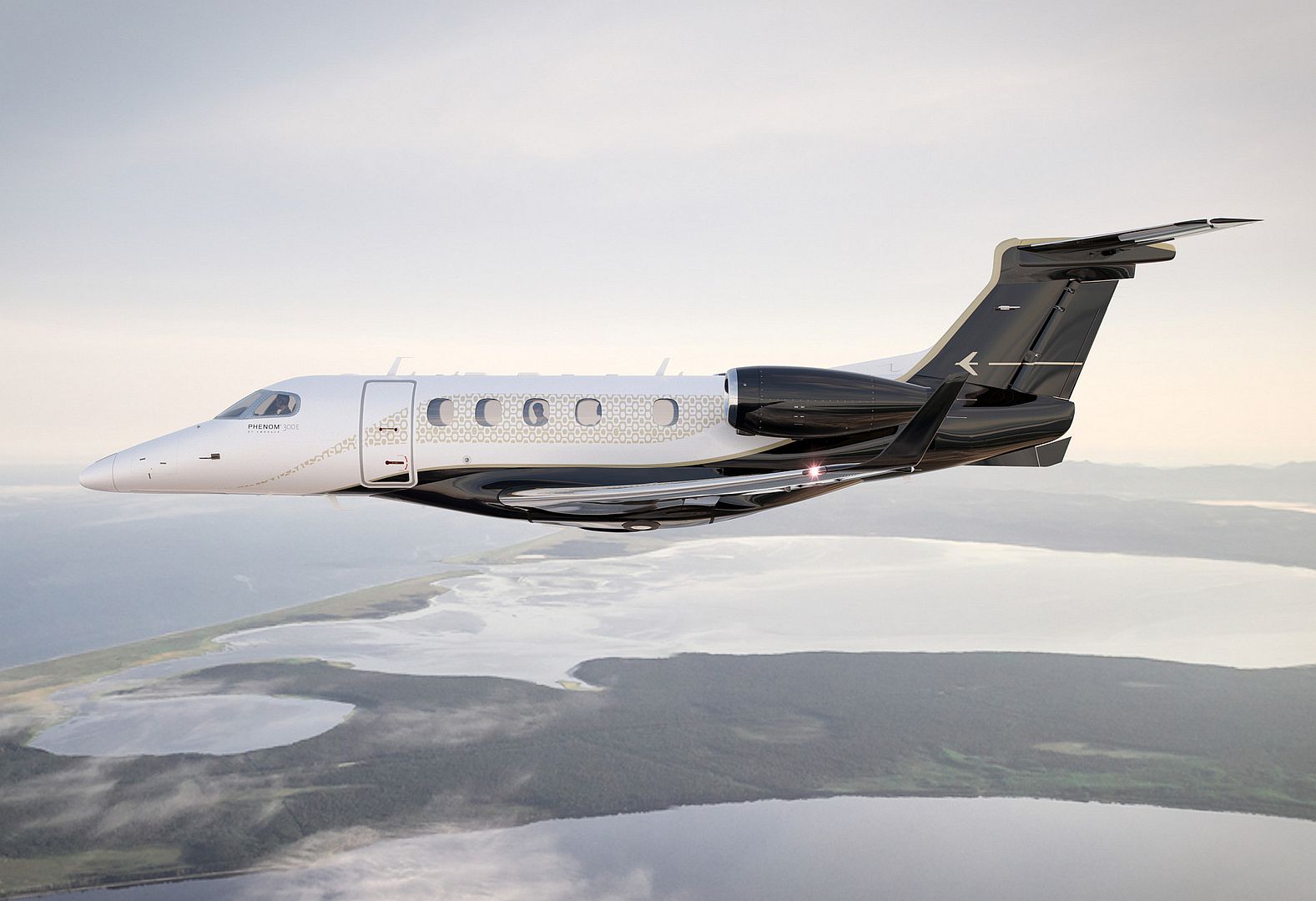
Media Release 31.01.2020
The Spanish Air Force, Ej?rcito del Aire, is the third European air force to opt for the Swiss-produced PC-21, the Next Generation Trainer. Pilatus has committed to delivering a total of 24 PC-21s to Spain. The single-engine turboprop trainer aircraft will replace the Casa C-101 jet trainers used since 1980.
The Ministry of Defence was looking for a new, highly efficient training platform to provide advanced training for Spain?s future military pilots tasked with protecting future generations. After a long and extremely professional evaluation, Pilatus beat several prestigious competitors to win the tender with the PC-21. The contract, which is worth over 200 million euros, was signed yesterday evening with the Spanish Direcci?n General de Armamento y Material (DGAM). Comprising an integrated training system, the order includes simulators developed and produced by Pilatus, spare parts and logistics support in addition to the PC-21 aircraft.
Oscar J. Schwenk, Chairman of Pilatus, is enthusiastic about this major order from Spain: ?As a small Swiss aircraft manufacturer I?m delighted at our repeated success in winning through over large, international competitors. This result is proof that, with our PC-21, we can deliver the very best training system in the world.?
Pilot training starts in 2021
The PC-21 will provide Spain with the most advanced training system currently on offer, and will also deliver a cost-effective, ecologically viable training platform. Experience with existing PC-21 customers has shown that the cost of training for a military pilot can be reduced by over 50 percent with the PC-21. These single-engine turboprop aircraft require much less fuel than any comparable jet trainer.
Oscar J. Schwenk commented further: ?I?m delighted to see us win a new air force to add to our existing customer portfolio. We shall provide Ej?rcito del Aire with the first-class customer service they are entitled to expect from Pilatus. Bienvenidos a Pilatus y muchas gracias por elegir el PC-21 ? viva Espa?a!?
About the PC-21 success model
For years, people believed that single-engine turboprops would never replace jet trainers. But with defence budgets coming under increasing pressure, air forces are looking for new ways of managing and maintaining their complex systems in mission-ready condition. Seeking to support this change, Pilatus developed performance-related services specifically tailored to the PC-21 Training System. The goal is to ensure an affordable product to match the performance criteria defined by air force customers. That is achieved by providing a highly sophisticated and integrated service package in line with current air force requirements.
Prestigious air forces around the world have chosen the cost-effective, highly efficient training platform created by Pilatus. They are the proof that the PC-21 is the training system of the future. Since 2006, with the order for Spain, Pilatus has already sold 235 PC-21s to nine air forces ? including Singapore, Switzerland, the United Arab Emirates, France and Australia.
-
U.S. Air Force Maj. Josh Gunderson, F-22 Raptor Demonstration Team commander and pilot, performs during an aerial demonstration at Joint Base Langley-Eustis, Va., Jan. 30, 2020. Maj. Gunderson has over 1,500 hours flying both the F-15 Eagle and F-22 Raptor and is in his first year as commander of the F-22 Raptor Demo Team. (U.S. Air Force photo by 2nd Lt. Sam Eckholm)
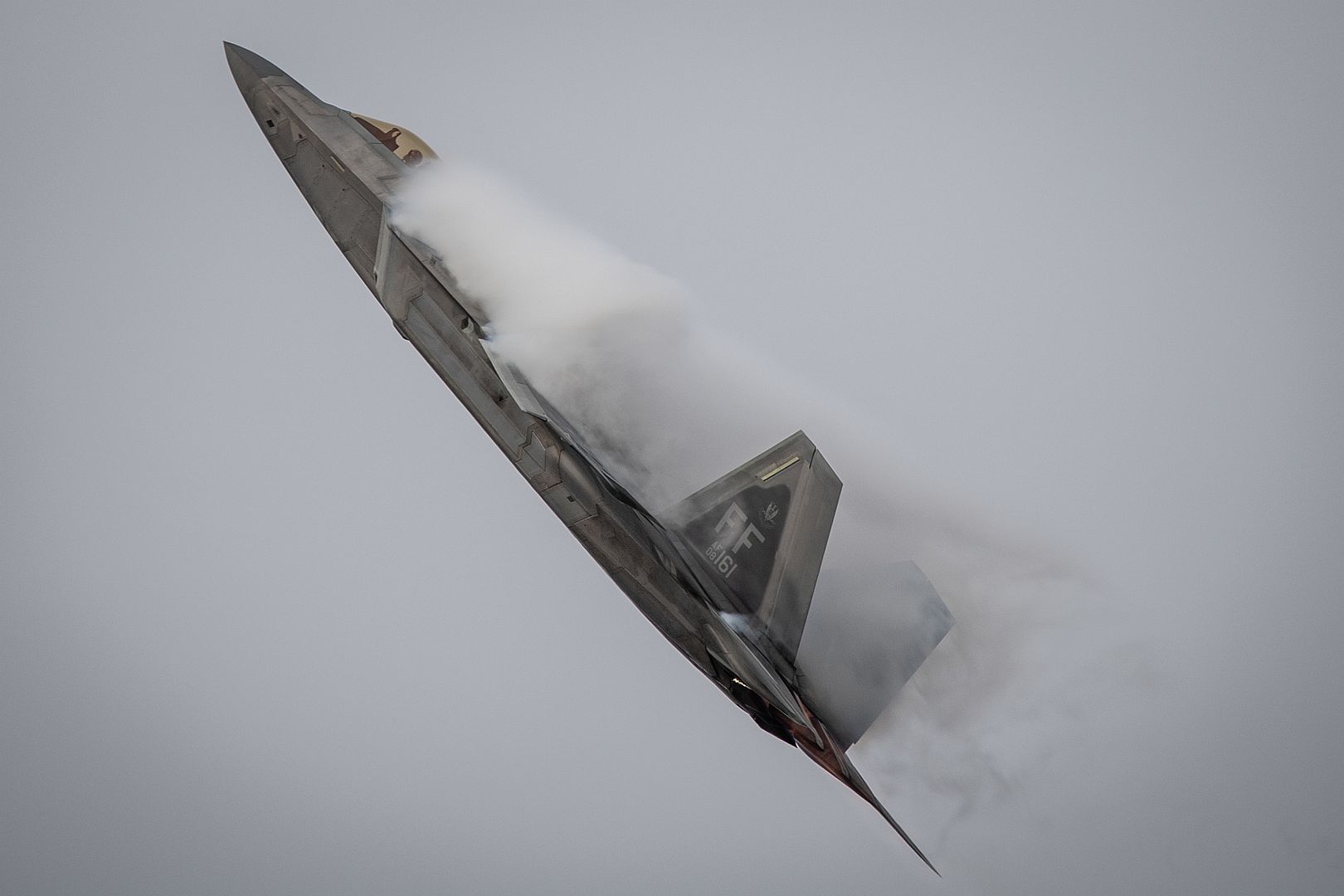
OLD NEWS but amazing shots just released!
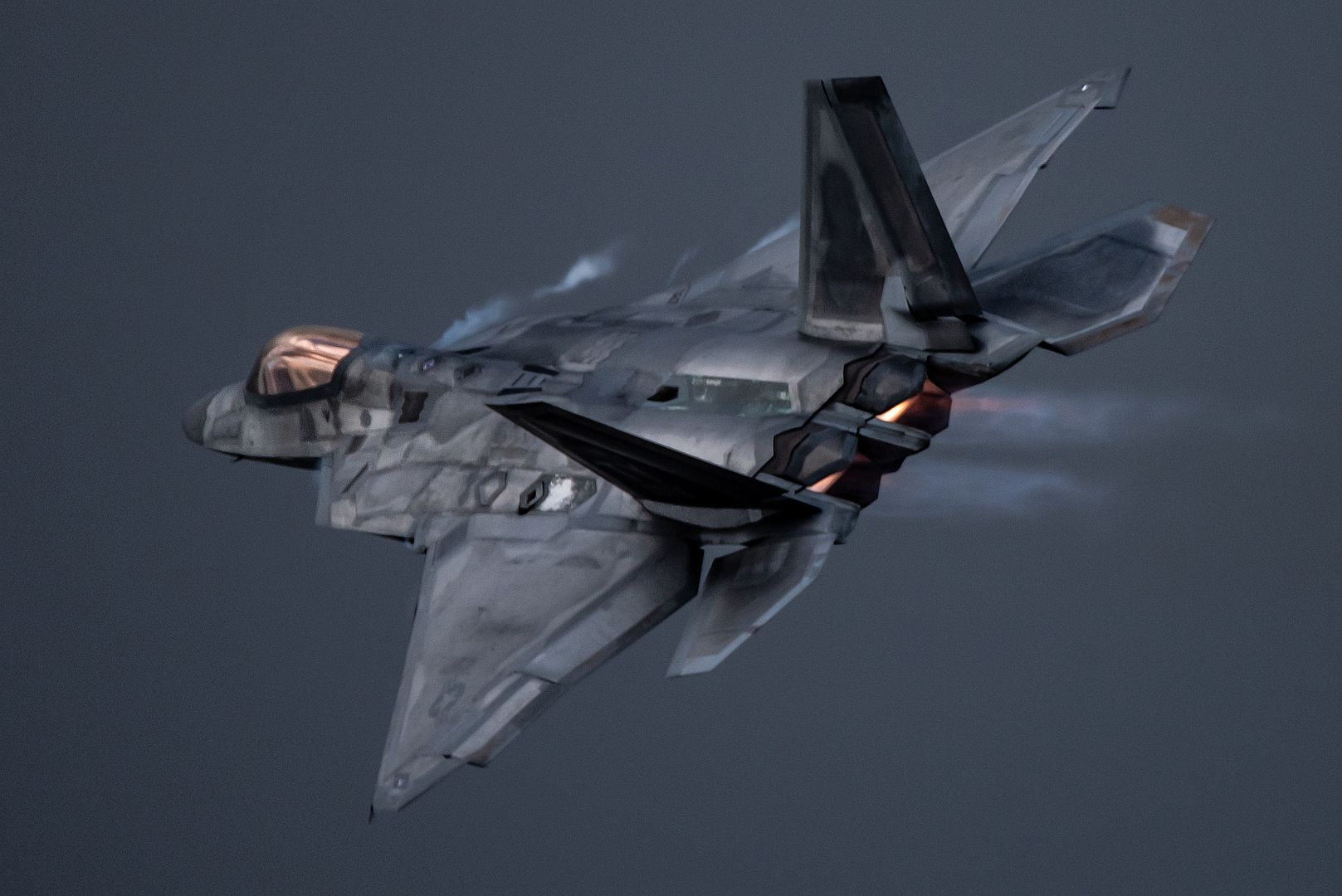
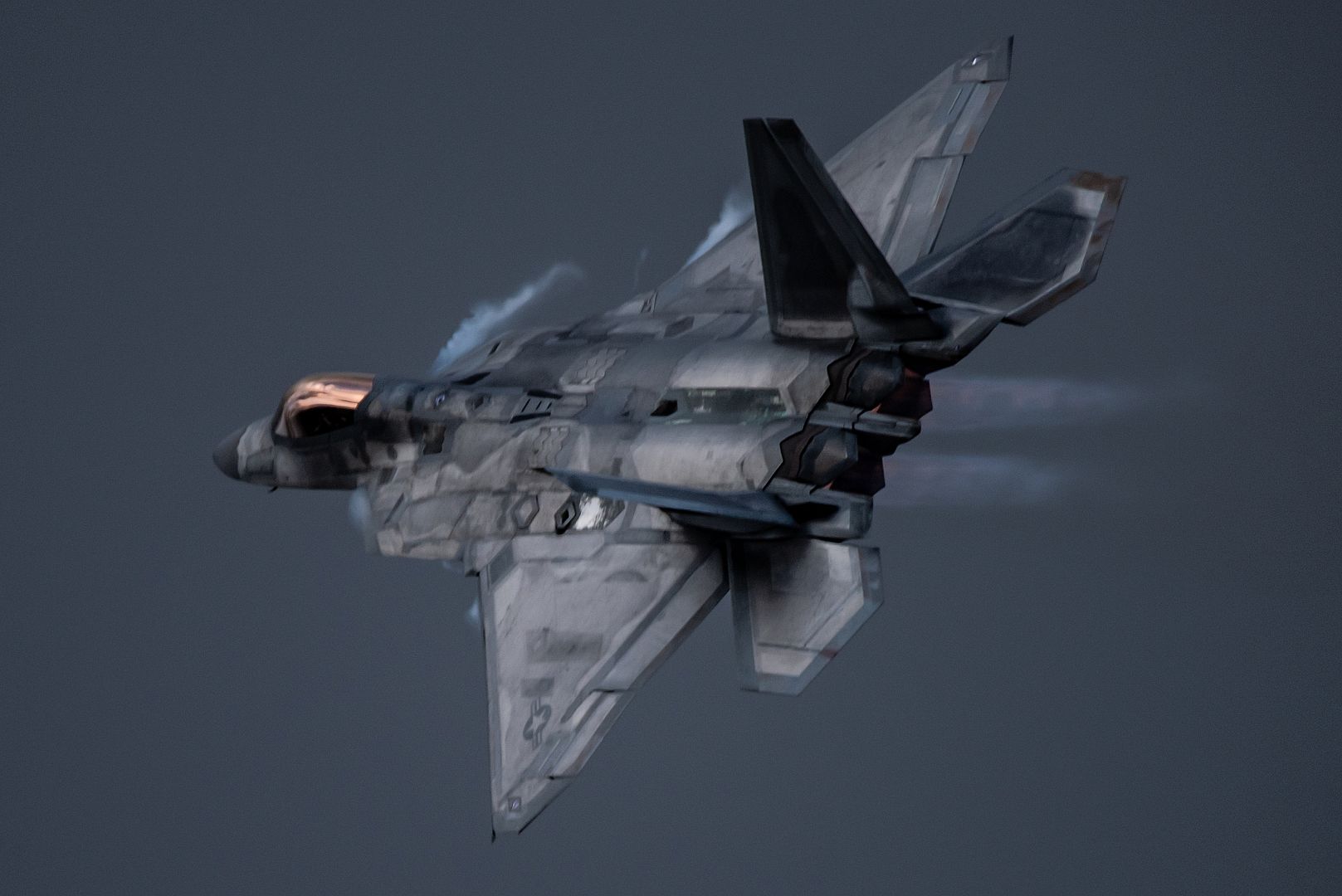
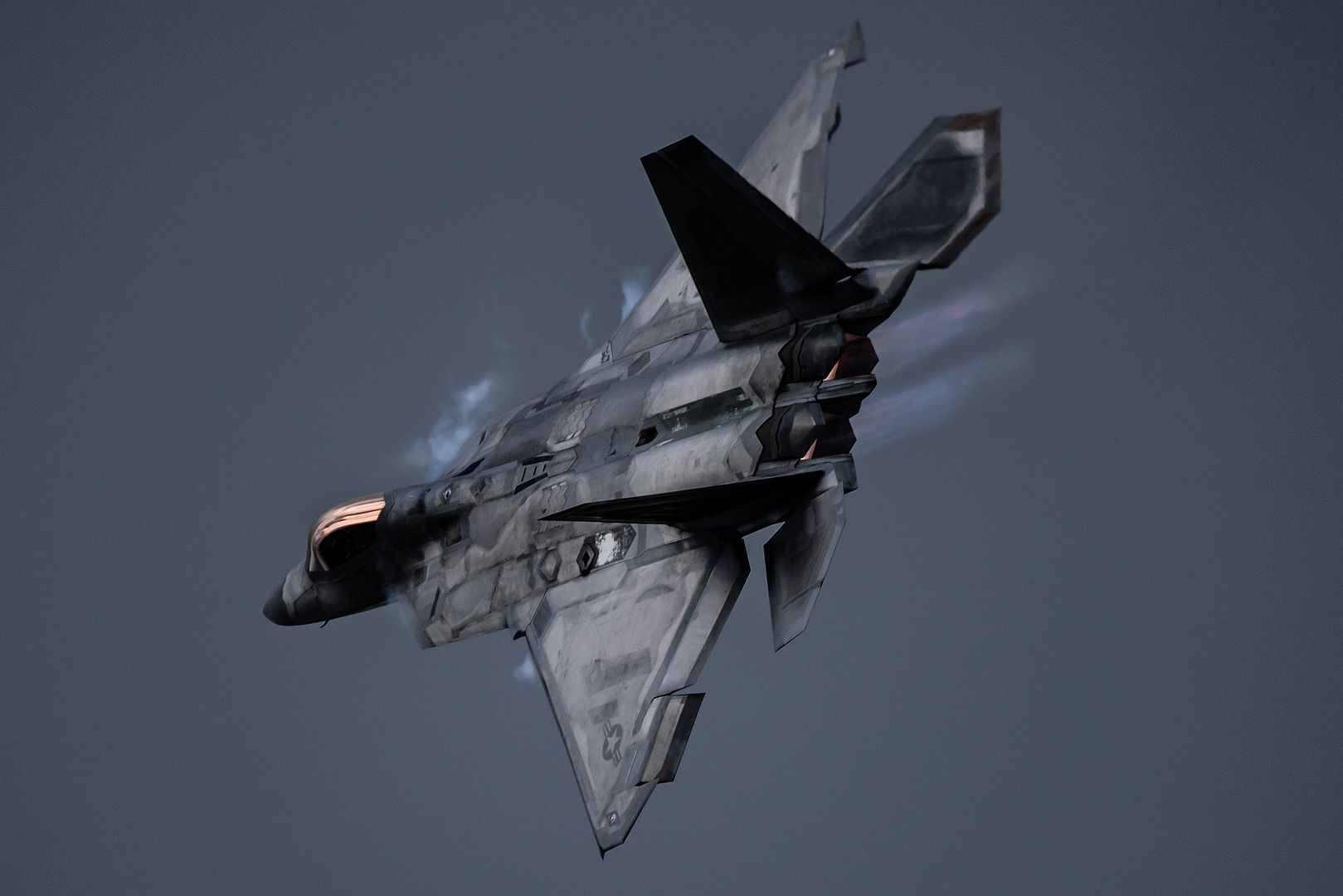
U.S. Air Force Maj. Josh Gunderson, F-22 Raptor Demonstration Team commander and pilot, flies a practice demo at Joint Base Langley-Eustis, Va., Dec. 6, 2019. Representing Air Combat Command, the F-22 Demo Team travels to air shows all across the world showcase the performance and capabilities of the world's premier 5th-generation fighter. (U.S. Air Force photo's by 2nd Lt. Sam Eckholm)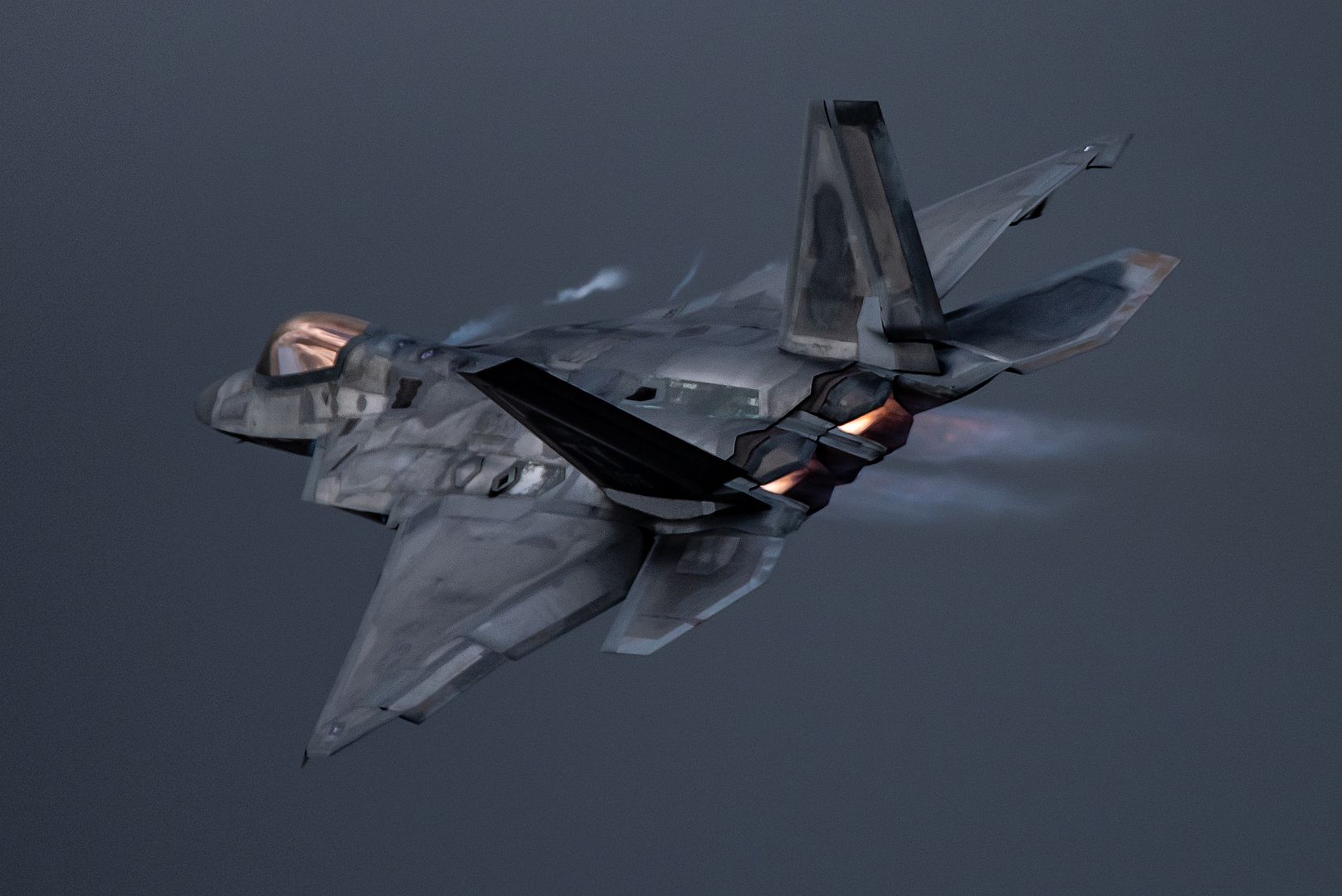
PHILIPPINE SEA (Feb. 2, 2020) An F-35B Lightning II assigned to the 31st Marine Expeditionary Unit (MEU), Marine Medium Tiltrotor Squadron (VMM) 265 (Reinforced) lands on the flight deck of the amphibious assault ship USS America (LHA 6). America, flagship of the America Expeditionary Strike Group, 31st MEU team, is operating in the U.S. 7th Fleet area of operations to enhance interoperability with allies and partners and serve as a ready response force to defend peace and stability in the Indo-Pacific region. (U.S. Navy photo by Mass Communication Specialist Seaman Jonathan Berlier/Released)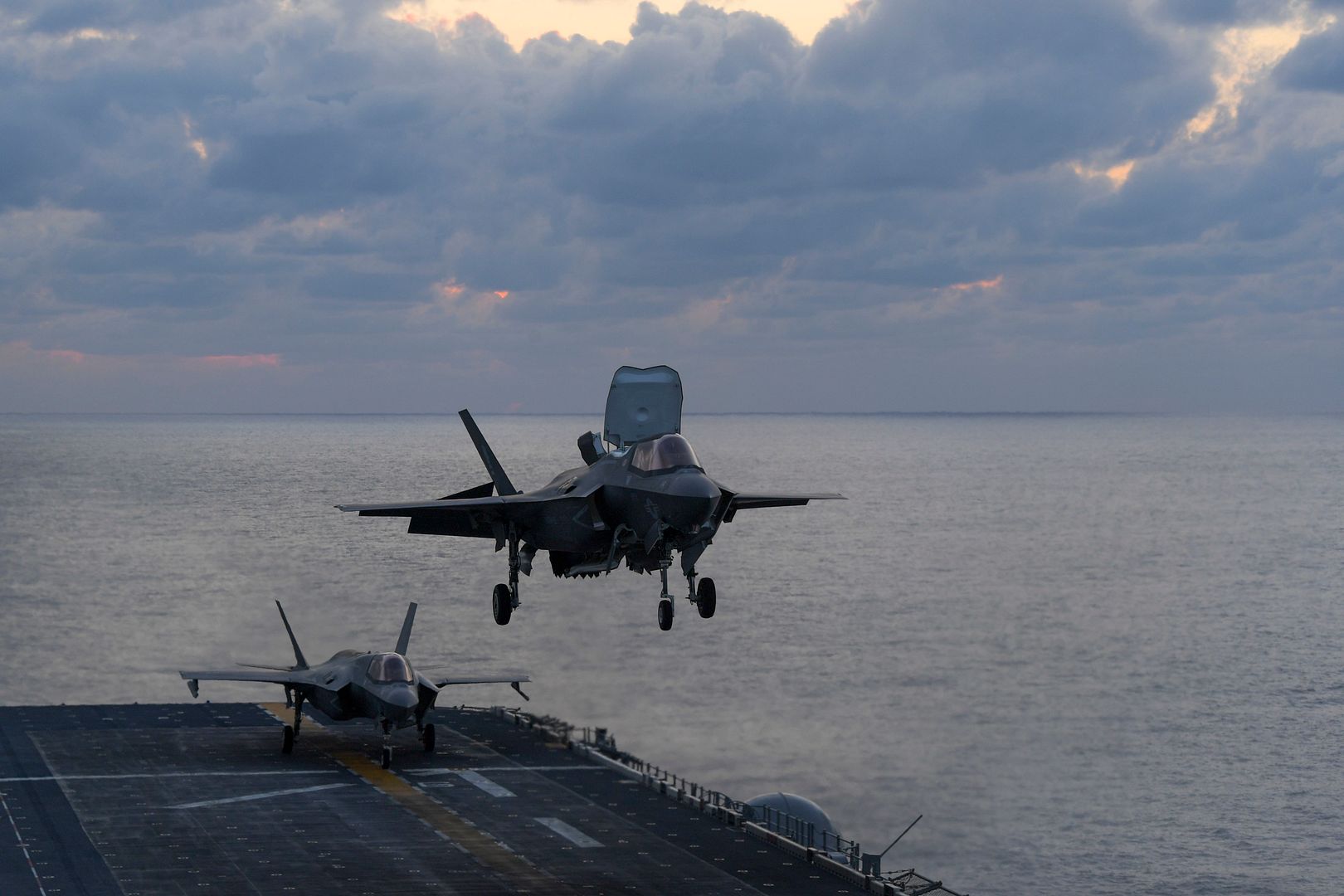
Jakarta, 3rd February 2020 ? Batik Air, the full service wing of Indonesia?s Lion Group, marked the arrival of its first A320neo with a ceremony at Soekarno-Hatta International Airport in Jakarta, Indonesia. The aircraft is the 46th Airbus aircraft in Batik Air?s fleet that already includes 44 A320 Family Aircraft and one A330-300.
The new aircraft features 156 seats (12 business and 144 economy seats). Selected for its outstanding operational efficiency, comfort and range, the A320neo will be deployed by the carrier on its regional services and increase its capacity.
Featuring the widest single-aisle cabin in the sky, the A320neo Family incorporates the very latest technologies including new-generation engines and Sharklets, which together deliver at least 15% fuel savings at delivery and 20% by 2020. At the end of December 2019, the A320neo Family had received more than 7,100 firm orders from over 100 customers worldwide.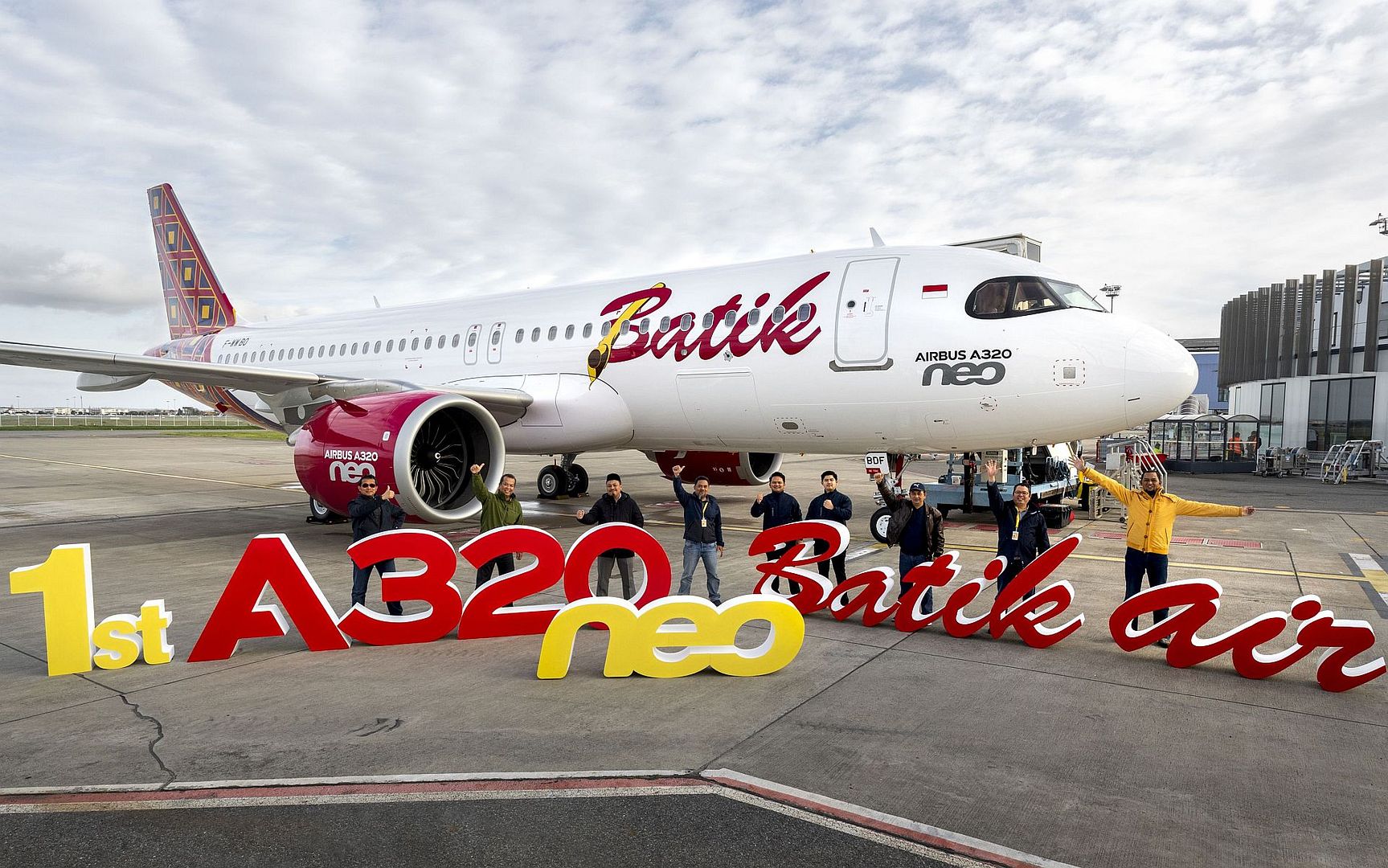
-
ELIZABETH CITY, N.C., Feb. 4, 2020 ? Lockheed Martin (NYSE: LMT) representatives joined U.S. Coast Guard leaders and crew members for a ceremony on Jan. 31 at the Coast Guard Aviation Logistics Center in Elizabeth City, North Carolina, celebrating the completion of operational testing of the first Coast Guard HC-130J outfitted with the Block 8.1 upgrade.
This upgrade was installed on a previously delivered HC-130J at the Lockheed Martin facility in Greenville, South Carolina. The aircraft recently completed initial operational testing and will be placed into operational service. Lockheed Martin is currently contracted to deliver a minimum of six Block 8.1 upgrade kits to the U.S. Coast Guard.
?The U.S. Coast Guard has relied on its Hercules fleet for more than 60 years to support complicated missions that ensure our nation?s safety and security,? said Peter London, director of Tactical Airlift Programs for Lockheed Martin?s Air Mobility & Maritime Missions line of business. ?The advanced features and purpose-built design enhancements found in the Block 8.1 upgrade ensure that Coast Guard crews will rely on the HC-130J for mission support for many more decades to come.?
In addition to the Block 8.1 upgrade, the Coast Guard is also integrating Minotaur mission system architecture into its fixed-wing aircraft. Missionization includes post-production modification of new C-130J aircraft to incorporate the specialized equipment necessary to carry out Coast Guard missions.
The Coast Guard?s HC-130J Super Hercules long-range surveillance aircraft provides heavy air transport and long-range maritime patrol capability. Each aircraft is capable of serving as an on-scene command and control platform or as a surveillance platform with the means to detect, classify and identify objects and share that information with operational forces.
The Coast Guard is acquiring a fleet of 22 new, fully missionized HC-130J aircraft to replace its older HC-130Hs.
The C-130J Super Hercules is the current production model of the C-130 Hercules airlifter. The Super Hercules is the global standard in tactical airlift, providing a unique mix of versatility and performance to complete any mission ? anytime, anywhere. The global C-130J fleet has more than 2 million flight hours and is the airlifter of choice for 20 nations.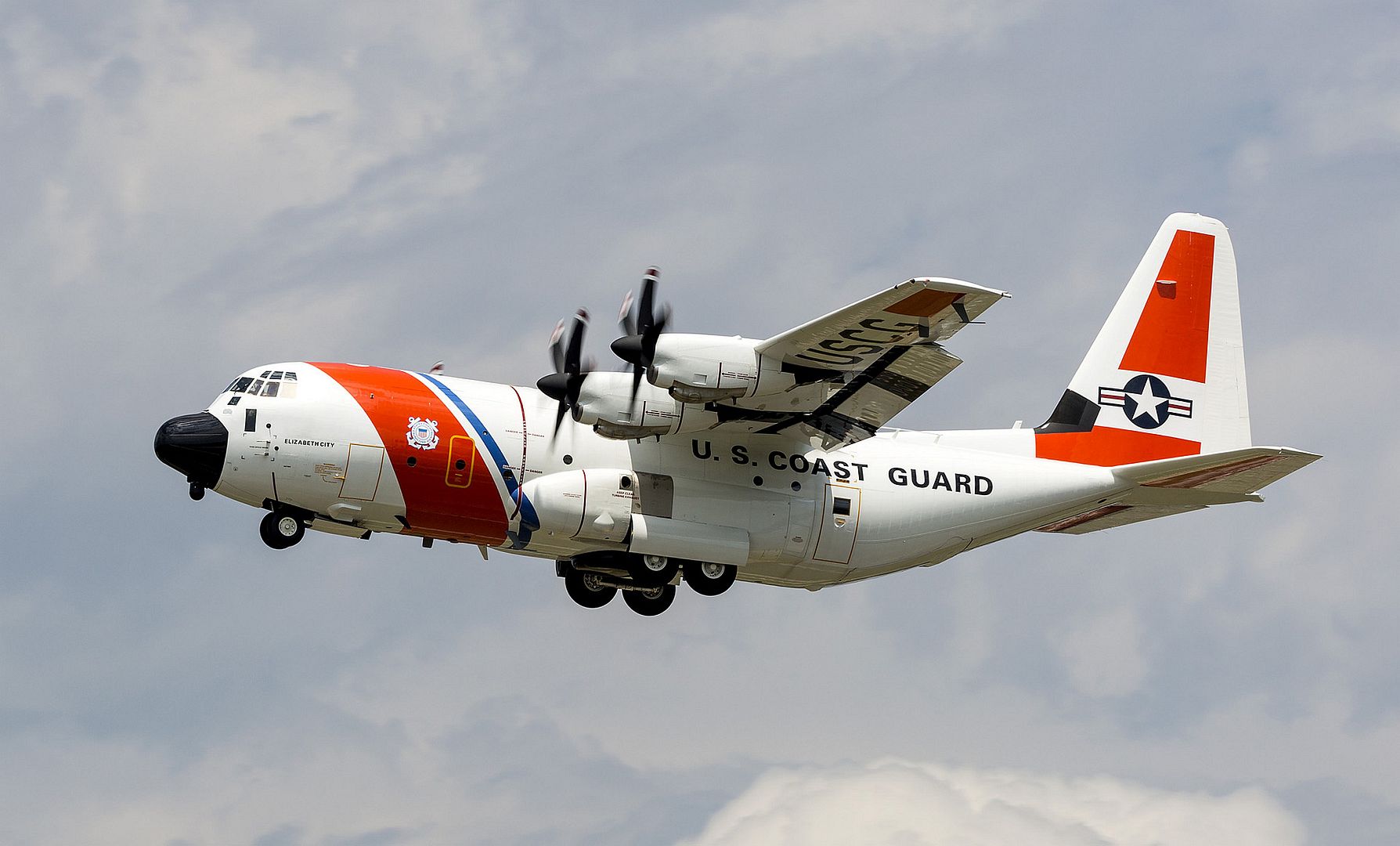
The RAF?s new submarine-hunting Poseidon Maritime Patrol Aircraft (MPA) has touched down for the first time in the UK.
The aircraft is the first of a new ?3 billion programme, including the purchase of nine state-of-the-art Poseidon jets, which will improve the UK?s ability to track hostile targets below and above the waves.
Poseidon aircraft will protect the UK?s continuous at-sea nuclear deterrent and be central to NATO missions across the North Atlantic, co-operating closely with the US and Norwegian Poseidon fleets.
The UK?s purchase of the Poseidon is in response to increased threats such as Russian submarine activity in the Atlantic returning to Cold War levels, while China is also investing heavily in new Arctic facilities, infrastructure and ice-capable ships.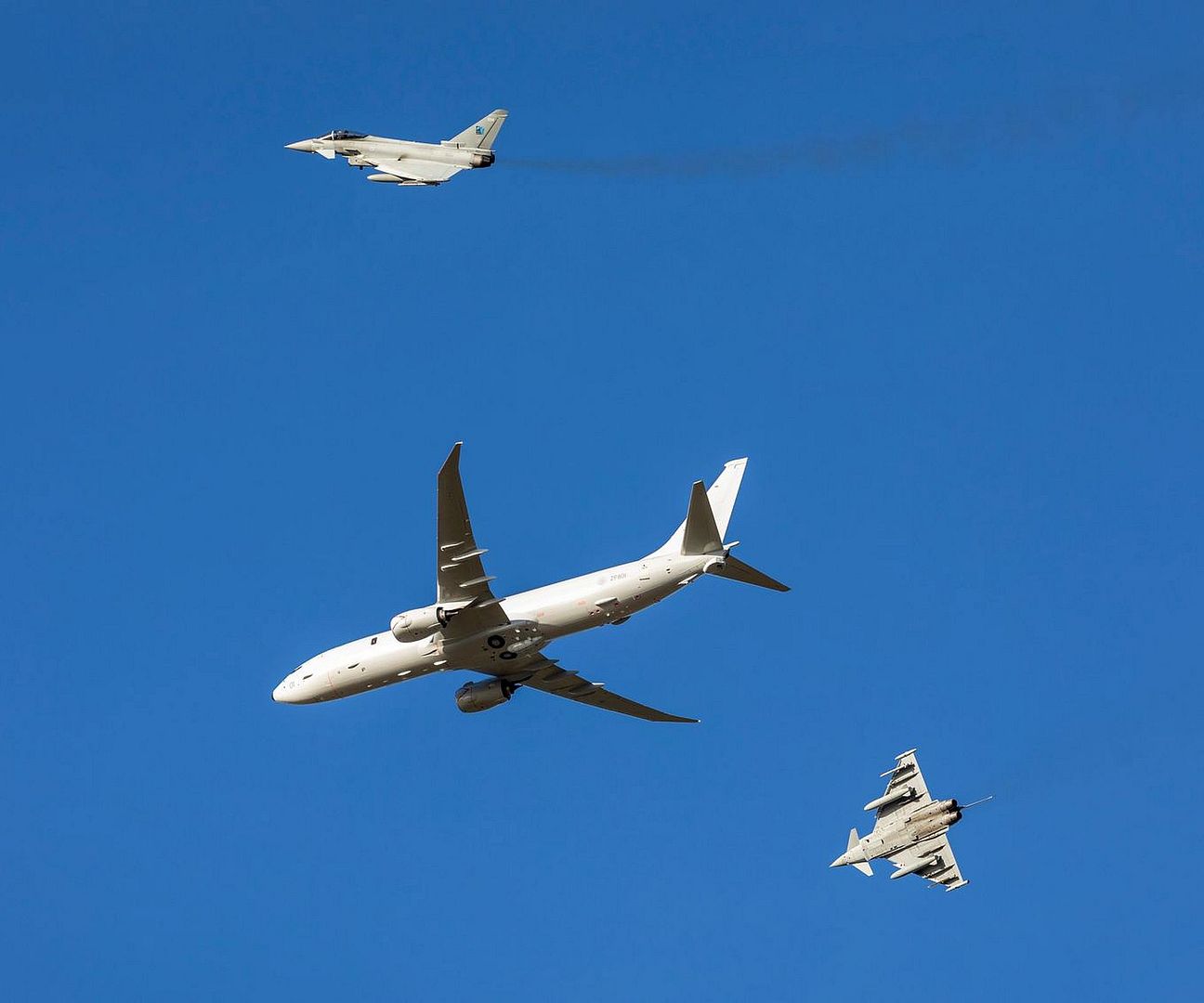
Defence Minister Anne-Marie Trevelyan, said:
?Our Poseidon fleet will soon join an integrated UK force of fighter jets, ships, submarines, helicopters and highly-trained Royal Marines, ready to operate in Arctic conditions. The UK will not stand by if peace in the Arctic region is threatened.
?RAF Lossiemouth?s strategic northerly location makes it one of the most important air stations in the UK: already home to half of the UK?s Typhoon Force, and now sitting at the heart of our anti-submarine operations.?
The Poseidon is designed to carry out extended surveillance missions at high and low altitudes. The aircraft is equipped with cutting-edge sensors which use high-resolution area mapping to find both submarines and surface vessels.
Each aircraft carries sonobuoys which are dropped from the aircraft into the sea to search for enemy submarines, surveying the battlespace under the sea and relaying data back to the aircraft.
Poseidon will also be armed with Harpoon anti-surface ship missiles and Mk 54 torpedoes capable of attacking both surface and sub-surface targets.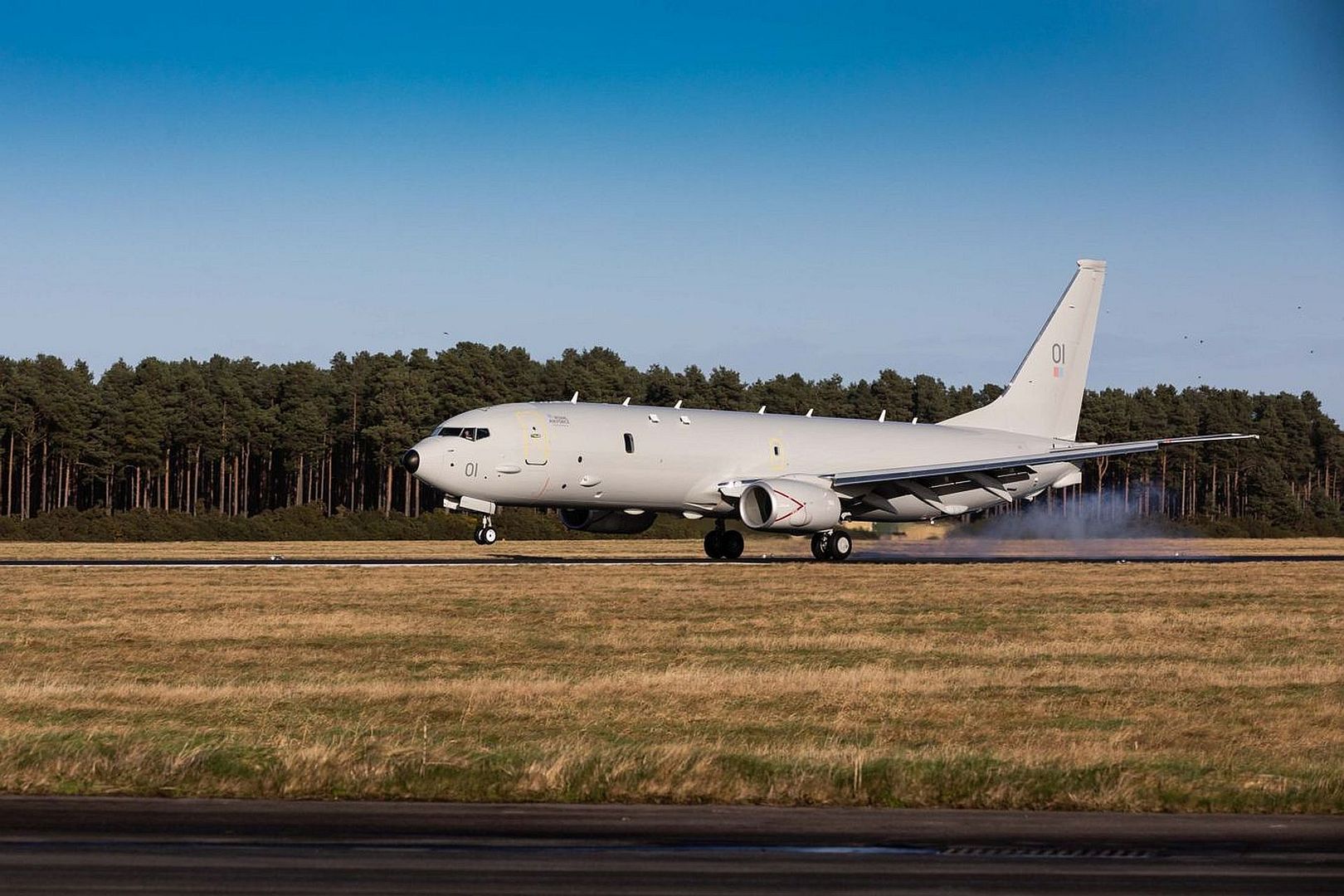
First Sea Lord, Admiral Tony Radakin, said:
?The arrival of the first Poseidon marks a significant upgrade in the UK?s ability to conduct anti-submarine operations. This will give the UK the ability to conduct long range patrols and integrate seamlessly with our NATO allies to provide a world-leading capability. This will maintain operational freedom for our own submarines and apply pressure to those of our potential foes. I look forward to working with the RAF and our international partners on this superb aircraft.?
All nine UK Poseidons will be delivered to the RAF by the end of 2021 and achieve full operational capability from RAF Lossiemouth in 2024. The aircraft will be flown initially by 120 Squadron, the leading anti-submarine warfare squadron in World War 2, with 201 Squadron joining the programme in due course.
Named the ?Pride of Moray?, the first UK Poseidon arrived at Kinloss Barracks, used previously by the RAF Nimrod MPA fleet, and now home to the Army?s specialist air support engineers, 39 Engineer Regiment.
Poseidon will temporarily operate from Kinloss until October 2020 while ?75 million of planned runway and taxiway resurfacing works is completed at Lossiemouth by the Defence Infrastructure Organisation. Routine Typhoon training will also temporarily relocate from Lossiemouth to Kinloss in June and July while the intersection of the runways there is resurfaced.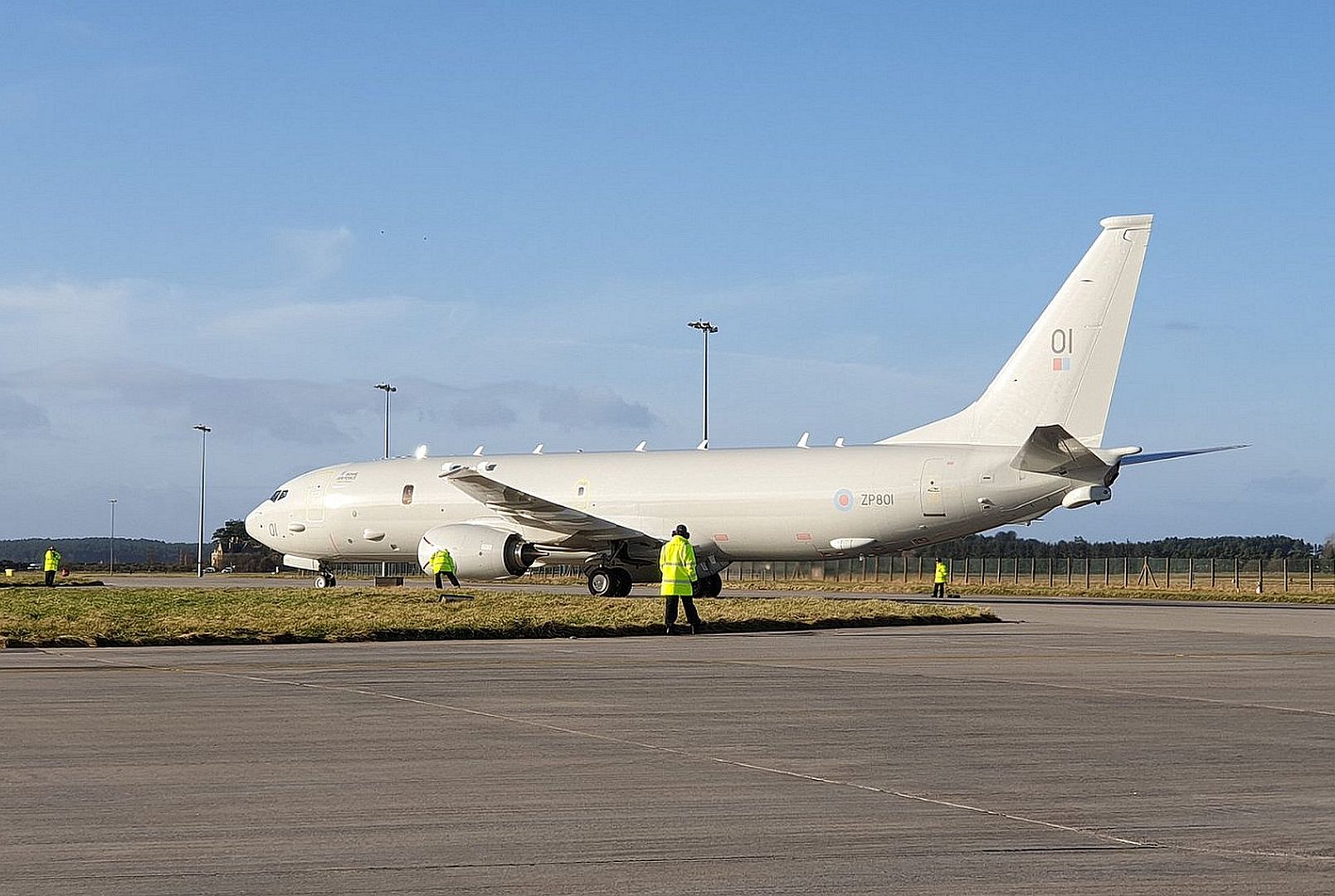
Michelle Sanders, DE&S P-8A Delivery Team Leader, said:
"Seeing the first RAF Poseidon MRA Mk1 landing in the UK is an incredibly proud moment for all of the team at DE&S. Close, collaborative working with colleagues in Air Capability, the US Navy and industry has helped us deliver this very capable aircraft."
Moray?s RAF Lossiemouth is one of the most important air stations in the UK: it is already home to four RAF Typhoon squadrons ? half of the RAF Typhoon Force ? and will become the centre of operations for the UK Poseidon fleet.
UK defence is investing ?470 million in upgrading RAF Lossiemouth?s infrastructure, including a new ?132 million strategic facility for the Poseidon fleet, upgraded runways and operating surfaces, a new Air Traffic Control Tower, upgraded facilities for IX (Bomber) Squadron which moved to Scotland in 2019, new personnel accommodation, upgraded drainage and electrical supplies.
When these developments are complete there will be 550 additional military personnel based at RAF Lossiemouth, taking the total number of military personnel employed there to 2,532.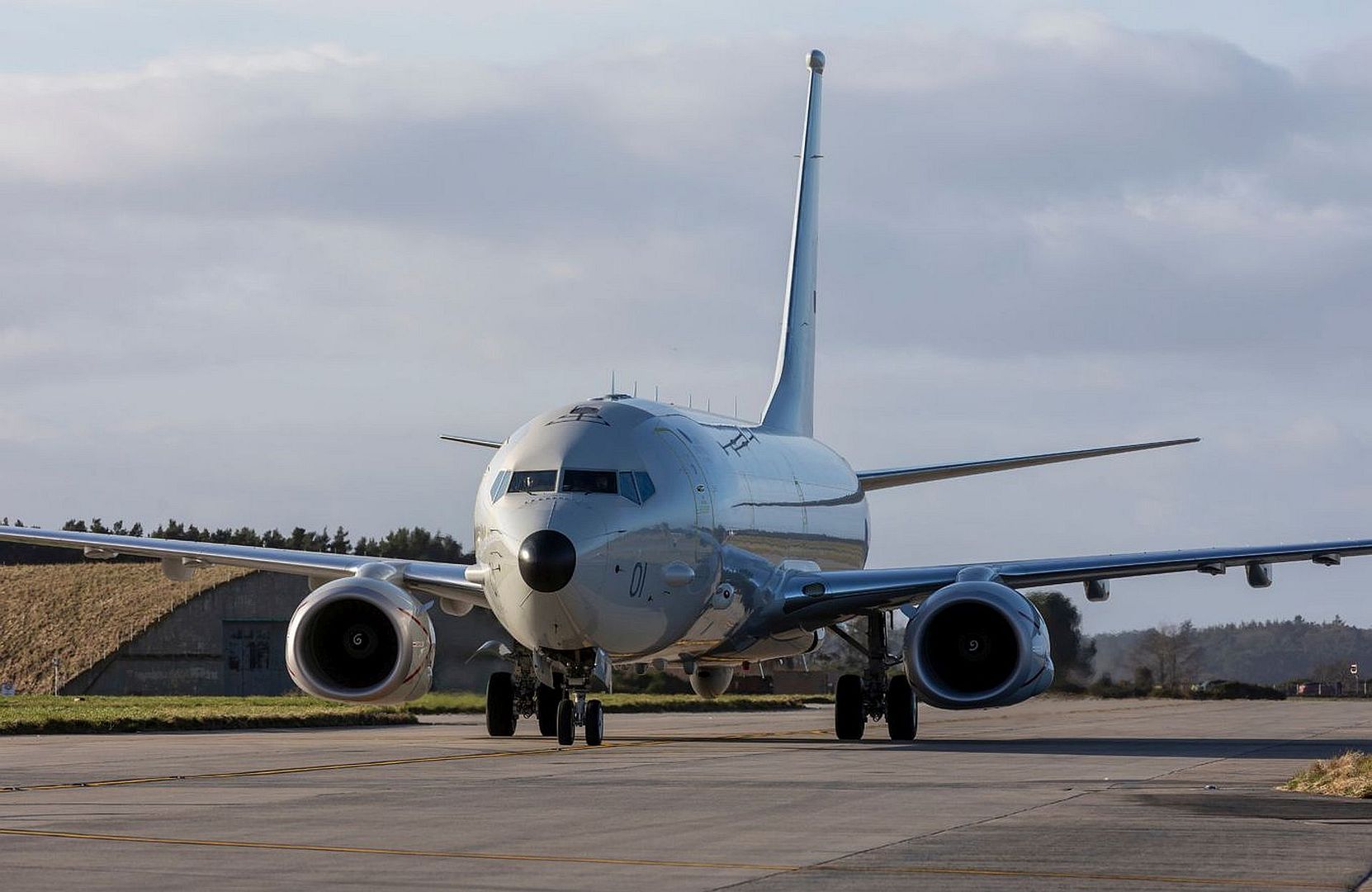
-
An F-35A Lightning II taxis during Red Flag 20-1 at Nellis Air Force Base, Nev., Feb. 3, 2020. (U.S. Air Force photo by R. Nial Bradshaw)
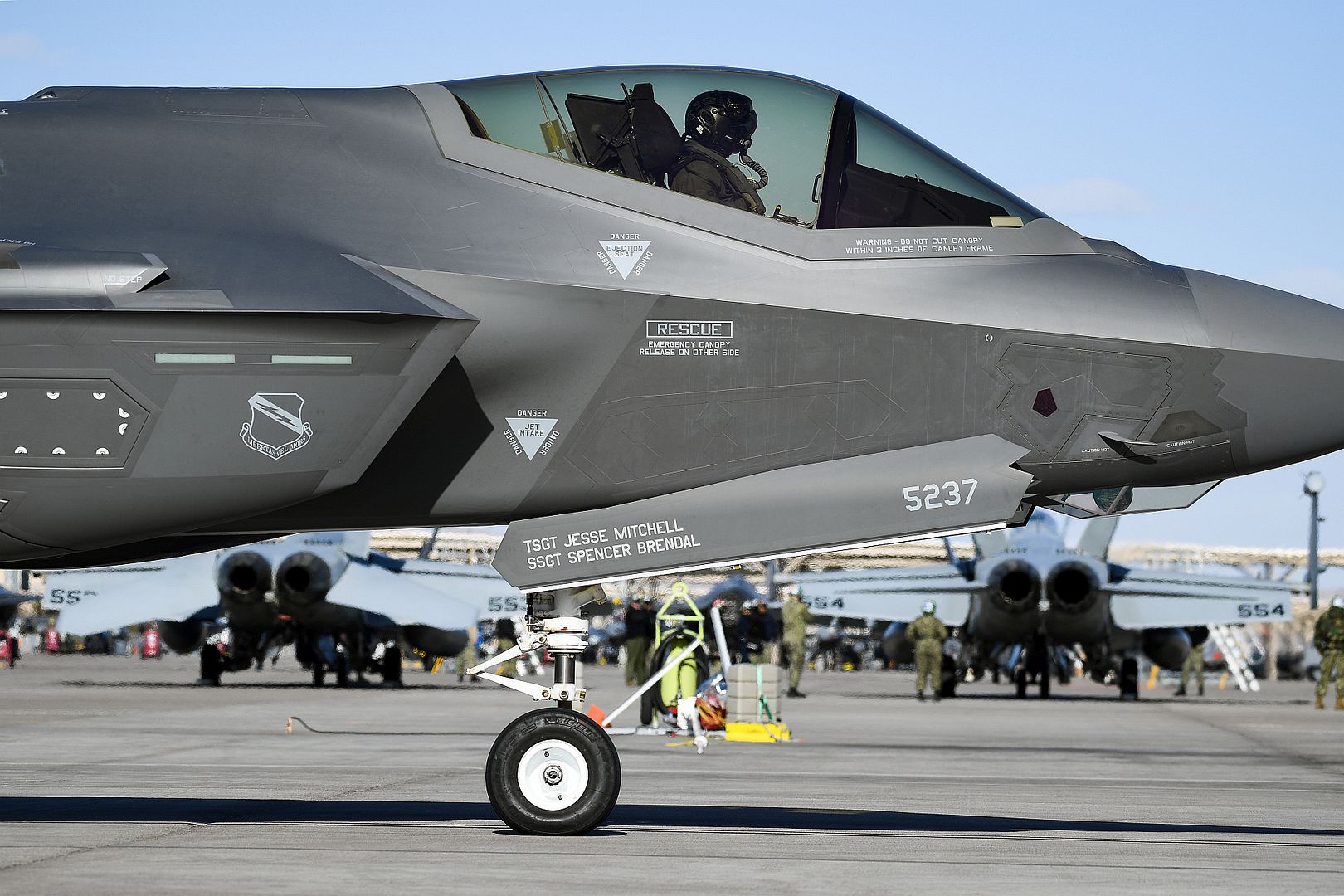
An F-35A Lightning II assigned to the 421st Fighter Squadron prepares to launch during Red Flag 20-1 at Nellis Air Force Base, Nev., Feb. 3, 2020. (U.S. Air Force photo by R. Nial Bradshaw)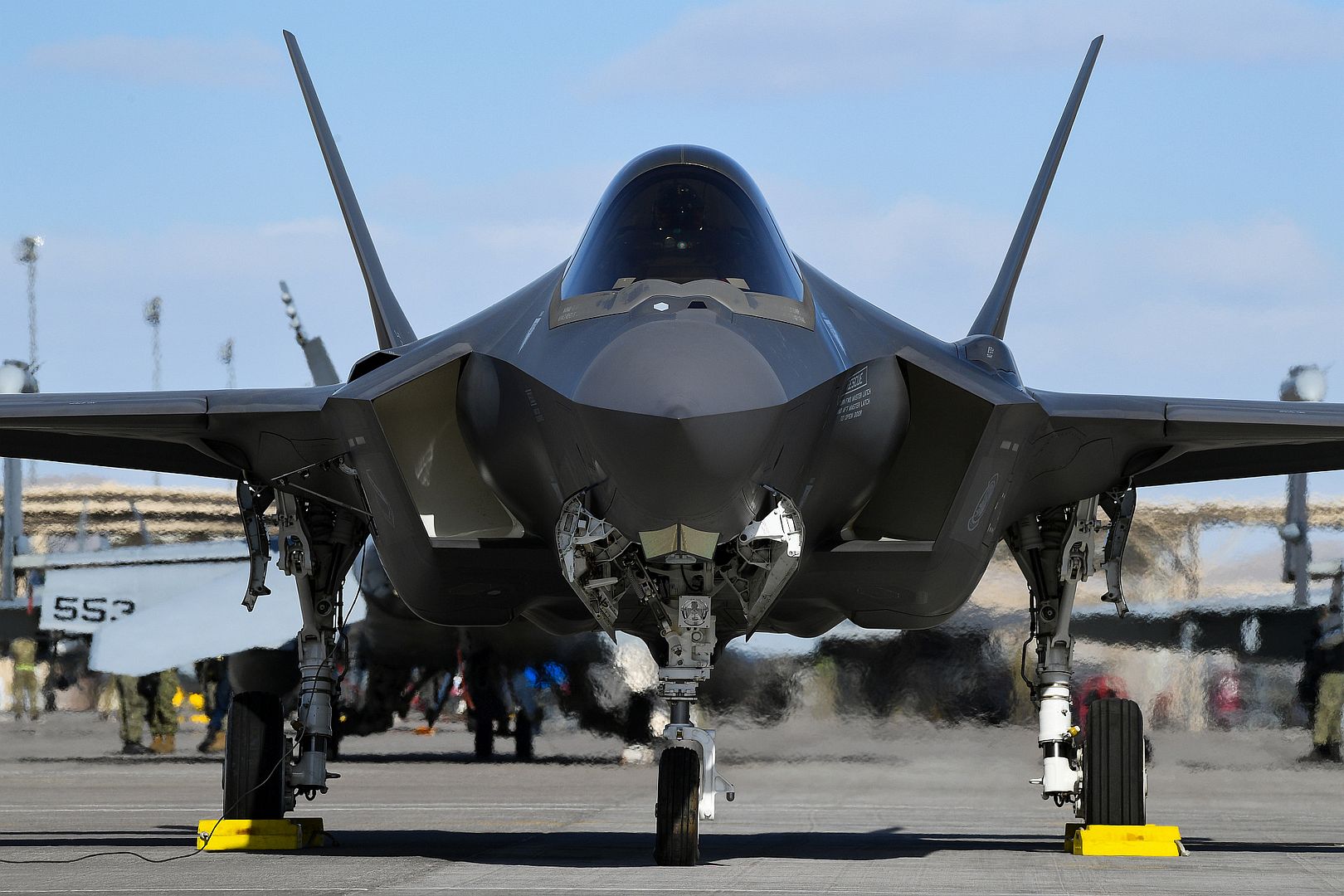
Maintainers with the 421st Aircraft Maintenance Unit recover F-35A Lightning IIs during Red Flag 20-1 at Nellis Air Force Base, Nev., Feb. 3, 2020. Airmen with the 421st AMU are Blended Operational Lightning Technicians. Bolt maintainers are fully-qualified in a number of different maintenance areas instead of just one. (U.S. Air Force photo by R. Nial Bradshaw)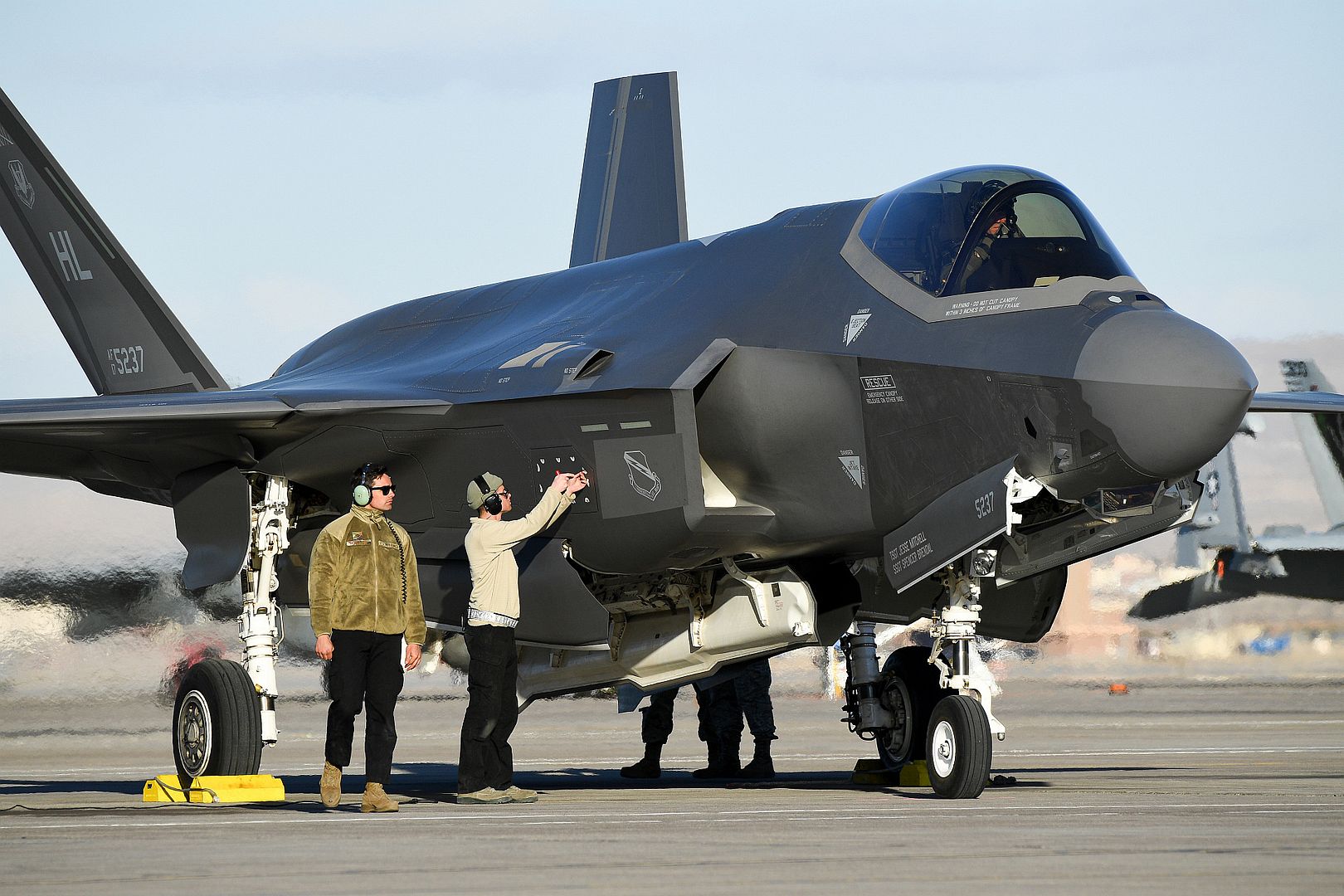
An F-16 Fighting Falcon assigned to the 480th Expeditionary Fighter Squadron takes off during a Flying Training Deployment at Monte Real Air Base, Portugal, Feb. 3, 2020. FTDs serve to enhance readiness and improve interoperability between the U.S. and NATO allies across Europe. (U.S. Air Force photo by Master Sgt. Austin M. May)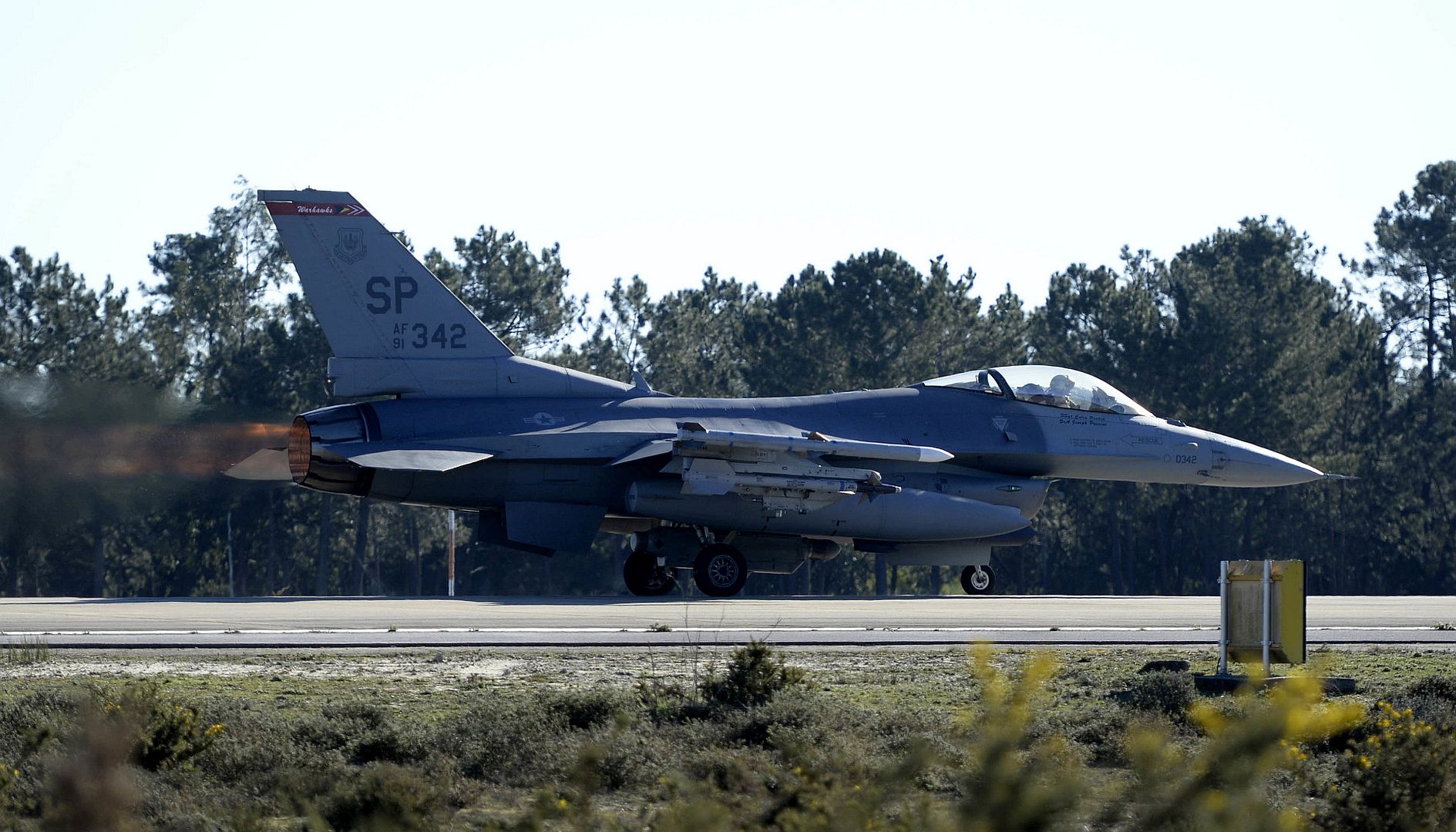
A U.S. Air Force B-52H Stratofortress, assigned to the 69th Expeditionary Bomb Squadron, deployed from Minot Air Force Base, North Dakota, receives fuel from a U.S. Air Force KC-135 Stratotanker assigned to the 191st Air Refuelling Squadron, Wright Air National Guard, Utah, after taking off from Andersen Air Force Base, Guam, Feb. 4, 2020. Continuous Bomber Presence deployments provide opportunities to advance and strengthen alliances, as well as strengthen long-standing military-to-military partnerships. (U.S. Air Force photo Airman 1st Class Helena Owens)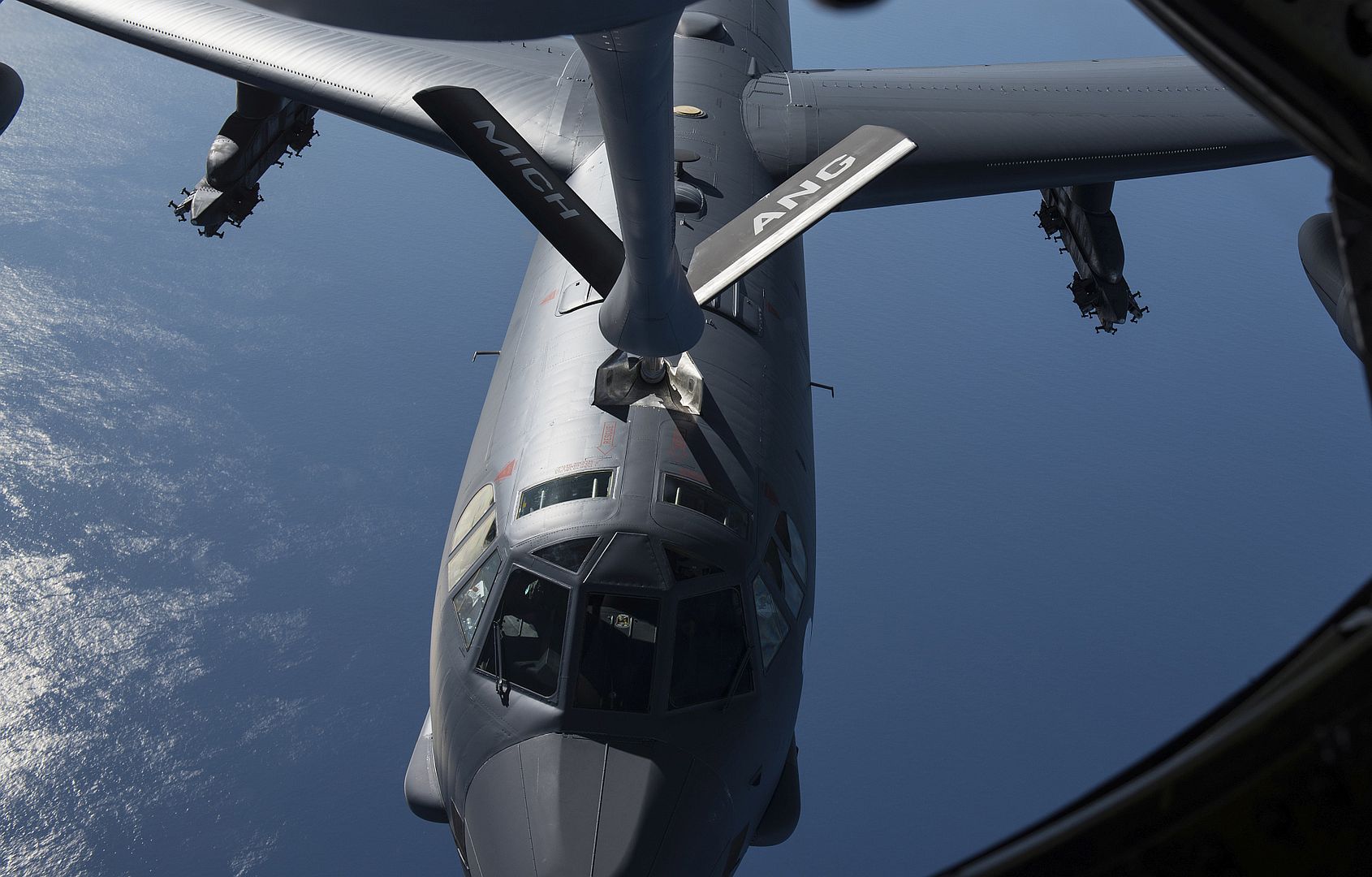
JOINT BASE PEARL HARBOR-HICKAM, Hawaii --
U.S. Air Force aircraft from the Pacific theater and the continental United States integrated with the Koku Jieitai (Japan Air Self Defense Force or JASDF) to conduct bilateral and theater familiarization training near Japan Feb. 3.
A U.S. Air Force B-52H Stratofortress bomber from Andersen Air Force Base, Guam, flew north to join one B-52H from Minot Air Force Base, North Dakota, in the vicinity of Misawa Air Base, Japan, as part of a combined Continuous Bomber Presence (CBP) and Bomber Task Force (BTF) mission.
The two bombers subsequently conducted bilateral joint training with 13 JASDF F-2s, four F-4s, and 28 F-15s, and six U.S. Air Force F-16s in the vicinity of Japan before returning to Andersen.
Collectively, the flights from the Indo-Pacific and continental United States demonstrate U.S. commitment to allies and partners through the global employment of military forces.
?For more than 60 years, the U.S.-Japan Alliance has been the cornerstone of stability and security in the region. The integration of bomber aircraft operations in the Indo-Pacific, alongside our Koku Jieitai partners, provides a significant opportunity to enhance our combined readiness, promote interoperability, demonstrate our global power projection and provide transparency across the region,? said Gen. CQ Brown, Jr., Pacific Air Forces commander. ?This mission fully demonstrates our enduring commitment to a Free and Open Indo-Pacific and our willingness to defend our interests and the freedoms enshrined in international law.?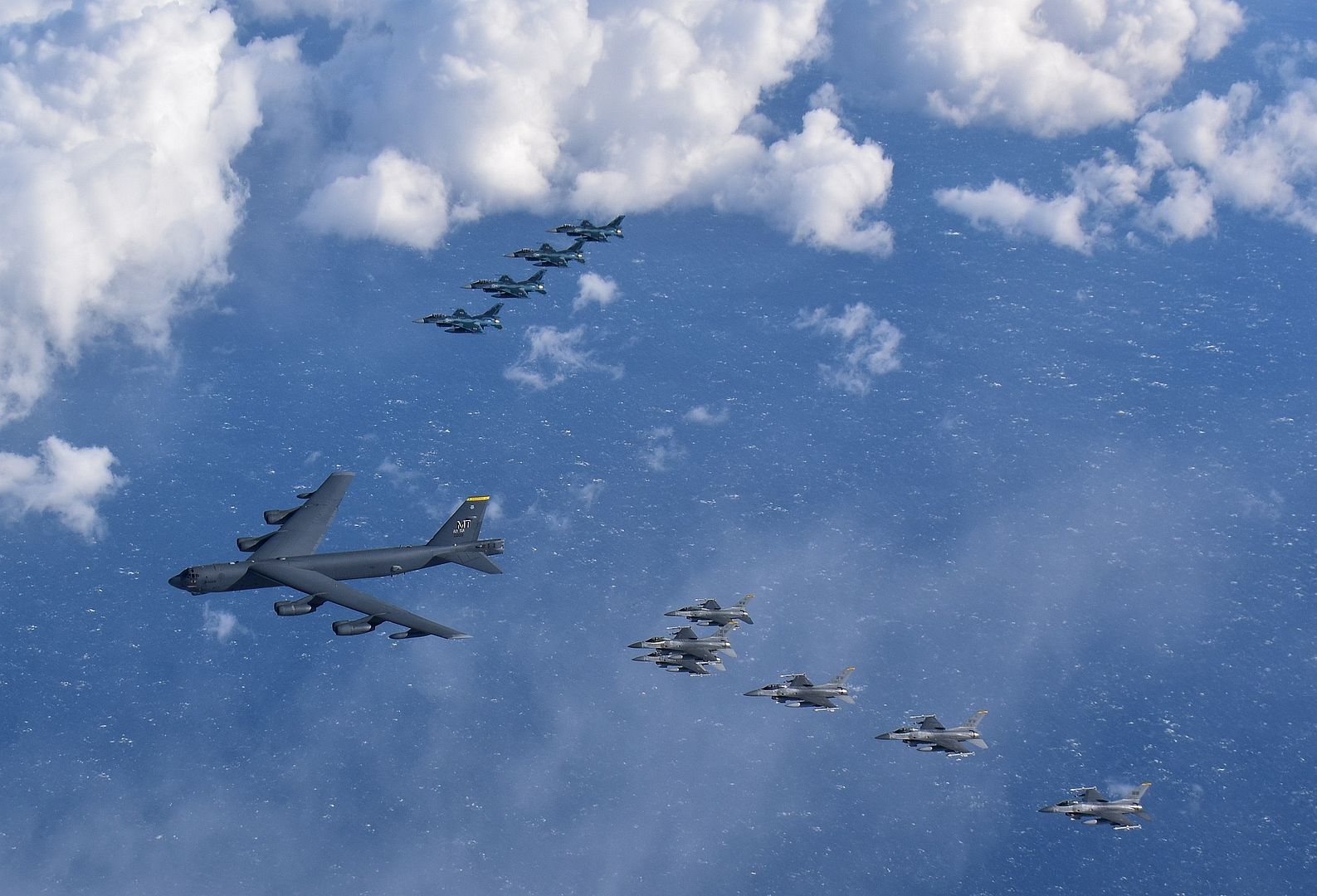
U.S. Strategic Command?s bomber forces regularly conduct combined theater security cooperation engagements with allies and partners, demonstrating U.S. capability to command, control and conduct bomber missions around the world.
?This mission demonstrates the flexibility, long reach and responsive nature of our bomber force as we continue to assure our allies and deter aggressors globally,? said Maj. Gen. James Dawkins, Jr., Eighth Air Force and Joint-Global Strike Operations Center commander. ?Joint and multinational integration provides an excellent opportunity for our Airmen to maintain their readiness and hone their global strike capability.?
The bombers from Guam are assigned to the 69th Expeditionary Bomb Squadron out of Minot AFB, North Dakota, deployed in support of U.S. Indo-Pacific Command?s CBP operations. Pacific Air Force?s have flown CBP operations for more than 15 years in support of a free and open Indo-Pacific. These missions routinely operate throughout the region in accordance with international law and norms.
The F-16s are assigned to the 35th Fighter Wing from Misawa Air Base, Japan.
U.S. Strategic Command has conducted bomber task force missions since 2014 as a demonstration of the U.S. commitment to collective security, and to integrate with Geographic Combatant Command operations. The first mission included B-52Hs and B-2 Spirits traveling from the continental United States to Joint Base Pearl Harbor Hickam in April 2014.
Strategic bomber missions enhance the readiness and training necessary to respond to any potential crisis or challenge across the globe.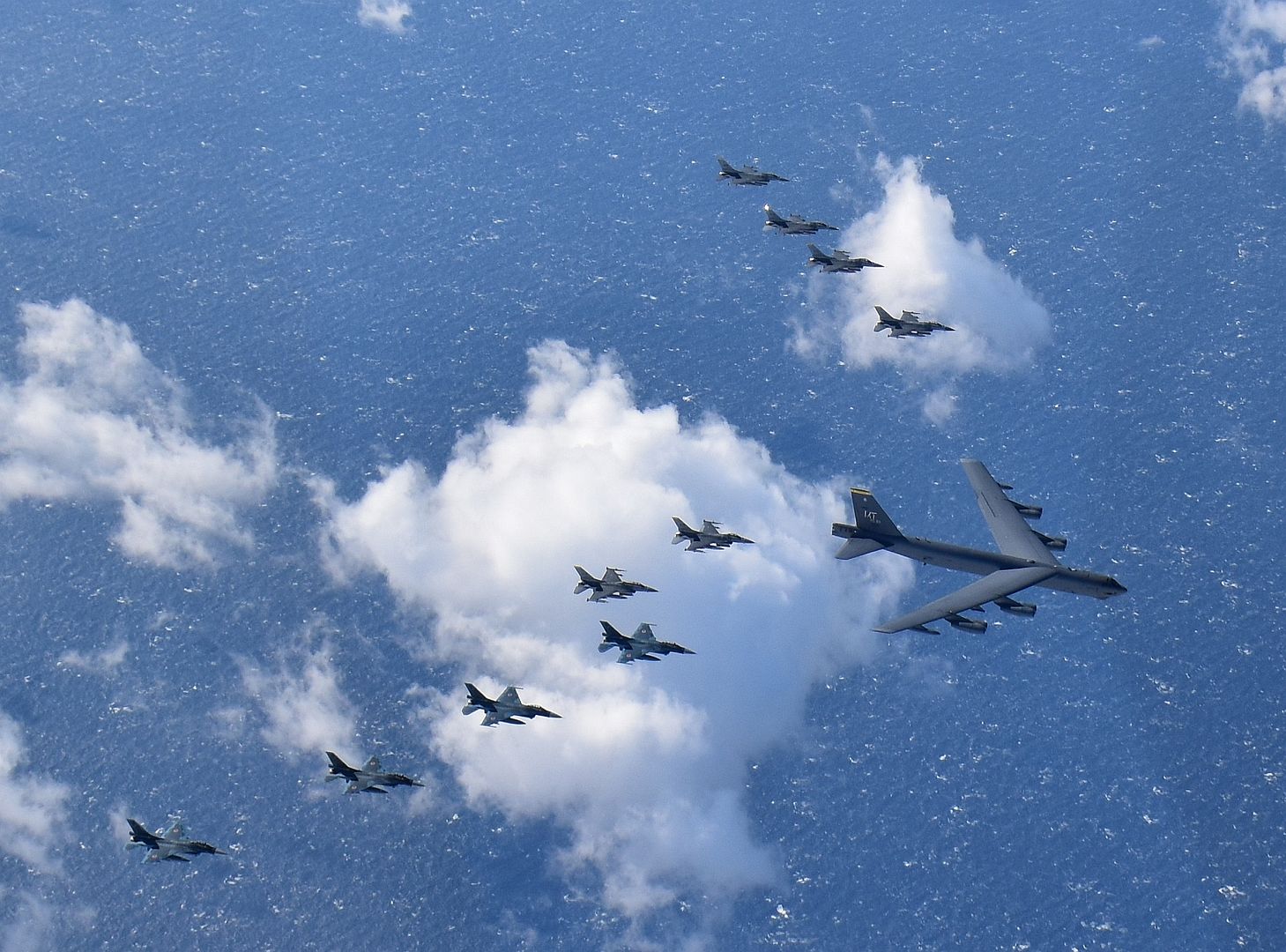
PACIFIC OCEAN (Feb. 5, 2020) An F/A-18E Super Hornet assigned to the Tomcatters of Strike Fighter Squadron (VFA) 31 launches from the flight deck of the aircraft carrier USS Theodore Roosevelt (CVN 71), Feb. 5, 2020. The Theodore Roosevelt Carrier Strike Group is on a scheduled deployment to the Indo-Pacific. (U.S. Navy photo by Mass Communication Specialist 3rd Class Zachary Wheeler/Released)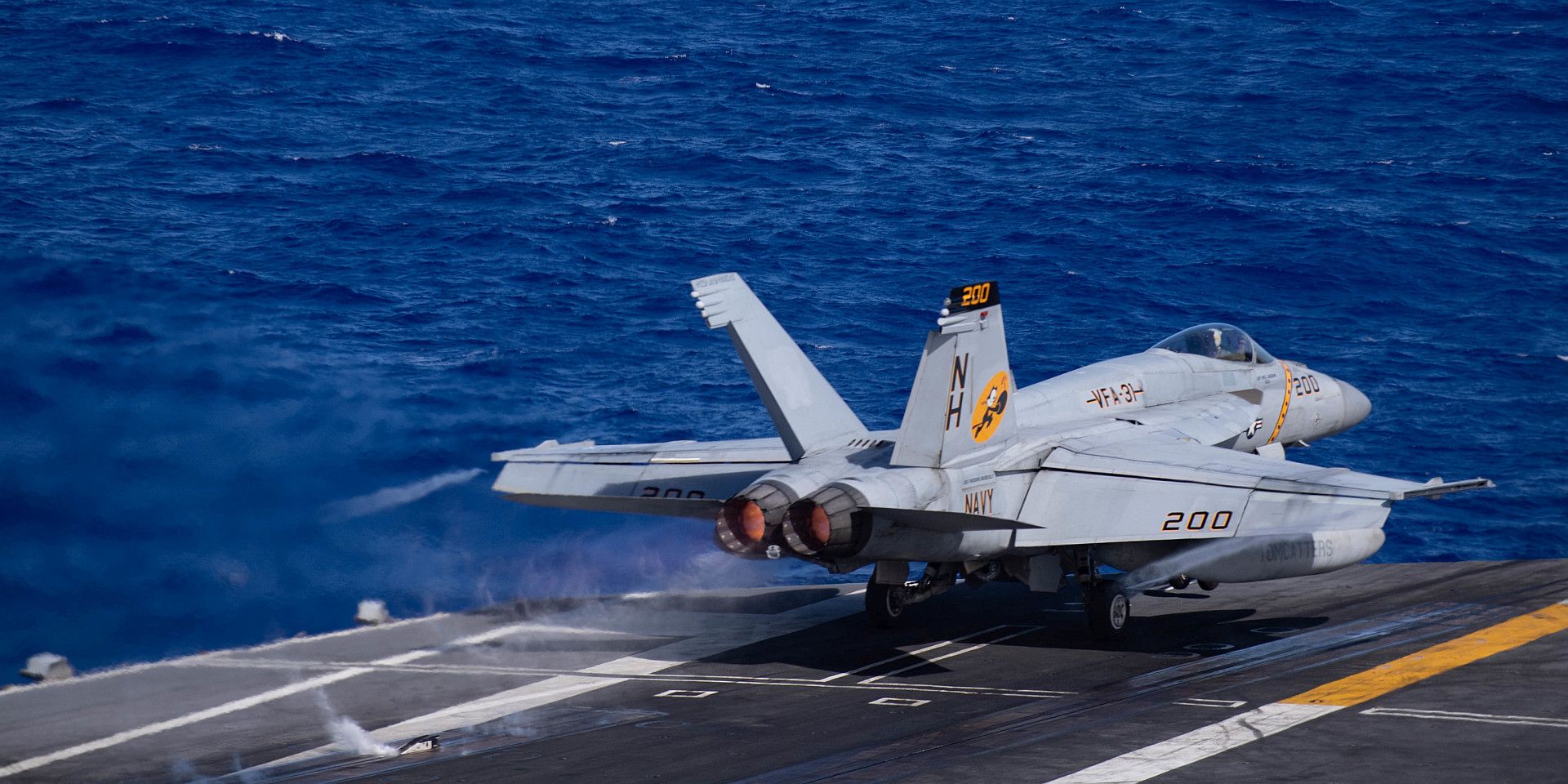
London Biggin Hill Airport, February 5, 2020 ? Bombardier proudly announced today the expansion of its London Biggin Hill service centre with the construction of a new and larger facility nearing 250,000 square feet (approximately 23,225 square metres) to replace its existing hangars. Scheduled to be operational by mid-2022, the new service centre will provide customers in the region with extended maintenance support and reinforce Bombardier?s customer service experience in Europe.
The facility will provide the space and flexibility to offer a full range of maintenance and refurbishment services on Bombardier?s vast portfolio of products, and has the capacity to accommodate as many as 14 Global 7500 aircraft at the same time. The expansion will introduce sought-after capabilities and state-of-the-art installations, such as component painting and interior refurbishment capabilities, component repair and overhaul workshops and training rooms. The site will also ensure a quick response to its customers? repair needs with the integration of a brand-new parts depot. Over the next several years, this significant expansion will bring the facility?s workforce to more than 250 employees and beyond to meet expanding demand.
?With the expansion of the London Biggin Hill service centre, Bombardier is taking another step in showing its unwavering commitment to providing customers with industry-leading services on a global scale, and the OEM expertise they rightfully deserve,? said Jean-Christophe Gallagher, Vice President and General Manager, Customer Experience, Bombardier Aviation. ?Europe continues to be a strong market for business aviation, and we?re glad to show our commitment to our customers with this important investment in the region.?
Bombardier?s London Biggin Hill service centre was inaugurated in 2017 and offers tip-to-tail heavy maintenance capabilities on Learjet, Challenger and Global families of aircraft. The site is fully equipped to perform scheduled and unscheduled maintenance, modifications and avionics installations, and paint repair services. In 2019, the service centre added enhanced interior repair and refurbishment activities.
?The expansion of Bombardier?s service centre and the enhancement of its service and maintenance capabilities is a testament to the dynamism and attractiveness of the Biggin Hill Airport,? said Robert Walters, Commercial Director of London Biggin Hill Airport. ?Bombardier has been a tremendous partner and, with this announcement, demonstrates its strong commitment to the continued growth of our world-class aviation hub.?
This expansion comes on the heels of numerous announcements in Bombardier?s vast support network, including the announcements of a new service centre at Miami-Opa Locka Executive Airport and of an expanded Singapore service centre, the recent addition of two U.S. line maintenance stations in Teterboro and Van Nuys, and the expansion of the Mobile Response Team (MRT) with a new Challenger 300 aircraft based in Munich, Germany.
-
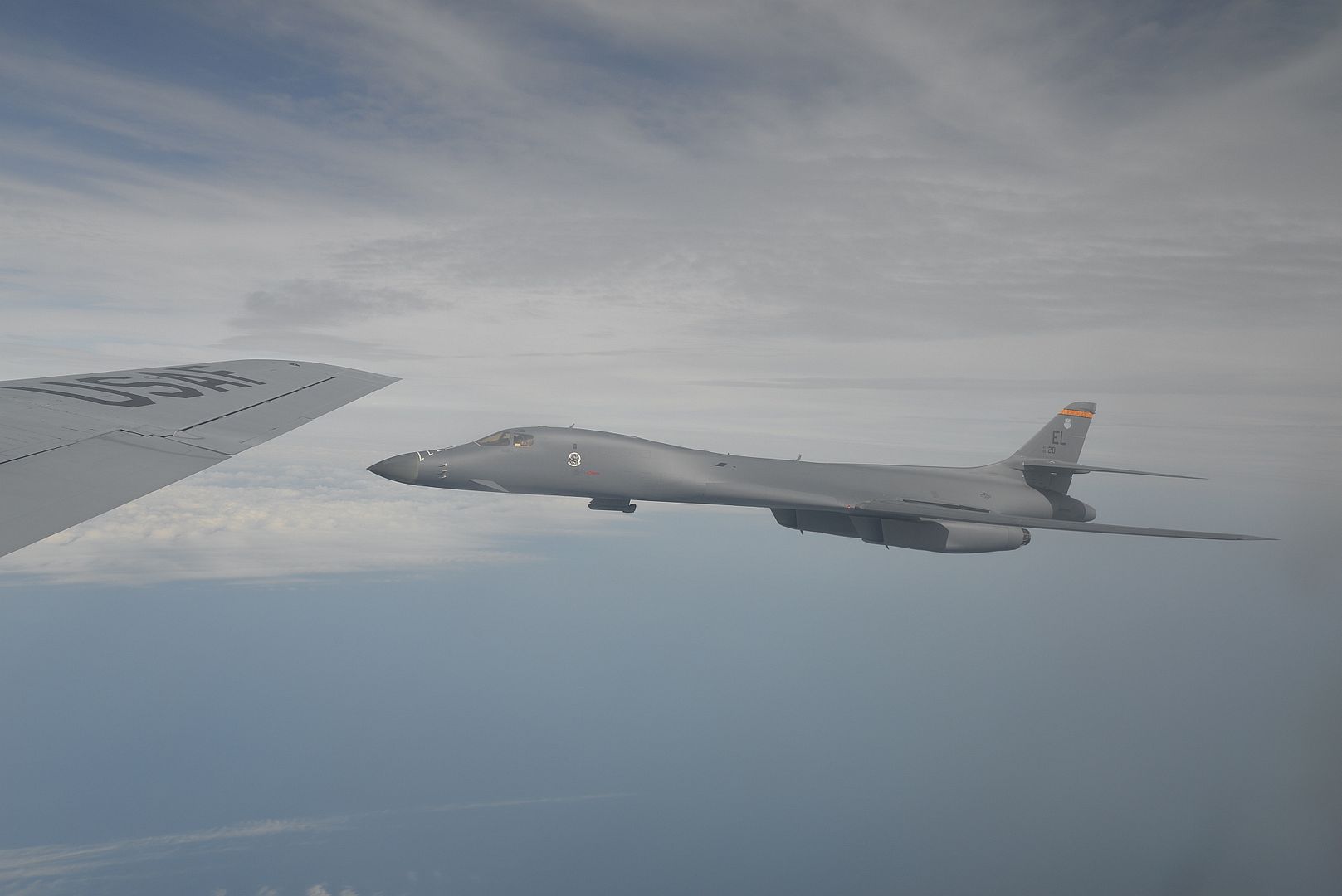
A B-1 Bomber from the 34th Bomb Wing, Ellsworth Air Force Base, S.D., sits off of the wing of a KC-135 Stratotanker from the 186th Air Refueling Wing, Meridian, Miss., over the Gulf of Mexico as part of air-to-air refueling exercises for Southern Strike 2020, Feb. 4, 2020. (U.S. Air National Guard photo by Capt. Dusty Culpepper)
A U.S. Marine Corps F-35B Lightning II with Marine Fighter Attack Squadron (VMFA) 121 lands at Changi Air Base (East), Republic of Singapore, Feb. 5, 2020. The Marines with VMFA-121 are participating in the 2020 Singapore Airshow, showcasing the F-35B state-of-the-art stealth fighter capabilities, and creating lasting relationships with international audiences to strengthen the bonds that support partnership building throughout the Indo-Pacific region. (U.S. Marine Corps photo by Lance Cpl. Tyler Harmon)%20121%20lands%20at%20Changi%20Air%20Base%20(East),%20Republic%20of%20Singapore,%20Feb.%205,%202020..jpg)
F/A-18 Hornets are statically displayed during Marine All Weather Fighter Attack Squadron (VMFA) 224's arrival to Marine Corps Base Hawaii (MCBH), Feb. 4, 2020. VMFA-224 recently finished a seven month deployment in Okinawa and is supporting Marine Light Attack Helicopter Squadron 367 aboard MCBH with Forward Air Control Airborne training before returning to Beaufort, S.C. (U.S. Marine Corps photo's by Cpl. Matthew Kirk)%20224's%20arrival%20to%20Marine%20Corps%20Base%20Hawaii%20(MCBH),%20Feb.%204,%202020-1..jpg)
%20224's%20arrival%20to%20Marine%20Corps%20Base%20Hawaii%20(MCBH),%20Feb.%204,%202020..jpg)
A C-17 Globemaster III assigned to the 911th Airlift Wing taxis on the flightline at the Pittsburgh International Airport Air Reserve Station, Pennsylvania, Feb. 5, 2020. The C-17 is capable of rapid strategic delivery of troops and all types of cargo to main operating bases or directly to forward bases in the deployment area. (U.S. Air Force photo by Joshua J. Seybert)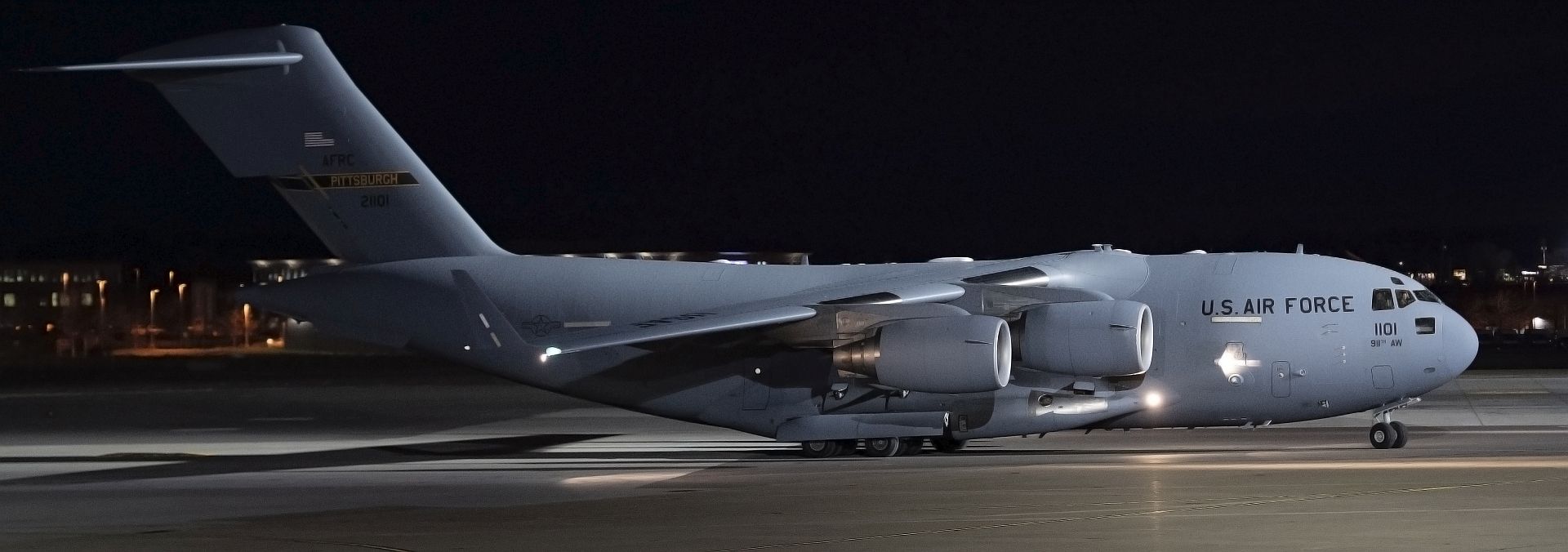
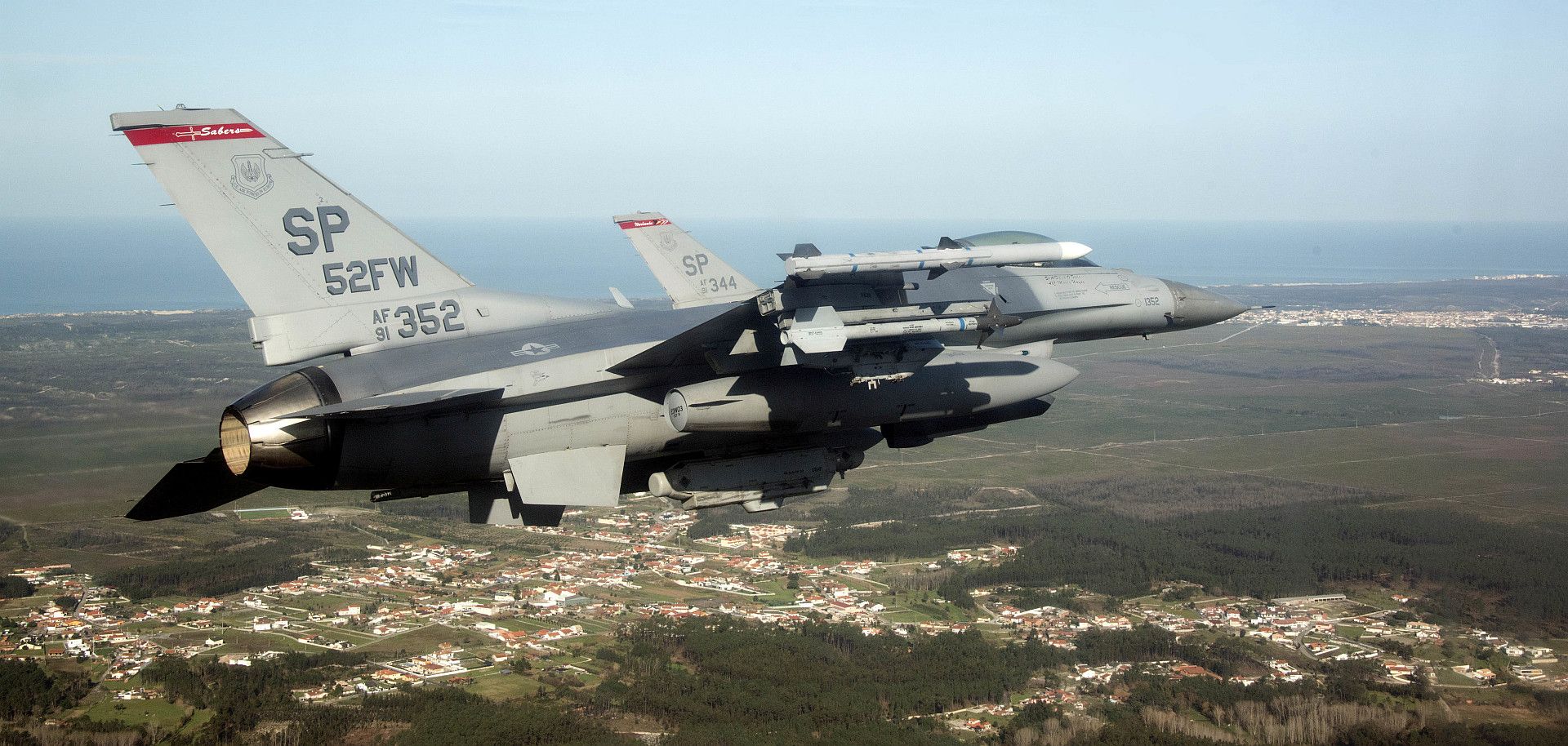
Two F-16 Fighting Falcons assigned to the 480th Expeditionary Fighter Squadron fly over Leiria, Portugal, Feb. 5, 2020. The two jets returned to Monte Real Air Base after their sortie with one Portuguese C-295 aircraft and two Portuguese F-16s. (U.S. Air Force photo's by Senior Airman Chanceler Nardone)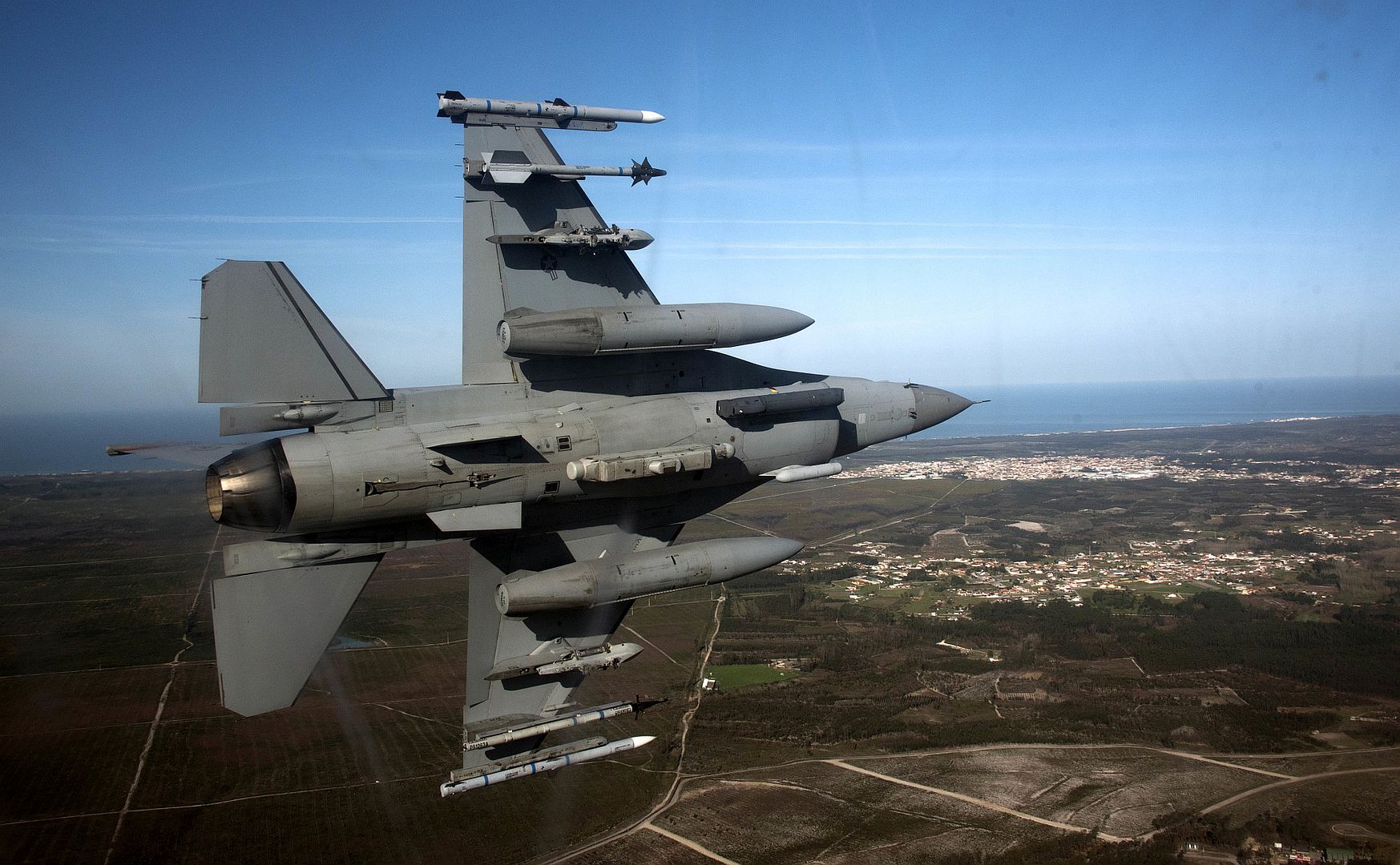
ARLINGTON, Va., Feb. 6, 2020 ? Boeing [NYSE: BA] has given an F/A-18 a new lease on life after delivering the first Super Hornet under the Service Life Modification to the U.S. Navy. The second SLM jet will deliver by the end of the month, and Boeing will deliver the third F/A-18 in April.
The initial Super Hornets delivered from SLM will extend the service life from 6,000 to 7,500 flight hours. Future modification plans in the early 2020s will enable the jets to fly 10,000 hours and incorporate the new Block III capabilities.
?SLM is going to provide a critical resource for the Navy to re-capitalize on long-serving aircraft to return them to the fleet in a near new condition,? said Capt. Stephen May, PMA-265 co-lead for E/F/G Air Vehicles. ?It will reduce burden on our maintainers, our supply system and our depot level assets within the enterprise.?
There are now 15 Super Hornets in SLM on production lines in St. Louis and San Antonio. It takes 18 months to complete modifications on an F/A-18, although that time will be driven down to one year as the program progresses. Boeing will deliver five more Super Hornets this year.
The Block III conversion will include enhanced network capability, conformal fuel tanks, an advanced cockpit system, signature improvements and an enhanced communication system. The updates are expected to keep the F/A-18 in active service for decades to come.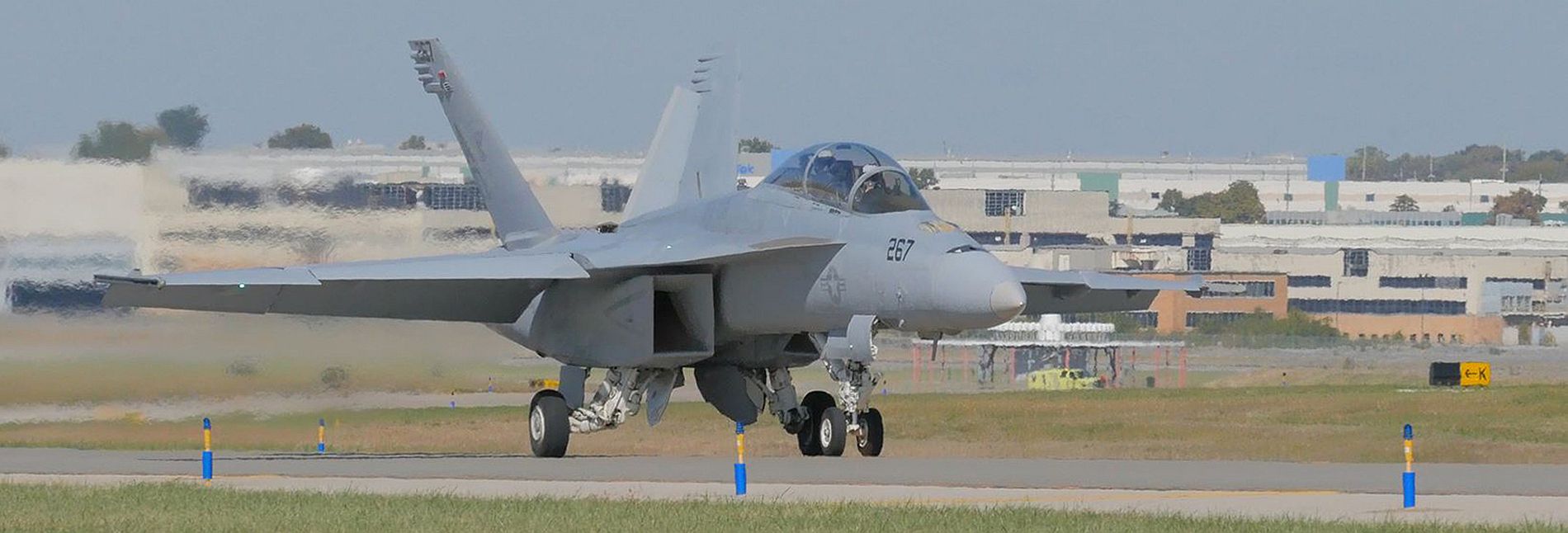
Marignane, 6 February 2020 ? Airbus Helicopters and the French Armament General Directorate (DGA) are pursuing a new set of studies to further the militarisation of the H160 and to define its associated support ecosystem in the frame of the Joint Light Helicopter program (H?licopt?re Interarm?es L?ger: HIL) This contract launches pre-development activities for the military version of the H160, also called the Gu?pard by the French armed forces, in order to meet the delivery schedule that was brought forward in May 2019 by the French Minister of Armed Forces, Florence Parly.
The new set of studies will also focus on defining the optimal set-up for supporting the tri-service H160M fleet. Airbus Helicopters, Safran Helicopter Engines, and the DGA will work closely together in order to maximize the availability rate of the helicopters, as well as optimizing the cost of supporting the fleet.
?Launching this collaborative work between Industry and the Ministry of the Armed Forces in order to define the support framework for the Gu?pard and the associated processes, as early as the pre-development phase, is essential. The output will provide us with all the levers necessary to ensure a high level of availability at the H160M?s entry into service in the French armed forces,? said Alexandra Cros, Vice President and Head of Governmental Affairs France at Airbus Helicopters. ?The studies build upon the work and commitments taken recently in the global support contracts for the Cougar, Caracal, and Tiger fleets of the French armed forces?.
The H160 was designed to be a modular helicopter, enabling its military version, with a single platform, to perform missions ranging from commando infiltration to air intercept, fire support, and anti-ship warfare in order to meet the needs of the army, the navy and the air force through the HIL programme. Bringing the launch of the HIL programme forward to 2021 will enable first deliveries to the French armed forces in 2026.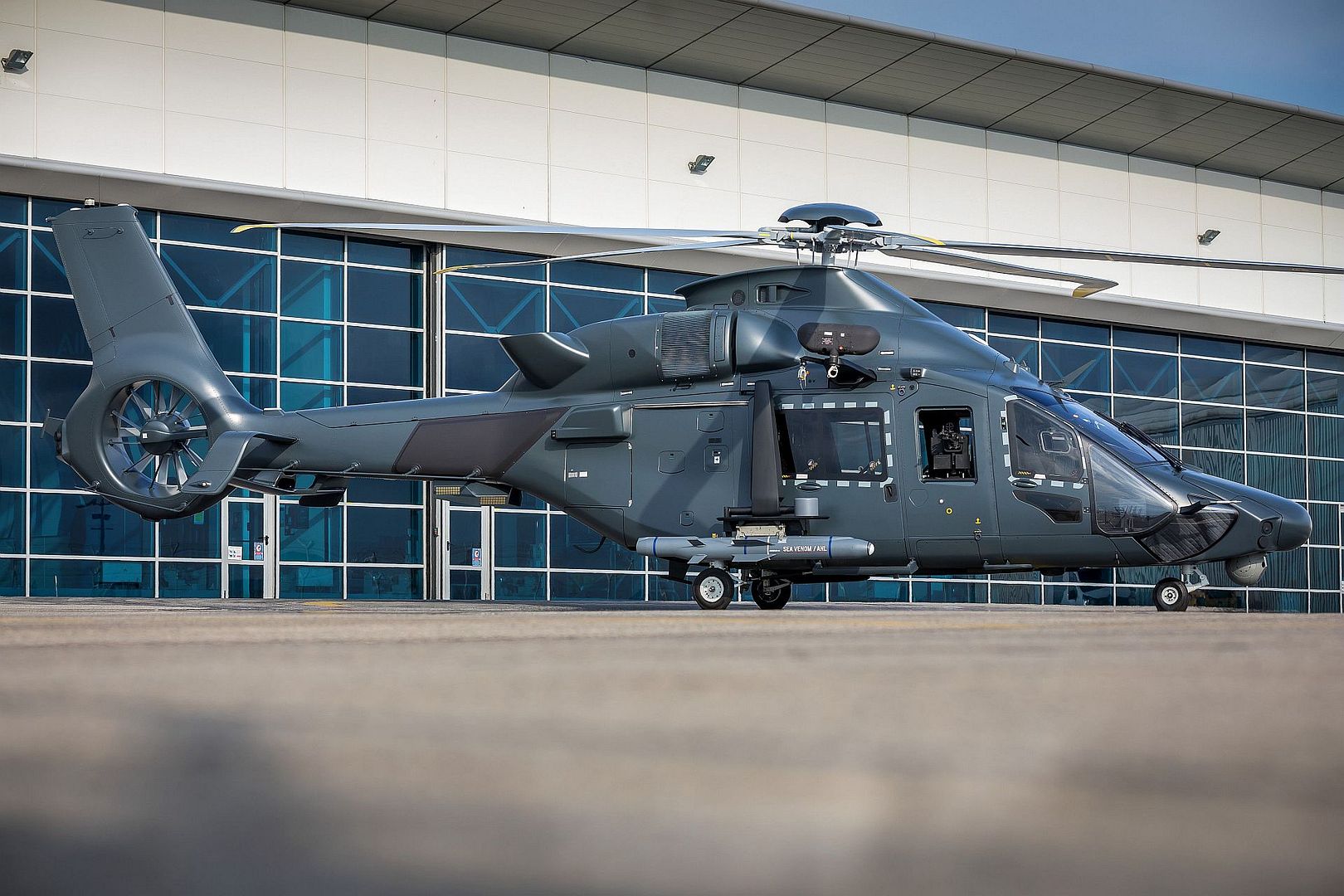
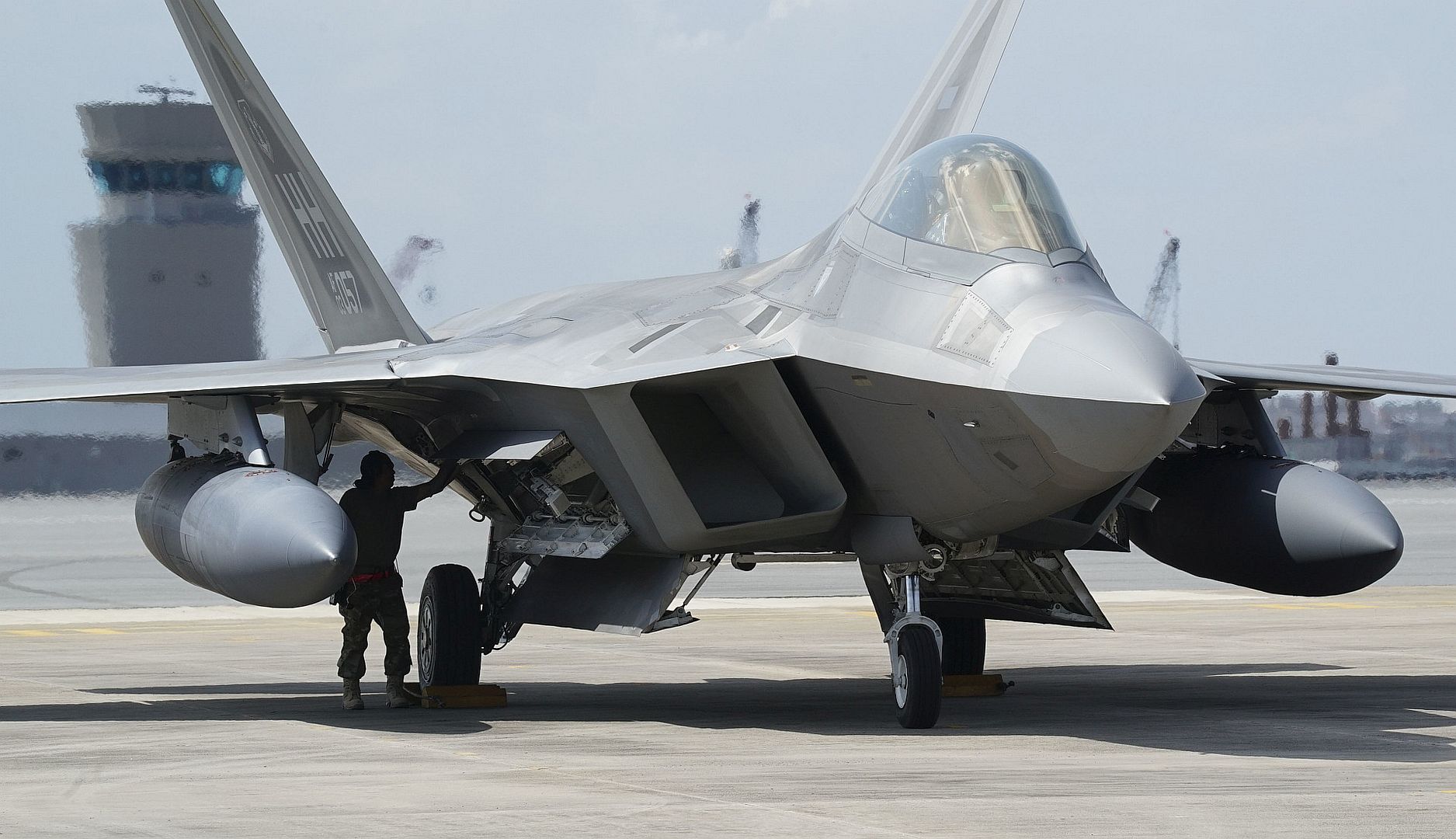
U.S. Air Force Tech. Sgt. Brad Kaai,154th HIANG F-22 crew chief, checks an F-22 Raptor at Changi Air Base East, Republic of Singapore, Feb. 5, 2020. This is only the second time the F-22 Raptor will be displayed during the Singapore Airshow, scheduled Feb. 11-16. It is the largest exhibit and biennial international trade show in the Pacific. It is the largest defense exhibition and biennial international trade show in the Pacific. (U.S. Air Force photo by Senior Airman Johnathon Wines)