Aviation News
-
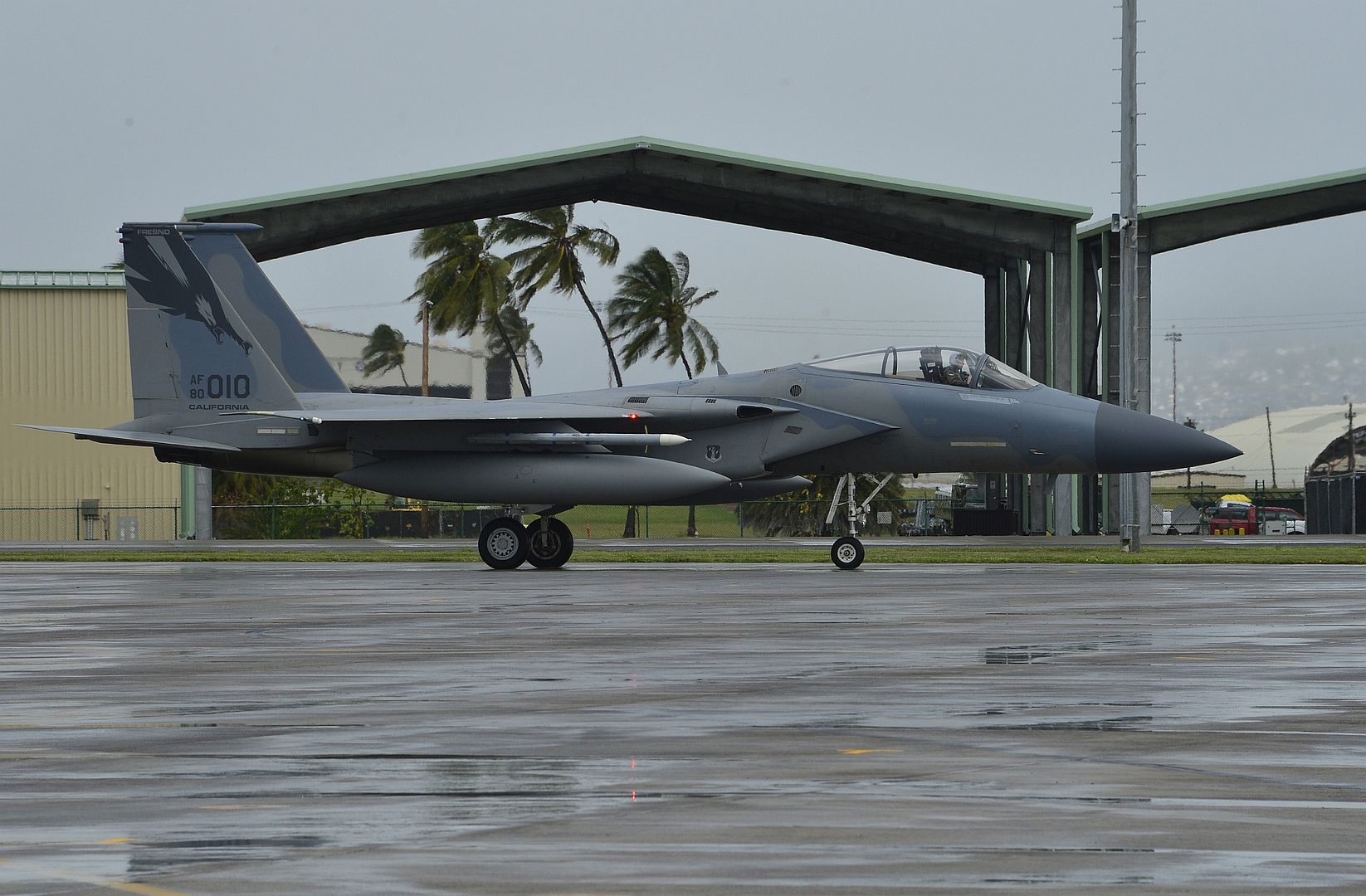
An F-15C Eagle from the California Air National Guard's144th Fighter Wing taxis to the runway at Joint Base Pearl Harbor-Hickam, Hawaii, Jan. 08, 2020 during fighter exercise Sentry Aloha 20-1. Sentry Aloha provides tailored, cost effective and realistic combat training for U.S. Air Force, Air National Guard and other Department of Defense services to provide U.S. warfighters with the skill sets necessary to perform their homeland defense and overseas combat missions. (Air National Guard photo by Master Sgt. Charles Vaughn)
Crew chiefs from the 144th fighter wing prepare a F-15C Eagle fighter jet for the morning mission on the first flying day of Sentry Aloha 20-1, Jan. 08, 2020 at Joint Base Pearl Harbor-Hickam, Hawaii. Sentry Aloha provides the Air National Guard, U.S. Air Force and DoD counterparts a multi-faceted, joint venue with supporting infrastructure and personnel that incorporates current, realistic integrated training. (Air National Guard photo by Master Sgt. Charles Vaughn)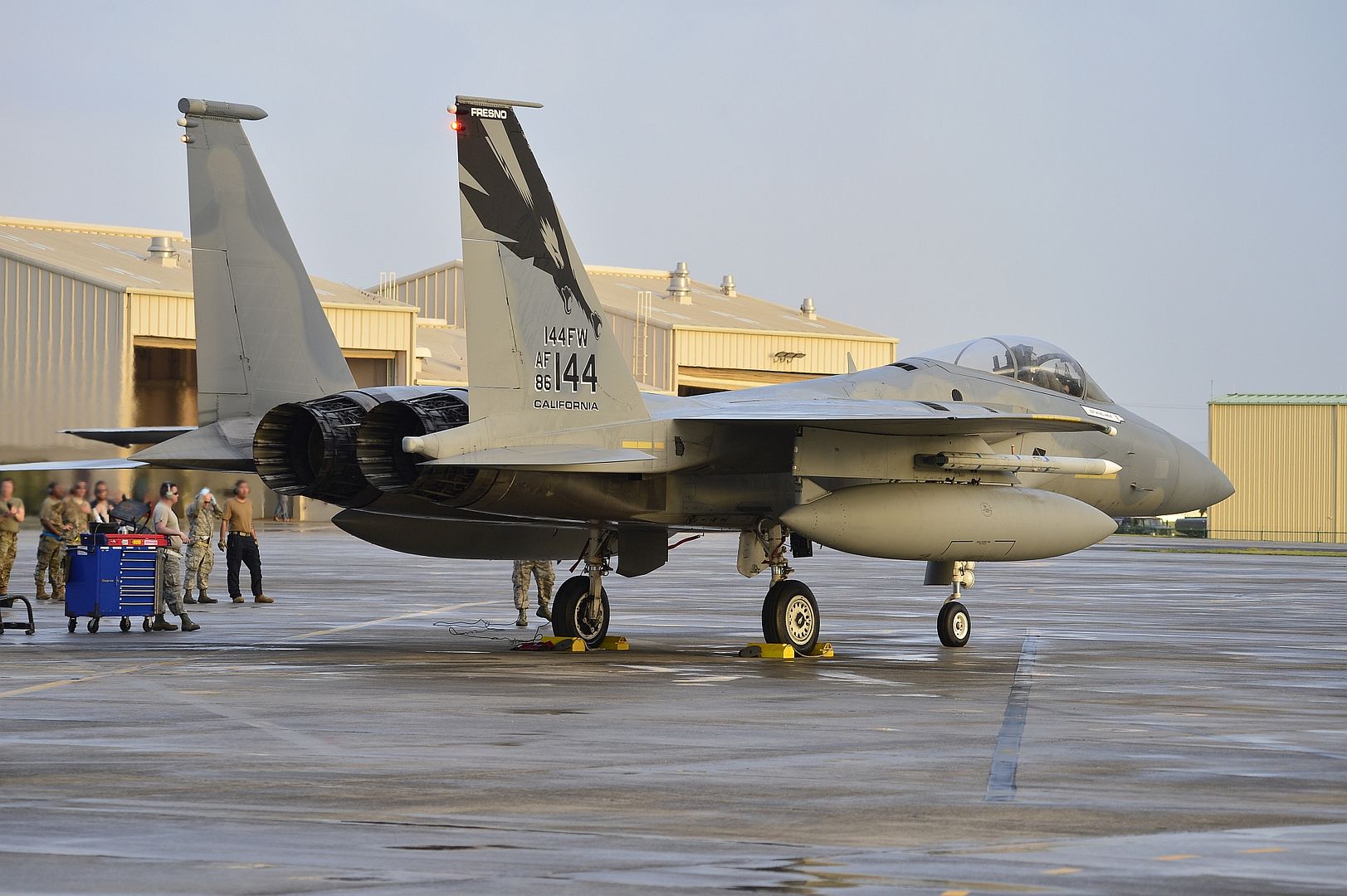
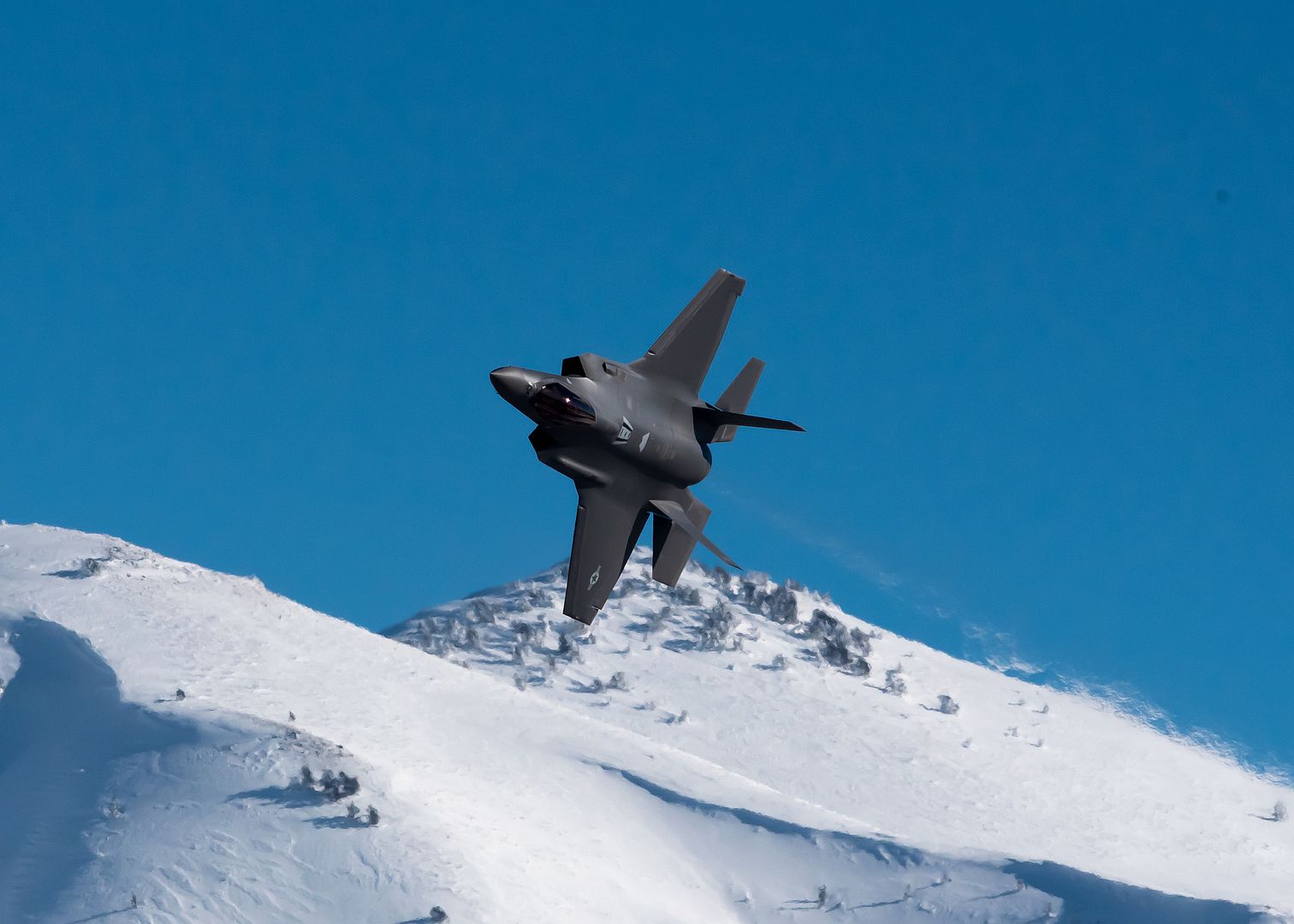
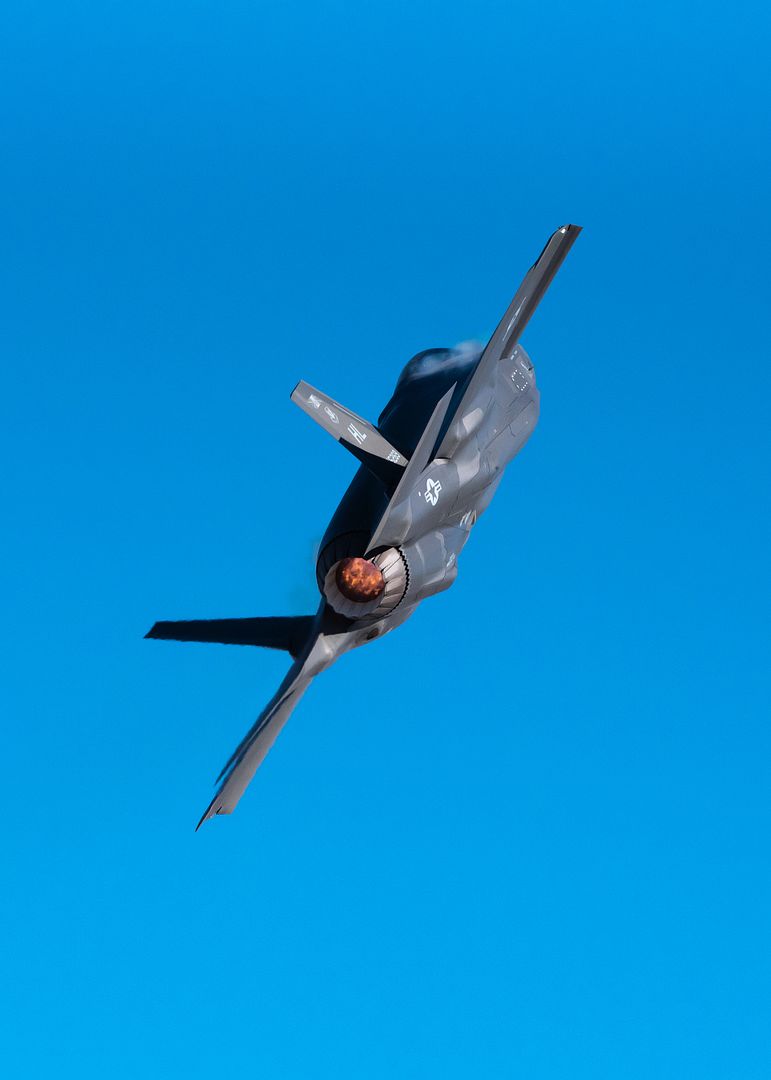
An F-35A Lightning II with the F-35 demonstration team flies Hill Air Force Base, Utah, during a training flight January 7, 2020. The F-35 demonstration team is now located as part of the 388th Fighter Wing under Air Combat Command for the 2020 air show season. (U.S. Air Force photo's by Staff Sgt. Jarrod M. Vickers)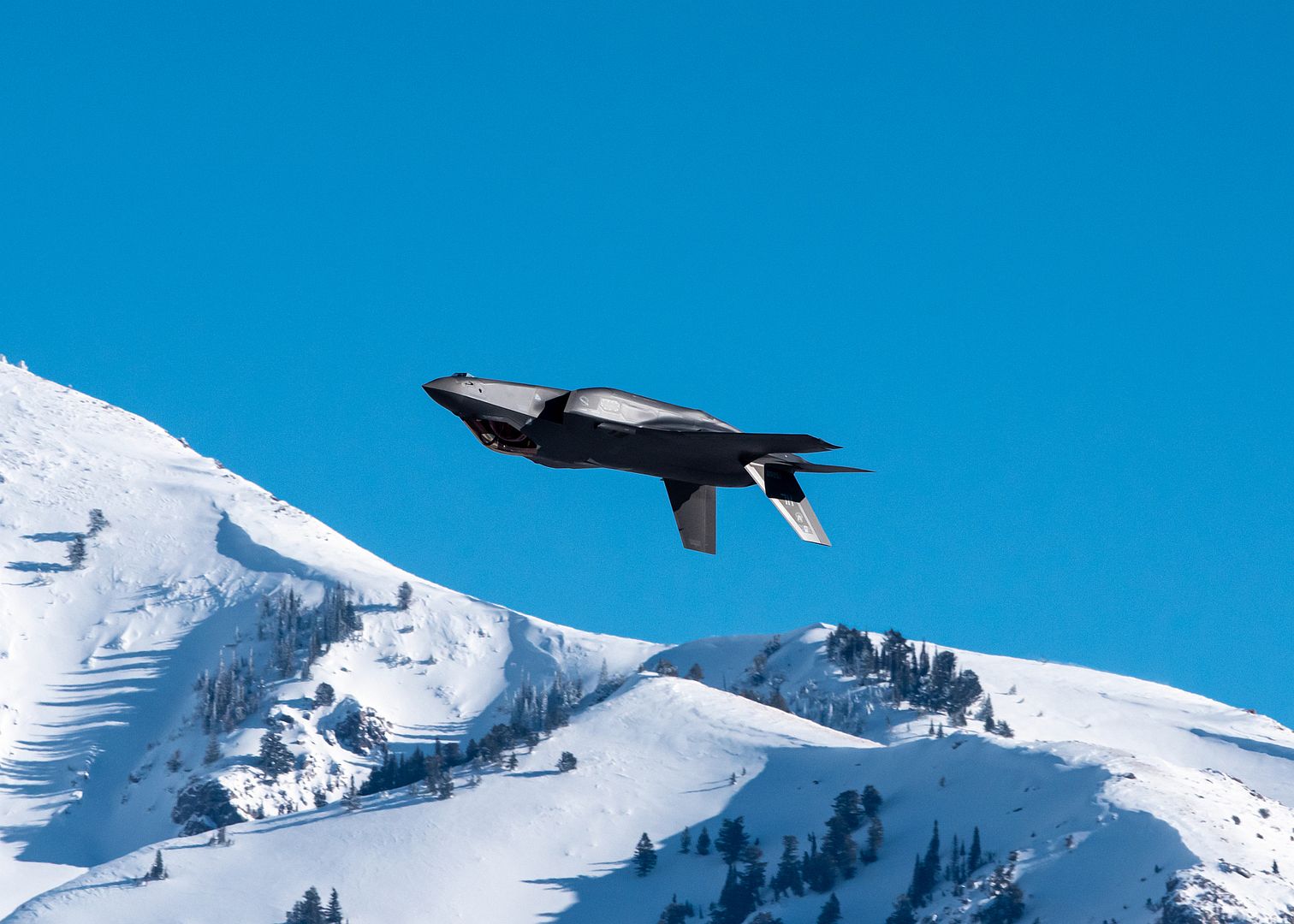
An F-15E Strike Eagle fighter jet assigned to the 17th Weapons Squadron (WPS) taxis on the flight line at Nellis Air Force Base, Nevada, Dec. 19, 2019. The 17th WPS participated in a rapid crew swap exercise where air crews, maintenance and fuels trained to launch and recover jets in one-third the normal time increasing flying time for pilots. (U.S. Air Force photo by Airman 1st Class Dwane R. Young)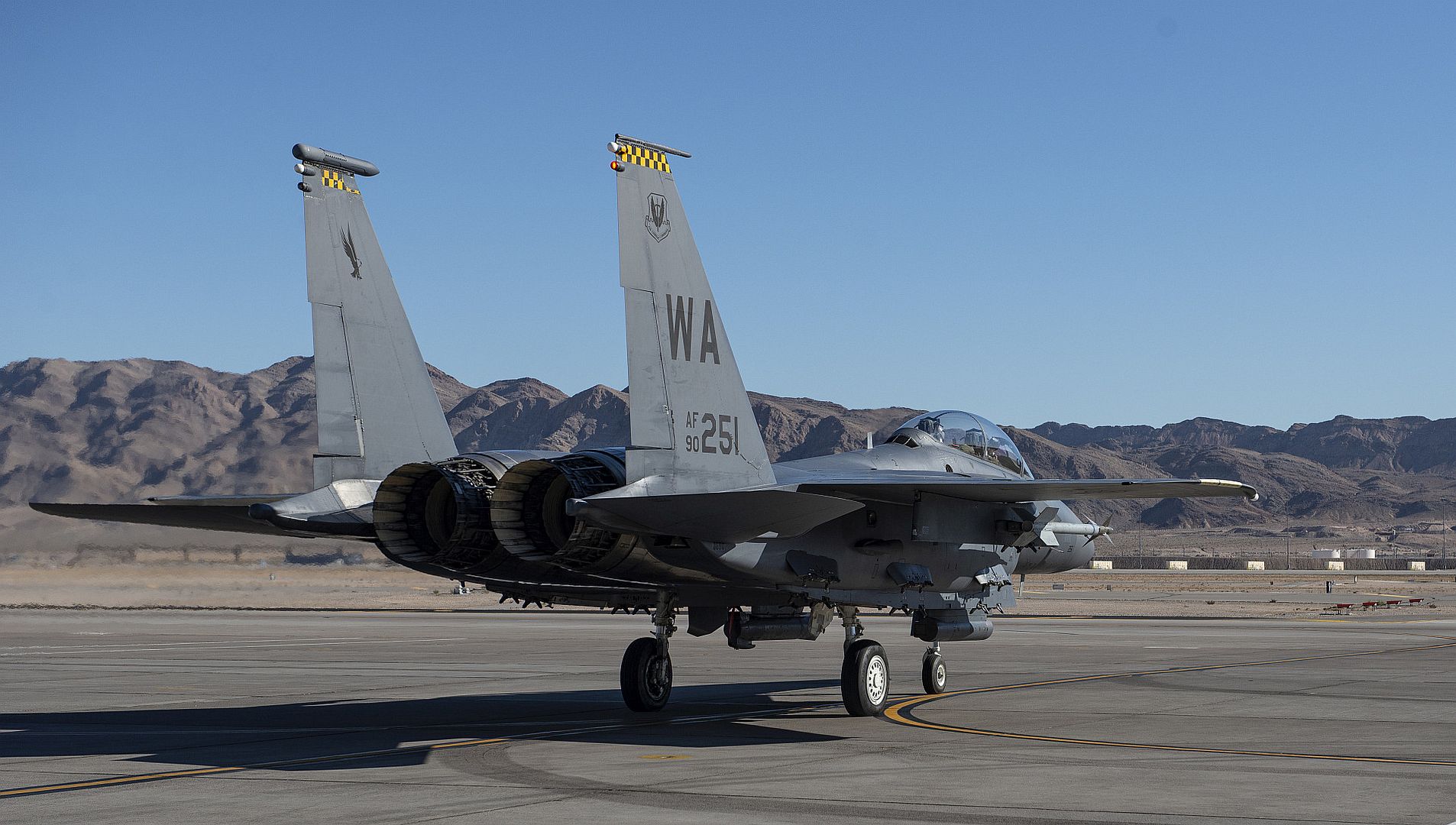
BALTIMORE ? Jan. 9, 2020 ? The U.S. Air Force has completed installation of Northrop Grumman Corporation?s (NYSE: NOC) AN/APG-83 SABR radars on Air National Guard F-16s at Joint Base Andrews, Maryland, to meet a U.S. Northern Command Joint Emergent Operational Need (JEON) for homeland defense. This milestone event completes delivery and installation of AN/APG-83 SABR Active Electronically Scanned Array (AESA) radars in support of the USAF?s future initial operational capability declaration.
The radar upgrade of select Air National Guard F-16s extends the operational viability and reliability of that fleet while providing pilots with 5th-generation fighter radar capabilities to defend our nation?s airspace.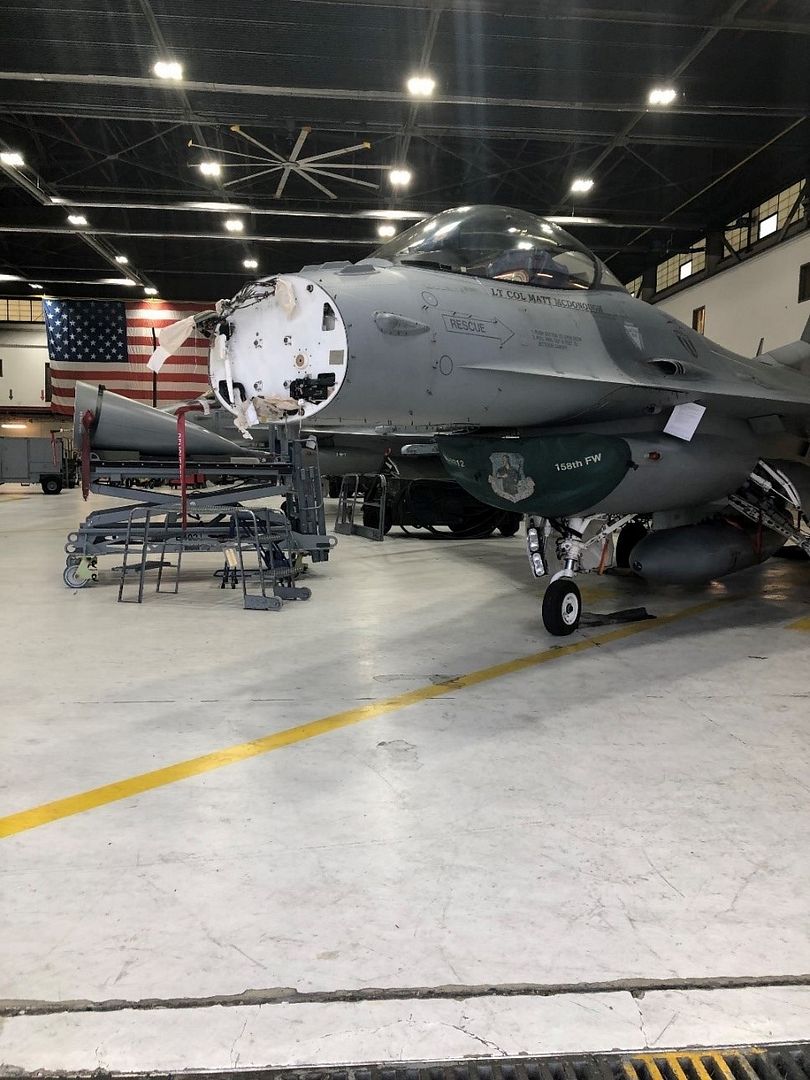
?The APG-83 radar provides unprecedented, active electronically scanned array (AESA) targeting and fire control capabilities to the F-16 fleet to ensure the superior effectiveness of the Air National Guard?s mission,? said Mark Rossi, director, SABR programs, Northrop Grumman. ?APG-83 was specifically designed to maximize the performance of the F-16 with an affordable and scalable architecture, based upon advancements made through the introduction of Northrop Grumman?s APG-77 AESA for the F-22 Raptor and APG-81 AESA for the F-35 Lightning II.?
The greater bandwidth, speed and agility of the APG-83 enables the F-16 to detect, track and identify a greater number of targets faster and at longer ranges. In addition, it features all-weather, high-resolution synthetic aperture radar mapping to present the pilot with a large surface image for more precise target identification and strike compared to legacy systems.
The SABR program draws components from a mature industry supply base. More than 200 SABR systems have been built at Northrop Grumman?s radar assembly facility in Baltimore for U.S. and international customers.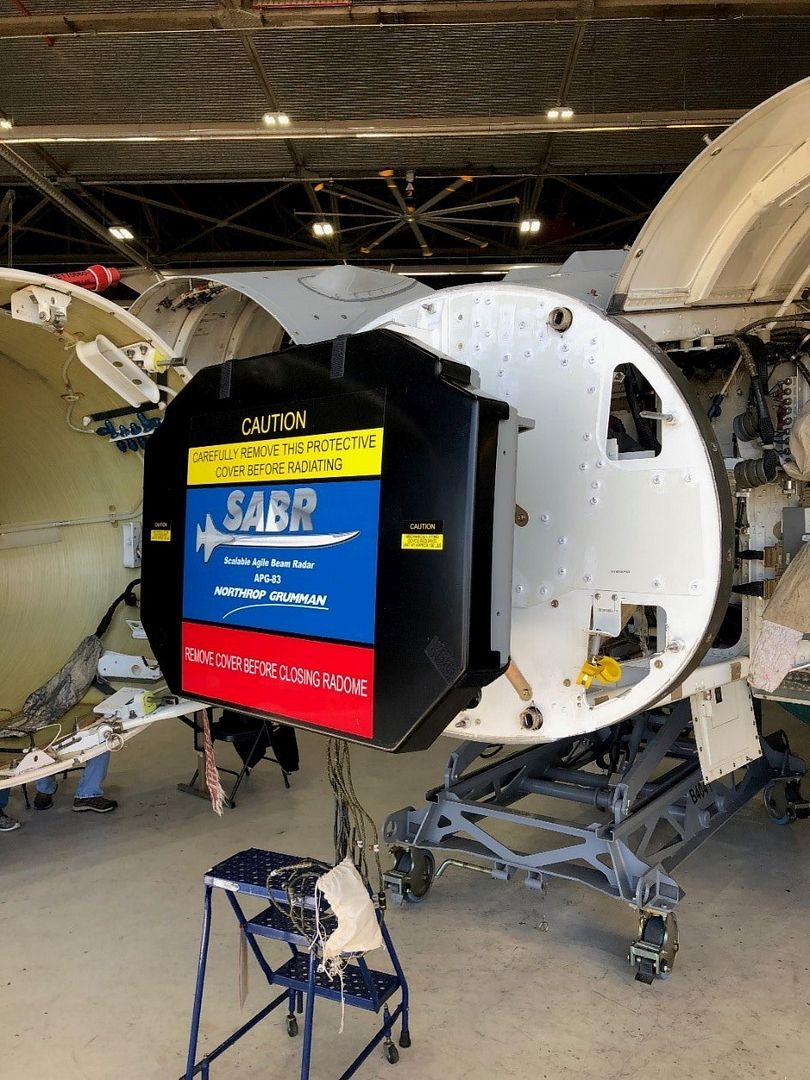
MELBOURNE, Fla. ? Jan. 9, 2020 ? Northrop Grumman Corporation (NYSE: NOC) received a $302 million contract from the U.S. Air Force on Nov. 1, 2019 for continued support of the Joint Surveillance Target Attack Radar System (Joint STARS).
The 2020 contract executes the Total System Support Responsibility (TSSR) program for the E-8C Joint STARS fleet with Northrop Grumman as the prime systems integrator of all nine components of support and sustainment.
?The capacity and technology of the Joint STARS weapon system make it unique in the multi-domain command and control arena,? said Janice Zilch, vice president, manned airborne surveillance programs, Northrop Grumman. ?Northrop Grumman has delivered innovative capability to this aircraft system for more than 30 years to give the Joint Force a strategic advantage.?
Joint STARS delivers real-time battle management situational awareness and wide area search essential to the warfighter through continued investment and development in its mission systems hardware and software. Joint STARS combines high fidelity wide-area moving target detection, synthetic aperture radar imagery and robust battle management systems to locate, classify and track surface targets in all weather conditions from standoff distances. The E-8C Joint STARS fleet has flown more than 150,000 hours in support of combatant commands around the globe.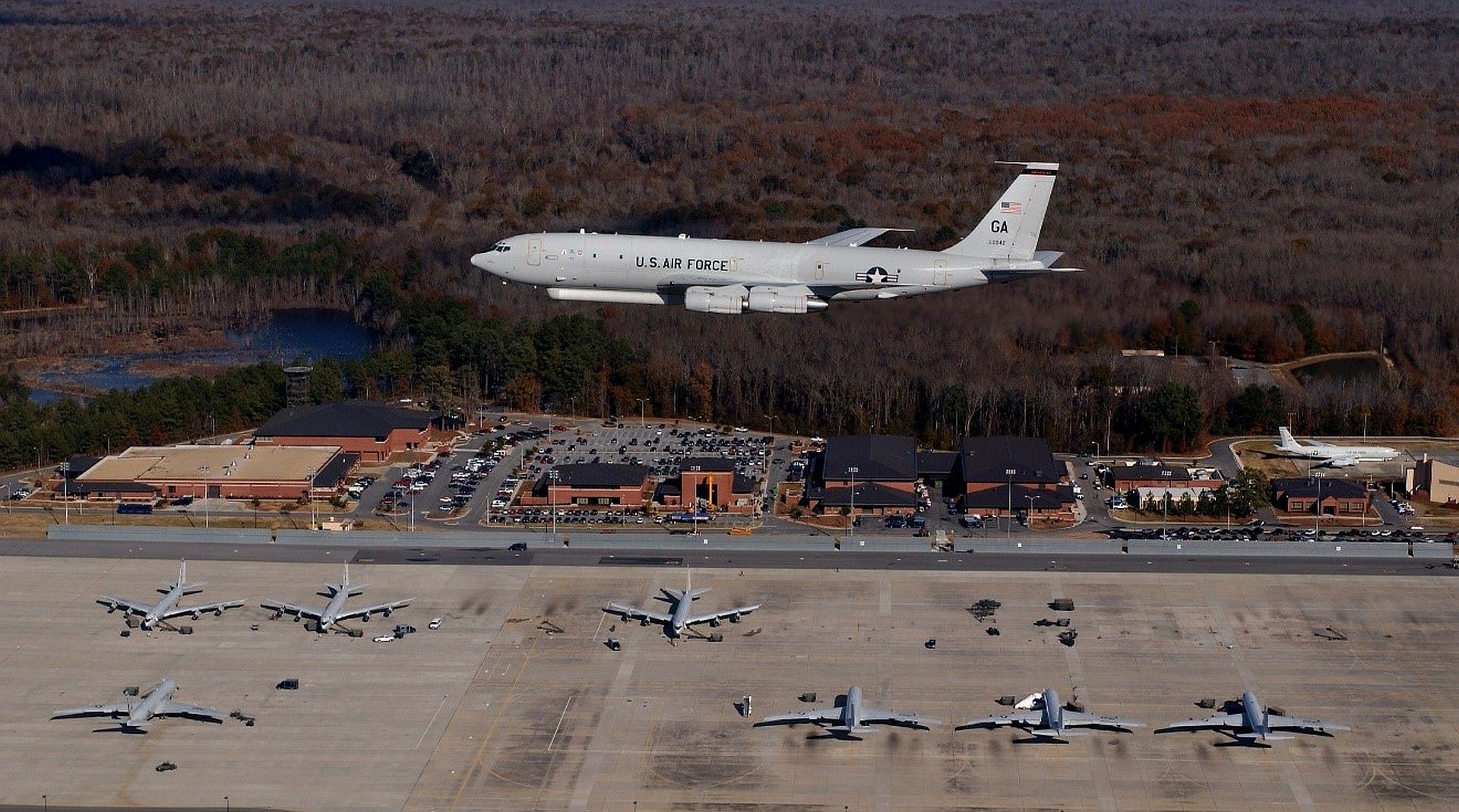
Mobile, AL, USA ? Airbus announced today that, as part of its plan to produce 63 A320 Family aircraft per month in 2021, the company will expand its industrial footprint in the U.S. by increasing the production rate of A320 family aircraft at its Airbus U.S. Manufacturing Facility in Mobile to seven per month by the beginning of next year. This increase, and continued recruiting for the A220 manufacturing team, will result in a further 275 jobs added at the Alabama-based facility over the next year. The company will also invest another $40 million through construction of an additional support hangar on the site, bringing its total investment to more than $1 billion in the Gulf Coast city.
Airbus? announcement comes on top of huge growth in 2019, when the company added 600 new jobs at the manufacturing site. With plans already in place for production of four A220 aircraft per month in Mobile by the middle of the decade, Airbus is on track to produce more than 130 aircraft in Mobile each year for its airline customers.
Reflecting on the growth and continued investment in the U.S., Airbus Americas Chairman and CEO C. Jeffrey Knittel said, ?Airbus has been manufacturing in the U.S. for many years now through our helicopter, aircraft and satellite products. This increase in commercial aircraft production in Mobile is an exciting expansion of our significant industrial investment in the U.S., and it continues Airbus? positive contribution to American aerospace.?
Knittel continued, ?We have invested more than $1 billion in Mobile because of the terrific team of employees there ? and because of the support and welcome we continue to receive from the Gulf Coast community and State and Congressional leaders like Senator Richard Shelby, who has been with us from the beginning. We look forward to building on that strong relationship with our neighbors. This goes beyond jobs to include our support of education initiatives and future workforce development that will positively impact the community for decades to come along the Gulf Coast.?
In addition to its operations in Mobile, Airbus has extensive presence throughout the U.S. The company employs approximately 4,000 people at 38 locations in 16 states. Among its other facilities in the U.S. Airbus has: an engineering center in Kansas; training facilities in Florida and Colorado; materials support and headquarters in Virginia; an innovative think tank (A3) in California; a drone data analysis business in Georgia; helicopter manufacturing and assembly facilities in Texas and Mississippi; and a satellite manufacturing facility (OneWeb Satellites) in Florida. Furthermore, in the last three years alone, Airbus has spent nearly $50 billion in the U.S. with more than 450 U.S. suppliers, supporting more than 275,000 American jobs.
In addition to the rate increase and new team members, Airbus will have a lot more to celebrate in Mobile in 2020: Defense and Space will celebrate its 15th anniversary in April; Airbus? newest final assembly line for the A220 will open, and the delivery of the first U.S.-made A220 will take place. The company will also welcome the graduation of the first students from the FlightPath9 high school student training program in May, participate in the opening of the Flight Works Alabama aviation experience center in June, and deliver its 200th U.S.-built A320 family aircraft in the summer.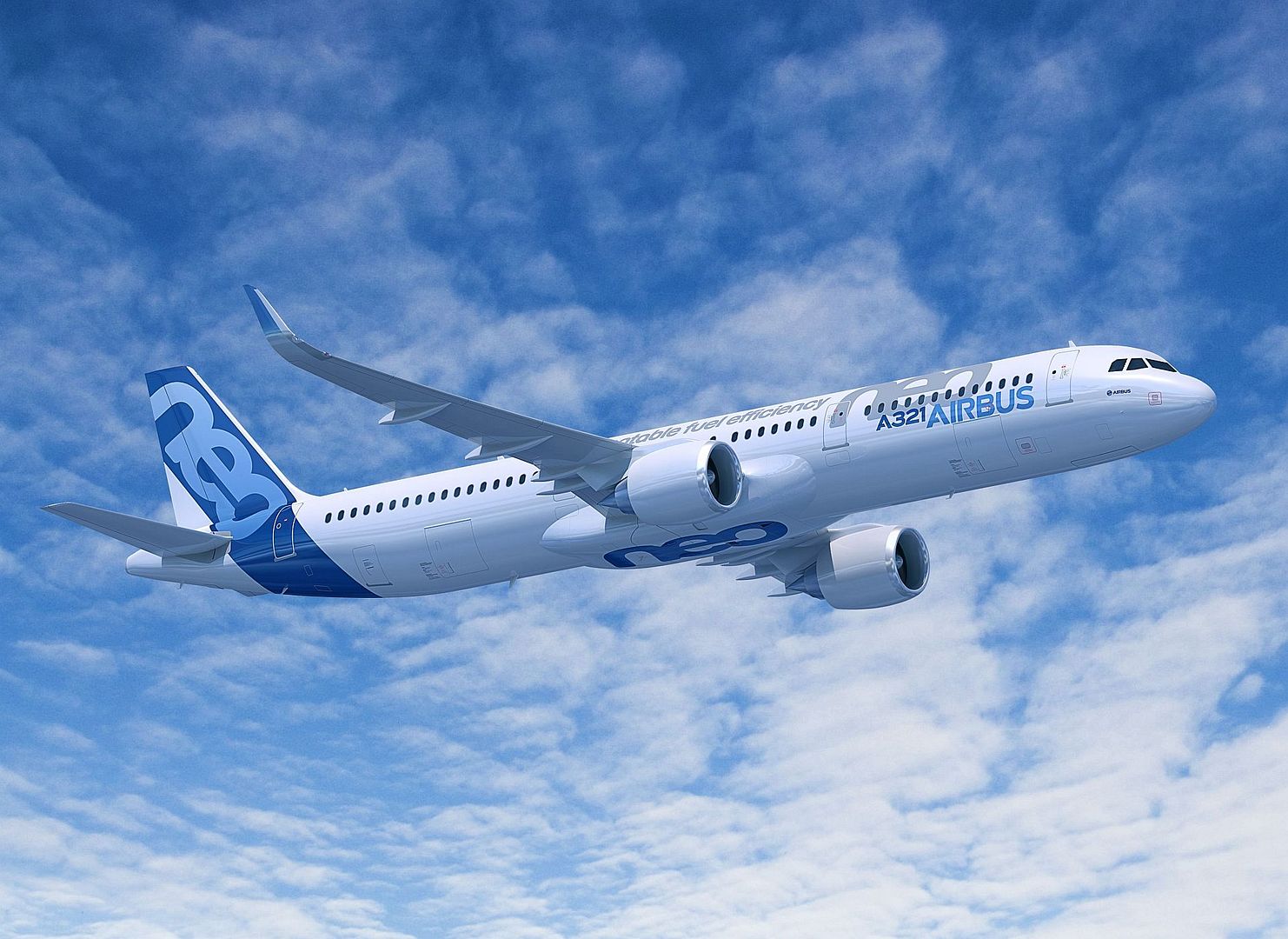
-
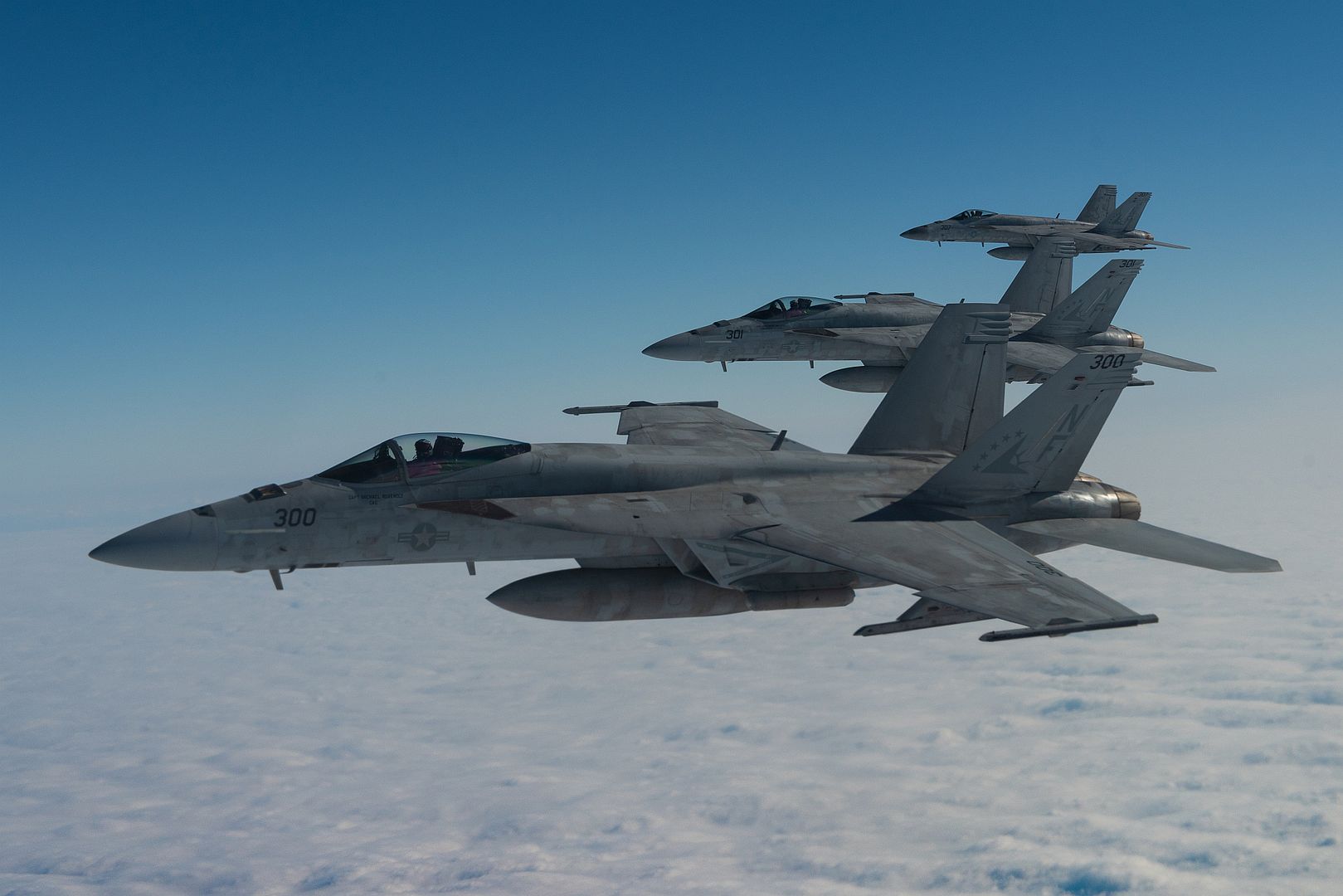
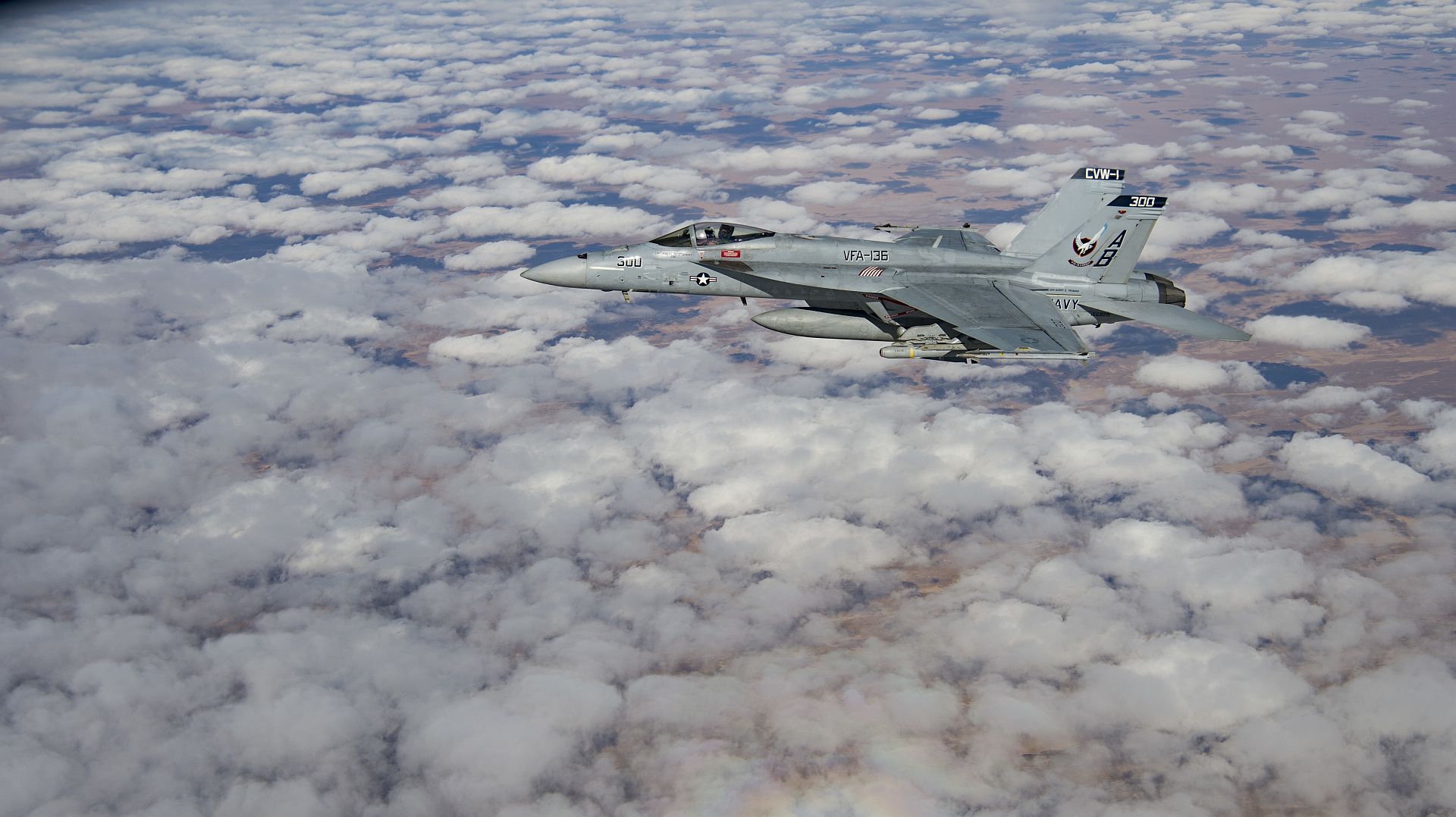
Three U.S. Navy F/A-18E Super Hornets fly in formation during exercise WestPac Rumrunner Jan. 10, 2020, out of Iwakuni, Japan. The WestPac Rumrunner exercise brought Airmen and joint partners together to train and execute innovative ways to deploy forces in a contested environment. (U.S. Air Force photo by Senior Airman Cynthia Bel?o)
Two F-15C Eagles from the 44th Fighter Squadron refuel with a KC-135 Stratotanker from the 909th Air Refueling Squadron Jan. 10, 2020, during exercise WestPac Rumrunner out of Kadena Air Base, Japan. Rumrunner represents an evolution in the capabilities of 18th Wing assets to work with joint partners to defend American allies and ensures a free-and open Indo-Pacific region. (U.S. Air Force photo by Senior Airman Matthew Seefeldt)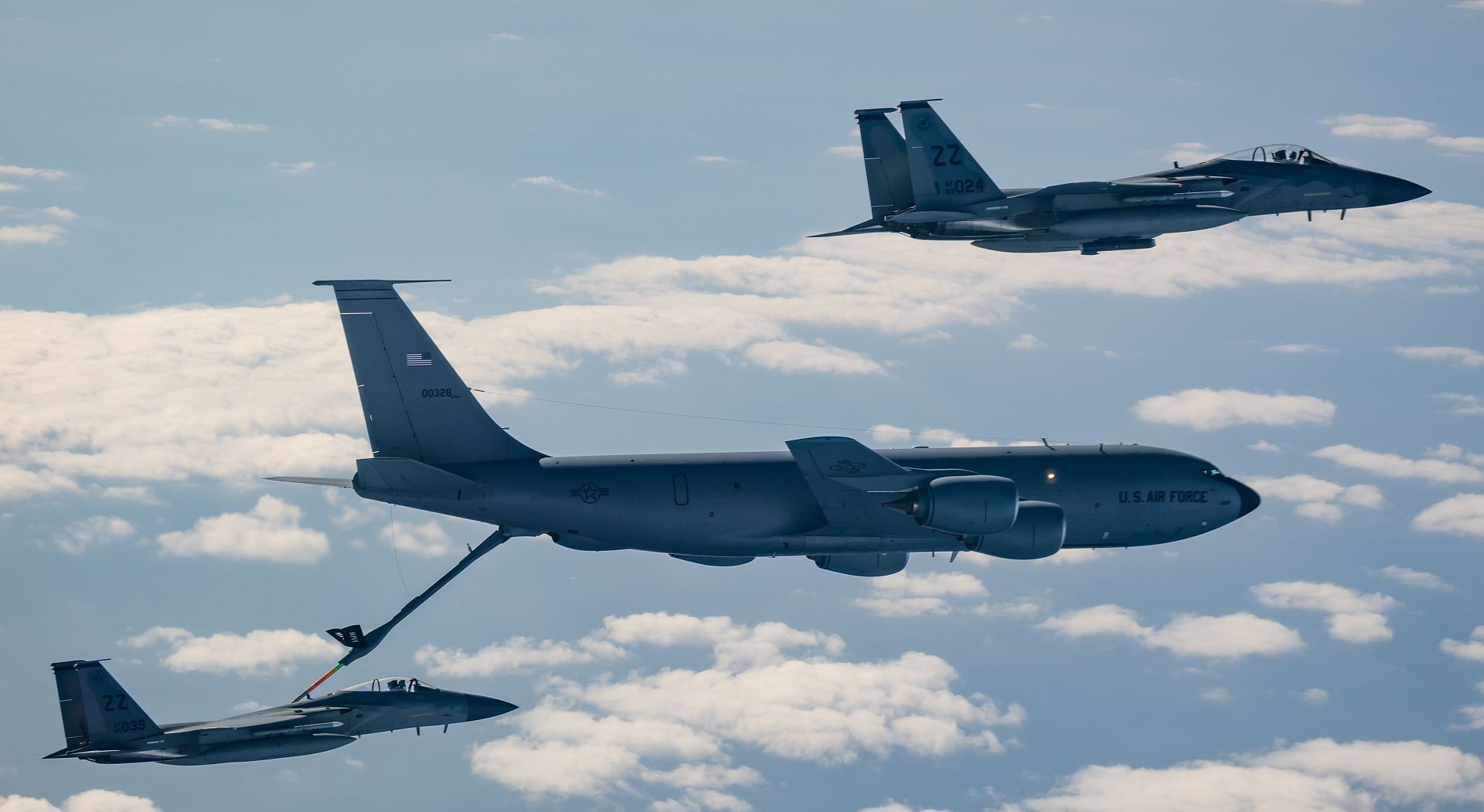
The waning gibbous moon is seen above a U.S. Air Force C-5 Galaxy transport aircraft on the flight line at Joint Base Elmendorf-Richardson, Alaska, Jan 10, 2020, as hoarfrost engulfs nearby trees in -16F weather while Airmen work around the plane. The C-5 enables the U.S. Air Force to provide heavy intercontinental-range strategic airlift capabilities, and is one of the largest aircraft in the world. (U.S. Air Force photo/Justin Connaher)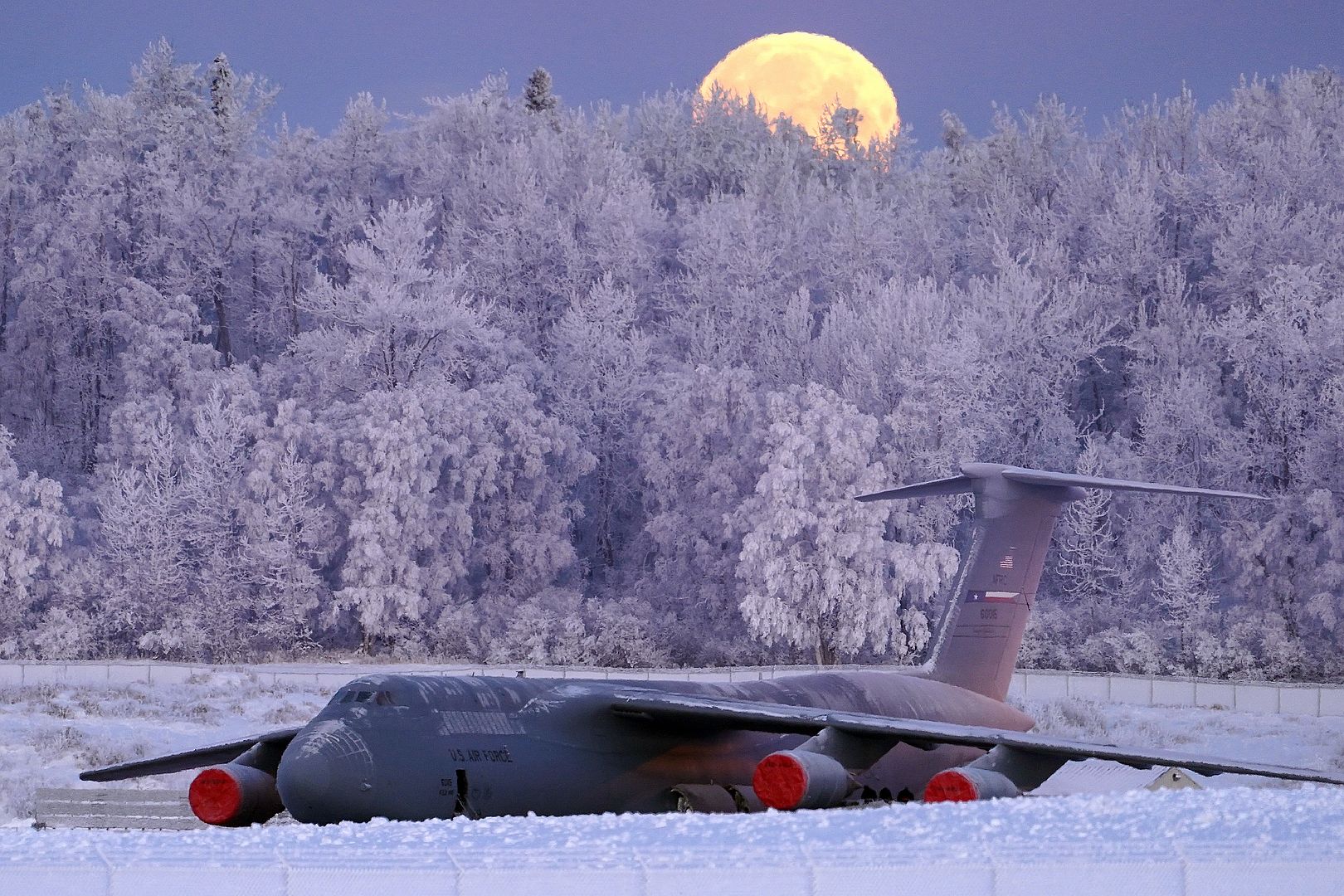
Airmen assigned to the 354th Aircraft Maintenance Unit work on an A-10 Thunderbolt II on the flight line at Davis-Monthan Air Force Base, Arizona, Jan. 8, 2020. 354th AMU Airmen are responsible for ensuring their 26 A-10s stay ready to rapidly deploy and wield global combat air power at a moment?s notice. (U.S. Air Force photo by Airman 1st Class Jacob T. Stephens)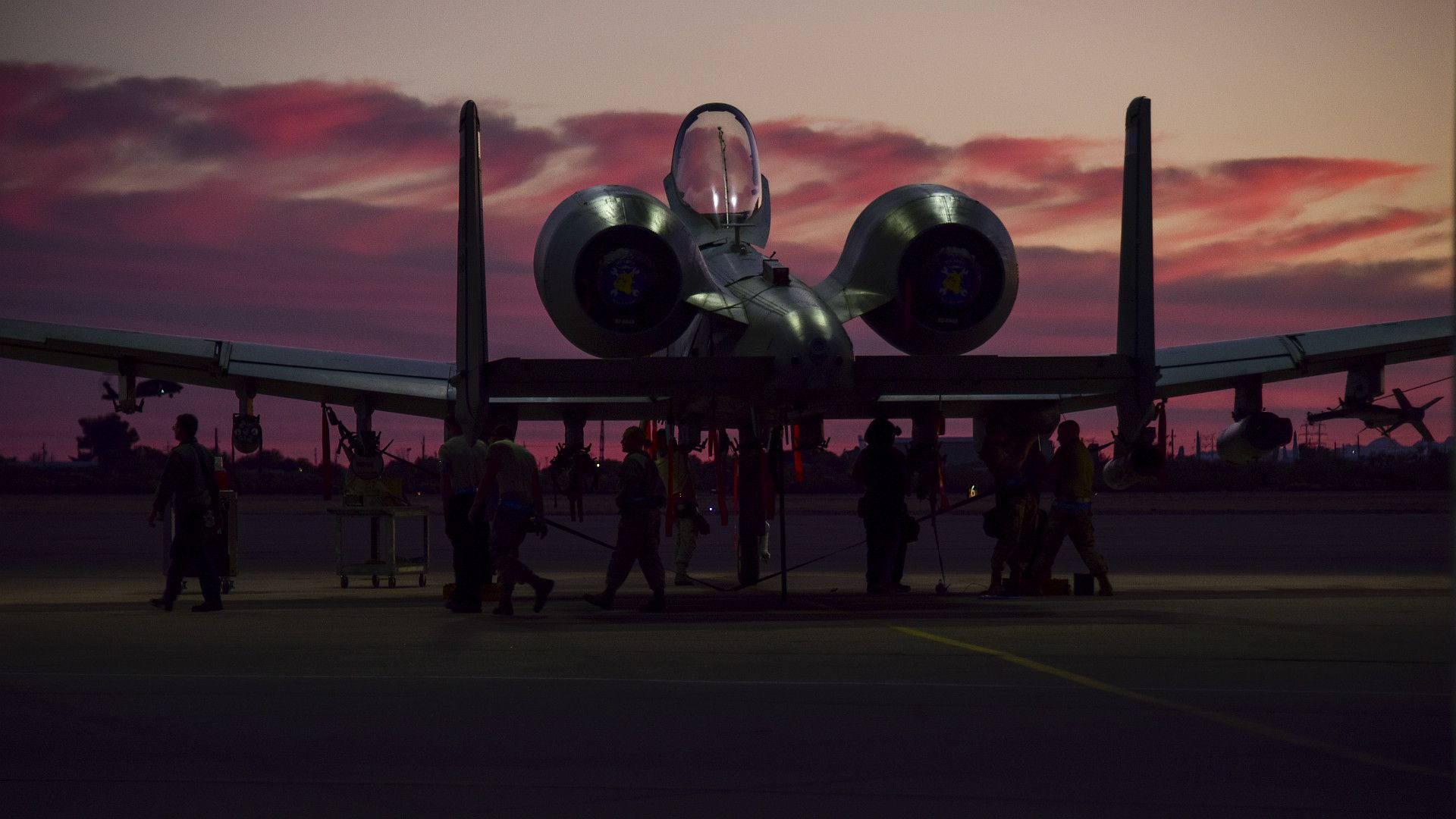
ATLANTIC OCEAN (Jan. 6, 2019) A U.S. Marine Corps MV-22 Osprey attached to Special Purpose Marine Air-Ground Task Force-Crisis Response-Africa 20.1, Marine Forces Europe and Africa, conducts touch-and-go procedures aboard the French navy amphibious assault ship BPC Dixmude (L9015) in the Atlantic Ocean, Jan. 6, 2020. This training event tests an operational concept called Amphibious Maritime Basing and Interoperability, and will help streamline practices and procedures between U.S. naval forces and the French, enhancing the French and American capability to respond rapidly and efficiently to potential future crises. SPMAGTF-CR-AF is a rotational force deployed to conduct crisis-response and theater-security operations in Europe and Africa. (U.S. Marine Corps photo by Cpl. Kenny Gomez/Released)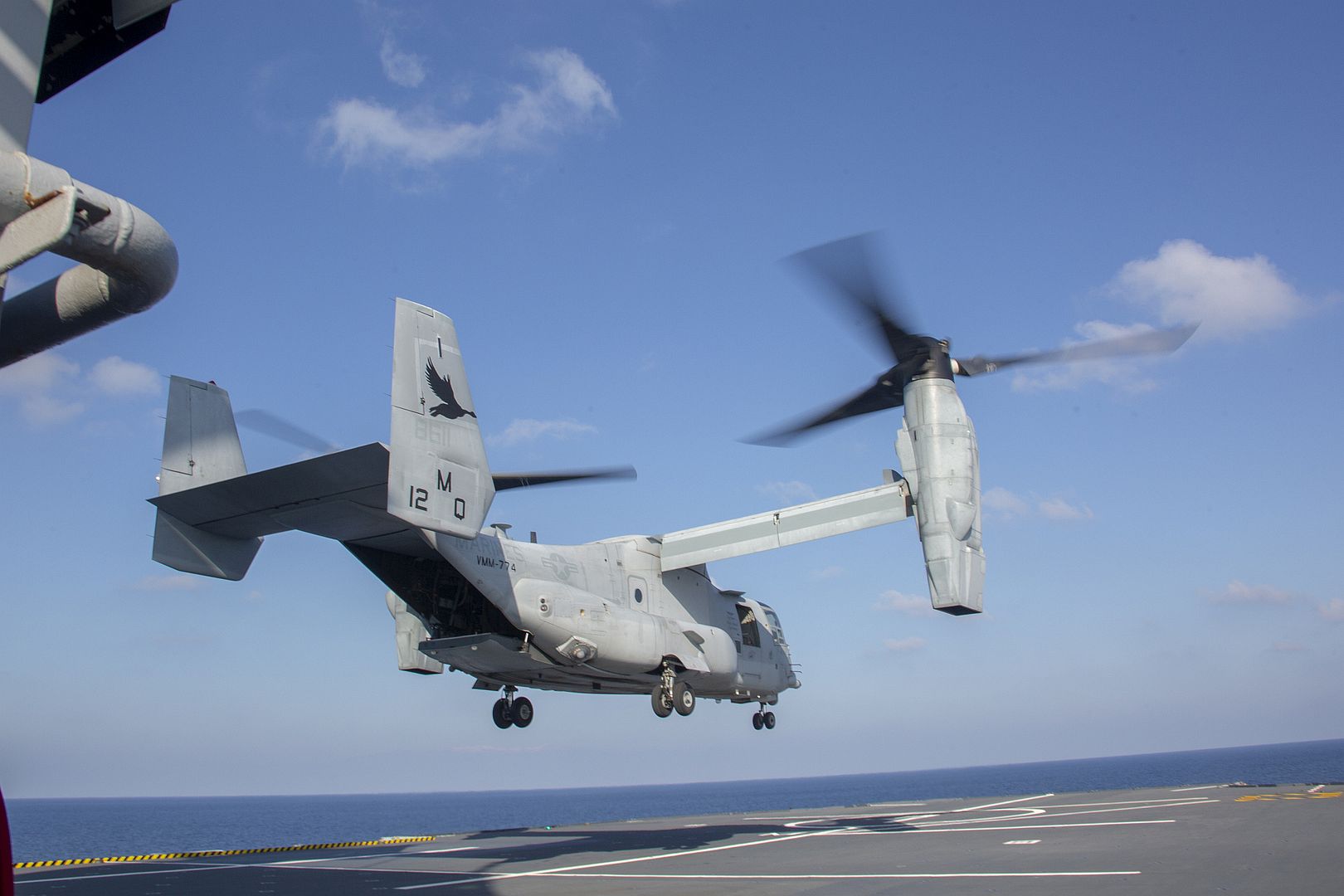
-
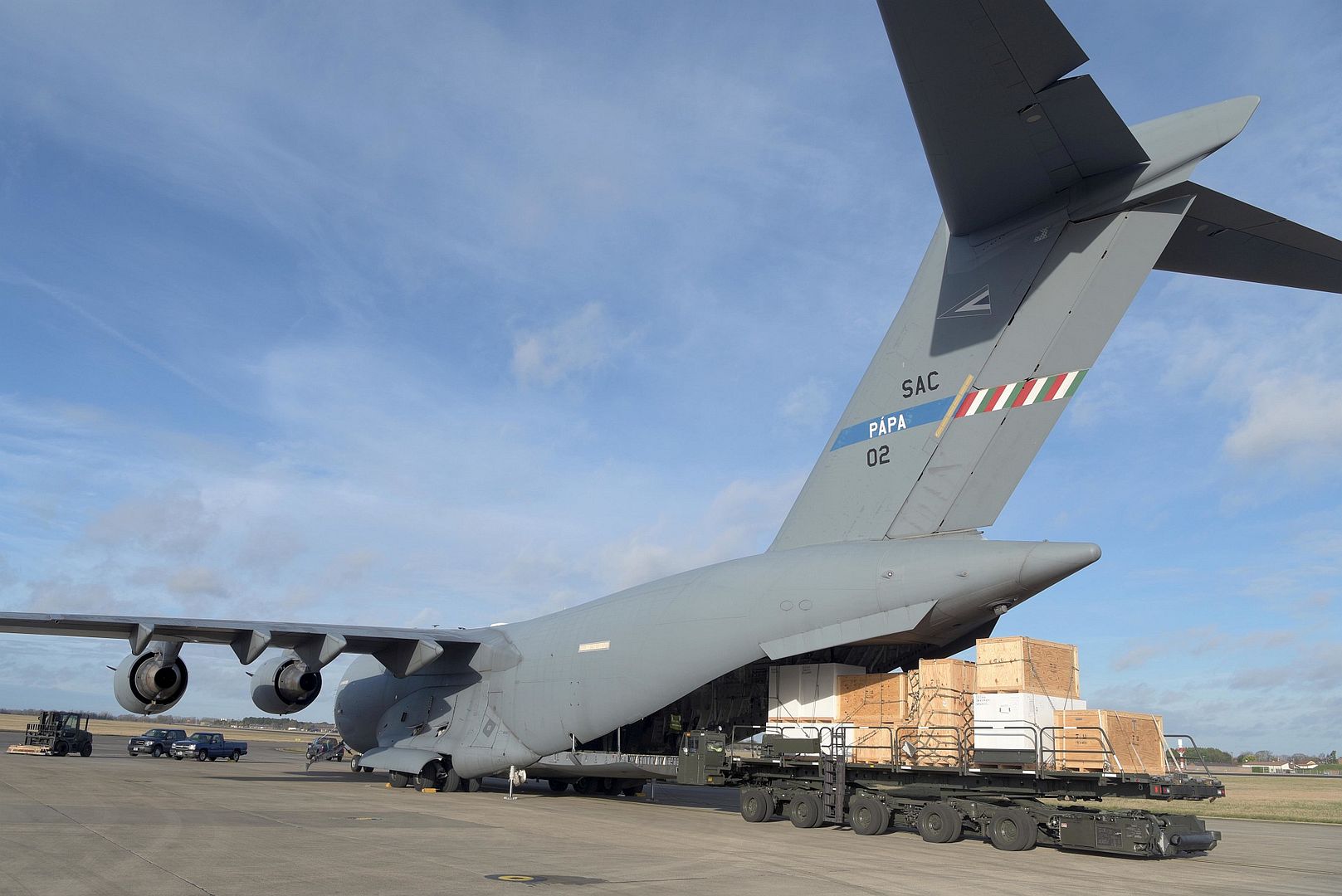
Civilians with the 727th Air Mobility Squadron offload the Boom Operator Weapon System Trainer from a C-17 Globemaster III assigned to the Heavy Airlift Wing, P?pa Air Base, Hungary, at RAF Mildenhall, England, Jan. 11, 2020. The BOWST trains boom operators for real-world operations while saving money and flying hours. (U.S. Air Force photo by Senior Airman Benjamin Cooper)
The BelugaXL has entered into service, providing Airbus with 30% extra transport capacity in order to support the on-going production ramp-up of commercial aircraft programmes.
The aircraft, which is an integral part of Airbus? industrial system, made its first operational flight on 9 January. This is the first of six BelugaXL to begin work alongside the BelugaST predecessors, with the additional aircraft being introduced between 2020 and 2023.
Launched just over five years ago, in November 2014, the entry into service milestone marks yet another successful achievement for the internal aircraft programme that was awarded Type Certification by the European Aviation Safety Agency (EASA) in November 2019, following an intensive flight test campaign that saw the BelugaXL complete more than 200 flight tests, clocking over 700 flight hours.
At 63 metres long and 8 metres wide, the BelugaXL has the largest cargo bay cross-section of all existing cargo aircraft worldwide. The BelugaXL can carry two A350 XWB wings compared to the BelugaST, which can only carry one. With a maximum payload of 51 tonnes, the BelugaXL has a range of 4,000 km. (2200nm).
The BelugaXL is based on an A330-200 Freighter, enabling the re-use of existing components and equipment, and is powered by Rolls-Royce Trent 700 engines. The lowered cockpit, the cargo bay structure and the rear-end and tail were newly developed jointly with partners, giving the aircraft its distinctive look.
The BelugaXL is the latest addition to Airbus? transportation portfolio. While air transport remains the primary method for transporting large aircraft components, Airbus also uses road, rail and sea transport to move parts between its production sites. Like the BelugaST, the aircraft will operate from 11 destinations in Europe, continuing to strengthen industrial capabilities and enabling Airbus to deliver on its commitments.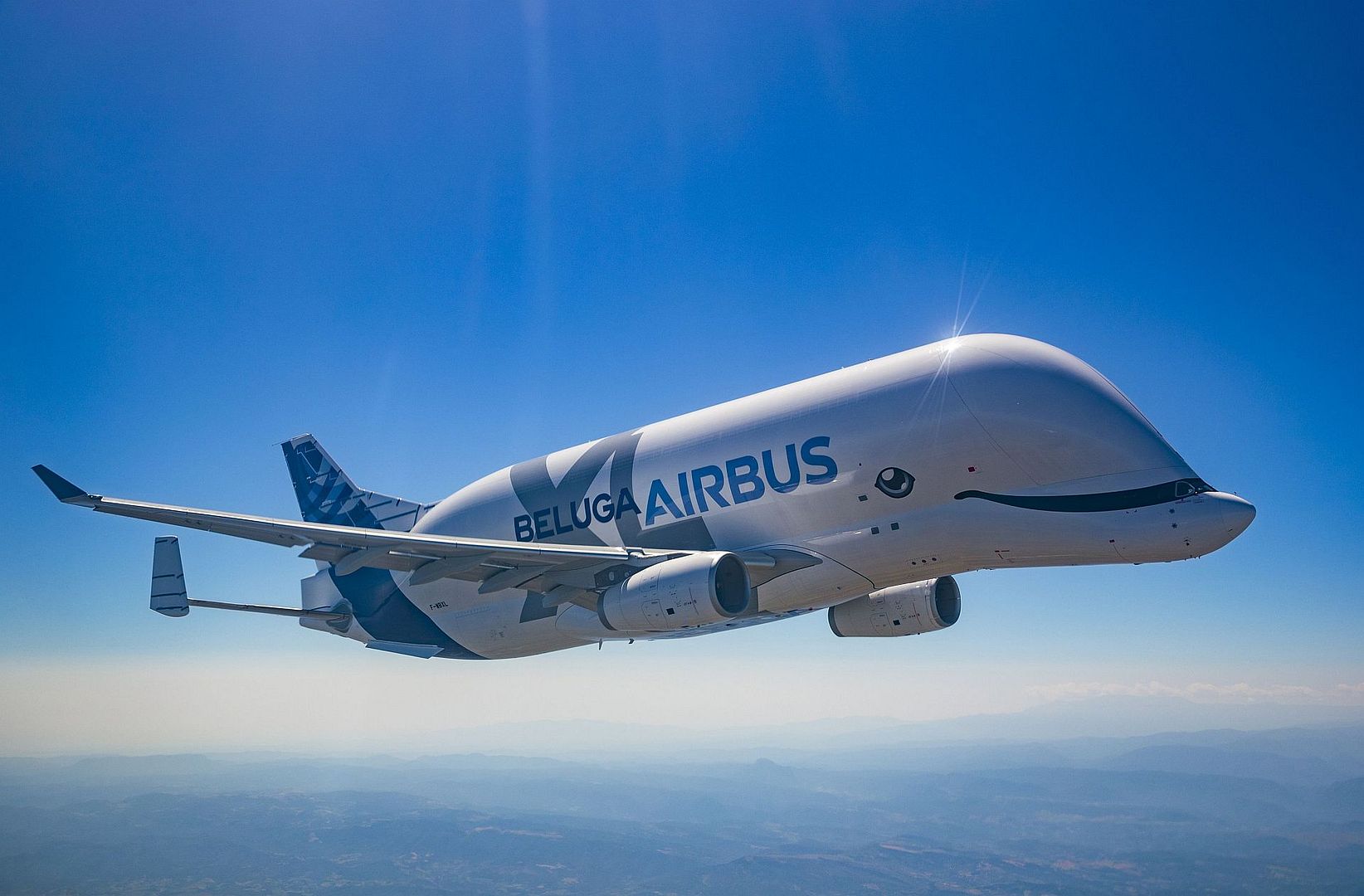
-
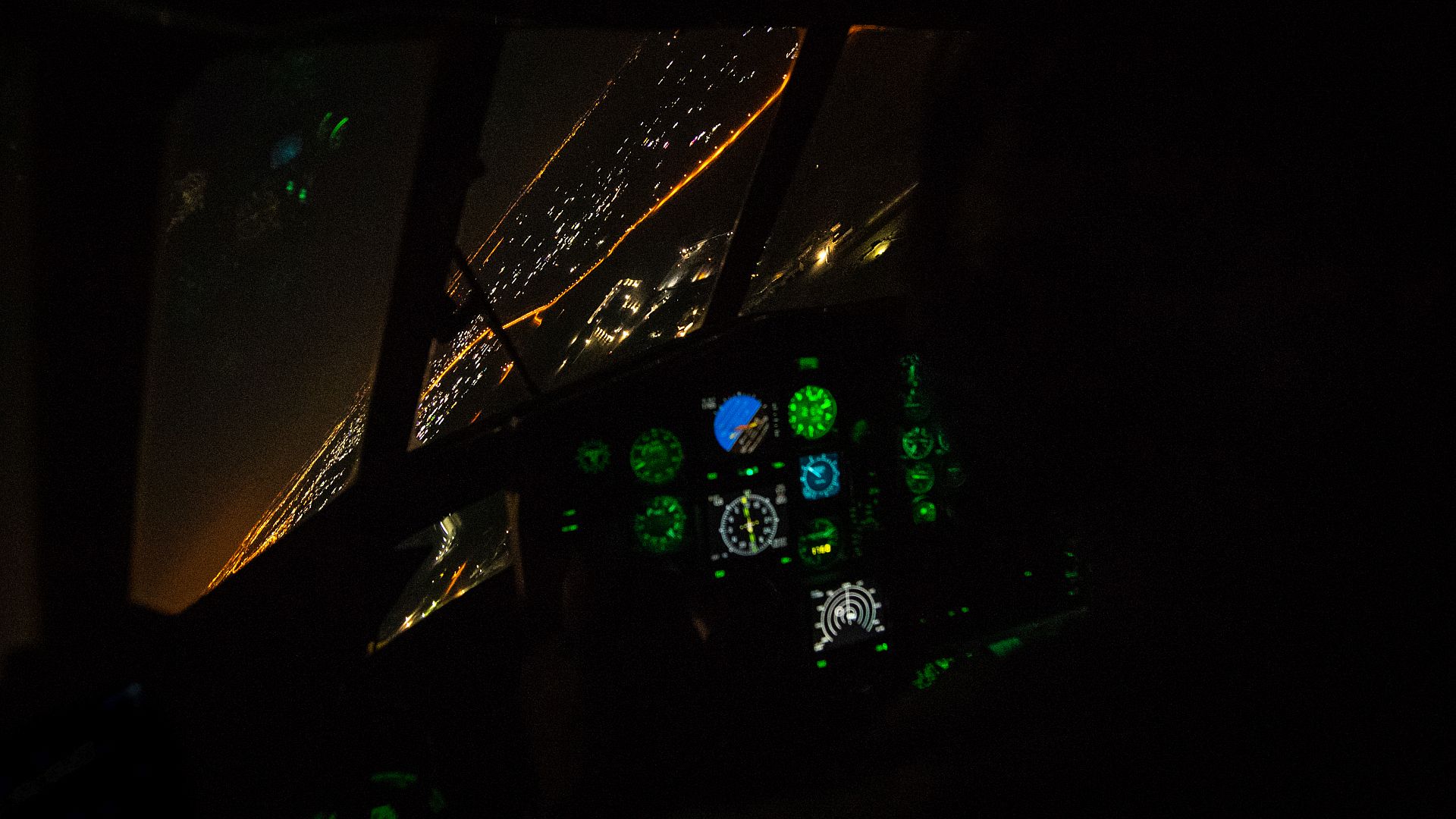
Aircrew assigned to the 779th Expeditionary Airlift Squadron conduct an airdrop from a C-130 Hercules to resupply friendly forces supporting Operation Inherent Resolve in Southwest Asia, Jan. 13, 2020. Aerial resupply enables coalition forces to receive needed supplies including food, water, and medical supplies in a matter of hours to remote locations around the world. (U.S. Air Force photo by Tech. Sgt. Michael Mason)
F-16 Fighting Falcons assigned to the 18th Aggressor Squadron sit on the flight line during Sentry Aloha 20-1 at Joint Base Pearl Harbor-Hickam, Hawaii, Jan. 13, 2020. The 18th AGRS utilizes a mobile training team that allows them to travel to various installations to prepare U.S. and partner nation joint forces for 21st century combat. (U.S. Air Force photo by Senior Airman Beaux Hebert)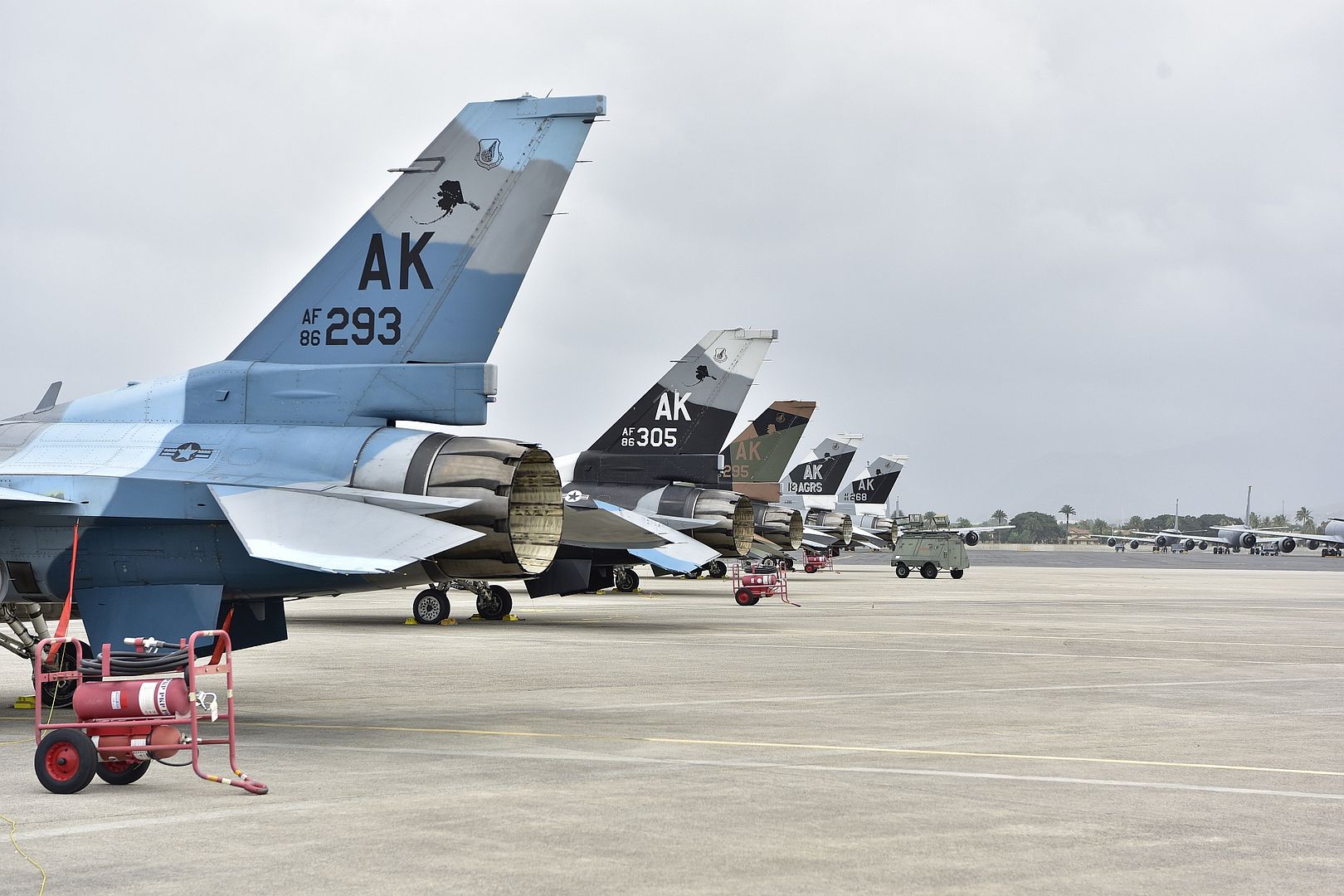
Rome 14 January 2020
Leonardo, through AgustaWestland Philadelphia Corp., has been awarded a firm-fixed-price contract valued at USD 176,472,608 for the production and delivery of 32 TH-73A helicopters, initial spares, support and dedicated equipment, and specific pilot and maintenance training services. This contract, as Fiscal 2020 aircraft procurement (Navy) funds, was competitively procured via a request for proposal of various offers. Work will be mainly performed at Leonardo?s Philadelphia facility and is expected to be completed in October 2021.
Alessandro Profumo, Chief Executive Officer Leonardo said, ?On the cusp of celebrating nearly 40 years of operating in Philadelphia, Leonardo is thrilled the U.S. Navy has selected our TH-119-based offer and us as a local and long term partner. We are proud to be a core contributor to the future of U.S. defense.?
Gian Piero Cutillo, Managing Director of Leonardo Helicopters added, ?Today?s brilliant news is a ringing endorsement for our solutions setting new industry standards for training. We are committed to working with the U.S. Navy to ensure future pilots meet all evolving service requirements.?
William Hunt, Managing Director of Leonardo Helicopters Philadelphia said, ?Our plan since day one has been to offer the U.S. Navy the training capabilities they asked for, without compromise. We are honored to deliver on that promise, build the new fleet in Philadelphia and maintain it from Milton, Florida.?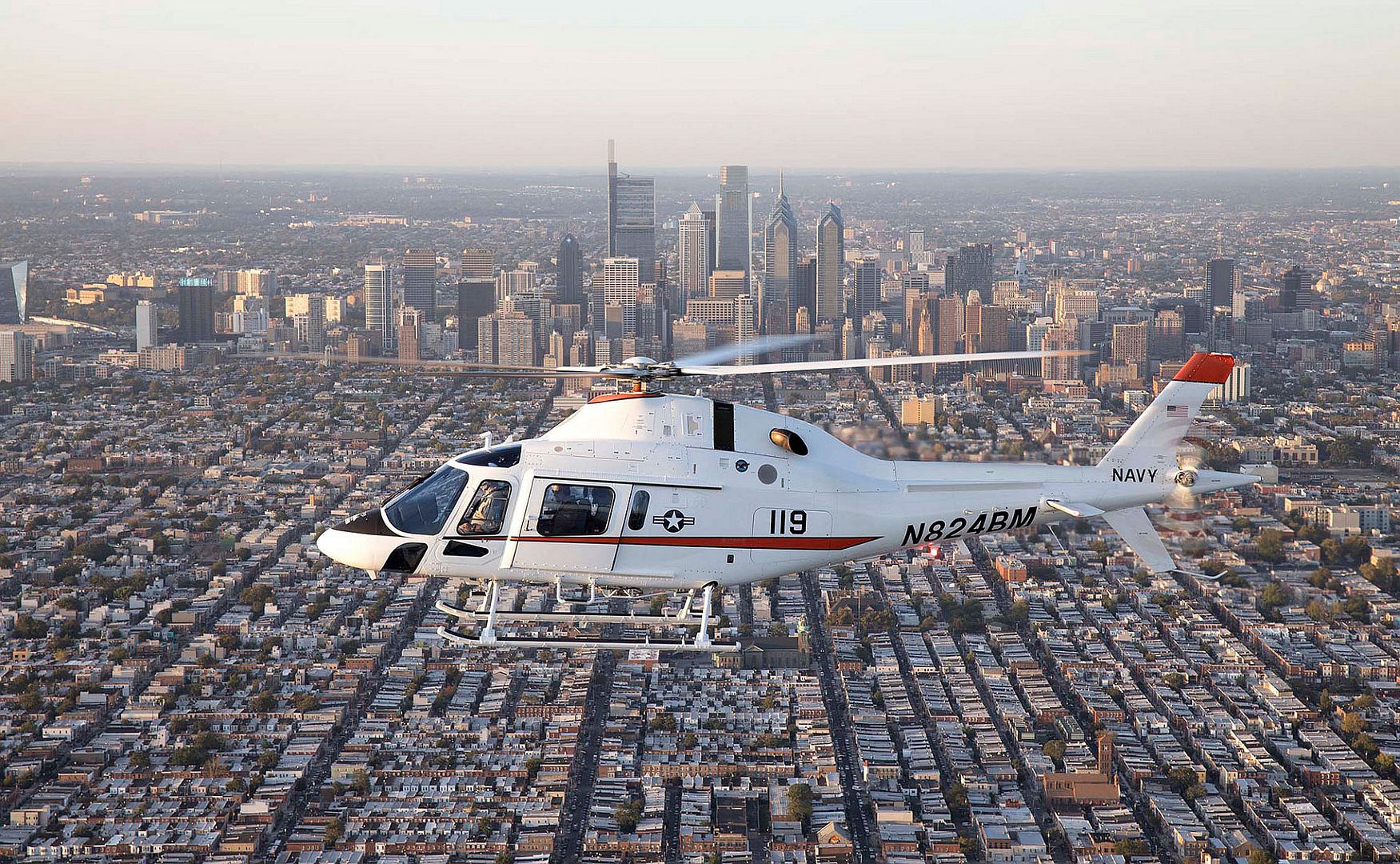
Saint-Cloud, 14 January 2020 ? On 30 December 2019 the French Defense Procurement Agency (DGA) ordered the Archange airborne strategic intelligence program, comprising three Dassault Aviation Falcon 8X aircraft equipped with the Thales new-generation payload CUGE (universal electronic warfare capability). A contract has been awarded for the first two aircraft.
Dassault Aviation and the dozens of French companies associated with the Falcon programs wish to thank the Ministry of the Armed Forces, the DGA and the French Air Force for their confidence.
The required level of performance of the Archange Falcons necessitates highly complex integration work, something that is at the core of Dassault Aviation and Thales know-how.
?I am very proud and happy with the decision of the Ministry of the Armed Forces. The Archange Falcon will serve the French forces in the same way as the Falcons 10, 200, 50, 2000, 900 and 7X are already doing it, declared Eric Trappier, Chairman and CEO of Dassault Aviation. The special mission Falcons provide the perfect illustration of the dual competences of Dassault Aviation: our civil aircraft benefit from the cutting-edge technologies developed for our combat aircraft, which in return benefit from the industrial processes deployed for the highly competitive production of the Falcon aircraft.?
The tri-jet Falcon 8X is the latest addition to the Falcon range. The business jet version can carry 8 passengers and 3 crew members over a distance of 6,450 nm (12,000 km). It has digital flight controls which stem directly from Dassault Aviation?s experience acquired with the Mirage 2000 and Rafale. It is equipped with an EASY digital flight deck and the totally unrivalled FalconEye combined vision system (CVS).
Exported to more than 90 countries, the Falcon aircraft are flexible and economic to fly. Their handling qualities, aerodynamics and versatility render them capable of fulfilling missions that go beyond civil aviation standards. They are designed by the design office that also develops the Rafale and nEUROn combat aircraft. Over the last 50 years, Dassault Aviation has customized many Falcons for purposes such as medical evacuation, cargo transport, maritime surveillance, electronic warfare, etc. These multirole aircraft represent about 10% of the Falcon fleet in service across the world.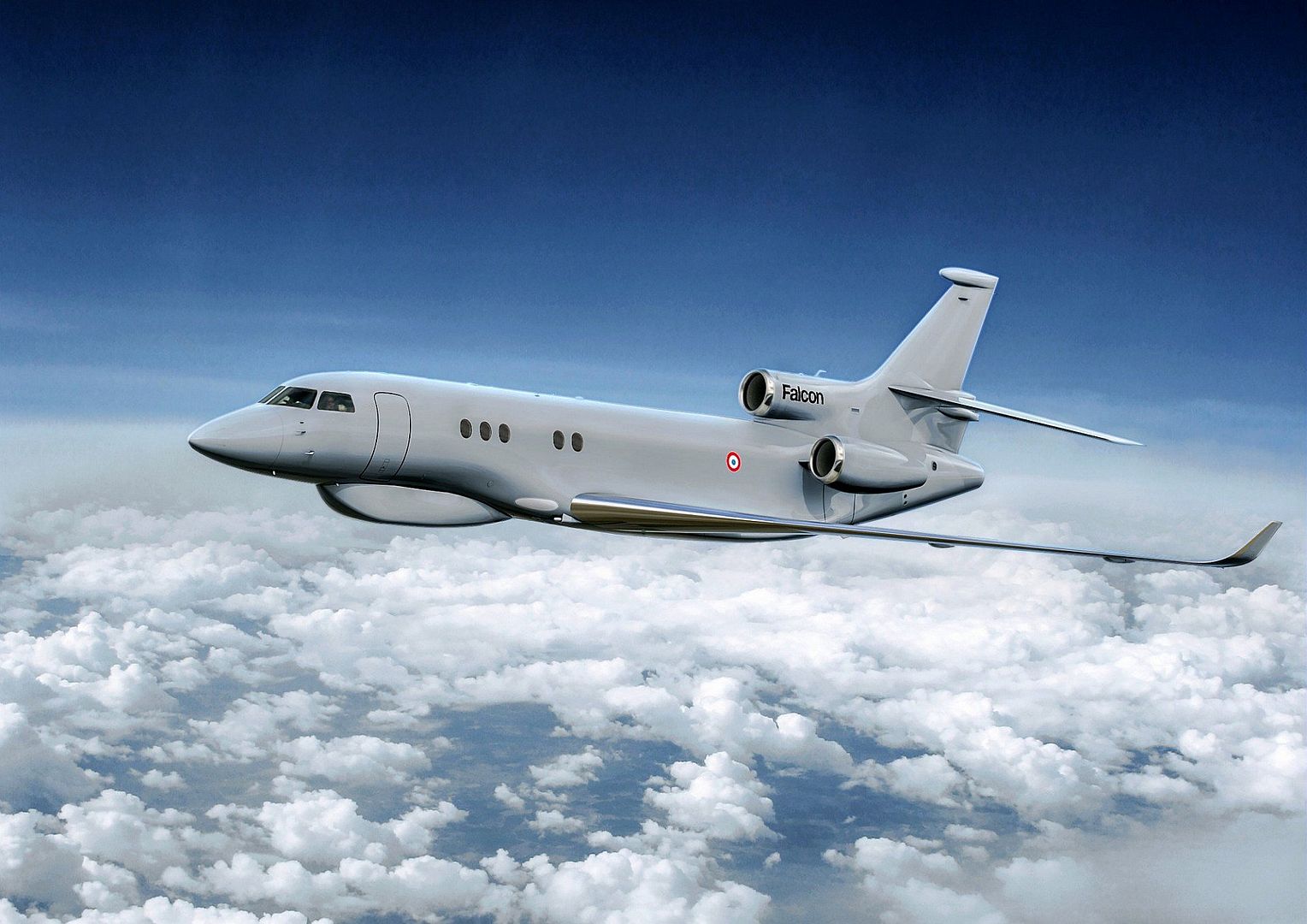
-
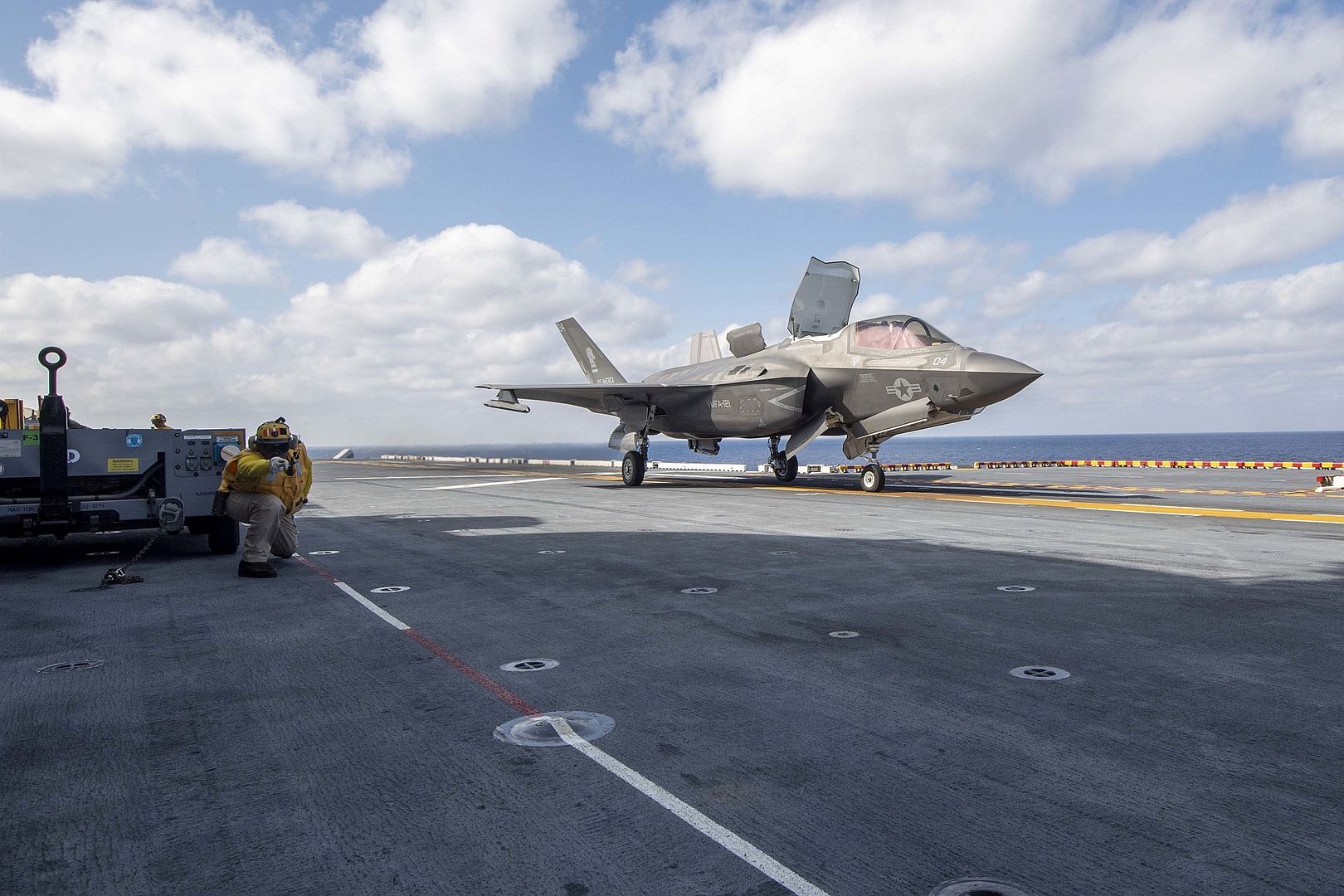
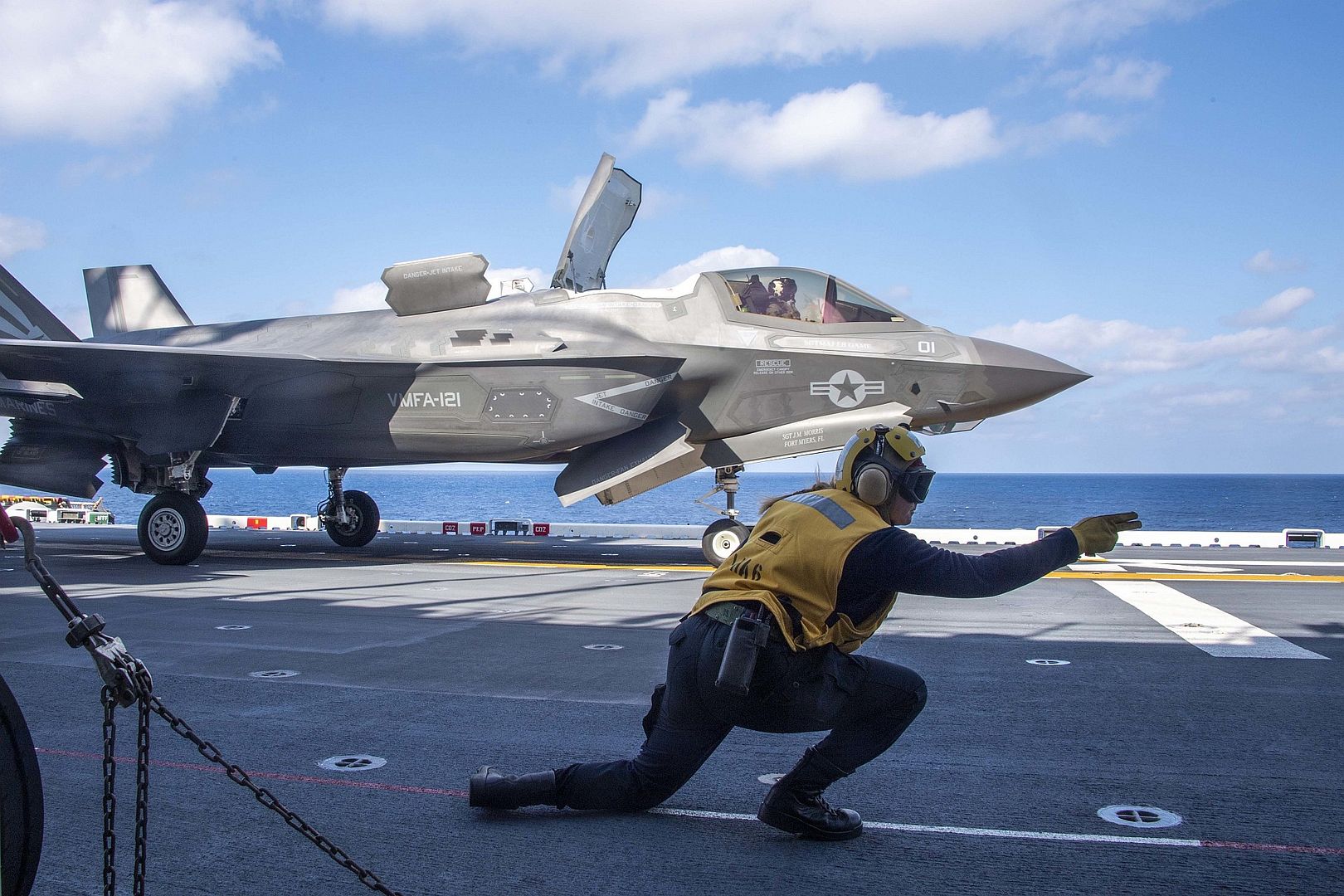
EAST CHINA SEA (Jan. 15, 2020) Chief Aviation Boatswain?s Mate (Handling) Akiel Mayers, from Ann Arbor, Michigan, signals an F-35B Lightning II assigned to the "Green Knights" of Marine Fighter Attack Squadron (VMFA) 121, 31st Marine Expeditionary Unit (MEU) to take off from the flight deck of amphibious assault ship USS America (LHA 6). America, flagship of the America Expeditionary Strike Group, 31st MEU team, is operating in the U.S. 7th Fleet area of operations to enhance interoperability with allies and partners and serve as a ready response force to defend peace and stability in the Indo-Pacific region. (U.S. Navy photo's by Mass Communication Specialist 3rd Class Vance Hand)
An F-16 Fighting Falcon pilot assigned to the 18th Aggressor Squadron taxis back to his staging area during Sentry Aloha 20-1 at Joint Base Pearl Harbor-Hickam, Hawaii, Jan. 14, 2020. Two teams of fourth generation F-16s simulated combat with fifth generation F-22 Raptors to prepare participating units for 21st century combat. (U.S. Air Force photo by Senior Airman Beaux Hebert)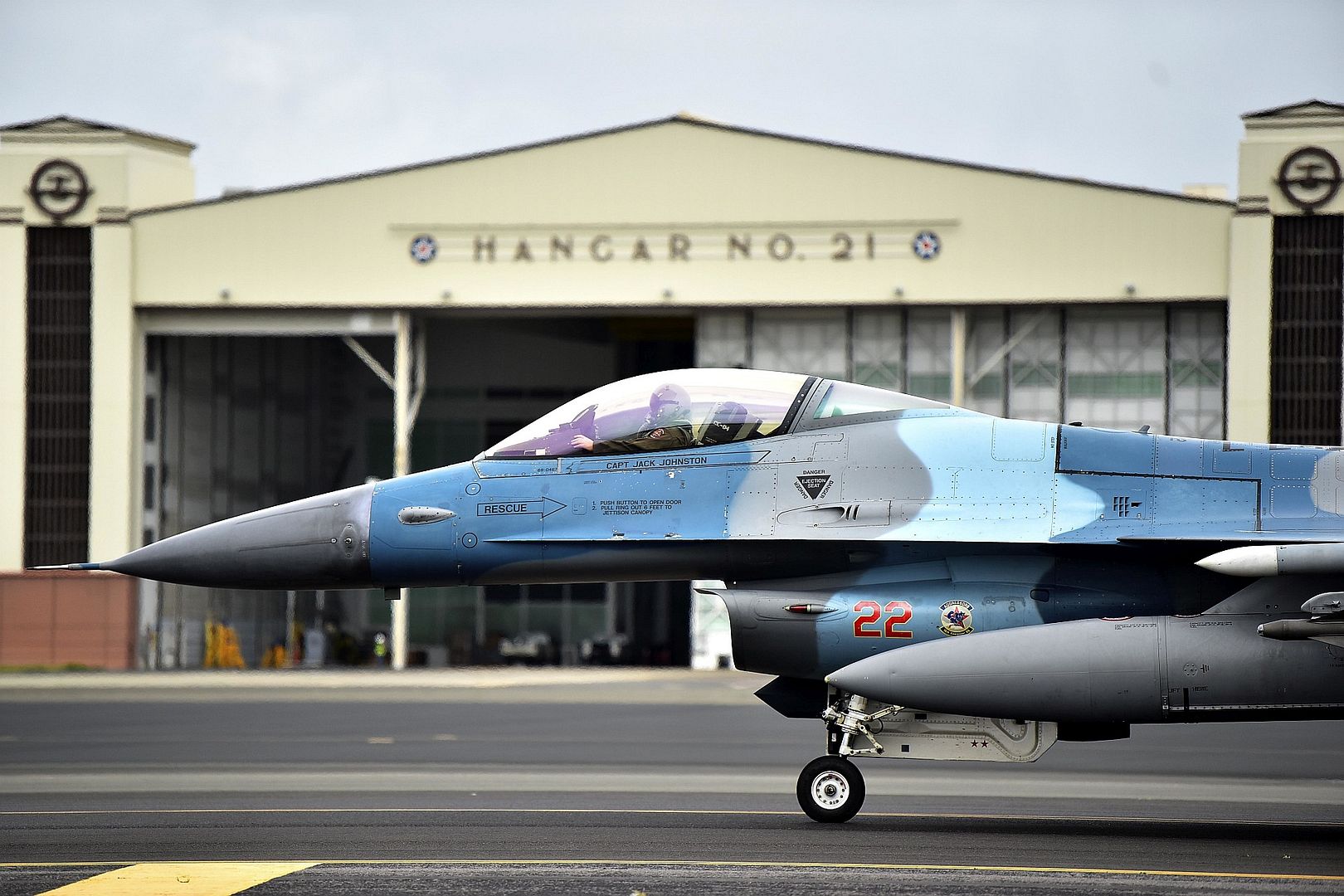
An F-15E Strike Eagle sits on the flight line prior to a sortie at Prince Sultan Air Base, Kingdom of Saudi Arabia, Jan. 8, 2020. The F-15E Strike Eagle is a dual-role fighter designed to perform air-to-air and air-to-ground missions, demonstrating U.S. Air Forces Central Commands? posture to compete, deter, and win against state and non-state actors. (U.S. Air Force photo by Tech. Sgt. Michael Charles)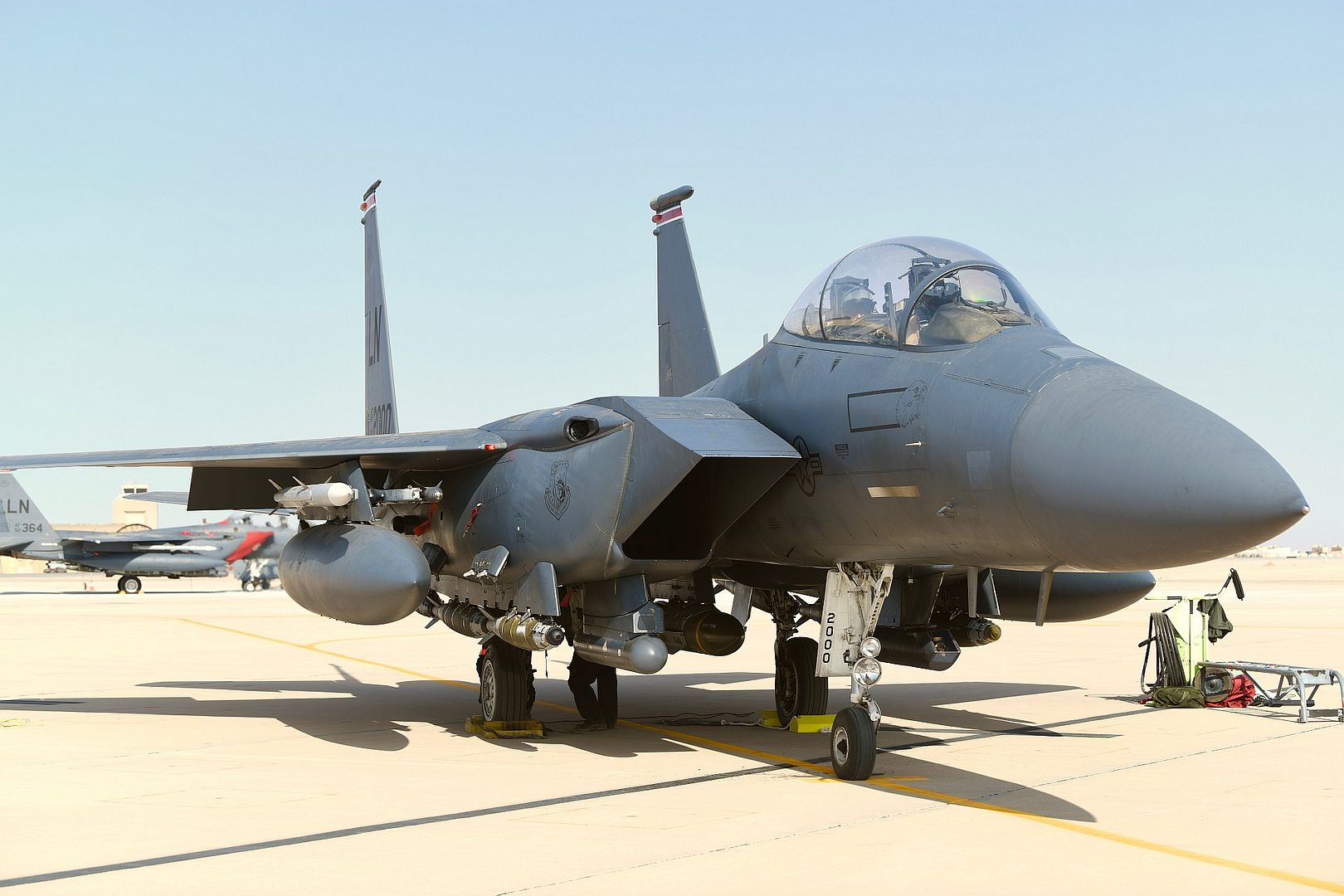
63rd Aircraft Maintenance Unit maintainers oversee maintenance on an F-35A Lightning II after landing January 7, 2020 at Luke Air Force Base, Ariz. the 63rd AMU currently houses 24 of the base's 92 F-35s, ensuring the aircraft are available for daily training operations. Luke is the largest F-35 training base in the United States Air Force, providing combat ready Airmen and pilots. (U.S. Air Force photo by Senior Airman Caroline Burnett)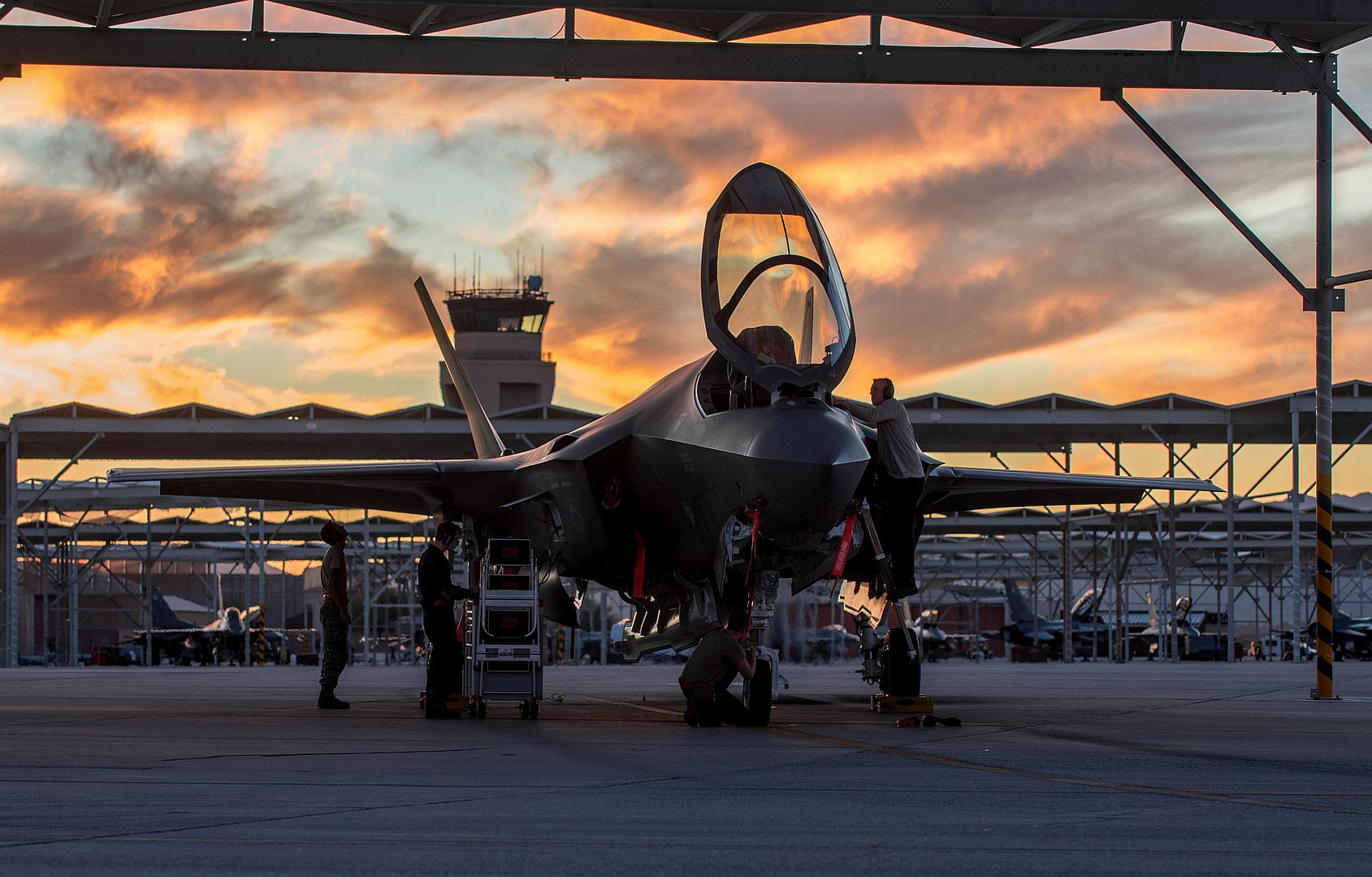
A French Rafale conducts nighttime air refueling with a U.S. Air Force KC-10 Extender assigned to the 908th Expeditionary Air Refueling Squadron, 380th Air Expeditionary Wing, Al Dhafra Air Base, United Arab Emirates, over Iraq on January 8, 2020. (U.S. Air Force photo by Tech. Sgt. Josh Williams)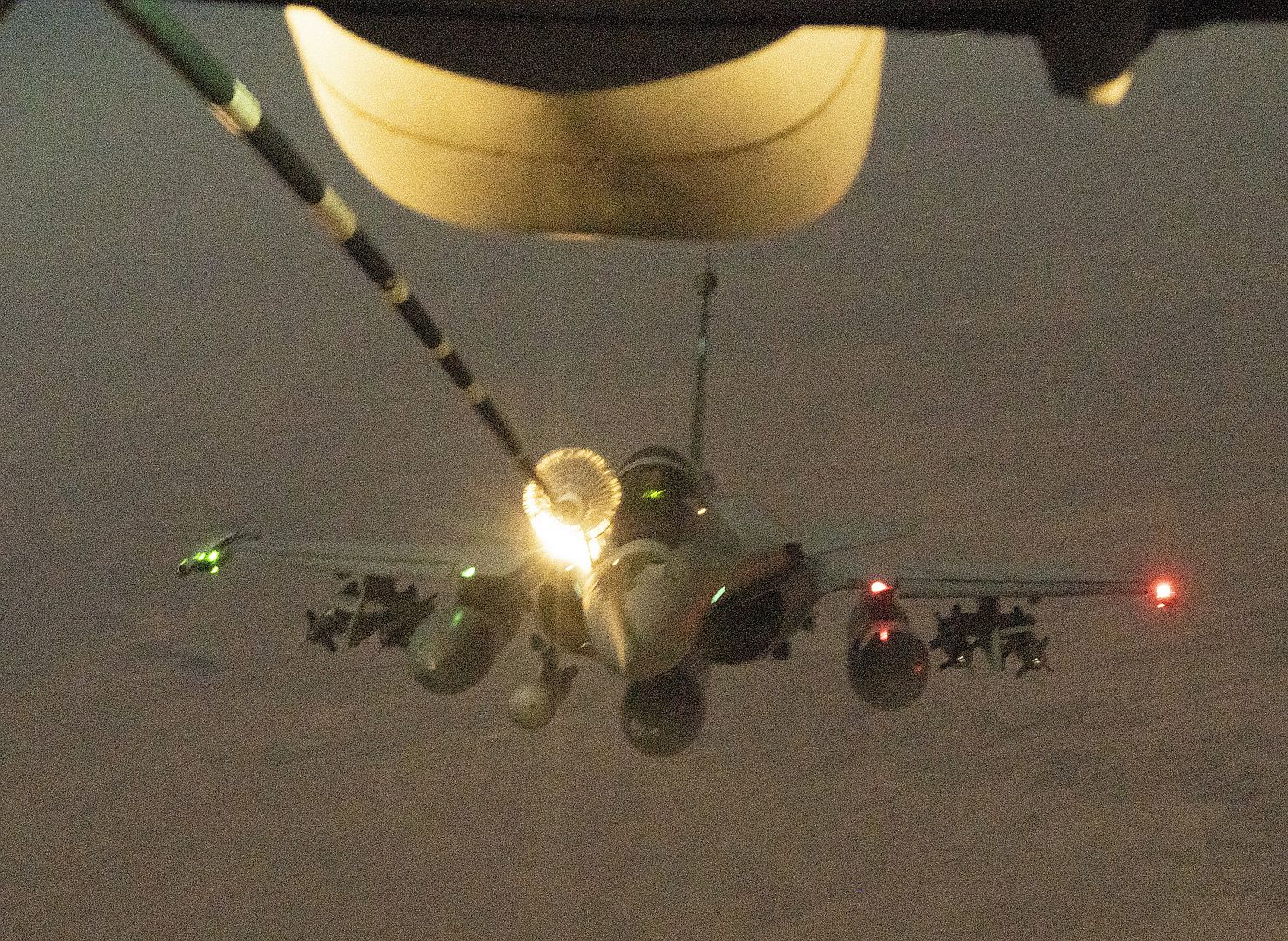
Airmen from the 173rd Fighter Wing reveal the nose art painted on the F-15 Eagle flagship during a dedication ceremony January 10, 2020 at Kingsley Field in Klamath Falls, Oregon. The newly painted F-15 Eagle flagship, dubbed the Heritage Jet, was painted to honor Kingsley and his sacrafice. (U.S. Air National Guard photo by Senior Master Sgt. Jennifer Shirar)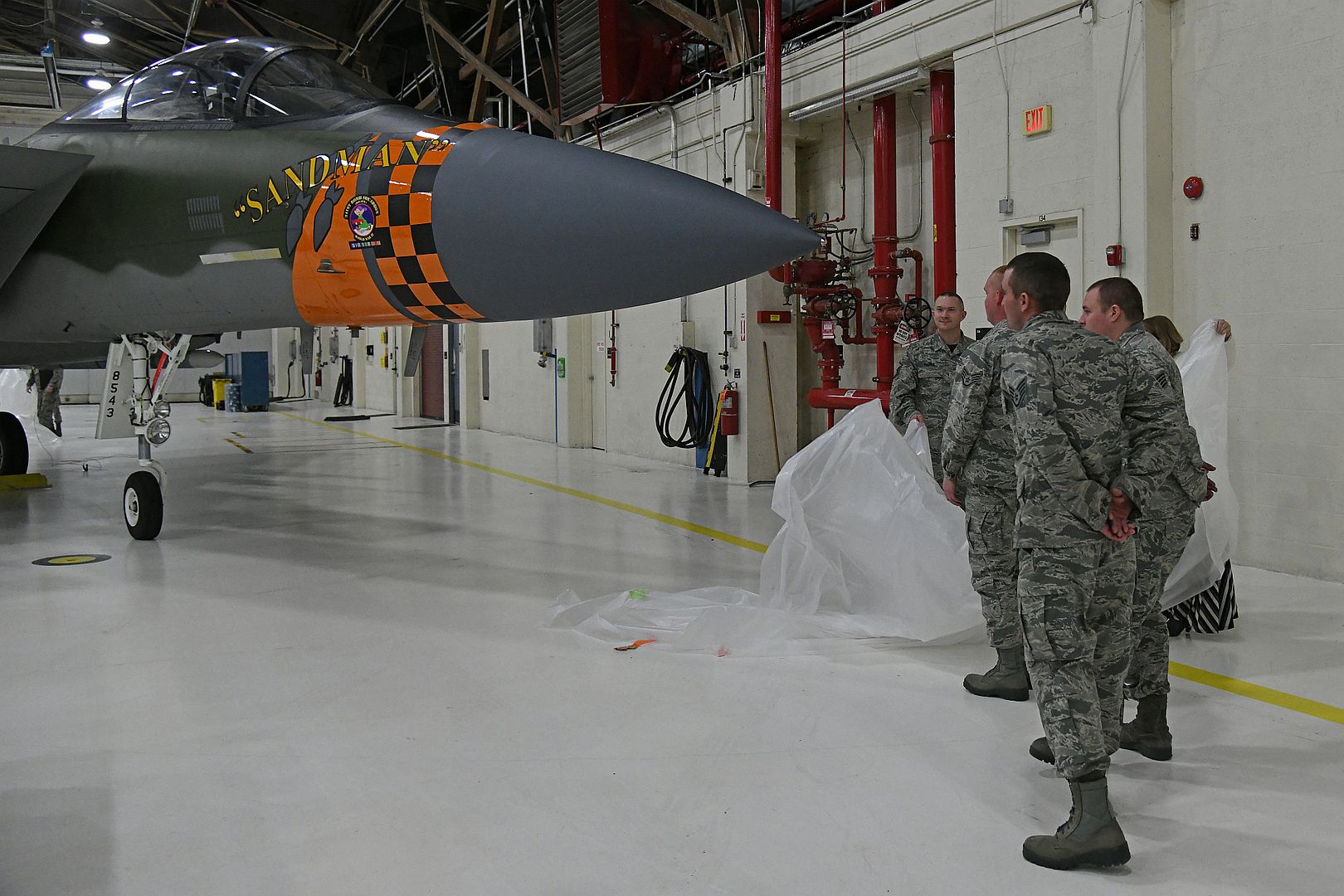
Leslie Jones, the niece of 1st Lt. David Kingsley, shares a story about her uncle during a dedication ceremony January 10, 2020 at Kingsley Field in Klamath Falls, Oregon. The newly painted F-15 Eagle flagship, dubbed the Heritage Jet, was painted to honor Kingsley, the namesake for the base, and his sacrafice. (U.S. Air National Guard photo by Senior Master Sgt. Jennifer Shirar)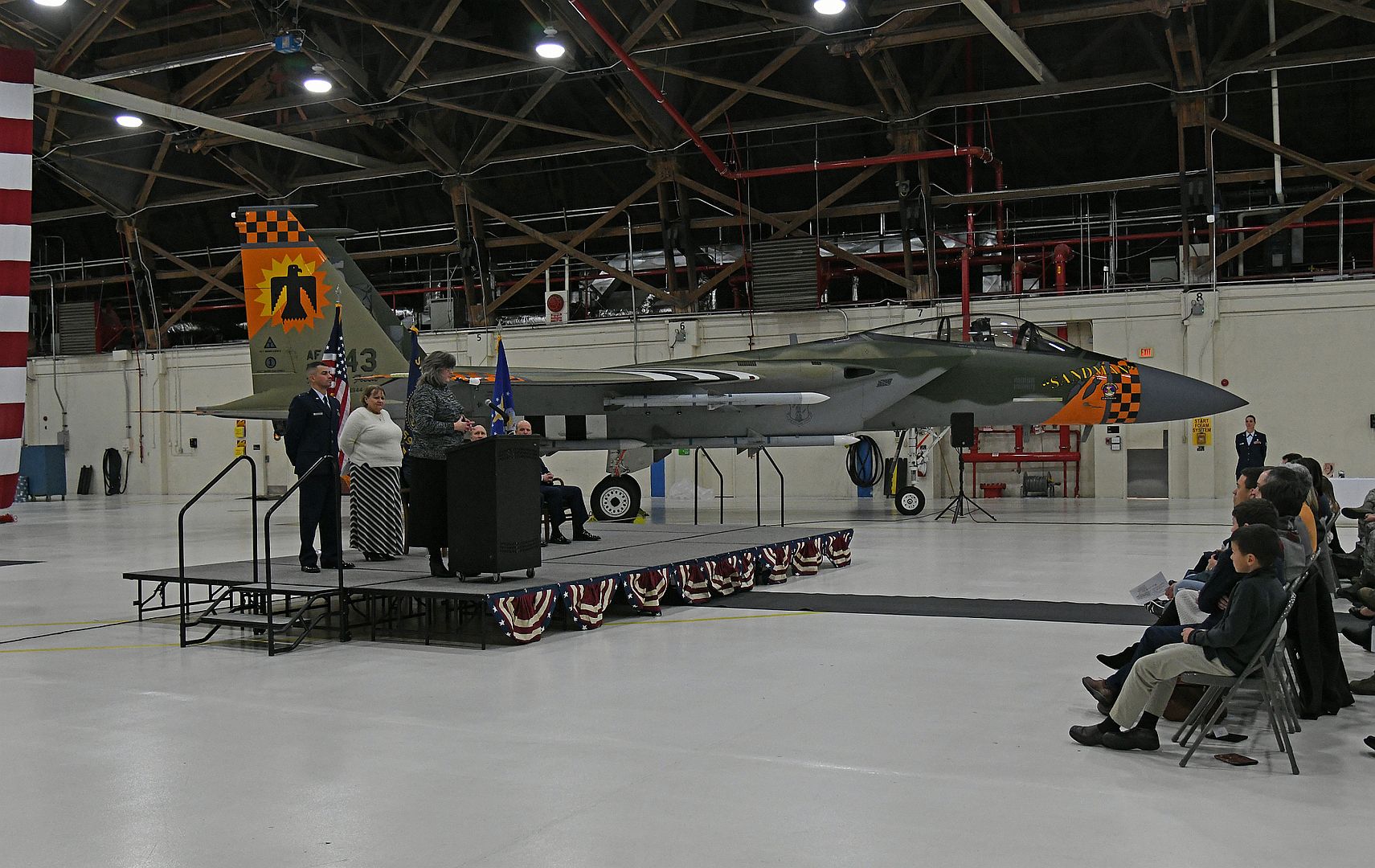
DENVER, Jan. 15, 2020 /PRNewswire/ -- Lockheed Martin (NYSE: LMT) shipped its third satellite based on the modernized LM 2100? bus to French Guiana for launch aboard an Ariane V rocket. JCSAT-17 will provide flexible mobile communications services to users in Japan and the surrounding region. Arianespace will launch JCSAT-17 from its spaceport in Kourou.
JCSAT-17 is the first Mobile Satellite Service (MSS) communications satellite built on the modernized LM 2100?, which includes 26 innovations that make the satellite more powerful, flexible and versatile in orbit. A reprogrammable mission processor adds flexibility as mission needs change. Lockheed Martin is currently manufacturing five modernized LM 2100?-based satellites for commercial and government customers.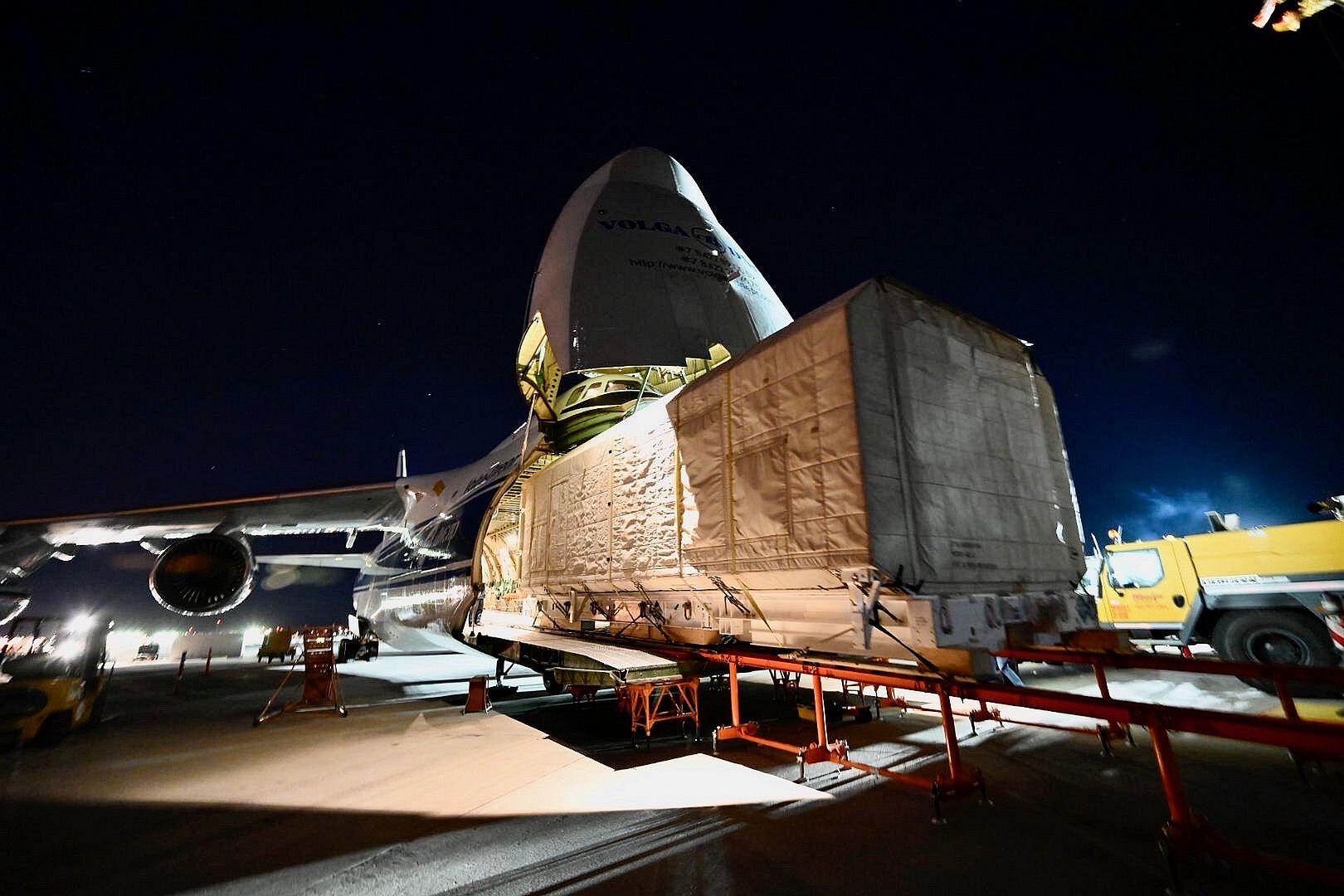
"Following two successful launches of LM 2100? commercial communications satellites, Lockheed Martin is proud to deliver JCSAT-17 to SKY Perfect JSAT Corporation (SJC), which will add a tremendous amount of new connectivity for users in Japan," said Guy Beutelschies, Lockheed Martin's Vice President for Communication Satellite Solutions. "This satellite will help grow Japan's advanced economy by adding new options for mobility, bandwidth where it's needed, and reliable connections."
The satellite's payload incorporates S-band and C-band transponders with a flexible processor along with 18m mesh reflector, enabling assured communications continuity during high-volume events. The satellite also features robust Ku-band connectivity. JCSAT-17 is the eighth satellite built by Lockheed Martin for SJC, beginning with NSAT-110, JCSAT-9 through JCSAT-13 and JCSAT-110R.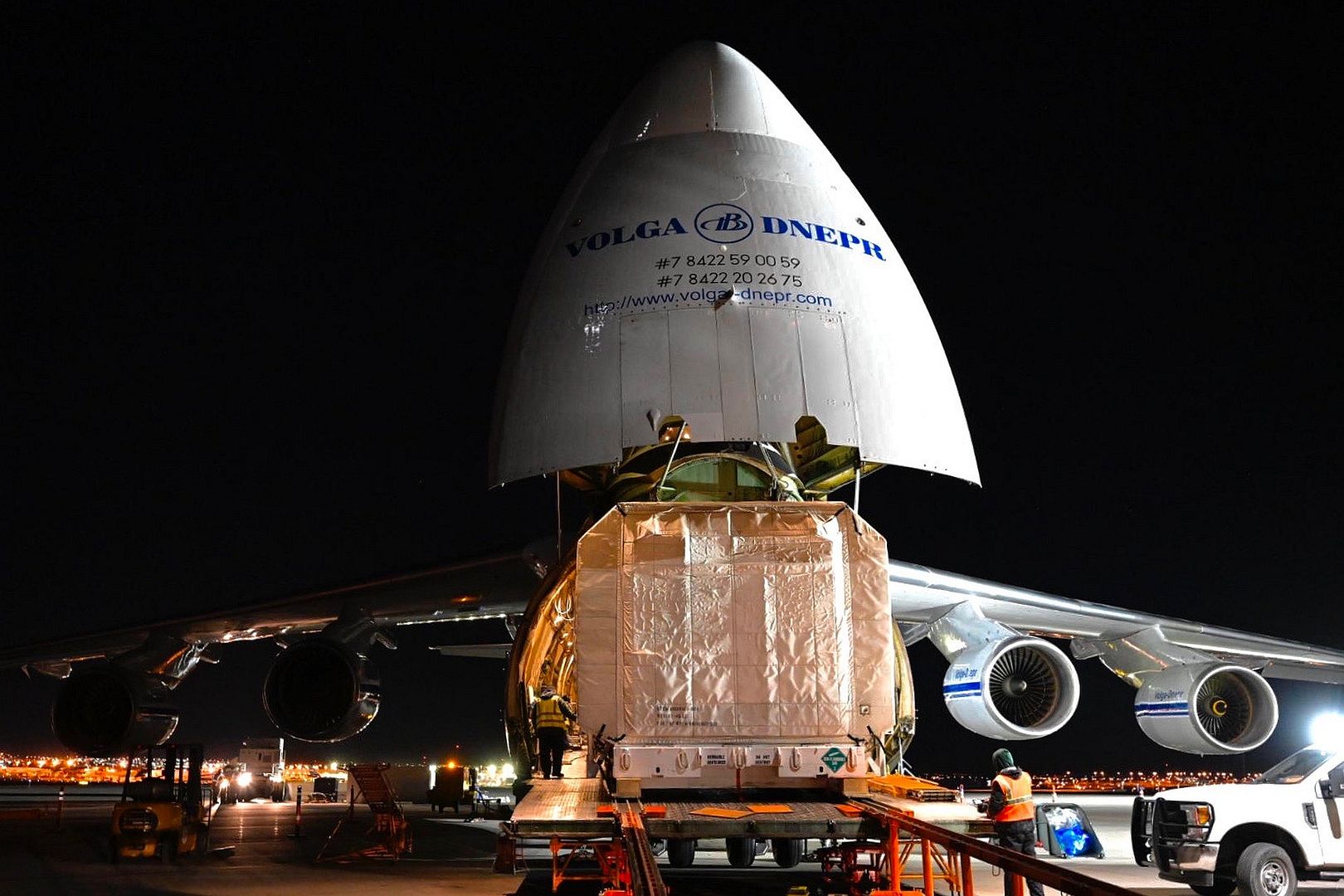
ST. LOUIS, Jan. 15, 2020 ? For the first time, Boeing [NYSE: BA] and the U.S. Navy flew an F/A-18 Super Hornet equipped with an Infrared Search & Track (IRST) Block II pod in late 2019. IRST Block II is a critical component of the Block III Super Hornet. The Block III conversion will include enhanced network capability, longer range with conformal fuel tanks, an advanced cockpit system, signature improvements and an enhanced communication system. The updates are expected to keep the F/A-18 in active service for decades to come.
IRST is a passive, long-range sensor incorporating infrared and other sensor technologies for highly accurate targeting.
?The IRST Block II gives the F/A-18 improved optics and processing power, significantly improving pilot situational awareness of the entire battle space,? said Jennifer Tebo, Boeing Director of F/A-18 Development.
Currently in the risk reduction phase of development, IRST Block II flights on the Super Hornet allow Boeing and the Navy to collect valuable data on the system before deployment to the fleet. The Block II variant will be delivered to the Navy in 2021, reaching Initial Operational Capability shortly thereafter.
?The IRST Block II sensor gives Navy fighters extended range and increasing survivability. This technology will help the Navy maintain its advantage over potential adversaries for many years,? said Kenen Nelson, Lockheed Martin Director of Fixed Wing Programs, supplier of the IRST sensor.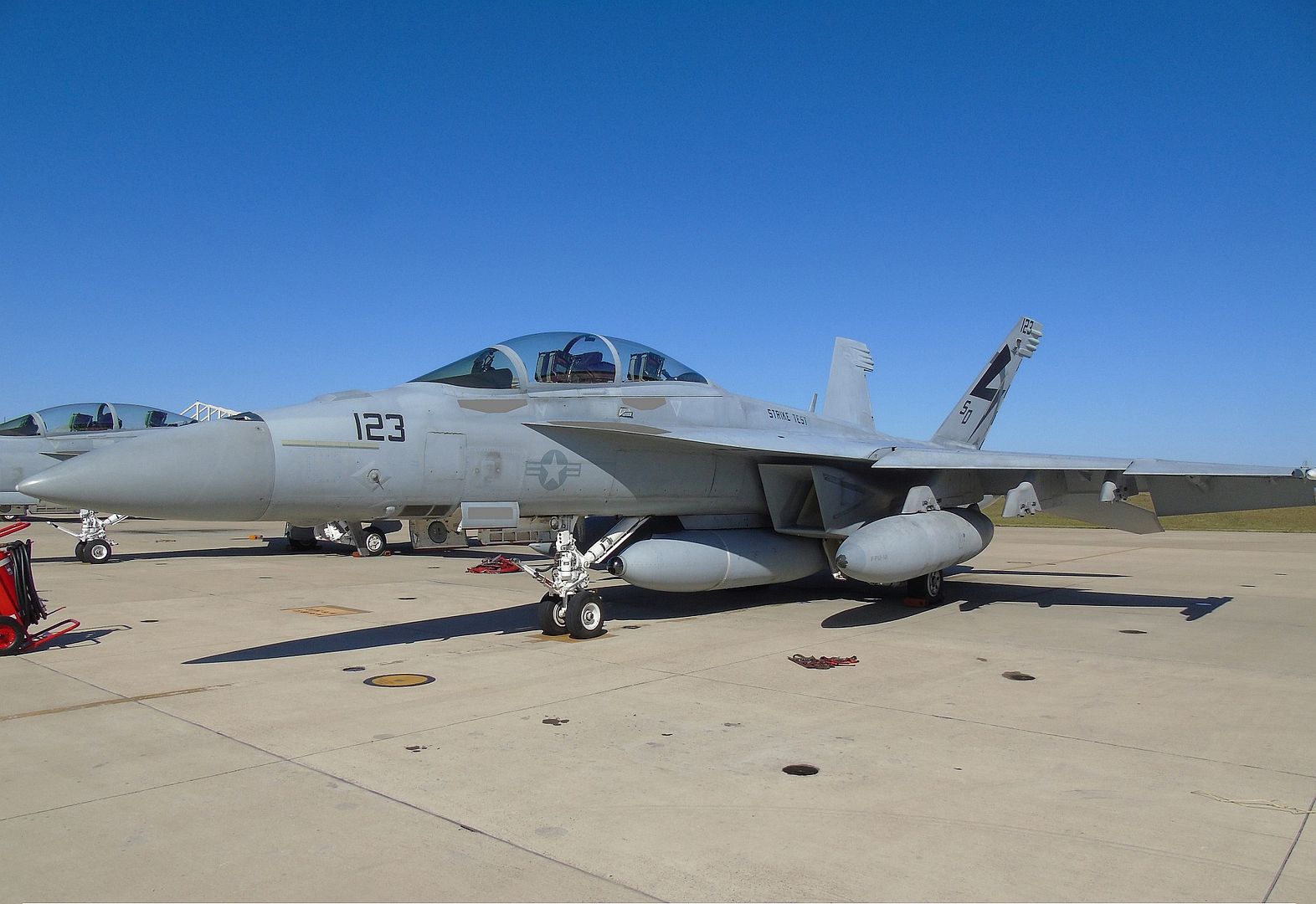
-
LUKE AIR FORCE BASE, Ariz. --
After achieving all training milestones, the Royal Australian Air Force began returning its F-35A Lightning II pilots, maintainers and aircraft to Australia from Luke Air Force Base in December 2019.
The RAAF began training at Luke AFB with the 61st Fighter Squadron and Aircraft Maintenance Unit in December 2014 with two F-35s. Since then, 34 Australian pilots and 16 instructor pilots have earned their certification, and as of January 2020, the RAAF owns 20 F-35s.
?It?s going to be the start of another great working relationship and will continue what has been one of the most successful alliances in the last hundred years,? said Air Commodore Terry Van Haren, Australian Air attach?. ?We have achieved a lot in the last five years since we started training here with the 56th Fighter Wing, 944th FW, 61st FS, 61st AMU and Lockheed Martin.?
In the future, Australian pilots and maintainers will train in Australia; however, they will remain regular visitors to Luke.
?Luke AFB is the RAAF?s F-35A delivery point, and Australian pilots will return several times a year to ferry the country?s new fifth generation fighters to Australia,? said Wing Commander Jordon Sander, 61st Fighter Squadron Australian Senior National Representative and new commander of RAAF No. 2 Operational Conversion Unit (No. 2 OCU). The ferrying missions will continue until the RAAF receives its last F-35A in 2023.
Luke and the RAAF will continue to maintain an alliance while Australian Air Force members primarily visit Luke when new F-35s are delivered.
?Both the RAAF and U.S. Air Force approach fighter flying and pilot training from different cultural perspectives,? said Sander. ?Working alongside each other has seen the USAF challenge some of our ideas and vice versa. The relationship has helped us look inwards and ask ourselves why we do things the way we do.?
The RAAF plans to transition one of its existing units into an operational F-35 fighter wing within the next three years, said Van Haren.
On Dec. 16, the No. 2 OCU, located at RAAF Base Williamtown, Australia, ceased training F/A-18 Hornet pilots and transitioned into an F-35A training squadron, said Sander. No. 2 OCU will train all future RAAF F-35A pilots and maintainers.
Australia is one of seven nations currently partnered with Luke. The ability to work with other nations creates unique training opportunities for pilots and instructors from both countries.
?We have lifted each other in training world class warfighters, and, as our pilots return to Australia, they do so with the latest information on F-35 employment and training,? said Sander. ?When we find ourselves in the skies together during coalition operations, our time at Luke AFB will allow us to effectively integrate in the projection of combat airpower.?
(U.S. Air Force photo by Airman 1st Class Leala Marquez)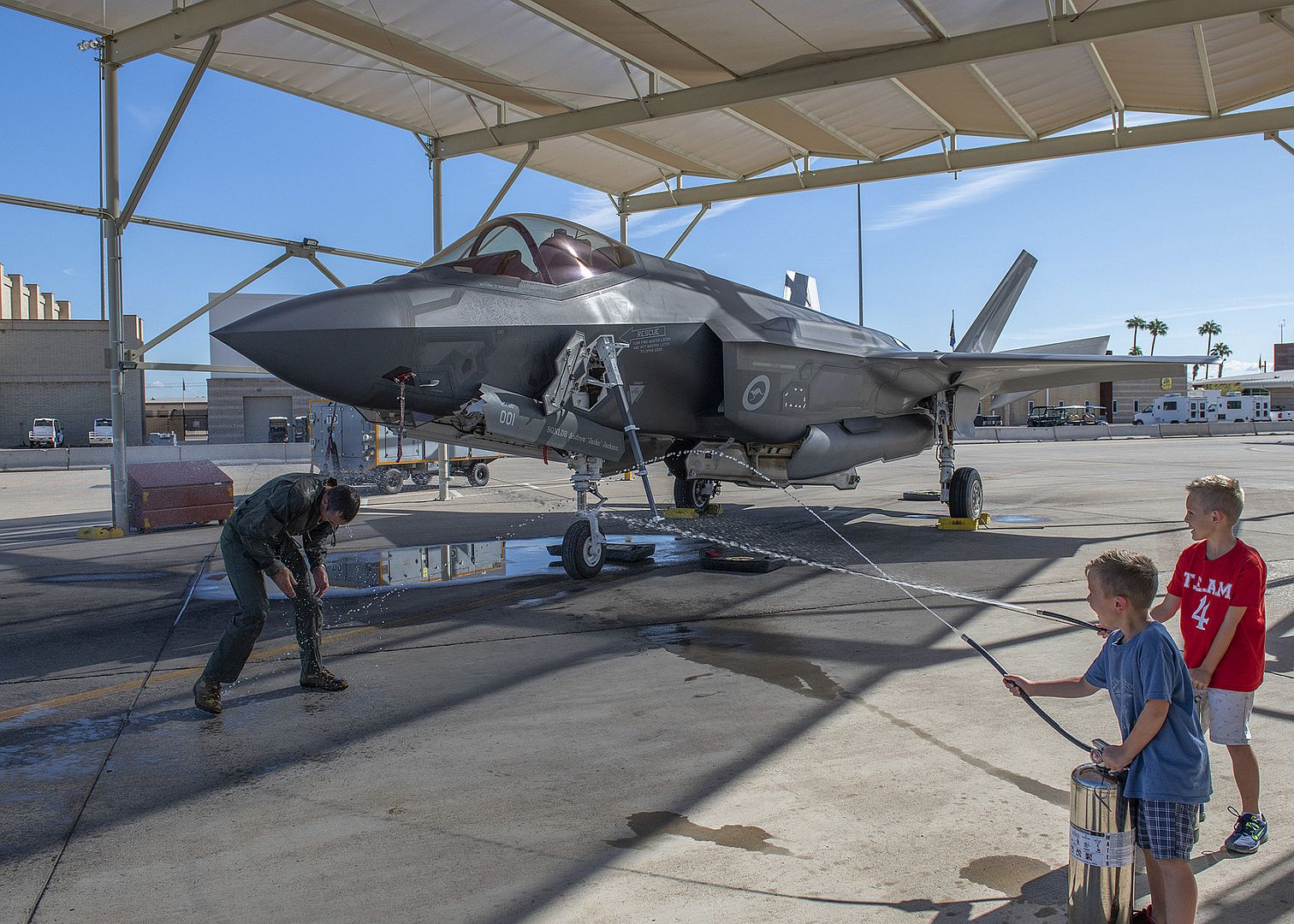
HILL AIR FORCE BASE, Utah -- Robotic media blasting used to strip paint from fighter aircraft such as the F-16 Fighting Falcon has been around at Hill Air Force Base for more than three decades. Now, the technology is being used for the first time to remove paint from the A-10 Thunderbolt II.
The 576th Aircraft Maintenance Squadron is upgrading its traditional manual media blast paint removal process by using new-generation robots to strip the paint from A-10s that come to the base for depot overhaul and maintenance.
All aircraft require regular exterior maintenance to protect their metal surfaces from corrosion due to moisture and the harsh environments in which they continually operate.
The process is expected to the reduce man hours it takes to strip paint from the aircraft, increase safety by removing employees from the blasting atmosphere, and result in measureable time and costs savings.
?There are going to be across-the-board improvements including a dramatic reduction in exposure to a Hexavalent Chromium dust environment. This is perhaps the greatest benefit to the robotic system,? said Tim Randolph, director for the 576th Aircraft Maintenance Squadron. ?Savings will also be seen with reduced operating time and less power consumption, as well as reduced costs in material. We really haven?t found a downside to this system.?
James Gill, Corrosion Control Flight Chief for the 576th AMXS, said while the traditional manual media blast process is effective, it?s labor intensive, requiring teams of workers at least three full days to complete.
The new paint removal process is accomplished by two robots, each with four hose attachments that move independently along both sides of the aircraft. In addition, the time to strip an A-10 is decreased from three days to 9-12 hours.
?Compared to the manual paint stripping method, the robots use half the amount of blast media at half of the air pressure, while removing an extremely precise thickness, uniformly, across the entire aircraft surface,? Gill said. ?This translates into a process that is less stressful on the aircraft skins and saves money in media cost, while creating only half the waste stream.?
In addition to the robotics process, a new laser burn process is currently being tested and used on F-16s with proven success. However, the squadron is still maturing the process, and hopes to apply this process to the A-10s in the future.
By using new robotic technology, the squadron is expanding its capacity by adding capability.
Randolph said each of three processes have different capabilities and inherent limitations, but combined together, can reduce the total time an aircraft spends in depot maintenance and helps return it to the warfighter faster.
(U.S Air Force photo by Todd Cromar)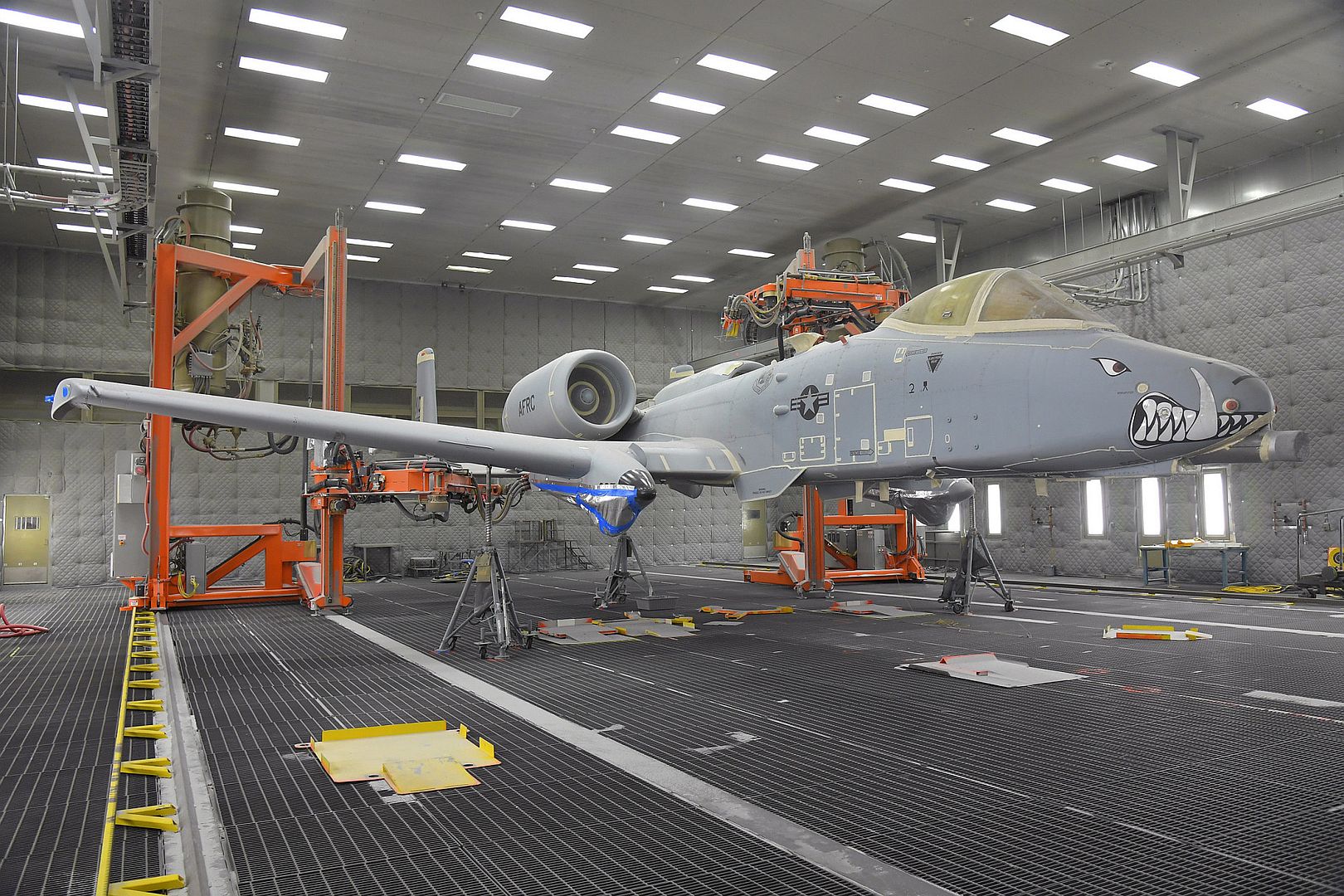
EAST CHINA SEA (Jan. 16, 2020) An MV-22 Osprey assigned to the 31st Marine Expeditionary Unit (MEU), Marine Medium Tiltrotor Squadron (VMM) 265 (Reinforced) takes off from the flight deck of amphibious assault ship USS America (LHA 6). America, flagship of the America Expeditionary Strike Group, 31st MEU team, is operating in the U.S. 7th Fleet area of operations to enhance interoperability with allies and partners and serve as a ready response force to defend peace and stability in the Indo-Pacific region. (U.S. Navy photo by Mass Communication Specialist 3rd Class Vincent E. Zline/Released)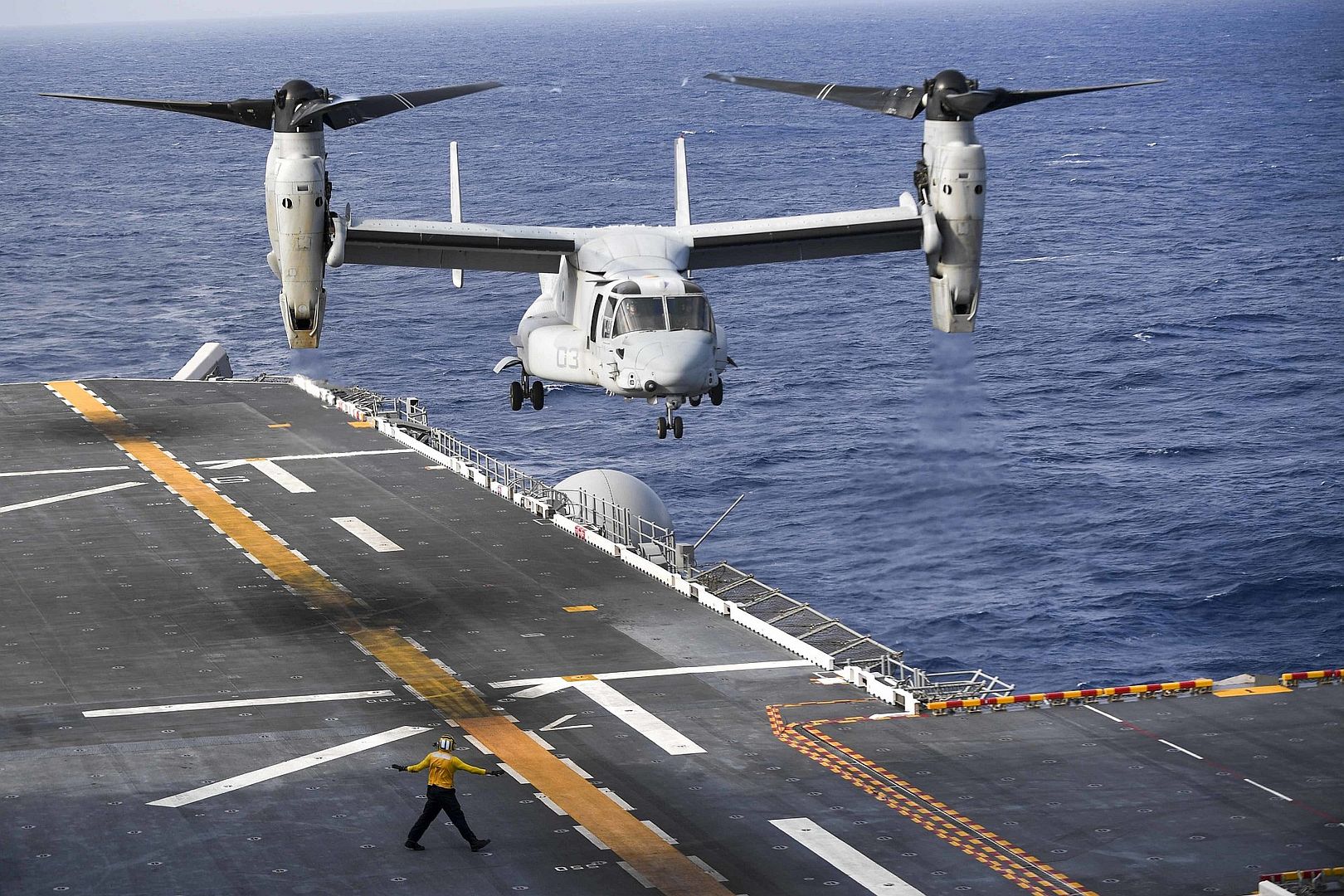
-
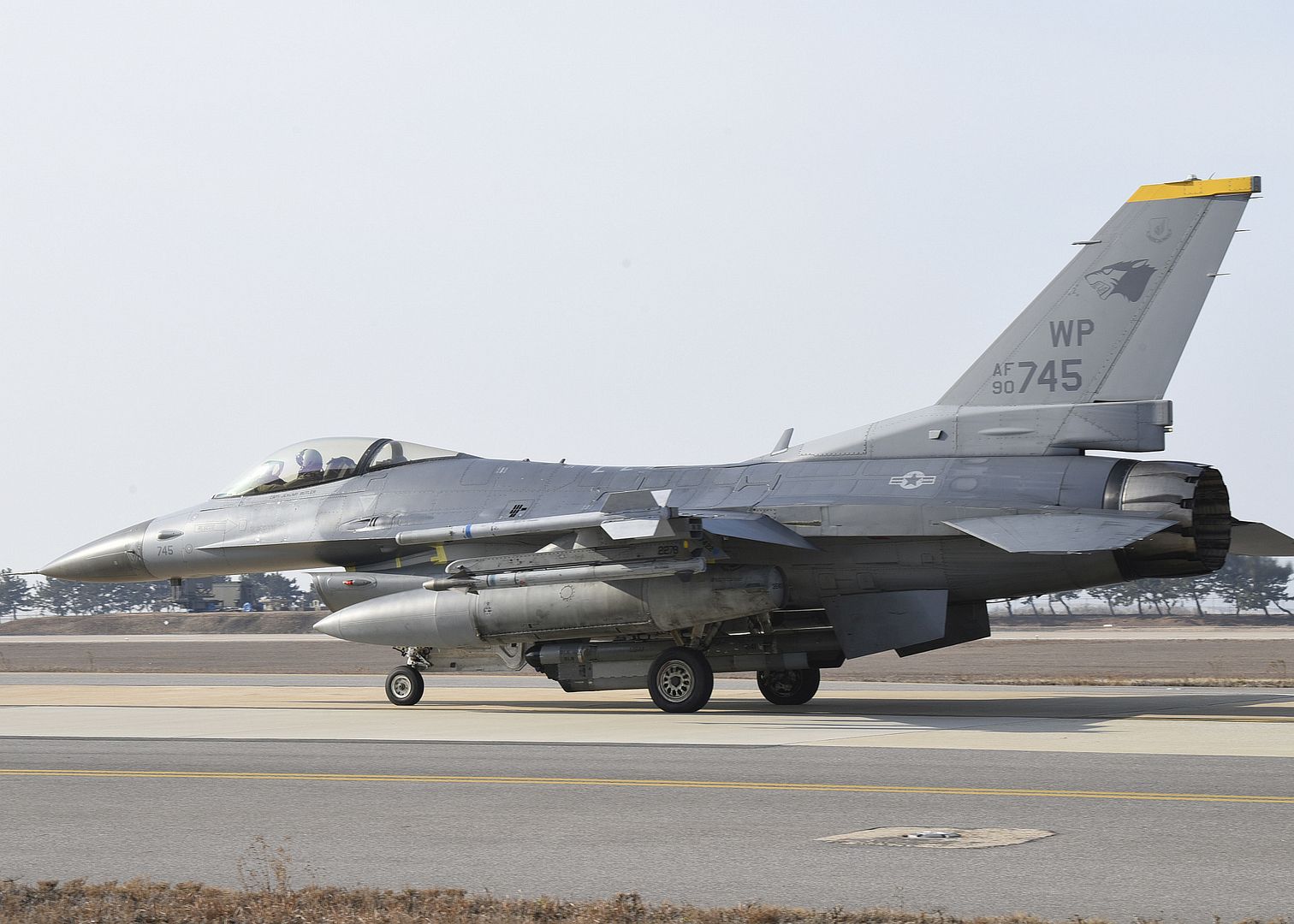
A U.S. Air Force F-16 Fighting Falcon aircraft assigned to the 80th Fighter Squadron ?Juvats? taxis on the flightline during routine training at Kunsan Air Base, Republic of Korea, Jan. 16, 2020. The 80th FS moved from Yokota Air Base, Japan, in 1971 to Kunsan AB. (U.S. Air Force photo by Staff Sgt. Anthony Hetlage)
A U.S. Air Force F-16 Fighting Falcon aircraft assigned to the 80th Fighter Squadron ?Juvats? taxis on the flight line during routine training at Kunsan Air Base, Republic of Korea, Jan. 16, 2020. The 80th FS stands ready to conduct counter-air, air interdiction and close air support missions in both day and night conditions. (U.S. Air Force photo by Tech Sgt. Joshua Arends)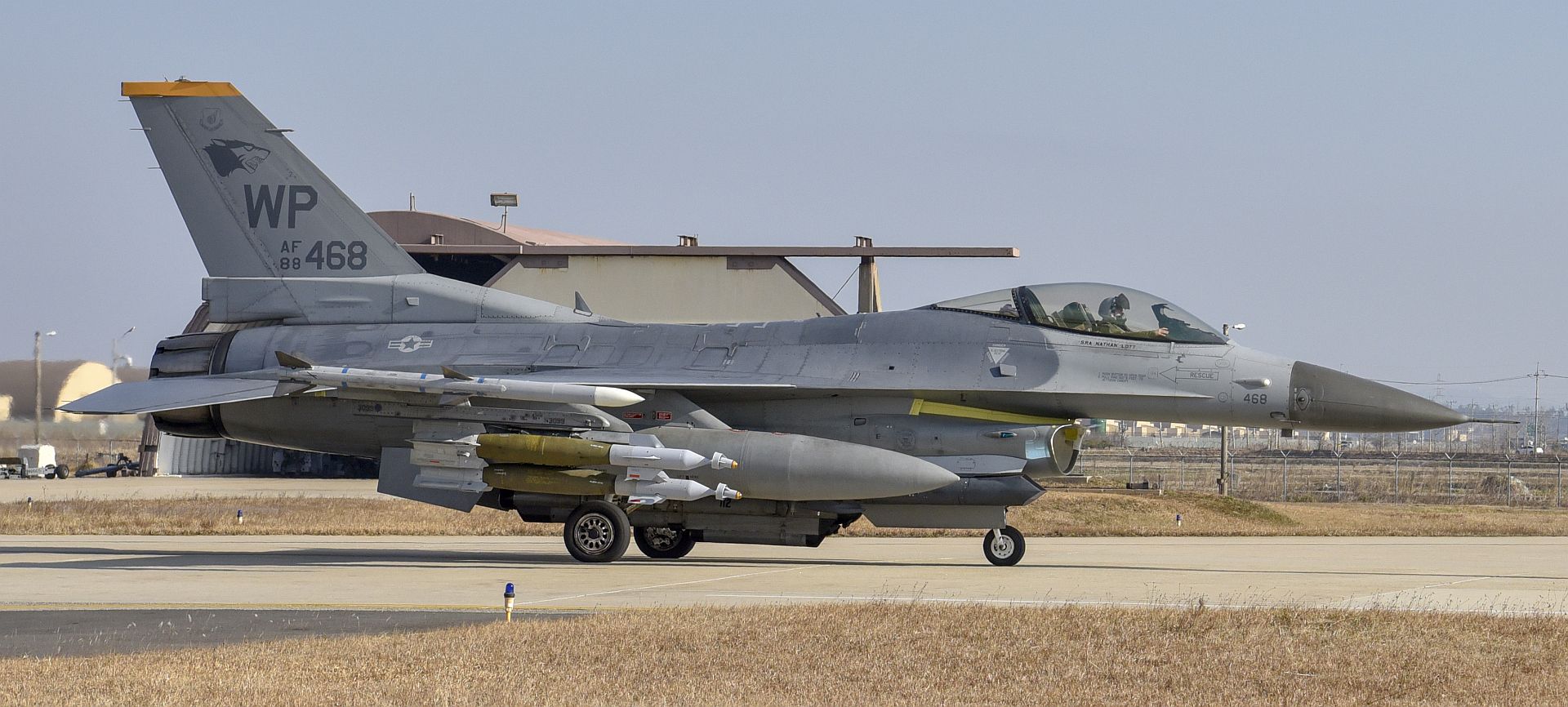
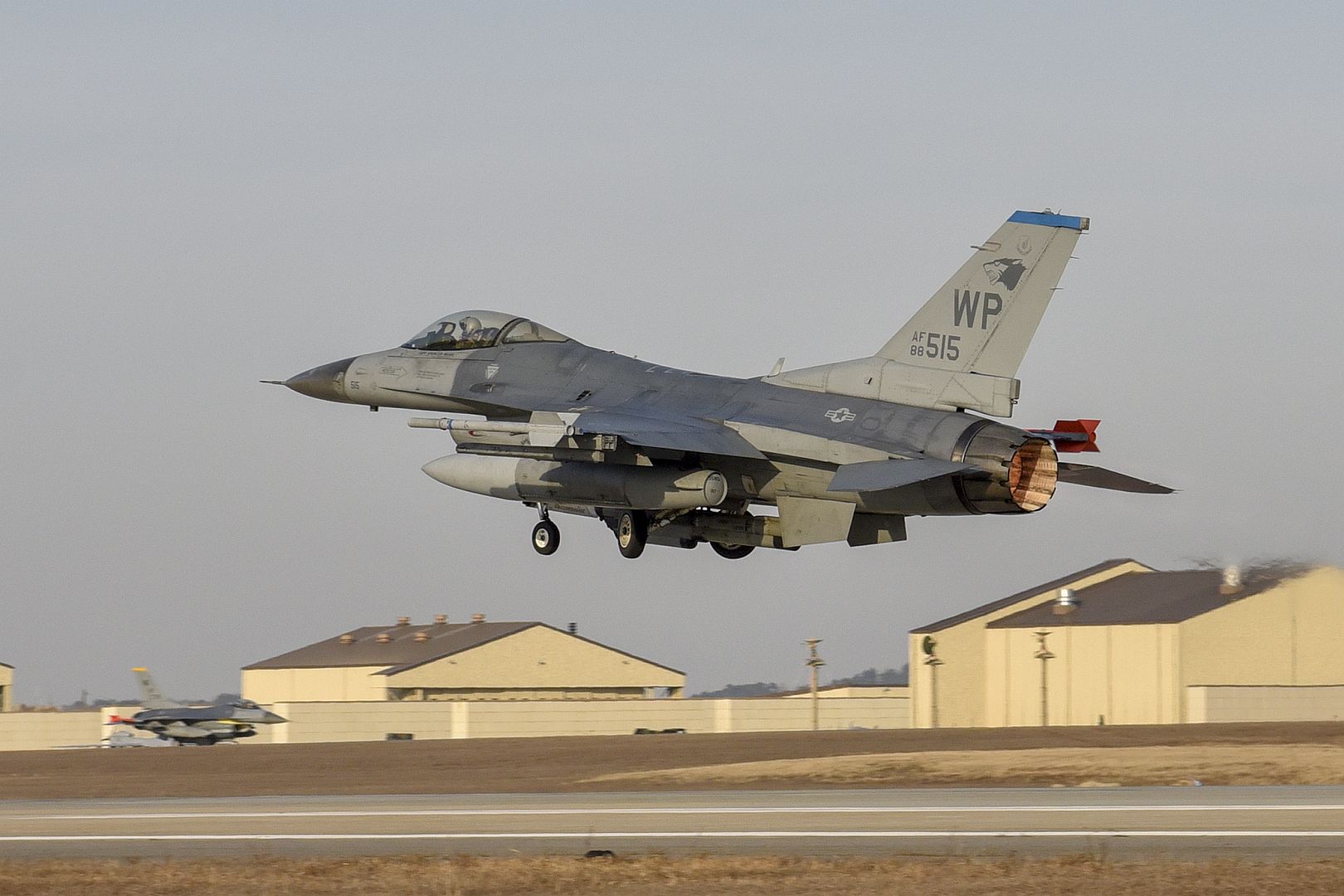
U.S. Air Force F-16 Fighting Falcon aircraft assigned to the 35th Fighter Squadron ?Pantons? take off for a routine training flight at Kunsan Air Base, Republic of Korea, Jan. 16, 2020. The 35th FS performs air and space control and force application roles including counter air, strategic attack, interdiction and close-air support missions. (U.S. Air Force photo's by Tech Sgt. Joshua Arends)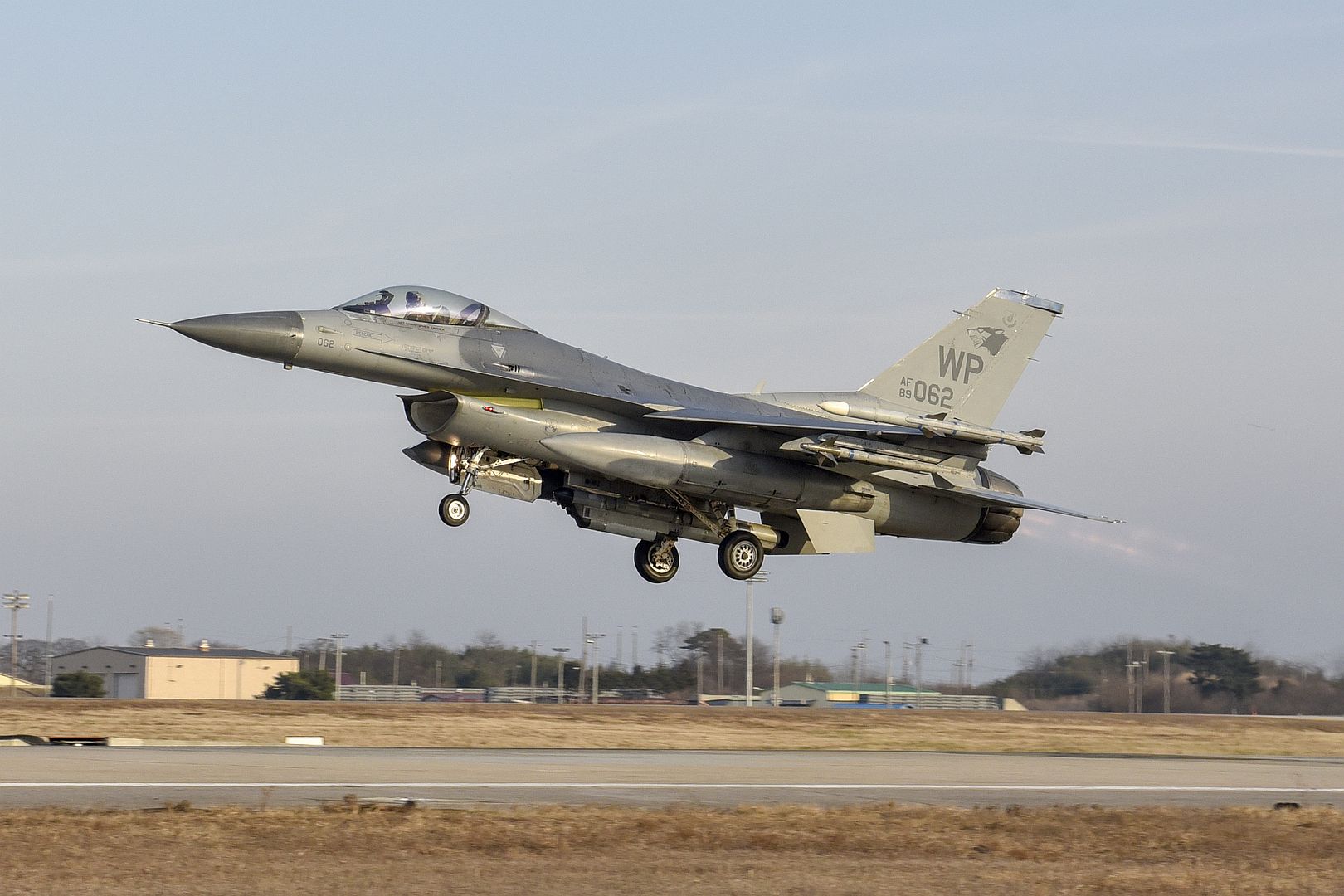
An F-16C Fighting Falcon assigned to the 944th Fighter Wing takes off Jan. 13, 2020, at Luke Air Force Base, Ariz. The 944th FW, a reserve unit at Luke AFB, hosts more than 2,200 members in five groups, 14 squadrons, two detachments and two flights. The Total Force integration of the 944th FW and 56th FW, alongside their partner nation counterparts, produces the world?s greatest fighter pilots and combat-ready Airmen. (U.S. Air Force photo by Senior Airman Jacob Wongwai)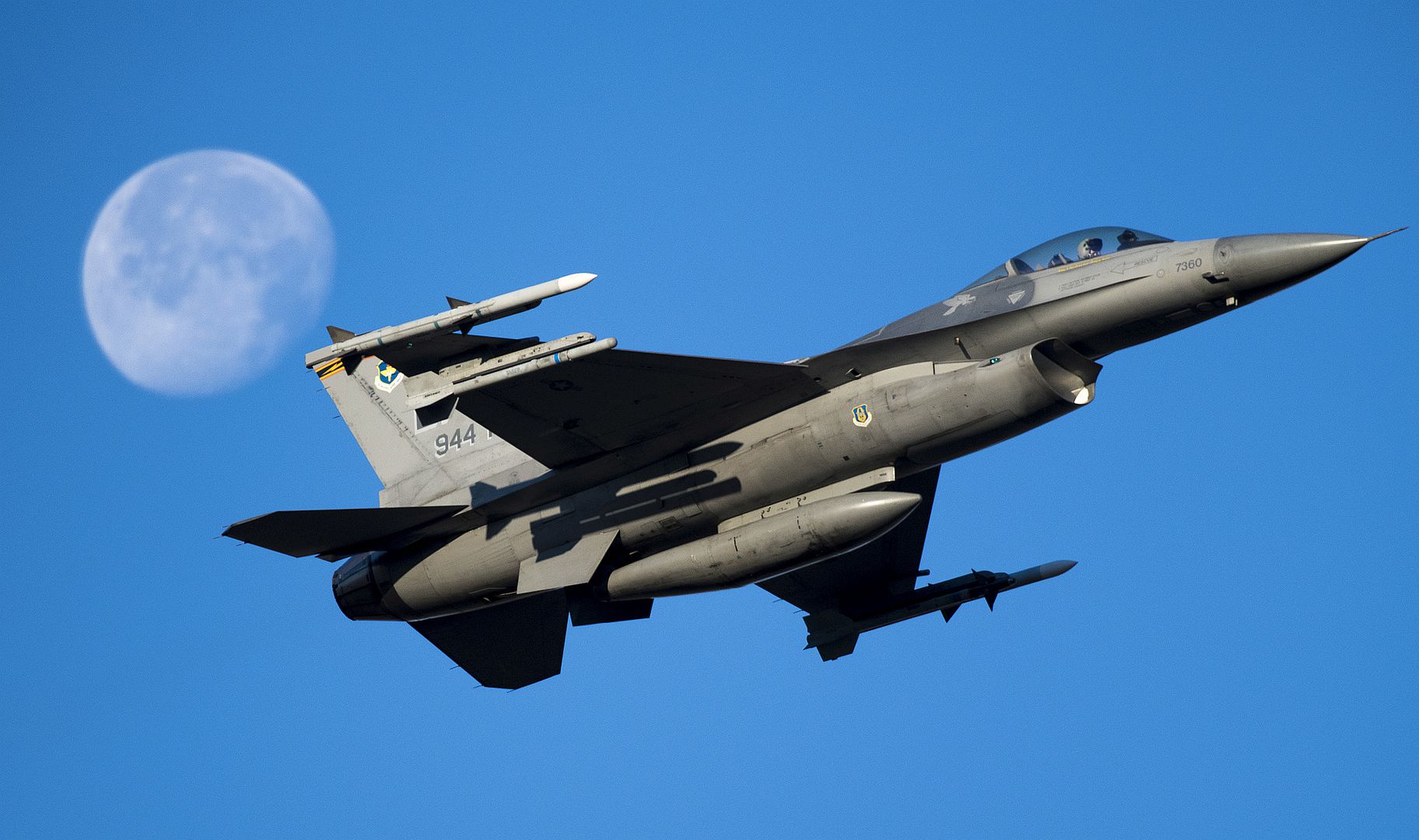
ATLANTIC OCEAN (Jan. 16, 2020) An E-2D Advanced Hawkeye assigned to Air Test and Evaluation Squadron (VX) 20 lands aboard USS Gerald R. Ford's (CVN 78) flight deck. The arrestment marked the first time an E-2D had landed aboard Ford. Ford is currently conducting Aircraft Compatibility Testing to further test its Electromagnetic Aircraft Launch Systems (EMALS) and Advanced Arresting Gear (AAG). (U.S. Navy photo by Mass Communication Specialist 2nd Class Indra Beaufort)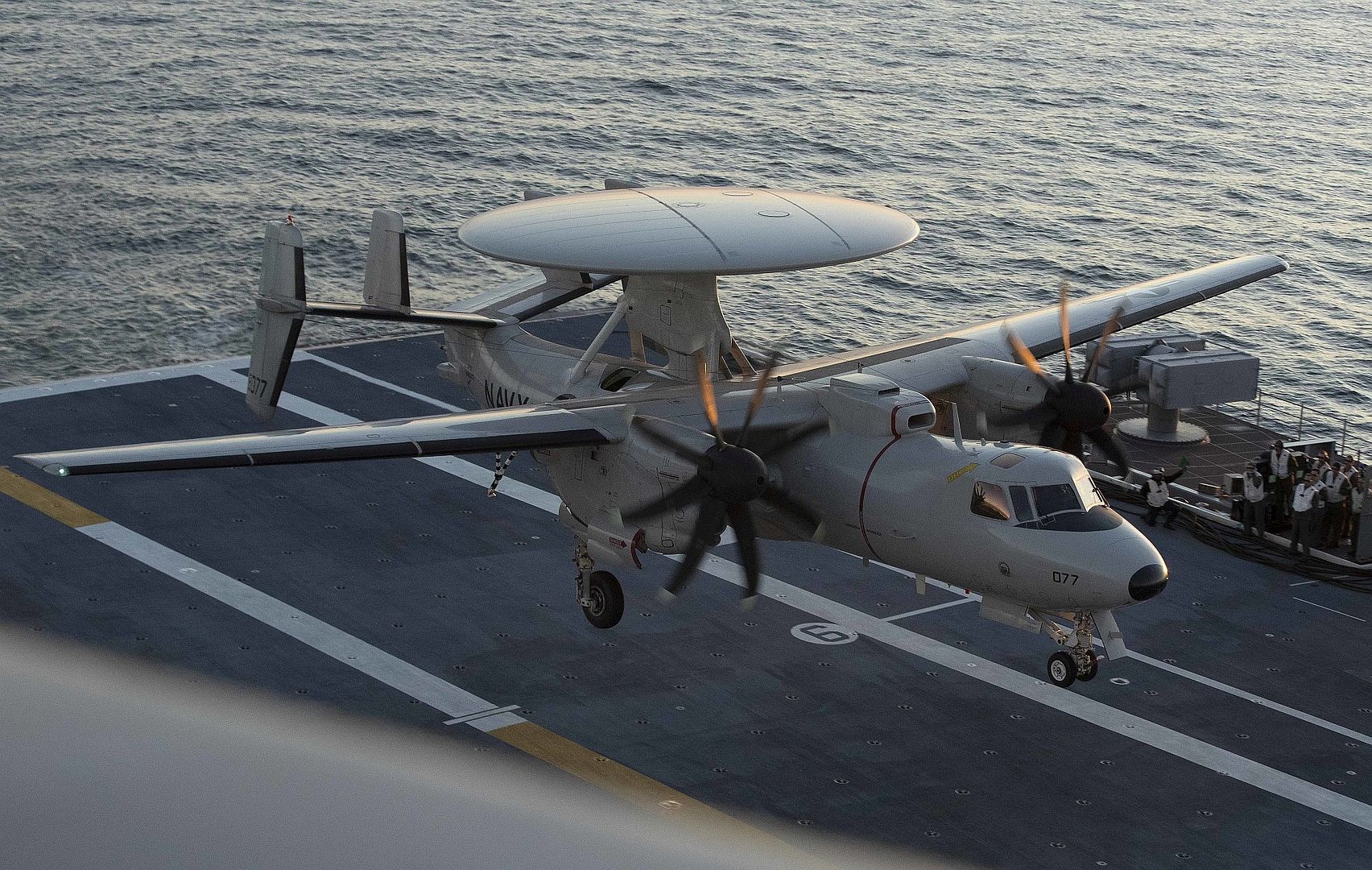
EAST CHINA SEA (Jan. 15, 2020) An F-35B Lightning II assigned to the ?Dragons? of Marine Medium Tiltrotor Squadron 265 (Reinforced) lands on the flight deck of amphibious assault ship USS America (LHA 6). America, flagship of the America Expeditionary Strike Group, 31st Marine Expeditionary Unit team, is operating in the U.S. 7th Fleet area of operations to enhance interoperability with allies and partners and serve as a ready response force to defend peace and stability in the Indo-Pacific region. (U.S. Navy photo by Mass Communication Specialist Seaman Jonathan Berlier)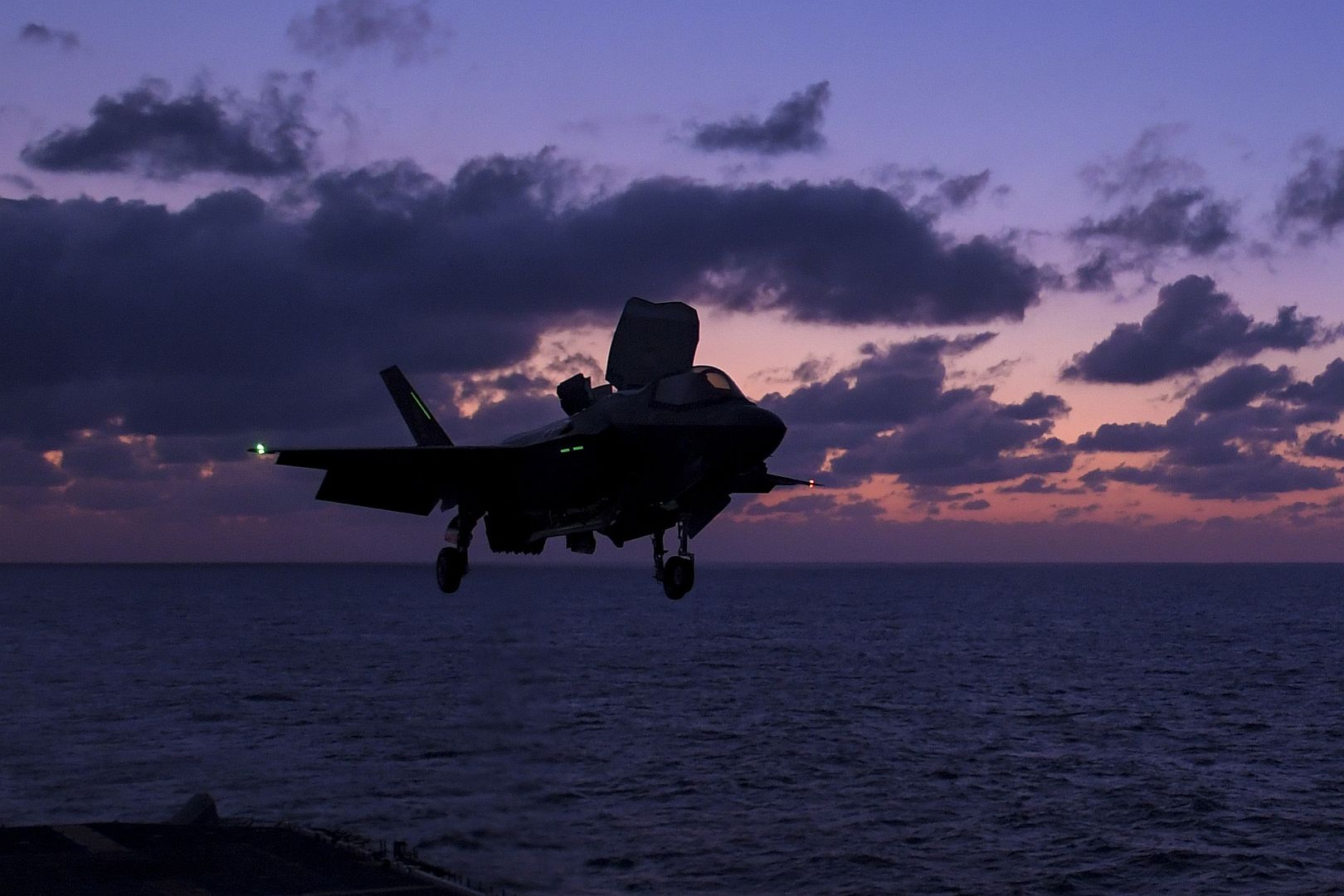
ATLANTIC OCEAN (Jan. 17, 2020) A C-2A Greyhound, assigned to Air Test and Evaluation Squadron (VX) 20, lands aboard USS Gerald R. Ford's (CVN 78) flight deck. Ford is currently conducting Aircraft Compatibility Testing to further test its Electromagnetic Aircraft Launch Systems (EMALS) and Advanced Arresting Gear (AAG). (U.S. Navy photo by Mass Communication Specialist 3rd Class Ryan Carter)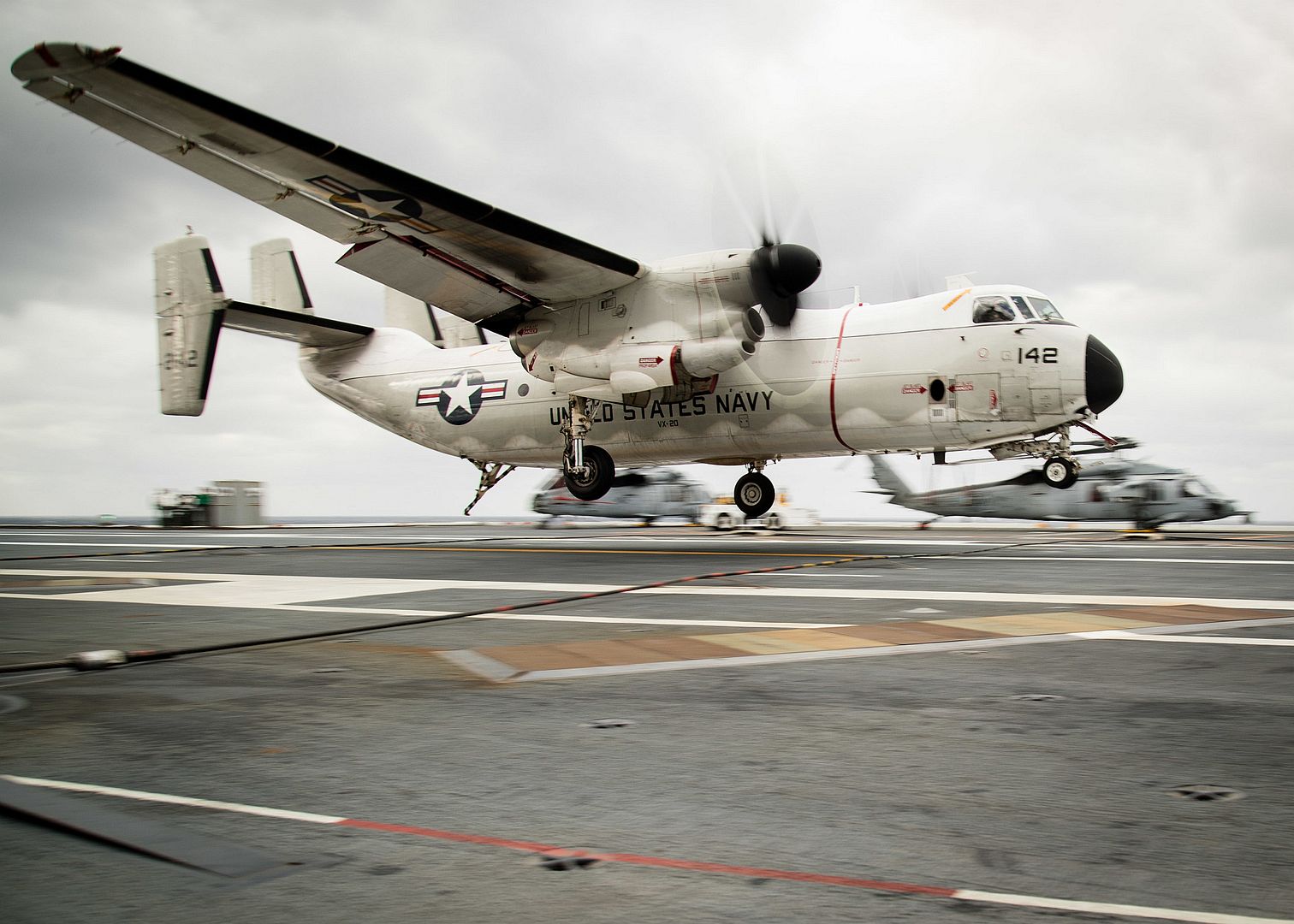
ATLANTIC OCEAN (Jan. 17, 2020) A T-45 Goshawk, assigned to Air Test and Evaluation Squadron (VX) 23, approaches USS Gerald R. Ford's (CVN 78) flight deck. Ford is currently conducting Aircraft Compatibility Testing to further test its Electromagnetic Aircraft Launch Systems (EMALS) and Advanced Arresting Gear (AAG). (U.S. Navy photo by Mass Communication Specialist 3rd Class Ryan Carter)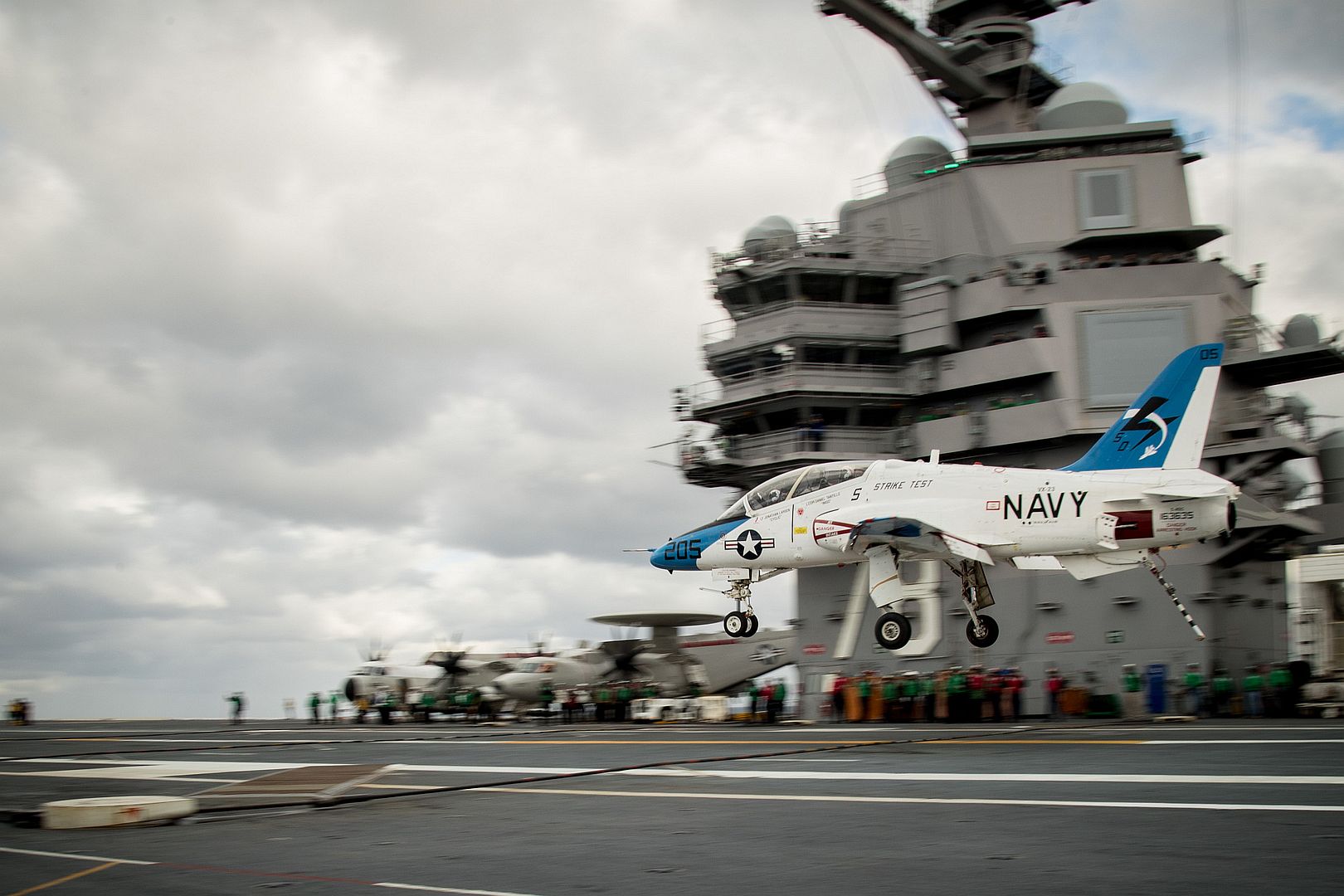
ATLANTIC OCEAN (Jan. 17, 2020) An FA-18F, assigned to Air Test and Evaluation Squadron (VX) 23, Salty Dog, lands on USS Gerald R. Ford's (CVN 78) flight deck. Ford is currently conducting Aircraft Compatibility Testing to further test its Electromagnetic Aircraft Launch Systems (EMALS) and Advanced Arresting Gear (AAG). (U.S. Navy photo by Mass Communication Specialist 3rd Class Ryan Carter)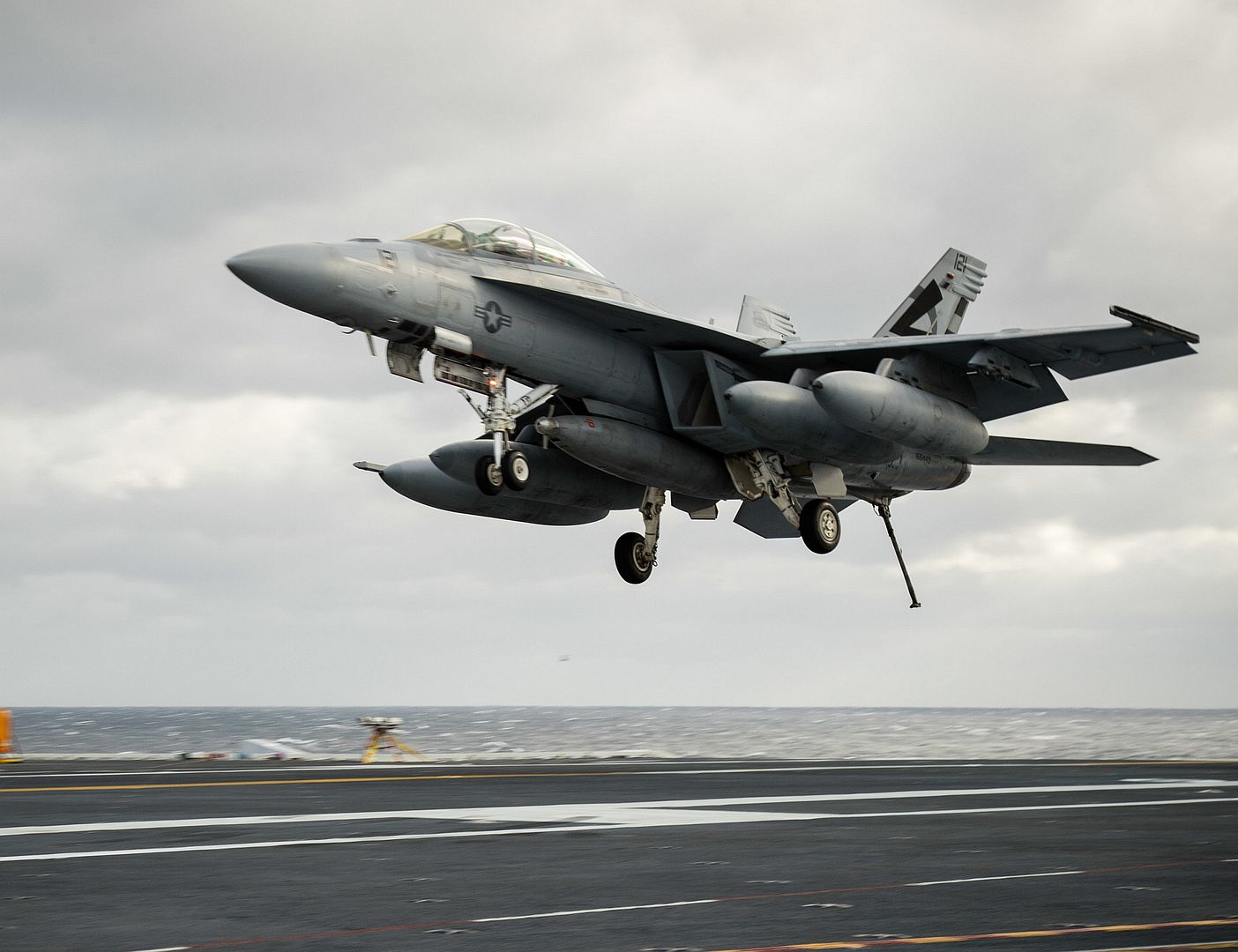
U.S. Air Force Airmen assigned to the 55th Rescue Squadron work on a HH-60G Pave Hawk on the flight line at Davis-Monthan Air Force Base, Arizona, Jan. 14, 2020. Airmen are responsible for each piece of mission equipment on the HH-60 to include .50 caliber machine guns and a hoist. (U.S. Air Force photo by Senior Airman Cheyenne A. Powers)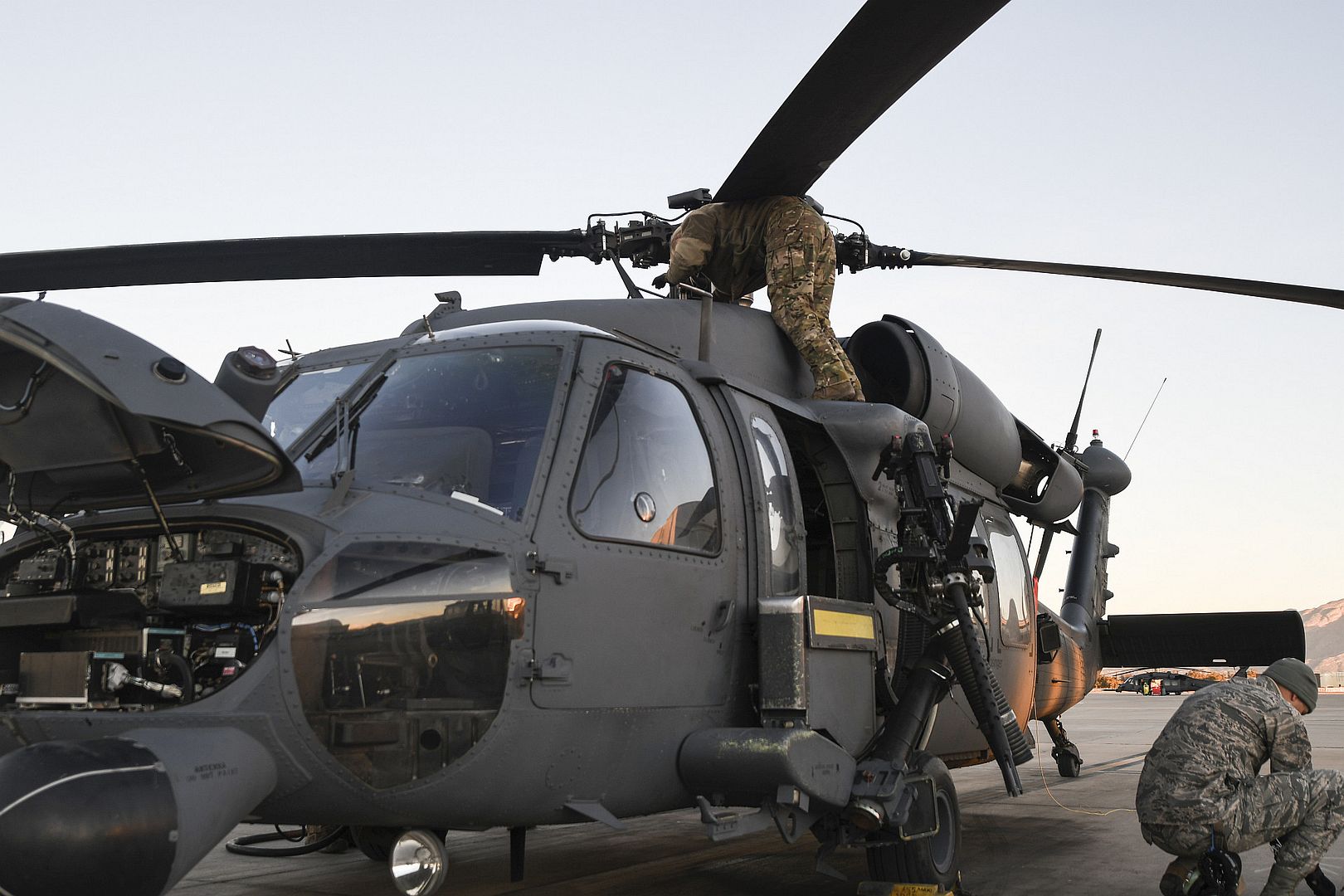
CALC (China Aircraft Leasing Group Holdings Limited), a full value-chain aircraft solutions provider for global airlines, has reached an agreement with Airbus on its remaining backlog, and includes an additional order for 40 A321neo aircraft. It also includes a conversion of 15 of its existing A320neo backlog into A321neos. Together with a previous order for 11 A321neos, CALC?s total order for the type rises to 66.
CALC?s order is an endorsement for the A321neo and reaffirms the market demand for the aircraft. With unbeatable fuel efficiency and lowest operating costs, it is the best match for CALC?s customers. To date, from CALC?s total order for 252 A320 Family aircraft, 87 have been delivered, of which one is an A321neo.
The A321neo is the largest member of the A320 Family, seating up to 240 passengers, depending on cabin configuration. Incorporating the latest engines, aerodynamic advances, and cabin innovations, the A321neo offers a reduction in fuel consumption of 20% as well as a 50% noise reduction. To date, the A320 Family has won more than 15,300 orders and more than 9,000 aircraft have been delivered worldwide.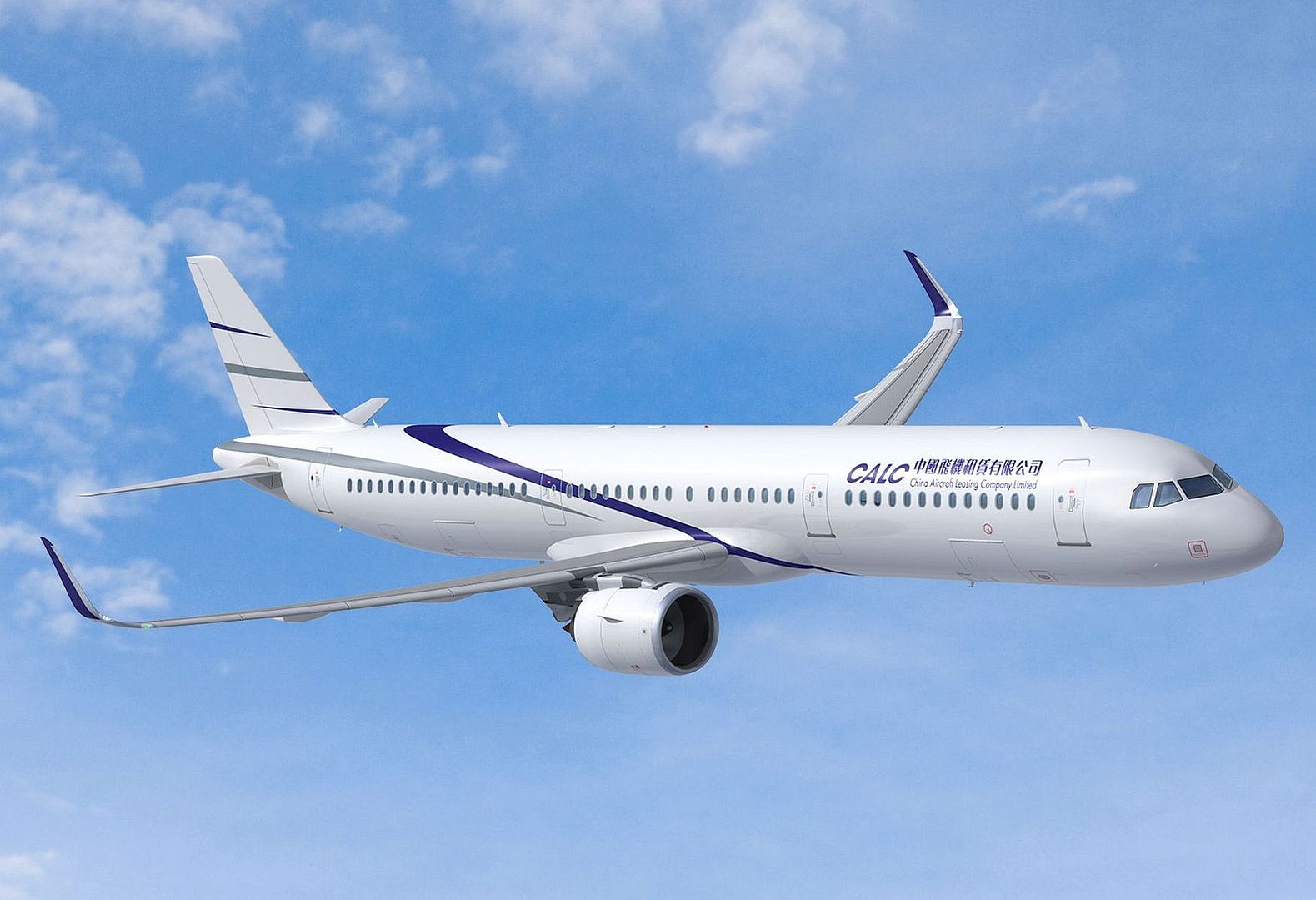
-
ATLANTIC OCEAN (Jan. 18, 2020) A T-45 Goshawk, assigned to Air Test and Evaluation Squadron (VX) 23, takes off from USS Gerald R. Ford's (CVN 78) flight deck. Ford is currently conducting Aircraft Compatibility Testing to further test its Electromagnetic Aircraft Launch Systems (EMALS) and Advanced Arresting Gear (AAG).(U.S. Navy photo's by Mass Communication Specialist Seaman Apprentice Angel Thuy Jaskuloski)
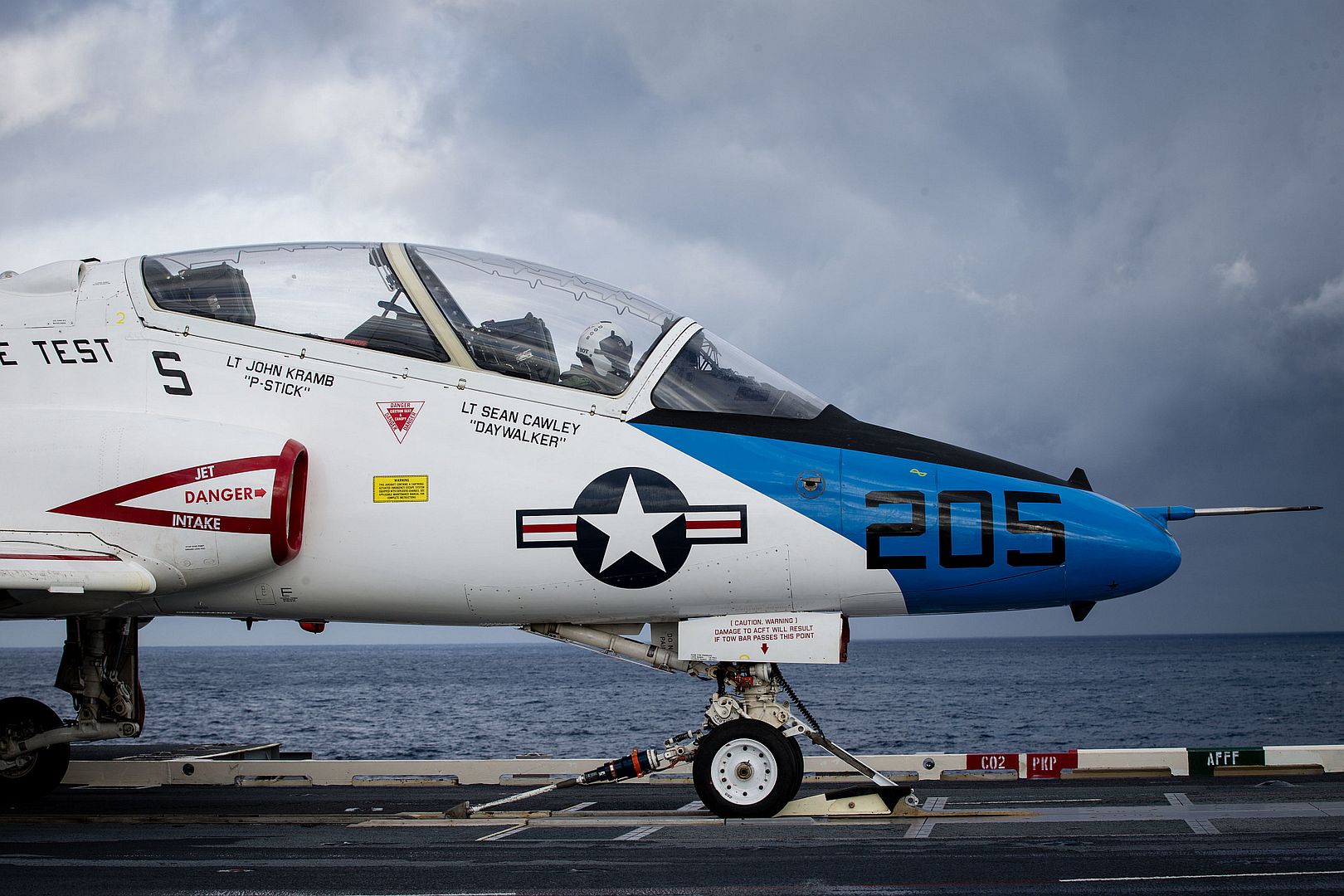
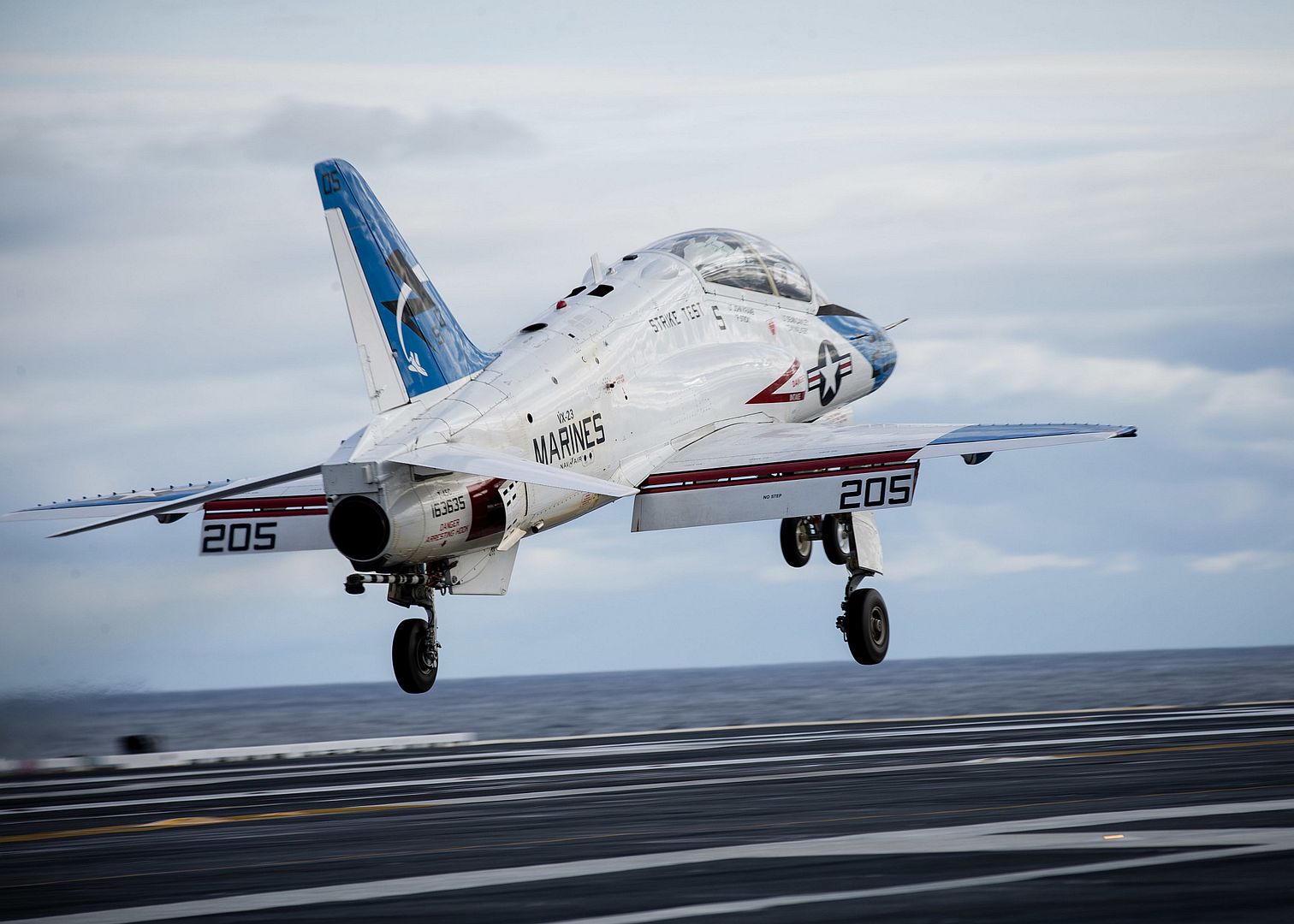
ATLANTIC OCEAN (Jan. 19, 2020) An F/A-18F Super Hornet, assigned to the "Salty Dogs" of Test and Evaluation (TE) Squadron (VX) 23, lands on USS Gerald R. Ford's (CVN 78) flight deck during flight operations aboard the ship. Ford is currently conducting Aircraft Compatibility Testing to further test its Electromagnetic Aircraft Launch Systems (EMALS) and Advanced Arresting Gear (AAG). (U.S. Navy photo by Mass Communication Specialist 2nd Class Indra Beaufort)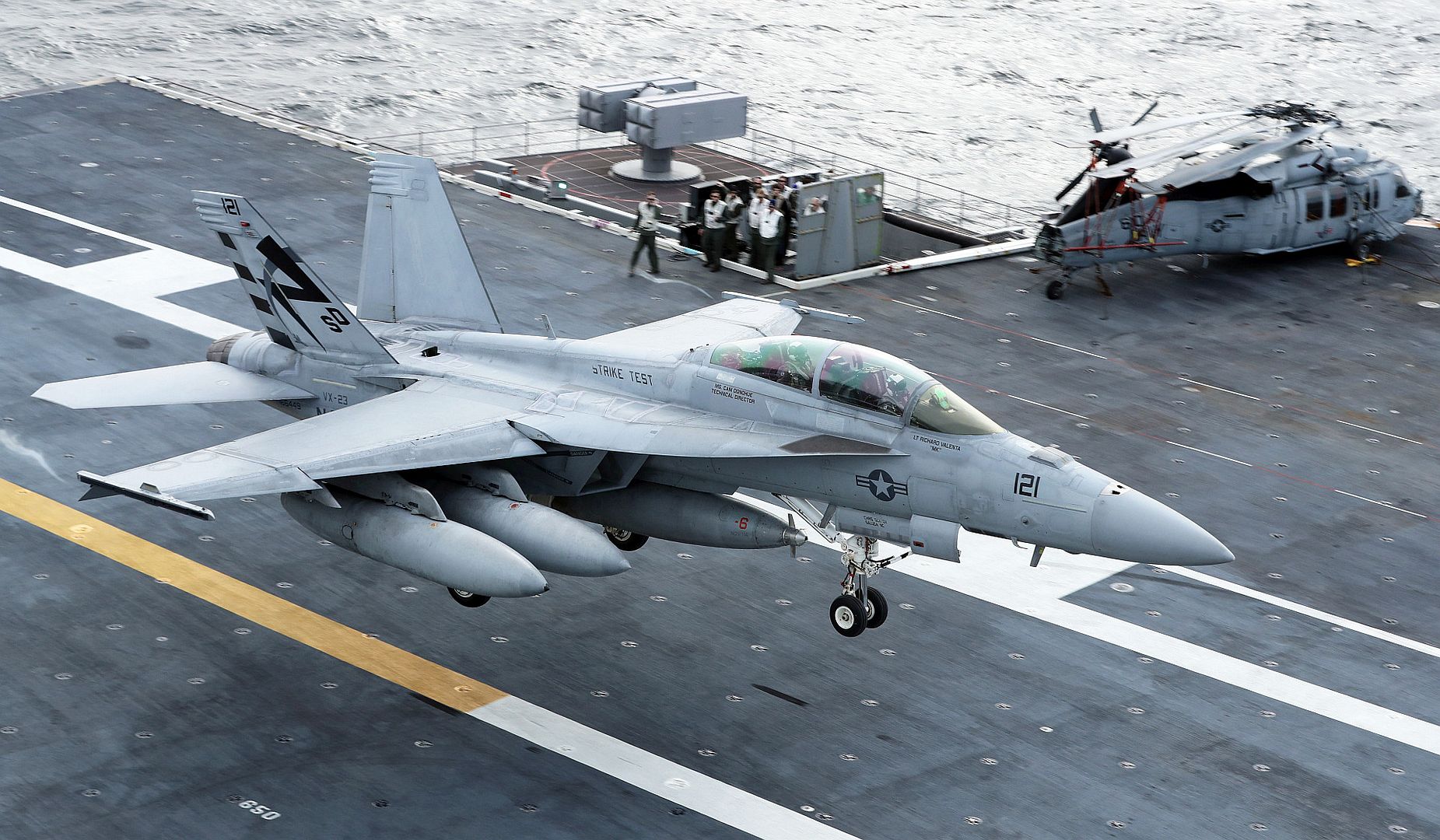
ATLANTIC OCEAN (Jan. 20, 2020) A T-45 Goshawk, assigned to Air Test and Evaluation Squadron (VX) 23, prepares to land on USS Gerald R. Ford's (CVN 78) flight deck. Ford is currently conducting Aircraft Compatibility Testing to further test its Electromagnetic Aircraft Launch Systems (EMALS) and Advanced Arresting Gear (AAG). (U.S. Navy photo by Mass Communication Specialist 3rd Class Connor Loessin)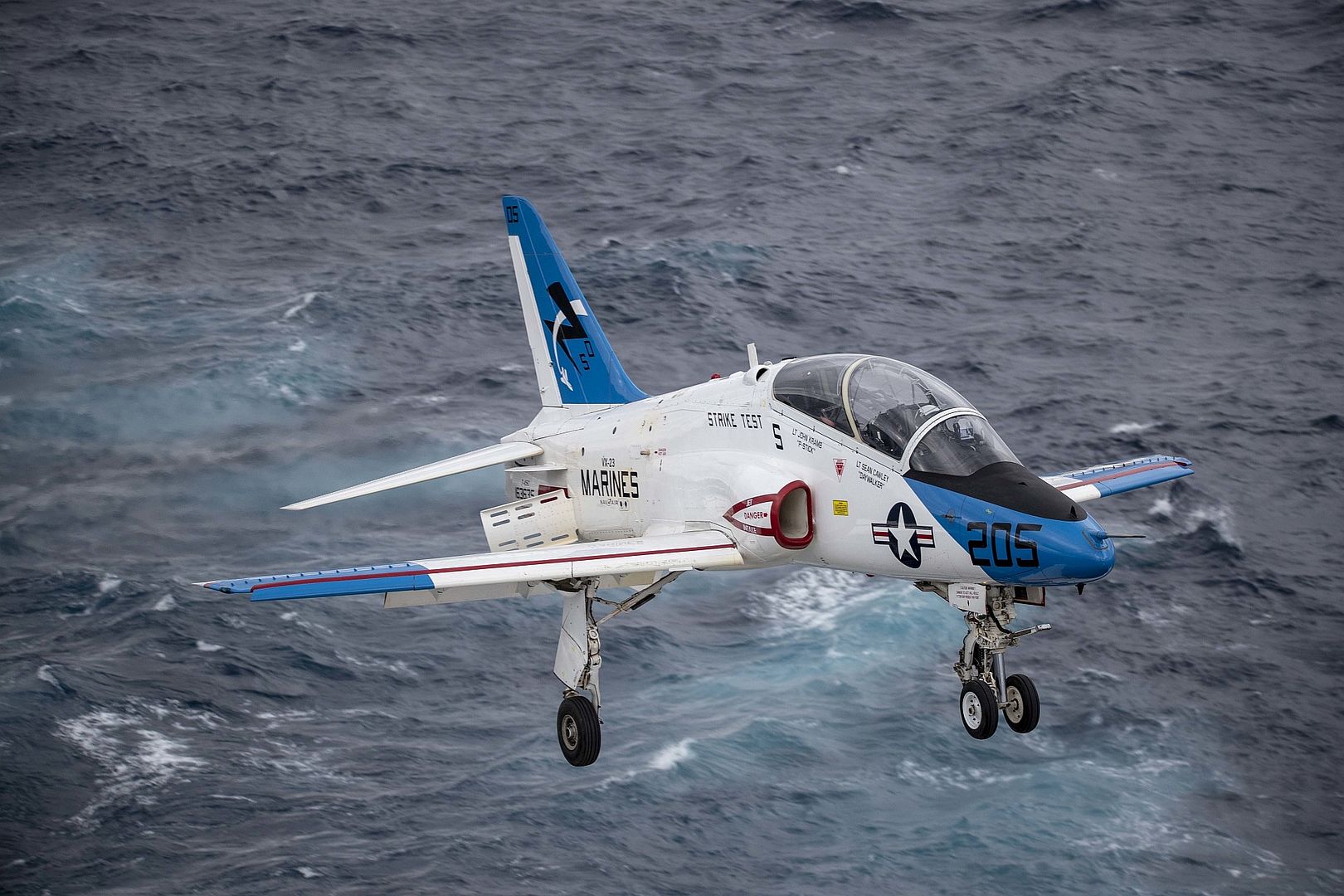
PACIFIC OCEAN (Jan. 18, 2020) An F/A-18F Super Hornet attached to the "Jolly Rogers" of Strike Fighter Squadron (VFA) 103 launches from the flight deck of the aircraft carrier USS Abraham Lincoln (CVN 72) to return to Naval Air Station Oceana following a 10-month deployment. The Abraham Lincoln Carrier Strike Group is deployed to the U.S. 3rd Fleet area of operations. With Abraham Lincoln as the flagship, deployed strike group assets include staffs and aircraft of Carrier Strike Group 12 (CSG 12), Destroyer Squadron 2 (DESRON 2), and Carrier Air Wing 7 (CVW 7). (U.S. Navy photo by Mass Communication Specialist 3rd Class Michael Singley/Released)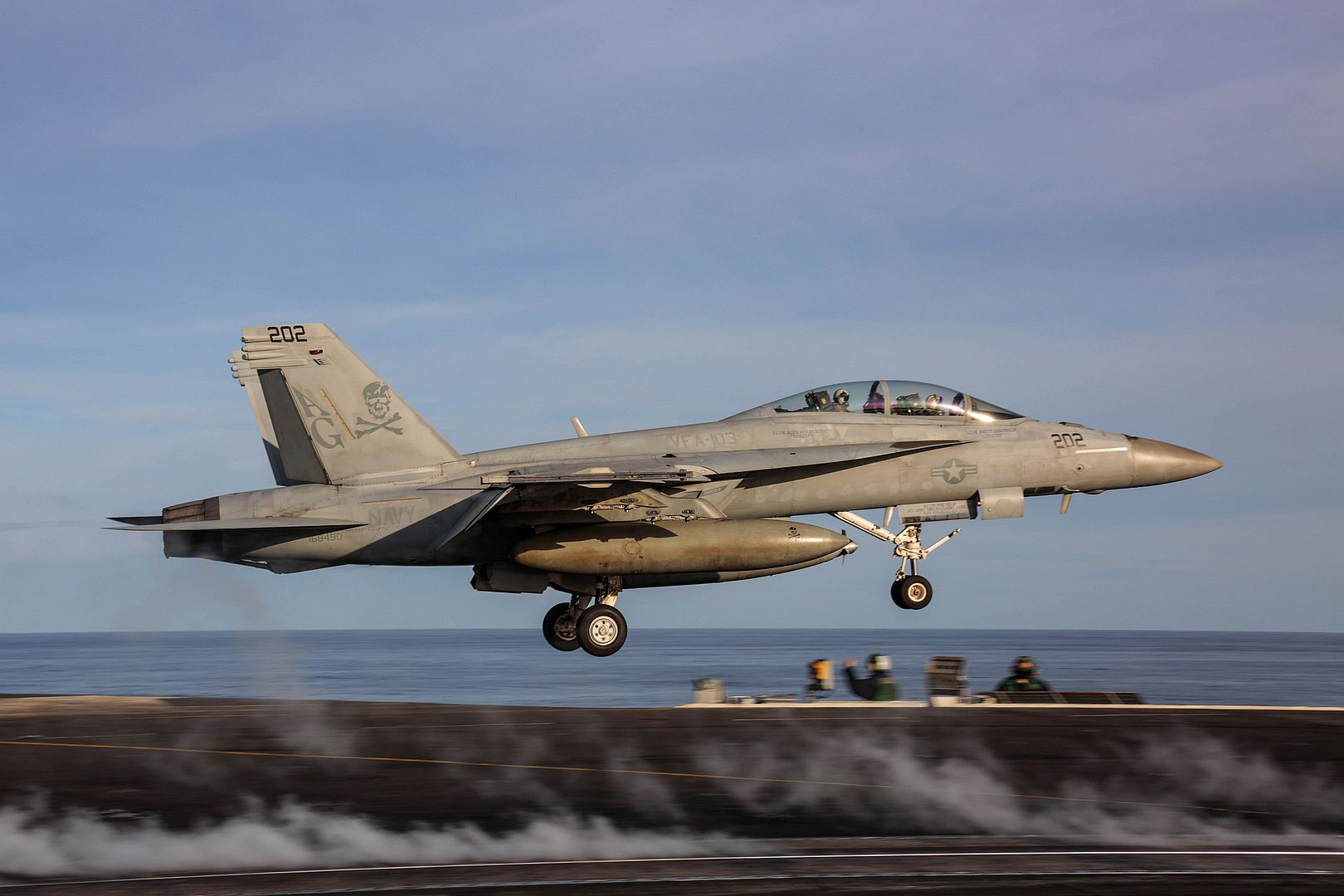
Rome 17 January 2020
Leonardo has announced the maiden flight of its new Falco Xplorer drone aircraft. Falco Xplorer S/N0001 took off from Trapani Air Force base on January 15, cruised over the Gulf of Trapani in a dedicated fly zone, for around 60 minutes and then returned to base, landing safely. The maiden flight is a significant milestone which has been achieved through technical and engineering support, at the test flight planning stages and with other related activities, by the Italian Air Force Test Flight Centre. The Remotely-Piloted Air System (RPAS), which combines endurance of over 24h with a max payload of 350kg, will now embark on a series of flight campaigns which will assess the aircraft?s full range of capabilities including its integrated sensor system. These campaigns will also certify the Falco Xplorer against NATO?s airworthiness STANAG 4671, dramatically expanding the territory over which it can operate.
The Falco Xplorer was first unveiled at last year?s Paris Air Show. It has been designed to offer persistent, multi-sensor strategic surveillance to military and civil customers and can be procured as either an integrated system or as a fully-managed information-superiority service, flown and operated by Leonardo. With a maximum take-off weight of 1.3 tons and an operating ceiling above 24,000ft, the aircraft is an affordable and potent option for Intelligence Surveillance and Reconnaissance (ISR).
Previous Falco variants have been chosen by the United Nations and Frontex, the European border and coastguard agency. The Falco Xplorer design draws on feedback from these and other Falco customers. It features a powerful sensor suite, which includes the Company?s Gabbiano T-80 multi-mode surveillance radar, its SAGE electronic intelligence system, an automatic identification system for maritime missions and an Electro-Optical (EO) turret. An optional hyperspectral sensor will allow the Falco Xplorer to monitor pollution and agricultural development. The native satellite link capability allows for beyond-line-of-sight operations, while its open system architecture means that third-party sensors can be easily integrated. Not subject to International Traffic in Arms Regulations (ITAR) restrictions and meeting the criteria for Missile Technology Control Regime (MTCR) class II, Falco Xplorer is readily exportable around the world.
The Falco Xplorer is designed by Leonardo, from the aircraft to its sensor suite, mission system and ground control station, making the company a ?one-stop-shop? for unmanned capabilities. Advantages of this approach include the ability to offer competitive pricing and the ability to draw on knowledge and experience from across the business to tailor a Falco Xplorer package to the precise needs of customers, whether in terms of technology or commercial arrangements.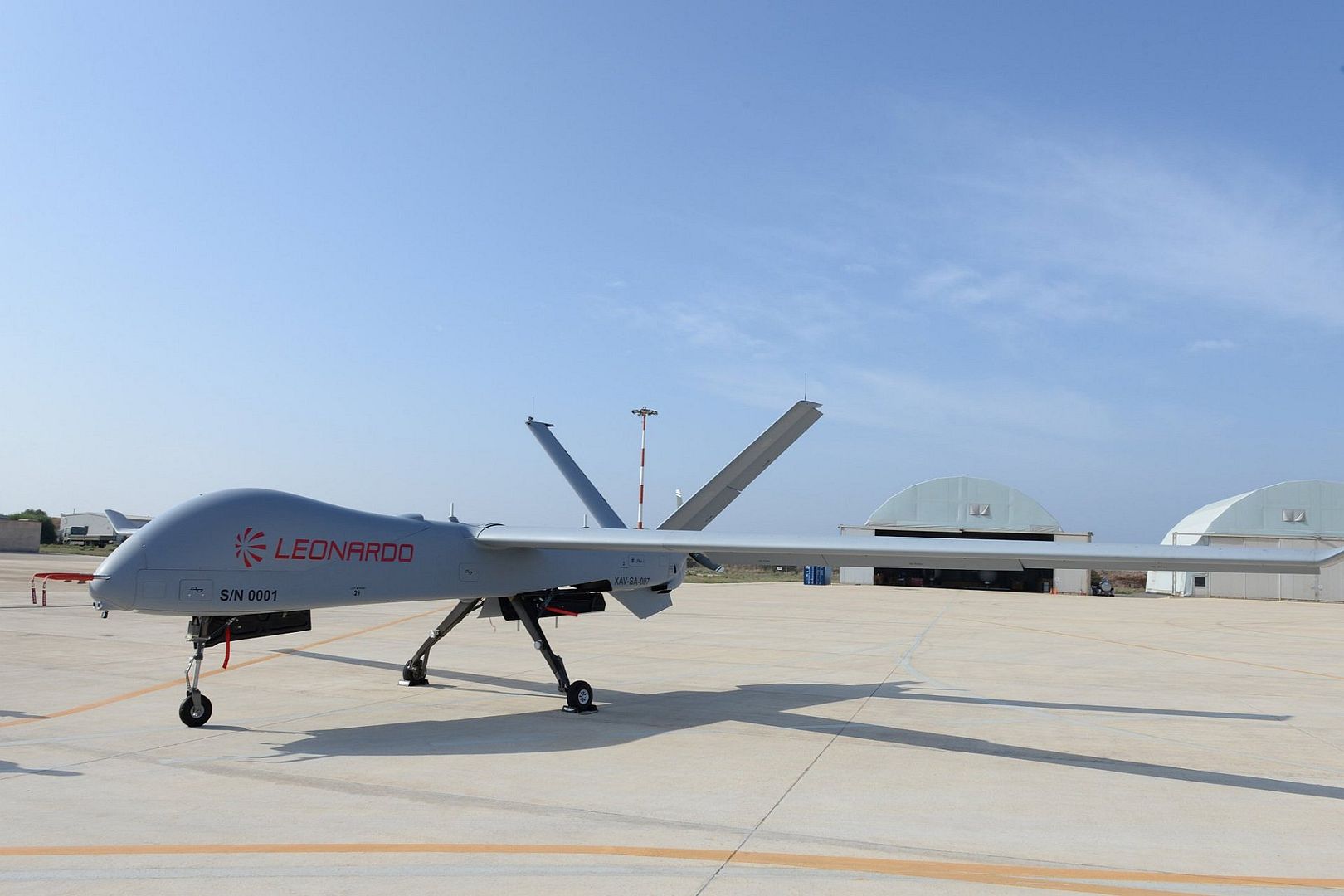
-
AMARILLO, Texas, Jan. 21, 2020 ? The first CMV-22B Osprey, built by Boeing [NYSE: BA] and Bell Textron Inc., a Textron Inc. (NYSE: TXT) company, completed first flight operations at Bell?s Amarillo Assembly Center. The CMV-22B is the latest variant of the tiltrotor fleet, joining the MV-22 and CV-22 used by the U.S. Marine Corps and U.S. Air Force.
The U.S. Navy will use the CMV-22B to replace the C-2A Greyhound for transporting personnel, mail, supplies and high-priority cargo from shore bases to aircraft carriers at sea. Bell Boeing designed the Navy variant specifically for carrier fleet operations by providing increased fuel capacity for the extended range requirement. The mission flexibility of the Osprey will increase operational capabilities and readiness, in addition to ferrying major components of the F-35 engine.
?With the ability to travel up to 1,150 nautical miles, the CMV-22B will be a lifeline for our servicemen and women out at sea,? said Kristin Houston, vice president, Boeing Tiltrotor Programs and director, Bell Boeing V-22 Program. ?The quality and safety built into this aircraft will revolutionize the way the U.S. Navy fulfills its critical carrier onboard delivery mission.?
Bell Boeing will deliver the first CMV-22B to Air Test and Evaluation Squadron (HX) 21 in early 2020 for developmental test.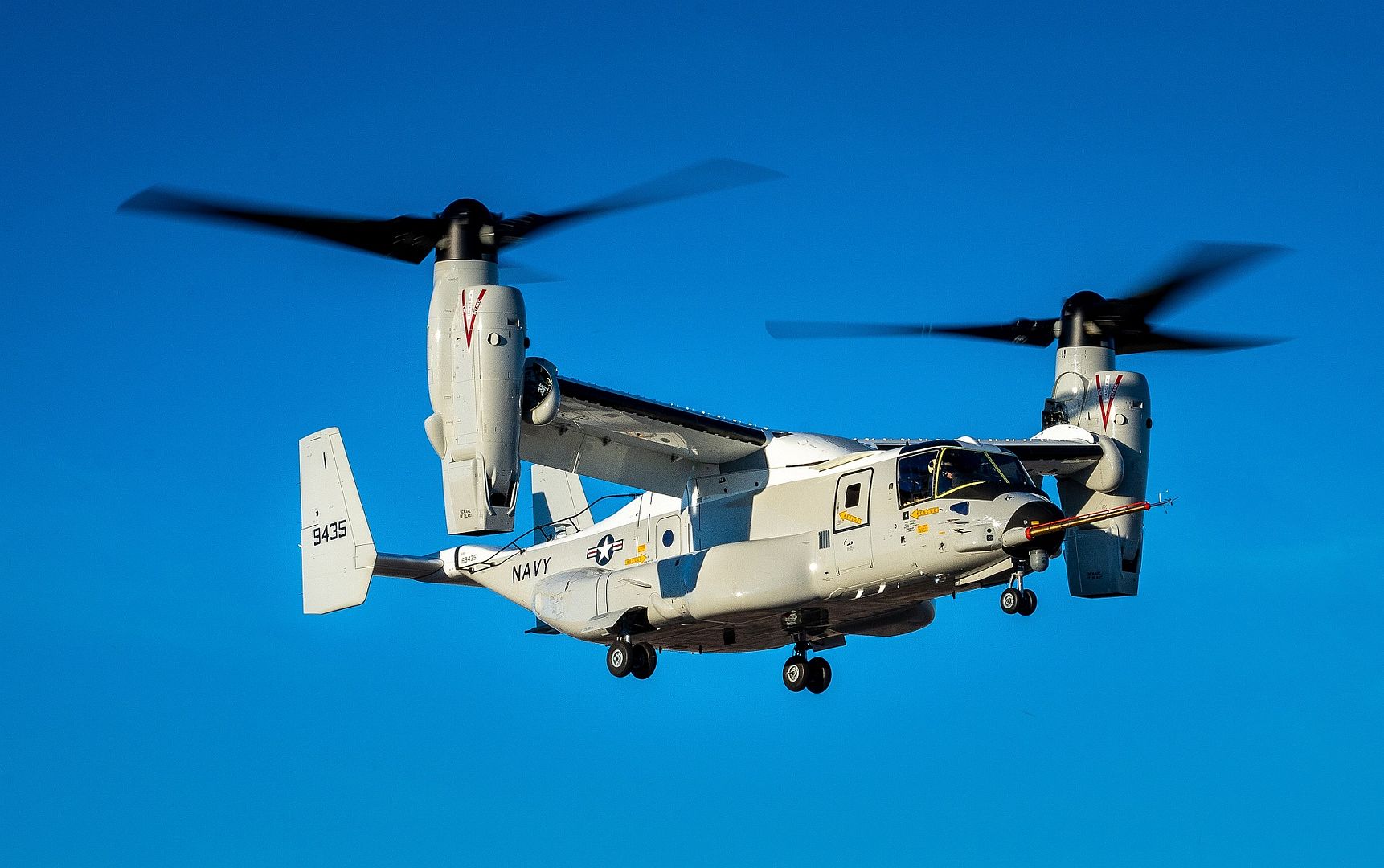
21 January 2020
Saab started assembly production on January 10, 2020 of its section of the T-7A aircraft, the advanced trainer developed and produced together with Boeing for the United States Air Force.
Saab is responsible for the development and production of the aft fuselage section for the advanced trainer, with seven aft units being produced in Link?ping, Sweden for final assembly at Boeing?s U.S. facility in St. Louis, Missouri.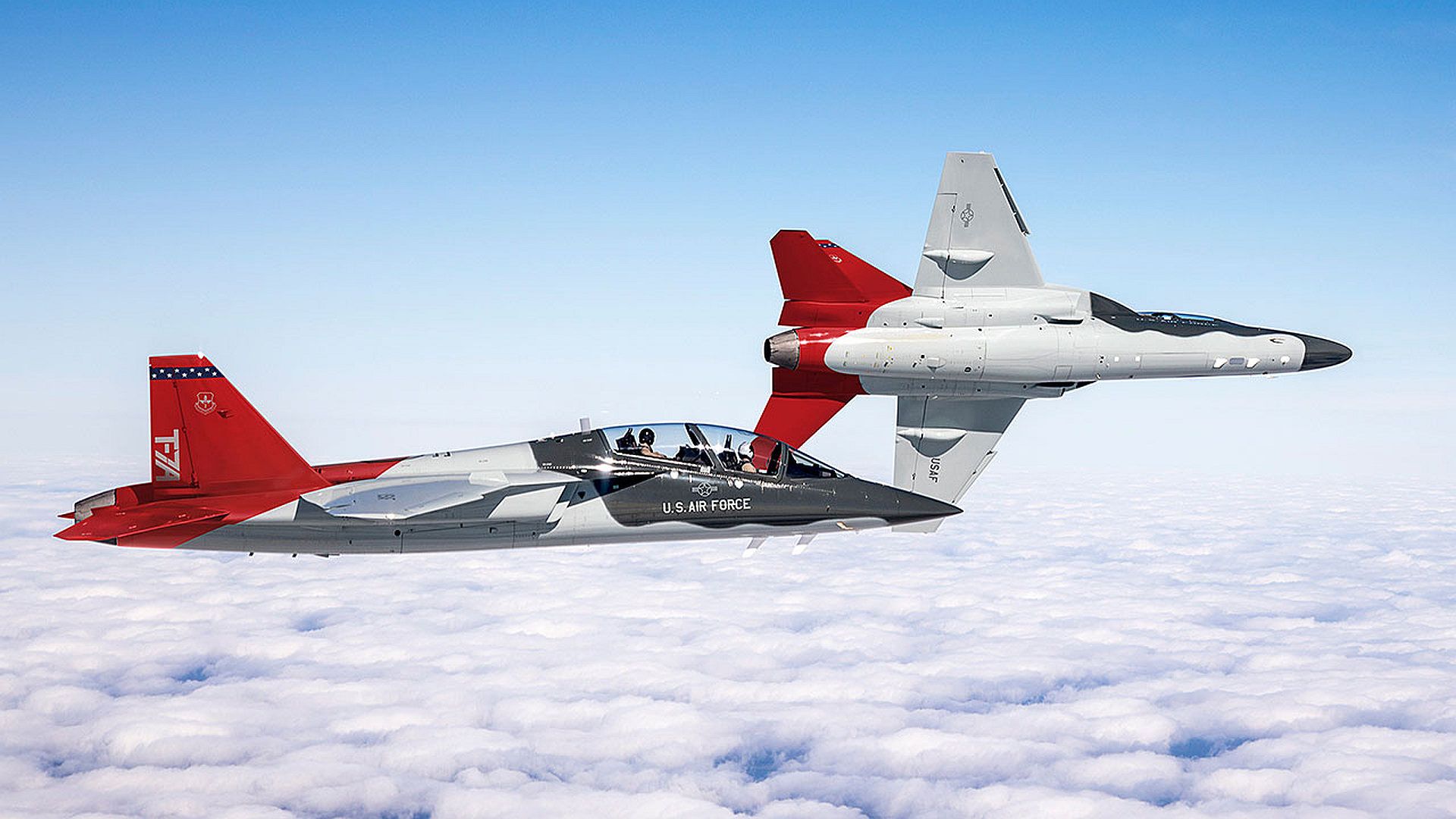
?In little over a year since we signed the EMD contract, we are starting production of our part of the T-7A jet. This achievement is possible due to the great collaboration between Saab and Boeing, and it is an honour to be part of this programme for the United States Air Force,? says Jonas Hjelm, head of Saab business area Aeronautics.
The work is being performed in Linkoping, Sweden, after which future production of Saab?s part for the T-7A will be moved to our new U.S. site in West Lafayette, Indiana.
The Saab facility in West Lafayette is an important part of Saab?s growth strategy in the United States, creating strong organic capabilities for the development, manufacturing and sales of its products.
Boeing is the designated prime contractor for the T-7A advanced pilot training system acquisition by the U.S. Air Force. Saab and Boeing developed the aircraft with Saab as a risk-sharing partner. Saab received the EMD order from Boeing, on September 18, 2018.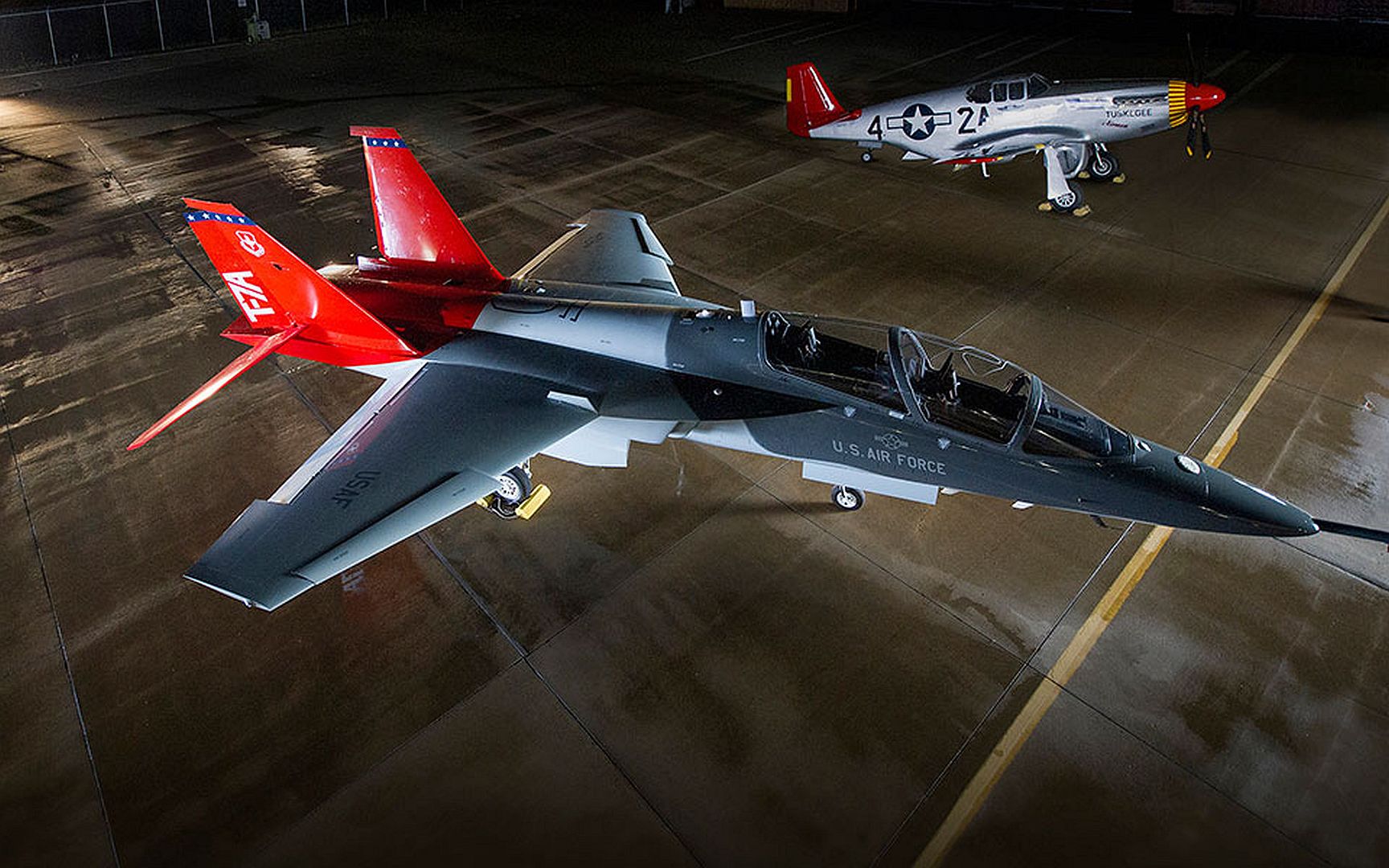
Following its strategy to keep its overall production system at the leading edge of technology and to increase industrial capacity and flexibility, Airbus has decided to create new A321 production capabilities at its site in Toulouse.
By mid-2022 the current A380 Lagard?re facility in Toulouse will accommodate a digitally-enabled A321 line as a step to modernise the A320 production system in Toulouse. The new facilities will provide more flexibility for A321 production, while keeping the overall single-aisle industrial capacity in Toulouse flat.
?We are enjoying an unprecedented high demand for our winning A320neo Family and especially its A321 Long Range (LR) and Xtra Long Range (XLR) derivatives,? said Michael Schoellhorn, Airbus Chief Operating Officer. ?In order to optimise the industrial flow, we have decided to increase our global A321 production capacity and flexibility as well as to establish a next generation Final Assembly Line in Toulouse.?
Currently, the only European Final Assembly Line to assemble A321s is at Airbus? Hamburg site. In addition, the A321 is also being assembled and delivered from Mobile, Alabama, USA.
Toulouse was selected for several reasons such as: overall competitiveness, time to market, investment cost, available floor space and resources. The decision has been communicated to Airbus? social partners.
The A320neo Family is the world?s best-selling single aisle with over 7,100 aircraft sold to over 110 customers. Within this family, the A321XLR is the latest evolutionary step which responds to market needs for even more range and payload, creating more value for the airlines. From 2023, it will deliver an unprecedented Xtra Long Range of up to 4,700nm and a 30% lower fuel burn per seat compared with previous generation competitor aircraft. For passengers, the A321XLR?s new Airspace cabin will provide the best travel experience, while offering seats in all classes with the same high-comfort as on a long-haul wide-body, with the low costs of a single-aisle aircraft.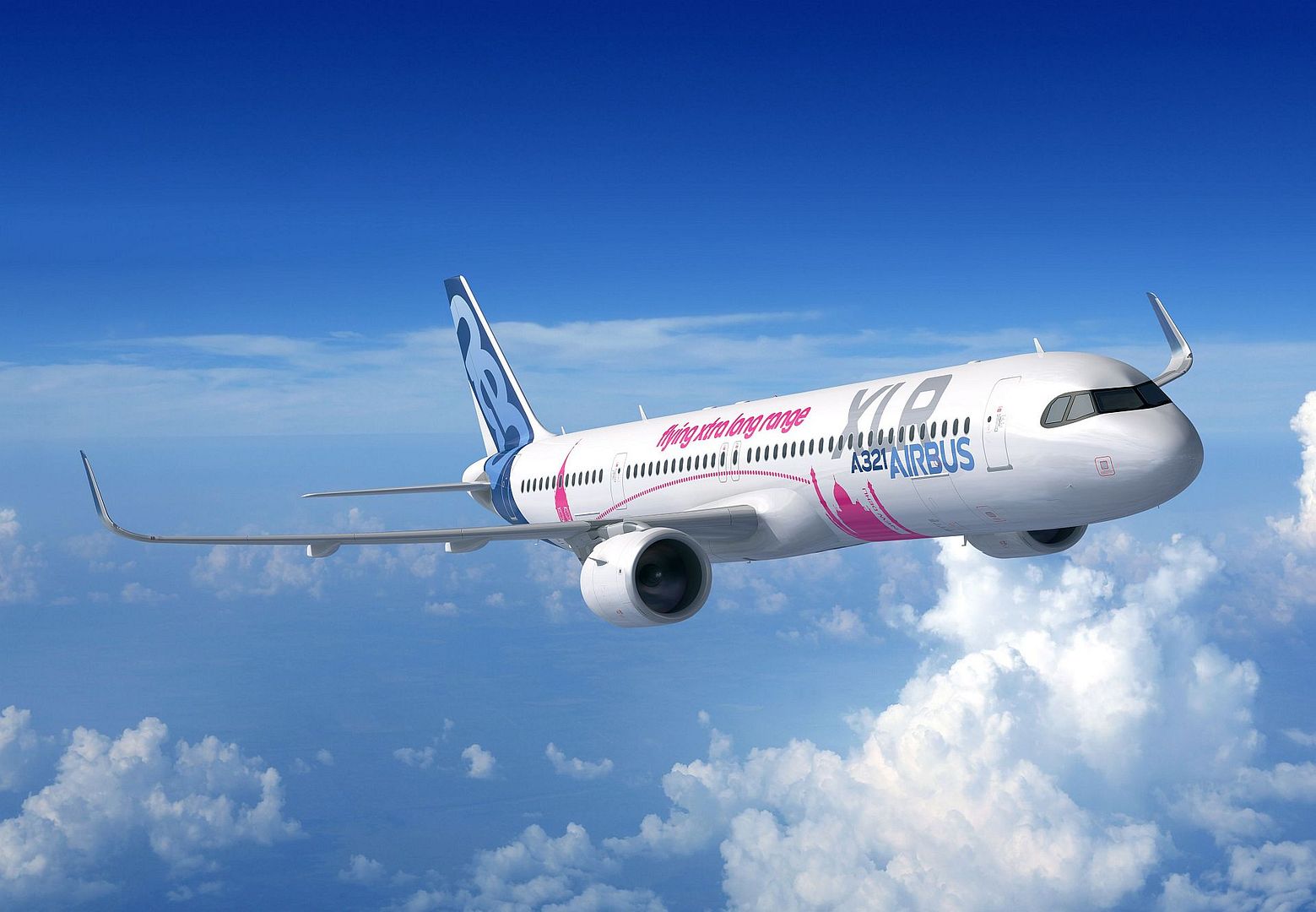
-
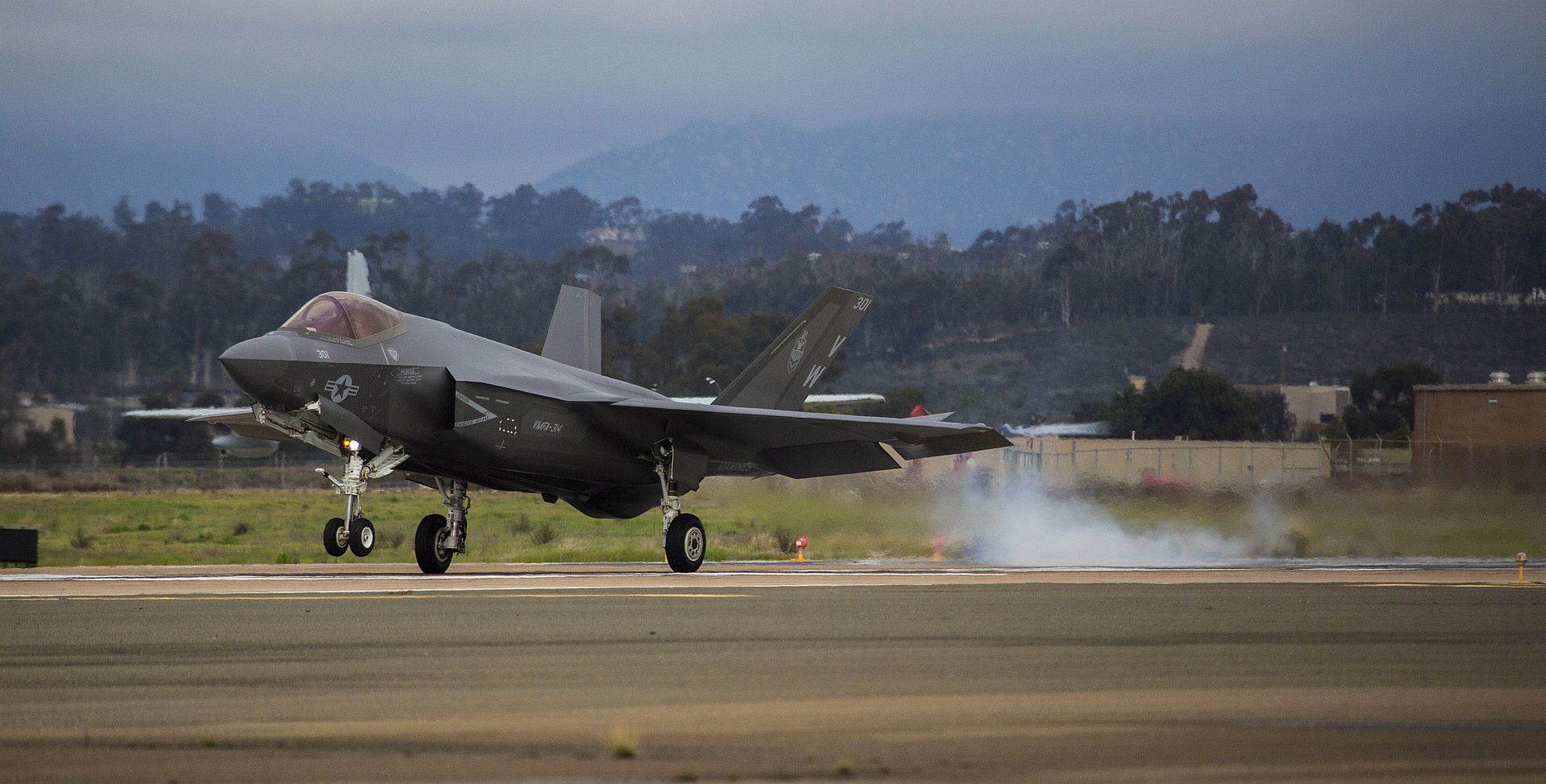
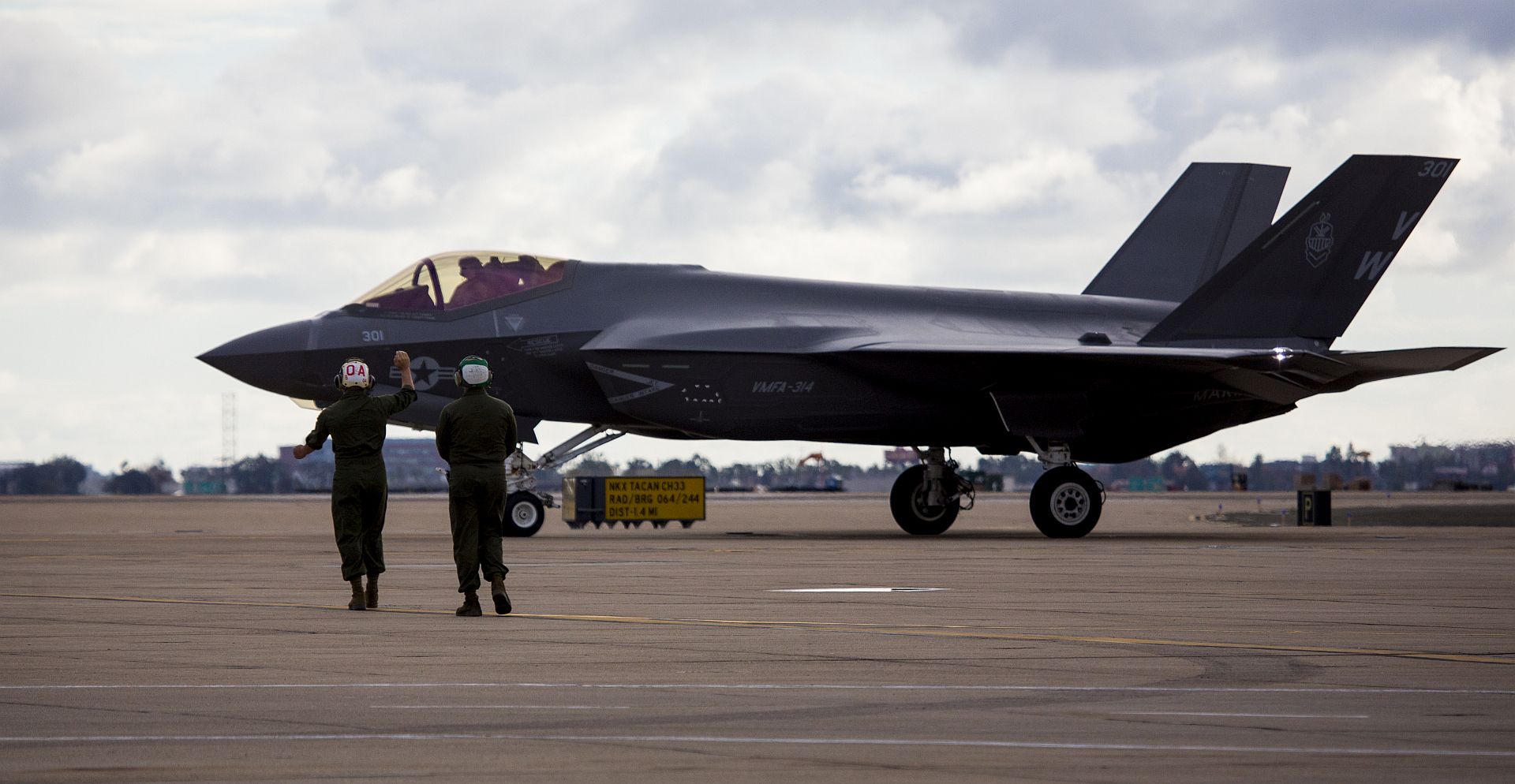
U.S Marine Corps Lt. Col. Cedar L. Hinton, commanding officer of Marine Wing Fighter Attack Squadron (VMFA) 314, 3rd Marine Aircraft Wing (MAW), lands VMFA-314's first F-35C Lightning II on Marine Air Station Miramar, Calif., Jan. 21, 2020. The F-35C will give 3rd MAW a technological advantage by bringing the next wave of 5th generation fighter jets to its arsenal. The F-35C represents the next step in aviation, introducing upgraded internal fuel storage capacity, enhanced stealth capability and the reliability found in other F-35 variants. These capabilities will ensure 3rd MAW is well-equipped to meet the threats of tomorrow. (U.S. Marine Corps photo's by Sgt. Dominic Romero)
ATLANTIC OCEAN (Jan. 21, 2020) An F/A-18F Super Hornet, assigned to Air Test and Evaluation Squadron (VX) 23, prepares to take off from USS Gerald R. Ford's (CVN 78) flight deck during flight operations. Ford is currently conducting Aircraft Compatibility Testing to further test its Electromagnetic Aircraft Launch Systems (EMALS) and Advanced Arresting Gear (AAG). (U.S. Navy photo by Mass Communication Specialist 2nd Class Indra Beaufort)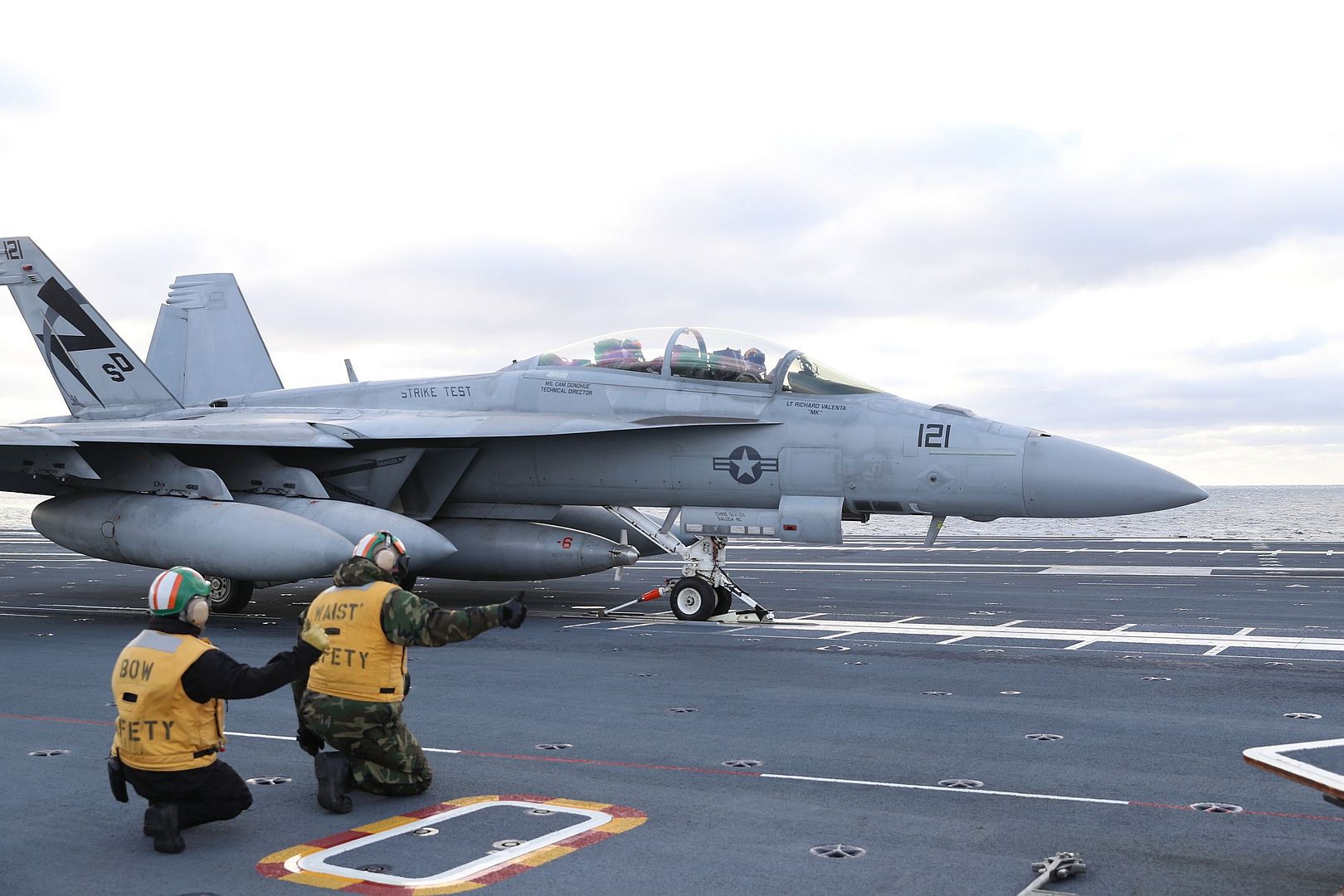
A KC-135 Stratotanker from the 128th Air Refueling Wing approaches Honolulu Airport for a landing Jan. 17, 2020, during exercise Sentry Aloha 20-1. Stratotankers provided in-air refueling to F-15 Eagles, F-16 Fighting Falcons and F-22 Raptors as they conducted a series of dissimilar-air-combat-training missions. Sentry Aloha provides high quality training to U.S. Air Force, Air National Guard and other Department of Defense services to increase lethality and readiness for present and future warfighters. (U.S. Air National Guard photo by Senior Airman John Linzmeier)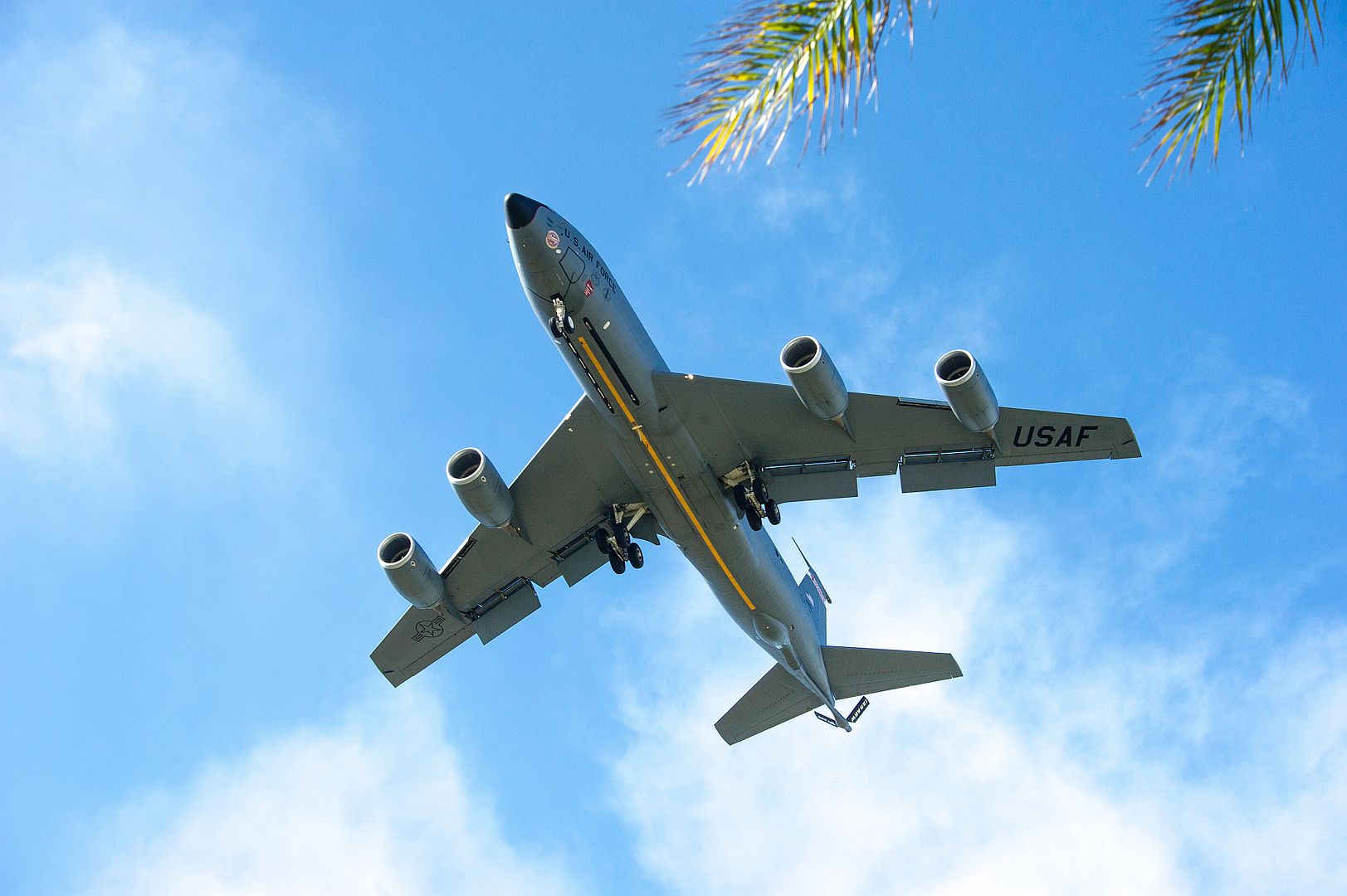
A California Air National Guard F-15C Eagle from the 194th Fighter Squadron approaches Honolulu Airport for a landing Jan. 17, 2020, during exercise Sentry Aloha 20-1. Sentry Aloha provides cost effective, tailored and realistic combat training for aviators across the U.S., providing them with the skills necessary to perform their homeland defense and overseas combat missions. (U.S. Air National Guard photo by Senior Airman John Linzmeier)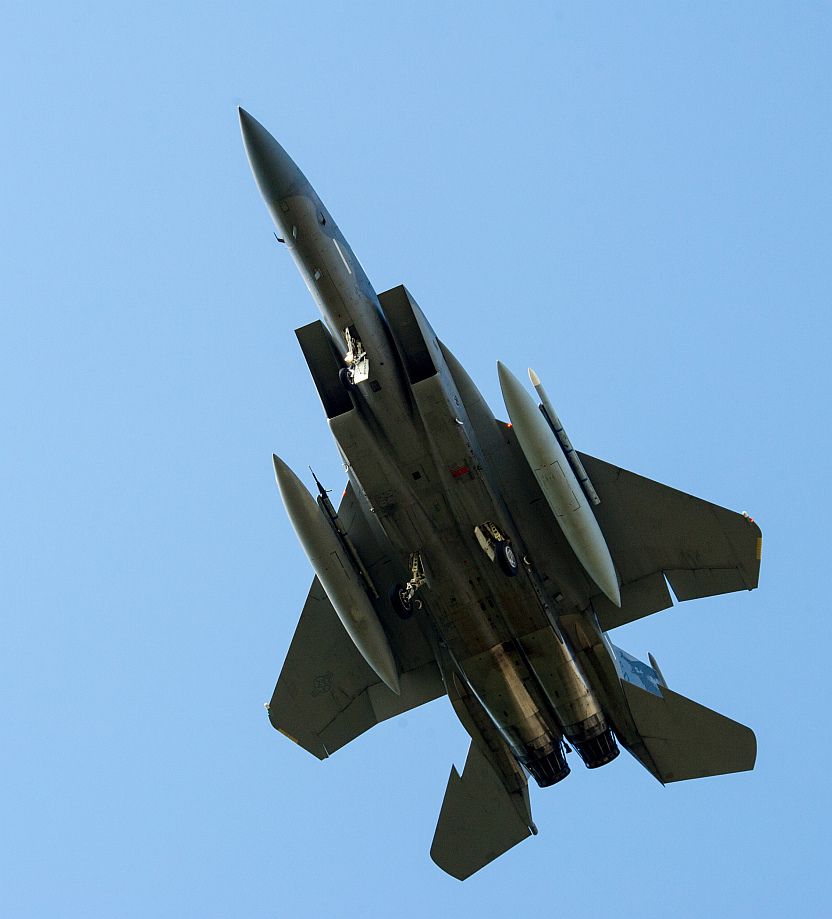
An F-16 Fighting Falcon, from the 18th Aggressor Squadron, taxis down the flight line Jan. 17, 2020, at Joint Base Pearl Harbor-Hickam, Hawaii, during exercise Sentry Aloha 20-1. The Falcon, and other combat aircraft, received in-air refueling from KC-135 Stratotankers, from the 128th Air Refueling Wing, throughout a series of dissimilar-air-combat-training missions. Sentry Aloha is a Hawaii Air National Guard-led exercise, which provides participants a multi-faceted, joint venue with supporting infrastructure and personnel. (U.S. Air National Guard photo by Senior Airman John Linzmeier)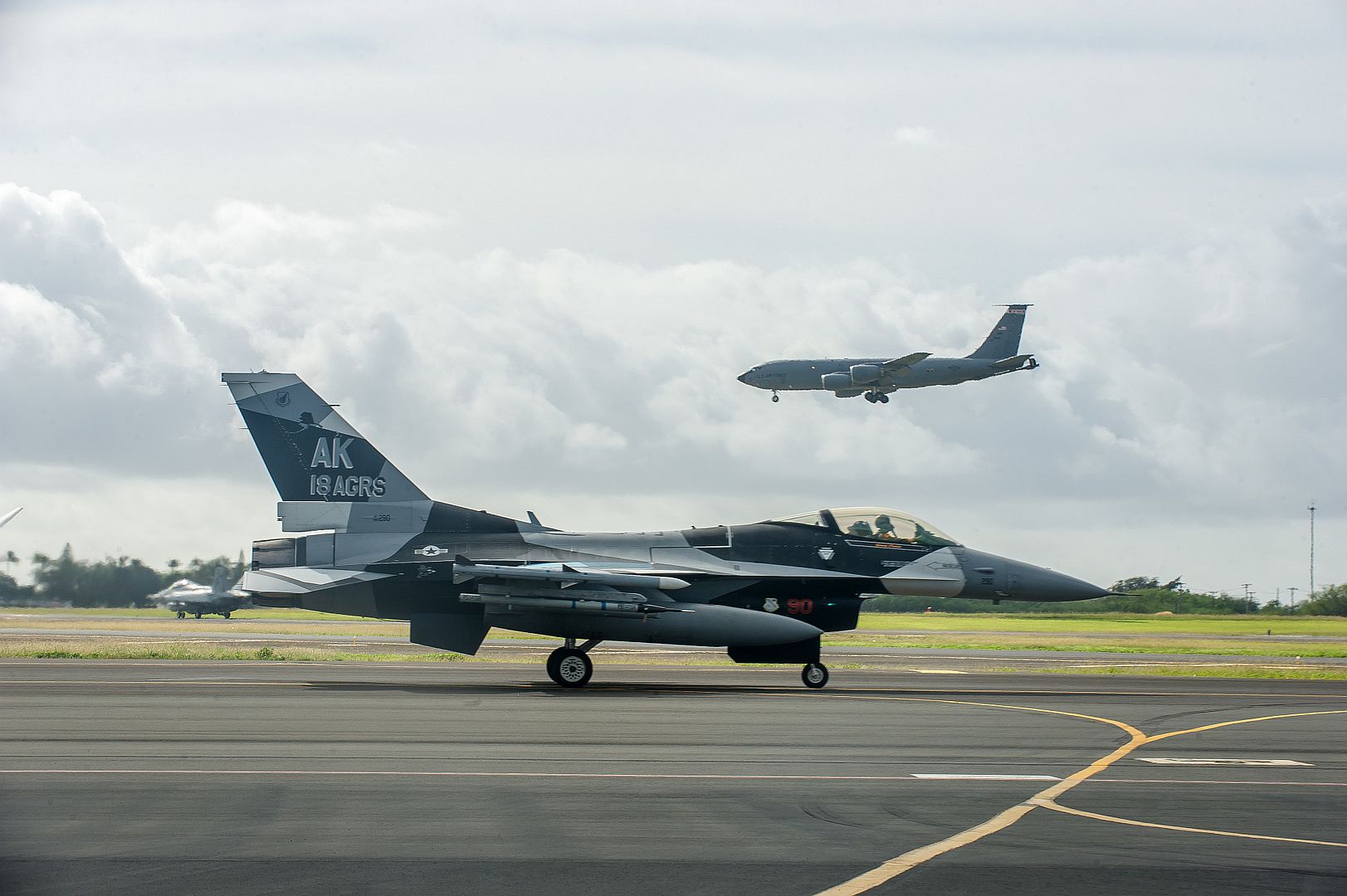
A U.S. Air Force F-15E Strike Eagle aircraft assigned to the 494th Expeditionary Fighter Squadron receives fuel from a KC-10 Extender aircraft assigned to the 908th Expeditionary Air Refueling Squadron over an undisclosed location, Jan. 13, 2020. The 908th EARS, deployed with U.S. Air Forces Central Command, is responsible for delivering fuel to U.S. and coalition forces, enabling war-winning air power, deterrence and stability to the region. (U.S. Air Force photo by Senior Airman Brandon Cribelar)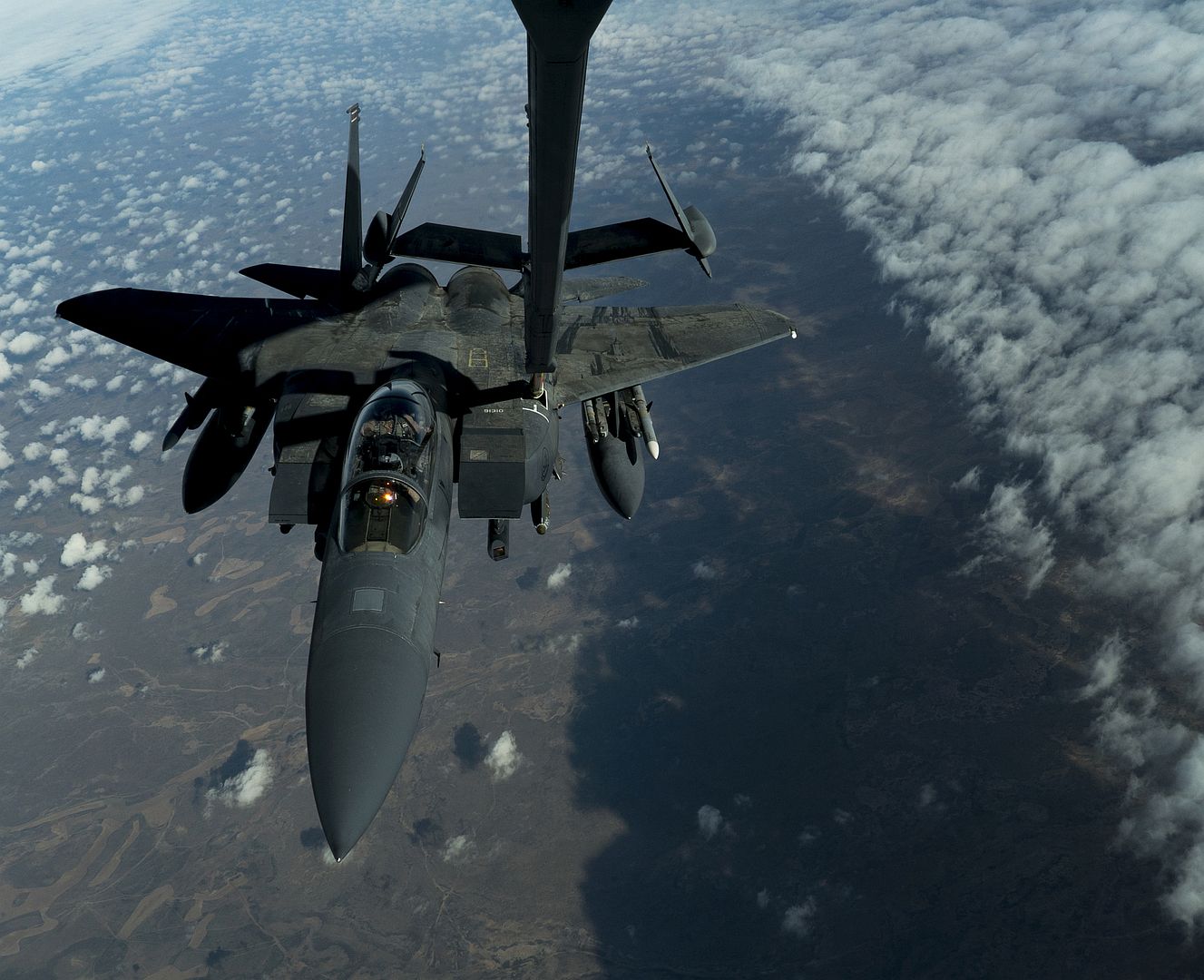
A U.S. Navy F/A-18 Super Hornet approaches a KC-135 Stratotanker assigned to the 28th Expeditionary Air Refueling Squadron to receive fuel over Afghanistan, Jan. 14, 2020. The 28th EARS, deployed with U.S. Air Forces Central Command, is responsible for delivering fuel to U.S. and coalition forces, enabling a constant presence in the area of responsibility. (U.S. Air Force photo's by Staff Sgt. Bethany E. La Ville)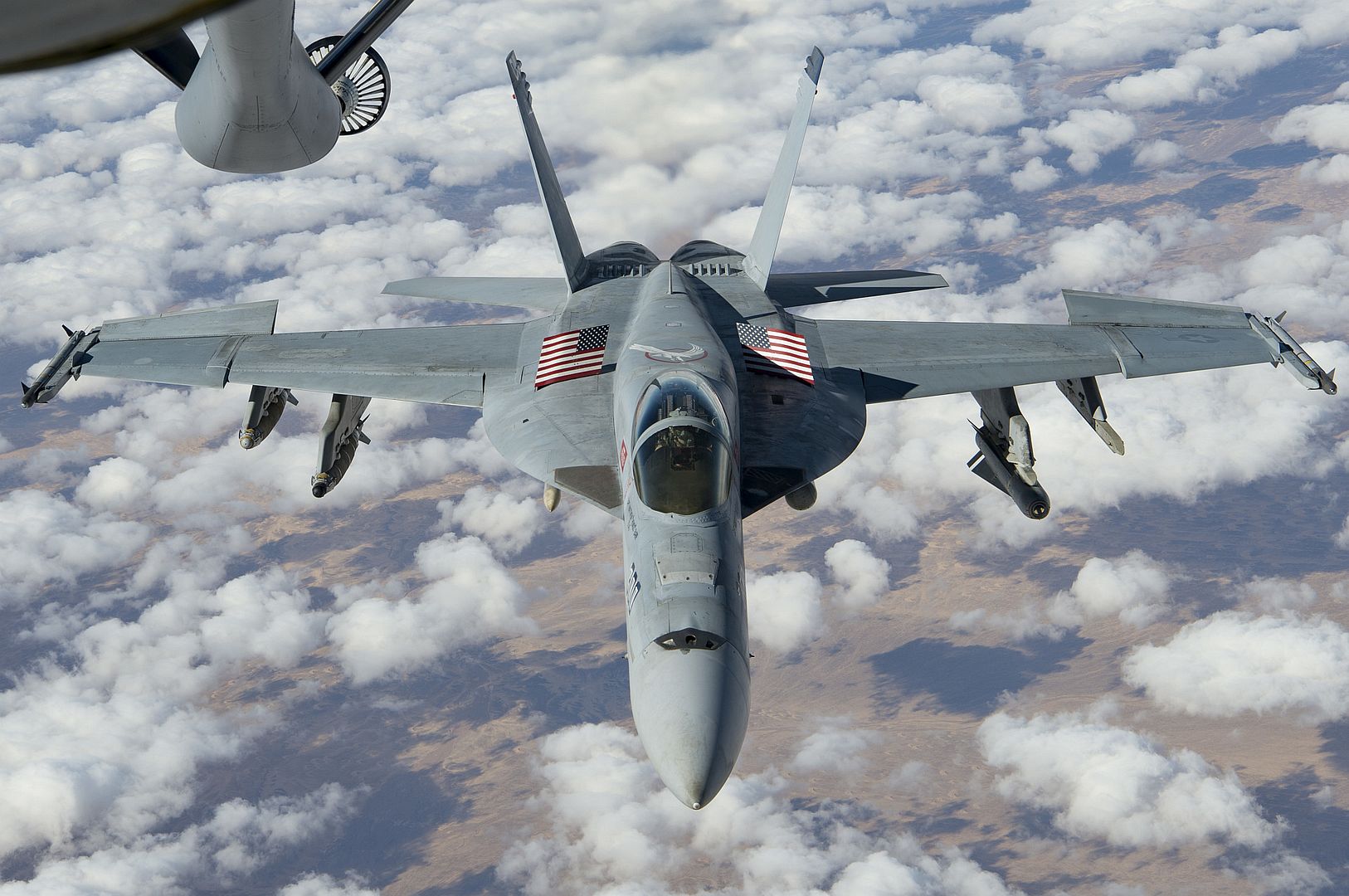
PACIFIC OCEAN (Jan. 18, 2020) An F-35C Lightning II, from the "Rough Raiders" of Strike Fighter Squadron (VFA) 125, flies over the flight deck of the aircraft carrier USS Nimitz (CVN 68). Nimitz is currently underway conducting routine operations. (U.S. Navy photo by Mass Communication Specialist 3rd Class James Hong/Released)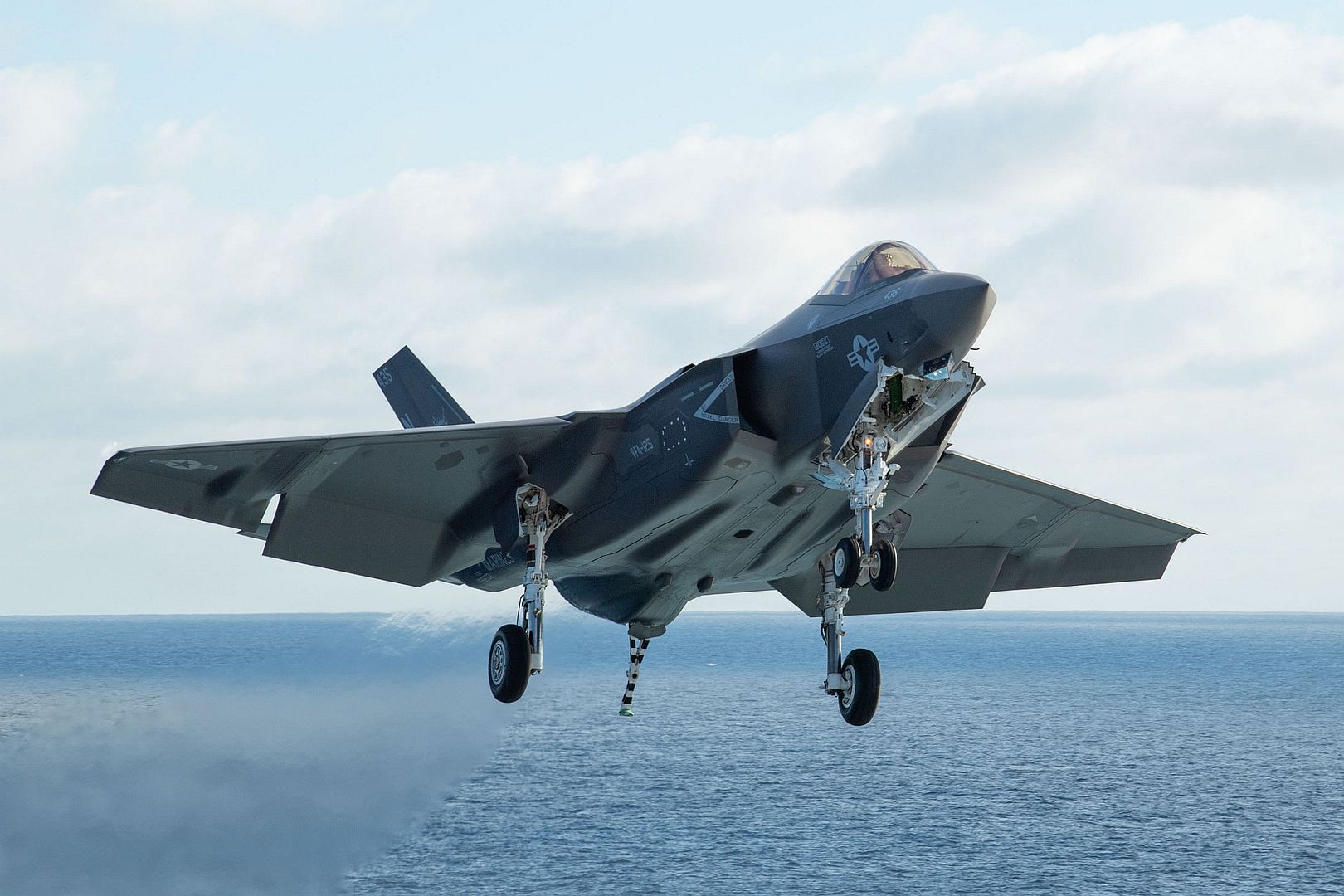
Oxford, 22 January, 2020 ? Airbus Helicopters in the UK is to provide four additional H145 helicopters as part of an expansion of the UK Military Flight Training System (UKMFTS).
The new helicopters will join the existing fleet of 29 H135s and three H145s, known respectively as Juno and Jupiter in UKMFTS service. They will be delivered during 2020.
Operated by Ascent Flight Training Management Ltd primarily from RAF Shawbury and also RAF Valley on behalf of the Ministry of Defence, the aircraft are used to train all UK military helicopter pilots and rear crew.
Airbus Helicopters is fully embedded at both bases as the rotary wing aircraft service provider to Ascent.
Managing director of Airbus Helicopters in the UK, Colin James, said: ?The H135 Juno and H145 Jupiter are demonstrating day-in and day-out their exceptional reliability and versatility in the training role at UKMFTS. It?s deeply satisfying for us to see the first aircrew having already graduated and we look forward to delivering the additional aircraft in the very near future.?
The H145 helicopter family has completed more than 5.5 million flight hours worldwide with more than 1,300 aircraft in the global fleet.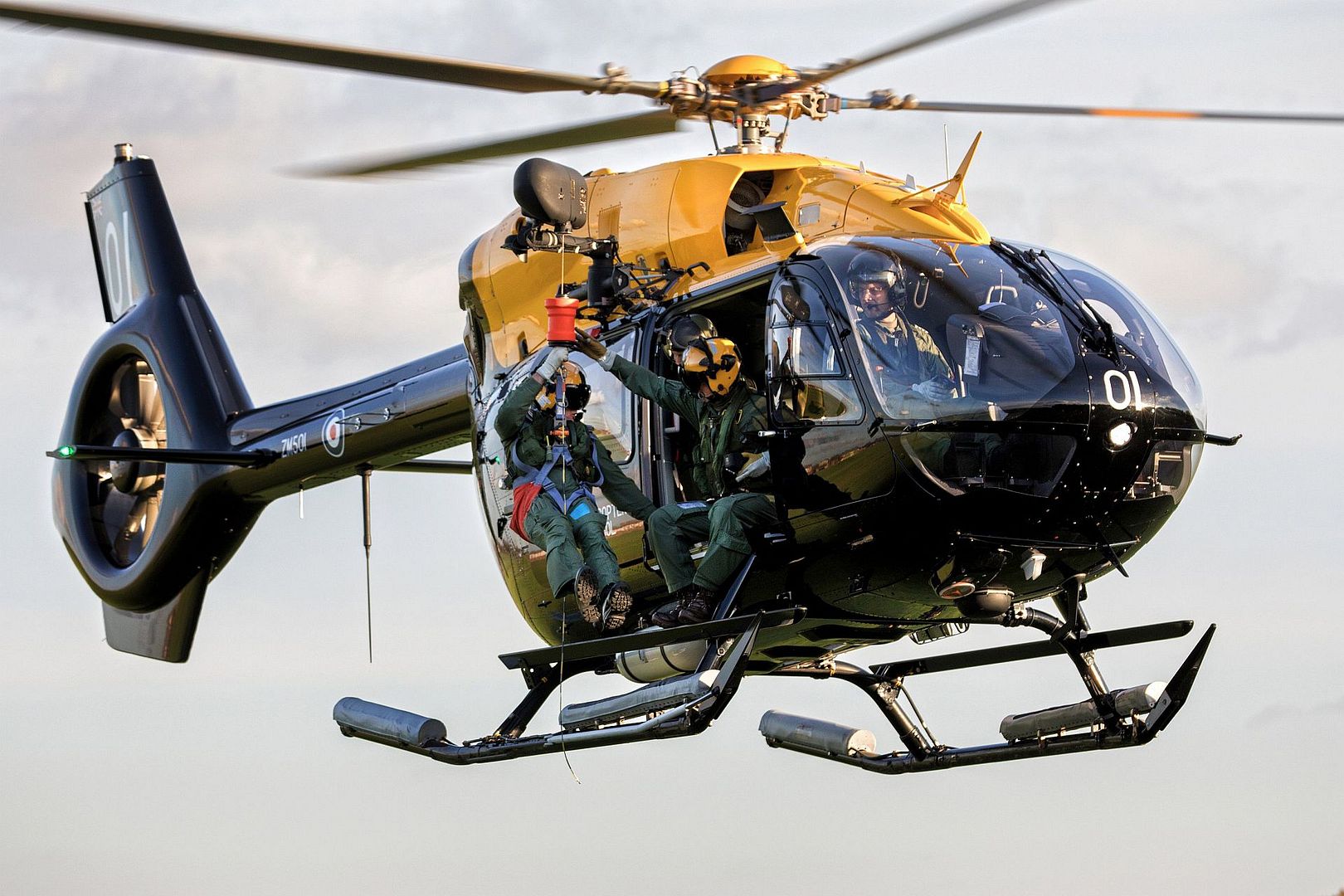
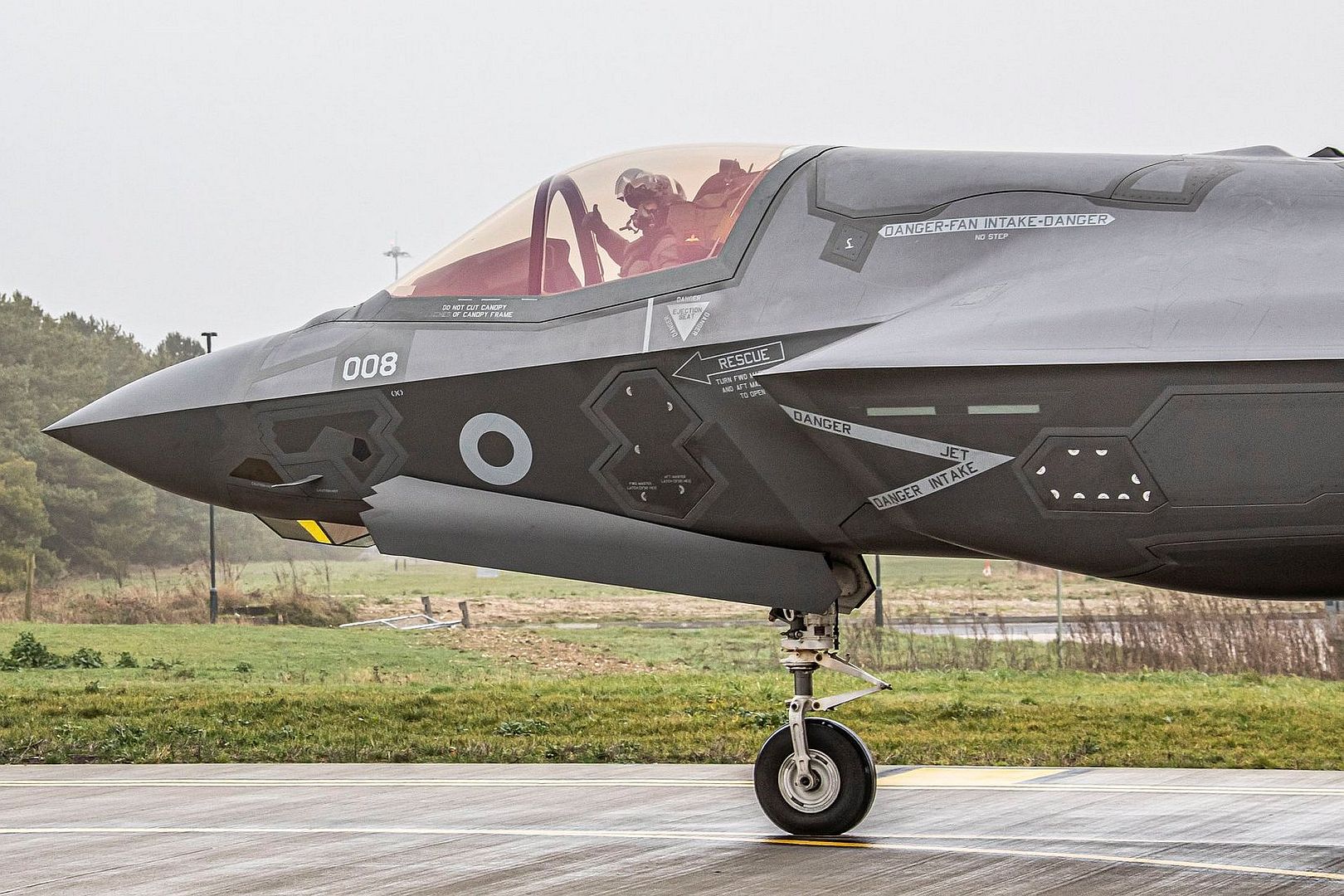
Today, five Lightning aircraft took off from RAF Marham as they make their way to Nellis Air Force Base, Nevada to take part in Exercise RED FLAG 20/1.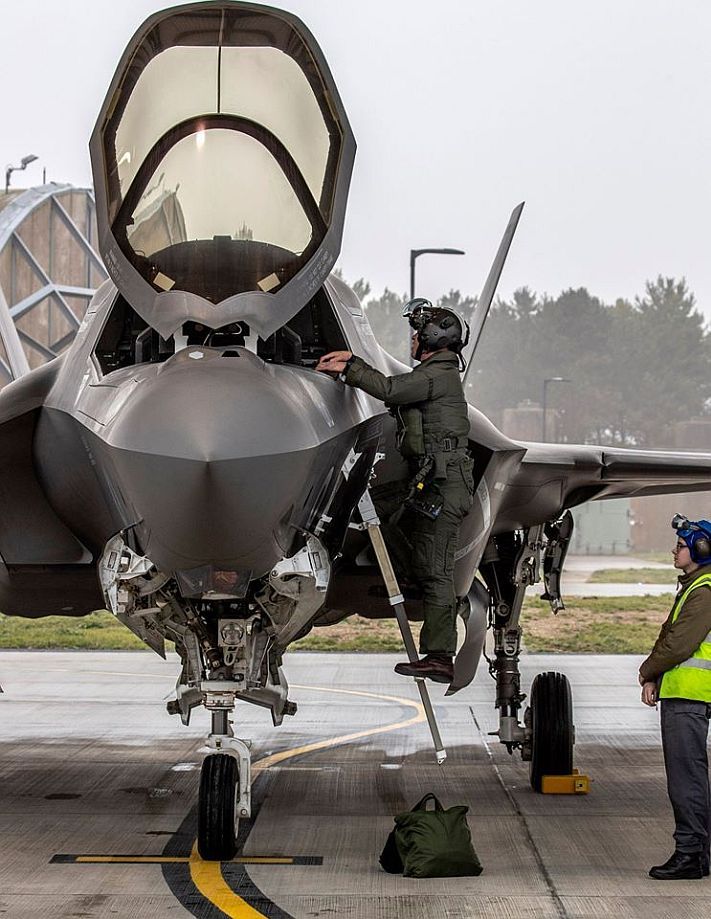
RAF Marham Station Commander, Group Captain Beck was asked about the importance of the exercise, he said,
"This is another first for the Lightning Force and will give the opportunity for our pilots to really put the F-35s to the test in a combat representative environment. This training is as near to high-end operational flying as our pilots can get in a controlled environment and will really test them and the teams that support the Squadron."
The aircraft will be joined by other RAF aircraft including a Voyager which departed from RAF Brize Norton and a Sentry E-3D from RAF Waddington.
Exercise Red Flag is a two-week advanced aerial combat training exercise held several times a year by the United States Air Force. It aims to offer realistic air-combat training for military pilots and other flight crew members from the United States and allied countries.