Aviation News
-
PARIS --- Florence Parly, Minister of the Armed Forces, welcomes the arrival of the 16th French A400M Atlas at the Orl?ans-Bricy Air Base on 4 December 2019, following its acceptance by the Directorate General of Armaments.
This is the first Atlas capable of parachuting a load of 16 tonnes and refueling other transport aircraft.
The 2019-2025 military program law provides for the delivery of 11 A400Ms, for a total of 25 aircraft in service at the end of 2025.
This 16th A400M is the first aircraft delivered to the Air Force that capable of dropping single loads of up to 16 tonnes. This new capacity is particularly useful to support troops deployed on foreign theaters of operation. For example, it allows dropping large equipment such as earthmovers or engineering vehicles, which are necessary to repair damaged airstrips.
This 16th A400M is also the first to be equipped with a complete refueling system: it is able to refuel not only fighter planes (Rafale, Mirage, etc) but also transport planes, like another A400M.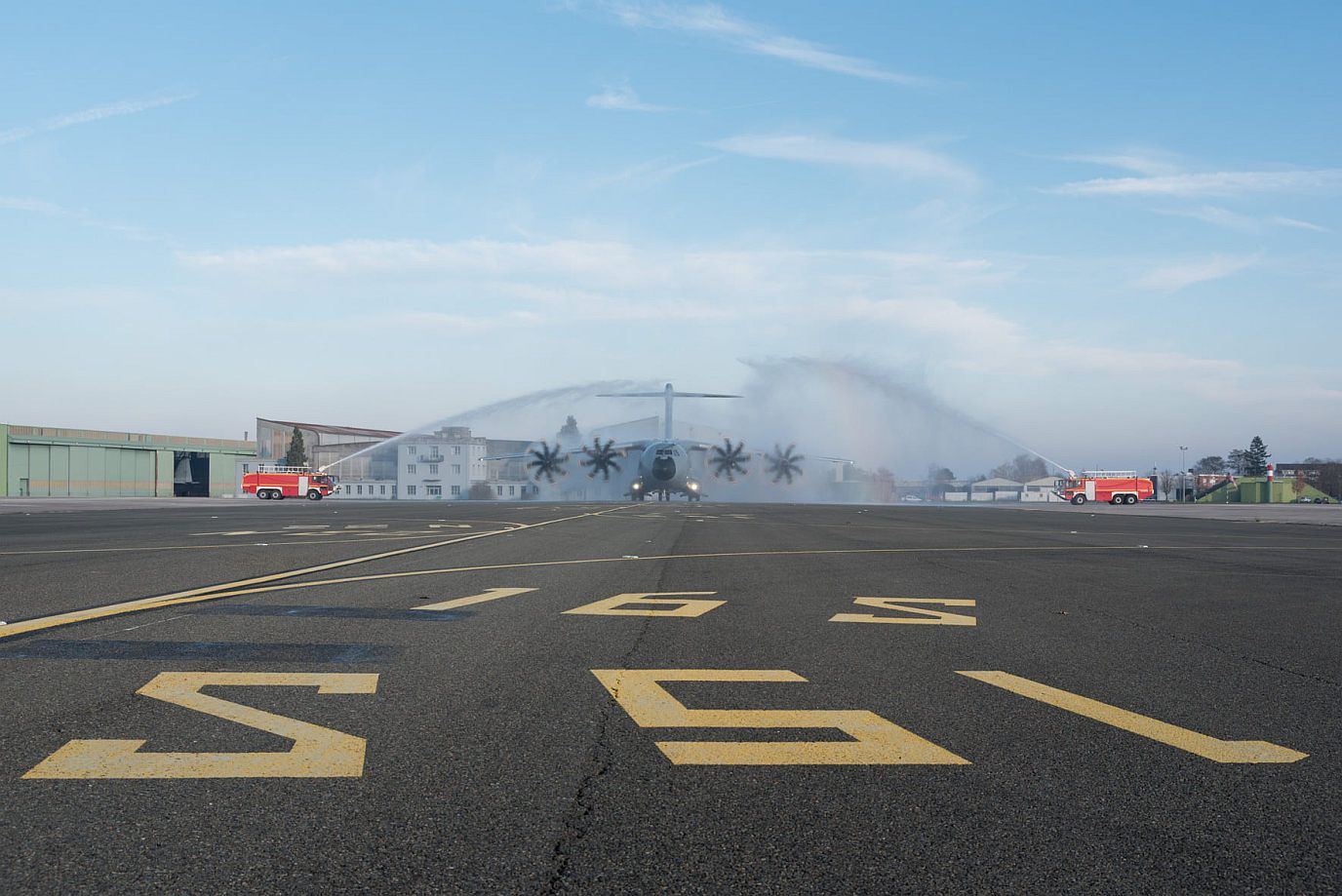
Over the course of deliveries, the new capabilities of the A400M increase the operational capabilities of French military air transport.
The tests successfully completed in 2019 by Airbus, with the assistance of the Directorate General of Armament (DGA) and the French Armed Forces, concern the simultaneous release of paratroopers through the side doors and the refueling of helicopters. The final certifications of these two key capabilities are now expected for 2020 and 2021 respectively.
A tactical military transport aircraft with a strategic range, the A400M Atlas has been operational since 2015 and allows the Air Force to carry out regular missions to all overseas operation theaters and overseas locations. It also played a key role during the 2017 airlift following hurricane "Irma." It is designed to carry up to 37 tons of equipment and carry out all transport missions, including assault landing on semi-prepared strips, parachuting personnel and equipment, in-flight refueling and medical evacuations.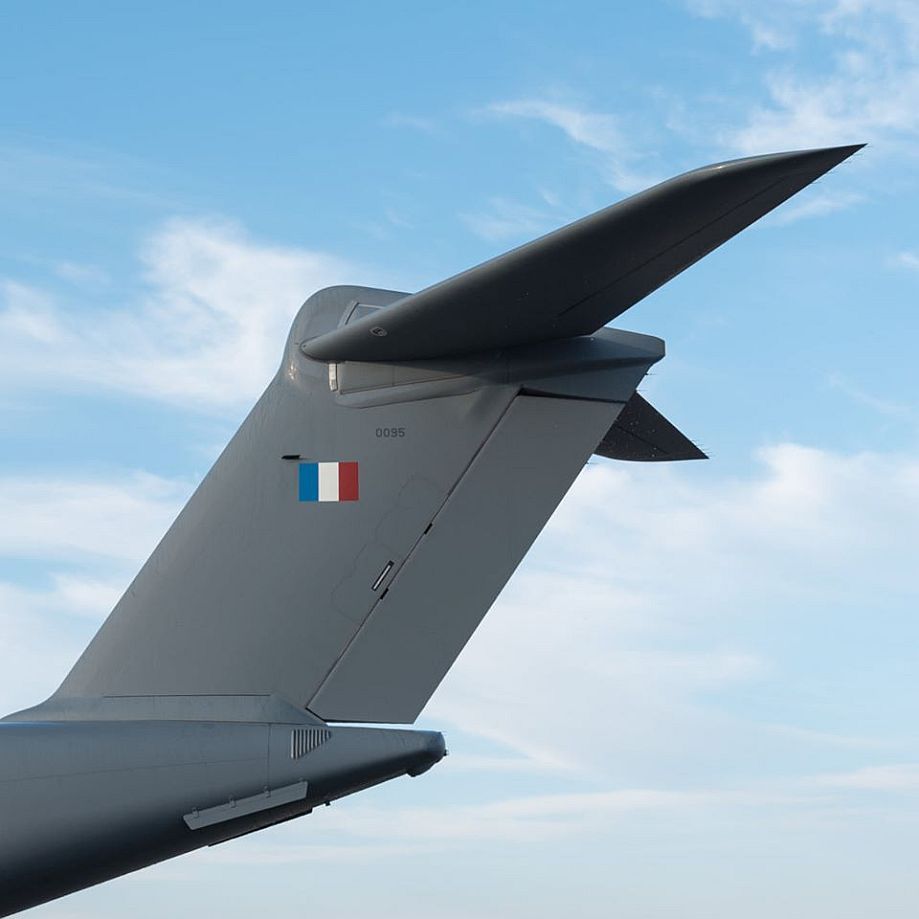
PACIFIC OCEAN (Dec. 4, 2019) ? An MV-22B Osprey, assigned to the Marine Medium Tiltrotor Squadron (VMM) 165, takes off from the amphibious assault ship USS Makin Island (LHD . Makin Island is conducting routine operations in the eastern Pacific. (U.S. Navy photo by Mass Communication Specialist 2nd Class Jeremy Laramore)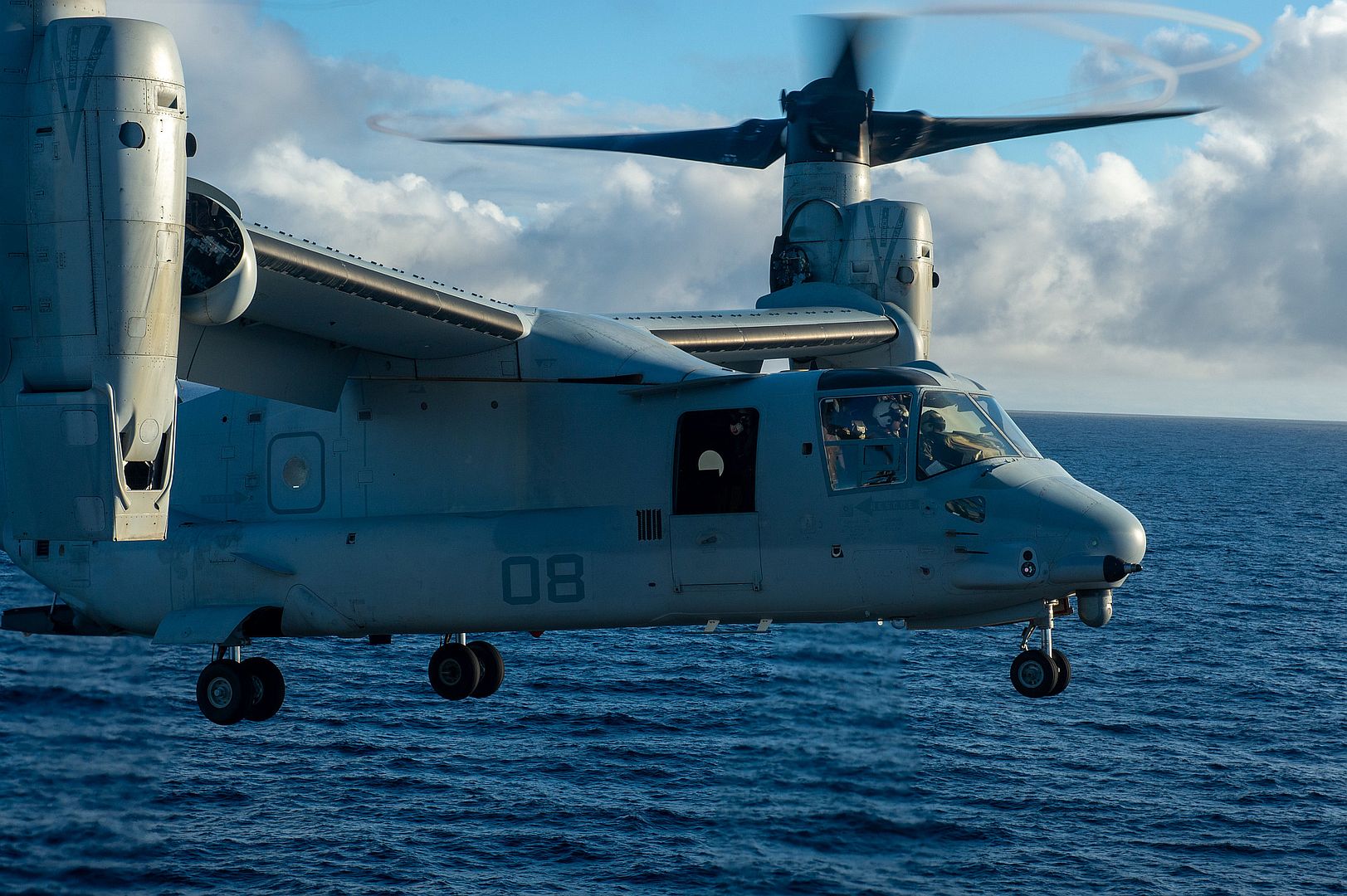
An F-16 Fighting Falcon assigned to the 64th Aggressor Squadron takes off from Nellis Air Force Base, Nev., Nov. 25, 2019. The 64th AGRS prepares combat air forces, joint and allied aircrews for tomorrow's victories with challenging and realistic threat replication, training, academics and feedback. (U.S. Air Force photo by Airman 1st Class Christopher H. Stolze)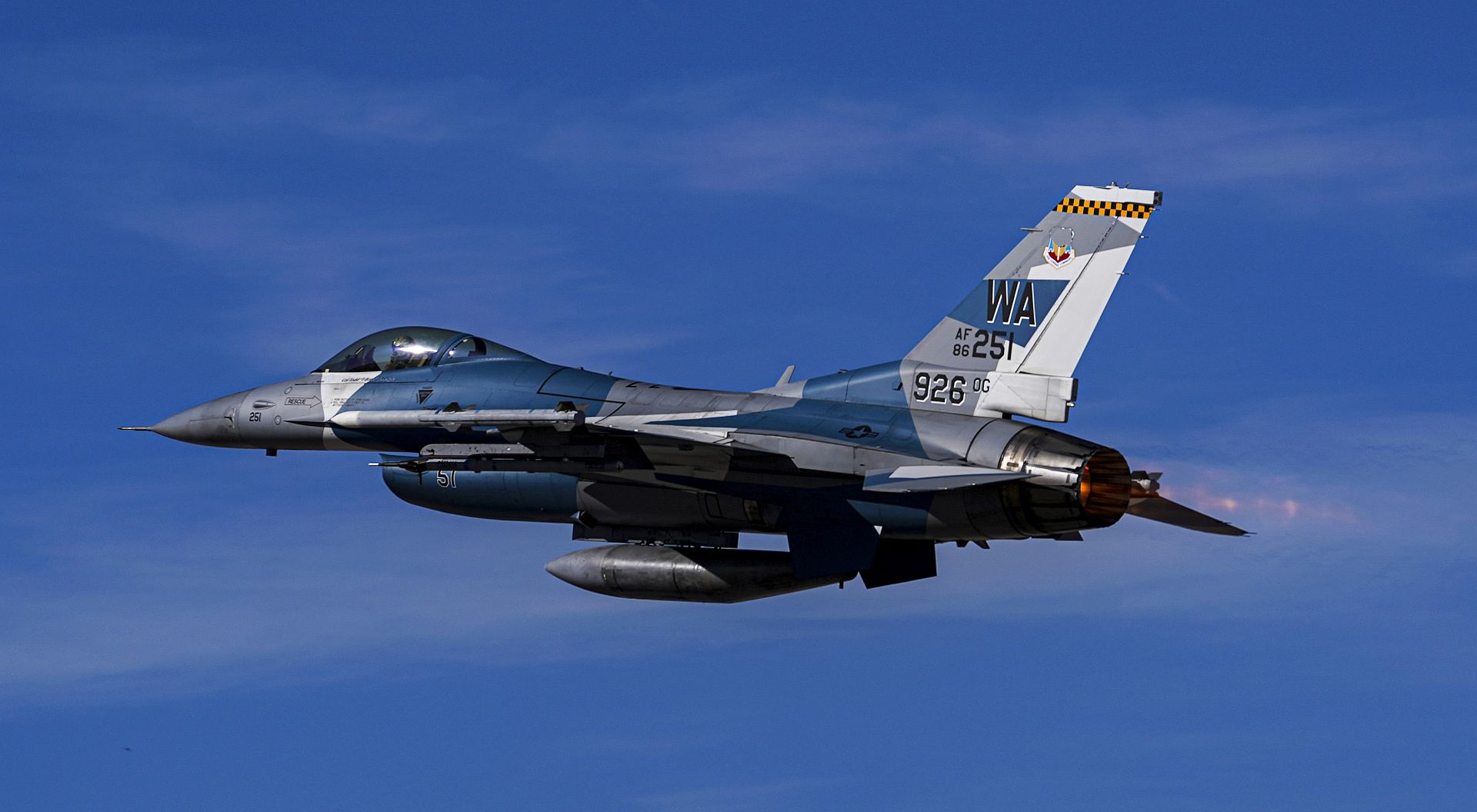
PACIFIC OCEAN (Dec. 5, 2019) An F/A-18E Super Hornet, assigned to the ?Tomcatters? of Strike Fighter Squadron (VFA) 31, approaches the flight deck of the aircraft carrier USS Theodore Roosevelt (CVN 71) Dec. 5, 2019. Theodore Roosevelt is underway conducting routine training in the Eastern Pacific Ocean. (U.S. Navy photo by Airman D.J. Schwartz)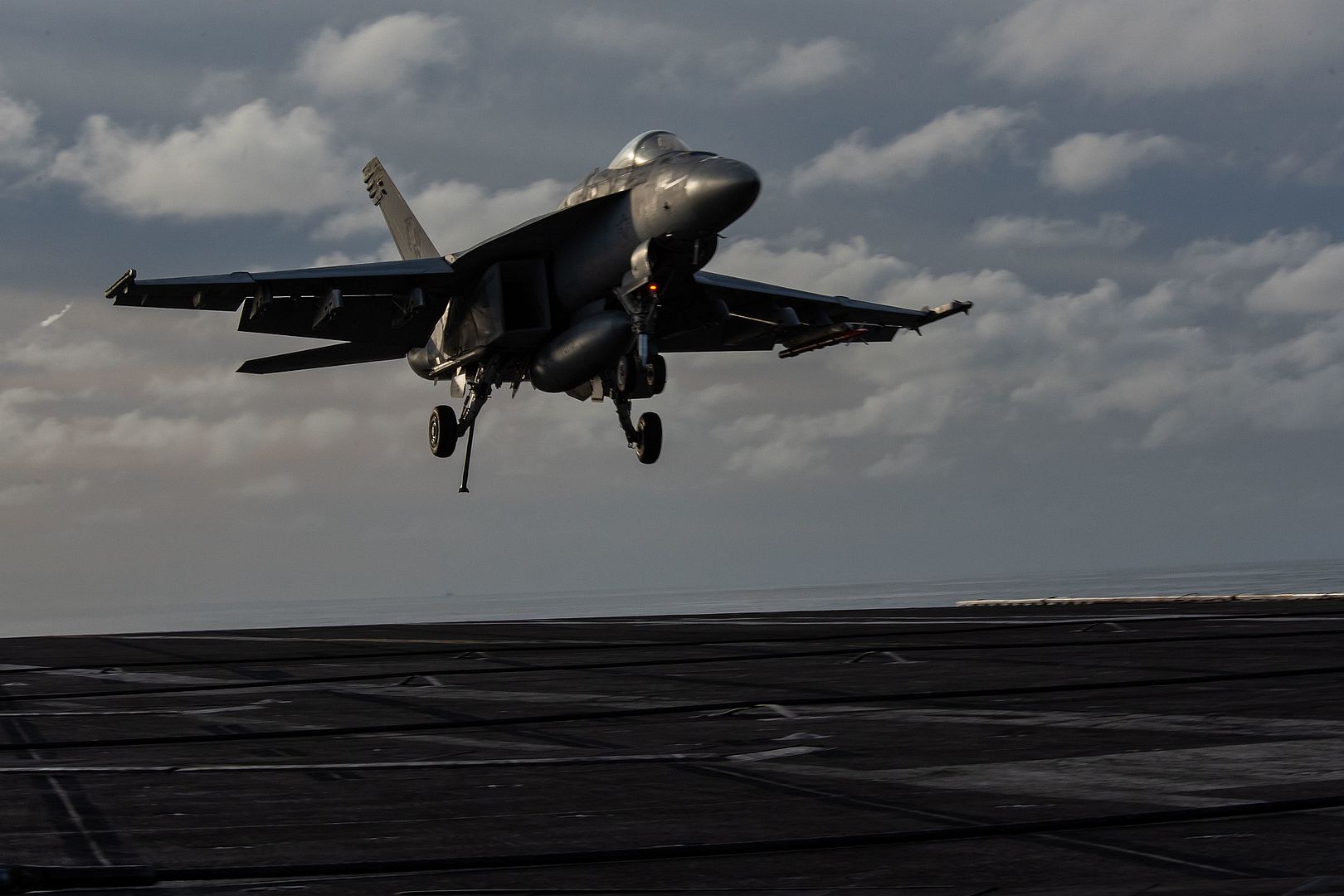
ALBUQUERQUE, NM, UNITED STATES
12.06.2019.
Sunrise over the flight line on Kirtland Air Force Base, Albuquerque New Mexico. Photo's by Senior Airman Ian Beckley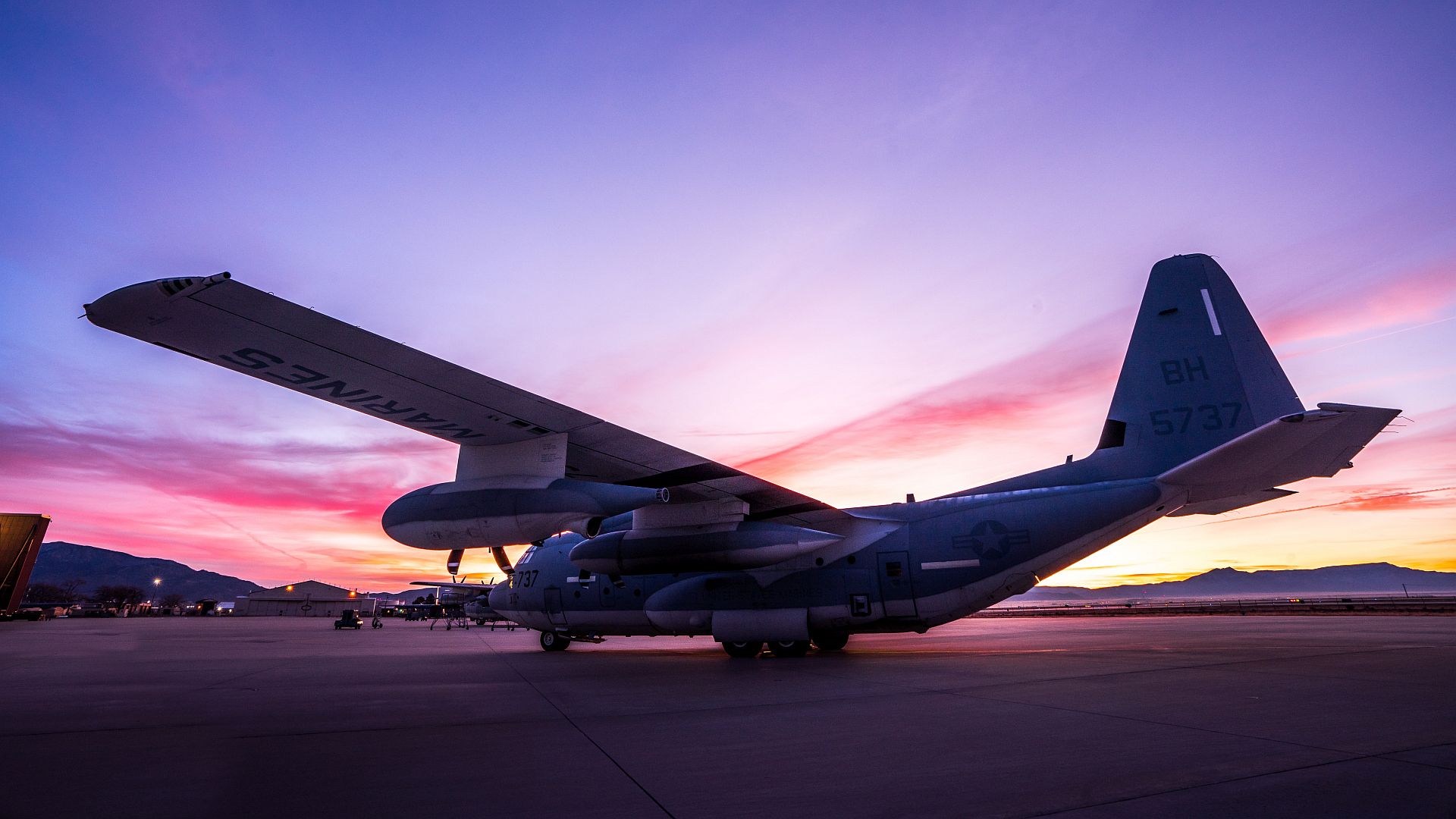
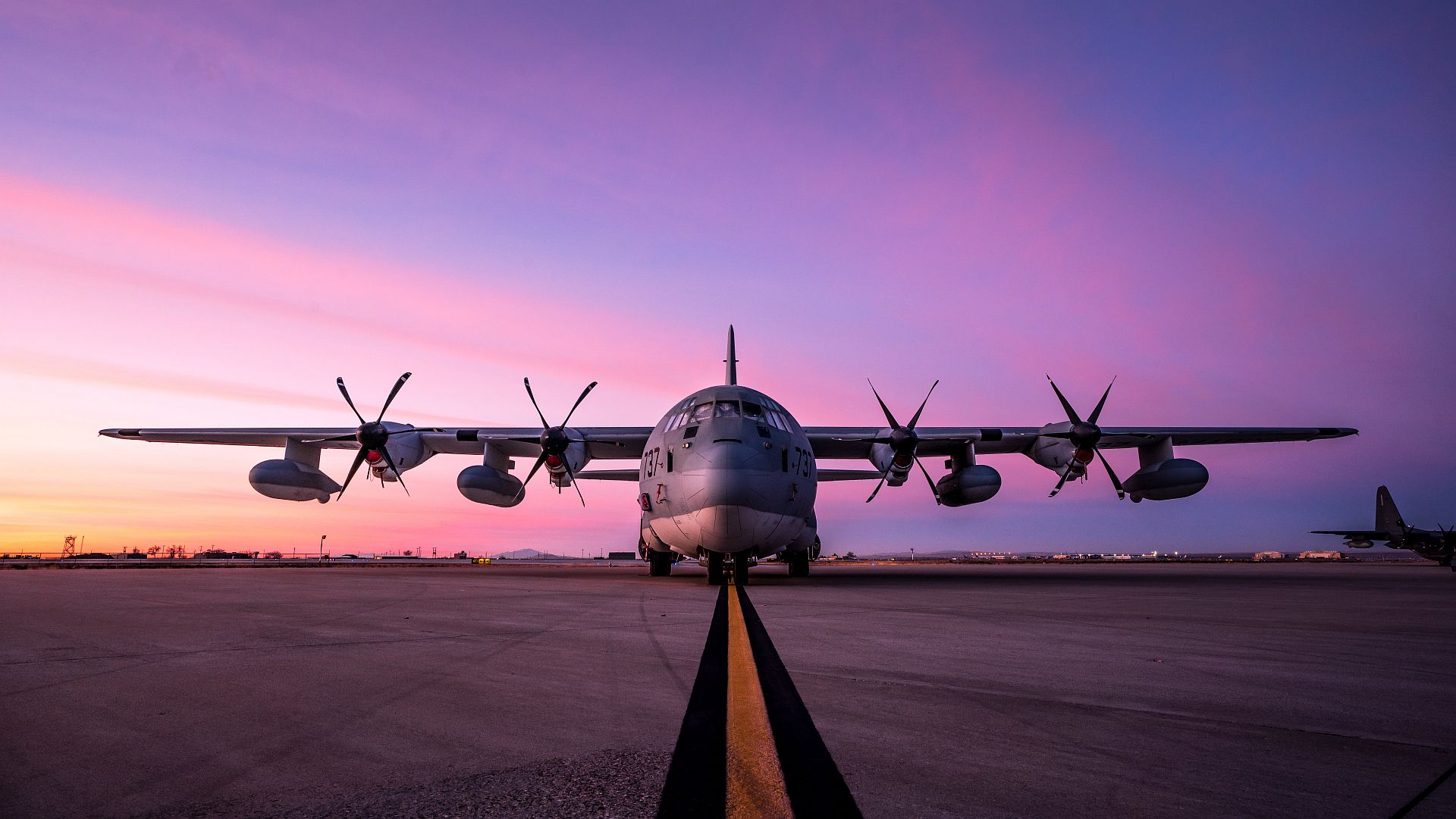
A pilot assigned to the 134th Fighter Squadron, Vermont Air National Guard, lands a F-35 Lightning II aircraft at the Vermont Air National Guard Base, South Burlington, Vt., Dec. 5, 2019. Three new aircraft arrived from Fort Worth, Texas, and are part of the 20 total aircraft assigned to the Vermont Air National Guard, with the full complement arriving by summer 2020. (U.S. Air National Guard photo by Miss Julie M. Shea)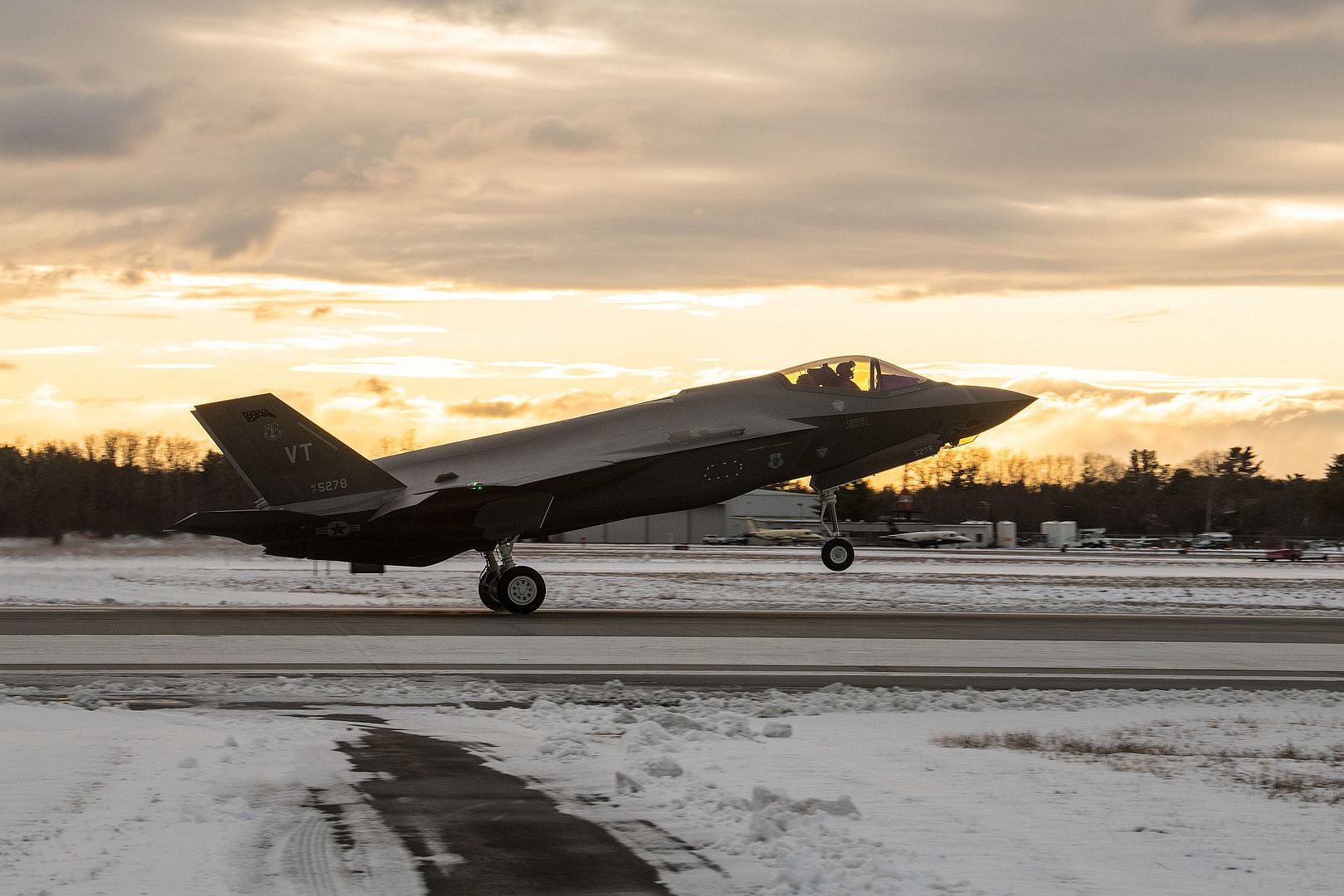
-
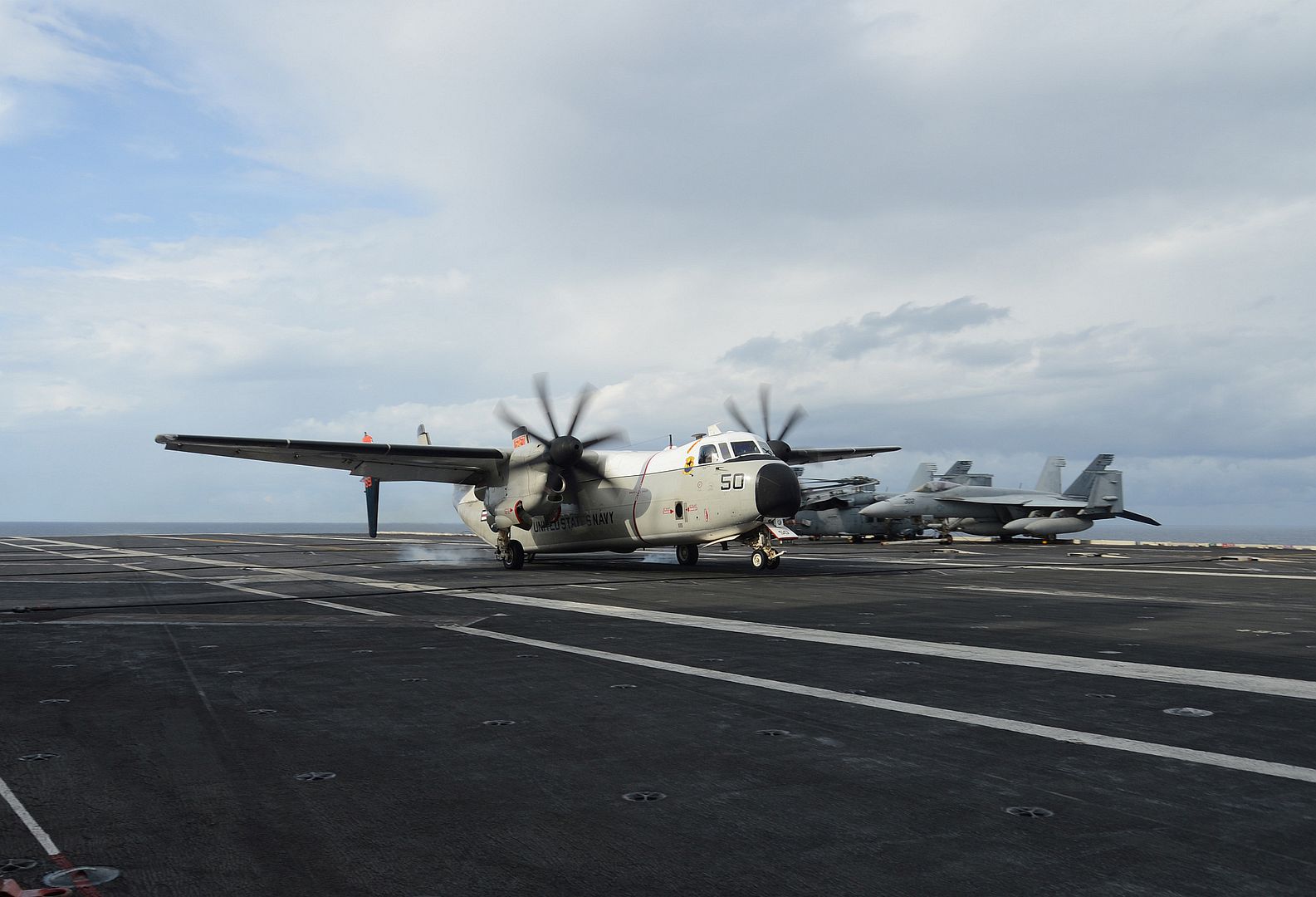
MEDITERRANEAN SEA (Dec 9, 2019) A C-2A Greyhound, attached to the ?Rawhides? of the Fleet Logistics Support Squadron (VRC) 40, lands on the Nimitz-class aircraft carrier USS Harry S. Truman (CVN 75) in the Mediterranean Sea Dec. 9, 2019. The Harry S. Truman Carrier Strike Group (CSG) is conducting operations in U.S. 6th Fleet to support maritime security operations in international waters, alongside our allies and partners. The Harry S. Truman CSG last operated in the U.S. 6th Fleet area of operations in 2018, demonstrating its ability to operate from the High North to the East Mediterranean. (U.S. Navy photo by Mass Communication Specialist 3rd Class Kaysee Lohmann/Released)
A C-130H Hercules assigned to the Japanese Air Self-Defense Force drops a Low-Cost, Low-Altitude bundle as part of Operation Christmas Drop 2019 at Andersen Air Force Base, Guam, Dec. 8, 2019. OCD is a quadrilateral training mission designed to give C-130 crews from the U.S. Air Force, Japanese Air Self-Defense Force, Royal Australian Air Force, and Royal New Zealand Air Force a chance to airdrop supplies on unsurveyed drop zones throughout the Pacific. (U.S. Air Force photo by Staff Sgt. Kyle Johnson)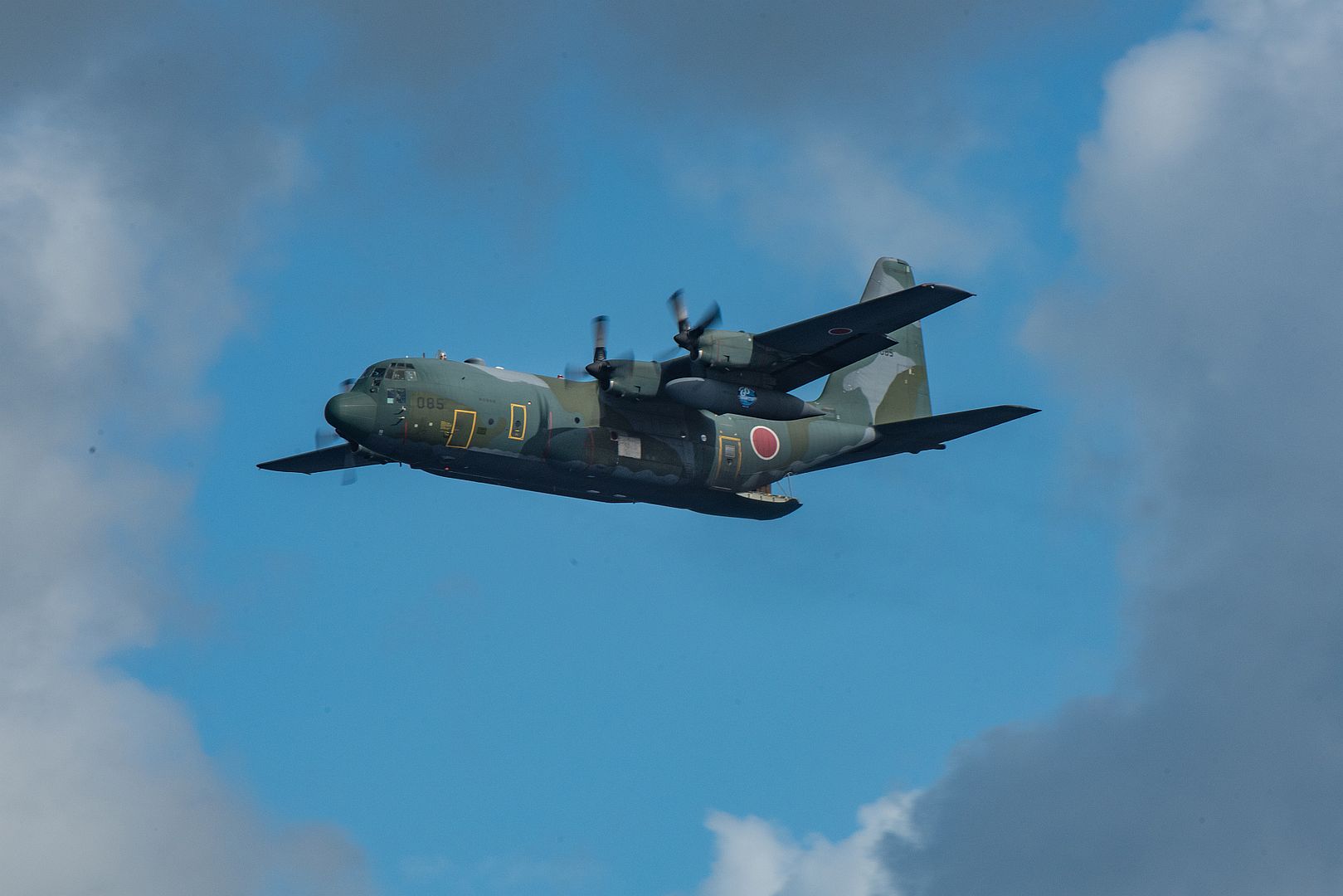
A C-130J Super Hercules assigned to the 36th Airlift Squadron, Yokota Air Base, Japan, drops a Low-Cost, Low-Altitude bundle as part of Operation Christmas Drop 2019 at Andersen Air Force Base, Guam, Dec. 8, 2019. OCD is a quadrilateral training mission designed to give C-130 crews from the U.S. Air Force, Japanese Air Self-Defense Force, Royal Australian Air Force, and Royal New Zealand Air Force a chance to airdrop supplies on unsurveyed drop zones throughout the Pacific. (U.S. Air Force photo by Staff Sgt. Kyle Johnson)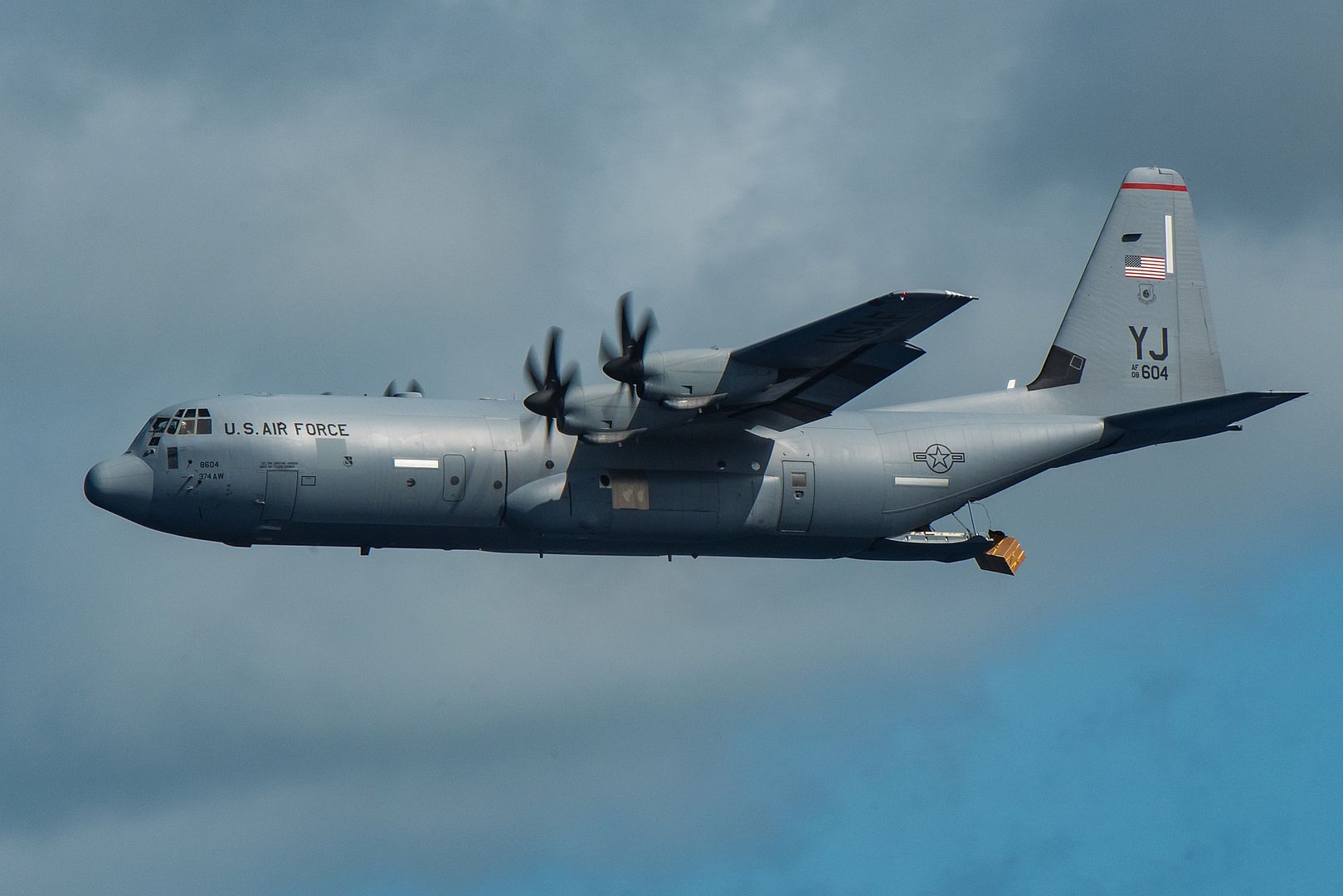
SKY, a Chilean-based ultra-low-cost carrier, has signed a Purchase Agreement with Airbus for 10 A321XLRs. The airline will expand its international route network with the new aircraft.
The A321XLR is the next evolutionary step in the A320neo/A321neo Family, meeting market requirements for increased range and payload in a single-aisle aircraft. The A321XLR will deliver an unprecedented narrow-body airliner range of up to 4,700nm, with 30% lower fuel consumption per seat compared with previous-generation competitor jets, allowing airlines to expand networks by making new longer routes economically viable.
?This new aircraft fleet will allow us to expand our offer of international and wide-ranging routes, always under our successful low cost model and its extremely convenient ticket prices. Now passengers can enjoy new and very attractive destinations on the most modern airplanes in the market,? said Holger Paulmann, CEO of SKY.
Arturo Barreira, President of Airbus Latin America, said: ?We are delighted that SKY has selected the A321XLR to further expand its fleet of all Airbus aircraft. The A321XLR will allow SKY to offer its customers new destinations, such as direct flights from Santiago in Chile to Miami in the U.S.?
According to the latest Airbus Global Market Forecast (GMF), Latin America will need 2,700 new aircraft in the next 20 years, more than double today?s fleet. Passenger traffic in Latin America has doubled since 2002 and is expected to continue growing over the next two decades. Specifically in Chile, traffic is expected to increase from 0.89 trips per capita to 2.26 trips in 2038.
In parallel to the growing fleet, according to Airbus? latest GMF, there will be a need for 47,550 new pilots and 64,160 technicians to be trained over the next 20 years in Latin America. To cover this necessity SKY also selected Airbus as its flight training provider, making the airline the launch customer for the new Airbus Chile Training Centre. The centre will offer flight crew training for Chilean pilots and will include a full-flight A320 simulator.
SKY has been an Airbus customer since 2010 and became an all-Airbus operator in 2013. The airline?s fleet of 23 A320 Family aircraft serves national and international routes connecting Chile to Argentina, Brazil, Peru and Uruguay.
Airbus has sold 1,200 aircraft, has a backlog of more than 600 and more than 700 in operation throughout Latin America and the Caribbean, representing a 60% market share of the in-service fleet. Since 1994, Airbus has secured nearly 70% of net orders in the region.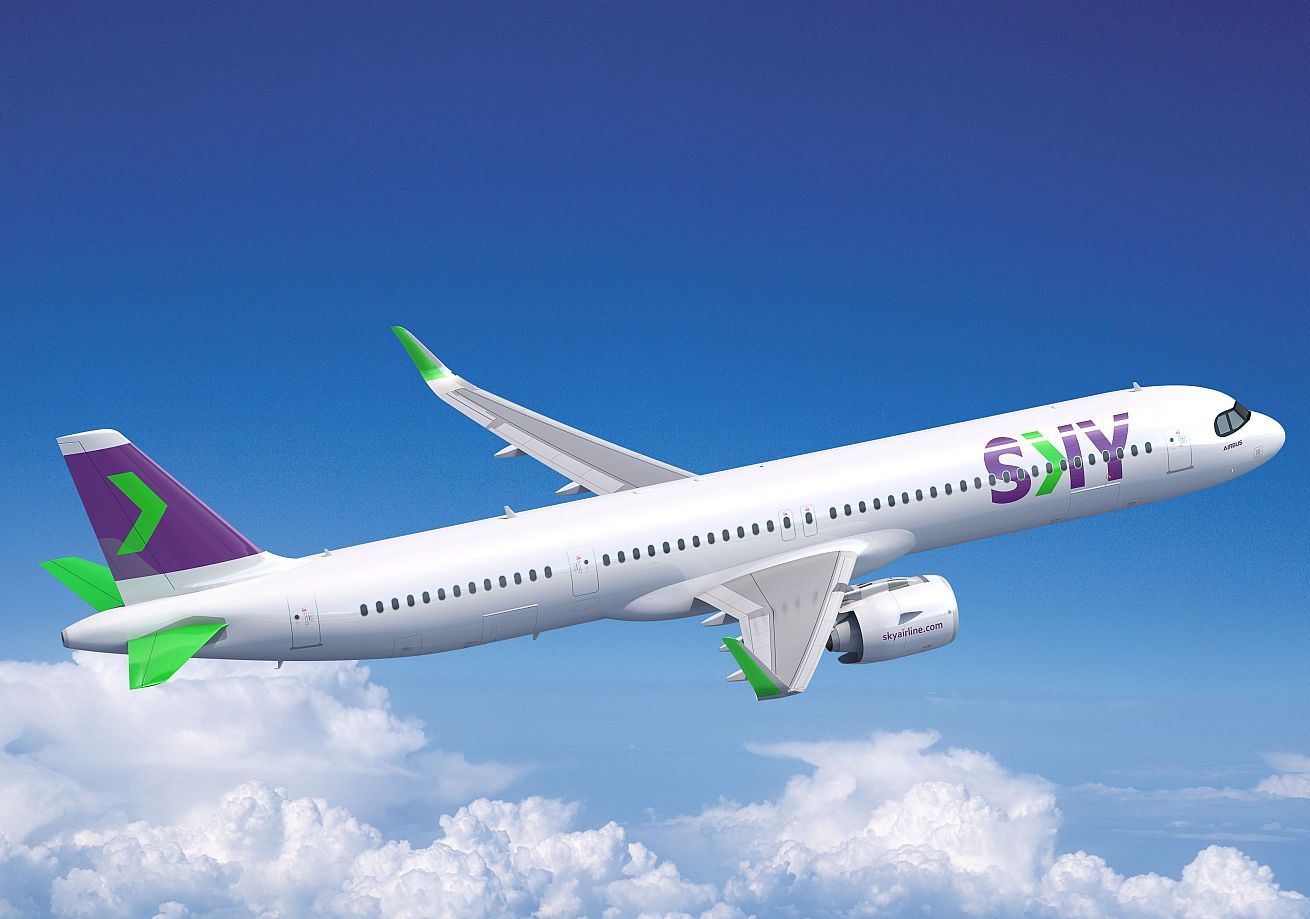
The first series production Gripen E for Sweden has made its initial flight, piloted by F?rsvarets Materielverk (FMV, defense materiel administration) test pilot Henrik W?nseth, Saab announced on December 3.
Serialed 6002, the aircraft displayed a new three-tone gray splinter camouflage that is redolent of the ?fields and meadows? worn for many years by Swedish military aircraft. Whether this becomes the standard scheme is questionable: FMV noted on its Instagram account that the paint scheme is ?different on the different aircraft? and is ?part of the tests.?
Flygvapnet (the Swedish air force) is to receive 60 JAS 39E single-seaters. They are equipped with a wide-area cockpit display and helmet-mounted display from AEL Sistemas, Elbit?s Brazilian subsidiary. Some form of operating capability is scheduled to be achieved in 2021.
Saab has built and flown three Gripen E development aircraft, 39-8, 39-9 and 39-10, and started serial production of the first four single-seaters in January. The first of them took to the air on August 26 and is slated for delivery to the Brazilian air force after first being employed on trials in Sweden.
It was formally handed over for tests on September 10. The remaining three aircraft from the first production batch are initially earmarked for Swedish trials and evaluation with the FMV.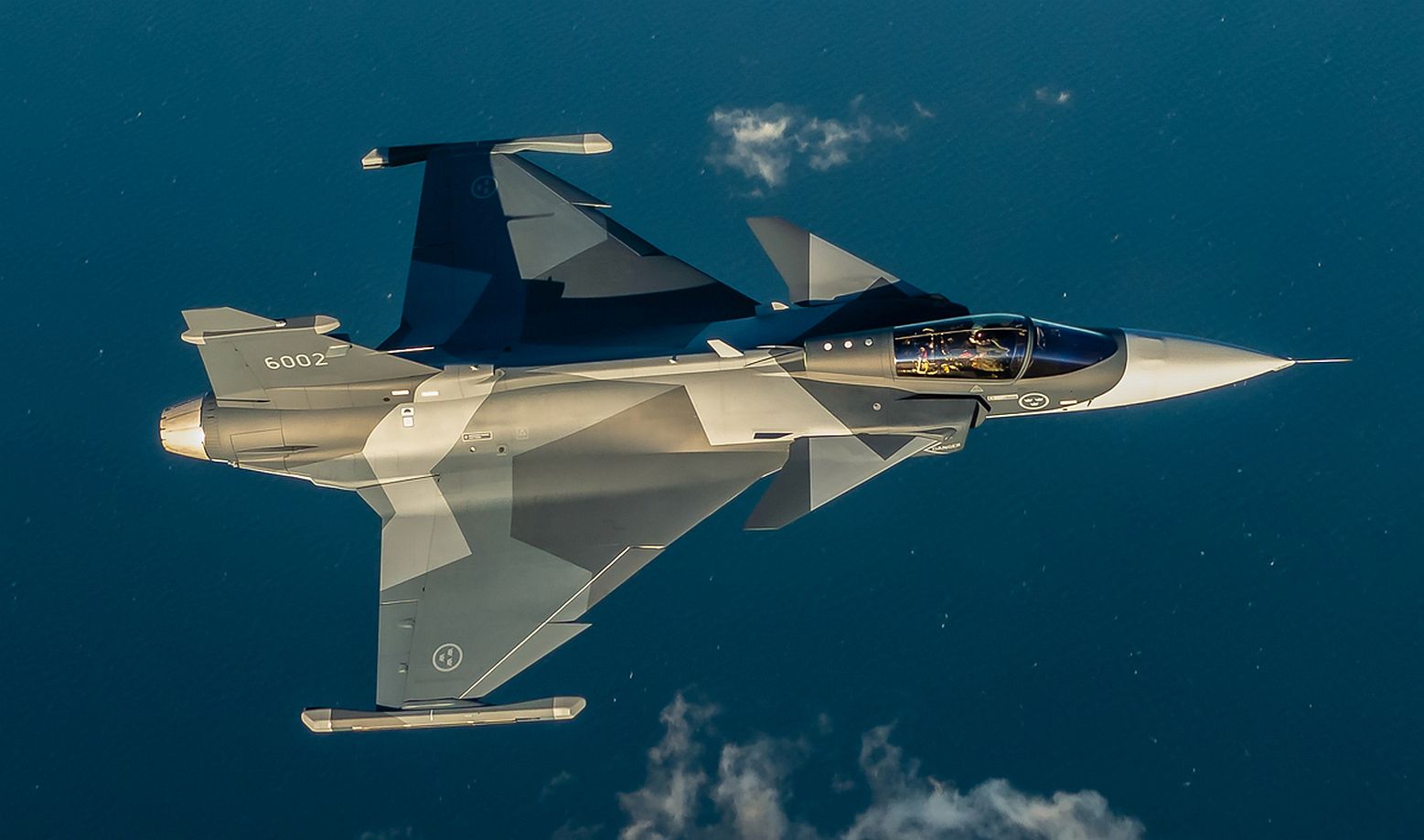
-
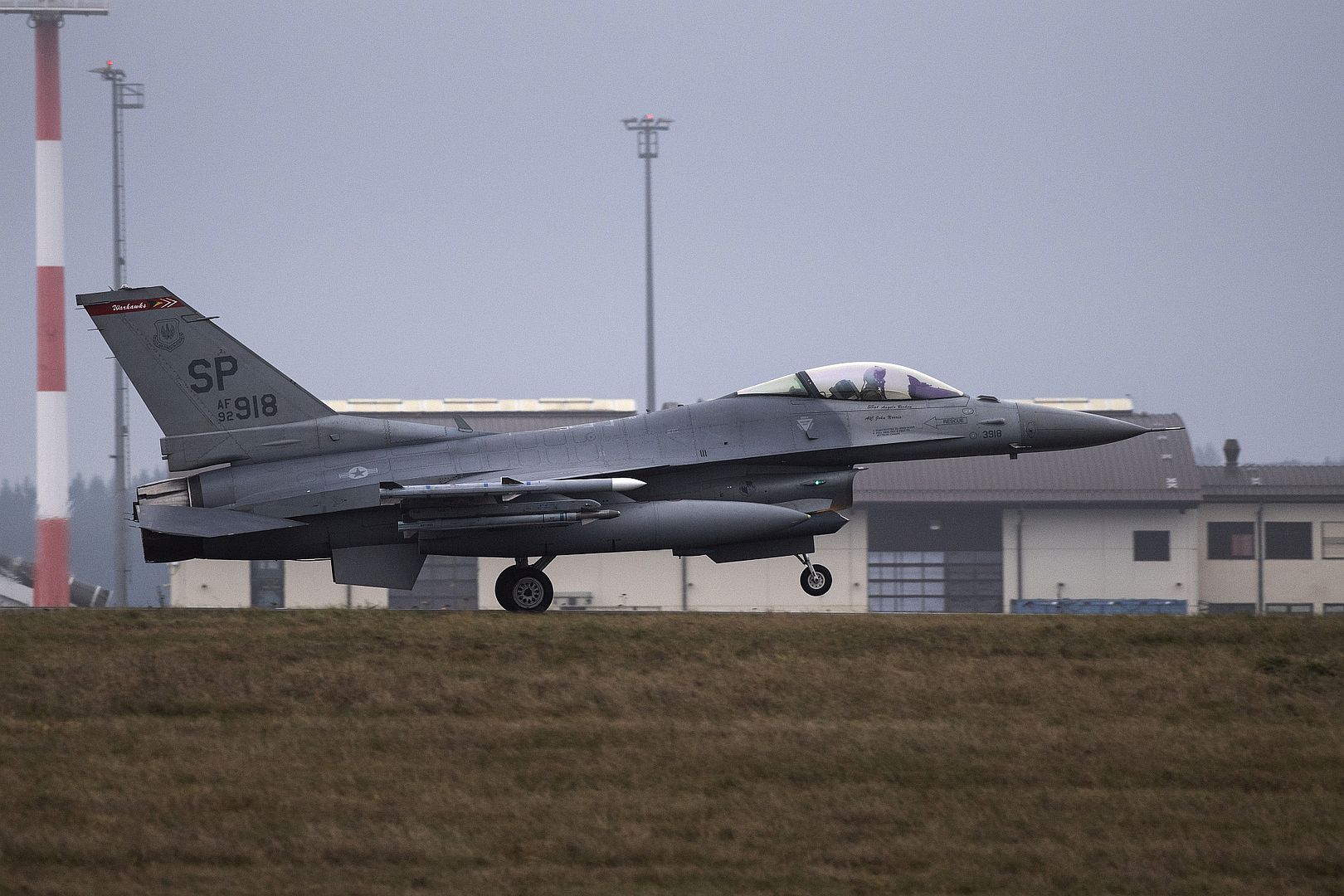
A U.S. Air Force F-16 Fighting Falcon, assigned to the 480th Fighter Squadron, lands at Spangdahlem Air Base, Germany, Dec. 10, 2019. Spangdahlem F-16s participated in an Allied Combat Lethality Exercise with the Polish air force to improve readiness and coordination with NATO partners in preparation for potential times of crisis. (U.S. Air Force photo by Airman 1st Class Valerie Seelye)
MEDITERRANEAN SEA (Dec. 8, 2019) An F/A-18F Super Hornet, attached to the ?Red Rippers? of Strike Fighter Squadron (VFA) 11, lands on the flight deck of the Nimitz-class aircraft carrier USS Harry S. Truman (CVN 75) in the Mediterranean Sea Dec. 8, 2019. The Harry S. Truman Carrier Strike Group (CSG) is conducting operations in U.S. 6th Fleet to support maritime security operations in international waters, alongside our allies and partners. The Harry S. Truman CSG last operated in the U.S. 6th Fleet area of operations in 2018, demonstrating its ability to operate from the High North to the East Mediterranean. (U.S. Navy photo by Mass Communication Specialist Seaman Kelsey Trinh/Released)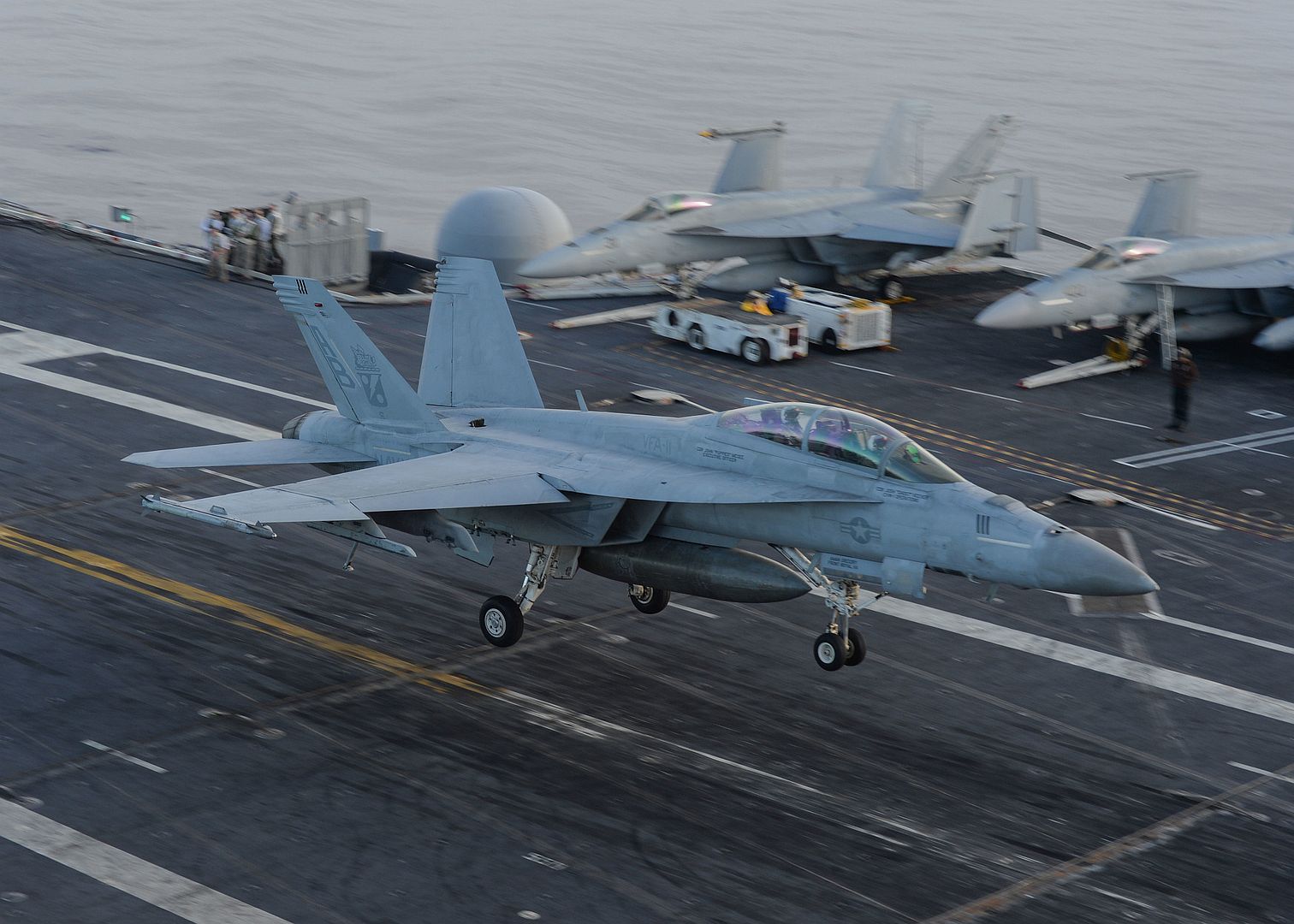
An F-15E Strike Eagle assigned to the 492nd Fighter Squadron takes off in support of the Allied Combat Lethality Exercise at Royal Air Force Lakenheath, England, Dec. 10, 2019. Participation in multinational exercise enhances our professional relationships and improves overall coordination with allies and partner militaries during times of crisis. (U.S. Air Force photo by Senior Airman Shanice Williams-Jones)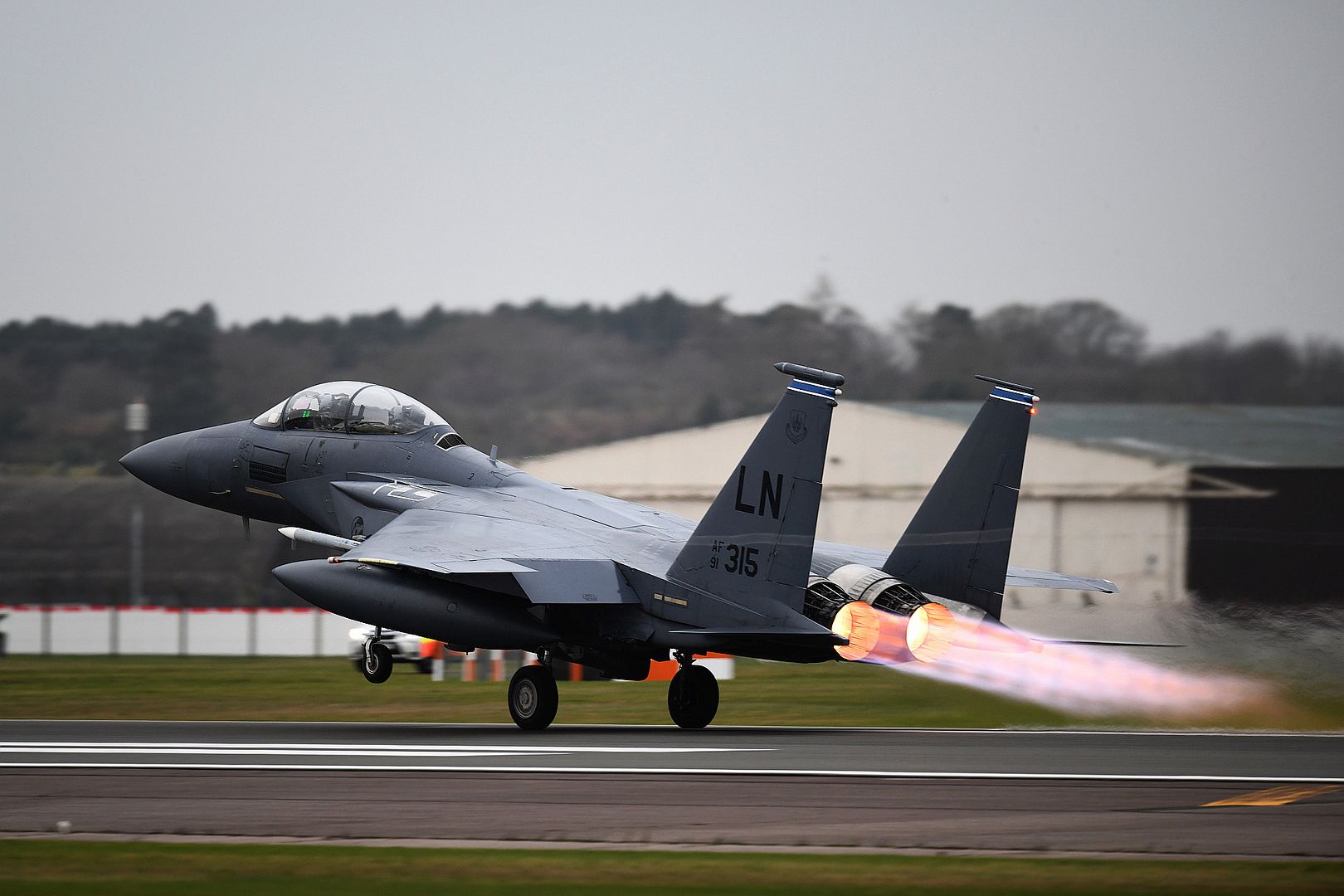
ENGLEWOOD, Colorado, Dec. 9, 2019 ? Sikorsky, a Lockheed Martin company (NYSE: LMT), and United Rotorcraft, a division of Air Methods Corporation, announced today deliveries of three new S-70i? FIREHAWK? helicopters to California fire agencies: one each to the Department of Forestry and Fire Protection (CAL FIRE), the Los Angeles County Fire Department (LACoFD), and the City of San Diego Fire-Rescue Department.
Configured by United Rotorcraft with a newly designed 1,000-gallon water tank attached to the belly of the aircraft; an extended landing gear to accommodate the tank; a retractable snorkel that can refill the tank in less than one minute; and a rescue hoist, the Firehawk helicopters will allow fire crews to attack wildfires, transport up to 12 ground firefighters to the fire line, and rescue firefighters and civilians when in need.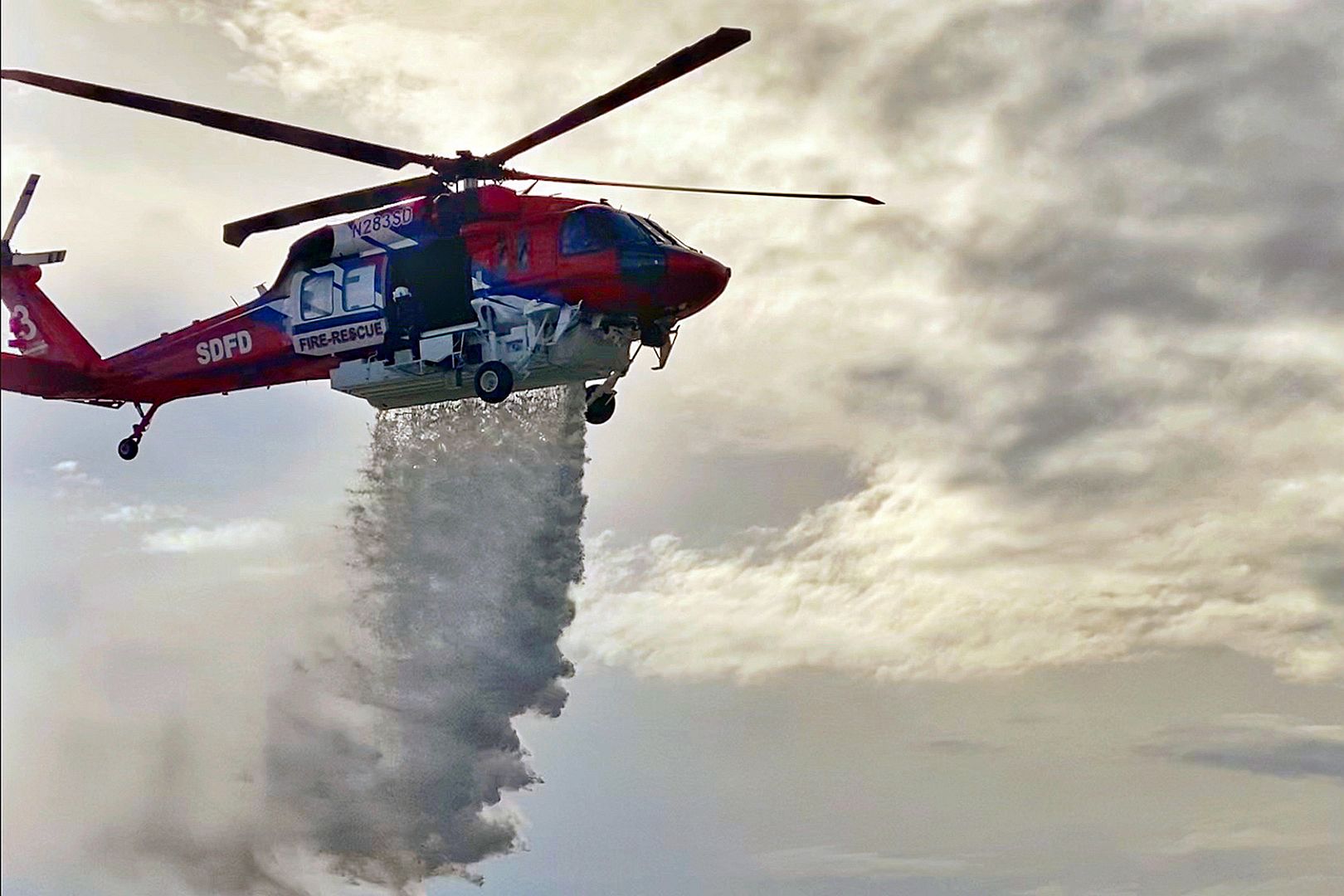
?We thank CAL FIRE, the County of Los Angeles and the City of San Diego for their trust in the combined efforts of Sikorsky and United Rotorcraft to bring a life-saving aerial firefighting helicopter to the urban centers and forests of California,? said Jason Lambert, vice president of Sikorsky Global Military & Mission Systems. ?Their fire fighters now have a powerful and proven helicopter that can attack fires at night, in strong Santa Ana winds, maneuver with agility and safety in canyons and terrain from sea level up to 10,000 ft. altitude, while dropping water with tremendous precision and force.?
CAL FIRE?s newly acquired S-70i FIREHAWK helicopter is the first of nine aircraft currently on order, with an option for three more. CAL FIRE and San Diego are both first-time operators of the aerial firefighting helicopter.
LACoFD has operated three S-70A model Firehawks since 2001. During the ensuing 19 years, the county has pioneered and perfected the tactics needed to suffocate wildfires in their early stage when a fire is most vulnerable, while working in close coordination with other aircraft and with firefighting crews on the ground. The county?s new S-70i FIREHAWK aircraft is the first of two ? more powerful and faster than the S-70A model ? that LACoFD is adding to its fleet.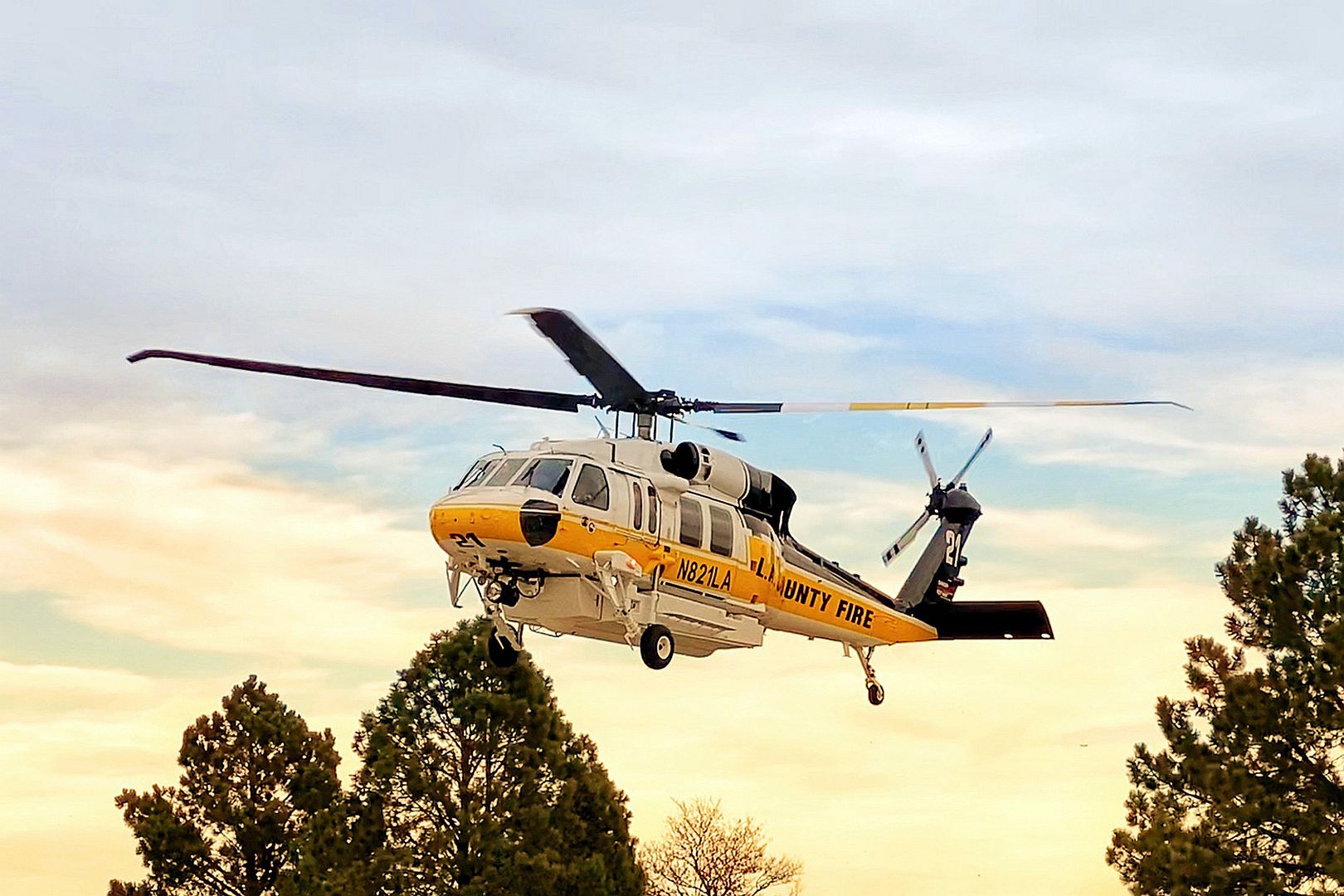
?With the increase in wildfire danger, the FIREHAWK has never been more relevant to the State of California,? said Mike Slattery, president of United Rotorcraft. ?This capability brings unmatched multi-mission capability to these firefighting agencies to protect lives and property.?
United Rotorcraft contracted with KAWAK Aviation Technologies (Bend, Oregon) to design and manufacture the water tank to new specifications based on input from LACoFD. Among other equipment on each aircraft are a 600 lb. external rescue hoist, a 9,000 lb. cargo hook with load cell system, forward recognition lights and a high intensity searchlight. Avionics installations include tactical communications and navigation systems.
A Firehawk begins life at Stratford-Connecticut-based Sikorsky as an S-70i Black Hawk helicopter. United Rotorcraft then converts the twin-engine aircraft to its aerial firefighting configuration. The aircraft retains its multi-mission capability, allowing aircrew to perform search and rescue missions, medical evacuation, and carry cargo either internally or as an external load.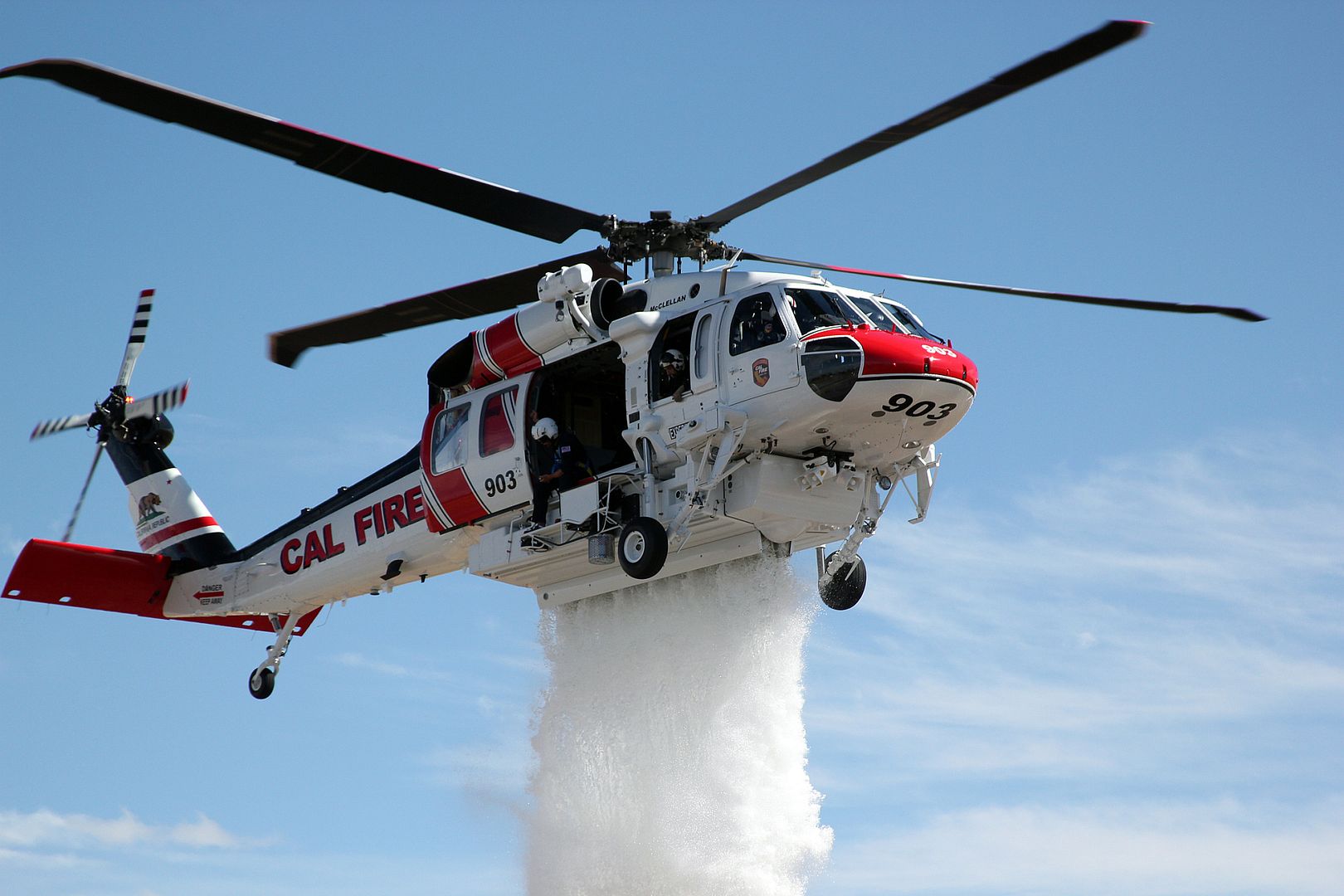
PHILADELPHIA, Dec. 10, 2019 ? Boeing [NYSE: BA] and Bell Textron Inc., a Textron Inc. [NYSE: TXT] company, have delivered the first modified MV-22 Osprey to the United States Marine Corps for improved readiness and reliability of the tiltrotor fleet.
The Marines have multiple configurations of the MV-22 aircraft in service. Under the Common Configuration ? Readiness and Modernization (CC-RAM) program, Bell Boeing is reducing the number of configurations by upgrading block ?B? aircraft to the current block ?C? configuration.
?Our first CC-RAM aircraft returning to Marine Corps Air Station New River was a key program benchmark,? said U.S. Marine Corps Col. Matthew Kelly, program manager, V-22 Joint Program Office (PMA-275). ?We are excited to see the capability, commonality and readiness improvements these CC-RAM aircraft bring to the fleet as part of the Marine Corps? V-22 readiness program.?
As a block ?B? configuration, this MV-22 was originally delivered to the fleet in 2005. In 2018, the aircraft flew from Marine Corps Air Station New River to the Boeing Philadelphia facility for modernization.
?This milestone marks the beginning of an Osprey evolution,? said Kristin Houston, vice president, Boeing Tiltrotor Programs and director, Bell Boeing V-22 Program. ?Through a shared focus on safety and quality, the Bell Boeing team is delivering modernized MV-22 aircraft that are ready to serve our dedicated servicemen and women who rely on this essential aviation resource.?
The next CC-RAM delivery is expected in early 2020.
?We look forward to having the remaining MV-22 block ?B? aircraft rejoin the fleet in a block ?C? configuration,? said Kelly.
In November 2019, the U.S. Navy awarded Bell Boeing $146,039,547 to upgrade nine additional MV-22 aircraft under the CC-RAM program, with work expected to be completed in March 2022.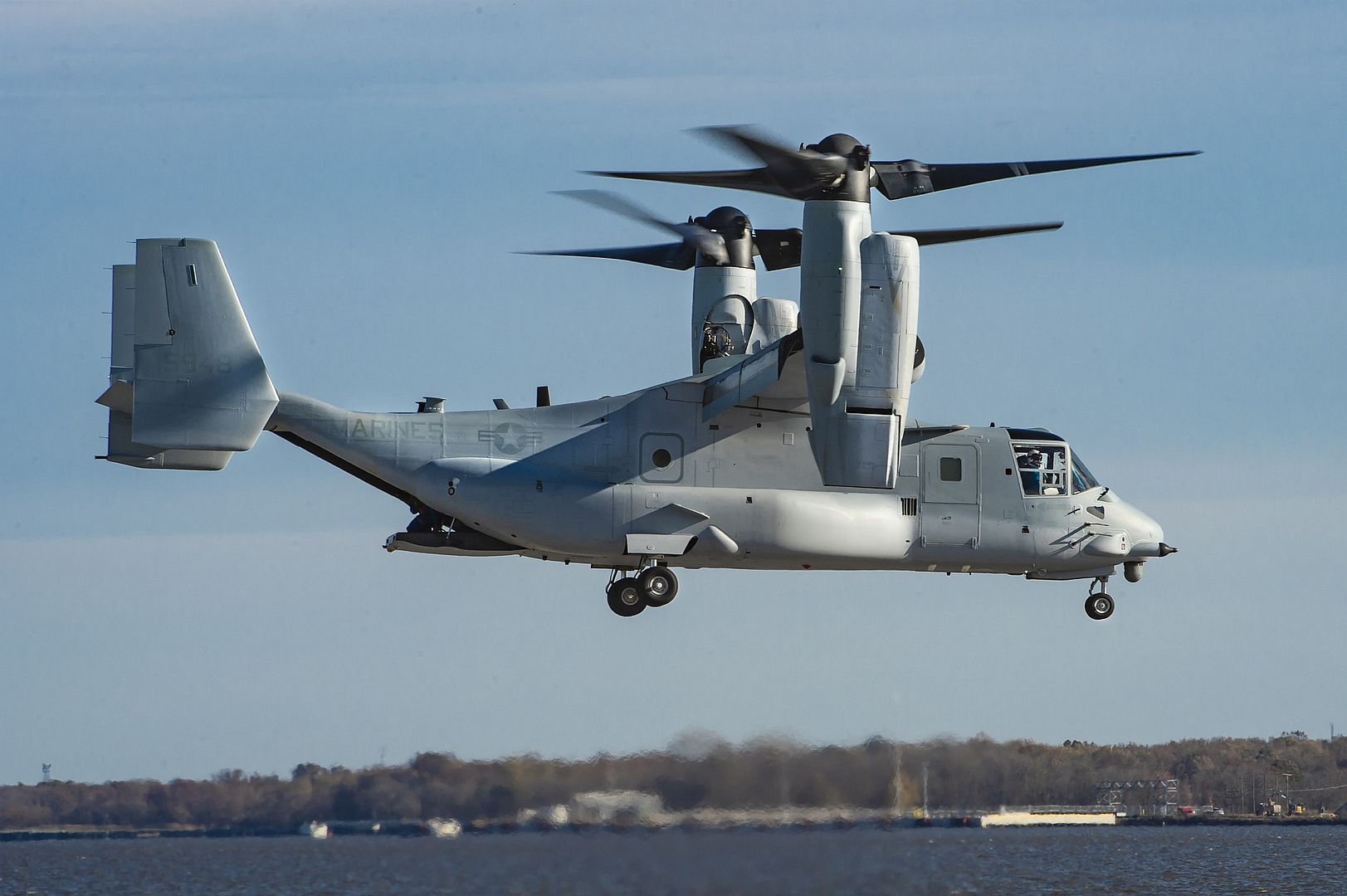
Donauw?rth ? Airbus Helicopters has delivered the first H145 for the German Armed Forces? (Bundeswehr) search and rescue service to the Federal Office of Bundeswehr Equipment, Information Technology and In-Service Support (BAAINBw), several months before the agreed deadline. A total of seven helicopters of this type were ordered to renew their ageing Bell UH-1D search and rescue fleet.
?We are delighted to be able to deliver this helicopter not only on time, but in this case even before the contractually agreed deadline,? said Wolfgang Schoder, CEO of Airbus Helicopters Deutschland. ?The H145 helicopters already operated by the Bundeswehr have proven themselves, in particular, through their very high levels of operational availability. We see a lot more possibilities for the flexible and reliable aircraft to perform a wide range of tasks in all branches of the armed forces.?
The Bundeswehr is also responsible for search and rescue operations (SAR) in the event of aircraft accidents on German territory. It therefore maintains a fleet of search and rescue helicopters on permanent standby, and these helicopters are also available for use in national disaster management operations. The Bell UH-1D model currently in use by the Bundeswehr first entered into service in the early 1970s. The new aircraft will be stationed at the sites in Niederstetten, Holzdorf and N?rvenich. The last of the H145 LUH SAR (Light Utility Helicopter Search and Rescue) helicopters will be delivered early 2021, once training has been completed. Airbus Helicopters will also be responsible for logistics support, repair, and maintenance of the helicopters.
Among other features, the helicopters are equipped with high-performance cameras, searchlights, emergency beacon locator systems, a full suite of medical equipment, rescue winches and load hooks that can be used for fire-extinguishing tanks, for example. They are easy to identify thanks to the characteristic bright orange paintwork on their doors, featuring ?SAR? in blue lettering.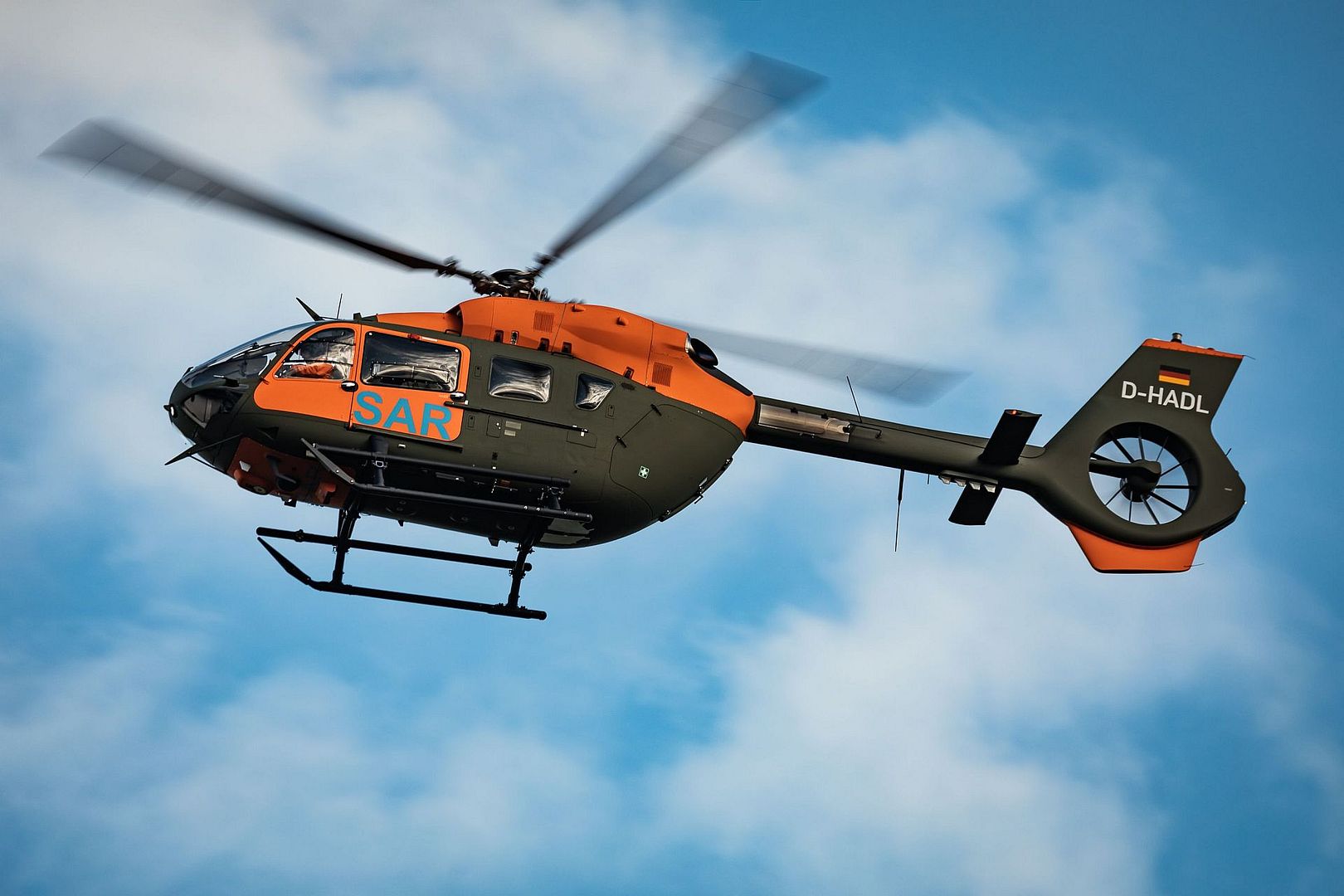
Kinshasa, Democratic Republic of the Congo, December 10th, 2019 ? Embraer and Congo Airways have signed a firm order for two E175 aircraft, with purchase rights for a further two. The deal has a total value of USD 194.4 million at current list prices with all purchase rights exercised, and will be added to Embraer?s 2019 fourth quarter backlog.
Desire Bantu, CEO of Congo Airways said, ?These new jets will replace our current turboprop offering and allow us to serve routes both within the Democratic Republic of Congo, and regionally to West, Central, and Southern Africa, from our hub in Kinshasa. We will now have the flexibility and the right sized aircraft to serve our market, which is growing so rapidly an additional order may be required, for which the E2 is a particularly compelling option.?
Raul Villaron, Vice President Sales, Africa and Middle East, Embraer Commercial Aviation, said, ?It?s great to welcome another airline to the Embraer family of operators, especially in Africa where the demand for regional travel is growing strongly. We look forward to supporting Congo Airways as they continue to upgrade their offering to their customers.?
The aircraft will be configured in a dual class layout seating 76 passengers in total, with 12 in business class. Deliveries will begin in the fourth quarter of 2020.
Embraer is the world?s leading manufacturer of commercial aircraft up to 150 seats with more than 100 customers across the world. For the E-Jets program alone, Embraer has logged more than 1,800 orders and 1,500 aircraft have been delivered. Today, E-Jets are flying in the fleets of 80 customers in 50 countries. The versatile 70 to 150-seat family is flying with low-cost airlines as well as with regional and mainline network carriers.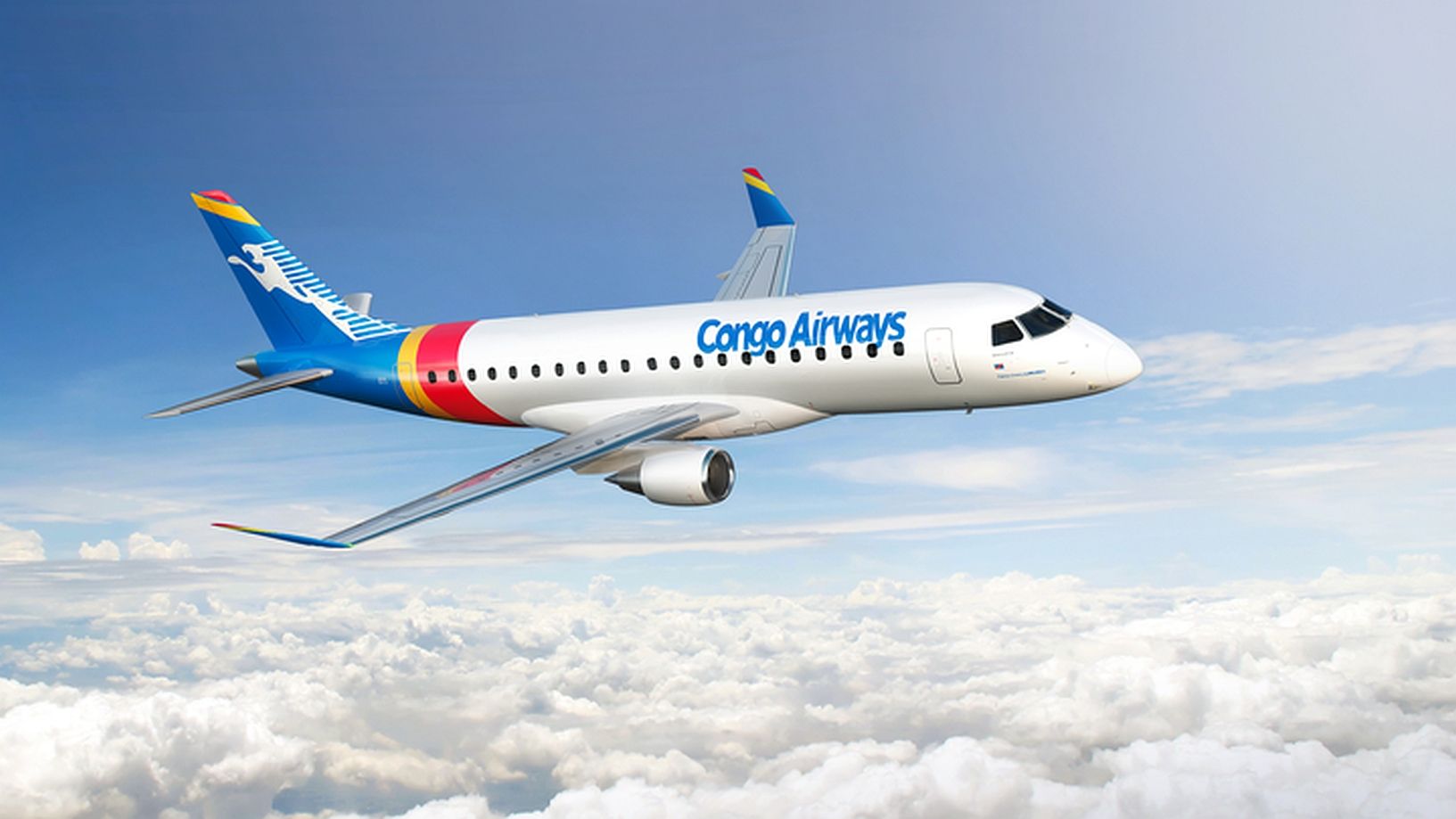
-
An F-16 fighter jet, assigned to the Ohio National Guard?s 180th Fighter Wing, starts up on the flightline in preparation for a nighttime training mission, Dec. 10, 2019. The 180FW conducts training, rain or snow, day and night to enhancing mission readiness to ensuring combat power can be delivered to combatant commanders, anytime, anywhere. (Air National Guard photo by Senior Master Sgt. Beth Holliker).
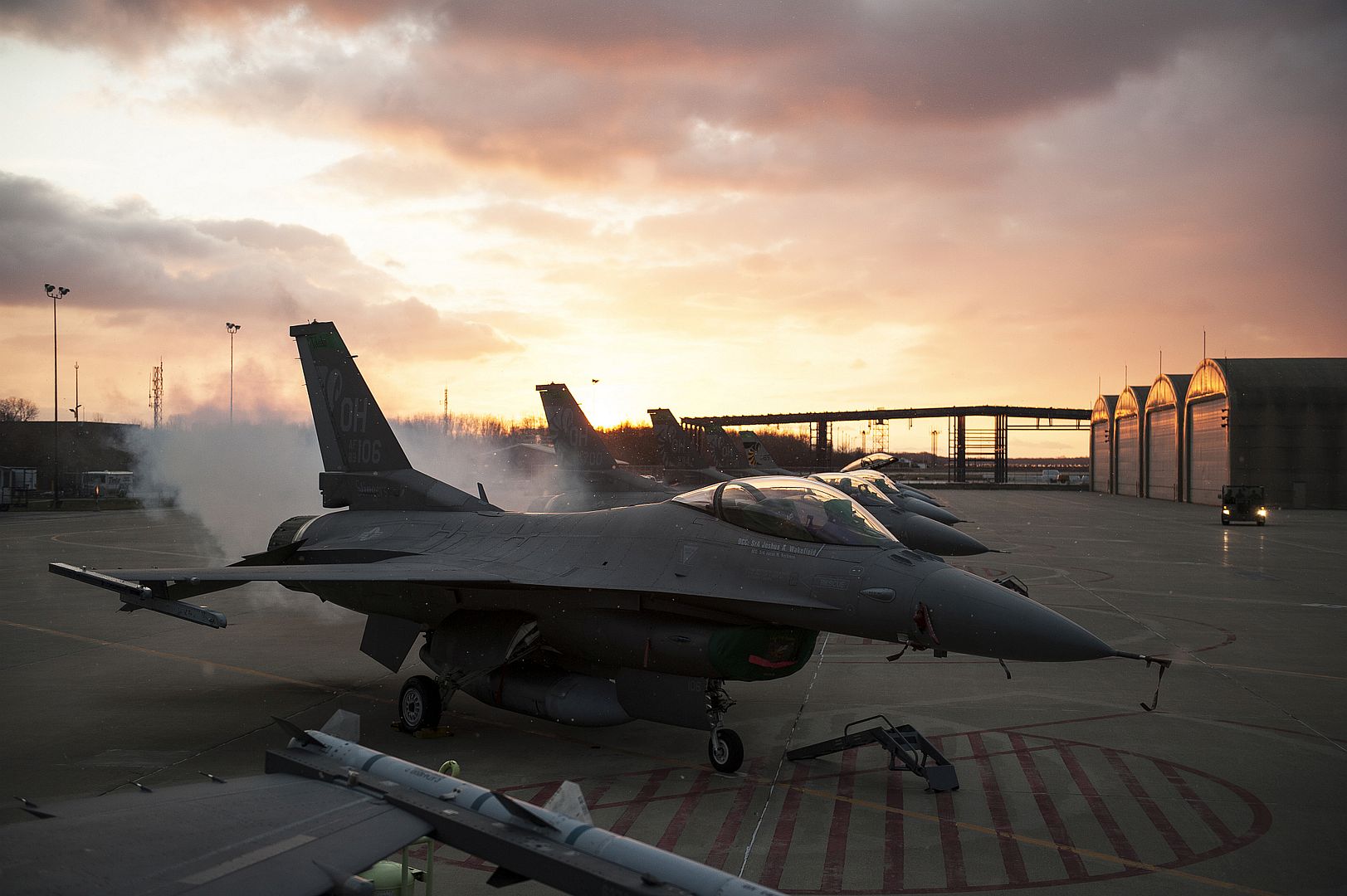
Light snow falls as Capt. Elliot England, an F-16 pilot assigned to the Ohio National Guard?s 180th Fighter Wing, taxies to the runway in preparation for a nighttime training mission, Dec. 10, 2019. The 180FW conducts training, rain or snow, day and night to enhancing mission readiness to ensuring combat power can be delivered to combatant commanders, anytime, anywhere. (Air National Guard photo by Senior Master Sgt. Beth Holliker).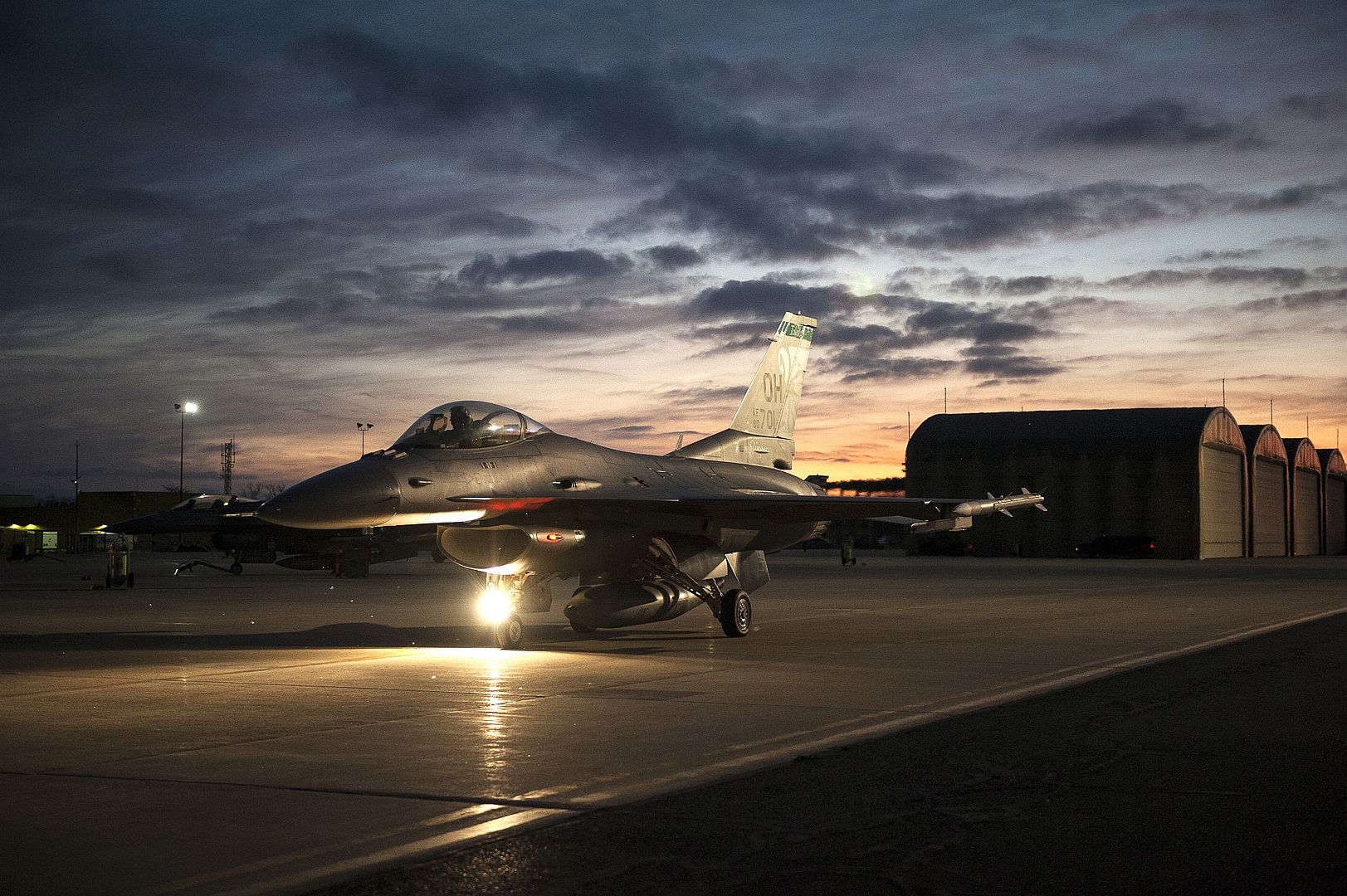
MEDITERRANEAN SEA (Dec. 11, 2019) An F/A-18F Super Hornet, attached to the ?Red Rippers? of Strike Fighter Squadron (VFA) 11, prepares to launch off the flight deck of the Nimitz-class aircraft carrier USS Harry S. Truman (CVN 75) in the Mediterranean Sea Dec. 11, 2019. The Harry S. Truman Carrier Strike Group (CSG) is conducting operations in U.S. 6th Fleet to support maritime security operations in international waters, alongside our allies and partners. The Harry S. Truman CSG last operated in the U.S. 6th Fleet area of operations in 2018, demonstrating its ability to operate from the High North to the East Mediterranean. (U.S. Navy photo by Mass Communication Specialist Seaman Apprentice Isaac Esposito/Released)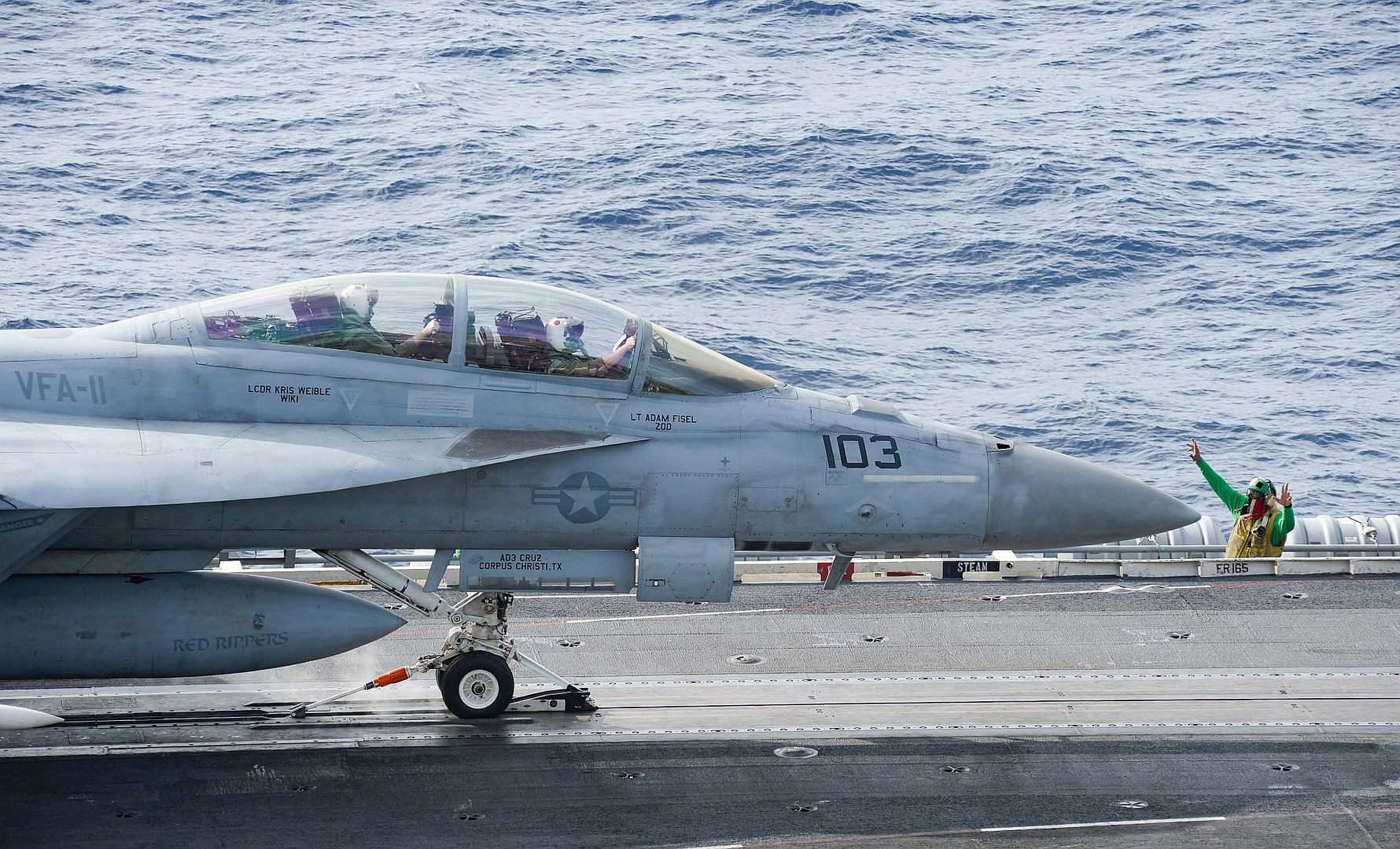
Members of Richard Childress Racing brought one of NASCAR hall of famer Dale Earnhardt Sr.?s original race cars to the flightline Dec. 5, 2019, at Seymour Johnson Air Force Base, N.C. The car was placed side-by-side with an F-15E Strike Eagle bearing a similar number ?3?, which was painted by Airmen while on a deployment earlier this year. (U.S. Air Force photo by Airman 1st Class Jacob Derry)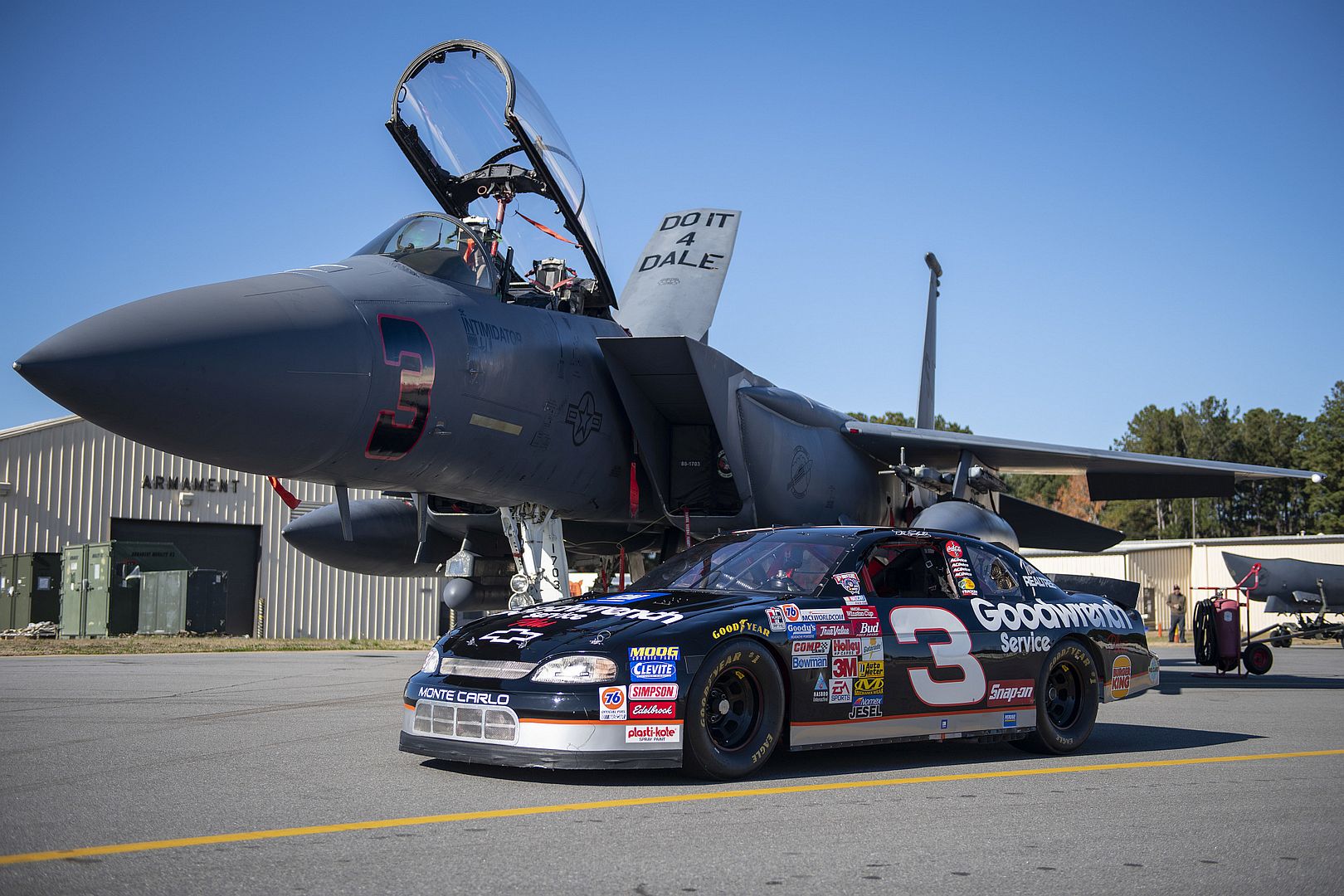
ATLANTIC OCEAN (Dec. 9, 2019) A T-45C Goshawk training aircraft assigned to Training Air Wing (TW) 2 lands on the flight deck of the aircraft carrier USS John C. Stennis (CVN 74) in the Atlantic Ocean, Dec. 9, 2019. The John C. Stennis is conducting routine operations in support of Commander, Naval Air Force Atlantic. (U.S. Navy photo by Mass Communication Specialist 2nd Class Grant G. Grady/Released)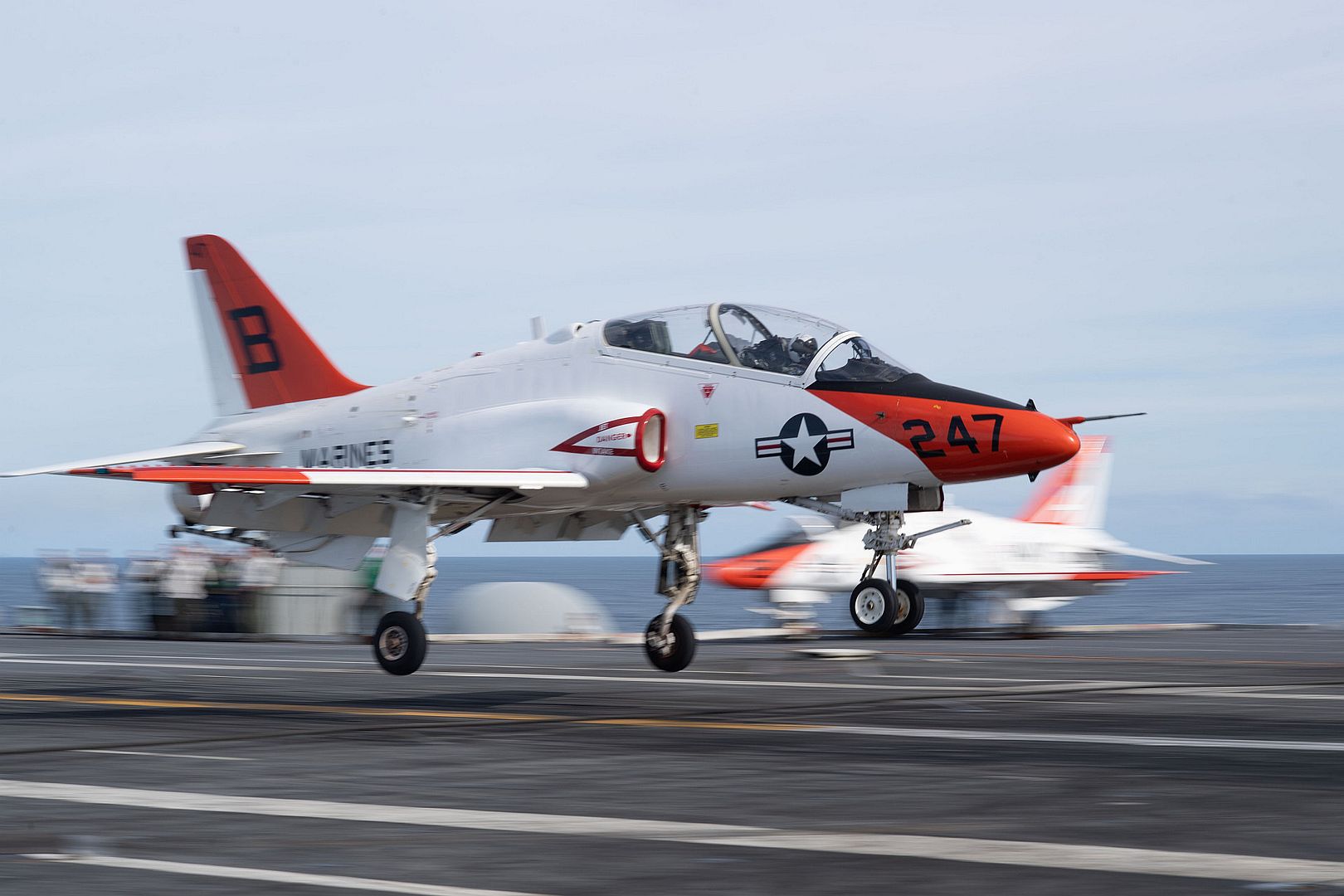
The Air France-KLM Group has decided to place a firm order for 10 additional widebody A350-900s, which will take its total order for the type to 38 aircraft.
By acquiring the industry?s most efficient and technologically advanced widebody aircraft, the airline will benefit from a significant reduction in fuel burn and CO2 emissions. The A350 XWBs are intended to be operated by Air France.
?Rationalising and modernising the fleet is central to our effort to regain our leading position in Europe,? said Benjamin Smith, CEO of Air France-KLM Group. ?It will strengthen our performance from both an economic and operational standpoint, and will help us deliver on our ambitious sustainability agenda. Offering a 25% reduction in fuel consumption compared to previous-generation aircraft, the Airbus A350-900 is a jewel of European expertise and a passenger favorite. We are excited to see it become a core asset of the Air France fleet.?
?Ben is leading an impressive transformation at Air France-KLM and we feel honoured that our A350 XWB aircraft have been selected as part of this endeavor,? said Guillaume Faury, Airbus Chief Executive Officer. ?We sincerely thank Air France-KLM for the confidence placed in us.?
Air France-KLM currently operates a fleet of 159 Airbus aircraft.
The A350 XWB features the latest aerodynamic design, a carbon fibre fuselage and wings, plus new fuel-efficient Rolls-Royce engines. Together, these features translate into unrivalled levels of operational efficiency with a 25% reduction in fuel burn and emissions. The A350 XWB?s Airspace by Airbus cabin is the quietest of any twin-aisle and offers passengers and crews the most modern in-flight products for the most comfortable flying experience. By the end of November, the A350 XWB Family had received 959 firm orders from 51 customers worldwide, making it one of the most successful widebody aircraft ever.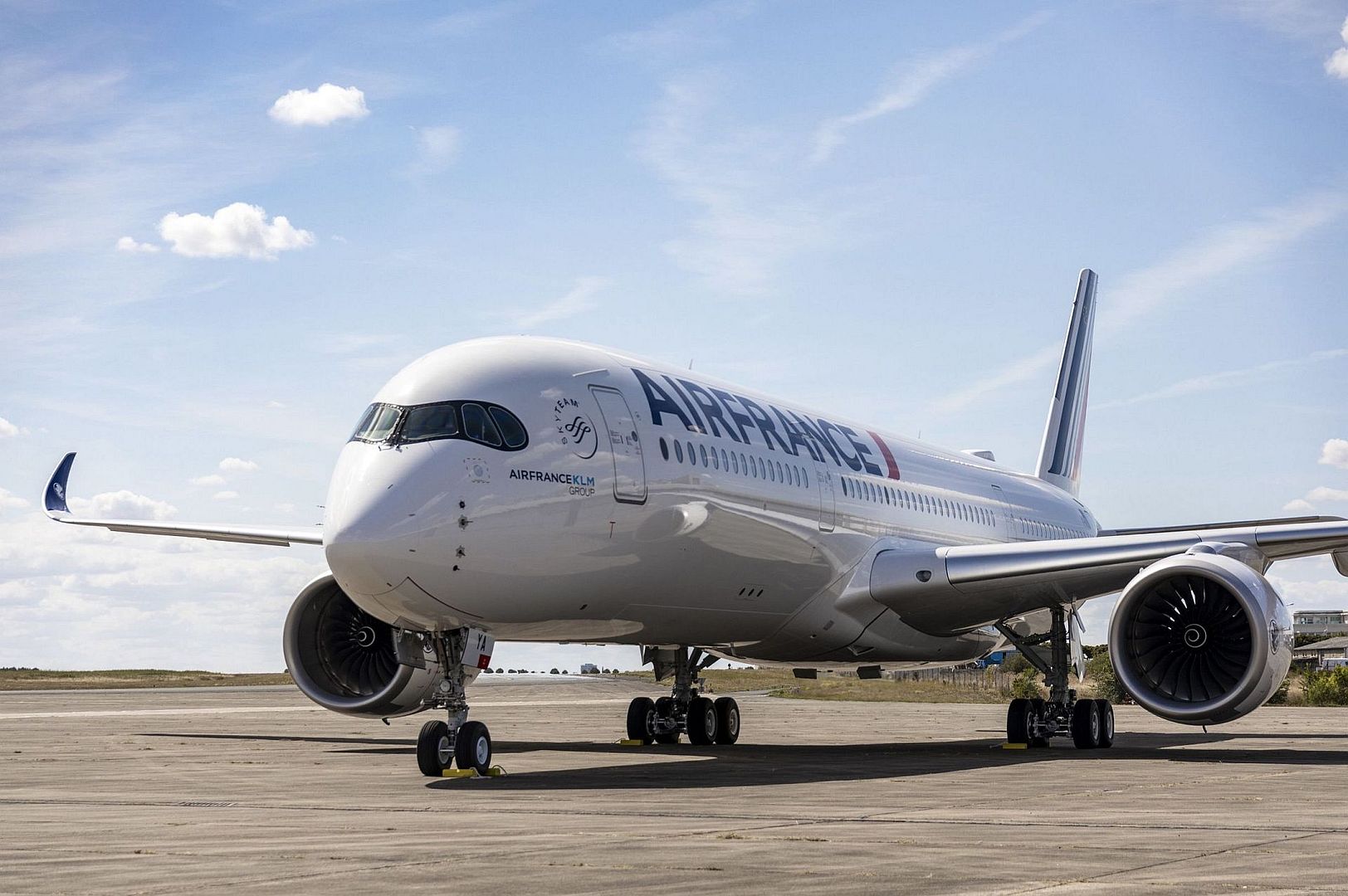
France has declared initial operational capability (IOC) with the F3-R-standard Dassault Rafale fighter.
Introduced by the French air force in July, F3-R has been developed by Dassault, missile manufacturer MBDA, Safran and Thales under a 2013 contract.
Enhancements include a new Thales active electronically scanned array radar, an automatic ground collision avoidance system and a new electronic warfare system, plus integration of the Sagem AASM air-to-surface munition.
In addition, from the first half of 2020, F3-R Rafales will also gain the MBDA Meteor beyond-visual-range air-to-air missile and Thales Talios targeting pod, says the French air force.
Declaration of the IOC enables the service to use upgraded Rafales for airspace protection and nuclear deterrence missions, says the service.
Meanwhile, Dassault is continuing development work on the future F4 standard for the Rafale, under a ?2 billion ($2.21 billion) contract unveiled in January.
Enhancements to sensors and connectivity are planned, along with the integration of the MBDA Mica air-to-air missile.
Validation of the F4 standard is planned for 2024, with some functions becoming available as of 2022.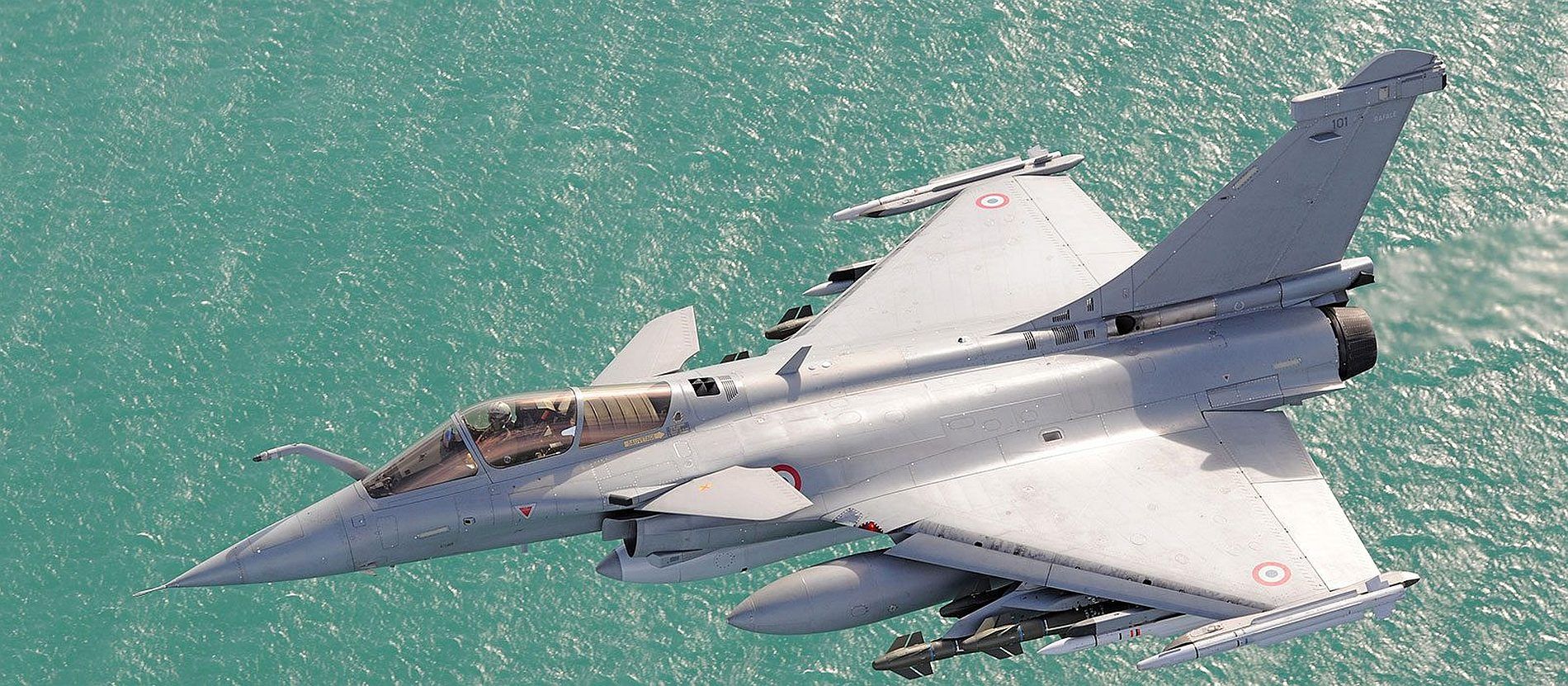
-
TINKER AIR FORCE BASE, Okla. (AFNS)
The B-1 Lancer has been flown hard in the theater of war and terror for the past 15 years. In order to keep the fleet serving the Air Force for the next 20 years and beyond, it needs dedicated structural repair and maintenance, and that?s where Tinker Air Force Base comes in.
?It?s been flown past its certified service life and as such, it?s developed numerous structural issues and we?ve been working on repairs for over the last four or five years,? said Bill Barnes, B-1 Systems Program Office director. ?We have those repairs developed, we know what aircraft tail numbers those repairs apply to. In our quest to get those repairs made to the fleet and to make the fleet healthy so it can continue to serve the Air Force until 2040, we?ve teamed up with AMXG (76th Aircraft Maintenance Group) to stand up a dedicated repair line just to repair B-1 structural issues.?
Barnes said they?ve worked closely with the 76th AMXG and other supply-mission partners over the last year to make these repairs supportable from a piece-part perspective, and now that they?re in Fiscal Year 2020, they have the funding to begin putting aircraft through the repair line. The first B-1 to go through this structure line arrived in October and, 23 days later, work is nearing completion.
?I think it?s pretty impressive that we?re not doing everything to the entire fleet, we know by tail number which parts of the aircraft have excess fatigue or corrosion that could cause mishaps later on,? said Col. Greg Lowe, 76th AMXG commander. ?We want to apply the principles of the art of the possible just like we do for all of our other production lines not only in AMXG, but across the Air Force Sustainment Center. That is the guiding management principles for us and it?s the focus on identification of constraints and continual process improvement that will allow us to get on a timeline that will keep the number of aircraft captured here in the depot low to maximize aircraft availability out in the field for operational use.?
567th Aircraft Maintenance Squadron director, Rodney Shepard said they worked in coordination with SPO logistics professionals, equipment specialists and the enterprise team to come up with a plan to stand up phase one of the structures repair line. This phase will include the repair of seven urgent tasks on 10 aircraft with high flying-hour requirements compared to the rest of the fleet, as well as known structural issues. The repairs will be completed in a 30-day flow under a fly-in, fly-out program with 5,000 hours of repair invested into each plane.
?That?s where the artisans of the Oklahoma City Air Logistics Complex come in,? Lowe said. ?To be able to take an aircraft that is beyond its designed service life, tear it down and make major repairs that we never thought we would do to the aircraft, we can do that and extend that life to continue operational impact in the future.?
Phase one of structure repairs will be split between two shifts and will utilize sheet metal and aircraft technicians for the workload. Phase two, which will involve a steady stream of B-1s coming through each year for repair with 14,000 hours of repair planned per airplane, will begin in April 2020 and will require a 50% increase in workforce numbers.
Shepard said an excess of 100 new employees have been hired in the past year in preparation for the workload. The workload is expected to be a Tinker AFB workload for the duration of the B-1?s life.
?The B-1?s been a great plane over in the desert. We?ve flown it hard, worked it hard and now it?s time for a little downtime to get some repairs made so we can have the aircraft ready to deploy when necessary to support the needs of the nation,? Barnes said.
(U.S. Air Force photo by Kelly White)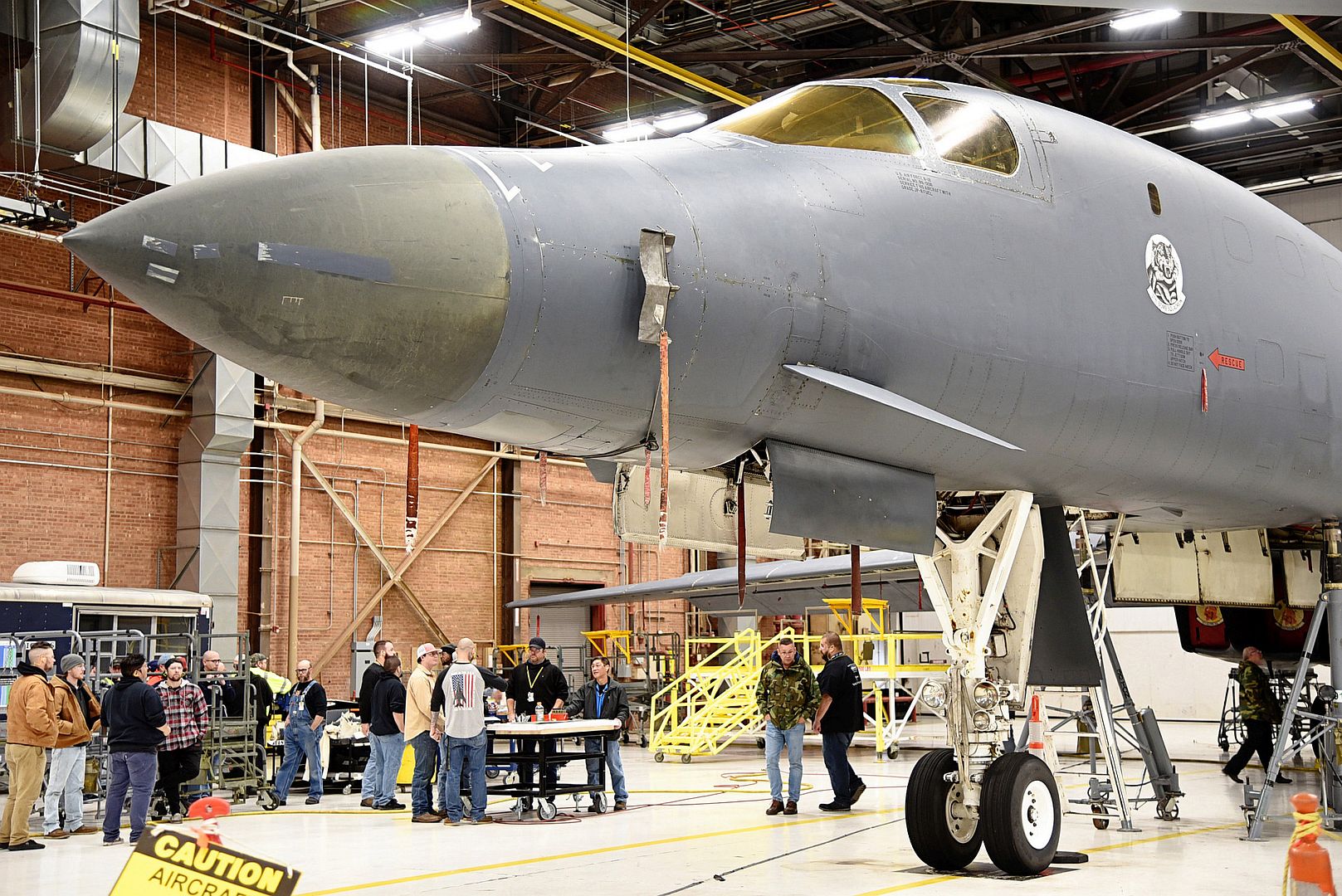
U.S. Marines with 1st Battalion, 25th Marine Regiment, currently assigned to 4th Marine Regiment, 3rd Marine Division, under the Unit Deployment Program, and Soldiers with 8th Infantry Regiment, Japan Ground Self-Defense Force, conduct an insert via MV-22B Ospreys with Marine Medium Tiltrotor Squadron 262 and Japanese UH-1J Hueys, during part of a comprehensive force on force event at Forest Light Middle Army in Aibano Training Area, Shiga, Japan, Dec. 11, 2019. Forest Light Middle Army is an annual training exercise that is designed to enhance the collective defense capabilities of the United States and Japan Alliance by allowing infantry units to maintain their lethality and proficiency in infantry and combined arms tactics. (U.S. Marine Corps photo by Lance Cpl. D?Angelo Yanez)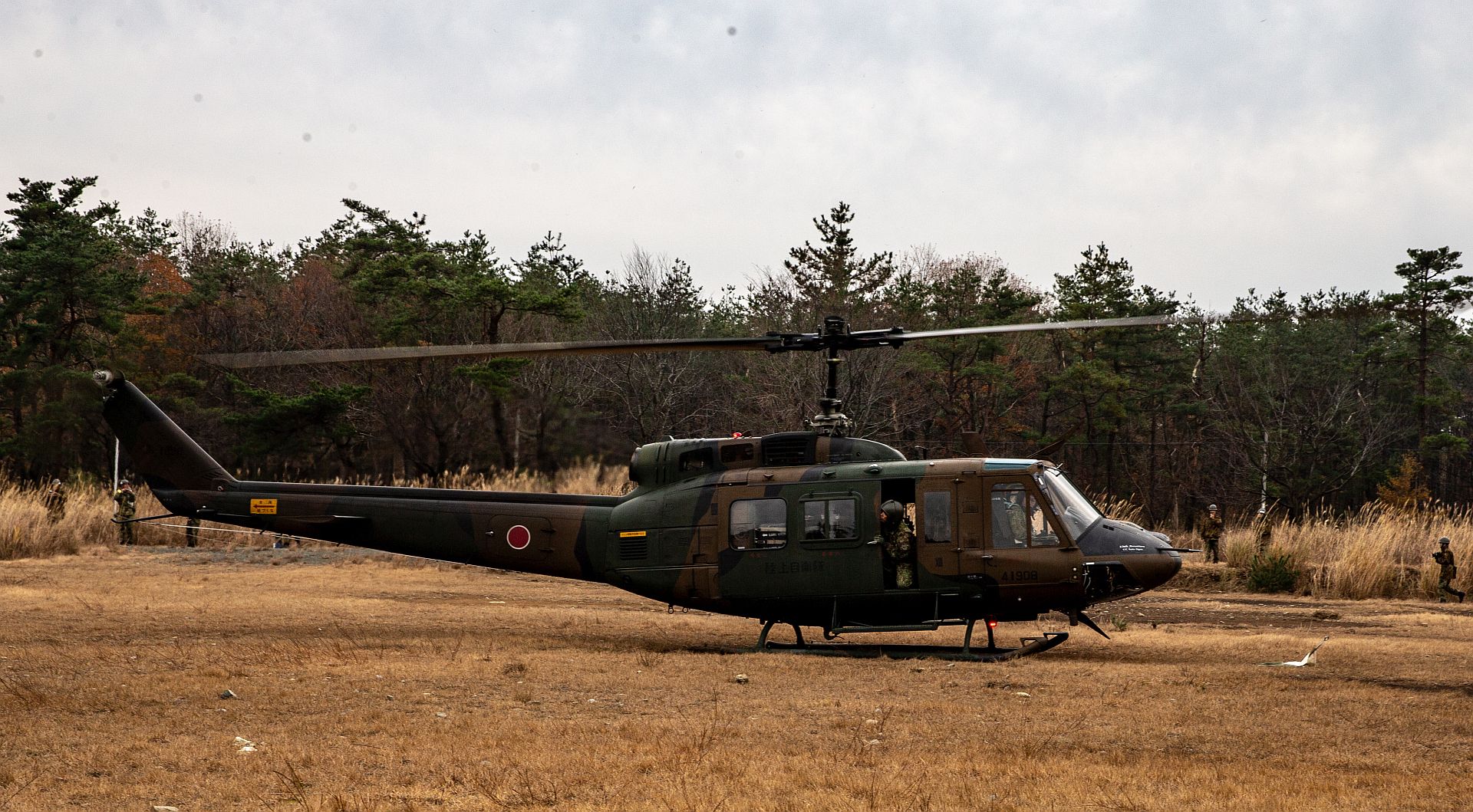
A U.S. Air Force F-16 Fighting Falcon from the 555th Fighter Squadron takes flight during a clear day at Aviano Air Base, Italy, Dec. 11, 2019. The unit provides combat airpower on demand to U.S. and NATO Combatant Commanders as well as the National Command Authority in order to meet National Security objectives. (U.S. Air Force photo by Airman Thomas S. Keisler IV)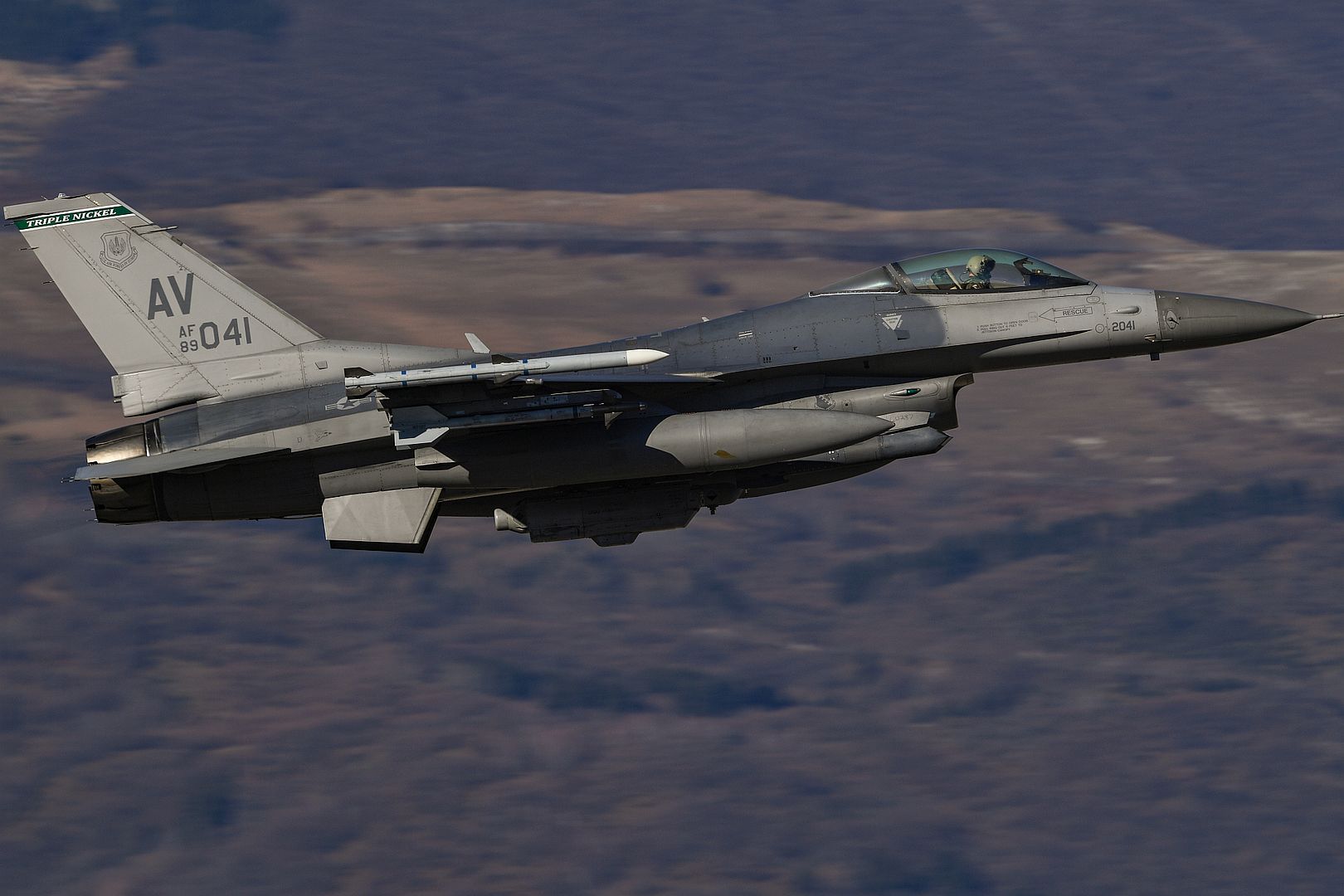
A U.S. Air Force C-130J Super Hercules assigned to Ramstein Air Base takes off at Aviano Air base, Italy, Dec. 11, 2019. The C-130 is capable of operating from rough, dirt strips and is the prime transport for airdropping troops and equipment into hostile areas. (U.S. Air Force photo by Airman Thomas S. Keisler IV)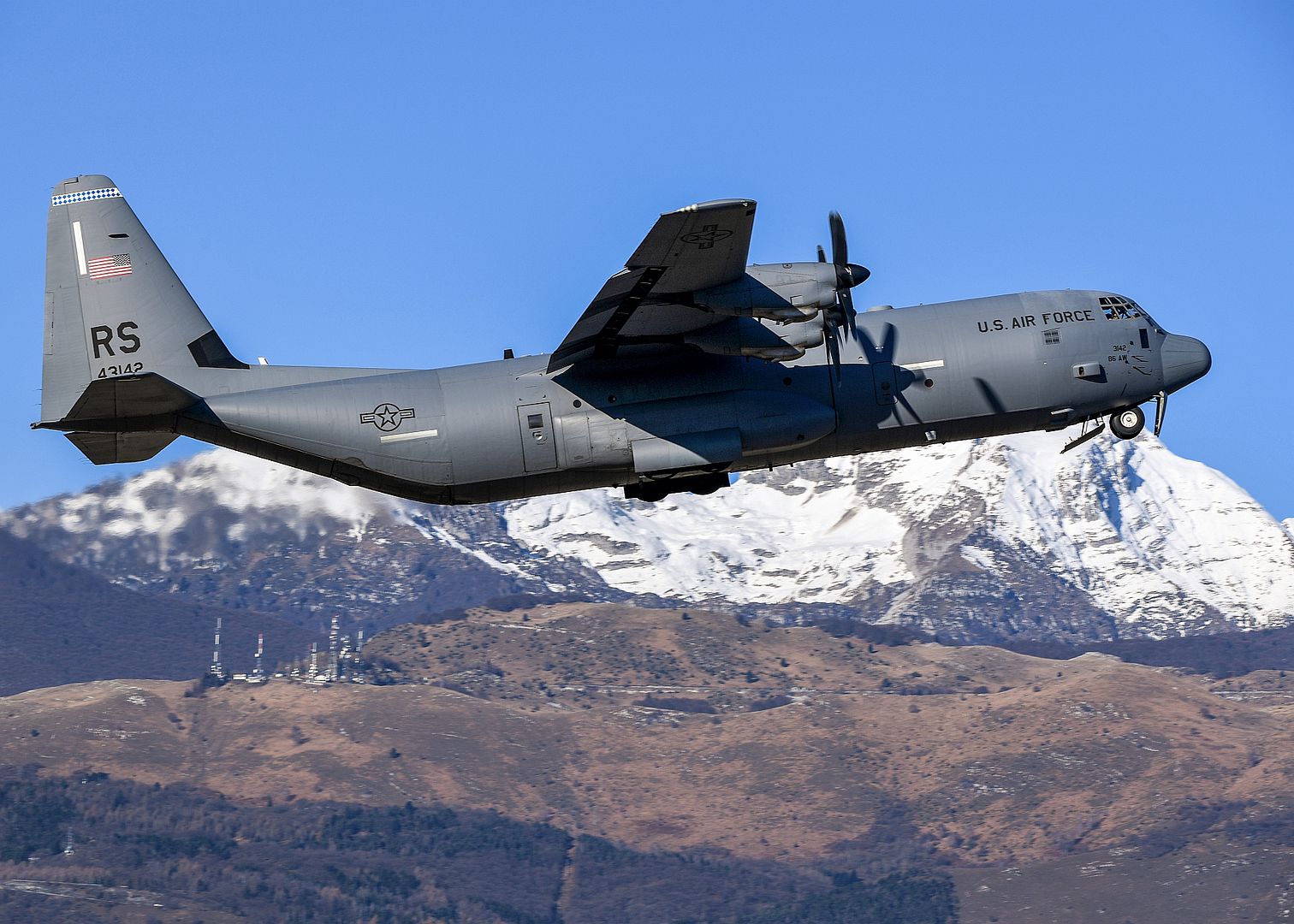
A Full Moon illuminates the night sky as a 25th Fighter Squadron A-10C Thunderbolt II pilot prepares for flight, Dec. 11, 2019, at Osan Air Base, Republic of Korea. The last Full Moon of the decade shined over the A-10?s flightline operators who generate and exhibit air power to sustain the Korean Peninsula?s premier close air support mission. (U.S. Air Force photo by Staff Sgt. Greg Nash)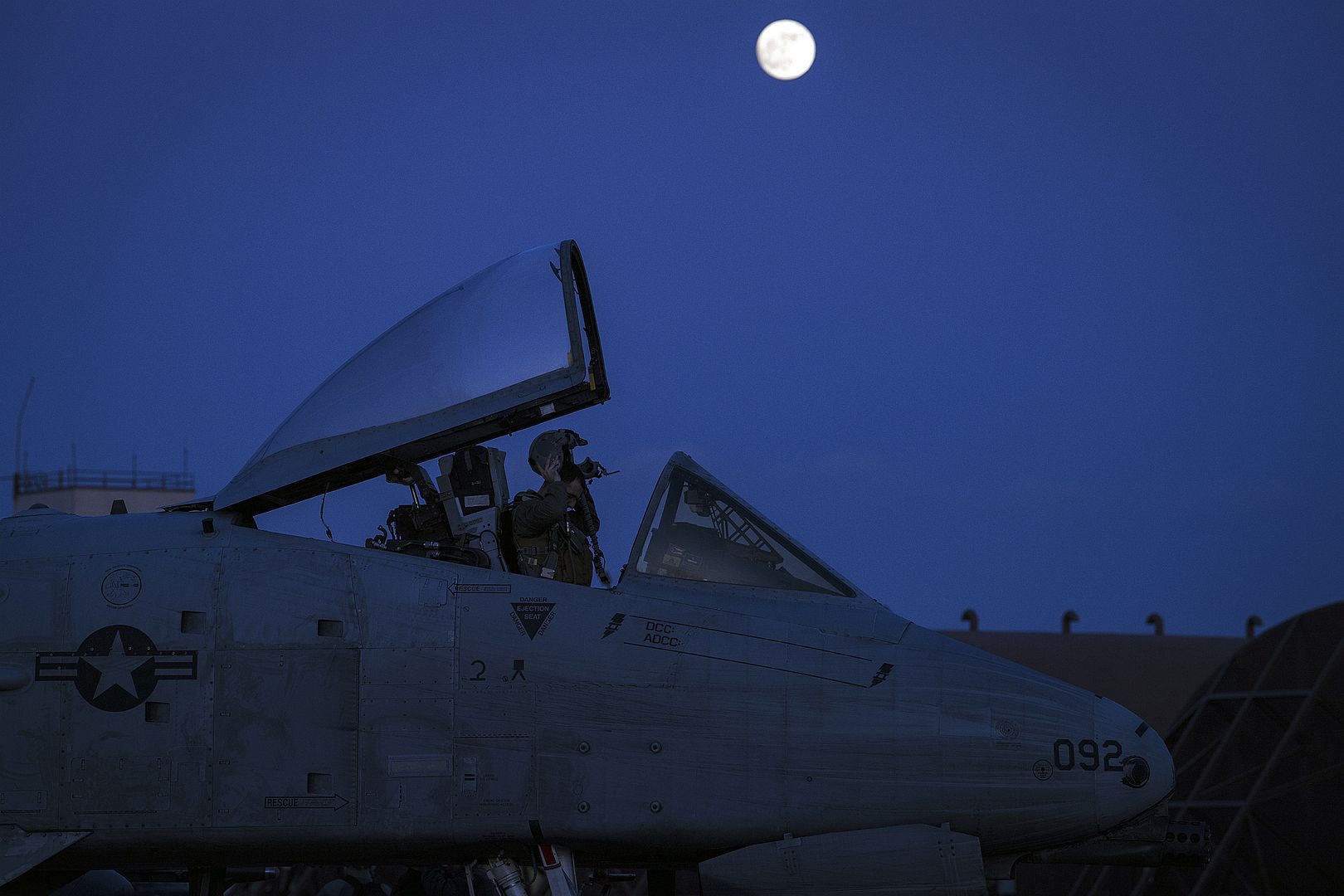
Lt. Col. Lance Hupp, 758th Airlift Squadron pilot, flies a C-17 Globemaster III toward a KC-135 Stratotanker assigned to the 914th Air Refueling Wing during a training mission over the continental United States, Dec. 10, 2019. The training mission not only allowed pilots from the 911th Airlift Wing to train, but also pilots and boom operators from the 914th ARW to receive training as well. (U.S. Air Force photo by Joshua J. Seybert)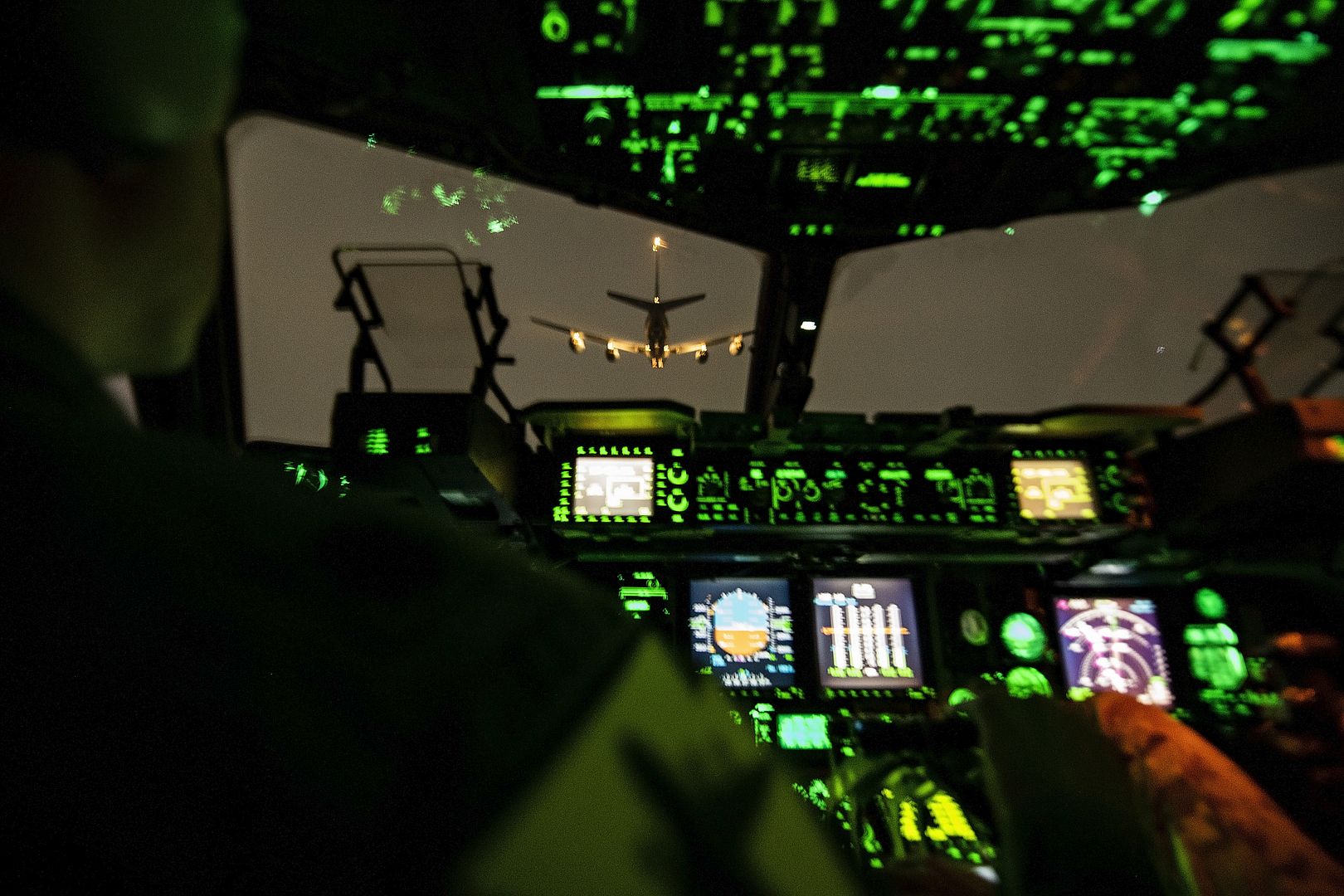
WEST CHESTER, Pa., Dec. 13 ? Sikorsky, a Lockheed Martin Company (NYSE: LMT), announced today the donation of its S-76? airframe to the American Helicopter Museum and Education Center. The airframe was delivered this week by employees from the Sikorsky Coatesville, Pa. facility, where it received a make-over into its original VIP customer configuration in preparation for its forever home.
The airframe was created to be a realistic full-scale static display helicopter to showcase the S-76D? model before its release. During its lifespan, the airframe has traveled across the globe on tradeshow assignments and had also been displayed at educational STEM events. Most recently, this S-76 wore a different outer skin and was shown as Sikorsky?s Autonomy Research Aircraft, nicknamed SARA. The helicopter helped educate people about Sikorsky?s autonomy capabilities and MATRIX? Technology, which will allow future aircraft to operate with two, one or no pilots. Now that the S-76D helicopter has been in production for some time, the airframe will be put into a full-time educational role at the museum.
?We are so proud to support the American Helicopter Museum and Education Center focused on the rich history of rotary-wing aviation,? said Audrey Brady, Vice President, Commercial Systems and Services at Sikorsky in Trumbull, CT. ?We have been proud partners with the museum since its inception and hope this addition to their display will further enrich the experience of its visitors and inspire the next generation into STEM careers.?
"The S-76 is an exciting addition to our collection of aircraft. It will greatly enhance our ability to educate the public about the many civilian applications helicopters fulfill, and we know that our visitors will enjoy experiencing its superior level of exterior and interior finishes,? said Allison Titman, Executive Director of the American Helicopter Museum & Education Center. ?As the home for rotary-wing aviation history, we also look forward to putting this helicopter in context as an example of the ways in which Sikorsky has carried on Igor Sikorsky's legacy as an aviation innovator.?
In addition to serving as VIP transportation, the S-76 is used for utility transport, offshore oil and gas transport, search and rescue and air ambulance missions with more than 7.4 million fleet flight hours.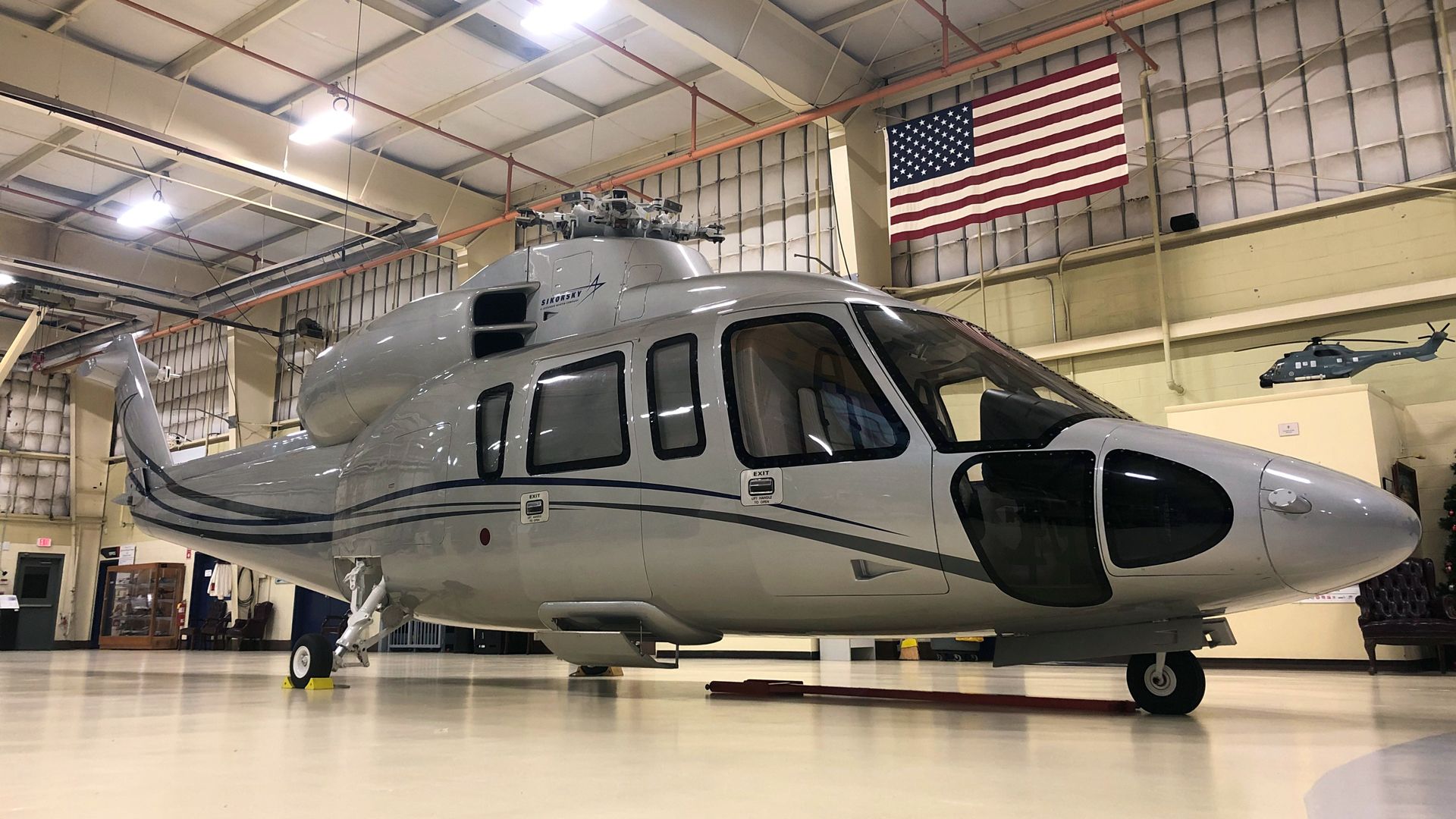
The first A220-300 for Air Canada has successfully completed its inaugural test flight from the Mirabel A220 final assembly line in Canada. The first of 45 aircraft for Air Canada is scheduled to be delivered to the Montreal-based airline in the coming weeks.
With its first A220 commercial flight in early 2020, Canada?s flag carrier will become the first airline in Canada to operate the Canadian-designed and -built A220. It will also become the first carrier in North America to fly the A220-300 variant.
Air Canada is planning to use the A220 on various domestic routes in Canada as well as to the United States. The A220?s unequalled performance and range capability will enable the airline to serve new markets, such as Montreal to Seattle and Toronto to San Jose, connecting the carrier?s main hubs to the West Coast, as of Spring 2020.
Benefitting from the latest technologies, the A220 is the quietest, cleanest and most eco-friendly aircraft in its category. Featuring a 50% reduced noise footprint compared to previous generation aircraft, 20% lower fuel burn per seat and 50% lower NOx emissions than industry standards, the A220 is a great aircraft for neighbourhood airports.
Around 100 A220s are currently flying with six operators on routes in Asia, America, Europe and Africa, proving the great versatility of Airbus? latest family member.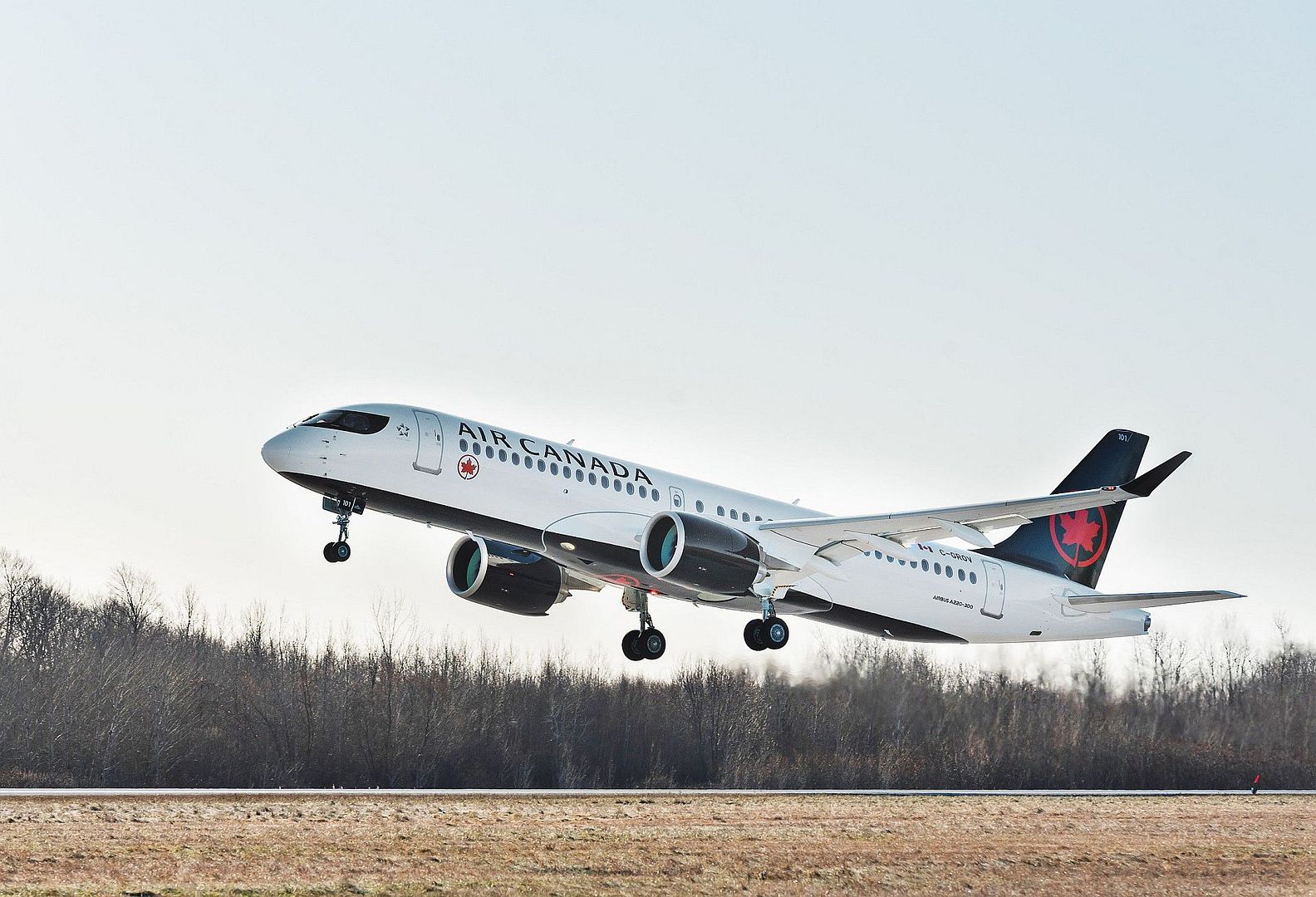
S?o Jos? dos Campos ? Brazil, December 12, 2019 ?The Embraer E175-E2 made its inaugural flight today from the company?s facility in S?o Jos? dos Campos. The E175-E2 is the third member of the E-Jets E2 family. The maiden flight kicks off a rigorous 24-month flight test campaign.
?Today?s flight of the E175-E2 marks the completion of our vision to produce a family of new-generation commercial aircraft that bring unparalleled cost savings to our customers, exceptional comfort for their passengers, and fewer emissions for the planet,? said John Slattery, President & CEO, Embraer Commercial Aviation. ?The E190-E2 and the E195-E2 are already stellar performers. The E175-E2 is just as impressive. We?re eager to get working on certification. My sincere thanks to every Embraer employee who helped make this day possible.?
The E175-E2 departed at 11:07 a.m. local time from the runway adjacent to Embraer?s Faria Lima complex and flew for two hours and 18 minutes. Embraer?s Captain Mozart Louzada commanded the aircraft along with first officer Wander Almodovar Golfetto, and flight engineers Gilberto Meira Cardoso and Mario Ito. The aircraft took off and landed with fly-by-wire (FBW) controls in normal mode. The crew evaluated aircraft performance, flight quality and systems behavior.
Embraer will use three aircraft for the E175-E2 certification campaign. The first and second prototypes will be used for aerodynamic, performance and system tests. The third prototype will be used to validate maintenance tasks and will be outfitted with interior furnishings.
The E175-E2 has one additional row of seats compared to the first-generation E175 and can be configured with 80 seats in two classes, or up to 90 in a single class. The airplane will save up to 16% in fuel and 25% in maintenance costs per seat compared to the E175.
Like the E190-E2 and the E195-E2, the E175-E2 will have the longest maintenance intervals in the single-aisle jet category with 10,000 flight hours for basic checks and no calendar limit for typical E-Jet operations. This means an additional 15 days of aircraft utilization over a period of ten years compared to current generation E-Jets.
The E175-E2 features new Pratt & Whitney GTF? PW1700G ultra-high bypass ratio engines, a completely new wing, full fly-by-wire controls and new landing gear. Compared to the first-generation E175, 75% of aircraft systems are new.
Embraer is the world?s leading manufacturer of commercial aircraft up to 150 seats with more than 100 customers across the world. For the E-Jets program alone, Embraer has logged more than 1,800 orders and 1,500 aircraft have been delivered. Today, E-Jets are flying in the fleets of 80 customers from 50 countries. The versatile 70 to 150-seat family is flying with low-cost airlines as well as with regional and mainline network carriers.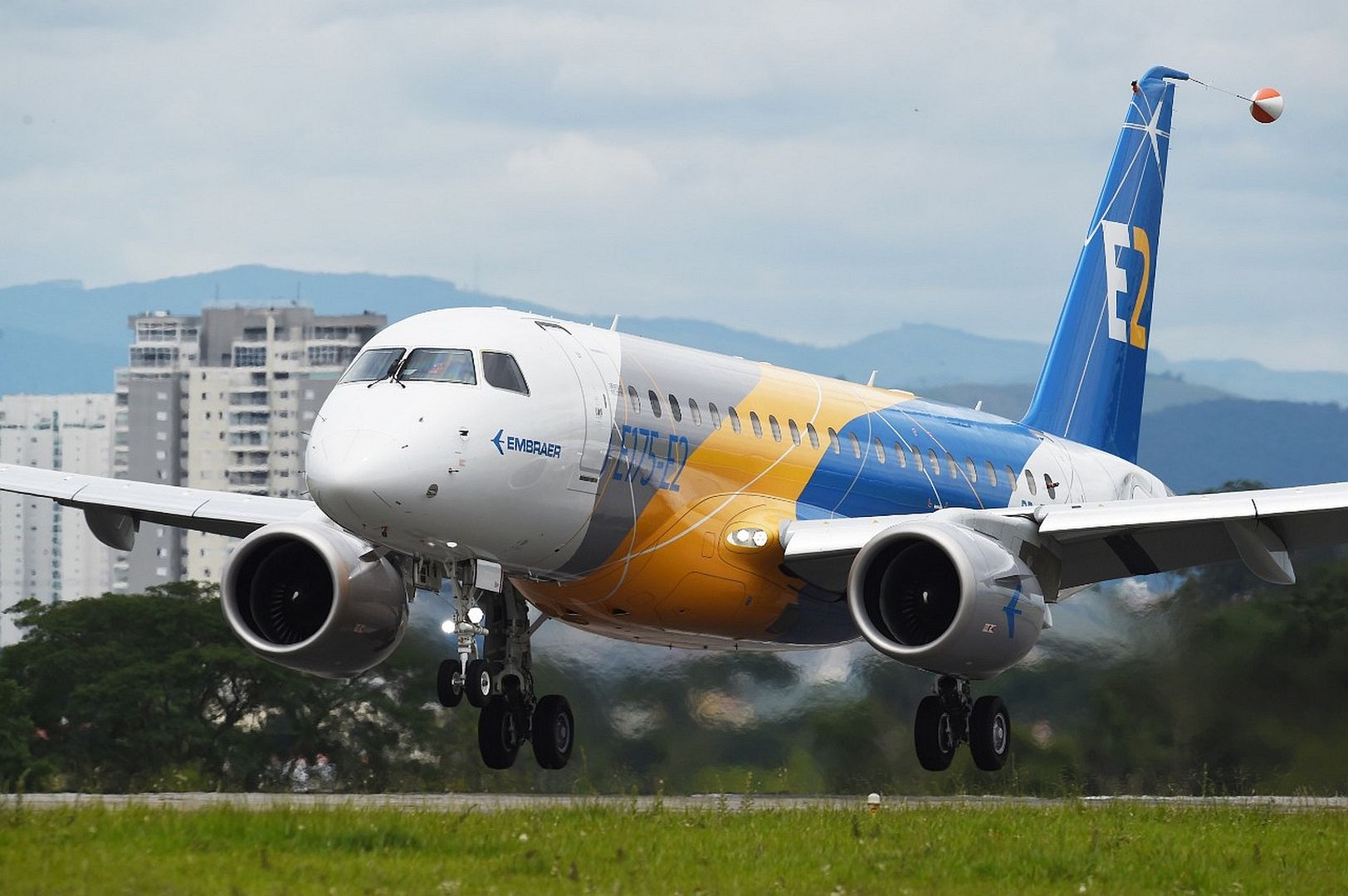
-
DENVER, Dec. 13, 2019 /PRNewswire/ -- The capsule-shaped aeroshell that will protect NASA's Mars 2020 rover was delivered to NASA's Kennedy Space Center, Florida. yesterday. Built by Lockheed Martin [NYSE: LMT], the aeroshell will encapsulate and protect the Mars 2020 rover during its deep space cruise to Mars, and from the intense heat as the entry system descends through the Martian atmosphere to the surface of Mars.
Because of the large mass and unique entry trajectory profile that could create external temperatures up to 3,800 degrees Fahrenheit, the heat shield uses a tiled Phenolic Impregnated Carbon Ablator (PICA) thermal protection system instead of the Mars heritage Super Lightweight Ablator (SLA) 561V. This will only be the second time PICA has flown on a Mars mission.
"Even though we have the experience of building the nearly identical aeroshell for the Curiosity Rover, the almost 15-foot diameter composite structure was just as big a challenge to build and test 10 years later," said Neil Tice, Mars 2020 aeroshell program manager at Lockheed Martin Space. "We've built every Mars aeroshell entry system for NASA of its 40 years of exploring Mars, so we pulled from that experience to build this important system."
Along with the Curiosity mission, this is the largest aeroshell/heat shield ever built for a planetary mission at 4.5 meters (nearly 15 feet) in diameter. In contrast, the aeroshell/heat shield of the InSight lander measured 8.6 feet and Apollo capsule heat shields measured just less than 13 feet.
The backshell and heat shield were transported from Lockheed Martin's Waterton facility in Littleton, Colorado where they were built, to nearby Buckley Air Force Base. They were then loaded onto an Air Force transport plane and flown to NASA's Kennedy Space Center.
Recently, Lockheed Martin integrated the MSL Entry Descent and Landing Instrument (MEDLI2) onto the heat shield and backshell. Provided by NASA's Langley and Ames Research Centers, MEDLI2 will collect temperature and pressure data during the spacecraft's descent through the Martian atmosphere.
The Mars 2020 rover is in testing at NASA's Jet Propulsion Laboratory, Pasadena, California., which manages the Mars 2020 project for the NASA Science Mission Directorate, Washington. The mission will launch in July 2020 and land on Mars in February 2021 at the Jezero Crater.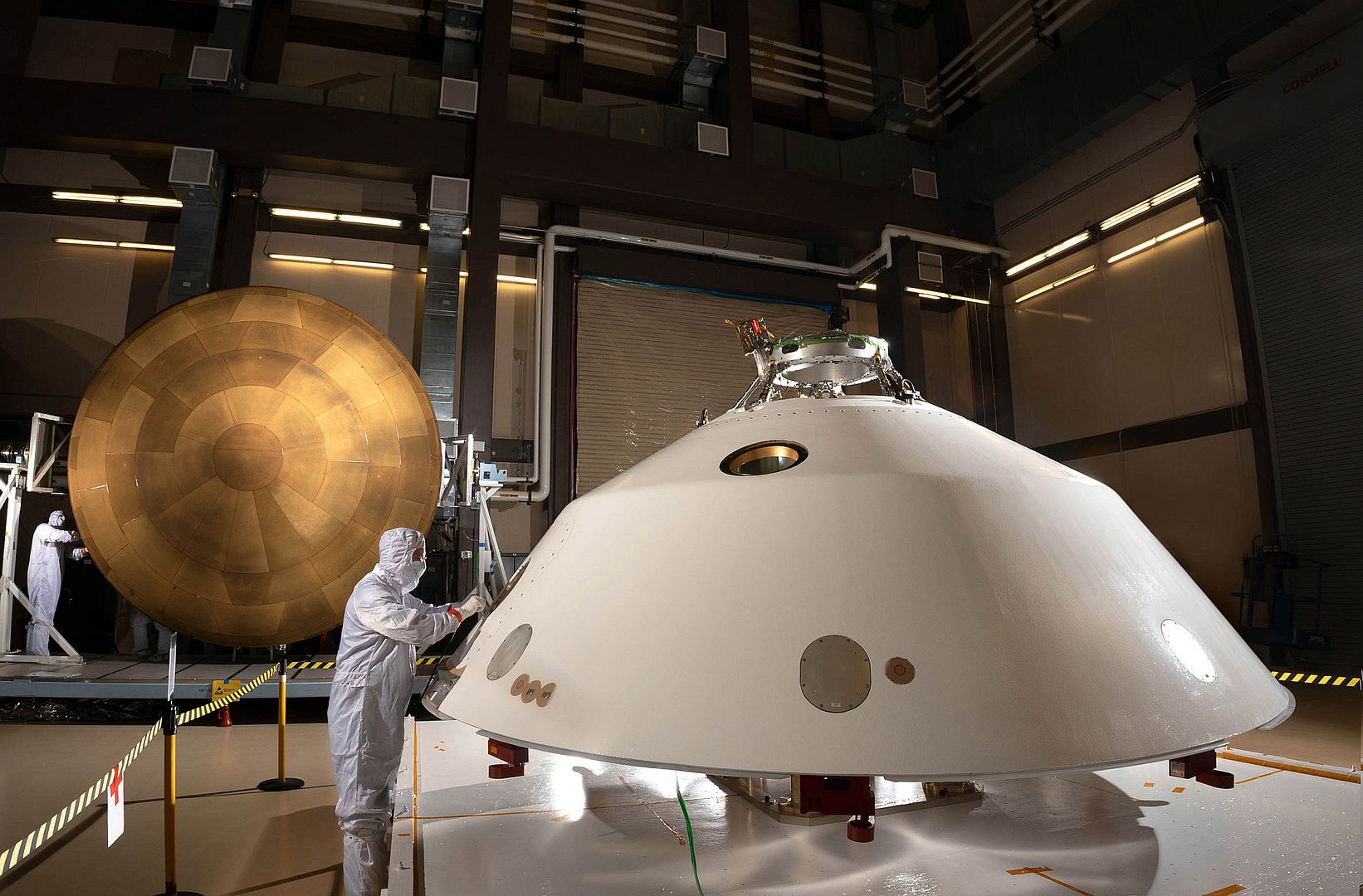
LOS ANGELES ? Dec. 13, 2019 ? Northrop Grumman Corporation (NYSE: NOC) marked a significant milestone with the delivery of its 1000th AGM-88E Advanced Anti-Radiation Guided Missile (AARGM). AARGM is a supersonic, air-launched tactical missile system, with the mission of destroying enemy air defenses, ensuring freedom of maneuver. AARGM is a U.S. Department of theNavy and Italian Air Force International Cooperative Program.
A ceremony at the Northrop Grumman production facility in Northridge, California, commemorated the occasion. Attendees at the event included U.S. Navy senior officers, civilians, industry partners and past and present employees working on the program.
Capt. Matthew Commerford, Navy Program Manager for Direct and Time Sensitive Strike (PMA-242) stated, ?As our adversaries continue to evolve and advance their air defense systems, AARGM is essential for our warfighters to detect and defeat the various threats, and this achievement ensures the U.S. Navy and our allies have the capability and capacity required to meet our operational needs.?
AARGM is the most advanced weapons system deployed today delivering destruction of enemy air defense system capabilities. AARGM provides the critical ability to detect and defeat surface-to-air-threats enabling the penetration of adversary anti-access/area denial (A2/AD) domains required by U.S. warfighters and allies.
?The 1,000th delivery showcases the progress made by our joint team since the program began as a Small Business Innovation Research program over a decade ago,? said Gordon Turner, vice president, defense electronic systems, Northrop Grumman. ?It is also affirmation of a continued commitment and sustained investment to providing critical strike weapon capabilities and the industrial base capacity to meet future readiness demands.?
The AARGM program achieved Initial Operational Capability (IOC) in July 2012, and is currently deployed and supporting operational requirements for the U.S. Navy, U.S. Marine Corps, Italian Air Force and Royal Australian Air Force. The missile is integrated into the weapons systems on the FA-18C/D Hornet, FA-18E/F Super Hornet, EA-18G Growler aircraft and on the Tornado Electronic Combat and Reconnaissance (ECR) aircraft.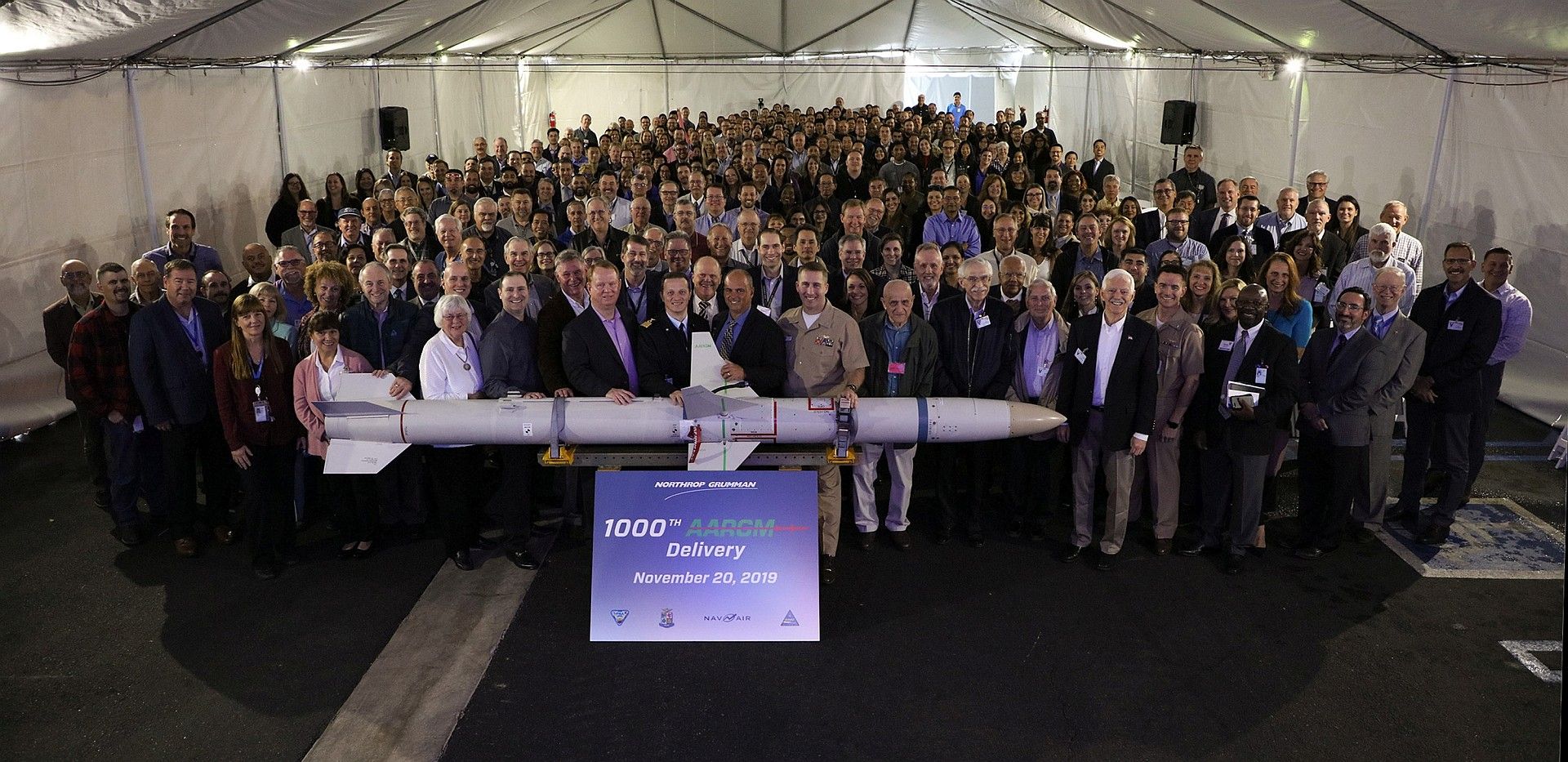
-
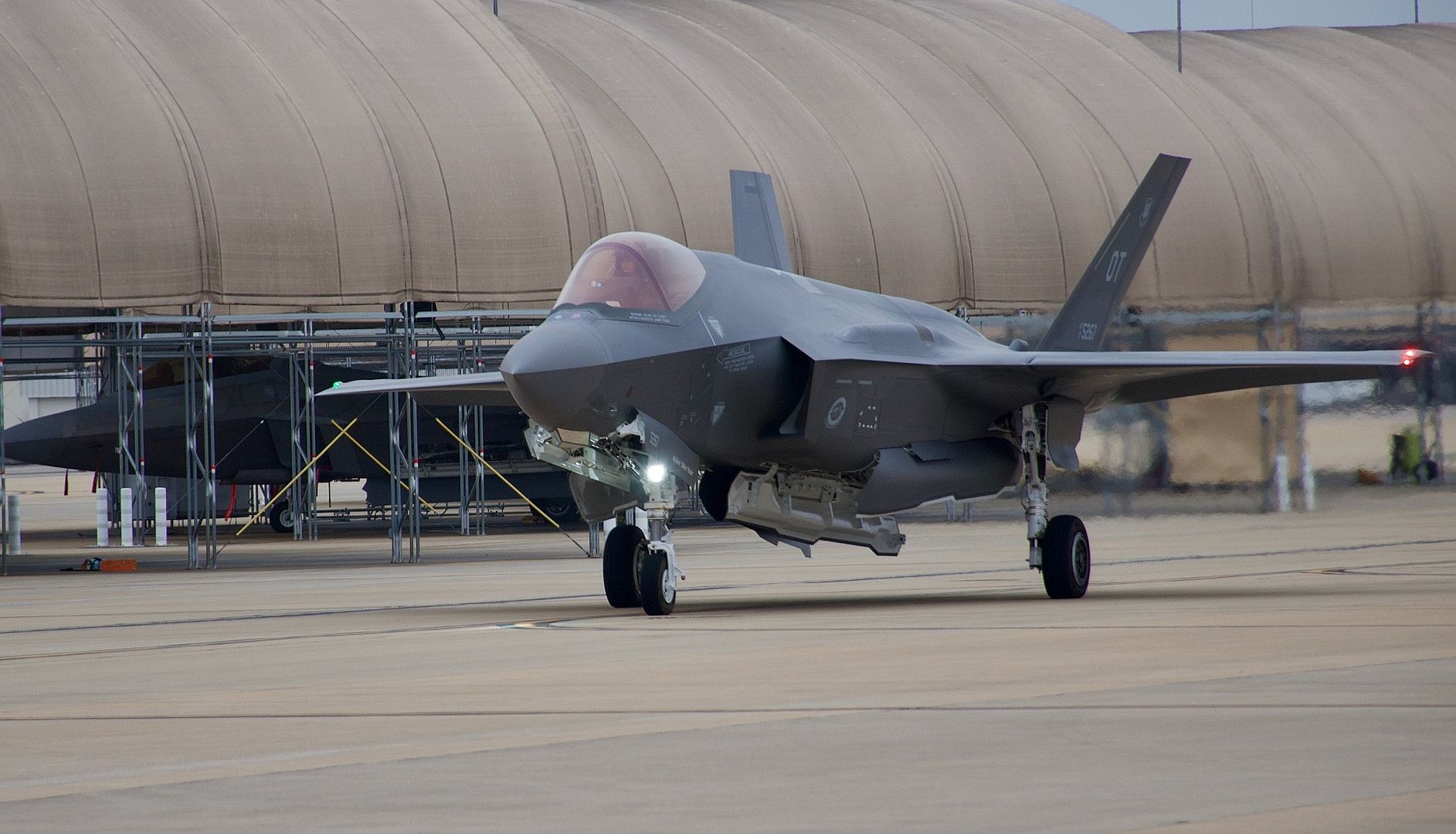
Two F-35s from the 422nd Test and Evaluation Squadron, 53rd Wing, arrive at Eglin Air Force Base on December 14, 2019 for the Air Battle Management System Demo. The demo is trial of communication networks between aircraft. (U.S. Air Force photo by 1st Lt Savanah Bray)
PACIFIC OCEAN (Dec 11, 2019) Sailors move an F/A-18F Super Hornet, assigned to the "Black Knights" of Strike Fighter Squadron (VFA) 154, on the flight deck of the aircraft carrier USS Theodore Roosevelt (CVN 71), Dec. 11, 2019. Theodore Roosevelt is underway conducting routine training in the Eastern Pacific Ocean. (U.S. Navy photo by Airman D.J. Schwartz/Released)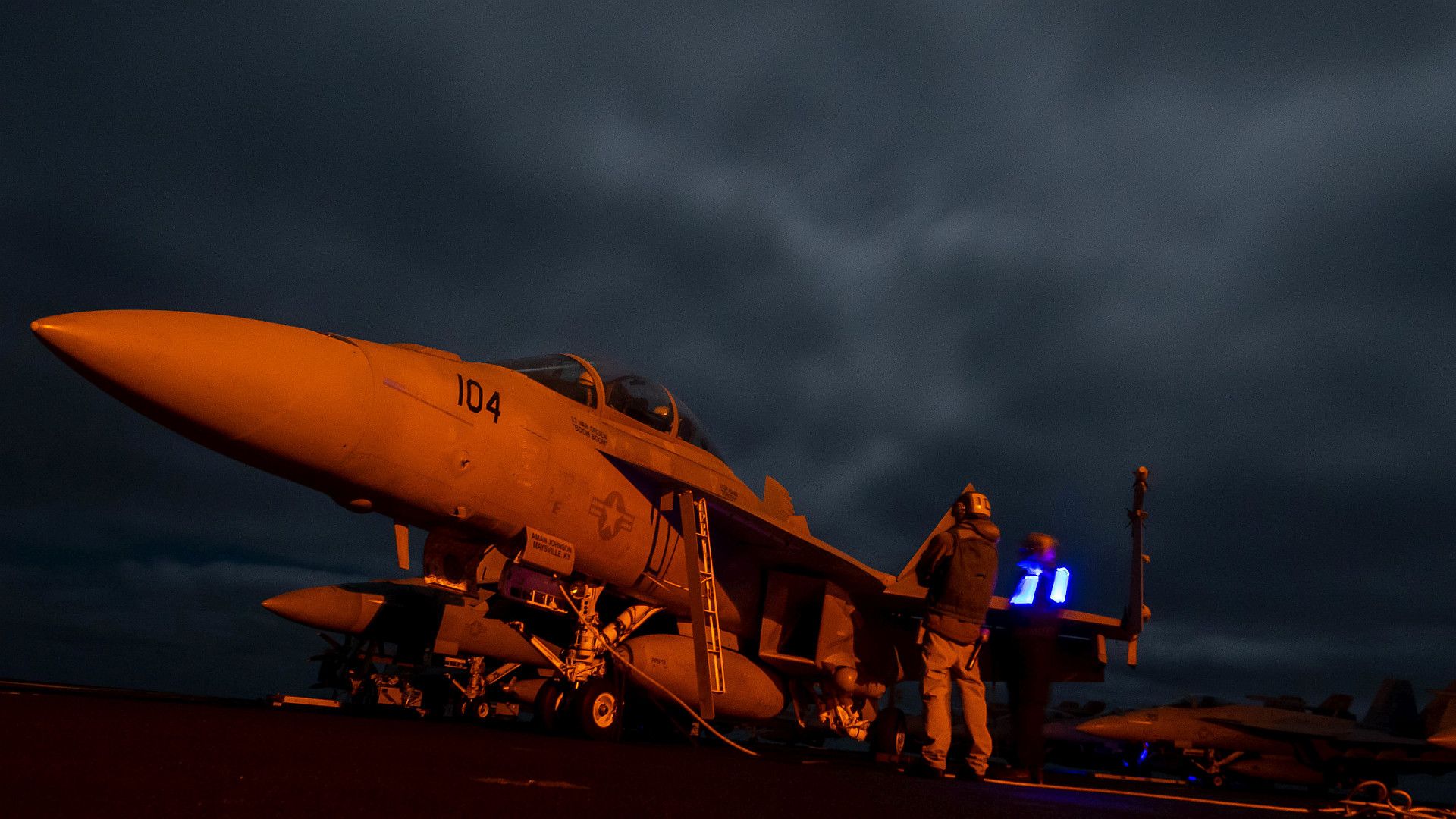
PACIFIC OCEAN (Dec. 12, 2019) An F/A-18E Super Hornet, assigned to the ?Tomcatters? of Strike Fighter Squadron (VFA) 154, launches from the flight deck of the aircraft carrier USS Theodore Roosevelt (CVN 71) Dec. 12, 2019. Theodore Roosevelt is underway conducting routine training in the Eastern Pacific Ocean. (U.S. Navy photo by Mass Communication Specialist Seaman Alexander Williams)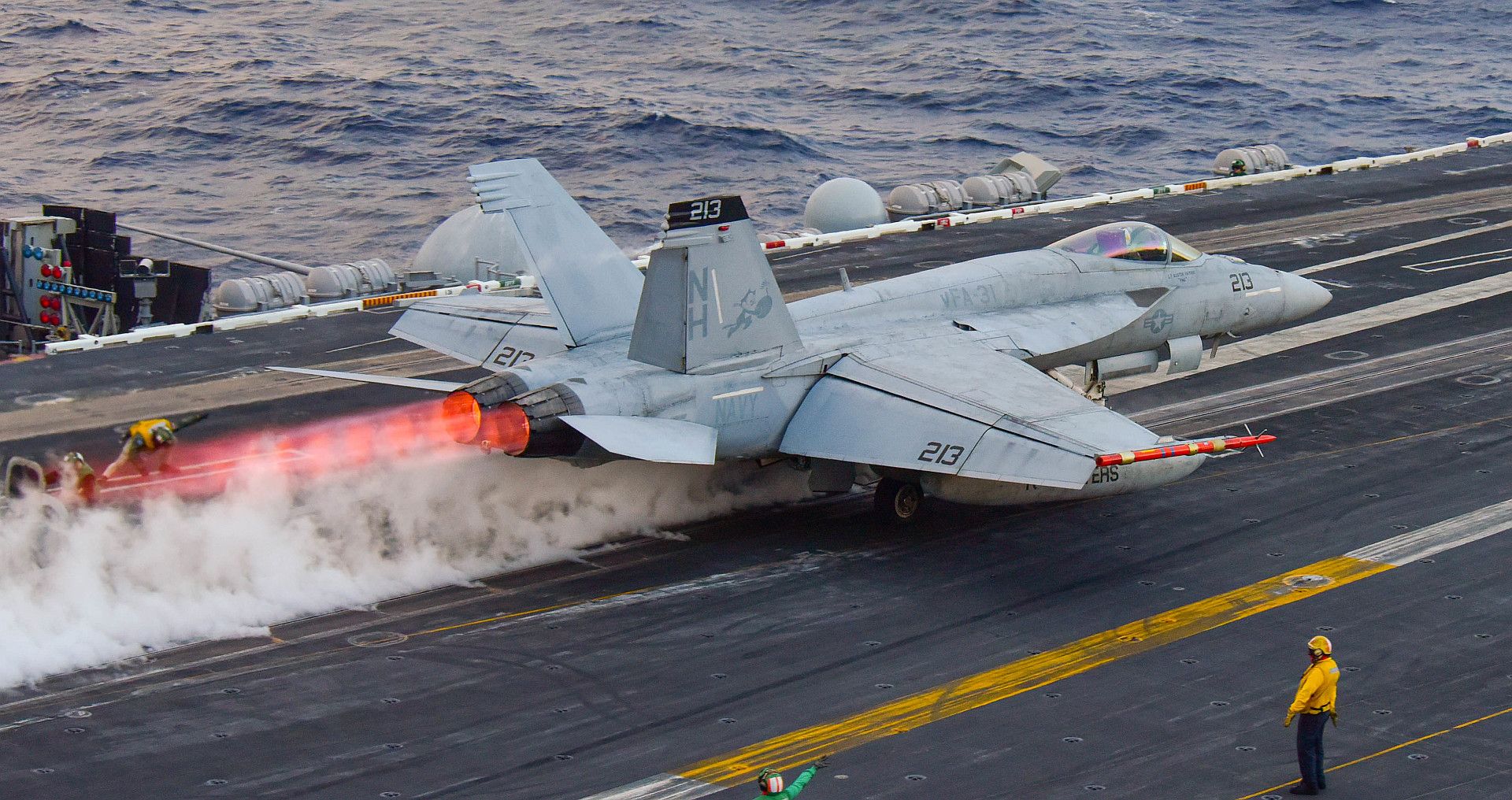
PACIFIC OCEAN (Dec. 13, 2019) An E-2C Hawkeye, assigned to the ?Liberty Bells? of Airborne Early Warning Squadron (VAW) 115, lands on the flight deck of the aircraft carrier USS Theodore Roosevelt (CVN 71) Dec. 13, 2019. Theodore Roosevelt is underway conducting routine training in the Eastern Pacific Ocean (U.S. Navy photo by Mass Communication Specialist 2nd Class Alex Corona)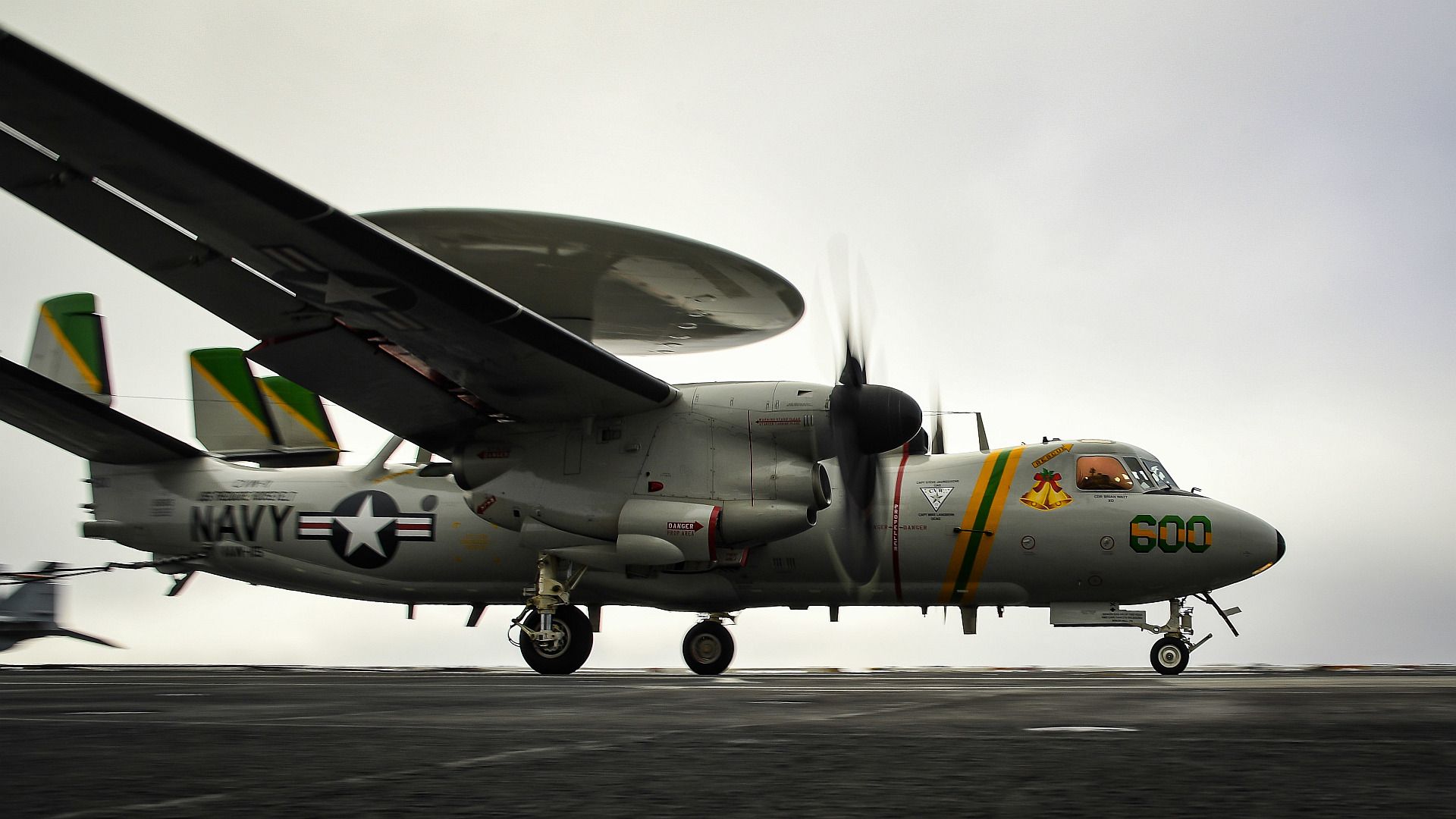
Getafe, 16th December 2019 - Ireland?s Department of Defence has announced the acquisition of two Airbus C295 medium airlifters in a maritime surveillance configuration.
With this new order, the Irish Air Corps will become the 33rd C295 operator worldwide. Both aircraft will be equipped with the Fully Integrated Tactical System (FITS) and specific state-of-the-art mission sensors together with the recently announced Collins Aerospace Pro Line Fusion avionics.
Alberto Guti?rrez, Head of Military Aircraft at Airbus Defence and Space, said: ?We are pleased to welcome the Irish Air Corps to our family of C295 operators, a signal of continued trust from an Air Force that already operates two Airbus CN235s.?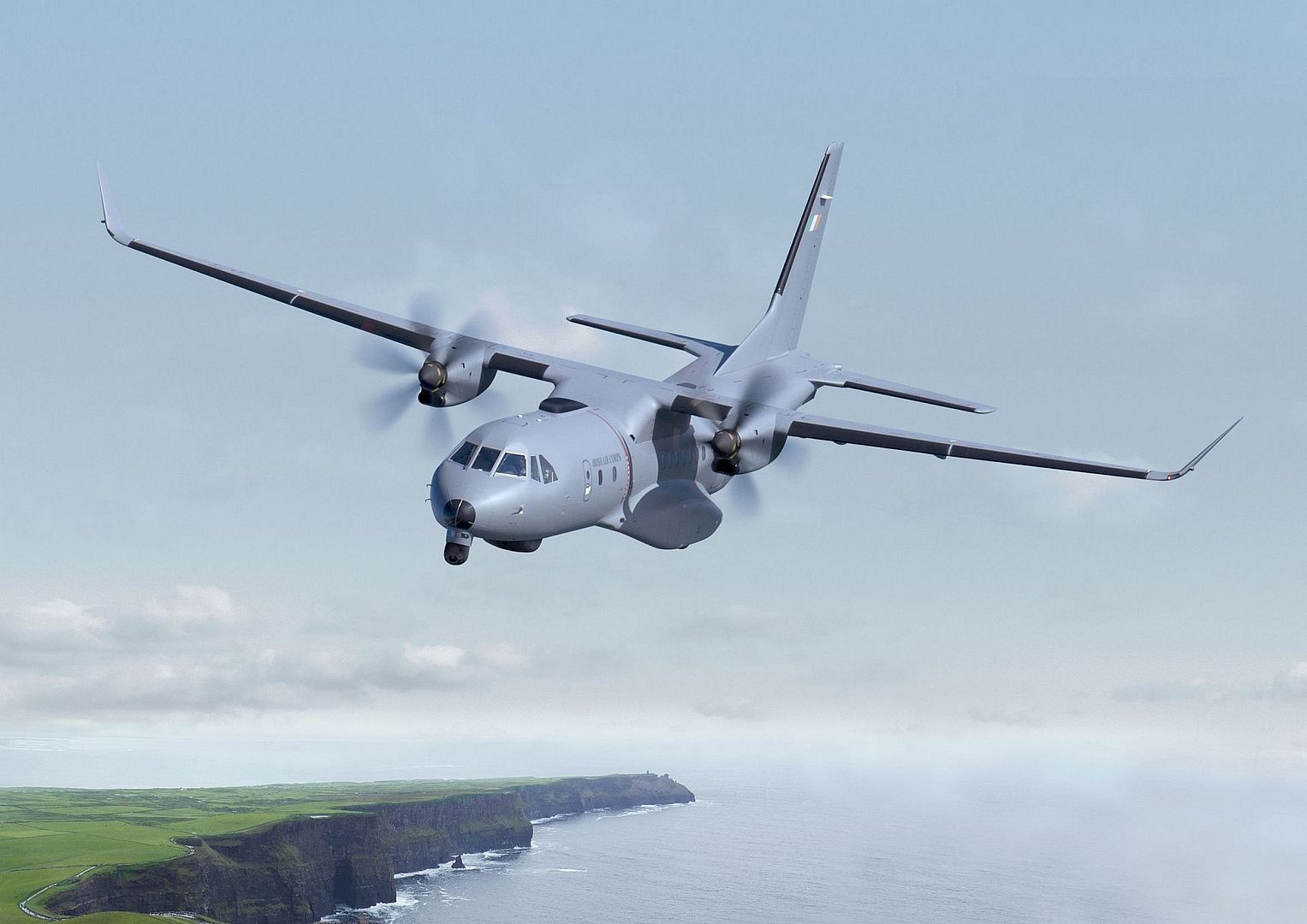
December 16, 2019 Montr?al Aviation, Business Aircraft, Press Release
Bombardier announced today that Latitude 33 Aviation, a private jet charter, executive jet management, and aircraft sales and acquisitions company based in California, has taken delivery of the first Bombardier customer aircraft to fly away on sustainable aviation fuel (SAF). Latitude 33 Aviation will manage and charter the best-selling Challenger 350 business jet in Seattle, WA, on behalf of the aircraft owner.
?We are very pleased that the customer and Latitude 33 Aviation joined us in demonstrating that SAF can become a mainstream, drop-in alternative to traditional jet fuel for general aviation aircraft,? said Peter Likoray, Senior Vice President, Worldwide Sales and Marketing, Bombardier Business Aircraft. ?We are actively promoting the use of SAF as a regular part of flying business aircraft and Latitude 33 Aviation?s trust as the first customer to fly away from our delivery center on these fuels represents a turning point in the longstanding and industry-wide pledge to reduce CO2 emissions.?
Following the first shipment of SAF in Canadian history, the inaugural Bombardier customer aircraft to fly on SAF is the award-winning Challenger 350 business jet, which continues to lead the way in the super mid-size segment. In addition to reaching 300 deliveries faster than any other jet in the medium and large categories, the Challenger 350 aircraft recently demonstrated its undeniable performance capabilities and superior reliability by setting speed records for 10 key American city pairings in 20.5 hours. The Challenger 350 aircraft is one of the most efficient business aircraft in the world. Its redesigned canted winglets cut down on drag, reducing fuel burn and its engines deliver increased thrust, contributing to the aircraft?s fuel efficiency and significantly lower emissions.
With half a dozen Challenger series aircraft in service, Latitude 33 Aviation manages one of the newest and largest fleets of light, mid-size, and super mid-size aircraft in North America. The aircraft charter company?s commitment to sustainable flying marks a significant milestone in the increased use of SAF throughout the industry, which follows Bombardier?s inaugural shipment of SAF, a key pillar in the company?s plan to secure long-term partnerships with fuel suppliers to deploy SAF worldwide.
?We?re excited about our continued relationship with Bombardier,? said Solomon Short, Director of Operations at Latitude 33 Aviation. ?Our company is known for its exceptional service and seamless travel experience, so this factory-new delivery will help us continue to provide one of the best charter flight experiences, as well as help address the industry?s environmental impact.?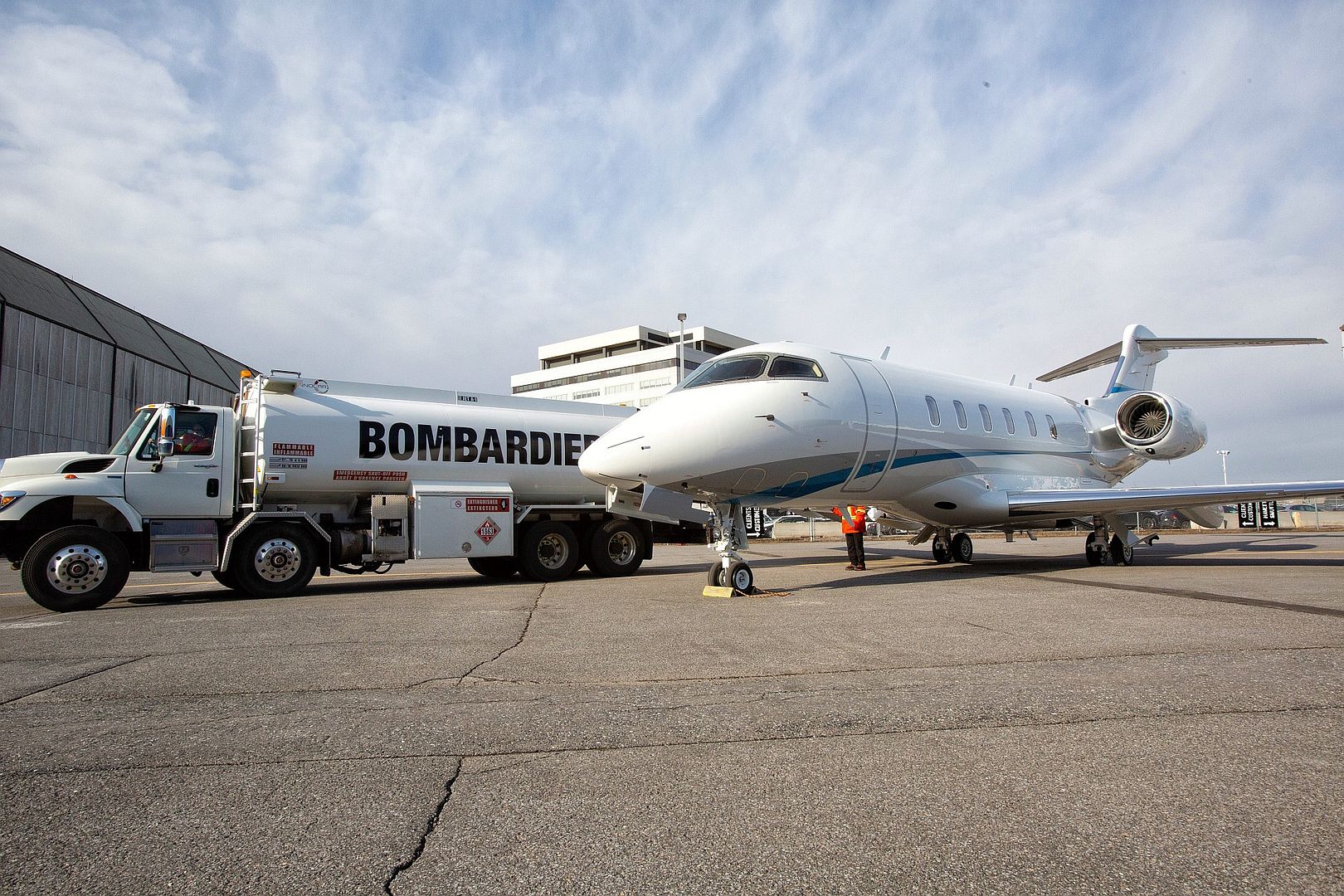
Committed to providing the best to its customers, Bombardier announced a series of enhancements to the Challenger 350 aircraft this year, including compact Head-up Display (HUD) and Enhanced Vision System (EVS), class-leading cabin sound-proofing technology, and refined cockpit aesthetics. A performance improvement package also allows the aircraft to fly up to 1,500 NM farther out of short runways, complementing its steep approach certifications awarded by international regulatory bodies including EASA, FAA, and TC. With this suite of enhancements, the Challenger 350 aircraft continues to take center stage in the super mid-size segment and to be the preferred choice for Latitude 33 Aviation?s luxury travel experiences, such as the West Coast Safari.
About Latitude 33 Aviation
Latitude 33 Aviation manages one of the newest and largest fleets of light, midsize, and super mid-size jets in North America. Founded in 2006 in San Diego and led by two ambitious pilots looking to redefine the private aviation experience, Latitude 33 Aviation is the premier private jet charter, executive jet management, and aircraft sales and acquisitions company that serves a wide variety of travelers and destinations around the world. Welcoming only a discerning selection of new aircraft to their evolving fleet, including three factory-new Challenger 350 aircraft, Latitude 33 elevates the luxury travel experience through high-touch service and ultra-tailored travel. From pre-arrival and in-flight amenities to one-of-a-kind destination experiences, they curate memorable and customized journeys for passengers. Currently, the company manages over 30 client-owned private business jets located throughout San Diego, Orange County, and Los Angeles airports including Carlsbad, Van Nuys, Hawthorne, Santa Ana, Long Beach, and Fresno, CA; as well as Colorado Springs, CO; Scottsdale, AZ; Houston, TX; Redmond, OR; Seattle, WA; and Nashville, TN. Latitude 33 Aviation is part of the top five percent of U.S. private jet charter operators to achieve the stringent ARGUS Platinum safety rating.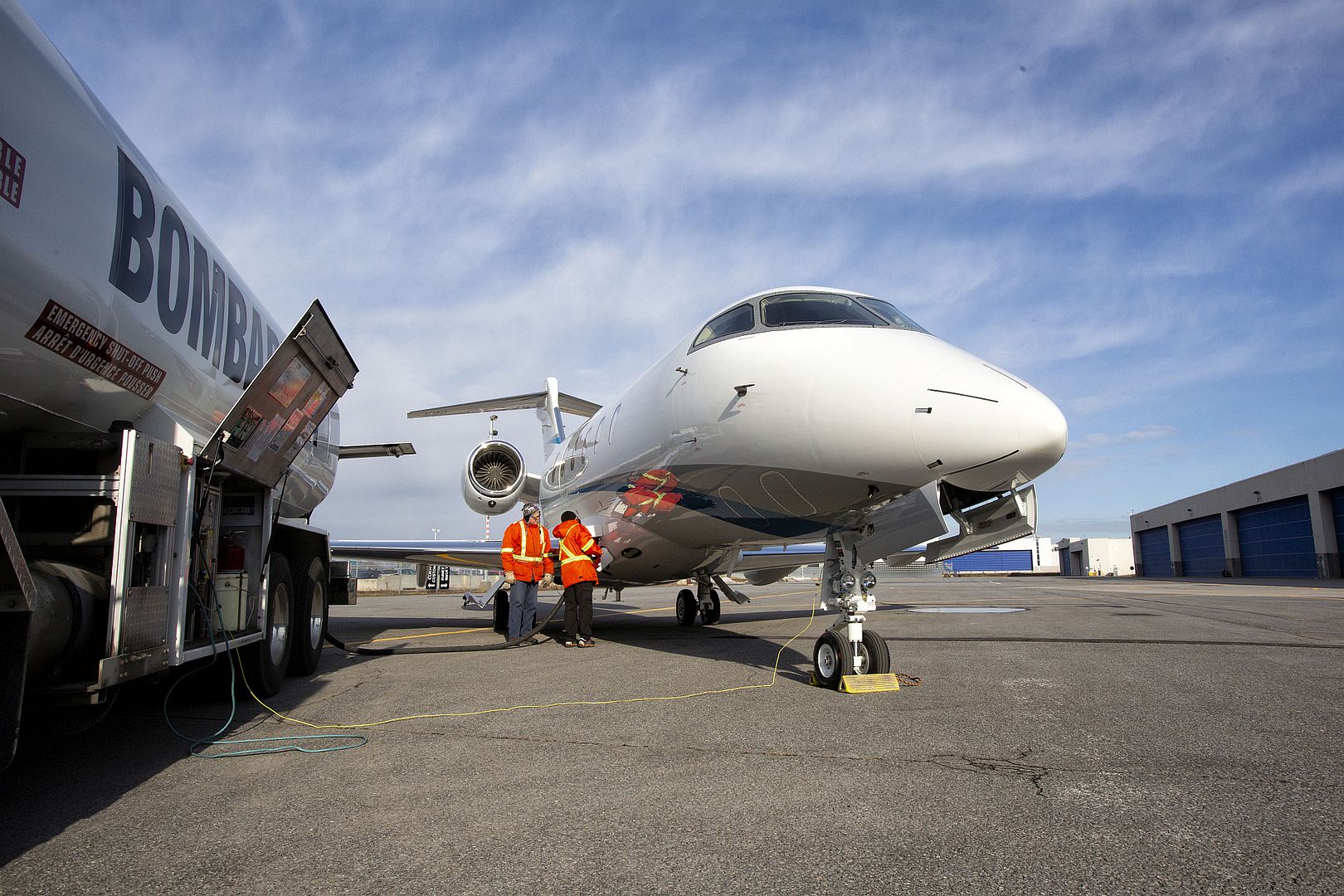
For charter quotes and information on Latitude 33 Aviation?s services, visit L33Jets.com or call 1-800-840-0310. -
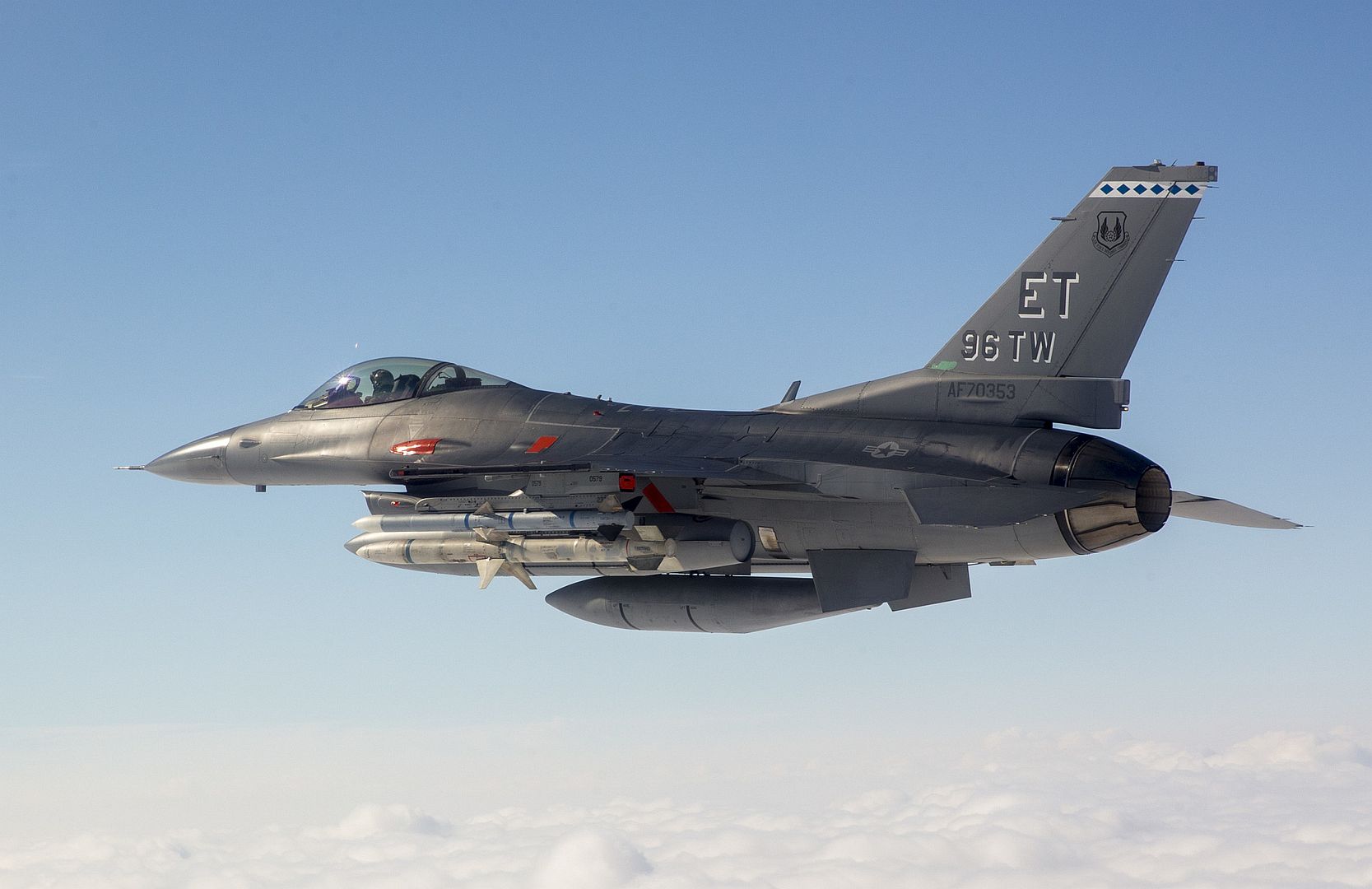
An F-16 is flown by Maj Spencer Bell, 40th Flight Test Squadron test pilot, during a flutter mission at Eglin Air Force Base, Fla., Dec. 12, 2019. The 40 FLTS mission is to execute exceptional fighter developmental test and support to deliver war-winning capabilities. (U.S. Air Force photo by Tech. Sgt. John Raven)
U.S. Air Force Lt. Col. Murray, a pilot with the 389th Expeditionary Fighter Squadron, and Australian Air Force Flight Lieutenant Moyle, a foreign exchange Weapons Systems Officer, taxi an F-15E Strike Eagle after flight December 4, 2019, at an undisclosed location in Southwest Asia. During the flight, Murray surpassed 3,000 total hours in the F15E, 2,000 hours as a pilot, and 1,000 hours as a WSO. (U.S. Air Force photo by Senior Master Sgt. Ralph Branson)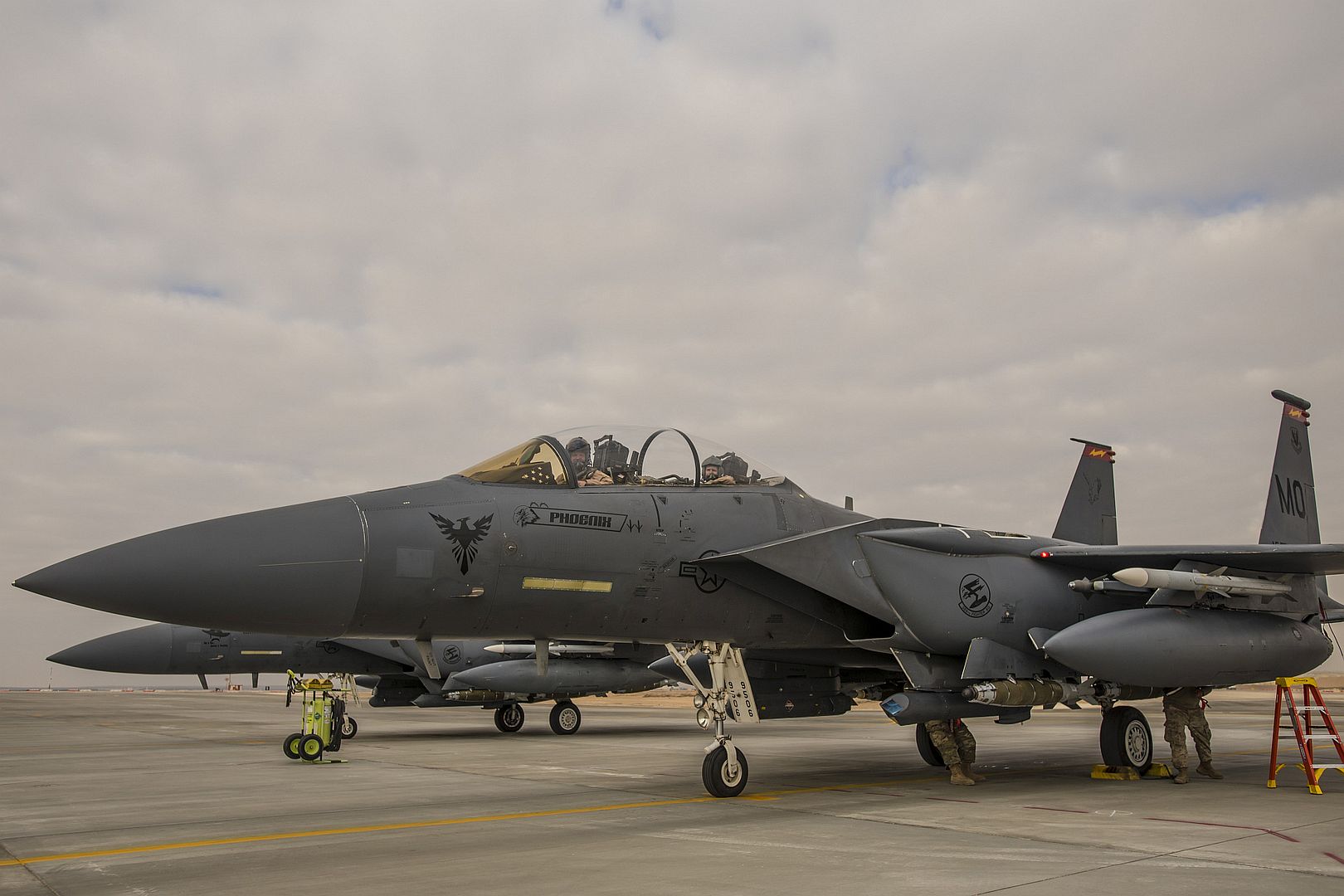
-
HILL AIR FORCE BASE, Utah (AFNS) --
A little more than four years after receiving their first combat-coded F-35A Lightning II aircraft, Hill Air Force Base's fighter wings have achieved full warfighting capability.
The term describes a set of focus areas within the 388th and 419th Fighter Wings: fully trained pilots and maintainers, a full complement of 78 aircraft and the mission and support equipment needed to fly.
While the designation of full warfighting capability is an important milestone, the wing has been combat capable since the Air Force declared initial operational capability in August 2016. Since then, the wings have participated in several large combat exercises, deployed twice to Europe and once to the Pacific and supported two Middle East combat deployments, including one short-notice tasking.
?Every training opportunity, exercise and deployment we?ve completed over the past four years has been a key stepping stone in reaching full warfighting capability,? said Col. Steven Behmer, 388th Fighter Wing commander. ?This is just the beginning of sustained F-35A combat operations and we will remain focused on staying ready to deploy whenever, wherever we?re needed.?
Fully-trained pilots
The first F-35As arrived at Hill AFB in September 2015 and the final aircraft arrived in December 2019. In the intervening years, Airmen at Hill AFB have been training and developing tactics as the aircraft systems and capabilities have matured.
Reaching the right balance of qualified manning can be a challenge when activating a brand-new weapon system. The first squadron to stand up, the 34th Fighter Squadron, started with a core of pilots who had some level of F-35A training and experience in other platforms. As the wing began to grow, that experience level was diluted, and each squadron has been through a period where a majority of pilots could be considered ?inexperienced wingmen.?
?We didn?t have a majority of pilots who had been training and carrying out F-35A tactics for 15 or 20 years. So, the core experience is less,? Behmer said. ?We?ve worked hard and achieved the right balance in the squadrons.?
Through large exercises like Red Flag, local exercises, instructor pilot and flight-lead training, the squadrons have drastically increased that level of experience. Young pilots, some who have never flown any other aircraft, now have real-world combat experience.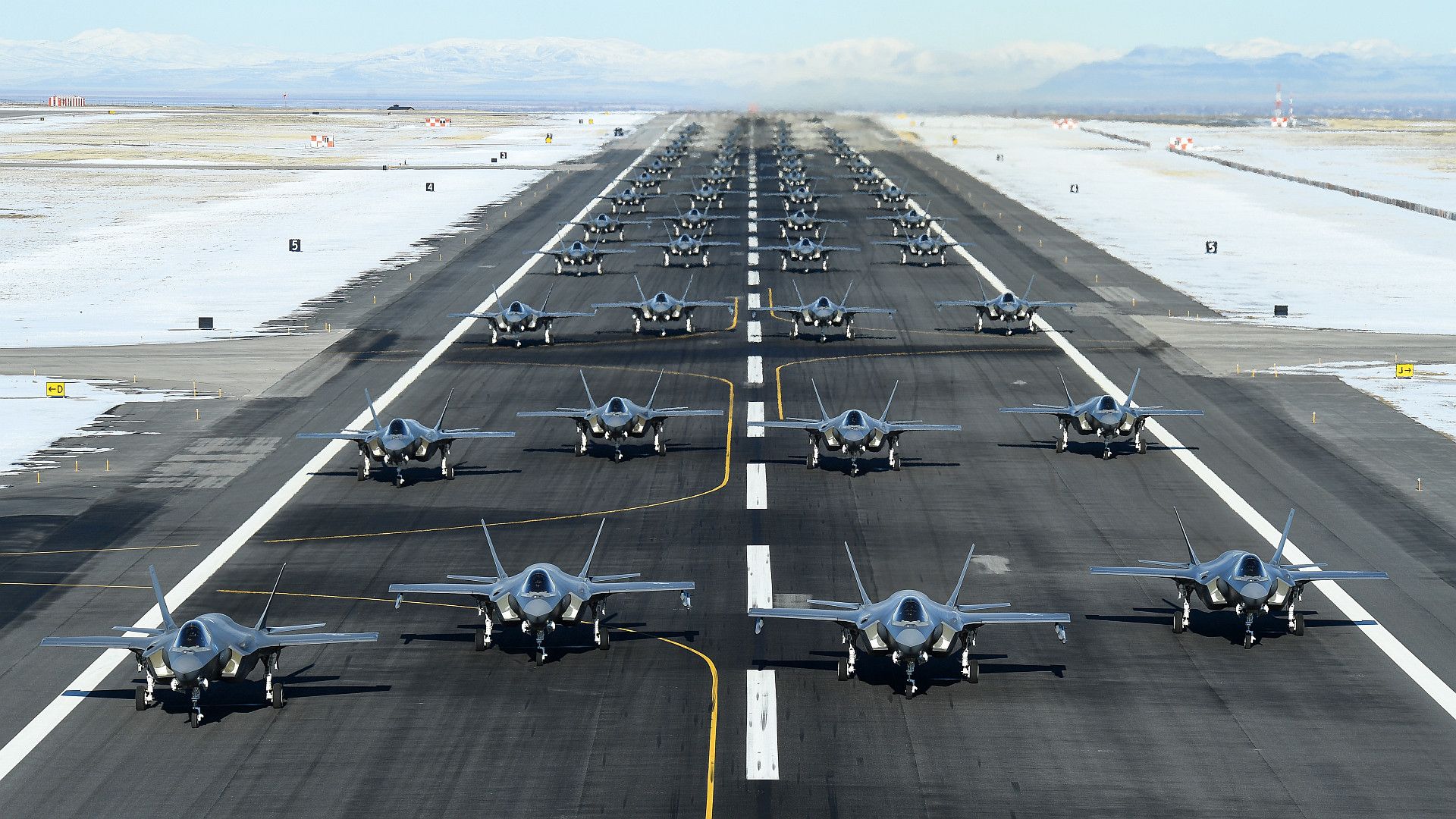
Fully-trained maintainers
When the first jets arrived at Hill AFB, about 50% of the maintainers were fully-trained, seasoned F-35 maintainers from Eglin Air Force Base, Florida, and Luke Air Force Base, Arizona. That number decreased due to PCS, retirements and separations.
Since then, there has been an influx of new manning with less experience, and every other maintainer has been ?homegrown.?
?We really relied on our more experienced personnel, and as we received more aircraft, spread them throughout the group to train and equip the next F-35A aircraft maintenance units the right way,? said Col. Michael Miles, 388th Maintenance Group commander. ?When you have the right mix of leadership, with the right focus, they can empower their people and everyone develops maintenance capability quickly.?
All 78 aircraft delivered
When the first aircraft arrived in 2015, the goal was to fully equip each squadron with 24 primary assigned aircraft and six backups by the end of 2019. That was realized in December with the delivery of the 78th jet.
?It was really exciting to get the first jet in 2015 as we?d been talking about it and looking forward to it for a long time,? said Chief Master Sgt. Eric Engel, 466th Aircraft Maintenance Unit superintendent with the 419th FW. ?When we started out, most of our folks were longtime F-16 maintainers and it?s been truly impressive to see their aptitude and quick transition to a fifth-generation aircraft that is so vastly different from the F-16.?
Over that four-year period, the wings received roughly two jets every month and immediately began putting them to use. In the spring of 2016, the 34th FS deployed six jets to RAF Lakenheath, United Kingdom.
In some cases, the delivery process became so streamlined that the aircraft were able to fly combat training missions within 24 hours of arriving at Hill AFB. This was more than just convenient. It meant that it was possible to deliver a jet from the factory straight into combat if necessary.
Mission and support equipment
Fifth-generation technology on the F-35A requires more specialized equipment than legacy aircraft. Every system on the F-35A has an associated piece of equipment to keep aircraft loaded, fueled and flying.
There are more than a dozen critical pieces of heavy equipment, from the standard ? power generators and weapons loaders, to the unique ? 13,000-pound air conditioners to cool the jet?s advanced avionics. There?s also other equipment ? like the high-tech, personalized helmets that integrate with the jet?s mission systems ? and computer and network systems to support flying and maintenance.
?At IOC (initial operational capability), we had the equipment to support one squadron that could do some semblance of combat operations. Now, as each squadron has progressed, and we?re on track to have all the required assets, we demonstrated that we can rely on the program for the technical support and weapons system parts we need while we deployed all our squadrons last summer,? Miles said.
In 2019, the wings proved that they could balance the equipment requirements to support all three squadrons away from home station ? the 4th FS was deployed to the Middle East, the 421st FS was in Europe and the 34th FS spent two months at Mountain Home AFB, Idaho. In a seven-day span the wings had aircraft, equipment and personnel operating out of nine different countries.
?It took everyone?s input ? from E1 to O6 ? to get where we are today. Through hard work, providing programmatic feedback, and developing new processes and procedures, we shaped and pushed the program. Each Airmen can look back with pride and see their contributions over the last four years standing up this wing, and enabling F-35A combat capability for our country,? Miles said.
(U.S. Air Force photo's by R. Nial Bradshaw)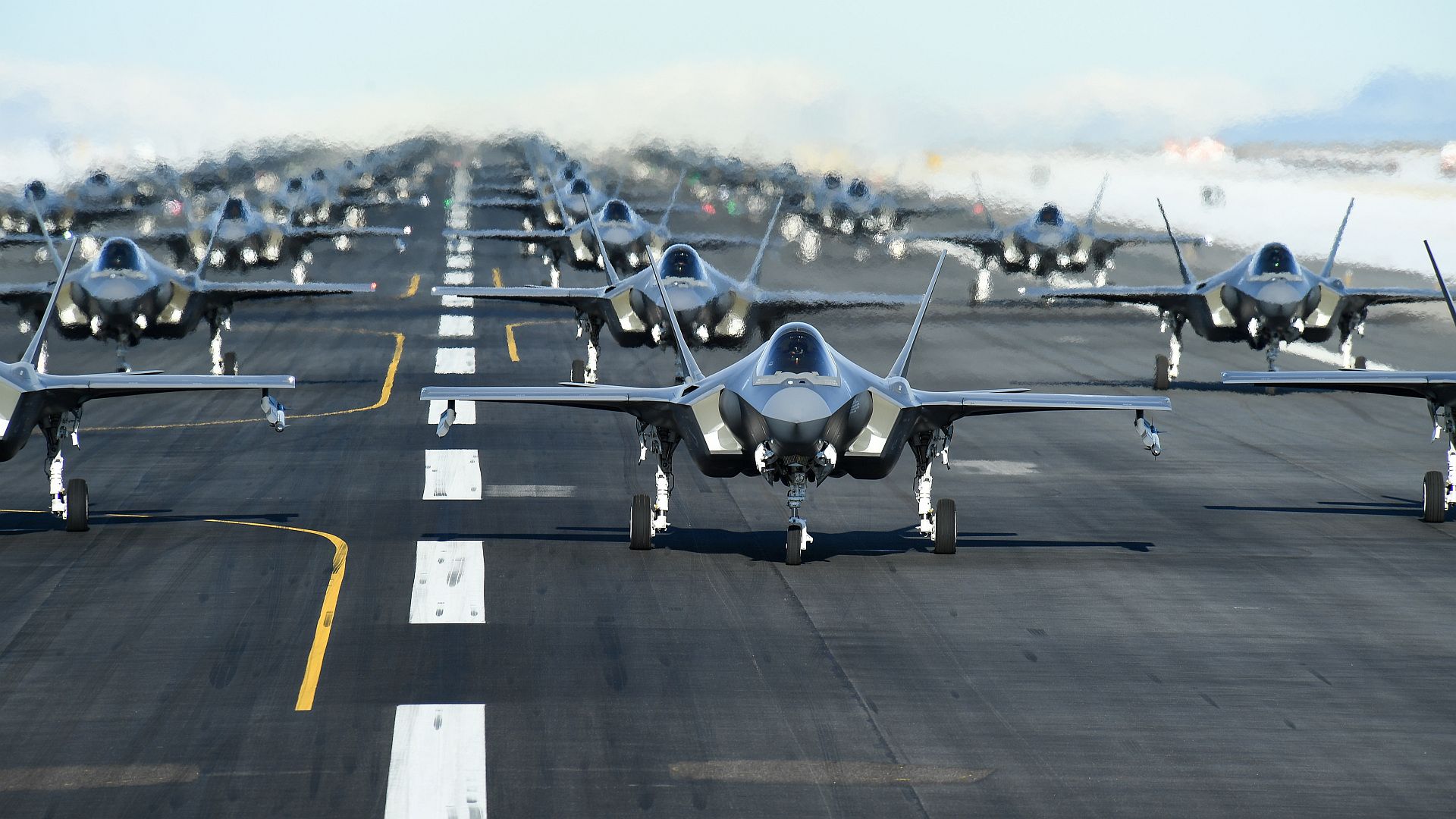
EL CENTRO, Calif. (Jan. 6, 2020) Sailors and Marines assigned to the U.S. Navy Flight Demonstration Squadron, the Blue Angels, take part in morning turn operations. The Blue Angels are conducting winter training at Naval Air Facility El Centro, California, in preparation for the 2020 show season. The team is scheduled to conduct 55 flight demonstrations at 29 locations across the country to showcase the precision and professionalism of the U.S. Navy and Marine Corps to the American public. (U.S. Navy photo by Mass Communication Specialist 1st Class Timothy Schumaker)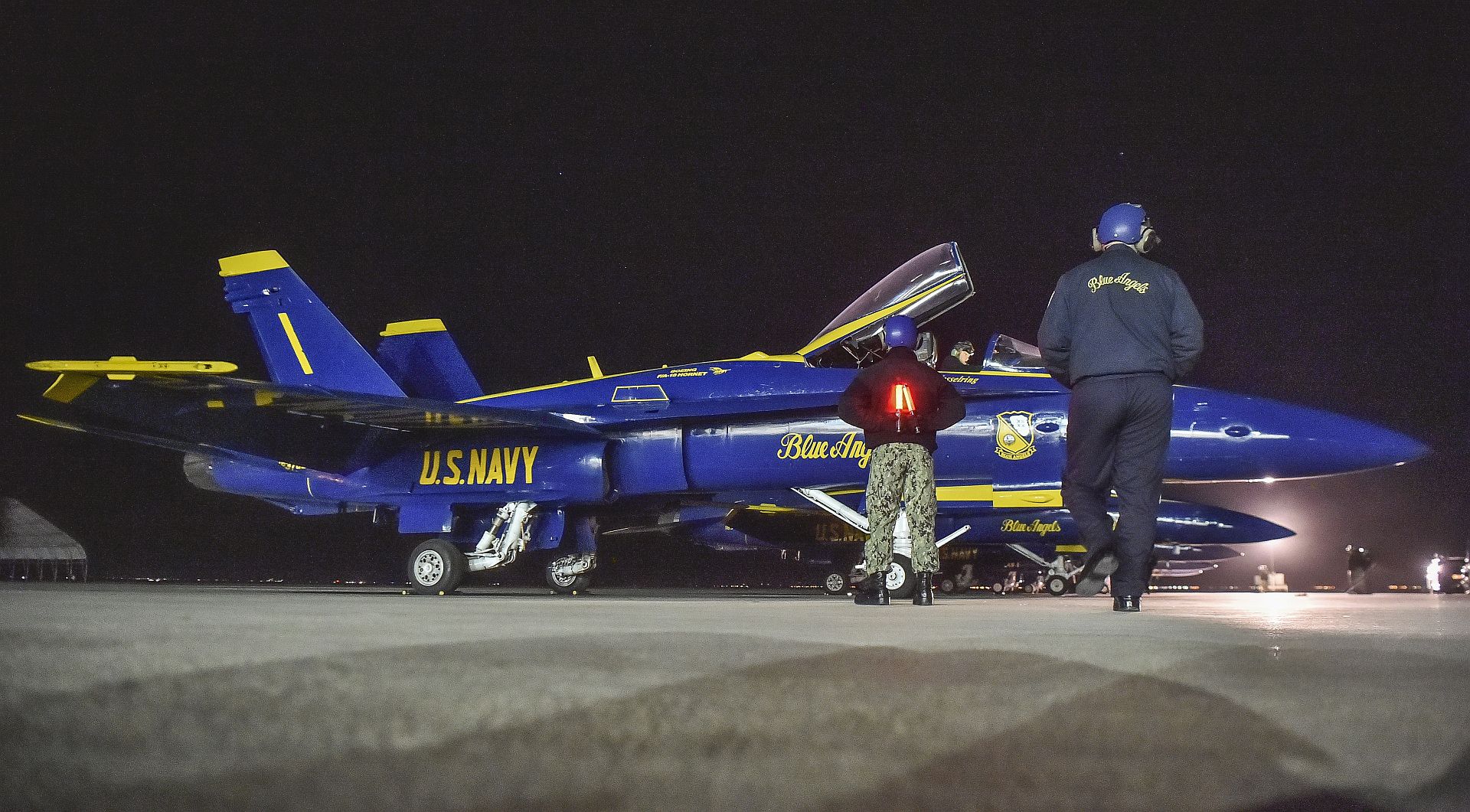
U.S. Navy Lt. Cmdr. Cary Rickoff, Blue Angels pilot, rejoins his formation after having his aircraft refueled by a KC-10 Extender operated by the 78th Air Refueling Squadron, 514th Air Mobility Wing, Joint Base McGuire-Dix-Lakehurst, N.J., Jan. 3, 2020. Members from the 78th ARS flew a sortie to refuel the U.S. Navy Blue Angels as well as ship cargo from Travis Air Force Base, Calif., to Joint Base Pearl Harbor-Hickam, Hawaii.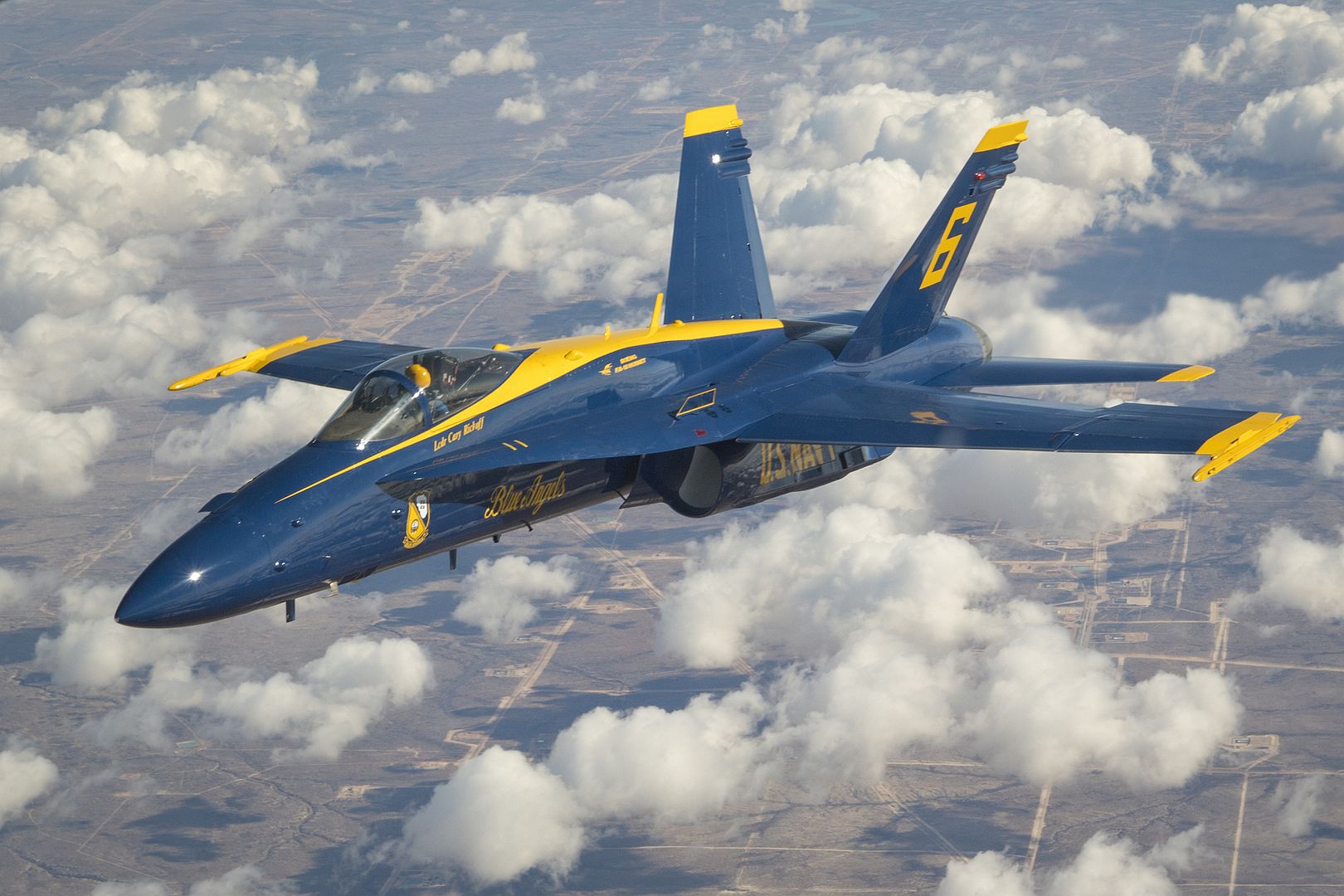
An F-35 Lightning II, assigned to Hill Air Force Bases 388th Fighter Wing and 419th Fighter Wing, descends underneath a KC-135R Stratotanker, assigned to the Utah Air National Guard?s 151st Air Refueling Wing during an exercise on January 6, 2020. The exercise generated 50 F-35s from Hill AFB, 24 of which were refueled by two Utah KC-135s during air refueling operations. (U.S. Air National Guard photo's by Tech. Sgt. John Winn)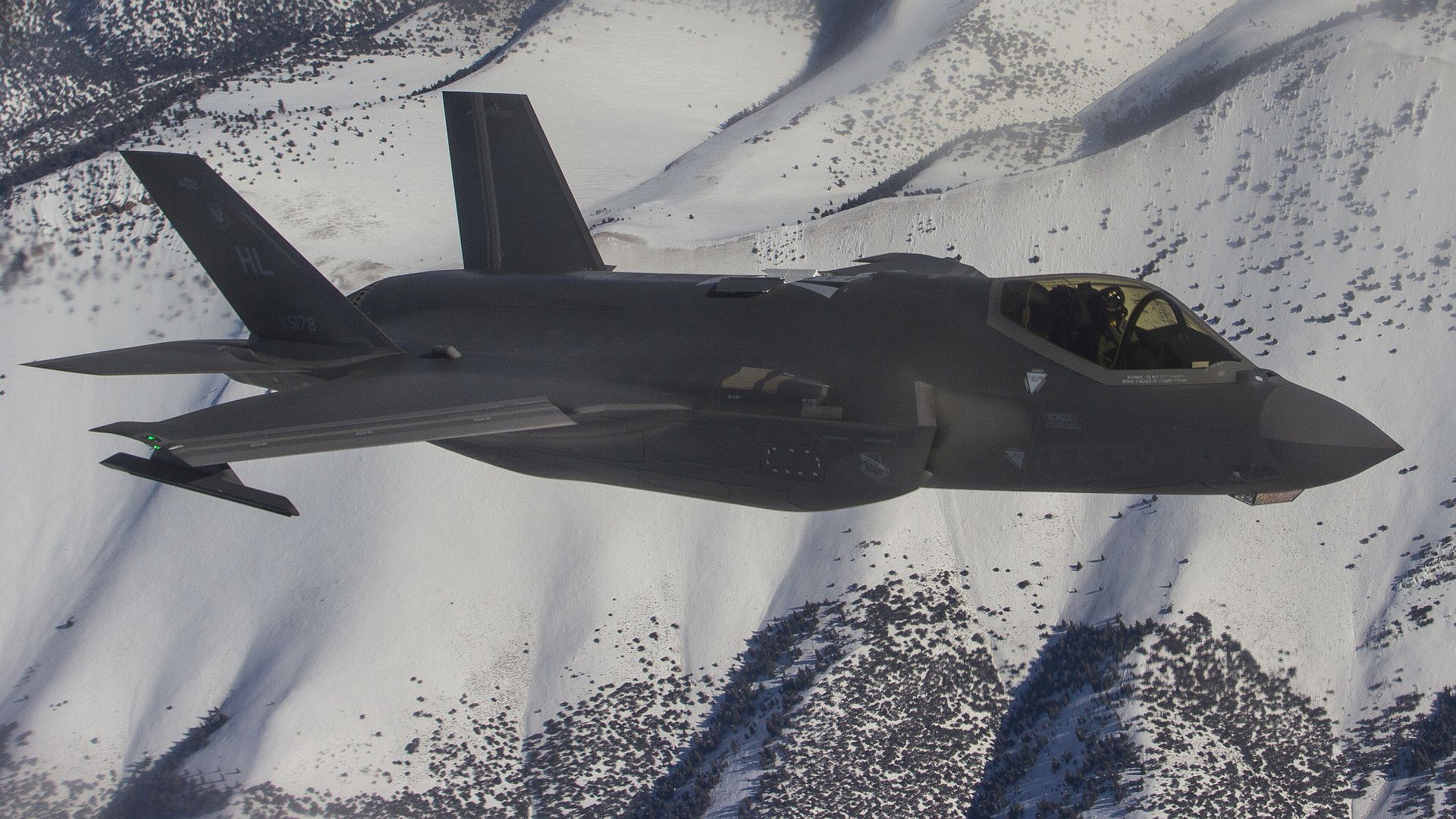
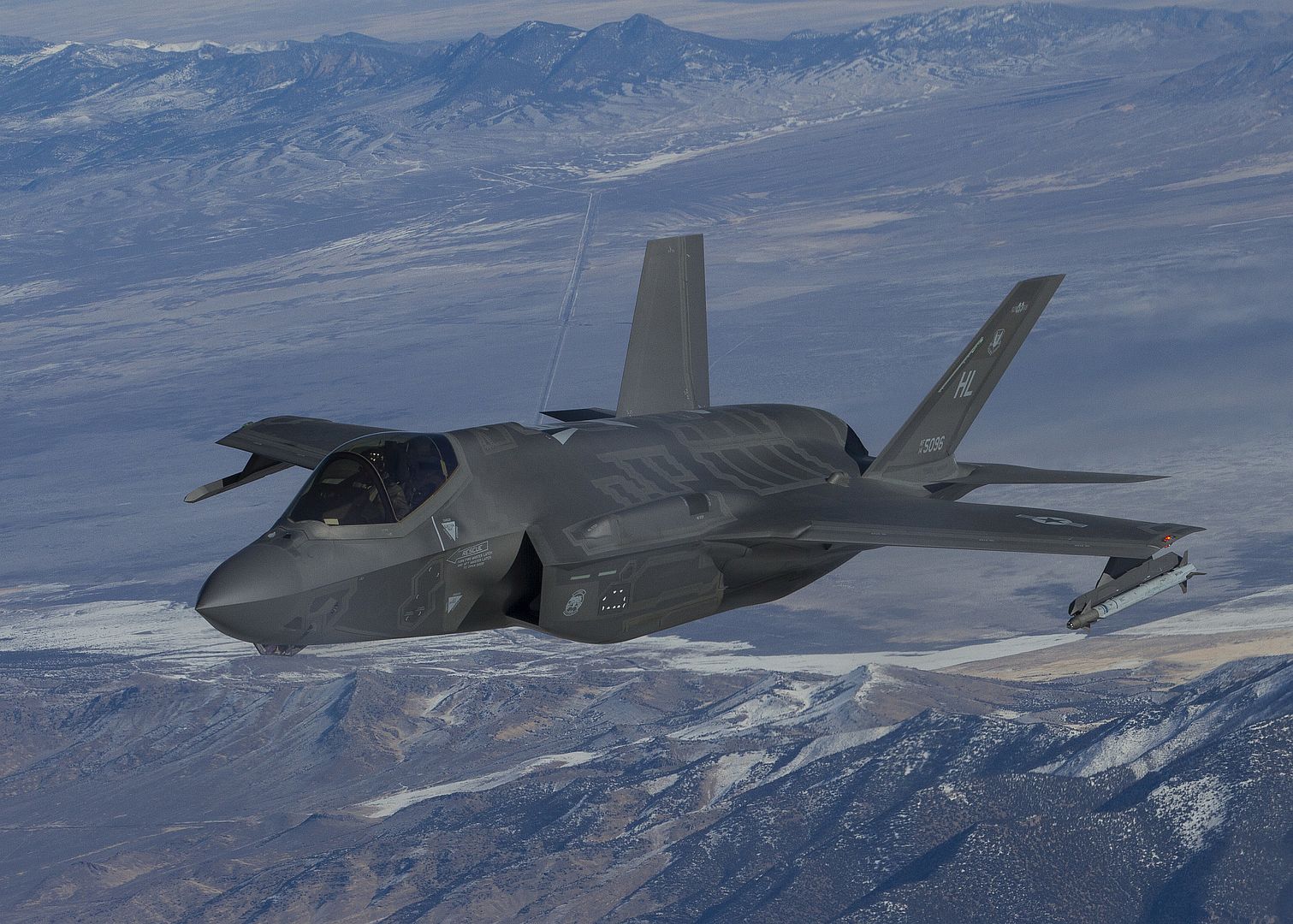
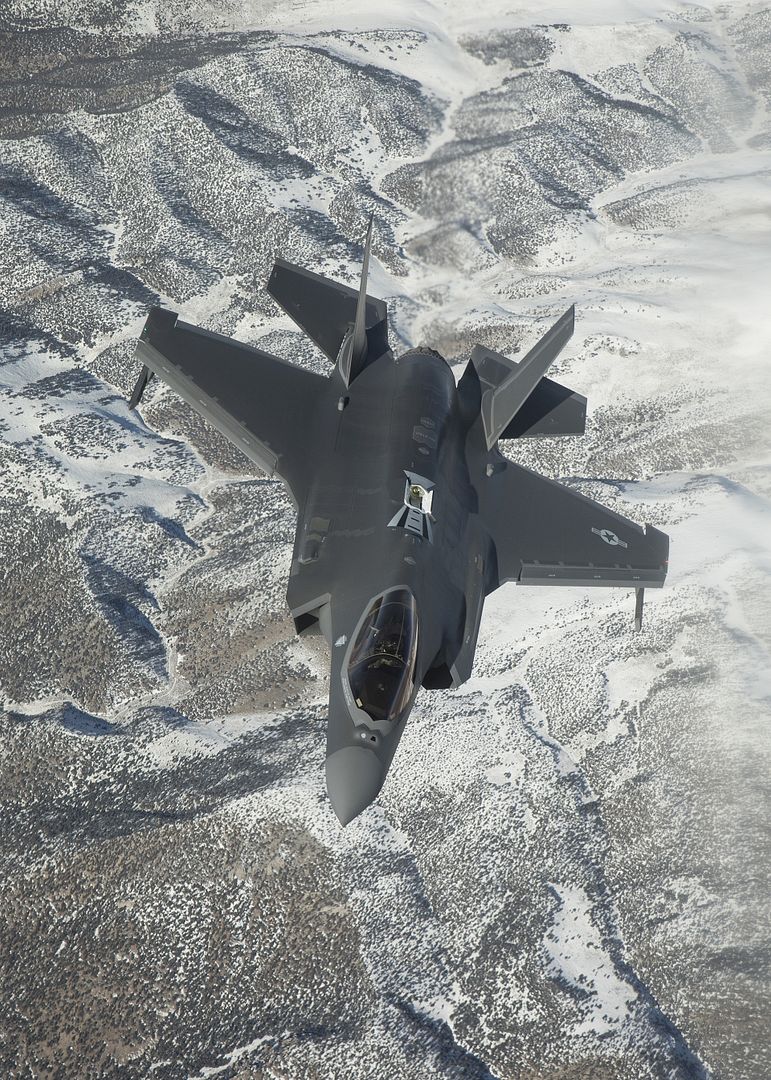
FORT WORTH, Texas, Dec. 30, 2019 /PRNewswire/ -- Lockheed Martin (NYSE: LMT) delivered the 134th F-35 aircraft for the year today, exceeding the joint government and industry 2019 delivery goal of 131 aircraft.
One hundred and thirty-four deliveries represent a 47% increase from 2018 and nearly a 200 percent production increase from 2016. Next year, Lockheed Martin plans to deliver 141 F-35s and is prepared to increase production volume year-over-year to hit peak production in 2023.
"This achievement is a testament to the readiness of the full F-35 enterprise to ramp to full-rate production and we continue to focus on improving on-time deliveries across the entire weapons system," said Greg Ulmer, Lockheed Martin vice president and general manager of the F-35 program. "We have met our annual delivery targets three years in a row and continue to increase production rates, improve efficiencies and reduce costs. The F-35 is the most capable fighter jet in the world, and we're now delivering the 5th Generation weapon system at a cost equal to or lower than a less capable 4th Generation legacy aircraft."
The 134th aircraft is a Short Takeoff and Vertical Landing (STOVL) model for the United States Marine Corps. In 2019, deliveries included 81 F-35s for the United States, 30 for international partner nations and 23 for Foreign Military Sales customers.
Unit and Sustainment Costs Decrease, Readiness Improving
Using lessons learned, process efficiencies, production automation, facility and tooling upgrades, supply chain initiatives and more ? the F-35 enterprise continues to significantly improve efficiency and reduce costs.
The price of an F-35A is now $77.9 million, meeting the $80 million goal a year earlier than planned.
The F-35's mission readiness and sustainment costs continue to improve with the global fleet averaging greater than 65% mission capable rates, and operational squadrons consistently performing near 75%.
Lockheed Martin's sustainment cost per aircraft per year has also decreased four consecutive years, and more than 35% since 2015.
Program Maturity and Economic Impact
With more than 490 aircraft operating from 21 bases around the globe, the F-35 plays a critical role in today's global security environment.
Today, 975 pilots and 8,585 maintainers are trained, and the F-35 fleet has surpassed more than 240,000 cumulative flight hours. Eight nations have F-35s operating from a base on their home soil, eight services have declared Initial Operating Capability and four services have employed F-35s in combat operations.
In addition to strengthening global security and partnerships, the F-35 provides economic stability to the U.S. and international partners by creating jobs, commerce and security, and contributing to the global trade balance. Thousands of men and women in the U.S. and around the world build the F-35. With more than 1,400 suppliers in 47 states and Puerto Rico, the F-35 Program supports more than 220,000 jobs.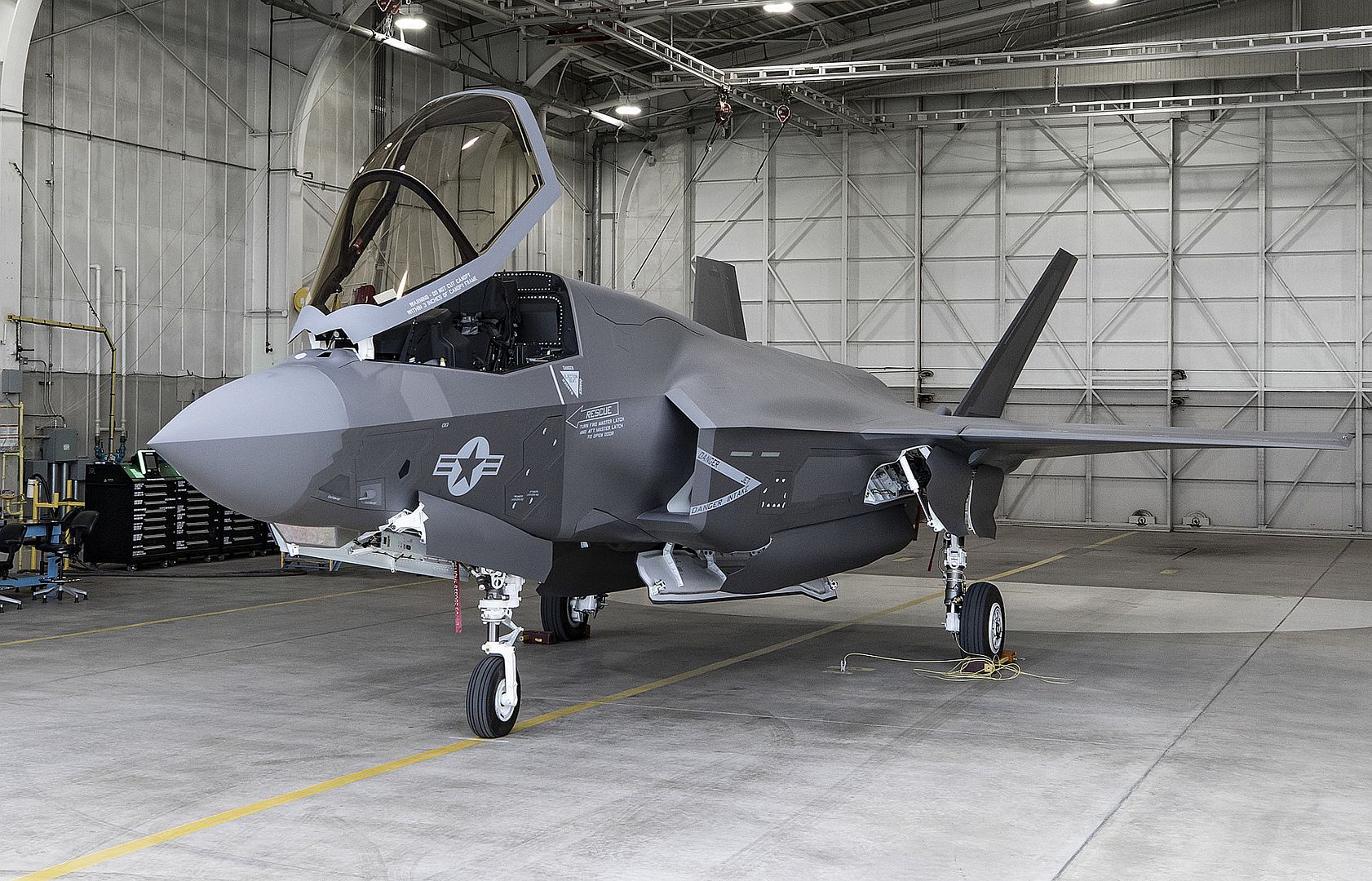
Courchevel, 3 January, 2020 ? The ACH130 Aston Martin Edition, the first offering from the recently-announced partnership between Aston Martin Lagonda and Airbus Corporate Helicopters, was revealed today at Courchevel in the French Alps.
This stylish special edition of the ACH130 helicopter comes equipped with a range of four interior and exterior designs generated by Aston Martin which will delight helicopter owners and pilots who appreciate the pleasures of possessing and driving high performance bespoke luxury cars.
The aeronautical designers at Airbus Corporate Helicopters (ACH) and the automotive designers at Aston Martin have worked closely together for over a year, marrying ACH?s key values of excellence, quality and service with Aston Martin?s commitment to beauty, handcrafting and automotive art to bring a new level of aesthetics and rigorous attention to detail to the helicopter market.
Available in four external liveries with complementary interiors, the helicopters are embellished with Aston Martin signature elements, starting with the iconic Aston Martin wings, which are embossed onto luxury leather features, tastefully positioned throughout the cabin.
The Stirling Green-themed external scheme, which is already flying on the first aircraft, features a painted gradient, which fades down into Jet Black on the underside of the helicopter with Skyfall Silver around the cowlings. Further external liveries are available with other Aston Martin paint colours including Xenon Grey, Arizona and Ultramarine Black.
Inside, the automotive-inspired cabin, which offers a higher level of comfort, is trimmed in Pure Black ultra-suede with a palette of selectable leathers comprising Oxford Tan, Pure Black, Cormorant and Ivory.
On the rear of the front seats the same brogue detailing that is found in a DB11 runs down the centre of the seat and the doors have been trimmed with leather to provide passengers with comfortable touch points during their flight. By using materials from the Aston Martin automotive palette the interior of this special edition of the ACH130 sits in harmony with the interior of Aston Martin sports cars.
Each of these special edition helicopters will have a plaque included on the instrument panel which shows the partnership logos, the registration of the aircraft, the edition number and the owner?s name, should they wish to have it included.
Aston Martin Vice President and Chief Creative Officer, Marek Reichman, said: ?We have our own set of automotive design principles but in recent years we have been learning how to apply our principles to other areas of design, such as architecture, motorcycles and now helicopters. This first application of our design practices to a helicopter posed a number of interesting challenges but we have enjoyed working through them. Beauty is of vital importance to Aston Martin and to our customers and we think the ACH130 Aston Martin Edition is an inherently beautiful machine. It provided a wonderful canvas for our team to work on so we now look forward to seeing everybody?s reaction.?
Fr?d?ric Lemos, Head of Airbus Corporate Helicopters, also commented: ?The ACH130 Aston Martin Edition is optimally positioned in the market for hands-on owners who draw satisfaction from personally piloting their aircraft and it generates strong brand-loyalty. In the same way Aston Martin?s products are cars for drivers who relish being at the wheel and they inspire a comparable attachment to the brand. So they are the perfect partner for us in developing this superb new ACH130 Aston Martin Edition.?
The ACH130 Aston Martin Edition is available on request with deliveries taking place from Q1 2020. For further information please visit: www.airbuscorporatehelicopters.com
About Aston Martin Lagonda
Aston Martin Lagonda is a luxury automotive group focused on the creation of exclusive cars and SUVs. The iconic Aston Martin brand fuses the latest technology, exceptional hand craftsmanship and timeless design to produce models including the Vantage, DB11, Rapide AMR and DBS Superleggera. The Lagonda brand will relaunch in 2021 as the world?s first luxury electric vehicle company. Based in Gaydon, England, Aston Martin Lagonda designs, creates and exports cars which are sold in 53 countries around the world.
Lagonda was founded in 1899 and Aston Martin in 1913. The two brands came together in 1947 when both were purchased by the late Sir David Brown. Under the leadership of Dr Andy Palmer and a new management team, the Group launched its Second Century Plan in 2015 to deliver sustainable long-term growth. The plan is underpinned by the introduction of seven new models including the DB11, new Vantage, DBS Superleggera and an SUV, as well as the development of a new manufacturing centre in St Athan, Wales.
Toulouse ? U.S.-based Spirit Airlines has finalized a purchase agreement with Airbus for 100 A320neo Family aircraft. In October, the two parties had signed and announced a memorandum of understanding (MoU) for the purchase of up to 100 of the aircraft ? a mix of A319neo, A320neo, and A321neo ? to meet the airline?s future fleet requirements.
Spirit is based in South Florida and is the fastest-growing airline in the United States, with flights throughout the U.S., Latin America and the Caribbean. The airline will announce an engine selection at a later date.
Featuring the widest single-aisle cabin in the sky, the best-selling A320neo Family, comprising the A319neo, A320neo, and A321neo, will deliver a fuel-burn reduction of approximately 20% as well as 50 percent less noise compared to previous generation aircraft, thanks to incorporating the very latest technologies including new generation engines and Sharklets.
Firm orders worldwide for the A320neo Family now have surpassed 7,300 from more than 110 global customers.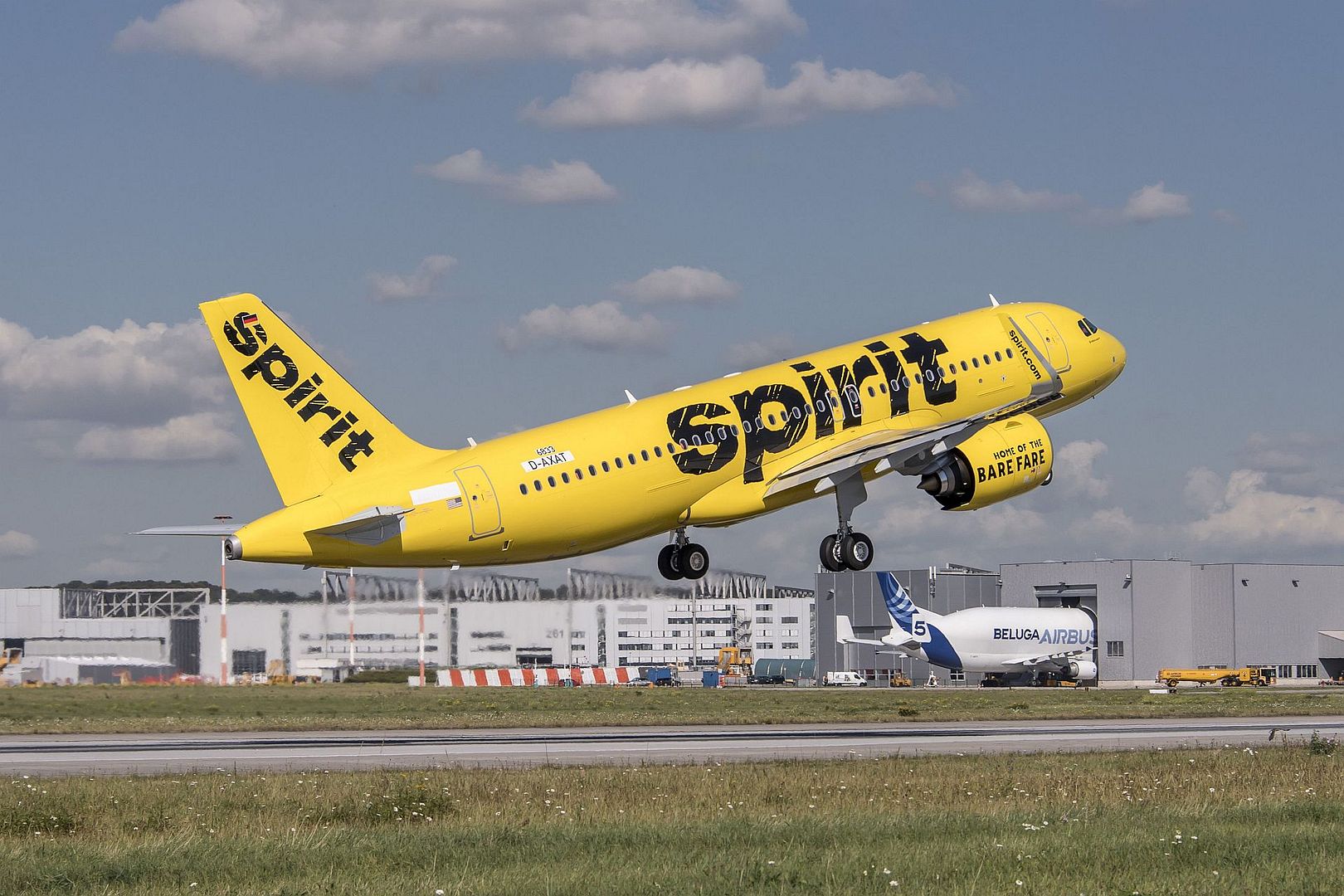
S?o Jos? dos Campos, Brazil, December 30th, 2019 ? Air Kiribati, the flag carrier of the Republic of Kiribati, received today its first E190-E2 jet. Embraer announced the contract with the Government of Kiribati, in partnership with its national airline, Air Kiribati, in December 2018. The airline ordered two E190-E2s and has purchase rights for two more.
?Aviation is critical for any island nation and Kiribati is no exception. Our Government has made the conscious decision to take into our hands the opportunity to unlock economic prosperity for our people and our nation through the purchase of these two aircraft,? said Hon. Willie Tokataake, Minister for Information, Communication, Transport and Tourism Development of the Kiribati Government. ?The arrival of our first jet today is the culmination of three years of vision, strategic thought, government focus, research, evaluation, hard work, commitment, partnership and a good measure of problem solving.?
Air Kiribati is the launch operator for the E190-E2 in Asia Pacific. The aircraft will be configured in a dual class layout seating 92 passengers in total, with 12 seats in business class and 80 seats in economy class. Located in the central Pacific, Air Kiribati can now fly longer domestic and international routes than it currently does with its turboprop fleet.
?This is first E190-E2 delivered in the Pacific region,? said Cesar Pereira, Asia Pacific Vice President, Embraer Commercial Aviation. ?We?re are honored that Air Kiribati selected the E190-E2 as the best fit for the airline?s challenging flying environment. The E190-E2 has cutting-edge technology and is the most fuel efficient and environmentally-friendly single aisle jet in the world. These attributes are extremely important for Kiribati.?
With a maximum range of up to 2,850 nautical miles, the E190-E2 can serve destinations throughout the vast expanse of Kiribati, including nonstop from Tarawa to Kiritimati (Christmas) Island, one of the most challenging routes in the Pacific. The current domestic flight from Tarawa to Kiritimati requires an international stopover in Fiji.
Spanning four time zones and comprised of more than 30 islands, Kiribati is the only country in the world to be in all four hemispheres. Embraer has been present in the Pacific since the first Bandeirante was delivered to a customer in Australia in 1978. The company continues to support operators across Oceania more than 40 years later.
The E190-E2 is the first of three new aircraft types in the E-Jets E2 family, developed to succeed the first-generation E-Jets. Compared to the first-generation E190, the E190-E2 burns 17.3% less fuel and nearly 10% less than its direct competitor. This makes it the most efficient single-aisle aircraft on the market.
The E190-E2 generates significant savings for airlines in terms of maintenance costs. It has the longest maintenance intervals - 10,000 flight hours for basic checks and no calendar limit in typical E-Jets utilization. This means an additional 15 days of aircraft utilization over a period of ten years.
The E2 cockpit features advanced Honeywell Primus Epic 2 integrated avionics. Combined with closed-loop fly-by-wire controls, the systems work together to improve aircraft performance, decrease pilot workload and enhance flight safety. From a passenger perspective, the E2 cabin features a comfortable two-by-two layout. The absence of a middle seat enables passengers to have an enjoyable flight experience with more legroom and additional luggage storage space.
Embraer is the world?s leading manufacturer of commercial aircraft up to 150 seats with more than 100 customers across the world. For the E-Jets program alone, Embraer has logged more than 1,800 orders and 1,500 aircraft have been delivered. Today, E-Jets are flying in the fleets of 80 customers from 50 countries. The versatile 70 to 150-seat family is flying with low-cost airlines as well as with regional and mainline network carriers.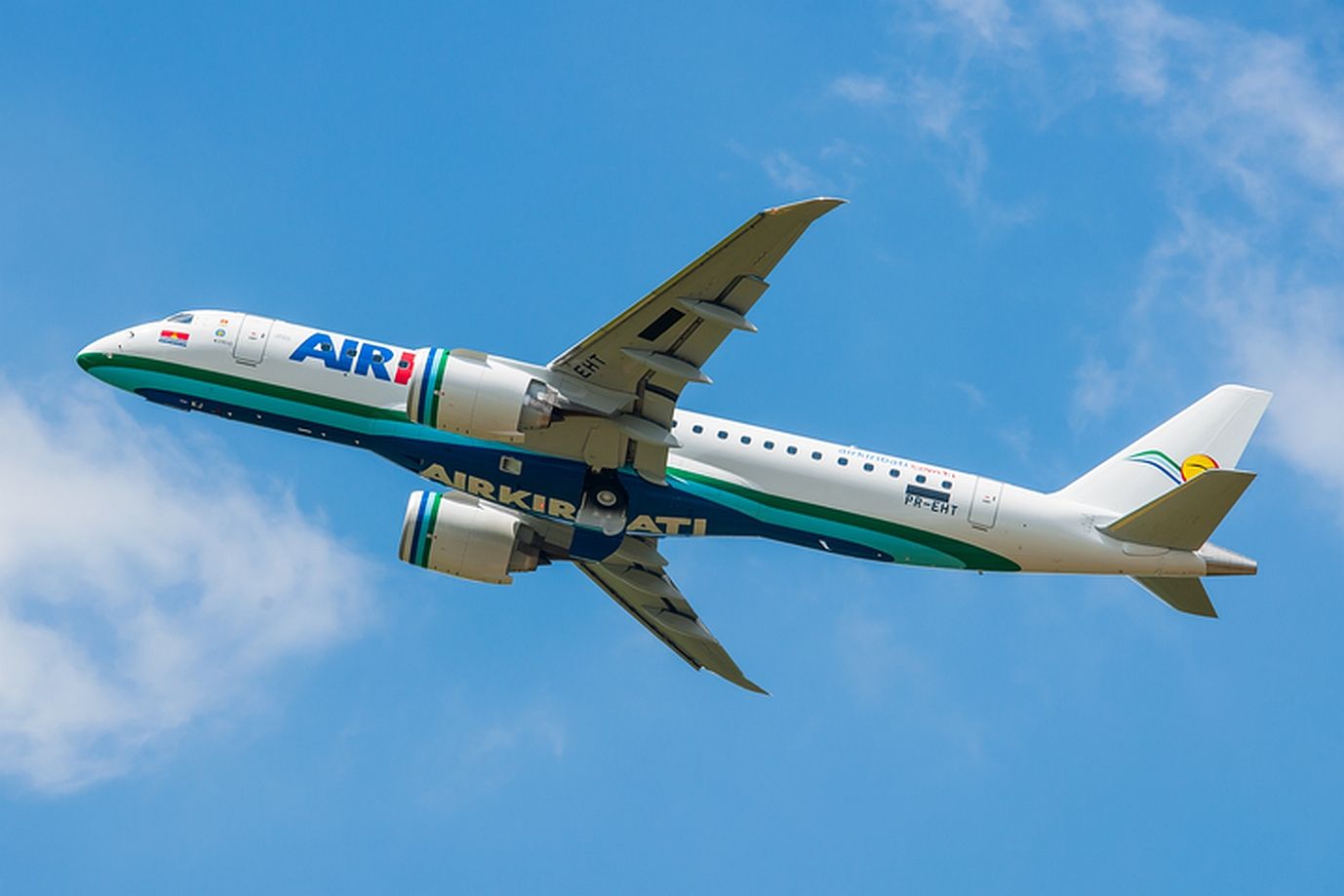
CES 2020 ? Las Vegas (Jan. 6, 2020) ? Bell Textron Inc., a Textron Inc. (NYSE: TXT) company, reveals at CES a vivid look into the future of the smart city ecosystem. The Bell Nexus air taxi and the Autonomous Pod Transport (APT) ? both groundbreaking technologies ? will coexist to move people, products and information across connected cities.
?With a focus on the passenger experience, we revealed the technology and the vehicle that will revolutionize transportation in cities at CES 2019; this year, we?re demonstrating what governing, operating, working and living in a smart city will look like,? said Mitch Snyder, Bell president and CEO.
In a world where nearly 70 percent of the population will be living in urban areas by 2050 and cities are outgrowing their current transportations systems, the need for urban mobility solutions has never been greater. Fortunately, the transportation industry has reached an inflection point, and many of the world?s top minds are working toward solutions for the optimal smart city design. Bell remains at the forefront of this pursuit with a clear mission of finding solutions to the infrastructure challenges of tomorrow?s transportation networks.
These solutions and many smart city elements are on display in Bell?s Nexus City on the CES show floor:
Bell features its MaaS plans which look beyond the aircraft and demonstrate how to integrate MaaS into communities, making on-demand air mobility available to everyone--whenever they need it.
Bell?s service is powered by Bell AerOS, a proprietary system running on Microsoft Azure created to manage fleet information, observe aircraft health, and manage throughput of goods, products and predictive data and maintenance. This digital infrastructure is prevalent in Bell?s Smart City vision at the show and serves as another step in bringing connected mobility to the masses.
?Bell continues to lead the conversation beyond the aircraft to offer multi-modal transportation solutions and experiences within an interconnected digital network that will excite consumers, earn their trust and make their lives easier,? said Snyder.
Nexus 4EX:
Bell showcases the evolution of the Bell Nexus--the Bell Nexus 4EX (Four for the number of ducted fans, E for Electric and X for experimental). The aircraft features Bell?s signature powered-lift concept with four tilting ducted fans that can be configured as hybrid-electric or all-electric. Bell believes this design unlocks the key for all electric technology, but the vehicle will remain propulsion agnostic depending on customer needs.
?The vision for the Bell Nexus remains the same, but by taking a mature system level approach to design for an objective market vehicle, we believe this configuration unlocks a capable, certifiable and commercially viable product,? said Snyder.
-
EGLIN AIR FORCE BASE, Fla. (AFNS) --
The Air Force?s newest combat rescue helicopter was suspended in a soundproof chamber at the Joint Preflight Integration of Munitions and Electronic Systems facility in mid-November for defense system testing.
The 413th Flight Test Squadron?s HH-60W spent approximately seven weeks testing the defensive systems upgrades from the legacy HH-60G currently flown by Air Combat Command.
The J-PRIMES facility has the unique capability to capture high quality data on defensive systems by isolating the electromagnetic radiation inside the facility?s anechoic chamber. The chamber is a room designed to stop reflections of sound or electromagnetic waves and is insulated from external noise.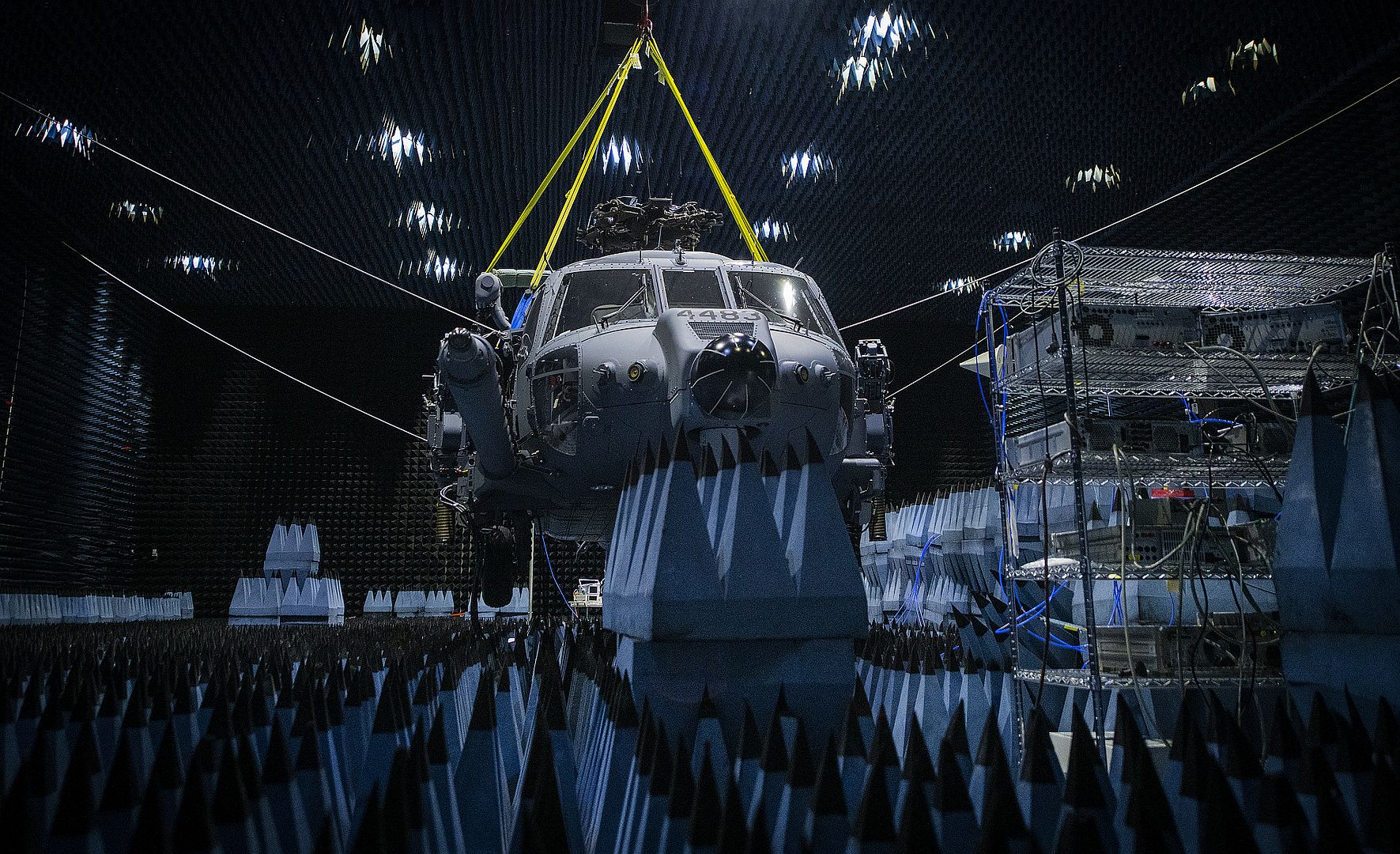
Testing the HH-60W in J-PRIMES will characterize the performance of the helicopter?s systems before electronic warfare flight-testing. The tests ensure it is capable of defeating hostile threats while performing its designated combat search and rescue mission.
The new aircraft arrived at the 96th Test Wing in early November. The Air Force is contracted to purchase 113 HH-60W aircraft to replace its aging fleet of HH-60G helicopters.
The J-PRIMES facility hosts similar test missions throughout the year. The facility provides an environment to facilitate testing air-to-air and air-to-surface munitions and electronics systems on full-scale aircraft and land vehicles before open air testing.
The J-PRIMES test data will be used to support specification compliance and check for defensive system discrepancies or concerns.
This is an early, but critical step in the developmental process of the new HH-60W. After J-PRIMES testing, this particular aircraft will begin flight test for its defensive systems.
?Developmental test has begun in earnest,? said Joe Whiteaker, the squadron?s combat rescue helicopter flight commander. ?Every new event brings us closer to getting this aircraft to the warfighter, which is what we are really focused on.?
(U.S. Air Force photo's by Samuel King Jr.)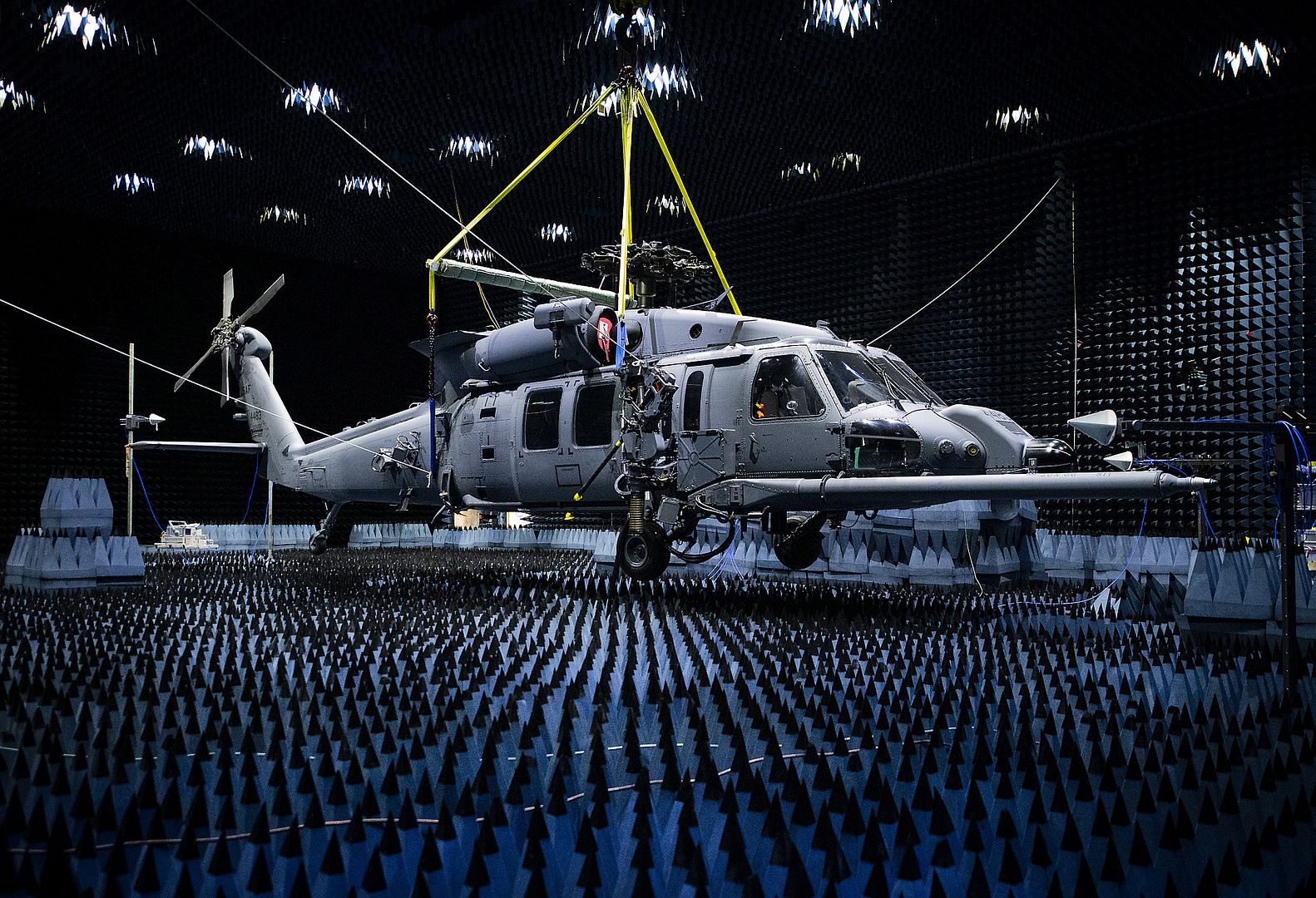
A C-17 Globemaster III assigned to the 911th Airlift Wing sits on the flightline at March Air Reserve Base, California, Jan. 8, 2020. The C-17 is capable of rapid strategic delivery of troops and all types of cargo to main operating bases or directly to forward bases in the deployment area. (U.S. Air Force photo by Joshua J. Seybert)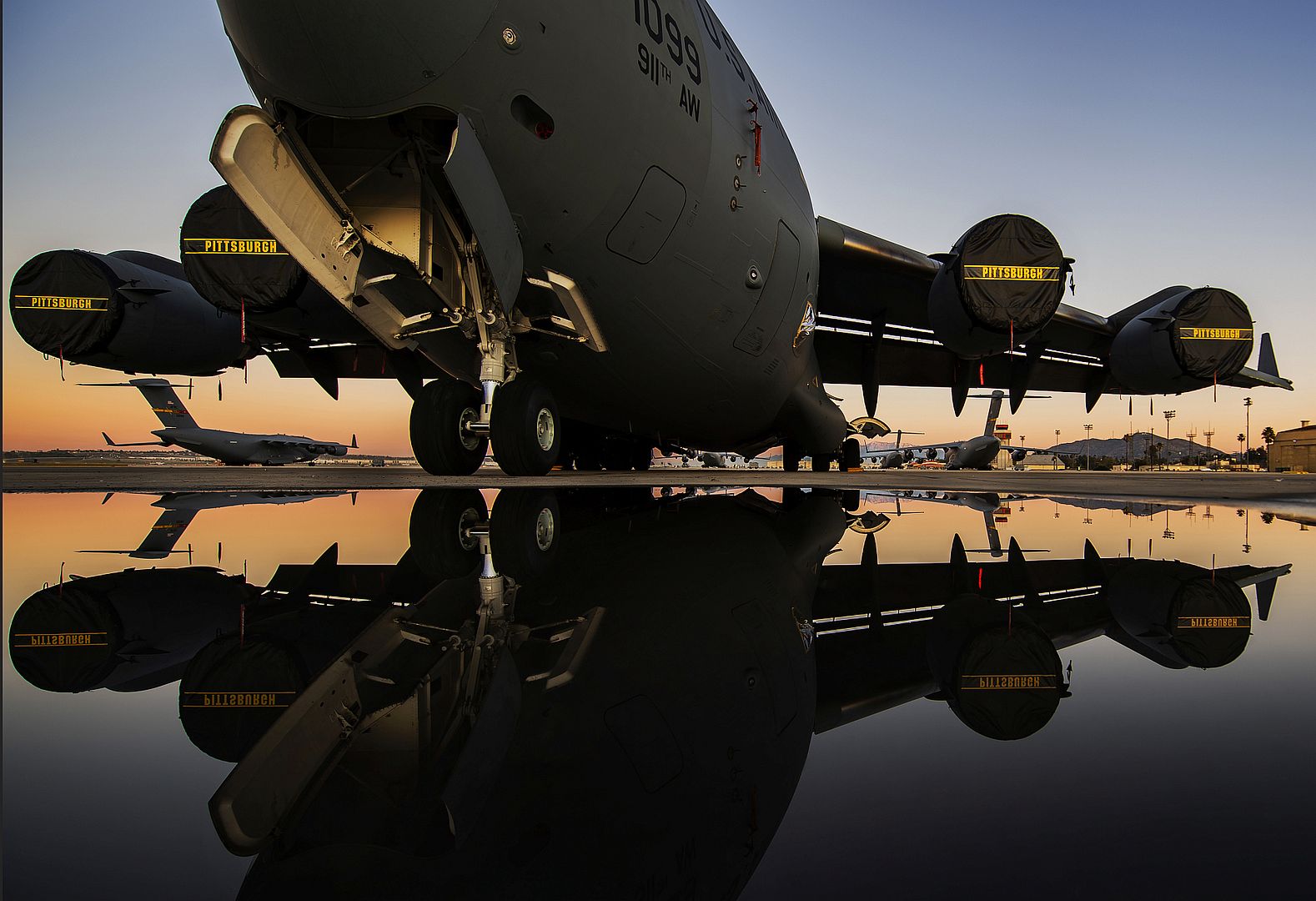
PACIFIC OCEAN (Jan. 7, 2020) A C-2A Greyhound attached to the Rawhides of Fleet Logistics Support Squadron (VRC) 40 makes an arrested landing on the flight deck of the aircraft carrier USS Abraham Lincoln (CVN 72). The Abraham Lincoln Carrier Strike Group is deployed to the U.S. 3rd Fleet area of operations. With Abraham Lincoln as the flagship, deployed strike group assets include staffs and aircraft of Carrier Strike Group 12 (CSG 12), Destroyer Squadron 2 (DESRON 2), and Carrier Air Wing 7 (CVW 7). (U.S. Navy photo by Mass Communication Specialist 3rd Class Michael Singley/Released)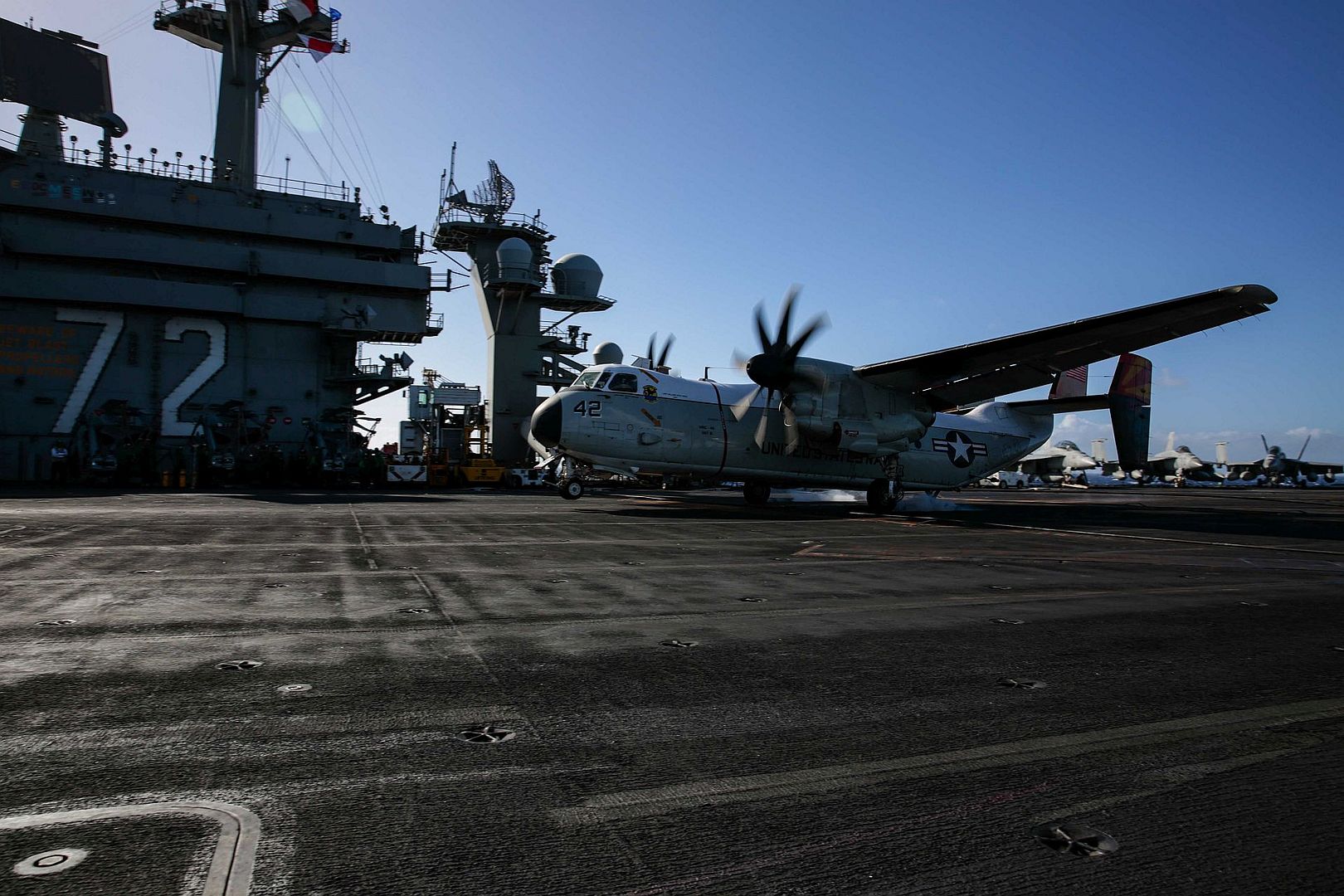
NEW ORLEANS, Jan. 8, 2020 ? Boeing [NYSE: BA] today delivered the core stage of NASA?s first Space Launch System (SLS) deep space exploration rocket, moving it out of the NASA Michoud Assembly Facility in New Orleans to the agency?s Pegasus barge.
The event marks the first time a completed rocket stage has shipped out of Michoud since the end of the Apollo program. SLS Core Stage 1 is the largest single rocket stage ever built by NASA and its industry partners.
The rollout follows several weeks of final testing and check-outs after NASA?s declaration of ?core stage complete? during a December 9 Artemis Day celebration at Michoud.
NASA will transport the SLS core stage to its Stennis Space Center in Bay St. Louis, Mississippi, in the next few days for ?Green Run? hot-fire engine tests later this year. After inspection and refurbishing for launch, the stage moves to Kennedy Space Center in Florida. At Kennedy, the core stage will be integrated with the Interim Cryogenic Upper Stage (ICPS) and NASA?s Orion spacecraft for the uncrewed Artemis I mission around the moon ? the first launch of a human-rated spacecraft to the Moon since Apollo 17 in 1972.
?The Boeing SLS team has worked shoulder-to-shoulder with NASA and our supplier partners to face multiple challenges with ingenuity and perseverance, while keeping safety and quality at the forefront,? said John Shannon, Boeing SLS vice president and program manager.
SLS is the world?s most powerful rocket, evolvable and built to carry astronauts and cargo farther and faster than any rocket in history. Its unmatched capabilities will deliver human-rated spacecraft, habitats and science missions to the moon, Mars and beyond as part of NASA?s Artemis program.
?We are applying what we?ve learned from development of the first core stage to accelerate work on core stages 2 and 3, already in production at Michoud, as well as the Exploration Upper Stage that will power NASA?s most ambitious Artemis missions,? said Shannon.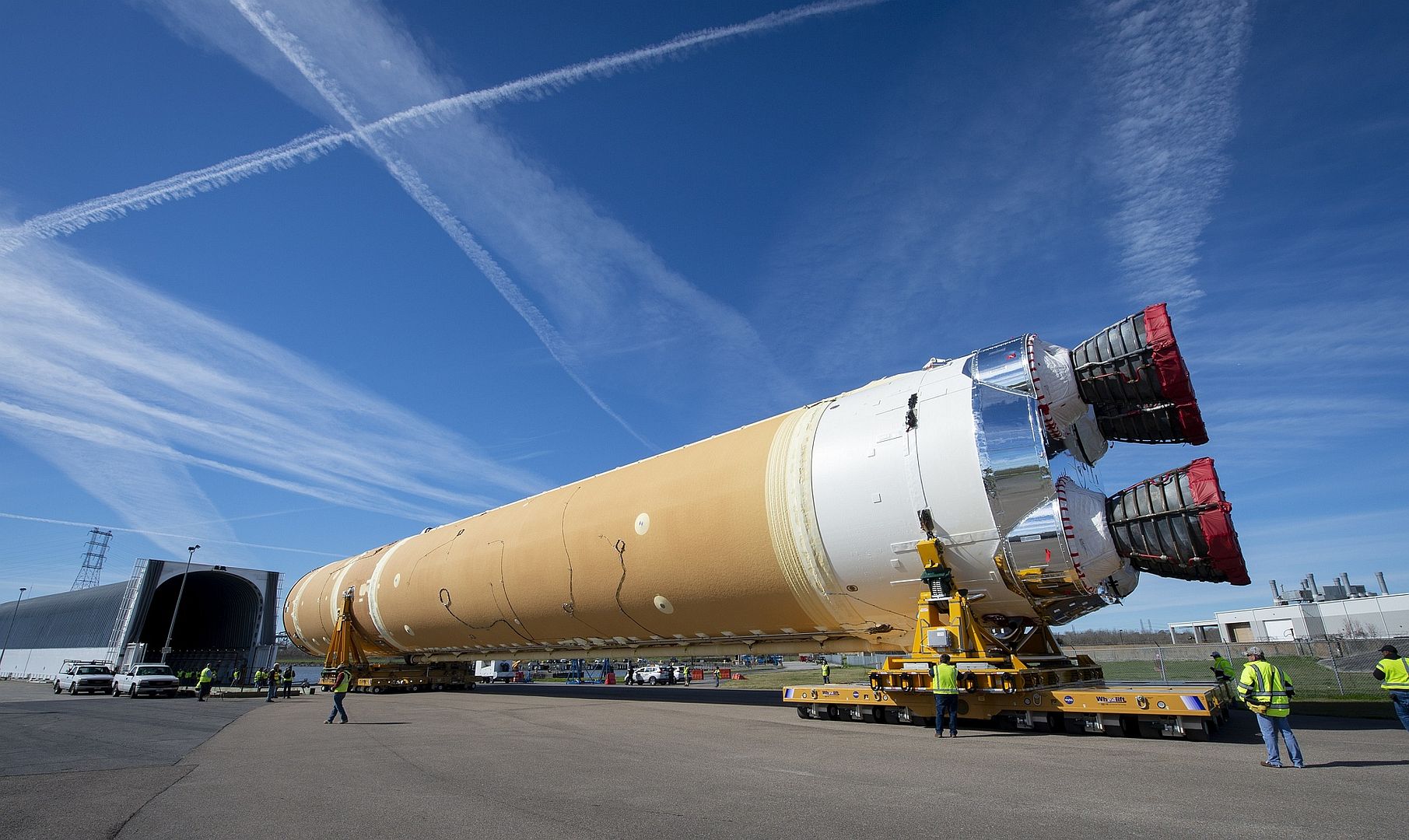
Las Vegas, Nevada, January 8, 2020 ? EmbraerX, Embraer?s disruptive business subsidiary, announces its expansion into the commercial air cargo market, via a collaboration agreement with Elroy Air, at CES 2020. This collaboration will allow the companies to accelerate the unmanned air cargo market worldwide, leveraging Embraer?s 50 years of industry experience with Elroy Air?s bold new developments in autonomous aircraft systems.
?In order to stay the course of creating solutions that benefit humanity at large, we believe the cargo market is prime for an autonomous aircraft,? said Antonio Campello, President & CEO, EmbraerX. ?Booming eCommerce is forcing the cargo market to grow and seek new solutions, creating a distinct need for more flexibility. Our holistic approach to accelerating this market will include working with Elroy Air and its Chaparral system, capable of delivering cargo (250-500 lbs) over distances up to 300 miles, as well as our work in associated services and air traffic management solutions.?
?Elroy Air aims to open a new chapter for the logistics market with point-to-point autonomous aerial cargo systems? said Dave Merrill, CEO of Elroy Air. ?Elroy Air?s Vertical Takeoff and Landing (VTOL) cargo delivery aircraft, the Chaparral, will operate without airports or charging stations, and is optimized for freight with automated cargo loading and unloading. Our collaboration with EmbraerX will accelerate our path to deployment in commercial freight markets.?
This collaboration is part of EmbraerX?s multi-project approach to further develop the air mobility ecosystem and create the conditions for people and goods to move from A to B in a seamless and affordable way. Beyond cargo, EmbraerX is engaged in several projects, including the development of an Urban Air Mobility focused eVTOL, a tailored Urban Air Traffic Management (UATM) system and a fleet-agnostic business platform, designated Beacon, to streamline services.