Aviation News
-
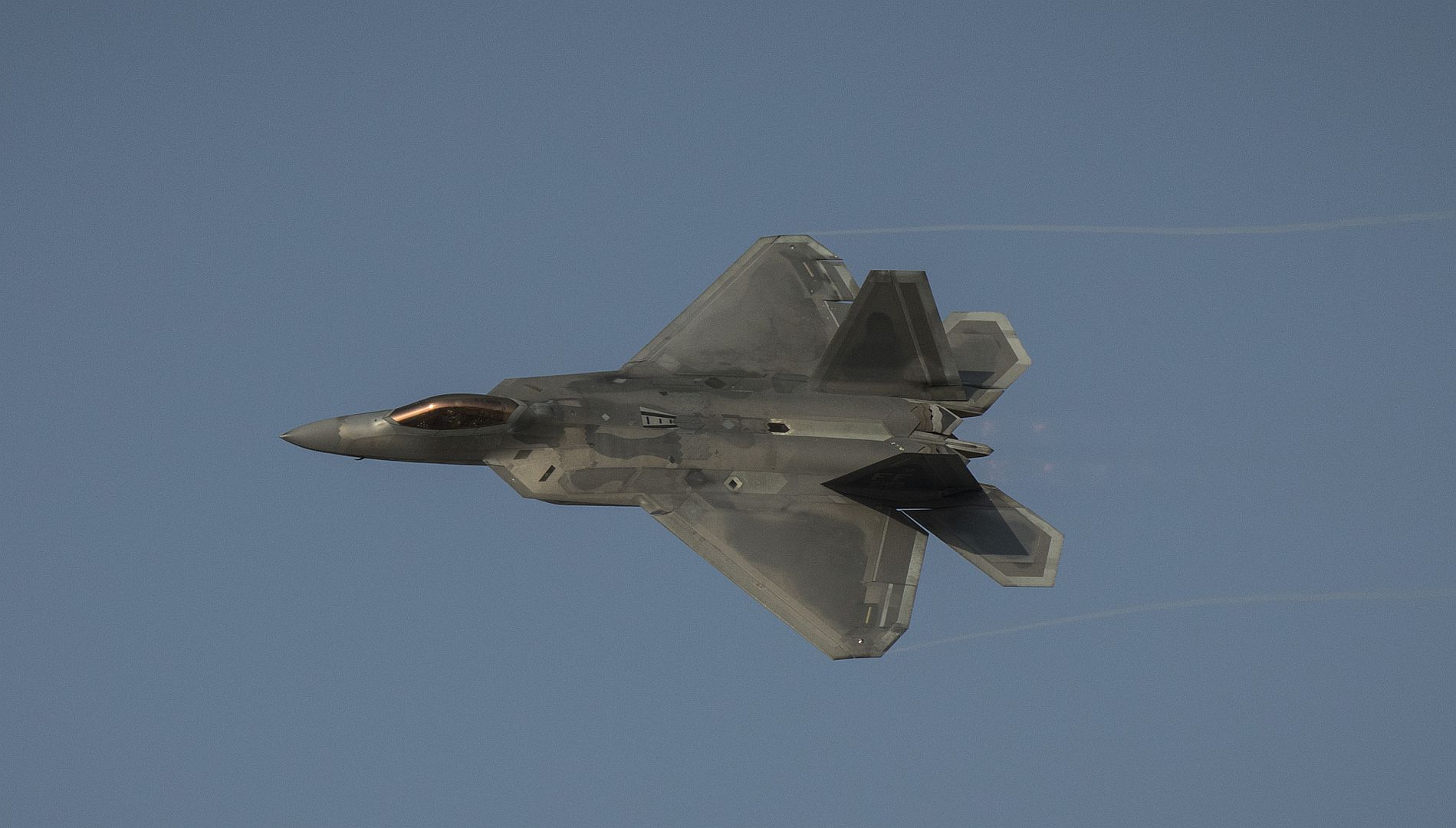
A U.S. Air Force F-22 Raptor performs an aerial demonstration at the Dubai Airshow, Nov. 19, 2019. Approximately 300 U.S. military personnel are participating in the DAS to showcase U.S. assets and capabilities, and strengthen relationships with our regional partners. The Raptor is a fifth-generation aircraft designed to project war-winning air power, rapidly and at great distances and defeat threats attempting to deny access to our nation's military. (U.S. Air Force photo by Staff Sgt. Joseph Pick)
PACIFIC OCEAN (Nov. 17, 2019) Sailors participate in a foreign object debris (FOD) walkdown in the hangar bay aboard the aircraft carrier USS Nimitz (CVN 68). Nimitz is currently underway conducting routine operations. (U.S. Navy photo by Mass Communication Specialist Seaman Keenan Daniels/Released)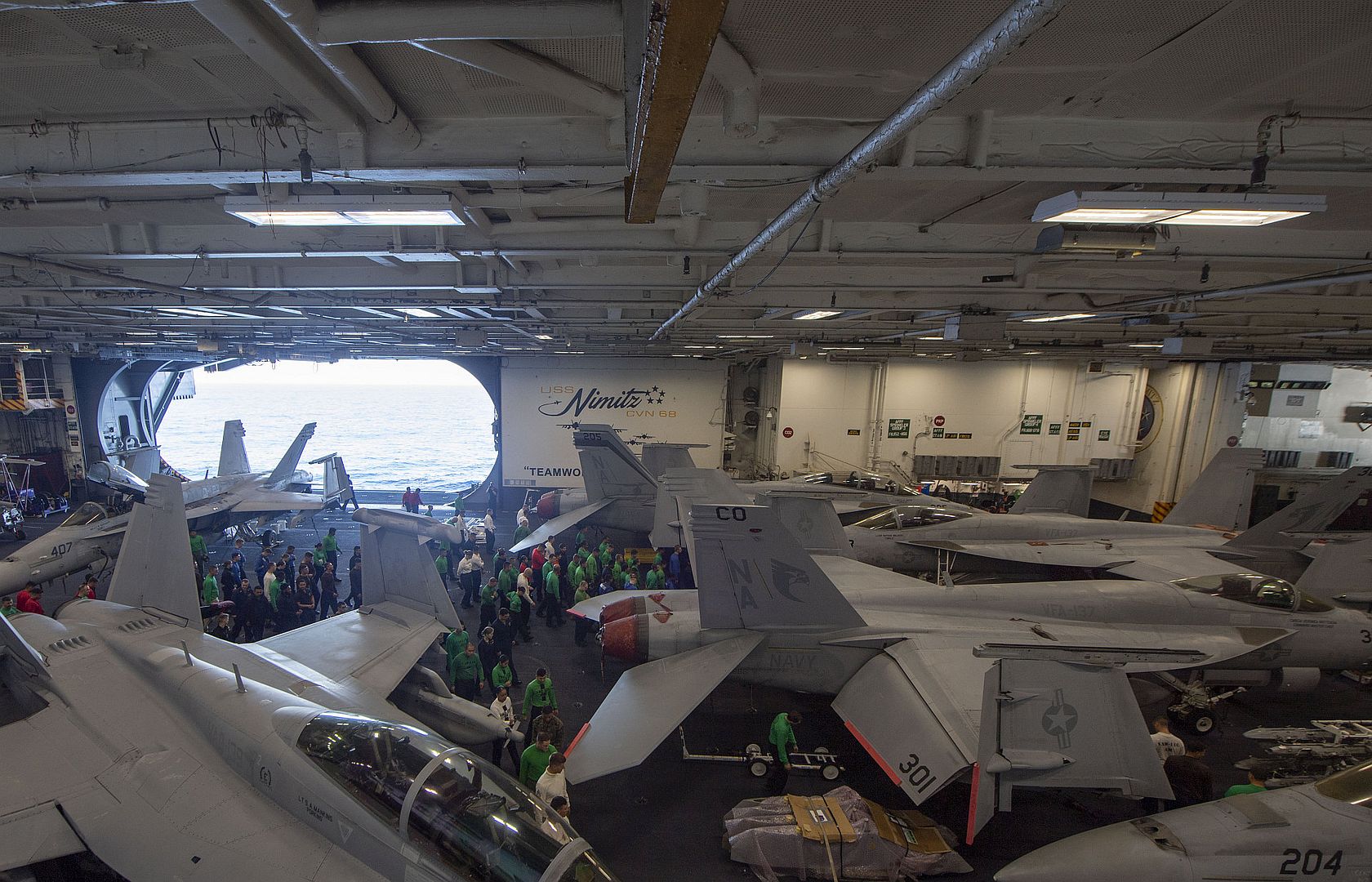
ATLANTIC OCEAN (Nov. 18, 2019) The Nimitz-class aircraft carrier USS Harry S. Truman (CVN 75) departs Naval Station Norfolk. Truman is underway conducting operations at sea to reintegrate the carrier strike group and make final preparations to ensure the carrier, air wing, and Sailors are operationally ready to deploy. (U.S. Navy photo by Mass Communication Specialist Seaman Victoria Sutton/Released)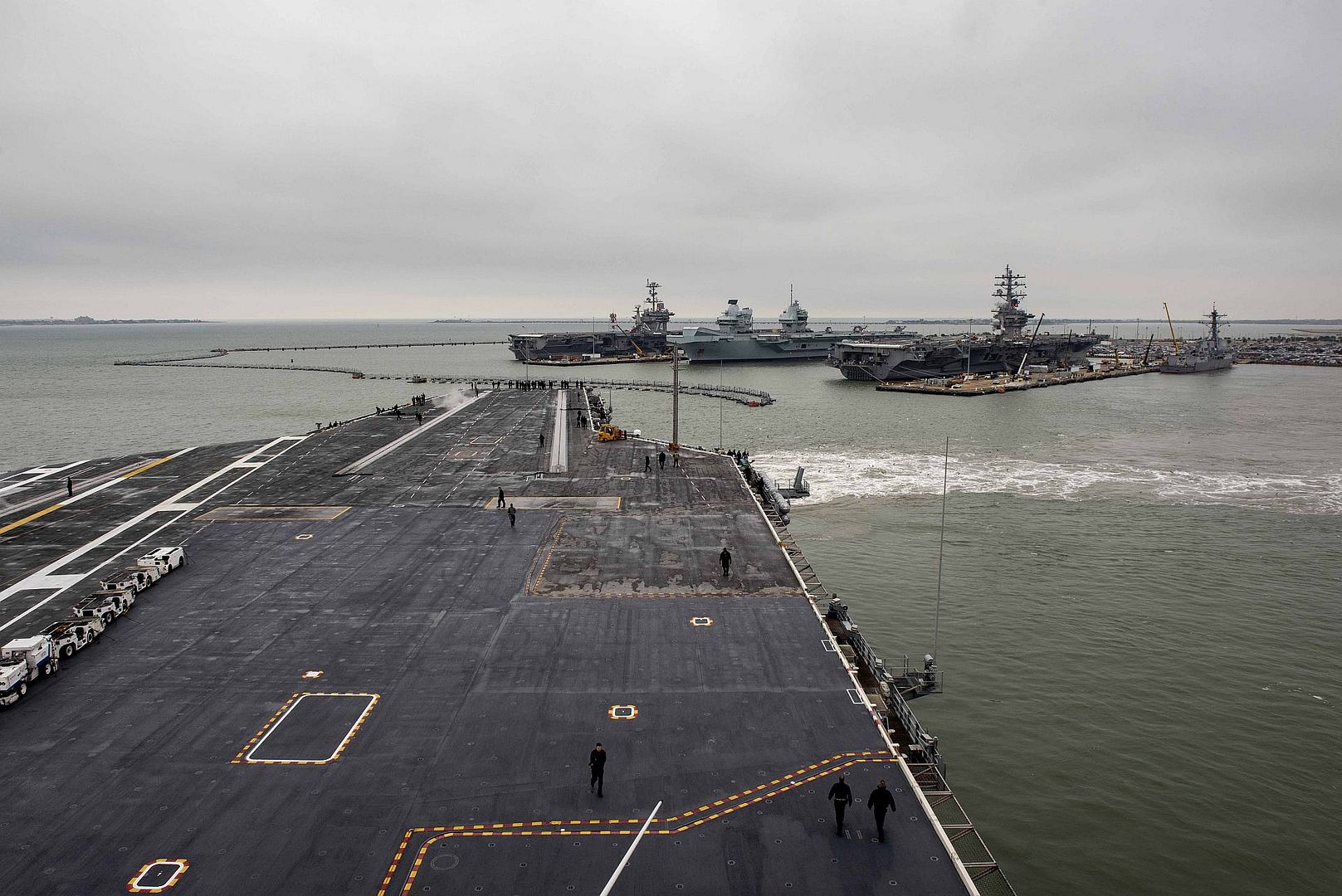
SIGONELLA AIR BASE, SIGONELLA, Italy ? Nov. 21, 2019 ? Northrop Grumman Corporation (NYSE: NOC) successfully ferried the first of five NATO Alliance Ground Surveillance (AGS) aircraft, via a non-stop, 22-hour transatlantic flight. The aircraft took off on Wednesday, Nov. 20, from Palmdale, California and landed approximately 22 hours later on Nov. 21 at Sigonella Air Base, Sigonella, Italy.
?Northrop Grumman is proud to support NATO in its mission to protect and defend global security, while maintaining a position of collective deterrence for the Alliance,? said Brian Chappel, vice president and general manager, autonomous systems, Northrop Grumman. ?NATO missions will be enhanced by the strategic surveillance capability NATO AGS provides.?
The NATO AGS RQ-4D aircraft is based on the U.S. Air Force wide area surveillance Global Hawk. It has been uniquely adapted to NATO requirements and will provide NATO state-of-the-art intelligence, surveillance and reconnaissance capability. This includes protecting ground troops, civilian populations and international borders in peacetime, times of conflict and for humanitarian missions during natural disasters.
Aircraft, ground and support segments, along with advanced sensor technologies including the Multi-Platform Radar Technology Insertion Program radar, comprise the NATO AGS system.
The NATO AGS aircraft has met the rigorous standards required for the first large unmanned aerial vehicle, military type certification, approved by the Italian Directorate of Aeronautical Armaments and Airworthiness (DAAA).
Companies from across NATO?s member nations, including Leonardo, Airbus and Kongsberg, comprise the Northrop Grumman-led industry team that developed the NATO AGS capability.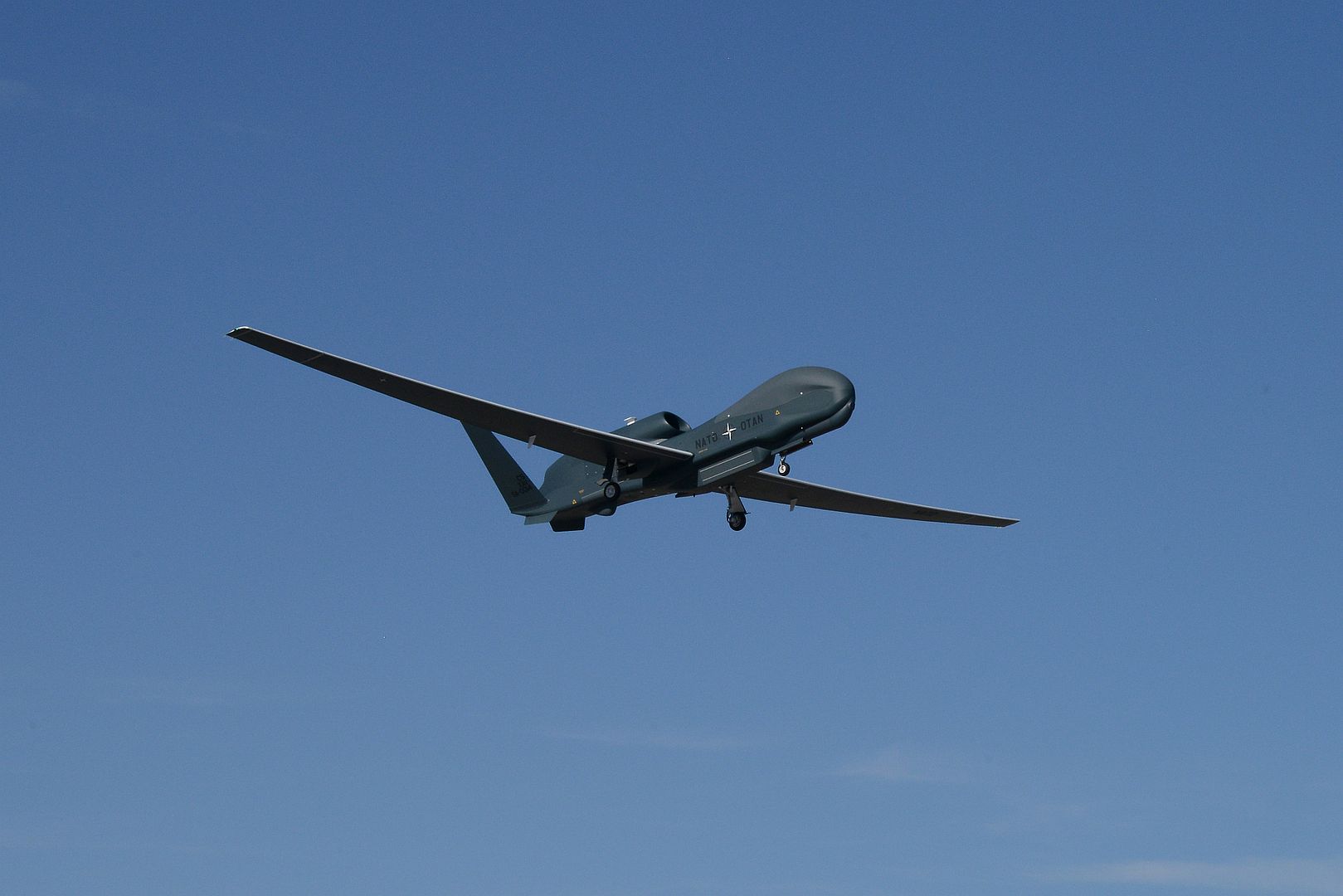
CAPE CANAVERAL, Fla., Nov. 21, 2019 ? Boeing?s [NYSE: BA] new CST-100 Starliner is now connected to the United Launch Alliance (ULA) Atlas V rocket that will launch the spacecraft on its first flight test to the International Space Station. Liftoff from Space Launch Complex-41 at Cape Canaveral Air Force Station is targeted for Dec. 17.
Starliner was mated to the rocket?s upper stage in ULA?s Vertical Integration Facility after being transported this morning from Boeing?s assembly building at NASA?s Kennedy Space Center. On Dec. 15, two days before launch, Starliner and its Atlas V will move a final half-mile to its launch pad.
?Our team successfully completed the transport and mating of two incredible vehicles,? said Boeing Starliner Vice President John Mulholland. ?Safety and mission success come down to ensuring the integrity of every step along the way. I could not be more proud of the Starliner team and the dedication put forward to get here today.?
Combined, Starliner and the Atlas V stand 172 feet (52 meters) tall. The rocket generates about 1.6 million pounds of thrust at launch. The Atlas V, built in Alabama, has completed 80 successful launches since 2002.
The first Starliner flight to the International Space Station, which Boeing also built and sustains for NASA, will carry only cargo for its few-day docked stay. The second flight test, using a different spacecraft, will take Boeing astronaut Chris Ferguson, along with NASA astronauts Mike Fincke and Nicole Mann, to the station for a longer mission.
The reusable Starliner capsule is being developed in collaboration with NASA?s Commercial Crew Program, which will return America?s ability to launch people to low Earth orbit from American soil for the first time since Ferguson commanded the final space shuttle mission in 2011.
-
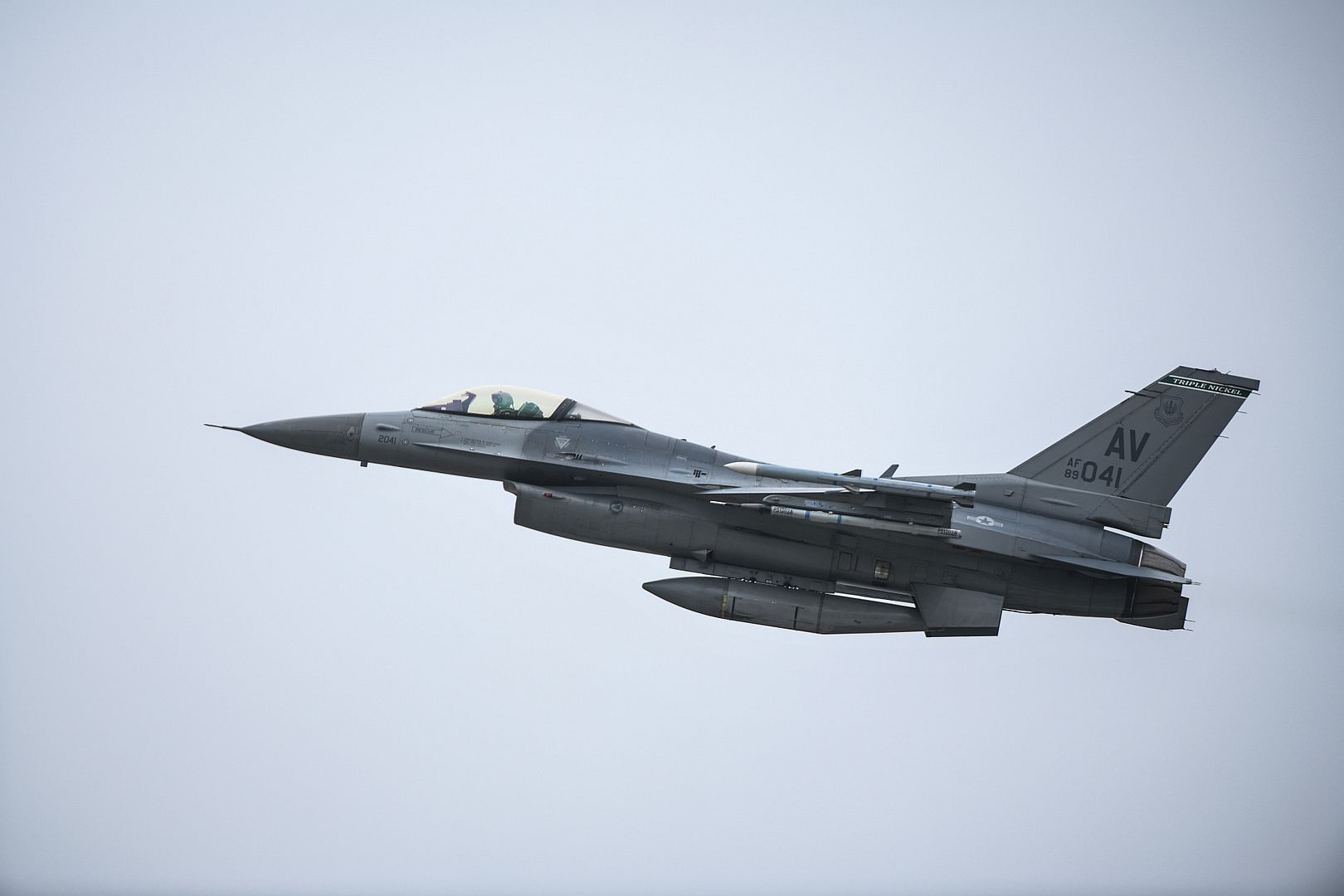
A U.S. Air Force F-16 Fighting Falcon from the 555th Fighter Squadron flies during a foggy day at Aviano Air Base, Italy, Nov. 21, 2019. The unit performs air and space control and force application roles of counterair, strategic attack, and counterland including interdiction and close-air support in support of the joint, NATO, and combined operations. (U.S. Air Force photo by Airman 1st Class Ericka A. Woolever).
Airmen from the 2nd Munitions Squadron transport the final Conventional Air-launched Cruise Missile (CALCM) to be demilitarized at Barksdale Air Force Base, La., Nov. 20, 2019. The CALCM missile package was first operationally used in 1991 during Operation Secret Squirrel. (U.S. Air Force photo by Airman 1st Class Jacob B. Wrightsman)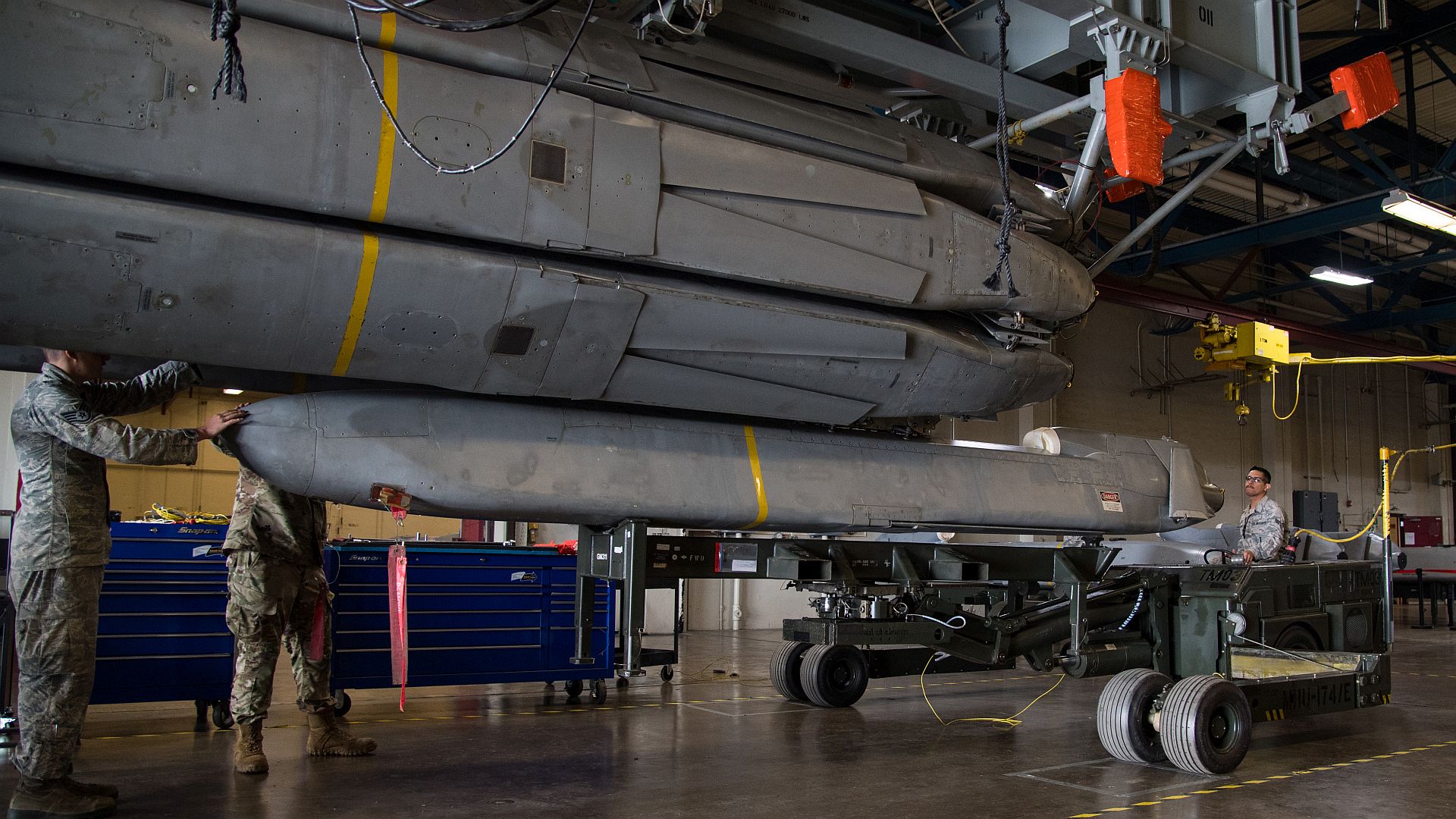
A KC-46 Pegasus is parked at a ramp at Edwards Air Force Base, California, with a Wing Aerial Refueling Pod (WARP) on each wing. The KC-46 Pegasus recently finished WARPs testing with an AV-8B and F-18D/G. The WARPs system allows the Pegasus to simultaneously refuel two aircraft via drogue chutes. (U.S. Air Force photo by Giancarlo Casem)
A B-52 Stratofortress with the 69th Expeditionary Bomb Squadron sits on the flightline at Andersen Air Force Base, Guam, Nov. 19, 2019. B-52s have held a vital role in supporting the Continuous Bomber Presence mission in the Indo-Pacific region since 2004. (U.S. Air force photo by Staff Sgt. Kevin Iinuma)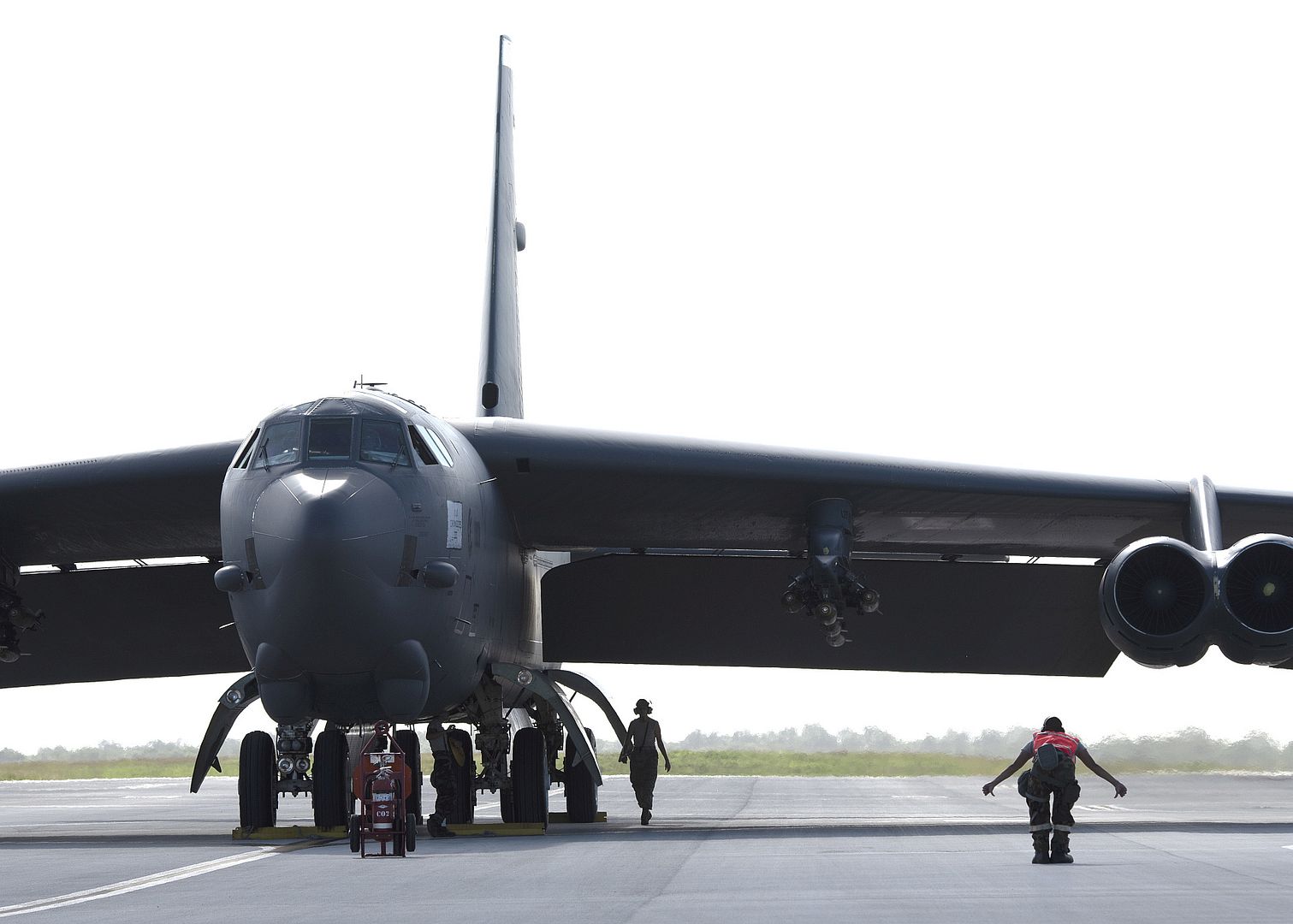
RENTON, Wash., Nov. 22, 2019 ? Boeing [NYSE: BA] marked a key milestone as thousands of employees gathered for the debut of the first 737 MAX 10 at the company?s Renton, Washington factory. During a ceremony, Boeing leaders highlighted the team?s accomplishments and recognized their efforts in completing production of the newest member of the 737 MAX family.
?Today is not just about a new airplane. It?s about the people who design, build and support it,? said Mark Jenks, vice president and general manager of the 737 program. ?This team?s relentless focus on safety and quality shows the commitment we have to our airline customers and every person who flies on a Boeing airplane.?
The 737 MAX 10, the largest variant of the MAX family, can seat up to 230 passengers and offers the lowest seat-mile cost of any single-aisle airplane ever produced. The airplane will now undergo system checks and engine runs prior to first flight next year.
?I?m honored to take this airplane on its first flight and show the world what you?ve put your heart and soul into,? 737 Chief Pilot Jennifer Henderson told the employee crowd.
The 737 MAX 10 currently has more than 550 orders and commitments from more than 20 customers around the globe.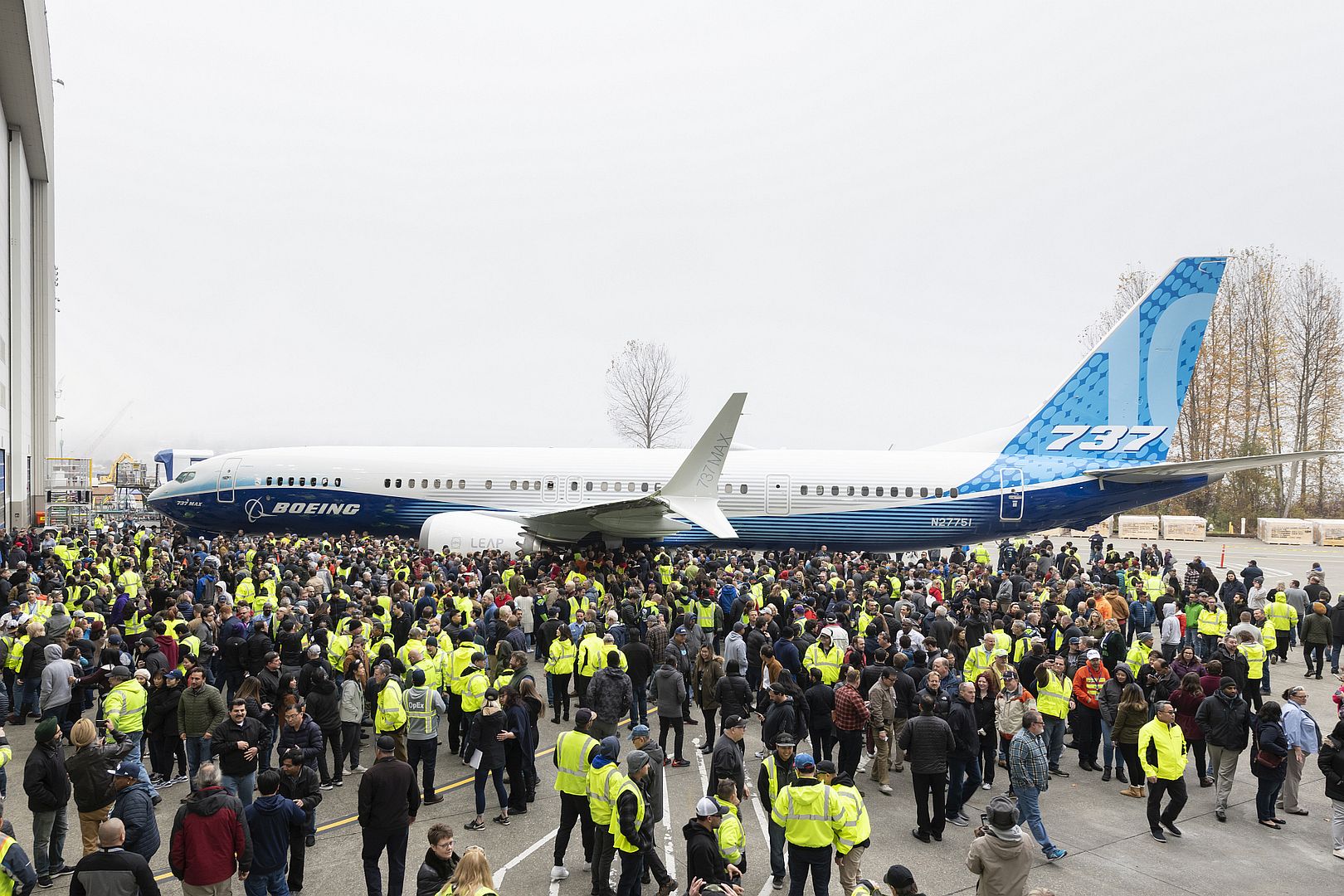
Saab carried out the first flight tests with its new advanced Electronic Attack Jammer Pod (EAJP) with successful results on 4 November 2019. The pod?s interfaces with the aircraft?s hardware and software as well as cockpit control and monitoring were tested during the flight.
The purpose of Saab?s new EAJP pod is to protect aircraft against radars by sophisticated jamming functions, thereby blocking the opponent?s ability to attack them. The first flight marks an important step of the pod?s development programme.
Saab is sharpening its electronic attack capabilities and the new advanced pod is an important element of this development. The EAJP is a strong complement to the built-in electronic attack capabilities of the highly advanced on-board electronic warfare system on Saab?s new Gripen E/F fighter. It can also be used on other aircraft types. The pod forms part of Saab?s Arexis family of electronic warfare systems.
?We performed the flight tests with a Gripen fighter and this new pod is an important part of the development of our new electronic attack capability?, says Anders Carp, Senior Vice President and Head of Saab?s business area Surveillance.
Electronic warfare systems are also used for self-protection by passively detecting hostile radar systems and missiles, protecting the aircraft or platform by using active and passive countermeasures. Offensive electronic warfare, also known as electronic attack, involves actively sending jamming signals to disrupt the sensors in the enemy?s air defence systems so they do no longer constitute a threat.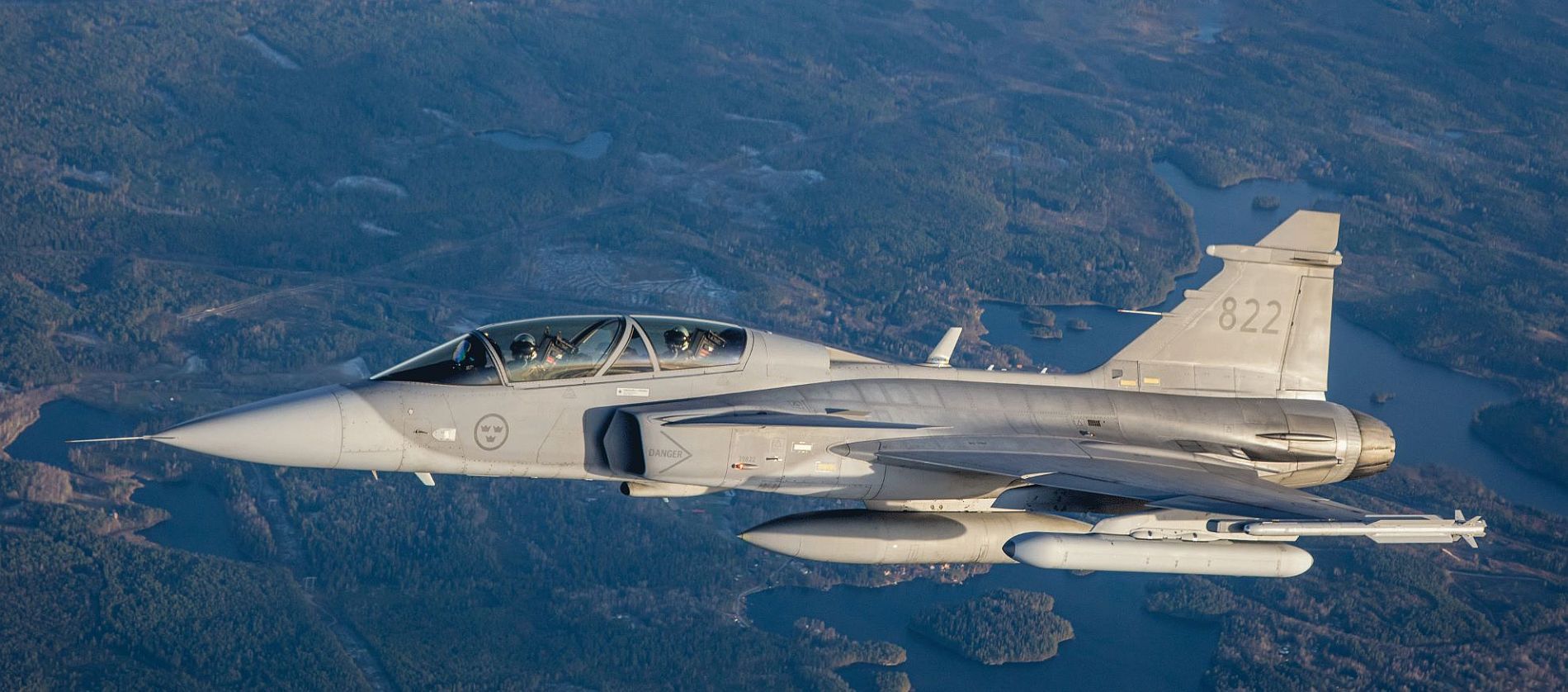
S?o Jos? dos Campos, November 21, 2019 ? Binter of Spain celebrates the incorporation of the first E195-E2 jet into its fleet at a ceremony held today at Embraer?s main facility in S?o Jos? dos Campos. The airline is the first European customer to receive the biggest of the three members of the E-Jets E2 family of commercial aircraft. Binter has placed firm orders for five E195-E2s.
?We?re extremely proud to deliver the first E195-E2 in Europe to such an accomplished regional airline. Binter will showcase the very best of the airplane as it expands its network to more cities,? said John Slattery, President & CEO, Embraer Commercial Aviation.
?Today?s event is very special for all of us, who are part of Binter. This Embraer E195-E2 aircraft is an important step in the history of our company that will become as well a jet operator. This new milestone, which coincides with the celebration of the 30th anniversary of Binter, adds more advances to the ones that we have made in recent years, and that help to pursue our main objective: the improvement of the connecting of the Canary Islands, both inter-island and with external destinations,? said Binter?s President, Pedro Agust?n del Castillo.
The acquisition of the E195-E2s is part of Binter?s overall fleet modernization initiative. Each aircraft is configured with 132 seats in single class. The new aircraft will be deployed across a route network that includes eight cities in the Canary Islands, nine cities in Africa and two in Portugal. Last year, Binter carried 3.6 million passengers.
In April, the E195-E2 received its Type Certificate from three regulatory authorities: ANAC, the Brazilian Civil Aviation Agency (Ag?ncia Nacional de Avia??o Civil); the FAA (U.S. Federal Aviation Administration) and EASA (European Aviation Safety Agency).
Flight tests confirmed that the aircraft is better than its original specification. Fuel consumption is 1.4% lower than expected - that?s 25.4% less fuel per seat compared to the current-generation E195. Maintenance costs are 20% lower. The E195-E2 is the most environmentally-friendly aircraft in its class, having the lowest levels of external noise and emissions. The cumulative margin to ICAO Stage IV noise limit ranges from 19 to 20 EPNdB, 4.0 EPNdB better than its direct competitor.
Like the E190-E2, the E195-E2 has the longest maintenance intervals in the single-aisle jet category with 10,000 flight hours for basic checks and no calendar limit for typical E-Jet operations. This means an additional 15 days of aircraft utilization over a period of ten years compared to current generation E-Jets.
The E195-E2 features new ultra-high bypass ratio engines, a completely new wing, full fly-by-wire controls and new landing gear. Compared to the first-generation E195, 75% of aircraft systems are new. The E195-E2 has 3 additional seat rows. The cabin can be configured with 120 seats in two classes, or up to 146-seats in a single class layout.
Embraer is the world?s leading manufacturer of commercial aircraft up to 150 seats with more than 100 customers from all over the world. For the E-Jets program alone, Embraer has logged more than 1,800 orders and 1,500 aircraft have been delivered. Today, E-Jets are flying in the fleets of 75 customers from 50 countries. The versatile 70 to 150-seat family is flying with low-cost airlines as well as with regional and mainline carriers.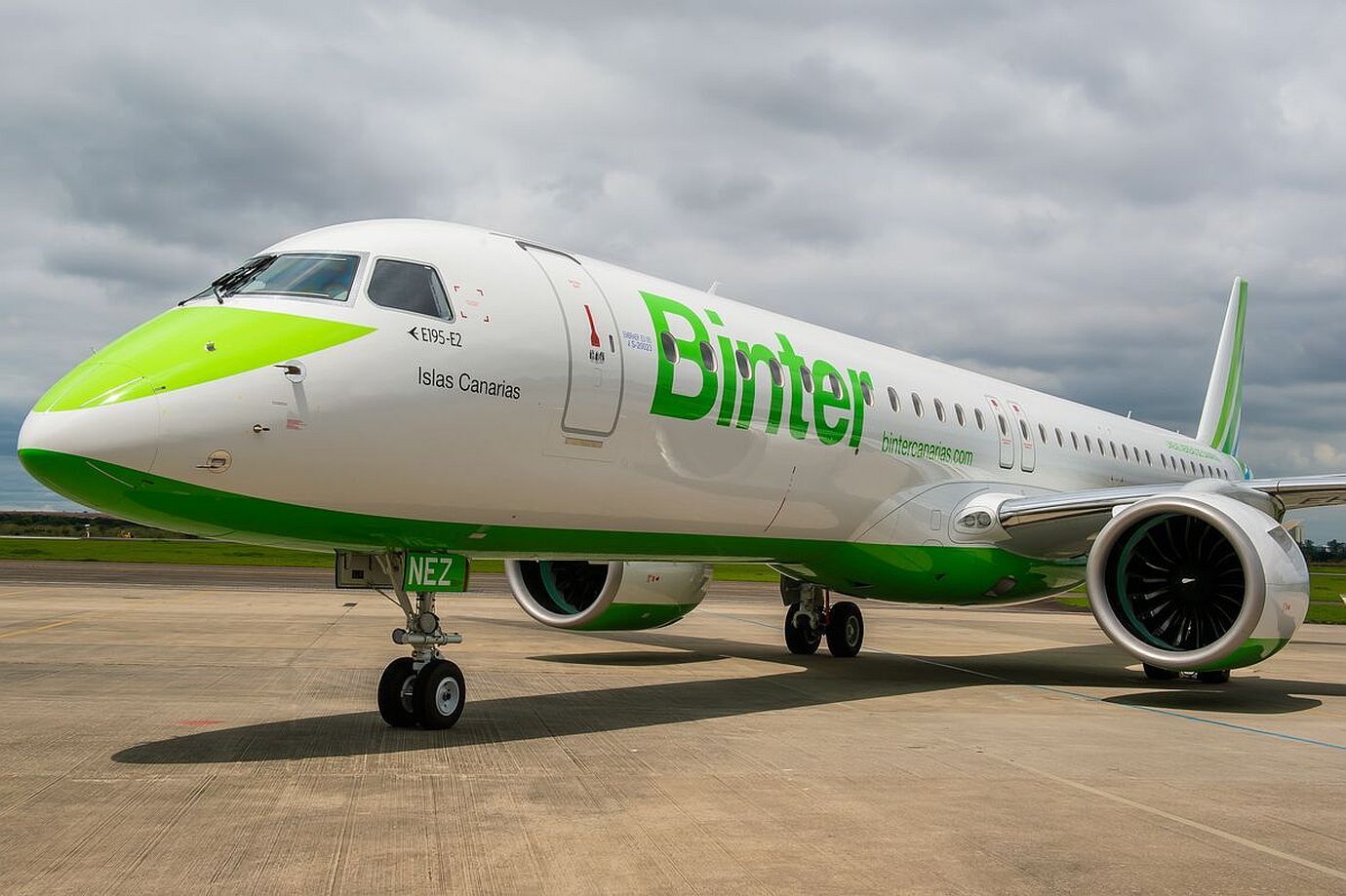
-
The NASA Super Guppy arrives following the lead of a C-130H Hercules from the 179th Airlift Wing, Mansfield, Ohio, Nov. 24, 2019. The 179th Airlift Wing is assisting the NASA Super Guppy in transporting parts of the Orion Space Project to Mansfield where it can be transported by truck to the Glenn Research Center in Sandusky, Ohio. (U.S. Air National Guard photo's by Tech. Sgt. Joe Harwood)
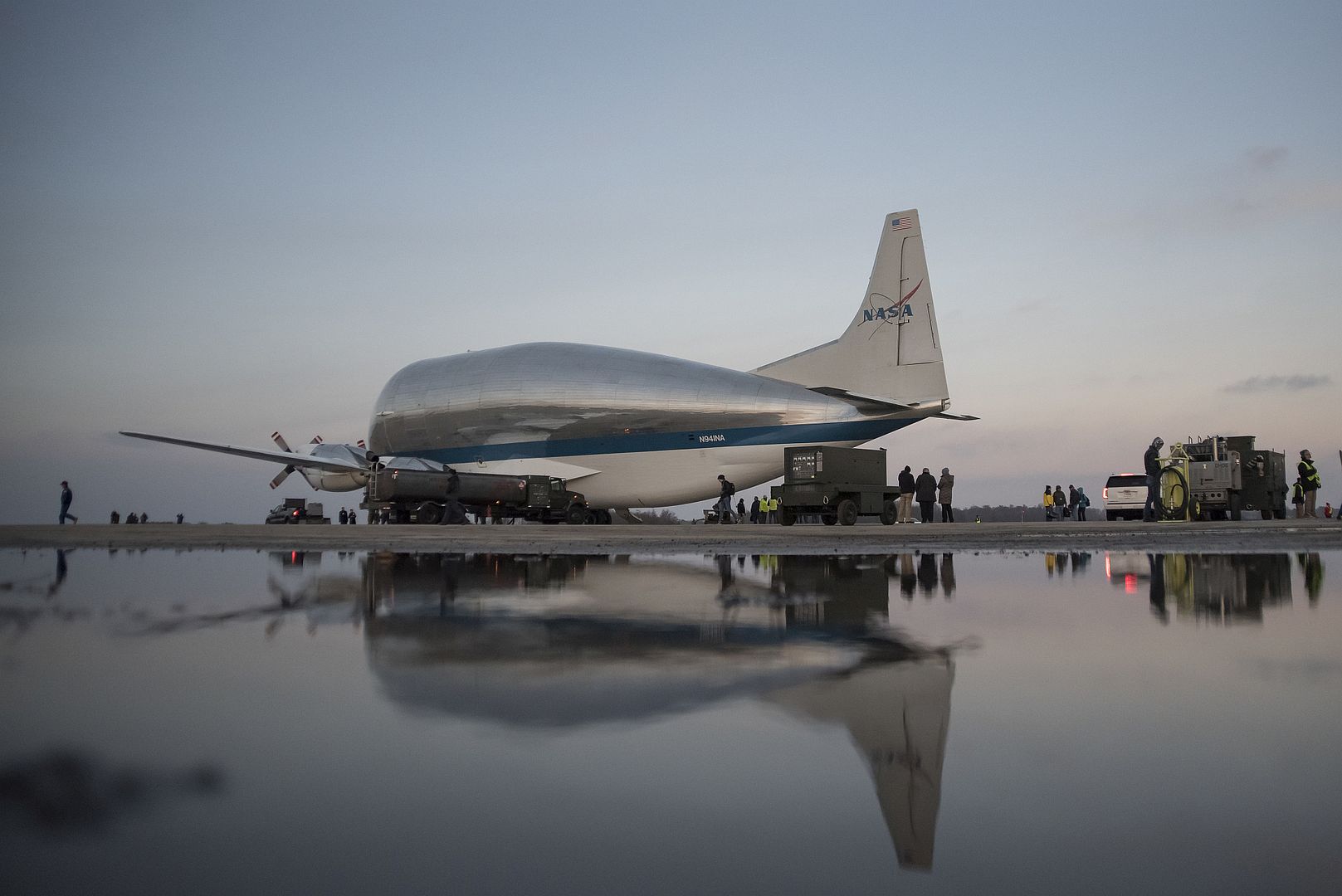
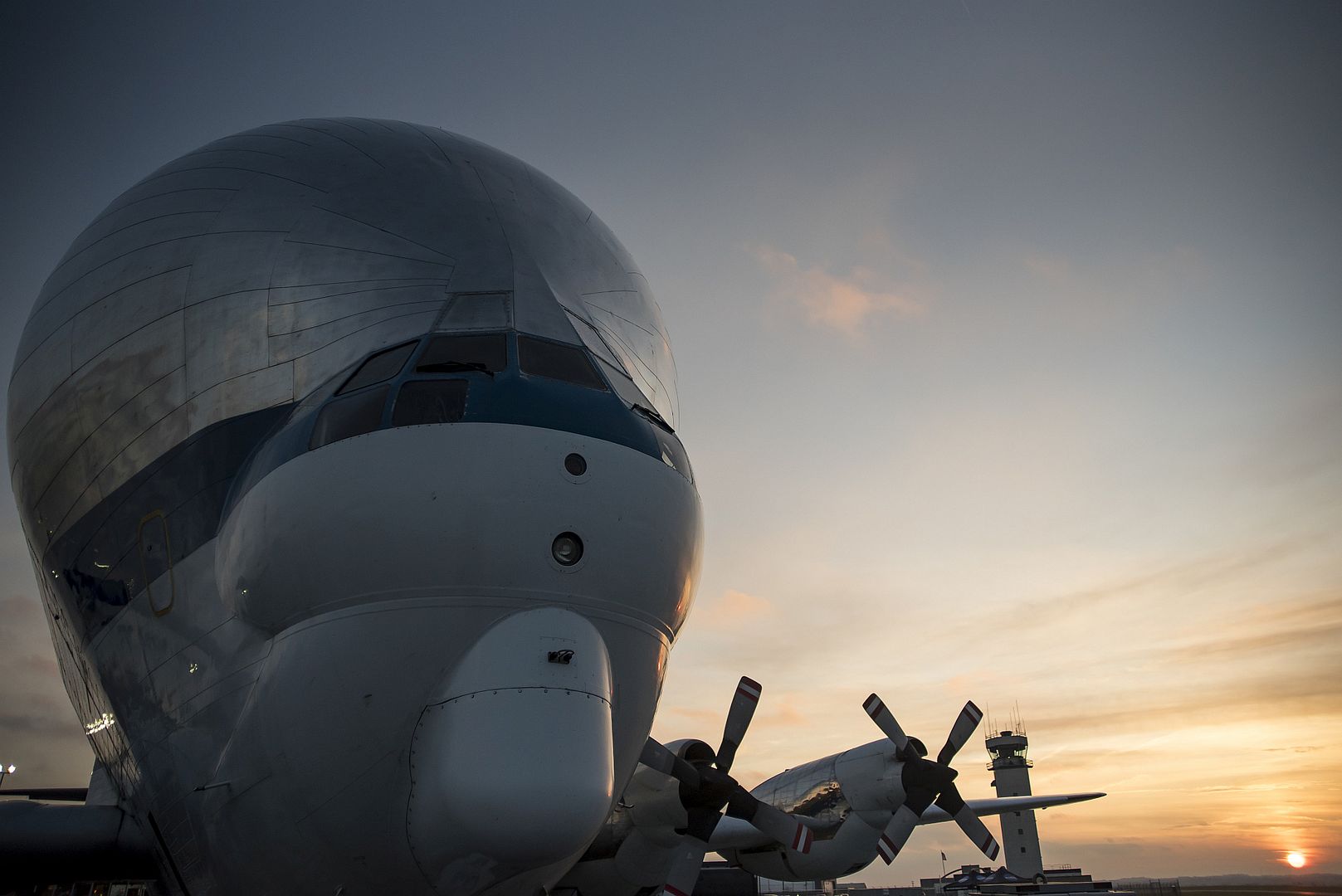
The NASA Super Guppy unloads the Orion Space Project using a 60k loader with assistance from the 179th Airlift Wing, Mansfield, Ohio, Nov. 24, 2019. The 179th Airlift Wing is assisting the NASA Super Guppy in transporting parts of the Orion Space Project to Mansfield where it can be transported by truck to the Glenn Research Center in Sandusky, Ohio. (U.S. Air National Guard photo by Tech. Sgt. Joe Harwood)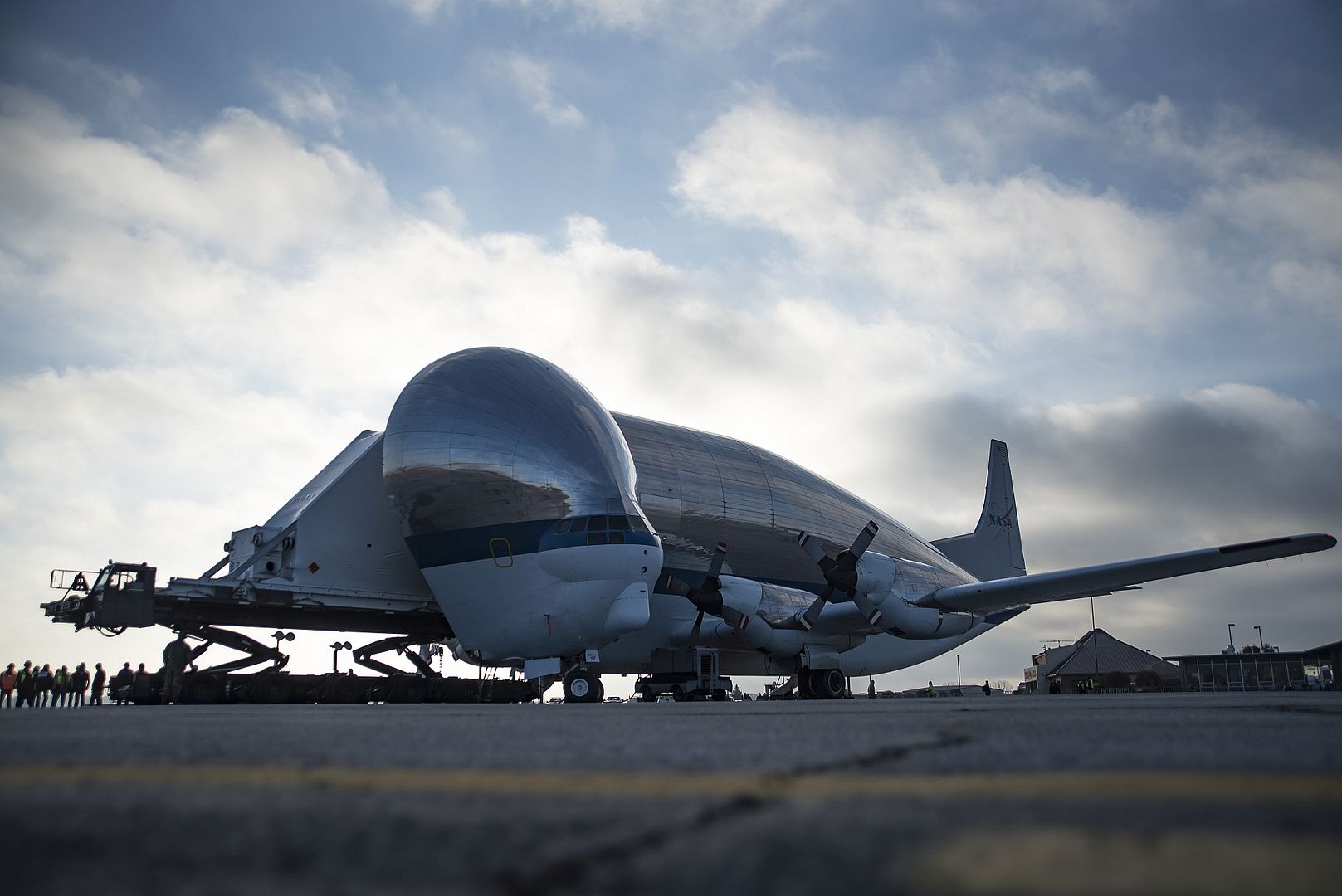
ARABIAN GULF (Nov. 22, 2019) An F/A-18F Super Hornet attached to the "Jolly Rogers" of Strike Fighter Squadron (VFA) 103 launches from the flight deck of the aircraft carrier USS Abraham Lincoln (CVN 72). Abraham Lincoln Carrier Strike Group is deployed to the U.S. 5th Fleet area of operations in support of naval operations to ensure maritime stability and security in the Central Region, connecting the Mediterranean and the Pacific through the western Indian Ocean and three strategic choke points. With Abraham Lincoln as the flagship, deployed strike group assets include staffs, ships and aircraft of Carrier Strike Group 12 (CSG 12), Destroyer Squadron 2 (DESRON 2), USS Leyte Gulf (CG 55) and Carrier Air Wing 7 (CVW 7). (U.S. Navy photo by Mass Communication Specialist 3rd Class Michael Singley/Released)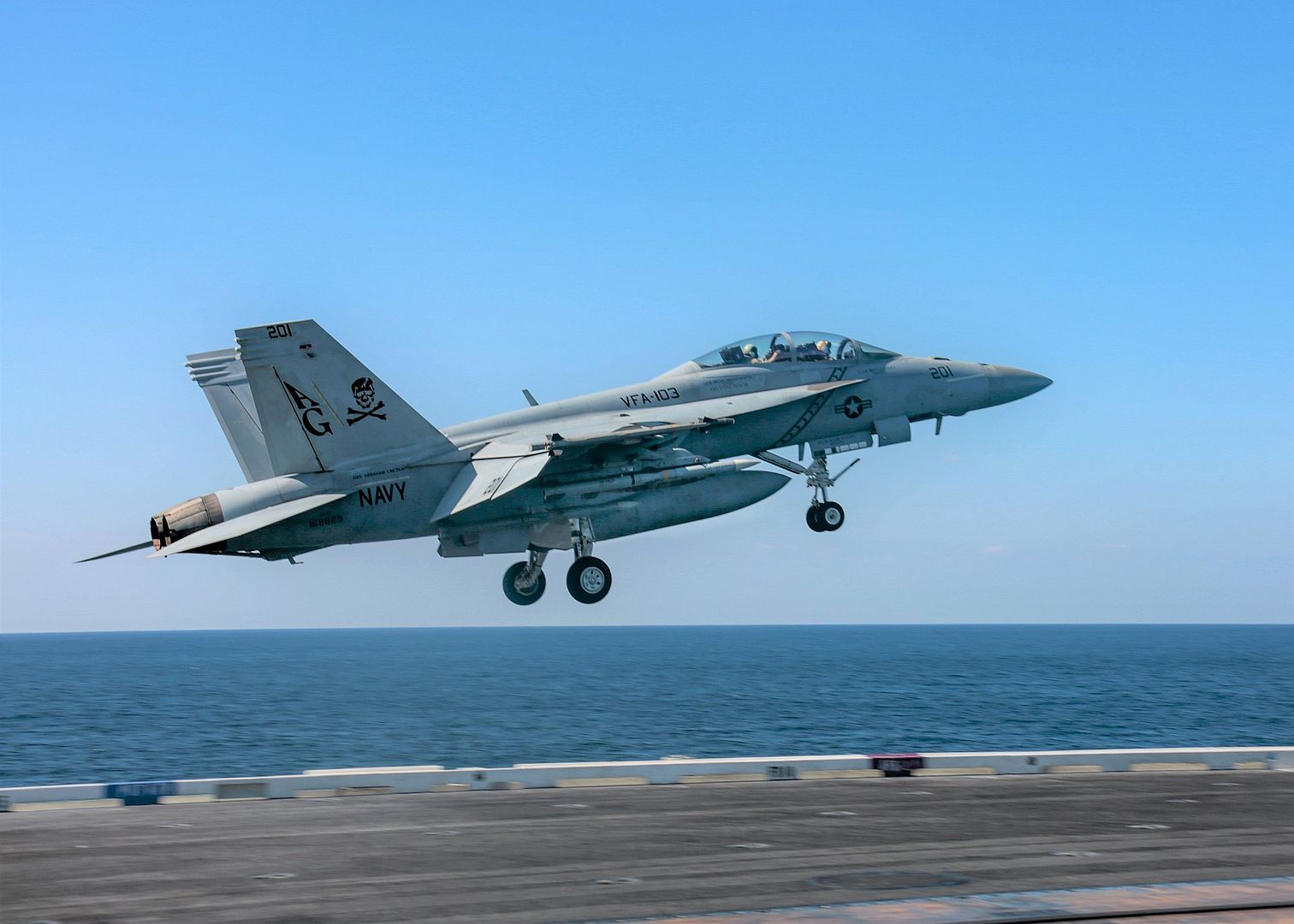
PACIFIC OCEAN (Nov. 22, 2019) An F/A-18F Super Hornet, assigned to the ?Black Knights? of Strike Fighter Squadron (VFA) 154, launches from the flight deck of the aircraft carrier USS Theodore Roosevelt (CVN 71) Nov. 22, 2019. Theodore Roosevelt is underway conducting routine training in the Eastern Pacific Ocean. (U.S. Navy photo by Mass Communication Specialist 2nd Class Alex Corona)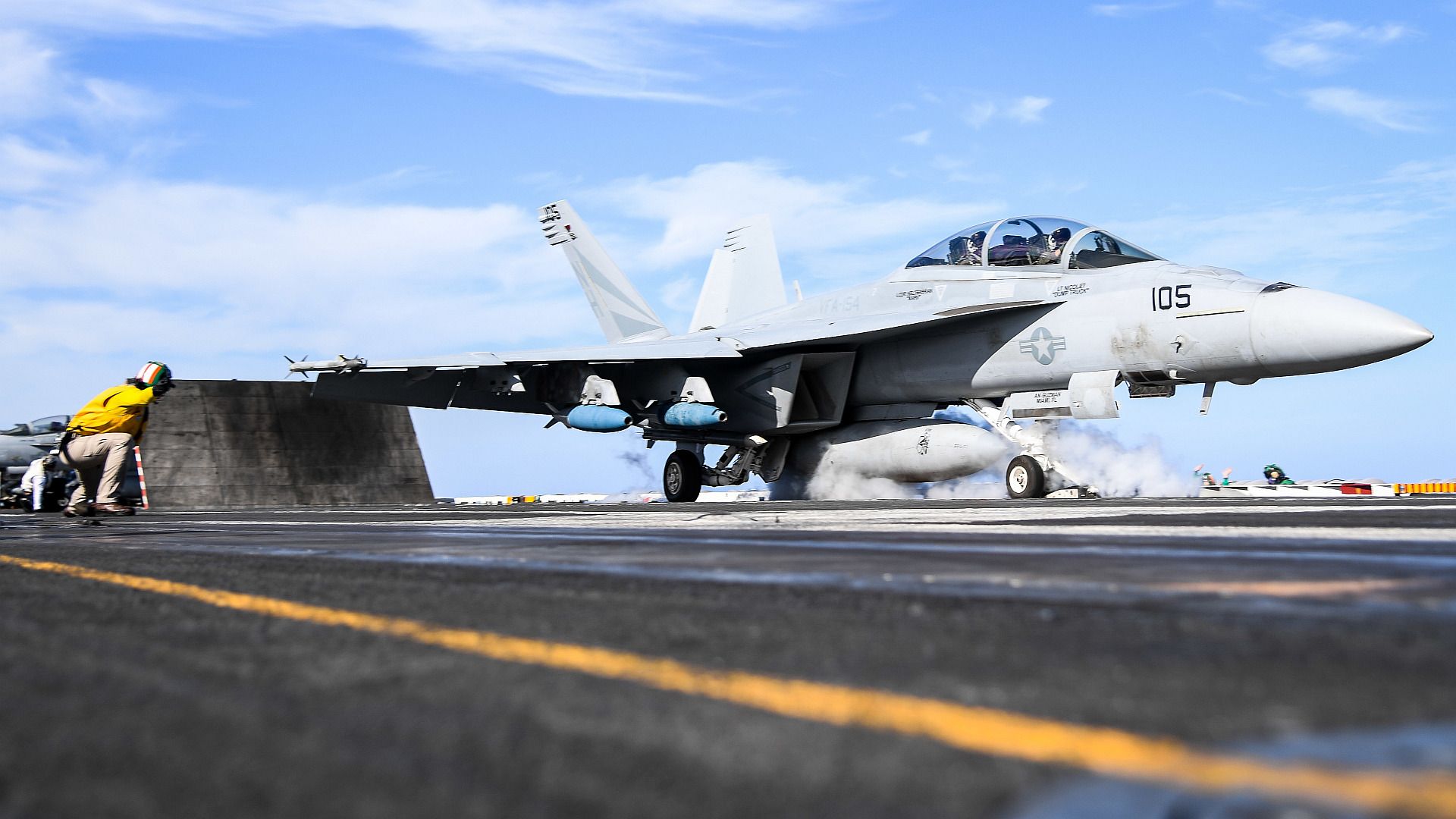
PACIFIC OCEAN (Nov. 22, 2019) An F/A-18E Super Hornet, assigned to the ?Golden Warriors? of Strike Fighter Squadron (VFA) 87, makes an arrested landing on the flight deck of the aircraft carrier USS Theodore Roosevelt (CVN 71) Nov. 22, 2019. Theodore Roosevelt is underway conducting routine training in the Eastern Pacific Ocean. (U.S. Navy photo by Mass Communication Specialist 2nd Class Pyoung K. Yi)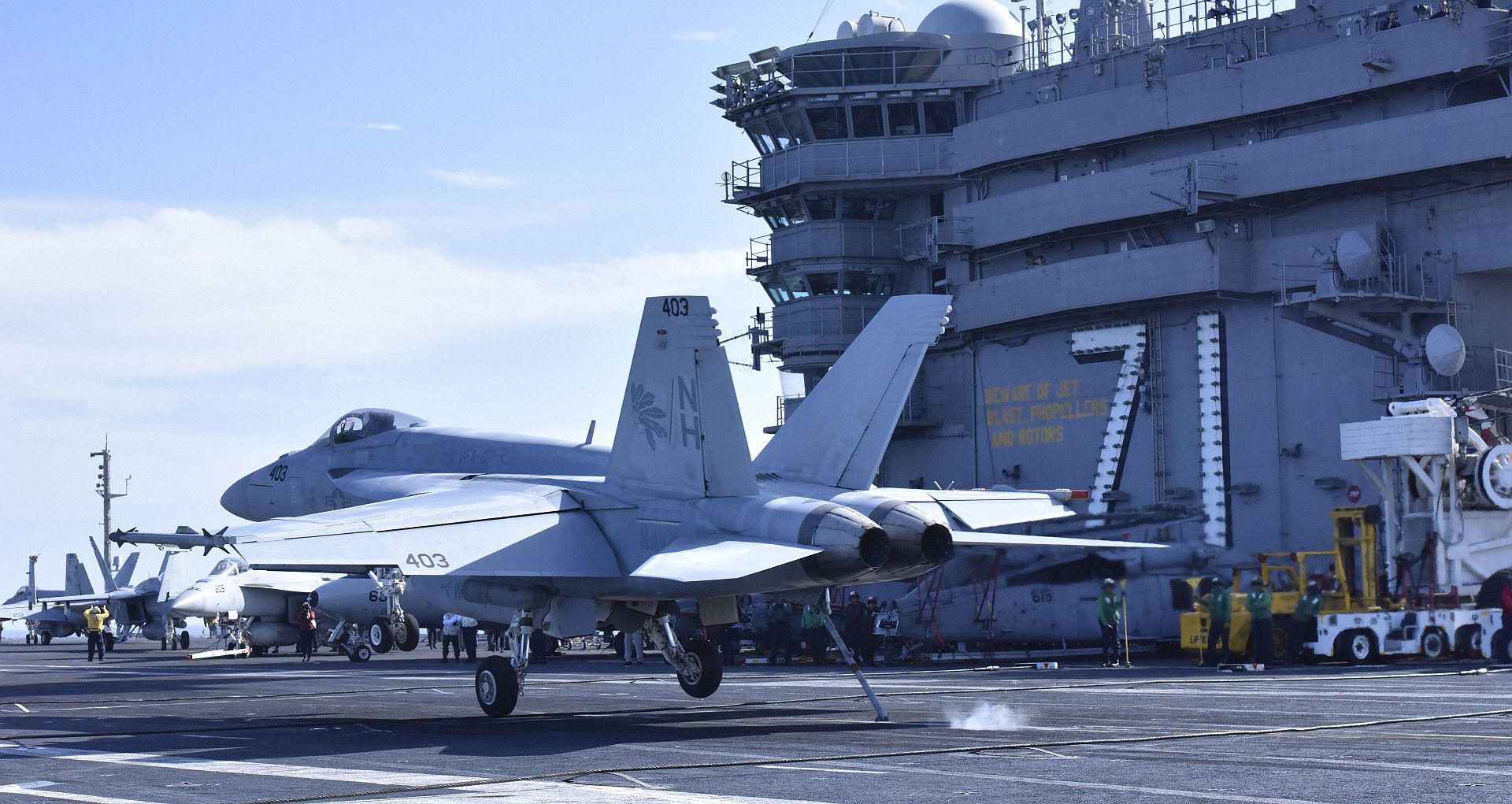
PACIFIC OCEAN (Nov. 22, 2019) An E/A-18G Growler, assigned to the ?Gray Wolves? of Electronic Attack Squadron (VAQ) 142, launches from the flight deck of the aircraft carrier USS Theodore Roosevelt (CVN 71) Nov. 22, 2019. Theodore Roosevelt is underway conducting routine training in the Eastern Pacific Ocean. (U.S. Navy photo by Mass Communication Specialist 2nd Class Alex Corona)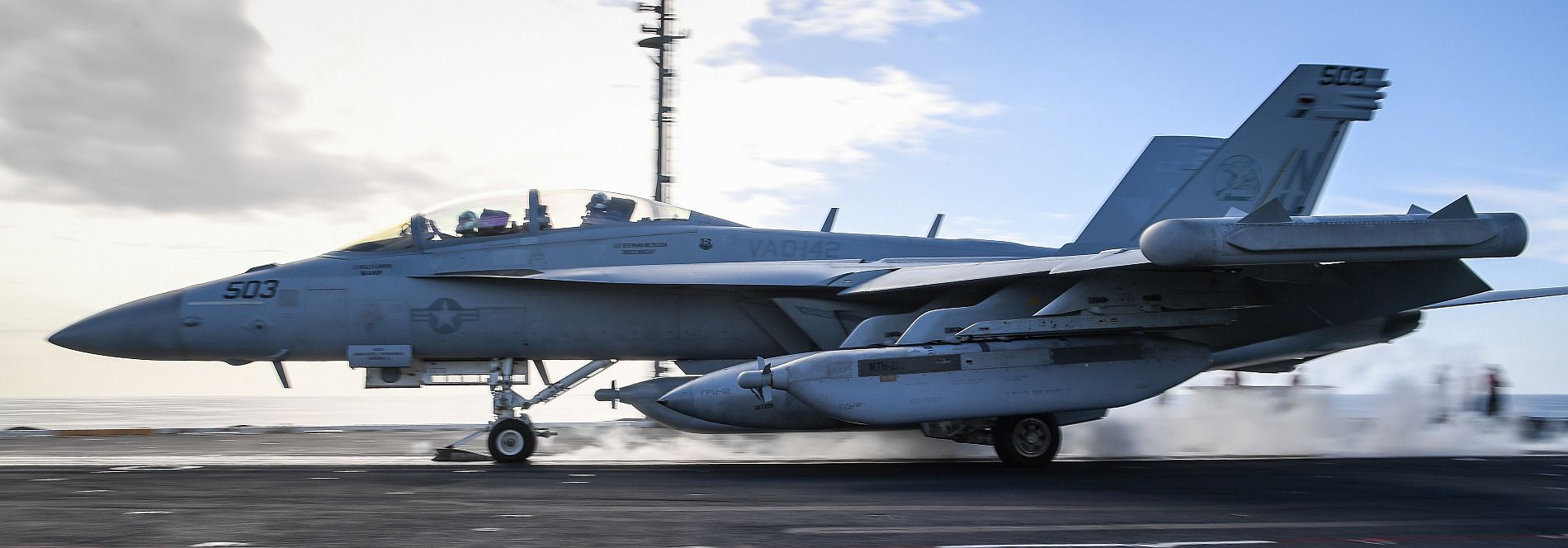
Typhoon jet fighters from 1(F) Squadron will be stationed at Keflavik Air Base until mid December before returning to their home at RAF Lossiemouth in Scotland.
Photo MOD.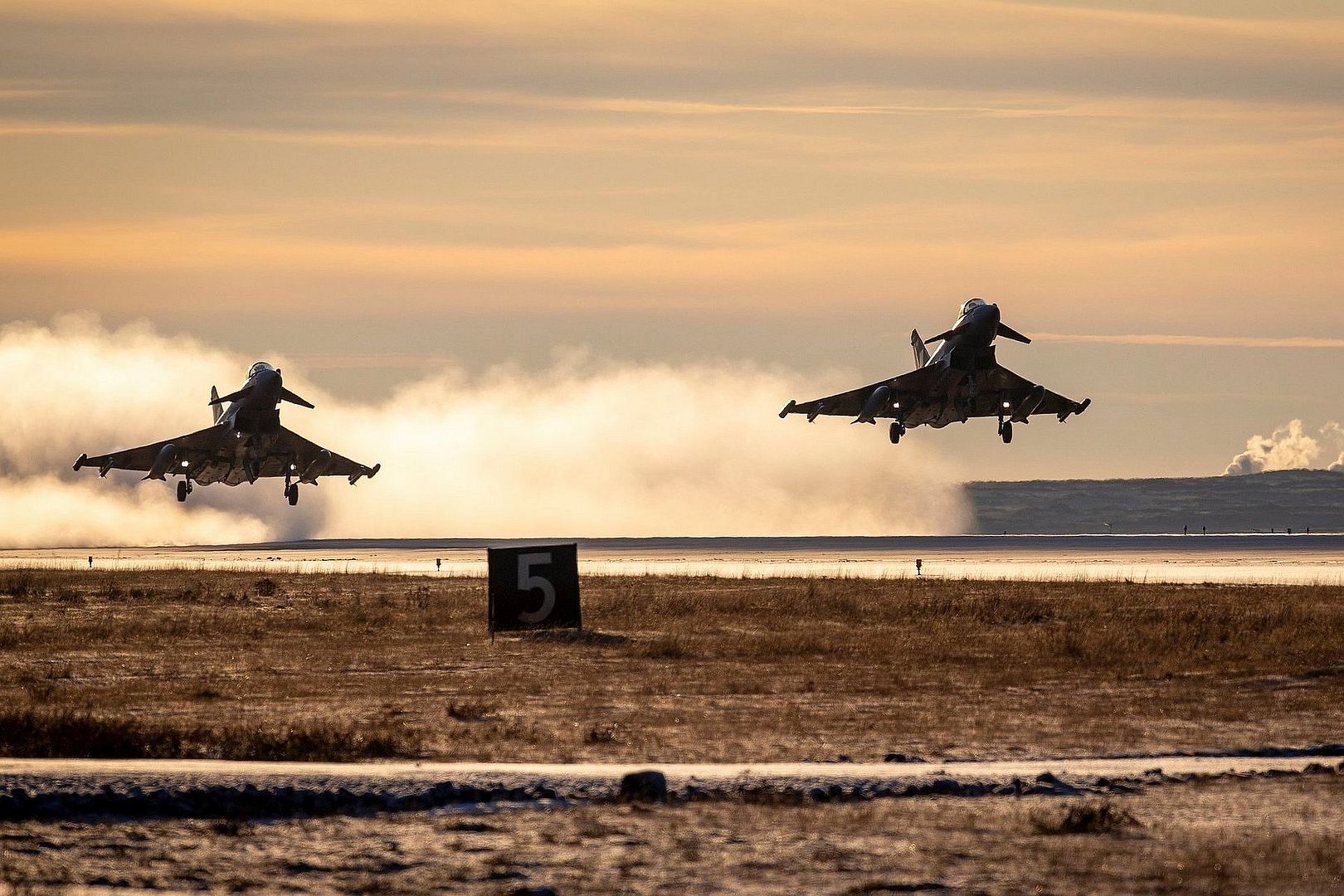
-
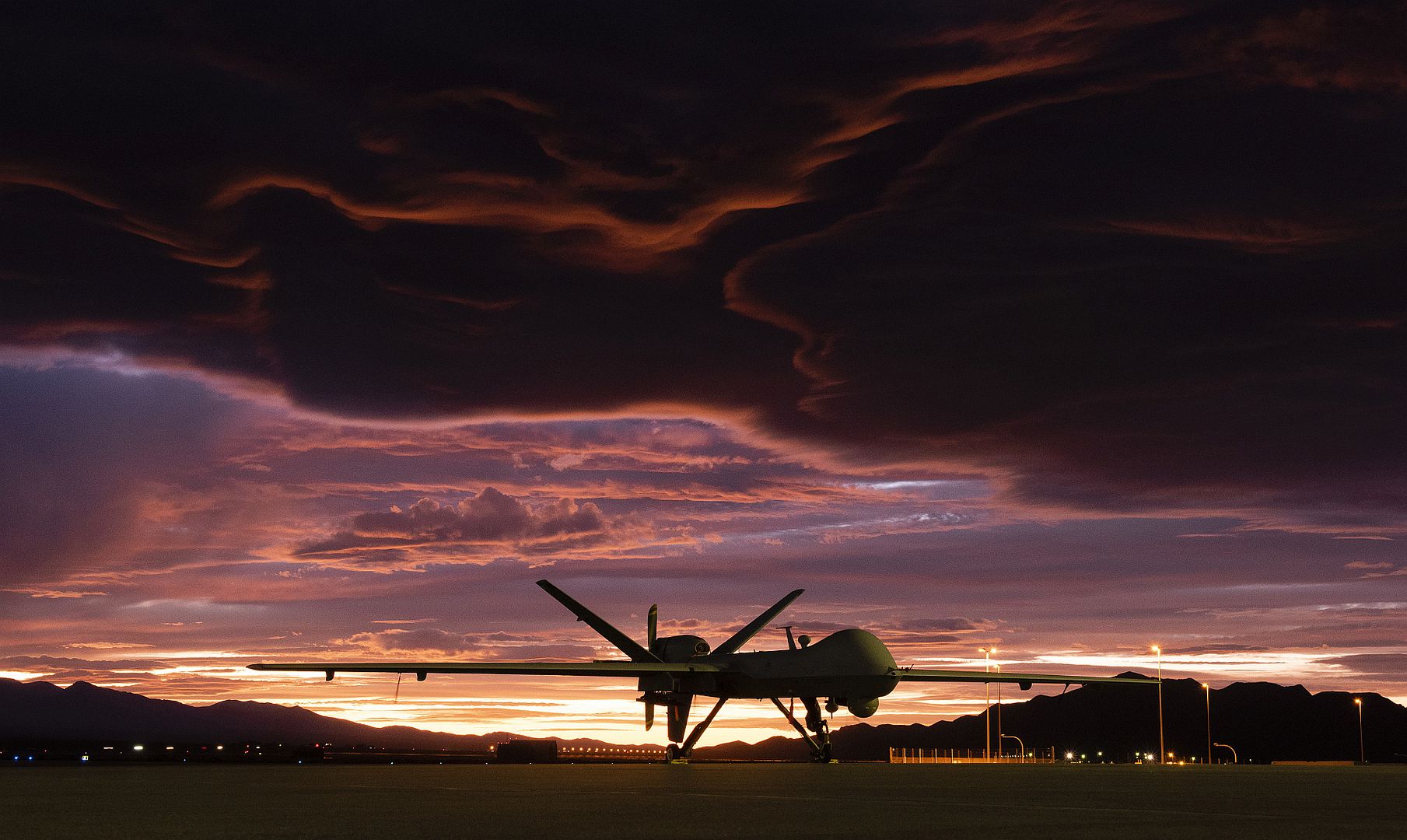
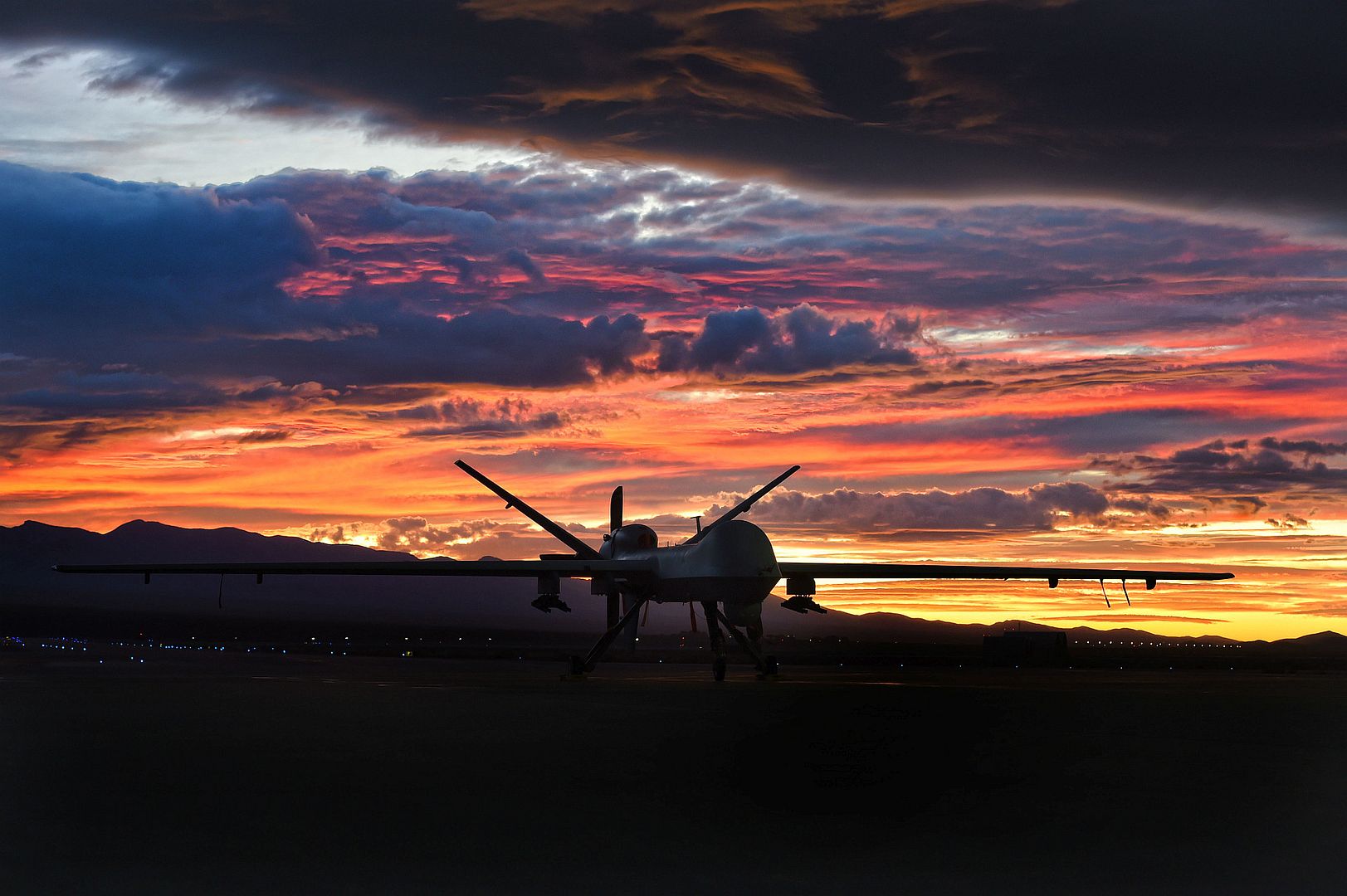
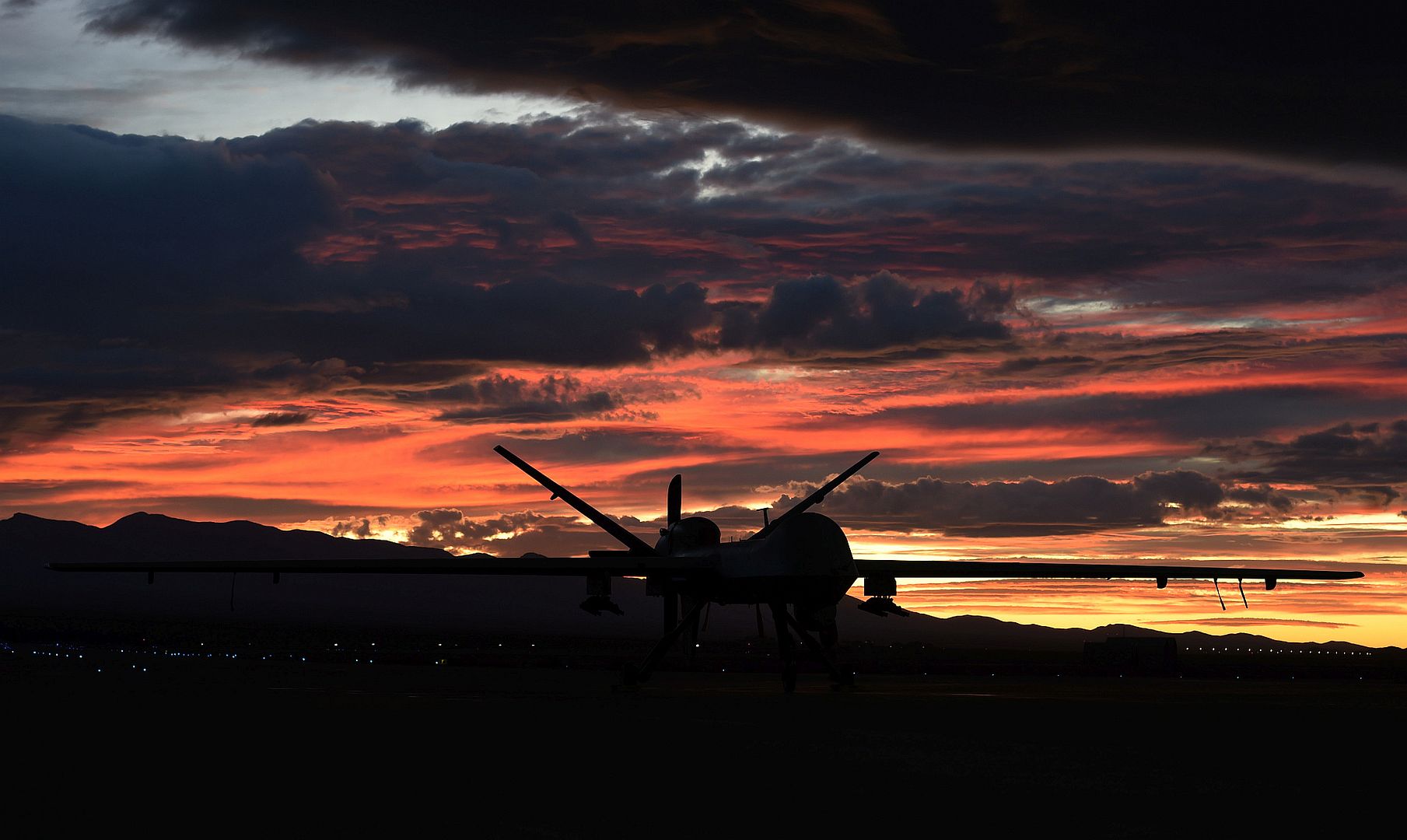
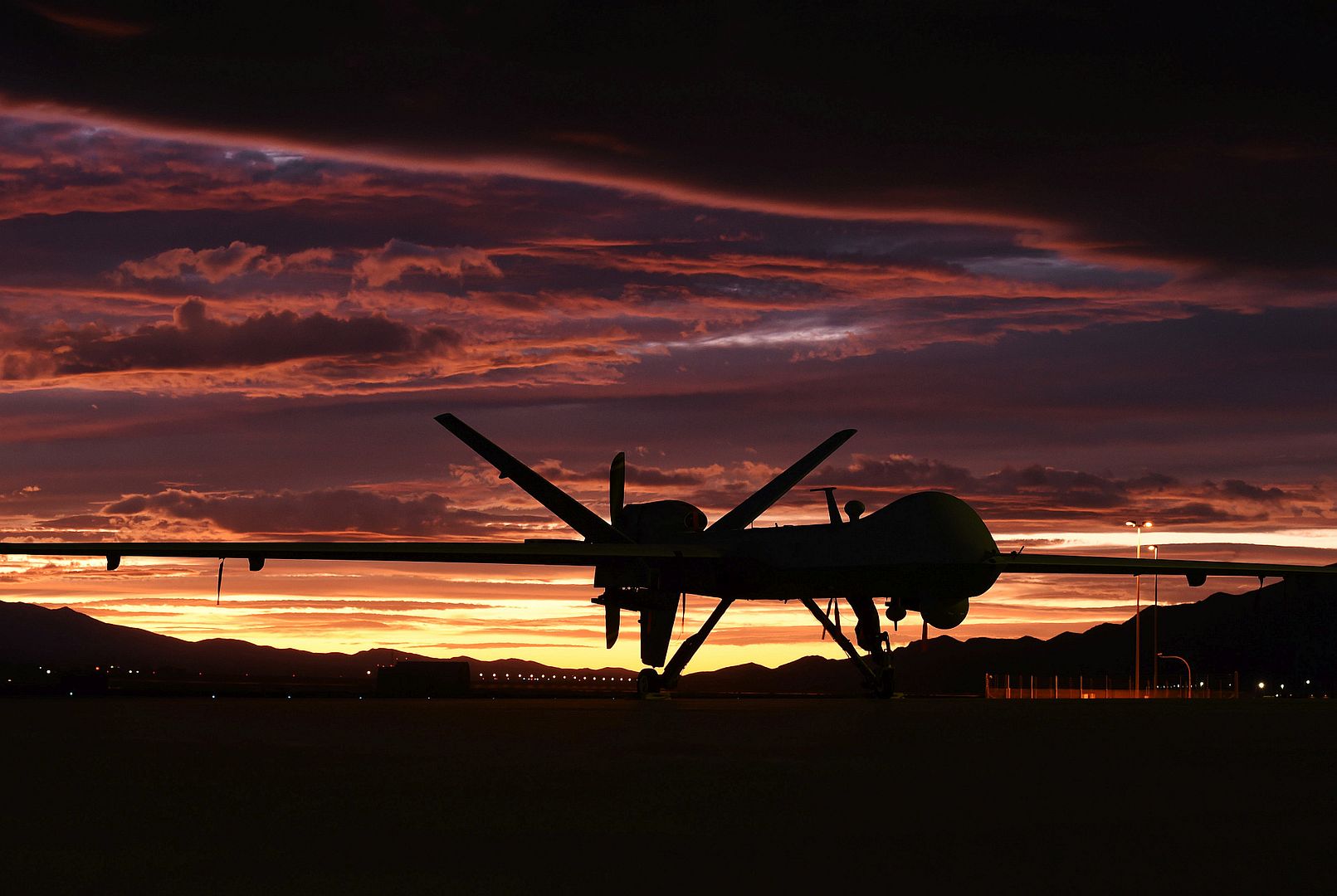
MQ-9 Reapers sit on the flight line as the sun sets at Creech Air Force Base, Nev., Nov. 20, 2019. The Reaper provides dominant, persistent attack and reconnaissance 24/7/365. (U.S. Air Force photo's by Airman 1st Class William Rio Rosado)

A U.S. Air Force F-16 Fighting Falcon assigned to the 35th Fighter Squadron taxis down the flightline at Kunsan Air Base, Republic of Korea, Nov. 19, 2019. The 35th FS ?Pantons? perform air and space control roles including counter air, strategic attack, interdiction and close-air support missions. (U.S. Air Force photo by Staff Sgt. Mackenzie Mendez)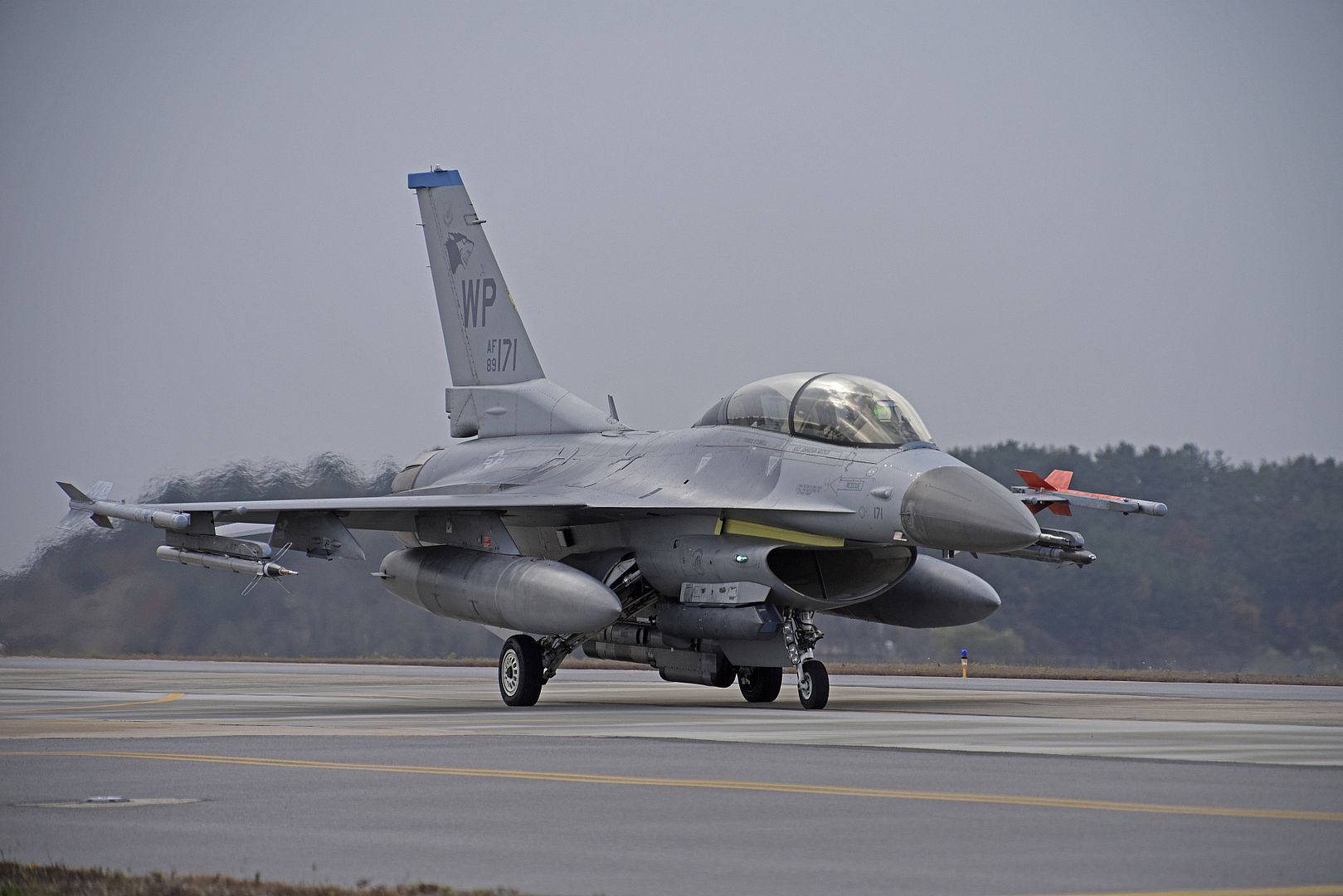
A U.S. Navy EA-18G Growler fighter jet assigned to VAQ-129 Vikings at Naval Air Station Whidbey Island, in Oak Harbor, Washington, takes off from Nellis Air Force Base, Nevada, Nov. 21, 2019. Serving the U.S. Navy and U.S. Air Force, VAQ-129 train freshly pinned Naval Aviators and Naval Flight Officers. (U.S. Air Force photo by Airman 1st Class Bryan Guthrie)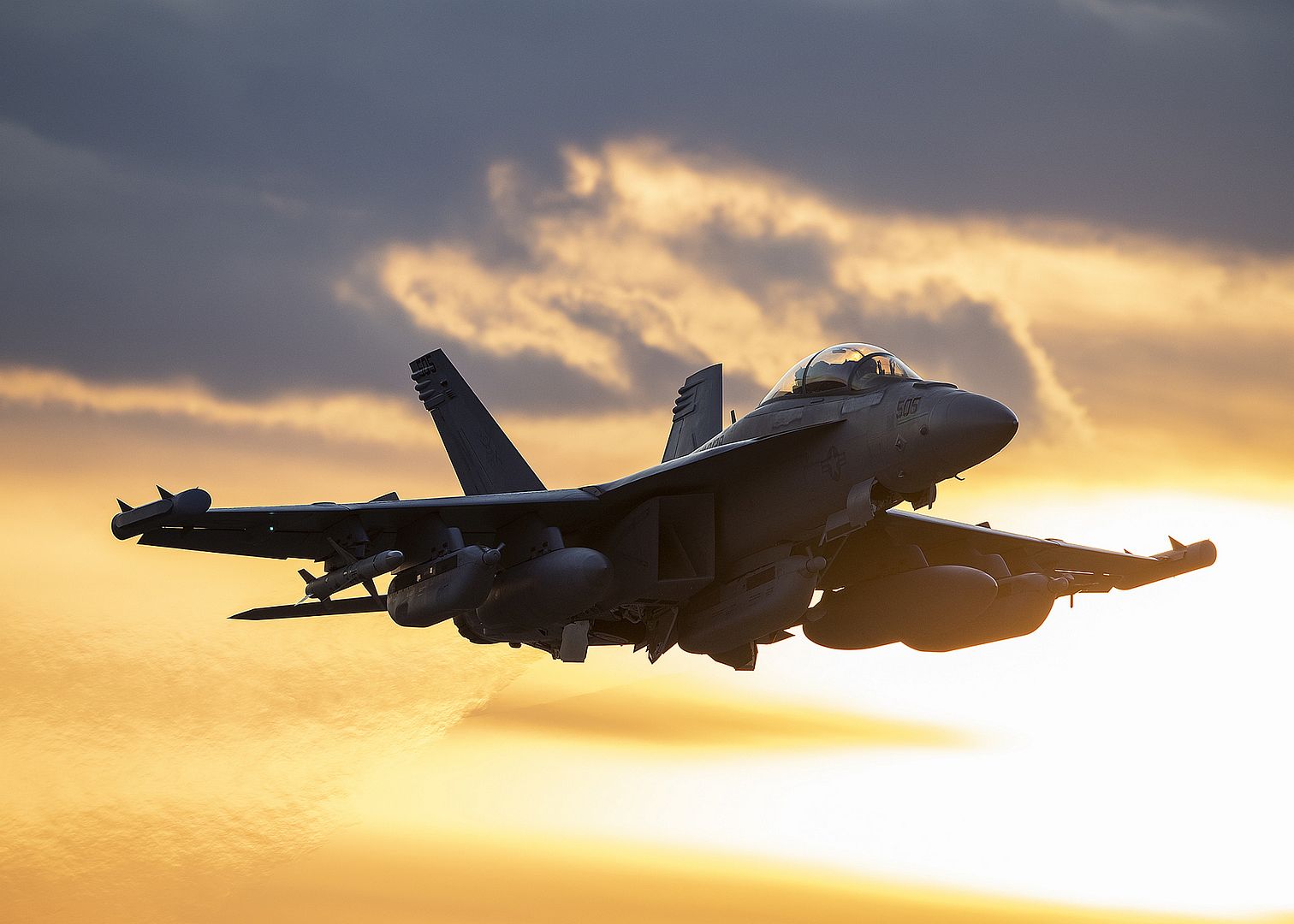
An F-16C Fighting Falcon fighter jet assigned to the 64th Aggressor Squadron (AGRS) takes off for Weapons School Integration from Nellis Air Force Base, Nevada, Nov. 21, 2019. The 64th AGRS is currently assisting the U.S. Air Force Weapons School by providing realistic threat replication for students participating in the Weapons School Integration exercise. (U.S. Air Force photo by Airman 1st Class Bryan Guthrie)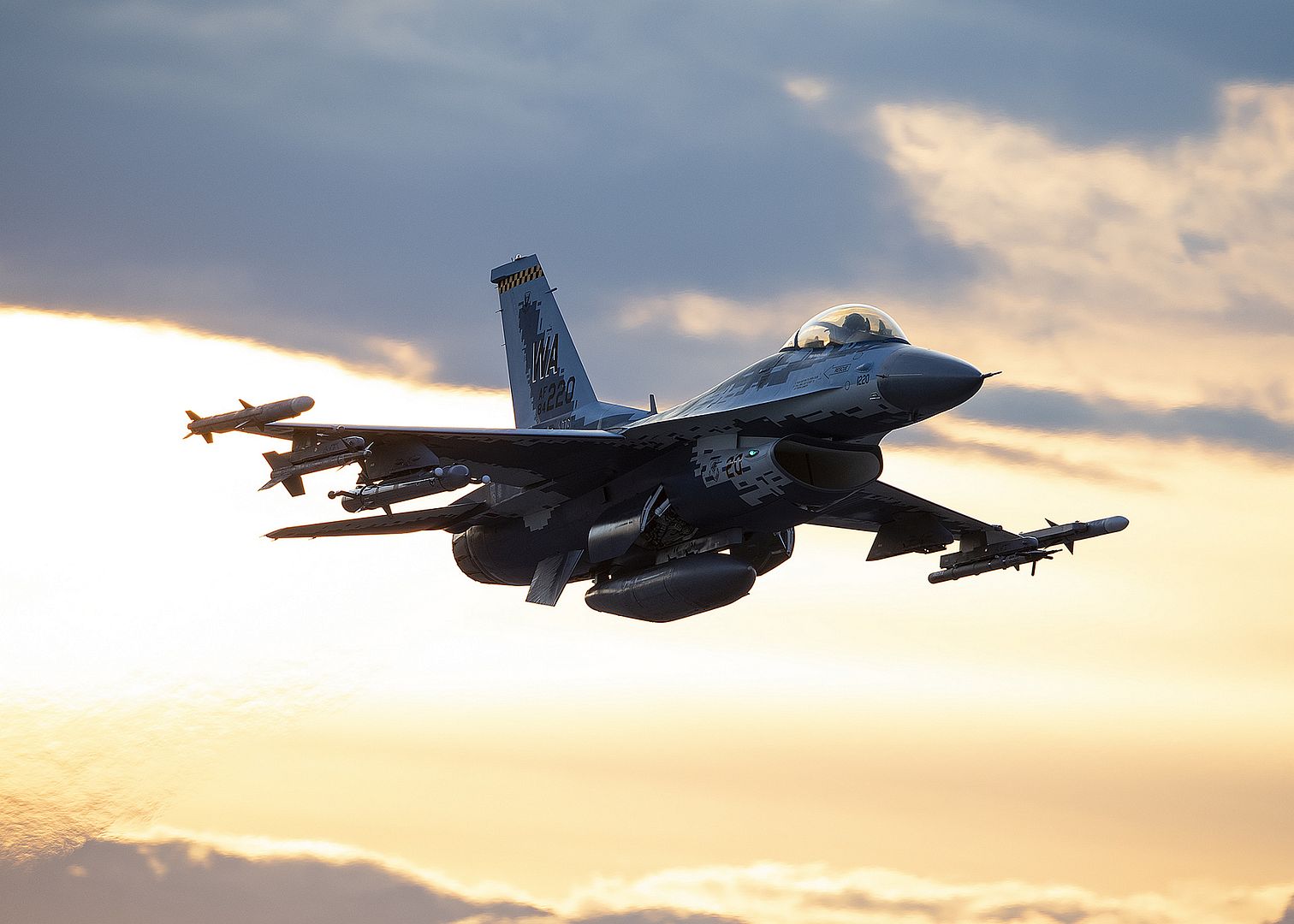
A B-1B Lancer bomber assigned to the 77th Weapons Squadron at Dyess Air Force Base (AFB), Texas, takes off for Weapons School Integration from Nellis Air Force Base, Nevada, Nov. 21, 2019. The B-1B can quickly deliver large quantities of precision and non-precision weapons against adversaries, anywhere in the world. (U.S. Air Force photo by Airman 1st Class Bryan Guthrie)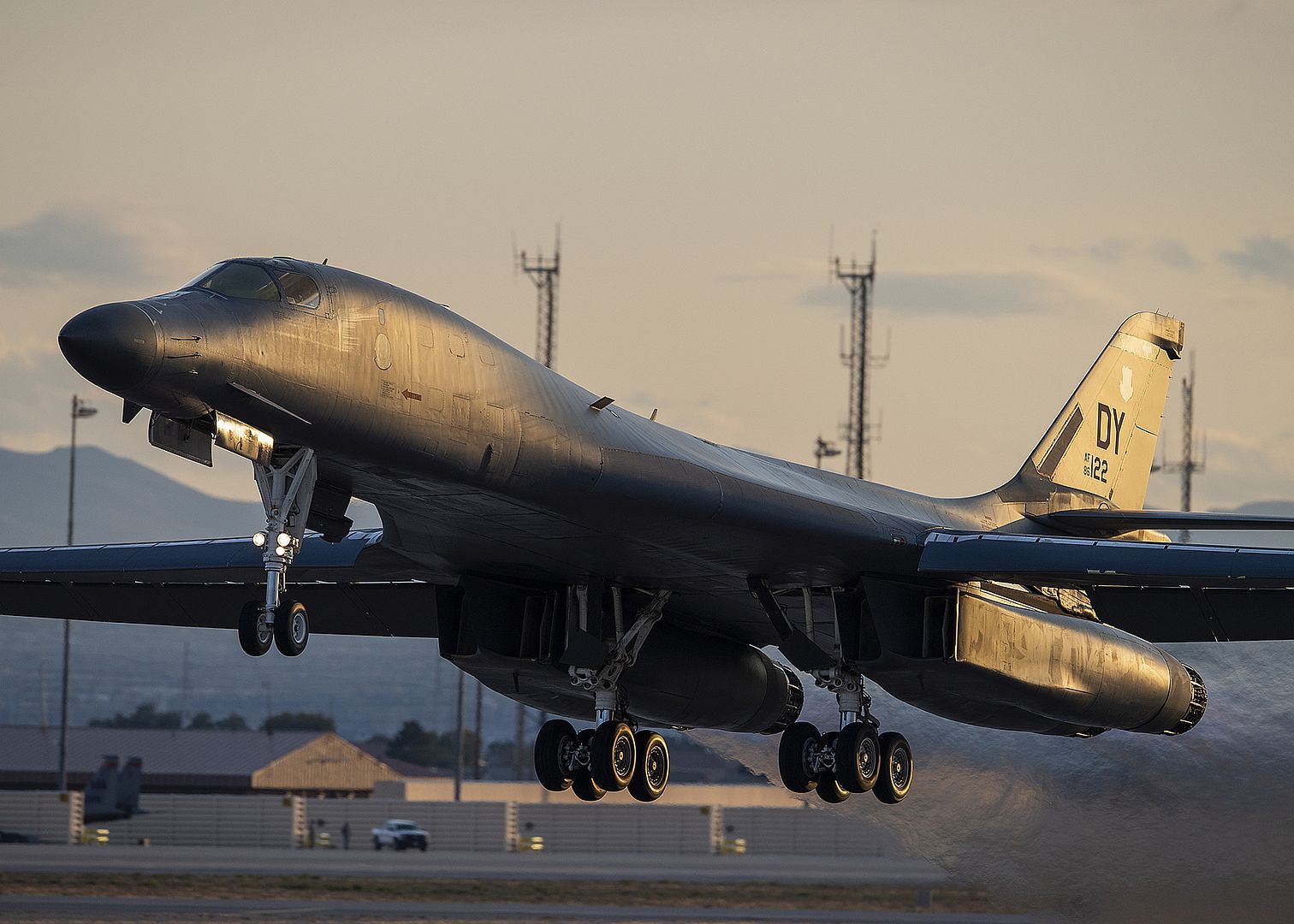
Szolnok Helikopter Base ? The first two of twenty H145M military helicopters have been delivered to the Hungarian Defence Forces.
The H145Ms of the Hungarian fleet are equipped with a fast roping system, high-performance camera, dual cargo hook, hoist, disaster management kit, ballistic protection as well as an electronic countermeasures system to support the most demanding operational requirements. They are also fitted with the HForce weapon management system, developed by Airbus Helicopters, which allows Hungary to equip and operate their aircraft with a large set of ballistic or guided air-to-ground and air-to-air weapons.
Hungary has also ordered 16 H225M multi-purpose helicopters equipped with HForce. The cost-efficient H145M / H225M tandem will enable the Hungarian Defence Forces to cover missions from light utility, tactical transport, combat search and rescue up to light attack.
The H145M is a tried-and-tested light twin-engine helicopter. H145M helicopters are gaining popularity among defence forces due to their excellent price-performance ratio and the short delivery time.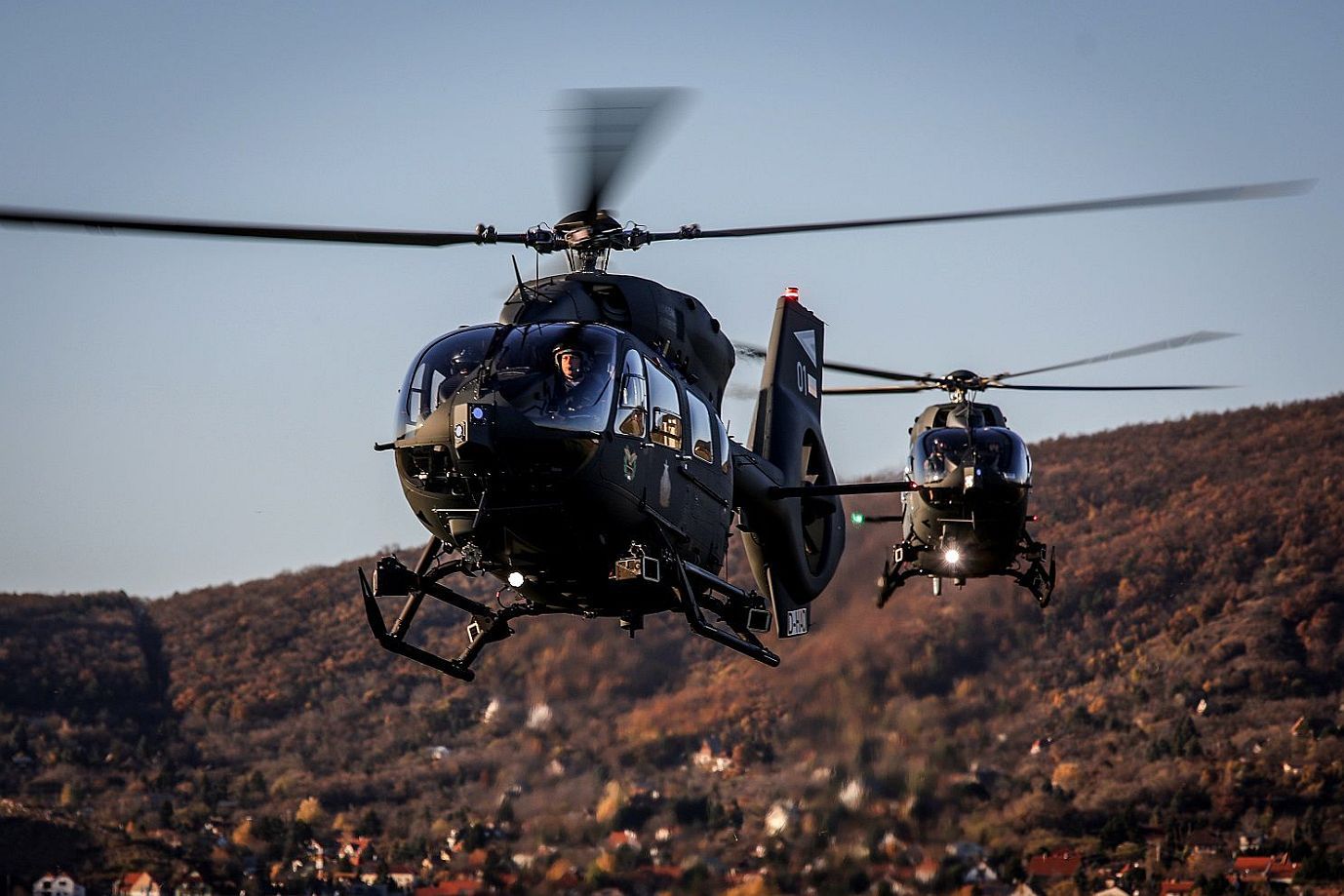
Donauw?rth - Airlift has taken the delivery of its first H145 helicopter, becoming the first operator of this model in Greece. The twin-engine helicopter will be mainly dedicated to VIP transfers, but thanks to the high versatility of its cabin configuration, the aircraft will also be used for emergency medical transport and fire-fighting.
Established in 1999, Airlift was a pioneer in helicopter operations in Greece, where it has built a strong reputation for the quality and safety of its services. The new H145 will be the fifth helicopter to join Airlift?s Airbus fleet, which is currently composed of H125, H130 and H135 family models.
?Having led helicopter operations in Greece for almost 20 years, we are very happy to be the first to introduce the H145 in the country,? said Alexandros Papadospyridakis, CEO of Airlift. ?We appreciate the H145?s versatility to perform various types of missions, along with its spacious, comfortable cabin, which should be welcomed by our customers.?
?Airlift is a long-term partner for Airbus, and I am very honoured by their continued trust in our products,? declared Henri Stell, Director of European Sales at Airbus Helicopters. "We believe that the H145, with its enhanced safety features, excellent availability rate and easy maintenance, will be an outstanding fit for Airlift to continue developing its aerial business.?
The Airbus H145 leads the light twin-engine helicopter market, incorporating an innovative Helionix avionics system and 4-axis autopilot. The aircraft's combination of speed and performance, along with its large cabin and rear-loading clamshell doors, makes it the aircraft of choice for a variety of civil missions worldwide.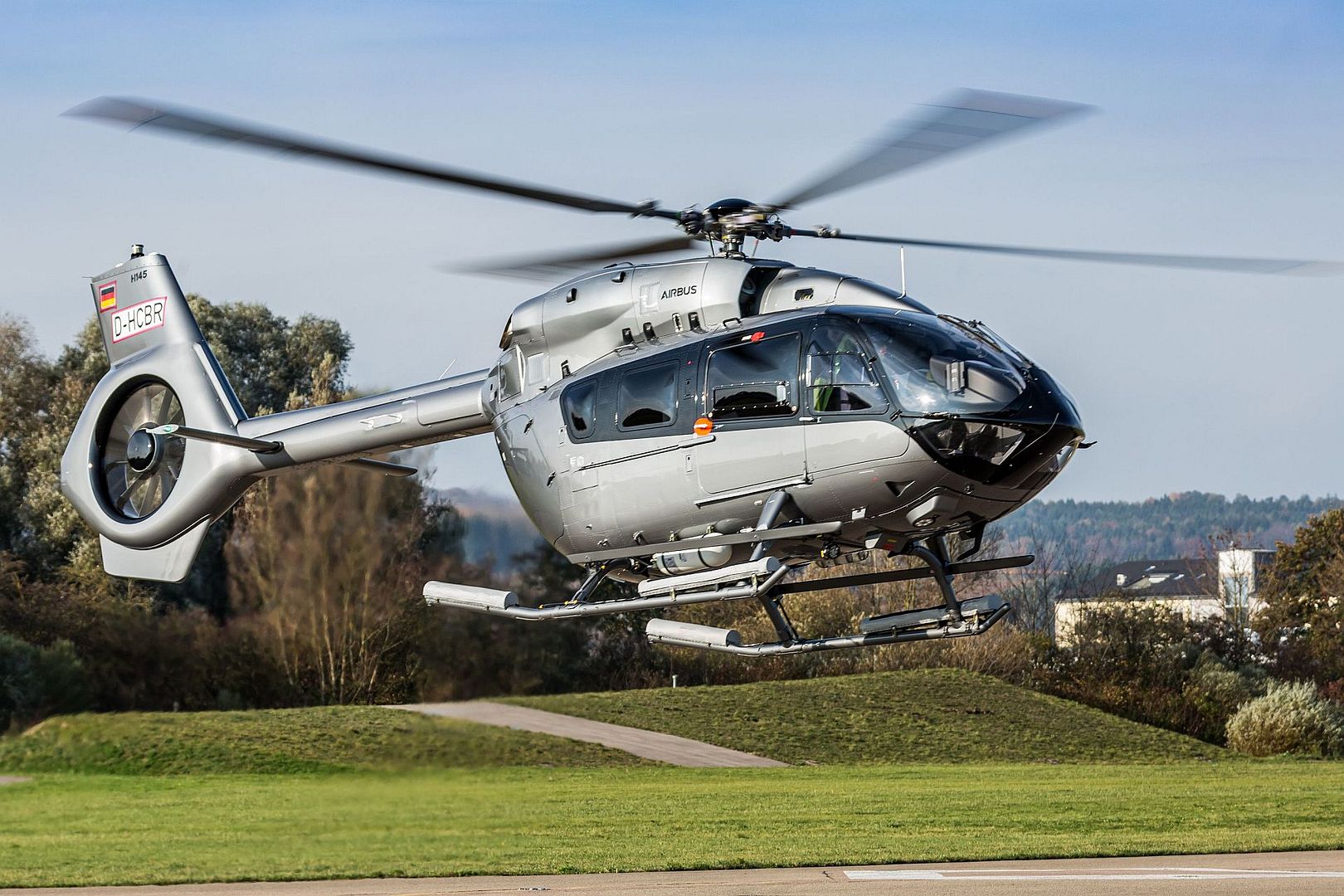
-
U.S. Air Force KC-135 pilots with the 28th Expeditionary Air Refueling Squadron land at Al Udeid Air Base, Nov. 24, 2019. The 28th EARS, part of the U.S. Air Forces Central Command, is responsible for delivering fuel to U.S. and coalition forces, enabling a constant presence in the area of responsibility. (U.S. Air Force photo by Staff Sgt. Daniel Snider)

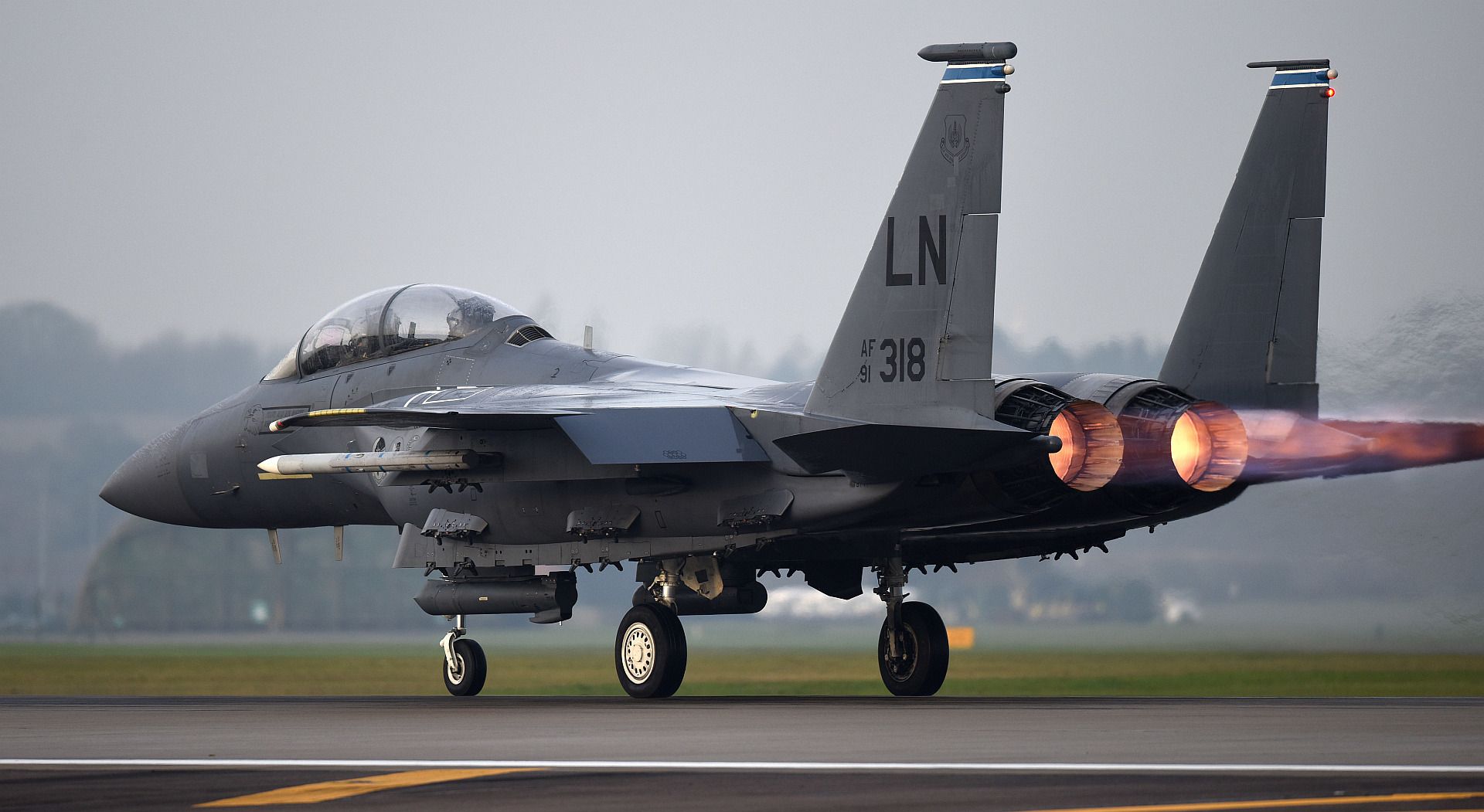
A U.S. Air Force F-15 Strike Eagle flies over northern Iraq, Nov. 20, 2019. U.S. Air Forces Central Command operations deter?adversaries and demonstrate support for allies and partners in the region. (U.S. Air Force photo by Staff Sgt. Daniel Snider)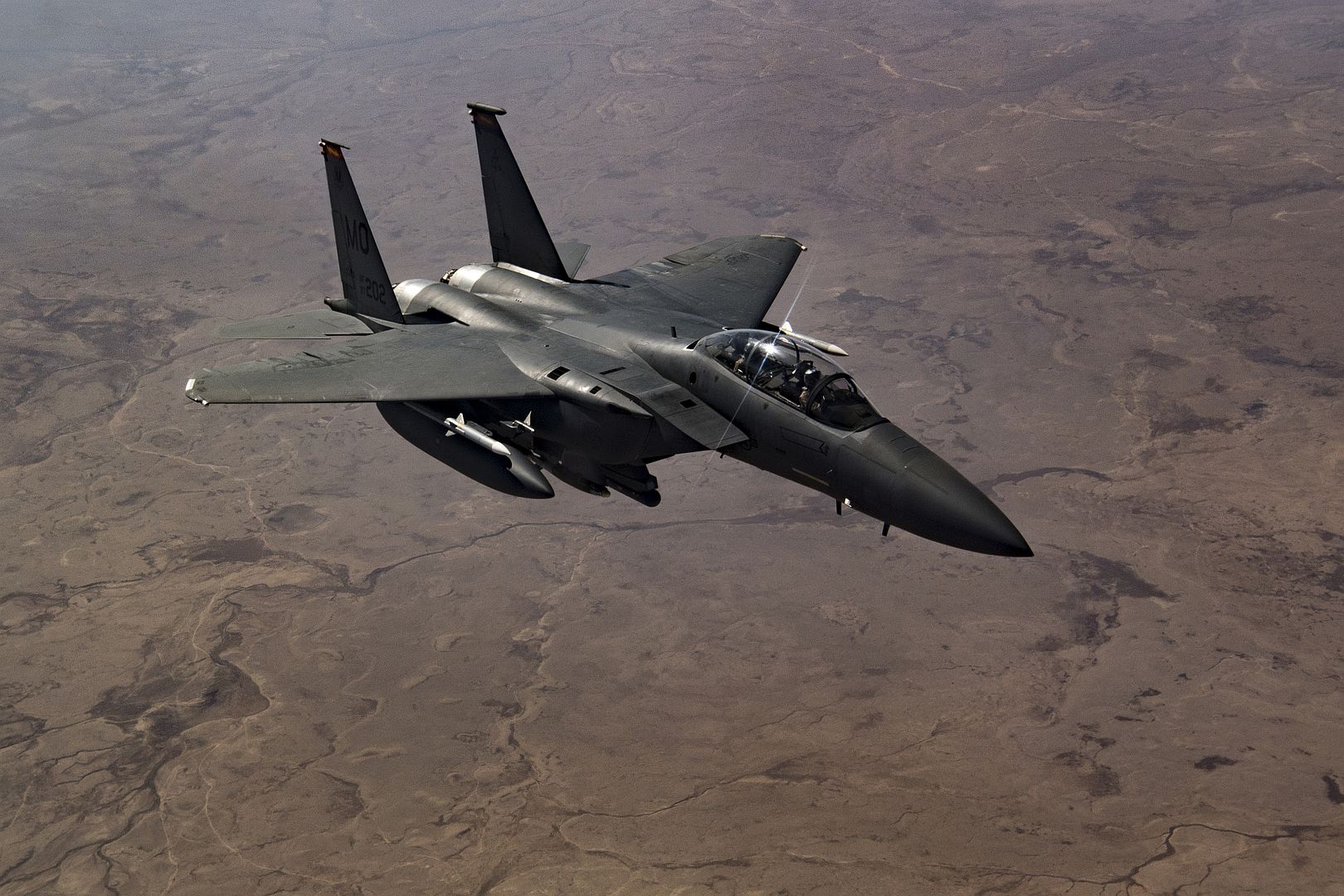
A U.S. Air Force F-15 Strike Eagle departs a U.S. Air Force KC-135 Stratotanker after conducting an aerial refueling over northern Iraq, Nov. 20, 2019. U.S. Air Forces Central Command operations deter adversaries and demonstrate support for allies and partners in the region. (U.S. Air Force photo by Staff Sgt. Daniel Snider)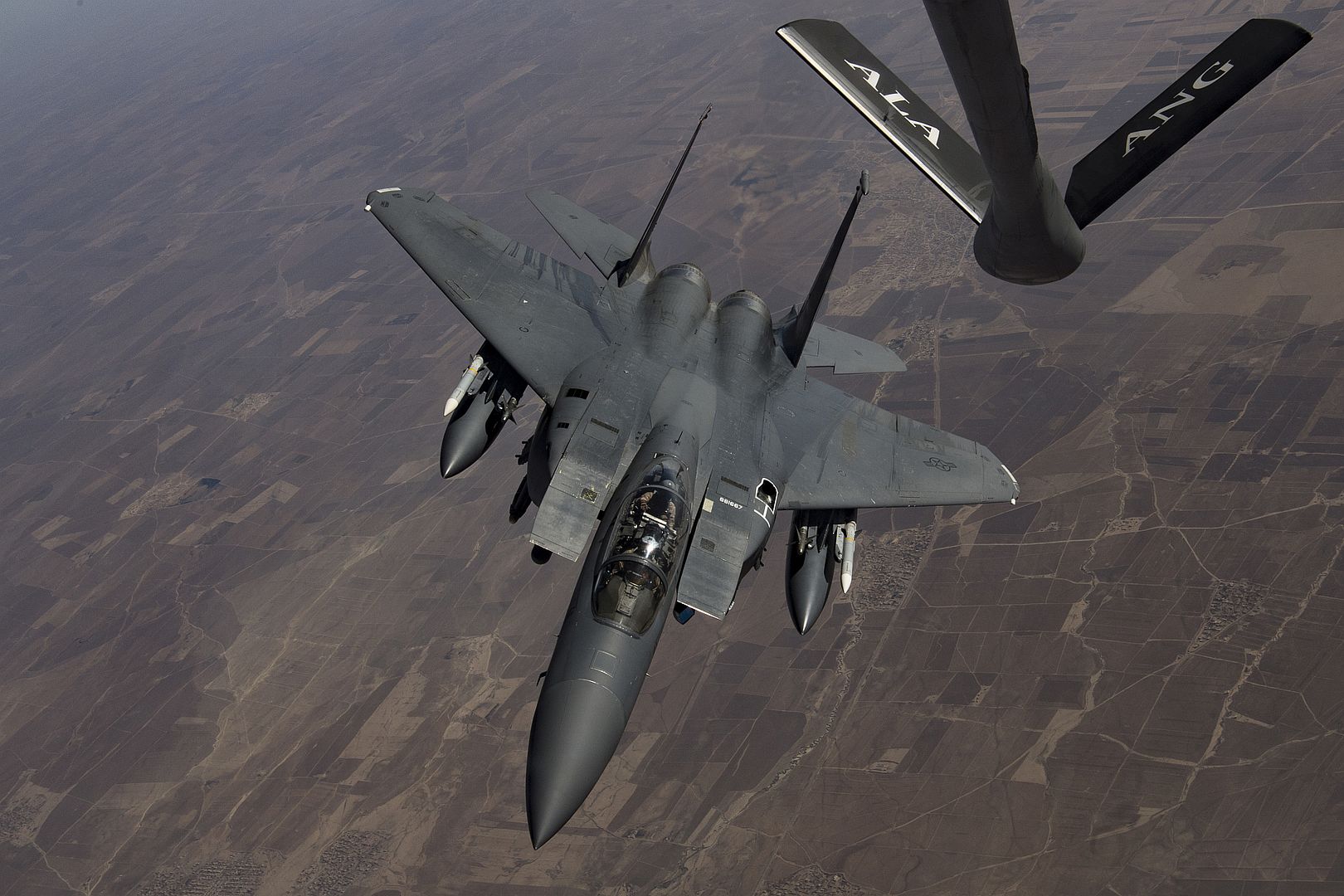
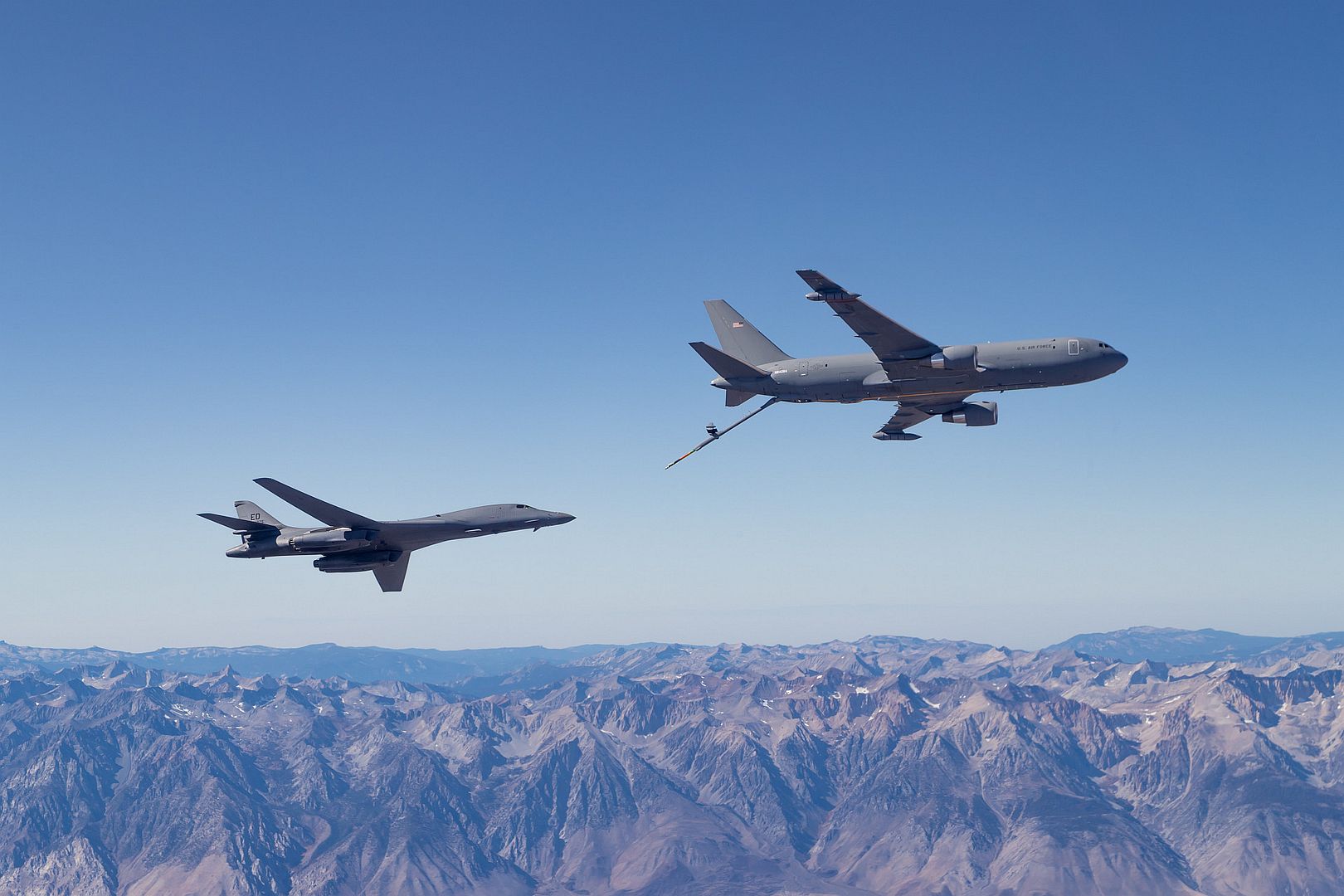
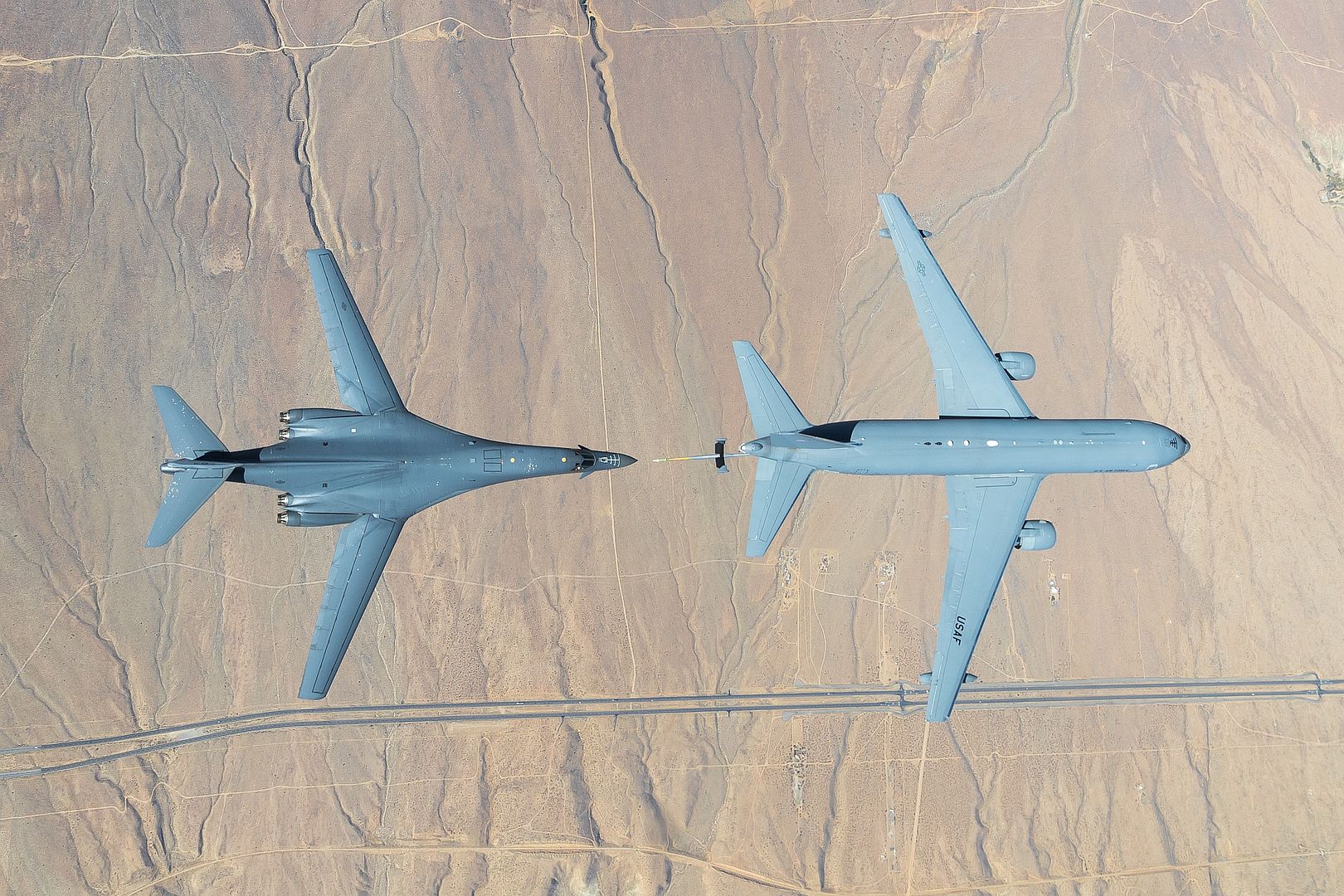
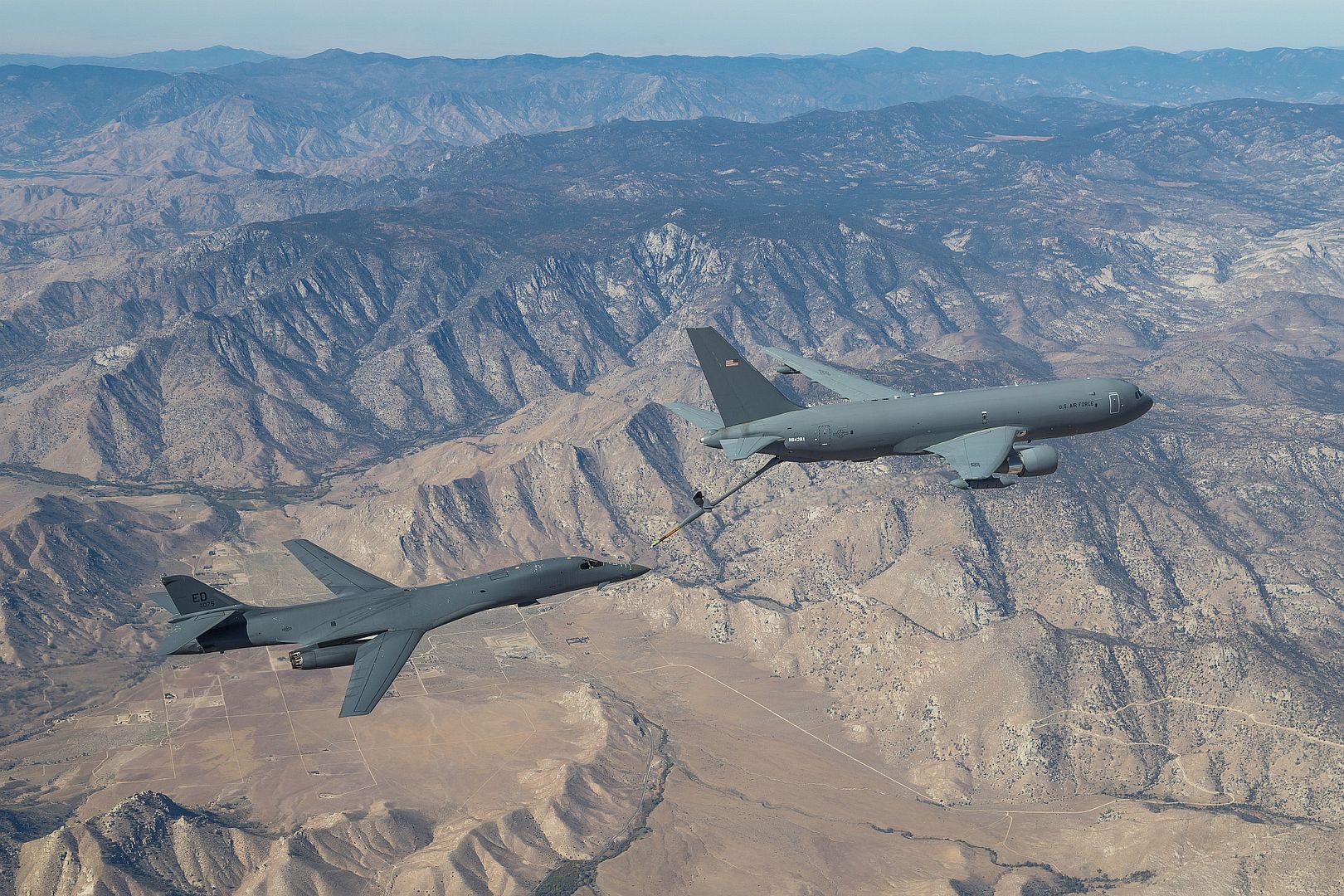
The B-1B Lancer conducted aerial testing with the KC-46 Pegasus in the skies over Edwards Air Force Base, California, recently. (Air Force photo's by Don Allen)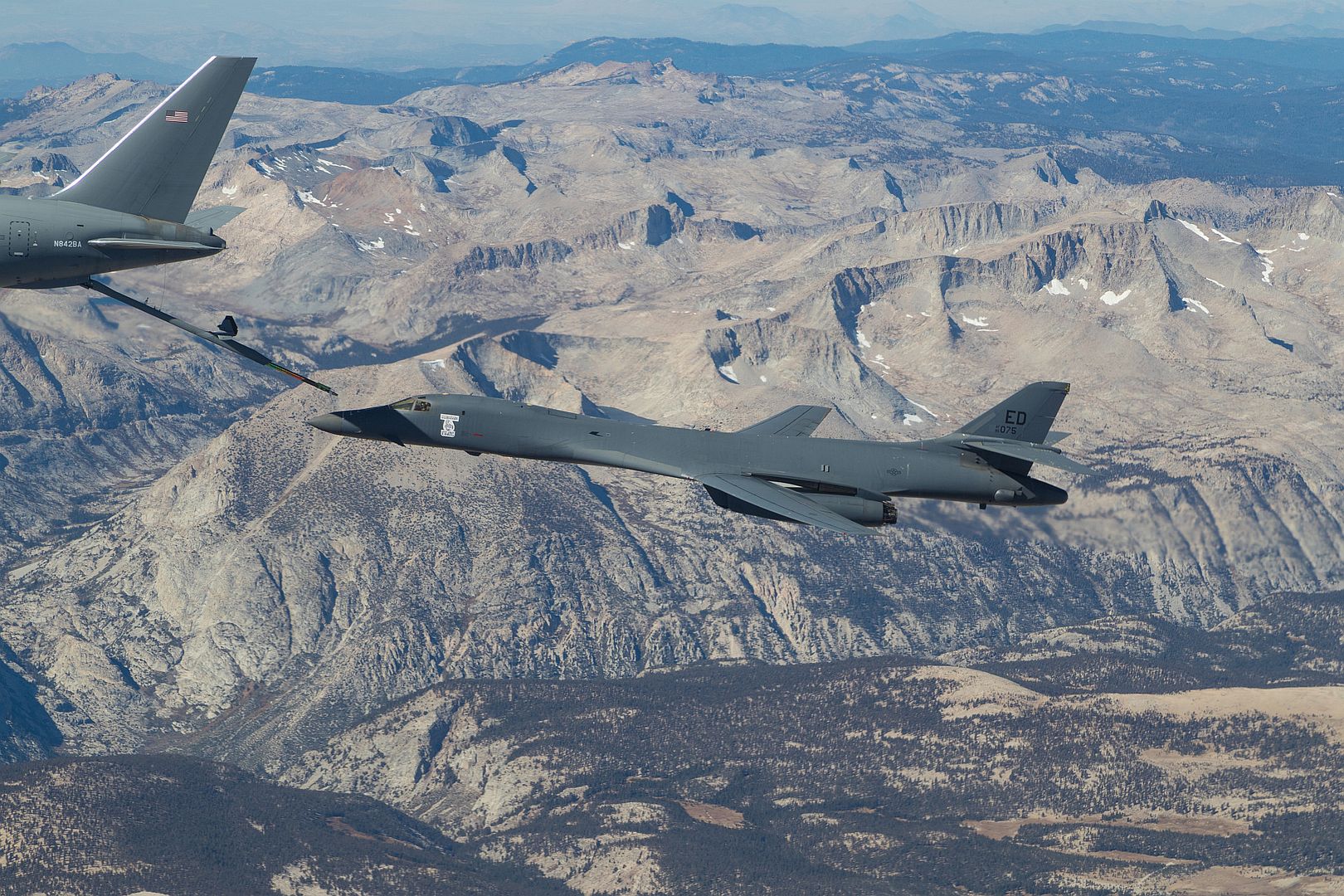
A B-52H Stratofortress from Barksdale Air Force Base, La., flies to South Dakota Nov. 21, 2019. The exercise simulated a scenario where B-52s were launched from multiple locations to strike the same target areas. (U.S. Air Force photo by Airman 1st Class Lillian Miller)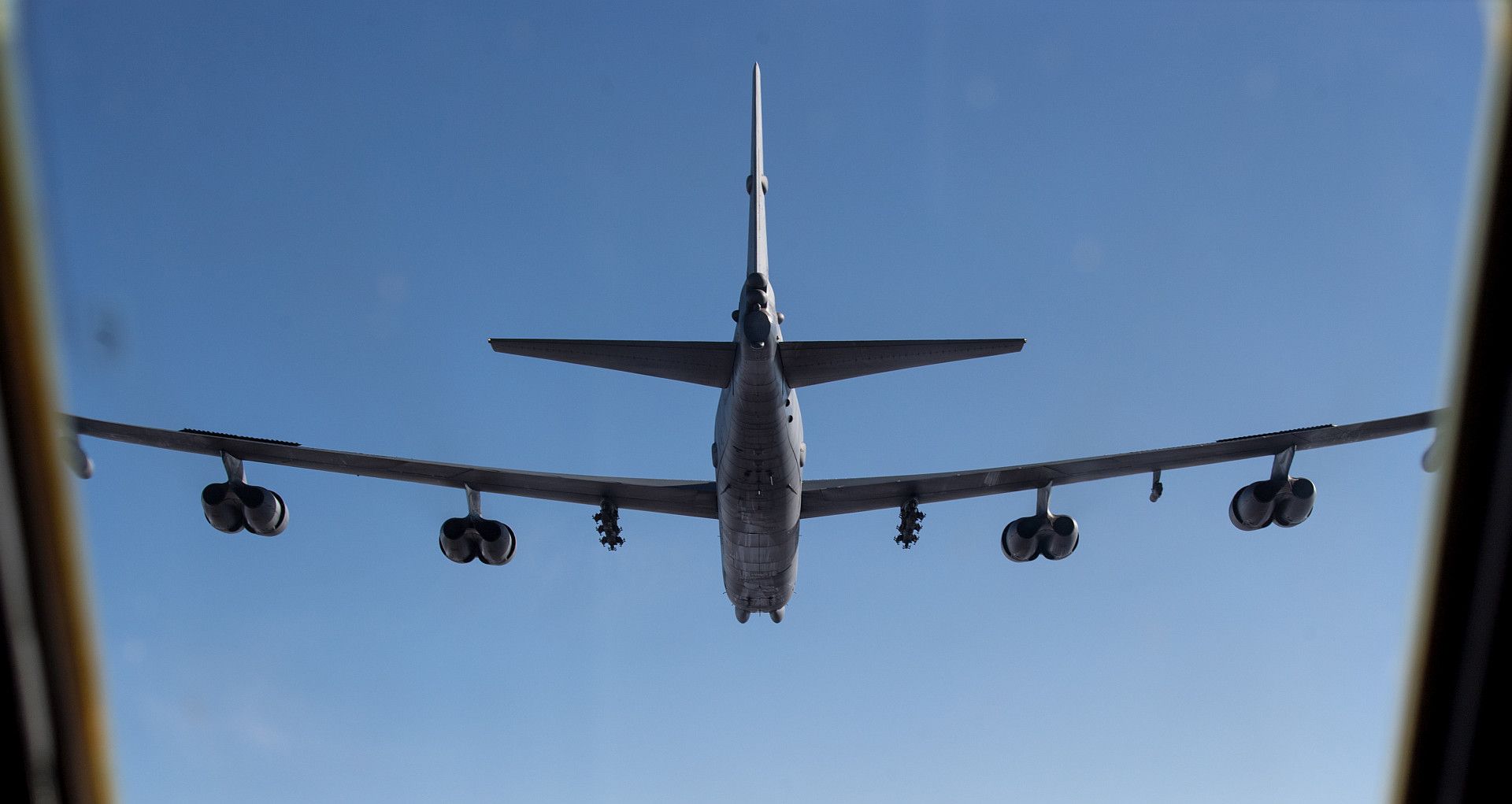
Marignane ? Airbus Helicopters and its partner Heli-Union have signed a global support contract for the Cougar and Caracal helicopters in service in the French Army and Air Force. This agreement signed with the DMA?, the defence agency in charge of improving the availability of military aircraft in France, is the first contract that Airbus Helicopters has signed as part of the new approach initiated by the French Minister of the Armed Forces, Florence Parly.
This long-term contract aims at increasing the availability of the Caracal and Cougar fleets by making Airbus Helicopters responsible for the entire scope of the aircraft?s support. Airbus Helicopters has committed to limiting the number of aircraft in heavy maintenance by reducing the duration of the maintenance cycles for each helicopter type by up to 20%. Additionally, the commitments taken on logistics and technical assistance will reduce the downtime linked to these activities.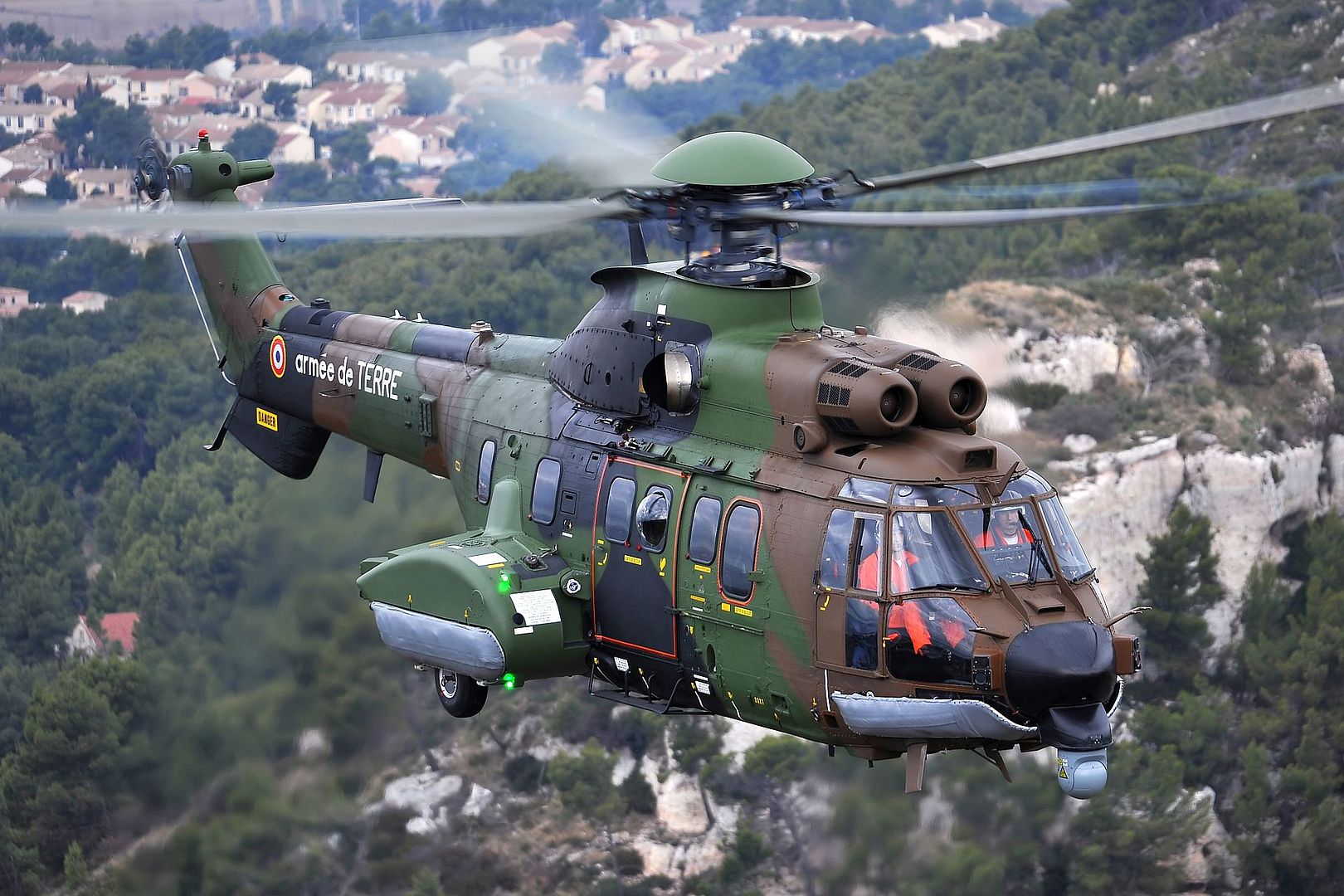
?Airbus Helicopters has committed to ambitious performance levels for the support of the Cougar and Caracal helicopters in service in the French Army and Air Force? said Bruno Even, Airbus Helicopters CEO. ?This contract is the result of months of cooperation with the DMA?, and I am confident it will deliver the level of support that the French armed forces expect to perform their critical missions both nationally and in operational theatres abroad?.
Airbus Helicopters will also propose, in cooperation with its partner Heli Union, a maintenance centre close to one of its customer?s sites in Pau, and will also involve a significant number of French SMEs in the equipment repair activities.
The French armed forces operate 18 H225Ms, also known as Caracal in French service, missions, as well as 26 Cougars, some of which are currently performing troop transport, special forces and search and rescue missions in demanding theatres of operation worldwide.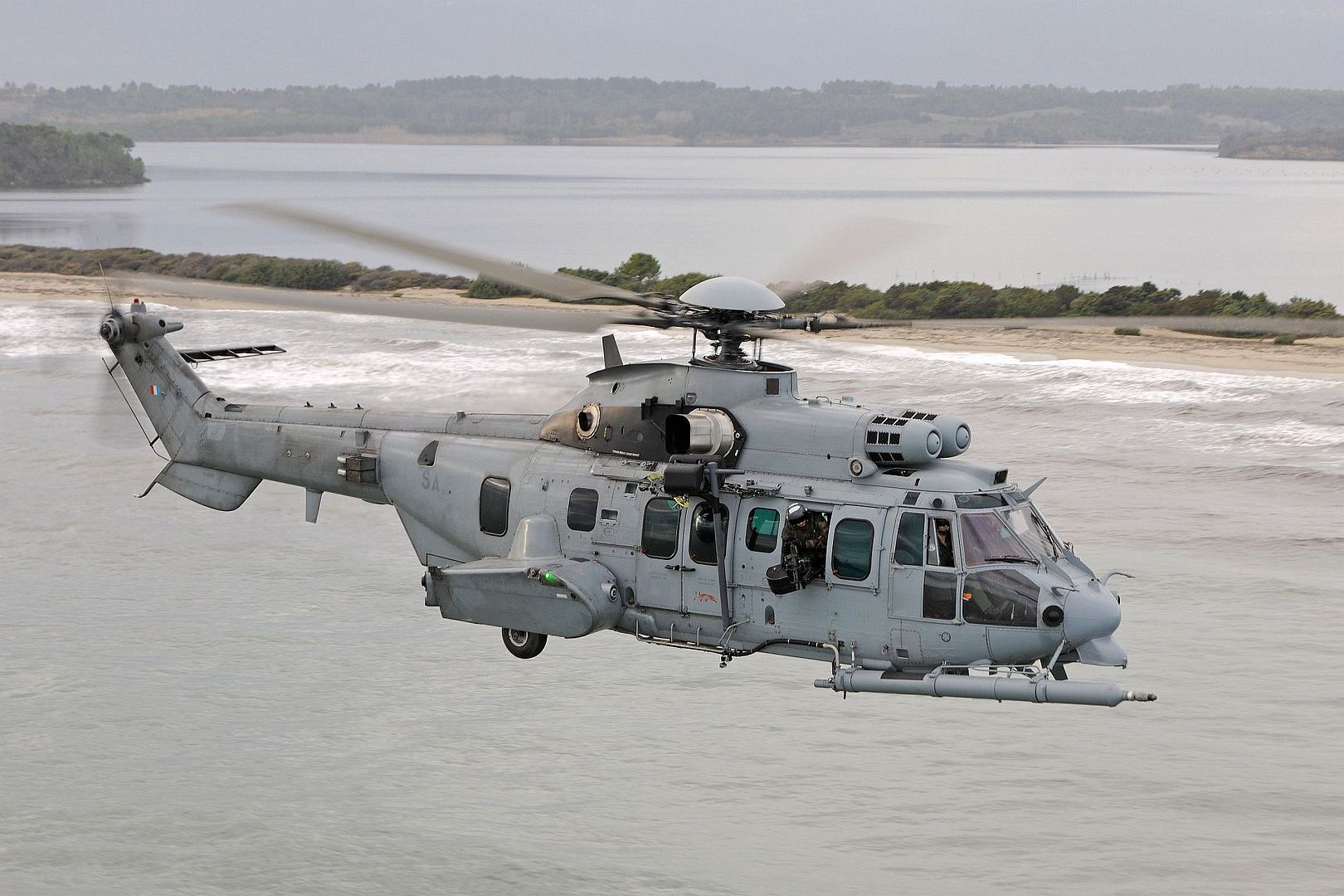
News Article / November 27, 2019
Royal Canadian Air Force
Ten CT-114 Tutor jets flown by the Canadian Forces Snowbirds are returning home to Canada from Georgia today, November 27, 2019.
The Snowbirds have been on an operational pause since Snowbird 5 was forced to eject before a show at the Atlanta Speedway on October 13, 2019.
The investigation has advanced enough that the Royal Canadian Air Force is confident the CT-114 Tutors parked at Falcon Field in Peachtree City, Georgia, can be safely flown home to 15 Wing Moose Jaw in Saskatchewan. Another operational risk assessment will be conducted prior to resuming regular aerobatic training flights.
?When flying air demonstrations, the Canadian Forces Snowbirds operate in tight formation, conducting loops and rolls in our signature formations. At this point we have received enough information from investigators to resume wings-level flight in order to return our jets to our home base. However we need to let the investigators continue to work before we resume full operations,? said Lieutenant-Colonel Mike French, the Snowbirds? commanding officer.
Once the fleet returns to full flying operations, there will be a better assessment of the impact on the Snowbirds? schedule. At this point annual spring training in Comox, British Columbia, will be delayed at least a month. The full effect on the Snowbirds? 2020 schedule is not clear at this time and the schedule has not yet been released. The Canadian Forces Snowbirds spend the winter months training for the upcoming season. Approximately 80 training missions occur before spring training in Comox, British Columbia, to prepare for the upcoming season.
Captain Kevin Domon-Grenier sustained minor injuries and was taken to hospital as a precaution following the ejection. The jet crashed into a farmer?s field and there were no injuries on the ground.
The Snowbirds cancelled their final show of the season, which had been scheduled to take place in Houston, Texas, the weekend following the accident.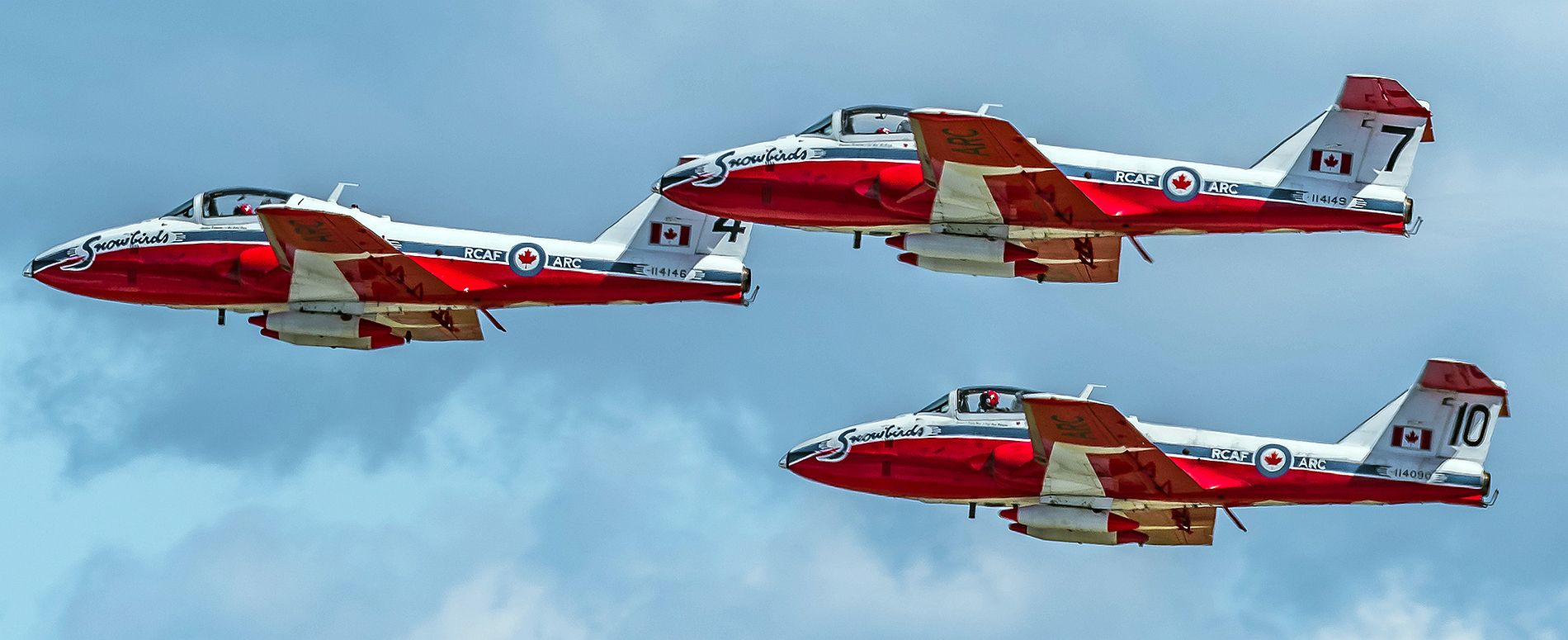
-
KANEOHE BAY, Hawaii (Nov. 26, 2019)
An MH-60R Sea Hawk helicopter, attached to the "Easyriders" of Helicopter Maritime Strike Squadron (HSM) 37, fly in formation around the Island of Oahu Nov. 26. HSM 37, stationed at Marine Corps Base Hawaii in Kaneohe Bay, is the largest expeditionary squadron in the U.S. Navy and supports all Pearl Harbor-based Arleigh Burke-class guided-missle destroyers and Ticonderoga-class guided-missle cruisers. (U.S. Navy photo by Mass Communication Specialist Seaman Aja B. Jackson)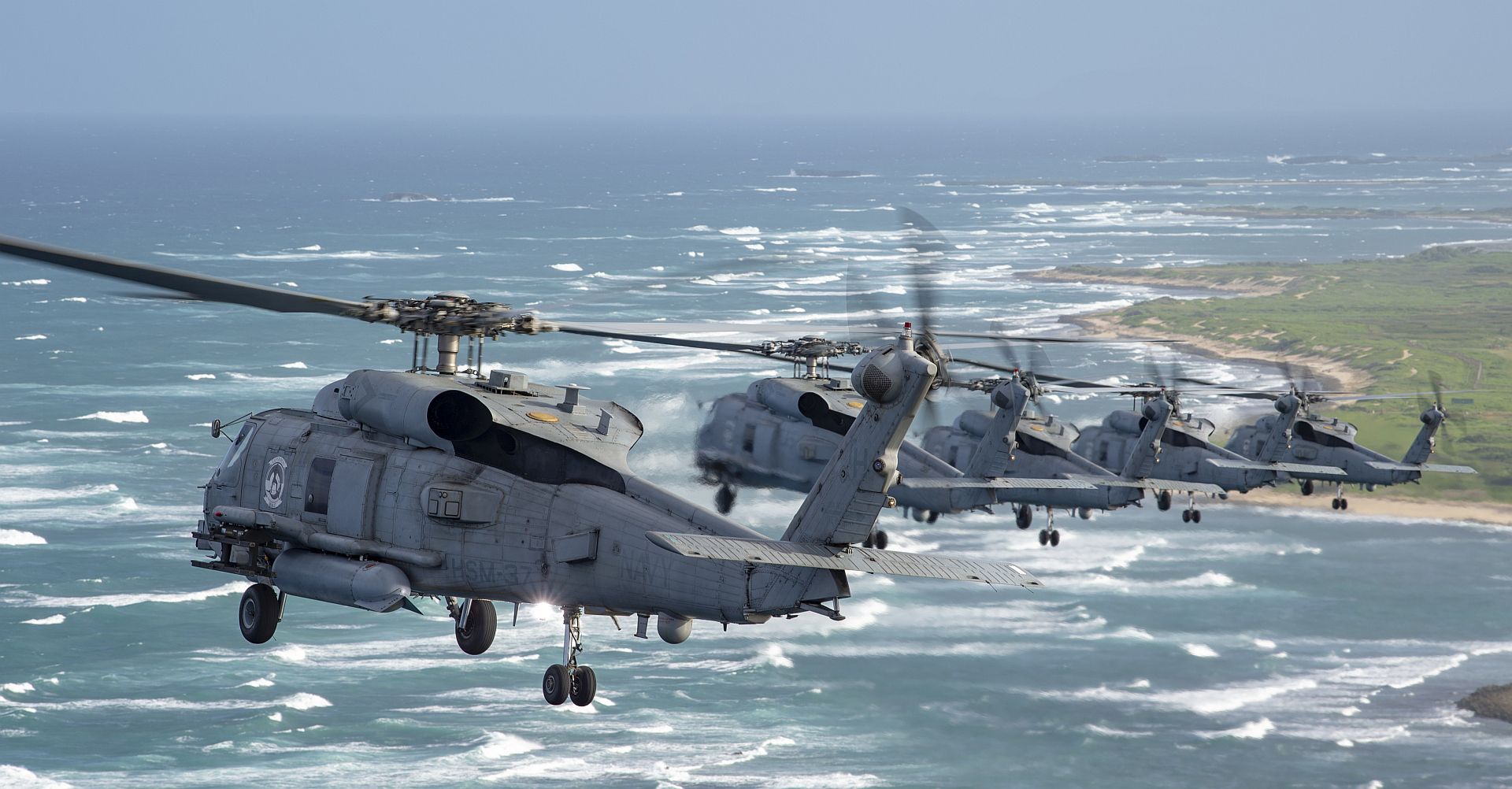
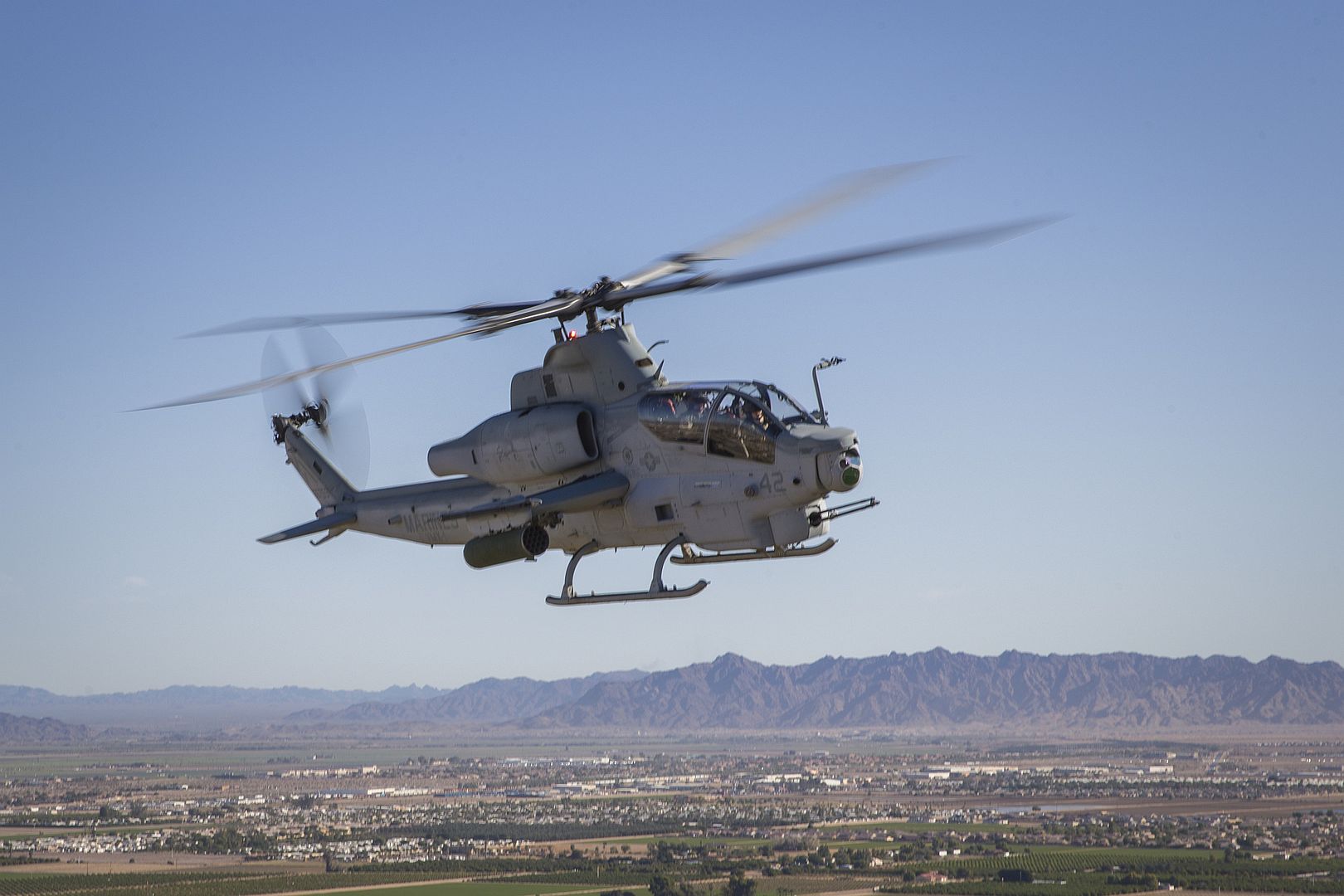
U.S. Marines with Marine Test and Evaluation Squadron One (VMX-1) conduct a live fire training exercise with the AH-1Z Cobra and F-35B Lightning II in Yuma, Ariz., Nov. 26, 2019. VMX-1 is an operational test squadron that tests multiple aircraft, allowing for the continuation of safety improvements, aircraft reliability, and overall lethality of Marine Corps aircraft. (U.S. Marine Corps photo's by Lance Cpl. John Hall)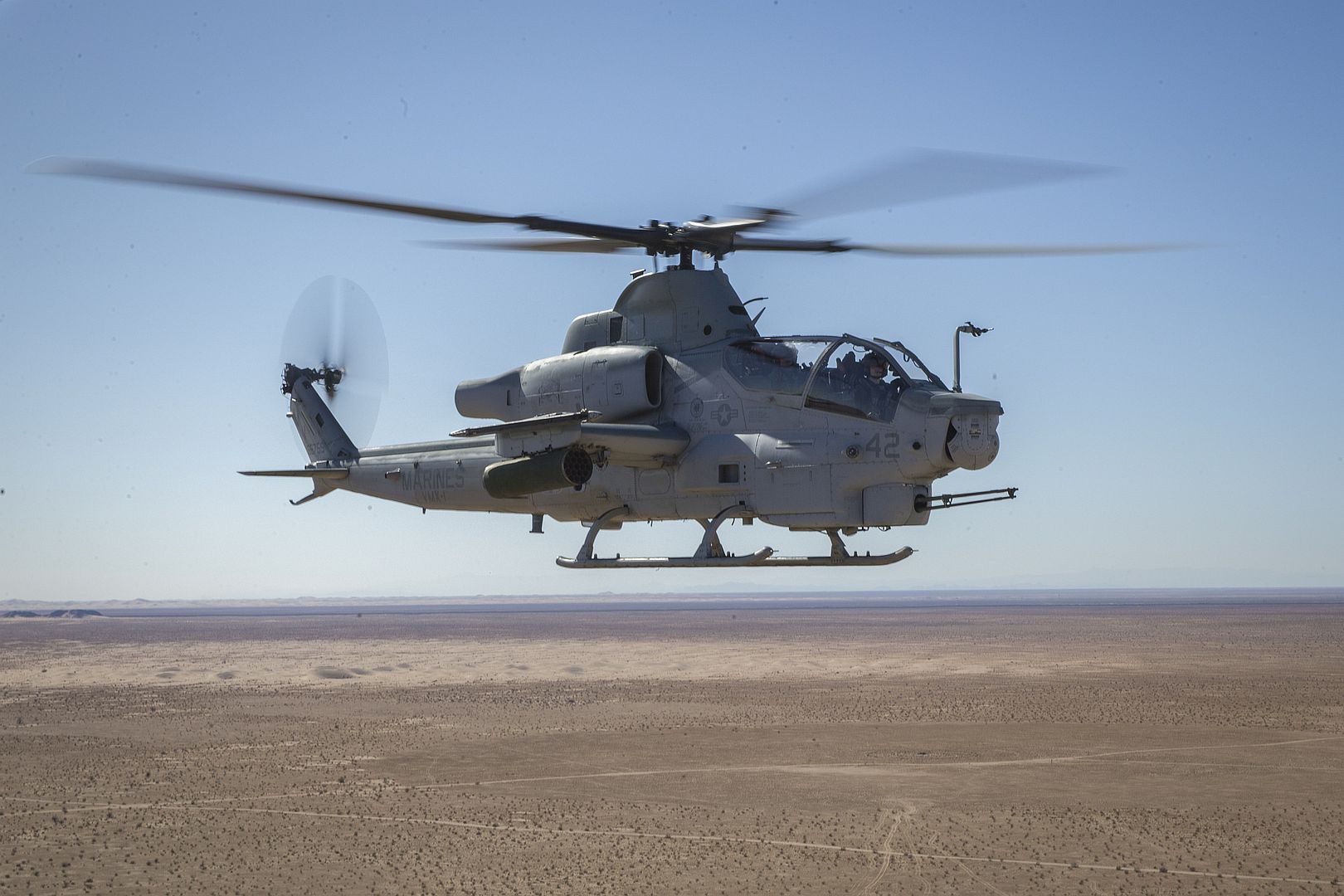
GULF OF OMAN (Nov. 11, 2019) An Iranian P-3C Orion aircraft flies past the dry cargo and ammunition ship USNS Alan Shepard (T-AKE 3) during a replenishment-at-sea with the guided-missile cruiser USS Normandy (CG 60). Normandy is part of the East Coast Surface Action Group and is operating in the U.S. 5th Fleet area of operations in support of naval operations to ensure maritime stability and security in the Central Region, connecting the Mediterranean and Pacific through the western Indian Ocean and three strategic choke points. (U.S. Navy photo by Mass Communication Specialist 2nd Class Michael H. Lehman/Released)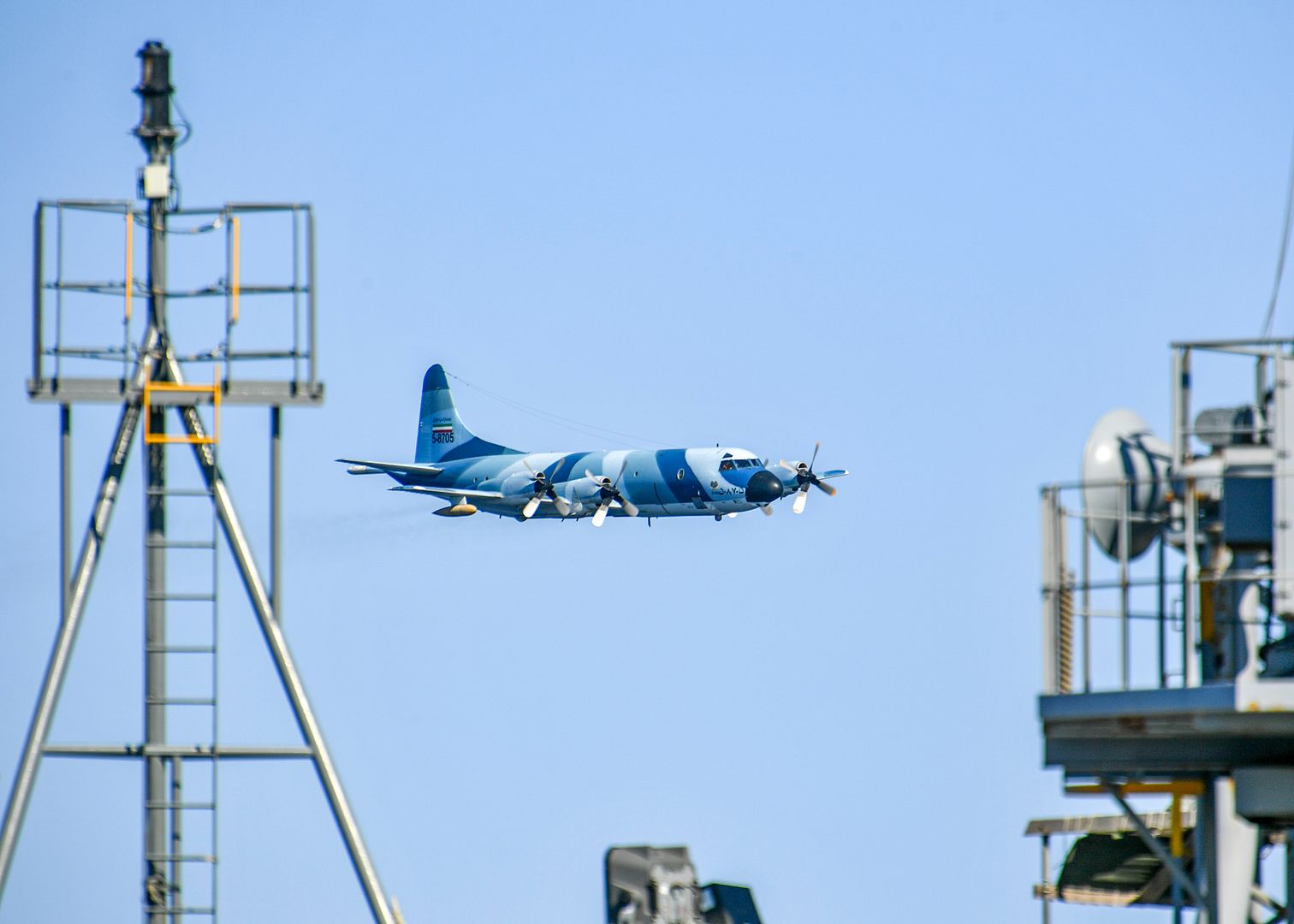
ARABIAN GULF (Nov. 25, 2019) Sailors taxi an F/A-18F Super Hornet attached to the "Jolly Rogers" of Strike Fighter Squadron (VFA) 103 on the flight deck of the aircraft carrier USS Abraham Lincoln (CVN 72). Abraham Lincoln Carrier Strike Group is deployed to the U.S. 5th Fleet area of operations in support of naval operations to ensure maritime stability and security in the Central Region, connecting the Mediterranean and the Pacific through the western Indian Ocean and three strategic choke points. With Abraham Lincoln as the flagship, deployed strike group assets include staffs, ships and aircraft of Carrier Strike Group 12 (CSG 12), Destroyer Squadron 2 (DESRON 2), USS Leyte Gulf (CG 55) and Carrier Air Wing 7 (CVW 7). (U.S. Navy photo by Mass Communication Specialist 3rd Class Shane Bryan/Released)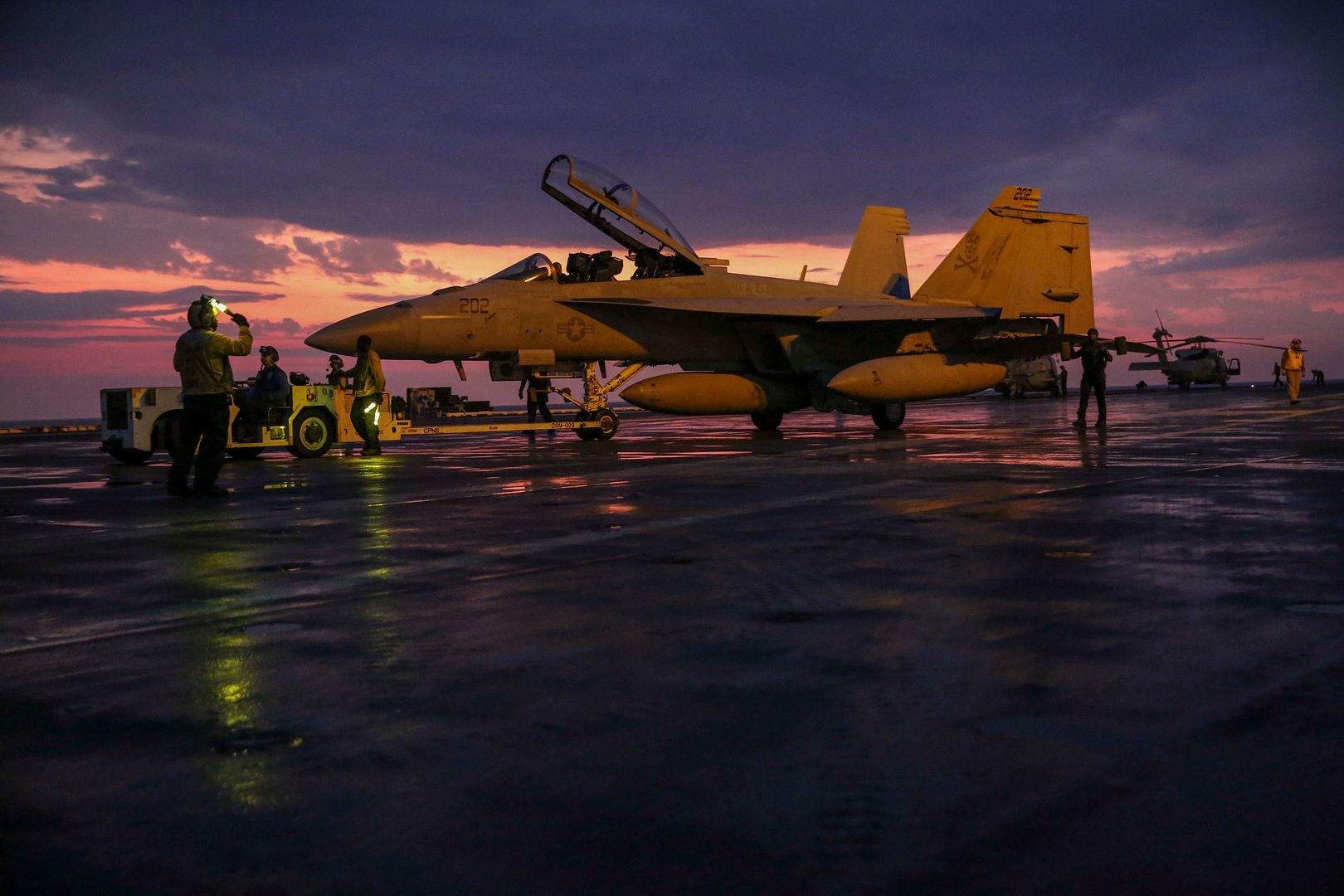
Scandinavian carrier SAS has taken delivery of its first A350-900, becoming the newest operator of this latest generation, highly efficient widebody aircraft. The airline has a total of eight A350-900 aircraft on order and operates an Airbus fleet of 68 aircraft (51 A320 Family, 17 A330 and A340 Family aircraft). In the coming years, as part of an extensive fleet modernisation, SAS will take delivery of 54 additional A320neo Family aircraft and the remaining seven A350-900s through direct purchase and lease contracts.
SAS?s A350-900 features a modern and highly comfortable three-class cabin layout with 300 seats: 40 ?SAS Business? class, 32 ?SAS Plus? class and 228 ?SAS Go? class seats. On 28 January 2020, the airline will start to operate the new aircraft on its Copenhagen-Chicago long-haul route, followed by other international destinations including North America and Asia.
The A350 XWB features the latest aerodynamic design, a carbon fibre fuselage and wings, plus new fuel-efficient Rolls-Royce engines. Together, these latest technologies translate into unrivalled levels of operational efficiency with a 25% reduction in fuel burn and emissions. The A350 XWB?s Airspace by Airbus cabin is the quietest of any twin-aisle and offers passengers and crews the most modern in-flight products for the most comfortable flying experience. Moreover, SAS will benefit from Airbus? unique aircraft commonality. The incoming A350s will seamlessly integrate into SAS?s current Airbus fleet in service today at the airline.
At the end of October 2019, the A350 XWB Family had received 913 firm orders from 50 customers worldwide, making it one of the most successful widebody aircraft ever.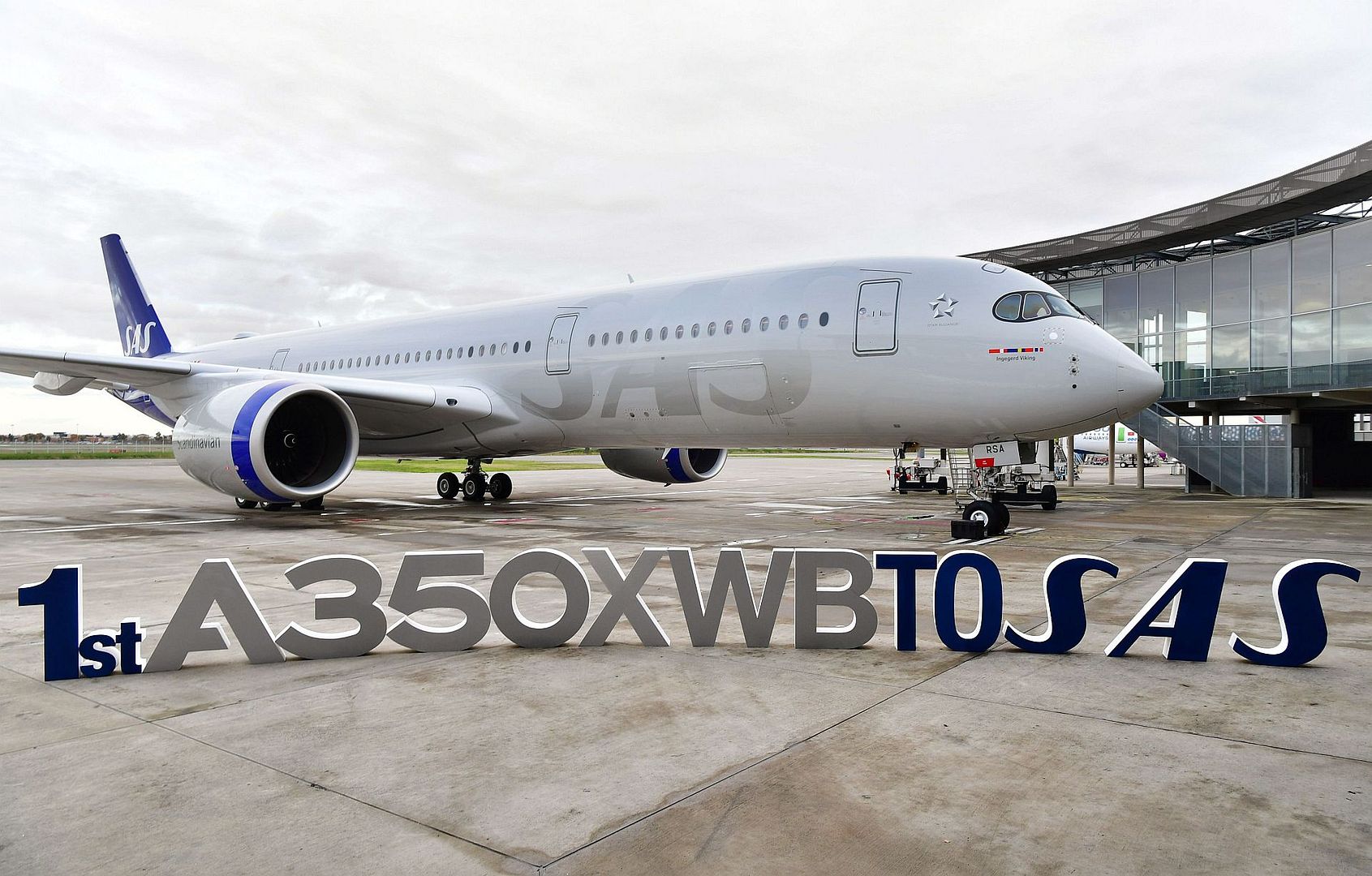
Airbus has celebrated the 100th A220 aircraft produced for a customer during a ceremony at the aircraft programme?s headquarters in Mirabel, Canada. The aircraft, an A220-300, destined for Riga, Latvia-based airBaltic, features a brand new and comfortable cabin layout with 149 seats plus a modernised livery.
The A220 Family is assembled at Airbus? main Final Assembly Line in Mirabel and more recently, also at the programme?s second assembly line in Mobile, Alabama. The world?s first A220 (formerly called the C Series) was delivered in June 2016 to A220-100 launch operator SWISS.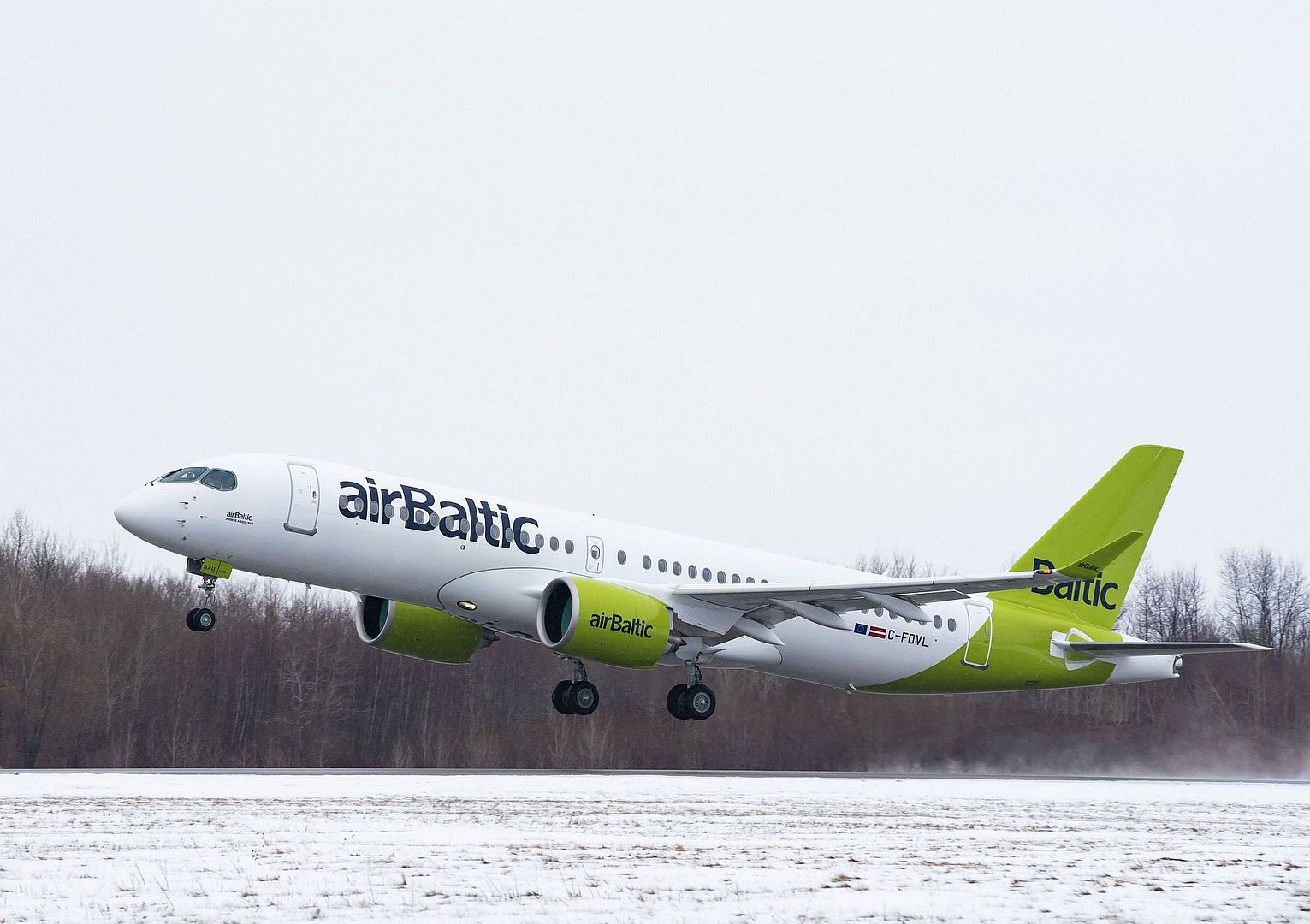
AirBaltic became the A220-300 launch operator when the Latvian airline received delivery of the first ever A220-300 three years ago, on 28 November, 2016. airBaltic has since then re-ordered A220-300 aircraft twice ? bringing its firm order to 50 aircraft to become the current biggest European A220 customer. The airline now operates a fleet of 20 A220-300 aircraft.
In an extremely competitive market, the aircraft?s unequalled fuel efficiency and excellent performance has been instrumental to airBaltic which has an all-A220 fleet as the backbone of its new business plan. airBaltic is operating its A220 fleet to various European and Russian destinations as well as to the Middle East. It currently operates the longest flight on an A220 ? a 6.5-hour flight from Riga to Abu Dhabi.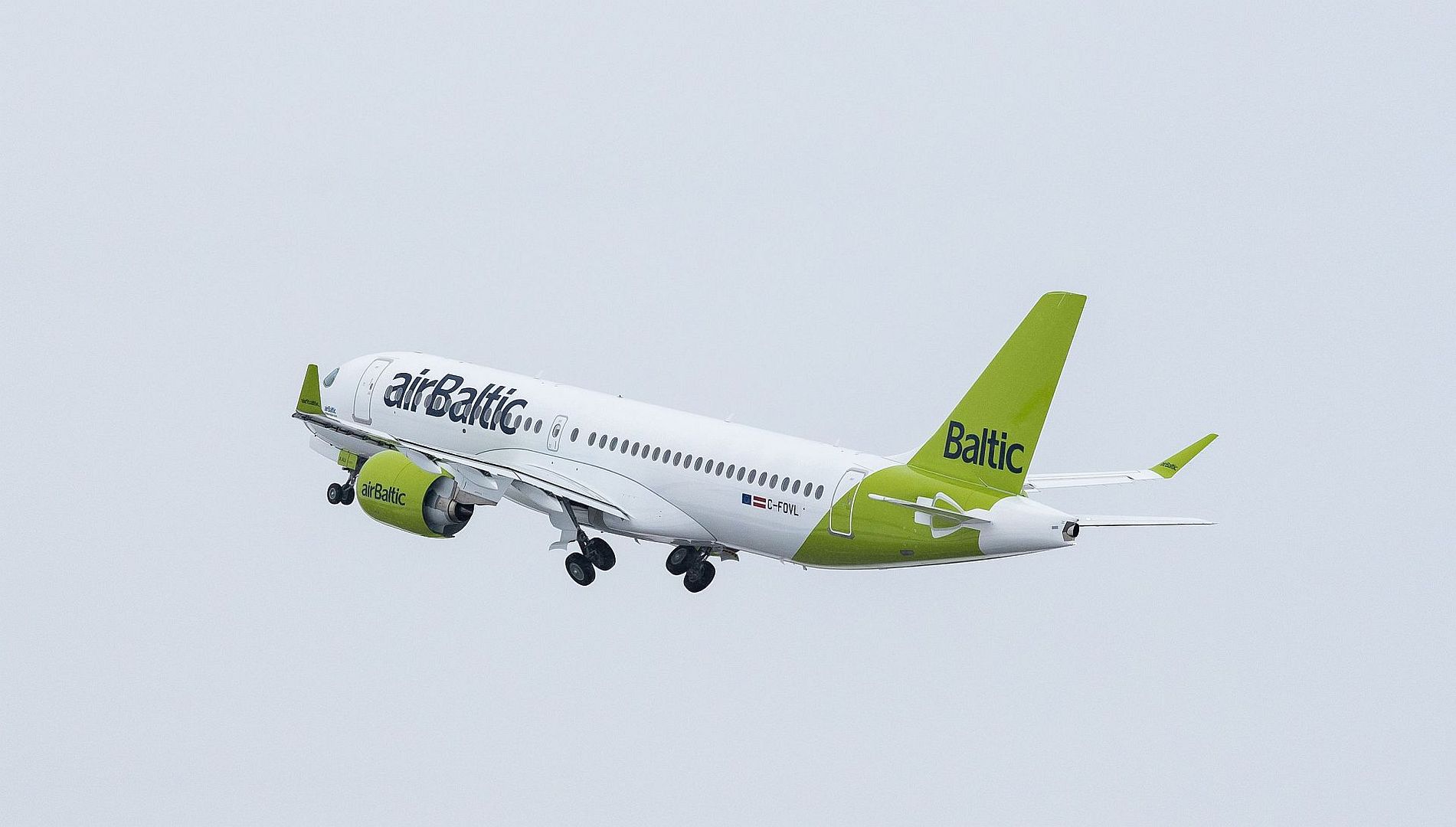
Initially designed and delivered as the Bombardier C Series, the A220 is the only aircraft purpose-built for the 100-150 seat market; it delivers unbeatable fuel efficiency and widebody passenger comfort in a single-aisle aircraft. The A220 brings together state-of-the-art aerodynamics, advanced materials and Pratt & Whitney?s latest-generation PW1500G geared turbofan engines to offer at least 20 percent lower fuel burn per seat compared to previous generation aircraft, along with significantly lower emissions and a reduced noise footprint. The A220 offers the performance of larger single-aisle aircraft.
Close to 100 A220s are in operation with six operators on four continents. At the end of October 2019, the aircraft had received 530 firm orders from over 20 customers worldwide.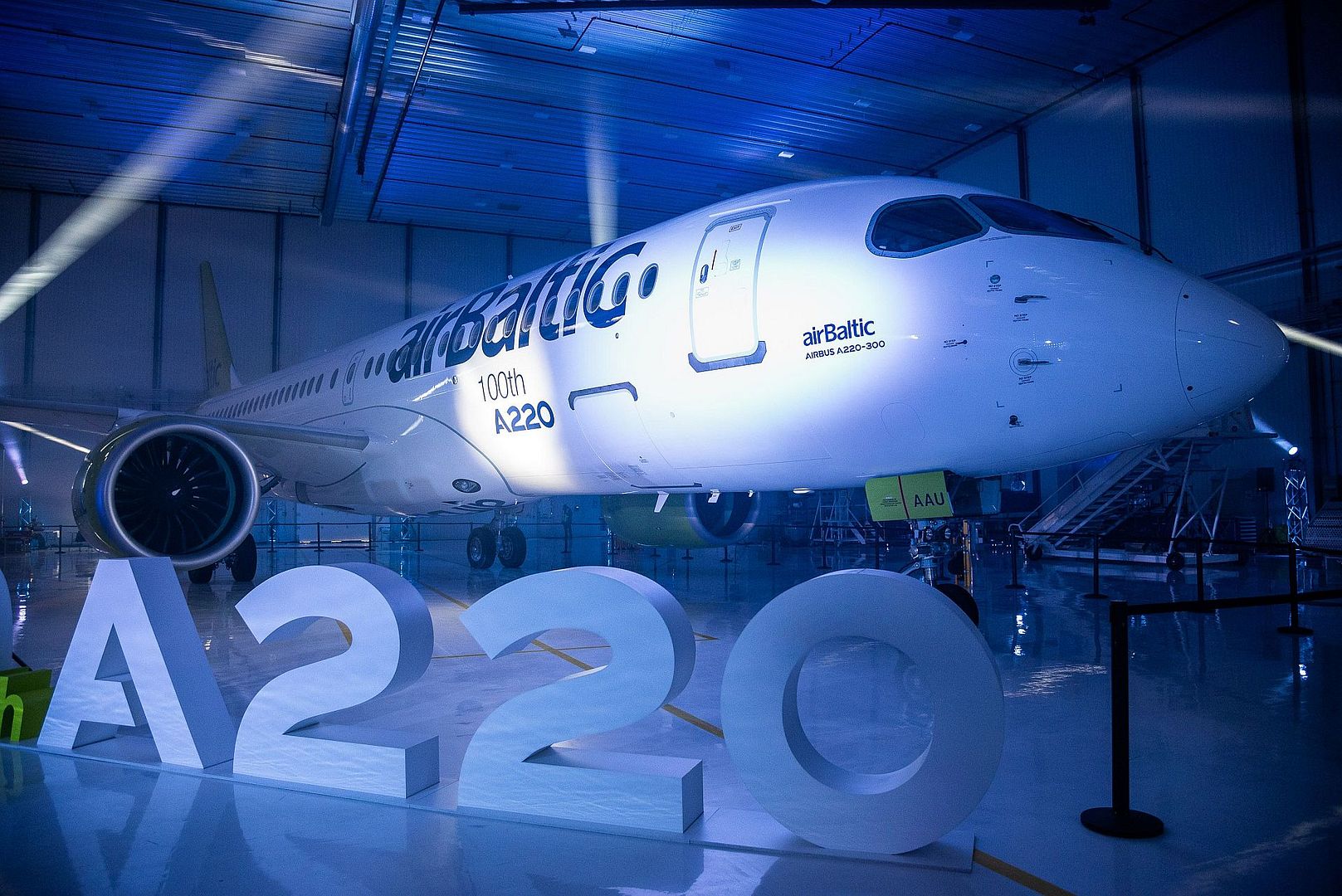
-
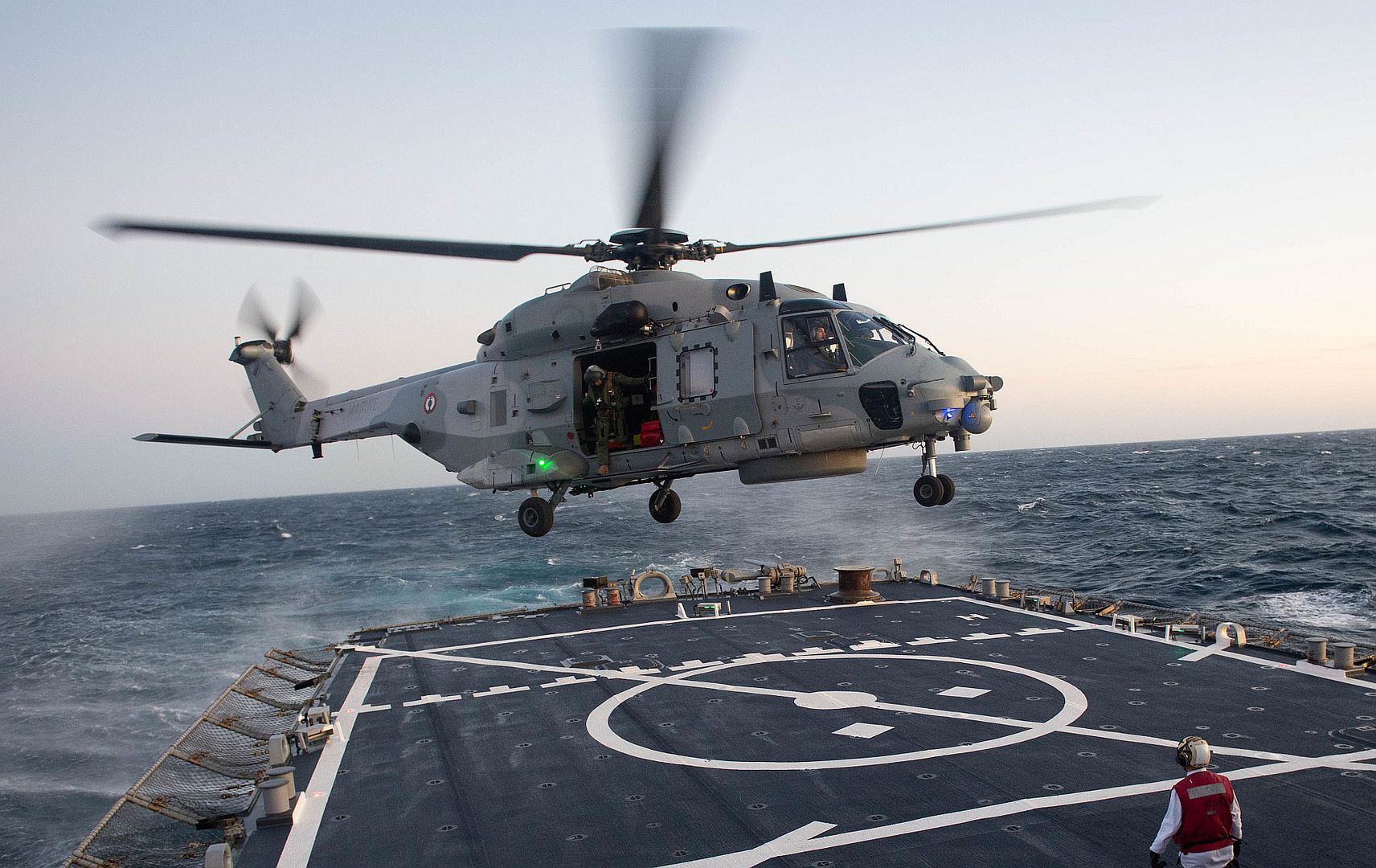
MEDITERRANEAN SEA (Nov. 29, 2019) ? A French helicopter prepares to land on the flight deck of the Arleigh Burke-class guided-missile destroyer USS Ross (DDG 71) during exercise PEAN 19 Nov. 29, 2019. Exercise PEAN 19 is a French-led exercise designed to enhance the operational capability of the French carrier strike group, Charles de Gaulle, while providing realistic training to both the French and participating nations while strengthening interoperability and relationships. (U.S. Navy photo by Mass Communication Specialist 3rd Class Andrea Rumple/Released)
ATLANTIC OCEAN (Dec. 1, 2019) An F/A-18F Super Hornet, attached to the ?Fighting Checkmates? of Strike Fighter Squadron (VFA) 11, takes off from the flight deck of the Nimitz-class aircraft carrier USS Harry S. Truman (CVN 75) in the Atlantic Ocean Dec. 1, 2019. The Harry S. Truman Carrier Strike Group (CSG) is conducting operations in U.S. 6th Fleet to support maritime security operations in international waters, alongside our allies and partners. The Harry S. Truman CSG last operated in the U.S. 6th Fleet area of operations in 2018, demonstrating its ability to operate from the High North to the East Mediterranean. (U.S. Navy photo by Mass Communication Specialist Seaman Apprentice Janiel Adames/Released)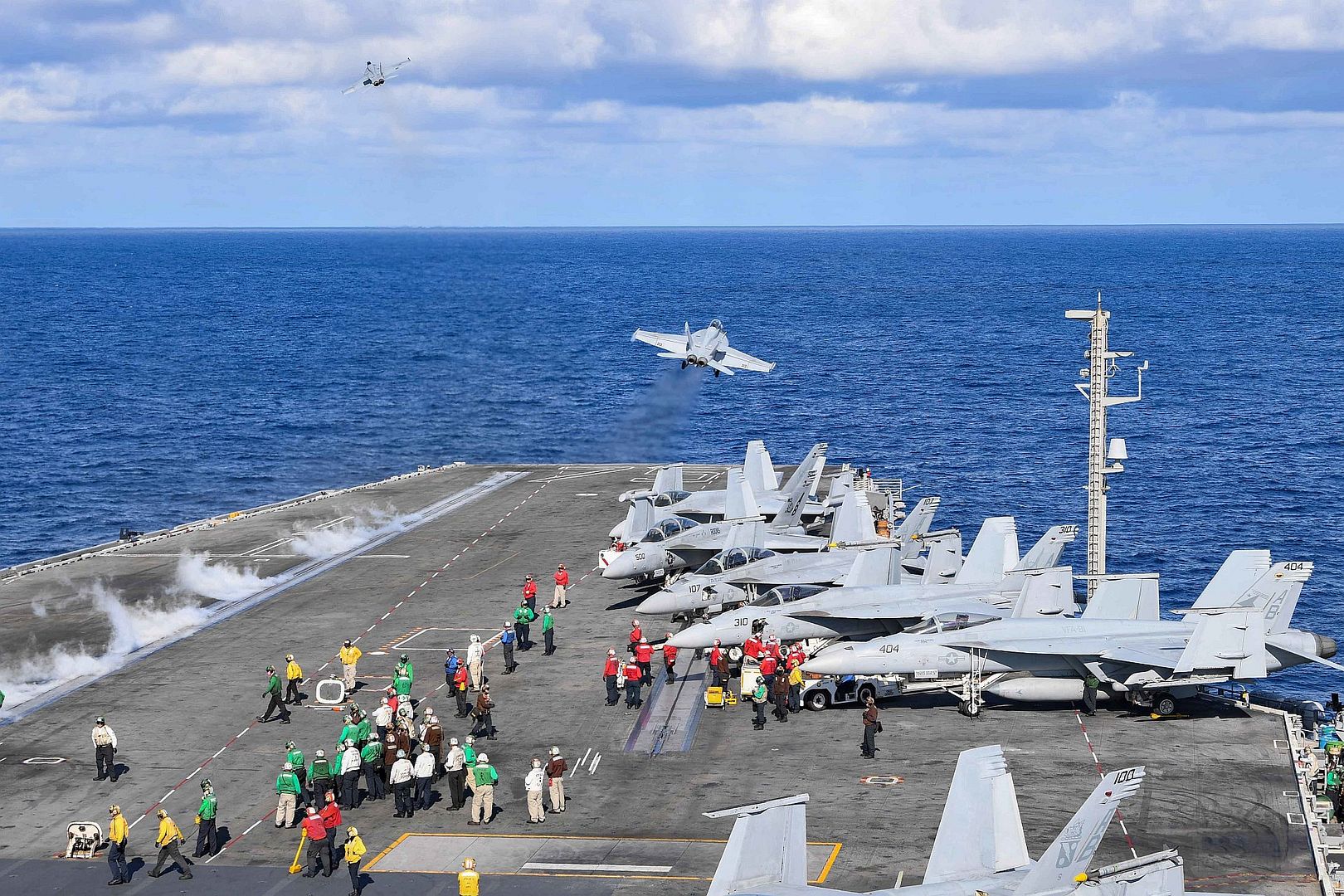
A KC-46 Pegasus sits on the flightline at Al Udeid Air Base, Qatar on Nov. 22, 2019. The KC-46 is an aerial refueling and transport aircraft designed to replace the KC-135 Stratotanker. (U.S. Air Force Photo by Tech. Sgt. John Wilkes)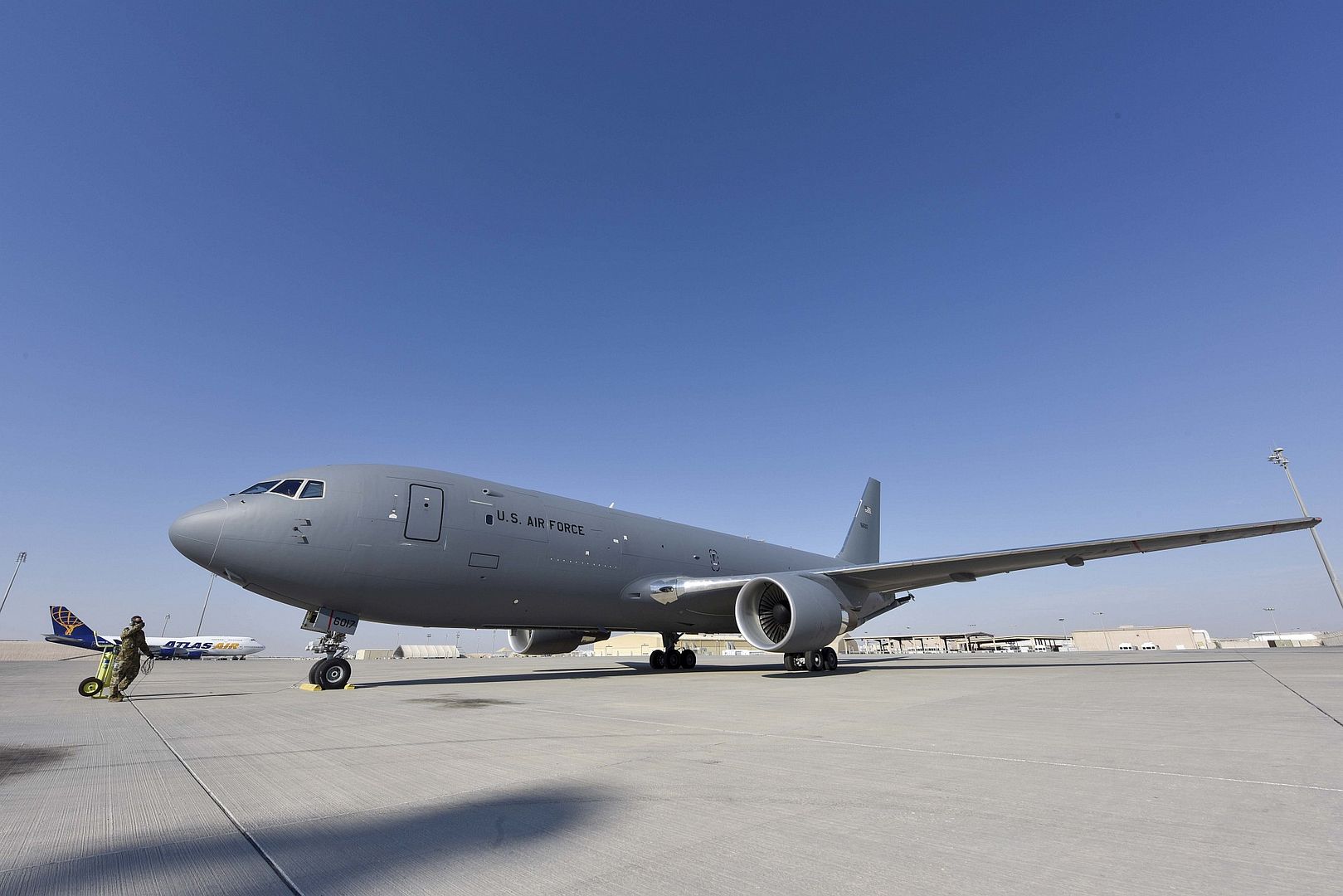
Air Corsica, the airline company based on the Island of Corsica, has taken delivery of its first of two Airbus A320neo aircraft on lease from ICBC Leasing. With this delivery, the airline becomes the first French A320neo operator.
The highly-fuel-efficient single-aisle aircraft will help reduce Air Corsica?s operating costs. The airline?s A320neo is powered by CFM International LEAP-1A engines and is configured in a single-class cabin layout, seating 186 passengers.
Each passenger will benefit from a modern cabin that includes USB ports to charge electronic devices during flight. In addition, the aircraft?s lavatories are designed to facilitate access for passengers with reduced mobility.
The two Air Corsica A320neo aircraft will replace the older aircraft in its fleet and will operate on the airline?s main domestic and European networks. Air Corsica is currently operating a fleet of six A320 aircraft.
Featuring the widest single-aisle cabin in the sky, the A320neo Family incorporates the very latest technologies including new generation engines and Sharklets, which together deliver 20% reduced fuel burn as well as 50% less noise compared to previous-generation aircraft.
At the end of October 2019, the A320neo Family had received more than 7,000 firm orders from over 110 customers worldwide.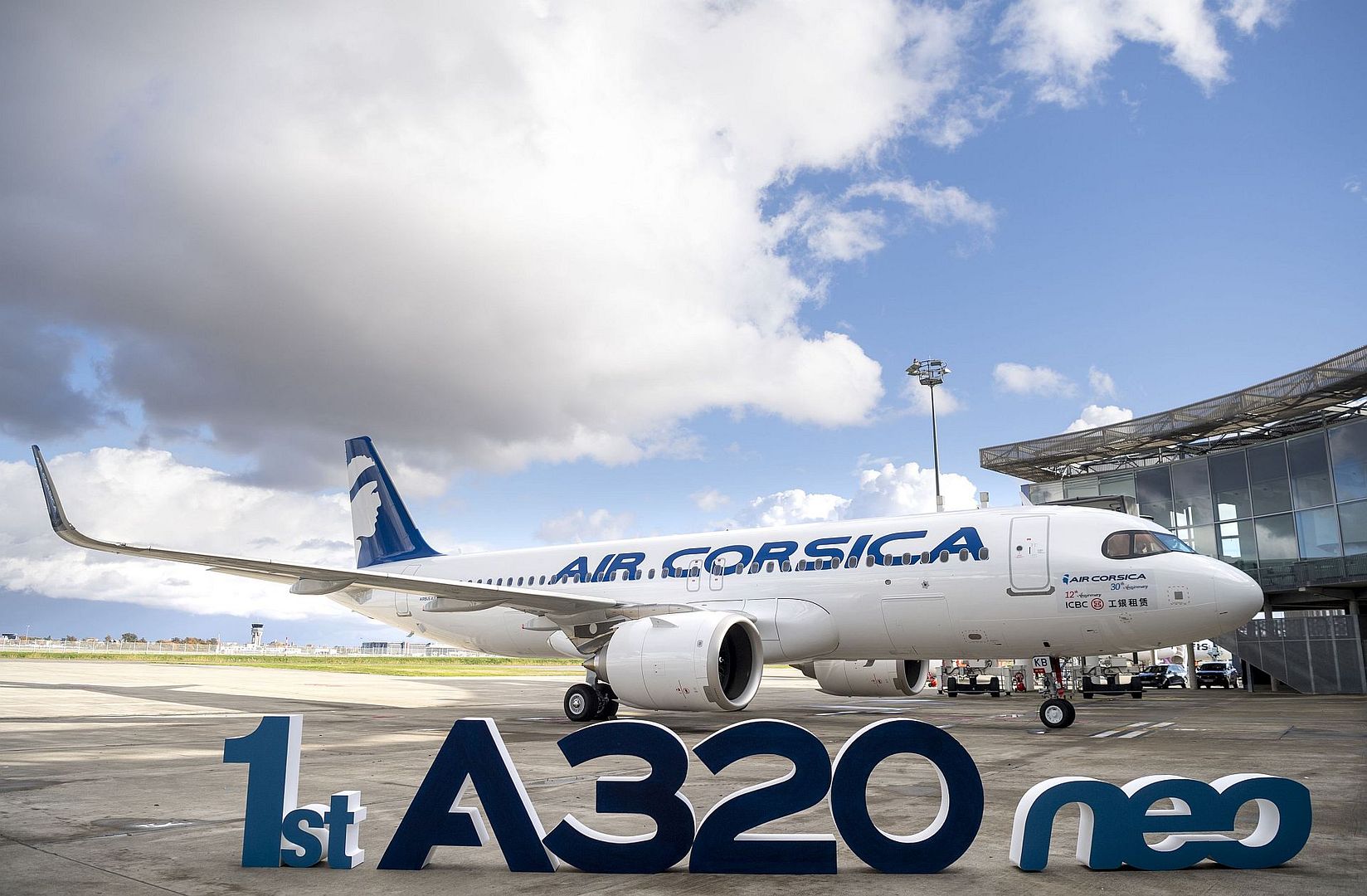
Leonardo announced that Miami-Dade Fire Rescue (MDFR) signed a contract for four AW139 intermediate twin engine helicopters. The aircraft will be used to perform a range of missions?primarily fire suppression, emergency medical services (EMS) and search and rescue (SAR)?and will have special equipment including a cargo hook, rescue hoist and Bambi bucket. The first helicopter is expected to be delivered from Leonardo?s Philadelphia facility in Q3 2020. A comprehensive 5-year support, maintenance and training package will be provided with the possibility of a further extension to a total of 15 years.
?The safety of our Miami-Dade Fire Rescue operations team and the well-being of the residents we serve is our greatest priority. For those reasons, the crashworthiness standards of the top-ranked Leonardo helicopters were a key factor in our County?s decision to award this contract,? said Miami-Dade County Mayor Carlos A. Gimenez. ?In addition, the purchase price, training services and support we will receive during the transition to these world-class aircraft were also strong considerations.?
Located along the southeast tip of the Florida peninsula, Miami-Dade is the most populous county in the state. It encompasses more than 2,000 square miles with one-third of the county located in Everglades National Park. Because of the scope of its operations, Miami-Dade Air Rescue is frequently requested to provide mutual aid support to neighboring counties including Monroe, Collier, Broward and Lee.
Celebrating its 1000th delivery in September, the AW139 is the most successful global helicopter program in the last 15 years. With more than 280 operators in over 70 countries to date, the AW139 saves lives every day and guarantees safety in every corner of the world. In the United States, the AW139 counts as customers the Los Angeles Fire Department (LAFD), New Jersey and Maryland States Police Departments, among many others, while the US Air Force (USAF) will introduce the AW139-based Boeing MH-139 to replace the UH-1N fleet. The AW139 is widely used across many countries worldwide for firefighting, rescue and law enforcement duties including Italy, UK, Japan, South Korea and Australia, to name a few.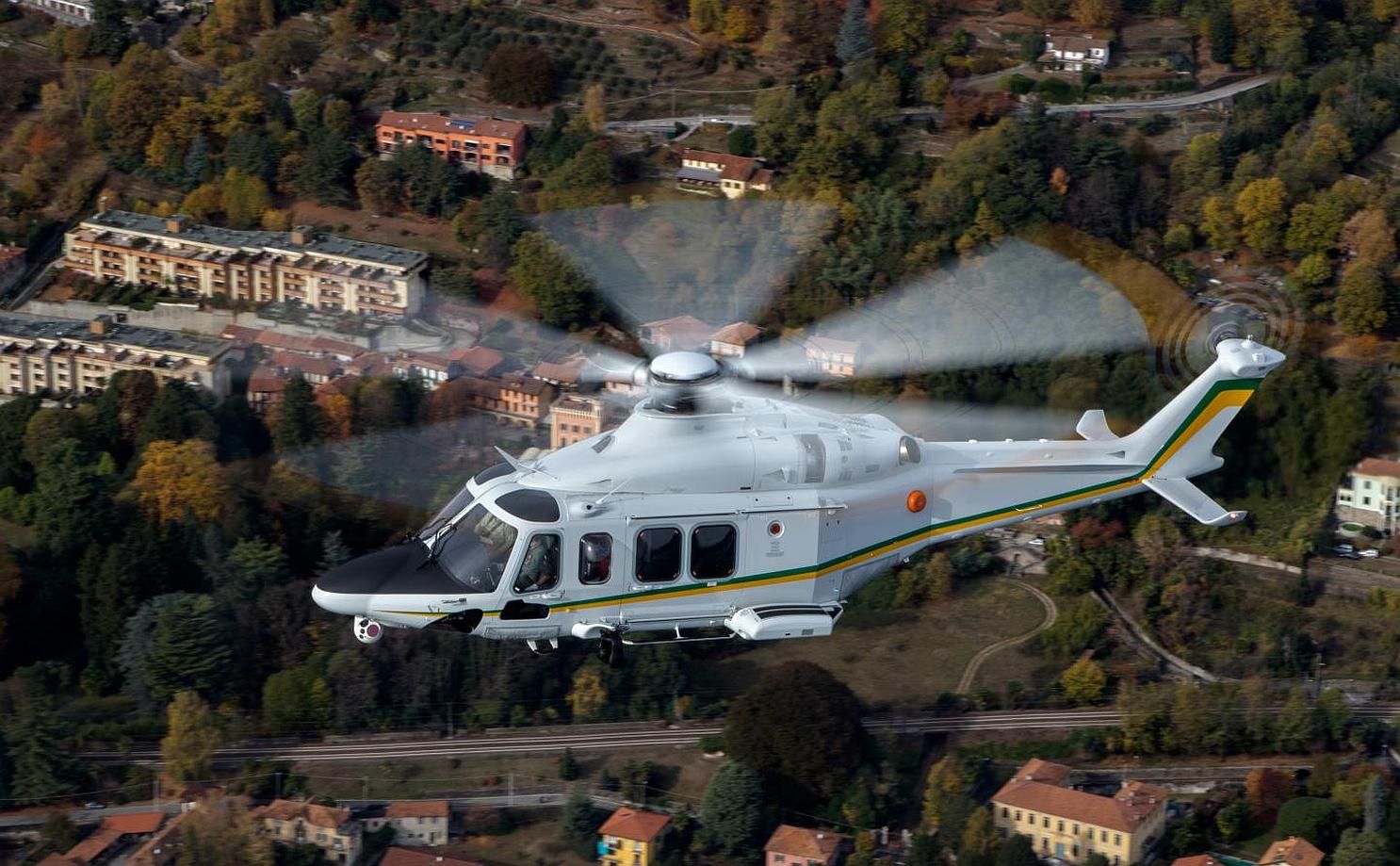
-
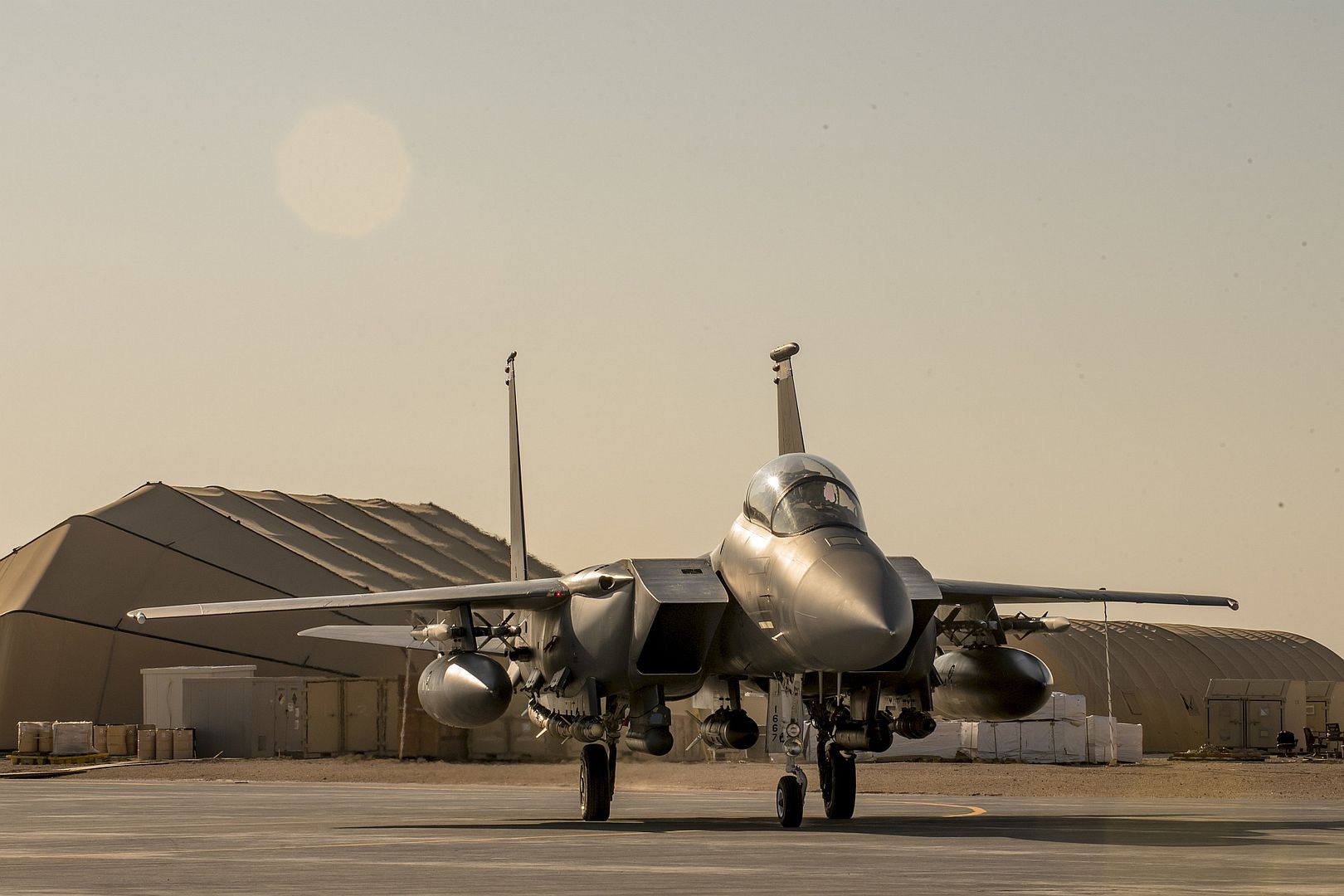
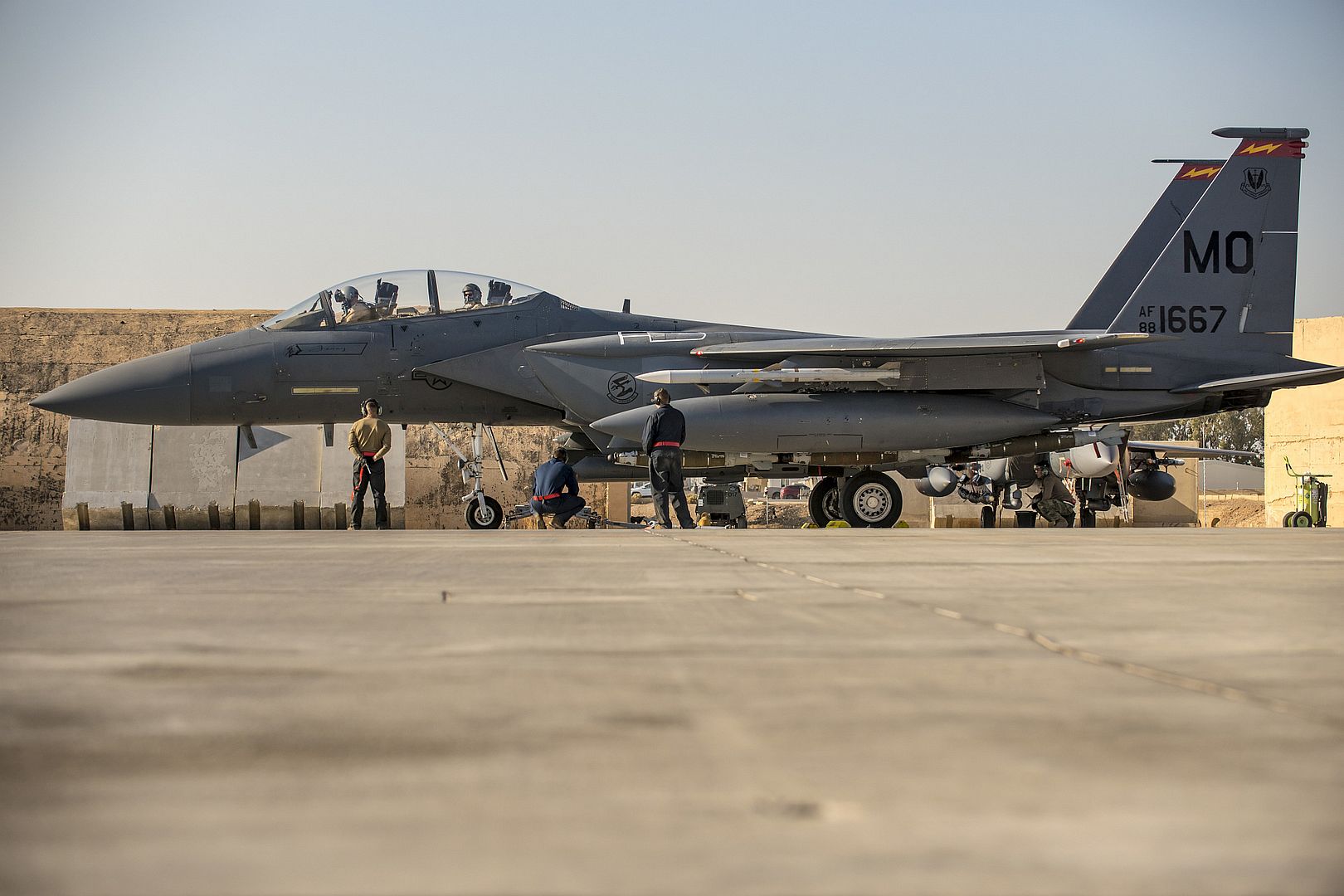
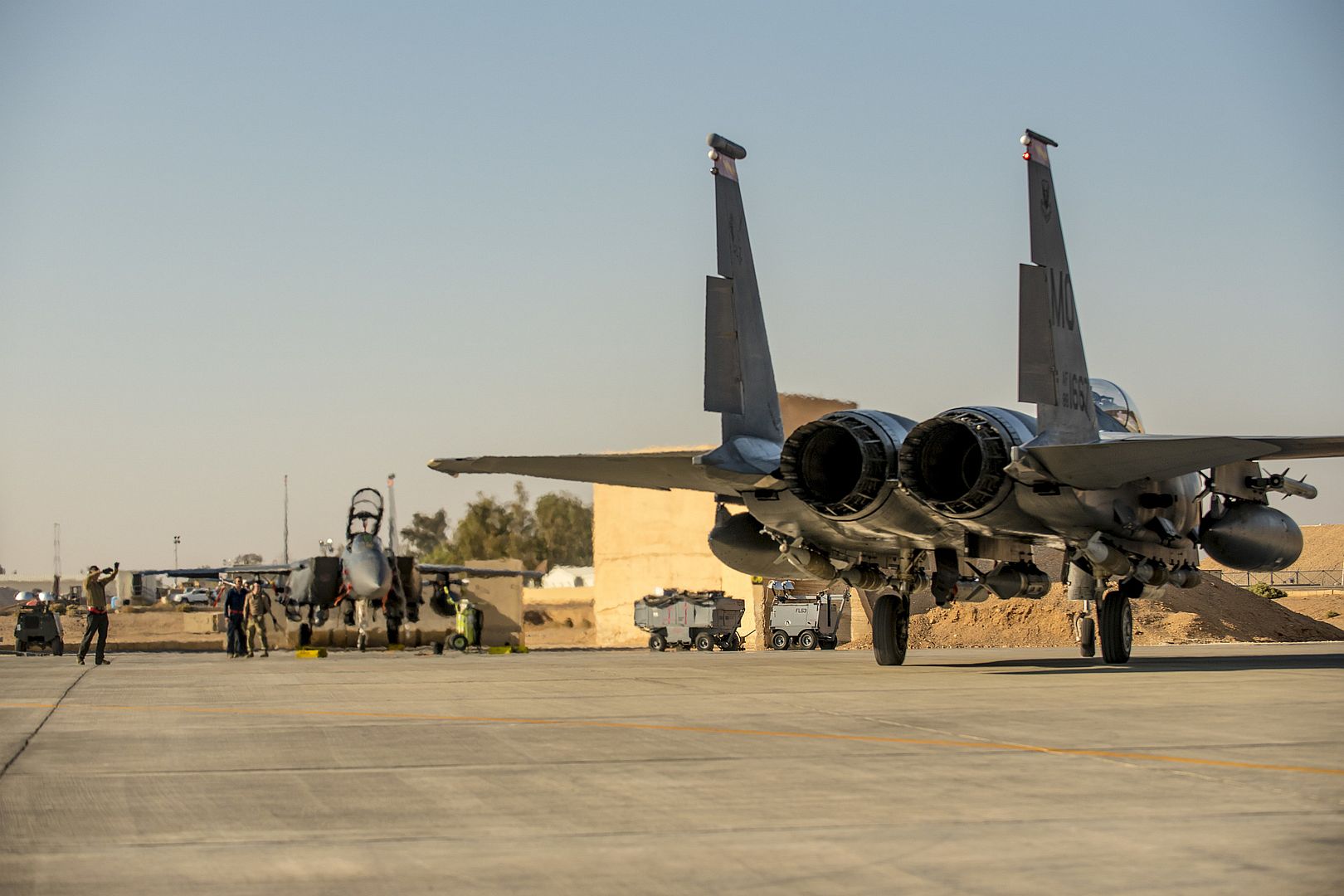
Crew Chiefs of the 332d Expeditionary Maintenance Squadron recover an F-15E Strike Eagle after flight November 19, 2019 at an undisclosed location in Southwest Asia. The F-15E is an extremely maneuverable tactical fighter designed to allow the Air Force to establish air superiority over the battlefield. (U.S. Air Force photo's by Senior Master Sgt. Ralph Branson)
-
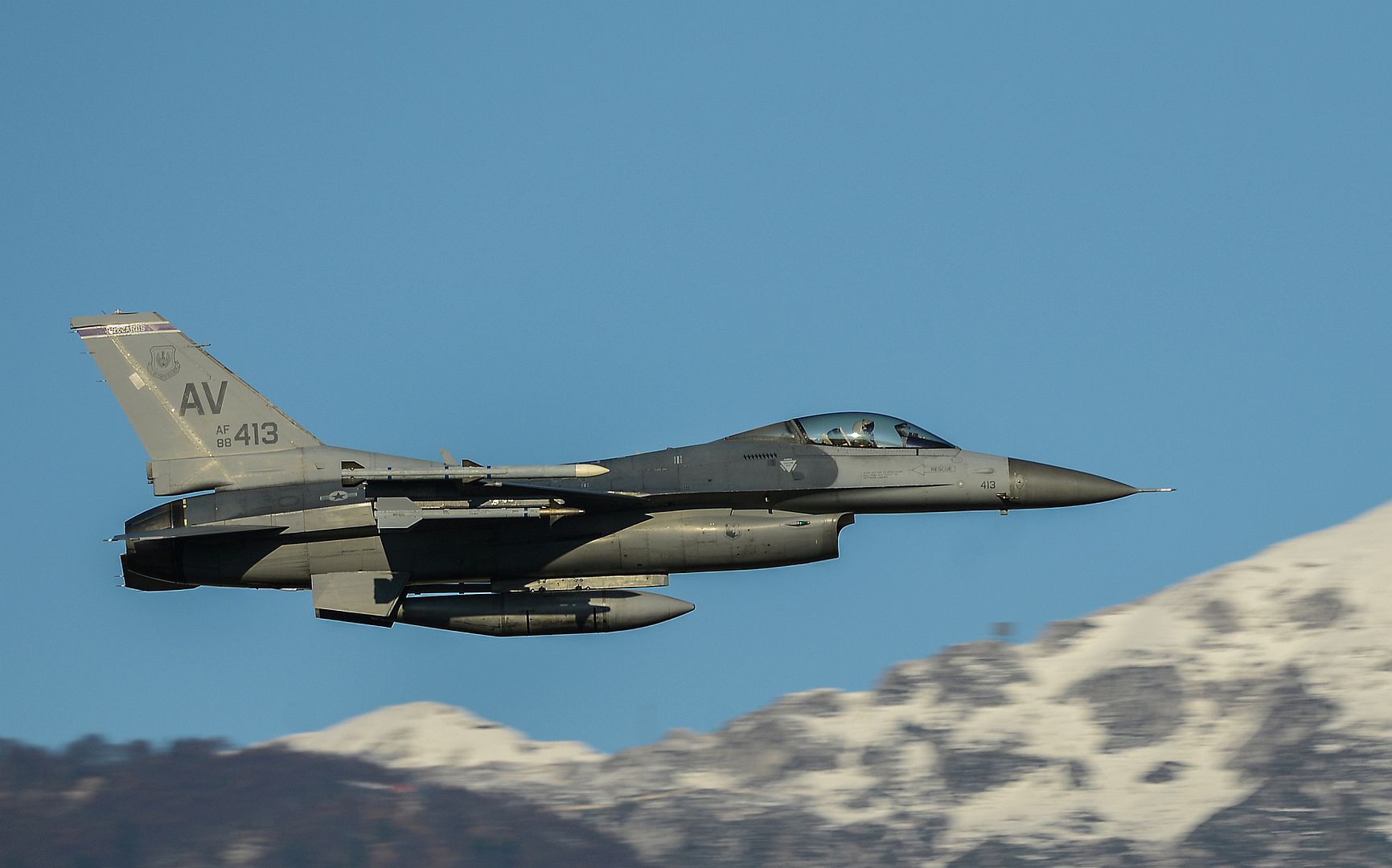
A U.S. Air Force F-16 Fighting Falcon from the 510th Fighter Squadron flies at Aviano Air Base, Italy, Dec. 3, 2019. The F-16 Fighting Falcon is a compact, multi-role fighter aircraft that is highly maneuverable and has proven itself in air-to-air combat and air-to-surface attack. (U.S. Air Force photo by Airman Thomas S. Keisler IV)
ARABIAN GULF (Dec. 3, 2019) An F/A-18F Super Hornet attached to the "Jolly Rogers" of Strike Fighter Squadron (VFA) 103 approaches the flight deck to make an arrested landing on the aircraft carrier USS Abraham Lincoln (CVN 72). Abraham Lincoln Carrier Strike Group is deployed to the U.S. 5th Fleet area of operations in support of naval operations to ensure maritime stability and security in the Central Region, connecting the Mediterranean and the Pacific through the western Indian Ocean and three strategic choke points. With Abraham Lincoln as the flagship, deployed strike group assets include staffs, ships and aircraft of Carrier Strike Group 12 (CSG 12), Destroyer Squadron 2 (DESRON 2), USS Leyte Gulf (CG 55) and Carrier Air Wing 7 (CVW 7). (U.S. Navy photo by Mass Communication Specialist 3rd Class Michael Singley/Released)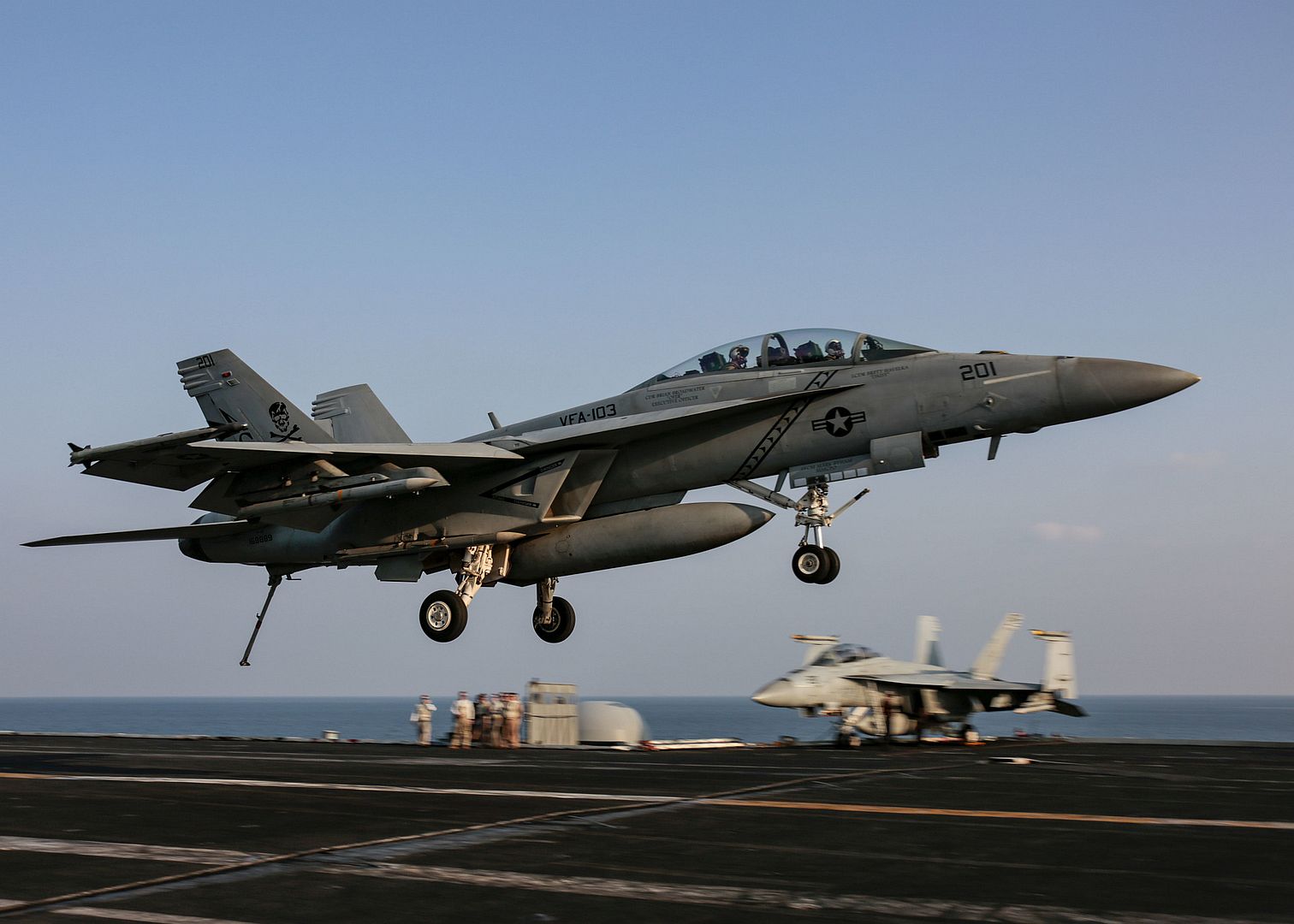
ARABIAN GULF (Dec. 3, 2019) An F/A-18E Super Hornet attached to the "Sidewinders" of Strike Fighter Squadron (VFA) 86 approaches the flight deck to make an arrested landing on the aircraft carrier USS Abraham Lincoln (CVN 72). Abraham Lincoln Carrier Strike Group is deployed to the U.S. 5th Fleet area of operations in support of naval operations to ensure maritime stability and security in the Central Region, connecting the Mediterranean and the Pacific through the western Indian Ocean and three strategic choke points. With Abraham Lincoln as the flagship, deployed strike group assets include staffs, ships and aircraft of Carrier Strike Group 12 (CSG 12), Destroyer Squadron 2 (DESRON 2), USS Leyte Gulf (CG 55) and Carrier Air Wing 7 (CVW 7). (U.S. Navy photo by Mass Communication Specialist 3rd Class Michael Singley/Released)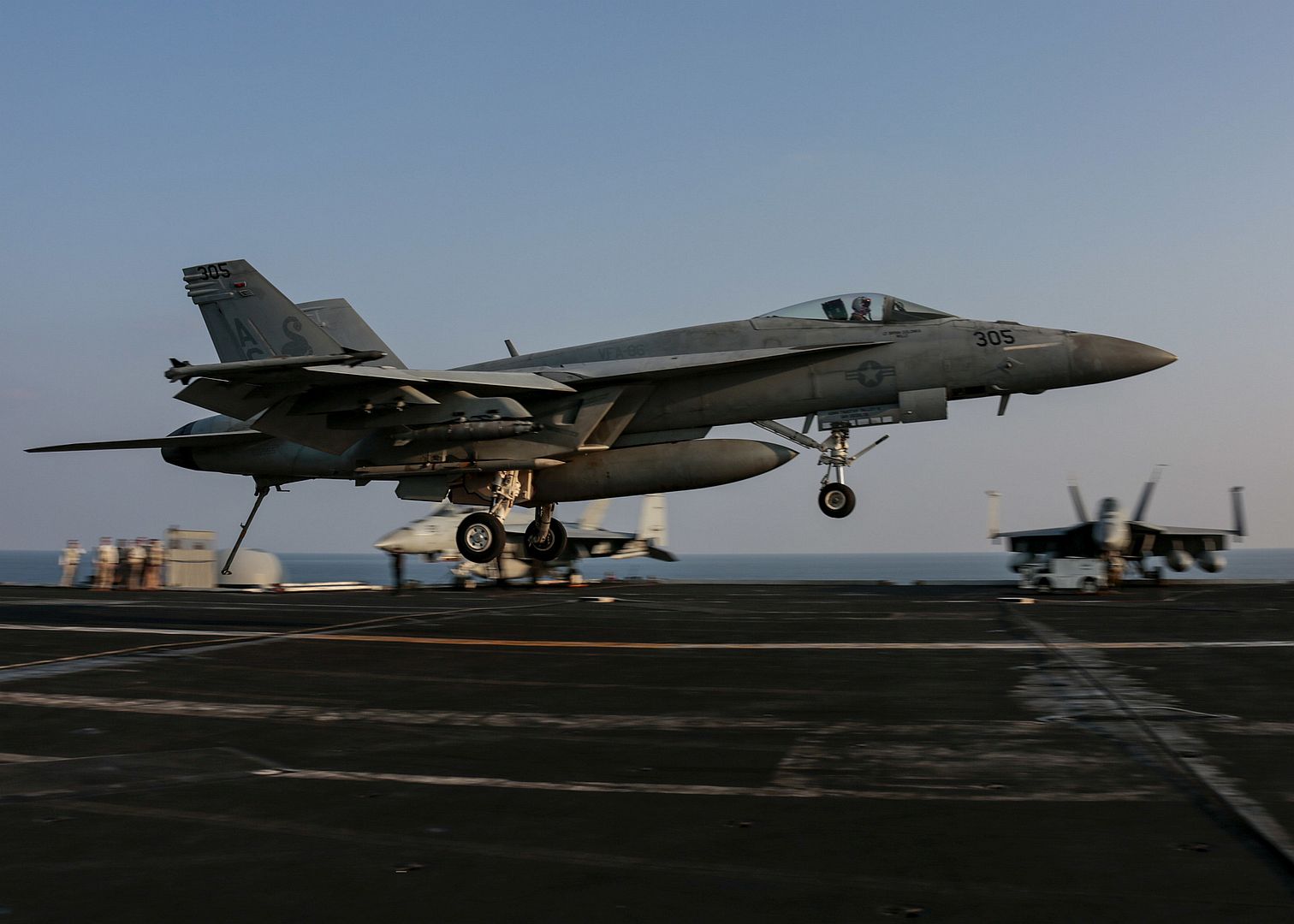
ARABIAN GULF (Dec. 3, 2019) A C-2A Greyhound attached to the "Rawhides" of Fleet Logistics Support Squadron (VRC) 40 approaches the flight deck to make an arrested landing on the aircraft carrier USS Abraham Lincoln (CVN 72). Abraham Lincoln Carrier Strike Group is deployed to the U.S. 5th Fleet area of operations in support of naval operations to ensure maritime stability and security in the Central Region, connecting the Mediterranean and the Pacific through the western Indian Ocean and three strategic choke points. With Abraham Lincoln as the flagship, deployed strike group assets include staffs, ships and aircraft of Carrier Strike Group 12 (CSG 12), Destroyer Squadron 2 (DESRON 2), USS Leyte Gulf (CG 55) and Carrier Air Wing 7 (CVW 7). (U.S. Navy photo by Mass Communication Specialist 3rd Class Michael Singley/Released)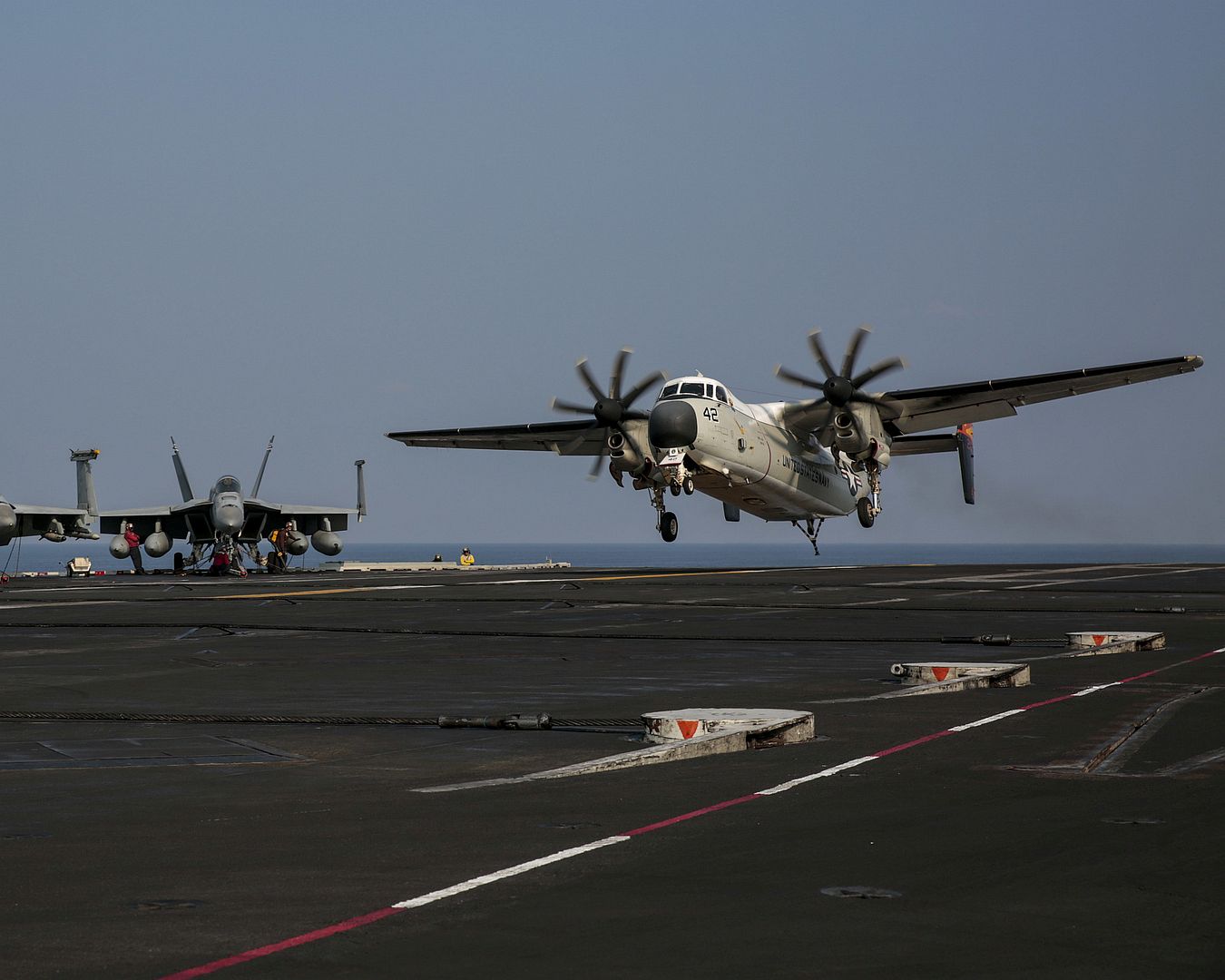
PACIFIC OCEAN (Dec. 3, 2019) ? Aviation Boatswain?s Mate (Handling) 1st Class Jason Querido directs a U.S. Marine Corps F-35B Lightning II, assigned to the ?Flying Leathernecks? with Marine Fighter Attack Squadron (VMFA) 122, aboard the amphibious assault ship USS Makin Island (LHD . Makin Island is conducting routine operations in the eastern Pacific. (U.S. Navy photo by Mass Communication Specialist 3rd Class Jacob D. Bergh)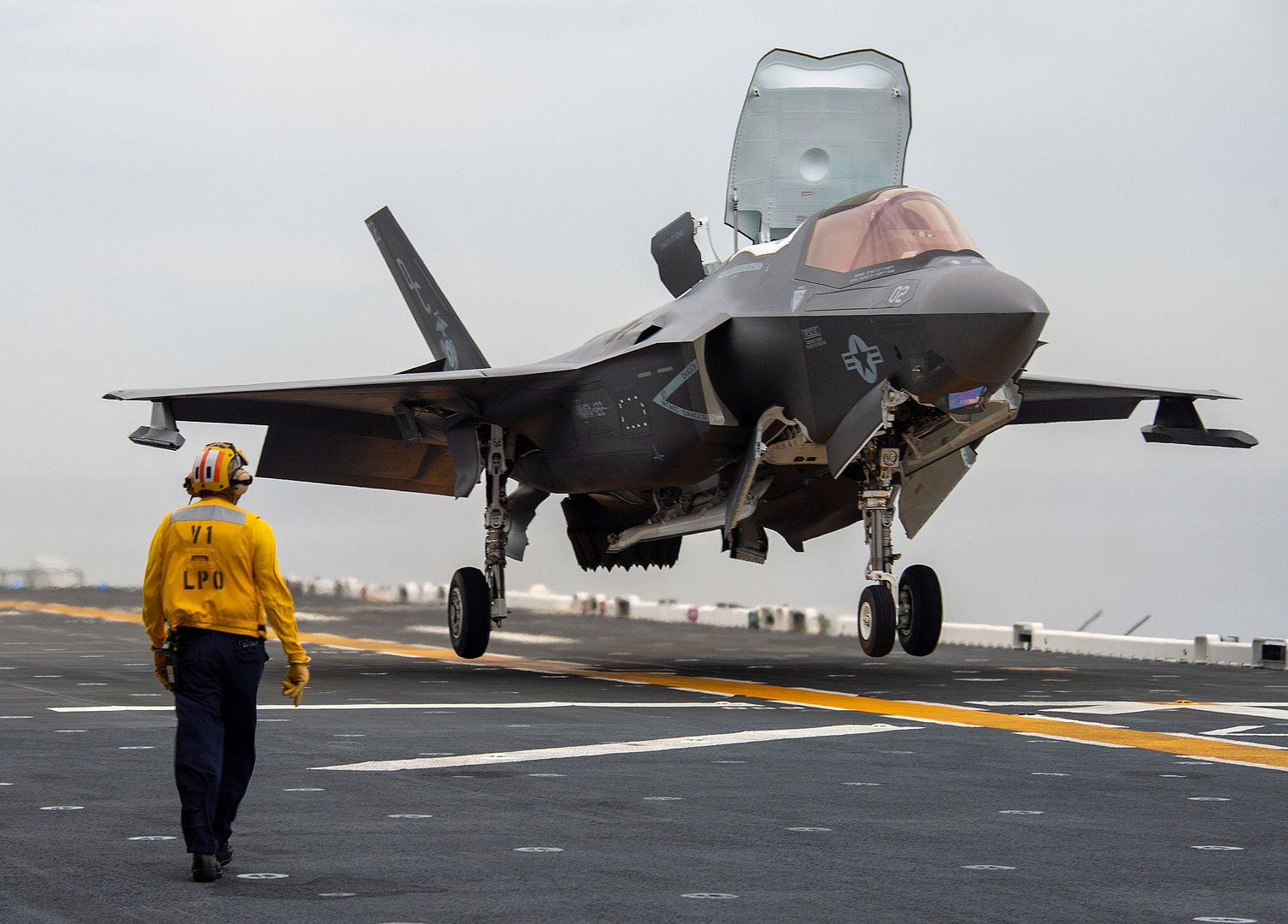
United Airlines has placed a firm order for 50 Airbus A321XLR aircraft as it begins to phase out older models and launches an expansion of transatlantic routes from its key U.S. hubs in Newark/New York and Washington, D.C. United plans to take delivery of the first A321XLR in 2024 and expects to begin international service with the aircraft in 2025.
?The new Airbus A321XLR aircraft is an ideal one-for-one replacement for the older, less-efficient aircraft currently operating between some of the most vital cities in our intercontinental network,? said Andrew Nocella, United?s Executive Vice President and Chief Commercial Officer. ?In addition to strengthening our ability to fly more efficiently, the A321XLR opens potential new destinations to further develop our route network and provide customers with more options to travel the globe.?
?We are delighted to be re-United with our friends in Chicago and thank them for their trust. The selection of the A321XLR by the leadership of United Airlines is a ringing endorsement of the range, payload, and fuel efficiency that Airbus incorporated into this state-of-the-art aircraft,? said Christian Scherer, Airbus Chief Commercial Officer. ?The exceptional versatility and performance of the A321XLR enable new operational efficiencies that flow to the airline?s bottom line.?
The A321XLR is the next evolutionary step in the A320neo/A321neo family of aircraft, meeting market requirements for increased range and payload in a single-aisle aircraft, and creating more value for the airlines by enabling economically viable service on longer routes than any comparable aircraft model. It will allow service from the U.S. East Coast to a much larger selection of European destinations.
The A321XLR will deliver an unprecedented narrow-body aircraft range of up to 4,700nm, with 30% lower fuel consumption per seat compared with previous-generation competitor jets. It will have a maximum takeoff weight (MTOW) of 101 metric tonnes, while takeoff, climb, and flight performance will change little from the A321neo.
The A321XLR will be operated by the same crew, powered by the same engines and have the same cabin as the A321neo, with more than 90% commonality. Combining the A321neo?s two rear center fuel tanks into one adds fuel capacity and reduces structural weight. Other significant changes include structural reinforcements and modified landing gears for the increased MTOW, increased braking capability, higher tire speed, and additional flap and slat configurations.
With the Airbus Cabin Flex fuselage, the A321XLR will accommodate a variety of seating classes and configurations suitable for longer flights.
At the end of October 2019, the A320neo Family had accumulated more than 7,000 firm orders from over 110 customers worldwide.
December 4, 2019 Toronto Bombardier Inc., Aviation, Press Release
Bombardier is pleased to announce that it has signed a long-term lease agreement with the Greater Toronto Airports Authority (GTAA) to build its new state-of-the art Global Manufacturing Centre located at Toronto Pearson International Airport. With preliminary site work underway in Mississauga and first production activities set to begin in 2023, the cutting-edge facility will optimize final assembly operations for all Global business jets, including the industry flagship Global 7500 business jet.
The Global Manufacturing Centre at Toronto Pearson International Airport, approximately 20 km from the current Global aircraft final assembly site at Downsview, will reinforce Canada?s leading position in the business aviation market.
?Today, I'm very excited to announce the relocation of our Global aircraft family production activities to a new, cutting-edge manufacturing facility at Toronto Pearson. This is a strategic move for Bombardier and a strong commitment to Ontario?s aerospace industry. It will allow us to offer world-class career opportunities and continue fueling the economic development of the region for years to come,? said Alain Bellemare, President and Chief Executive Officer, Bombardier Inc.
The one-million square-foot facility will combine thousands of highly-skilled employees with 21st century production and tooling innovation. Bombardier employs the highest caliber technology throughout the manufacturing process of the Global 7500 business jets, including a state-of-the-art automated positioning system that uses laser-guided measuring to ensure major aircraft structures, such as the wing and fuselage, are joined consistently and perfectly each time. Combining human ingenuity with the most advanced machines, the Global 7500 final assembly line in Toronto is a testament to the industry?s most advanced business jet.
This strengthened commitment to the Greater Toronto Area will also leverage significant recent R&D investments and a continued collaboration with Ontario?s colleges and universities for world class training, research and development.
Bombardier also confirmed it will continue to support the aerospace heritage of the Downsview site with a multi-million-dollar contribution to the Downsview Aerospace Innovation and Research Consortium (DAIR) to develop a visionary aerospace hub for academic research and training activities. The contribution includes $2.5 million CAD in capital funding to refurbish the historic Moth Building, where wartime Mosquito fighter bombers and Tiger Moth trainers were produced.
-
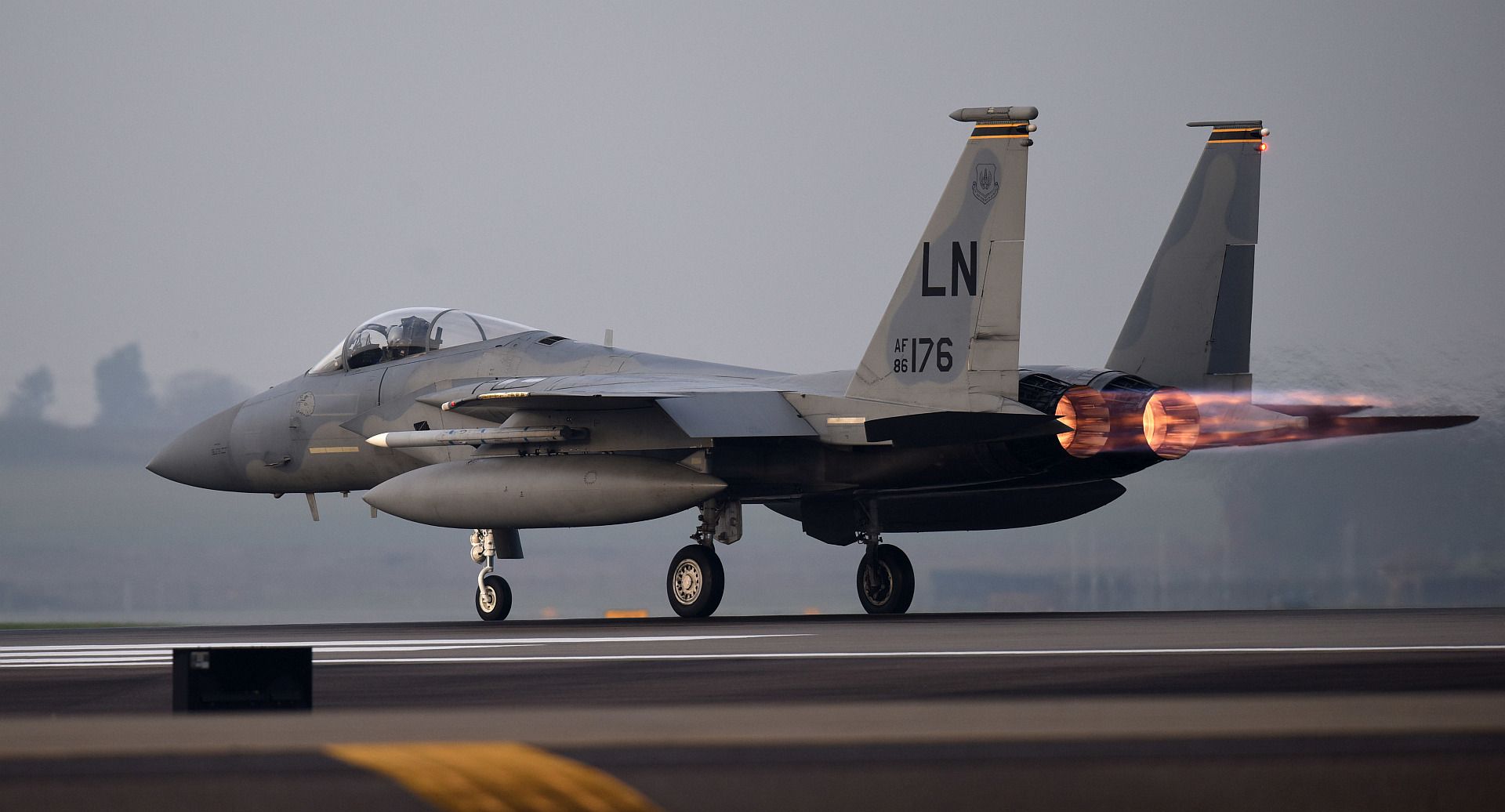
An F-15C Eagle assigned to the 493rd Fighter Squadron takes off on the flightline at Royal Air Force Lakenheath, England, Dec. 5, 2019. The F-15C is an all-weather, extremely maneuverable, tactical fighter designed to gain and maintain air supremacy over the battlefield. (U.S. Air Force photo by Airman 1st Class Madeline Herzog)
F-15E Strike Eagle's assigned to the 492nd Fighter Squadron take off on the flightline at Royal Air Force Lakenheath, England, Dec. 5, 2019. The "E" model is a dual-role fighter and has the capability to fight its way to a target over long ranges, destroy enemy ground positions and fight its way out. (U.S. Air Force photo by Airman 1st Class Madeline Herzog)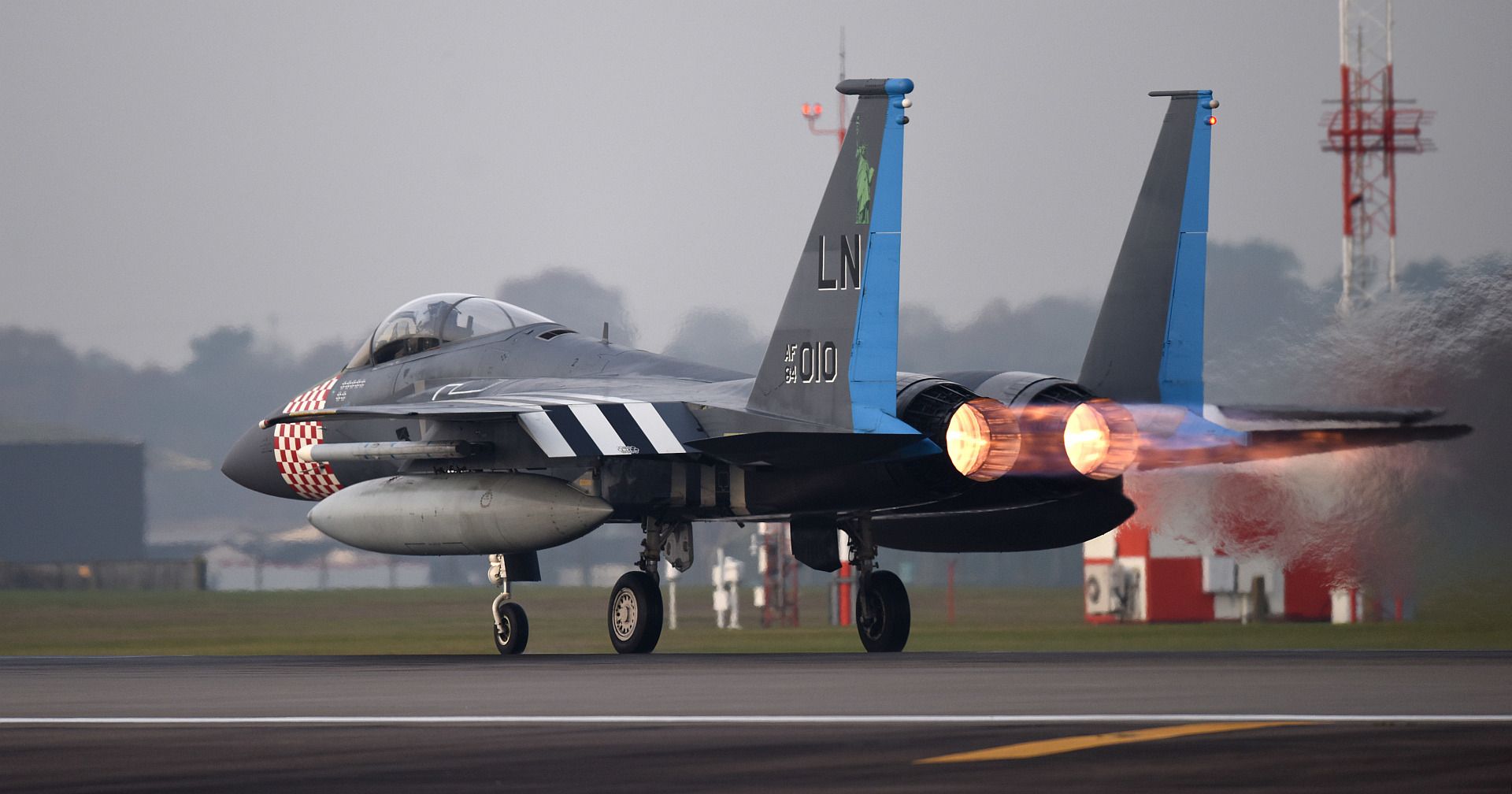
ATLANTIC OCEAN (Dec. 4, 2019) A C-2A Greyhound, assigned to the ?Rawhides? of Fleet Logistics Support Squadron (VRC) 40, lands on the flight deck aboard the aircraft carrier USS Dwight D. Eisenhower (CVN 69). Ike is underway conducting carrier qualifications. (U.S. Navy photo by Mass Communication Specialist 3rd Class Marques Franklin)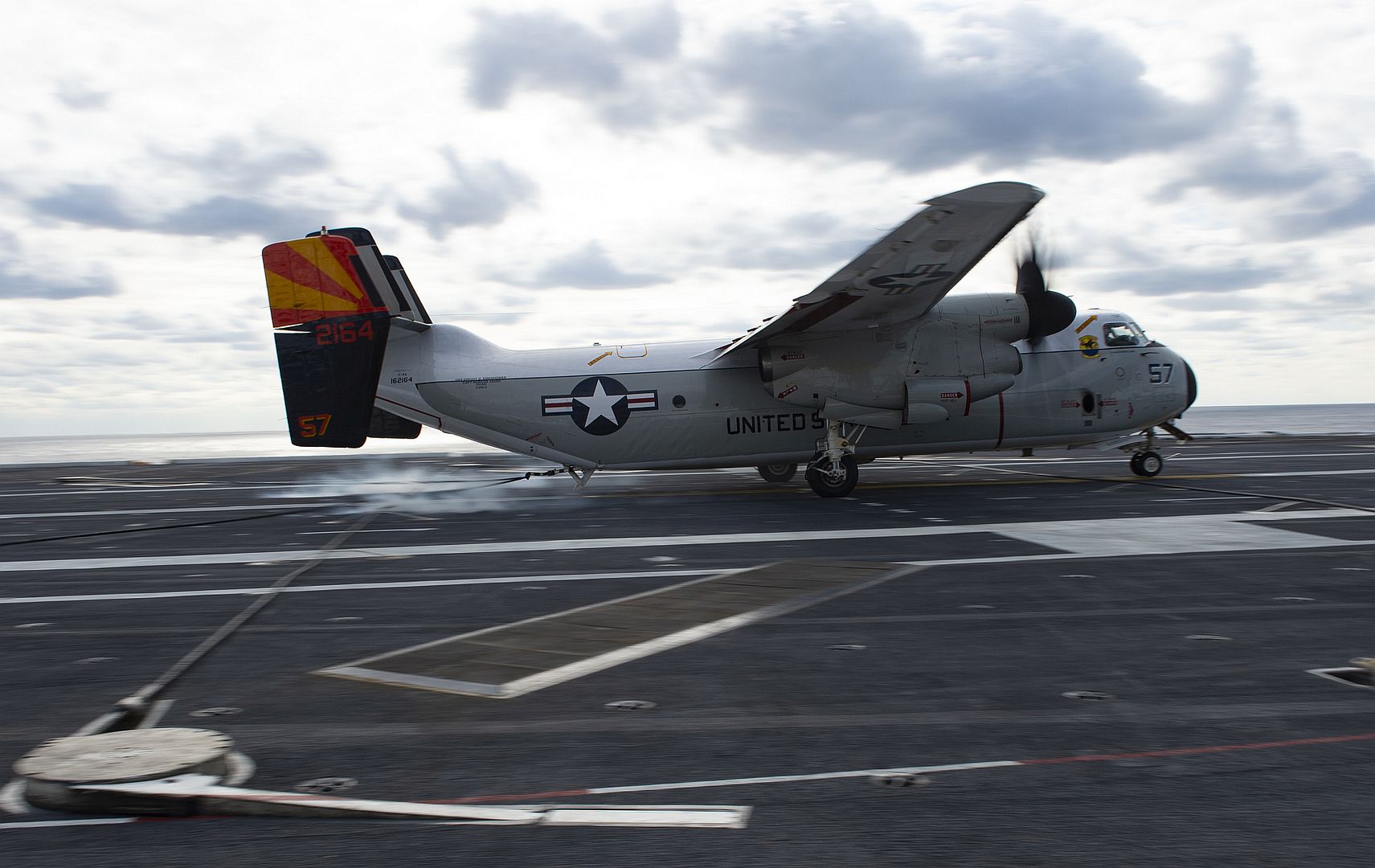
04 December 2019
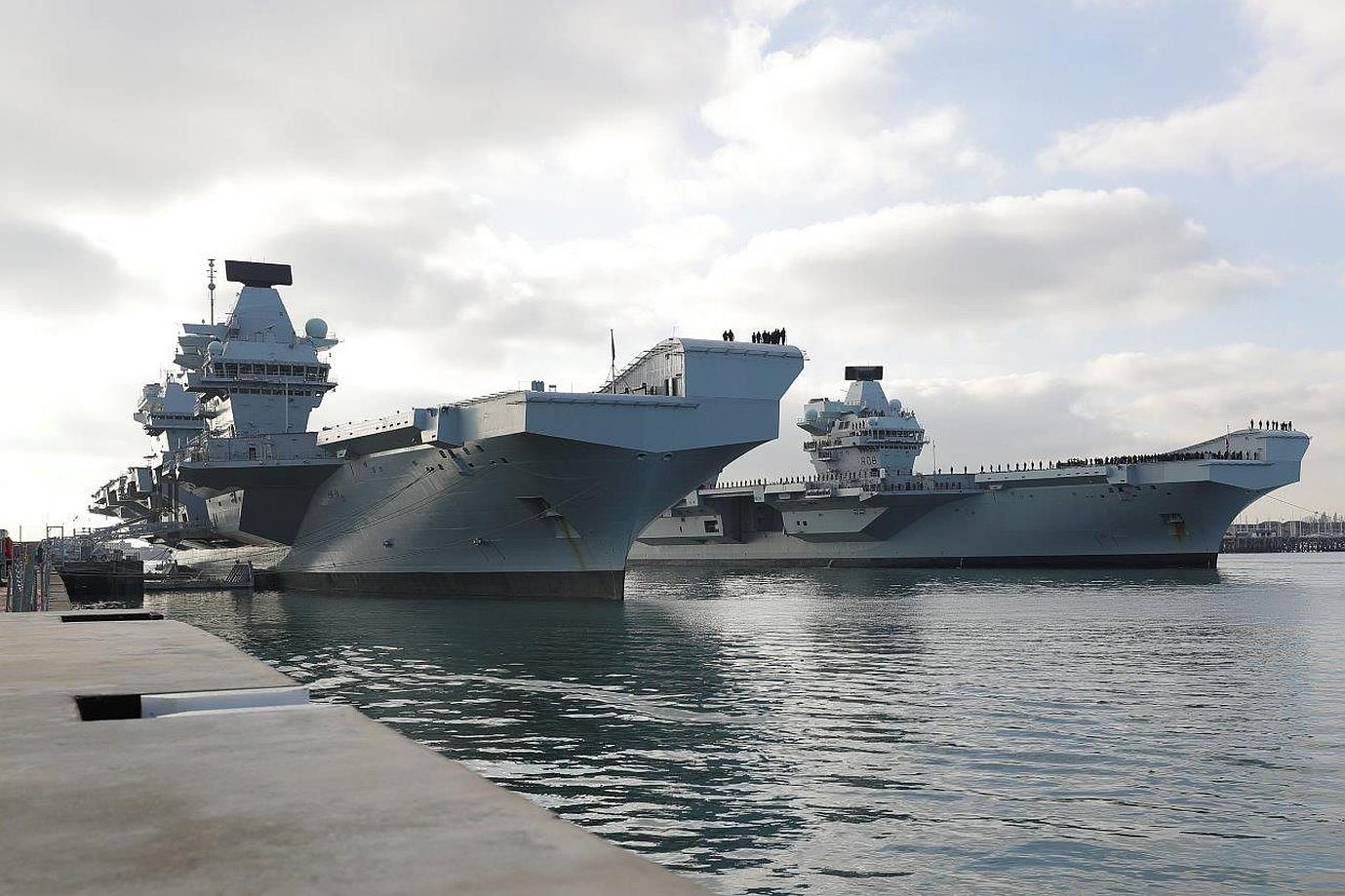
The bulk of the HMS Queen Elizabeth carrier strike group today returned to their respective homes after three months in the USA.
Following HMS Dragon?s return to Portsmouth earlier this week, the aircraft carrier made her way into Portsmouth ? where she was greeted by sister ship HMS Prince of Wales.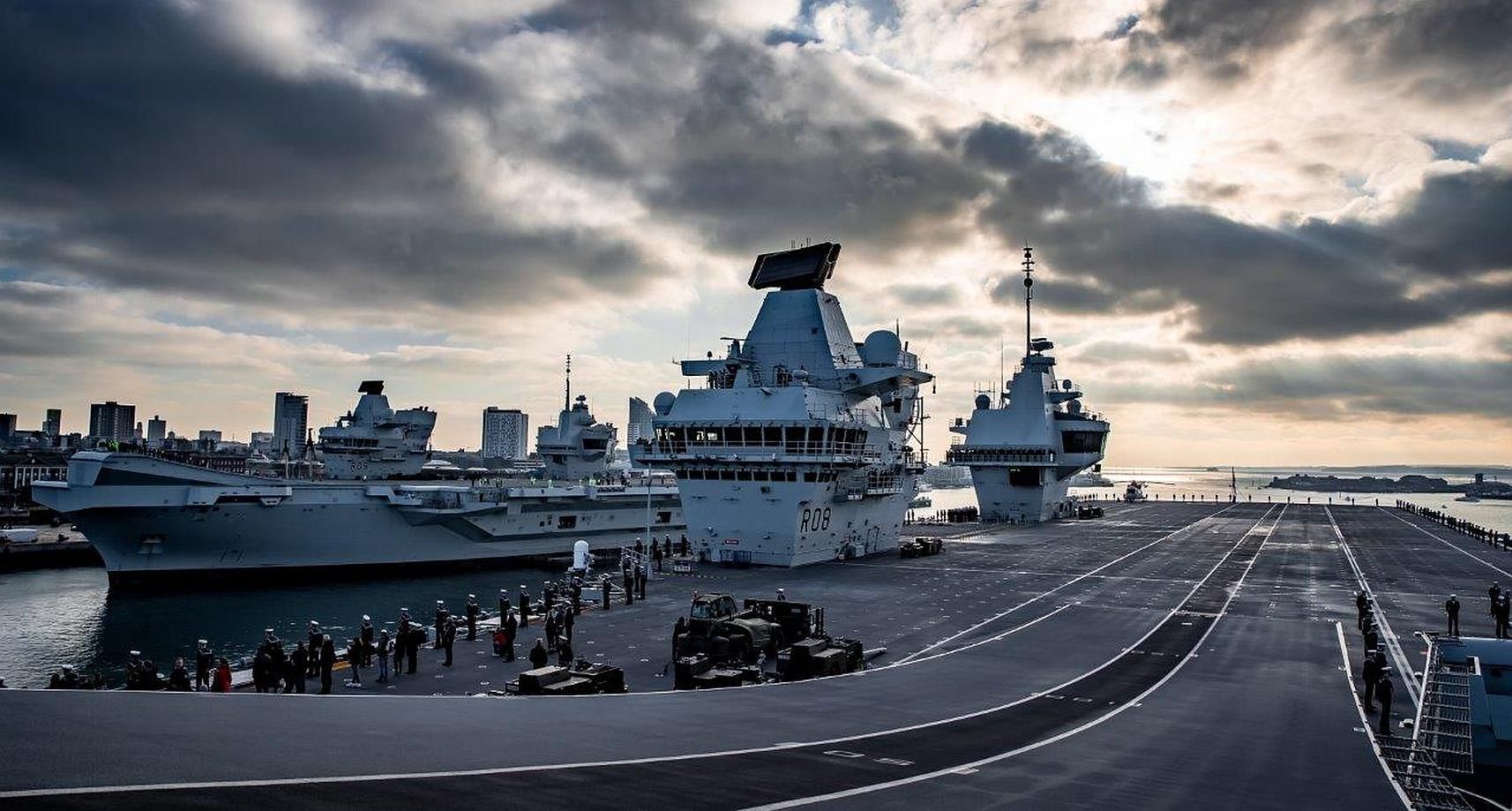
At the same time two of her escorts, HMS Northumberland and RFA Tideforce, returned to warm welcomes in Devonport. The ships? flights made their way to their respective homes at RNAS Culdrose and Yeovilton.
The carrier strike group sailed from the UK in August to conduct operational tests with UK F-35 jets from the UK Lightning Force for the first time.
Supporting the strike group units throughout were Merlin helicopters from 820 Naval Air Squadron based out of RNAS Culdrose, providing anti-submarine protection and search-and-rescue (SAR) capability.
Commando Merlins from 845 Naval Air Squadron acted as the aviation workhorses, transporting stores and equipment, providing SAR cover and also landing Royal Marines from 42 Commando?s Lima Company to rehearse how to rescue downed pilots. Merlins from 814 NAS and Wildcat from 815 completed the air group.
The Commanding Officer of HMS Queen Elizabeth, Captain Steve Moorhouse said: ?Homecomings are always a special occasion, but to be returning to Portsmouth with HMS Prince of Wales welcoming us home makes this a particularly special occasion.
?This has been an extremely successful deployment for HMS Queen Elizabeth. Embarking UK F-35 Lightning jets for the first time and integrating them within the carrier strike group is a significant milestone and we are well set for an equally demanding 2020 and our first operational deployment in 2021.?