Aviation News
-
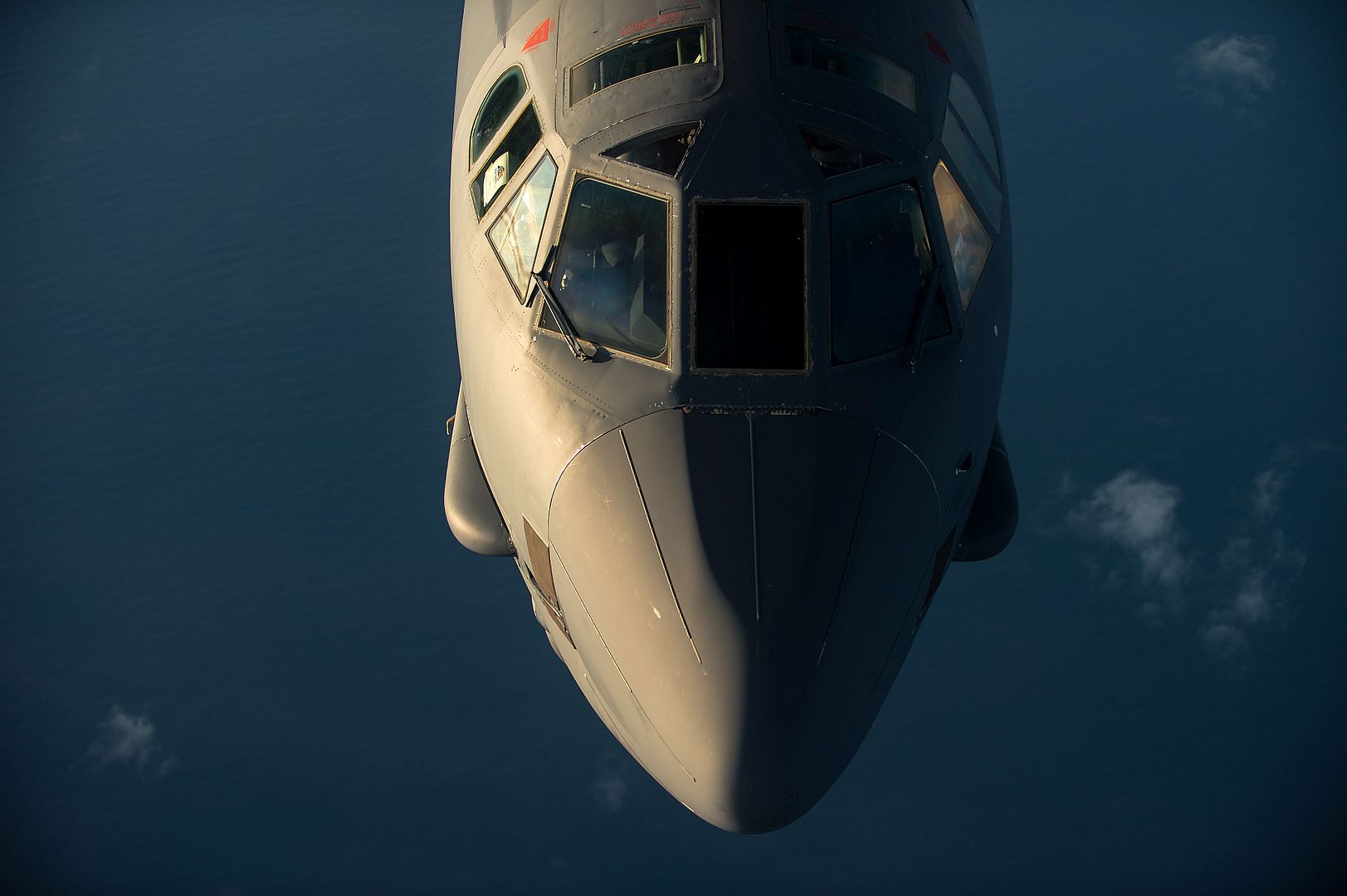
A U.S. Air Force B-52H Stratofortress, assigned to the 2nd Bomb Wing from Barksdale Air Force Base, Louisiana, prepares to receive fuel from a 100th Air Refueling Wing KC-135 Stratotanker over the Arctic during Bomber Task Force 20-1, Nov. 6, 2019. This deployment allows aircrews and support personnel to conduct theater integration and improve bomber interoperability with joint partners and allied nations. (U.S. Air Force photo by Staff Sgt. Trevor T. McBride)
Three U.S. Air Force B-52H Stratofortress aircraft, assigned to the 2nd Bomb Wing from Barksdale Air Force Base, Louisiana, and five Royal Norwegian Air Force F-16 Fighting Falcons fly together toward the Barents Sea region of the Arctic during Bomber Task Force 20-1, Nov. 6, 2019. This deployment allows aircrews and support personnel to conduct theater integration and improve bomber interoperability with joint partners and allied nations. (U.S. Air Force photo by Staff Sgt. Trevor T. McBride)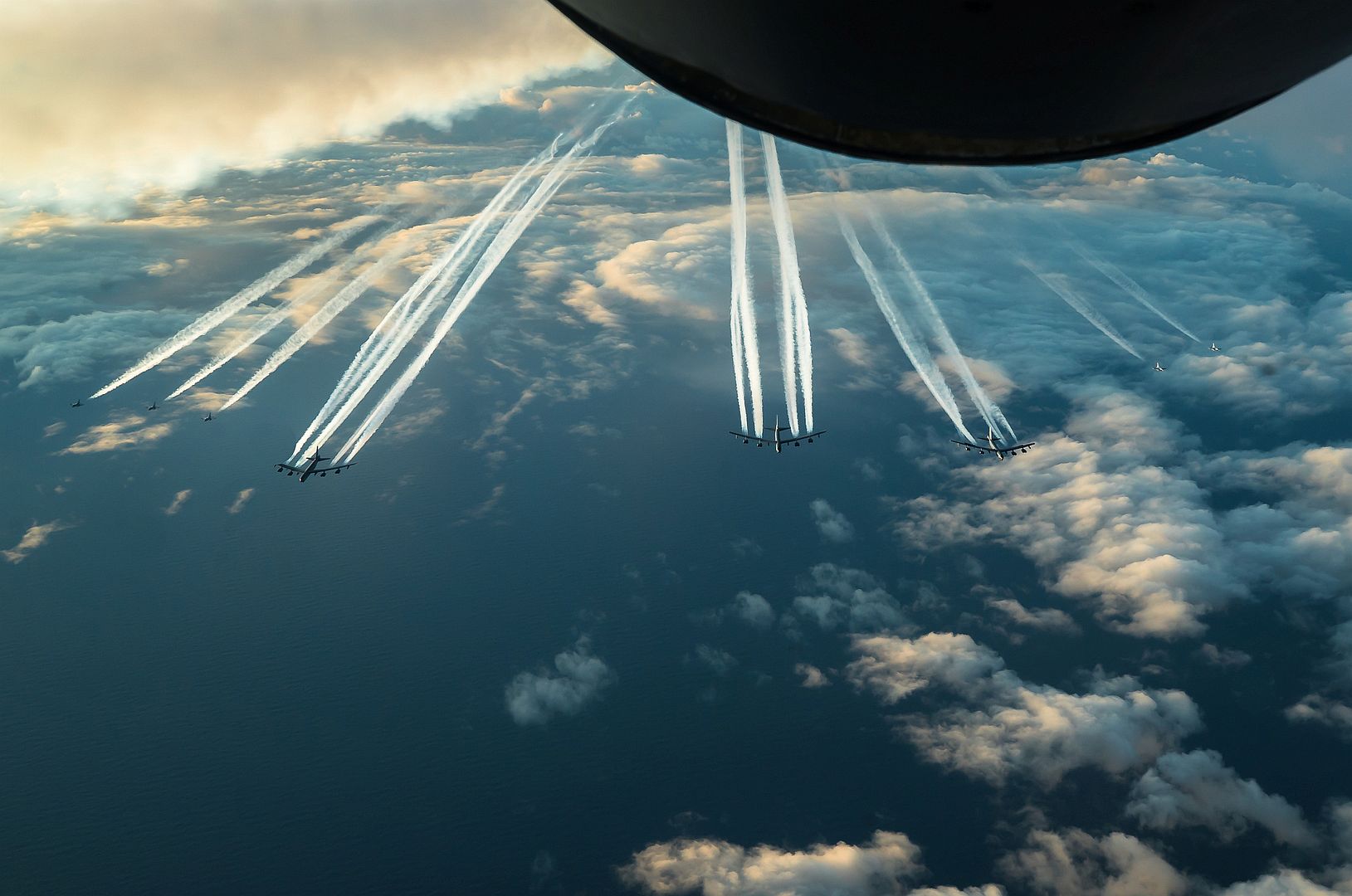
A Royal Norwegian Air Force F-16 Fighting Falcon flies over the Barents Sea region during Bomber Task Force Europe 20-1, Nov. 6, 2019. This deployment allows aircrews and support personnel to conduct theater integration and to improve bomber interoperability with joint partners and allied nations. (U.S. Air Force photo by Airman 1st Class Duncan C. Bevan)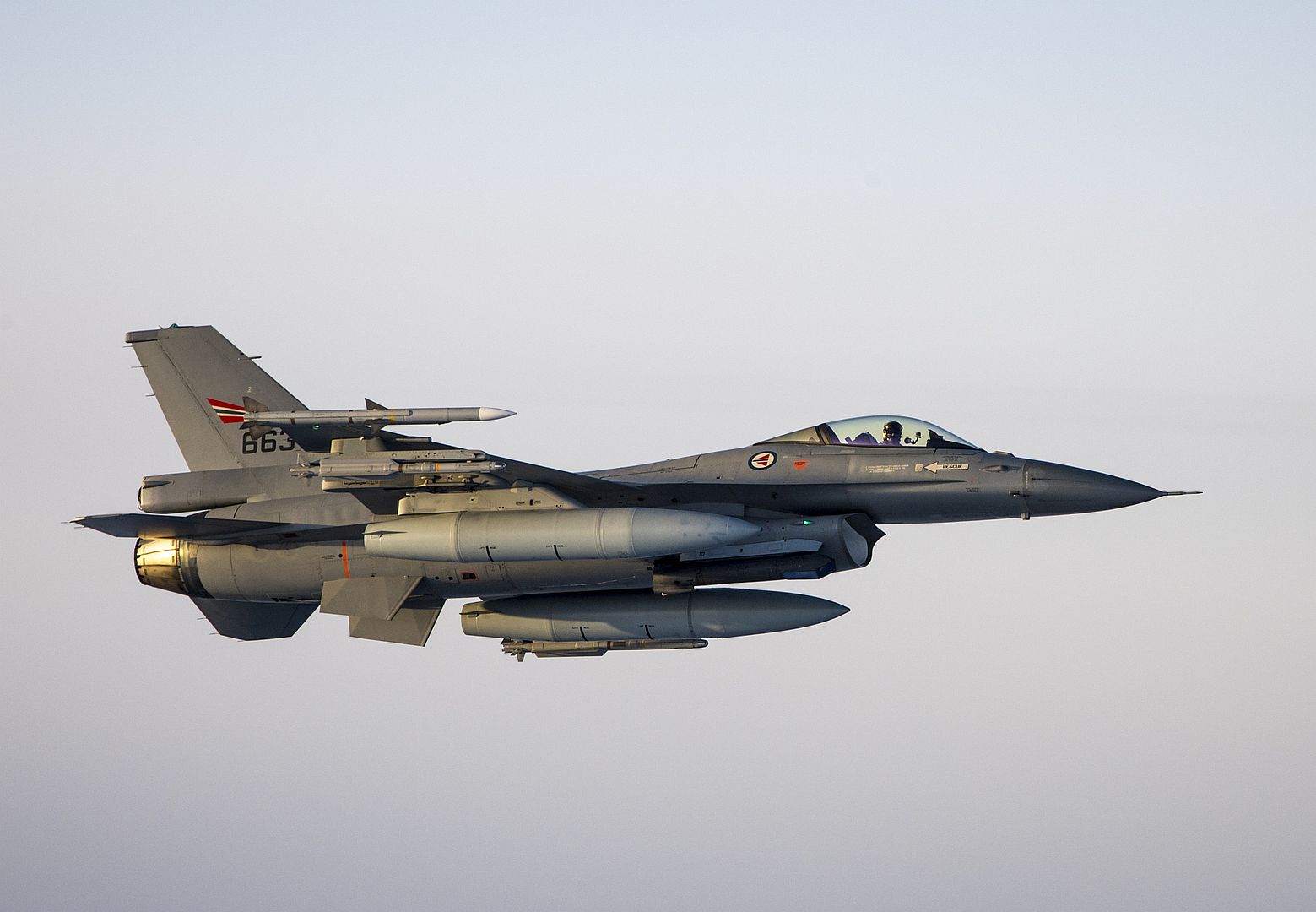
A KC-46 Pegasus assigned to the 22nd Air Refueling Wing, McConnell Air Force Base, Kansas, flies behind a KC-135R assigned to the Utah Air National Guard?s 151st Air Refueling Wing during an air refueling operation, November 6, 2019. The KC-46 is the Air Forces newest aircraft in it's fleet and can carry a combination of more than 210,000 pounds of fuel, 65,000 pounds of cargo and 58 passengers. (U.S. Air National Guard photo by Tech. Sgt. John Winn)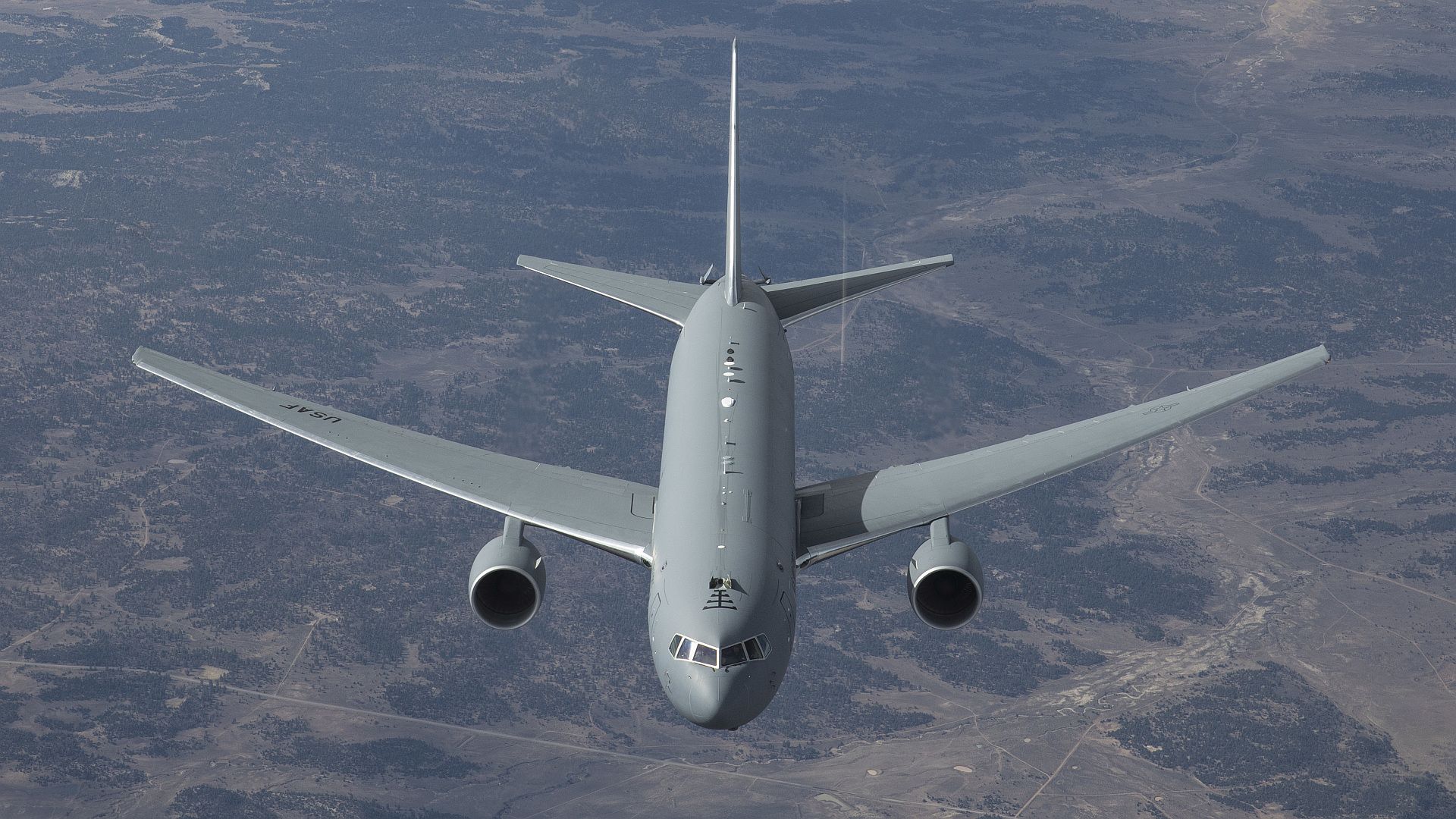
FORT SILL, Okla., Nov. 7, 2019 /PRNewswire/ -- Lockheed Martin (NYSE: LMT) recently demonstrated their laser weapon system for the U.S. Air Force at a government test range at Fort Sill, Oklahoma, where the system successfully engaged and shot down multiple fixed wing and rotary drones.
The Advanced Test High Energy Asset (ATHENA) operated in a fully-netted engagement environment with a government command and control (C2) system and radar sensor. The radar track was provided to airmen who operated ATHENA via cues from the C2, then ATHENA's beam director slewed, acquired, tracked and defeated the drone with a high-energy laser.
Validating this type of full kill-chain performance has been a priority of the U.S. Air Force and other branches of the Department of Defense, and it remains a requirement for laser weapons to be effective against unmanned aerial systems (UAS) on the battlefield.
"We've watched in recent news this type of laser weapon solution is essential for deterring unmanned vehicle type threats, so it's an exciting time for us to watch airmen compete Lockheed Martin's critical technology. ATHENA has evolved to ensure integration and agility are key and it remains an affordable capability for the warfighter," said Sarah Reeves, vice president of Missile Defense Programs for Lockheed Martin.
The ATHENA system was developed by Lockheed Martin to integrate seamlessly and provide a cost-effective, complementary anti-drone capability with the network of systems the warfighter is already using. ATHENA was operated by USAF personnel during this demonstration, and it was able to destroy multiple drones in engagements representative of what is being encountered by U.S. armed forces today.
The ATHENA high-energy laser system is transportable and therefore enables the Air Force to emplace it anywhere they need to defend bases and high-value assets.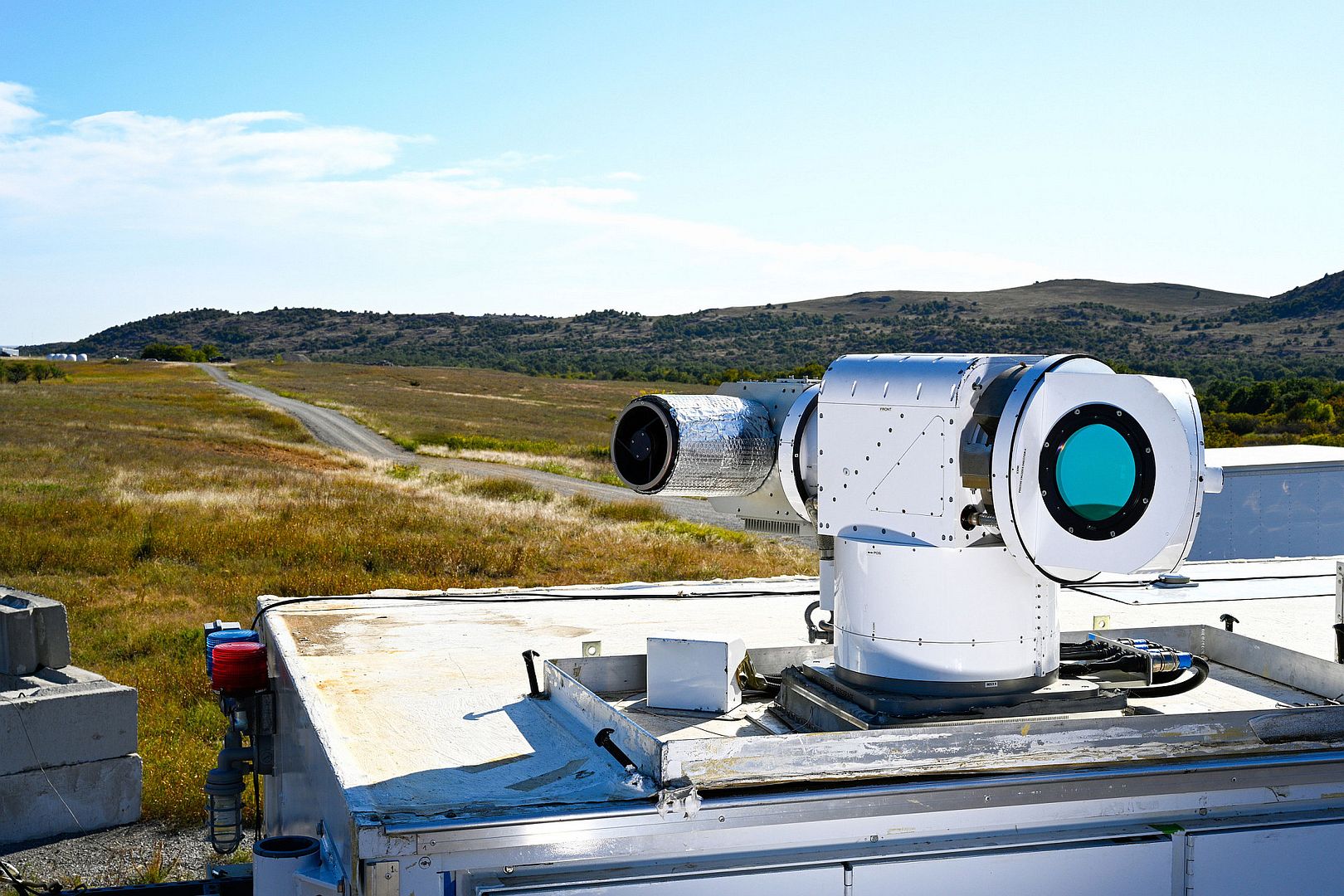
-
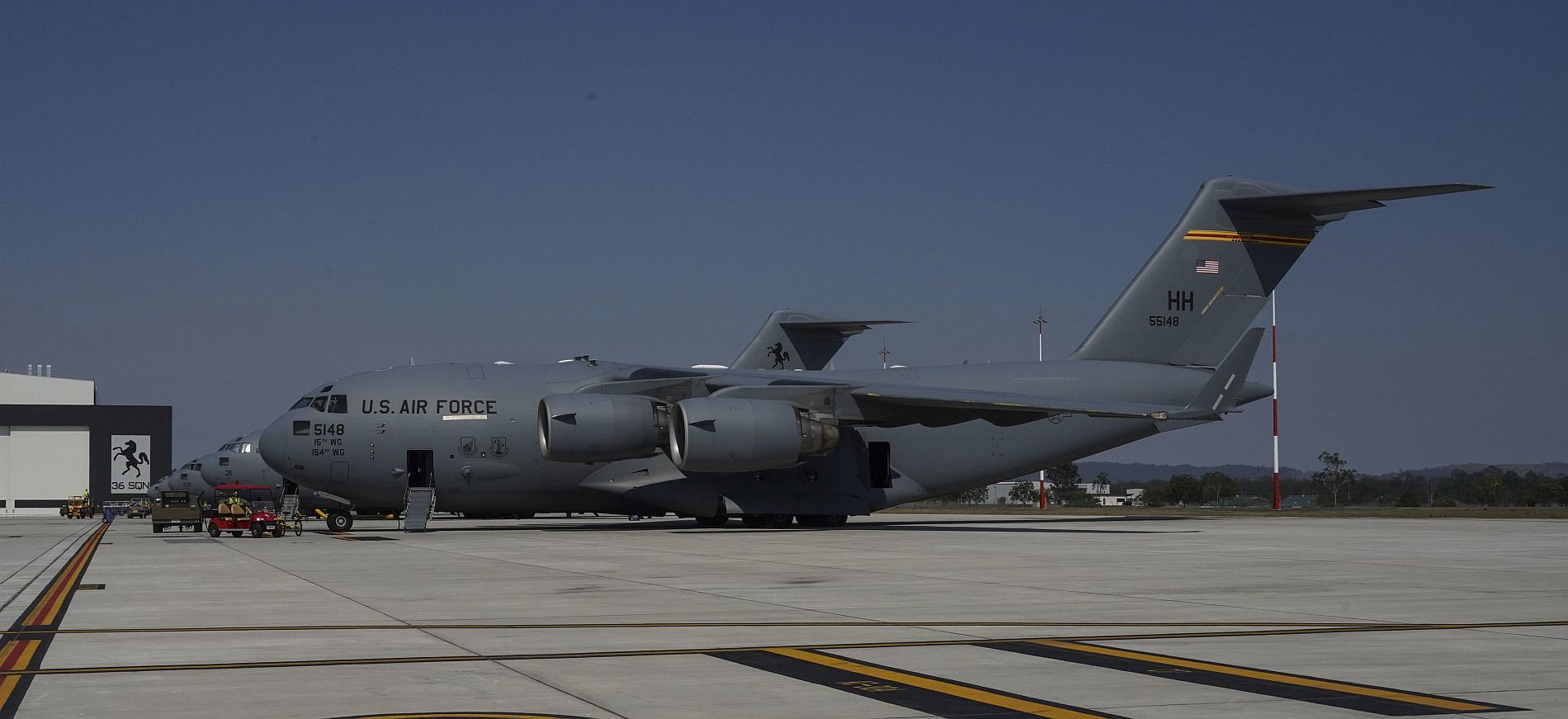
A C-17 Globemaster III assigned to the 535th Airlift Squadron at Joint Base Pearl Harbor-Hickam, Hawaii, sits on the No. 36 Squadron ramp at Royal Australian Air Force Base Amberley, Queensland, Nov. 6, 2019. More than 30 service members from the U.S. Air Force participated in Exercise GLOBAL DEXTERITY ?19 alongside the Royal Australian Air Force. GLOBAL DEXTERITY the first integrated, multinational training event involving air land and airborne crews that promotes the standardization and compatibility of C-17 aircraft maintenance and operations across allied nations. (U.S. Air Force photo by Tech. Sgt. Heather Redman)
A U.S. Air Force 2nd Bomb Wing B-52H Stratofortress from Barksdale Air Force Base, Louisiana, taxis on the flight line in support of Bomber Task Force Europe 20-1, Nov. 8, 2019, at RAF Fairford, England. This deployment allowed aircrews and support personnel to conduct theater integration and improve bomber interoperability with joint partners and allied nations. (U.S. Air Force photo by Tech. Sgt. Christopher Ruano)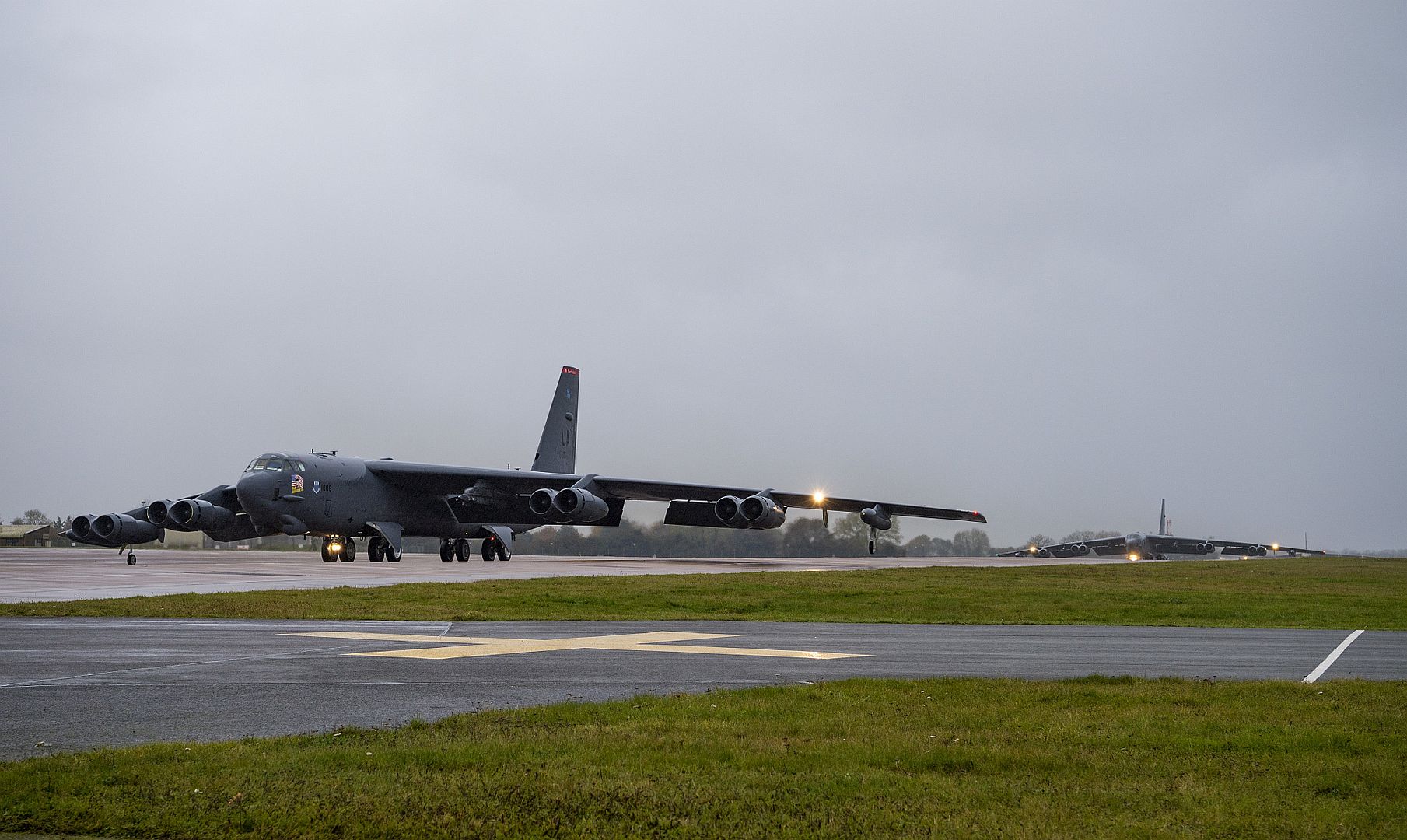
The crew of a U.S. Air Force C-17 Globemaster III unloads in the dark of night on Marine Corps Air Station Camp Pendleton, California, Nov. 7, 2019. The air station provides the Marines and sailors of I Marine Expeditionary Force and 3rd Marine Aircraft Wing with flexible deployment options. While the air station primarily supports rotary wing and tiltrotor aircraft, it is also capable of landing large aircraft like the C-17. (U.S. Marine Corps photo by Lance Cpl. Andrew Cortez)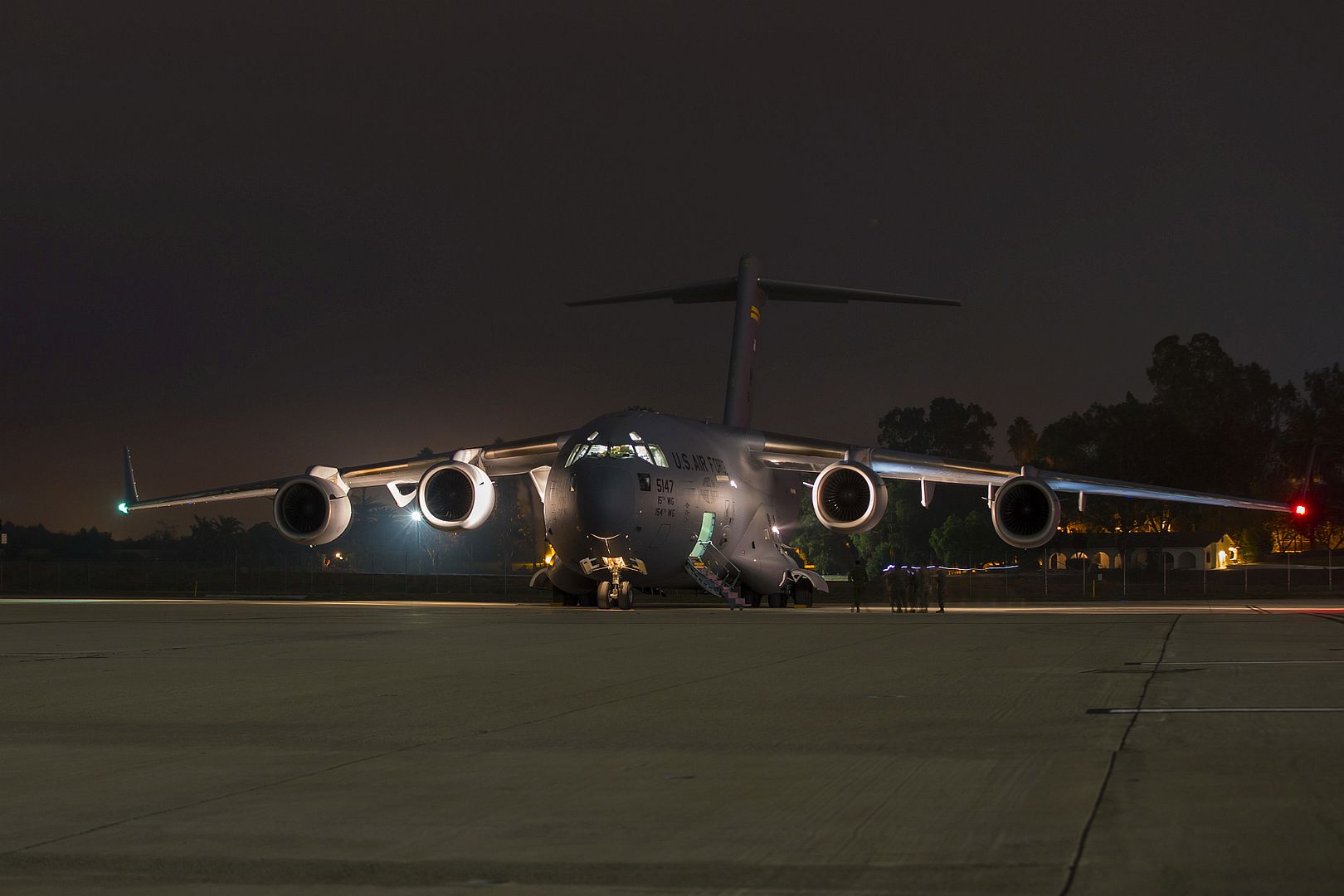
ARABIAN SEA (Nov. 6, 2019) An F/A-18F Super Hornet attached to the "Jolly Rogers" of Strike Fighter Squadron (VFA) 103 approaches the flight deck of the aircraft carrier USS Abraham Lincoln (CVN 72). Abraham Lincoln Carrier Strike Group is deployed to the U.S. 5th Fleet area of operations in support of naval operations to ensure maritime stability and security in the Central Region, connecting the Mediterranean and the Pacific through the western Indian Ocean and three strategic choke points. With Abraham Lincoln as the flagship, deployed strike group assets include staffs, ships and aircraft of Carrier Strike Group 12 (CSG 12), Destroyer Squadron 2 (DESRON 2), USS Leyte Gulf (CG 55) and Carrier Air Wing 7 (CVW 7). (U.S. Navy photo by Mass Communication Specialist 3rd Class Jeremiah Bartelt/Released)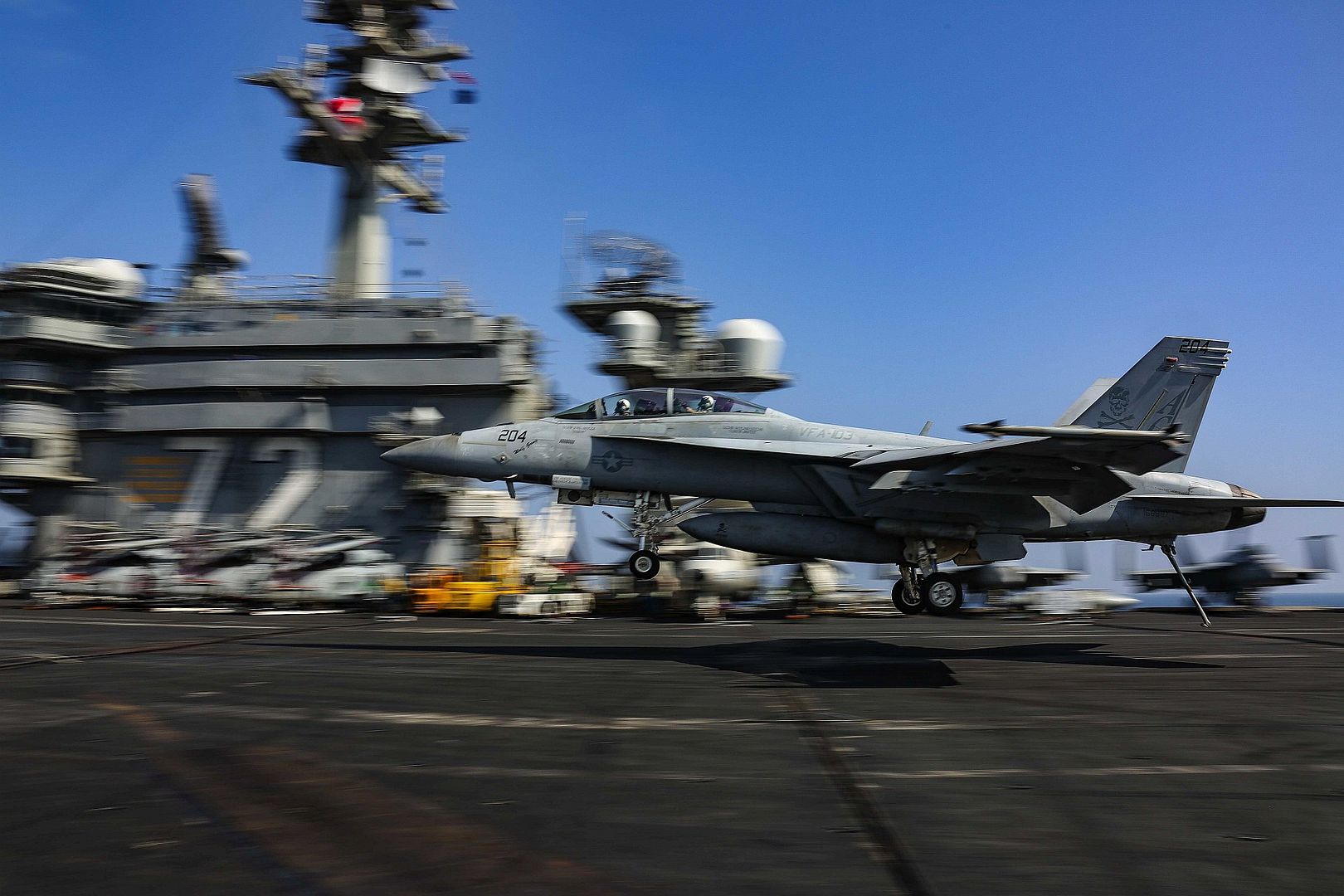
SEATTLE, Nov. 8, 2019 ? Boeing [NYSE: BA] last week delivered the first of nine P-8A Poseidon maritime patrol aircraft (MPA) to the United Kingdom Royal Air Force (RAF). The United Kingdom is acquiring the multi-mission aircraft through the Foreign Military Sales process with the U.S. Navy. The P-8A Poseidon replaces the U.K.?s retired Nimrod aircraft.
Speaking to attendees at the delivery ceremony, Air Marshal Andrew Turner, deputy commander for Capability for the Royal Air Force, spoke of the ?profound challenge? of enemy submarines threatening the U.K. and other nations. ?P-8 is the key to solving this challenge on the surface, the sub-surface and in the waters of the North Atlantic. There is no place [for our enemies] to hide. We will make the oceans transparent and we will prevail.?
Boeing formally delivered the aircraft on Oct. 29 to the U.S. Navy during a ceremony at the Boeing Military Delivery Center in Tukwila, Wash. From Tukwila, the aircraft flew to the U.S. Navy?s Naval Air Station Jacksonville, Florida, where U.S. Navy leaders officially turn the aircraft over to the United Kingdom. At JAX, Royal Air Force crew will work with the aircraft before flying it to the United Kingdom in January 2020. All nine P-8A aircraft will be based at Lossiemouth, Scotland.
As part of a collaborative program with the U.S. Navy, pilots and maintainers from the United Kingdom's RAF have been stationed at Naval Air Station JAX since 2012. Called ?Project Seedcorn,? the arrangement has allowed RAF members to fly the P-8A with Patrol Squadron Thirty (VP-30), the Navy's Maritime Patrol and Reconnaissance Fleet Replacement Squadron, to maintain their maritime patrol skills in advance of receiving the P-8A.
The P-8 is a long-range anti-submarine warfare, anti-surface warfare, intelligence, surveillance and reconnaissance aircraft capable of broad-area, maritime and littoral operations. In addition, the P-8 performs humanitarian and search and rescue missions around the globe.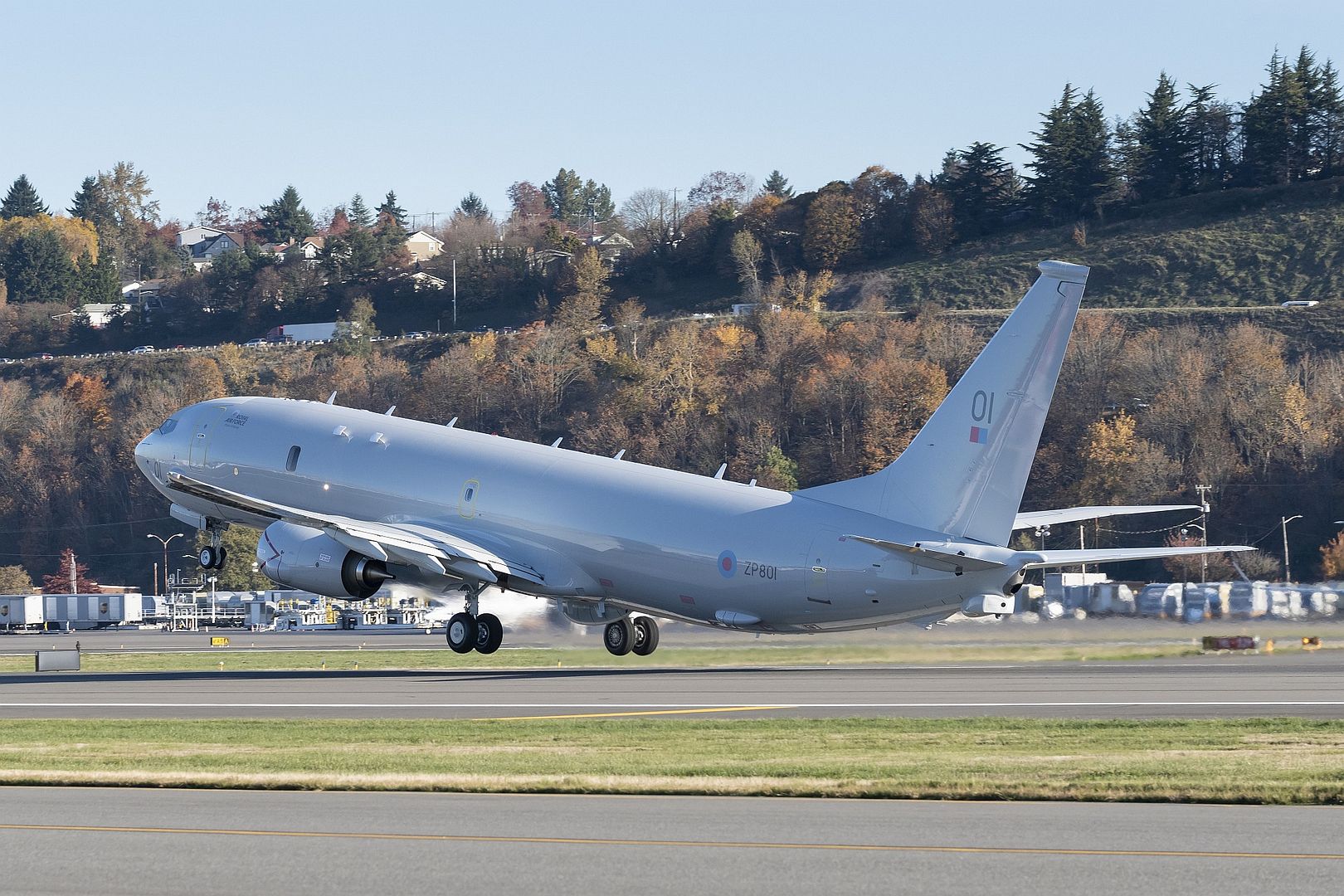
Air Canada?s first Airbus A220 was unveiled this week when it rolled out of the painting hangar at the A220 final assembly line in Mirabel.
In December, Air Canada will become the first Canadian airline to take delivery of this Canadian-designed and developed aircraft when it receives the first of its 45 A220s on order. The A220 features an innovative cabin design, as well as significantly lower emissions and a reduced noise footprint.
The A220-300 for Air Canada will provide passengers with superior comfort in a 137-seat dual-class cabin layout. Air Canada's brand-new A220-300s will replace the flag carrier?s existing mainline fleet of smaller, older narrow-body aircraft and support the airline?s hub and network growth, creating one of the world's youngest and most fuel efficient fleets.
Now that the aircraft is decked out in Air Canada?s livery, it has moved to pre-flight activities in the A220 flight line hangar in Mirabel, before taking off for its first flight later this fall.
Currently, there are 94 A220 aircraft flying with six operators on regional and transcontinental routes in Asia, America, Europe, the Middle East and Africa, proving the great versatility of Airbus? latest family member. The A220 has an order book of 530 aircraft as of the end of October 2019.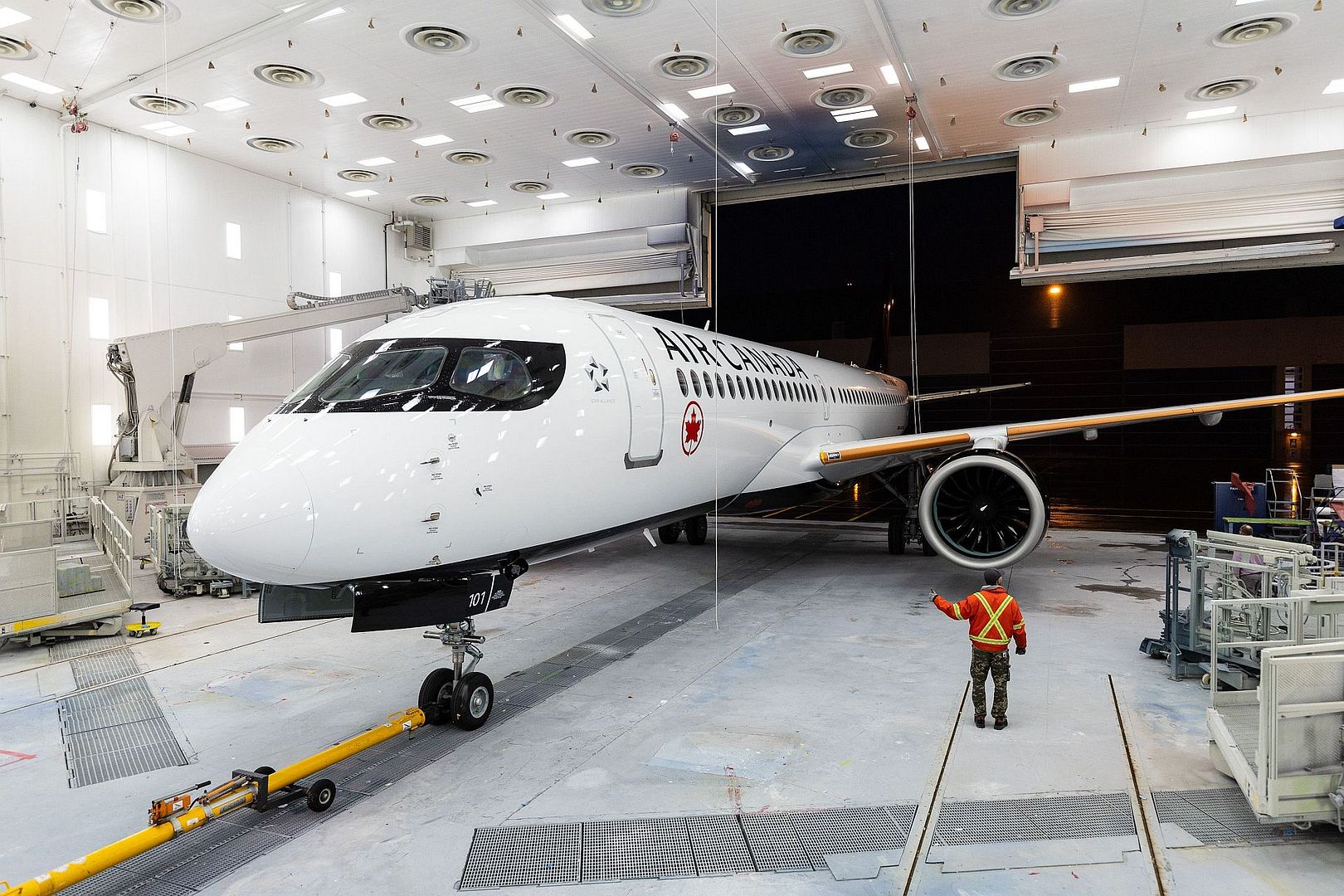
-
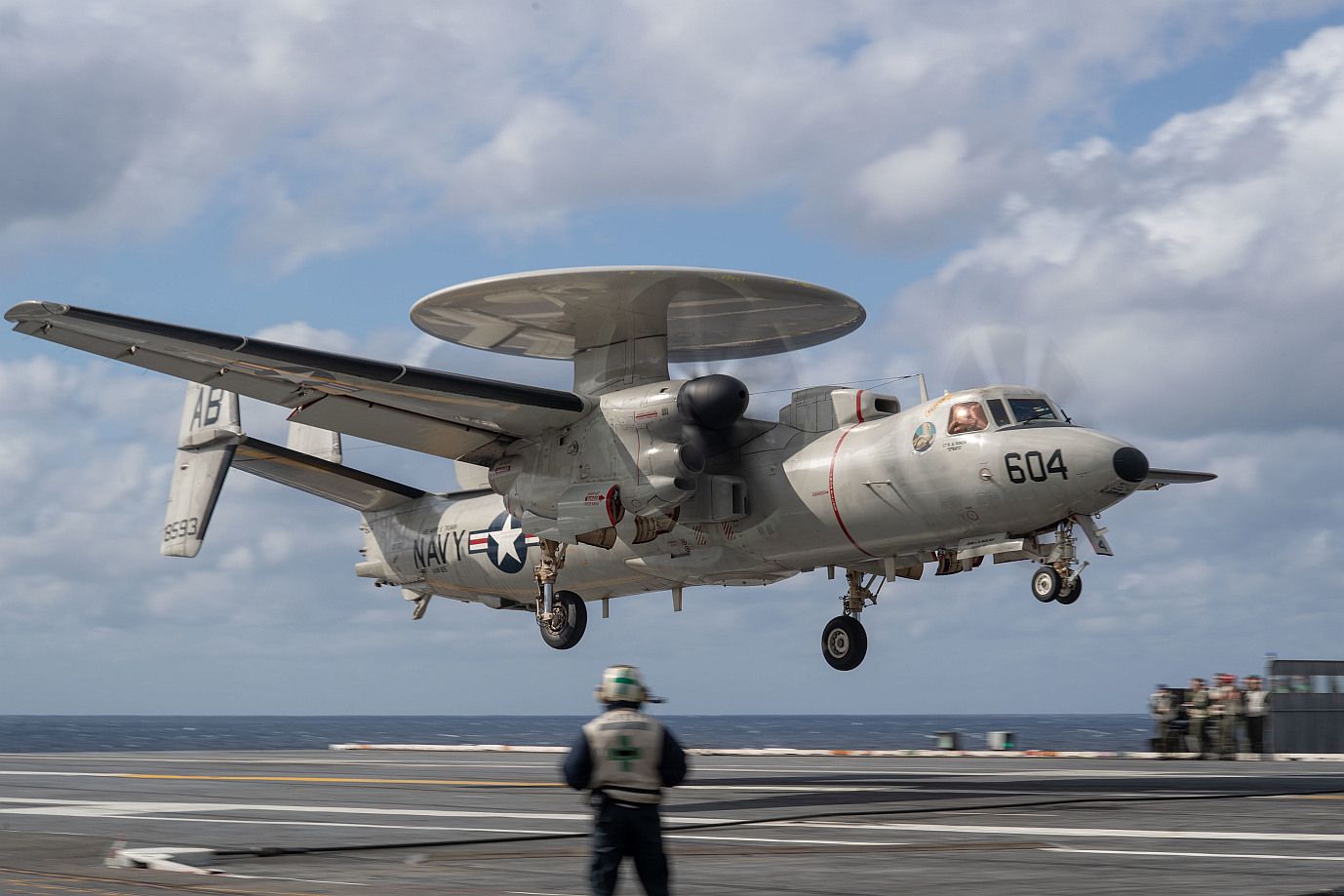
An E-2D Hawkeye, assigned to Carrier Airborne Early Warning Squadron (VAW) 126, performs a touch-and-go on the flight deck of the aircraft carrier USS John C. Stennis (CVN 74) in the Atlantic Ocean, Nov. 9, 2019. The John C. Stennis is underway conducting routine operations in support of Commander, Naval Air Force Atlantic. (U.S. Navy photo by Mass Communication Specialist 2nd Class Grant G. Grady)
An F/A-18F Super Hornet, assigned to Strike Fighter Squadron (VFA) 211, lands on the flight deck of the aircraft carrier USS John C. Stennis (CVN 74) in the Atlantic Ocean, Nov. 9, 2019. The John C. Stennis is underway conducting routine operations in support of Commander, Naval Air Force Atlantic. (U.S. Navy photo by Mass Communication Specialist 2nd Class Grant G. Grady)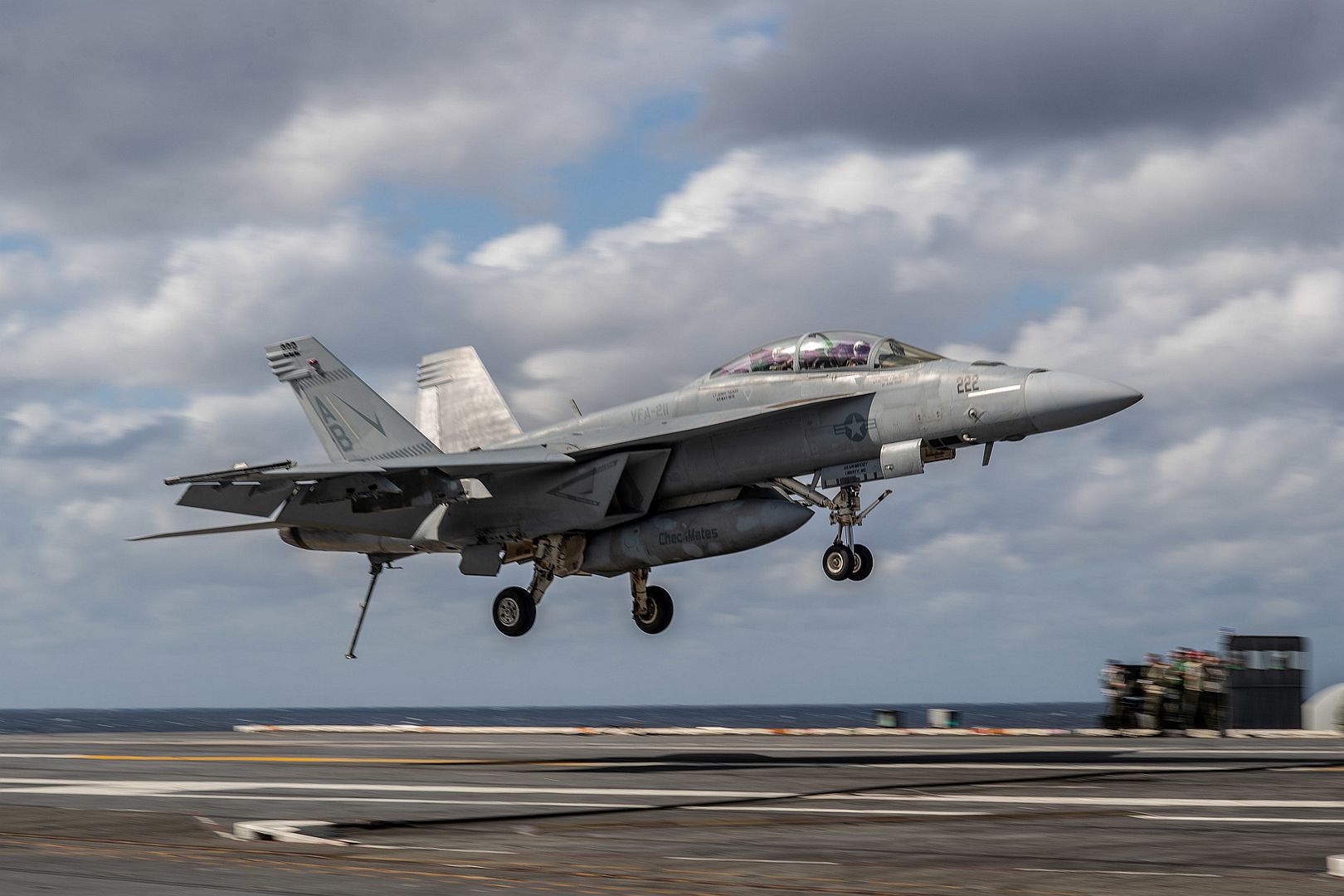
An Israeli F-35I Adir, takes off to participate in a training exercise during Blue Flag 2019 at Uvda Air Base, Israel, November 5, 2019. The U.S. and Israel maintain a close bilateral relationship, and exercises like Blue Flag help to strengthen that further. (U.S. Air Force photo by Airman 1st Class Kyle Cope)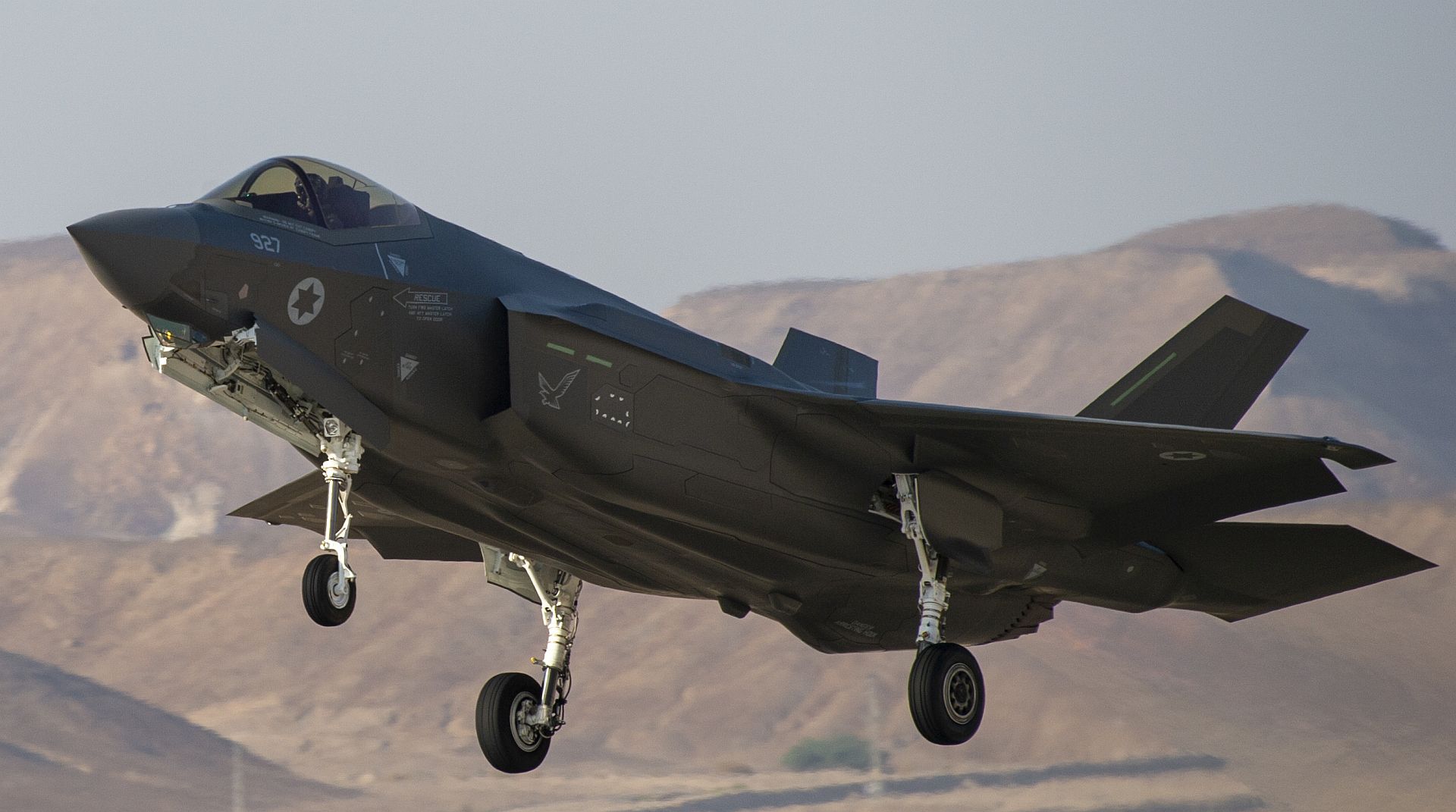
A U.S. Air Force F-16 Fighting Falcon, 480th Expeditionary Fighter Squadron, takes off during Blue Flag 2019 at Uvda Air Base, Israel, November 4, 2019. Blue Flag is an opportunity to improve interoperability and build relationships between the US and multinational partners and allies. (U.S. Air Force photo by Airman 1st Class Kyle Cope)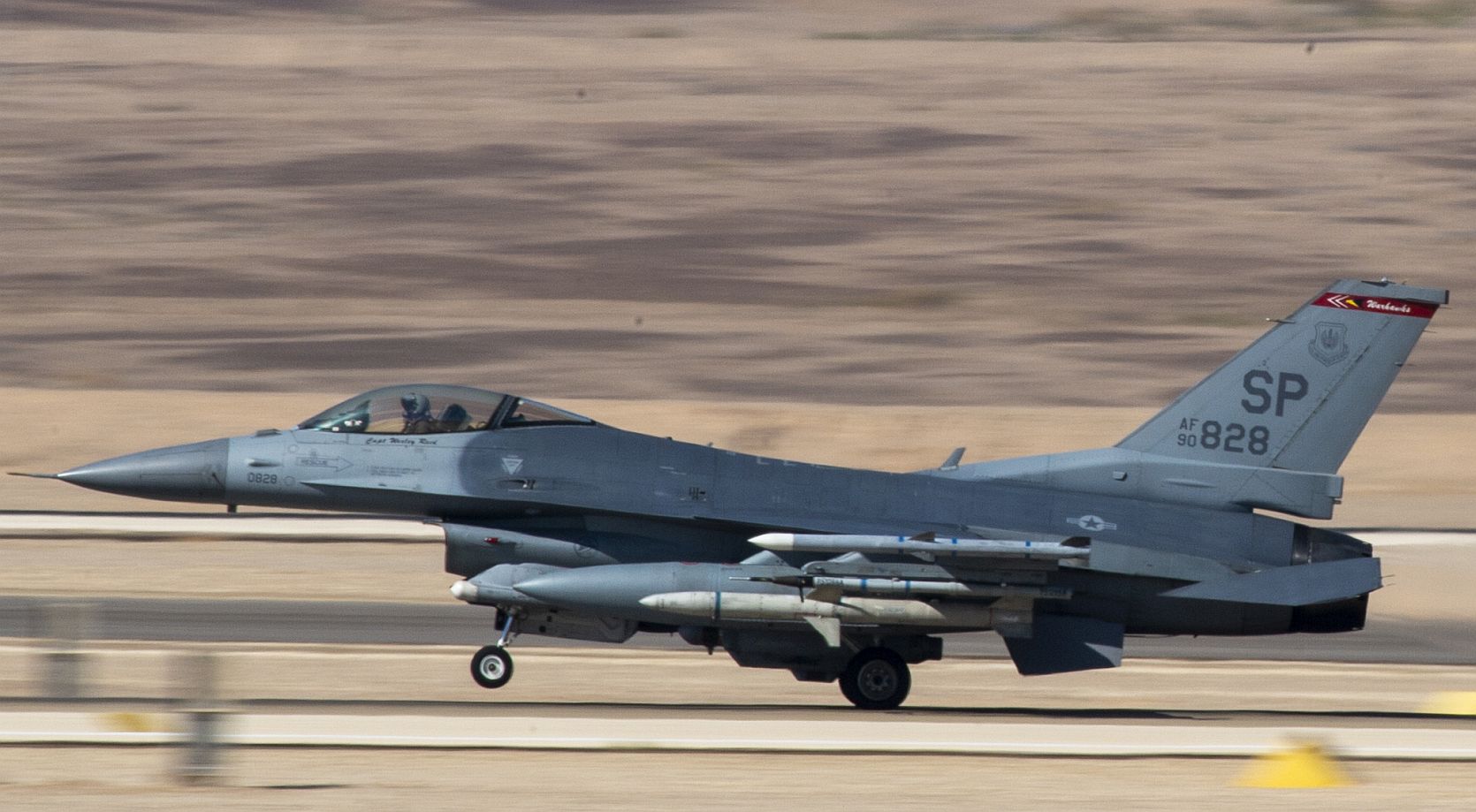
-
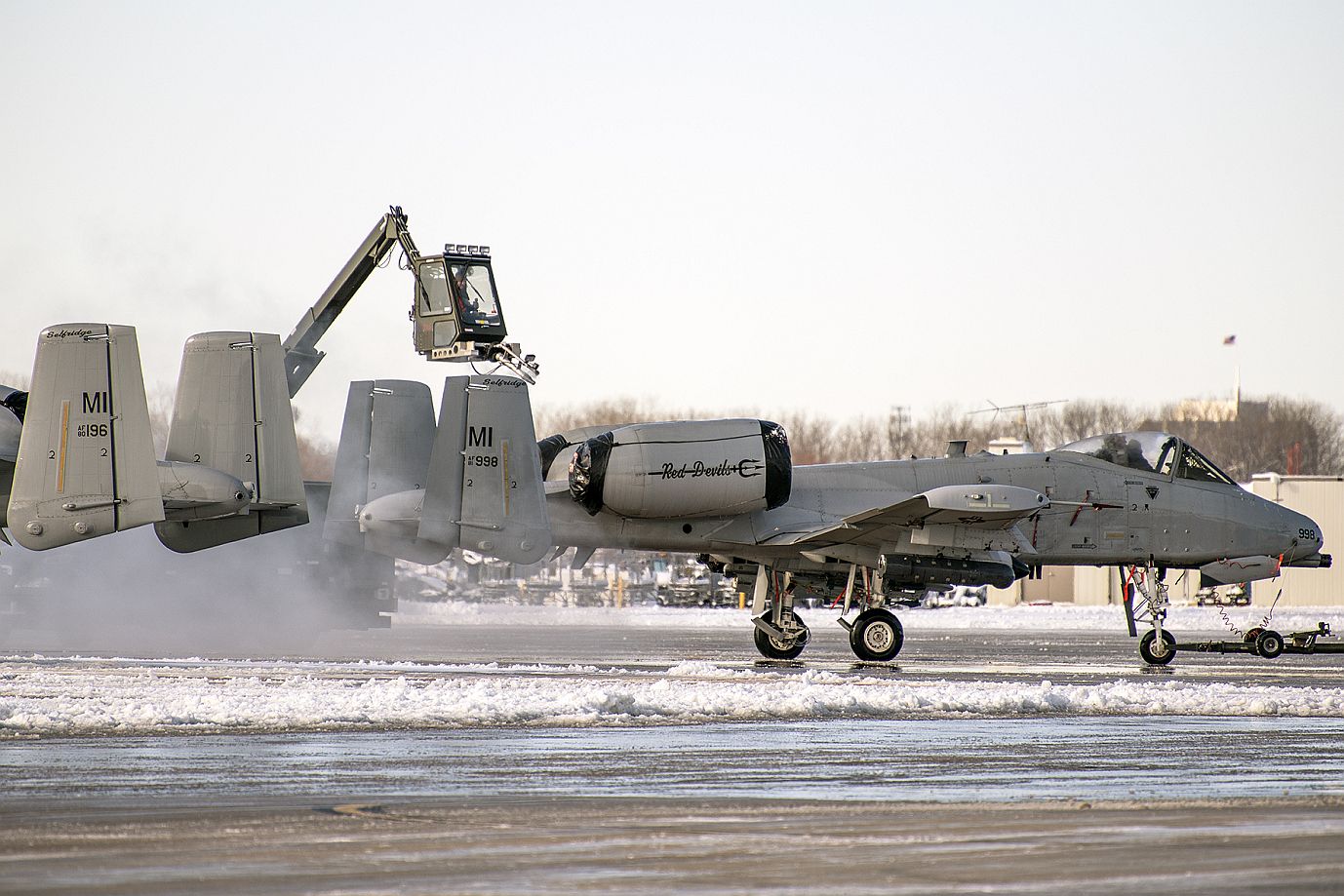
127th Maintenance Group Airmen deice an A-10 Thunderbolt II on the flightline at Selfridge Air National Guard Base, Michigan, Nov. 12, 2019. Snow removal from the flightline and deicing of aircraft are very important for maintaining the 127th Wing's aircraft and mission readiness. Despite the cold and Selfridge?s first snowfall this year, Airmen of the 127th Wing continue with their jobs.
(U.S. Air National Guard photo's by Terry Atwell/Released)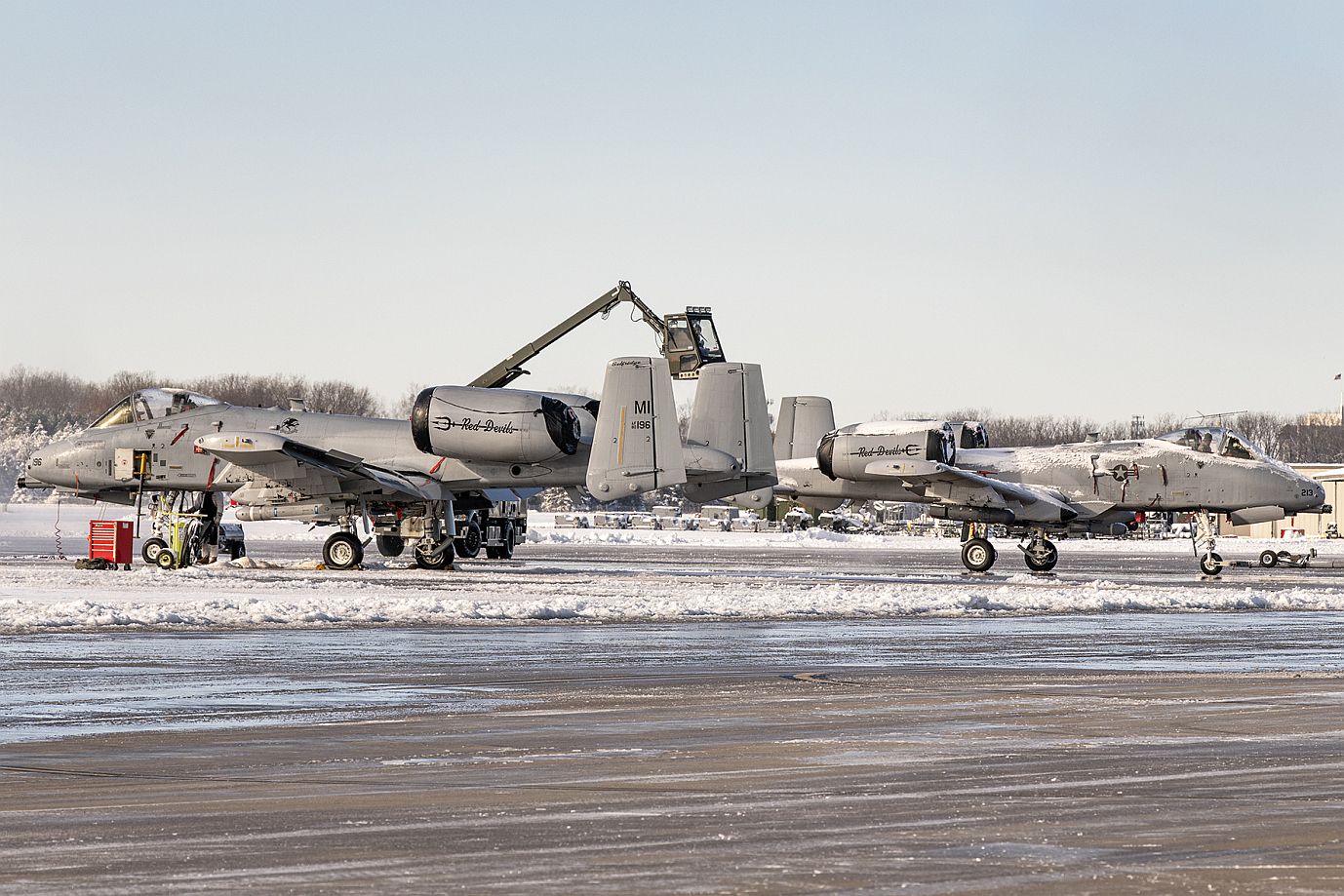
BALTIMORE ? Nov. 12, 2019 ? The LONGBOW Limited Liability Company, a joint venture of Northrop Grumman Corporation (NYSE: NOC) and Lockheed Martin (NYSE: LMT), announced the successful completion of the Army?s AH-64E Apache Follow-On Test and Evaluation II (FOT&E II) for the AN/APG-78 LONGBOW Fire Control Radar (FCR).
During the FOT&E, the modernized LONGBOW FCR successfully demonstrated many new operational modes and capabilities, including maritime, single target track, and 360-degree surveillance mode, as well as extended detection range capability against land, air and sea targets. The detection range has doubled and improved detection of unmanned aerial vehicles.
?Our open systems architecture approach allowed us to unlock phenomenal performance without any hardware changes,? said Susan Bruce, LONGBOW LLC vice president and vice president at Northrop Grumman Mission Systems. ?Version six is a major update to LONGBOW?s capabilities providing significant situational awareness and targeting capabilities to the warfighter.?
Validating these performance enhancements during FOT&E, the LONGBOW radar successfully detected numerous ground and maritime targets at extended detection ranges. Those targets were then engaged and destroyed by AGM-179 Joint Air-to-Ground Missile missiles fired from the Apache helicopter.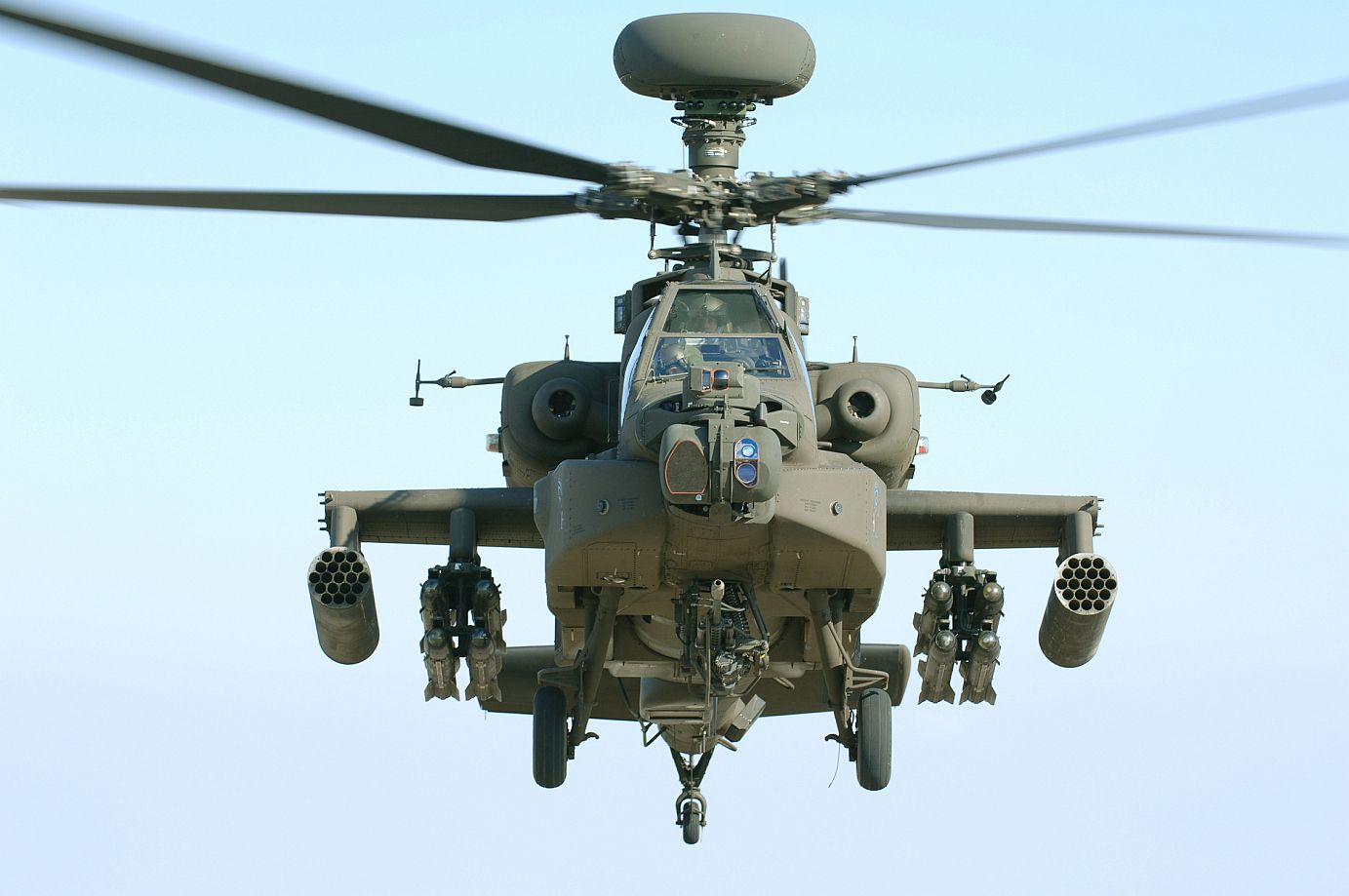
?LONGBOW?s Version 6 software helps increase survivability to the AH-64E aircrews, reduces workload and enhances stand-off range,? stated Jim Messina, LBL JV president and program director at Lockheed Martin.
The LONGBOW radar provides Apache aircrews with automatic target detection, location, classification and prioritization, while enabling rapid, multi-target engagement in all weather conditions, over multiple types of terrain and through battlefield obstacles. To date, nearly 500 LONGBOW FCR systems have been delivered to the U.S. Army in 12 nations.
Headquartered in Bethesda, Maryland, Lockheed Martin is a global security and aerospace company that employs approximately 100,000 people worldwide and is principally engaged in the research, design, development, manufacture, integration and sustainment of advanced technology systems, products and services. This year the company received three Edison Awards for ground-breaking innovations in autonomy, satellite technology and directed energy.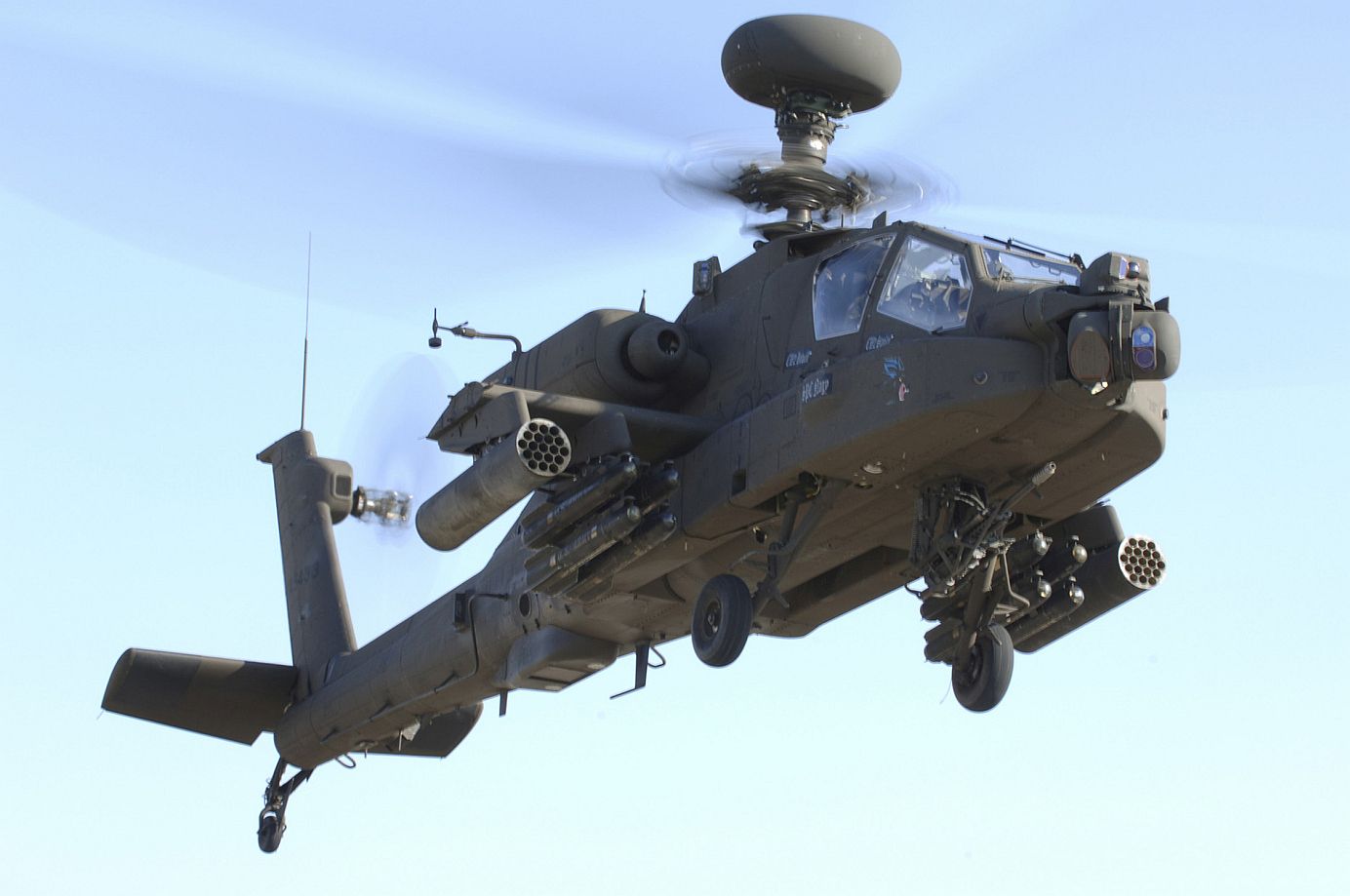
Berlin, 12 November 2019 ? At the International Fighter Conference in Berlin Airbus and its partners introduced for the first time concrete details of the new Eurofighter electronic combat role (ECR) concept. This role will enlarge Eurofighter?s multi-role capabilities and further increase the survivability of coalition forces in hostile environments.
Collaborative electronic warfare capabilities are essential for future combined air operations.
Initial Eurofighter ECR capability is expected to be available by 2026, followed by further development steps and full integration into the future combat air system (FCAS) ecosystems.
Eurofighter ECR will be able to provide passive emitter location as well as active jamming of threats, and will offer a variety of modular configurations for electronic attack (EA) and suppression/destruction of enemy air defence (SEAD/DEAD). Latest national escort jammer technology will ensure national control over features such as mission data and data analysis. The concept also features a new twin-seat cockpit configuration with a multi-function panoramic touch display and a dedicated mission cockpit for the rear-seat.
The concept is driven by the leading aerospace companies Airbus, Hensoldt, MBDA, MTU, Premium Aerotec, Rolls-Royce and supported by the German national industry bodies BDSV and BDLI. It specifically targets the German Air Force requirements for an airborne electronic attack capability. Furthermore it is the single opportunity to deliver such capabilities on the basis of national sovereignty, whilst also securing key military technologies within Germany.
Eurofighter is the backbone of German air defence. With more than 600 aircraft under contract and a workforce of 100.000 it is the largest collaborative defence programme in Europe to date.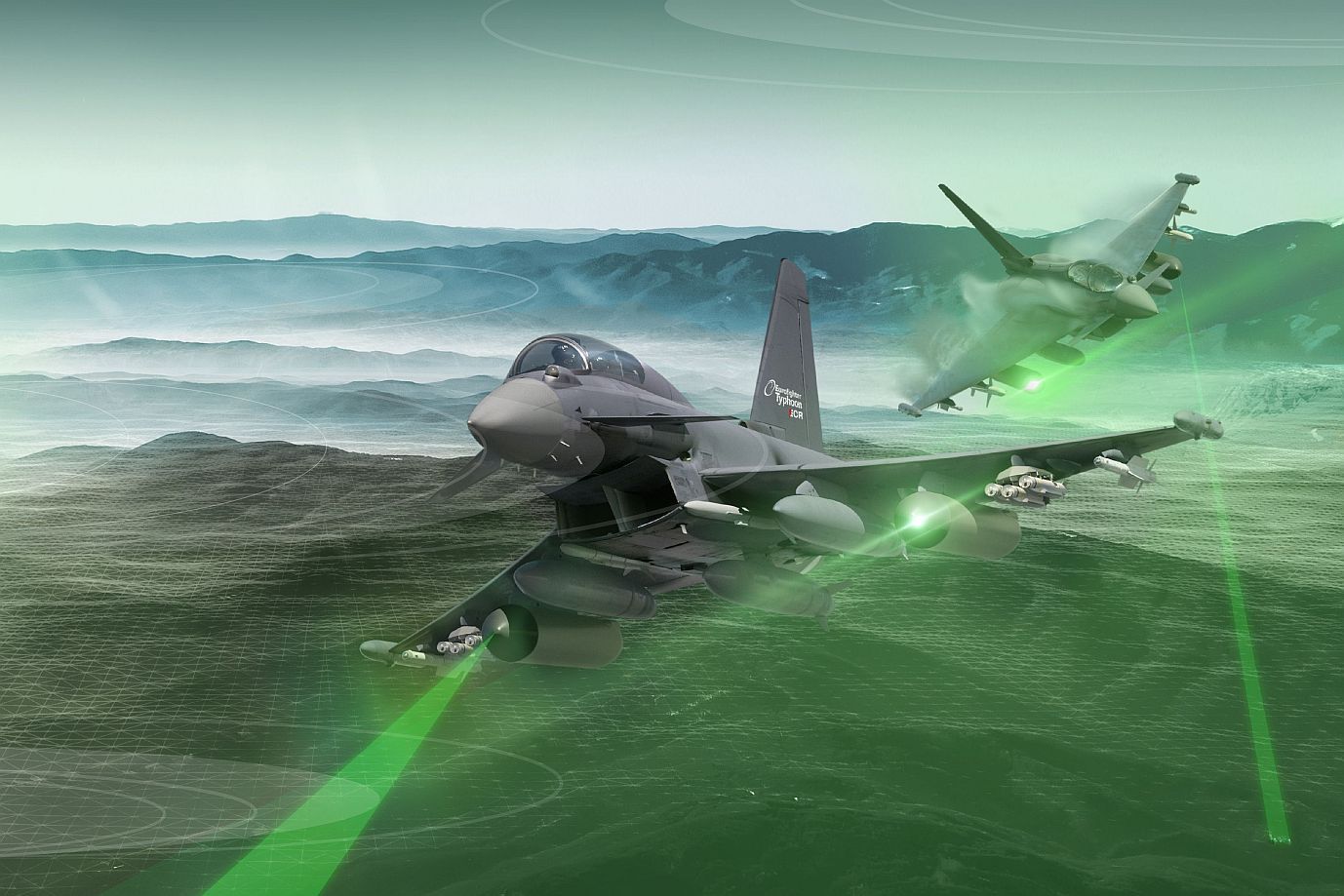
Marignane ? The prototype of Airbus Helicopters? VSR700 unmanned aerial system has performed its first flight at a drone test centre near Aix-en-Provence in the south of France. The VSR700 performed several take-offs and landings on Friday 8th of November with the longest flight lasting around 10 minutes.
In accordance with the airworthiness authority that provided the flight clearance, the VSR700 was tethered with 30-metre cables to fully secure the flight test zone. The subsequent phases of the flight test programme will now evolve towards free flight, and then progressively open the flight envelope.
?The VSR700 is a fully-fledged unmanned aerial system, capitalising on Airbus Helicopters? extensive experience of advanced autopilot systems and engineering expertise to provide modern militaries with new capabilities?, said Bruno Even, Airbus Helicopters CEO. ?This first flight of the VSR700 prototype is a major milestone for the programme as we make progress on the operational demonstrator for the French Navy that will perform trials in 2021 in partnership with Naval Group.?
The VSR700, derived from H?licopt?res Guimbal?s Cabri G2, is an unmanned aerial system in the 500-1000 kg maximum take-off weight range. It offers the best balance of payload capability, endurance and operational cost. It is capable of carrying multiple full size naval sensors for extended periods and can operate in existing ships, alongside a helicopter, with a low logistical footprint.
The VSR700 prototype which has just performed its maiden flight is a step change from the optionally piloted demonstrator that first flew in 2017 and which was based on a modified Cabri G2 equipped for autonomous flight. Compared to the demonstrator, the VSR700 prototype has a specialized set of avionics and an advanced flight control system, a payload bay in place of the pilot station designed to manage mission equipment, as well as a sleeker, more aerodynamic shape to improve flight performance.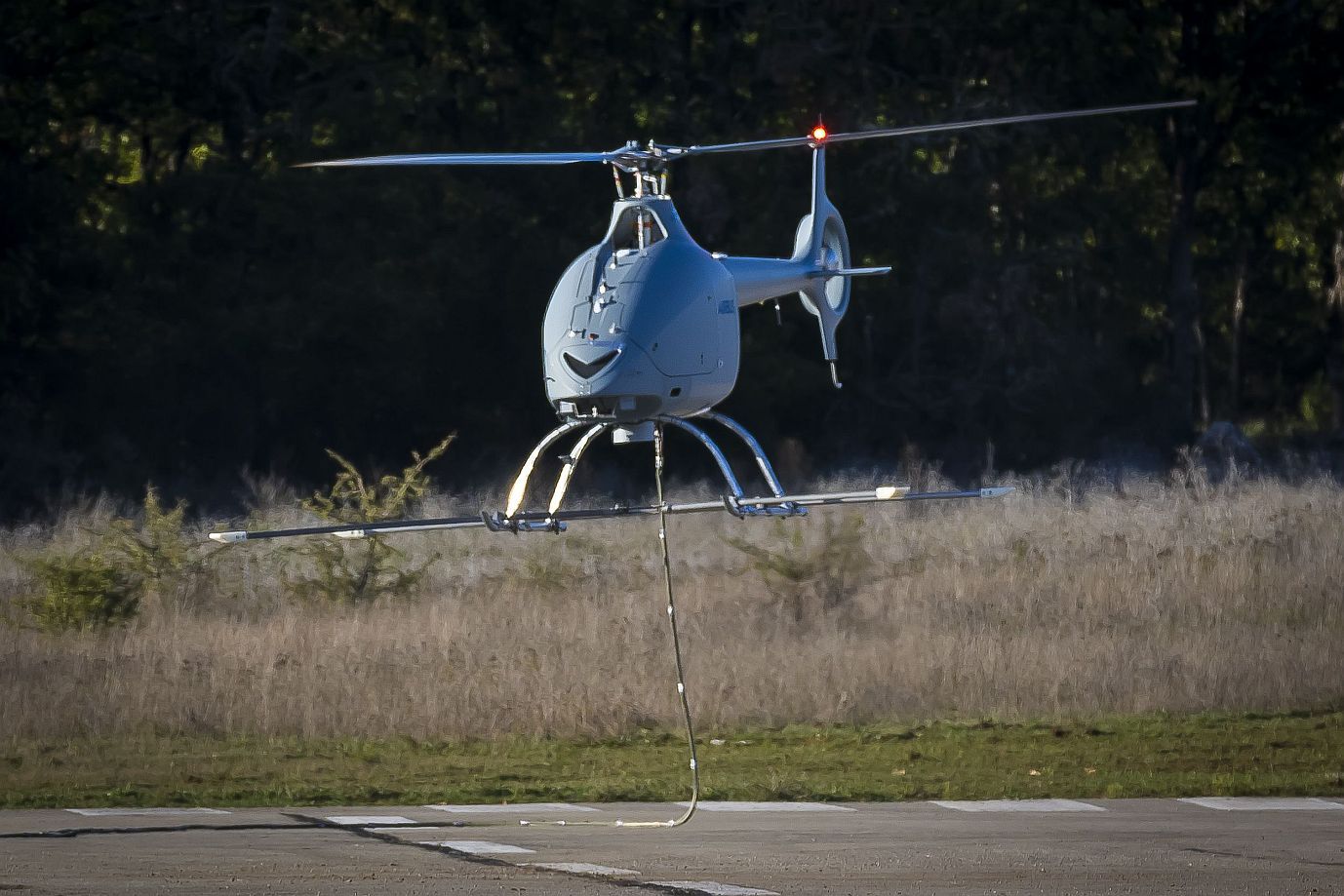
Amsterdam, Netherlands, November 12, 2019 ? Embraer and KLM Cityhopper have signed a firm order for 21 E195-E2 aircraft, plus 14 purchase rights. The 21 firm positions will be acquired via operating lease from Embraer lessor partners Aircastle and ICBC Aviation Leasing. The order was previously announced as a Letter of Intent for 15 firm orders with 20 purchase rights at the Paris Air Show earlier this year. With all purchase rights exercised the deal would have a value of USD 2.48 billion.
The aircraft for this order will come from the existing backlogs of lessors Aircastle and ICBC Aviation Leasing; each providing KLM with 11 and 10 E195-E2s, respectively.
?KLM?s decision to add a further six aircraft to this order is a significant vote of confidence in our E2 programme?, said John Slattery, President and CEO, Embraer Commercial Aviation. ?Delivering 30% lower emissions when compared to KLM?s current E190s, yet still providing a further 32 seats, the E195-E2 will simultaneously increase capacity for KLM at slot constrained Schiphol Airport, while also delivering huge reductions in emissions.?
KLM President & CEO Pieter Elbers, said, ?For KLM this aircraft is a significant part of our commitment to improving our environmental impact. Not only is the E195-E2 the most fuel efficient lowest emission aircraft in its class, it is also the quietest by a considerable margin ? a huge benefit for both our communities and our passengers.
KLM will configure the aircraft with 132 seats. Deliveries will begin in the first quarter of 2021.
Embraer is the world?s leading manufacturer of commercial aircraft up to 150 seats with more than 100 customers across the world. For the E-Jets program alone, Embraer has logged more than 1,800 orders and 1,500 aircraft have been delivered. Today, E-Jets are flying in the fleets of 80 customers in 50 countries. The versatile 70 to 150-seat family is flying with low-cost airlines as well as with regional and mainline network carriers.
-
JACKSONVILLE, Fla. (Nov. 12, 2019) -- Players from the Jacksonville Jaguars football team visited the 125th Fighter Wing. This visit allowed an opportunity for player to see missions of the 125th Fighter Wing. (U.S. Air Force photo by Airman 1st Class Jacob Hancock, Released.)
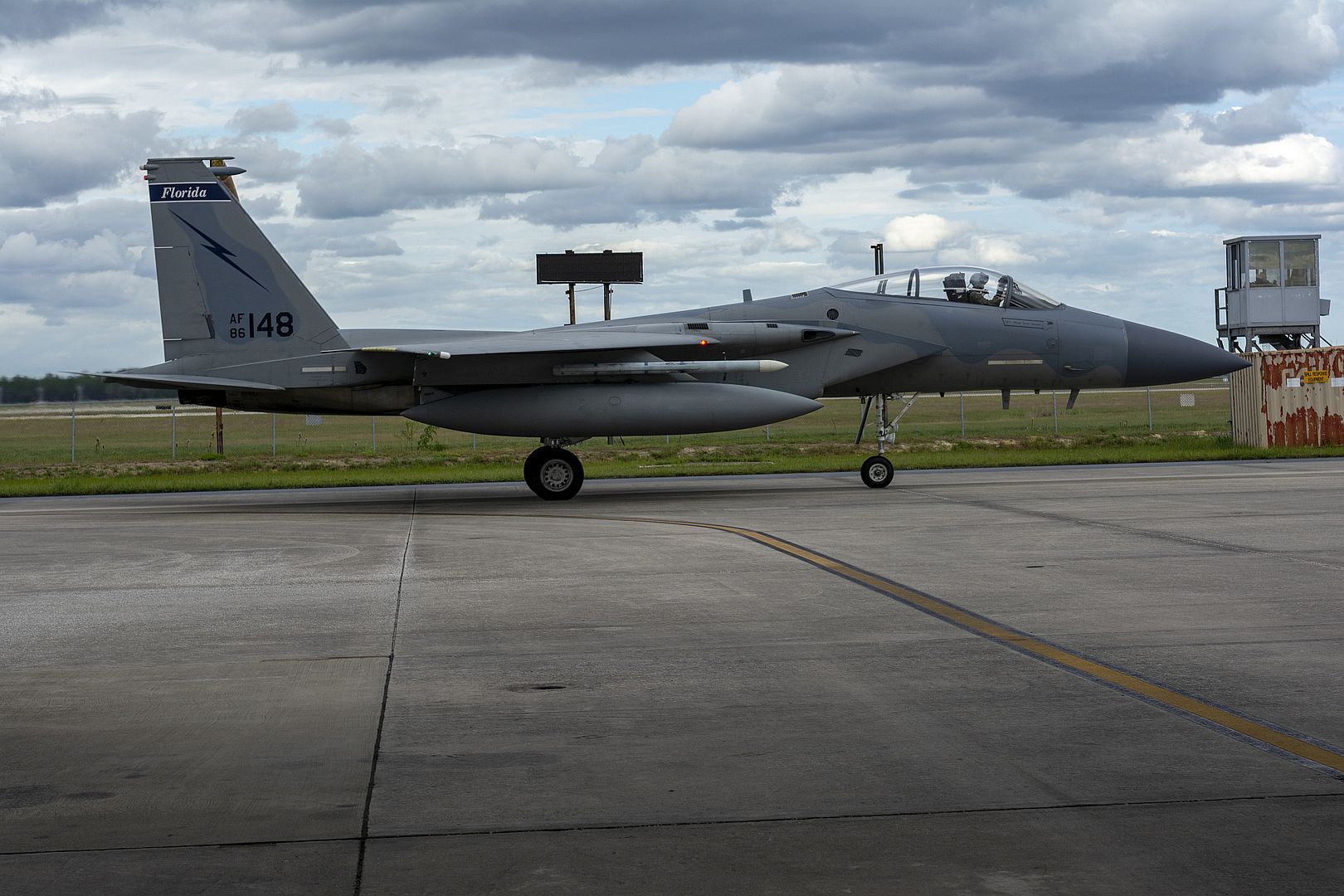
A C-17 Globemaster III assigned to the 535th Airlift Squadron at Joint Base Pearl Harbor-Hickam, Hawaii, taxis for take-off during Exercise GLOBAL DEXTERITY, Royal Australian Air Force Base Amberley, Australia, Nov. 12, 2019. GLOBAL DEXTERITY is an integrated, multinational training event involving air land and airborne crews to promote the standardization and compatibility of equipment across allied nations. (U.S. Air Force photo by Tech. Sgt. Heather Redman)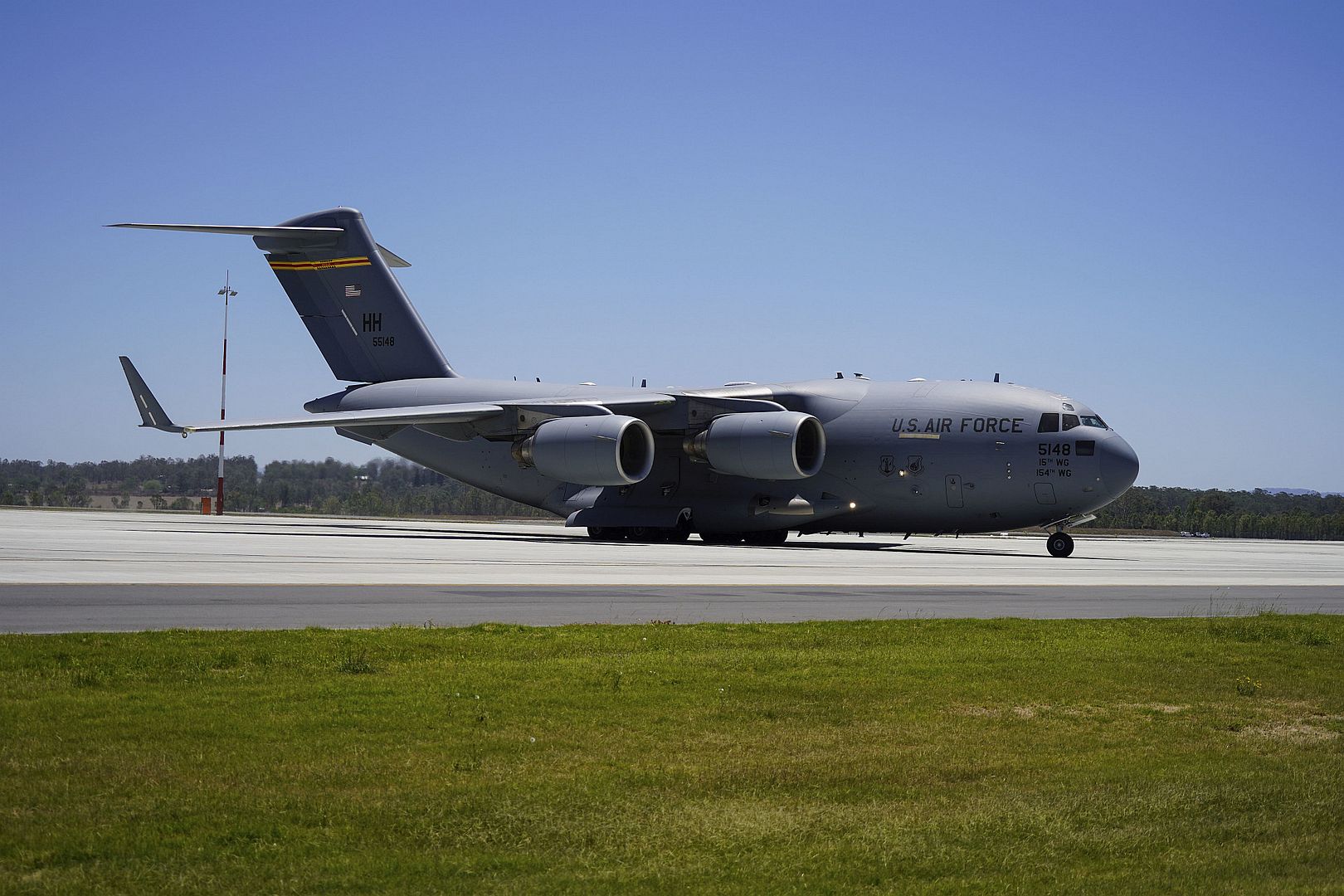
SIGONELLA, Italy (Nov. 9, 2019) Aviation Machinist Mate 2nd Class Ouachita Tervil, assigned to the "Skinny Dragons" of Patrol Squadron (VP) 4 performs an air to air refueling operational check on the P-8A's Universal Aerial Refueling Receptacle Slipway Installation. VP-4 is forward deployed to the U.S. 6th Fleet area of operations and is assigned to Commander, Task Force 67, responsible for tactical control of deployed maritime patrol and reconnaissance squadrons throughout Europe and Africa. (U.S. Navy photo by Mass Communication Specialist 2nd Class Juan S. Sua/Released)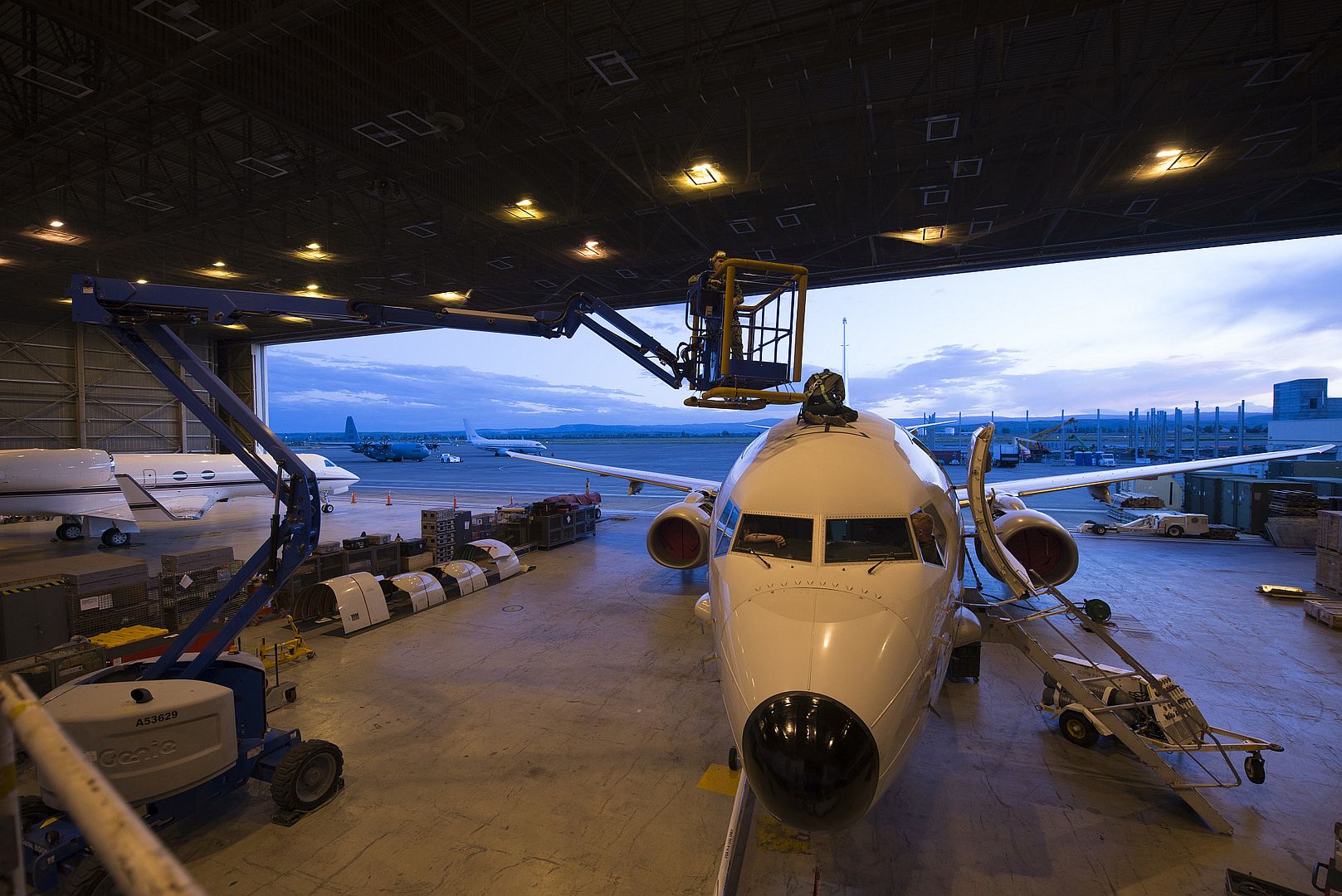
Fort Worth, TX (12 November 2019) ? Bell Textron Inc., a Textron Inc. (NYSE:TXT) company, announced today the delivery of Canada?s first Bell 407GXi to Nova Scotia-based business, Municipal Enterprises Limited. The aircraft is outfitted in newly certified on-board equipment and features a custom designed interior. Municipal Enterprises Limited will use the aircraft with respect to its multifaceted group of companies.
In 2018, Bell introduced the enhanced Bell 407 platform at the Helicopter Association International?s annual Heli-Expo. The Bell 407GXi features the Garmin G1000H NXi integrated flight deck and a new Rolls-Royce M250-C47E/4 engine with dual channel FADEC, which delivers better high and hot performance, full automatic relight, and the ability to cruise at 133 knots.
?The Bell 407GXi delivers a more robust customer experience while providing best-in-class speed, performance and reliability,? said, Susan Griffin, executive vice president, Commercial Business. ?Canada is home to Bell?s final assembly center for all current commercial aircraft, and we are proud to have completed and delivered Municipal Enterprises Limited?s customized Bell 407GXi at our Mirabel facility.?
Since 1986, Bell has assembled and delivered more than 5,000 helicopters from its Mirabel facility and employs 1,200 personnel across Canada. More than 1,000 Bell aircraft operate in Canada including those with the Royal Canadian Air Force and the Canadian Coast Guard.
?We are excited to take delivery of the Bell 407GXi, and we are confident the aircraft will provide customers with an enhanced travel experience,? said Harold Johnson, vice president, Municipal Enterprises Limited. ?The Bell 407GXi provides improved pilot awareness, higher precision navigation, enhanced engine controls, and improved in-flight connectivity to smartphones and tablets. It?s a great addition to our business in Eastern Canada.?
Additional options for the 407GXi include the Garmin FlightStream 510 that allows pilots to upload flight plans from smart devices, Garmin SurfaceWatch that provides runway identification and alerting technology, a 3,100-lb. cargo hook, and Health Usage Monitoring (HUMS) for aircraft system diagnostics.
Photo courtesy of Peter Handley.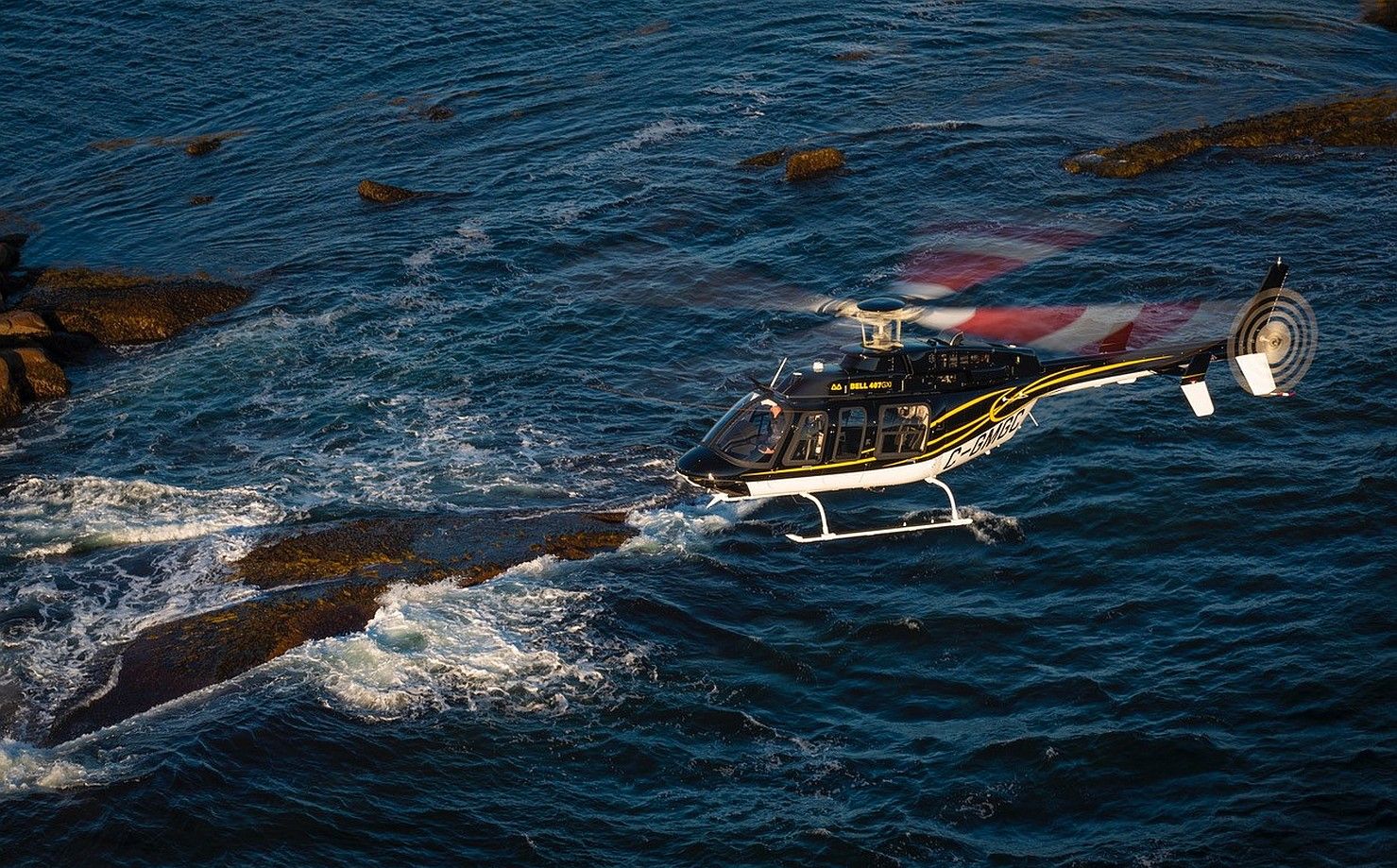
RAF Typhoons have arrived in Iceland where they will spend the next month protecting the airspace as the UK?s contribution to NATO?s Icelandic Air Policing Mission.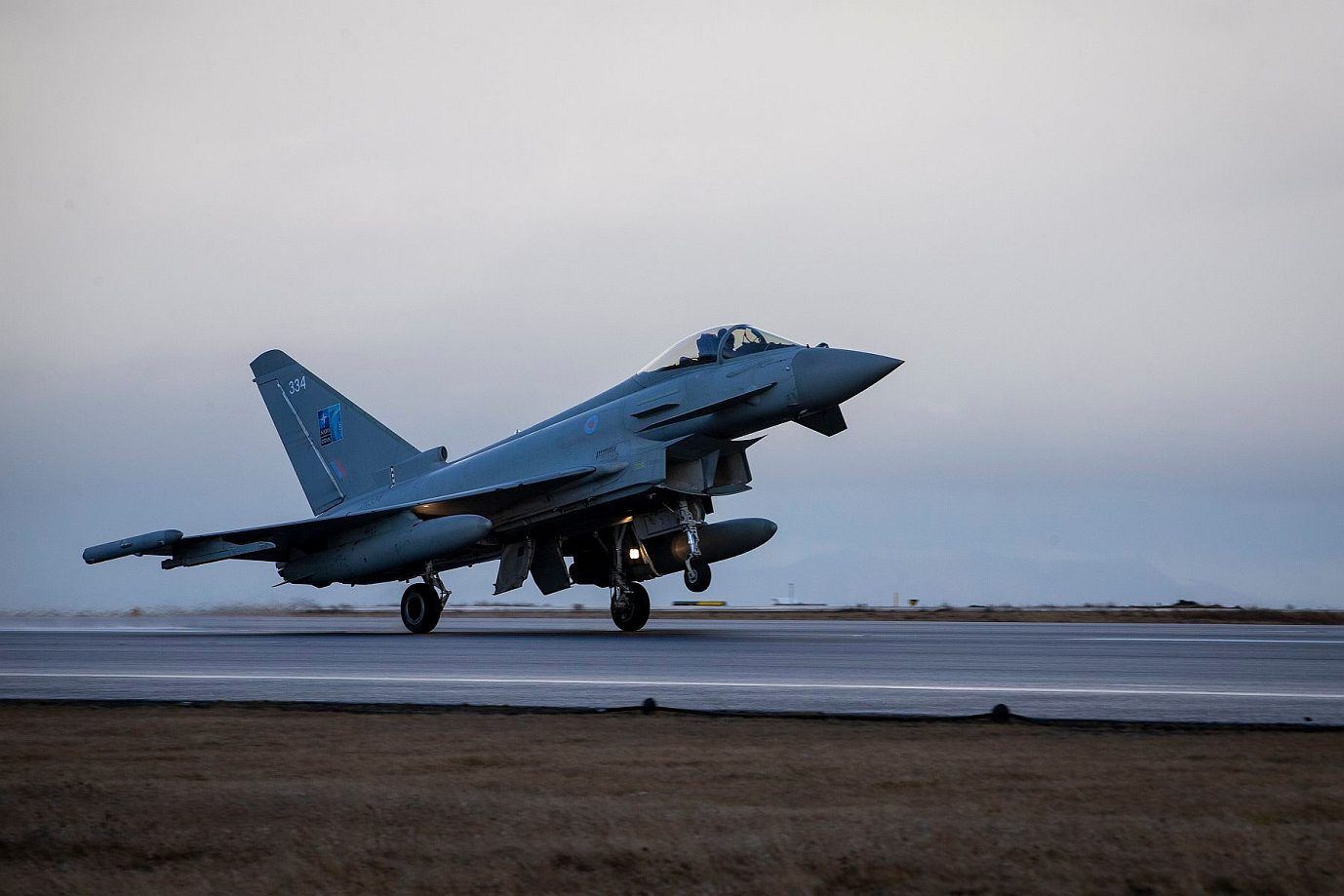
The jet fighters from 1(Fighter) Squadron will be stationed at Keflavik Air Base until mid December before returning to their home at RAF Lossiemouth in Scotland.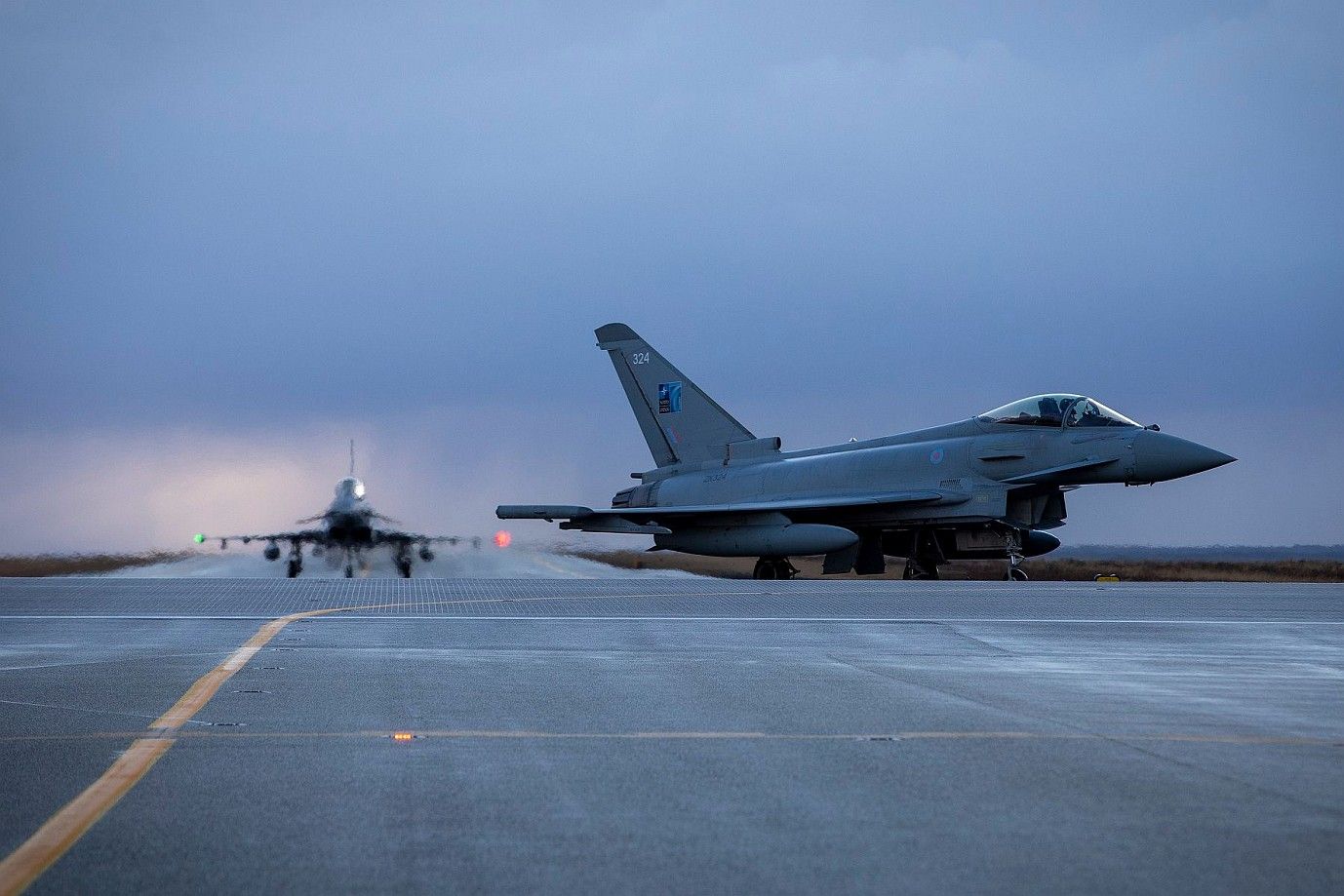
This is the first time in more than 10 years that the RAF has deployed aircraft to Iceland and is also the first time that the RAF has conducted the Icelandic NATO air Policing mission. The mission is being conducted by a rotation of NATO Allies and started in 2008 following a request from Iceland, which does not have its own Air Force.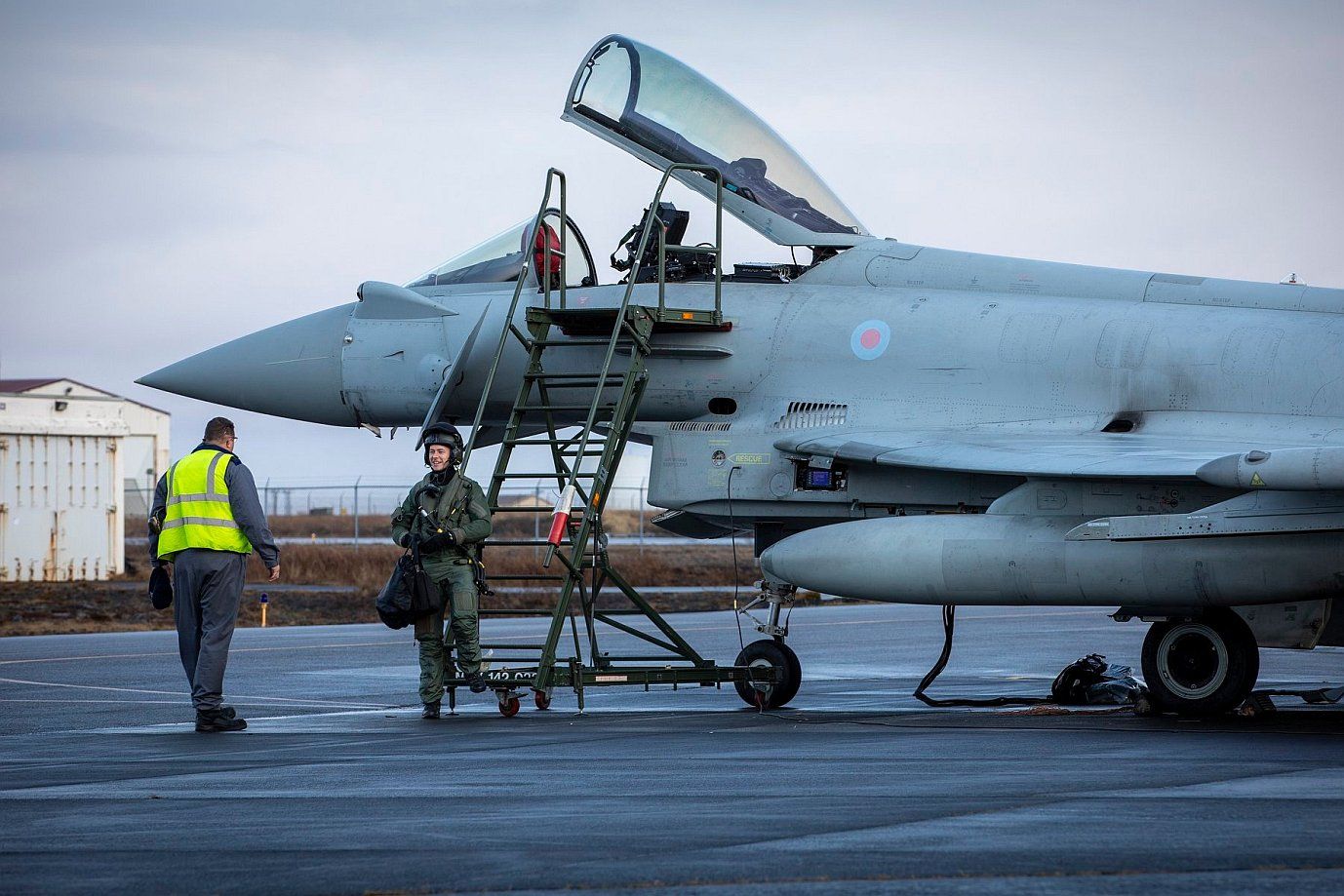
-
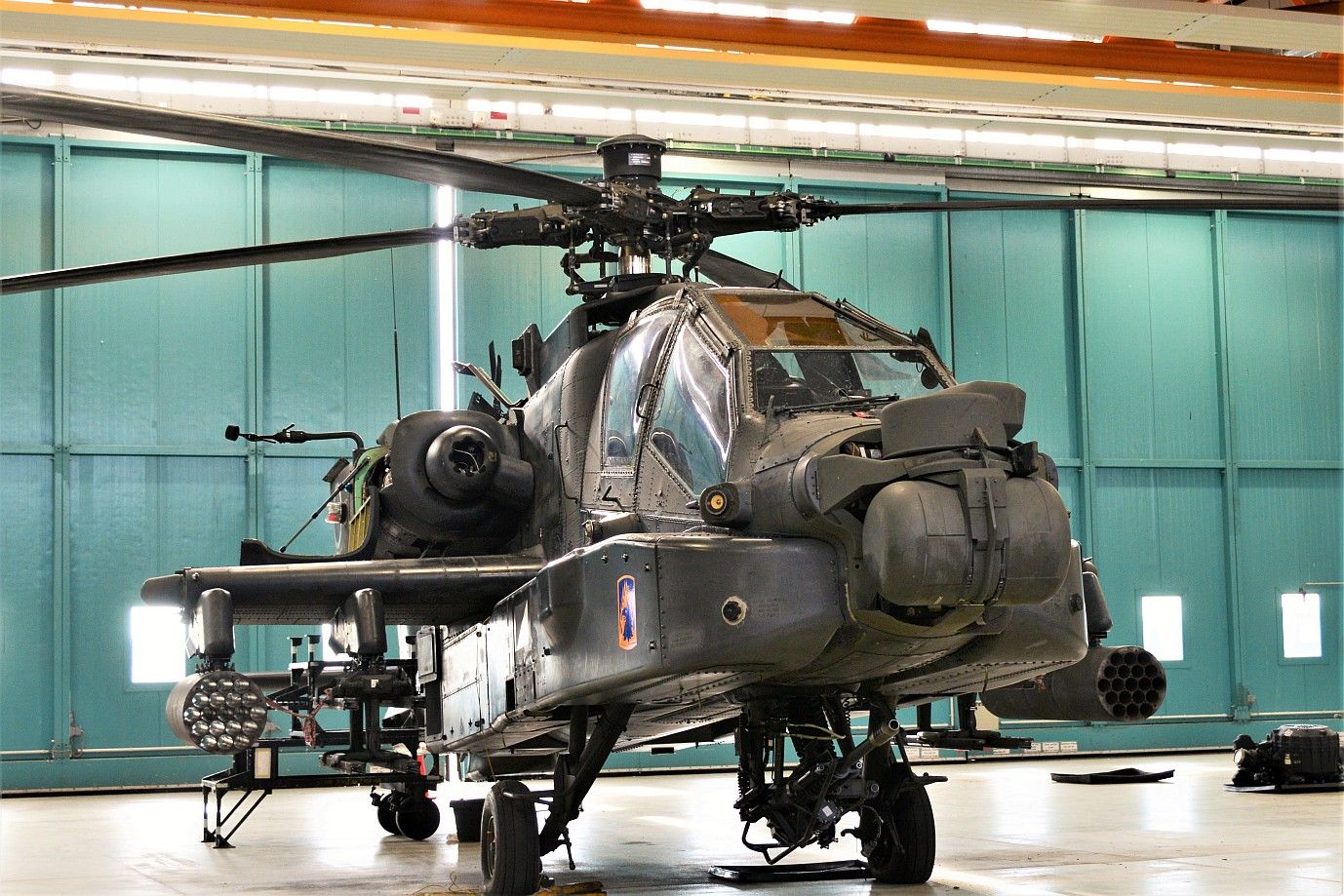
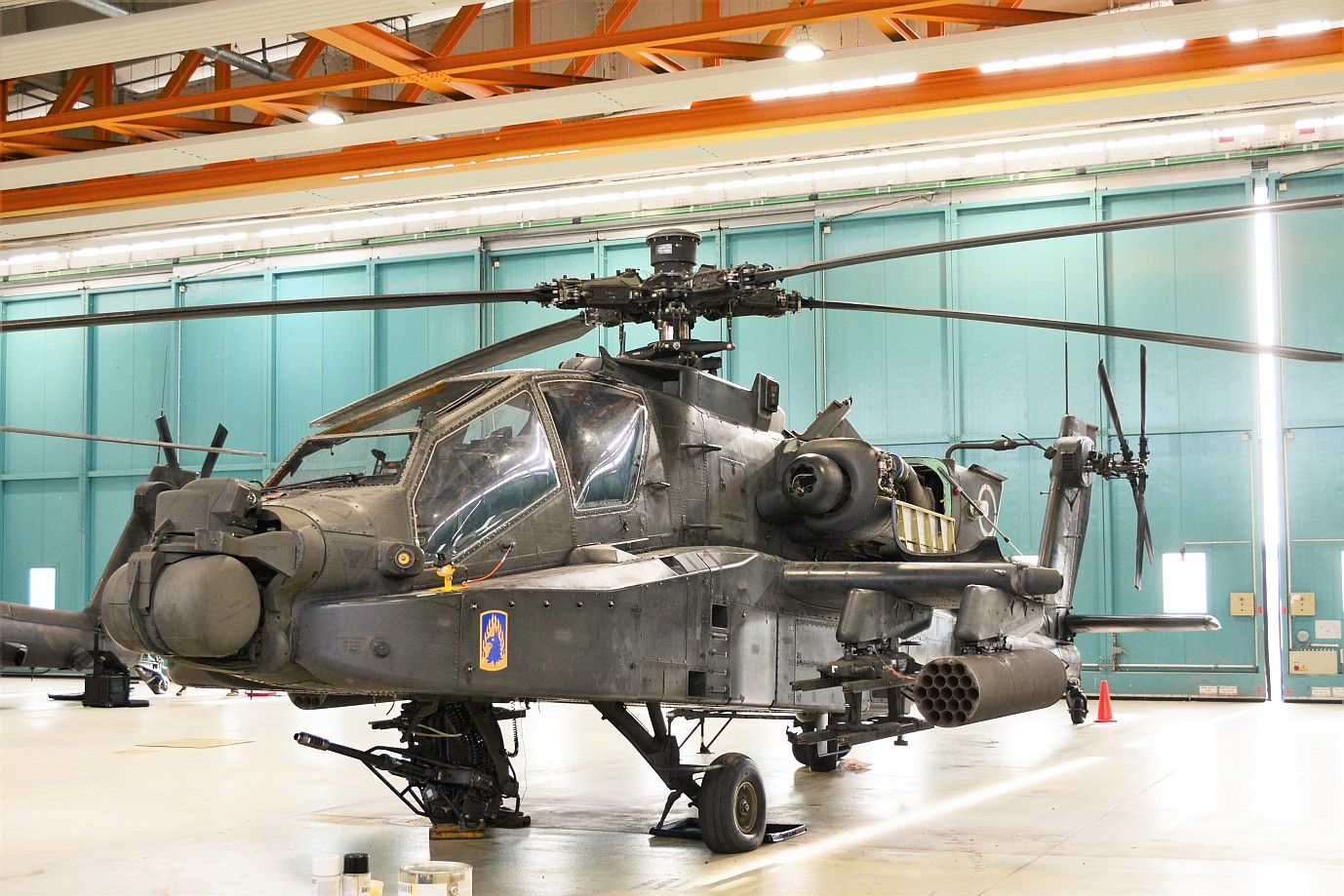
An AH-64D Apache Longbow helicopter assigned to 1st Battalion, 3rd Aviation Regiment (Attack Reconnaissance), sits inside an aircraft maintenance hangar during repairs on Nov. 14, 2019, at Katterbach Army Airfield in Ansbach, Germany. (U.S. Army photo's by Charles Rosemond)
Aircrew of the 332d Air Expeditionary Wing prepare to launch an F-15E Strike Eagle November 12, 2019 at an undisclosed location in Southwest Asia. The F-15E is an extremely maneuverable tactical fighter designed to allow the Air Force to establish air superiority over the battlefield. (U.S. Air Force photo by Senior Master Sgt. Ralph Branson)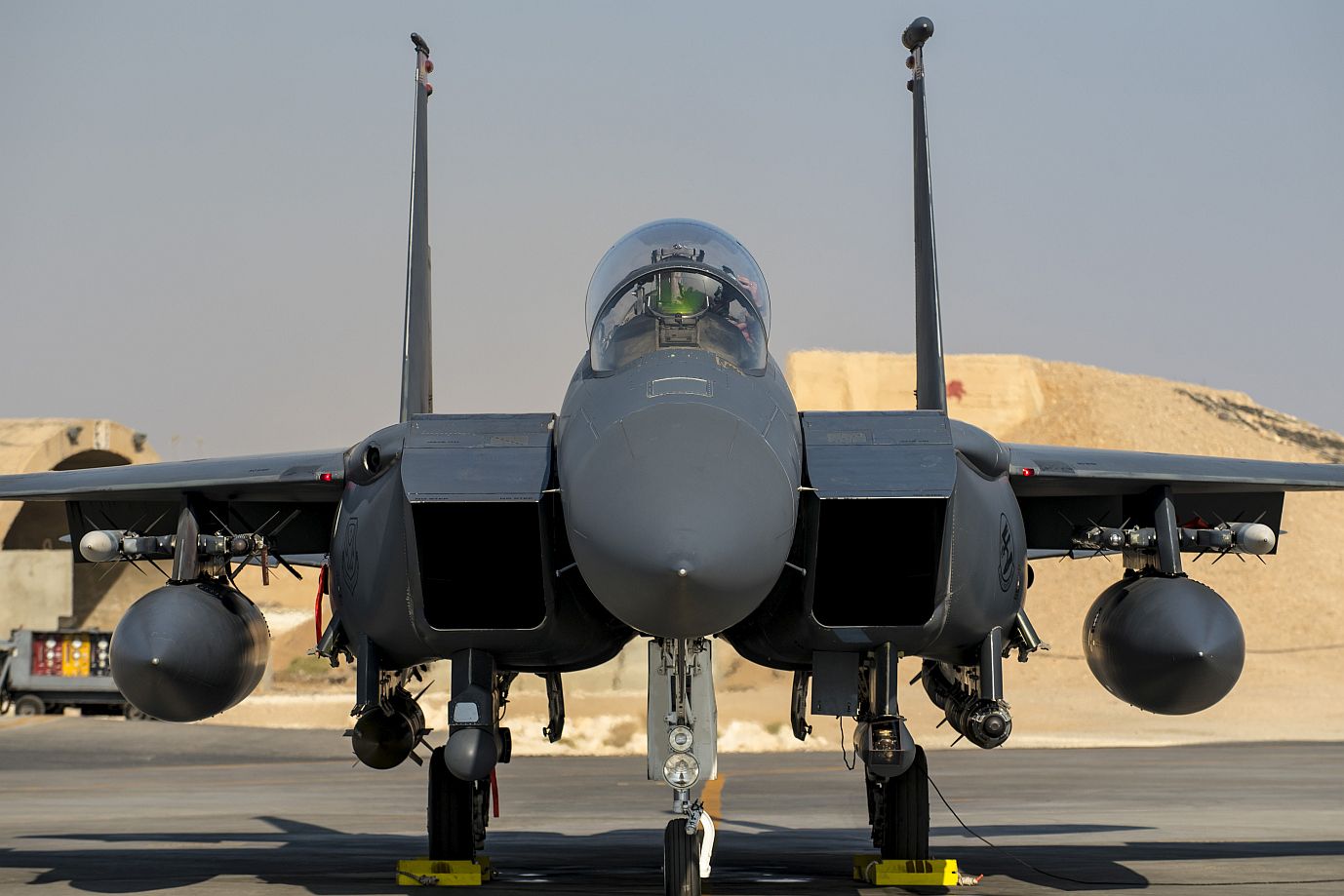
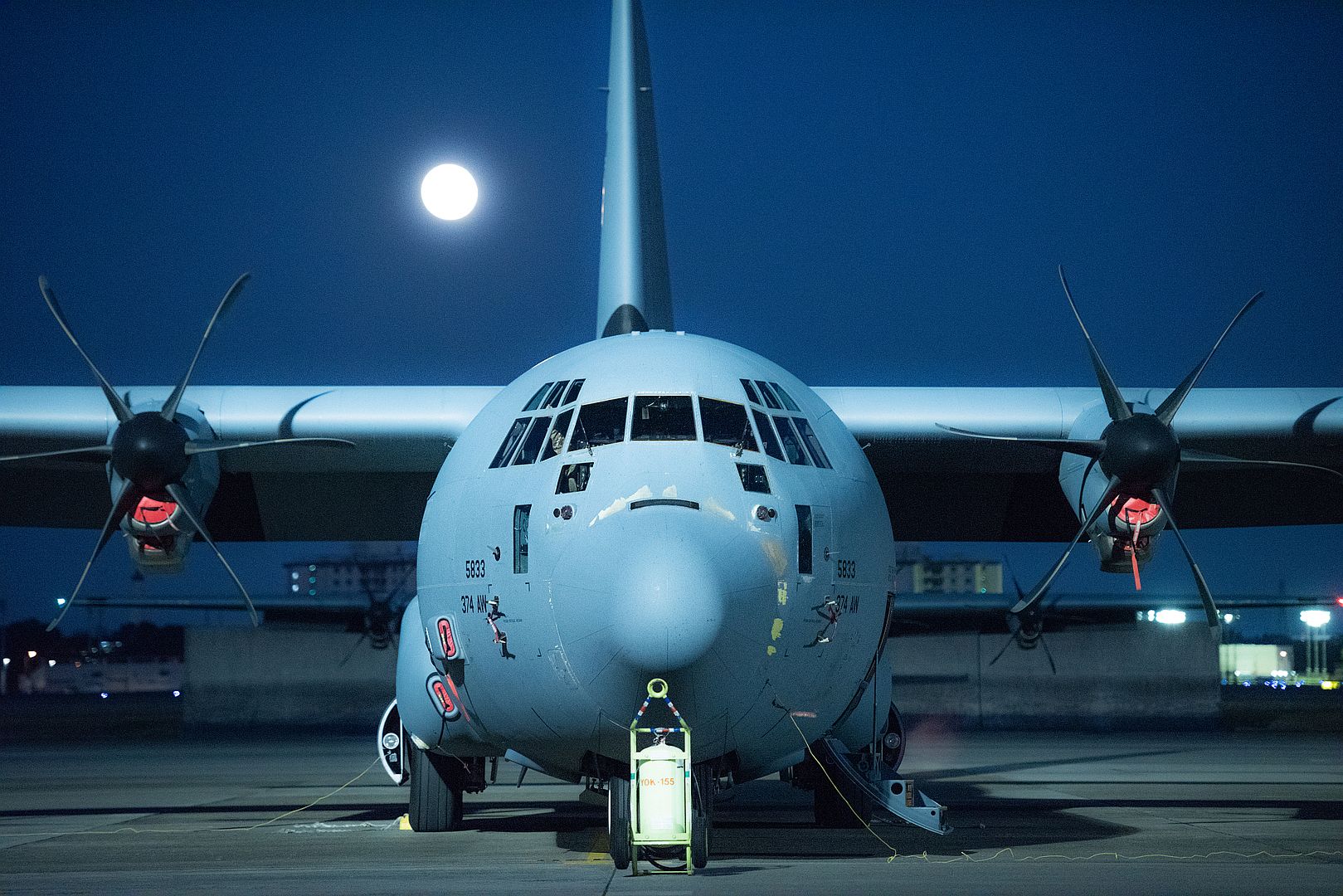
374th Airlift Wing Airmen work on a C-130J Super Hercules assigned to the 36th Airlift Squadron on the Yokota Air Base, Japan flightline, Nov. 12, 2019. Yokota Air Base is the Pacific?s premier power projection platform. (U.S. Air Force photo's by Machiko Arita)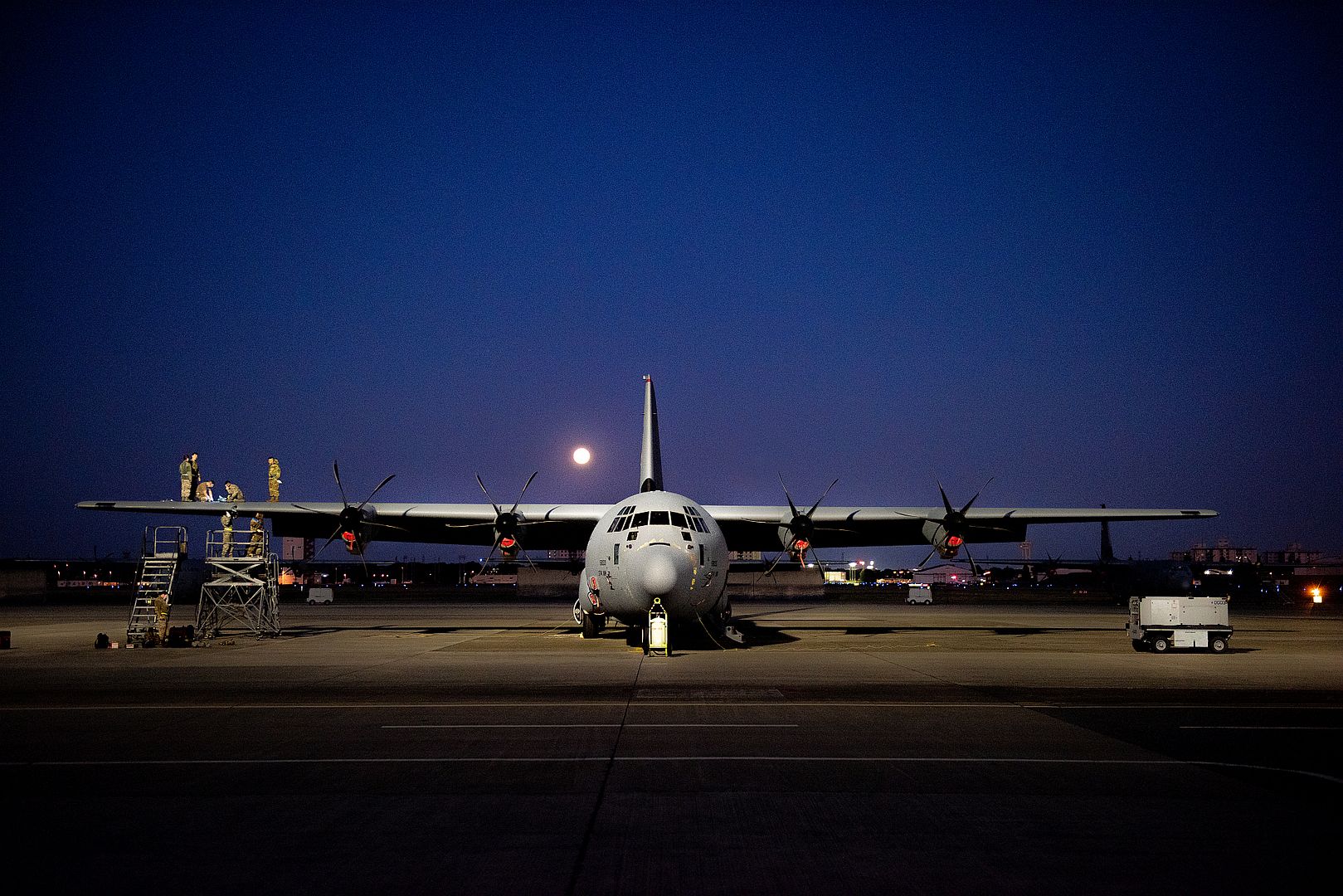
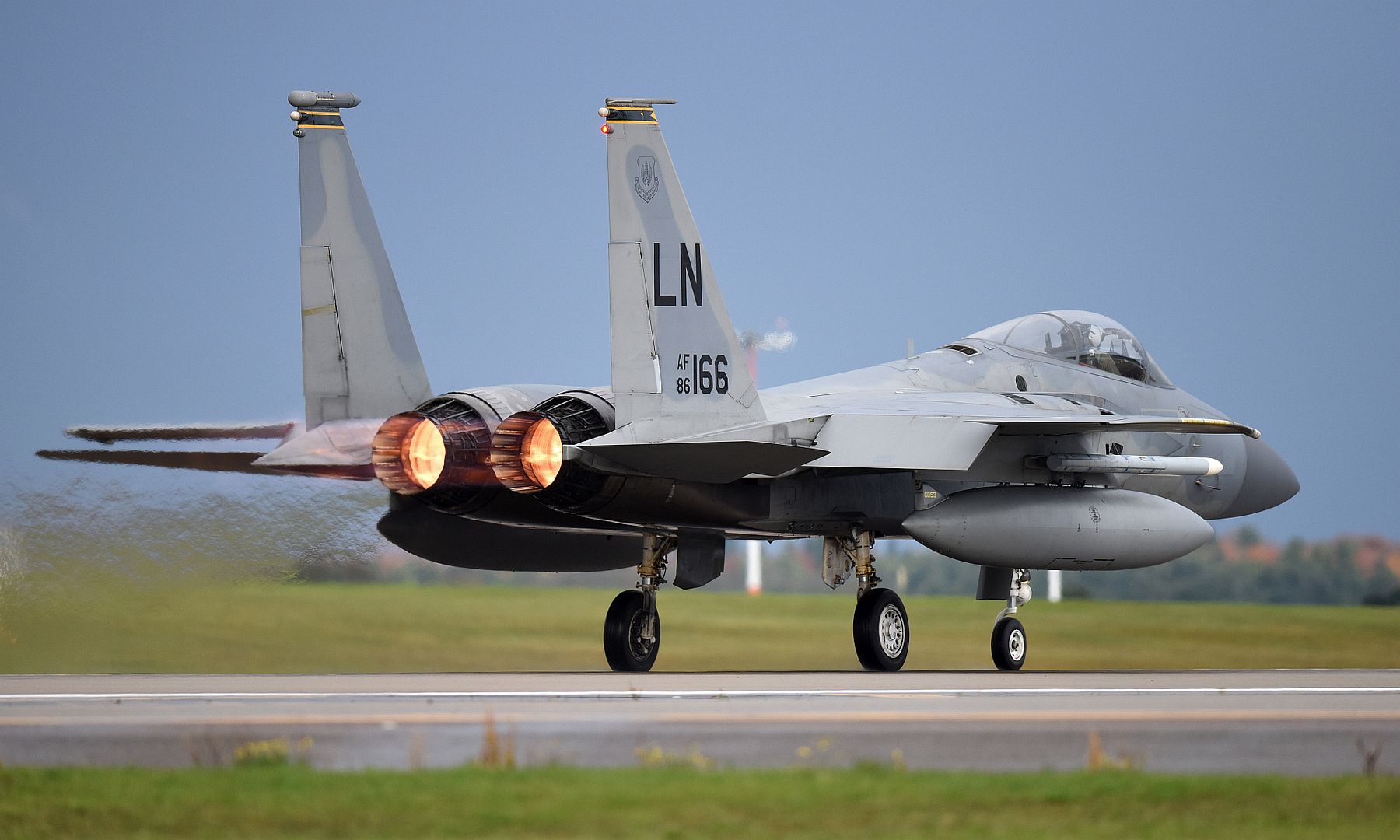
F-15C Eagle;s assigned to the 493rd Fighter Squadron take off in support of exercise Point Blank 19-8 at Royal Air Force Lakenheath, England, Nov. 14, 2019. The purpose of Point Blank is to exercise large force capabilities that incorporate current and future wartime scenarios. (U.S. Air Force photo's by Airman 1st Class Madeline Herzog)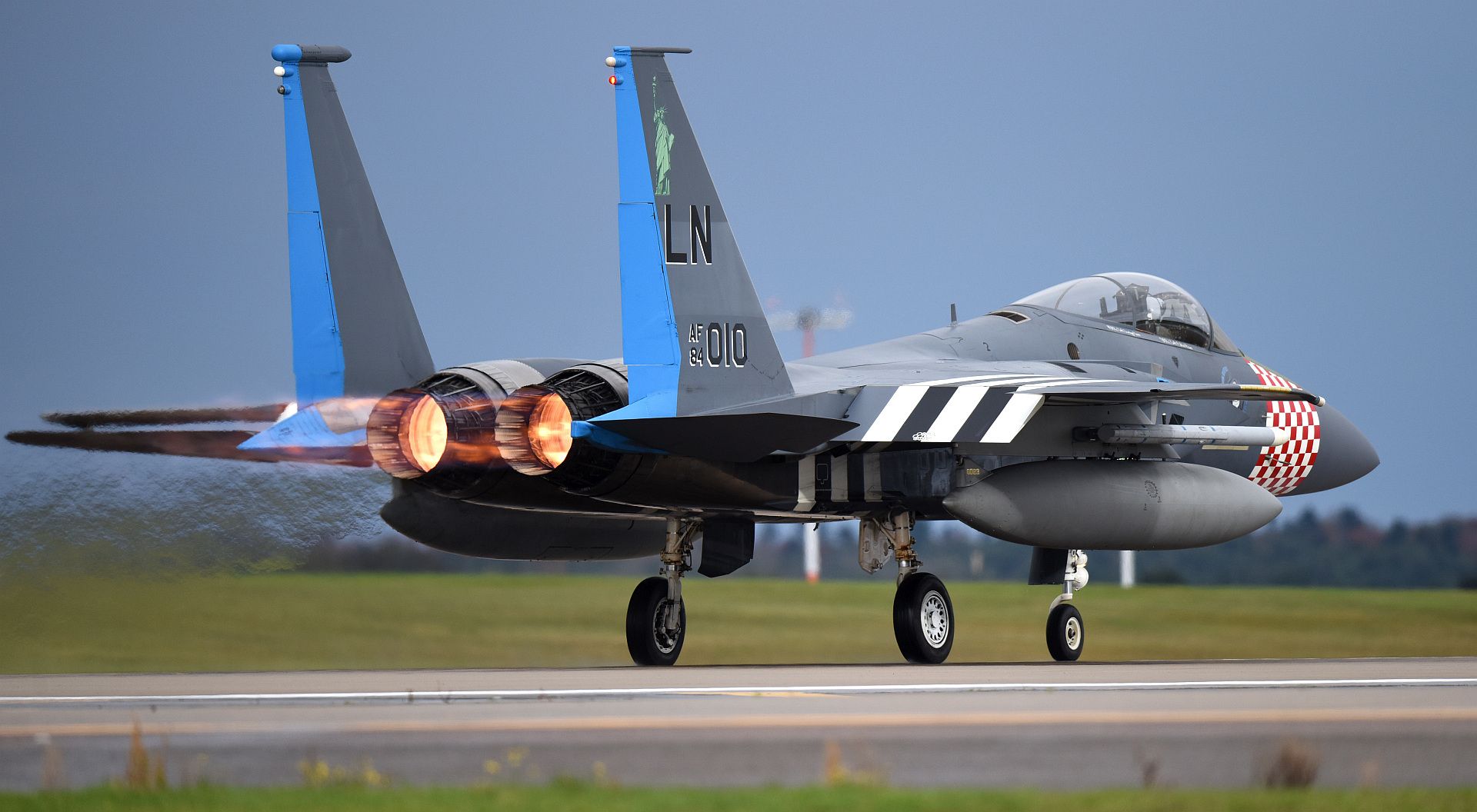
An F-15E Strike Eagle assigned to the 492nd Fighter Squadron takes off in support of exercise Point Blank 19-8 at Royal Air Force Lakenheath, England, Nov. 14, 2019. Participation in bilateral exercises enhances professional relationships and improves overall coordination with allies and partner militaries.(U.S. Air Force photo by Airman 1st Class Madeline Herzog)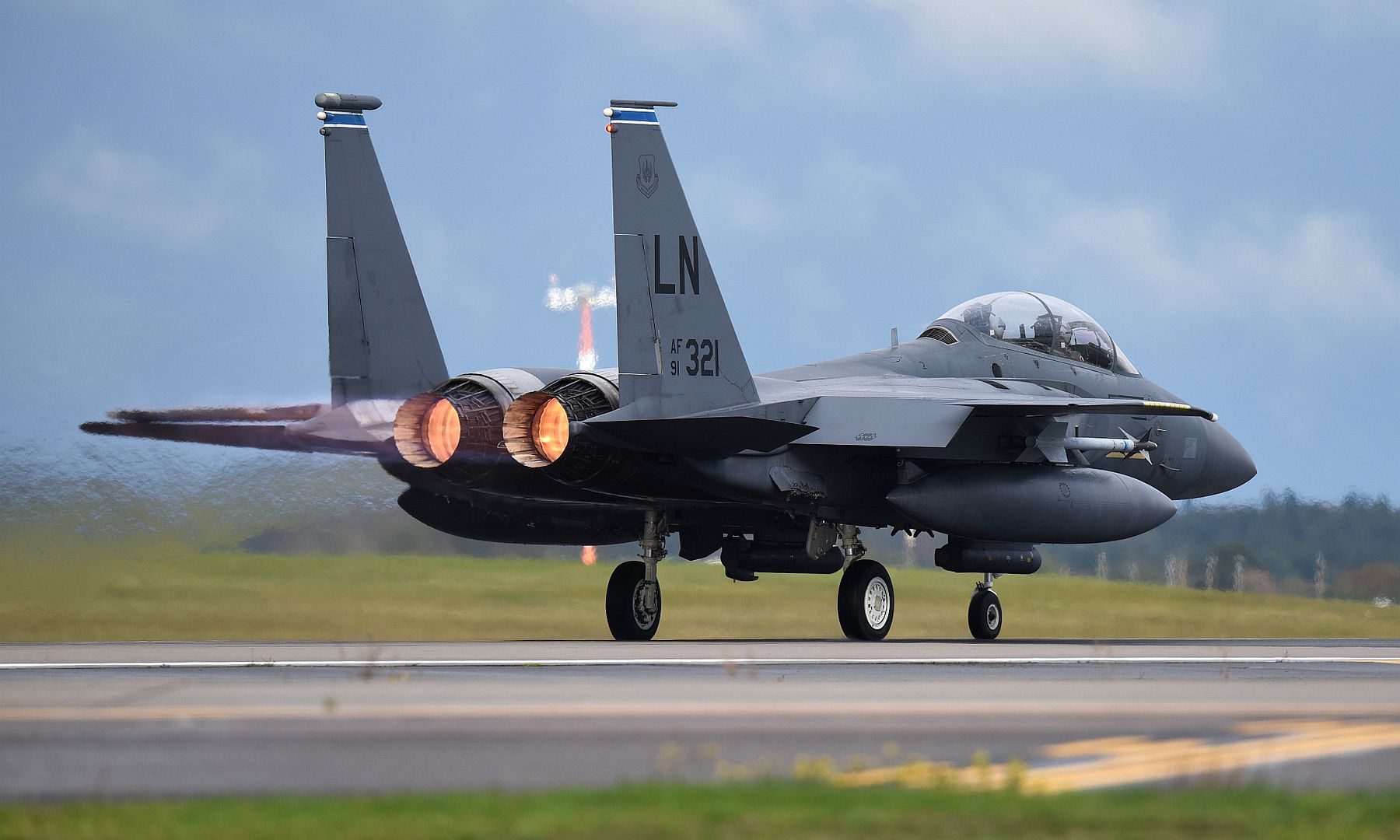
PACIFIC OCEAN (Nov. 13, 2019) An F/A-18F Super Hornet assigned to the Black Knights of Strike Fighter Squadron (VFA) 154 makes an arrested landing on the flight deck of the aircraft carrier USS Theodore Roosevelt (CVN 71). Theodore Roosevelt is conducting routine operations in the eastern Pacific Ocean. (U.S. Navy photo by Airman D.J. Schwartz/Released)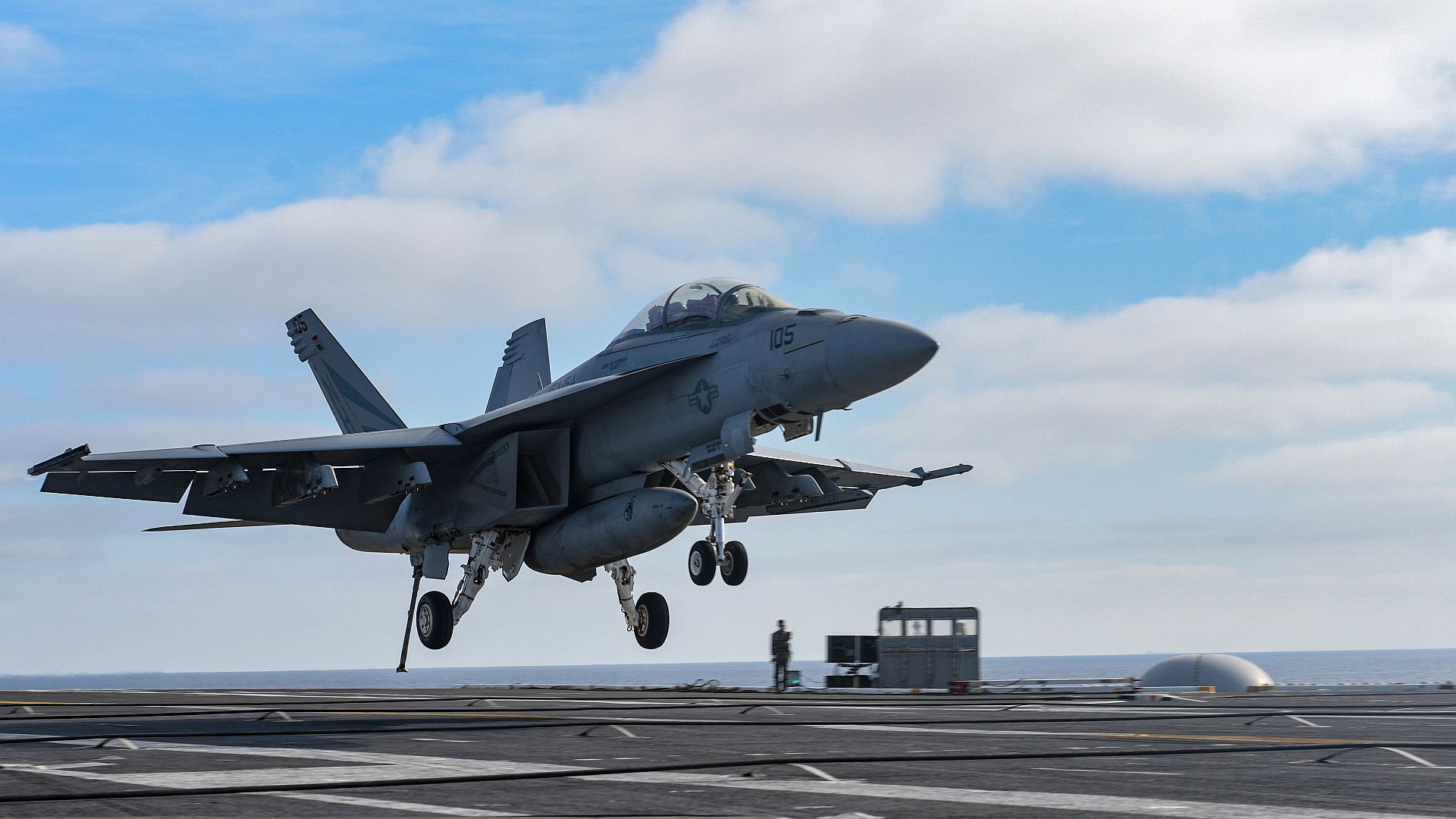
ROLLING MEADOWS, Ill. ? Nov. 14, 2019 ? Northrop Grumman Corporation (NYSE: NOC) has been selected by the U.S. Air Force for a prototype project to demonstrate an internally mounted electronic warfare suite and digital radar warning receiver for the F-16 fighter aircraft. The agreement was issued under SOSSEC Consortium?s Air Force Open System Acquisition Initiative (OSAI) Other Transaction Agreement (OTA) for prototyping.
?Providing advanced electronic warfare capabilities to the F-16 community is critically important to the future survivability of the platform, especially as the electromagnetic spectrum becomes increasingly contested,? said Brent Toland, vice president, land and avionics C4ISR, Northrop Grumman. ?Our system builds on our long experience with the F-16 and other military aircraft to provide the warfighter with the ability to operate seamlessly against the threats that are continuing to grow in sophistication.?
The goal of the prototype project is to provide spherical radar warning, threat identification and countermeasure capabilities to protect aircrews from modern electromagnetic spectrum threats. Northrop Grumman?s prototype solution builds upon the company?s advanced electronic warfare system architecture that is in production for multiple programs, offering protection from current and emerging threats and a growth path to even greater self-protection capabilities.
Northrop Grumman has teamed with non-traditional defense contractors for the execution of this OTA prototype project.
-
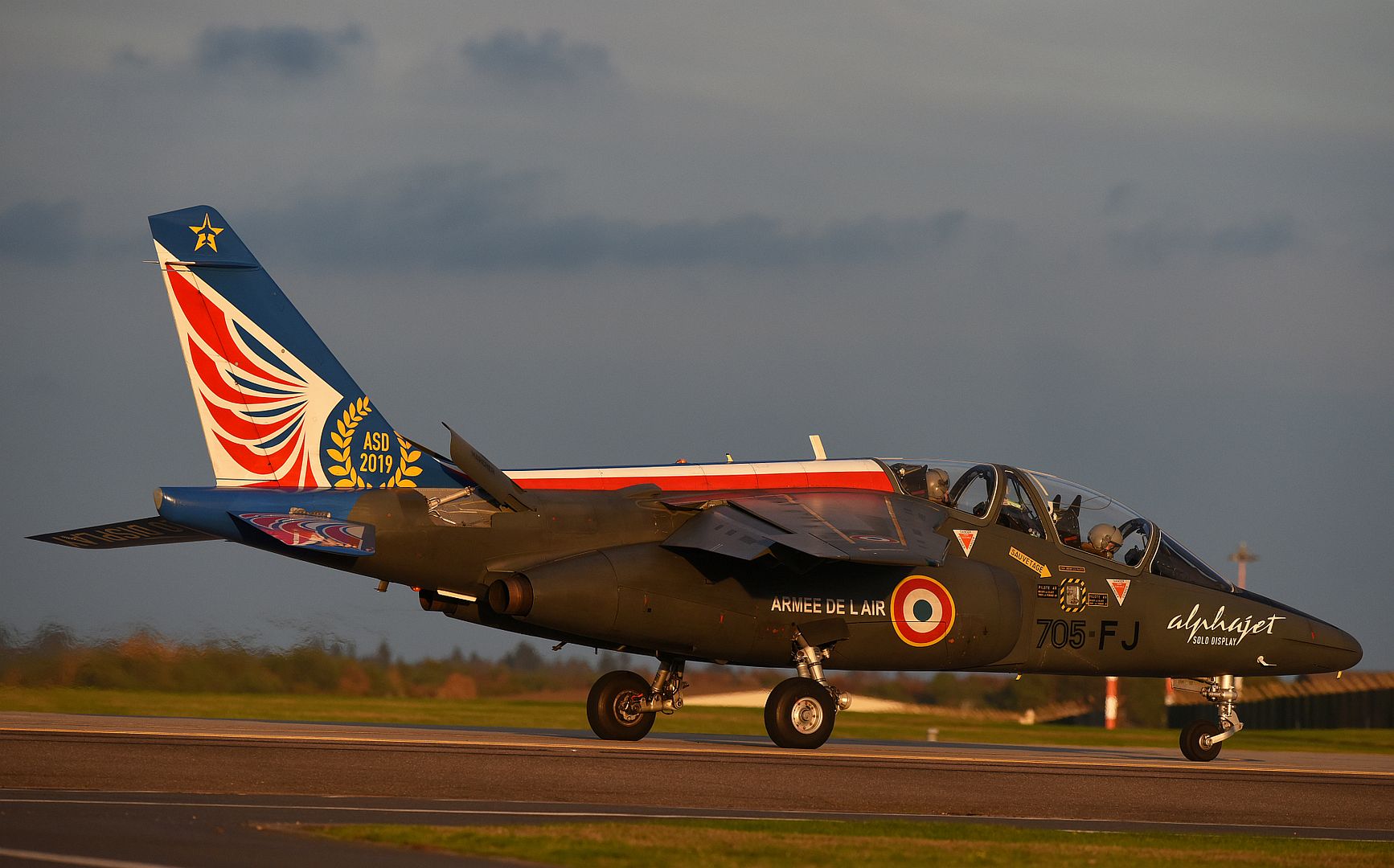
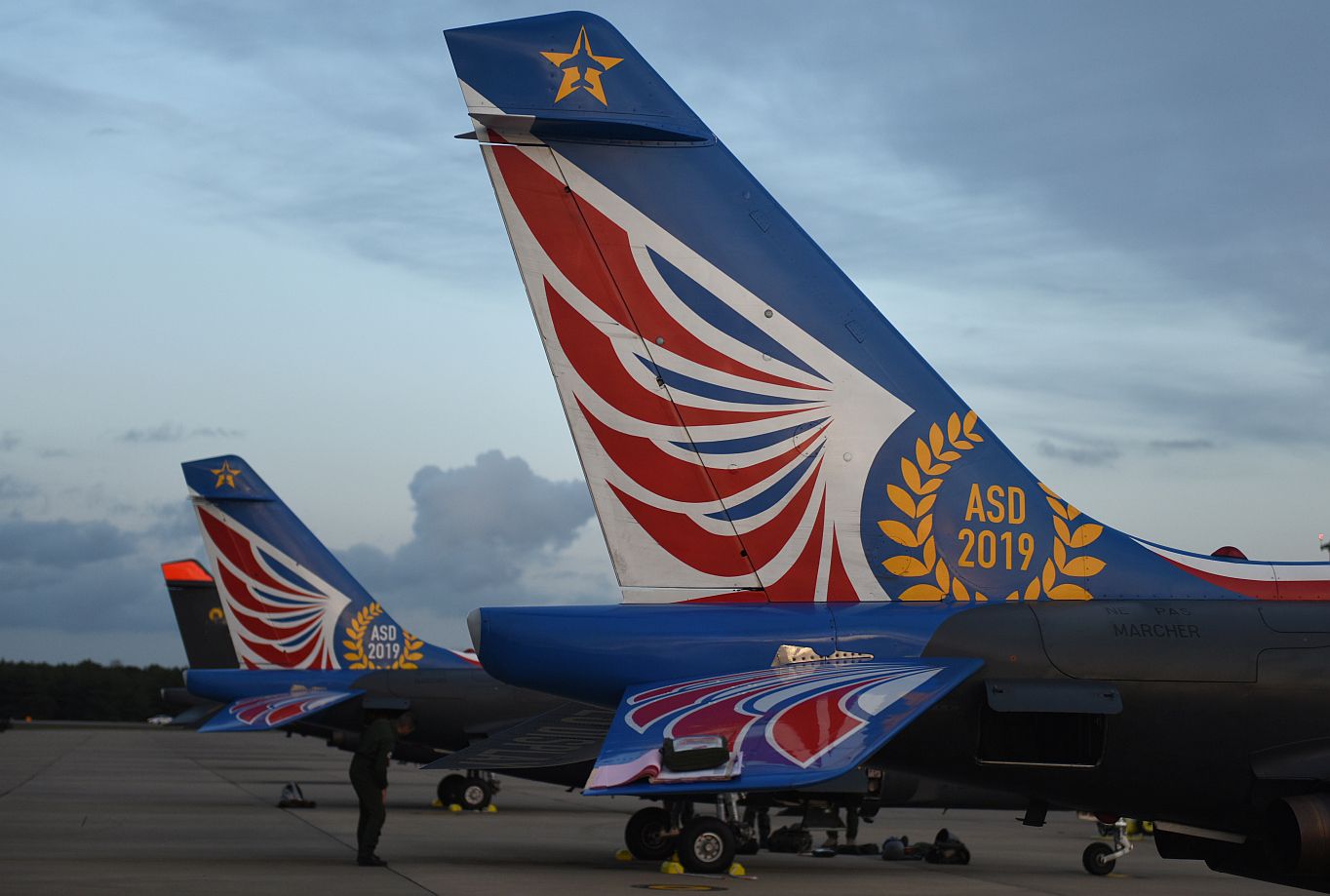
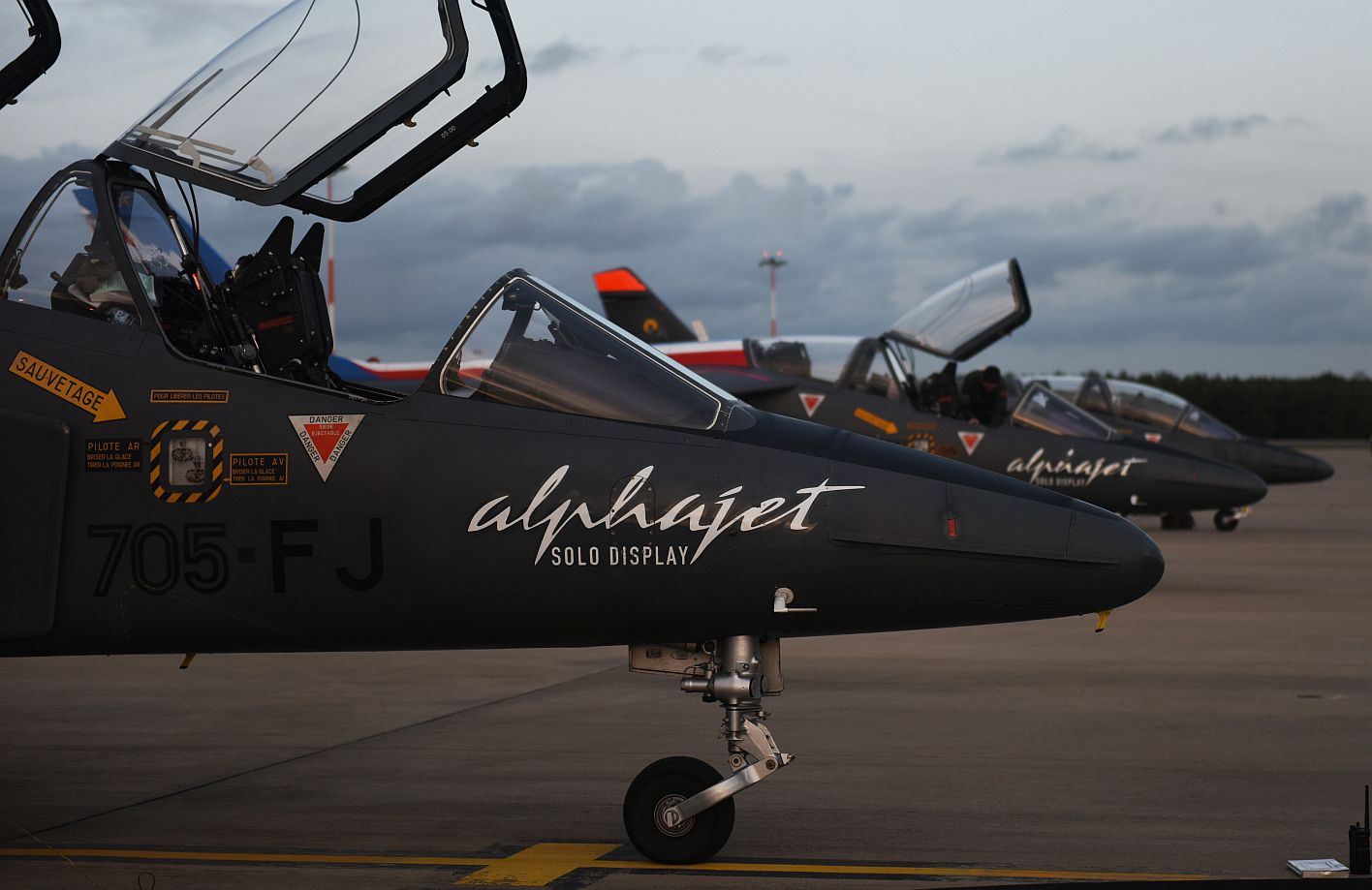
French Air Force Dassault/Dornier Alpha Jets from Tours - Saint-Symphorien Air Base, Centre-Val de Loire region, France arrived at Royal Air Force Lakenheath, England Nov. 13, 2019. During the visit, French pilots participated in U.S. F-15 immersion training with Liberty Wing aircrew.
Photo's by Airman 1st Class Mikayla Whiteley.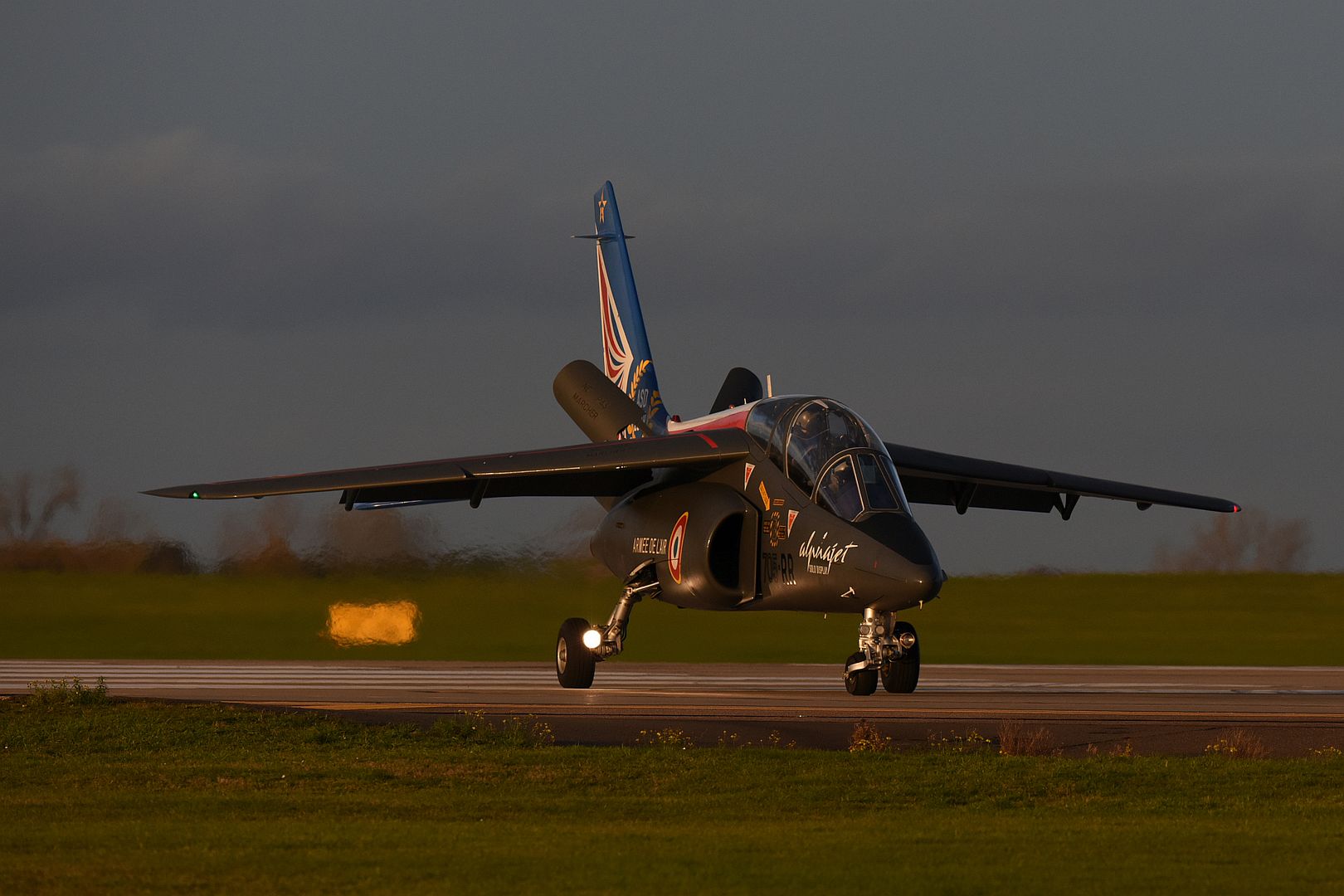
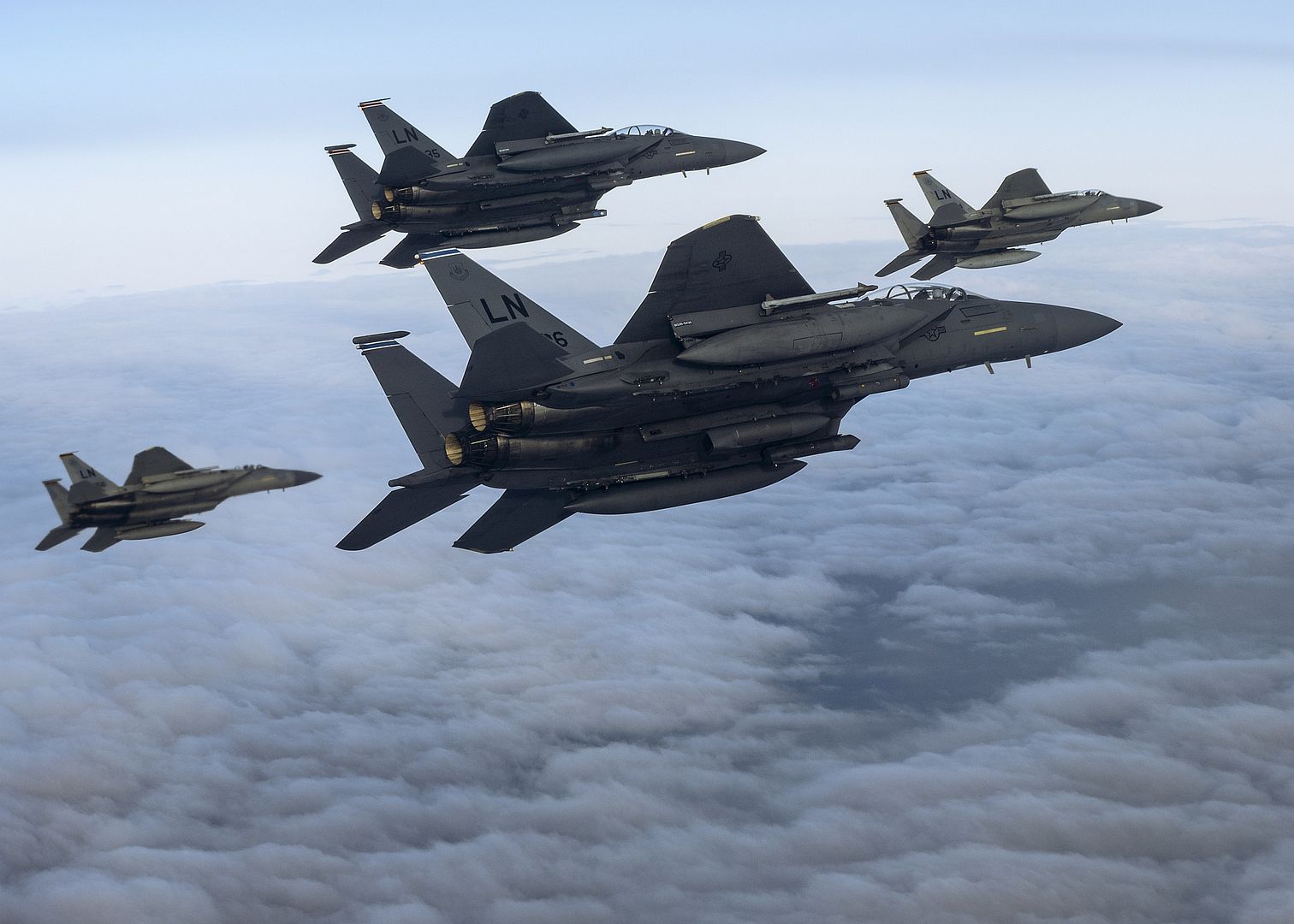
U.S. Air Force F-15C Eagles and F-15E Strike Eagles assigned to the 48th Fighter Wing conduct aerial operations with Royal Air Force Typhoons in support of exercise Point Blank 19-8, over the North Sea, Nov. 14, 2019. The purpose of Point Blank is to exercise large force capabilities that incorporate current and future wartime scenarios. This iteration is especially unique in that it features special operations forces and the ?Iron Triad?. (U.S. Air Force photo's/ Staff. Sgt. Rachel Maxwell)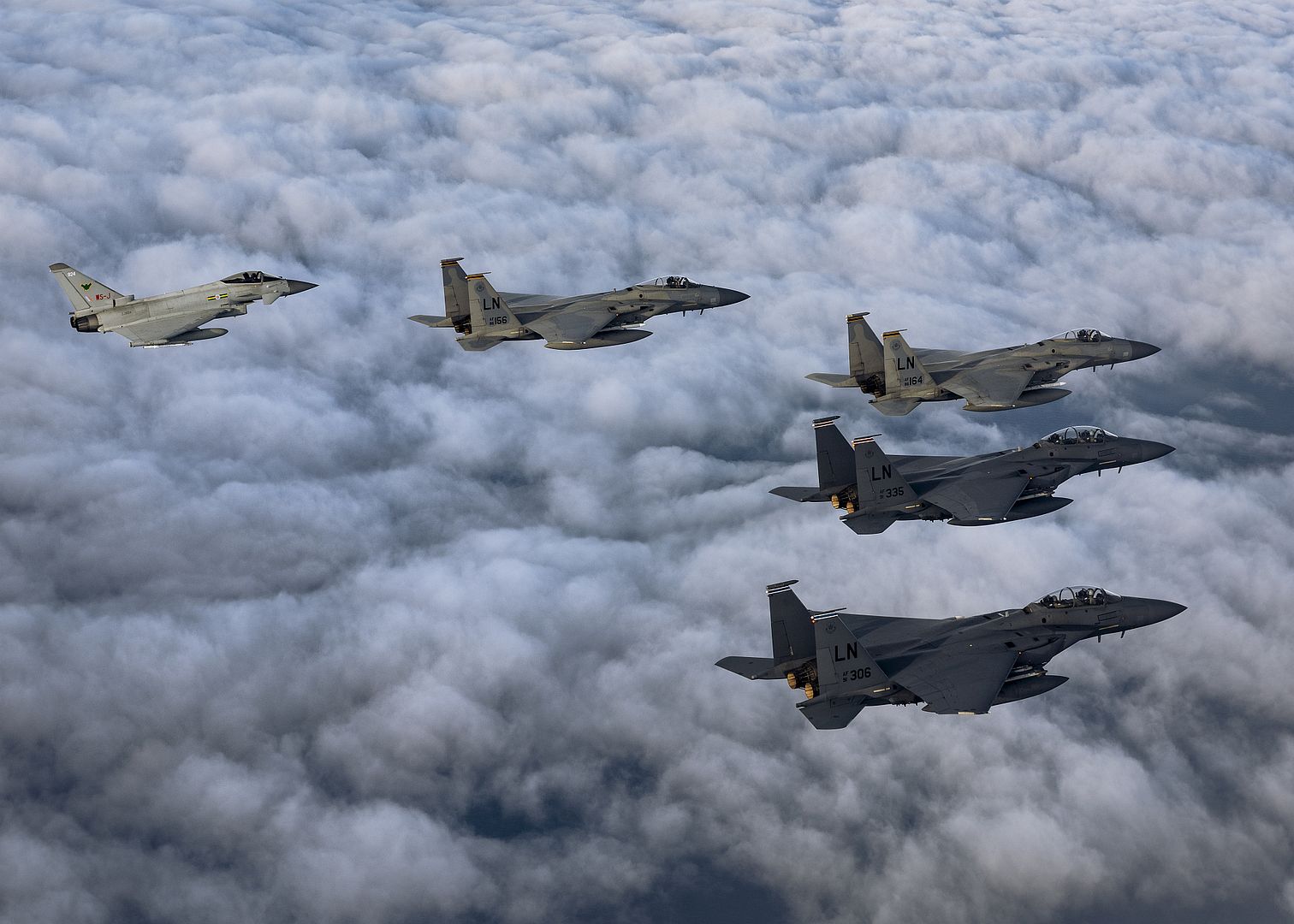
A U.S. Air Force F-16 Fighting Falcon from the 79th Fighter Squadron at Bagram Airfield, Afghanistan, receives fuel from a KC-135 Stratotanker assigned to the 340th Expeditionary Air Refueling Squadron, over an undisclosed location, Nov. 14, 2019. While assigned to the 455th Air Expeditionary Wing at Bagram, the F-16s will help provide decisive airpower through the U.S. Central Command area of responsibility. The 340th EARS is the only KC-135 squadron deployed to Afghanistan responsible for offloading approximately 124 million pounds of fuel a year. (U.S. Air Force photo by Staff Sgt. Matthew Lotz)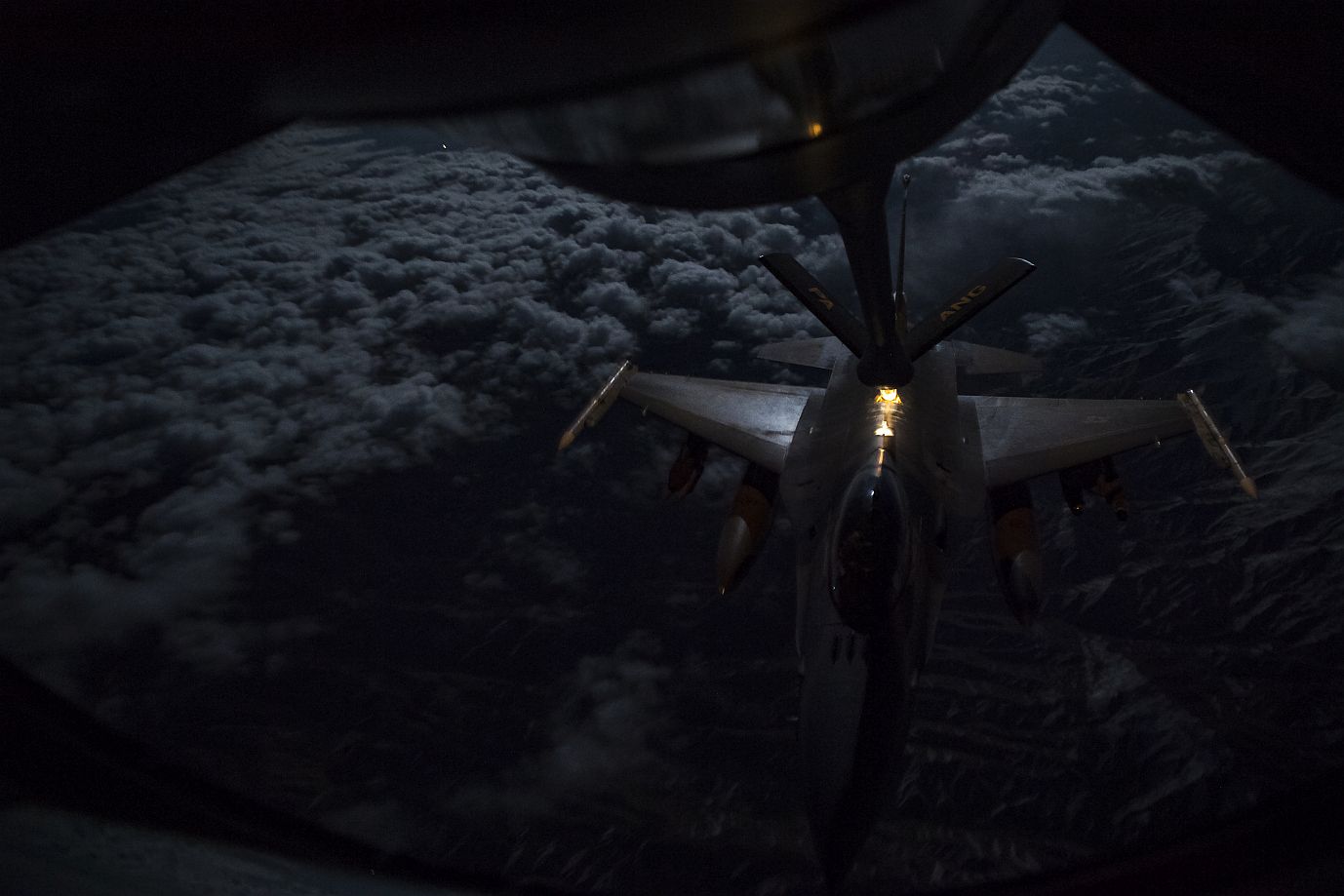
A National Oceanic and Atmospheric Administration Aircraft Operations Center WP-3D Orion aircraft prepares to park on the flightline, as a 53rd Weather Reconnaissance Squadron WC-130J Super Hercules flies in the background at Keesler Air Force Base, Miss., November 13, 2019. Both teams of Hurricane Hunters met to share information and review the 2019 hurricane season. (U.S. Air Force photo by Senior Airman Kristen Pittman)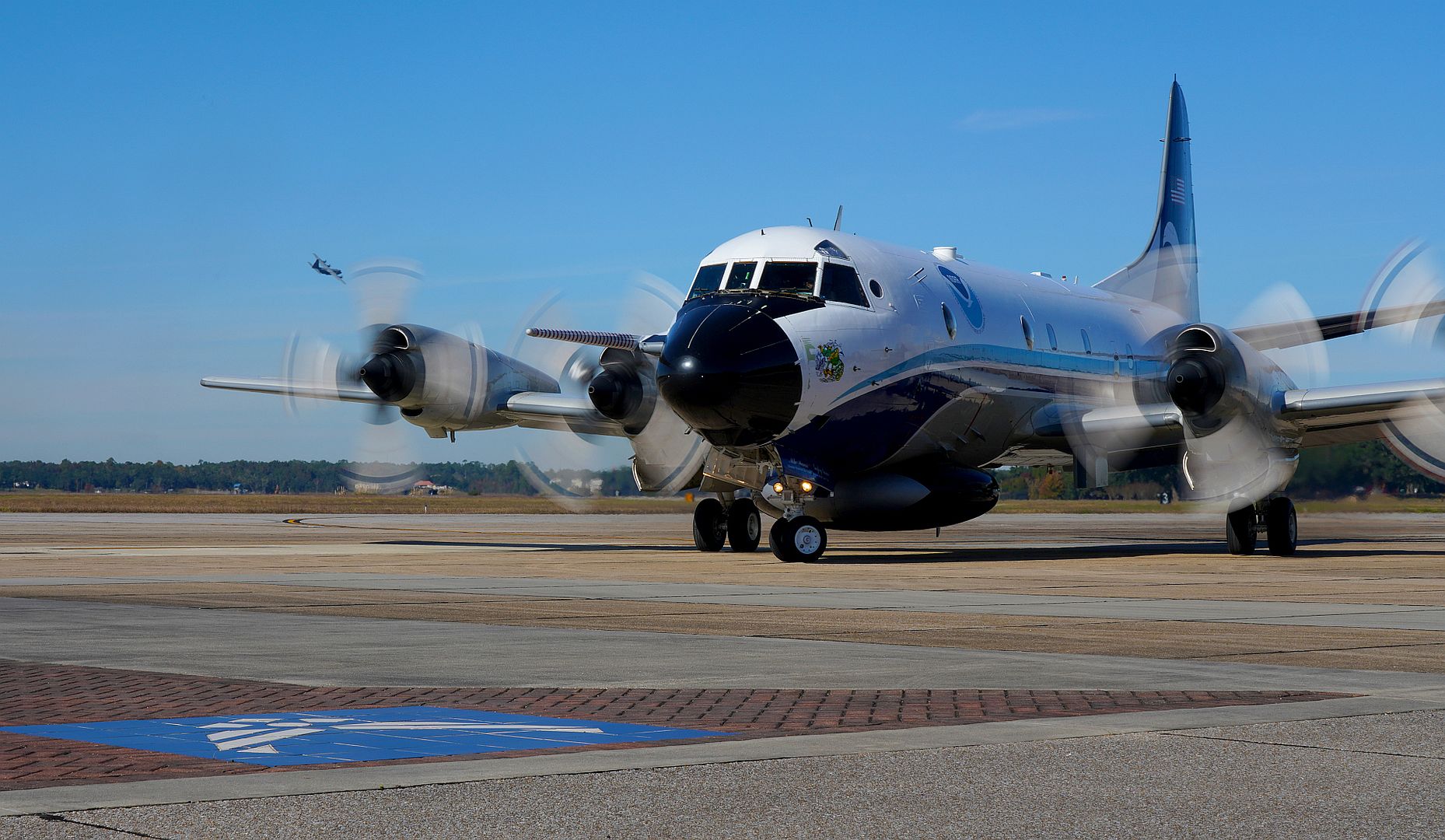
ARABIAN SEA (Nov. 12, 2019) An F/A-18E Super Hornet attached to the "Pukin' Dogs" of Strike Fighter Squadron (VFA) 143 launches from the flight deck of the aircraft carrier USS Abraham Lincoln (CVN 72). Abraham Lincoln Carrier Strike Group is deployed to the U.S. 5th Fleet area of operations in support of naval operations to ensure maritime stability and security in the Central Region, connecting the Mediterranean Sea and the Pacific Ocean through the western Indian Ocean and three strategic choke points. With Abraham Lincoln as the flagship, deployed strike group assets include staffs, ships and aircraft of Carrier Strike Group (CSG) 12, Destroyer Squadron (DESRON) 2, the guided-missile cruiser USS Leyte Gulf (CG 55) and Carrier Air Wing (CVW) 7. (U.S. Navy photo by Mass Communication Specialist 3rd Class Michael Singley/Released)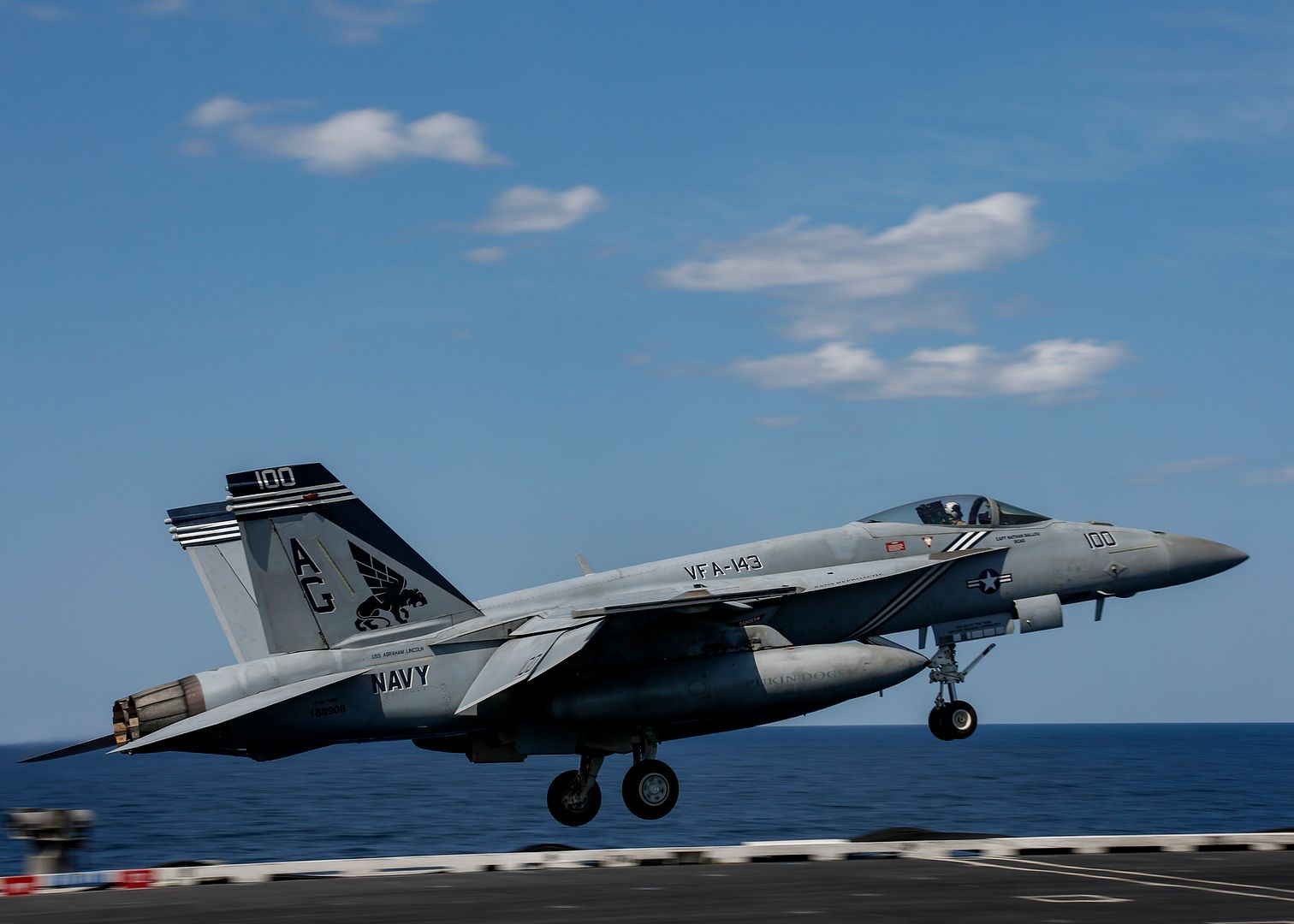
ARABIAN SEA (Nov. 12, 2019) An F/A-18F Super Hornet attached to the "Jolly Rogers" of Strike Fighter Squadron (VFA) 103 makes an arrested landing on the flight deck of the aircraft carrier USS Abraham Lincoln (CVN 72). Abraham Lincoln Carrier Strike Group is deployed to the U.S. 5th Fleet area of operations in support of naval operations to ensure maritime stability and security in the Central Region, connecting the Mediterranean Sea and the Pacific Ocean through the western Indian Ocean and three strategic choke points. With Abraham Lincoln as the flagship, deployed strike group assets include staffs, ships and aircraft of Carrier Strike Group (CSG) 12, Destroyer Squadron (DESRON) 2, the guided-missile cruiser USS Leyte Gulf (CG 55) and Carrier Air Wing (CVW) 7. (U.S. Navy photo by Mass Communication Specialist 3rd Class Michael Singley/Released)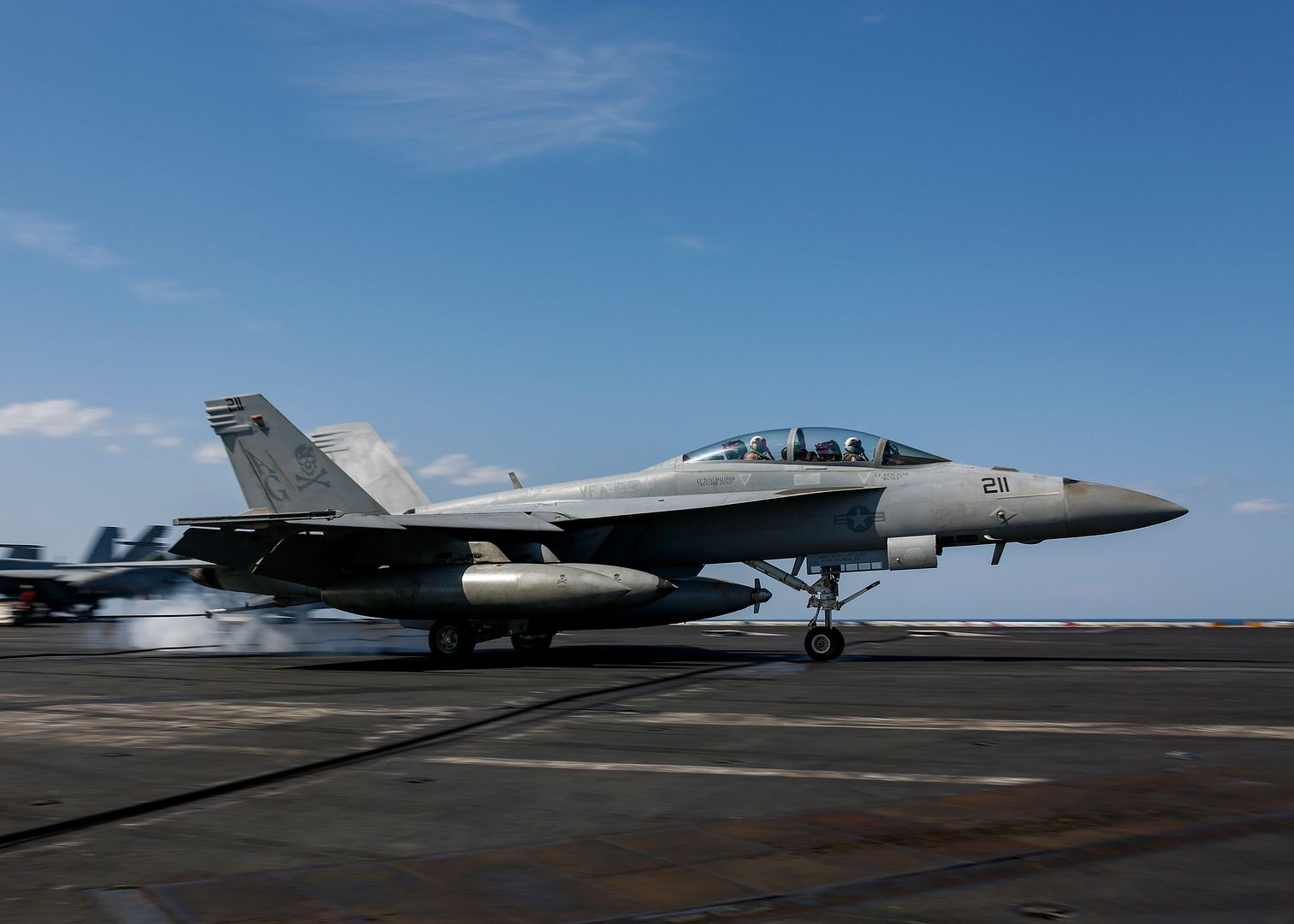
-
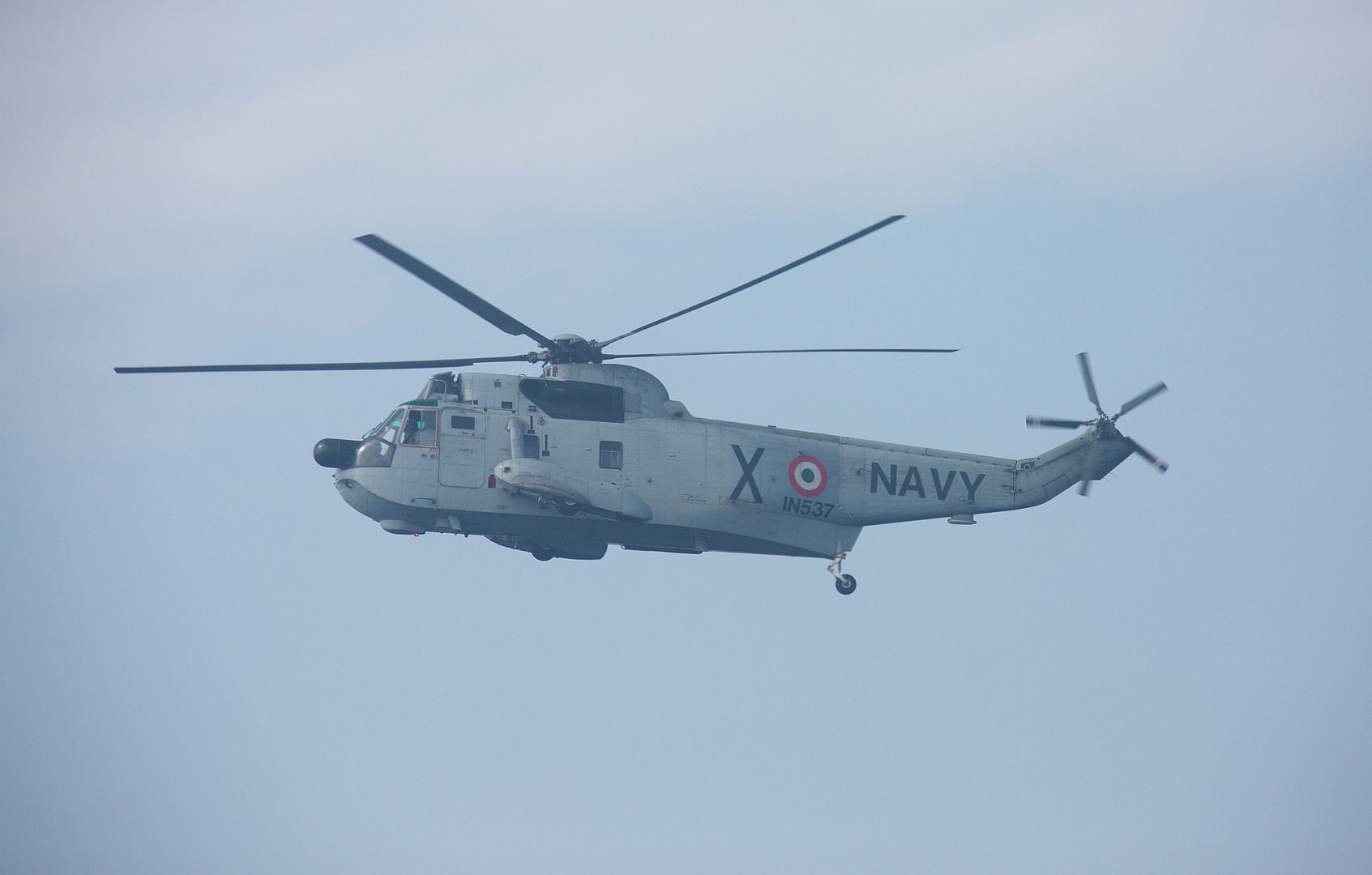
An Indian Navy UH-3H Sea King Helicopter particpates in a FlightEx during excersie Tiger TRIUMPH in the Bay of Bengal on Nov. 17, 2019. Tiger TRIUMPH improves U.S.-Indian partnership, readiness and interoperability. It gives the U.S. Marine Corps and Indian forces the opportunity to work together, exchange knowledge and learn from each other on a range of military operations such as humanitarian assistance disaster relief and amphibious operations. (U.S. Marine Corps photo by Cpl. Jacob Hancock)
U.S. Air Force Lt. Col. Paul Lopez, F-22 Raptor Demonstration Team commander arrives at the Dubai Air Show, United Arab Emirates, Nov. 14, 2019. United States military participation in the DAS provides opportunity to strengthen our military-to-military relationships with regional partners. (U.S. Air Force photo by 2nd Lt. Sam Eckholm).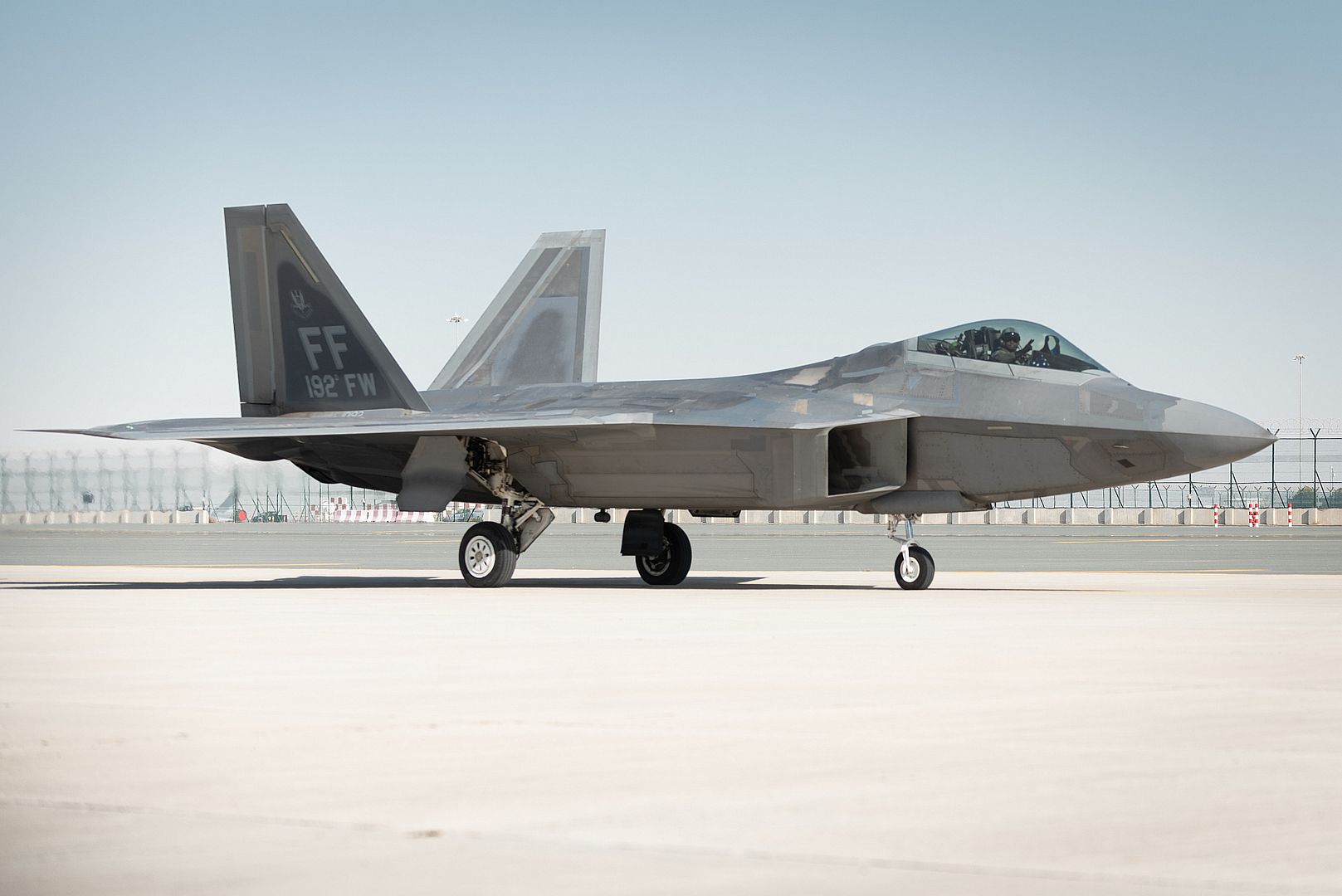
A U.S. Air Force F-16 Fighting Falcon from the 18th Aggressor Squadron takes off at Nellis Air Force Base, Nevada, Nov. 6, 2019. The 18th AGRS utilizes a mobile training team that gives them opportunities to travel to another base and prepare Combat Air Force, joint and allied aircrews on how to fight and overcome a realistic adversary. (U.S. Air Force photo by Nellis Air Force Base Public Affairs)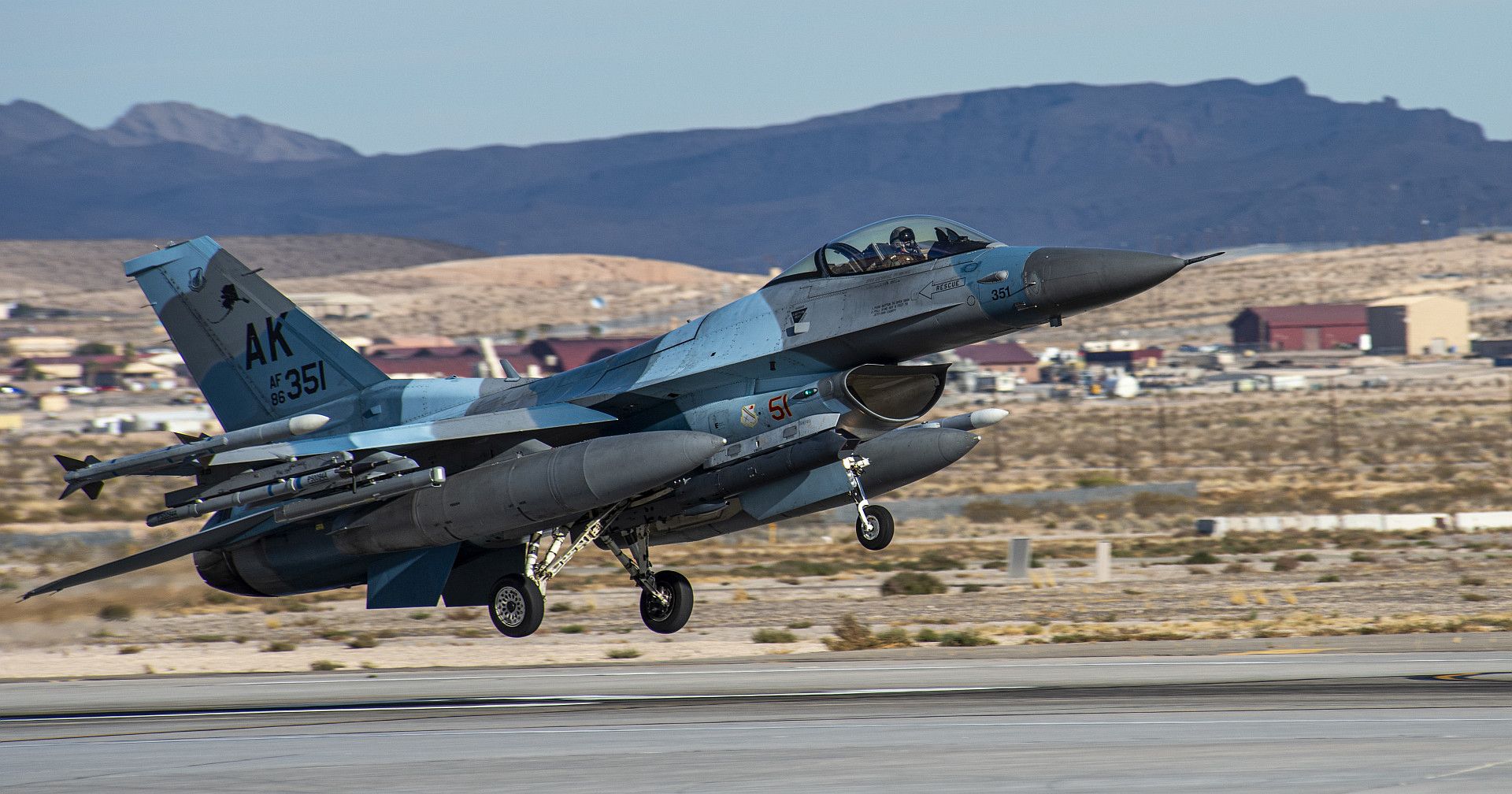
A BQM-164 unmanned drone prepares for launch in support of exercise Checkered Flag 20-1 at Tyndall Air Force Base, Florida, Nov. 13, 2019. Checkered Flag is a large-scale exercise involving multiple military partners and installations, designed to focus on training and evaluating fourth and fifth-generation fighter aircraft, pilots and maintainers. In conduction with the exercise, air-to-air and air-to-ground combat operations are tested and recorded to provide data on best practices and ensuring future mission successes. (U.S. Air Force photo by Staff Sgt. Magen M. Reeves)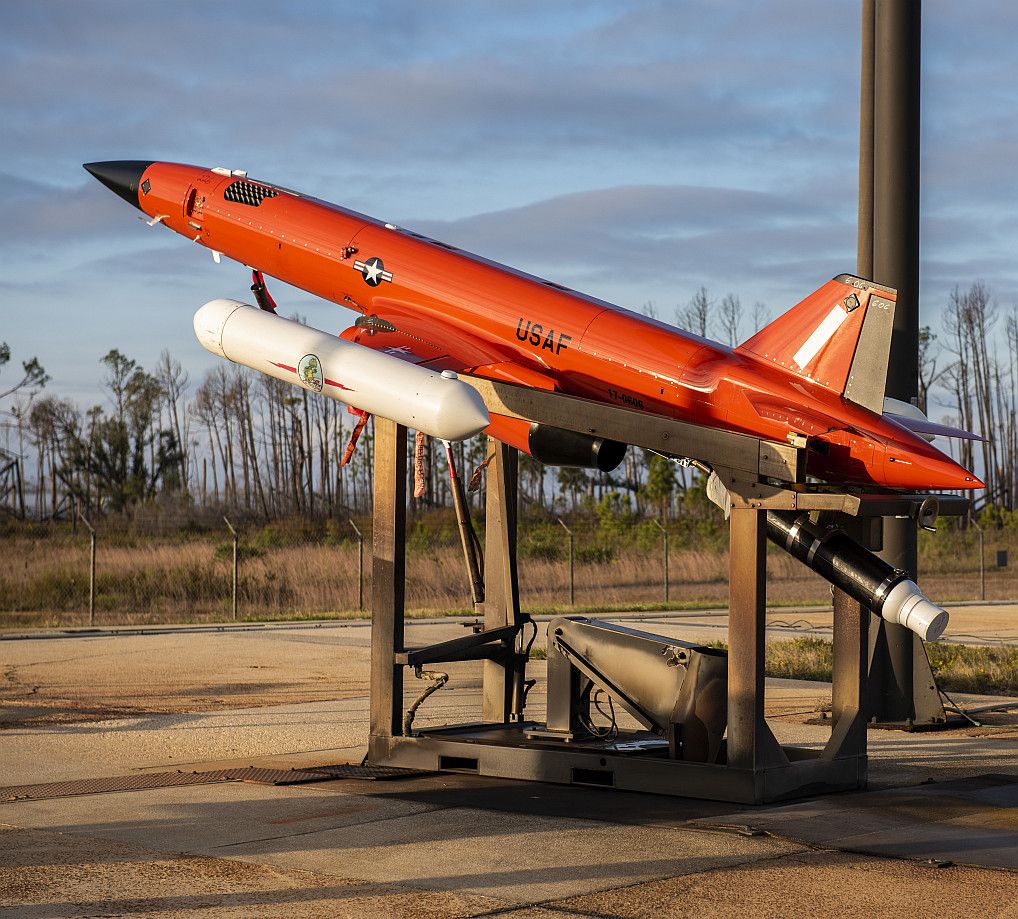
U.S. Air Force F-35A Lightning II?s from Hill Air Force Base returned to Al Dhafra Air Base, United Arab Emirates, to rejoin the 380th Air Expeditionary Wing on Nov. 16, 2019 for their second combat deployment. The F-35 is a stealth, 5th generation fighter, multirole combat aircraft designed for ground attack and air superiority missions. (U.S. Air Force photo by Tech. Sgt. Joshua Williams)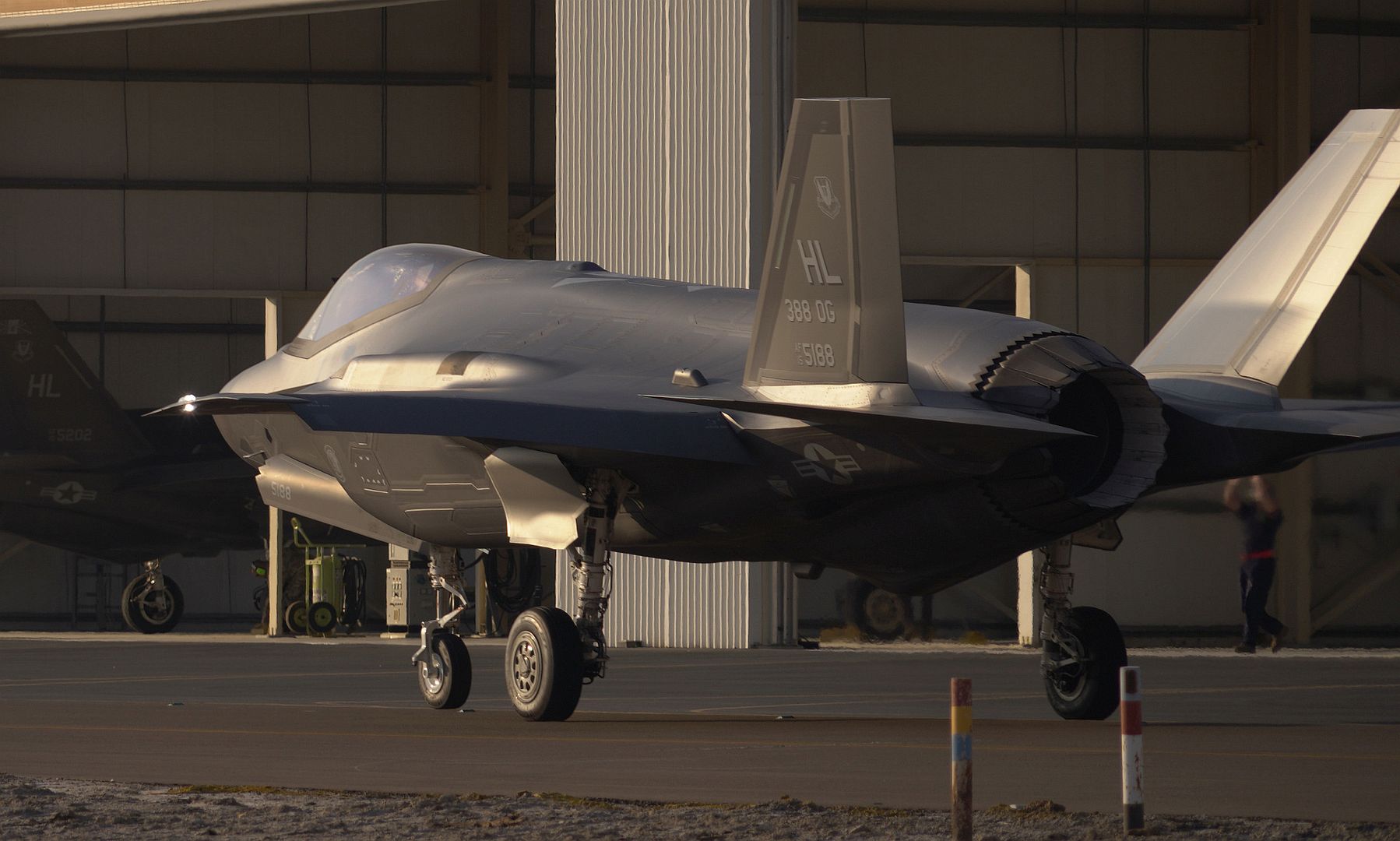
A U.S. Air Force F-15C Eagle and F-15E Strike Eagles assigned to the 48th Fighter Wing conduct aerial operations in support of exercise Point Blank 19-8, over the North Sea, Nov. 14, 2019. The purpose of Point Blank is to exercise large force capabilities that incorporate current and future wartime scenarios. This iteration is especially unique in that it features special operations forces and the ?Iron Triad?. (U.S. Air Force photo/ Staff. Sgt. Rachel Maxwell)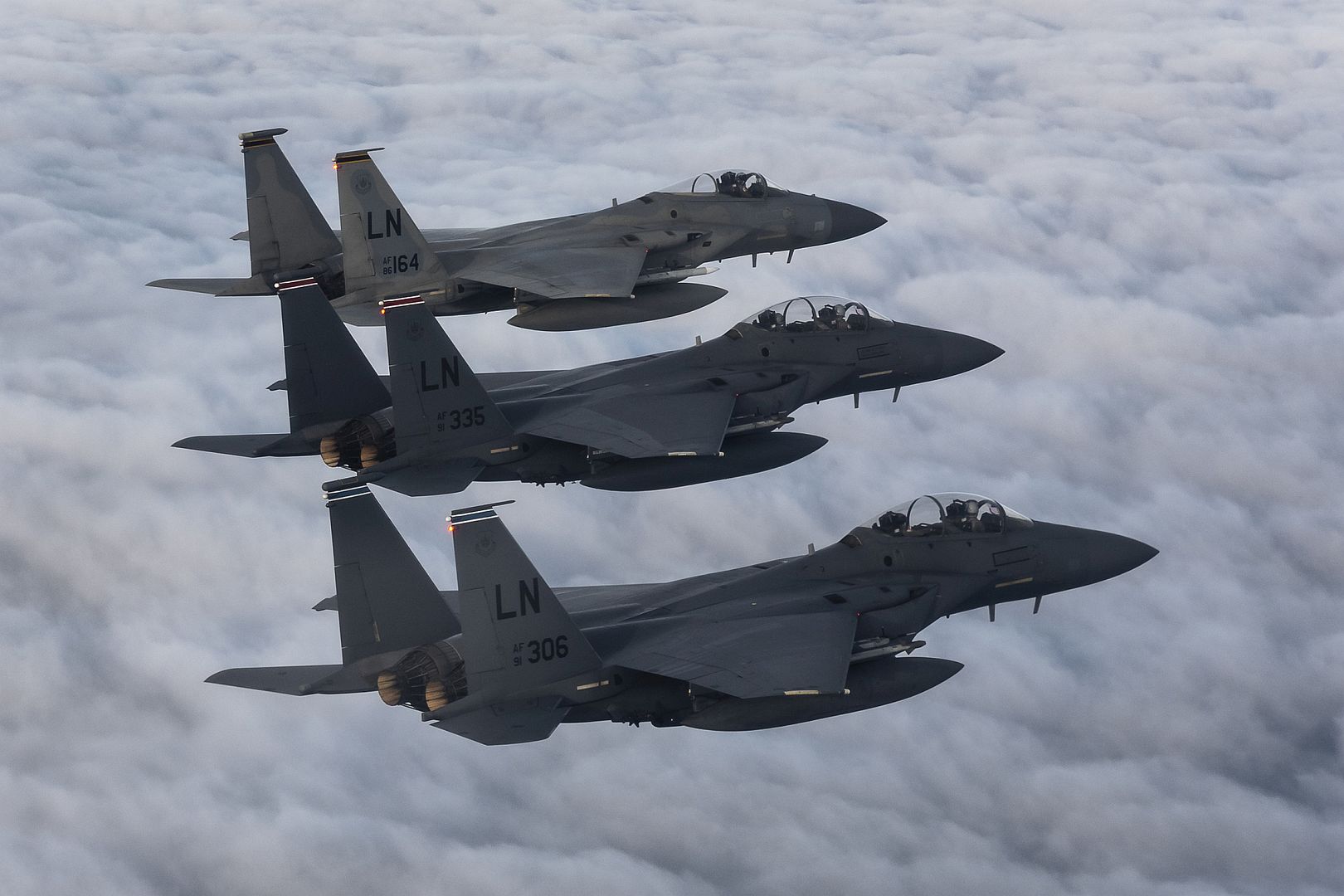
A National Oceanic and Atmospheric Administration Aircraft Operations Center WP-3D Orion aircraft parked on the flight-line at Keesler Air Force Base, Miss., November 13, 2019. Both teams of Hurricane Hunters met to share information and review the 2019 hurricane season. (U.S. Air Force photo by Randy Bynon)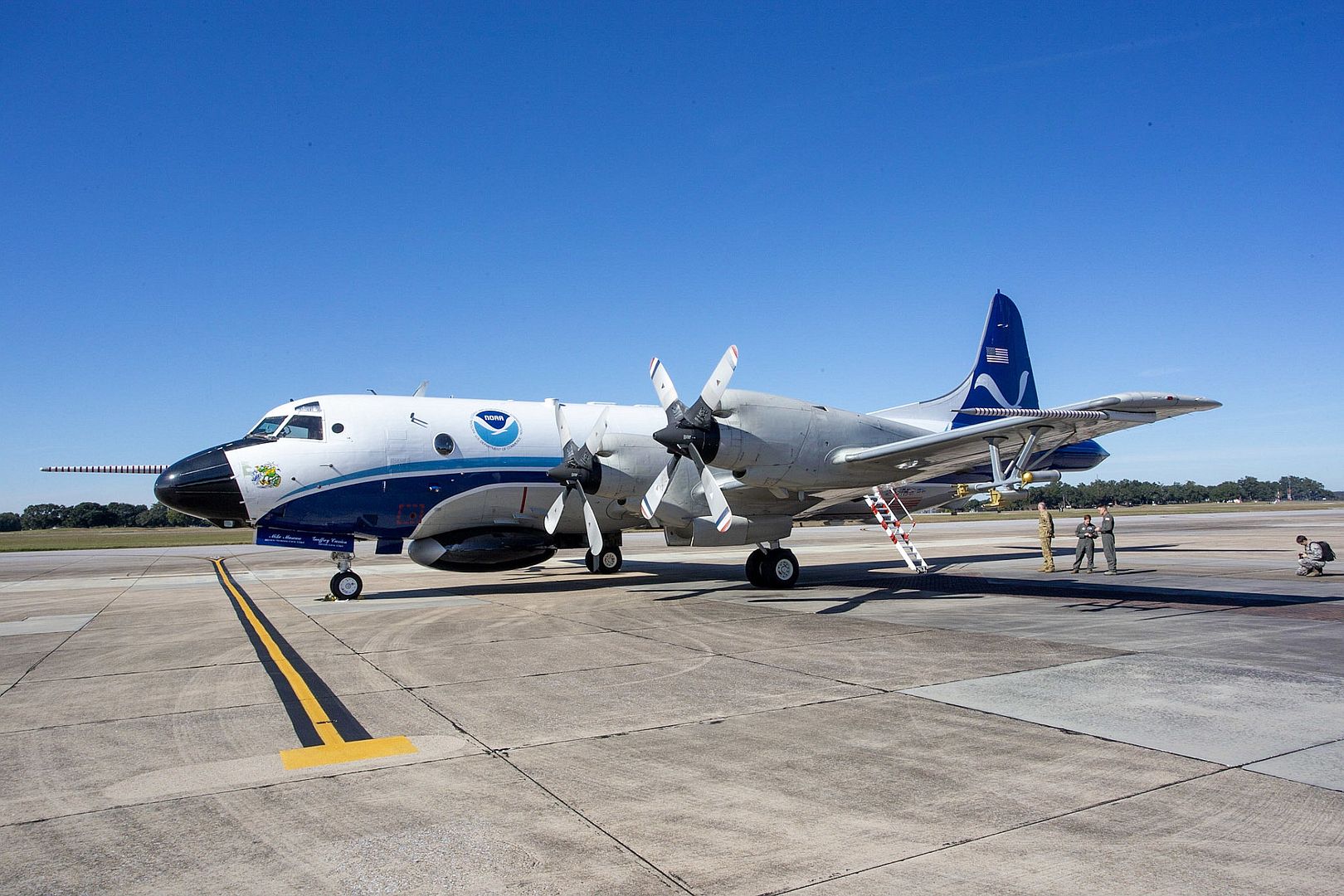
Maj. Andrew "Dojo" Olson, F-35 Demonstration Team pilot and commander takes off for his final flight during the Aviation Nation Airshow Nov. 17, 2019, at Nellis Air Force Base, Nevada. The team performed more than 55 aerial demonstrations at 19 airshows throughout their inaugural year. (U.S. Air Force photo by Senior Airman Alexander Cook)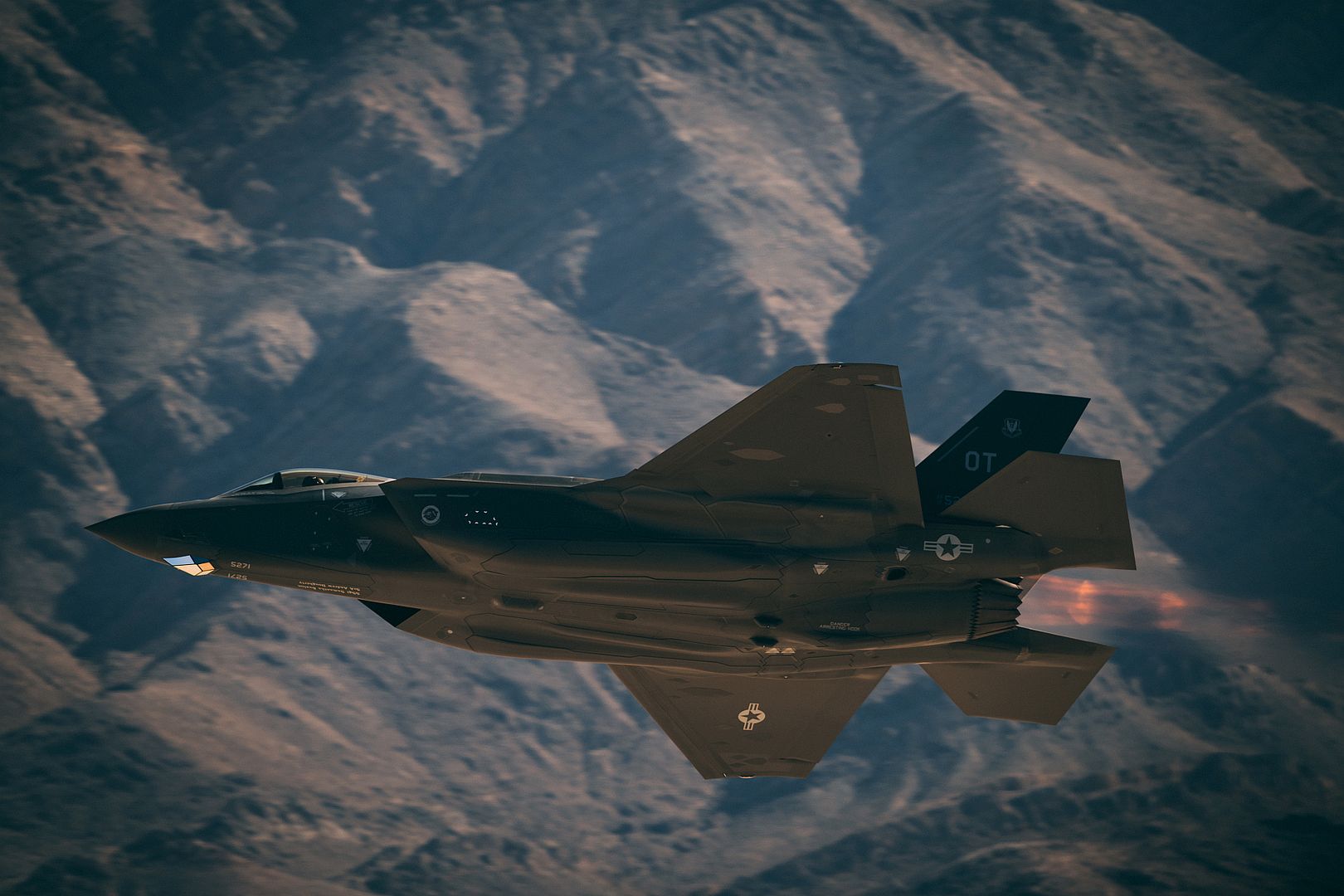
MARIETTA, Ga., Nov. 18, 2019 /PRNewswire/ -- The Lockheed Martin (NYSE: LMT) LM-100J commercial freighter received its type design update certification from the Federal Aviation Administration on Nov. 15. This particular FAA certification allows the LM-100J to operate from any commercial airfield in the world.
In 2014, Lockheed Martin announced it would update its existing FAA A1SO type certificate for its Model L-382J aircraft to be marketed as the LM-100J, a civil-certified production variant of the military proven C-130J Super Hercules.
The LM-100J is the modernized version of the Lockheed Martin L-100 freighter (Lockheed Model 382). More than 100 L-100s were produced from 1964-1992 at the then Lockheed-Georgia Co., facility in Marietta, Georgia, and many of these aircraft continue to support global operations today.
"Like its military counterparts, the worldwide L-100 fleet is a much tasked and much relied upon. As this fleet reaches the end of its operating life, customers told us the only replacement for the L-100 is an LM-100J," said Rod McLean, vice president and general manager of Lockheed Martin's Air Mobility & Maritime Missions line of business.
"This updated FAA certification enables the LM-100J to literally go anywhere in the world to fulfill the unique and demanding requirements it was built to support," McLean added. "As the LM-100J enters into service, we are proud that it will continue to exemplify and expand the already unmatched capabilities of the C-130J Super Hercules family."
Through select design changes, the LM-100J performs as a civil multi-purpose aircraft capable of rapid and efficient cargo transport and select specialized mission requirements. The LM-100J is an efficient and ideal airlift solution in delivering bulk and oversize cargo, particularly to austere locations around the world.
The LM-100J incorporates technological developments and improvements over the existing legacy L-100 freighters that result from more than two decades of C-130J operational experience, including more than 2 million fleetwide flight hours flown by crews in 19 nations around the world.
"We had the unique opportunity to design and build a completely new commercial airlifter with insights from a proven airframe," said Marilou Franklin, director of the LM-100J Program at Lockheed Martin. "Our goal was to produce an airlifter that was as safe as it was capable as it was advanced. In partnering with our existing L-100 operators, our network of suppliers and the FAA, we did that ? and more ? with the LM-100J."
Notable operational LM-100J enhancements compared to a legacy L-100s include:
14% more fuel efficient
20% improvement in payload/range capability
Automated maintenance fault reporting
Unmatched situational awareness with digital avionics and dual HUD
Fully CNS/ATM compliant with the FAA Next Generation Air Transportation System (NextGen)
Enhanced Cargo Handling (ECHS) system
Carbon breaks
An FAA-certified commercial maintenance program
In addition, the LM-100J operating community has access to Lockheed Martin's Hercules Training Center (HTC) located at in Marietta, Georgia, adjacent to the Super Hercules production line.
Extending a legacy of air mobility training, Lockheed Martin's HTC is a combined academic and simulator facility purpose-built for training efficiency. Training resources include dedicated LM?100J initial qualification courses and a reconfigurable, FAA-certified Level D simulator. This training is provided by expert Lockheed Martin instructors who, combined, have more than 90 years of experience.
Next steps for the LM-100J program include the 2020 delivery of two aircraft to Pallas Aviation, the LM-100J launch operator.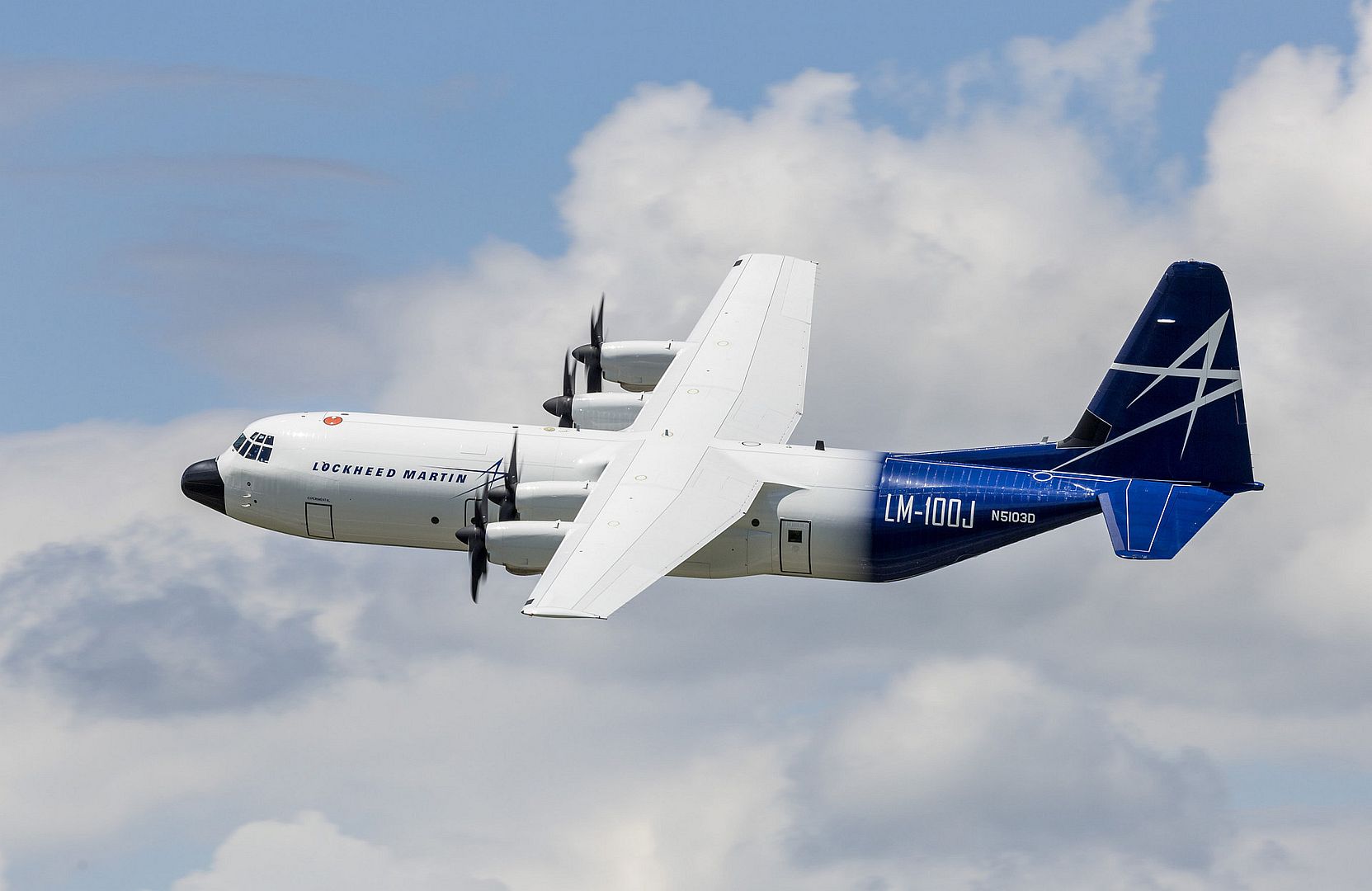
DUBAI, United Arab Emirates, Nov. 17, 2019 /PRNewswire/ -- Boeing [NYSE: BA] and Biman Bangladesh Airlines (Biman) announced today at the 2019 Dubai Airshow that the carrier is expanding its 787 Dreamliner fleet with two additional airplanes valued at $585 million at list prices.
The purchase ? recorded in October as an unidentified order on Boeing's website ? complements Biman's fleet of 787-8 jets with the larger and longer-range 787-9 variant. The national flag carrier of Bangladesh says the addition of the 787-9 will help modernize its fleet and expand its international network.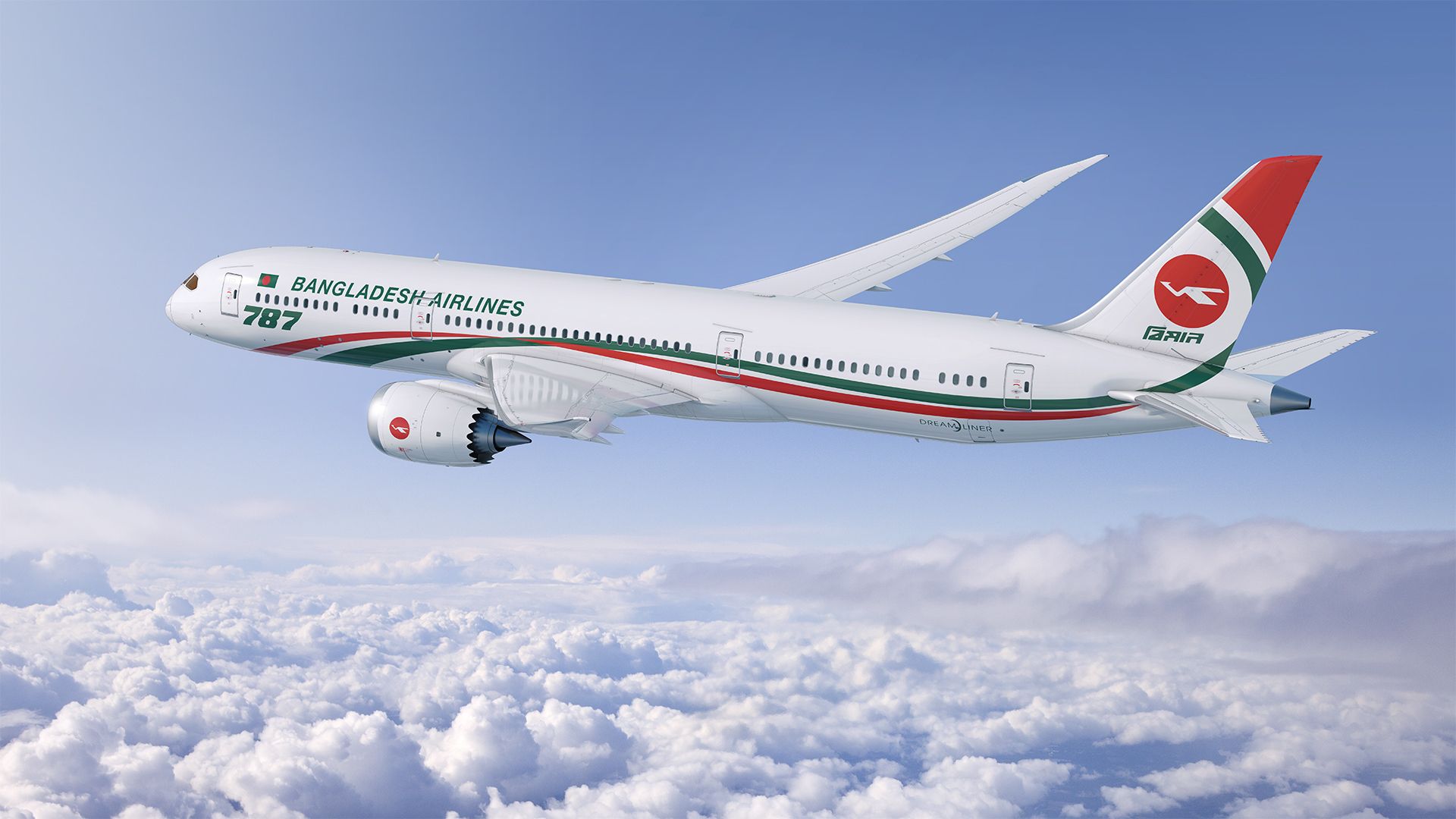
"One of our key priorities is to have a modern fleet with technologically-advanced airplanes that will enable us to expand our international reach," said Air Marshal Muhammad Enamul Bari, Former Chief of Air Staff, Chairman Board of Directors, Biman Bangladesh Airlines. "While we have a good domestic network, we plan to extend our international network to include more destinations in Europe, Asia and the Middle East. The 787 with its technological superiority, excellent operational performance and passenger experience will enable us to achieve that goal," he added.
The 787-9 is part of a three-member family that offers long range and unmatched fuel efficiency in the 200 to 350 seat market. For Biman Bangladesh, the 787-9 can carry 298 passengers in a standard three-class configuration and fly up to 7,530 nautical miles (13,950 kms) while reducing fuel use and emissions by up to 25 percent compared to older airplanes.
"Biman Bangladesh is showing us the powerful potential of the Dreamliner family. Just last month, the airline launched a new non-stop flight from its hub in Dhaka to Medina, Saudi Arabia. It's a great example of the 787-8 serving as a 'market opener.' And now, Biman adds the 787-9 which brings more seats, more range and more cargo-carry capability for the routes that need it. The two will form a profitable network solution for Biman," said Stan Deal, president and chief executive officer, Boeing Commercial Airplanes.
Boeing also provides services that help Biman operate more efficiently. As part of a multiyear agreement, the airline's pilots this year began using the Jeppesen Flite Deck Pro X electronic flight bag (EFB) platform to access mobile charts and navigational information, increasing their situational awareness on the ground and in the air.
Since entering service in 2011, the 787 family has enabled the opening of more than 250 new point-to-point routes and saved more than 45 billion pounds of fuel. Designed with the passenger in mind, the 787 family delivers an unparalleled experience with the largest windows of any commercial jet, large overhead bins with room for everyone's bag, comfortable cabin air that is cleaner and more humid and includes soothing LED lighting.
Garuda Indonesia has received its first A330-900. This new generation widebody aircraft is the first of 14 A330-900s ordered by the airline.
The airline currently operates 24 A330 Family aircraft on regional and long-haul routes. The A330-900?s increased range and enhanced economics will contribute to Garuda Indonesia?s fleet modernisation and growth plans, allowing the airline to launch non-stop services from Jakarta to key destinations in Europe.
Garuda Indonesia?s A330-900 is configured for 301 passengers in a comfortable two class lay-out with 24 Business class seats and 277 in Economy.
The A330neo Family is the new generation A330, comprising two versions: the A330-800 and A330-900. The A330neo Family aircraft shares 95 percent commonality with the previous A330.
It builds on the proven economics, versatility and reliability of the A330 Family, while reducing fuel consumption by 25% per seat versus previous generation competitors and increasing range by up to 1,500nm compared to the majority of A330s in operation.
The A330neo is powered by Rolls-Royce?s latest-generation Trent 7000 engines and features a new wing with increased span and new A350 XWB-inspired Sharklets. The cabin provides the comfort of the new Airspace amenities including state-of-the-art passenger inflight entertainment and Wifi connectivity systems.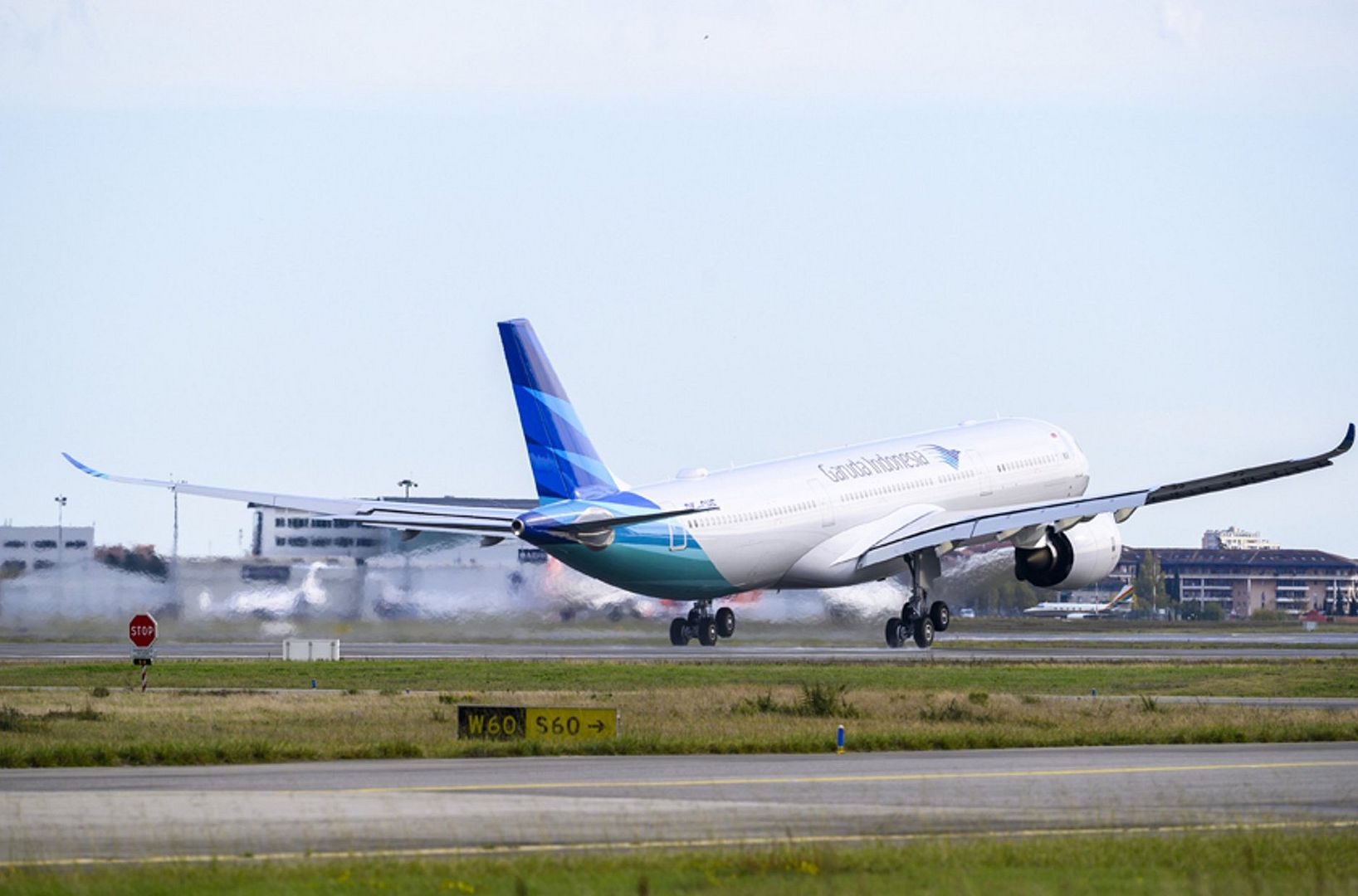
Airbus and Emirates Airline have signed a purchase agreement for 50 A350-900s - Airbus? newest generation widebody aircraft.
The order was signed at Dubai Airshow 2019 by His Highness Sheikh Ahmed bin Saeed Al Maktoum and Guillaume Faury, Airbus Chief Executive Officer.
HH Sheikh Ahmed said: ?Today, we are pleased to sign a firm order for 50 A350 XWBs, powered by Rolls-Royce Trent XWB engines. This follows a thorough review of various aircraft options and of our own fleet plans. It is Emirates? long-standing strategy to invest in modern and efficient aircraft, and we are confident in the performance of the A350 XWB.
?Complementing our A380s and 777s, the A350s will give us added operational flexibility in terms of capacity, range and deployment. In effect, we are strengthening our business model to provide efficient and comfortable air transport services to, and through, our Dubai hub.?
Sheikh Ahmed added: ?This deal reflects our confidence in the future of the UAE?s aviation sector, and is a strong affirmation of Dubai?s strategy to be a global nexus connected to cities, communities and economies via a world-class and modern aviation sector.?
?We are honoured by Emirates? strong vote of confidence in our newest widebody aircraft, taking our partnership to the next level. The A350 will bring unbeatable economics and environmental benefits to their fleet,? said Guillaume Faury, Airbus Chief Executive Officer. ?We look forward to seeing the A350 flying in Emirates colours!?
The A350 XWB offers by design unrivalled operational flexibility and efficiency for all market segments - up to ultra-long haul (17,900km). Its Airspace by Airbus cabin is the quietest of any twin-aisle aircraft and offers passengers and crews the most modern in-flight flying experience. The aircraft features the latest aerodynamic design, a carbon fibre fuselage and wings, plus new fuel-efficient Rolls-Royce Trent XWB engines. Together, these latest technologies result in 25% lower operating costs, as well as 25% reduction in fuel burn and CO2 emissions compared with previous-generation competing aircraft ? demonstrating Airbus? commitment to minimise its environmental impact while remaining at the cutting edge of air travel.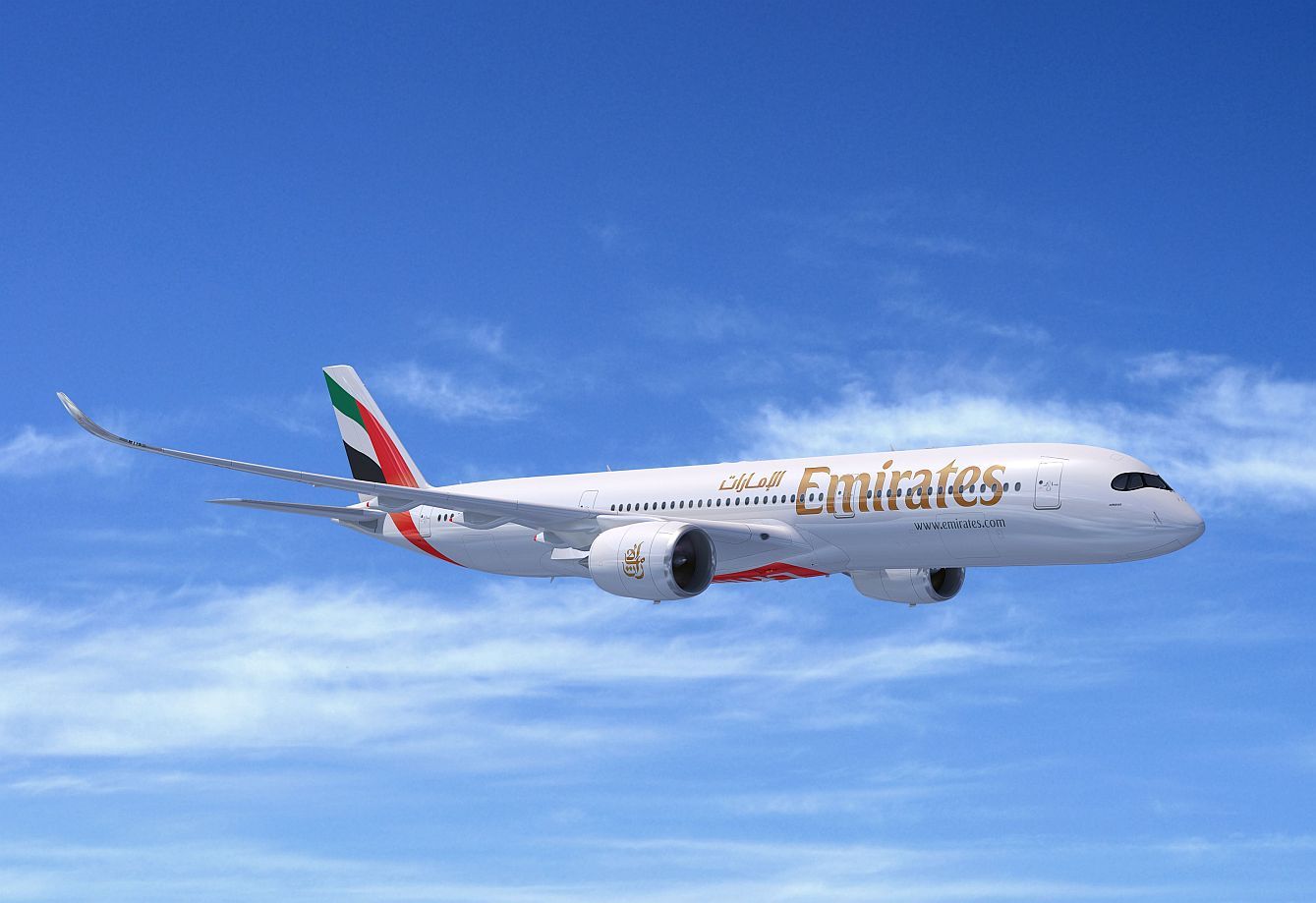
Air Arabia, the Middle East and North Africa?s first and largest low cost carrier, has signed a firm order for 120 Airbus aircraft comprising 73 A320neos, 27 A321neos and 20 A321XLRs. The agreement was signed at the 2019 Dubai Airshow in the presence of Air Arabia?s Chairman Sheikh Abdullah Bin Mohammed Al Thani, Adel Al Ali, Chief Executive Officer Air Arabia and Guillaume Faury, Airbus Chief Executive Officer.
Adel Al Ali, Group Chief Executive Officer of Air Arabia, said: ?Air Arabia?s fleet growth strategy has always been driven by commercial demand and we are glad to announce today one of the region?s largest single-aisle orders with Airbus to support our growth plans. This new milestone underpins not only our solid financial fundamentals but also the strength of our multi-hub growth strategy that we have adopted over the years while remaining focused on efficiency, performance and passenger experience.? He added: ?The addition of the A320neo, A321neo and A321XLR complements our existing fleet and allows us to expand our service to farther and newer destinations while remaining loyal to our low-cost business model. We look forward to working with Airbus and receiving the first delivery.?
Christian Scherer, Airbus Chief Commercial Officer said: ?We are delighted to expand our partnership with Air Arabia, this is a great endorsement for the A320neo Family which will allow the airline to tap into new markets. We are committed to supporting the fast expansion of Air Arabia and the region?
Air Arabia is an all Airbus operator with a total fleet of 54 A320 Family aircraft including the A321LR. All aircraft will feature a comfortable single-class cabin with one of the most generous seat pitches today.
The A321XLR is the next evolutionary step from the A321LR which responds to market needs for even more range and payload, creating more value for the airlines. From 2023, it will deliver an unprecedented Xtra Long Range of up to 4,700nm ? 15% more than the A321LR and with 30% lower fuel burn per seat compared with previous generation competitor aircraft.
Featuring the widest single-aisle cabin in the sky, the best-selling A320neo Family, comprising the A319neo, A320neo, and A321neo, deliver at least 20% reduced fuel burn as well as 50% less noise compared to previous generation aircraft, thanks to incorporating the very latest technologies including new generation engines and Sharklets. At the end of October 2019, the A320neo Family had received more than 7,000 firm orders from over 110 customers worldwide.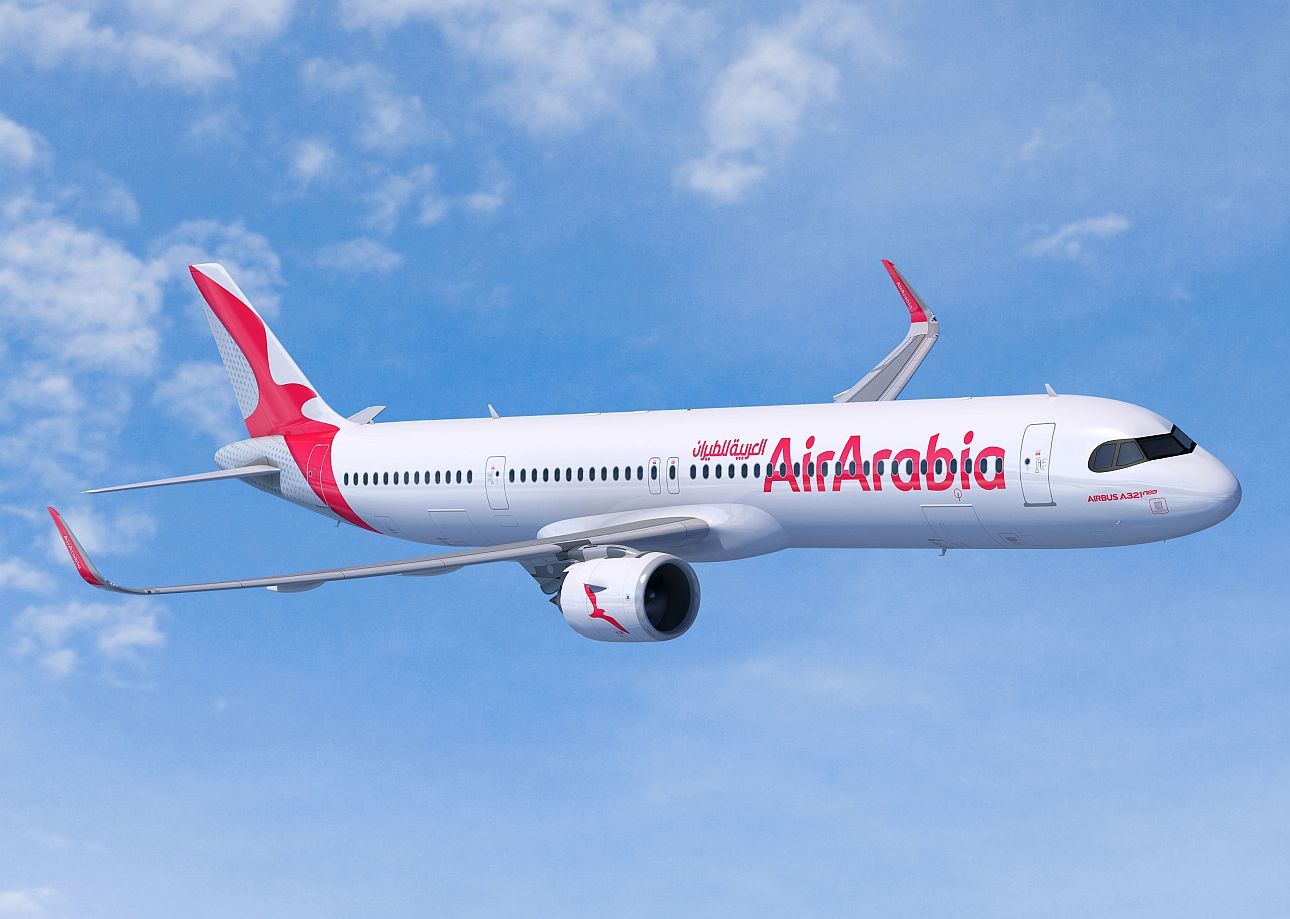
Dubai, UAE, November 18, 2019 ? Embraer today announced at the Dubai Air Show the name and designation of its multi-mission medium aircraft, the Embraer C-390 Millennium. The new designation reflects increased flexibility and value for operators that look for a transport/cargo aircraft to perform airlift and air mobility missions, among others.
In 2009, the Brazilian Air Force (FAB) contracted Embraer to design, develop and manufacture the aircraft as a replacement for its aging C-130 fleet. Deliveries to FAB started last September.
The C-390 Millennium is a tactical transport jet aircraft designed to set new standards in its category, while presenting the lowest life-cycle cost in the medium airlift market. Some of the strong aspects of the aircraft are increased mobility, rugged design, higher flexibility, state-of-the-art yet proven technology, and easier maintenance. In addition, the C-390 Millennium can perform a variety of missions, such as cargo and troop transport, cargo and paratroopers airdrop, search and rescue, aerial firefighting, medical evacuation, and humanitarian missions. The designation KC-390 will be maintained for the customers that have opted for the aerial refueling capability.
?With the C-390 Millennium we will be able to deliver the right solution to our customers, according to their specific needs?, said Jackson Schneider, president and CEO of Embraer Defense & Security. ?The C-390 is a highly capable aircraft. Its unrivalled combination of speed, payload and rapid reconfigurability for multi-mission operations are the cornerstones of its excellent productivity?.
Flying faster and delivering more value, the Millennium is the right sized platform for major airlift deployment scenarios. Minimized intervals and on condition maintenance, combined with highly reliable systems and components, reduce downtime and costs, contributing to outstanding availability levels and low life cycle costs.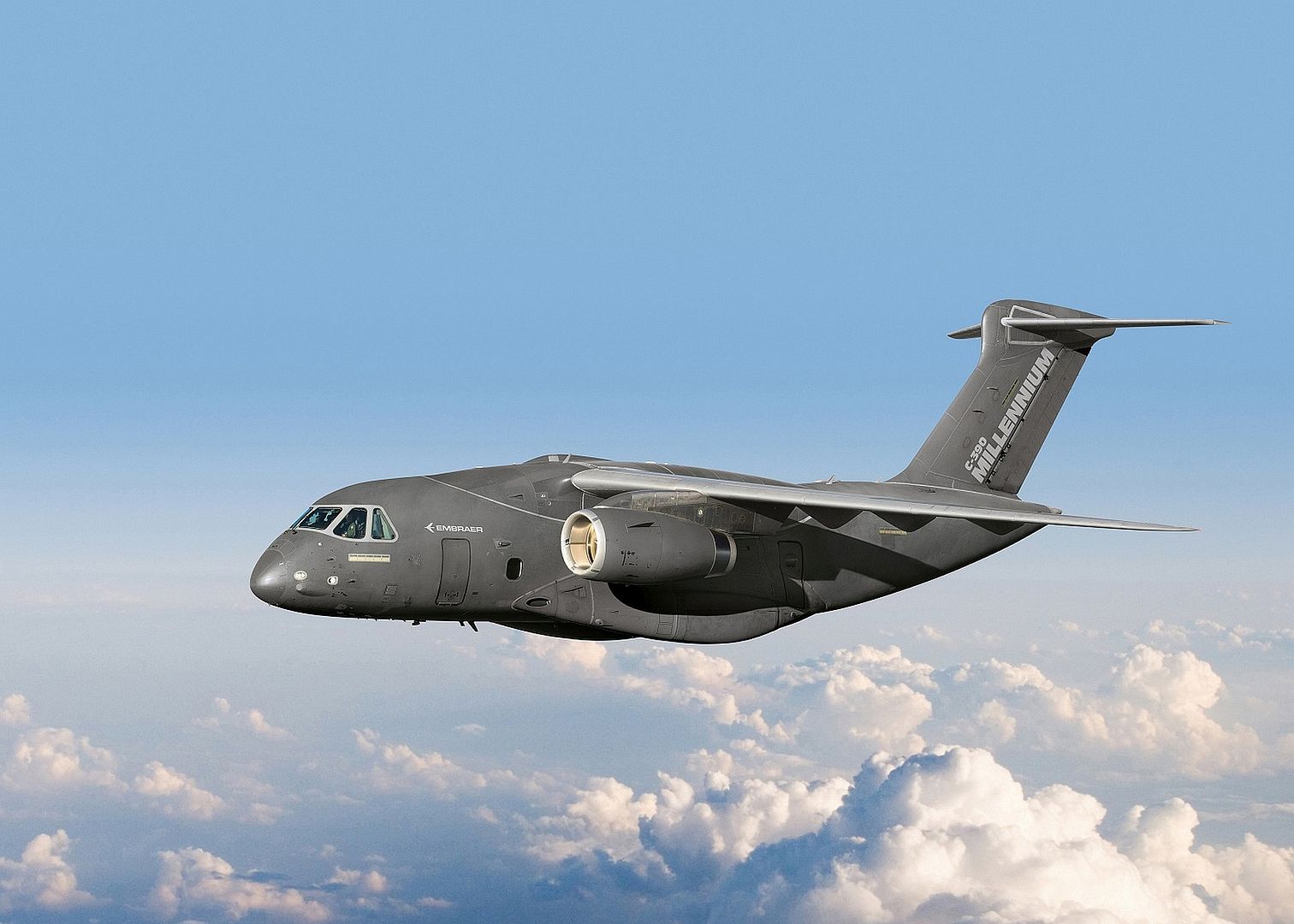
-
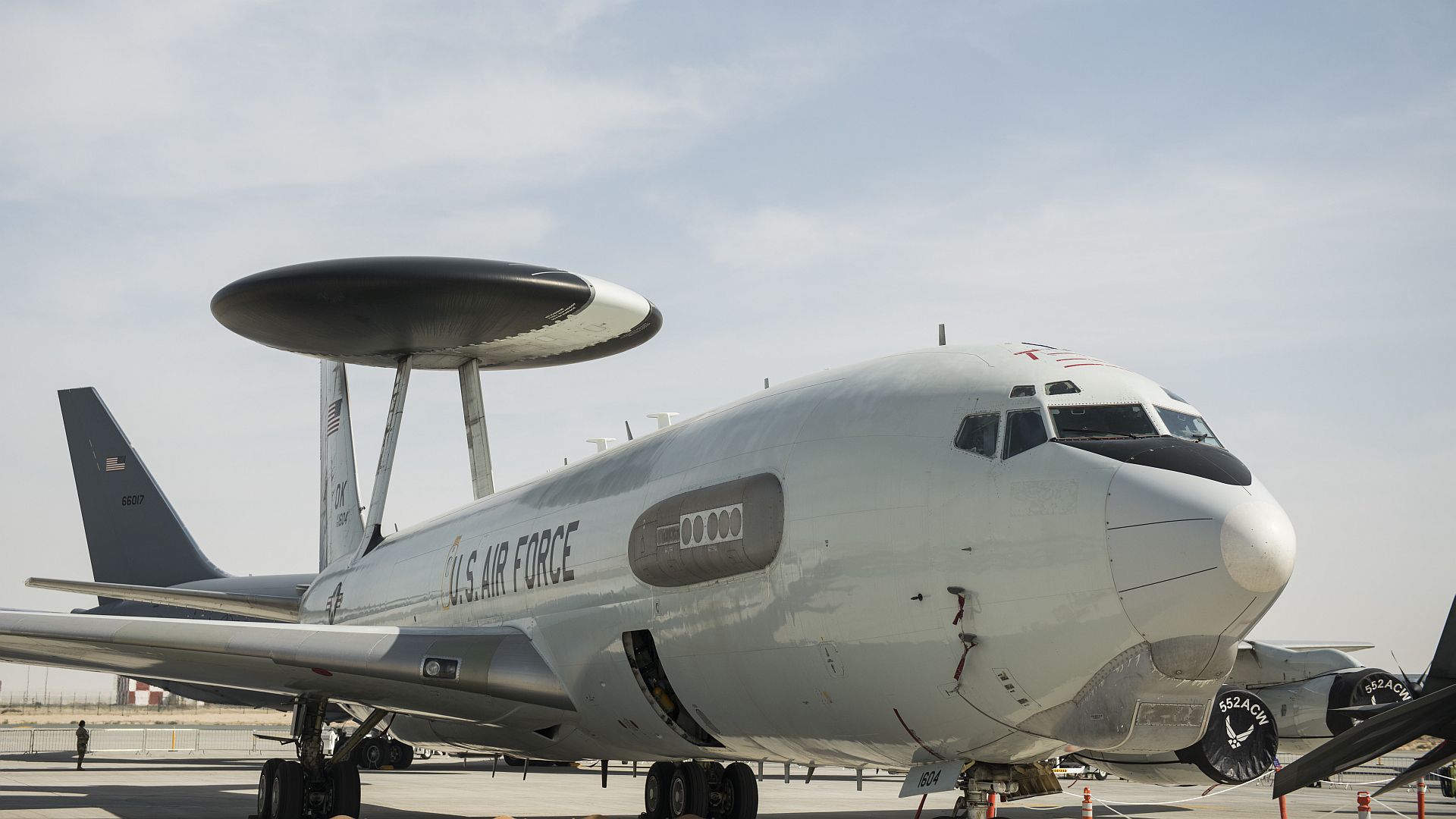
An E-3 Sentry Airborne Warning and Control System assigned to the 968th Expeditionary Airborne Air Control Squadron rests on the flightline at the Dubai Airshow, United Arab Emirates, Nov. 17, 2019. The Dubai Airshow, a biennial event, is recognized as the premier aviation and air industry event in the Gulf/Middle East region and is one of the largest air shows in the world. U.S. military participation builds upon our strong relationship with the United Arab Emirates and enhances our relationships with other allies and partners in the region. (U.S. Air Force photo by Staff Sgt. Joseph Pick)
A U.S. Navy EA-18G Growler rests on the flightline at the Dubai Airshow, United Arab Emirates, Nov. 17, 2019. Approximately 300 U.S. military personnel are participating in the DAS to showcase U.S. assets and capabilities, and strengthen relationships with our regional partners. (U.S. Air Force photo by Staff Sgt. Joseph Pick)
PACIFIC OCEAN (Nov. 17, 2019) An EA-18G Growler, from the "Cougars" of Electronic Attack Squadron (VAQ) 139, touches down on the flight deck aboard the aircraft carrier USS Nimitz (CVN 68). Nimitz is currently underway conducting routine operations. (U.S. Navy photo by Mass Communication Specialist Seaman Elliot Schaudt/Released)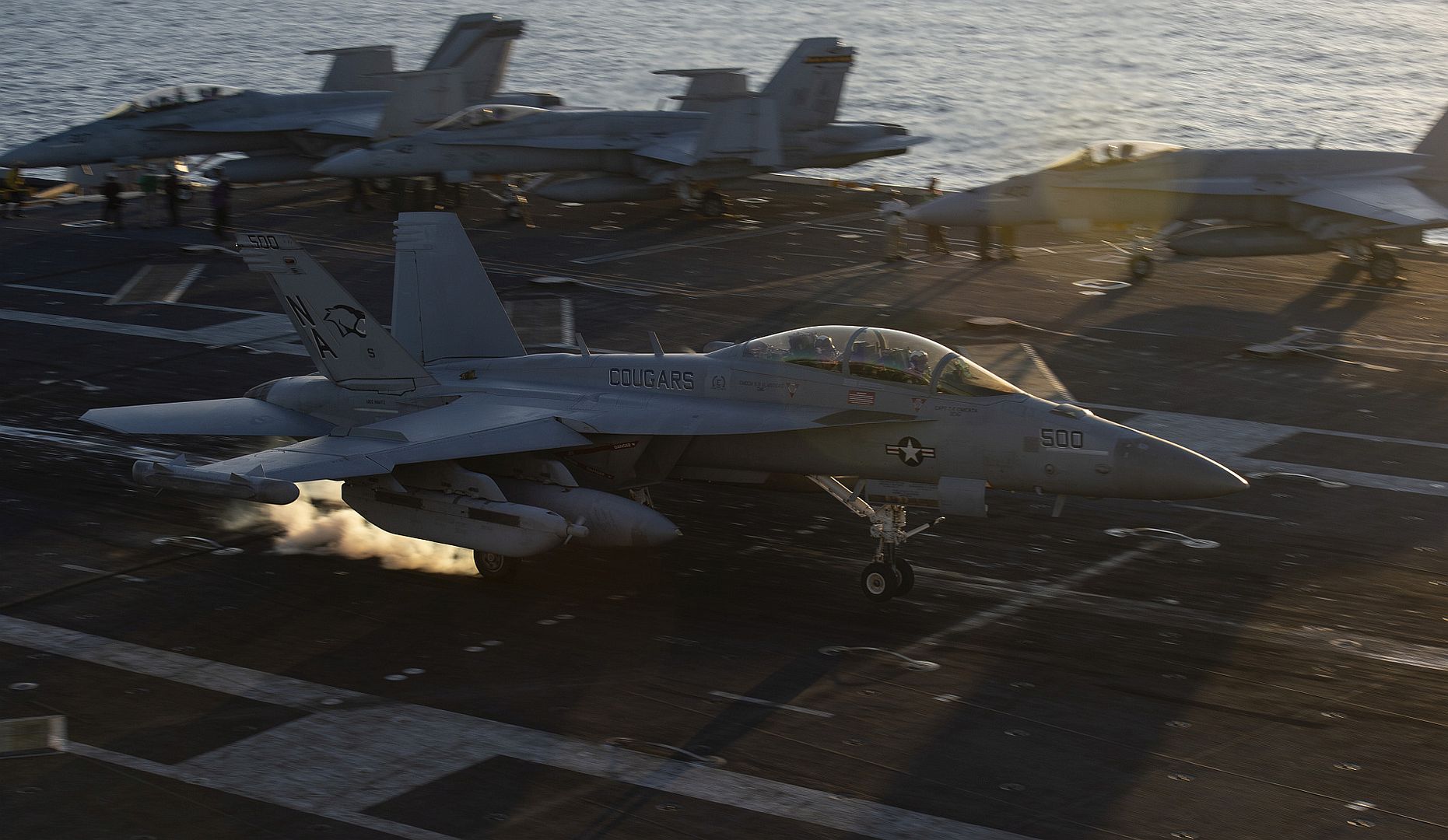
DUBAI, United Arab Emirates, Nov. 19, 2019 /PRNewswire/ -- Air Astana intends to order 30 Boeing 737 MAX 8 airplanes to serve as the backbone of its new low-cost airline FlyArystan, the Kazakh flag carrier and Boeing announced at the Dubai Airshow. The companies today signed a letter of intent for the 30 airplanes with a list price value of $3.6 billion.
Since beginning operations in May 2002, Air Astana has steadily grown its business from its hubs in Almaty and Nur-Sultan (formerly Astana), sprouting a network that serves major cities across Kazakhstan, Central Asia, Asia, China, Europe and Russia. It operates a growing fleet that includes the Boeing 757, 767 and the Airbus A320 family.
In May, Air Astana launched FlyArystan to better compete in the growing low-cost segment. The company says the new airline has seen strong ticket sales in just the first few months of operation. The plan is to expand the fast growing domestic network, with international services to Moscow commencing next month.
"Since its launch in May this year, FlyArystan has exceeded all expectations and it is clear that low cost air travel has a great future in Kazakhstan and Central Asia," said Peter Foster, President and CEO of Air Astana. "Air Astana has had a strong relationship with Boeing ever since the airline started flying in 2002 with a pair of 737NGs. Today we operate both 757s and 767s and we believe that the MAX will provide a solid platform for the growth of FlyArystan throughout our region, once the aircraft has successfully returned to service".
"Air Astana has become one of the leading airlines in Central Asia with its deep focus on safety, reliability, efficiency and customer service. At Boeing, we share those same values and are honored to expand our partnership with the 737 MAX," said Stan Deal, president and chief executive officer of Boeing Commercial Airplanes. "We believe the efficiency and reliability built into the 737 MAX will be a great fit for FlyArystan. We look forward to working with Peter and his team finalize an agreement that meets their fleet and operational requirements."
The 737 MAX 8 is part of a family of airplanes that offer 130 to 230 seats and the ability to fly up to 3,850 nautical miles (7,130 kilometers). With improvements such as the CFM International LEAP-1B engine and Advanced Technology winglets, the 737 MAX provides operators a 14% improvement over today's most efficient single-aisle airplanes and extended range to open up new destinations.
About Air Astana
Air Astana started regular flights 15 May 2002 and now operates on a network of 60 international and domestic routes from hubs in Almaty and Nur-Sultan The fleet comprises 38 Boeing 767-300ER, Boeing 757-200, Airbus A320/A321 (CEO/NEO/LR) and Embraer E190/E2 aircraft. Air Astana became the first carrier from the CIS and Eastern Europe to be awarded a 4-star rating and the Best Airline in Central Asia and India by international ratings agency, Skytrax in 2012 and has repeated the achievement every year through until 2019. Air Astana is a joint venture between the National Welfare Fund of Kazakhstan "Samruk-Kazyna" and BAE Systems with respective shares of 51% and 49%.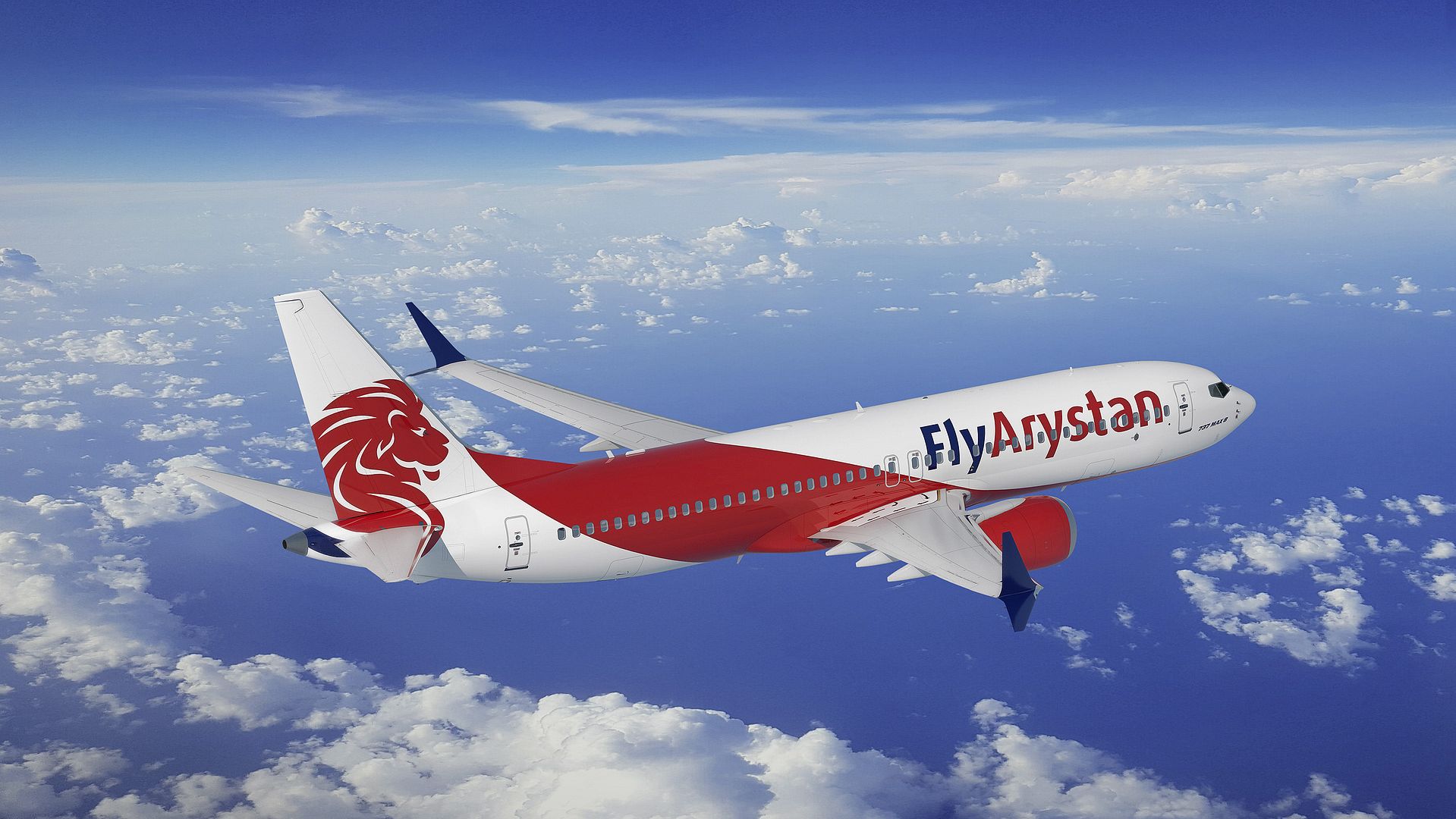
DUBAI, United Arab Emirates, Nov. 19, 2019 /PRNewswire/ -- Boeing [NYSE:BA] and the Republic of Ghana announced today that the country intends to re-launch an airline starting with the 787-9 Dreamliner. The parties signed a memorandum of understanding at the Dubai Air Show for three airplanes with a list price value of $877.5 million according to list prices.
"There is a growing demand for air travel to and from Ghana and we believe the advanced 787-9 Dreamliner gives us an efficient and flexible machine to launch a regional network and eventually serve international destinations in the future," said Joseph Kofi Adda, Honorable Minister of Aviation and Member of Parliament, Republic of Ghana. "The 787 has an excellent reputation for its operational performance, fuel efficiency and passenger experience and we are confident that we have the right partner for our new carrier."
Adda says the carrier, to be based in Accra, would establish the capital city as a strategic hub that serves cities across West Africa. Future routes would include destinations in Europe, North America and Asia and the long-term plan is to open the airline to private investment and operation.
"Africa boasts a growing, young workforce and vast natural resources. We see the demand for air travel continuing to rise across the continent. Boeing is honored to work with Ghana in helping re-launch an airline to serve this vast market," said Ihssane Mounir, senior vice president of Commercial Sales & Marketing for The Boeing Company. "We look forward to working with the government on an integrated solution that includes the 787-9 Dreamliner and aviation services to support the new airline and provide a superior experience for its future passengers."
The 787-9 is part of a family of three airplanes that offer long ranges and unmatched fuel efficiency in the 200 to 350 seat market. The 787-9 can carry 296 passengers and fly up to 7,530 nautical miles (13,950 kms), while reducing fuel use and emissions by 20 to 25 percent compared to older airplanes.
Since entering service in 2011, the 787 family has enabled the opening of more than 250 new point-to-point routes and saved 45 billion pounds of fuel. Every day, there are more than 1,600 commercial flights on a 787 Dreamliner. This means that somewhere in the world a 787 Dreamliner takes off every minute. To date, more than 400 million passengers have flown on the airplane.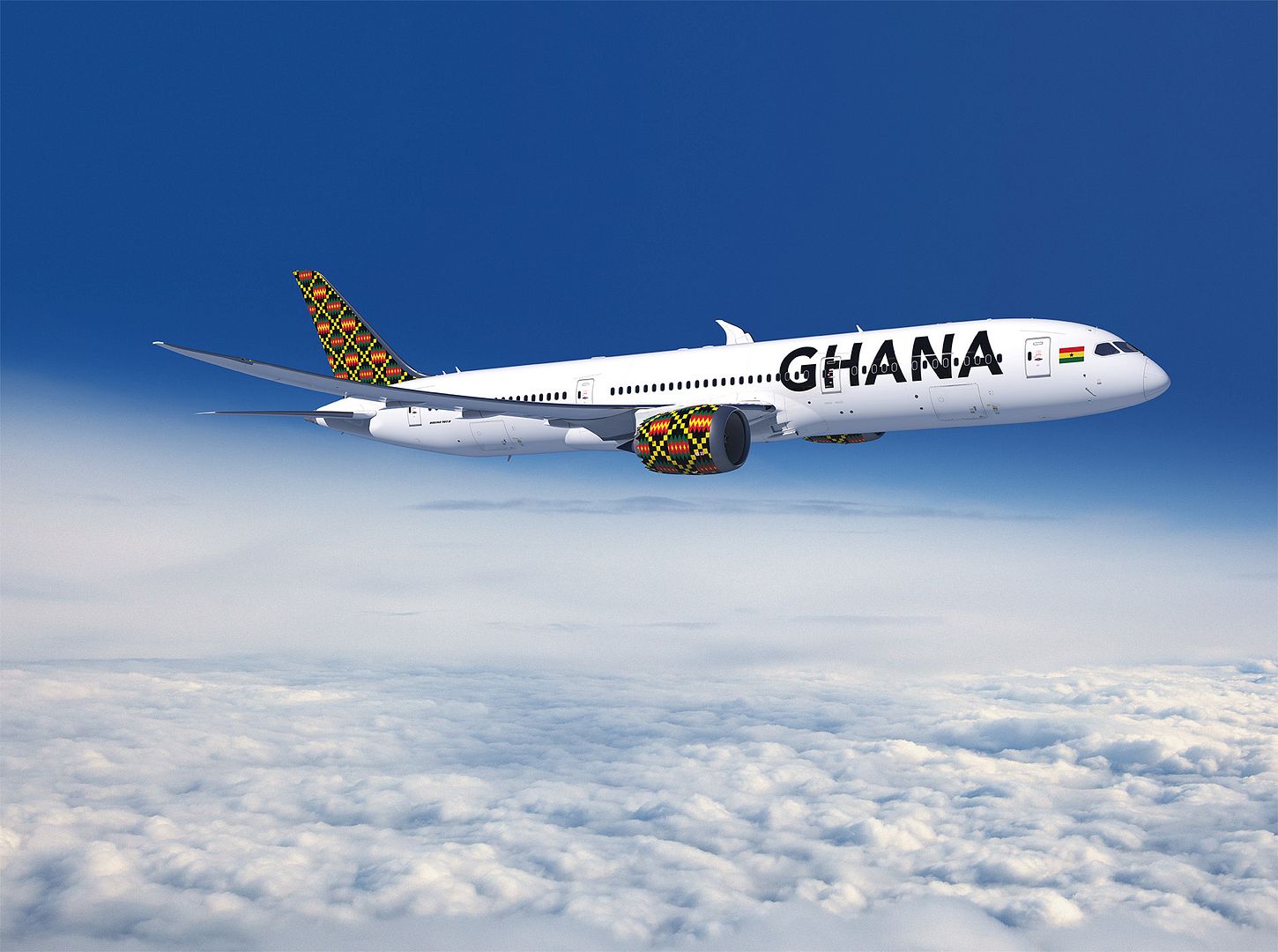
Donauw?rth ? Airbus Helicopters has delivered the first of two H145M multipurpose helicopters for defence and security missions to the Government of the Grand-Duchy of Luxembourg. Together with the helicopters, Airbus also provides a training and support package to its customer. The delivery of the second helicopter is scheduled before the end of the year. The delivered H145M is the first H145 in Luxembourg.
The helicopter is equipped with a hoist, a fast roping system, a high-performance camera, a search light, advanced communication systems, and will have provisions to install a light armour protection kit. The latest technologies to allow the helicopter to operate in adverse weather conditions and during nighttime are incorporated in the design. The helicopter will be operated and serviced at Luxembourg Findel Airport, where it has been presented to public today for the first time. With a maximum take-off weight of 3.7 tonnes, the H145M can be used for a wide range of tasks, including troop and passenger transport, surveillance, air rescue, reconnaissance and medical evacuation.
The H145M is a tried-and-tested light twin-engine helicopter that was first delivered in 2015 to the German Armed Forces and has since been ordered by Hungary, Thailand and the Republic of Serbia. Mission readiness of the H145Ms already in service is above 95 percent.
Powered by two Safran Arriel 2E engines, the H145M is equipped with full authority digital engine control (FADEC) and the Helionix digital avionics suite. It includes a high-performance 4-axis autopilot, increasing safety and reducing pilot workload. Its particularly low acoustic footprint makes the H145M the quietest helicopter in its class.
GE Capital Aviation Services (GECAS), the commercial aircraft leasing and financing arm of General Electric [NYSE: GE], has signed a firm order for 12 highly efficient wide-body Airbus A330neos and 20 long-range single-aisle A321XLRs.
The agreement for the A321XLR includes an order for 13 new planes and the upsizing of seven A321s in its existing backlog. The latest order takes the total number of A330 Family aircraft ordered by GECAS to 45 and all variants of the A320 Family to 588.
At the Dubai Airshow, Christian Scherer, Airbus Chief Commercial Officer said: ?Having one of the world?s most respected and influential lessors invest in the A321XLR and the A330neo, speaks volumes on their global appeal, versatility and solid value as an asset. Airbus thanks GECAS on its wise investment and endorsement of the A330neo.?
The A330neo Family is the new generation A330, comprising two versions: the A330-800 and A330-900 sharing 99 percent commonality. It builds on the proven economics, versatility and reliability of the A330 Family, while reducing fuel consumption by about 25 percent per seat versus previous generation competitors and increasing range by up to 1,500 nm compared to the majority of A330s in operation.
The A321XLR is the longest-range single-aisle commercial jetliner ever, capable of flying routes up to 4,700nm with unbeatable fuel efficiency. The enhanced range and efficiency of the A321XLR enables operators to exploit new route opportunities with low operating costs, a reduced environmental impact, and provide passengers with a comfortable travel experience.
The A330neo is powered by Rolls-Royce?s latest-generation Trent 7000 engines and features a new wing with increased span and new A350 XWB-inspired Sharklets. The cabin provides the comfort of the new Airspace amenities including state-of-the-art passenger inflight entertainment and Wifi connectivity systems.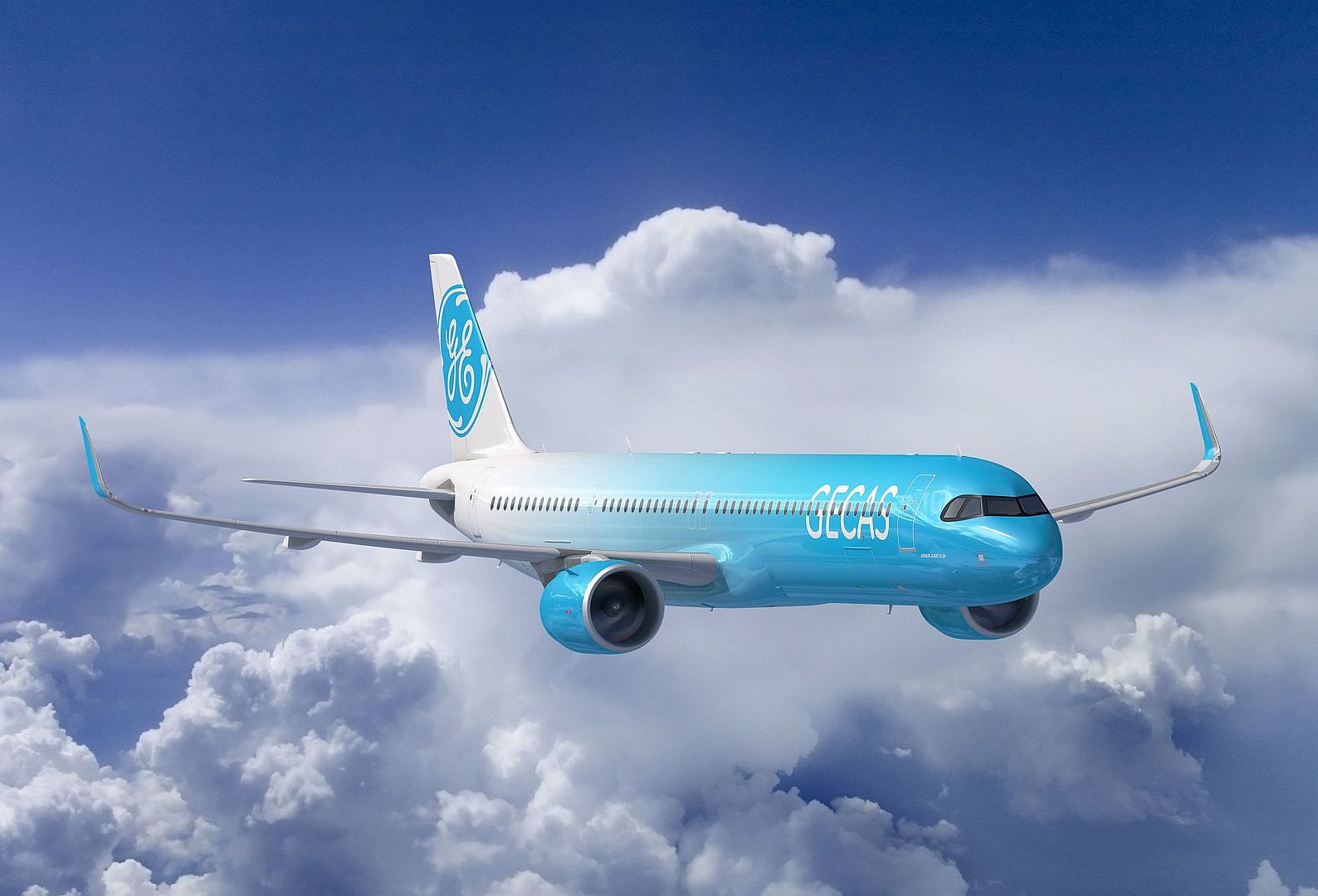
-
RAF LAKENHEATH, United Kingdom (AFNS) --
The 48th Fighter Wing, in partnership with the Royal Air Force, hosted Point Blank 19-8 Nov. 14.
Additional aircraft from RAF Mildenhall, RAF Coningsby, RAF Lossiemouth, RAF Boulmer and NATO participated in the flying training exercise over the North Sea.
The purpose of Point Blank 19-8 is to exercise large-force capabilities that incorporate current and future wartime scenarios. This iteration is especially unique in that it features special operations forces and the ?Iron Triad.?
?The Iron Triad refers to three aircraft that work together to find and nominate targets and then pass those to airborne fixed-wing assets that can then strike that mark,? said Capt. Kevin Fogler, 48th Operations Support Squadron chief of tactical integration. ?Finding targets that aren?t planned is very difficult with any one asset, so the Iron Triad is the team that works together to find targets in real time to complete a mission.?
The trio includes the E-3 Sentry, the E-8 Joint Surveillance Target Attack Radar System and the RC-135 Rivet Joint. The aircraft have the capability to identify threats on the ground for low-flying aircraft and provides the aircrew with more situational awareness for various circumstances on the ground.
?This will be the first time we bring in multiple big wing intelligence surveillance and reconnaissance assets for the exercise,? said Col. Jason Camilletti, 48th Operations Group commander. ?Having the Iron Triad will really allow us to get after joint all domain command and control.?
Participation in bilateral exercises enhances professional relationships and improves overall coordination with allies and partner militaries.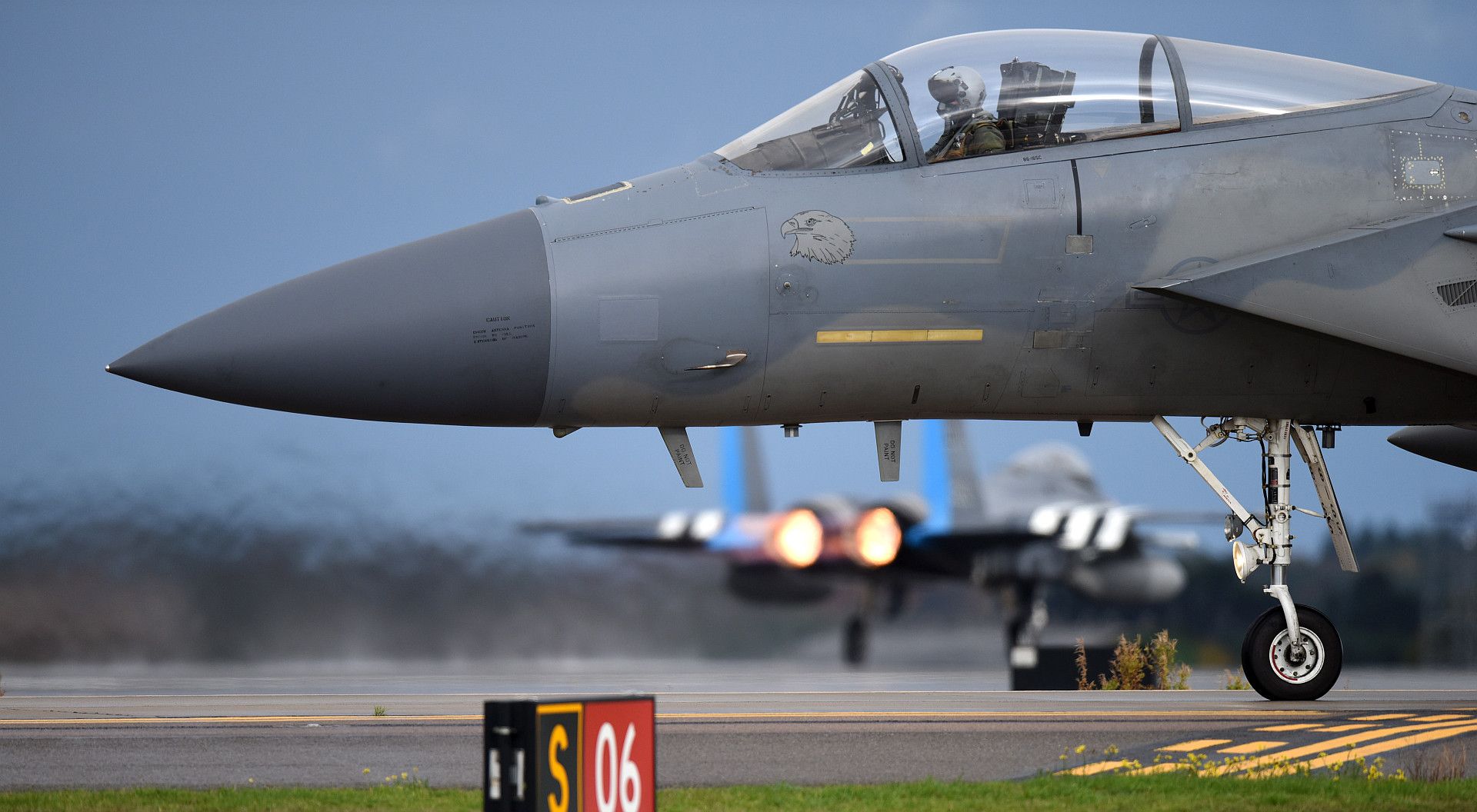
?This holds our support section to a time frame,? Fogler said. ?It?s all designed to replicate a mission set you would find in combat operations. All support in this exercise is revolved around that special operations objective, which is not normally how these exercises go.?
Other training objectives include infiltrating and exfiltrating special operations forces into enemy territory for a high-end reconnaissance mission.
?This is a unique opportunity for Air Force Special Operations Command mobility aircraft to be the supported force in a larger exercise and to integrate with our USAF, RAF and other NATO partners,? said a U.S. Air Force MC-130J pilot of the 352nd Special Operations Wing.
?Running these exercises and establishing contracts with these countries while learning how our assets fit together is critical to continue to present a credible threat to any adversary,? Fogler said.
The continuing contributions to develop and improve air readiness are significant in maintaining security and essential to the collective defense of the U.S., U.K. and NATO alliance.
?Our mission is to deliver worldwide responsive combat air power and support, and exercise Point Blank ensures the Liberty Wing (48th Fighter Wing) is ready 24/7, 365 to secure the sovereigns skies,? Camilletti said.
(U.S. Air Force photo's by Airman 1st Class Madeline Herzog)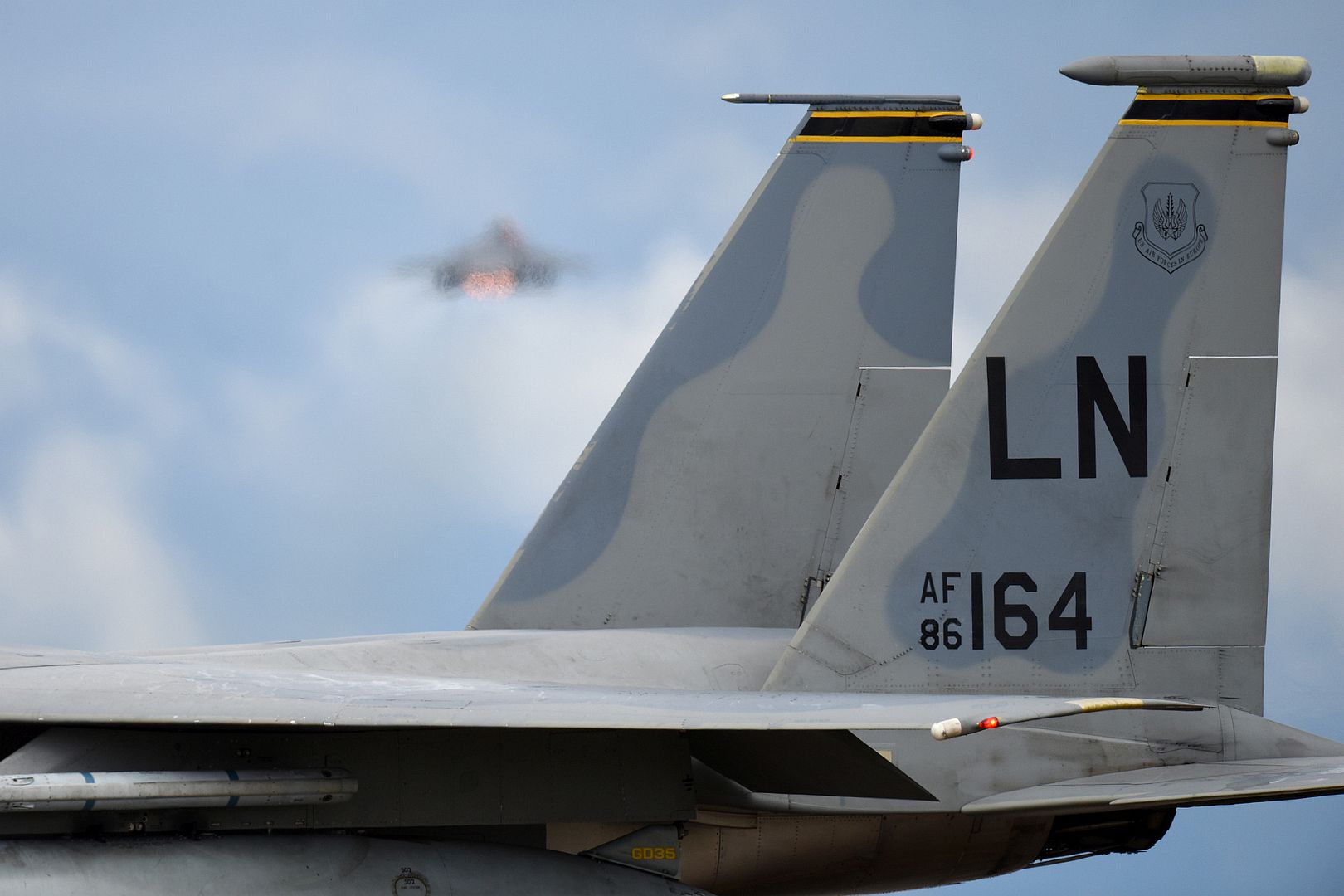
Marines from the Marine Medium Tiltrotor Squadron 362 (VMM-362), based out of Marine Corps Air Station Miramar, California, prepare to fly their MV-22 Ospreys out of Gowen Field, Boise, Idaho, Nov. 19, 2019. The Ugly Angels are training hand-in-hand with the 190th Fighter Squadron Skullbangers to hone their combat search and rescue skillset at the Saylor Creek Range south of Mountain Home, Idaho. (U.S. Air National Guard photo by Senior Master Sgt. Joshua C. Allmaras)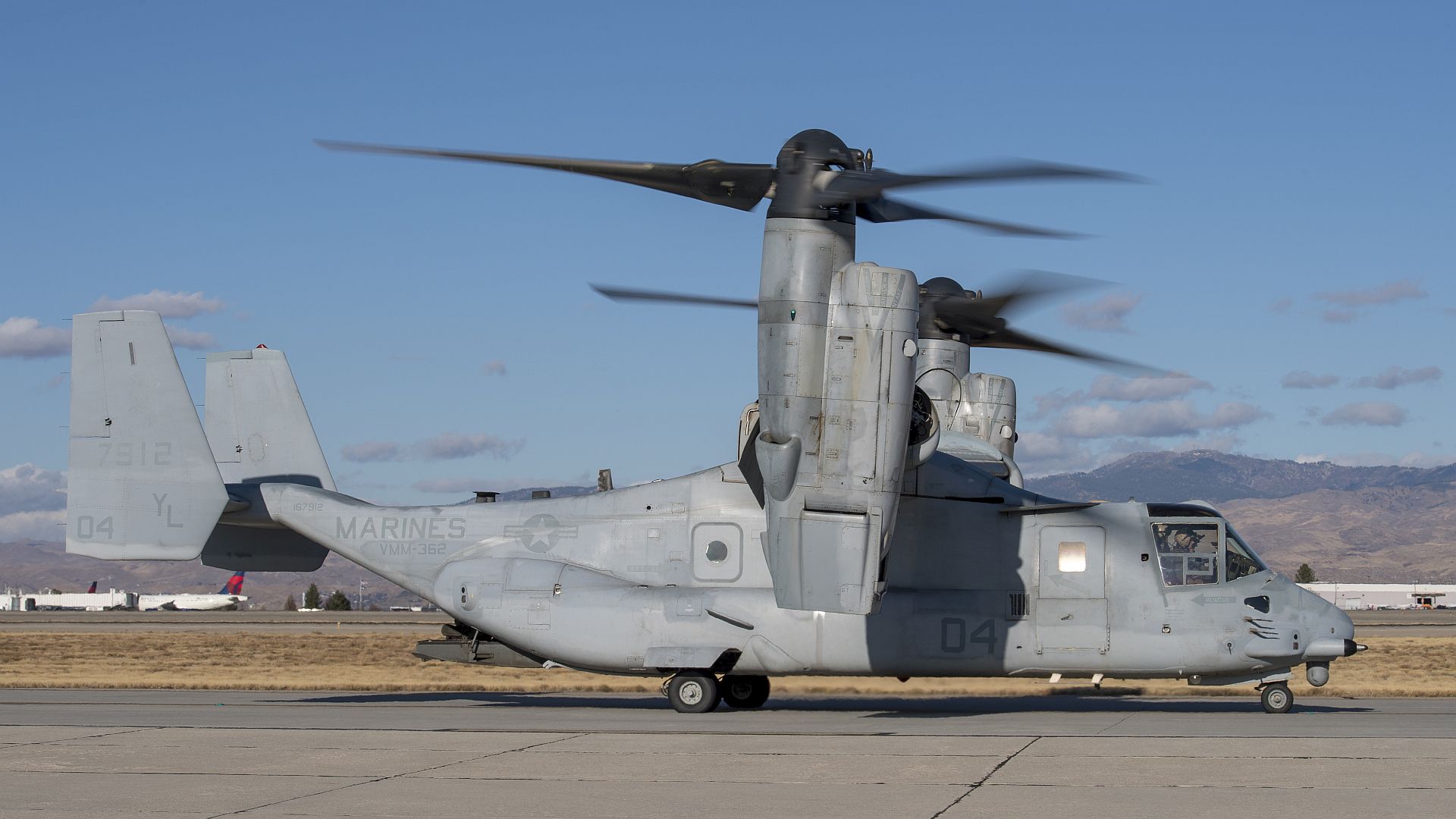
An A-10 Thunderbolt II, from the 124th Fighter Wing, takes off from Gowen Field, Boise, Idaho, for a combat search and rescue training sortie Nov. 19, 2019. The pilots from the 190th Fighter Squadron are training with MV-22 Osprey Marines from Marine Medium Tiltrotor Squadron 362 (VMM-362), south of Mountain Home, Idaho, at the Saylor Creek Range. (U.S. Air National Guard photo by Senior Master Sgt. Joshua C. Allmaras)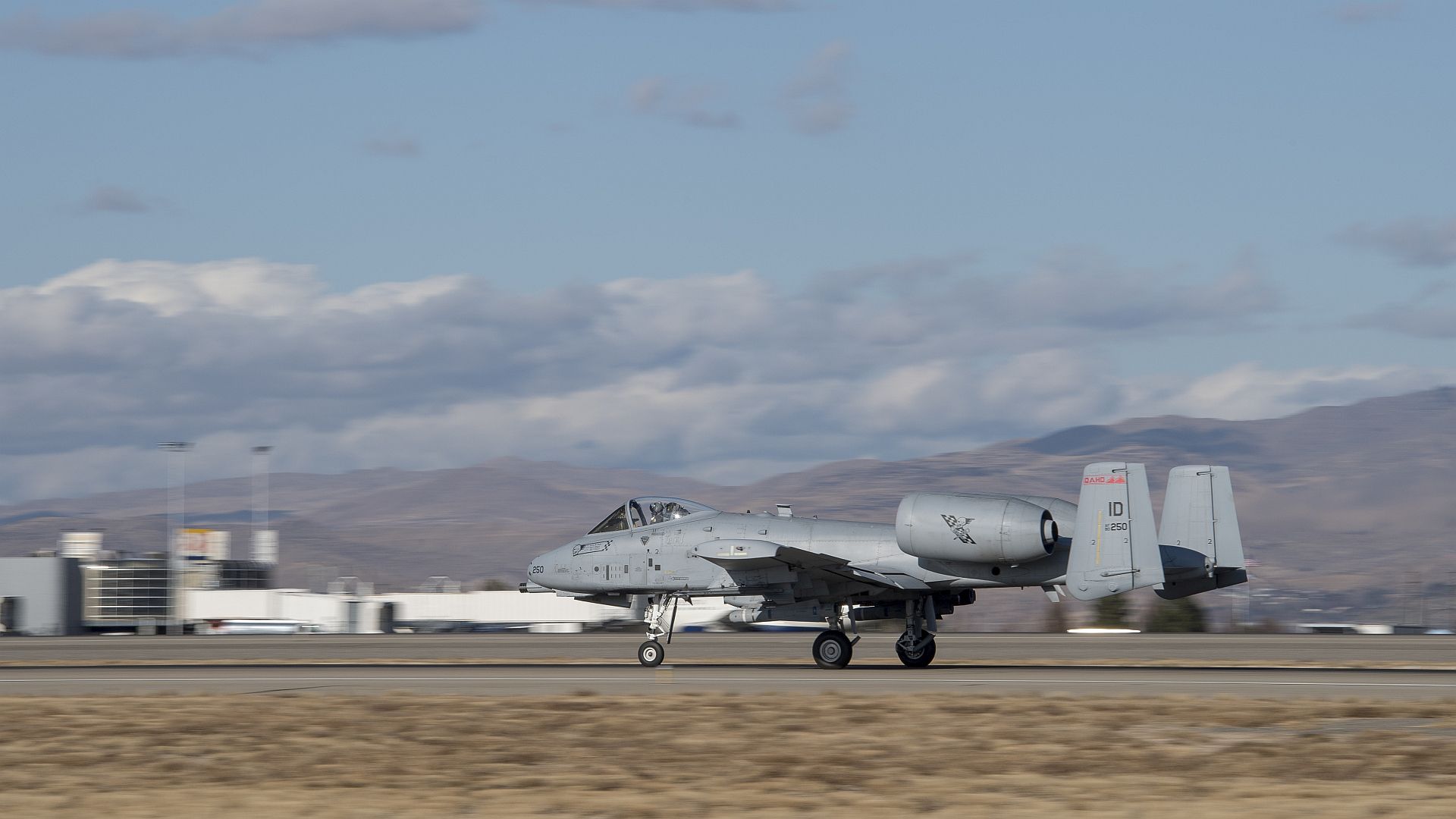
An F-16 Fighting Falcon fighter jet assigned to the 64th Aggressor Squadron takes off during Aviation Nation air show 2019 at Nellis Air Force Base, Nevada, Nov. 16, 2019. The Aggressor paint scheme ?Wraith? was chosen by a social media poll held by Brig. Gen. Robert Novotny, 57th Wing commander. (U.S. Air Force photo by Airman 1st Class Bryan Guthrie)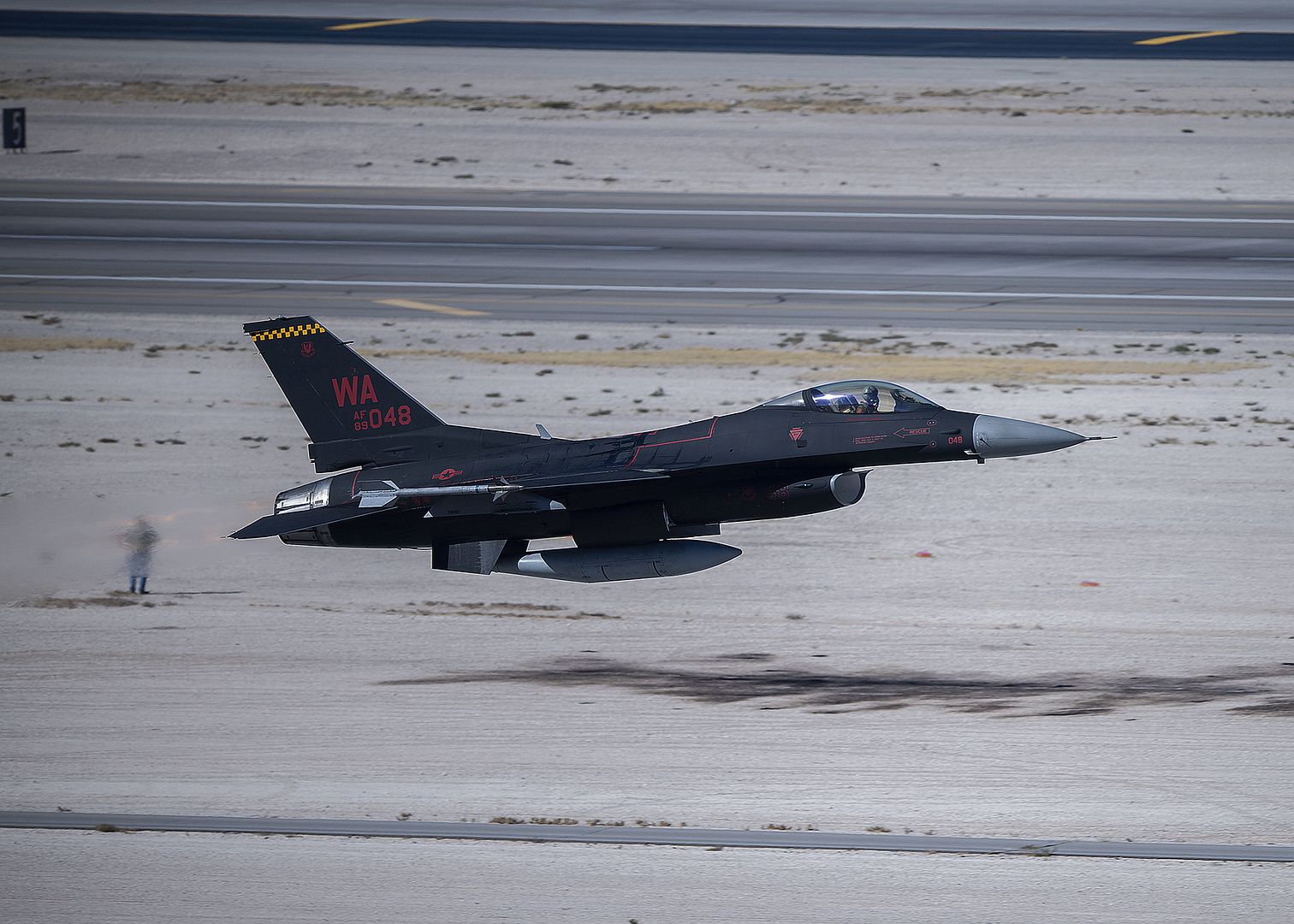
An F-15E Strike Eagle assigned to the 17th Weapons Squadron performs an air maneuver during the Aviation Nation 2019 air show at Nellis Air Force Base, Nevada, Nov. 16, 2019. The F-15E is a dual-role fighter designed to perform air-to-air and air-to-ground missions at low altitudes, day or night and in all weather conditions. (U.S. Air Force photo by Airman 1st Class Bryan Guthrie)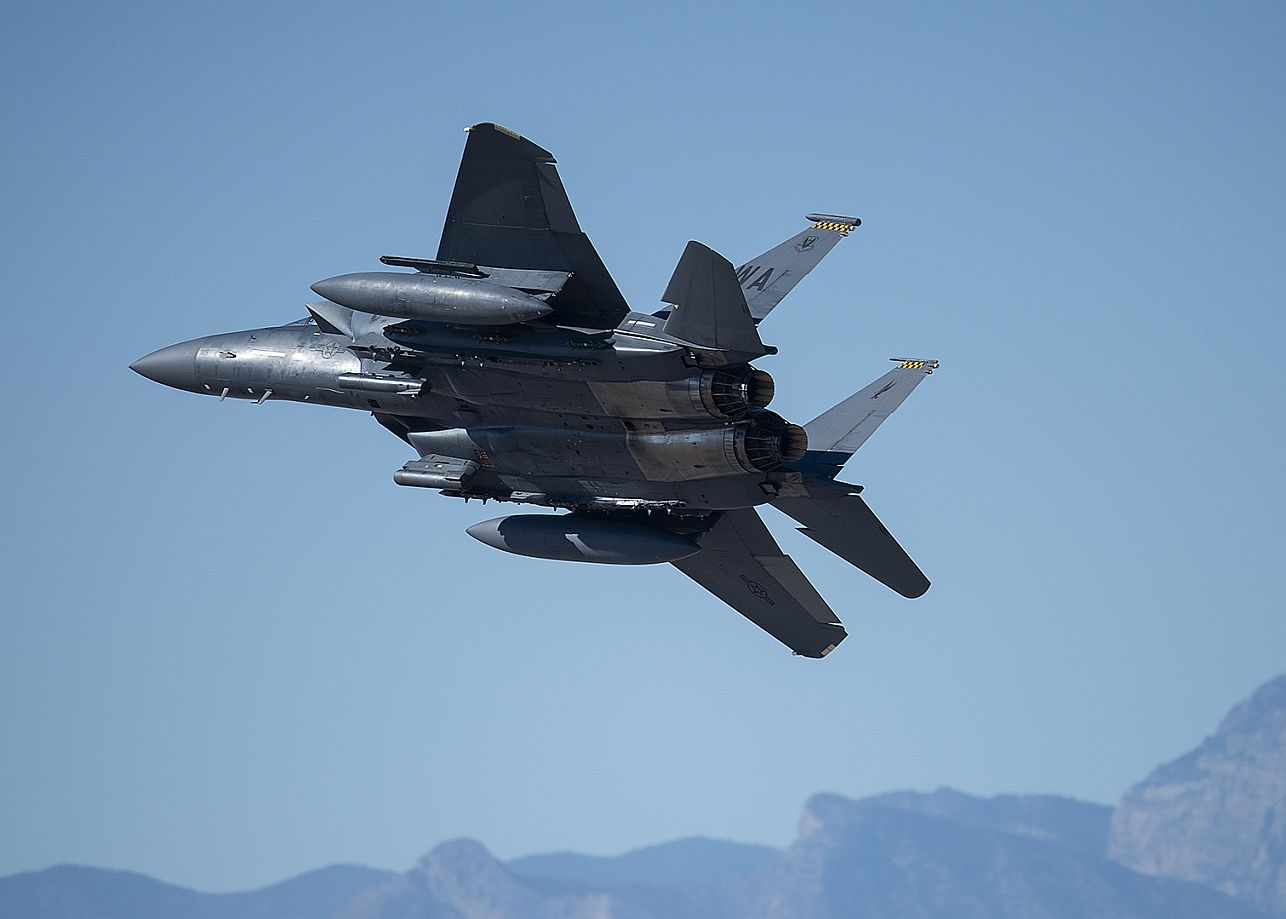
A U.S. Marine Corps T-28 Trojan aircraft, pops smoke over Nellis Air Force Base, Nevada, Nov. 15, 2019. The historic aircraft assisted an HC-130J Combat King II aircraft and U.S. Special Operations Command Para-Commandos in a parachute demonstration at Aviation Nation 2019. (U.S. Air Force photo by Airman 1st Class Dwane R. Young)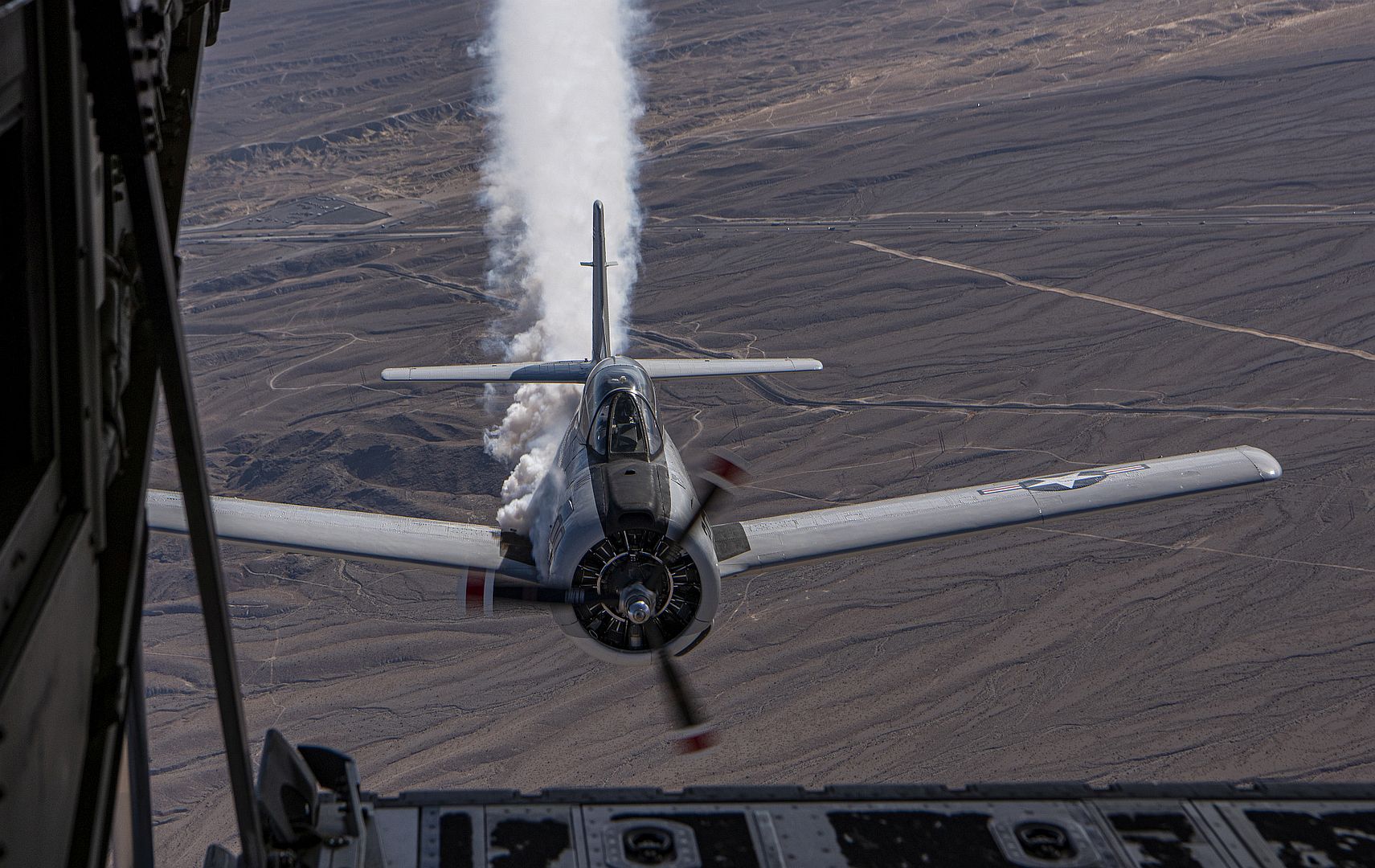
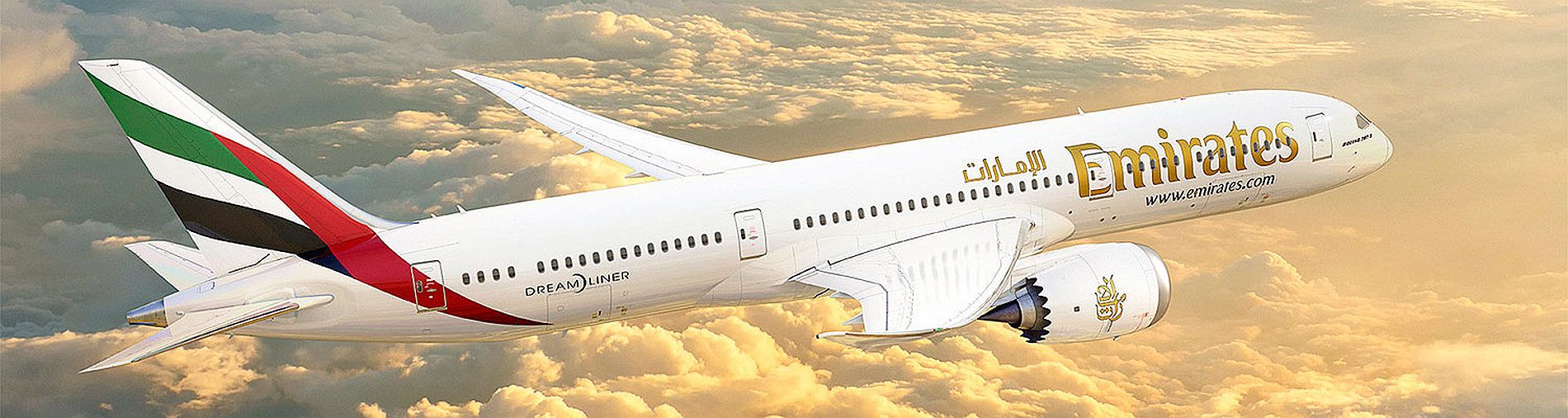
DUBAI, United Arab Emirates, Nov. 20, 2019 /PRNewswire/ -- Boeing [NYSE: BA] and Emirates announced today they have finalized a purchase agreement for 30 787-9 Dreamliner airplanes, valued at $8.8 billion according to list prices. The agreement, signed at the Dubai Airshow, culminates discussions between the two companies on the best 787 Dreamliner model to meet the requirements of one of the world's leading airlines.
Emirates had previously signed an initial agreement for the larger 787-10 variant. In officially selecting the 787-9 today, Emirates adds a medium-sized widebody airplane to complement the airline's larger 777 aircraft. Both airplane families lead their respective category for superior range and fuel efficiency.
HH Sheikh Ahmed bin Saeed Al Maktoum, Emirates Chairman and Chief Executive said: "I am pleased to announce a firm order for 30 Boeing Dreamliners. This is an important investment and addition to our future fleet and it reflects Emirates' continued efforts to provide the best quality air transport services to our customers. The 787s will complement our fleet mix by expanding our operational flexibility in terms of capacity, range and deployment. We are also pleased to reaffirm our commitment to the Boeing 777X programme and look forward to its entry into service.
Sheikh Ahmed added: "Our Boeing fleet is key to our business model to serve international demand for travel to and through our Dubai hub, as we continue to contribute to the UAE's strategy to become a global destination for business and tourism by providing high quality air connectivity."
As part of the agreement, Emirates will update a portion of its large order book by exercising substitution rights and converting 30 777 airplanes into 30 787-9s. With this conversion, Emirates remains the world's biggest 777X customer with 126 airplanes on order and the largest 777 operator with 155 airplanes today.
"We are excited to finalize this important order from one of the world's leading airlines. Our agreement solidifies Emirates' plan to operate the 787 Dreamliner and the 777X, which make up the most efficient and most capable widebody combination in the industry," said Boeing Commercial Airplanes President & CEO Stan Deal. "It is an honor to build on our successful partnership with Emirates and continue to sustain many jobs at Boeing and our supplier partners."
To support Emirates' current-generation 777 airplanes in the coming years, the companies announced that Boeing Global Services will leverage its worldwide supply chain to provide timely replacement parts, reducing maintenance times and keeping aircraft in service.
At 63 meters (206 feet), the 787-9 Dreamliner can fly 296 passengers, in a typical two-class configuration, up to 7,530 nautical miles (13,950 kilometers), while reducing fuel costs by more than 20 percent compared to previous airplanes they replace. Designed with the passenger in mind, the 787 delivers an unparalleled experience with the largest windows of any jet, large overhead bins with room for everyone's bag, comfortable cabin air that is cleaner and more humid, and soothing LED lighting.
The Dreamliner's superior efficiency and range have allowed airlines to open 257 new non-stop routes around the world. More than 80 customers around the world have ordered more than 1,400 Dreamliners since the program's introduction, making it the fastest-selling widebody jet in history.