Aviation News
-
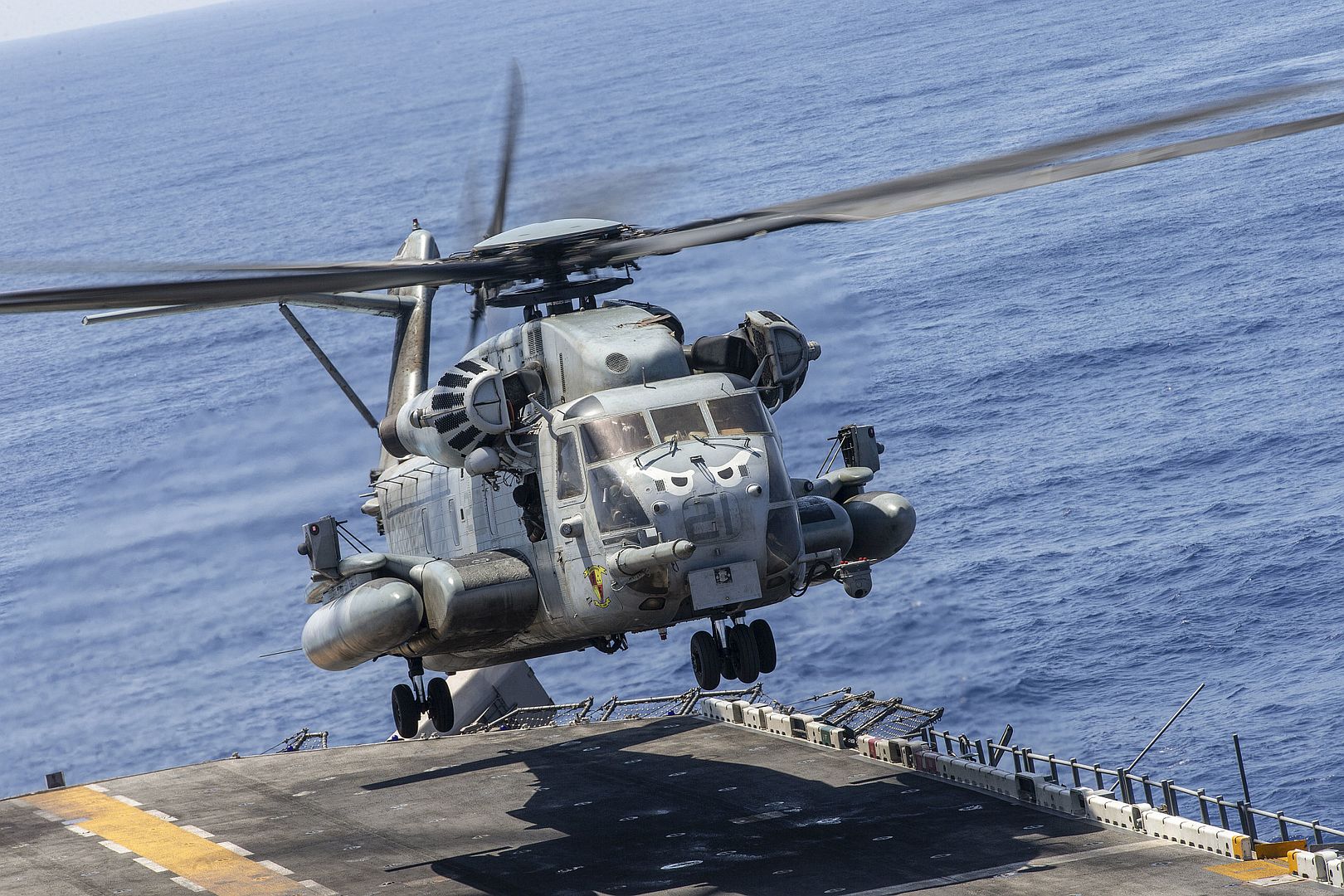
SOUTH CHINA SEA (Oct. 9, 2019) A CH-53E Super Stallion with Marine Medium Tiltrotor Squadron (VMM) 163 (Reinforced), 11th Marine Expeditionary Unit (MEU), lands on the flight deck of the amphibious assault ship USS Boxer (LHD 4) during a vertical replenishment-at-sea. The Marines and Sailors of the 11th MEU are deployed to the 7th Fleet area of operations to support regional stability, reassure partners, and allies, and maintain a presence postured to respond to any crisis ranging from humanitarian assistance to contingency operations. (U.S. Marine Corps photo by Cpl. Dalton S. Swanbeck)
A U.S. Air Force F-16 Fighting Falcon from the 8th Fighter Wing taxis down the runway for a routine training flight at Kunsan Air Base, Republic of Korea, Oct. 8 2019. The 8th FW is comprised of two F-16 squadrons, and its primary mission is conducting air-to-ground and air-to-air missions against adversaries when called upon. (U.S. Air Force photo by Senior Airman Stefan Alvarez)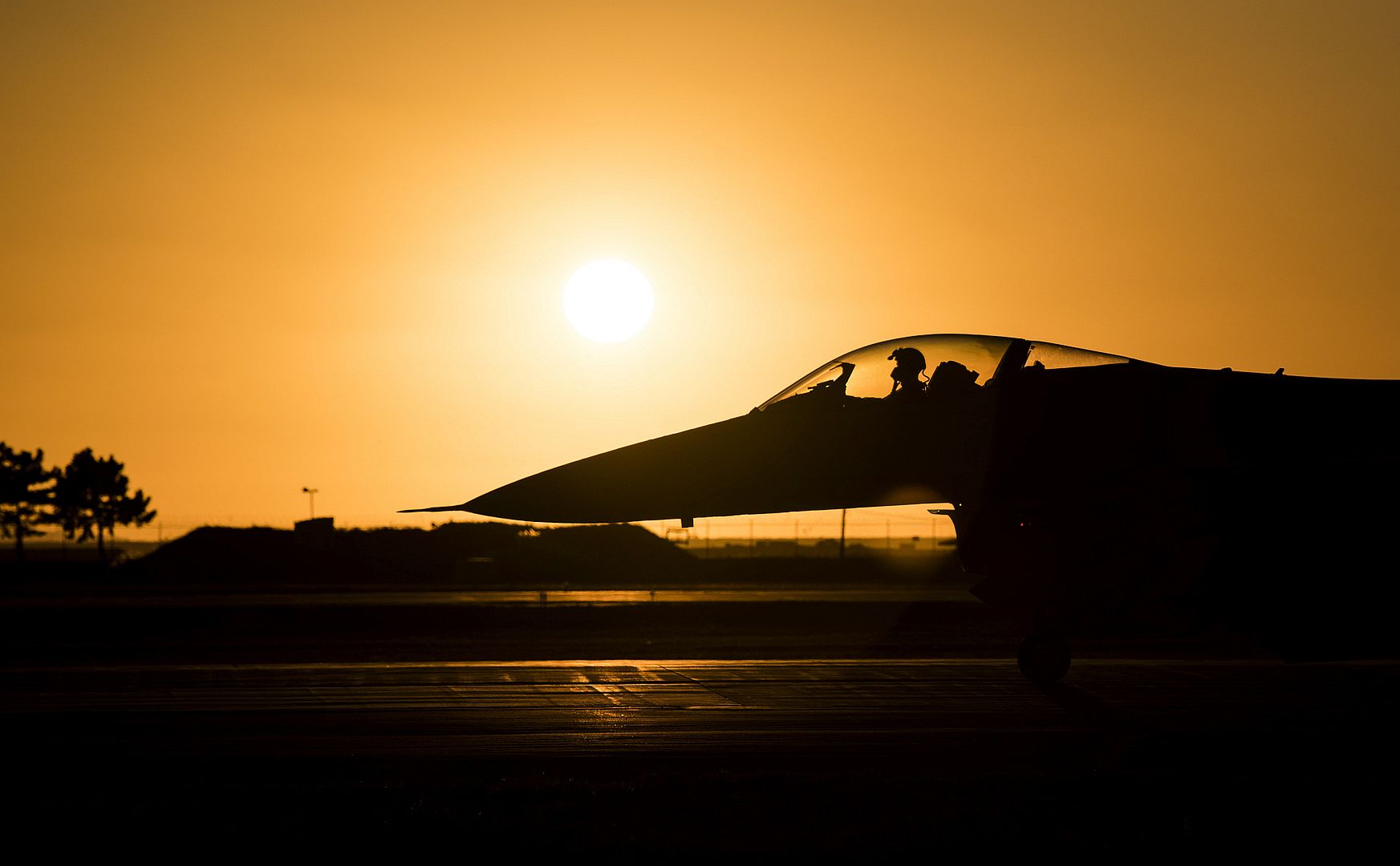
A U.S. Air Force F-16 Fighting Falcon from the 80th Fighter Squadron "Juvats" taxis down the runway at Kunsan Air Base, Republic of Korea, Oct. 7, 2019. The 80th FS, along with the 35th FS, are the two F-16 squadrons based out of Kunsan tasked with protecting the Republic of Korea air space. (U.S. Air Force photo by Senior Airman Stefan Alvarez)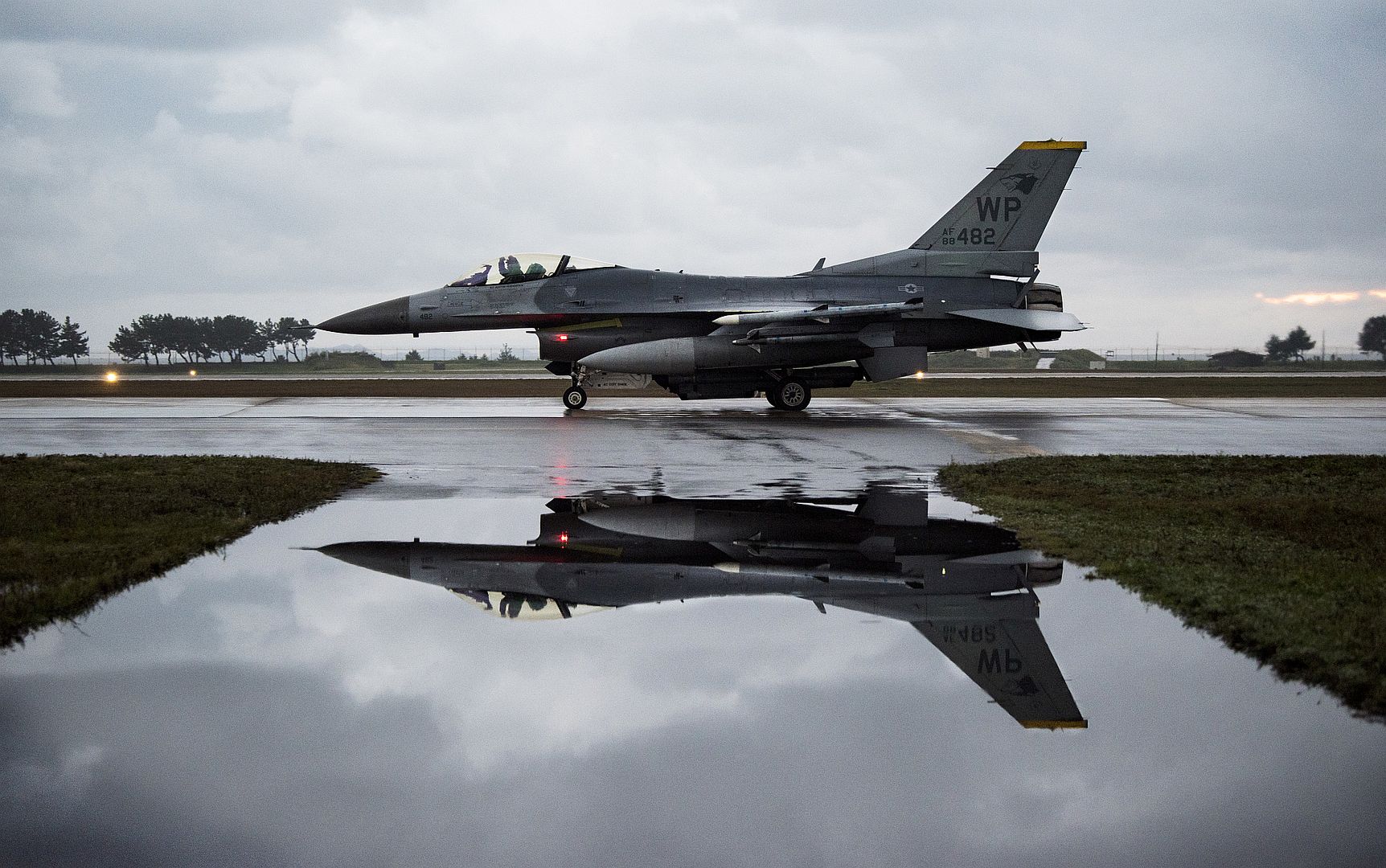
A U.S. Air Force F-16 Fighting Falcon from the 35th Fighter Squadron "Pantons" taxis down the runway at Kunsan Air Base, Republic of Korea, Oct. 7, 2019. The 35th FS is one of two USAF fighter squadrons on Kunsan AB, both of which fly the F-16 with the goal of deterring aggression from any adversaries. (U.S. Air Force photo by Senior Airman Stefan Alvarez)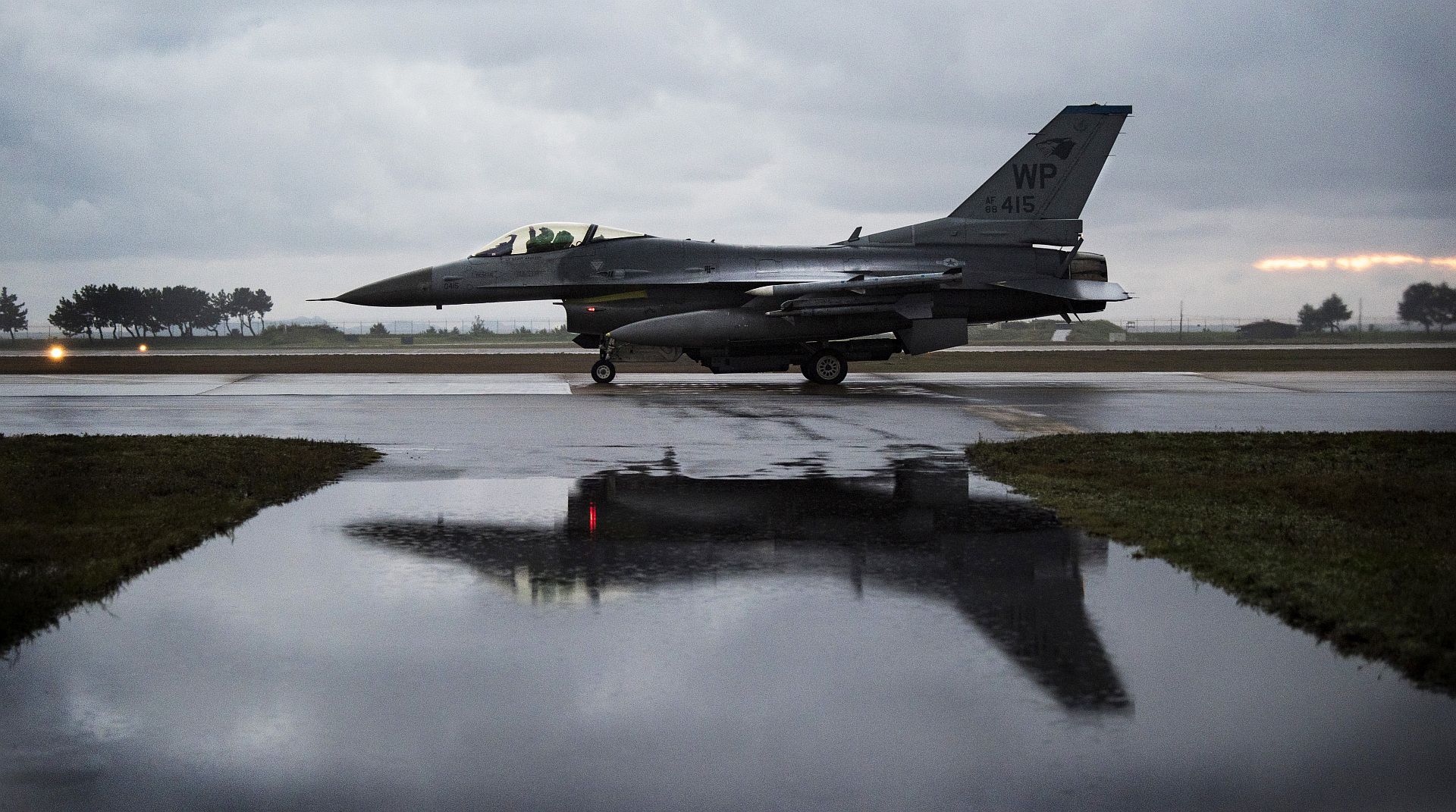
A U.S Air Force F-16 Fighting Falcon from the 555th Fighter Squadron takes off at Aviano Air Base, Italy, Oct. 9, 2019. The 31st Fighter Wing is the only U.S. fighter wing south of the Alps. This strategic location makes the wing critical to operations in NATO's southern region. (U.S. Air Force photo by Airman 1st Class Ericka A. Woolever).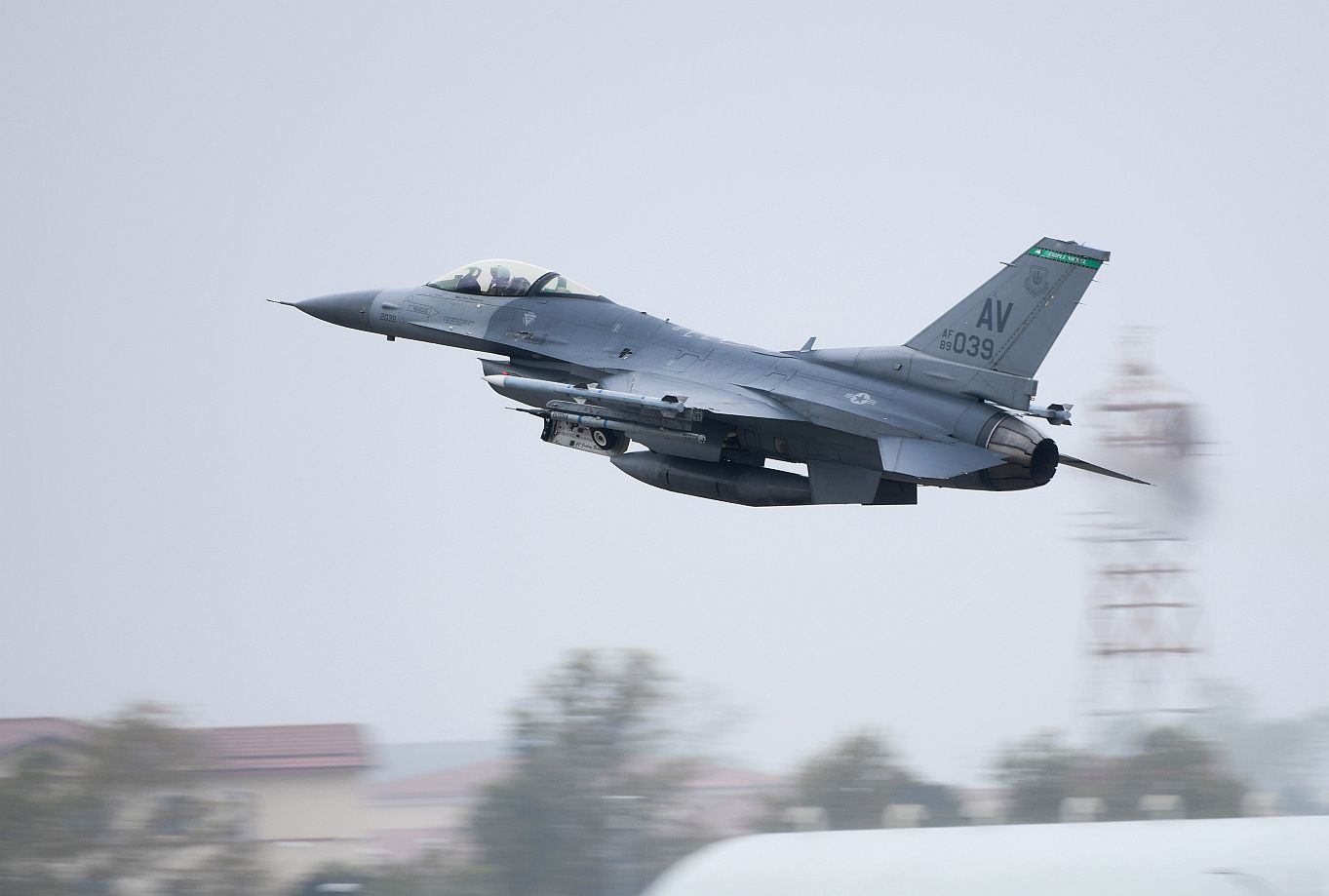
Pennsylvania Air National Guard KC-135 aircraft assigned to the 171st Air Refueling Wing are parked on the east ramp during an autumn sunrise in western Pennsylvania Oct. 10, 2019. The 171st shares the runway with the Pittsburgh International Airport. (U.S. Air National Guard photo by Staff Sgt. Bryan Hoover)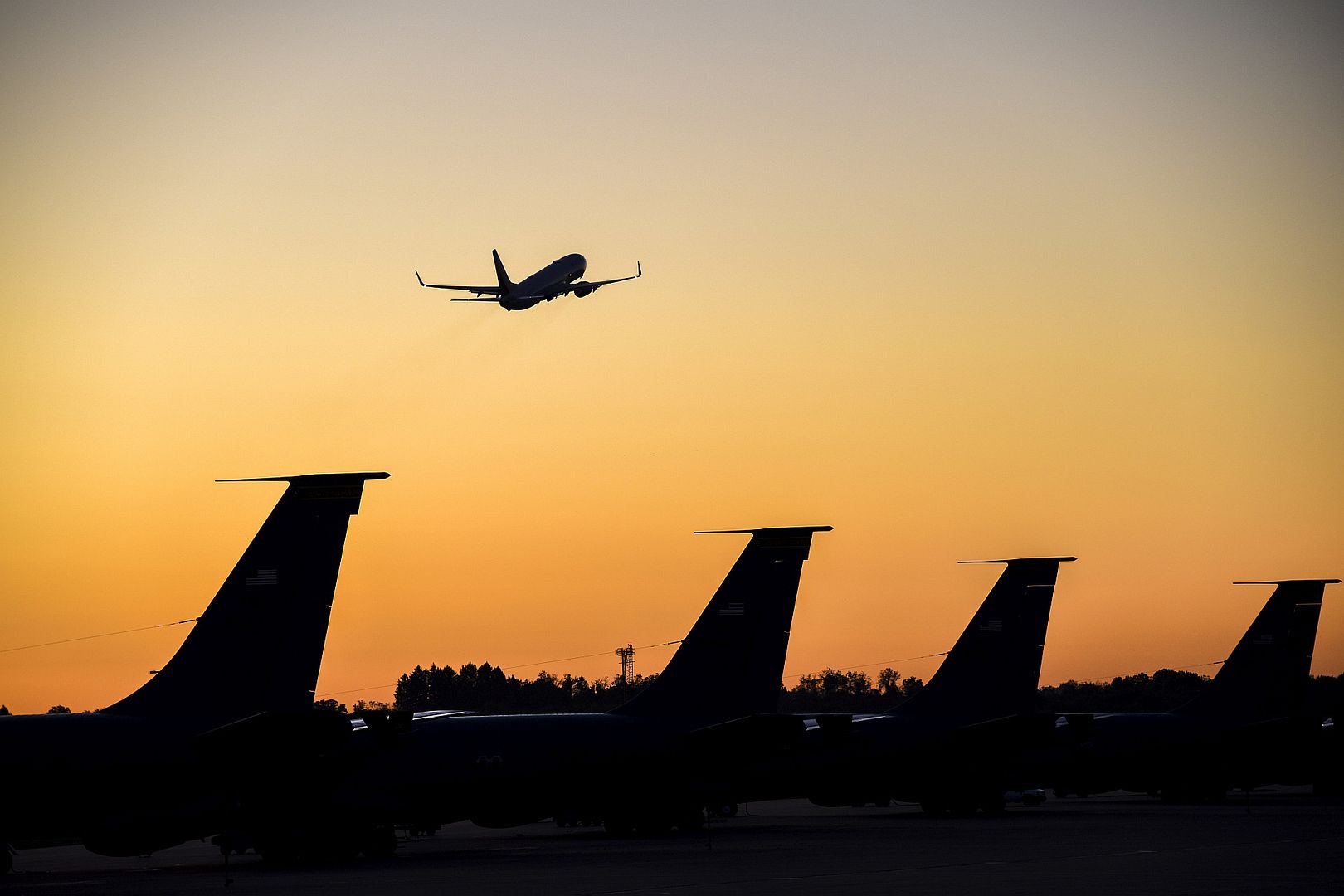
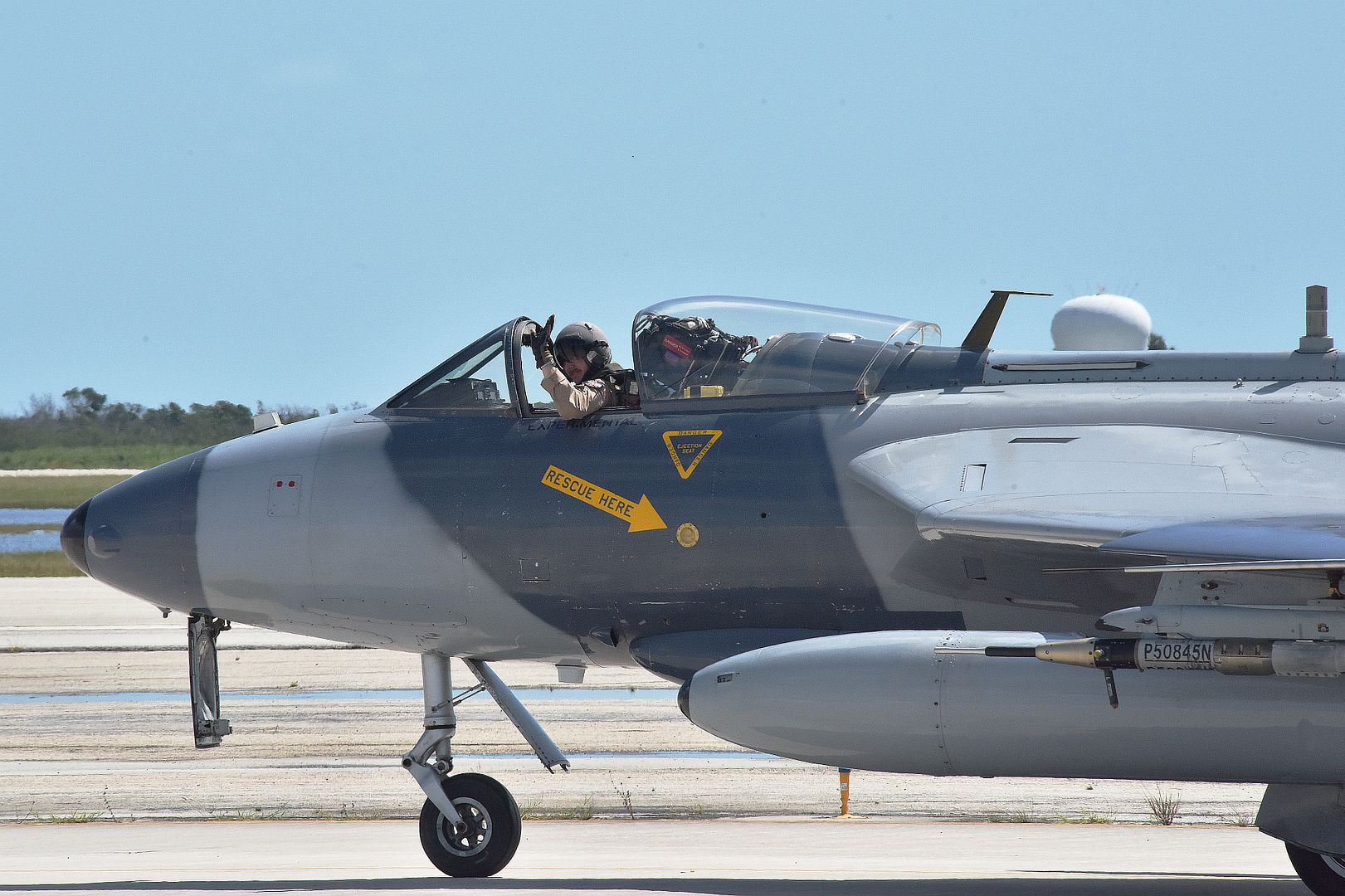
KEY WEST, Fla. (Oct. 9, 2019) An MK-58 Hawker Hunter from Airborne Tactical Advantage Company prepares to take off at Naval Air Station Key West. Naval Air Station Key West is the state-of-the-art facility for combat fighter aircraft of all military services, provides world-class pierside support to U.S. and foreign naval vessels, and is the premier training center for surface and subsurface military operations. U.S. Navy photo's by Mass Communication Specialist 3rd Class Arnesia McIntyre (Released)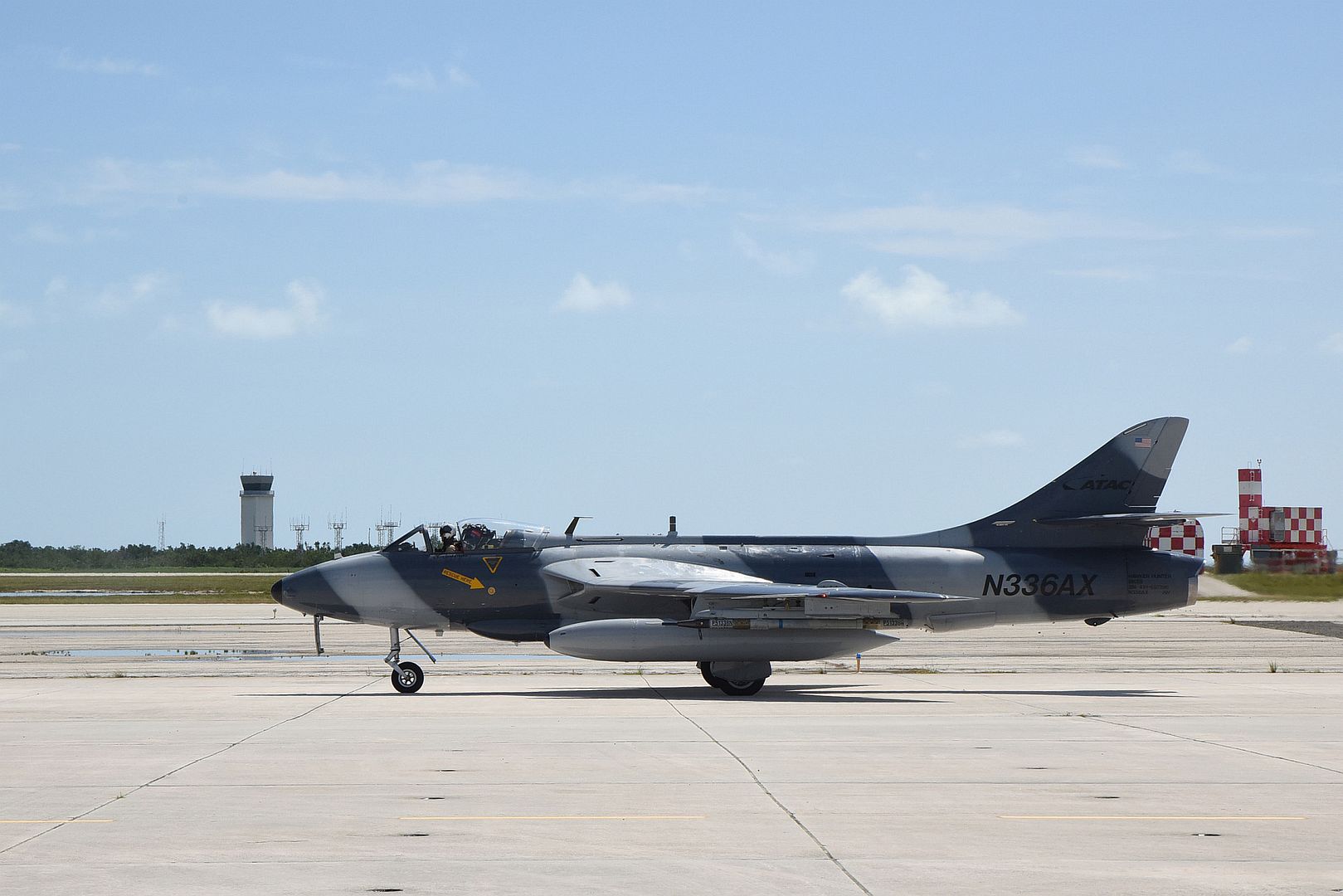
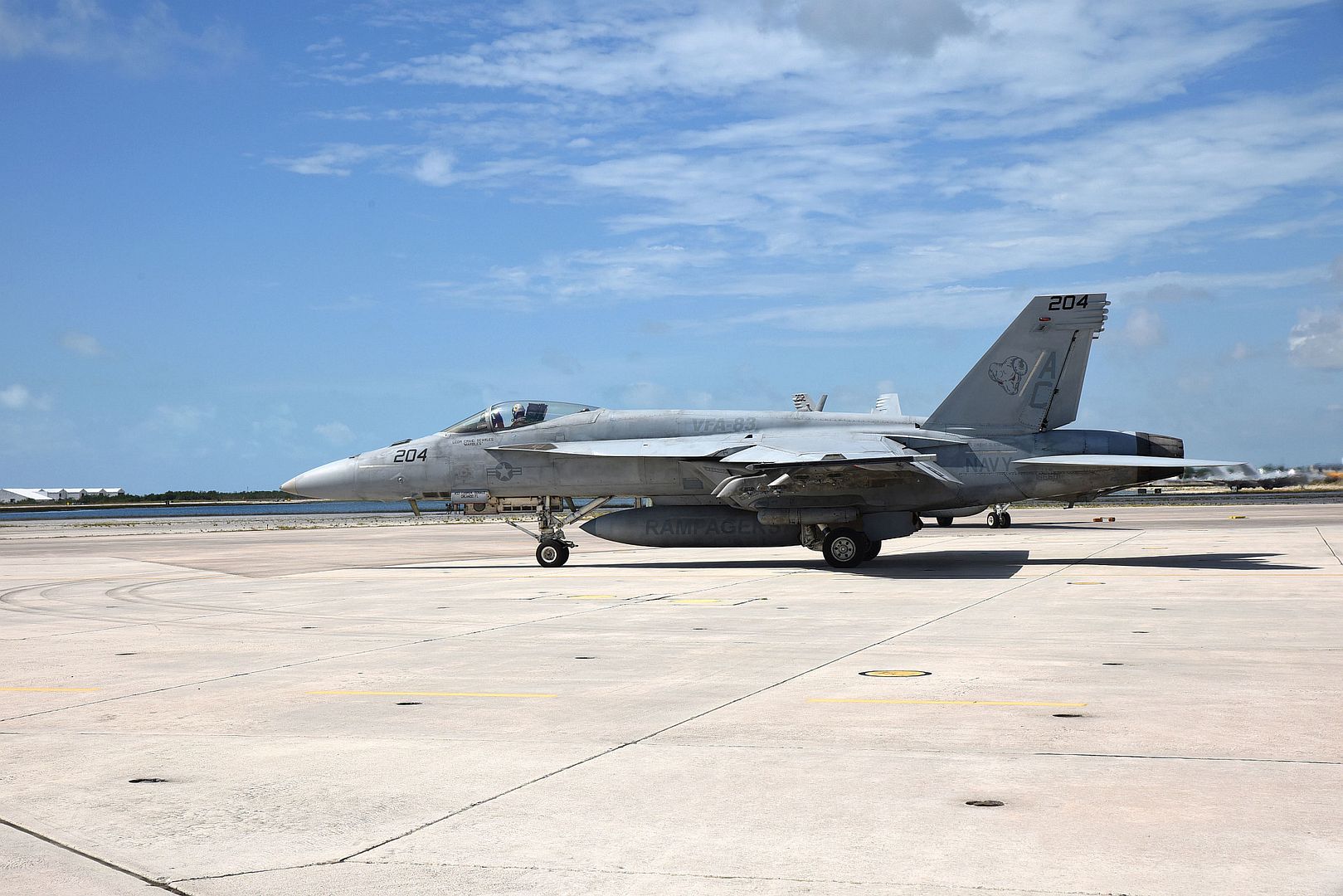
KEY WEST, Fla. (Oct. 9, 2019) F/A-18E Super Hornets attached to Strike Fighter Squadron (VFA) 83 prepare to take off at Naval Air Station Key West. Naval Air Station Key West is the state-of-the-art facility for combat fighter aircraft of all military services, provides world-class pierside support to U.S. and foreign naval vessels, and is the premier training center for surface and subsurface military operations. U.S. Navy photo's by Mass Communication Specialist 3rd Class Arnesia McIntyre (Released)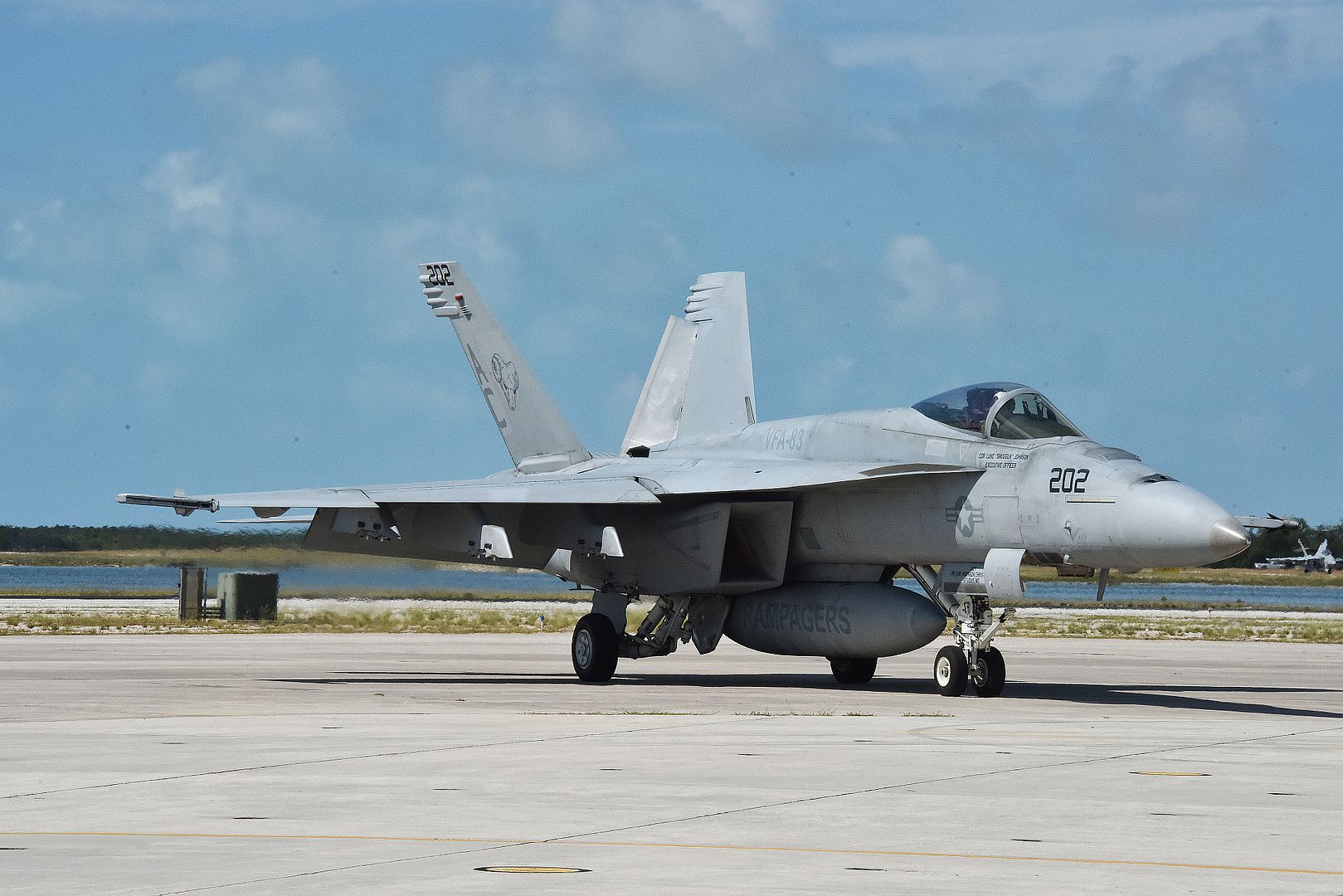
KEY WEST, Fla. (Oct. 9, 2019) An F-5N Tiger II assigned to the Sun Downers of Fighter Squadron Composite (VFC) 111 prepares to launch from Boca Chica Field. Naval Air Station Key West is the state-of-the-art facility for combat fighter aircraft of all military services, provides world-class pierside support to U.S. and foreign naval vessels, and is the premier training center for surface and subsurface military operations. U.S. Navy photo by Mass Communication Specialist 3rd Class Arnesia McIntyre (Released)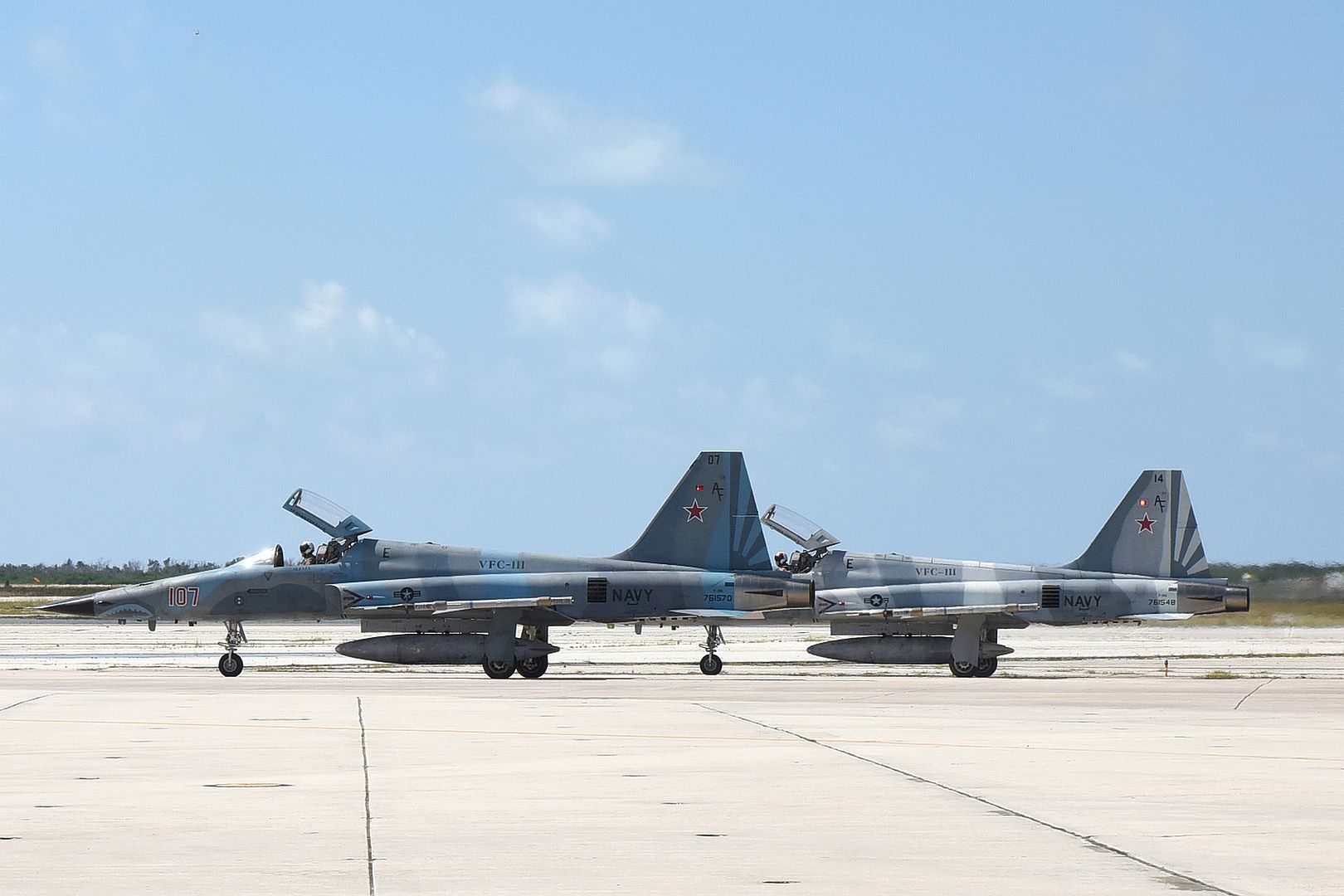
SOUTH CHINA SEA (Oct. 9, 2019)
Multiple aircraft from Carrier Air Wing 5 fly in formation over the Navy's forward-deployed aircraft carrier USS Ronald Reagan (CVN 76). Ronald Reagan, the flagship of Carrier Strike Group 5, provides a combat-ready force that protects and defends the collective maritime interests of its allies and partners in the Indo-Pacific region. U.S. Navy photo by Mass Communication Specialist 2nd Class Kaila V. Peters (Released)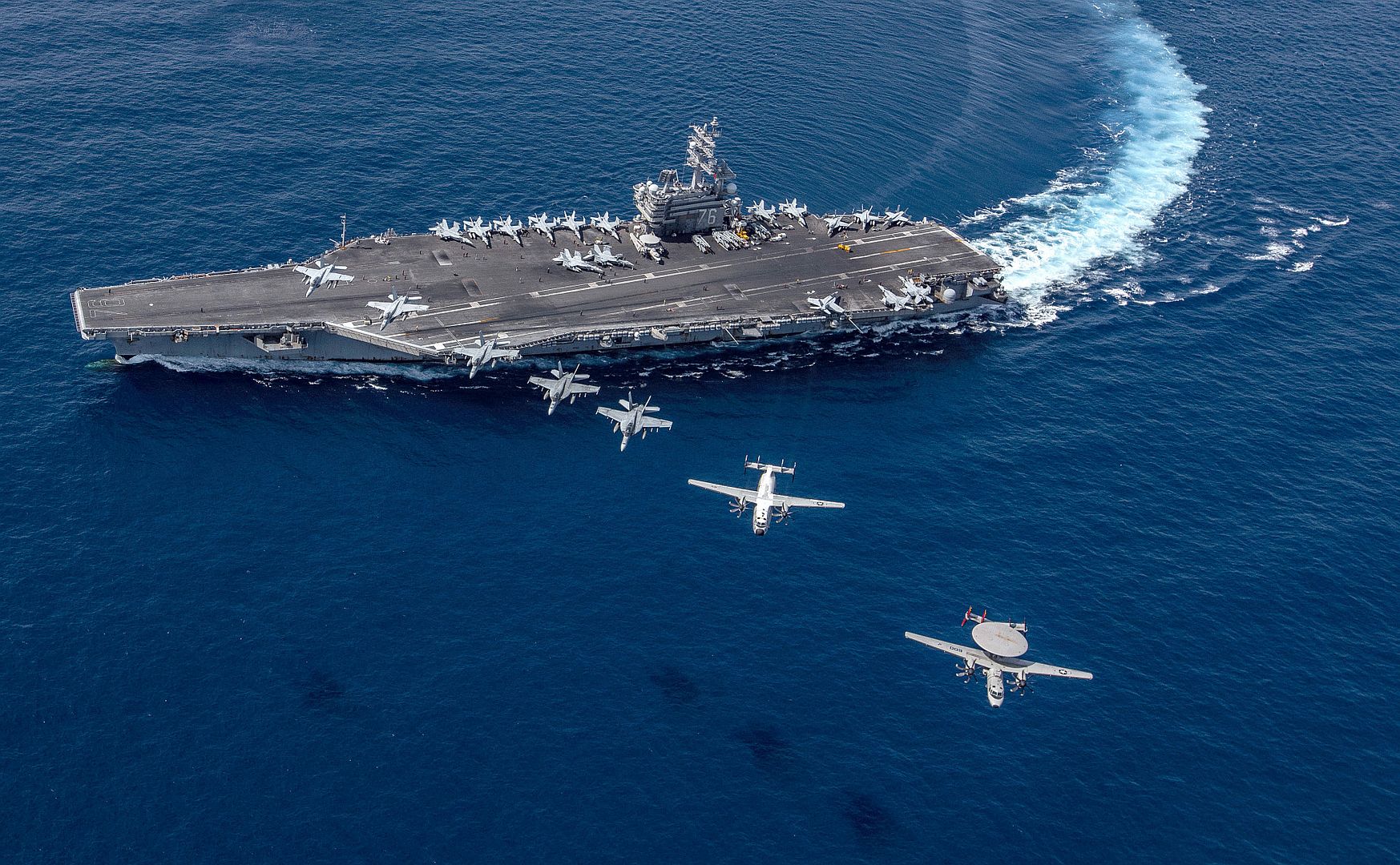
STUTTGART, Germany and CHICAGO, Oct. 10, 2019 /PRNewswire/ -- Porsche and Boeing [NYSE: BA] signed a Memorandum of Understanding to explore the premium urban air mobility market and the extension of urban traffic into airspace. With this partnership, both companies will leverage their unique market strengths and insights to study the future of premium personal urban air mobility vehicles.
"Porsche is looking to enhance its scope as a sports car manufacturer by becoming a leading brand for premium mobility. In the longer term, this could mean moving into the third dimension of travel," says Detlev von Platen, Member of the Executive Board for Sales and Marketing at Porsche AG. "We are combining the strengths of two leading global companies to address a potential key market segment of the future."
As part of the partnership, the companies will create an international team to address various aspects of urban air mobility, including analysis of the market potential for premium vehicles and possible use cases.
Boeing, Porsche and Boeing subsidiary Aurora Flight Sciences are also developing a concept for a fully electric vertical takeoff and landing vehicle. Engineers from both companies, as well as Porsche subsidiaries Porsche Engineering Services GmbH and Studio F.A. Porsche, will implement and test a prototype.
"This collaboration builds on our efforts to develop a safe and efficient new mobility ecosystem, and provides an opportunity to investigate the development of a premium urban air mobility vehicle with a leading automotive brand," said Steve Nordlund, Vice President and General Manager of Boeing NeXt, an organization that is laying the foundation for a next-generation mobility ecosystem in which autonomous and piloted vehicles can safely coexist. "Porsche and Boeing together bring precision engineering, style and innovation to accelerate urban air mobility worldwide."
A 2018 study by Porsche Consulting forecasts that the urban air mobility market will pick up speed after 2025. The study also indicates that urban air mobility solutions will transport passengers more quickly and efficiently than current conventional means of terrestrial transport, at a lower cost and with greater flexibility.
Boeing is the world's largest aerospace company and leading provider of commercial airplanes, defense, space and security systems, and global services. As the top U.S. exporter, the company supports commercial and government customers in more than 150 countries. Boeing employs more than 150,000 people worldwide and leverages the talents of a global supplier base. Building on a legacy of aerospace leadership, Boeing continues to lead in technology and innovation, deliver for its customers and invest in its people and future growth.
Airbus has delivered the 1,000th A320neo Family aircraft. The aircraft, an A321neo produced in Hamburg, Germany, was delivered to Indian airline IndiGo.
IndiGo is the world?s biggest customer for the A320neo Family with orders totaling 430 aircraft. Since its first NEO was delivered in March 2016, its fleet of A320neo Family has grown into the world?s largest with 96 aircraft operating alongside 129 A320s. In an extremely competitive aviation market, the fuel efficient A320 Family has been instrumental in IndiGo?s rise to become India?s largest airline by fleet size and passenger numbers.
The A320neo Family is assembled at Airbus? four global sites: Toulouse, France; Hamburg, Germany; Tianjin, China; and Mobile, USA. The world?s first A320neo was delivered in January 2016 and the programme has achieved milestones every year since: the first A321neo in 2017; the first A321LR in 2018 and the launch of the A321XLR in 2019.
The A320neo programme was designed with fuel efficiency in mind. Building on the A320ceo?s popularity, the aircraft delivers 20% reduced fuel burn as well as 50% less noise compared to previous generation aircraft. Seating up to 240 passengers, depending on cabin configuration, the A320neo Family features the widest single aisle cabin in the sky and incorporates the very latest technologies including new generation engines and Sharklets. At the end of September 2019, the A320neo Family had received more than 6,660 firm orders from close to 110 customers worldwide.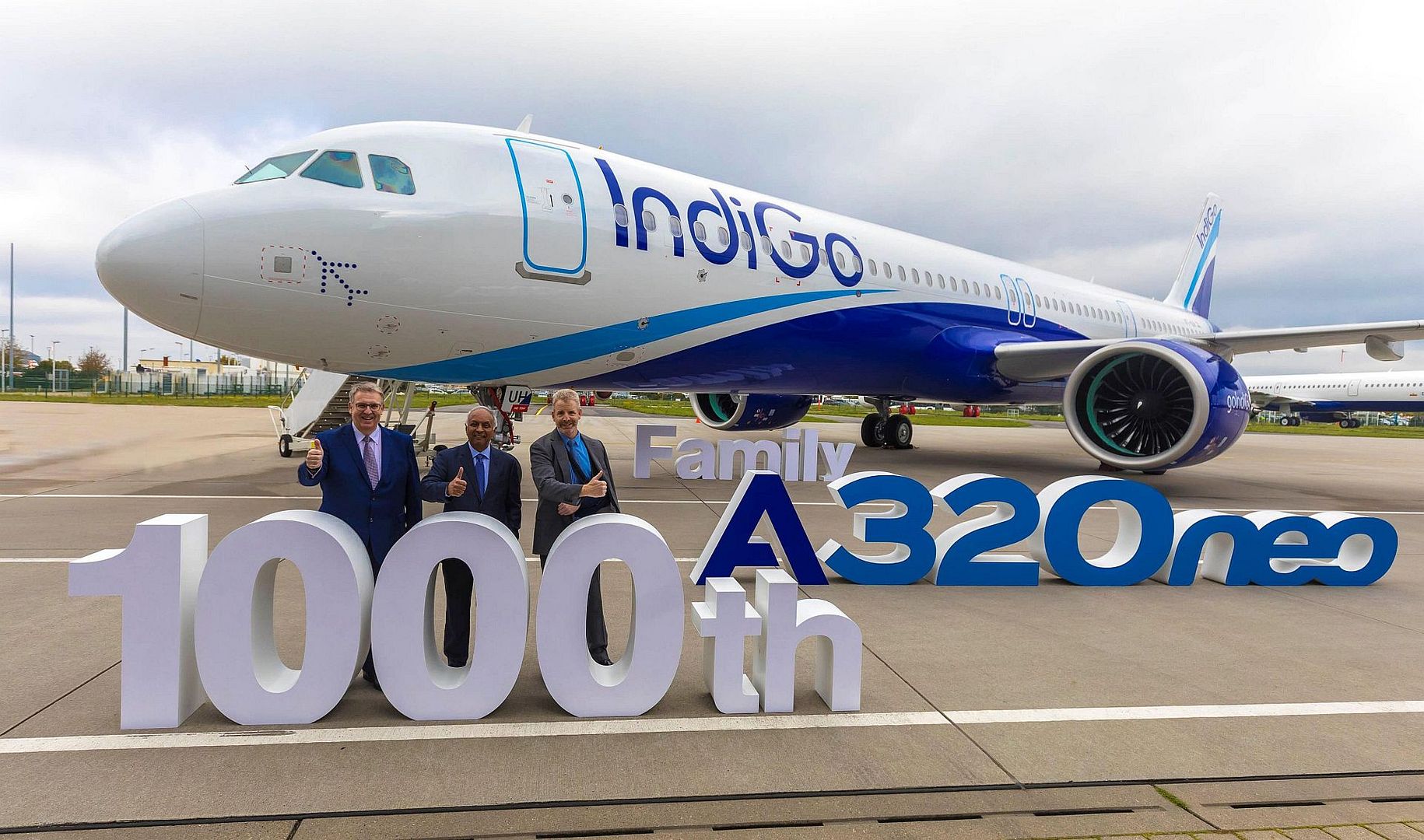
-
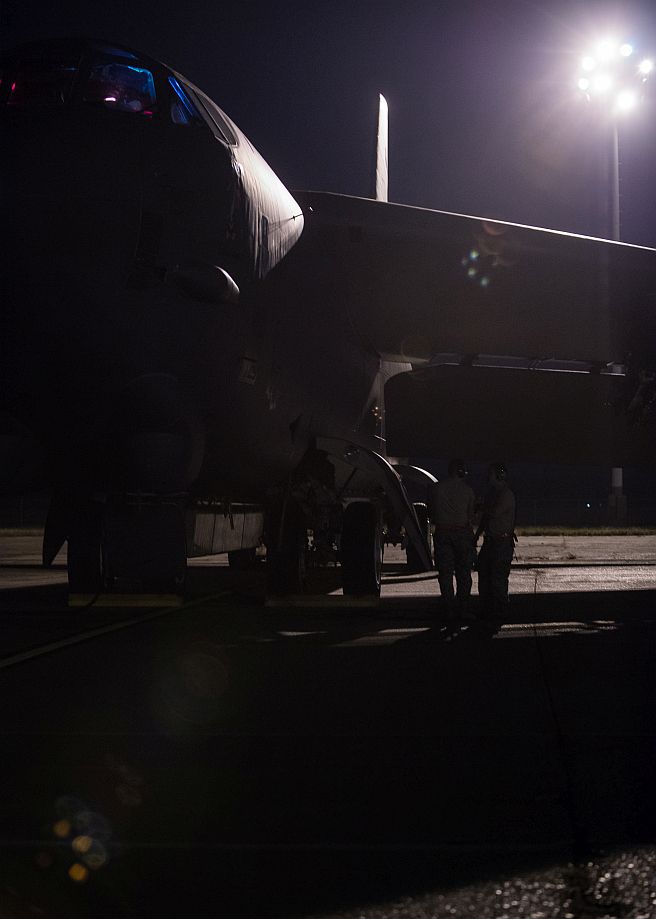
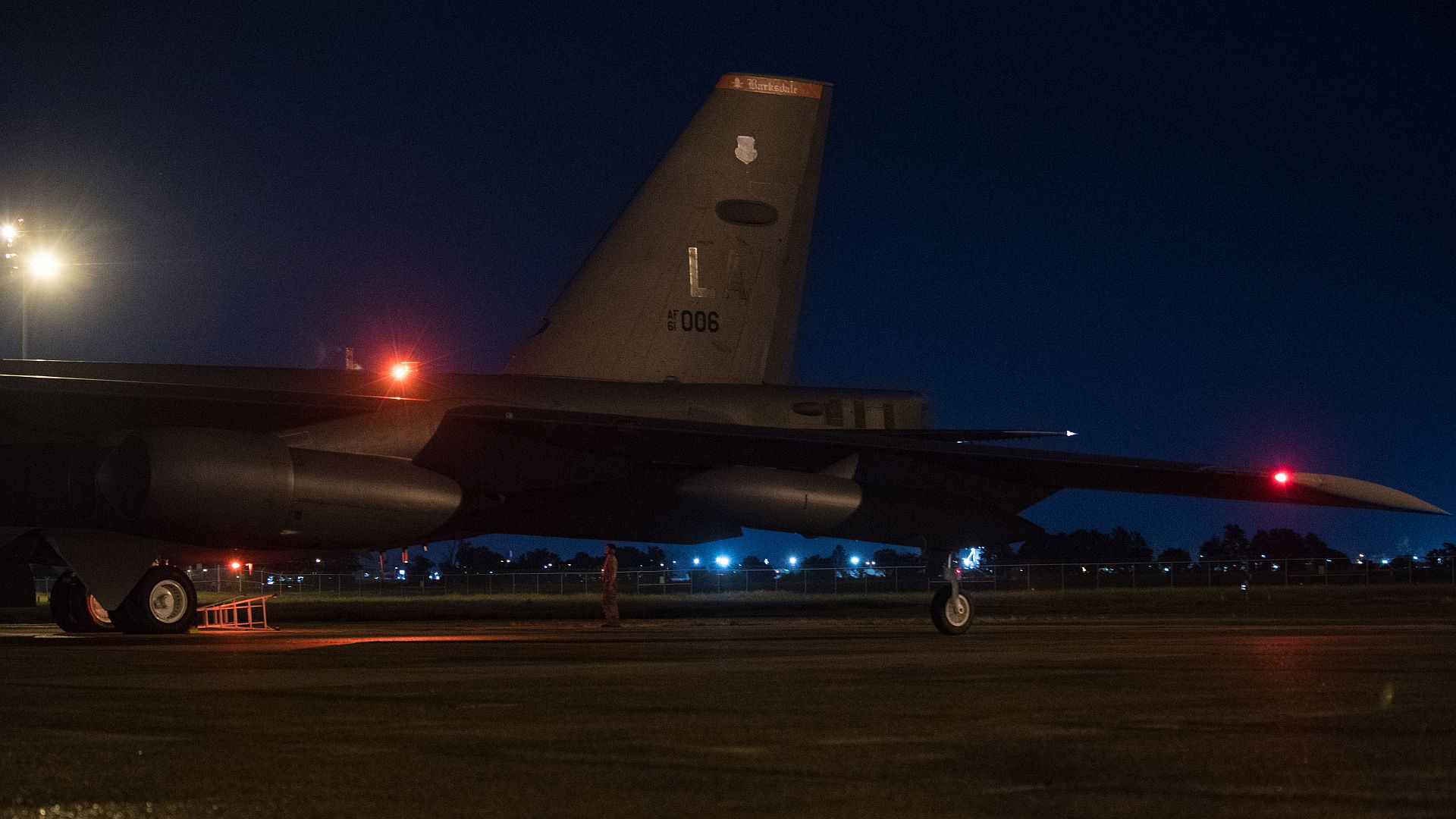
A 2nd Aircraft Maintenance Squadron Airmen inspect a B-52H Stratofortress before take off for a Bomber Task Force deployment from Barksdale Air Force Base, Louisiana, to Royal Air Force Fairford, England, Oct. 10, 2019. U.S. Strategic Command bomber missions provide opportunities to train and work with U.S. allies and partners in joint and coalition operations and exercises. (U.S. Air Force photo's by Airman 1st Class Lillian Miller)
OAK HARBOR, Wash. (Oct. 10, 2019) A P-3C Orion assigned to the ?Fighting Marlins" of Patrol Squadron (VP) 40 taxis the flight line returning from a six- month rotational deployment on Oct. 9, 2018 on Ault Field. The "Fighting Marlins" homecoming return marks the final active duty deployment of the P-3C Orion with the transition to the P-8A Poseidon as it's replacement closing out more than 60 years of the P-3C Orion's operational history within the U.S. Navy. (U.S. Navy photo by Mass Communication Specialist 2nd Class Marc Cuenca/Released)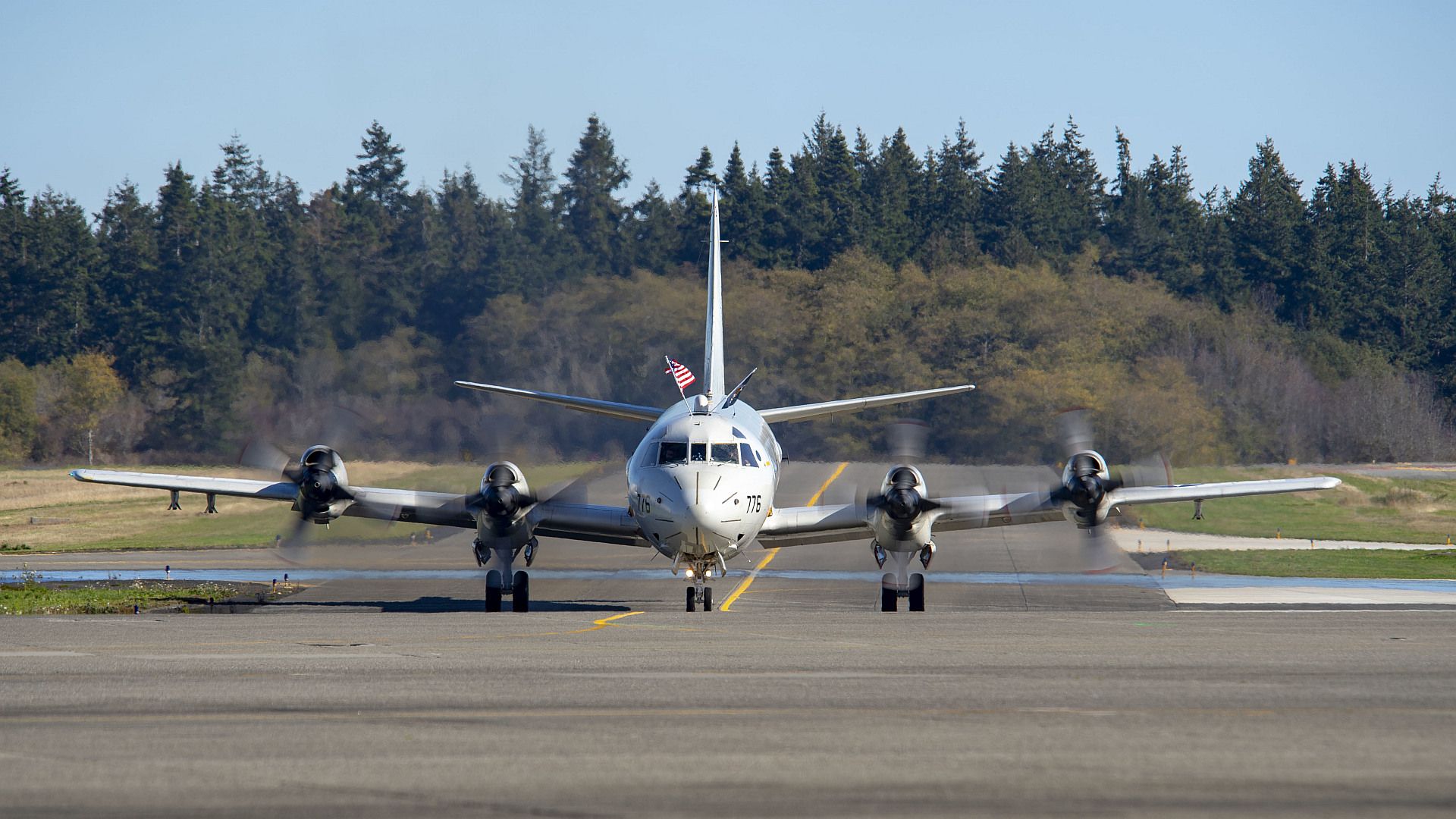
West Palm beach, Fla., Oct. 11, 2019 ? Sikorsky, a Lockheed Martin company (NYSE: LMT), showcased the next generation Combat Rescue Helicopter (CRH) during a ceremony at its Development Flight Center in West Palm Beach, Florida, this week.
During the event, United States Air Force General James M. Holmes, Commander, Air Combat Command, Joint Base Langley-Eustis, Virginia (91) described the HH-60W helicopter as critical took for the warfighter.
?I want to say thanks to everyone from Sikorsky for your dedication to your craft, for consistently living up to your mission statement of pioneering flight solutions that bring people home everywhere every time. And that partnership is incredibly valuable to us and the guys on the ground,? Gen. Holmes said. ?We?re proud to work with you to deliver the most intuitive, precise, technologically advanced systems to our airmen.?
Other dignitaries attending the event included Dr. Will Roper, Assistant Secretary of the Air Force for Acquisition, Technology and Logistics and Rep. Brian Mast (R-FL) from Florida?s 18th District.
The achievement of the Milestone C production decision on Sept. 24 launched the contract award known as Low Rate Initial Production for Sikorsky to build 10 CRH helicopters.
The U.S. Air Force program of record calls for 113 helicopters to replace the HH-60G PAVE HAWK?, which perform critical combat search and rescue and personnel recovery operations for all U.S. military services.
?The Combat Rescue Helicopter is the new era in Air Force aviation and a pivotal milestone that ties to our company?s legacy of bringing people home,? said Sikorsky President Dan Schultz. ?Sikorsky employees and our nationwide supply chain are ready to begin producing, delivering and supporting this all-new aircraft for the warfighter.?
The HH-60W Combat Rescue Helicopter is significantly more capable and reliable than its predecessor, the HH-60G.The aircraft hosts a new fuel system that nearly doubles the capacity of the internal tank on a UH-60M BLACK HAWK?, giving the Air Force crew extended range and more capability to rescue those injured in the battle space. The HH-60W specification drives more capable defensive systems, vulnerability reduction, hover performance, electrical capacity, avionics, cooling, weapons, cyber-security, environmental and net-centric requirements than currently held by the HH-60G.
?We send in brave men and women who are going to find a way to get the job done,? Dr. Roper said. ?But they?ll tell you about flying in and not being certain that they could land safely or putting the broad side of their vehicle between a downed pilot and gunfire. When you hear those stories, you realize that we put heroes on these vehicles. We pick up heroes in these vehicles and they deserve every technology advantage we can give them.?
On Sept. 19, four pilots and four special mission aviators from the U.S. Air Force graduated from the Sikorsky Training Academy?s S-70i Transition Course. As previously qualified HH-60G Pave Hawk crews, the students learned about the unique systems and operating capabilities of the Sikorsky S-70i. During the four-week course, they each spent seven hours using a procedural trainer, 10 hours in a full-motion flight simulator and 10 hours of flight time in the S-70i aircraft.
To ensure mission readiness, Lockheed Martin will deliver a custom-tailored training system consisting of flight simulators, procedural and maintenance trainers and accompanying courseware.
In 2020, Lockheed Martin will train 200 U.S. Air Force and maintenance aircrew students at our Sikorsky Training Academy in Stuart, Fla. utilizing training systems and three newly built HH-60W aircraft. This will provide flight and maintenance training to initial cadre and units allowing the U.S. Air Force to remain vigilant while simultaneously fielding and employing the added capabilities of the HH-60W aircraft.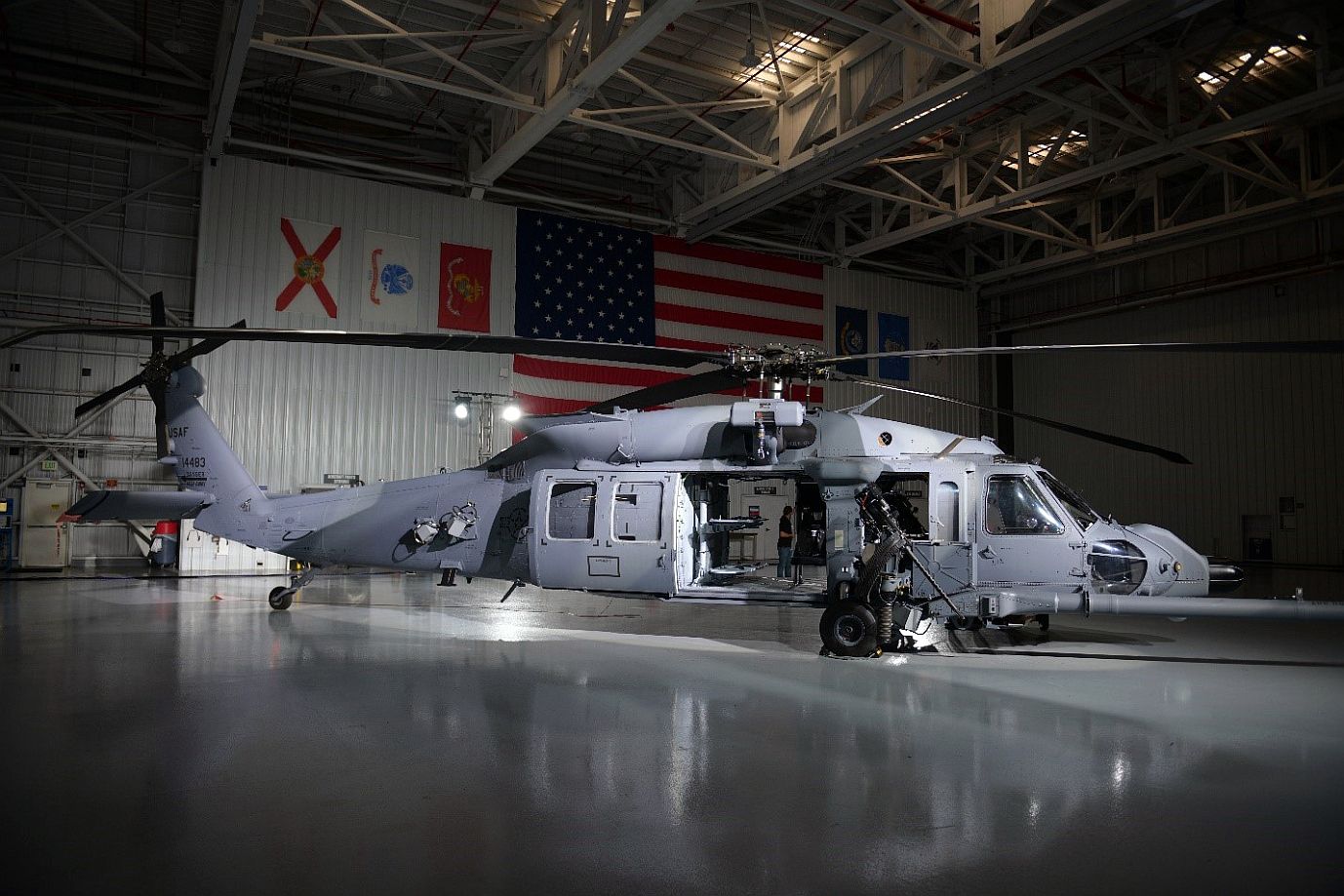
Dulles, Va. ? Oct. 10, 2019 ? Northrop Grumman Corporation (NYSE: NOC) announced its Pegasus? XL rocket successfully launched the company-built Ionospheric Connection Explorer (ICON) satellite for NASA. The launch marked the 44th overall flight of the world?s first privately-developed commercial space launch vehicle, and ICON marks the ninth science satellite to be both built and launched by the company for NASA.
The first phase of the launch was aboard Northrop Grumman?s "Stargazer" L-1011 carrier aircraft. Shortly after release from Stargazer, Pegasus ignited, carrying ICON to its intended 575-kilometer orbit.
?We are proud to have another successful launch of Pegasus,? said Rich Straka, vice president, launch vehicles, Northrop Grumman. ?Today?s launch is a testament to the team?s expertise and determination to provide our customer with mission success.?
NASA?s ICON satellite will study the frontier of space ? the dynamic zone high in Earth?s atmosphere where terrestrial weather from below meets space weather above. Northrop Grumman designed and manufactured the spacecraft for ICON at its Dulles satellite manufacturing facility, and tested and verified the spacecraft at the company?s location in Gilbert, Arizona. The satellite is based on the company?s LEOStar-2? bus, a flight-proven and flexible satellite platform that accommodates a wide variety of missions.
?Our initial data shows the spacecraft is in good health and performing as expected,? said Steve Krein, vice president, civil and commercial satellites, Northrop Grumman. ?The successful launch of ICON continues to demonstrate Northrop Grumman?s legacy of delivering innovative space science missions for NASA. ICON marks the latest in a long line of scientific spacecraft we have developed and built for NASA over the last 35 years.?
ICON will help determine the physics of Earth?s space environment and pave the way for mitigating its effects on technology, communications systems and society. Northrop Grumman has previously built multiple explorer satellites buses for NASA, including the NuSTAR, Swift, GALEX, AIM and IBEX spacecraft. Northrop Grumman is also currently manufacturing the Landsat-9 and JPSS-2 spacecraft for NASA. Both satellites use the company?s larger LEOStar-3? bus.
As an air-launched system, Pegasus has unparalleled flexibility to operate from virtually anywhere on Earth with minimal ground support requirements. In fact, Pegasus missions have launched from five separate sites in the U.S., Europe and the Marshall Islands. Pegasus is the leading launch system for the deployment of small satellites into low earth orbit. As the only NASA Category 3 vehicle in the small-launch class, Pegasus is certified to launch NASA?s most valuable small satellites.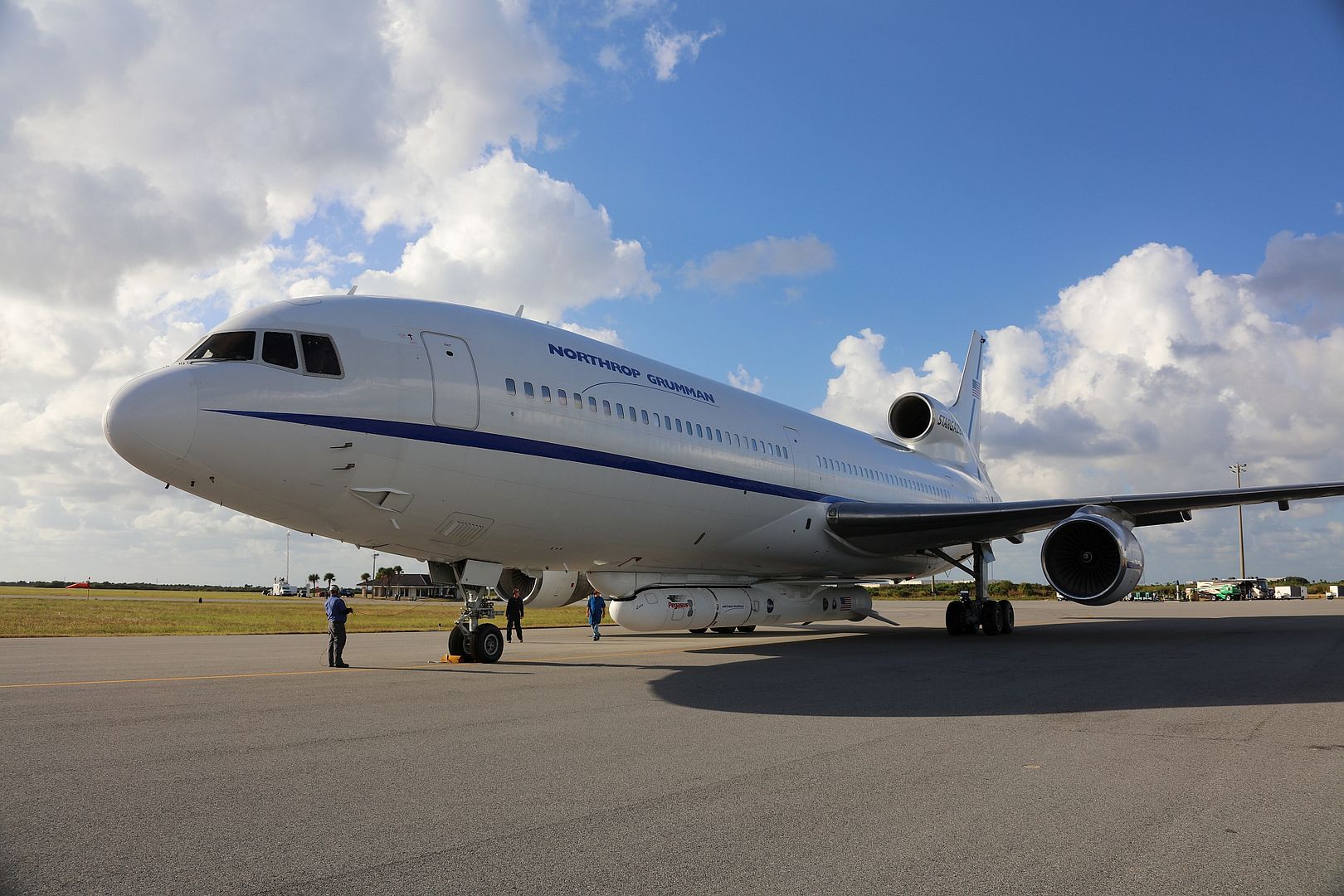
An RAF Brize Norton based Voyager is operating for the first time from Paya Lebar Airbase Singapore, as part of Exercise Bersama Lima, the annual Five Powers Defence Arrangements exercise.
The Voyager Force aircraft is conducting Air to Air Refuelling sorties with the deployed Typhoons of II (Army Cooperation) Squadron that have also been deployed on the exercise. The Voyager?s ability to conduct AAR sorties enables the Typhoon pilots to extend their time in the air considerably. As a consequence, a wider range of missions at considerable increased range can be conducted.
Squadron Leader Nathan Giles, the Voyager Detachment Commander said: ?This Voyager deployment is an important step for the force as it demonstrates our ability to operate at considerable range from our home base of Brize Norton and thereby enable the global projection of RAF air power.?
The Voyager is crewed during AAR sorties by two pilots and a Mission System Operator, whose role is to control the actual refuelling equipment. During exercise sorties, the Voyager has been airborne for up eight hours refuelling multiple pairs of Typhoons.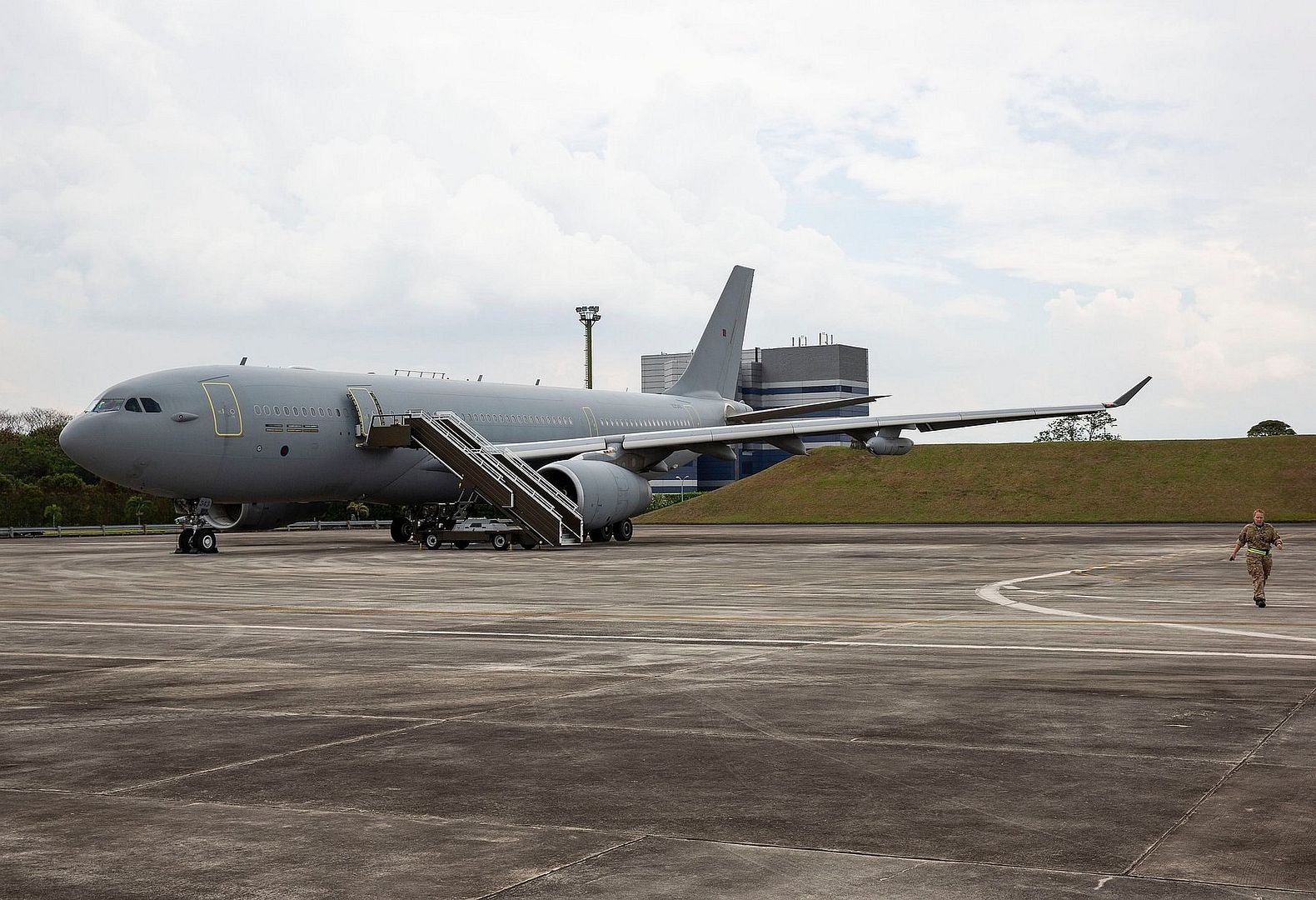
The RAF deployment to Exercise Bersama Lima this year has seen over 200 personnel exercise in the region. This has enabled the RAF Typhoons to conduct complex air activities with the Air Forces of the other participating nations.
The Five Powers Defence Arrangements brings the militaries of Australia, Malaysia, New Zealand, Singapore and the United Kingdom together in the region. The FPDA is, therefore, an important element of the UK?s relationship with Malaysia, Singapore and is a key regional defence arrangement.?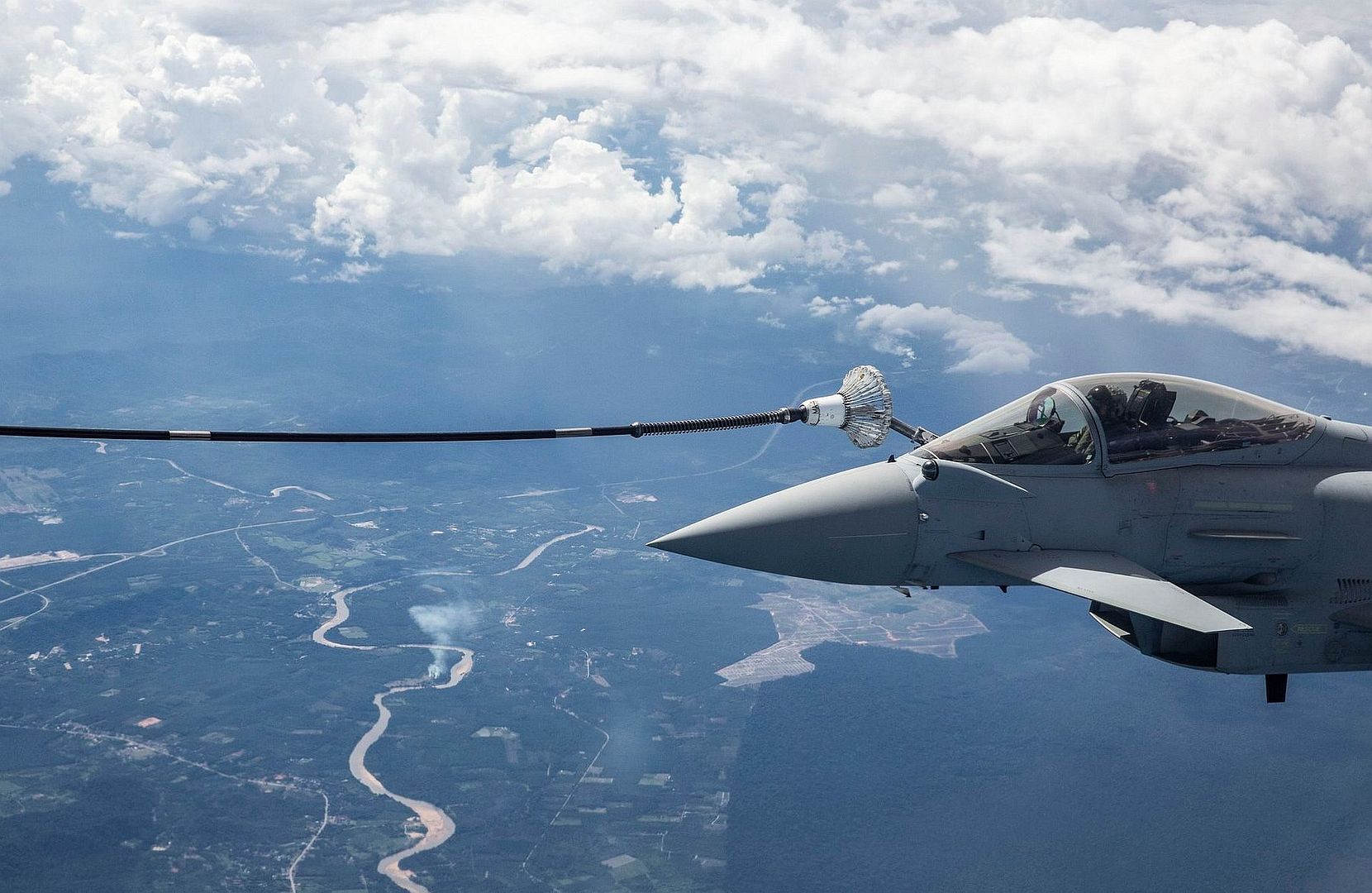
An F-16 Fighting Falcon from the 180th Fighter Wing in Toledo, Ohio flies alongside a KC-135 Stratotanker from the 121st Air Refueling Wing in Columbus, Ohio for a mid-air refueling on October 10, 2019. The aerial refueling capabilities of the KC-135 help to contribute to the total Air Force mission of global reach. (U.S. Air National Guard photo by Senior Airman Christi A. Richter)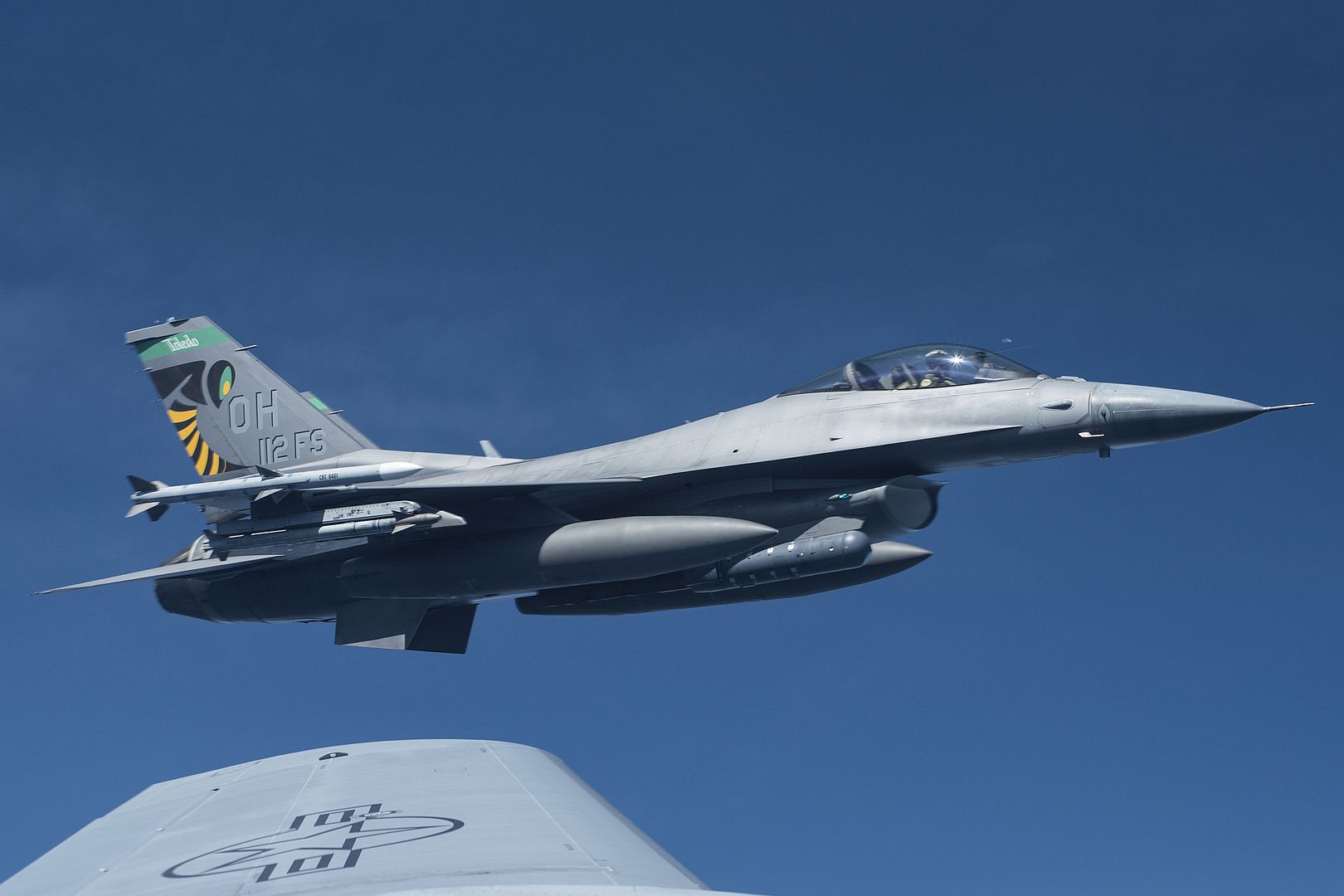
-
Date: 14 Oct 2019
UK F-35 Lightning jets landing, taking off and hovering onboard Britain?s next-generation aircraft carrier, HMS Queen Elizabeth for the first time.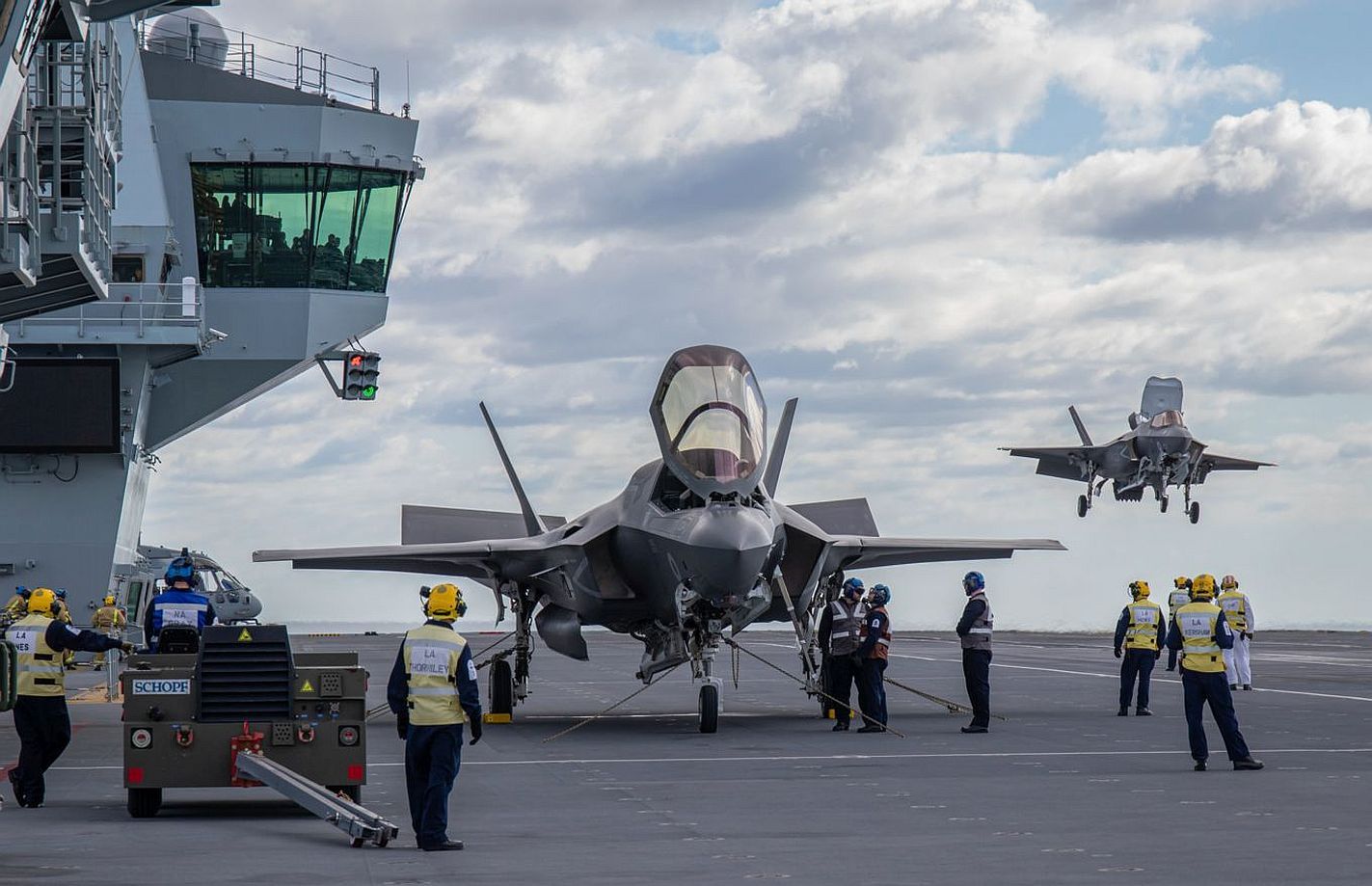
Flown by Royal Navy and Royal Air Force pilots, the F-35 Lightning jets are embarking in the 65,000-tonne carrier to conduct operational trials off the East Coast of the USA.
This follows successful developmental trials last year with US Lightning jets, where forces conducted 500 takeoffs and landings over their 11-week period at sea.
These trials are aimed at ?end-to-end? testing of the aircraft and personnel to ensure the aircraft are compatible with the carrier. The tests involve mission planning, arming the aircraft using the ship?s Highly Automated Weapon Handling System, flying missions and debriefing on completion.
The landings on HMS Queen Elizabeth are part of the ?WESTLANT 19? Carrier Strike Group deployment. Once fully operational, the UK Carrier Strike Group will be a formidable force around the world, using a number of platforms to work alongside our allies.
During this time, the aircraft carrier will be escorted by Type 45 destroyer HMS Dragon, submarine hunter HMS Northumberland, tanker RFA Tideforce and Merlins from 814, 820 and 845 Naval Air Squadrons, Wildcats from 815 Squadron and Royal Marines from Lima Company, 42 Commando.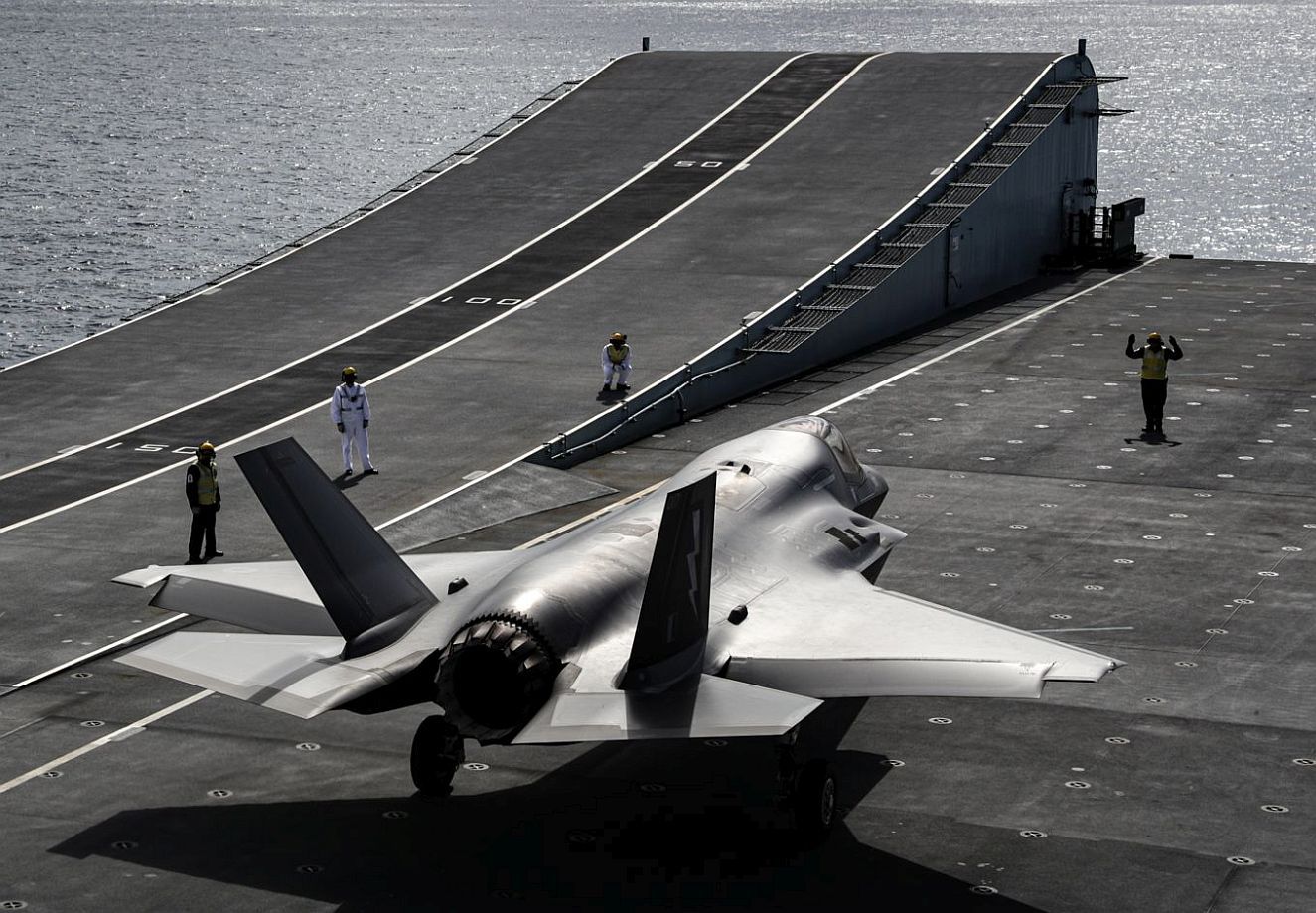
Defence Secretary Ben Wallace also added: ?The bringing together of the UK Lightnings on the first in class HMS Queen Elizabeth paves the way for the world?s most up to date, fully integrated carrier force.?
The Lightning aircraft operates with a cutting-edge design. It is the first jet to combine radar-evading stealth technology with supersonic speed, as well as the ability to land vertically. Given its ability to conduct missions both from land and sea, the jets act as a formidable spine to the ?carrier strike? capability. The UK currently owns 18 aircraft, with an additional order placed for 30 jets.
First to land on board, Wing Commander Adam Curd, Royal Air Force, said: ?This is the first time I have landed onboard an aircraft carrier ? for it to be HMS Queen Elizabeth, and in an aircraft as amazing as a UK Lightning, is quite something.
Wing Commander Adam Curd, Royal Air Force, added: ?This is a proud moment not only for me but the wider team that has brought us to this milestone for maritime aviation and UK Defence?.
The trials will be led by the joint Royal Navy - Royal Air Force 17 Test and Evaluation Squadron from the Air Warfare Centre. The Squadron will be operating alongside personnel and aircraft from the UK Lightning Force, based out of RAF Marham.
Assistant Chief of the Naval Staff for Aviation and Carrier Strike, Rear Admiral Martin Connell, Royal Navy, said: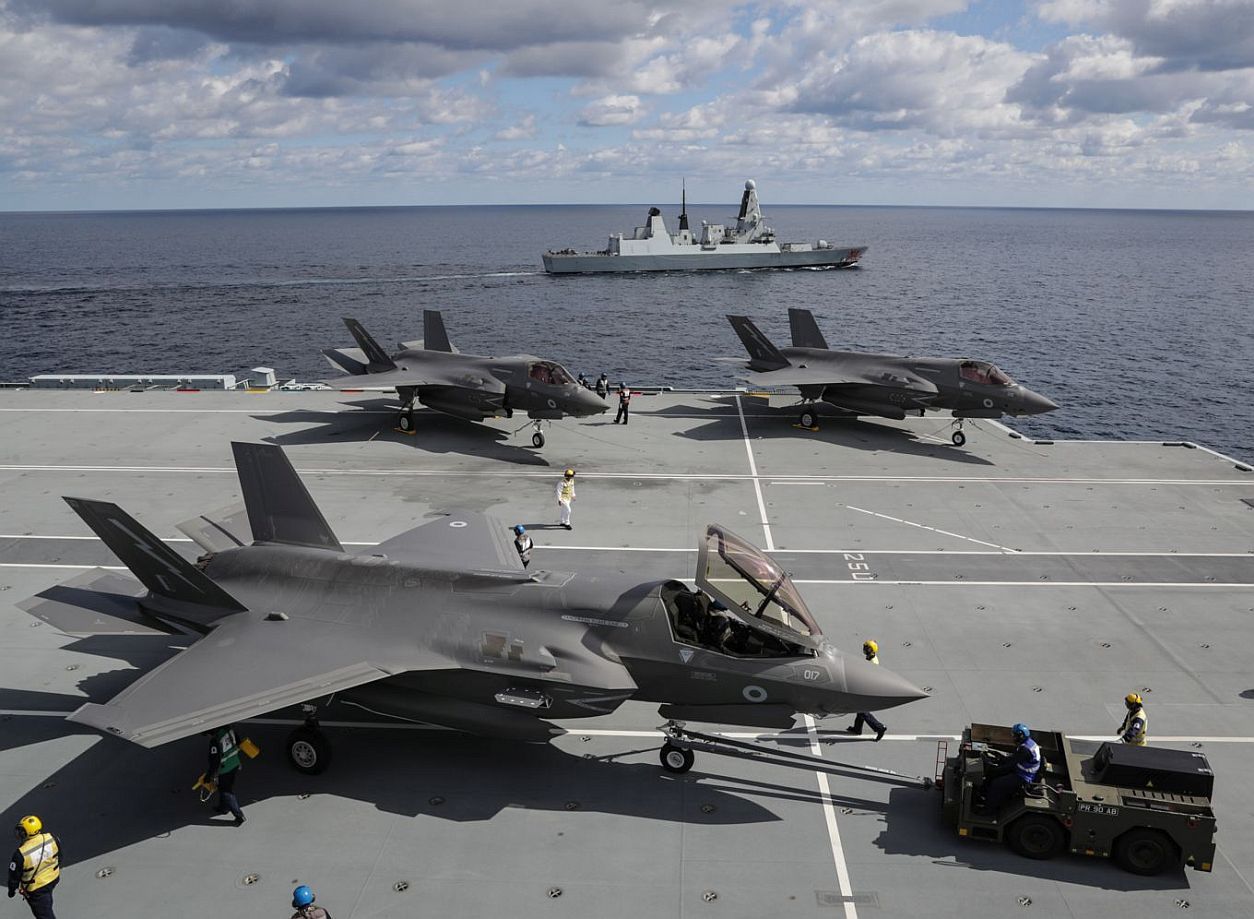
?Embarking UK Lightning jets on HMS Queen Elizabeth for the very first time is a major milestone for Royal Navy and Royal Air Force aviation and for our development of the 5th generation Carrier Strike Group capability.
?Once again, the support from our US Navy and US Marine Corps colleagues in the United States has been incredible and undoubtedly helped bring us to this moment: making maritime aviation history?.
Air Officer Commanding Number 1 Group, Air Vice-Marshal Harvey Smyth, Royal Air Force, added: ?Bringing our own Lightning onboard HMS Queen Elizabeth for the first time gives us the opportunity to conduct critical operational testing. With the Royal Navy and Royal Air Force operating so closely together, these are incredibly exciting times for embarked Combat Air.?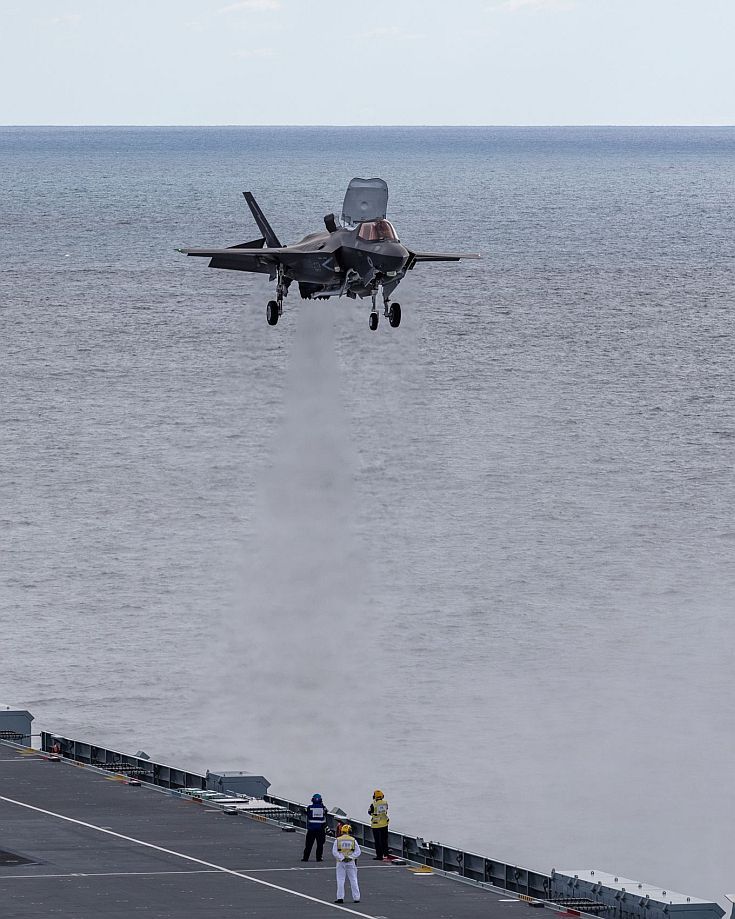
The UK will declare Initial Operating Capability for Carrier Strike by the end of 2020. The first operational deployment for HMS Queen Elizabeth 617 Squadron and a squadron of US Marine Corps Lightning jets is due to take place in 2021.
Commander of the Strike Group, Commodore Mike Utley, Royal Navy said: ?Getting to this point of embarking UK Lightning jets into our British-built carrier has been a significant joint undertaking by industry and military ? both ours and those from the United States.
?We will take the jets from the successful developmental phase we achieved last year through to a more operational footing, so we are confident that the jets, the carrier and our destroyers and frigates will function seamlessly together.?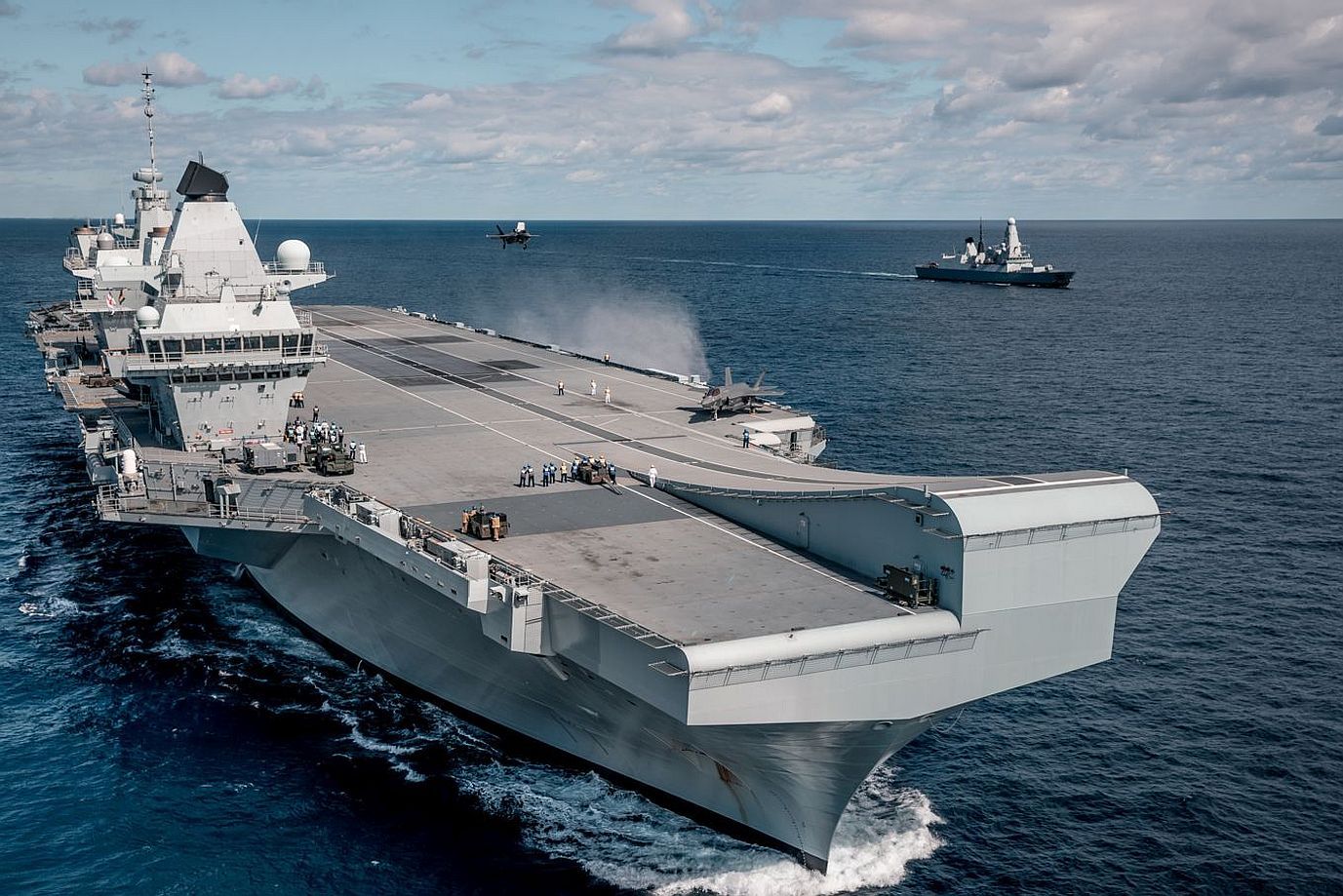
SOUTH CHINA SEA (October 12, 2019) Sailors assigned to Airborne Early Warning Squadron (VAW) 125 observe for flight deck safety prior to the launch of an E-2D Hawkeye on the flight deck of the Navy's forward-deployed aircraft carrier USS Ronald Reagan (CVN 76). Ronald Reagan, the flagship of Carrier Strike Group 5, provides a combat-ready force that protects and defends the collective maritime interests of its allies and partners in the Indo-Pacific region. (U.S. Navy photo by Mass Communication Specialist 3rd Class Erica Bechard)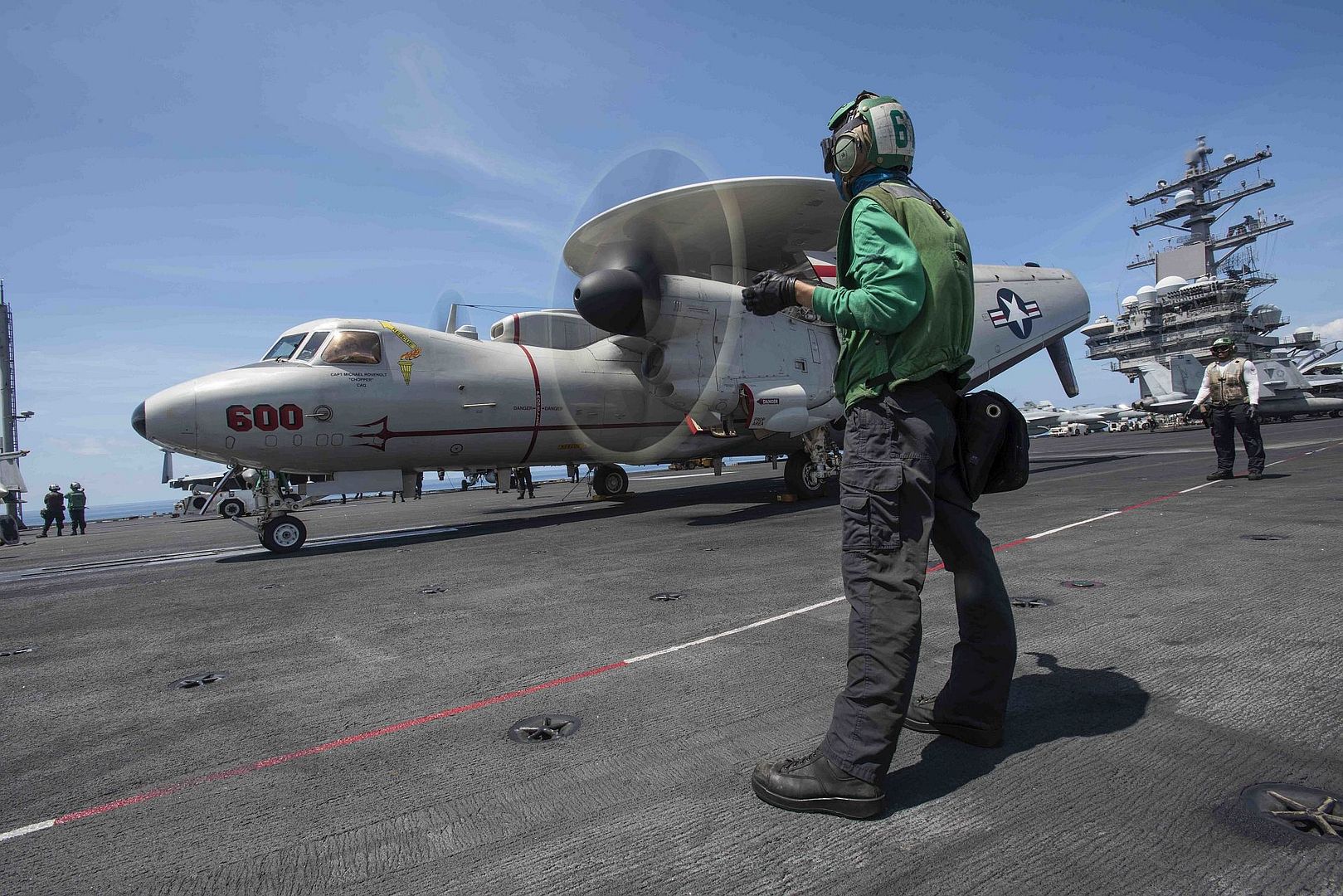
WASHINGTON, Oct. 14, 2019 /PRNewswire/ -- Sikorsky, a Lockheed Martin company (NYSE: LMT), today introduced RAIDER X?, its concept for an agile, lethal and survivable compound coaxial helicopter, specifically designed for securing vertical lift dominance against evolving peer and near-peer threats on the future battlefield. Through the U.S. Army's Future Attack Reconnaissance Aircraft (FARA) program, RAIDER X is the out-front platform in the Service's revolutionary approach for rapid development and delivery of game changing technology and warfighter capabilities, equipped for the most demanding and contested environments. RAIDER X enables the reach, protection and lethality required to remain victorious in future conflicts.
"RAIDER X converges everything we've learned in years of developing, testing and refining X2 Technology and delivers warfighters a dominant, survivable and intelligent system that will excel in tomorrow's battlespace where aviation overmatch is critical," said Frank St. John, executive vice president of Lockheed Martin Rotary and Mission Systems. "The X2 Technology family of aircraft is a low-risk solution and is scalable based on our customers' requirements."
RAIDER X draws on Lockheed Martin's broad expertise in developing innovative systems using the latest digital design and manufacturing techniques. Sikorsky's RAIDER X prototype offers:
Exceptional Performance: The X2 rigid rotor provides increased performance including; highly responsive maneuverability, enhanced low-speed hover, off-axis hover, and level acceleration and braking. These attributes make us unbeatable at the X.
Agile, Digital Design: State-of-the-art digital design and manufacturing is already in use on other Lockheed Martin and Sikorsky production programs such as CH-53K, CH-148 and F-35, and will enable the Army to not only lower the acquisition cost, but enable rapid, affordable upgrades to stay ahead of the evolving threat.
Adaptability: Modern open systems architecture (MOSA)-based avionics and mission systems, offering "plug-and-play" options for computing, sensors, survivability and weapons, benefiting lethality and survivability, operational mission tailoring and competitive acquisitions.
Sustainable/Maintenance: Designed to decrease aircraft operating costs by utilizing new technologies to shift from routine maintenance and inspections to self-monitoring and condition-based maintenance, which will increase aircraft availability, reduce sustainment footprint forward and enable flexible maintenance operating periods.
Growth/Mission Flexibility: Focused on the future and ever evolving threat capabilities, X2 compound coaxial technology provides unmatched potential and growth margin for increased speed, combat radius and payload. This potential and growth margin further enables operational mission flexibility which includes a broader range of aircraft configurations and loadouts to accommodate specific mission requirements.
The nationwide supply team that Sikorsky has comprised to build RAIDER X will join company leaders today to introduce RAIDER X during the annual conference of the Association of the United States Army in Washington, D.C.
"RAIDER X is the culmination of decades of development, and a testament to our innovation and passion for solving our customers' needs," said Sikorsky President Dan Schultz. "By leveraging the strength of the entire Lockheed Martin Corporation, we will deliver the only solution that gives the U.S. Army the superiority needed to meet its mission requirements."
Proven X2 Technology: Scalable, Sustainable, Affordable
With RAIDER X, Sikorsky introduces the latest design in its X2 family of aircraft. To date, X2 aircraft have achieved/demonstrated:
Speeds in excess of 250 knots
High altitude operations in excess of 9,000 feet
Low-speed and high-speed maneuver envelopes out to 60+ degrees angle of bank
ADS-33B (Aeronautical Design Standard) Level 1 handling qualities with multiple pilots
Flight controls optimization and vibration mitigation
"The power of X2 is game changing. It combines the best elements of low-speed helicopter performance with the cruise performance of an airplane," said Sikorsky experimental test pilot Bill Fell, a retired Army pilot who has flown nearly every RAIDER test flight. "Every flight we take in our S-97 RAIDER today reduces risk and optimizes our FARA prototype, RAIDER X."
The development of X2 Technology and the RAIDER program has been funded entirely by significant investments by Sikorsky, Lockheed Martin and industry partners.
For additional information, visit our website: www.lockheedmartin.com/en-us/products/fara-raider-x.html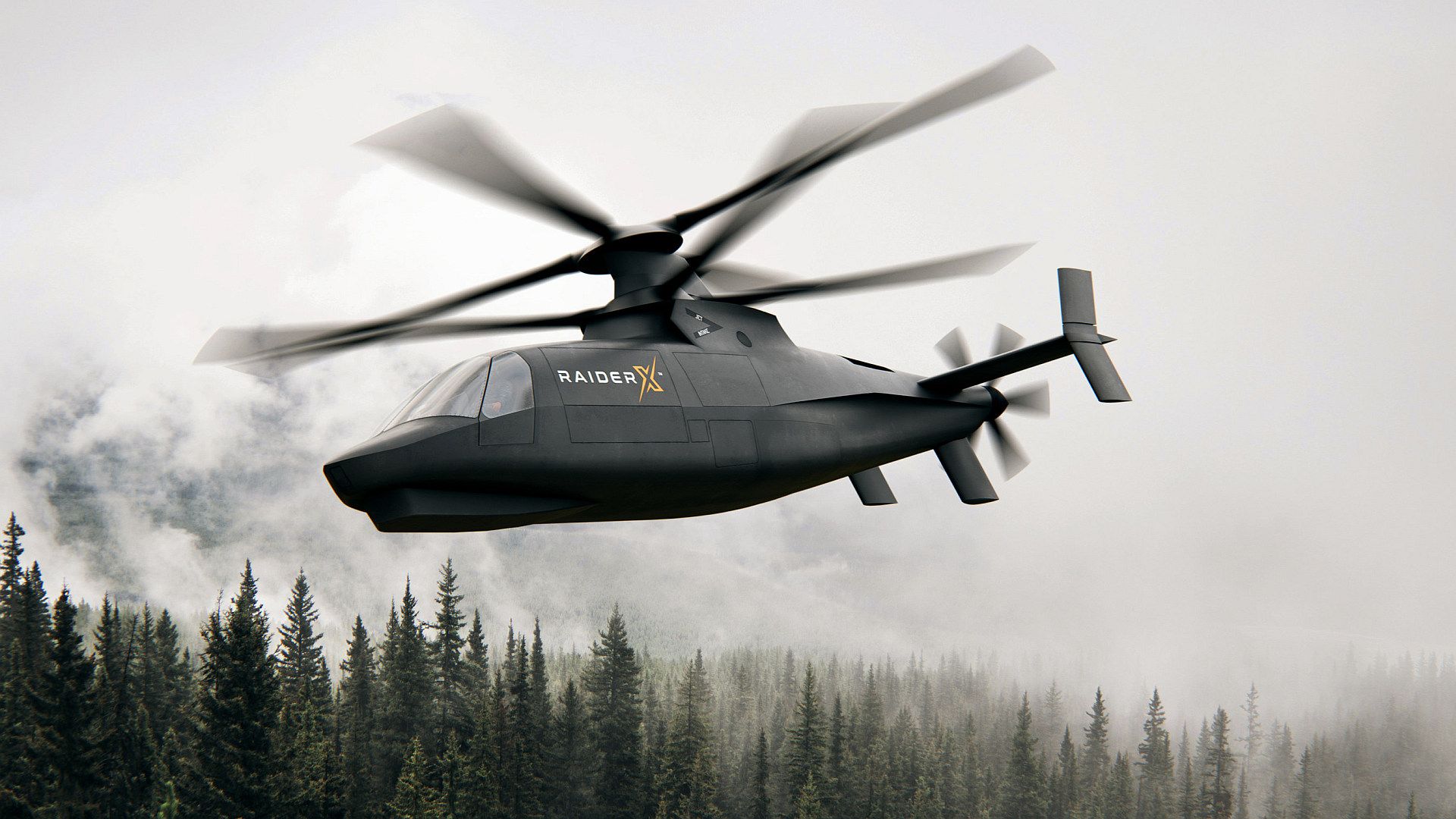
Air Austral, France?s R?union Island-based airline, has signed a firm order for three A220 aircraft, Airbus? newest family member. With this order Air Austral becomes the first A220 customer based in the Indian Ocean region. Benefitting from a 20% reduction in fuel burn and CO2 emissions, the A220s will enable Air Austral to reduce its costs and carbon footprint on international routes in the region.
"Air Austral has chosen the A220-300 as part of the renewal of its Medium and Short Haul fleet. These new-generation aircraft will join the airline from the end of 2020 with the aim of harmonising part of its fleet and strengthening its operations,? said Marie-Joseph Mal?, Chief Executive Officer of Air Austral. The economic and operational performance of the A220 opens new possibilities for the development of our regional network from our main base - R?union Island - in an efficient and rational way. The 132-seat capacity module, which is more flexible, will allow us to increase our frequencies while offering more comfort to our customers and crews," he added.
?With its unrivalled performance and operational flexibility, the A220 is the perfect aircraft for Air Austral to reinforce routes between R?union Island and its neighbours in the Indian Ocean, as well as connecting the island further afield,? said Christopher Buckley, Executive Vice-President Commercial ? Airbus. ?Airlines from all around the world are acknowledging the A220?s economics and it is a great honour that Air Austral will be the first A220 operator in the region.?
The design of the new clean sheet single-aisle aircraft allows for more seats, offering extra revenue potential to airlines, especially to those located in remote areas, and extra usable cargo volume capacity.
The A220 is the only aircraft purpose-built for the 100-150 seat market; it delivers unbeatable fuel efficiency and widebody passenger comfort in a single-aisle aircraft. The A220 brings together state-of-the-art aerodynamics, advanced materials and Pratt & Whitney?s latest-generation PW1500G geared turbofan engines to offer at least a 20% lower fuel burn per seat compared to previous generation aircraft, along with significantly lower emissions and a reduced noise footprint. The A220 offers the performance of larger single-aisle aircraft.
The A220 had an order book of over 500 aircraft at the end of September 2019.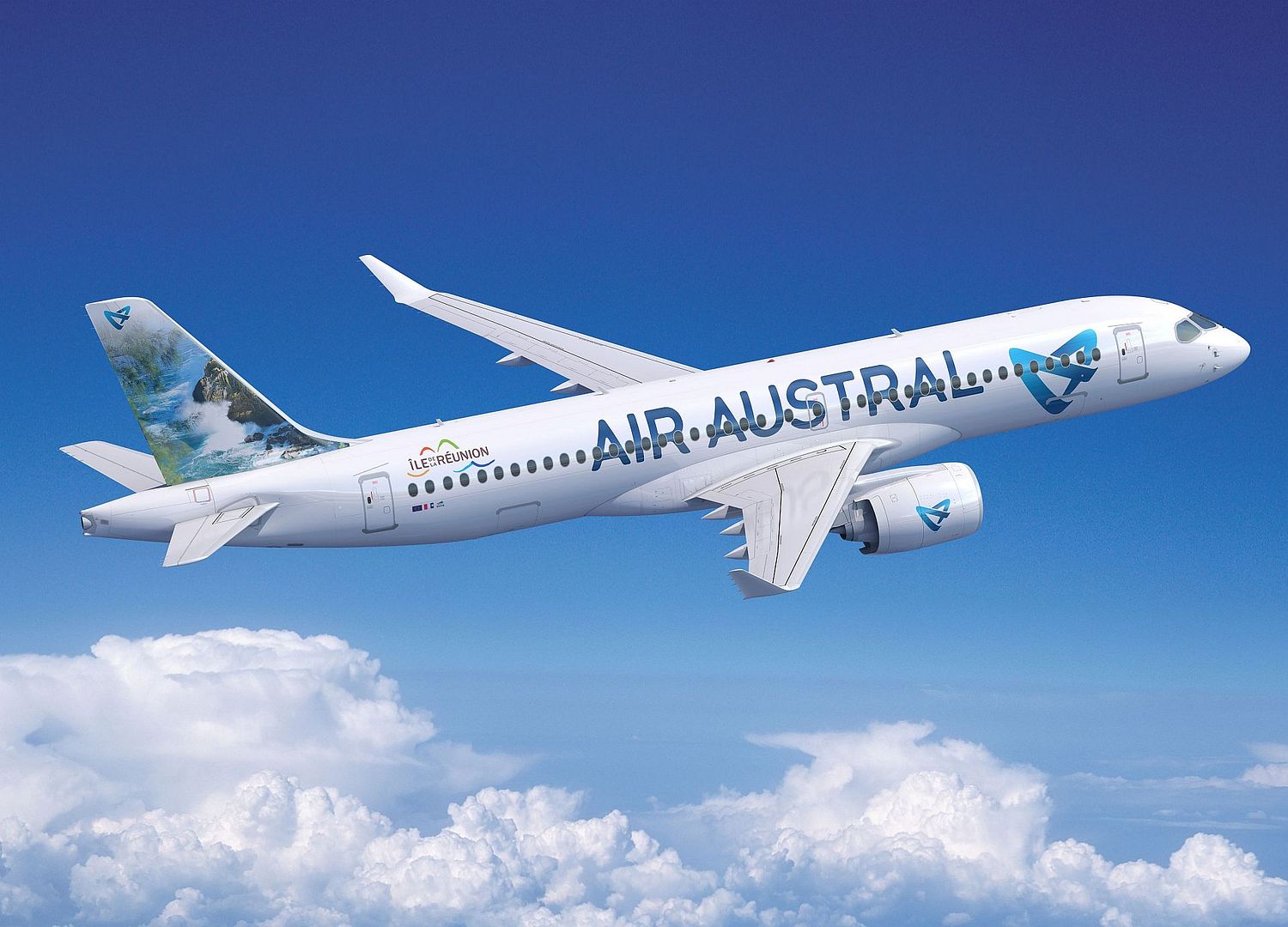
-
HILL AIR FORCE BASE, Utah (AFNS) --
As the Air Force continues to sharpen its competitive edge to become a more lethal and ready force, the first combat-coded F-35A Lightning II wing has been a key contributor to the force?s overall readiness.
Over the summer, all three squadrons ? nearly 70 F-35A aircraft ? were operating away from home station. They conducted operations in nine different countries on three separate continents, while supporting multiple combatant commanders. One squadron supported a European Theater Support Package, another squadron conducted off-station operations at Mountain Home Air Force Base, Idaho, while Hill AFB?s runway was under construction and one squadron is currently conducting the first F-35A combat deployment.
The wing successfully supported all of these requirements. ?It was a team effort, and I?m proud of our folks,? said Col. Steven Behmer, 388th Fighter Wing commander. ?We?re focused on maintaining and improving every aspect of readiness ? training, manning and developing our people and tactics to meet current threats. Our maintainers are doing a great job providing the sorties we need to do just that.?
Those successes can be attributed to several factors; from the accelerating experience levels of the maintainers, to rebounds in the supply process. Not everything has been a recent fix. The numbers are catching up to past process improvements.
?A lot of the time people?s perceptions and expectations of the program are influenced by stale data, old (and) inaccurate information,? said Chief Master Sgt. Trey Munn, 388th Maintenance Group chief enlisted manager. ?A really good example is the (Autonomic Logistics Information System). There are definitely applications within ALIS that still need to be addressed, but the prognostic health management system and joint technical data are great examples of where ALIS, on the whole, has improved and we?ve improved.?
Col. Michael Miles, 388th MXG commander, said the jet?s prognostics health management system can detect problems before they fail and allow maintainers to prioritize workload. Making prudent maintenance decisions in coordination with the operations group?s flying schedule is a key process enabled by these systems.
The newest batch of jets from Lockheed Martin?s production facility in Fort Worth, Texas, are also reflected in the improvements.
?We?re not seeing the same problem parts and issues that we did in the past,? Miles said. ?Problems sent in from the field are being addressed, and solutions are woven into the production line. I like the trajectory we?re currently on. There have been some valleys, but our overall experience shows we?re on a readiness incline.?
Last fall, former Defense Secretary James Mattis directed Air Force and Navy fighter squadrons to improve material readiness by achieving a mission-capable rate of 80% ? something many believed to be a lofty goal given the operations tempo, manning and resource constraints faced by all of the services.
Twelve months later, materiel readiness at the 388th FW, to include one squadron currently deployed, has seen remarkable improvements. This was highlighted when the 388th FW units hit a single day high in September with two units above 90% mission capable and the third unit above 80%. This is a huge testament to the level of effort the Airmen maintaining and sustaining the F-35A have put in over this year.
?This is a reflection of processes that are on the right track. It took hard work and there will be a lot of naysayers, and many people don?t understand the trajectory the program is on,? Miles said.
Mission-capable rates are just one component assessed at the unit level to determine readiness. In a recent interview, Air Force Chief of Staff Gen. David Goldfein described five aspects of overall readiness: training Airmen, sustainable budgets and funding, mission preparation, reliable logistics supply chain of available parts and flying hours.
Parts and systems are not the only thing required to maintain aircraft. So are people.
?Experience levels are often overlooked in the maintenance equation,? Miles said. ?We had a really robust talent pool when we stood up our first operational aircraft maintenance unit in 2015. Over time, that experience level became diluted as we stood up two other AMUs, lost people to (permanent change of station) and retirement, and we had a lot of brand new F-35A maintainers. It takes time to build that experience level back up.?
?MC rates are important, but do not represent a complete measure of overall readiness,? Goldfein said. ?You?ve got to have trained and ready Airmen to get the job done. What really matters is that I?ve got trained and ready crews ? and we?ve been able to meet those timelines and actually exceed them. That?s what counts.?
(U.S. Air Force photo by Staff Sgt. Chris Drzazgowski)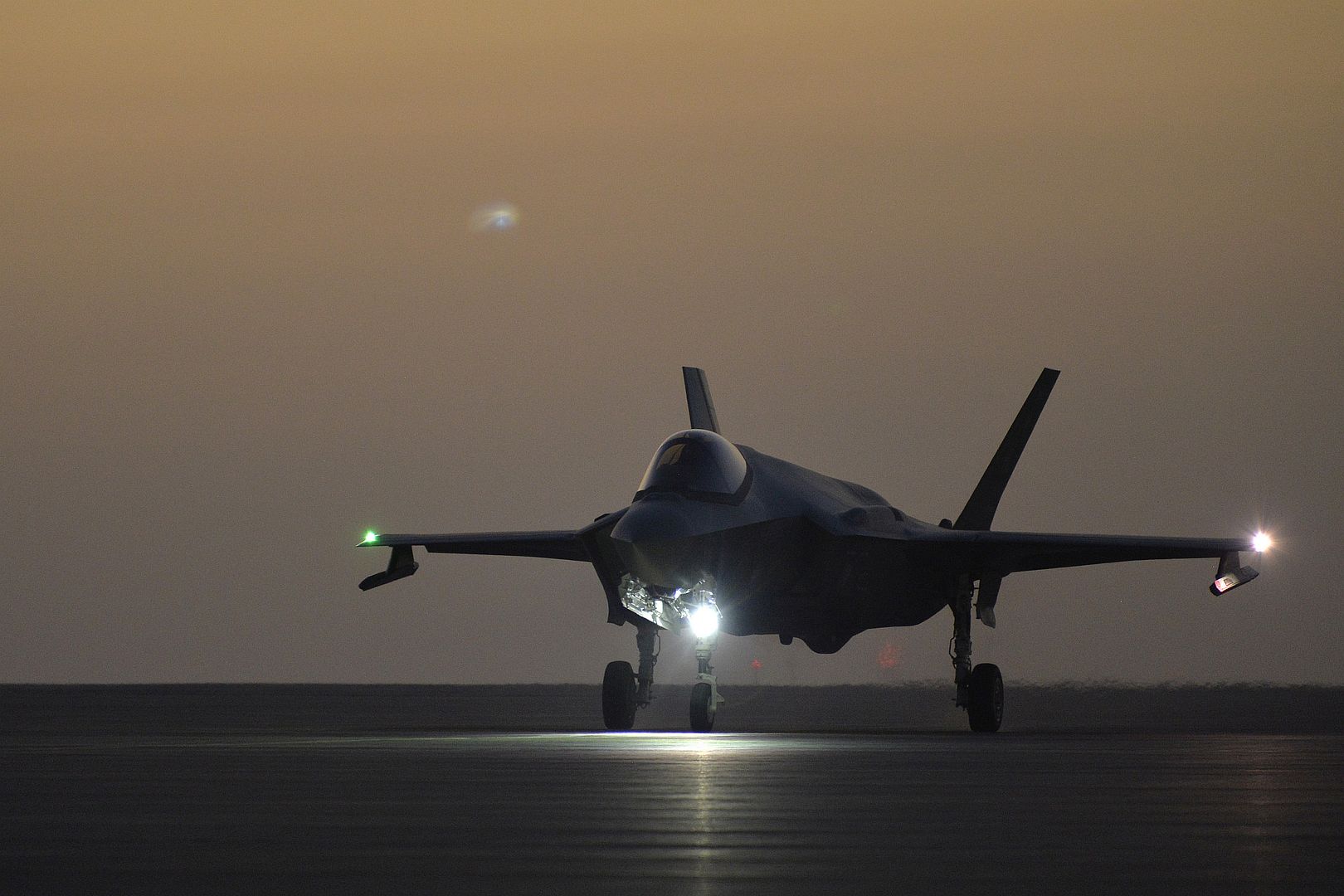
WASHINGTON, Oct. 15, 2019 /PRNewswire/ -- The U.S. Army recently awarded Lockheed Martin (NYSE: LMT) a $40.6 million contract to produce Modernized Turrets (M-TUR) for the AH-64E Apache helicopter, an upgrade to the Modernized Target Acquisition Designation Sight and Pilot Night Vision Sensor (M-TADS/PNVS) system with enhanced operational and performance capabilities.
"Our primary objective with the Modernized Turret is to improve system performance, increase reliability, and reduce required maintenance and support costs," said Tom Eldredge, director of Apache Fire Control programs at Lockheed Martin Missiles and Fire Control. "The M-TUR demonstrates our commitment to delivering advanced, affordable capabilities and innovative solutions to our nation's warfighters, enabling increased readiness, reliability and survivability in battle."
In addition to performance improvements that provide greater rates and acceleration of sensors in azimuth and elevation, M-TUR's new modular design improves turret reliability by 40 percent and reduces operation and support costs with a dramatic decrease in time required to conduct flight line maintenance. The design also allows for subassembly replacement on the flight line and includes higher reliability components that will improve aircraft availability.
M-TADS/PNVS provides Apache helicopter pilots with long-range, precision engagement and pilotage capabilities for mission success and flight safety during day and night, and in adverse weather conditions. Lockheed Martin has delivered more than 1,400 M-TADS/PNVS systems and spares to the U.S. Army and 16 international customers in 15 nations over the last 14 years. For additional information, visit our website: www.lockheedmartin.com/mturret.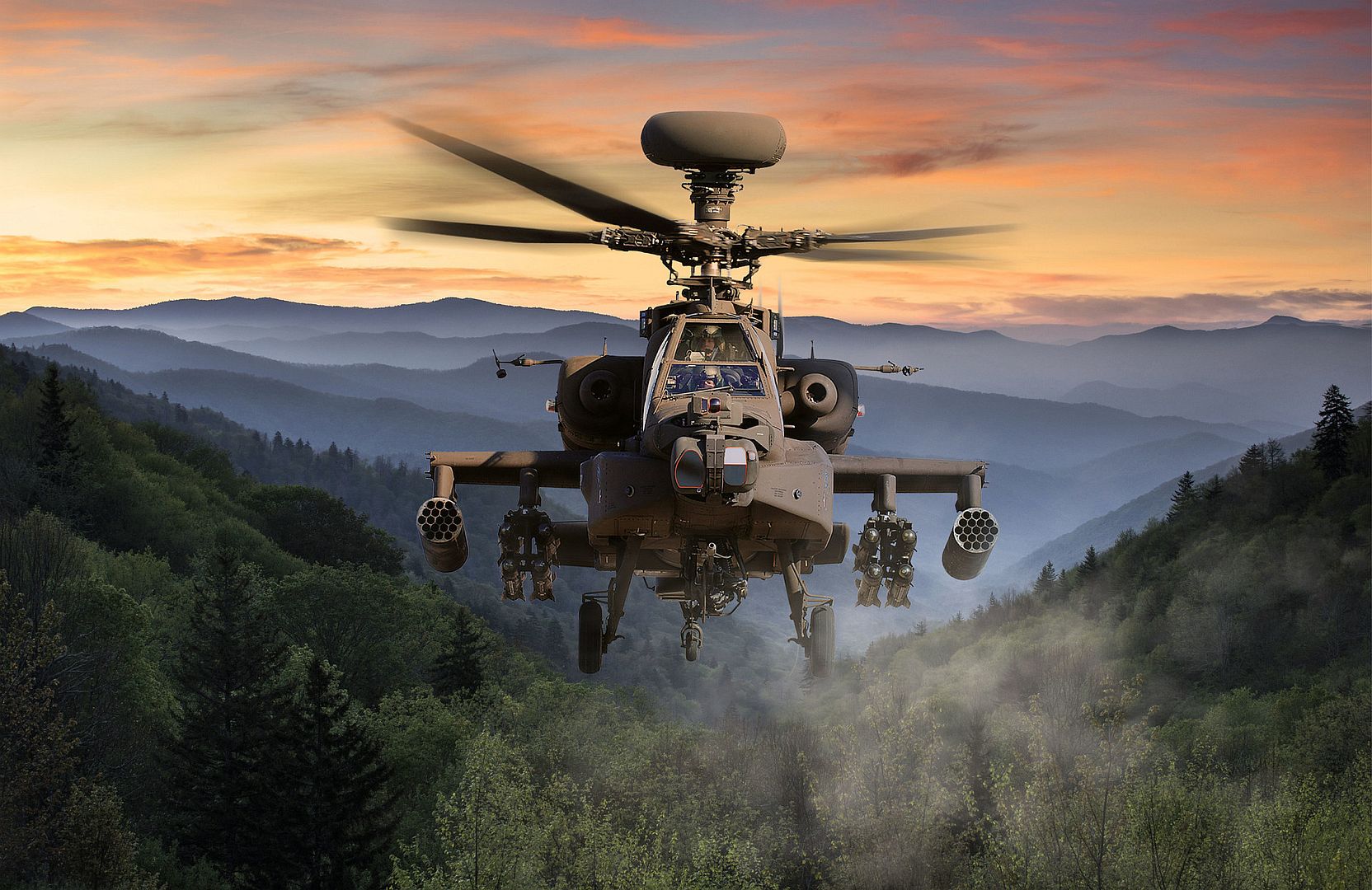
S?o Jos? dos Campos, Brazil, October 15, 2019 ? Amaszonas L?nea A?rea of Bolivia is the newest Embraer E-Jet operator. The airline started flying an E190 today between Santa Cruz de la Sierra?s Viru Viru Airport and La Paz. Amaszonas is adding a total of six E190s to its fleet. The airplanes will fly to several domestic and international destinations.
?We have been working with Amaszonas for a long-time. To see the E190 flying in the airline?s colors is really rewarding for Embraer,? said Reinaldo Krugner, Vice President, Latin America & Caribbean, Embraer Commercial Aviation. ?The E190 is the ideal aircraft to support the airline?s growing capacity in a very disciplined way. Amaszonas is taking advantage of the E190?s low operating cost.?
The first two E190s are leased from GECAS and configured with 112 seats in a single class layout. The other four aircraft will be leased from CDB Leasing and have 110 seats in a single class layout. The airline will also operate the E190s at Montevideo?s Carrasco International Airport in the future.
?The range of the E190 allows us to replace our smaller regional jets and support our expansion plans in Bolivia and Uruguay,? Sergio de Urioste, President & CEO of Amaszonas L?nea A?rea. ?Our E-Jets give us the flexibility we need to add more frequencies and destinations. We know our passengers are going to love the comfort of the E190 cabin.?
Embraer and Amaszonas have also signed a Flight Hour Pool Program agreement until 2024 to provide repairable component support for the carrier?s fleet of up to six E190s. The multiyear program features both the Pool Program and repair management services for the carrier?s fleet of E-Jets, including material services engineering and advanced component exchanges from Embraer?s spare parts distribution center in Fort Lauderdale, Florida.
Embraer is the world?s leading manufacturer of commercial aircraft up to 150 seats with more than 100 customers across the world. For the E-Jets program alone, Embraer has logged more than 1,800 orders and 1,500 aircraft have been delivered. Today, E-Jets are flying in the fleets of 80 customers in 50 countries. The versatile 70 to 150-seat family is flying with low-cost airlines as well as with regional and mainline network carriers.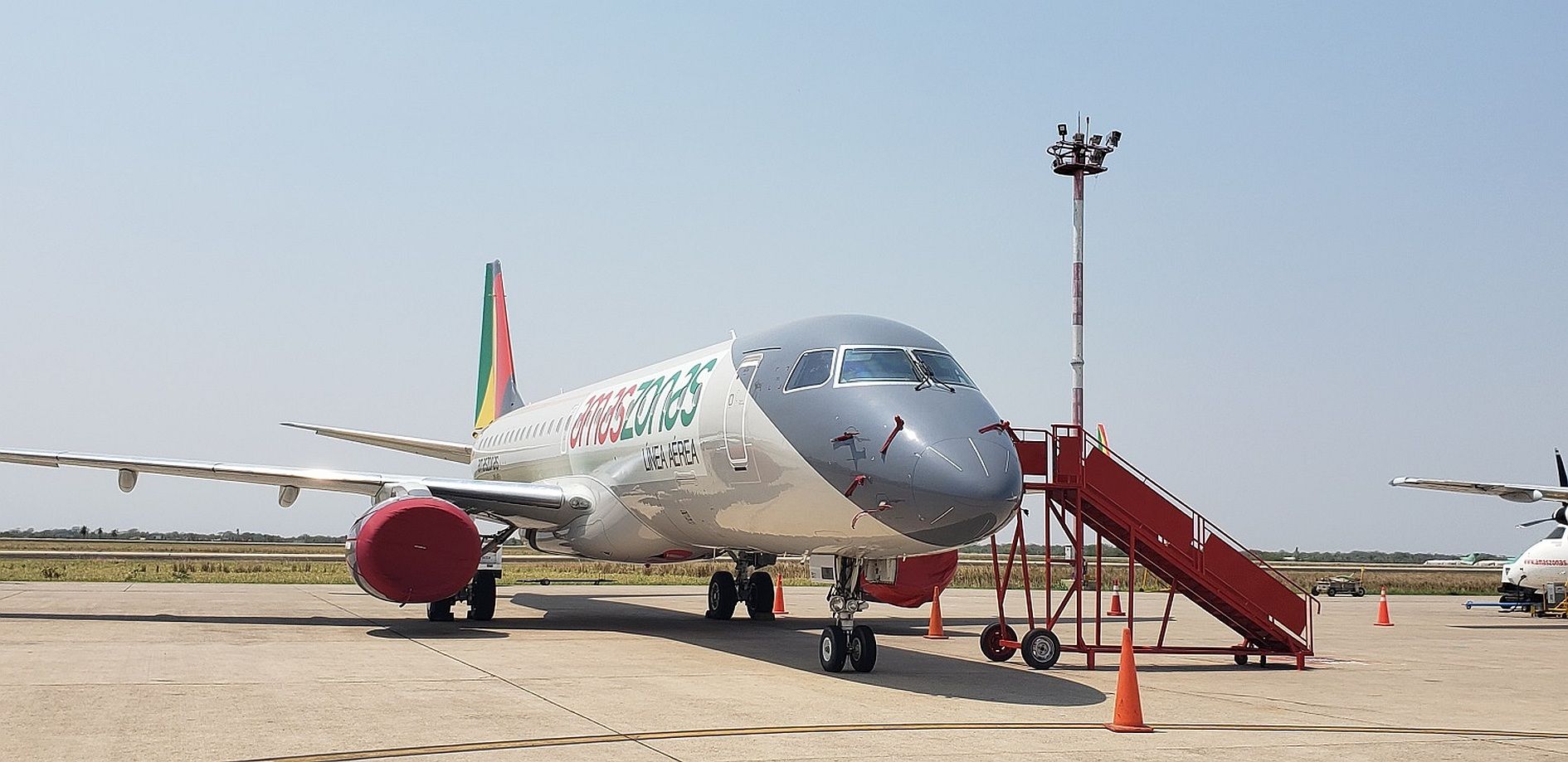
-
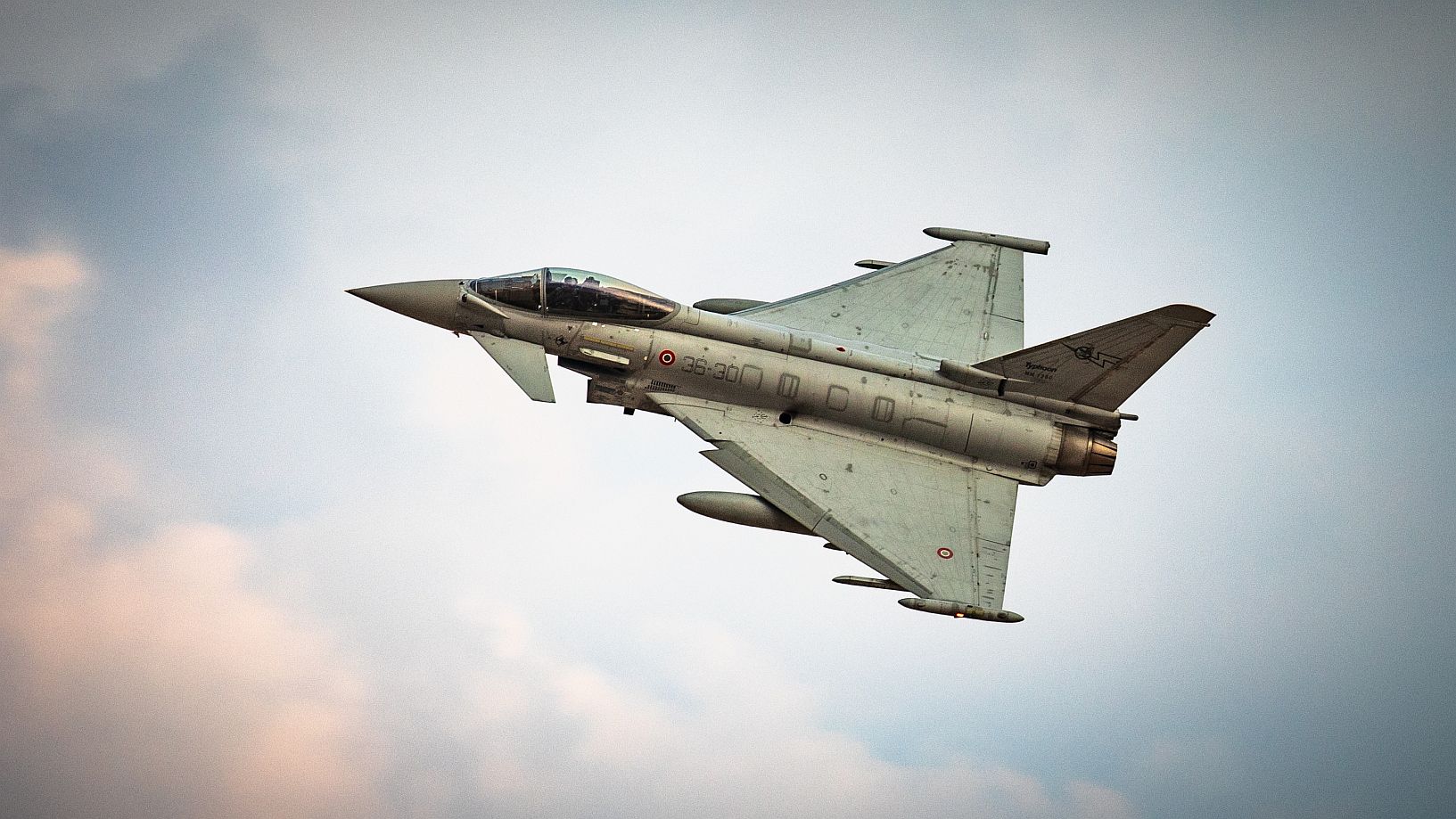
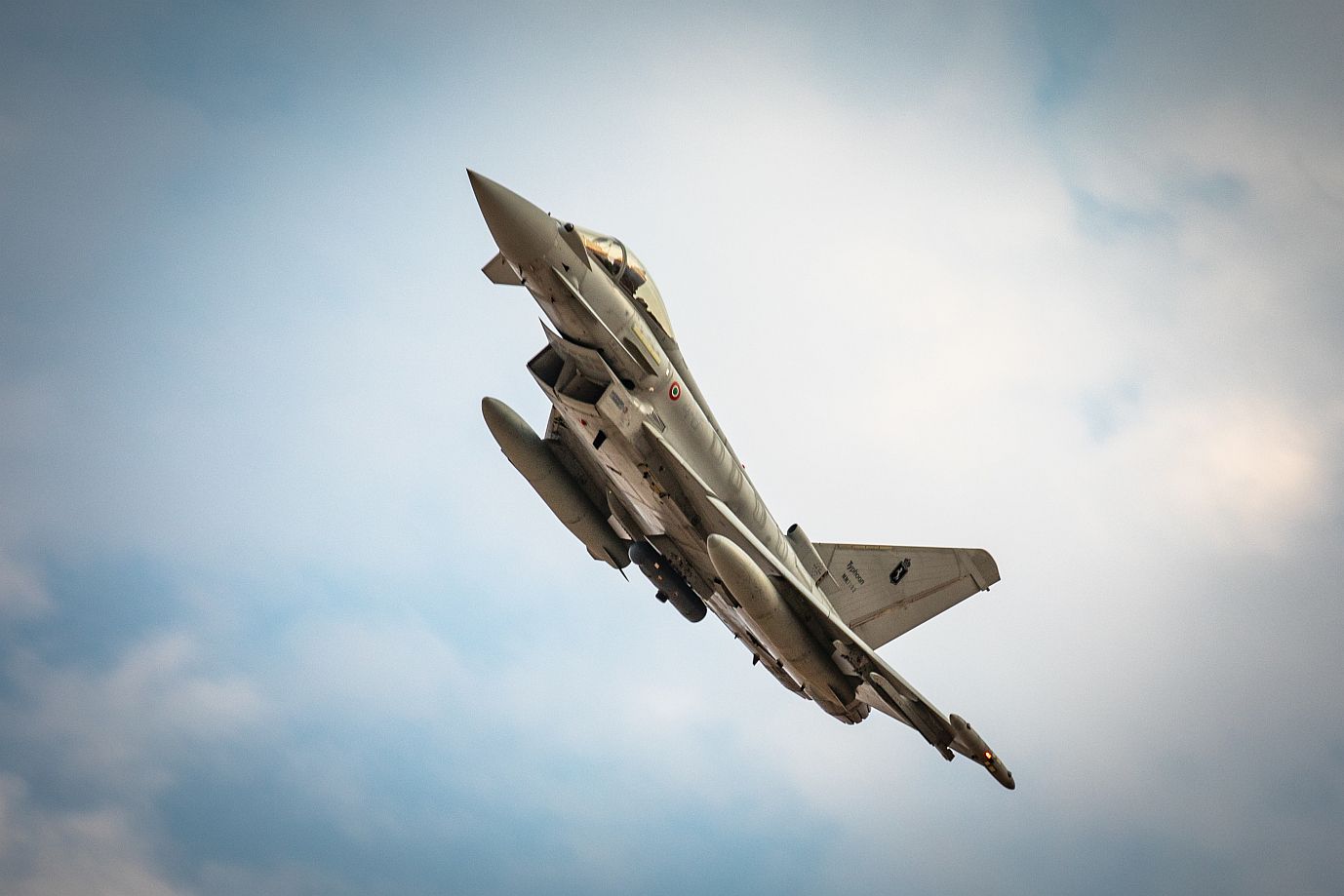
An Italian Air Force Eurofighter Typhoon maneuvers during a joint close air support exercise with U.S. Marines attached to the Special Purpose Marine Air-Ground Task Force ? Crisis Response ? Central Command (SPMAGTF-CR-CC) 19.2, and service members with the Italian Air Force in Kuwait, Oct. 14, 2019. The SPMAGTF-CR-CC works with partner nations on maintaining regional security. (U.S. Marine Corps photo's by Sgt. Kyle C. Talbot)
Two F-16 Fighting Falcons assigned to the 36th Fighter Squadron at Osan Air Base, Republic of Korea, perform a joint formation with aircraft assigned to the ROK Air Force during the opening ceremony of the Seoul International Aerospace and Defense Exhibition 2019 at the Seoul Airport October 15, 2019. The Seoul ADEX gives American service members an opportunity to showcase Airmen, aircraft and equipment to the Korean public. (U.S. Air Force photo by Senior Airman Denise M. Jenson)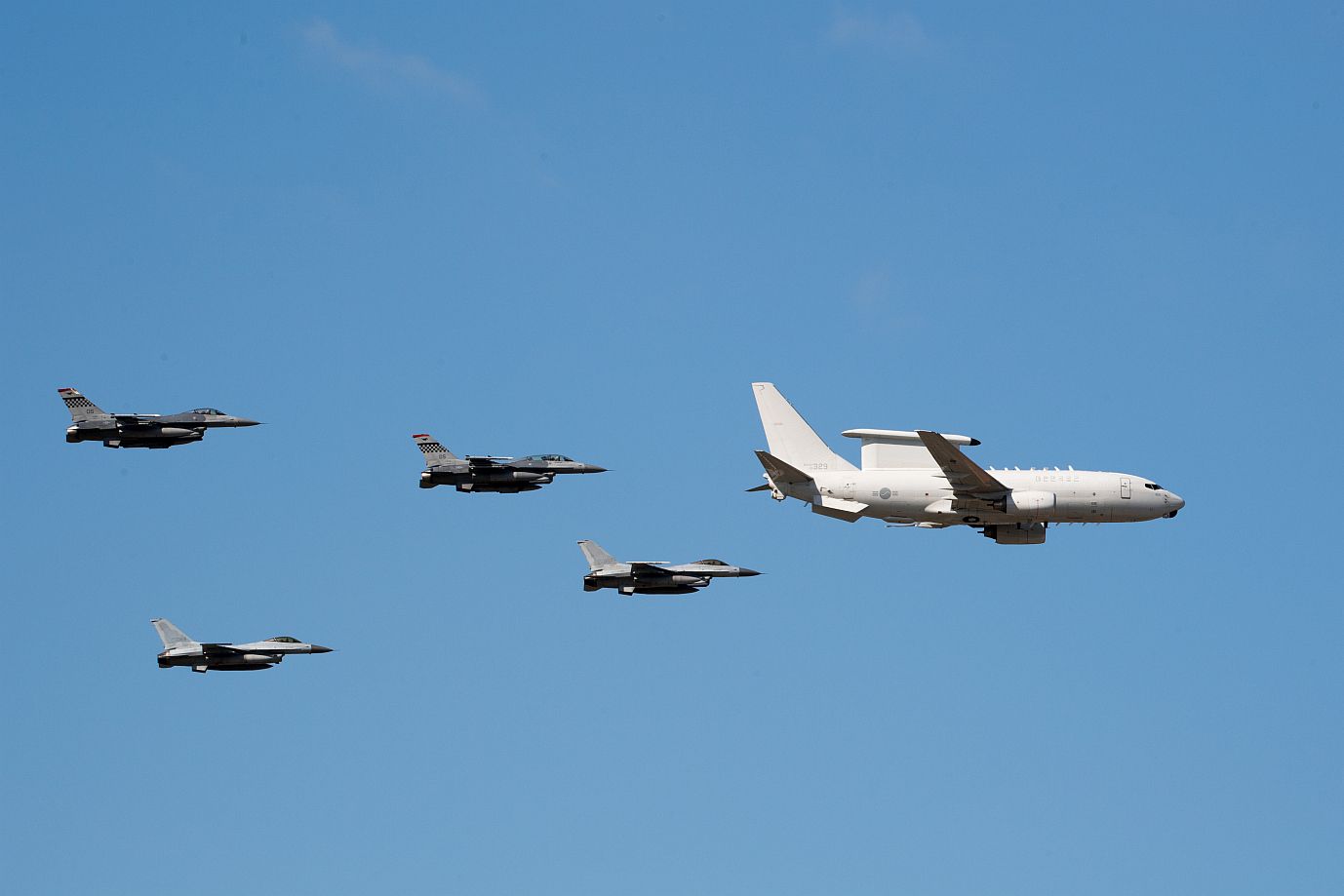
A U.S. Air Force 2nd Bomb Wing B-52 Stratofortress from Barksdale Air Force Base, Louisiana, takes off in support of Bomber Task Force Europe 20-1, Oct. 14, 2019, at Royal Air Force Fairford, England. This deployment allows aircrews and support personnel to conduct theater integration and improve bomber interoperability with joint partners and allied nations. (U.S. Air Force photo by Tech. Sgt. Christopher Ruano)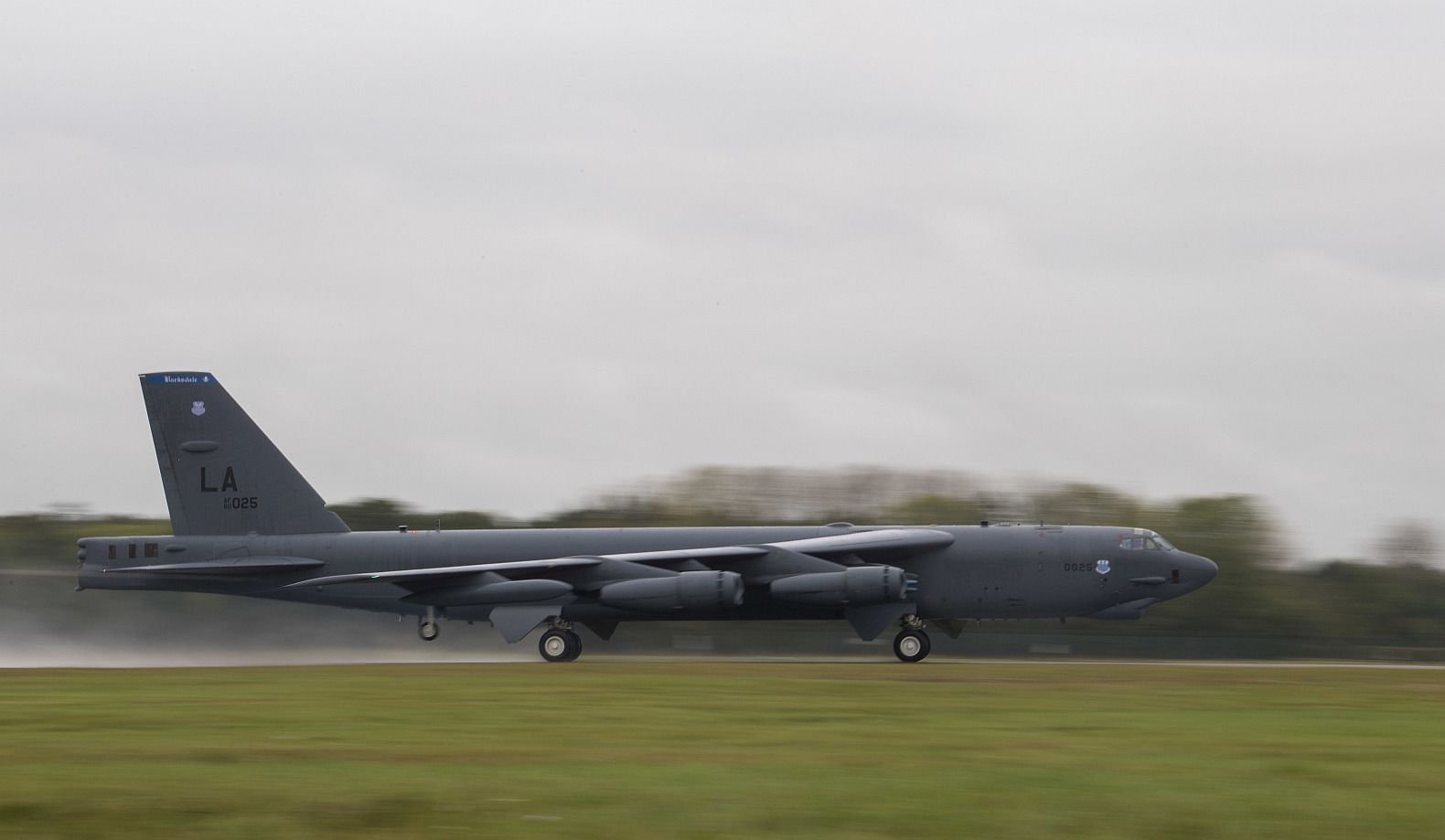
ATLANTIC OCEAN (Oct. 14, 2019) - Aviation Boatswain's Mates (Handling), prepare to tow an AV-8B Harrier, assigned to the Tigers of Marines Medium Tiltrotor Squadron (VMM) 542 (Reinforced) on the flight deck of the amphibious assault ship USS Bataan (LHD 5), Oct. 14, 2019. Bataan is underway conducting a composite training unit exercise (COMPTUEX) with the Bataan Amphibious Ready Group and 26th Marine Expeditionary Unit. (U.S. Navy photo by Mass Communication Specialist 3rd Class Lenny Weston)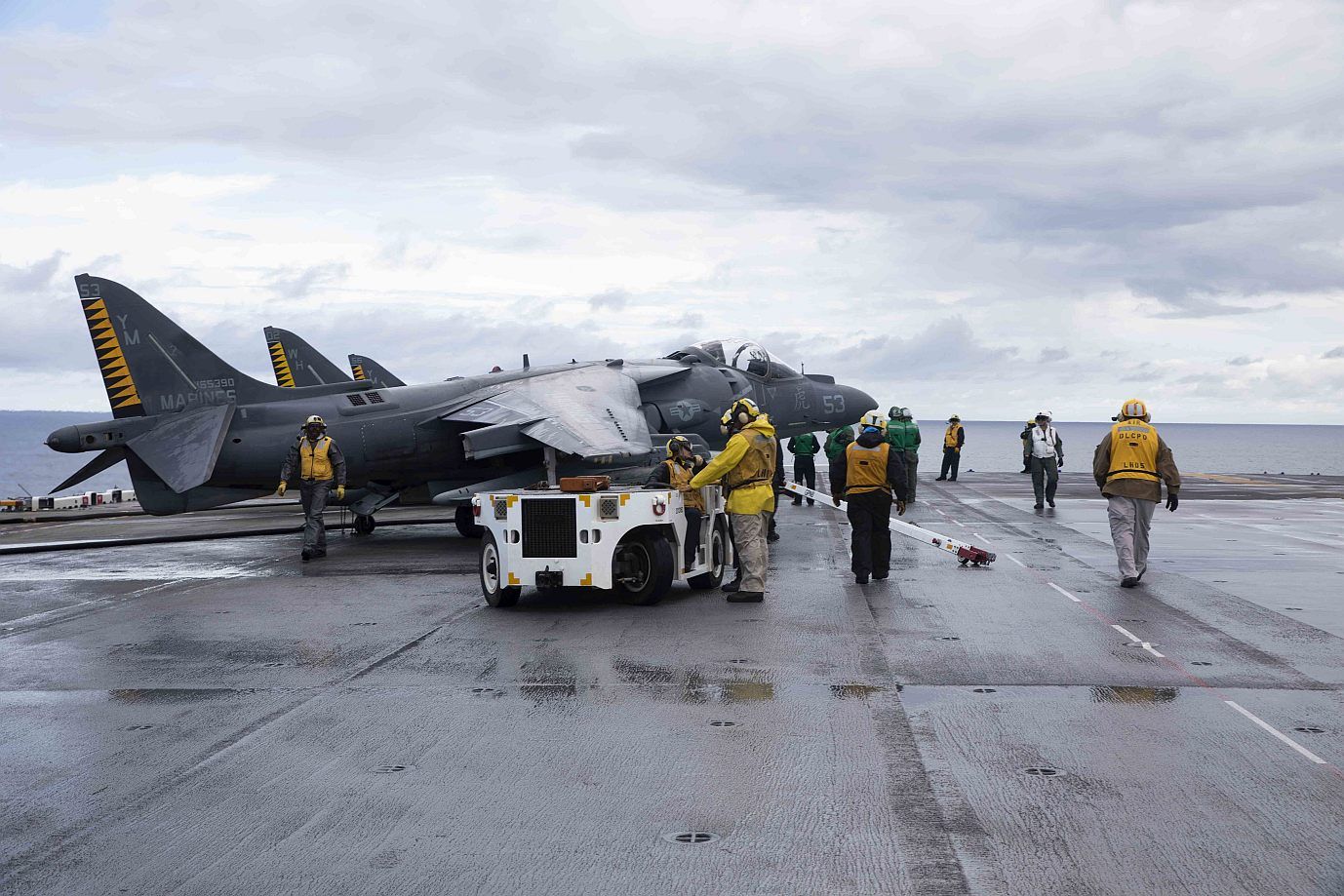
ARABIAN SEA (Oct. 10, 2019) An F/A-18E Super Hornet attached to the Sidewinders of Strike Fighter Squadron (VFA) 86 makes an arrested landing on the flight deck of the aircraft carrier USS Abraham Lincoln (CVN 72). Abraham Lincoln Carrier Strike Group is deployed to the U.S. 5th Fleet area of operations in support of naval operations to ensure maritime stability and security in the Central Region, connecting the Mediterranean and the Pacific through the western Indian Ocean and three strategic choke points. With Abraham Lincoln as the flagship, deployed strike group assets include staffs, ships and aircraft of Carrier Strike Group 12 (CSG 12), Destroyer Squadron 2 (DESRON 2), USS Leyte Gulf (CG 55) and Carrier Air Wing 7 (CVW 7). (U.S. Navy photo by Mass Communication Specialist 3rd Class Michael Singley/Released)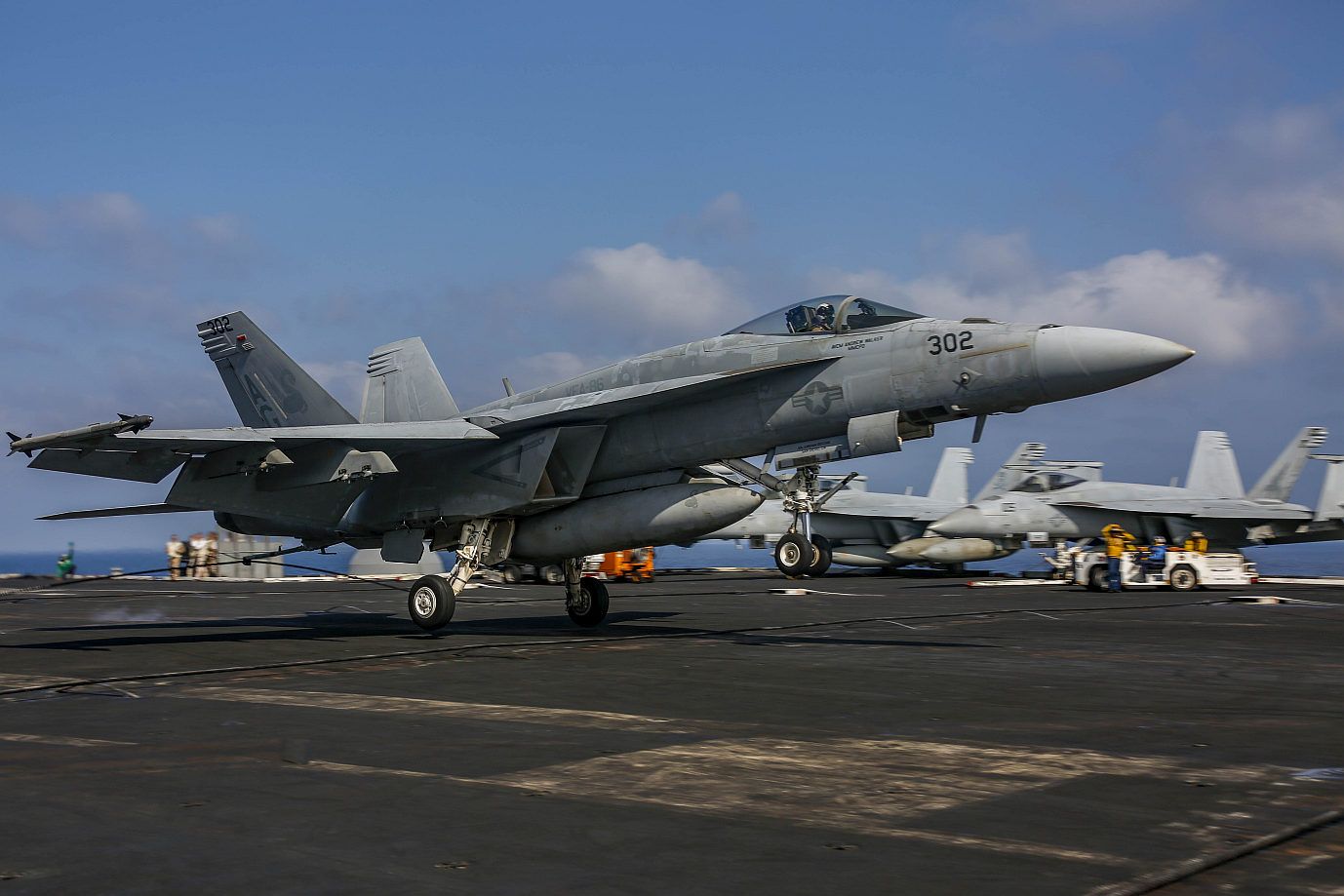
ATLANTA, Oct. 15, 2019 /PRNewswire/ -- Lockheed Martin (NYSE: LMT) announced today the global community of C-130J Super Hercules operators recently surpassed 2 million flight hours. These hours were logged beginning with the C-130J's first flight on April 5, 1996, through the end of July 2019.
Twenty-two operators from 18 nations contributed to this achievement, adding hours through multiple missions including combat, transport, aerial refueling, special operations, medevac, humanitarian relief, search and rescue, weather reconnaissance, firefighting and commercial freight delivery.
Rod McLean, vice president and general manager of the Air Mobility & Maritime Missions line of business at Lockheed Martin, announced the milestone at the Hercules Operators Conference, the annual C-130 operator-industry event held in Atlanta.
"The C-130J has earned a reputation as the world's workhorse and this most recent achievement is a powerful reminder of the Super Hercules' unmatched global reach," McLean said. "Crews continue to exemplify the C-130J's proven capability and versatility with every mission they fly. The Lockheed Martin team is proud of the work of the Super Herc crews who rely on the C-130J to support vital missions, both home and abroad."
Countries with military variant C-130Js contributing to these flight hours include (in order of delivery) the United Kingdom, United States (the U.S. Air Force, Marine Corps and Coast Guard), Australia, Italy, Denmark, Norway, Canada, India, Qatar, Iraq, Oman, Tunisia, Israel, Kuwait, South Korea, Saudi Arabia, France, and Bahrain. Also contributing is Lockheed Martin Flight Operations, whose crews are the first to fly every C-130J produced.
The U.S. Air Force maintains the largest C-130J fleet, with Super Hercs flown by Air Mobility Command, Air Combat Command, Air Education and Training Command, Special Operations Command, and Air National Guard and Air Force Reserve units. In addition, Defence Contract Management Agency crews support C-130J test flights at Lockheed Martin's Aeronautics site in Marietta, Georgia, home of C-130 production.
The C-130J Super Hercules is the current production model of the legendary C-130 Hercules aircraft. For more information on the C-130J Super Hercules, visit www.lockheedmartin.com/c130.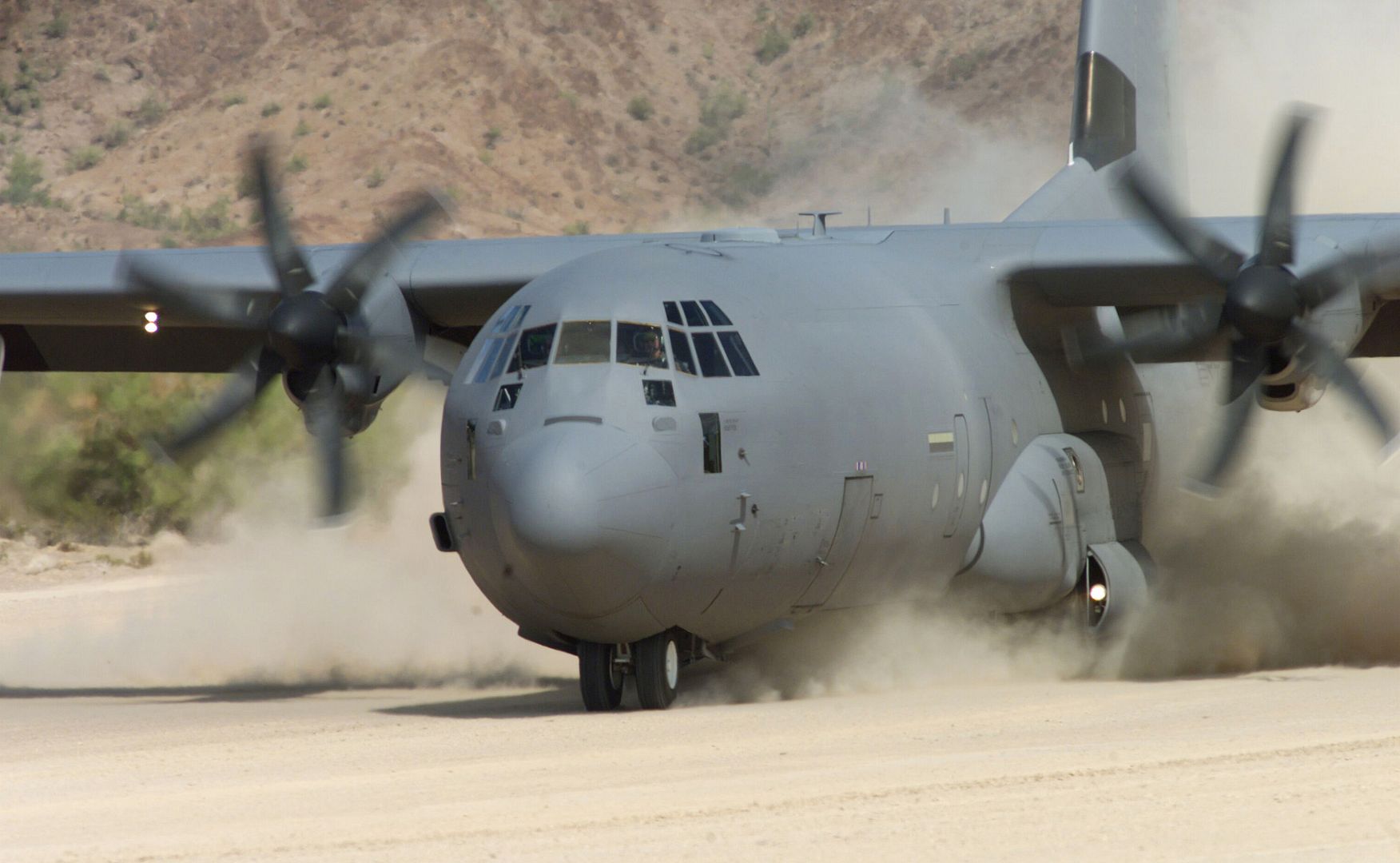
Tokyo, Japan (October 15, 2019) ? Bell Textron Inc., a Textron Inc. (NYSE:TXT) company, announced that two Japanese prefectures have placed orders for two Bell 412EPI helicopters. The orders came from the Wakayama and Ishikawa Prefectures, through Rotorcraft Services Group (RSG) and EuroTec Japan Corporation. Each Prefecture has ordered one Bell 412EPI, and the aircraft will be operated by their respective firefighting departments.
?We are honored that the Wakayama and Ishikawa prefectures have selected the Bell 412EPI for their firefighting and disaster relief and response missions,? said Jacinto Monge, Managing Director, North Asia, Bell. ?This agreement demonstrates the Bell 412EPI?s strength in the Japanese para-public sector and the confidence the Japanese government has in the aircraft to save lives.?
The Bell 412, and its variants, offers the most rugged, medium twin-engine helicopter available, with the best readiness rate of any helicopter in its class. The Bell 412EPI improves the Bell 412 platform with the Bell BasiX Pro? fully integrated glass flight deck, providing critical flight information at a glance for greater situational awareness and safety.
The Bell 412EPI continues to be the twin-engine helicopter of choice in the Asia Pacific para-public sector, with governments in Australia, Indonesia, Philippines and Thailand incorporating the aircraft in their operations.
Bell's history in Japan started with the delivery of three Bell 47D-1s to Mainichi Press, Yomiuri Press and Chunichi Press on Nov. 24, 1952. Historically, Bell has supplied most of the helicopters - more than 1,500 aircraft - that have been used or are still in service in Japan. In July last year, Bell and Subaru announced a collaboration on a commercial enhancement of the Bell 412 EPI, which was type-certified as the 412 EPX, in support of the Japan UH-X program.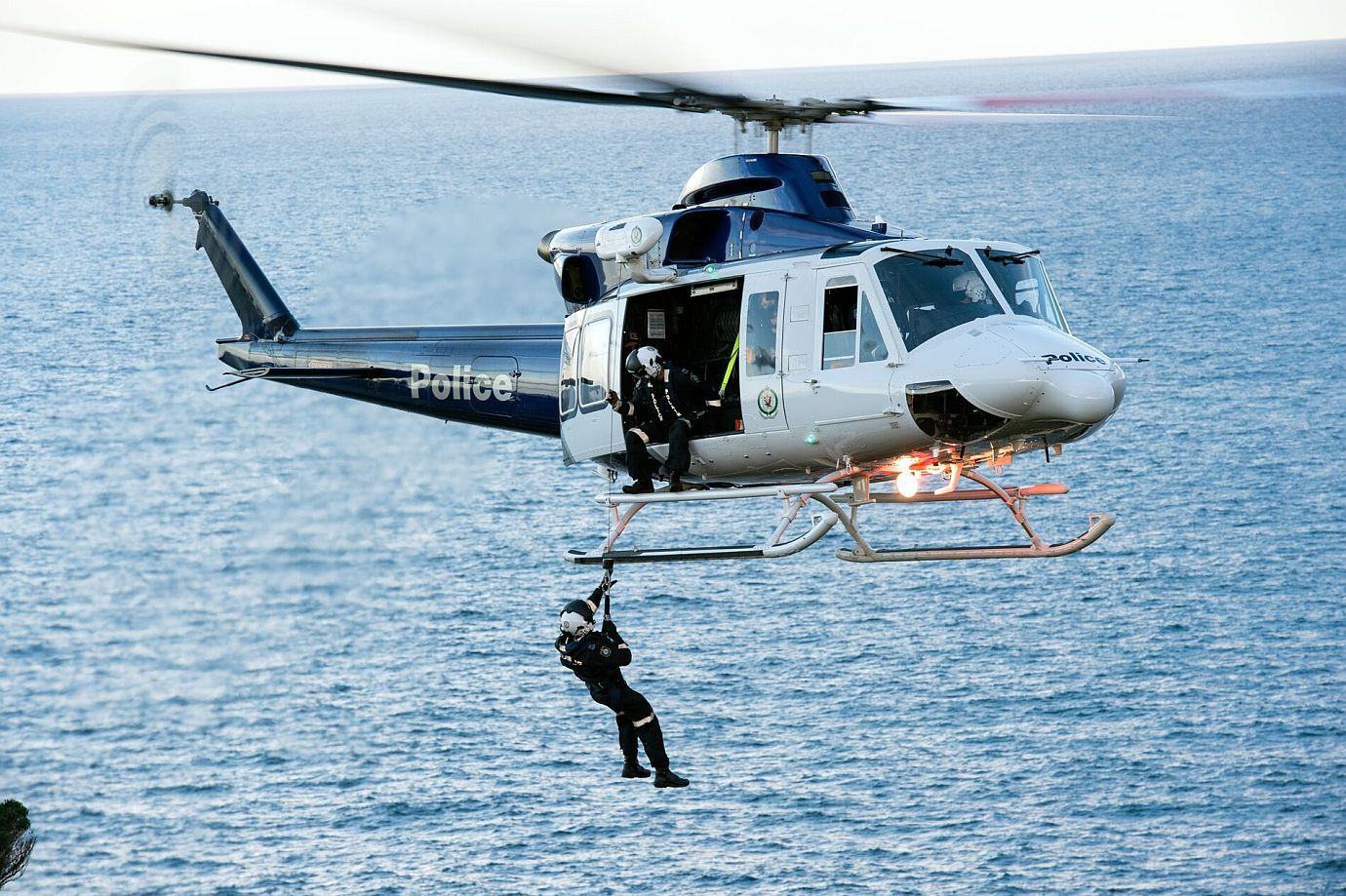
With optional dual pilot controls, the Bell 505, which recently surpassed 20,000 flight hours globally, is an excellent aircraft for training pilots to fly today?s modern aircraft with integrated glass flight decks, FADEC controlled engines, and other advanced technologies. These modern technologies coupled with proven dynamic systems and a high inertia rotor system for excellent autorotation capabilities create the optimal platform for helicopter training.
In 2018, Bell delivered four Bell 505 helicopters to the Japan Coast Guard (JCG), making the JCG the first governmental agency globally to use the Bell 505 as a basic helicopter trainer. In addition to the standard equipment on the aircraft, the JCG Bell 505s come equipped with the first entry-into-service 505 Emergency Flotation System, a technical solution designed by DART Aerospace and developed with Bell.
Bell Textron Inc. is the world?s largest manufacturer of helicopter training aircraft. Forty five percent of all training configured turbine aircraft currently in service are the Bell 206 single engine variant, which saw over 8,000 aircraft delivered over 50 years in numerous variations. A popular variant of the Bell 206 that is used primarily for training is the TH-67 Creek. In operation with the US Army since the early 1990s, this is largest helicopter training fleet in the world. In addition to the US Army, the US Navy, Marine Corps and Coast Guard also use a variant of the Bell 206, the TH-57 Sea Ranger, as their primary helicopter trainer. The Bell 505 continues the proud legacy and tradition of the 206 while improving performance, safety and making it easier to fly.
With most training helicopters globally comprising light single helicopters (3,680 lbs max takeoff gross weight), the Bell 505, with its advanced technologies and versatility, is well suited to prepare future military pilots all around the globe to meet the myriad of challenges they will face in their missions. In 2015, Bell participated in and proposed the Bell 505 for the Republic of Korea (ROK) Military TH-X program, which aims to procure training helicopters for the ROK Army and Navy. The aircraft met all the ROK Military?s Required Operational Capability during testing and evaluation phase in 2016.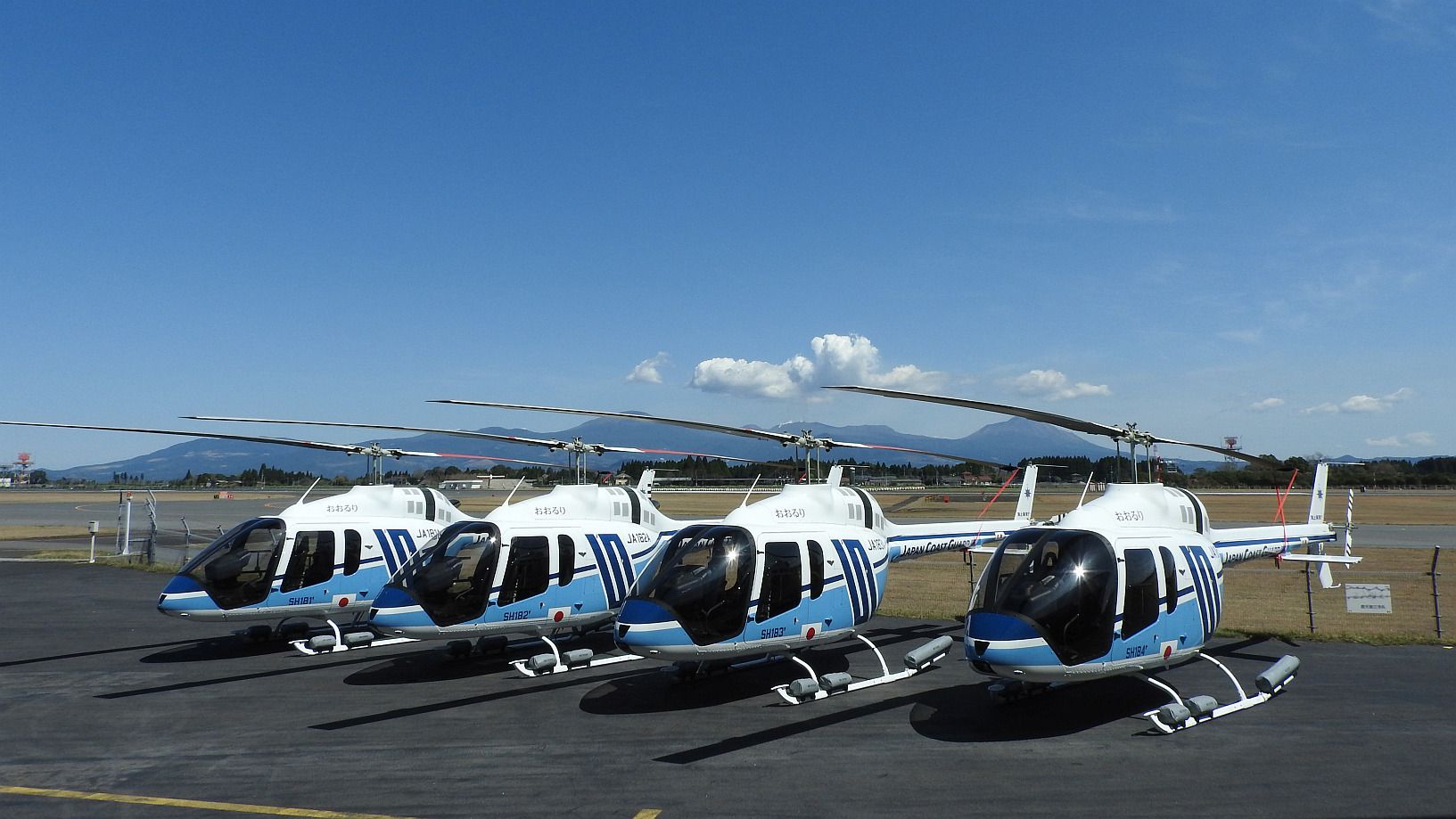
-
A U.S. Air Force KC-135 assigned to the 185th Air Refueling Wing of the Iowa Air National Guard lands at the Sioux City, Iowa airport on October 16, 2019.
U.S. Air National Guard photo by Senior Master Sgt. Vincent De Groot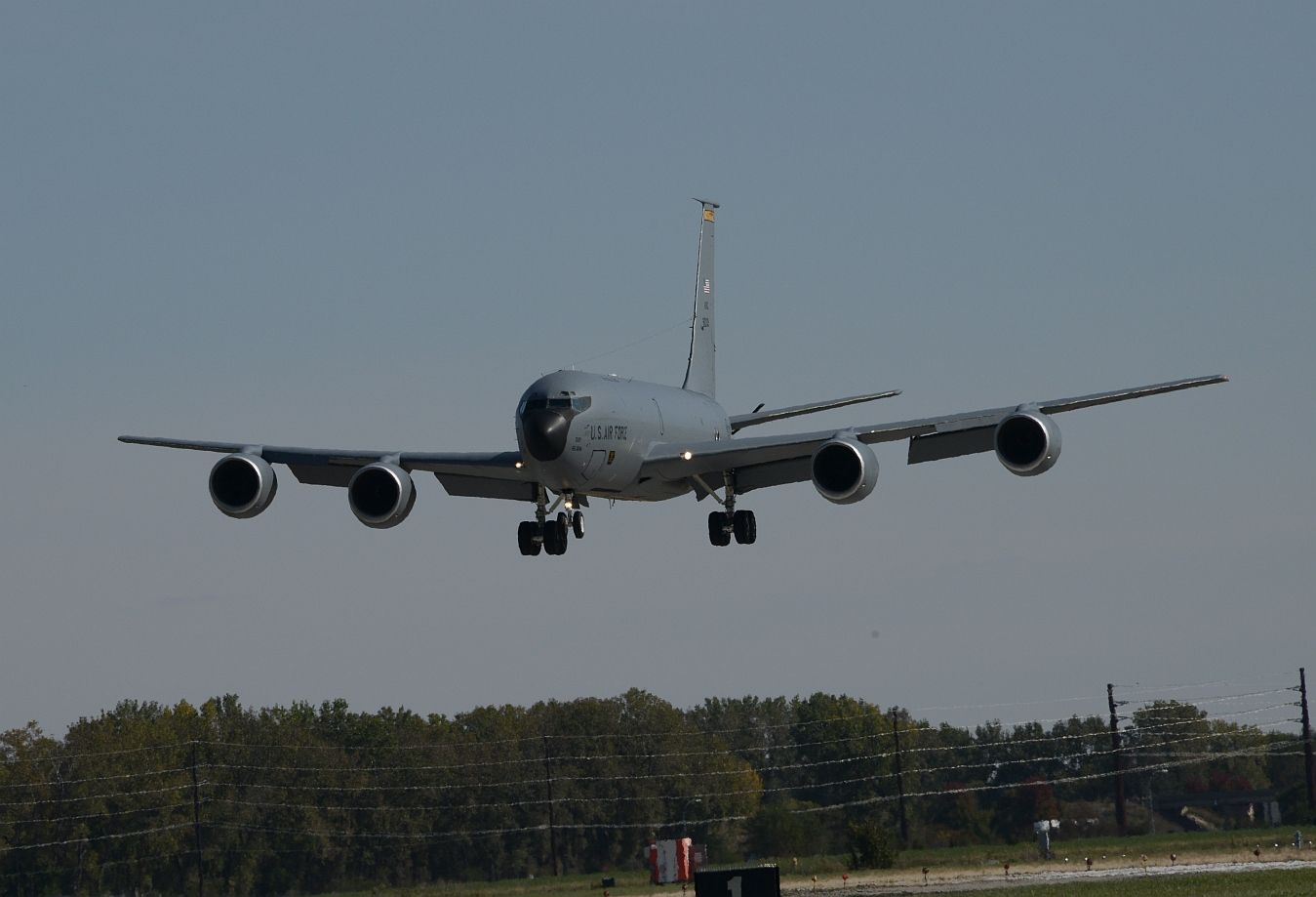
A U.S. Air Force B-52H Stratofortress deployed from Barksdale Air Force Base, Louisiana, lands at RAF Fairford, England, October 15, 2019. Bomber Task Force Europe 20-1 is a deployment of B-52 bomber aircraft, Airmen, and support equipment from the 2nd Bomb Wing to conduct theater integration and improve bomber interoperability with joint partners and allied nations. (U.S. Air Force photo by Senior Airman Stuart Bright)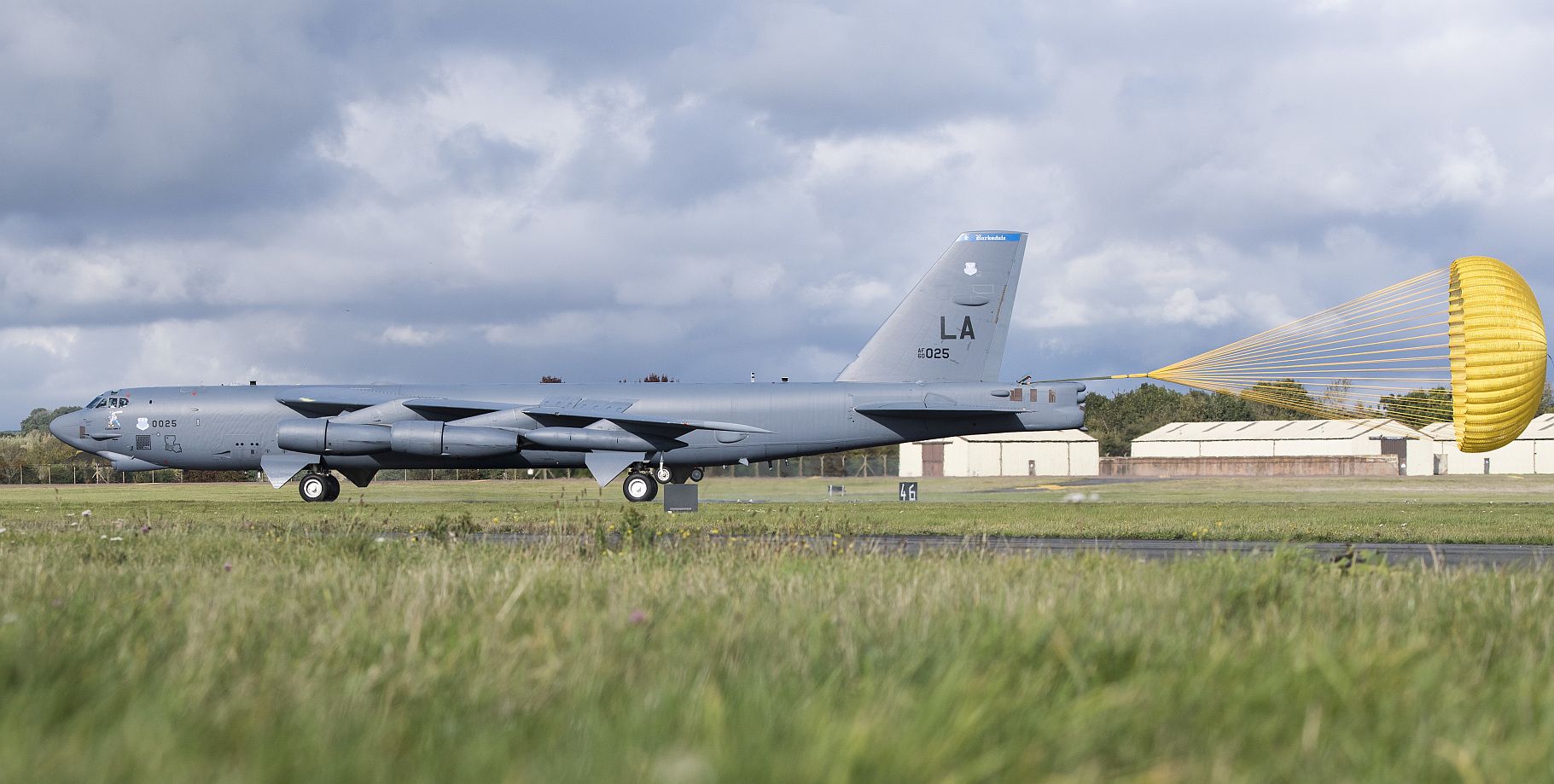
A U.S. Air Force 2nd Bomb Wing B-52 Stratofortress from Barksdale Air Force Base, Louisiana, taxis on the flight line in support of Bomber Task Force Europe 20-1, Oct. 17, 2019, RAF Fairford, England. This deployment allows aircrews and support personnel to conduct theater integration and improve bomber interoperability with joint partners and allied nations. (U.S. Air Force photo by Tech. Sgt. Christopher Ruano)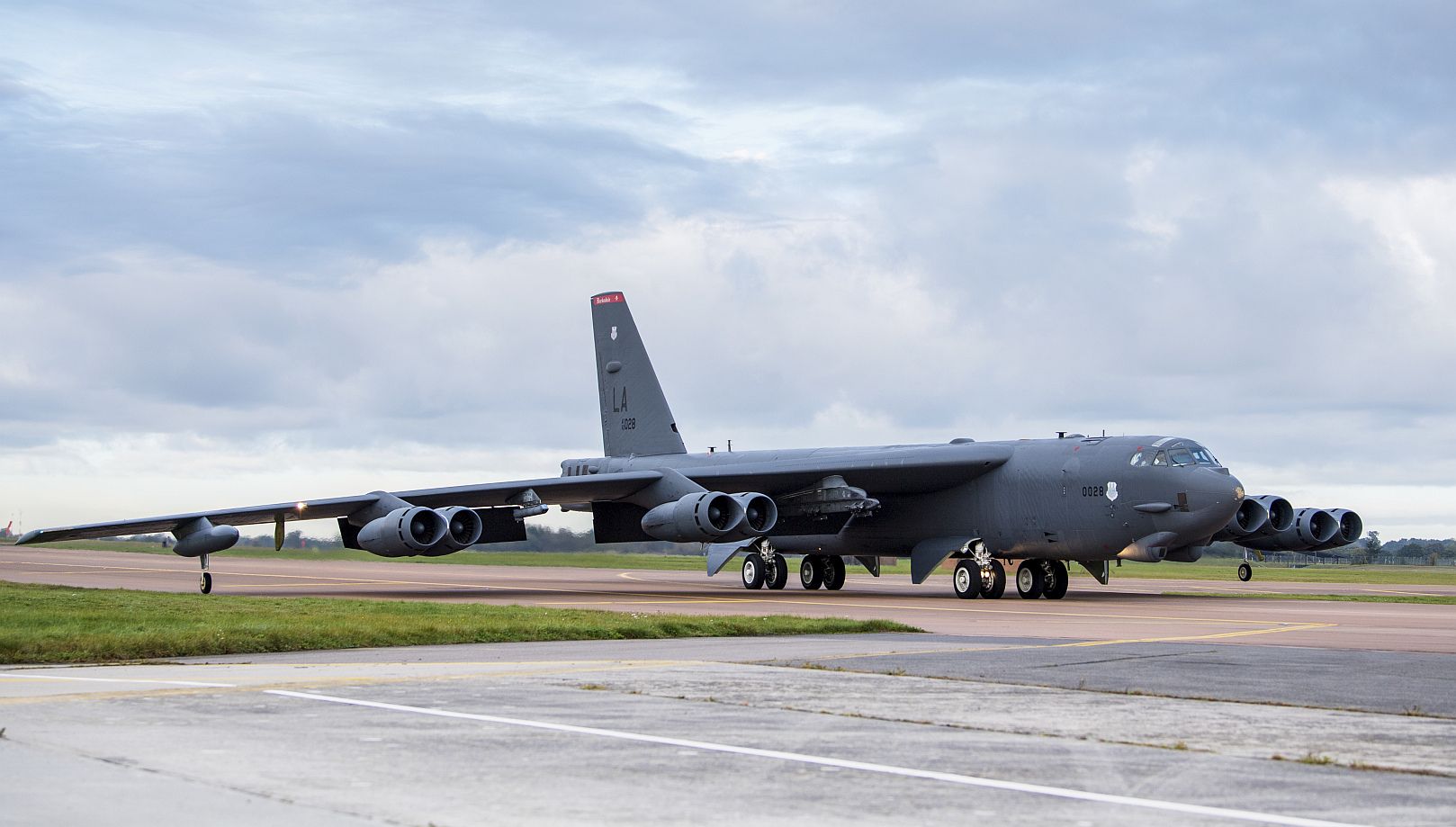
A U.S. Air Force 2nd Bomb Wing B-52 Stratofortress from Barksdale Air Force Base, Louisiana, takes off in support of Bomber Task Force Europe 20-1, Oct. 17, 2019, at RAF Fairford, England. This deployment allows aircrews and support personnel to conduct theater integration and improve bomber interoperability with joint partners and allied nations. (U.S. Air Force photo by Tech. Sgt. Christopher Ruano)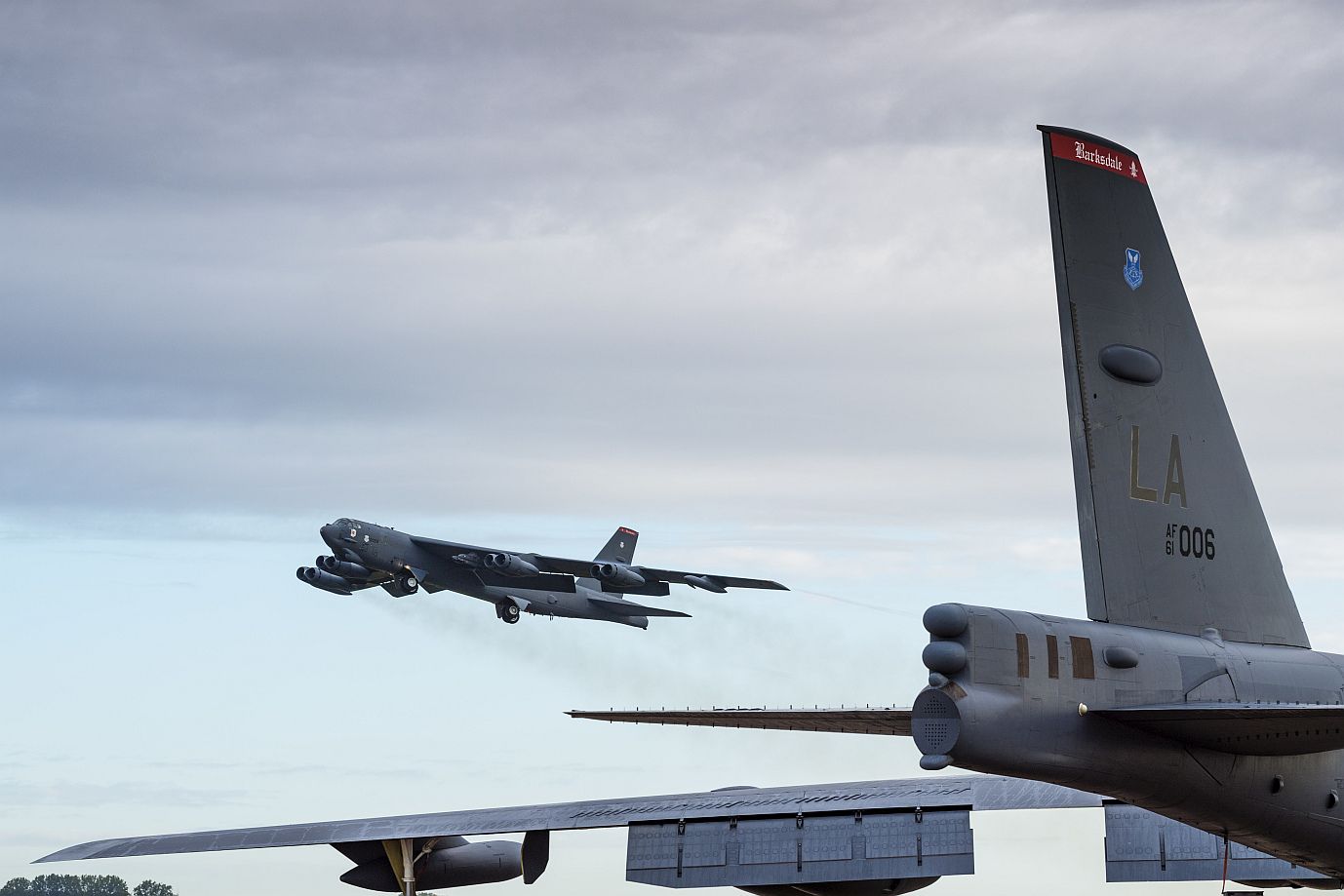
SAN FRANCISCO (Oct. 11, 2019) The U.S. Navy Flight Demonstration Squadron, the Blue Angels, diamond pilots fly over San Francisco during the 2019 San Francisco Fleet Week Air Show. The Blue Angels are scheduled to conduct 61 flight demonstrations at 32 locations across the country to showcase the pride and professionalism of the U.S. Navy and Marine Corps to the American and Canadian public in 2019. (U.S. Navy photo by Mass Communication Specialist 2nd Class Timothy Schumaker/Released)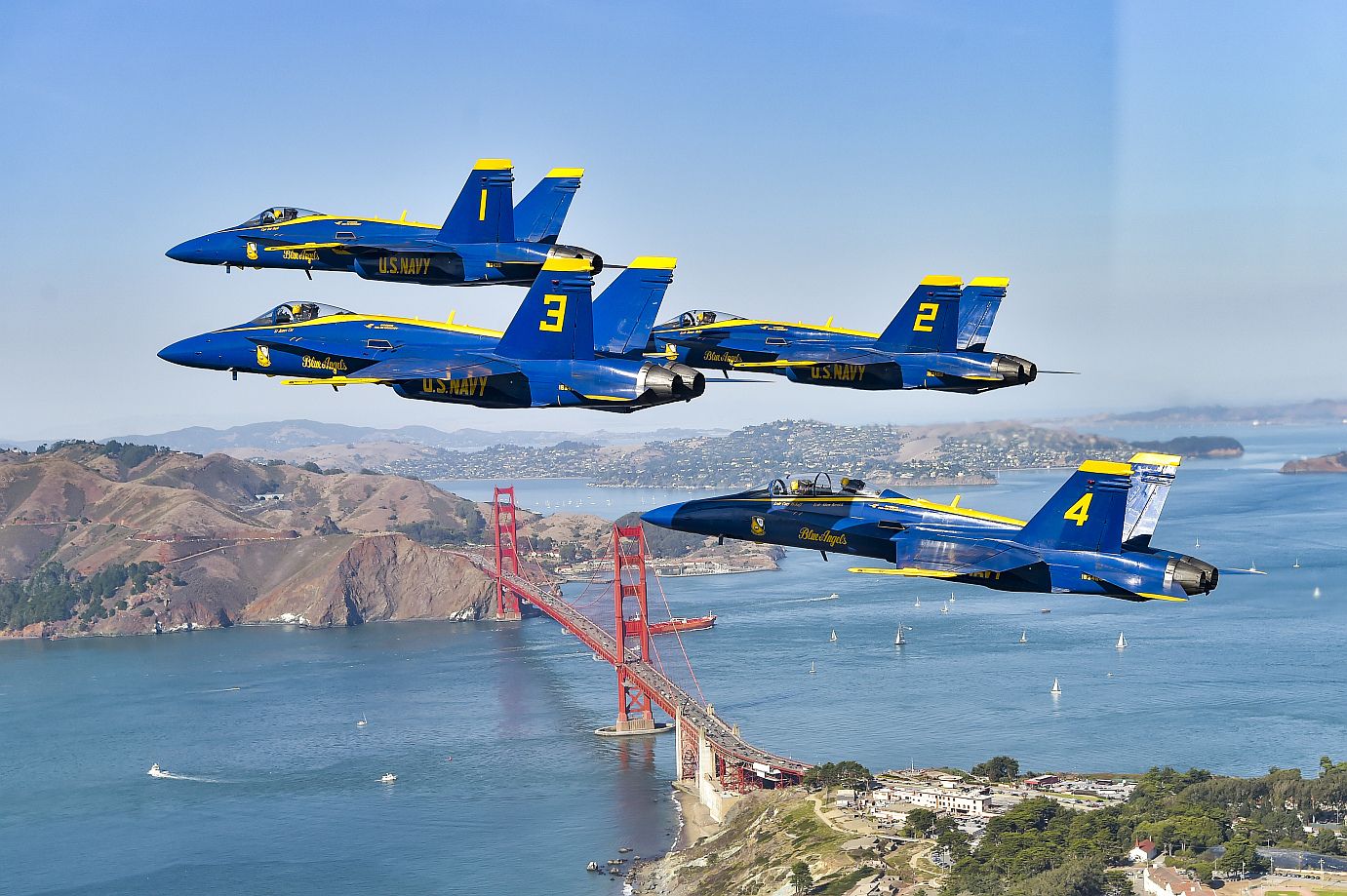
Montreal, October 17, 2019 ? Bombardier proudly announced today that the best-selling and industry-leading Challenger 350 aircraft demonstrated its undeniable performance capabilities and superior reliability by setting speed records for 10 key American city pairings in 20.5 hours. This impressive feat was completed as the aircraft flew a cross country circuit between 10 of the top U.S. business aviation destinations, setting a city-pair speed record with each mission.
The Challenger 350 jet departed from Las Vegas at 07:56 AM local time and embarked on a 10-stop, U.S.-wide tour. As part of this mission, the aircraft flew at an average cruising speed of M 0.82 on most of each leg, with stops in Denver, Chicago, Teterboro, Washington, White Plains (New York), West Palm Beach, Houston, Dallas and Los Angeles, before returning to Las Vegas. The aircraft completed its extensive circuit and returned to its departure point at 04:20 AM local time on the following day, after flying over 5,600NM. This record-setting achievement is a testament to the platform?s leading dispatch reliability, a critical productivity factor for corporate flight departments and large fleet operators.
?By connecting 10 of the top U.S. business aviation destinations in 20.5 hours, the Challenger 350 aircraft demonstrated once again its unmatched performance, exceptional reliability and unrivalled value,? said David Coleal, President, Bombardier Aviation. ?As the most-delivered business jet platform of the last decade, the Challenger 350 jet continues to outperform the competition on all fronts and to provide passengers with the ultimate flight experience.?
?The Challenger 350 aircraft handled beautifully throughout our 10 flights, while showcasing its exceptional performance and signature smooth ride on each of our missions,? said Dennis Simmons, Senior Captain, Flight Operations. ?While this unprecedented record run is an impressive accomplishment, completing a 10-mission tour of the U.S. in less than a day is well within the capabilities of this outstanding aircraft. From the cockpit, the Challenger 350 aircraft lightens the pilots? workload and is a joy to fly, thanks to its advanced equipment and the industry?s most extensive set of baseline features.?
With the largest cabin, best equipped cockpit and lowest operating costs in its class, the Challenger 350 jet offers the luxury of having it all. Boasting an elegant design, high-end craftsmanship and improved ergonomics in the cabin and in the cockpit, the aircraft provides passengers with paramount comfort and peace of mind, knowing every flight will deliver a smooth ride from takeoff to touchdown.
Committed to providing nothing short of the best to its customers all over the world, Bombardier recently announced a series of enhancements to the Challenger 350 aircraft, further underscoring its leadership position in the super mid-size segment. New enhancements to the aircraft include compact Head-up Display (HUD) and Enhanced Vision System (EVS), class-leading cabin sound-proofing technology, and refined cockpit aesthetics. A performance improvement package also allows the aircraft to fly up to 1,500 NM farther out of short runways, complementing its steep approach certifications awarded by international regulatory bodies including EASA, FAA and TC. With this suite of enhancements, the best keeps getting better as the Challenger 350 aircraft continues to take centre stage in the super mid-size segment and to be the preferred choice of experienced fleet departments as well as Fortune 500 corporations.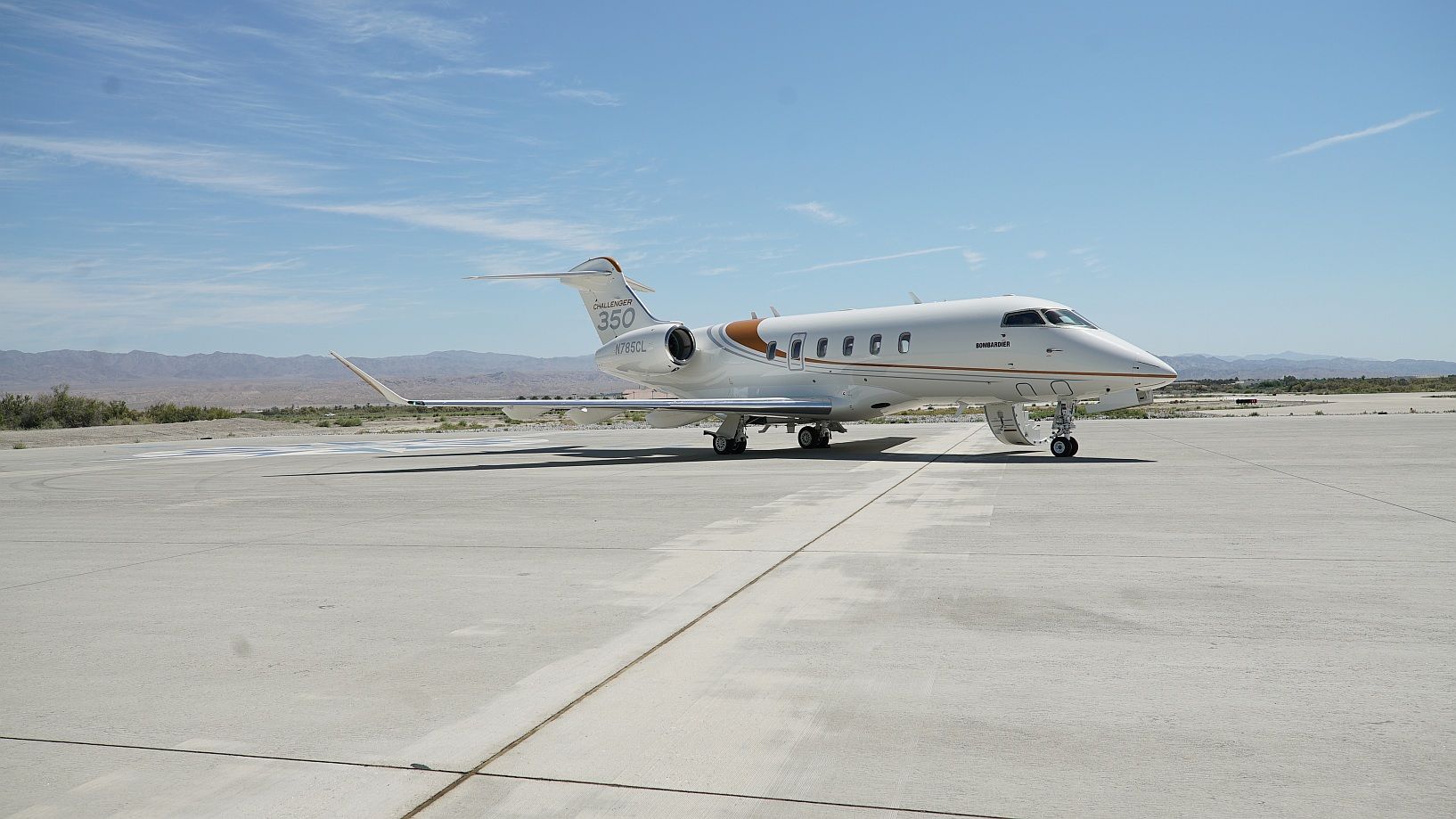
-
An F-16 Fighting Falcon assigned to the Pacific Air Forces F-16 Viper Demonstration Team at Misawa Air Base, Japan, performs a high-speed pass during the Seoul International Aerospace and Defense Exhibition 2019 at the Seoul Airport, Republic of Korea, October 15, 2019. The Seoul ADEX is the largest, most comprehensive event of its kind in Northeast Asia, attracting aviation and aerospace professionals, key defense personnel, aviation enthusiasts and the general public alike. (U.S. Air Force photo by Senior Airman Denise M. Jenson)
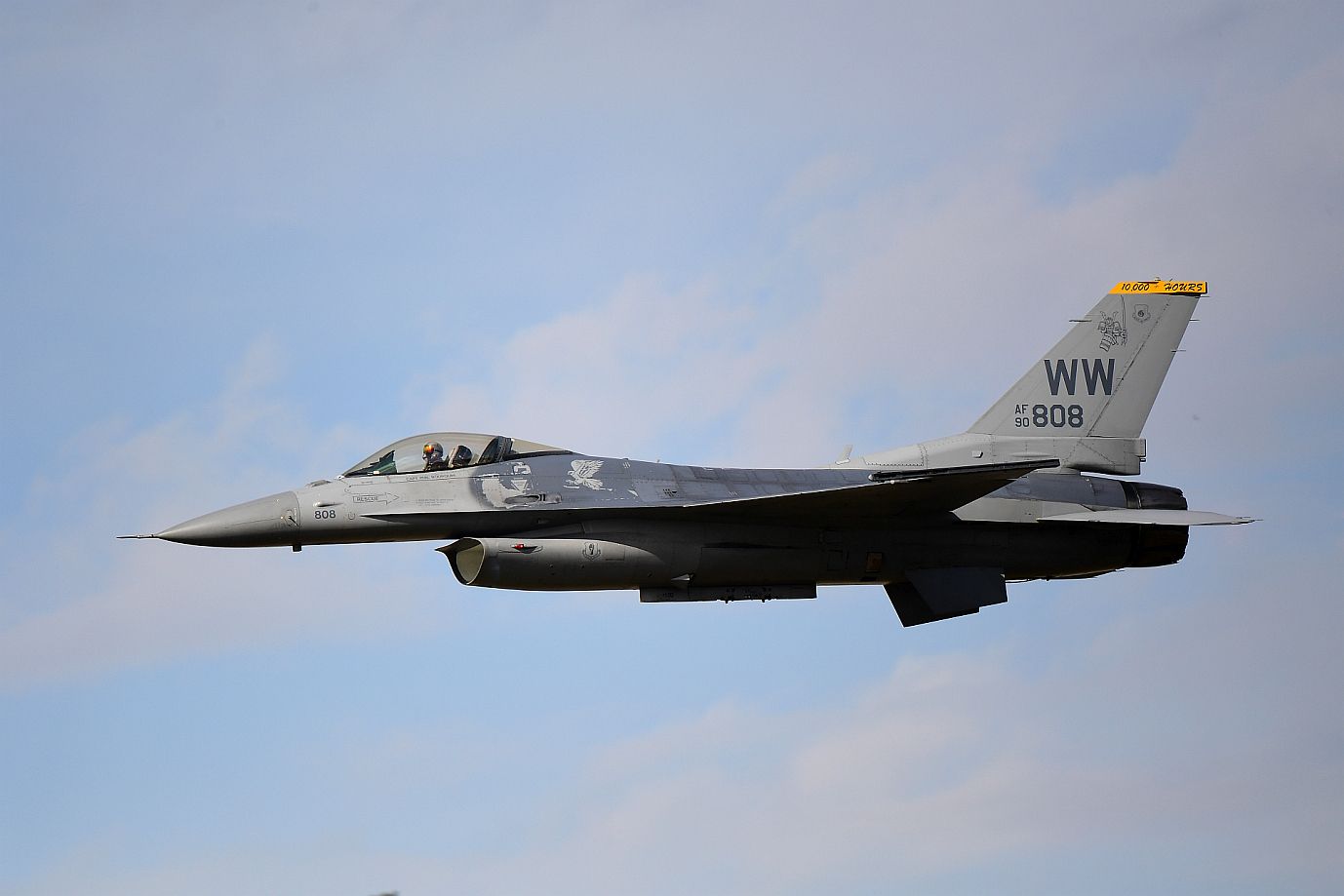
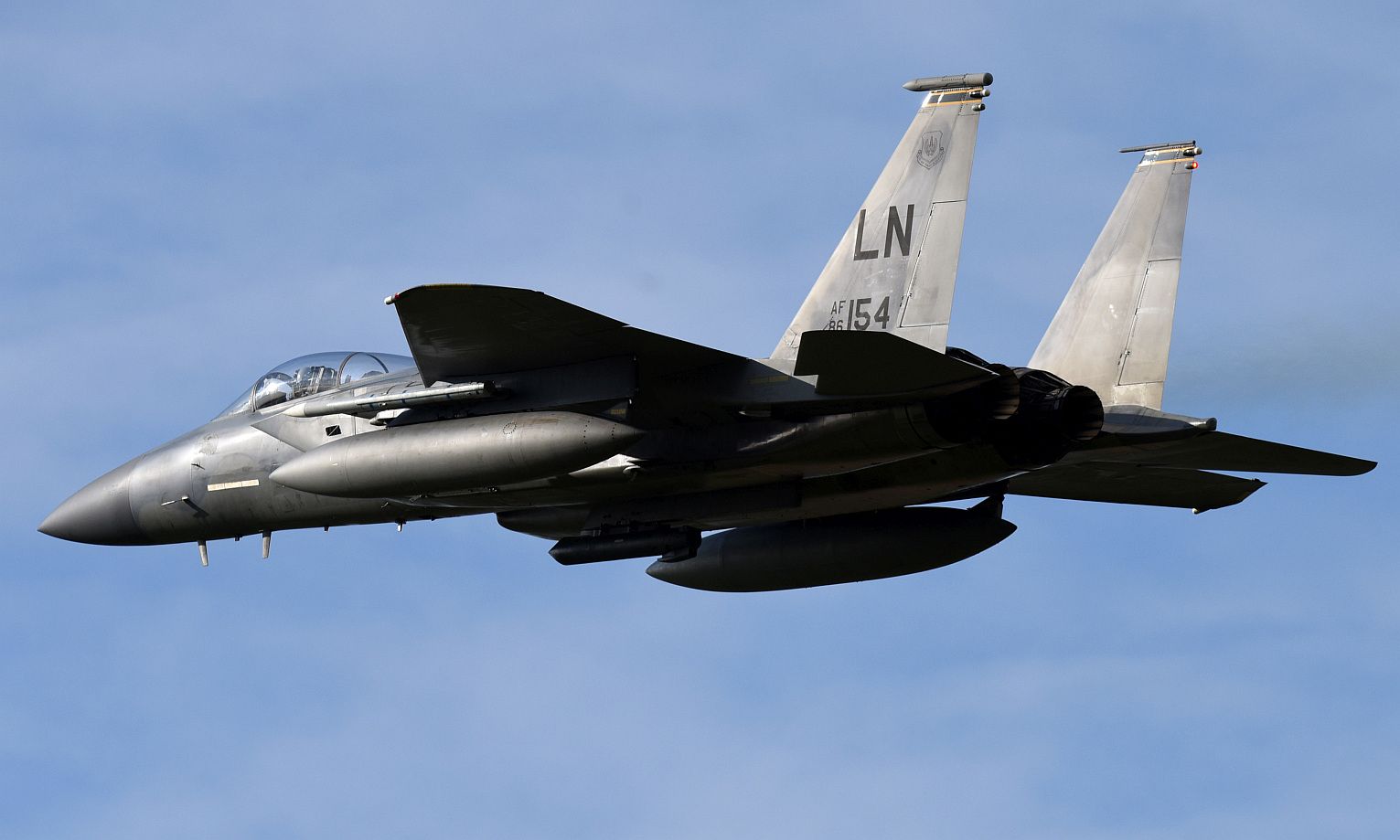
F-15C Eagle's assigned to the 493rd Fighter Squadron take off from the flightline in support of exercise Ocean Sky at Royal Air Force Lakenheath, England, Oct. 18, 2019. Ocean Sky is an annual Spanish national fighter large force exercise that is essential to fighter combat readiness and improving interoperability among allied air forces.(U.S. Air Force photo's by Airman 1st Class Madeline Herzog)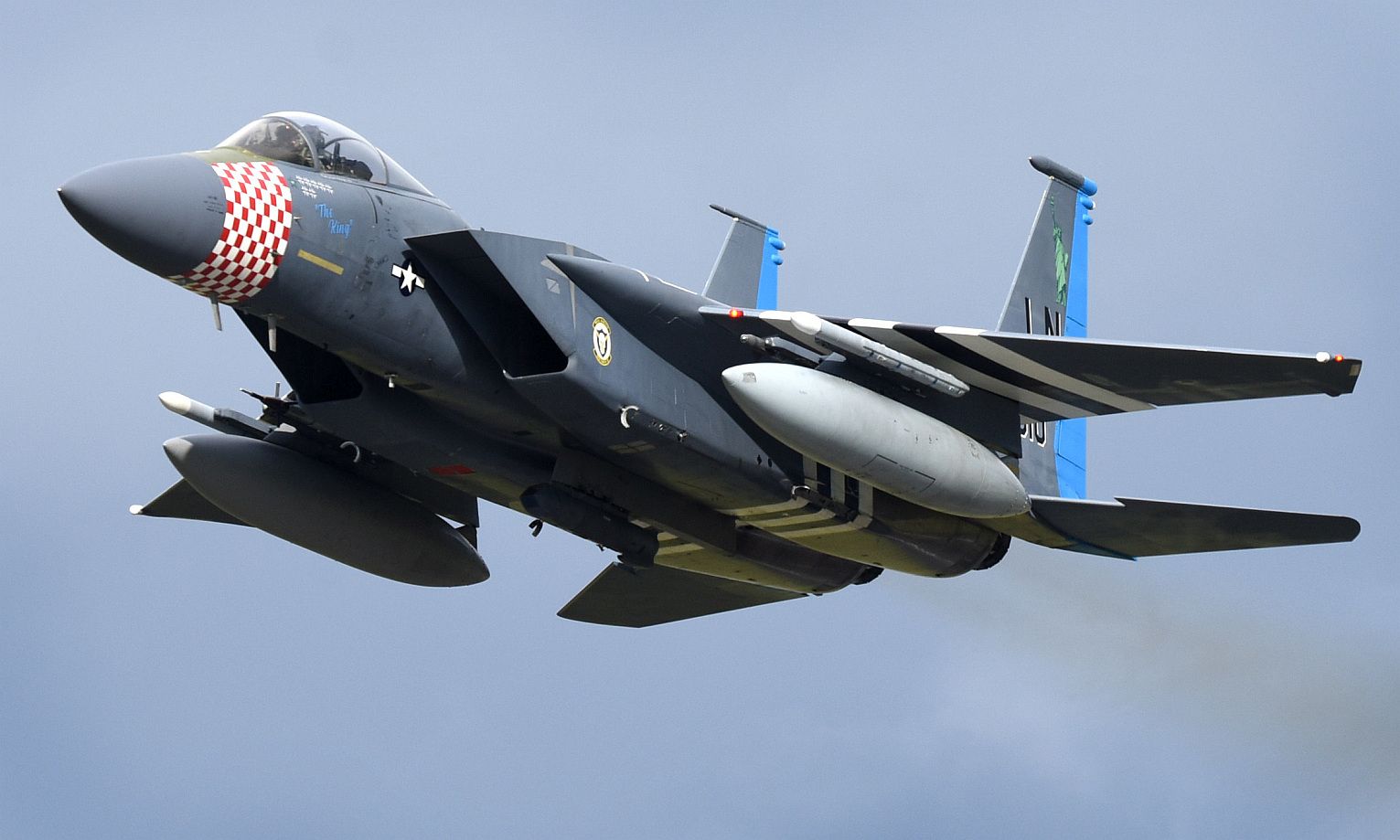
ATLANTIC OCEAN (Oct., 17, 2019) HMS Queen Elizabeth (RO sails the Atlantic Ocean. HMS Queen Elizabeth is currently deployed in support of WESTLANT 19 which involves mission planning, arming the aircraft using the ship's Highly Automated Weapon Handling System, flying missions and debriefing on completion. The first operational deployment for HMS Queen Elizabeth 617 Squadron and a squadron of US Marine Corps Lightning jets is due to take place in 2021. (U.S. Navy photo by Mass Communication Specialist 3rd Class Nathan T. Beard/Released)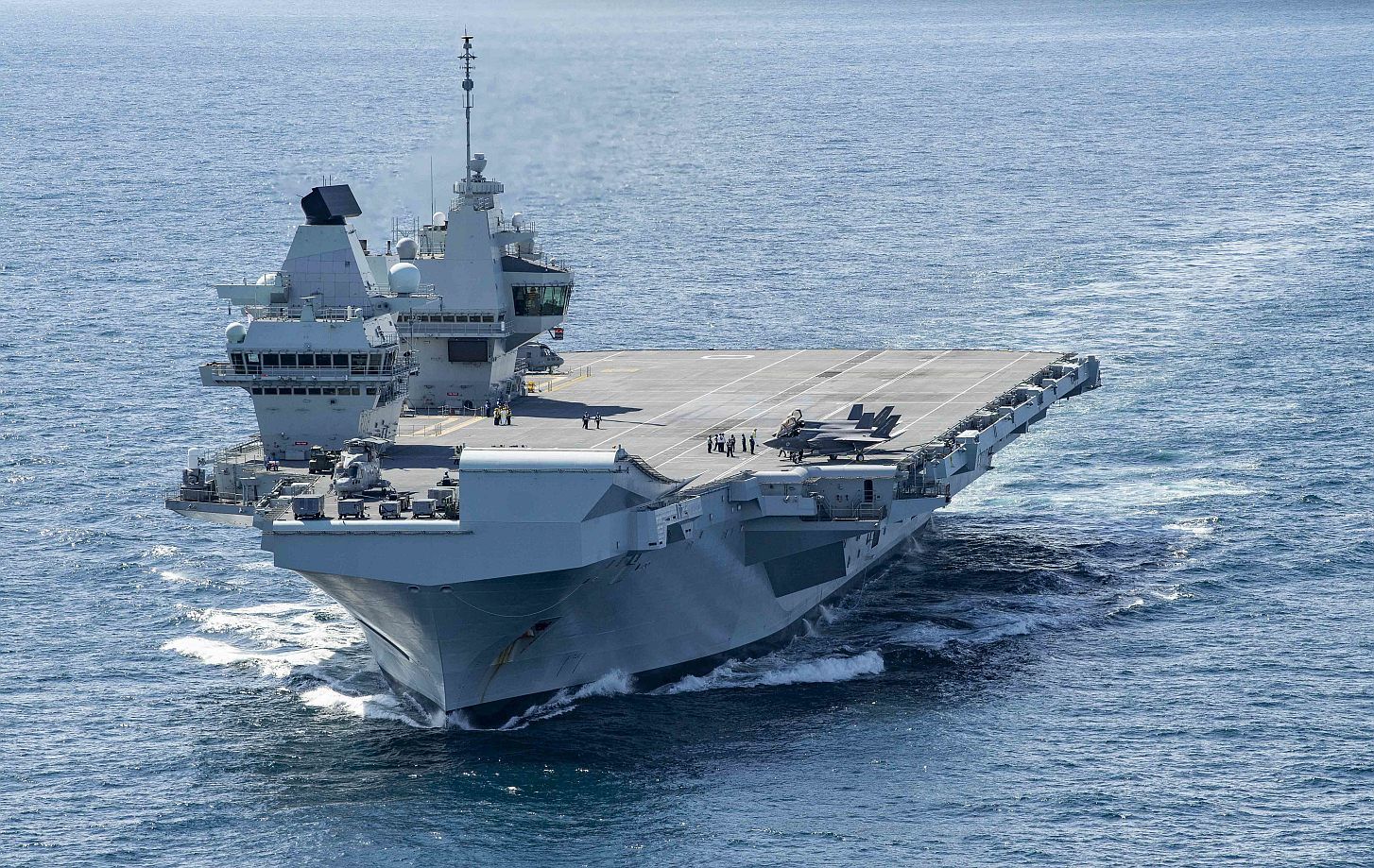
ATLANTIC OCEAN (Oct., 17, 2019) An UK F-35B Lightning fighter jet launches from the flight deck of the HMS Queen Elizabeth (RO during flight operations in the Atlantic Ocean. HMS Queen Elizabeth is currently deployed in support of WESTLANT 19 which involves mission planning, arming the aircraft using the ship's Highly Automated Weapon Handling System, flying missions and debriefing on completion. The first operational deployment for HMS Queen Elizabeth 617 Squadron and a squadron of US Marine Corps Lightning jets is due to take place in 2021.
(U.S. Navy photo's by Mass Communication Specialist 3rd Class Nathan T. Beard/Released)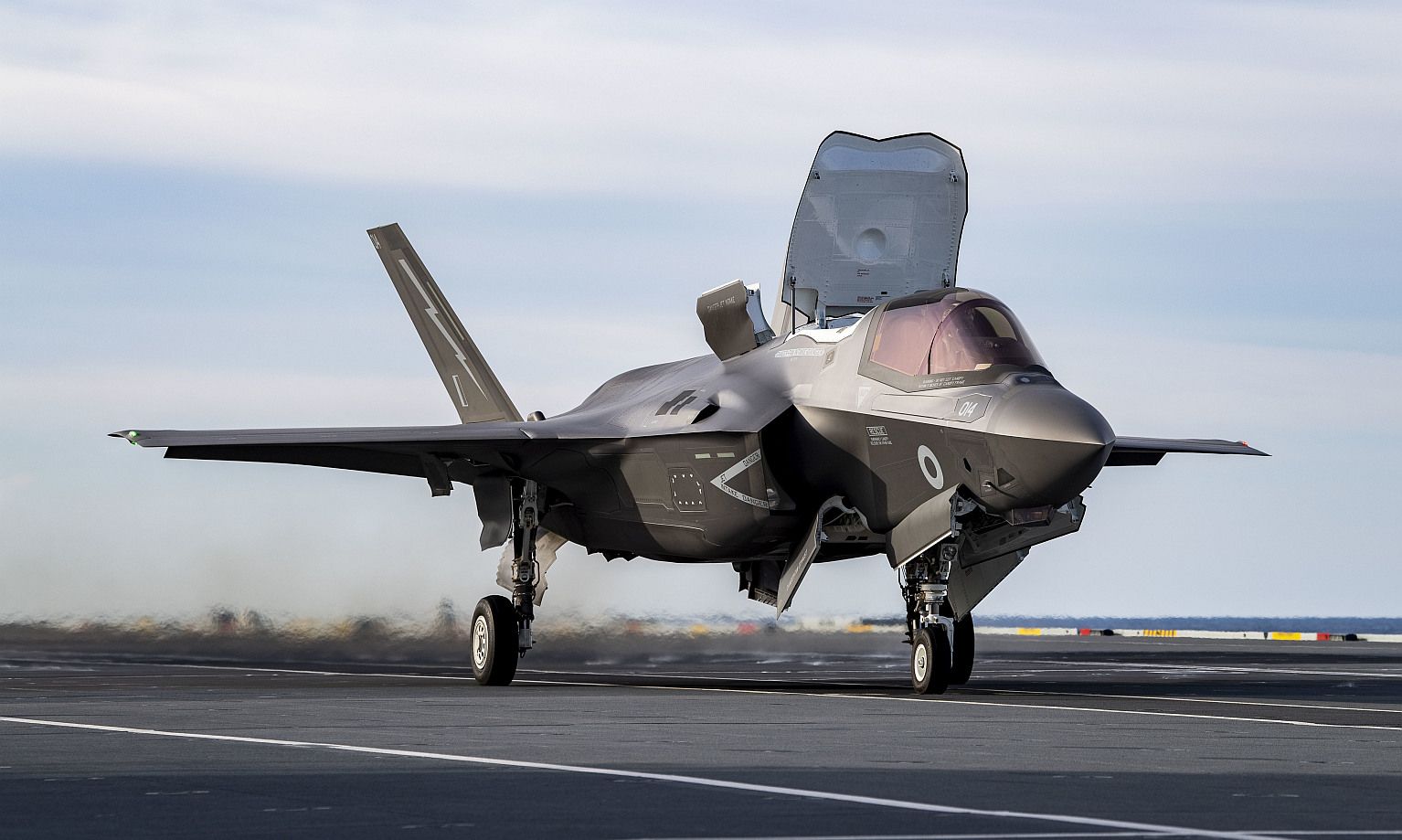
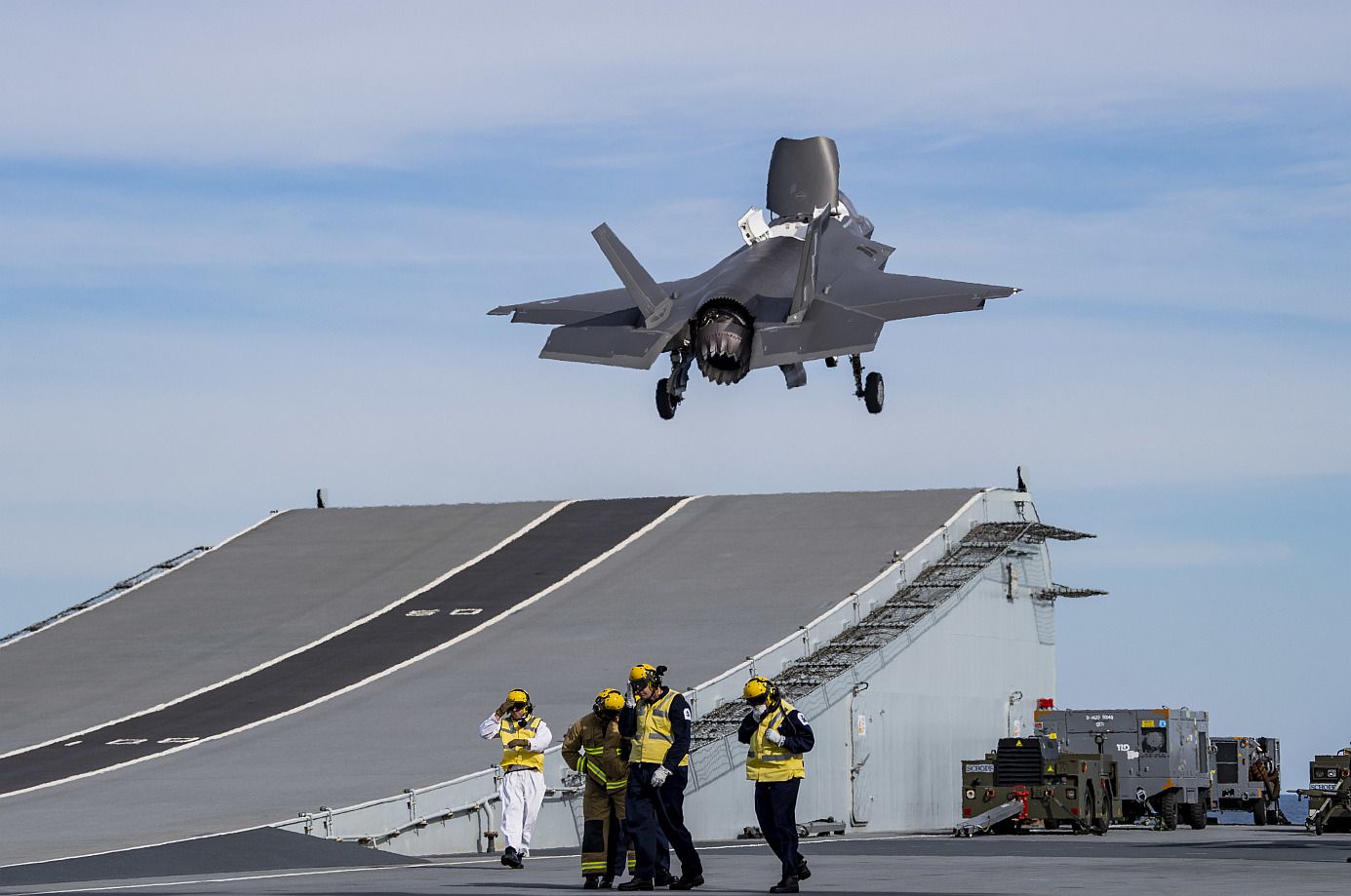
ATLANTIC OCEAN (Oct., 17, 2019) An UK F-35B Lightning fighter jet taxis across the flight deck of the HMS Queen Elizabeth (RO during flight operations in the Atlantic Ocean. HMS Queen Elizabeth is currently deployed in support of WESTLANT 19 which involves mission planning, arming the aircraft using the ship's Highly Automated Weapon Handling System, flying missions and debriefing on completion. The first operational deployment for HMS Queen Elizabeth 617 Squadron and a squadron of US Marine Corps Lightning jets is due to take place in 2021. (U.S. Navy photo's by Mass Communication Specialist 3rd Class Nathan T. Beard/Released) 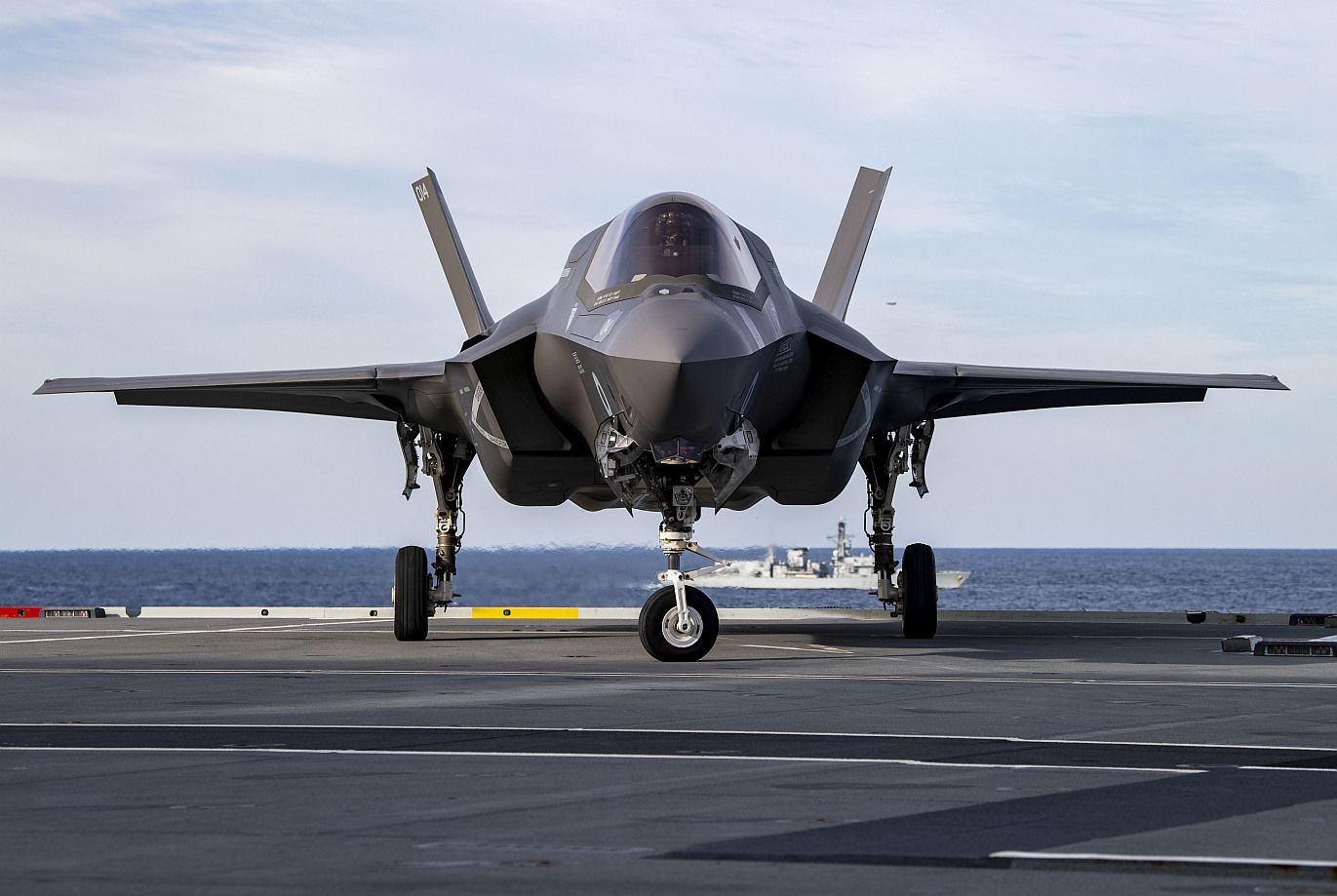
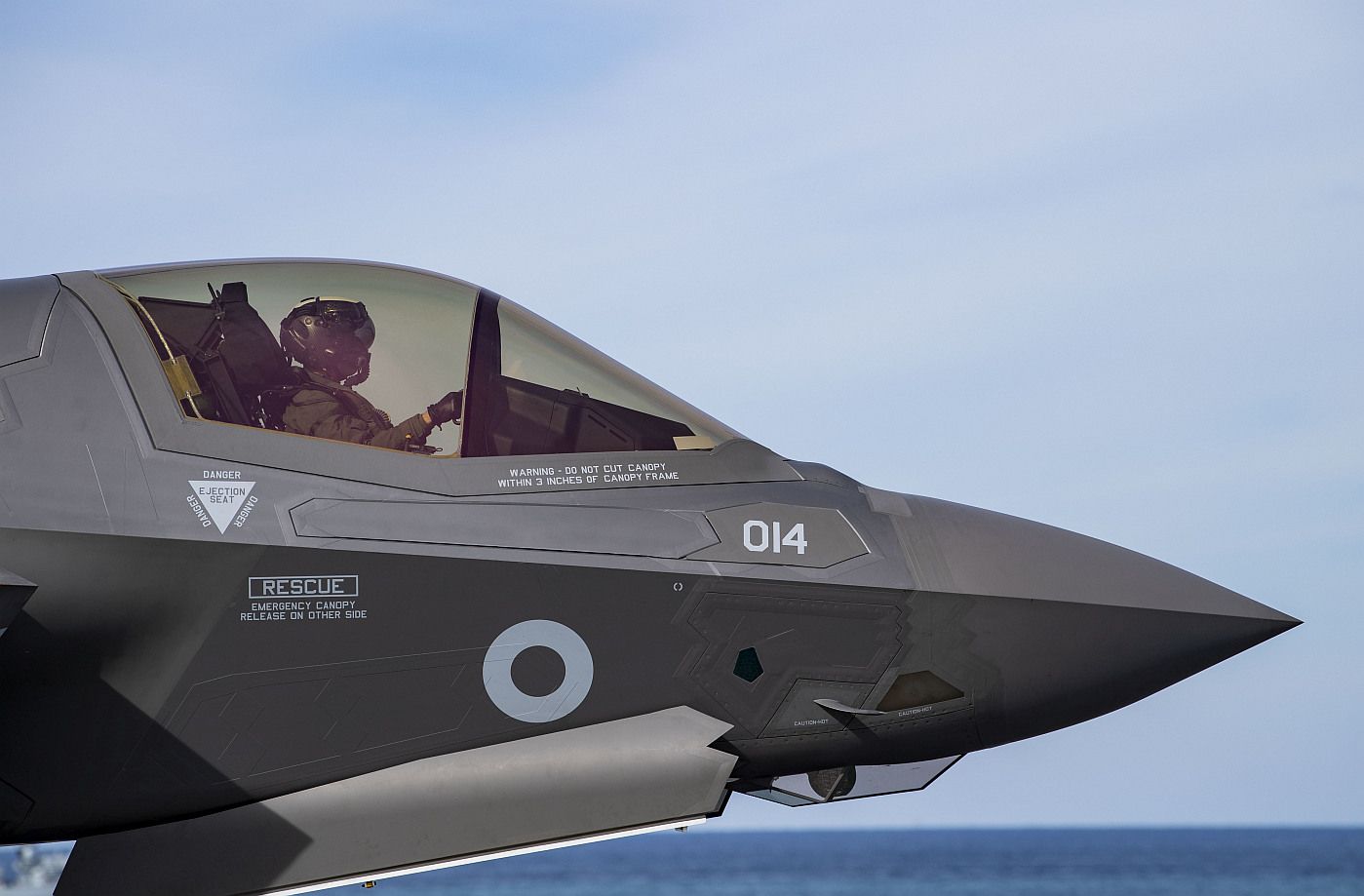
ATLANTIC OCEAN (Oct., 17, 2019) An UK F-35B Lightning fighter jet flies over the HMS Queen Elizabeth (RO during flight operations in the Atlantic Ocean. HMS Queen Elizabeth is currently deployed in support of WESTLANT 19 which involves mission planning, arming the aircraft using the ship's Highly Automated Weapon Handling System, flying missions and debriefing on completion. The first operational deployment for HMS Queen Elizabeth 617 Squadron and a squadron of US Marine Corps Lightning jets is due to take place in 2021. (U.S. Navy photo by Mass Communication Specialist 3rd Class Nathan T. Beard/Released) 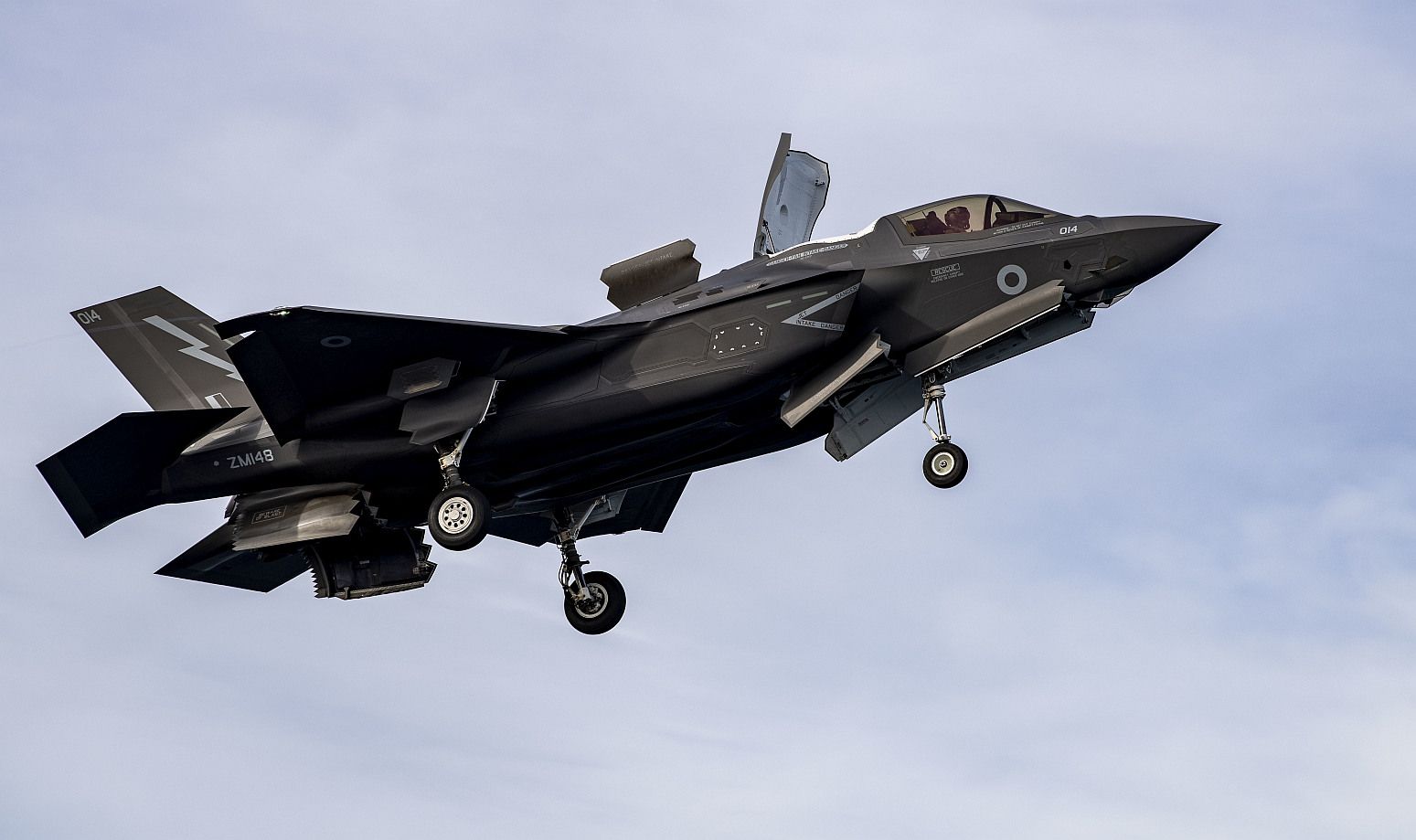
-
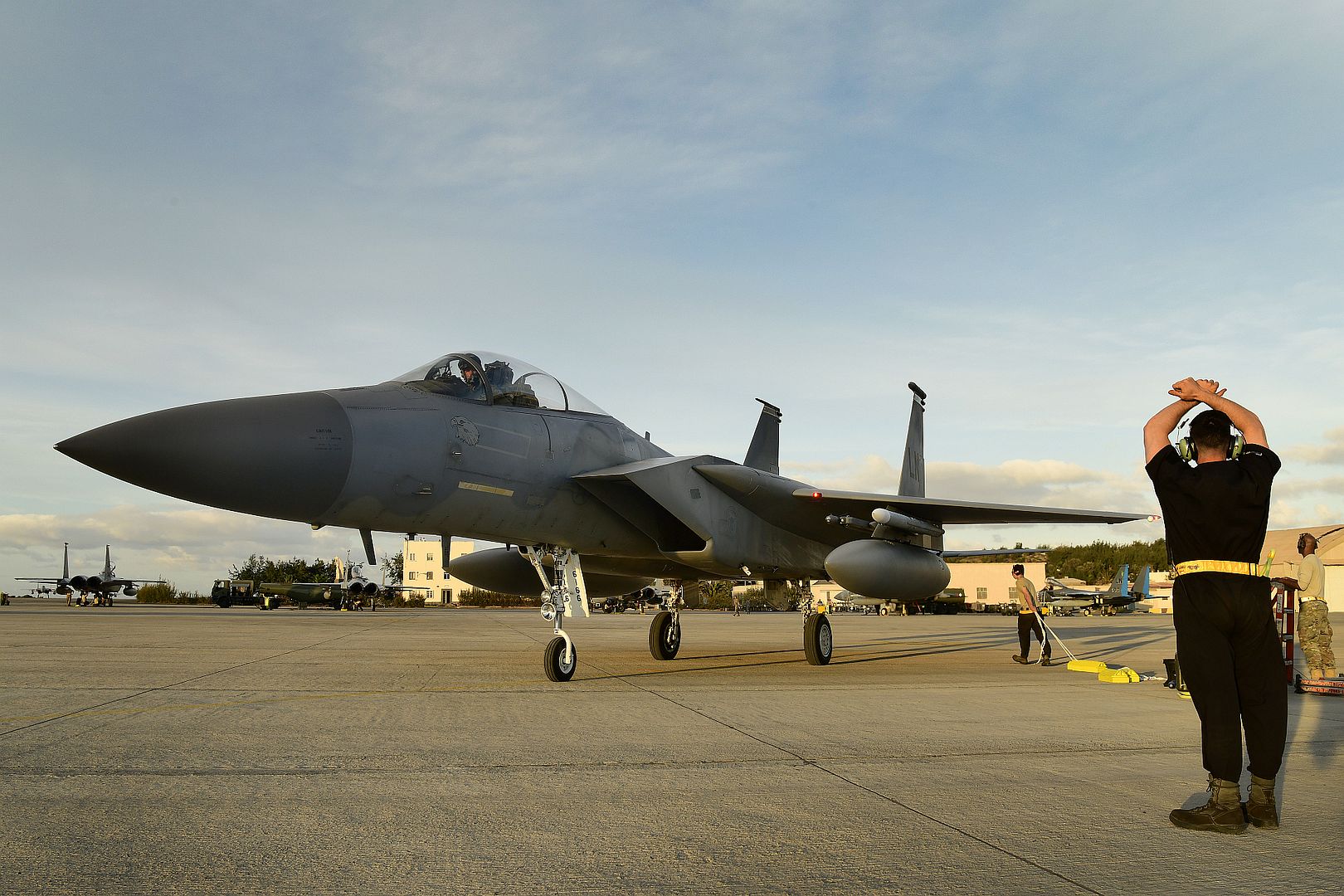
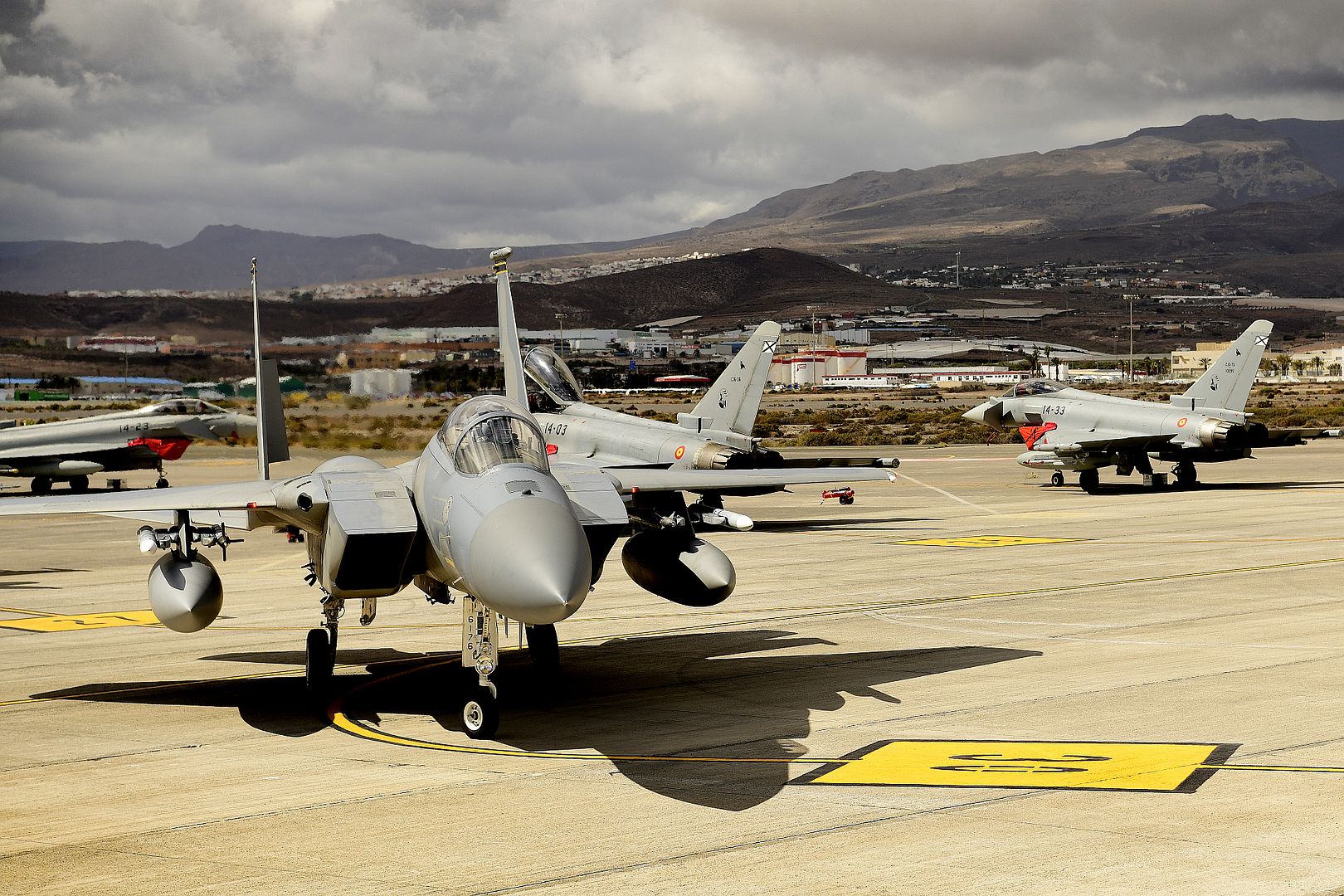
U.S. F-15C Eagles assigned to the 493rd Fighter Squadron "Grim Reapers" arrived at Gando Air Base Oct. 18, 2019 to support the Spanish-led air-to-air combat training exercise, OCEAN SKY 19. Exercises like OCEAN SKY remain a symbol of the shared commitment between Spain, the U.S. and NATO to maintaining the continued security of Europe. (U.S. Air Force photo/ Tech. Sgt. Matthew Plew)
The United States Air Force Air Demonstration Squadron ?Thunderbirds? execute a practice demonstration over Ellington Field Joint Reserve Base, Houston, Texas, Oct. 18, 2019, in preparation for the Wings Over Houston airshow. The team is comprised of 130 Airmen from more than 25 different career fields, representing all 685,000 total force Airmen serving around the globe. (U.S Air Force Photo by Maj. Ray Geoffroy)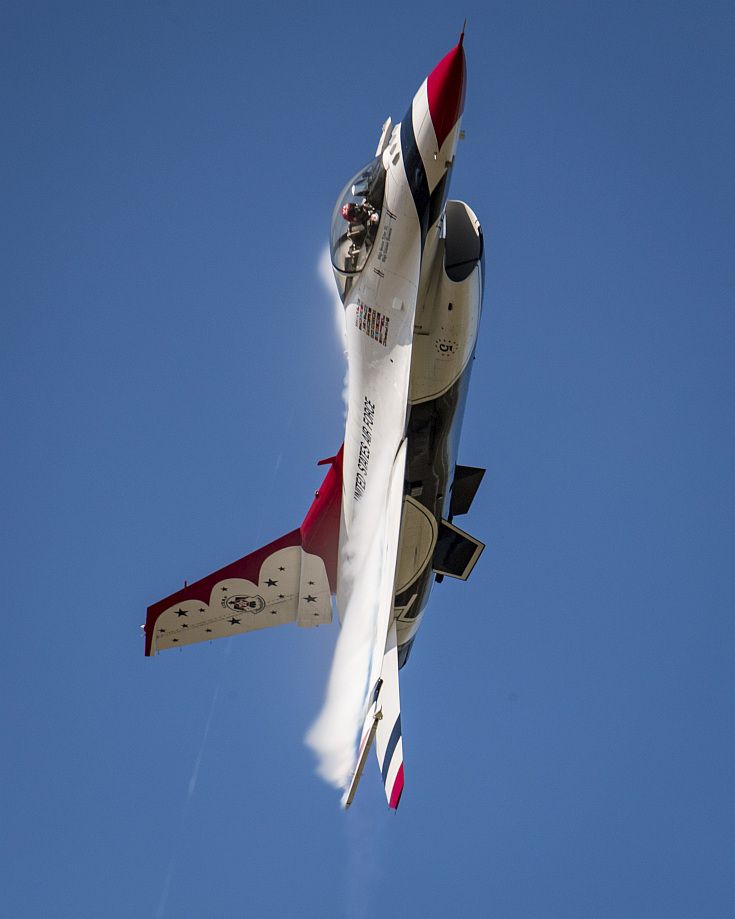
U.S. F-15C Eagles assigned to the 493rd Fighter Squadron "Grim Reapers" are at Gando Air Base Oct. 20, 2019 to support the Spanish-led air-to-air combat training exercise, OCEAN SKY 19. Exercises like OCEAN SKY remain a symbol of the shared commitment between Spain, the U.S. and NATO to maintaining the continued security of Europe. (U.S. Air Force photo/ Tech. Sgt. Matthew Plew)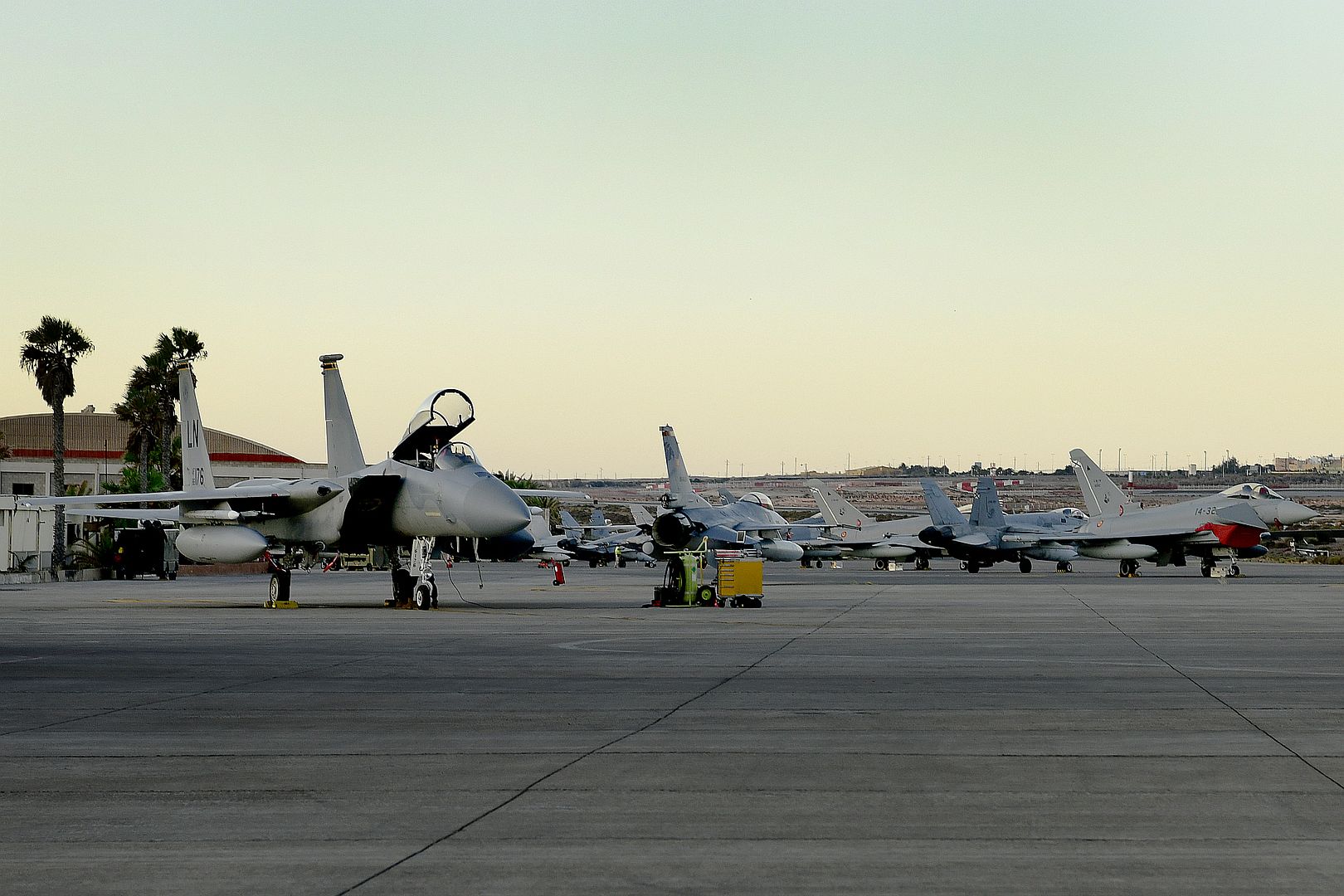
U.S. Air Force Airmen from the 96th Aircraft Maintenance Unit, 2nd Maintenance Squadron, assigned to Barksdale Air Force Base, Louisiana, performs maintenance on a B-52 Stratofortress at RAF Fairford, England, October 18, 2019. The 96th AMU is attached to the 96th Bomb Squadron?s B-52s and the unit maintains those B-52s anywhere they deploy. (U.S. Air Force Photo by Staff Sgt Philip Bryant)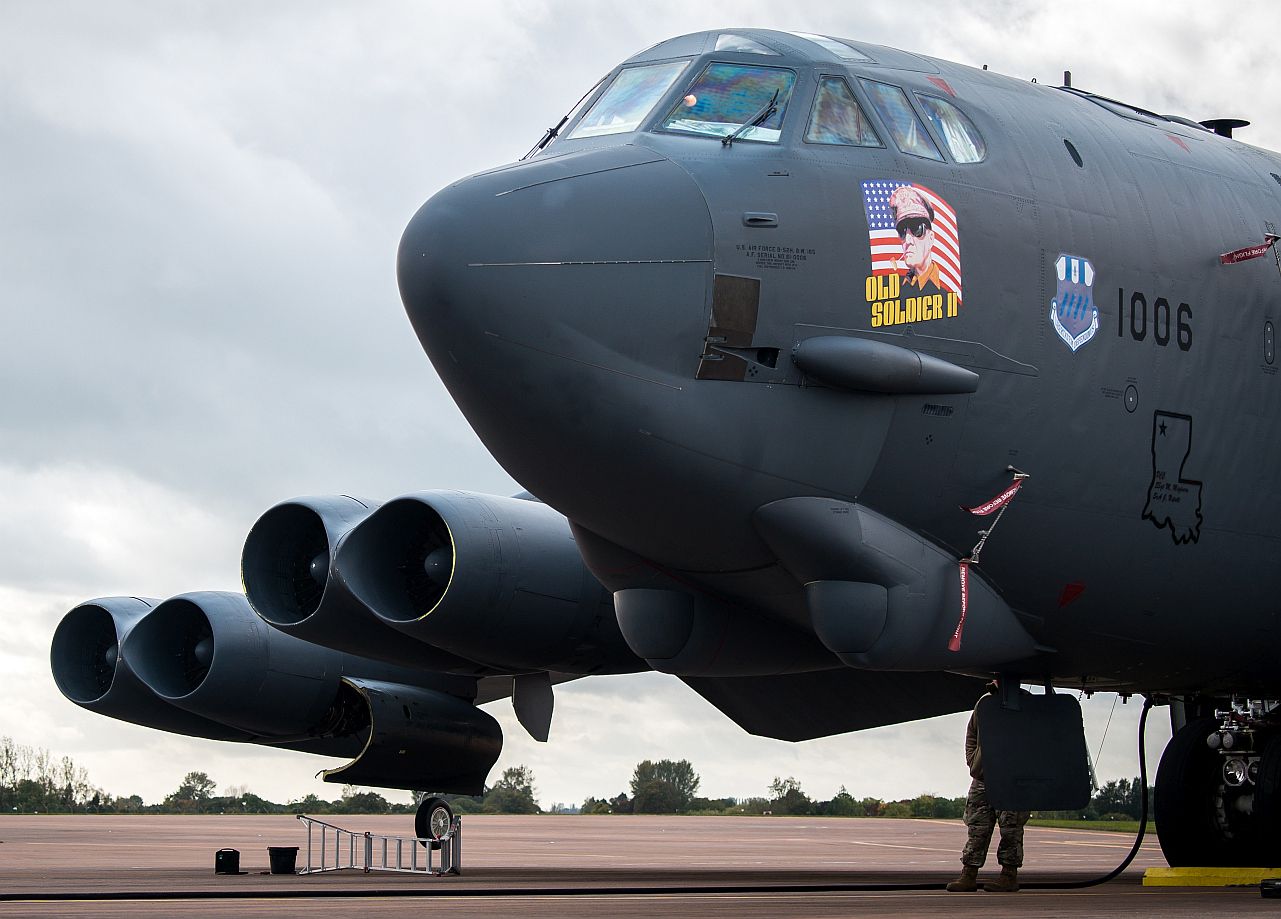
A member of the Republic of Korea?s 53rd Demonstration Group, also known as the Black Eagles, performs an aerial demonstration during the Seoul International Aerospace and Defense Exhibition 2019 at the Seoul Airport, Republic of Korea, October 19, 2019. The Seoul ADEX is the largest, most comprehensive event of its kind in Northeast Asia, attracting aviation and aerospace professionals, key defense personnel, aviation enthusiasts and the general public alike. (U.S. Air Force photo by Senior Airman Denise M. Jenson)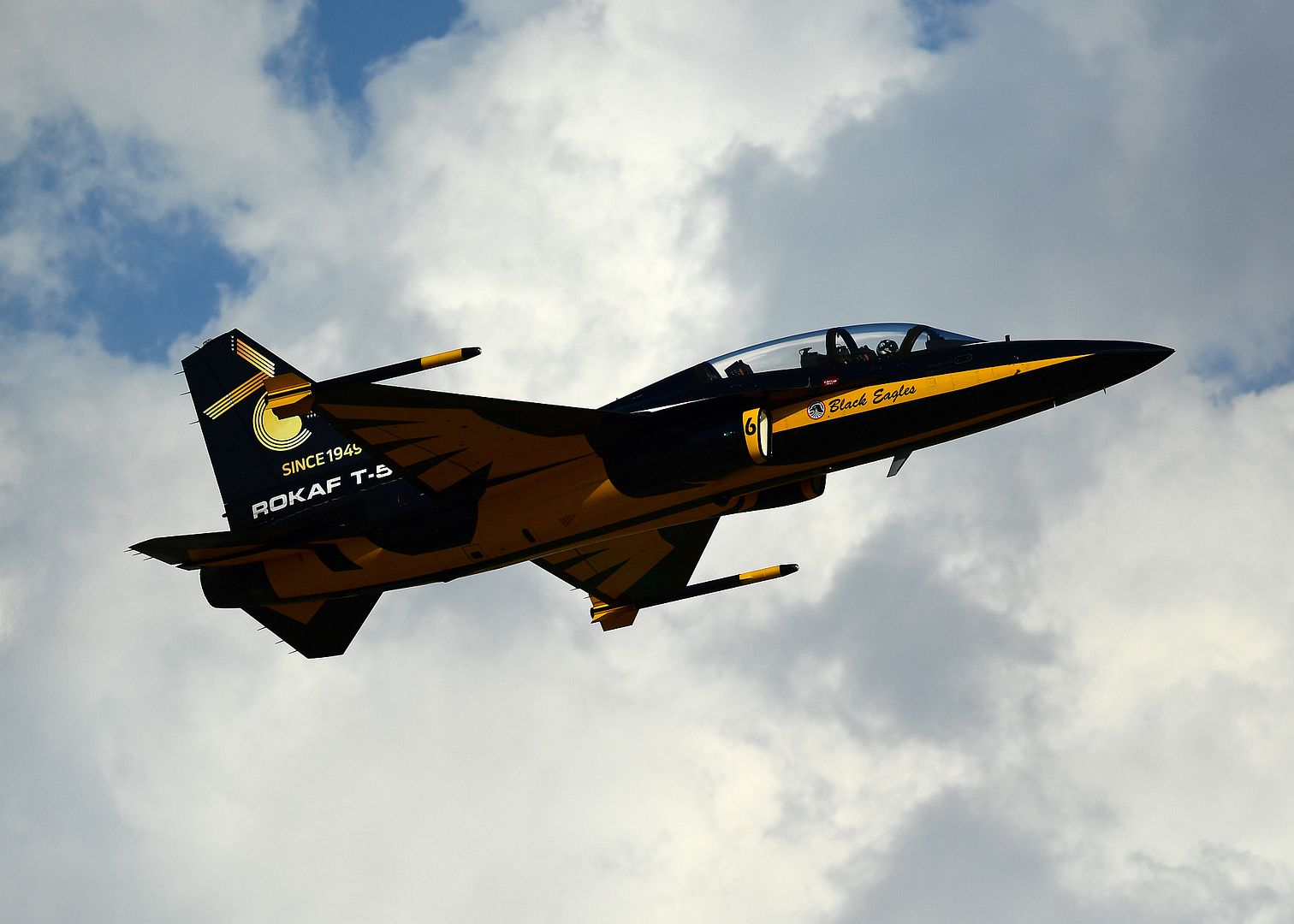
An F-15C Eagle assigned to the 493rd Fighter Squadron taxis for a sortie in support of the Spanish-led air-to-air combat training exercise, OCEAN SKY 19 at Gando Air Base, Oct. 21, 2019. The multinational training, developed and coordinated by the Spanish air force, is built on the foundational principle that a strong military alliance can deter any current or potential threat to NATO, its partners, or its allies. (U.S. Air Force photo/ Tech. Sgt. Matthew Plew)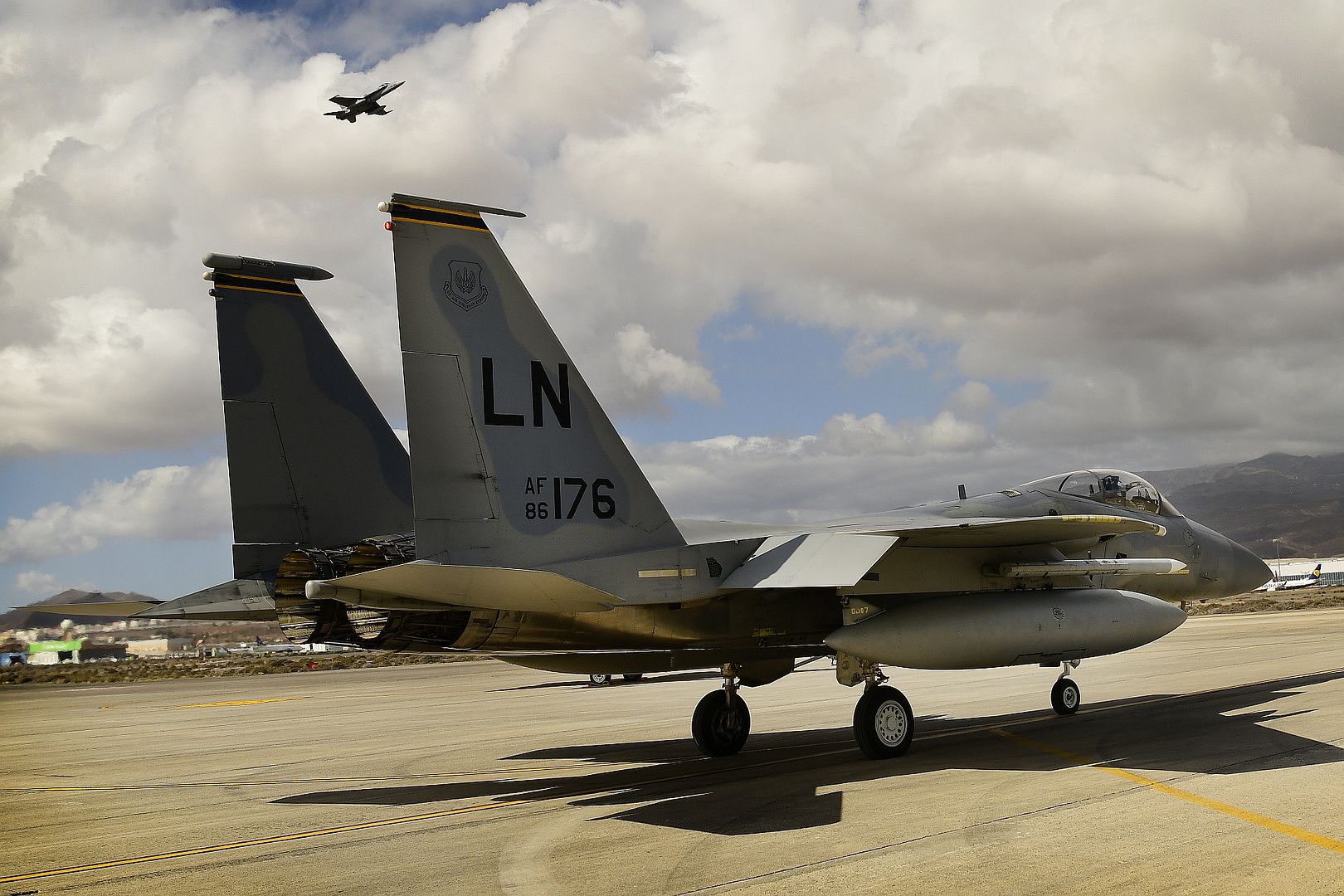
An F-15C Eagle assigned to the 493rd Fighter Squadron taxis to a parking area after completion of a sortie in support of the Spanish-led air-to-air combat training exercise, OCEAN SKY 19 at Gando Air Base, Oct. 21, 2019. The multinational training, developed and coordinated by the Spanish air force, is built on the foundational principle that a strong military alliance can deter any current or potential threat to NATO, its partners, or its allies. (U.S. Air Force photo's/ Tech. Sgt. Matthew Plew)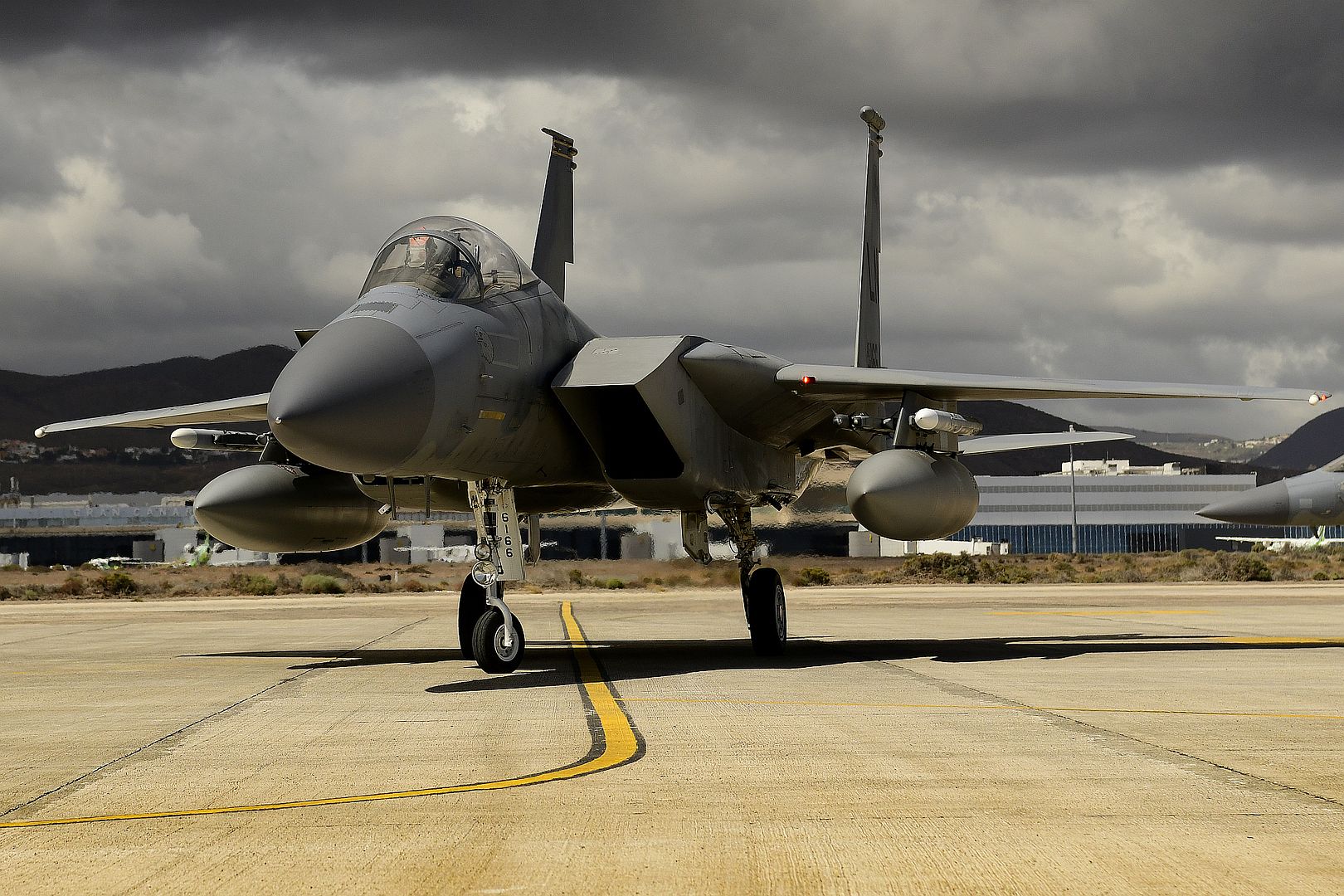
Innsbruck - Austria?s Ministry of the Interior (BMI) has formally introduced into service two Airbus H125 helicopters extensively equipped for law enforcement and rescue missions.
The aircraft join BMI?s existing fleets of Airbus H135 and AS350 helicopters and will operate from Innsbruck and Salzburg on behalf of the Tyrolean Government in the Tyrol and other mountainous areas of Austria.
The first aircraft was handed over at a ceremony in Innsbruck on 17 October in the presence of Austrian Interior Minister, Wolfgang Peschorn, and Governor of the Province of Tyrol, G?nther Platter. The helicopters feature a comprehensive suite of mission equipment in a customised configuration designed by Airbus Helicopters in the UK and fitted at the company?s Oxford headquarters. The package includes a dual cargo hook, plus night vision compatibility, searchlight, fire-fighting equipment including the interface for Bambi bucket operation, and TETRA tactical communications among others.
The H125 was selected by the BMI due to its versatility and all-round performance which are critical to delivering mission availability in Austria?s Alpine regions throughout the year.
Werner Senn, BMI Head of Air Police said: ?It has been a complex design and implementation process to provide the H125 with the capabilities that we wanted and it is a tribute to the excellent cooperation between our respective teams that we achieved the desired result. This will give the BMI and the Tyrol region one of the most advanced police aviation capabilities in Europe on an aircraft of this size.?
Colin James, Managing Director Airbus Helicopters in the UK said: ?The ability of our team to devise and deliver the most extensive mission configuration has been critical to the successful provision of this exceptionally capable aircraft. This design makes the most of the H125?s underlying performance and demonstrates the key contribution that the company?s UK operation can deliver to specialised customers worldwide.?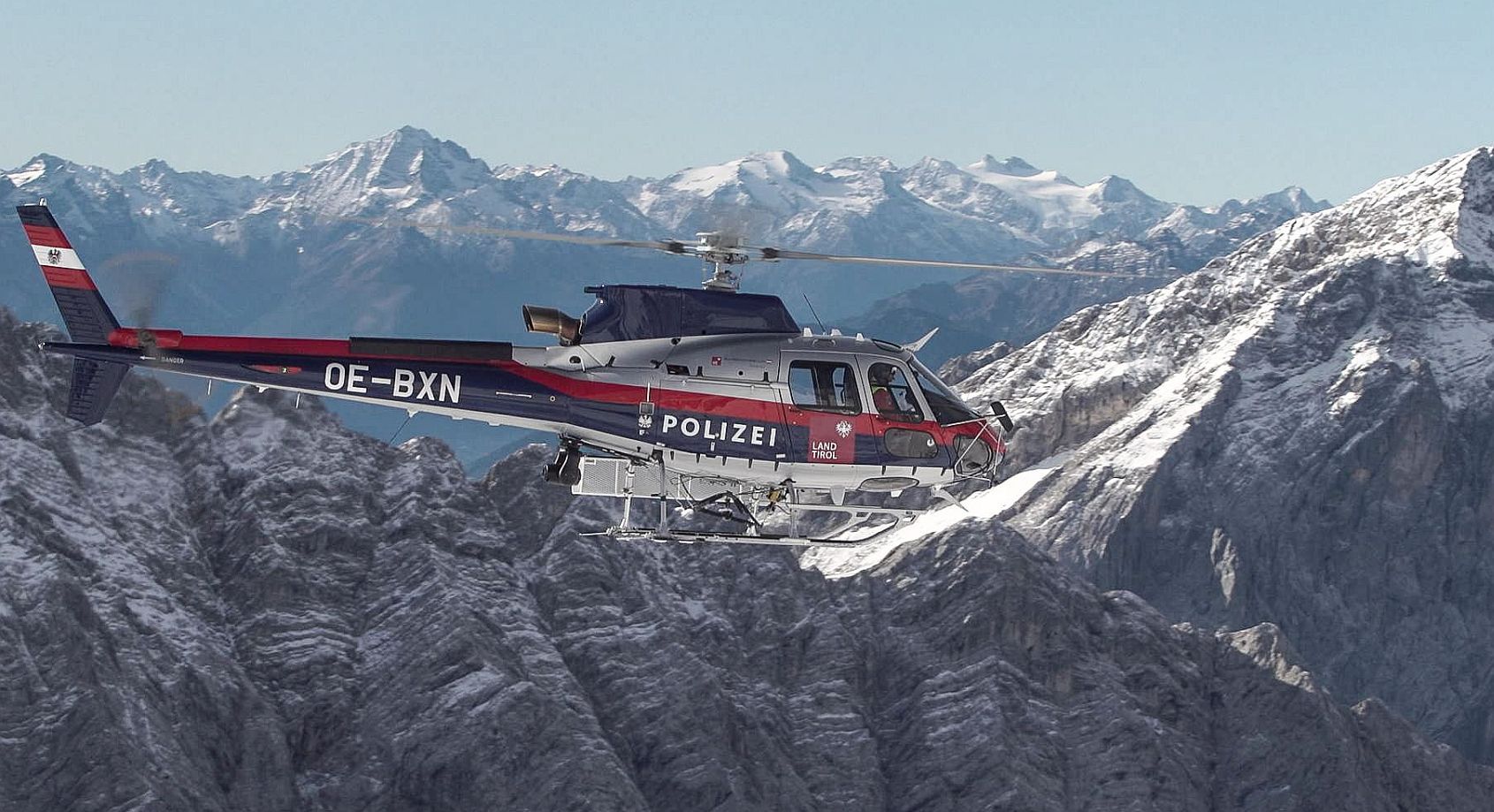
October 21, 2019 Montr?al Aviation, Business Aircraft, Press Release
Bombardier announced today a range increase for its latest Global 5500 business jet. The class-leading aircraft now boasts an unprecedented range of 5,900 nautical miles at Mach 0.85, connecting more destinations than any other business aircraft in its segment.
?We are thrilled to offer this extended range to our customers,? said David Coleal, President, Bombardier Aviation. ?The rigour and innovation behind our Global 5500 aircraft design and test program have allowed us to deliver enhanced performance without compromise. Not only are we standing by our commitment of certifying and bringing to the market an exceptional aircraft on time, we are exceeding expectations along the way.?
With 700 nautical miles more at Mach 0.85 than its closest and smaller competitor, the Global 5500 aircraft can fly nonstop from Western Europe to the West Coast of the United States*, connecting more destinations and providing Bombardier?s signature smooth ride for exceptional passenger comfort. The additional capability provides more range or the flexibility to complete the same missions with additional payload and more fuel reserves. The 5,900-nautical-mile range will be a baseline feature on the Global 5500 aircraft for all existing and future customers. This enhanced performance will come at no additional cost to customers.
The Pearl 15 engine, the latest addition to Rolls-Royce?s exceptional business aviation engine portfolio, was custom-designed with the most innovative technology ? including enhanced aerodynamics, blade cooling and advanced engine health monitoring systems ? to power the Global 5500 and Global 6500 aircraft. With the purpose-built engines, advanced wing design and built-in systems redundancy and robustness for which Bombardier Global aircraft are renowned, the aircraft offer superior safety to its passengers. On any flight, short or long, the Global 5500 aircraft?s advanced wing design optimizes speed, range and control, ensuring an exceptionally smooth ride.
The Global 5500 business jet offers a unique blend of innovation, style and comfort. Meticulously designed and crafted with exquisite finishes and high-end craftsmanship, the Global 5500 aircraft features several state-of-the-art innovations, including the unique Nuage chaise, business aviation?s first and only lounge chair that converts into a flat surface for sleeping or banquet-style dining around the conference grouping table. Within the fluid lines of its exceptionally crafted architecture is a marvel of furniture engineering, meticulously designed to maximize comfort in flight.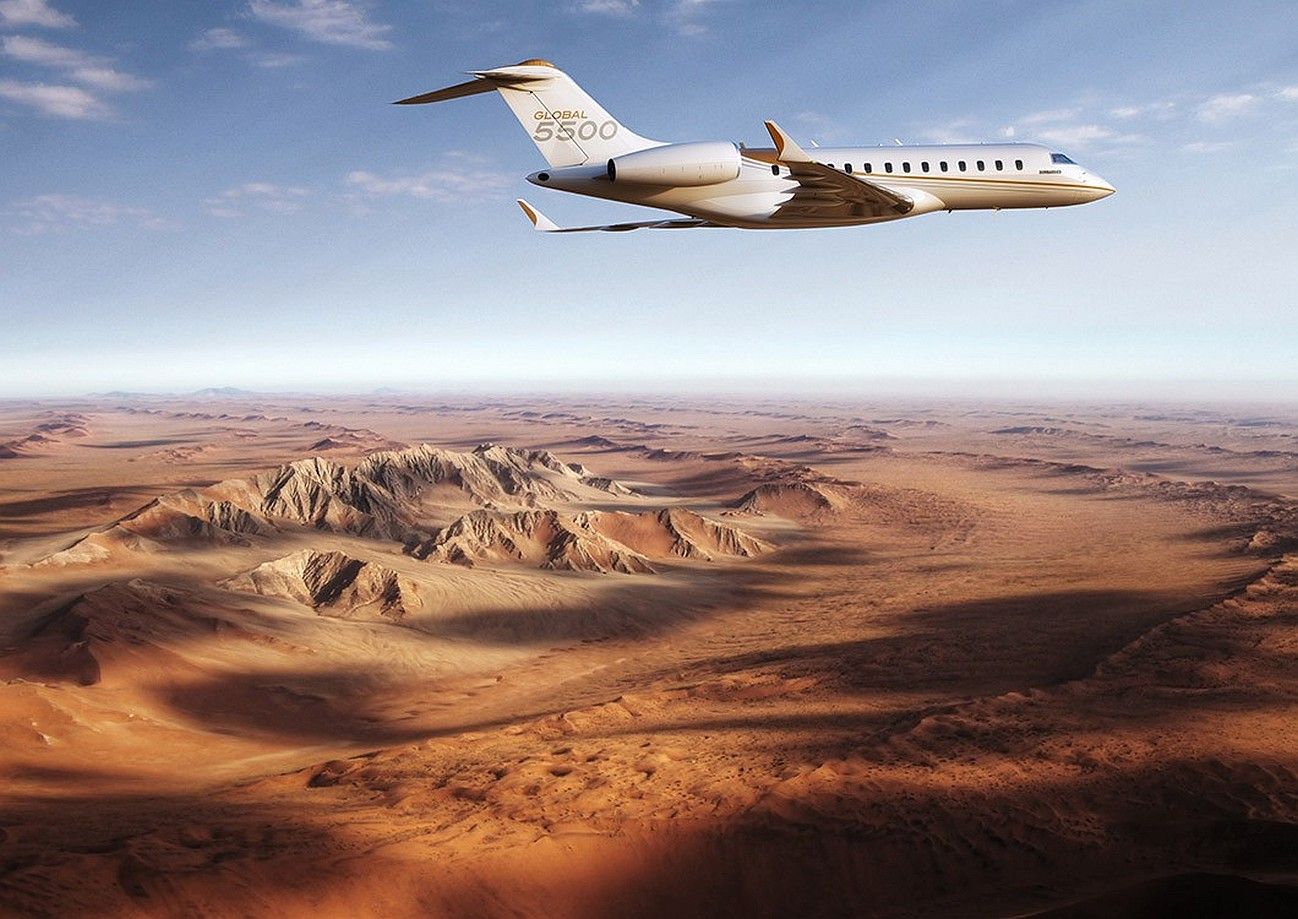
London 21 October 2019 12:02
The EuroDASS consortium (Leonardo, Elettronica, Indra and Hensoldt), which provides the Praetorian Defensive Aids Sub System (DASS) for the Eurofighter Typhoon, has launched its concept for the future of DASS, called ?Praetorian Evolution?. The launch took place at the EuroDASS Future Capability user conference, which was attended by senior military and industry figures from the UK, Italy, Germany and Spain.
The existing Praetorian DASS equips the Typhoon with protection from threats including Infra-Red (IR or heat-seeking) and radar-guided missiles. Integrated sensors and jamming equipment also provide situational awareness and a digital stealth capability, achieved through advanced electronic deception techniques. The system has protected crews for over 20 years, including on peace-keeping operations in Libya and Syria. However, the Typhoon?s traditional position of air dominance could face threats in the future from the the rapidly evolving nature of air and surface threats such as Integrated Air Defence Systems (IADS). Praetorian Evolution is the proposed roadmap to ensure the Typhoon retains its world-class level of protection for decades to come.
Praetorian Evolution will also look beyond the traditional protective role of DASS. In the future battlespace, the role of Typhoon will evolve and its DASS will need to do more to keep the fighter at the heart of the future fleet mix, alongside 5th generation and future platforms. Praetorian Evolution will propose a number of advanced new capabilities including multi-platform Electronic Warfare and combat ISR functions such as high-precision targeting and advanced combat ID.
As Praetorian evolves to meet these future requirements, the EuroDASS partners recognise that value-for-money must be at the heart of this fundamental upgrade. Praetorian Evolution?s all-digital architecture will ensure ease of future upgrades, while life cycle costs will be optimised. This will also be an opportunity to take advantage of the latest hardware advances to increase the reliability and reduced integrated logistics support requirements.
The launch follows the announcement earlier this year of the ?Praetorian Long Term Evolution (LTE)? study, which will feed into the Praetorian Evolution roadmap by delivering options for long-term technical solutions and enablers which will sustain the growth path of the platform in the future.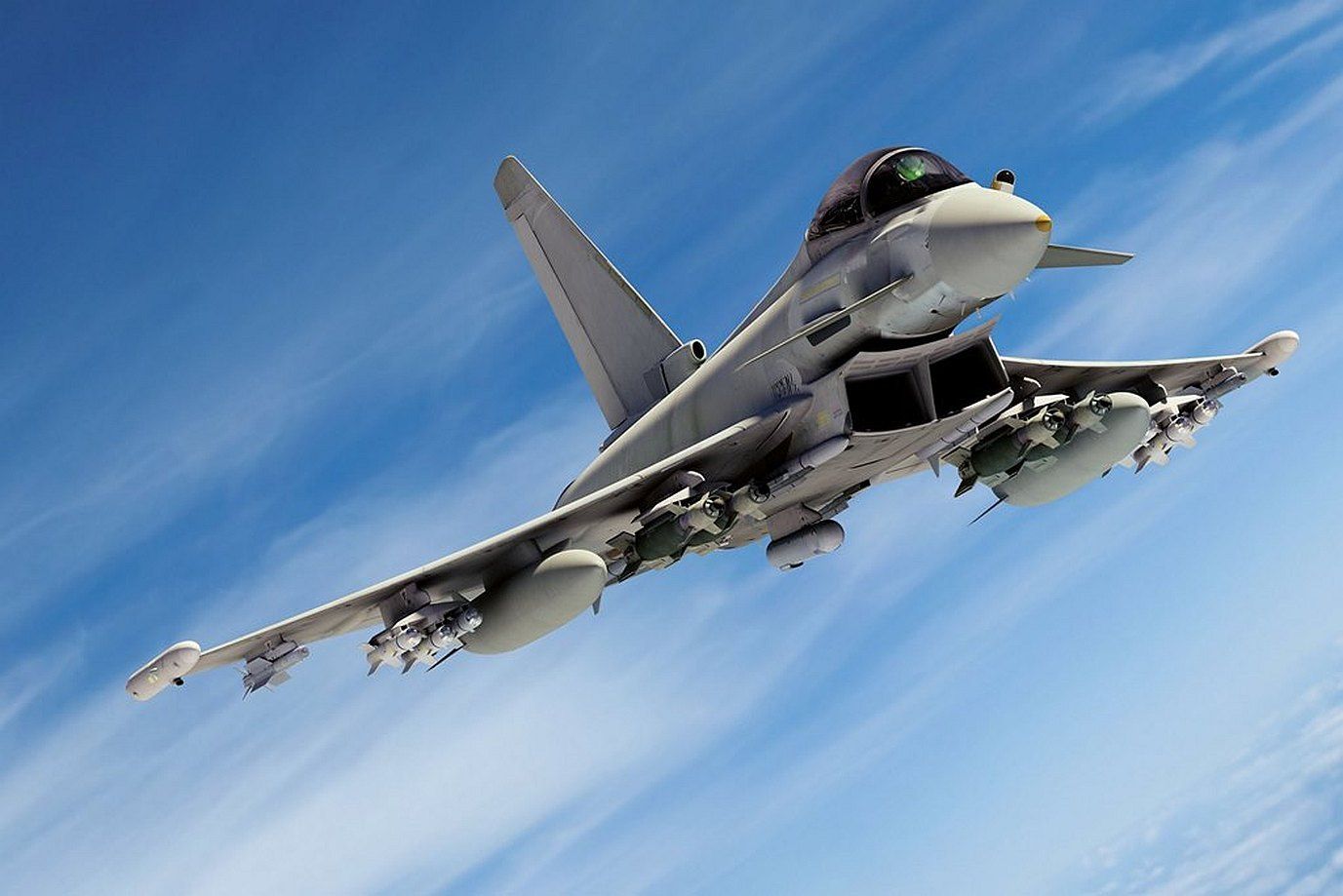
-
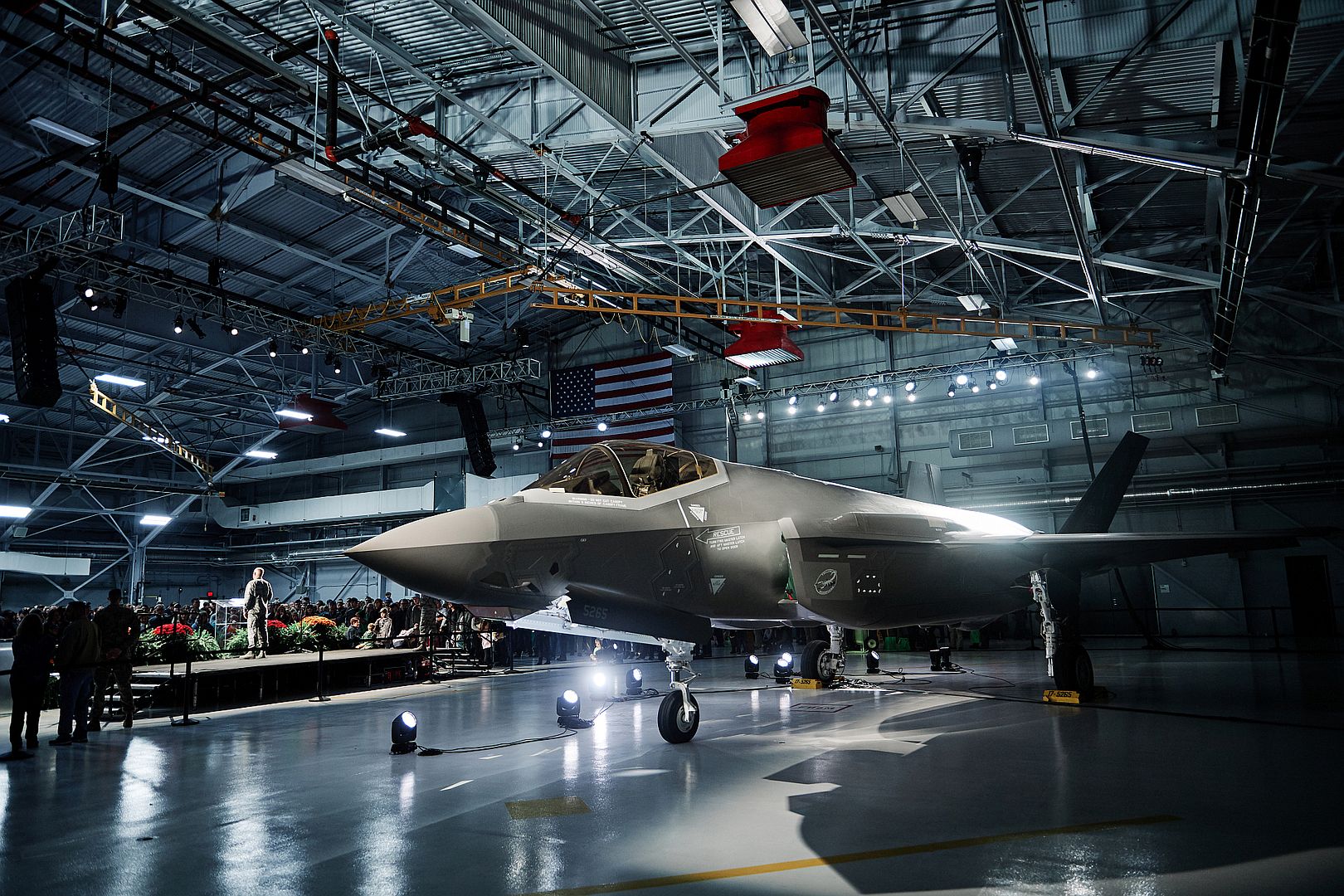
Col. David Smith, commander of the 158th Fighter Wing, Vermont Air National Guard, speaks to wing Airmen and their families about their accomplishments in receiving the F-35 Lightning II, during a family day event to celebrate the arrival of the aircraft to the wing, South Burlington Air National Guard Base, Vt., Oct. 20, 2019. The 158th FW is the first Air National Guard unit to receive the Air Force's most recent fifth generation aircraft, having received two in September out of a total of 20 that will arrive over the following several months. (U.S. Air National Guard photo by Tech. Sgt. Ryan Campbell)
Two Hawaii F-22 Raptors fly in formation with a C-17 Globemaster III following a personnel airdrop training mission on the northern side of Oahu, Hawaii, Oct. 17, 2019. Training events like this, ensure units are able to operate cohesively and employ combat airpower across the Indo-Pacific. (U.S. Air Force photo by Tech. Sgt. Heather R. Redman)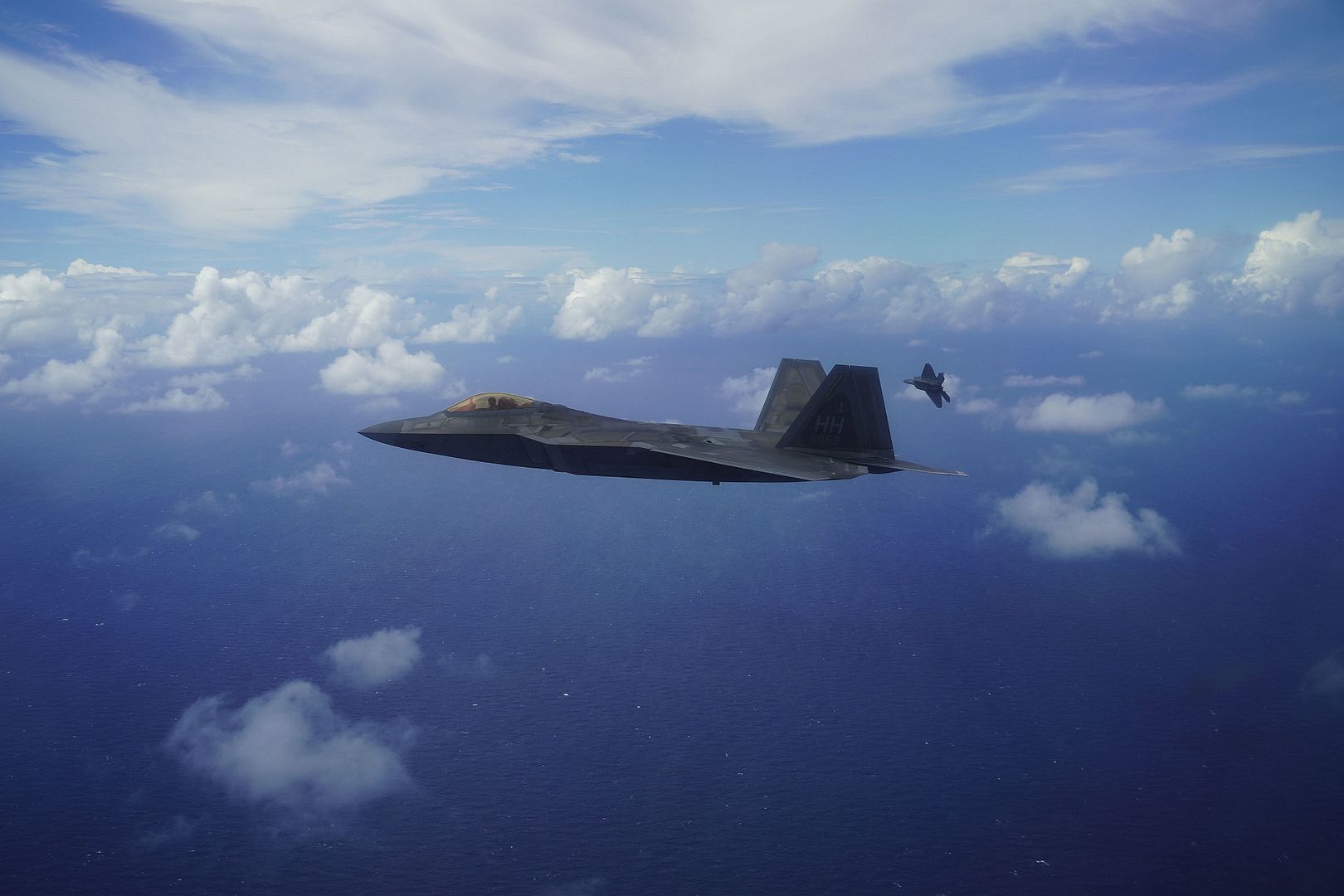
22 October 2019
Saab and V? Systems are launching a Next Generation Enhanced Flight Vision System (EFVS) solution using new passive millimetre wave (PMMW) technology, enabling pilots to see and land in low-visibility conditions at all times.
The Saab V? EFVS enables commercial operators to maintain their schedule, while their competitors are forced to delay or cancel flights. It is the first system to provide reliable performance, unlocking access to airports in all weathers, without the need for conventional CATII/III infrastructure. The new Saab V? EFVS provides the ability for take-off and landing in adverse weather conditions, including zero-visibility environments.
?The new system offers unmatched operational and safety advantages. Being able to take-off and land in low to zero-visibility environments radically reduces costs, increases safety and reduces environmental impact. This benefits pilots, operators and society as a whole. We are proud to be working together with V? Systems to make this significant innovation commercially available,? says Jan Widerstr?m, head of business unit Avionics Systems, within Saab business area IPS.
Every year, commercial aviation all over the world incurs massive financial losses as a result of delays and cancellations due to low visibility weather. In the USA alone, these additional costs amount to billions of dollars.*
To provide a solution to the impact of weather on U.S. flight operations, new FAA regulations (14 CFR 91.176) now permit landing without natural vision. The new regulations are performance based, meaning the performance of the EFVS sensor is critical to the operational value. The performance of the current EFVS sensors is limited by the atmospheric attenuation in the infrared band.
The Saab V? EFVS solution is not affected by weather, enabling pilots to achieve Equivalent Visual Operations (EVO) and see runways at distances of two miles and more in zero-visibility conditions.
?This strategic arrangement with Saab means we can supply this revolutionary technology through a qualified supply chain to larger commercial customers, benefiting the aviation industry globally, by enabling them to take off and land when their competitors cannot,? says Stedman Stevens, CEO at V? Systems.
Through a strategic partnership with V? Systems, who developed the first commercially available PMMW sensor, V? Cube, the Saab V? EFVS exceeds the new regulatory performance goals. This unique solution comprises a new, sophisticated PMMW sensor and software that optimizes the sensor images with IR and synthetic vision, projected on the new Saab Head-Up Display (HUD). It provides pilots with the complete solution and the means necessary to land safely regardless of thick fog, snow, rain, smog, dust, smoke and clouds.
22 Oct 2019
Reaction Engines has successfully tested its innovative precooler at airflow temperature conditions representing Mach 5, or five times the speed of sound, marking a significant milestone in the development of its SABRE? engine and paving the way for a revolution in hypersonic flight and space access.
The precooler heat exchanger is a vital component of the revolutionary SABRE air-breathing rocket engine, on which Reaction Engines is working in collaboration with companies including BAE Systems, and is an enabling technology for other precooled propulsion systems and a range of commercial applications.
This ground-based test achieved the highest temperature objective of the Company?s HTX testing programme and took place at its specially constructed unique facility at the Colorado Air and Space Port, United States.
During the latest series of tests, Reaction Engines? unique precooler successfully quenched airflow temperatures in excess of 1,000?C (~1,800?F) in less than 1/20th of a second. The tests demonstrated the precooler?s ability to successfully cool airflow at speeds significantly in excess of the operational limit of any jet-engine powered aircraft in history. Mach 5 is more than twice as fast as the cruising speed of Concorde and over 50% faster than the SR-71 Blackbird aircraft ? the world?s fastest jet-engine powered aircraft.
This most recent test builds upon the success of previous HTX hot tests undertaken in April which saw the precooler successfully operate at temperatures of 420?C (~788?F) ? matching the thermal conditions corresponding to Mach 3.3 flight.
Mark Thomas, Chief Executive, Reaction Engines, said: ?This is a major moment in the development of a breakthrough aerospace technology which has seen Reaction Engines? precooler tested at Mach 5 airflow temperature conditions, smashing through previous achievements at Mach 3.3 temperatures and paving the way for hypersonic flight. In addition to its use in our SABRE class of air breathing rocket engines, there are numerous exciting commercial applications for our precooler technology, which delivers world-leading heat transfer capabilities at low weight and compact size, and we are seeing significant interest from a range of potential customers and technology partners.?
Investment
Over the last four years Reaction Engines has raised over ?100m from public and private sources and has secured investment from companies including BAE Systems.
In 2015, it was announced that BAE Systems had made a strategic investment in Reaction Engines and committed to a working collaboration to accelerate the development of the SABRE engine.
This partnership was designed to draw on BAE Systems? extensive aerospace technology development and project management expertise to provide Reaction Engines with access to critical industrial, technical and capital resources to progress towards the demonstration of a ground based engine ? a key milestone in the development of the technology.
Phil Varty, Industrial Strategy Manager for BAE Systems Air, said: ?Working together with Reaction Engines, we?re pushing technological boundaries to develop the SABRE air breathing rocket engine, an engine which could revolutionise hypersonic flight and space access. The precooler heat exchanger is an enabling technology that we also have a real interest in for a number of other defence and commercial applications, including future combat aircraft and maritime vessels. These latest trials demonstrate what can be achieved when we bring together the boldest and brightest minds from across the UK industry together. Our engineers have brought expertise in simulation, modelling and test & evaluation to the programme and we continue to work closely with Reaction Engines through the placement of graduates across both companies, exploiting the very best in small company thinking and large company experience.?
Reaction Engines? patented precooler heat exchanger has the potential to be used in a wide range of commercial thermal management applications. These include the development of precooled systems that would significantly enhance the performance of existing jet engine technology, along with applications in automotive, aerospace, energy and industrial processes.
The HTX hot heat exchanger testing programme is a significant milestone on the roadmap to enabling transformational SABRE powered space access systems and has been keenly supported by the UK Space Agency (UKSA) and European Space Agency (ESA). In March, the two agencies reviewed and validated the preliminary design of the demonstrator engine core of SABRE, which Reaction Engines will use to undertake ground-based testing at its under-construction TF1 test facility at Westcott, Buckinghamshire, UK.
The HTX hot heat exchanger test programme was supported under a contract to the Company?s US subsidiary Reaction Engines Inc. by the Defense Advanced Research Projects Agency (DARPA). The precooler test item was designed and constructed at Reaction Engines? headquarters in the UK, before being shipped to the Company?s Colorado site for testing.
Following this significant testing milestone, the Company will embark on achieving the next steps of the SABRE programme while also pursuing nearer-term opportunities that will benefit from the addition of the Company?s heat exchanger technology.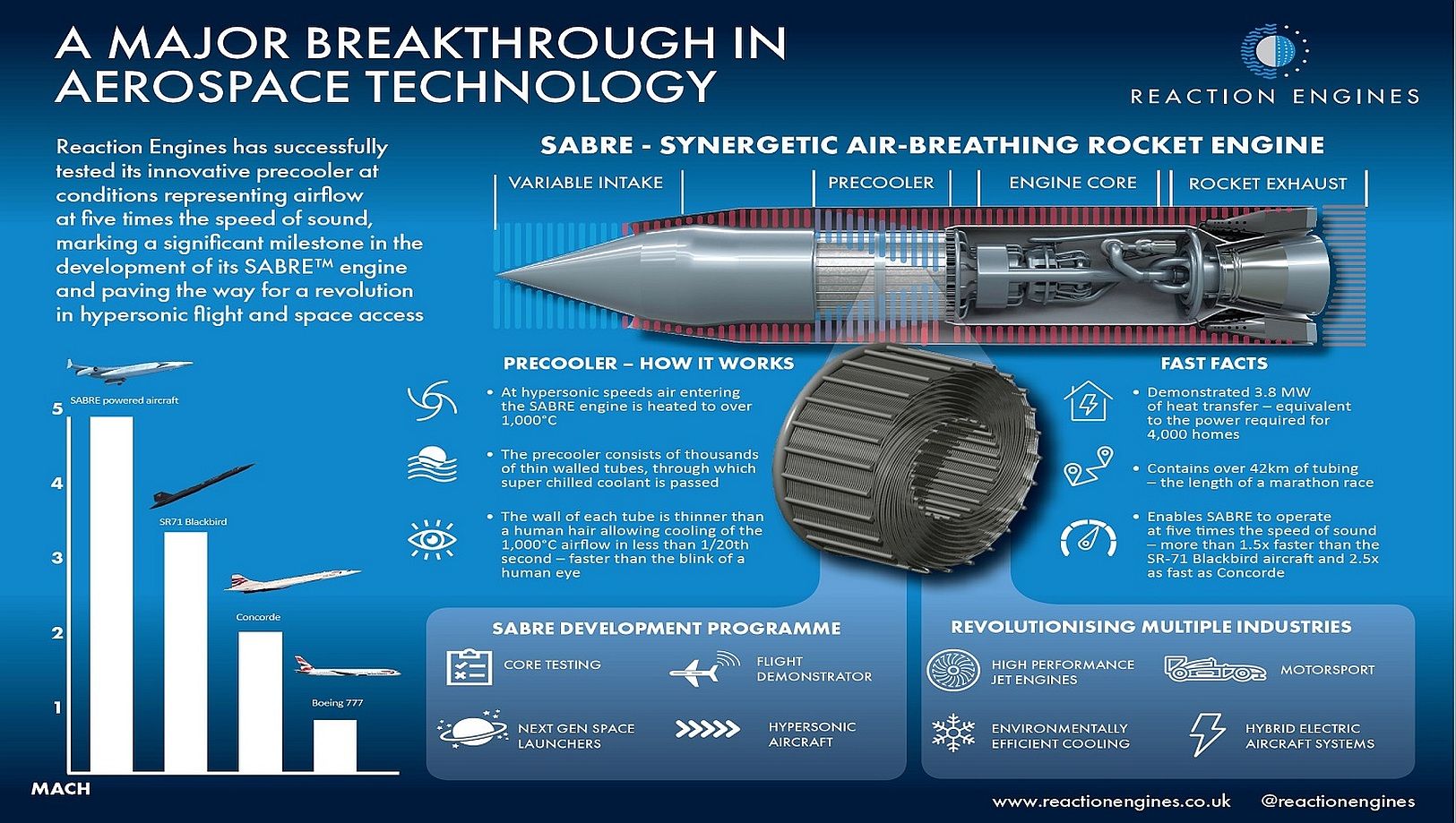
22 Oct 2019
During the 17 day exercise the RAF detachment, currently deployed to the region, has found itself being tested by increasingly demanding air activities that will culminate in a simulated full scale mission in the skies above Singapore.
Exercise Bersama Lima brings the militaries of Australia, Malaysia, New Zealand, Singapore and the United Kingdom, who make up the FPDA, together in the region to develop their joint training, interoperability and understanding. The FPDA is therefore an important element of the UK?s relationship with Malaysia, Singapore and is a key regional defence arrangement.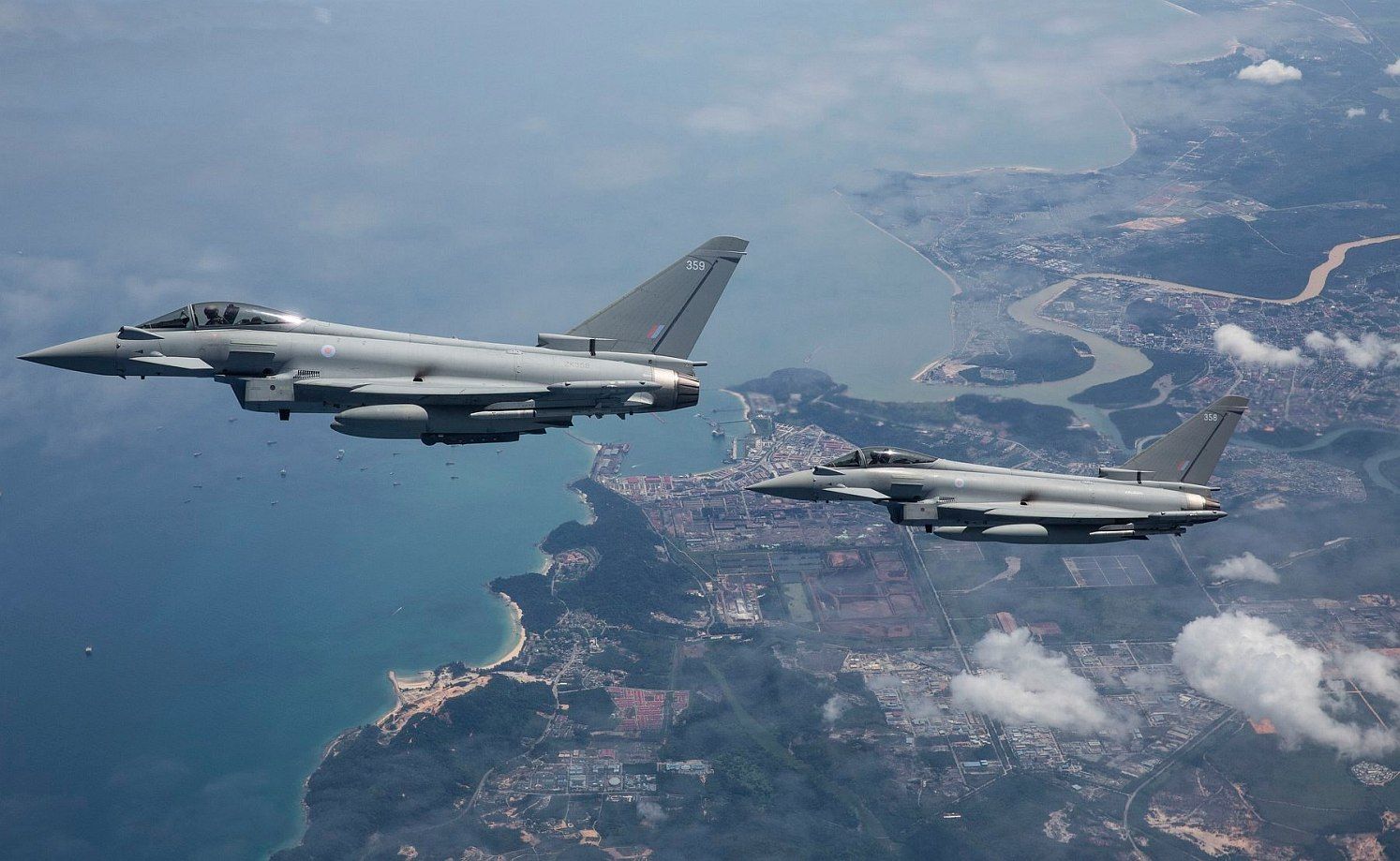
One of the unique challenges of operating in South East Asia during Monsoon season is the prevalent thunderstorms and torrential downpours that occur most afternoons. With a home base at RAF Lossiemouth in Northern Scotland, II(AC) Squadron, however are used to operating in some extreme weather conditions. With careful operating procedures and the use of air-to-air refuelling, the crews have maintained their mission tempo throughout the period.
The II (AC) Squadron detachment has been deployed on Exercise Bersama Lima the annual major Five Powers Defence Arrangements exercise and are currently operating from the Malaysian Air Force base at Butterworth, Penang, Malaysia.
In addition to the Typhoons, a RAF Voyager aircraft has also been deployed to Singapore for the first time to conduct air-to-air refuelling and has therefore allowed the Typhoons to increase their endurance in the air significantly.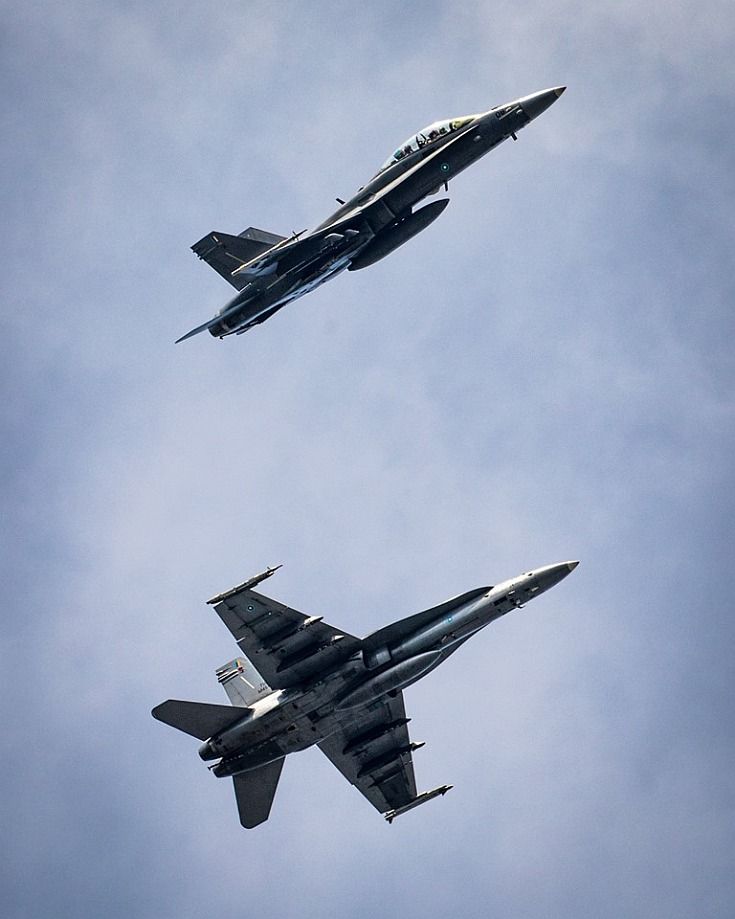
-
An F-15C Eagle assigned to the 493rd Fighter Squadron launches for a sortie in support of the Spanish-led air-to-air combat training exercise, OCEAN SKY 19 at Gando Air Base Oct. 22, 2019. Exercises like OCEAN SKY remain a symbol of the shared commitment between Spain, the U.S. and NATO to maintaining the continued security of Europe. (U.S. Air Force photo/ Tech. Sgt. Matthew Plew)
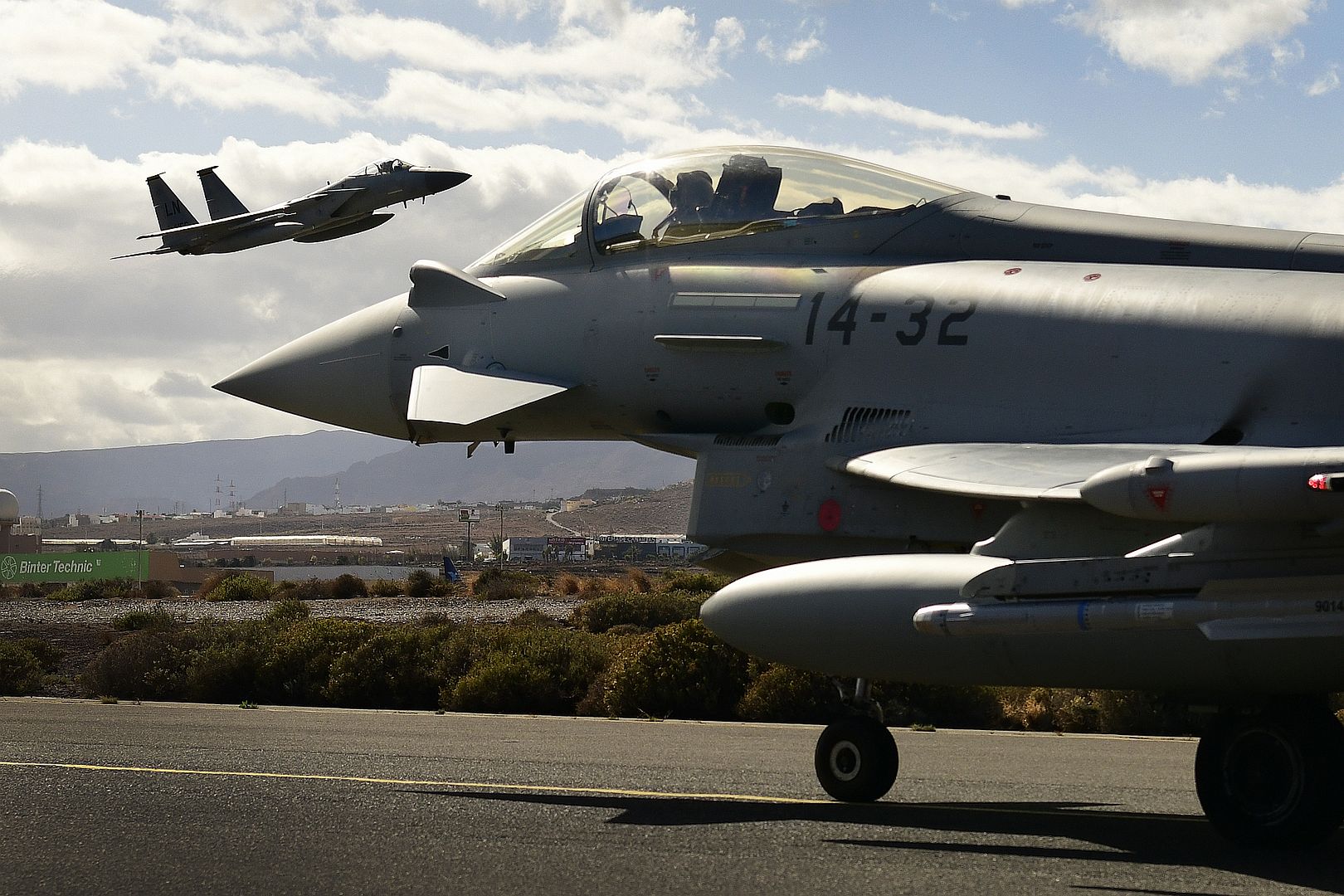
U.S. Air Force crew chiefs from the 2nd Aircraft Maintenance Squadron, 96th Aircraft Maintenance Unit, deployed from Barksdale Air Force Base, Louisiana, prepare a B-52H Stratofortress for takeoff at RAF Fairford, England, Oct. 21, 2019. Bomber Task Force Europe 20-1 is a deployment of B-52 Stratofortress aircraft, Airmen, and support equipment from the 2nd Bomb Wing to conduct theater integration and to improve bomber interoperability with joint partners and allied nations. (U.S. Air Force photo's by Senior Airman Stuart Bright)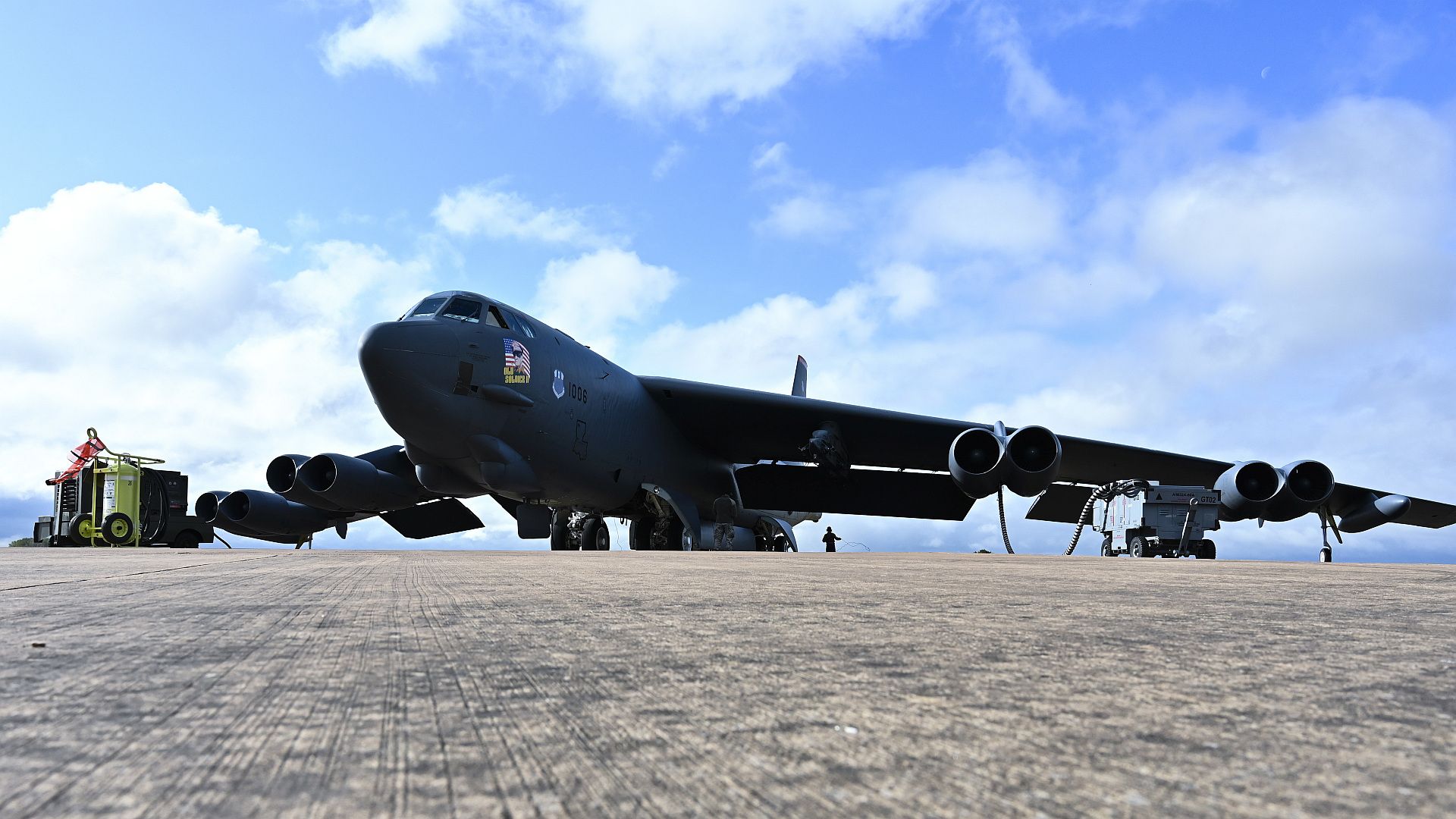
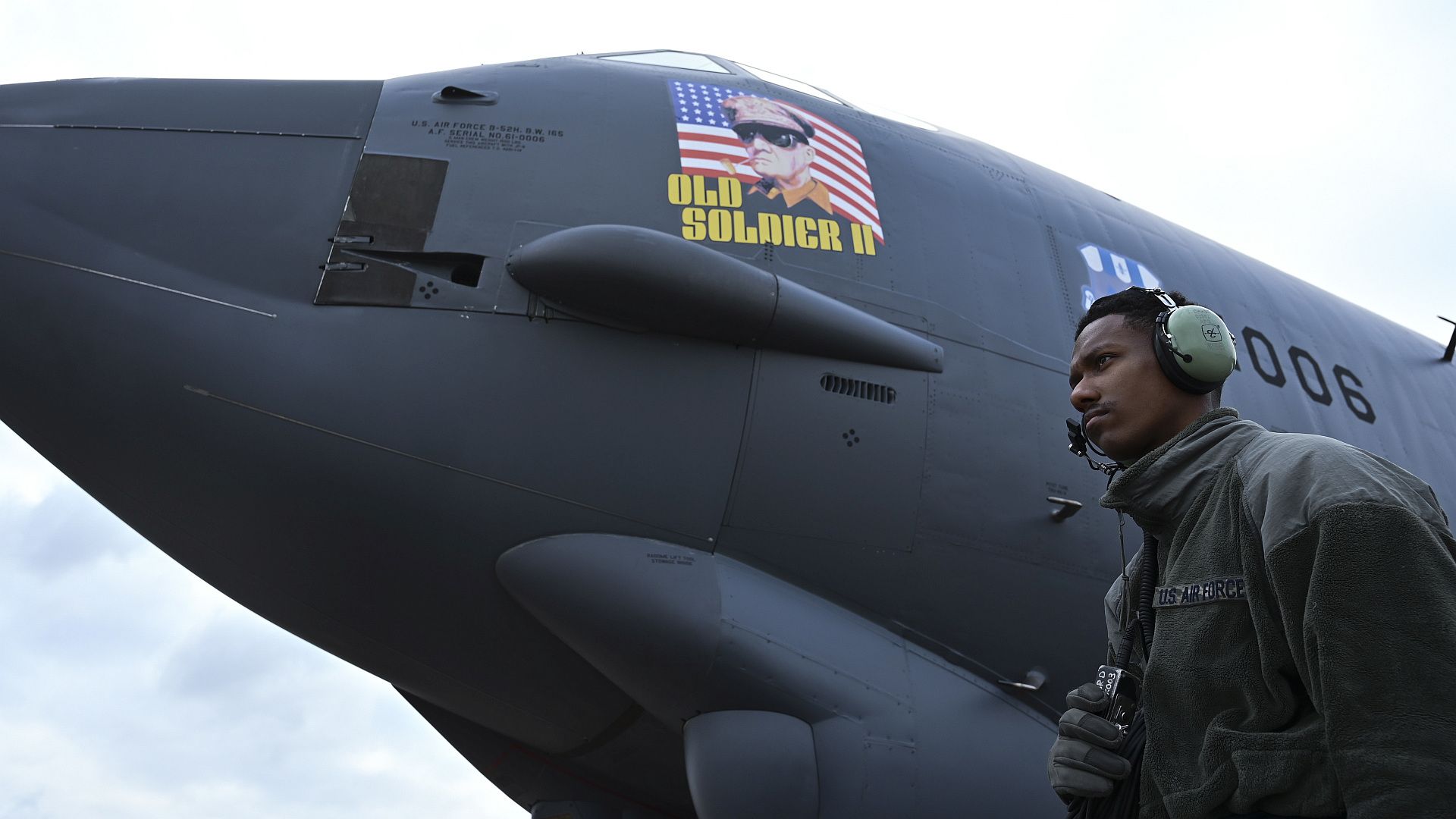
A U.S. Air Force B-52H Stratofortress deployed from Barksdale Air Force Base, Louisiana, takes off from RAF Fairford, England, to conduct a training sortie in the Black Sea region as part of Bomber Task Force Europe 20-1Oct. 21, 2019. The B-52s and Airmen from the 2nd Bomb Wing deployed to improve interoperability with joint partners and allied nations and conduct European theater integration. (U.S. Air Force photo by Senior Airman Stuart Bright)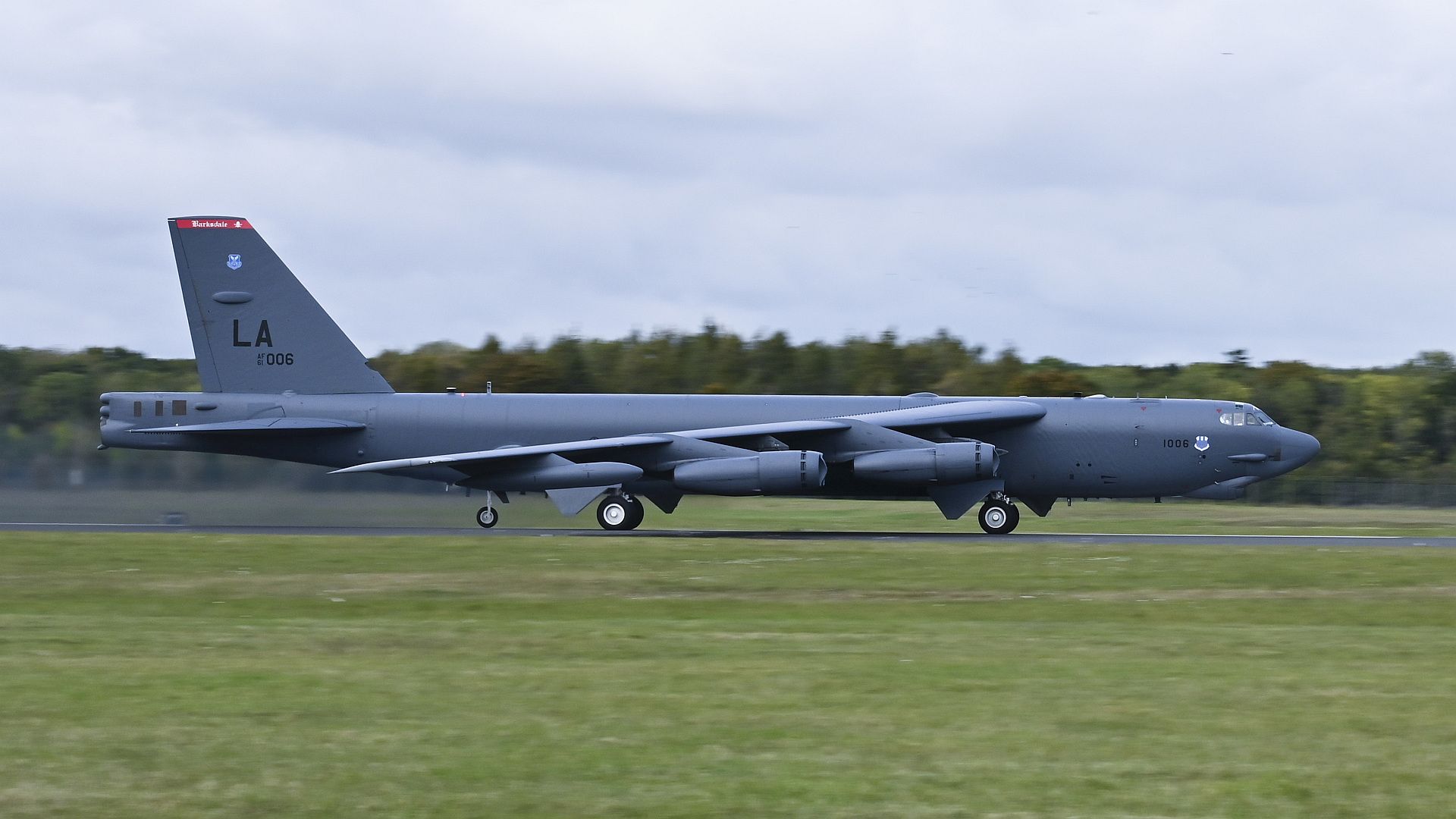
An F-15 Eagle assigned to the 493rd Fighter Squadron launches for a sortie in support of the Spanish-led air-to-air combat training exercise, OCEAN SKY 19 at Gando Air Base Oct. 23, 2019. Exercises like OCEAN SKY remain a symbol of the shared commitment between Spain, the U.S. and NATO to maintaining the continued security of Europe. (U.S. Air Force photo/ Tech. Sgt. Matthew Plew)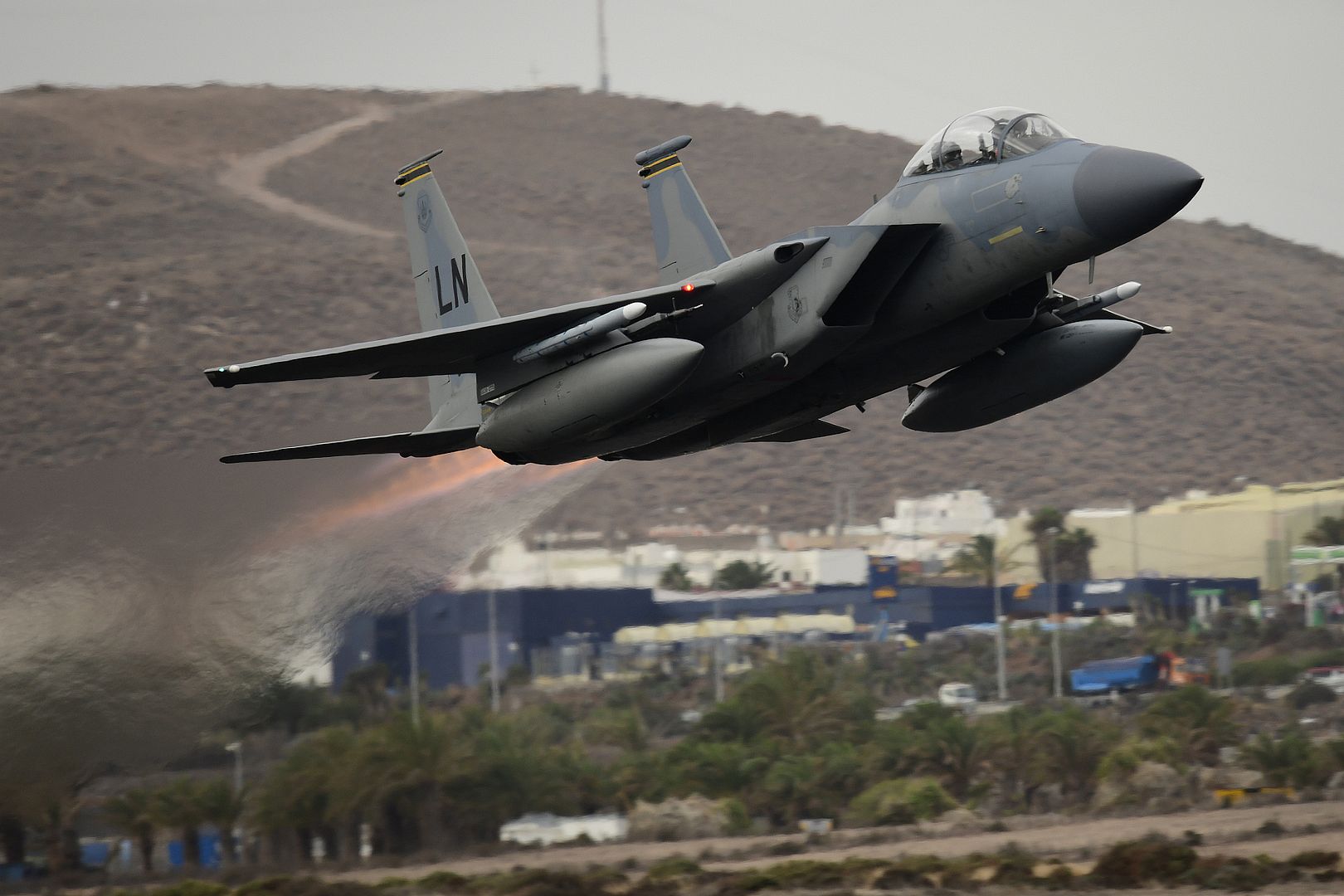
An F-15 Eagle assigned to the 493rd Fighter Squadron launches for a sortie in support of the Spanish-led air-to-air combat training exercise, OCEAN SKY 19 at Gando Air Base Oct. 23, 2019. Exercises like OCEAN SKY remain a symbol of the shared commitment between Spain, the U.S. and NATO to maintaining the continued security of Europe. (U.S. Air Force photo/ Tech. Sgt. Matthew Plew)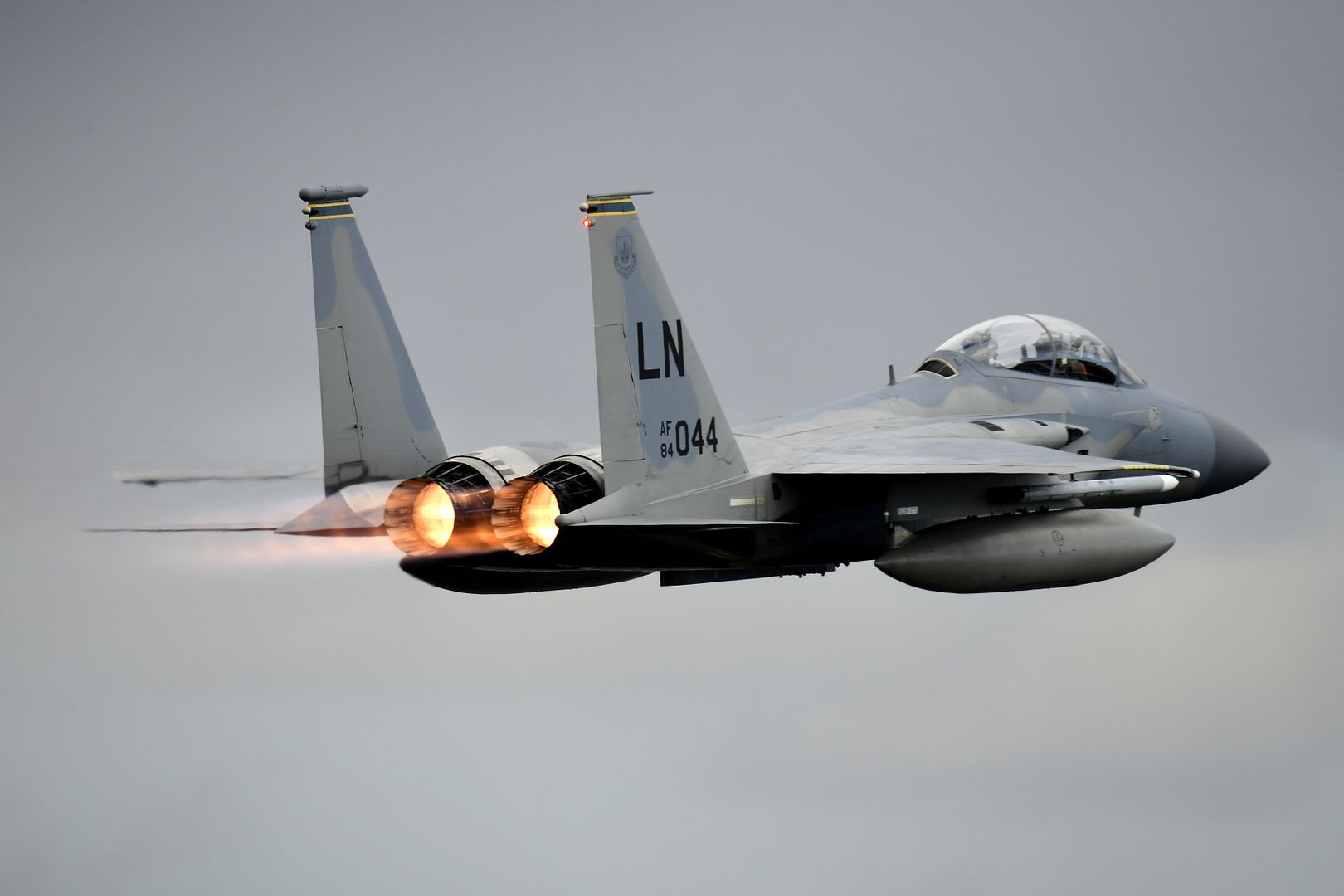
A Spanish air force Eurofighter Typhoon launches for a sortie in support of exercise Ocean Sky 19 at Gando Air Base, Oct. 23, 2019. The multinational training, developed and coordinated by the Spanish air force, is built on the foundational principle that a strong military alliance can deter any current or potential threat to NATO, its partners, or its allies. (U.S. Air Force photo/ Tech. Sgt. Matthew Plew)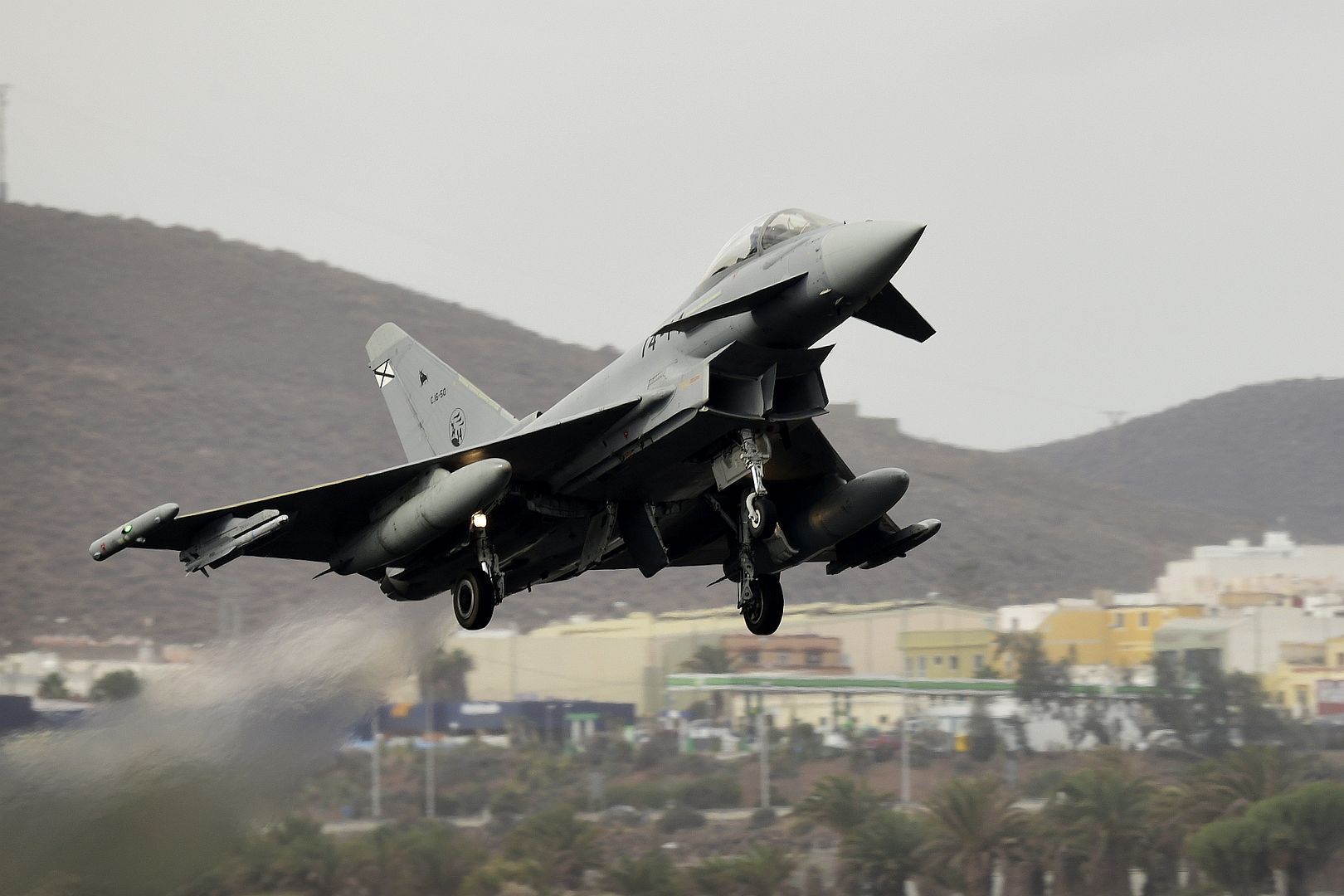
Two Spanish air force F/A-18 Hornets launch for a sortie in support of exercise Ocean Sky 19 at Gando Air Base, Oct. 23, 2019. The multinational training, developed and coordinated by the Spanish air force, is built on the foundational principle that a strong military alliance can deter any current or potential threat to NATO, its partners, or its allies. (U.S. Air Force photo/ Tech. Sgt. Matthew Plew)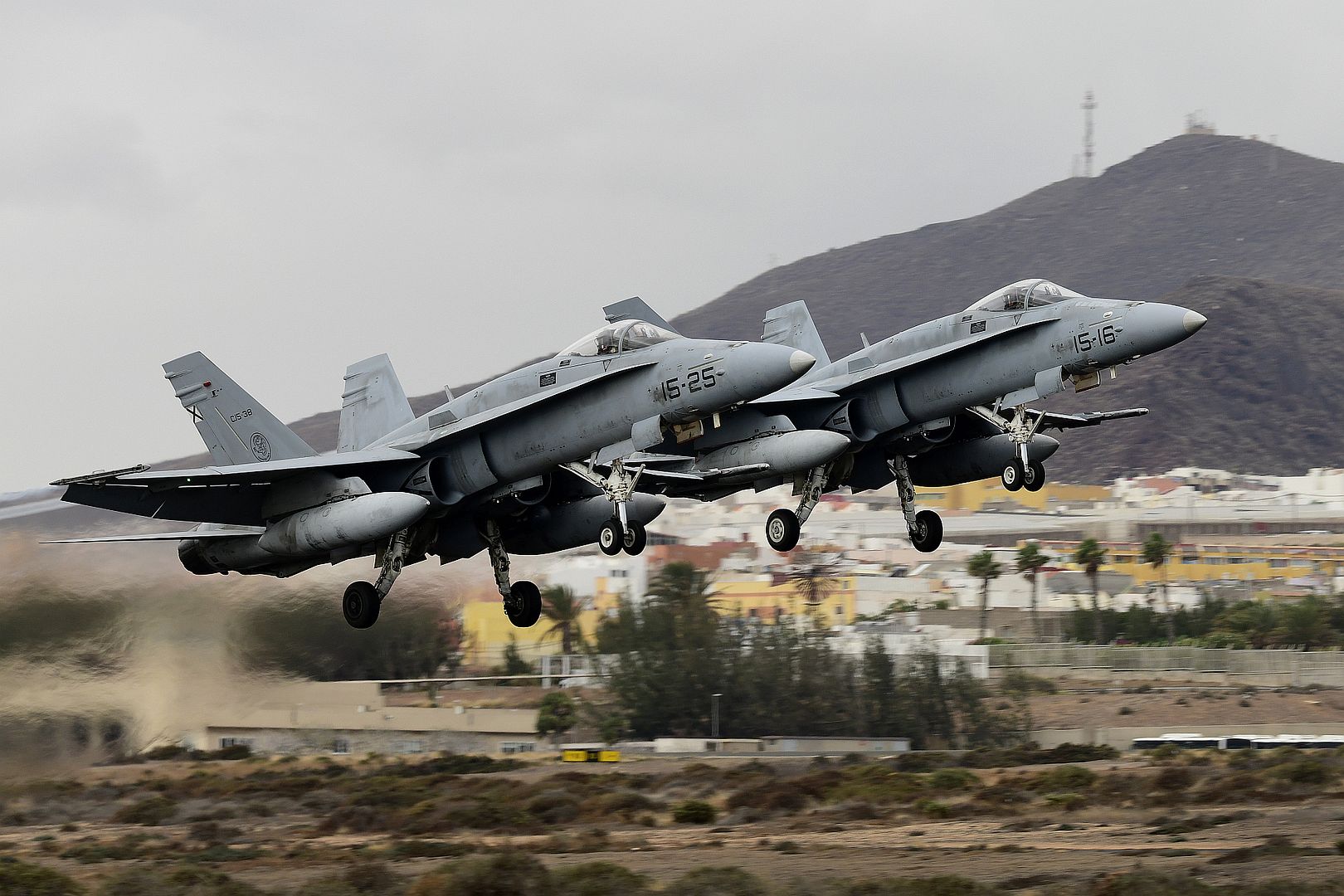
Czech Airlines has ordered four Airbus A220-300 aircraft and opted for additional range by upsizing a previous order for three A320neo to A321XLR.
The two fuel-efficient aircraft types will complement Czech Airlines? existing fleet of six A319 and one A330-300, and allow it to continue extending its network to reach more markets. The airline will also benefit from the commonality of Airbus Family aircraft. The A220-300 will be fitted with 149 seats, while the A321XLR will cater for top comfort in a two-class layout with 195 seats.
?The A220 and A321XLR fit well with our long-term business strategy in terms of network expansion. These aircraft will definitely give Czech Airlines a competitive advantage, and will increase the capacity of our regular flights. I believe that this step will be appreciated by our passengers, as the aircraft offer best in class comfort even during long haul flights thanks to a brand new cabin configuration,? said Petr Kudela, Chairman of the Board of Czech Airlines.
?What a winning combination for Czech Airlines! The A220 has proved to be a strong performer in Europe with its high daily utilisation being a testament to its versatility,? said Christian Scherer, Airbus Chief Commercial Officer. ?The A321XLR has the longest range of our A320 Family. Passengers can now fly further without compromising on comfort, whilst Czech Airlines benefits from remarkably lower fuel consumption as it expands its network.?
The A220 is the only aircraft purpose-built for the 100-150 seat market; it delivers unbeatable fuel efficiency and wide-body passenger comfort in a single-aisle aircraft. The A220 brings together state-of-the-art aerodynamics, advanced materials and Pratt & Whitney?s latest-generation PW1500G geared turbofan engines to offer at least a 20 percent lower fuel burn per seat compared to previous generation aircraft, along with significantly lower emissions and a reduced noise footprint. The A220 offers the performance of larger single-aisle aircraft. The A220 had an order book of over 525 aircraft at the end of September 2019.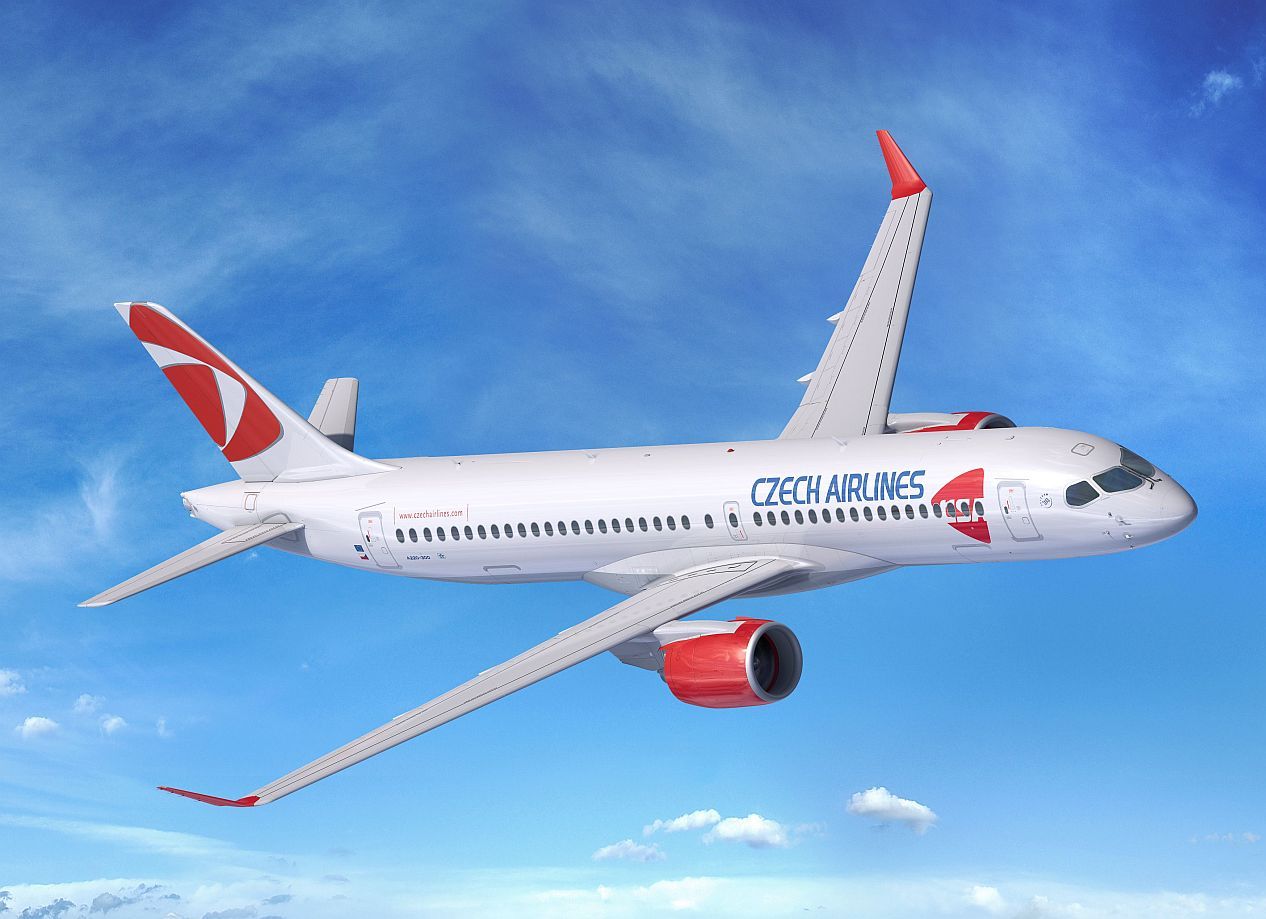
The A321XLR is the next evolutionary step from the A321LR which responds to market needs for even more range and payload, creating more value for the airlines. From 2023, it will deliver an unprecedented Xtra Long Range of up to 4,700nm ? with 30 percent lower fuel burn per seat compared with previous generation competitor aircraft. To date, the A320neo Family has captured more than 6,650 orders from nearly 110 customers.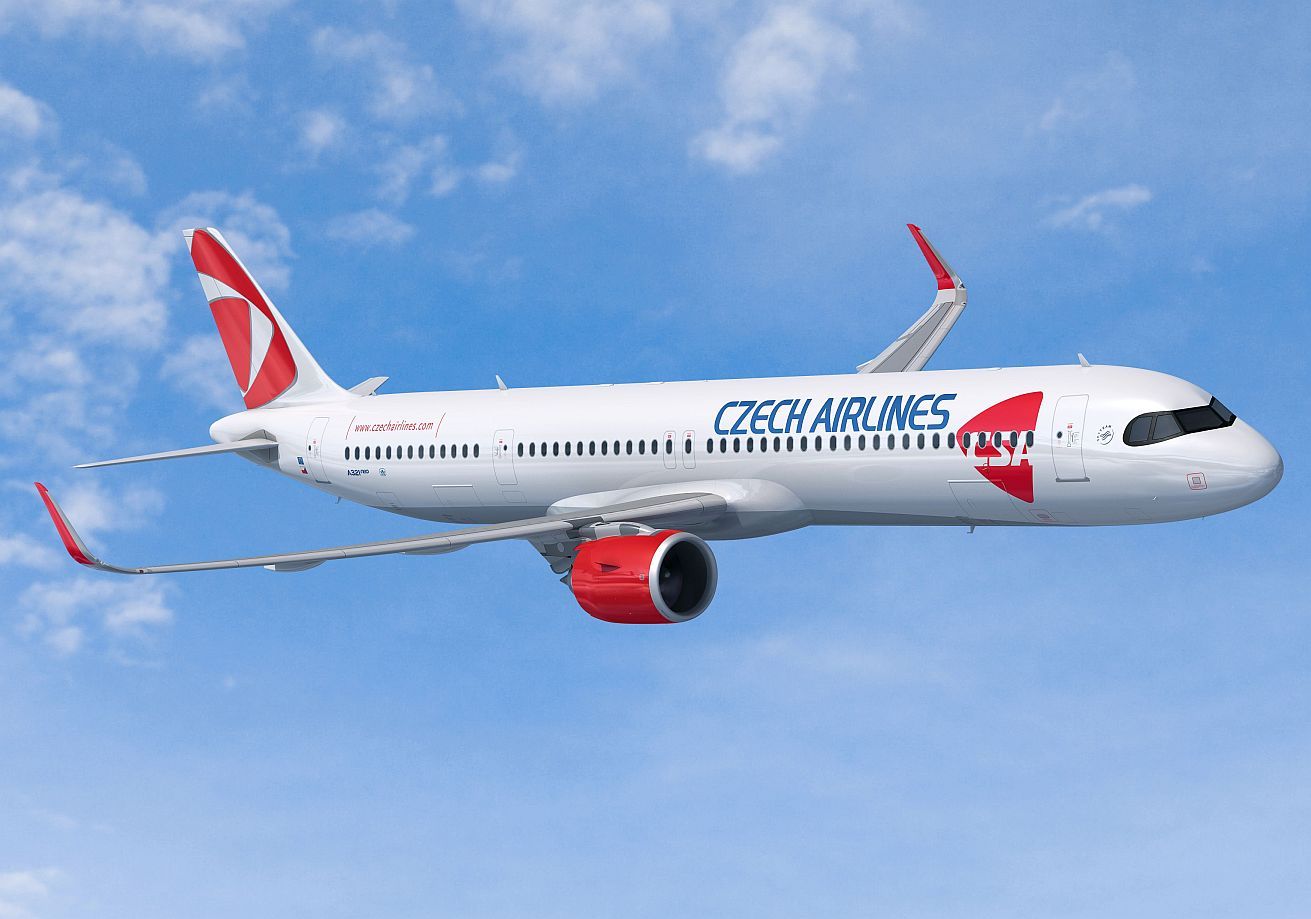
October 22, 2019 Montr?al Aviation, Business Aircraft, Press Release
Following the dramatic unveiling of the Global 5500 and Global 6500 aircraft in 2018 at the European Business Aviation Convention in Geneva, Bombardier debuted less than 18 months later, the all-new Global 6500 aircraft, the latest addition to the award-winning and record-breaking Global family, at NBAA-BACE in Las Vegas, Nevada. Joining the Global 6500 aircraft, is a stellar lineup of Bombardier aircraft on static display, including the industry flagship, Global 7500 aircraft.
?We are proud to present our lineup of extraordinary business jets in Las Vegas, particularly our new Global 6500 and Global 7500 business jets, which redefine the standard in the industry for unparalleled cabin comfort, advanced technology and unrivalled performance,? said David Coleal, President, Bombardier Aviation. ?Game-changing aircraft like these make for an aviation experience that is second to none, and the Bombardier team has set the bar to new heights when it comes to performance and on-time entry-into-service?
The Pearl 15 engine, the latest addition to Rolls-Royce?s market-leading business aviation engine portfolio, , was developed at the Rolls-Royce Centre of Excellence for Business Aviation engines in Dahlewitz, Germany, and was custom-designed with the most advanced technology ? including enhanced aerodynamics, blade cooling and advanced engine health monitoring systems ? to power the Global 5500 and Global 6500 aircraft. With the purpose-built engines, advanced wing design and built-in systems redundancy and robustness for which Bombardier Global aircraft are renowned, the aircraft offer a superior safety and a smooth ride to its passengers.
The Global 6500 aircraft offers a stunning redesigned cabin with exclusive features that are as innovative as they are luxurious. The Global 6500 business jet also debuts the Nuage chaise, business aviation?s first and only lounge chair that converts into a flat surface for sleeping or banquet-style dining around the conference grouping table. Within the fluid lines of its exceptionally crafted architecture is a marvel of furniture engineering, meticulously designed to maximize comfort in flight. Bombardier's patented Nuage seat is also exclusive to the new Global aircraft family. With its distinctive technology, the Nuage seat is ideally suited for long-range flights.
The new aircraft builds on the success of the Global 6000 aircraft by offering 600 nautical miles of additional range, coupled with an up to 13-per-cent fuel burn advantage, contributing to highly favorable operating costs versus smaller competing aircraft with less range. The Global 6500 aircraft can connect New York to Dubai, and Hong Kong to London. The aircraft also boasts superior agility, with the ability to access airports that others can?t, such as London City.