Aviation News
-
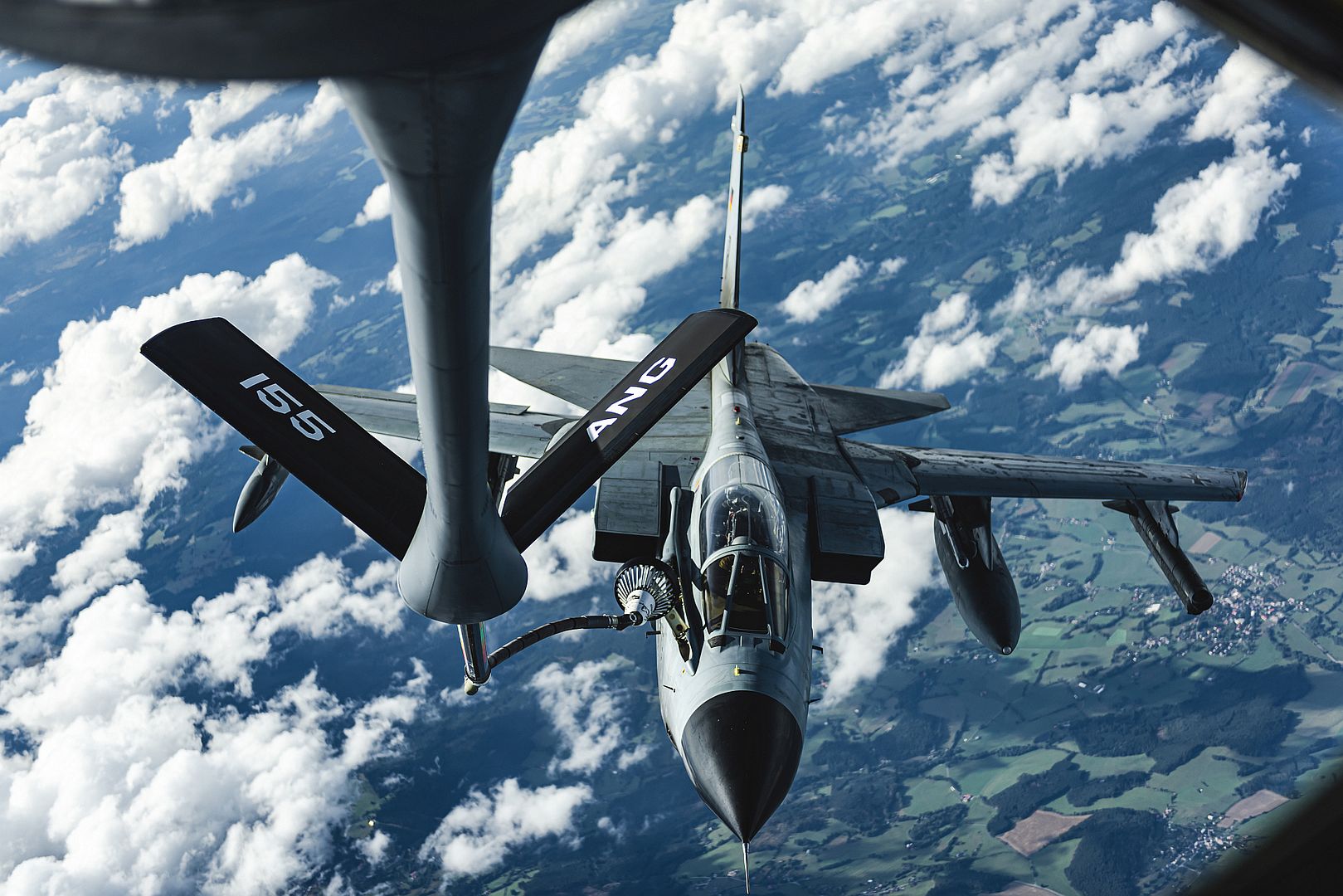
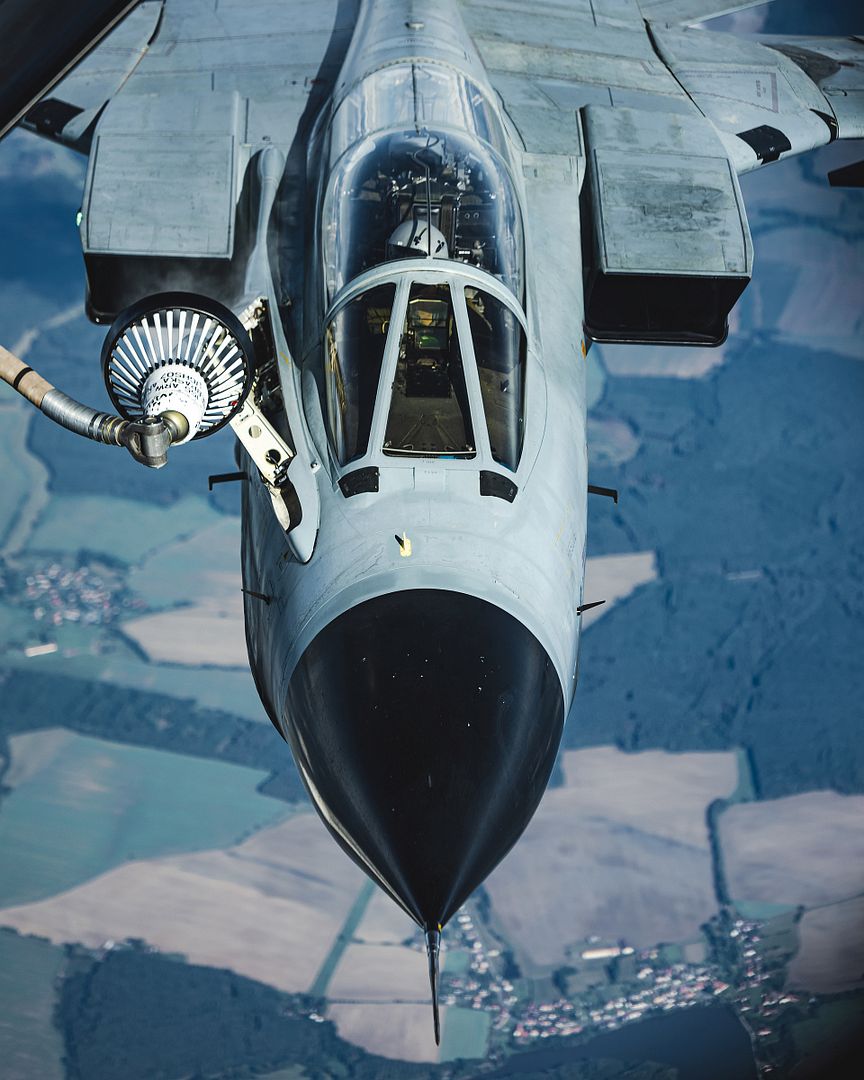
A German Air Force PA-200 Tornado conducts aerial refueling from a U.S. Air Force KC-135 Stratotanker from the 155th Aerial Refueling Wing, Nebraska Air National Guard during exercise Ample Strike 2019, near Pardubice Airport, Czech Republic, Sept. 10, 2019. The Tornado provides NATO forces with a tactical air strike and air superiority capability. (U.S. Air Force photo's by Staff Sgt. Devin Nothstine)
380th Expeditionary Aircraft Maintenance Squadron weapons load crew members inspect recently attached GBU-31s on an F-15E Strike Eagle Sept. 9, 2019, at Al Dhafra Air Base, United Arab Emirates, in preparation for a Coalition and Iraqi Counter-Terrorism Service air strike conducted in the Salah ad Din Province, Iraq, Sept. 10. (U.S. Air Force Photo by Staff Sgt. Chris Thornbury)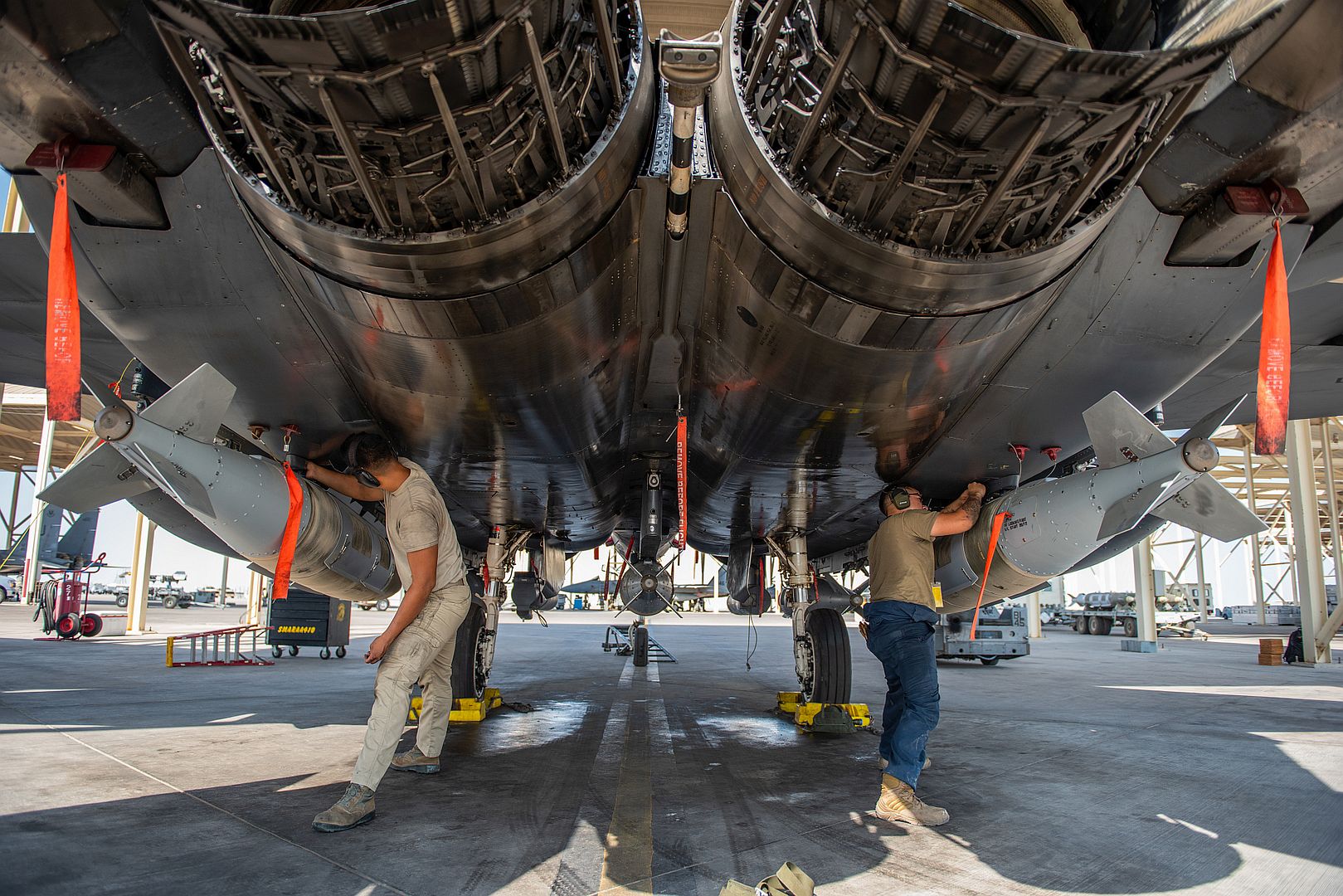
F-15E Strike Eagles prepare to taxi to the runway for takeoff from Al Dhafra Air Base, United Arab Emirates, Sept. 10, 2019. The F-15E conducted a Coalition and Iraqi Counter-Terrorism Service air strike in the Salah ad Din Province, Iraq, Sept. 10, in support of Iraqi ground force clearing operations. (U.S. Air Force Photo by Staff Sgt. Chris Thornbury)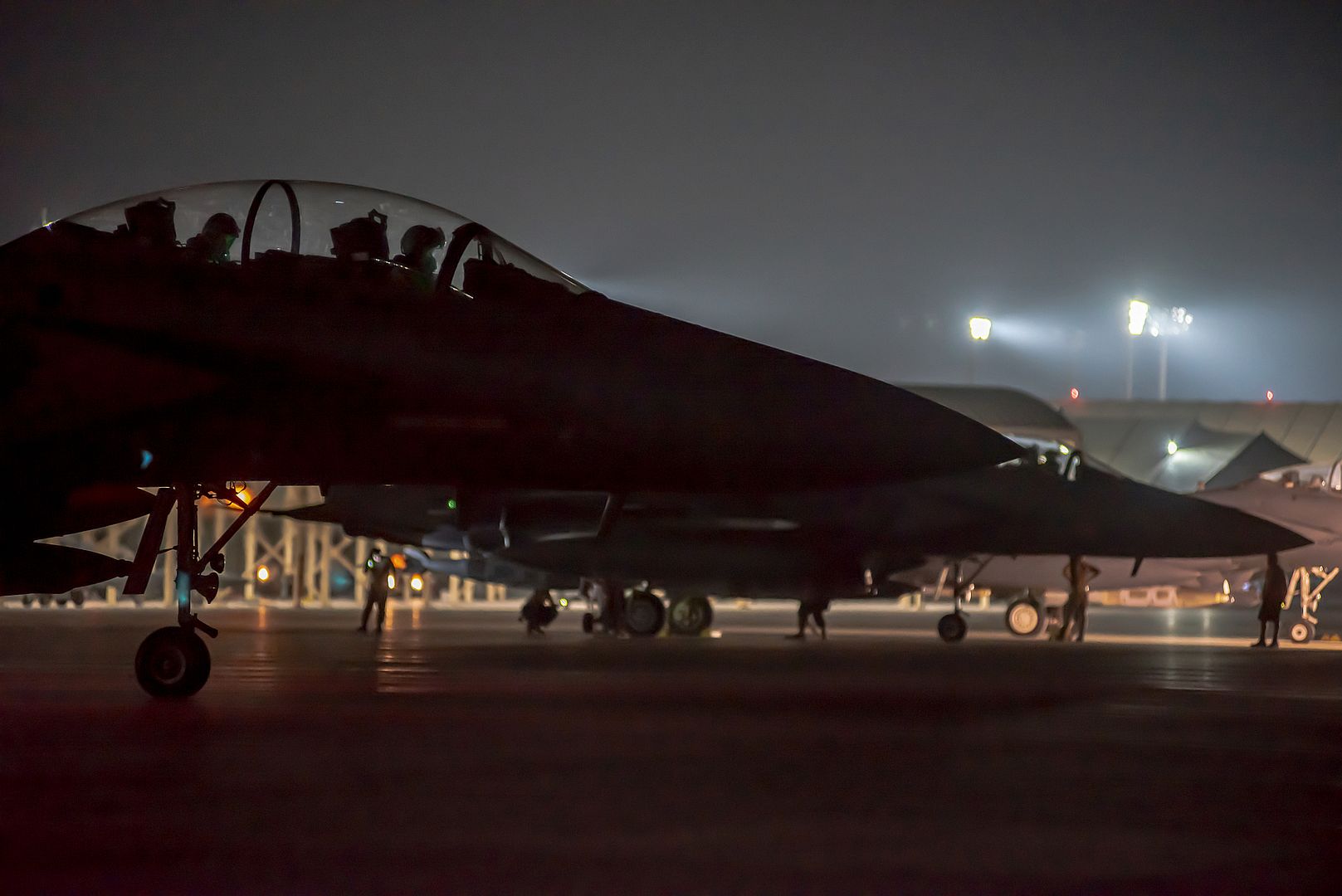
An F-35A Lightning II from the 4th Expeditionary Fighter Squadron, takes off from Al Dhafra Air Base, United Arab Emirates, Sept. 10, 2019. The F-35A conducted a Coalition and Iraqi Counter-Terrorism Service air strike in the Salah ad Din Province, Iraq, Sept. 10, in support of Iraqi ground force clearing operations. (U.S. Air Force Photo by Staff Sgt. Chris Thornbury)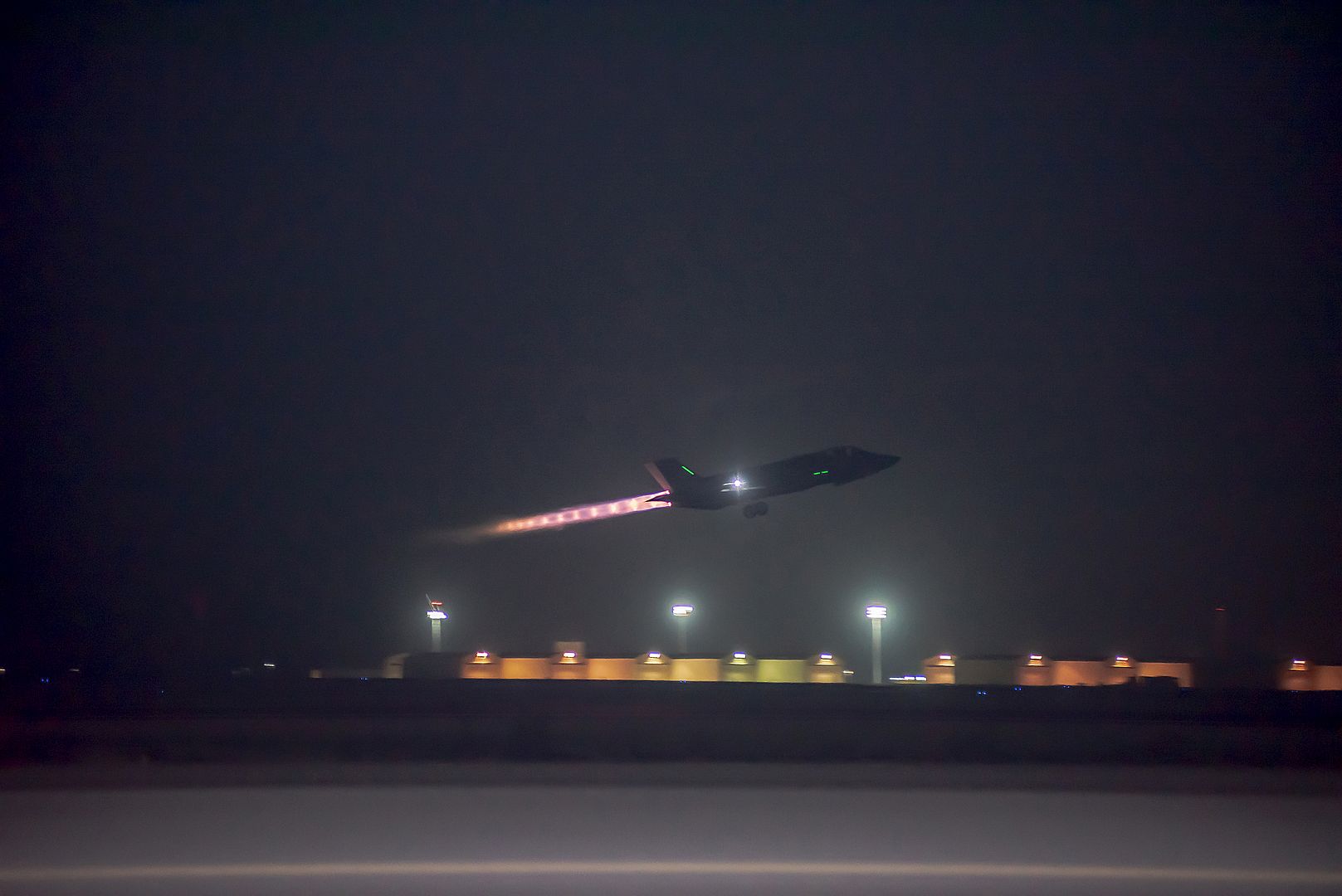
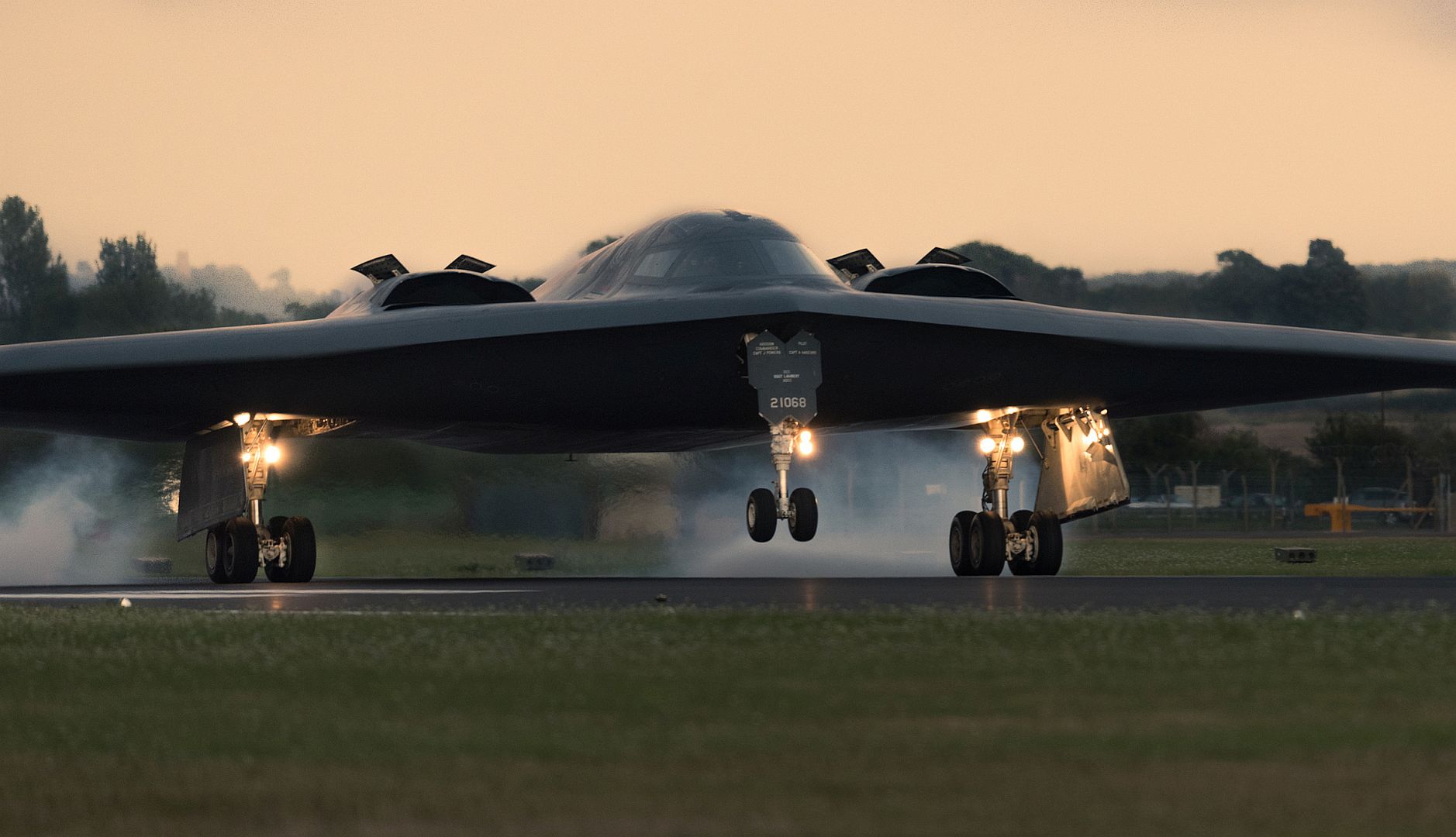
A B-2 Spirit Stealth Bomber, assigned to the 509th Bomb Wing, at Whiteman Air Force Base, Missouri, prepares to land on a runway in order to perform a touch-and-go at Royal Air Base Fairford, England, on September 11, 2019. A touch-and-go is a maneuver that involves landing on a runway and taking off again without coming to a complete stop. This allows pilots the ability to practice many landings in a short period of time. Three B-2 bombers, Airmen and support equipment from Whiteman AFB deployed to RAF Fairford as part of Bomber Task Force Europe in order to conduct theater integration and flying training. Participation in multinational exercises enhances our professional relationships and improves overall coordination with allies and partner militaries during times of crisis. (U.S. Air Force photo's by Senior Airman Thomas Barley)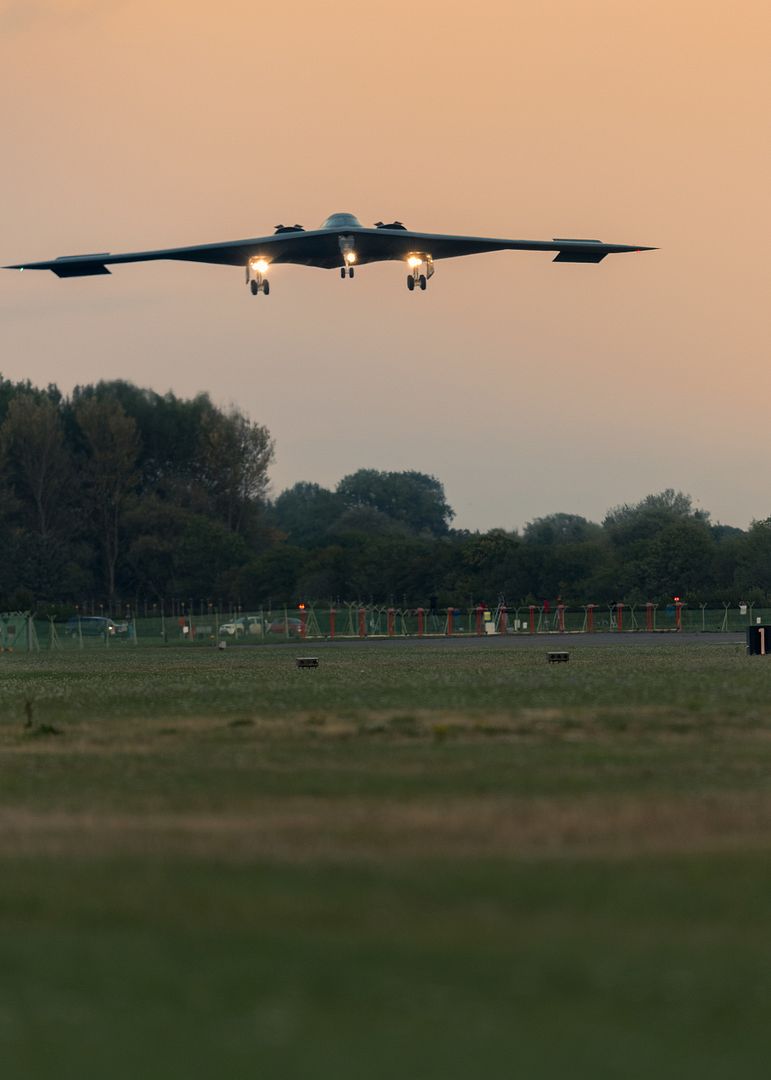
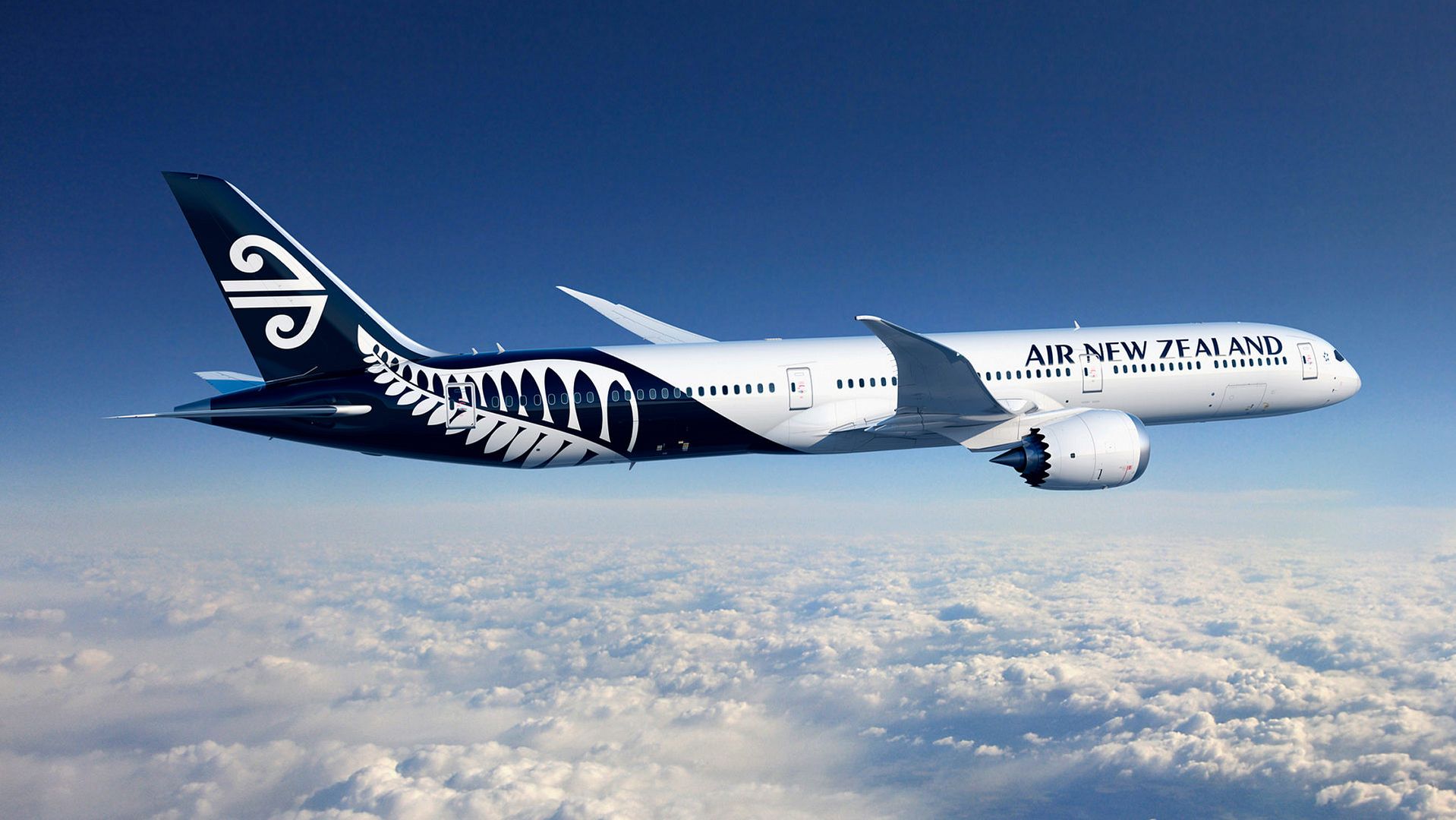
Fiji Airways? first A350 XWB has rolled out of the Airbus paint shop in Toulouse featuring the airline?s signature livery. The aircraft, an A350-900 leased from Dubai Aerospace Enterprises, will be the first of its type to be operated by an airline in the South-Pacific region.
The aircraft will now proceed to the final phase of the assembly process, with the installation of engines followed by ground and flight tests, before delivery to Fiji Airways in Q4.
The aircraft will be configured with 33 full lie-flat Business Class and 301 Economy Class seats. The aircraft will be deployed to enhance existing long-haul services from Fiji to Australia and the U.S., and to provide the opportunity to open additional routes.
The A350 XWB is the world?s most modern wide-body family and the long-range leader. It is the only all-new design aircraft in the 300-410 seat category, offering the lowest cost per seat of any large wide-body. The A350 XWB offers by design unrivalled operational flexibility and efficiency for all market segments up to ultra-long haul (9,700 nm).
The A350 XWB is an all-new family of mid-size wide-body long-haul airliners shaping the future of air travel. The A350 XWB has the latest aerodynamic design, carbon fiber fuselage and wings, plus new fuel-efficient Rolls-Royce engines. Together, these latest technologies translate into unrivalled levels of operational efficiency, with a 25% reduction in fuel consumption and emissions, and significantly lower maintenance costs. At end of August 2019, Airbus has recorded a total of 913 firm orders for the A350 XWB from 51 customers worldwide.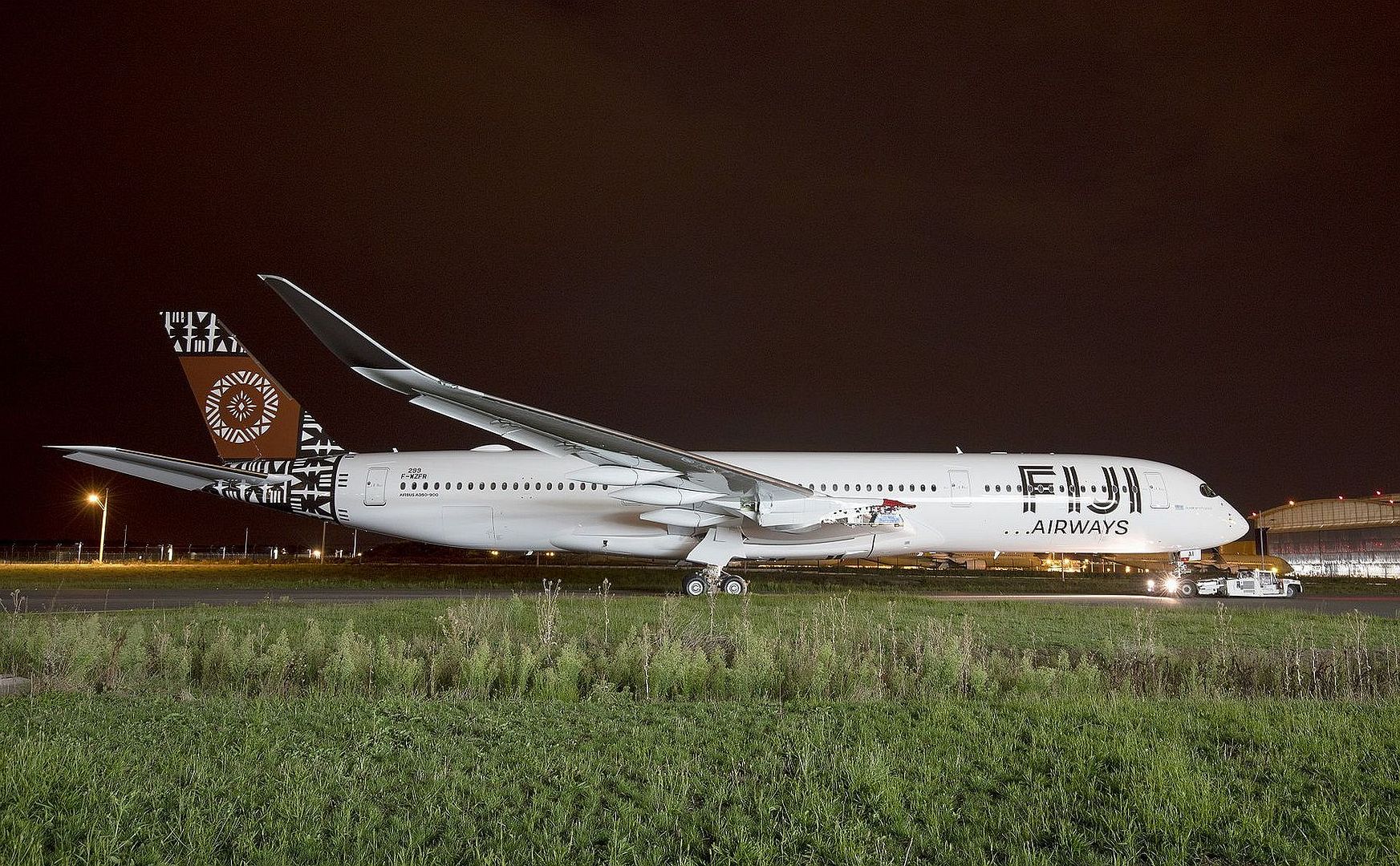
S?o Jos? dos Campos, Brazil, September 12, 2019 ? Embraer delivers today, in a ceremony to be held at its main facility in S?o Jos? dos Campos, its first E195-E2, the biggest of the three members of the E-Jets E2 family of commercial aircraft. The recipients are AerCap, the world?s largest aircraft leasing company, and Azul Linhas A?reas Brasileiras S.A. Azul is the global launch operator for the E195-E2 and has placed firm orders for 51 of the type. The airline will receive another five aircraft in 2019.
?Today?s delivery is a momentous occasion,? said John Slattery, President & CEO, Embraer Commercial Aviation. ?It?s the largest commercial aircraft Embraer has ever built. Passengers are going to love the new interior and airlines are going to love the extraordinary operating economics. It?s absolutely ideal for Azul?s low-fare business model and for AerCap?s fleet portfolio. I?m proud of everyone on the Embraer team who worked so hard to see this day.?
Azul is configuring the E195-E2 in a single class layout with 136 seats and will deploy the aircraft on several domestic and international routes.
?Over the last 10 years Azul revolutionized the Brazilian aviation market. We have helped to double the domestic market by providing service to regions, cities and communities that have never had service before, all thanks to the Embraer E195-E1 aircraft. Now with the E195-E2 we are ready to launch the next chapter in Brazilian aviation. We could not be more proud to bring this Brazilian aircraft, built with Brazilian technology and innovation to the Brazilian skies?, said David Neeleman, Azul?s founder and chairman of the board. ?The E2 represents the next significant step in Azul?s fleet transformation, further powering our margin expansion story well into the years to come?, concluded Neeleman.
?Everyone at AerCap is thrilled to deliver the world?s first Embraer E195-E2 aircraft to Azul. We have no doubt that this incredible aircraft will drive two of Brazil?s global leaders to new heights. We wish both Embraer and Azul every success with the E-Jets E2 program and we look forward to working with both of them for many, many years to come,? said Aengus Kelly, CEO of AerCap.
In April, the E195-E2 received its Type Certificate from three regulatory authorities: ANAC, the Brazilian Civil Aviation Agency (Ag?ncia Nacional de Avia??o Civil); the FAA (U.S. Federal Aviation Administration) and EASA (European Aviation Safety Agency).
Flight tests confirmed that the aircraft is better than its original specification. Fuel consumption is 1.4% lower than expected - that?s 25.4% less fuel per seat compared to the current-generation E195. Maintenance costs are 20% lower. The E195-E2 is the most environmentally friendly aircraft in its class, having the lowest levels of external noise and emissions. The cumulative margin to ICAO Stage IV noise limit ranges from 19 to 20 EPNdB, 4.0 EPNdB better than its direct competitor.
Like the E190-E2, the E195-E2 has the longest maintenance intervals in the single-aisle jet category with 10,000 flight hours for basic checks and no calendar limit for typical E-Jet operations. This means an additional 15 days of aircraft utilization over a period of ten years compared to current generation E-Jets.
The E195-E2 features new ultra-high bypass ratio engines, a completely new wing, full fly-by-wire and new landing gear. Compared to the first-generation E195, 75% of aircraft systems are new. The E195-E2 has 3 additional seat rows. The cabin can be configured with 120 seats in two classes, or up to 146-seats in a single class layout.
Embraer and Azul also signed a long-term Flight Hour Pool Program agreement to provide repairable component support for the carrier?s new fleet of Embraer E195-E2 jets. Azul joined the Embraer Pool Program in 2008 when it began operating its first generation of E-Jets. It recently joined the Repair Management Program. With the new Flight Hour Pool Program agreement, the airline will now have coverage for its entire Embraer fleet.
Embraer is the world?s leading manufacturer of commercial aircraft up to 150 seats with more than 100 customers across the world. For the E-Jets program alone, Embraer has logged more than 1,800 orders and 1,500 aircraft have been delivered. Today, E-Jets are flying in the fleets of 80 customers in 50 countries. The versatile 70 to 150-seat family is flying with low-cost airlines as well as with regional and mainline network carriers.
Follow us on Twitter: @Embraer
About AerCap
AerCap is the global leader in aircraft leasing with 1,373 aircraft owned, managed or on order and $43.1 billion in total assets as of June 30, 2019. AerCap has one of the most attractive order books in the industry. AerCap serves approximately 200 customers in approximately 80 countries with comprehensive fleet solutions. AerCap is listed on the New York Stock Exchange (AER) and has its headquarters in Dublin with offices in Shannon, Los Angeles, Singapore, Amsterdam, Shanghai, Abu Dhabi, Seattle and Toulouse.
About Azul
Azul S.A. (B3: AZUL4, NYSE: AZUL), the largest airline in Brazil by number of flight departures and cities served, offers 870 daily flights to 114 destinations. With an operating fleet of 130 aircraft and more than 12,000 crewmembers, the Company has a network of 220 non-stop routes as of June 30, 2019. In 2019, Azul was awarded best airline in Latin America by TripAdvisor Travelers? Choice and also best regional carrier in South America for the ninth consecutive time by Skytrax. In 2018, the Company was elected best airline by Kayak?s Flight Hacker Guide. Azul also ranked as most on-time airline in Brazil in 2018 according to FlightStats. For more information visit www.voeazul.com.br/ir.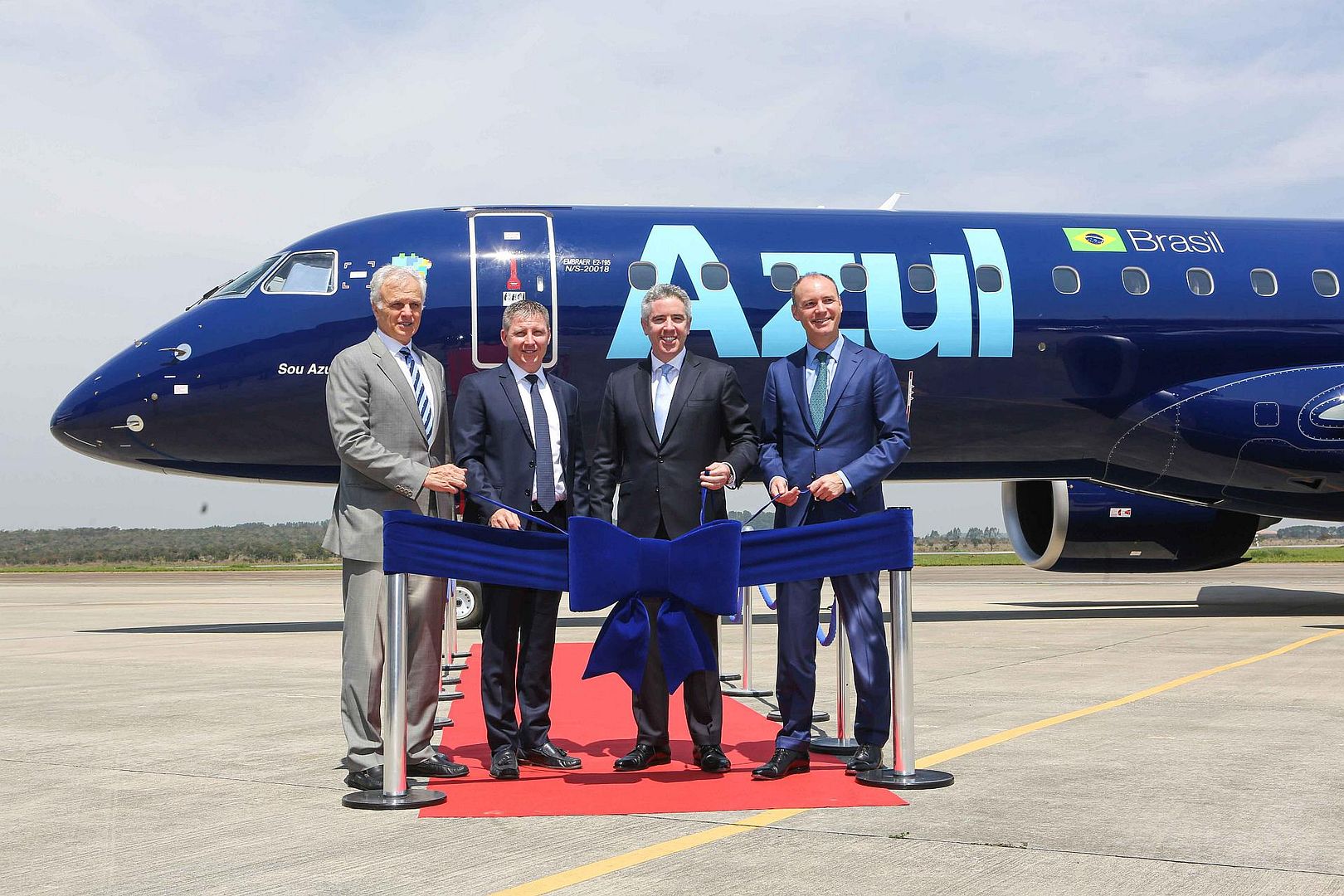
-
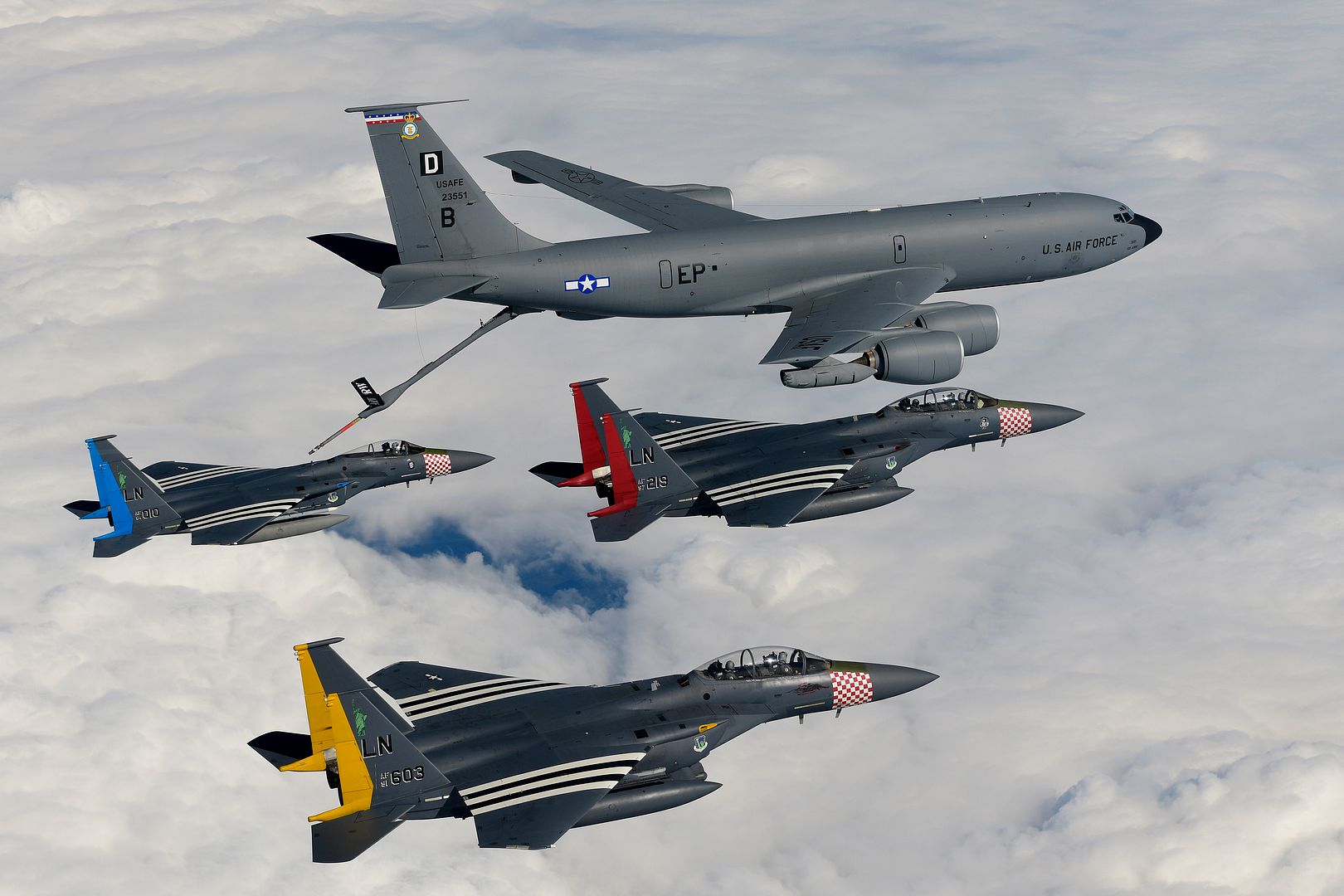
An F-15C Eagle and two F-15E Strike Eagles assigned to the 48th Fighter Wing, RAF Lakenheath, United Kingdom, painted with their respective squadron heritage color scheme, rendezvous with a KC-135 Stratotanker assigned to the 100th Air Refuelling Wing during a flypast over the MSPO Expo at Kielce, Poland, Sept. 3, 2019. The MSPO Expo is an international defense industry exhibition. (U.S. Air Force photo by Tech. Sgt. Matthew Plew)
A B-1B Lancer takes off on Ellsworth Air Force Base, S.D., Sept. 10, 2019. Ellsworth AFB is home to the 28th Bomb Wing ? the largest B-1 combat wing in the U.S. Air Force. Ellsworth currently has a fleet of 27 B-1B?s. (U.S. Air Force photo by Airman 1st Class Christina Bennett)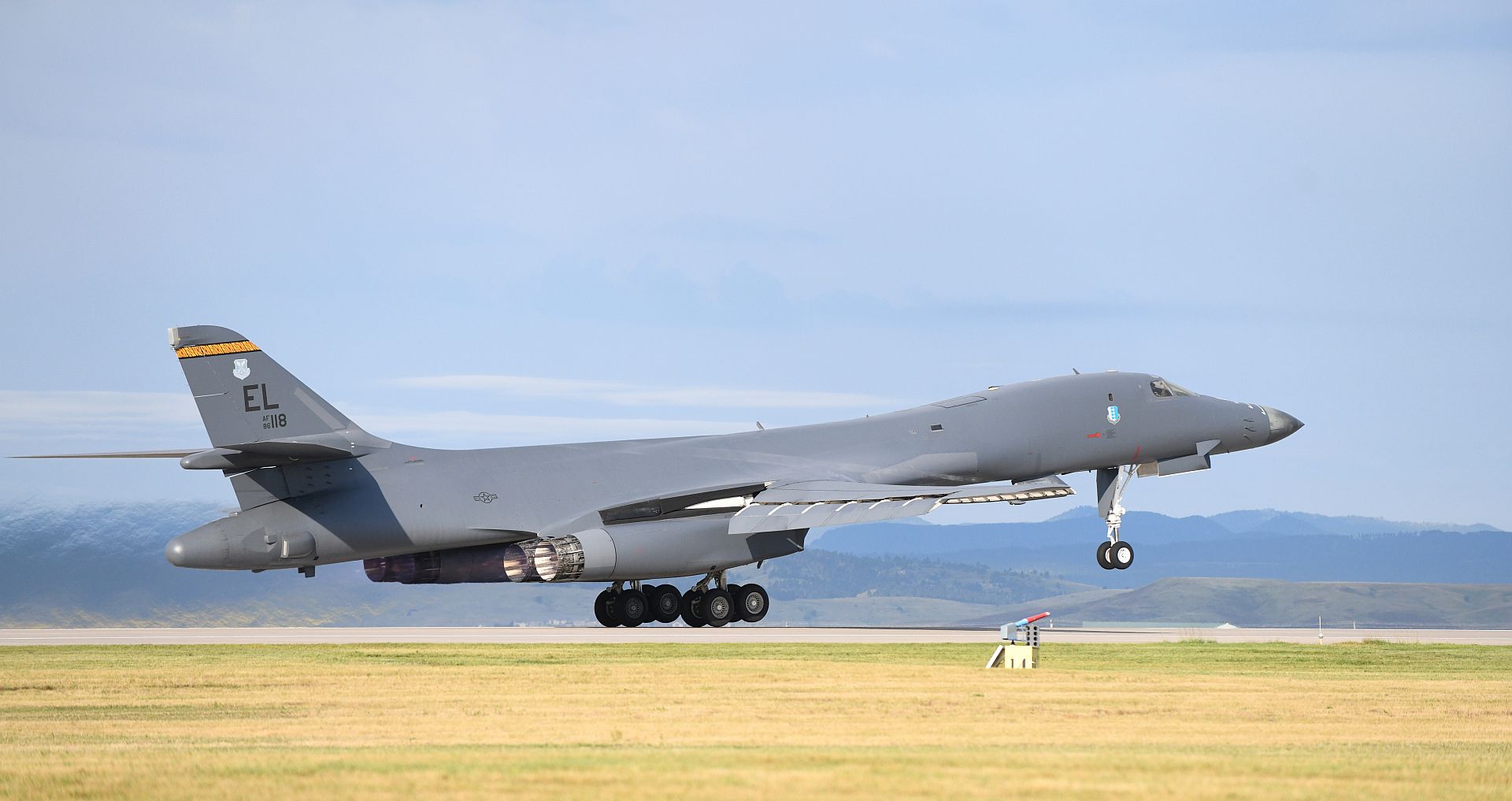
ARABIAN SEA (Sept. 12, 2019) An F/A-18F Super Hornet attached to the Jolly Rogers of Strike Fighter Squadron (VFA) 103 and a C-2A Greyhound attached the Rawhides of Fleet Logistics Support Squadron (VRC) 40 launch from the flight deck of the aircraft carrier USS Abraham Lincoln (CVN 72). The Abraham Lincoln Carrier Strike Group is deployed to the U.S. 5th Fleet area of operations in support of naval operations to ensure maritime stability and security in the Central Region, connecting the Mediterranean and the Pacific through the western Indian Ocean and three strategic choke points. With Abraham Lincoln as the flagship, deployed strike group assets include staffs, ships and aircraft of Carrier Strike Group (CSG) 12, Destroyer Squadron (DESRON) 2, the guided-missile cruiser USS Leyte Gulf (CG 55) and Carrier Air Wing (CVW) 7. (U.S. Navy photo by Mass Communication Specialist 3rd Class Tristan Kyle Labuguen/Released)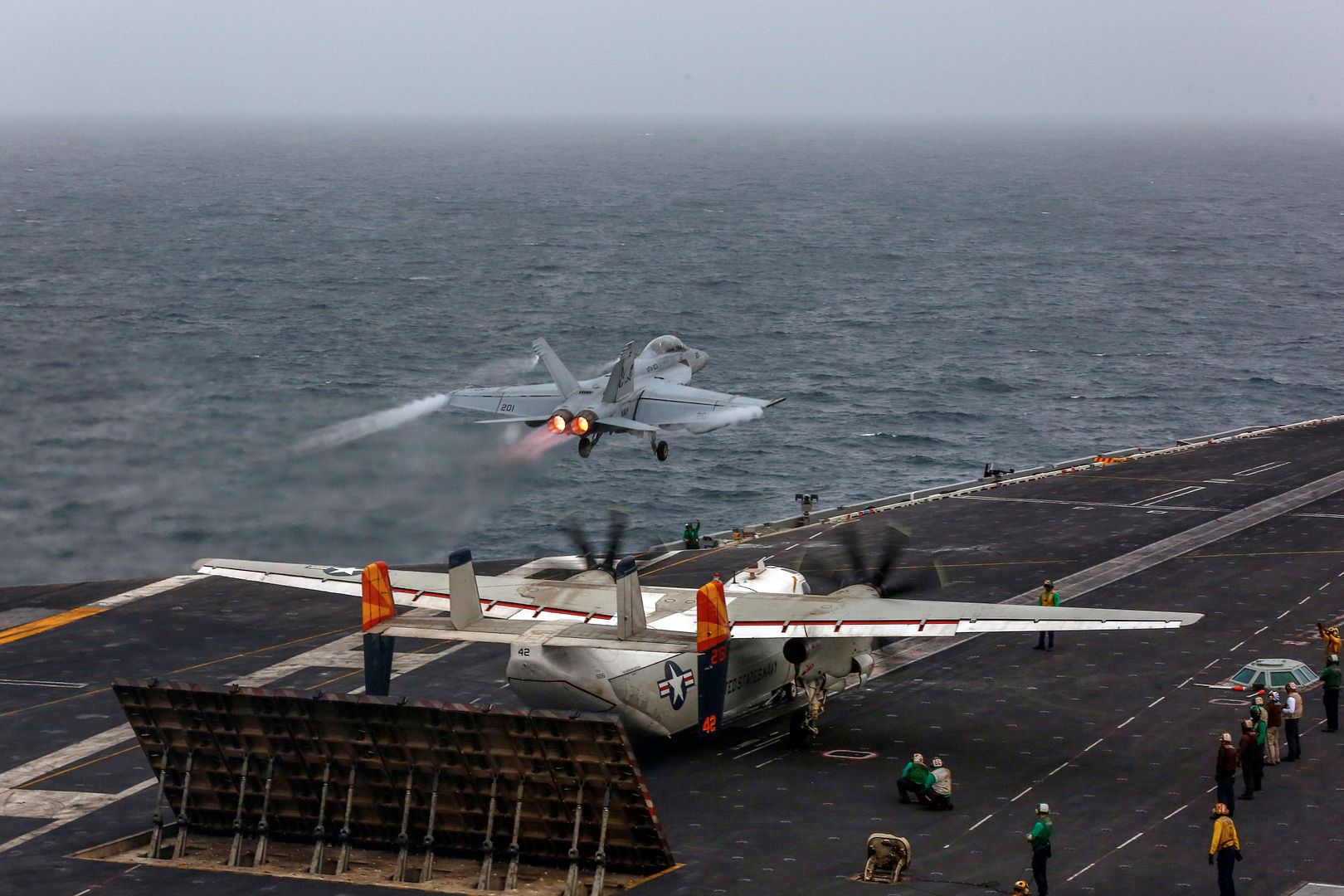
ARABIAN SEA (Sept. 12, 2019) An F/A-18F Super Hornet attached to the Jolly Rogers of Strike Fighter Squadron (VFA) 103 makes an arrested landing on the flight deck of the aircraft carrier USS Abraham Lincoln (CVN 72). The Abraham Lincoln Carrier Strike Group is deployed to the U.S. 5th Fleet area of operations in support of naval operations to ensure maritime stability and security in the Central Region, connecting the Mediterranean and the Pacific through the western Indian Ocean and three strategic choke points. With Abraham Lincoln as the flagship, deployed strike group assets include staffs, ships and aircraft of Carrier Strike Group (CSG) 12, Destroyer Squadron (DESRON) 2, the guided-missile cruiser USS Leyte Gulf (CG 55) and Carrier Air Wing (CVW) 7. (U.S. Navy photo by Mass Communication Specialist 3rd Class Tristan Kyle Labuguen/Released)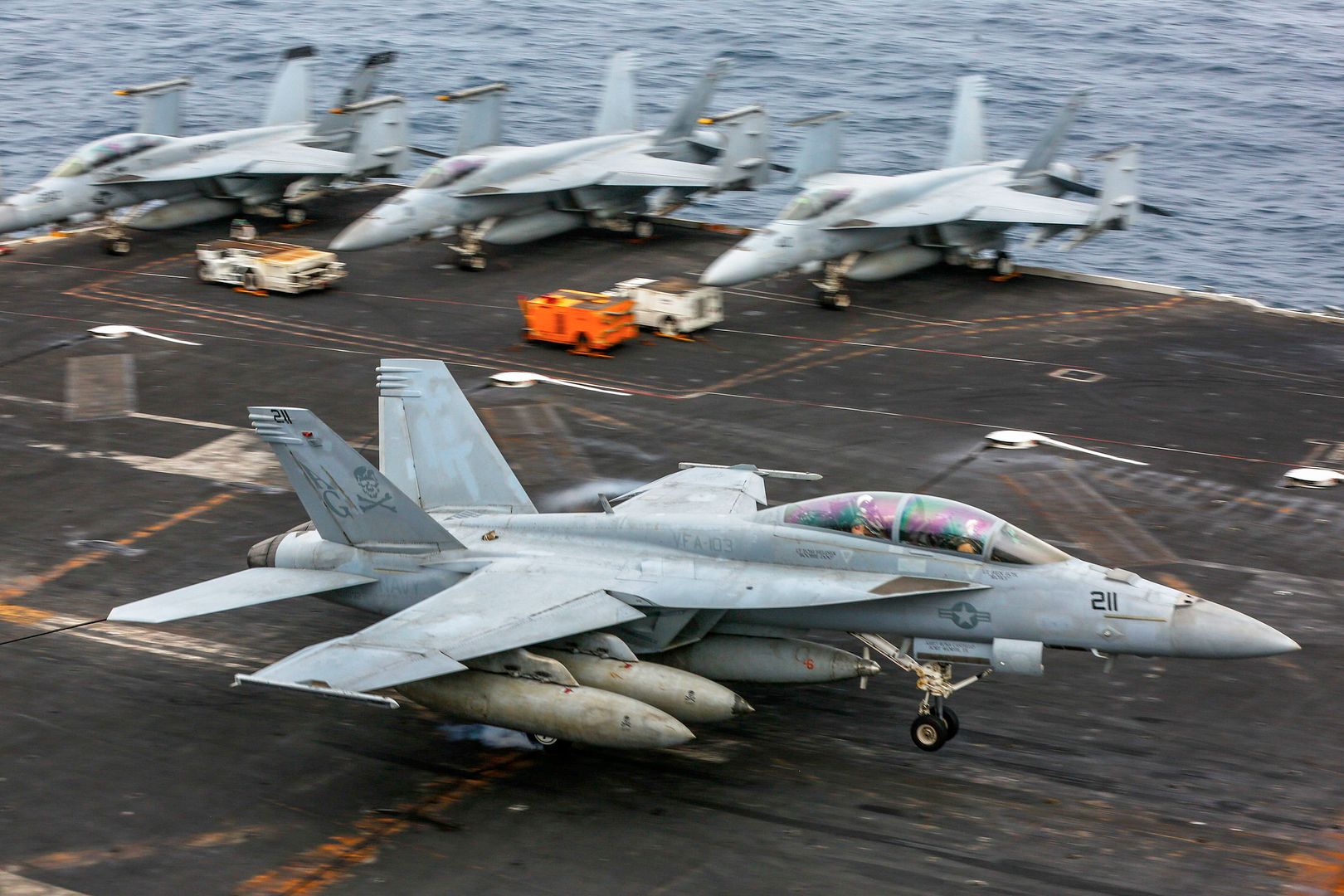
ARABIAN SEA (Sept. 12, 2019) An F/A-18E Super Hornet attached to the Pukin' Dogs of Strike Fighter Squadron (VFA) 143 launches from the flight deck of the aircraft carrier USS Abraham Lincoln (CVN 72). The Abraham Lincoln Carrier Strike Group is deployed to the U.S. 5th Fleet area of operations in support of naval operations to ensure maritime stability and security in the Central Region, connecting the Mediterranean and the Pacific through the western Indian Ocean and three strategic choke points. With Abraham Lincoln as the flagship, deployed strike group assets include staffs, ships and aircraft of Carrier Strike Group (CSG) 12, Destroyer Squadron (DESRON) 2, the guided-missile cruiser USS Leyte Gulf (CG 55) and Carrier Air Wing (CVW) 7. (U.S. Navy photo by Mass Communication Specialist 3rd Class Tristan Kyle Labuguen/Released)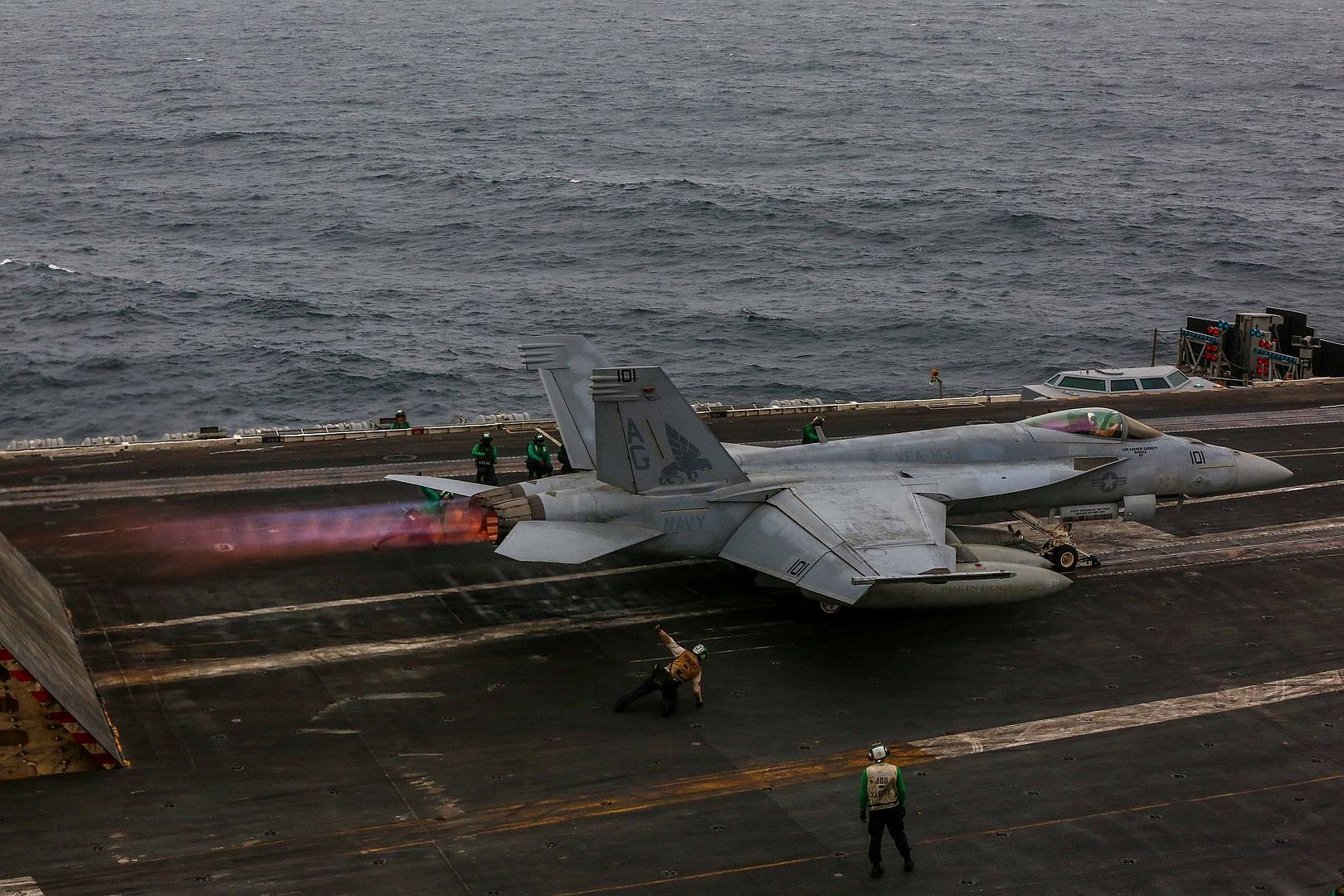
Airbus delivered its 9,000th #A320( an A320-NEO) Family aircraft joining EasyJet's all Airbus fleet!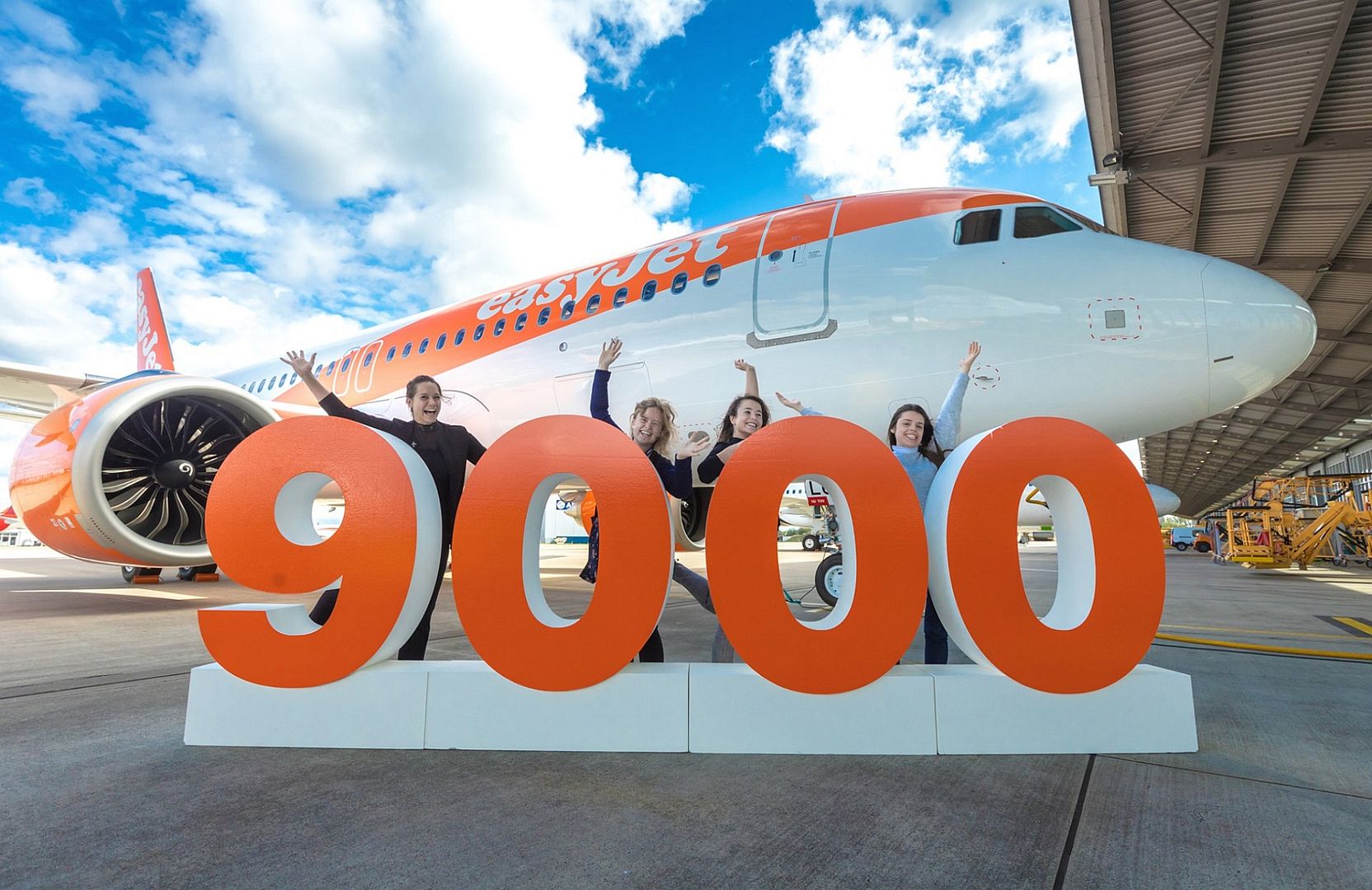
-
NATIONAL HARBOR, Md. (AFNS) --
The Air Force?s all-new advanced trainer aircraft, the T-X, has officially been named the T-7A Red Hawk.
Acting Secretary of the Air Force Matthew Donovan made the announcement during his speech at the 2019 Air Force Association?s Air, Space and Cyber Conference in National Harbor, Sept. 16.
Donovan was joined on stage by one of the original Tuskegee Airmen, Col. Charles McGee, who flew more than 400 combat missions in World War II, Korea and Vietnam. Also seated in the audience were members of the East Coast Chapter of the Tuskegee Airmen.
After a short video highlighting the aircraft?s lineage, Donovan said, ?ladies and gentlemen, I present to you the newest Red Tail!? A drape was then lifted to reveal a quarter-scale model of a T-7A Red Hawk painted in a distinct, red-tailed color scheme.
?The name Red Hawk honors the legacy of Tuskegee Airmen and pays homage to their signature red-tailed aircraft from World War II,? Donovan said. ?The name is also a tribute to the Curtiss P-40 Warhawk, an American fighter aircraft that first flew in 1938 and was flown by the 99th Fighter Squadron, the U.S. Army Air Forces? first African American fighter squadron.?
The Tuskegee Airmen subsequently painted their Republic P-47 Thunderbolts and North American P-51 Mustangs with a red-tailed paint scheme.
The T-7A Red Hawk, manufactured by Boeing, introduces capabilities that prepare pilots for fifth generation fighters, including high-G environment, information and sensor management, high angle of attack flight characteristics, night operations and transferable air-to-air and air-to-ground skills.
?The T-7A will be the staple of a new generation of aircraft,? Donovan said. ?The Red Hawk offers advanced capabilities for training tomorrow?s pilots on data links, simulated radar, smart weapons, defensive management systems, as well as synthetic training capabilities.?
Along with updated technology and performance capabilities, the T-7A will be accompanied by enhanced simulators and the ability to update system software faster and more seamlessly. The plane was also designed with maintainers in mind by utilizing easy-to-reach and open access panels.
The T-7A features twin tails, slats and big leading-edge root extensions that provide deft handling at low speeds, allowing it to fly in a way that better approximates real world demands and is specifically designed to prepare pilots for fifth-generation aircraft. The aircraft?s single engine generates nearly three times more thrust than the dual engines of the T-38C Talon which it is replacing.
?The distance between the T-38 and an F-35 is night and day,? said Air Force Chief of Staff General David L. Goldfein. ?But with the T-7A the distance is much, much smaller, and that?s important because it means the pilots trained on it will be that much better, that much faster at a time when we must be able to train to the speed of the threat.?
A $9.2 billion contract awarded to Boeing in September 2018 calls for 351 T-7A aircraft, 46 simulators and associated ground equipment to be delivered and installed, replacing Air Education and Training Command?s 57-year-old fleet of T-38C Talons.
The first T-7A aircraft and simulators are scheduled to arrive at Joint Base San Antonio-Randolph, Texas, in 2023. All undergraduate pilot training bases will eventually transition from the T-38C to the T-7A. Those bases include Columbus Air Force Base, Mississippi; Laughlin AFB and Sheppard AFB, Texas; and Vance AFB, Oklahoma.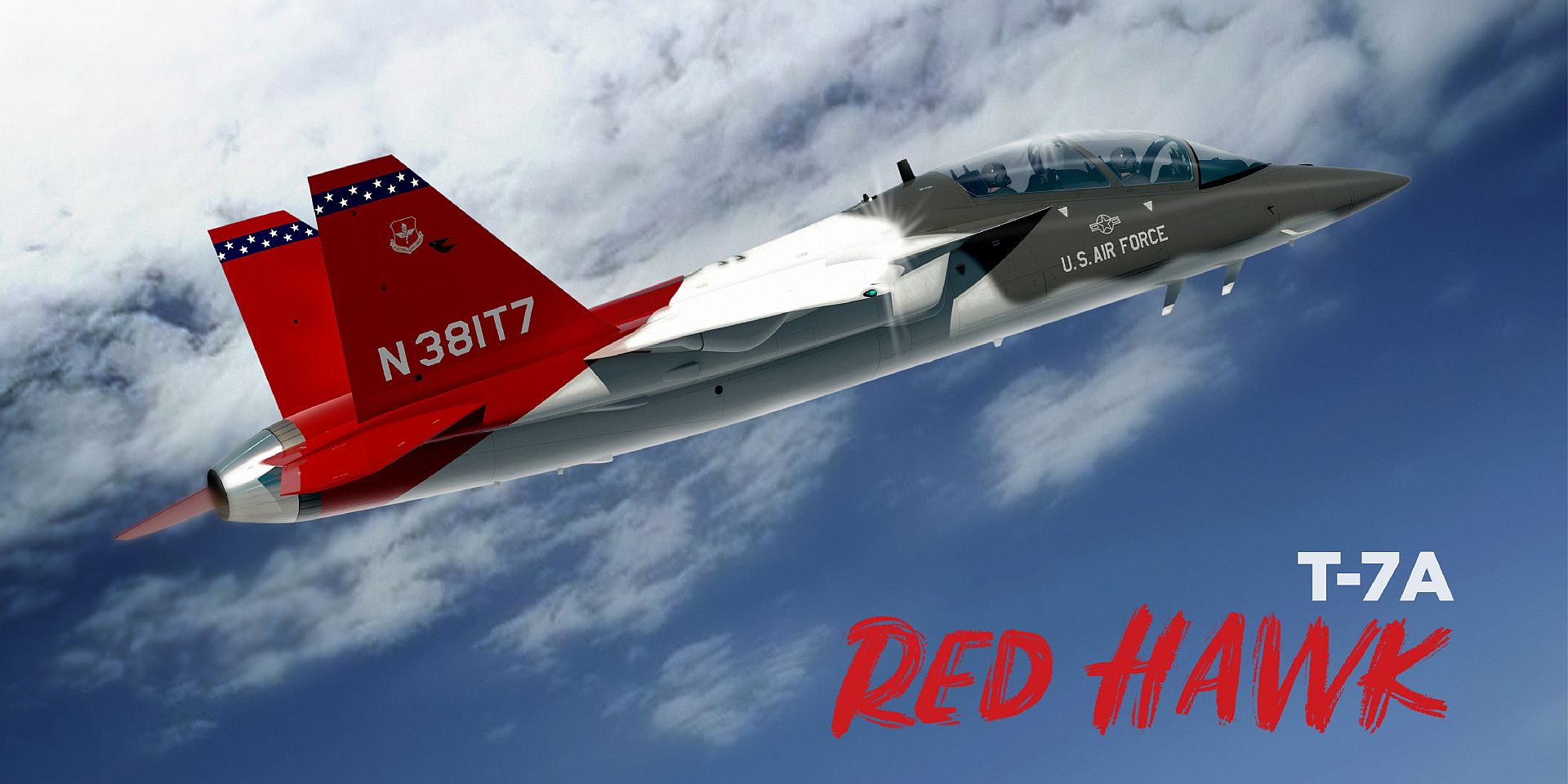
A U.S. Air Force F-16 fighting falcon takes off at Yokota Air Base, Japan, during the 2019 Japanese-American Friendship Festival, Sept. 14, 2019, at Yokota Air Base, Japan. A F-16 assigned to the 80th Fighter Squadron, Kunsan Air Base, Republic of Korea conducted F-16 Flyby demonstration during the festival. The festival gives community members a chance to come onto Yokota to see static aircraft, witness military demonstrations, learn about the capabilities and training done at Yokota and to meet with the service members who work and live on base. (U.S. Air Force photo by Yasuo Osakabe)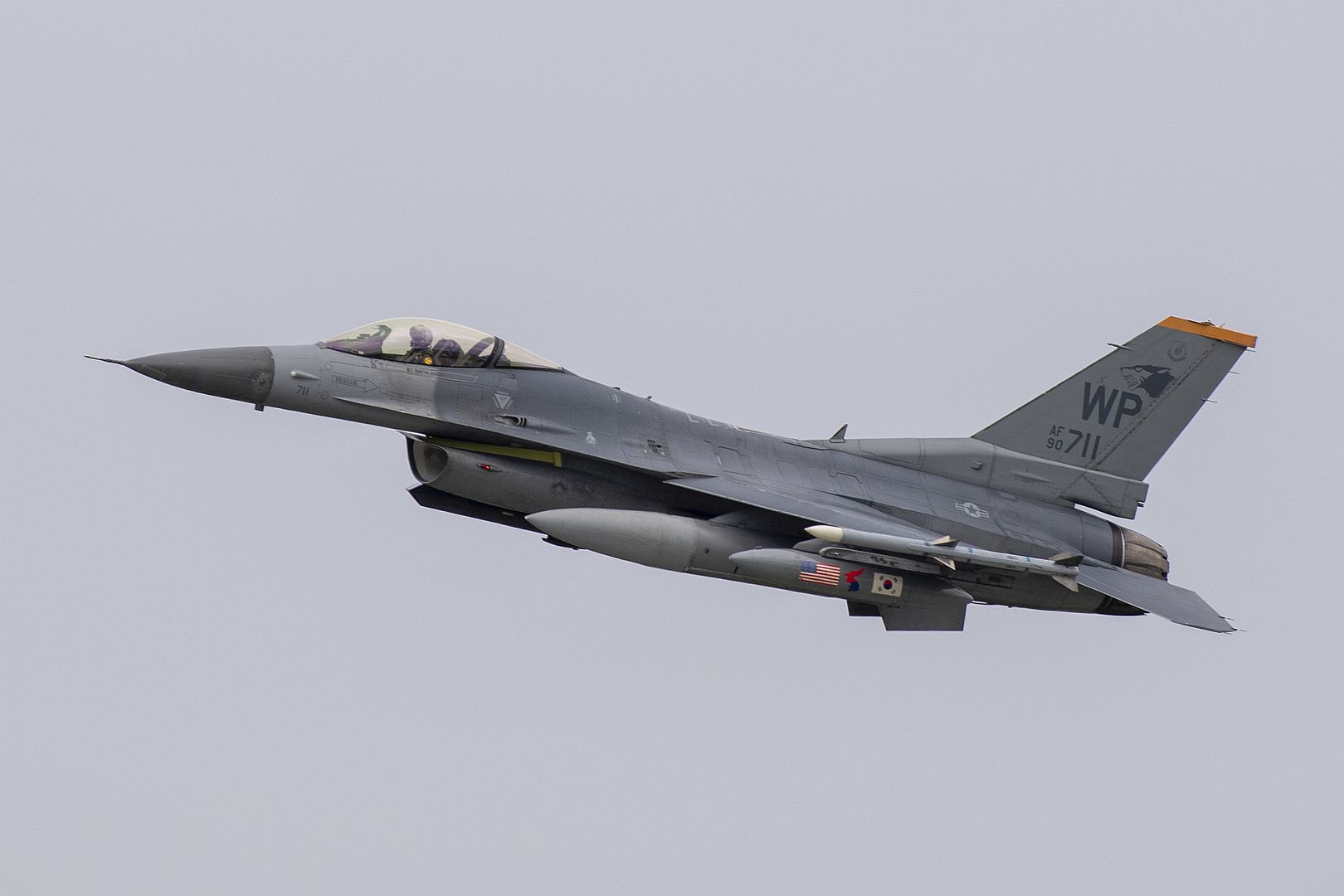
An F-22 Raptor and P-51 Mustang fly side-by-side during the heritage flight Sept. 14, 2019, at Dover Air Force Base, Del. This year's Thunder Over Dover Air Show featured more than 20 aircraft static displays, as well as numerous aerial demonstrations. (U.S. Air Force photo by Roland Balik)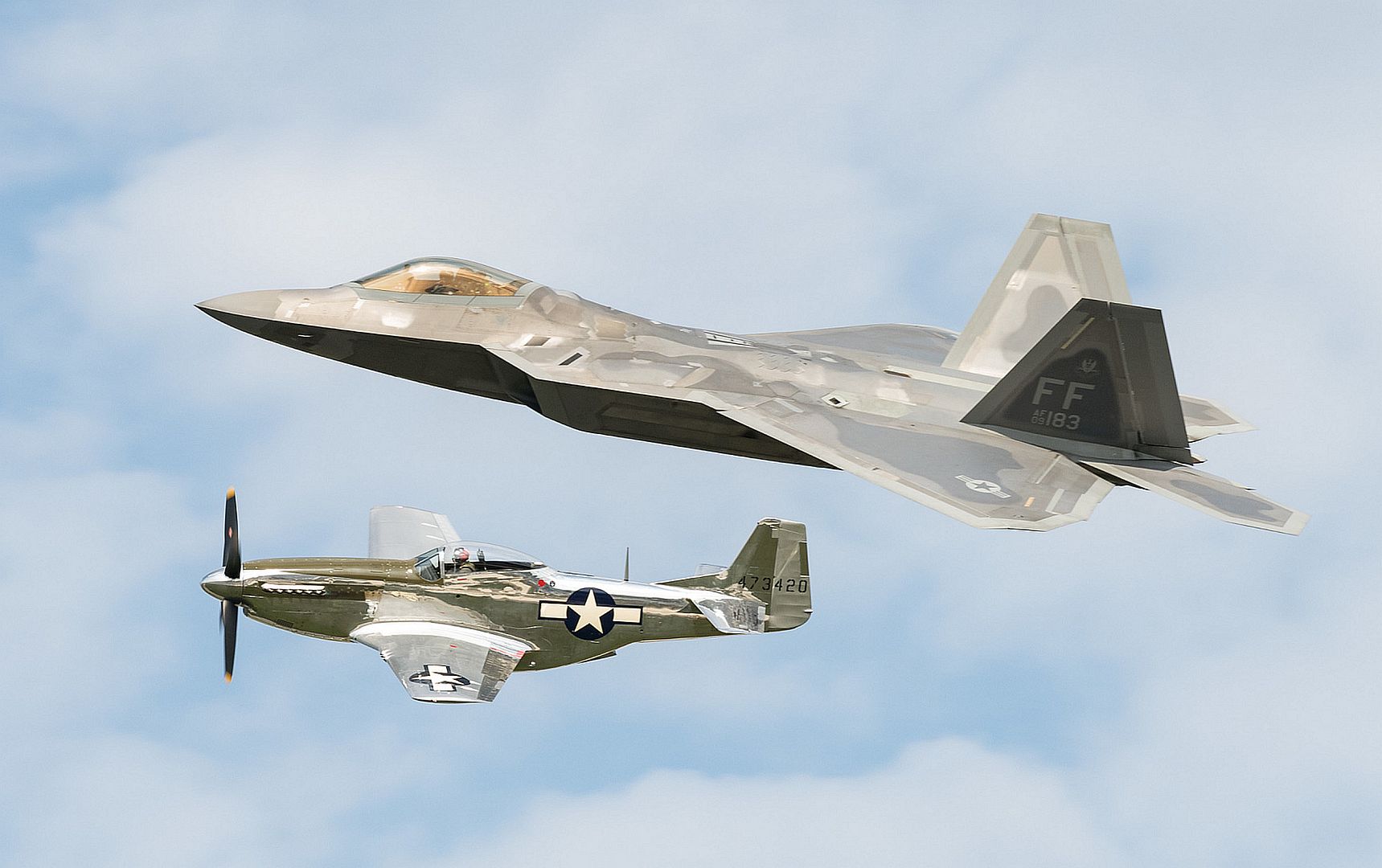
Randy Ball pilots a Russian MiG-17 at the 2019 Thunder Over Dover Air Show, Sept. 14, 2019, at Dover Air Force Base, Del. The MiG was one of eight military aircraft that flew during the show. (U.S. Air Force photo by Mauricio Campino)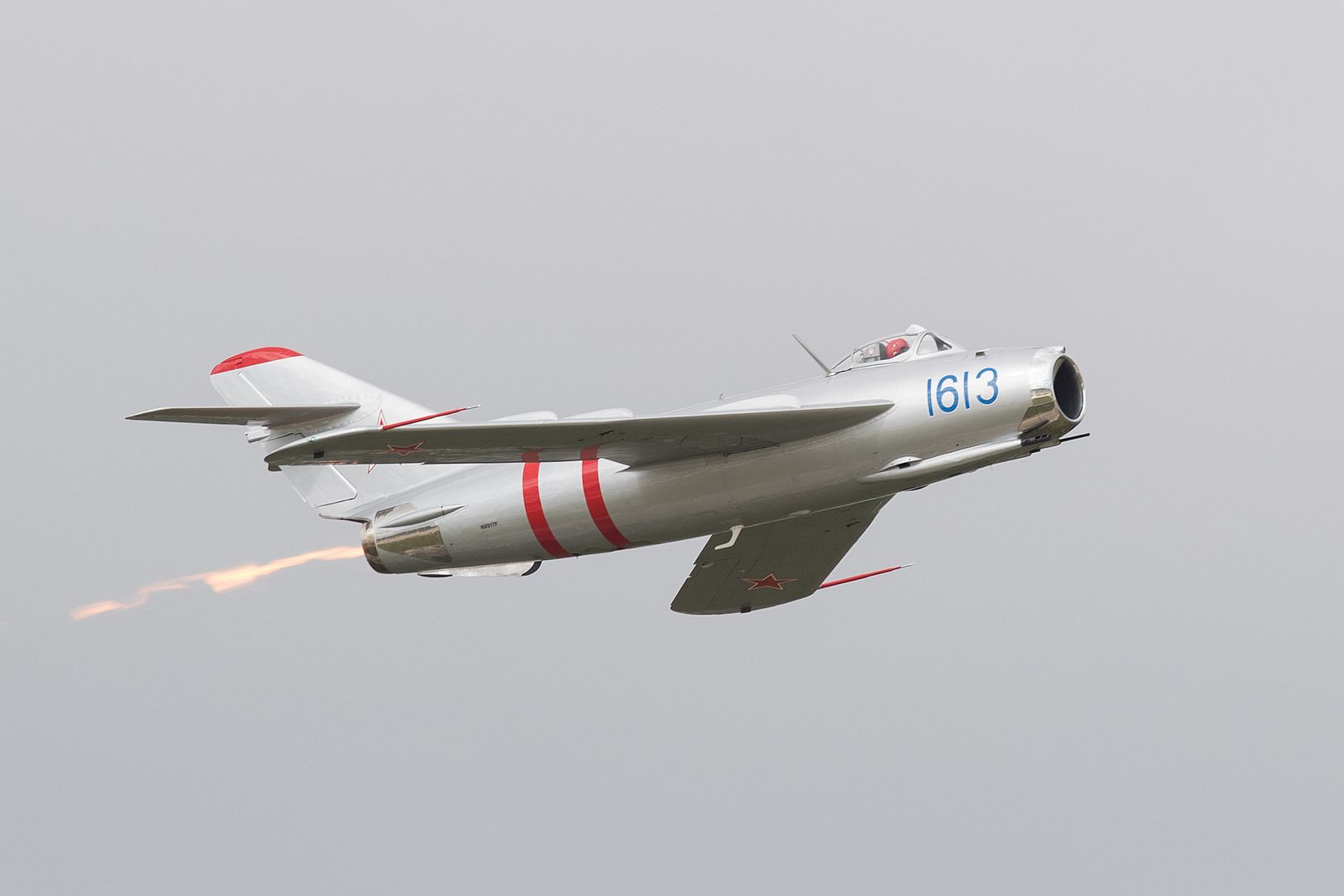
A C-5M Super Galaxy flies over the crowd during the 2019 Thunder Over Dover Air Show, Sept. 15, 2019, at Dover Air Force Base, Del. The event featured over 20 aircraft static displays, as well as numerous aerial demonstrations. (U.S. Air Force photo by Senior Airman Christopher Quail)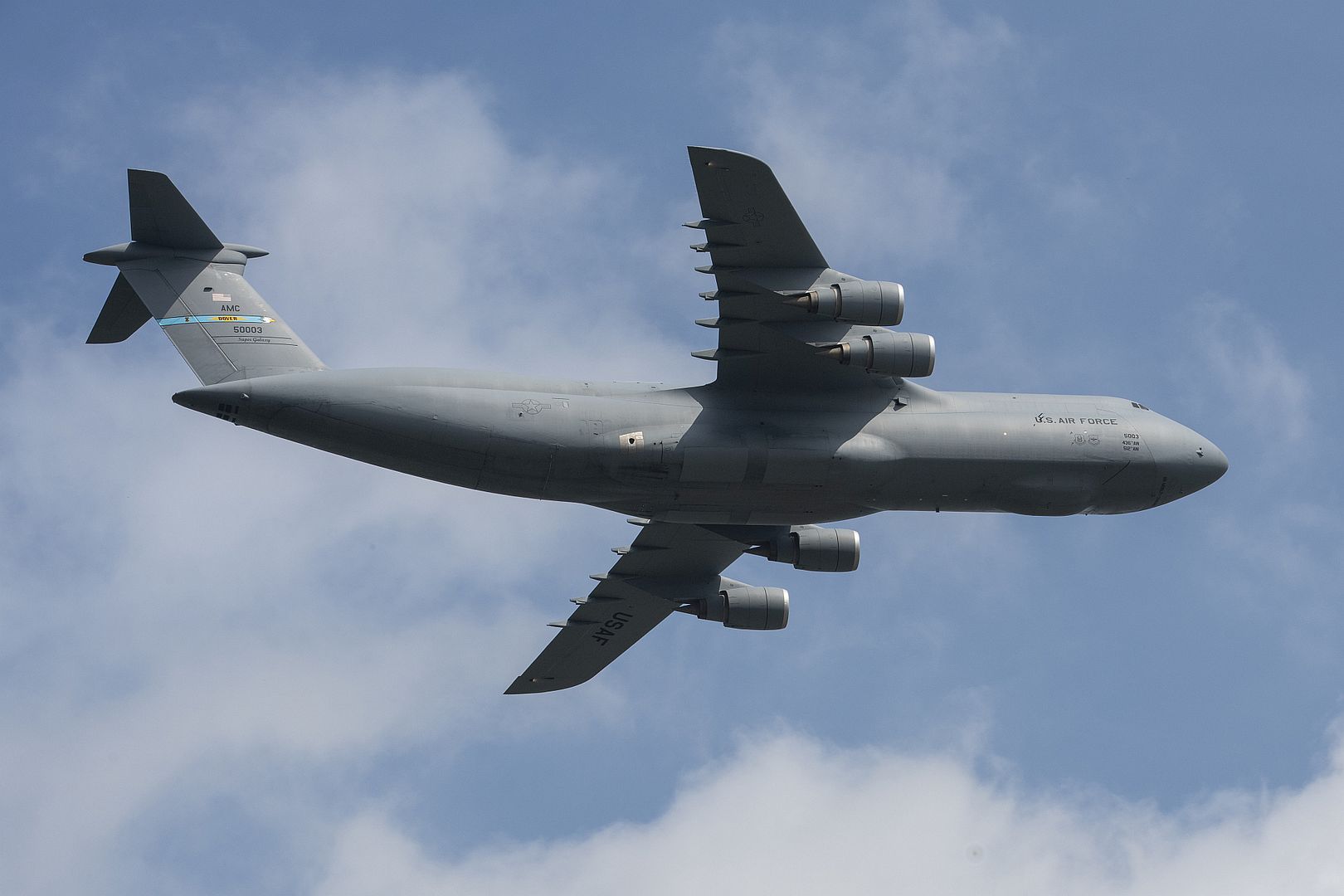
A World War II era B-25 Mitchell ?Panchito? bomber flies over the crowd during the 2019 Thunder Over Dover Air Show, Sept. 13, 2019, at Dover Air Force Base, Del. The show featured aerial performances from military and civilian aircraft. (U.S. Air Force photo by Mauricio Campino)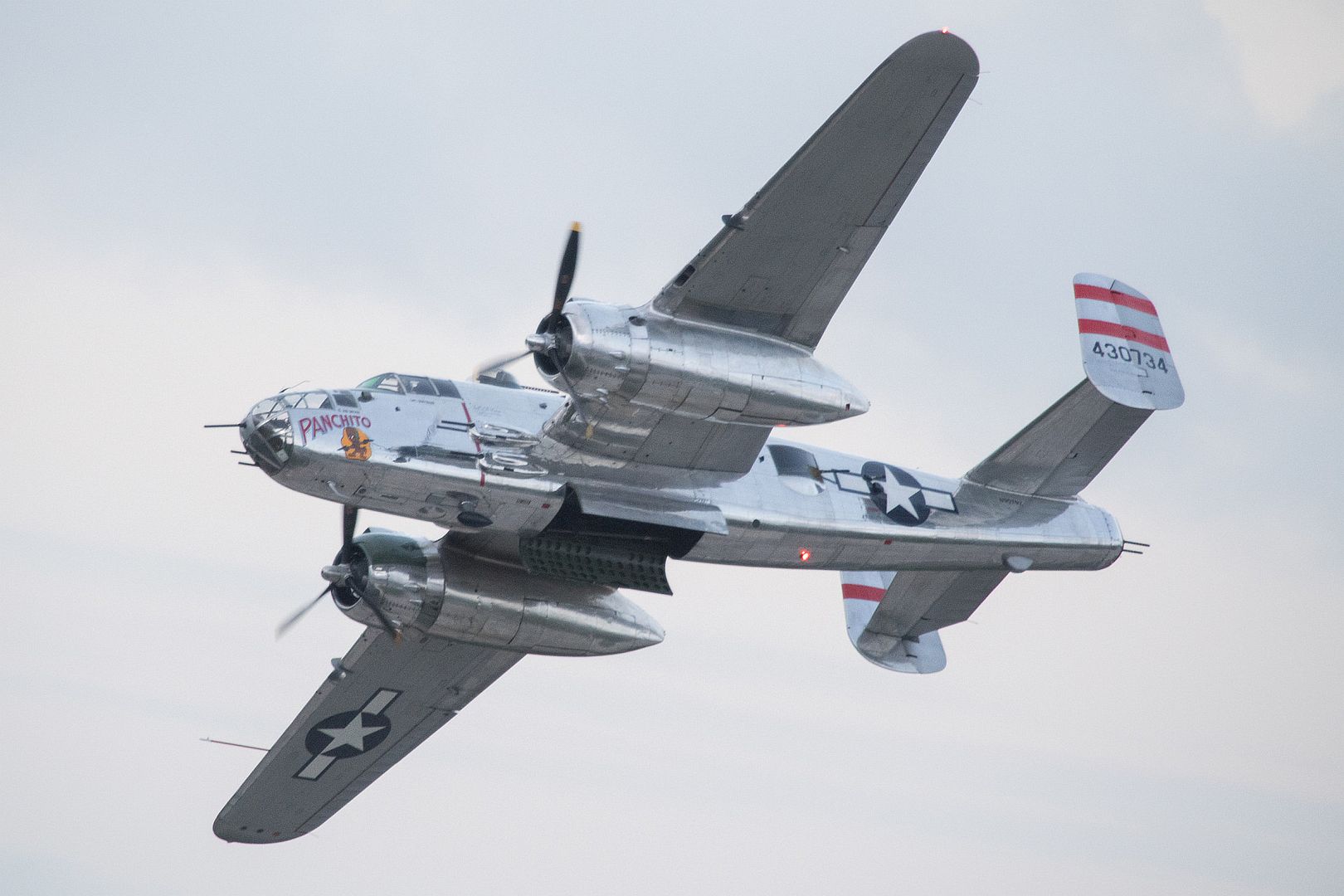
EGLIN AIR FORCE BASE, Fla. --
The 40th Flight Test Squadron focuses on executing fighter aircraft development tests. This squadron highlights the Air Force Test Center?s relentless focus on the warfighter by providing improved technology to aircraft systems with every single test mission the 40th FLTS Airmen accomplish.
?Our primary responsibility is to execute fighter developmental tests,? said Lt. Col. James Pate, the 40th FLTS commander. ?We are responsible for a fleet of F-15Cs, F-15Es, F-16s and an A-10 detachment. Our other responsibility is we maintain areas of expertise in test engineering and management when it comes to some very specific types of flight test.?
Members with the 40th FLTS take an operational idea and turn it into reality by working as an integrative team to provide adaptive solutions.
?On the developmental side, if we?re doing envelope expansion, flight sciences, or anything related to air vehicle systems, our engineering cadre is at the center of expertise and excellence for that inside the 96th Test Wing,? said Pate.
Flying higher and faster in unique operational environments is just one of the 40th FLTS?s specialties. They break barriers through precise execution of flight plans.
?The objective of AFTC is to deliver relevant results,? said Pate. ?Our job in AFTC is to bridge the gap between the requirements that have been given to us from the warfighter and the engineers who are actually designing the system in the developmental phase.?
?Our personnel are very current operators and they?re educated and experienced testers,? said Pate. ?We make sure we can preserve that speed of relevancy to provide decision-makers with data to make calls.?
Although the operational warfighter may not immediately feel the effects of the 40th FLTS?s efforts, the long-term results are crucial to refining aircraft and weapon systems for maximum success.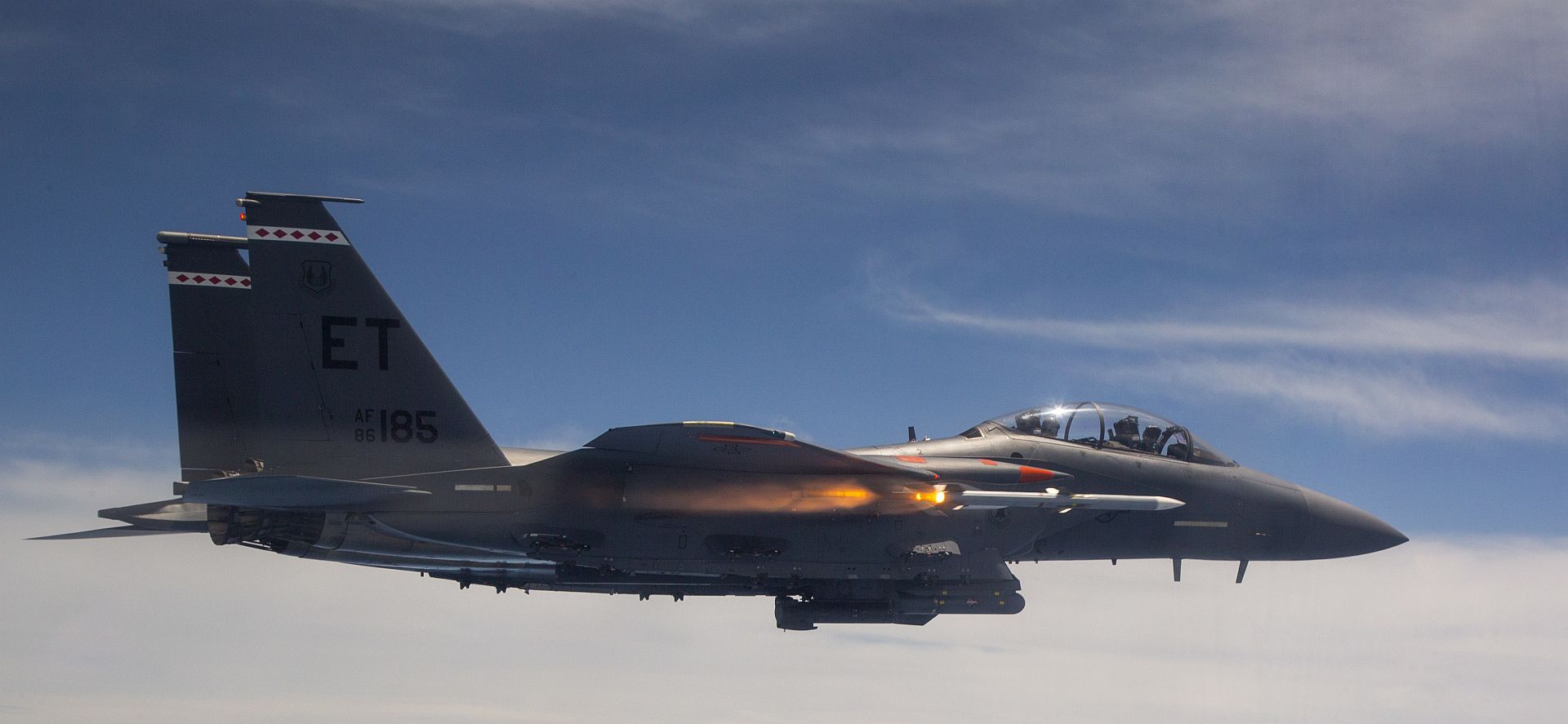
CHUUK, Federated States of Micronesia (NNS) -- A US Navy P-8A Poseidon aircraft from Patrol Squadron (VP) 5, the ?Mad Foxes," located a vessel Sep. 14 that had been missing nearly a week.
U.S. Coast Guard Sector Guam received a report of an overdue vessel Sept. 10 after a vessel carrying four adults and three children went missing from Lukunor Atoll Sept. 8.
The 7th Fleet Maritime Patrol and Reconnaissance Aircraft (MPRA) began supporting the search and rescue (SAR) effort Sep. 11. The squadron moved on short notice from Kadena Air Force Base, Japan to Andersen Air Force Base, Guam.The VP-5 aircraft located the vessel mid-afternoon on Sep. 14, and notified the U.S. Coast Guard after finding it dead in the water.
The aircraft remained on station while a patrol craft from the Federated States of Micronesia was notified of the vessel's location and was able to take all seven passengers aboard unassisted. The passengers were transported to a hospital in Pohnpei.
The ?Mad Foxes?, based in Jacksonville, Florida, are operating out of Kadena Air Force Base in Okinawa, Japan. The detachment is conducting maritime patrol and reconnaissance as well as theater outreach operations within U.S. 7th Fleet area of operations.
(U.S. Navy photo by Mass Communication Specialist 1st Class Joshua Hammond)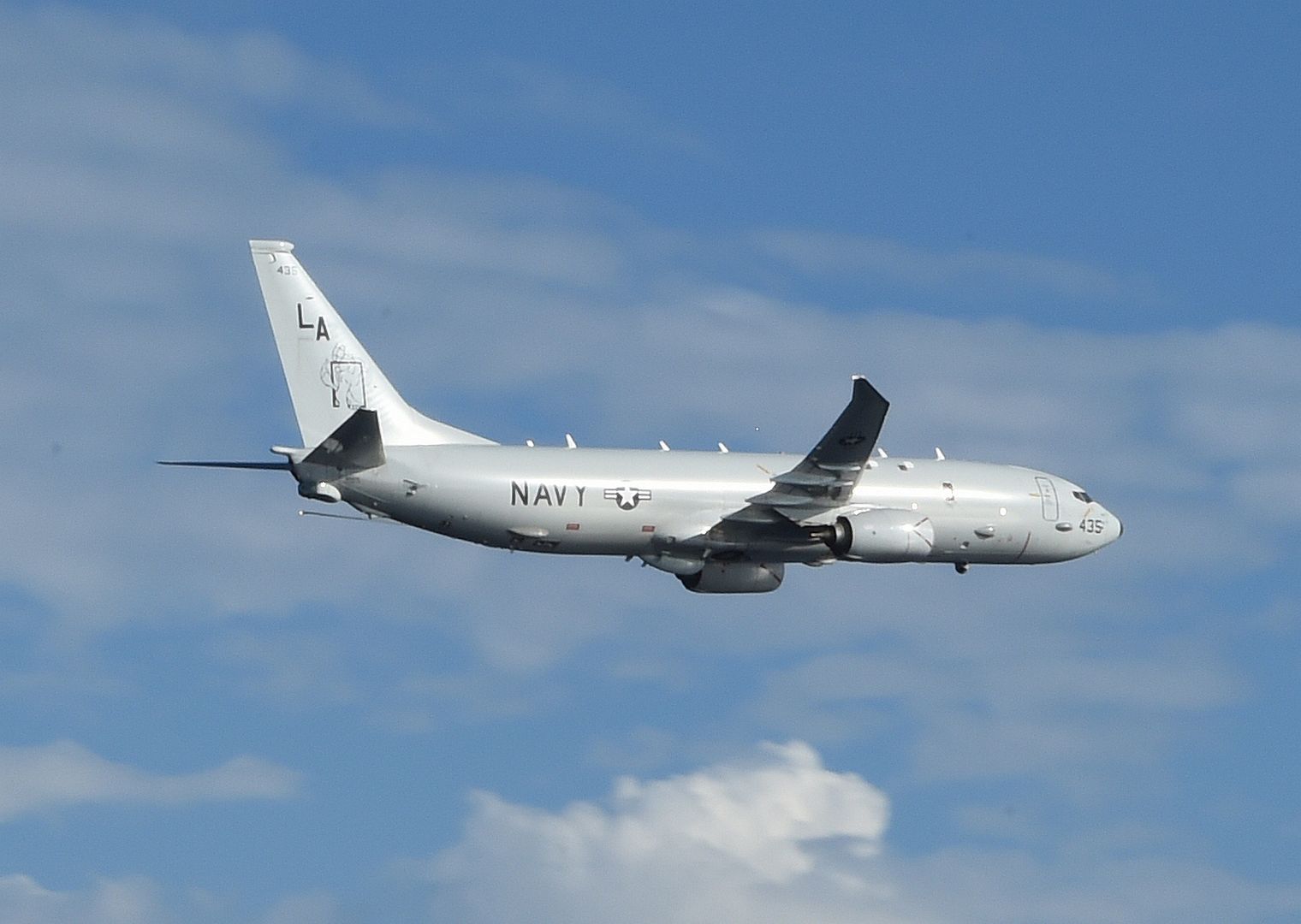
VIENNA, September 16, 2019 ? Boeing (NYSE: BA) will provide GainJet, a global private jet charter operator and management company, a suite of Jeppesen flight operation digital solutions including Operator, JetPlanner Pro, FliteDeck Pro X and Aviator to optimize its fleet operation.
?We have a longstanding relationship with Boeing, and share a commitment to quality,? said Capt. Ramsey Shaban, CEO of GainJet. ?With our growing fleet of over 20 VIP aircraft, including four Boeing Business Jets, and an extensive operation that serves VIP passengers from all over the world, their Jeppesen digital solutions strengthen our service offerings and enable us to be even more responsive to the needs of our customers.?
These Jeppesen digital solutions provide GainJet with tools that integrate key business aviation functionalities in a one-stop shop, self-service environment.
?This agreement highlights the strength of our comprehensive suite of integrated offerings,? said William Ampofo, vice president, Business & General Aviation, Boeing Global Services. ?Bringing together these tools into a single consolidated ecosystem creates measurable efficiency for our customers that is world-class.?
For details about the Jeppesen digital solutions, visit www.Jeppesen.com.
GainJet Aviation Group (www.gainjet.com) is a VIP aircraft charter operator and Management Company with its headquarters based in Athens, Greece. The company also has a subsidiary AOC operation based in Shannon, Ireland ? GainJet Ireland (www.gainjetireland.com).
GainJet specializes in primarily dealing with large groups of VIP passengers and focuses on ensuring that everything is meticulously prepared and delivered. The group?s current fleet of over 20 VIP aircraft (GainJet Aviation S.A and GainJet Ireland) is positioned throughout Europe, the Middle-East and Africa and consists of VIP Boeing 757, VIP Boeing 737, Boeing Business Jet (BBJ), Gulfstream G650, G550, G450, Bombardier Global 5000, Challenger 605, Challenger 604, Learjet 60XR, Embraer Legacy 600, Embraer Lineage 1000, VIP MD87, and Cessna Citation X. The group also specializes in medevac / air ambulance flights operated with its specially equipped medevac CL604 fleet.
Boeing is the world?s largest aerospace company and leading provider of commercial airplanes, defense, space and security systems, and global services. As the top U.S. exporter, the company supports commercial and government customers in more than 150 countries. Boeing employs more than 150,000 people worldwide and leverages the talents of a global supplier base. Building on a legacy of aerospace leadership, Boeing continues to lead in technology and innovation, deliver for its customers and invest in its people and future growth.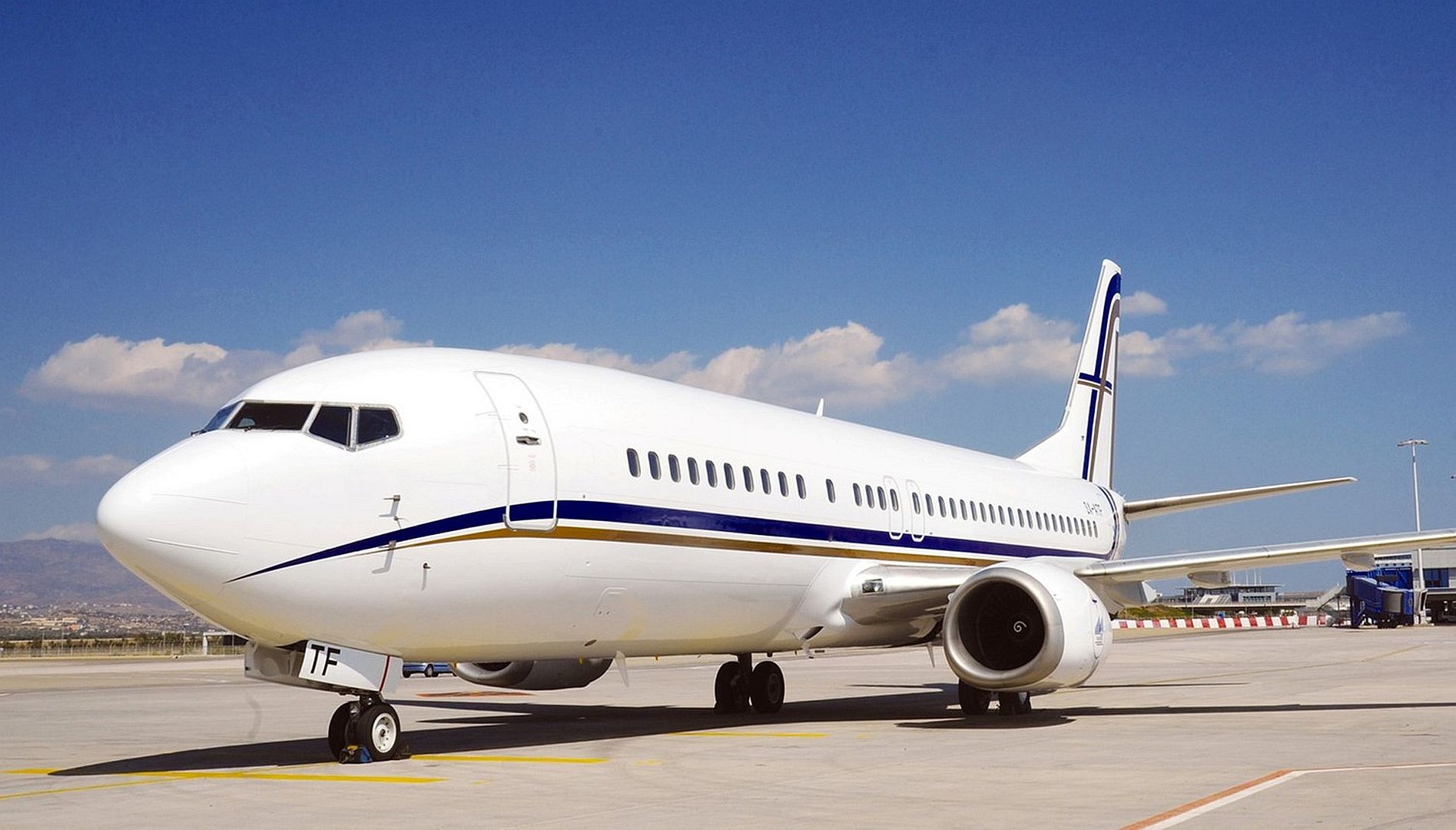
-
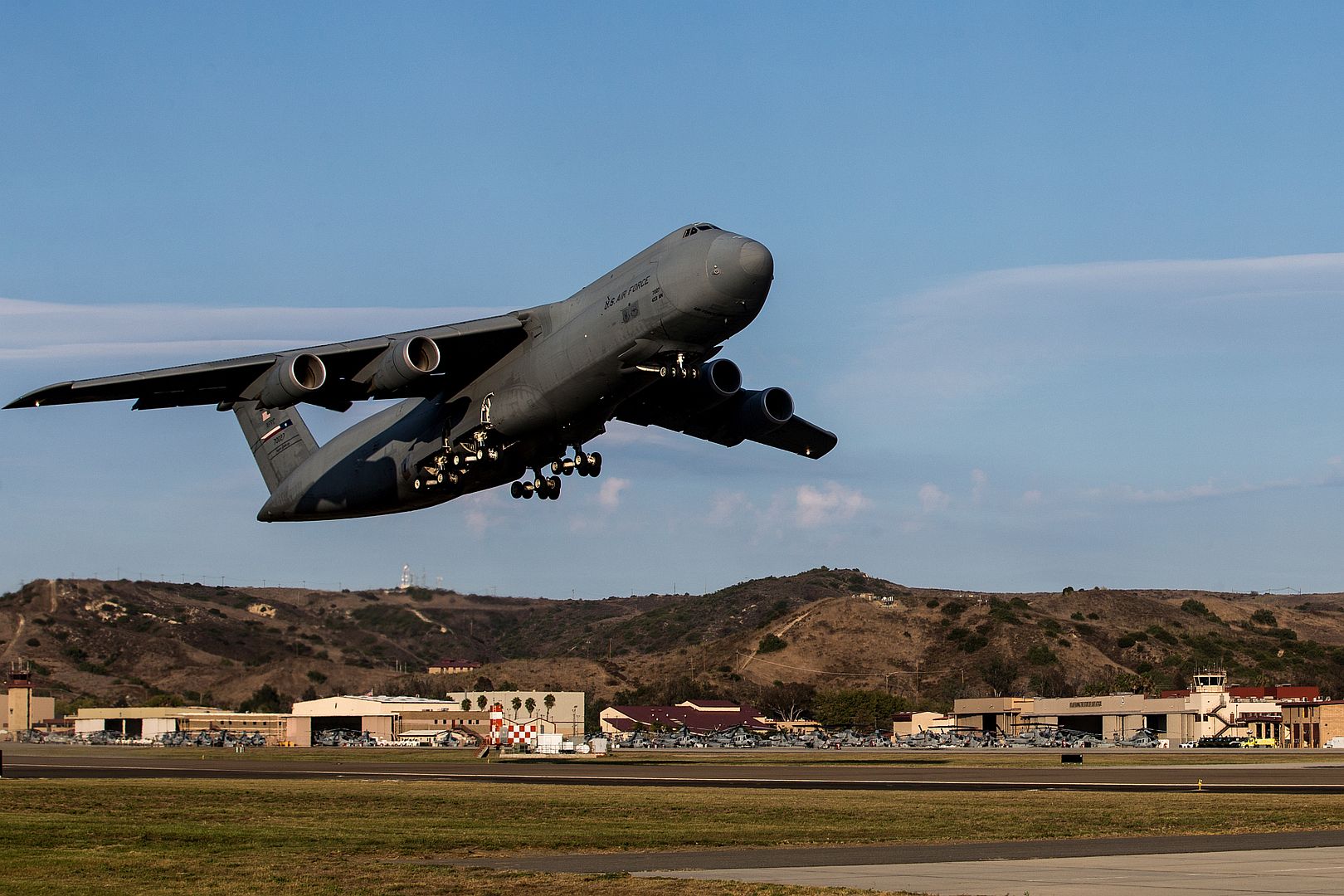
U.S. Air Force Airmen take off in a C-5M Super Galaxy from Marine Corps Air Station Camp Pendleton, California, Sept. 16, 2019. The C-5M was a visiting U.S. Air Force aircraft from 433rd Airlift Wing, and was here as part of a dual service training exercise. The air station provides the 1st Marine Expeditionary Force and 3rd Marine Aircraft Wing with flexible deployment options. (U.S. Marine Corps photo by Lance Cpl. Alison Dostie)
ATLANTIC OCEAN (Sept. 15, 2019) An E/A-18G Growler, assigned to the "Zappers" of Electronic Attack Squadron (VAQ) 130, lands on the flight deck aboard the aircraft carrier USS Dwight D. Eisenhower (CVN 69). Ike, with embarked Carrier Air Wing 3, is underway conducting the Tailored Ship's Training Availability (TSTA) and Final Evaluation Problem (FEP) as part of the basic phase of the Optimized Fleet Response Plan. (U.S. Navy photo by Mass Communication Specialist 3rd Class Kaleb J. Sarten)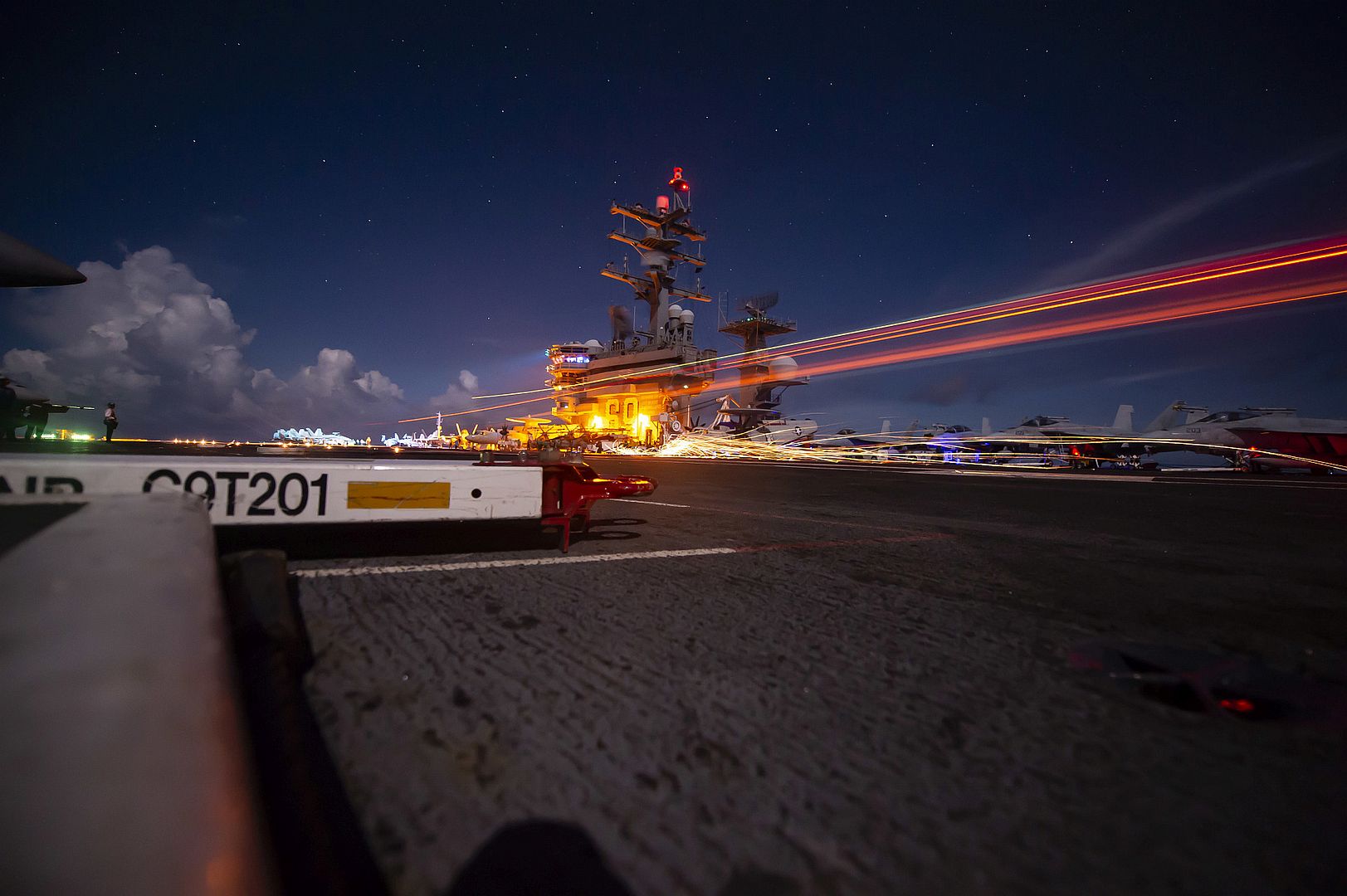
ARABIAN SEA (Sept. 16, 2019) An F/A-18E Super Hornet attached to the Sidewinders of Strike Fighter Squadron (VFA) 86 launches from the flight deck of the aircraft carrier USS Abraham Lincoln (CVN 72). The Abraham Lincoln Carrier Strike Group is deployed to the U.S. 5th Fleet area of operations in support of naval operations to ensure maritime stability and security in the Central Region, connecting the Mediterranean and the Pacific through the western Indian Ocean and three strategic choke points. With Abraham Lincoln as the flagship, deployed strike group assets include staffs, ships and aircraft of Carrier Strike Group (CSG) 12, Destroyer Squadron (DESRON) 2, the guided-missile cruiser USS Leyte Gulf (CG 55) and Carrier Air Wing (CVW) 7. (U.S. Navy photo by Mass Communication Specialist 3rd Class Michael Singley/Released)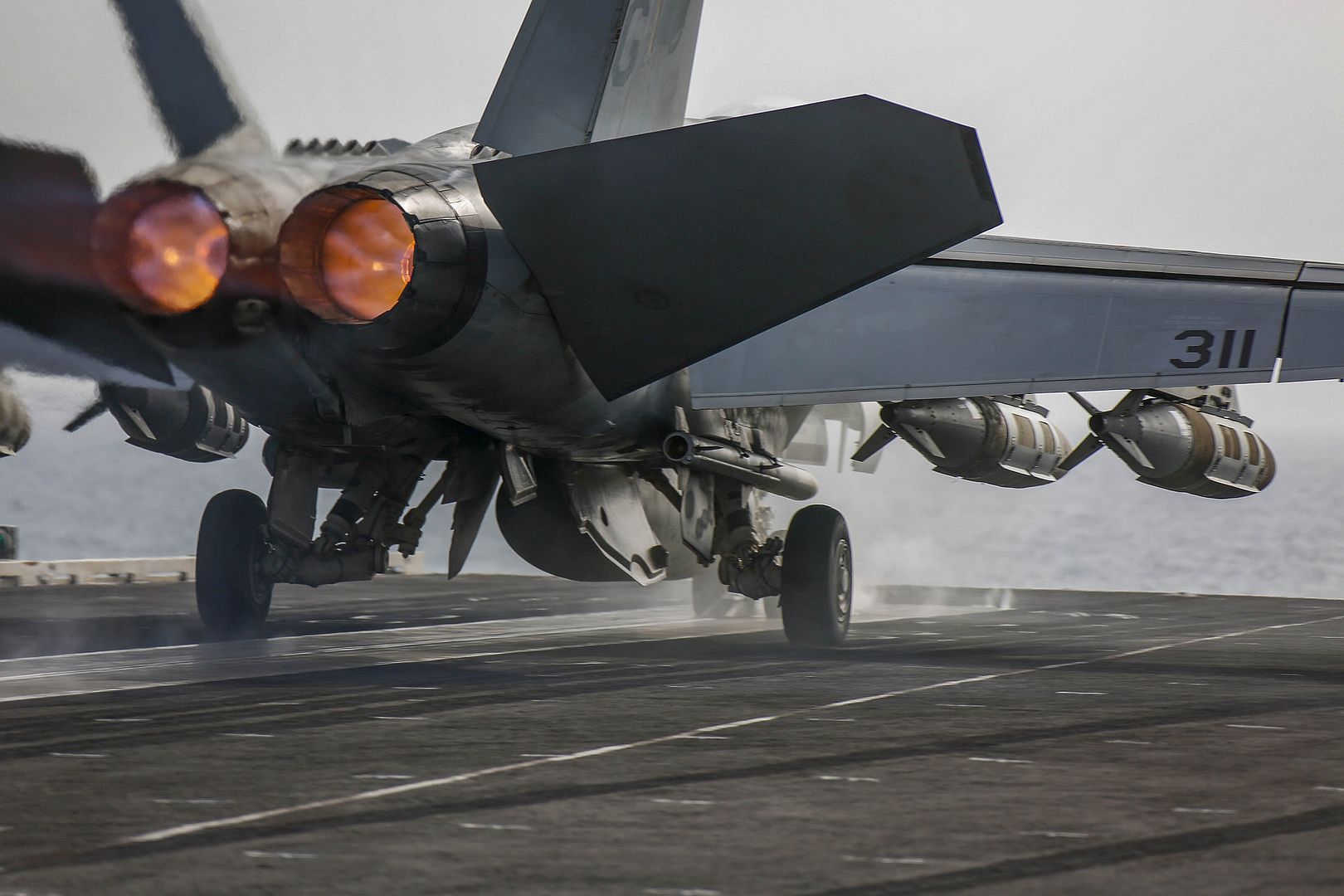
ARABIAN SEA (Sept. 16, 2019) An F/A-18F Super Hornet attached to the Jolly Rogers of Strike Fighter Squadron (VFA) 103 launches from the flight deck of the aircraft carrier USS Abraham Lincoln (CVN 72). The Abraham Lincoln Carrier Strike Group is deployed to the U.S. 5th Fleet area of operations in support of naval operations to ensure maritime stability and security in the Central Region, connecting the Mediterranean and the Pacific through the western Indian Ocean and three strategic choke points. With Abraham Lincoln as the flagship, deployed strike group assets include staffs, ships and aircraft of Carrier Strike Group (CSG) 12, Destroyer Squadron (DESRON) 2, the guided-missile cruiser USS Leyte Gulf (CG 55) and Carrier Air Wing (CVW) 7. (U.S. Navy photo by Mass Communication Specialist 3rd Class Michael Singley/Released)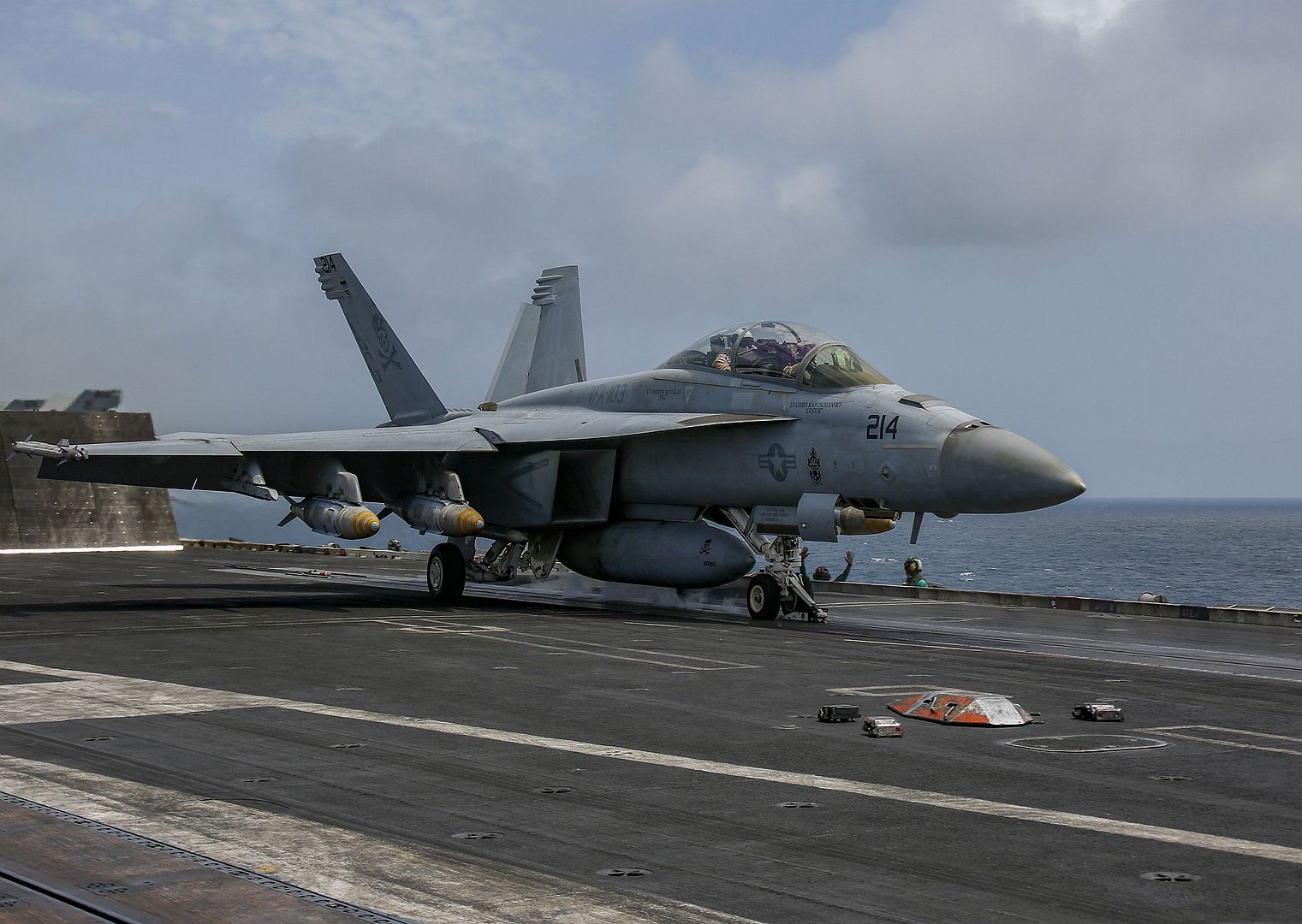
ARABIAN SEA (Sept. 16, 2019) An F/A-18E Super Hornet attached to the Fist of the Fleet of Strike Fighter Squadron (VFA) 25 launches from the flight deck of the aircraft carrier USS Abraham Lincoln (CVN 72). The Abraham Lincoln Carrier Strike Group is deployed to the U.S. 5th Fleet area of operations in support of naval operations to ensure maritime stability and security in the Central Region, connecting the Mediterranean and the Pacific through the western Indian Ocean and three strategic choke points. With Abraham Lincoln as the flagship, deployed strike group assets include staffs, ships and aircraft of Carrier Strike Group (CSG) 12, Destroyer Squadron (DESRON) 2, the guided-missile cruiser USS Leyte Gulf (CG 55) and Carrier Air Wing (CVW) 7. (U.S. Navy photo by Mass Communication Specialist 3rd Class Michael Singley/Released)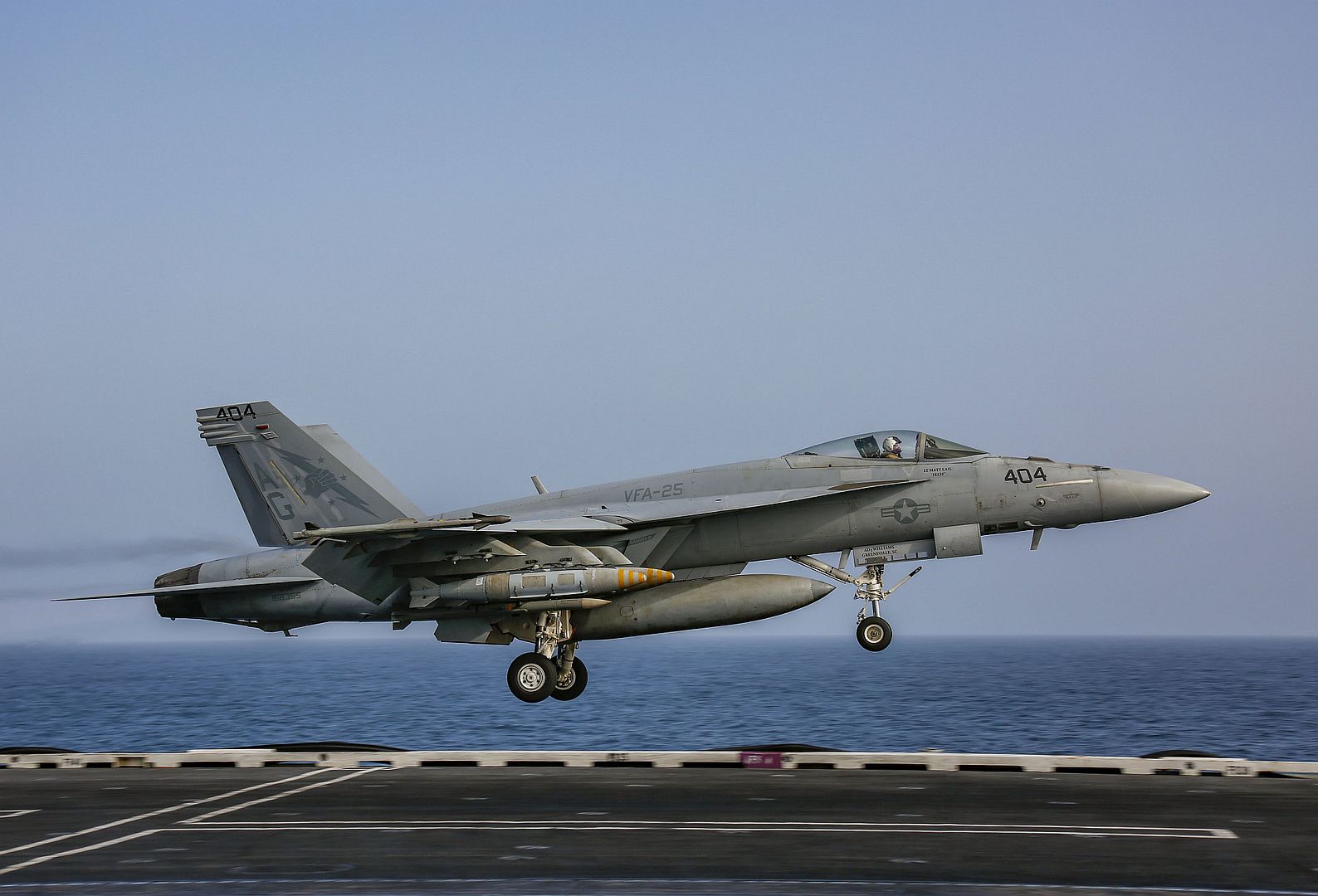
ARABIAN SEA (Sept. 16, 2019) An F/A-18E Super Hornet attached to the Sidewinders of Strike Fighter Squadron (VFA) 86 launches from the flight deck of the aircraft carrier USS Abraham Lincoln (CVN 72). The Abraham Lincoln Carrier Strike Group is deployed to the U.S. 5th Fleet area of operations in support of naval operations to ensure maritime stability and security in the Central Region, connecting the Mediterranean and the Pacific through the western Indian Ocean and three strategic choke points. With Abraham Lincoln as the flagship, deployed strike group assets include staffs, ships and aircraft of Carrier Strike Group (CSG) 12, Destroyer Squadron (DESRON) 2, the guided-missile cruiser USS Leyte Gulf (CG 55) and Carrier Air Wing (C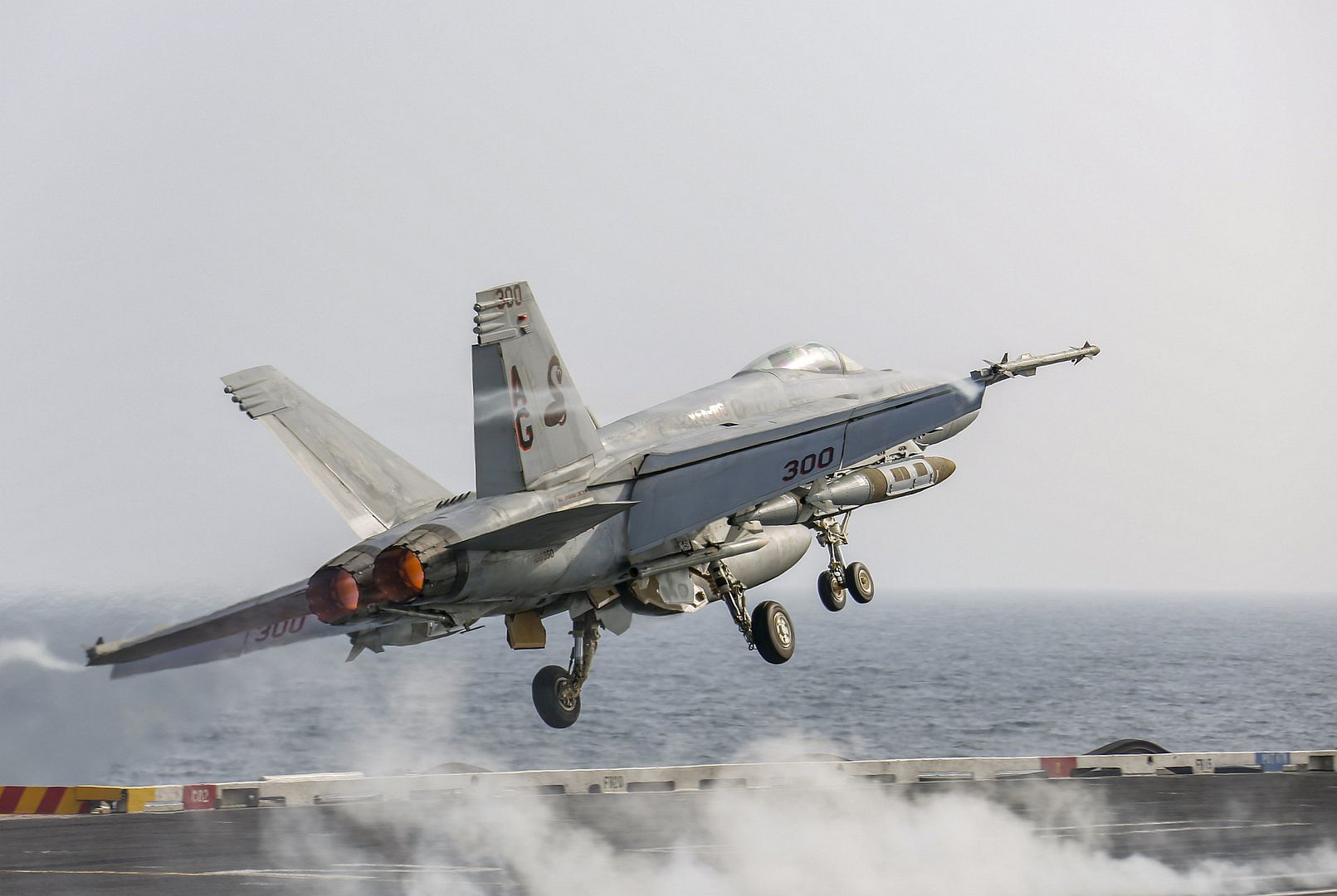
ARABIAN SEA (Sept. 16, 2019) An F/A-18F Super Hornet attached to the Jolly Rogers of Strike Fighter Squadron (VFA) 103 makes an arrested landing on the flight deck of the aircraft carrier USS Abraham Lincoln (CVN 72). The Abraham Lincoln Carrier Strike Group is deployed to the U.S. 5th Fleet area of operations in support of naval operations to ensure maritime stability and security in the Central Region, connecting the Mediterranean and the Pacific through the western Indian Ocean and three strategic choke points. With Abraham Lincoln as the flagship, deployed strike group assets include staffs, ships and aircraft of Carrier Strike Group (CSG) 12, Destroyer Squadron (DESRON) 2, the guided-missile cruiser USS Leyte Gulf (CG 55) and Carrier Air Wing (CVW) 7. (U.S. Navy photo by Mass Communication Specialist 3rd Class Michael Singley/Released)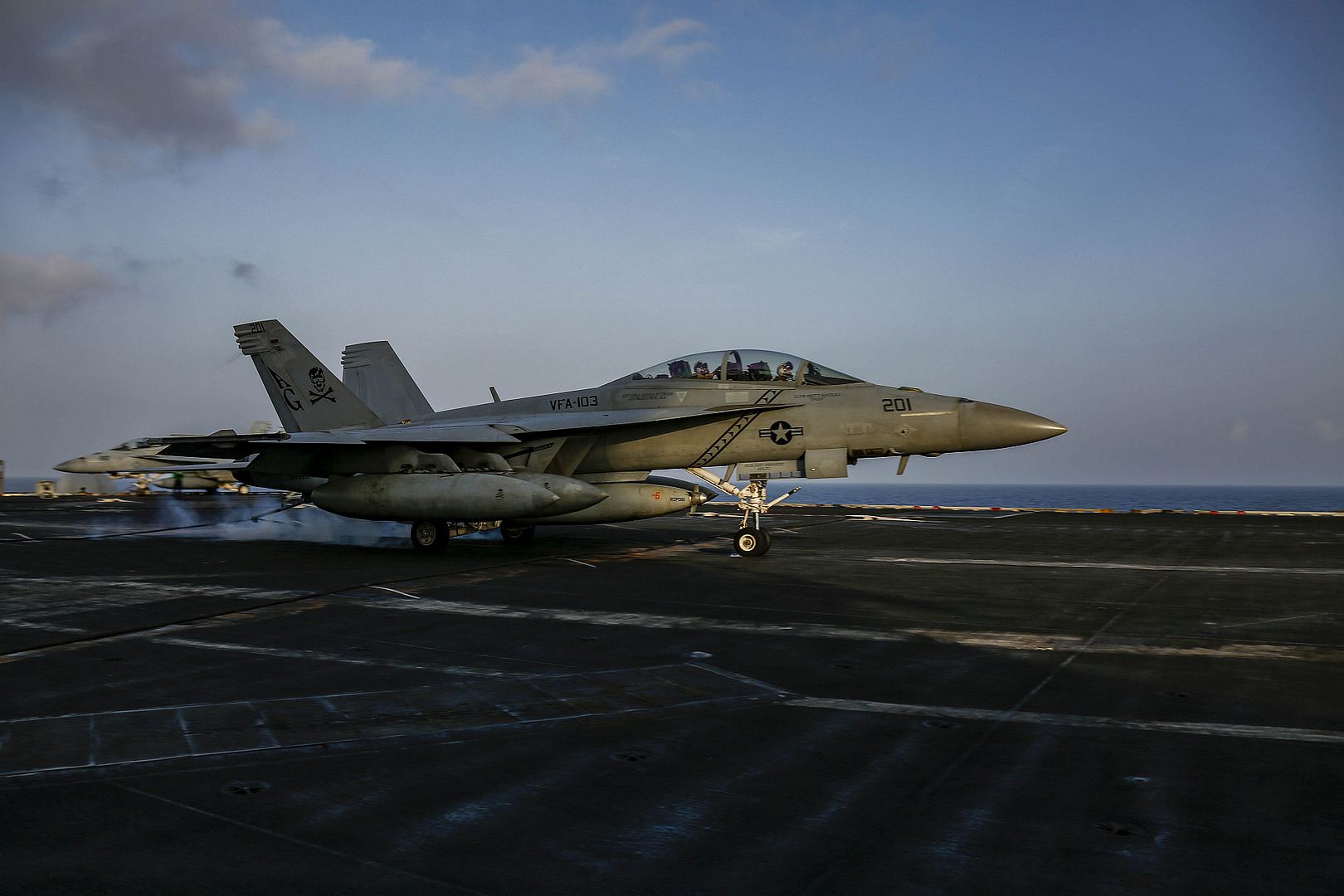
EVERETT, Wash., Sept. 17, 2019 ? The Boeing [NYSE: BA] KC-46 team on Friday began assembling Japan?s first next-generation tanker, loading a 82.4-foot (25 meters) long wing spar in the company?s 767 production facility.
?This is an exciting day for the program and we look forward to building and delivering these multi-role tankers to the Japan Air Self-Defense Force (JASDF),? said Jamie Burgess, Boeing vice president and KC-46 program manager. ?From the enhanced flight deck to the modernized boom, this tanker will provide unmatched capabilities for Japan.?
Boeing was awarded a Foreign Military Sale contract for one KC-46A aircraft and logistics services in December 2017. The U.S. Air Force exercised an option for Japan?s second aircraft in December 2018.
?We?re proud to support the JASDF with a production line that emphasizes quality, efficiency and safety,? added Bruce Dickinson, Boeing 747/767 vice president and general manager.
Boeing is assembling KC-46A aircraft for both the U.S. Air Force and Japan on its 767 production line in Everett. Following initial assembly, workers install the tanker?s military unique systems at the site?s Modification Center. The jets are then flight tested at Boeing Field prior to delivery.
Boeing began developing the KC-46A for the U.S. Air Force in 2011 and delivered the first tanker in January 2019. Japan is the program?s first international customer. Deliveries to the JASDF will begin in 2021.
The KC-46 will be a force multiplier in the U.S.-Japanese defense alliance, certified to refuel all U.S. Air Force, U.S. Navy and JASDF aircraft safely and efficiently. Built to carry passengers, cargo and patients, it will be easier to maintain than previous tankers, improving reliability and lowering life-cycle costs.
The KC-46A is a derivative of the commercial 767-2C, a proven airframe in service as an airliner and freighter. Boeing has delivered more than 1,150 767s worldwide.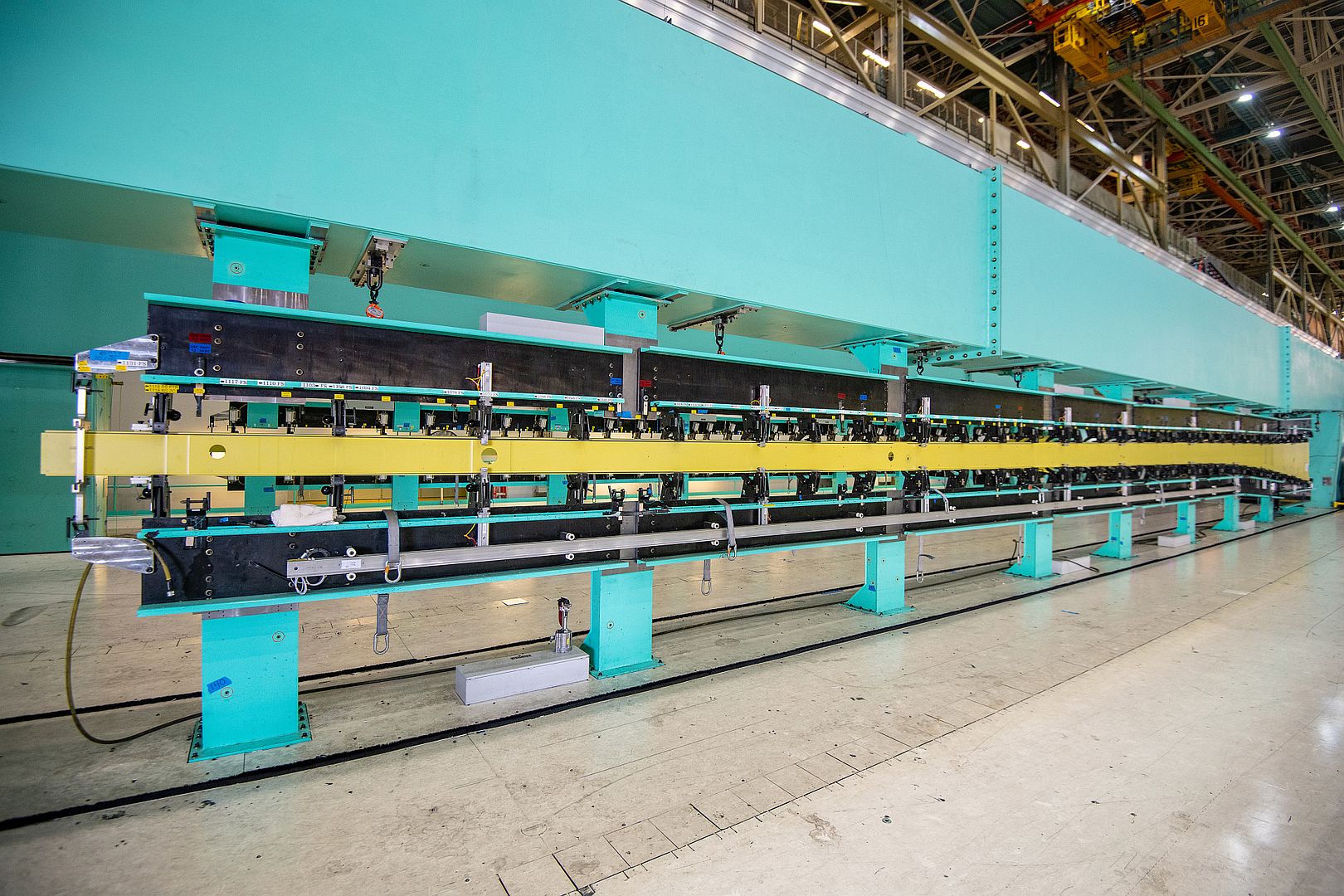
September 17, 2019 Montr?al Business Aircraft, Press Release
Bombardier has proudly delivered the first of three Global 6000 business jets destined for use by the Luftwaffe, Germany?s air force.
The Luftwaffe, a longtime Bombardier aircraft operator, will use the Global 6000 business jets to fulfill political and parliamentary transport requirements.
?Bombardier is incredibly pleased that the Luftwaffe will add the Global 6000 aircraft to its fleet,? said David Coleal, President, Bombardier Aviation. ?Our Specialized Aircraft team has built longstanding relationships with governments around the world who trust in the safety and performance of our products.?
Bombardier?s Specialized Aircraft division delivers custom solutions to operators, with a diverse portfolio of aircraft that can fly the most demanding and critical missions in various configurations. Bombardier Global aircraft are especially attractive because of their excellent dispatch reliability, speed, agility, endurance and optimized operating costs.
Powered by Rolls-Royce BR710 engines, developed and manufactured by Rolls-Royce Deutschland in Dahlewitz, Germany, the Global 6000 aircraft has enough range for non-stop flights between continents, which is ideal for political and parliamentary transport requirements. The Global 6000 aircraft also delivers a smooth ride that reduces the fatigue of frequent travel for both passengers and crew, while its advanced Bombardier Vision flight deck features a head-up display with both Enhanced and Synthetic Vision for a better pilot experience.
The delivery of the Global 6000 aircraft deepens Bombardier?s substantial ties to Germany, where it is the leading provider of business jets. Bombardier Transportation, a global rail industry leader, is headquartered in Berlin.
About Bombardier Specialized Aircraft
Bombardier Specialized Aircraft designs, develops and delivers a range of capabilities to operators around the world, with more than 500 specialized aircraft in service. Bombardier?s diverse fleet, which includes the Learjet, Challenger and Global business aircraft platforms, represents the ideal solution for government missions, from surveillance and reconnaissance to medical evacuations or VIP transport. Solutions range from turnkey packages comprising the complete design, building, testing and certification activity, through to specialist engineering support and technical oversight of customer-specific projects.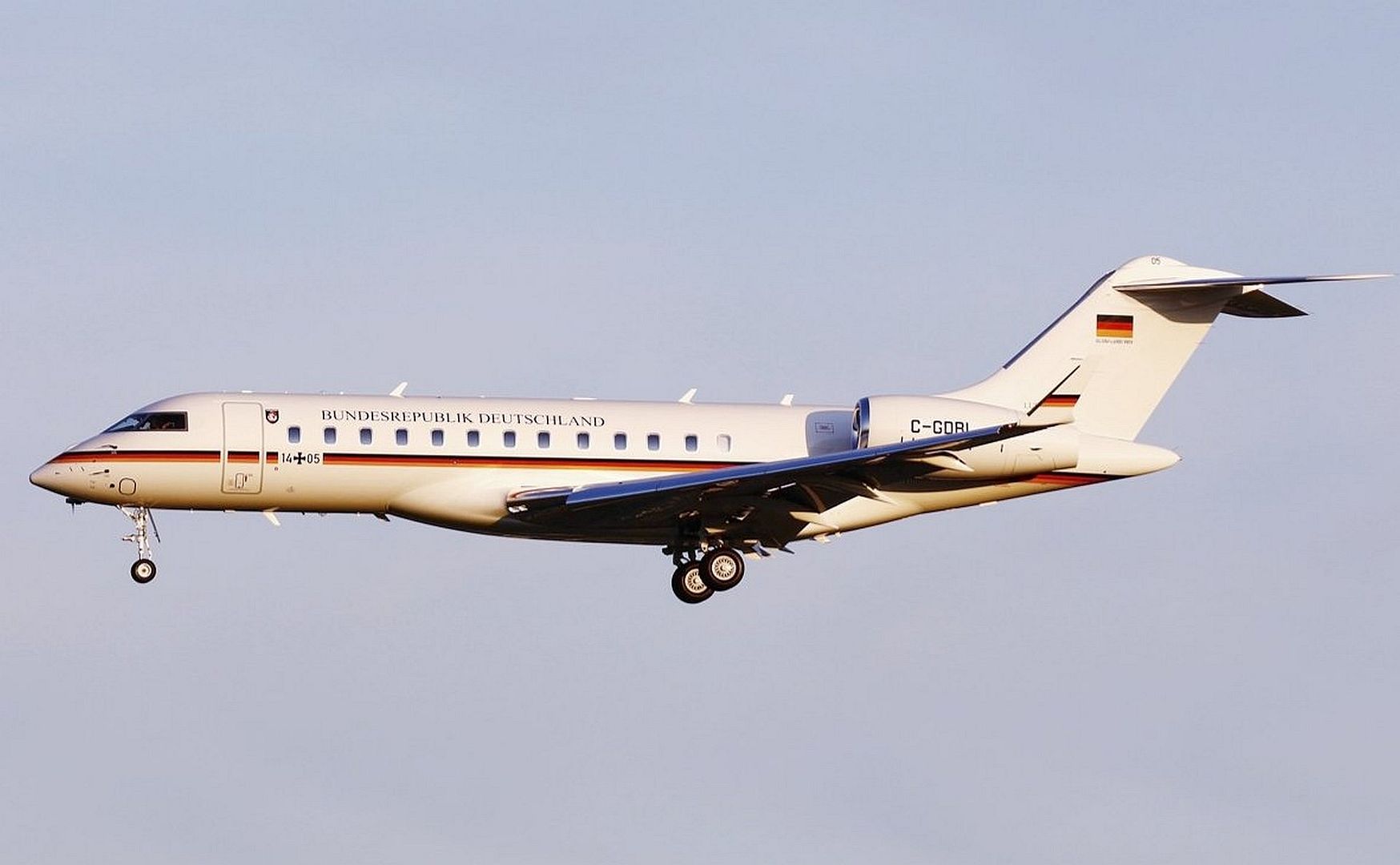
17 September 2019
New Bell 525 technologies will raise oil and gas helicopter operational safety standards in the North Sea.
As we gather for another edition of the SOLA Conference in Stavanger, Norway, improving helicopter operational safety in the North Sea continues to be top of mind. We are hard at work, fully focused on our certification progress so that we can deliver an aircraft that will not only achieve the mission in the North Sea, but bring technologies never seen on a traditional helicopter before ? to benefit operators and all aboard. Now let?s hear what the North Sea experts have to say.
This month, we had the pleasure of hosting the LO Helicopter Committee, the Norwegian Union for the oil and gas and search and rescue sectors to experience the Bell 525 at Bell?s Flight Research Center in Arlington, Texas. The event lasted a couple of days packed with dedicated briefings, visits to various Bell sites as well as flight demonstrations.
When it comes to operations in the North Sea, the LO Helicopter Committee shared their thoughts on the new technologies that the Bell 525 will bring to the market for this sector and how they think it will affect safety.
?We are very pleased to have visited Bell and to have learned more about the Bell 525. It gave us a unique opportunity to share our input on its capabilities."" Henrik S. Fjeldsb?, chairman of the LO Helicopter Committee.
Bell designed the Bell 525 to deliver a generational leap forward with fly-by-wire flight controls, industry leading drive system performance and fully integrated vehicle health monitoring.
?The Bell 525 is an incredibly smart helicopter that reduces the probability of the pilot making a mistake. It's amazing that the machine predicts what the pilot wants. That means that as a pilot, I can focus on keeping track of the mission, which is crucial for safety in the North Sea.?" Michael Hougaard, member of the LO Helicopter Committee and a pilot flying daily in the North Sea.
The Bell 525 will be the first commercial aircraft certified with Fly-By-Wire which greatly increases safety through reduced pilot workload and enhanced situational awareness. It means that the pilot can focus on other aspects of the flight or mission and also provides increased performance and stability. The Bell 525 rotor drive system will set a new industry benchmark for robustness and run-dry capability, this minimizes single point failures and complies with the latest EASA rules for run-dry performance.
Helicopter pilot Torstein Sandven, who spent time on the Bell 525 full-flight simulator expressed:
"The Bell 525 will be an extremely good platform that will take operations to the next level. We welcome all new technology that contributes to increased safety and I have high expectations for this machine. The modern technology reduces workload from the pilots and gives us increased situational awareness. I think this will be a very good machine in terms of performing safe and secure operations in the North Sea.?
The aircraft is also equipped with the most advanced Integrated Vehicle Health Management (IVHM) & Health and Usage Monitoring System (HUMS), allowing maintainers to easily diagnose failures and quickly return the aircraft to service. The IVHM system is fully supported by Bell through Mission Link allowing operators to access how their aircraft is performing relative to all other aircraft in the fleet.
Helicopter technician and representative on the committee, Tom Stian Beitland was impressed with the maintenance manual that is fully digital and includes 3D renderings:
?In short, it means that the entire machine is built in 3D and linked together with the maintenance manual. This makes it easier for us technicians to find components and procedures. It will help increase efficiency in troubleshooting if any problems arise.?
The spacious cabin accommodates 2 pilots and up to 16 passengers. It can easily be reconfigured due to its fully flat floors. Kjetil Larsen, who is a daily rescuer on a SAR helicopter in the North Sea, wanted to check if the cabin was large enough to be used as an offshore rescue helicopter.
?We filled the cabin with as many people as we could find. We fit 23 people on board, and yet there was room for more. That means the machine passed the test of being able to save 21 people in need.?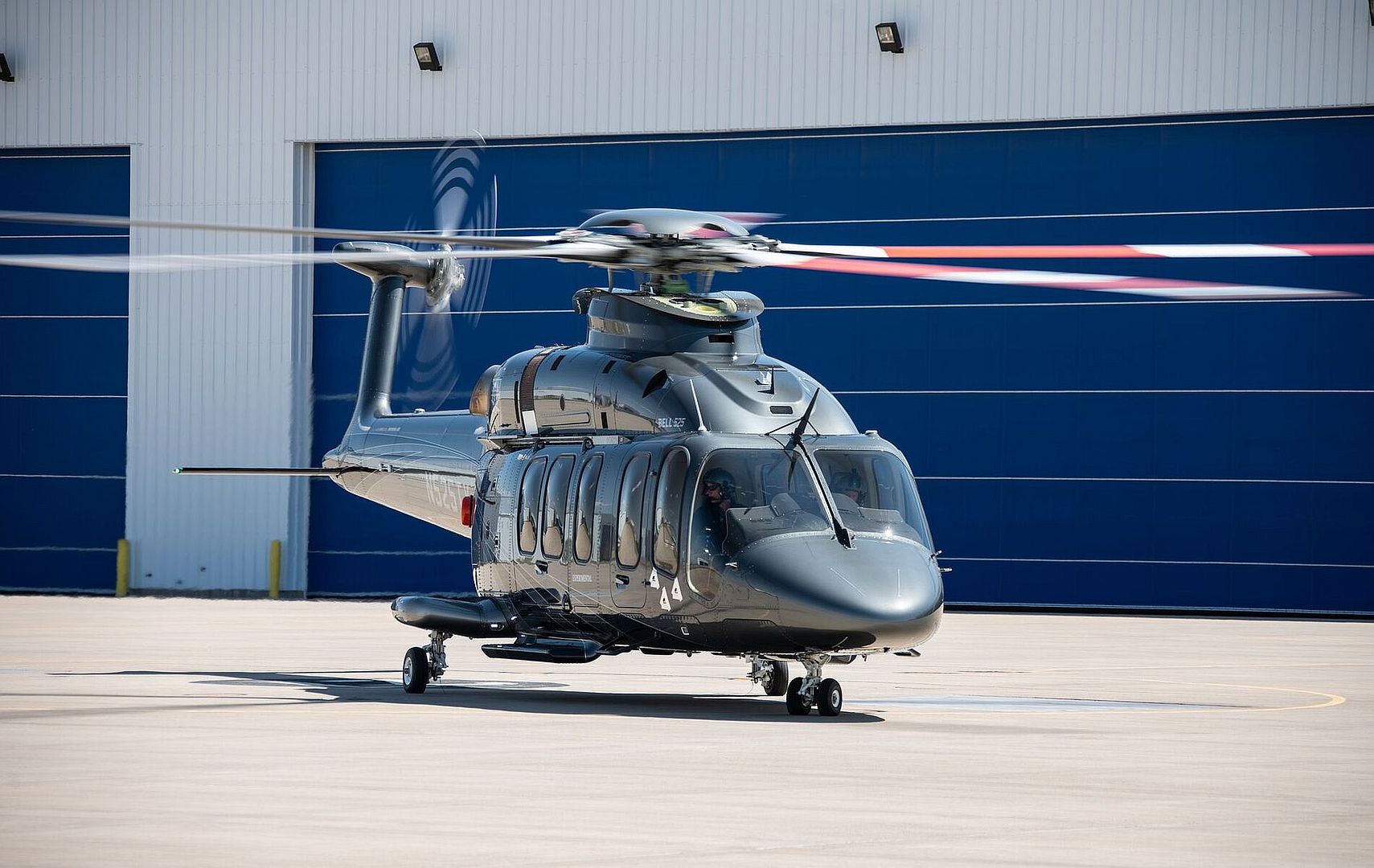
-
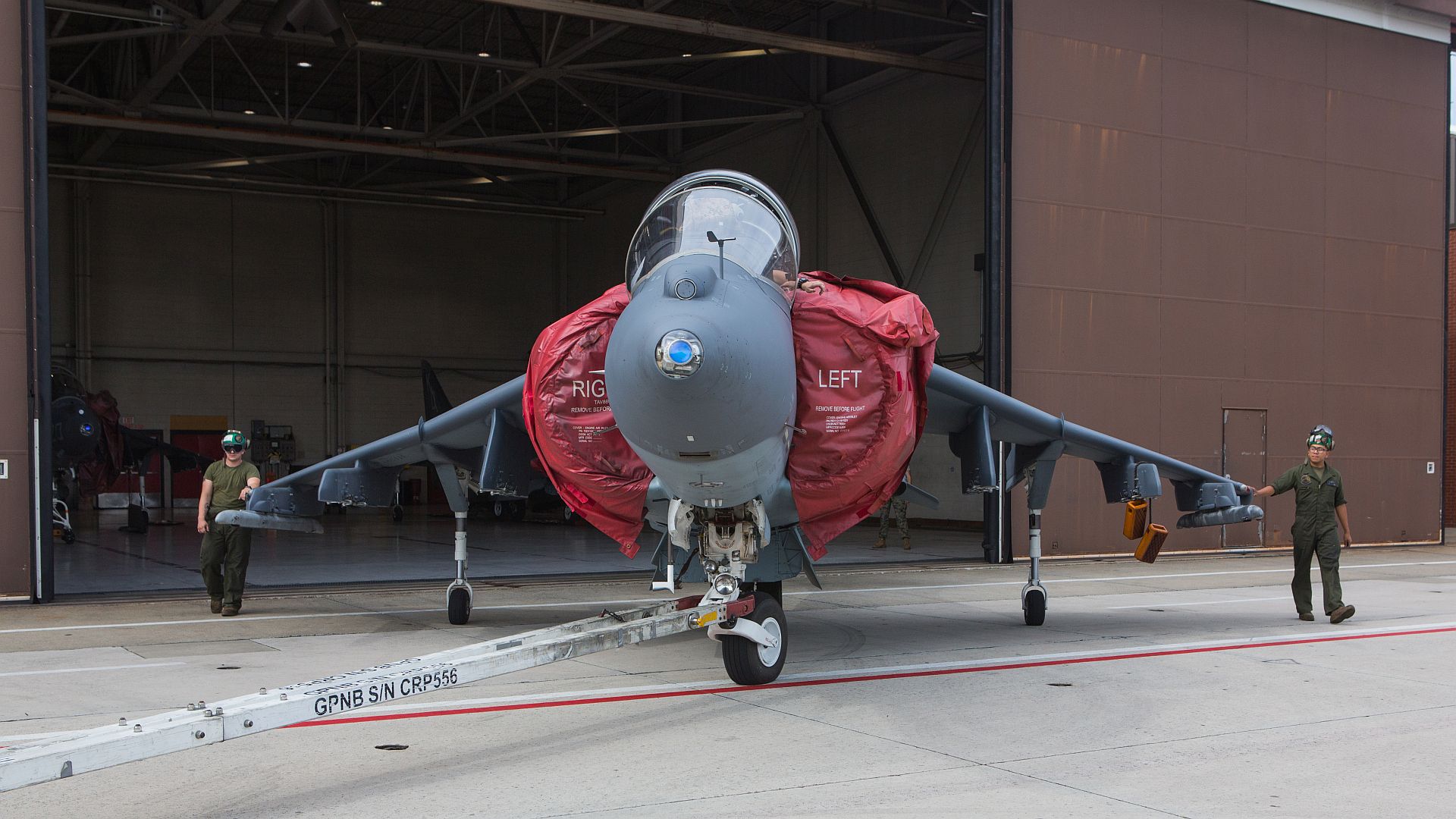
Marines attached to Marine Attack Training Squadron 203, taxi an T/AV-8B Harrier II to outside storage at Marine Corps Air Station Cherry Point, North Carolina, Sep. 16, 2019. Marines attached to VMAT-203 execute daily maintenance to ensure dependability of the aircraft as well as the capability for it be ready at any moment?s notice. VMAT-203 is a part of Marine Aircraft Group 14, 2nd Marine Aircraft Wing. (U.S. Marine Corps photo by Lance Cpl. Elias E. Pimentel III)
The Republic of Korea Air Force?s 53d Air Demonstration Group Black Eagles arrive Sept. 18, 2019, at Osan Air Base, ROK. The T-50 Golden Eagle aerobatic team will headline Osan?s Air Power Day, Sept. 21. The event celebrates the US-ROK alliance and features aerial performances, static displays and a multitude of festivities. (U.S. Air Force photo by Staff Sgt. Greg Nash)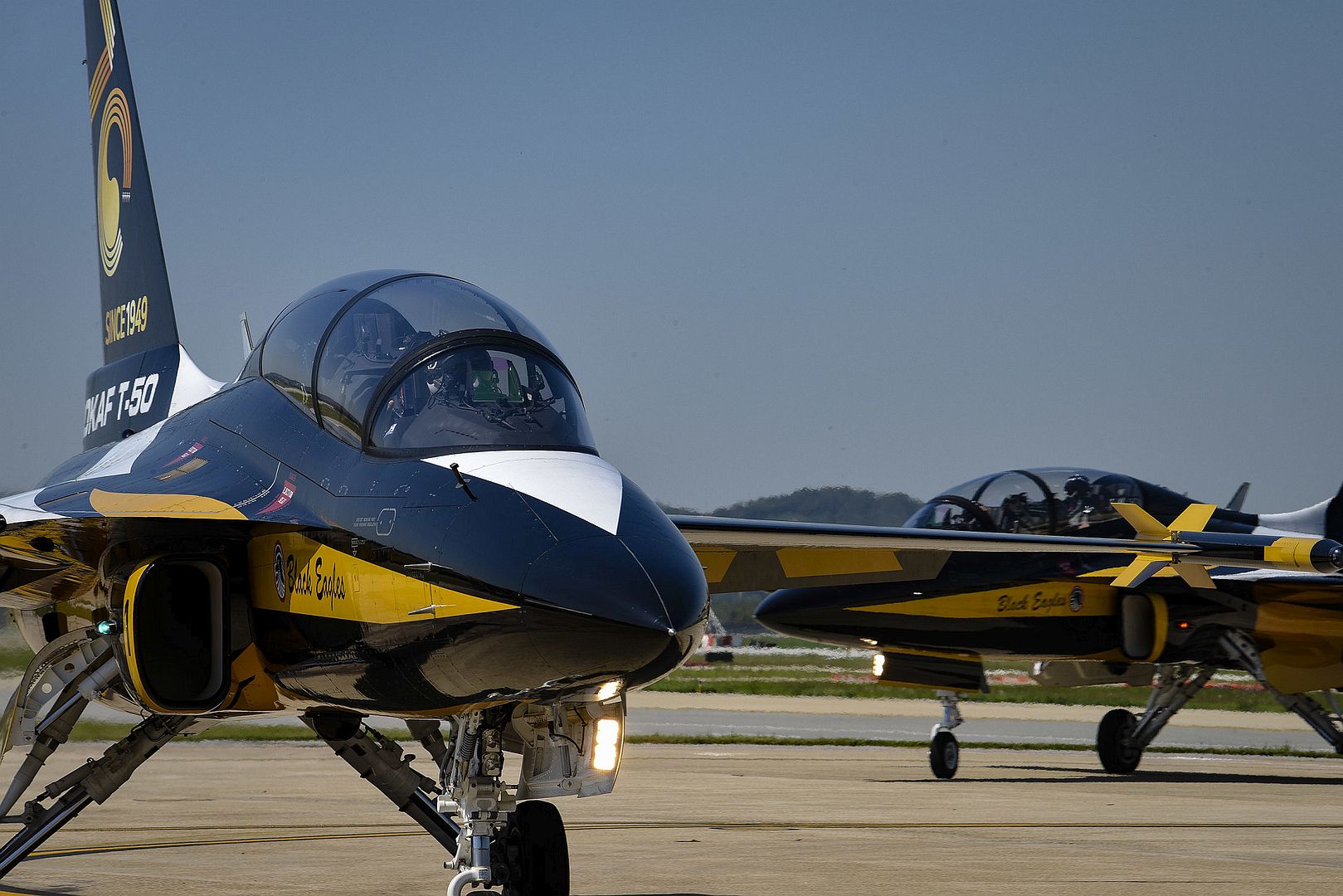
F-15C Eagles assigned to the 48th Fighter Wing conduct air operations over the North Sea Sept. 16, 2019. The 48th Fighter Wing routinely trains with integrated aerial platform capabilities to deliver full spectrum air combat support to European allies and partners. (U.S. Air Force photo/ Tech. Sgt. Matthew Plew)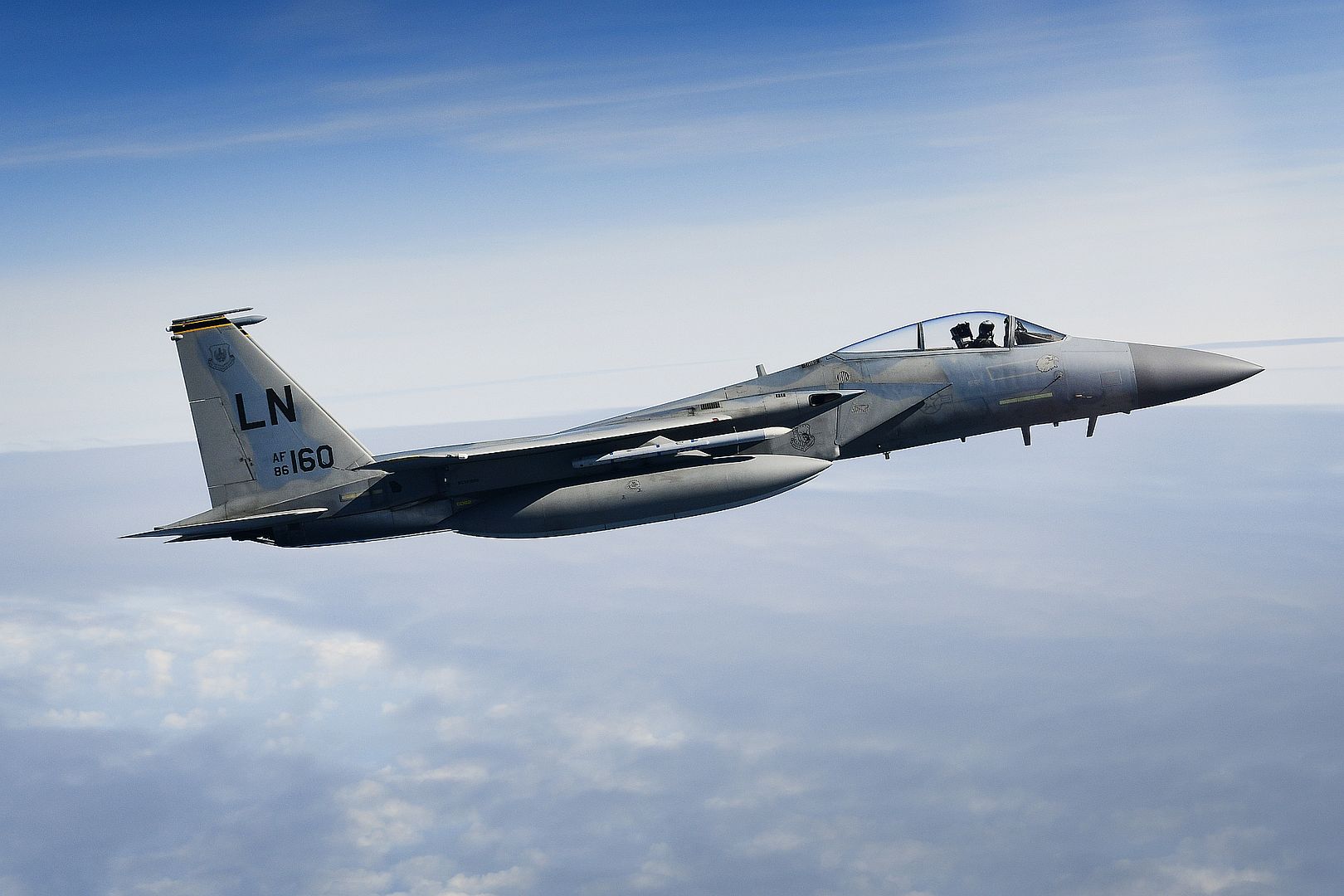
A B-2A Spirit bomber assigned to the 509th Bomb Wing and two F-15C Eagles assigned to the 48th Fighter Wing conduct aerial operations over the North Sea Sept. 16, 2019. The 48th Fighter Wing and the Royal Air Force routinely train with integrated 4th and 5th generation capabilities to deliver full spectrum air combat support to European allies and partners. (U.S. Air Force photo/ Tech. Sgt. Matthew Plew)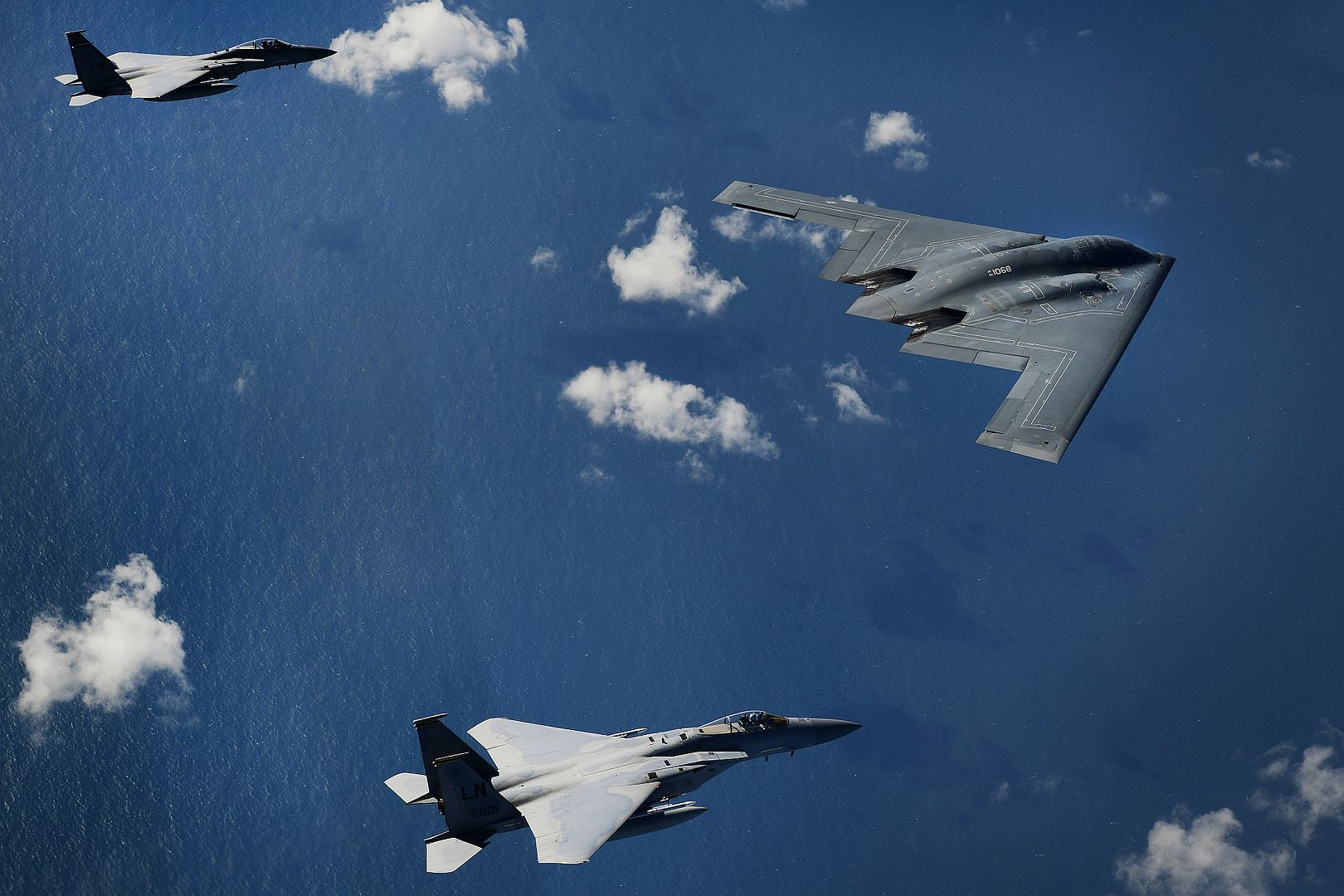
A B-2A Spirit bomber assigned to the 509th Bomb Wing an F-15C Eagle assigned to the 48th Fighter Wing conduct aerial operations over the North Sea Sept. 16, 2019. The 48th Fighter Wing routinely trains with integrated aerial platform capabilities to deliver full spectrum air combat support to European allies and partners. (U.S. Air Force photo/ Tech. Sgt. Matthew Plew)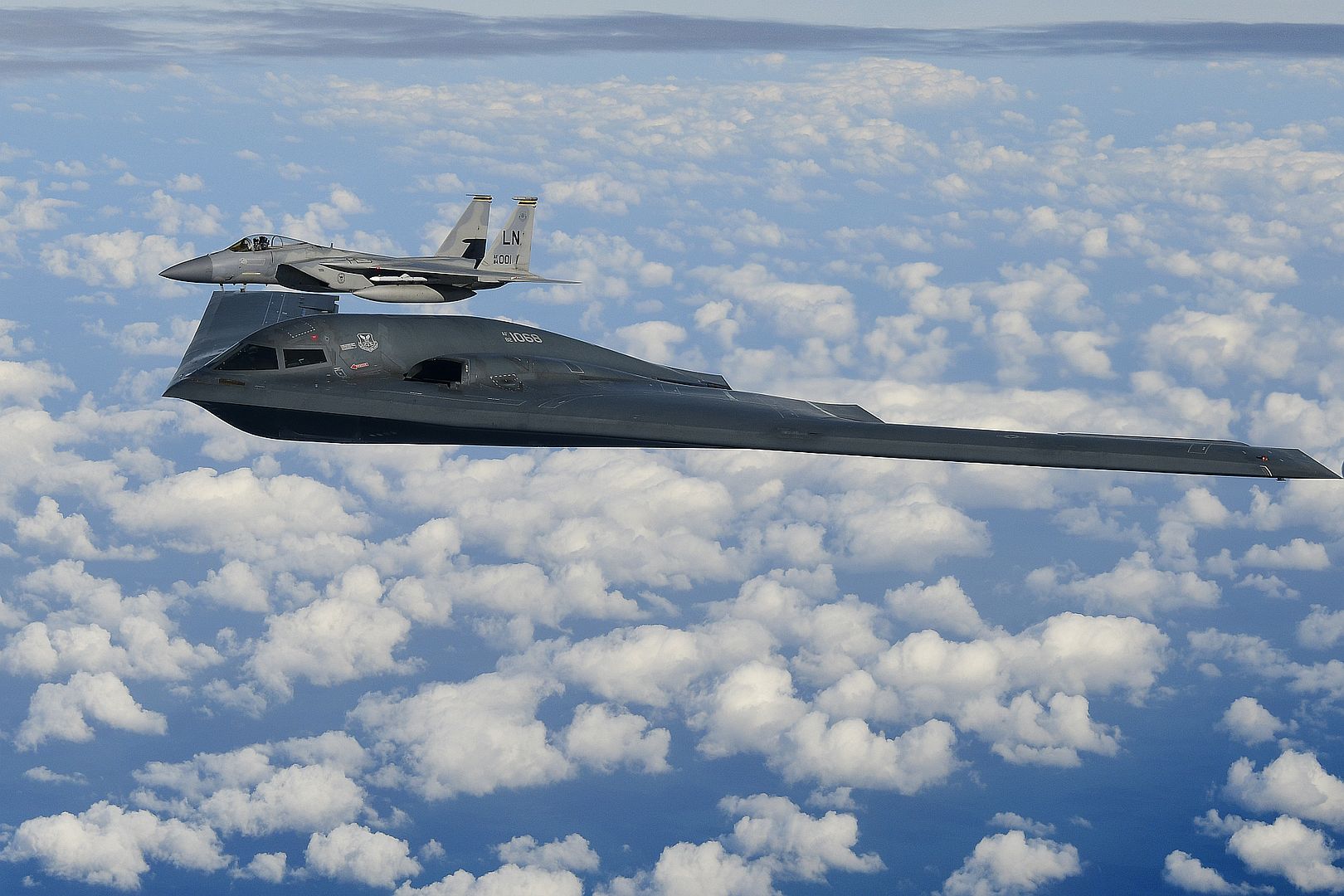
A B-2A Spirit bomber assigned to the 509th Bomb Wing leads a delta formation consisting of two F-15C Eagles assigned to the 48th Fighter Wing and two Royal Air Force F-35B Lightnings as they conduct aerial operations over the North Sea Sept. 16, 2019. The 48th Fighter Wing and the Royal Air Force routinely train with integrated 4th and 5th generation capabilities to deliver full spectrum air combat support to European allies and partners. (U.S. Air Force photo/ Tech. Sgt. Matthew Plew)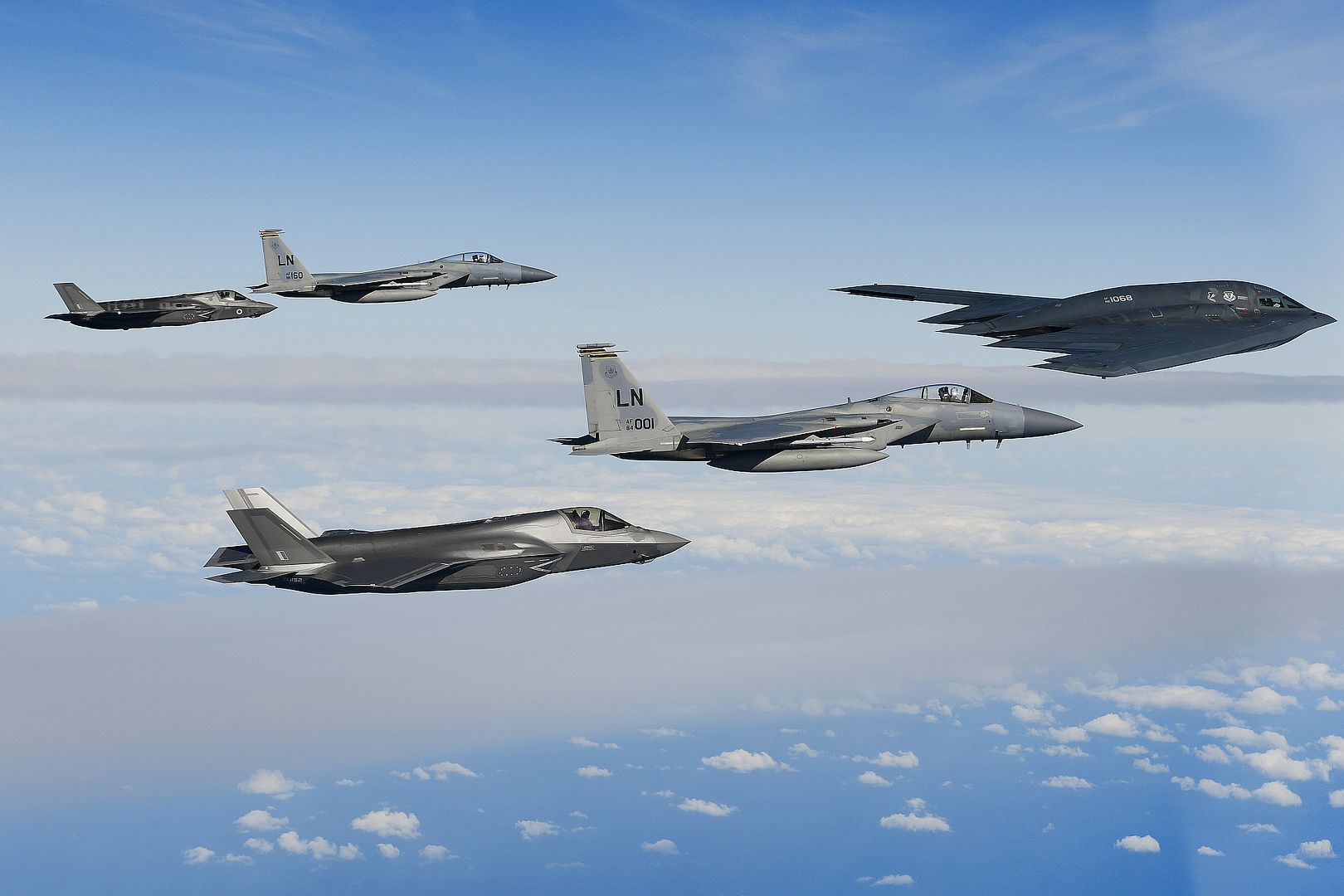
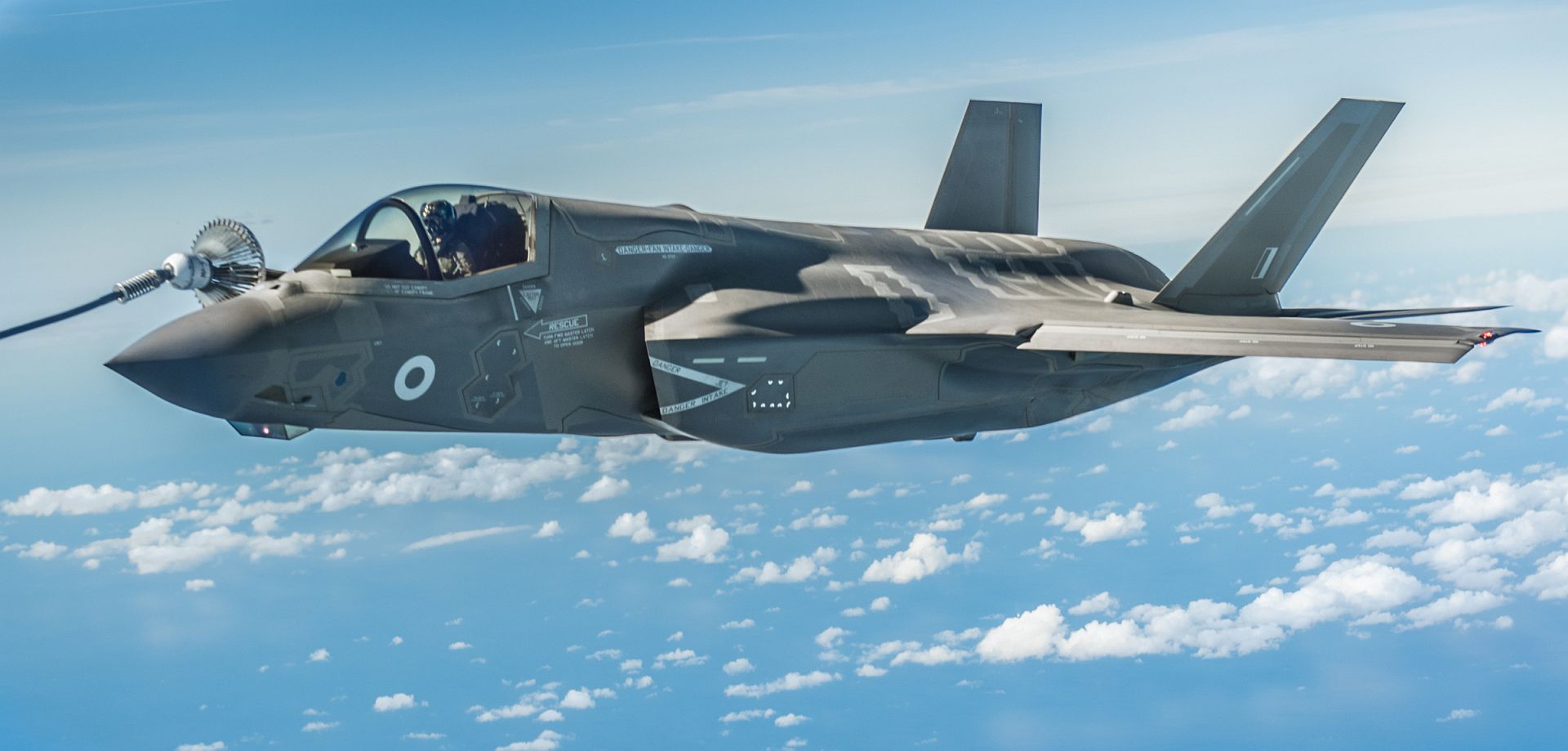
A Royal Air Force F-35 Lightning II assigned to RAF Marham, England, is refueled by a KC-135 Stratotanker assigned to RAF Mildenhall, England during a training mission for Bomber Task Force Europe on September 16, 2019. During this training mission two RAF F-35s also flew in formation with two F-15 Eagles assigned to the 48th Fighter Wing, RAF Lakenheath, England and two B-2 Spirit Stealth Bombers assigned to the 509th Bomb Wing, Whiteman Air Force Base, Missouri. Bomber missions like BTF Europe, help familiarize aircrews with air bases, airspace and operations in different geographic combatant commands. These multinational missions strengthen professional relationships and improves overall coordination with allies and partner militaries. (U.S. Air Force photo's by Senior Airman Thomas Barley)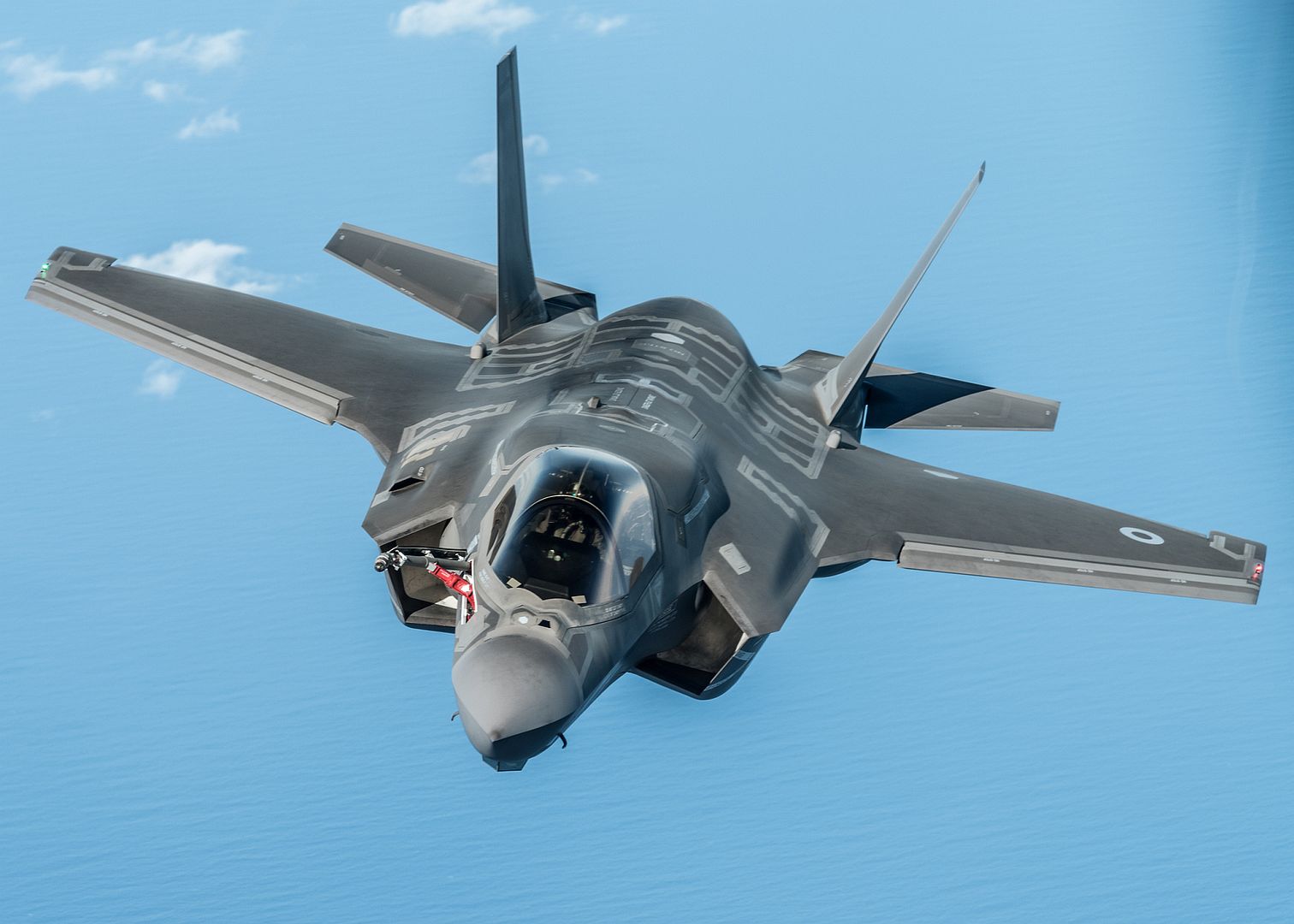
An F-15E Strike Eagle, assigned to the 336th Expeditionary Fighter Squadron, takes off for Agile Strike Sept. 18, 2019, at Al Dhafra Air Base, United Arab Emirates. The 336th EFS sent two aircraft and personnel to operate missions out of Prince Sultan Air Base, Saudi Arabia to challenge their flexibility at expanding tactical and strategic reach while strengthening coalition and regional partnerships in the Air Forces Central Command area of responsibility through adaptive basing. (U.S. Air Force photo by Staff Sgt. Chris Thornbury)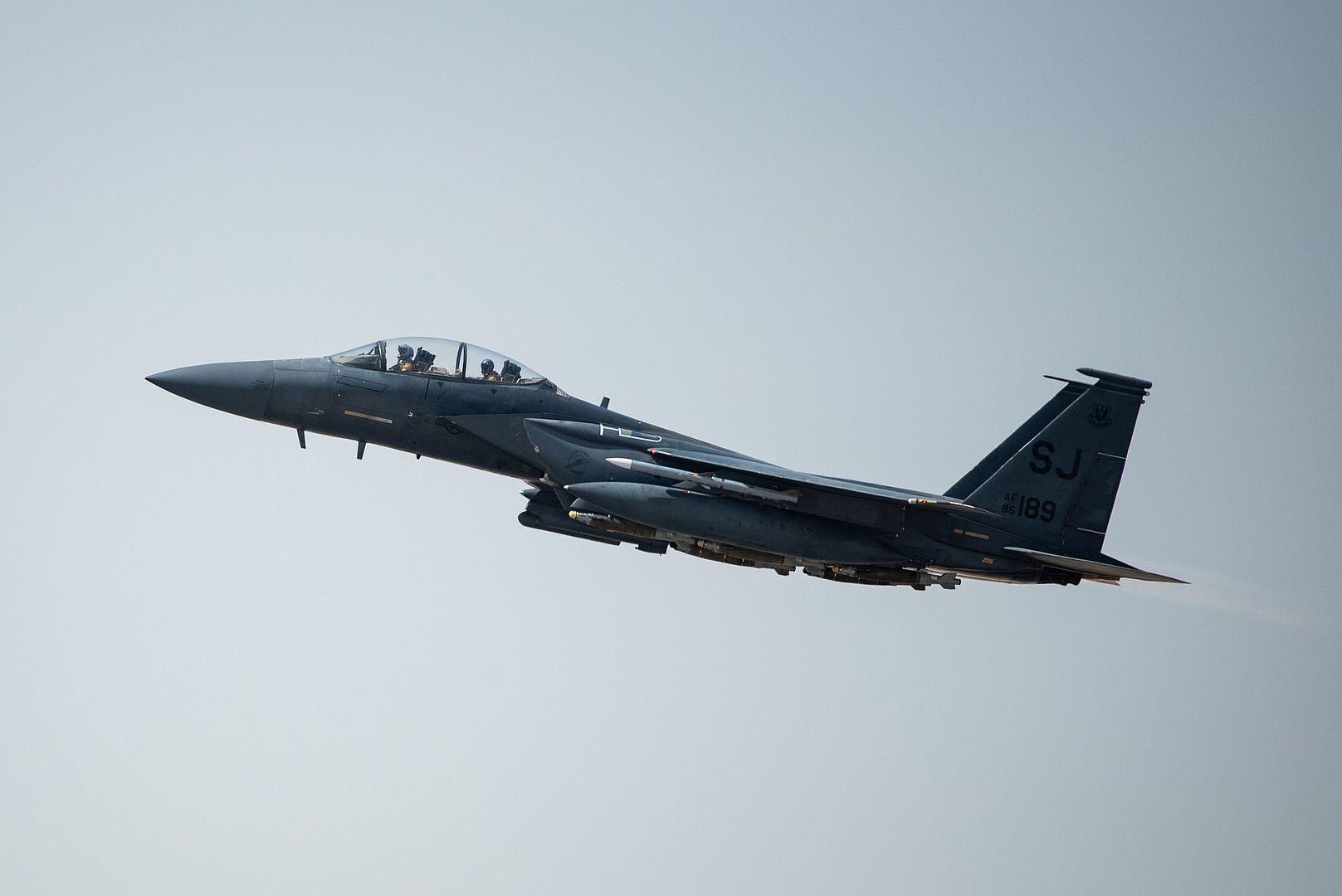
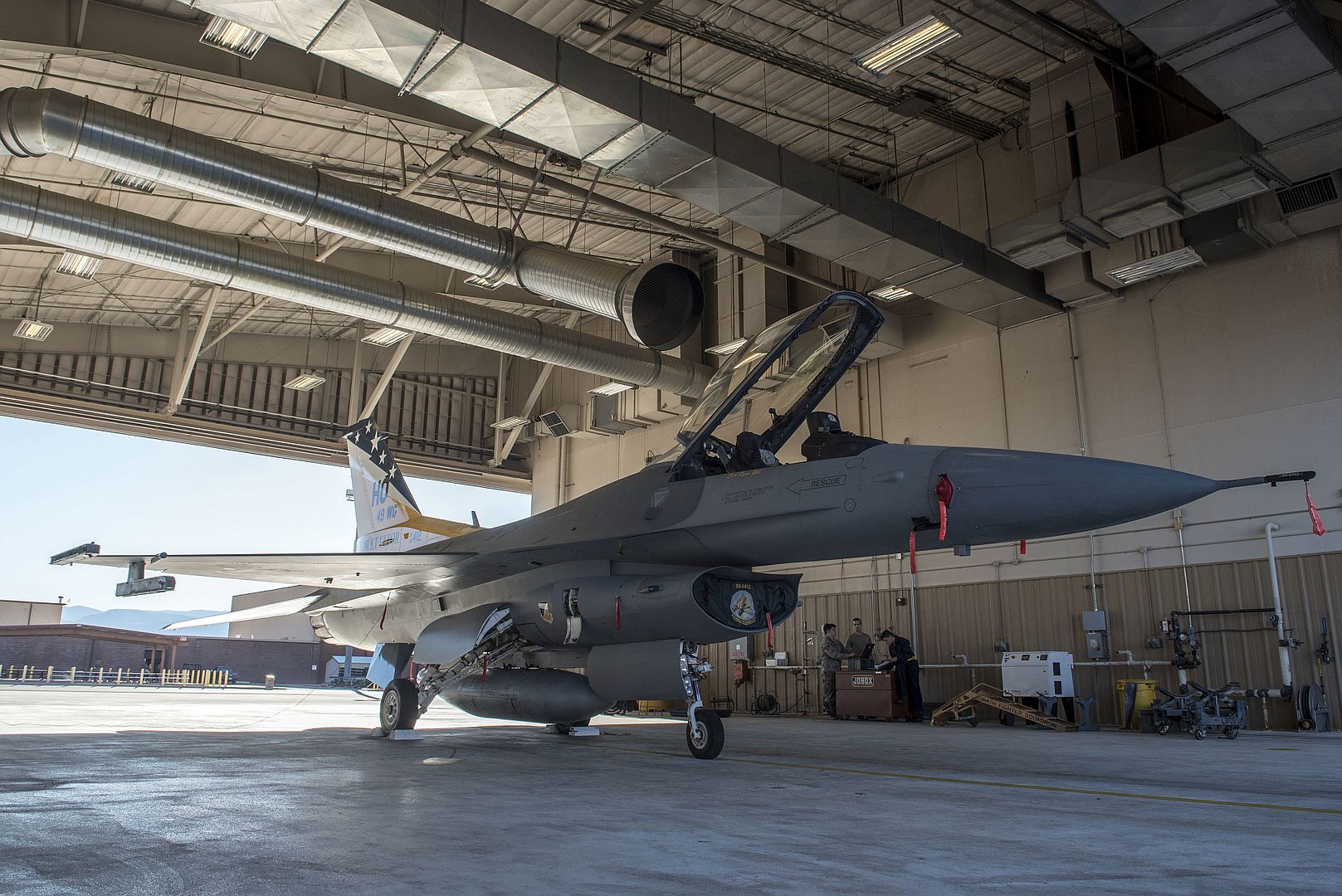
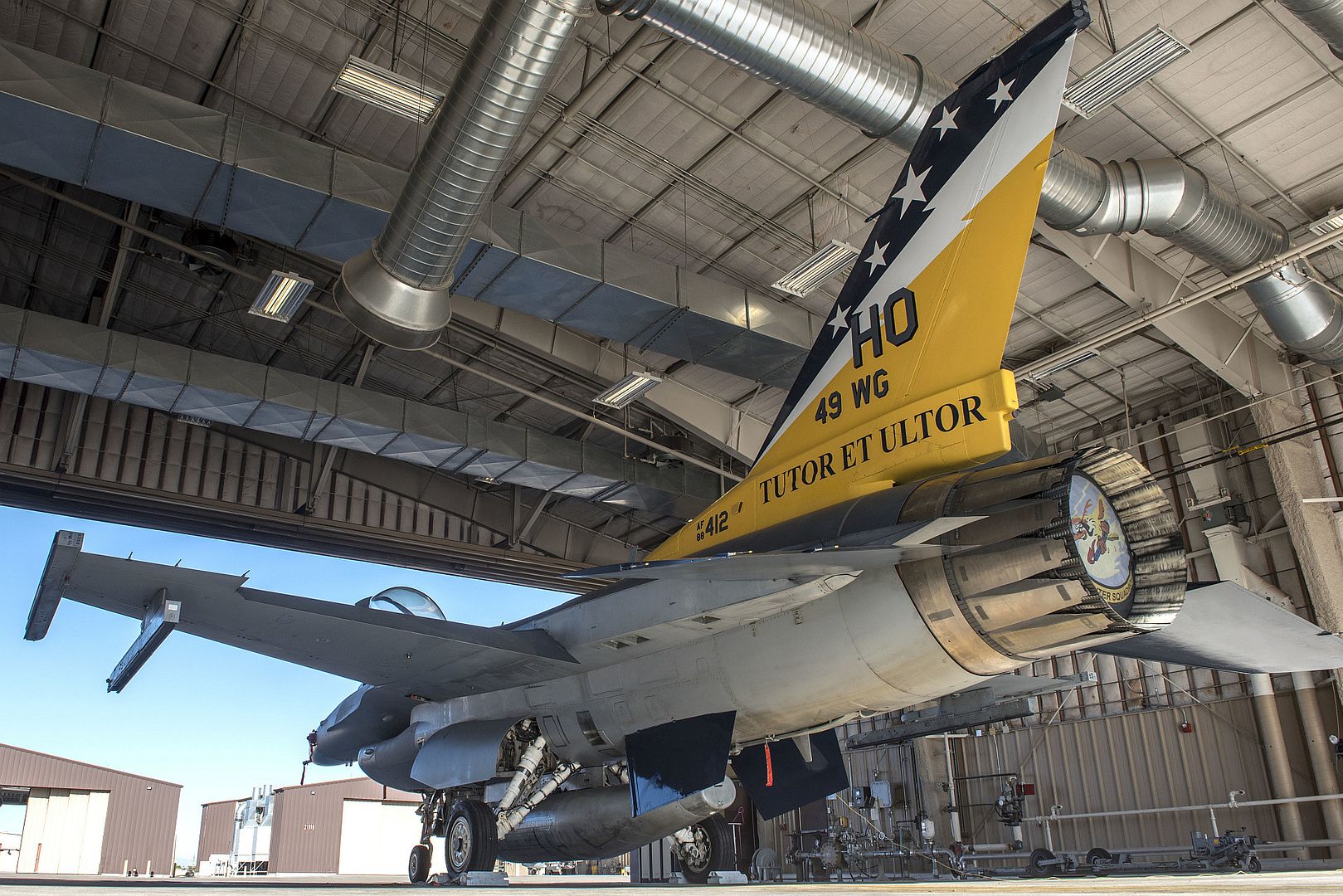
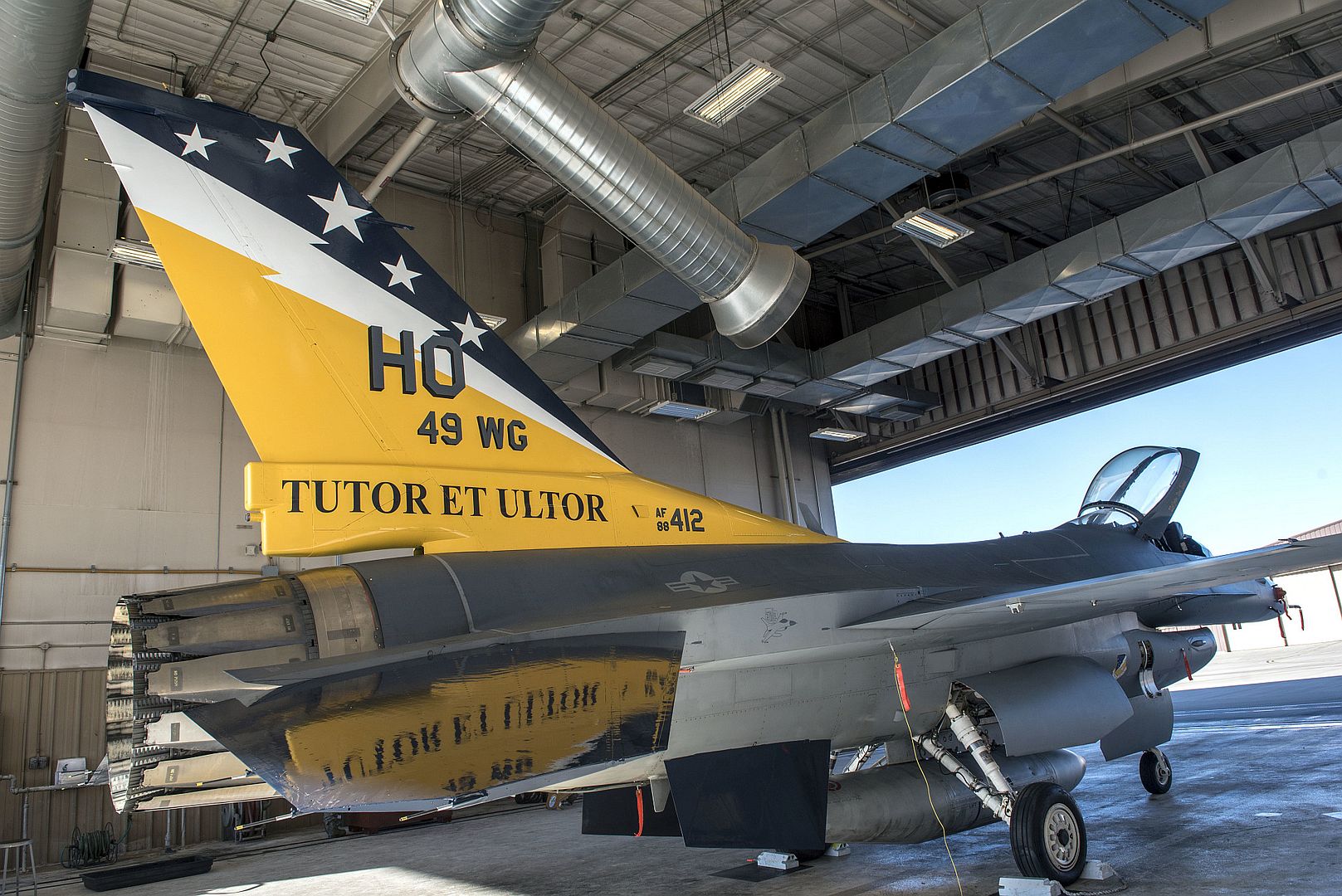
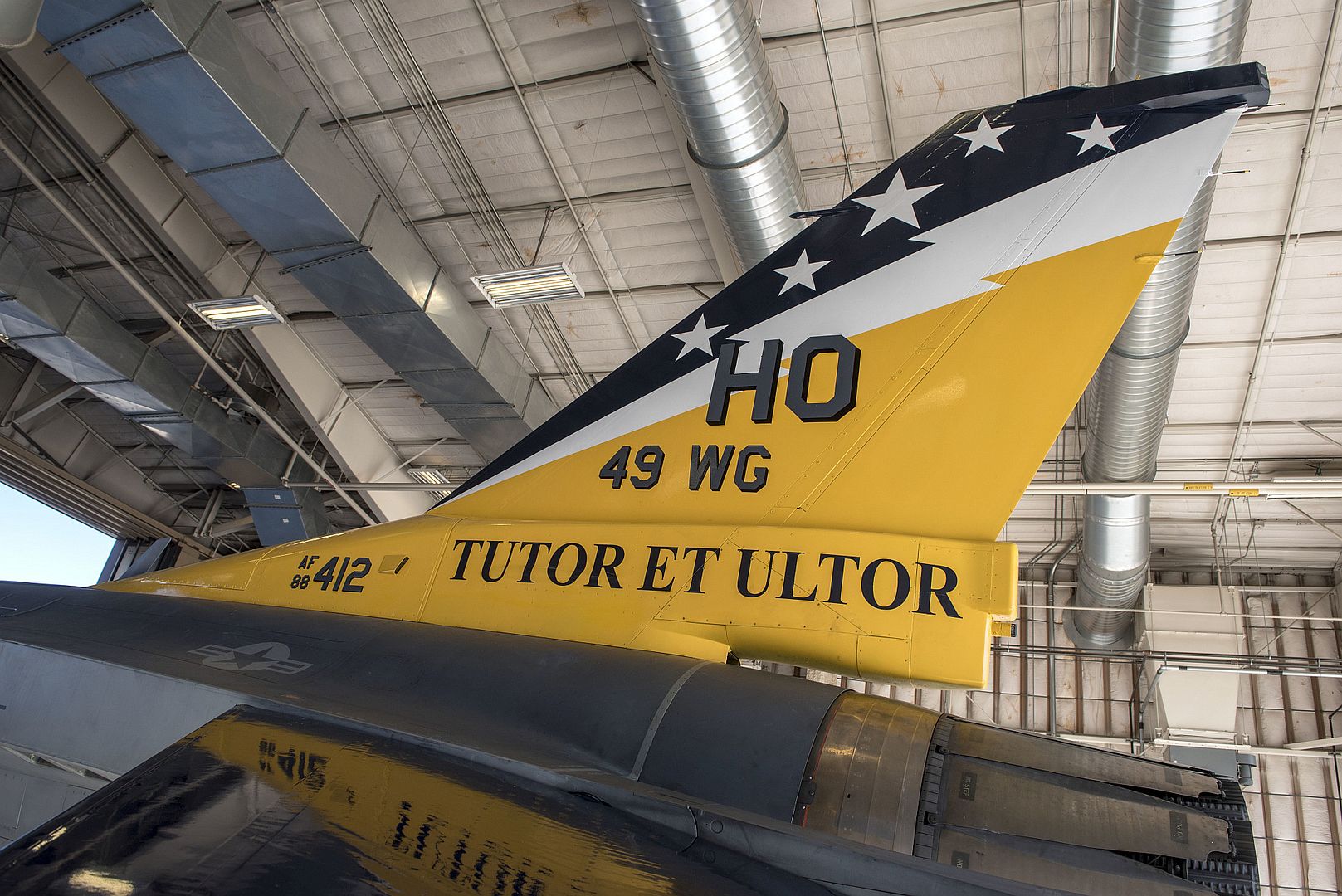
The 49th Wing F-16 Fighting Falcon Flagship sits in a hangar on Holloman Air Force Base, N.M., Sept. 18, 2019. This was the first time that an aircraft has been re-designed on Holloman. (U.S. Air Force photo's by Staff Sgt. Christine Groening)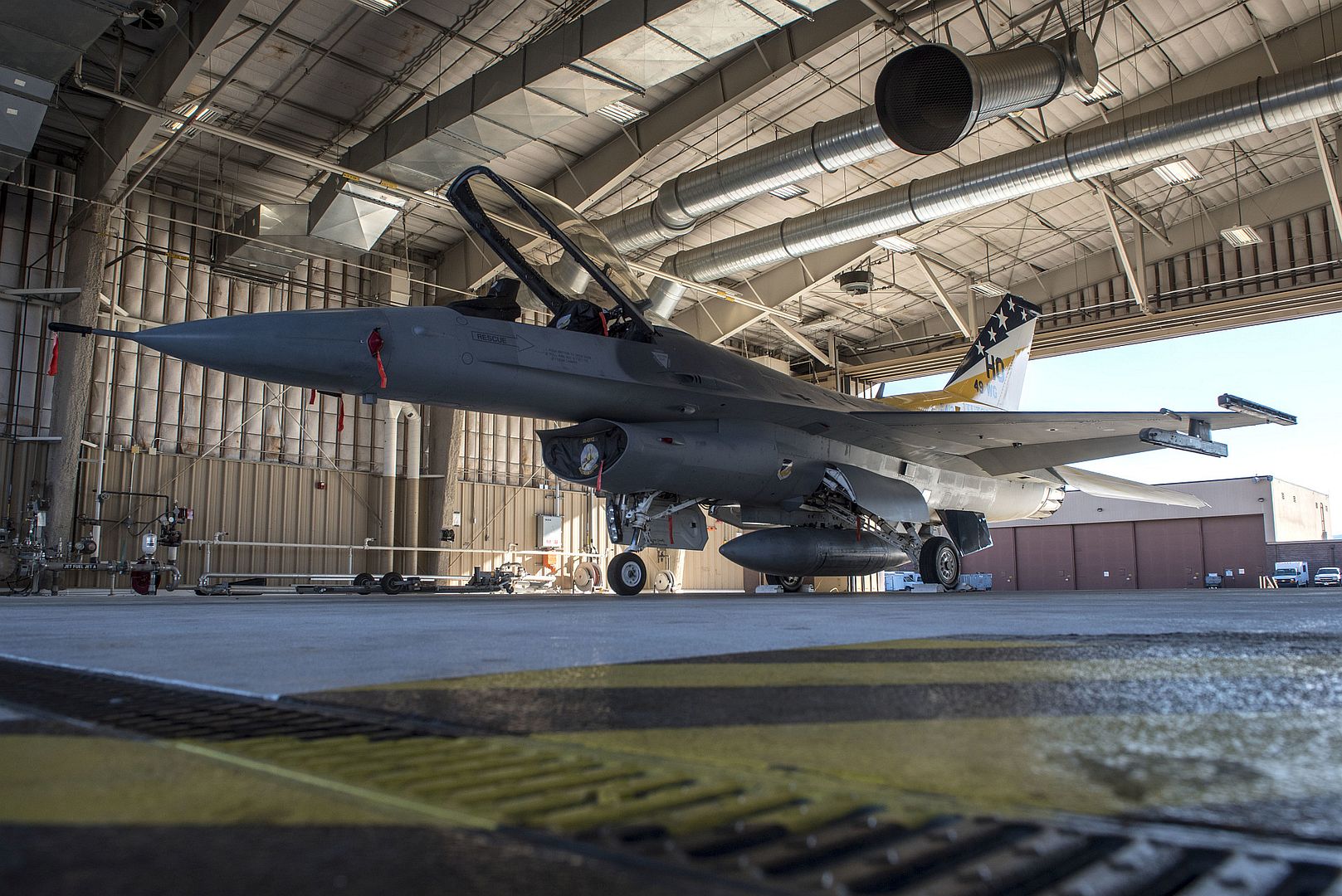
PETERSON AIR FORCE BASE, Colo. ? A member of the Royal Air Force demonstration team, the Red Arrows, waves from the cockpit of a Hawk T1 aircraft Sept. 16, 2019 at Peterson Air Force Base, Colorado. The team stopped at the base briefly as part of their North American tour. (U.S. Air Force photo by Heather Heiney)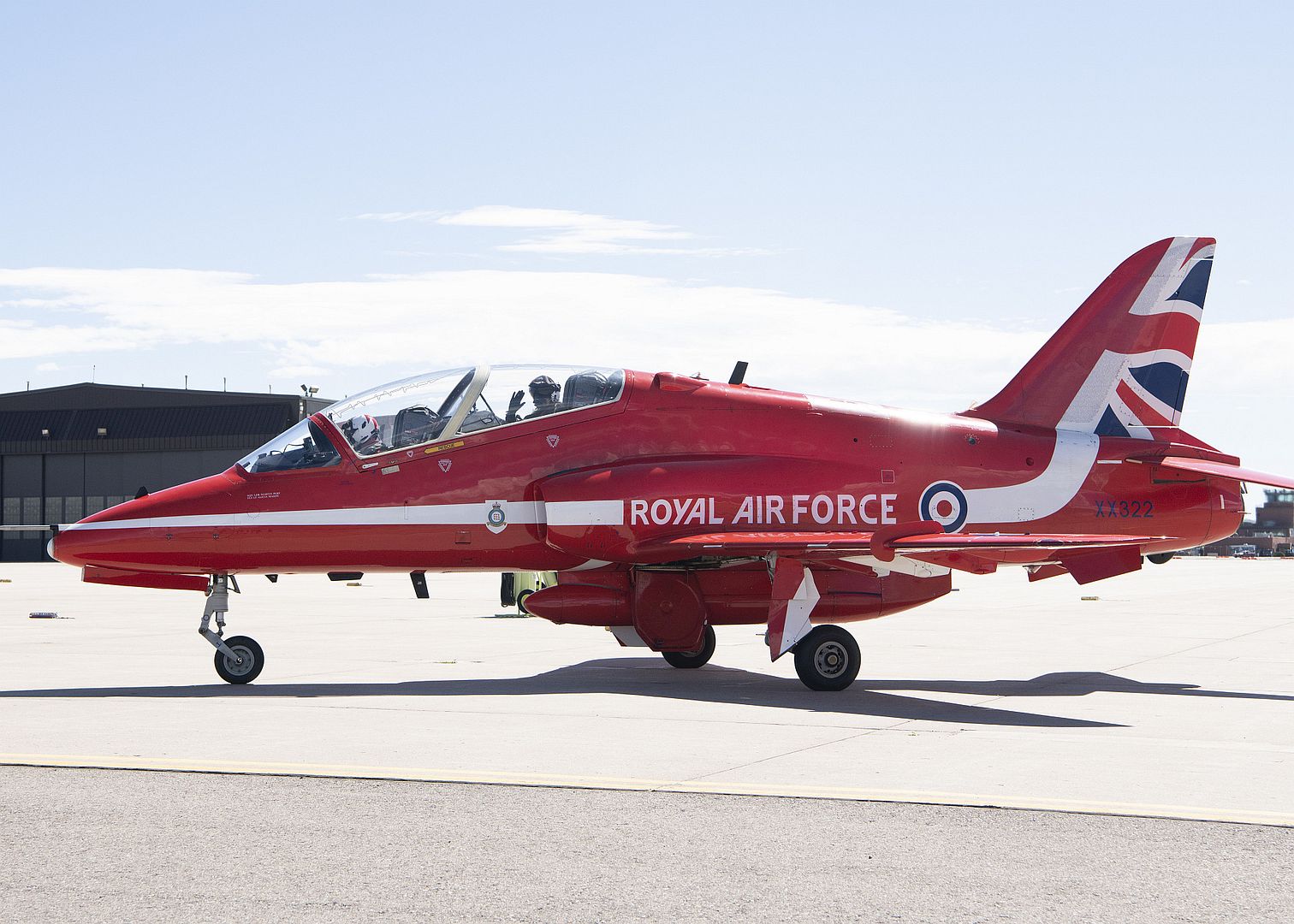
September 18, 2019 Montr?al Business Aircraft, Press Release
Bombardier?s Global aircraft platform, renowned in the business aviation industry for range, spaciousness and a smooth ride, has achieved a significant in-service milestone with the U.S. Air Force in special-mission configuration.
A fleet of four modified Global aircraft has collectively flown an impressive 100,000 hours since entering service. These aircraft are an integral part of the Air Force?s Battlefield Airborne Communications Node (BACN) program, an airborne communications relay that extends communication ranges, bridges between radio frequencies and ?translates? among incompatible communications systems.
Over the course of their mission, BACN aircraft have regularly flown over 18 hours a day for months at a time, demonstrating the excellent dispatch reliability of the Global platform.
?We are extremely proud of the outstanding reliability and performance of the Global aircraft platform as part of this elite assignment,? said Steve Patrick, Vice President, Bombardier Specialized Aircraft. ?This 100,000-flight-hour milestone is a testament to the aircrafts? performance and endurance, clearly demonstrating that the Global platform excels in demanding situations.?
Starting with one Global Express aircraft in 2007, the BACN fleet today also includes two Global Express XRS variants and one Global 6000 aircraft. The four jets are known in the Air Force as the E-11A.
Bombardier?s Specialized Aircraft team, based in Wichita, Kansas, carried out the modifications of all four jets, and the team continues to provide in-service support and upgrades to the aircraft.
Bombardier has a varied portfolio of business jets that can be readily modified for special missions, and its signature smooth ride can minimize crew fatigue and extend the life of mission equipment. Global aircraft are ideal for critical government missions because of their speed, agility, endurance and low operating costs compared to other aircraft in their class.
The Global 6000 aircraft, with an outstanding range of 6,000 nautical miles*, is recognized for its ability to fly intercontinental ranges without refueling stops, and also for its excellent dispatch reliability. The aircraft also has the most available electrical power in its category for peace of mind on long missions, while the Bombardier Vision flight deck offers a head-up display with enhanced and synthetic vision.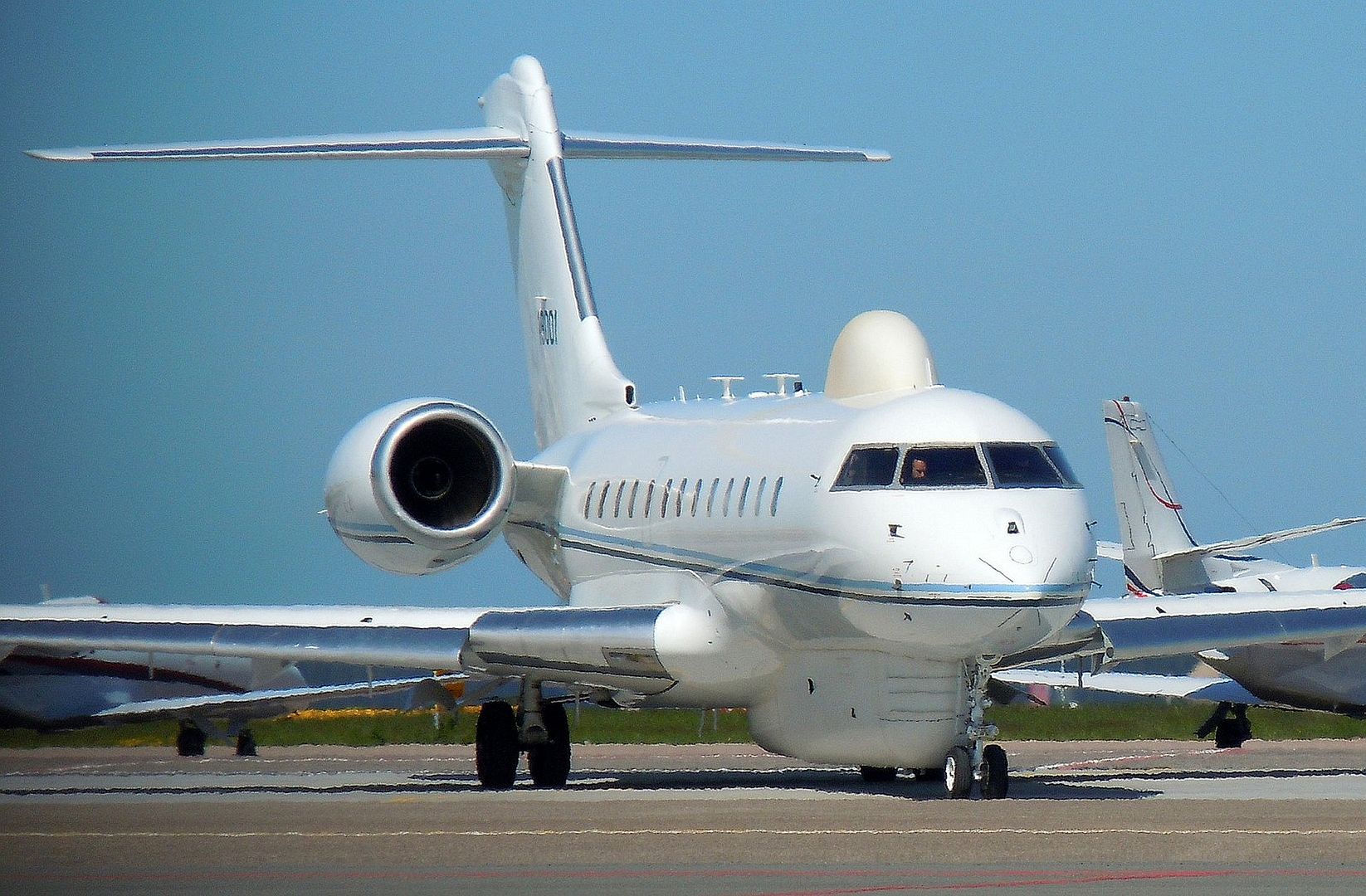
About Bombardier Specialized Aircraft
Bombardier Specialized Aircraft designs, develops and delivers a range of capabilities to operators around the world, with more than 500 specialized aircraft in service. Bombardier?s diverse fleet, which includes the Learjet, Challenger and Global business aircraft platforms, represents the ideal solution for government missions, from surveillance and reconnaissance to medical evacuations or VIP transport. Solutions range from turnkey packages comprising the complete design, building, testing and certification activity, through to specialist engineering support and technical oversight of customer-specific projects.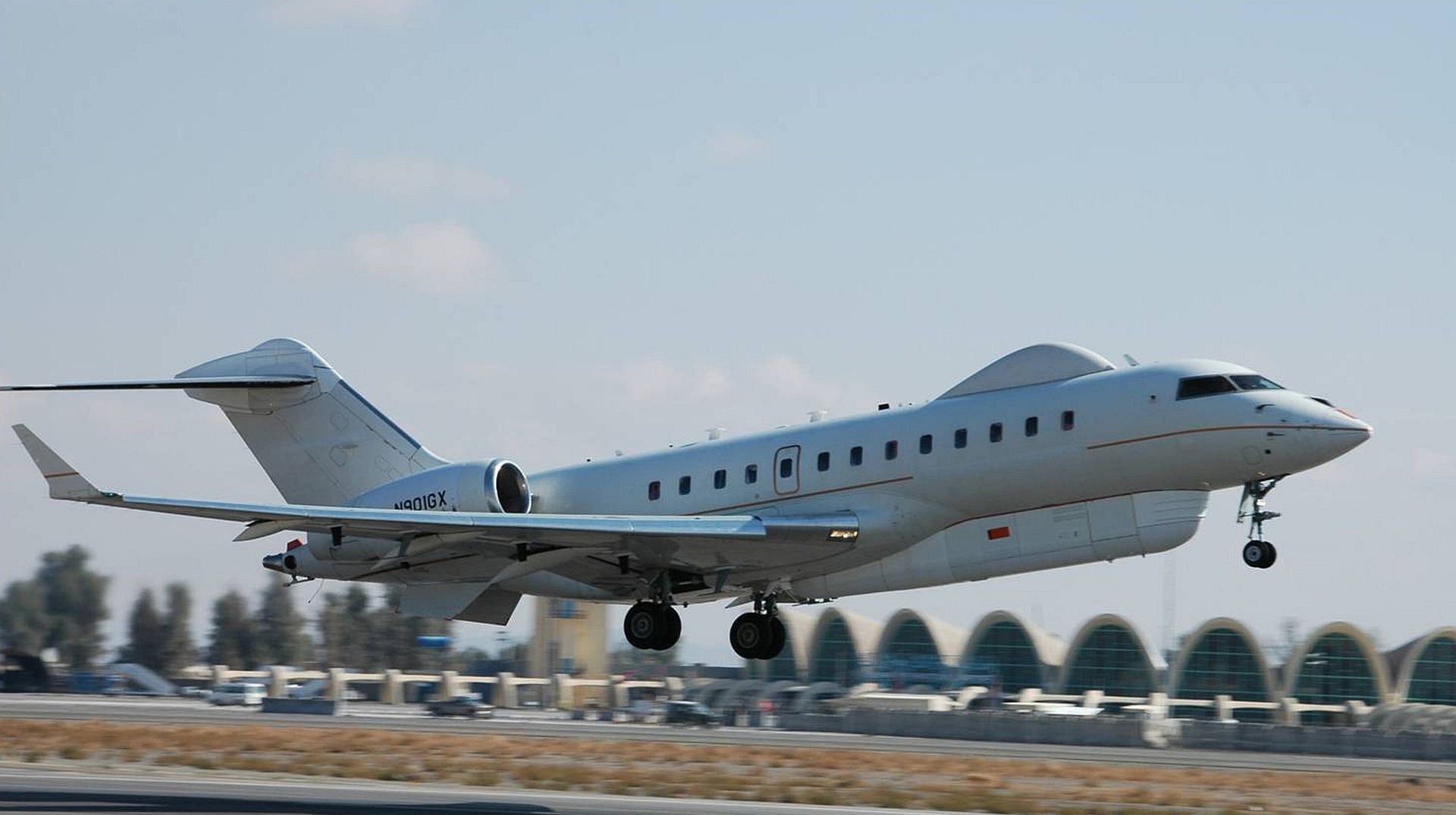
-
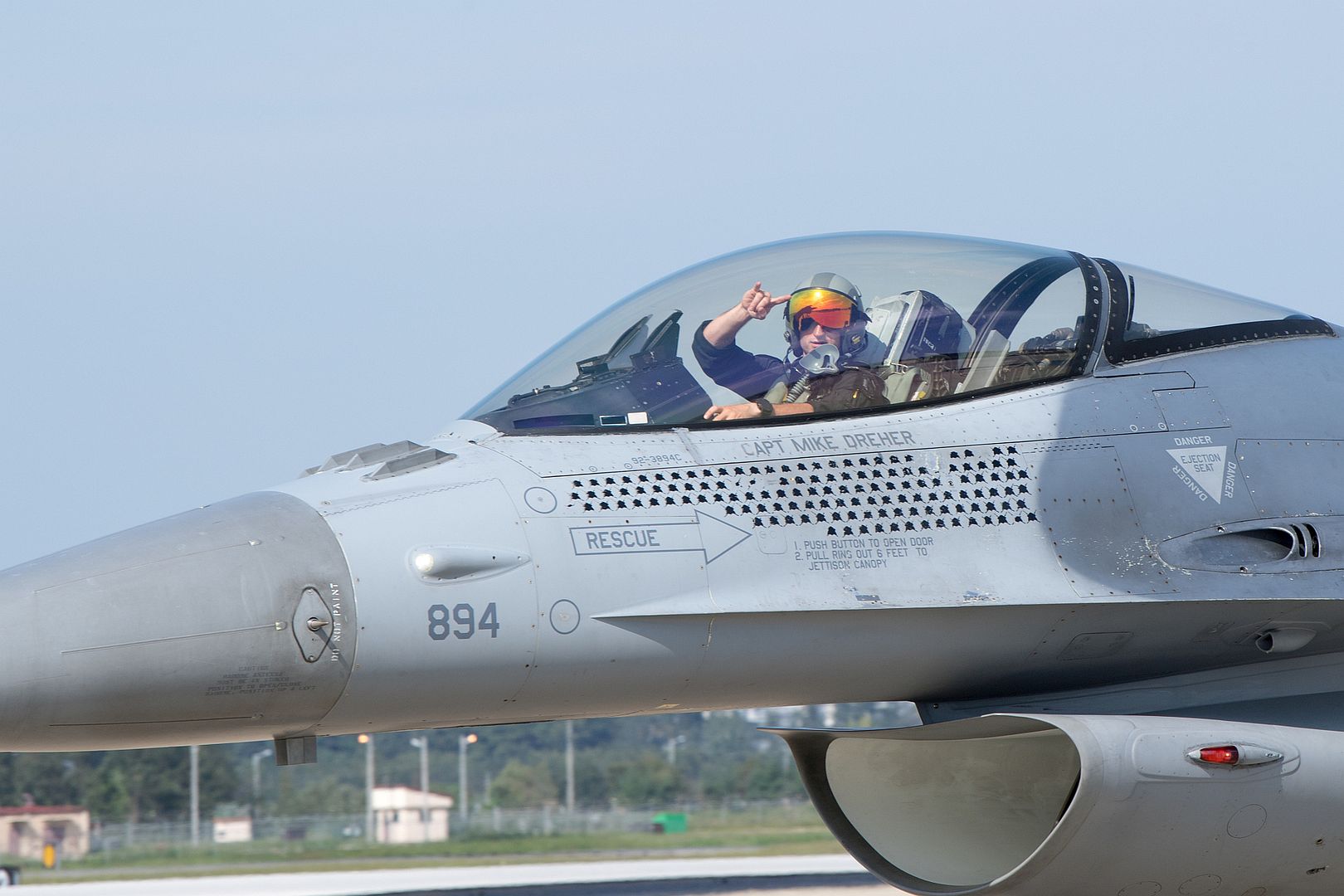
A Pacific Air Force?s F-16 Viper Demonstration Team pilot waves to Airmen at Osan Air Base, Republic of Korea, Sept. 19, 2019, during preparation for the Osan Air Power Day 2019. Team Osan works side-by-side with our host nation partners, which has greatly benefited our combined military readiness and built the critical lasting bonds needed between allies in the Indo-Pacific Region. (U.S. Air Force photo by Staff Sgt. Ramon A. Adelan)
Air Combat Command?s A-10 Thunderbolt II Demonstration Team practices their performance at Osan Air Base, Republic of Korea, Sept. 19, 2019, in preparation for the Osan Air Power Day 2019. Team Osan has a rich history in the Republic of Korea, and this event is an opportunity to show the community how our Airmen, Soldiers, Sailors, and Marines serve alongside our partners in the Republic of Korea. The demonstration team utilized the 25th Fighter Squadron, from maintenance Airmen to aircraft stationed here. (U.S. Air Force photo by Staff Sgt. Ramon A. Adelan)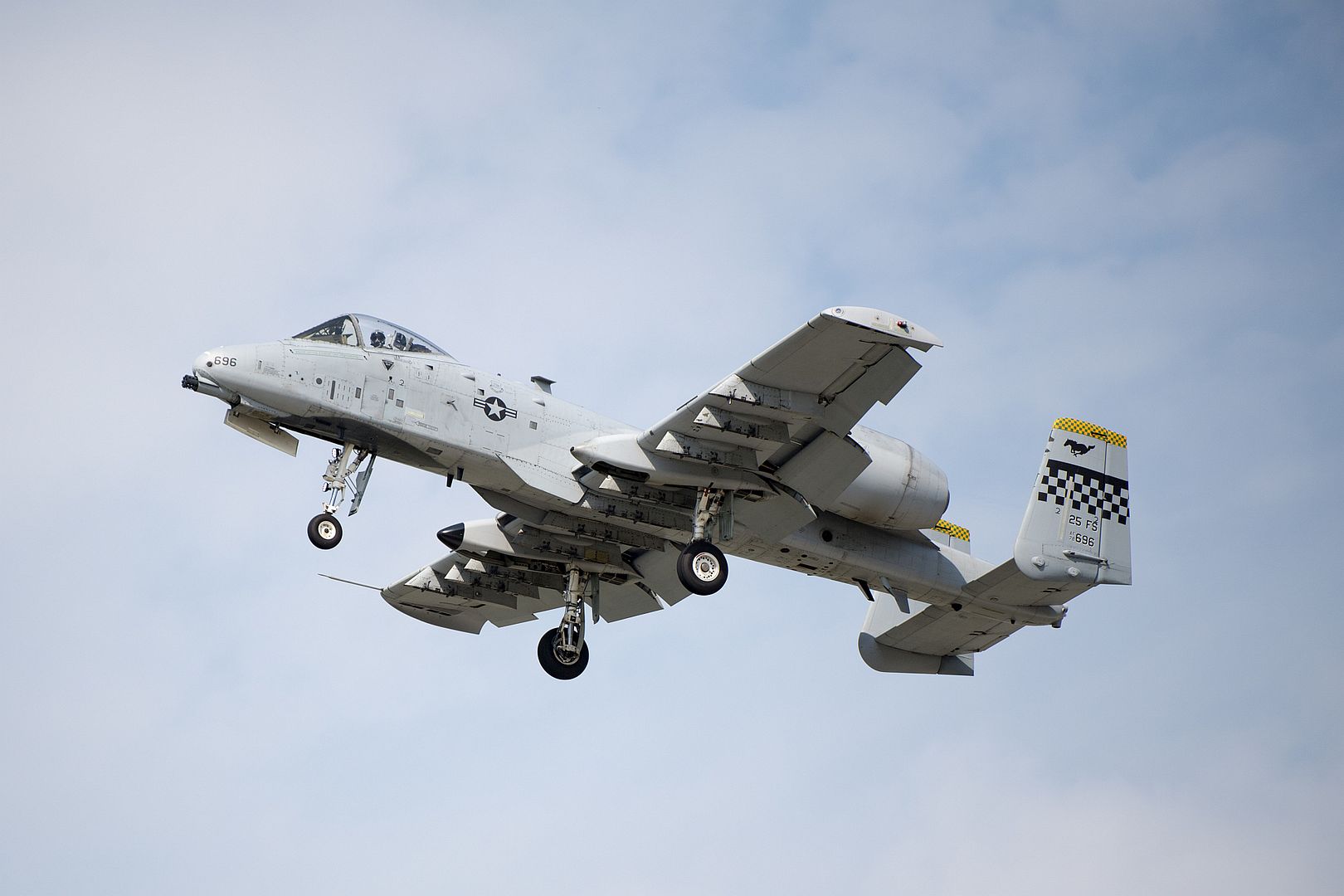
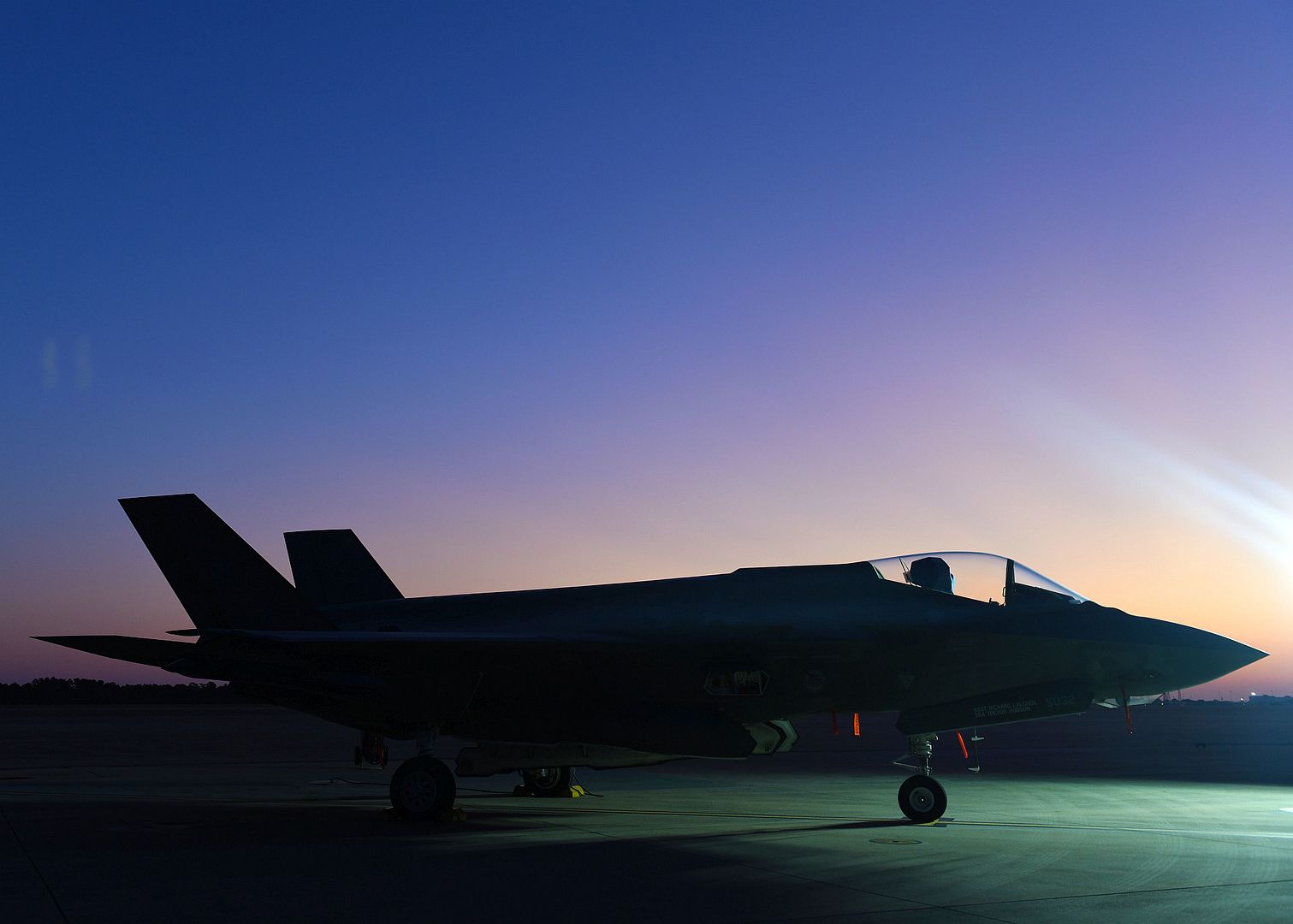
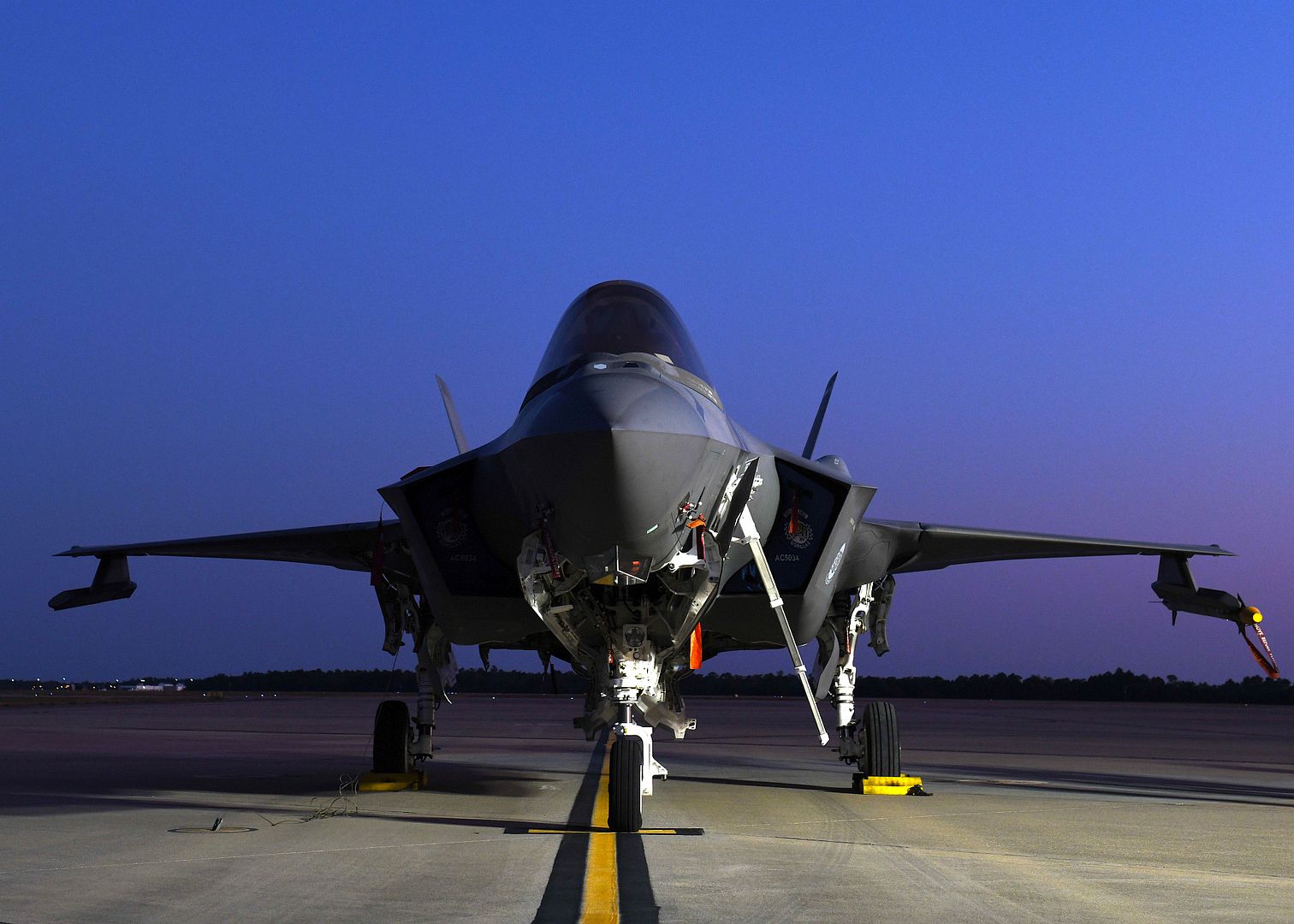
A 33rd Fighter Wing F-35A Lightning II sits on the flight line after an early morning AIM-9X missile load at Eglin Air Force Base, Florida, Sept. 18, 2019. This is the first time AIM-9X missiles have been loaded on to 33rd FW F-35A Lightning IIs as part of a short notice Weapons Standardization and Evaluation Program tasking. (U.S. Air Force photo's by Airman 1st Class Amber Litteral)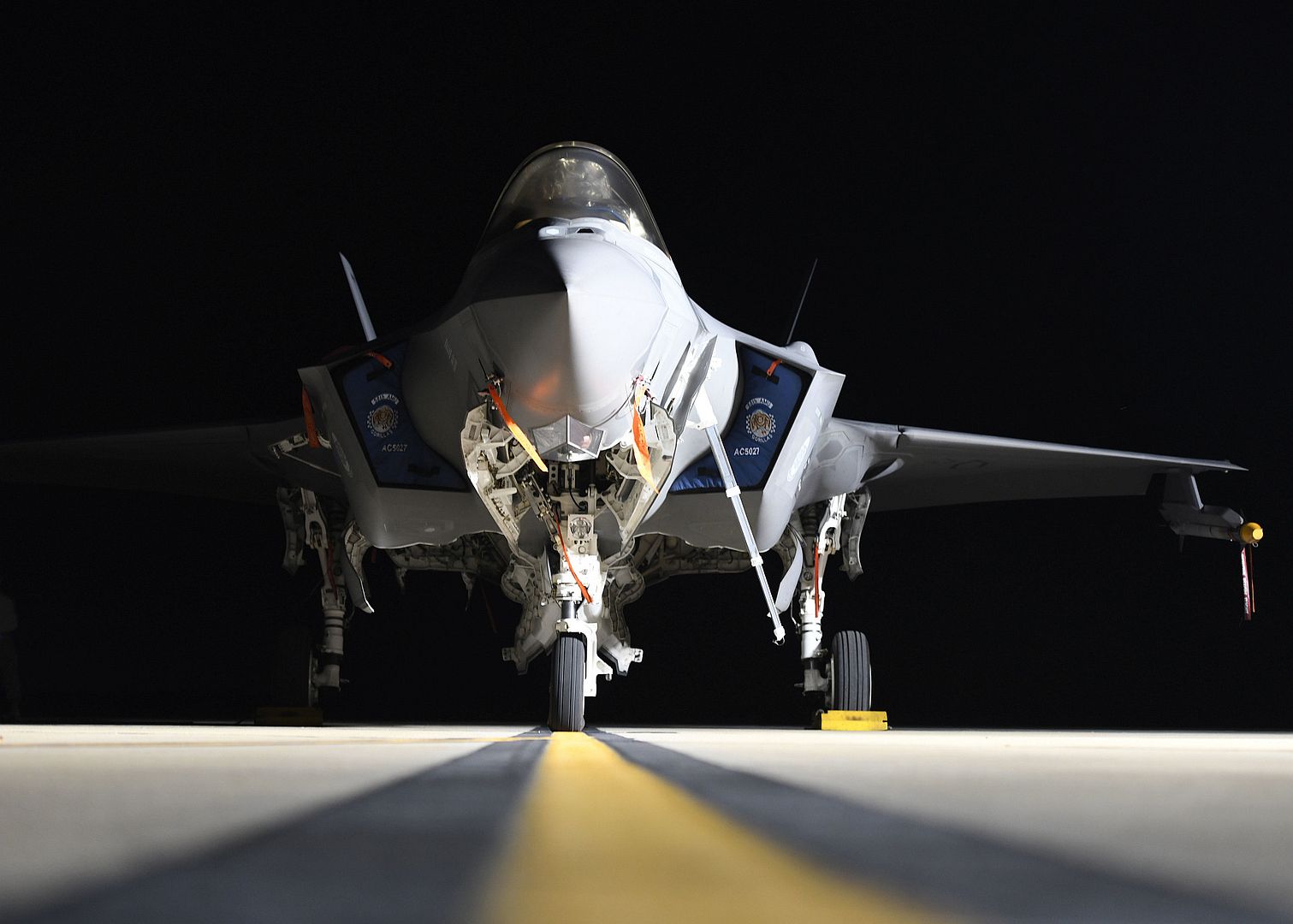
A Japan Air Self-Defense Force RF-4 Phantom II assigned to Hyakuri Air Base, Japan, arrives at Yokota AB, Japan, Sept. 13, for Friendship Festival 2019. The two-day-long festival provided a chance to strengthen the bilateral relationship between the United States and Japan. (U.S. Air Force photo by Airman 1st Class Brieana E. Bolfing)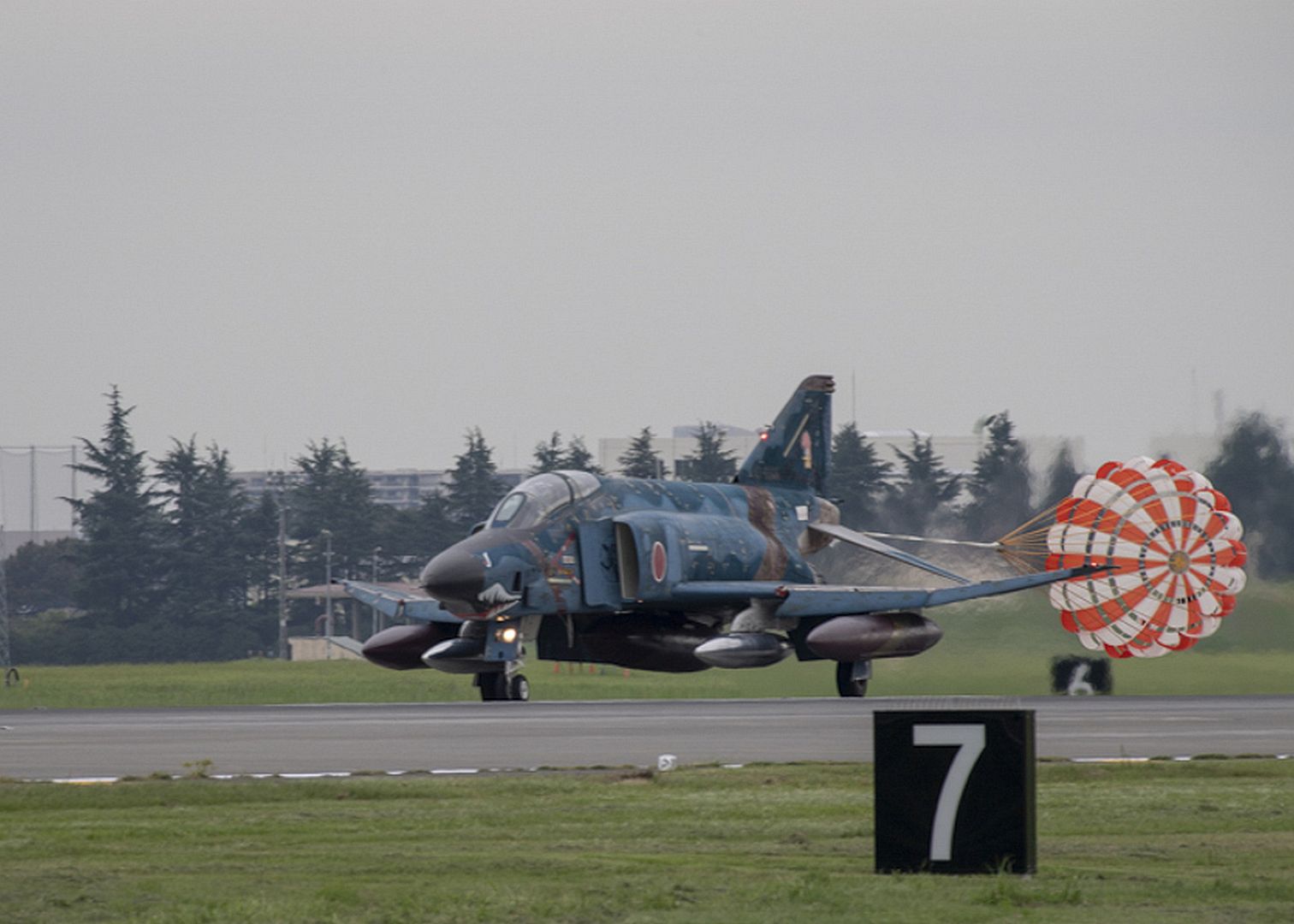
A Japan Air Self-Defense Force Mitsubishi F-2 assigned to Tsuiki Air Base, Japan, arrives at Yokota AB, Japan, Sept. 13, for Friendship Festival 2019. The two-day-long festival provided a chance to strengthen the bilateral relationship between the United States and Japan. (U.S. Air Force photo by Airman 1st Class Brieana E. Bolfing)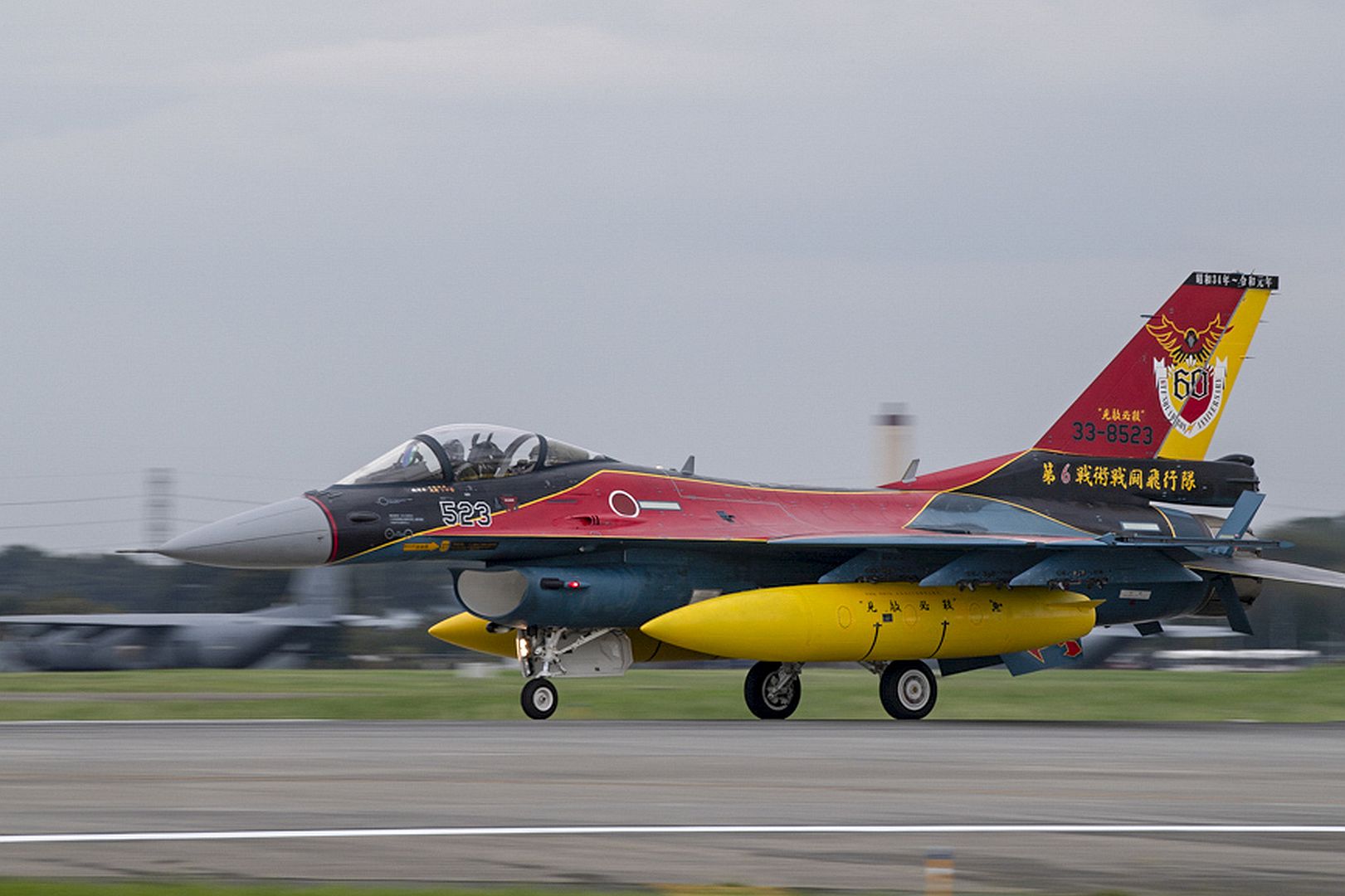
A Japan Air Self-Defense Force Kawasaki C-1 assigned to the Iruama Air Base, Japan, arrives at Yokota AB, Japan, Sept. 13, for Friendship Festival 2019. The two-day-long festival provided a chance to strengthen the bilateral relationship between the United States and Japan. (U.S. Air Force photo by Airman 1st Class Brieana E. Bolfing)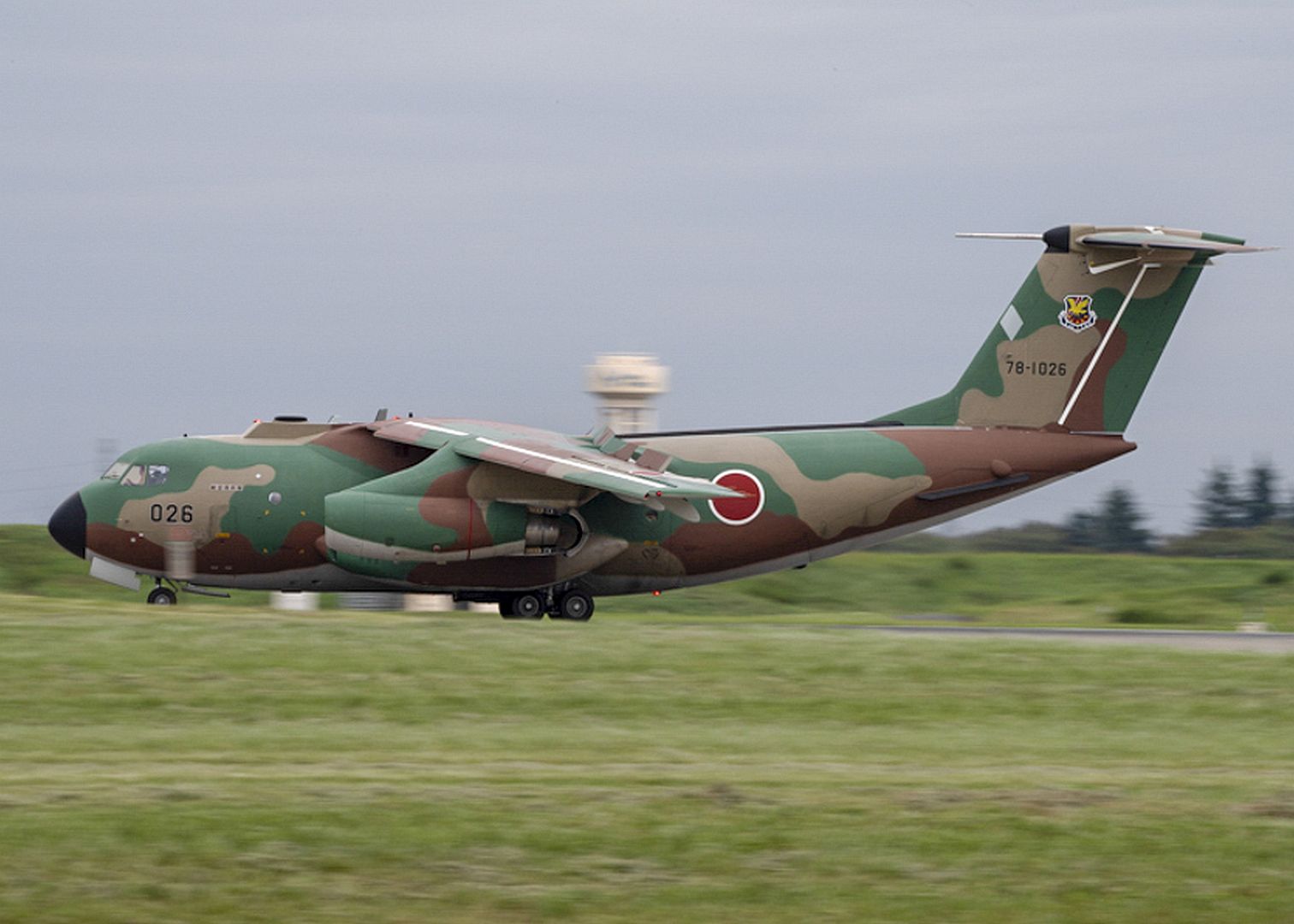
A Japan Air Self-Defense Force Mitsubishi F-15J Eagle assigned to Chitose Air Base, Japan, arrives at Yokota AB, Japan, Sept. 13, for Friendship Festival 2019. The two-day-long festival provided a chance to strengthen the bilateral relationship between the United States and Japan. (U.S. Air Force photo by Airman 1st Class Brieana E. Bolfing)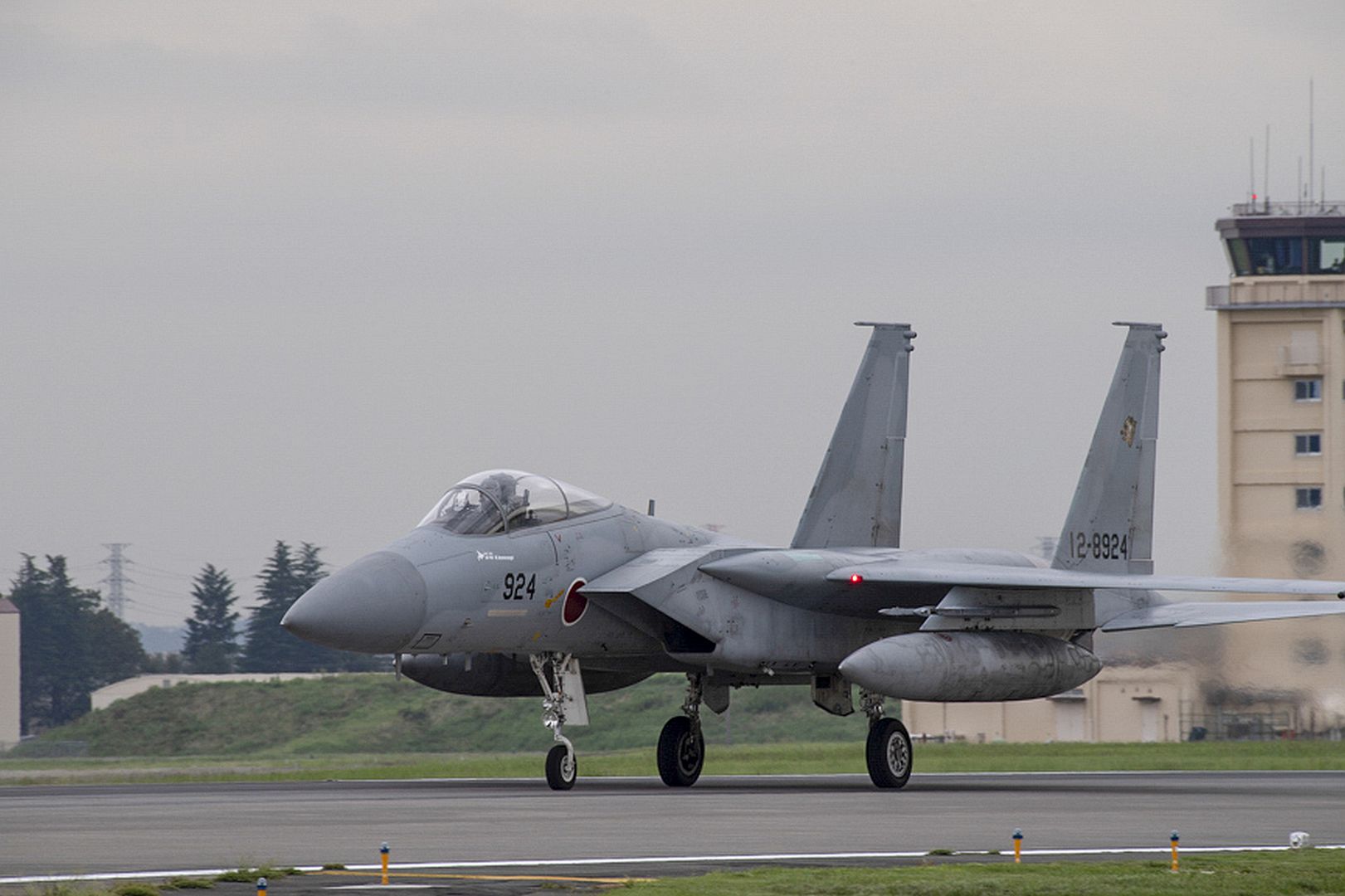
A Norwegian DA-20 Jet Falcon aircraft pulls into its parking spot Sept. 16, 2019, at RAF Mildenhall, England. The aircraft landed at the base before departing to participate in an exercise with the Norwegian and Danish air forces. (U.S. Air Force photo by Airman 1st Class Joseph Barron)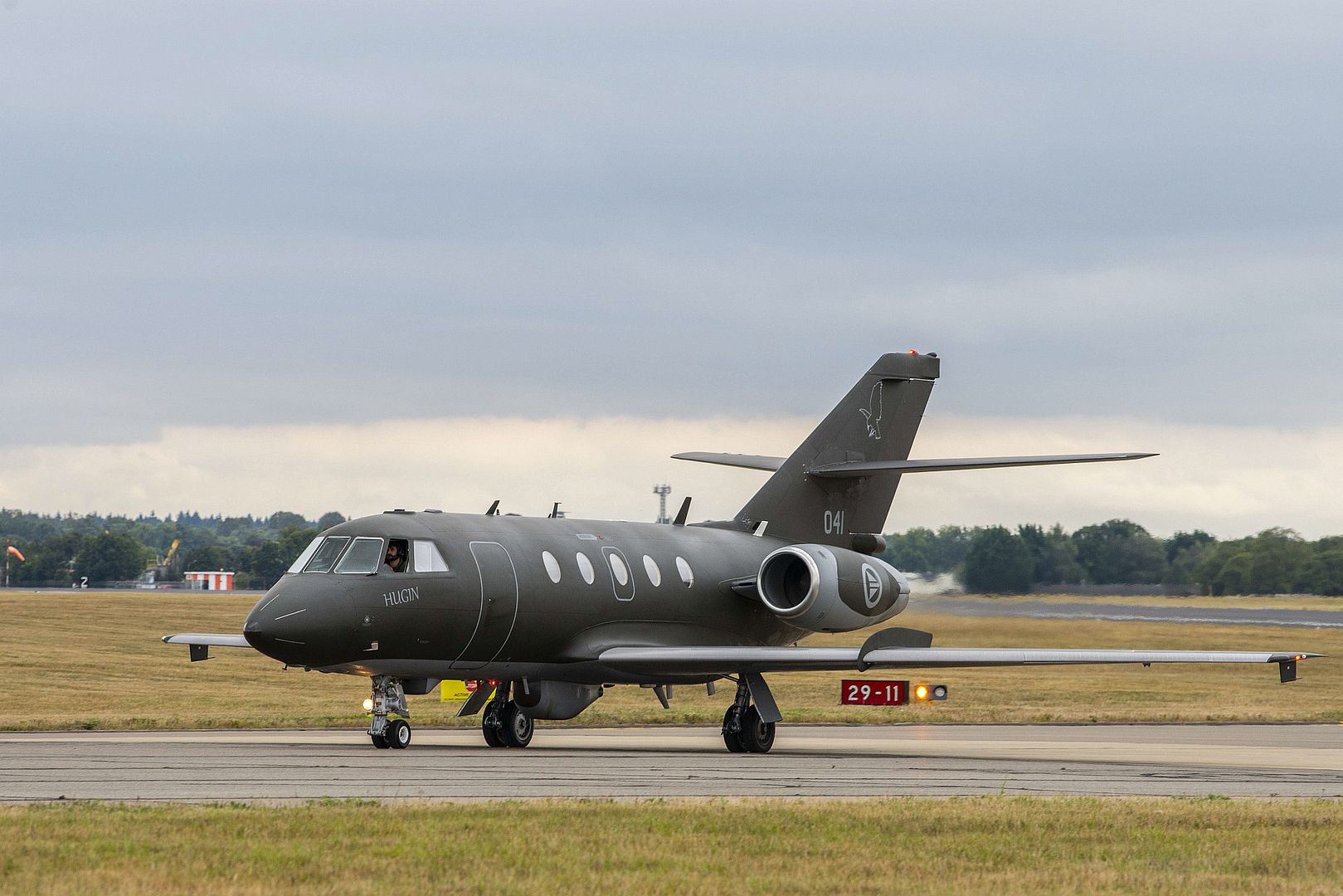
A B-52H Stratofortress assigned to the 5th Bomb Wing at Minot Air Force Base, North Dakota, takes off from RAF Mildenhall, England, Sept. 18, 2019. Following an emergency landing, the Stratofortress departed after being repaired. (U.S. Air Force photo by Airman 1st Class Joseph Barron)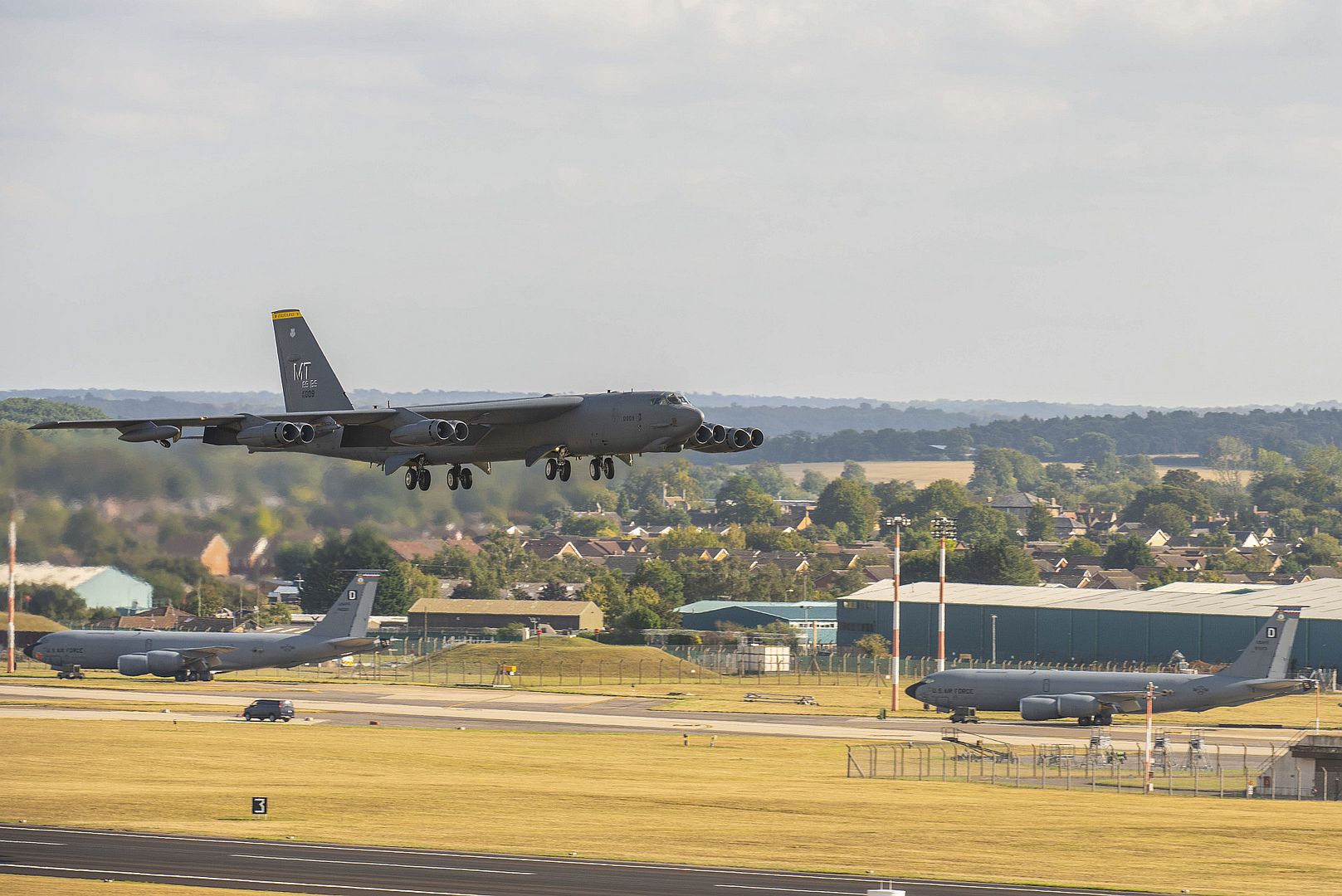
The shadow from the boom of a KC-135 Stratotanker splits down the middle of the nose of a B-2 Spirit Stealth Bomber during a training mission for Bomber Task Force Europe over England, Sept. 16, 2019. The B-2 from the 509th Bomb Wing, Whiteman Air Force Base, Missouri, is currently deployed to the United Kingdom as part of Bomber Task Force Europe, which is focused on strengthening multinational relationships and improving allied cooperation. (U.S. Air Force photo/ Senior Airman Kelly O'Connor)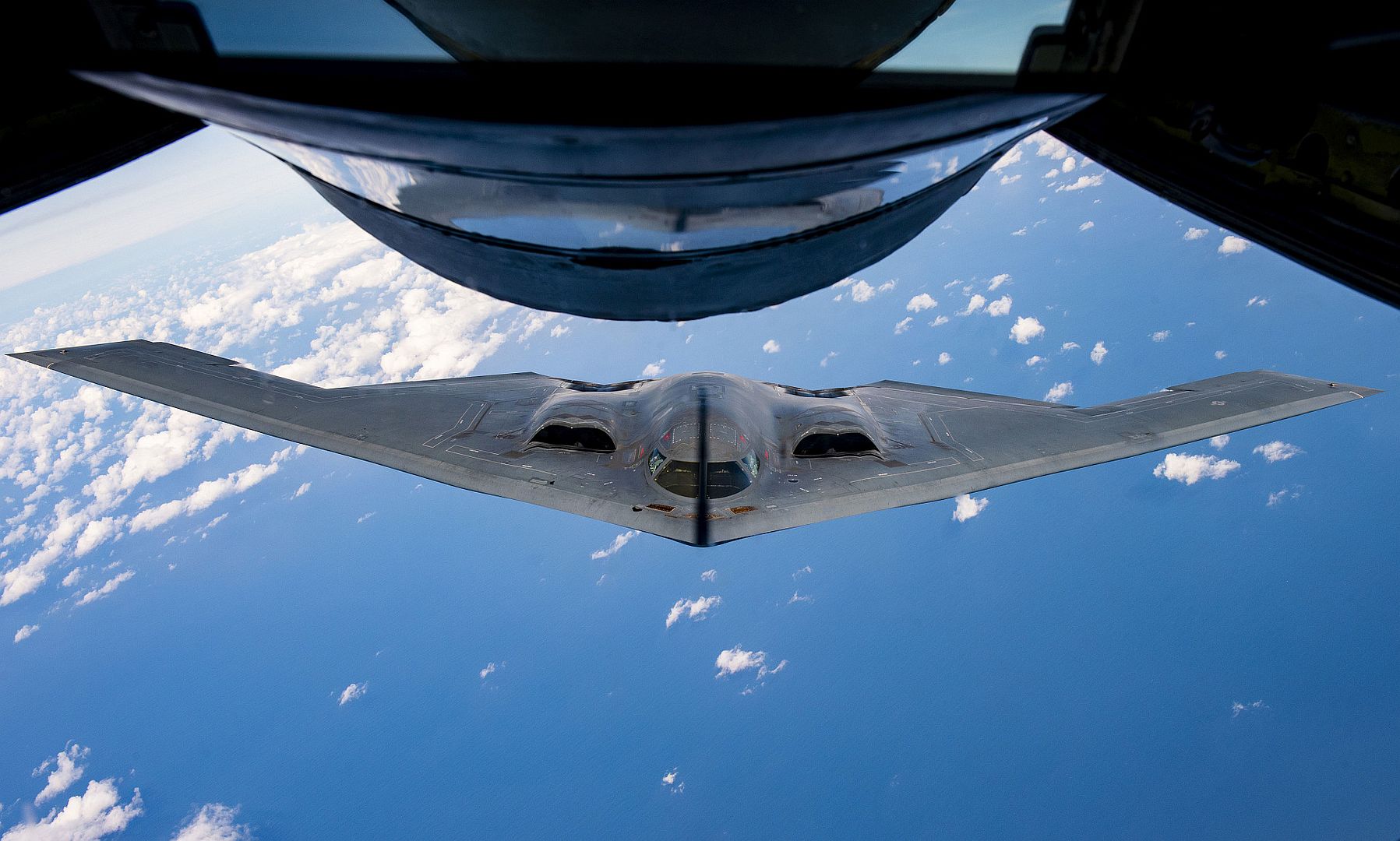
Crew chiefs assigned to the 18th Aircraft Maintenance Squadron prepare a 67th Fighter Squadron F-15C Eagle for a mission at Kadena Air Base, Japan, Sept. 16, 2019. The 18th AMXS maintains numerous F-15s, allowing the 44th and 67th Fighter Squadrons to play a vital role in combat operations to ensure a free and open Indo-Pacific for America and its allies. (U.S. Air Force photo by Tech. Sgt. Matthew B. Fredericks)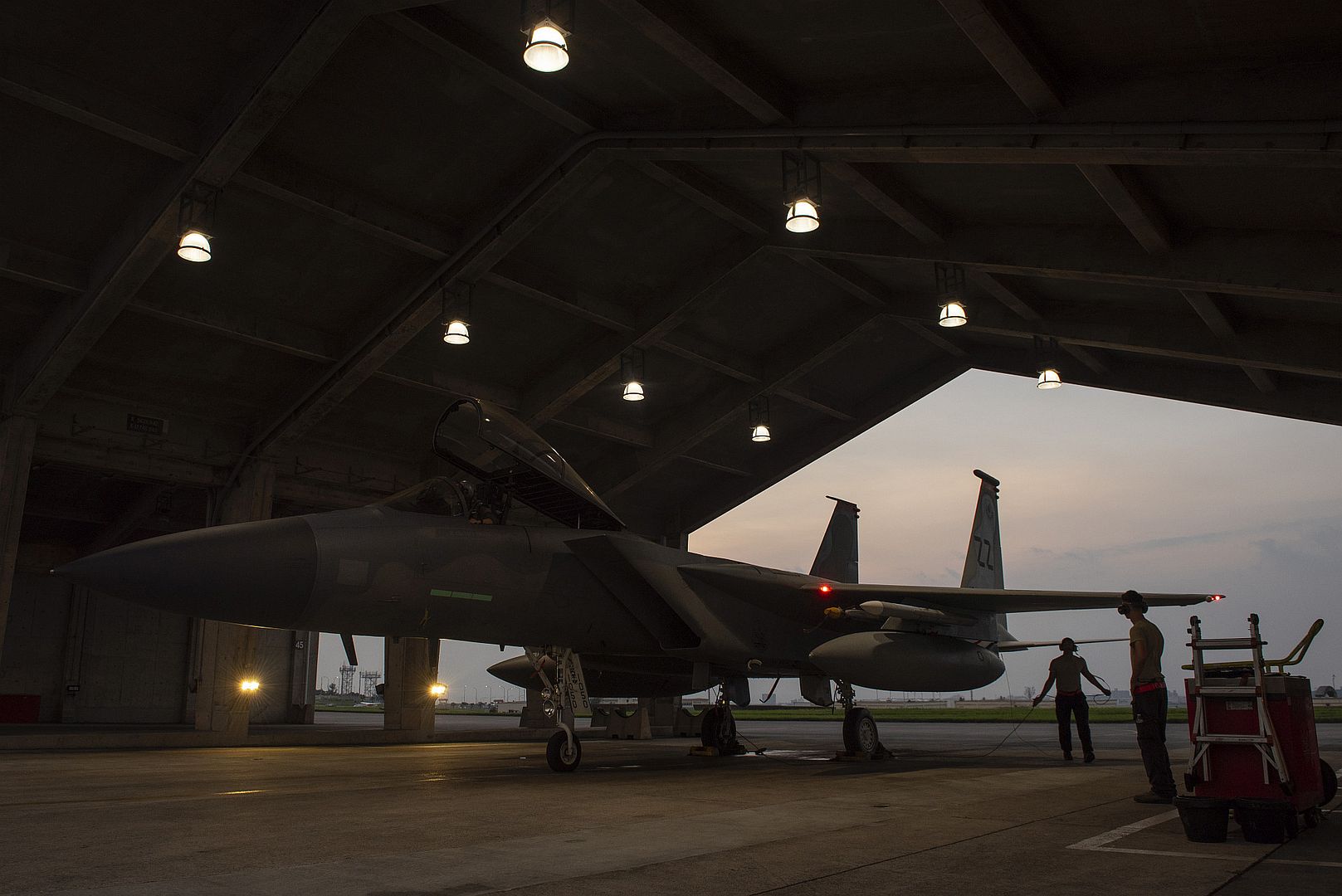
ORL?ANS, France, Sept. 19, 2019 ? Lockheed Martin (NYSE: LMT) delivered the first of two KC-130J Super Hercules aerial refuelers to representatives from France?s Arm?e de l'Air's 62st Transport Wing at Orl?ans-Bricy Air Base today.
France will receive a total of four Super Hercules aircraft ? two C-130J-30 combat delivery airlifters and two KC-130J aerial refuelers ? through a Foreign Military Sale with the U.S. government. The two C-130J-30 airlifters were delivered in 2017 and 2018, and a second KC-130J will deliver in 2020. All of these Super Hercules are operated in conjunction with France?s existing C-130H fleet.
?The KC-130J provides Arm?e de l'Air crews with a proven solution that delivers much-needed fuel in any environment, at any time,? said Rod McLean, vice president and general manager, Air Mobility & Maritime Missions at Lockheed Martin. ?In choosing to operate both the C-130J-30 and the KC-130J, France has built a diverse airlift fleet that expands both the capabilities and global reach of the French Armed Forces.?
France is the 17th country to choose the C-130J for its airlift needs. The C-130J Super Hercules is the most advanced tactical airlifter in operation today, offering superior performance and enhanced capabilities with the range and versatility for every theater of operations and evolving requirements.
As the preeminent tactical aerial refueling tanker, the KC-130J is a battle-tested solution that takes full advantage of the tremendous technological and performance improvements inherent in the C-130J Super Hercules aircraft. A true force multiplier, the KC-130J refuels both fixed wing and rotary wing aircraft as well as conducts rapid ground refueling.
With this delivery, France joins a global community of KC-130J operators. In 2018, Germany announced the acquisition of a C-130J-30/KC-130J fleet, to be operated in partnership with France ? making this first such operator relationship in C-130J history.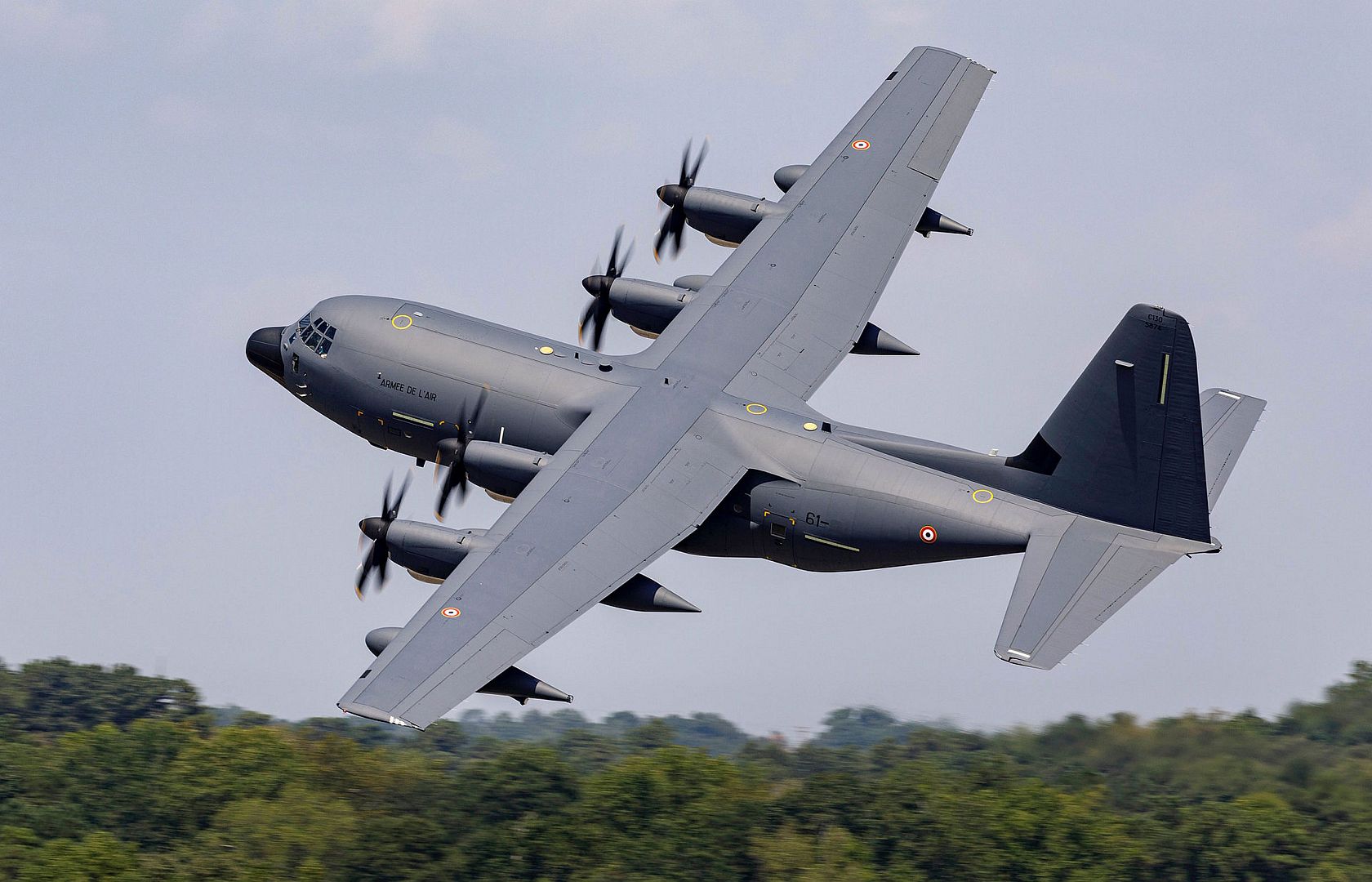
Brasov - Airbus Helicopters and the Romanian Ministry of Interior have signed a contract for the purchase of three H135 helicopters and associated support and services for air medical services and search and rescue (SAR) missions in the country, following a four-year framework agreement signed at the end of July 2019 that foresees the procurement of up to ten H135s.
?During 15 years of air medical services ? the well-known SMURD mission, the H135 has proven its utility, being a rotorcraft which adapts rapidly to all types of requests. All advantages ? mainly the flexible maintenance, management of space for the transport of passengers and patients, the speed, the capability to land in a limited area, the possibility to operate life-saving medical interventions during flight, the capability to fly during day and night, and its versatility for mountain missions thanks to the hoist ? are essential when it comes to critical life saving missions?, said Commander Dache Paul Catalin, IGAv general inspector.
?Airbus has been an active player in Romania for almost 50 years and we are proud that the Ministry of Interior has selected the H135 for such critical missions. As a market leader with more than 600 helicopters in service for air medical service missions worldwide, I have no doubt that it will be a valuable life-saving asset to the country,? said Georges Durdilly, Head of Airbus Helicopters in Romania.
Airbus Helicopters has delivered more than 1,300 H135s to customers around the globe who are logging more than 400,000 flight hours per year. The H135?s operational scope includes law enforcement, air medical services, private and business aviation, the maintenance of industrial wind parks, and military training. The H135 is the main reference in air medical services, available in a wide range of dedicated interiors that maximize operators? choice in configurations, providing ample room for single-patient or dual-patient transport. The H135 family of helicopter has clocked more than 5 million flight hours, being in service with more than 300 customers worldwide.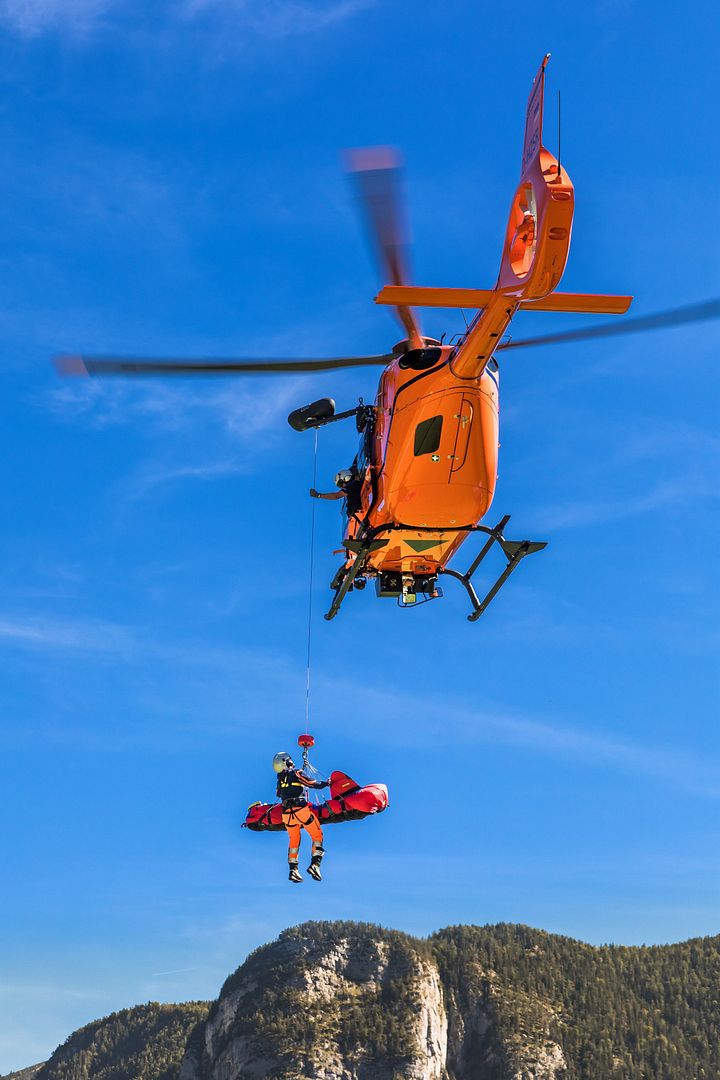
Cobra Warrior, the largest Royal Air Force exercise of the year, is drawing to a close. Aircraft and crews from across the RAF have been joined by counterparts from Italy, Germany and Israel for three weeks of intensive training.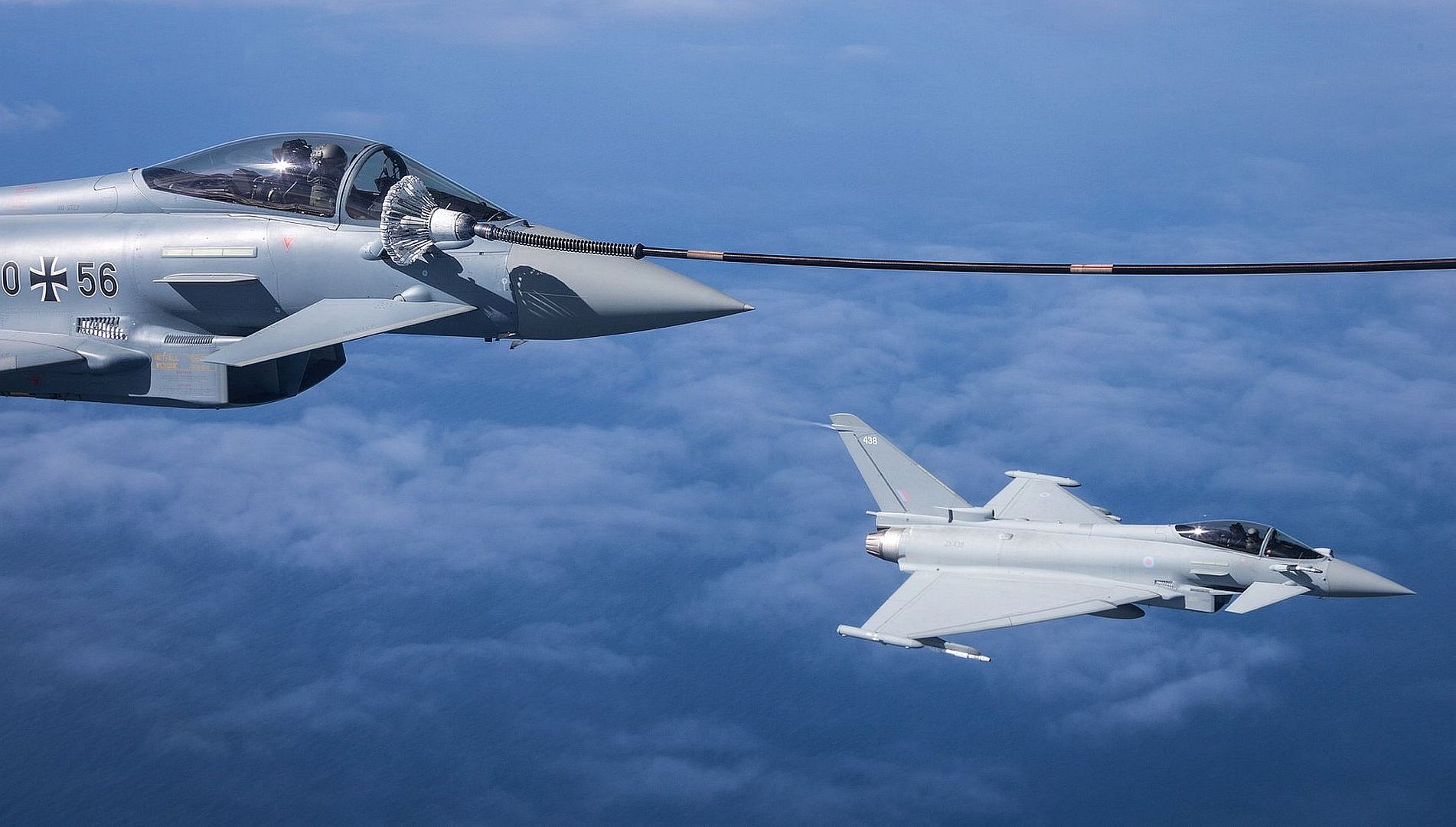
The complex training sorties have been supported each day by air-air refuelling tanker aircraft flying from RAF Brize Norton. The Voyager tankers based at the Oxfordshire station have been joined by an Airbus A310 of the German Air Force to refuel Eurofighter Typhoons and F-35B Lightnings over the North Sea.
(photo's MOD)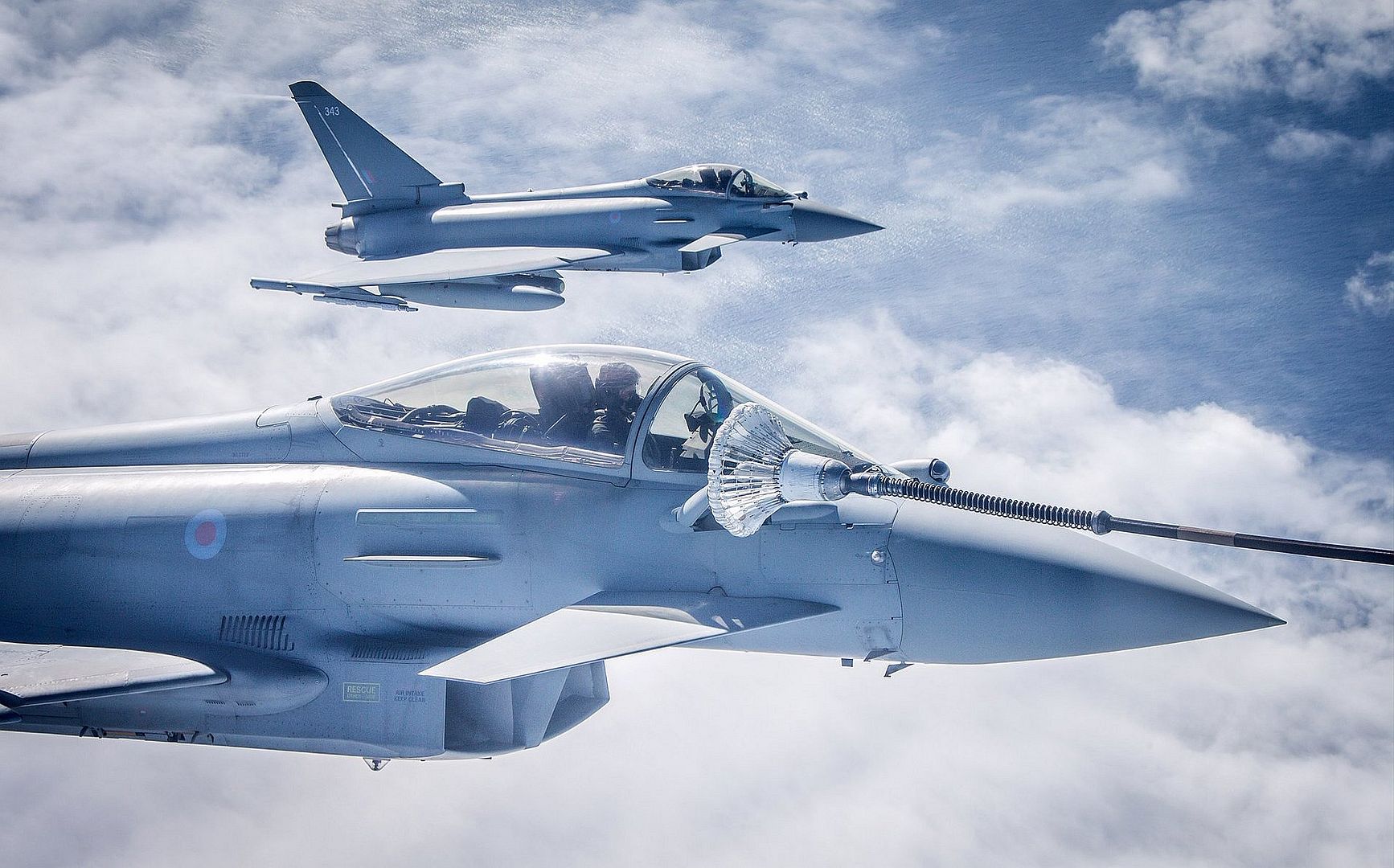
RAF Typhoon combat jets are being prepared to leave the arid desert of Oman for the tropical, humidity of Malaysia as Exercise Magic Carpet concludes this week.
The two-week joint exercise has seen the jets from 3(Fighter) Squadron, RAF Coningsby operate alongside Typhoons, F-16s and other Royal Air Force of Oman (RAFO) aircraft following an invitation to participate by His Majesty Sultan Qaboos bin Said and the RAFO. Omani Typhoon pilots have also been able to sharpen their air-to-air refuelling skills with a Voyager from RAF Brize Norton.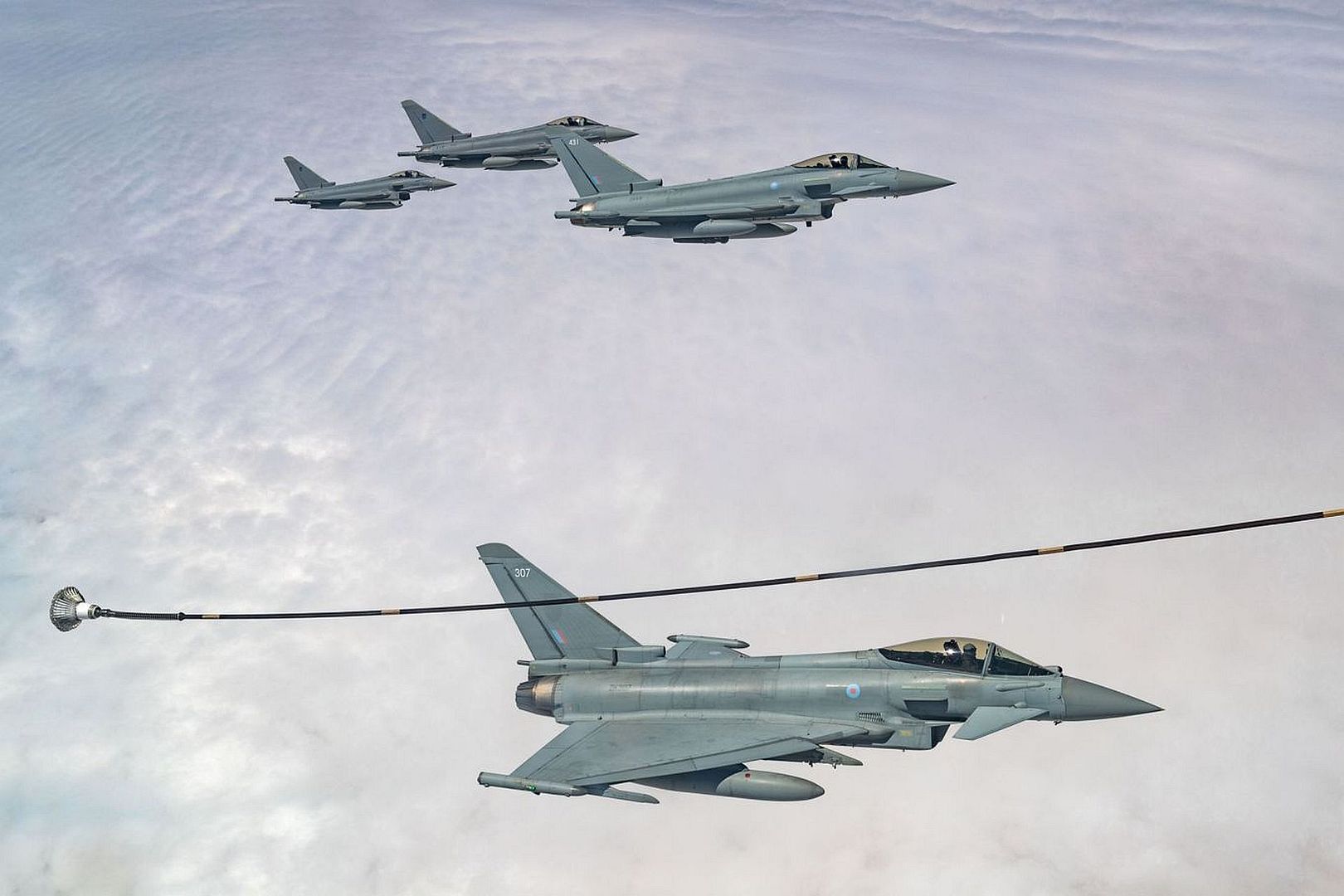
Assisted and supported by more than two hundred RAF ground personnel from Joint Terminal Attack Controllers and technicians to chefs and medics, the multi-role Typhoons have flown a range of highly realistic training sorties. The exercise has also seen RAF and RAFO air operations controllers, fire fighters and photographers working side by side.
Refuelled mid-air along the way by Voyager, the Typhoon jets will now fly onto Malaysia where they will be handed over to II(AC) Squadron from RAF Lossiemouth to participate in the multi-national Exercise Bersama Lima.
Photo's MOD.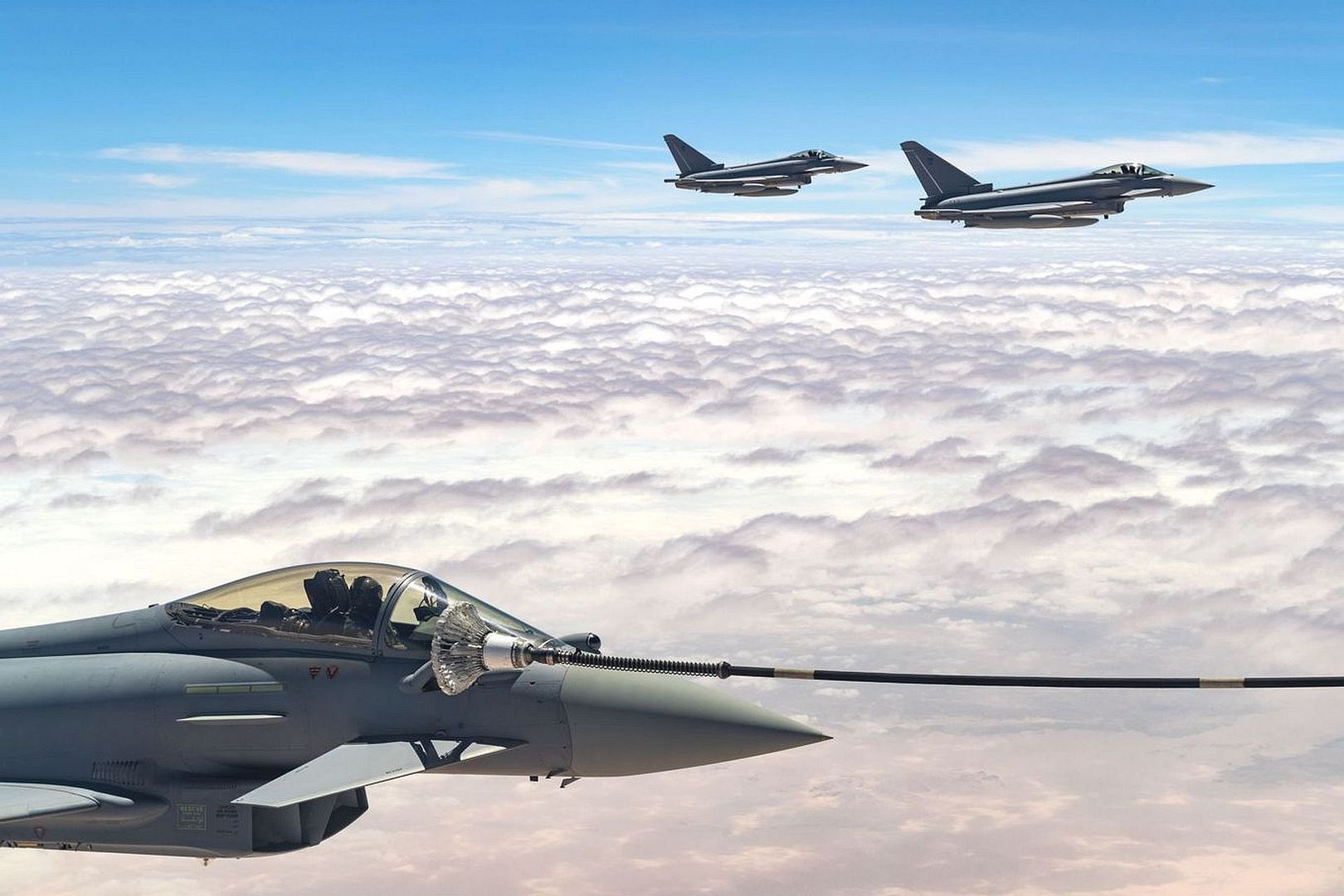
-
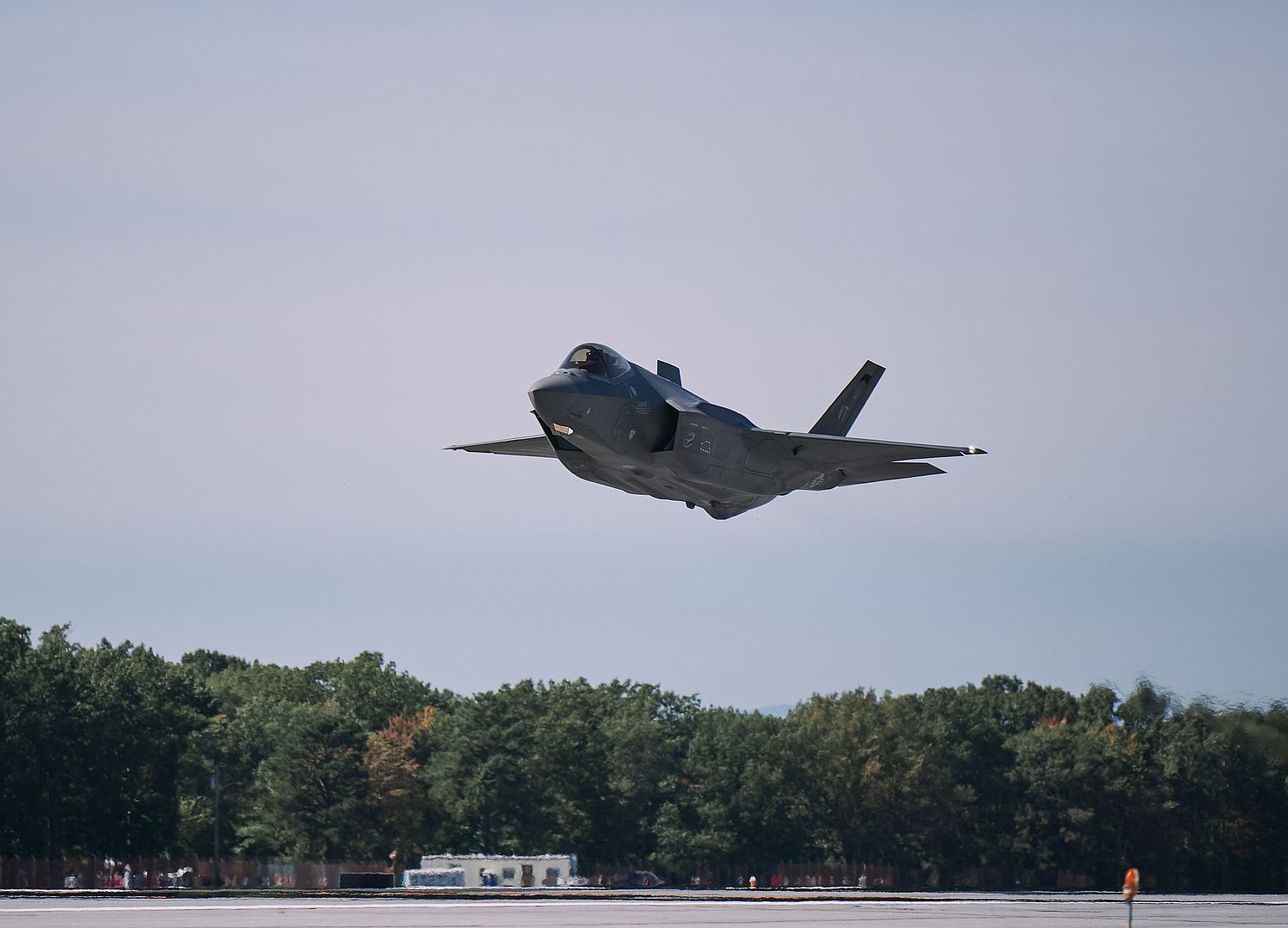
Lt. Col. Nathan Graber, a pilot assigned to the 134th Fighter Squadron, 158th Fighter Wing, Vermont Air National Guard, and Lt. Col. Anthony Marek, a pilot and commander of the 134th FS, land the first two F-35 Lightning IIs assigned to the 158th FW at the Vermont Air National Guard Base, South Burlington, Vt., Sept. 19, 2019. The 158th FW is the first Air National Guard unit to receive the aircraft, and will be the second operational F-35 wing in the U.S. Air Force, and will receive a total of 20 over the following months. (U.S. Air National Guard Photo by Tech. Sgt. Ryan Campbell)
A KC-10 Extender is parked on the flightline Sept. 19, 2019, at Travis Air Force Base, California. The KC-10 was one of 46 U.S. aircraft that joined aircraft from 29 international partners for Mobility Guardian 2019, Air Mobility Command?s largest full-spectrum readiness exercise. MG19 validates the Air Force?s readiness to conduct mobility operations against threats described in the 2018 National Defense Strategy. (U.S. Air Force photo by 2nd Lt. R. Michael Longoria)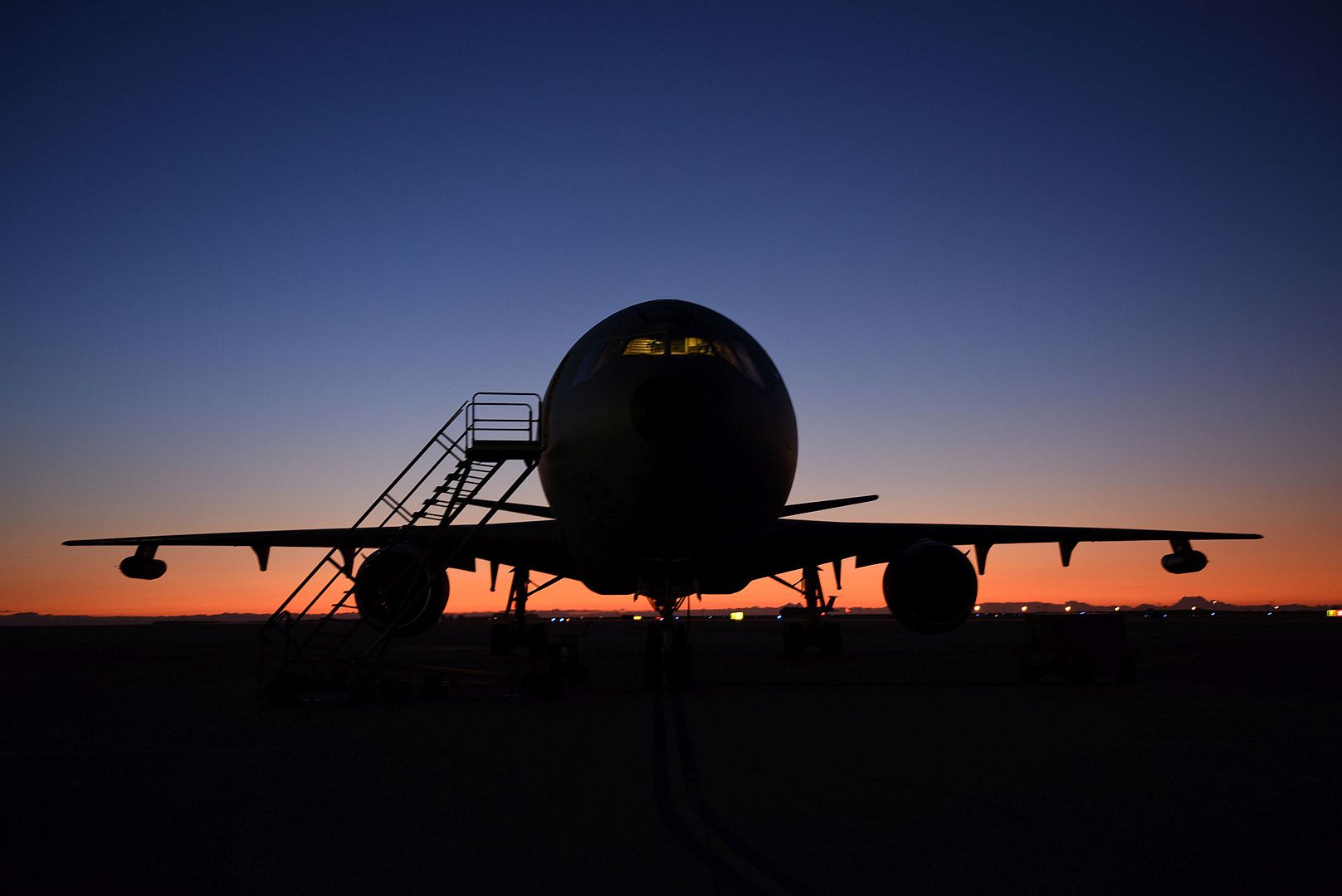
A Navy EA-18 Growler connects with a Travis Air Force Base, California, KC-10 Extender Sept. 19, 2019, near the U.S. and Canadian border. An aircrew from 9th Air Refueling Squadron refueled three Growlers in support of Mobility Guardian 2019, Air Mobility Command?s largest full-spectrum readiness exercise. MG19 validates the Air Force?s readiness to conduct mobility operations against threats described in the 2018 National Defense Strategy. (U.S. Air Force photo by 2nd Lt. R. Michael Longoria)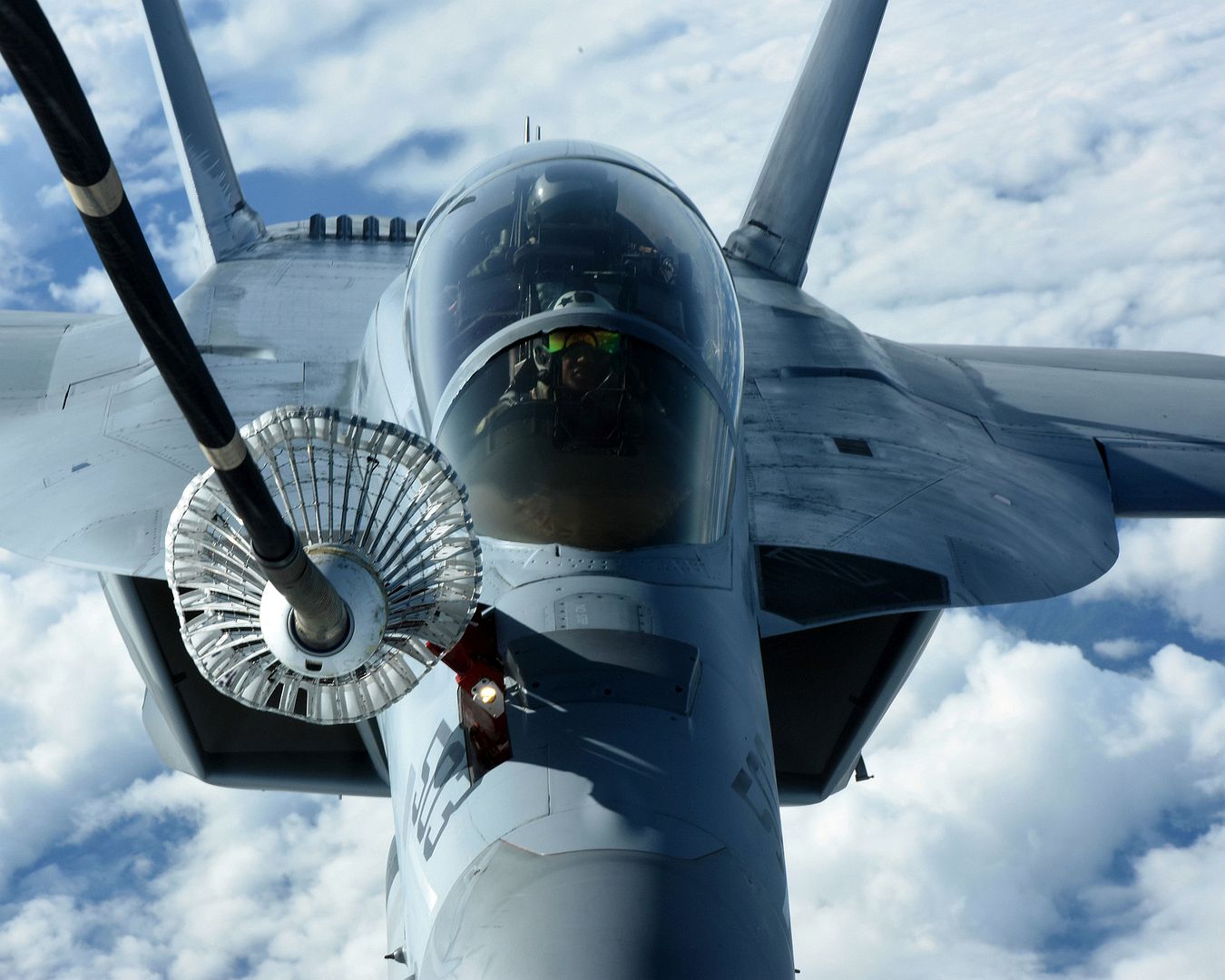
A U.S. Air Force KC-135 Stratotanker from the 92nd Air Refueling Squadron, Fairchild Air Force Base, Washington, refuels a B-52H Stratofortress from the 2nd Bomb Wing, Barksdale AFB, Louisiana, during a strategic deterrence scenario as part of Exercise Mobility Guardian 2019 at Fairchild AFB Sept. 19, 2019. Exercise Mobility Guardian is Air Mobility Command's premier, large scale mobility exercise. Through robust and relevant training, Mobility Guardian improves the readiness and capabilities of Mobility Airmen to deliver rapid global mobility and builds a more lethal and ready Air Force. (U.S. Air Force photo by Senior Airman Charles T. Fultz)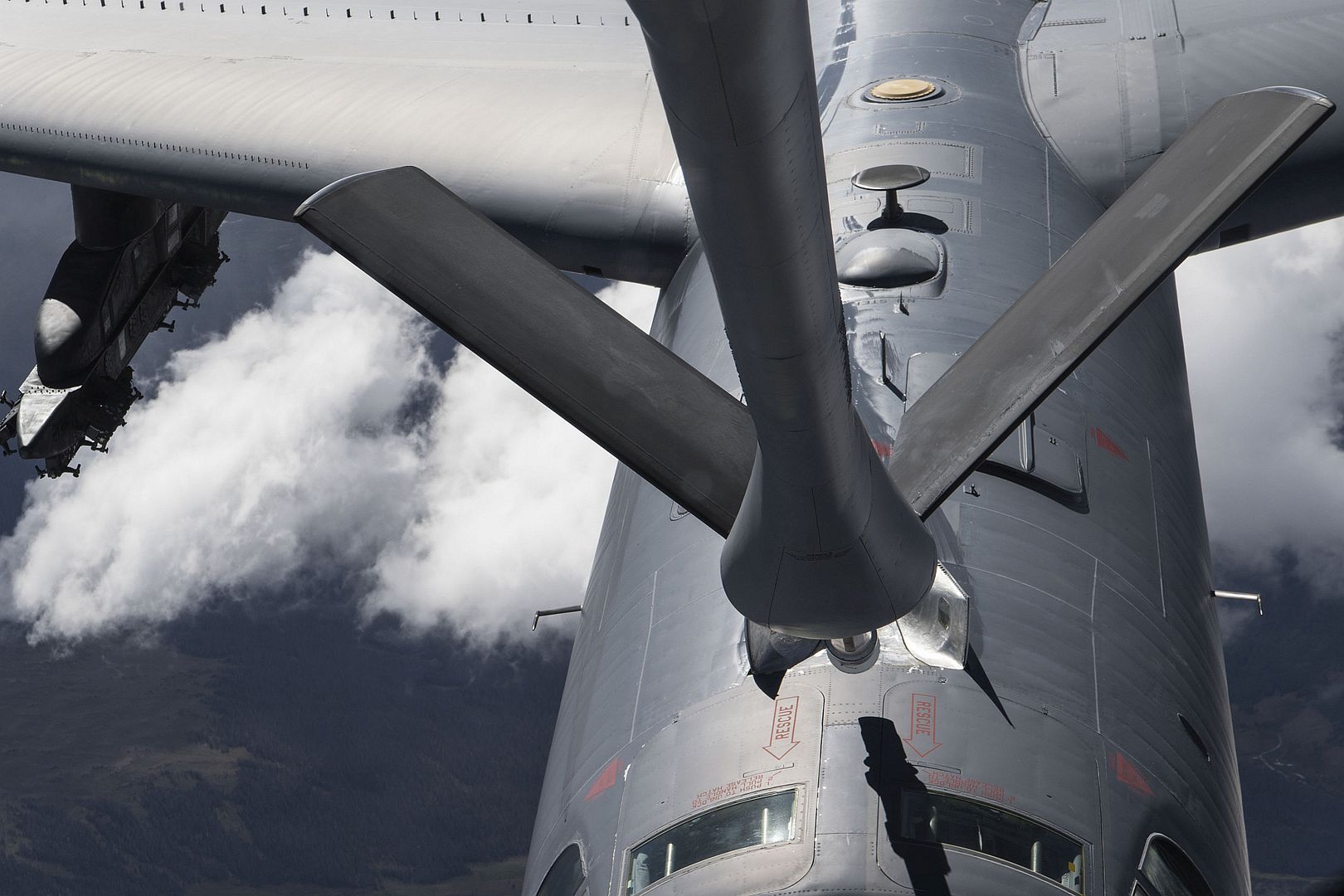
A member of the Republic of Korea Air Force Black Eagles aerial demonstration team takes off during the Air Power Day 2019 at Osan Air Base, ROK, September 20, 2019. The team performs manuevers such as the Heart and Cupid, Gourd Bottle and Dizzying Break. (U.S. Air Force photo by Senior Airman Denise Jenson)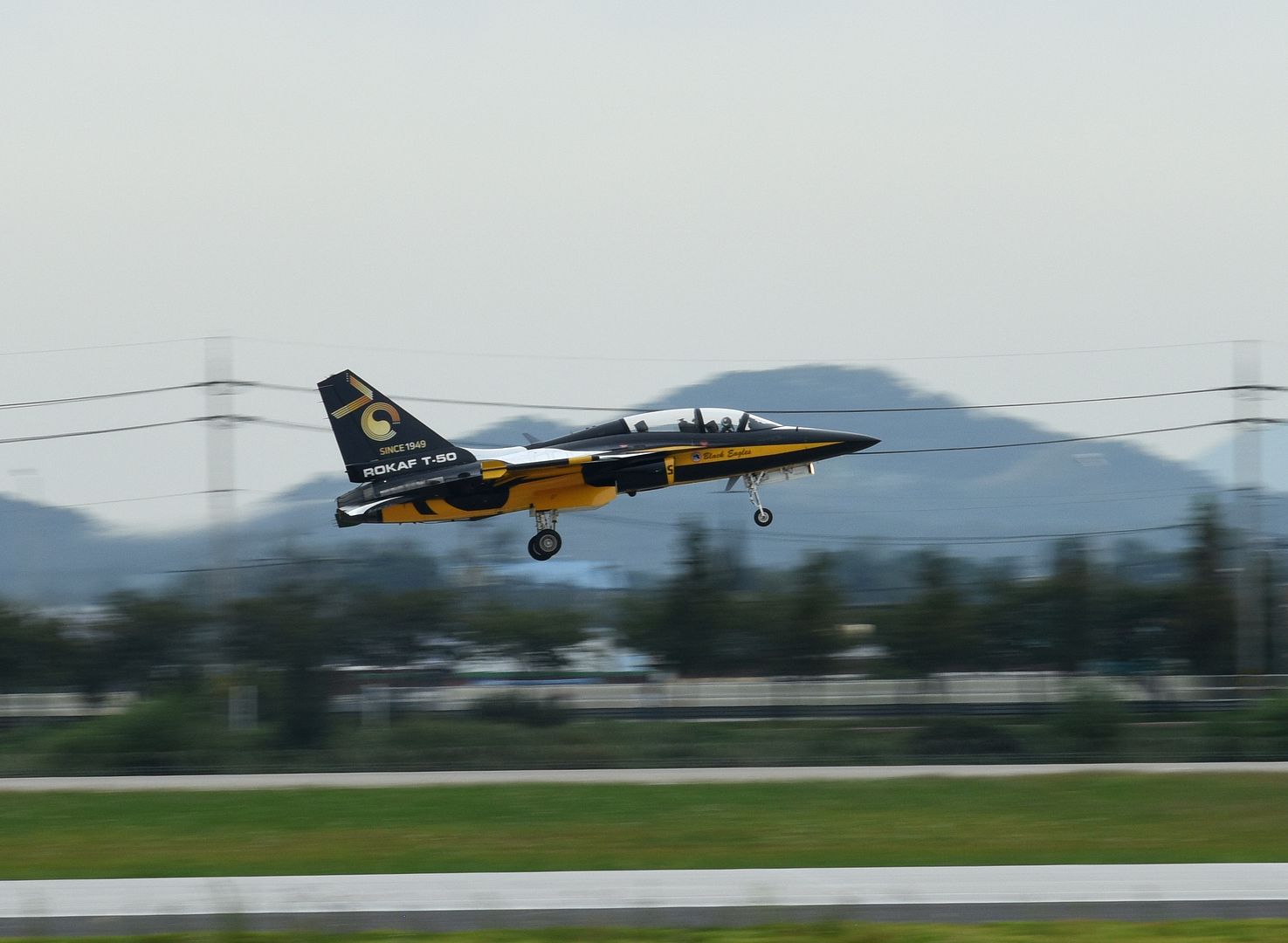
Two F-35 Lightning II?s bank after receiving fuel over the Midwest Sept. 19, 2019. The two aircraft were in route to the 158th Fighter Wing out of the Vermont Air National Guard Base, South Burlington, Vt., the first Air National Guard unit to receive the aircraft. (U.S. Air Force photo/Master Sgt. Ben Mota)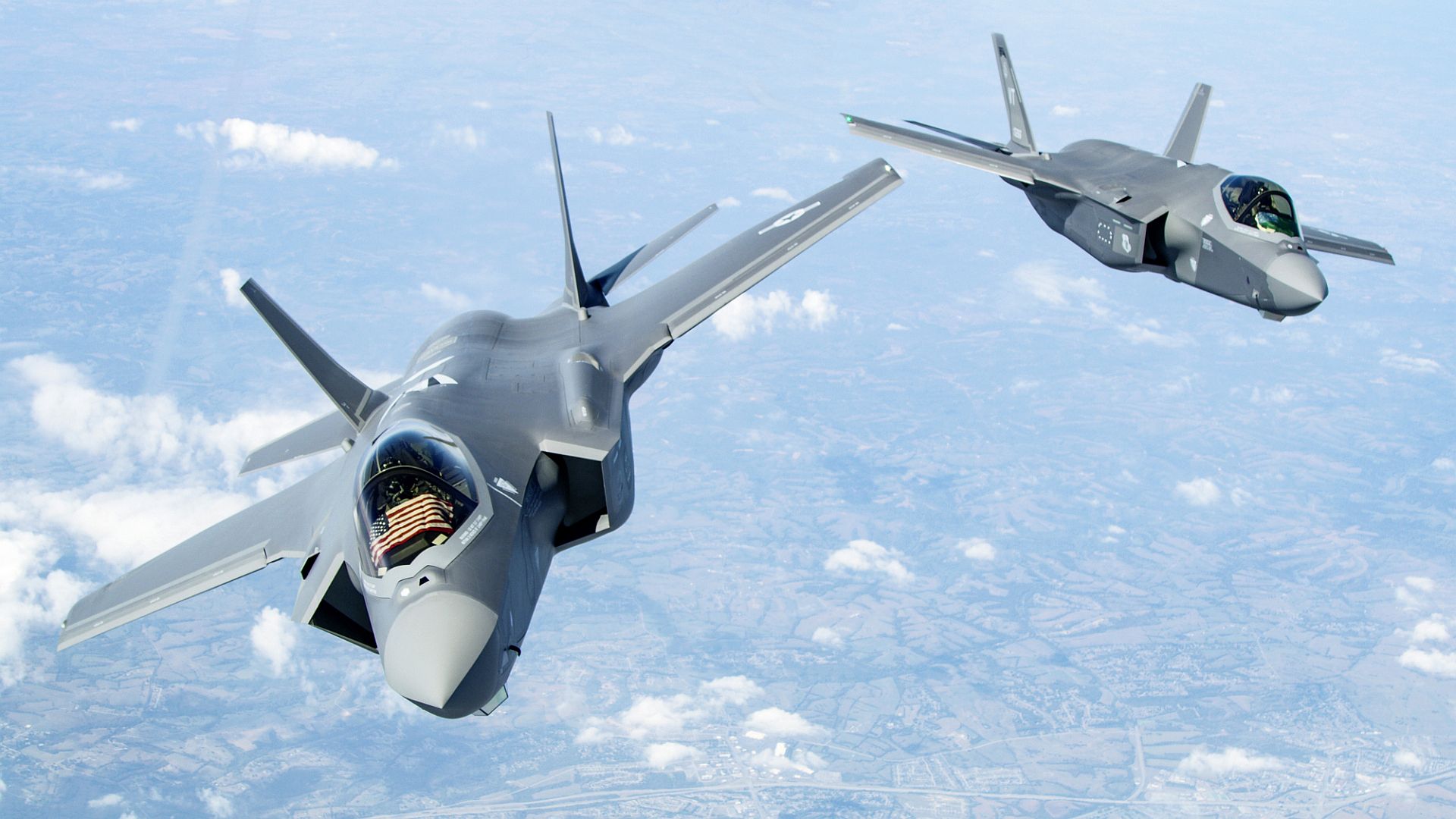
A German Air Force Tornado receives fuel from a U.S. Air Force KC-135 Stratotanker during air refueling training over the North Sea, Sept. 19, 2019. Air refueling training builds relationships with NATO allies and increases interoperability. (U.S. Air Force photo by Senior Airman Luke Milano)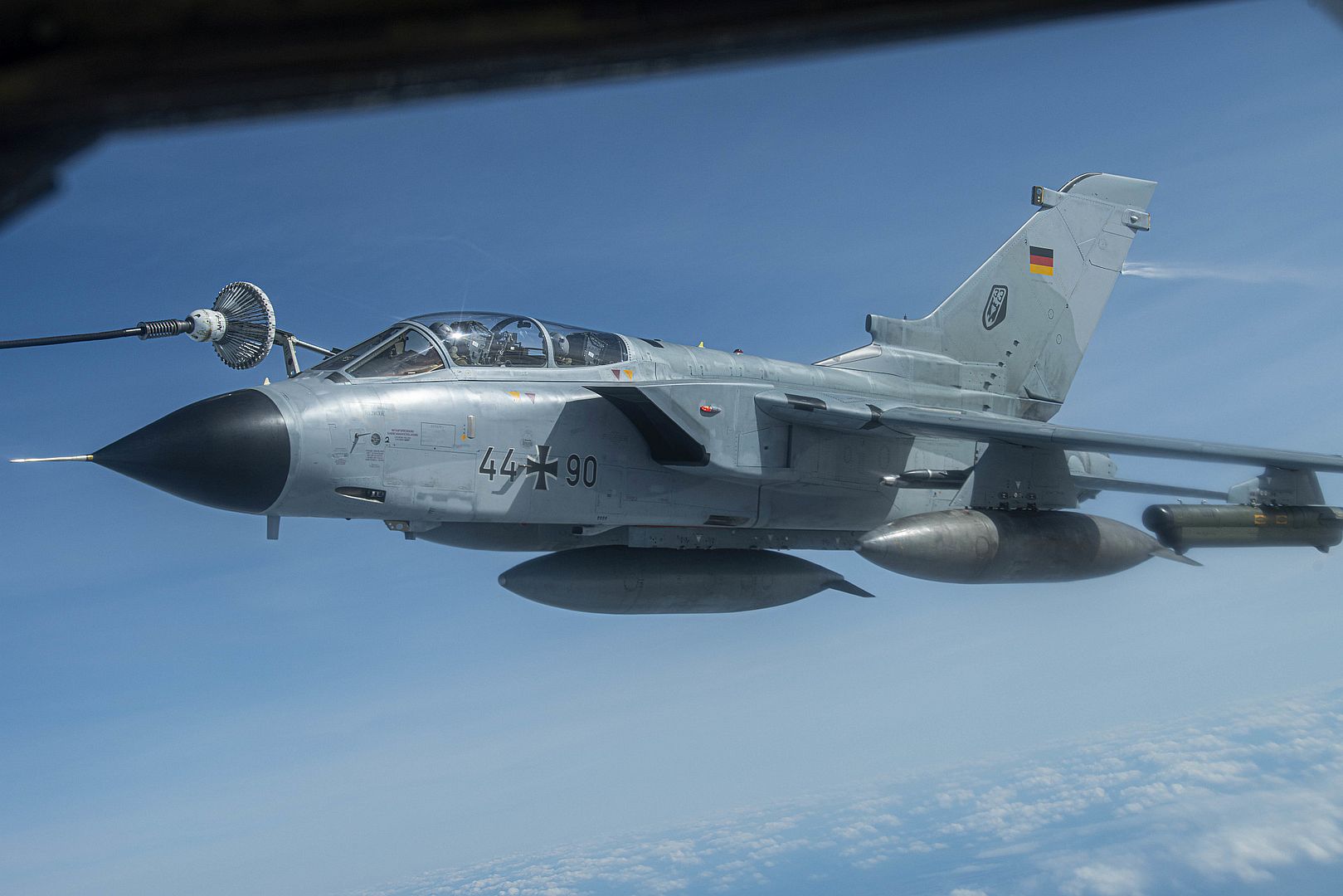
ARABIAN SEA (Sept. 18, 2019) An F/A-18E Super Hornet attached to the Fist of the Fleet of Strike Fighter Squadron (VFA) 25 makes an arrested landing on the flight deck of the aircraft carrier USS Abraham Lincoln (CVN 72). The Abraham Lincoln Carrier Strike Group is deployed to the U.S. 5th Fleet area of operations in support of naval operations to ensure maritime stability and security in the Central Region, connecting the Mediterranean and the Pacific through the western Indian Ocean and three strategic choke points. With Abraham Lincoln as the flagship, deployed strike group assets include staffs, ships and aircraft of Carrier Strike Group (CSG) 12, Destroyer Squadron (DESRON) 2, the guided-missile cruiser USS Leyte Gulf (CG 55) and Carrier Air Wing (CVW) 7. (U.S. Navy photo by Mass Communication Specialist 3rd Class Tristan Kyle Labuguen/Released)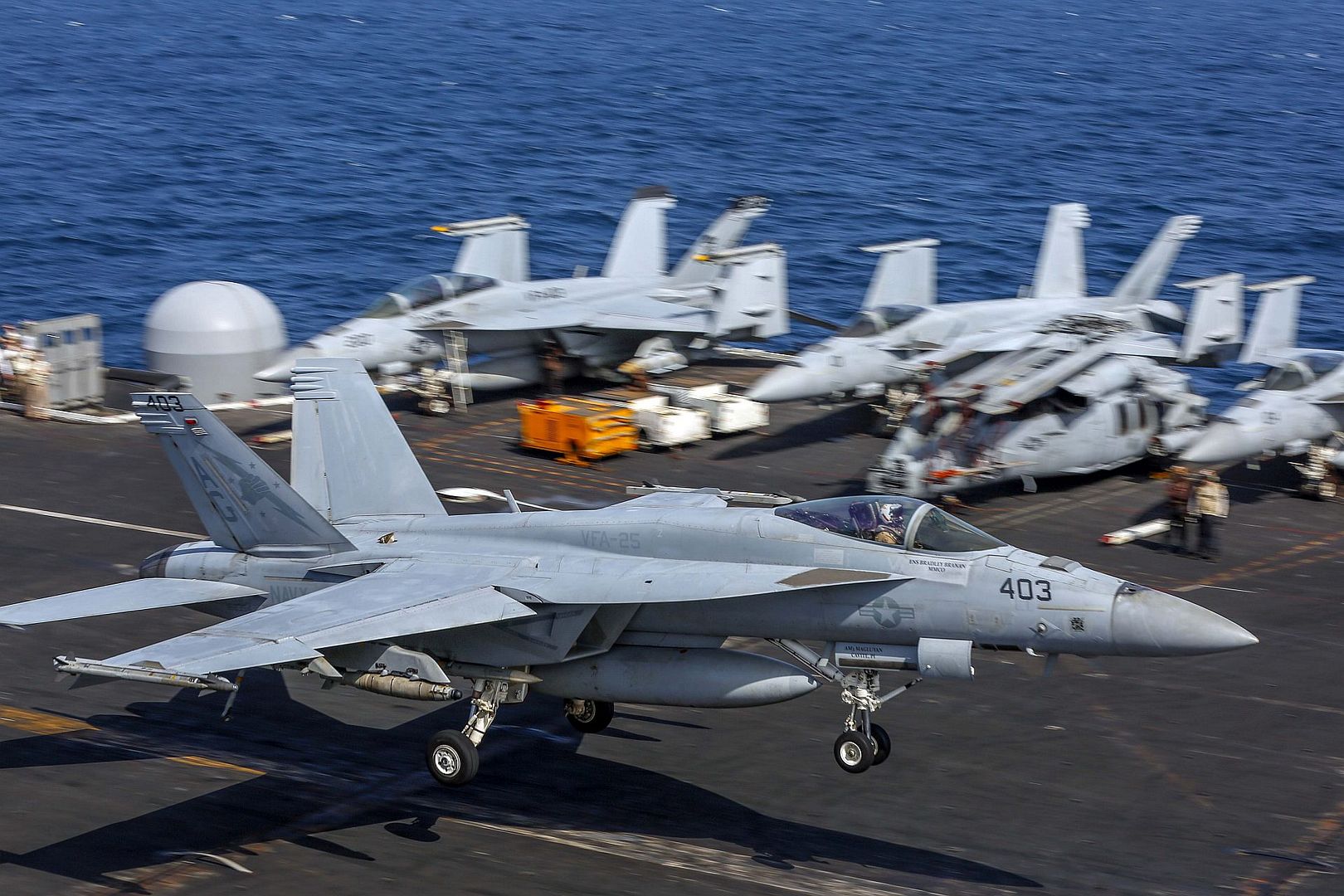
ARABIAN SEA (Sept. 18, 2019) An F/A-18E Super Hornet attached to the Fist of the Fleet of Strike Fighter Squadron (VFA) 25 flies over the aircraft carrier USS Abraham Lincoln (CVN 72). The Abraham Lincoln Carrier Strike Group is deployed to the U.S. 5th Fleet area of operations in support of naval operations to ensure maritime stability and security in the Central Region, connecting the Mediterranean and the Pacific through the western Indian Ocean and three strategic choke points. With Abraham Lincoln as the flagship, deployed strike group assets include staffs, ships and aircraft of Carrier Strike Group (CSG) 12, Destroyer Squadron (DESRON) 2, the guided-missile cruiser USS Leyte Gulf (CG 55) and Carrier Air Wing (CVW) 7. (U.S. Navy photo by Mass Communication Specialist 3rd Class Tristan Kyle Labuguen/Released)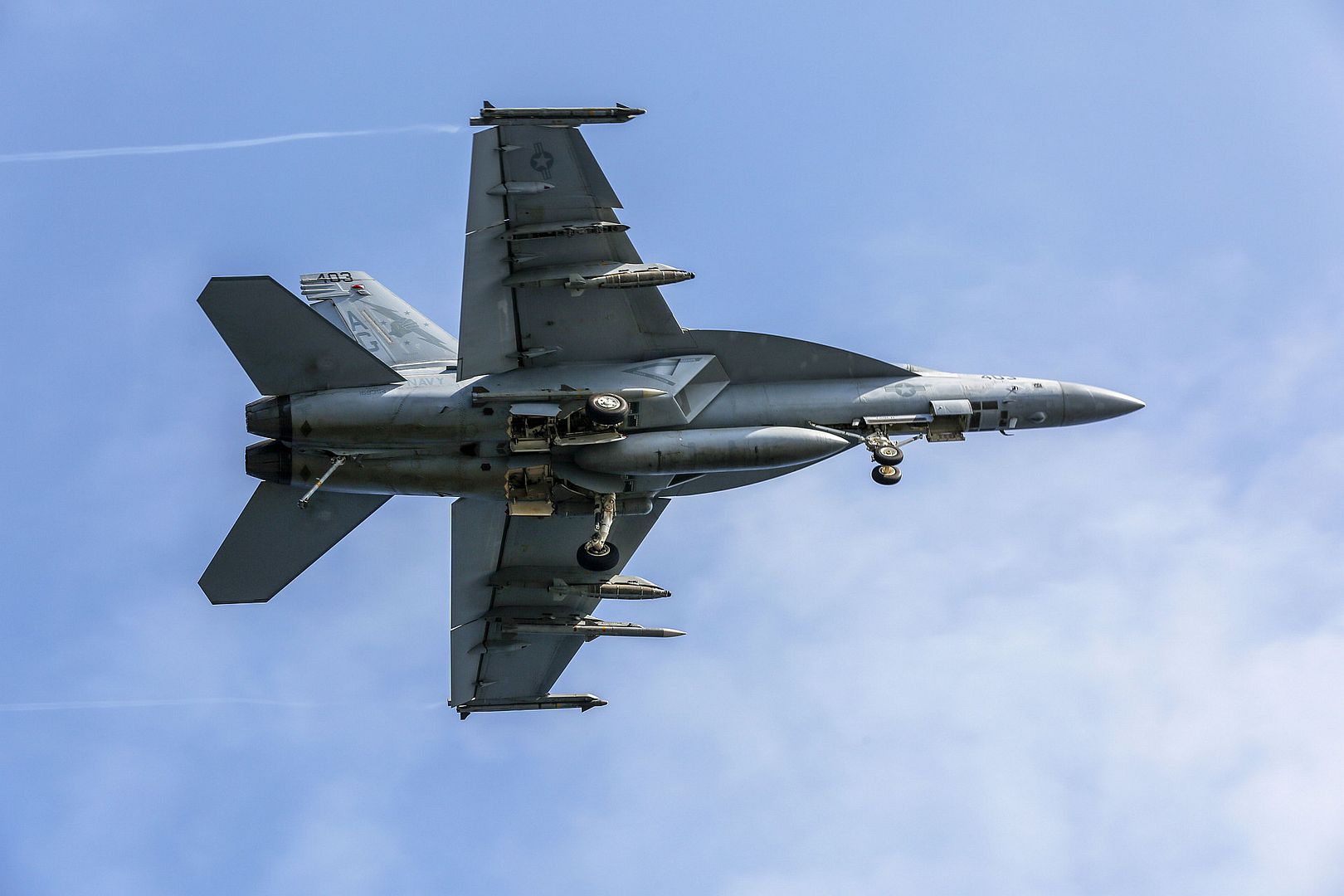
ST. LOUIS, Sept. 19, 2019 ? Boeing [NYSE: BA] and the U.S. Navy today successfully completed the first test flight of the MQ-25? unmanned aerial refueler.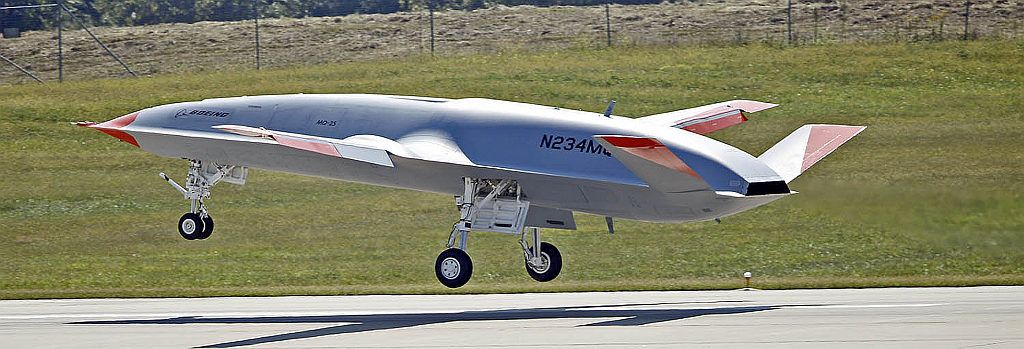
The MQ-25 test asset, known as T1, completed the autonomous two-hour flight under the direction of Boeing test pilots operating from a ground control station at MidAmerica St. Louis Airport in Mascoutah, Ill., where the test program is based. The aircraft completed an autonomous taxi and takeoff and then flew a pre-determined route to validate the aircraft?s basic flight functions and operations with the ground control station.
?Seeing MQ-25 in the sky is a testament to our Boeing and Navy team working the technology, systems and processes that are helping get MQ-25 to the carrier,? said Boeing MQ-25 Program Director Dave Bujold. ?This aircraft and its flight test program ensures we?re delivering the MQ-25 to the carrier fleet with the safety, reliability and capability the U.S. Navy needs to conduct its vital mission.?
The Boeing-owned test asset is a predecessor to the engineering development model (EDM) aircraft and is being used for early learning and discovery to meet the goals of the U.S. Navy?s accelerated acquisition program. Boeing will produce four EDM MQ-25 air vehicles for the U.S. Navy under an $805 million contract awarded in August 2018.
The MQ-25 will provide the Navy with a much-needed carrier-based unmanned aerial refueling capability. It will allow for better use of the combat strike fighters currently performing the tanking role and will extend the range of the carrier air wing.
?Today?s flight is an exciting and significant milestone for our program and the Navy,? said the Navy?s Unmanned Carrier Aviation (PMA-268) Program Manager Capt. Chad Reed. ?The flight of this test asset two years before our first MQ-25 arrives represents the first big step in a series of early learning opportunities that are helping us progress toward delivery of a game-changing capability for the carrier air wing and strike group commanders.?
T1 received its experimental airworthiness certificate from the FAA in September, verifying that the air vehicle meets the agency?s requirements for safe flight. Testing will continue with T1 to further early learning and discovery that advances major systems and software development.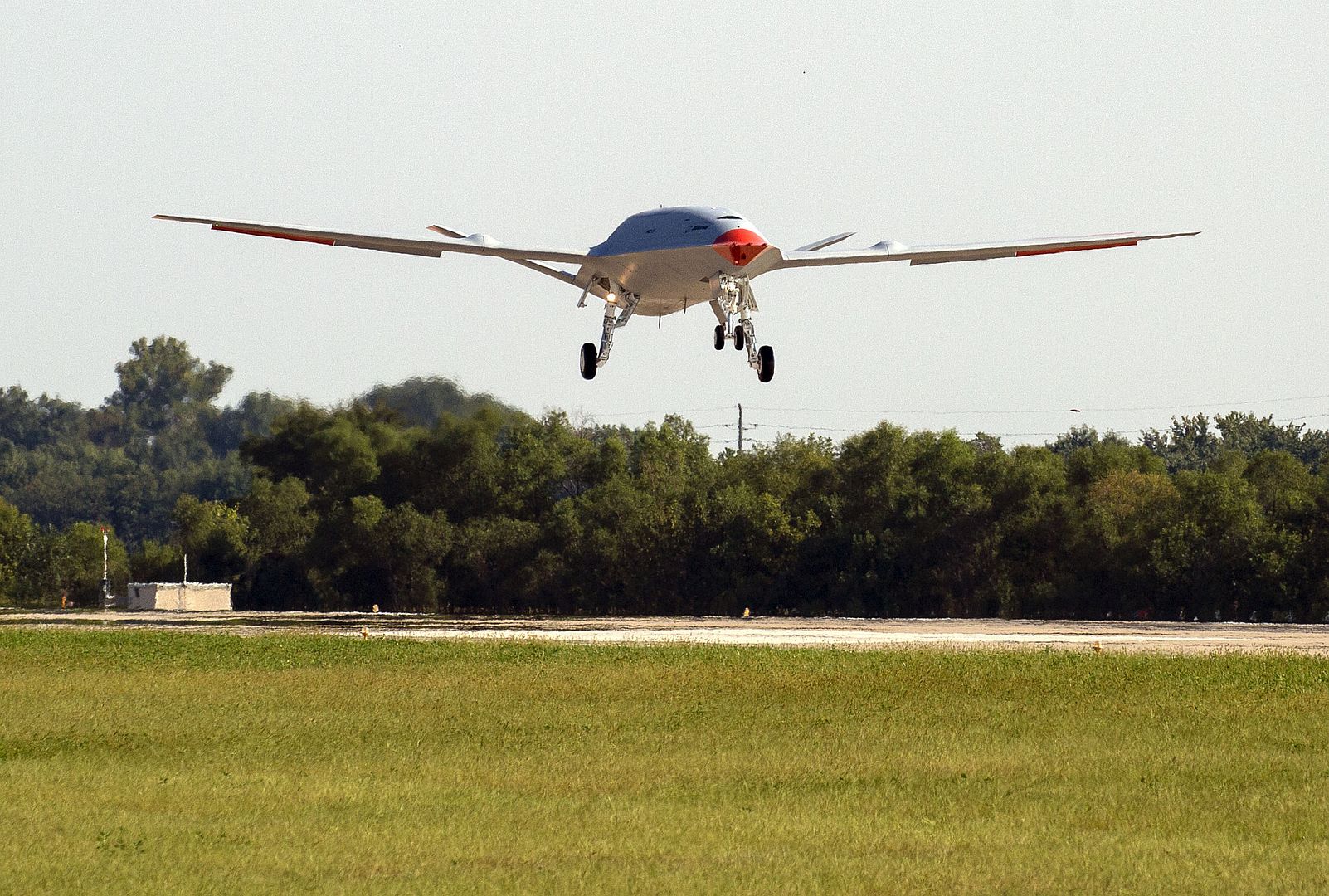
Rome 20 September 2019 13:51
Leonardo delivered today its 1,000th AW139 helicopter. The event represents a historic achievement: the AW139 is the most important helicopter programme in the last 15 years at an international level, and it is also able to set a production record in the Italian aviation industry's outlook. The 1,000th machine of this model was delivered to Italy?s Guardia di Finanza during an official celebration which was held at Leonardo?s plant in Vergiate (Varese - Italy), in the presence of institutional representatives, customers, partners and suppliers, as well as the company?s top management and employees.
The AW139?s first flight dates back to the beginning of 2001. The helicopter boasts orders of over 1,100 units from more than 280 customers in over 70 countries on all continents. The aircraft has shown extraordinary levels of reliability and operational capabilities with almost 2.5 million flight hours recorded since the first delivery took place at the beginning of 2004. Data of use testify the extreme versatility of the AW139 which satisfies any market need: more than 30% for public utility tasks such as search and rescue and air ambulance, law enforcement, firefighting, disaster relief; over 30% for offshore transport; around 20% for military tasks; the rest account for VIP, institutional and corporate transport missions.
Leonardo's CEO, Alessandro Profumo, said: "What we celebrate today is much more than the success of a product or of a company. It is the global affirmation of an asset of our entire country. Thanks to the commitment, knowledge and professional skills present at Leonardo and to our products, like the AW139, our host of technologies and history of flight innovation ? these all form important pillars of our industrial capabilities. The AW139 is a striking example of the role that Leonardo plays and intends to continue to have in the world. All our values are reflected in the AW139: continuous innovation, internationalisation, proximity to the market and to the customer, and the enhancement of human resources".
Leonardo Helicopters? Managing Director, Gian Piero Cutillo, added: ?With the AW139 the company has been able to create an extraordinary programme with international roots and with its global success this has allowed us to reach the top of the industry?s world helicopter market. Without the self-denial, the preparation and the passion of workers from different generations and nationalities who believed in and worked on its development, and who still follow it in its operational path by constantly confronting the market and customers, all this would not have been possible."
The AW139 fleet has a global presence: around 30% in Europe, almost as much in Asia and Australasia, 15% in the American continent, followed by the Middle East. The international success of the AW139 is so important that to meet market demands the helicopter is produced on different assembly lines both in Italy, in the Vergiate plant, and in the United States in Philadelphia.
The AW139, along with Leonardo?s other new generation models, has played a significant role in the evolution of the market. These aircraft have contributed to the company taking a 40% share of the world?s civil sector in terms of value in 2018.
The AW139 has grown significantly in just a few years, adapting to the changing needs of customers. The maximum take-off weight increased from 6.4 to 7 tons. Almost 1,000 mission kits and equipment have been certified. With advanced protection systems against icing, the AW139 can fly in all weather conditions. This model is also the only one in the world capable of continuing to fly for over 60 minutes without oil in the transmission, twice as much as the 30 minutes set by the certification authorities. Despite the experience and maturity achieved in 15 years of operational activity, the AW139 remains a young and modern programme, destined to play a leading role into the future.
The AW139 represents a turning point in the rotary-wing sector through the introductory concept of the Leonardo "helicopter family". The AW139 is, in fact, the forefather of a helicopter family comprising of the smaller and lighter AW169 and the larger and heavier AW189. Models, the only case in the world, that share the same design philosophy, the same high performance, the same flight characteristics and the same certification standards, as well as the same approach to maintenance and training. A concept that allows operators with large diversified fleets, with models ranging from 4 to 9 tons of weight, to create significant synergies in crew training, flight operations, maintenance and logistics support.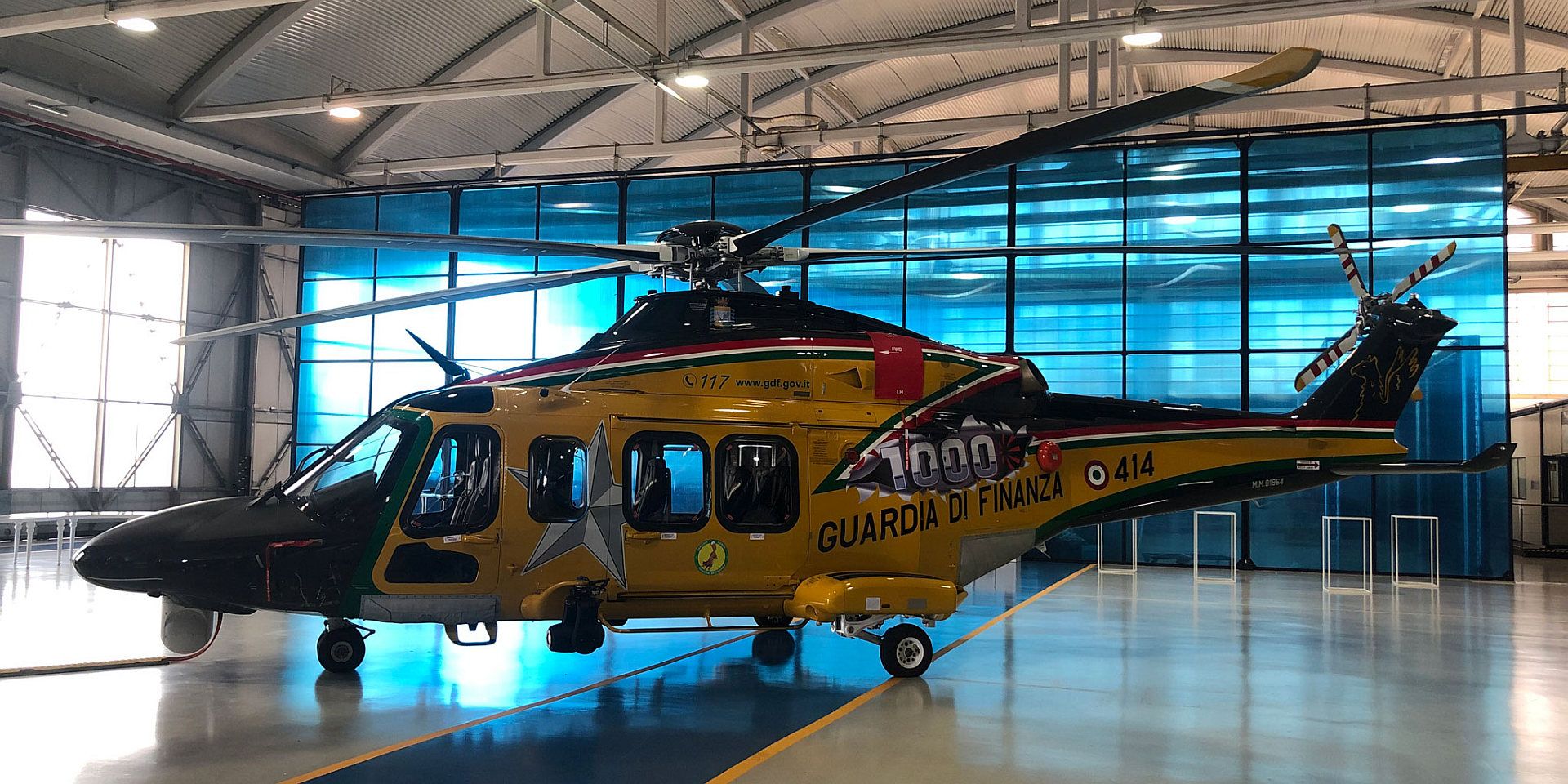
-
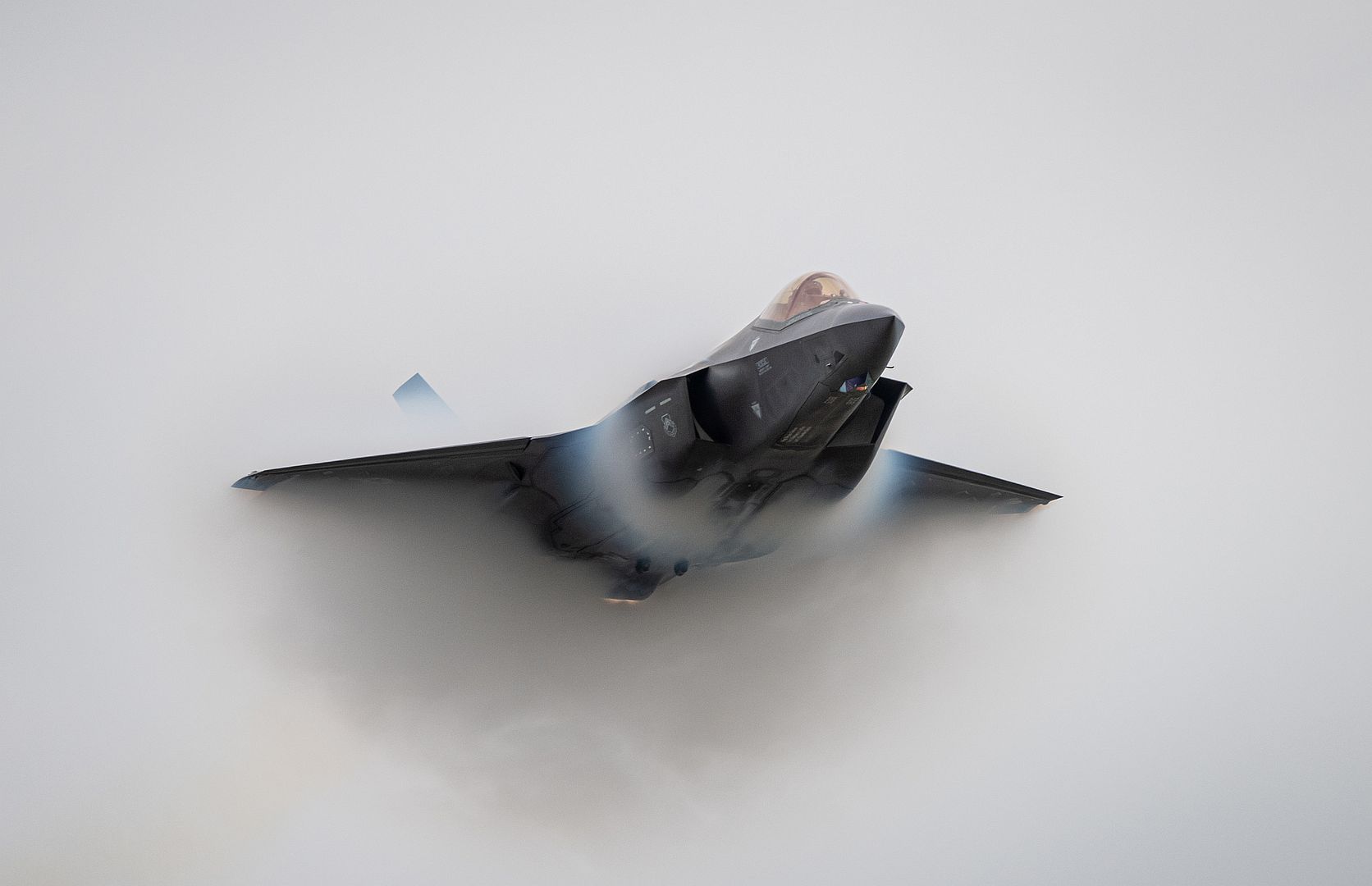
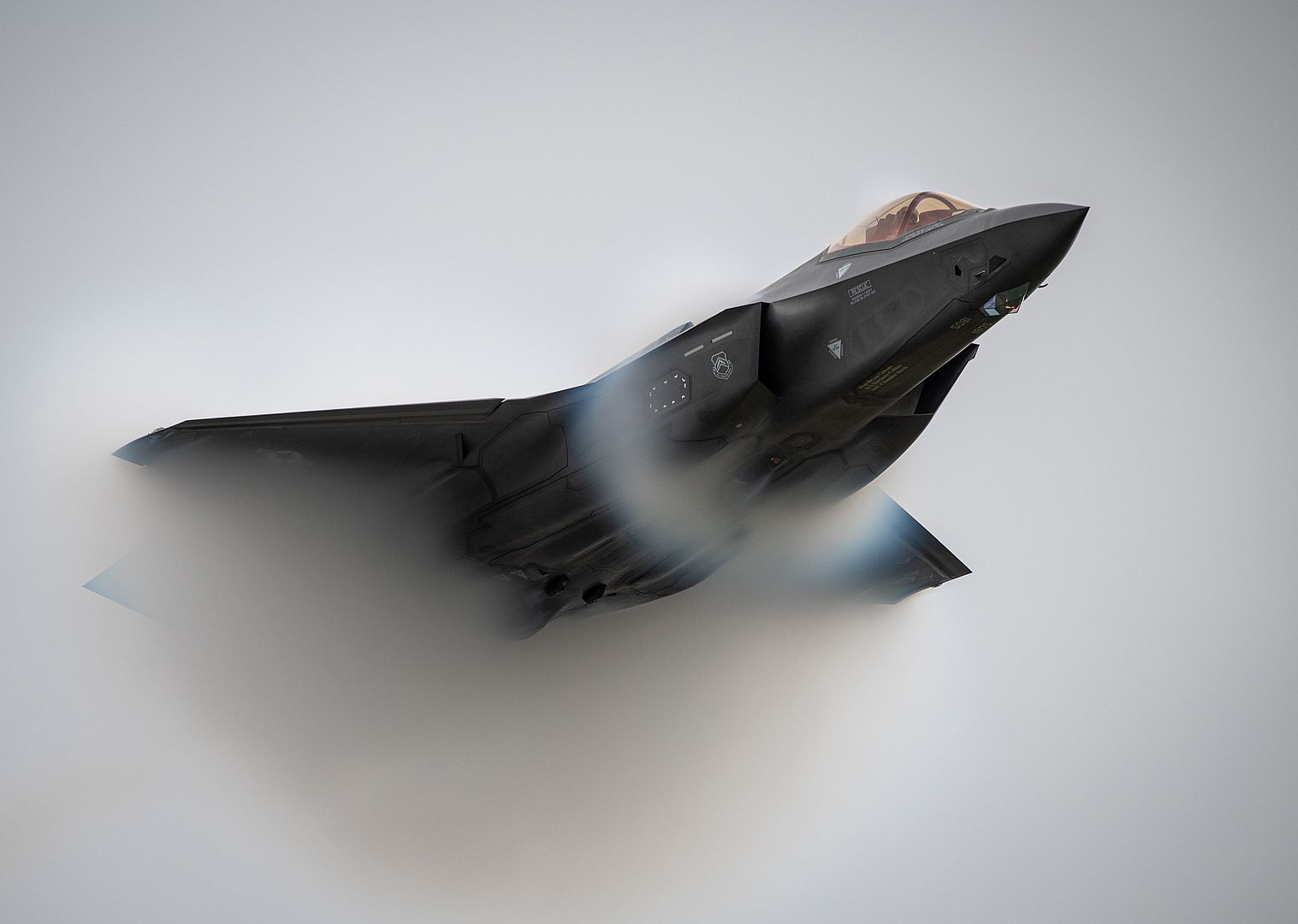
Capt. Andrew ?Dojo? Olson, F-35 Demonstration Team pilot and commander performs a high-speed pass during the Oregon International Airshow Sept. 21, 2019 in McMinnville, OR. The F-35 Demo Team co-headlined the show with the Royal Air Force Red Arrows. (U.S. Air Force Photo's by Senior Airman Alexander Cook)
A U.S. KC-10 Extender conducts aerial refueling with a 28th Expeditionary Air Refueling Squadron KC-135 Stratotanker during a combat air refueling mission over an undisclosed location in Southwest Asia, Sept. 21, 2019. Although the KC-10's primary mission is aerial refueling, it can combine the tasks of a tanker and cargo aircraft by refueling fighters and simultaneously carry the fighter support personnel and equipment on overseas deployments. The KC-10 is also capable of transporting litter and ambulatory patients using patient support pallets during aeromedical evacuations. (U.S. Air Force photo by Master Sgt. Russ Scalf)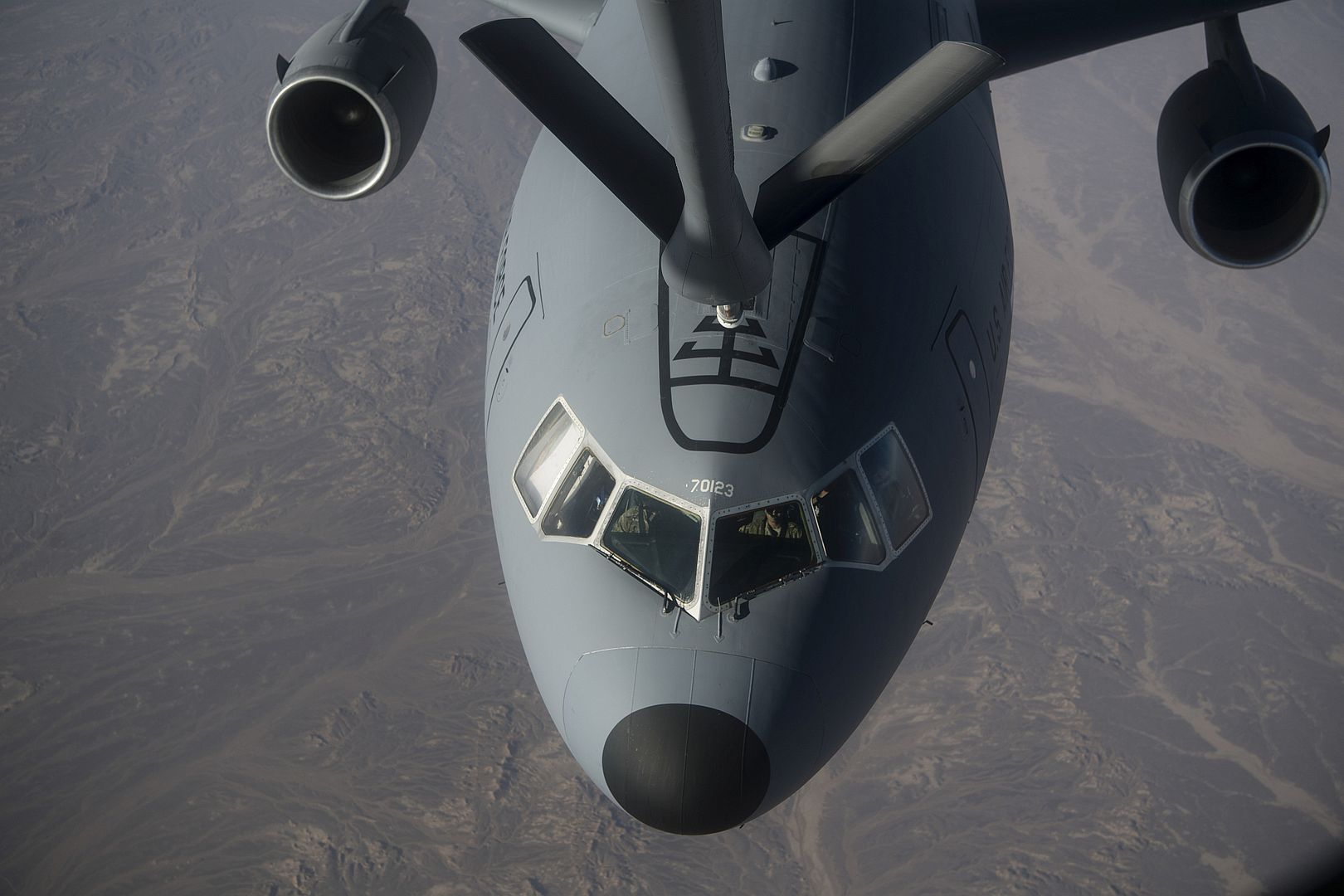
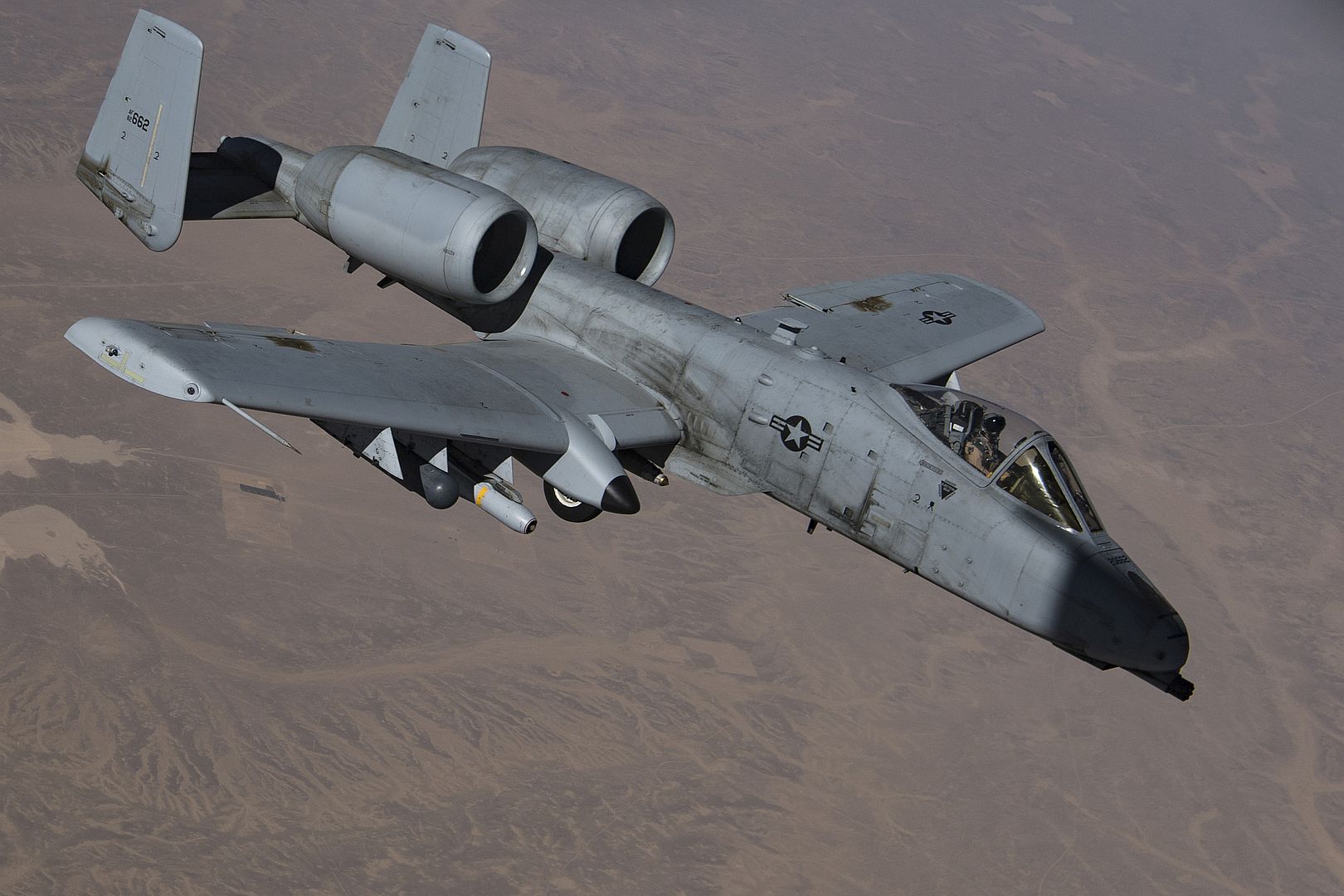
A U.S. A-10 Thunderbolt II departs after refueling with a 28th Expeditionary Air Refueling Squadron KC-135 Stratotanker during a combat air patrol mission over an undisclosed location in Southwest Asia, Sept. 21, 2019. During the mission, the KC-135 aircrew provided aerial refueling for a pair of A-10s and a KC-10 at an undisclosed location. (U.S. Air Force photo's by Master Sgt. Russ Scalf)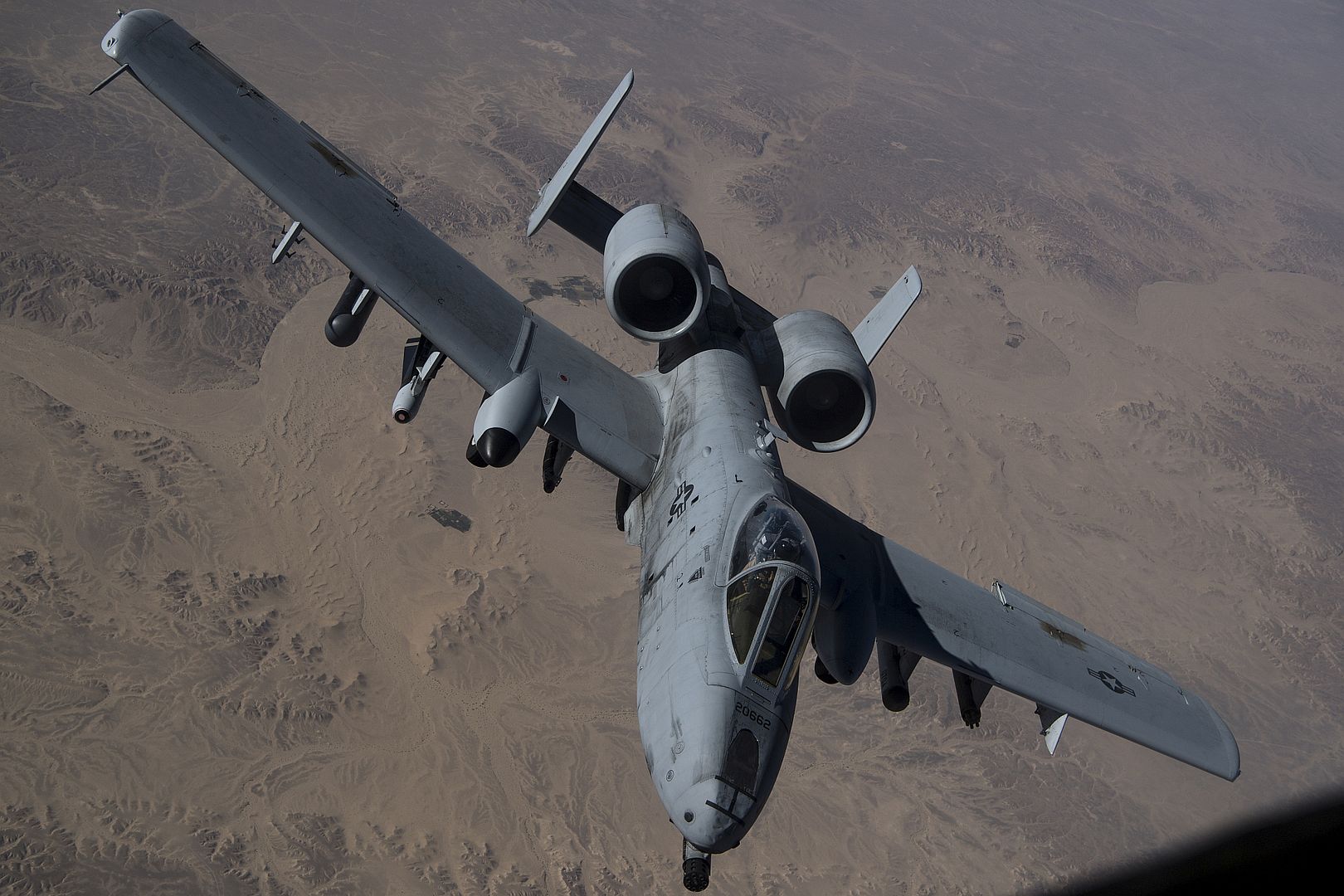
ARABIAN SEA (Sept. 21, 2019) An F/A-18E Super Hornet attached to the Pukin' Dogs of Strike Fighter Squadron (VFA) 143 makes an arrested landing on the flight deck of the aircraft carrier USS Abraham Lincoln (CVN 72). The Abraham Lincoln Carrier Strike Group is deployed to the U.S. 5th Fleet area of operations in support of naval operations to ensure maritime stability and security in the Central Region, connecting the Mediterranean and the Pacific through the western Indian Ocean and three strategic choke points. With Abraham Lincoln as the flagship, deployed strike group assets include staffs, ships and aircraft of Carrier Strike Group (CSG) 12, Destroyer Squadron (DESRON) 2, the guided-missile cruiser USS Leyte Gulf (CG 55) and Carrier Air Wing (CVW) 7. (U.S. Navy photo by Mass Communication Specialist 3rd Class Tristan Kyle Labuguen/Released)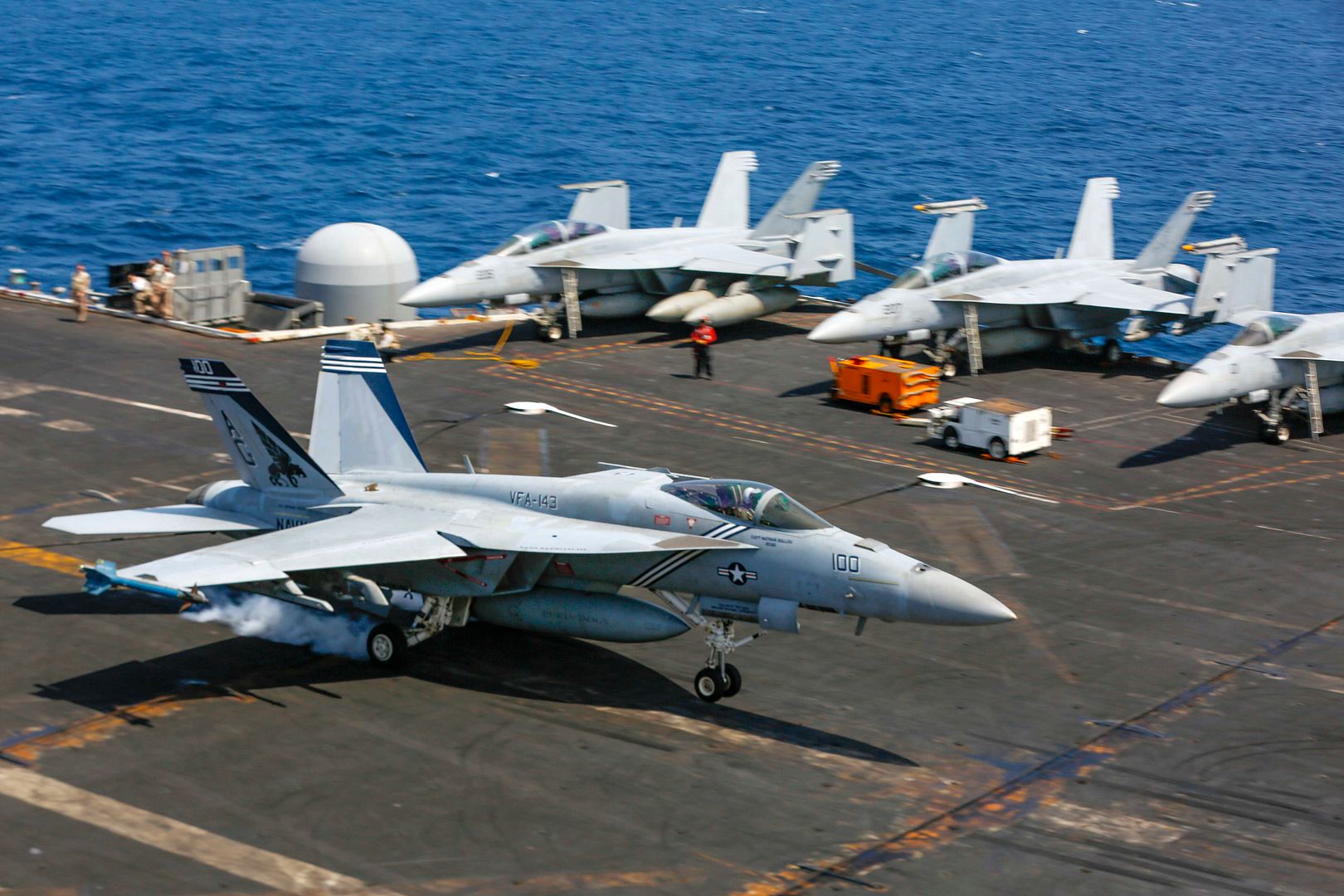
WEST PALM BEACH, Fla., Sept. 23, 2019 -- Recent flight tests of the Sikorsky HH-60W Combat Rescue Helicopter included testing of a new tactical mission kit, which provides premier situational awareness, mission management and simple sensor integration. The kit, developed by Sikorsky, a Lockheed Martin company (NYSE: LMT), includes high-end mission processing for situational awareness, defensive systems, datalinks and onboard mission planning.
?This tactical mission kit leverages the knowledge we?ve gained from developing open architecture systems that are easily transportable across multiple aircraft and missions, ultimately leading to reduced lifecycle costs for any program,? said Mission Systems Program Director Scott Breen. ?The tactical mission kit is another example of our commitment to open systems that reduce pilot and crew mission management workload while increasing situational awareness in high task load environments.?
The tactical mission kit is aligned with the U.S. Department of Defense Future Airborne Capability Environment (FACE?) Technical Standard, which allows for greater growth and adaptability for easy sensor, data link, threat warning and countermeasure system changes. The software runs on two fully redundant common mission processors that feature powerful multi-core processing and the ability to drive multiple displays in a small, lightweight package.
The Sikorsky approach for the design and implementation of the tactical mission kit and its open architecture utilizes the same approach and reuse seen on current and future programs such as C-130T, A-10, German P-3C, MH-60R/S, HH-60W and Future Vertical Lift (FVL).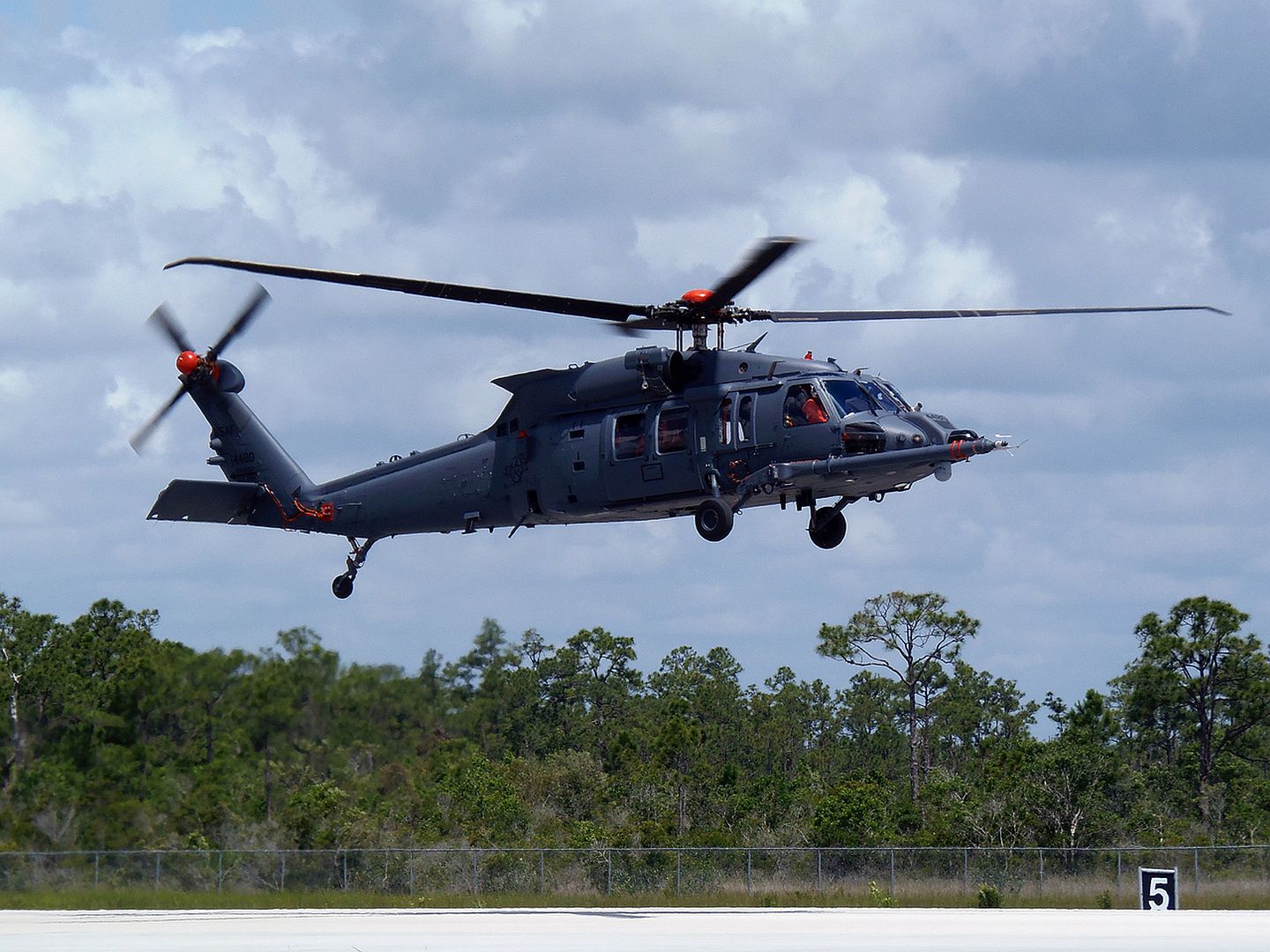
Air Astana, Kazakhstan?s flag carrier, has taken delivery of its first A321LR on lease from Air Lease Corporation (NYSE: AL). The A321LR will join Air Astana?s fleet of 18 Airbus aircraft (eight A320s, four A321s, three A320neo and three A321neo).
Powered by Pratt & Whitney engines, Air Astana?s A321LR comprises 166 seats in a two-class configuration (16 Business Full lie flat and 150 Economy class seats) offering premium wide-body comfort in a single-aisle aircraft cabin. With this new A321LR, the Kazakhstan flag carrier will continue its strategy of growth and network expansion to European destinations as well as routes to Asia.
The A321LR is a Long Range (LR) version of the best-selling A320neo Family and provides airlines with the flexibility to fly long-range operations of up to 4,000nm (7,400km) and to tap into new long-haul markets, which were not previously accessible with single-aisle aircraft.
The A320neo and its derivatives are the world?s best-selling single-aisle aircraft family with over 6,500 orders from more than 100 customers. It has pioneered and incorporated the latest technologies, including new-generation engines and the industry's reference cabin design, delivering 20% fuel cost per seat savings alone. The A320neo also offers significant environmental benefits with nearly a 50% reduction in noise footprint compared to previous-generation aircraft.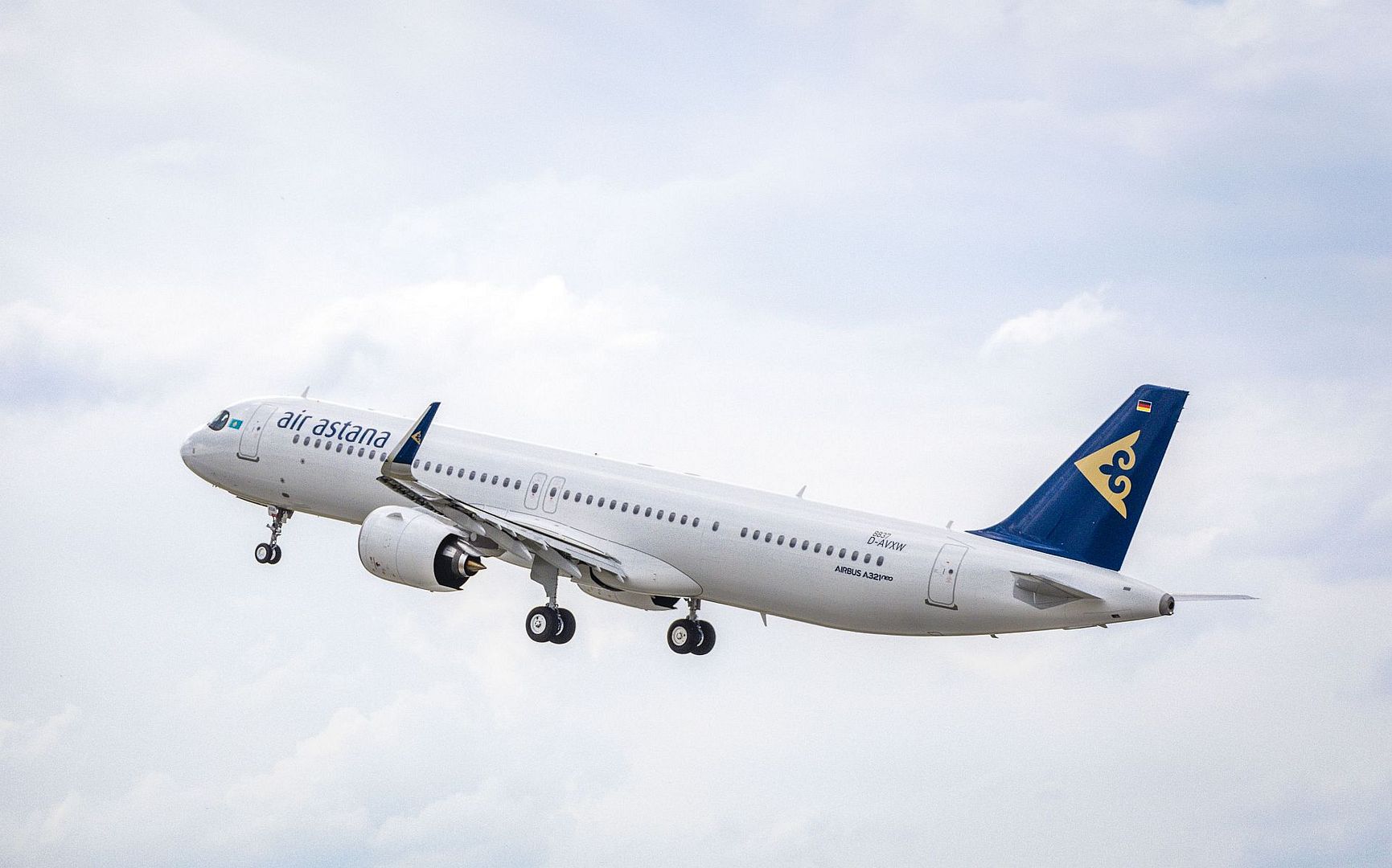
September 23, 2019 Montr?al Bombardier Inc., Business Aircraft, Press Release
Bombardier proudly celebrates the delivery of the 100th Challenger aircraft to join the NetJets fleet. This milestone event underscores the strong relationship between Bombardier and NetJets, and reflects the tremendous demand among business jet travellers to fly aboard the industry-leading Challenger business jets.
The 100th Challenger aircraft in NetJets? fleet is the award-winning Challenger 350 business jet, which continues to lead the way in the super mid-size segment. In addition to reaching 300 deliveries faster than any other jet in the medium and large categories, the Challenger 350 aircraft is the best-selling business jet platform of the last decade and is recognized for its superior performance, remarkable reliability and stylish cabin.
?We're very proud of our longstanding relationship with NetJets, who share our desire to create an exceptional flight experience for customers,? said David Coleal, President of Bombardier Aviation. ?This addition of a 100th Challenger aircraft to NetJets? fleet shows how sought-after this aircraft is and why it?s simply the best business jet in its class.?
NetJets currently operates a combined total of 100 Challenger 350 and Challenger 650 aircraft in its fleet. These best-selling aircraft have the lowest direct operating costs in their respective categories due to affordable maintenance programs and longer maintenance intervals than the competition.
Recently recognized by Robb Report Magazine as the Best of the Best super mid-size aircraft for the second consecutive year, the Challenger 350 business jet builds upon the remarkable legacy of leadership of the Challenger 300 series of aircraft. With a true seats full, tanks full, 3,200 nautical mile range and steep approach certification, the Challenger 350 business jet can connect Aspen to New York non-stop. The enhanced short-field performance ability of the Challenger 350 aircraft also allows for access to challenging airfields such as Santa Monica airport.
A masterful expression of high-end craftsmanship and functionality, the Challenger 650 aircraft is designed to be the most reliable business aircraft. The Challenger 650 business jet provides the ultimate in-flight experience with industry-leading connectivity, an immersive sound system, and a cabin management system that effortlessly brings it all together in the widest in-class cabin.
Given their class-leading economics and dependable performance in operation, it?s no wonder the Challenger 350 and Challenger 650 business jets are highly favoured by experienced flight departments such as NetJets.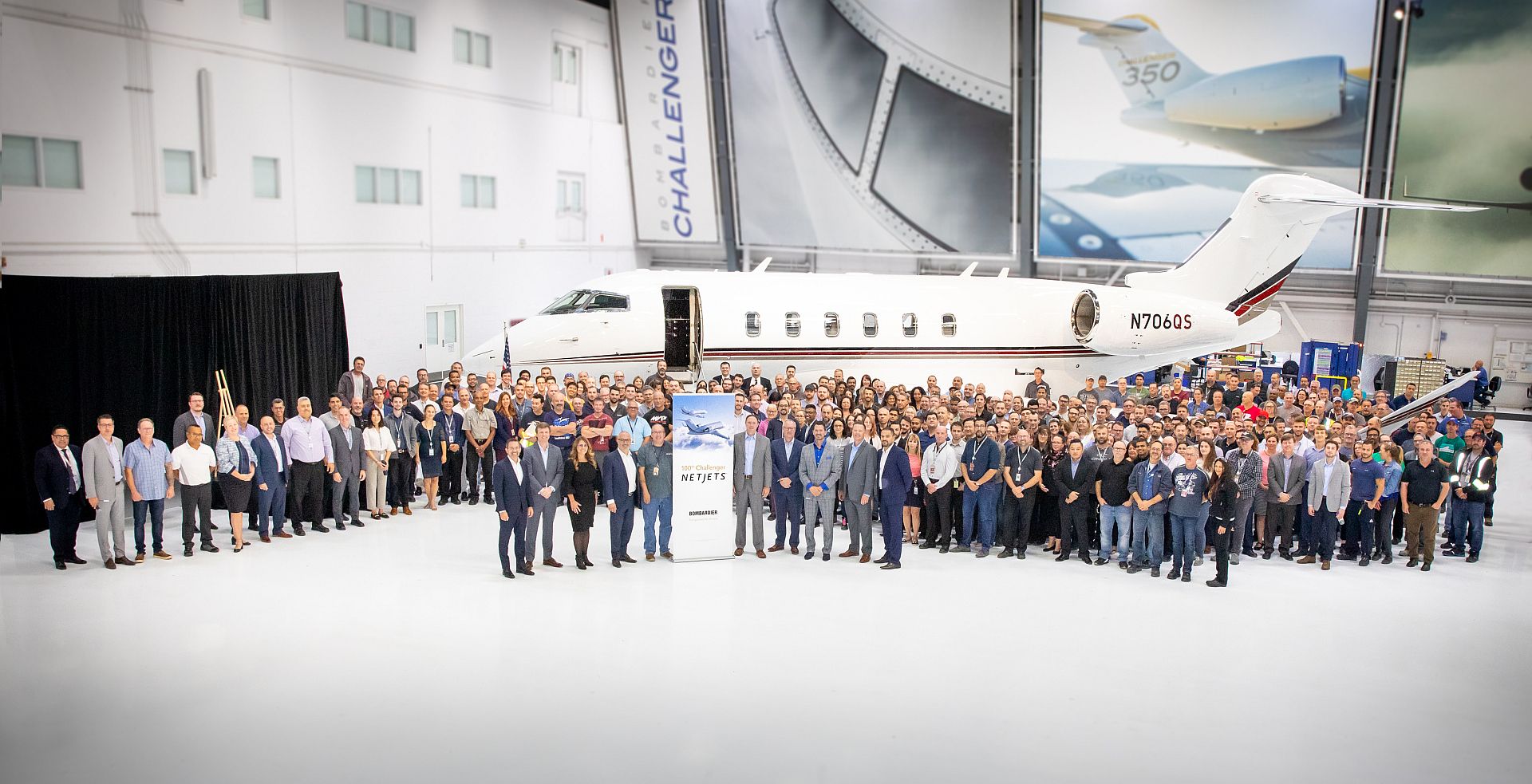
-
A Chilean Air Force C-130 Hercules takes off for an air drop mission over Beller drop zone during Exercise Mobility Guardian 2019, Fairchild Air Force Base, Washington, Sept. 23, 2019. Exercise Mobility Guardian is Air Mobility Command's premier, large scale mobility exercise. International partner participation in Mobility Guardian is vital to enhancing the partnerships required to provide Rapid Global Mobility. Overall, 29 partners are involved with the exercise.
(U.S. Air Force photo by Tech. Sgt. Larry E. Reid Jr.)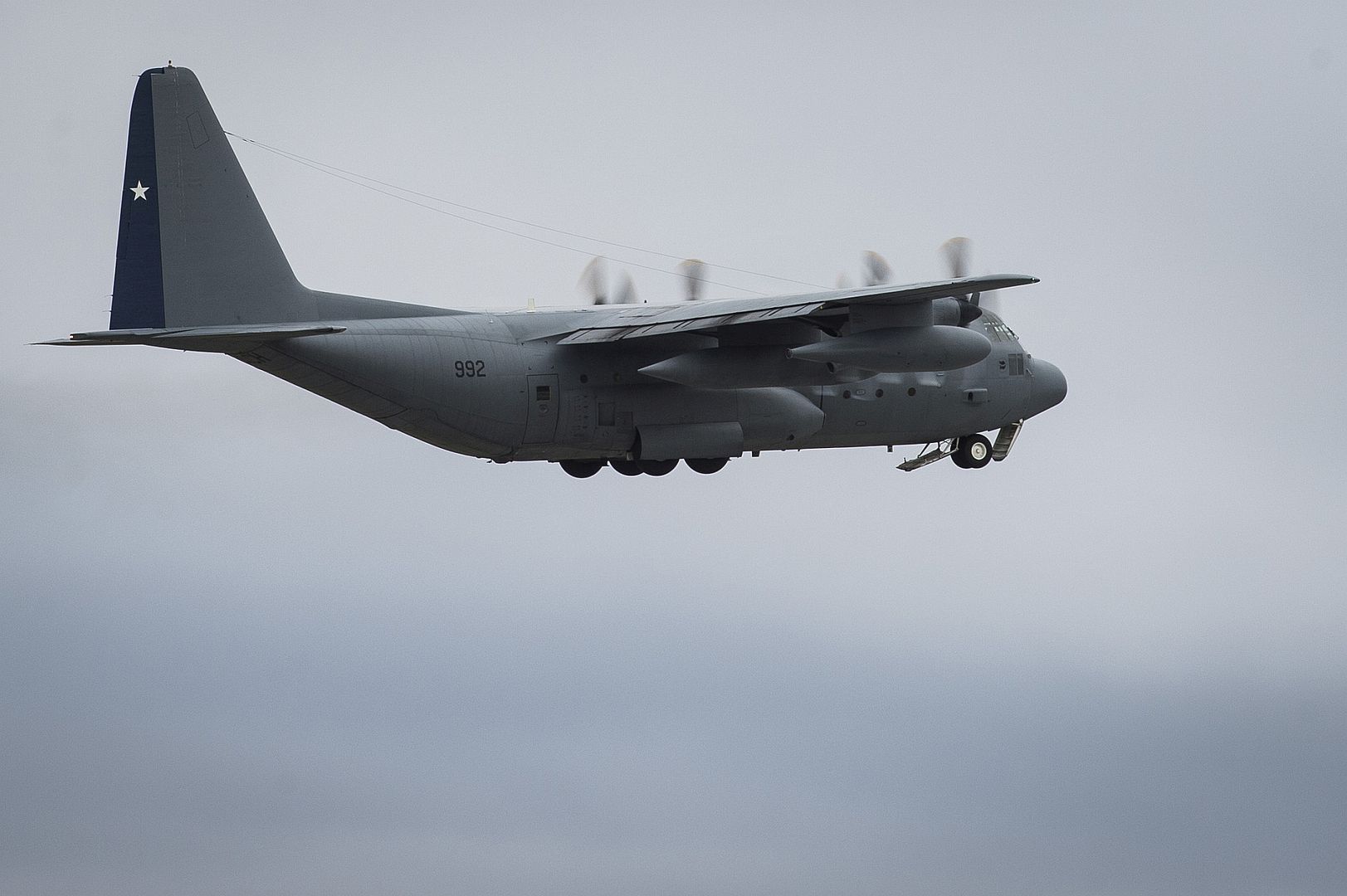
DENVER, Sept. 23, 2019 /PRNewswire/ -- NASA and Lockheed Martin (NYSE: LMT) have finalized a contract for the production and operations of six Orion spacecraft missions and the ability to order up to 12 in total. Orion is NASA's deep space exploration spaceship that will carry astronauts from Earth to the Moon and bring them safely home. Lockheed Martin has been the prime contractor during the development phase of the Orion program.
"This contract clearly shows NASA's commitment not only to Orion, but also to Artemis and its bold goal of sending humans to the Moon in the next five years," said Rick Ambrose, executive vice president of Lockheed Martin Space. "We are equally committed to Orion and Artemis and producing these vehicles with a focus on cost, schedule and mission success."
The agency's Orion Production and Operations Contract (OPOC) is an indefinite-delivery, indefinite-quantity (IDIQ) contact for NASA to issue both cost-plus-incentive fee and firm-fixed-price orders. Initially, NASA has ordered three Orion spacecraft for Artemis missions III-V for $2.7 billion. Then in fiscal year 2022, the agency plans to order three additional Orion spacecraft for Artemis missions VI-VIII for $1.9 billion.
OPOC will realize substantial savings compared to the costs of vehicles built during the design, development, test and evaluation (DDT&E) phase.
Up to six additional Orion spacecraft may be ordered under the IDIQ contract through Sept. 30, 2030, leveraging spacecraft production cost data from the previous six missions to enable the lowest possible unit prices.
The first spacecraft delivered on this contract, Artemis III, will carry the first woman and the next man to the Moon in 2024, where they will dock with the Gateway and ultimately land on the surface using a lunar landing system. Orion is a critical part of the agency's Artemis program to build a sustainable presence on the lunar surface and to prepare us to move on to Mars.
Reusable Orion crew modules and systems, use of advanced manufacturing technologies, material and component bulk buys and an accelerated mission cadence all contribute to considerable cost reductions on these production vehicles.
"We have learned a lot about how to design and manufacture a better Orion?such as designing for reusability, using augmented reality and additive manufacturing?and we're applying this to this next series of vehicles. Driving down cost and manufacturing them more efficiently and faster will be key to making the Artemis program a success," said Mike Hawes, Orion program manager for Lockheed Martin Space. "One must also appreciate how unique Orion is. It's a spaceship like none other. We've designed it to do things no other spacecraft can do, go to places no astronaut has been and take us into a new era of human deep space exploration."
Getafe, 24 September 2019 ? The Airbus A400M new generation airlifter has successfully achieved its first helicopter air-to-air refueling contacts with an H225M. Over the course of 4 flights, operated in day conditions over the south of France, the A400M performed 51 dry contacts marking a decisive milestone towards its full capability as a tanker. These tests were performed under the coordination of the French ?DGA Essais en vol? flight test centre.
The tests, involving no fuel and performed between 1,000 ft and 10,000 ft at flight speeds as low as 105 knots, confirmed the positive results of previous proximity flights conducted at the beginning of 2019. The next step in the flight test program will involve wet contact operations scheduled to take place before the end of 2019 ahead of final certification in 2021.
The flight test campaign also included the first proximity trials between the A400M and an H160 helicopter requested by the French Defence Procurement Agency (DGA) in the frame of the feasibility study for the Gu?pard (future military multirole helicopter for the French armed forces). Tests were performed successfully.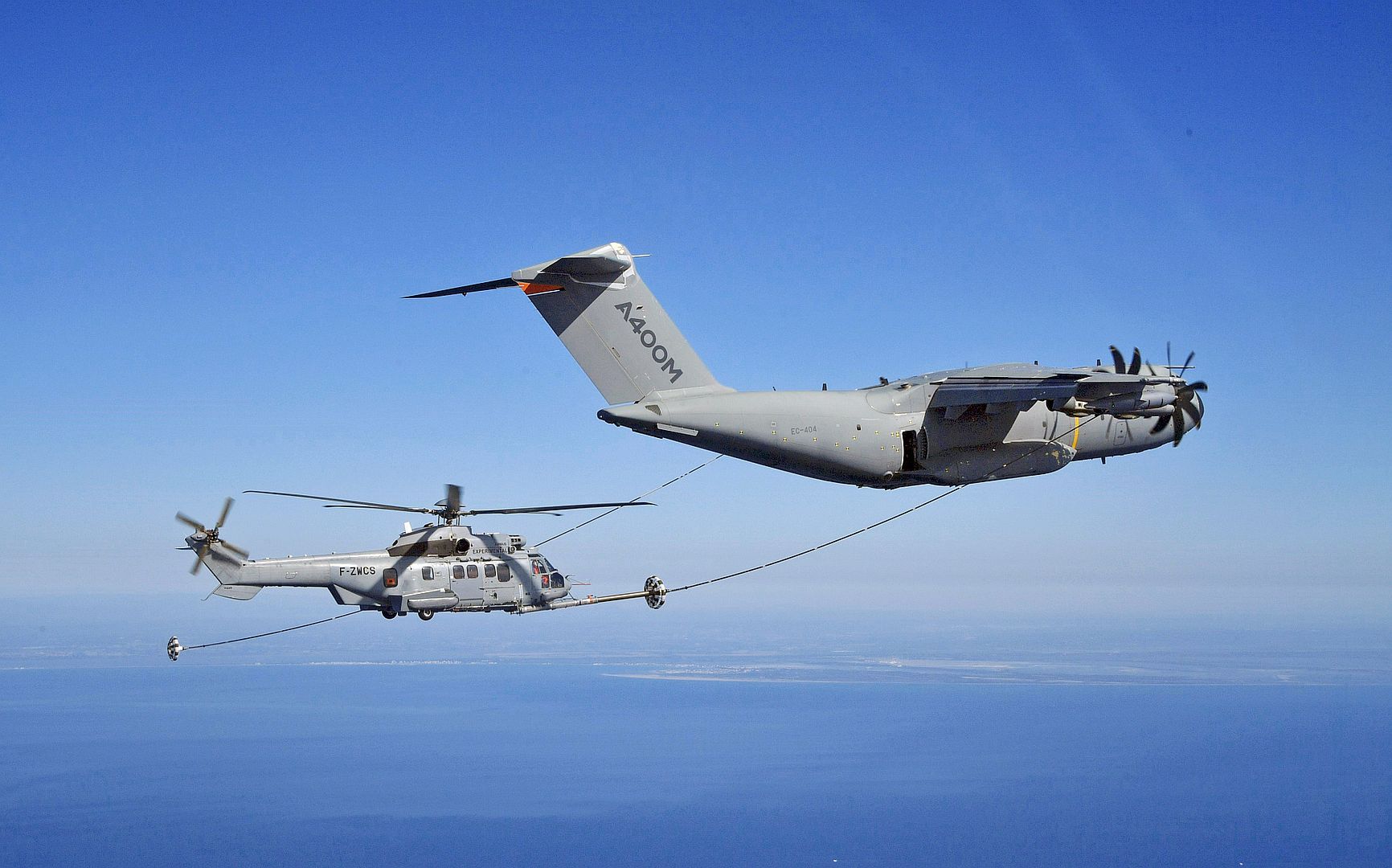
The A400M is certified to be quickly configured as a tanker, not requiring a dedicated aircraft version. The A400M carries up to 50.8 tonnes (111,600 lb) of fuel in its wings and centre wing box, without compromising any cargo hold area. Two additional cargo hold tanks can also be installed, providing an additional 5.7 tonnes (11,400 lb) of fuel each. The fuel carried in the extra tanks can be of a different nature to the fuel in the main tanks. This enables the A400M to cater for the needs of different types of receiver aircraft.
As a tanker, the A400M has already demonstrated its ability to refuel fighter receivers such as Eurofighter, Rafale, Tornado or F/A-18 at their preferred speeds and altitudes, and is also able to refuel other large aircraft such as another A400M for buddy refueling, C295 or C-130.
Helicopter air-to-air refuelling is a military tactical operation that involves low speeds and low altitudes. After this achievement and its final certification the A400M will become one of the few tanker aircraft in the world capable of performing such an operation.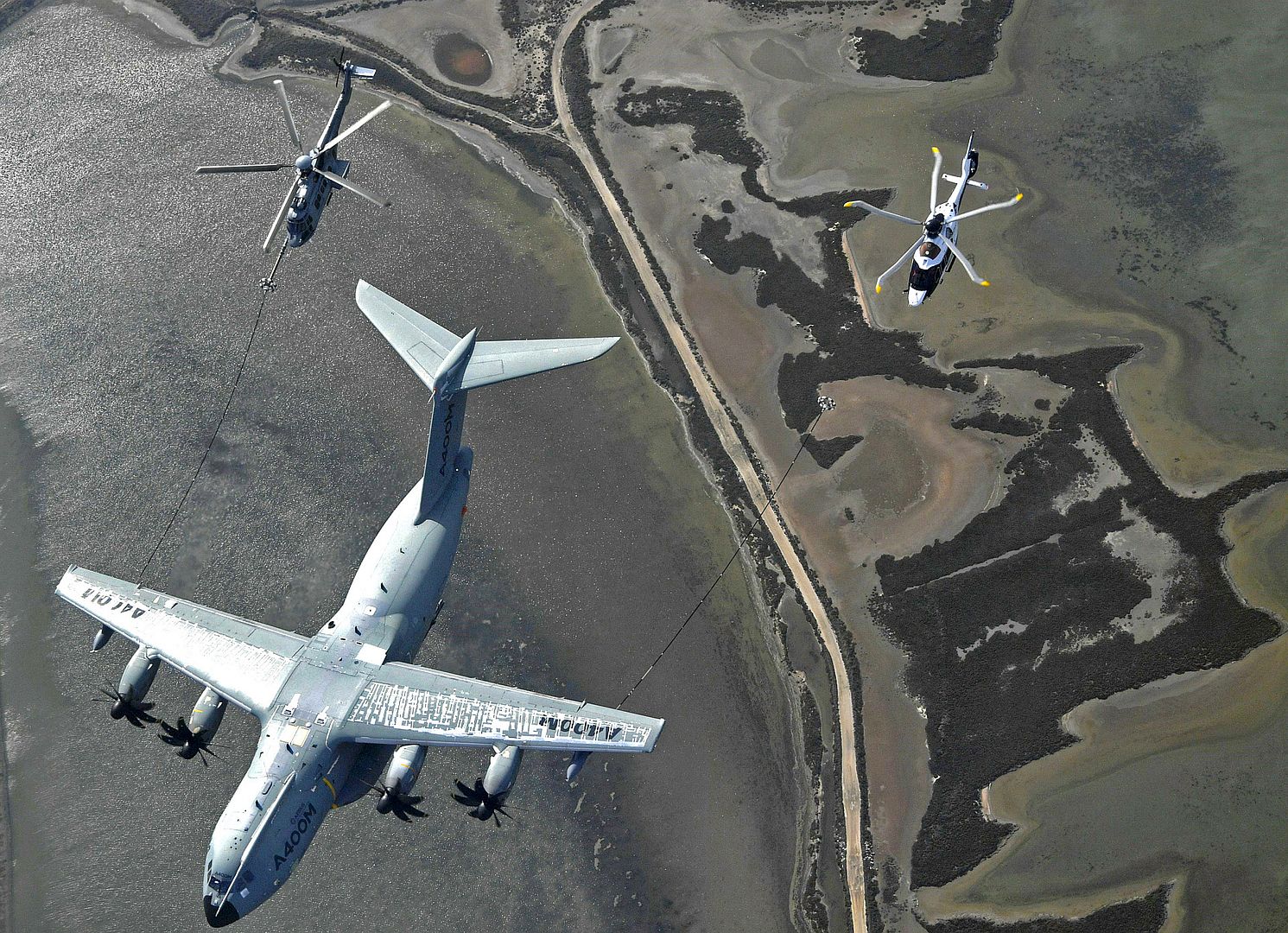
Monaco - Airbus Corporate Helicopters (ACH) will this week begin demonstrating the world?s most advanced medium helicopter ? the ACH160 ? to prospective customers at the Monaco Yacht Show, the world?s foremost super yacht event.
The aircraft will form the centrepiece of a triumvirate of Airbus helicopters also including the market-leading ACH145 and the lighter ACH135 ? all fitted to purpose for yacht operations.
The ACH160 promises to be a striking sight over Monaco?s bay on 26th September with a landing and take-off from the 139m L?rssen Flying Fox. It sets a new benchmark in corporate transportation with a blend of innovative technology, speed, comfort and style. Its interior concept is the result of a collaboration between ACH Creative Style Studio and Harrison Eidsgaard, one of the most sought after names in the superyacht design industry.
The first two ACH160 are already on the final assembly line at Airbus? Marignane plant. EASA Certification of the H160 in transport configuration is due by the end of the year and the first ACH160 will be delivered next year.
Also on display will be an ACH135, equipped with Airbus? ACH Line in-house interior, embarked on M/Y Bintador, a Tankoa-built 50m yacht at location C09.
The range is rounded off by an ACH145 based on the terrace of the Yacht Club de Monaco. This helicopter is finished in the Mercedes Benz Style Special Edition.
Visitors can also see the latest release of the ACH Yacht Interface App, a tool dedicated to supporting yacht designers and shipbuilders in integrating ACH aircraft into new yacht projects. This tool provides key preliminary information for incorporating ACH helicopters on-board and serves to prevent costly retrofits.
Head of Airbus Corporate Helicopters, Frederic Lemos, said: ?We are thrilled to be at Monaco once more and we look forward to demonstrating the suitability of our helicopter range to the needs of yacht designers, builders and owners.?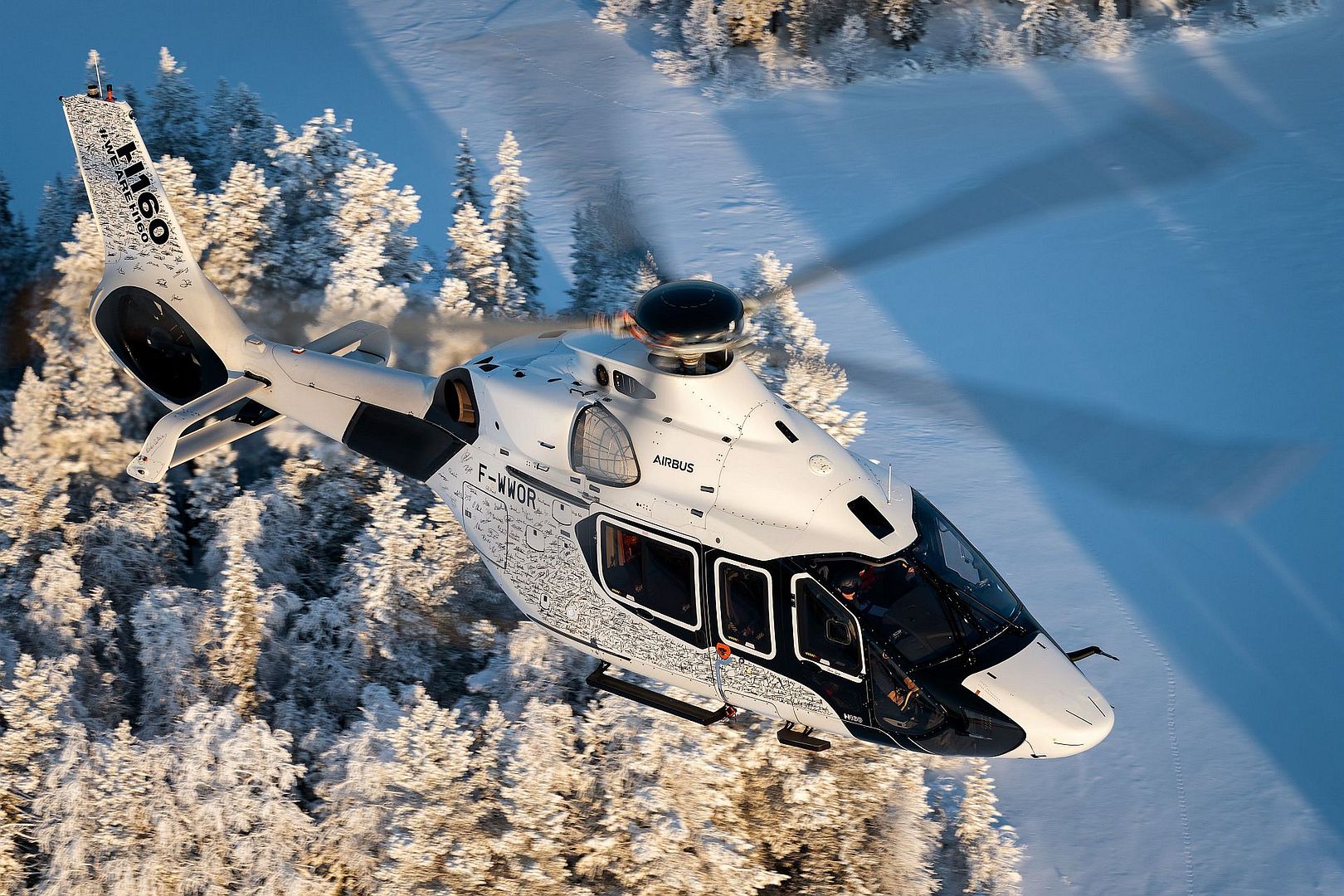
September 24, 2019 Montr?al Aviation, Business Aircraft, Press Release
Bombardier announced today that its two latest additions to the Global family, the Global 5500 and Global 6500 business jets, have been awarded Transport Canada Type Certification, paving the way for entry-into-service this year. Certification by the Federal Aviation Administration (FAA) and the European Aviation Safety Agency (EASA) are expected to follow shortly.
?Following their dramatic unveiling last year, these aircraft continue to surprise and surpass expectations. Thanks to a new wing design and custom-made Rolls-Royce Pearl engines, the Global 5500 and Global 6500 jets boast farthest-in-class ranges, offering unrivalled performance and unsurpassed passenger comfort, at exceptional operating costs,? said David Coleal, President, Bombardier Aviation. ?Not only did we deliver on our commitments but we did on schedule, demonstrating the ingenuity, skill, rigor and consummate professionalism that is inherent to the longstanding winning DNA of our dedicated team members.?
The aircraft flew through the rigorous flight testing program, which was completed at Bombardier?s world-class test centre in Wichita, Kansas. The Pearl 15 engine, the latest addition to Rolls-Royce?s exceptional business aviation engine portfolio, received Transport Canada certification recently. The engine, developed at the Rolls-Royce Centre of Excellence for Business Aviation engines in Dahlewitz, Germany, was custom-designed with the most innovative technology ? including enhanced aerodynamics, blade cooling and advanced engine health monitoring systems ? to power the Global 5500 and Global 6500 aircraft. With the purpose-built engines, advanced wing design and built-in systems redundancy and robustness for which Bombardier Global aircraft are renowned, the aircraft offer superior safety and a smooth ride to its passengers.
Equipped with the revolutionary Bombardier?s Vision Flight Deck, the industry?s leading cockpit, the aircraft offer a comprehensive avionics suite with ergonomics and aesthetics that provide pilots with outstanding comfort and control.
The aircraft offer stunning redesigned cabins with exclusive features that are as innovative as they are luxurious. The Global 5500 and Global 6500 business jets also debut the Nuage chaise, a unique seating innovation that adds new dimensions to the conference suite as a lounge chair that converts into a flat surface for sleeping or banquet-style dining around the table. Bombardier's patented Nuage seat is also exclusive to the new Global aircraft family. With its distinctive technology, the Nuage seat is ideally suited for long-range flights.
These new aircraft build on the success of the Global 5000 and Global 6000 aircraft by offering 500 and 600 nautical miles of additional range, respectively, coupled with an up to 13-per-cent fuel burn advantage, contributing to highly favorable operating costs versus smaller competing aircraft with less range. The Global 5500 aircraft can connect Sao Paolo and Paris, and Moscow and Los Angeles; the Global 6500 aircraft can connect Hong Kong or Singapore and London, and Toluca and Madrid*.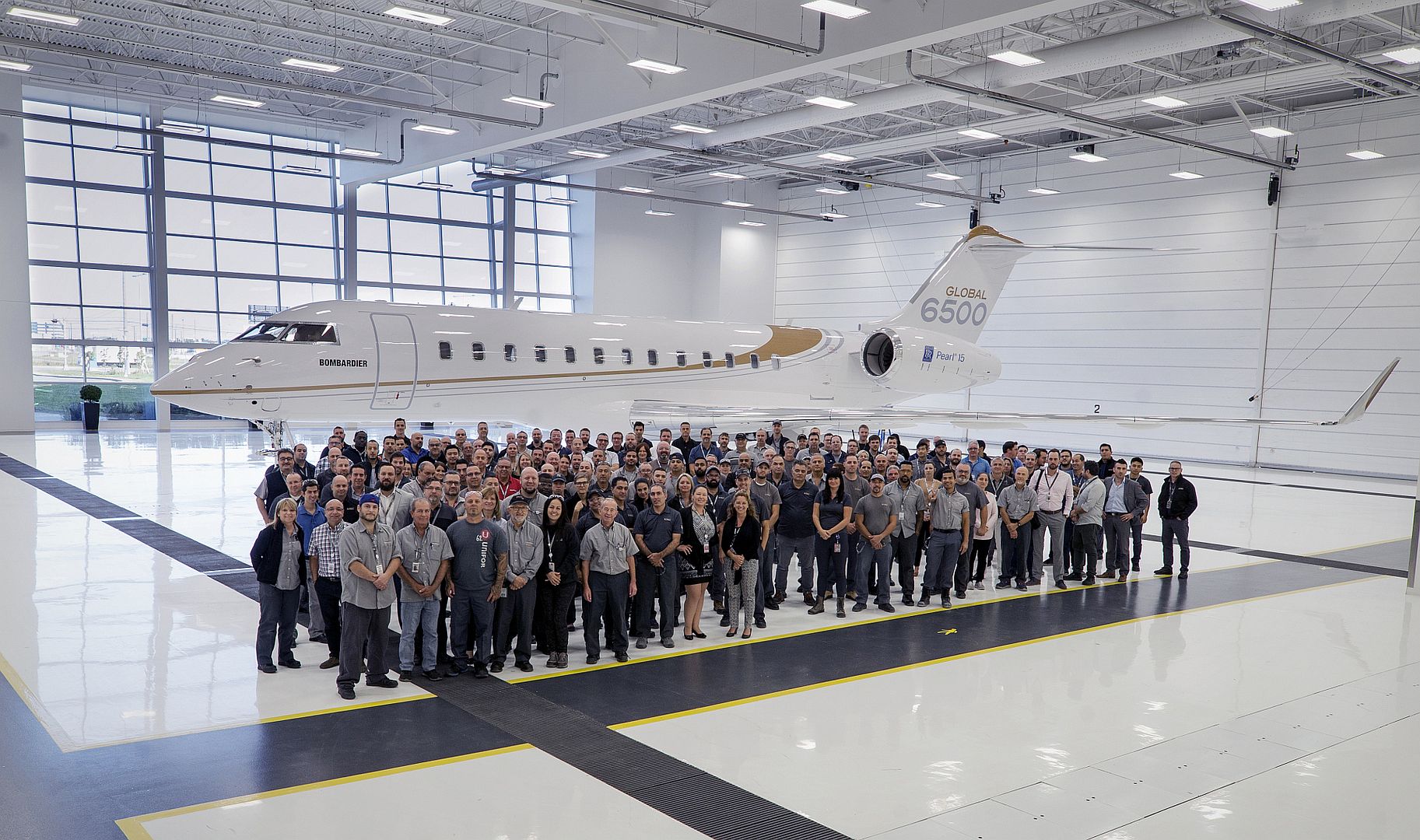
23 September 2019
The first aircraft today touched down on the deck of HMS Prince of Wales off the Scottish coast.
Not 24 hours after the second of the UK?s new aircraft carriers sailed into open waters for the first time, a Merlin helicopter was guided safely into land on the expansive deck.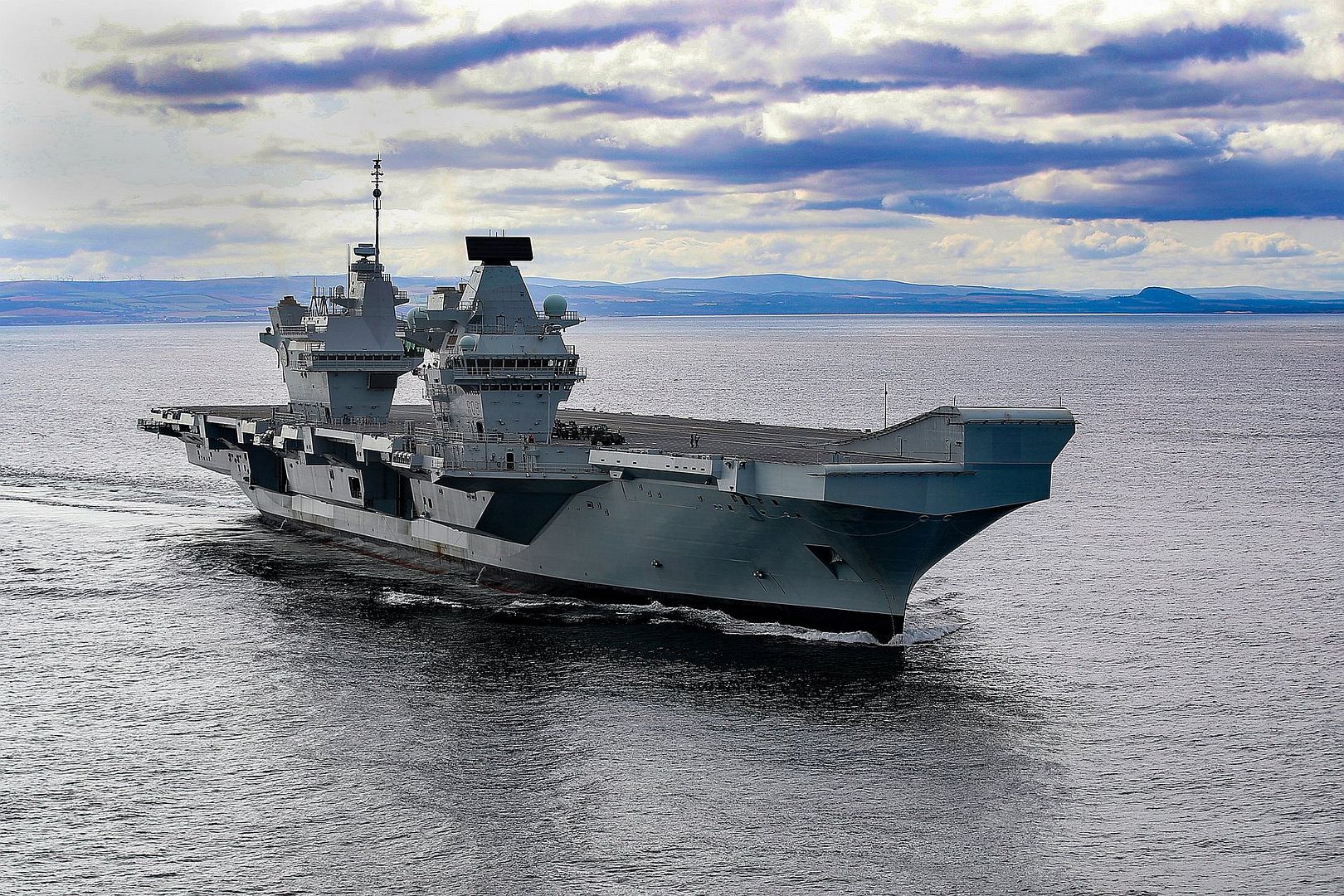
For the first time in 50 years the announcement: ?Hands to Flying Stations? echoed throughout the 280-metre-long warship and specialist aircraft handlers, who?ve spent the past year practising for this day on a replica flight deck on land at Culdrose in Cornwall, readied to welcome the helicopter.
At 1115am, Leading Aircraft Handler Stephen Ashcroft guided the helicopter ? callsign Dolphin 14 ? safely down on to four acres of sovereign British territory just off the east coast of Scotland.
At the controls of the Merlin Mk2 ? for completists, the tail number is ZH856 ? was pilot Lieutenant Rob Prior, assisted by fellow pilot Lieutenant Tim Willis, Observer (navigator/weapons and sensor specialist) Lieutenant Carl Davis, aircraft commander Lieutenant Commander Steve Ivill, aircrewman Chief Petty Officer Lee Elliott and photographer Leading Hand Alex Ceolin.
Barely had the 14-tonne submarine-hunting helicopter been lashed to the deck by the handlers than it was released to take off again.
The Merlin landed and took off six times as various problems and emergencies were practised by the air and ground crew, while HMS Prince of Wales? air traffic controllers guided the helicopter fliers in circuits around the aircraft carrier.
Directing the inaugural landing from the second of HMS Prince of Wales two distinctive towers was the naval officer in charge of all flying operations conducted by the ship, Commander Air (aka ?Wings?) Commander Phil Richardson.
?The ability to fly fast jets and helicopters from two fifth-generation Royal Navy aircraft carriers puts the UK at the very forefront of maritime aviation.?
HMS Prince of Wales left Rosyth dockyard in Fife, where she has been pieced together over the past eight years, on Thursday.
After a couple of days conducting final training at anchor in the Forth ? including the firefighting and emergency teams practising coping with the unlikely event of an aircraft crashing on deck ? HMS Prince of Wales put to sea on Sunday, passing beneath the three bridges spanning the Forth upstream of Edinburgh.
She will spend the next couple of months completing her initial period of sea trials ?? with helicopters her principal ink with mainland UK ? before debuting in her home base of Portsmouth, where she will be commissioned before Christmas in the presence of her Lady Sponsor, the Duchess of Cornwall.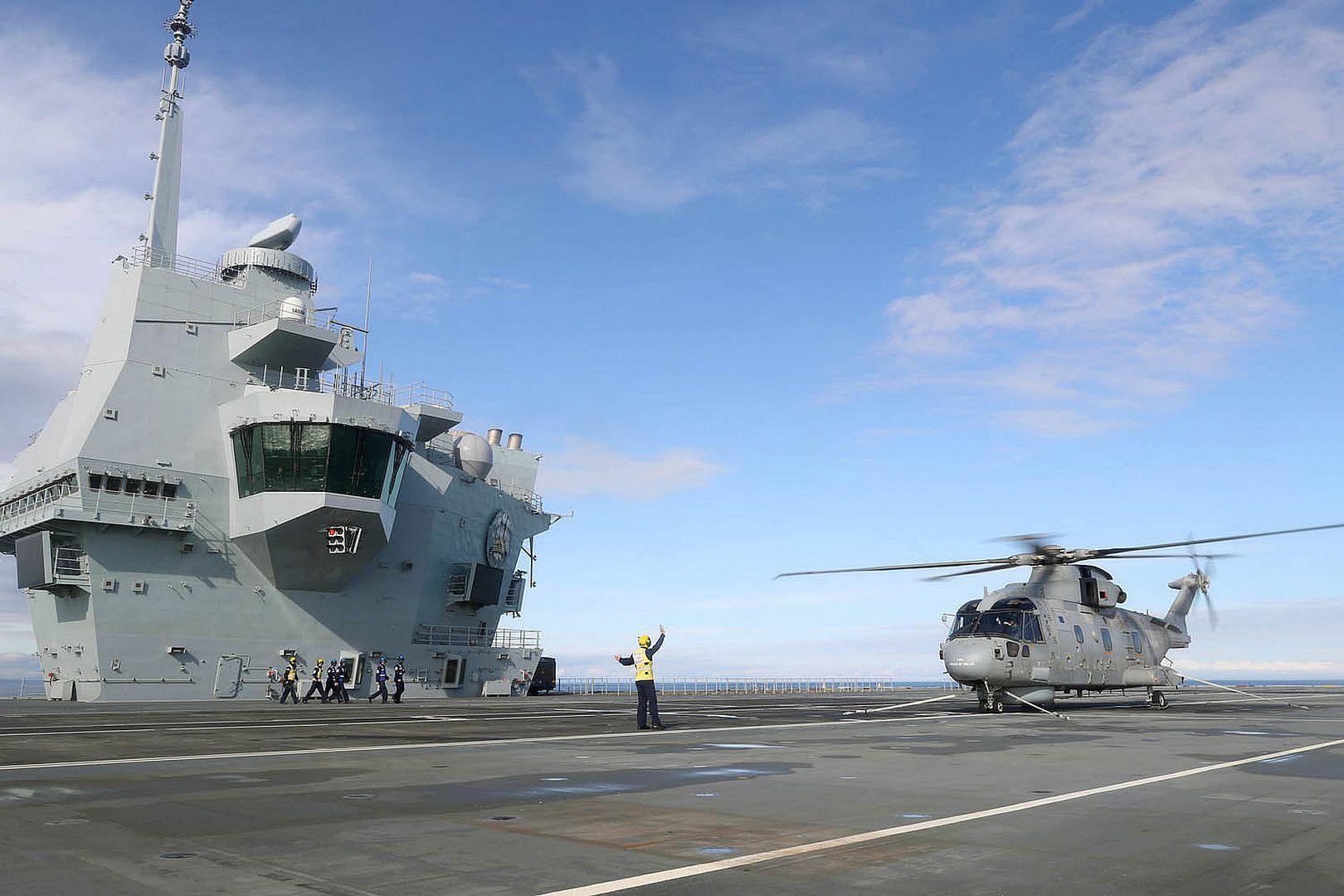
-
U.S. Marine Corps Lt. Col. Paul J. Holst, commanding officer, Marine Fighter Attack Training Squadron 501, Marine Corps Air Station Beaufort, South Carolina, completes the first landing of an F-35B Lightning II aircraft on Marine Corps Air Station New River, North Carolina, Sept. 23, 2019. The F-35B was part of an aircraft display for Secretary of Defense Mark T. Esper during his tour of MCAS New River and Marine Corps Base Camp Lejeune to visit major operational commands and to observe residual Hurricane Florence damage. (U.S. Marine Corps photo's by Lance Cpl. Ginnie Lee)
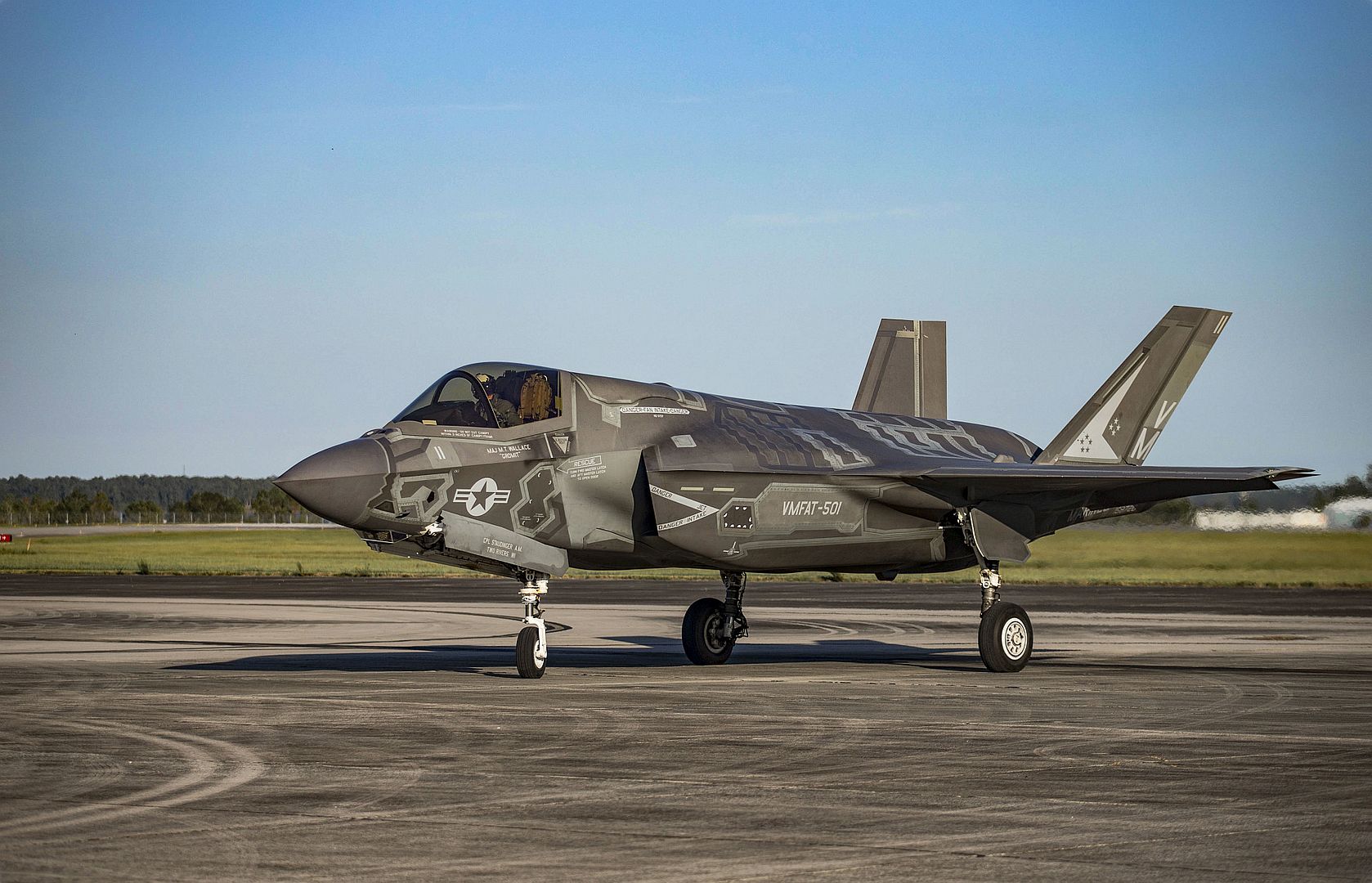
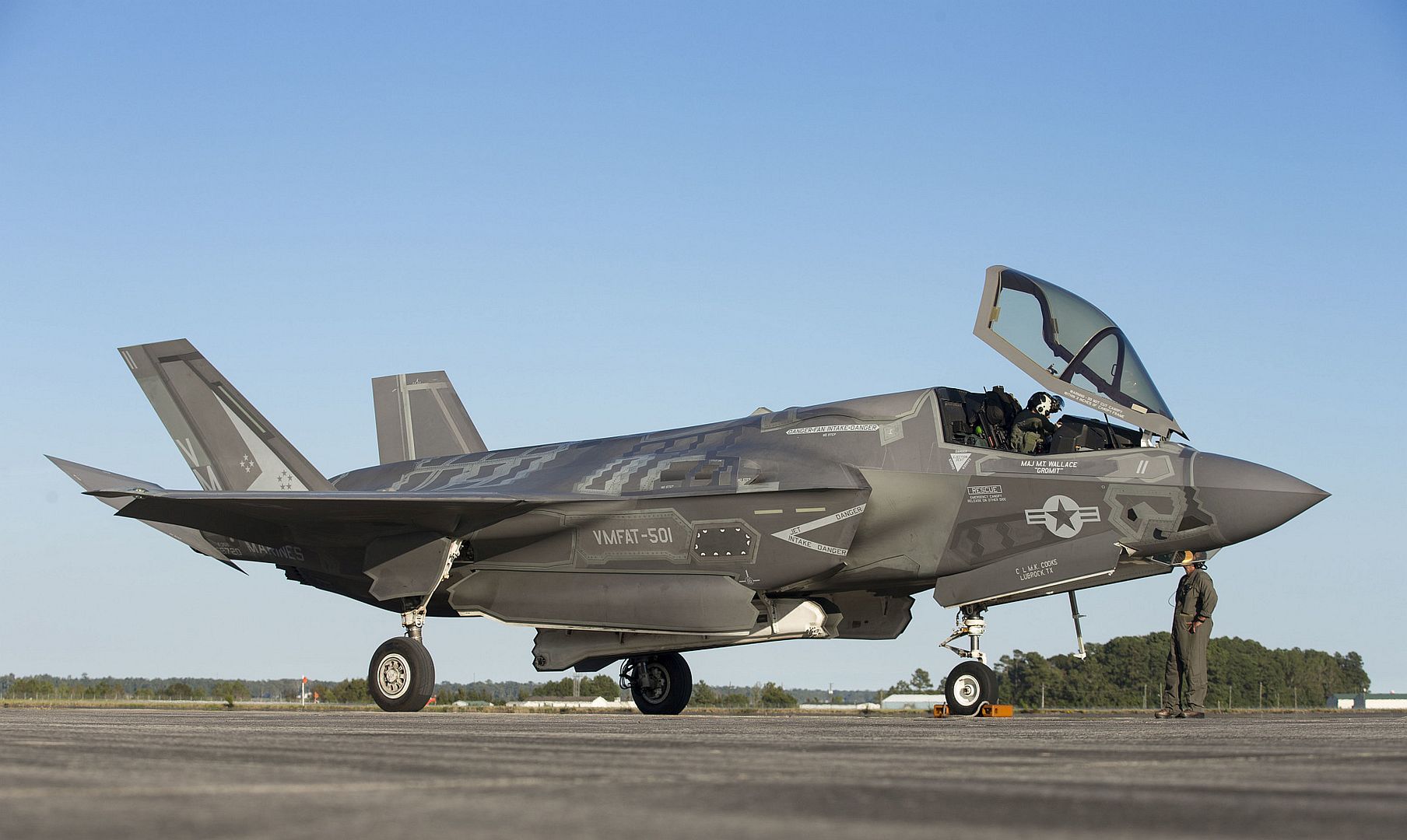
Two U.S. Navy EA-18G Growlers, Naval Air Station Whidbey Island, Washington, fly in formation awaiting fuel from an U.S. Air Force KC-135 Stratotanker, 92nd Air Refueling Wing, Fairchild Air Force Base, Washington during Exercise Mobility Guardian 2019, Sept. 24, 2019. Exercise Mobility Guardian is Air Mobility Command's premier, large scale mobility exercise. Through robust and relevant training, Mobility Guardian improves the readiness and capabilities of Mobility Airmen to deliver rapid global mobility and builds a more lethal and ready Air Force.
(U.S. Air Force photo's by Tech. Sgt. Larry E. Reid Jr.)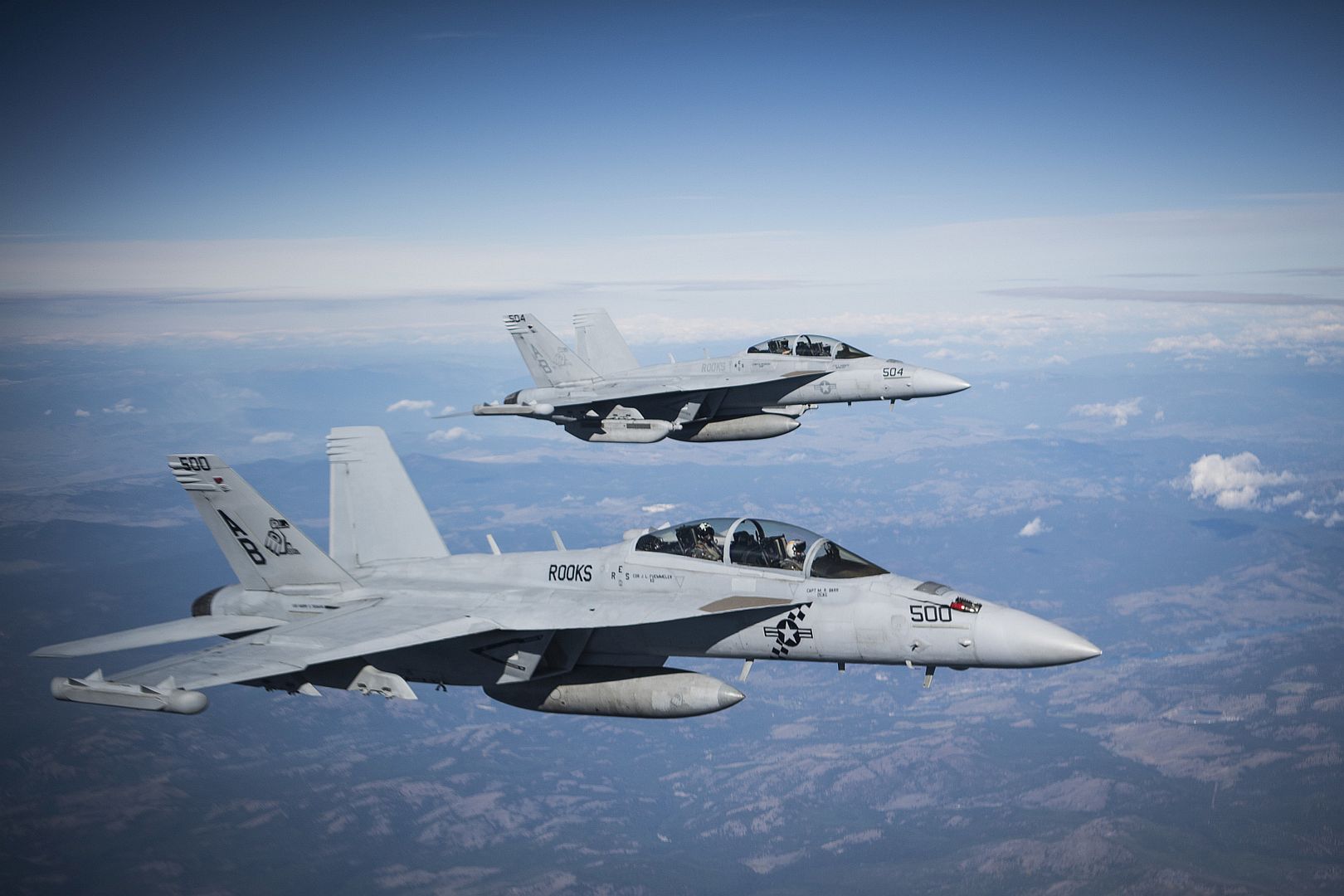
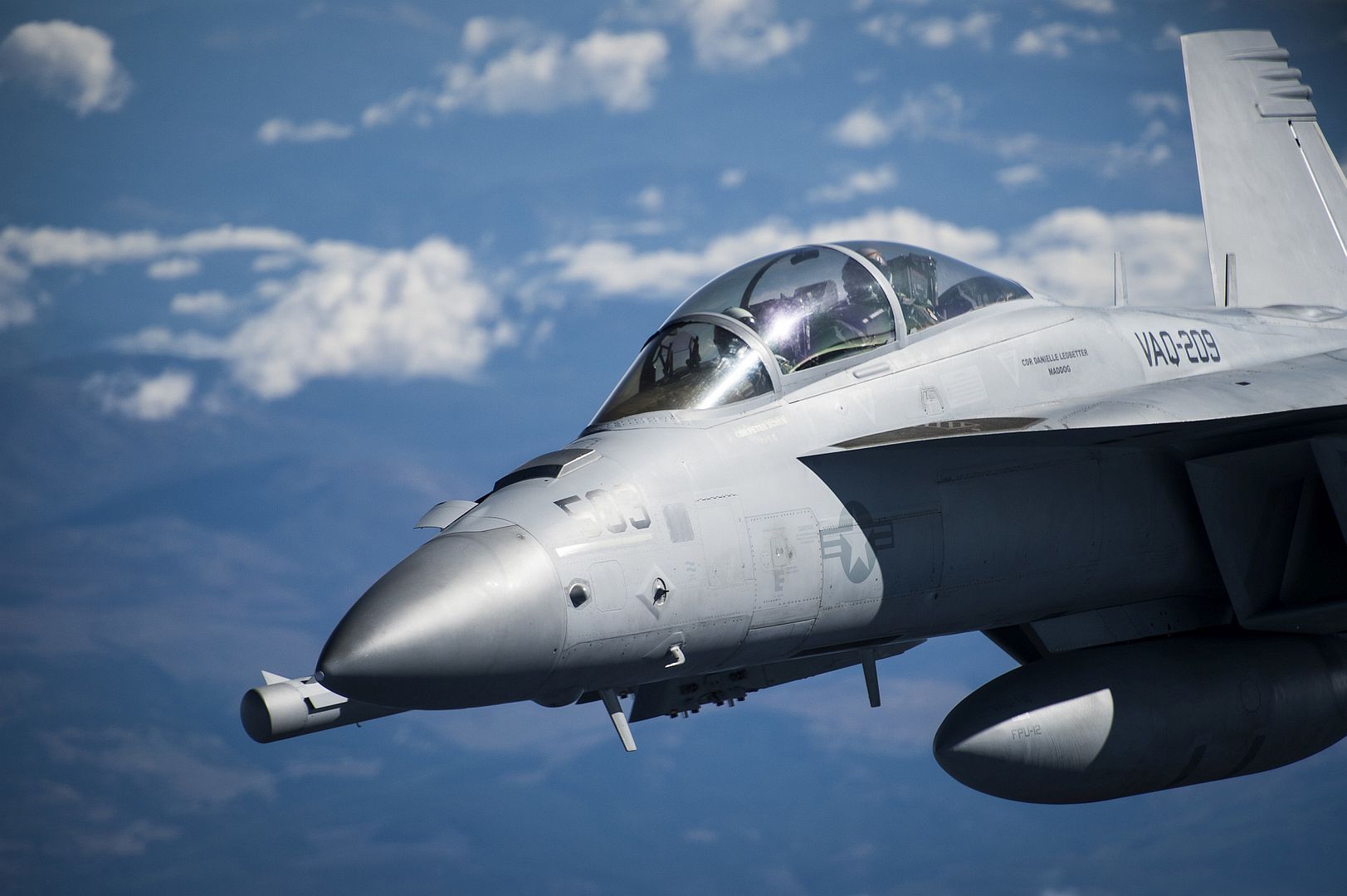
An F-15E Strike Eagle assigned to the 333rd Fighter Squadron flies next to a KC-135R Stratotanker after receiving fuel Sept. 24, 2019, near North Carolina's Outer Banks. The F-15E Strike Eagle is a dual-role fighter designed to perform air-to-air and air-to-ground missions with an array of avionics and electronics systems that gives the Strike Eagle the capability to fight at low altitude, day or night, in all weather. (U.S. Air Force photo by Jacob Derry)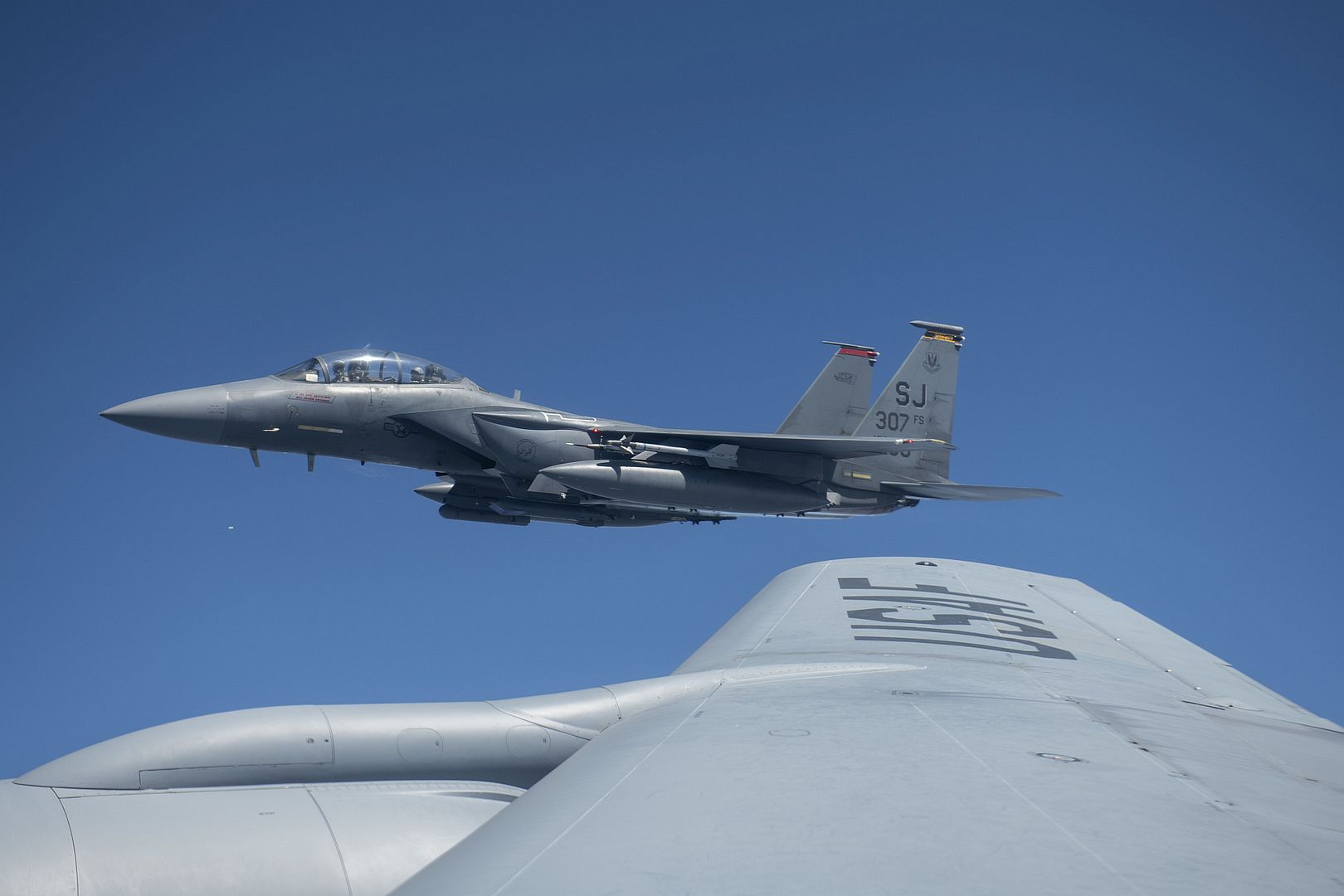
A U.S. Air Force F-16 Fighting Falcon assigned the 18th Aggressor Squadron (AGRS) taxis on the flightline at Eielson Air Force Base, Alaska, Sept. 24, 2019. RED FLAG-Alaska, a Pacific Air Forces-sponsored exercise held three to four times a year, allows the 18th AGRS to prepare pilots and aircrews from visiting units for conflicts against near-peer adversaries. (U.S. Air Force photo by Airman 1st Class Aaron Larue Guerrisky)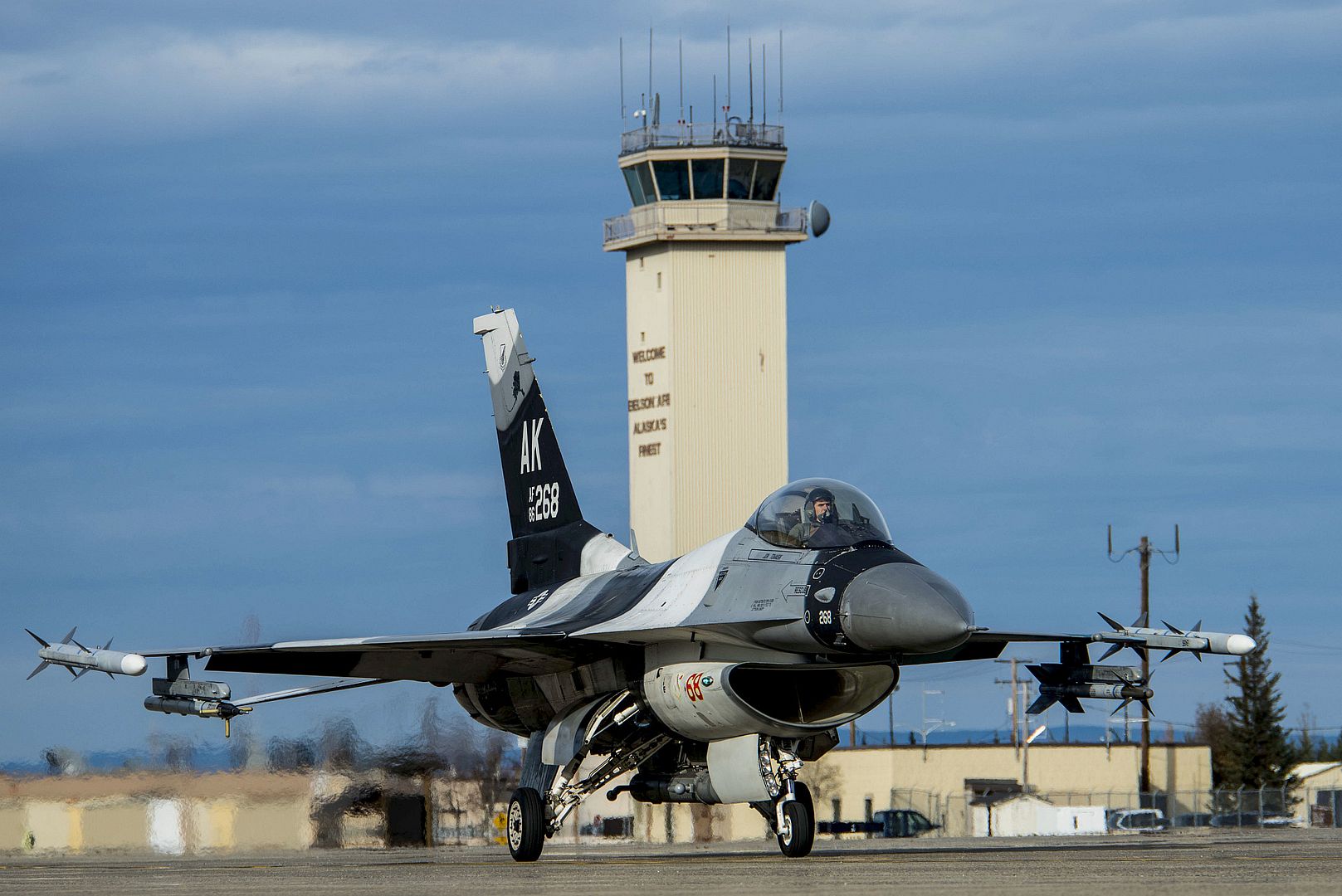
The Republic of Korea?s 53rd Demonstration Group, also known as the Black Eagles, fly above the flighline, Sept. 21, 2019, at Osan Air Base, ROK. The Black Eagles headlined Osan?s Air Power Day, which celebrated the US-ROK alliance while visitors exchange historical and traditions. (U.S. Air Force photo by Staff Sgt. Greg Nash)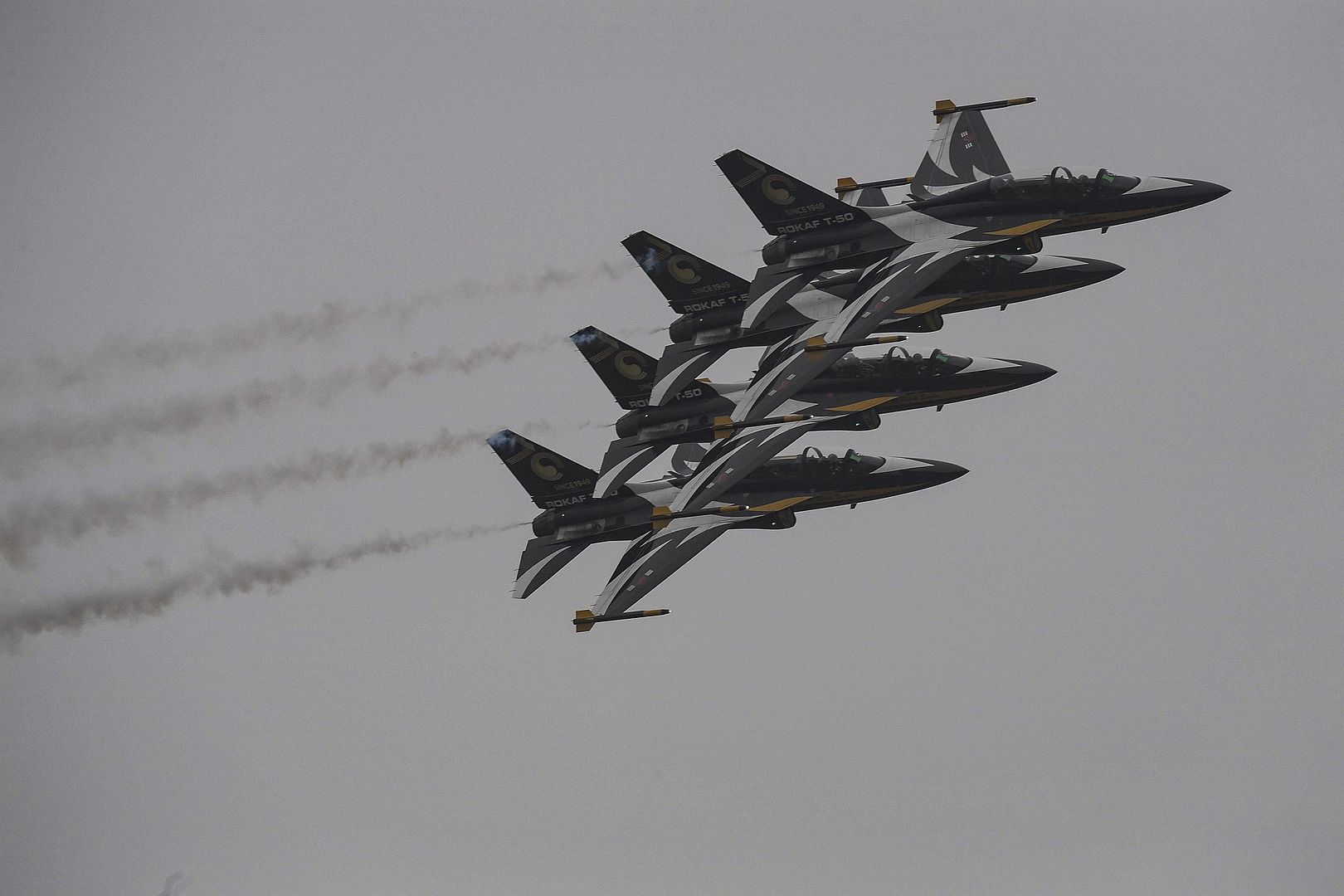
ATLANTIC OCEAN (Sept. 24, 2019) An F/A-18E Super Hornet assigned to Strike Fighter Squadron (VFA) 106 prepares to take off from the flight deck of the aircraft carrier USS John C. Stennis (CVN 74) in the Atlantic Ocean, Sept 24, 2019. John C. Stennis is underway conducting routine operations in support of Commander, Naval Air Force Atlantic. (U.S. Navy photo by Mass Communication Specialist 3rd Class Joshua L. Leonard/Released)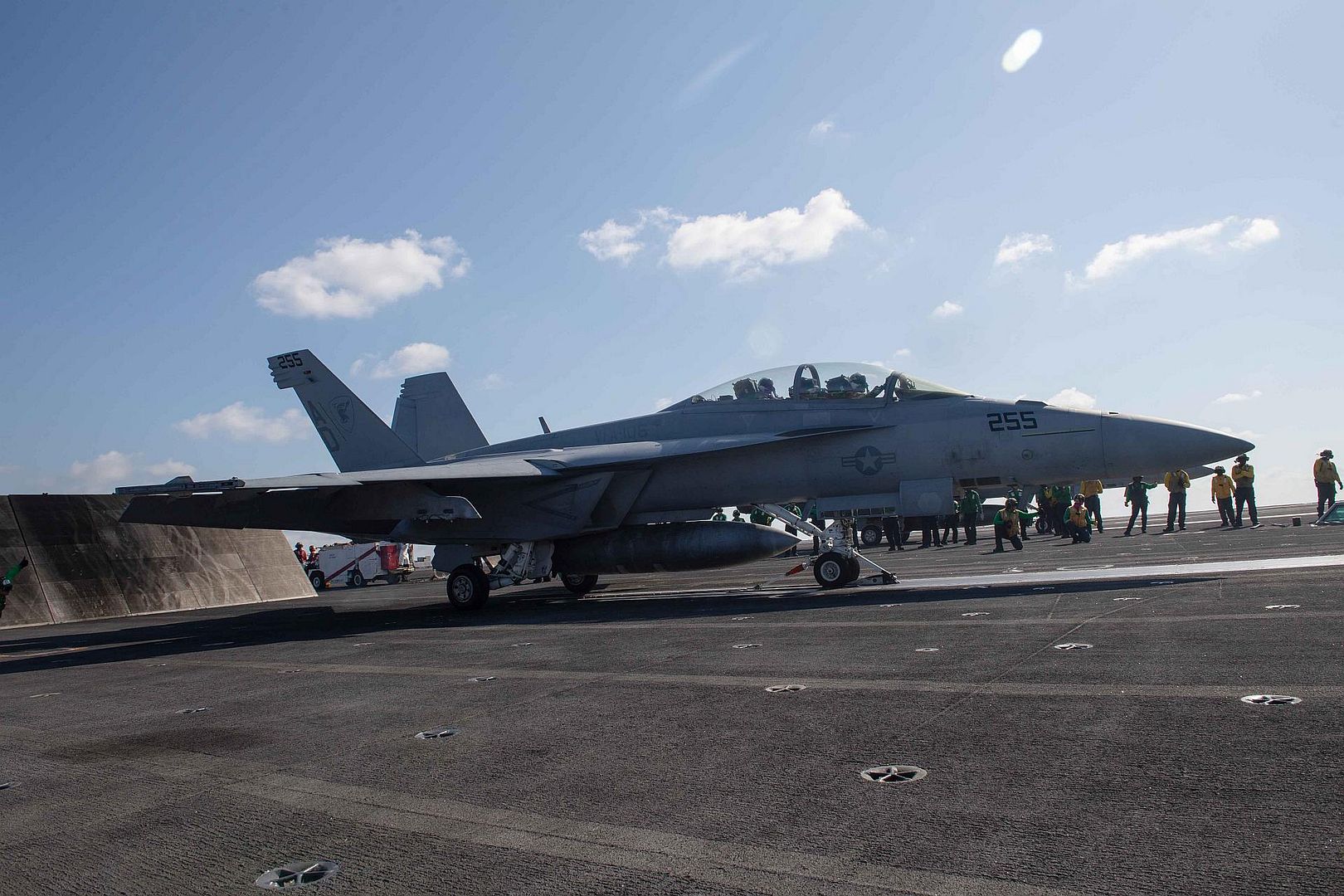
STRATFORD, Conn., Sept. 24, 2019 /PRNewswire/ -- Lockheed Martin (NYSE: LMT) today announced the Sikorsky HH-60W Combat Rescue Helicopter (CRH) program achieved a Milestone C decision from the U.S. Air Force, which moves the program into low rate initial production. The Combat Rescue Helicopter will perform critical combat search and rescue and personnel recovery operations for all U.S. military services.
The four instrumented test aircraft at the Sikorsky Development Flight Center in West Palm Beach, Florida, demonstrated their production readiness during rigorous U.S. Air Force (USAF) performance and flight load survey testing. The joint Sikorsky and USAF flight test team has executed over 150 hours of envelope expansion flights, which provided USAF the data necessary to execute a Milestone C decision. This decision allows Sikorsky to begin production of the aircraft, which is based on the venerable BLACK HAWK helicopter.
"This affirmative Milestone C decision validates the modifications to Sikorsky's most successful BLACK HAWK helicopter, making it capable of saving downed airmen anytime, anywhere around the world," said Greg Hames, Sikorsky program director. "This establishes the Combat Rescue Helicopter as a production program."
There are five CRH aircraft in various stages of production at Sikorsky's Stratford facility. Sikorsky employees and our nationwide supply chain are ready to begin production and support delivering this all new aircraft to the warfighter.
The USAF program of record calls for 113 helicopters to replace its predecessor, the Sikorsky HH-60G PAVE HAWKs.
"We have just successfully gained approval to launch the production of a helicopter that will save the lives of our warfighters and our allies all over the world. This decision begins the transition to this more capable and reliable helicopter to fulfill the Air Force's mission to leave no one behind. I could not be more proud of our government-contractor team for making this happen," said Col. Dale R. White, Program Executive Officer, Intelligence, Surveillance, Reconnaissance and Special Operations Forces, USAF.
The CRH is significantly more capable and reliable than the HH-60G PAVE HAWK. The aircraft hosts a new fuel system that nearly doubles the capacity of the internal tank on a UH-60M BLACK HAWK, giving the USAF crew extended range and more capability to rescue those injured in the battle space. The CRH specification drives more capable defensive systems and enhances the vulnerability reductions, hover performance, electrical capacity, avionics, cooling, weapons, cyber-security, environmental, and net-centric capabilities beyond the current HH-60G.
For additional information, visit our website: www.lockheedmartin.com/crh.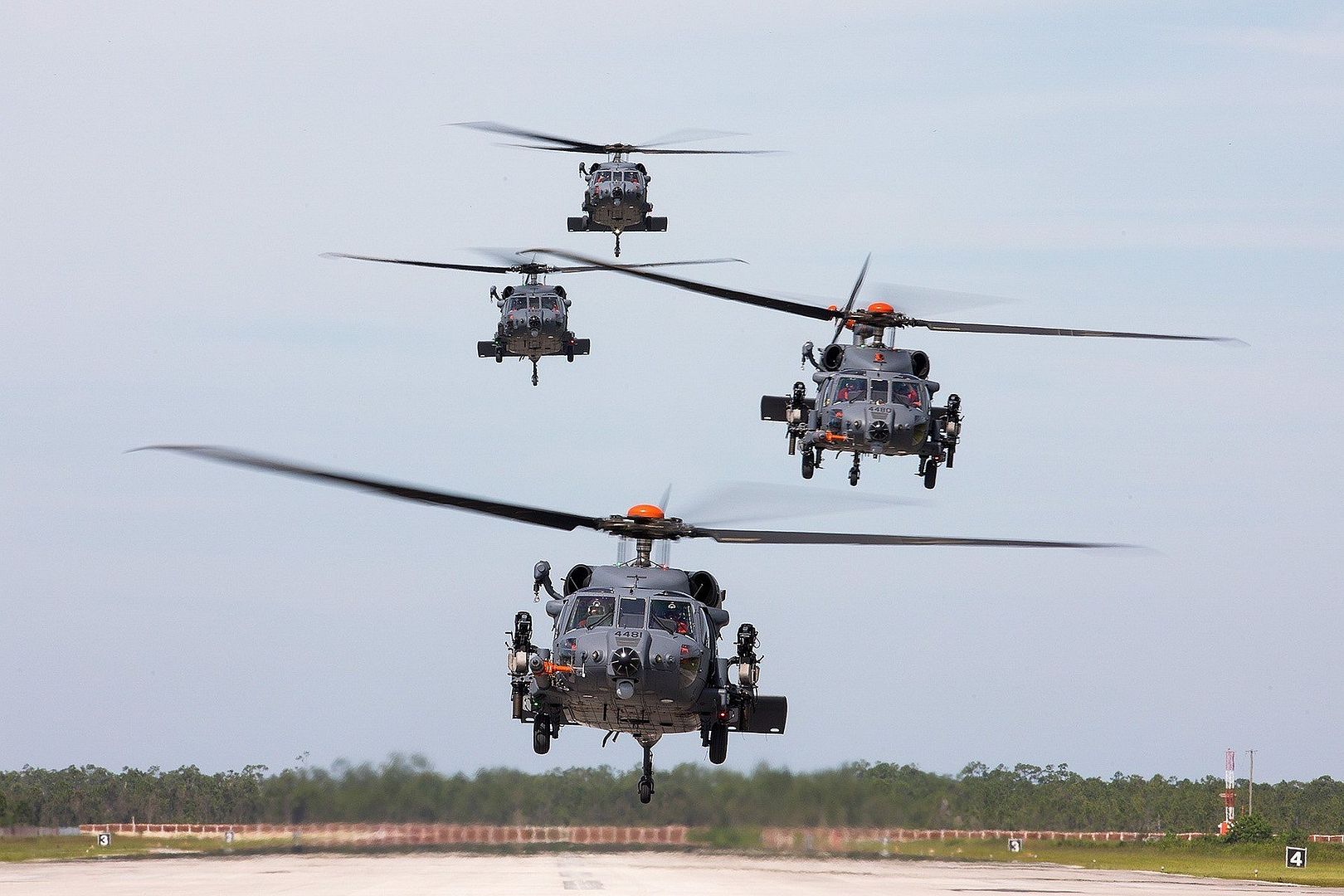
SINGAPORE, Sept. 23, 2019 ? SpiceXpress, SpiceJet?s cargo division, has taken delivery of its first 737-800 Boeing Converted Freighter (BCF) as the India-based carrier expands its air cargo operation to better serve one of the world?s most populated regions and offer new route options.
?We are expanding the markets we currently serve, particularly in the Middle East, Hong Kong and Bangladesh and the 737-800BCF?s reliability and versatility is helping enable our strategic direction,? said Ajay Singh, chairman and managing director, SpiceJet.
The standard-body freighter, which is the first 737-800BCF to be operated in South Asia, is on lease from NGF Alpha Limited, a division of Spectre Cargo Solutions.
?It?s exciting to bring the 737-800 Freighter to India, a market we see growing in the coming years,? said Jordan Jaffe, Spectre Air Capital CEO. ?We have already invested over a quarter billion dollars into our 737NG program, and are thrilled to put our continuing commitment to work serving great operators like SpiceJet. They join a growing family of customers utilizing our diverse product range of freighters.?
India?s Directorate General of Civil Aviation (DGCA) validated the 737-800BCF?s certification, clearing the way for the freighter to serve a rapidly growing region and busy international trade hub. South Asia is home to one of the world?s largest population centers with 1.7 billion people or nearly one-quarter of the world?s total.
?SpiceJet has made bold moves to strengthen its position in one of the most dynamic and fast-growing aviation markets,? said Ihssane Mounir, senior vice president Commercial Sales and Marketing for The Boeing Company. ?We are excited that SpiceJet has chosen to expand its SpiceXpress operation with the 737-800BCF. This converted freighter gives operators just the right size, operating economics and capabilities to succeed in busy domestic and regional routes.?
The 737-800BCF entered service last year and its order book has grown quickly to 120 orders and commitments. The program has ramped up production ? with output set to more than double to 17 units in 2019 ? to meet the customer demand.
Built on the popular and reliable Next-Generation 737 passenger airplane, the 737-800BCF offers operators lower operating cost per payload ton than older standard-body freighters. It is currently operating on four continents (Africa, Asia, Europe, and North America). The 737-800BCF carries up to 52,800 pounds (23.9 metric tons) of payload, opening new markets to operators with its long-range capability and high reliability.
SpiceXpress, the dedicated air cargo arm of SpiceJet has nine scheduled departures six days a week to Hong Kong from Delhi, Kolkata and Guwahati and one domestic rotation connecting Hyderabad, Delhi, Mumbai, Bengaluru and Chennai. SpiceXpress has also operated numerous charter services to international destinations such as Sharjah, Ras Al Khaimah, Teheran, Sulaimaniyah (Iraq), Bosaso (Somalia) & Hargeisa (Somali Land) besides helping transport relief material to Bhubaneshwar during Cyclone Fani. For more information, visit www.spicejet.com.
Spectre Air Capital, a Texas-based aircraft trading and leasing company specializing in next generation narrow and medium body freighters whose principals have bought, sold and leased 650+ passenger, freighter, VIP, and special mission aircraft. For more information, visit www.spectre.aero.
Boeing is the world?s largest aerospace company and leading provider of commercial airplanes, defense, space and security systems, and global services. As the top U.S. exporter, the company supports commercial and government customers in more than 150 countries. Boeing employs more than 150,000 people worldwide and leverages the talents of a global supplier base. Building on a legacy of aerospace leadership, Boeing continues to lead in technology and innovation, deliver for its customers and invest in its people and future growth. For more information, visit www.boeing.com.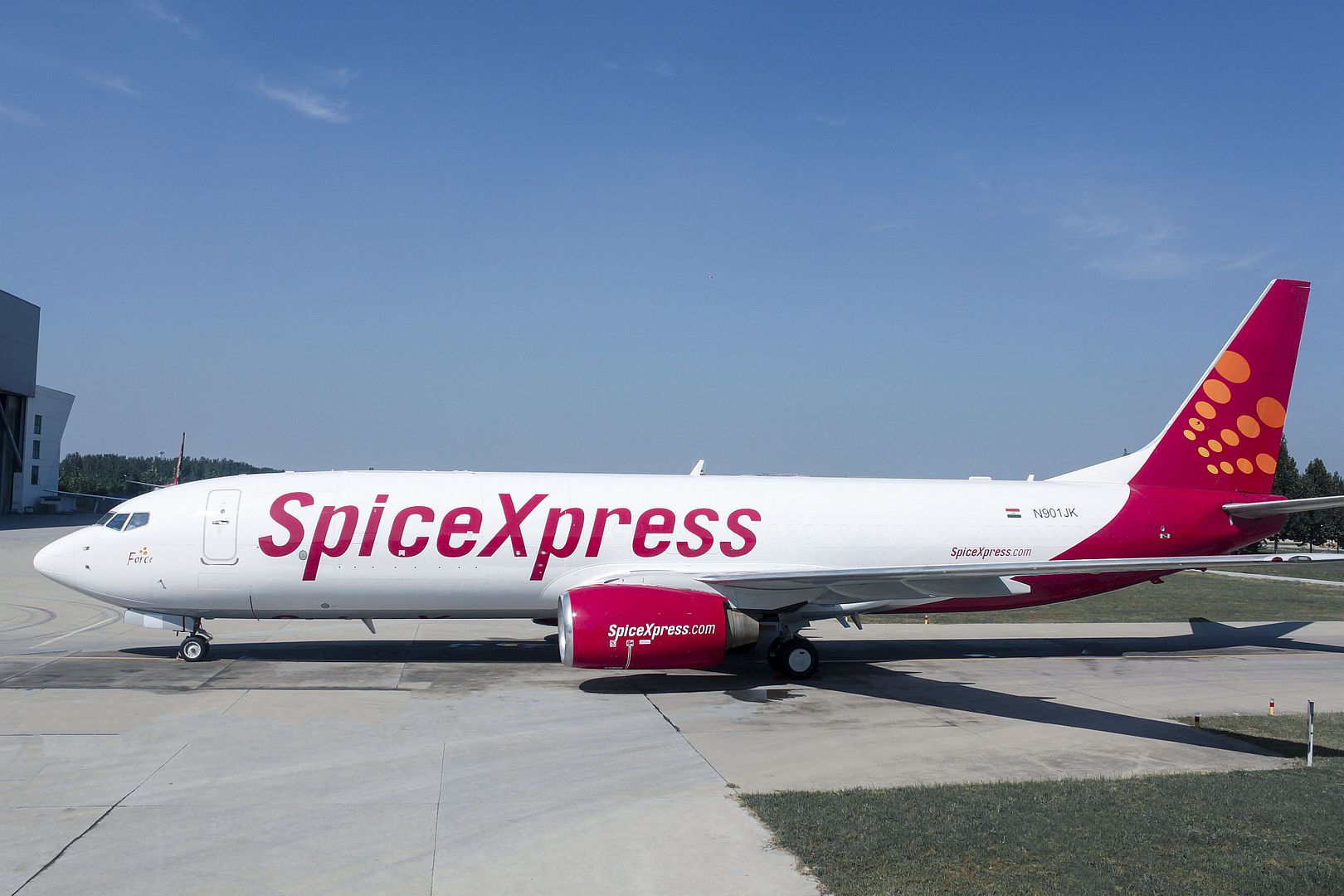
SEATTLE, Sept. 25, 2019 /PRNewswire/ -- Boeing [NYSE:BA] and Air New Zealand today finalized an order for eight 787-10 Dreamliner airplanes valued at $2.7 billion at list prices. The carrier, recognized for its long-range flights and global network, will integrate the largest Dreamliner model into its world-class fleet of 787-9 and 777 airplanes from 2022 to strategically grow its business.
The airplane deal, announced in May as a commitment, includes options to increase the number of aircraft from eight up to 20, and substitution rights that allow a switch from the larger 787-10 to smaller 787-9s, or a combination of the two models for future fleet and network flexibility.
"This is an exciting decision for our business and our customers as we deliver on our commitment to grow our business sustainably. With the 787-10 offering around 15 percent more space for both customers and cargo than the 787-9, this investment creates the platform for our future strategic direction and opens up new opportunities to grow," said Air New Zealand Chief Executive Officer Christopher Luxon.
As the largest member of the passenger-pleasing and super-efficient Dreamliner family, the 787-10 is 224 feet long (68 meters) and can seat up to 330 passengers in a standard two-class configuration, about 40 more than the 787-9. Powered by a suite of new technologies and a revolutionary design, the 787-10 set a new benchmark for fuel efficiency and operating economics when it entered commercial service last year. The airplane allows operators to achieve 25 percent better fuel efficiency per seat compared to the previous airplanes in its class.
"Air New Zealand has made very strategic investments in advanced widebody aircraft to build on its status as a leading global carrier connecting the South Pacific with Asia and the Americas. We are very honored that Air New Zealand has selected to add the 787-10 and its unique capabilities to complement its long-haul fleet of 777 and 787-9 airplanes," said Ihssane Mounir, senior vice president of Commercial Sales and Marketing, The Boeing Company.
Air New Zealand was a global launch customer for the 787-9 and today operates 13 of the Dreamliner variant. With another 787-9 on the way and the 787-10 airplanes in the future, the airline's Dreamliner fleet is on track to grow to 22. The new Dreamliner aircraft will replace Air New Zealand's fleet of eight 777-200ERs. Air New Zealand's widebody fleet also includes seven 777-300ERs.
As part of its efforts to maintain an efficient and reliable fleet, Air New Zealand utilizes a number of Boeing Global Services solutions, including Airplane Health Management and Maintenance Performance Toolbox. These digital solutions provide maintenance data and decision support tools that enable aircraft maintenance teams to increase operational efficiency.