Aviation News
-
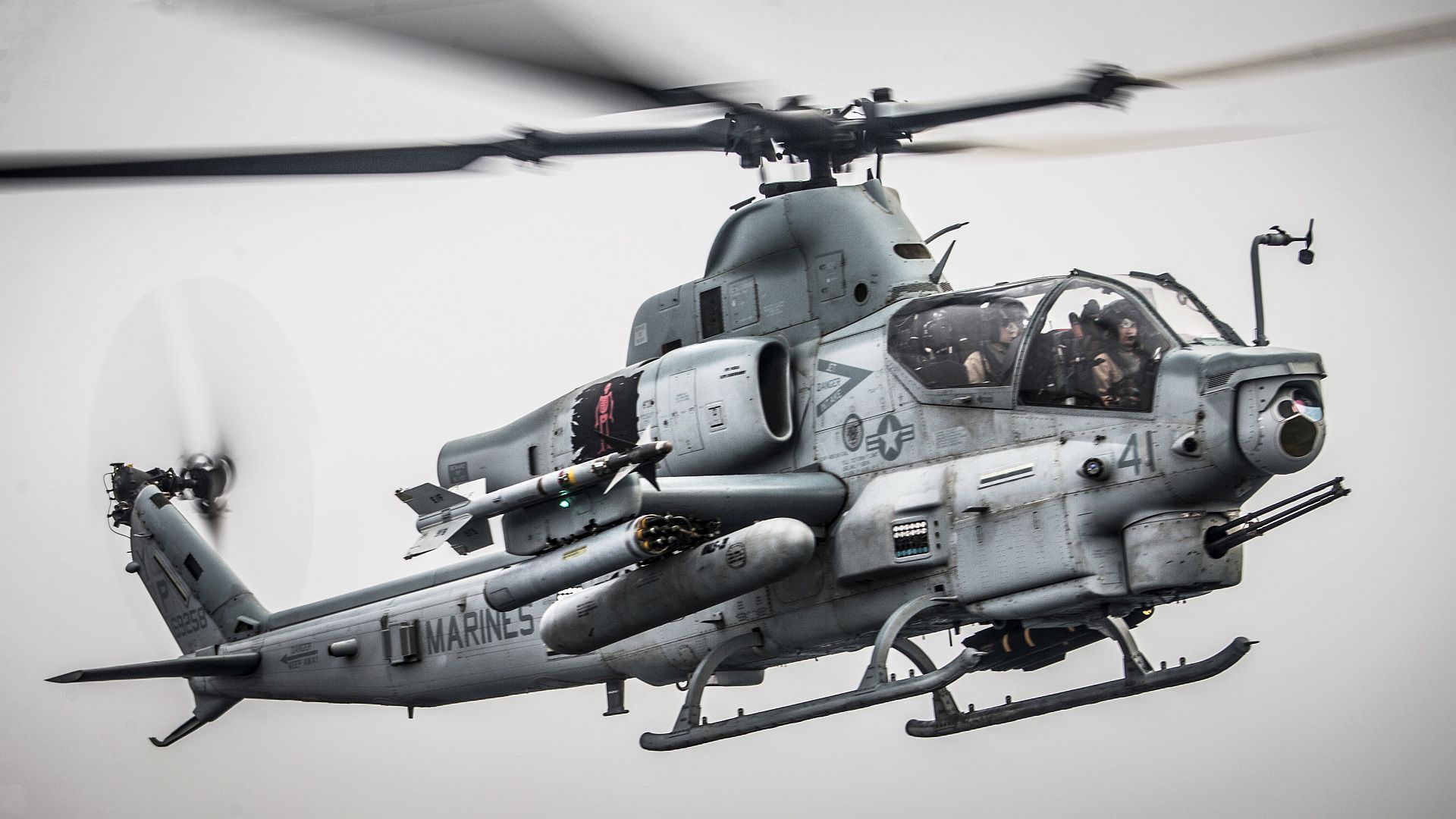
STRAIT OF HORMUZ (Aug. 12, 2019) An AH-1Z Viper attached to Marine Medium Tiltrotor Squadron (VMM) 163 (Reinforced), 11th Marine Expeditionary Unit (MEU) takes off during a strait transit aboard the amphibious assault ship USS Boxer (LHD 4). The Boxer Amphibious Ready Group and the 11th MEU are deployed to the U.S. 5th Fleet area of operations in support of naval operations to ensure maritime stability and security in the Central Region, connecting the Mediterranean and the Pacific through the Western Indian Ocean and three strategic choke points. (U.S. Marine Corps photo by Lance Cpl. Dalton S. Swanbeck/Released)
ATLANTIC OCEAN (Aug. 12, 2019) Sailors prepare to hook ammunition onto an MH-60S Sea Hawk helicopter assigned to Helicopter Sea Combat Squadron (HSC) 7 from the flight deck of the aircraft carrier USS John C. Stennis (CVN 74) in the Atlantic Ocean, Aug. 12, 2019. The John C. Stennis is underway conducting routine operations in support of Commander, Naval Air Force Atlantic. (U.S. Navy photo by Mass Communication Specialist 3rd Class Skyler Okerman/Released)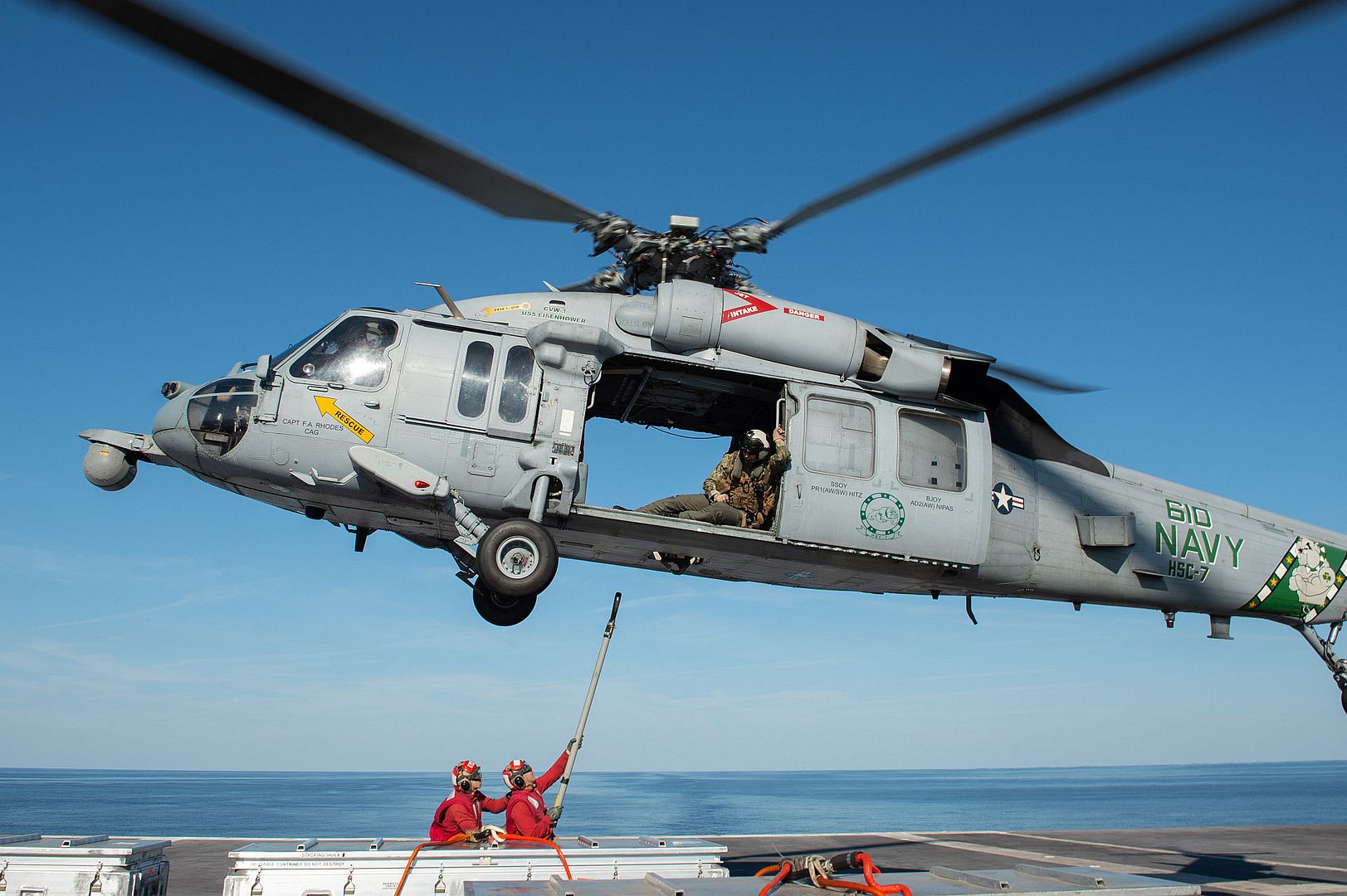
-
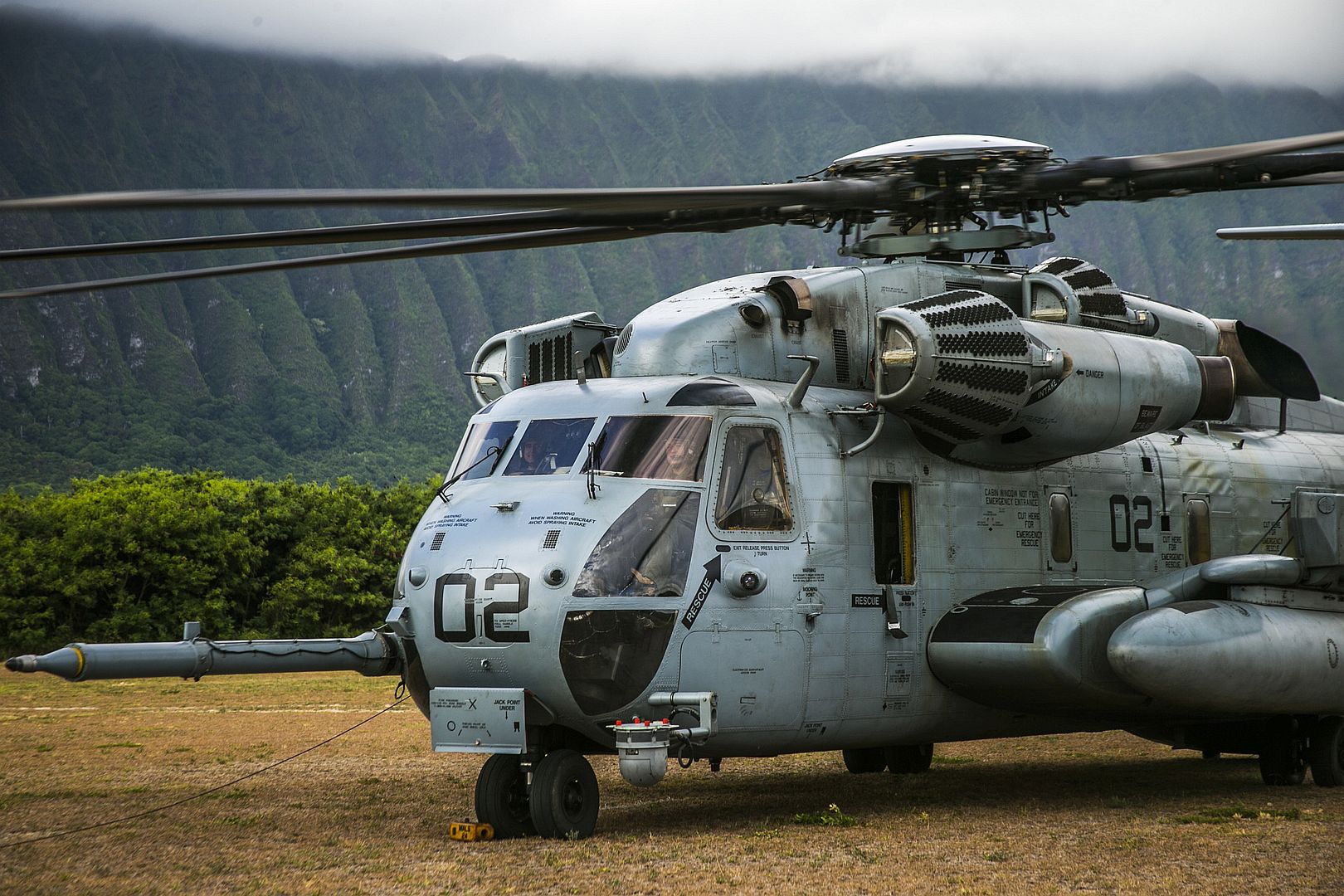
U.S. Marine Corps Capt. Philip C. Coale, CH-53E Super Stallion pilot, Marine Heavy Helicopter Squadron 463, Marine Aircraft Group 24, awaits passengers conducting parachute training operations at Marine Corps Training Area Bellows, Hawaii, August 14, 2019. The training supported by HMH-463, was conducted for Armed Service members to maintain their parachute qualification requirements. (U.S. Marine Corps photo by Lance Cpl. Jacob Wilson)
Several 33rd Fighter Wing F-35A Lightning IIs taxi down the Volk Field, Wisconsin. runway, during the Northern Lightning exercise, Aug. 13, 2019. Northern Lightning is a joint total force exercise that provides tactical-level, high-end training for current and future weapons platforms. (U.S. Air Force photo by Airman 1st Class Heather Leveille)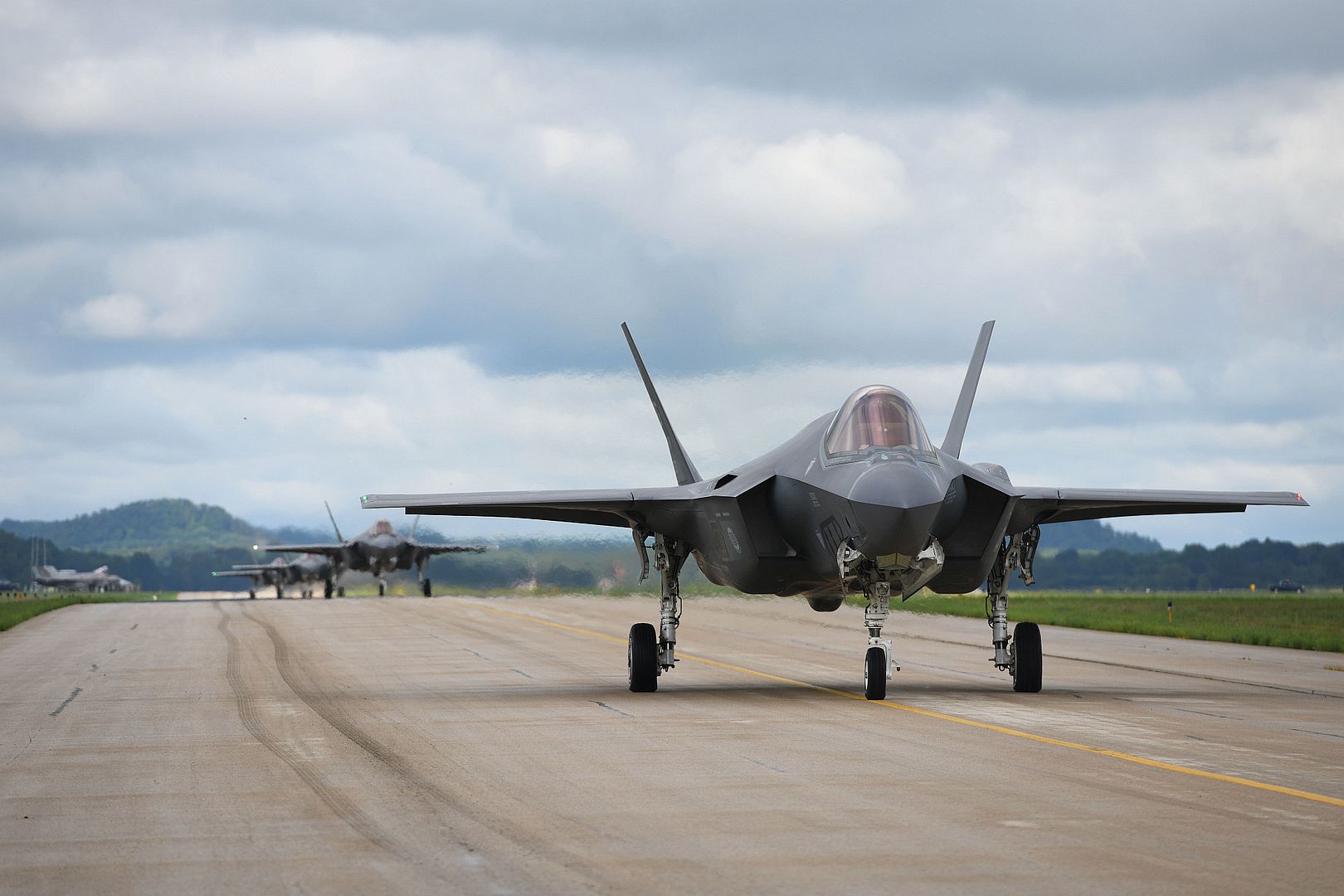
A 33rd Fighter Wing F-35A Lightning II lands, during the Northern Lightning exercise at Volk Field, Wisconsin, Aug. 13, 2019. The Northern Lightning exercise brings together the joint total force of the next generation of air superiority. (U.S. Air Force photo by Airman 1st Class Heather Leveille)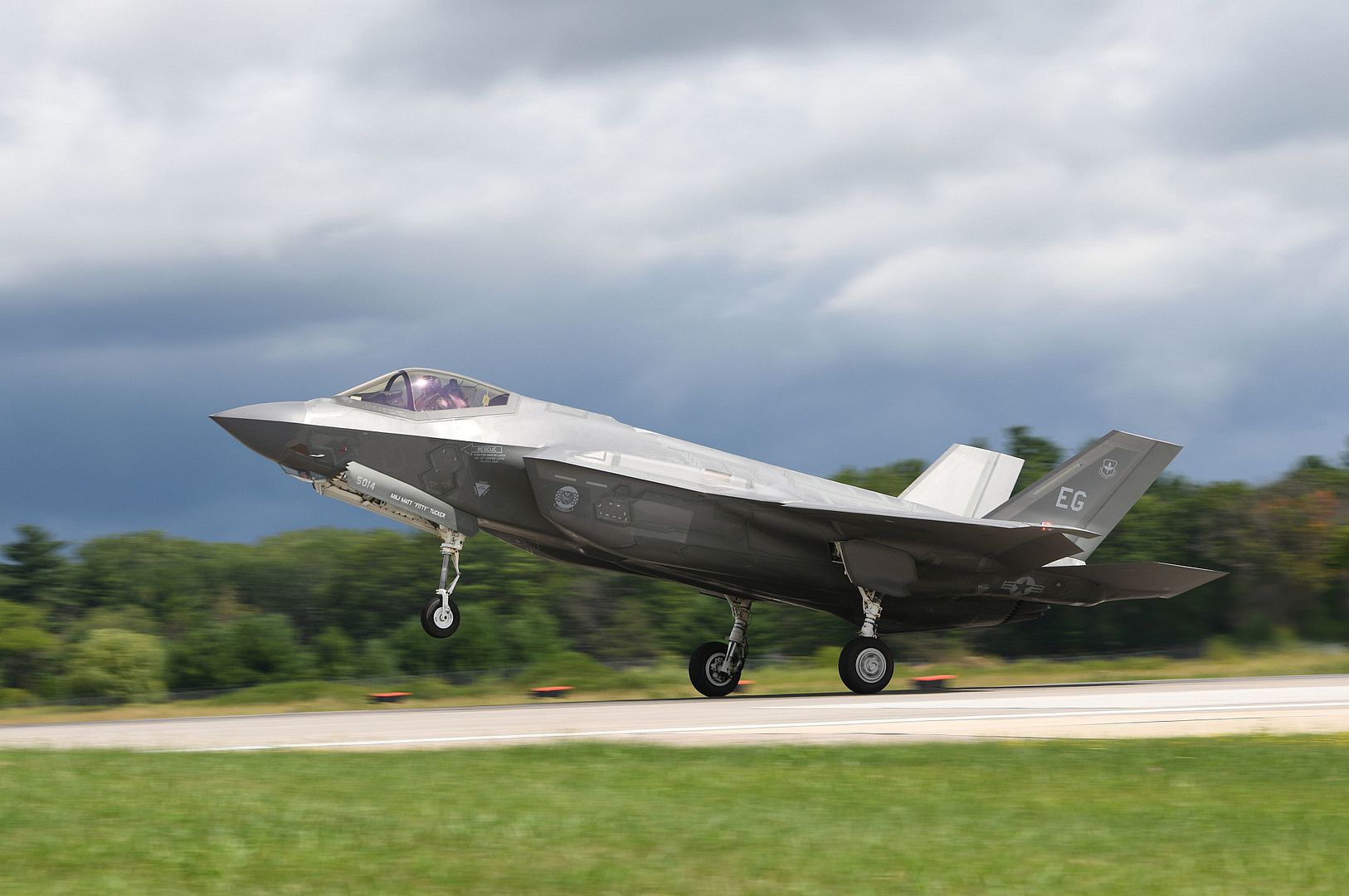
An F-16 Fighting Falcon assigned to the 18th Aggressor Squadron from Eielson Air Force Base, Alaska, departs after refueling from a KC-135 Stratotanker assigned to the 328th Air Refueling Squadron from Niagara Falls, New York, during RED FLAG-Alaska Aug. 13, 2019. RF-A provides realistic combat training, which is essential to the success of air and space operations. (U.S. Air Force photo by Staff Sgt. Ramon A. Adelan)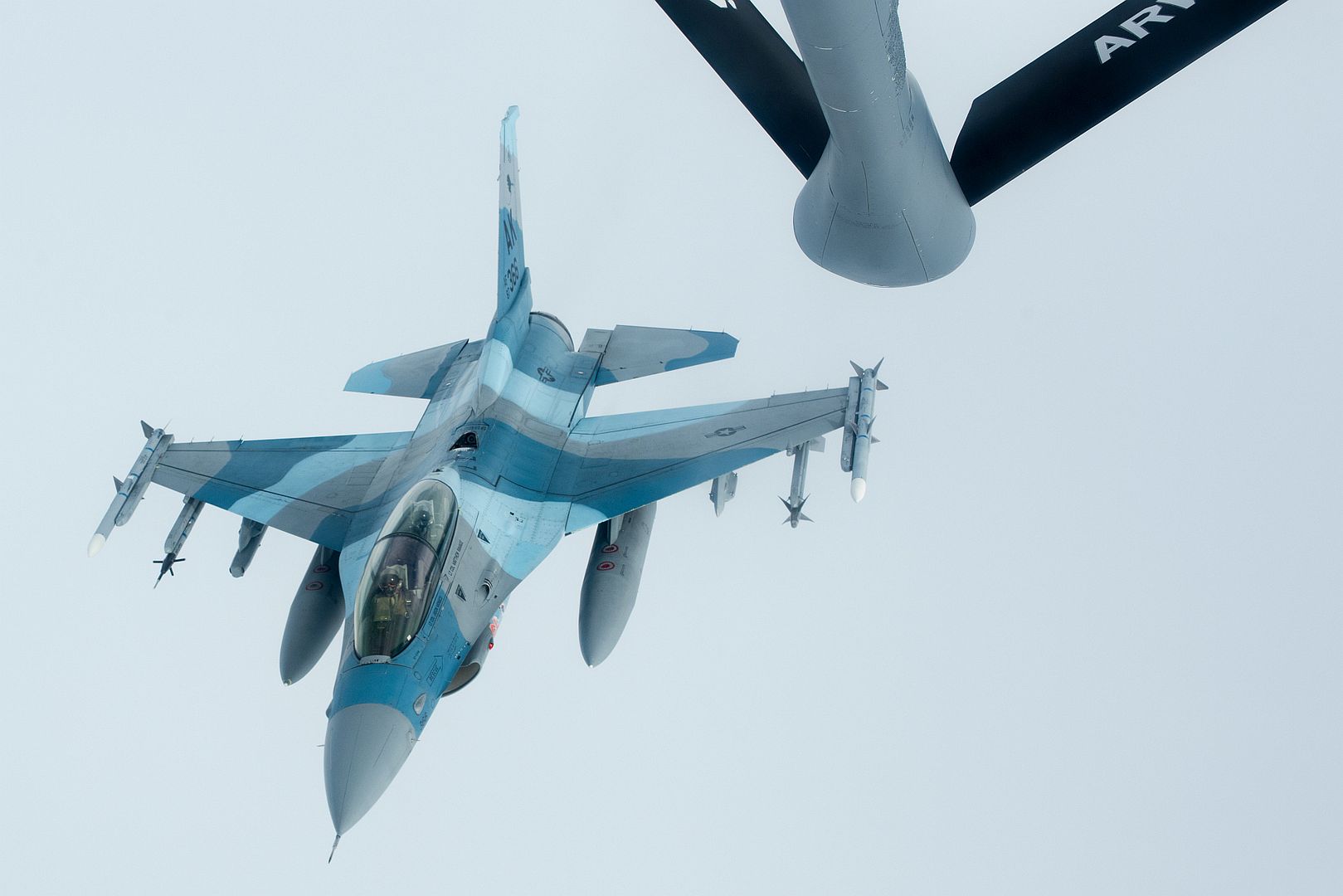
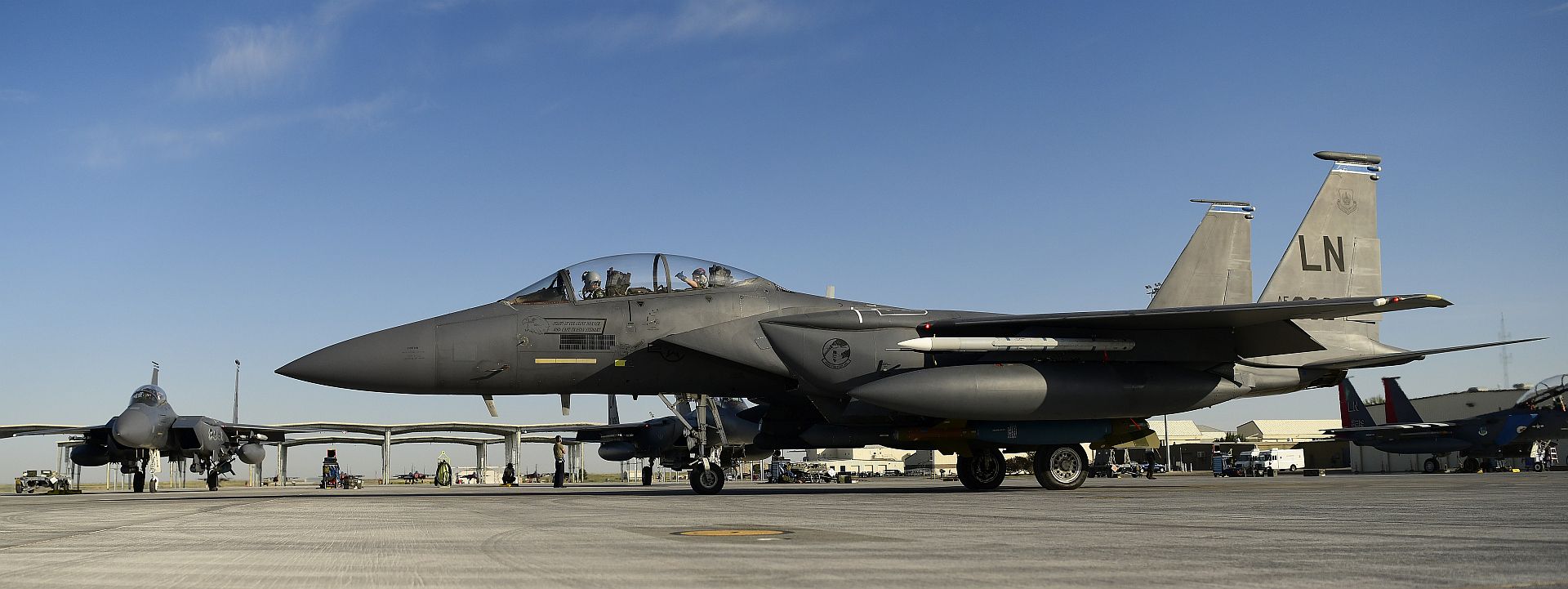
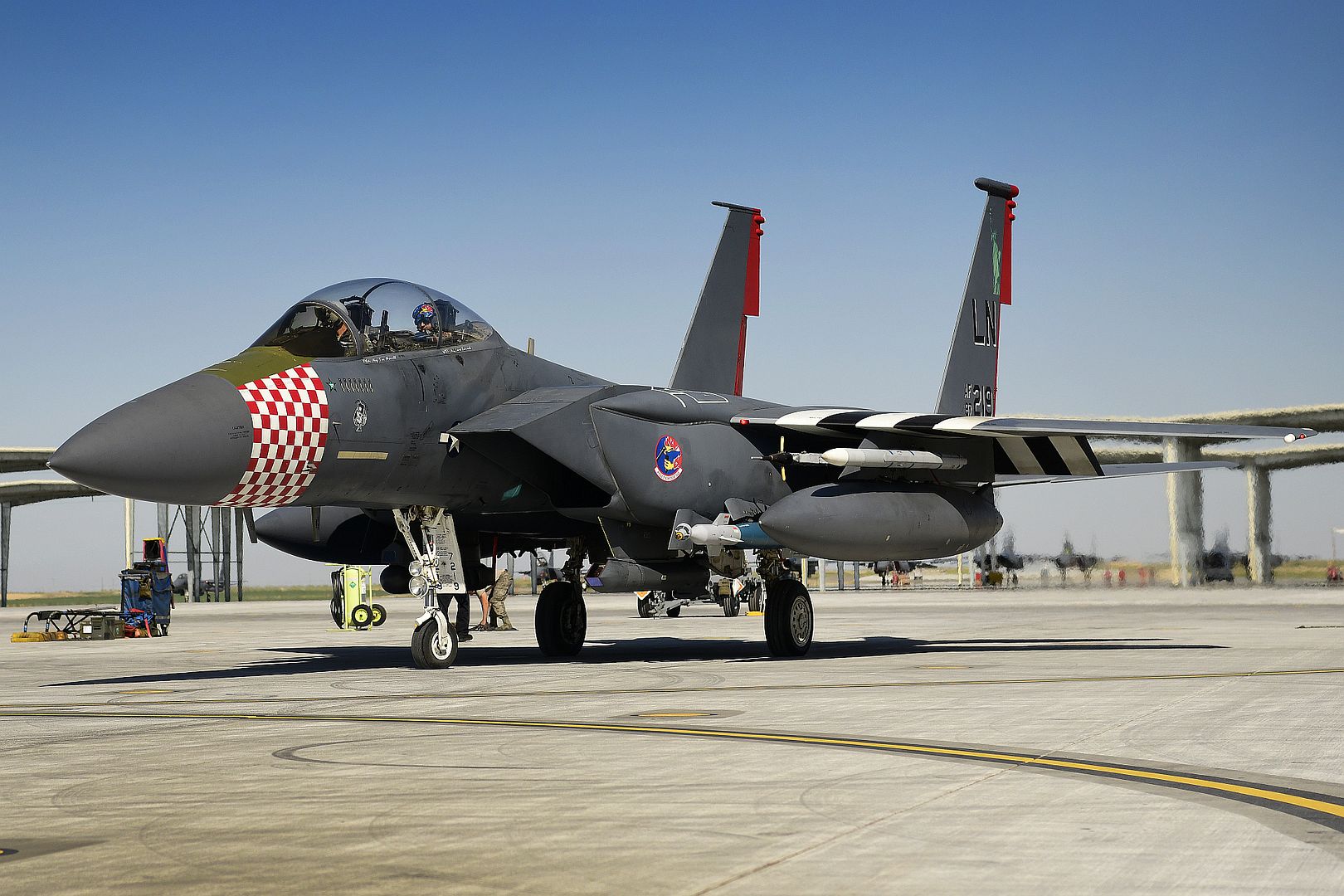
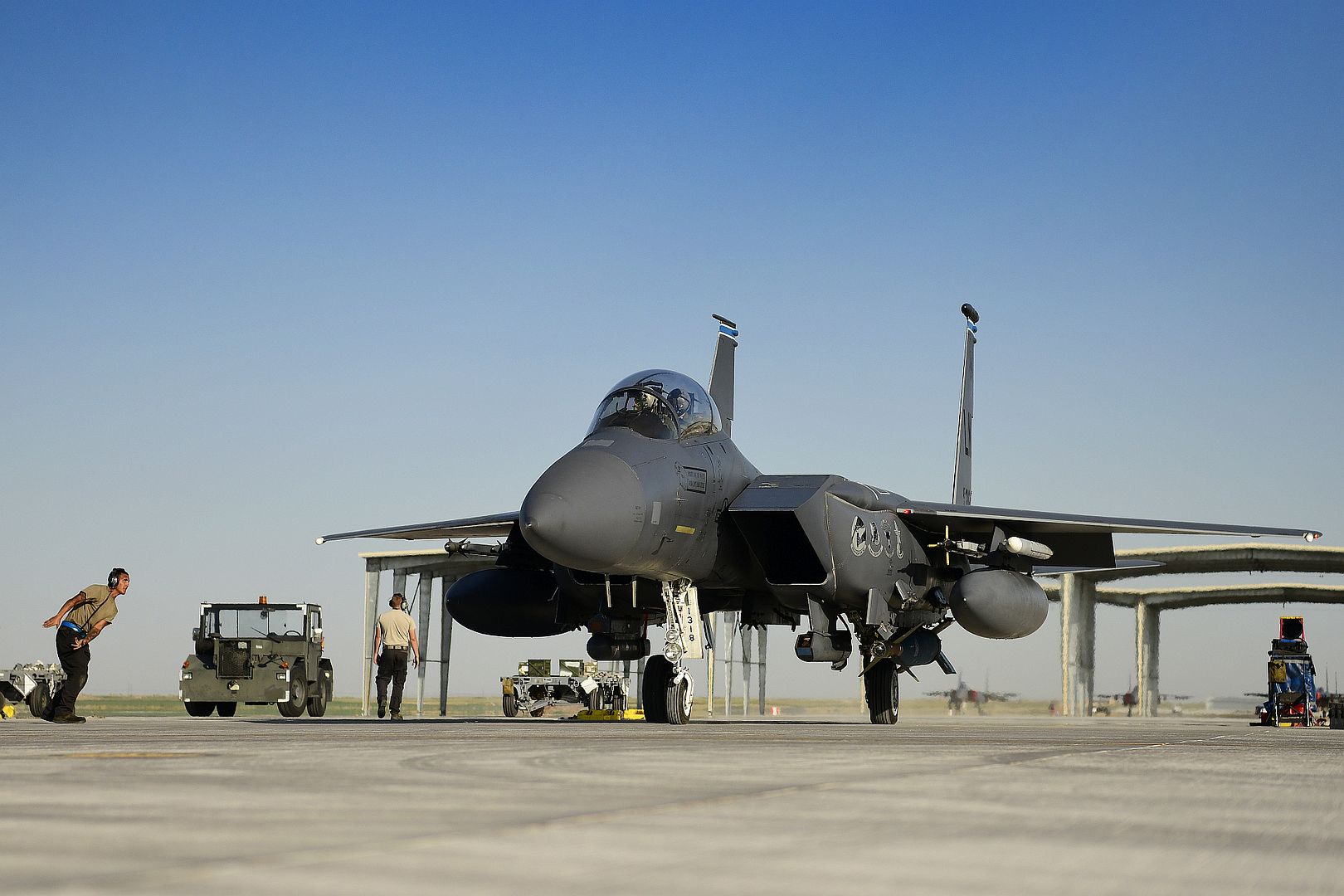
F-15E Strike Eagle's aassigned to the 492nd Fighter Squadron participate in exercise Combat Hammer at Mountain Home Air Force Base, Idaho August 14, 2019. The exercise is part of the U.S. Air Force Weapon Systems Evaluation Program, which is designed to evaluate the reliability, maintainability, suitability, and accuracy of precision guided munitions, as well as high technology air-to-ground munitions from tactical deliveries against realistic targets with realistic enemy defenses. (U.S. Air Force Photo's/ Tech. Sgt. Matthew Plew)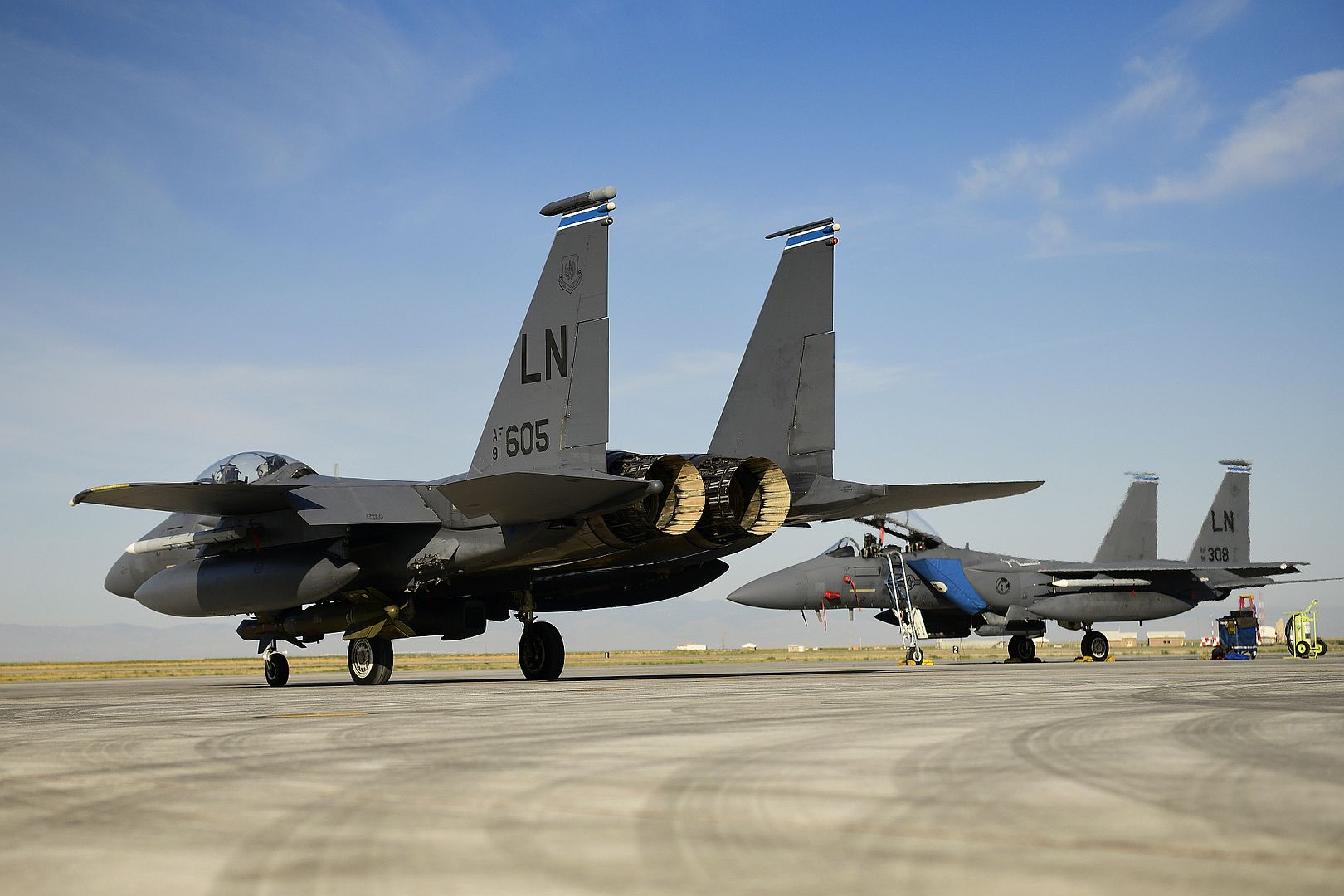
A Royal Canadian Air Force CF-18 Hornet is prepared for flight during RED FLAG-Alaska (RF-A) 19-3 at Eielson Air Force Base, Alaska, Aug. 13, 2019. RF-A is a Pacific Air Forces-sponsored exercise designed to provide realistic training in a simulated combat environment and takes place over the Joint Pacific Alaska Range Complex. (U.S. Air Force photo by Senior Airman Eric M. Fisher)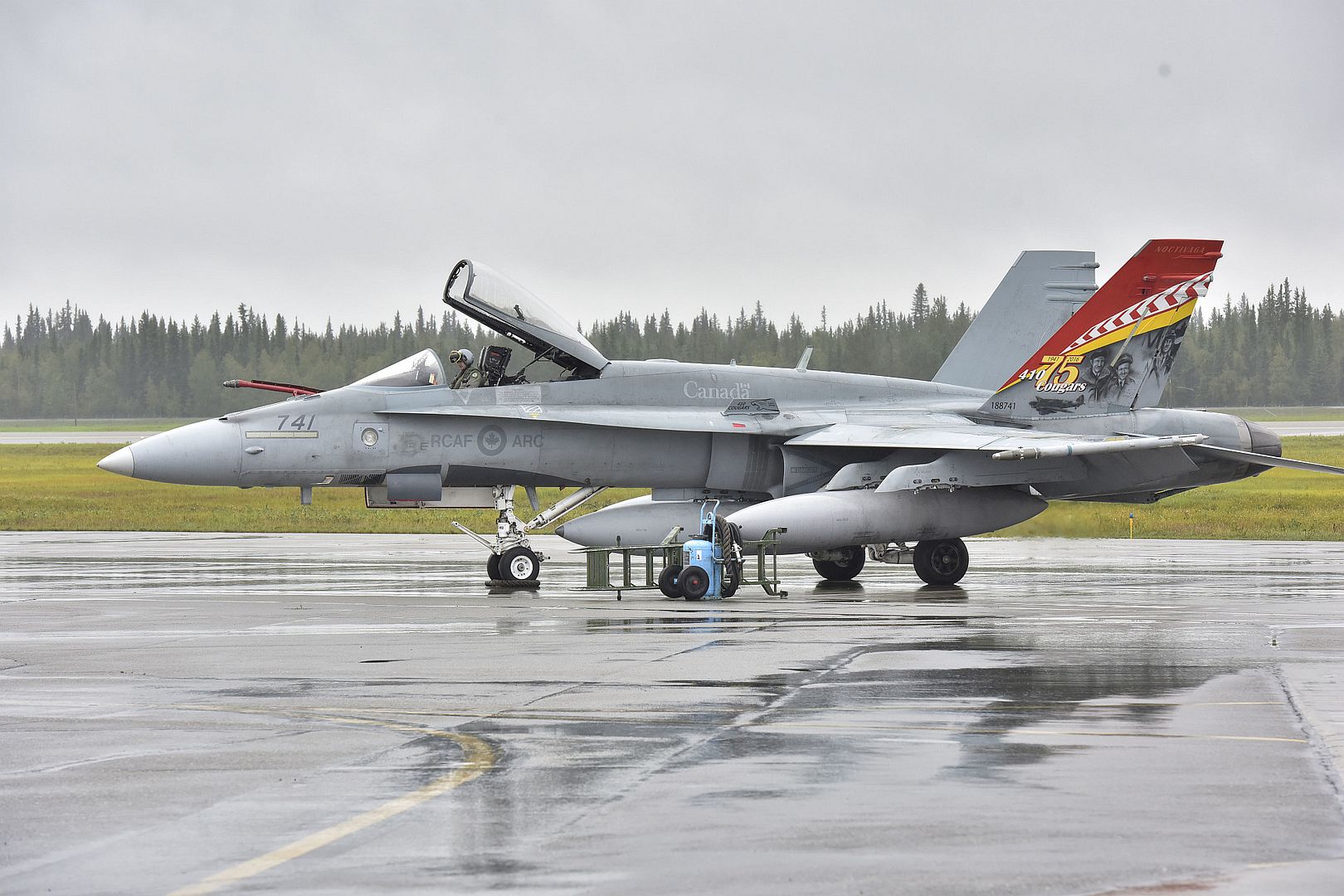
A Royal Canadian Air Force CF-18 Hornet taxis during RED FLAG-Alaska (RF-A) 19-3 at Eielson Air Force Base, Alaska, Aug. 13, 2019. RF-A 19-3 included participants from the Royal Australian Air Force, the Royal Canadian Air Force and the United Kingdom?s Royal Air Force. (U.S. Air Force photo by Senior Airman Eric M. Fisher)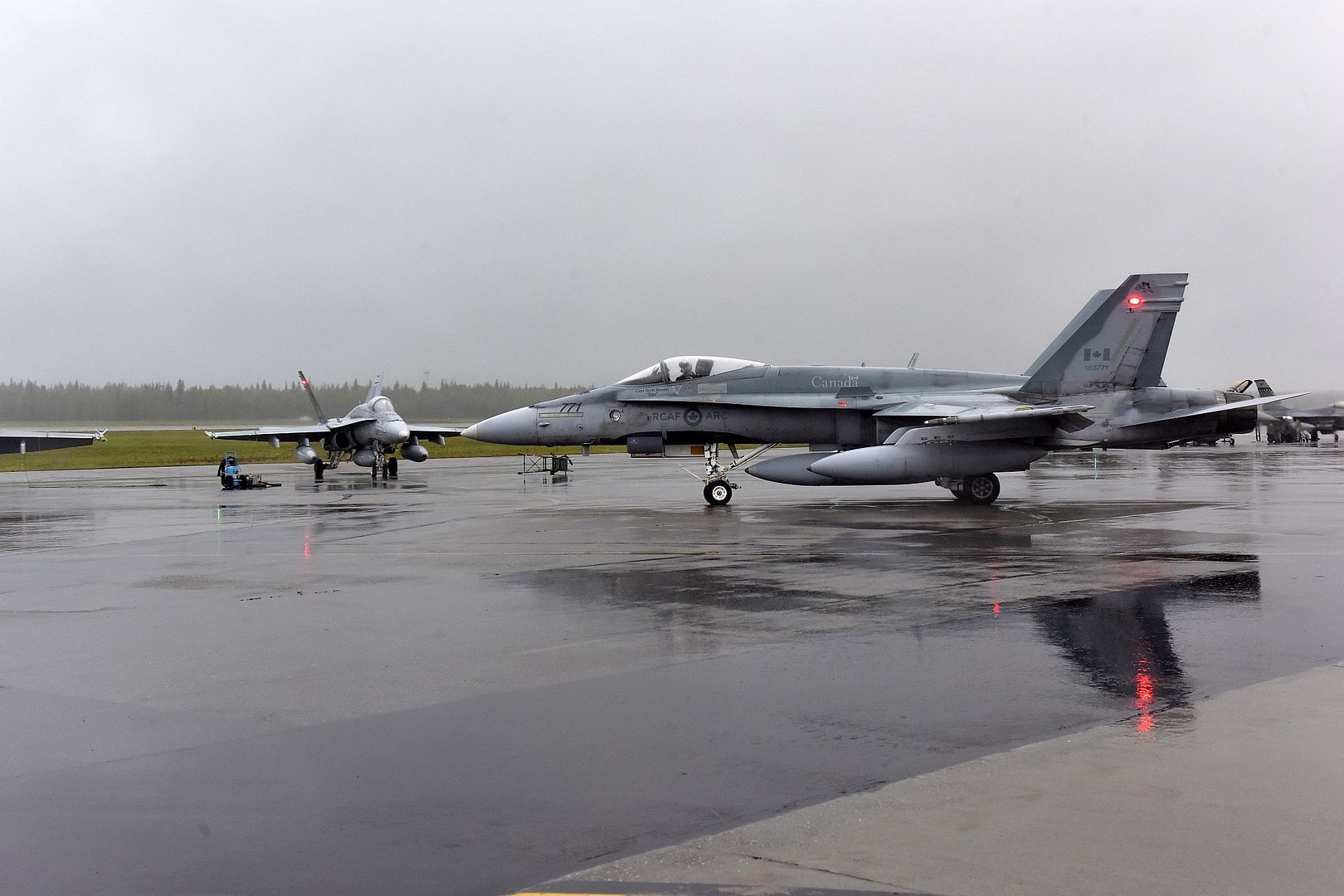
1st Squadron, 17th Cavalry Regiment, 82nd Combat Aviation Brigade receives their initial fielding of the new Echo Model Apache, replacing the previous generation's Delta Apache helicopter. While not the first in the Army, they are the first on Fort Bragg to receive these new aircraft. The AH-64E is designed to increase power margins, reliability and lethality to ensure the Apache is a viable combat fighting force in Large Scale Combat Operations. The AH-64E is considered the bridging strategy to Future Vertical Lift. The unit currently has Apache aviators in training to fly the new aircraft, and those pilots will soon bring this dynamic capability to the Global Response Force. Equipment modernization is a key component to winning tomorrow's fight, and the 82nd Airborne Division is leading the way in this effort. (Photo by Staff Sgt. Sharon Matthias)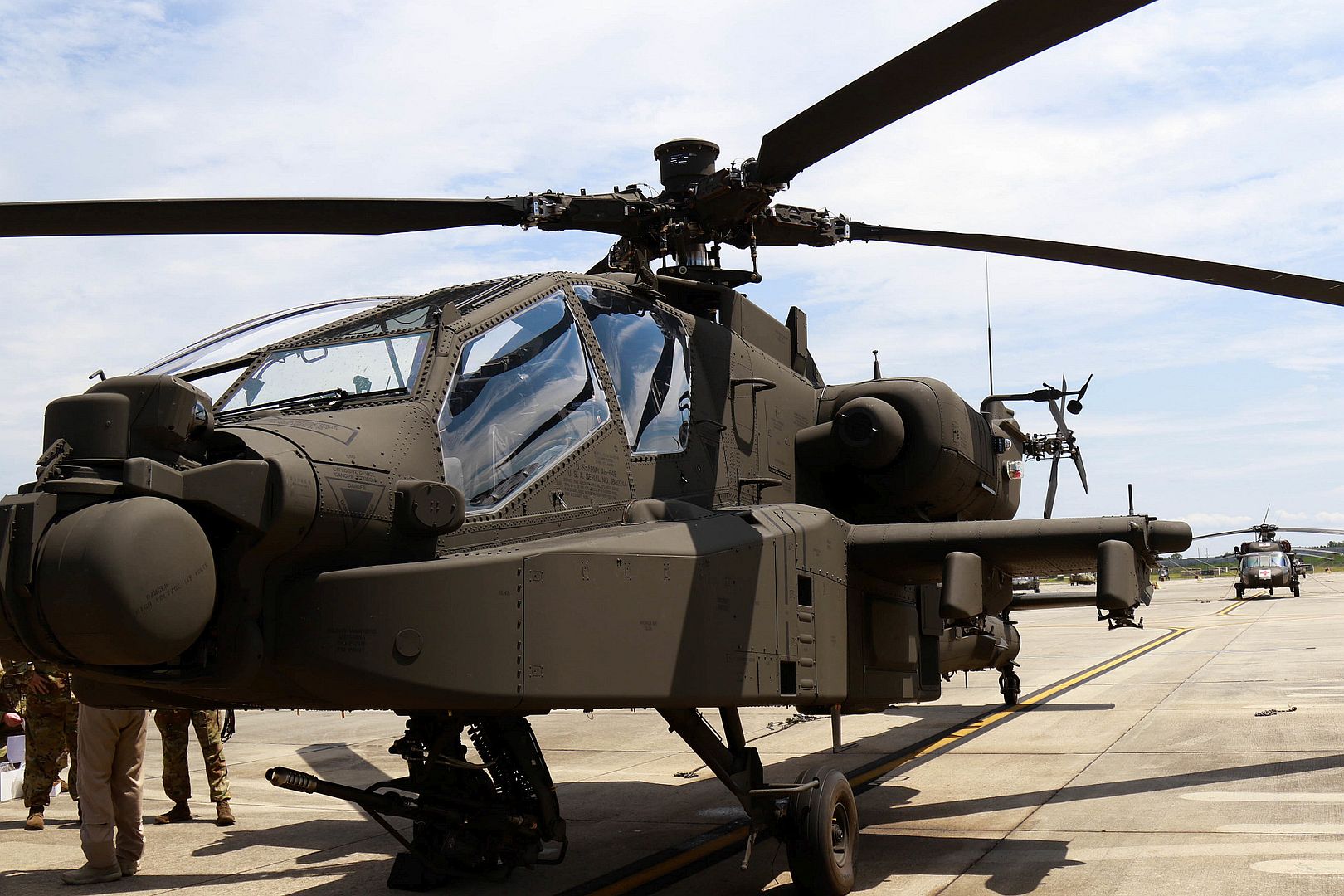
ARABIAN SEA (Aug. 14, 2019) An F/A-18E Super Hornet attached to the "Fist of the Fleet" of Strike Fighter Squadron (VFA) 25 makes an arrested landing on the flight deck of the aircraft carrier USS Abraham Lincoln (CVN 72). Abraham Lincoln Carrier Strike Group is deployed to the U.S. 5th Fleet area of operations in support of naval operations to ensure maritime stability and security in the Central Region, connecting the Mediterranean and the Pacific through the western Indian Ocean and three strategic choke points. With Abraham Lincoln as the flagship, deployed strike group assets include staffs, ships and aircraft of Carrier Strike Group 12 (CSG 12), Destroyer Squadron 2 (DESRON 2), USS Leyte Gulf (CG 55) and Carrier Air Wing 7 (CVW 7). (U.S. Navy photo by Mass Communication Specialist 3rd Class Dan Snow/Released)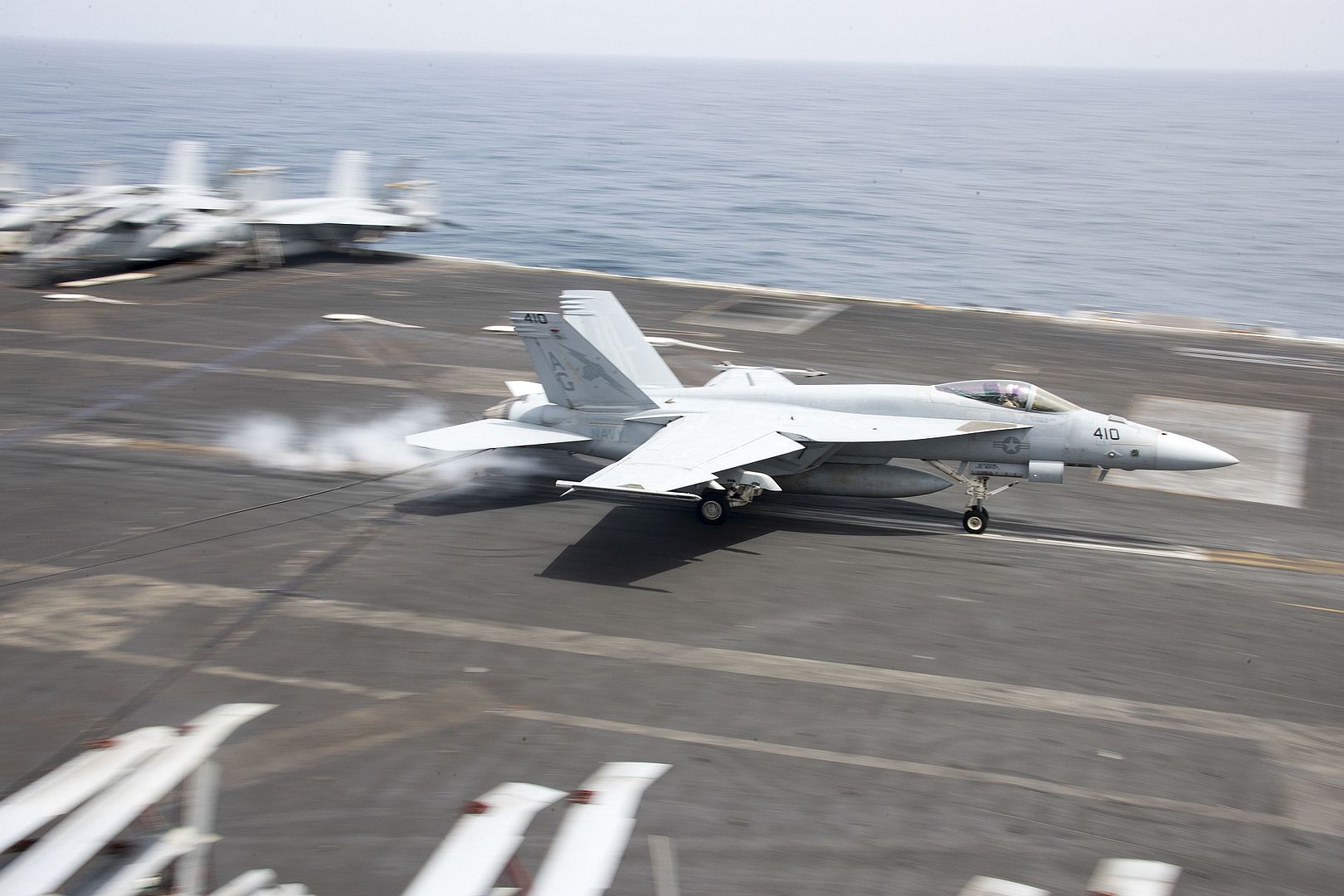
An F-16 Fighting Falcon flies soars through the air during RED FLAG-Alaska at Eielson Air Force Base, Alaska, Aug. 12, 2019. RF-A provides realistic combat training, which is essential to the success of air and space operations. (U.S. Air Force photo by Staff Sgt. Ramon A. Adelan)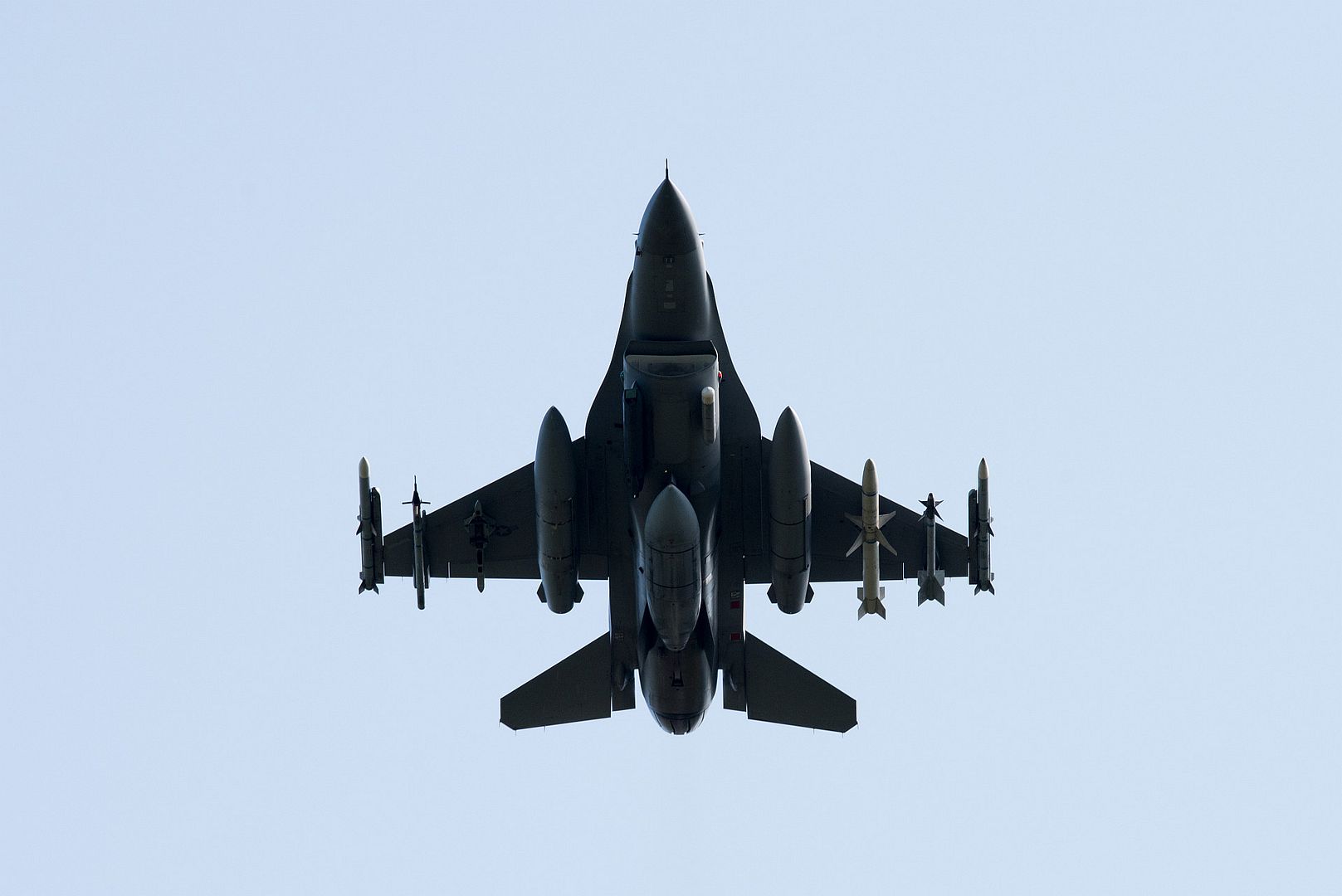
NORTH CHARLESTON, S.C., Aug. 15, 2019 /PRNewswire/ -- Boeing [NYSE: BA] delivered the first of eight 787-10 Dreamliner airplanes to Vietnam Airlines today via lease from Air Lease Corporation [NYSE: AL]. The Vietnamese flag carrier plans to put the 787-10 ? the most fuel-efficient twin-aisle airplane in the industry ? on the busiest routes in its expanding network.
"Welcoming the largest member of the 787 family to our growing fleet ensures we continue to boast one of the youngest and most modern fleets in Asia and also adds a competitive edge to Vietnam Airlines' operations. We appreciate the unbeatable efficiency performance with reduced fuel burn and outstanding passenger comfort and amenities," said Pham Ngoc Minh, Chairman of the Board of Directors of Vietnam Airlines. "On our journey to become a 5-star airline, we are confident that the Boeing 787-10 fleet will further elevate the customer experience on the Hanoi to Ho Chi Minh route as well as many international routes."
The new 787-10 will complement Vietnam Airlines' existing fleet of 787-9 jets. Both feature the Dreamliner's ultra-efficient technology and passenger-pleasing comforts. The 787-10 is longer than the 787-9, providing the space to carry 40 more passengers and more cargo and helping it offer the lowest operating costs per seat of any twin-aisle jet in service today. Vietnam Airlines is outfitting its 787-10 models with 367 seats (24 in business class and 343 in economy class). In addition to its size and fuel efficiency, the 787-10 can cover long distances. With a published range of 6,430 nautical miles (11,910 km), the 787-10 can fly more than 95 percent of the world's twin-aisle routes.
"ALC is extremely pleased to announce this important first 787-10 delivery to Vietnam Airlines with Boeing and be the first lessor to introduce the airline to the -10," said Steven F. Udvar-H?zy, Executive Chairman of Air Lease Corporation. "This first of eight 787-10s from ALC will significantly contribute to Vietnam Airlines' ongoing major widebody fleet upgrade with the latest technology. ALC values our long-time role as an advisor when planning the growth and replacement of Vietnam Airlines' fleet to maintain the airline's leading position in Southeast Asia and worldwide."
With the delivery to Vietnam Airlines, the 787-10 continues to expand its global presence. More than 30 of this Dreamliner model have been delivered to six operators since the airplane entered commercial service last year. Airlines are deploying the 787-10 around the world, especially in Asia as it is home to more than half of all 787-10 destinations.
"Vietnam Airlines has achieved impressive growth in recent years and helped power the rapid rise of commercial aviation in Southeast Asia. We see even greater potential ahead and the 787-10 brings the perfect combination of size and efficiency for Vietnam Airlines to serve high-demand routes, while the longer-range 787-9 delivers the flexibility to connect the world's major cities with popular destinations in Vietnam and surrounding countries," said Ihssane Mounir, senior vice president of Commercial Sales and Marketing of The Boeing Company. "We are excited to partner once again with ALC to bring a state-of-the-art airplane to a valued customer. We are confident the 787-10 will help Vietnam Airlines continue to grow its regional and international network and improve its award-winning service."
To optimize the performance of its 787 fleet, Vietnam Airlines uses Boeing Global Services solutions such as Airplane Health Management (AHM) to capture real-time flight data and enable predictive maintenance. AHM is powered by Boeing AnalytX, a collection of software and consulting services that transform raw data into greater efficiency during every phase of flight.
About Vietnam Airlines:
Vietnam Airlines - a member of SkyTeam Alliance - is the flag carrier of Vietnam and the major carrier in the South East Asia, operating 95 routes to 22 domestic and 29 international destinations with an average of 400 flights per day. Skytrax - the world's leading airline and airport rating organization - has ranked Vietnam Airlines as a 4-Star Airline for four consecutive years. Positioning itself as a modern carrier with an internationally recognisable brand characterised by Vietnamese traditional culture, Vietnam Airlines aims to achieve 5-star status and become a major airline in Asia.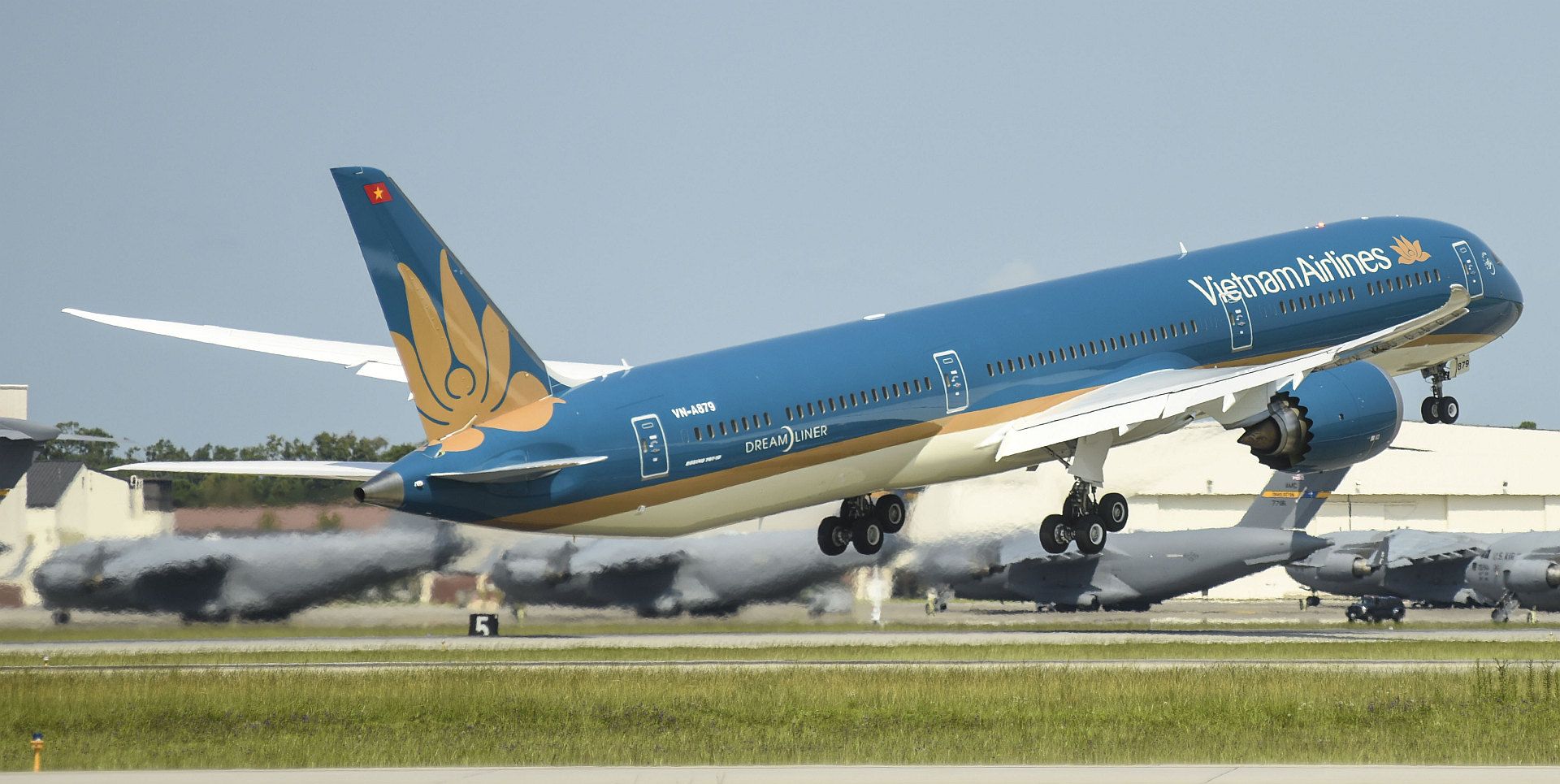
FORT WORTH, Texas (August 15, 2019) ? Bell Textron Inc., a Textron Inc. (NYSE:TXT) company, announced the Federal Aviation Administration (FAA) has issued an Instrument Flight Rules (IFR) Supplemental Type Certificate (STC) for the Bell 407GXi. The certification is a requirement for the Navy Advanced Helicopter Training System competition, enabling the Bell 407GXi to replace the Bell TH-57 Sea Ranger as the US Navy's training helicopter.
Bell's replacement bid offers a unique combination of capability, ease of transition, and low sustainment costs, giving the best value to the Navy. Should the Bell 407GXi be selected for the US Navy Advanced Helicopter Trainer program, the company plans to conduct final assembly of the aircraft in Ozark, Alabama.
?The team did a great job ensuring the Bell 407GXi achieved the FAA?s IFR certification necessary to meet all of the Navy?s requirements,? said Mitch Snyder, president and CEO. ?Bell is an instrumental part of the Navy?s training program and has been for more than 50 years, and we look forward to continuing the tradition for the next generation of Naval Aviators.?
A Bell to Bell transition offers low-risk to the Navy by streamlining instructor pilot and maintainer transition training as well as using common support equipment and infrastructure. The 407 airframe has already proven capabilities as the platform for the MQ-8C Fire Scout for the US Navy. Bell's industry-leading customer service and support has established capability with cost-efficient and effective helicopter training solutions.
Bell proves its mature production and sustainment support capability every day by supporting more than 1,600 Bell 407s globally. These aircraft have nearly 6 million flight hours across the fleet and are actively performing flight training as well as military and para-public missions helicopter mission-set. The 407GXi's Garmin G1000H? NXi Flight Deck enhances situational awareness and reduces pilot workload by delivering easy-to-read information at a glance. The Bell 407GXi's new IFR capability will allow all-weather operations while continuing to provide multimission capability safely, reliably, and effectively. The Bell 407GXi offers the lowest direct operating costs of any IFR-capable helicopter produced today. Combined with its proven performance, reliability, and ease of transition, the Bell 407GXi is the best value aircraft for US Navy helicopter training.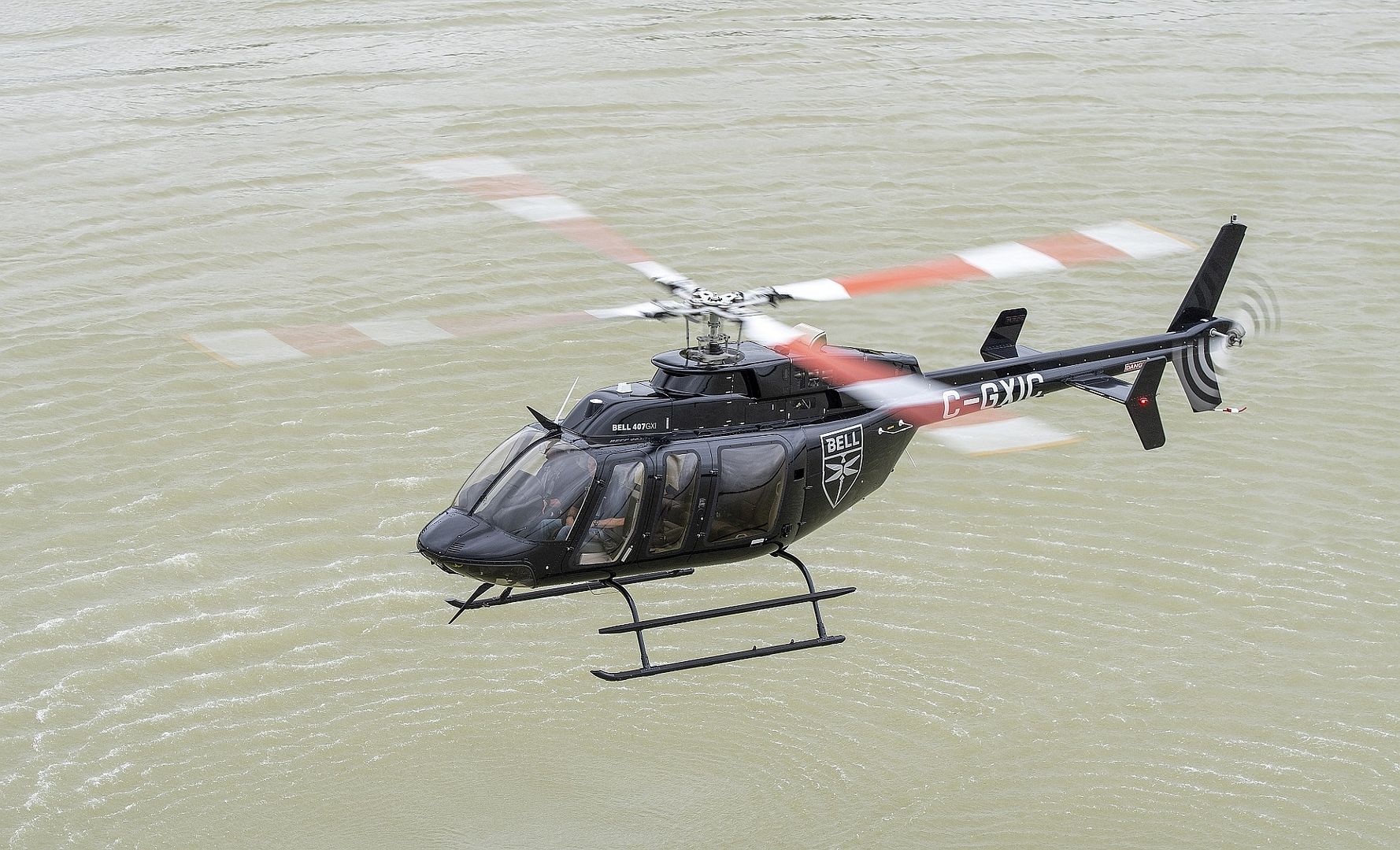
-
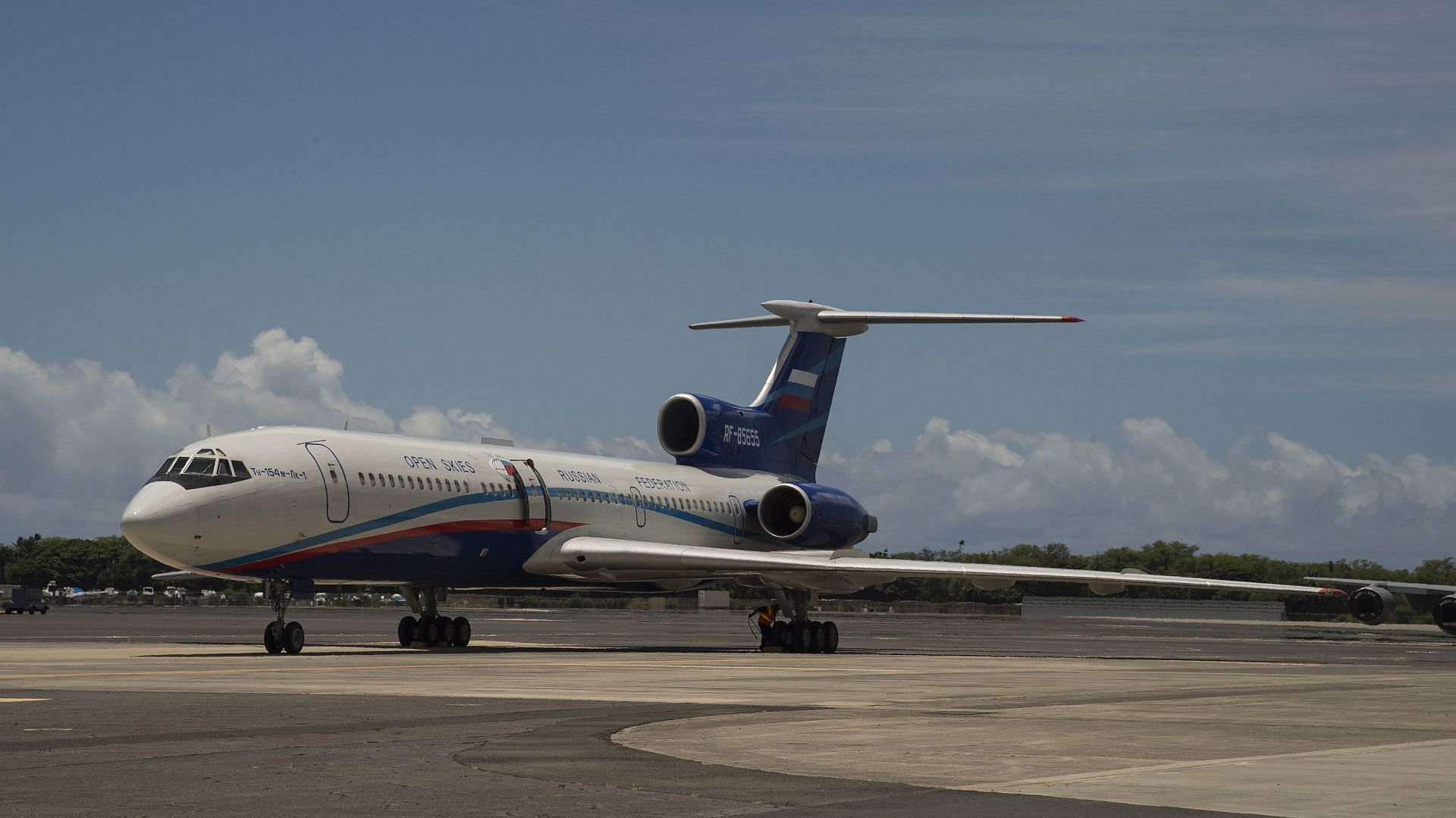
The Russian air force Open Skies Tupolev Tu-154M RF-85655, lands at Joint Base Pearl Harbor-Hickam, Hawaii, Aug. 14, 2019. The Treaty on Open Skies allows states to conduct of short-notice, unarmed, observation flights over the territories of other parties. The Treaty on Open Skies entered into force on January 1, 2002, and establishes a regime of unarmed aerial observation flights over the entire territory of its participants. The Treaty is designed to enhance mutual understanding and confidence by giving all participants, regardless of size, a direct role in gathering information about military forces and activities of concern to them. Open Skies is one of the most wide-ranging international efforts to date to promote openness and transparency of military forces and activities. (U.S. Air Force photo by Tech. Sgt. Heather Redman)
U.S. Air Force Airmen assigned to the 33rd Fighter Wing fuel up an F-35A Lightning II, during the Northern Lightning exercise at Volk Field, Wisconsin, Aug. 14, 2019. Northern Lightning brings together 20 different units for joint total force training of the next generation of air superiority. (U.S. Air Force photo by Airman 1st Class Heather Leveille)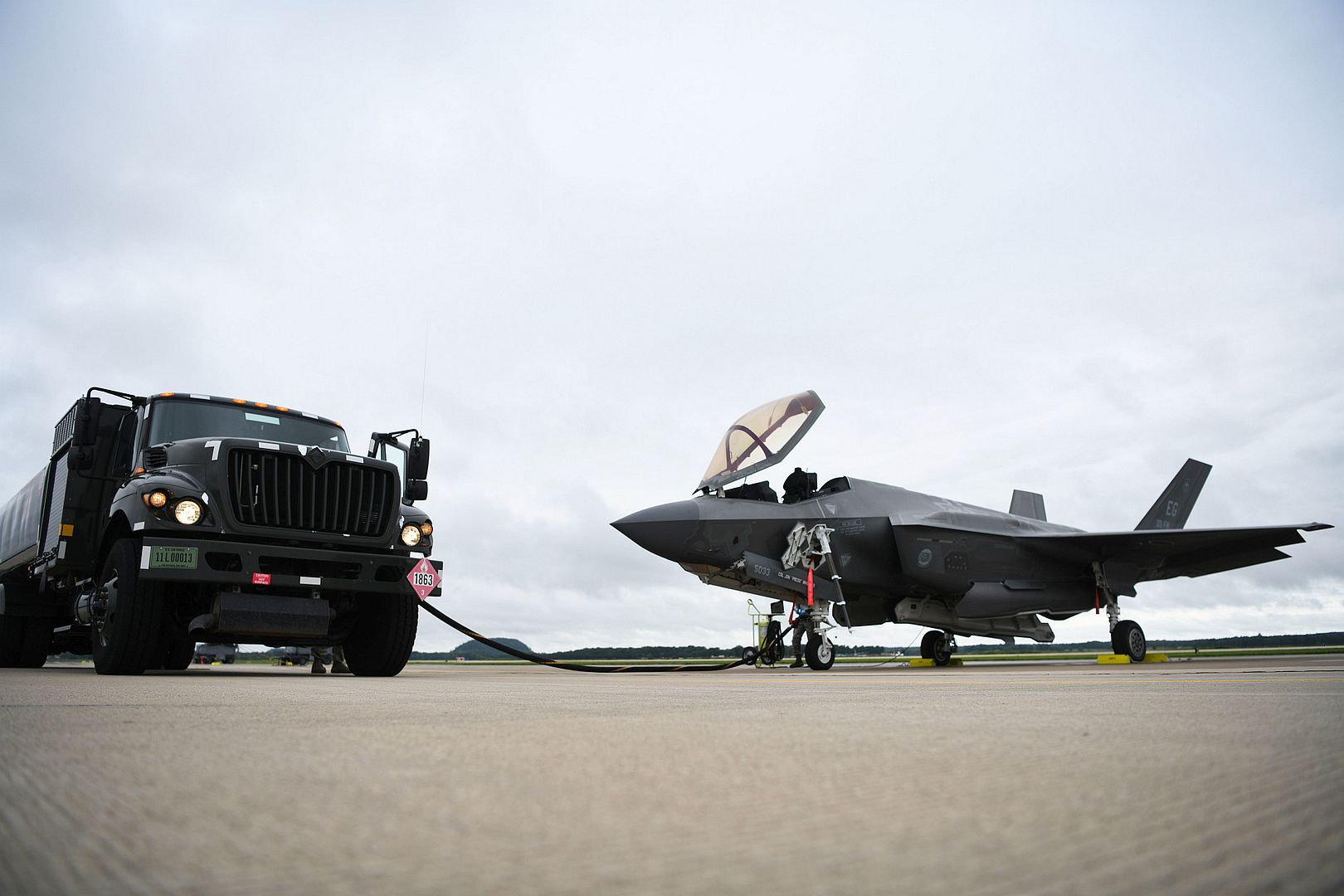
U.S. Air Force Airmen assigned to the 33rd Fighter Wing tow an F-35A Lightning II, during the Northern Lightning exercise at Volk Field, Wisconsin, Aug. 14, 2019. Northern Lightning brings together Air Force, Air National Guard, Navy and Marine Corps units to train in an environment that replicates today?s battlespace with current and future weapons systems. (U.S. Air Force photo by Airman 1st Class Heather Leveille)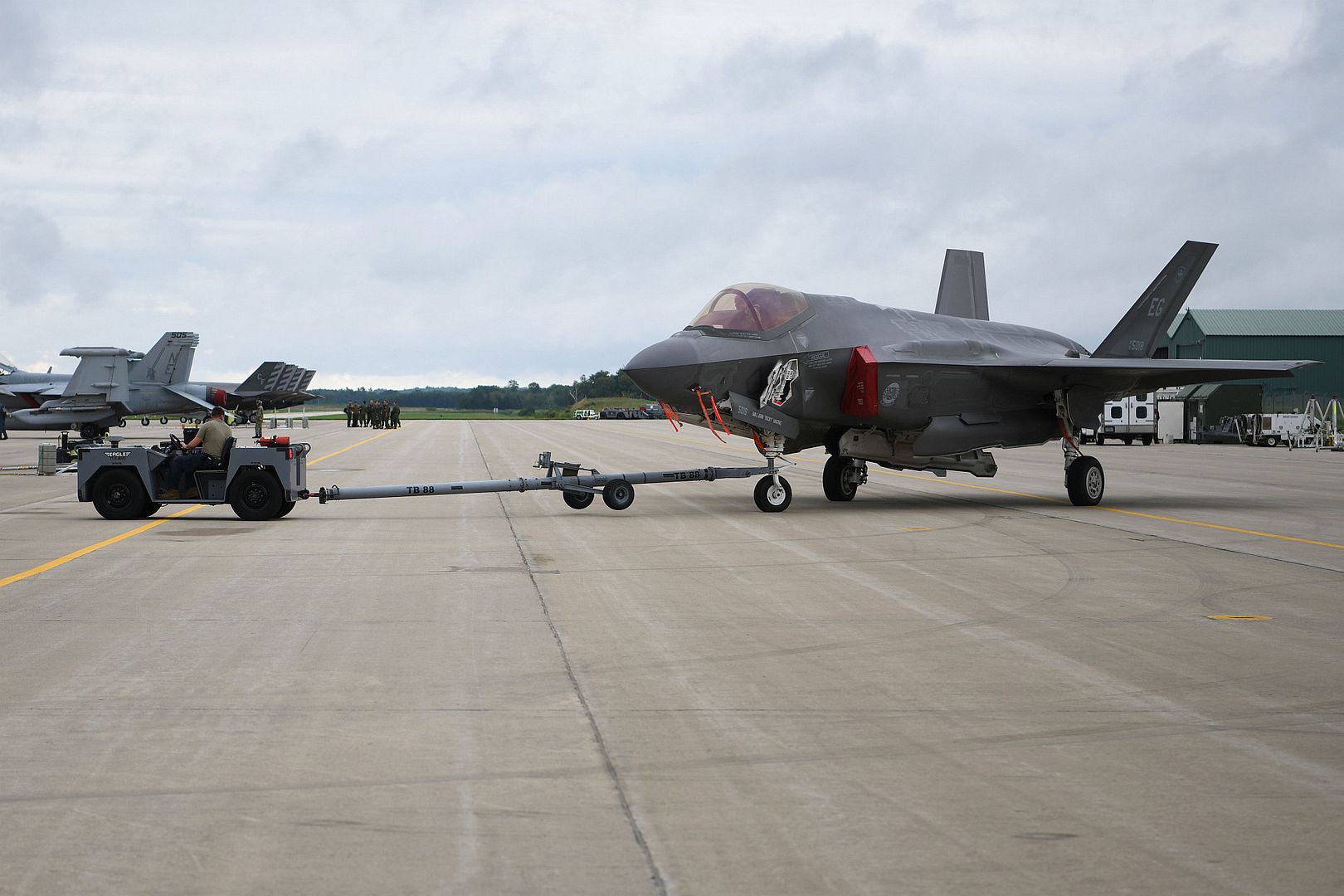
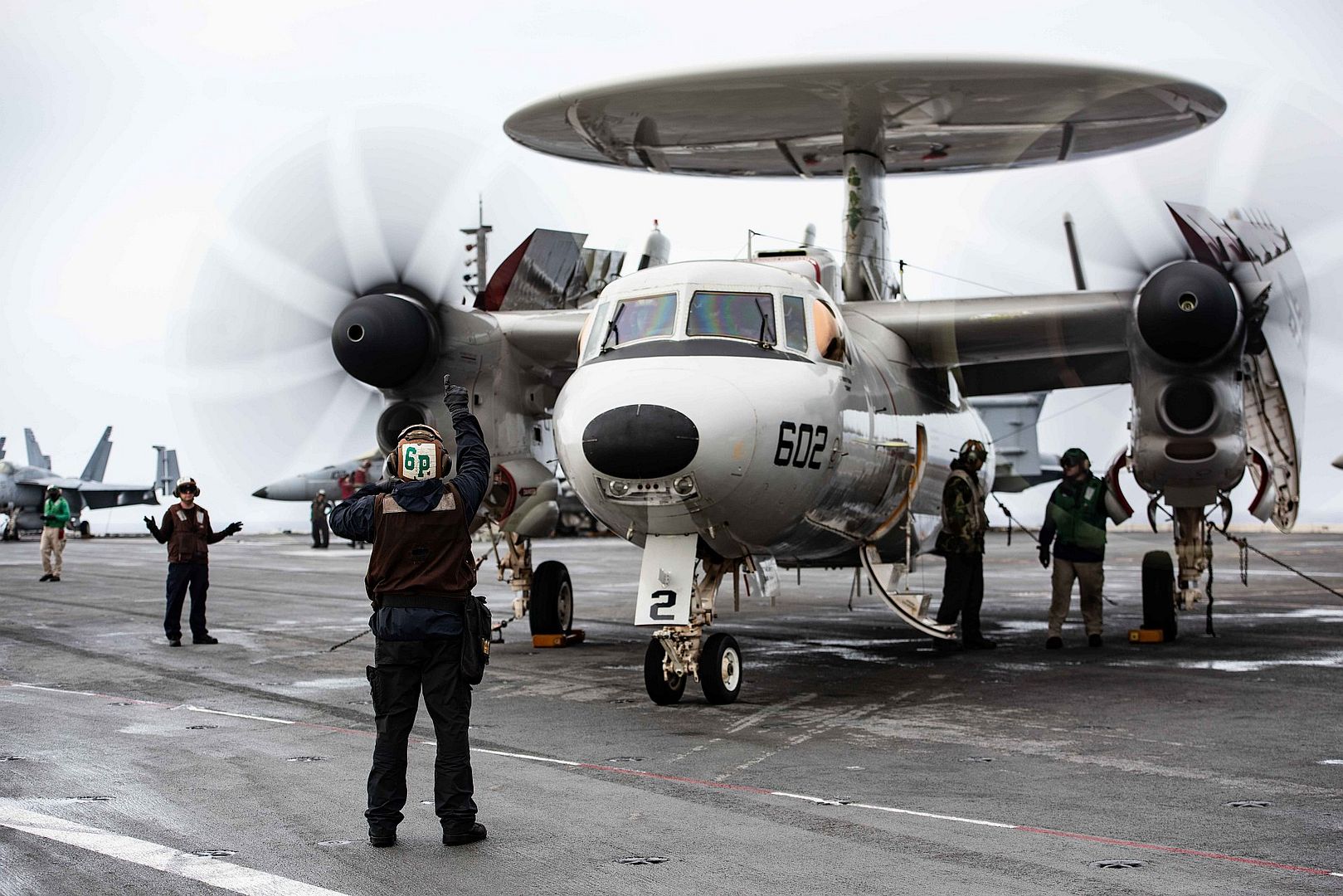
PHILIPPINE SEA (August 16, 2019) Sailors perform pre-flight checks on an E-2D Hawkeye from Airborne Early Warning Squadron (VAW) 125 on the flight deck aboard the Navy?s forward-deployed aircraft carrier USS Ronald Reagan (CVN 76) during flight operations. Ronald Reagan, the flagship of Carrier Strike Group 5, provides a combat-ready force that protects and defends the collective maritime interests of its allies and partners in the Indo-Pacific region. (U.S. Navy photo's by Mass Communication Specialist 2nd Class Janweb B. Lagazo)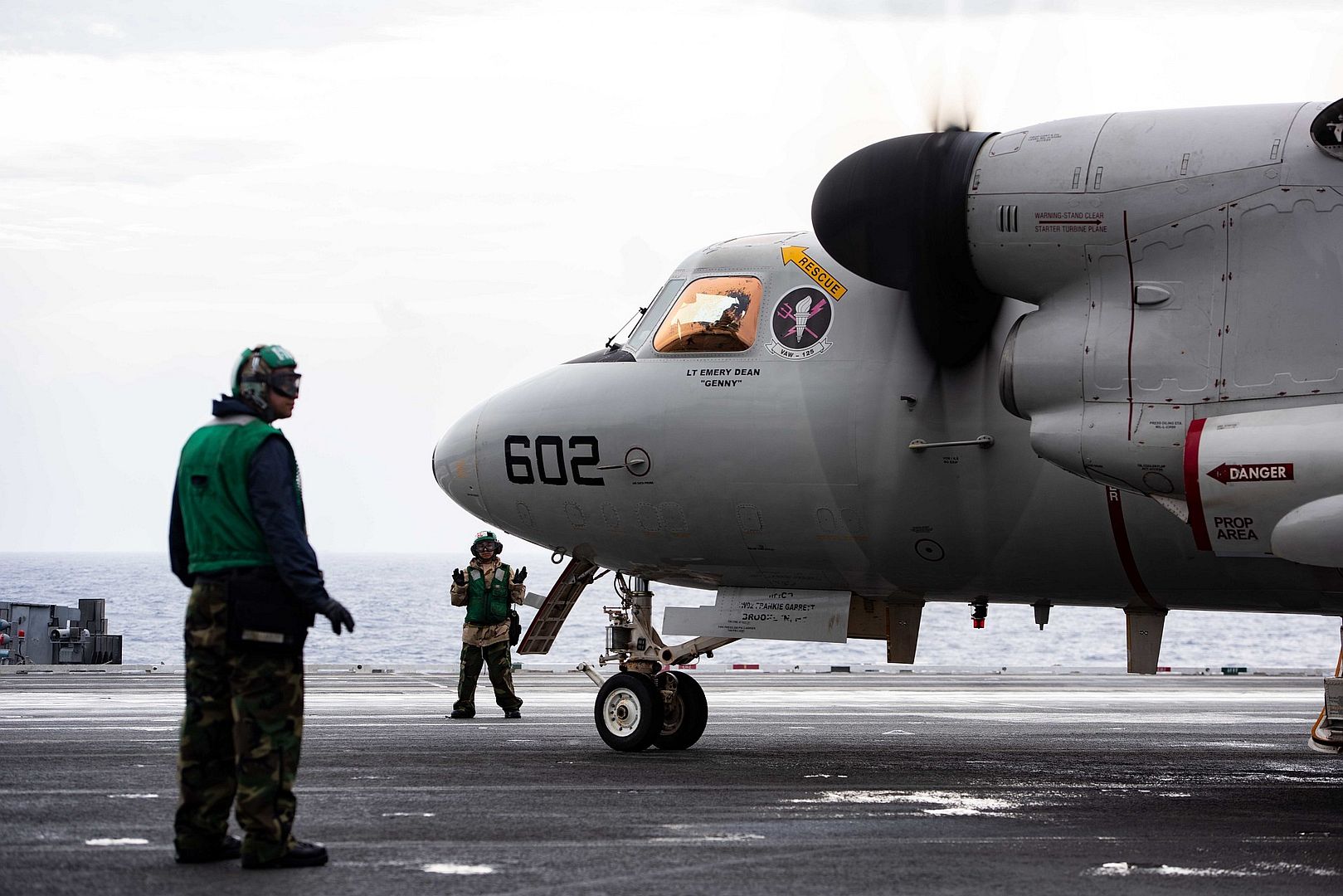
A Royal Canadian Air Force CF-18 Hornet is prepared for flight during RED FLAG-Alaska (RF-A) 19-3 at Eielson Air Force Base, Alaska, Aug. 13, 2019. RF-A 19-3 included participants from the Royal Australian Air Force, the Royal Canadian Air Force and the United Kingdom?s Royal Air Force. (U.S. Air Force photo by Senior Airman Eric M. Fisher)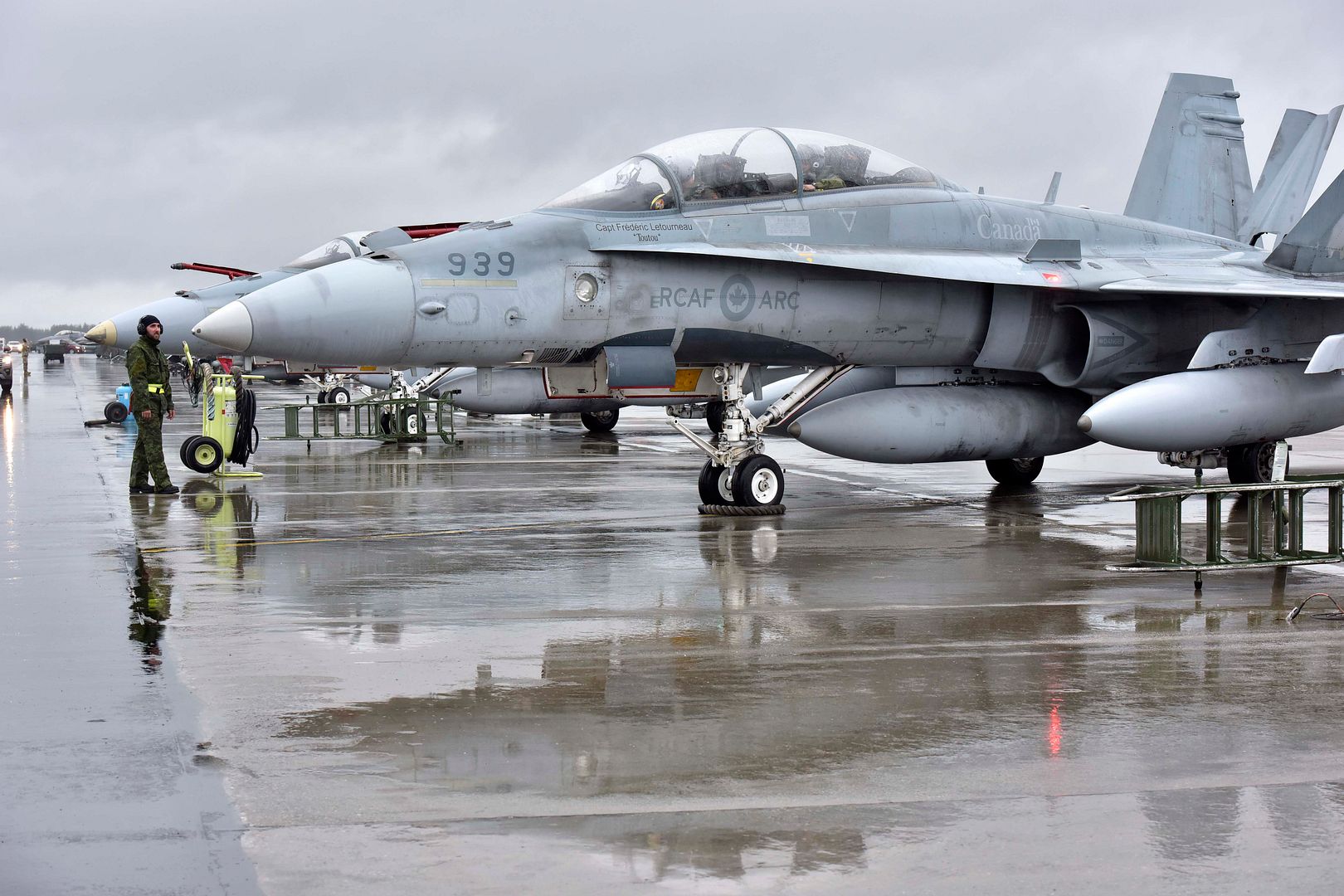
S?o Jos? dos Campos-SP, August 16 2019 ? Embraer unveiled today, on the eve of its 50th anniversary, images of the demonstrator aircraft with 100% electric propulsion technology, which is currently under development. The prototype has a special paint scheme and is ready to receive systems and components.
The aircraft's electric motor and controller are being manufactured by WEG at the company's headquarters in Jaragu? do Sul, Santa Catarina, Brazil, as part of the scientific and technological cooperation agreement for jointly development of electrification technologies.
Advances on the project include the partnership with Parker Aerospace that will be responsible to supply the cooling system for the demonstrator aircraft.
On the forthcoming months, the companies' technical teams will continue to test the systems in the labs preparing the integration in the demonstrator aircraft for testing under real operating conditions. The first flight of the prototype is scheduled for 2020.
About the technological cooperation
The proposed scientific development program of aeronautical electrification, formalized through the cooperation between Embraer and WEG announced in May 2019, constitutes an effective and efficient instrument for experimentation and maturation of the technologies before they are applied in future products.
The partnership, in the context of pre-competitive research and development, seeks to accelerate the knowledge of the necessary technologies to increase the energy efficiency of an aircraft, considering the use and integration of electric motors into innovative propulsion systems. A small single-engine aircraft, based on the EMB-203 Ipanema, will be used as test bed, carrying out the initial evaluation of the electrification technology.
The electrification process is part of a series of efforts carried out by Embraer and the aeronautical industry aimed at ensuring the commitment with the environmental sustainability, as already done with biofuels to reduce carbon emissions.
By establishing strategic partnerships through more agile cooperation mechanisms, Embraer is stimulating knowledge networks to allow a significant increase in Brazil?s competitiveness and the construction of a sustainable future.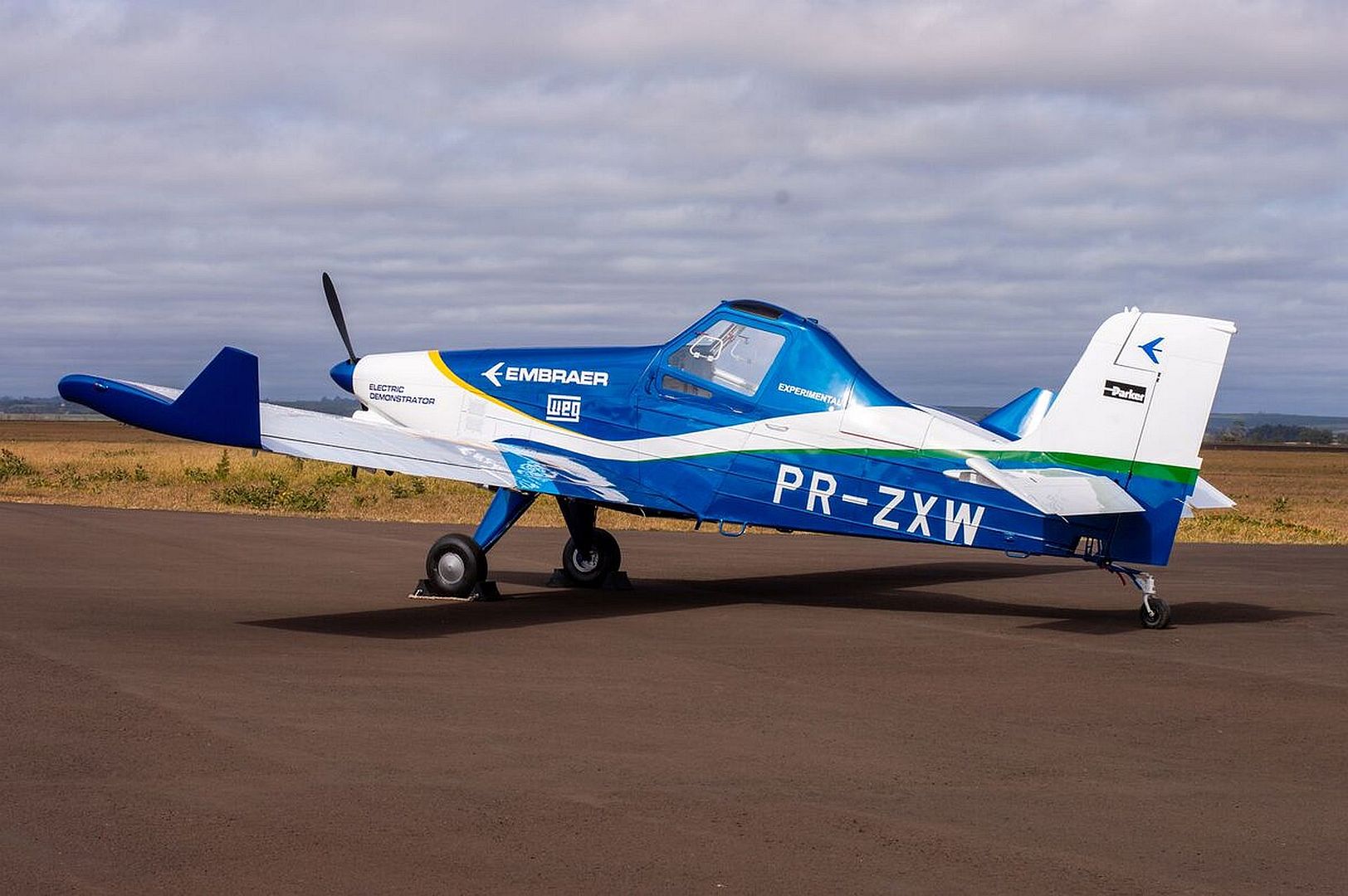
-
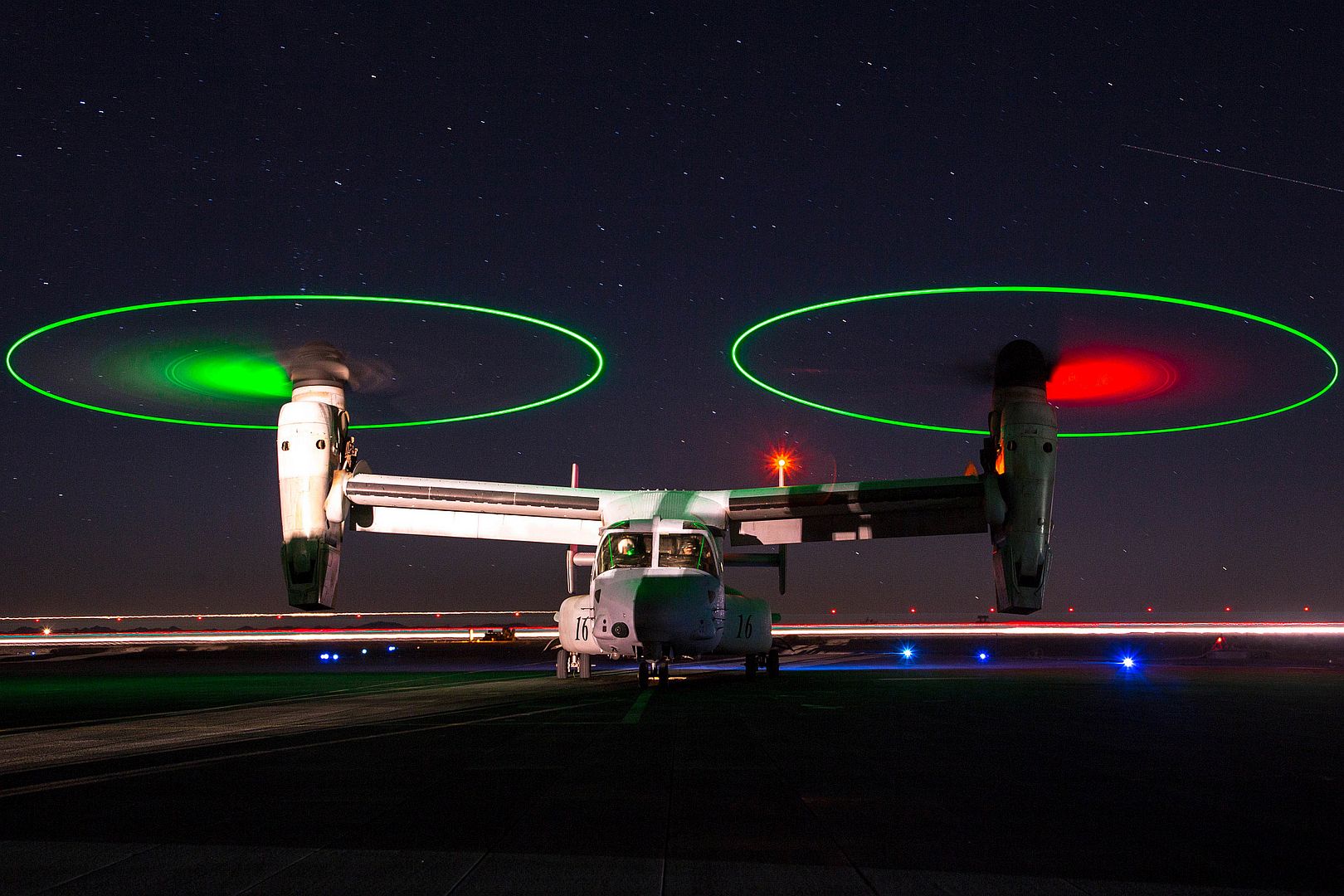
A U.S. Marine Corps MV-22B Osprey with Marine Medium Tiltrotor Squadron 263, prepares for a night flight during Integrated Training Exercise (ITX) 5-19 at Marine Corps Air Ground Combat Center, Twentynine Palms, California, August 16, 2019. ITX 5-19 is a large-scale, combined-arms training exercise that produces combat-ready forces capable of operating as an integrated Marine Air-Ground Task Force. (U.S. Marine Corps photo by 1stLt. Alessandro Rossi)
CHICAGO (August 16, 2019) The U.S. Navy Flight Demonstration Squadron, the Blue Angels, lead solo pilot, Lt. Cmdr. Brandon Hempler performs the fortus during the 2019 Chicago Air and Water Show. The Blue Angels are scheduled to conduct 61 flight demonstrations at 32 locations across the country to showcase the pride and professionalism of the U.S. Navy and Marine Corps to the American public in 2019. (U.S. Navy photo by Mass Communication Specialist 1st Class Ian Cotter/Released)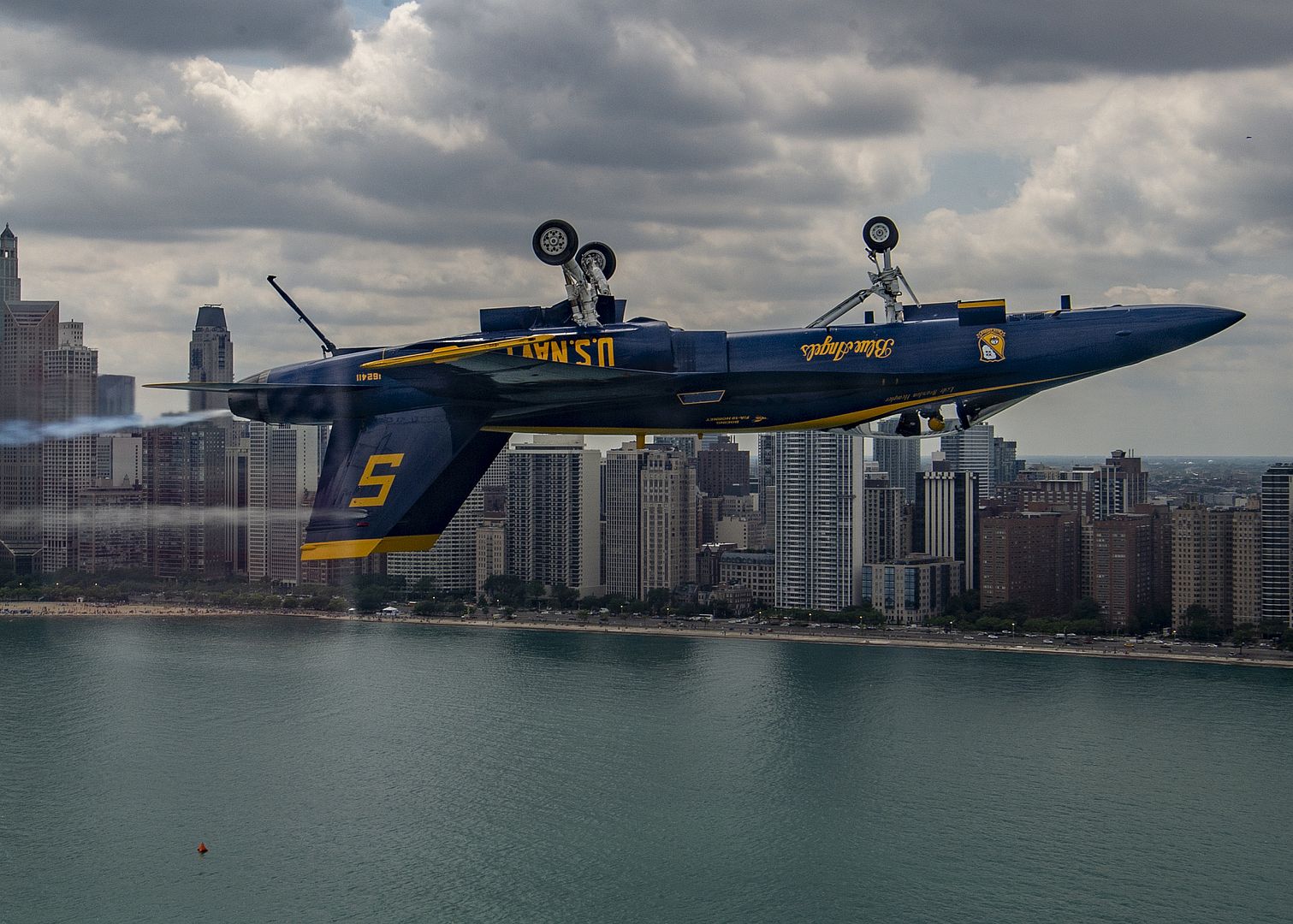
CHICAGO (August 16, 2019) The U.S. Navy Flight Demonstration Squadron, the Blue Angels, diamond pilots perform the echelon parade during the 2019 Chicago Air and Water Show. The Blue Angels are scheduled to conduct 61 flight demonstrations at 32 locations across the country to showcase the pride and professionalism of the U.S. Navy and Marine Corps to the American public in 2019. (U.S. Navy photo by Mass Communication Specialist 1st Class Ian Cotter/Released)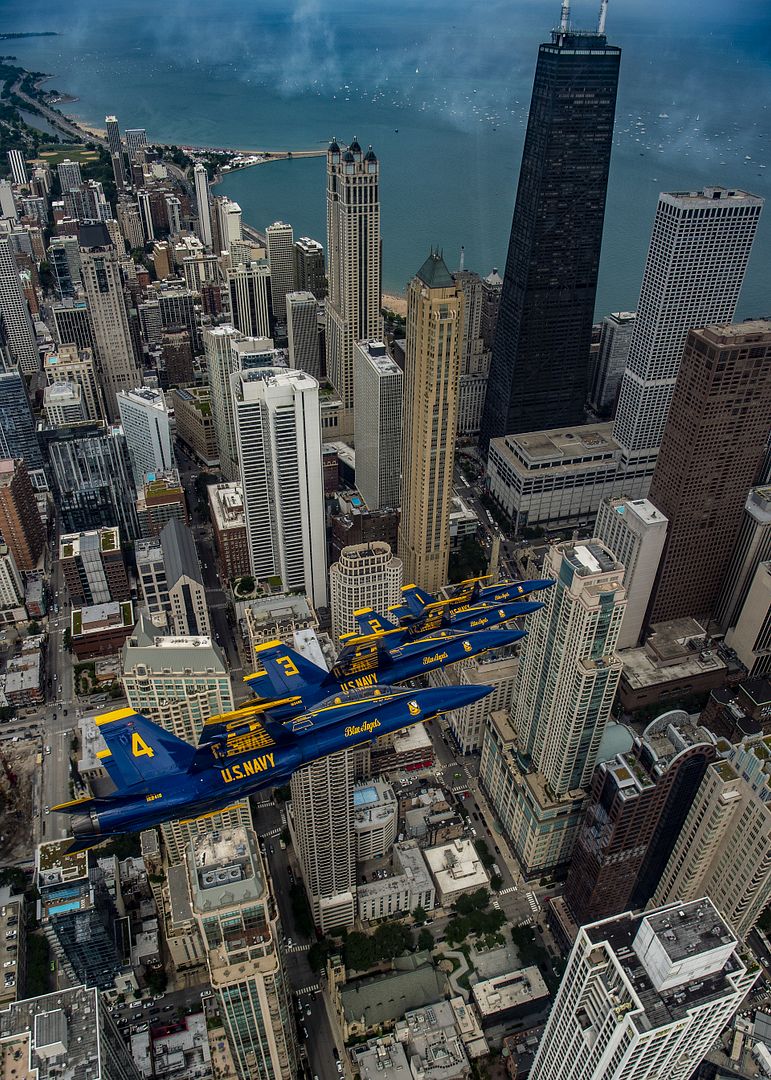
A-10 Thunderbolt IIs, from the 124th Fighter Wing, Boise, Idaho, train at the Idaho Army National Guard?s Orchard Combat Training Center, South of Boise, Aug. 19, 2019. The A-10s are from the wing?s 190th Fighter Squadron. (U.S. Air National Guard photo by Master Sgt. Joshua C. Allmaras)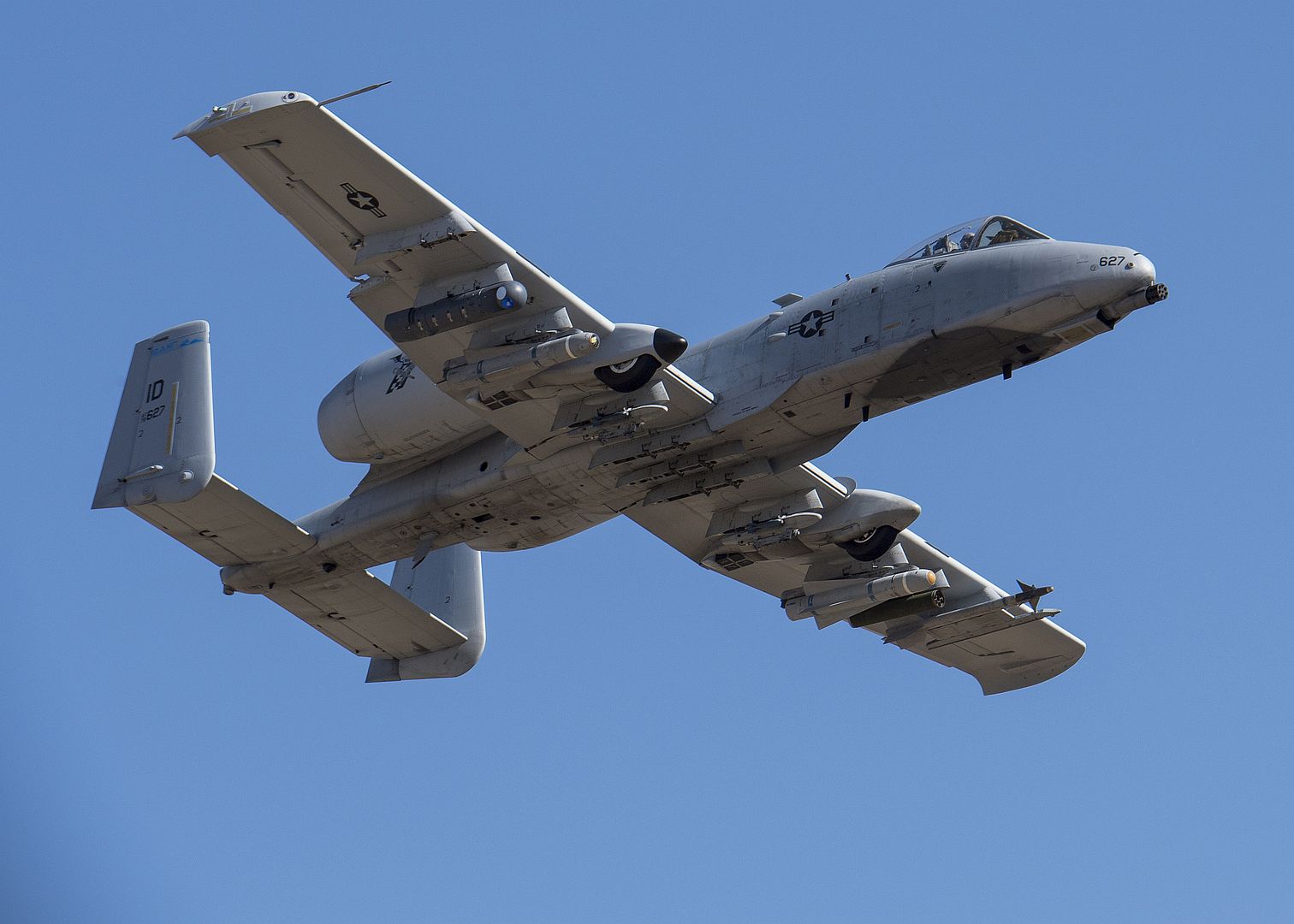
ARABIAN SEA (Aug. 17, 2019) An F/A-18F Super Hornet attached to the Jolly Rogers of Strike Fighter Squadron (VFA) 103 approaches the flight deck of the aircraft carrier USS Abraham Lincoln (CVN 72) before making an arrested landing. Abraham Lincoln Carrier Strike Group is deployed to the U.S. 5th Fleet area of operations in support of naval operations to ensure maritime stability and security in the Central Region, connecting the Mediterranean and the Pacific through the western Indian Ocean and three strategic choke points. With Abraham Lincoln as the flagship, deployed strike group assets include staffs, ships and aircraft of Carrier Strike Group (CSG) 12, Destroyer Squadron (DESRON) 2, USS Leyte Gulf (CG 55) and Carrier Air Wing (CVW) 7 . (U.S. Navy photo by Mass Communication Specialist 1st Class Brian M. Wilbur/Released)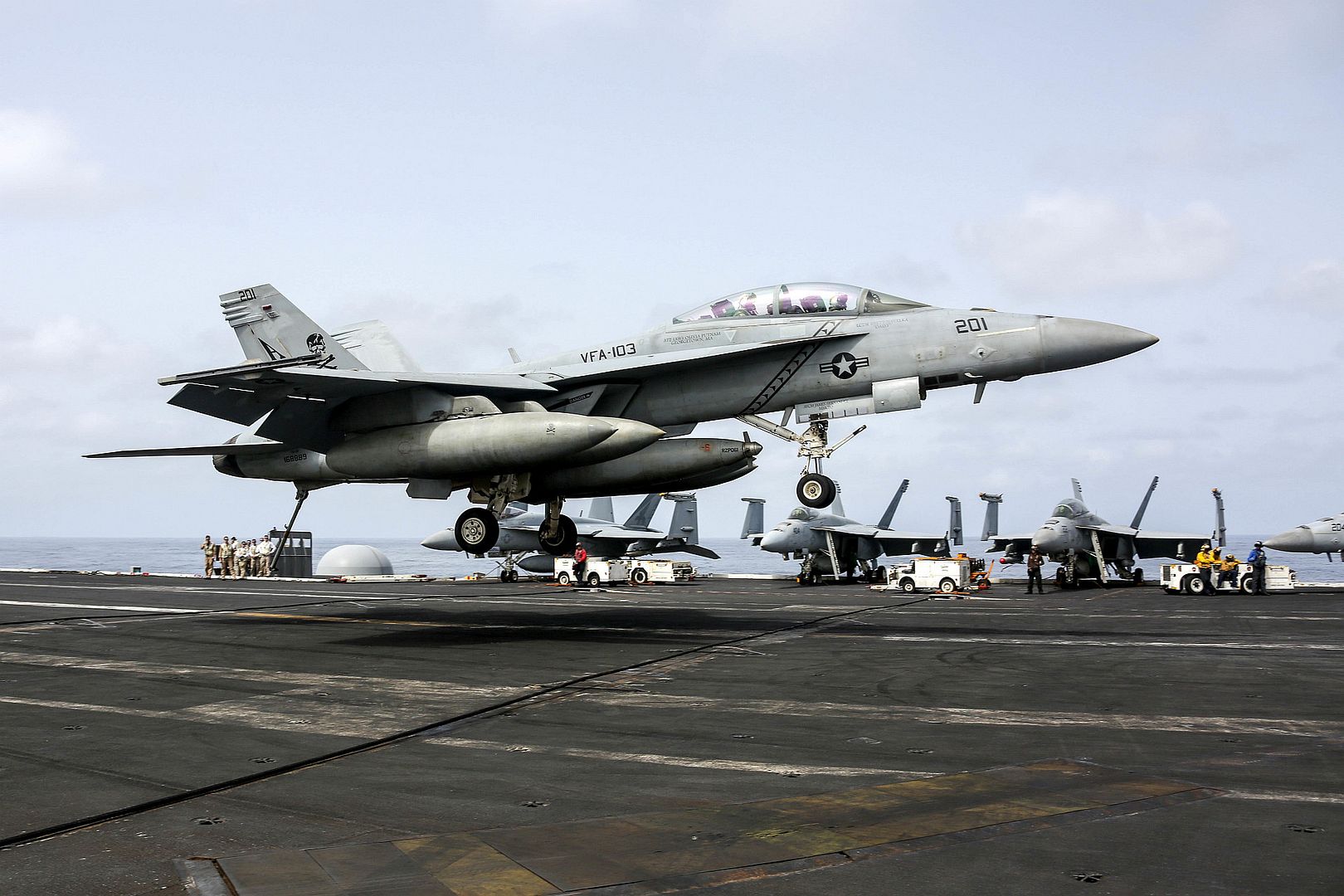
-
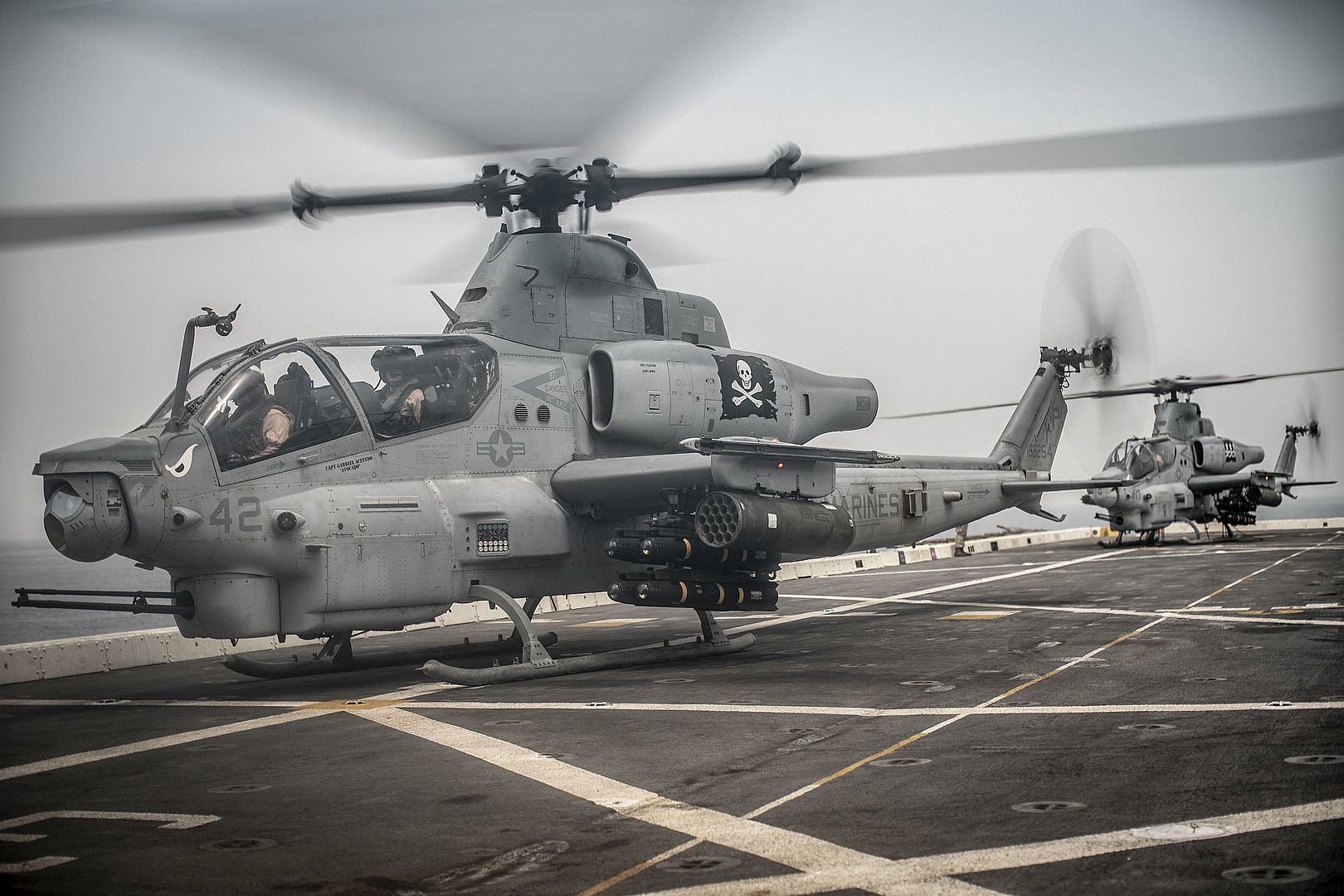
BAB AL-MANDEB STRAIT (Aug. 18, 2019) AH-1Z Vipers attached to Marine Medium Tiltrotor Squadron (VMM) 163 (Reinforced), 11th Marine Expeditionary Unit (MEU), prepare to take off from the amphibious transport dock ship USS John P. Murtha (LPD 26), during a Bab al-Mandeb Strait transit. The Boxer Amphibious Ready Group and 11th MEU are deployed to the U.S. 5th Fleet area of operations in support of naval operations to ensure maritime stability and security in the Central Region, connecting the Mediterranean and the Pacific through the Western Indian Ocean and three strategic choke points. (U.S. Marine Corps photo by Cpl. Adam Dublinske/Released)
A Royal Canadian Air Force CF-18 Hornet receives fuel from a CC-150 Polaris refueling tanker as RCAF Airmen assigned to the 437th Transport Squadron based out of Canadian Forces Base Trenton, Canada, perform refueling operations in training airspace over Alaska during the Red Flag-Alaska 19-3 exercise, Aug. 15, 2019. Red Flag-Alaska, a series of Pacific Air Forces commander-directed field training exercises for U.S. forces, provides joint offensive counter-air, interdiction, close air support, and large force employment training in a simulated combat environment. (U.S. Air Force photo/Justin Connaher)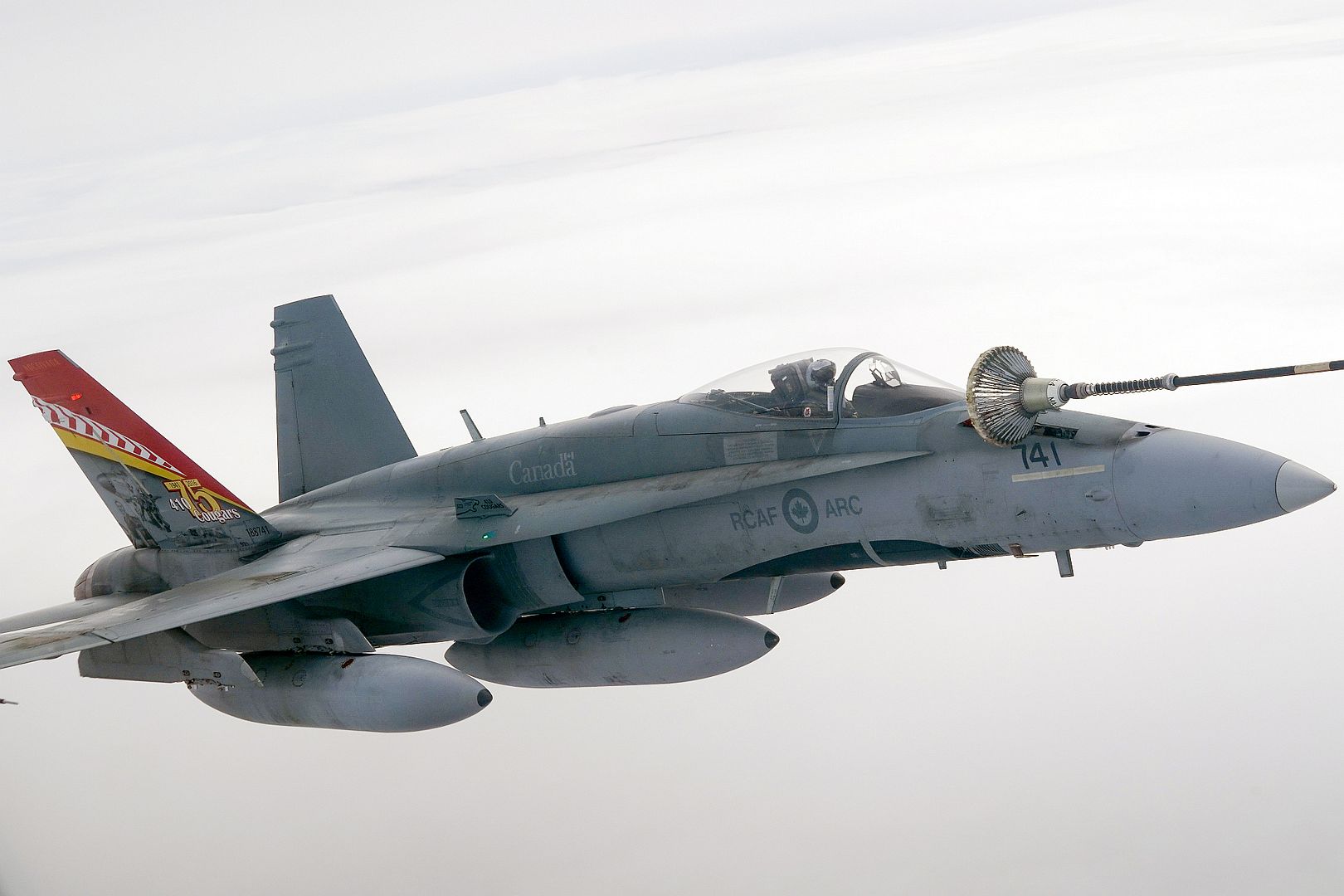
A Royal Canadian Air Force CF-18 Hornet makes initial contact with a CC-150 Polaris refueling tanker nozzle as RCAF Airmen assigned to the 437th Transport Squadron based out of Canadian Forces Base Trenton, Canada, perform refueling operations in training airspace over Alaska during the Red Flag-Alaska 19-3 exercise, Aug. 15, 2019. Red Flag-Alaska, a series of Pacific Air Forces commander-directed field training exercises for U.S. forces, provides joint offensive counter-air, interdiction, close air support, and large force employment training in a simulated combat environment. (U.S. Air Force photo/Justin Connaher)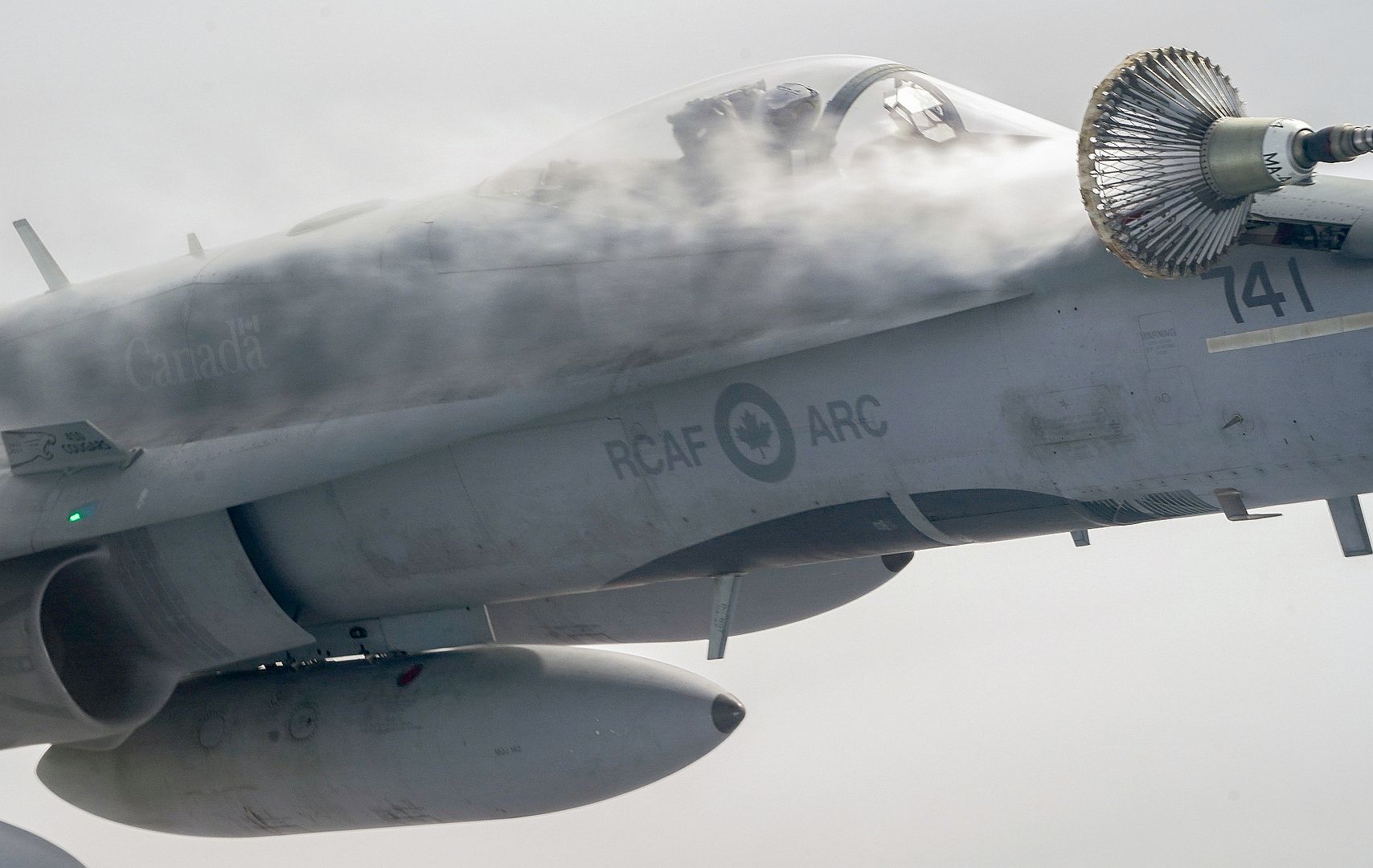
A Royal Canadian Air Force CF-18 Hornet pulls up to a CC-150 Polaris refueling tanker as RCAF Airmen assigned to the 437th Transport Squadron based out of Canadian Forces Base Trenton, Canada, perform refueling operations in training airspace over Alaska during the Red Flag-Alaska 19-3 exercise, Aug. 15, 2019. Red Flag-Alaska, a series of Pacific Air Forces commander-directed field training exercises for U.S. forces, provides joint offensive counter-air, interdiction, close air support, and large force employment training in a simulated combat environment. (U.S. Air Force photo/Justin Connaher)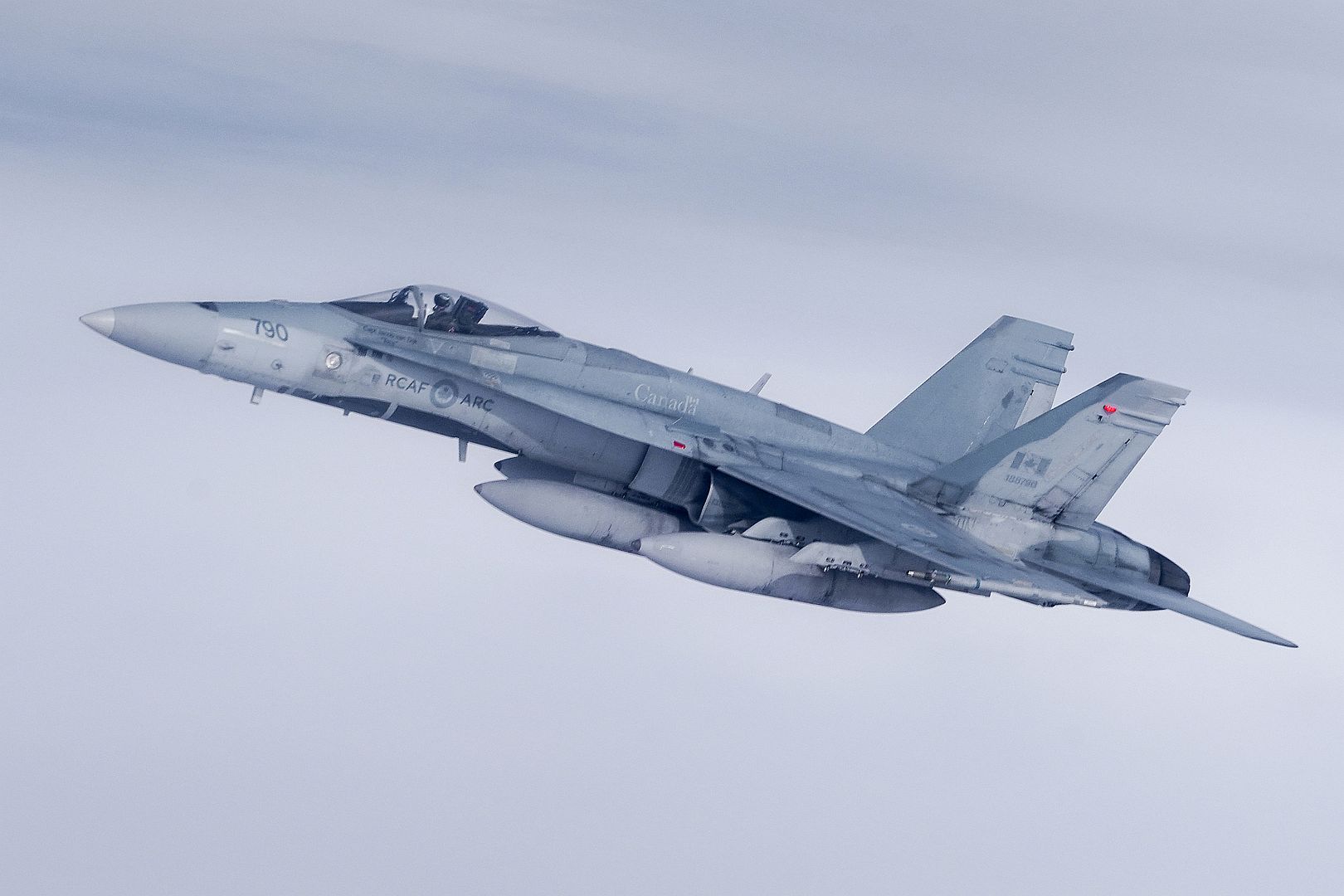
A Royal Canadian Air Force CC-150 Polaris refueling tanker of the 437th Transport Squadron based out of Canadian Forces Base Trenton, Canada, sits on the tarmac at Joint Base Elmendorf-Richardson, Alaska, before a sortie during the Red Flag-Alaska 19-3 exercise, Aug. 15, 2019. Red Flag-Alaska, a series of Pacific Air Forces commander-directed field training exercises for U.S. forces, provides joint offensive counter-air, interdiction, close air support, and large force employment training in a simulated combat environment. (U.S. Air Force photo/Justin Connaher)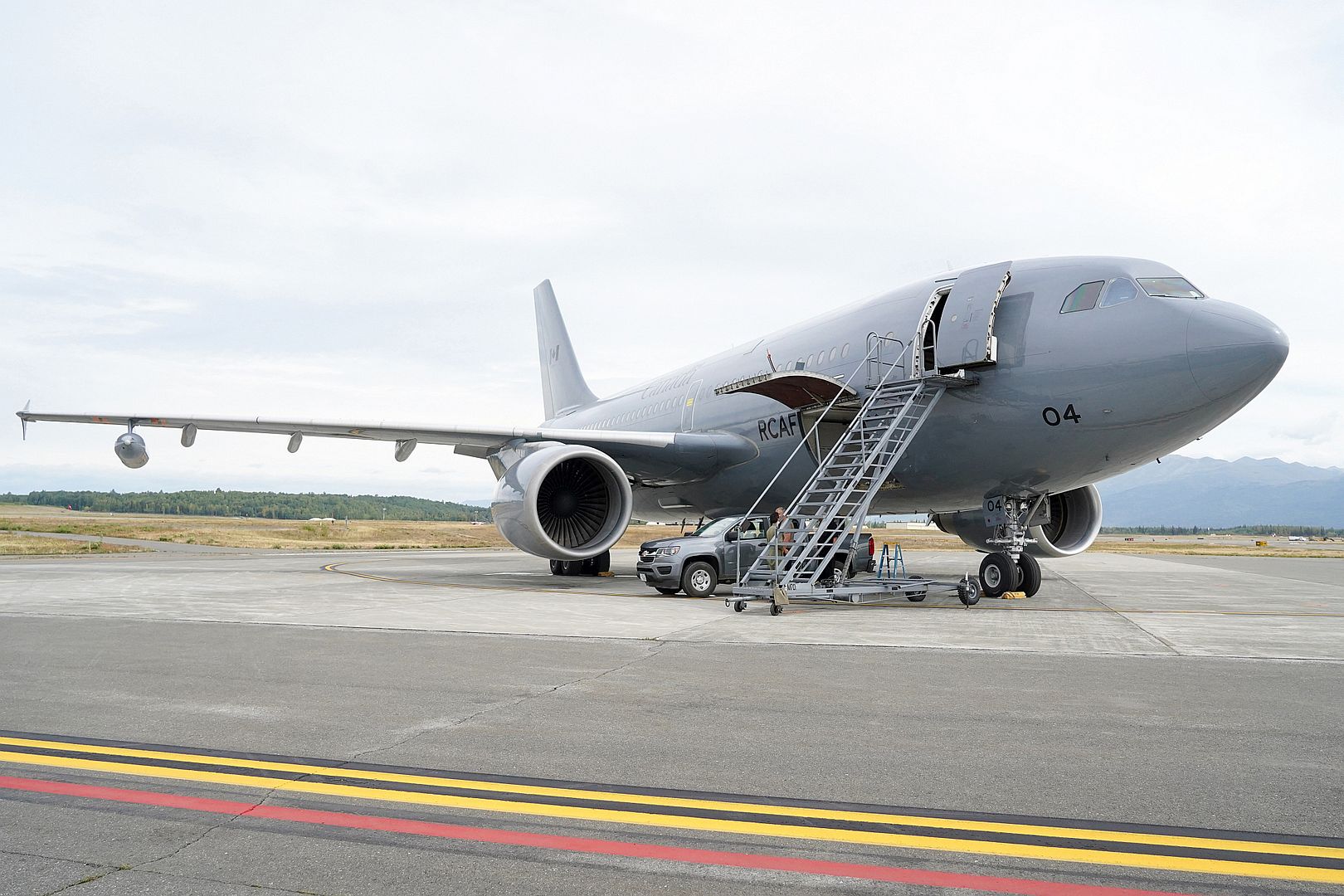
Master Sgt. Aaron Sauke, 779th Expeditionary Airlift Squadron loadmaster, completes his engine start-up checks on a C-130 Hercules prior to departure at Ali Al Salem Air Base, Kuwait, Aug. 4, 2019. C-130s operate around the clock to transport equipment, supplies and passengers around the U.S. Central Command area of responsibility. (U.S. Air Force photo by Tech. Sgt. Michael Mason)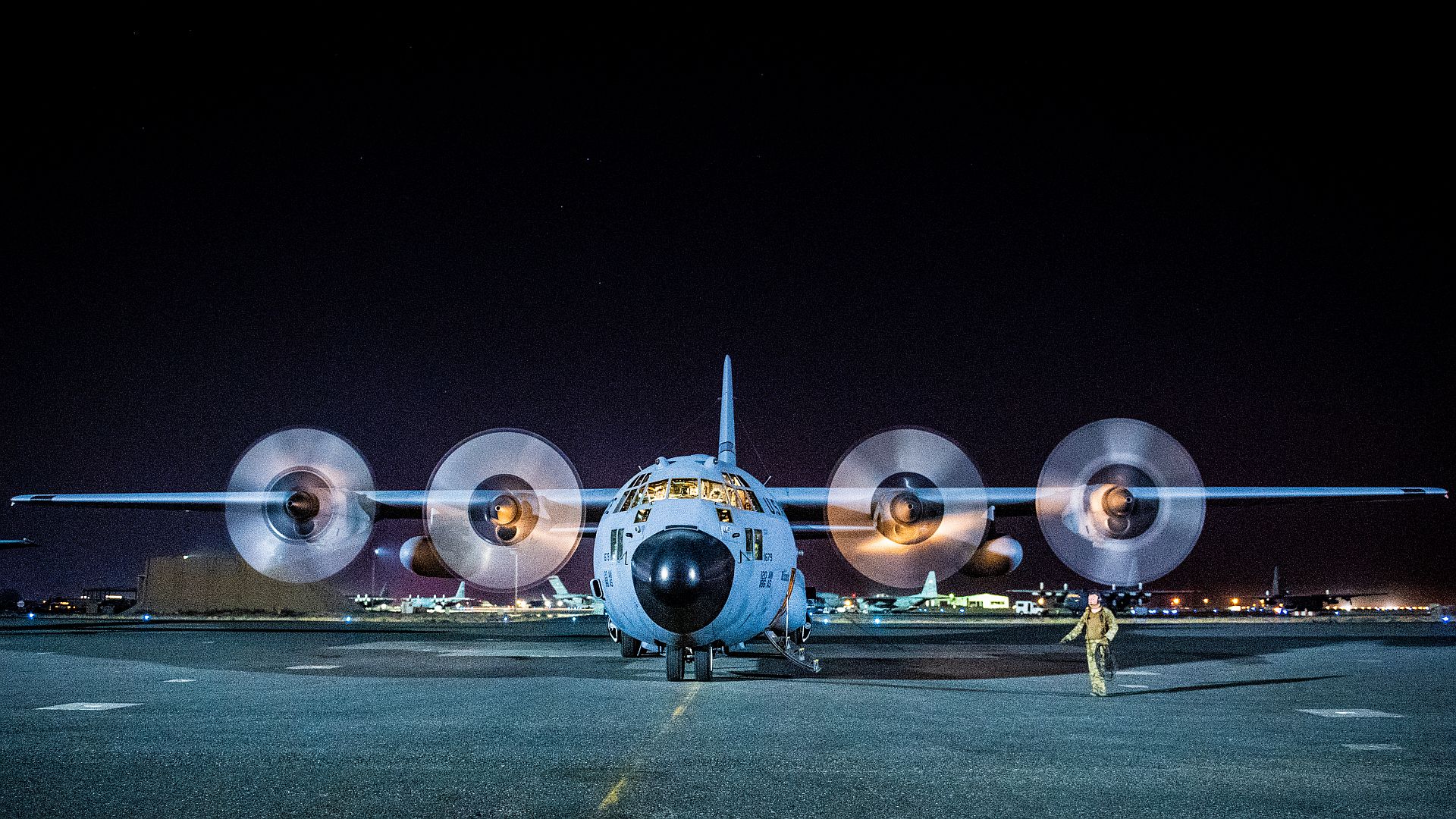
Date: 20 Aug 2019
Protector, the Royal Air Force?s future Remotely Piloted Aircraft System, has flown to Creech Air Force Base affording members of the RAF Reaper Force the opportunity to see the aircraft for the first time. In so doing the aircraft, which flew to the Nevada base from Arizona, used its automatic take-off, landing and taxiing capability for the first time at another base within the US.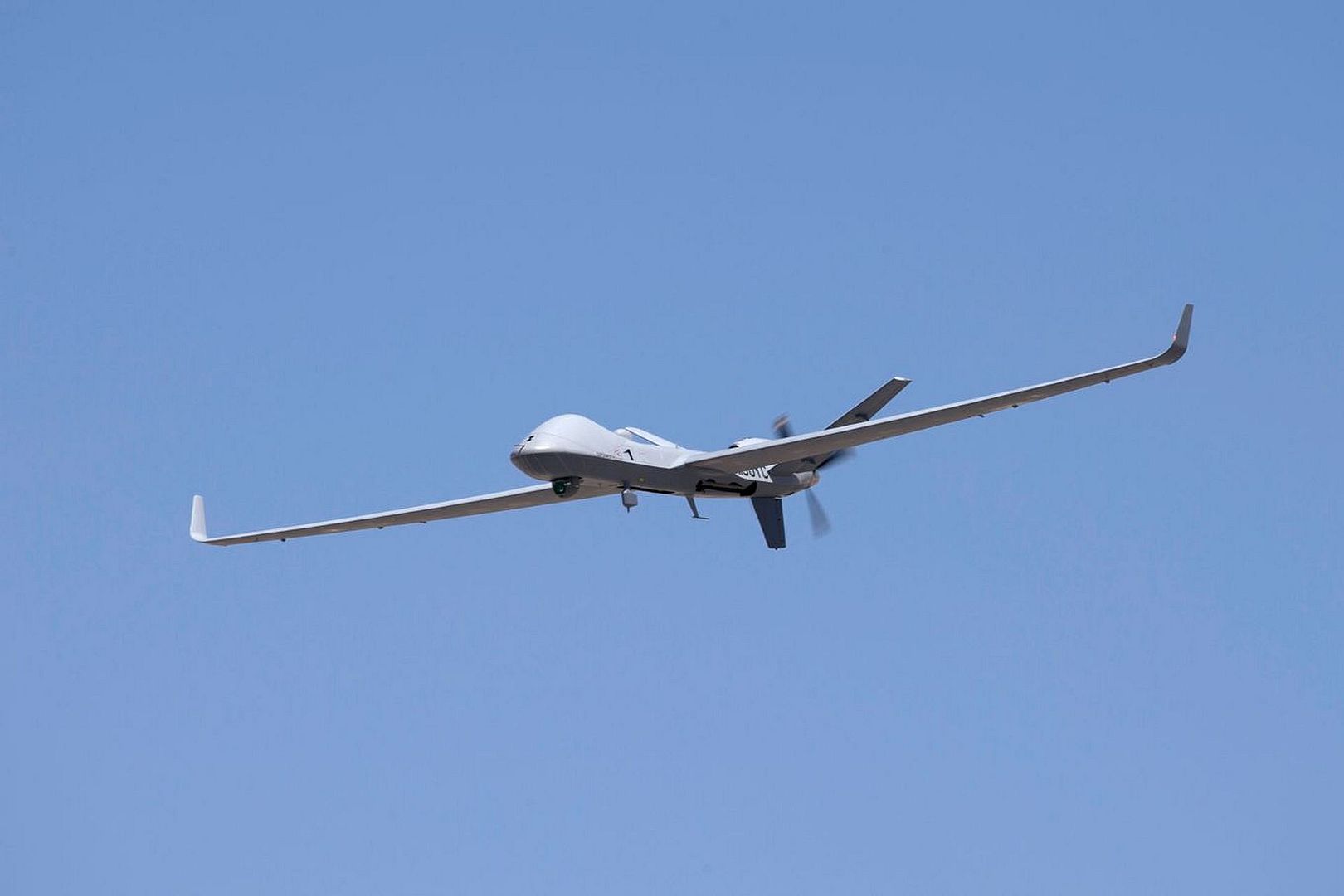
The UK is committed to acquiring 16 Protector RG Mk1 aircraft to replace the existing Reaper fleet. Two squadrons currently operate Reaper, XIII Squadron based at RAF Waddington and 39 Squadron at Creech AFB.
Air Vice Marshal Harv Smyth, Air Officer Commanding No.1 Group said: ?When we talk about ?next generation Air Force? one of the capabilities that we?re delivering is most definitely Protector. This idea that we?ll have an RPAS that can operate anywhere at any time in controlled airspace alongside airliners is an absolutely game changing capability.?
He added: ?The fact that we can do it with a platform that?s got 40 plus hours of endurance and a capability to deliver everything from very precise kinetic effect right through to varying payloads of intelligence gathering, taking that intelligence and then adding it into the decision making space, we then absolutely get to a point where we?re gaining what we?re now calling information advantage, an ability to stay ahead of whatever we need to stay ahead of.?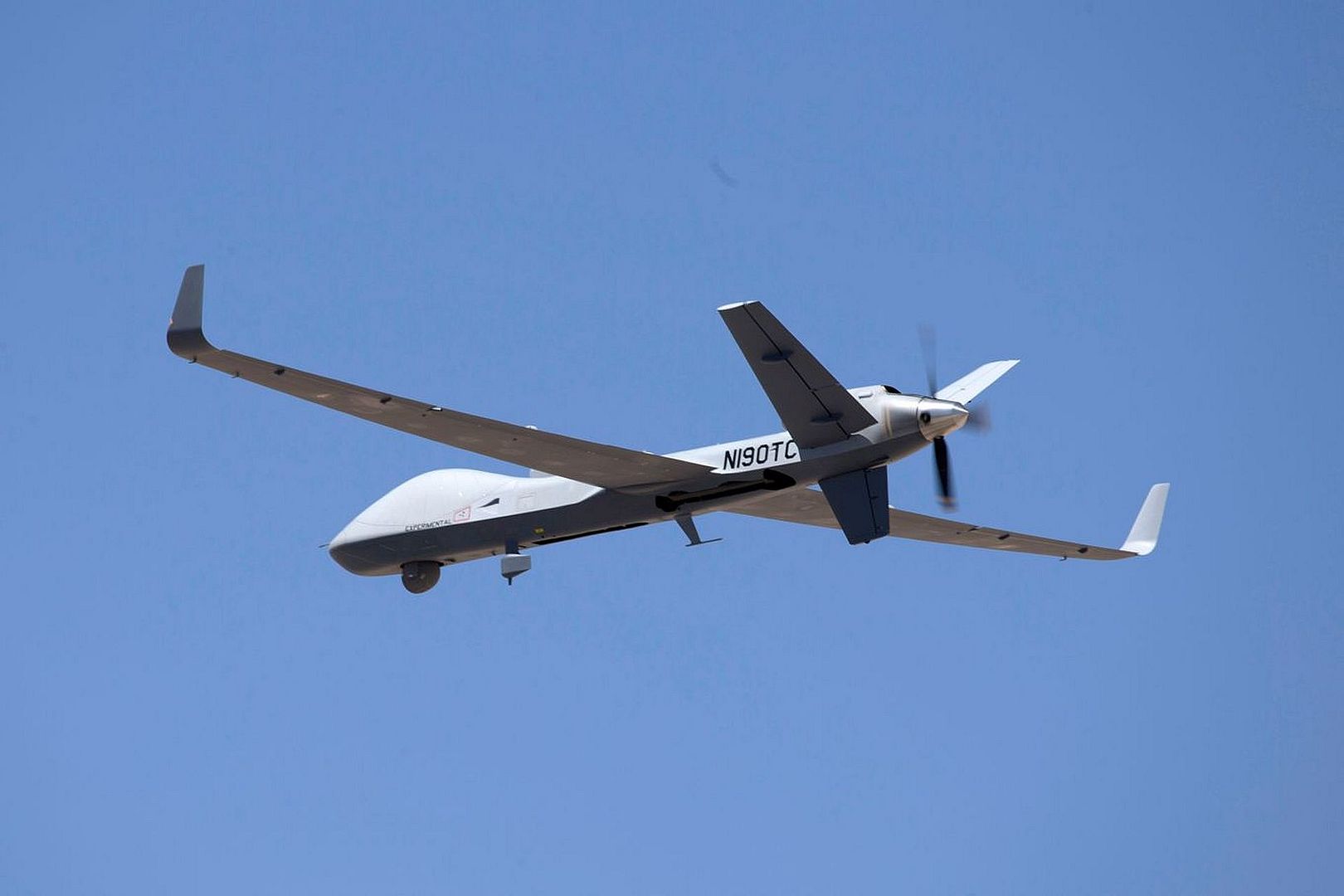
Looking ahead to the arrival of Protector RG Mk.1 into service, Wing Commander Colin Welsh, Officer Commanding 39 Squadron said: ?Protector for most of the team here is something which exists on paper and in pictures. So by allowing individuals to see the aircraft, to see the advanced Ground Control System and how the Mission Intelligence Coordinator and the crew will interact through a new system will be a fantastic motivator for the team to have a first-hand look at the next generation of this capability.?
Asked for his thoughts on Protector Wg Cdr Welsh said: ?It takes everything that?s great about Reaper and adds a whole bundle of capabilities including the ability to sense and avoid, to be certifiable in order to fly in open airspace and a sovereign weapons payload aboard the aircraft. The ability to take the similarities it has with Reaper and apply them to the next generation of capability and sensors is something everyone is excited about here.?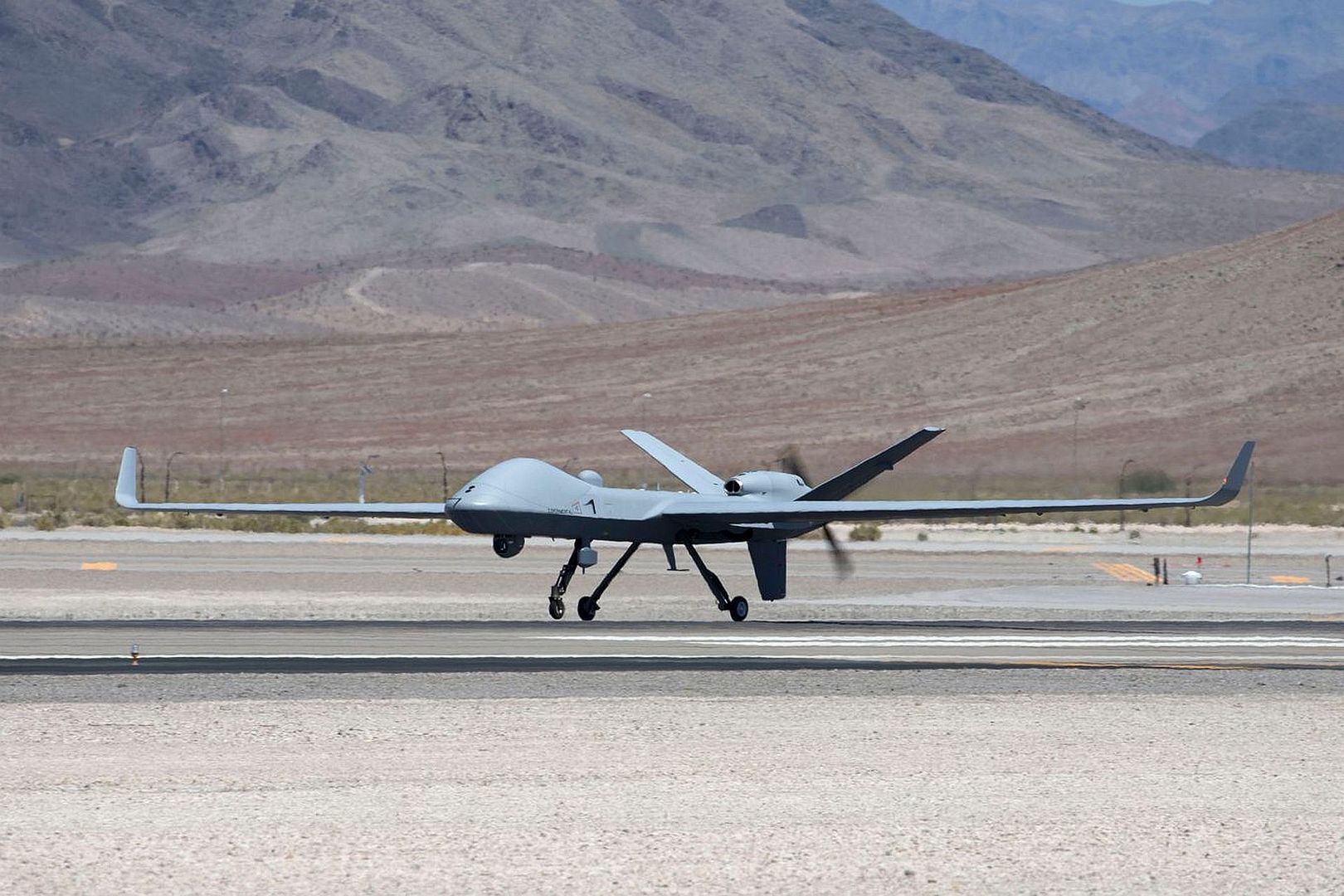
Among the personnel looking forward to seeing Protector was Flight Sergeant ?M? who said: ?I?ve heard a lot about Protector so am now really looking forward to seeing it for myself to make my own judgment in terms of what I?ll be operating in future. A wide cross-section of the squadron will also see it for themselves. We?re absolutely focussed on Ops and so don?t have much time to think about the future.?
His views were echoed by Flight Lieutenant 'C' who will be one of the first to transition from Reaper to Protector: ?It looks good, an interesting aircraft in what it can do, what it?s planned to do. Reaper has been so successful on operations but Protector will bring a new dimension with how it can operate in civil airspace.?
Protector will in due course be operated by 31 Squadron at RAF Waddington.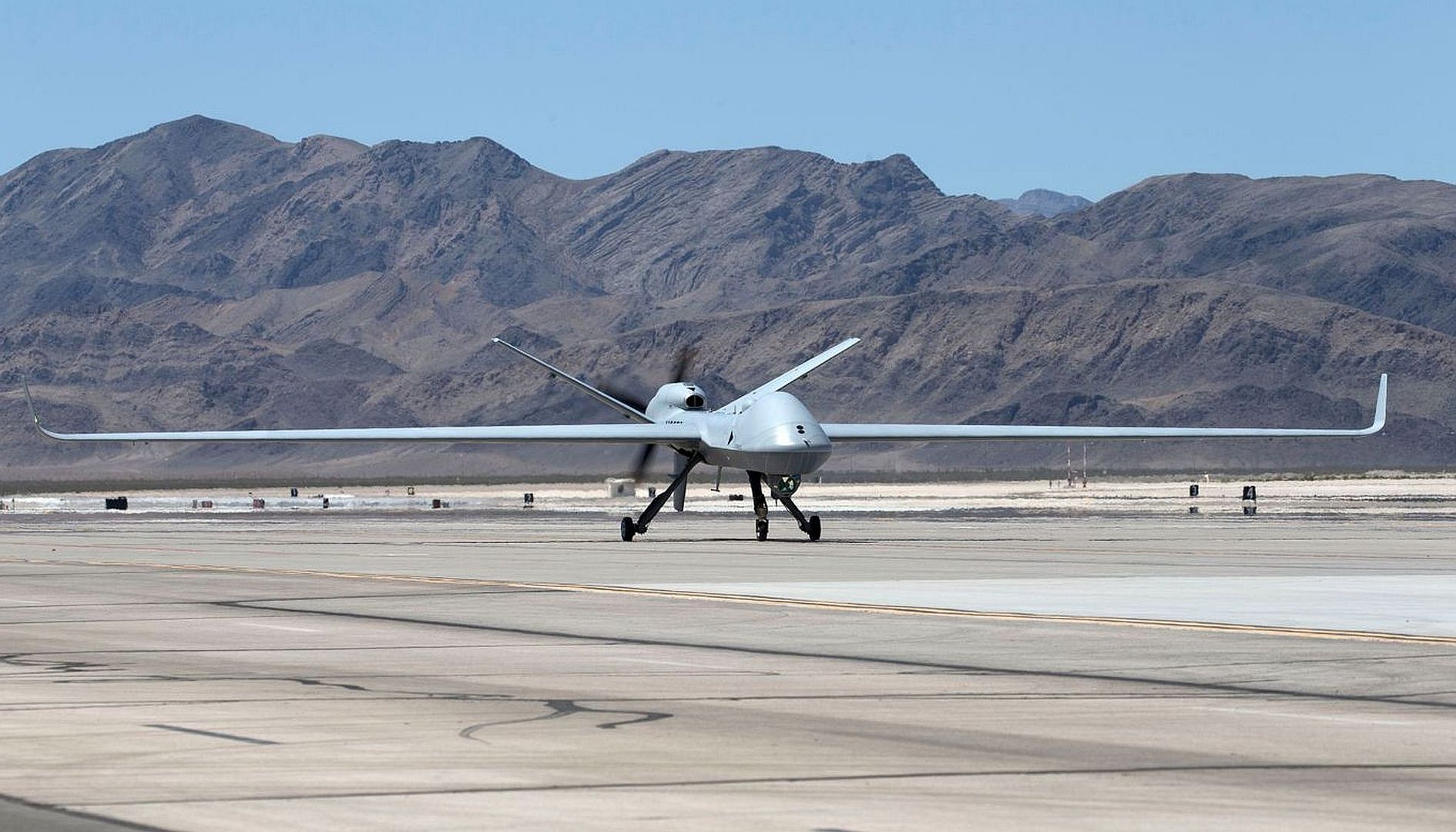
-
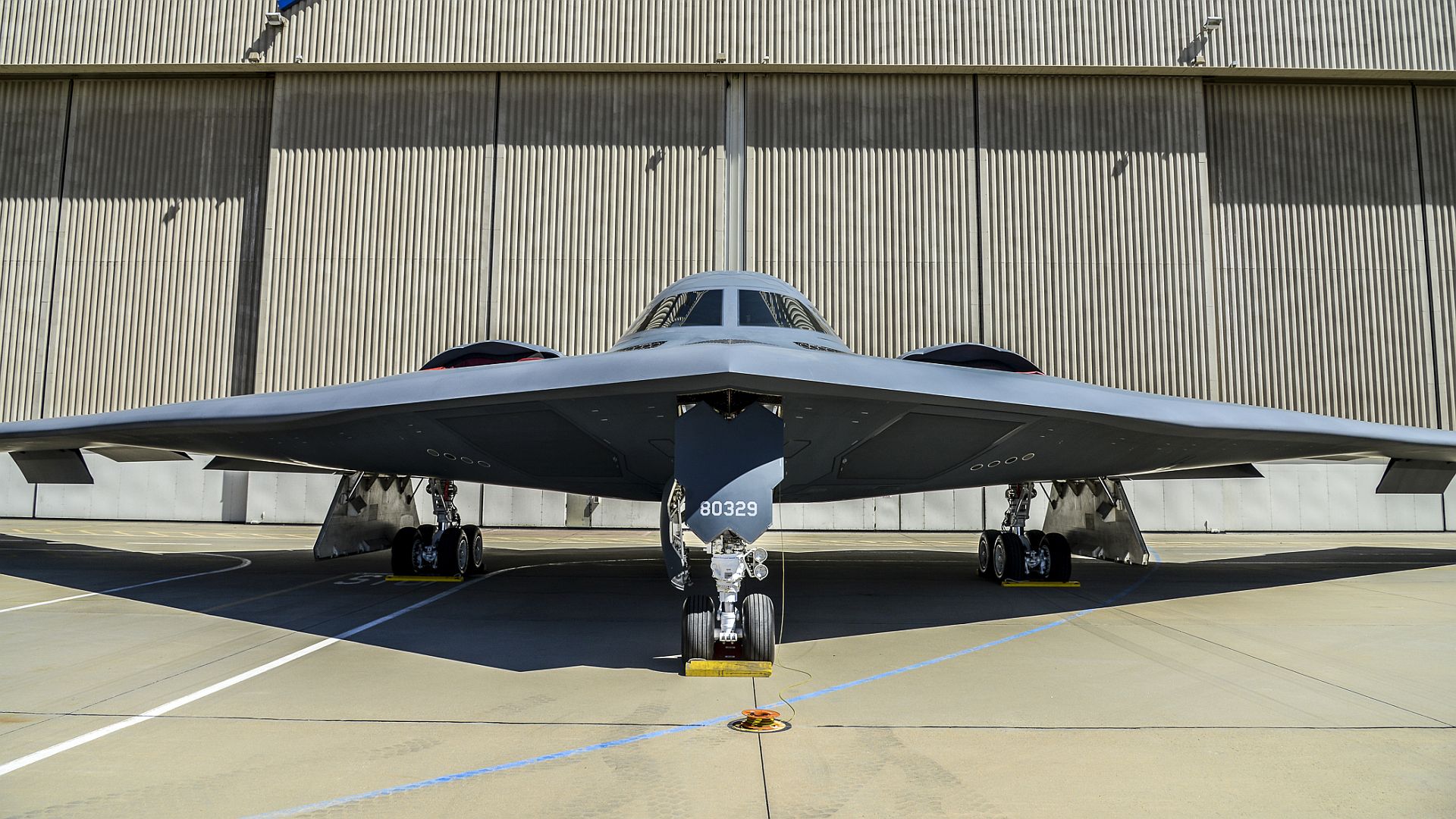
A B-2 Spirit is displayed in front of a hangar at Plant 42 in Palmdale, California, Aug. 20. The plane was on display in support of the B-2 Spirit's 30th anniversary celebration. (U.S. Air Force photo by Giancarlo Casem)
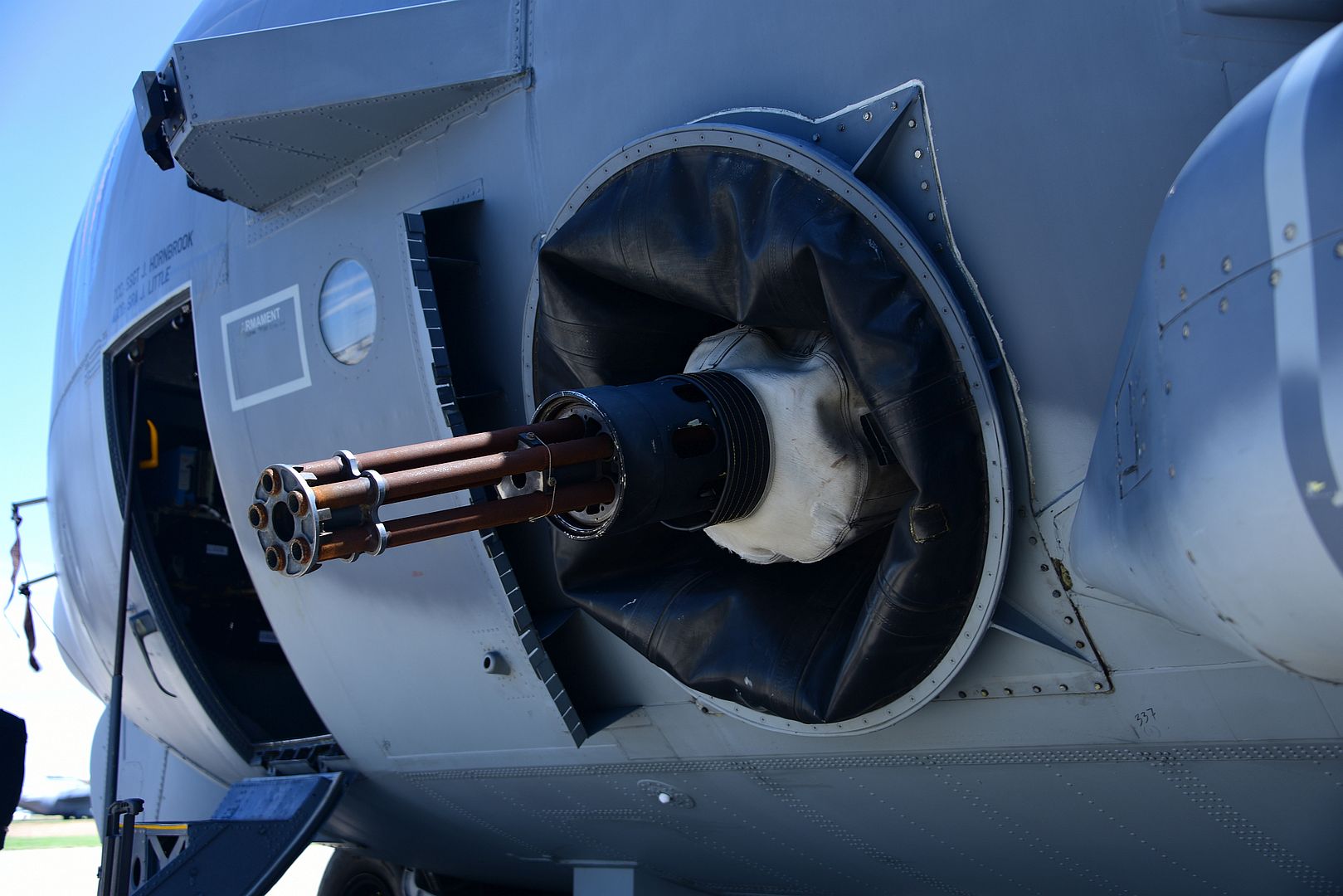
An AC-130U ?Spooky? Gunship retires to the 309th Aerospace Maintenance and Regeneration Group at Davis-Monthan Air Force Base, Arizona, Aug. 19, 2019. The AC-130U?s armament includes a 25mm Gatling gun, as well as 40mm and 105mm cannons. (U.S. Air Force photo's by Airman 1st Class Jacob T. Stephens)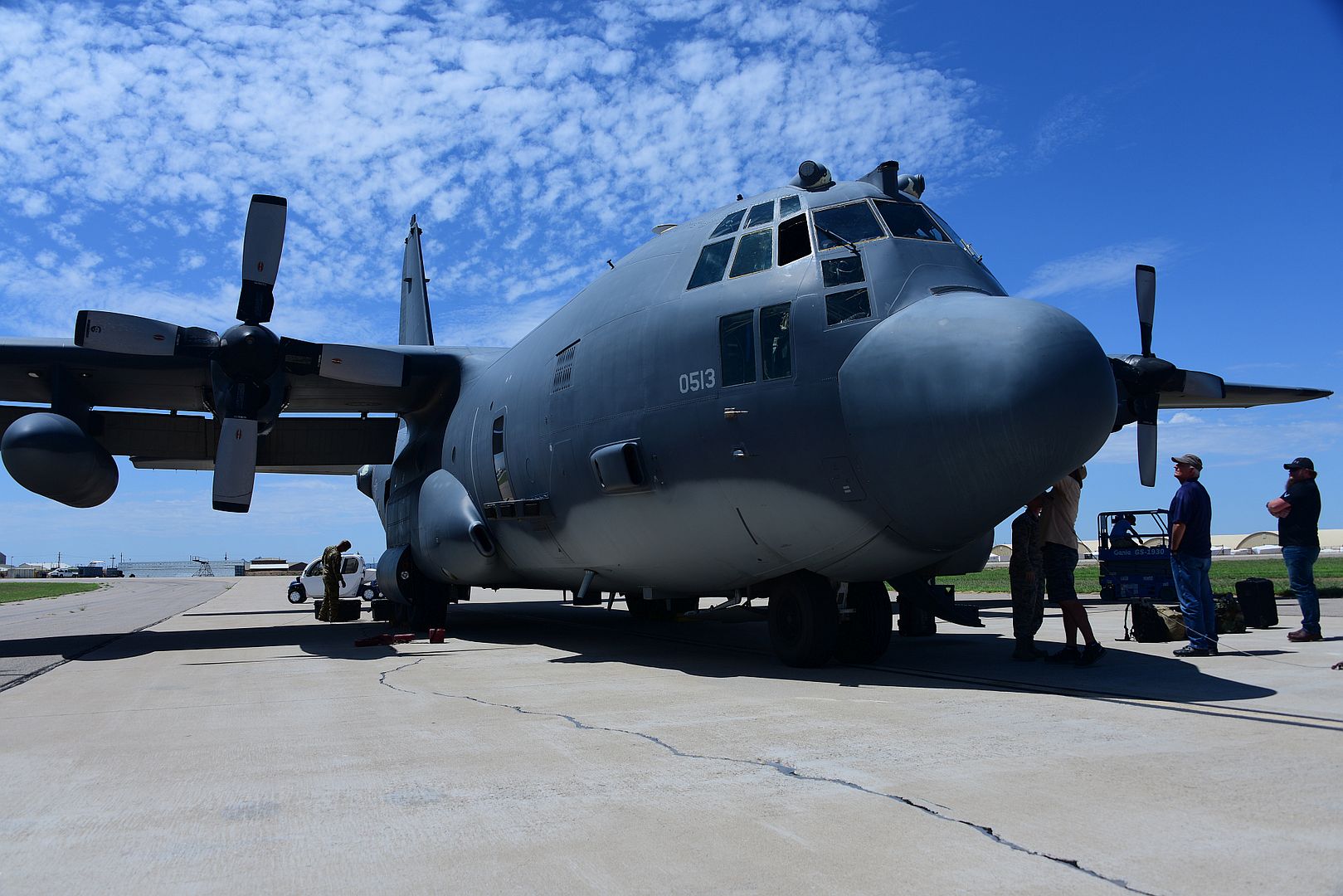
ATLANTIC OCEAN (Aug. 20, 2019) An F/A-18F Super Hornet, assigned to Strike Fighter Squadron (VFA) 106, lands on the flight deck of the aircraft carrier USS John C. Stennis (CVN 74) in the Atlantic Ocean, Aug. 20, 2019. The John C. Stennis is underway conducting routine operations in support of Commander, Naval Air Force Atlantic. (U.S. Navy photo by Mass Communication Specialist 3rd Class Mitchell Banks/Released)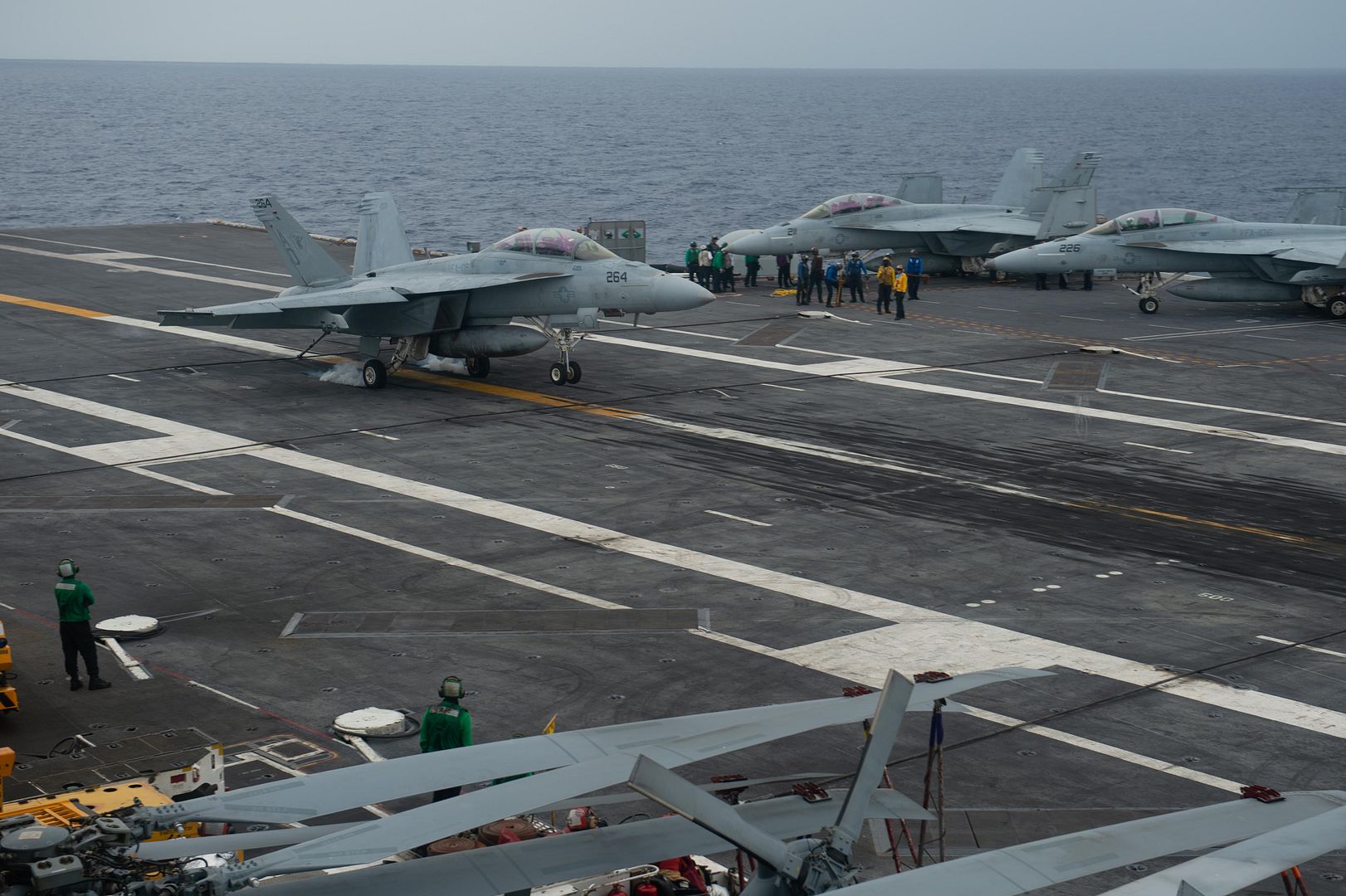
Approximately seven years ago, Martyn Wiseman acquired a disused airfield, which dated back to 1942, in Yorkshire, UK. With the backing of his structural engineering company Condor Projects, he set about creating a small aviation R&D business?Condor Aviation. The airfield site underwent major renovation and now houses a full engineering shop that designs, builds and tests bespoke modifications to light aircraft. This is the headquarters of Team Condor, where Wiseman and a team of eight engineers are turning an existing sport plane into an electric-powered racing machine.
5 questions with Martyn Wiseman, Head of Team Condor
Q. Why did your team decide to enter Air Race E?
Air Race E is a tremendously exciting challenge! We?re a competitive group of people who like to win, so air racing is a fantastic opportunity. Over the past 20 years, we?ve been undertaking R&D and modifying aircraft?first as a hobby and, more recently, as a professional operation. After meeting Air Race E CEO, Jeff Zaltman, we decided we were in a great position to assemble a team and build a competitive race plane.
Q. Can you give us some insight on the aircraft you?re currently working on? What is your approach?
Firstly, we don?t aim to reinvent the wheel! There are some brilliant, proven airframes out there. And with some?admittedly extensive!?modification, we can change the powertrain from fossil fuels to electric. What needs to be considered is the weight of the batteries to enable the aircraft to run at full speed for the duration required. There are two options available: an airframe capable of carrying a large 250 hp-plus motor with heavy batteries, or a lighter frame with a 100 hp motor and lighter batteries. Both approaches are viable, so we?ve decided to go for both: an unlimited racer and a lightweight-restricted category.
Q. What sets your team apart in this race?
We?re one of just a few companies in the UK permitted to design and build or modify experimental aircraft under the new ?E Conditions.? This means we can design, build and test-fly anything aviation-related without having to wait for either the Permit to Fly or a Certificate of Airworthiness from the regulatory authorities. That cuts months, if not years, off the build time.
Q. For you, what is the most exciting aspect of the race?
I love the engineering challenge, and I love to be a pioneer. I also like racing, and I love to win! As a businessman, I find the most exciting thing is to take an idea, prove it and then take it to market.
Q. How important is electric flight to the future of aviation?
Critical?from both an ecological and a commercial point of view. Air travel is here to stay, so we have to look to an alternative means of power, even if only for short-haul flights in the first instance. If air racing provides a boost to battery technology?as F1 has done for fuel efficiency and KERS (Kinetic Energy Recovery System)?that can only be a good thing.
Martyn Wiseman is head of Team Condor, a participating team in Air Race E, which will become the world?s first all-electric airplane race when it launches its inaugural series of international races in 2020. The demand for speed, performance and power management under the rigors of a competitive race environment provides the perfect platform for the development and promotion of cleaner, faster and more technologically advanced electric motors. Airbus is the Official Founding Partner of the series.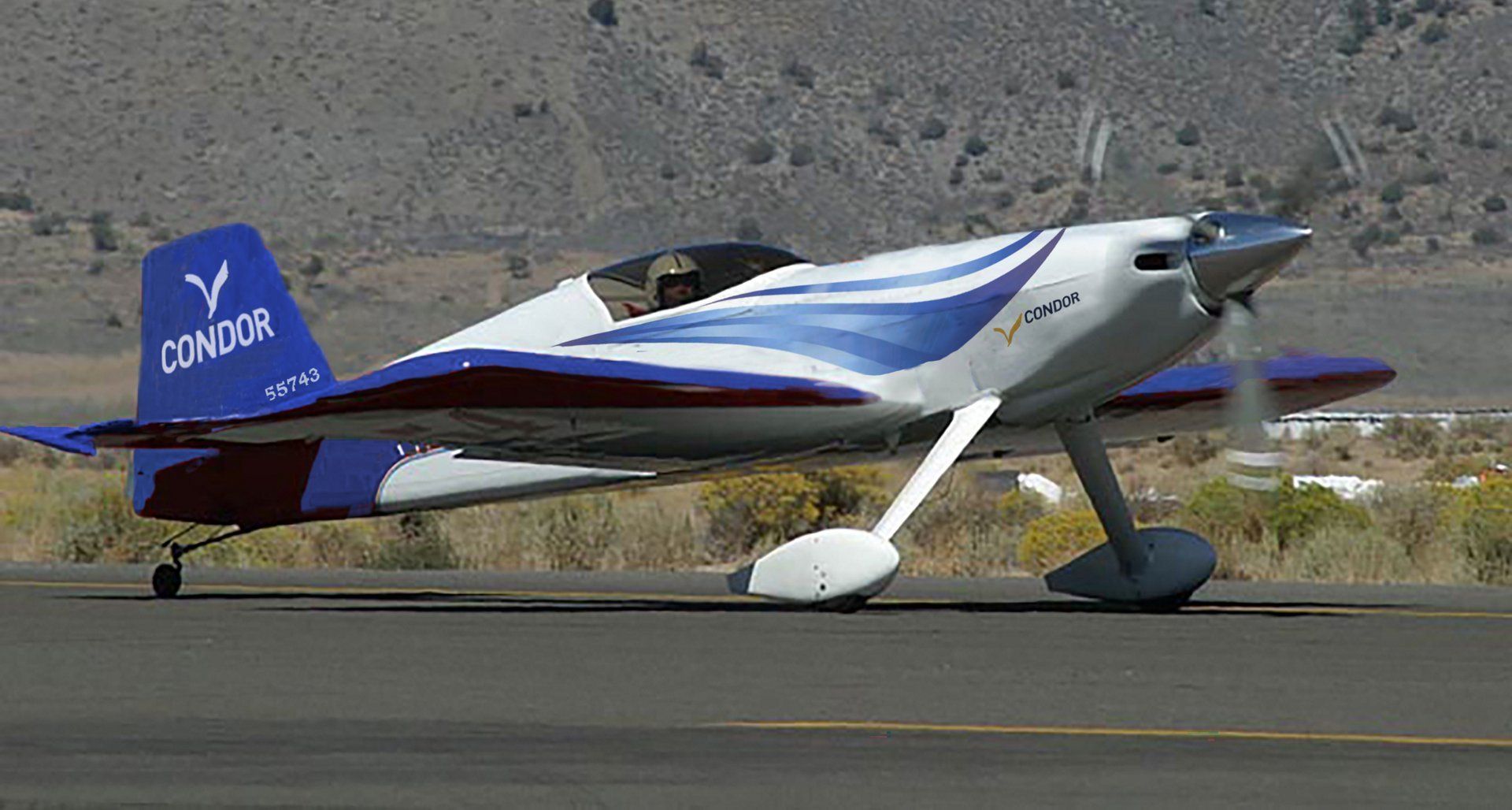
Christchurch - Airbus has today delivered two H145 helicopters to the New Zealand Helicopter Emergency Medical Services at a ceremony at the GCH Aviation Group headquarters.
Airbus Australia Pacific Managing Director Andrew Mathewson said these were the first two H145 helicopters in emergency medical services (EMS) configuration in the New Zealand market.
?I?m proud that Airbus? helicopters are providing vital medical services and assisting the communities between Christchurch and Dunedin operated by New Zealand Helicopter Emergency Services.
?We at Airbus are privileged to work alongside local stakeholders, and play our part in supporting such lifesaving aeromedical operations, as the country grows its focus on this industry.
?A key design factor of the H145 helicopter is to be able to configure the helicopter to provide medical and rescue operations for specialised emergency services.
?This multi-purpose helicopter is tailored for emergency medical services and law enforcement duties, along with aerial work, passenger transport - including private and business aviation - and offshore operations. For multi-mission operators, the H145 can be reconfigured for different roles quickly and easily.
?Designed to deliver excellent performance throughout the flight, the H145 offers capability and flexibility, especially in conditions where the aircraft is operating at high altitude and where time is of the essence,? he said.
The H145 is the market leader for emergency medical services and rescue missions, thanks to its well-established HEMS heritage with its BK117 and EC145 predecessors. The quietest in its class and equipped with state-of-the-art Helionix avionics suite, this twin engine helicopter offers exceptional performance along with upgraded main and tail rotor systems. This guarantees an unprecedented level of performance in both hover and one-engine inoperative conditions.
The Fenestron technology brings benefits such as improved flight and ground safety to customers, as well as reduced power demand in forward flight, and lower sound and vibration levels. Included in the Fenestron is a redesigned tail gearbox that contributes to lower maintenance costs. It incorporates a duplex tail rotor actuator and dual hydraulic circuits ? installed in a new damage-tolerant all-composite tail boom.
With a global fleet of more than 1,400 helicopters of the H145 family, the fleet has accumulated more than five million flight hours. In New Zealand alone, there are currently 41 H145 family of helicopters deployed for aeromedical, search-and-rescue, utility and business aviation purposes.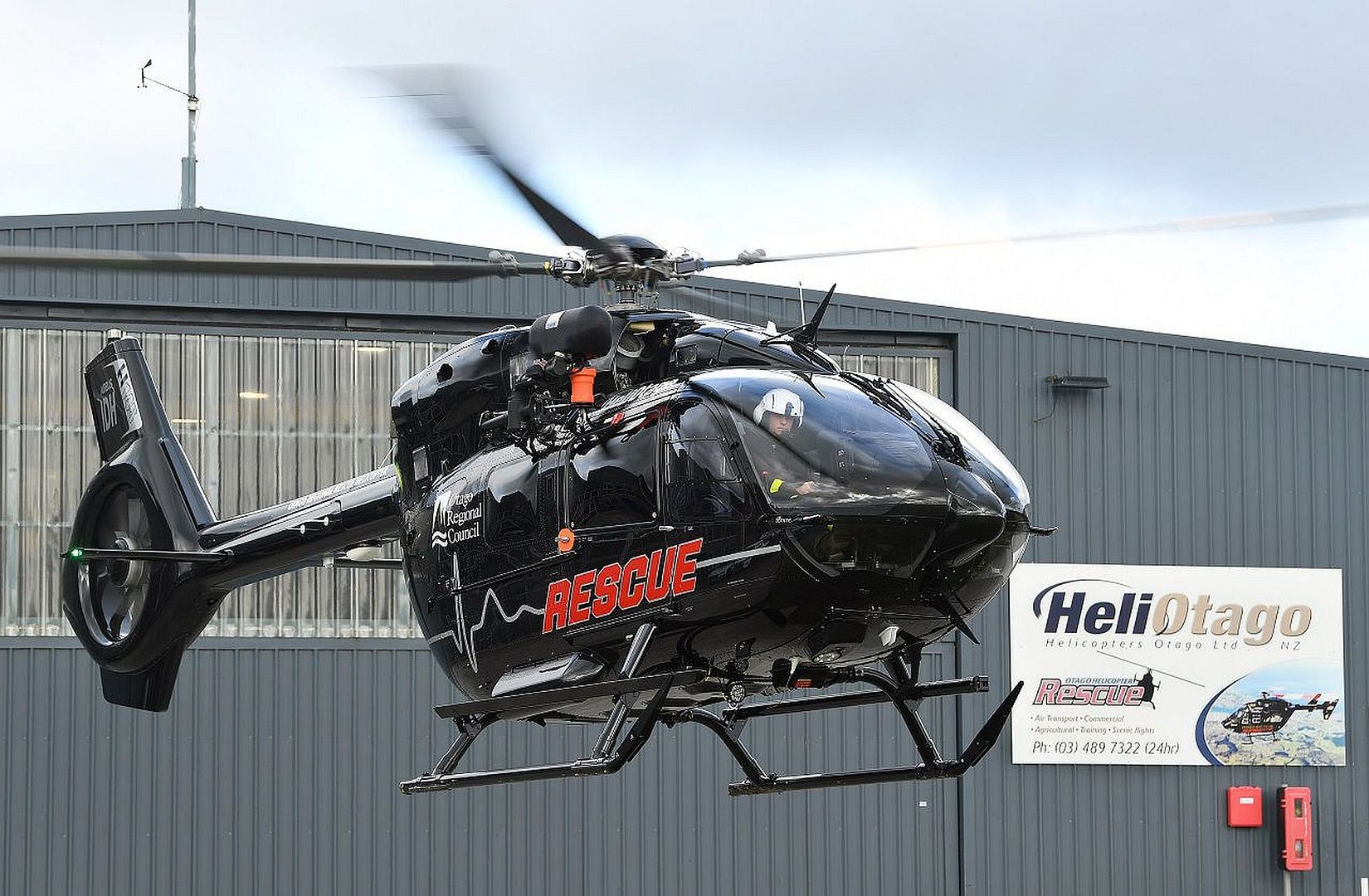
Amsterdam, Netherlands, August 21, 2019 ? Following a successful tour through China, Japan, and Asia Pacific, Embraer?s latest Profit Hunter, the E195-E2, will make its Russian debut at the upcoming Moscow air show, MAKS-2019. Featuring the quietest cabin and lowest emissions of any single-aisle jet, as well as a special ?Tech Lion? livery covering the entire aircraft, the jet is set to make quite an impact.
Speaking in advance of the Moscow event, Martyn Holmes, Vice President Europe, Russia, and Central Asia, Embraer Commercial Aviation said, ?This jet is a real game changer, and MAKS-2019 is a superb opportunity to showcase this special aircraft to our customers in Russia and the surrounding region.?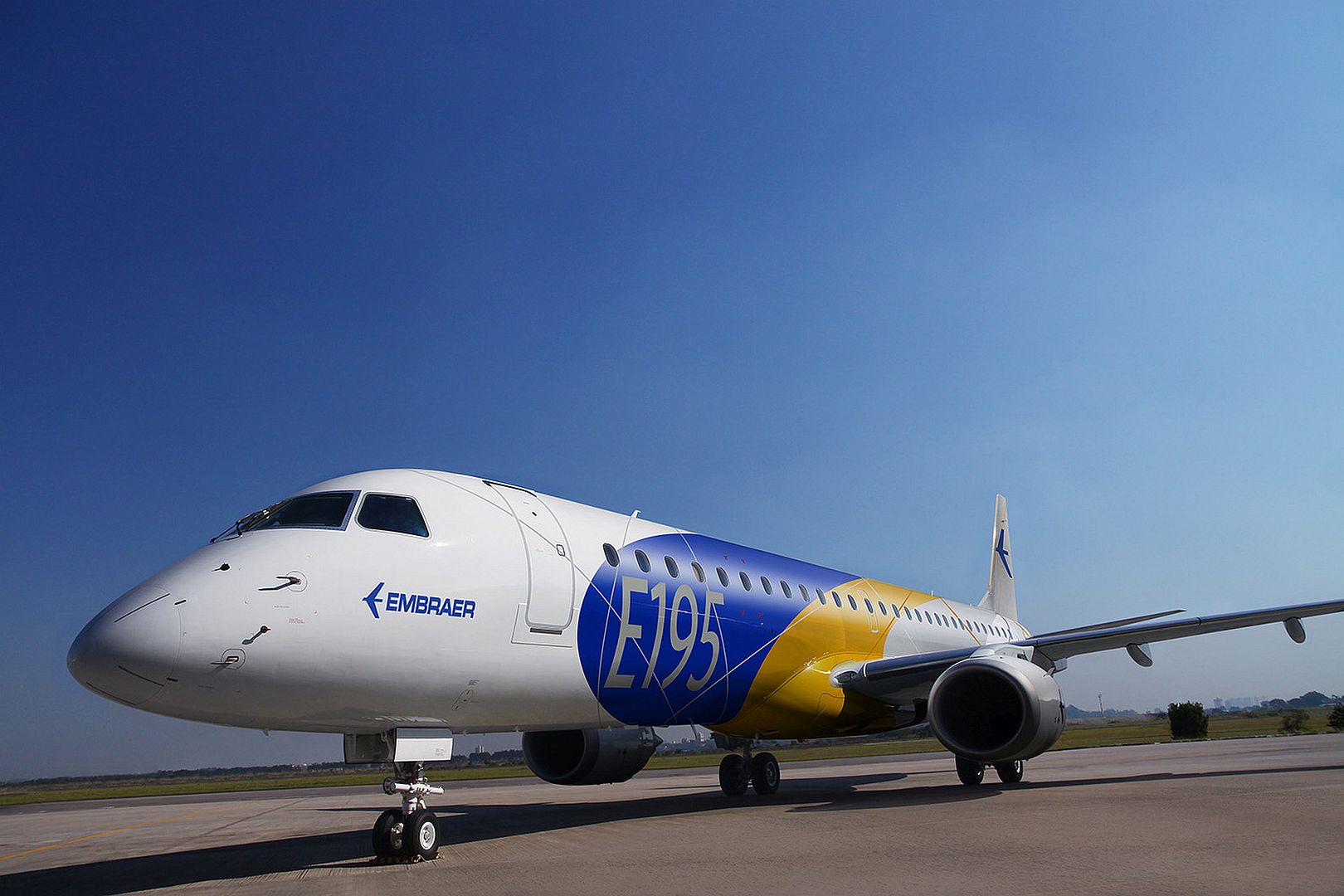
Holmes continued, ?The E195-E2 is the largest of the three aircraft in the E-Jets E2 family, accommodating between 120 and 146 passengers depending on configuration. Therefore, covering a different market segment to aircraft that offer fewer than 120 seats. Operators such as Air Astana love their E2s as they provide unrivalled economics and efficiency, superior operational flexibility, reliability and unsurpassed passenger comfort. As the most efficient single-aisle jet in the market, the E195-E2 is the ideal aircraft to establish and grow regional hubs, and complement existing low-cost and mainline fleets. Such are the economics of this aircraft it has become known as the ?Profit Hunter? and we are already seeing significant interest from operators in the region.?
In April, the E195-E2 received type certification simultaneously from three major world regulatory authorities ? ANAC (the Brazilian Civil Aviation Agency), the FAA (U.S. Federal Aviation Administration) and EASA (European Aviation Safety Agency). The aircraft will enter service with Brazil?s Azul Linhas A?reas Brasileiras S.A. in the second half of 2019.
The E195-E2 is the most environmentally friendly aircraft in its class. It has the lowest levels of external noise and emissions. The cumulative margin to ICAO Stage IV noise limit ranges from 19 to 20 EPNdB, 4.0 EPNdB better than its direct competitor.
E195-E2 carries more payload and burns 25.4% less fuel per seat than the previous generation aircraft. Its maximum range is 2,600 nautical miles (4,815 km) with a full passenger load, 600 nm more than the E195, and has three additional seat rows. Airlines may choose to configure the cabin in two classes with 120 seats or a single class with up to 146 seats.
Like the E190-E2, the E195-E2 has the longest maintenance intervals in the single-aisle jet category ? 10,000 flight hours for basic checks and no calendar limit for typical E-Jet operations. This means an additional 15 days of aircraft utilization over a period of ten years compared to current generation E-Jets.
Embraer is the world?s leading manufacturer of commercial aircraft up to 150 seats with more than 100 customers from all over the world. For the E-Jets program alone, Embraer has logged more than 1,800 orders and 1,500 aircraft have been delivered. Today, E-Jets are flying in the fleet of 80 customers in 50 countries. The versatile 70 to 150-seat family is flying with low-cost airlines as well as with regional and mainline carriers.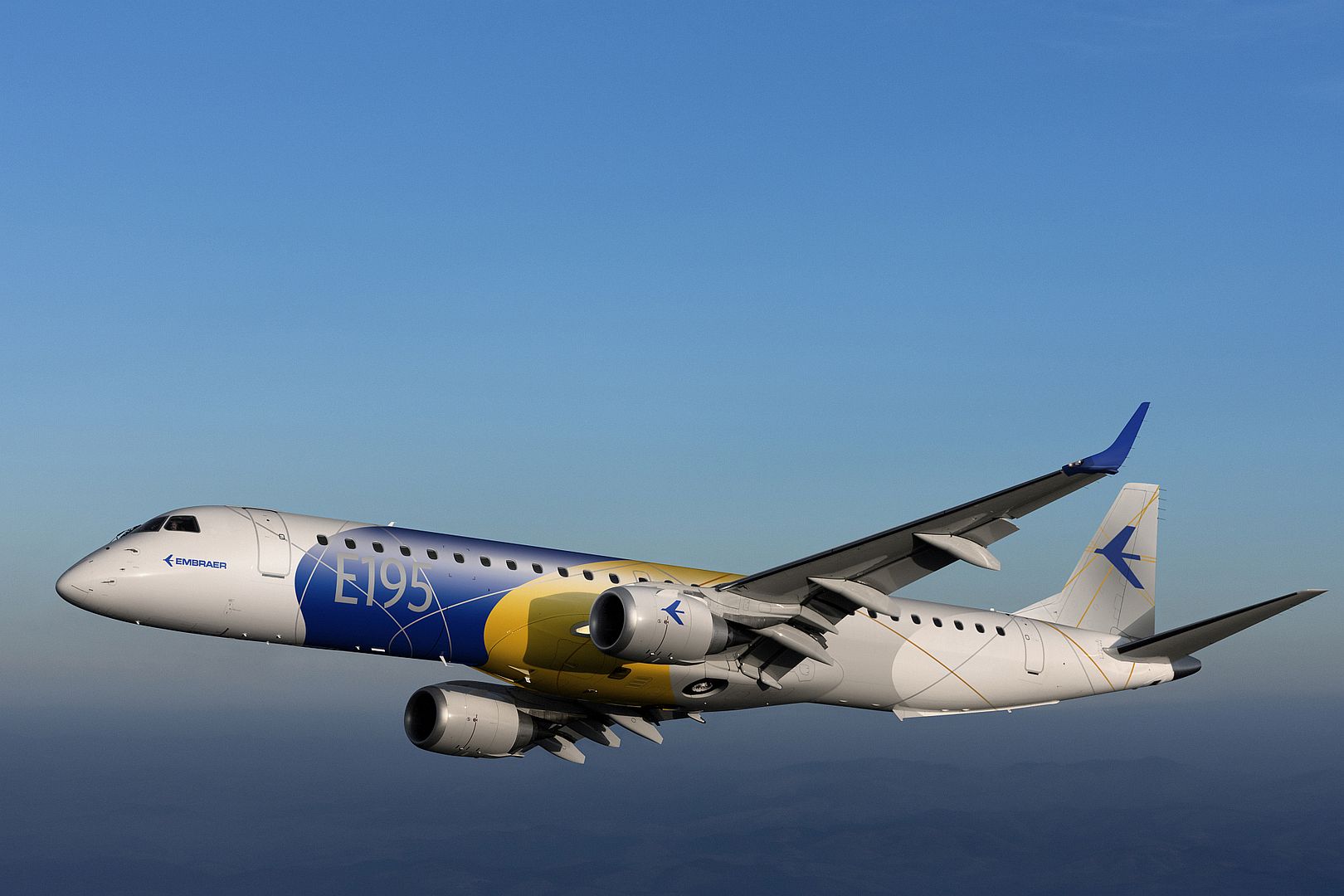
BAE Systems, a global leader in electronic warfare, has received a Block 4 Modernization contract award from Lockheed Martin to enhance the offensive and defensive electronic warfare (EW) capabilities of the F-35 Lightning II fifth-generation fighter aircraft. Under the contract, BAE Systems will modernize its AN/ASQ-239 Electronic Warfare/Countermeasures (EW/CM) system to address emerging threats and maintain U.S. and allied warfighters' ability to safely conduct missions in contested airspace.
"The F-35 will be in service for decades, and we're committed to providing our pilots with an AN/ASQ-239 capability that affords a decisive and sustained EW operational advantage," said Deborah Norton, VP of F-35 Solutions at BAE Systems. "Our robust, modular architecture enables us to efficiently insert new capabilities, supporting the next wave of technical innovation while proactively addressing total product lifecycle sustainability."
BAE Systems has been the EW supplier for the F-35 program for the past 14 years, successfully designing and developing the Block 1, Block 2, and Block 3 configurations, and delivering production units for each of the Low Rate Initial Production (LRIP) Lots 1-11. The Block 4 program is a multi-year, multi-contract design and development effort that will add eleven new capabilities to the EW system. These improvements will be made as part of the new F-35 agile contracting and development paradigm called Continuous Capability Development and Delivery (C2D2). The C2D2 construct is one in which capabilities are continuously being developed and fielded in 6-12 month intervals, providing warfighters with incremental enhancements to keep pace with the evolving threats.
BAE Systems has delivered more than 500 F-35 AN/ASQ-239 EW/CM shipsets to date, and is currently matching aircraft production with continual on-time delivery as the program ramps to full-rate production. As part of its rigorous development process, the company invested in process automation, facility optimization, quality assurance, human capital, and supply chain excellence to deliver capabilities to the warfighter with speed and agility.
As a leading EW provider, BAE Systems has a deep understanding of the evolving threat environment and warfighter needs, and has more than 60 years of experience designing, qualifying, delivering, and sustaining highly reliable and maintainable systems.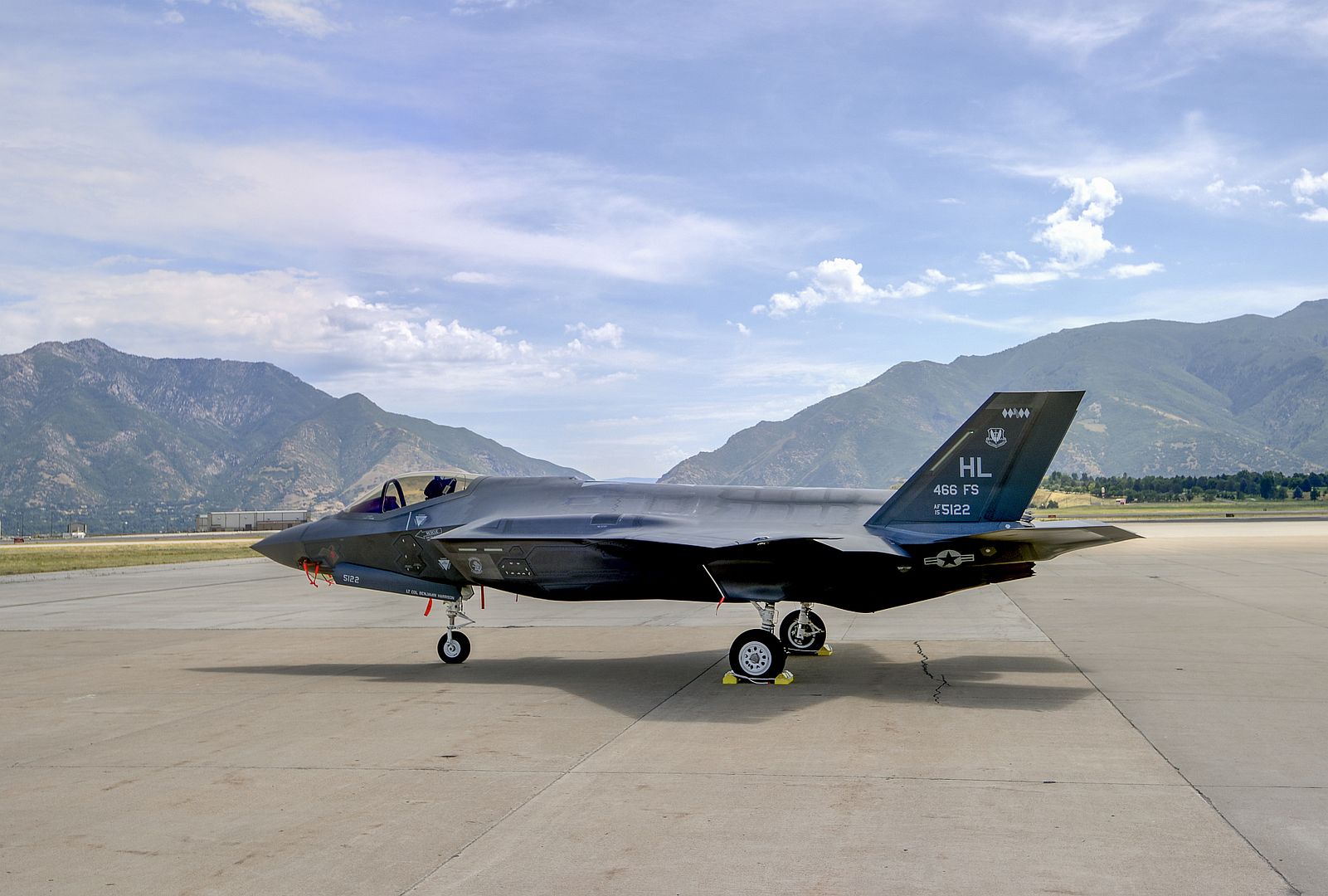
-
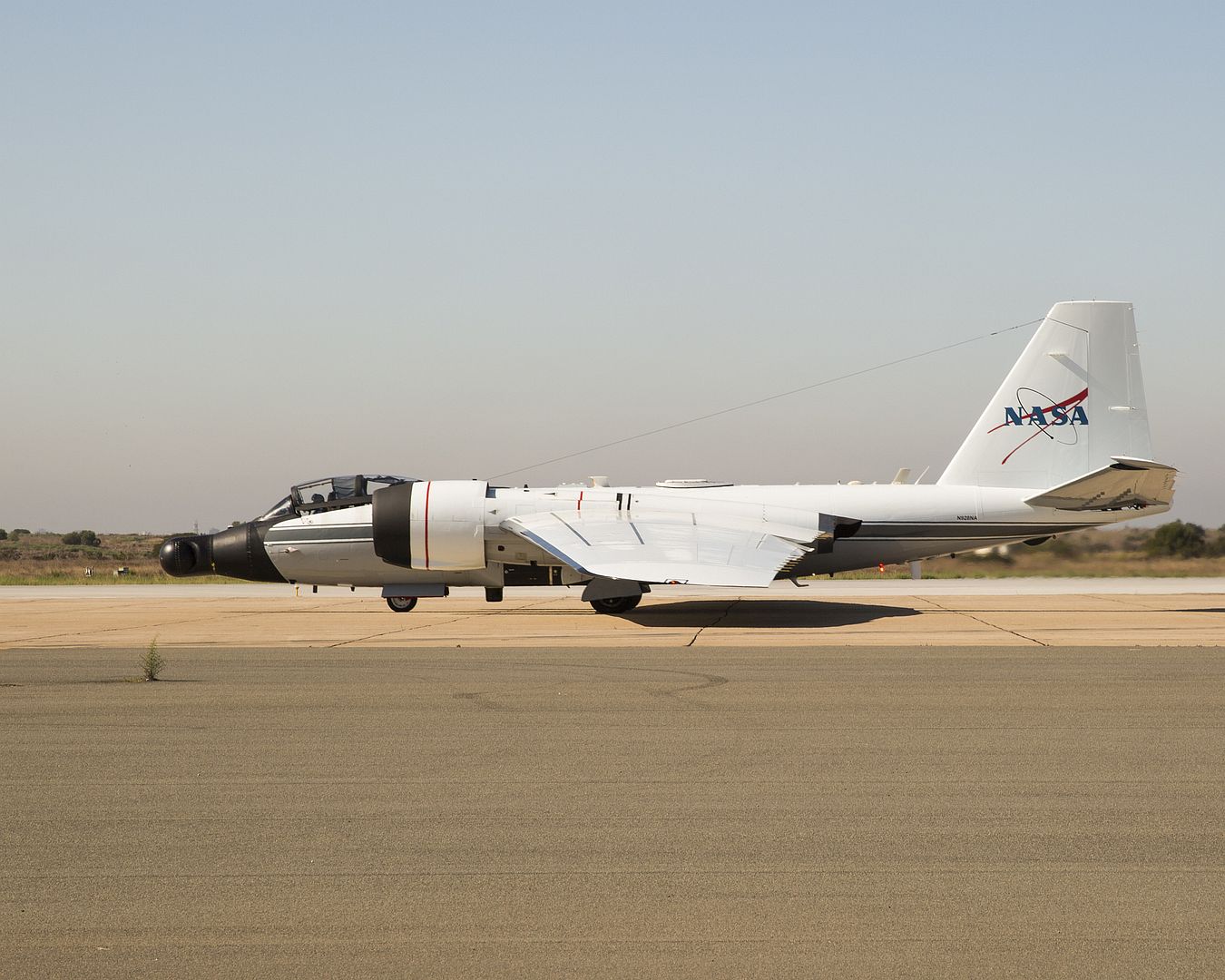
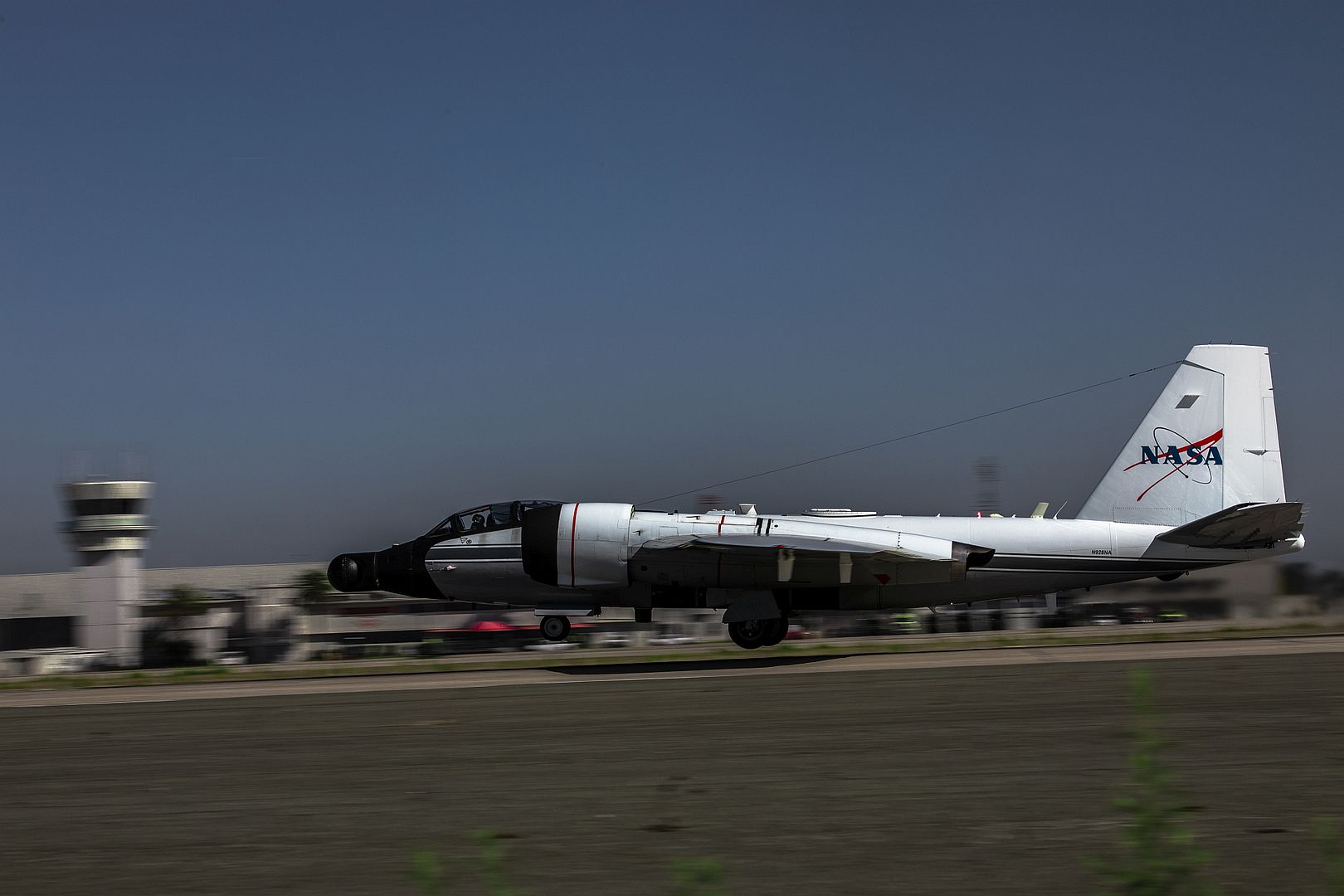
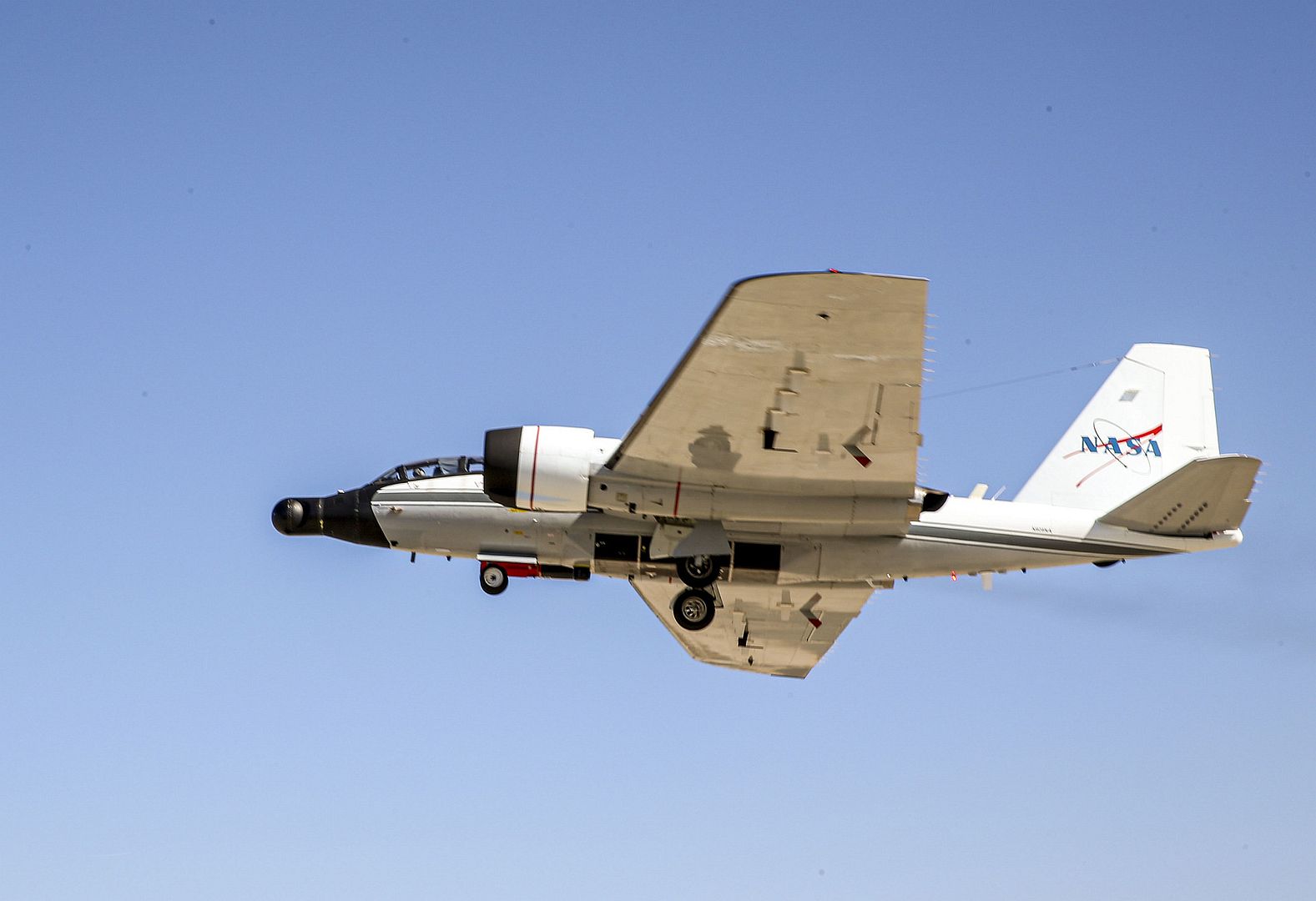
A NASA WB-57 takes off from the flight line of Marine Corps Air Station Miramar, Calif., Aug. 21. The aircraft was utilizing the MCAS Miramar flight line and airspace to test new communications software. (U.S. Marine Corps photo's by Sgt. Jake McClung,by Lance Cpl. Jose GuerreroDeleon & Sgt. Sarah Ralph)
An F-15E Strike Eagle assigned to the 494th Fighter Squadron takes off at Royal Air Force Lakenheath, England, Aug. 21, 2019. The Strike Eagle has the capability to fight its way to a target over long ranges, destroy enemy ground positions and fight its way out. (U.S. Air Force photo by Airman 1st Class Madeline Herzog)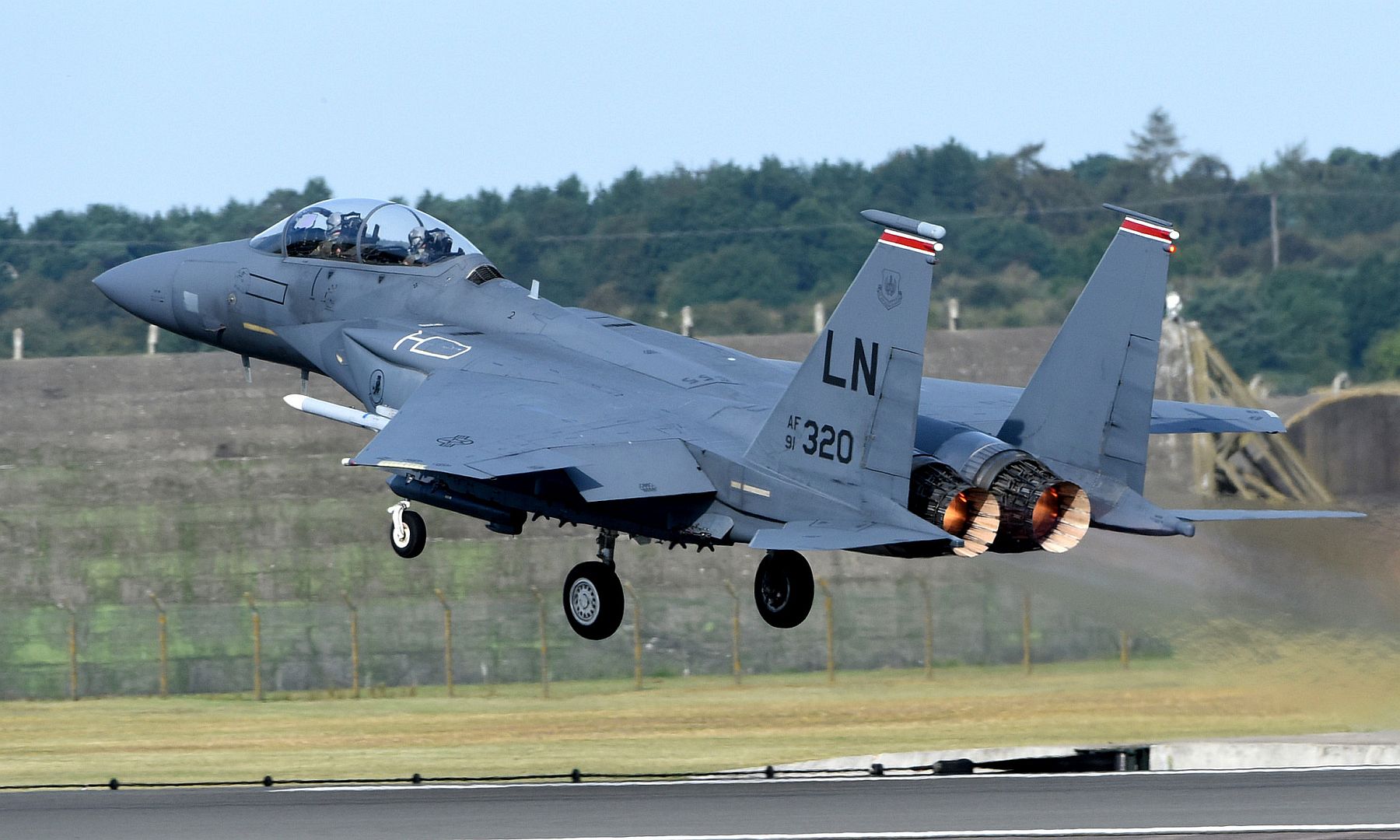
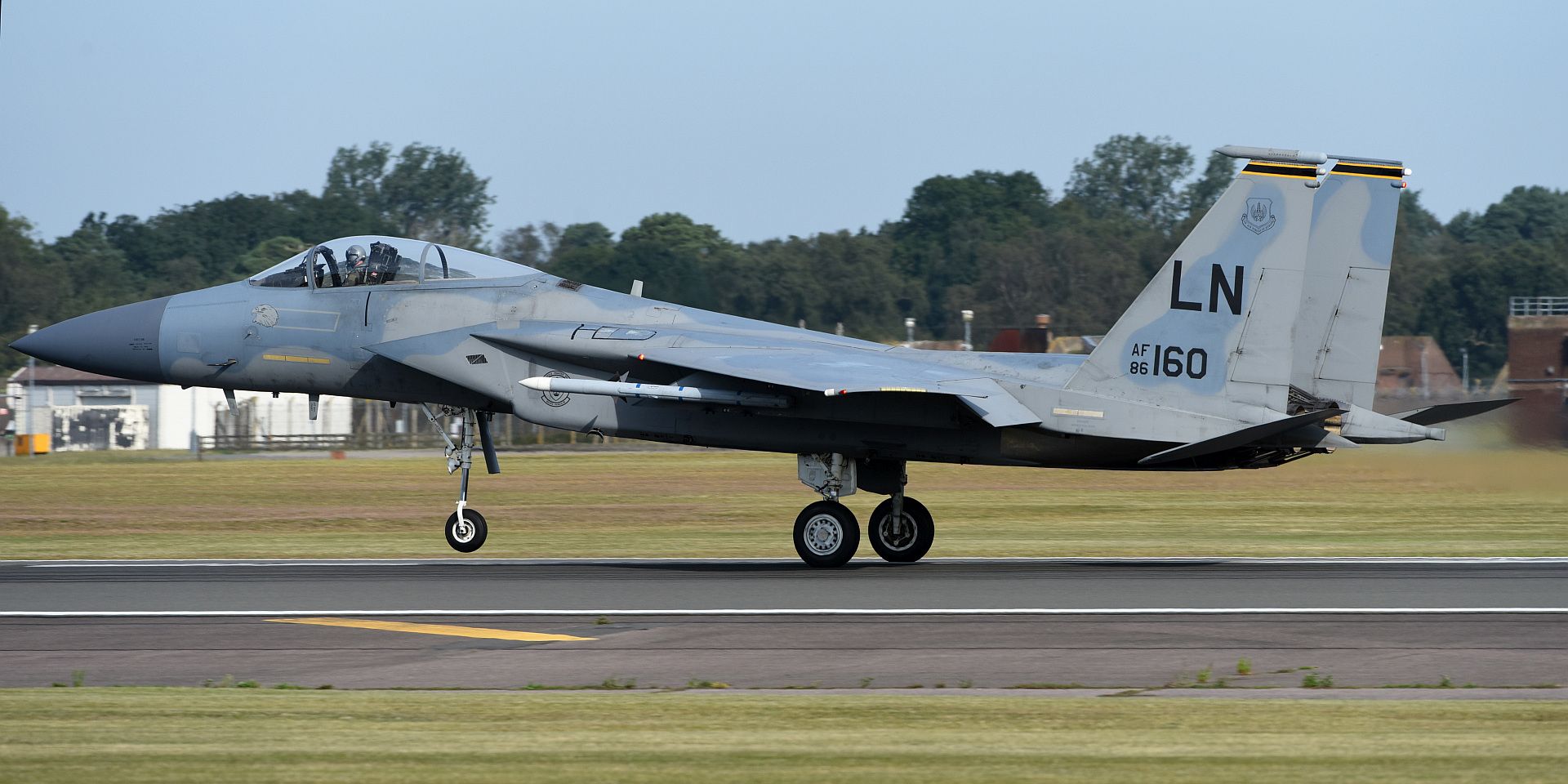
F-15C Eagles assigned to the 493rd Fighter Squadron take off at Royal Air Force Lakenheath, England, Aug. 21, 2019. The Eagle provides the Liberty Wing with all-weather, day or night air superiority and air-to-ground precision combat capability. (U.S. Air Force photo's by Airman 1st Class Madeline Herzog)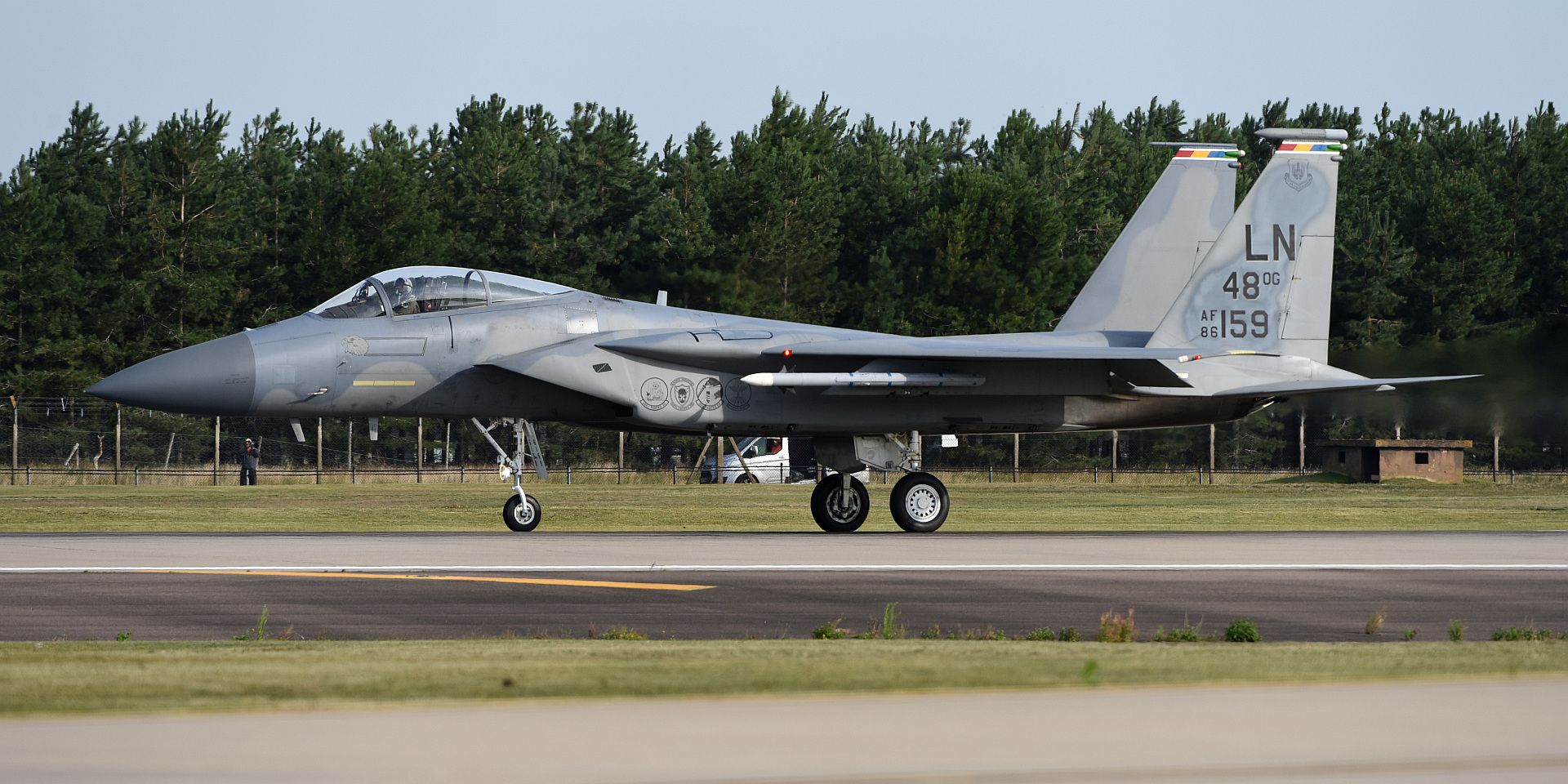
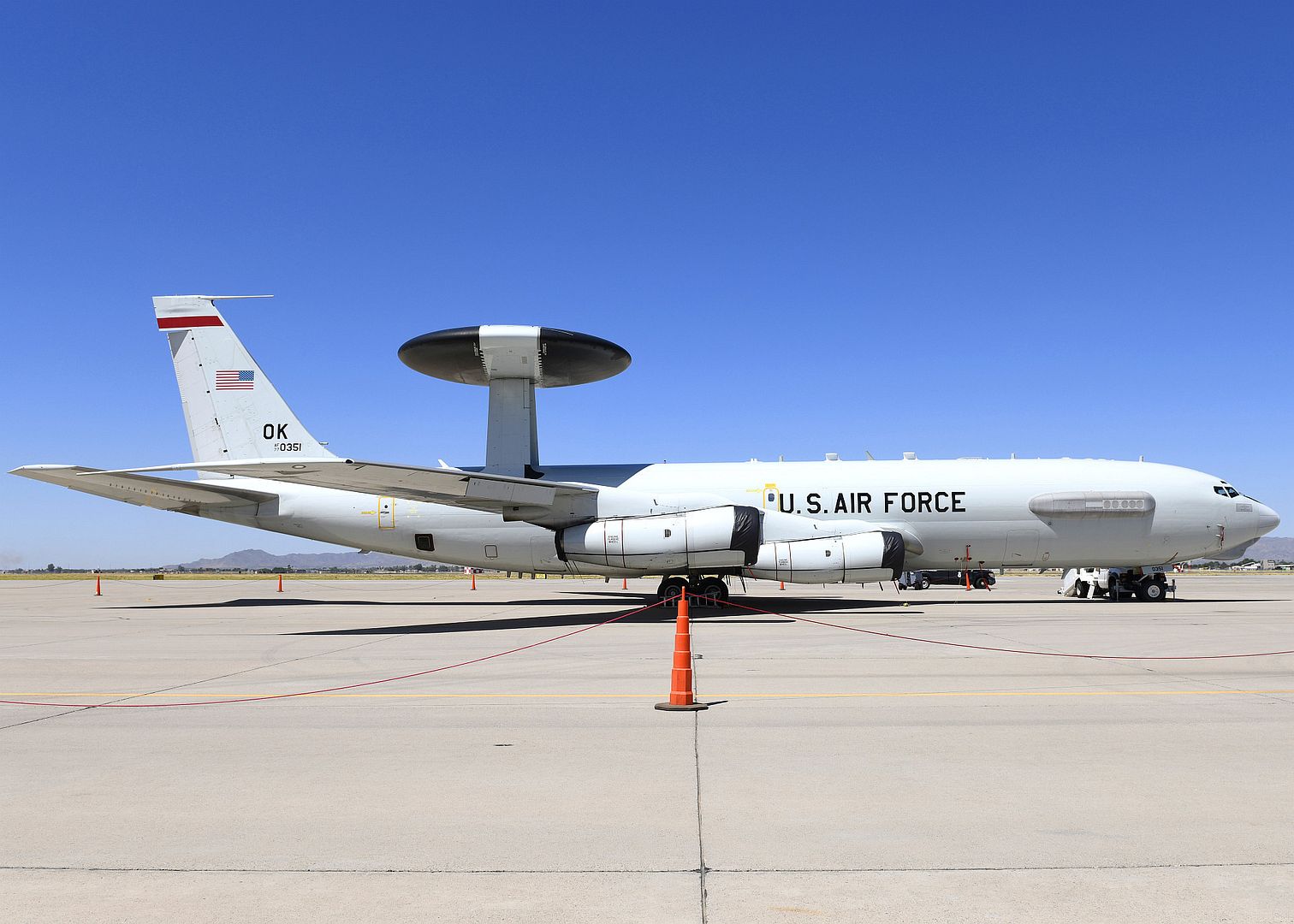
An E-3 Sentry Airborne Warning and Control System aircraft assigned to Tinker Air Force Base, Okla., sits on the transient ramp Aug. 19, 2019, at Luke AFB, Ariz. The AWACS is staging operations at Luke as they test new hot-weather equipment. The airborne platform is used to deliver weather surveillance, navigation, command, control and communications for commanders of U.S. and allied military forces. The radar and computer subsystems can gather positions and tracking information on both friendly and enemy aircraft, ships or ground forces. (U.S. Air Force photo's by Airman Brooke Moeder)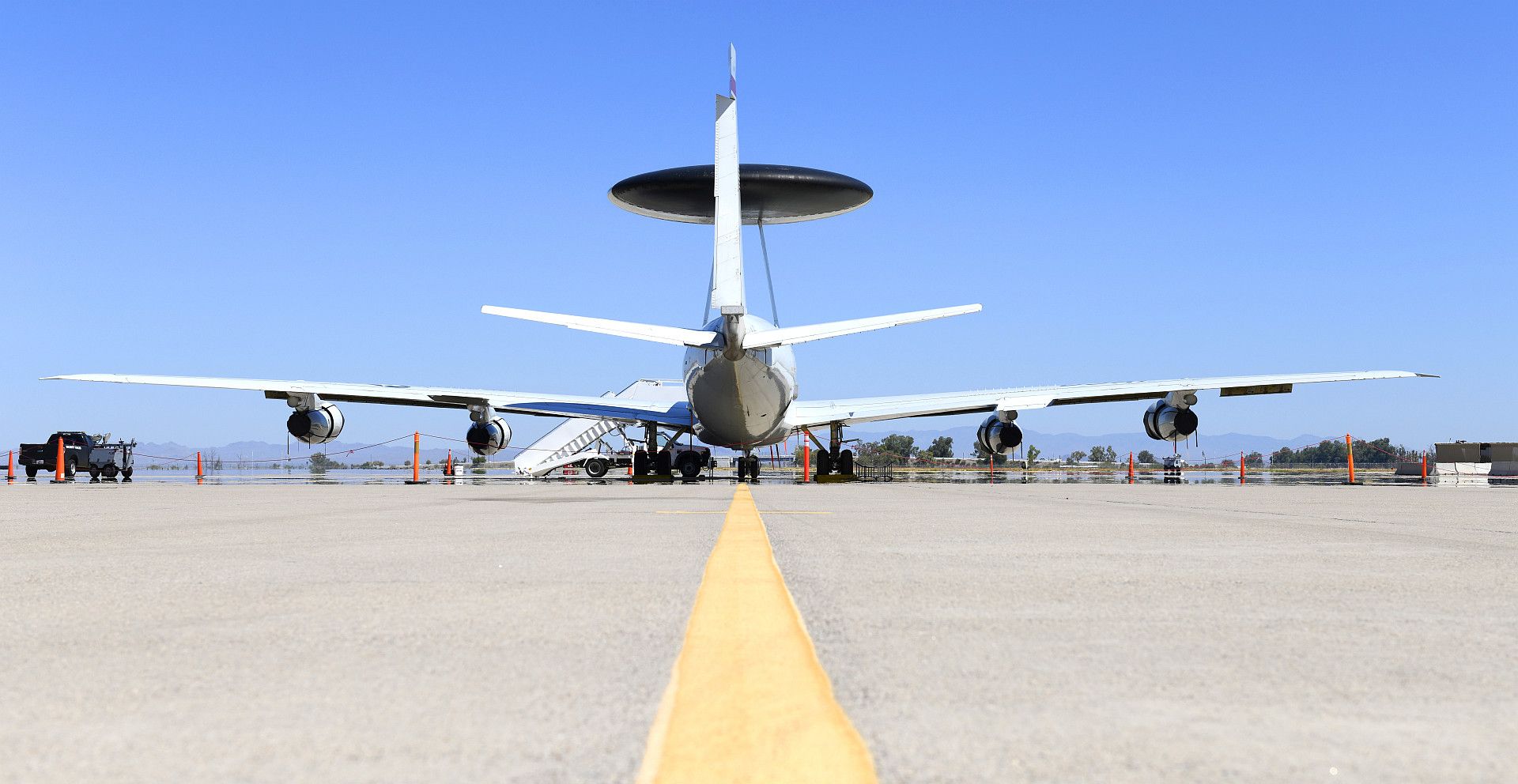
An F-35A takes off from Hill Air Force Base, Utah, the evening of Aug. 20, 2019, as the active duty 388th and reserve 419th Fighter Wings conducted local night flying operations. The wings are required to train at night to maintain their readiness and all-weather capabilities. Increased flying also provides a valuable opportunity to evaluate aircraft maintenance resiliency and operational agility. (U.S. Air Force photo by R. Nial Bradshaw)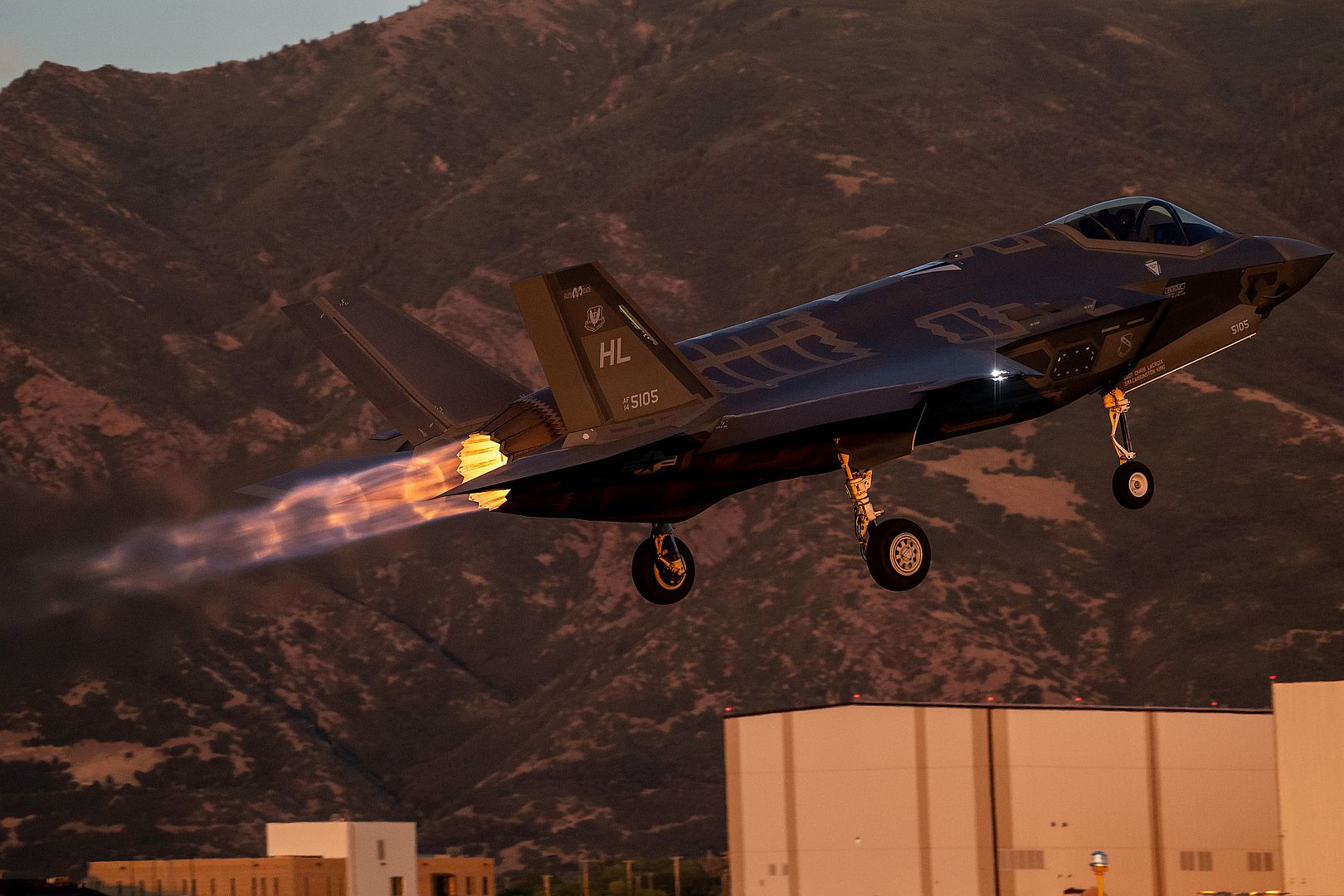
An F-35A lifts off from Hill Air Force Base, Utah, the evening of Aug. 20, 2019, as the active duty 388th and reserve 419th Fighter Wings conducted local night flying operations. The wings are required to train at night to maintain their readiness and all-weather capabilities. Increased flying also provides a valuable opportunity to evaluate aircraft maintenance resiliency and operational agility. (U.S. Air Force photo by R. Nial Bradshaw)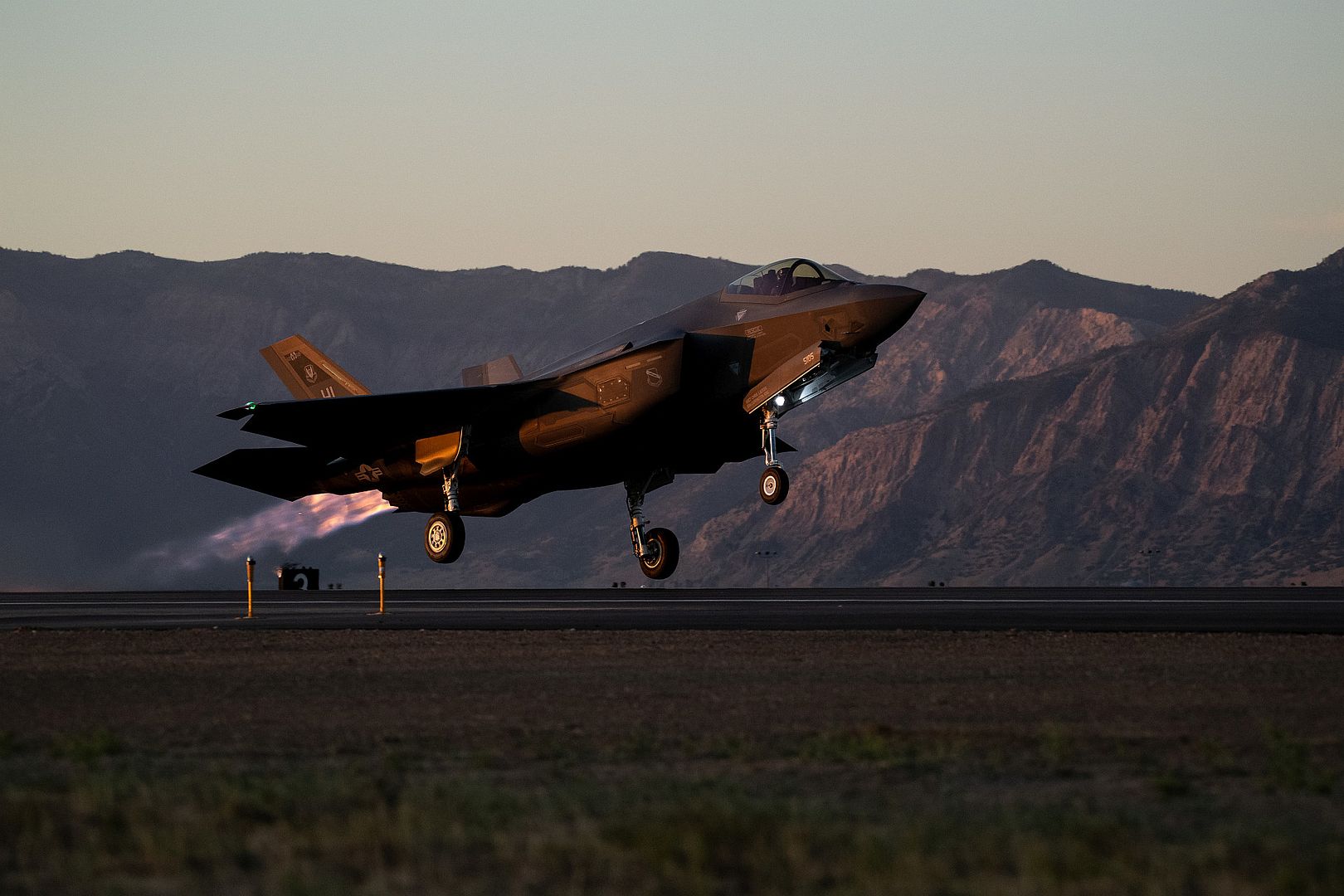
ARABIAN SEA (Aug. 21, 2019) An F/A-18E Super Hornet attached to the Pukin' Dogs of Strike Fighter Squadron (VFA) 143 makes an arrested landing on the flight deck of the aircraft carrier USS Abraham Lincoln (CVN 72). Abraham Lincoln Carrier Strike Group is deployed to the U.S. 5th Fleet area of operations in support of naval operations to ensure maritime stability and security in the Central Region, connecting the Mediterranean and the Pacific through the western Indian Ocean and three strategic choke points. With Abraham Lincoln as the flagship, deployed strike group assets include staffs, ships and aircraft of Carrier Strike Group (CSG) 12 , Destroyer Squadron (DESRON) 2, USS Leyte Gulf (CG 55) and Carrier Air Wing (CVW) 7. (U.S. Navy photo by Mass Communication Specialist 3rd Class Garrett LaBarge/Released)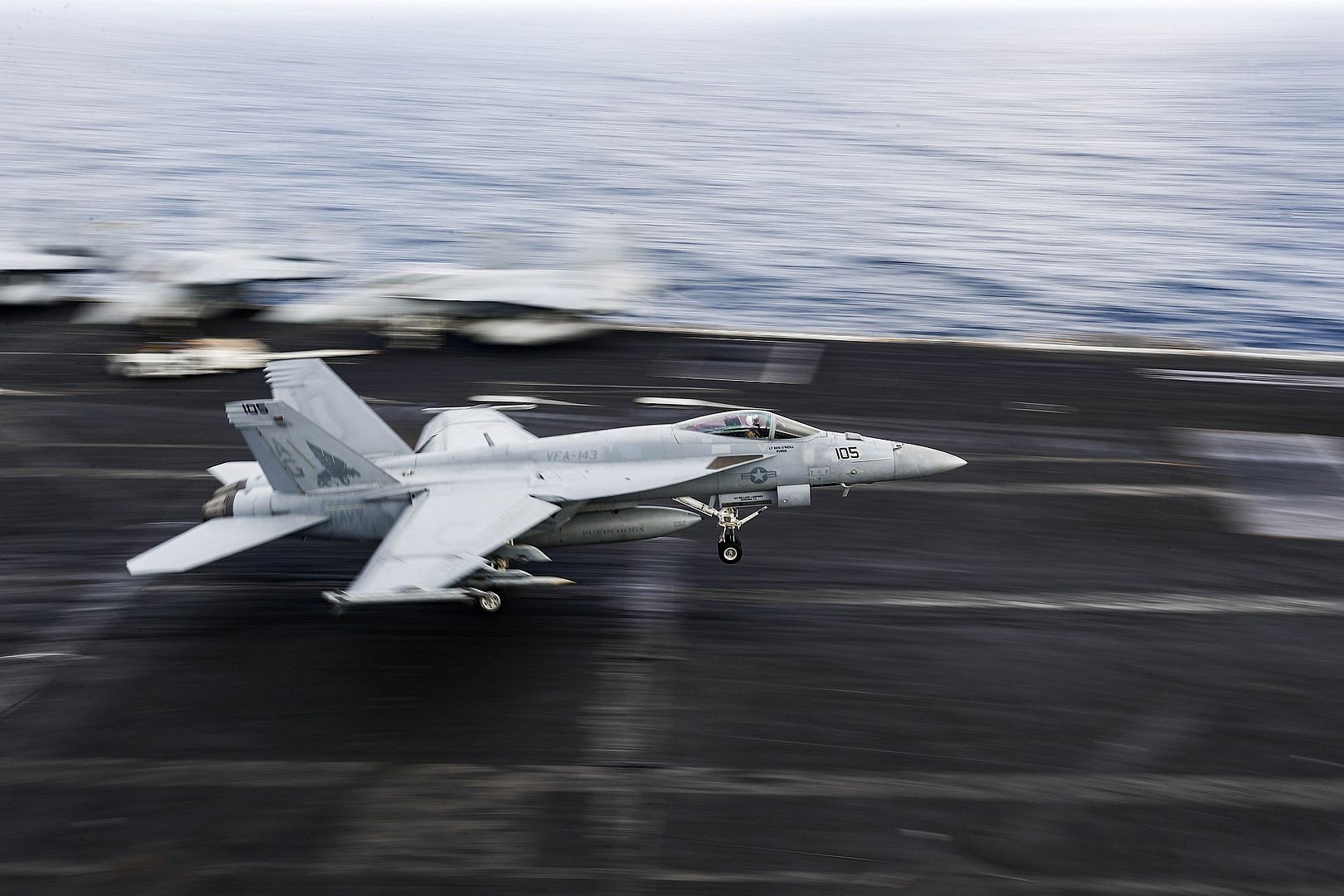
DULLES, Va. ? Aug. 22, 2019 ? Northrop Grumman Corporation (NYSE: NOC) provided the rocket boosters for today?s successful launch and deployment of the U.S. Air Force?s second Global Positioning System III-series satellite (GPS III SV02) on a United Launch Alliance (ULA) Delta IV Medium-Plus (M+) configuration rocket from Cape Canaveral Air Force Station, Florida. This launch marks the final flight for Northrop Grumman?s Graphite Epoxy Motors 60 (GEM 60) series rocket motors.
?Northrop Grumman?s long and successful rocket heritage plays an important role in maintaining assured access to space for national security,? said Charlie Precourt, vice president, propulsion systems, Northrop Grumman. ?As we retire the 100 percent successful GEM 60, we look forward to flying evolved GEM motors on the Atlas V and future vehicles.?
For ULA?s Delta IV M+ configuration rocket, Northrop Grumman provided two 60-inch-diameter GEM 60 motors. At 53 feet long, the boosters burned for 90 seconds and together provided more than 560,000 pounds of thrust.
Northrop Grumman first began developing the GEM 60 motors to increase the payload-to-orbit capability of the Delta IV M+ launch vehicle ahead of its 2002 inaugural launch. This flight marks the final flight of GEM 60 motors after 17 years of 100 percent success. In total, the company manufactured 86 GEM 60 motors to be flown on 26 Delta IV launches.
From the GEM 60 motor, Northrop Grumman developed the 63-inch Graphite Epoxy Motor (GEM 63) and GEM 63XL variations under a cooperative development program with ULA. Up to five GEM 63 strap-on boosters can support a single Atlas V launch vehicle. The first GEM 63 boosters will fly in 2020. The GEM 63XL motor, currently in development, will support ULA?s Vulcan Centaur launch vehicle.
Northrop Grumman also produced several components and structures that flew on today?s mission that included: the interstage, centerbody, thermal shield, composite payload fairing, payload attach fitting and the payload attach fitting diaphragm.
(U.S. Air Force photo by Airman 1st Class Dalton Williams)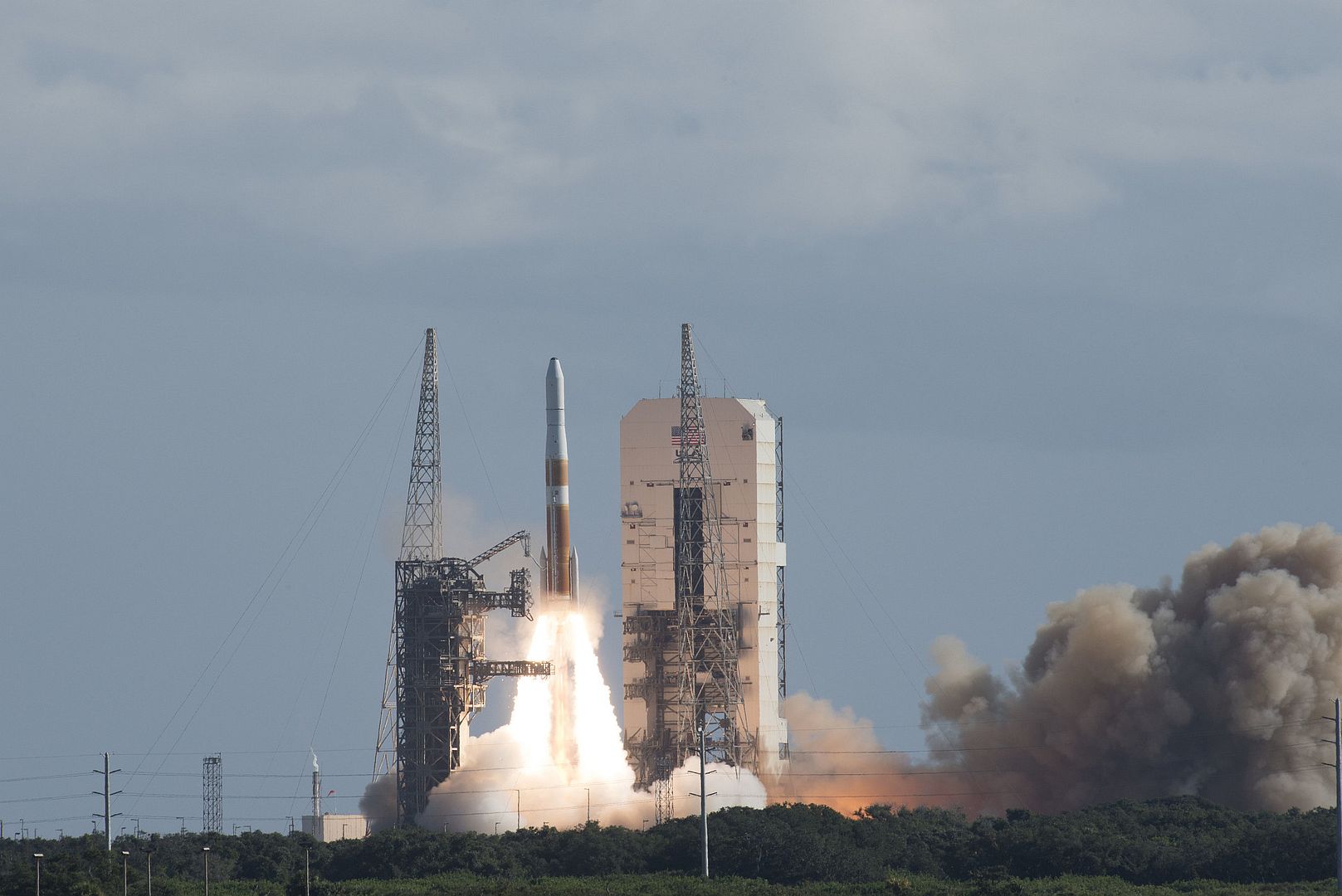
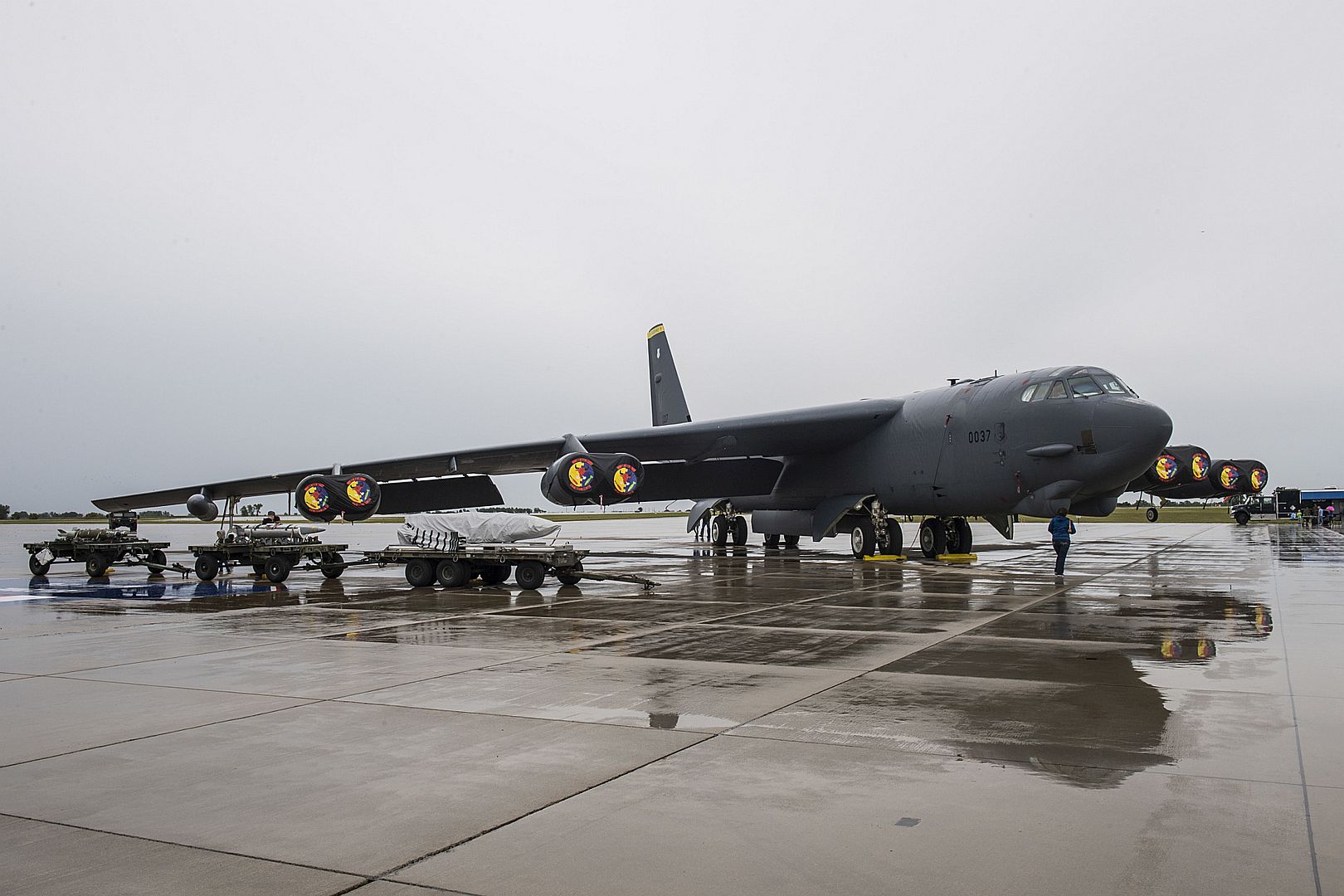
A B-52H Stratofortress is displayed during the 5th Bombardment Group 100th-year anniversary open house at Minot Air Force Base, North Dakota, Aug. 18, 2019. The event showcased some of Team Minot?s various assets, including the 54th Helicopter Squadron, 91st Missile Security Forces Squadron and 5th Security Forces Squadron. (U.S. Air Force photo's by Senior Airman Jonathan McElderry)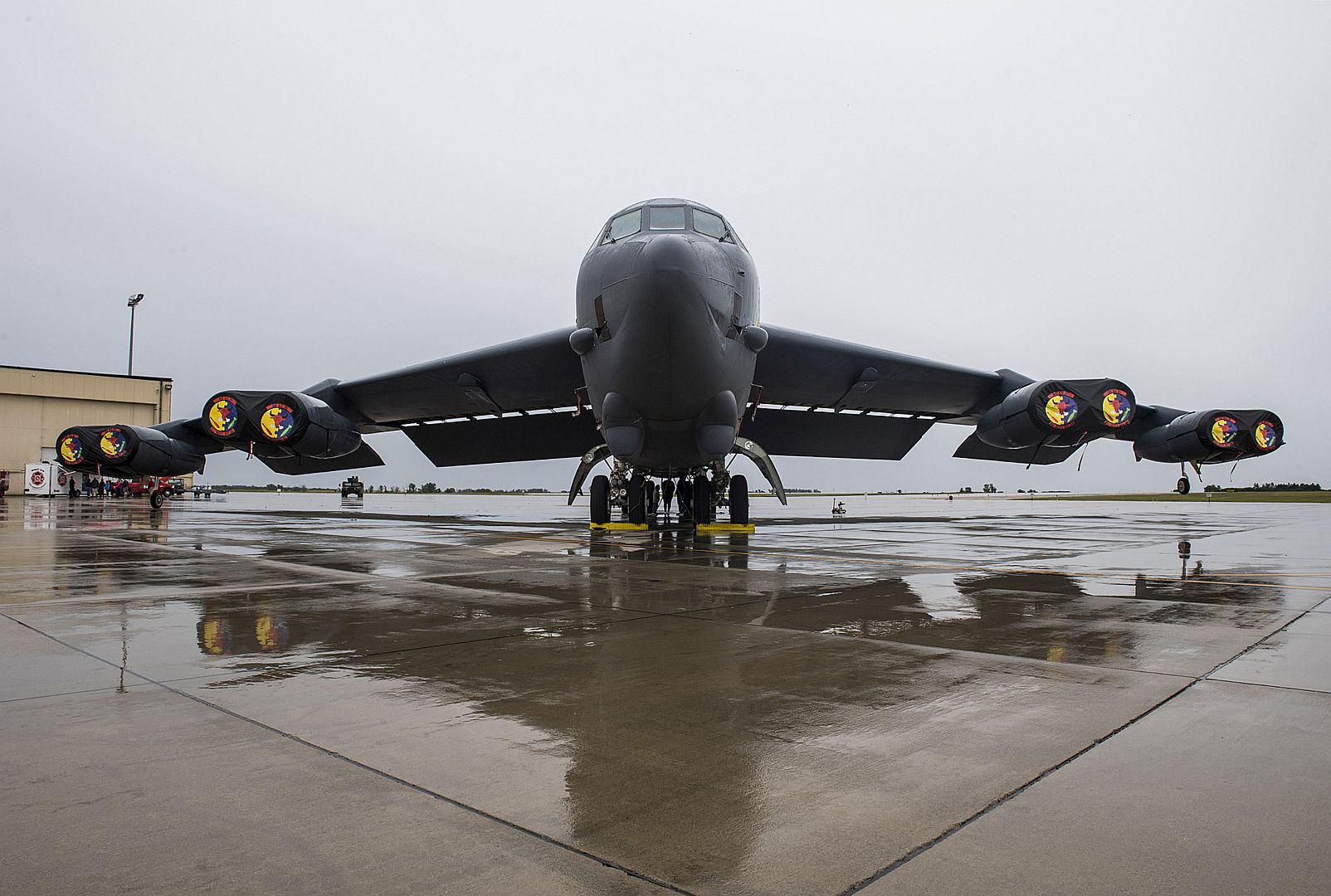
PLANO, Texas, Aug. 21, 2019 /PRNewswire/ -- Boeing (NYSE: BA) will continue its legacy of A-10 Thunderbolt II sustainment work under an Indefinite Delivery/Indefinite Quantity (IDIQ) contract award from the U.S. Air Force (USAF), with a maximum ceiling value of $999 million.
Under the contract, which was competitively awarded, Boeing will be responsible for managing the production of a maximum of 112 wing sets and spare kits. The USAF ordered 27 wing sets immediately at contract award.
"Boeing is honored to be selected to continue as the A-10 Thunderbolt II wing kit contractor," said Pam Valdez, vice president of Air Force Services for Boeing Global Services. "Our established supply base, experience with the A-10 structures, and our in-depth knowledge of the U.S. Air Force's requirements will help us deliver high-quality wings to meet the customer's critical need."
Boeing will team with Korean Aerospace Industries and other key suppliers to deliver the first wing sets to Hill Air Force Base in Ogden, Utah.
Under a previous contract, Boeing delivered 173 enhanced wing assemblies.
Boeing is the world's largest aerospace company and leading provider of commercial airplanes, defense, space and security systems, and global services. As the top U.S. exporter, the company supports commercial and government customers in more than 150 countries. Boeing employs more than 150,000 people worldwide and leverages the talents of a global supplier base. Building on a legacy of aerospace leadership, Boeing continues to lead in technology and innovation, deliver for its customers and invest in its people and future growth.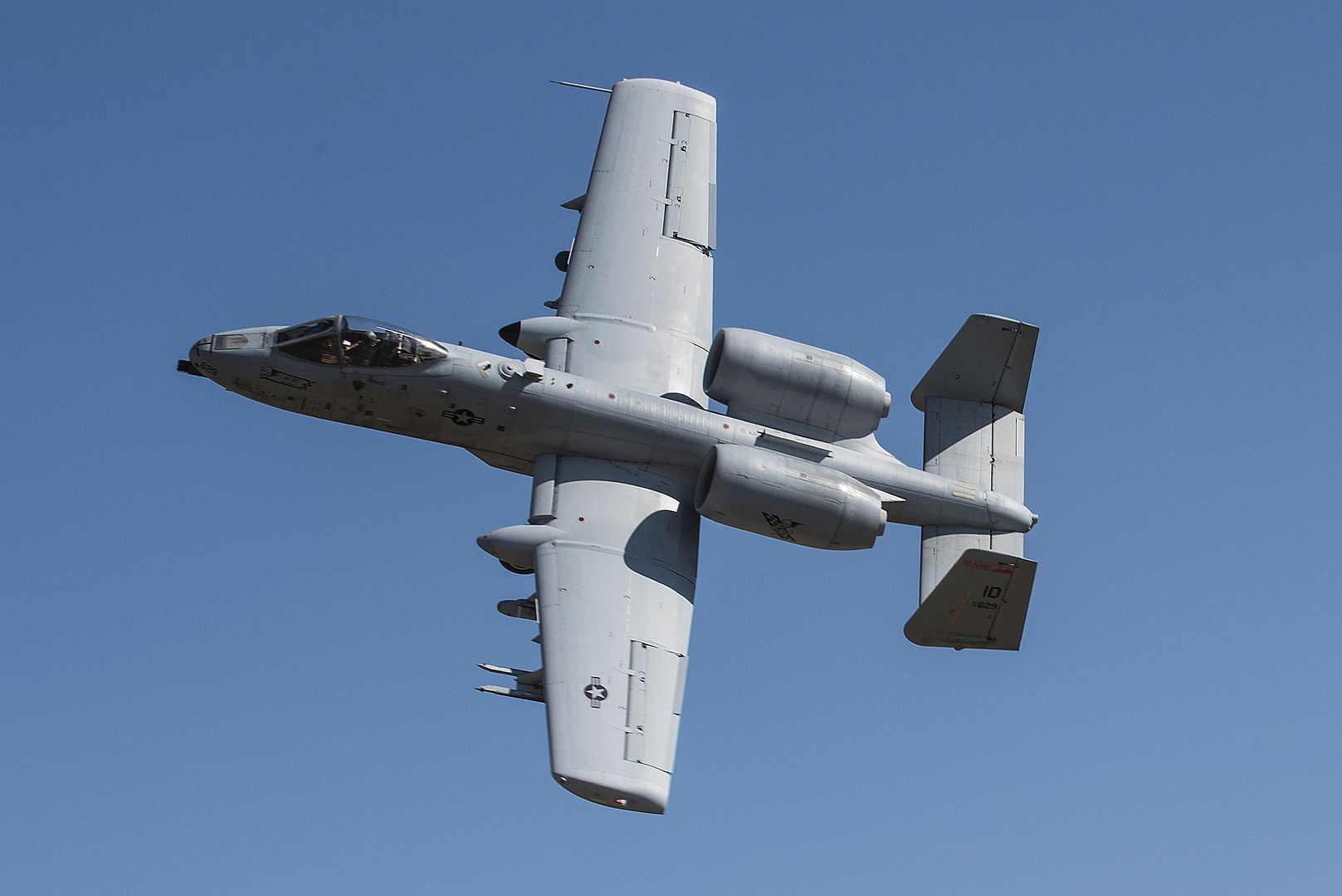
-
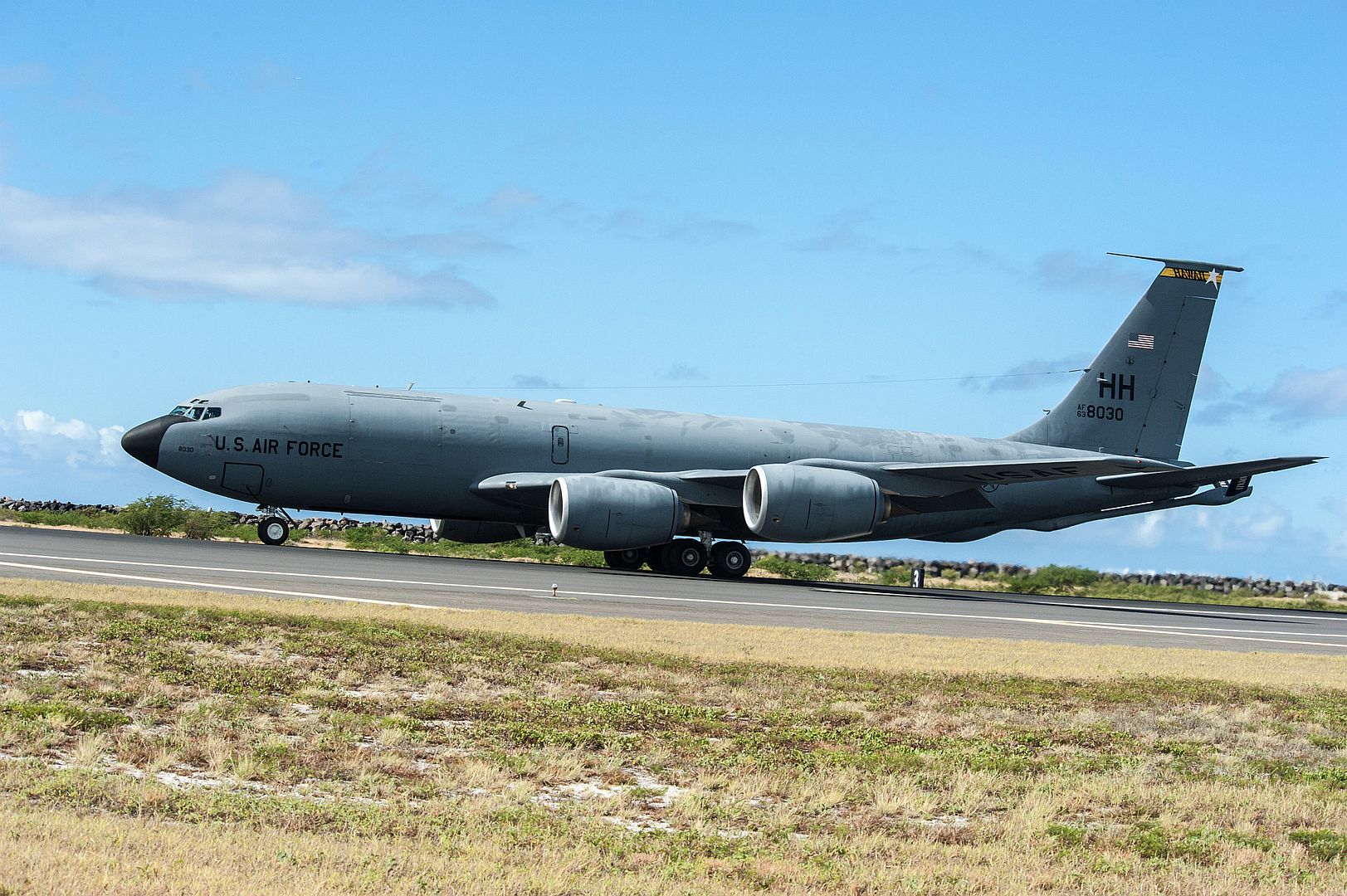
A KC-135 Stratotanker from the 203rd Air Refueling Squadron takes off at Joint Base Pearl Harbor-Hickam, Hawaii, Aug. 21, 2019 during fighter exercise Sentry Aloha 19-2. The exercise entails back-to-back combat sorties with visiting aircraft from visiting air national guard units and the Royal Australian Air Force. Sentry Aloha provides participants a multi-faceted, joint venue with supporting infrastructure and personnel. (U.S. Air National Guard photo by Senior Airman John Linzmeier)
A F-16 Fighting Falcon from the 138th Fighter Wing takes off at Joint Base Pearl Harbor-Hickam, Hawaii, Aug. 21, 2019 during fighter exercise Sentry Aloha 19-2. The longstanding exercise is held on a routine basis to provide Airmen with current, realistic and cost-effective training. This iteration of Sentry Aloha includes Air National Guard members from 15 states and a unit from the Royal Australian Air Force. (U.S. Air National Guard photo by Master Sgt. Mysti Bicoy)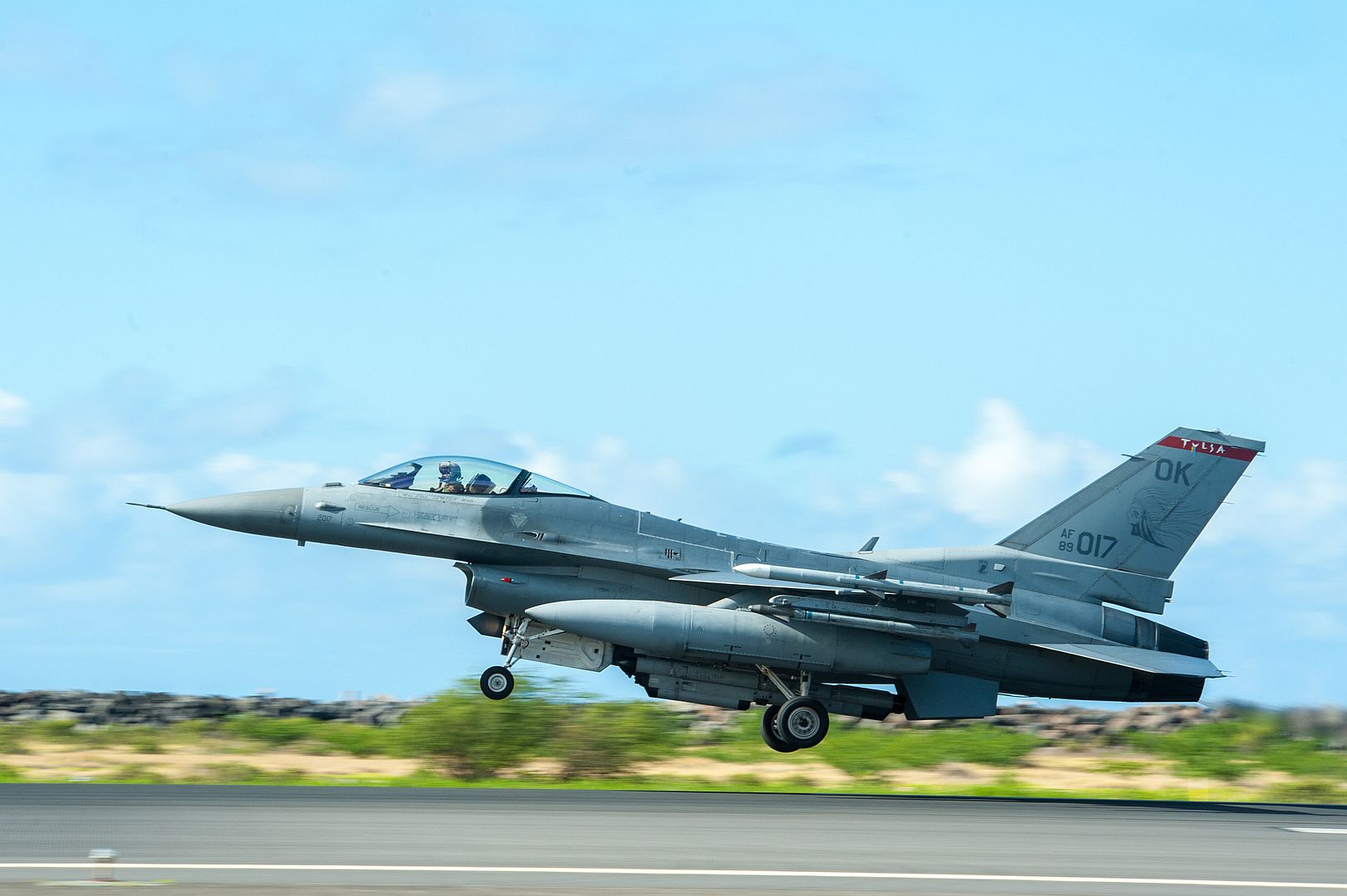
An F-15C Eagle from the 173th Fighter Wing takes off at Joint Base Pearl Harbor-Hickam, Hawaii, Aug. 21, 2019 during fighter exercise Sentry Aloha 19-2. The exercise entails back-to-back combat sorties with visiting aircraft from visiting air national guard units and the Royal Australian Air Force. Sentry Aloha provides participants a multi-faceted, joint venue with supporting infrastructure and personnel. (U.S. Air National Guard photo by Master Sgt. Mysti Bicoy)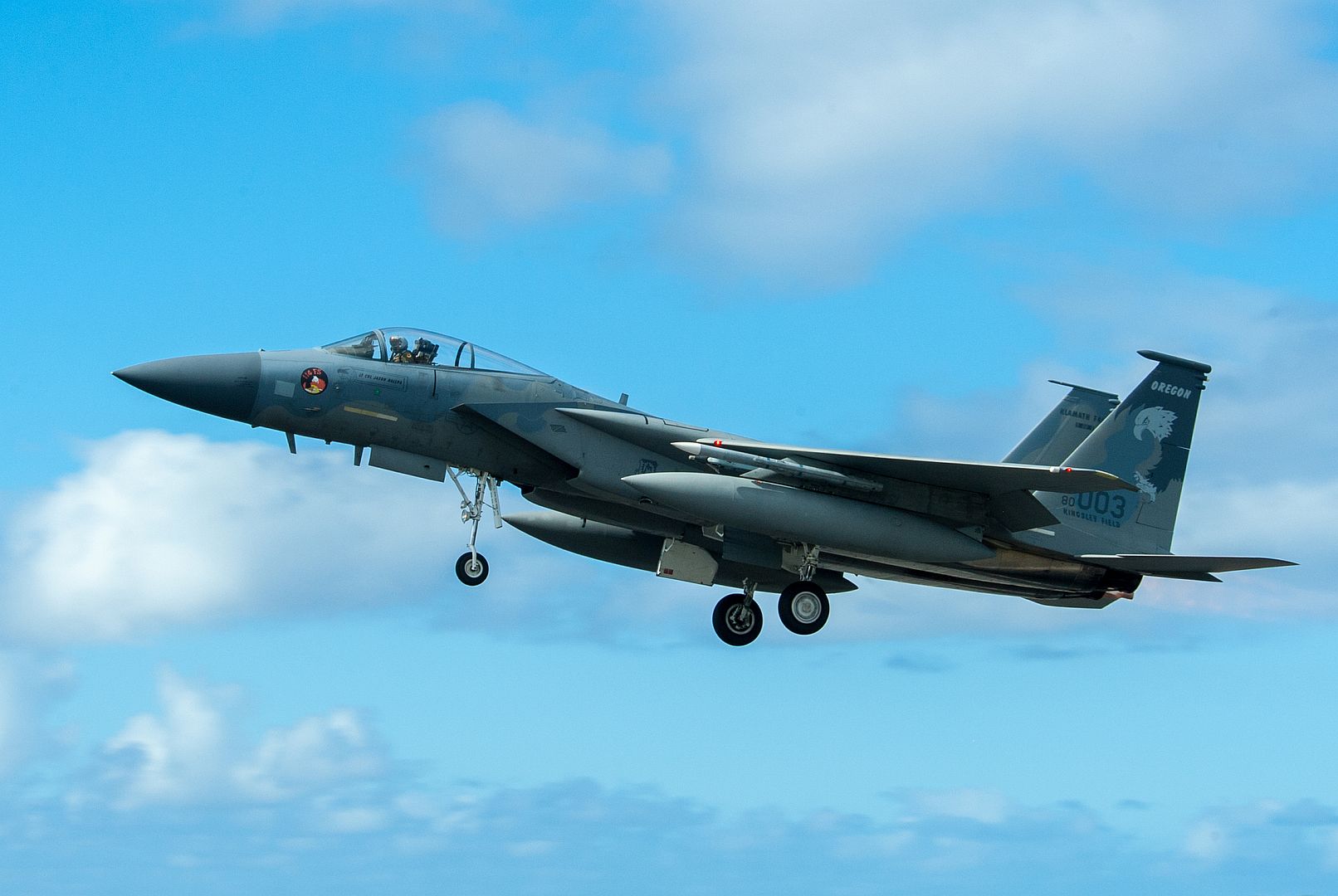
A Hawaii Air National Guard F-22 Raptor takes off at Joint Base Pearl Harbor-Hickam, Hawaii, Aug. 21, 2019 during fighter exercise Sentry Aloha 19-2. The longstanding exercise is held on a routine basis to provide Airmen with current, realistic and cost-effective training. This iteration of Sentry Aloha includes Air National Guard members from 15 states and a unit from the Royal Australian Air Force. (U.S. Air National Guard photo by Master Sgt. Mysti Bicoy)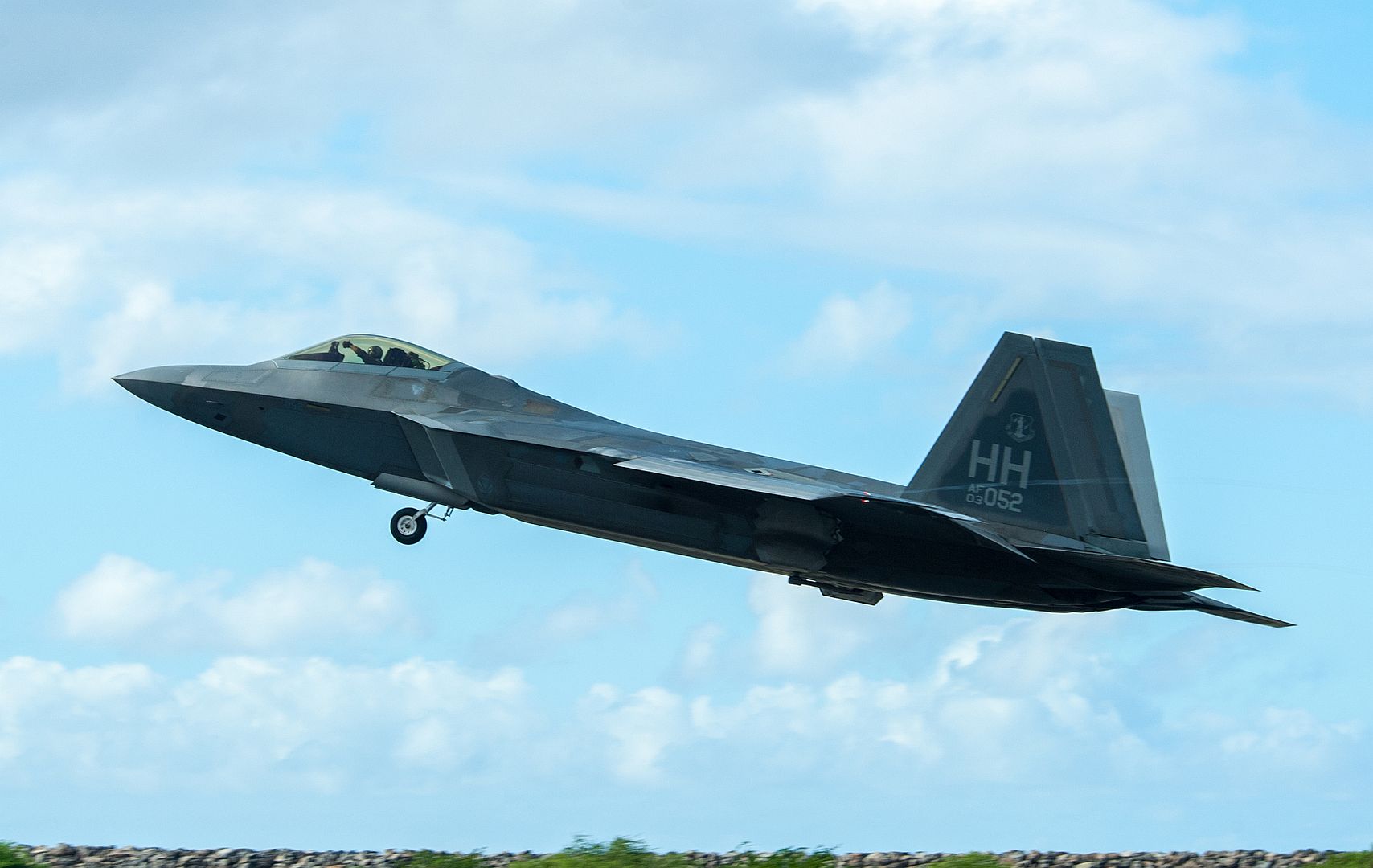
Air Force Staff Sgt. Theodore Crowley (F-35 Lightning II Dedicated Crew Chief) from the 33rd Aircraft Maintenance Squadron preps a 33rd Fighter Wing F-35A Lightning II at Volk Field Air National Guard Base, Wisconsin, during the Northern Lightning 19-2 exercise, Aug. 23, 2019. This two-week Northern Lightning exercise provided more than 1500 joint-force service members with tactical, high-end training. (Air National Guard photo by Staff Sgt. Kyle Russell)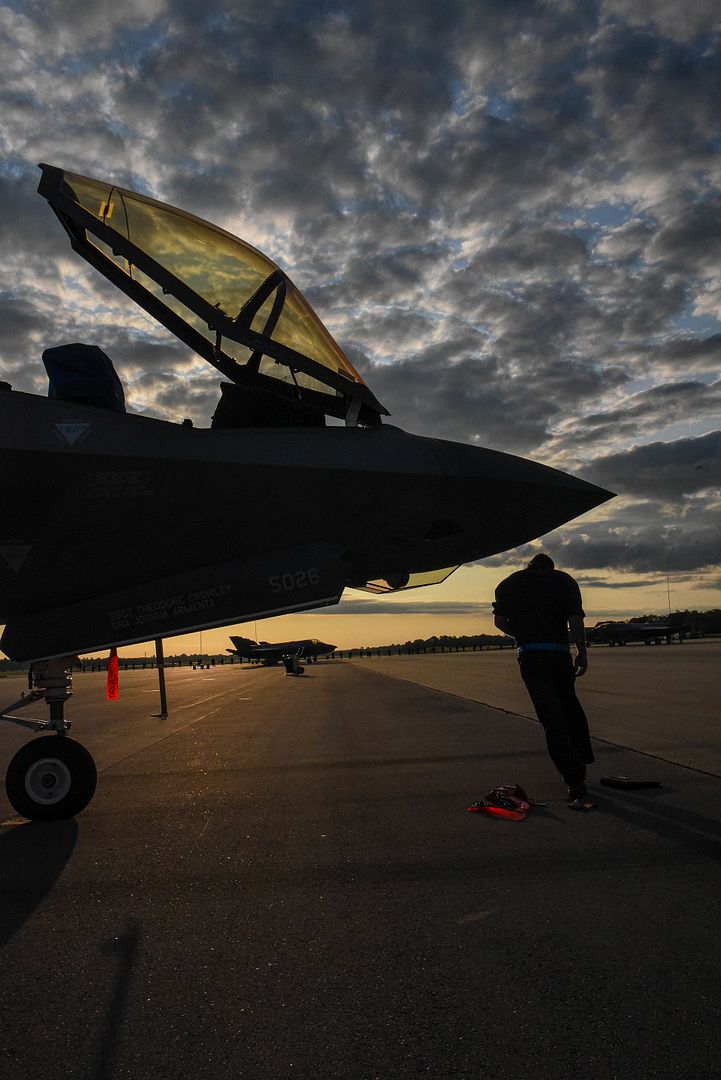
A U.S. Air National Guard C-130J retrofitted with the Modular Airborne Fire Fighting System (MAFFS) performs a pressurized water test of the MAFFS system at the Channel Islands Air National Guard Station, Port Hueneme, CA. Aug. 23, 2019. The MAFFS system uses water to perform a pressurized water testing the systems functionality before use. U.S. Air National Guard photo by Tech. Sgt. Nieko Carzis.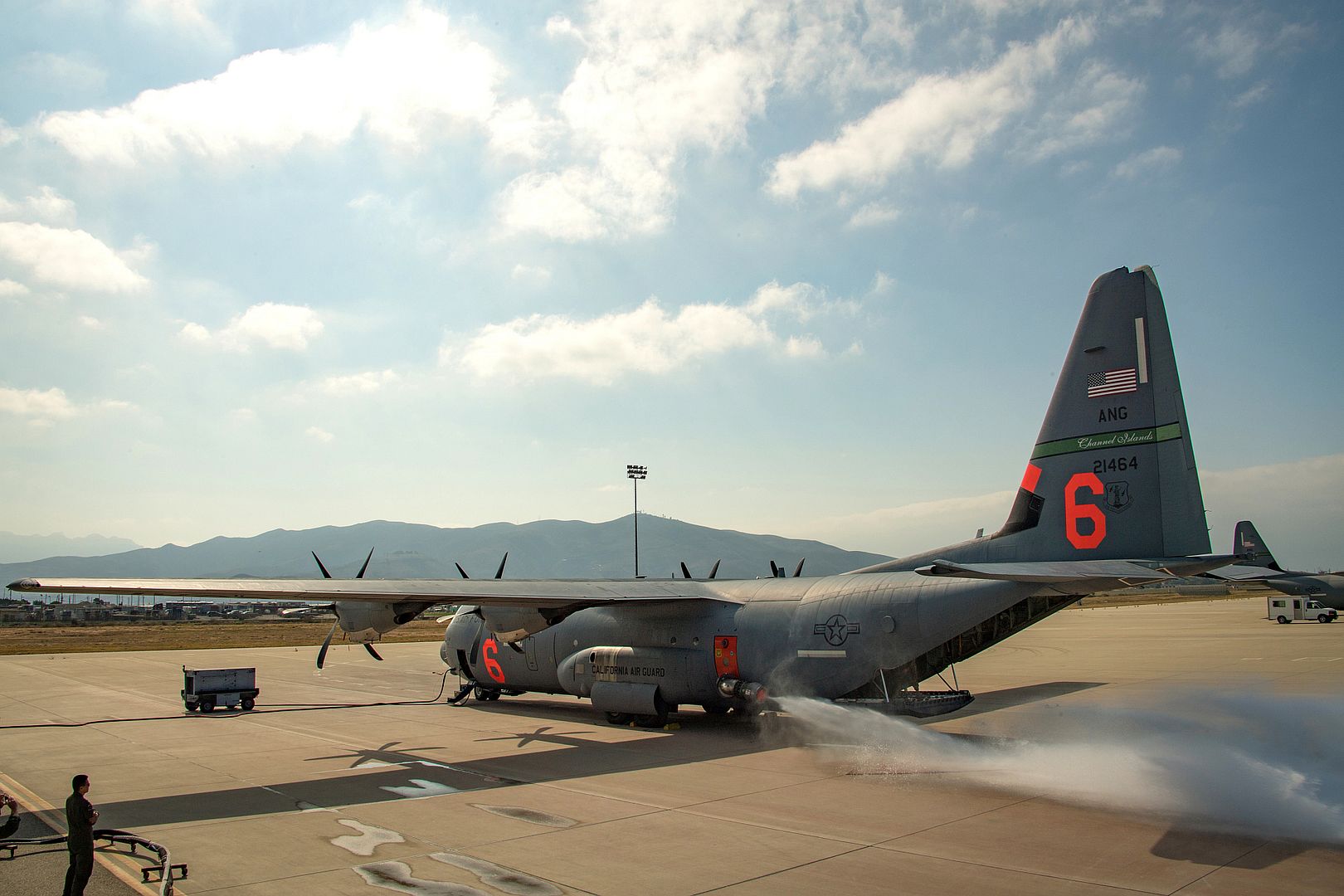
U.S. Soldiers assigned to 1st Squadron, 6th Cavalry Regiment, 1st Infantry Division, provide air support from an AH-64D Apache Longbow helicopter during Combined Resolve XII at the Hohenfels Training Area in Germany, Aug. 21, 2019. Combined Resolve XII is a biannual exercise that serves as the combat training center certification exercise for regionally allocated forces. This iteration of the exercise takes place in two phases at the Grafenwoehr and Hohenfels training areas between Aug. 1-11 and Aug. 11-27. (U.S. Army photo by Spc. Enrique Moya)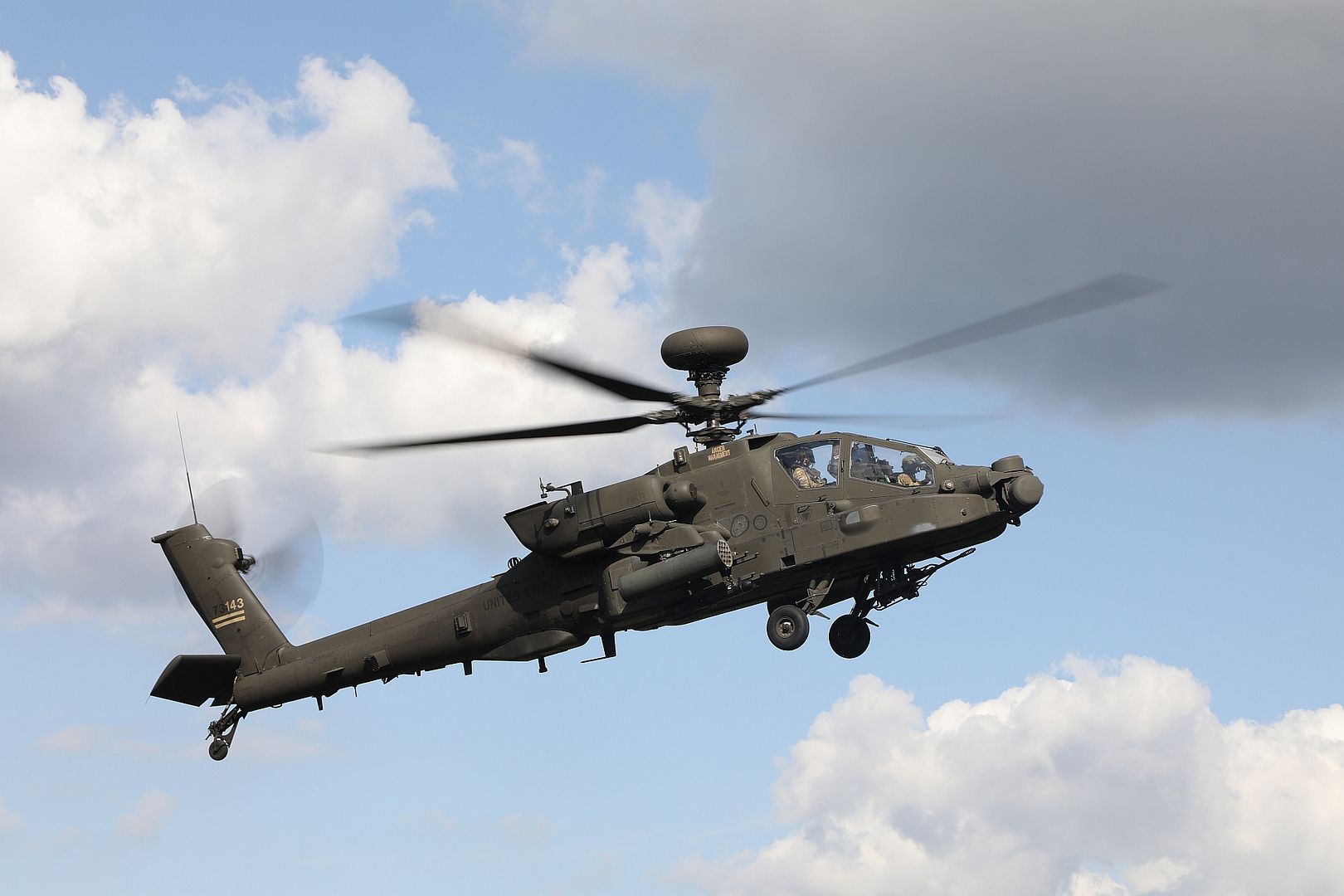
EAST CHINA SEA (August 22, 2019) A C-2A Greyhound from Fleet Logistics Support Squadron (VRC) 30 lands on the flight deck aboard the Navy?s forward-deployed aircraft carrier USS Ronald Reagan (CVN 76) during flight operations. Ronald Reagan, the flagship of Carrier Strike Group 5, provides a combat-ready force that protects and defends the collective maritime interests of its allies and partners in the Indo-Pacific region. (U.S. Navy photo by Mass Communication Specialist 2nd Class Janweb B. Lagazo)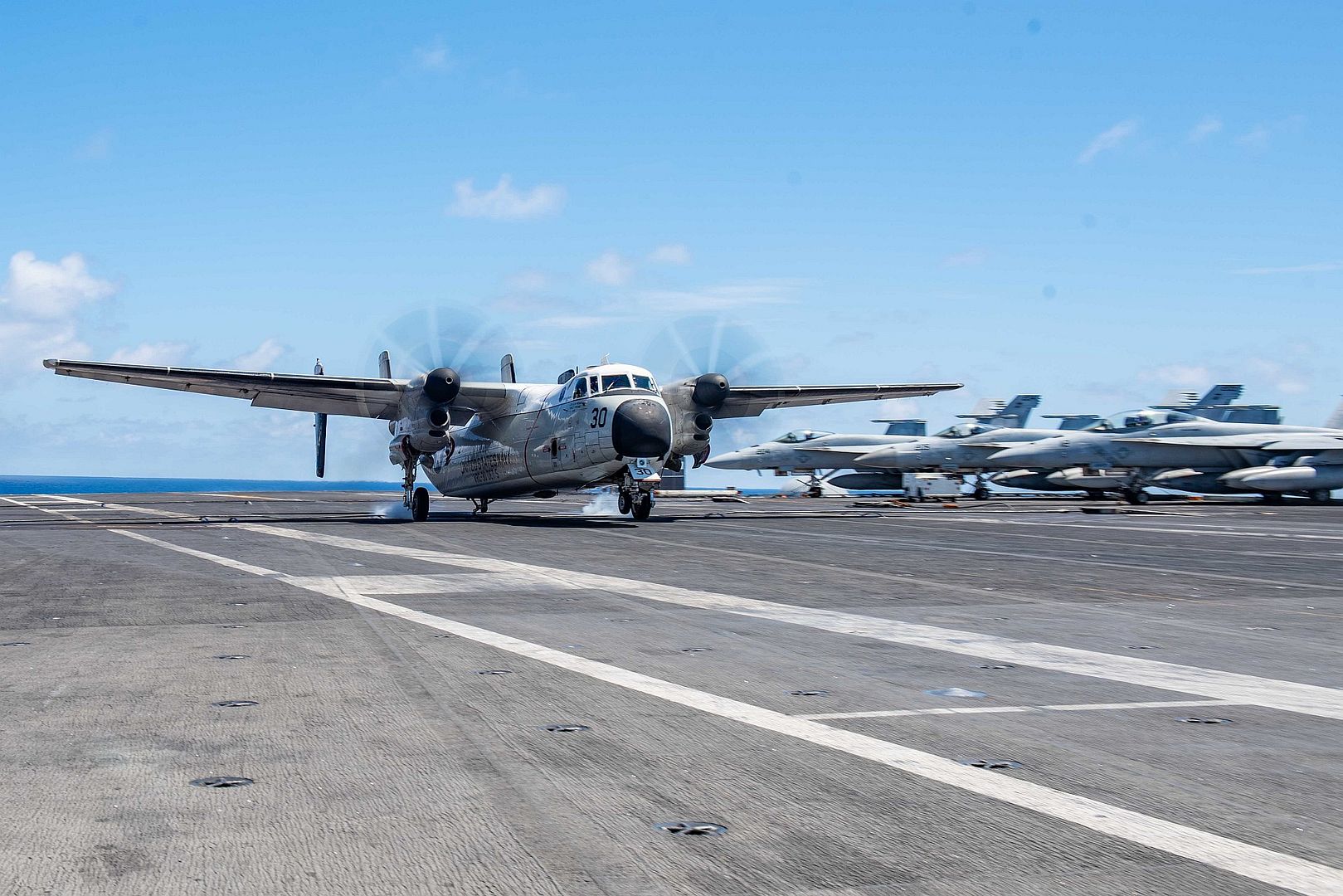
EAST CHINA SEA (August 22, 2019) An EA-18G Growler from Electronic Attack Squadron (VAQ) 141 launches from the flight deck aboard the Navy?s forward-deployed aircraft carrier USS Ronald Reagan (CVN 76) during flight operations. Ronald Reagan, the flagship of Carrier Strike Group 5, provides a combat-ready force that protects and defends the collective maritime interests of its allies and partners in the Indo-Pacific region. (U.S. Navy photo by Mass Communication Specialist 2nd Class Janweb B. Lagazo)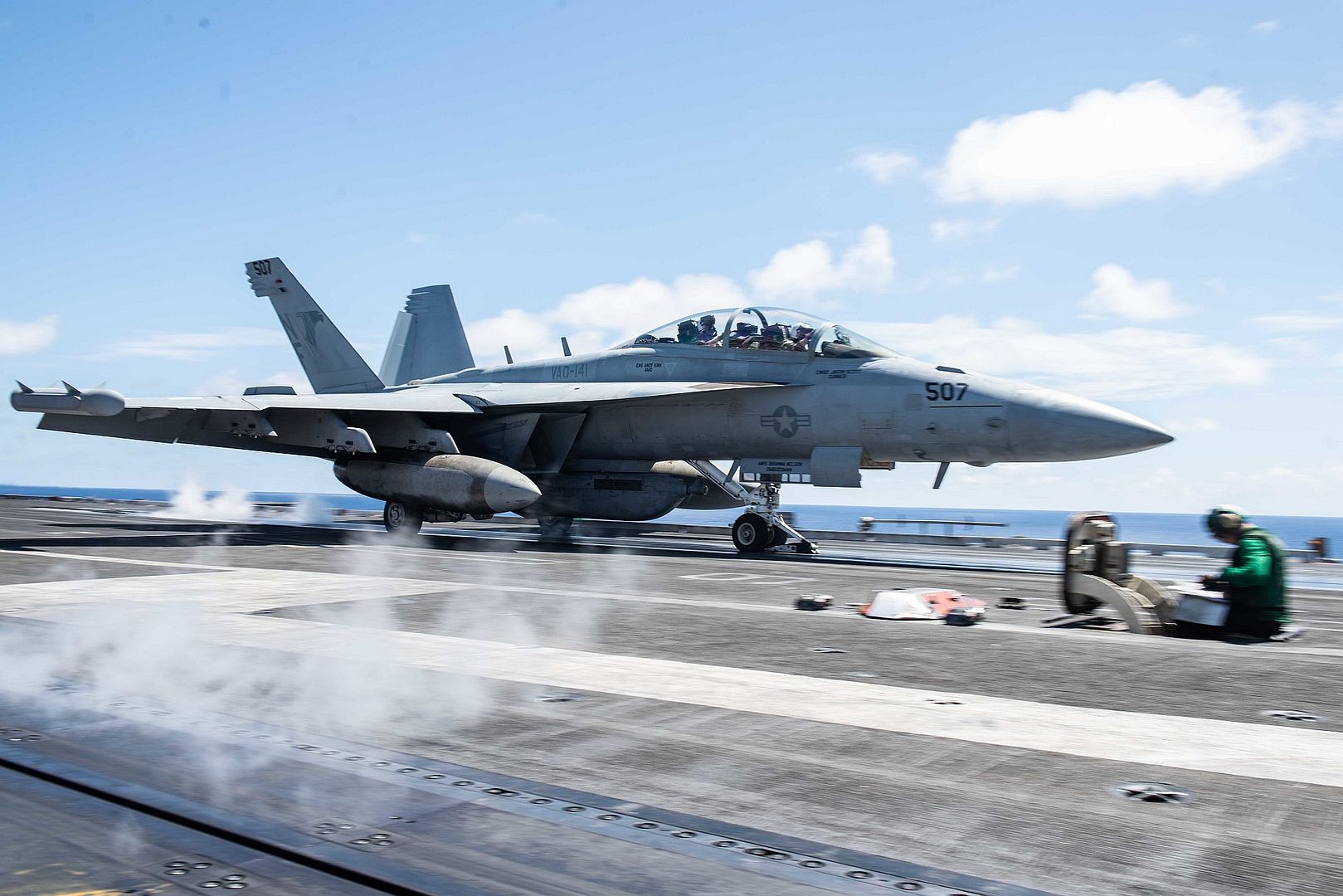
EAST CHINA SEA (August 22, 2019) A Sailor signals clear to launch an F/A-18E Super Hornet from Strike Fighter Squadron (VFA) 27 from the flight deck aboard the Navy?s forward-deployed aircraft carrier USS Ronald Reagan (CVN 76) during flight operations. Ronald Reagan, the flagship of Carrier Strike Group 5, provides a combat-ready force that protects and defends the collective maritime interests of its allies and partners in the Indo-Pacific region. (U.S. Navy photo by Mass Communication Specialist 2nd Class Janweb B. Lagazo)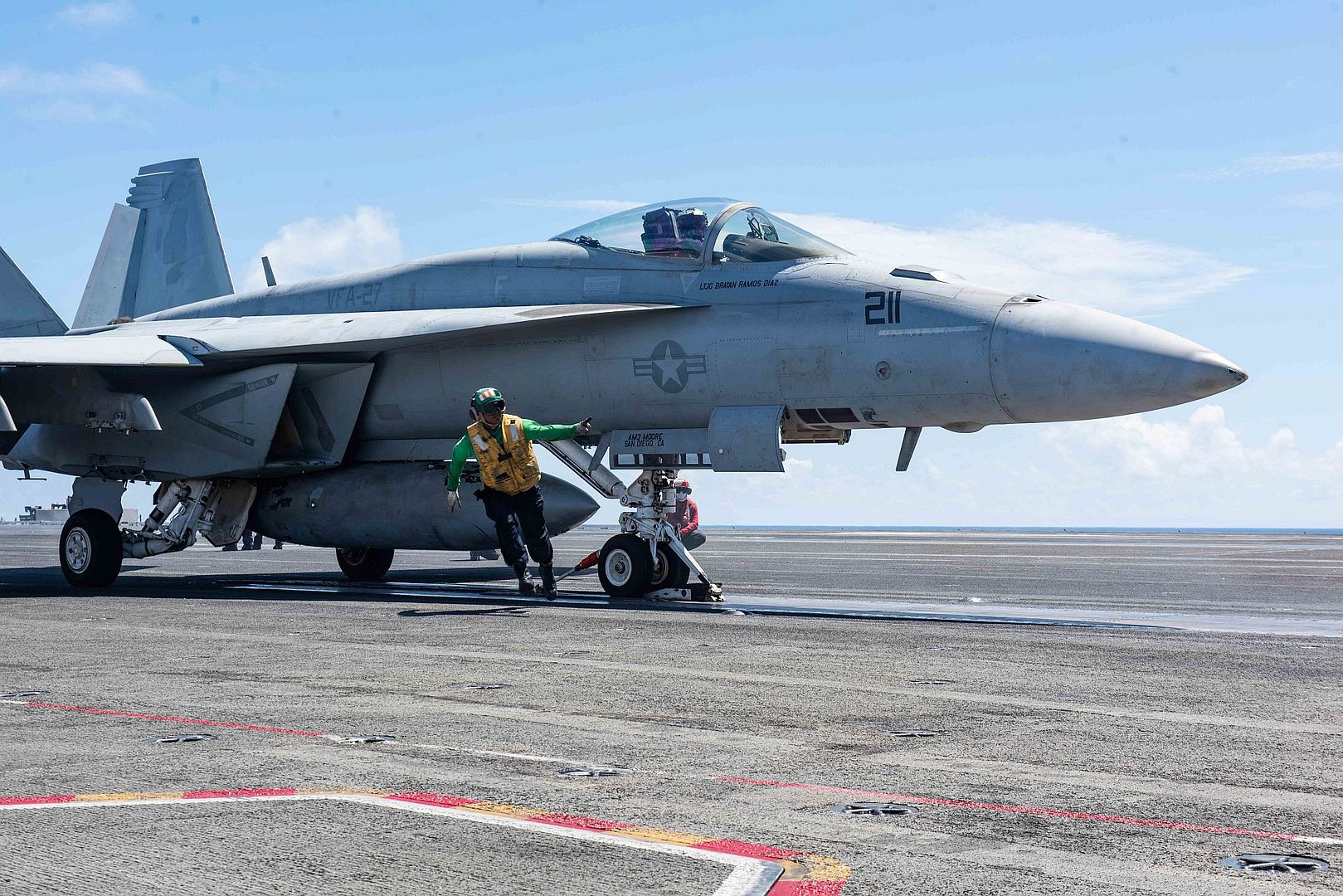
GULF OF AQABA (Aug. 21, 2019) Aviation Boatswain's Mate (Handling) Airman Devante Jones, assigned to amphibious assault ship USS Boxer (LHD 4), signals the crew of a CH-53E Super Stallion, attached to Marine Medium Tiltrotor Squadron (VMM) 163 (Reinforced) during flight operations. Boxer is part of the Boxer Amphibious Ready Group and 11th Marine Expeditionary Unit and is deployed to the U.S. 5th Fleet area of operations in support of naval operations to ensure maritime stability and security in the Central Region, connecting the Mediterranean and the Pacific through the western Indian Ocean and three strategic choke points. (U.S. Navy photo by Mass Communication Specialist 3rd Class Alexander C. Kubitza/Released)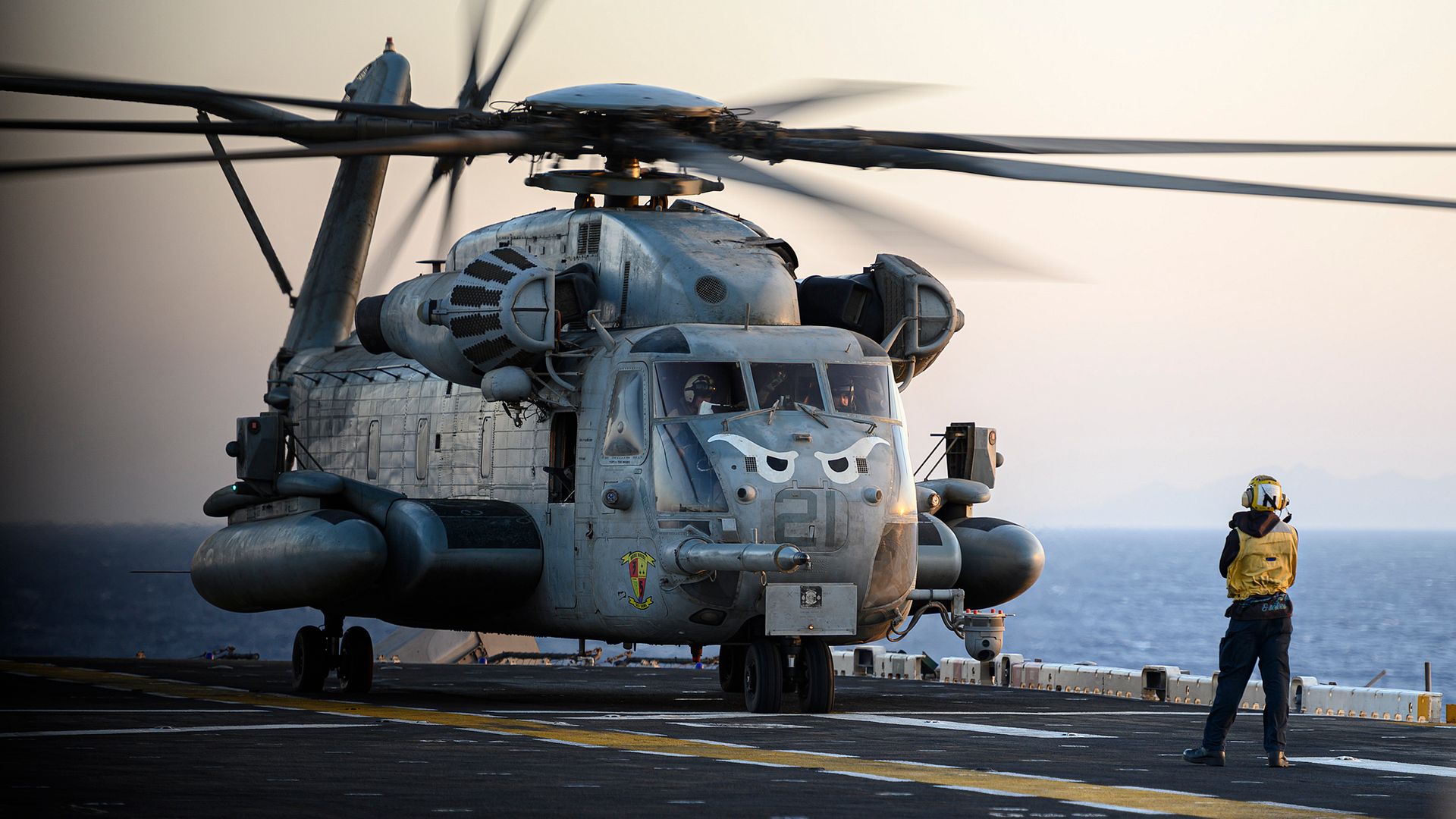
PHILIPPINE SEA (Aug 22, 2019) A CV-22 Osprey from the U.S. Air Force 21st Special Operations Squadron in Yokota, Japan conducts flight operations from the flight deck of the aircraft carrier USS Ronald Reagan (CVN 76). Ronald Reagan is forward-deployed to the U.S. 7th Fleet area of operations in support of security and stability in the Indo-Pacific region. (Mass Communication Specialist 1st Class Rufus Hucks/Released)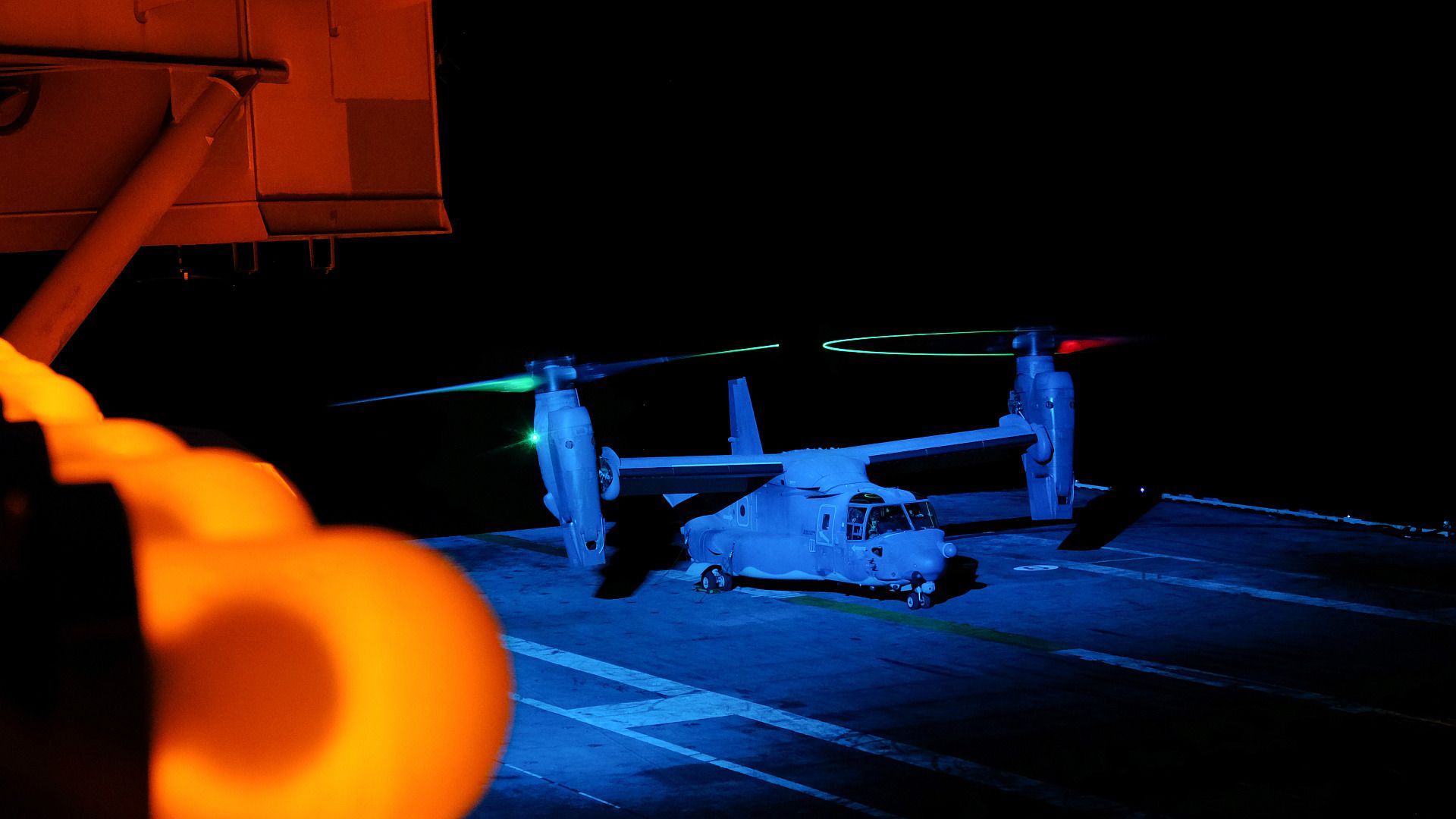
The first A220-300 for EgyptAir has successfully completed its inaugural test flight from the Mirabel assembly line. The first of 12 aircraft EgyptAir has on order is due to be delivered to the Cairo-based airline in the coming weeks.
The A220 for EgyptAir will provide passengers with superior comfort, its innovative cabin design featuring the widest economy seats of any single-aisle aircraft, and panoramic windows for more natural light. The aircraft, which is outfitted with a brand new cabin layout of 134 seats, will now enter its final phase of completion before delivery.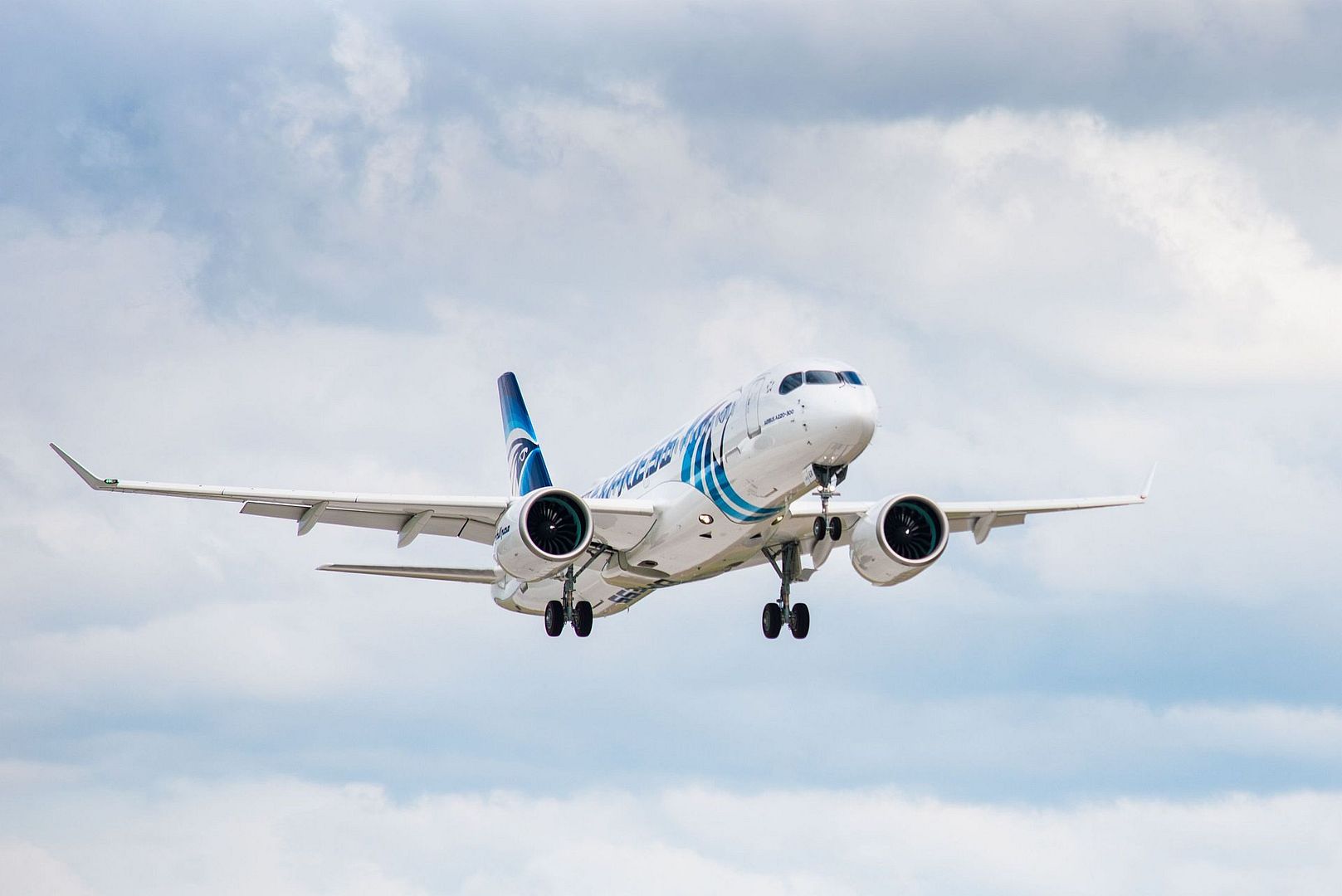
The A220 delivers unbeatable fuel efficiency and true wide-body comfort in a single-aisle aircraft. The A220 brings together state-of-the-art aerodynamics, advanced materials and Pratt & Whitney?s latest-generation PW1500G geared turbofan engines to offer at least 20% lower fuel burn per seat compared to previous generation aircraft. With a range of up to 3,400 nm (6,300 km), the A220 offers the performance of larger single-aisle aircraft.
More than 80 A220 aircraft are flying with five operators on regional and transcontinental routes in Asia, America, Europe and Africa, proving the great versatility of Airbus? latest addition.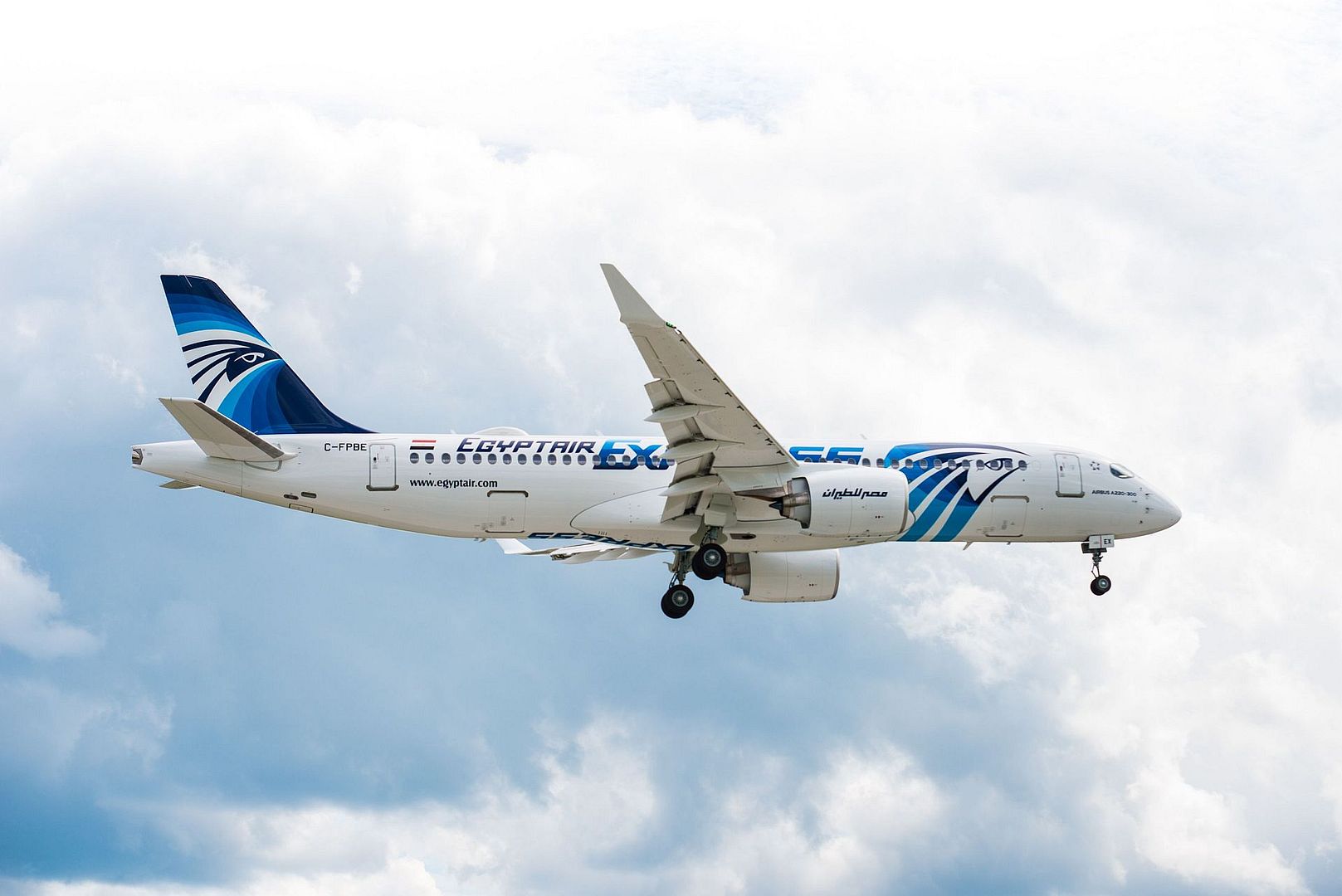
23 August 2019 10:25
Leonardo welcomes the continued commitment made by Canada?s Minister of National Defence, the Honourable Harjit S. Sajjan, to modernize and expand Canada?s primary rotary search and rescue helicopter fleet through the Cormorant Mid-Life Upgrade (CMLU) program. Yesterday?s announcement marks a major step forward ahead of program finalization.
To date, the AW101/CH-149 ?Cormorant? has enabled the Royal Canadian Air Force (RCAF) search and rescue crews to successfully complete thousands of rescues, including several that received international recognition for their heroism. Leonardo is very proud that the Cormorant has been trusted to provide the capabilities to ensure these rescues were possible in any weather condition, anywhere in Canada or offshore and with this announcement, will continue to do so for decades to come. The Cormorant provides an unmatched capability in meeting Canada?s search and rescue requirements that allows the conduct of operations in areas not accessible by other helicopter types.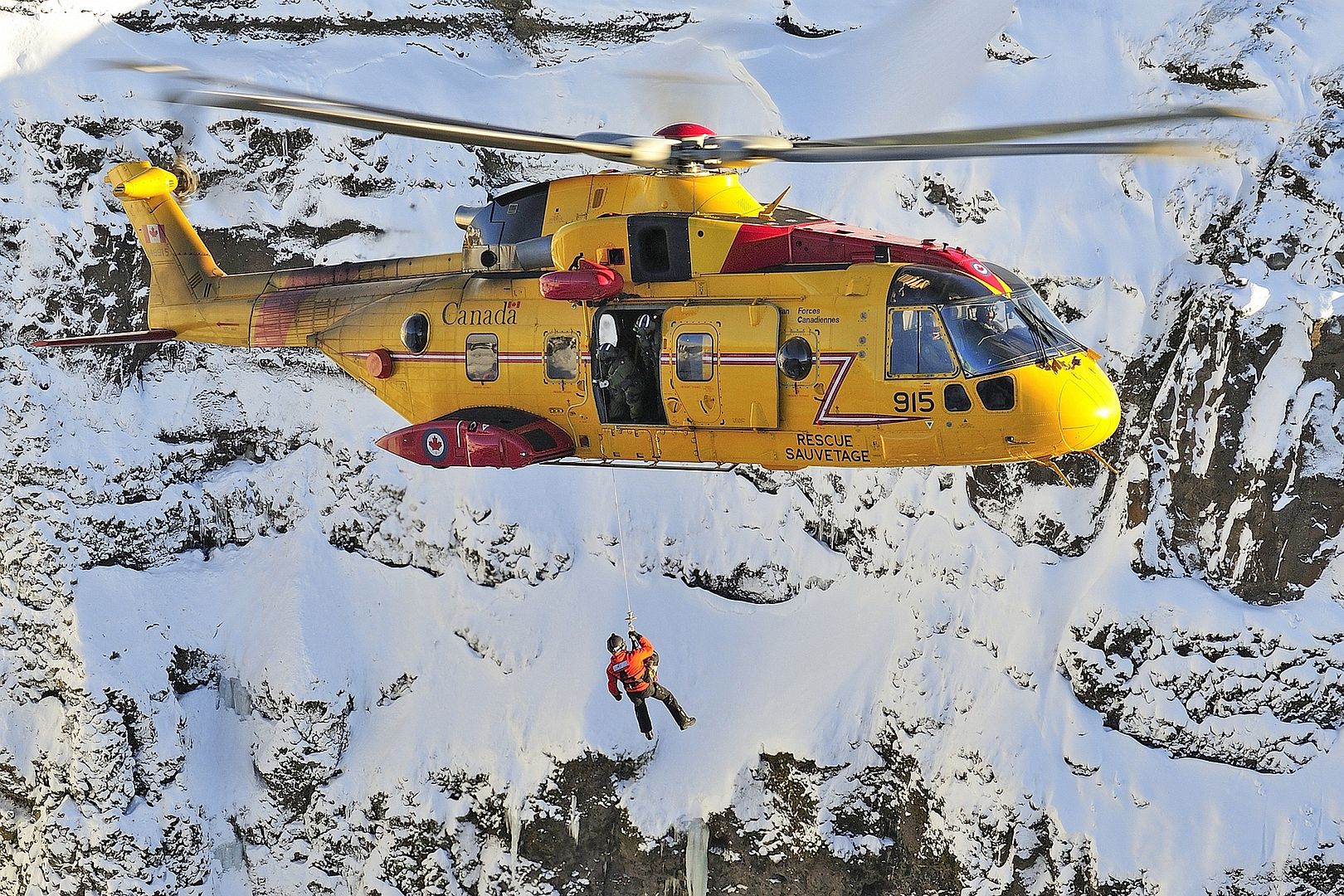
The CMLU program will upgrade the Cormorants to the latest AW101-612 standard, currently being delivered to Norway, providing a low risk upgrade path with a modern, proven solution. These capability enhancements and equipment improvements will include state-of-the-art avionics, a new ?glass cockpit?, the addition of the latest sensors, radar and search enhancement technology, more powerful digitally-controlled engines, wireless in-cabin communications, LED lighting, rescue hoist upgrades, synthetic training solutions and more, enabling the Cormorants to spend less time searching and more time rescuing stranded Canadians.
Leonardo, as "Team Cormorant? prime contractor, will work closely with IMP Aerospace and Defence to deliver the CMLU program in Canada, with the work undertaken by Canadians. CAE will deliver Canada?s first AW101 full motion simulator and other synthetic training capabilities. GE Canada will provide the new engines and Collins Aerospace will provide the new cockpit displays and avionics. Other Canadian suppliers will be engaged through a robust Industrial Technological Benefits (ITB) and Value Proposition program which will deliver the maximum value of the CMLU and fleet expansion to Canada.
The proposed CMLU and fleet expansion program will be delivered with no interruption or reduction in rotary search and rescue capabilities and will return Canada?s primary search and rescue helicopter to service at CFB Trenton.
About Leonardo in Canada
Leonardo is a global high-tech company operating in the Aerospace, Defence and Security sectors. We are proud to be expanding our presence in Canada where we have been present for more than 50 years. Today you will find our air ambulance and Cormorant Search and Rescue helicopters saving Canadian lives every day, our radars and electronic systems helping to safely control air traffic and provide weather forecasts, aircraft from our joint venture ATR connecting communities across Canada and soon our parcel sorting technology helping to deliver millions of packages on time.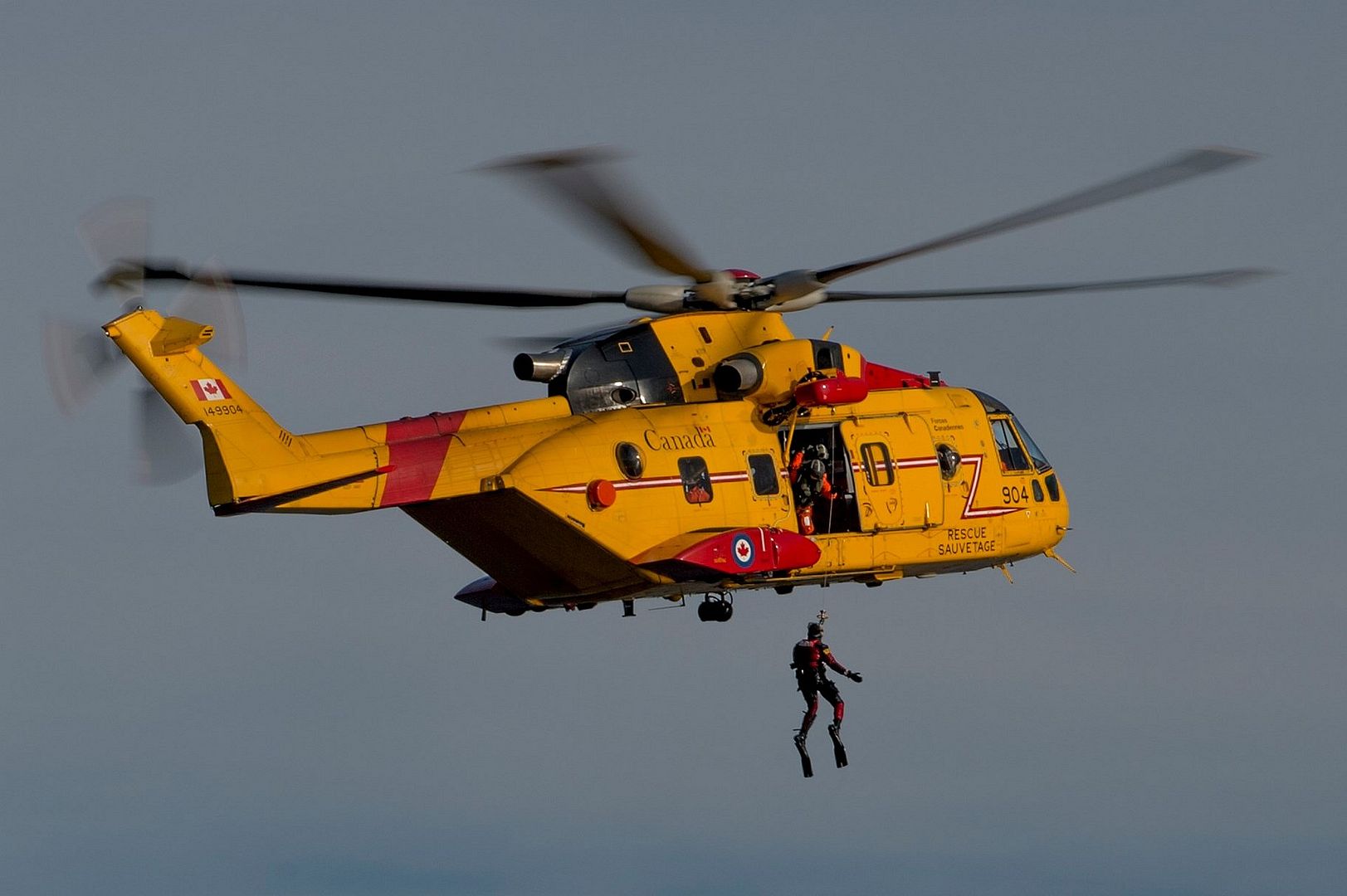
-
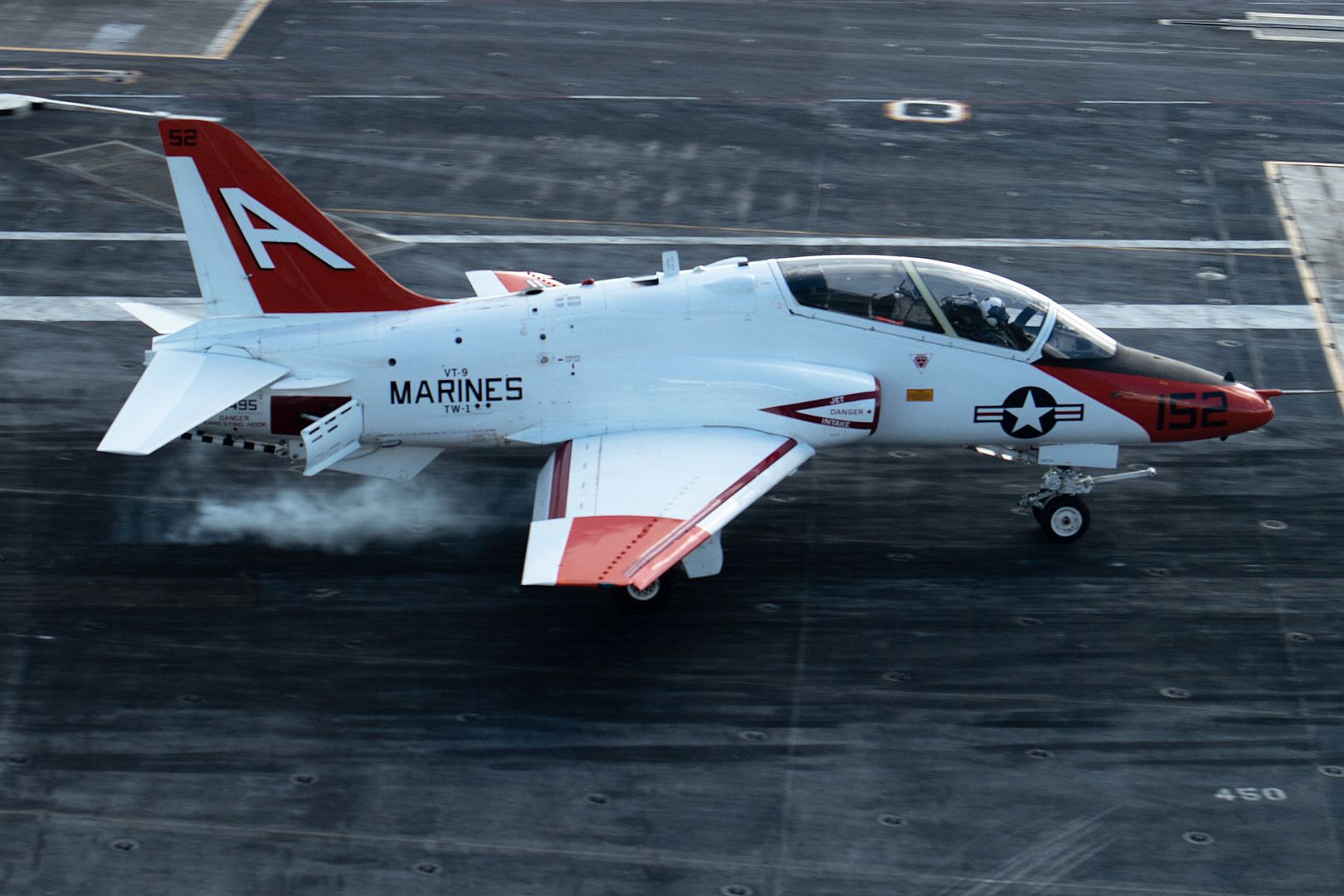
A T-45C Goshawk training aircraft, assigned to Training Air Wing (TW) 1, performs a touch-and-go on the flight deck of the aircraft carrier USS John C. Stennis (CVN 74) in the Atlantic Ocean, Aug. 24, 2019. The John C. Stennis is underway conducting carrier qualifications in support of Chief of Naval Air Training Command. (U.S. Navy photo by Mass Communication Specialist 3rd Class Rebekah M. Rinckey)
A T-45C Goshawk training aircraft, assigned to Training Air Wing (TW) 2, sits chocked and chained on the flight deck of the aircraft carrier USS John C. Stennis (CVN 74) in the Atlantic Ocean, Aug. 24, 2019. The John C. Stennis is underway conducting carrier qualifications in support of Chief of Naval Air Training Command. (U.S. Navy photo by Mass Communication Specialist 3rd Class Joshua L. Leonard)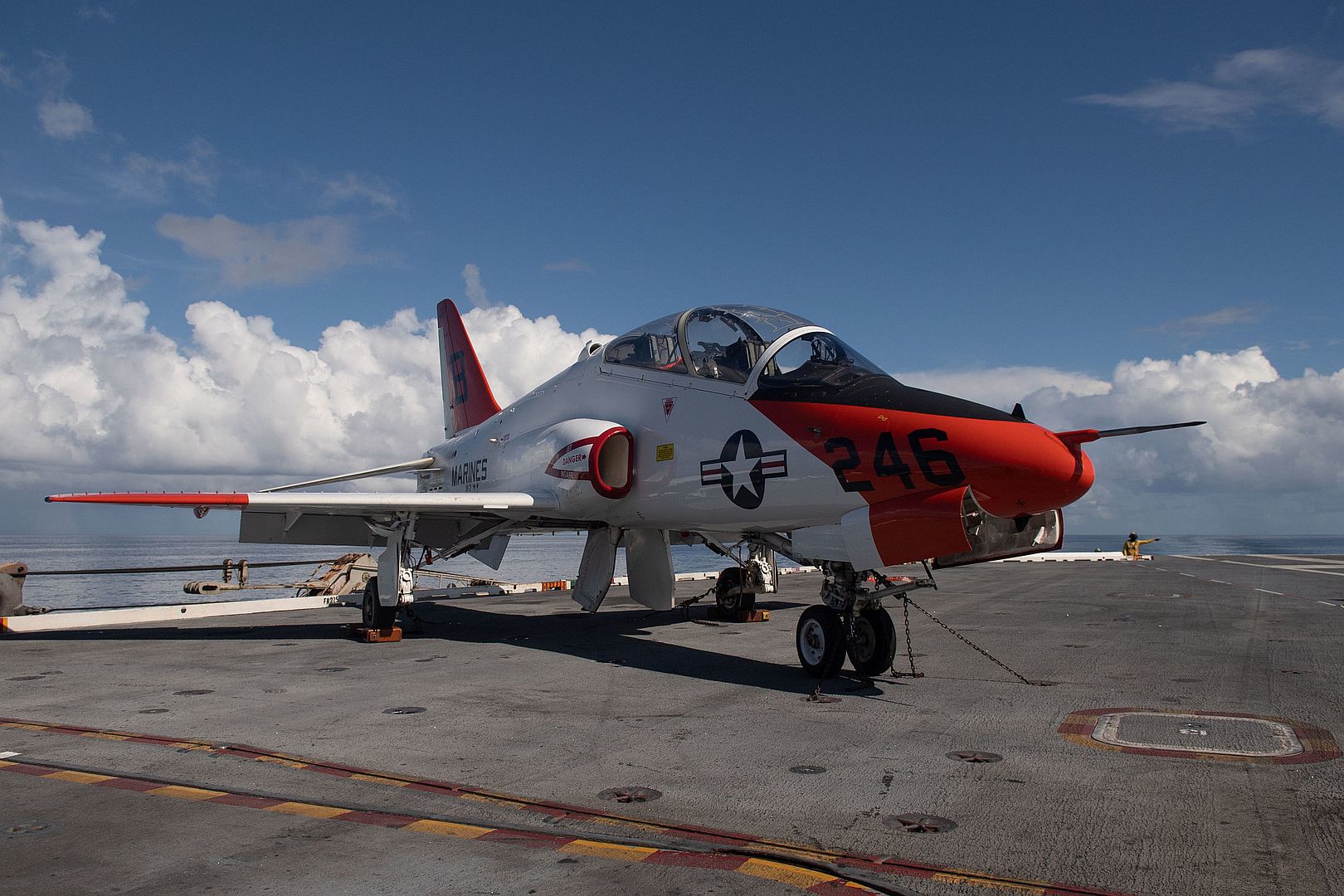
A Kenya air force UH-1 Huey takes off after rescuing a simulated isolated pilot during the final demonstration of African Partnership Flight Kenya 2019. Larisoro Air Strip, Kenya, August 24, 2019. This year's APF Kenya was co-hosted by the U.S. and Kenya and shared best practices regarding personnel recovery. (U.S. Air Force photo by Master Sgt. Renae Pittman)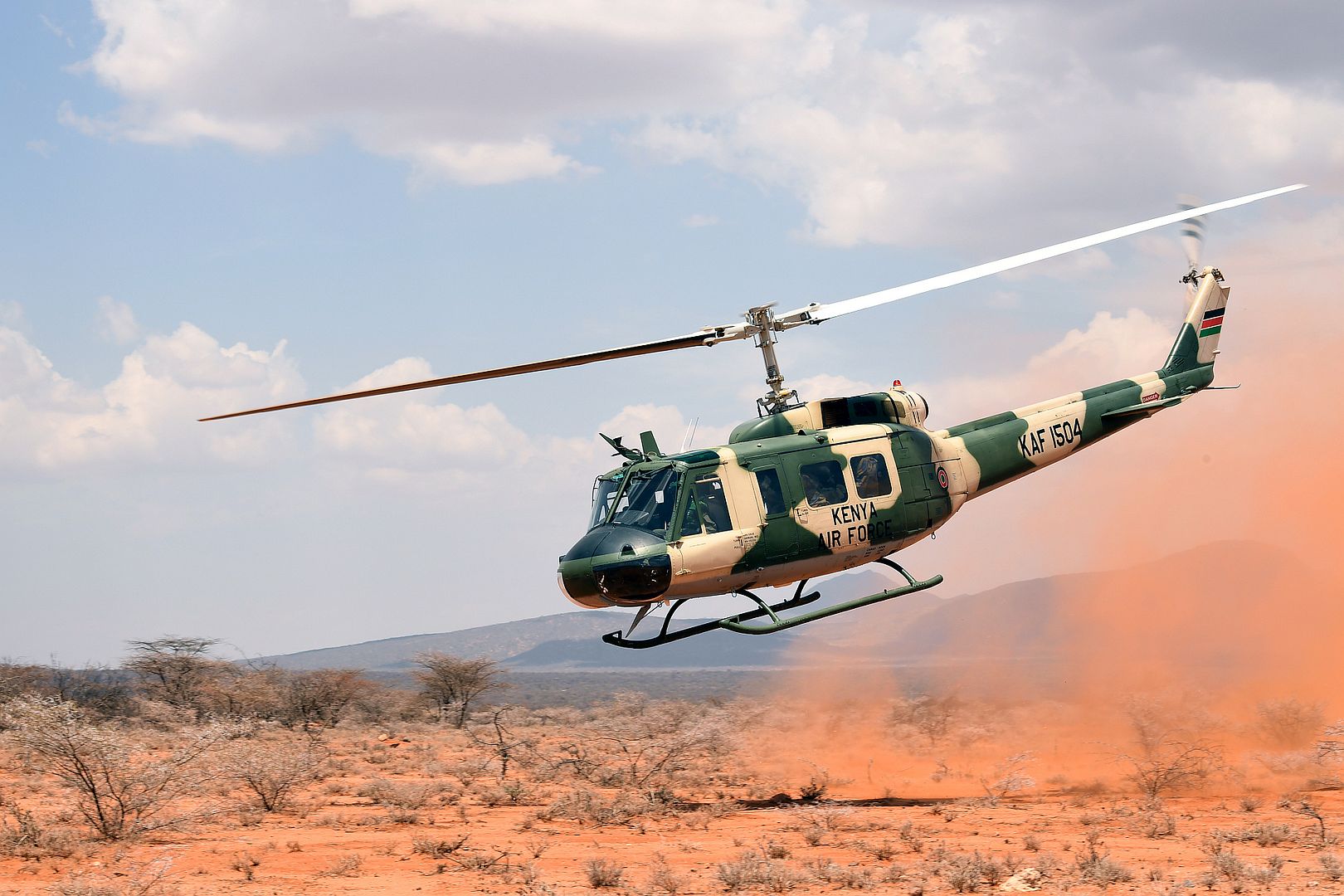
A U.S. Air Force F-16 Fighting Falcon breaks away after receiving fuel from a KC-135 Stratotanker assigned to the 340th Expeditionary Air Refueling Squadron out of Kandahar Airfield, Afghanistan, Aug. 24, 2019. The F-16 fills a critical role of enabling local security, and close air support to coalition forces on the ground. (U.S. Air Force photo by Staff Sgt. Keifer Bowes)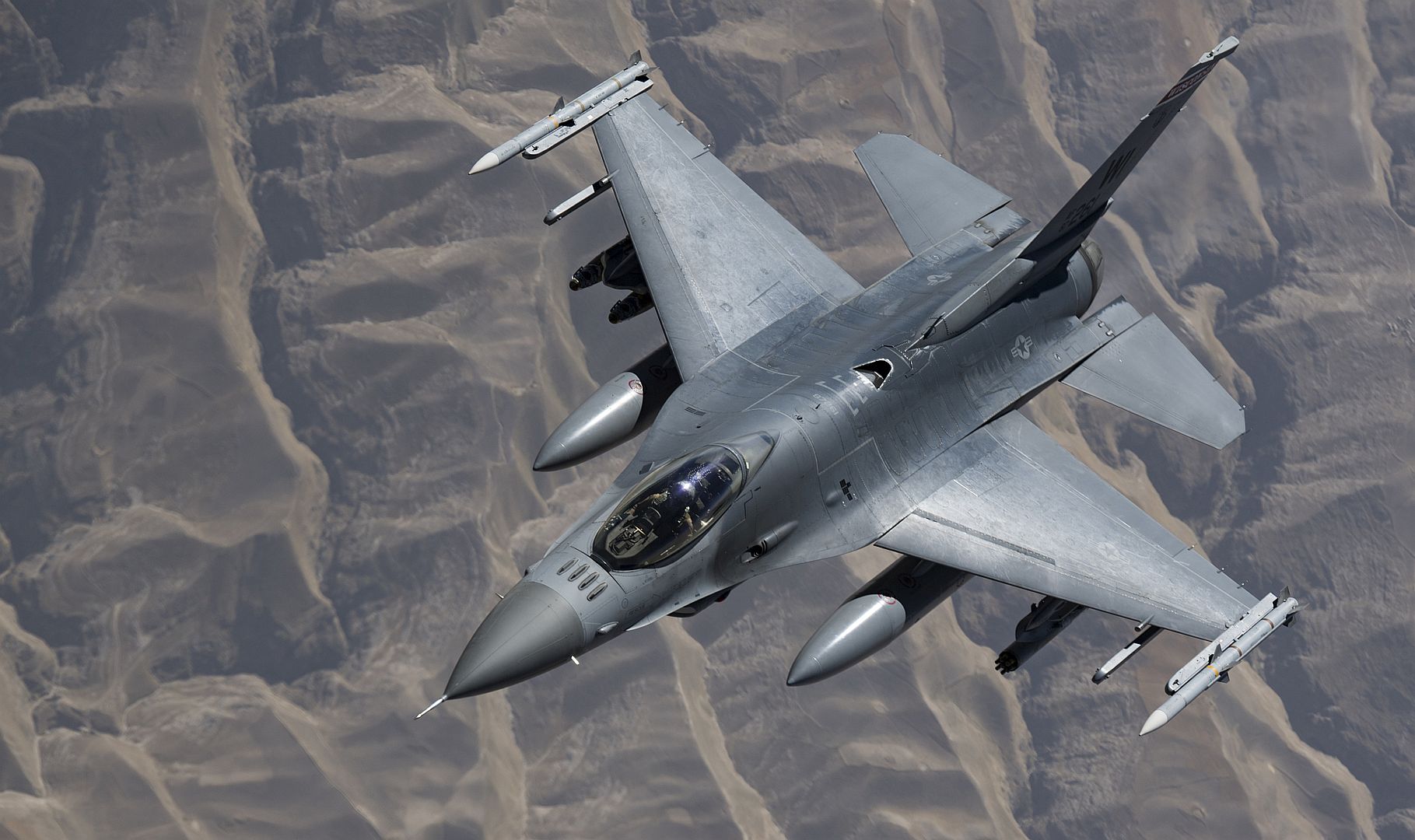
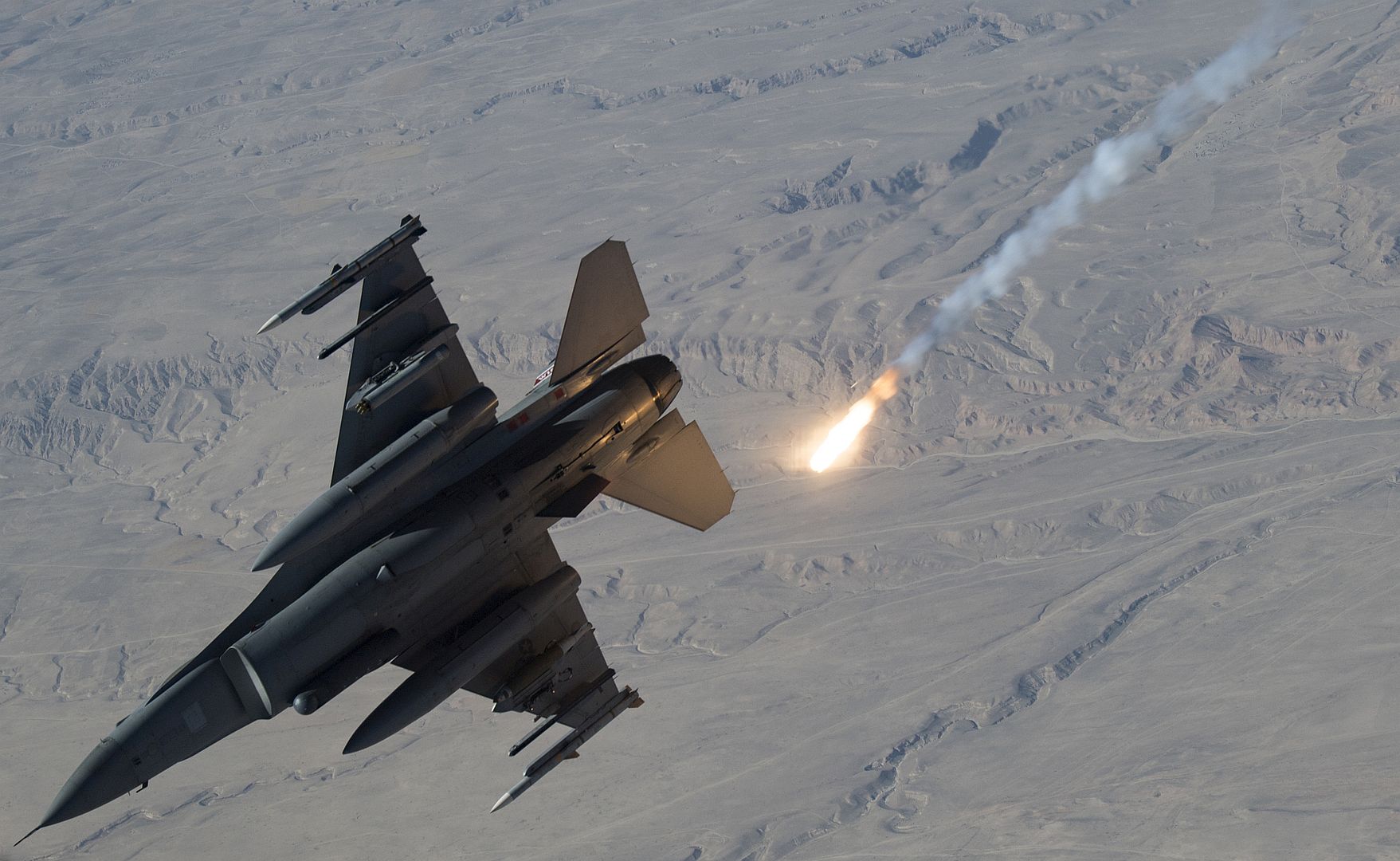
A U.S. Air Force F-16 Fighting Falcon fires flares while breaking away after receiving fuel from a KC-135 Stratotanker assigned to the 340th Expeditionary Air Refueling Squadron out of Kandahar Airfield, Afghanistan, Aug. 24, 2019. The F-16 fills a critical role of enabling local security, and close air support to coalition forces on the ground. (U.S. Air Force photo's by Staff Sgt. Keifer Bowes)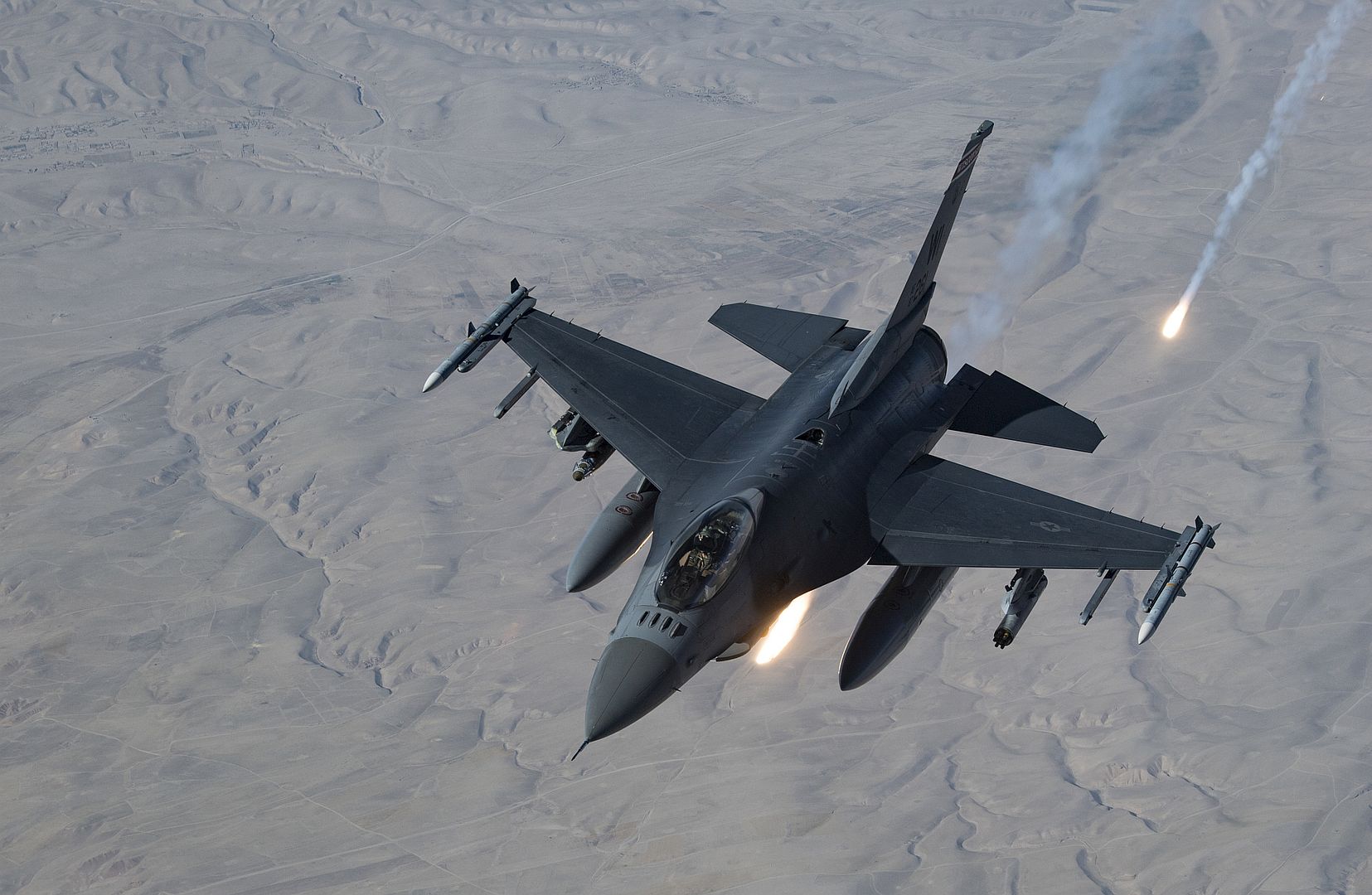
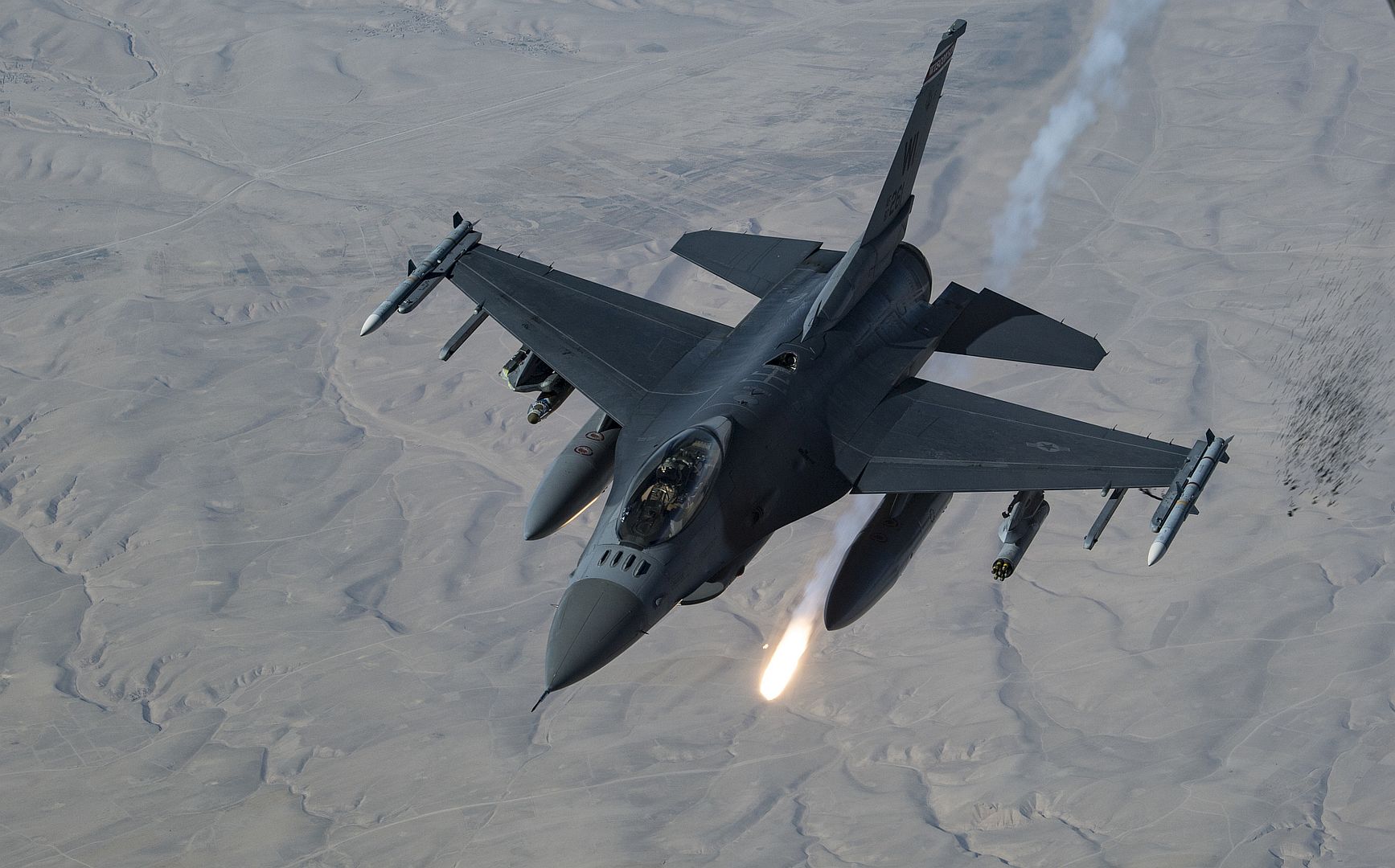
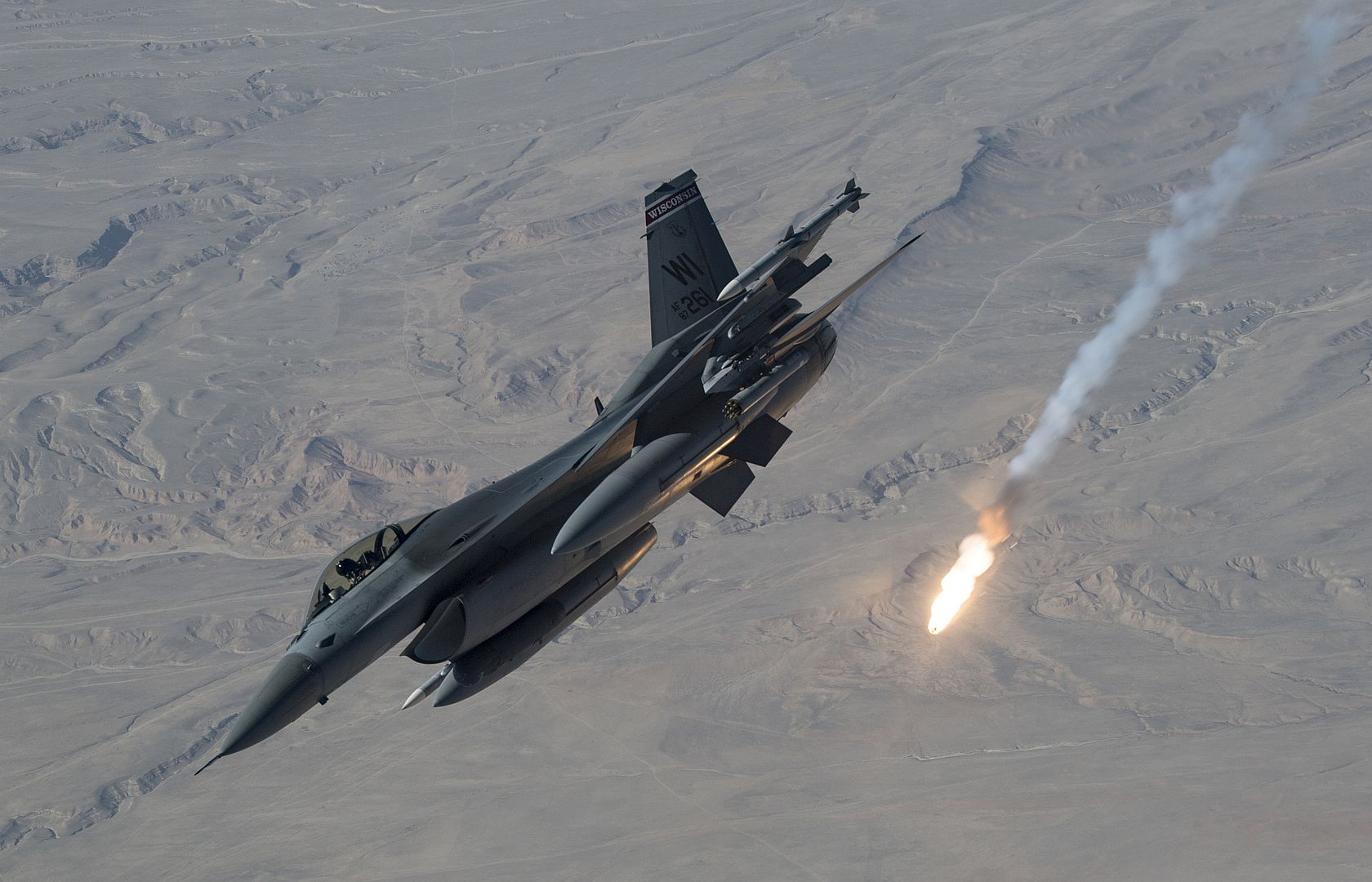
A U.S. Air Force F-16 Fighting Falcon departs after receiving fuel from a KC-135 Stratotanker assigned to the 340th Expeditionary Air Refueling Squadron out of Kandahar Airfield, Afghanistan, Aug. 19, 2019. The F-16 fills a critical role of enabling local security, and close air support to coalition forces on the ground. (U.S. Air Force photo by Staff Sgt. Keifer Bowes)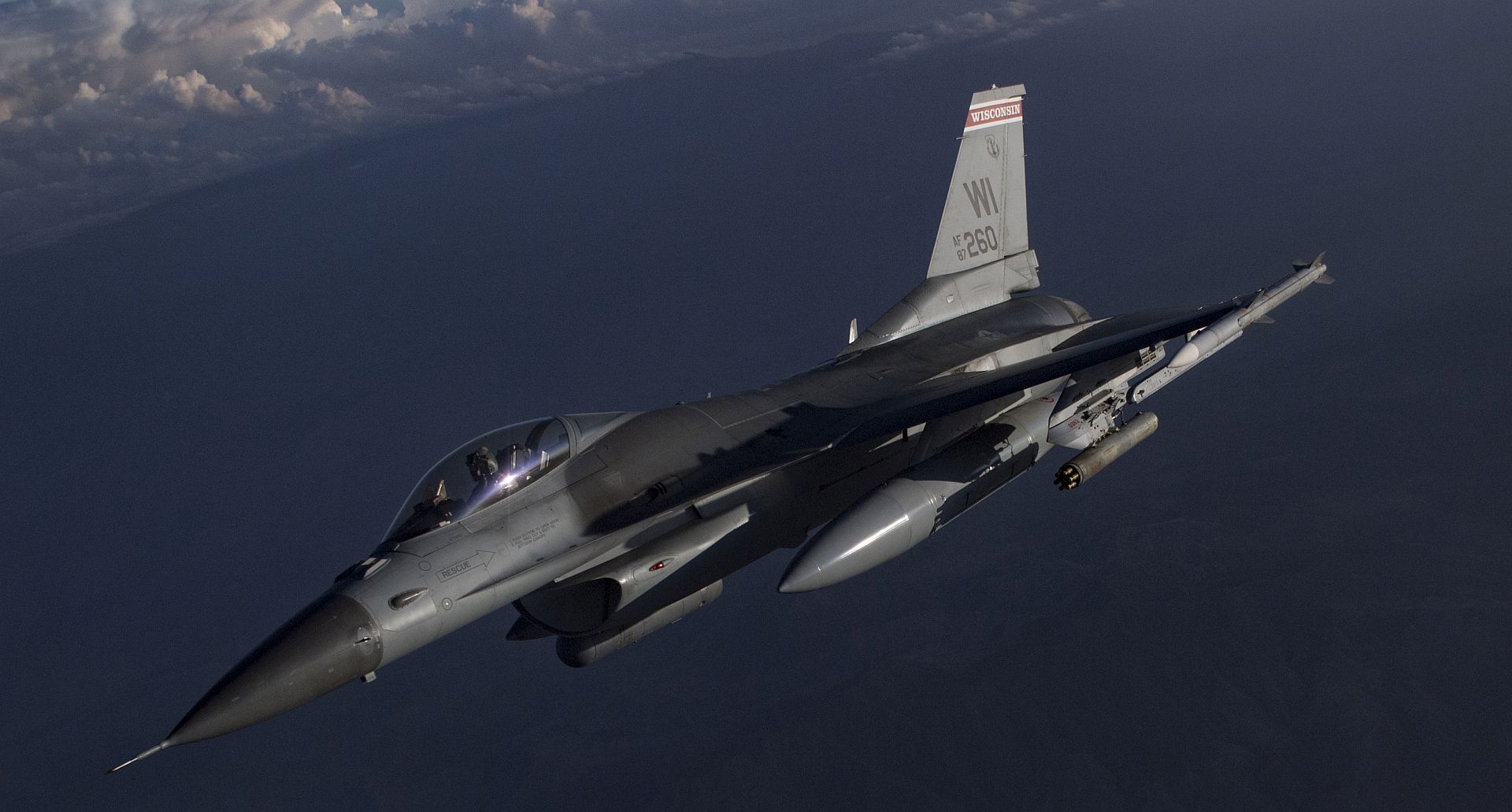
ATLANTIC OCEAN (Aug. 23, 2019) Lt. Cmdr. Benjamin Orloff, assigned to the Blue Blasters of Strike Fighter Squadron (VFA) 34, conducts a supersonic pass in a F/A-18E Super Hornet next to the guided-missile destroyer USS Gridley (DDG 101) during a training exercise. Gridley is underway on a regularly-scheduled deployment as the flagship of Standing NATO Maritime Group 1 to conduct maritime operations and provide a continuous maritime capability for NATO in the northern Atlantic. (U.S. Navy photo by Mass Communication Specialist 2nd Class Cameron Stoner/Released)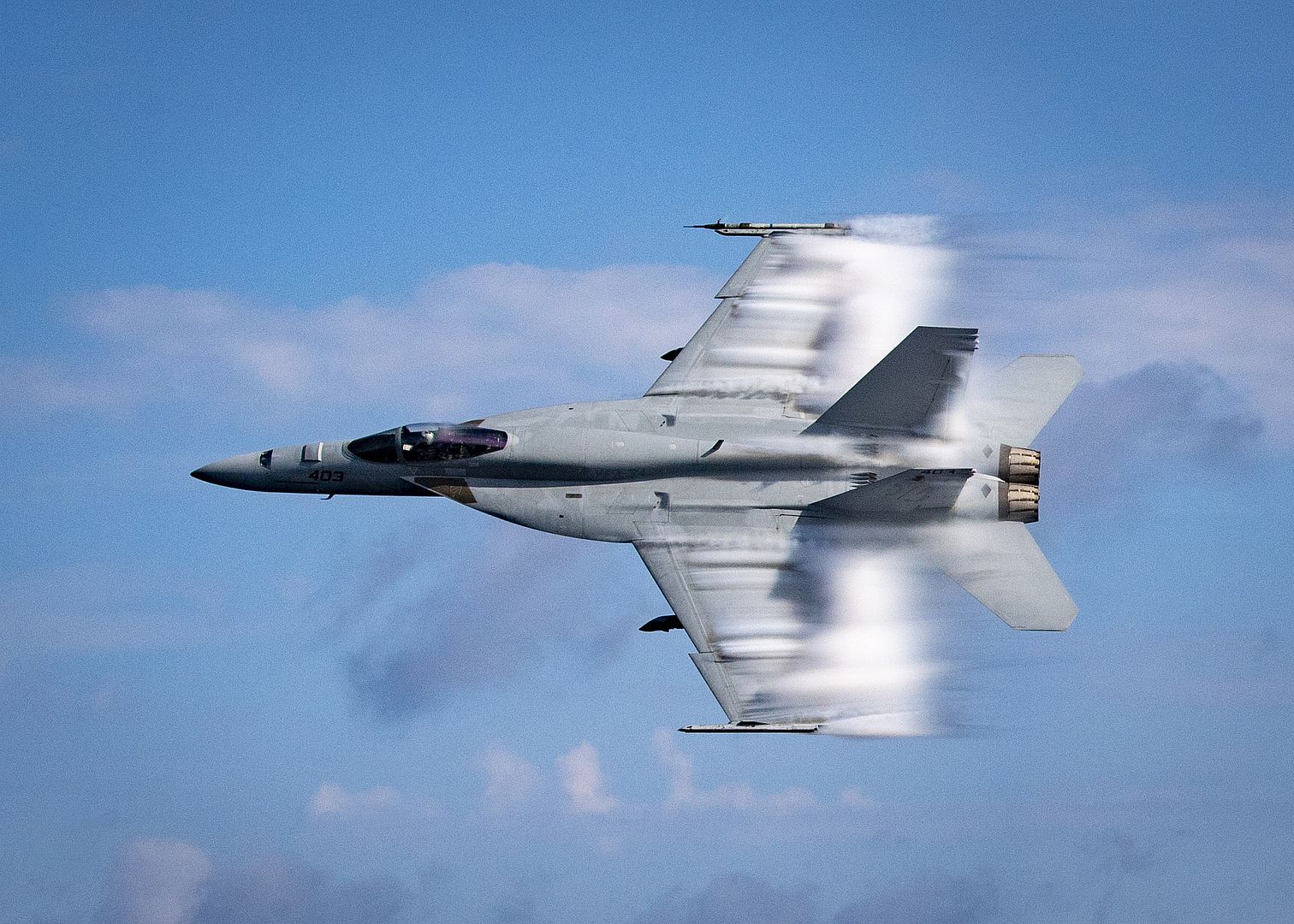
26 August 2019
Saab today completed a successful first flight with the first Brazilian Gripen E fighter aircraft, 39-6001. At 2.41 pm CET on August 26, the Gripen E aircraft took off on its maiden flight flown by Saab test pilot Richard Ljungberg. The aircraft operated from Saab?s airfield in Link?ping, Sweden.
The duration of the flight was 65 minutes and included test points to verify basic handling and flying qualities at different altitudes and speeds. The main purpose was to verify that the aircraft behavior was according to expectations.
?This milestone is a testament to the great partnership between Sweden and Brazil. Less than five years since the contract was signed, the first Brazil Gripen has conducted her first flight,? says H?kan Buskhe, President and CEO of Saab.
This aircraft is the first Brazilian production aircraft and will be used in the joint test program as a test aircraft. The main differences compared to the previous test aircraft are that 39-6001 has a totally new cockpit layout, with a large Wide Area Display (WAD), two small Head Down Displays (sHDD) and a new Head Up Display (HUD). Another major difference is an updated flight control system with updated control laws for Gripen E. It also includes modifications both in hardware and software.
?For me as a pilot it has been a great honour to fly the first Brazilian Gripen E aircraft as I know how much this means for the Brazilian Air Force and everyone at Saab and our Brazilian partners. The flight was smooth and the aircraft behaved just as we have seen in the rigs and simulators. This was also the first time we flew with the Wide Area Display in the cockpit, and I am happy to say that my expectations were confirmed,? says Saab test pilot Richard Ljungberg.
39-6001 will now join the test programme for further envelope expansion as well as testing of tactical system and sensors.
39-6001 will be designated F-39 in the Brazilian Air Force and will have the tail number 4100.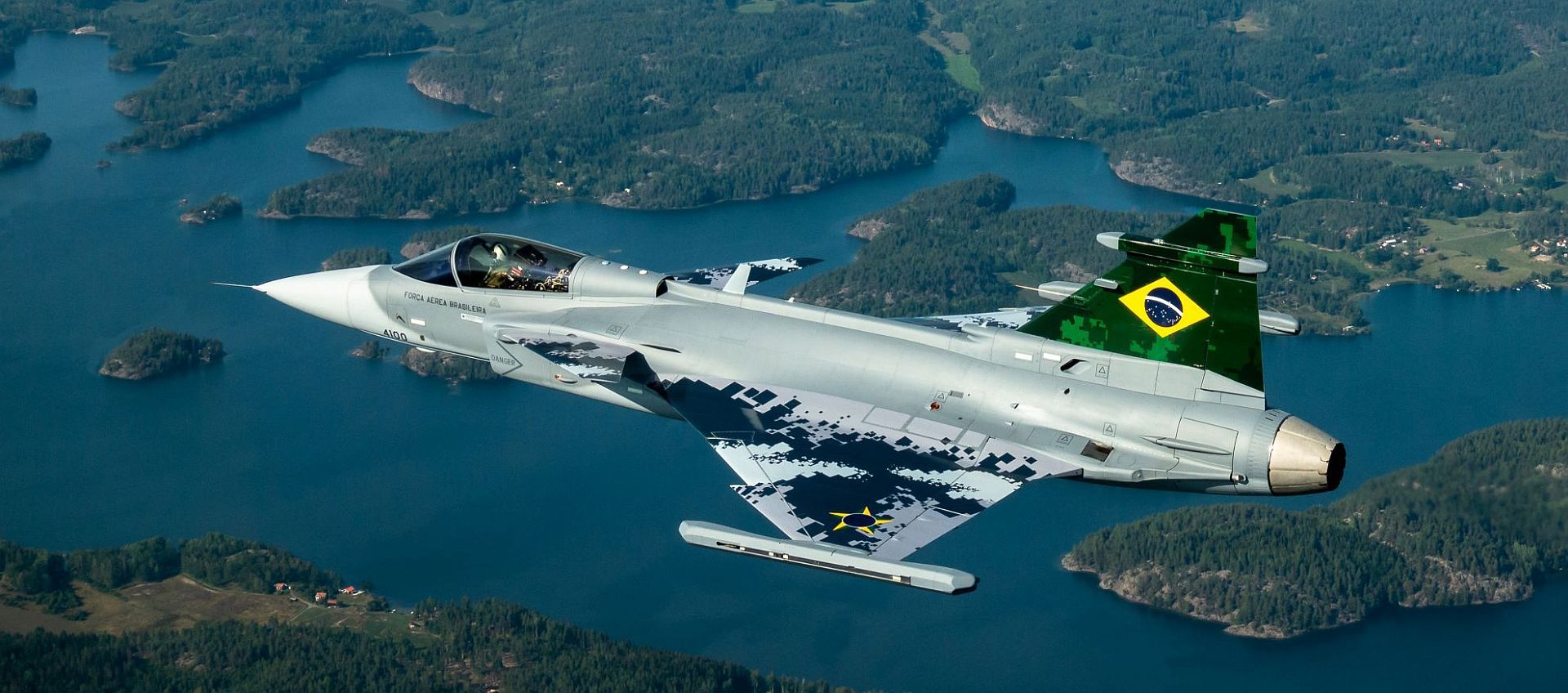
-
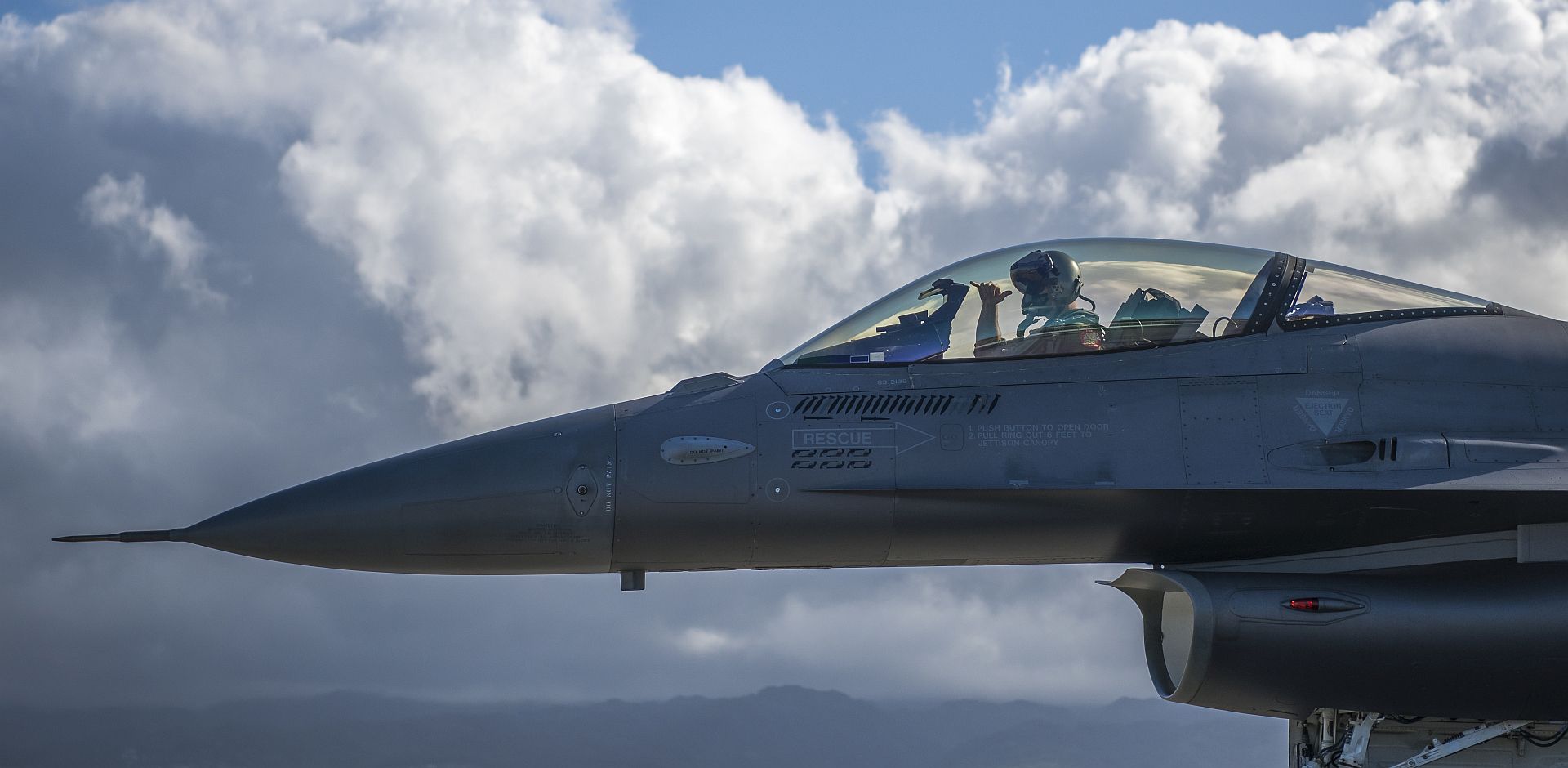
An F-16 Tulsa Viper pilot taxies for flight during a Sentry Aloha exercise Aug. 26, 2019, at Joint Base Pearl Harbor-Hickam, Hawaii. Sentry Aloha entails back-to-back training sorties with visiting fighter units from the Navy and other Air National Guard partners from nine states. It also provides participants a multi-faceted, joint venue with supporting infrastructure and personnel that incorporates current, realistic integrated training. (U.S. Air National Guard photo by Master Sgt. C.T. Michael)
Dedicated crew chief Staff Sgt. Richard Huartson, assigned to the 509th Bomb Wing at Whiteman Air Force Base, Missouri, prepares tow equipment on the flight line of Royal Air Base Fairford, England, on August 27, 2019. A Bomber Task Force deployment of B-2 Spirit stealth bomber aircraft, Airmen and support equipment from the 509th Bomb Wing at Whiteman Air Force Base, Missouri, arrived in the U.S. European Command area of operations for a deployment to conduct theater integration and flying training. The deployment of strategic bombers to the United Kingdom helps exercise RAF Fairford as a forward operating base for the unit, ensuring they are engaged, postured and ready with credible force to assure, deter and defend the U.S. and its allies in an increasingly complex security environment. (U.S. Air Force photo by Staff Sgt. Kayla White)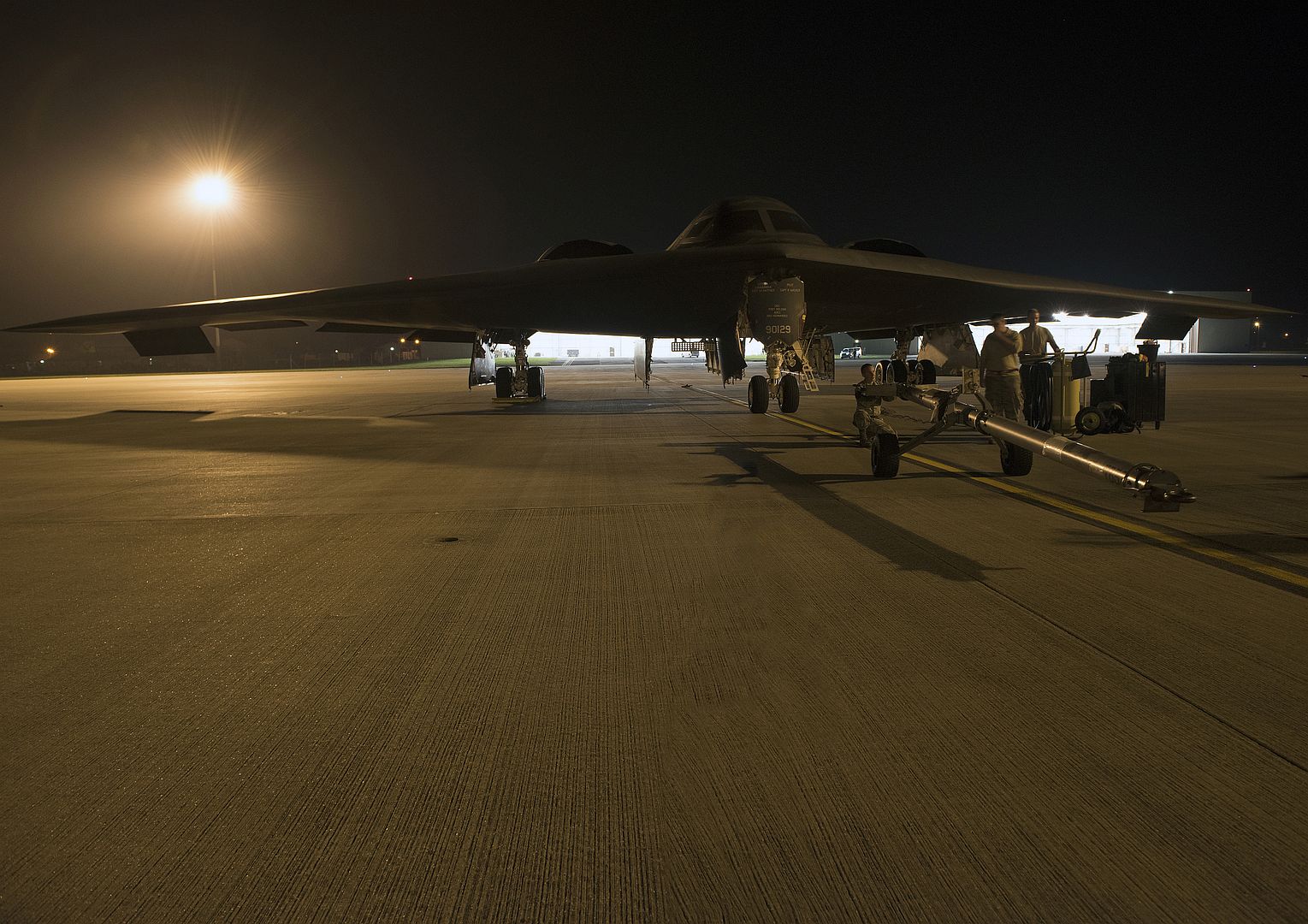
ARABIAN SEA (Aug. 27, 2019) An F/A-18E Super Hornet attached to the "Pukin' Dogs" of Strike Fighter Squadron (VFA) 143 hooks up to a catapult on the flight deck of the aircraft carrier USS Abraham Lincoln (CVN 72). Abraham Lincoln Carrier Strike Group is deployed to the U.S. 5th Fleet area of operations in support of naval operations to ensure maritime stability and security in the Central Region, connecting the Mediterranean and the Pacific through the western Indian Ocean and three strategic choke points. With Abraham Lincoln as the flagship, deployed strike group assets include staffs, ships and aircraft of Carrier Strike Group 12 (CSG 12), Destroyer Squadron 2 (DESRON 2), USS Leyte Gulf (CG 55) and Carrier Air Wing 7 (CVW 7). (U.S. Navy photo by Mass Communication Specialist 3rd Class Michael Singley/Released)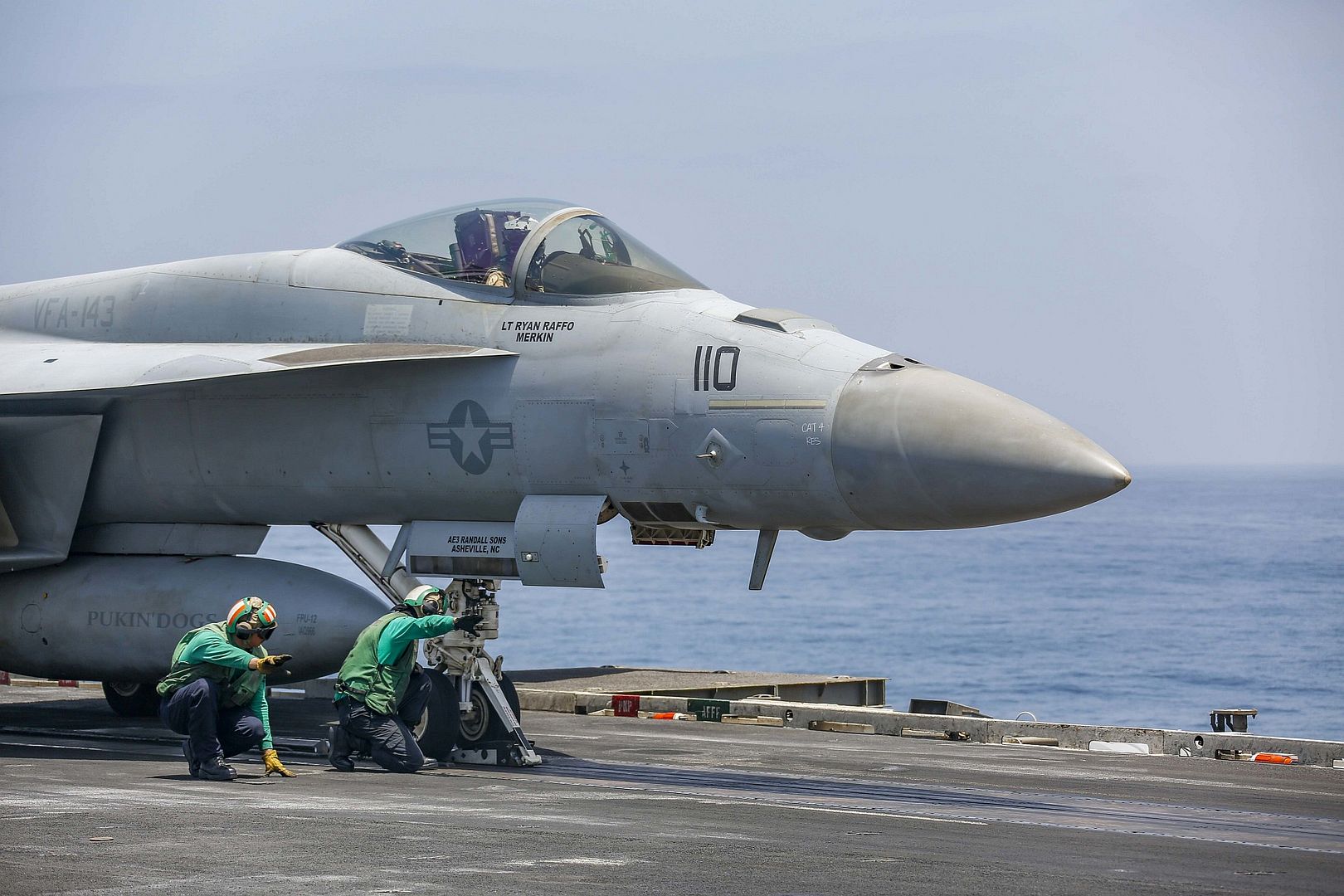
MARAMBAIA, Brazil (Aug. 27, 2016) ? An EC-725 cougar helicopter, assigned to the HU-2 ?Pegasus? squadron, lands on the flight deck of the Brazilian navy ship PHM Atlantico (A 140) during an amphibious landing in support of UNITAS LX, August 27, 2019. UNITAS, which is Latin for ?unity?, was conceived in 1959, first executed in 1960 and has been held every year since. (U.S. Photo by Navy Mass Communication Specialist 3rd class Ian Parham)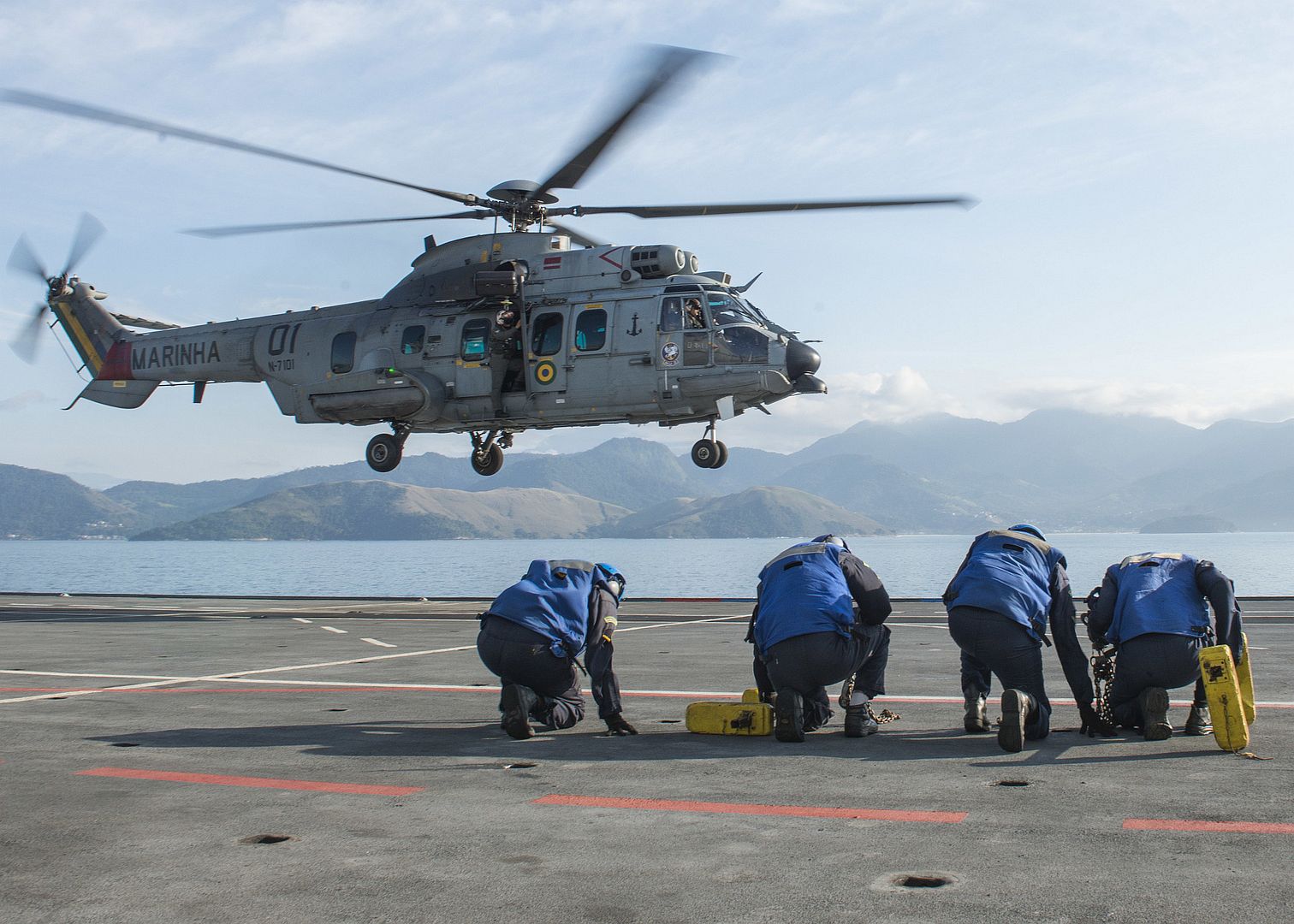
Three U.S. Air Force F-16C Fighting Falcons, from the New Jersey Air National Guard's 177th Fighter Wing, fly in formation over the Atlantic City boardwalk during the 2019 AC Airshow, "A Salute To Those That Serve," on Aug. 21, 2019. F-16C and D model Fighting Falcon fighter jets, from the 177th Fighter Wing, and a KC-135 Stratotanker military refueling aircraft, from the 108th Air Wing, performed individual passes and a composite flyover during the airshow and then conducted refueling and training over the Atlantic Ocean. (U.S. Air National Guard photo by Senior Master Sgt. Andrew J. Moseley)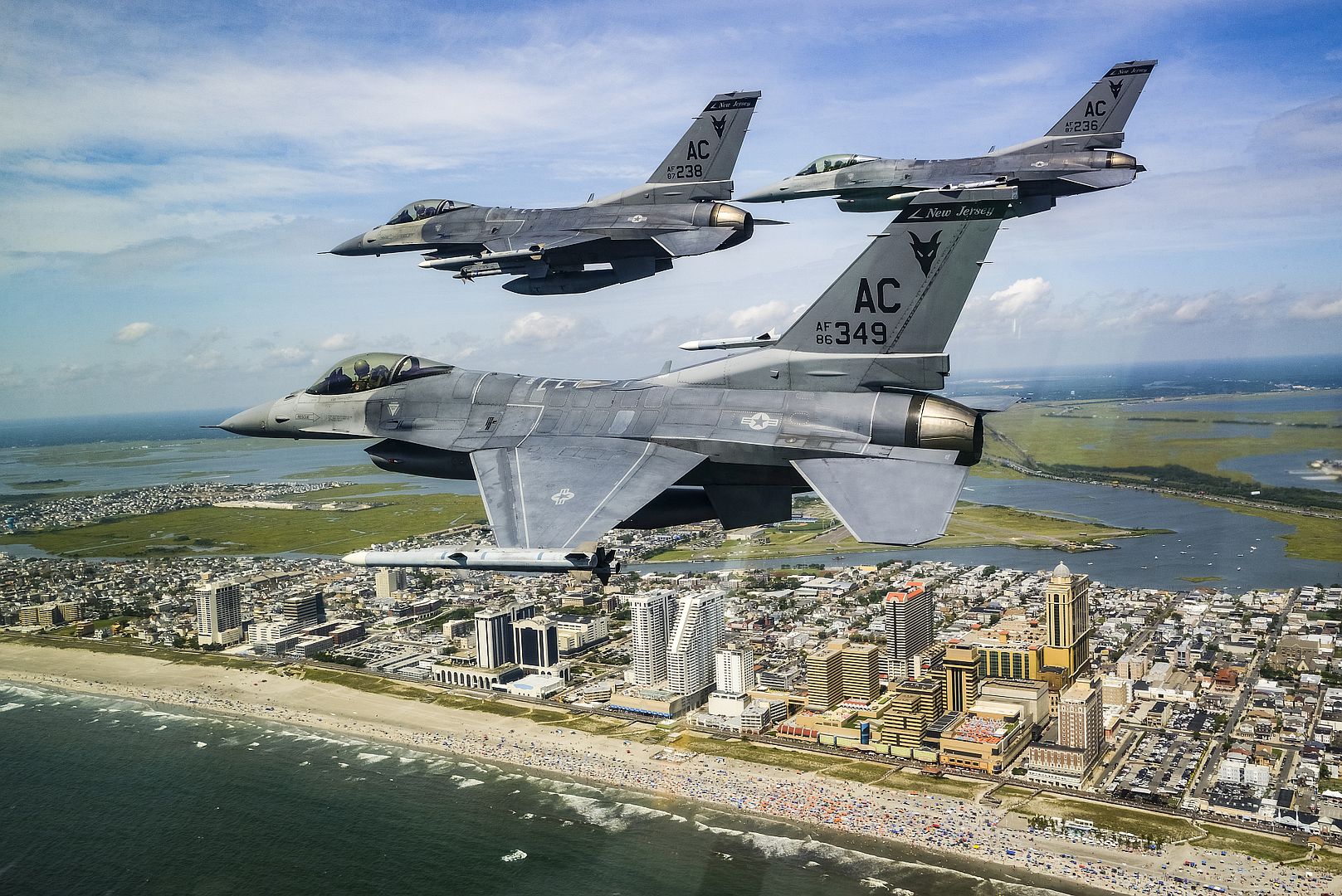
A U.S. Air Force KC-135 Stratotanker military aerial refueling aircraft, from the N.J. Air National Guard's 108th Air Wing, flies over the Atlantic Ocean off the coast of southern New Jersey, after participating in a flyover for the 2019 Atlantic City Airshow, "A Salute To Those that Serve", on Aug. 21, 2019. F-16C and D model Fighting Falcon fighter jets from the 177th Fighter Wing and the KC-135 performed individual passes and a composite formation flyover during the airshow and then conducted refueling and training over the Atlantic Ocean. (U.S. Air National Guard photo by Senior Master Sgt. Andrew J. Moseley)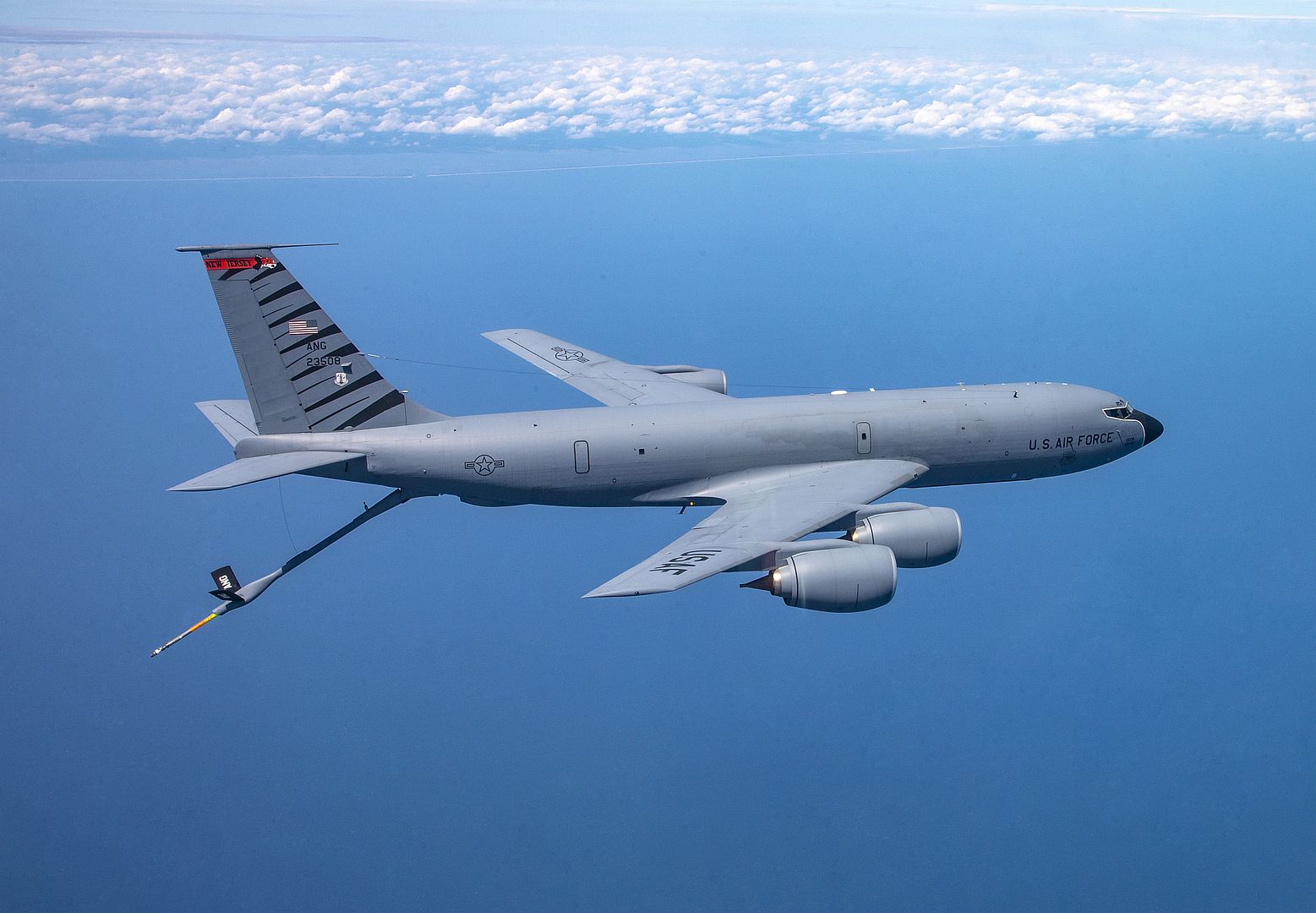
A New Jersey Air National Guard F-16C Fighting Falcon fighter jet flies over the Atlantic Ocean after performing a flyover for the 2019 Atlantic City Airshow, "A Salute To Those That Serve," on Aug. 21, 2019. F-16C and D model Fighting Falcon fighter jets from the 177th Fighter Wing and a KC-135 Stratotanker military refueling aircraft from the 108th Air Wing performed individual passes and a composite formation flyover during the airshow and then conducted refueling and training over the Atlantic Ocean. (U.S. Air National Guard photo illustration by Senior Master Sgt. Andrew J. Moseley)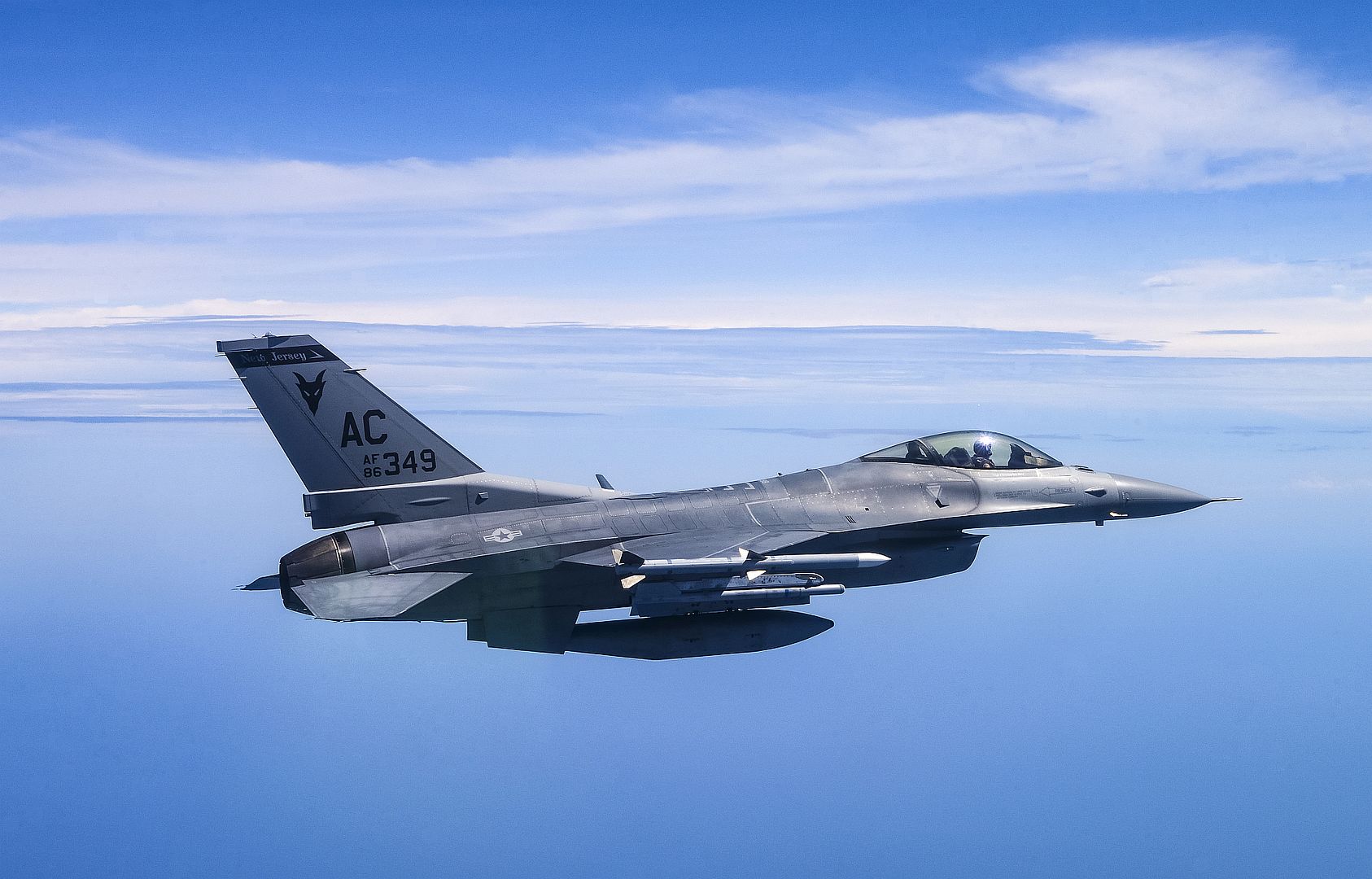
27 August 2019.
The first of 28 Airbus A350-900s for Air France has completed its first flight from Toulouse.
The Rolls-Royce Trent XWB-powered twinjet is being prepared for delivery to the French flag carrier in the coming weeks. Cirium data shows the airline has 28 A350-900s on order.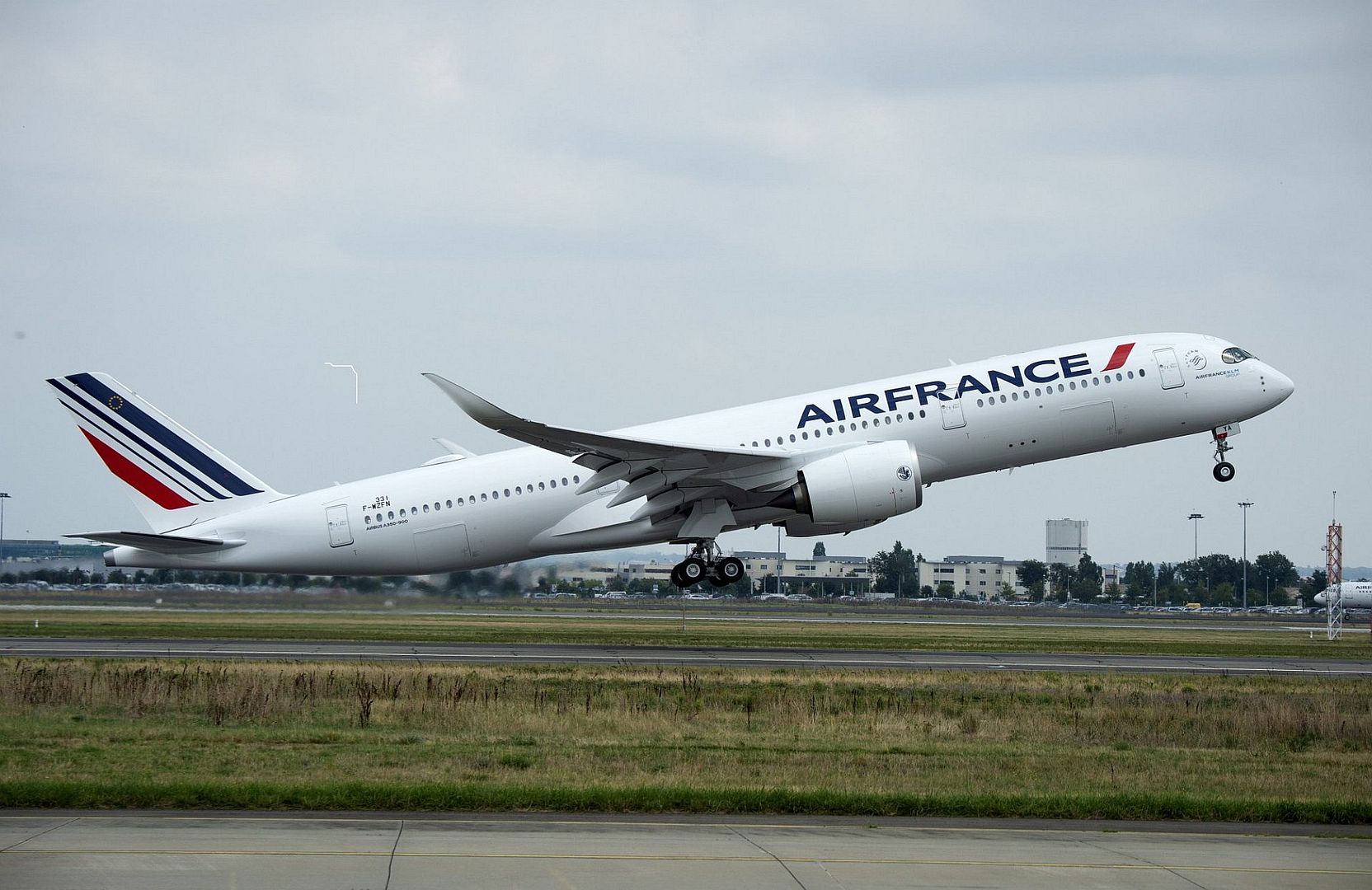
As part of a fleet simplification plan unveiled by Air France last month, the new A350 fleet will be operated alongside its existing Airbus A330s with a common type-rating, allowing a single pilot-pool which will improve operational efficiency and reduce costs.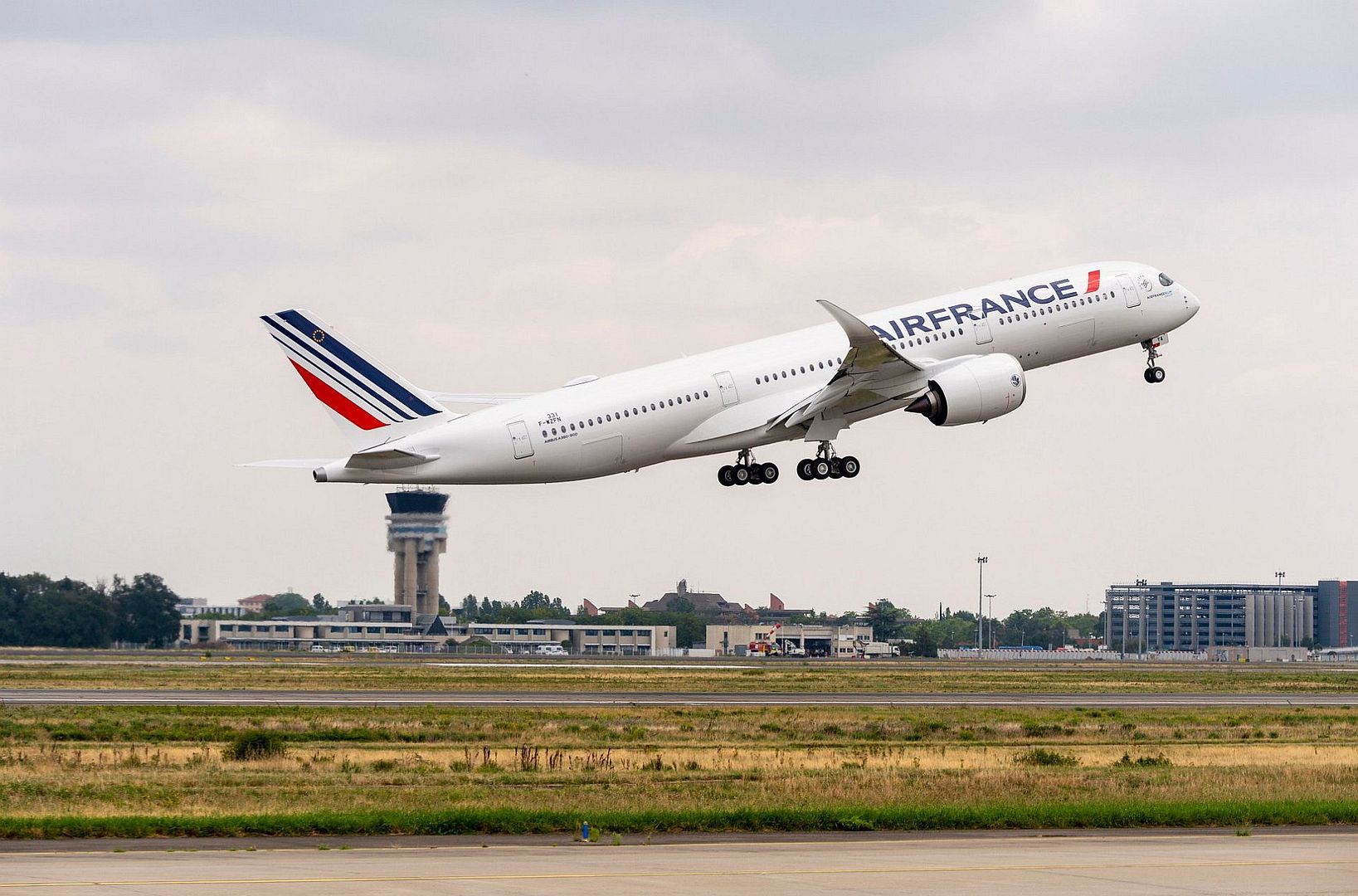
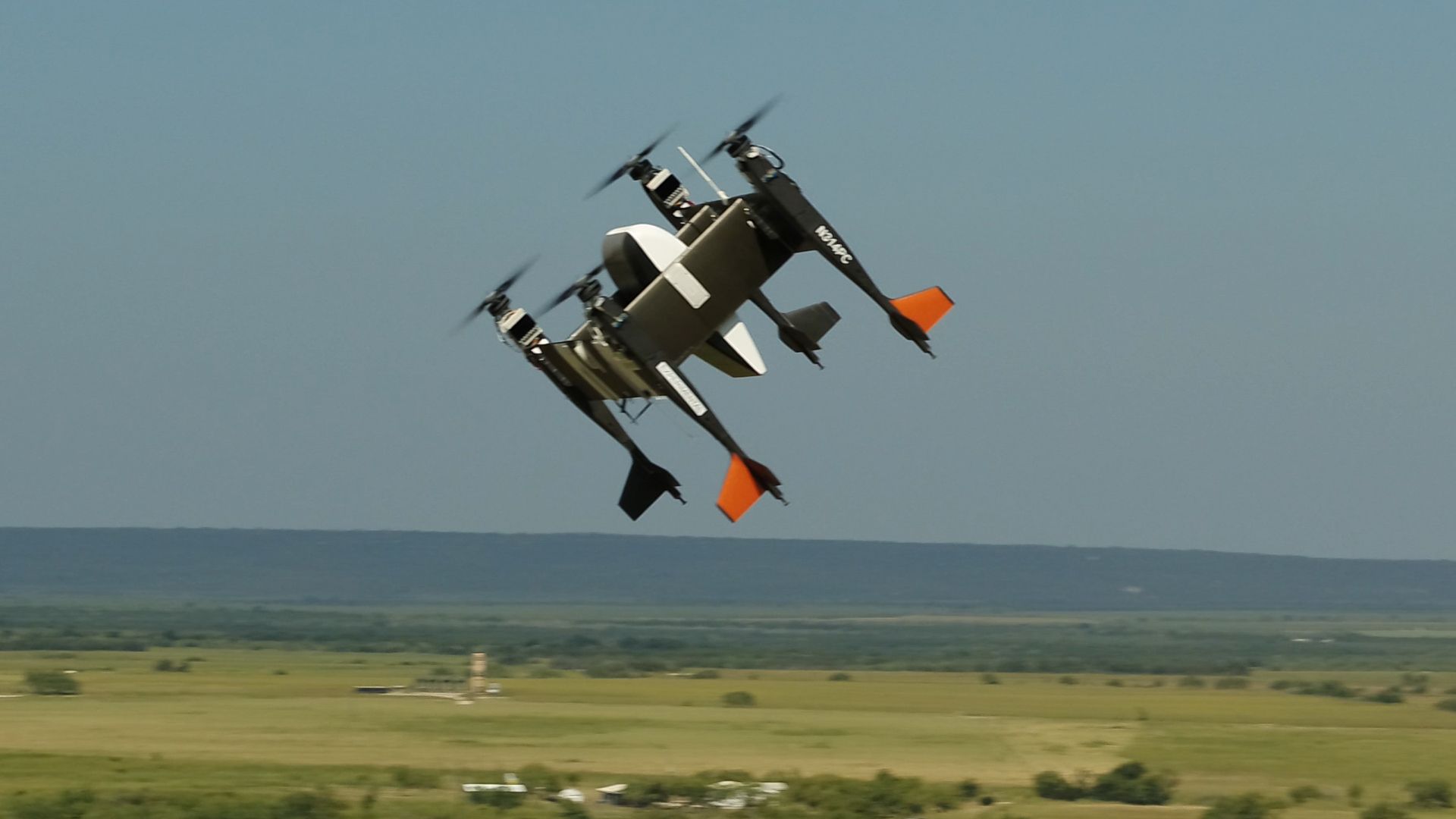
Fort Worth, TX (August 26, 2019) ? Bell Textron Inc., a Textron Inc. (NYSE: TXT) company, announced today the successful first autonomous flight of the Autonomous Pod Transport (APT) 70 at their testing site near Fort Worth. Bell plans to continue to test the vehicle under an experimental type certificate throughout the remainder of the year.
?We are excited to reach this milestone, and look forward to continuing to advance this technology for our customers,? said Scott Drennan, vice president, Innovation. ?The APT is designed to be capable of various mission sets, from package delivery to critical medical transport to disaster relief. We believe this capability will change the way unmanned aerial systems are used commercially in the future.?
APT 70 is part of the eVTOL family of vehicles Bell is developing and can reach speeds of more than 100mph and has a baseline payload capability of 70 lbs. Bell?s APT systems allow for flexible mission capabilities while keeping operations simple, efficient and fast; they are capable of twice the speed and range of a conventional multirotor. The vehicle is designed for rapid deployment, quick reconfiguration, and nimble battery swap and recharge.
Through the NASA Systems Integration and Operationalization (SIO) demonstration activity, Bell will use the APT 70 to demonstrate a simulated commercial mission in the national airspace system and conduct beyond visual line of sight (BVLOS) flight operations. The demonstration is expected to be held in mid-2020.
Bell is also in collaboration with Yamato, a Japanese third-party logistics provider, to integrate Yamato?s package handling system into APT 70 providing an exceptional customer experience for on-demand logistics services. The Bell and Yamato team conducted a demonstration today showcasing their systems working together in preparation for entry into service anticipated by the early-2020s.