Aviation News
-
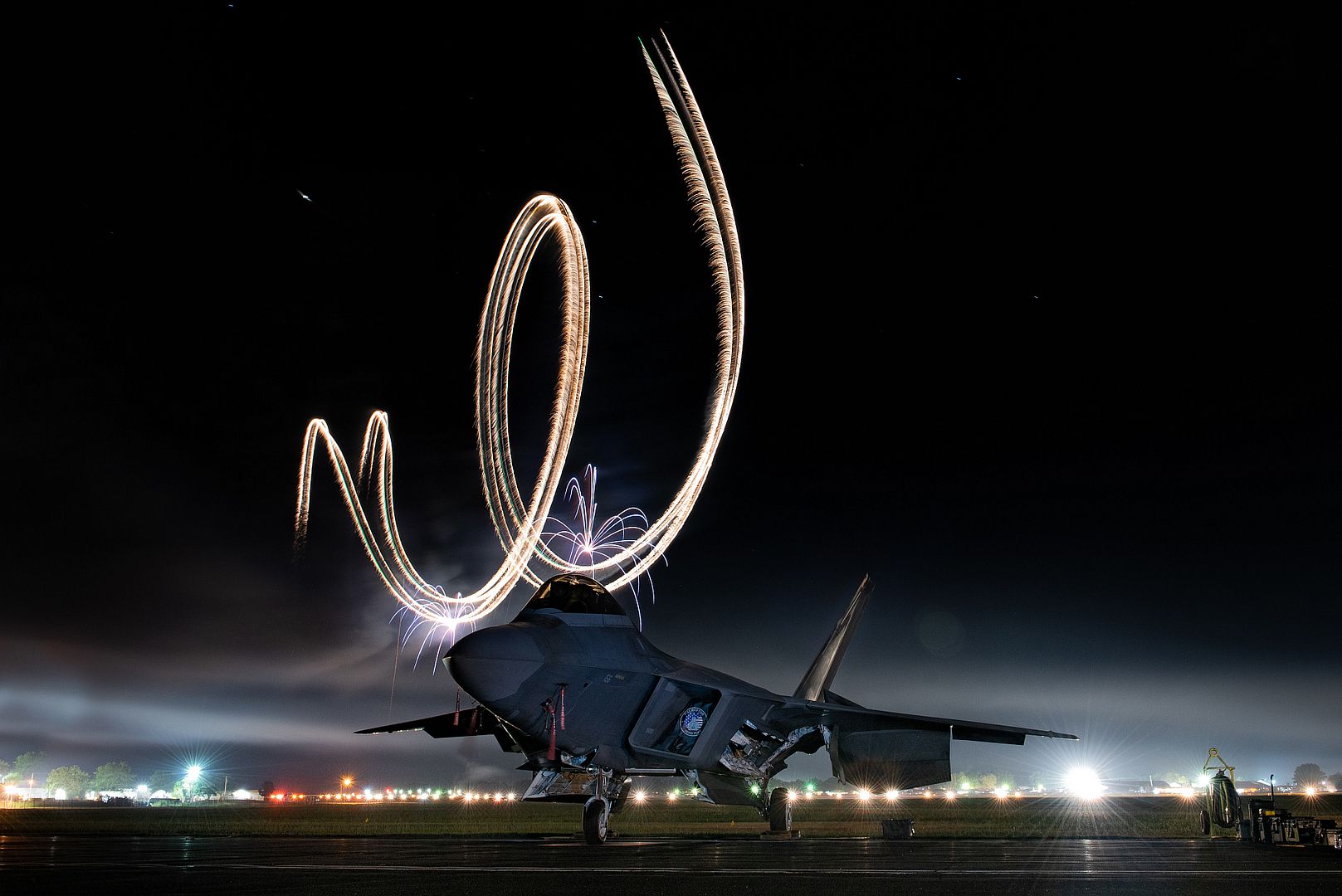
A United States Air Force F-22 Raptor sits on the flight line during the twilight show at EAA AirVenture in Oshkosh, Wis., July 28, 2019. Founded in 2007, the F-22 Raptor Demo Team showcases the unique capabilities of the world's premier 5th-generation fighter aircraft. (U.S. Air Force photo by 2nd Lt. Samuel Eckholm)
A 480th Fighter Squadron pilot steps to his F-16C Fighting Falcon during Icelandic Air Surveillance certification at Keflavic Air Base, Iceland, July 30, 2019. These air surveillance missions give the U.S. and NATO the ability to plan, prepare and execute joint and multinational training in a real-time, realistic North Atlantic setting. (U.S. Air Force photo by Airman 1st Class Jovante Johnson)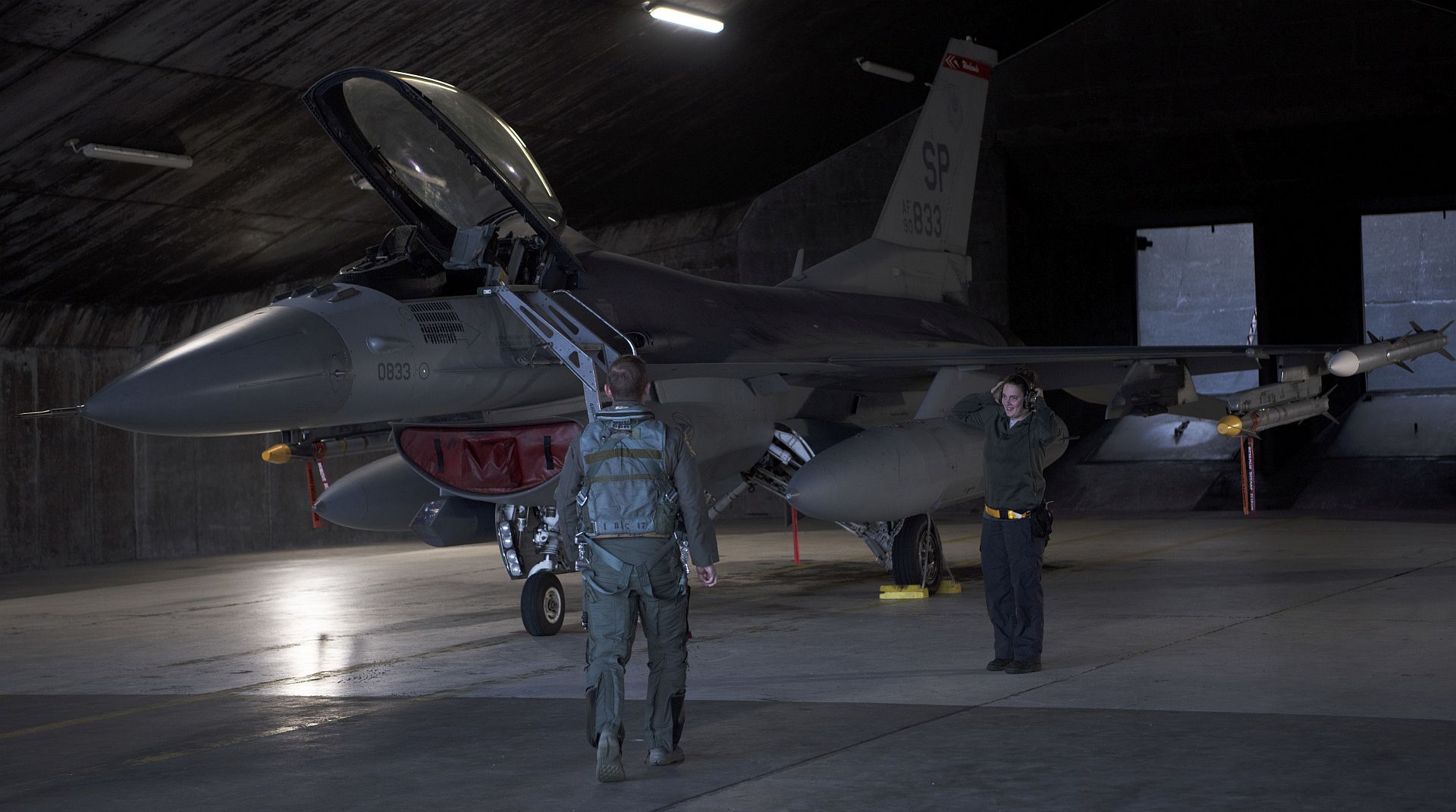
An A-10 Thunderbolt II, from the 124th Fighter Wing, sits on the flightline at Gowen Field, Boise, Idaho, July 29, 2019. The aircraft is flown by pilots from the 190th Fighter Squadron and has been based in Boise since 1996. (U.S. Air National Guard photo by Master Sgt. Joshua C. Allmaras)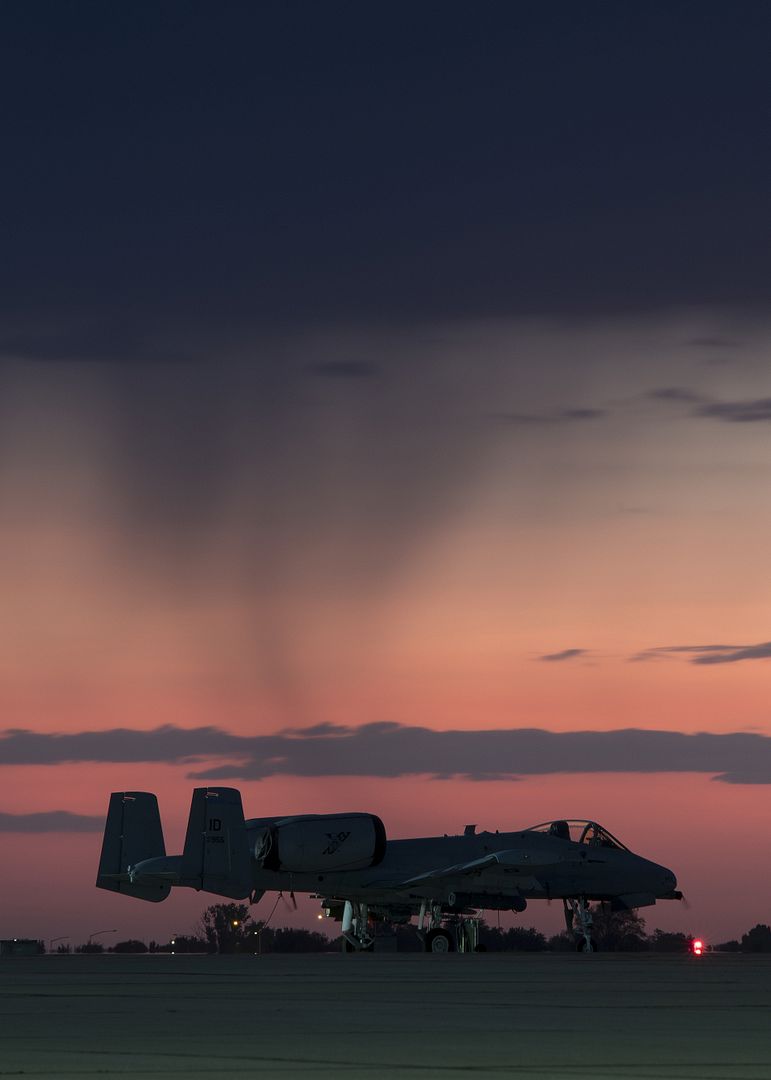
MARINE CORPS AIR STATION KANEOHE BAY, Hawaii (July 27, 2019) NASA and Northrop Grumman employees work on the Northrop Grumman RQ-4 Global Hawk unmanned aerial vehicle at Marine Corps Air Station Kaneohe Bay, July 27, 2019. NASA and Northrop Grumman will be working on the Global Hawk at Marine Corps Base Hawaii to test its flight capabilities. (U.S. Marine Corps photo by Pfc. Jose Angeles/Released)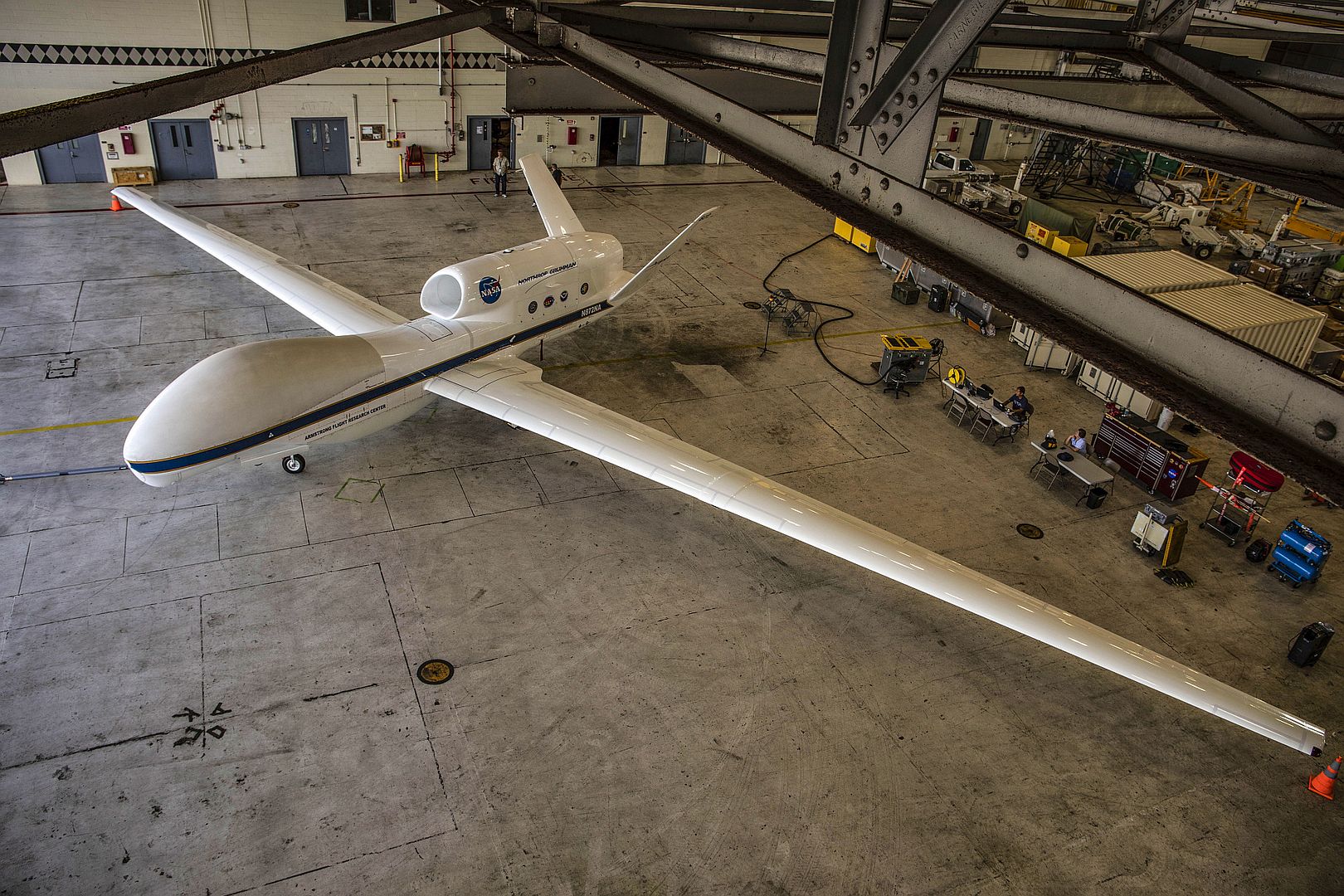
LOS ANGELES ? July 30, 2019 ? Northrop Grumman Corporation (NYSE: NOC) announced it has been awarded a $167 million contract by the U.S. Navy for Lot 8 Full Rate Production of the AGM-88E Advanced Anti-Radiation Guided Missile (AARGM). This contract includes options for increased quantities for the Department of the Navy, missiles for the Italian Air Force and missiles for foreign military sales.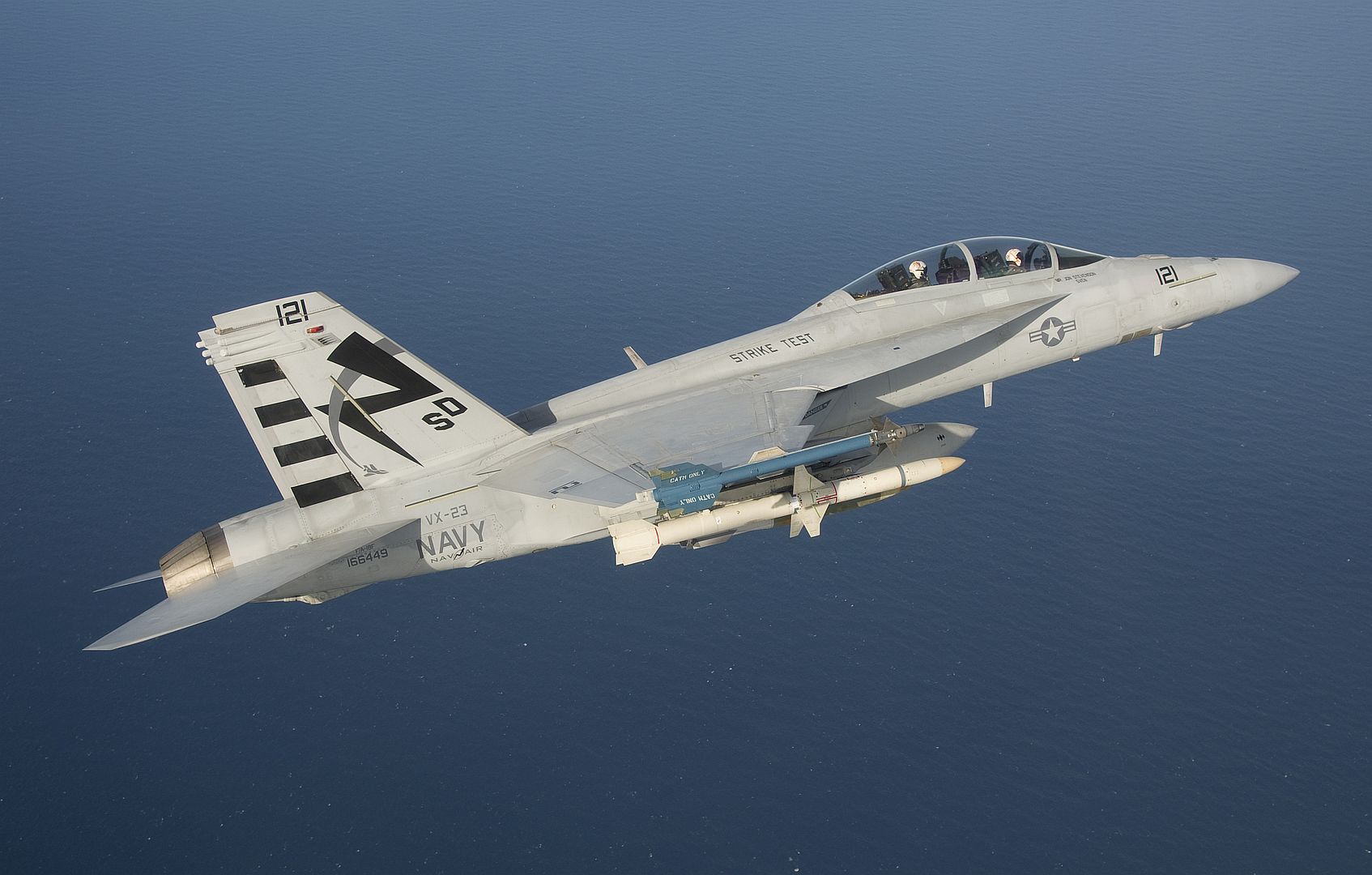
?AARGM is able to rapidly engage air-defense threats,? said Cary Ralston, vice president and general manager, defense electronic systems, Northrop Grumman. ?We are proud to provide our warfighters with this advanced and affordable capability.?
AARGM is a U.S. Navy and Italian Air Force international cooperative acquisition program with the U.S. Navy as the executive agent. AARGM is currently deployed with the U.S. Navy and U.S. Marine Corps on the F/A-18C/D Hornet, F/A-18E/F Super Hornet and EA-18G Growler aircraft. AARGM is also integrated on the Italian Air Force?s Tornado Electronic Combat aircraft.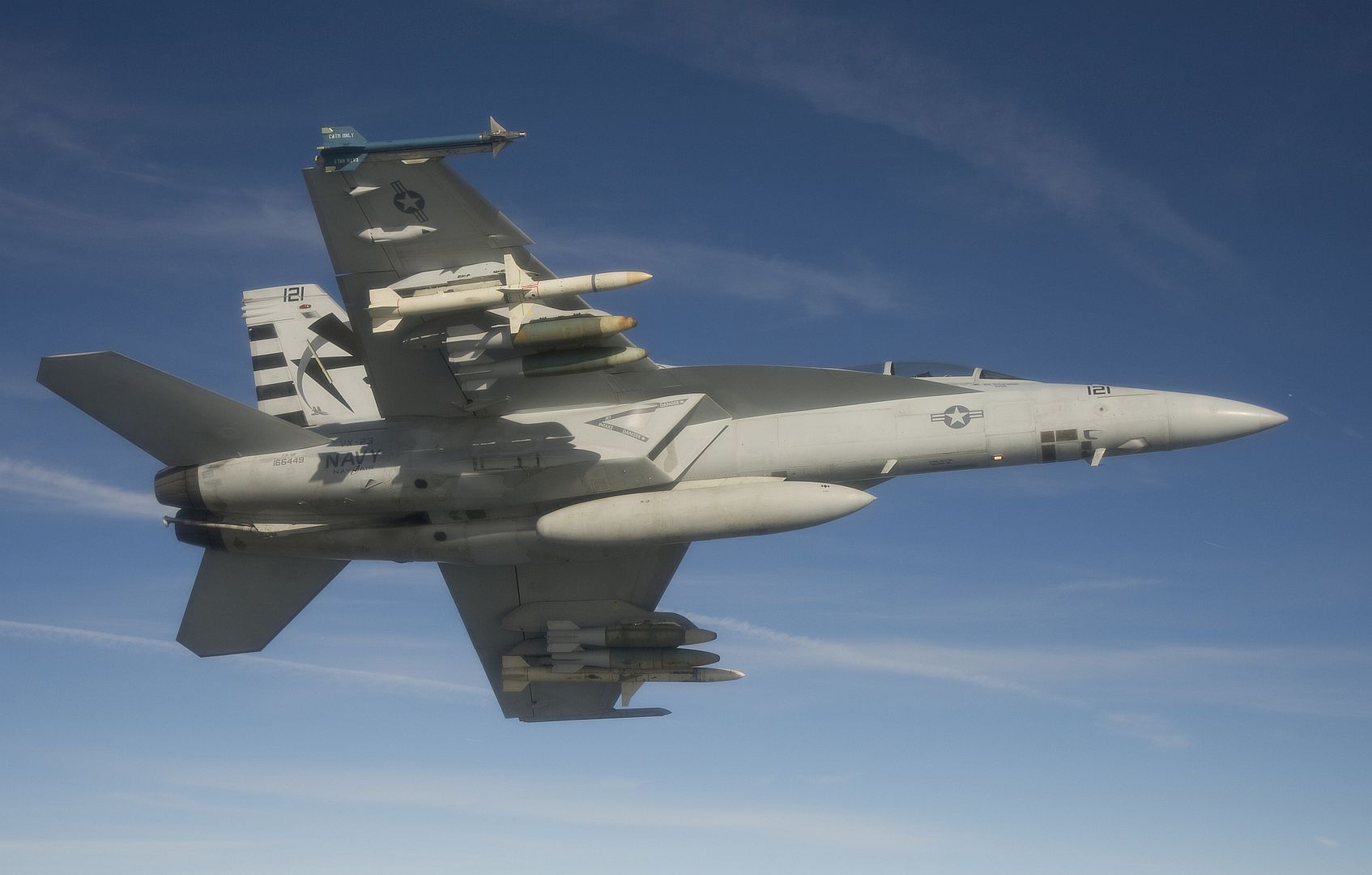
New Caledonia?s Aircalin has taken delivery of its first of two A330-900 at a delivery ceremony in Toulouse, France, with the second aircraft joining the fleet later in 2019, replacing its existing two A330s. Aircalin is also a customer for the A320neo and will replace its existing two A320s to become an operator of two A330-900s and two A320neos.
Aircalin?s A330neos are configured in a comfortable three-class layout with 291 seats or 25 more seats than its existing smaller A330-200s. These include 26 business, 244 economy and for the first time, premium economy with 21 seats.
The A330neos will boost capacity and non-stop connectivity between the French Pacific Island territory and markets in Japan, Australia and the Pacific Islands nations, cutting fuel burn by 25% per seat (compared with previous generation competitors) and providing passengers with the latest standards in cabin comfort. These routes provide essential links to tourism as well as business traffic, which are essential to the New Caledonia economy.
The A330neo is the true new-generation aircraft building on the most popular wide-body A330?s features and leveraging on A350 XWB technology. Powered by the latest Rolls-Royce Trent 7000 engines, the A330neo provides an unprecedented level of efficiency ? with 25% lower fuel burn per seat than previous generation competitors. Equipped with the Airbus Airspace cabin, the A330neo offers a unique passenger experience with more personal space and the latest generation in-flight entertainment system and connectivity.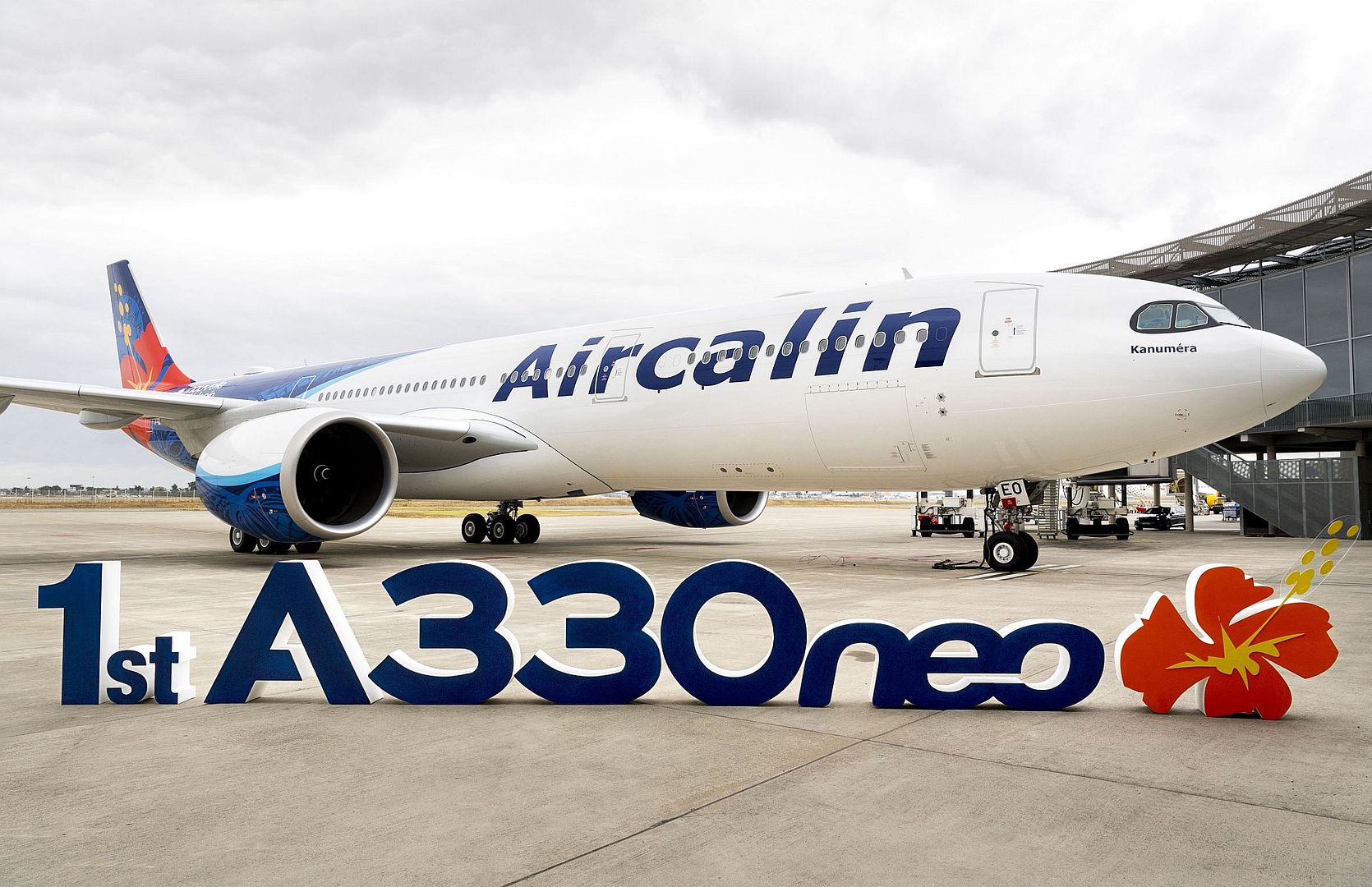
The Air France?KLM Group has signed a Memorandum of Understanding (MoU) for 60 A220-300 aircraft to modernise its fleet. By acquiring the industry?s most efficient and technologically advanced single-aisle aircraft, the airline will benefit from a significant reduction in fuel burn and CO2 emissions. These A220s are intended to be operated by Air France.
?The acquisition of these brand new A220-300s aligns perfectly with Air France?KLM?s overall fleet modernisation and harmonisation strategy,? said Benjamin Smith, CEO of the Air France-KLM Group. ?This aircraft demonstrates optimum operational and economic efficiency and enables us to further improve our environment footprint thanks to the A220?s low fuel consumption and reduced emissions. It is also perfectly adapted to our domestic and European network and will enable Air France to operate more efficiently on its short and medium-haul routes.?
?It is an honour for Airbus that Air France, a long-standing valued customer, has endorsed our latest family member, the A220, for its fleet renewal plans,? said Guillaume Faury, Airbus Chief Executive Officer. ?We are committed to supporting Air France with our A220 by bringing the latest technologies, efficiency levels, and environment benefits. We are delighted to embark on this partnership and we are looking forward to seeing the A220 flying in the Air France colours.?
The A220 is the only aircraft purpose-built for the 100-150 seat market; it delivers unbeatable fuel efficiency and wide-body passenger comfort in a single-aisle aircraft. The A220 brings together state-of-the-art aerodynamics, advanced materials and Pratt & Whitney?s latest-generation PW1500G geared turbofan engines to offer at least 20% lower fuel burn per seat compared to previous generation aircraft. The A220 offers the performance of larger single-aisle aircraft.
Air France currently operates a fleet of 144 Airbus aircraft.
With an order book of 551 aircraft as of end of June 2019, the A220 has all the credentials to win the lion?s share of the 100-to-150-seat aircraft market, estimated to represent 7,000 aircraft over the next 20 years.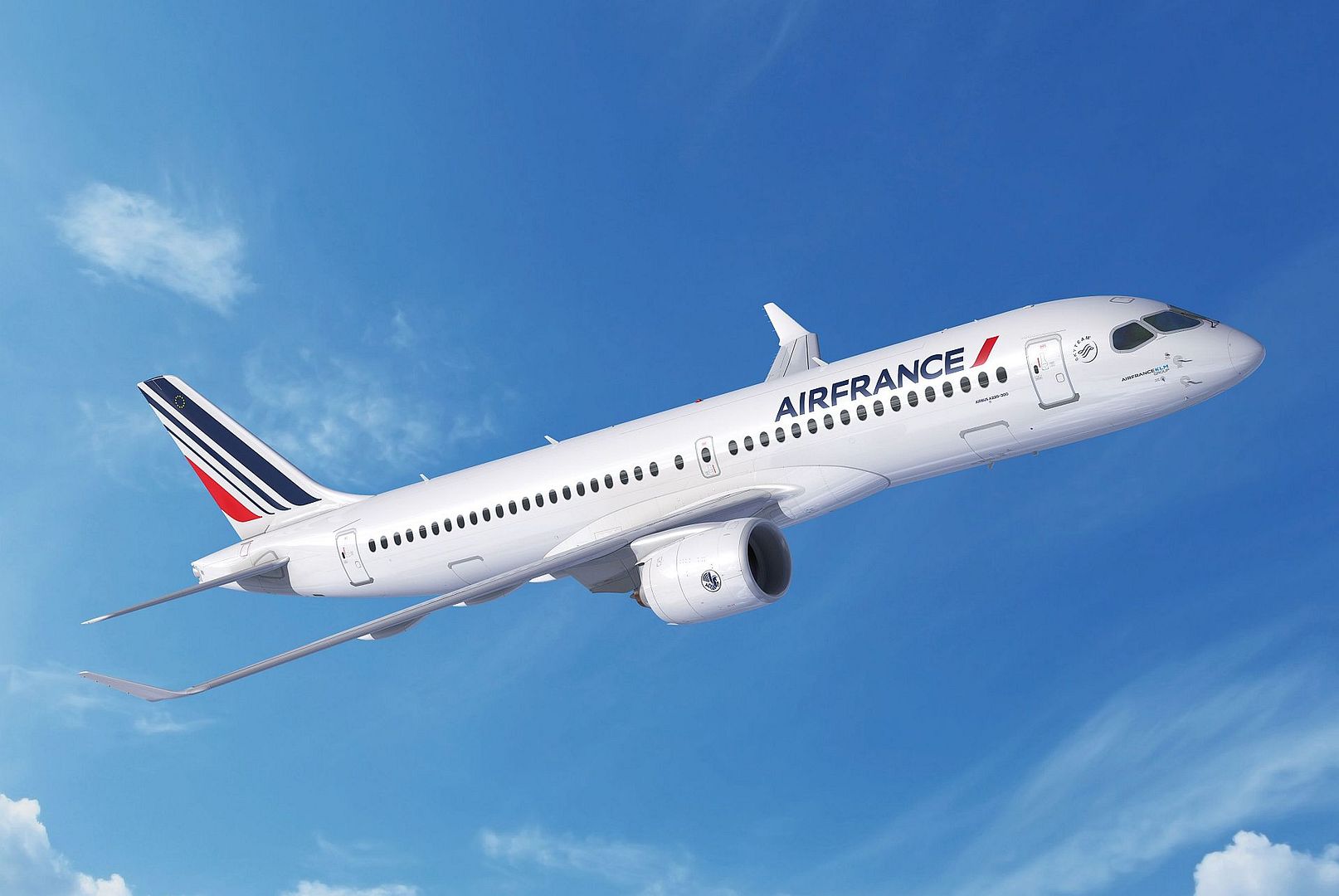
-
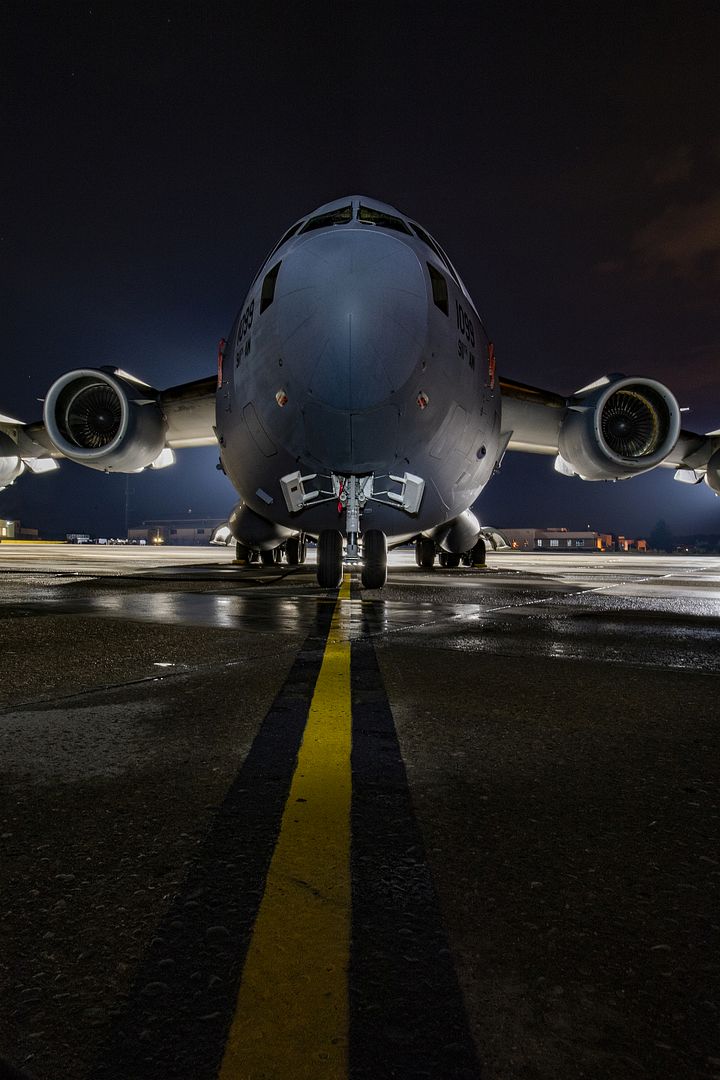
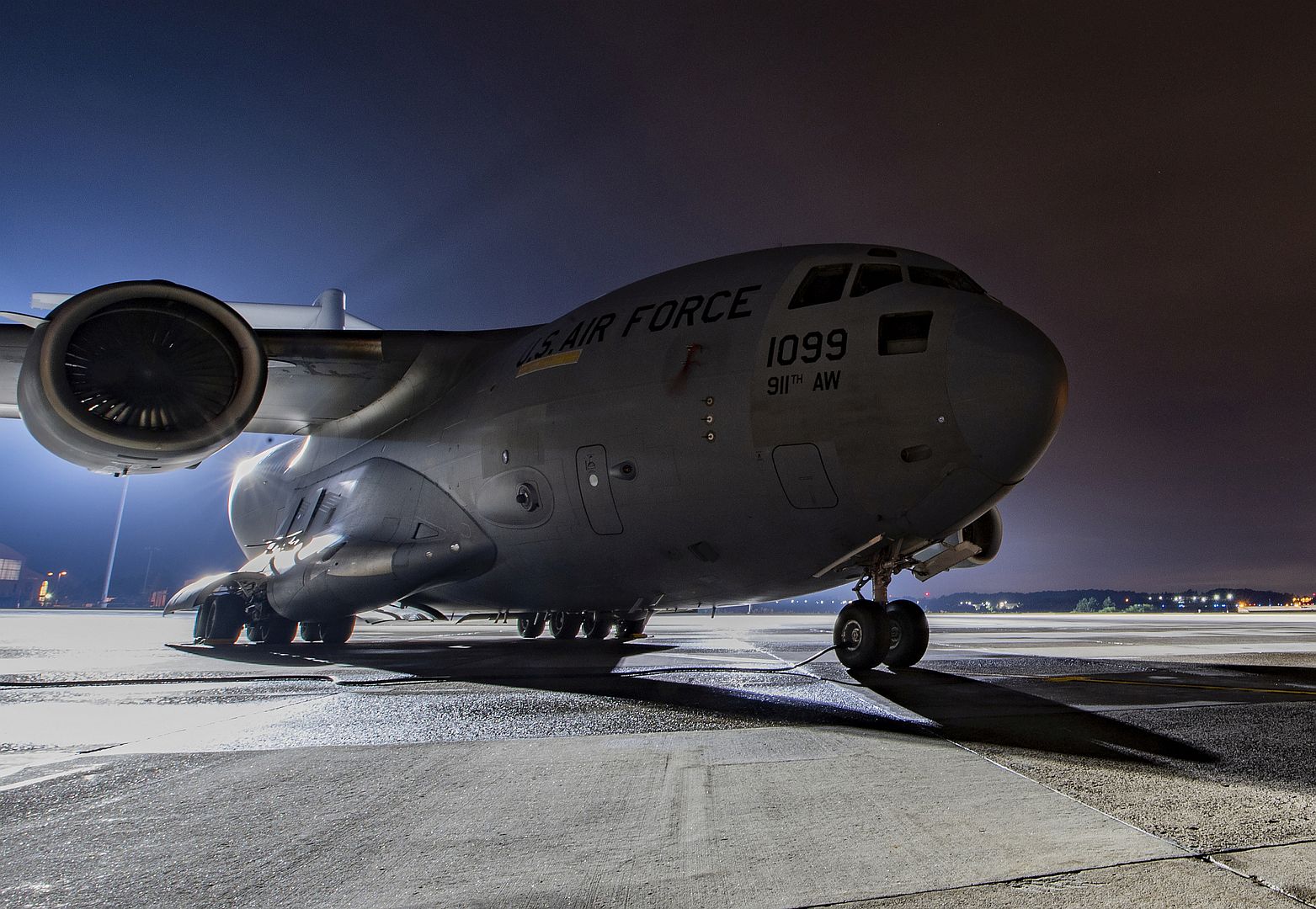
A C-17 Globemaster III assigned to the 911th Airlift Wing sits on the flightline at the Pittsburgh International Airport Air Reserve Station, Pennsylvania, July 30, 2019. The C-17 is capable of rapid strategic delivery of troops and all types of cargo to main operating bases or directly to forward bases in the deployment area. (U.S. Air Force photo's by Joshua J. Seybert)
Red Flag-Alaska 19-3, a Pacific Air Forces-sponsored exercise designed to provide realistic training in a simulated combat environment, is scheduled to begin Aug. 1 with primary flight operations over the Joint Pacific Alaska Range Complex (JPARC) and is scheduled to run through Aug. 16.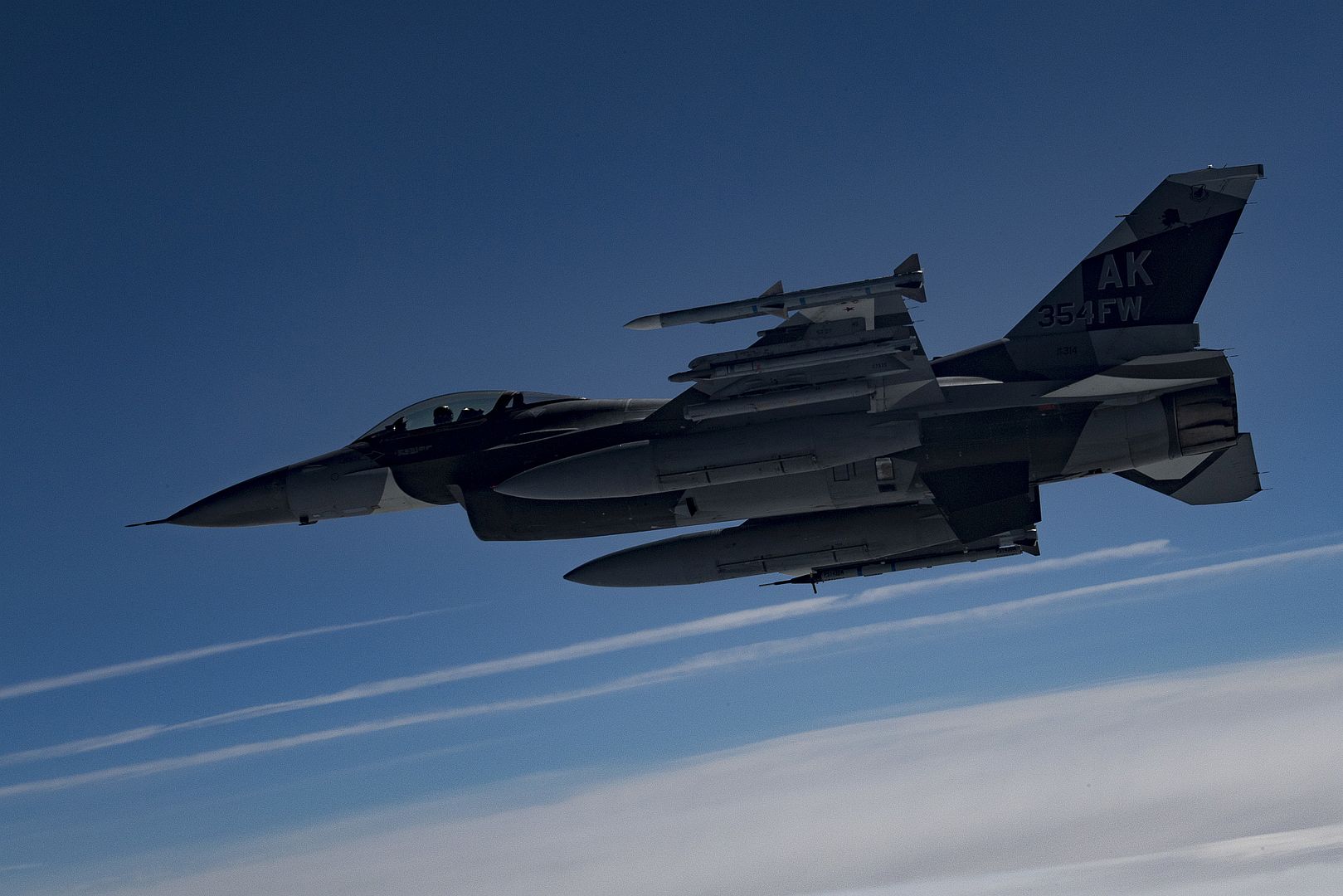
Approximately 1,500 service members are expected to fly, maintain and support more than 100 aircraft from more than two dozen units during this iteration of the exercise. In addition to the U.S., service members from the U.K. Royal Air Force (RAF), Royal Australian Air Force (RAAF), and Royal Canadian Air Force (RCAF) are scheduled to participate, enabling them to exchange tactics, techniques and procedures while improving interoperability with fellow airmen. The majority of aircraft will be based at, and fly from, Eielson Air Force Base and Joint Base Elmendorf-Richardson, Alaska.
RED FLAG-Alaska exercises provide unique opportunities to integrate various forces in a realistic threat environment and dates back to 1975 when it was held at Clark Air Base in the Philippines and called exercise COPE THUNDER.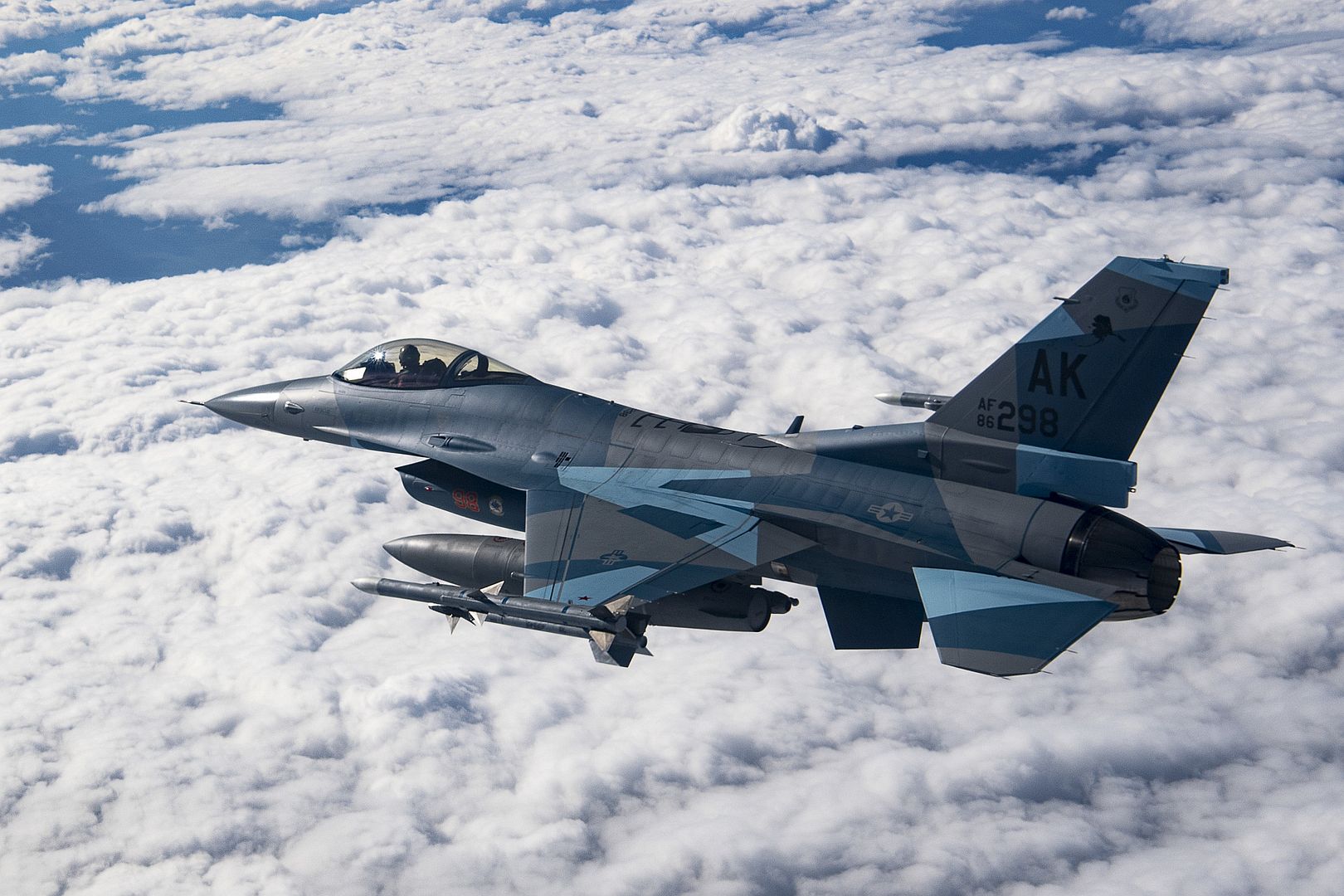
RAF Typhoon fighter jets intercepted a Russian IL-76 military transport aircraft that was flying close to Estonian airspace.
This is a routine NATO mission for the Typhoons which provides reassurance that the UK is working in partnership with its NATO ally Estonia.
The Defence Secretary, Ben Wallace, said:
?As this latest Quick Reaction Alert demonstrates, the RAF are frequently called upon to use their world class skills and capabilities to help police and protect the skies over the Baltics.
?Our personnel deployed to Estonia and around the world are always ready to react to any scenario as we continue our commitment to our NATO allies.?
The Royal Air Force is deployed on Operation AZOTIZE in Estonia in support of Baltic Air Policing. This is the 14th QRA scramble and intercept since the RAF took over enhanced Air Policing (eAP) from the German Air Force on 3 May 2019 as part of Baltic Air Policing. The UK operates in support of NATO to reassure our allies and is a further demonstration of the UK?s commitment to the security of the region.
(photo courtesy MOD)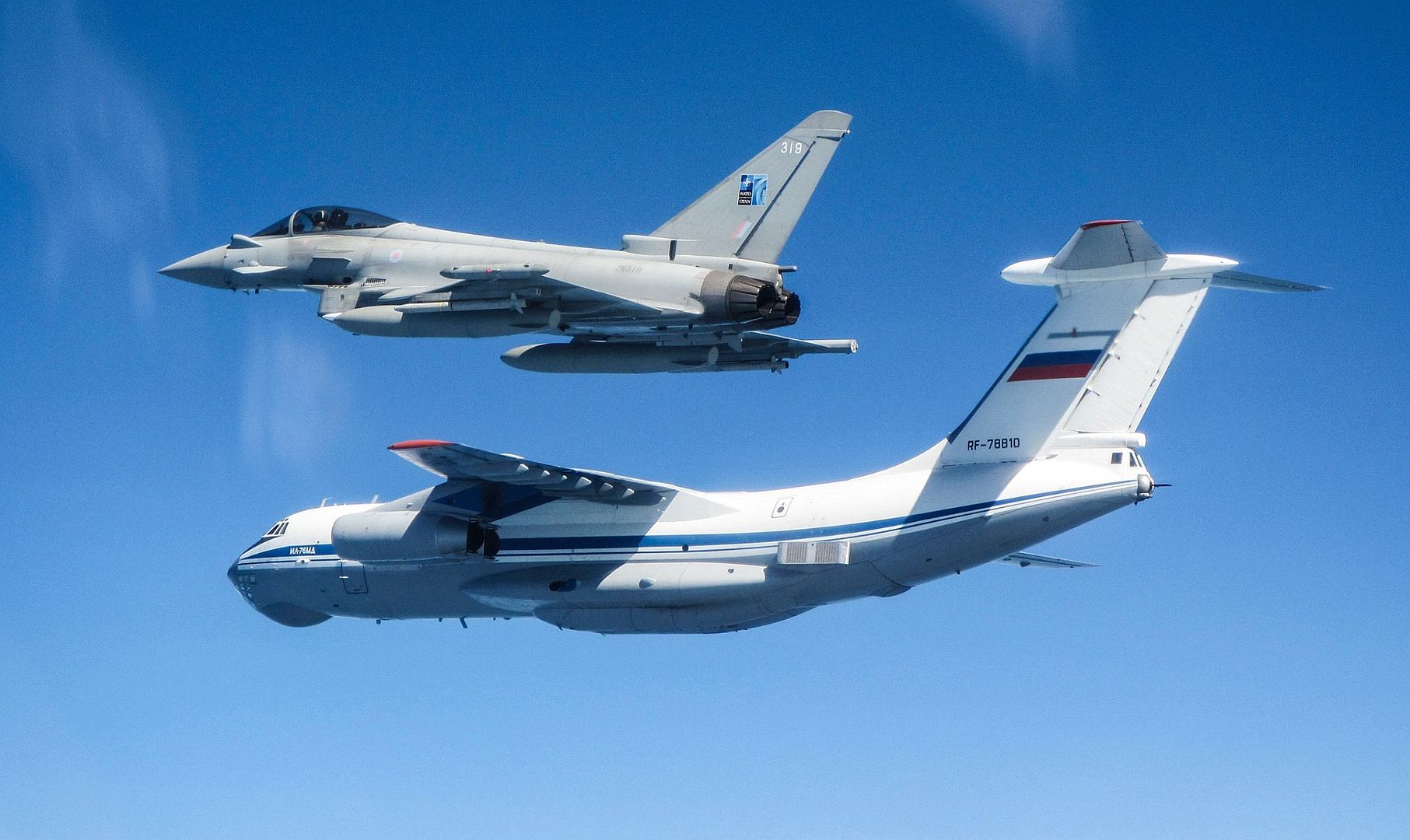
-
A U.S. Air Force F-22 Raptor out of Al Udeid Air Base, Qatar, prepares to connect with a KC-135 Stratotanker during an aerial refueling mission above an undisclosed location, July 29, 2019. The F-22 Raptor, from the 1st Fighter Wing, Joint Base Langley-Eustis, Va., is currently serving its first deployment to Al Udeid Air Base to defend American forces and interests in the U.S. Central Command area of responsibility. (U.S. Air Force photo by Staff Sgt. Chris Drzazgowski)
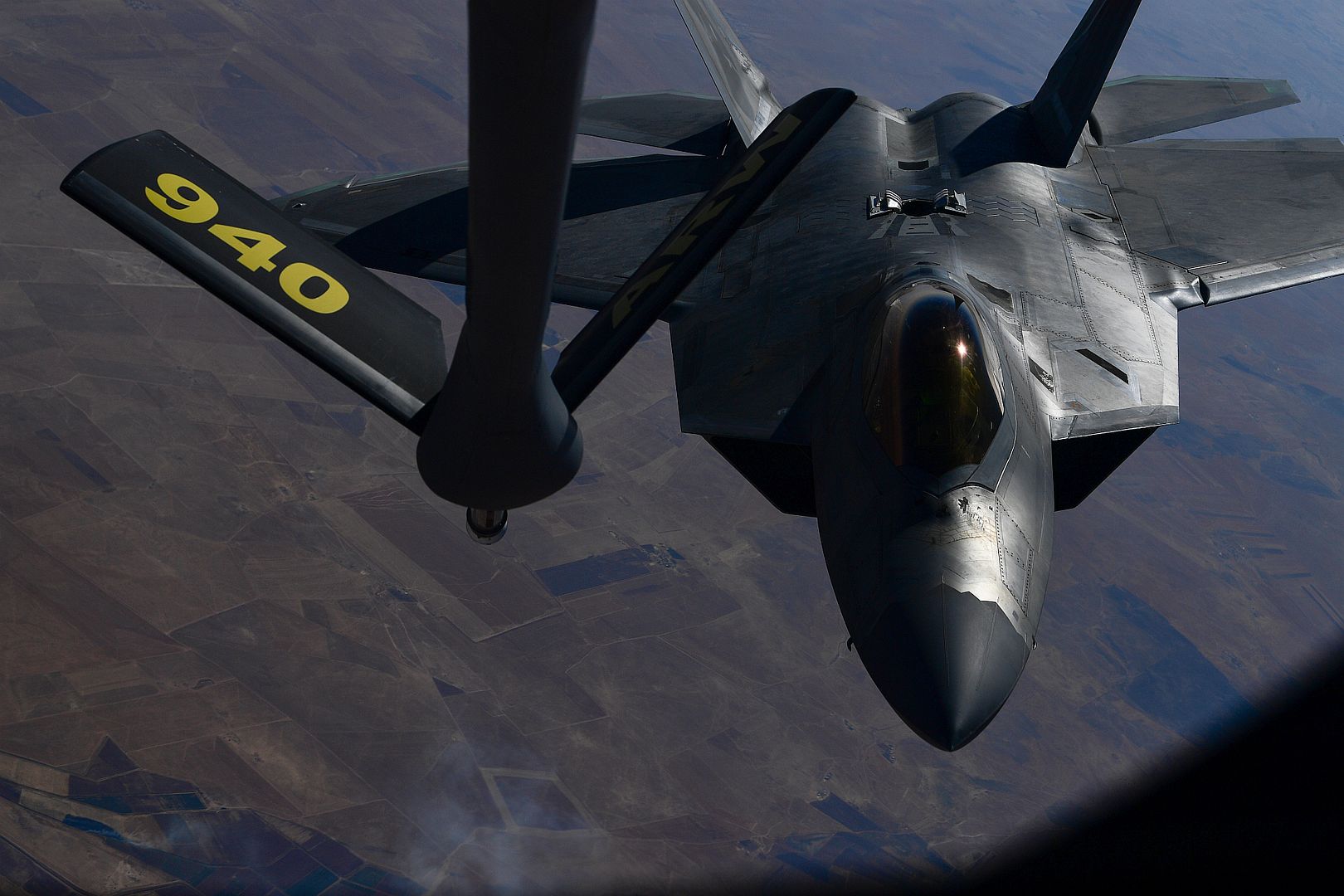
A U.S. Air Force F-22 Raptor out of Al Udeid Air Base, Qatar, flies alongside a KC-135 Stratotanker during an aerial refueling mission above an undisclosed location, July 29, 2019. The F-22 Raptor, from the 1st Fighter Wing, Joint Base Langley-Eustis, Va., is currently serving its first deployment to Al Udeid Air Base to defend American forces and interests in the U.S. Central Command area of responsibility. (U.S. Air Force photo by Staff Sgt. Chris Drzazgowski)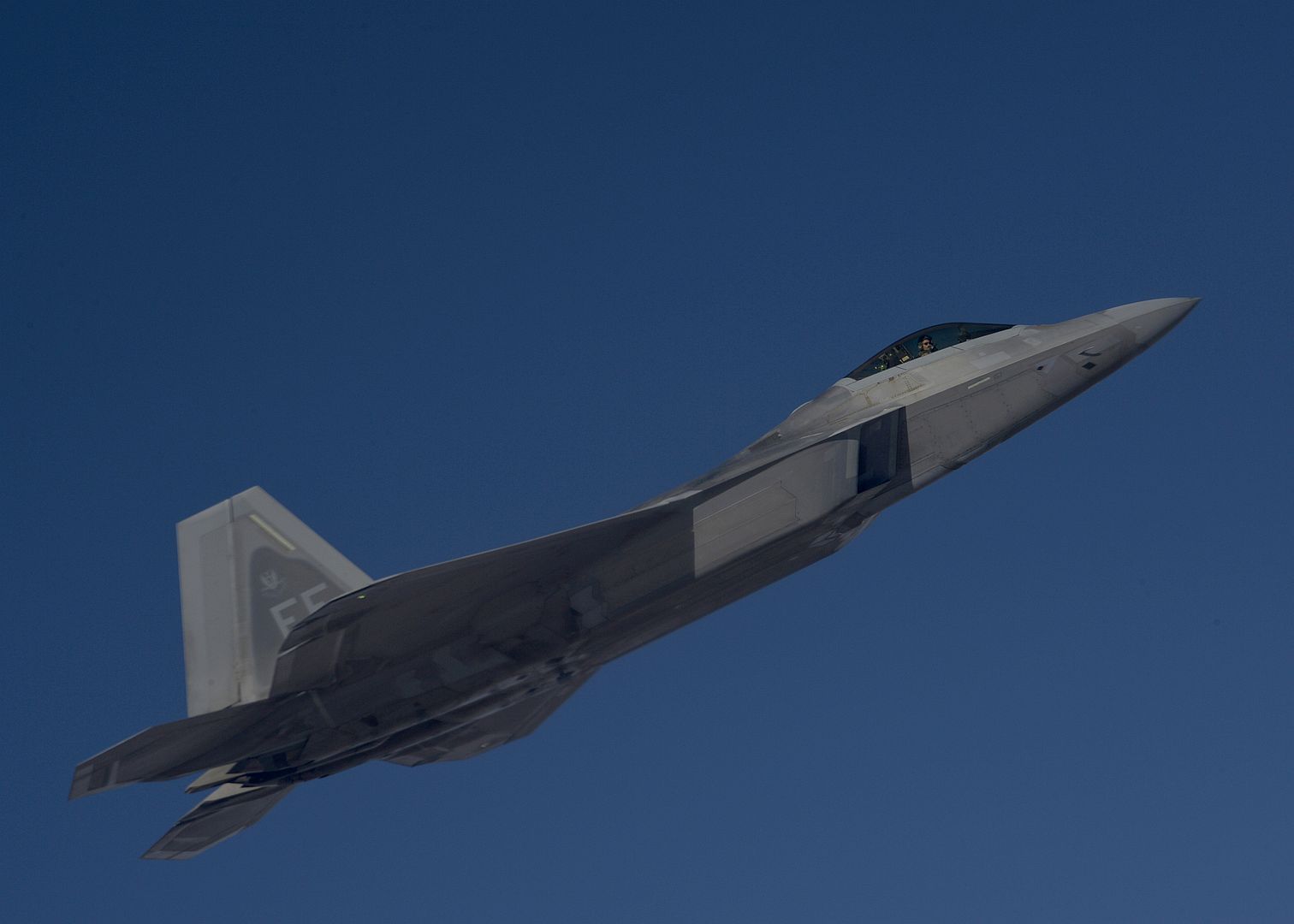
Crew Chiefs with the 421st Aircraft Maintenance Unit work on an F35A Lightning II returning to Hill Air Force Base, Utah, July 31, 2019, after a two-month European deployment. The 421st Fighter Squadron participated in several combat exercises with allied and partner nations while deployed. (U.S. Air Force photo by R. Nial Bradshaw)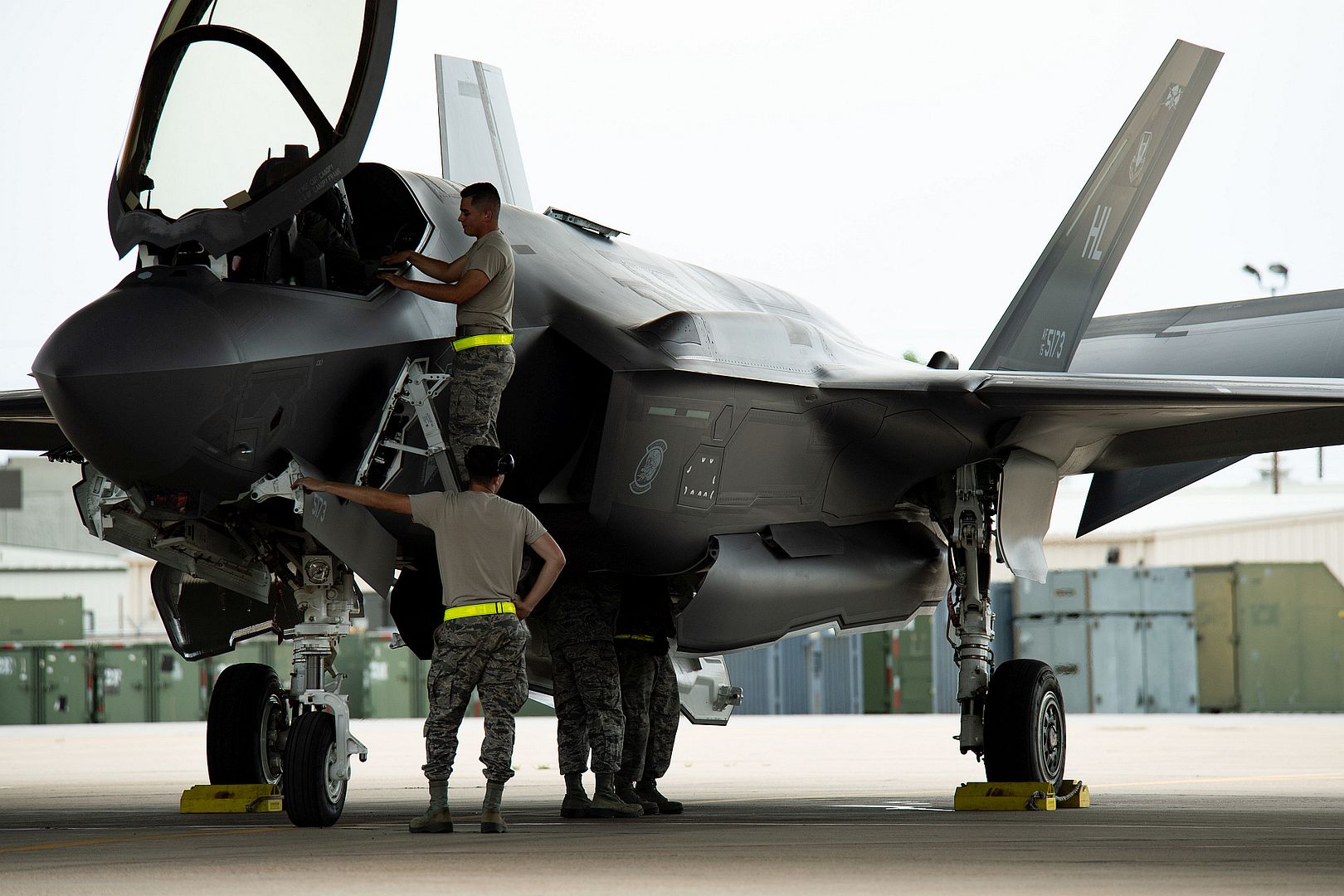
ATLANTIC OCEAN (July 31, 2019) Sailors pre-check F/A-18 Super Hornet's prior to flight operations on the flight deck of the Nimitz-class aircraft carrier USS Harry S. Truman (CVN 75). Harry S. Truman is underway conducting composite training unit exercise with the Harry S. Truman Carrier Strike Group. (U.S. Navy photo by Mass Communication Specialist Seaman Isaac Champlain/Released)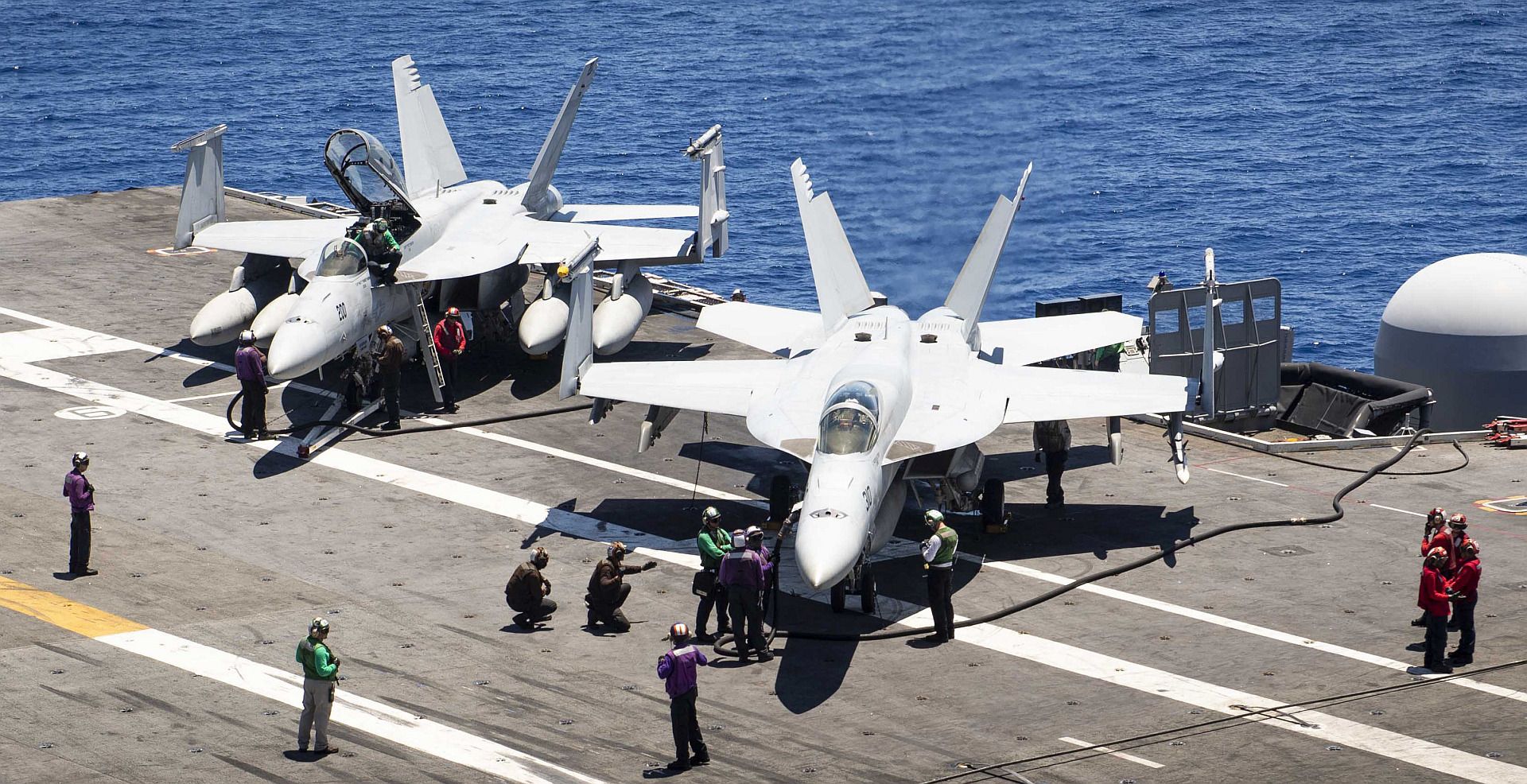
B-52H Stratofortress, serial # 61-0011, arrives at Tinker Air Force Base, Oklahoma on July 17, 2019 for induction to major overhaul by the Oklahoma City Air Logistics Complex after a ferry flight from San Antonio, Texas. 61-0011 was flown gear-down by a crew from the 10th Flight Test Squadron, Air Force Reserve Command, from Boeing's facility after receiving 'milk-bottle' replacements to extend the service life of the aircraft by replacing the wing-attachment points. (U.S. Air Force photo/Greg L. Davis)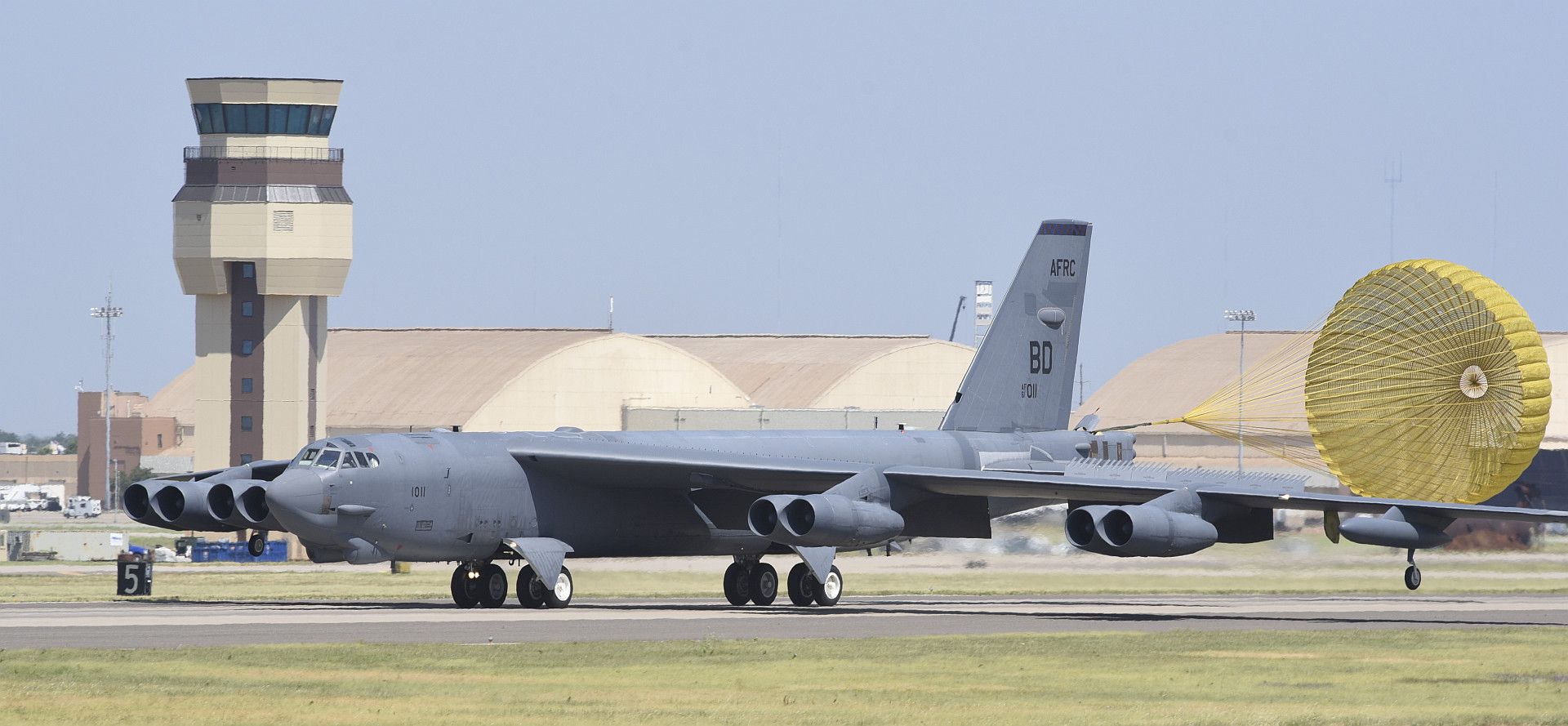
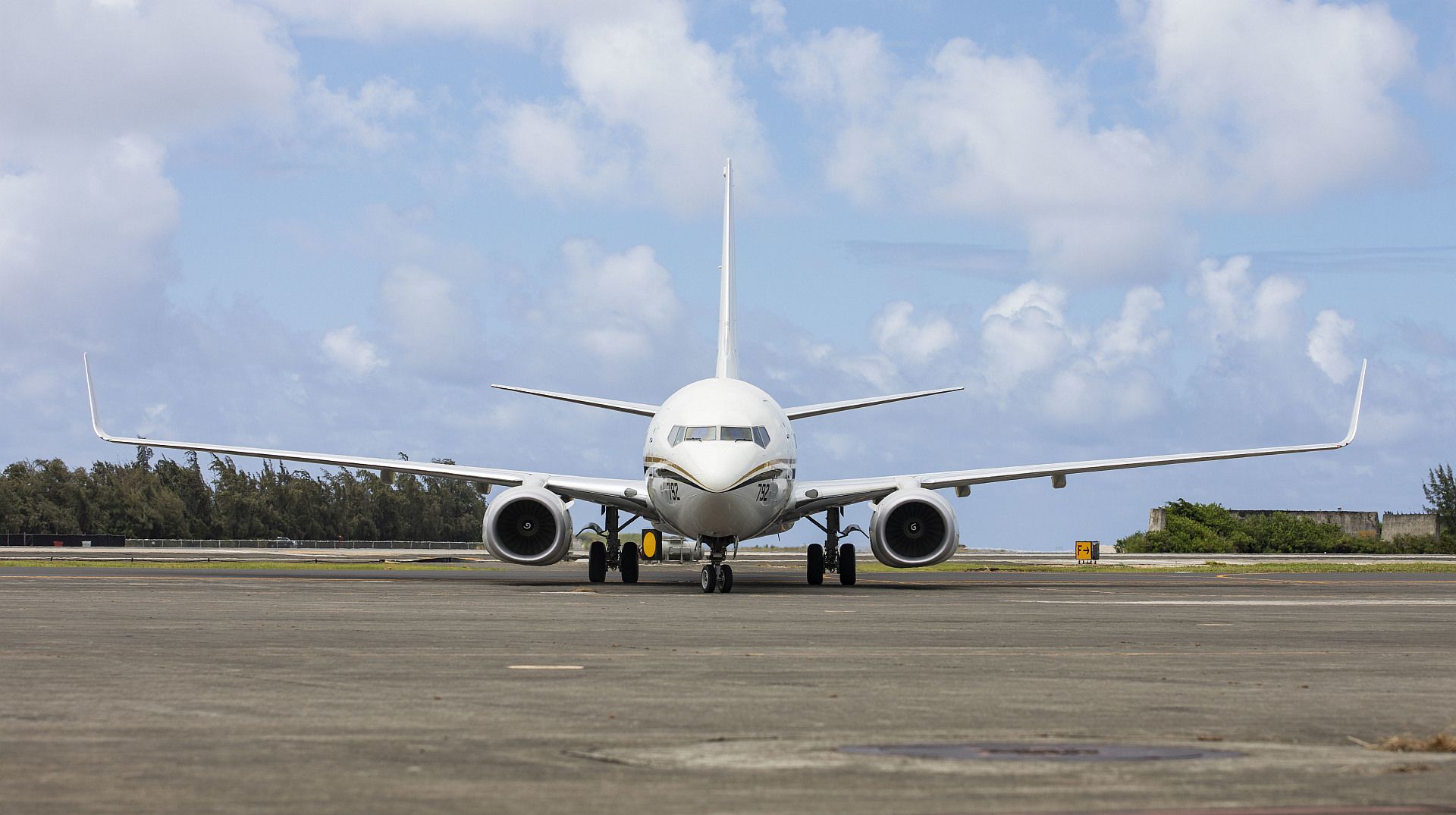
MARINE CORPS AIR STATION KANEOHE BAY, Hawaii (July 26, 2019) A U.S. Navy C-40 Clipper jet aircraft assigned to Fleet Logistics Support Squadron (VR) 51 prepares to land at Marine Corps Air Station Kaneohe Bay at Marine Corps Base Hawaii, July 26, 2019. As the newest addition to VR-51's fleet of transport aircraft, the Clipper provides improved mission capabilities that includes a larger cargo capacity and more room to carry personnel. (U.S. Marine Corps photo's by Sgt. Jesus Sepulveda Torres)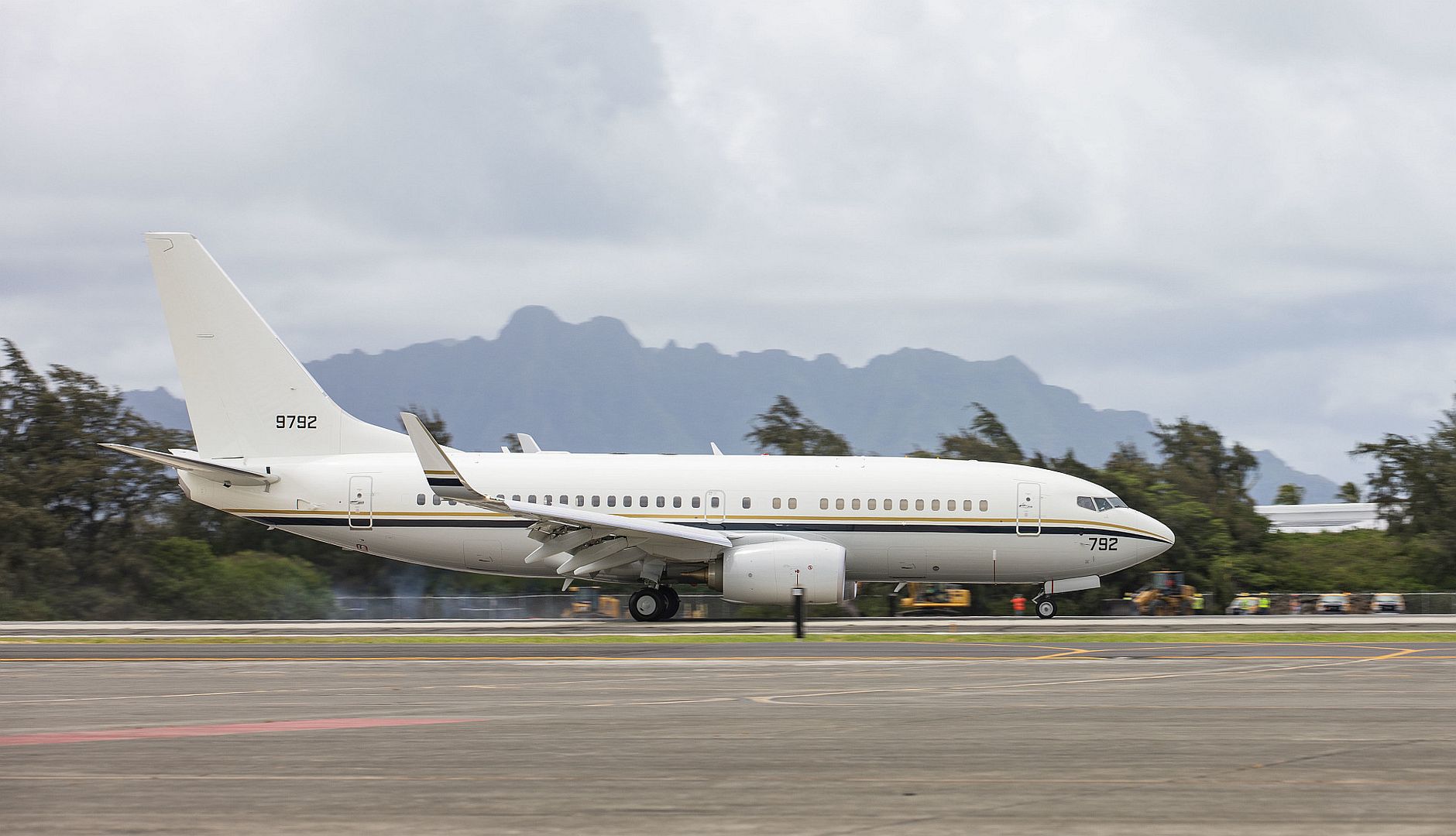
PHILADELPHIA, Aug. 1, 2019 ? Boeing [NYSE: BA], the U.S. Marine Corps, U.S. Air Force and U.S. Navy celebrated the transformation of a 350,000-square-foot facility outside Philadelphia into a modern factory where company employees will build fuselages for the V-22 tiltrotor aircraft and modernize the MV-22 fleet for the Marines.
?Boeing?s $115 million investment supports U.S. and international demand for the unrivaled capabilities of the V-22,? said David Koopersmith, vice president and general manager, Boeing Vertical Lift. ?We started this project two years ago in a mothballed building. Now, it is a state of the art manufacturing center for the only in-service tiltrotor aircraft in the world.?
The new factory will improve safety and productivity, lower operating costs, and reduce Boeing?s environmental impact. It will be home to the Common Configuration ? Readiness and Modernization (CC-RAM) program that standardizes the Marine Corps Osprey fleet by upgrading previously built aircraft to the new Block C configuration. The factory will also house fuselage production for Navy, Air Force, Marines, and international Osprey customers.
?The V-22 readiness program is our number one priority,? said U.S. Marine Corps Col. Matthew Kelly, V-22 Joint Program Manager. ?The CC-RAM program is key in meeting our readiness goals and returning capable and reliable aircraft to Marine units around the world.?
Boeing employs approximately 4,600 people in Pennsylvania and supports 16,000 direct and indirect jobs in the commonwealth.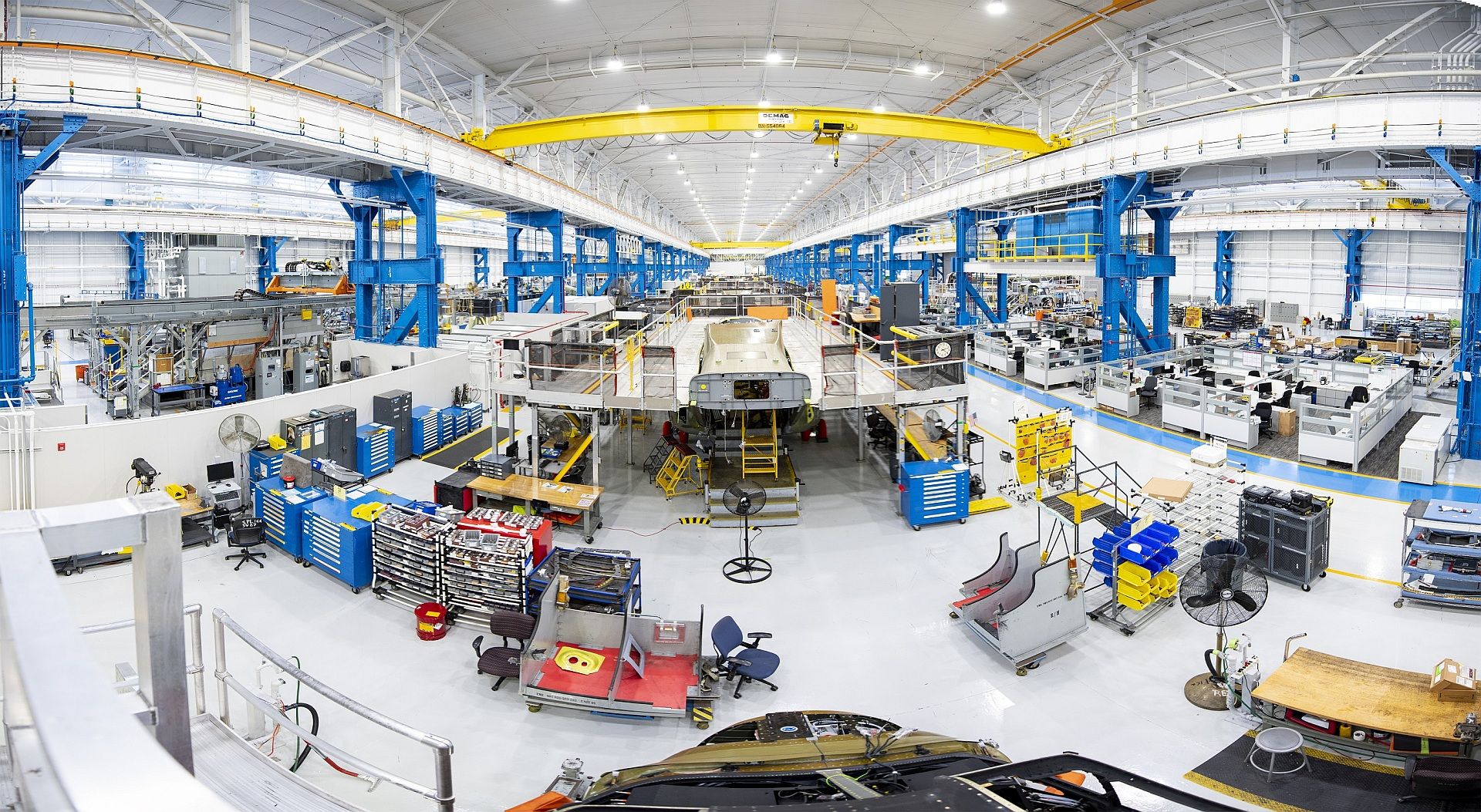
Air Seychelles, the national airline of the Republic of Seychelles, has taken delivery of Africa?s first A320neo on lease from CDB Aviation, becoming the first African airline to operate the A320neo aircraft.
The new aircraft will allow Air Seychelles to increase capacity on its network, while delivering significant fuel savings and reducing the airline's operating costs. Air Seychelles? new A320neo is equipped with a new inflight product reflecting the latest trends in air travel industry, offering passengers greater level of comfort and an enhanced travel experience. With its widest single-aisle cabin, the A320neo allows Air Seychelles to offer unmatched comfort in all classes and Airbus? 18-inch-wide seats in economy as standard.
The A320neo is the world?s most advanced and fuel-efficient single-aisle aircraft. Air Seychelles? A320neo jetliner is powered by the new-generation LEAP-1A engine from CFM International and features large, fuel-saving wingtip devices known as Sharklets.
With the addition of 32 new Airbus operators in the continent since 2010, today 243 Airbus aircraft are flown by African airlines, out of which, 145 aircraft are A320 Family. This is a testament to the appeal and performance of the world?s best-selling single-aisle aircraft family across the continent.
The A320neo and its derivatives are the world?s best-selling single-aisle aircraft Family with over 6,600 orders from more than 100 customers. It has pioneered and incorporated the latest technologies, including new generation engines and the industry's reference cabin design, delivering 20% fuel cost per seat savings alone. The A320neo also offers significant environmental benefits with nearly a 50% reduction in noise footprint compared to previous generation aircraft.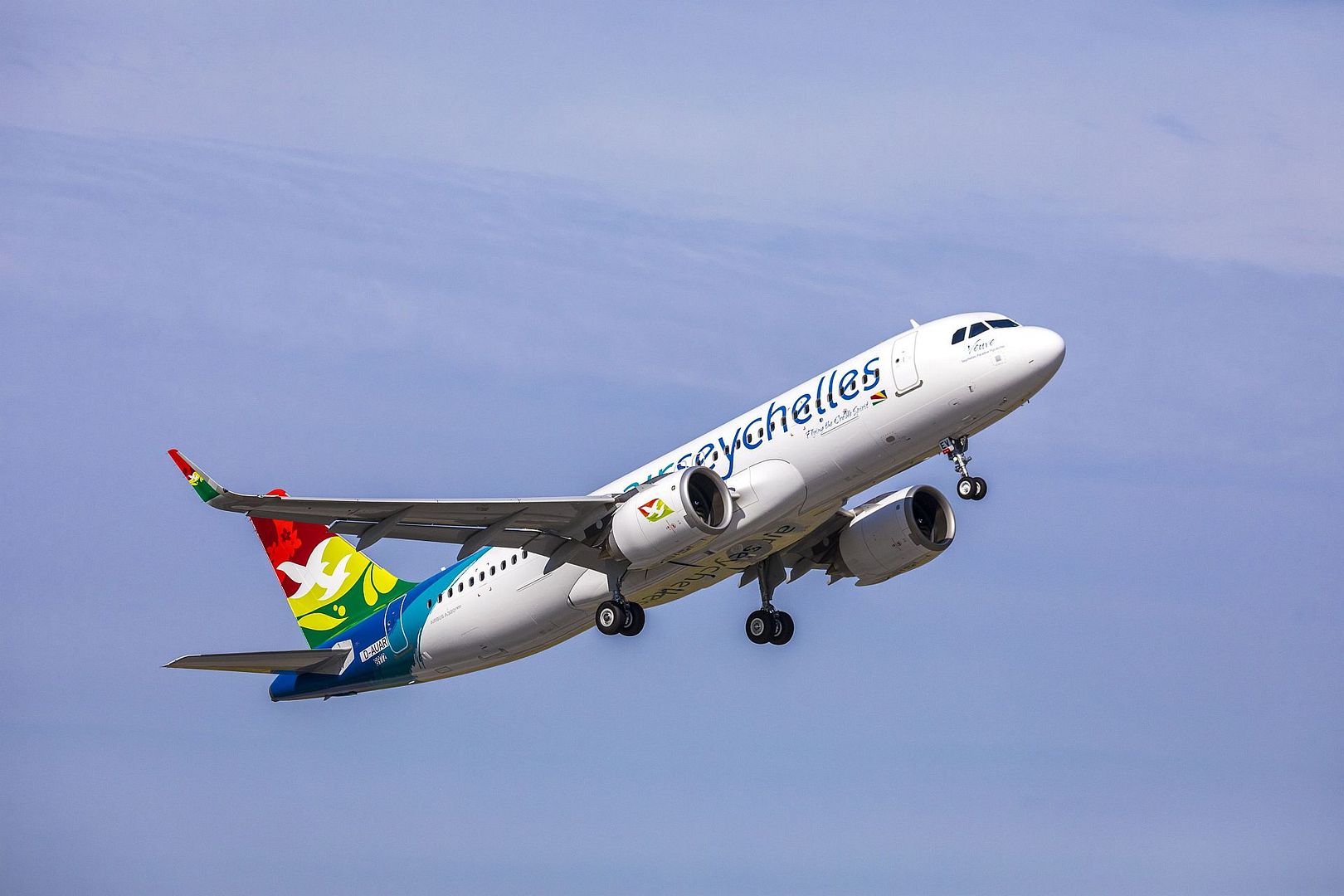
-
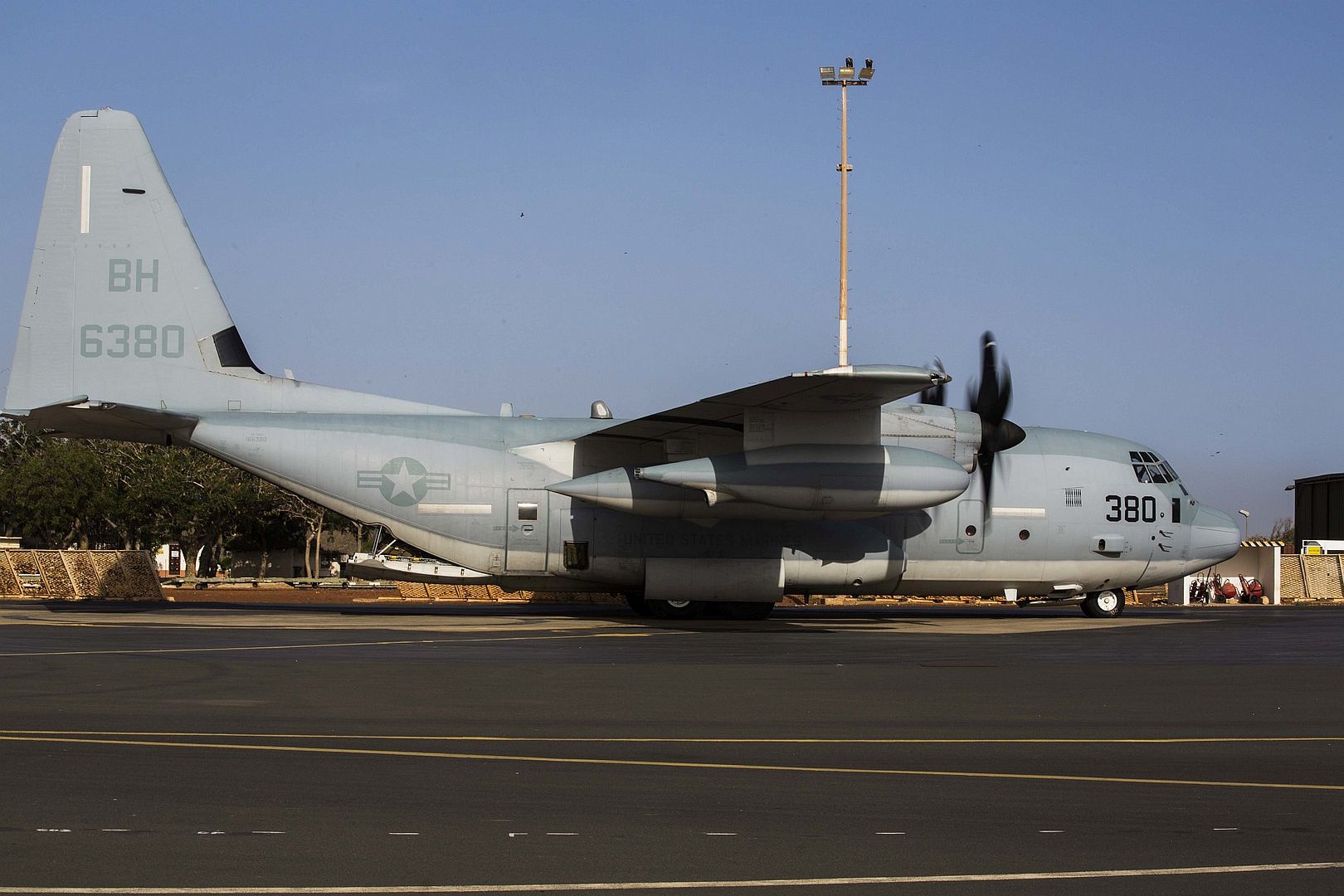
A U.S. Marine Corps KC-130J Super Hercules with Special Purpose Marine Air-Ground Task Force-Crisis-Response-Africa 19.2, Marine Forces Europe and Africa, arrives at a cooperative security location in Dakar, Senegal, Aug. 1, 2019. SPMAGTF-CR-AF activated the CSL to exercise forward-staging crisis response forces in Africa and rehearse responding to notional crises. (U.S. Marine Corps photo by Cpl. Margaret Gale)
A Romanian air force C-27J "Spartan" taxis down the flightline in support of Carpathian Summer 19, July 31, 2019, at Otopeni Air Base, Romania. Carpathian Summer 19 will take place over the span of two-weeks, helping to maintain joint readiness, build interoperability and strengthen U.S. relations with Romania. (U.S. Air Force photo by Senior Airman Malcolm Mayfield)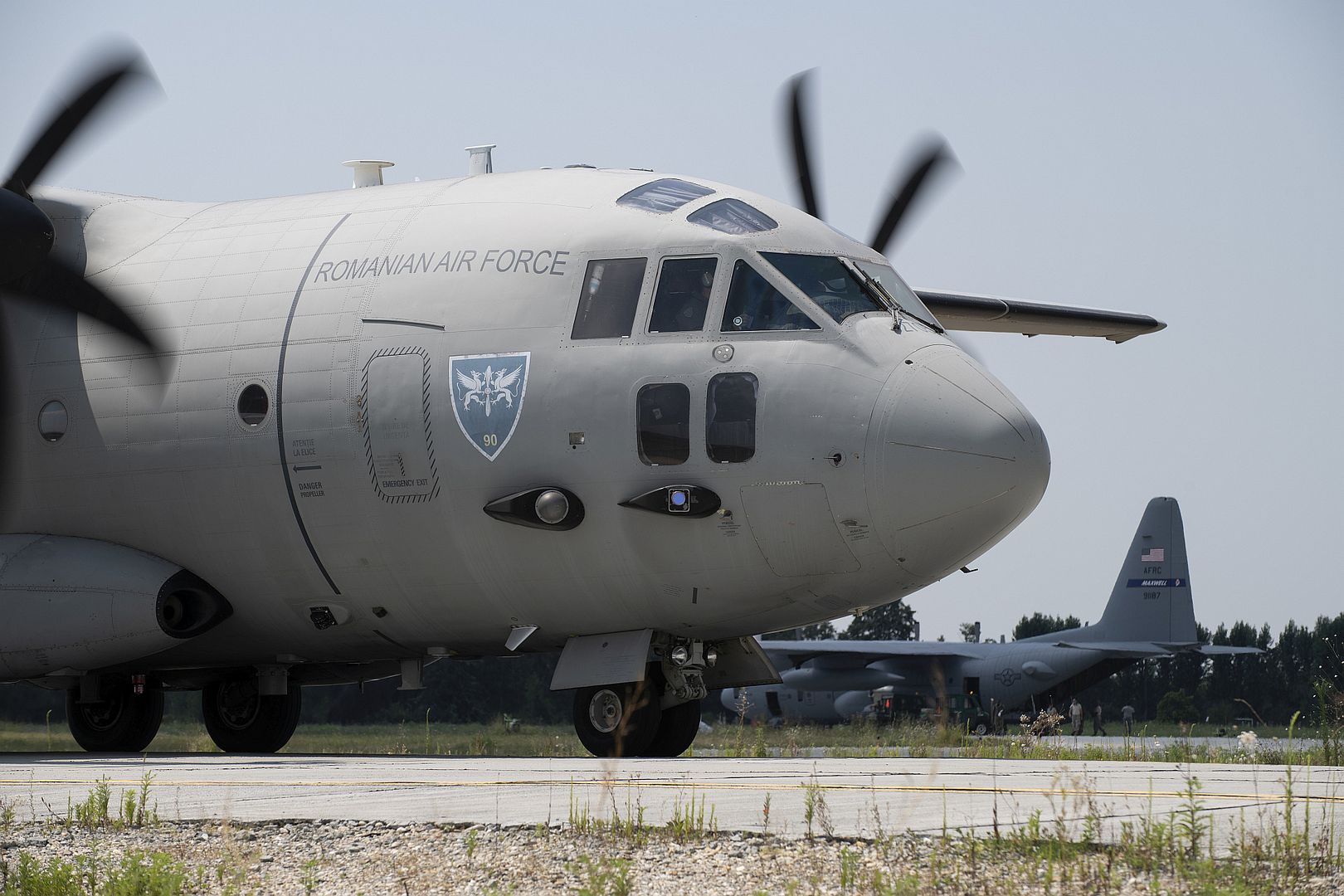
PACIFIC OCEAN (Aug. 1, 2019) An F/A-18E Super Hornet, assigned to the ?Tomcatters? of Strike Fighter Squadron (VFA) 31, launches from the flight deck of the aircraft carrier USS Theodore Roosevelt (CVN 71). Theodore Roosevelt is conducting routine operations in the Eastern Pacific Ocean. (U.S. Navy photo by Mass Communication Specialist 3rd Class Terence Deleon Guerrero/Released)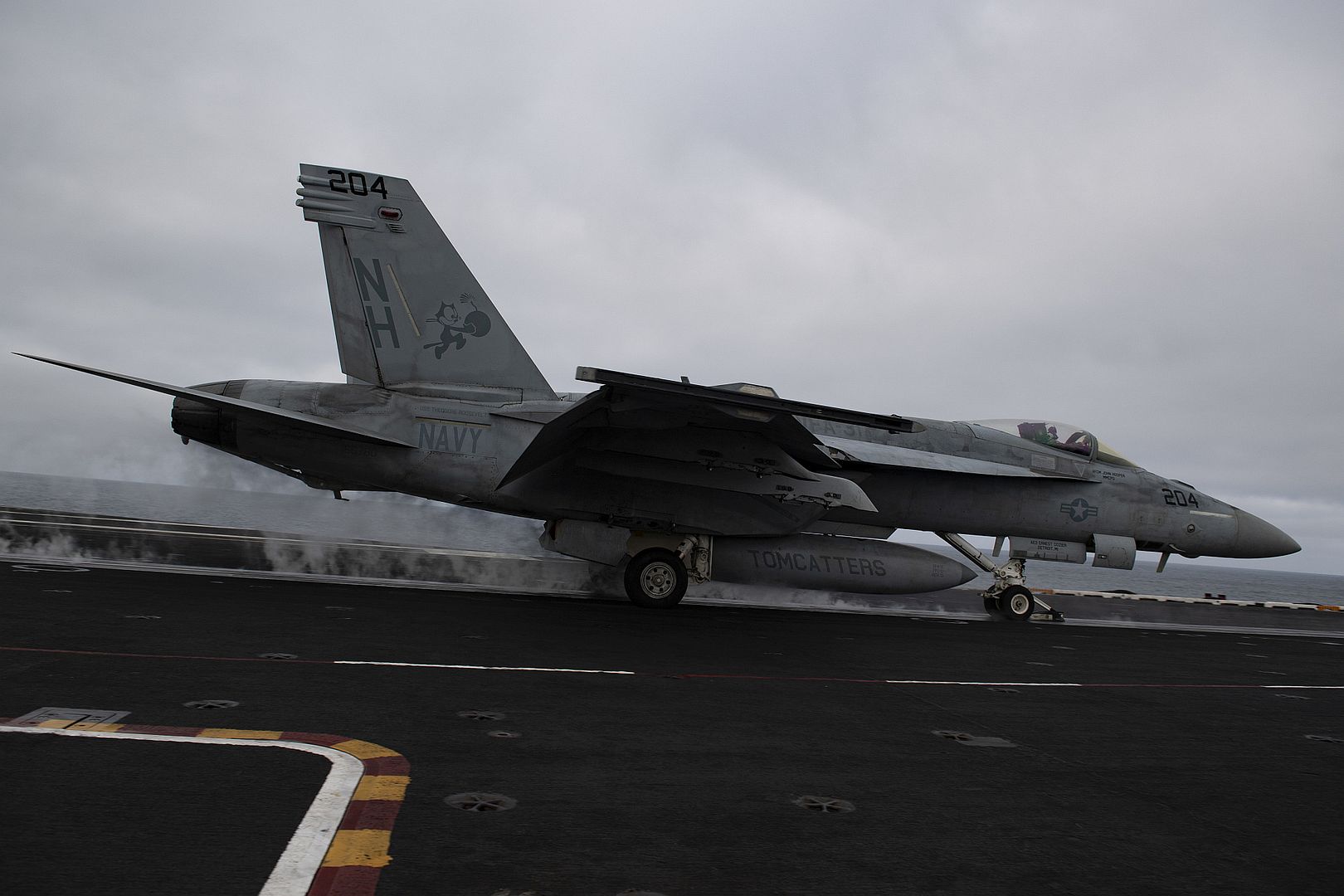
ARABIAN SEA (Aug. 1, 2019) An EA-18G Growler assigned to the "Patriots" of Electronic Attack Squadron (VAQ) 140 makes an arrested landing on the flight deck of the aircraft carrier USS Abraham Lincoln (CVN 72). Abraham Lincoln Carrier Strike Group is deployed to the U.S. 5th Fleet area of operations in support of naval operations to ensure maritime stability and security in the Central Region, connecting the Mediterranean and the Pacific through the western Indian Ocean and three strategic choke points. With Abraham Lincoln as the flagship, deployed strike group assets include staffs, ships and aircraft of Carrier Strike Group 12 (CSG 12), Destroyer Squadron 2 (DESRON 2), USS Leyte Gulf (CG 55) and Carrier Air Wing 7 (CVW 7). (U.S. Navy photo by Mass Communication Specialist 1st Class Brian M. Wilbur/Released)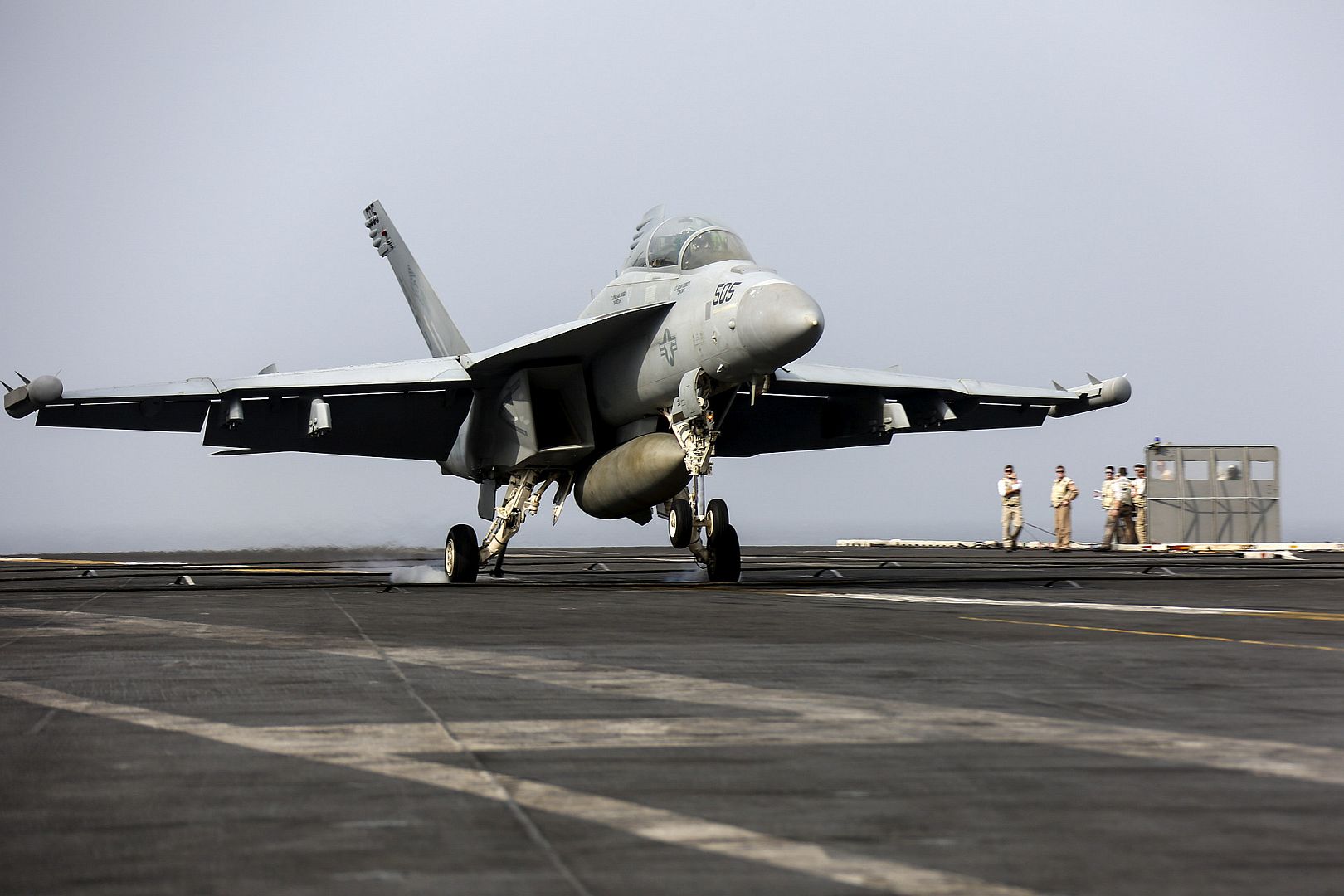
-
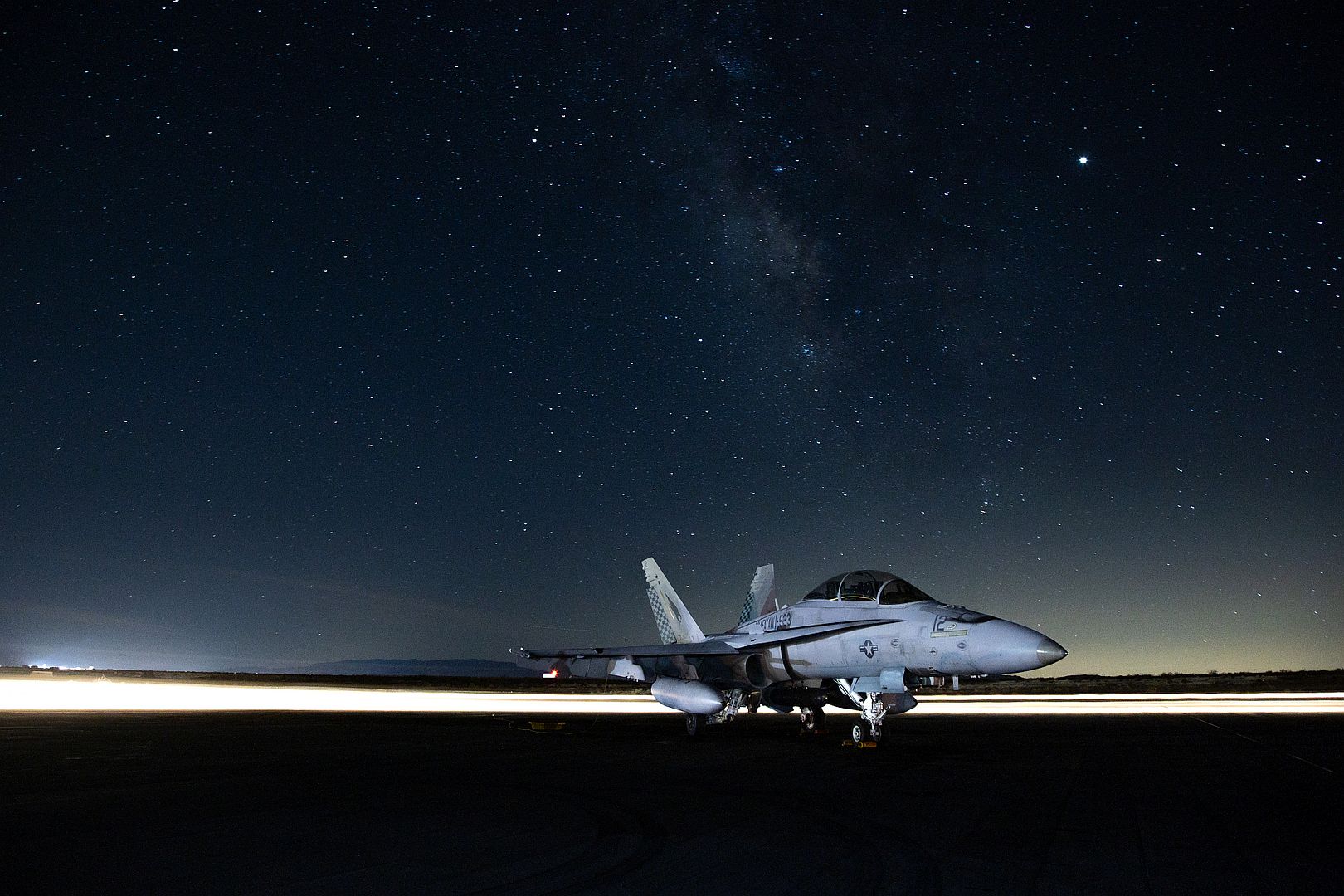
A U.S. Marine Corps F/A-18D Hornet assigned to Marine All-Weather Fighter Attack Squadron-533 sits idle on the flightline during Integrated Training Exercise (ITX) 5-19 at Marine Corps Air Ground Combat Center, Twentynine Palms, California, Aug. 4, 2019. ITX 5-19 is a large scale, combined-arms training exercise that produces combat-ready forces capable of operating as an integrated Marine Air-Ground Task Force. (U.S. Marine Corps photo by Cpl. Cody Rowe)
ARABIAN GULF (Aug. 3, 2019) An MV-22B Osprey attached to Marine Medium Tiltrotor Squadron (VMM) 163 (Reinforced) sits on the flight deck of amphibious assault ship USS Boxer (LHD 4) as the ship transits the Arabian Gulf. Boxer is part of the Boxer Amphibious Ready Group and 11th Marine Expeditionary Unit and is deployed to the U.S. 5th Fleet area of operations in support of naval operations to ensure maritime stability and security in the Central Region, connecting the Mediterranean and the Pacific through the Western Indian Ocean and three strategic choke points. (U.S. Navy photo by Mass Communication Specialist 3rd Class Alexander C. Kubitza/Released)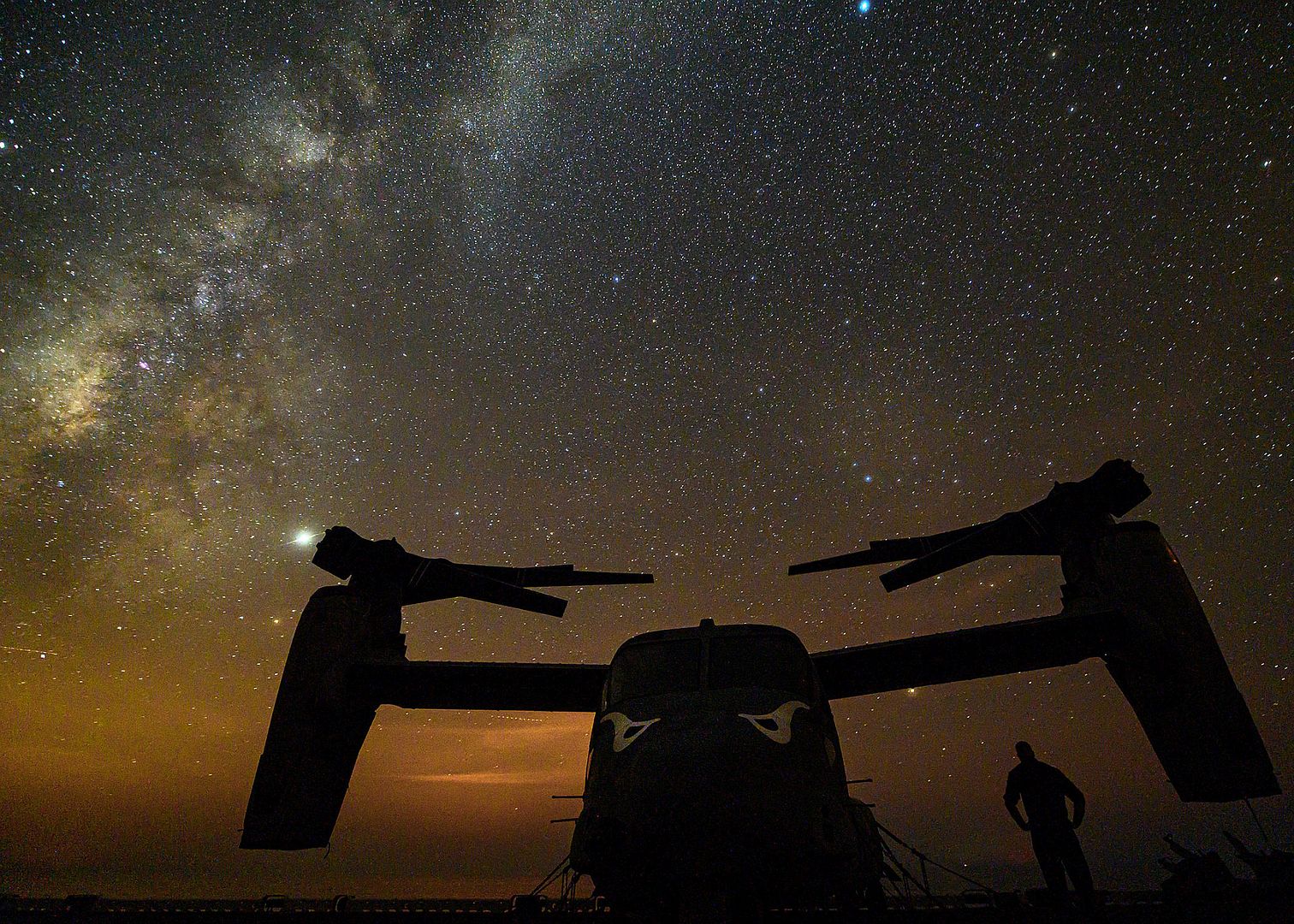
ARABIAN SEA (Aug. 6, 2019) An F/A-18F Super Hornet attached to the "Jolly Rogers" of Strike Fighter Squadron (VFA) 103 flies over the aircraft carrier USS Abraham Lincoln (CVN 72). Abraham Lincoln Carrier Strike Group is deployed to the U.S. 5th Fleet area of operations in support of naval operations to ensure maritime stability and security in the Central Region, connecting the Mediterranean and the Pacific through the western Indian Ocean and three strategic choke points. With Abraham Lincoln as the flagship, deployed strike group assets include staffs, ships and aircraft of Carrier Strike Group 12 (CSG 12), Destroyer Squadron 2 (DESRON 2), USS Leyte Gulf (CG 55) and Carrier Air Wing 7 (CVW 7). (U.S. Navy photo by Mass Communication Specialist 3rd Class Dan Snow/Released)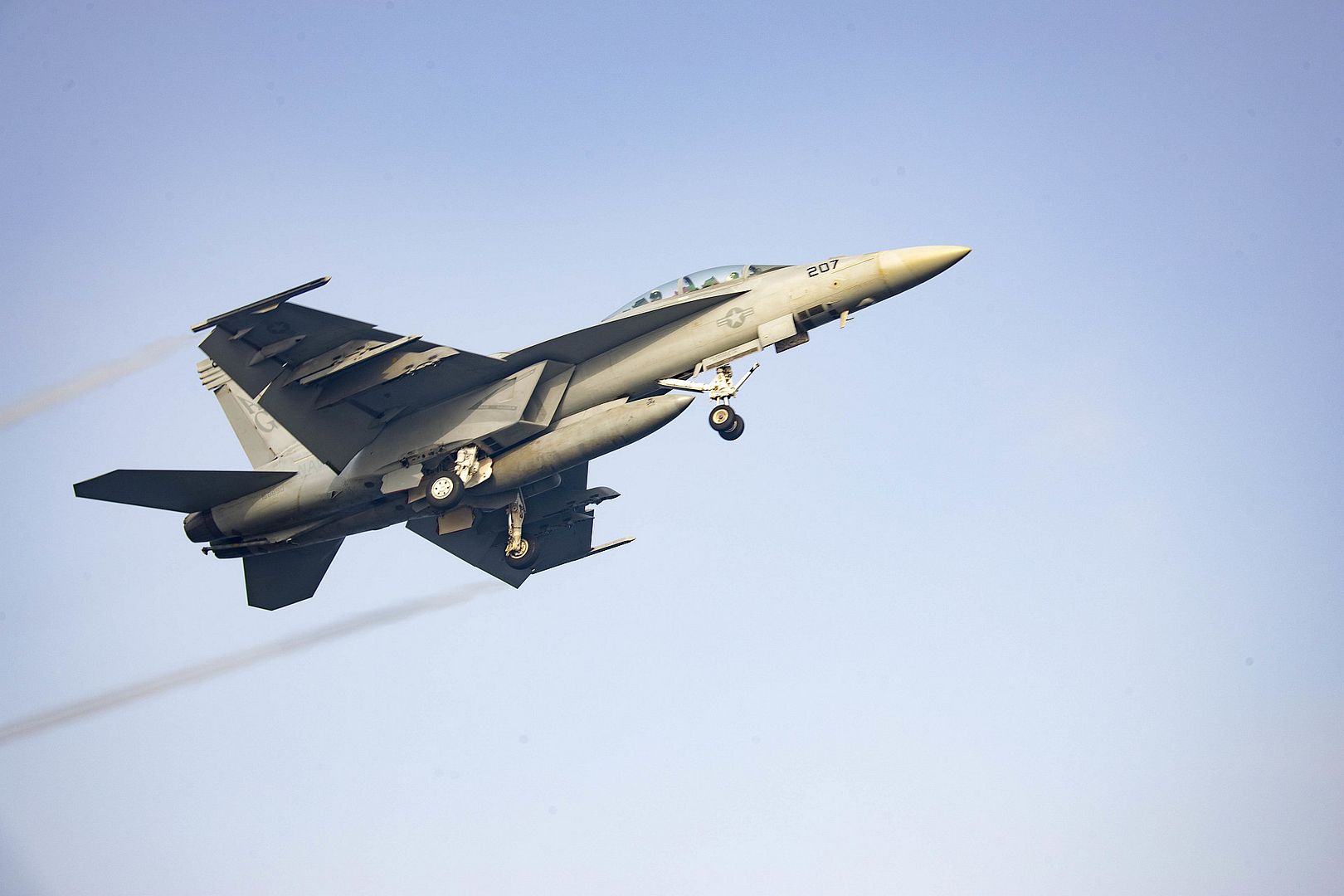
A Royal Canadian Air Force CF-18 Hornet assigned to the 433rd Tactical Fighter Squadron takes off during RED FLAG-Alaska 19-3 at Eielson Air Force Base, Alaska, Aug. 5, 2019. RF-A is an annual U.S. Pacific Air Forces-directed field training exercise that enables U.S. and international partners to develop and improve combined interoperability through safe and effective mission planning and execution. (U.S. Air Force by Senior Airman Isaac Johnson)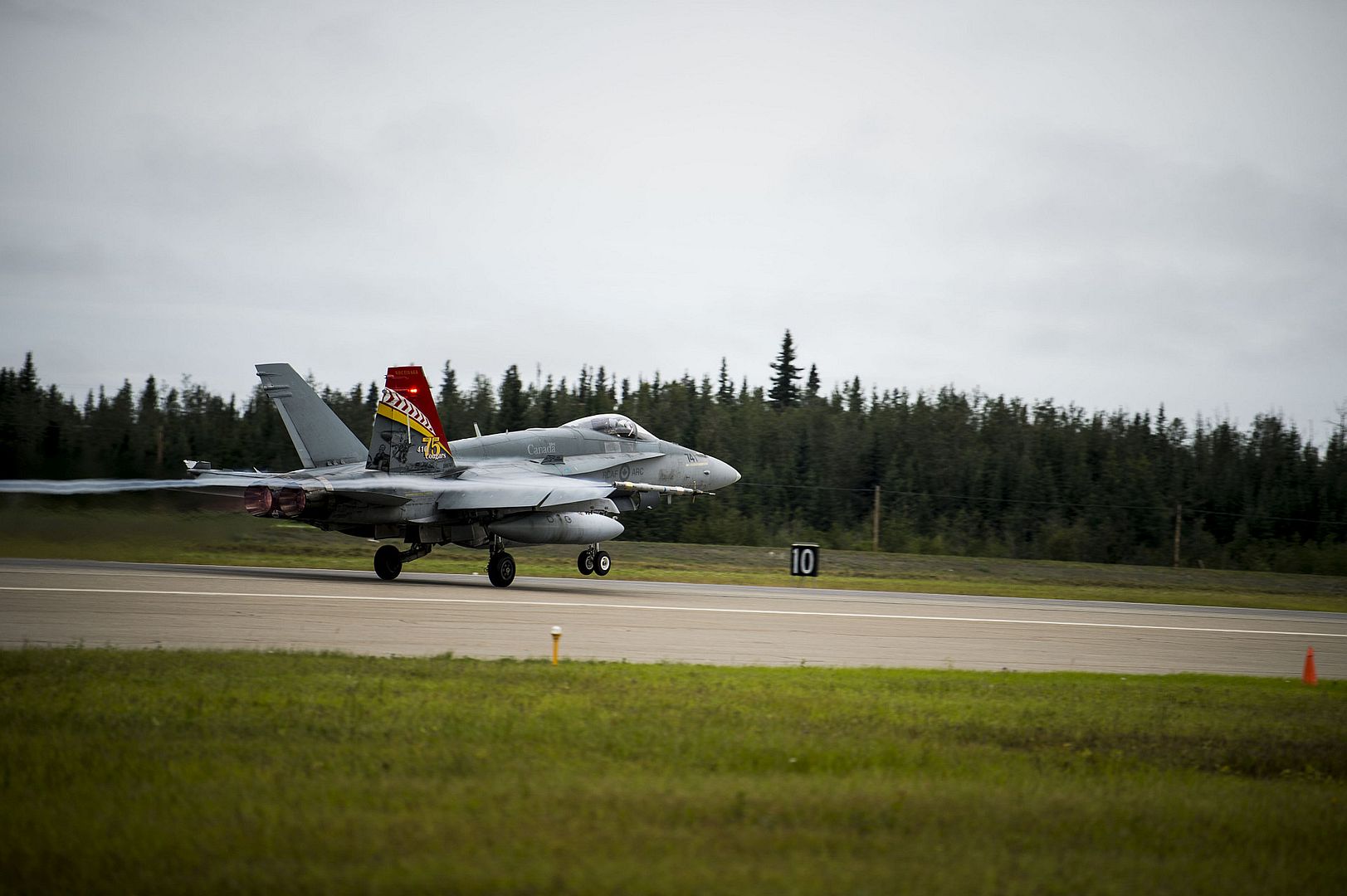
A U.S. Air Force F-16 Fighting Falcon assigned to the 36th Fighter Squadron takes off during RED FLAG-Alaska 19-3 at Eielson Air Force Base, Alaska, Aug. 5, 2019. RF-A is a Pacific Air Forces-sponsored exercise designed to provide realistic training in a simulated combat environment with primary flight operations over the Joint Pacific Alaska Range Complex. (U.S. Air Force photo by Senior Airman Isaac Johnson)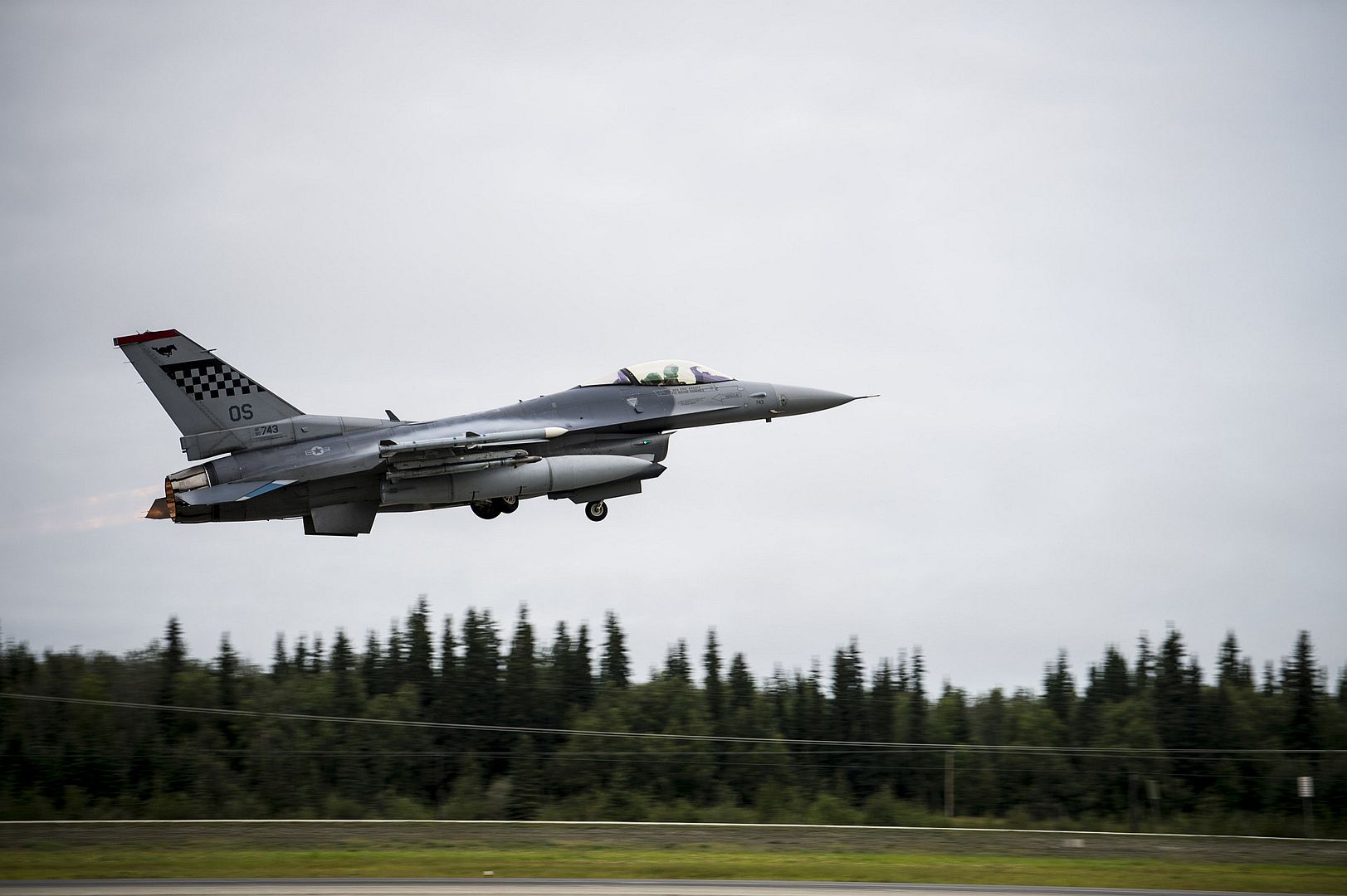
A U.S. Air Force F-15 Eagle assigned to the 67th Fighter Squadron taxis on the runway during RED FLAG-Alaska 19-3 at Eielson Air Force Base, Alaska, Aug. 5, 2019. This U.S. Pacific Air Forces large force exercise enables U.S. and international forces to strengthen partnerships and improve interoperability by sharing tactics, techniques and procedures for multi-domain operations. (U.S. Air Force photo by Senior Airman Isaac Johnson)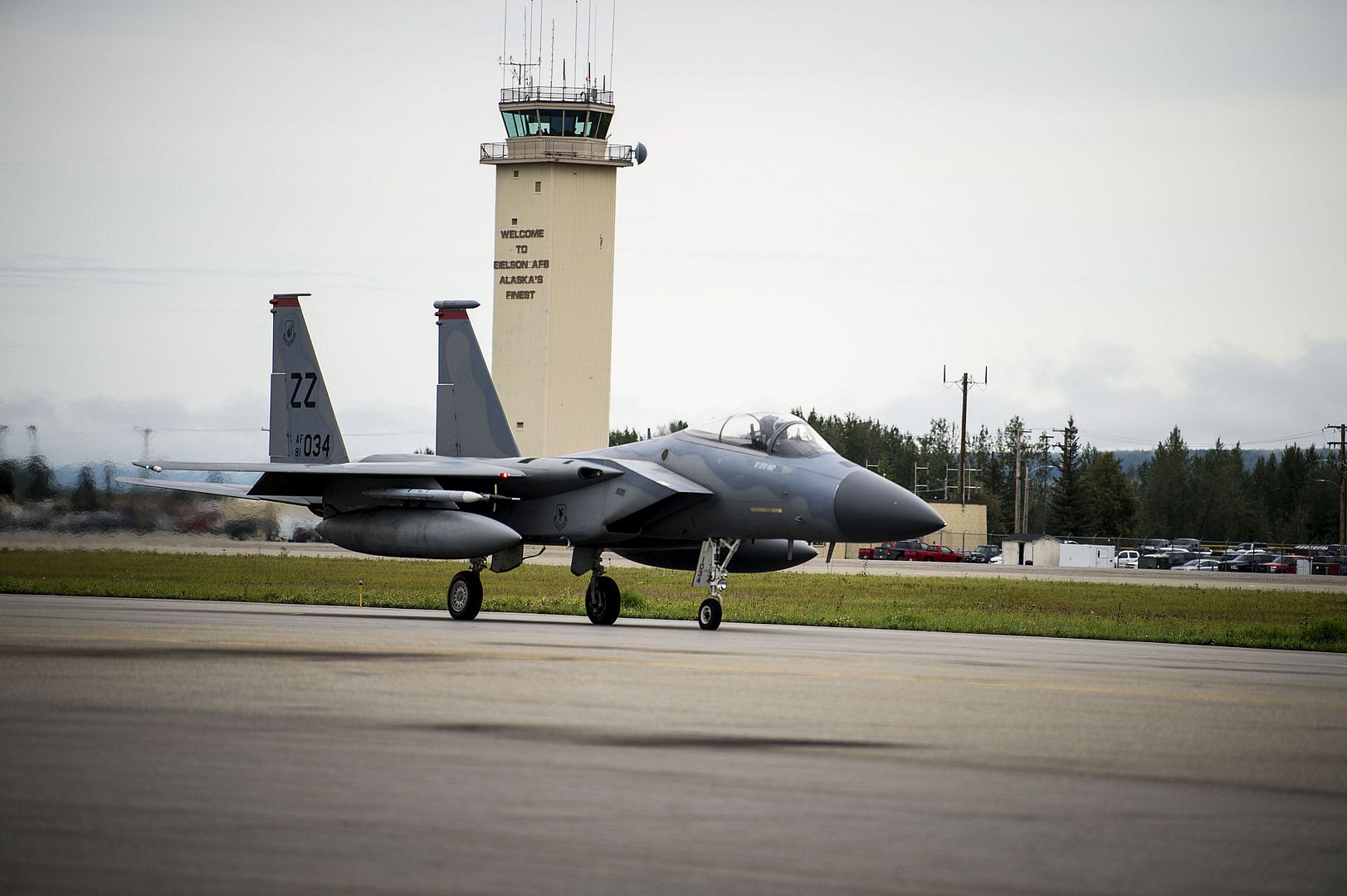
Dulles, Va. ? Aug. 6, 2019 ? Northrop Grumman Corporation (NYSE: NOC) announced that its Cygnus? spacecraft has successfully unberthed and departed from the International Space Station (ISS), beginning its secondary mission before it reenters Earth?s atmosphere. The NG-11 Cygnus spacecraft, named in honor of Apollo 1 astronaut and space visionary Roger Chaffee, left the ISS after a 109 day stay at the station.
While docked at the orbiting laboratory, astronauts unloaded approximately 7,000 pounds of vital supplies and scientific equipment. They then loaded approximately 5,300 pounds of disposable cargo on to Cygnus for removal from the station.
The next phase of the mission will demonstrate enhanced capabilities Cygnus offers that go well beyond cargo supply and disposal. The spacecraft will deploy multiple CubeSats via the Slingshot CubeSat Deployer System installed by NASA astronauts prior to unberthing from the ISS, and the NanoRacks external CubeSat deployer. Cygnus will then remain in orbit to coincide with a second Cygnus spacecraft scheduled for launch in October to the International Space Station -- its first extended duration flight to demonstrate its capability to fly two Cygnus vehicles simultaneously and support hosted payloads for longer periods of time. This newest innovation reinforces Cygnus? ability to serve a robust and growing commercial economy in low earth orbit.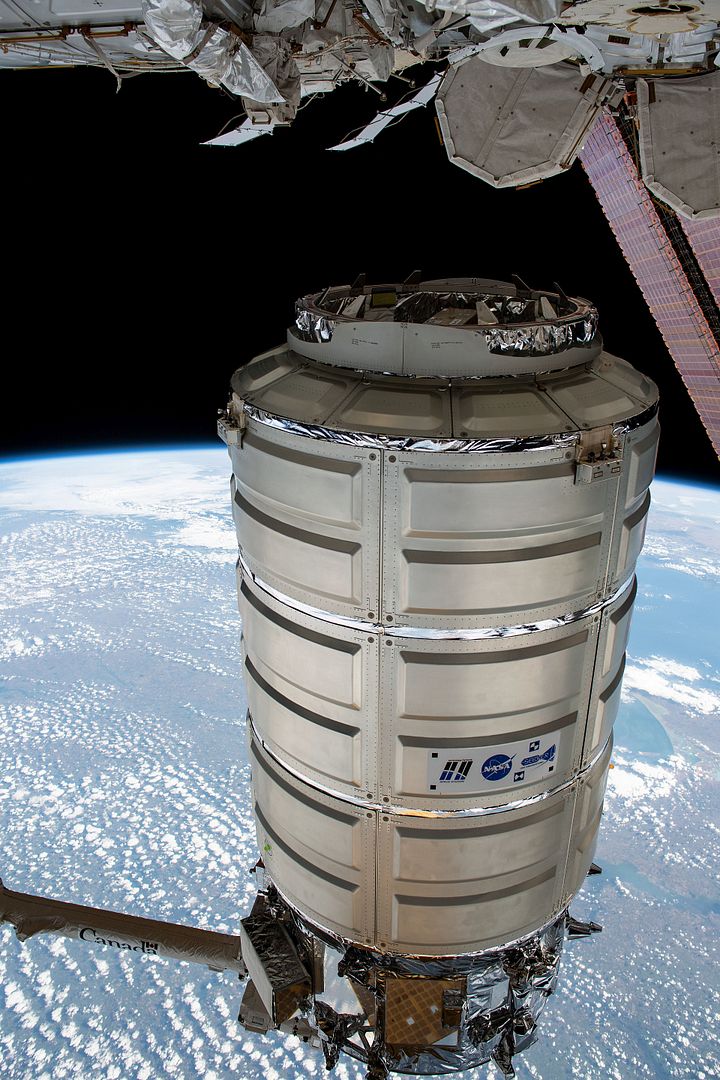
Airbus has today officially begun manufacturing the A220 in the U.S. The first team of A220 production workers began work at Airbus? Mobile, Alabama-based production facility following their recent return from on-the-job training in Mirabel, Quebec, Canada, where the A220 programme and primary final assembly line are located.
?The expansion of our commercial aircraft production in Mobile to a second product line ? with 400 additional jobs to support it ? further solidifies Airbus? standing as a truly global aircraft manufacturer, and confirms without a doubt that Airbus is an important part of America?s manufacturing landscape,? said Airbus Americas Chairman & CEO C. Jeffrey Knittel. ?With Mobile, and our production network in Asia, Canada and Europe, we have strategically created a worldwide industrial base to better serve our customers.?
Airbus announced plans for the addition of A220 manufacturing in Mobile in October 2017. Construction on the main A220 flowline hangar and other support buildings for the new A220 began at the Mobile Aeroplex at Brookley at the beginning of this year. Airbus is producing the first few aircraft within some current A320 Family buildings and newly-built support hangars. The first U.S.-made A220 ? an A220-300 destined for Delta Air Lines ? is scheduled for delivery in the third quarter of 2020. By the middle of the next decade, the facility will produce between 40 and 50 A220 aircraft per year.
The A220 is the only aircraft purpose-built for the 100-150 seat market; it delivers unbeatable fuel efficiency and wide-body passenger comfort in a single-aisle aircraft. The A220 brings together state-of-the-art aerodynamics, advanced materials and Pratt & Whitney?s latest-generation PW1500G geared turbofan engines to offer at least 20% lower fuel burn per seat compared to previous generation aircraft. The A220 offers the performance of larger single-aisle aircraft. With an order book of 551 aircraft as of end of June 2019, the A220 has all the credentials to win the lion?s share of the 100-to-150-seat aircraft market, estimated to represent 7,000 aircraft over the next 20 years.
Airbus has strong and longstanding ties to the United States, with Airbus aircraft being operated by the largest airlines in America. Additionally, Airbus is a major partner of U.S. aerospace companies and workers. The company has purchased $48 billion of components and materials from American suppliers in the last three years alone, and supports more than 275,000 American jobs. Among its facilities in the U.S. Airbus has: engineering centers in Kansas and Alabama; training facilities in Florida and Colorado; materials support and headquarters in Virginia; an innovative think tank (A3) in California; a drone data analysis business (Airbus Aerial) in Atlanta, Georgia; helicopter manufacturing and assembly facilities in Texas and Mississippi; and a satellite manufacturing facility (OneWeb) in Florida.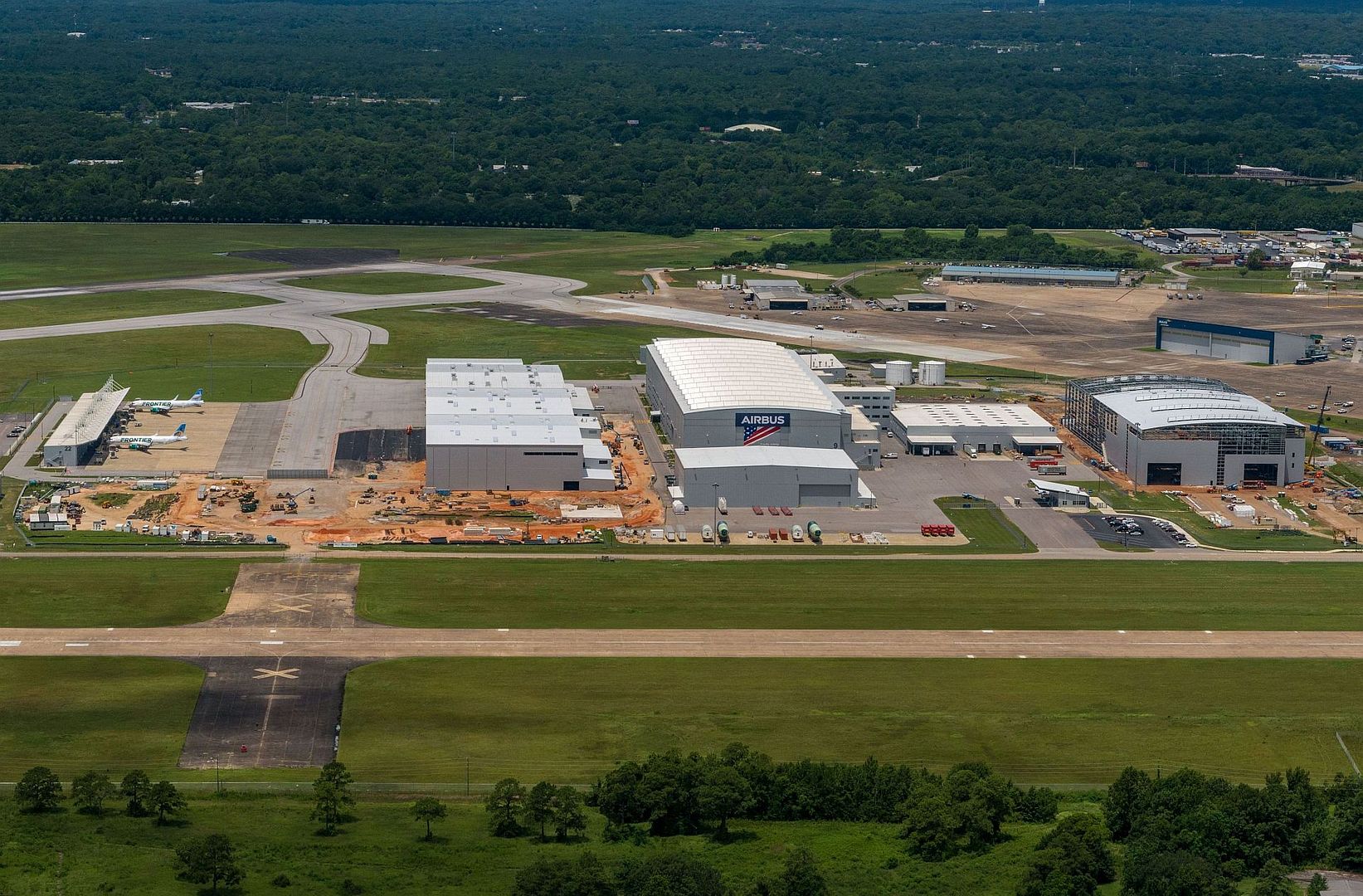
RAF Typhoon fighter jets have intercepted five Russian military aircraft in the last two days - four after launching on Monday (5th August) and another following a launch today.
The Typhoons are operating from ?mari Air Base in Estonia in support of NATO?s Baltic Air Policing mission.
On Monday the fighter jets intercepted a Russian Antonov AN-26 ?Curl? transport aircraft. Following this and on the same mission, the fighters later diverted to intercept a Russian TU-142 ?Bear? Bomber and two SU-27B ?Flanker? fighters.
On Tuesday the Typhoons intercepted a Russian Tupolev TU-134 ?Crusty? transport aircraft flying close to Estonian airspace.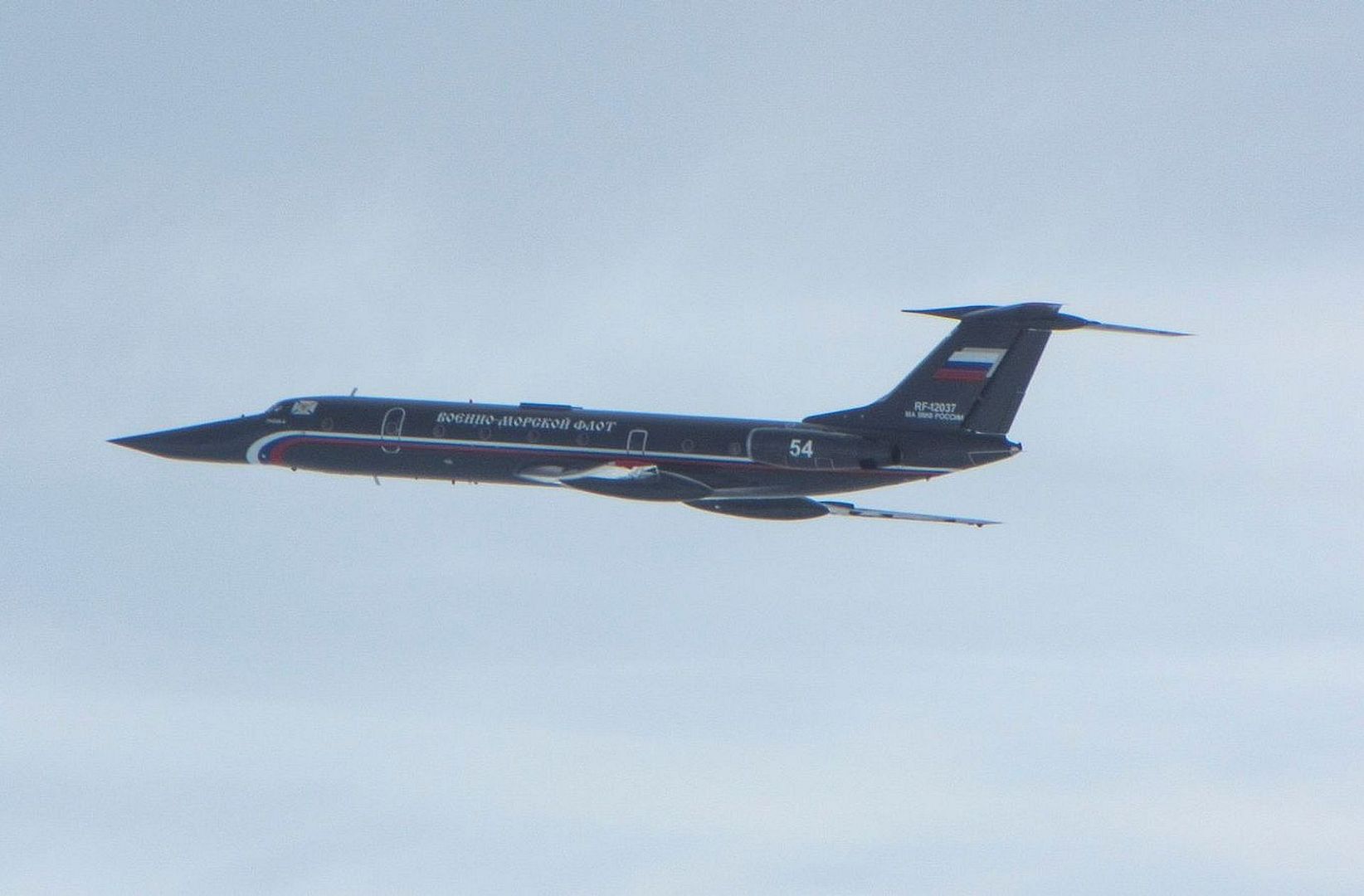
Baltic Air Policing is a routine NATO mission for the Typhoons and provides reassurance that the UK is here to work in partnership with Estonia.
A Typhoon pilot from XI (Fighter) Squadron, attached to 121 Expeditionary Air Wing (EAW), was conducting Quick Reaction Alert (QRA) duty when Monday?s scramble was called. He said:
?We were scrambled to intercept a Russian AN-26 aircraft routing west close to Estonian airspace. Once complete with this task, a second task was initiated to intercept a group of contacts operating to the south close to Lithuanian airspace.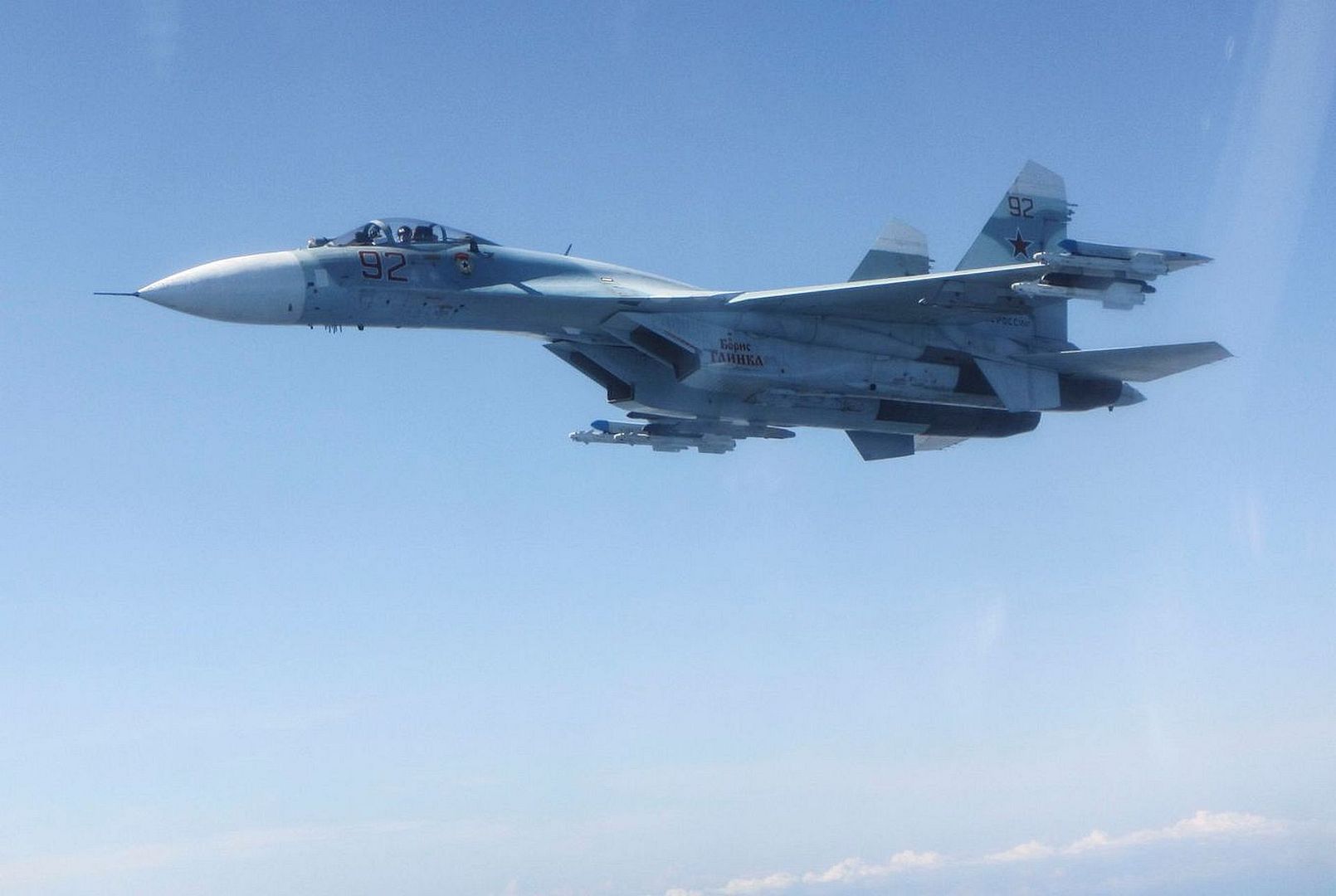
?These aircraft transiting the Baltic region were not on a recognised flight plan or communicating with Air Traffic Control. In the end, the intercept was uneventful and conducted in a professional manner throughout.?
The Royal Air Force is deployed on Operation AZOTIZE in Estonia in support of Baltic Air Policing. These were the fifteenth and sixteenth QRA scrambles resulting in intercepts since the RAF took over enhanced Air Policing (eAP) from the German Air Force on 3rd May 2019 as part of Baltic Air Policing. The UK operates in support of NATO to reassure our allies and is a further demonstration of the UK?s commitment to the security of the region.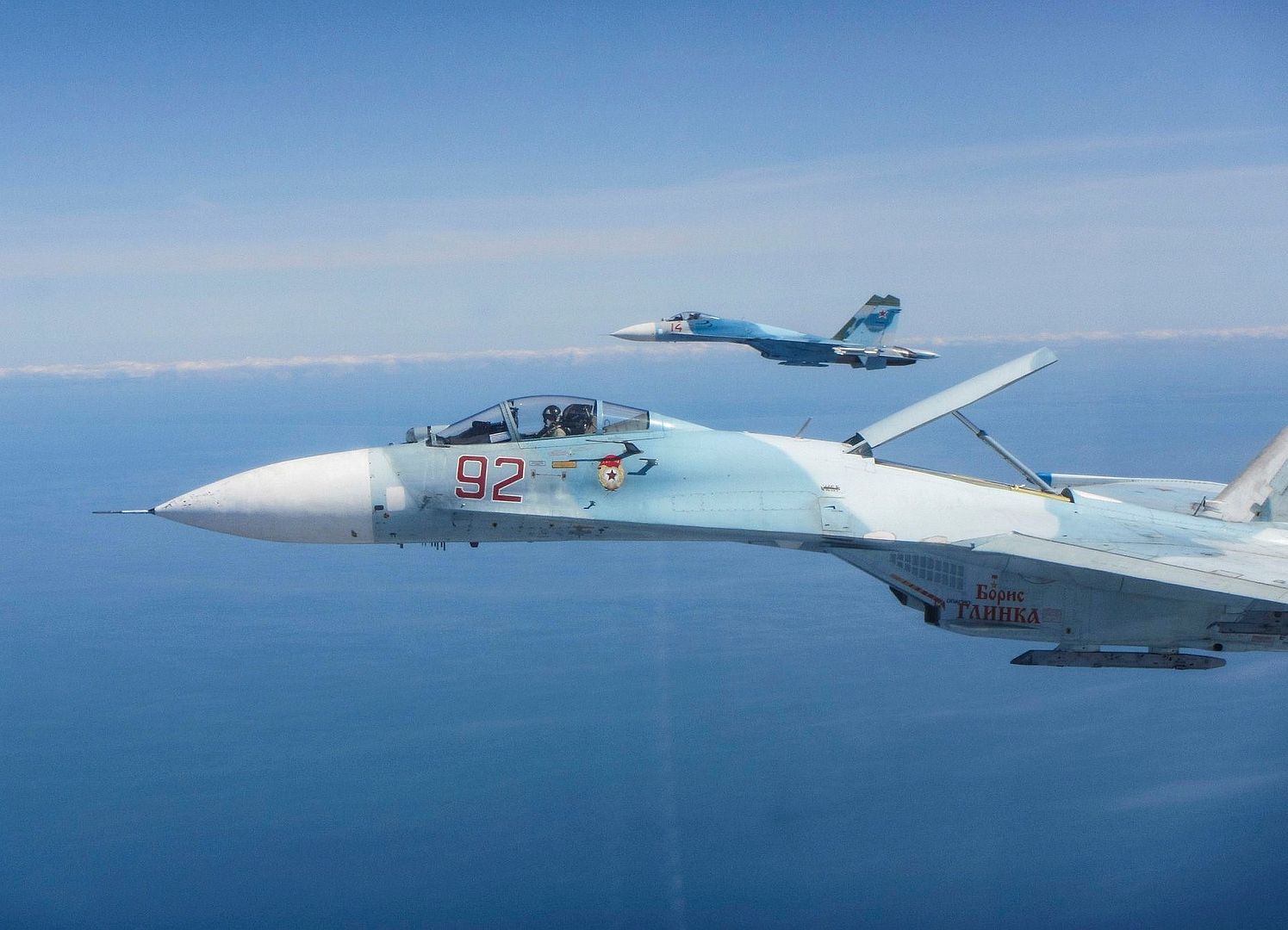
-
HILL AIR FORCE BASE, Utah (AFNS) --
The 388th Fighter Wing set a speed record for bringing online a newly-delivered aircraft last week, flying a local sortie less than five hours after accepting delivery of its 68th F-35A Lightning II.
Aircraft tail number 5261 left Lockheed Martin?s Fort Worth, Texas, production facility a little after 8 a.m. Aug. 1, landed at Hill Air Force Base at 10 a.m., and by 3 p.m. had taken off on its first combat training mission.
?The F-35A program?s production and delivery plan was designed to allow rapid aircraft induction and quick use by the customers,? said Col. Michael Miles, 388th Maintenance Group commander. ?We?ve shown the enterprise it?s possible.?
This isn?t just a ?gee-whiz? record. In theory, it means that F-35As could be deployed directly from the factory into combat if a large-scale conflict ever drives that need, Miles said.
When a new F-35A comes off the line at the production facility, it undergoes several contract and government check flights before the Air Force accepts final delivery. These flights generate data points that are collected in the Autonomic Logistics Information System and then passed on to the gaining unit, in this case the 388th FW.
The previous timeline for inducting new aircraft was measured in days and weeks, but process and system improvements in the data collection and transfer process bodes well for the future, said Chief Master Sgt. Trey Munn, 388th Maintenance Group chief enlisted manager.
?We?ve been working toward this goal as the program has matured and this is great step, and a testament to the work of the folks at Lockheed Martin, the Joint Program Office, and the Airmen in the 388th and 419th Fighter Wings,? Munn said.
The 388th and 419th FWs are the Air Force?s first combat-capable F-35 units. The first operational F-35As arrived at Hill AFB in October 2015. The active duty 388th FW and Air Force Reserve 419th FW fly and maintain the jet in a Total Force partnership, which capitalizes on the strength of both components. By the end of this year, Hill AFB will be home to 78 F-35s.
(U.S. Air Force photo by Cynthia Griggs)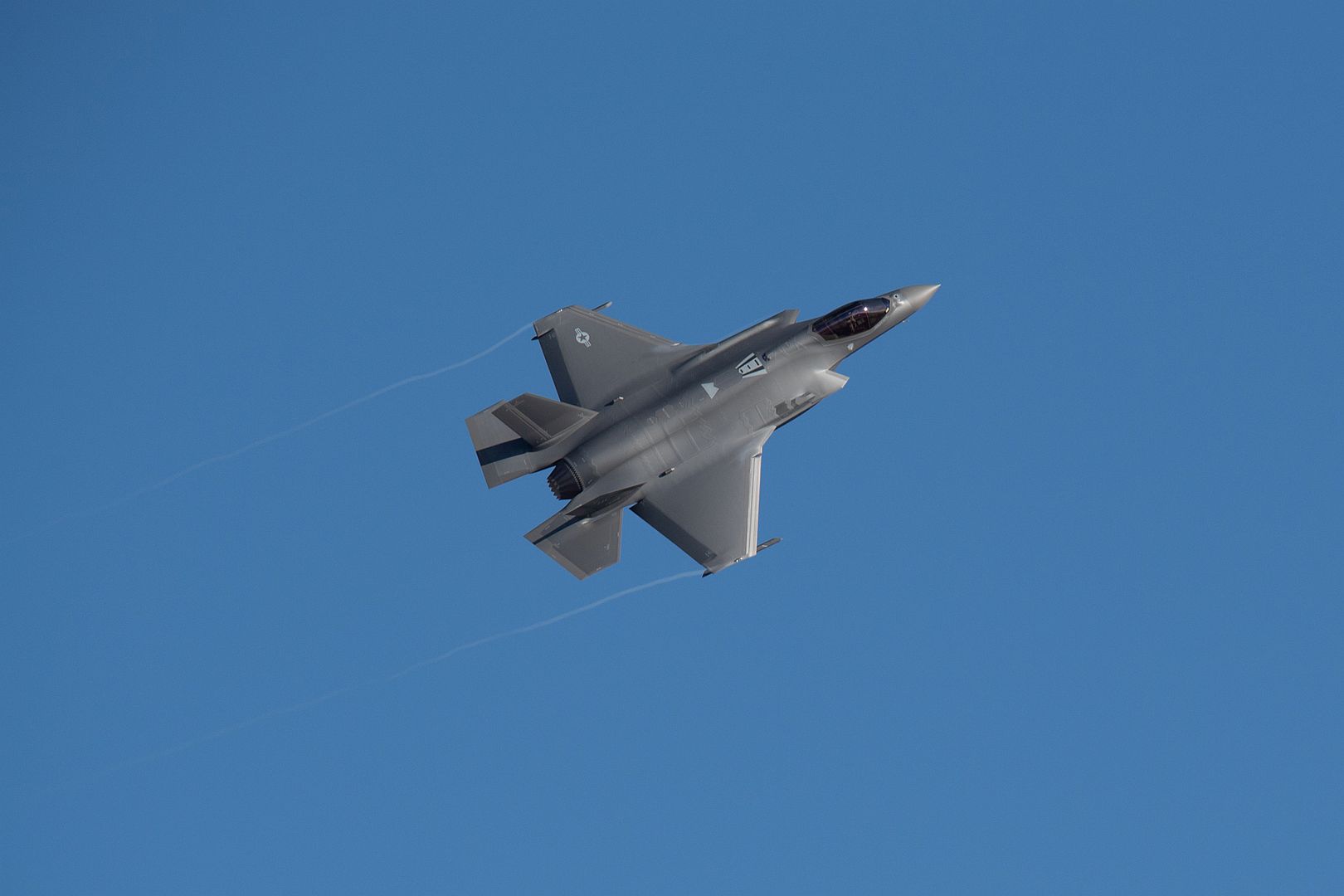
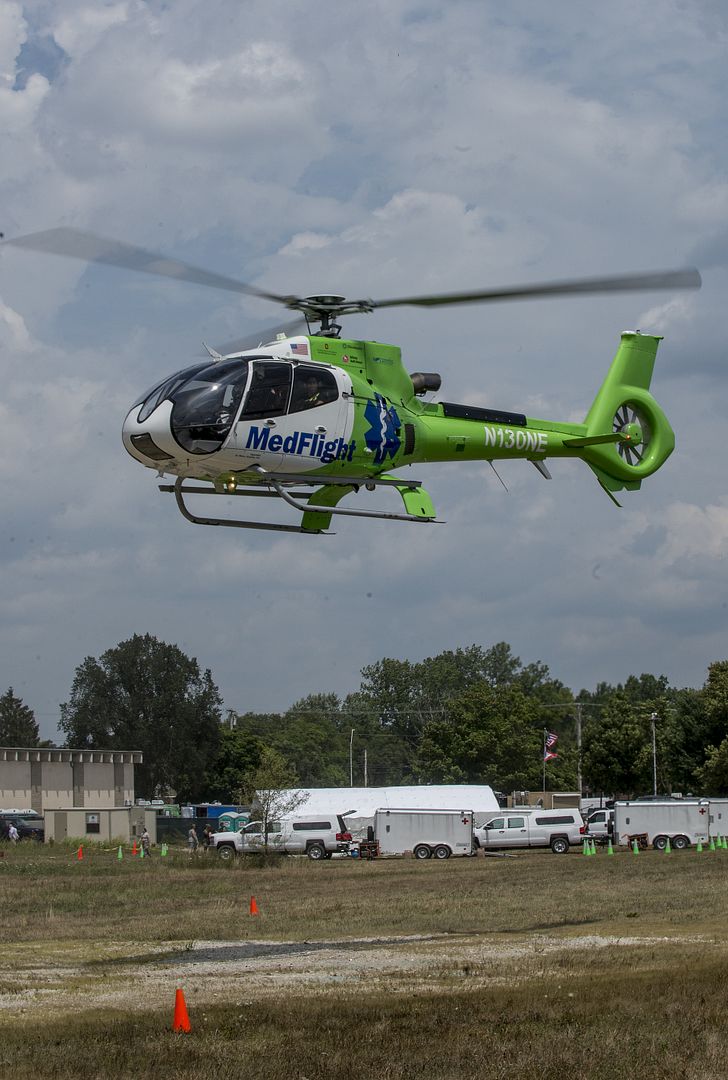
A MedFlight medevac helicopter participates among other local, state and federal first responders during Vigilant Guard 19-4, Aug. 6, 2019, at the National Center for Medical Readiness Calamityville training site in Fairborn, Ohio. The four-day Vigilant Guard exercise, the largest of its kind in Ohio history with more than 3,000 civilian and military personnel from 90 organizations, enables participants to conduct disaster response training and evaluate their capabilities in a large-scale environment.
Photo's by Staff Sgt. George Davis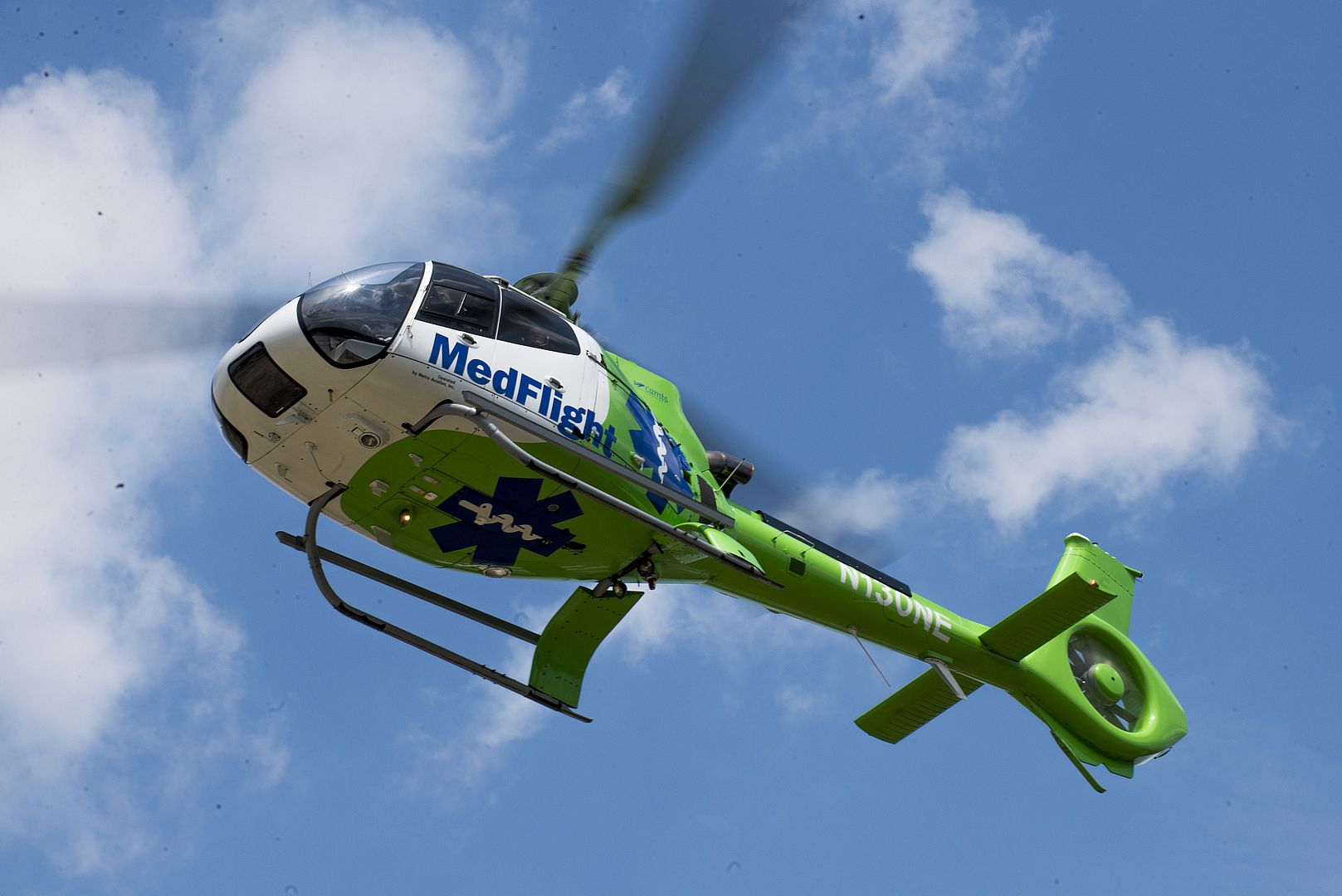
President Trump?s military aide presents arms while Air force One taxis to the red carpet at Wright-Patterson Air Force Base, Ohio, Aug. 7, 2019. President Trump landed at Wright-Patt to visit first responders and survivors in neighboring Dayton, Ohio, after the mass shooting on Aug. 4. (U.S. Air Force photo by Wesley Farnsworth)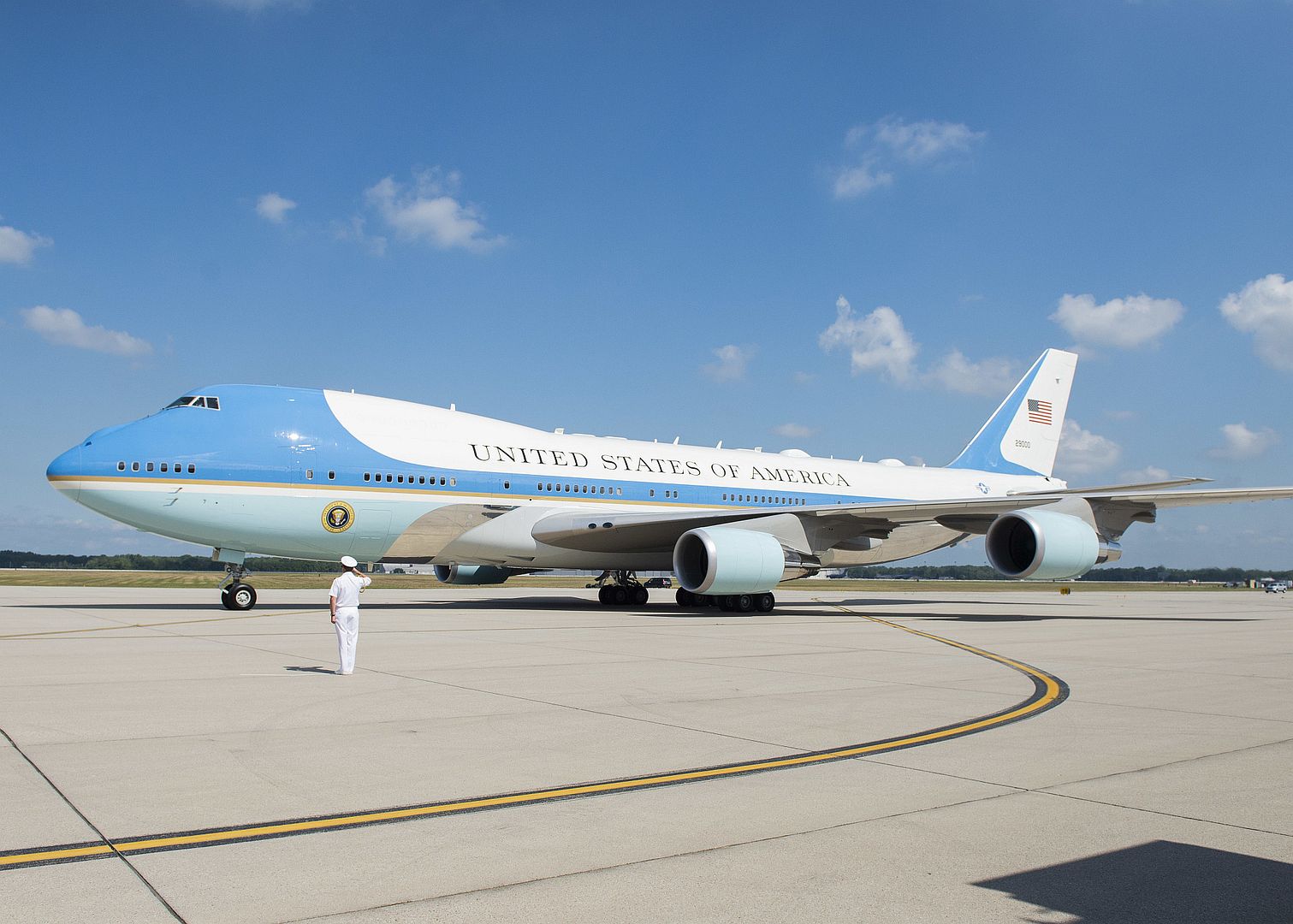
CORONADO, Calif. - (Aug. 6, 2019) Vice Adm. DeWolfe Miller III, Commander, Naval Air Forces, addresses T-34C Turbo Mentor aircraft maintainers and Midshipmen from the United States Naval Academy aboard Naval Air Station North Island (NASNI) before taking a flight with Lt. Jason ?JB? Ely of Strike Fighter Squadron 122 (VFA-122). Midshipmen were at NASNI as a part of their summer training program known as PROTRAMID, which consists of one week of training in each of the various areas a Midshipmen could go on to receive a commission in. U.S. Navy Photo by Mass Communication Specialist 2nd Class Chelsea D. Meiller (Released)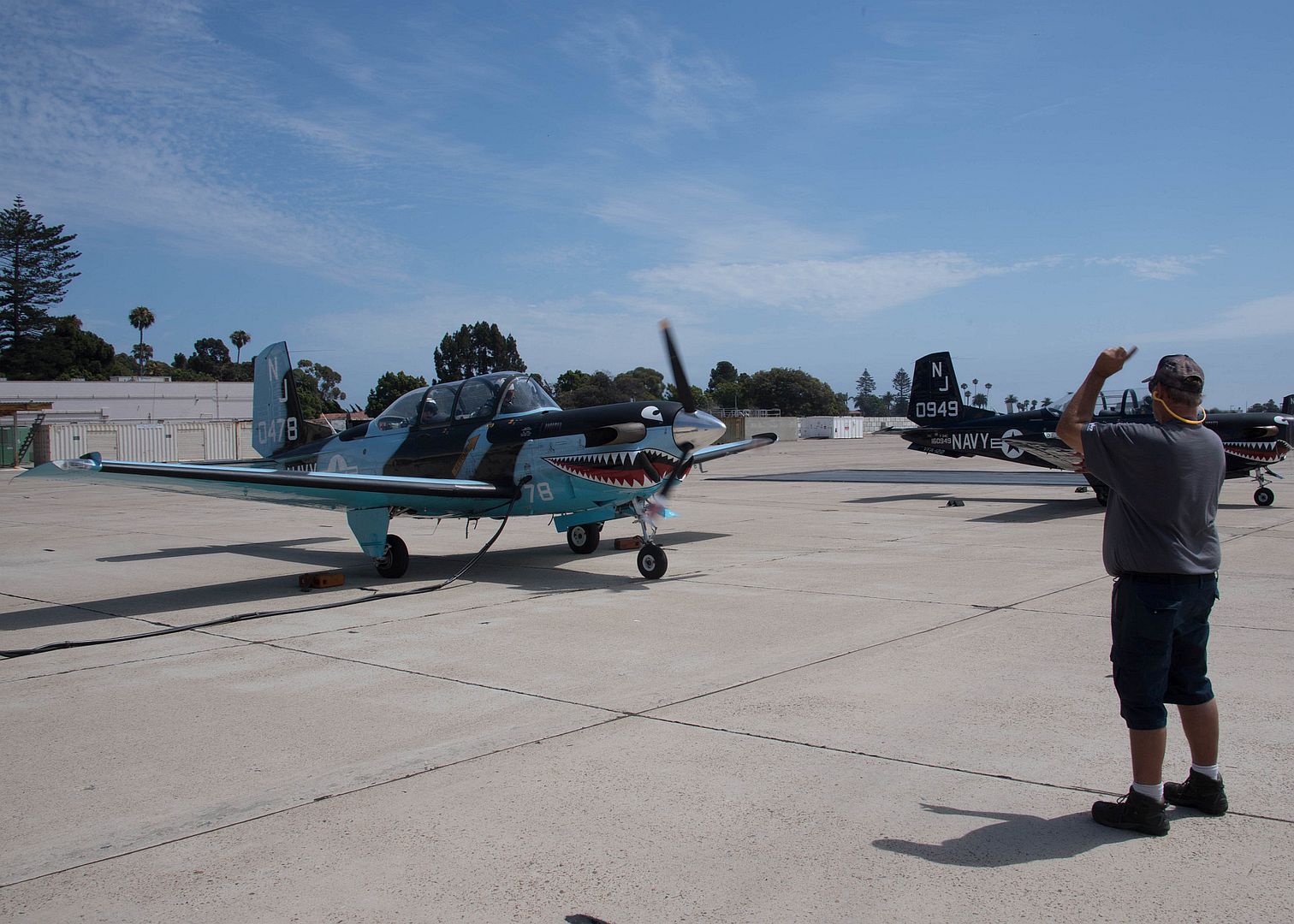
S?o Jos? dos Campos, Brazil, August 7th, 2019 ? Embraer announced today that it has signed a contract with SkyWest, Inc. (NASDAQ: SKYW) for a firm order of seven E175 jets in a 70-seat configuration. SkyWest will operate the aircraft for Delta. The order has a value of USD 340 million, based on 2019 list prices, and was already included in Embraer?s 2019 second-quarter backlog as customer ?undisclosed.? Deliveries are expected to begin in the fourth quarter of 2019.
?Since 2013, SkyWest has purchased more than 160 E175s, including these seven, in order to expand their large fleet of Embraer aircraft,? said Charlie Hillis, Vice President, Sales & Marketing, North America, Embraer Commercial Aviation. ?This latest order is one more milestone in our partnership. It?s been a privilege to work with SkyWest for over 30 years and we are looking forward to many more.?
?Having a longtime partner like Embraer, who understands us and our business, has allowed us to enhance our fleet mix and ensure efficiency and agility in our network,? said SkyWest Chief Executive Officer and President Chip Childs. ?The E175 continues to perform very well and is an important part of our growing fleet.?
SkyWest, Inc. is the premier regional airline company and the holding company of SkyWest Airlines. As early customers for the Embraer EMB 120 Brasilia turboprop aircraft, SkyWest has a long history with Embraer.
Embraer is the world?s leading manufacturer of commercial aircraft up to 150 seats with more than 100 customers from all over the world. For the E-Jets program alone, Embraer has logged more than 1,800 orders and 1,500 aircraft have been delivered. Today, E-Jets are flying in the fleet of 80 customers in 50 countries. The versatile 70 to 150-seat family is flying with low-cost airlines as well as with regional and mainline carriers.
-
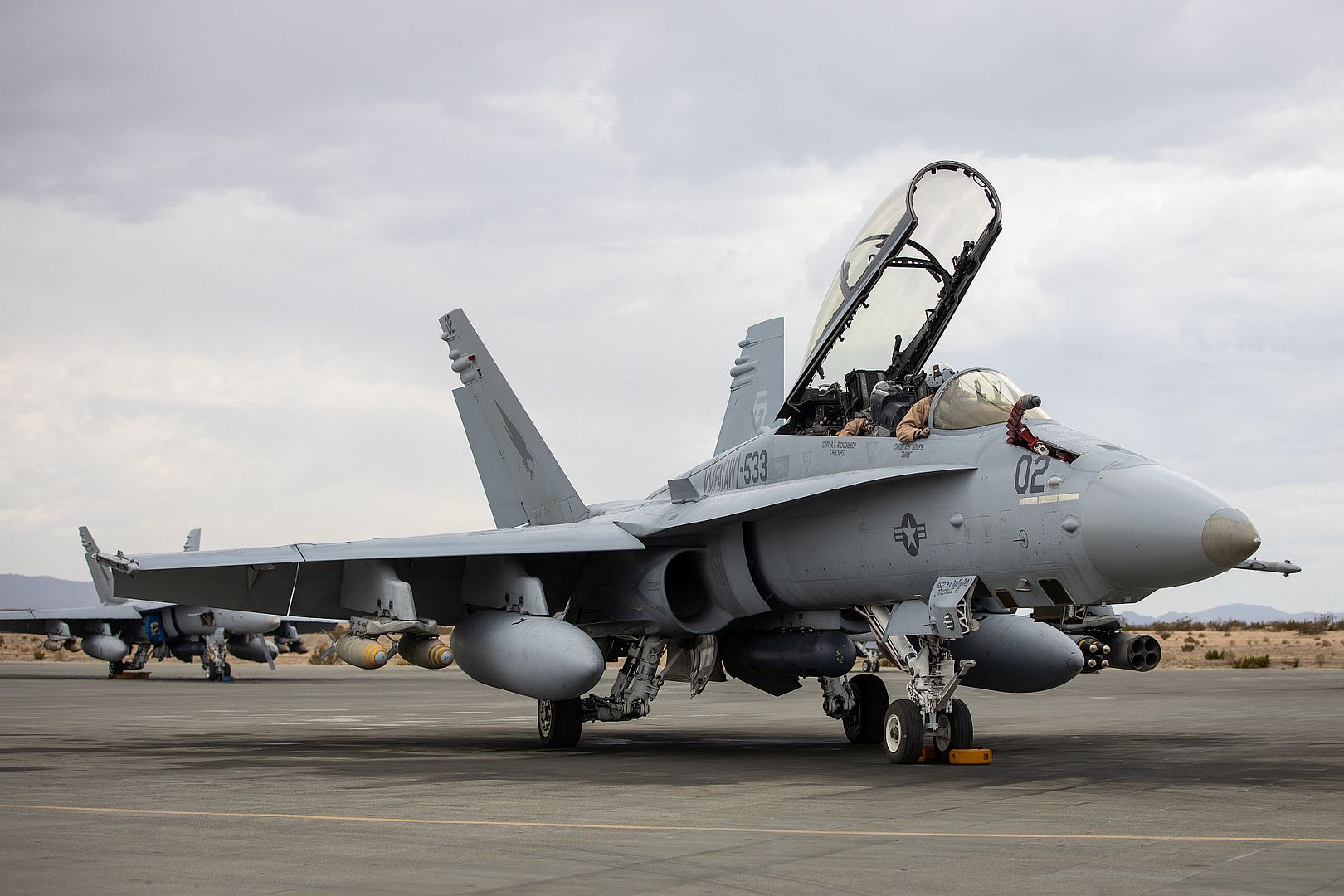
A U.S. Marine Corps F/A-18D Hornet assigned to Marine All-Weather Fighter Attack Squadron 533, prepares for flight during Integrated Training Exercise (ITX) 5-19 at Marine Corps Air Ground Combat Center, Twenty-nine Palms, California, Aug. 7, 2019. ITX 5-19 is a large scale, combined-arms training exercise that produces combat-ready forces capable of operating as an integrated Marine Air-Ground Task Force. (U.S. Marine Corps photo by Cpl. Cody Rowe)
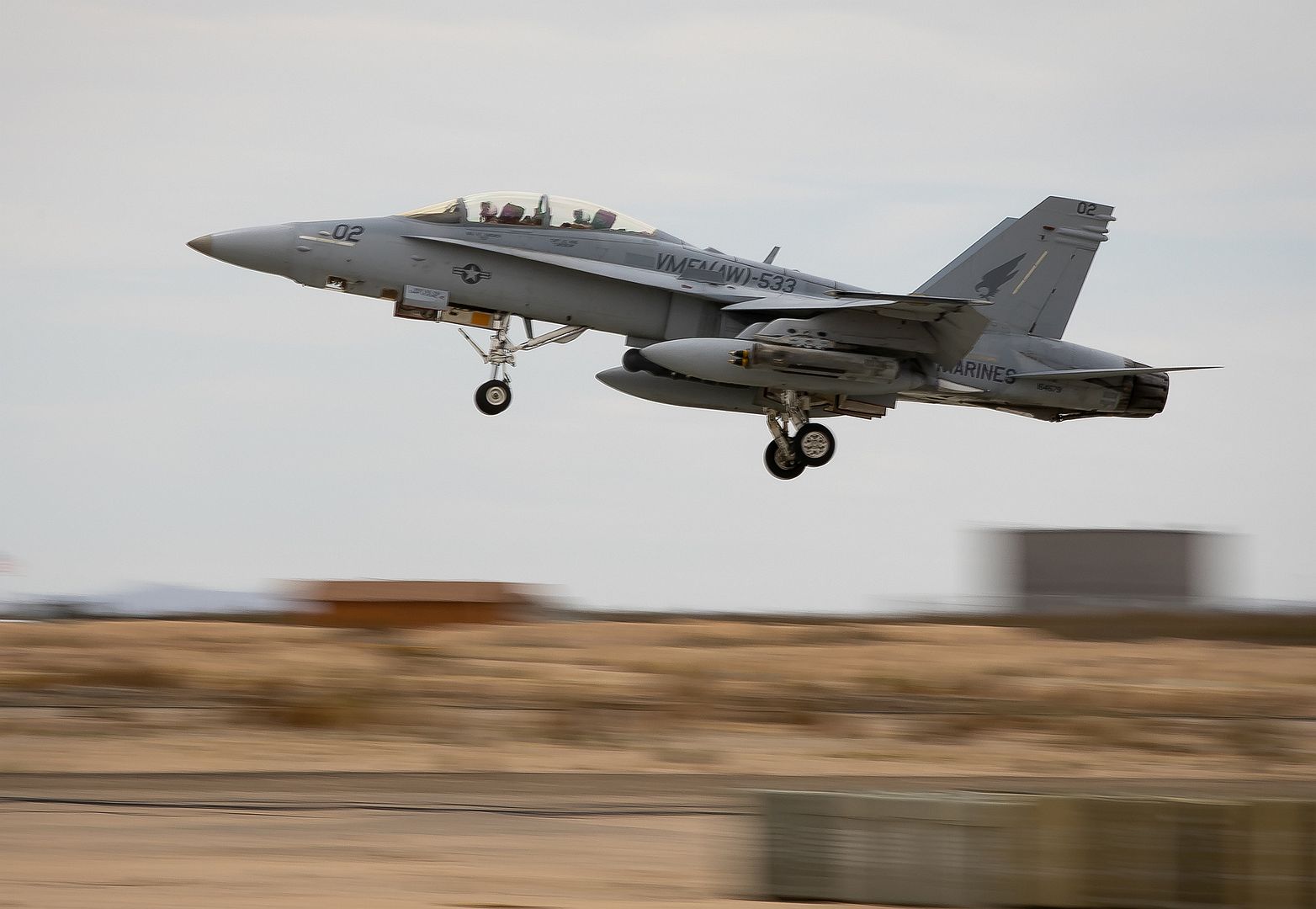
U.S. Marine Corps F/A-18D Hornet's assigned to Marine All-Weather Fighter Attack Squadron 533 take off the flight line during Integrated Training Exercise (ITX) 5-19 at Marine Corps Air Ground Combat Center, Twenty-nine Palms, California, Aug. 7, 2019. ITX 5-19 is a large scale, combined-arms training exercise that produces combat-ready forces capable of operating as an integrated Marine Air-Ground Task Force. (U.S. Marine Corps photo's by Cpl. Cody Rowe)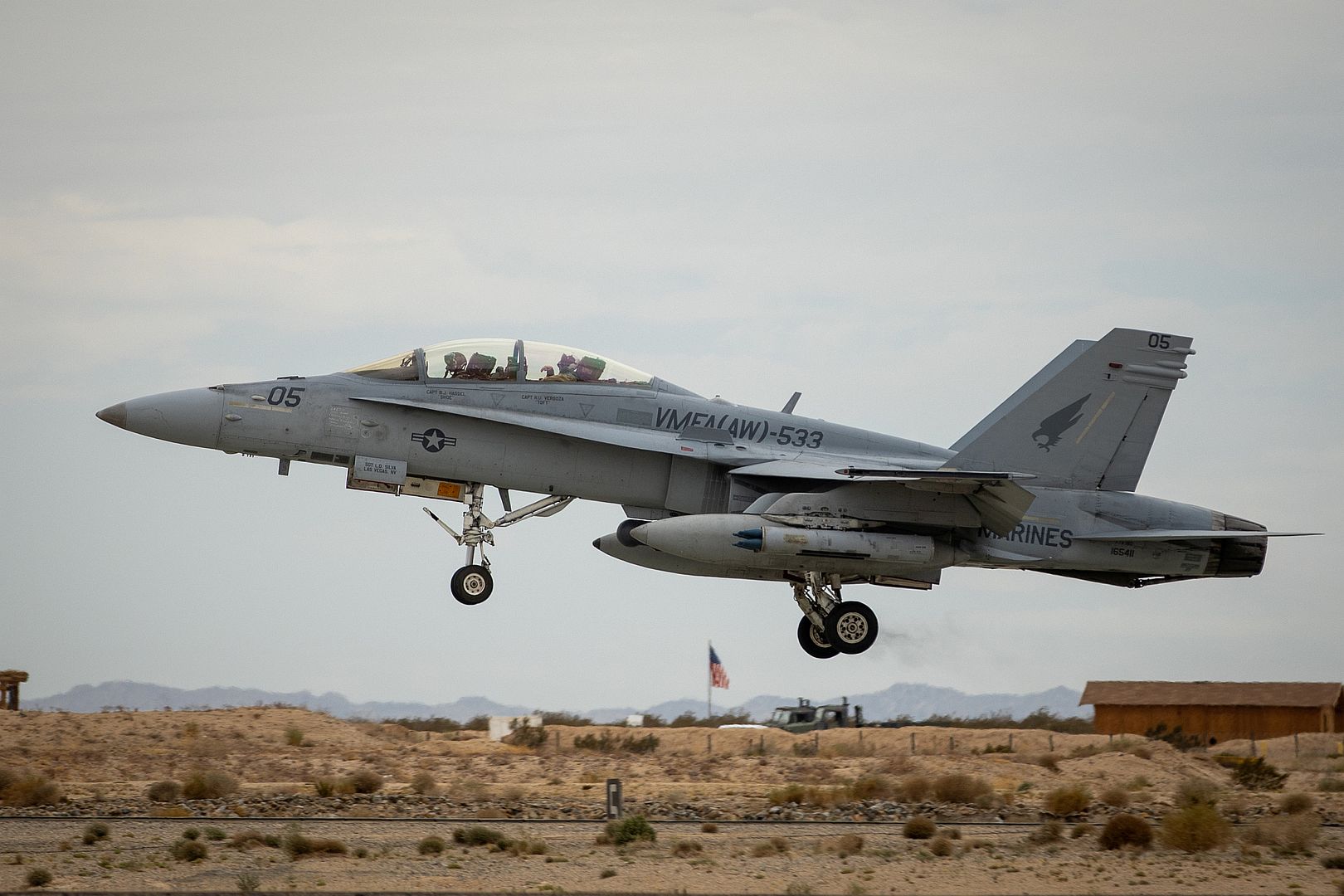
An SA-13 Surface-to-Air missile system sits in the Yukon Training Area near Eielson Air Force Base, Alaska Aug. 7, 2019. The weapons systems on the ground are used to replicate various threats for aircraft participating in RED FLAG-Alaska and are essential to ensuring a realistic training experience and enhancing overall readiness for the aircrew. (U.S. Air Force photo by Senior Airman Isaac Johnson)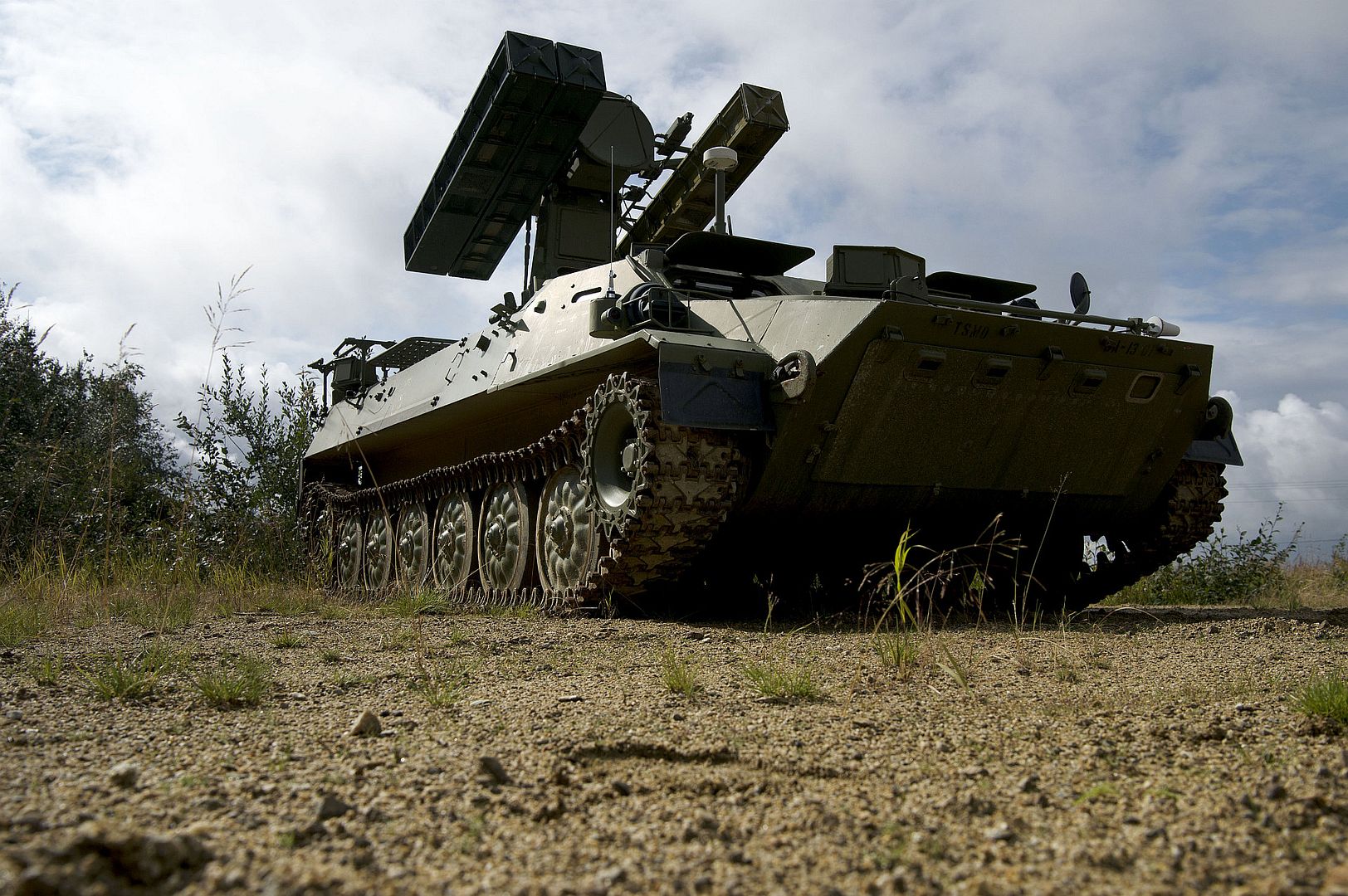
A Royal Australian Air Force No. 2 Squadron E-7A Wedgetail aircraft taxis on the flightline at Nellis Air Force Base, Nevada, July 31, 2019. The E-7A Wedgetail is capable of communicating with other aircraft providing air control from the sky, and can cover millions of square miles during a single mission. (U.S. Air Force photo by Airman 1st Class Dwane R. Young)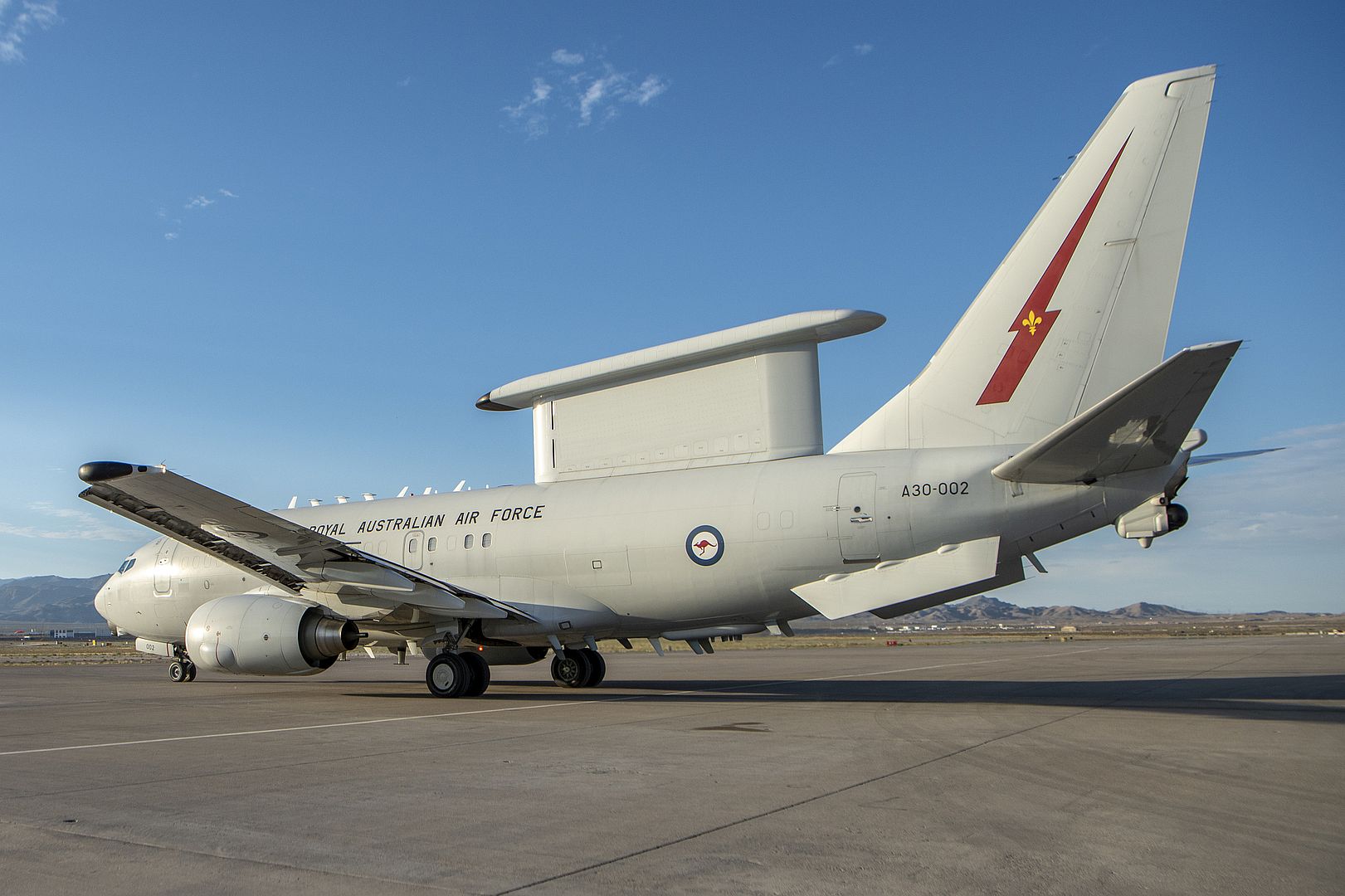
A U.S. Air Force F-22 Raptor out of Al Udeid Air Base, Qatar, prepares to connect with a KC-135 Stratotanker during an aerial refueling mission above an undisclosed location, Aug. 1, 2019. The F-22 Raptor, from the 1st Fighter Wing, Joint Base Langley-Eustis, Va., is currently serving its first deployment to Al Udeid Air Base to defend American forces and interests in the U.S. Central Command area of responsibility. (U.S. Air Force photo by Staff Sgt. Chris Drzazgowski)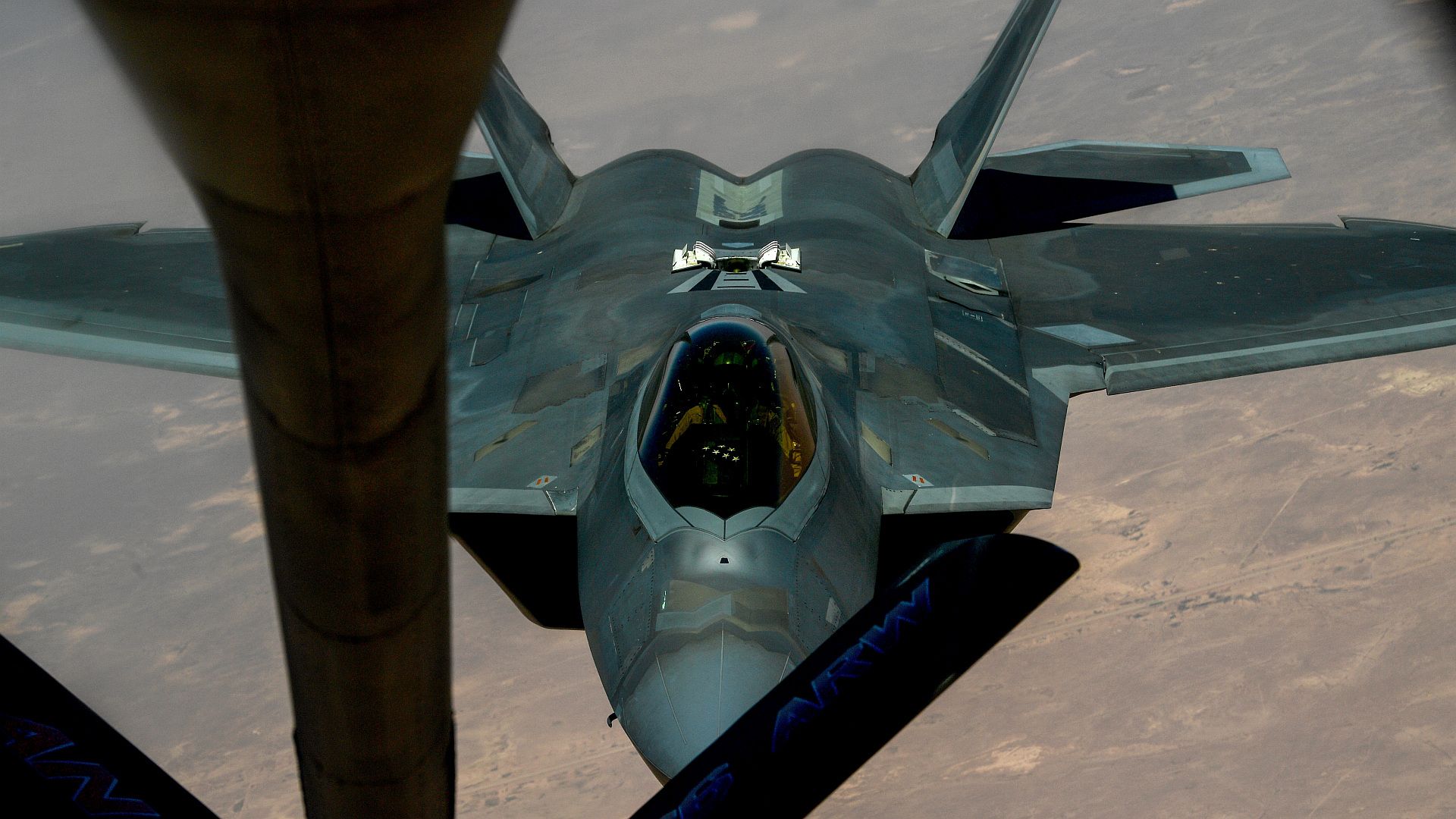
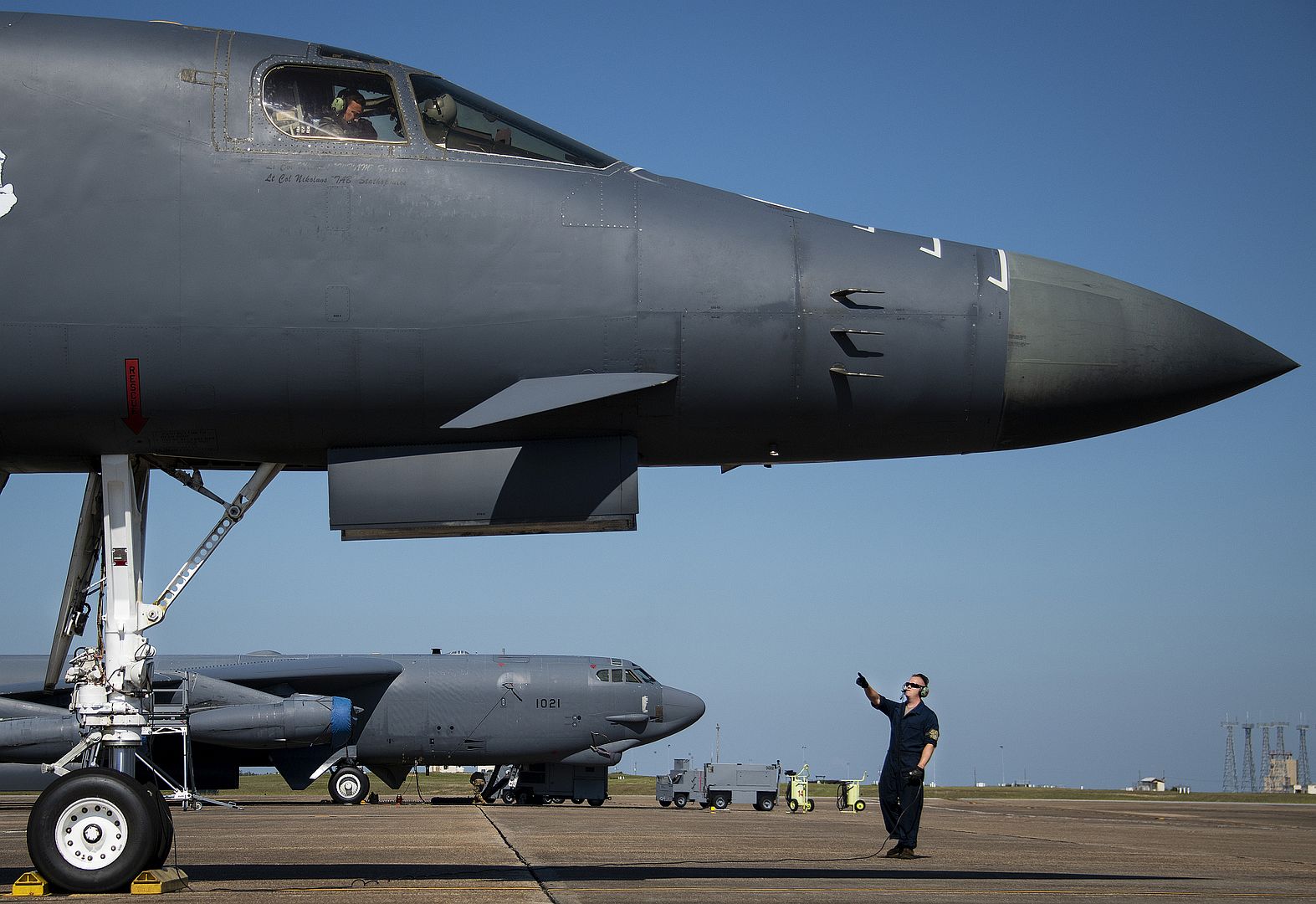
Preflight checks are performed on a B-1 Lancer prior to take off Aug. 1 at Eglin Air Force Base, Fla. The 53rd Wing bomber was flown from Dyess AFB, Texas, to allow wing personnel an opportunity to see one of their geographically separated aircraft up close. (U.S. Air Force photo's/Samuel King Jr.)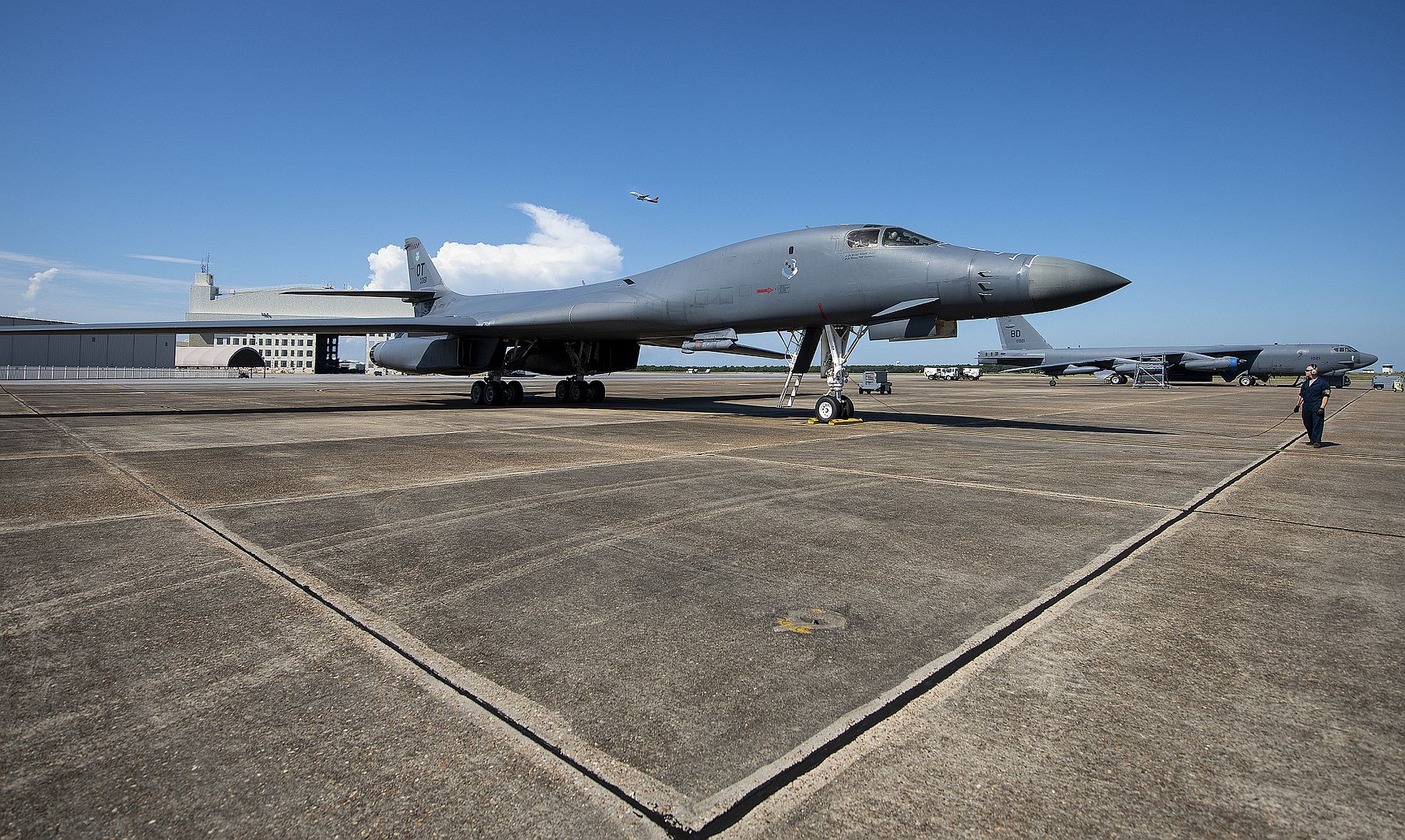
Ulaanbaatar, Mongolia, August 8, 2019 ? Embraer announced today that the Company has signed a long-term Pool Program Agreement with Mongolian Hunnu Air to support a wide range of repairable components for the airline?s recently leased fleet of E190. Hunnu Air is the first E190 operator in Mongolia and took delivery of its first E190 this year in May.
The Pool Agreement includes full repair coverage for components and parts as well as the access to a large stock of components at Embraer?s distribution center, which will support the start of the airline?s E190 operation.
?We are the first airline in Mongolia operating E-Jet series of airplane. By signing this contract, we would like to strengthen our partnership with Embraer not only for its industry-leading products, but also for its strong services and support network,? said MUNKHJARGAL Purevjal, CEO of Hunnu Air. ?We believe the direct support from the manufacturer will secure a highly reliable operation of our E190 fleet, guarantee the competitiveness and availability of the aircraft, which is critical to our daily flight operation and will also improve the passengers? satisfaction.?
Hunnu Air is one of the major airlines in Mongolia. Earlier this year, the airline signed an agreement to lease four E190s from CDB Aviation to expand its fleet size and route network. They started flying the first E190 from June 2019, with the other three scheduled to be delivered in 2020 and 2021.
?We?re happy to have Hunnu Air joining the Pool Program and provide the most efficient and reliable solutions to their E190 fleet,? said Johann Bordais, President & CEO, Embraer Services & Support. ?It is always our mission to offer the most comprehensive portfolio of services and support solutions with the highest return-benefits to all customers, and the Pool Program that currently supports more than 40 airlines worldwide is among the best products we have. With this program, Hunnu Air is to benefit from the availability of spare parts, enjoy significant savings on repair and services costs, and maintain a profitable and smooth operation at the early stage of their E190?s service.?
?Signing this agreement with Hunnu Air reflects our customer?s increasing recognition of the pool concept and their faith in Embraer?s customer services and support, which will pave the way for more business opportunities as we continue to expand our footprint in Mongolia with a growing fleet of aircraft operating on this market,? said Xu Shixin, Chief Operating Officer of Embraer China.
Embraer?s Flight Hour Pool Program is designed to allow airlines to minimize their upfront investment on high value repairable inventories and resources and to take advantage of Embraer?s technical expertise and its vast component repair service provider network. The results are significant savings on repair and inventory carrying costs, reduction in required warehousing space, and the virtual elimination of the need for resources required for repair management, while ultimately providing guaranteed performance levels.
This Pool Program is part of a suite of services that Embraer offers or has under development to support the worldwide growing fleet of Embraer aircraft through TechCare, the new Embraer platform that assembles the entire portfolio of products and solutions to deliver the best experience of services and support.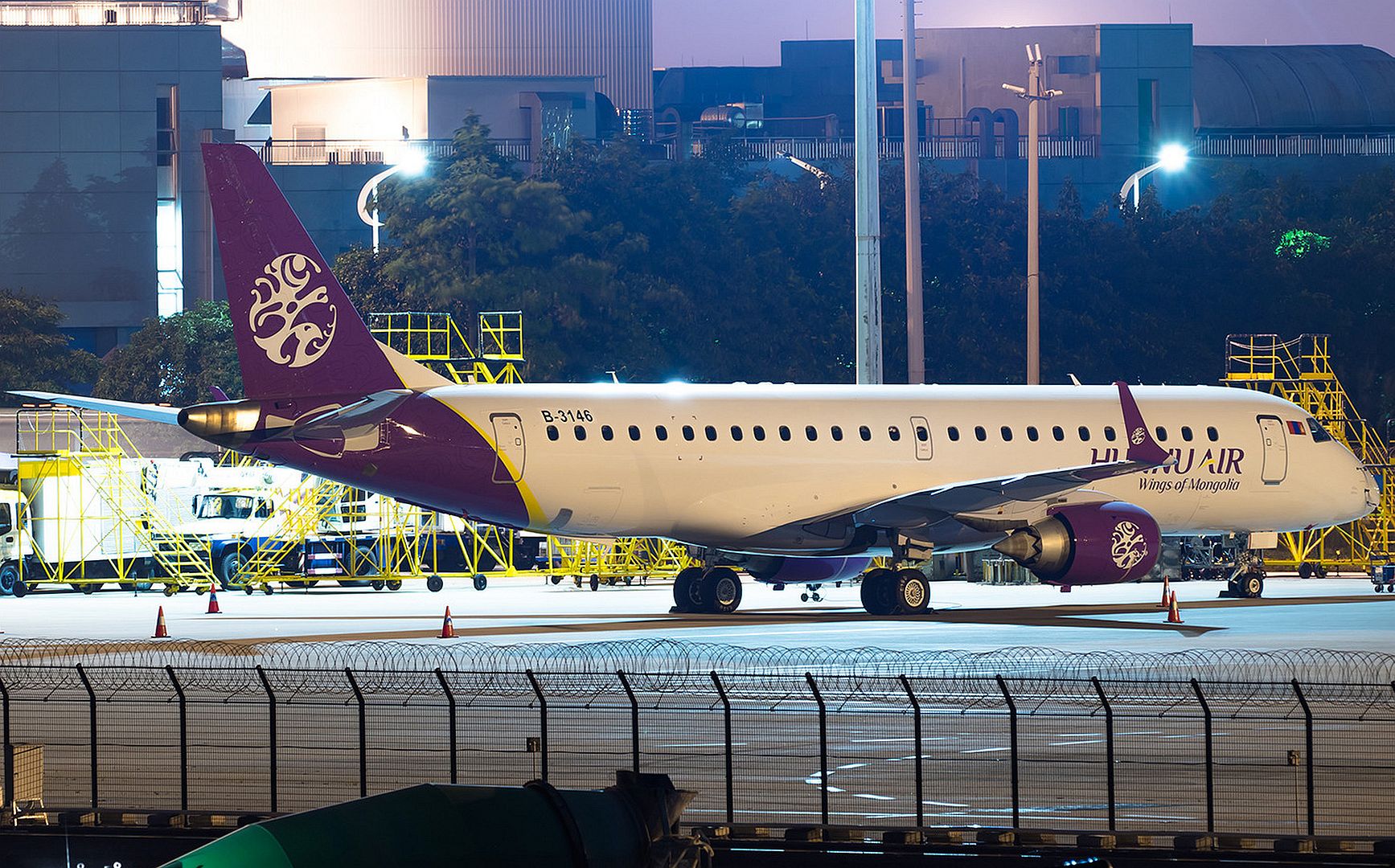
-
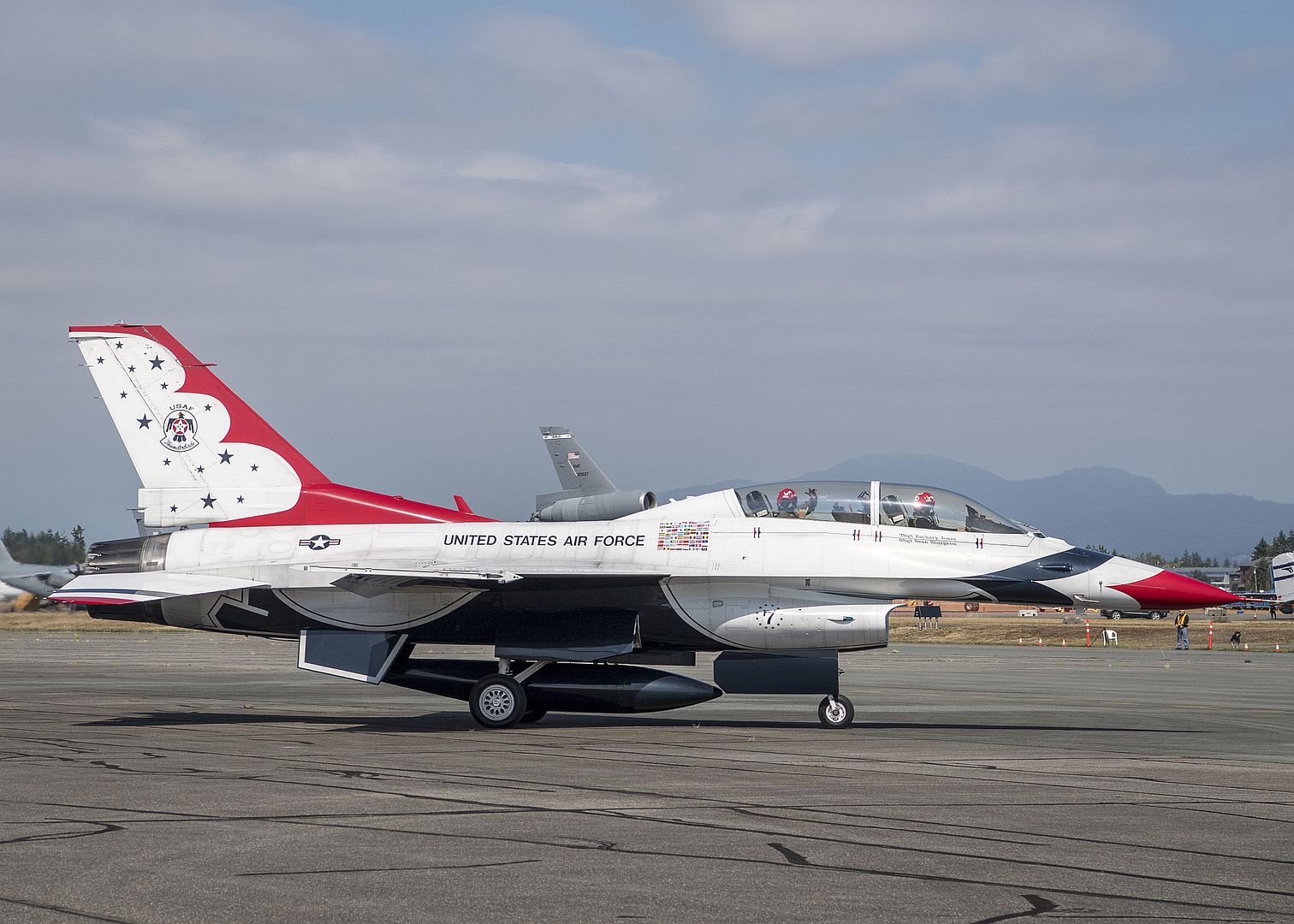
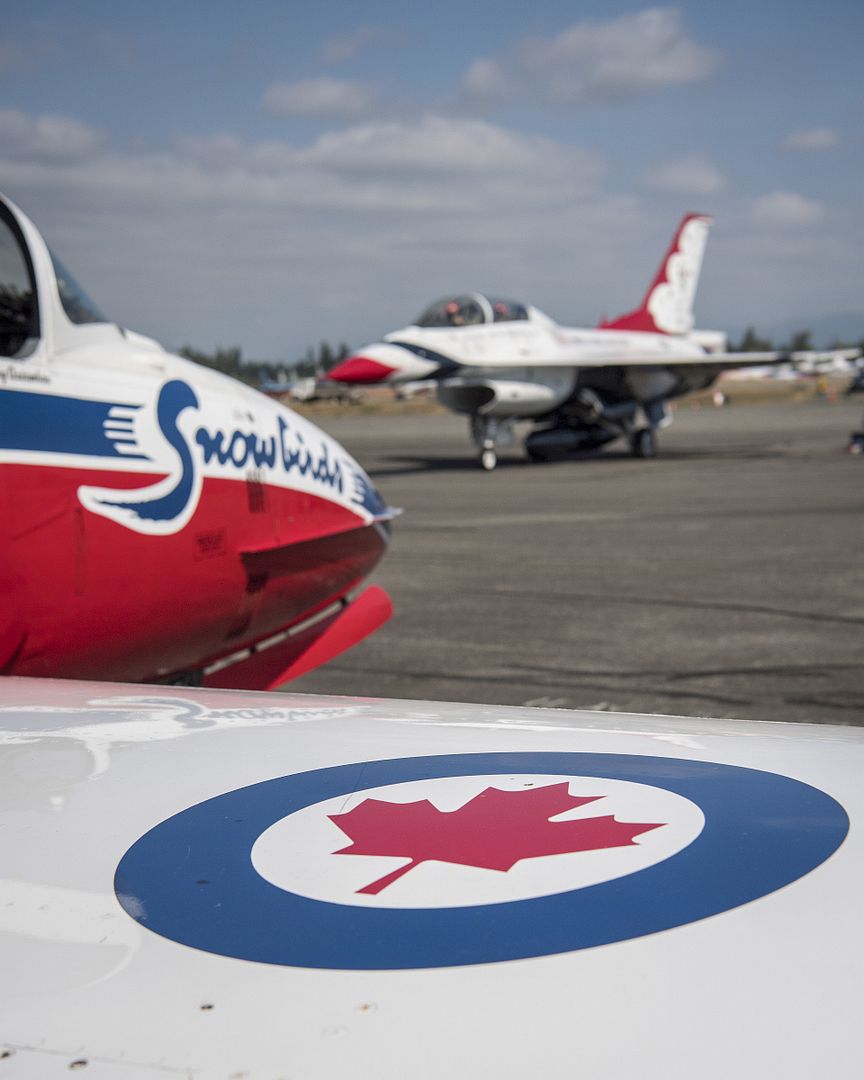
The U.S. Air Force Thunderbirds conduct flying operations at Abbotsford International Airport, Canada, in preparation for the Abbotsford International Airshow, Aug. 8, 2019. The Thunderbirds, America?s Ambassadors in Blue, usually perform at least one show in Canada per year as a show of good faith for the U.S.?s northern ally. (U.S Air Force Photo's by Maj. Ray Geoffroy)
Airman 1st Class Elijah Daniels, 36th Aircraft Maintenance Unit assistant dedicated crew chief, inspects an F-16 Fighting Falcon assigned to the 36th Fighter Squadron from Osan Air Base, Republic of Korea, during RED FLAG-Alaska 19-3 at Eielson Air Force Base, Alaska, Aug. 7, 2019. RF-A integrates the United States? continued commitment to the region as a Pacific nation, leader and power. (U.S. Air Force photo by Staff Sgt. Ramon A. Adelan)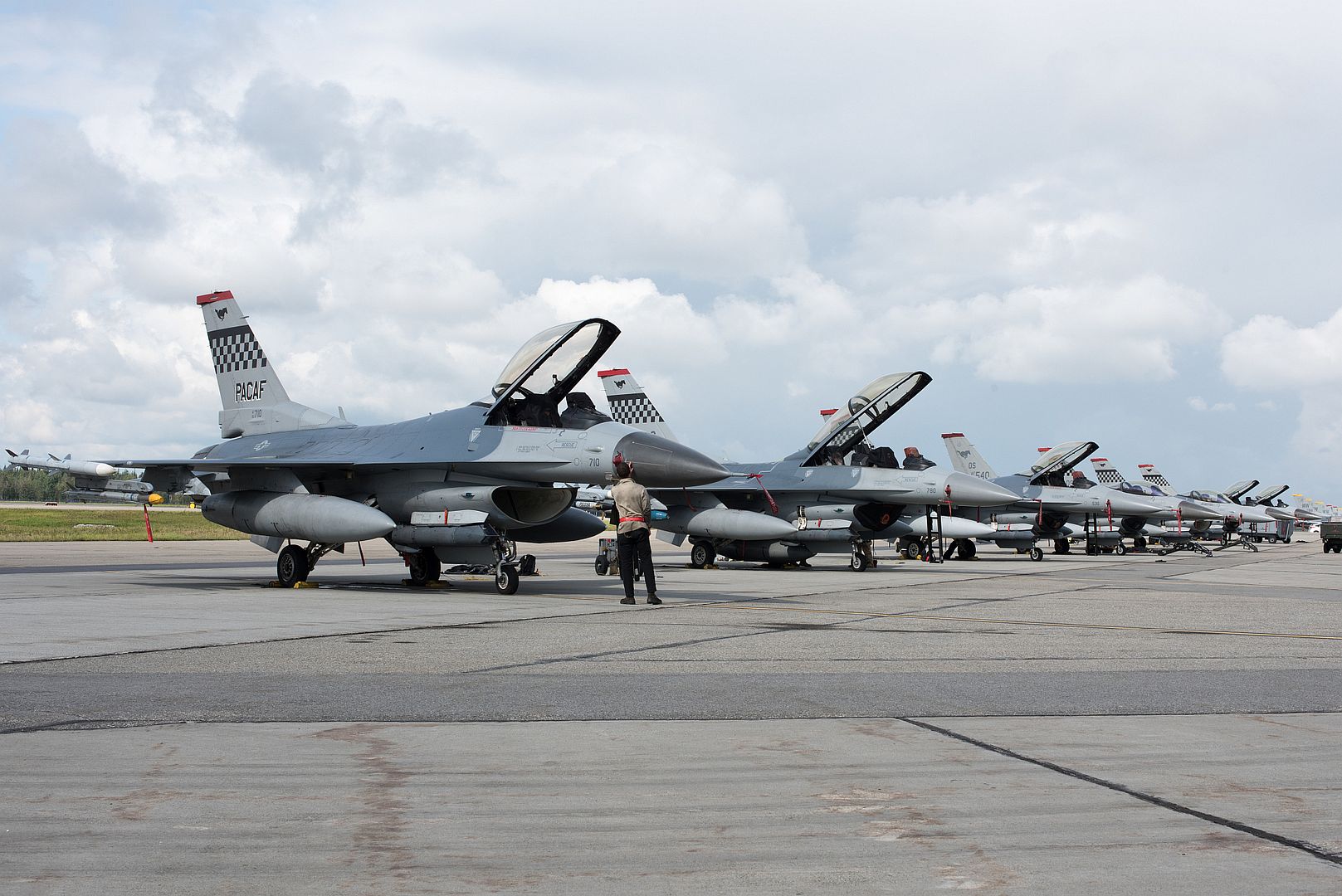
AirAsia has taken delivery of its first A330neo aircraft, to be operated by its long-haul affiliate AirAsia X Thailand. The aircraft was delivered via lessor Avolon and is the first of two A330neos set to join the airline?s fleet by the end of the year.
With its enhanced economics, the A330neo will bring a step-change in fuel efficiency for AirAsia?s long-haul operations. The new-generation A330neo will be based at Bangkok?s Don Mueang International Airport in Thailand, supporting the airline?s growth and network expansion plans to key markets such as Australia, Japan and South Korea.
The AirAsia X Thailand A330-900 features 377 seats in a two-class configuration, comprising 12 Premium Flatbeds and 365 economy class seats.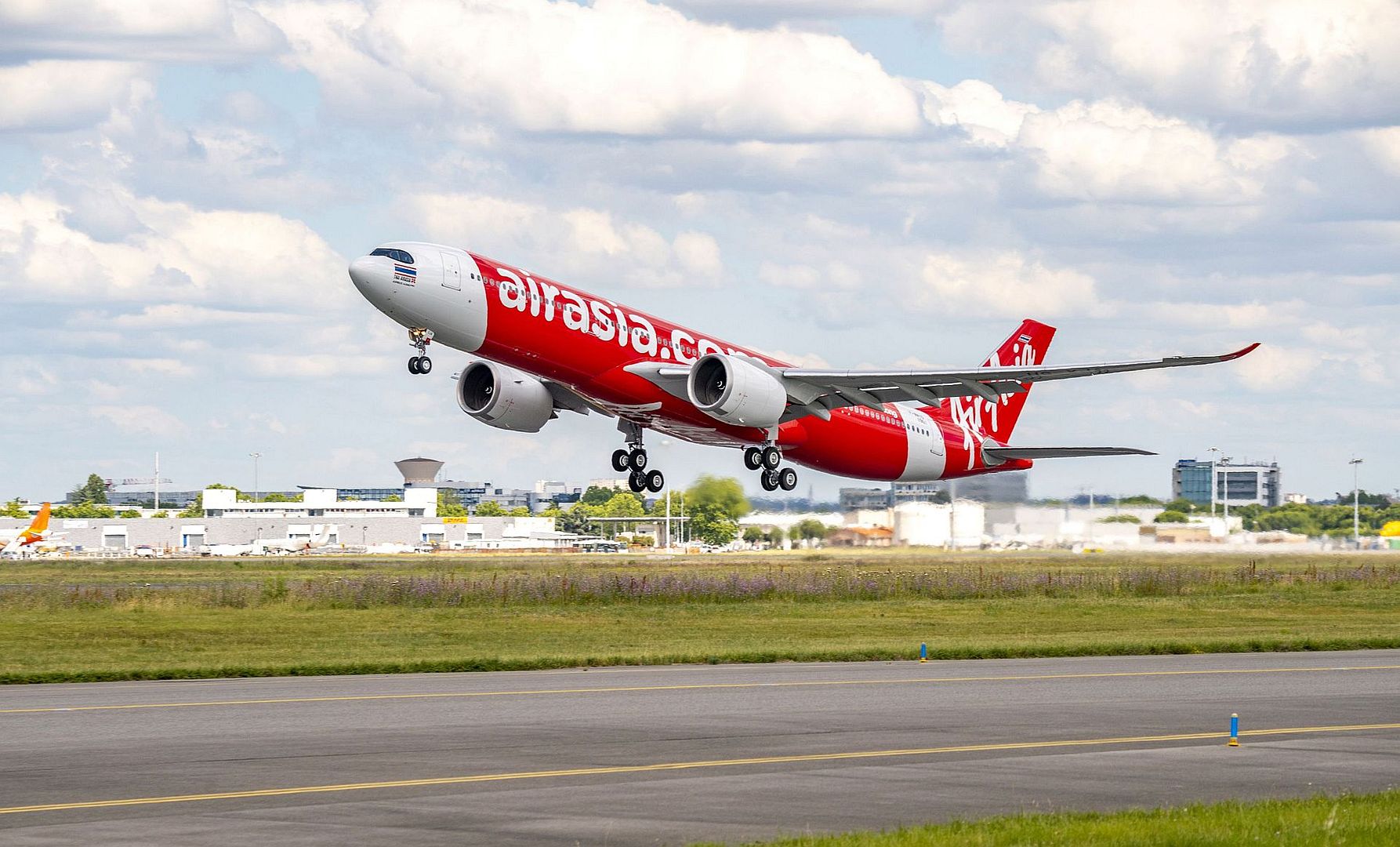
AirAsia?s long-haul affiliate, AirAsia X currently operates 36 A330-300 aircraft and is the largest customer for the A330neo with 66 on firm order.
The A330neo is the true new-generation aircraft building on the most popular wide-body A330?s features and leveraging on A350 XWB technology. Powered by the latest Rolls-Royce Trent 7000 engines, the A330neo provides an unprecedented level of efficiency ? with 25% lower fuel burn per seat than previous generation competitors. Equipped with the Airbus Airspace cabin, the A330neo offers a unique passenger experience with more personal space and the latest generation in-flight entertainment system and connectivity.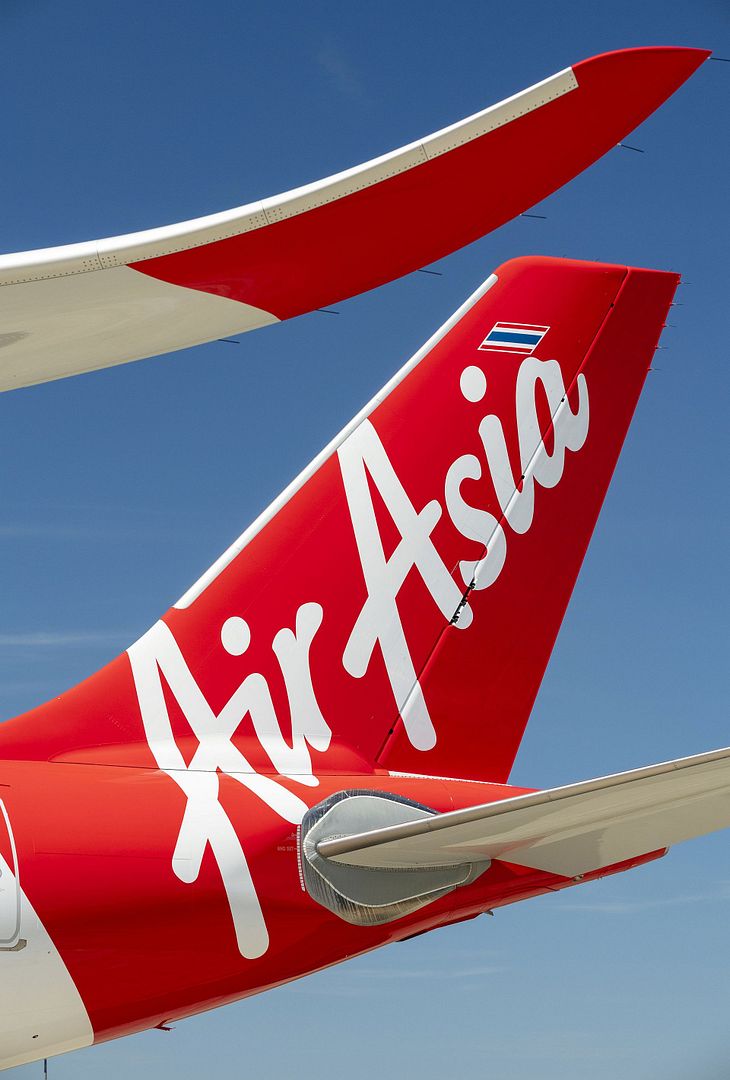
Typhoon fighter jets were scrambled twice in one day in response to Russian ?Bear? bombers, one of which was approaching British airspace.
The QRA launch from RAF Lossiemouth took place after the two Russian patrol aircraft flew past international airspace of the UK?s fellow NATO Allies. A co-ordinated response allowed Allies to monitor the aircraft until the RAF intercepted them.
Our aircraft escorted them from the UK?s area of interest and ensured that they did not enter UK sovereign airspace.
The RAF routinely identify, intercept and escort Russian aircraft that transit international airspace. Russian aircraft attempt to test NATO?s level of readiness, as well as conduct intelligence-gathering missions. The rapid reaction of the RAF and by NATO allies serves as a reminder of NATO?s cohesion and its ability to react.
In the UK, the RAF Typhoon and Voyager aircraft are held on a state of readiness every day, supported by engineering and airspace management personnel.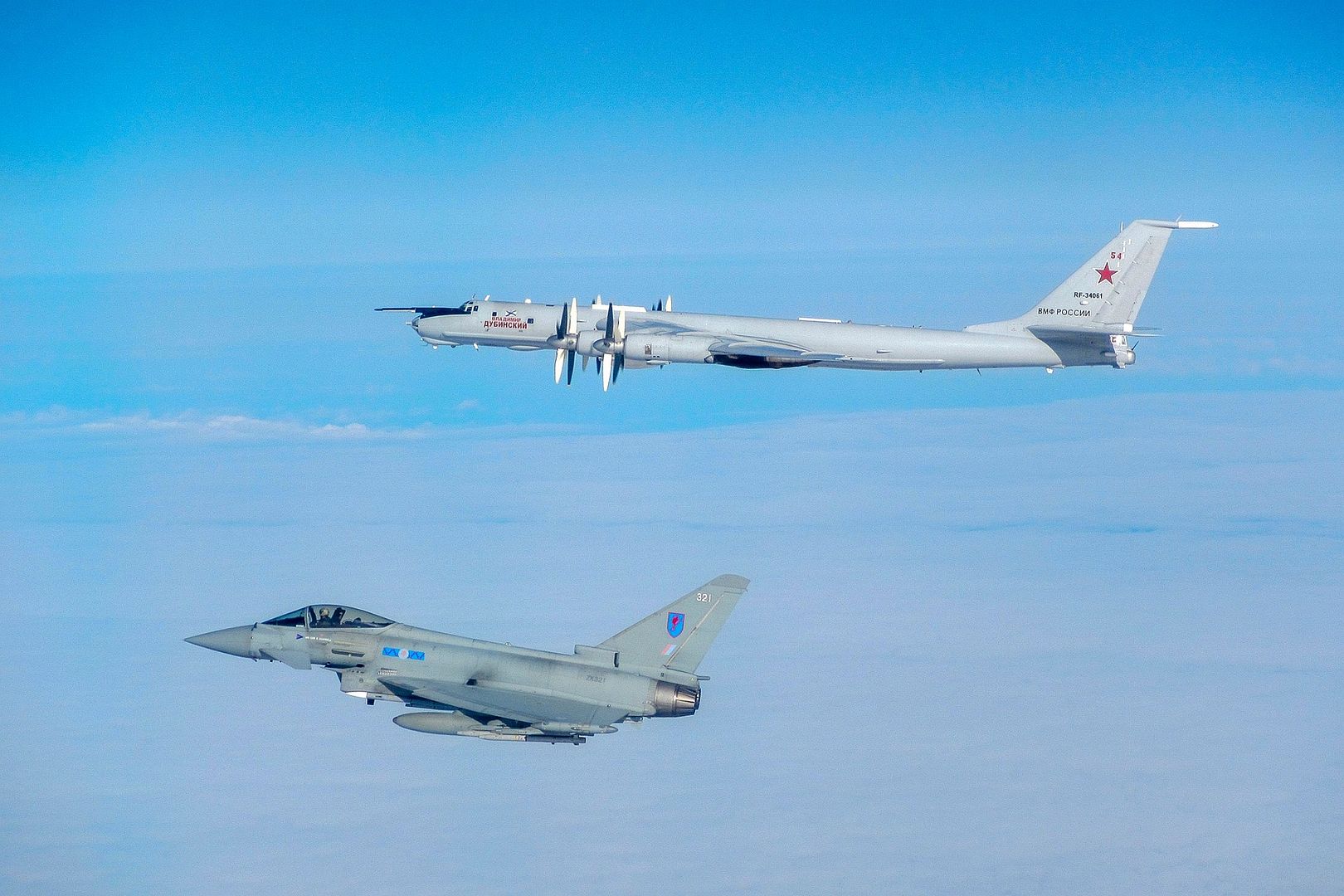
A KC-135 Stratotanker from the 92nd Air Refueling Wing and several F-16C Fighting Falcons from the The U.S. Air Force Air Demonstration Squadron "Thunderbirds" and 64th Agressor Squadron fly over the Pacific Northwest region August 8, 2019. The Thunderbirds and Agressors will be participating in the Abbotsford International Air Show in Abbotsford, Canada, August 9-11. Since 1953, the Thunderbirds team has served as America?s premier air demonstration squadron, entrusted with the vital mission to recruit, retain and inspire past, present and future Airmen. (U.S. Air Force Photo/SSgt Cory W. Bush)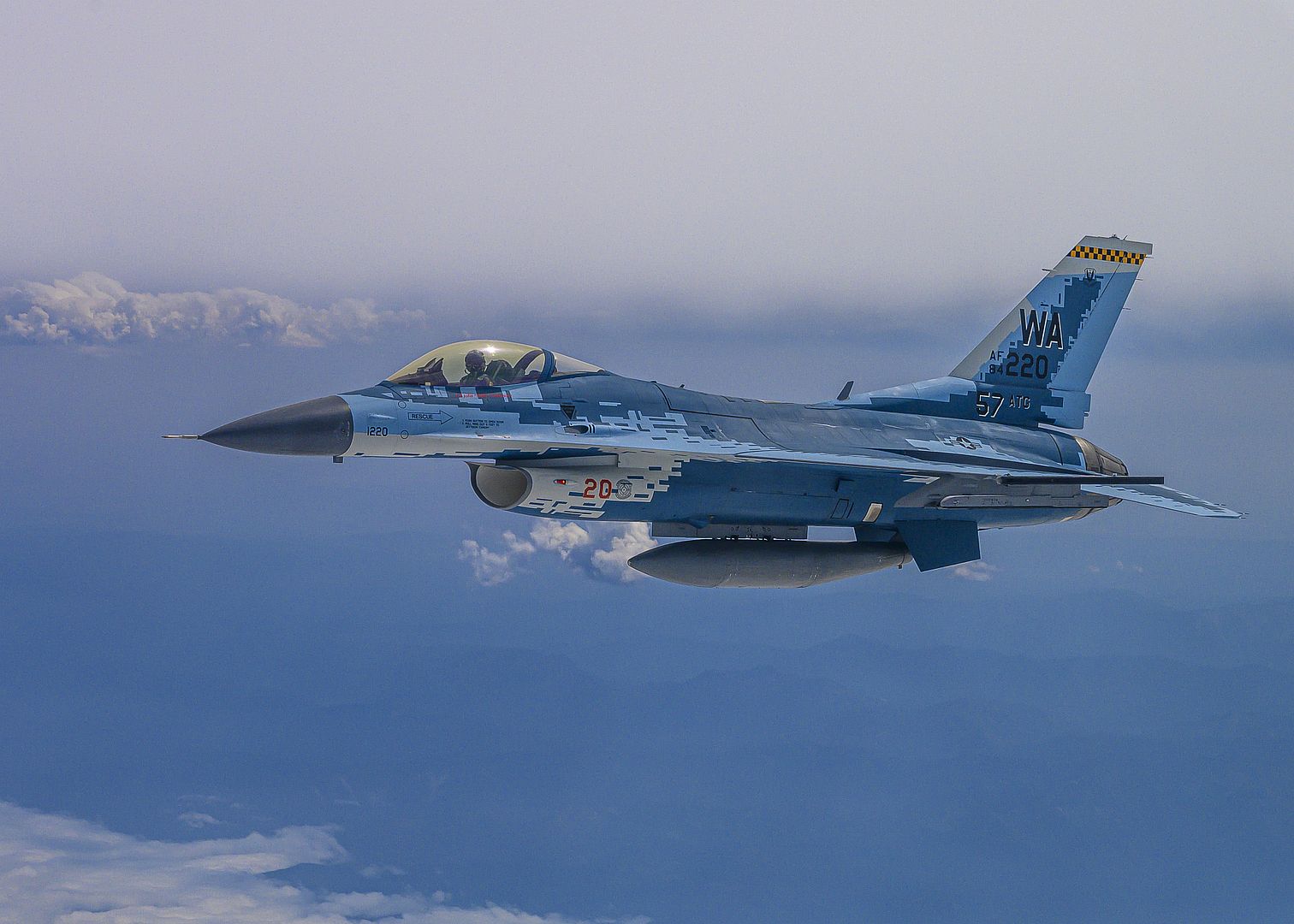
-
HILL AIR FORCE BASE, Utah (AFNS) --
Workers at the Ogden Air Logistics Complex at Hill Air Force Base have installed the last of 173 new wings on A-10 Thunderbolt II, finalizing a project that started in 2011 with aircraft 80-0173.
The Ogden ALC?s 571st Aircraft Maintenance Squadron swapped wings on 162 A-10s as part of the A-10 Enhanced Wing Assembly replacement program. The remaining 11 were installed at Osan Air Base in South Korea.
The new wings are expected to last for up to 10,000 equivalent flight hours without a depot inspection. In addition, a better wire harness design was created for easier wing removal and to lessen the chance of damaging the wing during the process.
?From a warfighter point of view, bringing this program to a successful conclusion was a significant accomplishment for the entire enterprise team,? said Stephen Zaiser, 571st AXMS director.
Working on an aircraft that has been flying for nearly 40 years wasn?t without challenges. The modifications included having to make new parts for the fuselage and having to bring other A-10 parts up from the 309th Aerospace Maintenance and Regeneration Group at Davis-Monthan AFB, Arizona.
?At the end of the program, making sure we had all the pieces and parts that we needed to make that happen required a really significant team effort,? Zaiser said. ?I think the fact that we produced the aircraft so successfully is a testament to the whole team, the special program office, Boeing and others that were a part of making it all work.?
Lt. Col. Ryan Richardson, 514th Flight Test Squadron commander and A-10 test pilot, flew the functional check flight on the last A-10 to receive the new wings to deem the aircraft airworthy.
?It flew great and passed all the FCF checks,? Richardson said. ?It?s unusual to have an airplane in production for as long as this one was and have it come out and fly as well as this one did.?
Introduced into the Air Force aircraft inventory in 1976, the venerable A-10 is the only production-built aircraft for close air support. The aircraft was made to fly close to the ground in support of friendly ground troops, drop heavy loads of weapons, attacks armored vehicles, tanks and can be called in to attack enemy ground forces.
With heavy stresses put on the wings over the weapon system?s lifetime and with its full-service life still unknown, the Air Force decided to replace some of the fleet?s wings in order for the weapon system to remain airworthy.
In 2007, Boeing was awarded a $1.1 billion contract to build replacement wings at its Macon, Georgia, plant that will allow the aircraft to continue flying into the late 2030s.
?The A-10 Special Program Office, in partnership with the Ogden ALC, is poised to keep the aircraft flying for the foreseeable future,? said Michael Hackett, A-10 SPO chief engineer.
Lt. Col. Ryan Richardson, 514th Flight Test Squadron commander and A-10 test pilot, takes off during a functional check flight of an A-10 Thunderbolt II, tail no. 80-0252, at Hill Air Force Base, Utah, July 25, 2019. The aircraft was the last of 173 A-10s to receive new wings under the Enhanced Wing Assembly program to extend the flying service life of the fleet. (U.S. Air Force photo by Alex R. Lloyd)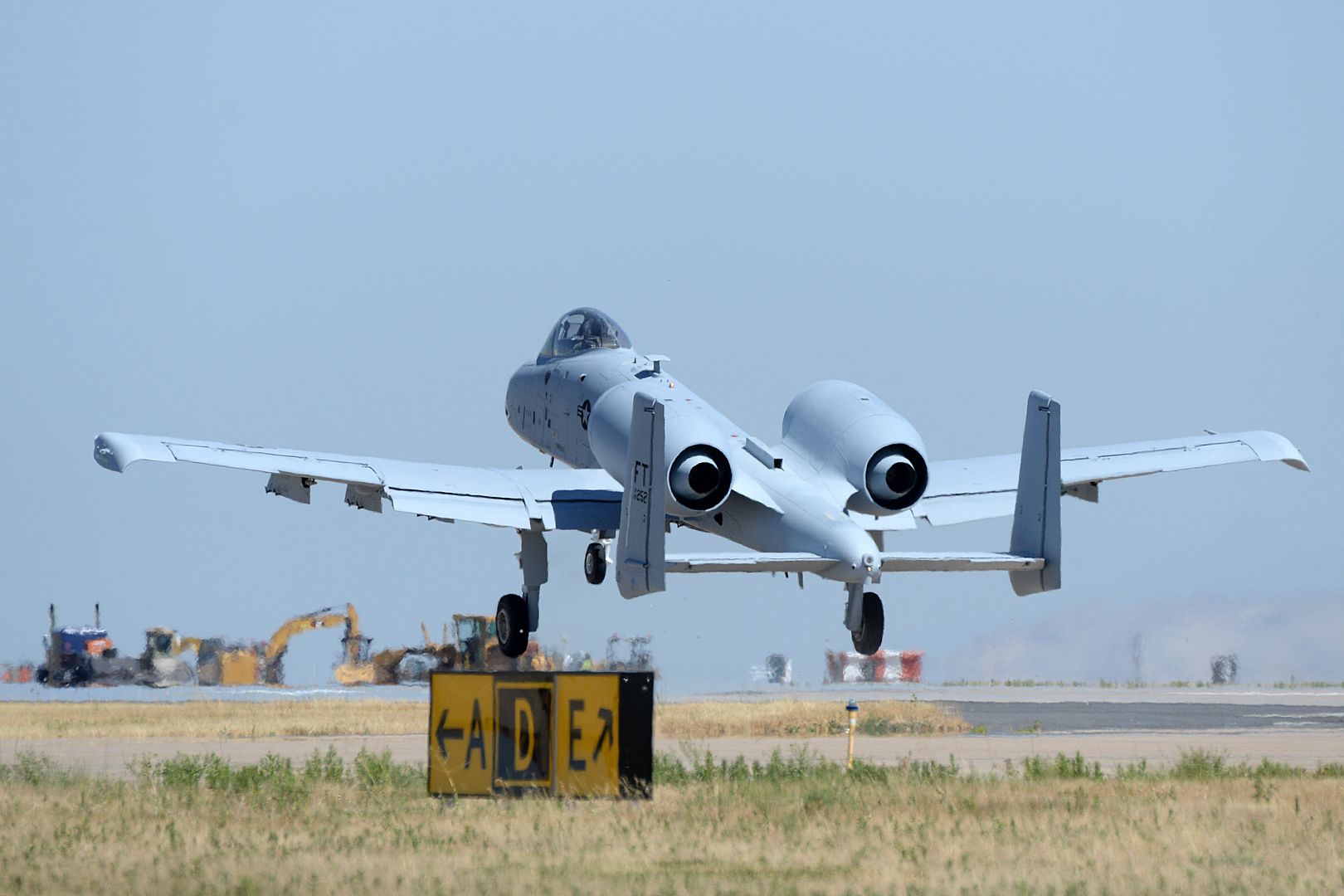
Lt. Col. Ryan Richardson, 514th Flight Test Squadron commander and A-10 test pilot, rolls out after landing following a functional check flight on an A-10 Thunderbolt II, tail no. 80-0252, at Hill Air Force Base, Utah, July 25, 2019. The aircraft is from the Moody Air Force Base, Georgia, home of the 23d Wing Flying Tigers, a unit that traces its heritage back to the Flying Tigers of WWII that painted sharks teeth on the nose of the P-40 Warhawk fighter planes they flew. The aircraft was the last of 173 A-10s to receive new wings under the Enhanced Wing Assembly program to extend the flying service life of the fleet. (U.S. Air Force photo by Alex R. Lloyd)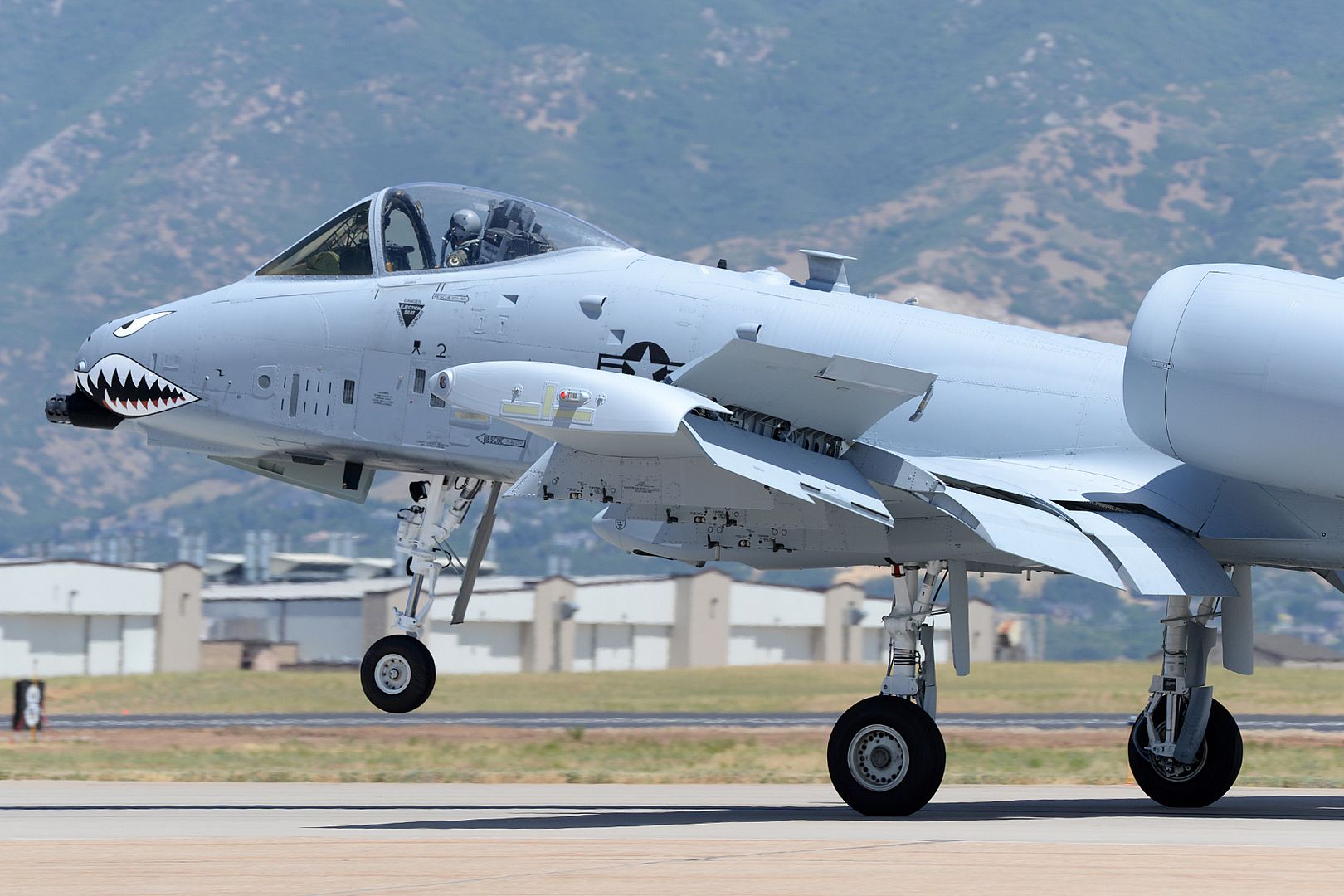
A Marine Attack Squadron (VMA) 311 AV/8B Harrier flown by a Marine attached to Special Purpose Marine Air Ground Task Force-Crisis Response-Central Command prepares to attach its refueling system to a KC-130J Super Hercules during aerial refueling in Kuwait, Aug. 10, 2019. The SPMAGTF-CR-CC is designed to move with speed and precision to support operations throughout the Middle East. (U.S. Marine Corps photo by Sgt. Branden J. Bourque)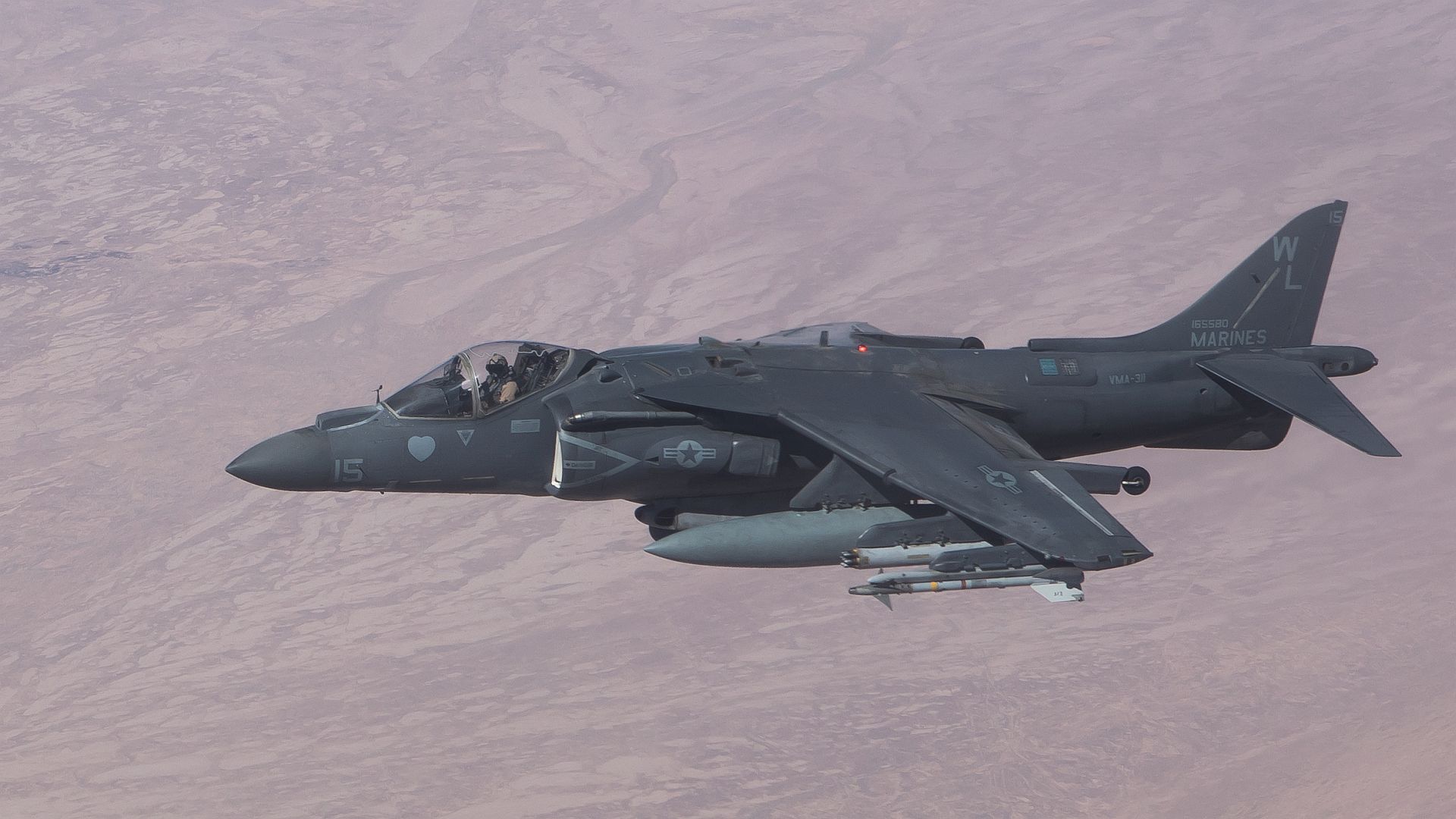
An F-22 Raptor taxis after landing so Airmen assigned to the 673d Logistics Readiness Squadron can refuel it on Joint Base Elmendorf-Richardson, Alaska, Aug. 9, 2019. Fuels specialists manage every aspect of the refueling every aircraft on the flight line and are responsible for operating the vehicles, equipment and storage facilities that are essential to refueling operations while ensuring compliance with all safety regulations while handling these volatile liquids.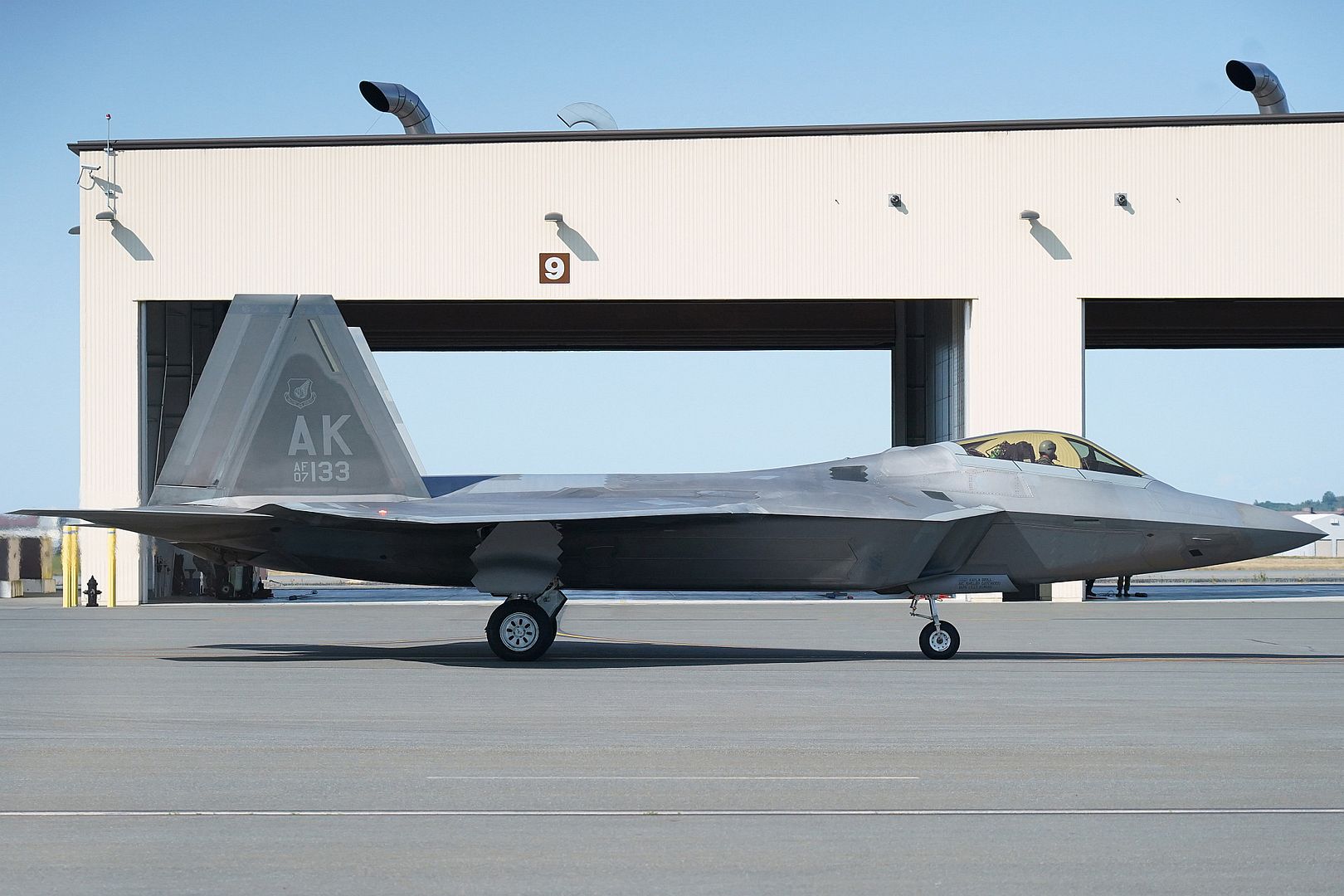
Airman 1st Class Hunter Anderson, right, assigned to the 673d Logistics Readiness Squadron and Air Force Staff Sgt. Jacob Boddy, a crew chief assigned to the 525th Fighter Squadron, begin to refuel an F-22 Raptor of the 525th Fighter Squadron (the Bulldogs) on Joint Base Elmendorf-Richardson, Alaska, Aug. 9, 2019. Fuels specialists manage every aspect of the refueling every aircraft on the flight line and are responsible for operating the vehicles, equipment and storage facilities that are essential to refueling operations while ensuring compliance with all safety regulations while handling these volatile liquids.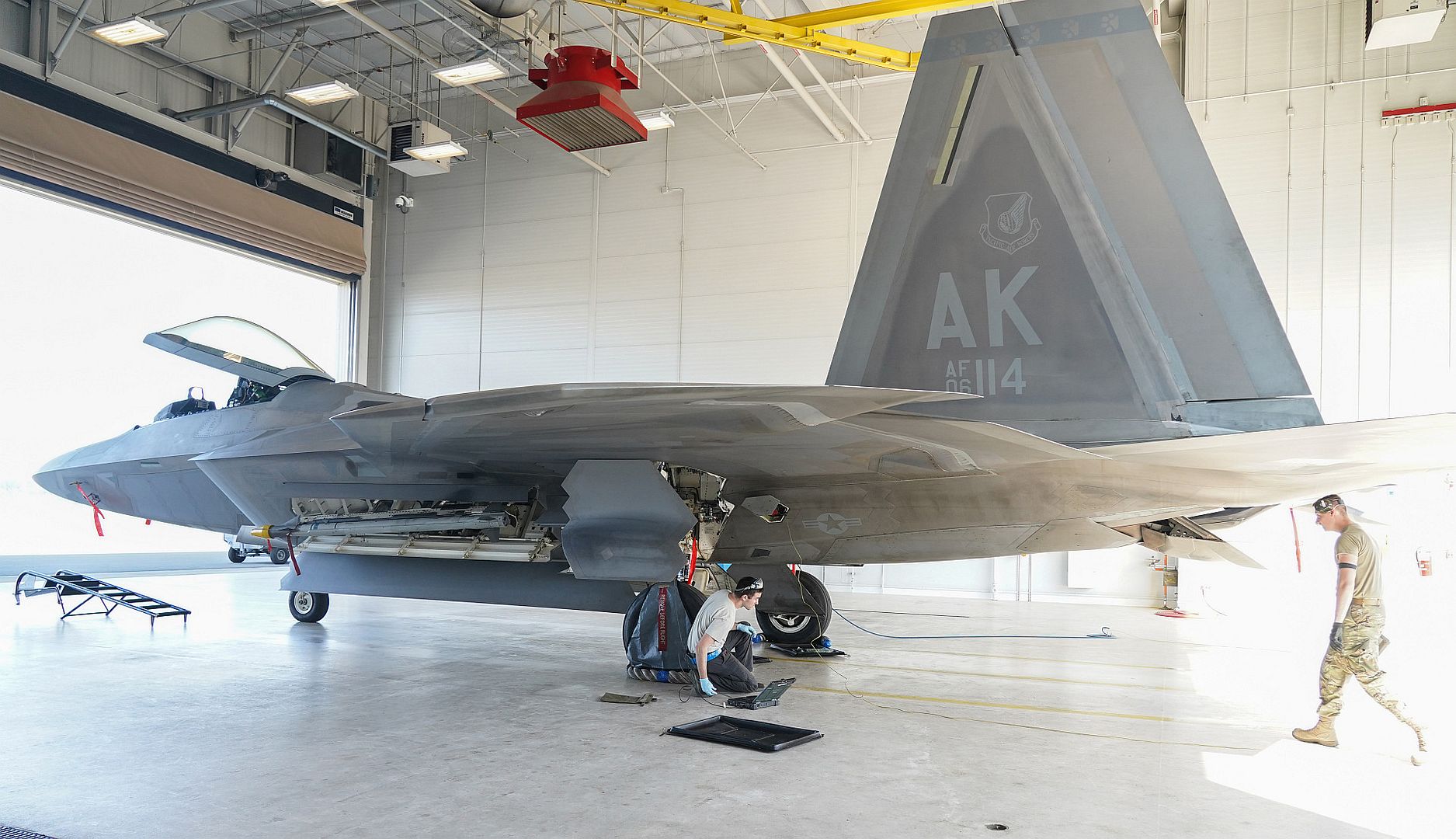
Virgin Atlantic has become the second UK airline in the space of a few weeks to take delivery of an Airbus A350-1000, with the formal handing over of its first aircraft in Toulouse.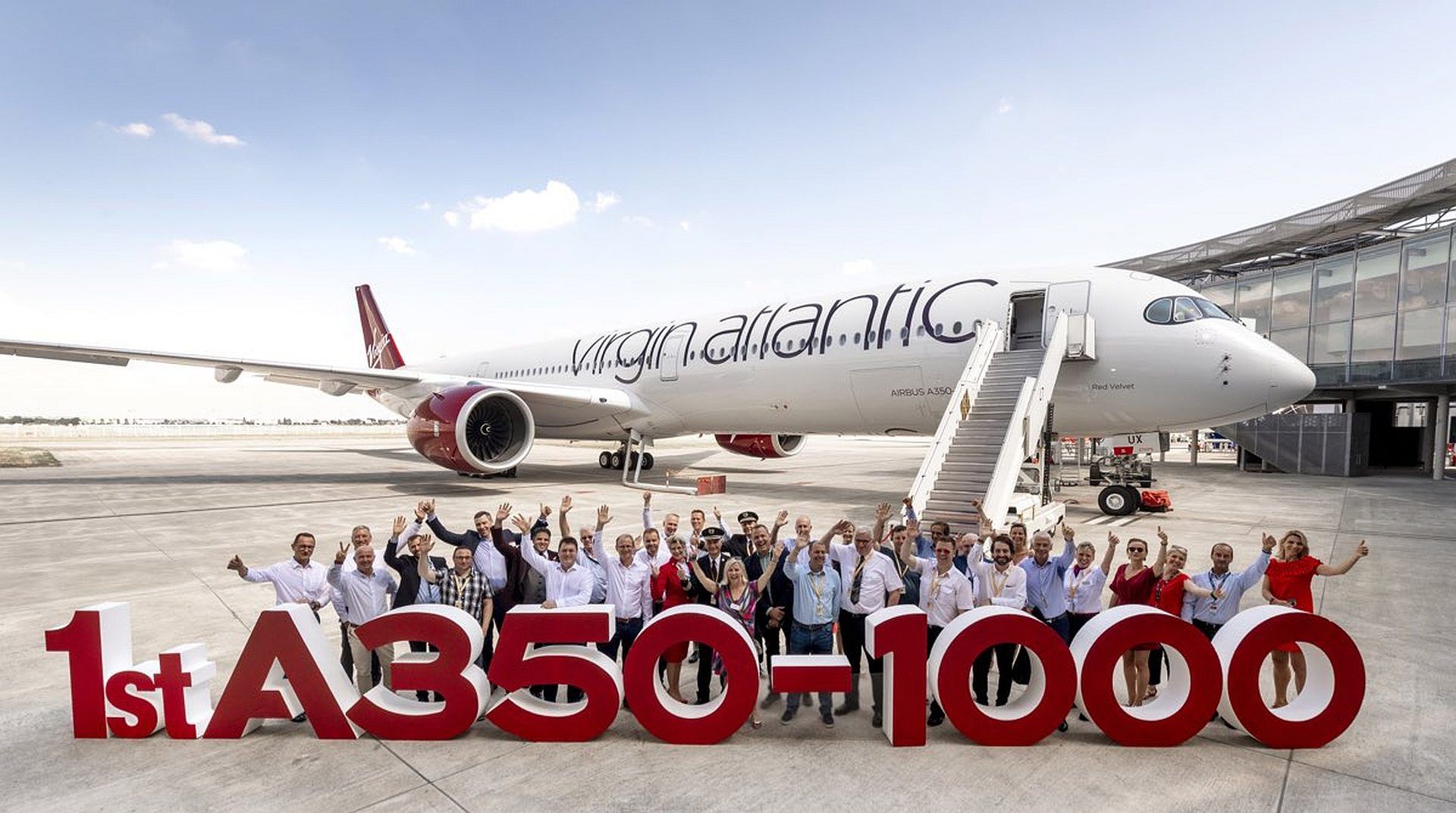
The airline states on social media: ?We are the officially the proud owners of our first A350-1000, Red Velvet.?
Virgin?s first aircraft, registration G-VLUX, has been officially accepted at the Airbus delivery centre at Toulouse-Blagnac airport. It is the first of 12 of the Rolls-Royce Trent XWB-powered aircraft the airline has on order, with deliveries due through to 2021. Virgin says the new widebody will initially operate between London Heathrow and New York John F Kennedy, with the inaugural flight due to be flown on 10 September. The airline has not yet confirmed any other routes.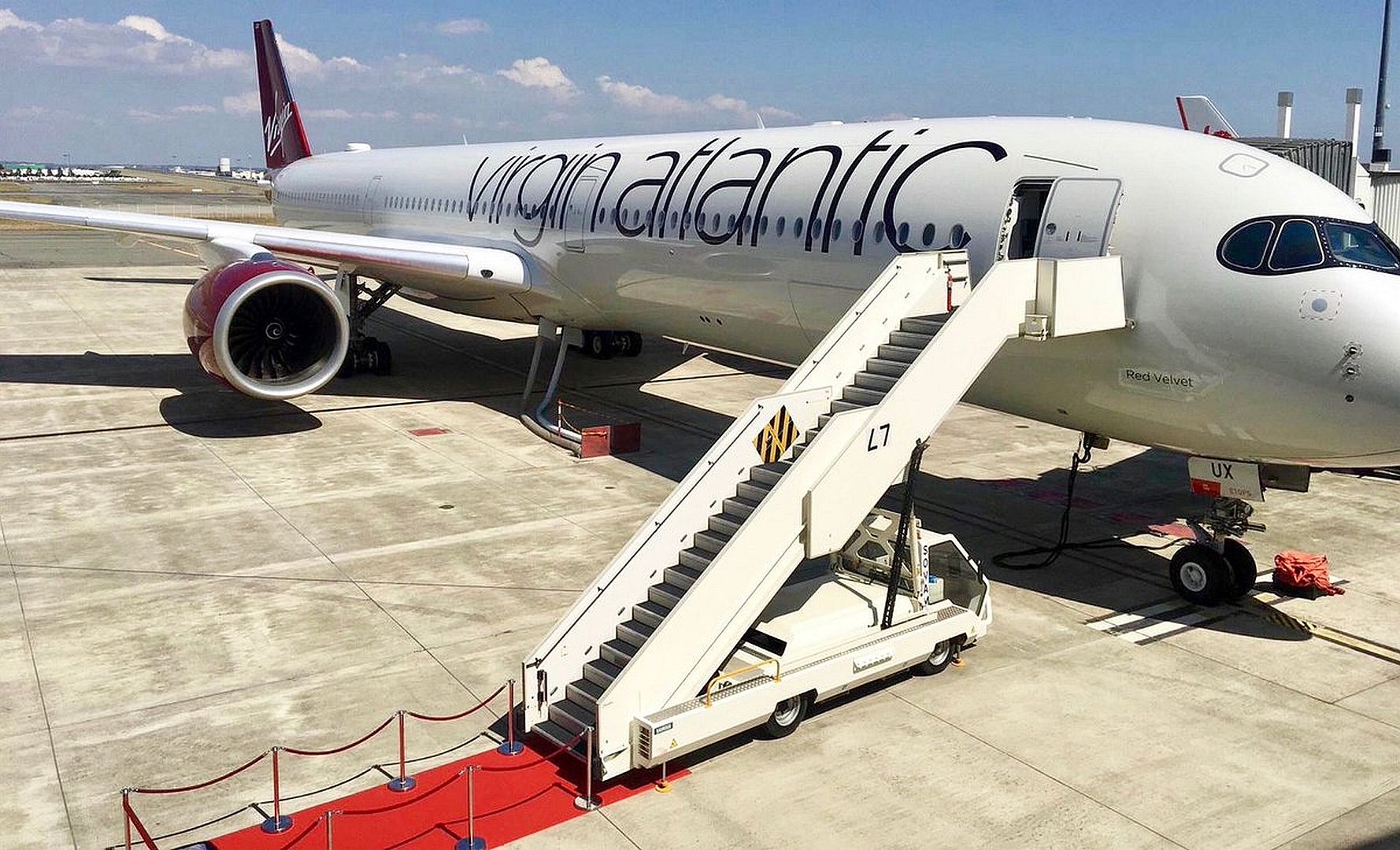
A key new feature on Virgin?s A350-1000s is a revamped on-board bar dubbed ?The Loft? (below). Virgin says that ?as the largest social space in the airline?s fleet, it?s designed for customers to gather, chat, enjoy a drink or dine with friends?.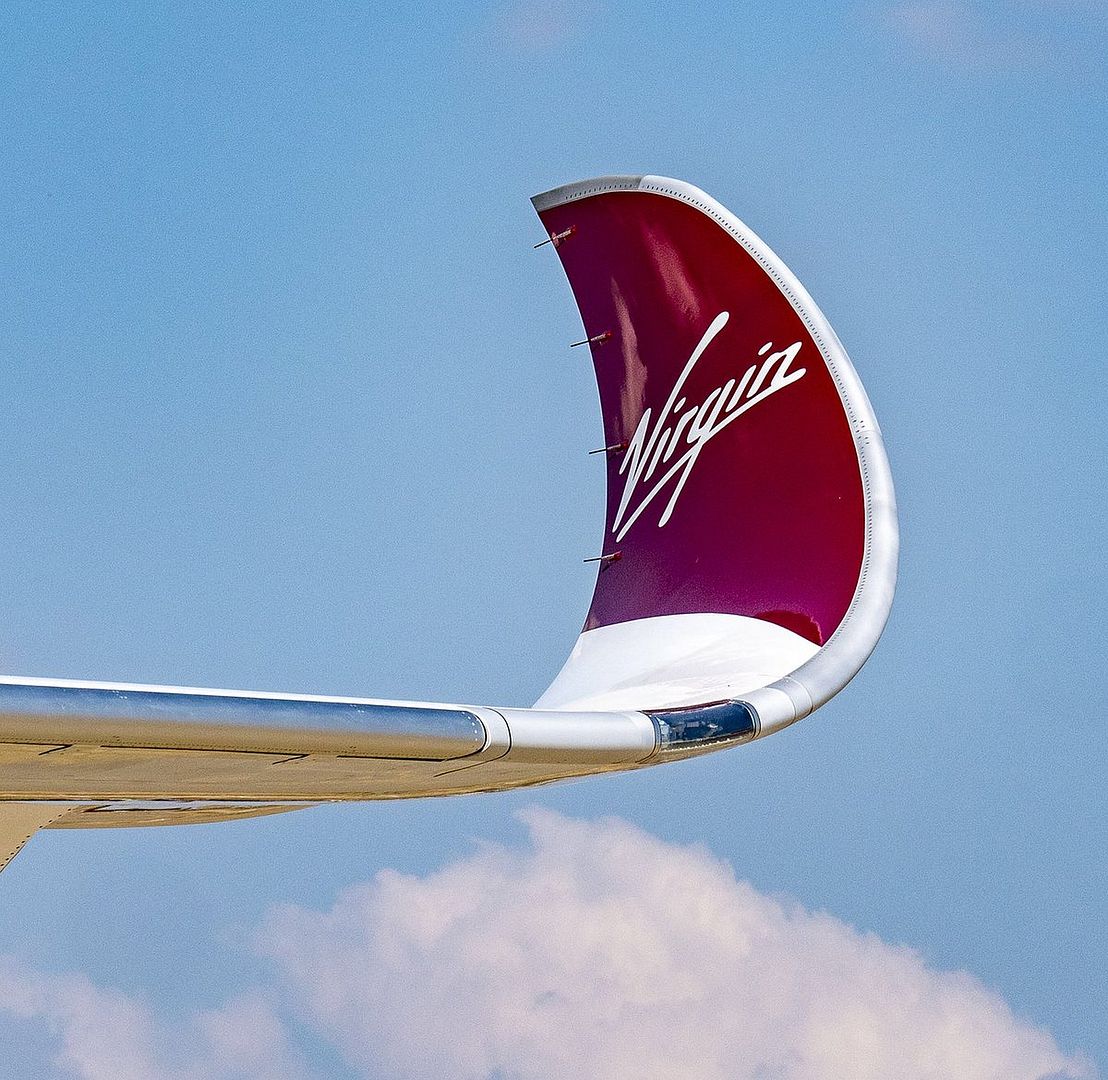
S?o Paulo, Brazil, August 12th, 2019 ? In the month that the company celebrates its golden jubilee, Embraer will exhibit the new Praetor 500 and Praetor 600 business jets at LABACE, the largest business aviation show of Latin America. The Praetor jets, Embraer?s latest aircraft, are the most technologically advanced aircraft in their categories and they will be on static display from August 13?15 at Congonhas Airport, in S?o Paulo.
The Praetor 500 is a midsize jet with a continental range of 3,250 nautical miles (6,019 km) for up to nine passengers, capable of single-stop flights from S?o Paulo to any city in South America or to destinations in Europe or North America. The Praetor 600 is a super-midsize jet for up to 12 passengers, with an intercontinental range of 4,018 nautical miles (7,441 km), the farthest among its competitors, allowing for nonstop flights between S?o Paulo (Brazil) and Miami, Rio de Janeiro (Brazil) and Fort Lauderdale, or Madrid (Spain) and Recife (Brazil).
?With unprecedented performance, our new jets introduce unique flexibility to the market. The Praetor 600 has the class-exclusive advantage of the shortest field length with the longest range, flying nonstop from S?o Paulo to Miami. Both models deliver a customer experience yet unseen in their classes. With superior design and ergonomics, the Embraer DNA Design is complemented by the most comfortable flight and the best cabin altitude (5,800 ft) in its class as well as the smoothest possible flight, rendered by the class-exclusive turbulence reduction based on Embraer?s full fly-by-wire technology. High-speed Internet connectivity is among the features that serve customers with greater productivity and comfort,? said Gustavo Teixeira, VP Sales, Latin America, Embraer Executive Jets.
Brazilian Market Highlights
In addition to a significant global market participation, with more than 1,400 business jets delivered, Embraer has a leading presence in the Brazilian market. Over the last 10 years, one of every two business jets delivered in Brazil was made by Embraer. With a high rate of utilization, one Embraer executive jet takes flight every 20 minutes in Brazil, on average, attesting to the company portfolio?s suitability to the broadest profiles of Brazilian customers, rendering continuous productivity gains.
?The business jet is an incomparable productivity tool and this is why we designed our aircraft to serve entrepreneurs and executives in the region with the versatility for them to reach many more destinations, when and where needed,? explains Teixeira. ?With connectivity throughout the flight and time saved from the traditional commercial aviation bottlenecks of the region, customers can take care of business and deliver greater returns to their companies and ventures.?
Aircraft on Static Display
In addition to the new Praetor jets, Embraer will exhibit the Phenom 100EV, the third generation of its acclaimed Phenom 100, the most successful jet in Brazil?s business aviation history, and the Phenom 300E, the best-selling business jet for the last decade, with more than 500 aircraft in operation in 30 countries. In celebration of its golden jubilee, Embraer will also exhibit its pioneer, the Bandeirante, a twin-engine turboprop aircraft that led to the creation of Embraer on August 19, 1969 for its serial production.
Customer Services and Support
This year, Embraer's Customer Services and Support team will bring TechCare Space to LABACE, presenting a full suite of efficient support solutions to provide the best after-sales experience to customers, who are supported by the Network of Owned and Authorized service centers throughout Latin America as well as a dedicated 24/7 call center.
The Interior Workshop, located in the Sorocaba Service Center, will showcase its new showroom with aircraft customization accessories, material samples, modifications cases and a software application that allows the customer to evaluate and validate various interior configurations. Embraer?s strategic partnerships in Latin America offer customers an amazing customer experience; Embraer Design Operations (EDO) brings the best in internal and external executive jet designs and F/LIST BRASIL contributes with its great expertise in high-end cabin interior services.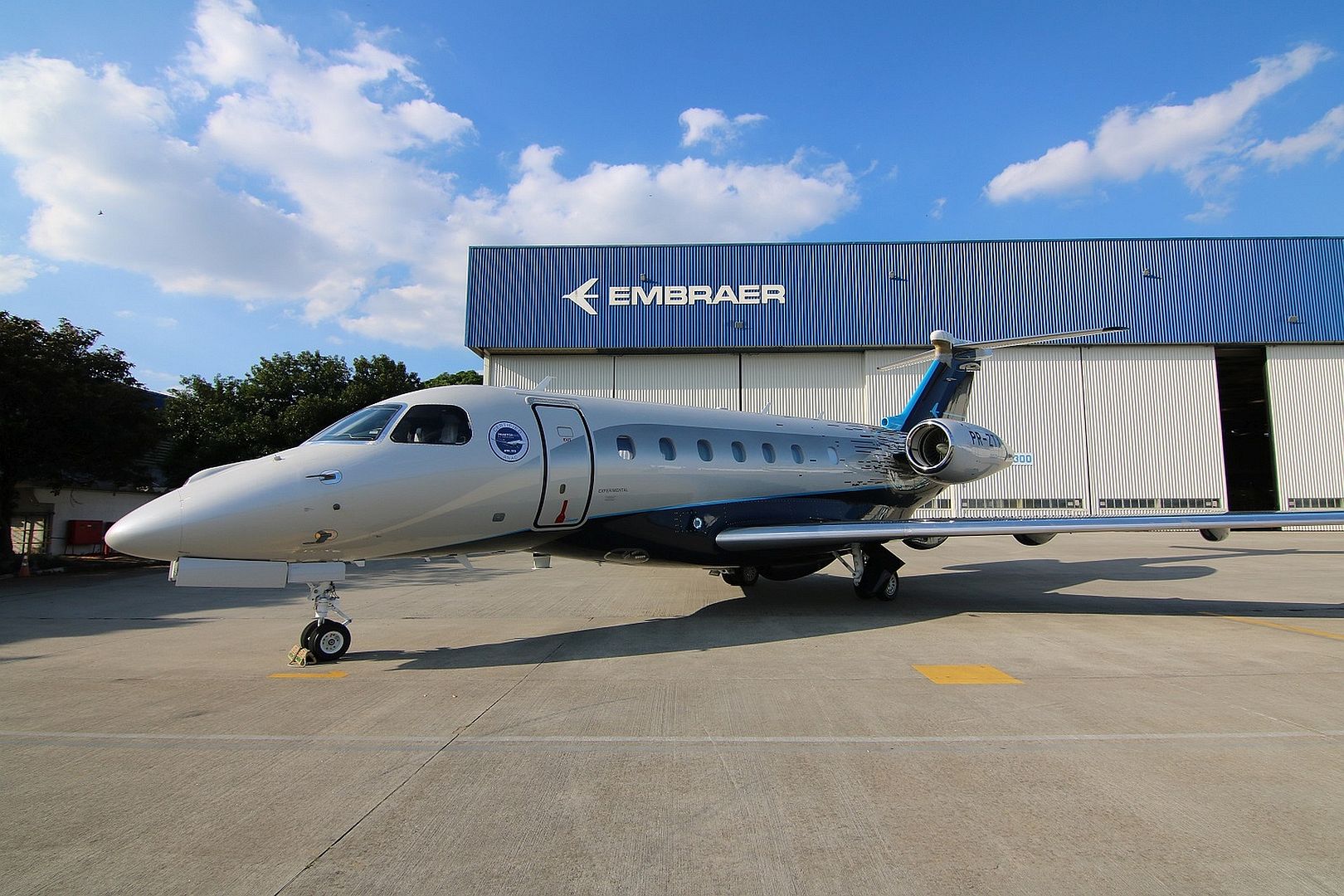
-
Capt Nathan Meade and 1st Lieutenant George Welton prepare for a training sortie in support of exercise Combat Hammer at Mountain Home Air Force base, Idaho August 13, 2019. The exercise is part of the U.S. Air Force Weapon Systems Evaluation Program, which is designed to evaluate the reliability, maintainability, suitability, and accuracy of precision guided munitions, as well as high technology air-to-ground munitions from tactical deliveries against realistic targets with realistic enemy defenses. (U.S. Air Force Photo/ Tech. Sgt. Matthew Plew)
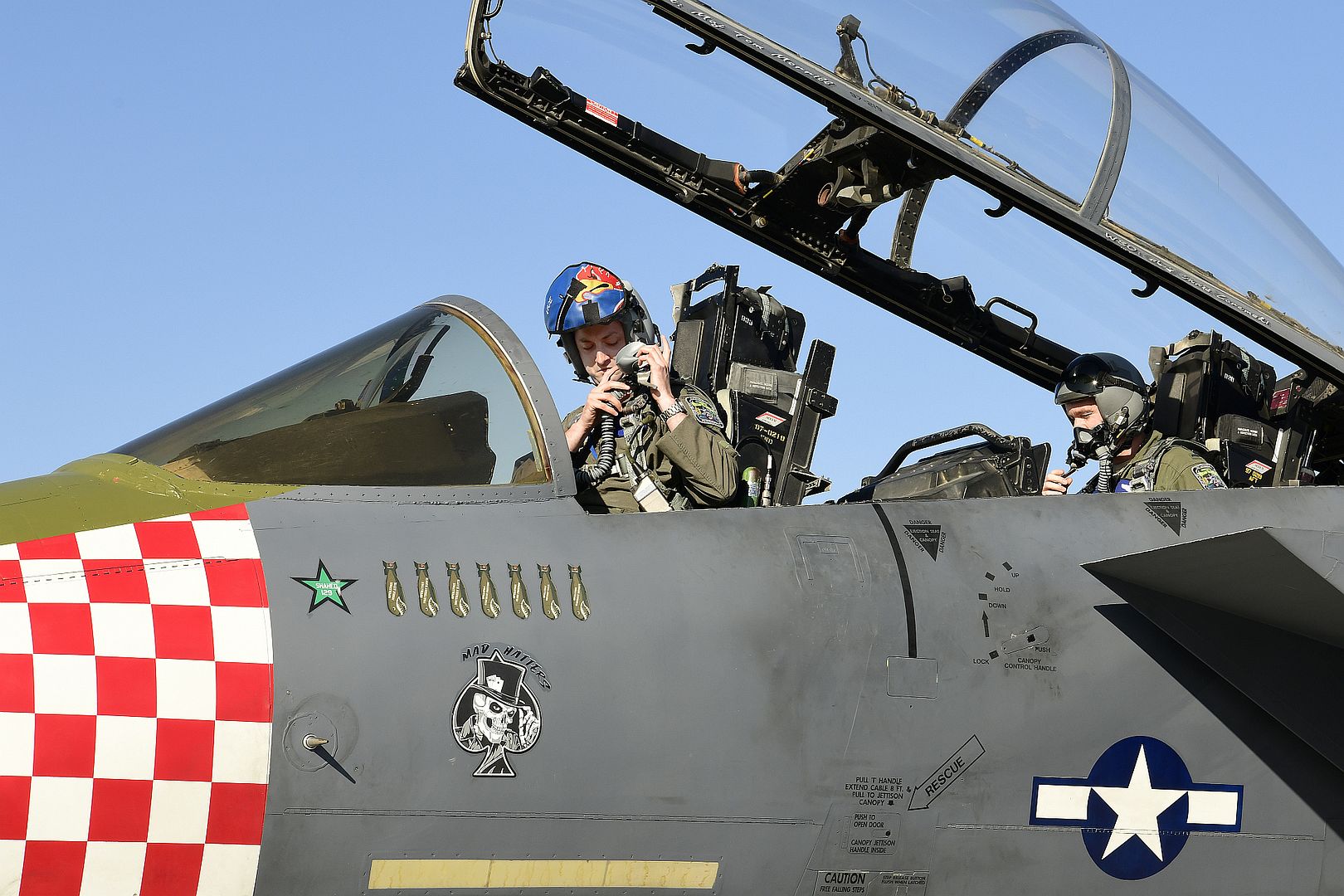
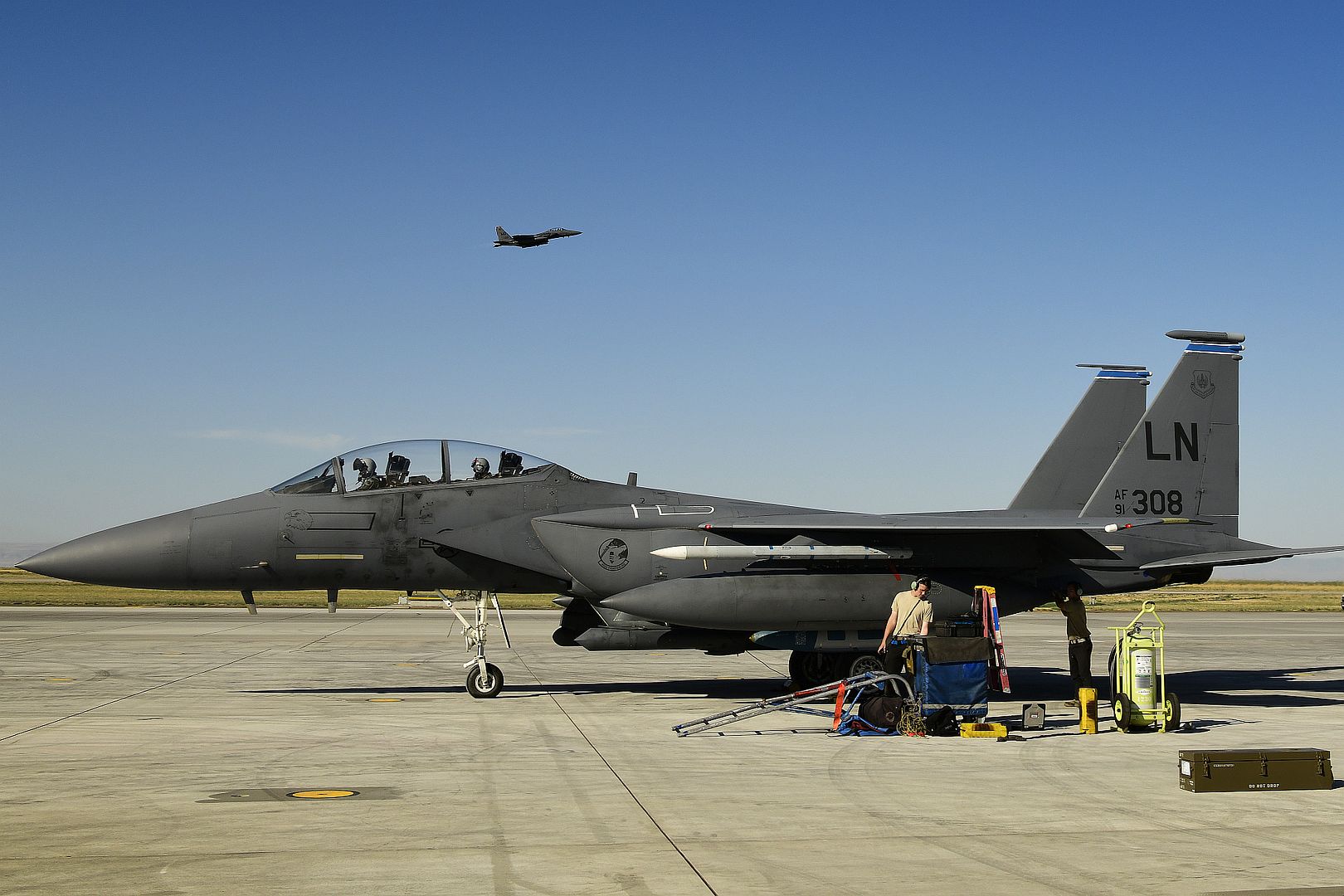
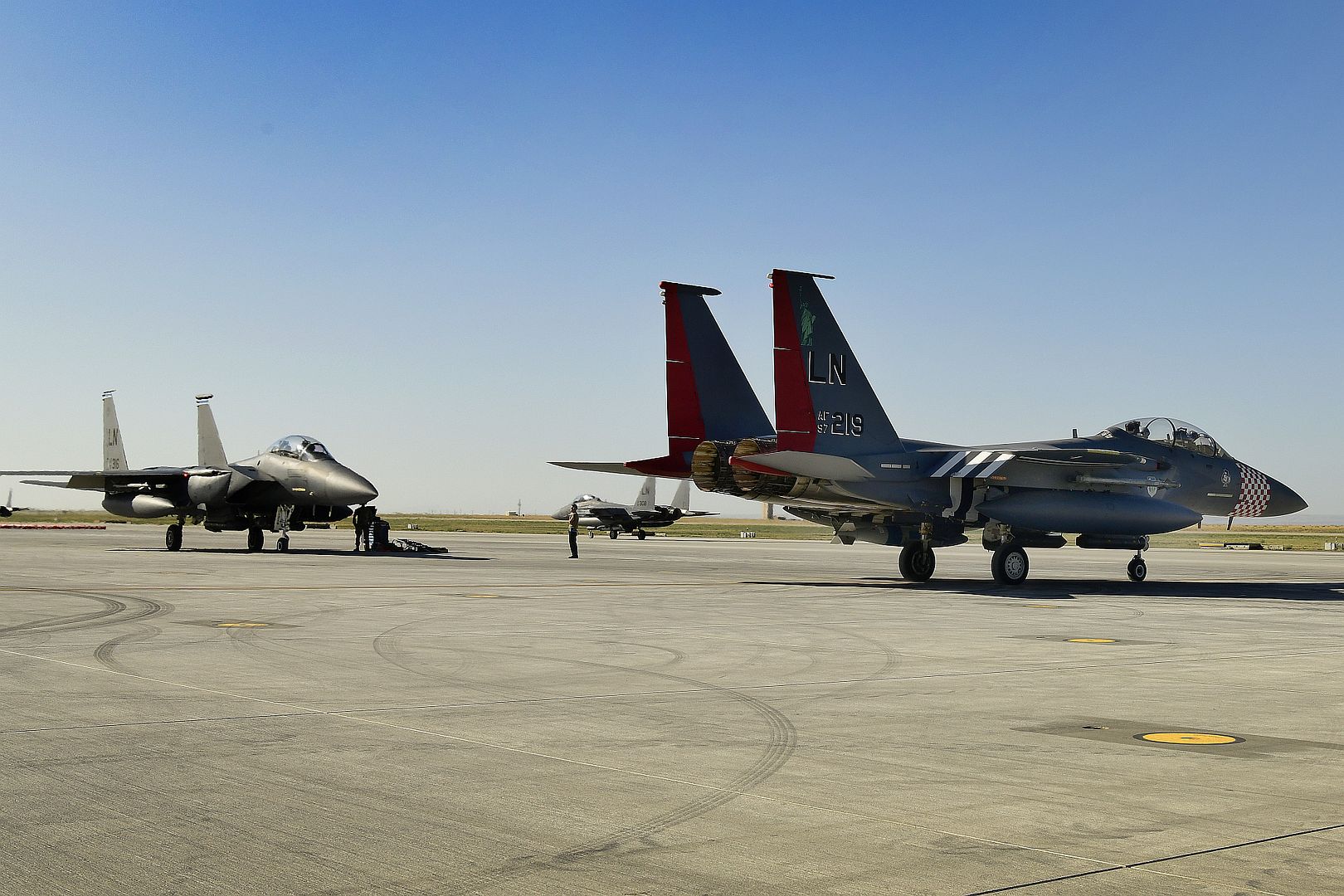
F-15E Strike Eagle aircrews assigned to the 492nd Fighter Squadron participate in exercise Combat Hammer at Mountain Home Air Force base, Idaho August 13, 2019.Training opportunities like Combat Hammer allow the Madhatters to remain capable of executing strategic attack, interdiction, close air support and counter-air missions in support of war plans and contingency operations for U.S. European Command, U.S. Africa Command and NATO. (U.S. Air Force Photo's/ Tech. Sgt. Matthew Plew)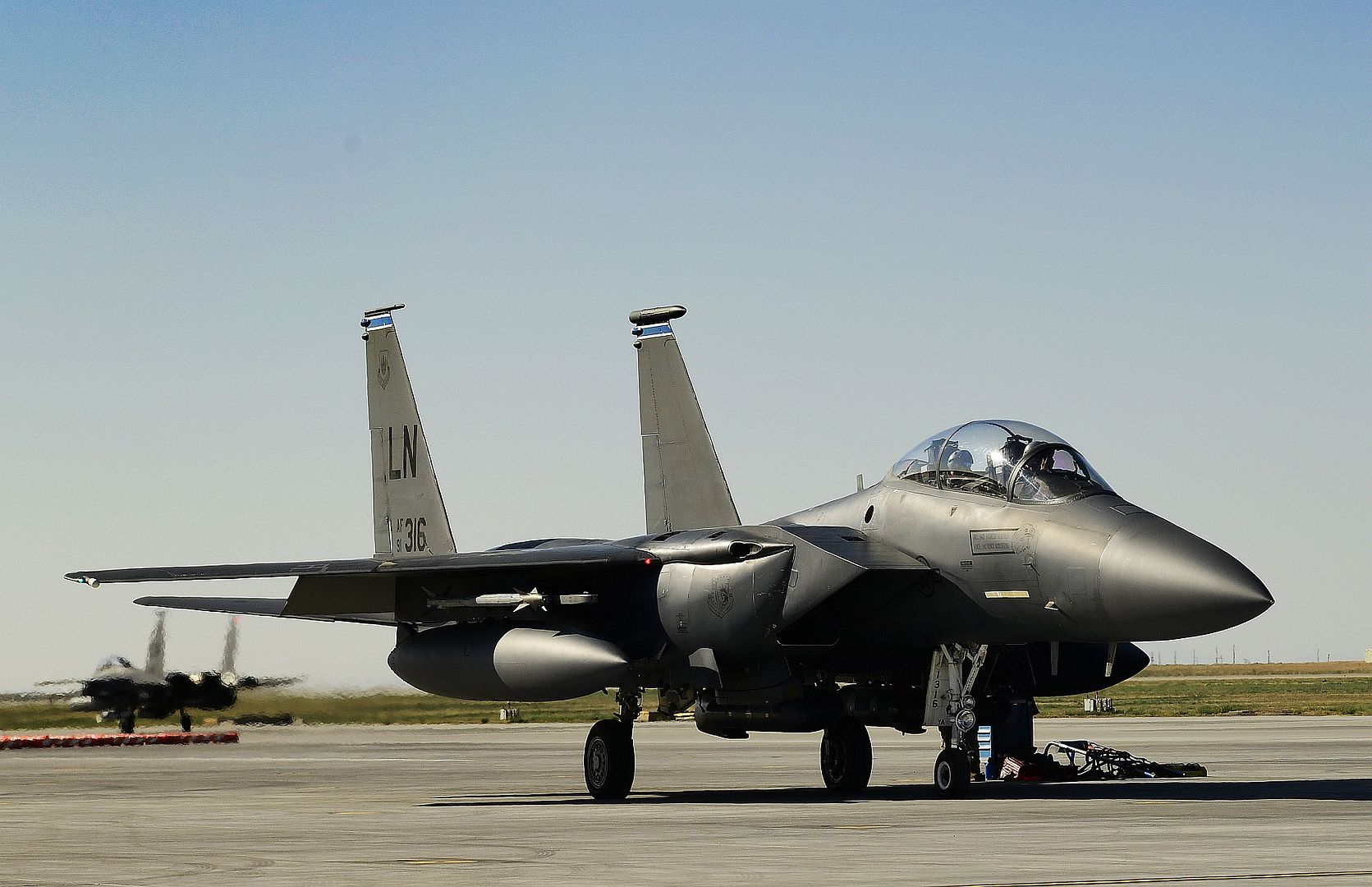
A 67th Fighter Squadron F-15C Eagle and 909th Air Refueling Squadron KC-135 Stratotanker, both from Kadena Air Base, Japan, conduct aerial refueling during RED FLAG-Alaska 19-3 at Eielson Air Force Base, Alaska, Aug. 7, 2019. The exercise provides unique opportunities to integrate various forces into joint, coalition and multilateral training from simulated forward deployed air operations. (U.S. Air Force photo by Tech. Sgt. Matthew B. Fredericks)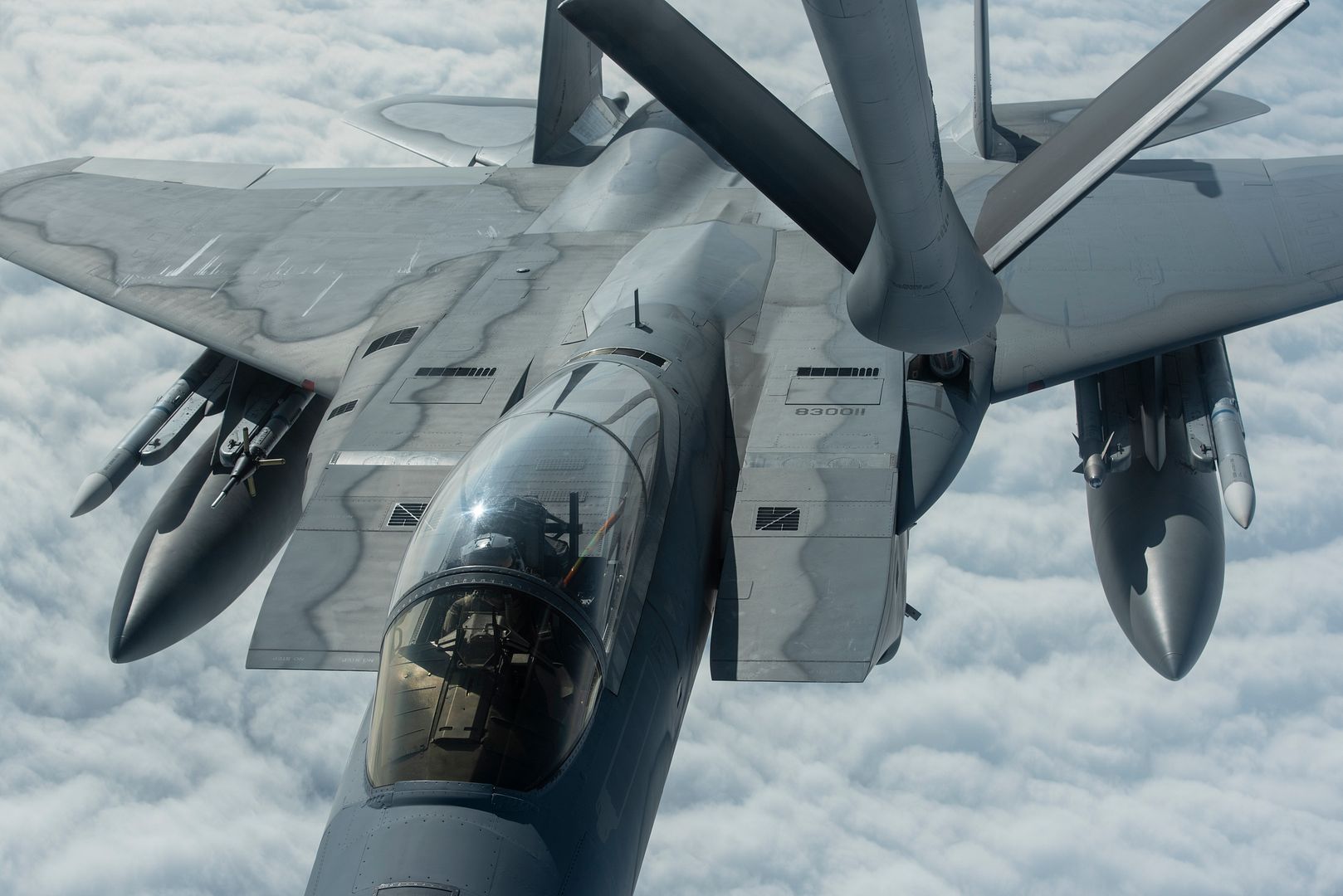
A 67th Fighter Squadron F-15C Eagle from Kadena Air Base, Japan, flies away from a 909th Air Refueling Squadron KC-135 Stratotanker after conducting aerial refueling during RED FLAG-Alaska 19-3 at Eielson Air Force Base, Alaska, Aug. 7, 2019. The exercise provides unique opportunities to integrate various forces into joint, coalition and multilateral training from simulated forward deployed air operations. (U.S. Air Force photo by Tech. Sgt. Matthew B. Fredericks)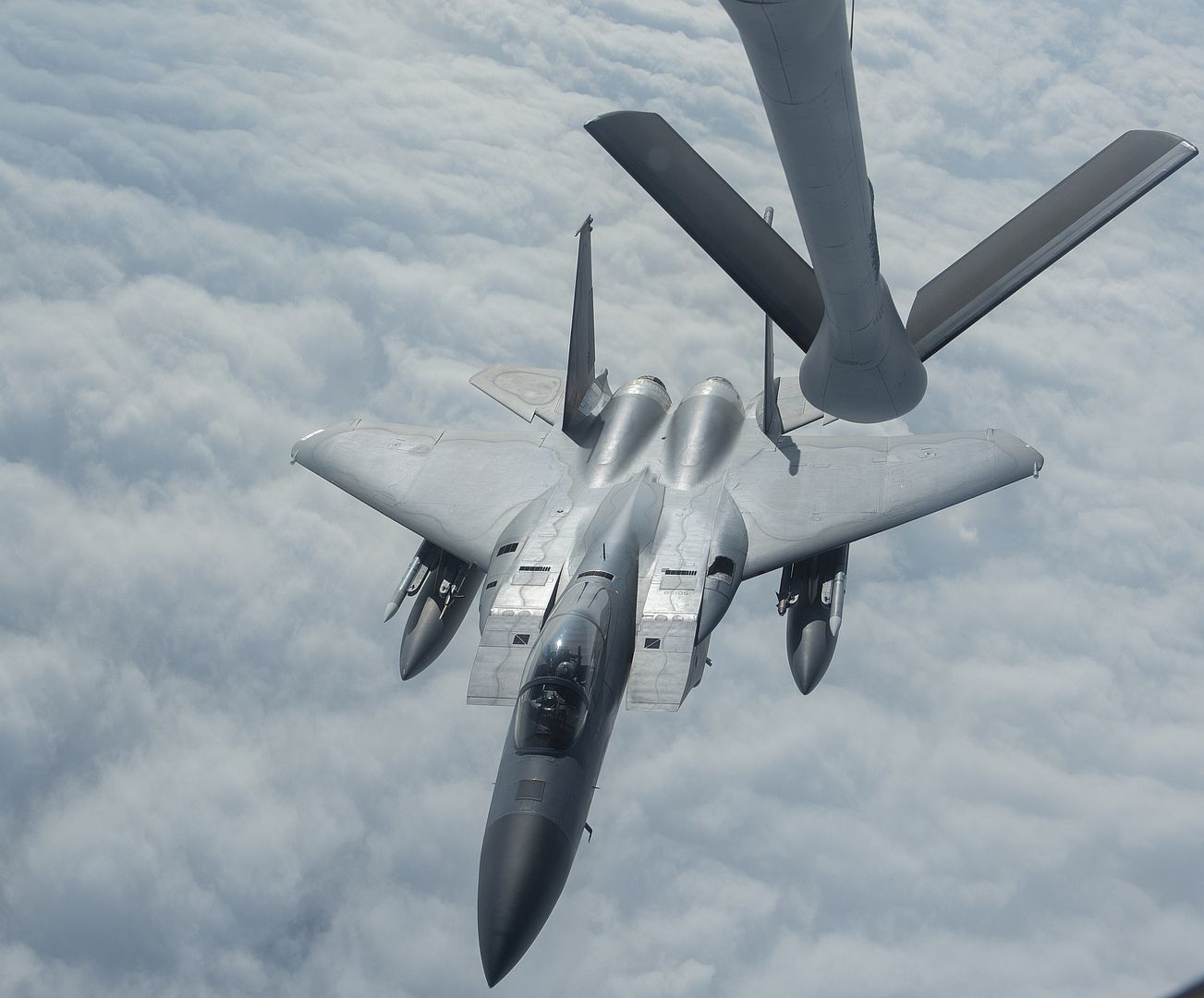
An F-35A Lightning II assigned to the 4th Expeditionary Fighter Squadron breaks away after receiving fuel from a KC-10 Extender assigned to the 908th Expeditionary Air Refueling Squadron during exercise Agile Lightning Aug. 6, 2019. The exercise demonstrated the adaptive basing methodology where personnel and aircraft can operate in austere environments to complete essential missions vital to the defense of U.S. assets and personnel. (U.S. Air Force photo by Staff Sgt. Chris Thornbury)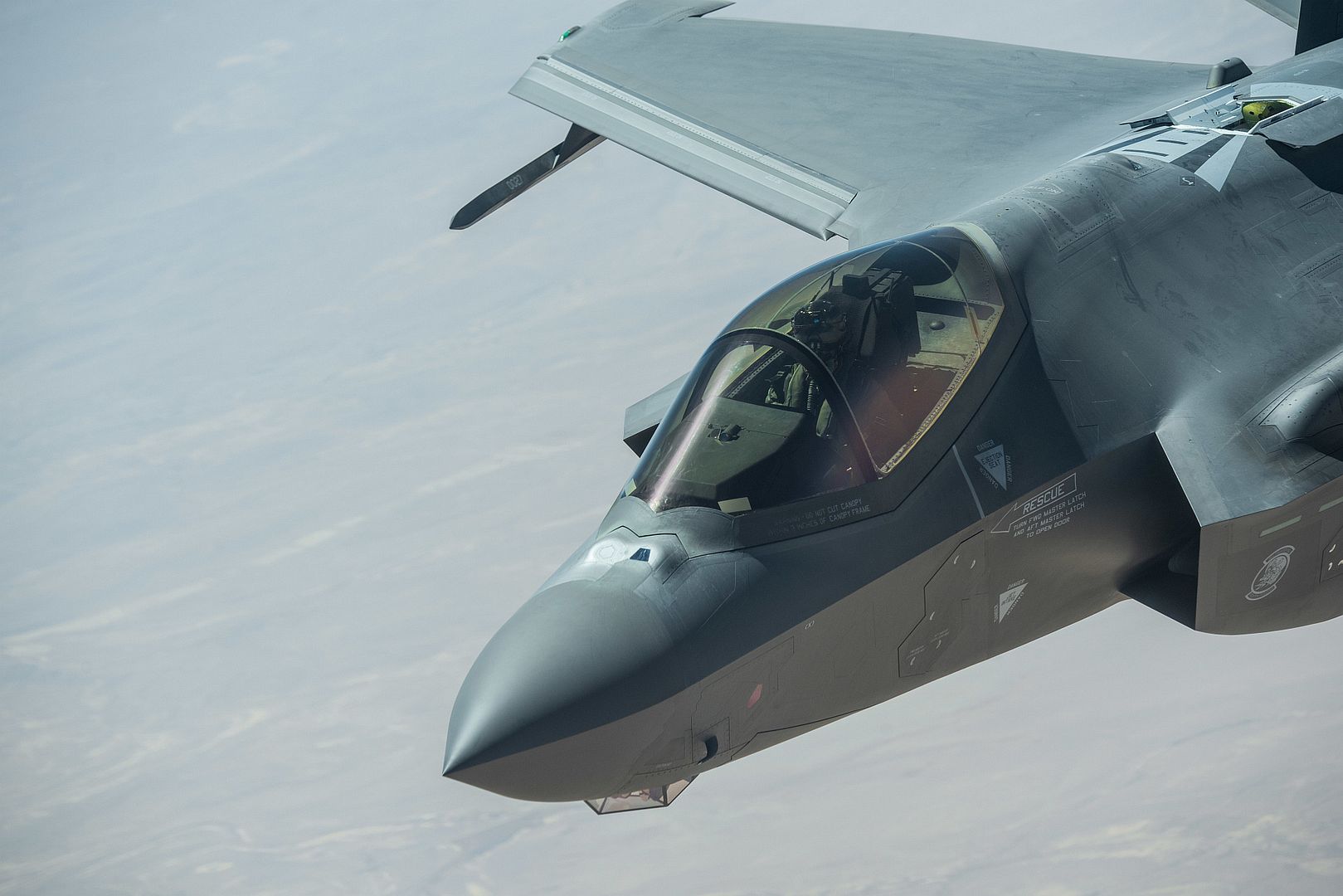
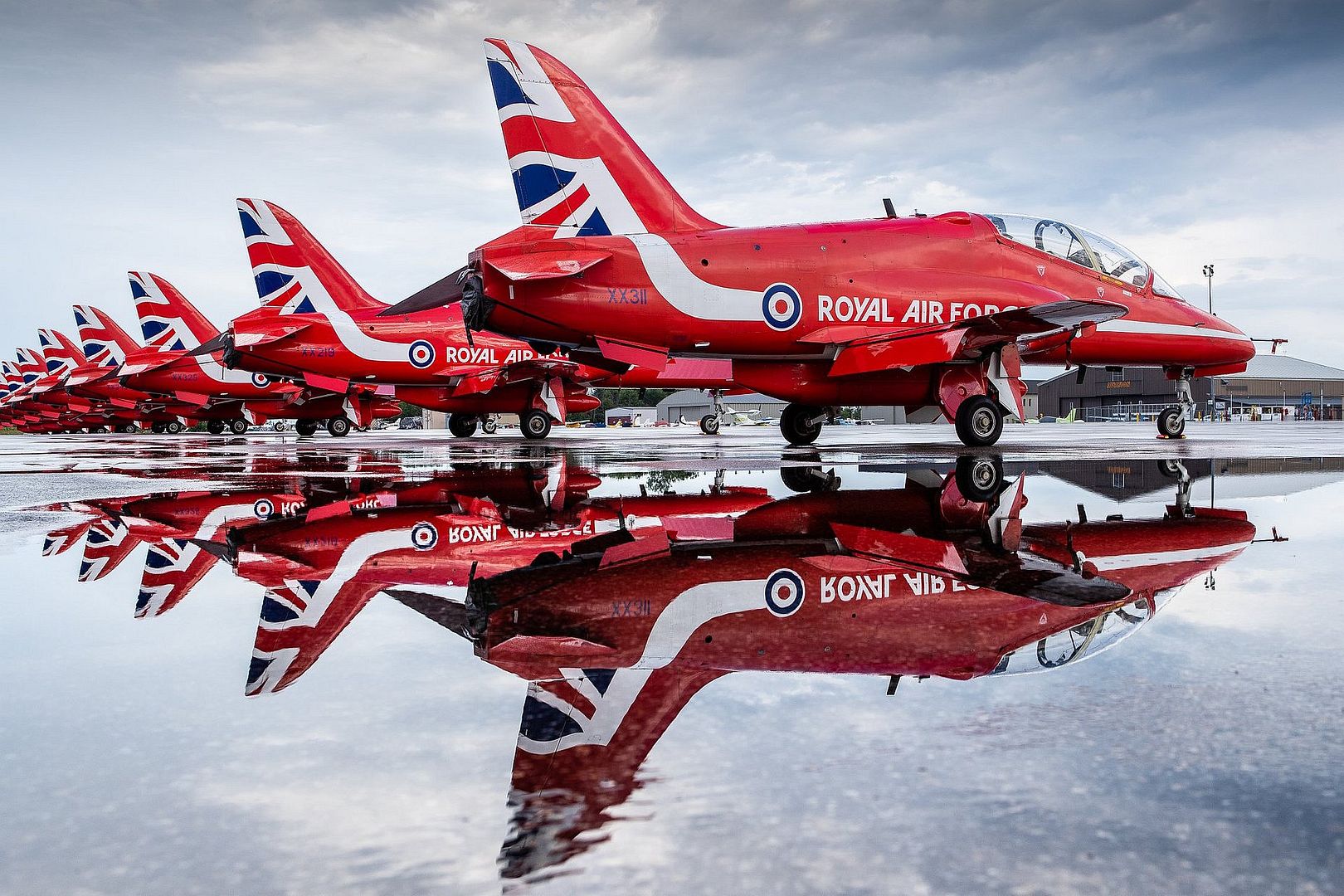
The Red Arrows have arrived in North America for there 2019 tour.
Seen here at the Gatineau-Ottawa Executive Airport today.
Photo Patrick Cardinal, with our thanks.