Aviation News
-
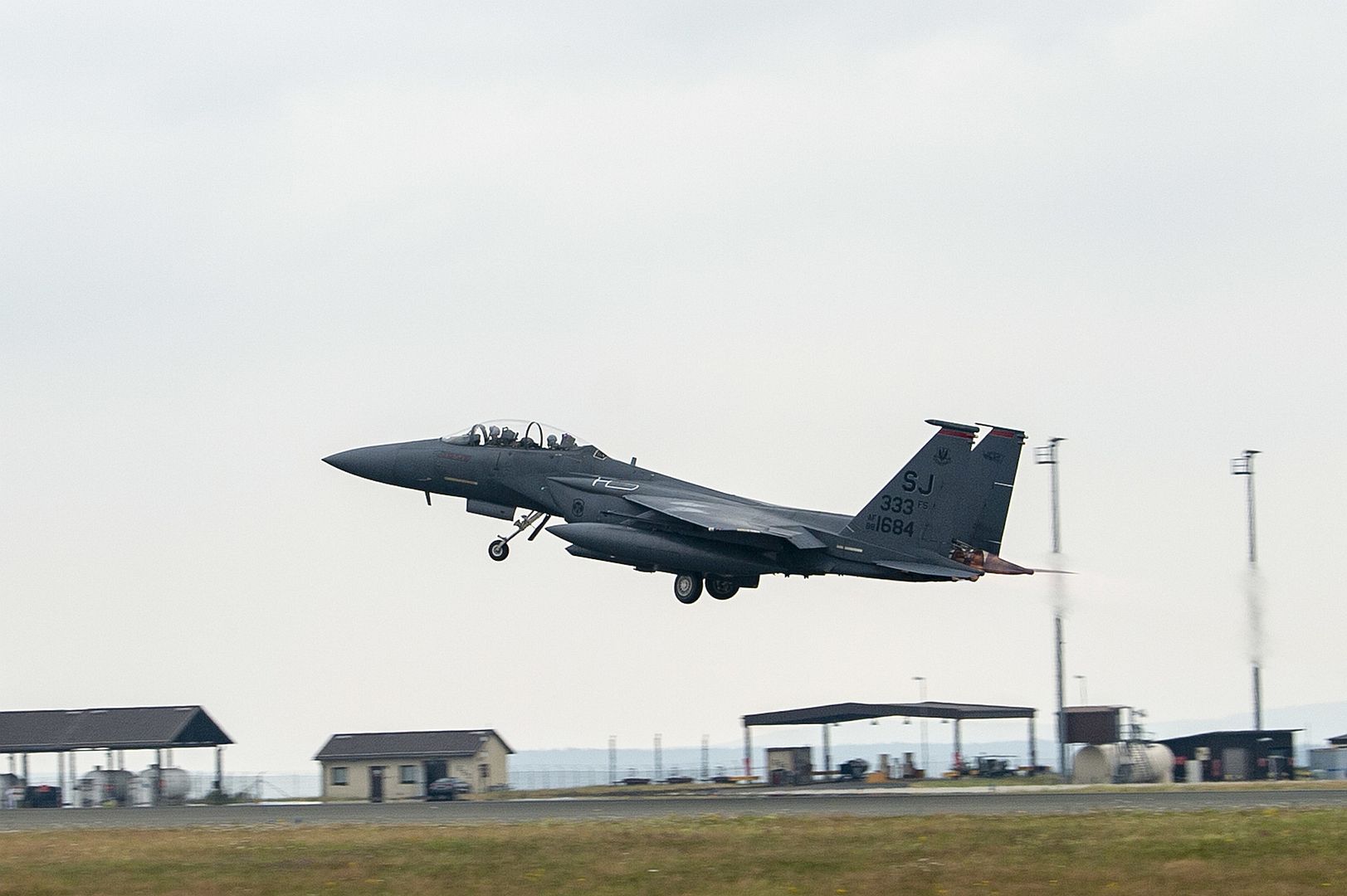
A U.S. Air Force F-15E Strike Eagle, assigned to the 4th Fighter Wing, Seymour Johnson Air Force Base, North Carolina, takes off at Spangdahlem Air Base, Germany, July 16, 2019, during Operation Rapid Forge. Rapid Forge aircraft are forward deploying to bases in the territory of NATO allies in order to enhance readiness and improve interoperability. Participation in multinational exercises and operations enhances professional relationships and coordination with allies. (U.S. Air Force photo by Airman 1st Class Kyle Cope)
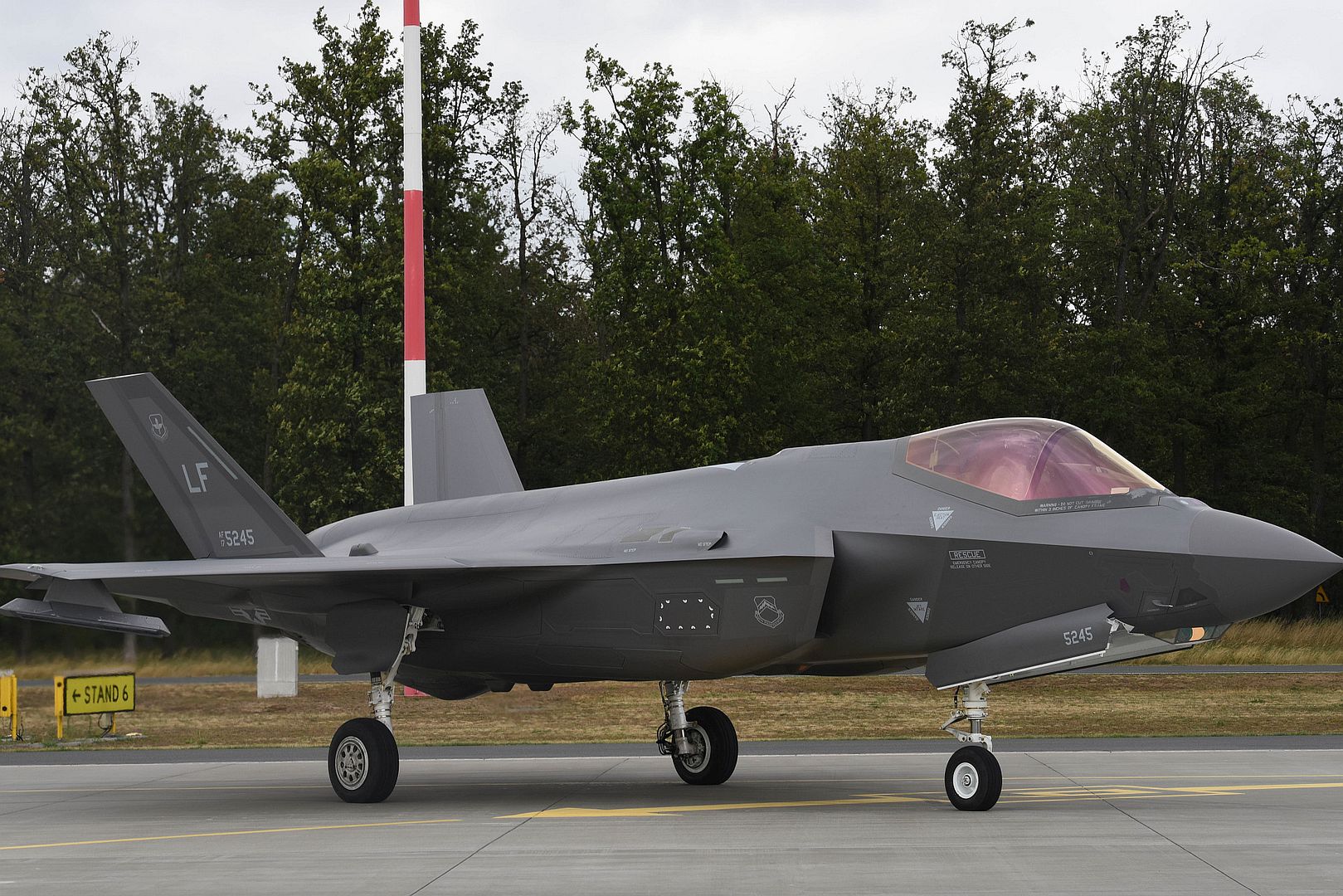
A U.S. Air Force F-35A Lightning II, assigned to the 421st Fighter Squadron, Hill Air Force Base, Utah, taxis on the flightline at Spangdahlem Air Base, Germany, July 16, 2019, during Operation Rapid Forge. Rapid Forge aircraft are forward deploying to bases in the territory of NATO allies in order to enhance readiness and improve interoperability. Participation in multinational exercises and operations enhances professional relationships and coordination with allies. (U.S. Air Force photo by Airman 1st Class Kyle Cope)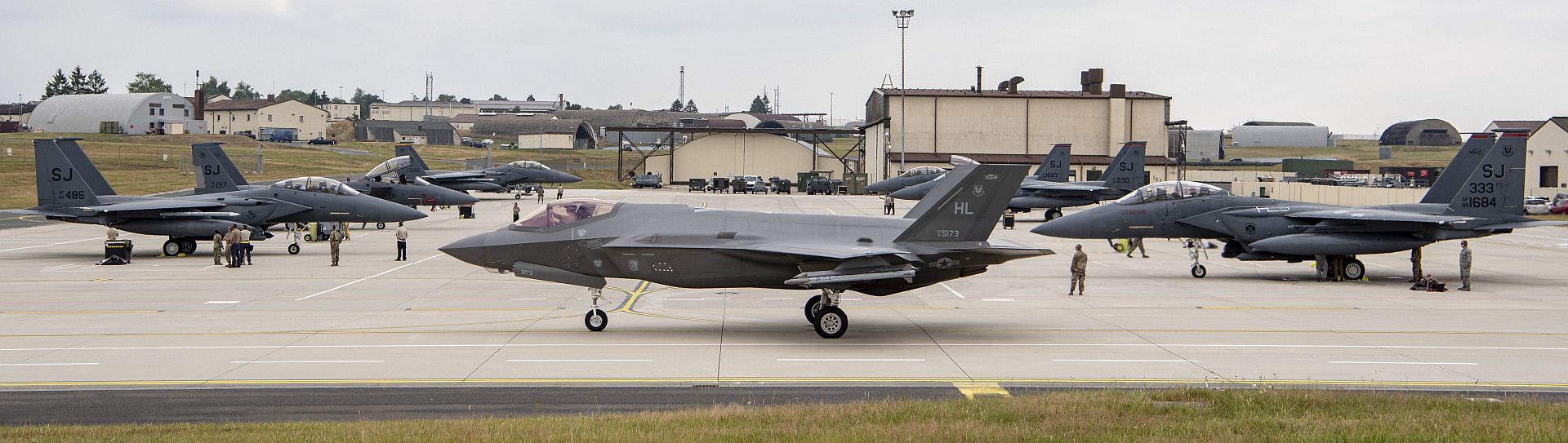
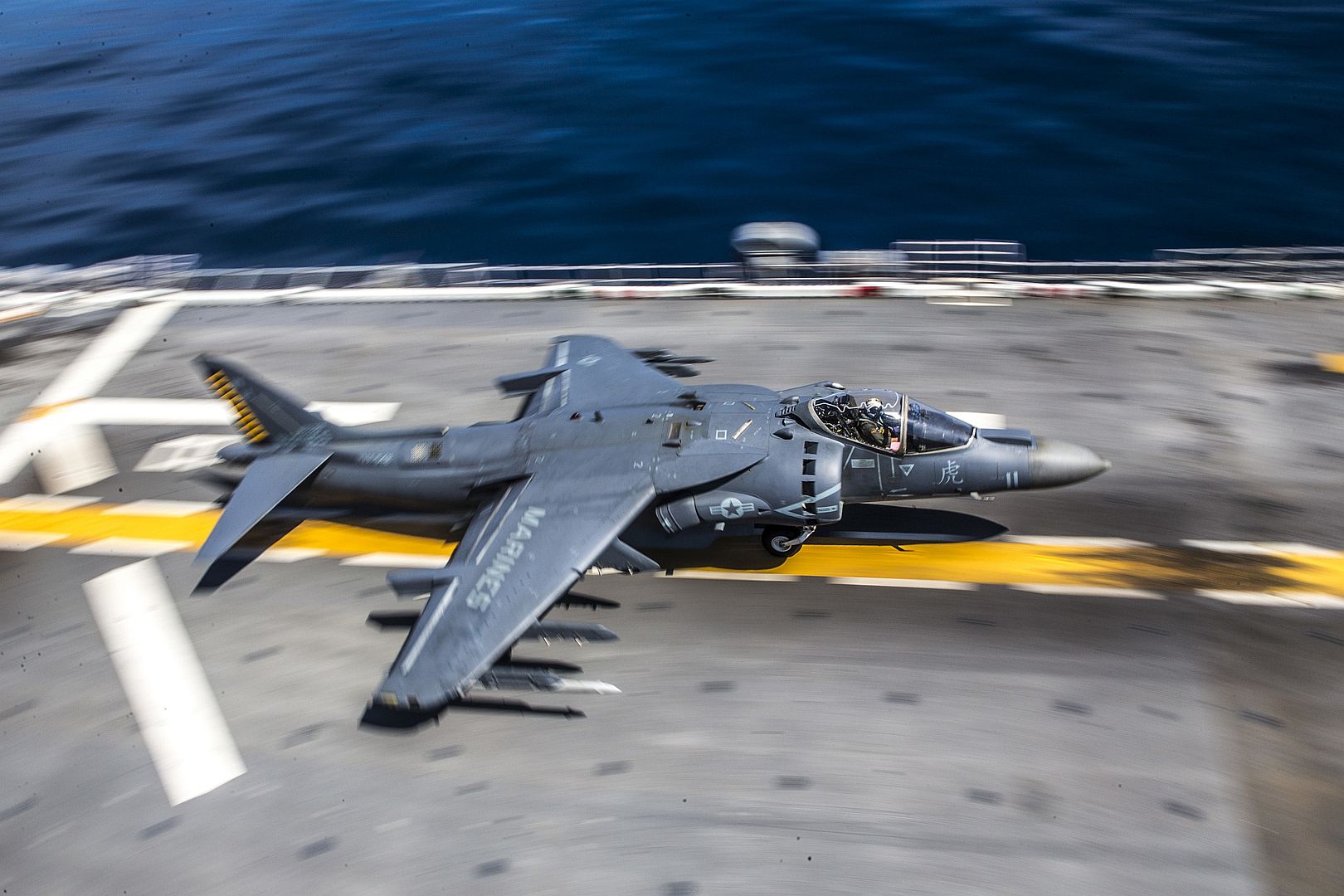
U.S. Marine Corps AV-8B Harriers with Marine Attack Squadron (VMA) 542 take off from the amphibious assault ship USS Bataan (LHD 5) during Amphibious Squadron (PHIBRON) Marine Expeditionary Unit (MEU) Integration Training (PMINT) in vicinity of Camp Lejeune, North Carolina, July 15, 2019. PMINT is part of the 26th MEU?s and PHIBRON 8?s pre-deployment training program, which enhances interoperability and familiarizes Marines and Sailors to life on ship prior to deployment. (U.S. Marine Corps photo's by Cpl. Tanner Seims)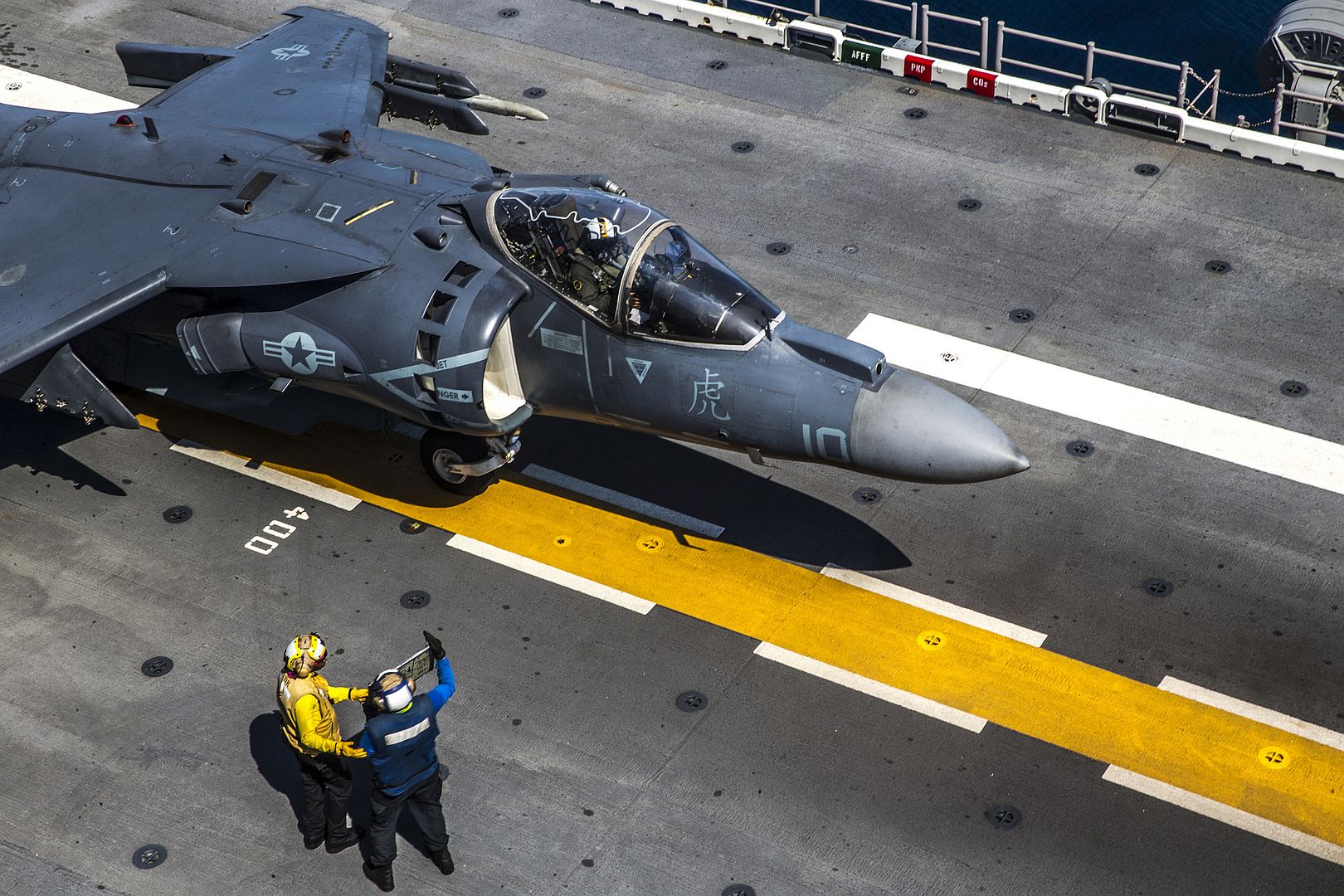
CORAL SEA (July 16, 2019) Aviation Boatswain?s Mate 3rd Class Steffon Brown-Johnson, from Jackson, Michigan, signals all-clear to launch an F/A-18F Super Hornet from Strike Fighter Squadron (VFA) 102 on the flight deck aboard the Navy?s forward-deployed aircraft carrier USS Ronald Reagan (CVN 76). Ronald Reagan is participating in Talisman Sabre 2019, which illustrates the closeness of the Australian and U.S. alliance and the strength of the military-to-military relationship. It is the eighth iteration of this exercise. Ronald Reagan, the flagship of Carrier Strike Group 5, provides a combat-ready force that protects and defends the collective maritime interests of its allies and partners in the Indo-Pacific region. (U.S. Navy photo by Mass Communication Specialist 2nd Class Janweb B. Lagazo)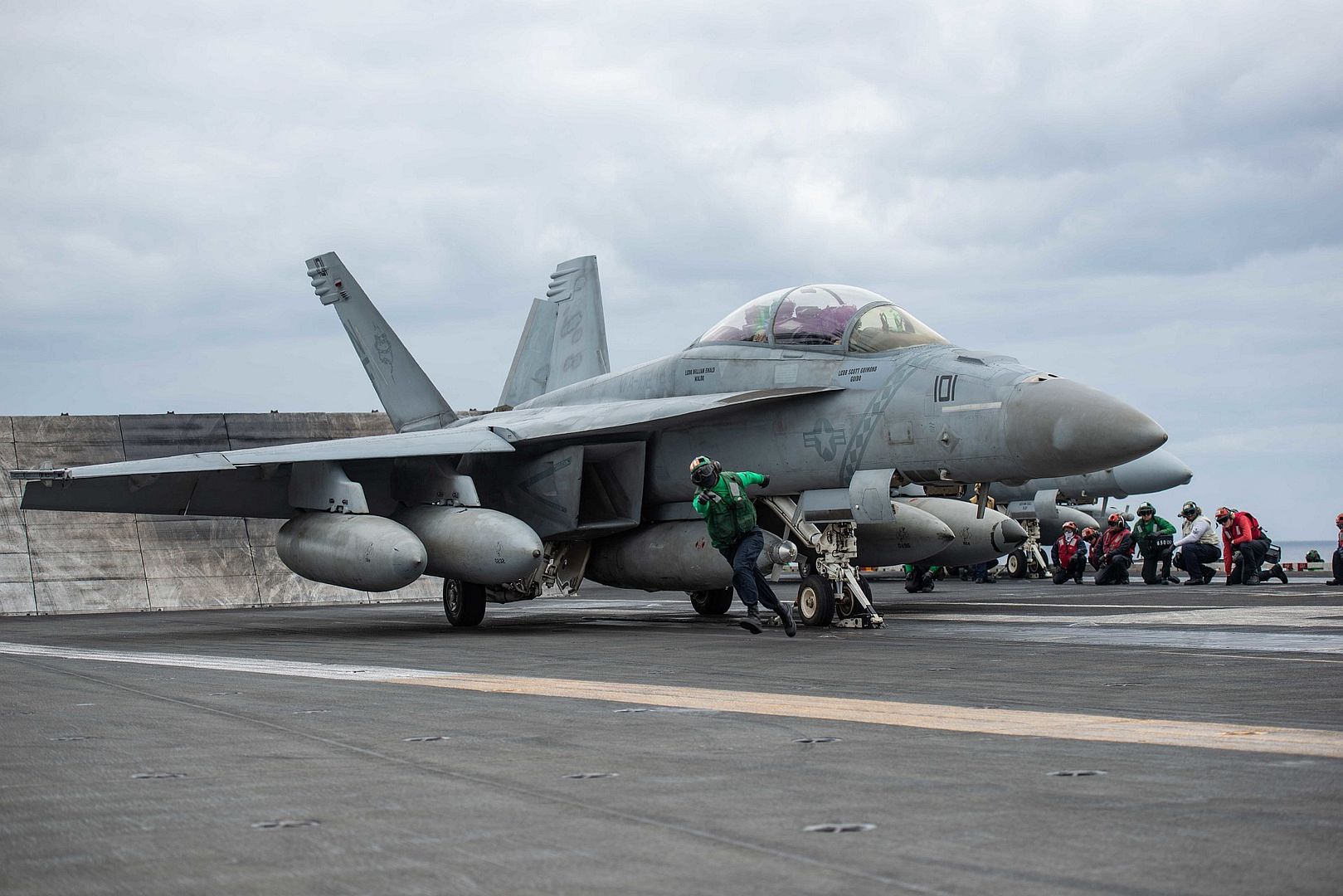
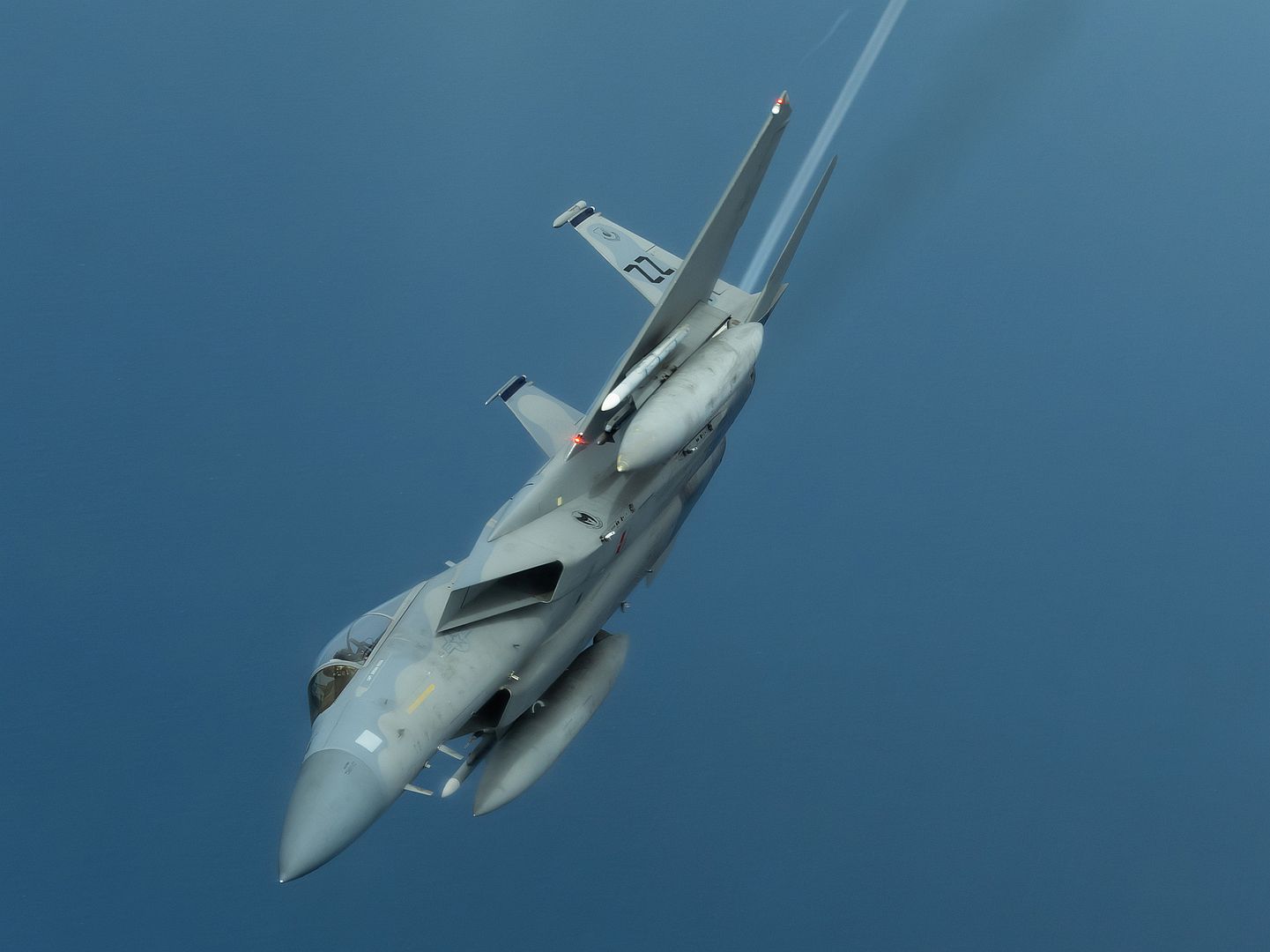
An F-15C Eagle from the 44th Fighter Squadron flies during a training exercise July 10, 2019, out of Kadena Air Base, Japan. The Eagle can be armed with combinations of four different air-to-air weapons: AIM-7F/M Sparrow missiles or AIM-120 AMRAAM advanced medium-range air-to-air missiles on its lower fuselage corners, AIM-9L/M Sidewinder or AIM-120 AMRAAM missiles on two pylons under the wings, and an internal 20 millimeter (0.79 in) M61 Vulcan Gatling gun in the right wing root. (U.S. Air Force photo's by Airman 1st Class Matthew Seefeldt)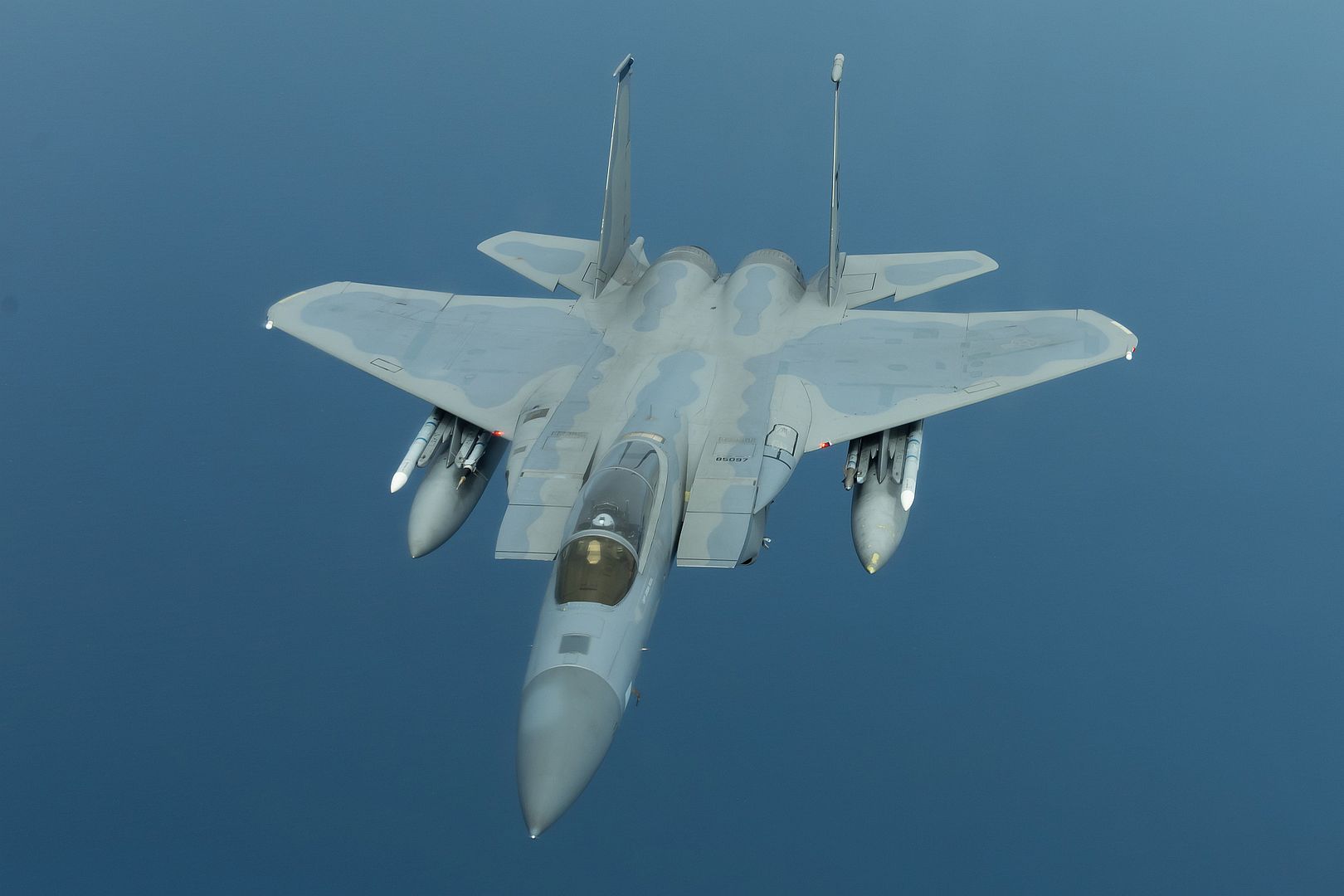
An E-3 Sentry from the 961st Airborne Air Control Squadron flies during a training exercise July 10, 2019, out of Kadena Air Base, Japan. The Sentry provides all-weather surveillance, command, control, and communications in support of a free-and-open Indo-Pacific. (U.S. Air Force photo by Airman 1st Class Matthew Seefeldt)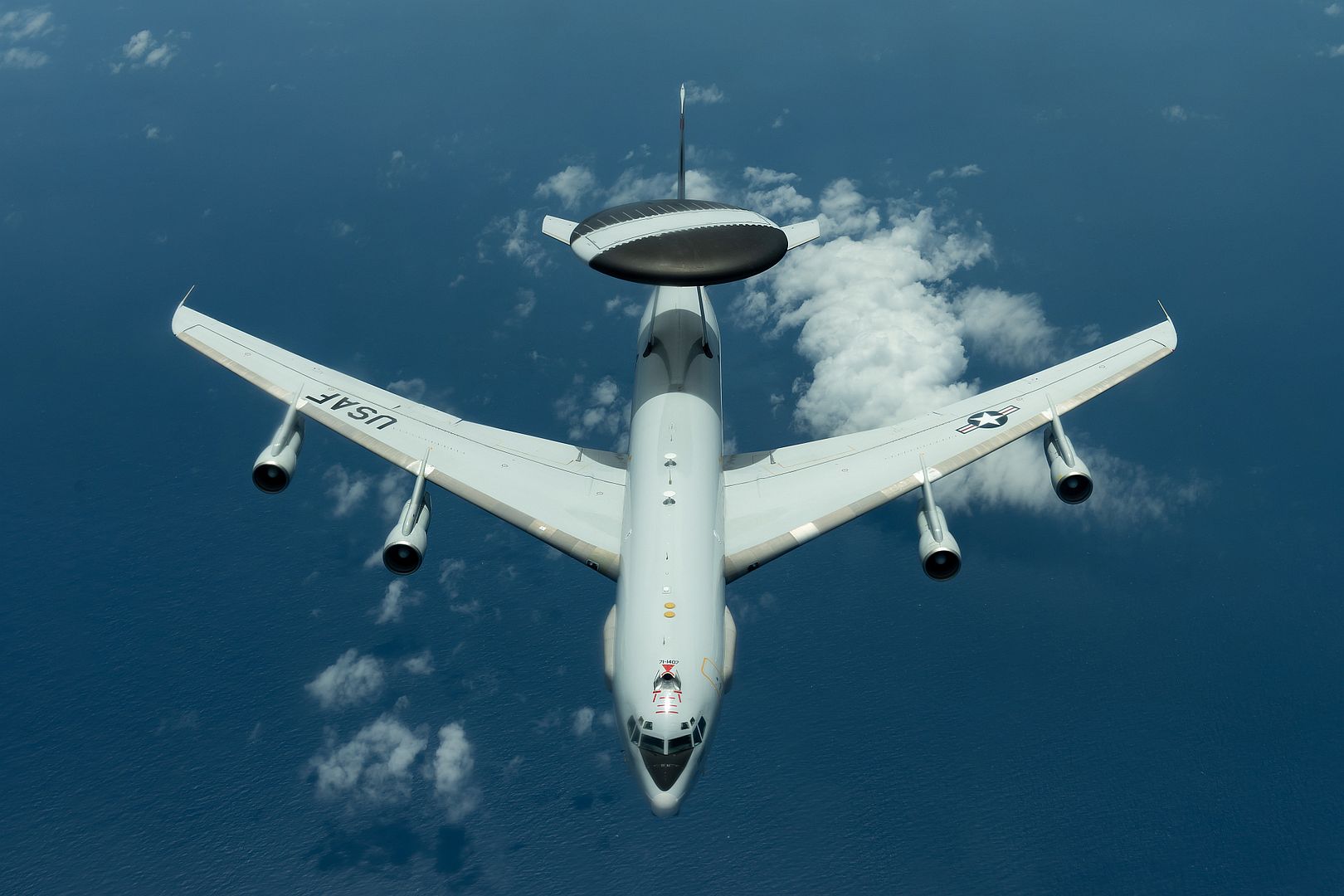
Capt. Andrew ?Dojo? Olson, F-35 Demonstration Team pilot and commander performs a high-speed pass in an F-35A Lightning II during the Arctic Lightning Airshow July 13, 2019, at Eielson Air Force Base, Alaska. During the aerial maneuver, the jet reaches speeds of up to 750 miles per hour. (U.S. Air Force photo by Senior Airman Alexander Cook)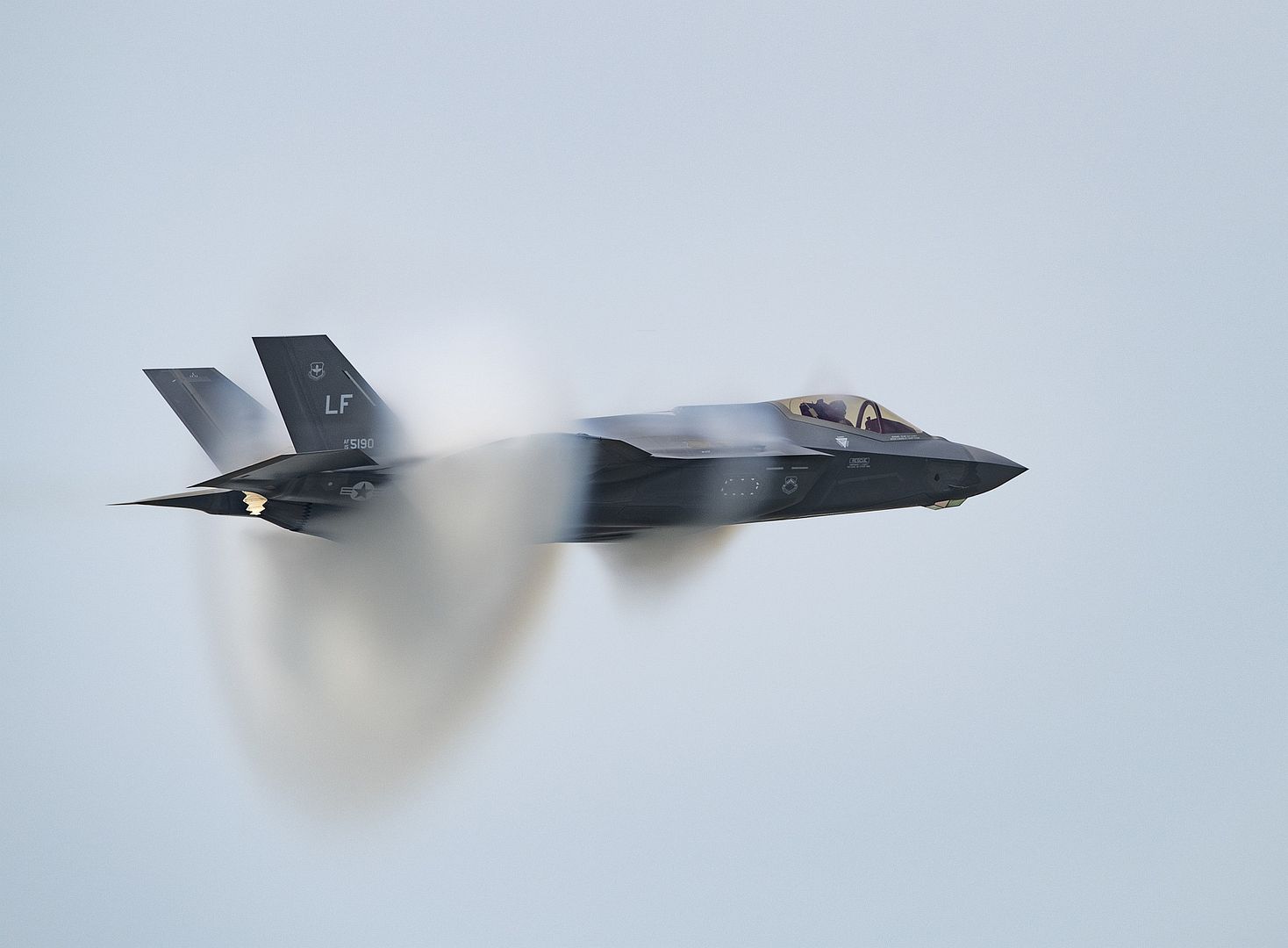
EGLIN AIR FORCE BASE, Fla. --
U.S. Air Force F-22 Raptor pilots from the 43rd Fighter Squadron out of Tyndall Air Force Base swapped the ?hot seat? to increase sorties at Eglin AFB, Florida, July 2, 2019.
?Hot seats?, where a pilot gives control of the jet to another pilot, and ?hot pits?, Pantograph Fueling Stations, gave the pilots more training time in the air.
?We?re taking one pilot already in the seat of the jet when it comes back and swapping it for another pilot on the spot,? said Staff Sgt. Nicholas Peters, 325th Aircraft Maintenance Squadron crew chief. ?That way the jet never gets officially released back to maintenance?another pilot just accepts it. [Assuming the aircraft did not record anything unsafe during flight] they do a face-to-face brief, then the incoming pilot can take the jet and launch it from there.?
Once on the ground, pilots taxied the aircraft through safety checks and up to the ?hot pit? for refueling. One after another, the pilots made their pitstop and received fuel without turning off the engines and waiting on a fuel truck to arrive.
In turn, the pilots took their jet to the next pilot in line, bypassing the checklist maintainers use to get the jet back in the air.
?Since Hurricane Michael devastated Tyndall AFB and the surrounding area, it took a lot of time, energy, and effort to bring our operation at Eglin AFB up to full capacity,? said Lt. Col. Jefferey Peterson, 43rd Fighter Squadron director of operations. ?During that transition, we absorbed additional pilots, from both active duty and reserves, as a result of the 95th FS having their jets and people split up across the F-22 community.?
According to Peters, Pantograph Fueling Stations at Eglin made hot-pit refueling ideal; it would be wasted potential if they didn?t use it.
Maintainers use the systems for pitstop style refueling of fixed and rotary wing aircraft, and fuel trucks. They are designed to eliminate safety and environmental liabilities associated with rubber hoses.
?Normally we would fly ten [jets] on the first go and eight on the second for a total of 18 sorties,? said Master Sgt. Dustin Holman, 325th AMXS aircraft section chief. ?For ?hot seats? we fly eight, six and six for a total of 20 sorties.?
On a normal day, the 325th AMXS prepares 13 jets. Three are left as spares, while the other ten are sent on sorties.
Only 11 are needed for hot-pit refueling and rapid crew swaps. This reduces the amount of time it takes to get a new pilot in the air; saving time and producing more sorties with less aircraft.
When the team gets an opportunity they are also able to send out ten jets on the first go, six on a second and eight on a third, for a total of 24 sorties. Making this method very flexible and valuable for catching up with sorties and make up for the time lost after the hurricane.
According to Holman, the 43rd Fighter Squadron is the first F-22 squadron to use these methods. They began practicing before Hurricane Michael struck and now are using them to maximize their training time.
?Using this concept of hot pitting with rapid crew swaps, or hot seat operations as we have been calling it, our team has been able to drastically increase sortie production to levels we have never seen in the history of our organization,? Peterson said. ?The hot seat operations concept has been a paradigm shift that is among the most important innovations we have put into effect since the hurricane.?
(U.S. Air Force photo by Senior Airman Anthony Nin Leclerec)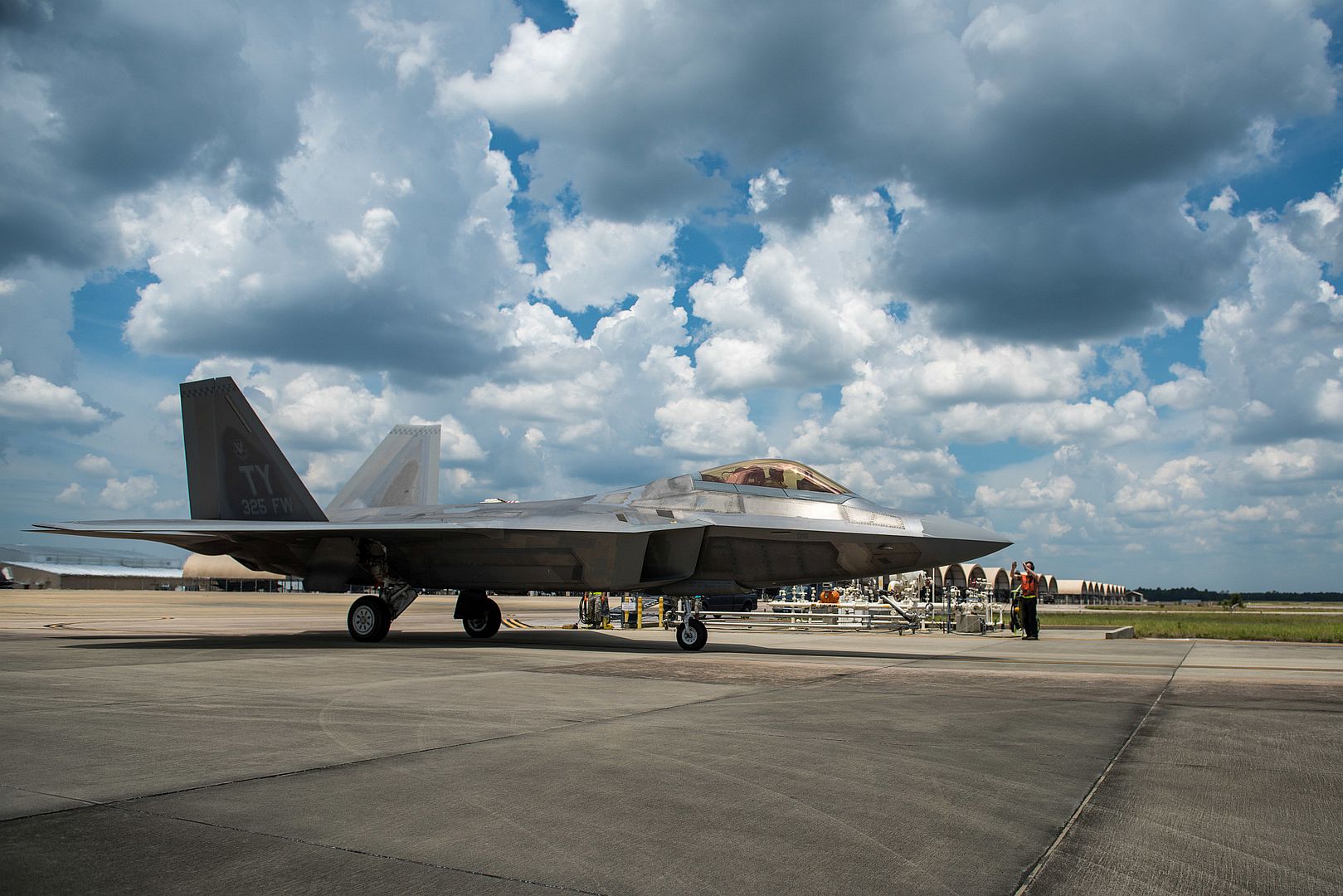
-
A U.S. Air Force F-35A Lightning II aircraft sits on a runway during Operation Rapid Forge on Powidz Air Base, Poland, July, 16, 2019. This is the first time that an U.S. Air Force F-35A Lightning II aircraft has landed in Poland. Rapid Forge is a U.S. Air Forces in Europe-led mission to enhance readiness and test the ability to function at locations other than the main air bases. (U.S. Air Force photo by Senior Airman Milton Hamilton)
PACIFIC OCEAN (July 16, 2019) An E/A-18G Growler, assigned to the ?Gray Wolves? of Electric Attack Squadron (VAQ) 142, makes an arrested landing on the flight deck of the aircraft carrier USS Theodore Roosevelt (CVN 71). Theodore Roosevelt is conducting routine operations in the Eastern Pacific Ocean. (U.S. Navy photo by Mass Communication Specialist 3rd Class Erick A. Parsons)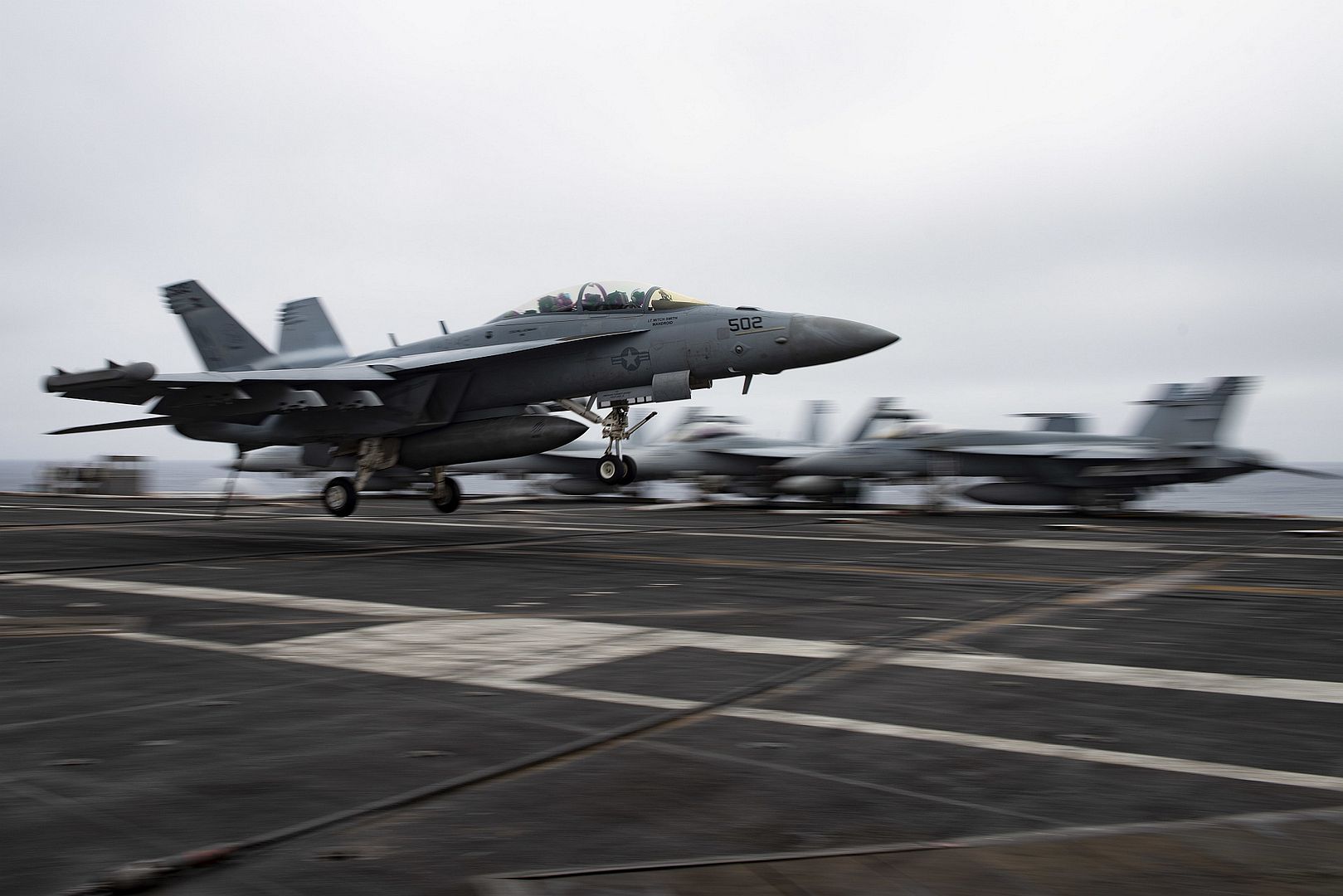
B-52 Stratofortress bombers from the 69th Expeditionary Bomb Squadron, deployed from Minot Air Force Base, North Dakota, park on a flightline July 12, 2019, at Andersen Air Force Base, Guam. A new rotation of aircrews, maintenance personnel and aircraft assigned to the 69th EBS arrived on Guam to replace the 23rd EBS in support of the U.S. Indo-Pacific Command?s continuous bomber presence mission. Since March 2004, Andersen has hosted the bomber mission designed to enhance regional security and provide reassurance to allies and partners the United States is capable of defending its national security interests in the Indo-Pacific region. The Airmen arriving from the 69th EBS will be on Guam to conduct CBP operations and training. (U.S. Air Force photo by Staff Sgt. Divine Cox)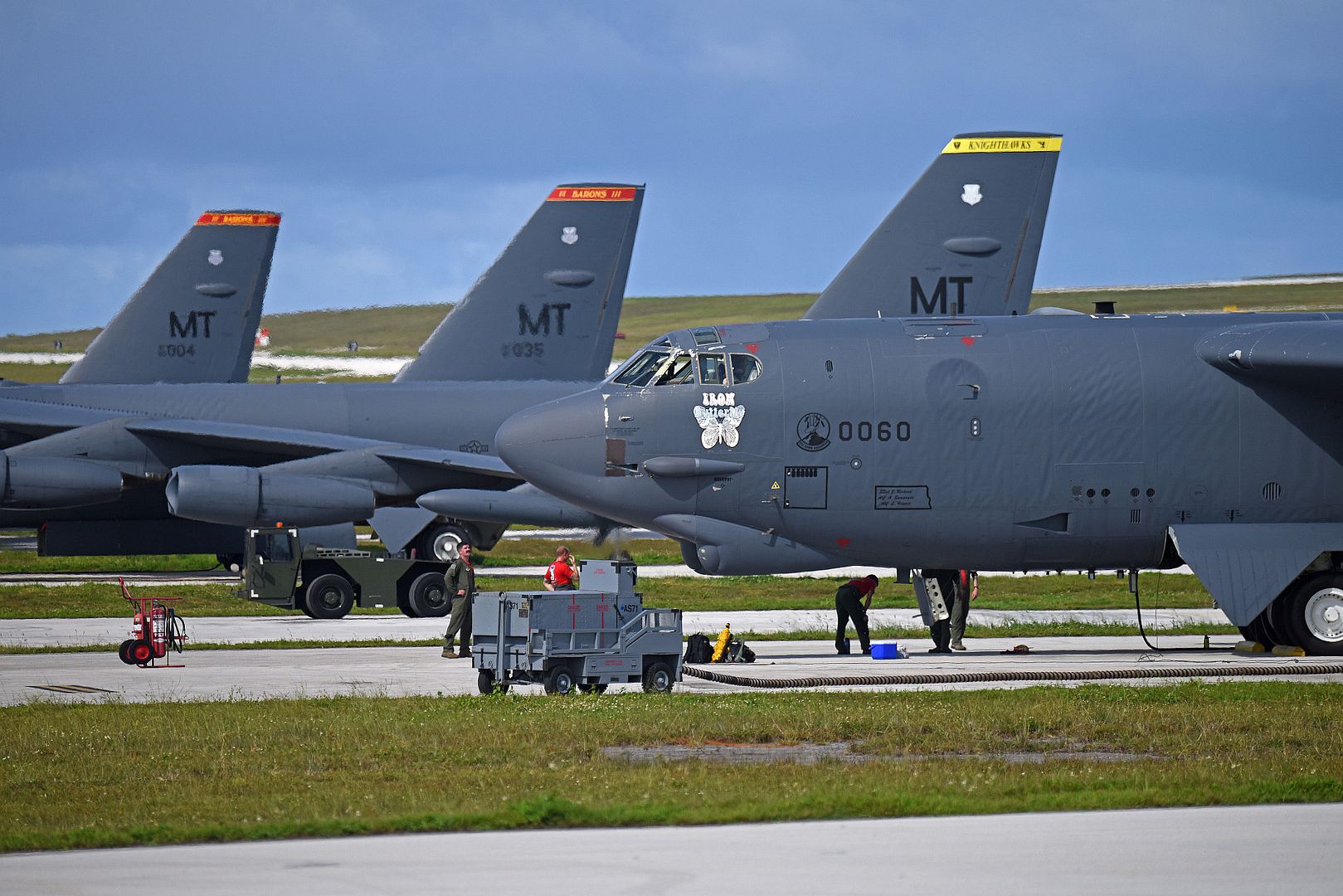
On July 16, 2019 the Royal Air Force 207 Squadron returned to RAF Marham in the UK. The squadron was embedded since 2013 with VMFAT-501 at MCAS Beaufort, South Carolina, where Royal Air Force and Royal Navy pilots trained alongside U.S. Marine Corps? pilots. The squadron will now reform officially as Operational Conversion Unit on August 1, 2019 and will train new F-35B pilots on U.K. soil.
As said by the Squadron Commander, Wg Cdr Scott Williams, the six F-35s departed MCAS Beaufort at 6:00 am local time and were met by two Voyager tankers for the trans-Atlantic flight. Each aircraft refueled 8 times to ensure high fuel levels in the event of an emergency, giving them as much range as possible to return feet-dry and land. The F-35 arrived at their new homebase at around 08:00 pm after an uneventful flight and no problems were reported.
The first F-35 pilot course at RAF Marham is set to begin in early September 2019. Air Chief Marshal Sir Stephen Hillier, Chief of the Air Staff, stated: ?Being able to train our pilots in the UK is another great leap in our sovereign capability and will ensure the Royal Air Force and Royal Navy can train our pilots to fight and win with these extraordinary jets, which will sit at the heart of our country?s globally deployable forces.?
Noteworthy the 207 Squadron, or 207(OC) Squadron according to the official designation, will be first unit dedicated to F-35 pilot training outside of the United States.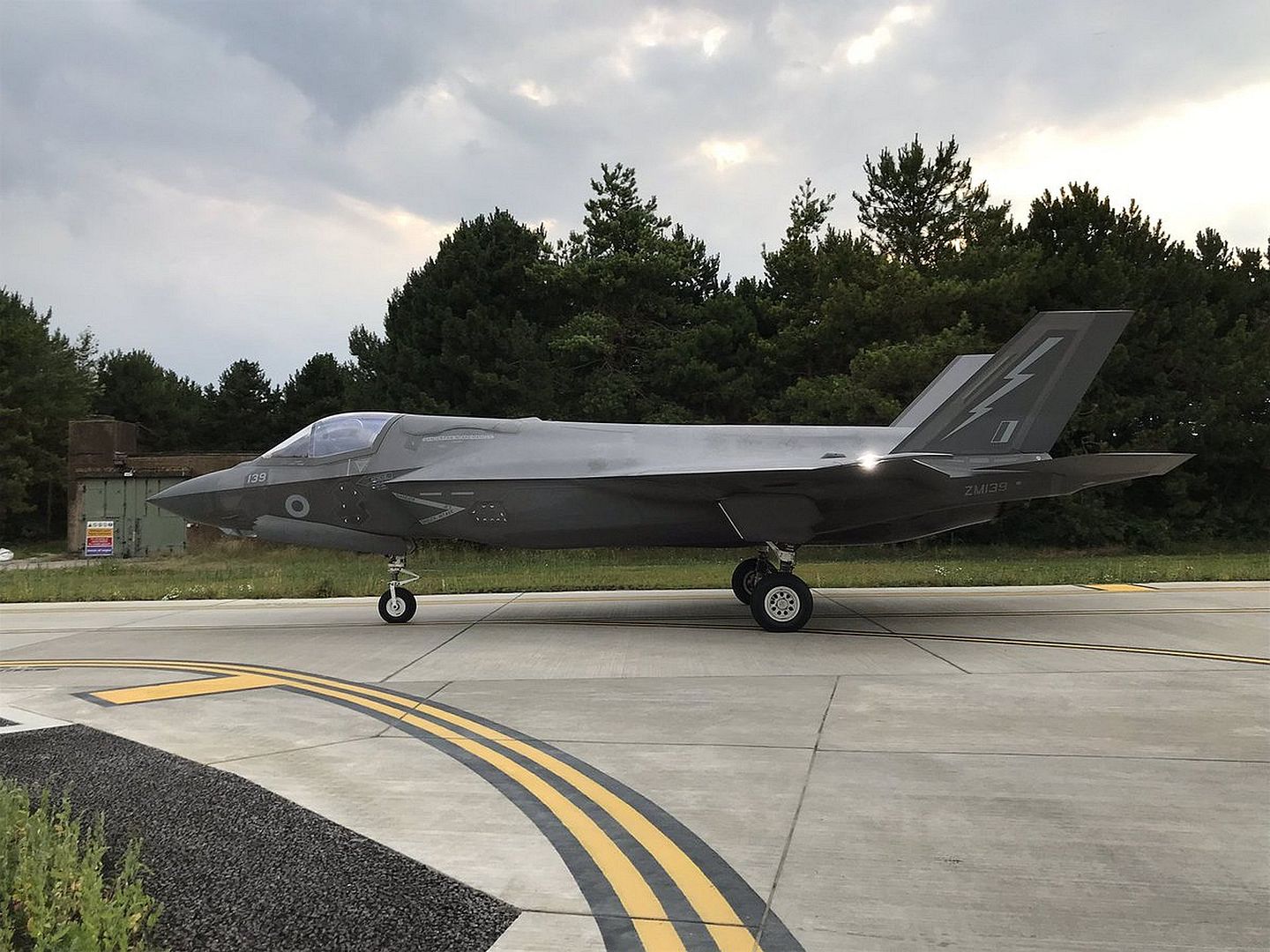
-
HURLBURT FIELD, Fla. (AFNS) --
The final AC-130U Spooky gunship returned here from the airframe?s last scheduled combat deployment July 8, 2019.
While still on alert to respond to contingencies as needed for the next few months, the Spooky is being replaced downrange by the AC-130J Ghostrider, the most lethal and innovative gunship in the world.
?This begins the ending of an era for one of the most well-known aircraft in the special operations world, but it doesn?t mean our Air Commandos will be making any less of impact on the battlefield,? said U.S. Air Force Col. Michael Conley, commander of the 1st Special Operations Wing. ?The Ghostrider is seamlessly taking the Spooky?s position downrange. There is no rest for our enemies, and our gunships will own the night for years to come.?
The AC-130J is the latest in a long line of gunships, offering the most advanced technology and weapons available to support special operations forces on the ground. The 73rd Special Operations Squadron here is currently the only operational AC-130J squadron.
The Ghostrider is also equipped with a Precision Strike Package, armed with precision-guided munitions delivery capabilities and trainable 30mm and 105mm weapons, a mission management console, robust communications suite, two electro-optical/infrared sensors, and advanced fire control equipment.
Aside from one previous, approximately six-month squadron reconstitution in 2013, AC-130U?s assigned to the 4th Special Operations Squadron have been constantly deployed in support of overseas contingencies since 2001, earning the unit the designation of ?most deployed squadron in the Air Force? multiple times. The Spooky has spent nearly a quarter century in the operational field, seeing combat for the first time in 1995.
(U.S. Air Force photo by Airman 1st Class Blake Wiles)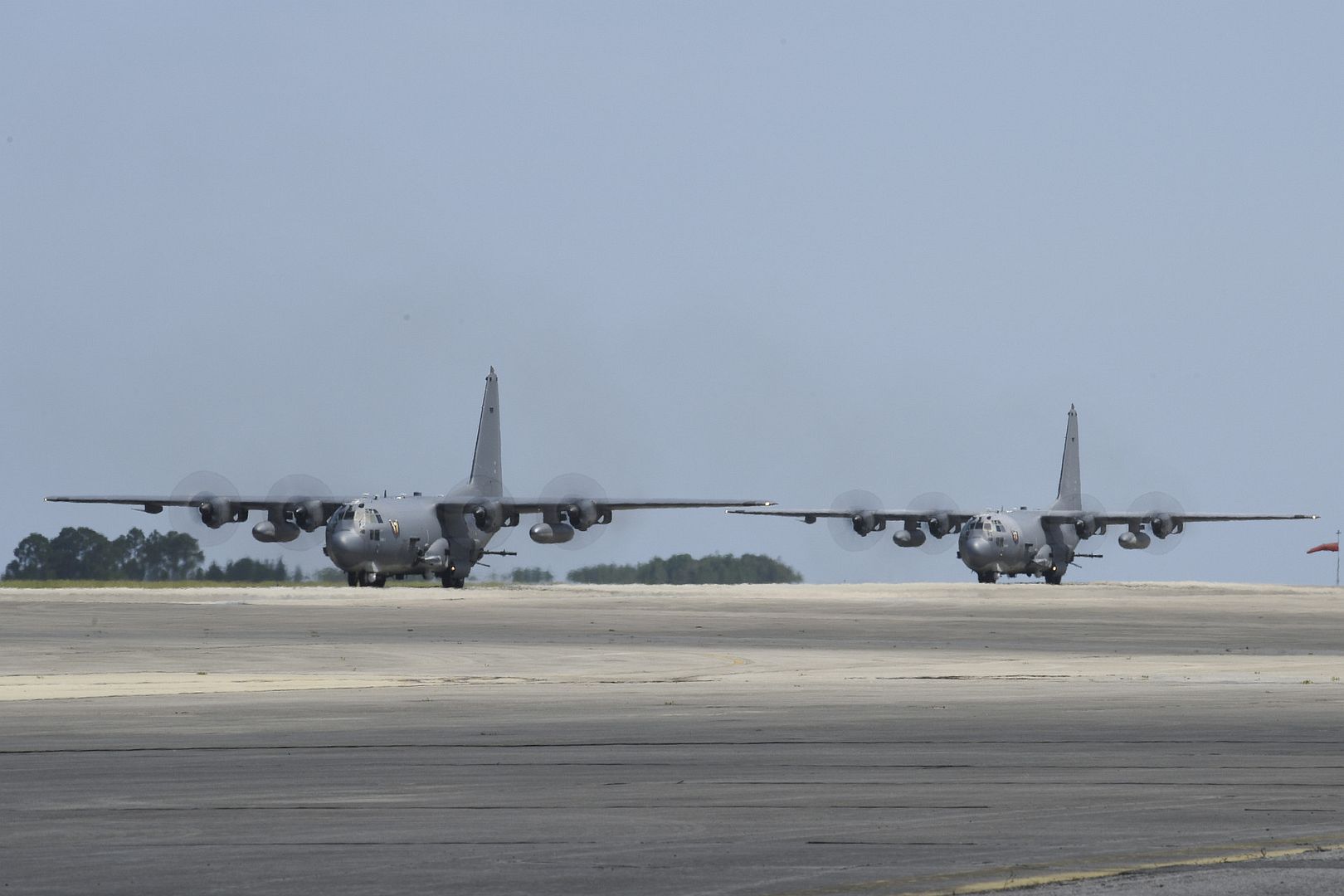
U.S. Airmen with the 6th Air Refueling Squadron prepare a KC-10 Extender before a mission to conduct a flyover for Maj. Brent Burklo?s funeral July 16, 2019, at Travis Air Force Base, California. Burklo was a KC-10 pilot at the 6th ARS who died July 10, 2019, after a two-year battle with cancer. (U.S. Air Force photo by Master Sgt. Joey Swafford)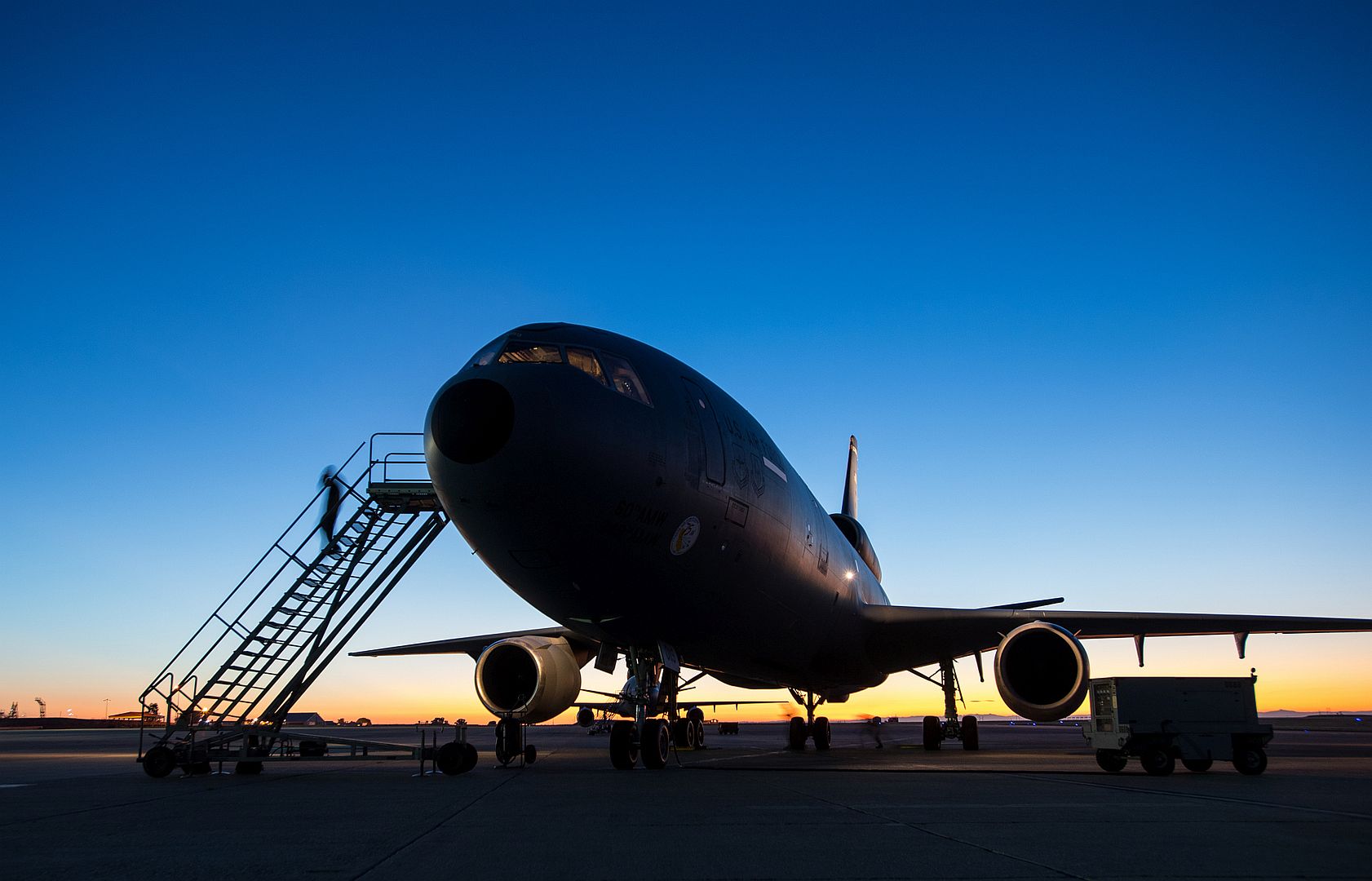
U.S. Air Force Capt. Joseph Walz, 421st Fighter Squadron F-35A Lightning II pilot, shakes hands with Airman 1st Class Cody Albert, 421st FS crew chief, during Operation Rapid Forge at Spangdahlem Air Base, Germany, July 18, 2019. Rapid Forge aircraft are forward deploying to the territory of NATO allies in order to enhance readiness and improve interoperability. Participation in multinational operations enhances the U.S. Air Force's relationship with partner militaries. (U.S. Air Force photo by Airman 1st Class Valerie Seelye)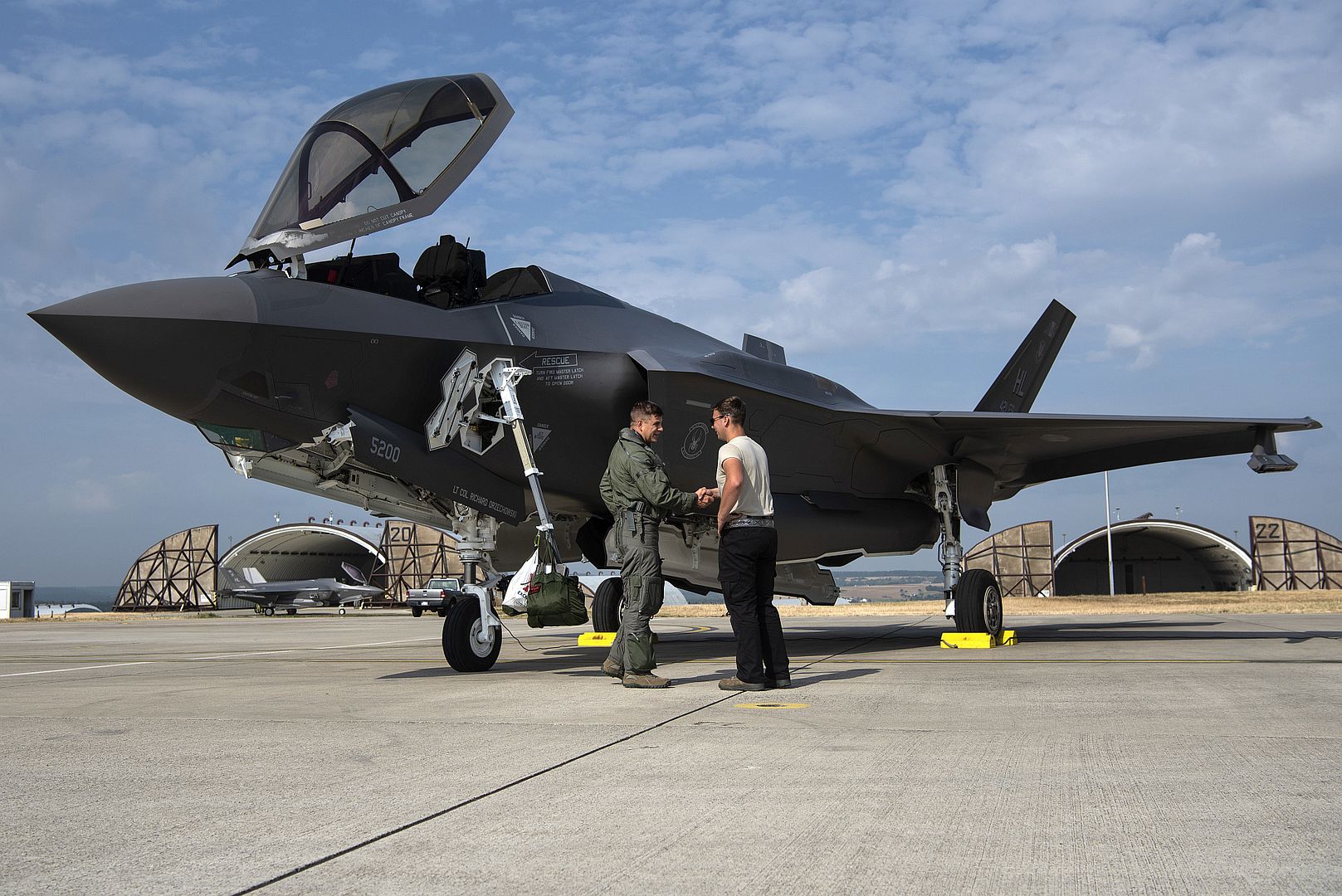
U.S. Air Force F-15E Strike Eagle pilots and weapons system officers, assigned to the 4th Fighter Wing, Seymour Johnson Air Force Base, North Carolina, perform pre-flight operations at Spangdahlem Air Base, Germany, July 18, 2019, during Operation Rapid Forge. Rapid Forge aircraft are forward deploying to bases in the territory of NATO allies in order to enhance readiness and improve interoperability. The goal of the operation is to enhance readiness in coordination with U.S. allies and partners in Europe. (U.S. Air Force photo by Staff Sgt. Preston Cherry)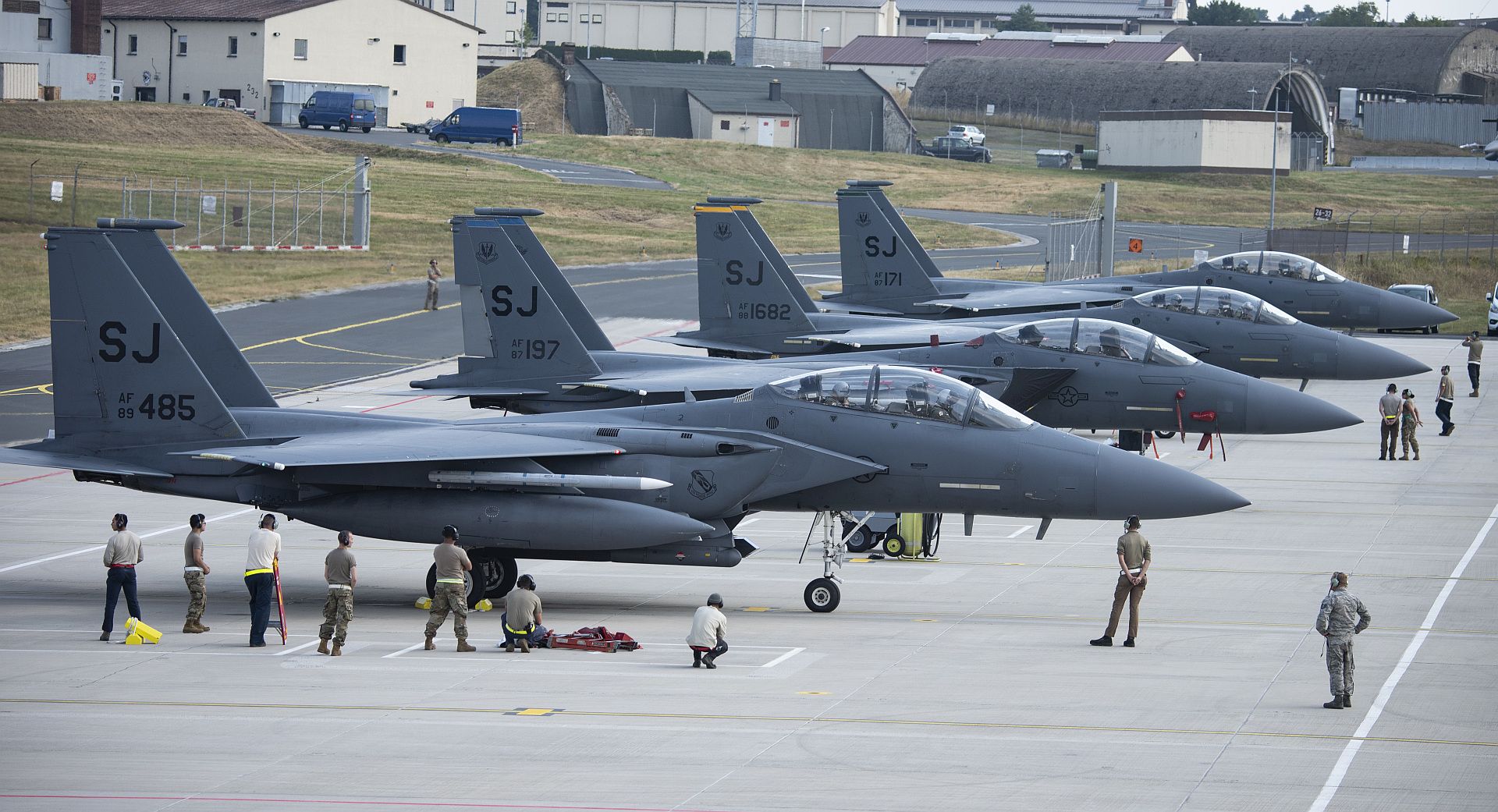
A U.S. Air Force F-15E Strike Eagle, assigned to the 4th Fighter Wing, Seymour Johnson Air Force Base, North Carolina, taxis toward the runway at Spangdahlem Air Base, Germany, July 18, 2019, during Operation Rapid Forge. Rapid Forge aircraft are forward deploying to bases in the territory of NATO allies in order to enhance readiness and improve interoperability. The goal of the operation is to enhance readiness in coordination with U.S. allies and partners in Europe. (U.S. Air Force photo by Staff Sgt. Preston Cherry)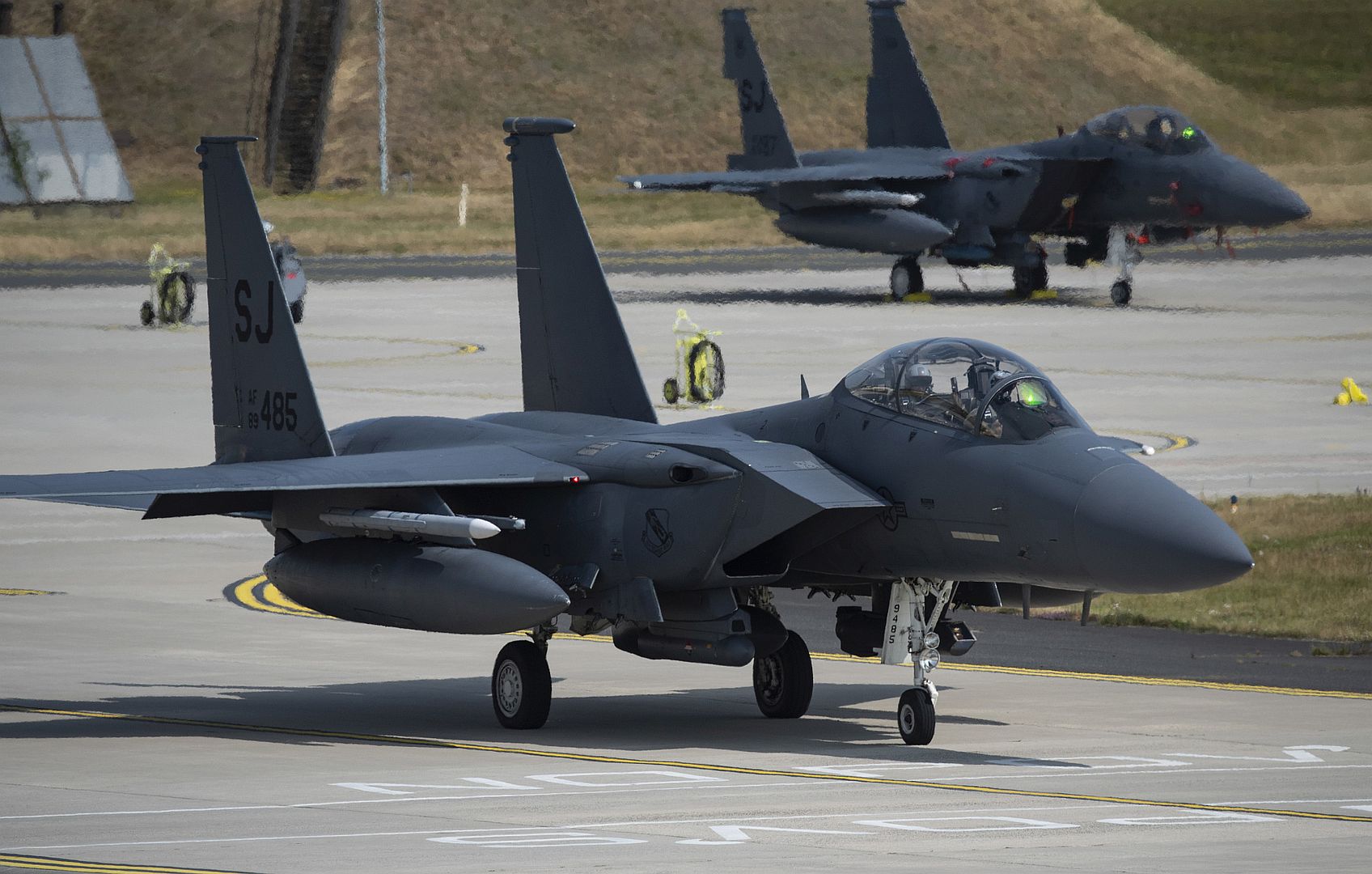
A U.S. Air Force F-15E Strike Eagle, assigned to the 4th Fighter Wing, Seymour Johnson Air Force Base, North Carolina, takes off from Spangdahlem Air Base, Germany, July 18, 2019, during Operation Rapid Forge. Rapid Forge aircraft are forward deploying to bases in the territory of NATO allies in order to enhance readiness and improve interoperability. The goal of the operation is to enhance readiness in coordination with U.S. allies and partners in Europe. (U.S. Air Force photo by Staff Sgt. Preston Cherry)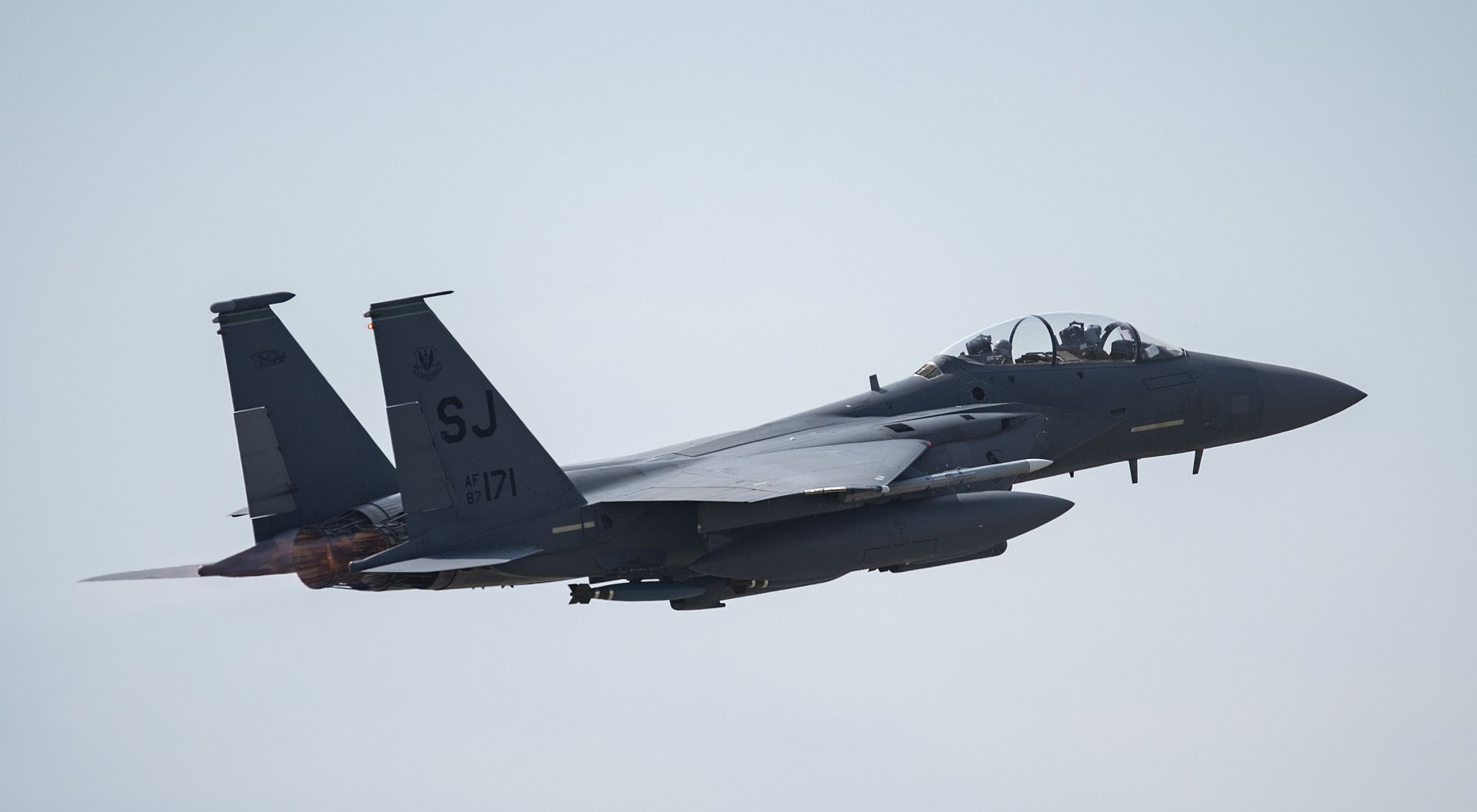
11 USAF F-22 Raptors and one airborne warning and control system (AWACS) E-3 Sentry are parked next to a Royal Australian Air Force C-17 Globemaster III on the RAAF Base Amberley flightline, July 16. The aircraft are participating in Exercise Talisman Sabre 19, a bilateral exercise that provides realistic, relevant training necessary to maintain and strengthen regional security, peace and stability. (U.S. Air Force photo by Staff Sgt. Kyle Johnson)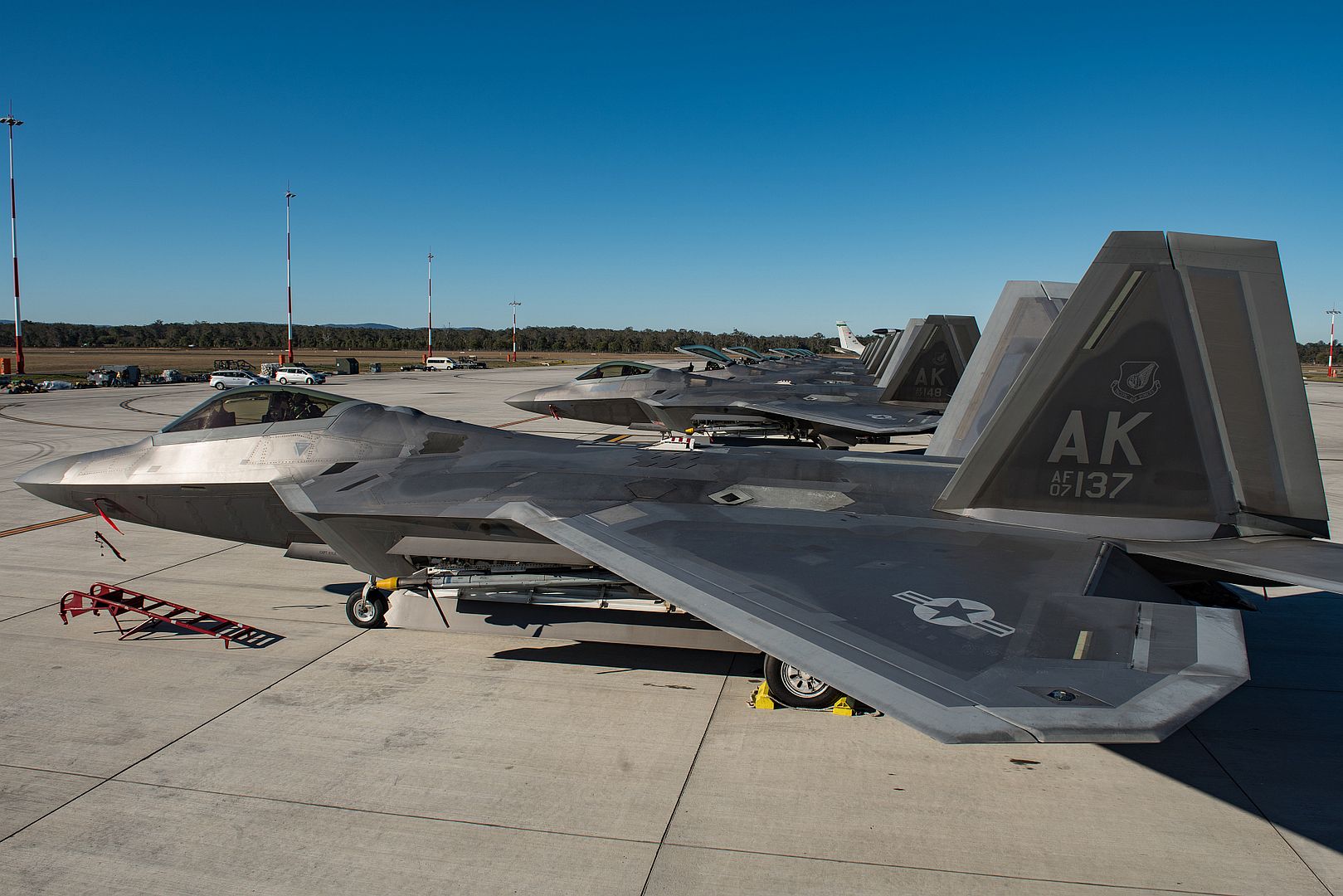
An MV-22 Osprey from Naval Air Station Patuxent River, Maryland is parked on the Edwards flightline awaiting ground and flight tests as part of the certification process to refuel behind the KC-46 aircraft, at Edwards Air Force Base, California, July 16. (U.S. Air Force photo by Jordan Goodsell)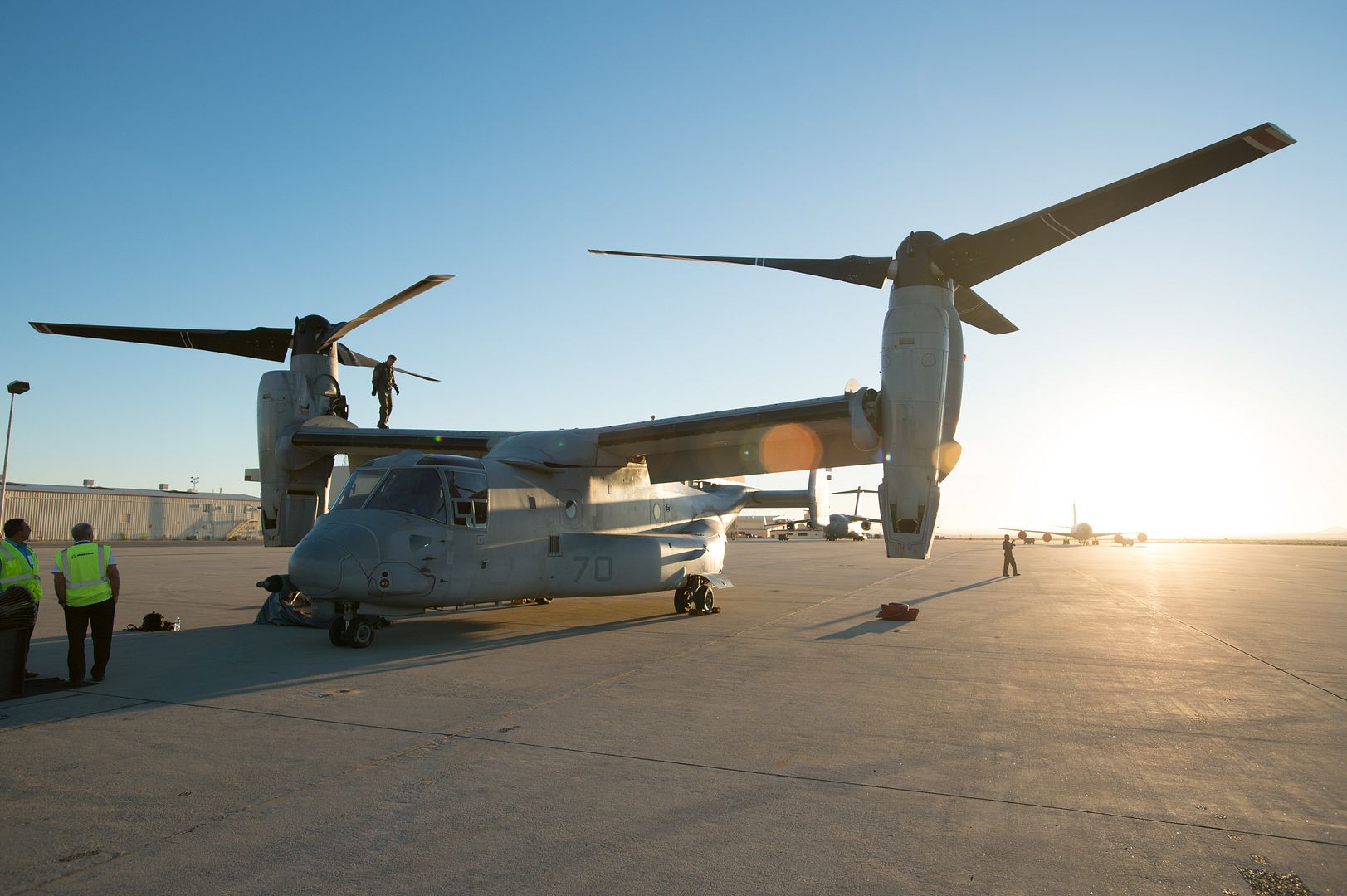
Donauw?rth, The NH90 Sea Lion successfully completed mission demonstrations for its relevant roles in the German Navy, including SAR missions, in July. Representatives of the Navy and the procurement agency BAAINBw participated in the tests that covered operations using a rescue hoist, checking navy reconnaissance capabilities, and dropping off commandos and Special Forces equipment, including an inflatable boat. Delivery of the first Sea Lion helicopters is scheduled for the end of 2019. Altogether 18 helicopters are on order.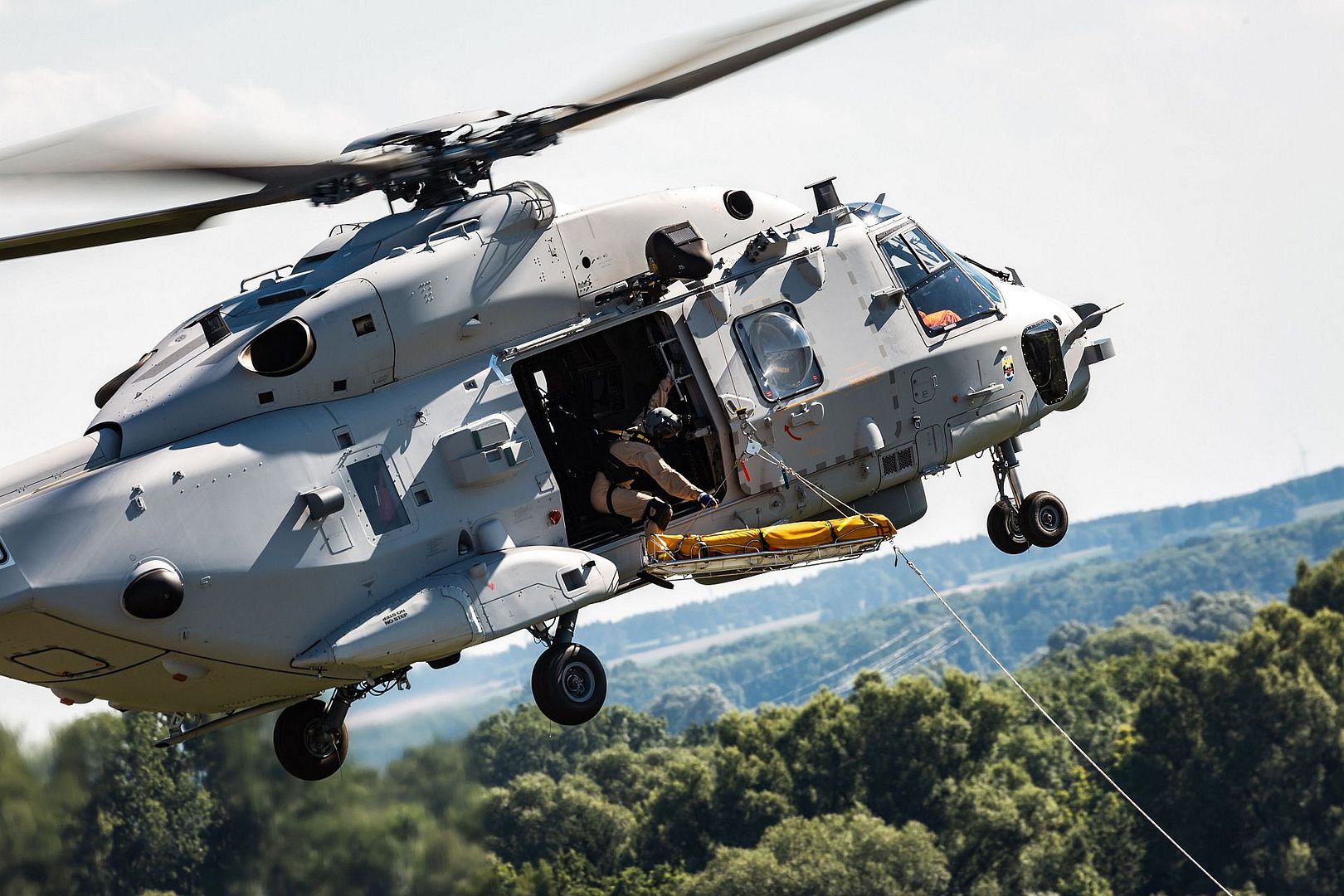
Leonardo announced today that its TH-119 helicopter received IFR supplemental type certification by the Federal Aviation Administration (FAA). The TH-119 is the only single engine helicopter in decades to meet current IFR requirements, allowing pilots to operate the aircraft safely in low visibility and challenging weather conditions, thanks to advanced avionics by Genesys Aerosystems and redundant helicopter flight systems.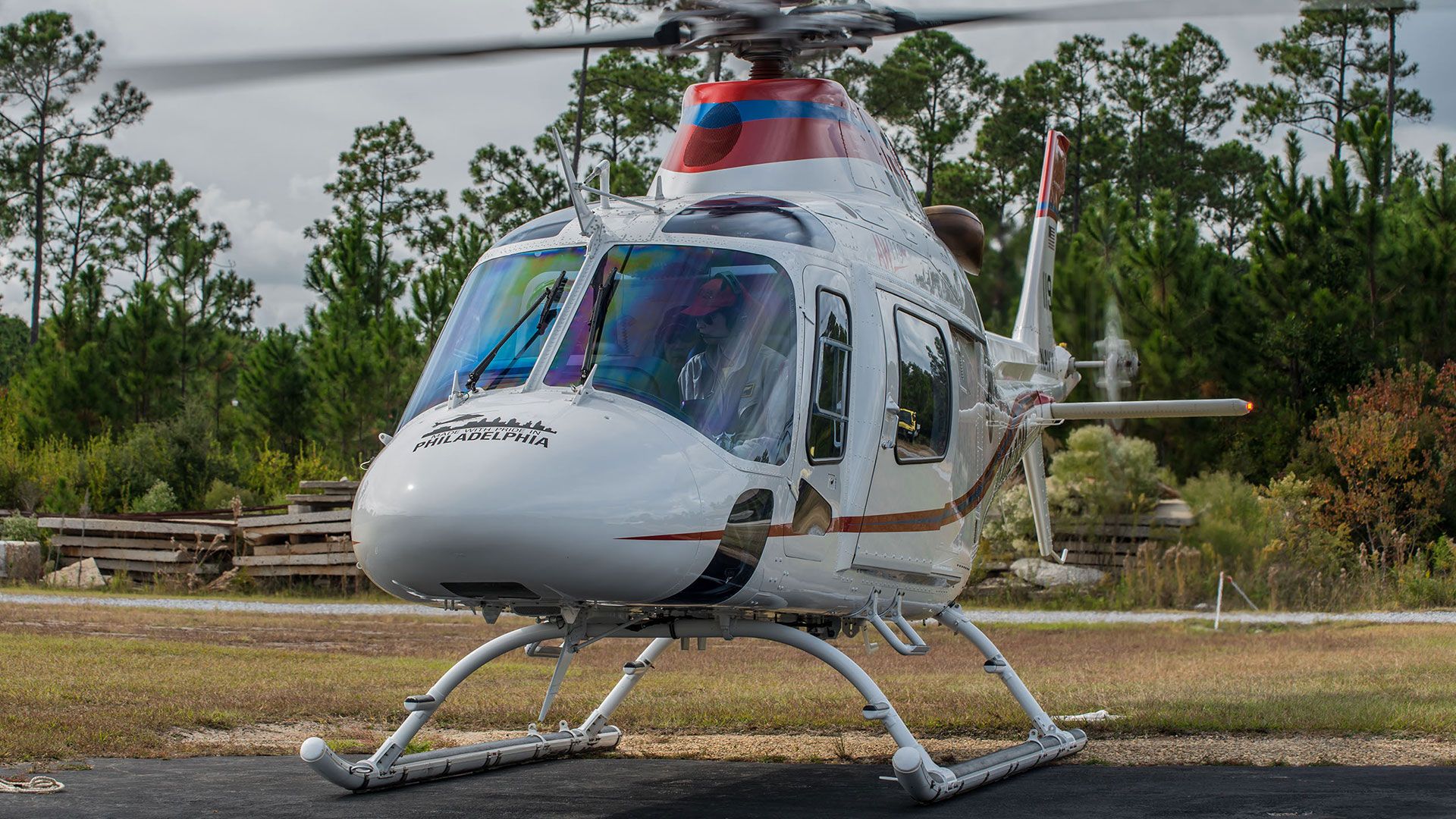
Based on the successful AW119, the TH-119 is Leonardo?s bid to replace the U.S. Navy?s fleet of aging TH-57 training helicopters. IFR certification is a core requirement for the U.S. Navy?s training helicopter replacement program, also known as Advanced Helicopter Training System TH-73, formerly TH-XX. If selected, up to 130 TH-119s will be built at Leonardo?s existing FAA Part 21 production facility in Philadelphia where all AW119s worldwide are manufactured.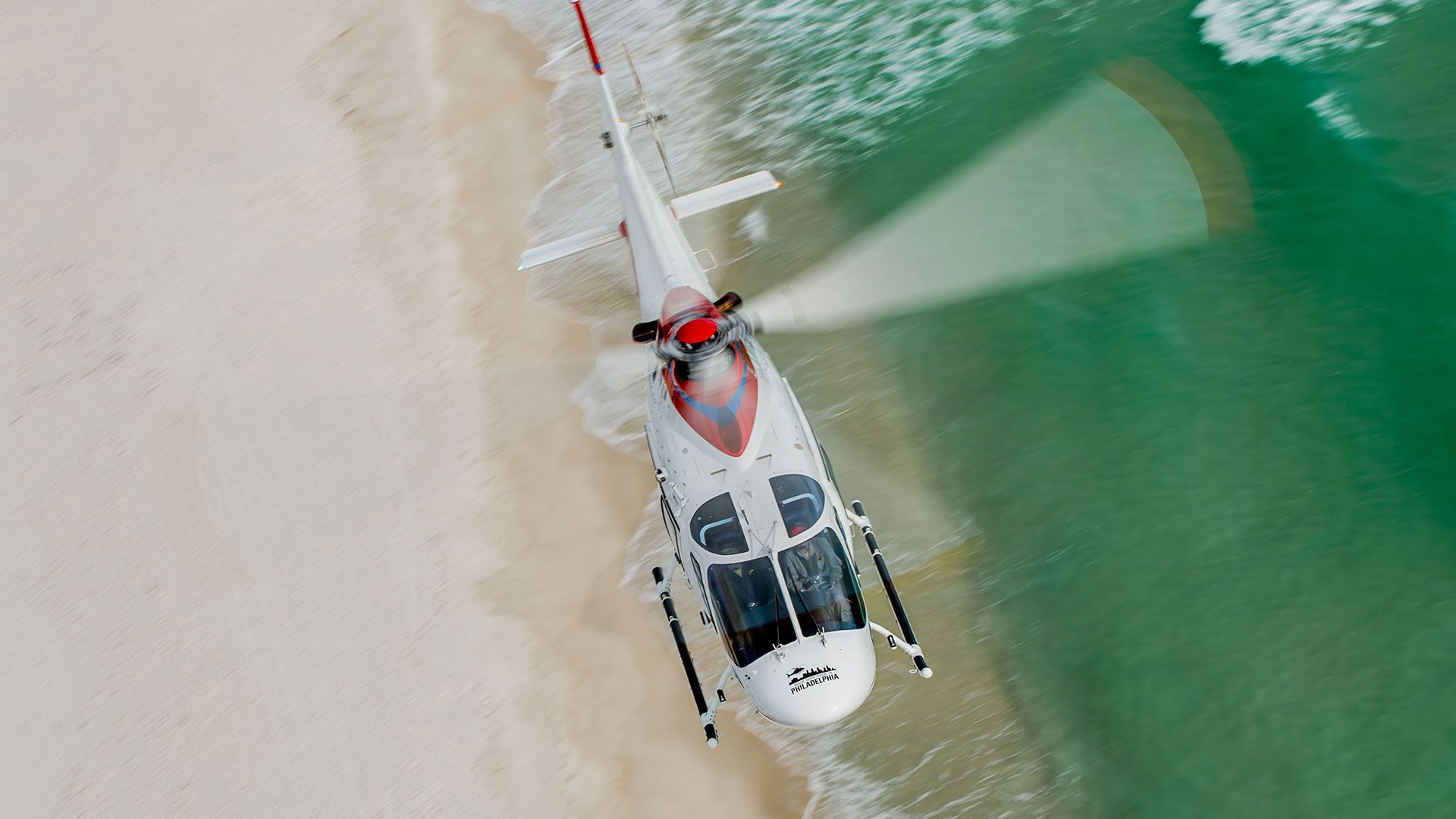
The TH-119 is poised to become the best single engine training helicopter on the market because of its unique capabilities. It is the only full-spectrum helicopter flexible enough to satisfy every training flight requirement, from fundamental autorotations to more advanced Search & Rescue procedures and Night Vision Devices, for example. Its strong and reliable Pratt & Whitney PT6B engine gives the TH-119 the best power margins in its class while the rugged and durable metal airframe withstands the daily grind of training and allows airframe repairs to be conducted on-site.
Designed with input from former U.S. Naval aviators and former Navy instructor pilots, the TH-119 features an adjustable observer seat that provides a full view of the cockpit enabling more effective learning even when seated in back. Reinforced skids with removable shoes stand up to countless touchdown repetitions while ?hot? pressure refuelling allows the fuel tank to be safely refilled without shutting the engine down which reduces turnaround time compared to other aircraft.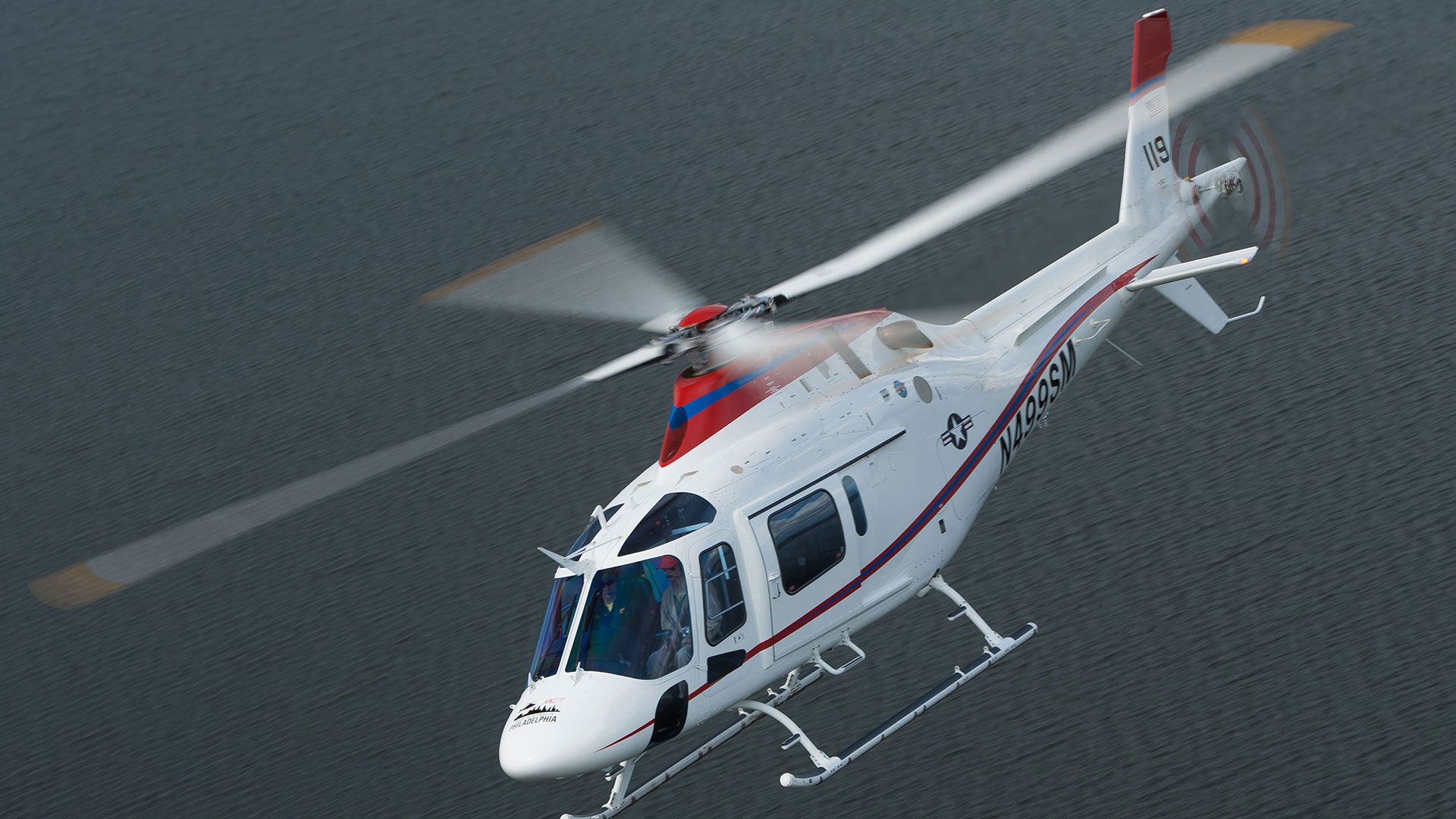
The TH-119 provides the U.S. Navy a low-risk delivery schedule and premier fleet support as well as an economical single engine cost profile that will save American taxpayers millions of dollars over twin engine helicopters.
The AW119 is in service in 40 countries and has been selected by high profile military, government and parapublic customers, including the Portuguese Air Force, New York City Department of Environmental Protection Police and many others across Europe, Middle East, Asia and Latin America.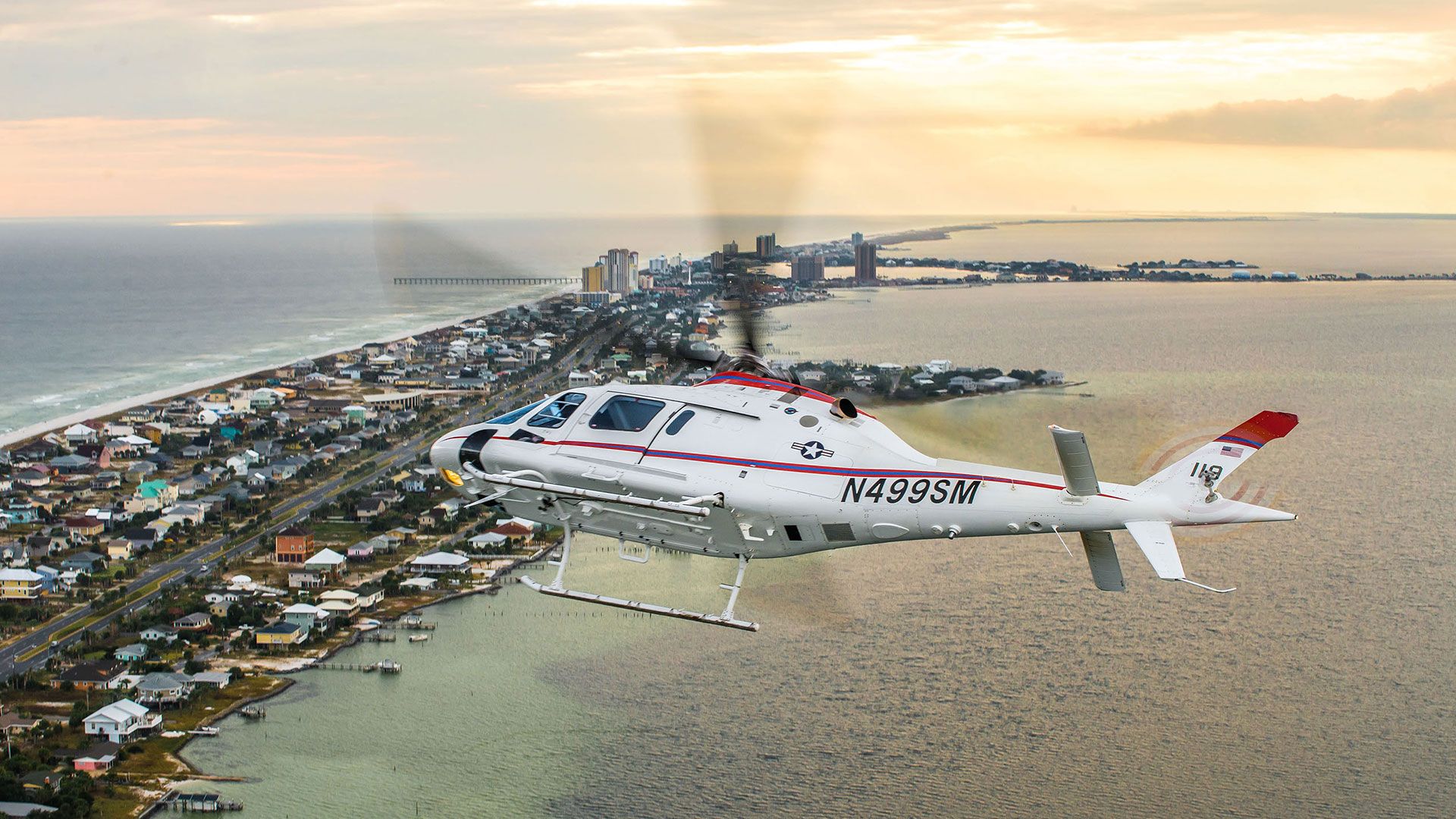
A pair of US Air Force F-35A Lightning fighter jets have visited RAF Marham to allow RAF, Royal Navy and USAF ground crew to conduct joint training.
Usually based at Hill Air Force Base, Utah, the 421st Fighter Squadron, Black Widows, are currently deployed to Germany. This was the first time the A model of the F-35 had landed at Marham, the permanent home of the UK fleet of B model Lightnings.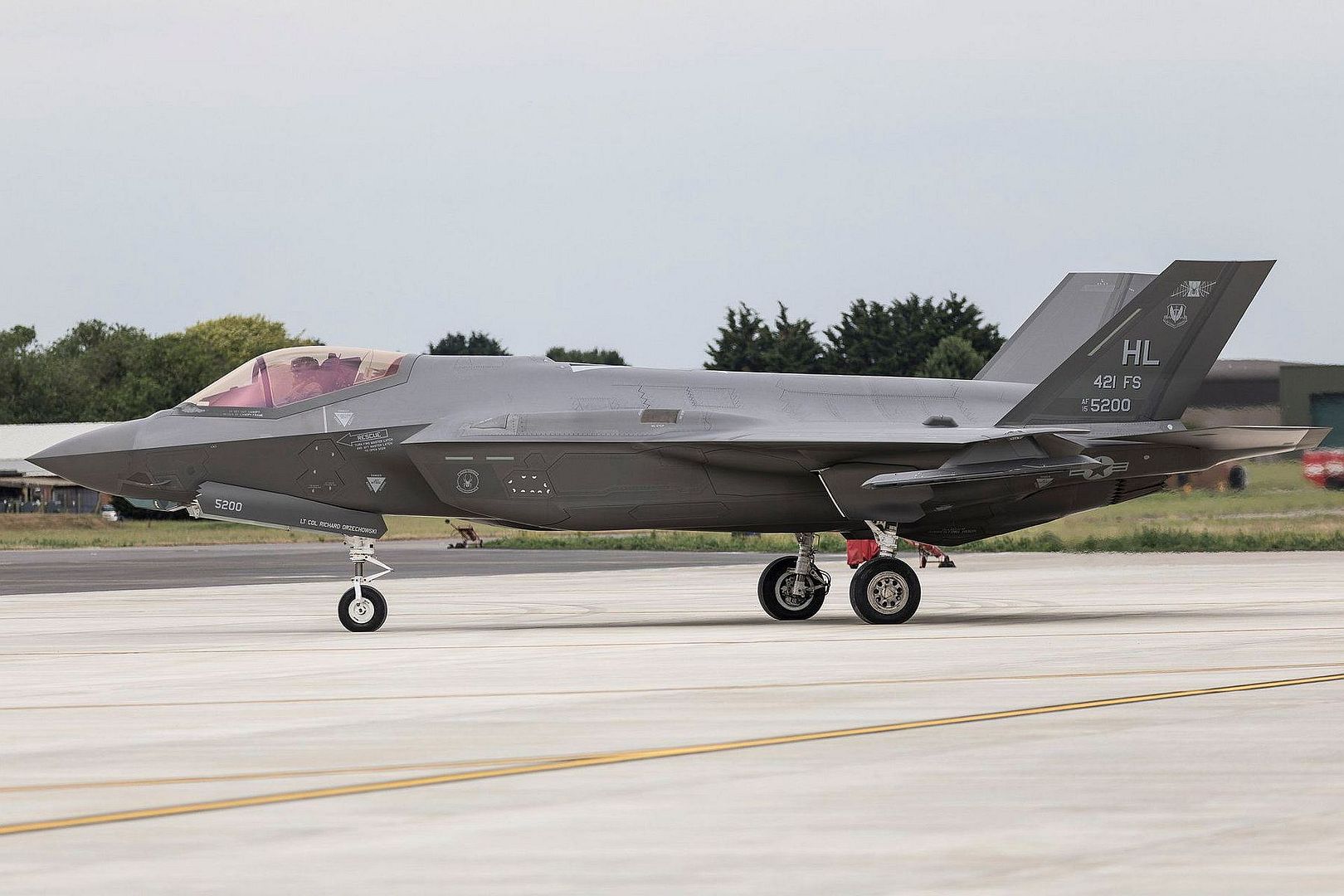
Ahead of the arrival of the American aircraft a team of maintainers from the 421st Aircraft Maintenance Unit had arrived at the Norfolk station to work with Marham?s Visiting Aircraft Servicing Section, led by Master Sergeant Tyler Berry who said:
?We?re training the RAF Team on how to hot refuel our F-35As to improve interoperability with our NATO allies.?
Hot refuelling sees aircraft refuelled with engines running, a process aimed at keeping aircraft on the ground for the shortest time possible. USAF maintainers refuelled one aircraft shadowed by RAF personnel before swapping places for the second Lightning.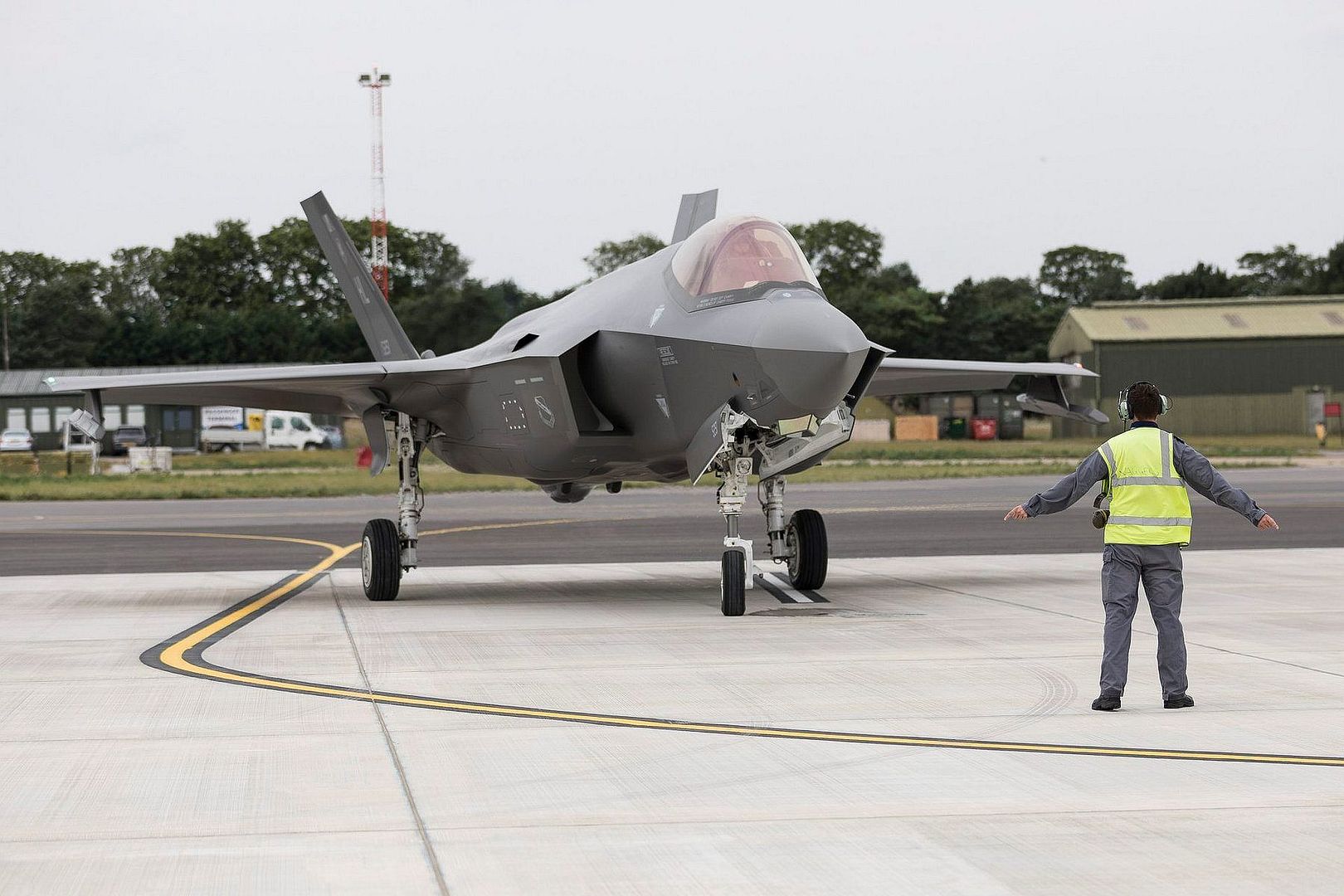
Wing Commander Colin Feeney, OC Engineering Wing, RAF Marham said: ?This breaks the ice for interoperability ahead of RAF Lakenheath receiving its first F-35As in the coming years. Keeping the links between neighbours strong is highly important for when we?ll both operate 5th Gen air systems.?
"It?s a good day for the USAF and RAF" Colonel Mark Ciero
Colonel Mark Ciero of USAF Europe was also on hand to observe the training. He said: ?This is the first great step toward full maintenance interoperability. It?s a good day for the USAF and RAF as we experience our first integrated hot pit refuelling with our newest and most capable fighter aircraft.
?The proximity of RAF Marham and RAF Lakenheath and the future of our mutual 5th Generation capability demonstrates our two nations shared approach to the defence of Europe.?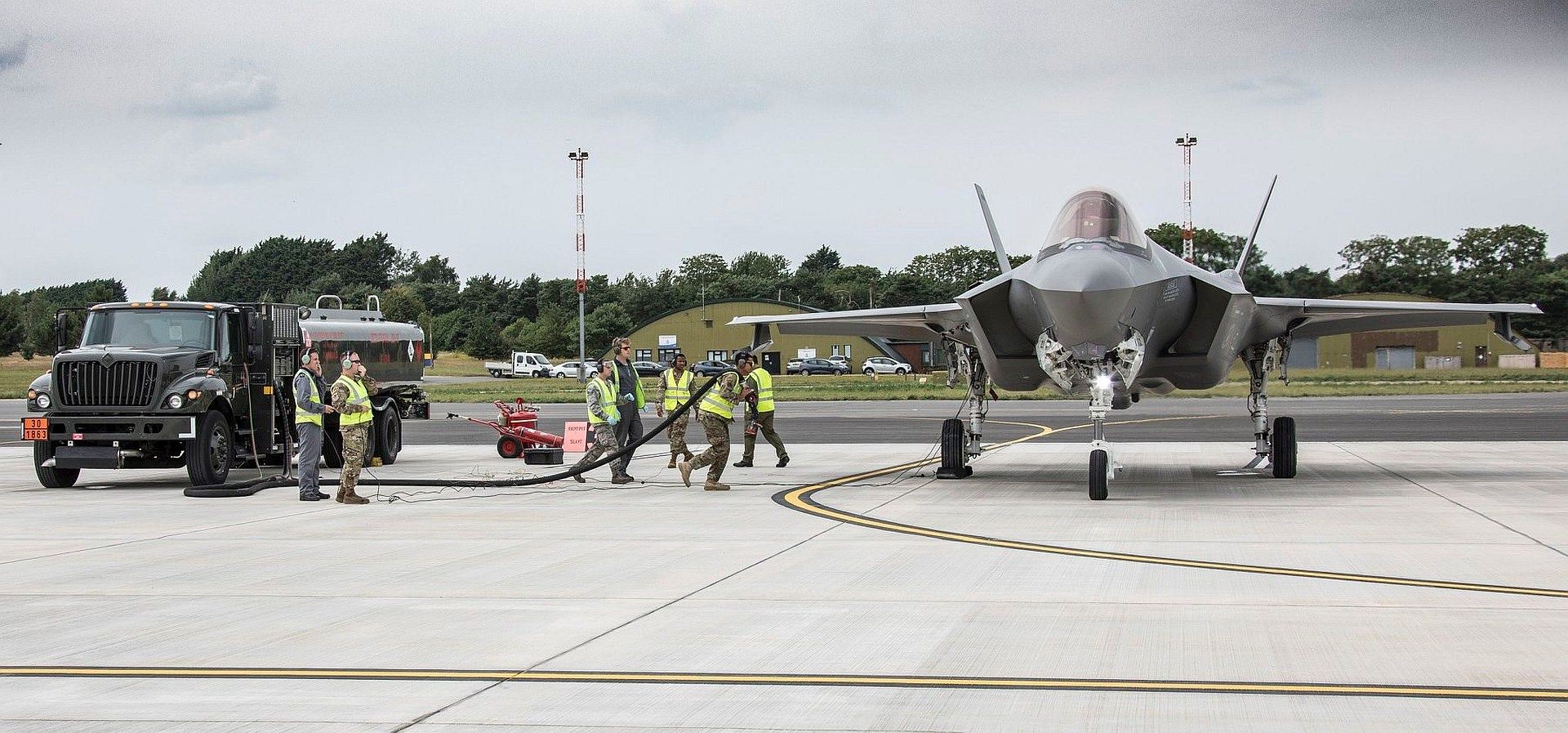
-
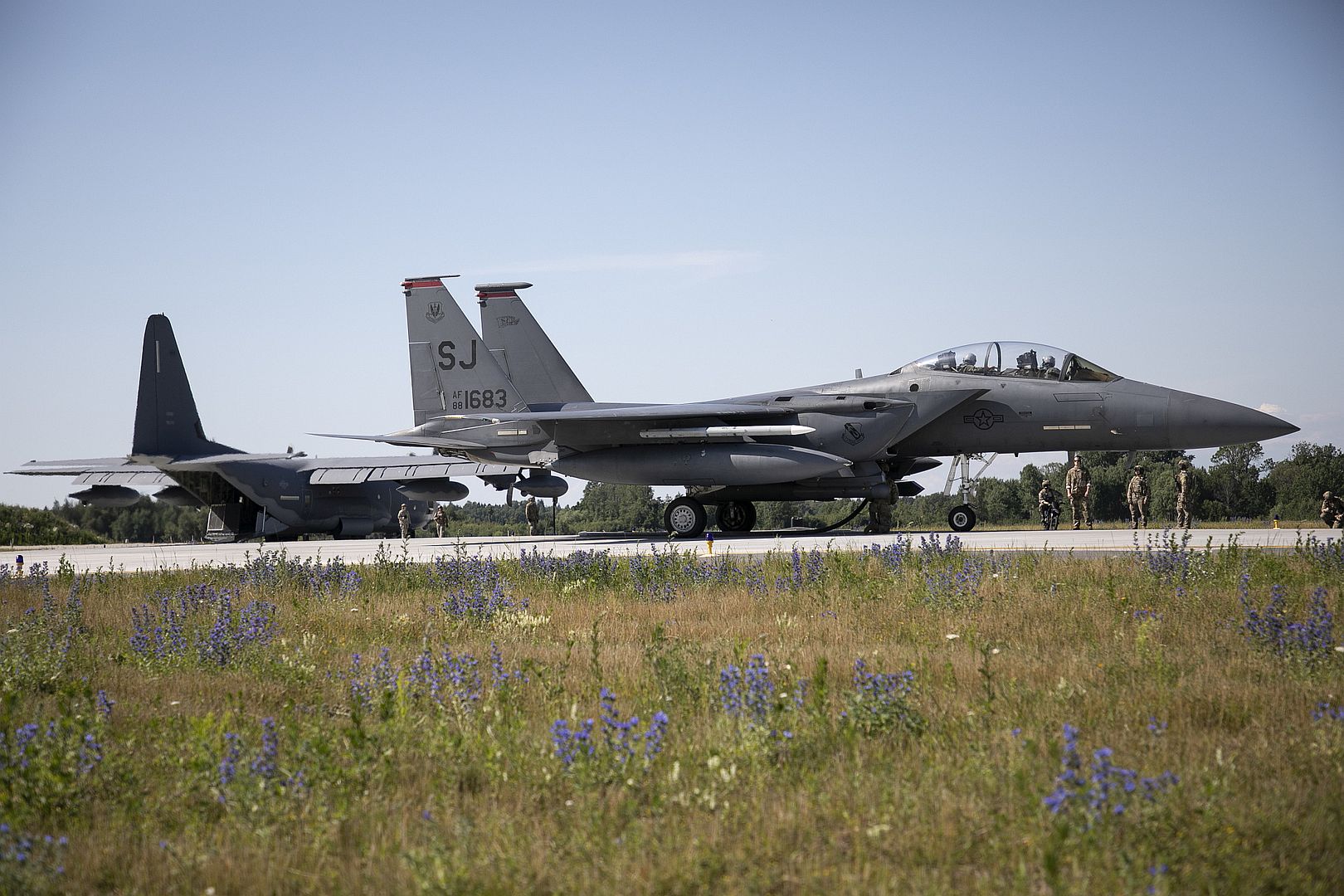
A U.S. Air Force F-15E Strike Eagle, out of Spangdahlem Air Base, Germany is refueled by an MC-130J Commando II, from RAF Mildenhall, England, during Operation Rapid Forge, July 18, 2019, Amari Airfield, Estonia. The F-15E Strike Eagle is a dual-role fighter designed to perform air-to-air and air-to-ground missions. The MC-130J Commando II, and aircrew, is able to execute refueling missions in austere, sensitive or hostile territories. Operation Rapid Forge involves forward deployments to bases in NATO territories in order to enhance readiness and improve interoperability between U.S. allies and partners in Europe. (U.S. Army photo by Sgt. Alexis Washburn-Jasinski)
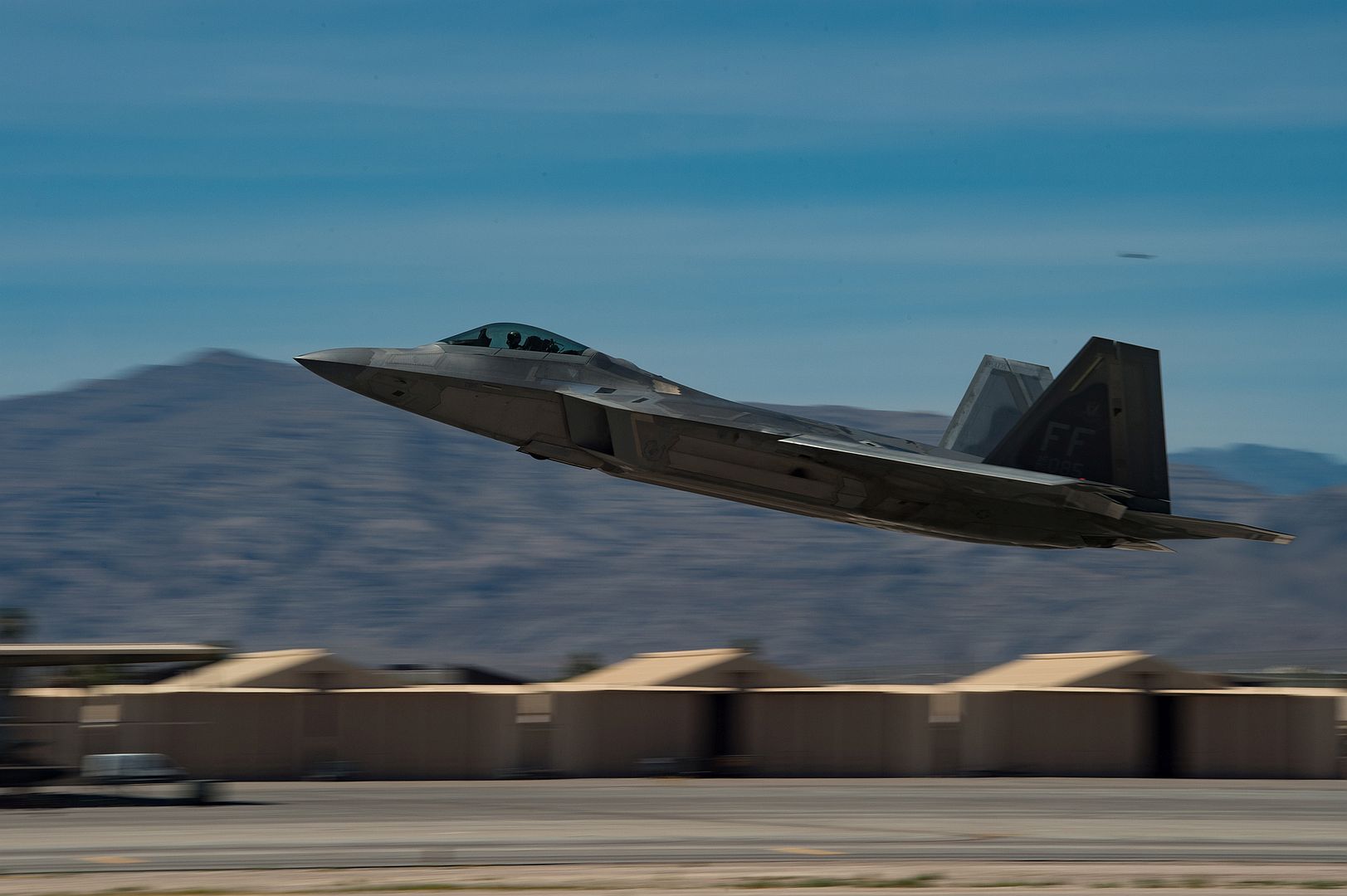
A U.S. Air Force F-22 Raptor from the 1st Fighter Wing takes off at Nellis Air Force Base, Nevada, July 17 2019. As the core wing at Red Flag 19-3, the 1st FW lends their expertise and ensures participating units have all the necessary resources they need to meet Red Flag objectives. (U.S. Air Force photo's by Senior Airman Tristan Biese)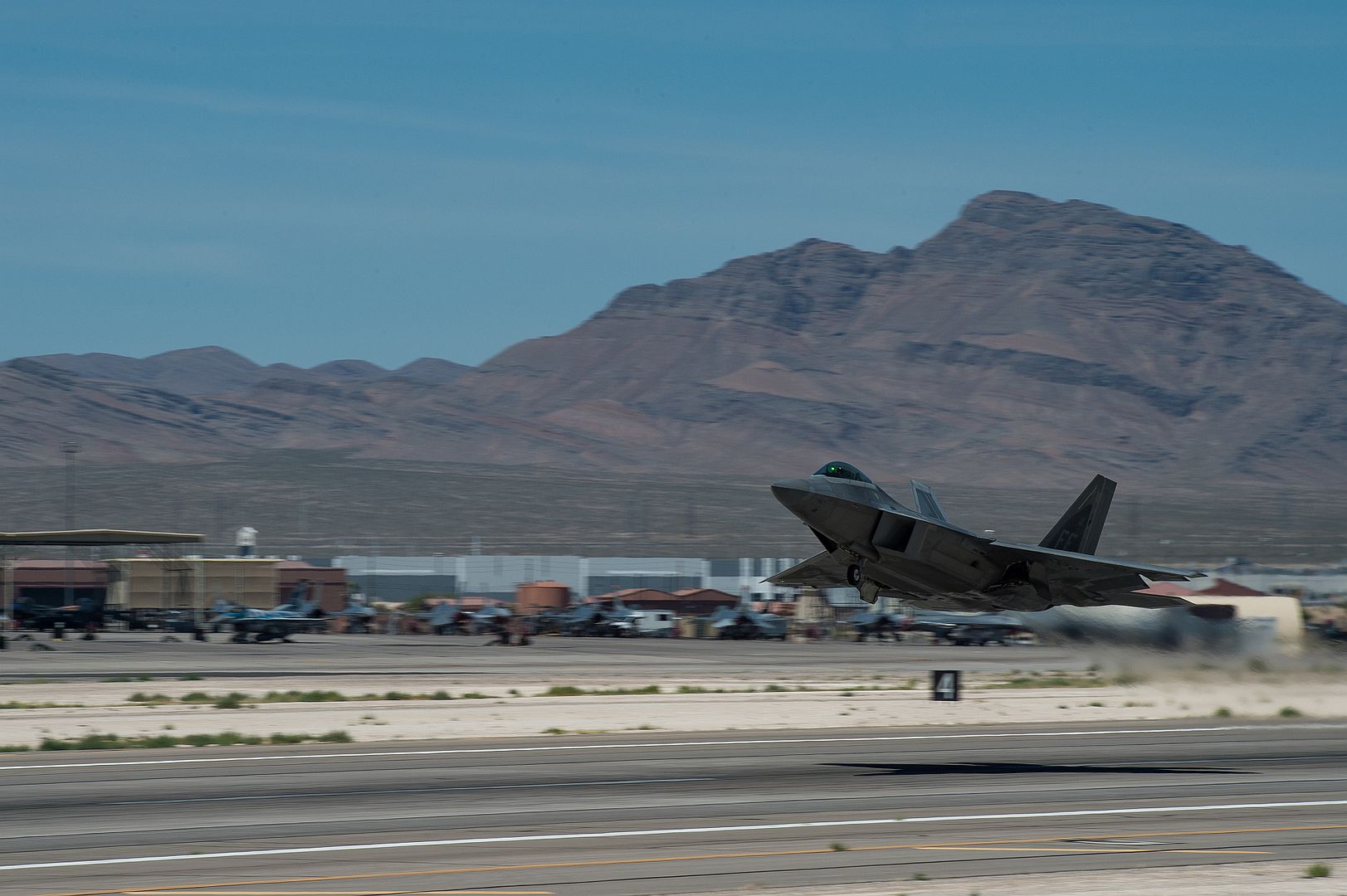
A Spanish Navy AV-8B Harrier II lands during the 2019 Royal International Air Tattoo at RAF Fairford, England, July 19, 2019. This year's RIAT commemorated the 70th anniversary of NATO and highlighted the United States' enduring commitment to its European allies. (U.S. Air Force photo by Tech Sgt. Aaron Thomasson)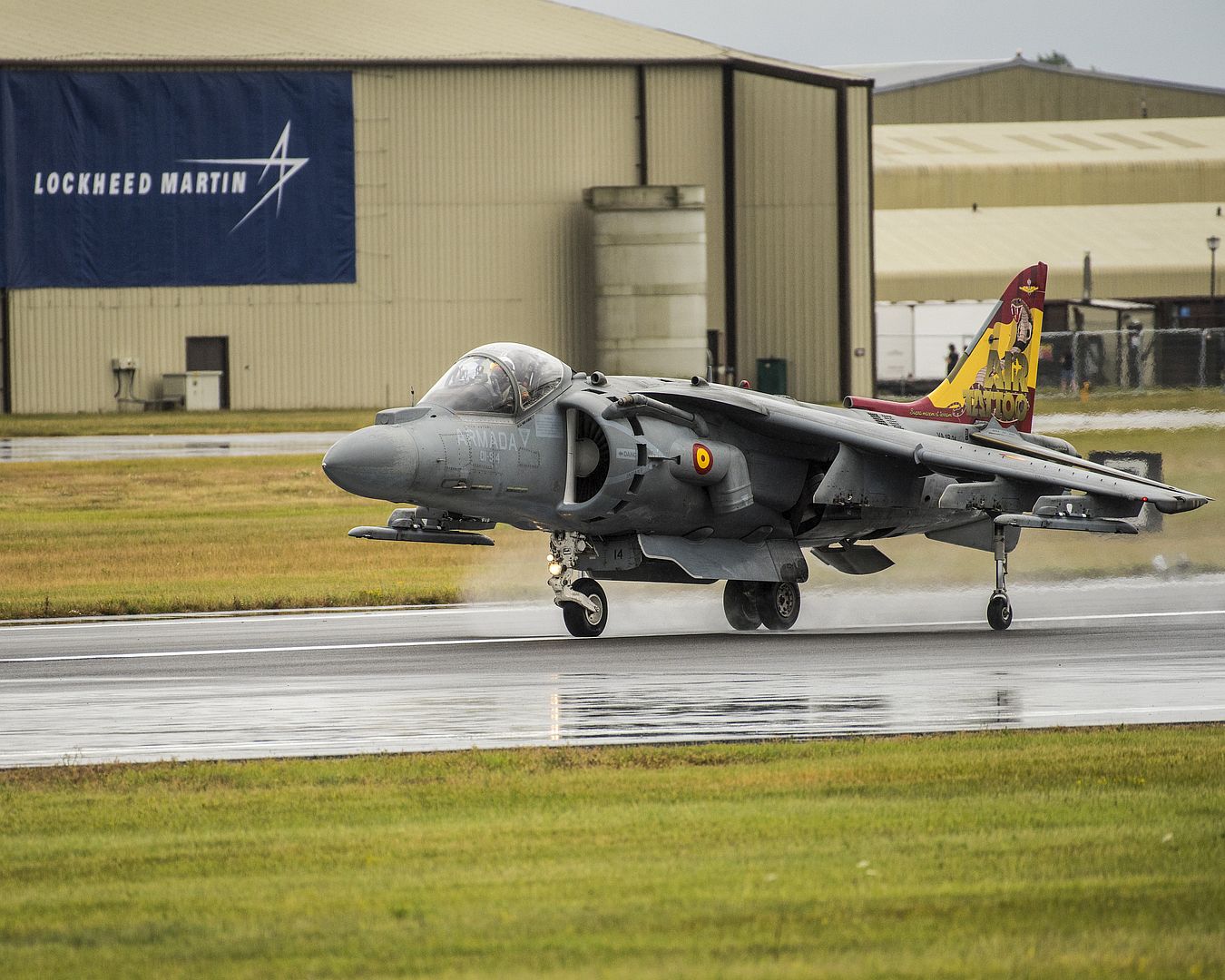
U.S. Air Force Maj. Paul Lopez, F-22 Demo Team commander, performs an aerial demonstration during the Mission Over Malmstrom air show in Great Falls, Mont., July 14, 2019. Each F-22 demonstration lasts approximately 25 minutes and features an array of maneuvers that showcase the performance and capabilities of the world's premier 5th-generation fighter. (U.S. Air Force photo by 2nd Lt. Samuel Eckholm)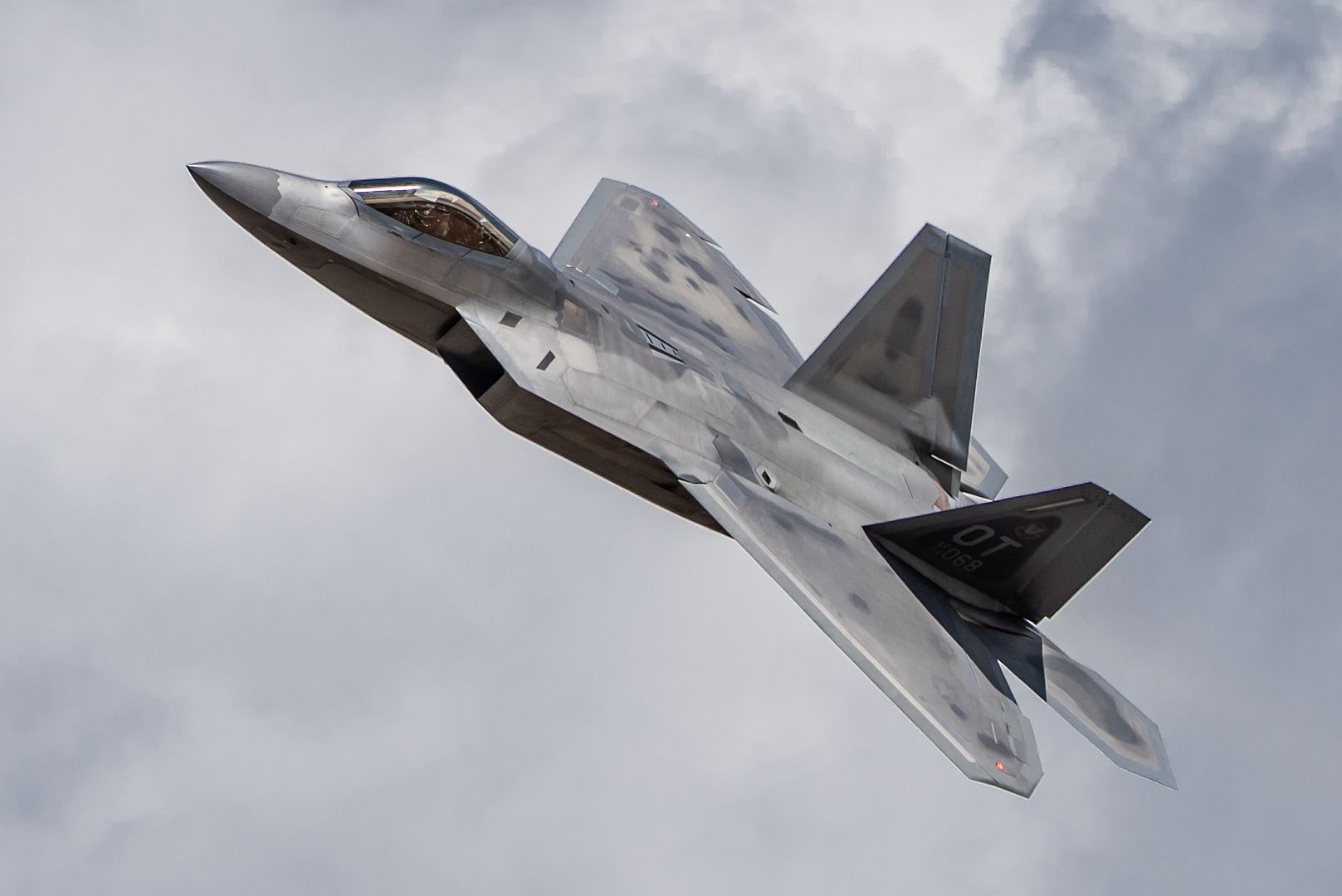
Indonesian carrier Lion Air has received its first A330-900, becoming the first airline from the Asia-Pacific region to fly the A330neo. The aircraft is on lease from BOC Aviation and is the first of 10 A330neos set to join the airline?s fleet.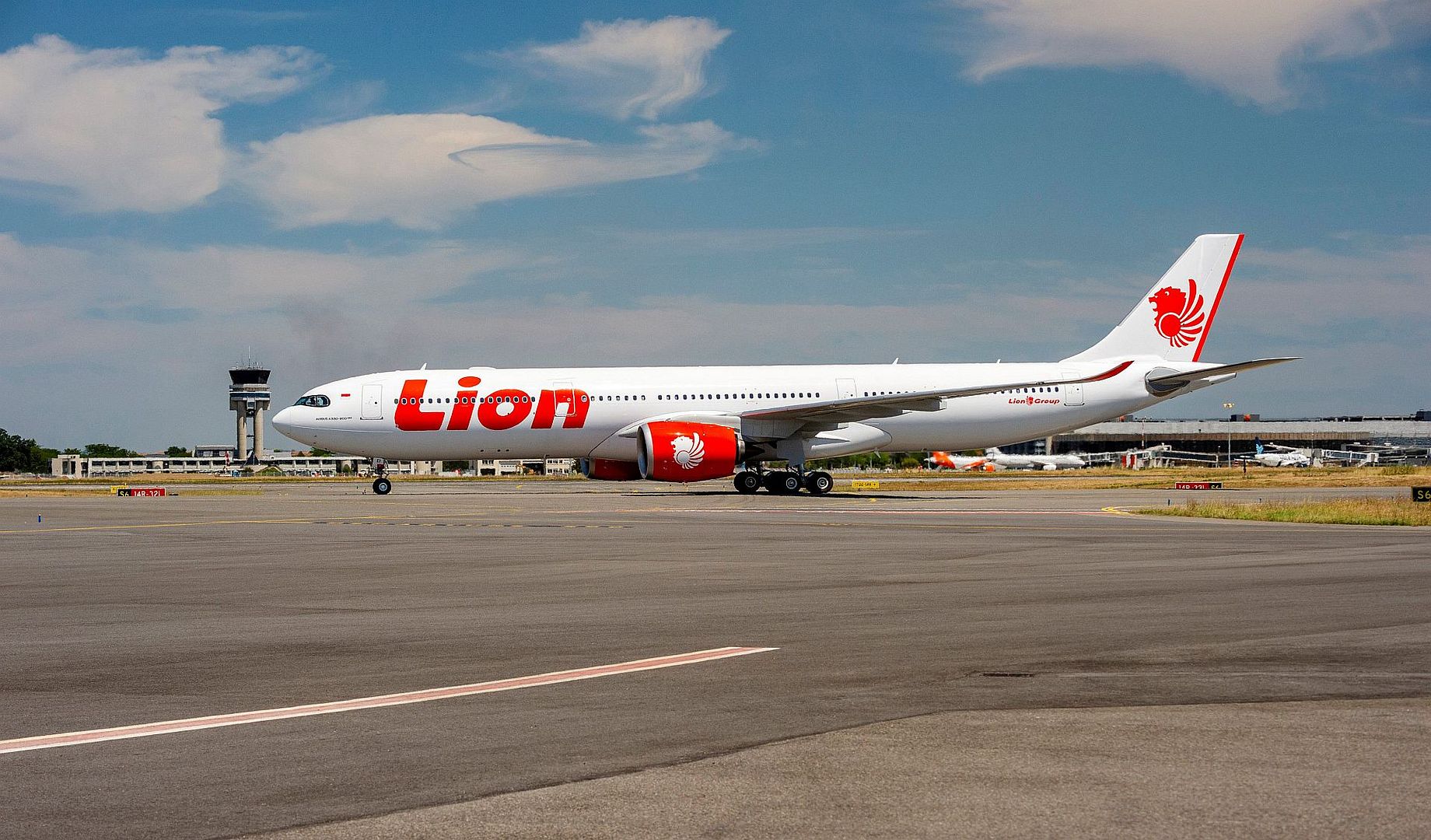
The A330neo will be used by Lion Air for non-stop long-haul services from Indonesia. These include pilgrimage flights from cities such as Makassar, Balikpapan and Surabaya to Jeddah and Medina in Saudi Arabia. The flight time for such routes can be up to 12 hours.
Lion Air?s A330-900 is configured for 436 passengers in a single-class configuration.
The A330neo is the true new-generation aircraft building on the most popular wide-body A330?s features and leveraging on A350 XWB technology. Powered by the latest Rolls-Royce Trent 7000 engines, the A330neo provides an unprecedented level of efficiency ? with 25% lower fuel burn per seat than previous generation competitors. Equipped with the Airbus Airspace cabin, the A330neo offers a unique passenger experience with more personal space and the latest generation in-flight entertainment system and connectivity.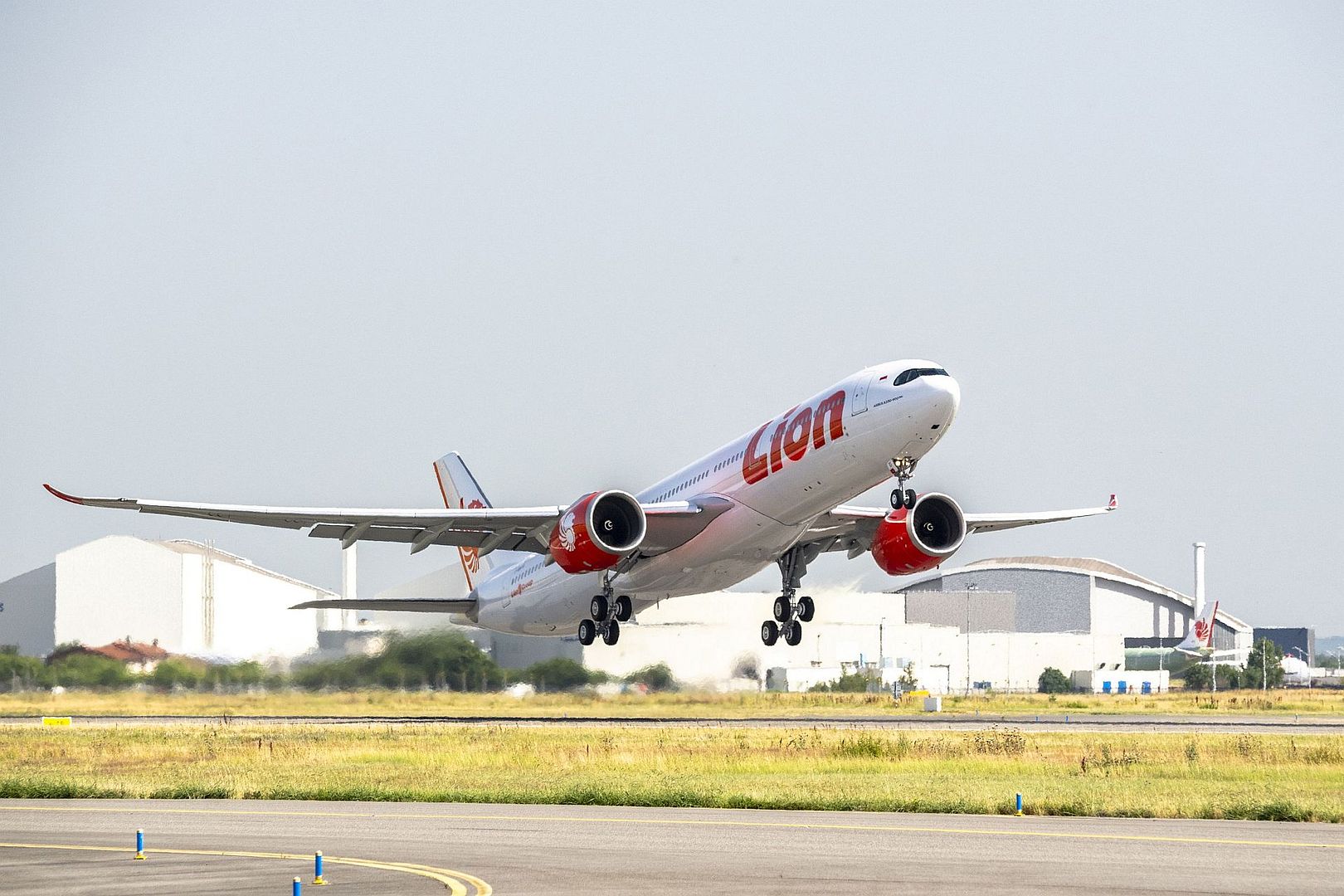
-
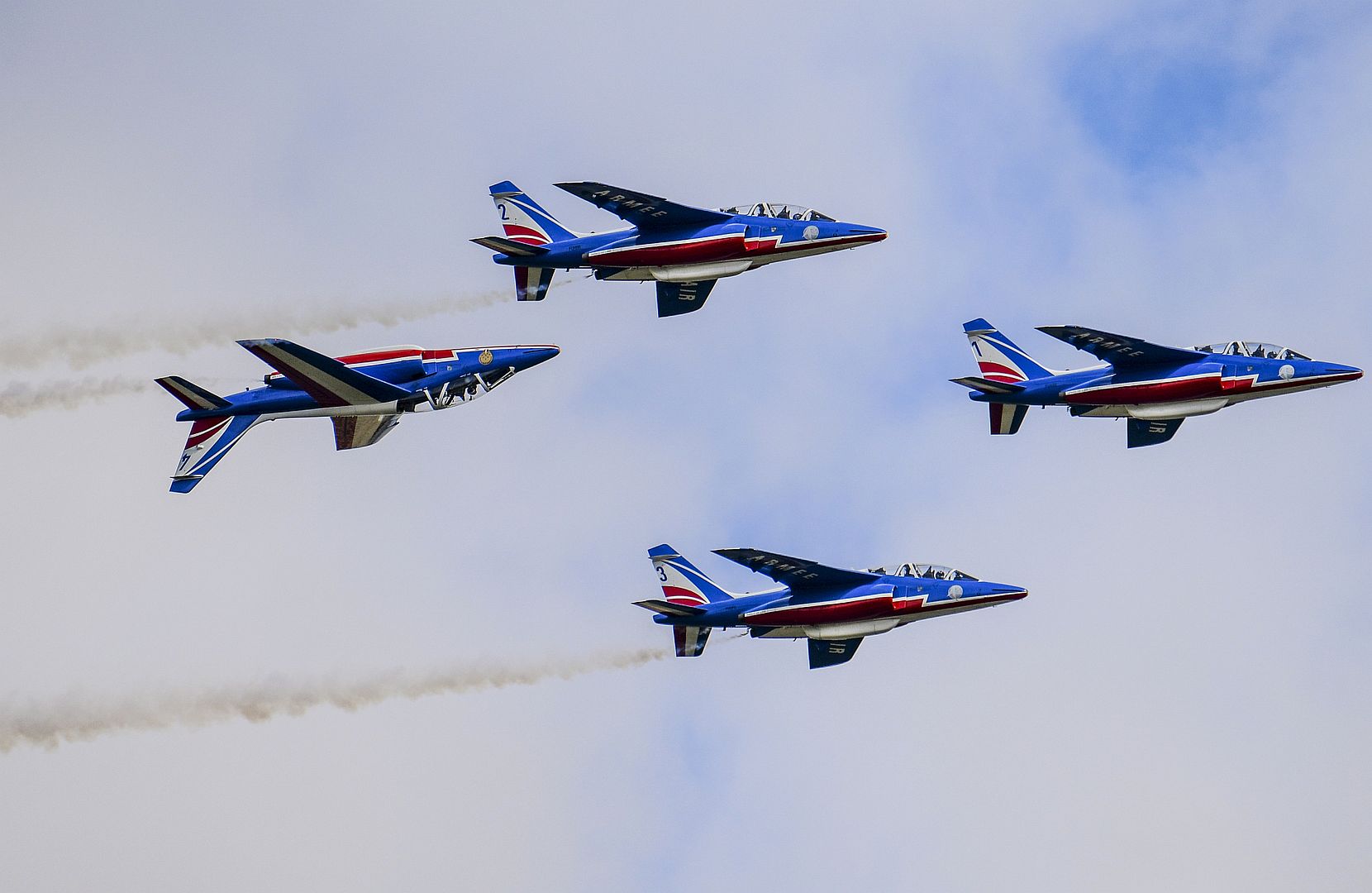
The French Air Force Patrouille de France conduct aerial maneuvers during the 2019 Royal International Air Tattoo at RAF Fairford, England, July 19, 2019. This year's RIAT commemorated the 70th anniversary of NATO and highlighted the United States' enduring commitment to its European allies. (U.S. Navy photo by Mass Communication Specialist 2nd Class Cody Hendrix)
A U.S. Air Force A-10C Warthog from the 122nd Fighter Wing sits on the flight line during Northern Strike 19 at the Alpena Combat Readiness Training Center in Alpena, Mich., July 21, 2019. Northern Strike 19 is a National Guard Bureau-sponsored exercise uniting service members from more than 20 states, multiple service branches and numerous coalition countries during the last two weeks of July 2019 at the Camp Grayling Joint Maneuver Training Center and the Alpena Combat Readiness Training Center, both located in northern Michigan and operated by the Michigan National Guard. The accredited Joint National Training Capability exercise demonstrates the Michigan National Guard?s ability to provide accessible, readiness-building opportunities for military units from all service branches to achieve and sustain proficiency in conducting mission command, air, sea, and ground maneuver integration, together with the synchronization of fires in a joint, multinational, decisive action environment. (U.S. Air National Guard photo by Master Sgt. Matt Hecht)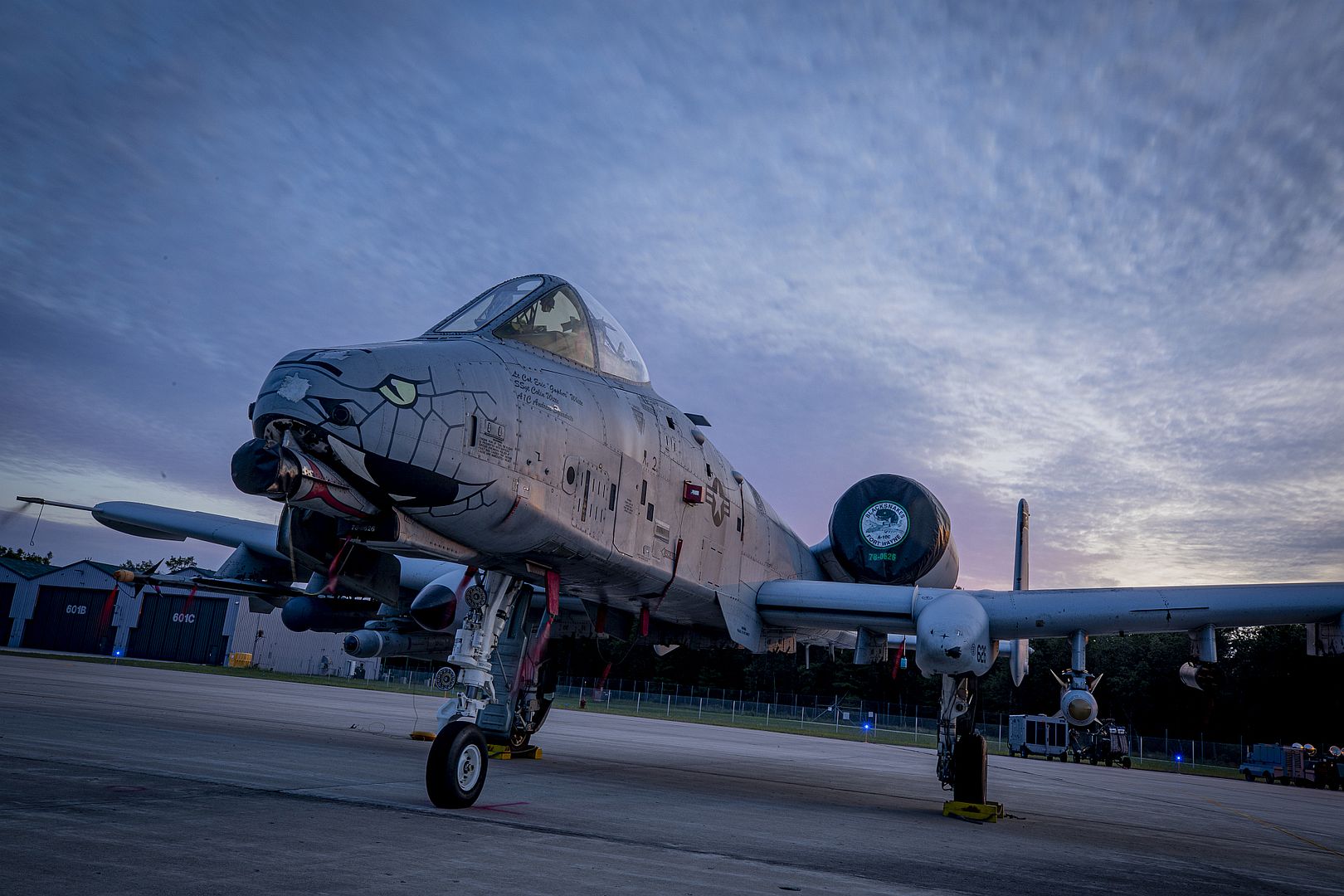
The British Air Force?s Red Arrows and a British Airways? Boeing 747-436 conduct a flypast during the 2019 Royal International Air Tattoo at RAF Fairford, England, July 20, 2019. This year, RIAT commemorated the 70th anniversary of NATO and highlighted the United States' enduring commitment to its European allies. (U.S. Air Force photo by Tech Sgt. Aaron Thomasson)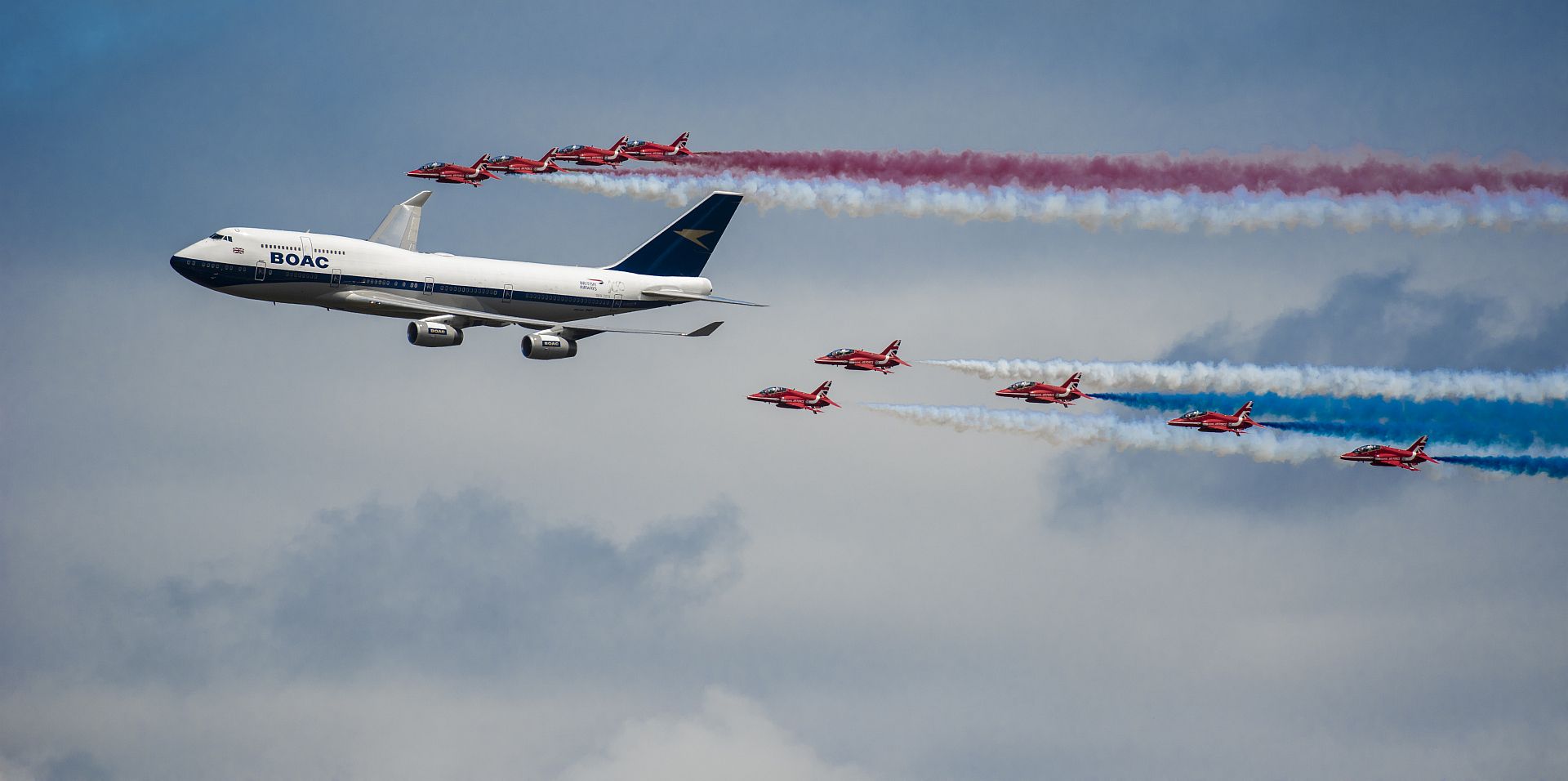
A Swedish Air Force Saab JAS 39 Gripen flies past the audience during the 2019 Royal International Air Tattoo at RAF Fairford, England, July 20, 2019. This year, RIAT commemorated the 70th anniversary of NATO and highlighted the United States' enduring commitment to its European allies. (U.S. Air Force photo by Tech Sgt. Aaron Thomasson)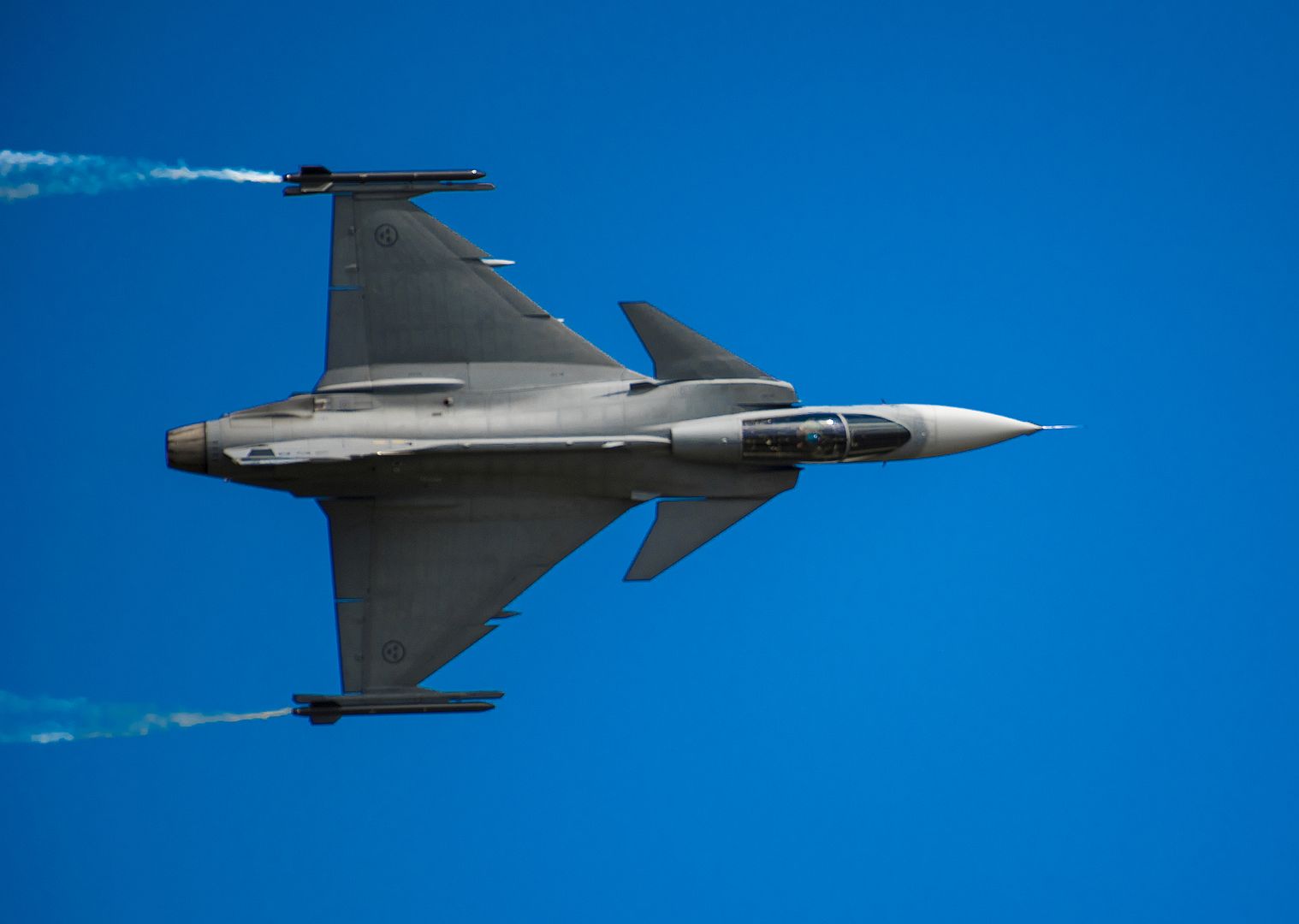
A member of the U.S. Air Force?s F-16 Viper Demonstration Team accelerates past the audience during the 2019 Royal International Air Tattoo at RAF Fairford, England, July 20, 2019. This year, RIAT commemorated the 70th anniversary of NATO and highlighted the United States' enduring commitment to its European allies. (U.S. Air Force photo by Tech Sgt. Aaron Thomasson)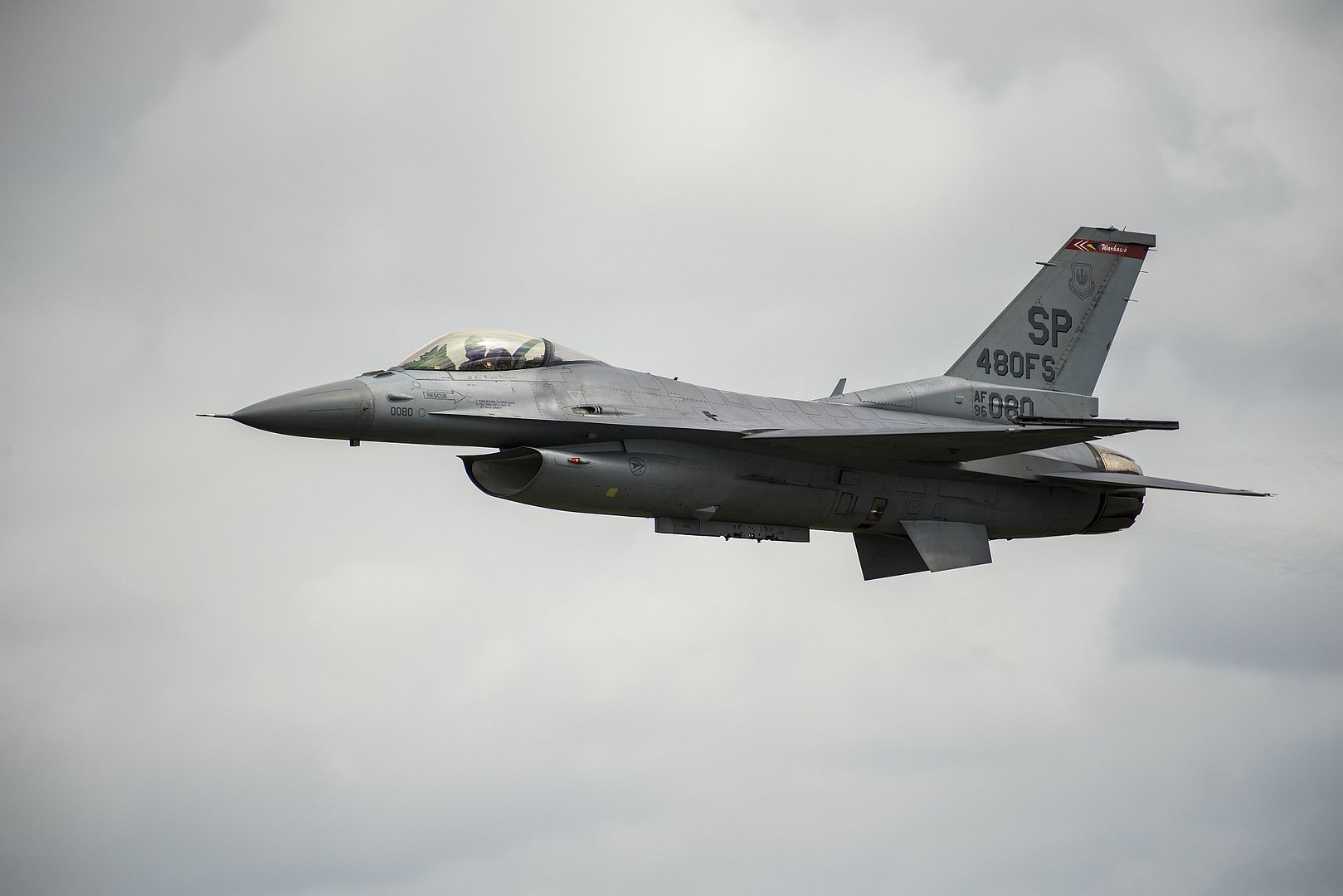
A member of the Hellenic Air Force?s Demo Team Daedalus maneuvers while upside down during the 2019 Royal International Air Tattoo at RAF Fairford, England, July 20, 2019. This year, RIAT commemorated the 70th anniversary of NATO and highlighted the United States' enduring commitment to its European allies. (U.S. Air Force photo by Tech Sgt. Aaron Thomasson)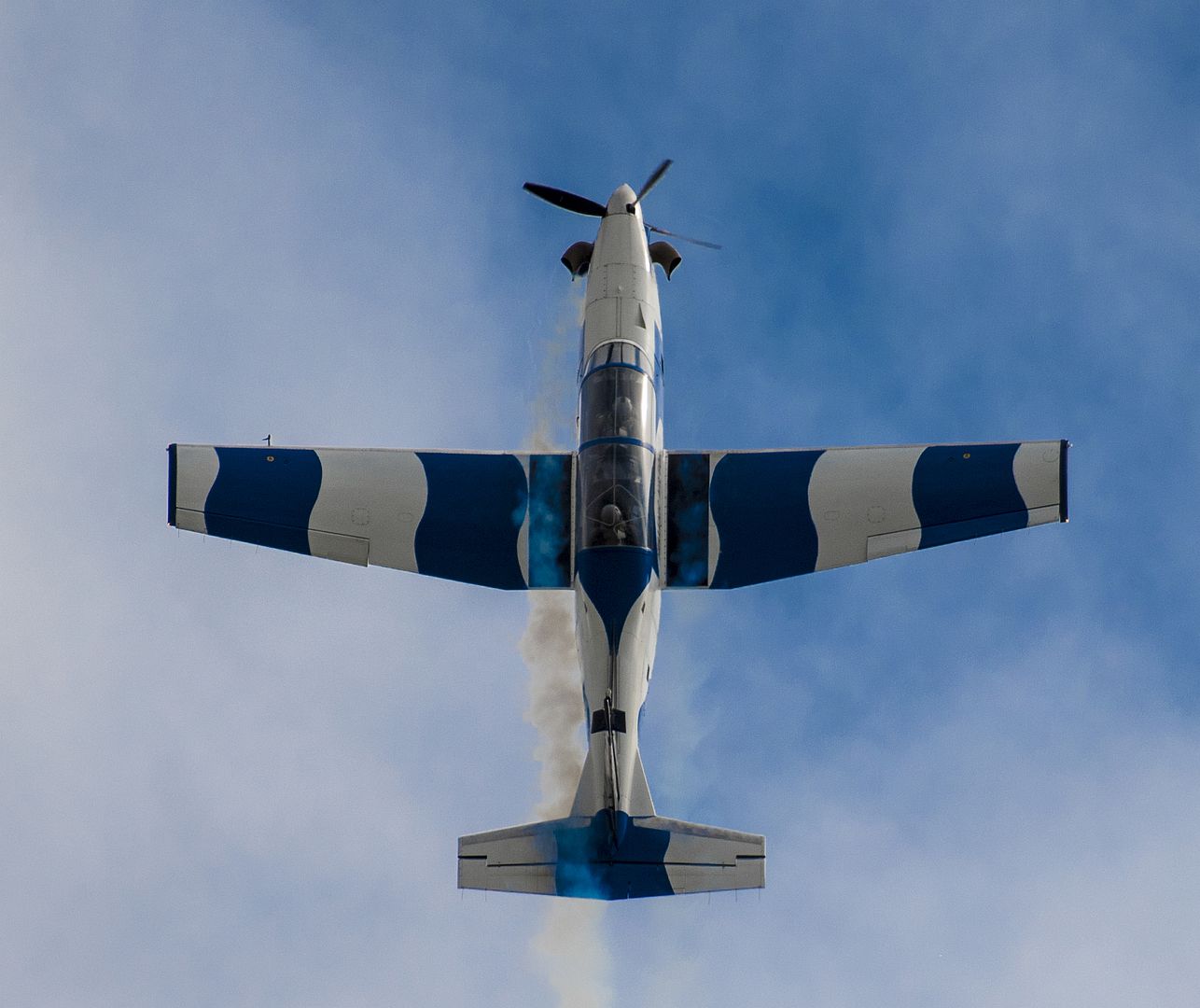
U.S. Air Force Maj. Paul 'Loco' Lopez, F-22 Demo Team commander and pilot, performs the 'tail slide' maneuver during an aerial demonstration at the SkyFest air show in Spokane. Washington, June 22, 2019. Maj. Lopez has over 1,500 hours flying both the F-15 Eagle and the F-22 Raptor and is in his second year as the commander of the F-22 Raptor Demonstration Team. (U.S. Air Force photo by 2nd Lt. Samuel Eckholm).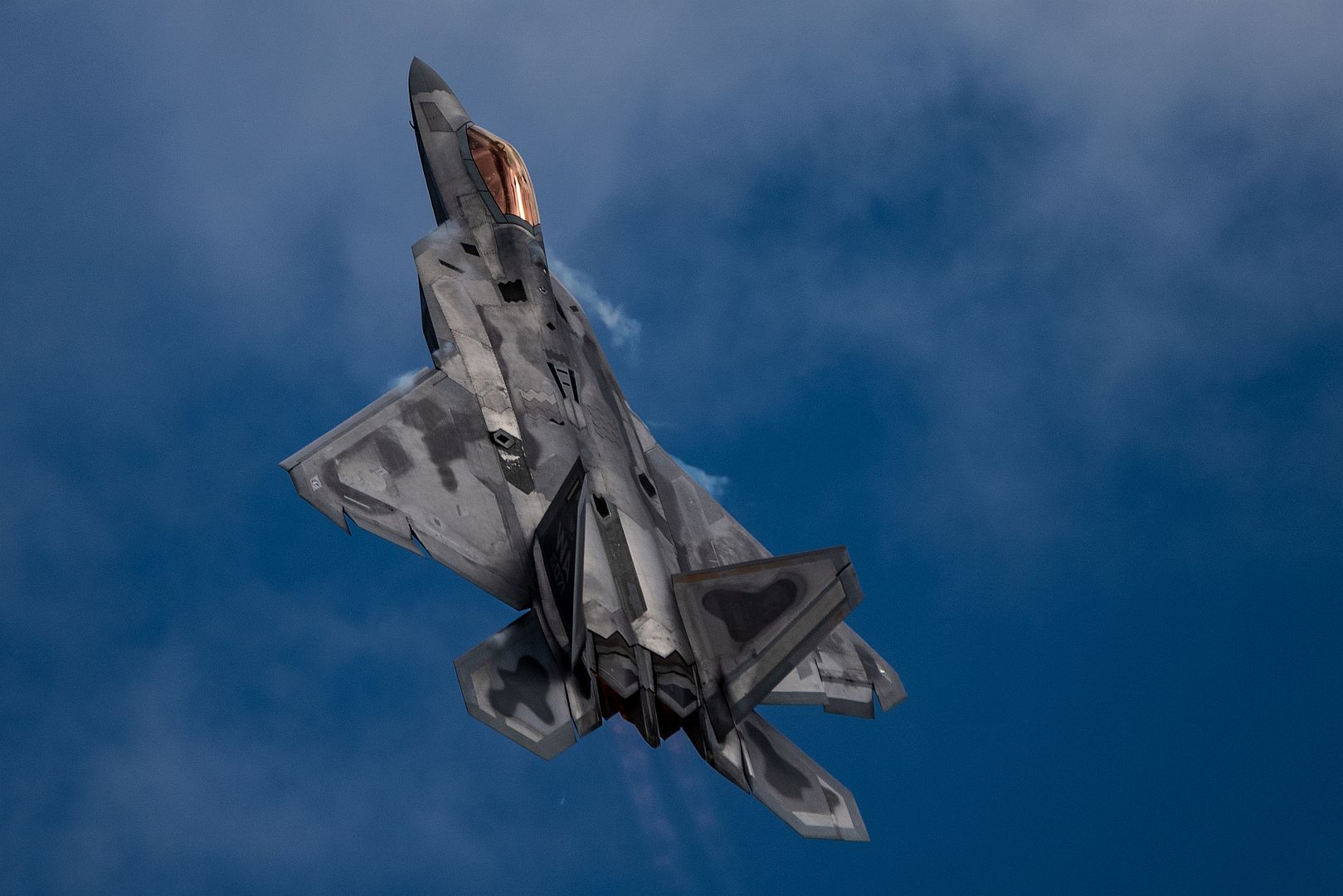

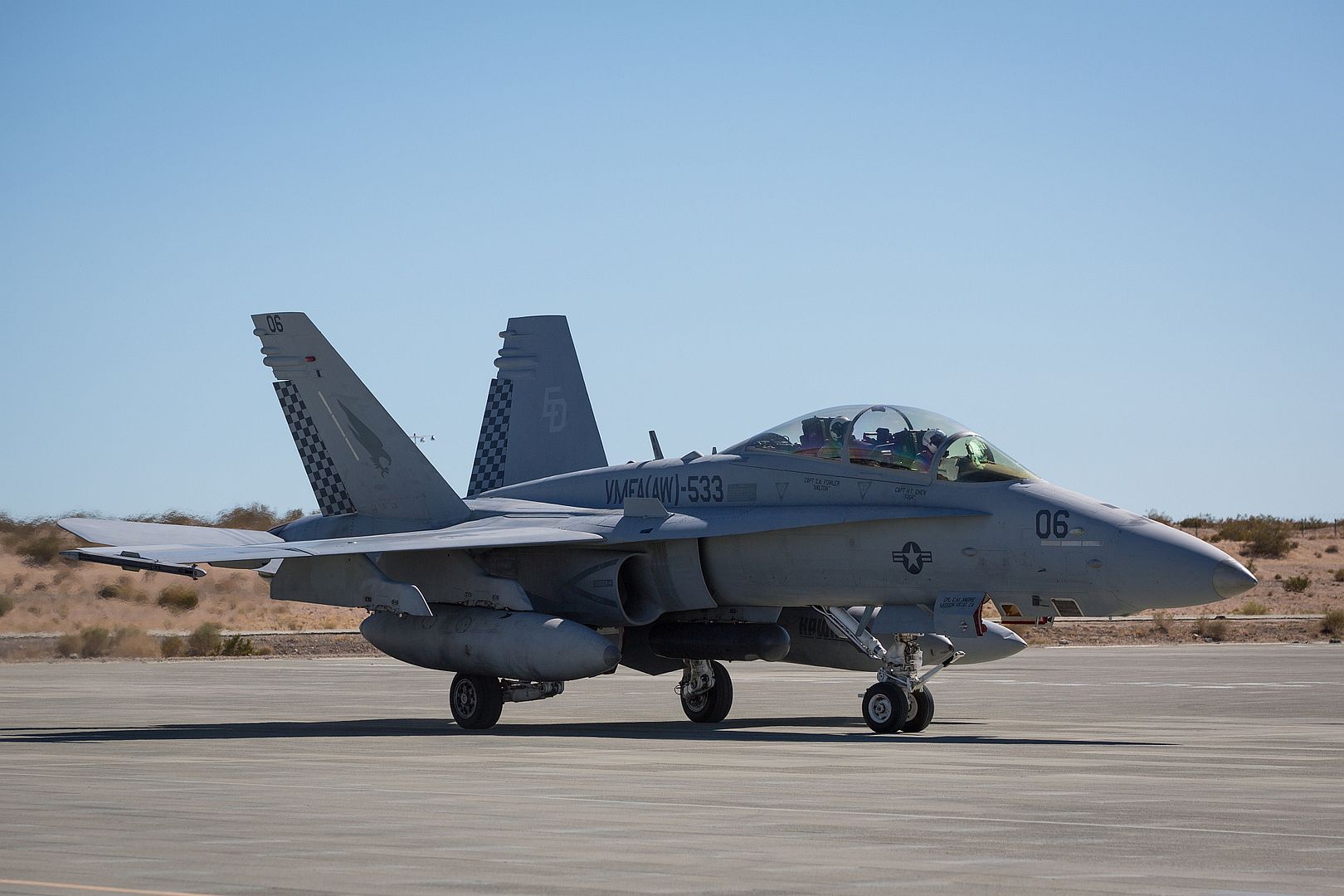
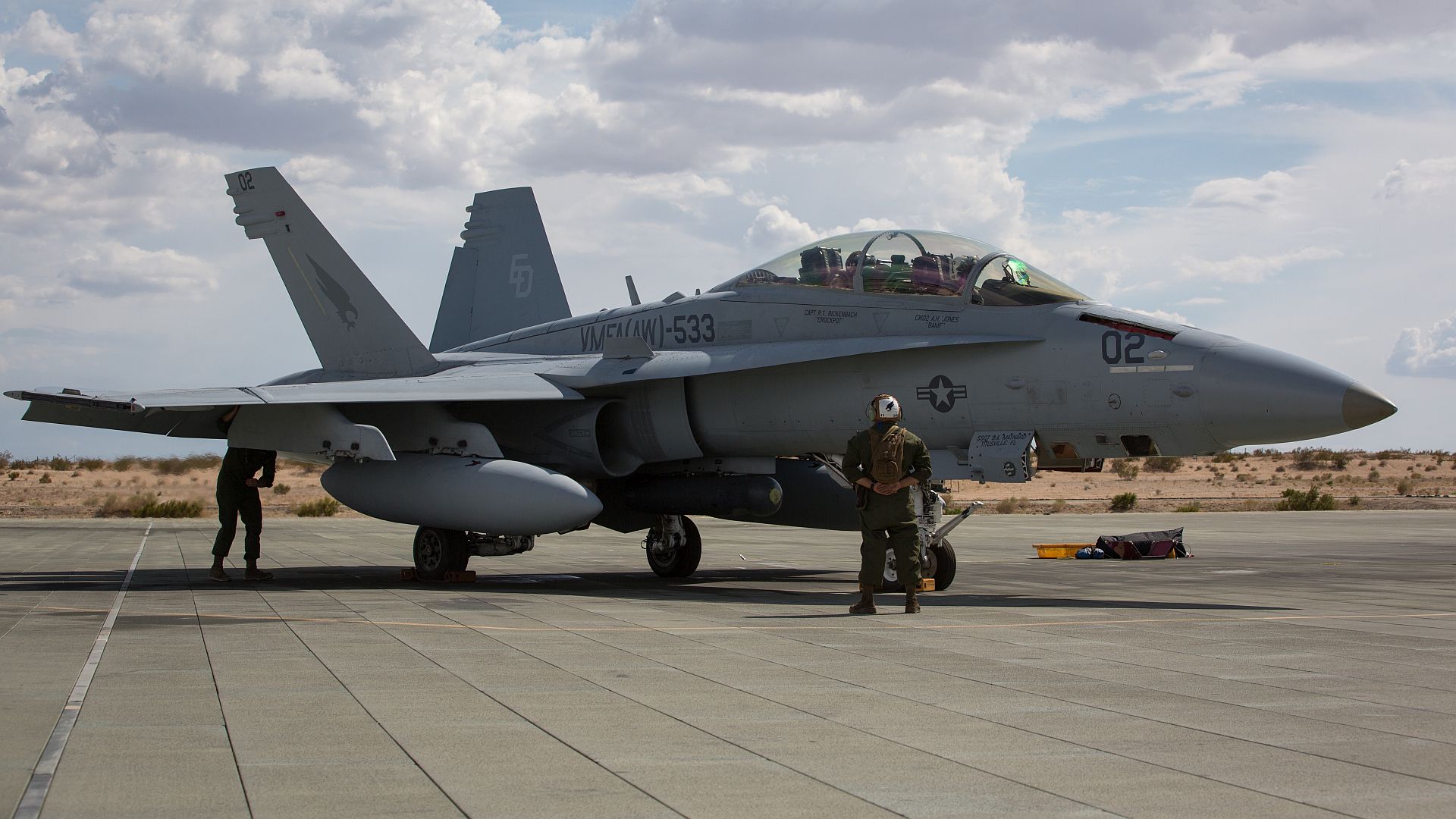
U.S. Marine Corps F/A-18D Hornet's assigned to Marine All-Weather Fighter Attack Squadron (VMFA(AW)) 533 arrive at Camp Wilson, Marine Corps Air Ground Combat Center, Twenty-nine Palms, California, July 20, 2019. The Marines of VMFA(AW)-533 are participating in Integrated Training Exercise (ITX) 5-19, a large-scale, combined-arms training exercise that produces combat-ready forces capable of operating as an integrated Marine Air-Ground Task Force. (U.S. Marine Corps photo by Cpl. Cody Rowe)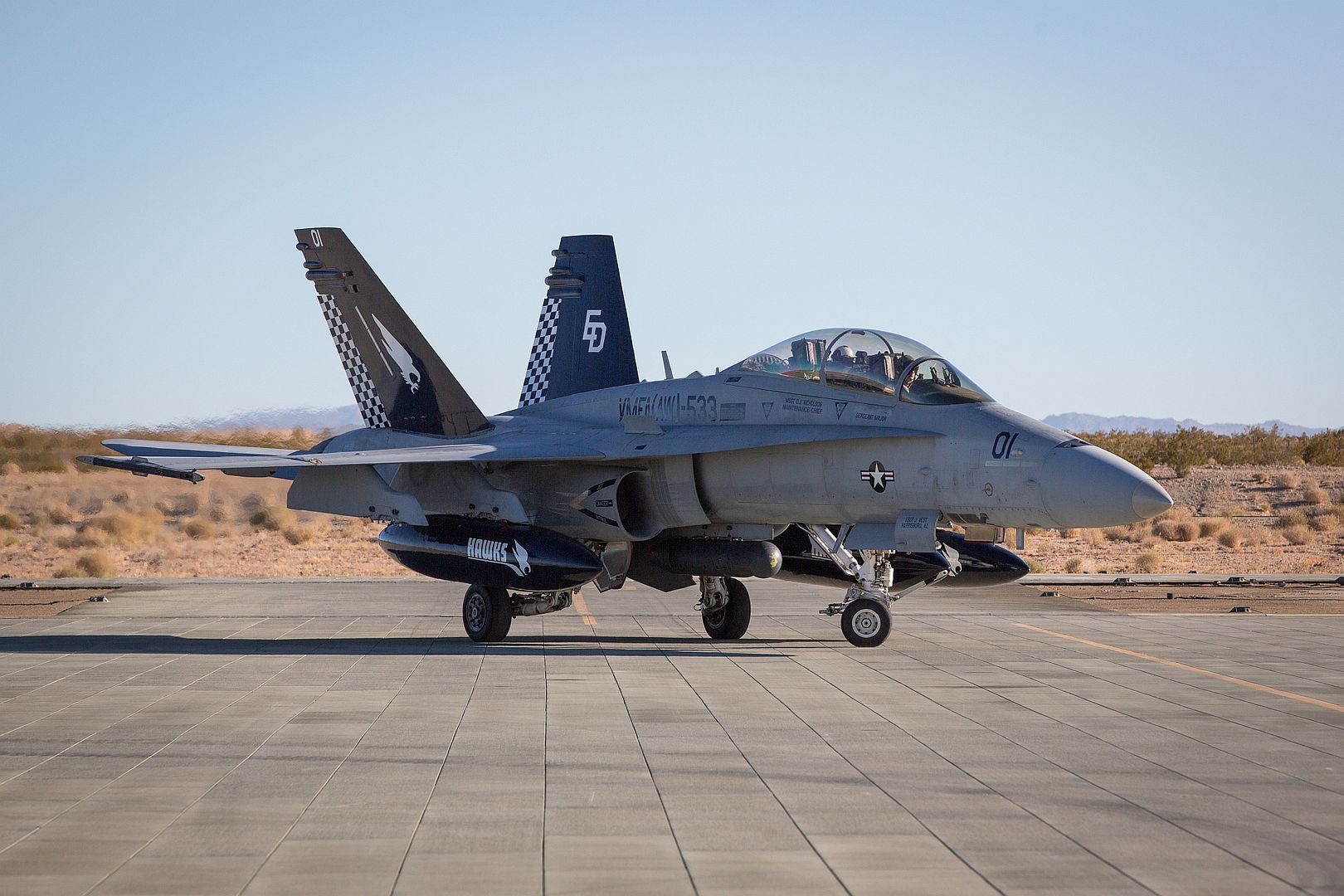
PACIFIC OCEAN (July 20, 2019) Sailors run diagnostics on an C-2A Greyhound, assigned to the ?Providers? of Fleet Logistics Support Squadron (VRC) 30, on the flight deck of the aircraft carrier USS Theodore Roosevelt (CVN 71). Theodore Roosevelt is conducting routine operations in the Eastern Pacific Ocean. (U.S. Navy photo by Mass Communication Specialist 3rd Class Zachary Wheeler/Released)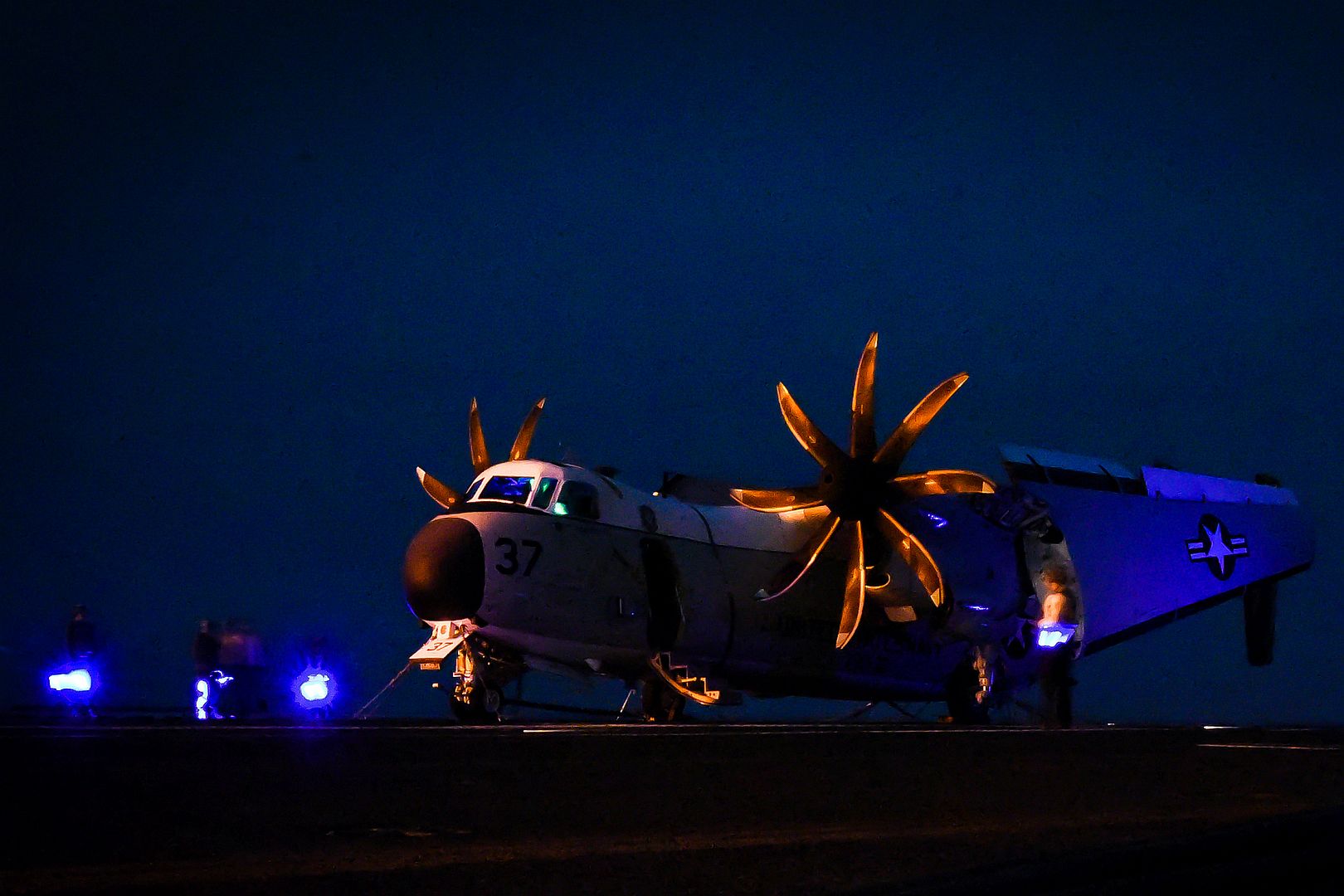
PACIFIC OCEAN (July 20, 2019) Sailors move an F/A-18F Super Hornet, assigned to the ?Tomcatters? of Strike Fighter Squadron (VFA) 31, across the flight deck of the aircraft carrier USS Theodore Roosevelt (CVN 71). Theodore Roosevelt is conducting routine operations in the Eastern Pacific Ocean. (U.S. Navy photo by Mass Communication Specialist 3rd Class Zachary Wheeler/Released)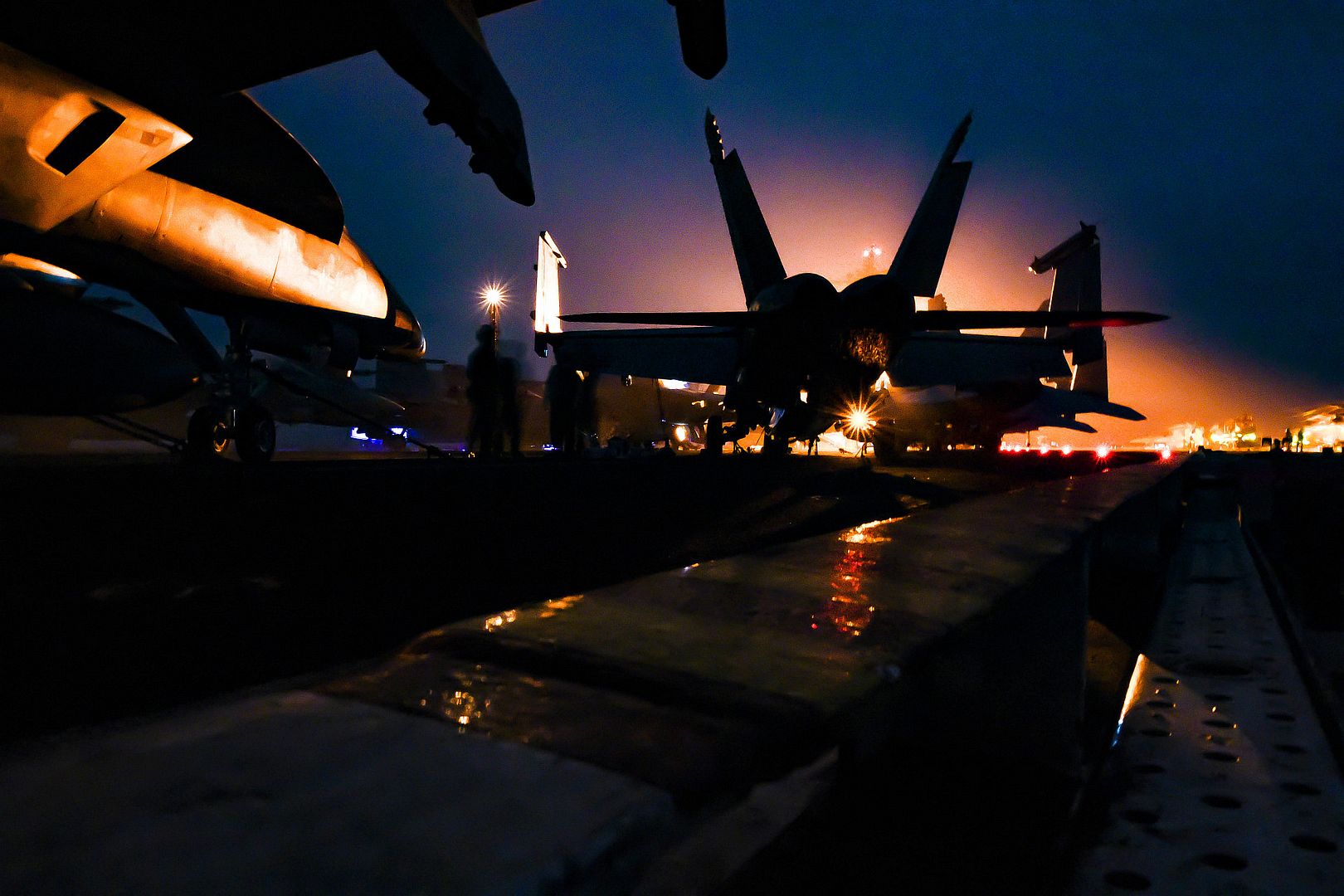
PACIFIC OCEAN (July 20, 2019) An E/A-18G Growler, assigned to the ?Gray Wolves? of Electronic Attack Squadron (VAQ) 142, launches from the flight deck of the aircraft carrier USS Theodore Roosevelt (CVN 71). Theodore Roosevelt is conducting routine operations in the Eastern Pacific Ocean. (U.S. Navy photo by Airman D.J. Schwartz/Released)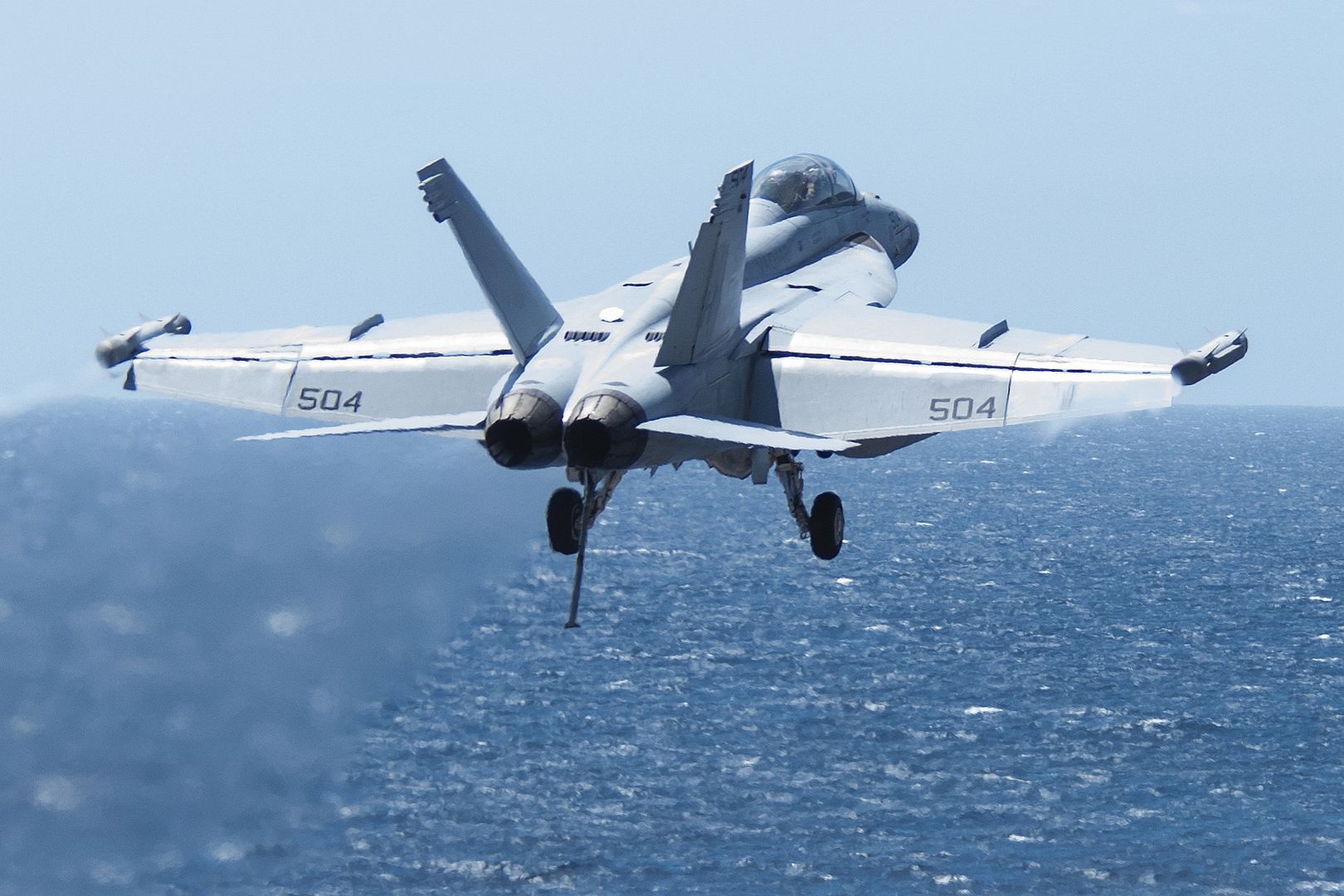
ARABIAN SEA (July 18, 2019) An E-2D Hawkeye assigned to the "Bluetails" of Carrier Airborne Early Warning Squadron (VAW) 121 makes an arrested landing on flight deck of the Nimitz-class aircraft carrier USS Abraham Lincoln (CVN 72) during an airborne change of command ceremony. Cmdr. Martin N. Fentress relieved Cmdr. Michael McGlynn as commanding officer of VAW-121, July 18, 2019. Abraham Lincoln Carrier Strike Group is deployed to the U.S. 5th Fleet area of operations in support of naval operations to ensure maritime stability and security in the Central Region, connecting the Mediterranean and the Pacific through the western Indian Ocean and three strategic choke points. With Abraham Lincoln as the flagship, deployed strike group assets include staffs, ships and aircraft of Carrier Strike Group 12 (CSG 12), Destroyer Squadron 2 (DESRON 2), USS Leyte Gulf (CG 55) and Carrier Air Wing 7 (CVW 7). (U.S. Navy photo by Mass Communication Specialist 3rd Class Dan Snow/Released)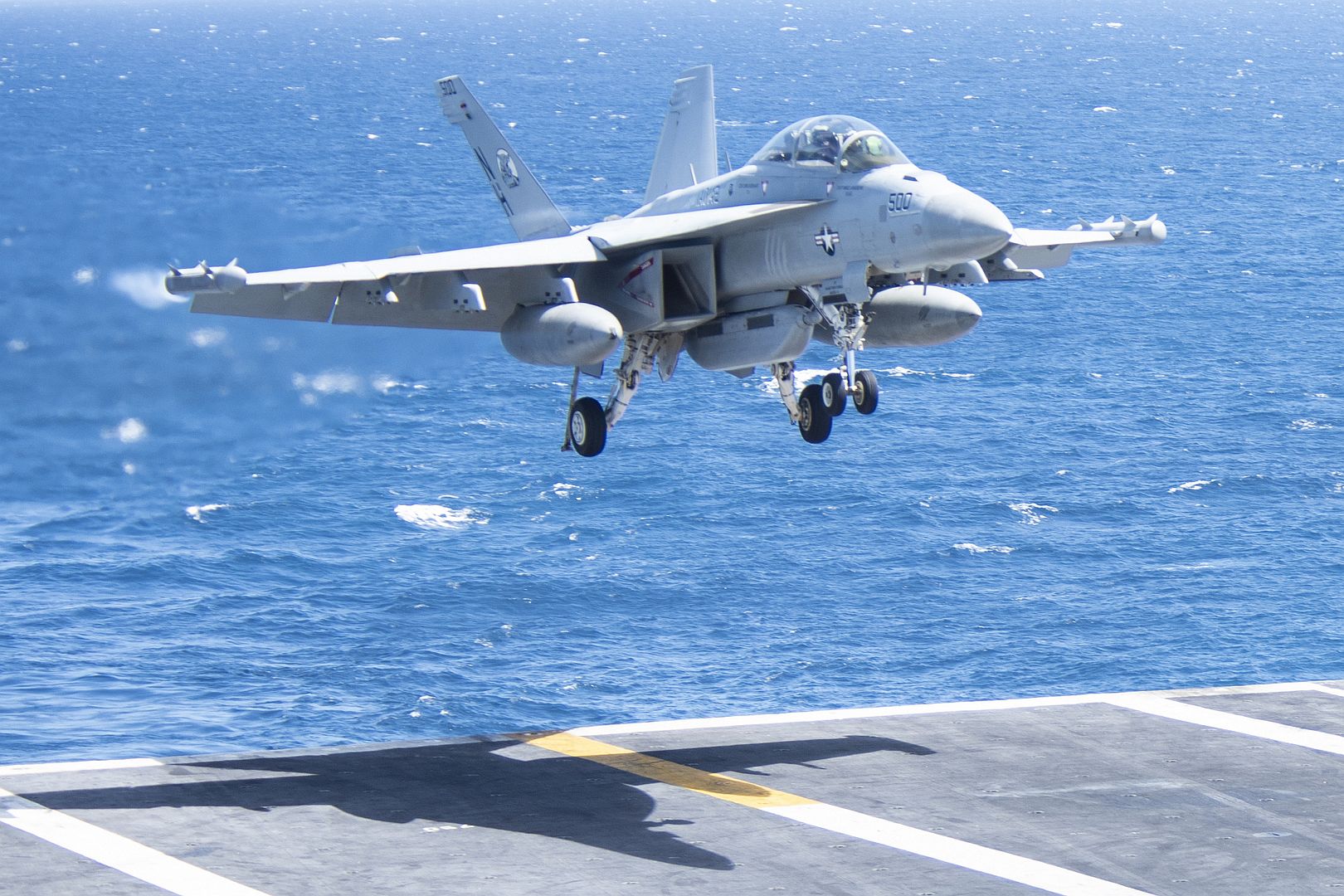
KENNEDY SPACE CENTER, Fla., July 20, 2019 /PRNewswire/ -- The goal of humans again walking on the Moon is one giant leap closer. Lockheed Martin (NYSE: LMT) has completed building the capsule for NASA's Orion spacecraft. The crew module capsule for the uncrewed Artemis 1 mission to the Moon has been stacked on top of the Orion service module, which was also recently finished.
Vice President Mike Pence made the announcement today at a ceremony in front of the Orion spacecraft in the aptly-named Neil Armstrong Operations and Checkout Building at the Kennedy Space Center in Florida. The event and announcement commemorated the 50-year anniversary of the Apollo 11 Moon landing.
Lockheed Martin's President, Chairman and CEO Marillyn Hewson also provided remarks at the ceremony, in addition to NASA's Administrator Jim Bridenstine, Kennedy Space Center's Director Robert Cabana and Florida's Governor Ron DeSantis.
The Orion spacecraft is like none other in its design and capability.
"Orion is a new class of spaceship, uniquely designed for long-duration deep space flight, that will return astronauts to the Moon and eventually take the first humans to Mars, and bring them all back safely." said Lisa Callahan, vice president and general manager of Commercial Civil Space at Lockheed Martin. "Orion will accelerate scientific discovery of our solar system and will be the cornerstone of the defining space achievement of this era."
Since the crew module pressure vessel arrived in Florida, technicians and engineers from Lockheed Martin, NASA and supporting contractors have meticulously assembled the capsule into its finished state. The work included installing the capsule's avionic computers, harnesses, propulsion system and its 12 engines, 11 parachutes, its large 16-foot-diameter heat shield, forward bay cover and numerous other systems and components.
"Throughout assembly, the team tested and validated the many systems a hundred different ways to ensure they will operate as designed in the harshness of deep space," said Mike Hawes, Orion program manager for Lockheed Martin. "The Artemis 1 flight will test the design and workmanship of the capsule and its service module during the three-week mission out around the Moon and back. We're excited for this mission as it paves the way for the first crewed mission in 2022, Artemis 2."
The crew module and service module were stacked together earlier in the week in the Final Assembly and System Testing (FAST) cell where they are now being fully integrated, including connecting the physical retention bolts and the umbilical lines between the two modules. The FAST cell is also where the Apollo spacecraft were integrated.
The combined stack will then be powered up and undergo a series of integrated systems tests. In September, the combined stack will be shipped to NASA's Plum Brook Station in Ohio, where it will go through environmental testing in a large thermal vacuum chamber as well as testing for electromagnetic interference and compatibility.
Once Orion returns to Kennedy at the end of the year, the spacecraft will go through final preparations before Lockheed Martin delivers it to ground systems for launch processing in early 2020.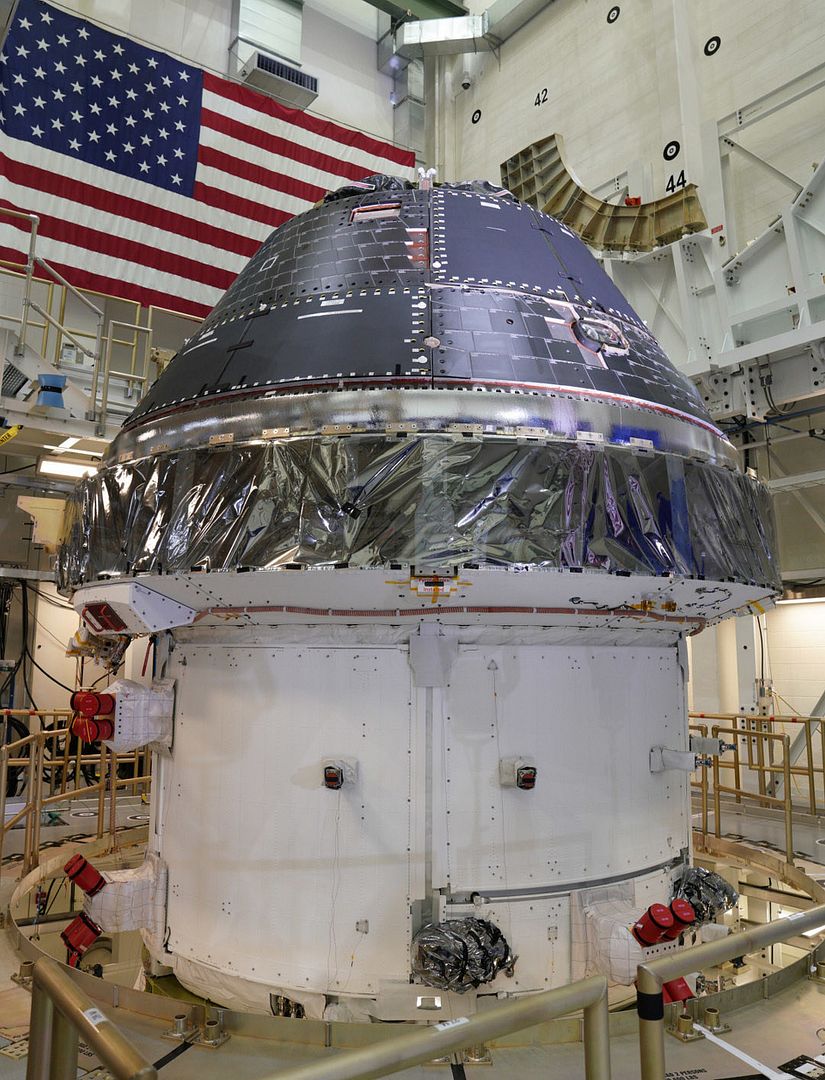
Manila, Airbus Helicopters has secured an ACH160 order from an undisclosed new customer in the Philippines, launching this new model in the Southeast Asia and Pacific region. It will be used for private and business flights within the Philippines archipelago.
This aircraft will feature the ACH160 Exclusive version highlighting two wide hinged doors and electrical footsteps combined with a bespoke cabin, welcoming up to eight passengers in an elegant and refined handcrafted interior for a truly business-jet like experience.
Equipped with Blue Edge blades and a new canted Fenestron rotor, the ACH160 sets a new benchmark in corporate transportation with a blend of innovative technology, speed, comfort and style.
As part of the contract, the ACH160 will be backed by HCare First ? the first such premium support agreement in the region, catering to the specific needs of operators requiring worry-free aircraft availability.
?Launching the ACH160 in Southeast Asia with a new Philippine customer underlines the global attractiveness of our corporate helicopters offering to meet the evolving travelling needs of our customers,? said Frederic Lemos, Head of Airbus Corporate Helicopters (ACH). ?We are equally excited to see our ACH products gaining good success in the growing Philippine private travel market.?
The H160 is Airbus Helicopters? innovative medium twin-engine helicopter designed to create added value for customers in terms of performance, economic competitiveness, safety and comfort. Versions are available for the offshore transportation, business and private, public services, and commercial passenger transport markets. Its entry into service is planned for 2020.
Renowned for its combination of versatility and comfort, the ACH helicopter range is well regarded by passengers and pilots for its stylish interiors, smooth and quiet ride allied to its technologically advanced Helionix digital avionics systems ensuring carefree handling and a high level of safety.
The full ACH range consists of the ACH125, ACH130, ACH135, new ACH145, ACH160 and ACH175 variants of Airbus Helicopters? comprehensive and market-leading family of light and medium models. A range of premium-design aircraft completions, including customised solutions, is available for all models.
Airbus has been present in the Philippines for some 40 years leading the corporate and parapublic helicopter market segments. Through its Manila-based customer centre, Airbus Helicopters Philippines provides maintenance, repair and overhaul, support and service solutions to more than 50 customers.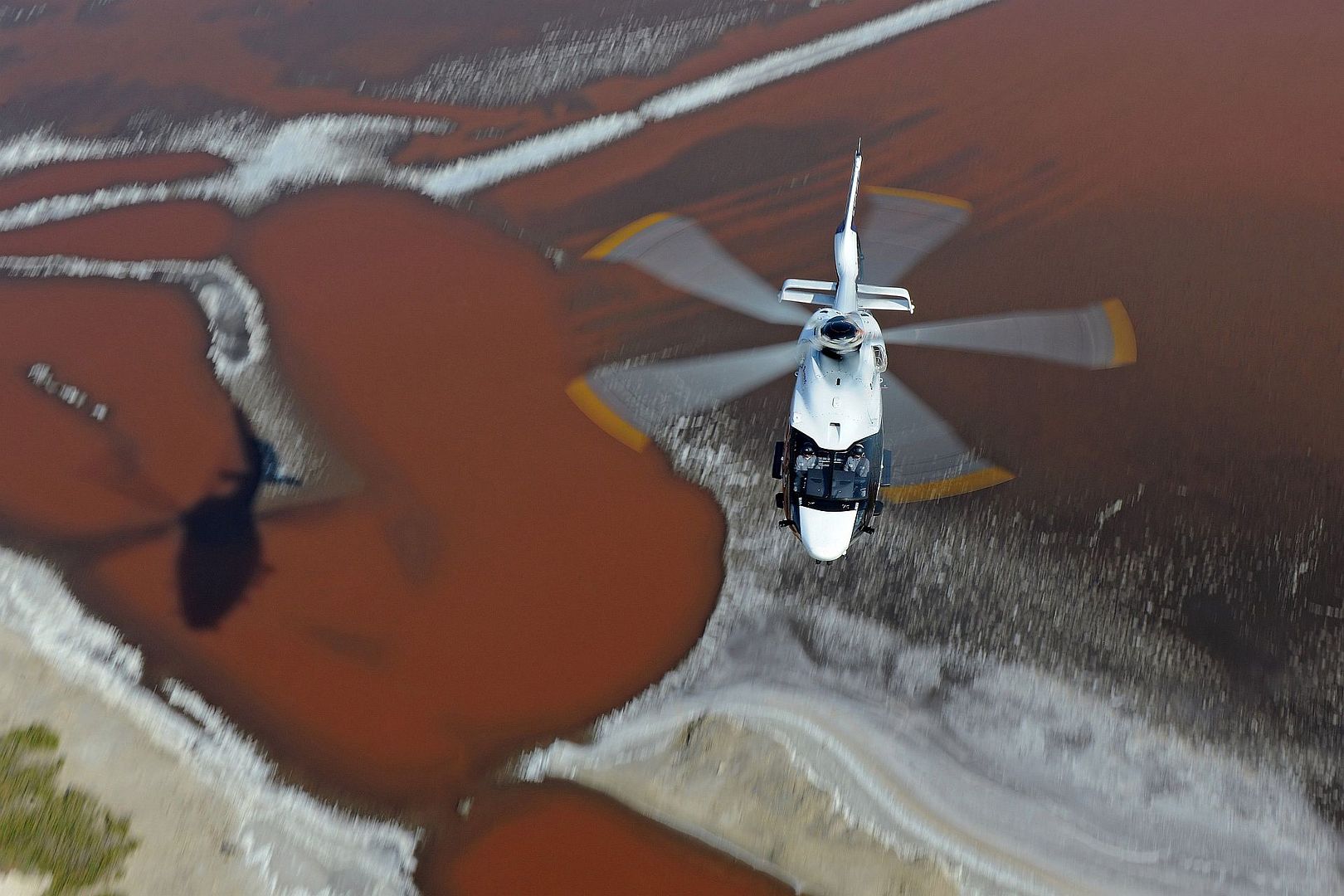
-
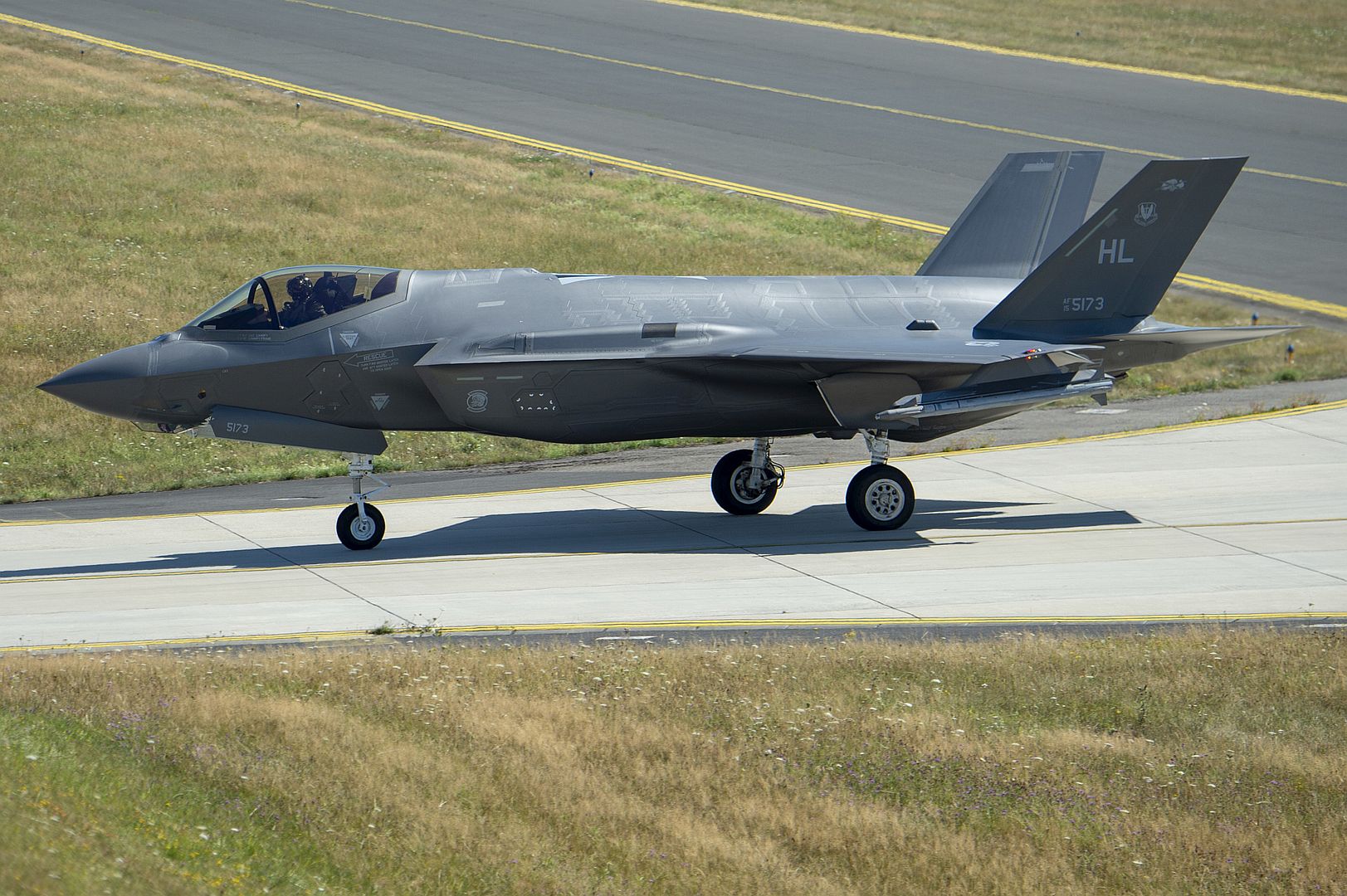
A U.S. Air Force F-35A Lighting II, assigned to the 421st Fighter Squadron, Hill Air Force Base, Utah, taxis on the flightline during Operation Rapid Forge at Spangdahlem Air Base, Germany, July 23, 2019. The goal of the operation is to enhance readiness in coordination with U.S. allies and partners in Europe. (U.S. Air Force photo by Airman 1st Class Branden Rae)
A U.S. Air Force F-35A Lighting II, assigned to the 421st Fighter Squadron, Hill Air Force Base, Utah, and a U.S. Air Force F-15E Strike Eagle, assigned to the 4th Fighter Wing, Seymour Johnson Air Force Base, North Carolina, taxis on the flightline during Operation Rapid Forge at Spangdahlem Air Base, Germany, July 23, 2019. Rapid Forge aircraft are forward deploying to bases in the territory of NATO allies in order to enhance readiness and improve interoperability. (U.S. Air Force photo by Airman 1st Class Branden Rae)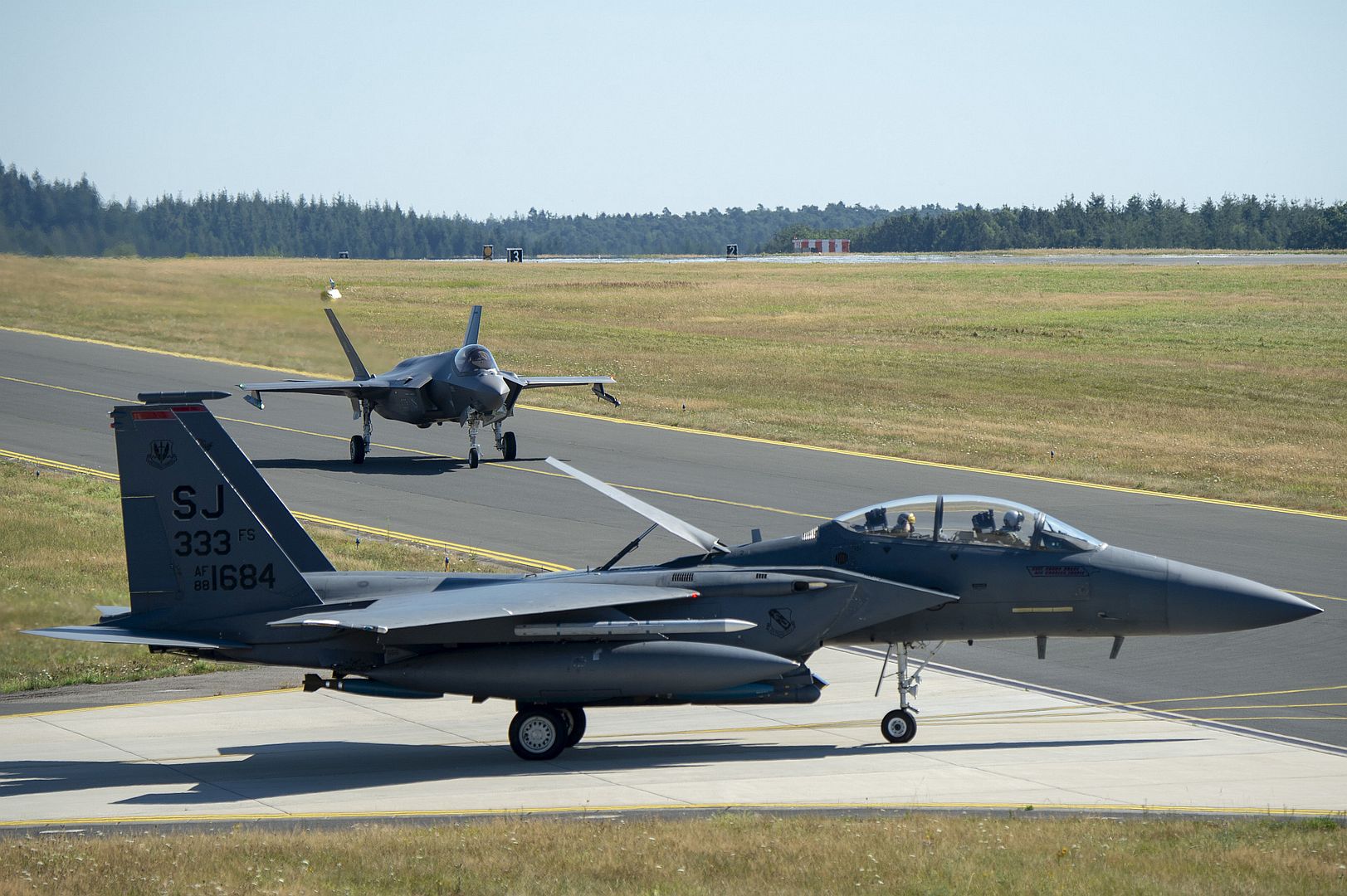
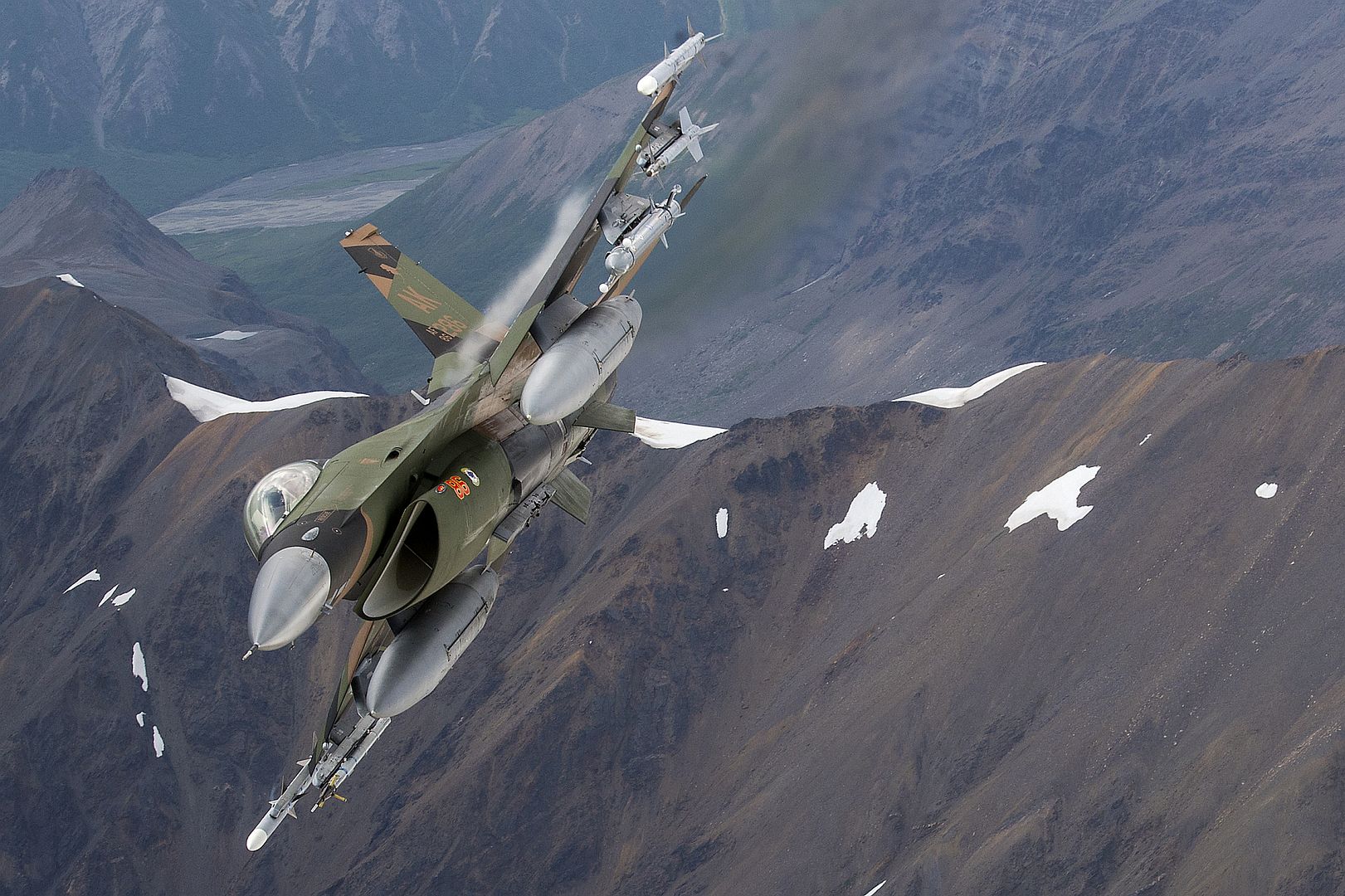
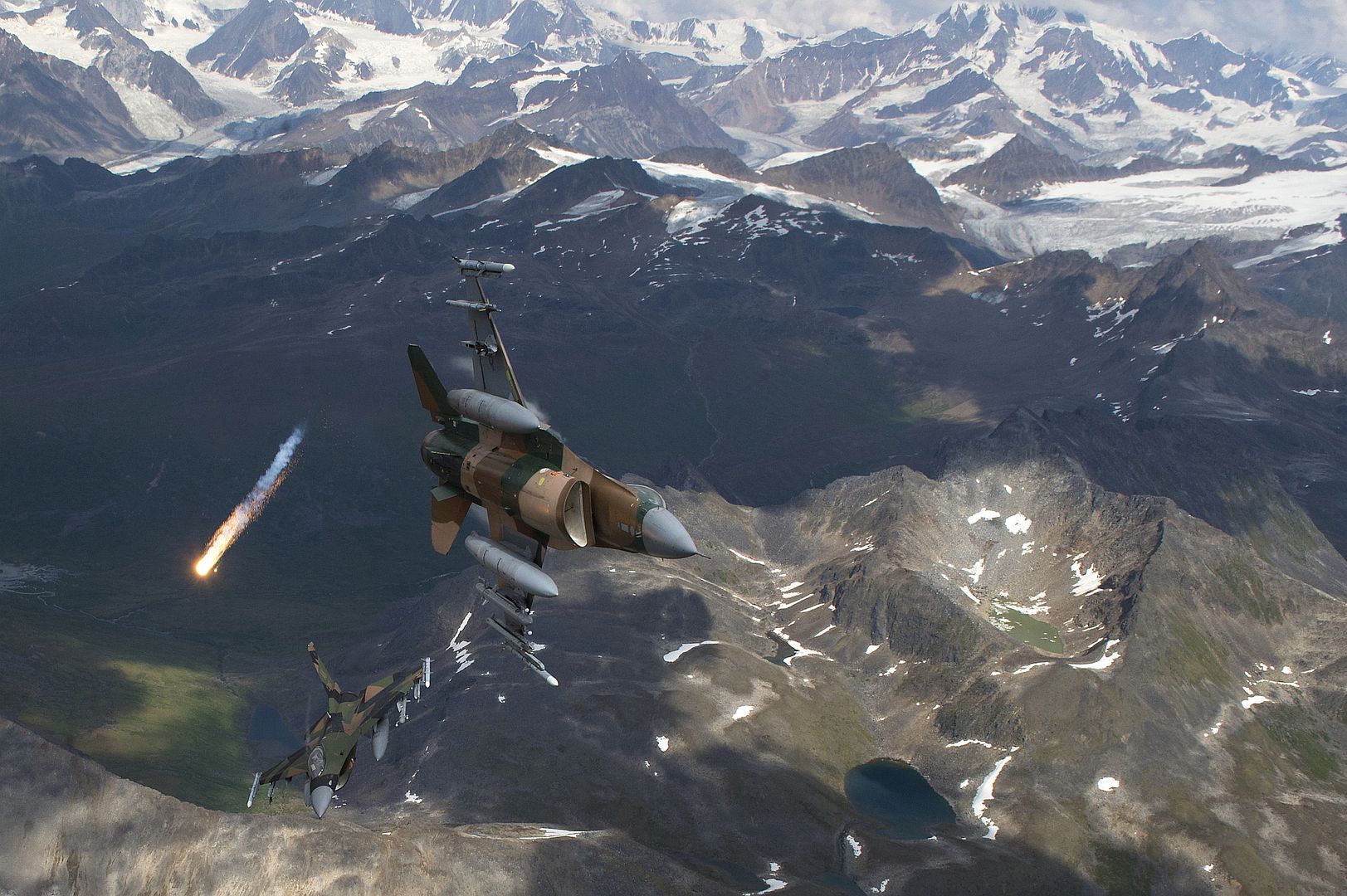
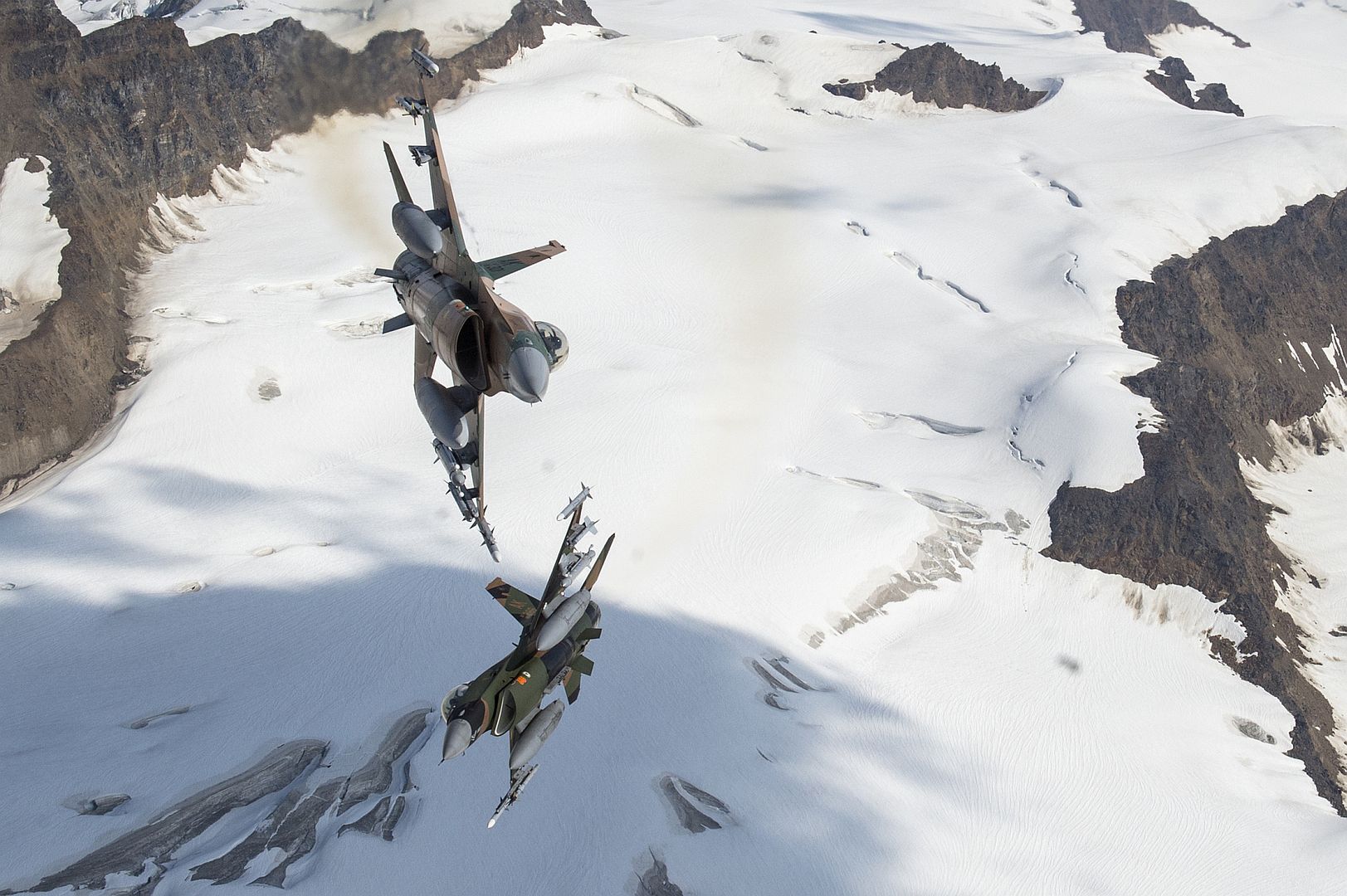
U.S. Air Force F-16 Fighting Falcons from Eielson Air Force Base, flie in formation over the Joint Pacific Alaska Range Complex, July 18, 2019. The JPARC is a 67,000 plus square mile area, providing a realistic training environment commanders leverage for full spectrum engagements, ranging from individual skills to complex, large-scale joint engagements. (U.S. Air Force photo's by Staff Sgt. James Richardson)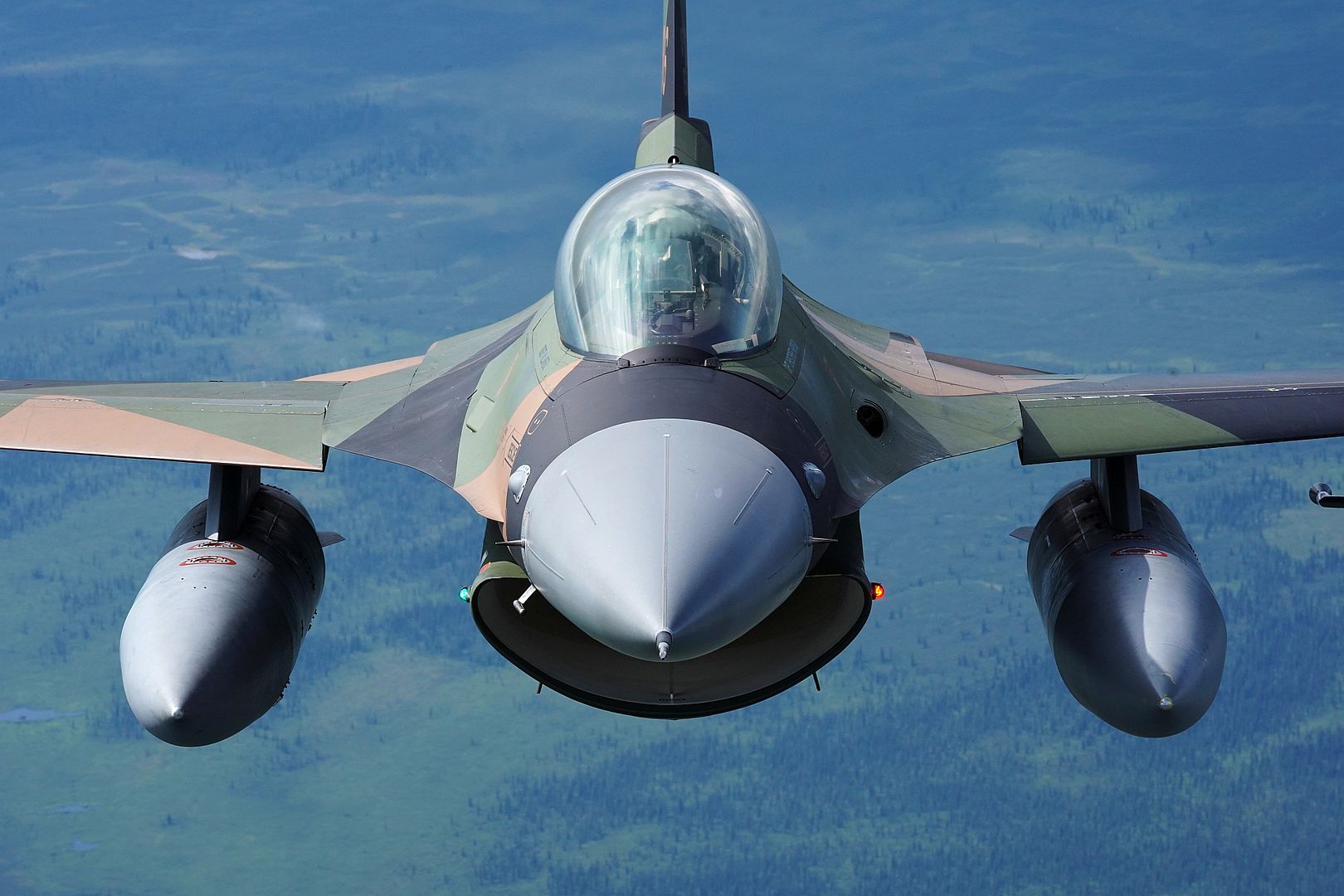
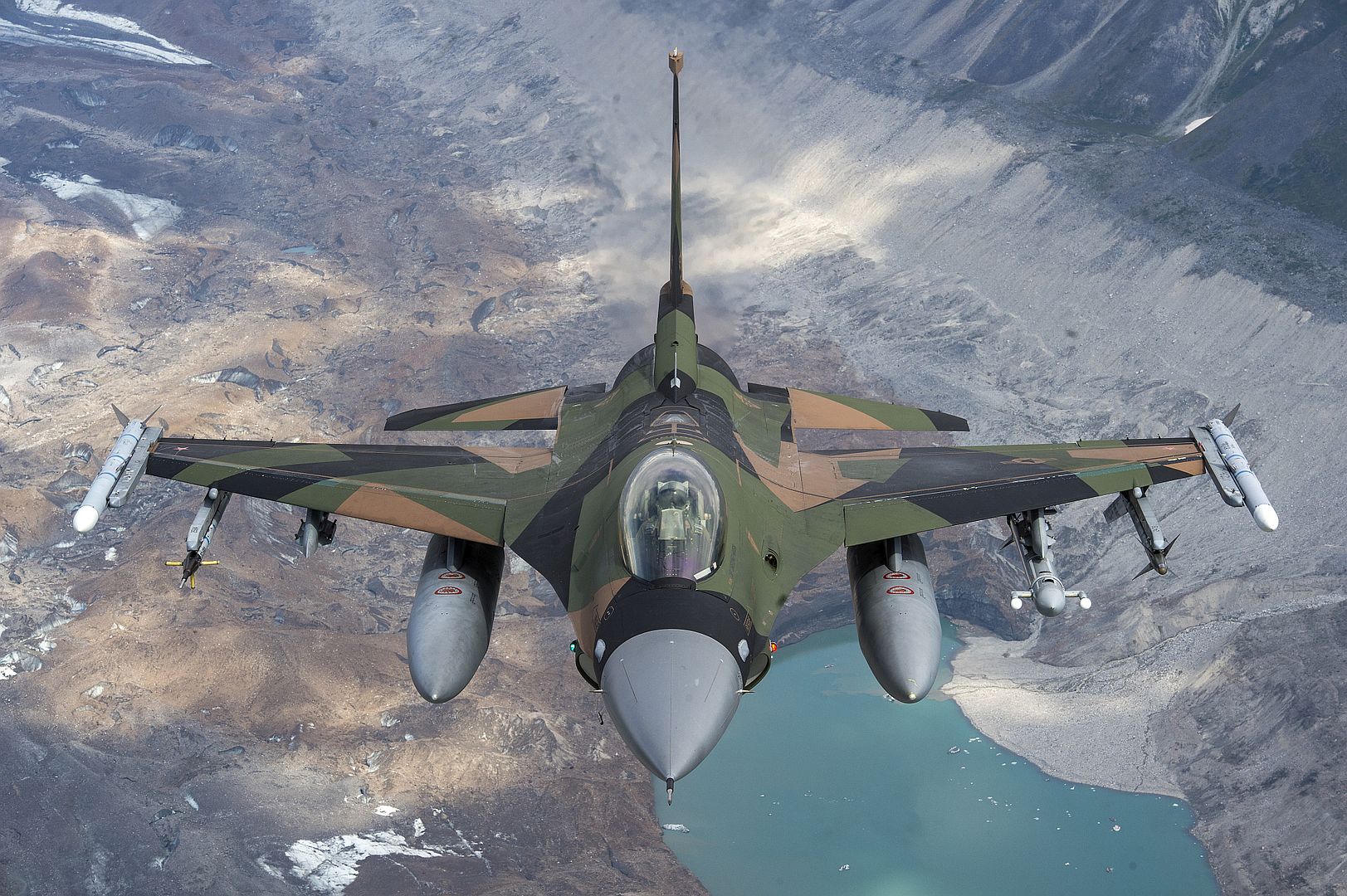
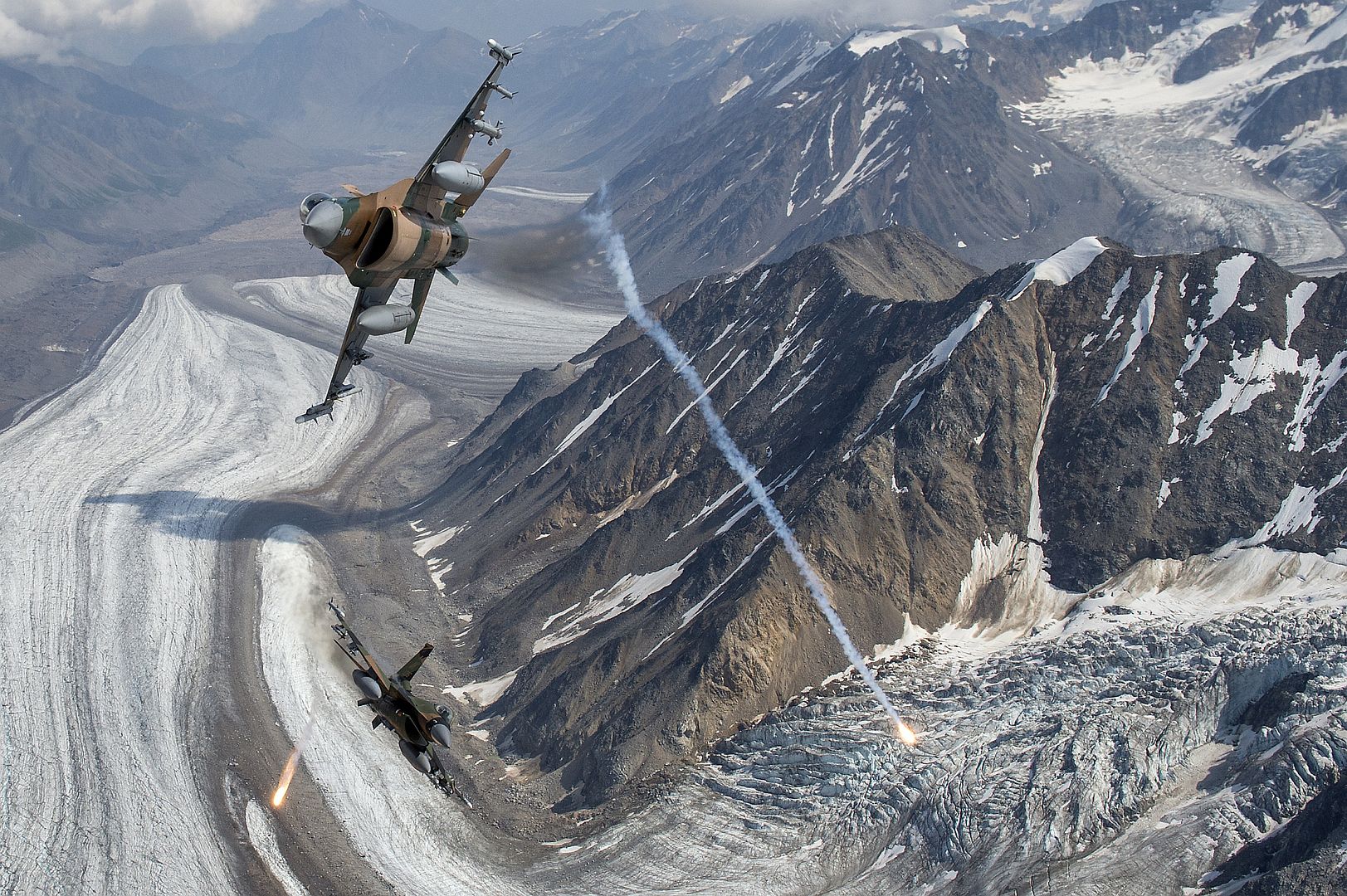
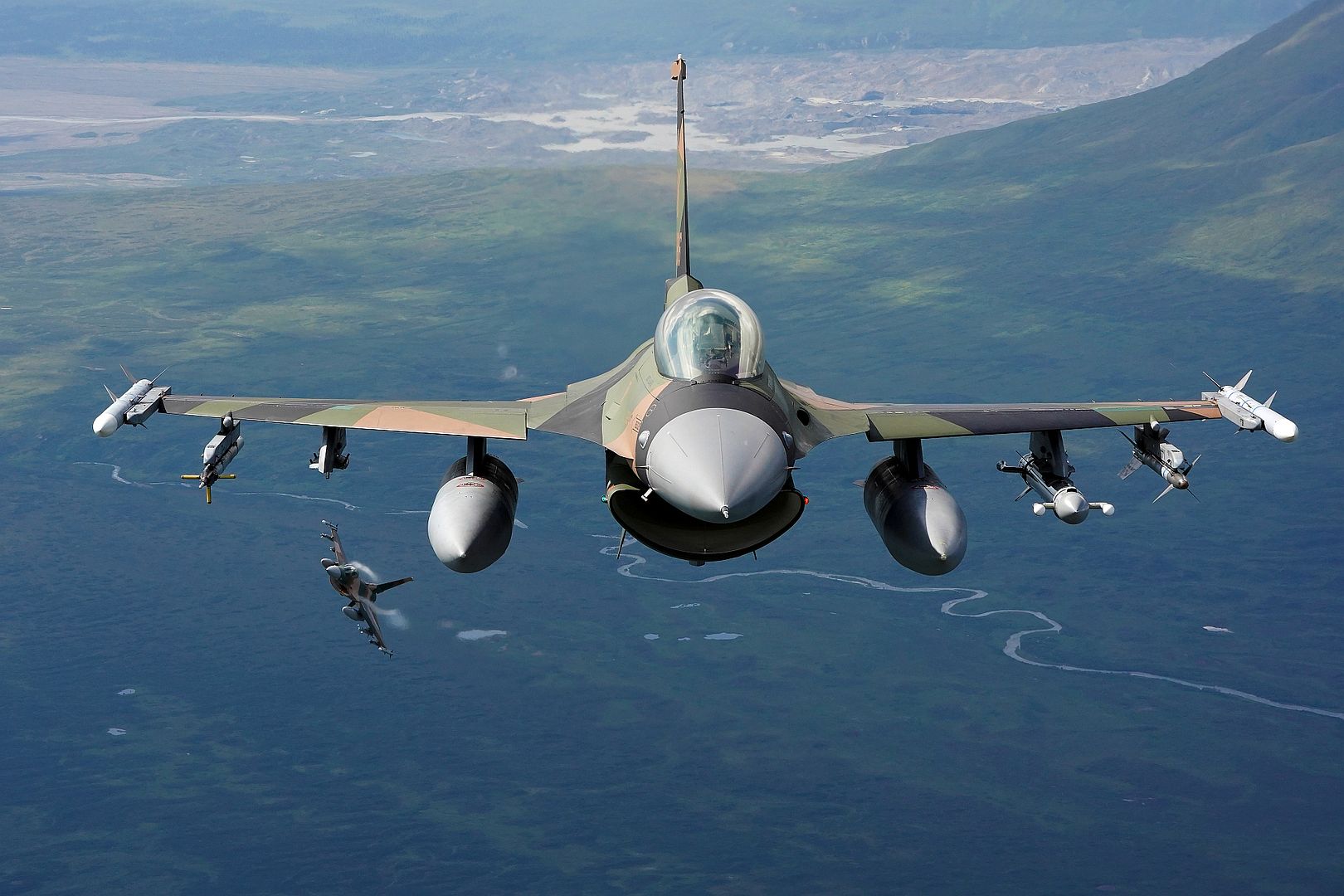
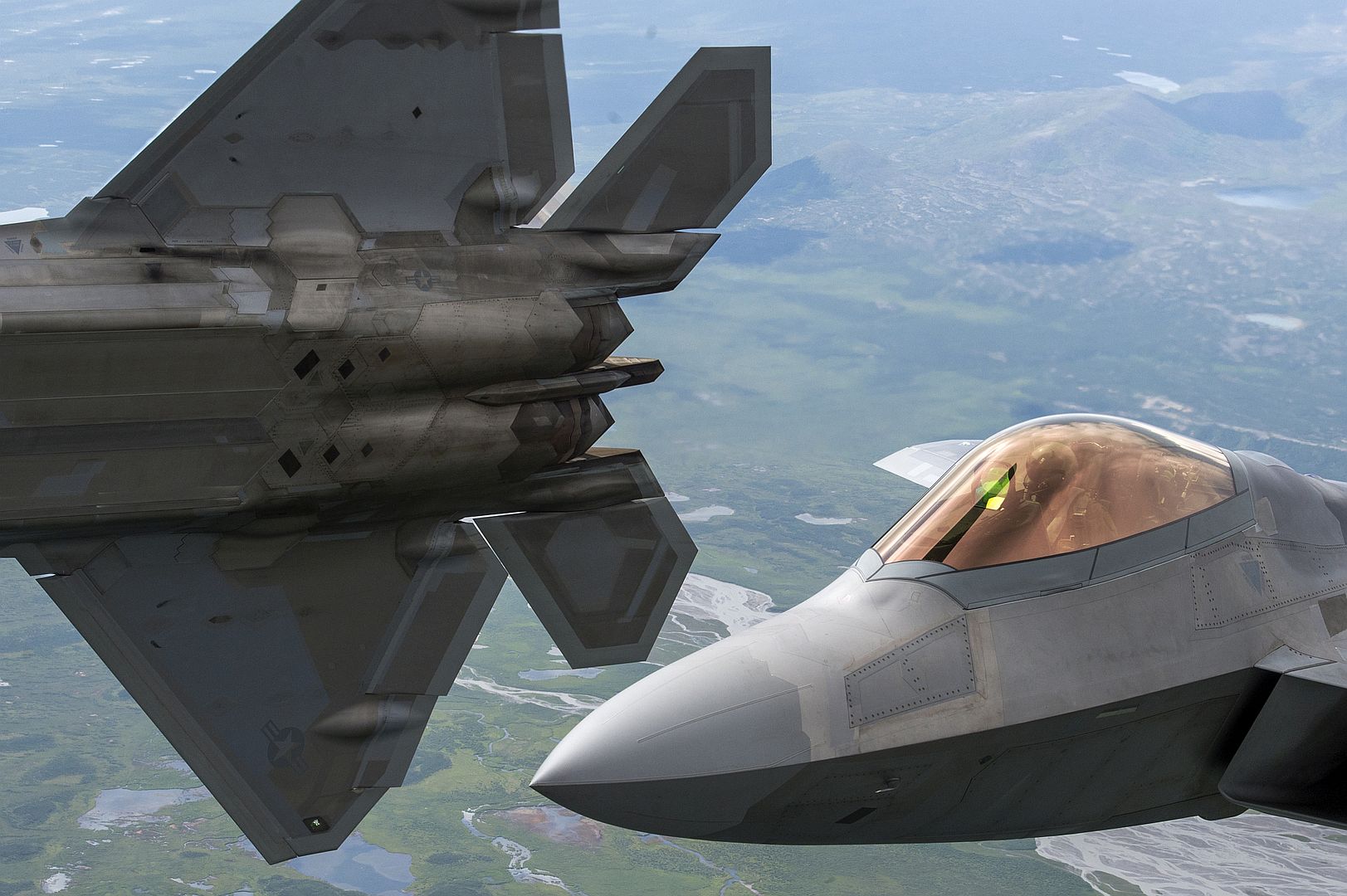
U.S. Air Force F-22 Raptors from Joint Base Elmendorf-Richardson, fly in formation over the Joint Pacific Alaska Range Complex, July 18, 2019. The JPARC is a 67,000 plus square mile area, providing a realistic training environment commanders leverage for full spectrum engagements, ranging from individual skills to complex, large-scale joint engagements. (U.S. Air Force photo's by Staff Sgt. James Richardson)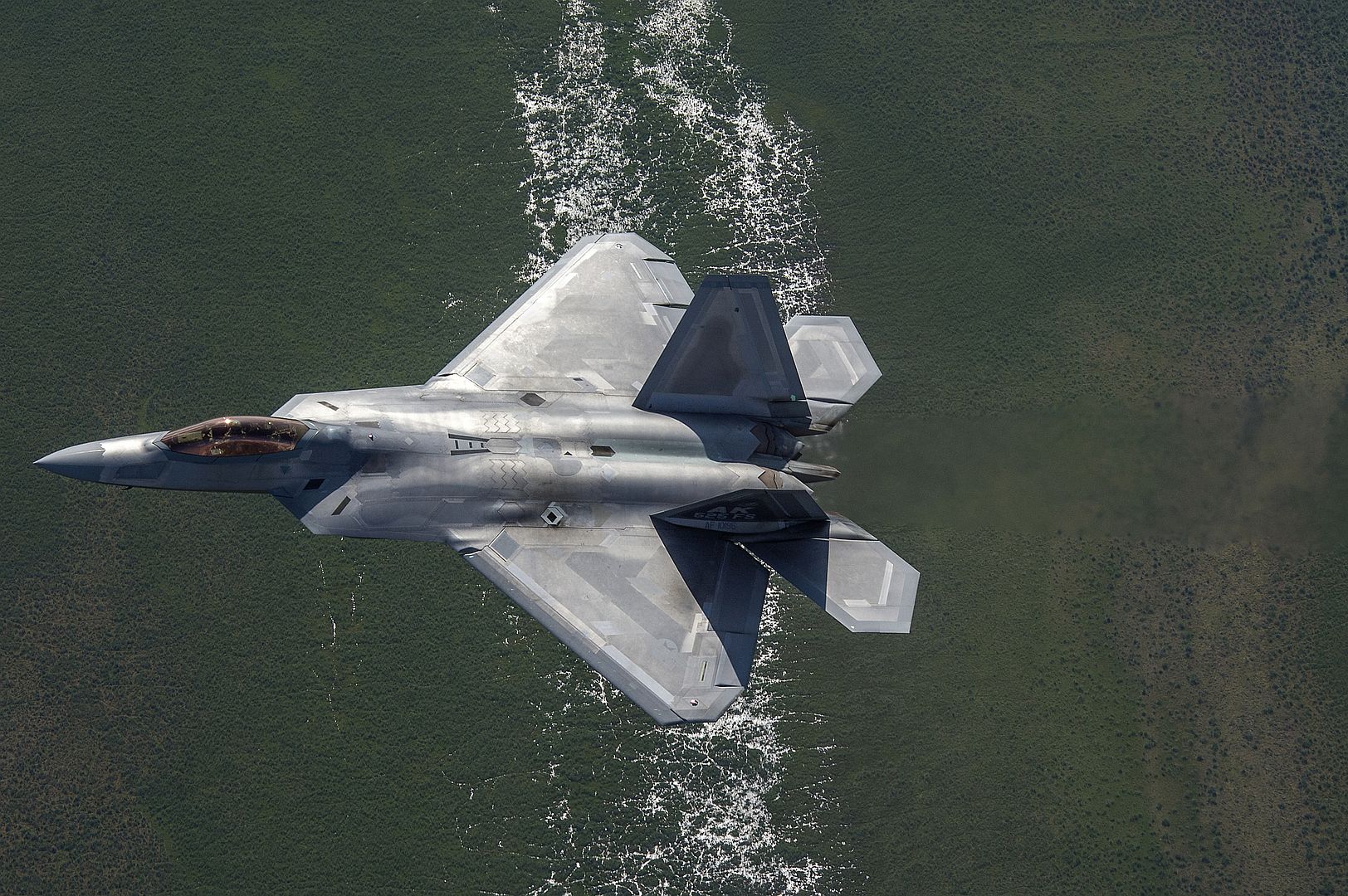
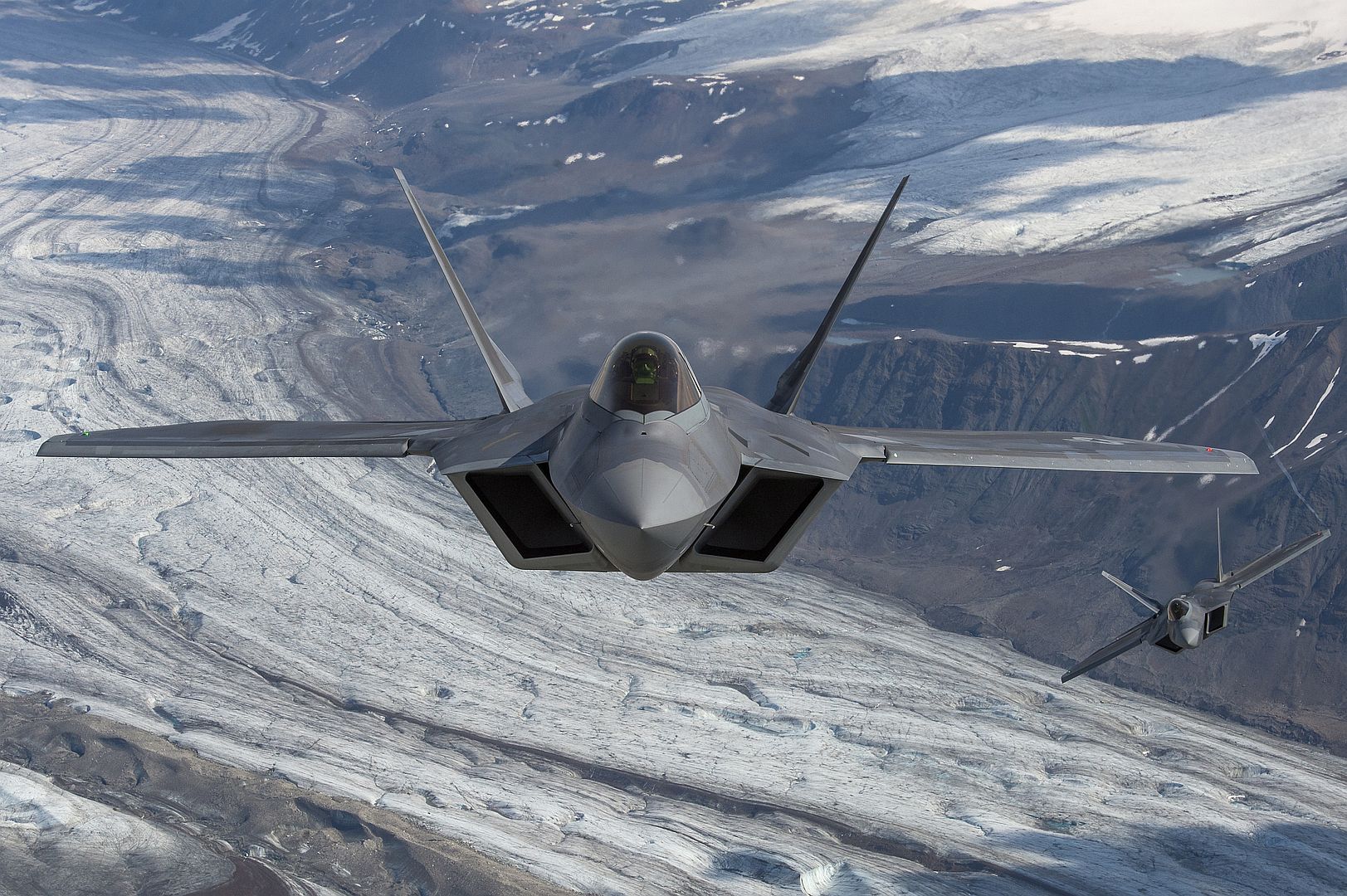
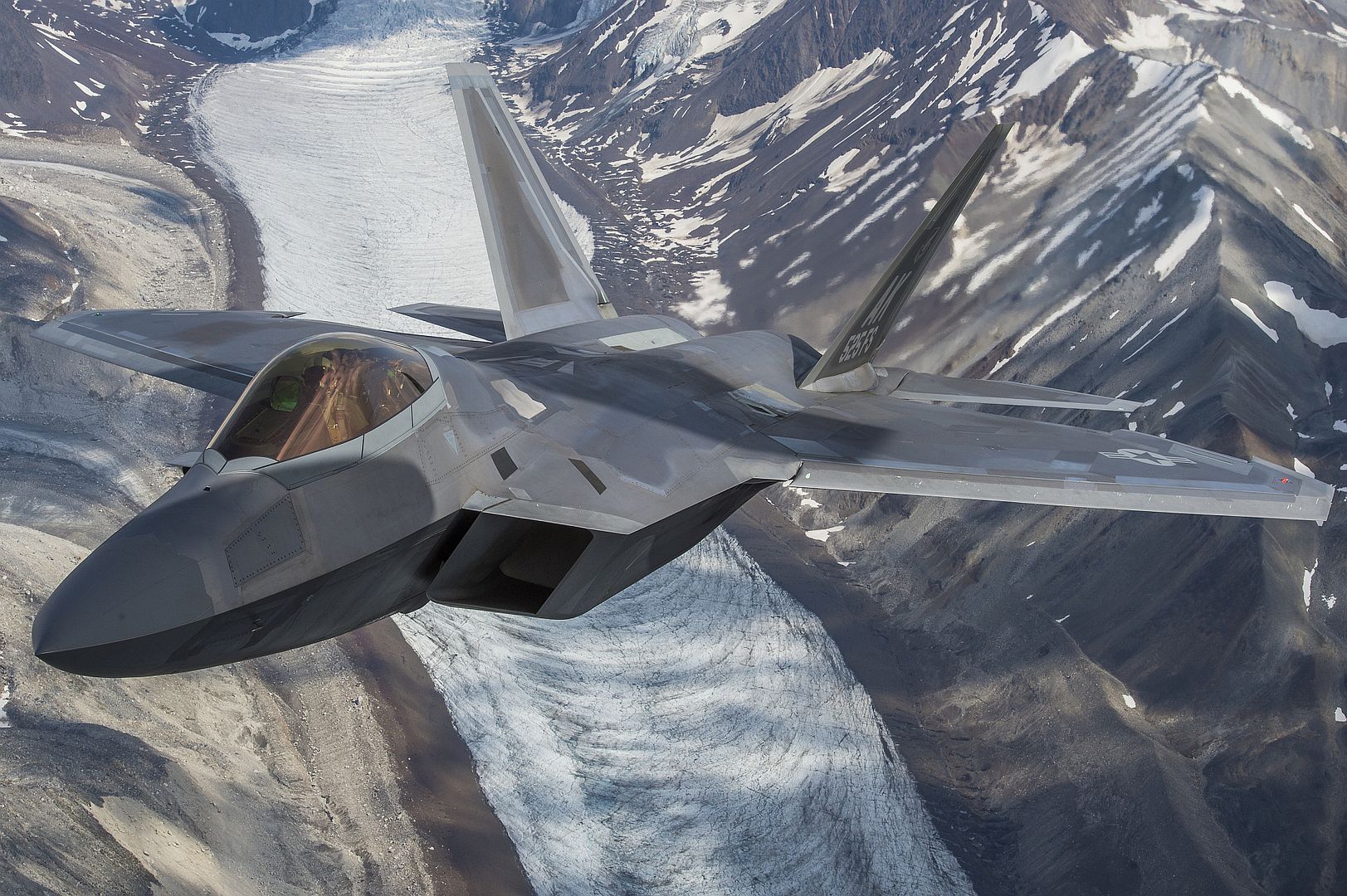
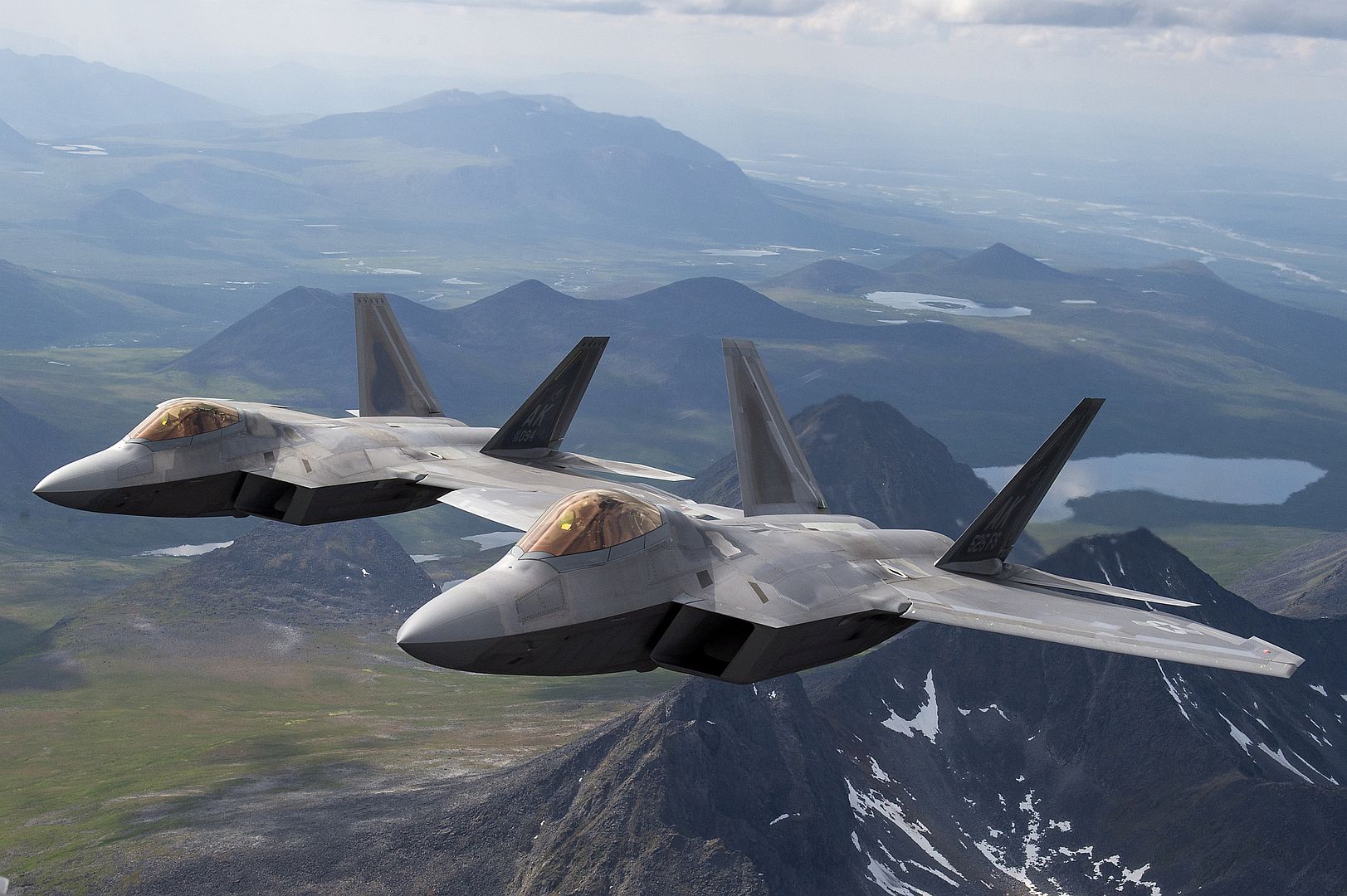
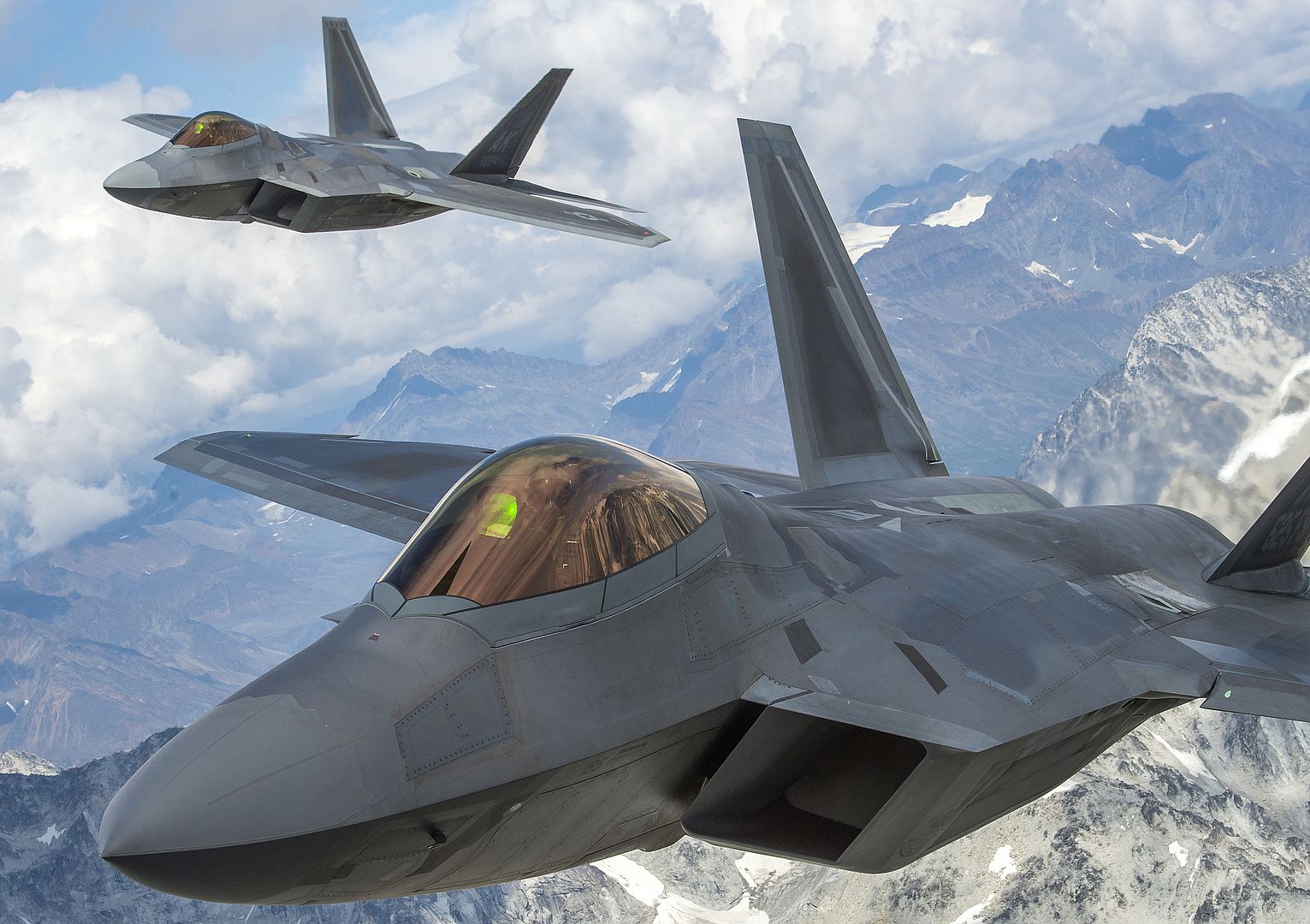
A U.S. Air Force F-22 Raptor from Joint Base Elmendorf-Richardson and an F-16 Fighting Falcon from Eielson Air Force Base fly in formation over the Joint Pacific Alaska Range Complex, July 18, 2019. The JPARC is a 67,000 plus square mile area, providing a realistic training environment commanders leverage for full spectrum engagements, ranging from individual skills to complex, large-scale joint engagements. (U.S. Air Force photo by Staff Sgt. James Richardson)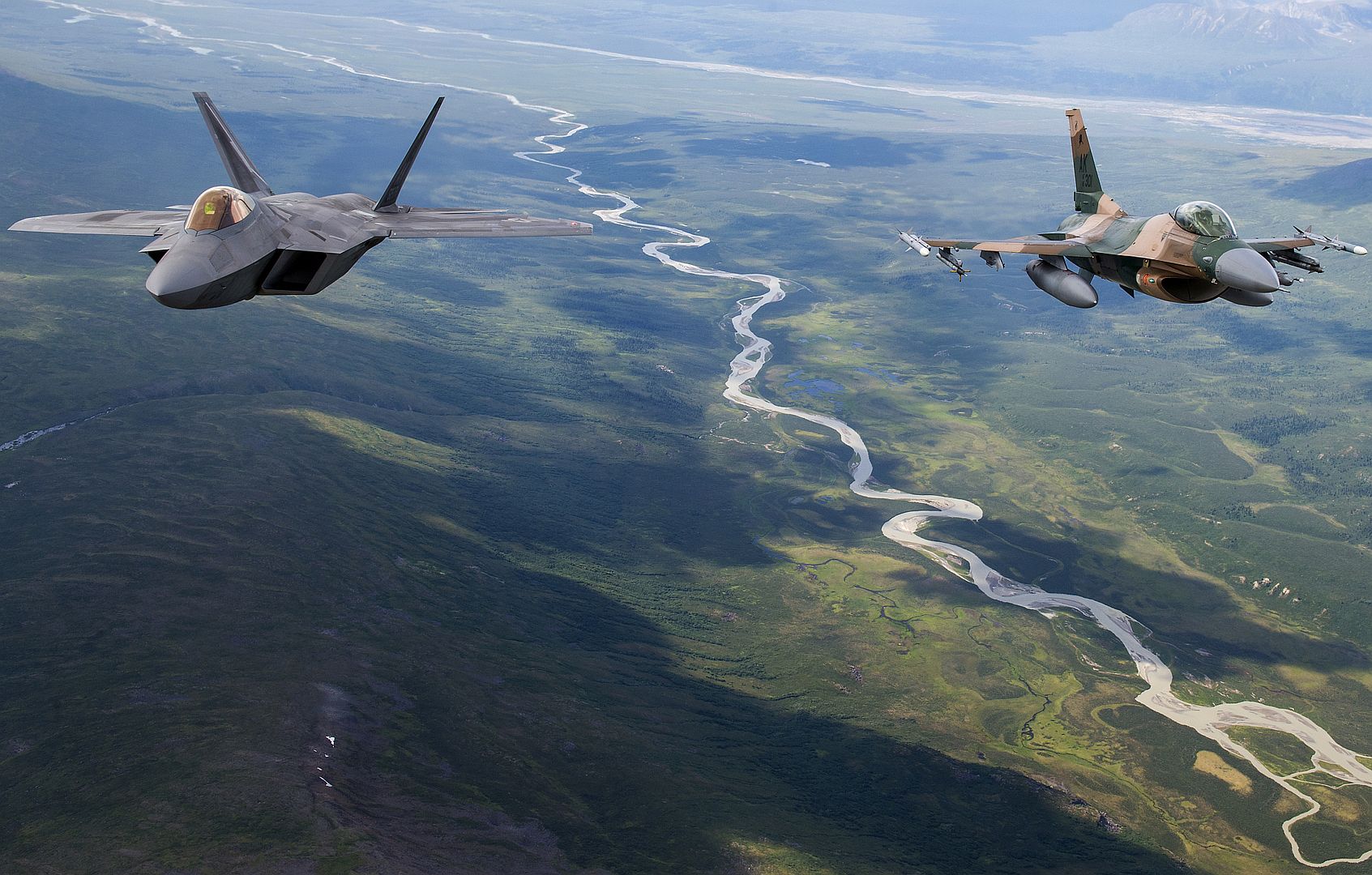
An F15-E Strike Eagle fighter jet assigned to the 492nd Fighter Squadron, Royal Air Force Lakenheath, England, takes off at Nellis Air Force Base, Nev., July 18, 2019. This jet was painted in the heritage colors of its World War II P-47 Thunderbolt predecessor. (U.S. Air Force photo by Airman 1st class Dwane R. Young)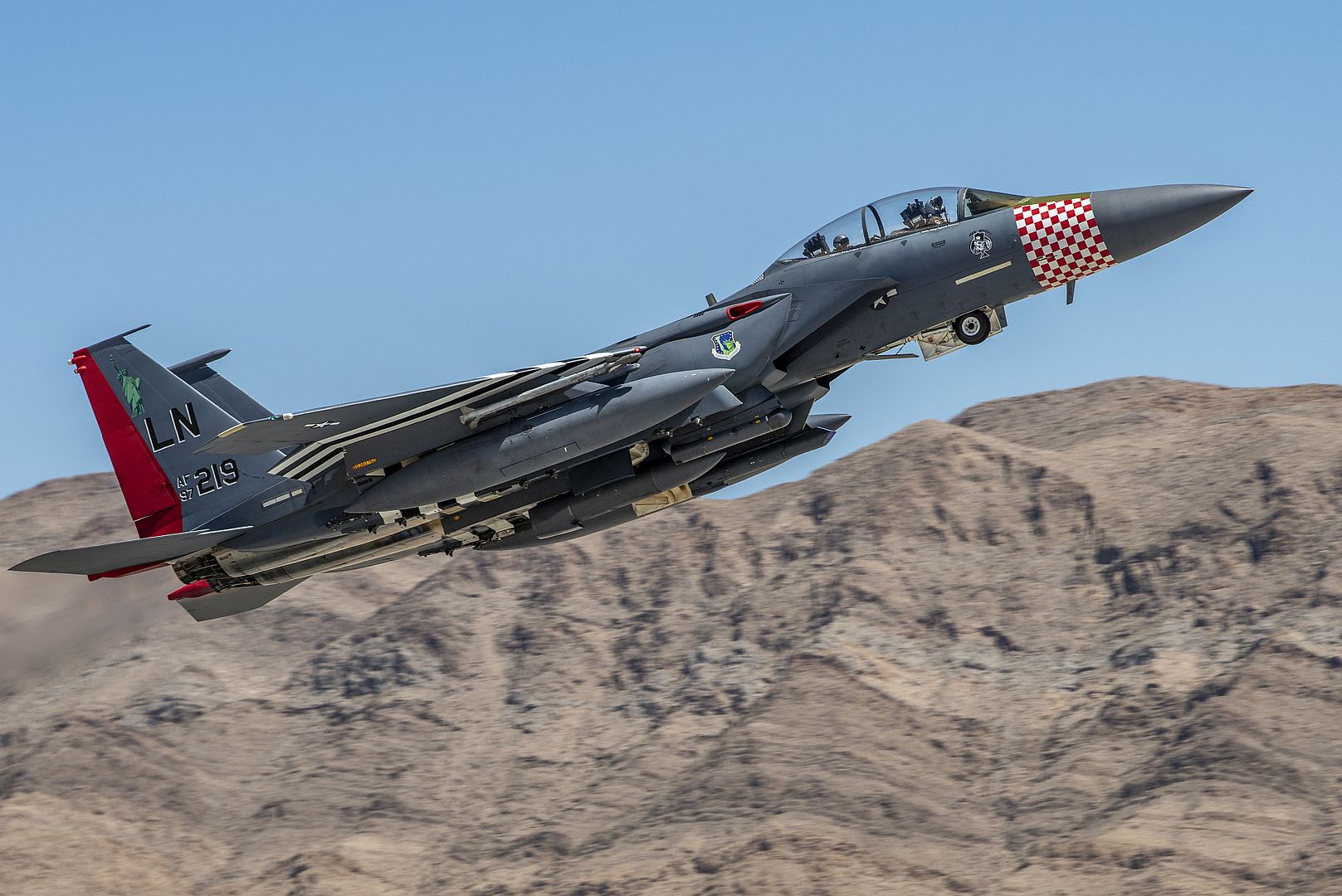
A Royal Air Force Eurofighter Typhoon FGR4 flies past the audience during the NATO 70th Anniversary Flypast at the 2019 Royal International Air Tattoo at RAF Fairford, England, July 20, 2019. This year, RIAT commemorated the 70th anniversary of NATO and highlighted the United States' enduring commitment to its European allies. (U.S. Air Force photo by Airman 1st Class Jennifer Zima)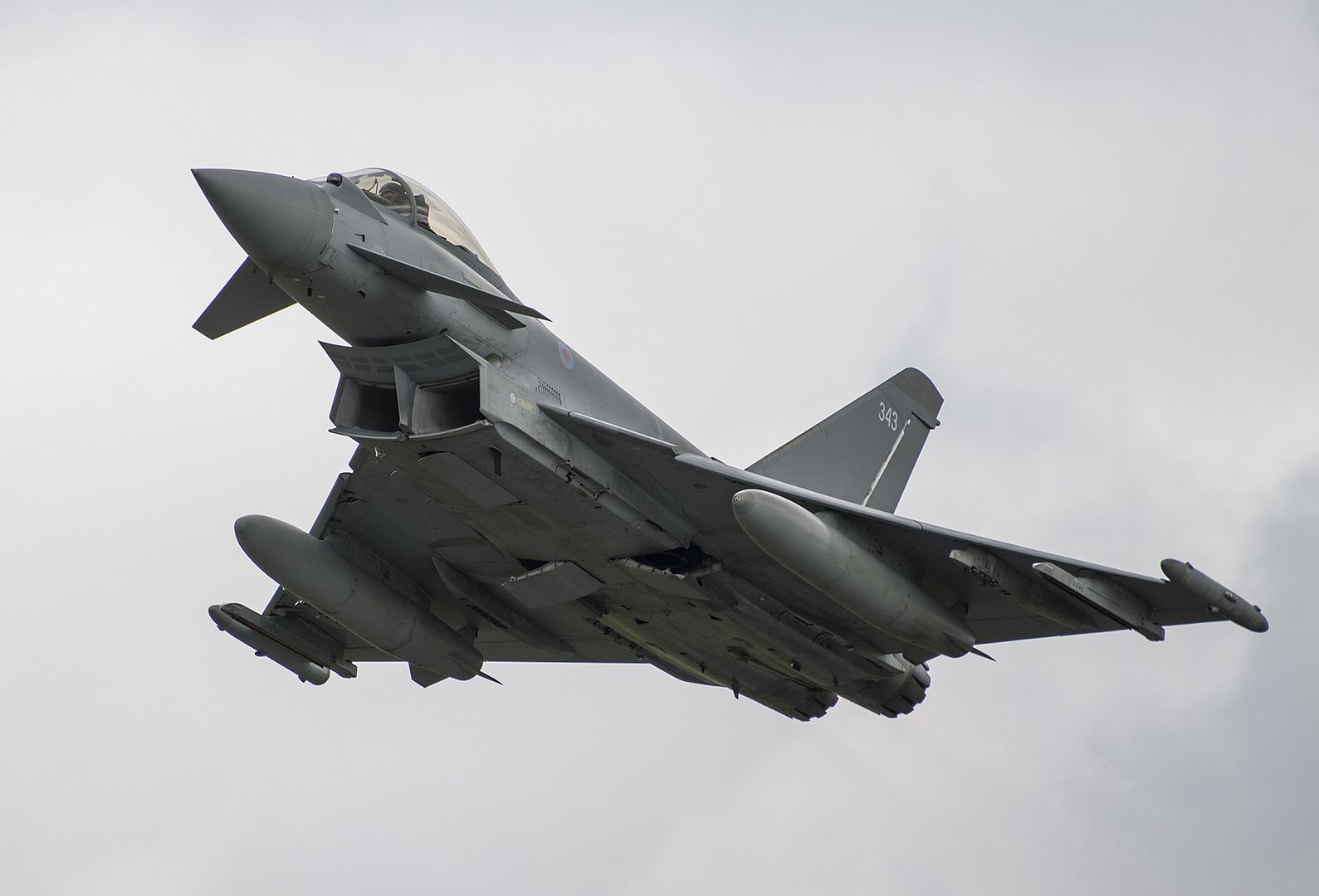
A Danish Air Force General Dynamics F-16AM/BM Fighting Falcon takes off from the runway at the 2019 Royal International Air Tattoo at RAF Fairford, England, July 20, 2019. This year, RIAT commemorated the 70th anniversary of NATO and highlighted the United States' enduring commitment to its European allies. (U.S. Air Force photo by Airman 1st Class Jennifer Zima)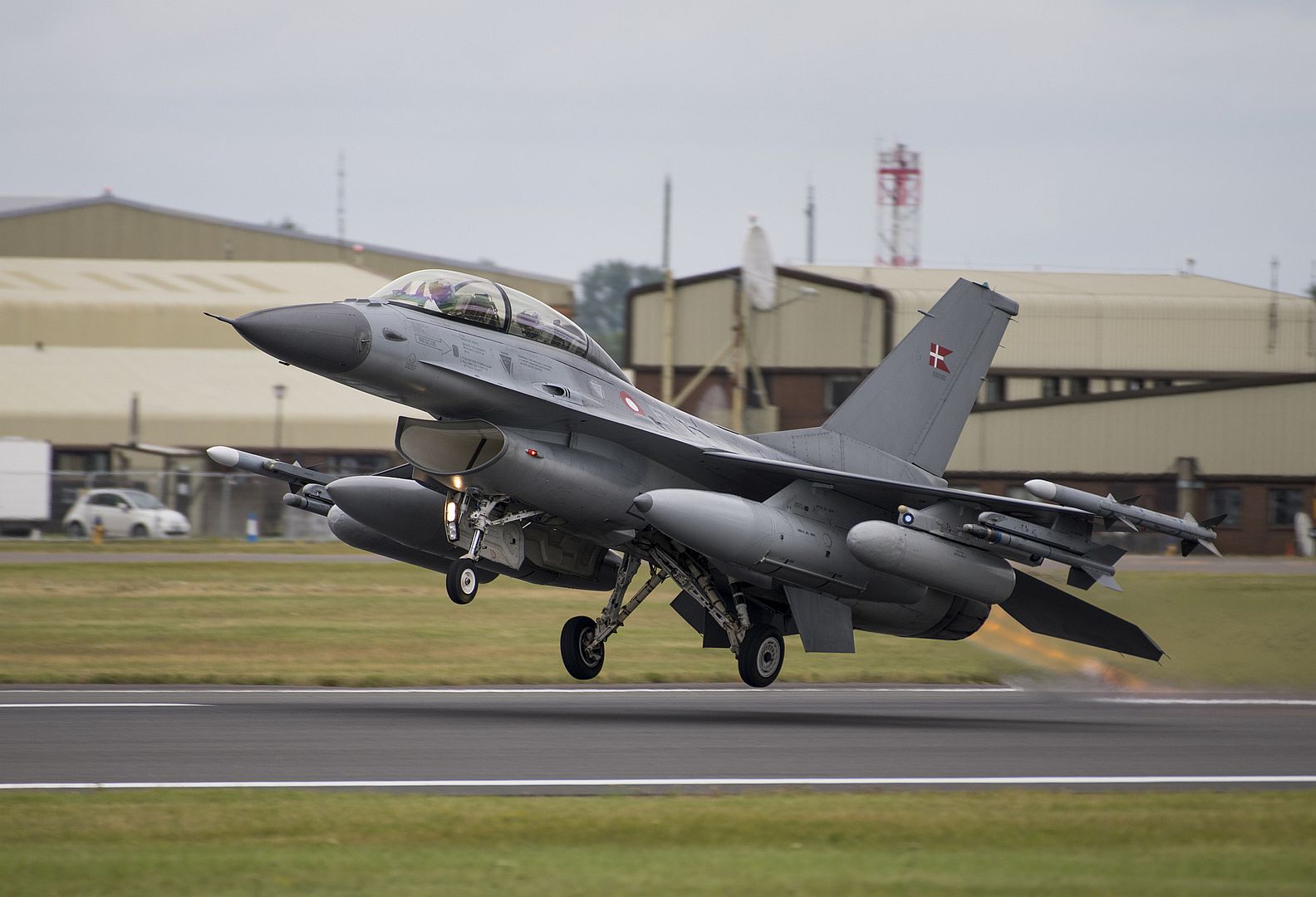
SEATTLE, July 23, 2019 ? Boeing [NYSE:BA] today delivered the fifth 787 Dreamliner for EGYPTAIR via a lease agreement with AerCap. Egypt?s national carrier took advantage of a new Boeing program and filled its new super-efficient airplane with biofuel for the flight home, underscoring the airline?s drive to improve the efficiency and sustainability of its operations.
?We are committed to the sustainable growth of our airline and supporting commercial aviation?s efforts to protect the environment,? said Ahmed Adel, chairman and CEO of EGYPTAIR Holding Company. ?The 787-9 Dreamliner is a great fit for our network and provides our customers with a responsible choice for air travel.?
The 787 Dreamliner was designed for superior fuel efficiency and environmental performance. Its lightweight composite materials, highly-efficient engines and other aerodynamic improvements reduce fuel use and emissions by 20 to 25 percent compared to the airplanes it replaces. The Dreamliner family has saved 37 billion pounds of fuel since entering service in 2011 ? the equivalent of taking 10 million cars off the road for a year.
EGYPTAIR ordered six 787-9 Dreamliners in 2017 via long-term lease from Dublin-based AerCap, a global leader in aircraft leasing.
?We are delighted to support EGYPTAIR?s fleet renewal strategy and to be a part of this important industry-first milestone,? said Aengus Kelly, CEO of AerCap. ?The 787 Dreamliner is a perfect choice for EGYPTAIR, allowing the airline to reduce fuel use and emissions by up to 25 percent while meeting its sustainable growth ambitions, as well as supporting AerCap?s target to transition its fleet to over two-thirds new technology aircraft by 2021.?
AerCap is the world?s largest customer of the 787 aircraft, with a total of 114 owned, managed and on order.
For the flight to its home base in Cairo, EGYPTAIR became the first operator to use a new Boeing program that offers operators the option to use biofuel on delivery flights. Sustainable aviation fuels have been shown to reduce carbon dioxide emissions by up to 80 percent through its lifecycle. The 5,925 nautical-mile (10,973 kms) trip flight from Seattle to Cairo represents the longest 787 delivery flight using sustainable fuel.
?Boeing and the industry believe sustainable fuel has significant long-term potential to help commercial aviation earn its license to keep growing and meet our climate goals,? said Sheila Remes, vice president of Strategy at Boeing Commercial Airplanes.
Boeing has been an industry leader in fostering the development of sustainable aviation fuel. Research, testing and rigorous review by the company ? in collaboration with other airframe and engine manufacturers and aviation stakeholders ? led to regulatory approval of the first
sustainable fuel for commercial aviation in 2011. Since that time, airlines around the world have flown nearly 190,000 passenger flights on a blend of sustainable and conventional fuel.
EGYPTAIR used a biofuel produced by World Energy at its refinery in Paramount, Calif., the first facility designed to make renewable jet fuel on a commercial scale. Made from agriculture waste, the fuel is certified for commercial use and can be blended with conventional jet fuel without modifications to the airplanes, engines or fueling infrastructure.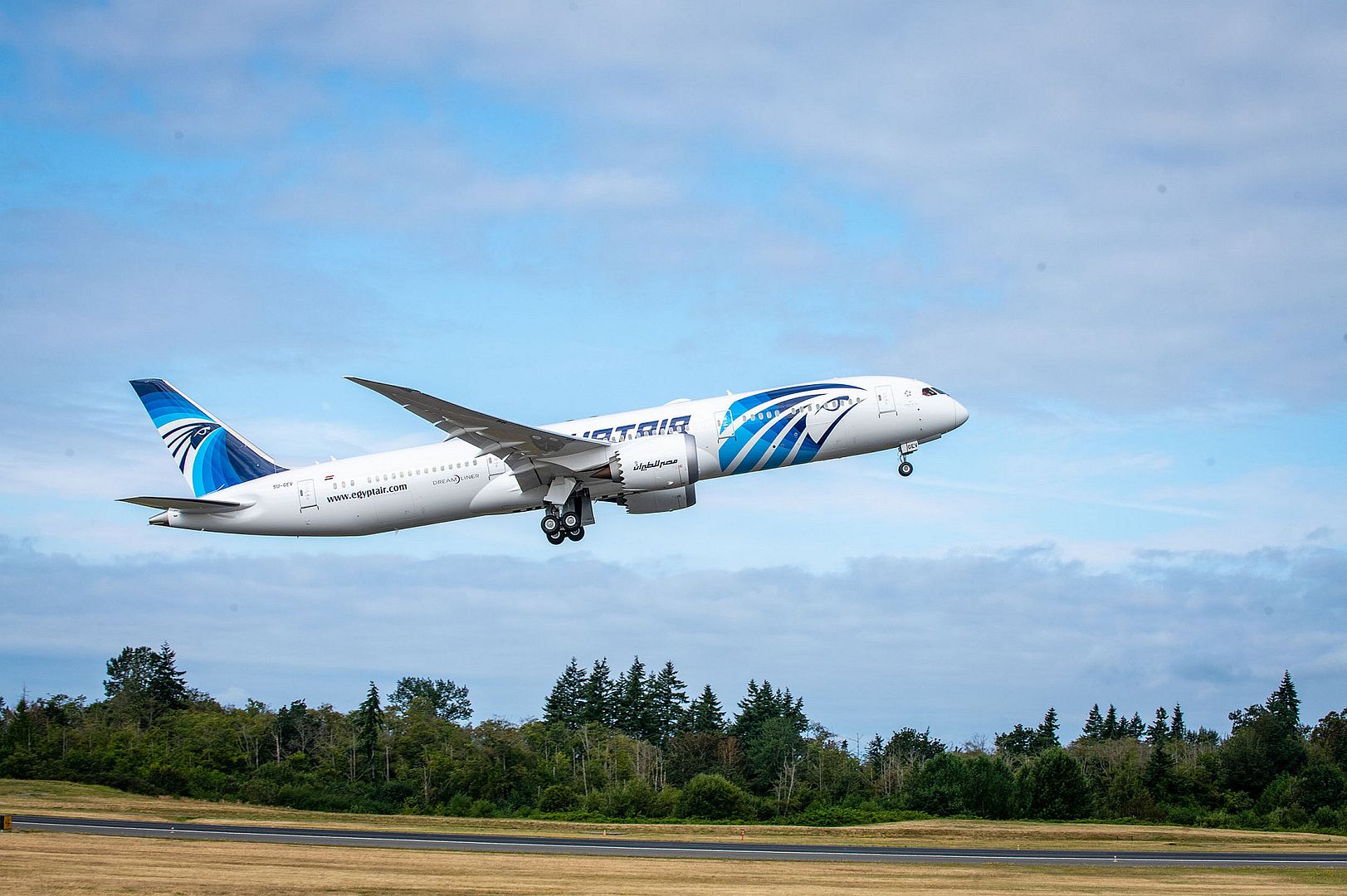
-
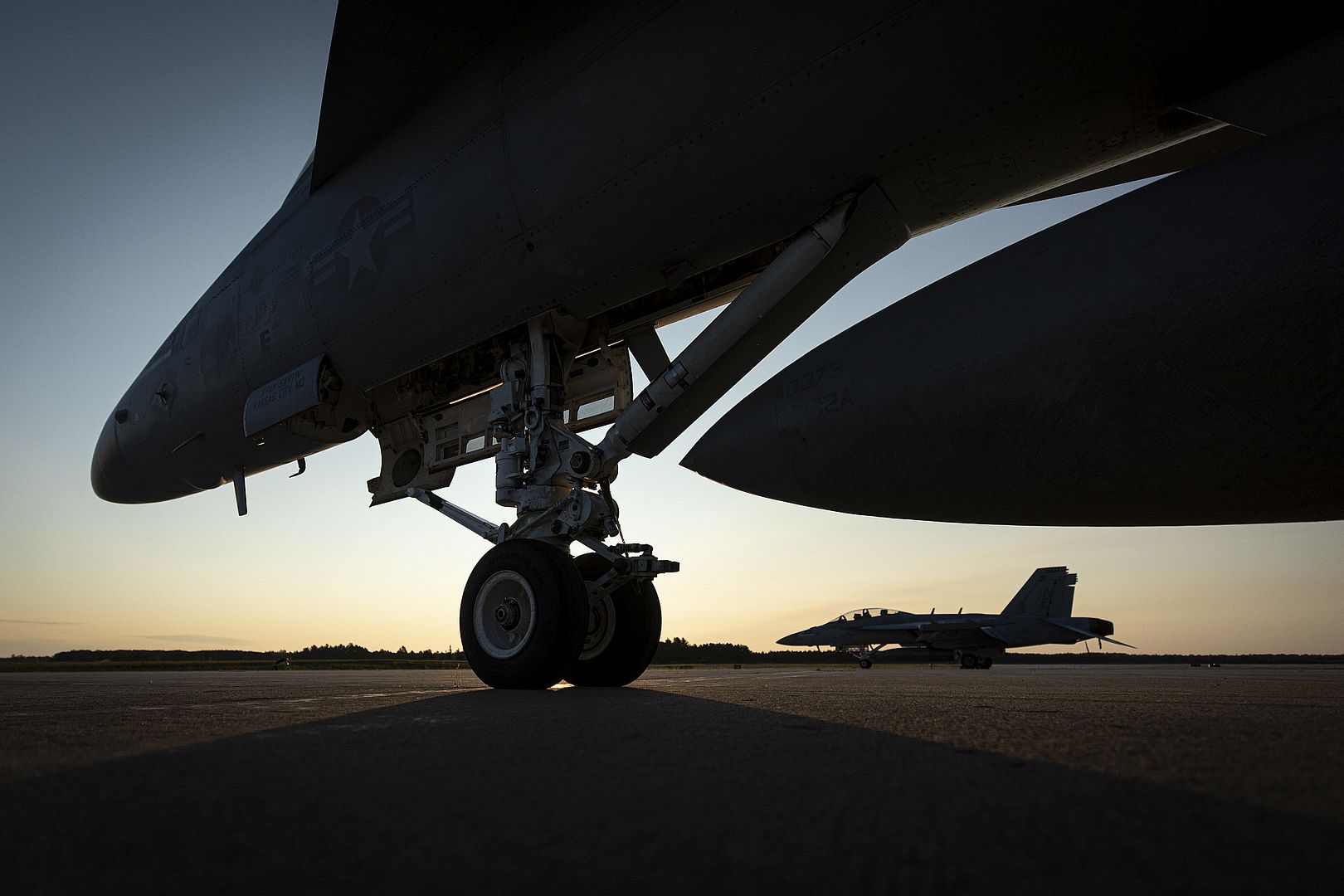
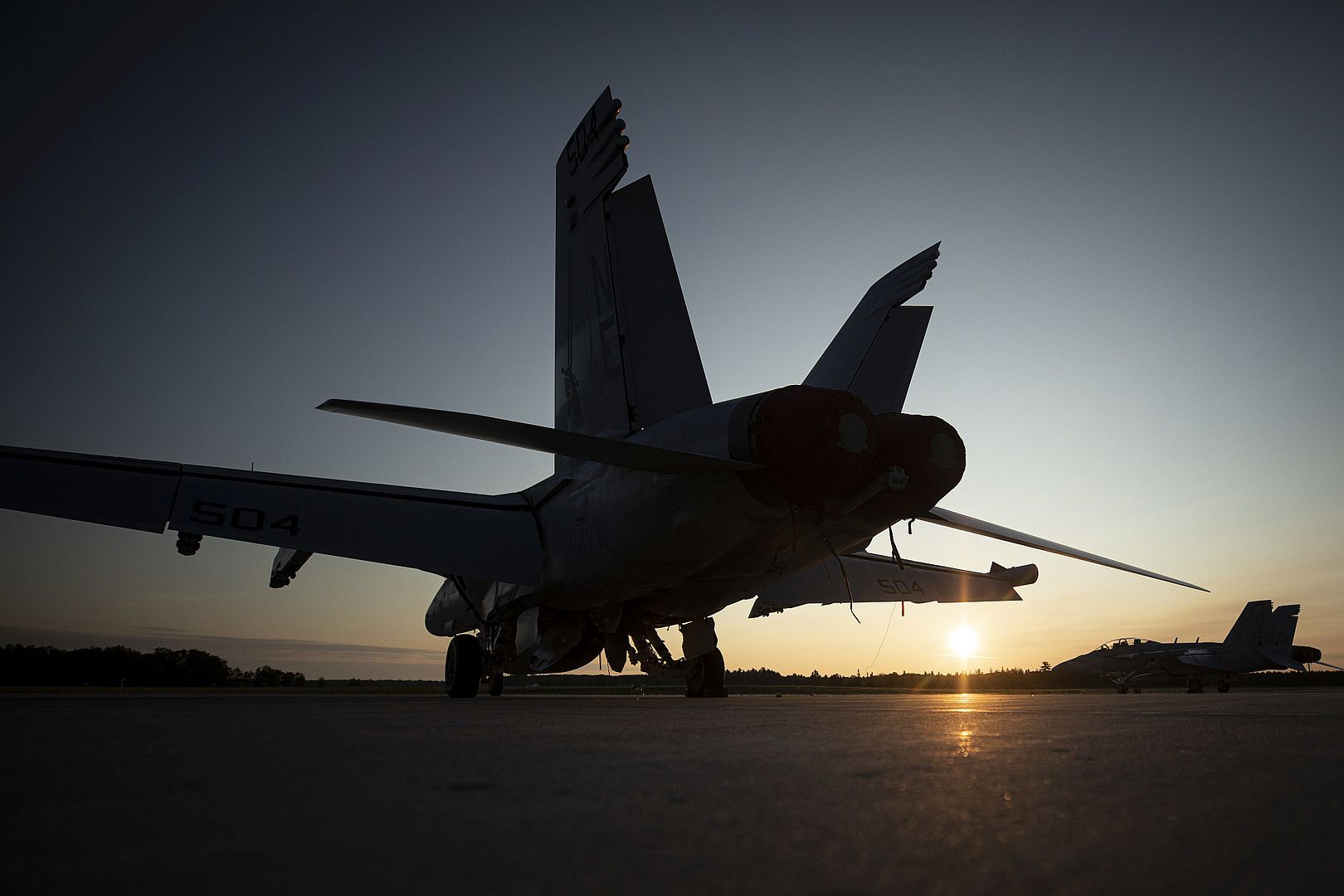
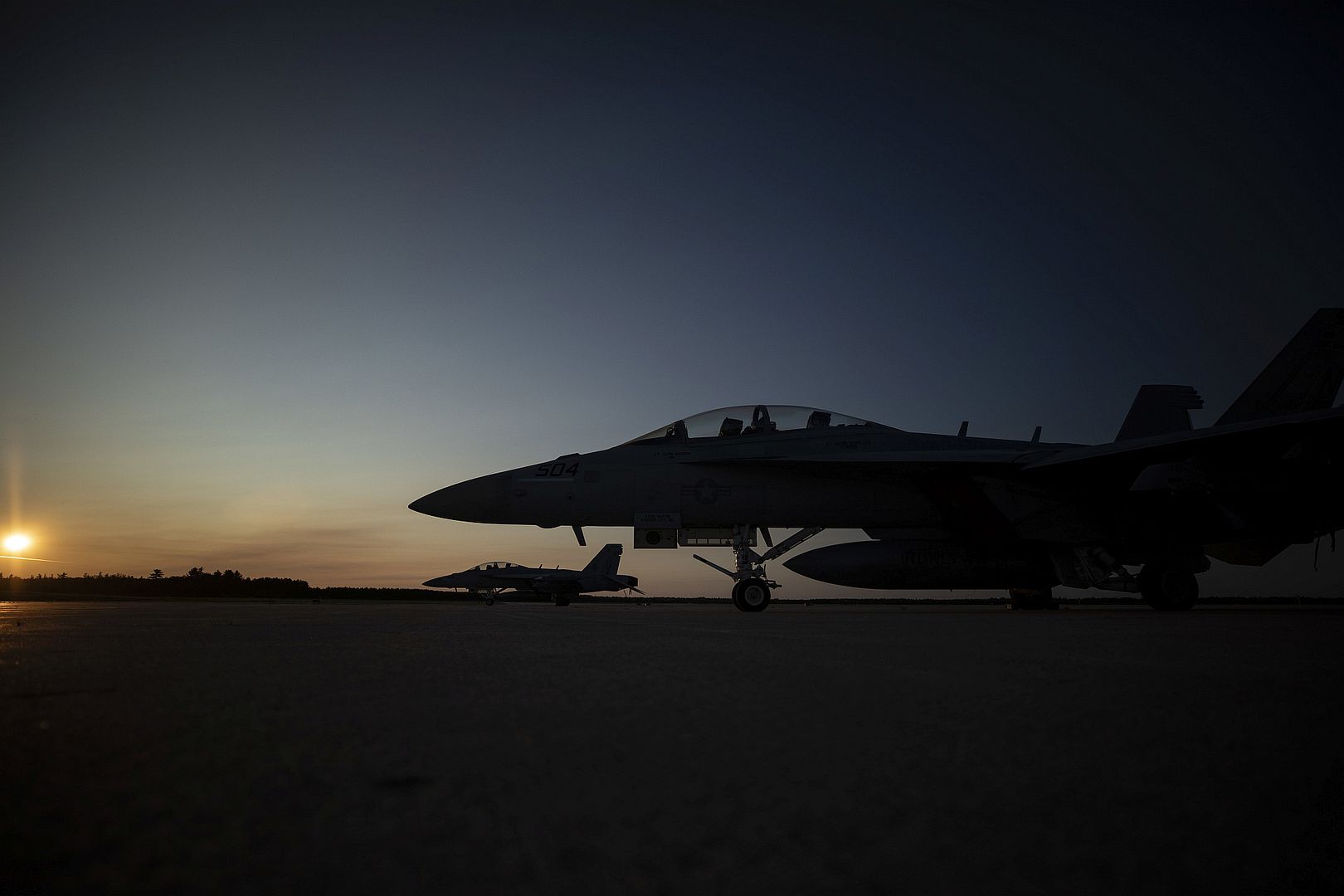
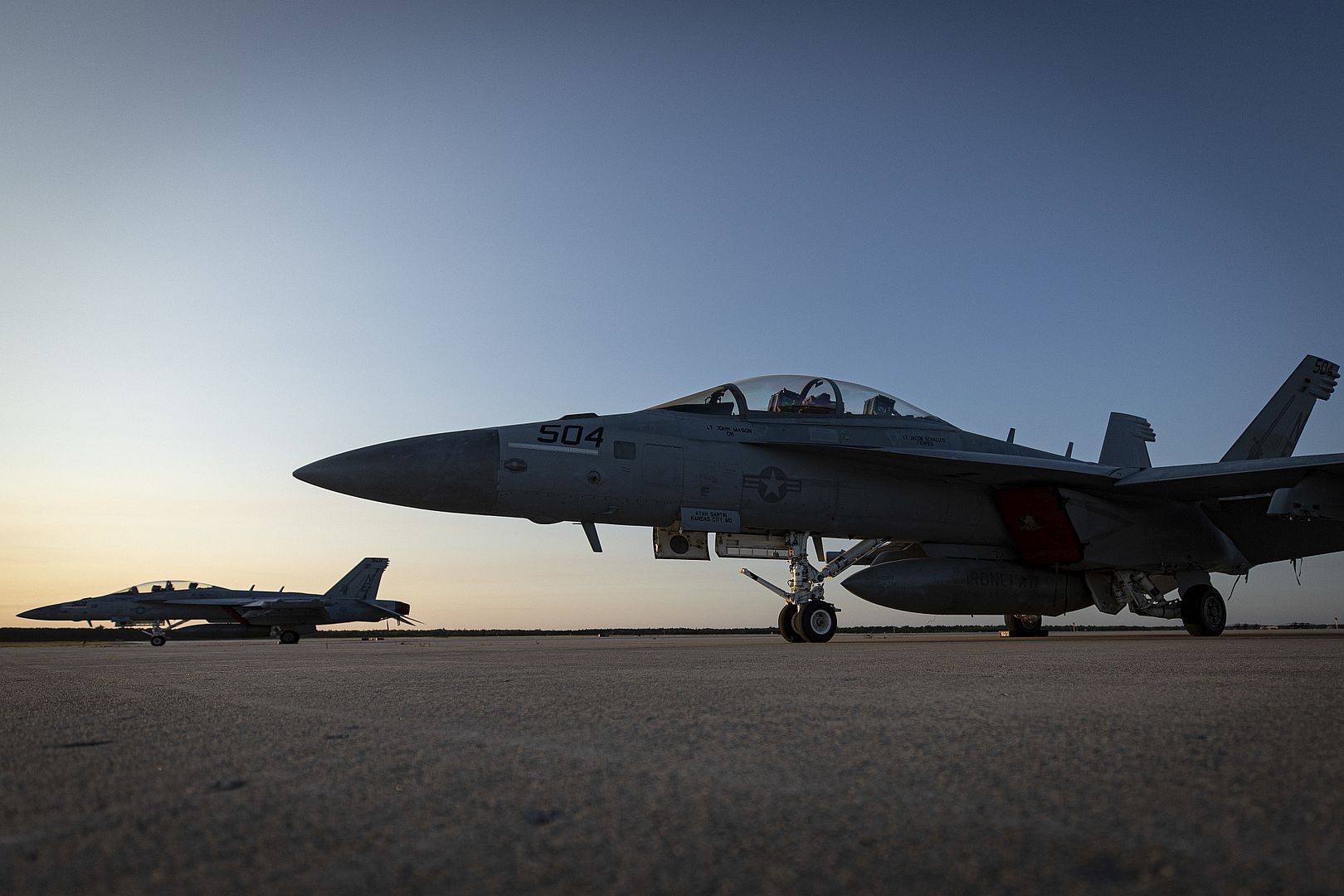
U.S. Navy EA-18G Growlers from Electronic Attack Squadron 136 (VAQ-136) also known as "The Gauntlets" sit on the flight line at sunrise during Northern Strike 19 at the Alpena Combat Readiness Training Center in Alpena, Mich., July 24, 2019. Northern Strike 19 is a National Guard Bureau-sponsored exercise uniting service members from more than 20 states, multiple service branches and numerous coalition countries during the last two weeks of July 2019 at the Camp Grayling Joint Maneuver Training Center and the Alpena Combat Readiness Training Center, both located in northern Michigan and operated by the Michigan National Guard. The accredited Joint National Training Capability exercise demonstrates the Michigan National Guard?s ability to provide accessible, readiness-building opportunities for military units from all service branches to achieve and sustain proficiency in conducting mission command, air, sea, and ground maneuver integration, together with the synchronization of fires in a joint, multinational, decisive action environment. (U.S. Air National Guard photo's by Master Sgt. Matt Hecht)
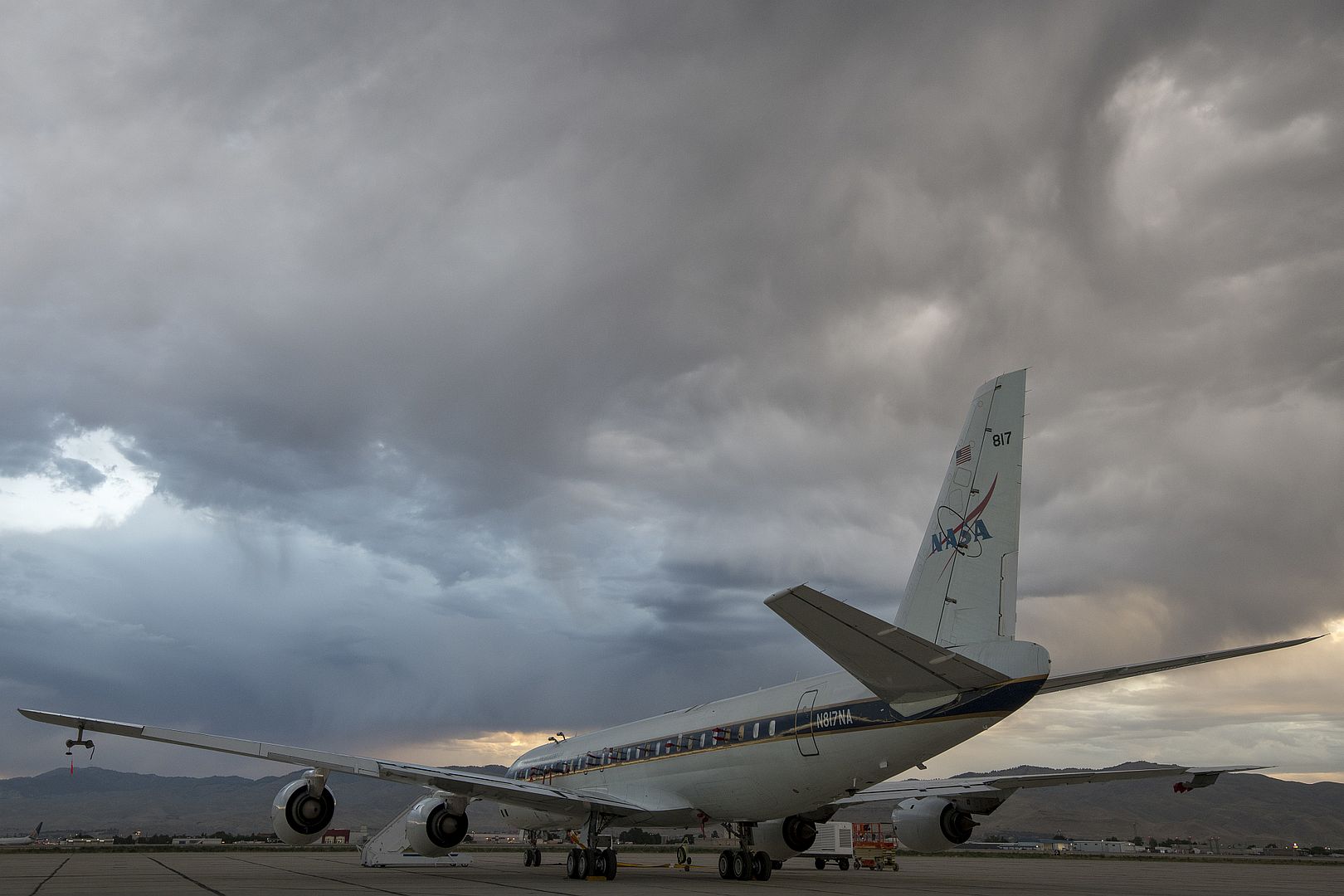
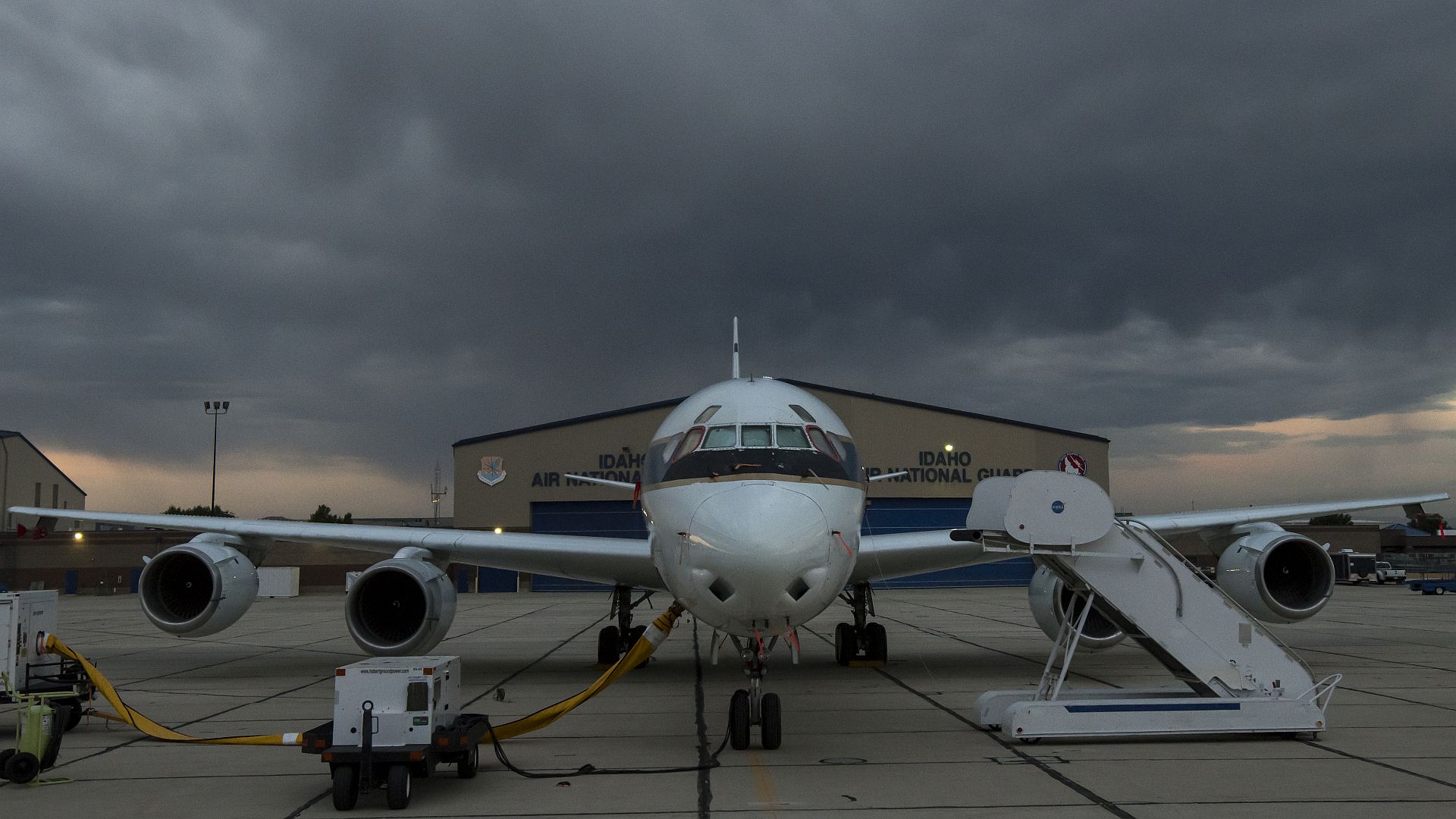
The NASA Armstrong DC-8 Airborne Science Laboratory sits on the East ramp of the 124th Fighter Wing, Boise, Idaho, July 23, 2019. The fifty-year old jet liner is a highly modified flying science laboratory and is being utilized to study fire emissions from both wild and prescribed fires under an experiment named FIREX-AQ, fire influence on regional to global environments experiment - air quality. (U.S. Air National Guard photo's by Master Sgt. Joshua C. Allmaras)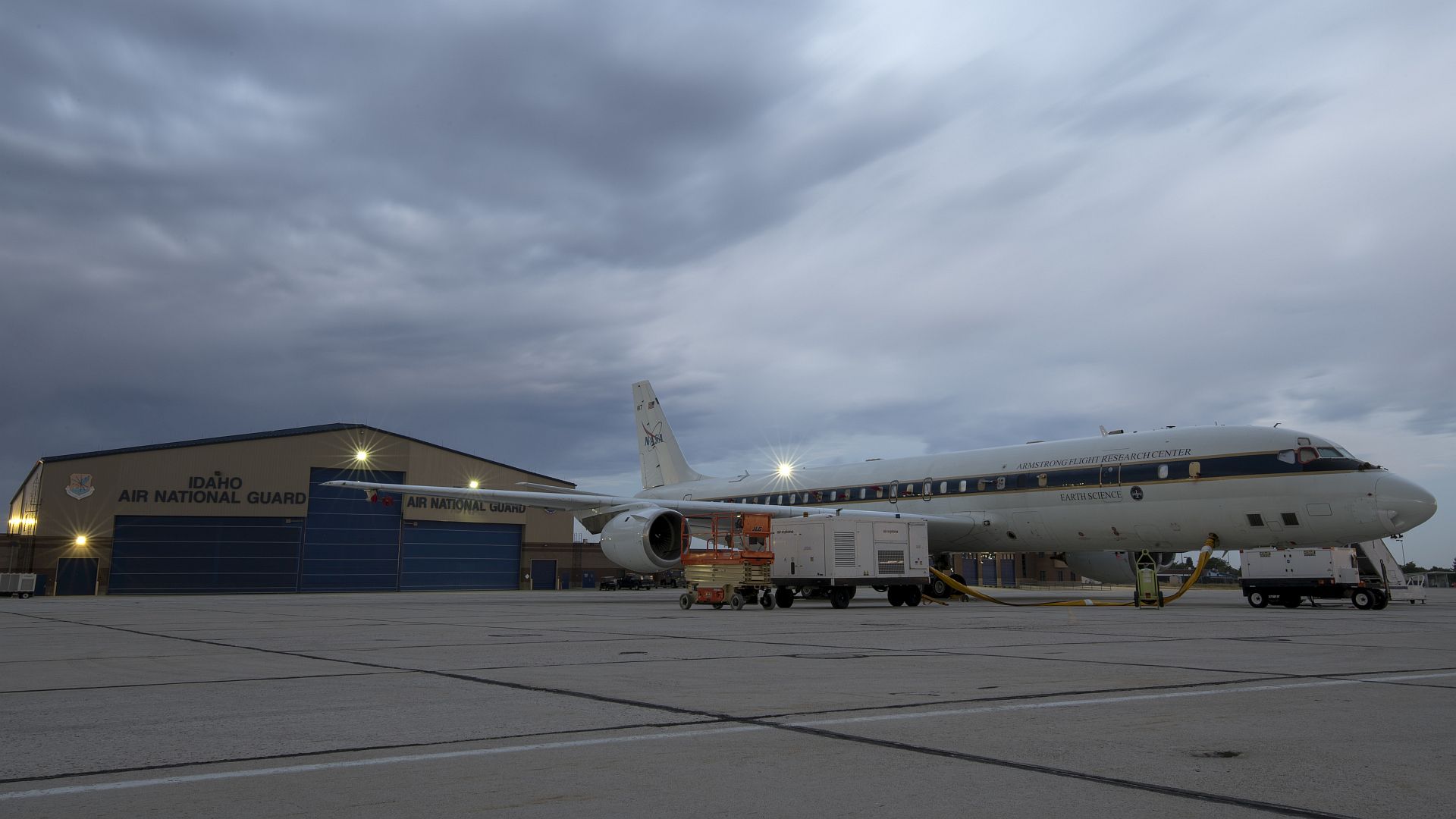
A U.S Air Force F-16 Fighting Falcon from the 555th Fighter Squadron taxi's at Aviano Air Base, Italy, July 23, 2019. The mission of the 31st Fighter Wing is to deter through safe, secure, effective operations. Win the current fight and be ready to win the next fight. (U.S. Air Force photo by Airman 1st Class Ericka A. Woolever).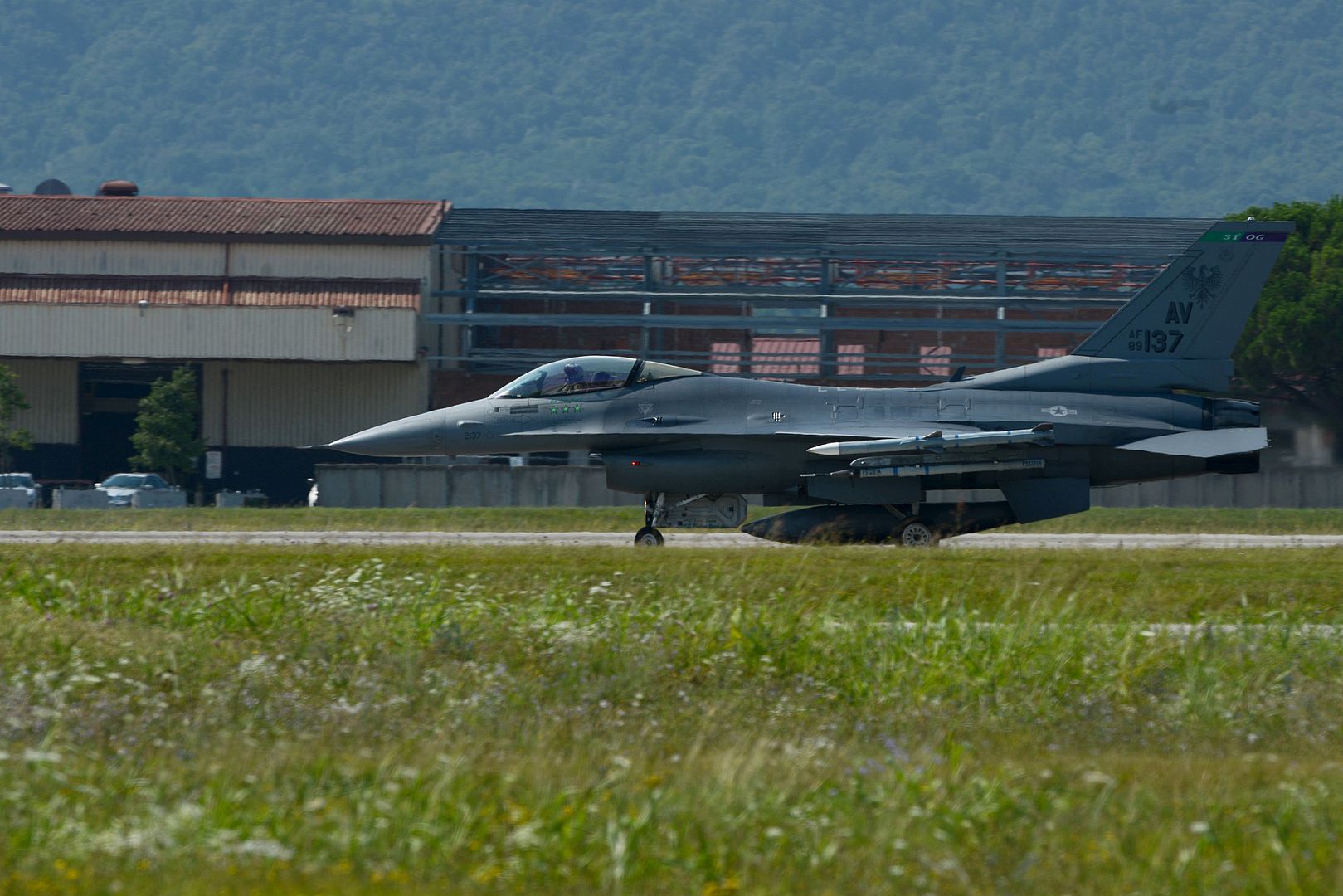
A U.S. Air Force F-35A Lightning II assigned to the 388th Fighter Wing, Hill Air Force Base, Utah, flies away from a KC-135 Stratotanker assigned to the 351st Air Refueling Squadron, RAF Mildenhall, England, after receiving fuel during Operation Rapid Forge over Germany, July 23, 2019. Participation in multinational operations and operations like Rapid Forge enhances professional relationships and improves coordination between allies. (U.S. Air Force photo by Tech. Sgt. Emerson Nu?ez)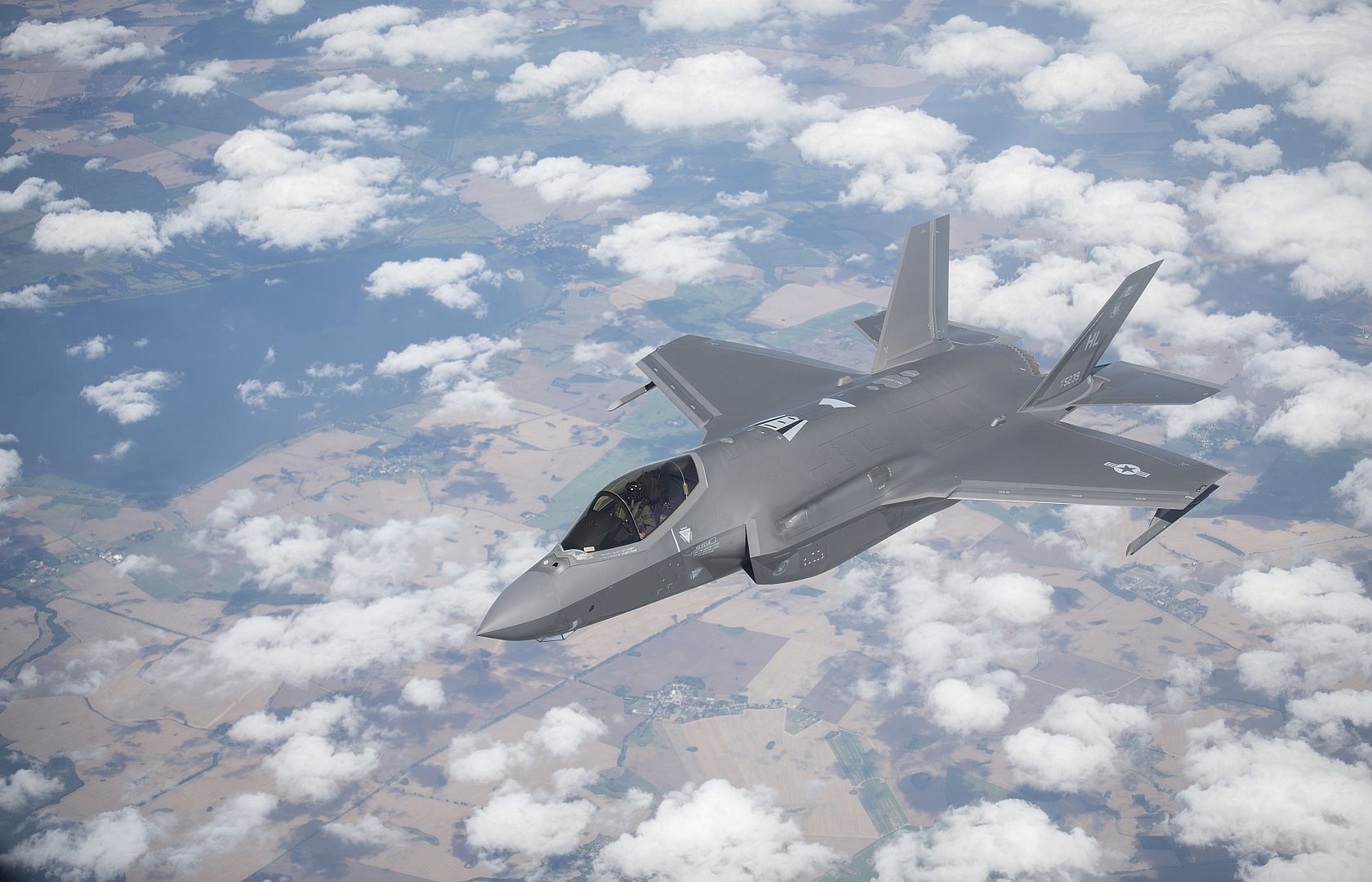
A U.S. Air Force F-15E Strike Eagle, assigned to the 4th Fighter Wing, Seymour Johnson Air Force Base, North Carolina, flies away from a KC-135 Stratotanker assigned to the 351st Air Refueling Squadron, RAF Mildenhall, England, after receiving fuel during Operation Rapid Forge over Germany, July 23, 2019. Rapid Forge aircraft are forward deploying to bases in the territory of NATO allies in order to enhance readiness and improve interoperability. The goal of the operation is to enhance readiness in coordination with U.S. allies and partners in Europe. (U.S. Air Force photo by Tech. Sgt. Emerson Nu?ez)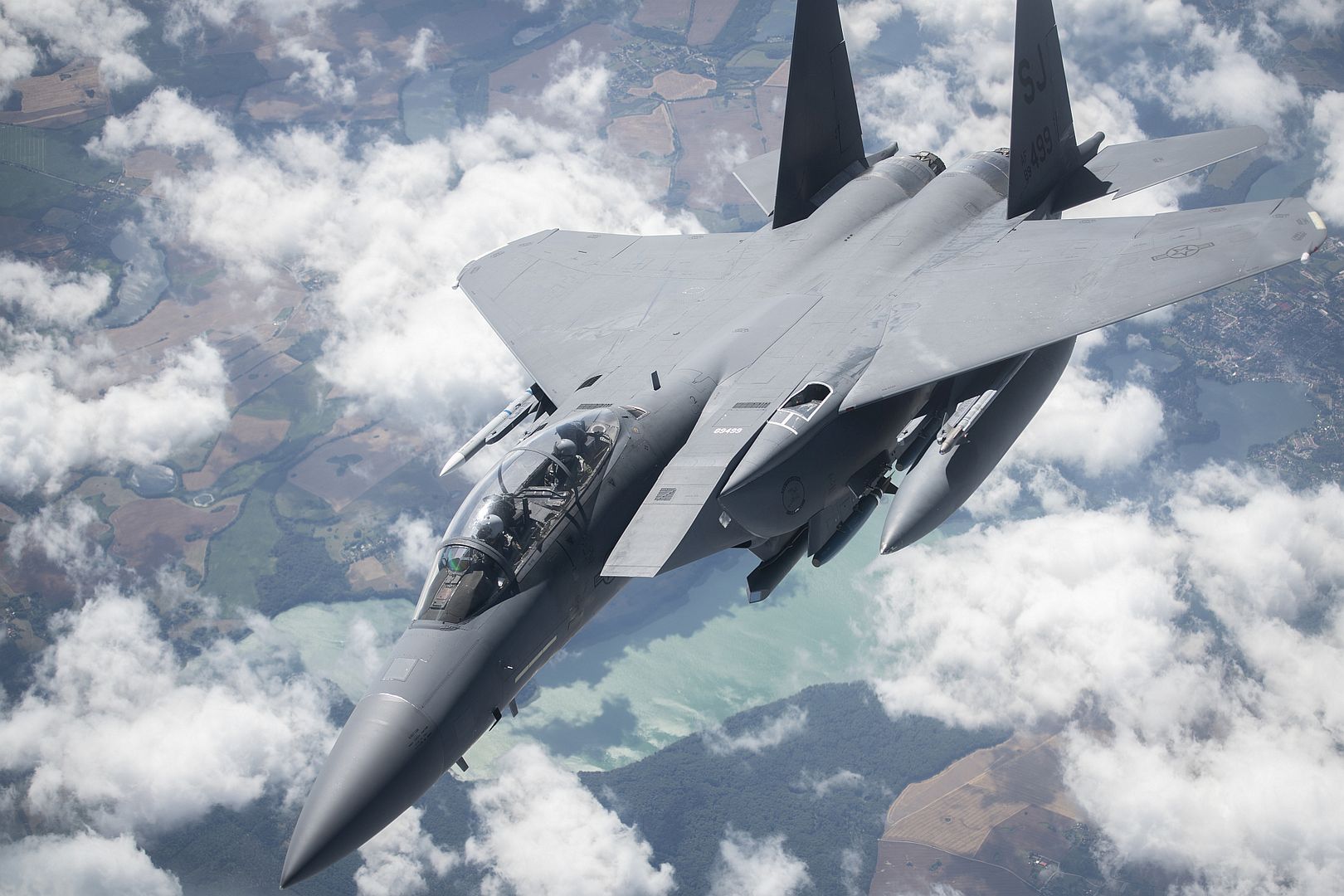
A U.S. Air Force F-35A Lightning II fighter jet deployed from the 388th and 419th Fighter Wings, Hill Air Force Base, Utah, taxis on a runway during Operation Rapid Forge at Lielvarde Air Base, Latvia, July, 23, 2019. This is the first time a U.S. Air Force F-35A Lightning II stealth fighter has landed in Latvia. Operation Rapid Forge is a U.S. Air Forces in Europe-led mission to enhance readiness and test the ability to function at locations other than the main air bases. (U.S. Air Force photo by Senior Airman Milton Hamilton)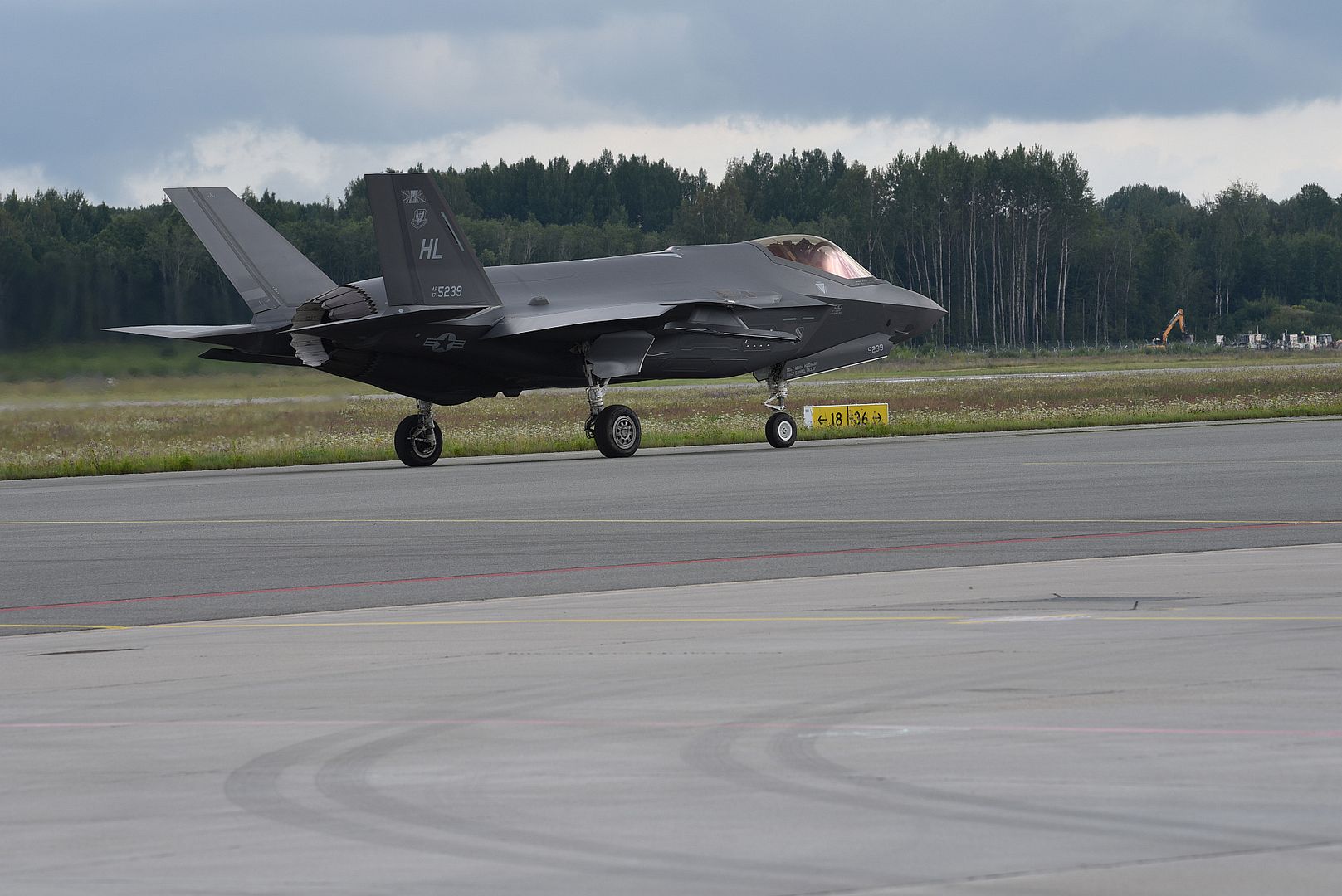
A 302nd Airlift Wing Modular Airborne Fire Fighting System equipped-C-130 Hercules aircraft performs a system test at Peterson Air Force Base, Colorado, July 22, 2019. Aircrew will be demonstrating the MAFFS at the Experimental Aircraft Association AirVenture Oshkosh air show in Wisconsin July 23-28. (U.S. Air Force photo by Senior Airman Anthony Pham)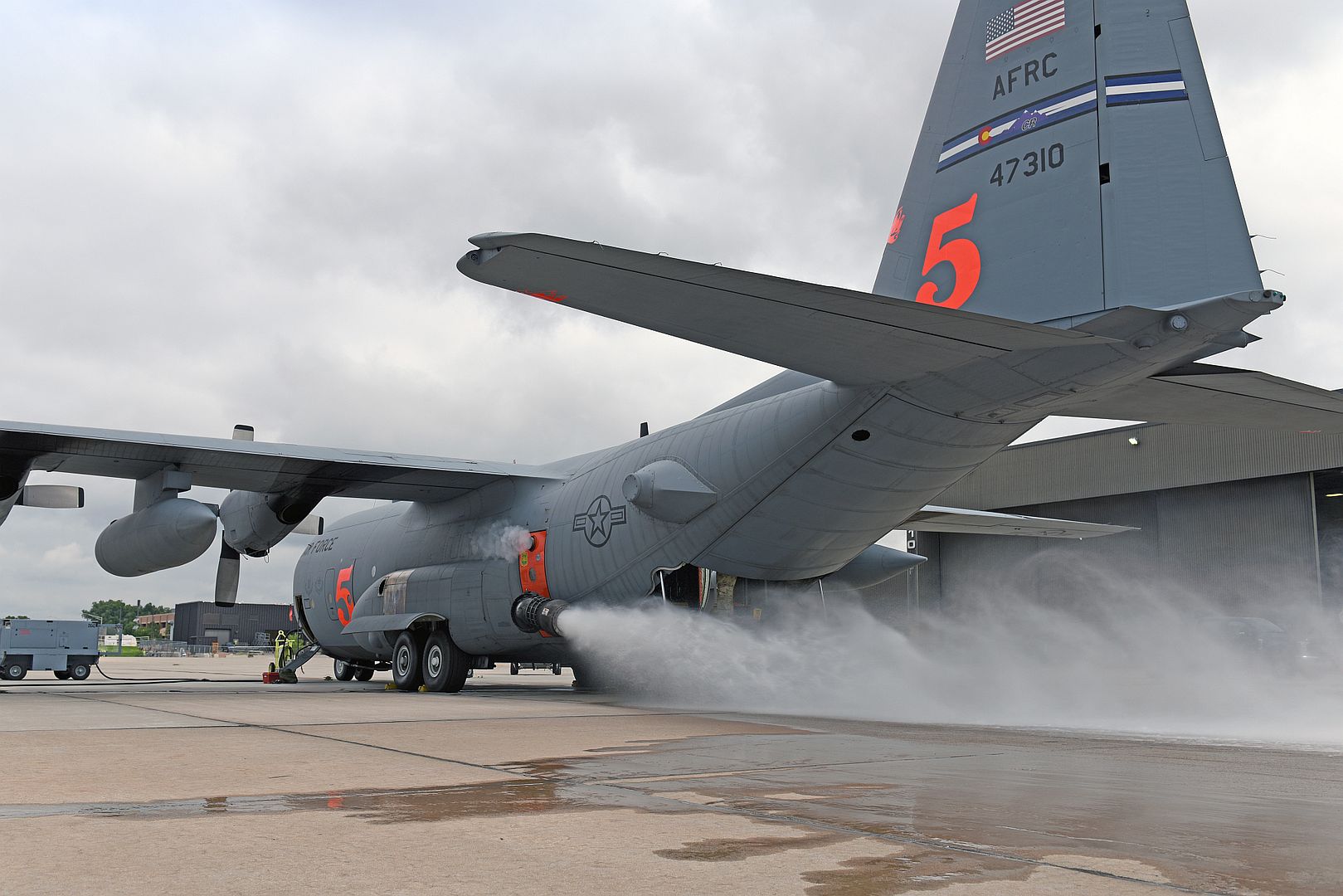
FORT WORTH, Texas, July 24, 2019 /PRNewswire/ -- The F-35 Joint Program Office, U.S. Air Force and Lockheed Martin (NYSE: LMT) have started integrating the Automatic Ground Collision Avoidance System (Auto-GCAS) on to Air Force F-35As in the fleet. Leveraging a rapid, agile development, test and contracting approach, the joint government and industry team successfully fielded the life-saving technology seven years earlier than previously planned.
"This is a great day for the warfighter as the Auto-GCAS is a proven system that is long overdue," said Lt. Gen. Eric Fick, F-35 Program Executive Officer. "Expediting this life-saving technology into the F-35 across the global fleet will bring more warfighters home. Over the service life of the F-35 fleet, having Auto-GCAS is estimated to prevent more than 26 ground collisions from happening. It is indeed a remarkable achievement in aeronautics which will improve the performance, efficiency, and safety of the F-35. The time and effort expended to deliver this critical warfighting capability is worth it ? it will save lives."
Originally developed for the F-16 in partnership with NASA and the Air Force Research Laboratory, Auto-GCAS uses terrain mapping, geolocation and automation to detect and avoid potential ground collisions. When the program recognizes imminent impact, it will prompt the pilot to take action. If the pilot is unresponsive, Auto-GCAS assumes temporary control to divert the aircraft out of harm's way, and then returns control of the aircraft to the pilot once on a safe trajectory.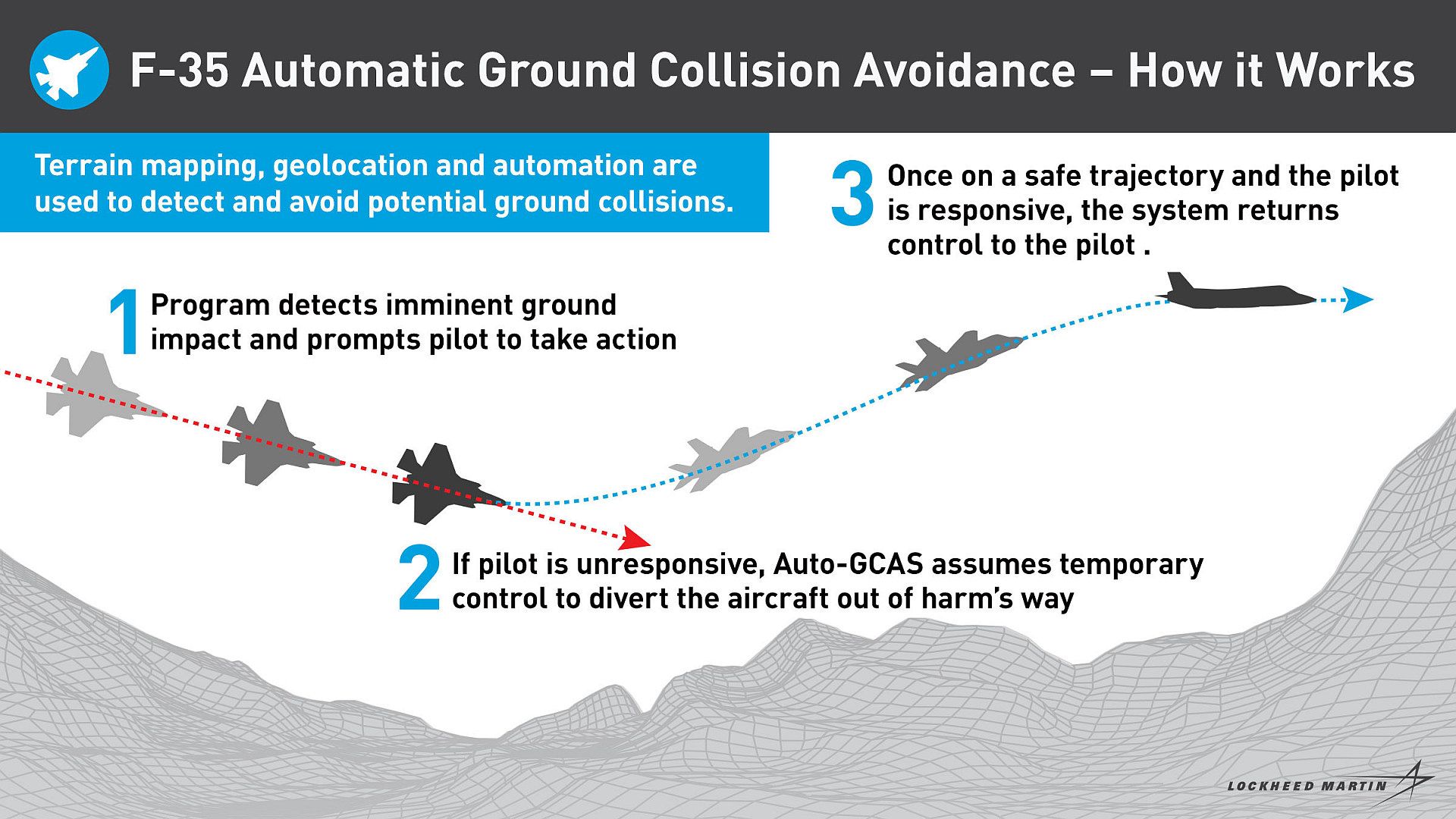
The system has been operating successfully aboard the F-16 for more than five years and has already been credited with saving eight F-16 pilots' lives since 2014.
"Early integration of Auto GCAS in the F-35 is bringing game changing safety capability to a rapidly growing fleet. It couldn't have come at a better time as we near full rate production resulting in more aircraft and pilots exposed to rigorous missions," said Lt. Col. Darren Wees of the Air Force's F-35 Integration Office. "Many thanks to the tenacious efforts of many organizations, primarily the Air Force Research Lab, Air Force Test Center, Lockheed Martin and the F-35 Joint Program Office who made this a technical reality, as well as the U.S. services and F-35 Partner Nations that ensured its inclusion in the program. These efforts have already saved lives and aircraft in the F-16, and will save lives in the F-35."
Auto-GCAS was originally slated for delivery in the 2026 timeframe. To accelerate the technology, Air Force Research Laboratory and Lockheed Martin conducted positive feasibility studies and the F-35 Joint Program Office and Lockheed Martin then implemented an agile approach to develop the technology for integration on the F-35. The 412th Test Wing at Edwards Air Force Base then completed a rigorous flight testing program to validate its performance and safety, which led to the wing's formal recommendation to field Auto-GCAS aboard the F-35.
"The F-35 is the most survivable fighter jet in the world today ? and the addition of Auto-GCAS will further enhance safety and save lives," said Greg Ulmer, Lockheed Martin's vice president and general manager of the F-35 program. "The safe and effective acceleration of this technology is a testament to the joint government and industry team partnering in an agile environment to deliver life-saving capability to our men and women in uniform, significantly sooner than planned."
U.S. Air Force F-35As are the first to receive Auto-GCAS, and the system will next be integrated aboard the F-35B and F-35C variants. The Auto-GCAS team was recently recognized with the National Aeronautic Associations' 2018 Robert J. Collier Trophy, and received the prestigious award in June 2019.
With stealth technology, advanced sensors, supersonic speed, weapons capacity and superior range, the F-35 is the most lethal, survivable and connected aircraft in the world. More than a fighter jet, the F-35's ability to collect, analyze and share data, is a powerful force multiplier that enhances all airborne, surface and ground-based assets in the battlespace enabling men and women in uniform to execute their mission and return home safely.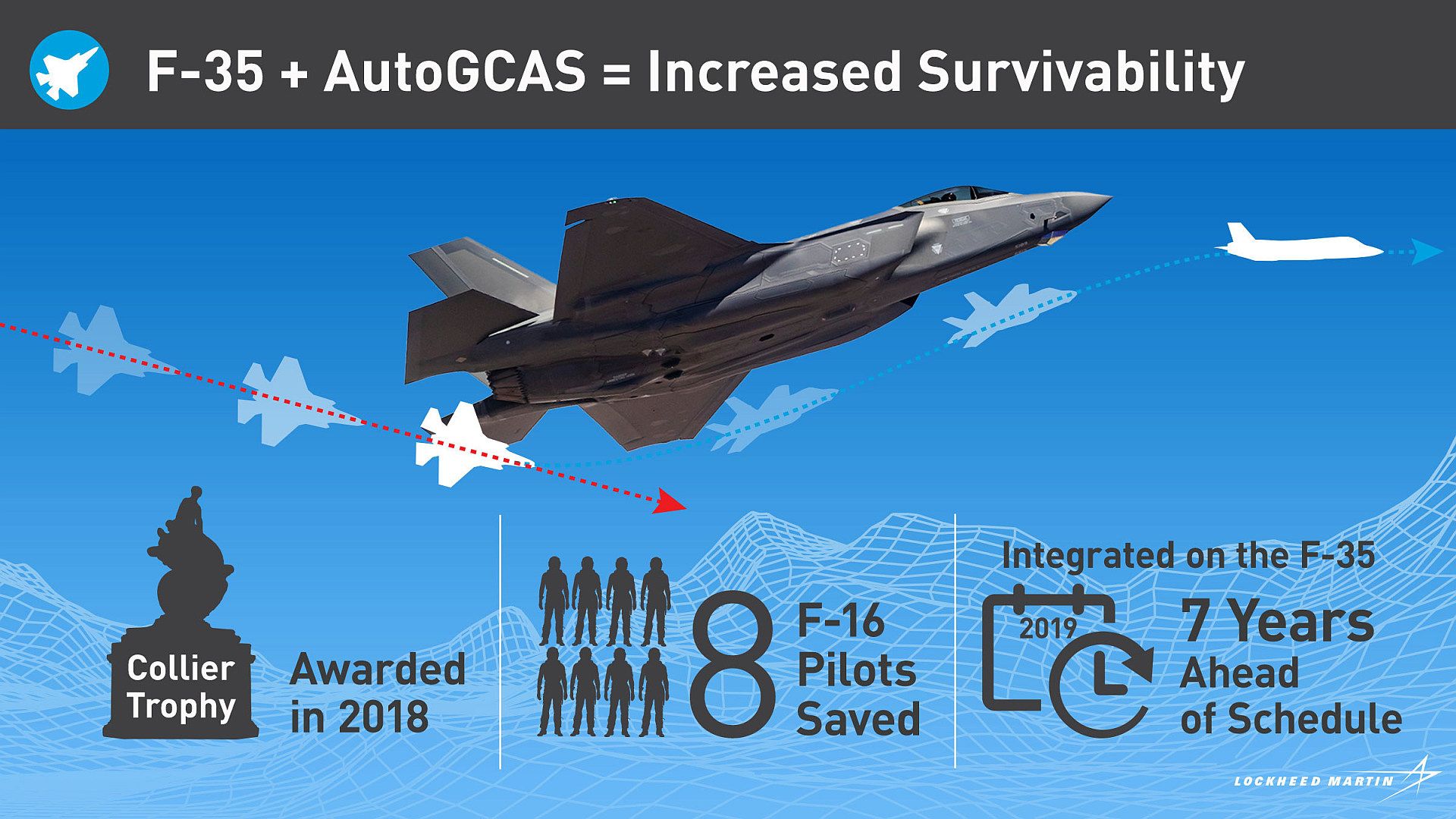
-
A U.S. Marine Corps F/A-18D Hornet assigned to Marine All-Weather Fighter Attack Squadron 533 prepares for flight during Integrated Training Exercise (ITX) 5-19 at Marine Corps Air Ground Combat Center, Twenty-nine Palms, California, July 23, 2019. ITX 5-19 is a large-scale, combined-arms training exercise that produces combat-ready forces capable of operating as an integrated Marine Air-Ground Task Force. (U.S. Marine Corps photo by Cpl. Cody Rowe)
CORPUS CHRISTI, Texas (July 23, 2019) - A Navy T-44C Pegasus parked on the flightline aboard Naval Air Station (NAS) Corpus Christi. The T-44C is one of four different aircraft implemented in the Chief of Naval Air Training flight training syllabus. Students going through the advanced portion of flight training fly the T-44C before going on to fly fleet multi-engine and tiltrotor aircraft. (U.S. Marine Corps photo by 1st Lt. Pawel Puczko/Released)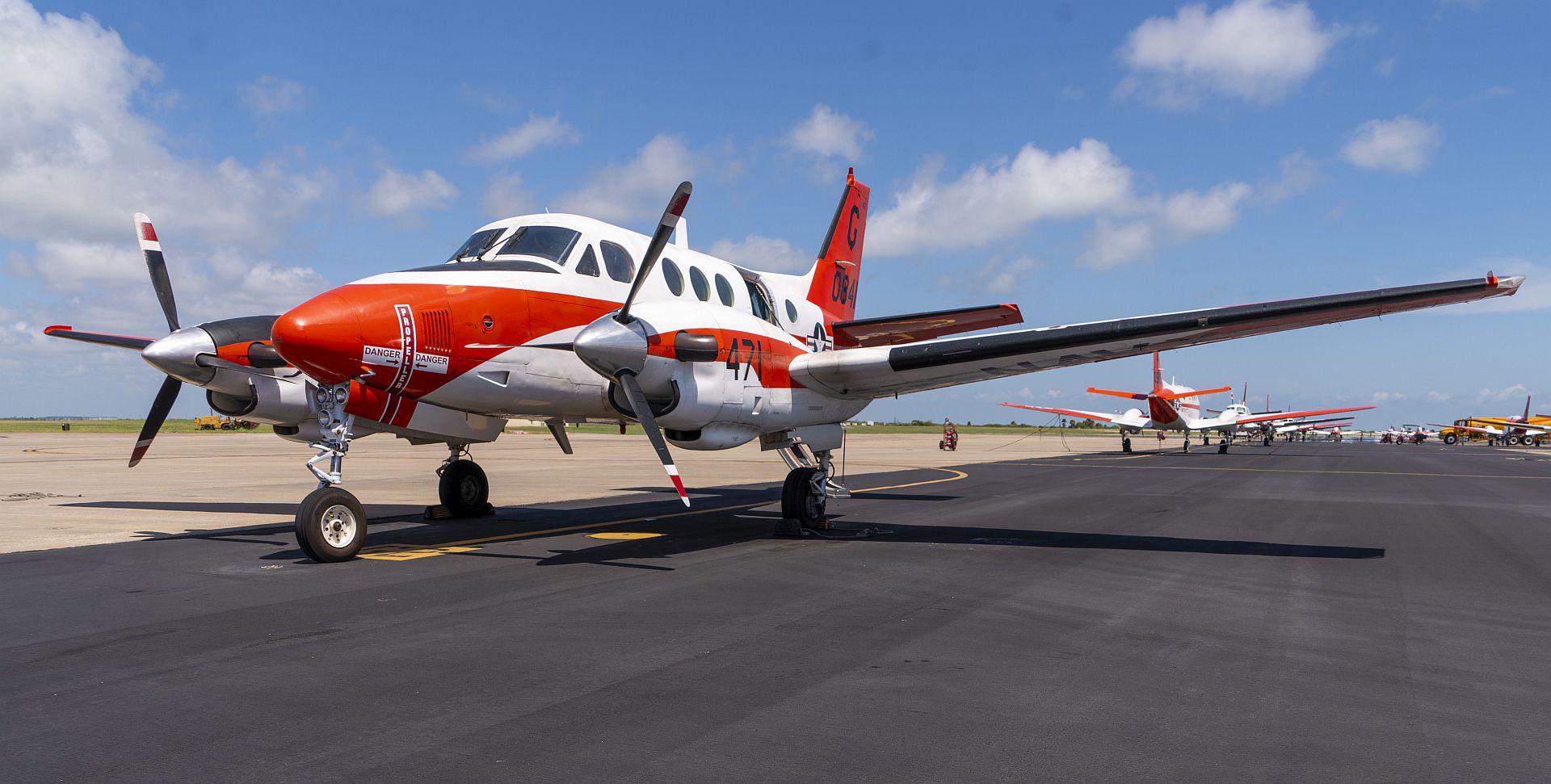
U.S. Air Force integrated avionics specialists from the 94th Aircraft Maintenance Unit perform maintenance on an F-22 Raptor at Nellis Air Force Base, Nevada, July 22, 2019. The specialists take the data transfer cartridge from the aircraft and download the data to a computer to run diagnostics on issues they were unable to fix on the flightline. (U.S. Air Force photo by Senior Airman Tristan Biese)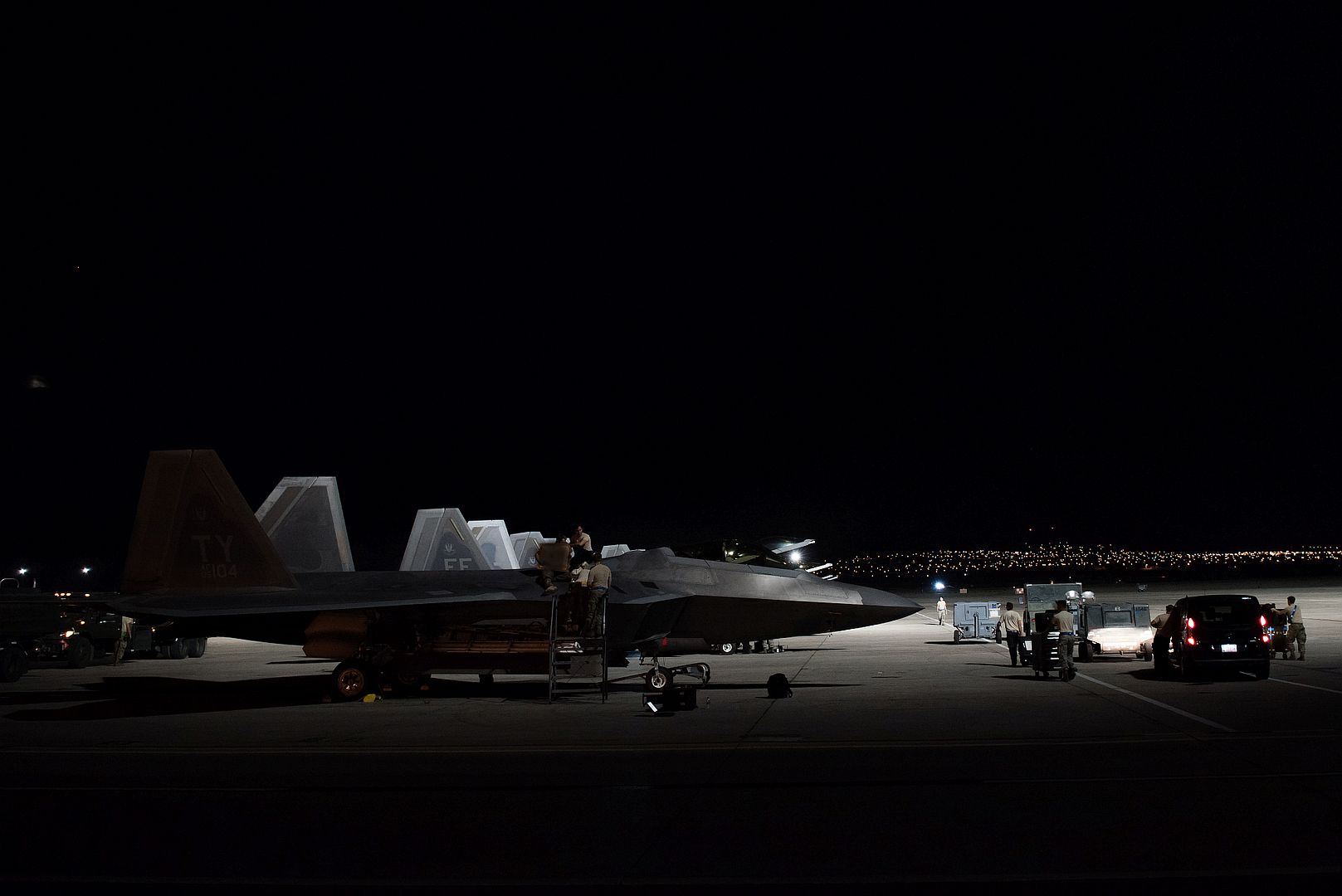
An A-10 Thunderbolt II assigned to the 25th Fighter Squadron, Osan Air Base, Republic of Korea takes off at Yokota Air Base, Japan, July 23, 2019. Eight A-10s diverted to Yokota AB due to Typhoon Danas. (U.S. Air Force photo by Yasuo Osakabe)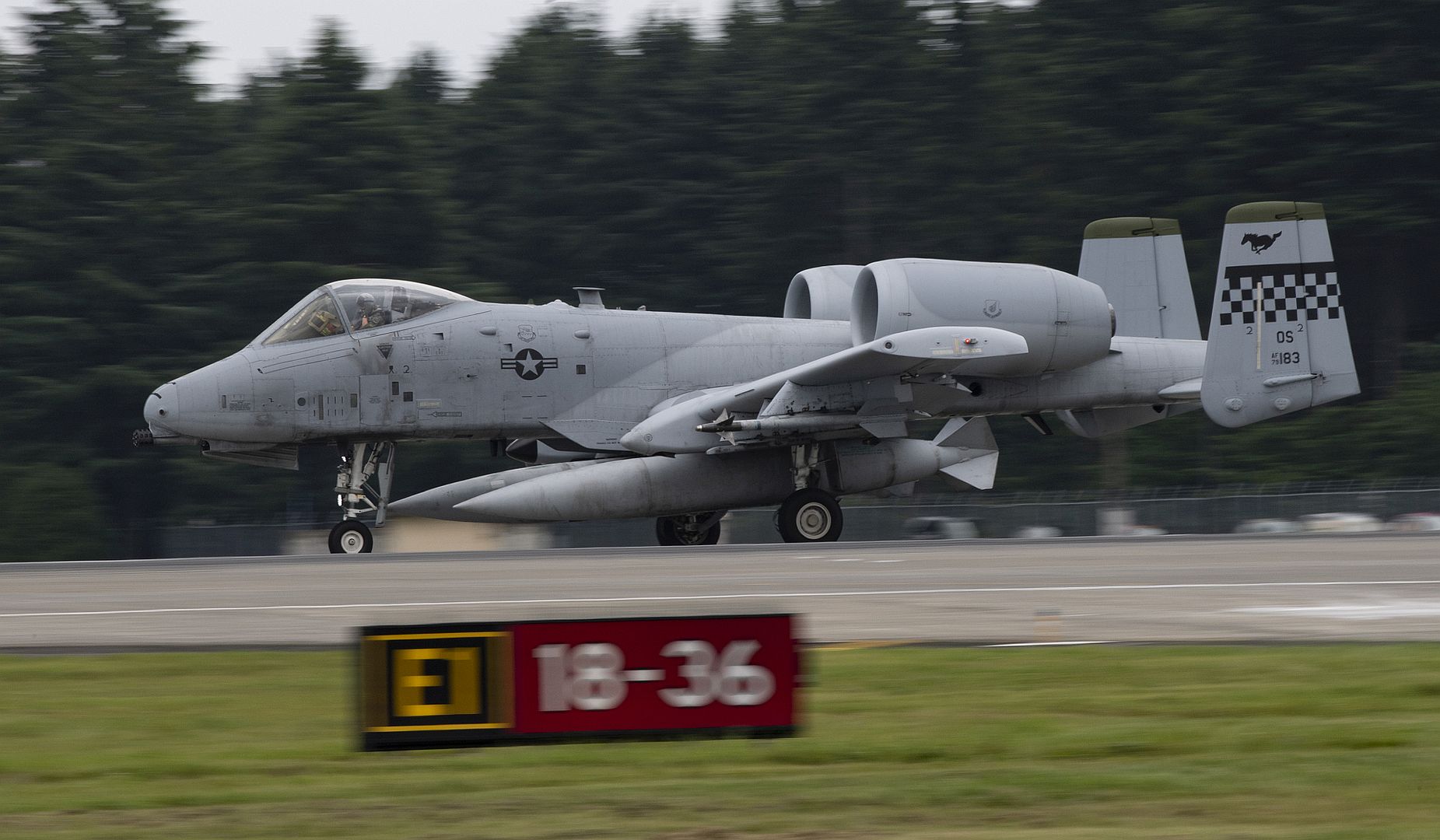
An F-16C Fighting Falcon aircraft lands at Keflavik Air Base, Iceland, July 25, 2019 in support of an Icelandic Air Surveillance mission. Conducting missions with our NATO allies demonstrates our shared commitment to peace and better prepares us to respond to a range of potential security and humanitarian emergencies. (U.S. Air Force photo by Airman 1st Class Jovante Johnson)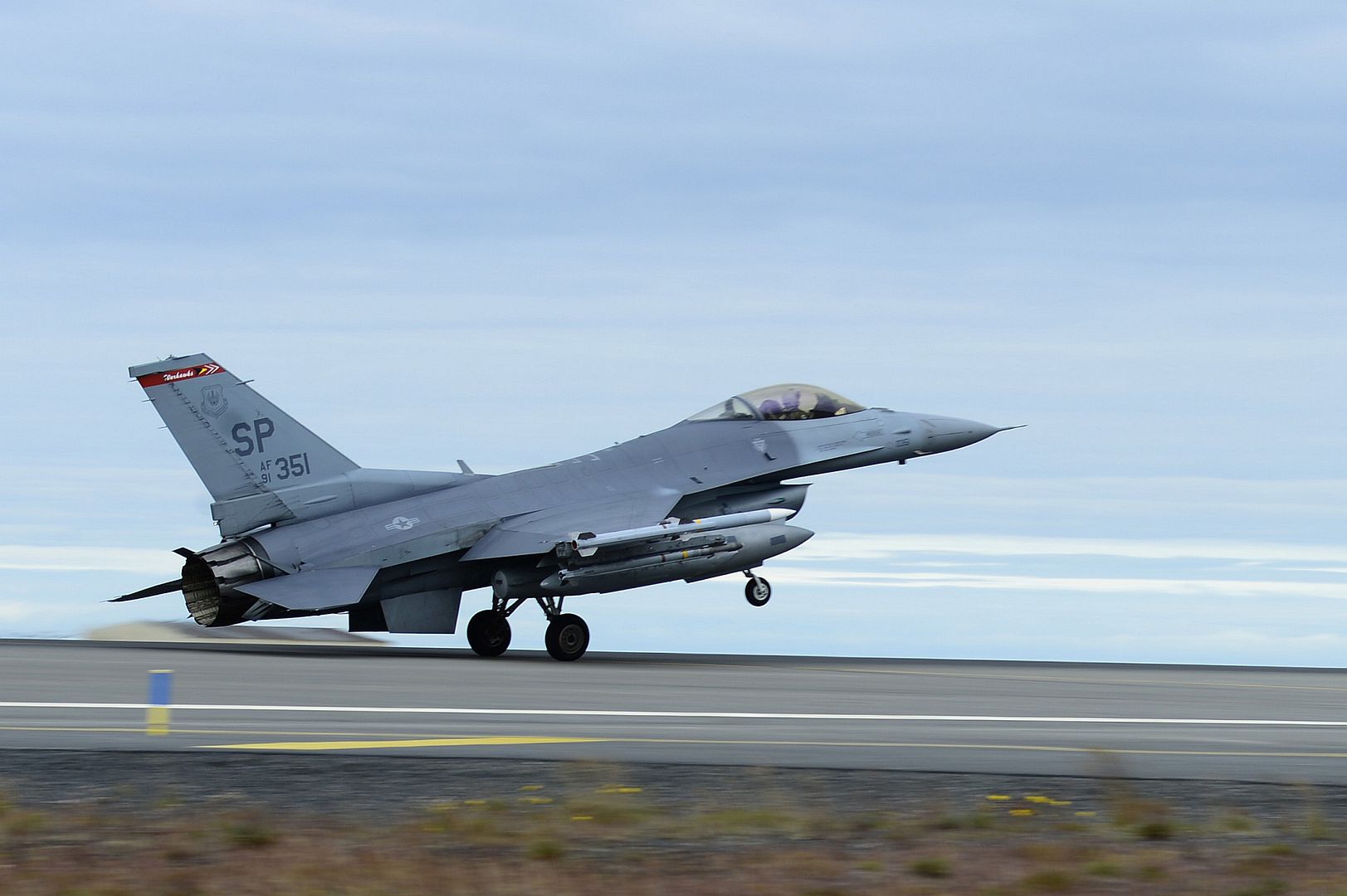
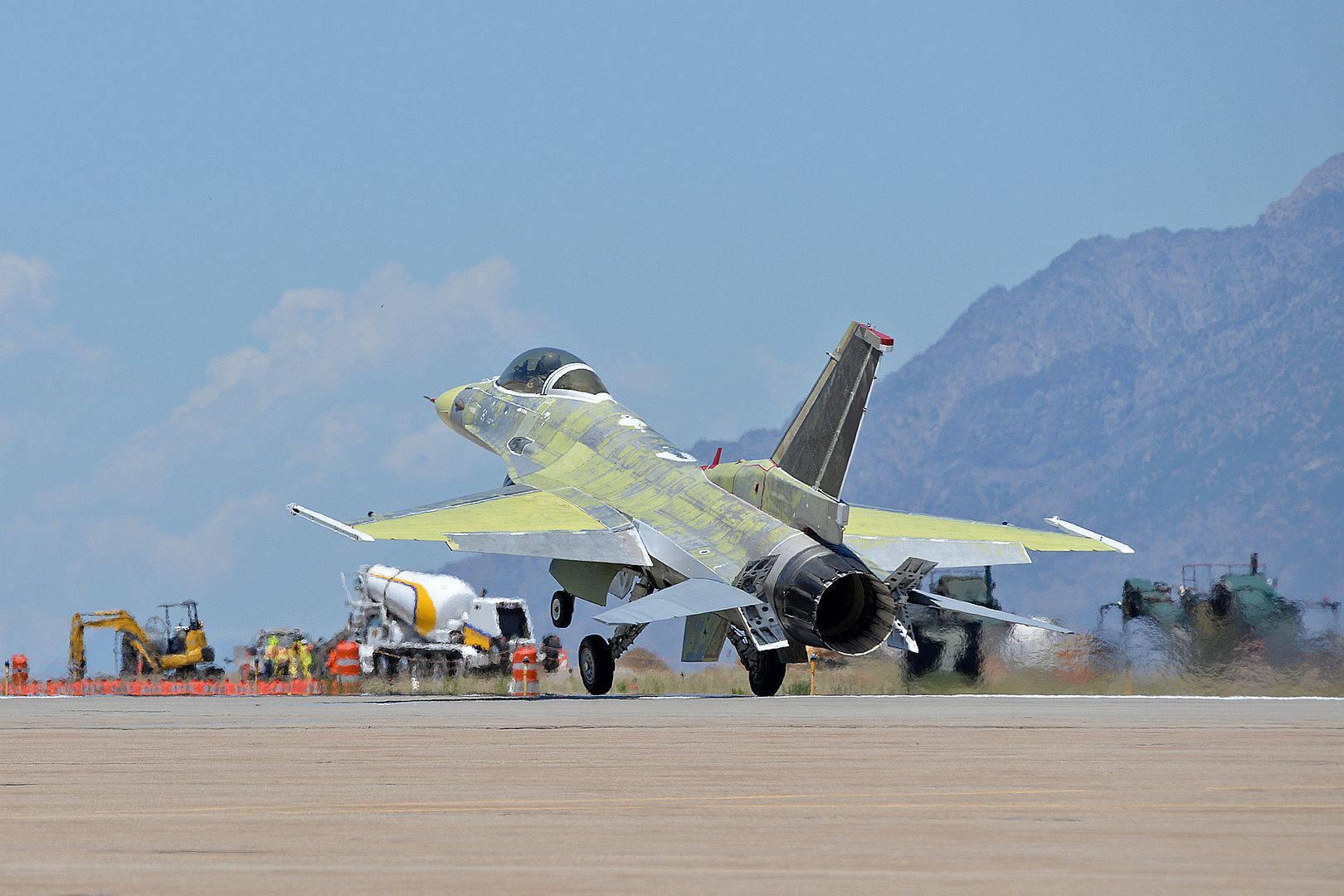
Lt. Col. Beau ?Strap? Wilkins, 514th Flight Test Squadron test pilot, flies a low approach over taxiway Alpha in an unpainted U.S. Air Force Thunderbird F-16 Fighting Falcon during a functional check flight at Hill Air Force Base, Utah, July 1, 2019. The runway at Hill AFB has been closed for most of the summer, requiring test pilots from the 514th to temporarily use the taxiway as a runway. (U.S. Air Force photo's by Alex R. Lloyd)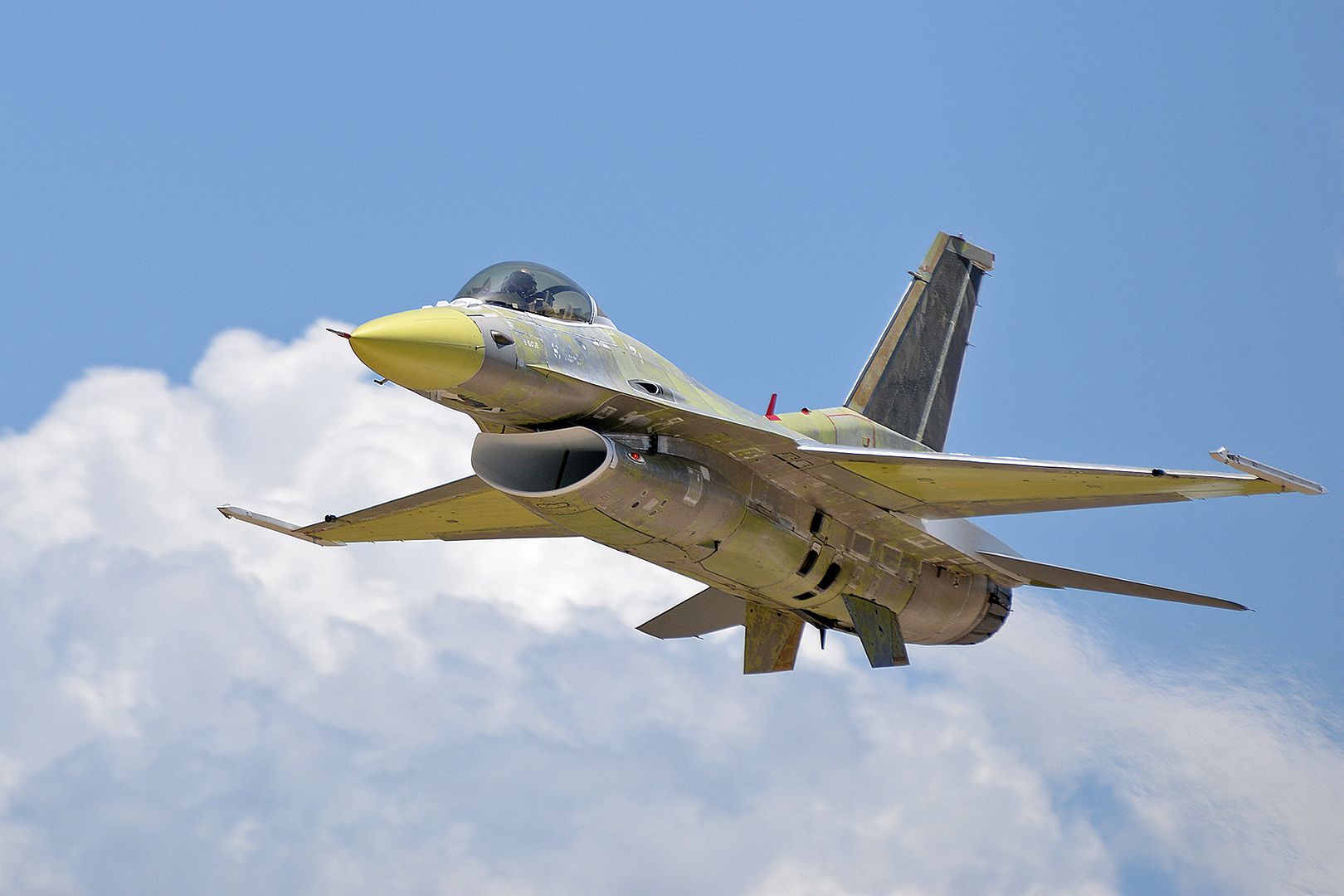
SYRACUSE, N.Y., July 25, 2019 ? Lockheed Martin?s Radar Sensor Systems market segment has been awarded a contract from Northrop Grumman worth over $600 million for multi-year production (MYP) of 24 additional APY-9 radars for the U.S. Navy?s E-2D aircraft program. It?s also known as the Advanced Hawkeye program.
The APY-9 radar program is nearing completion of a current five-year production contract in 2020, and this new award calls for another five years of production ? with deliveries spanning from 2021 to 2025. The latest radar order will include Lockheed Martin?s new Advanced Radar Processor.
?We?re excited to have the opportunity to continue producing APY-9 radars for the Navy?s use on its Advanced Hawkeye aircraft and to continue supporting our customers with performance upgrades on a regular basis,? Ken Kaminski, Airborne & National Surveillance Radar program director, said.
The APY-9 radar is an Ultra High Frequency (UHF) surveillance system that provides both mechanical and electronic scanning capabilities designed to ?see? smaller targets ? and more of them ? at a greater range, particularly in coastal regions and over land.
?The team has performed extremely well to date in terms of delivering all of our APY-9 systems on or ahead of schedule,? Kaminski said.
Production work is performed at Lockheed Martin sites in Syracuse and Owego, New York, and Clearwater, Florida.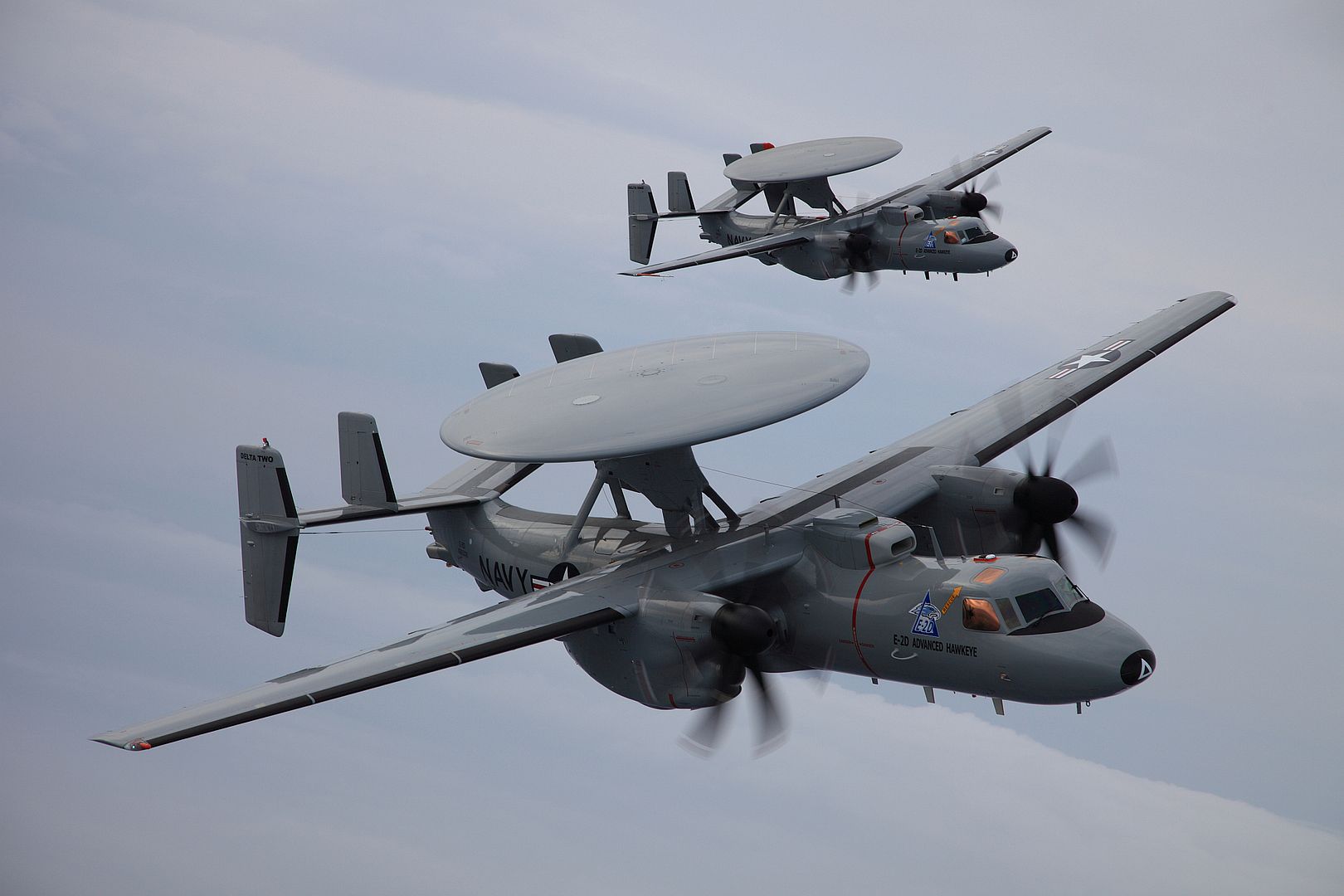
-
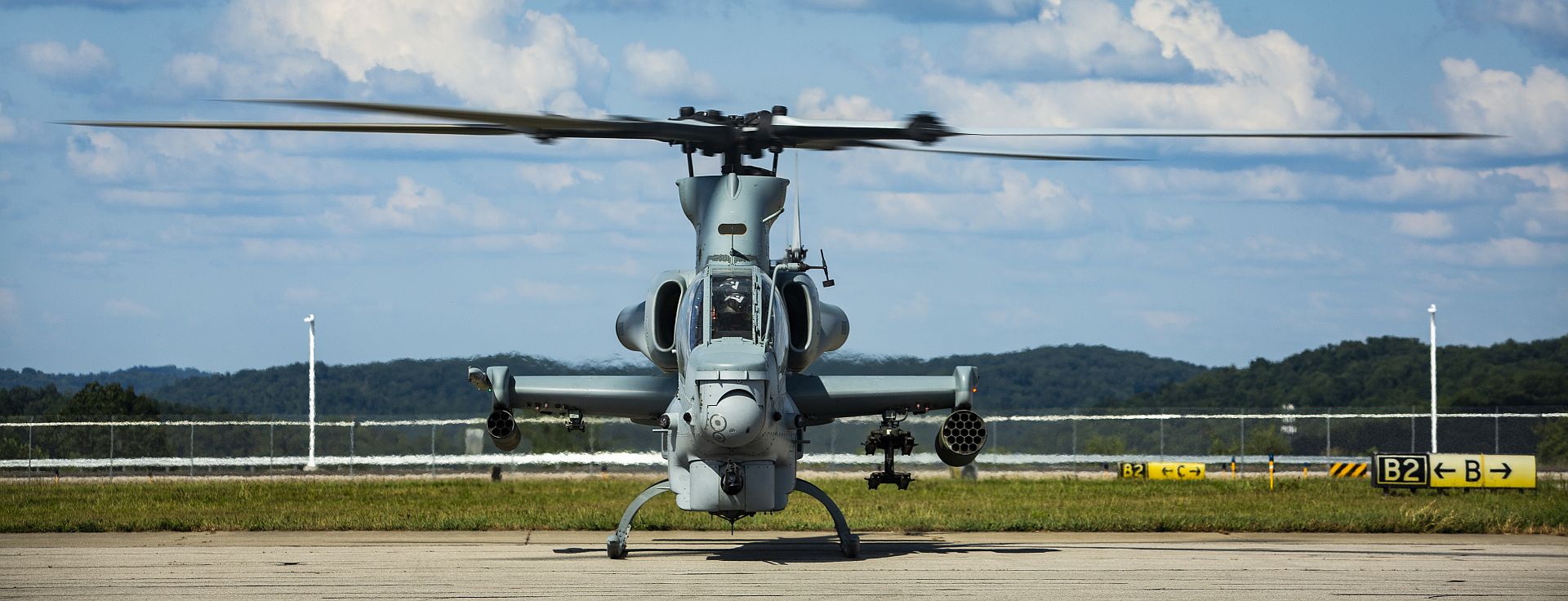
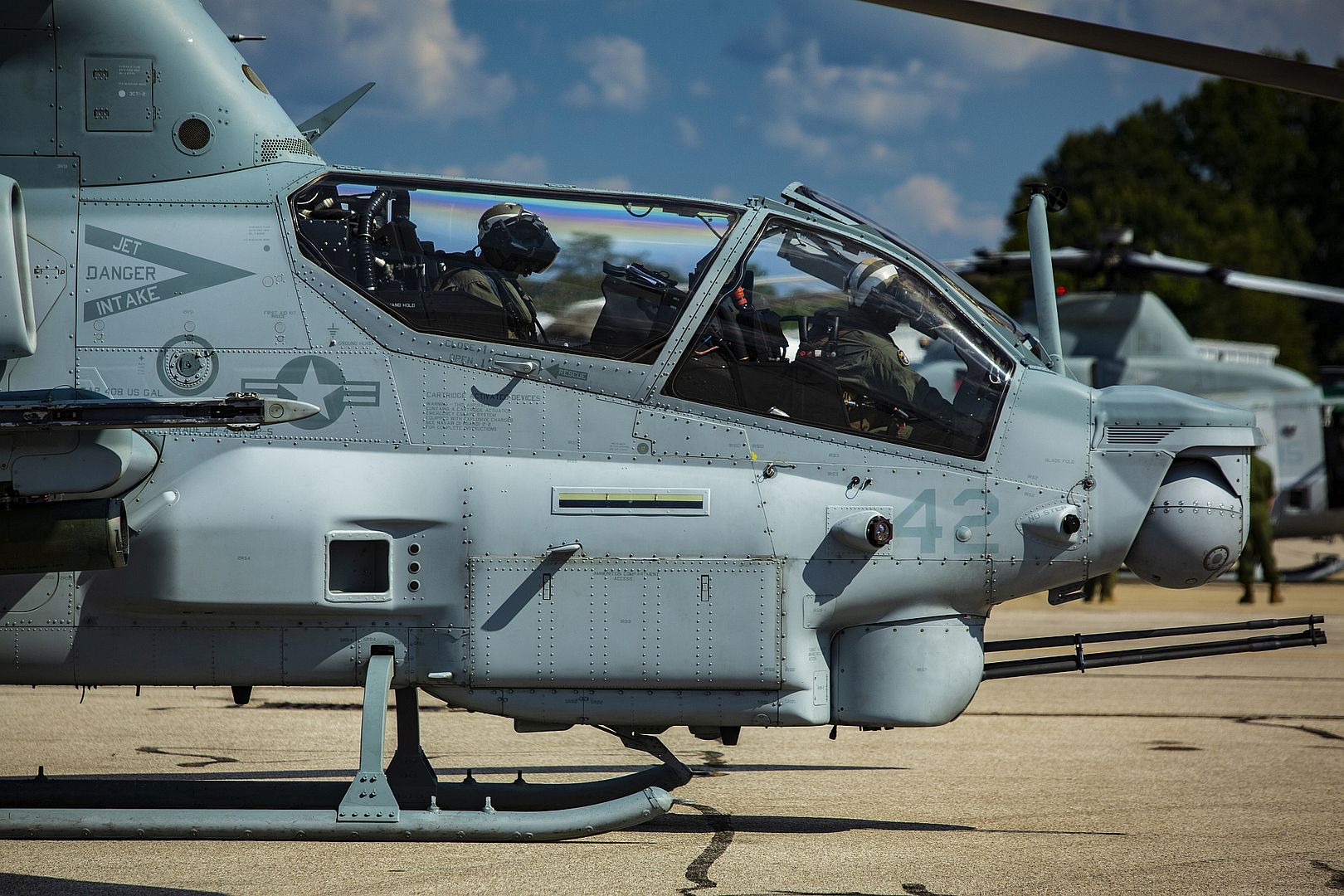
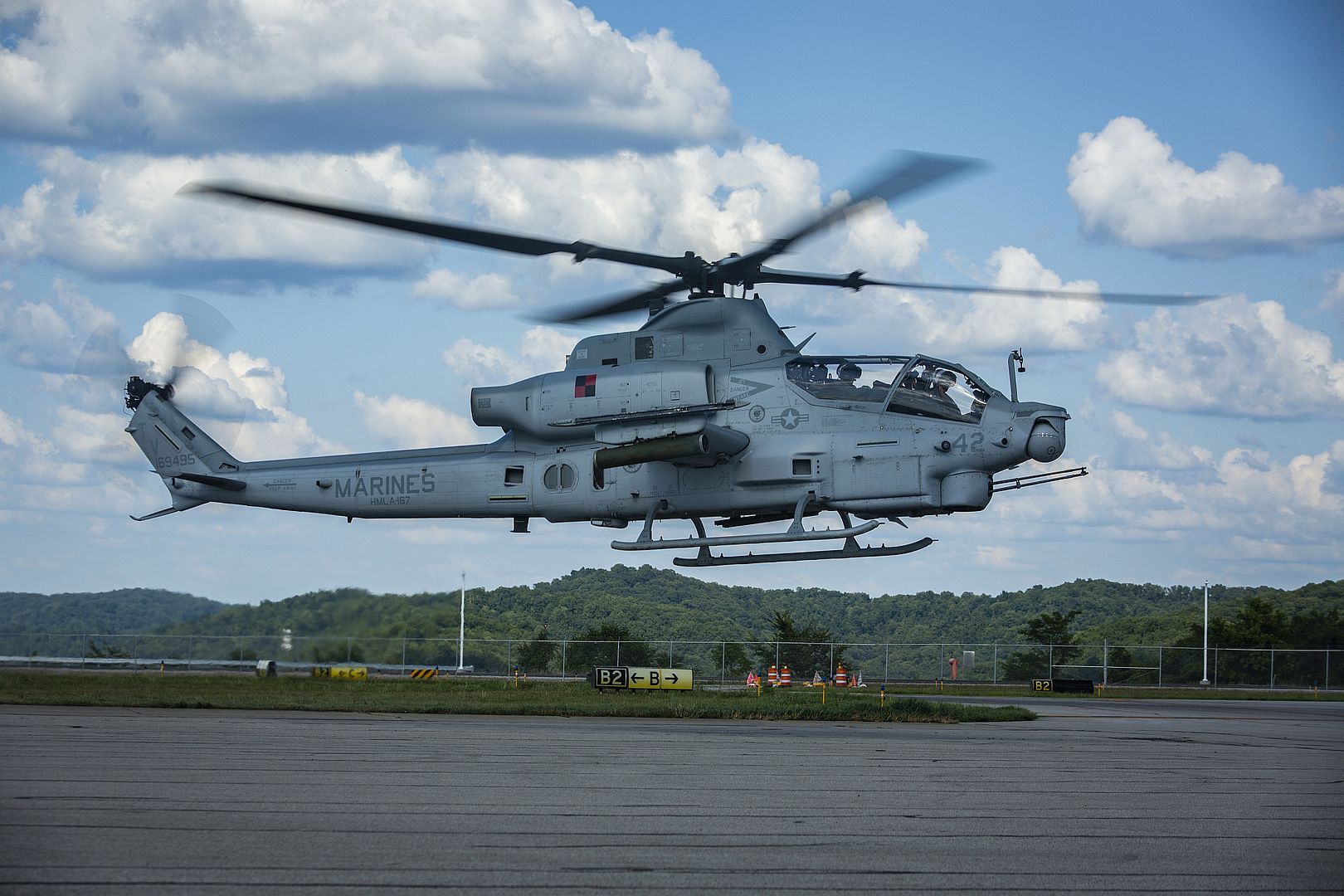
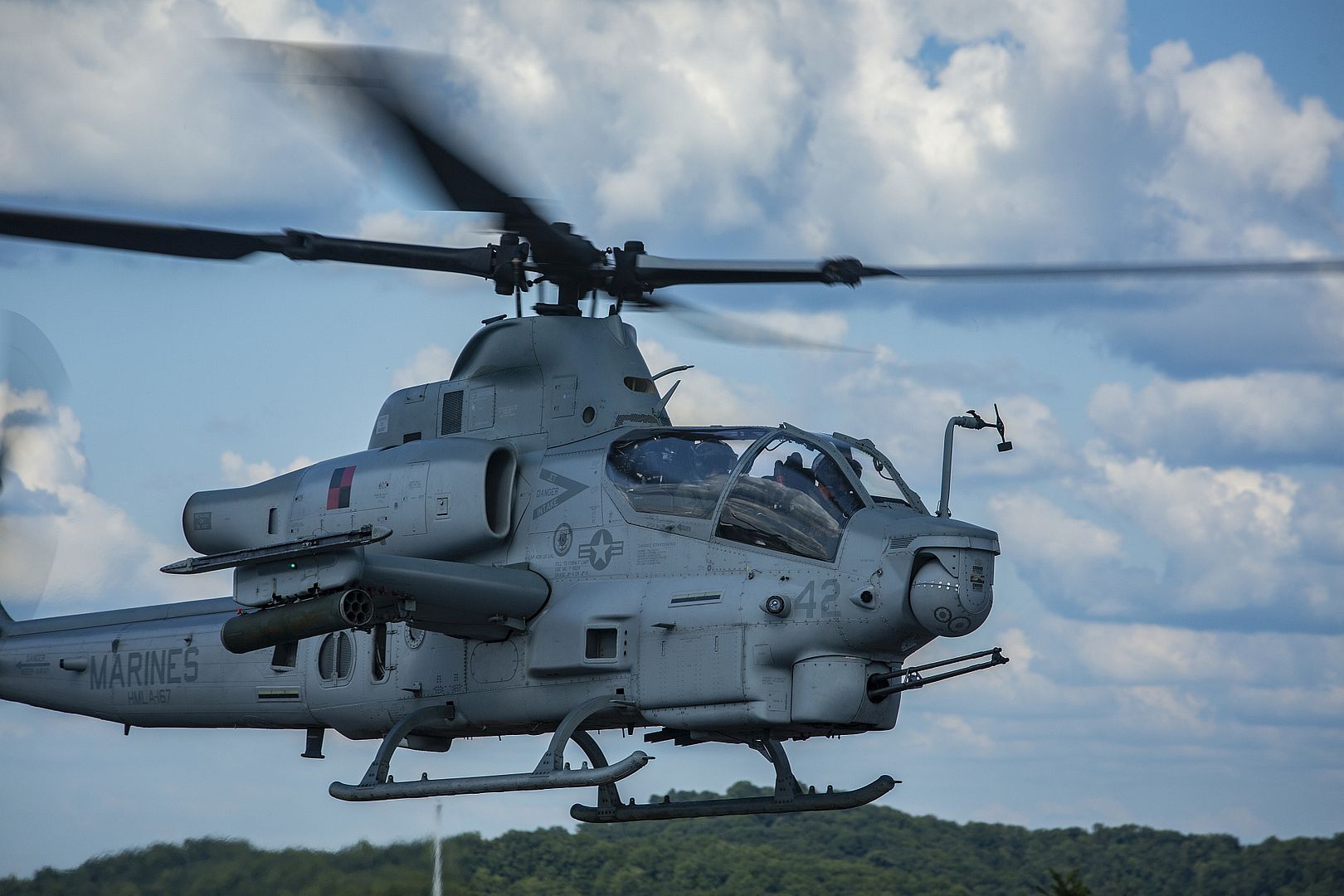
A U.S. Marine AH-1Z Viper with Marine Light Attack Helicopter Squadron (HMLA) 167 takes off in Charleston, West Virginia, July 26, 2019. HMLA-167 is subordinate command of 2nd Marine Aircraft Wing. (U.S. Marine Corps photo's by Staff Sgt. William L.Holdaway)
ATLANTIC OCEAN (July 24, 2019) A VBAT vertical take-off and landing (VTOL) unmanned aerial system (UAS) flies above the flight deck of the Military Sealift Command expeditionary fast transport vessel USNS Spearhead (T-EPF 1). VBAT UAS provides improved detection and monitoring to support counter-narcotics missions in the Caribbean and Eastern Pacific. (U.S. Navy photo by Mass Communication Specialist 2nd Class Anderson W. Branch/Released)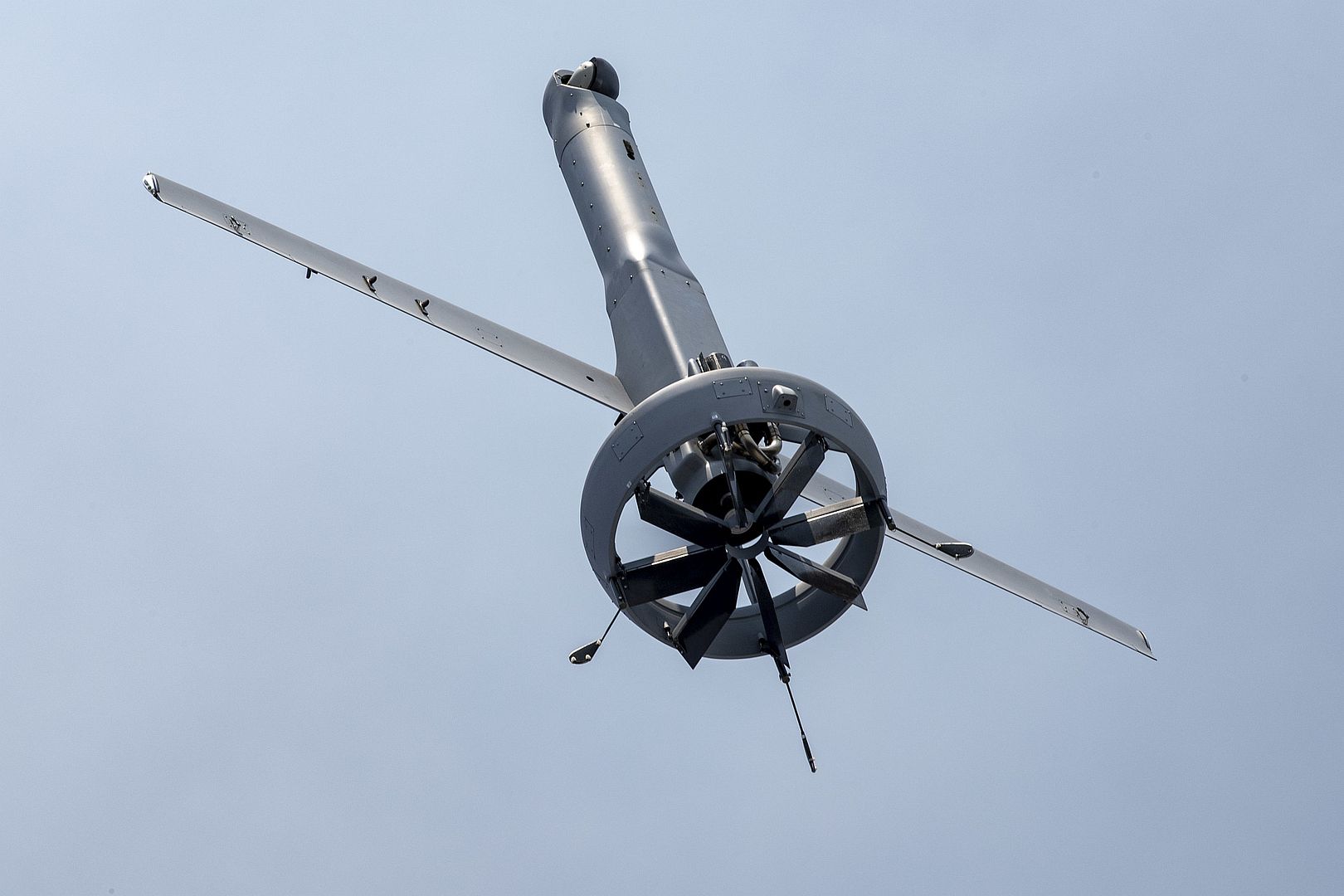
ATLANTIC OCEAN (July 24, 2019) A VBAT vertical take-off and landing (VTOL) unmanned aerial system (UAS) prepares to land on the flight deck of the Military Sealift Command expeditionary fast transport vessel USNS Spearhead (T-EPF 1). VBAT UAS provides improved detection and monitoring to support counter-narcotics missions in the Caribbean and Eastern Pacific. (U.S. Navy photo by Mass Communication Specialist 2nd Class Anderson W. Branch/Released)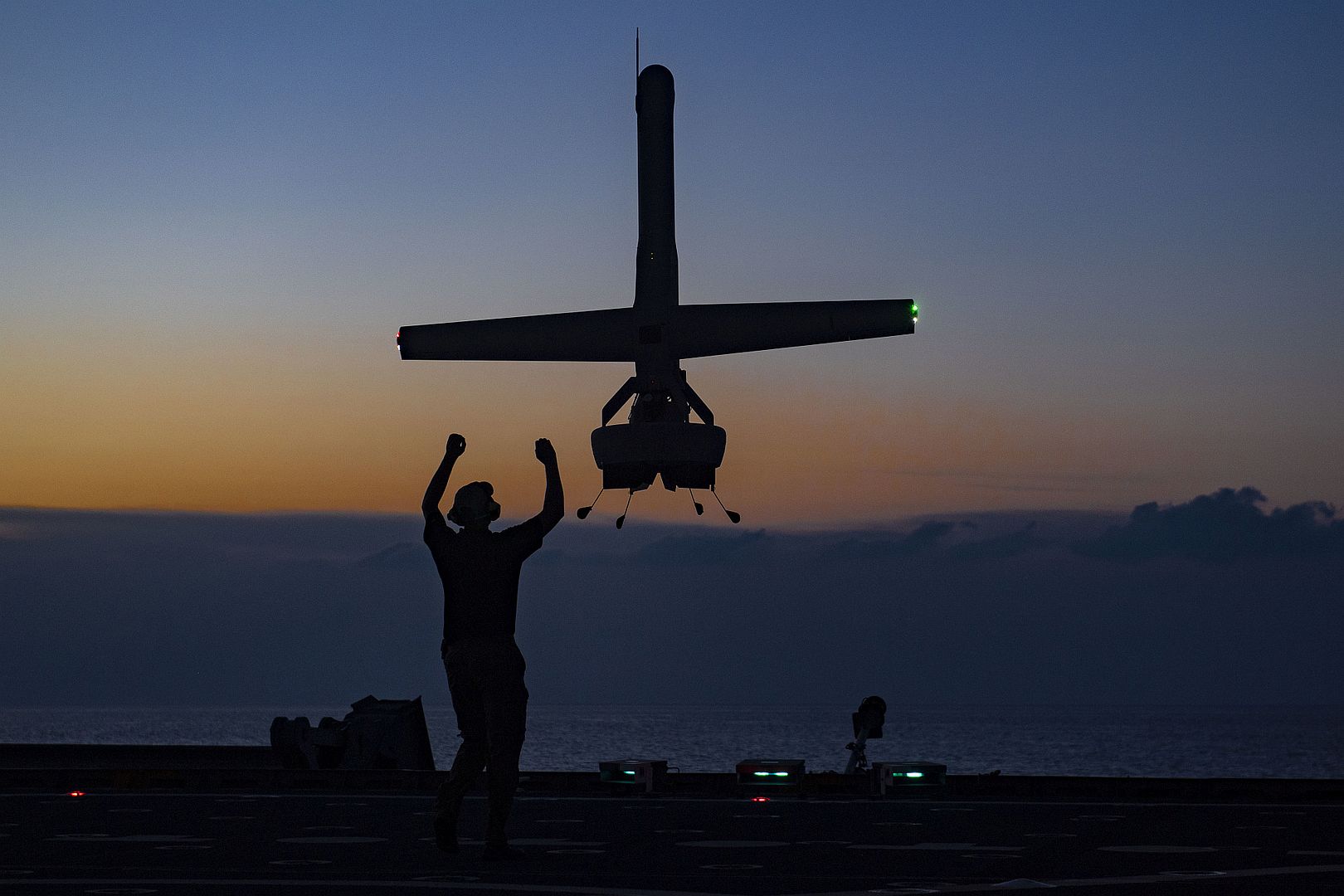
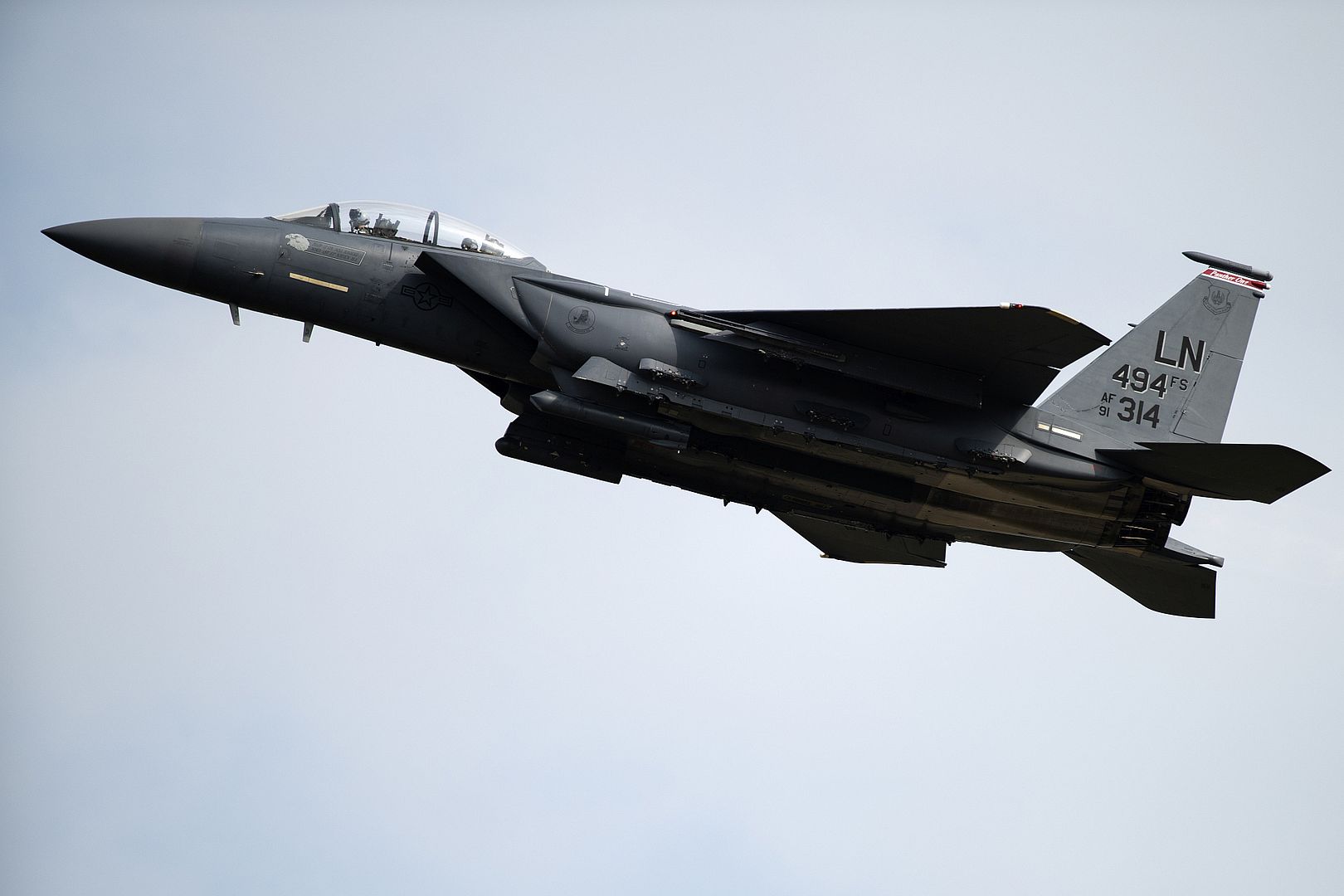
F-15E Strike Eagles assigned to the 494th Fighter Squadron take off for a U.S. Air Force Academy cadet familiarization flight at Royal Air Force Lakenheath, England, July 26. The cadets are participating in ?Operation Air Force,? a two-week program in which they are able to see and experience the Air Force mission being accomplished first-hand. (U.S. Air Force photo's by Senior Airman Malcolm Mayfield)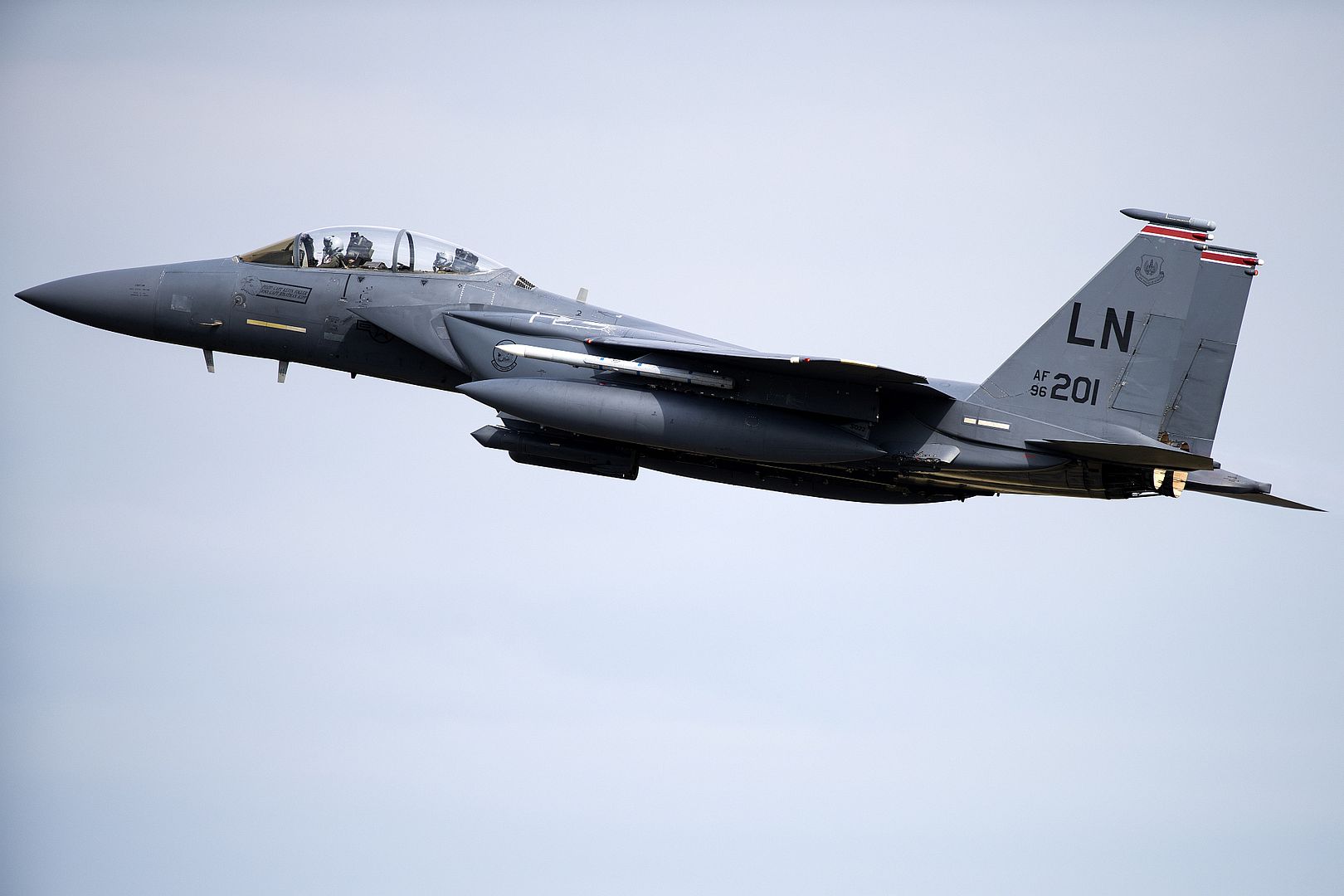
An Avro Anson aircraft performs aerial maneuvers at Royal Air Force Marham?s annual Friends and Families Day July 25, 2019. RAF Marham extended its tickets to 100 Liberty Wing Airmen to attend the show and enjoy its festivities building on the strong relationship between the RAF and the U.S. Air Force. (U.S. Air Force photo by Airman 1st Class Madeline Herzog)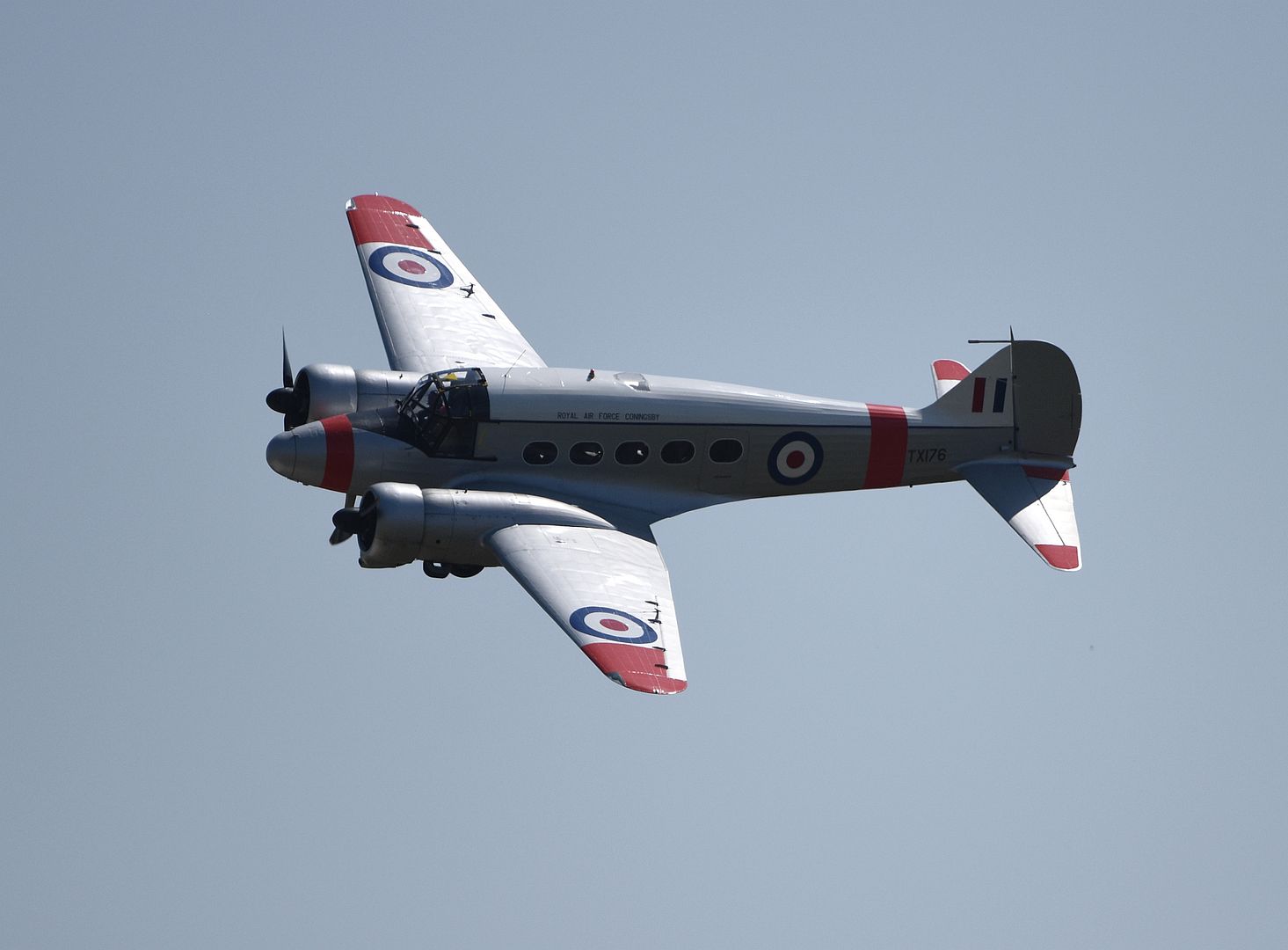
-
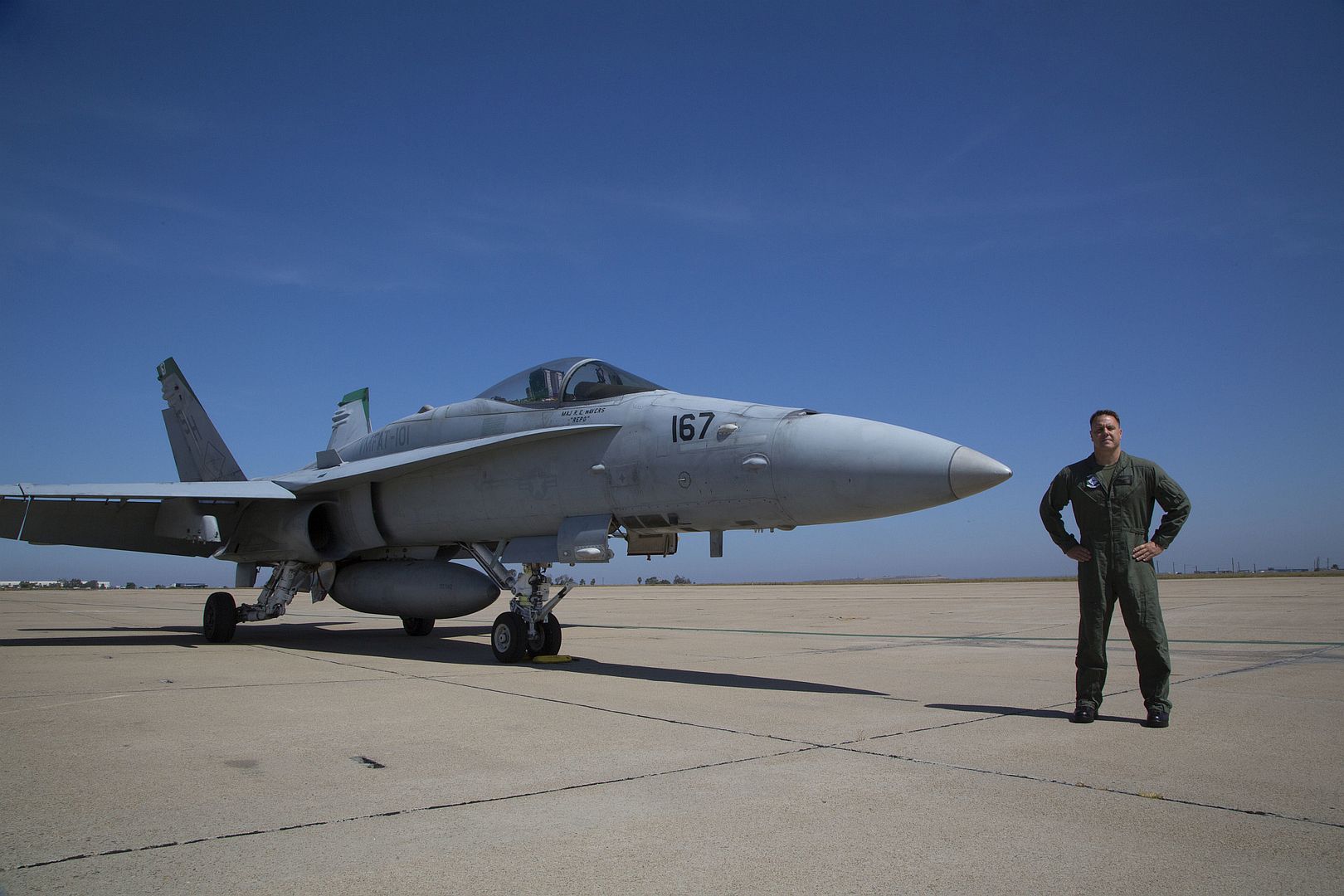
U.S. Marine Corps Lt. Col. Jarrod DeVore, an F/A-18C Hornet pilot with Marine Fighter Attack Training Squadron (VMFAT) 101, Marine Aircraft Group 11, 3rd Marine Aircraft Wing, poses in front of a Hornet at the San Diego Jet Center, San Diego, Calif., July 27, 2019. VMFAT-101 is the largest F/A-18 squadron in the Marine Corps and has over 60 fighter jets attached to the squadron. (U.S. Marine Corps photo by Sgt. Victoria Decker)
Two F-16C Fighting Falcon aircraft taxi during a training scramble at Keflavik Air Base, Iceland, July 27, 2019. 52nd Fighter Wing personnel conduct scramble training in preparation for Icelandic Air Surveillance mission certification. IAS is representative of the U.S. commitment to our allies and to enhancing regional security. (U.S. Air Force photo by Airman 1st Class Jovante Johnson)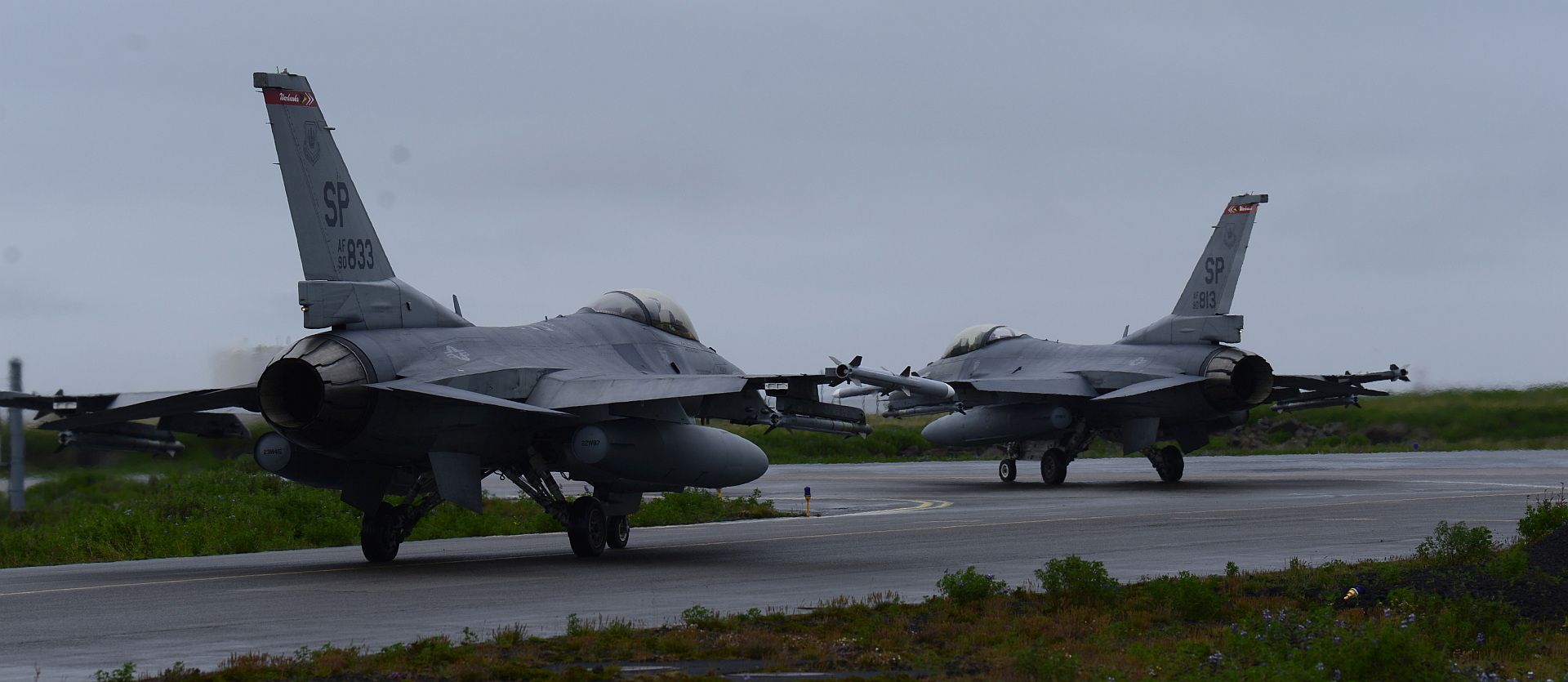
GRAND JUNCTION, Colo. (July 27, 2019) ? Lt. Cmdr. Andre Webb, the U.S. Navy Flight Demonstration Squadron, the Blue Angels, opposing solo pilot, performs the ?Low Transition? maneuver in a demonstration at the Grand Junction Air Show in Grand Junction, Colo. The Blue Angels are scheduled to conduct 61 flight demonstrations at 32 locations across the country to showcase the pride and professionalism of the U.S. Navy and Marine Corps to the American public in 2019. (U.S. Navy photo by Mass Communication Specialist 2nd Class Christopher Gordon)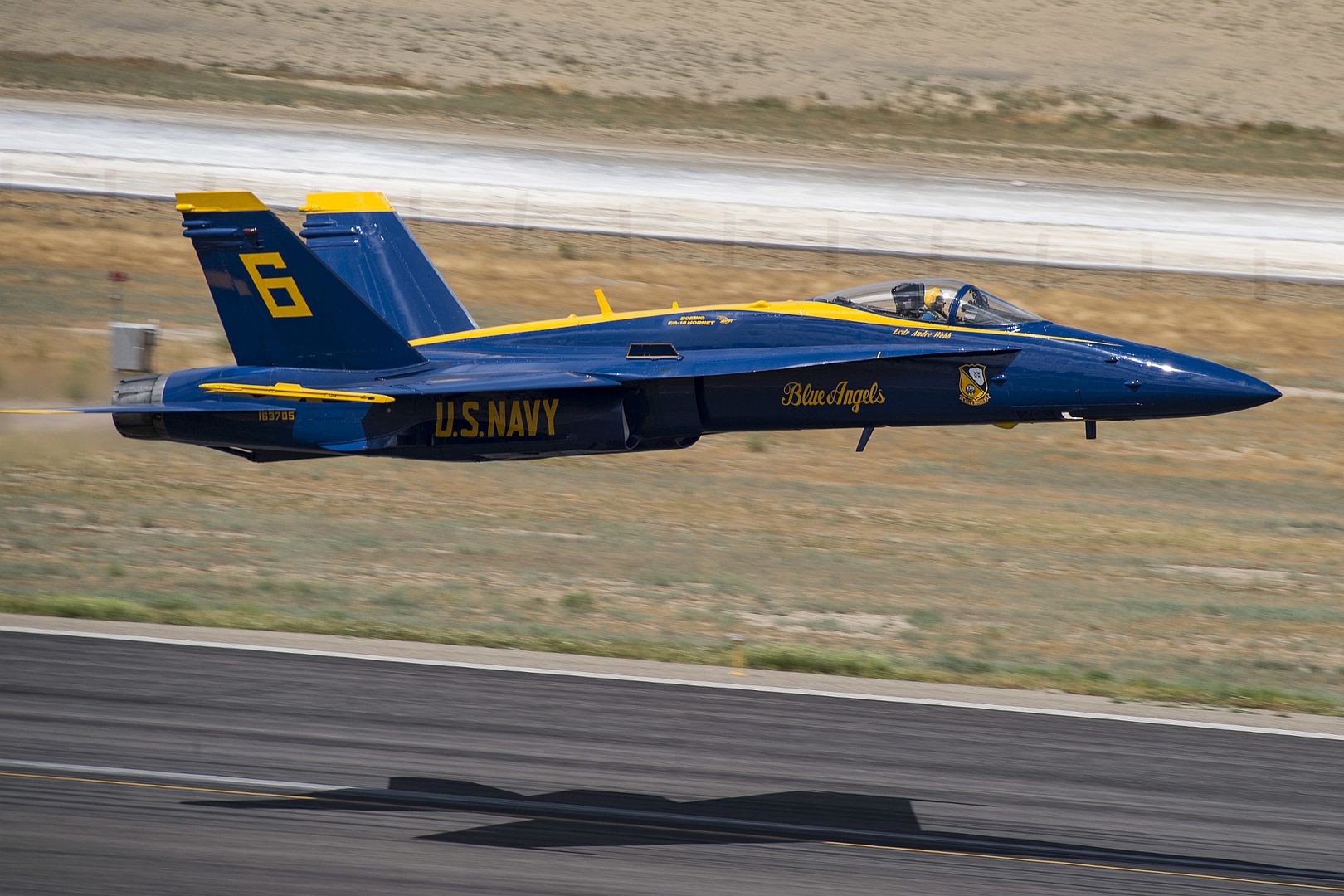
Lt. Col. Benjamin Kaminsky, pilot, and Maj. Benjamin Williams, copilot, fly over South Texas in a T-38C Talon during a training mission July 19, 2019. Both pilots are assigned to the 560th Flying Training Squadron at Joint Base San Antonio-Randolph, Texas. (U.S. Air Force photo by MSgt Christopher Boitz)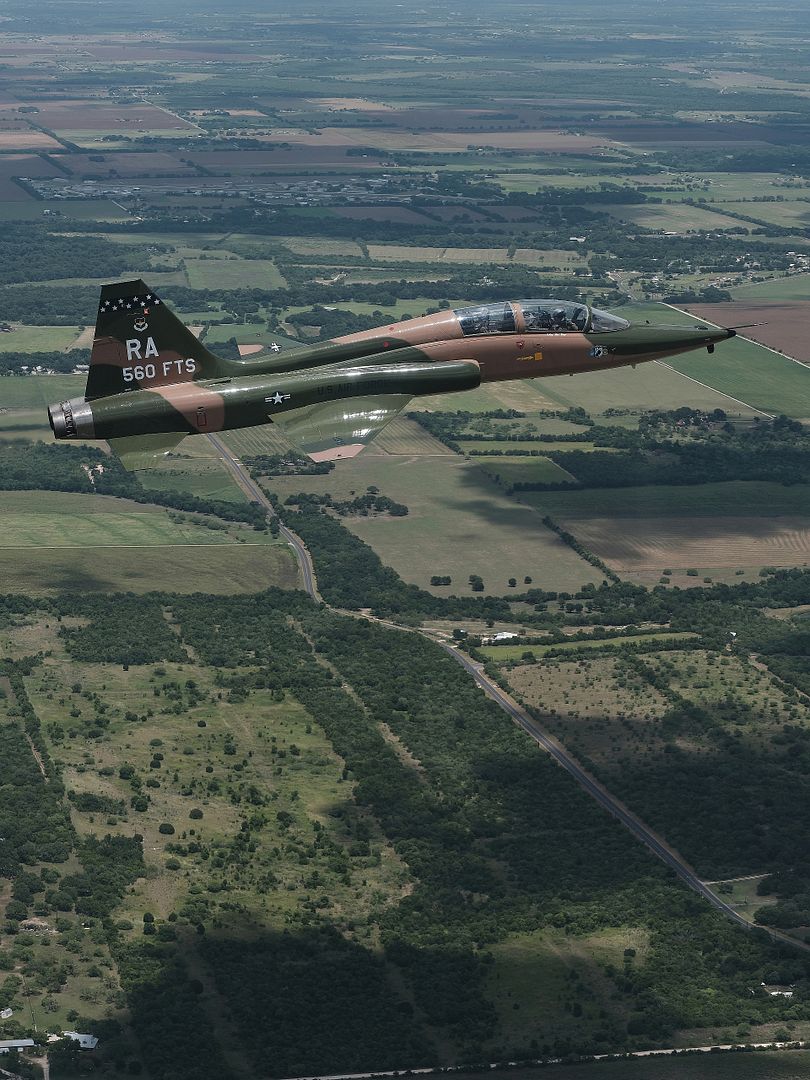
A Royal Australian Air Force E-7A Wedgetail takes off from the flighline at Nellis Air Force Base, Nev., July 22, 2019. The Boeing E-7A Wedgetail is assigned to serve in the Airborne Early Warning and Control (AEW&C) role, helping to manage active battle spaces (at the tactical level) while having the capability to scan some millions of square miles of terrain in a single sortie. (U.S. Air Force photo by Airman 1st Class Jeremy Wentworth)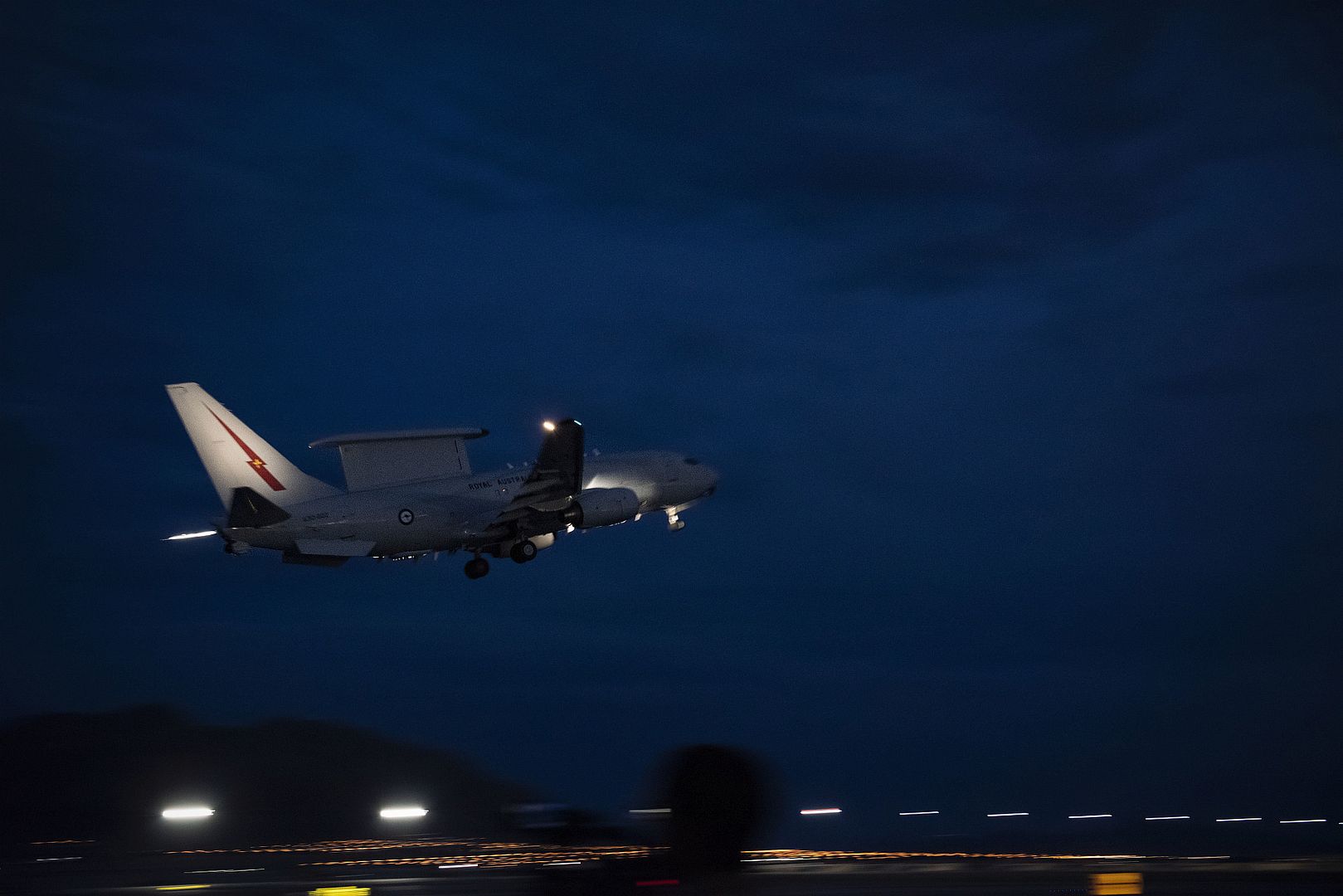
PACIFIC OCEAN (July 24, 2019) Sailors inspect an F/A-18E Super Hornet assigned to the Tomcatters of Strike Fighter Squadron (VFA) 31 on the flight deck of the aircraft carrier USS Theodore Roosevelt (CVN 71). Theodore Roosevelt is conducting routine operations in the eastern Pacific Ocean. (U.S. Navy photo by Mass Communication Specialist 3rd Class Zachary Wheeler/Released)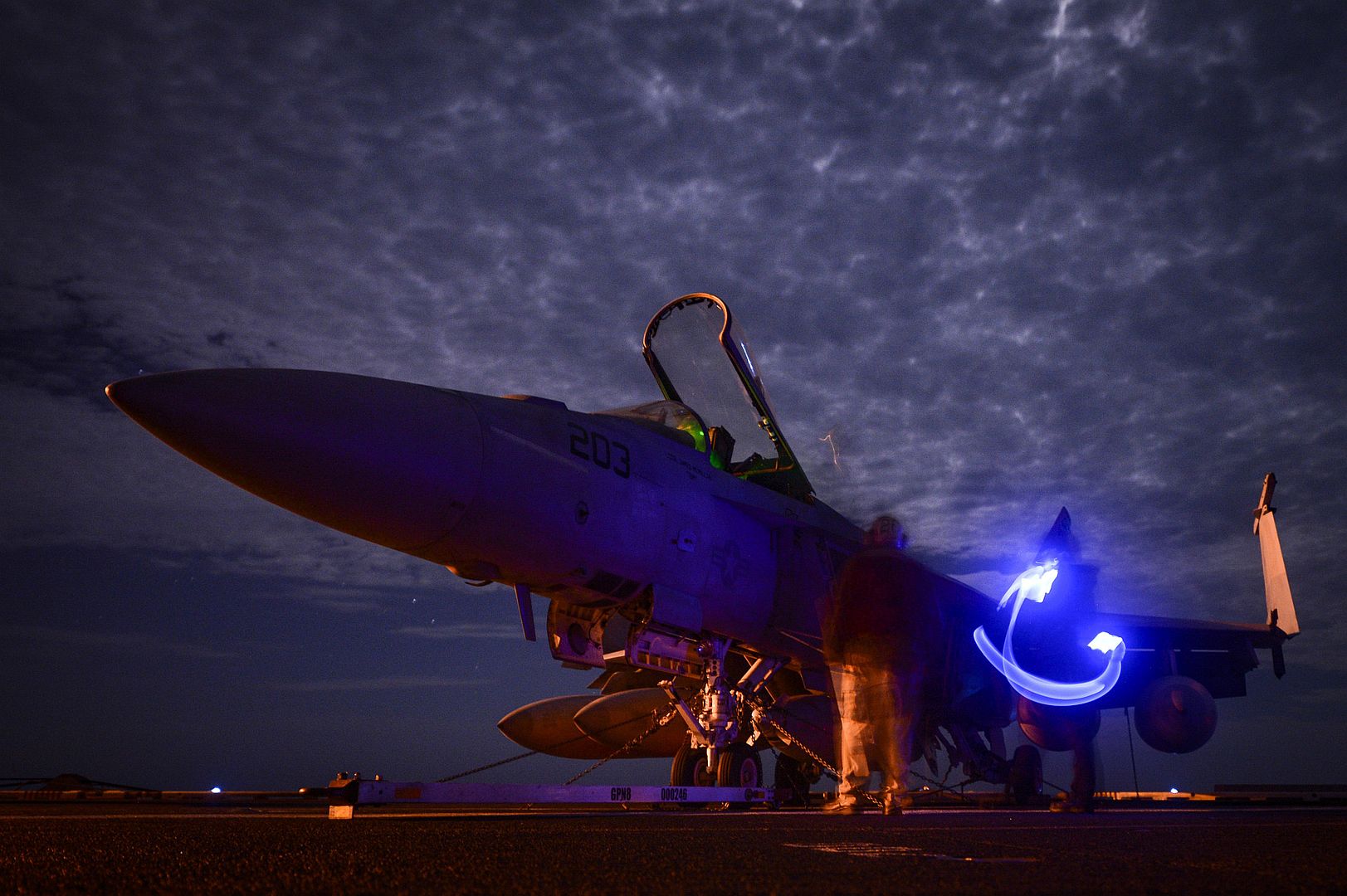
Ireland?s national carrier Aer Lingus has taken delivery of its first of eight A321LR aircraft, becoming the first airline in International Airlines Group (IAG) to operate the type. The aircraft on lease from Air Lease Corporation (ALC: NYSE: AL) is powered by CFM International LEAP-1A engines and configured in a two-class layout with 16 business and 168 economy seats.
The Dublin-based carrier will deploy the aircraft on transatlantic routes to the U.S. East Coast.
Aer Lingus currently operates a total of 50 Airbus aircraft, including 13 A330s and 37 A320 Family aircraft. The A321LR and the A330 combined within the same fleet is a powerful lever to cover the needs of the medium to long haul markets.
The A321LR is a member of the A320neo Family, with over 6,600 orders by more than 100 customers. It delivers 30% fuel savings and nearly 50% reduction in noise footprint compared to previous generation competitor aircraft. With a range of up to 4,000 nm (7,400 km) the A321LR is the unrivalled long range route opener, featuring true transatlantic capability and premium wide-body comfort in a single-aisle aircraft cabin.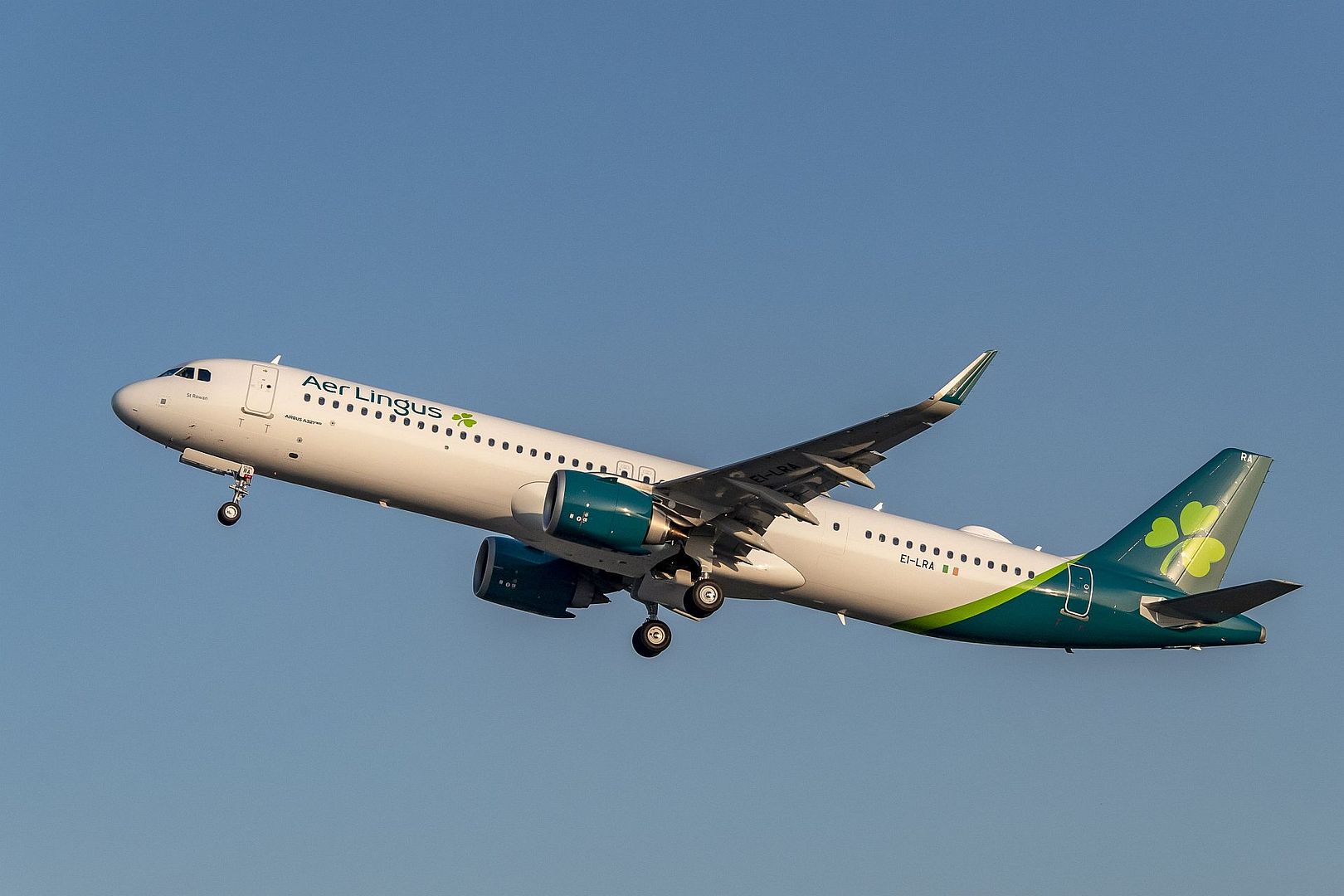
An Airbus A220-300 flight test aircraft will visit six Asian destinations as part of a demonstration tour across the region. After a stopover at Seoul?s Incheon Airport, the aircraft heads to Yangon (Myanmar), the first location of the demonstration tour. The aircraft will then visit Hanoi (Vietnam), Bangkok (Thailand) and Kuala Lumpur (Malaysia) before heading north to Nagoya (Japan).
The A220 is the most modern aircraft in the 100-150 seat market. It delivers unbeatable efficiency and passenger comfort in its size category, with 20% lower fuel consumption than previous generation aircraft. The A220 being used for the demonstration tour in Asia is an Airbus flight test aircraft fitted with a typical single-class passenger cabin.
During the A220 demonstration tour, customers and media will be offered a close up view of the aircraft?s outstanding characteristics, comfort and performance that benefit both operators and passengers alike.
The A220 delivers unbeatable fuel efficiency and true wide-body comfort in a single-aisle aircraft. The A220 brings together state-of-the-art aerodynamics, advanced materials and Pratt & Whitney?s latest-generation PW1500G geared turbofan engines to offer at least 20% lower fuel burn per seat compared to previous generation aircraft. With a range of up to 3,400 nm (6,300 km), the A220 offers the performance of larger single-aisle aircraft.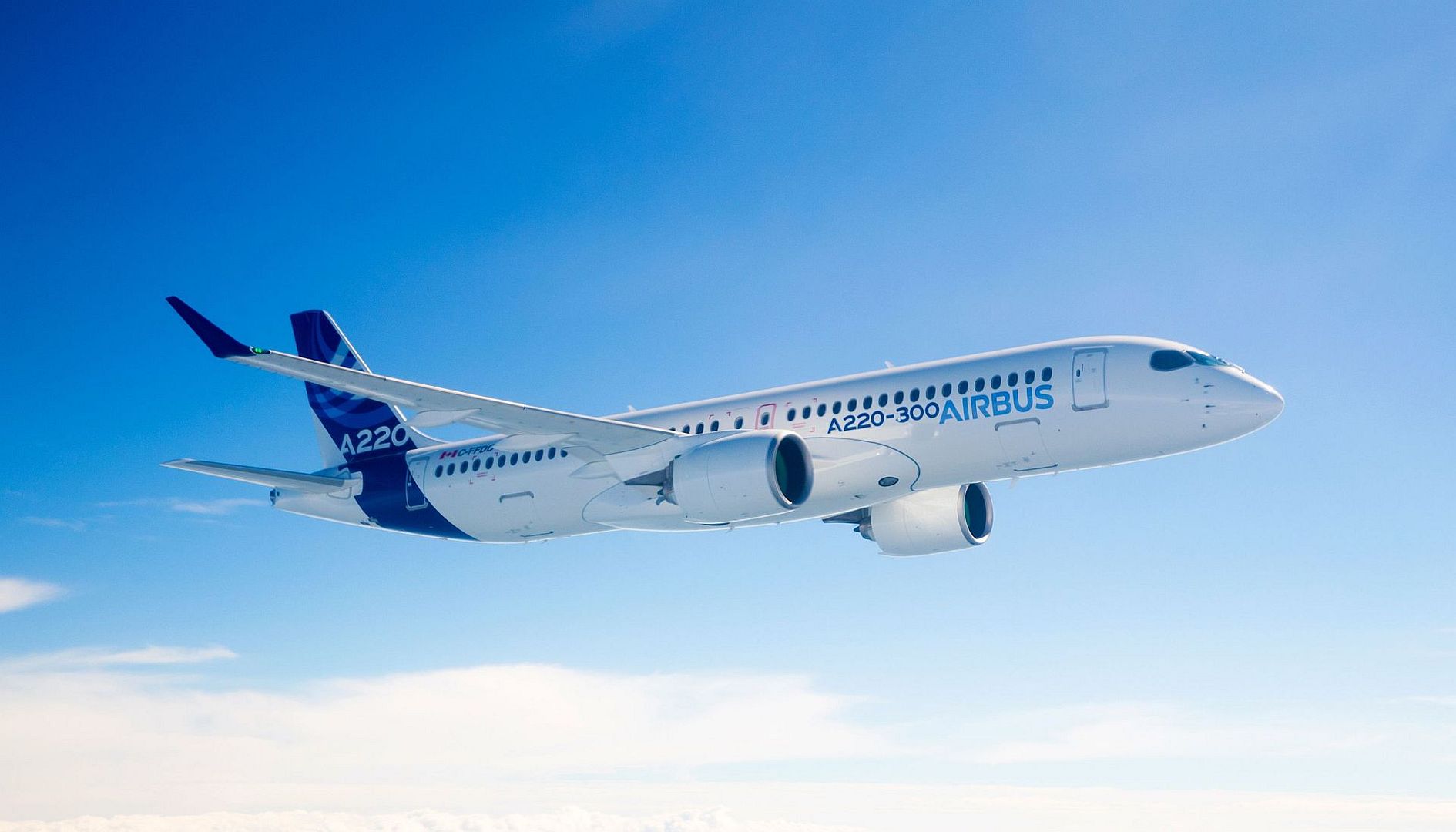
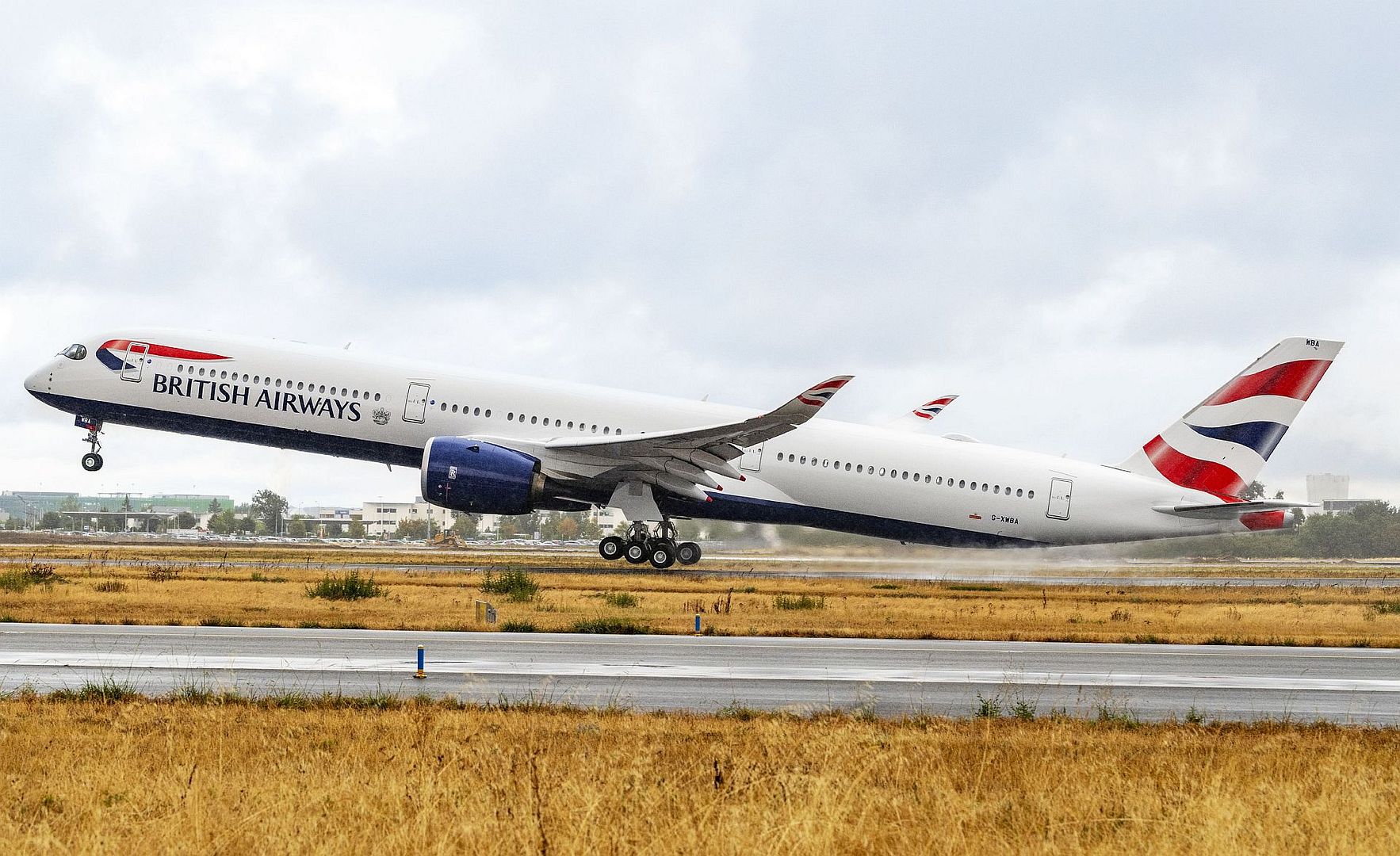
British Airways (BA) has taken delivery of its first A350-1000 at Airbus headquarters in Toulouse, France, making it the first operator of the larger A350-1000 in International Airlines Group (IAG). In total, BA has ordered 18 A350-1000s. Iberia, which is also part of IAG, already operates five of the smaller A350-900s.
BA?s A350 XWB with its modern and comfortable Airspace cabin will usher in new levels of comfort with the launch of the Club Suite, the first new business class seat for British Airways in 13 years. The airline's sophisticated and newly-branded ?Club Suite? offers direct-aisle access, a suite door for greater privacy and luxurious flat-bed seats in a 1-2-1 configuration.
The three-class layout includes 56 Club Suites, 56 World Traveller Plus and 219 World Traveller economy seats.
BA, celebrating its 100th anniversary, will initially use the aircraft to fly between London and Madrid prior to flying long-haul routes from September.
BA operates a fleet of over 150 Airbus aircraft from the smallest A318 to the largest A380.
The A350 XWB offers by design unrivalled operational flexibility and efficiency for all market segments up to ultra-long haul (15,000 km). It features the latest aerodynamic design, a carbon fibre fuselage and wings, plus new fuel-efficient Rolls-Royce engines. Together, these latest technologies translate into unrivalled levels of operational efficiency, with a 25% reduction in fuel burn and emissions. The A350 XWB?s Airspace by Airbus cabin is the quietest of any twin-aisle and offers passengers and crews the most modern in-flight products for the most comfortable flying experience.
At the end of June 2019, the A350 XWB Family had received 893 firm orders from 51 customers worldwide, making it one of the most successful wide-body aircraft ever.