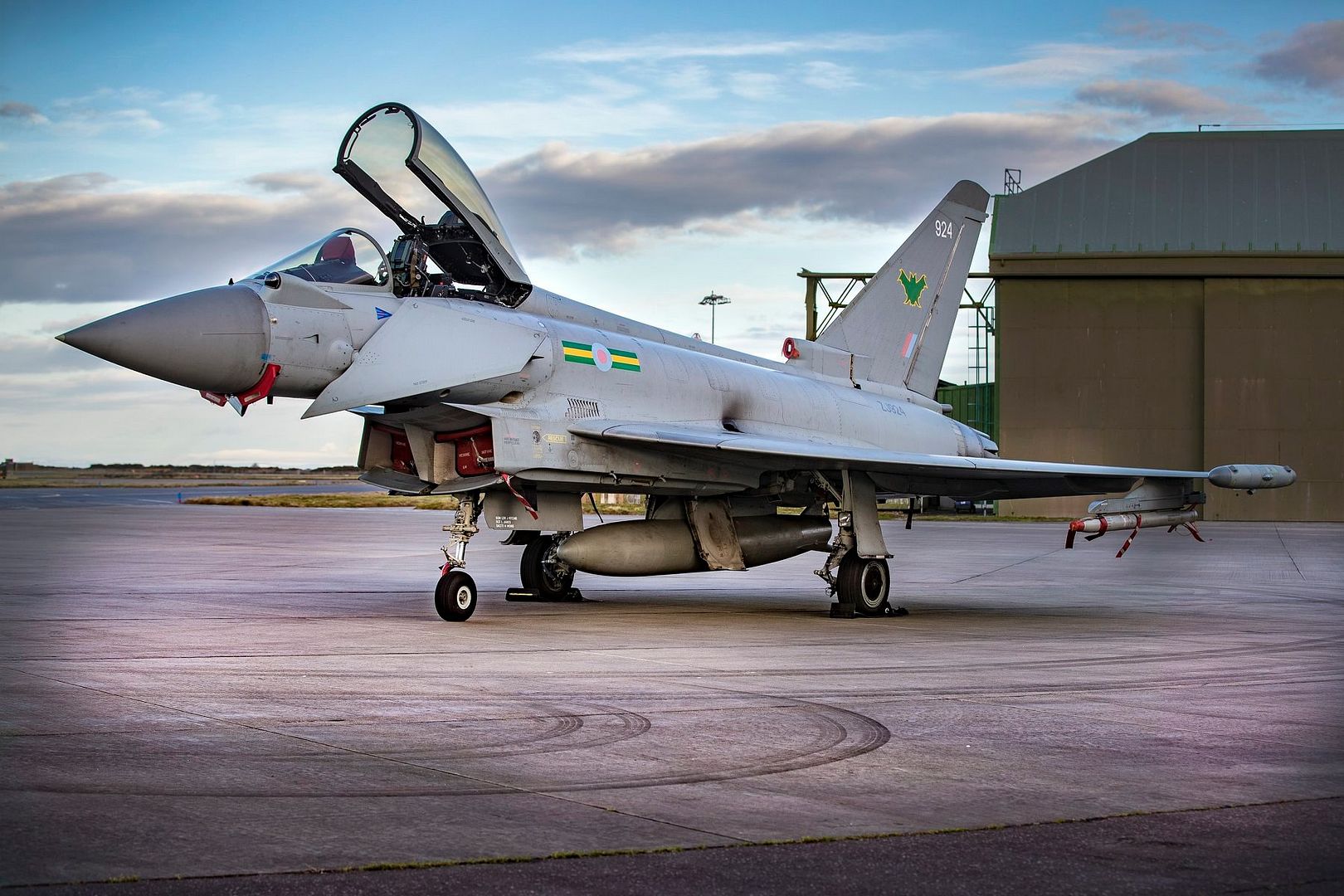
Aviation News
-
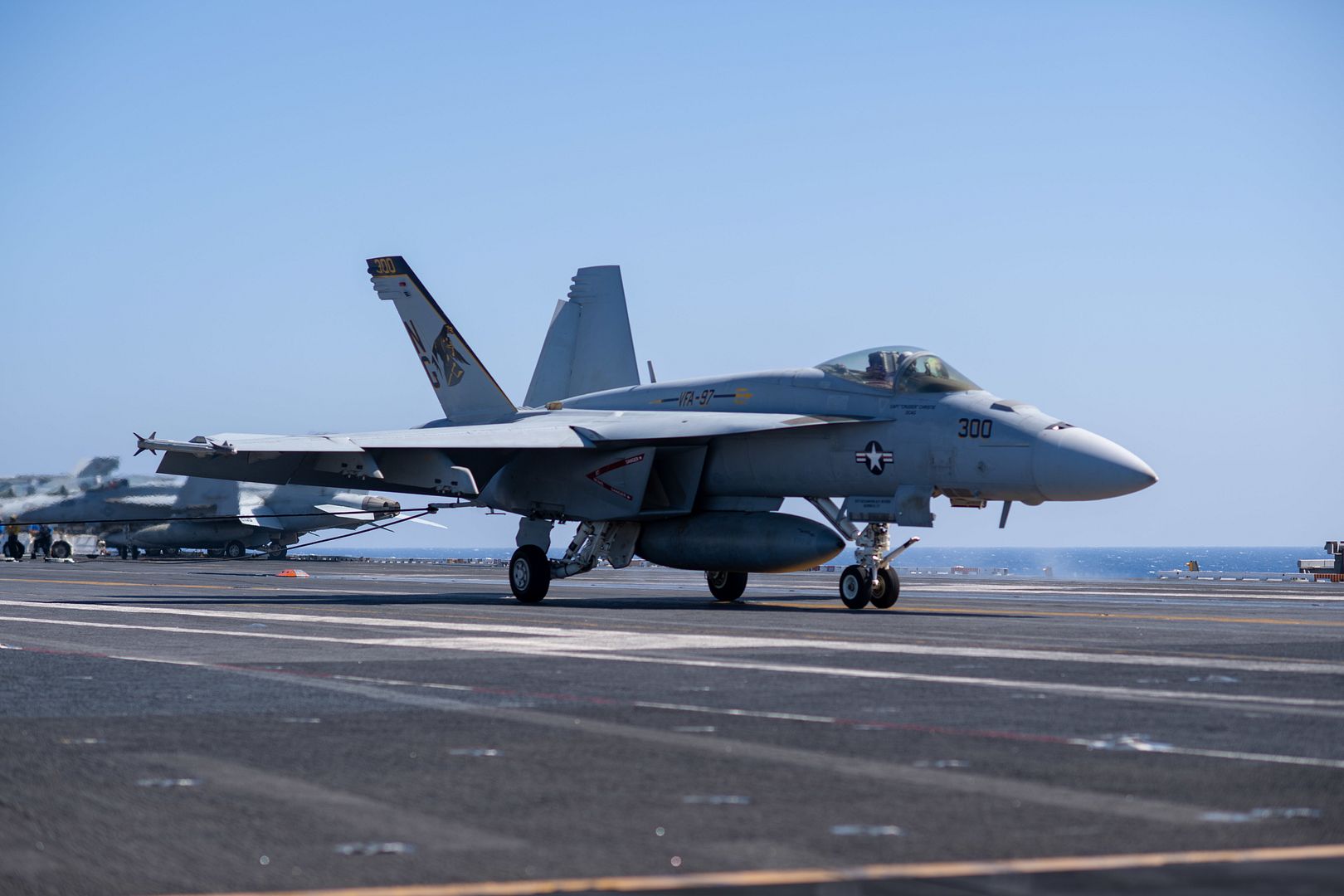
An F/A-18E Super Horner, assigned to Strike Fighter Squadron (VFA) 97, catches an arresting gear wire while landing on the flight deck of the aircraft carrier USS John C. Stennis (CVN 74) in the Red Sea, April 18, 2019. The John C. Stennis Carrier Strike Group is deployed to the U.S. 5th Fleet area of operations in support of naval operations to ensure maritime stability and security in the Central Region, connecting the Mediterranean and the Pacific through the western Indian Ocean and three strategic choke points. (U.S. Navy photo by Mass Communication Specialist 3rd Class Grant G. Grady)
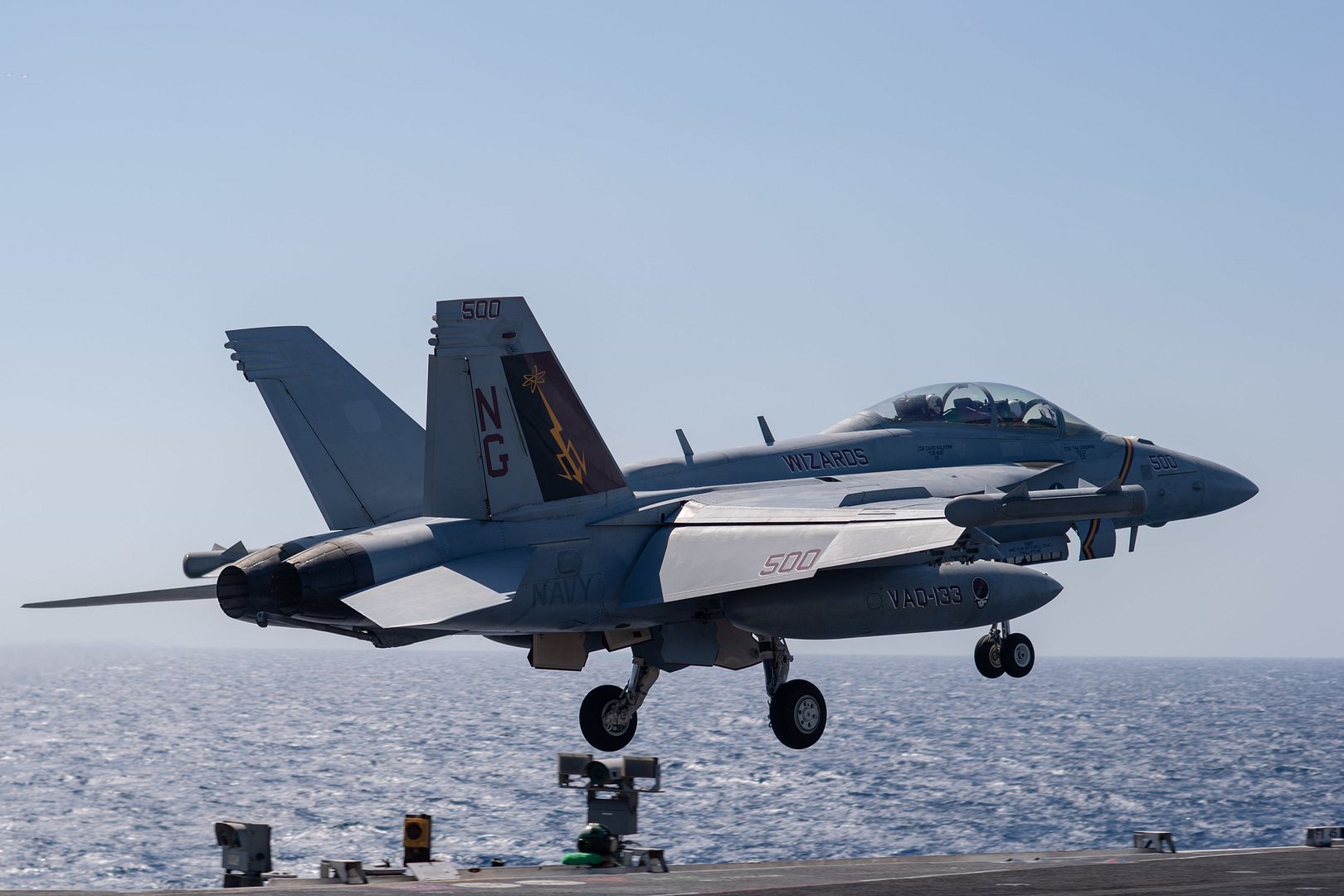
An EA-18G Growler, assigned to Electronic Attack Squadron (VAQ) 133, launches from the flight deck of the aircraft carrier USS John C. Stennis (CVN 74) in the Red Sea, April 18, 2019. The John C. Stennis Carrier Strike Group is deployed to the U.S. 5th Fleet area of operations in support of naval operations to ensure maritime stability and security in the Central Region, connecting the Mediterranean and the Pacific through the western Indian Ocean and three strategic choke points. (U.S. Navy photo's by Mass Communication Specialist 3rd Class Grant G. Grady)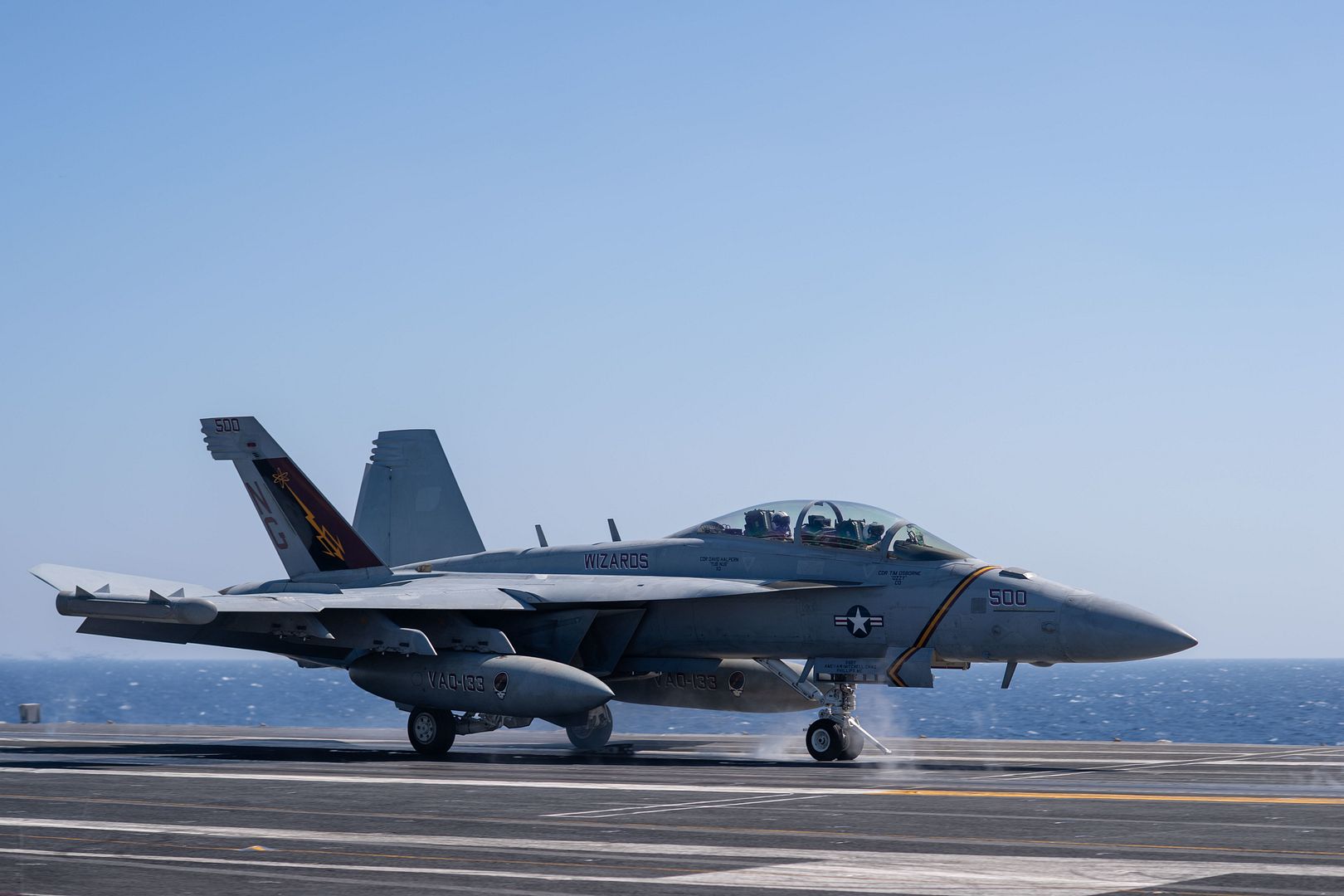
An F-15 Eagle takes off during a base tour April 19, 2019, at Barnes National Guard Base, Massachusetts. Scouts from Pack 338 and Troop 338 visted the 104th Fighter Wing and gained a better understanding of what the Air National Guard does on a daily basis. (U.S. Air National Guard photo by Airman 1st Class Randy Burlingame)
-
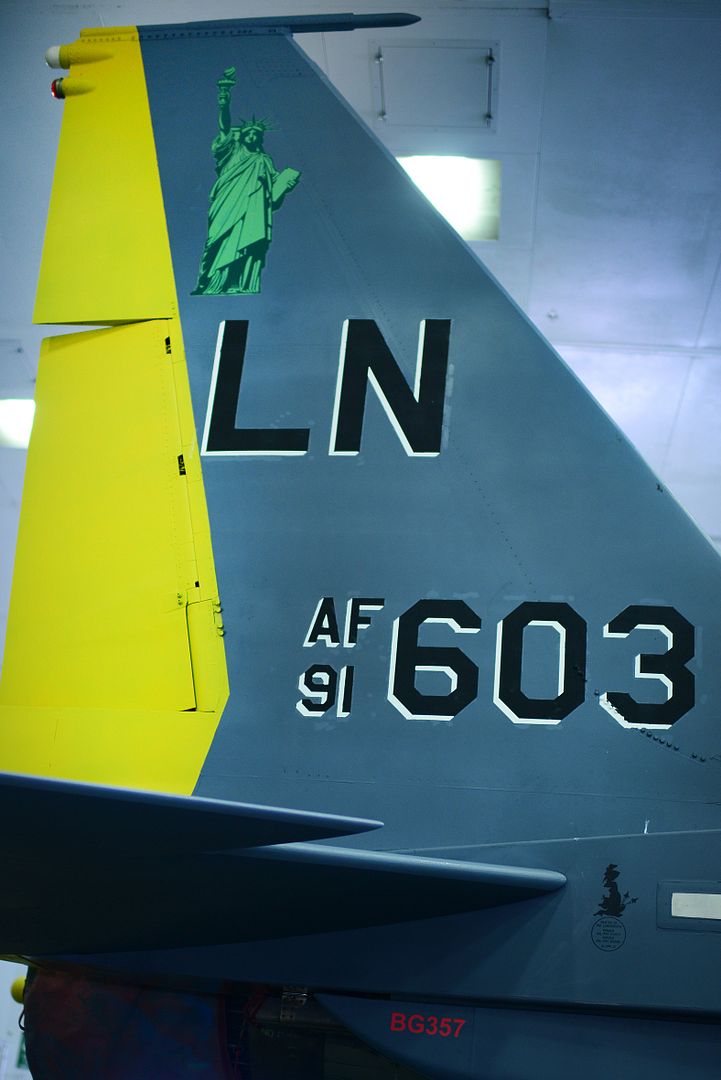
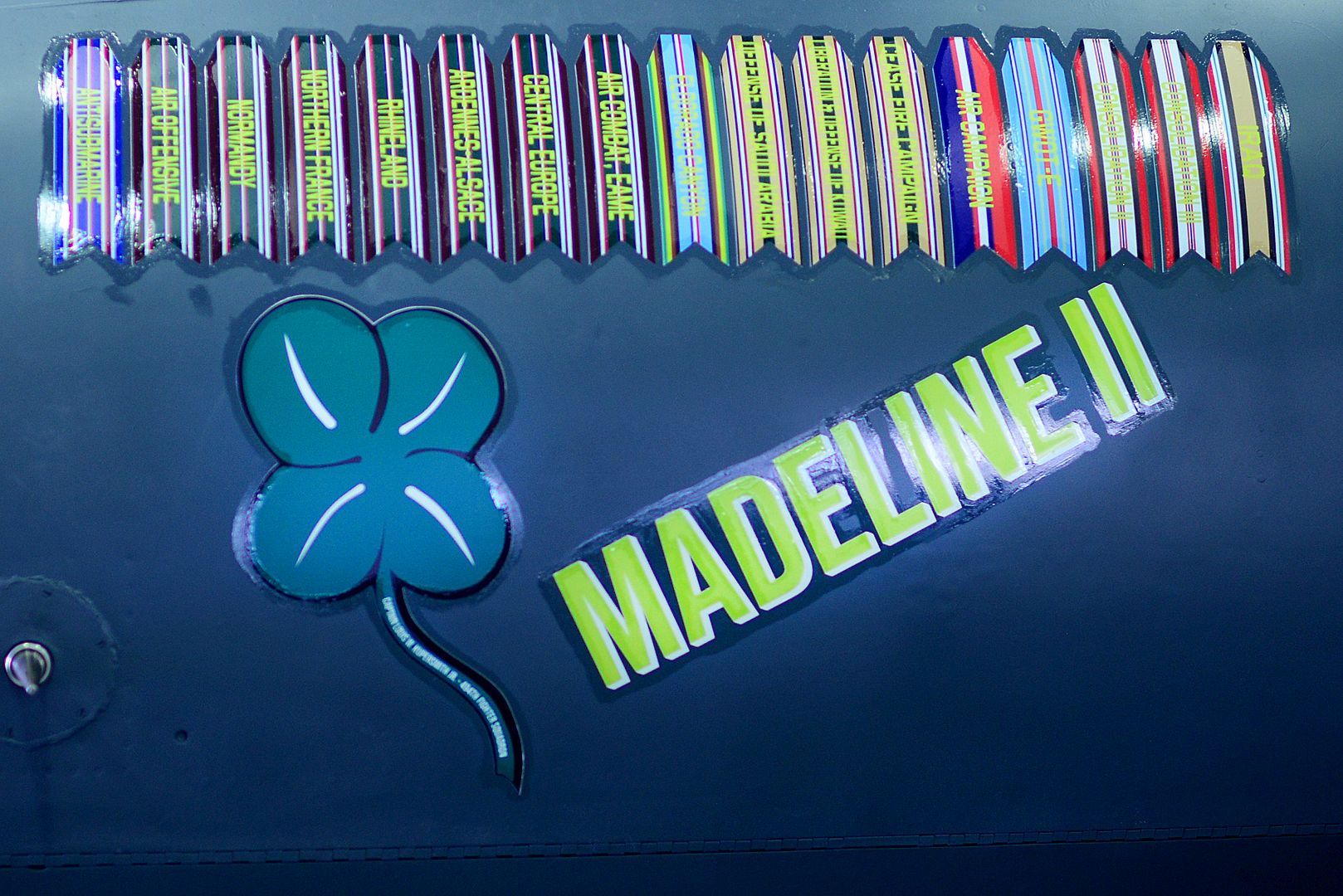
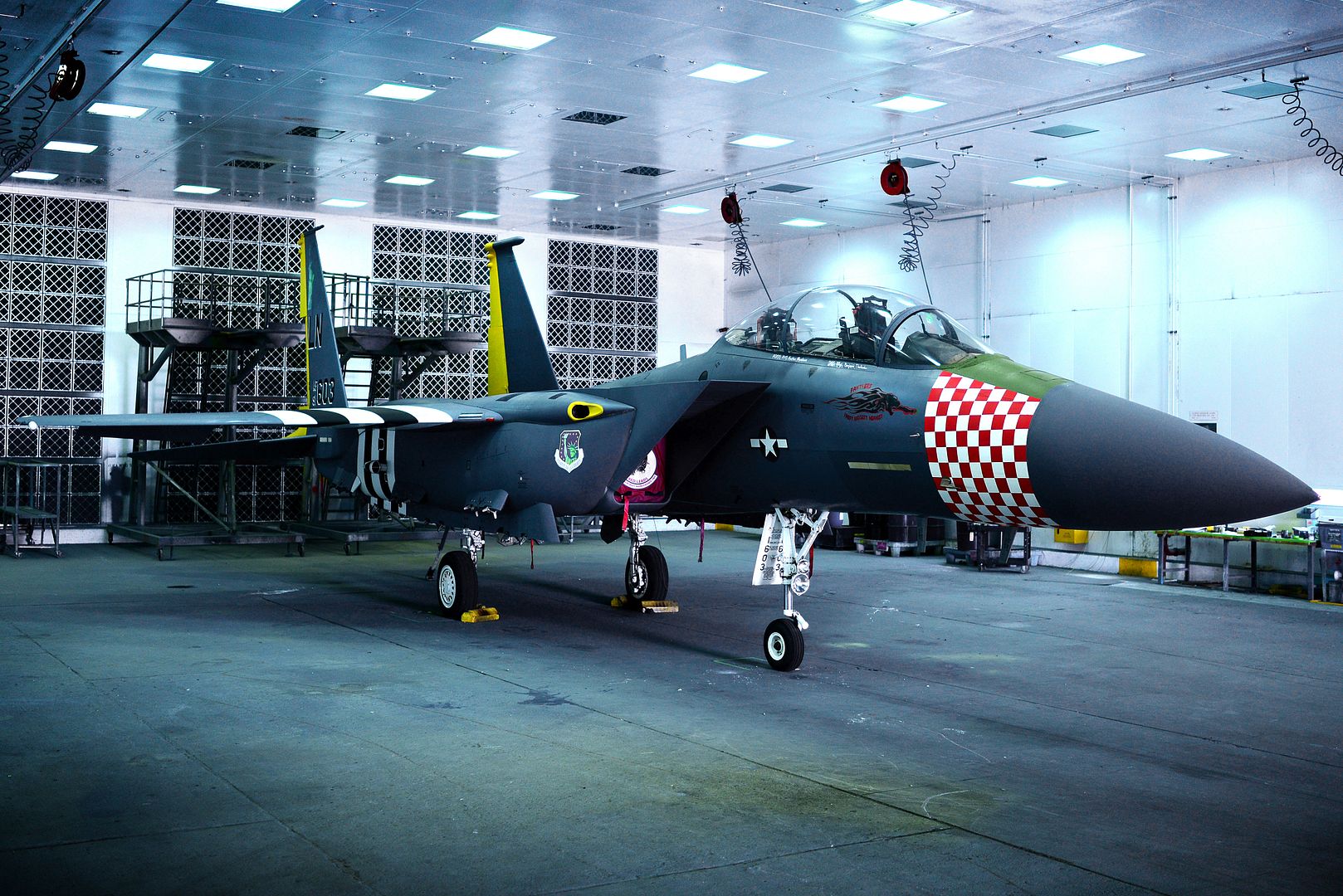
An F-15E Strike Eagle assigned to the 494th Fighter Squadron painted in the World War II color scheme of it's P-47 predecessor displays it's heritage nose art at Royal Air Force Lakenheath, England April 19, 2019. This is the third of three Heritage F-15s at the 48th Fighter Wing to be present during a flyover commemorating the 75th Anniversary of the D-Day invasion at Normandy, France. (U.S. Air Force photo's by Tech. Sgt. Matthew Plew)

-
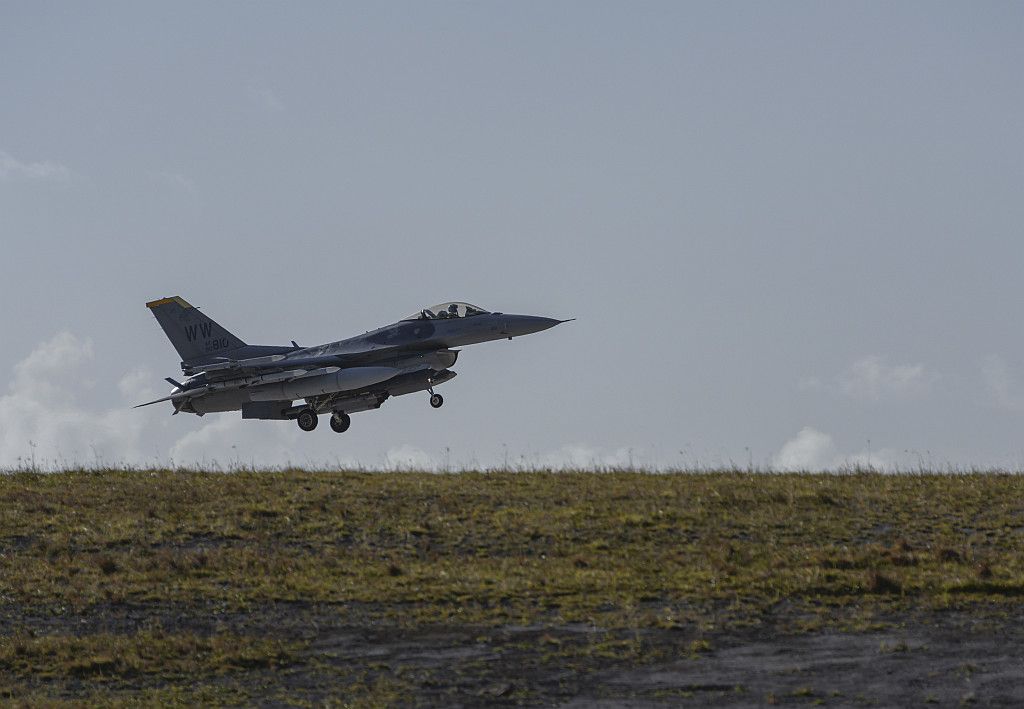
F-16 Fighting Falcon assigned to the 35th Fighter Wing, Misawa Air Base, Japan, lands at Andersen Air Force Base, Guam, April 22, 2019. Misawa AB Airmen and aircraft deployed to Guam for Resilient Typhoon, an exercise designed to strengthen airpower dispersal capabilities within the Indo-Pacific region. (U.S. Air Force photo by Staff Sgt. Brittany A. Chase)
An F-15E Strike Eagle assigned to the 494th Fighter Squadron lands on the flight line at Royal Air Force Lakenheath, England, April 23, 2019. The 48th Fighter Wing is participating in a readiness exercise from 23-25 April focused on continuous operations over a 48-hour period. (U.S. Air Force photo by Airman 1st Class Madeline Herzog)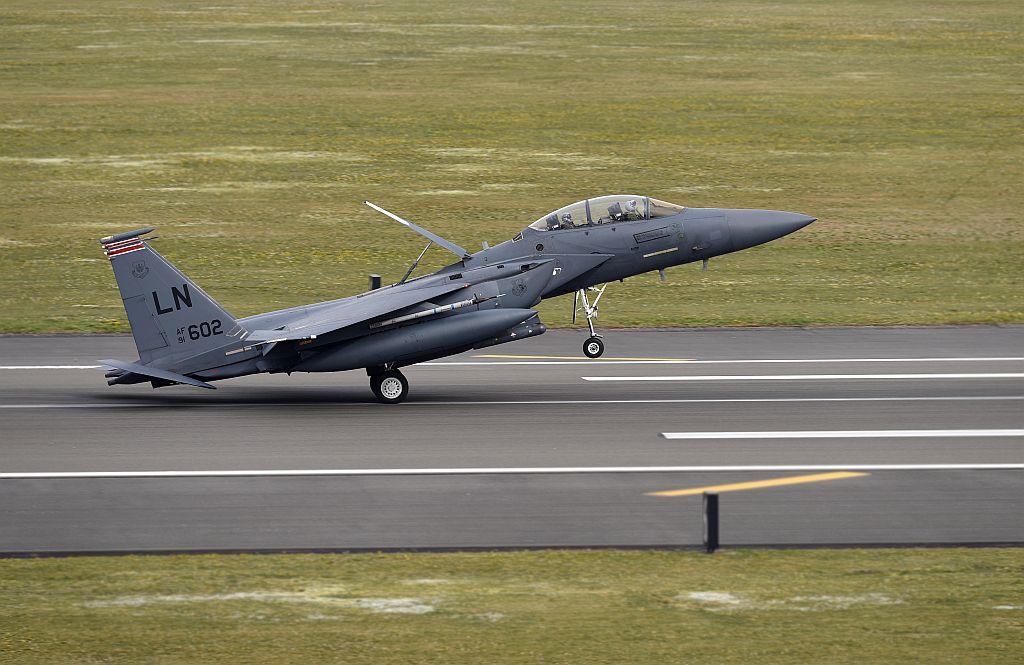
An F-15E Strike Eagle assigned to the 492nd Fighter Squadron lands on the flight line at Royal Air Force Lakenheath, England, April 23, 2019. The 48th Fighter Wing is participating in a readiness exercise from 23-25 April focused on continuous operations over a 48-hour period. (U.S. Air Force photo by Airman 1st Class Madeline Herzog)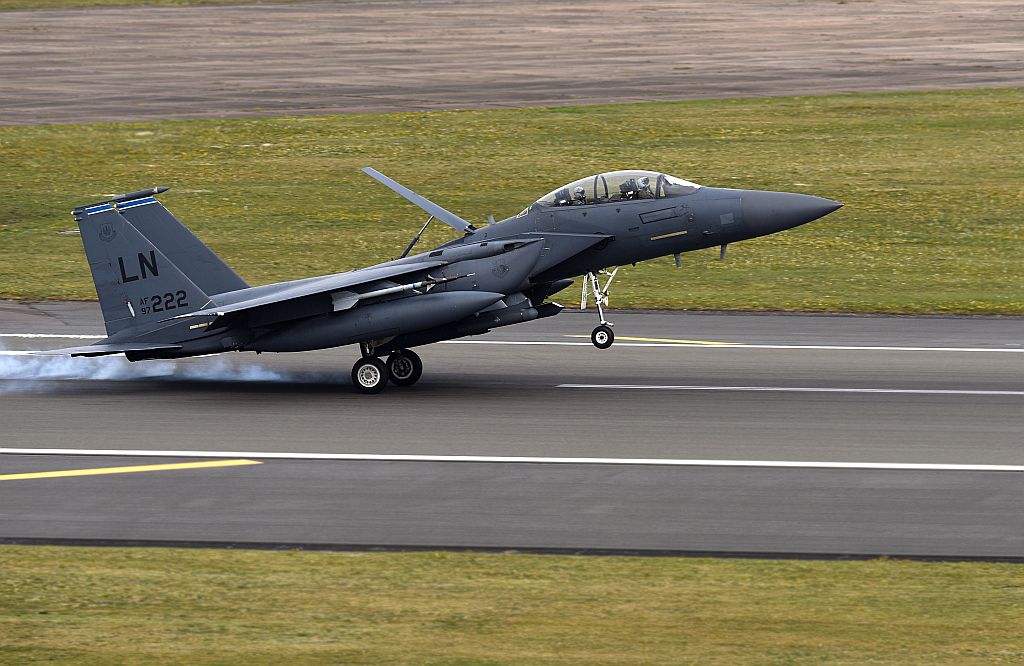
An F/A-18E Super Hornet, assigned to Strike Fighter Squadron (VFA) 14, launches from the flight deck of the aircraft carrier USS John C. Stennis (CVN 74) in the Mediterranean Sea, April 22, 2019. John C. Stennis is underway in the Mediterranean Sea as part of the John C. Stennis Carrier Strike Group (JCSCSG) deployment in support of maritime security cooperation efforts in the U.S. 6th Fleet area of responsibility. (U.S. Navy photo by Mass Communication Specialist 3rd Class Grant G. Grady)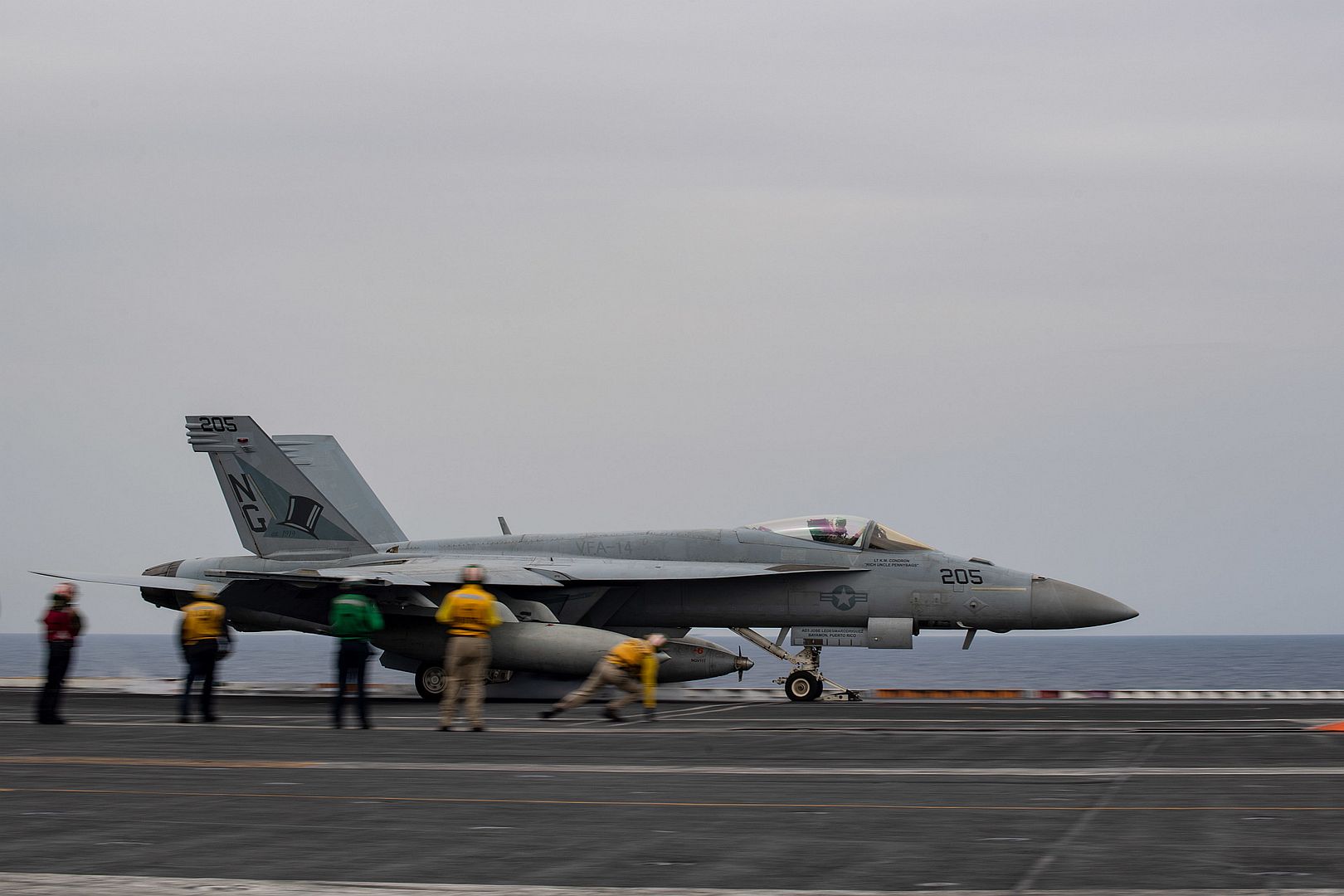
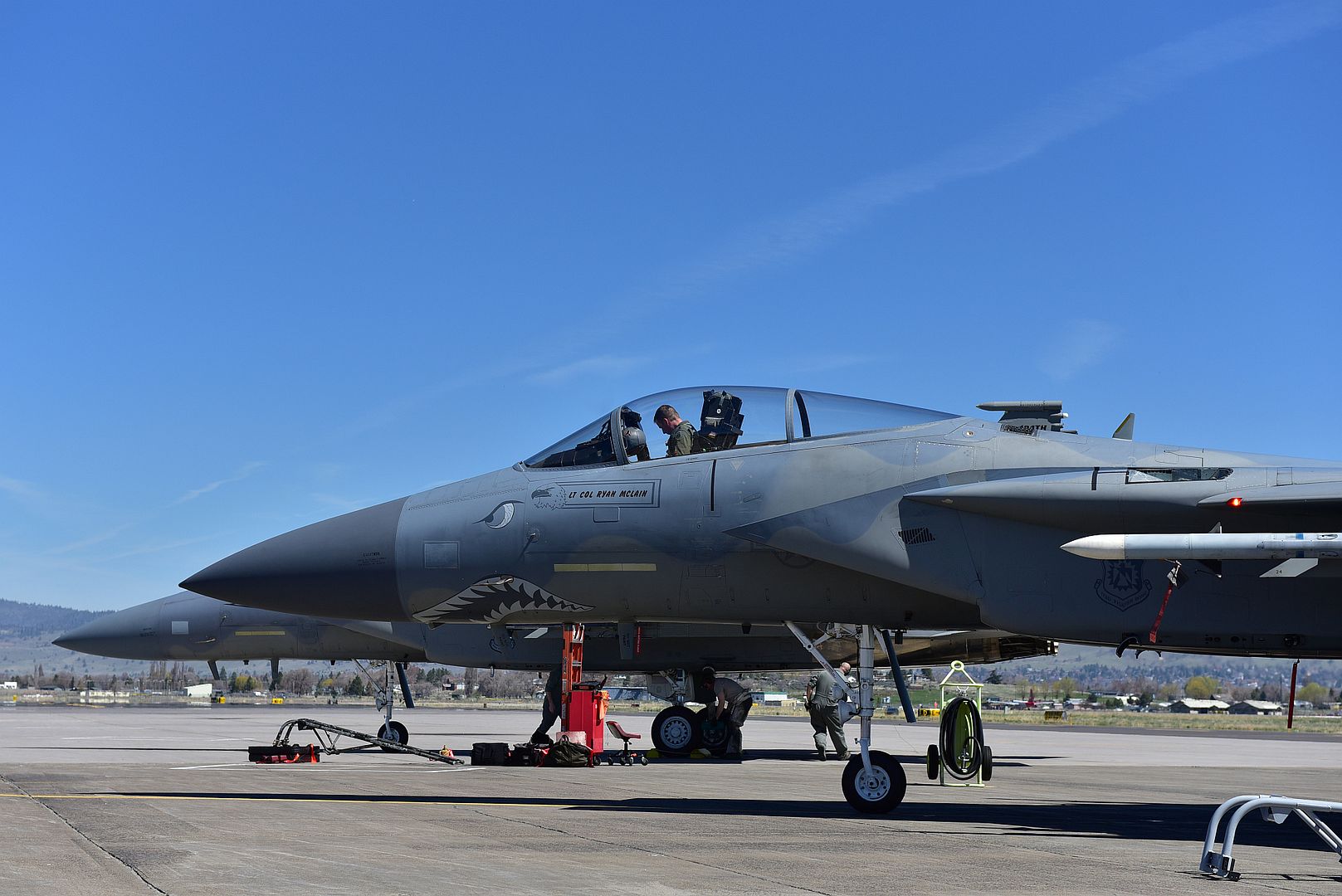
U.S. Air Force Lt. Col. Ryan Mclain, 114th Fighter Squadron commander, shuts down the engines of an F-15 Eagle following an aerial change of command at Kingsley Field in Klamath Falls, Oregon April 19, 2019. Mclain took command of the 114th FS from Lt. Col. Jason Nalepa and celebrated with friends and family once they landed their aircraft. (U.S. Air National Guard photo's by Senior Master Sgt. Jennifer Shirar)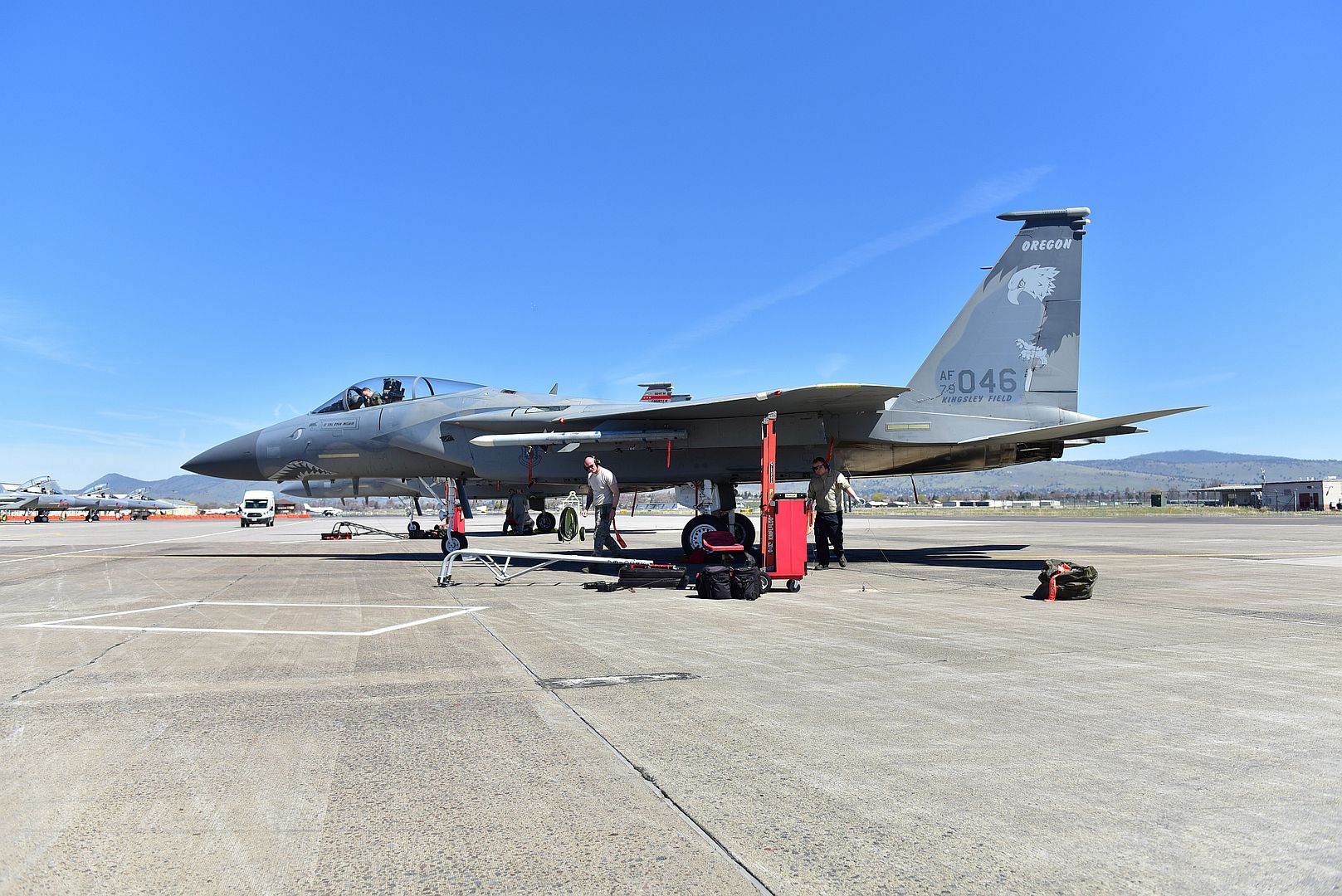
GREENVILLE, S.C., April 23, 2019 /PRNewswire/ -- Lockheed Martin (NYSE: LMT) hosted a ceremony to celebrate its new F-16 production line in Greenville, South Carolina. F-16 tooling and equipment previously in Fort Worth, Texas, has since been installed in a newly-refurbished hangar in Greenville, where the company will begin manufacturing F-16 Block 70 aircraft later this year.
"This is an exciting time as we celebrate another important milestone for the F-16 ? the world's most successful, combat-proven 4th generation fighter," said Michele Evans, executive vice president of Lockheed Martin Aeronautics. "The future is bright, and it begins right here in Greenville, South Carolina ? the new home of F-16 production."
Demand continues to soar for new production F-16s and F-16V upgrades. Bahrain became the first F-16 Block 70 customer in June 2018, Slovakia signed Letter of Agreement in Dec. 2018 for 14 Block 70 aircraft, and Bulgaria and the U.S. Government are currently negotiating Bulgaria's planned acquisition of new F-16 Block 70 aircraft. The U.S. State Department also recently approved the proposed sale of 25 new production F-16 Block 72 aircraft and F-16V upgrades for Morocco.
"This is a great day for Greenville and South Carolina," said U.S. Sen. Lindsey Graham of South Carolina. "We have the best workforce in the country and now we are going to build the most advanced F-16 ever right here in the Palmetto State."
"South Carolina's workforce is second to none, and the fact that Lockheed Martin continues to invest and put its faith in South Carolinians to build the newest F-16s in Greenville speaks volumes about our state and the company," said South Carolina Governor Henry McMaster. "Every person who calls South Carolina home should be proud that the F-16 is made right here in the Palmetto state."
More than 400 new jobs will be created to support the F-16 production line in Greenville. F-16 production also supports hundreds of U.S.-based Lockheed Martin engineering, procurement, sustainment and customer support jobs and thousands of U.S. supplier jobs. A significant portion of F-16 production occurs in the supply chain, which currently includes more than 400 U.S. suppliers in 41 states.
To date, 4,588 F-16s have been produced, and there are approximately 3,000 operational F-16s are in service today in 25 countries.
For additional information, visit: lockheedmartin.com/f16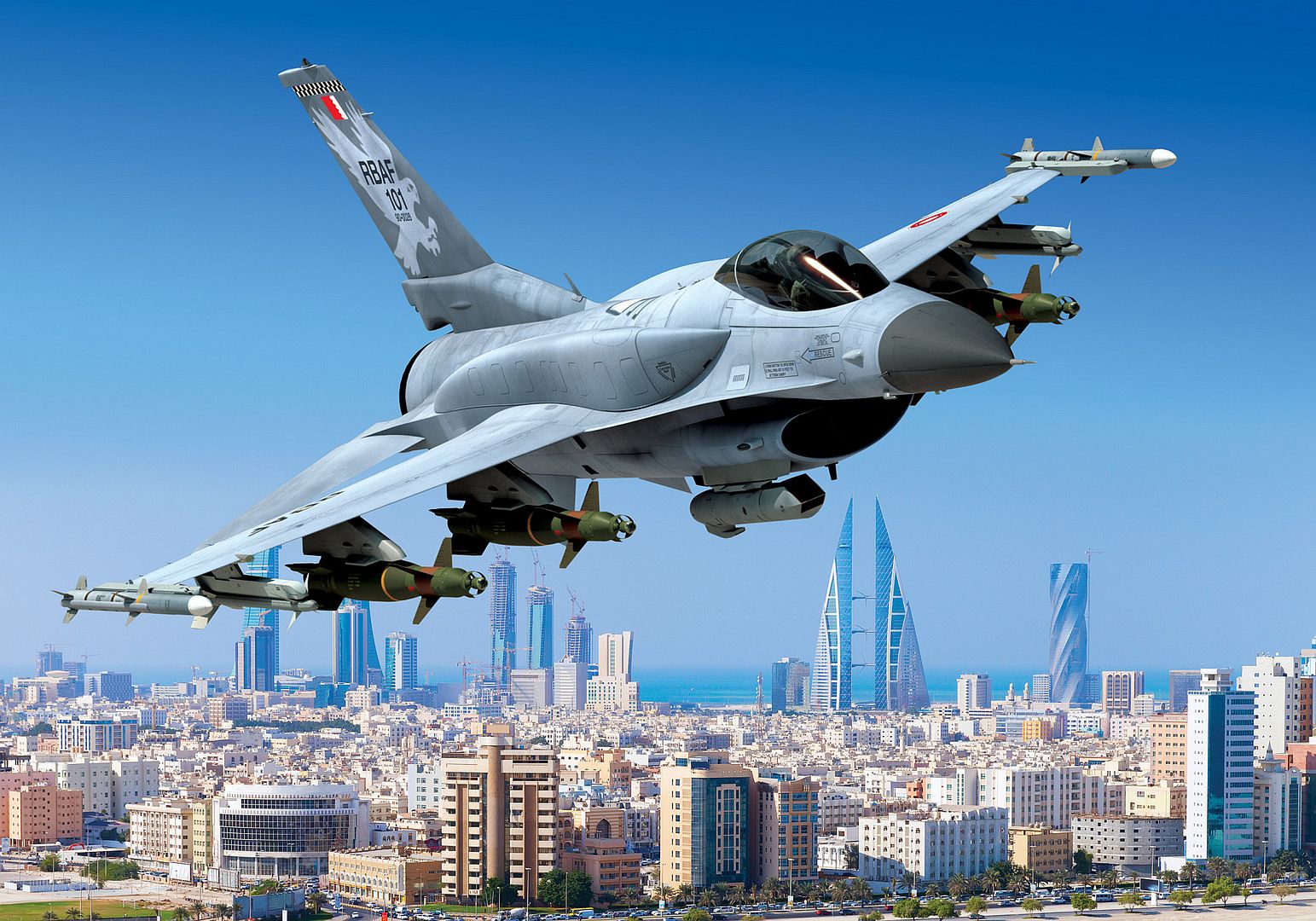
Beijing ? China?s State Grid General Aviation Company (SGGAC) has taken delivery of one heavy twin-engine Airbus H215 helicopter ? a member of the mission-proven Super Puma family ? becoming the launch customer for the H215 in China.
A subsidiary of the State Grid Corporation of China (SGCC), the world?s largest utility company, SGGAC performs aerial construction and maintenance work along China?s network of high and very-high voltage power lines.
The H215 will join the company?s existing fleet of 15 Airbus helicopters, comprised of H125s, an H120 and an H225. This addition will enable SGGAC to perform new missions such as cable repair, cable laying, cargo transportation, and power line pylons constructions in difficult-to-reach areas.
The helicopter comes equipped with a 4.5-ton cargo sling, hoists, weather radar, and a wire-strike protection system. The configuration features 17 comfortable seats equipped with oxygen jackets for high altitude missions.
?Our cooperation with Airbus Helicopters since 2012 has been a true success. Thanks to the H215?s outstanding performance in high and hot conditions coupled with strong support and services from Airbus Helicopters, we are confident that we will continue to develop our capabilities performing new utility missions,? said Wu Jielong, Chairman of SGGAC.
?It?s an honour to see SGGAC becoming the first operator of the H215 in China?, said Marie-Agnes Veve, General Manager of Airbus Helicopters China. ?This achievement reinforces the long-term and strategic cooperation we have developed with the company, which also became a certified Airbus Helicopters? maintenance, repair and overhaul (MRO) centre in China in 2018.?
The H215 combines advanced avionics and a reliable platform for rugged multi-mission capabilities in the world?s harshest environments. Its baseline configuration offers extremely competitive direct operating and maintenance costs. Standard features include proven Makila 1A1 engines, the latest generation flight management system, and the most modern technologies, which includes a glass cockpit avionics system and the renowned 4-axis autopilot from Airbus Helicopters? advanced H225.
The introduction of this H215 increases China?s Super Puma fleet to nearly 40 aircraft, performing a wide range of missions from oil & gas to aerial work to VIP transportation. The fleet is supported by Airbus Helicopters? China technical team, its approved helicopter MRO centre in Shenzhen, and an H225 full flight simulator located in Beijing.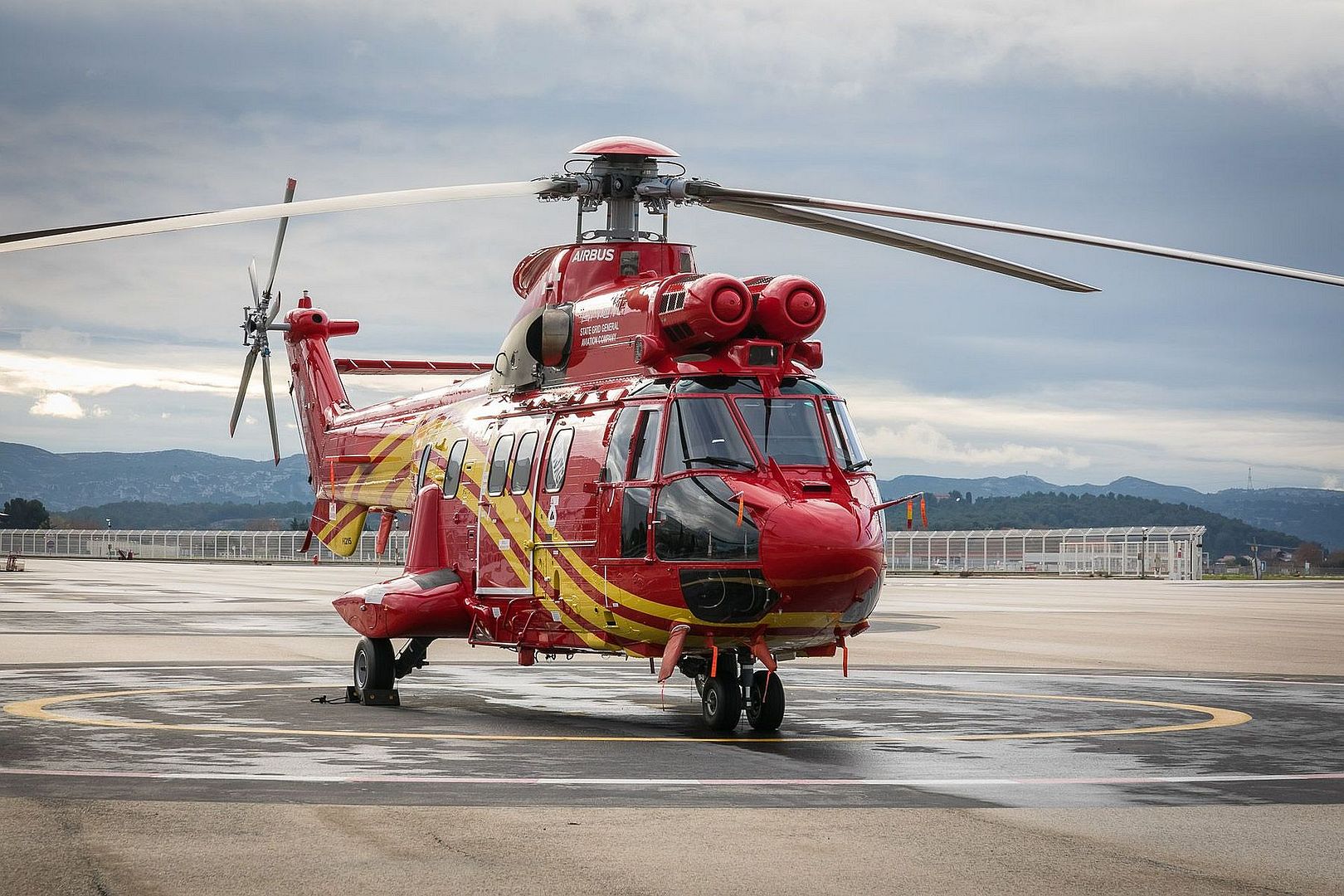
-
An F-15E Strike Eagle painted in the 492nd Fighter Squadron?s heritage colors, inspired by its P-47 Thunderbolt predecessor, takes off from the flight line at Royal Air Force Lakenheath, England, April 24, 2019. The 48th Fighter Wing is participating in a readiness exercise from 23-25 April focused on continuous operations over a 48-hour period. (U.S. Air Force photo by Airman 1st Class Madeline Herzog)

An F-15E Strike Eagle assigned to the 492nd Fighter Squadron takes off from the flight line at Royal Air Force Lakenheath, England, April 24, 2019. The 48th Fighter Wing is participating in a readiness exercise from 23-25 April focused on continuous operations over a 48-hour period. (U.S. Air Force photo by Airman 1st Class Madeline Herzog)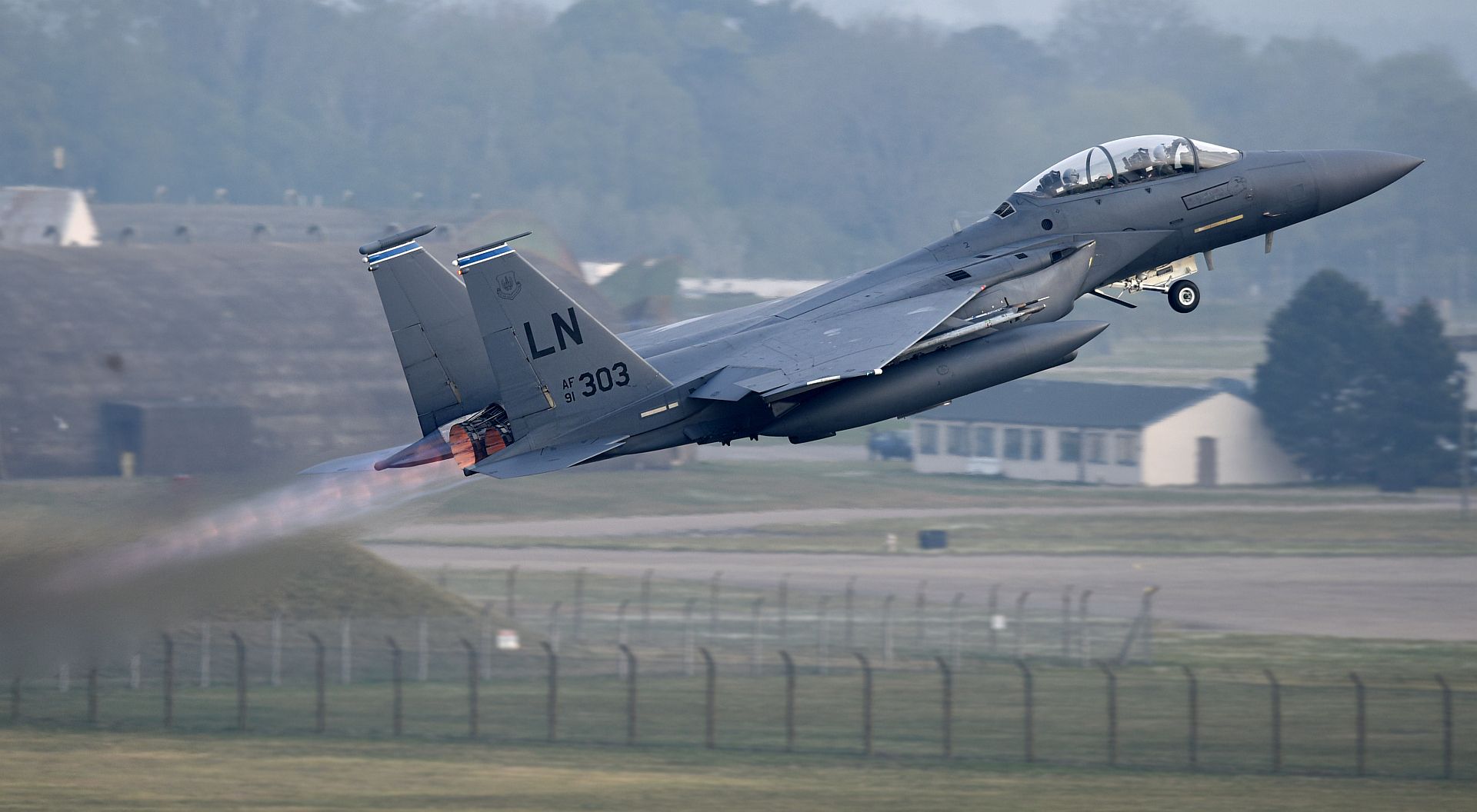
An F-15C Eagle from the 44th Fighter Squadron, Kadena Air Base, Japan, lands at Tinian International Airport, Tinian, during exercise Resilient Typhoon, April 23, 2019. Resilient Typhoon is a dispersal exercise based at Andersen Air Force Base, Guam, designed to validate Pacific Air Force?s ability to maintain readiness while adapting to rapidly evolving regional events such as inclement weather. (U.S. Air Force photo by Airman 1st Class Matthew Seefeldt)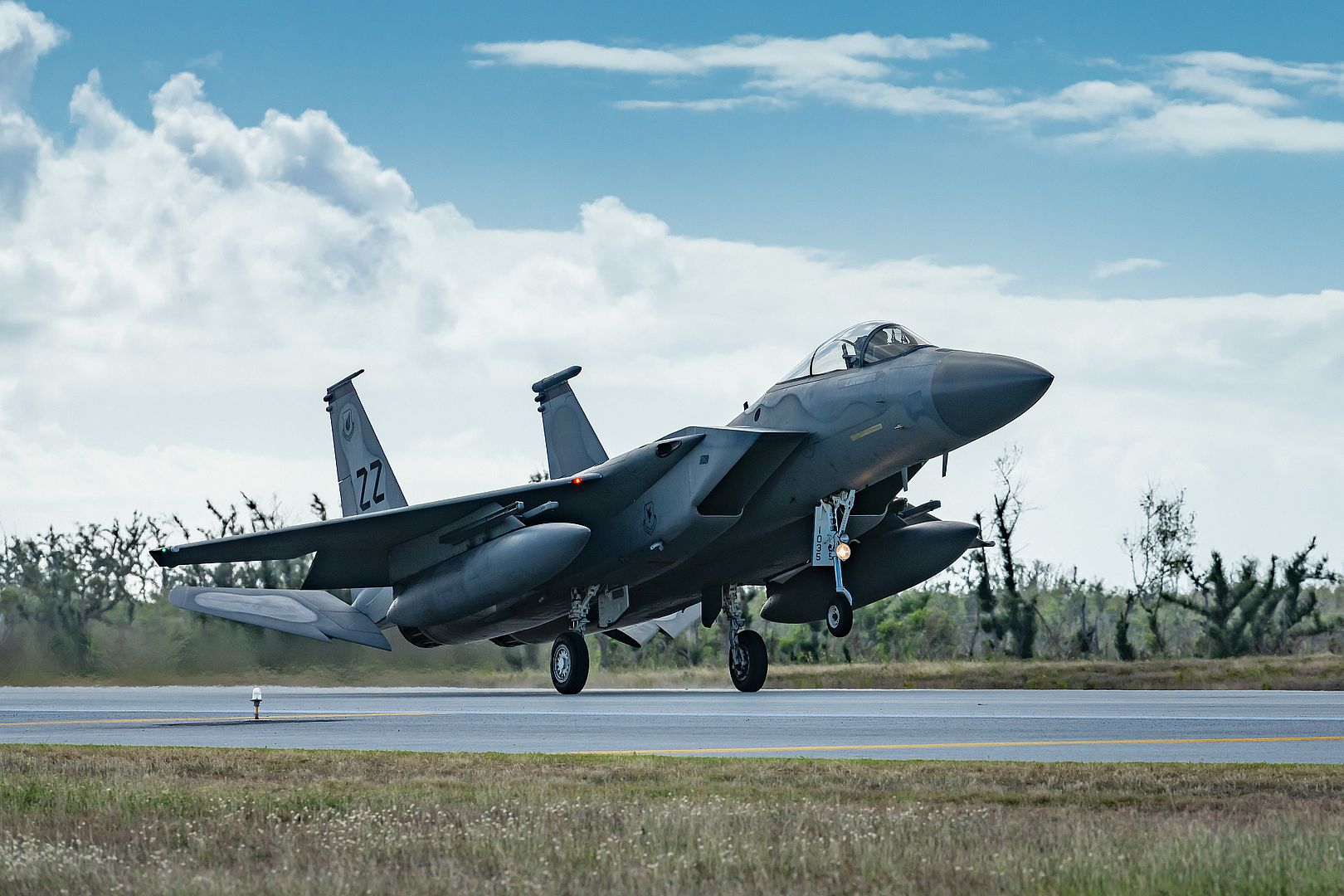
MEDITERRANEAN SEA (April 23, 2019) An F/A-18E Super Hornet from the "Fist of the Fleet" of Strike Fighter Squadron (VFA) 25 launches from the flight deck of the Nimitz-class aircraft carrier USS Abraham Lincoln (CVN 72). Abraham Lincoln is conducting carrier strike force operations with the Nimitz-class aircraft carrier USS John C. Stennis (CVN 74) as part of the Abraham Lincoln Carrier Strike Group (ABECSG) deployment in support of maritime security cooperation efforts in the U.S. 5th, U.S. 6th and U.S. 7th Fleet areas of operation. With Abraham Lincoln as the flagship, deployed strike group assets include staffs, ships and aircraft of Carrier Strike Group 12 (CSG 12), Destroyer Squadron 2, Ticonderoga-class guided-missile cruiser USS Leyte Gulf (CG 55) and Carrier Air Wing (CVW) 7; as well as ?lvaro de Baz?n-class frigate ESPS M?ndez Nu?ez (F 104). (US Navy photo by Mass Communication Specialist 3rd Class Amber Smalley/Released)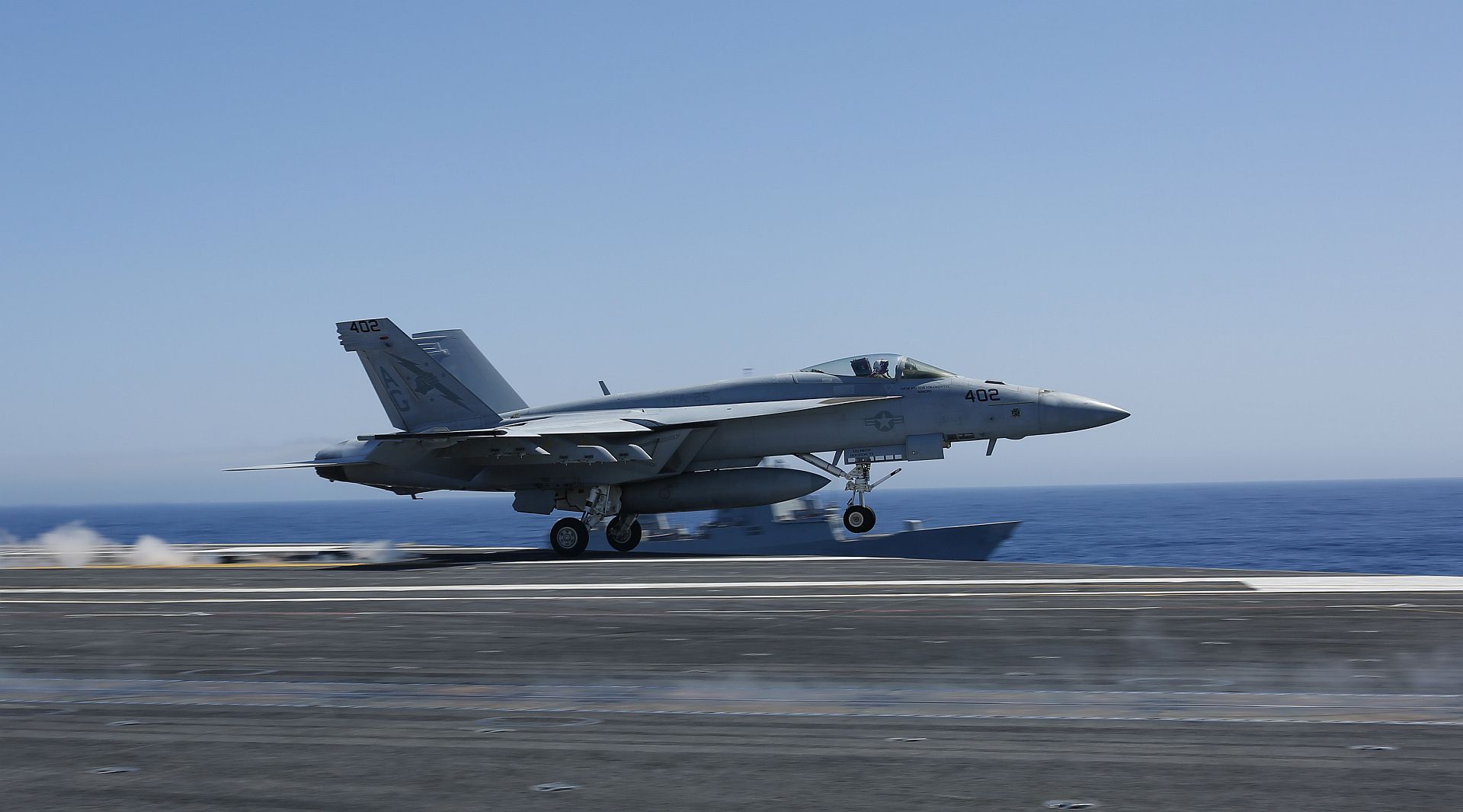
MEDITERRANEAN SEA (April 24, 2019) The Royal Navy destroyer HMS Duncan (D 37) maneuvers in formation behind the aircraft carrier USS John C. Stennis (CVN 74) in the Mediterranean Sea, April 24, 2019. The John C. Stennis Carrier Strike Group (CSG) 3 and Abraham Lincoln Carrier Strike Group (CSG) 12 are conducting dual carrier operations, providing opportunity for two strike groups to work together alongside key allies and partners in the U.S. 6th Fleet area of operations. John C. Stennis is underway in the Mediterranean Sea as part of the John C. Stennis Carrier Strike Group deployment in support of maritime security cooperation efforts in the U.S. 6th Fleet area of responsibility. (U.S. Navy photo by Mass Communication Specialist Seaman Jarrod Schad)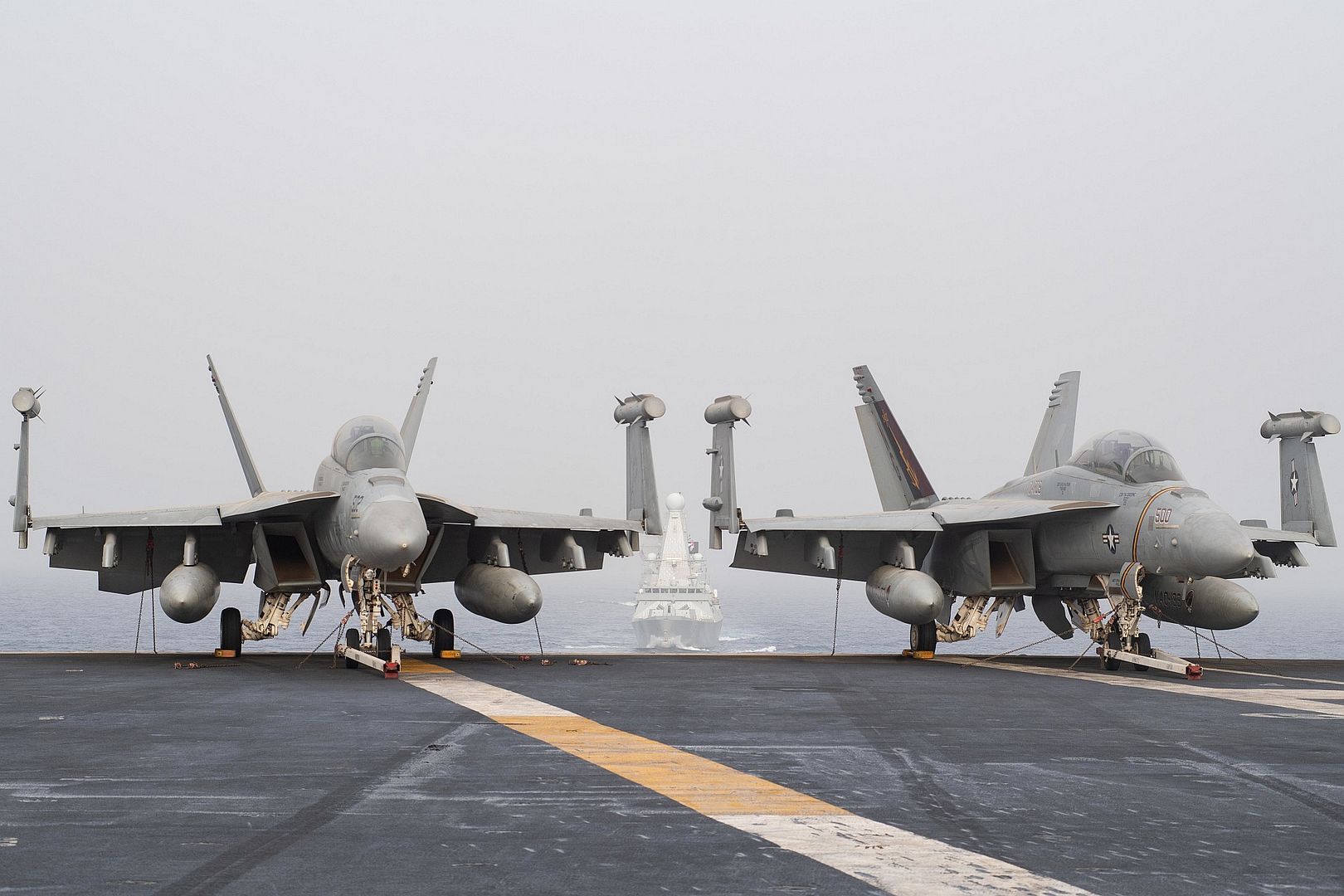
Today, Typhoons from RAF Coningsby flew to Estonia in support of NATO operations.
The four aircraft flew to Amari Air Base to take part in the Baltic Air Policing mission, a four-month detachment that sees RAF aircraft patrol the eastern flank of the NATO alliance.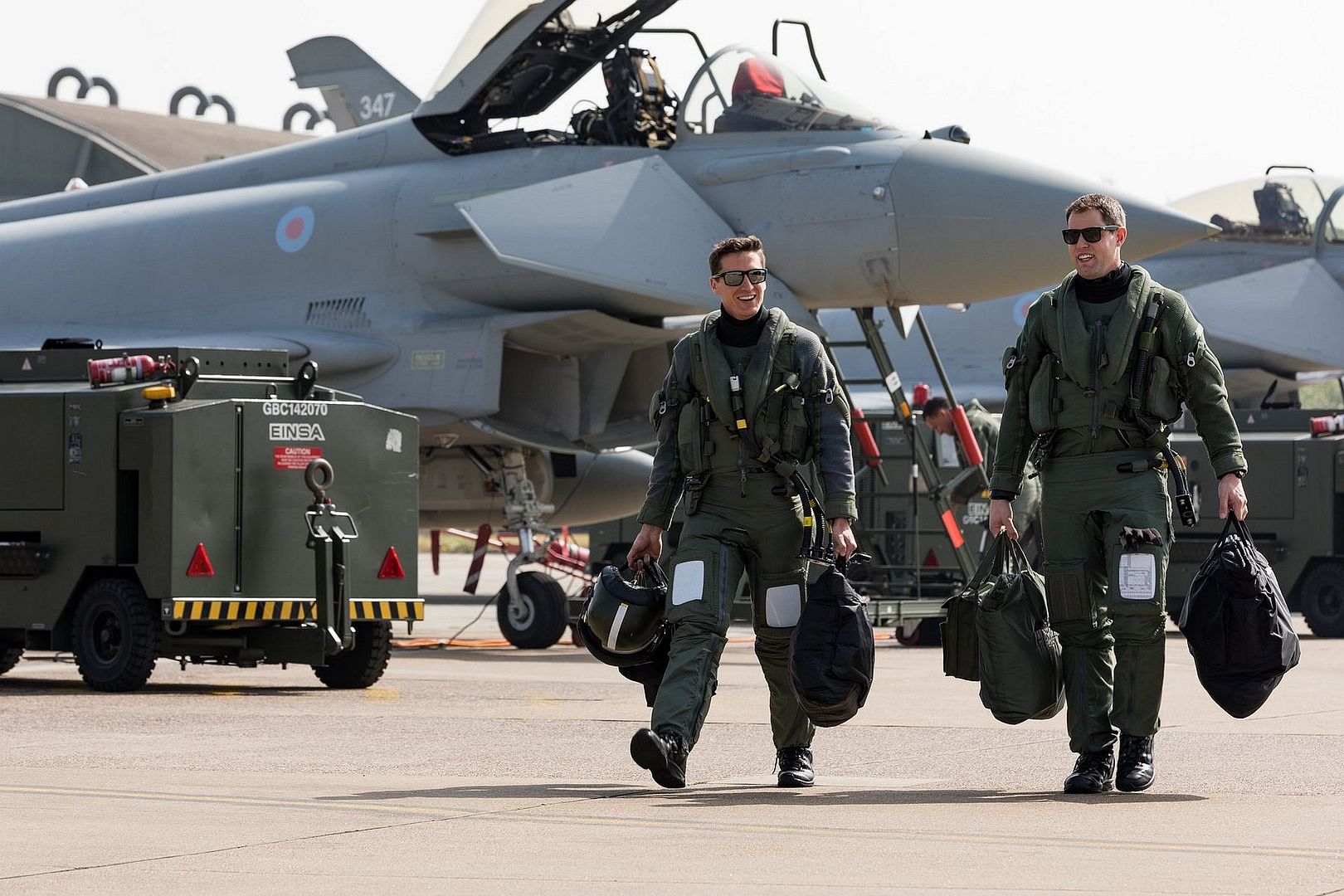
The Baltic Air Policing operations began in 2014 after the Russian annexation of Crimea, This is the third time that RAF Typhoons have deployed to Estonia, the last occasion was in 2016.
Station Commander Coningsby, Group Captain Mark Flewin said, ?Our aircraft have deployed to Estonia today as part of our on-going commitment to support NATO. We are there primarily to re-assure our allies but to also be prepared to secure the airspace of our NATO partners, in the same way as we guard our airspace at home.?
Images by SAC McFalls and Cpl Major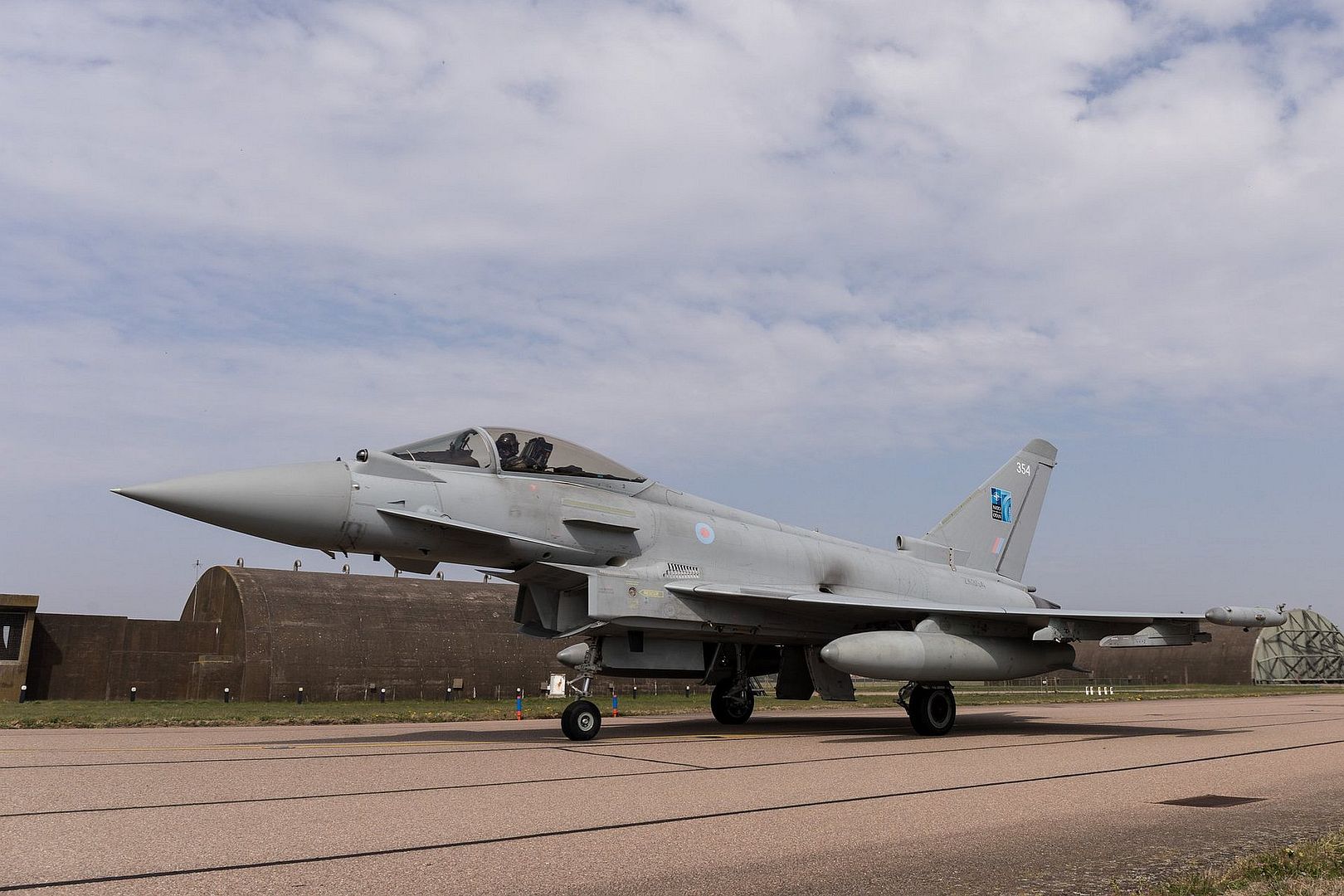
The CH-148 Cyclone helicopter from Her Majesty?s Canadian Ship (HMCS) TORONTO, gets into position over the Mediterranean Sea during diver deployment training during Operation REASSURANCE, April 21, 2019.
Photo: MCpl Manuela Berger, Formation Imaging Services Halifax
-
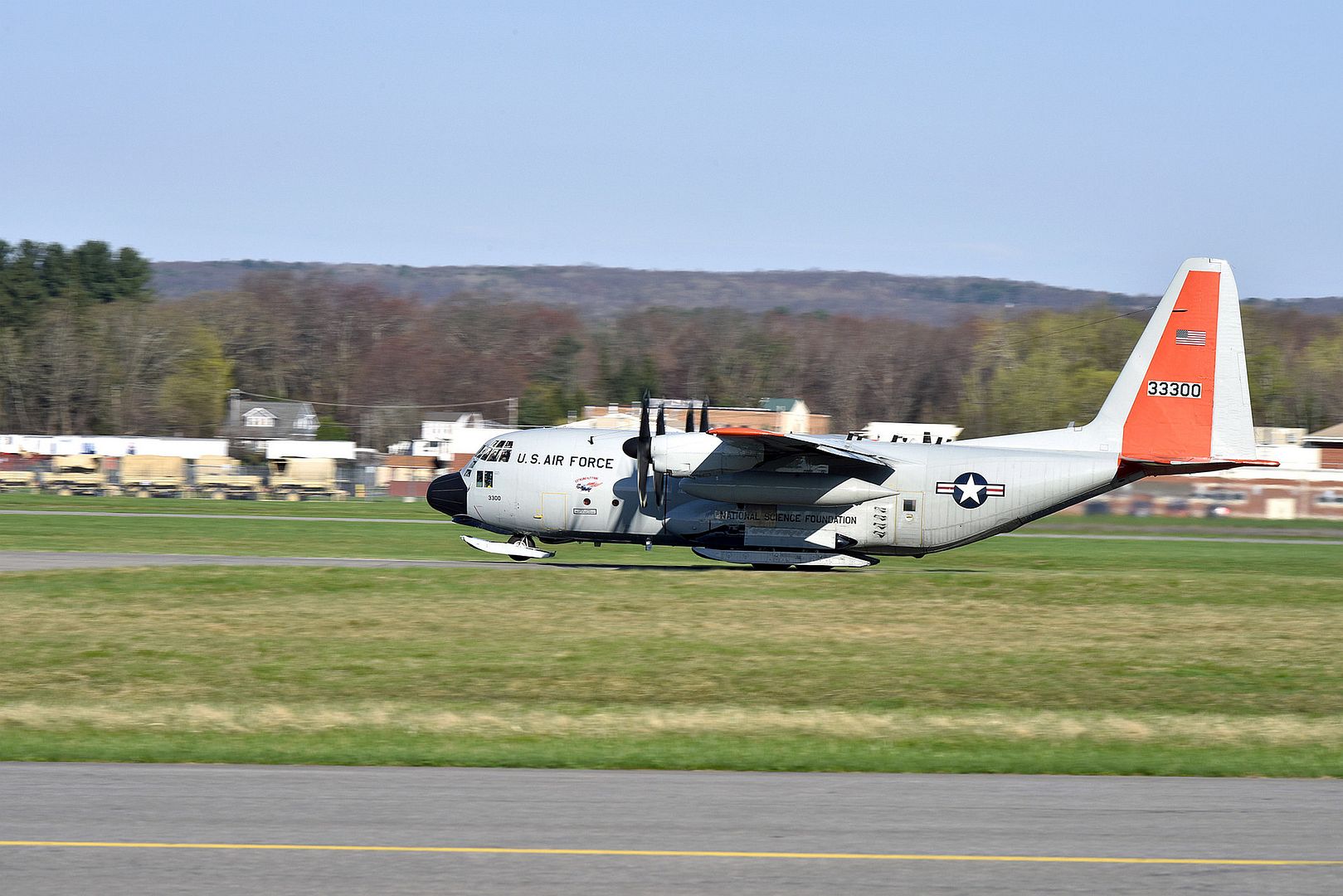
The first of several ski-equipped LC-130 Hercules from the New York Air National Guard's 109th Airlift Wing takes off to Greenland April 23, 2019, in support of National Science Foundation research. In addition to carrying cargo for science, the 109th AW aircrews will conduct important ski-landing training and off-loading operations. (U.S. Air National Guard photo by Senior Master Sgt. William Gizara)
PENSACOLA, Fla. (April 24, 2019) Lead Solo Pilot Lt. Cmdr. Brandon Hempler, assigned to the U.S. Navy Flight Demonstration Squadron, the Blue Angels, performs the ?sneak pass? maneuver during a practice demonstration at Naval Air Station (NAS) Pensacola. The team is scheduled to conduct 61 flight demonstrations at 32 locations across the country to showcase the pride and professionalism of the U.S. Navy and Marine Corps to the American public in 2019. (U.S. Navy photo by Mass Communication Specialist 2nd Class Timothy Schumaker/Released)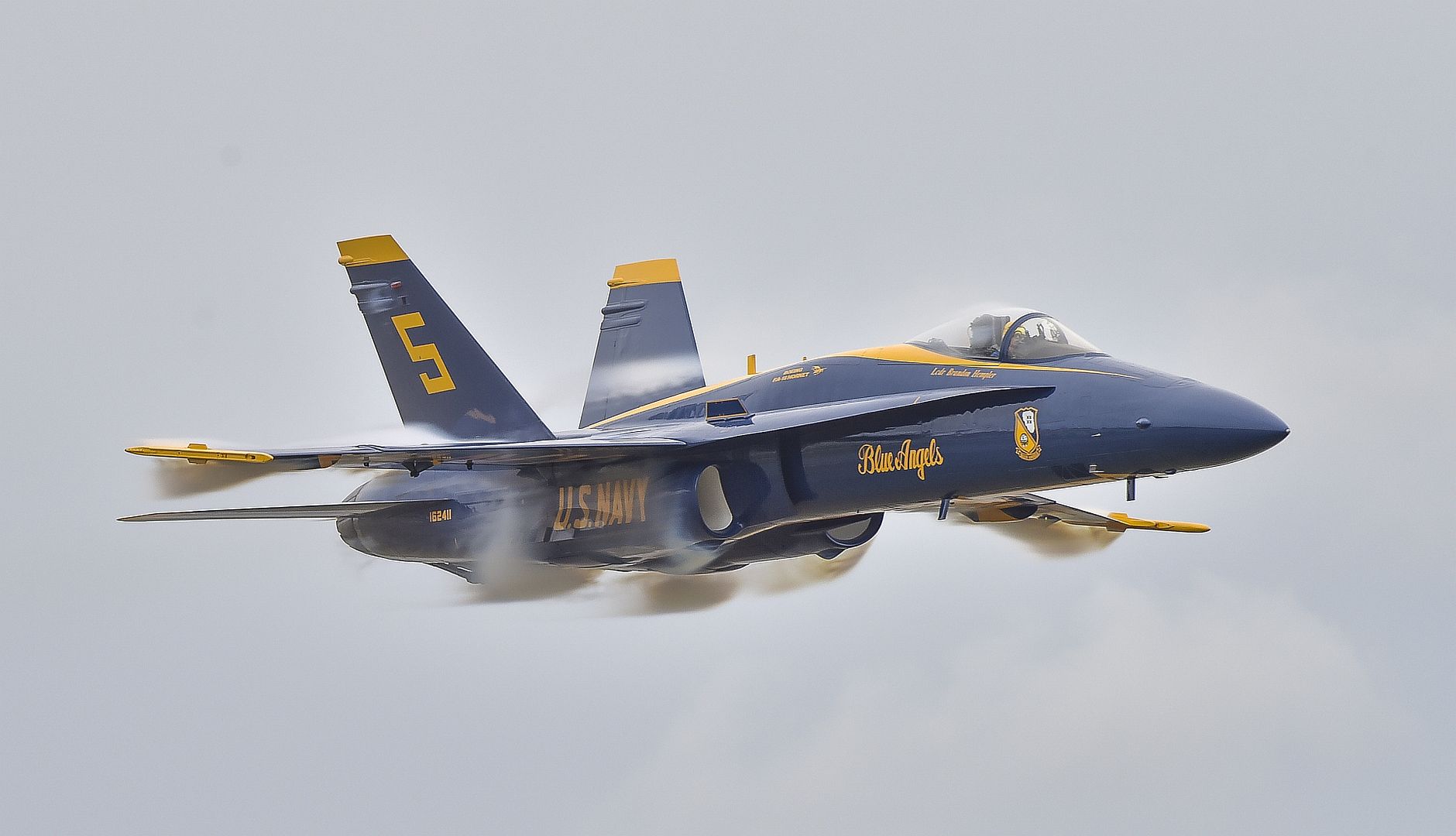
An F/A-18E Super Hornet assigned to the U.S. Navy?s Strike Fighter Squadron 83 based ashore at Naval Air Station Oceana, Virginia Beach, Virginia takes off from Gowen Field, Boise, Idaho on April 23, 2019. The aircraft were training with A-10 Thunderbolt IIs assigned to the 190th Fighter Squadron. (U.S. Air National Guard photo by Master Sgt. Joshua C. Allmaras)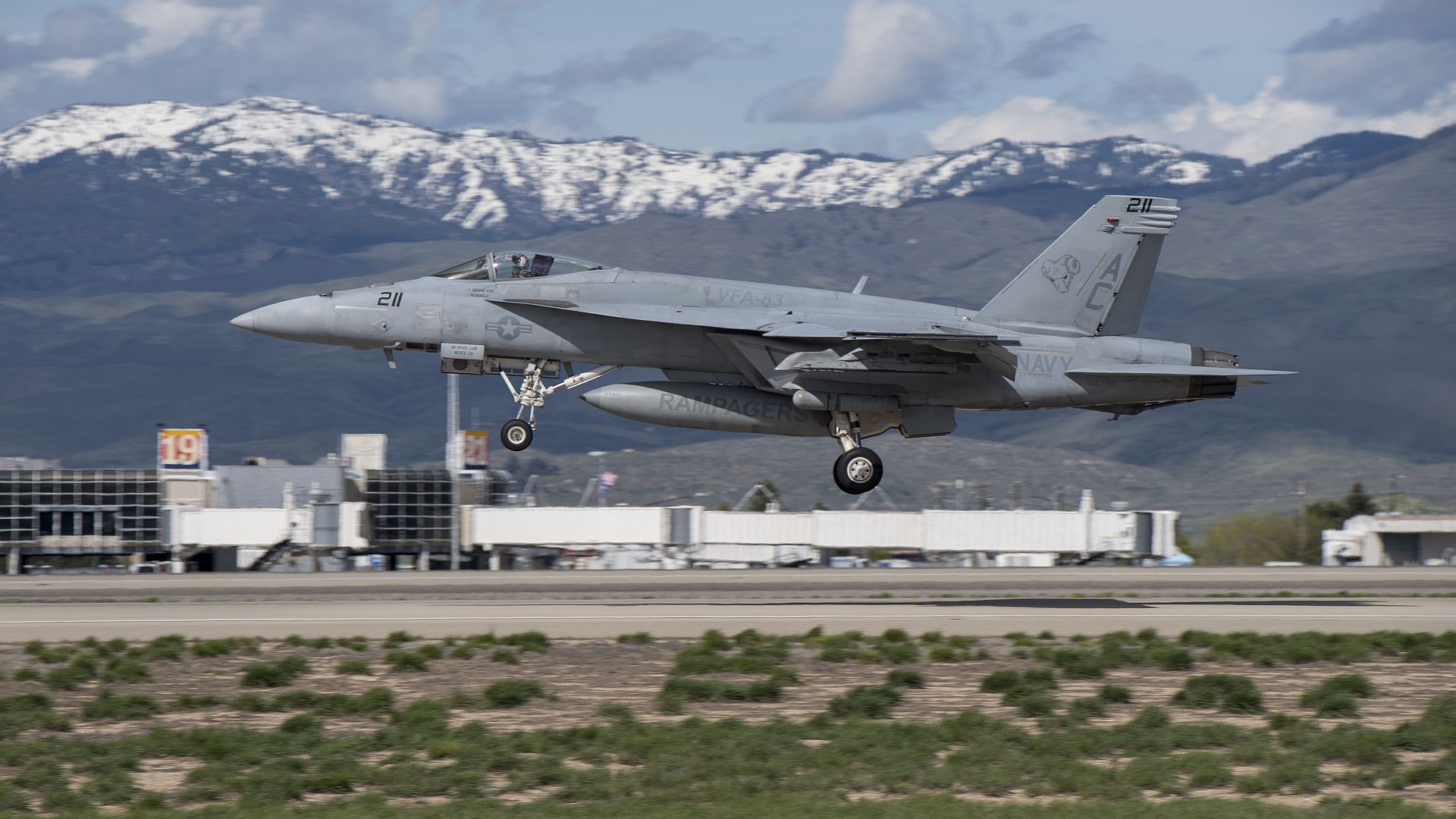
An F/A-18F Super Hornet assigned to the U.S. Navy?s Strike Fighter Squadron 32 based ashore at Naval Air Station Oceana, Virginia Beach, Virginia takes off from Gowen Field, Boise, Idaho on April 23, 2019. The aircraft is in Idaho to train with A-10 Thunderbolt IIs from the 190th Fighter Squadron. (U.S. Air National Guard photo by Master Sgt. Joshua C. Allmaras)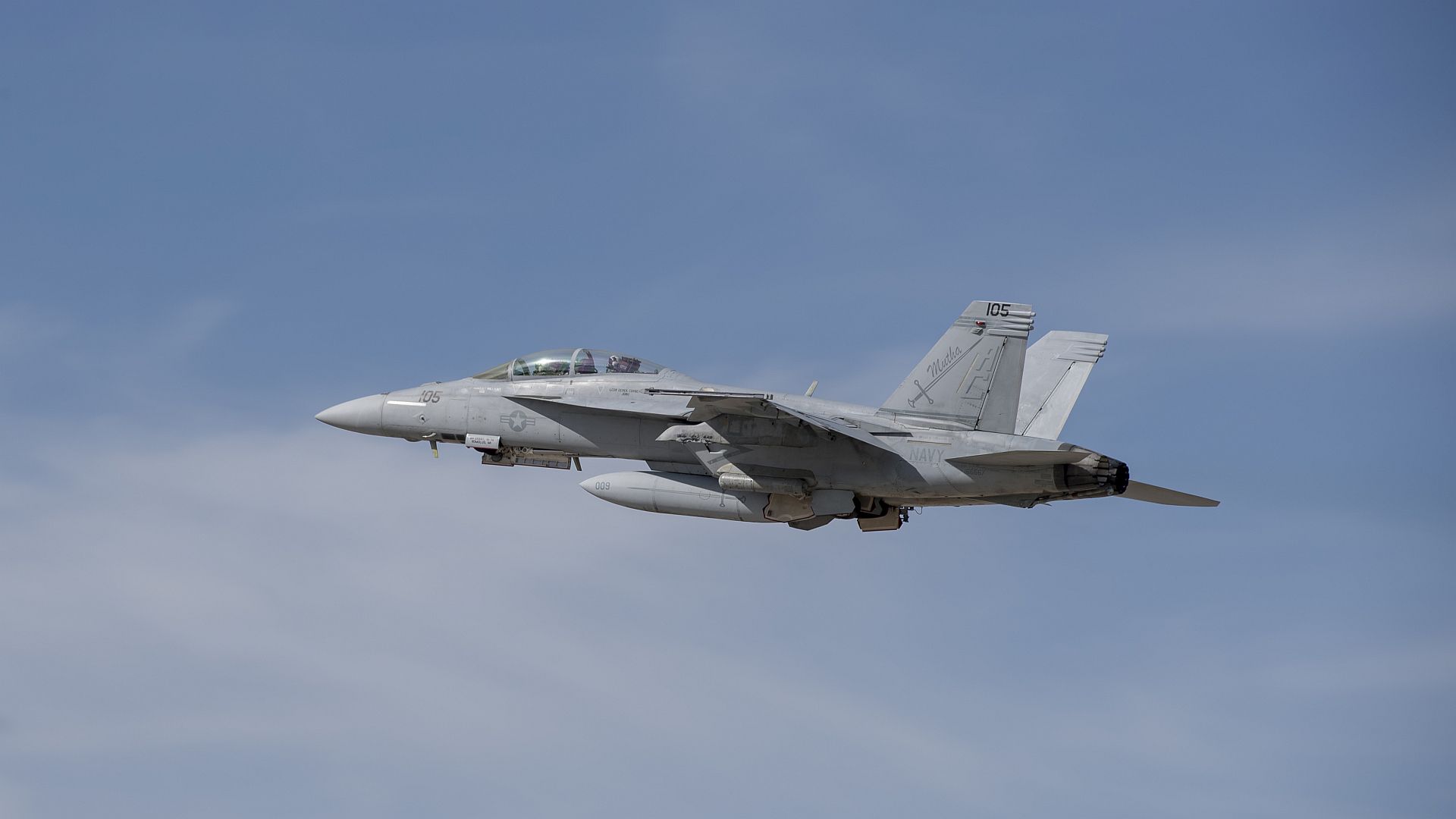
An F-15 Eagle from the Portland Air National Guard?s 142nd Fighter Wing flies over Tyndall Air Force Base, Fla., April 9, 2019. Operations specialists, aircraft maintainers, weapons loaders, and pilots from the 142nd Fighter Wing, Ore. participated in a two-week long Weapons System Evaluation Program (WSEP) purposed to assess pilots and equipment in air-to-air combat scenarios. (U.S. Air National Guard photo by Tech. Sgt. Steph Sawyer, 142nd Fighter Wing Public Affairs)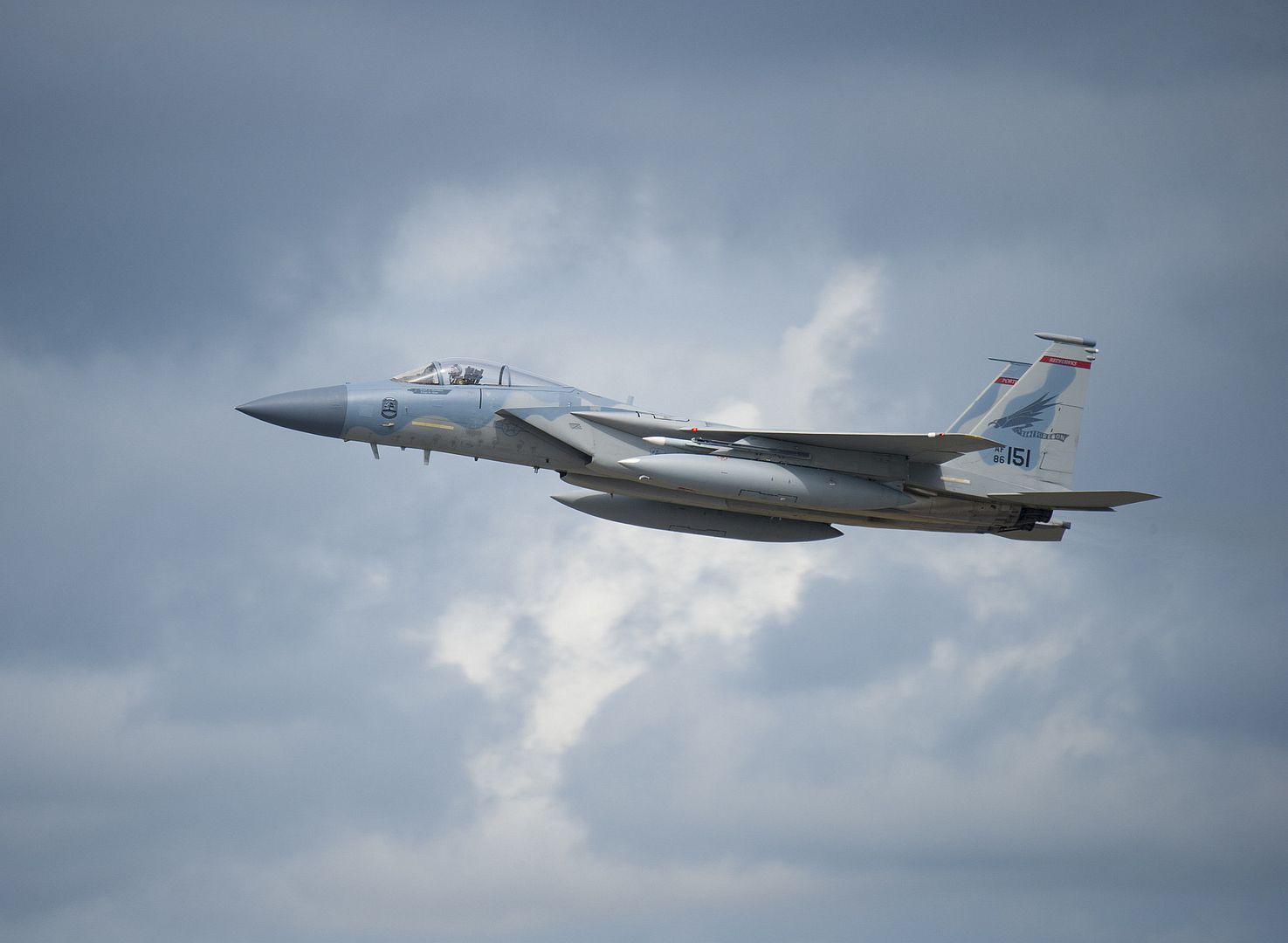
The ACJ319neo successfully completed a first flight lasting one hour and 55 min. on 24 April 2019, beginning a short flight-test programme to verify its corporate jet features ? such as the extra fuel tanks in its cargo-hold, which enable intercontinental range.
Built for K5 Aviation of Germany, the aircraft will be outfitted with a VVIP cabin by Fokker Techniek in the Netherlands after delivery.
The ACJ319neo is derived from the A320neo Family of airliners, and features new engines and wingtip-mounted Sharklets.
K5 Aviation?s ACJ319neo is fitted with five additional centre tanks (ACTs) in its cargo-hold, and includes improvements such as a lower cabin-altitude for greater passenger comfort.
Corporate jet orders and commitments for ACJ320neo Family-derived aircraft now total 14.
More than 700 A320neo Family aircraft are already in service and, with almost 15,000 firm orders for the whole A320 Family, it is the clear market leader in its class.
Airbus? A320 Family epitomises features that are now standard in most new-generation business jets - such as enhanced-protection fly-by-wire controls, cost-saving centralised maintenance and weight-saving carbon fibre.
Some 200 Airbus corporate jets are in service worldwide, flying on every continent, including Antarctica.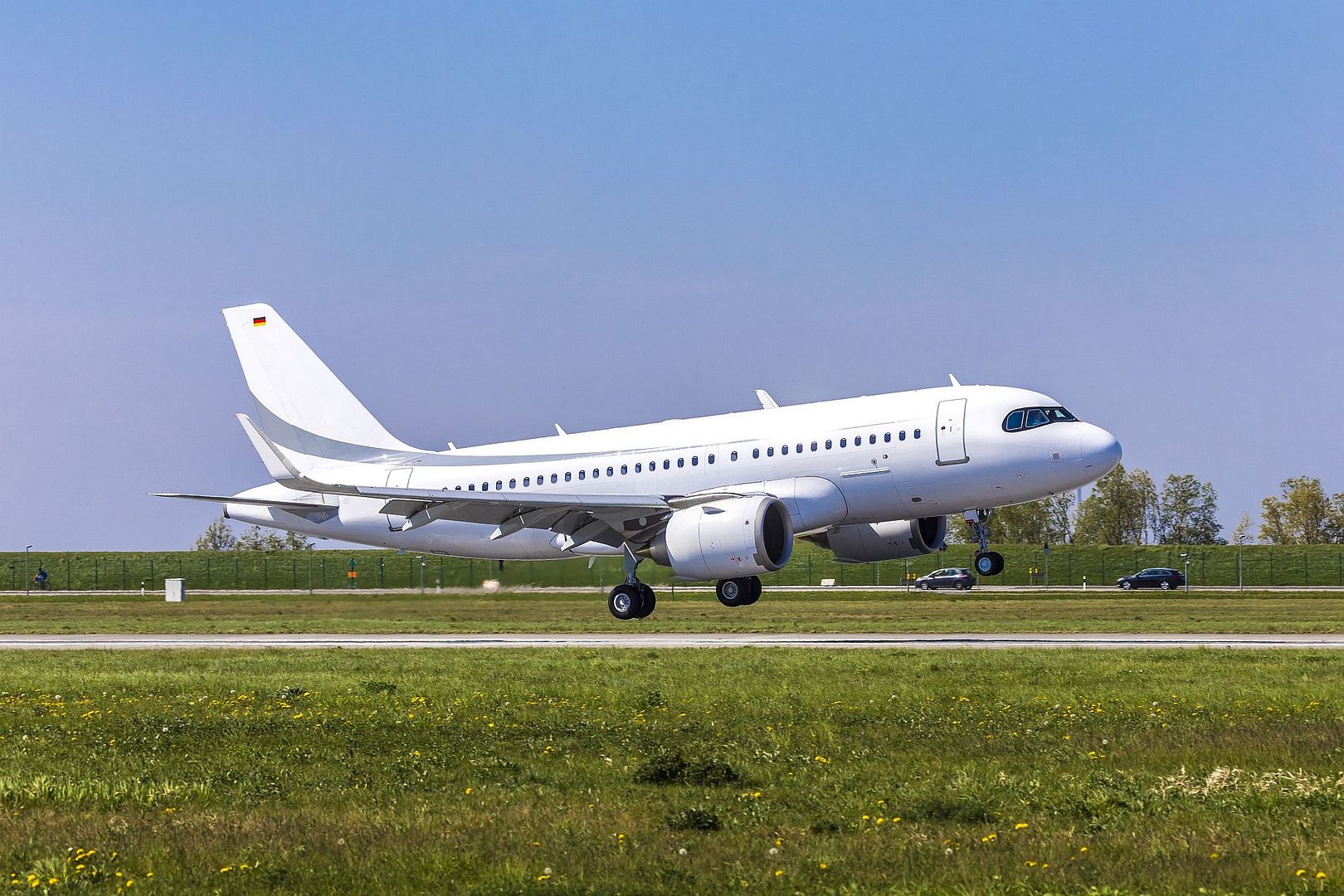
The last of the A320neo variants, an Airbus A319neo, has completed its maiden flight powered by Pratt & Whitney GTF engines for the first time. The A319neo test aircraft took off from Toulouse at 12:30 local time and landed at 15:20. It was flown by a crew of five including Captain Philippe Castaigns, First Officer Shaun Wildey, flight test engineers Frank Hohmeister, David O?Nions, and Test flight engineer Cedric Favrichon.
The aircraft, MSN 6464, will perform an extensive flight test campaign in order to achieve its certification with P&W GTF engines by Q4 2019. The same aircraft had originally been powered with CFM International LEAP-1A engines for that variant?s full certification test campaign, which began on 31 March 2017 prior to FAA/EASA certification in December 2018.
The A319neo is the smallest member of the A320neo family. This family is the world?s best-selling single aisle aircraft, with over 6,500 orders from some 100 customers since its launch in 2010. It has pioneered and incorporated the latest technologies, including its new-generation engines and the industry's reference cabin design, delivering 20% fuel cost per seat savings alone. The A320neo Family also offers significant environmental benefits with a nearly 50% reduction in noise footprint compared to previous generation aircraft.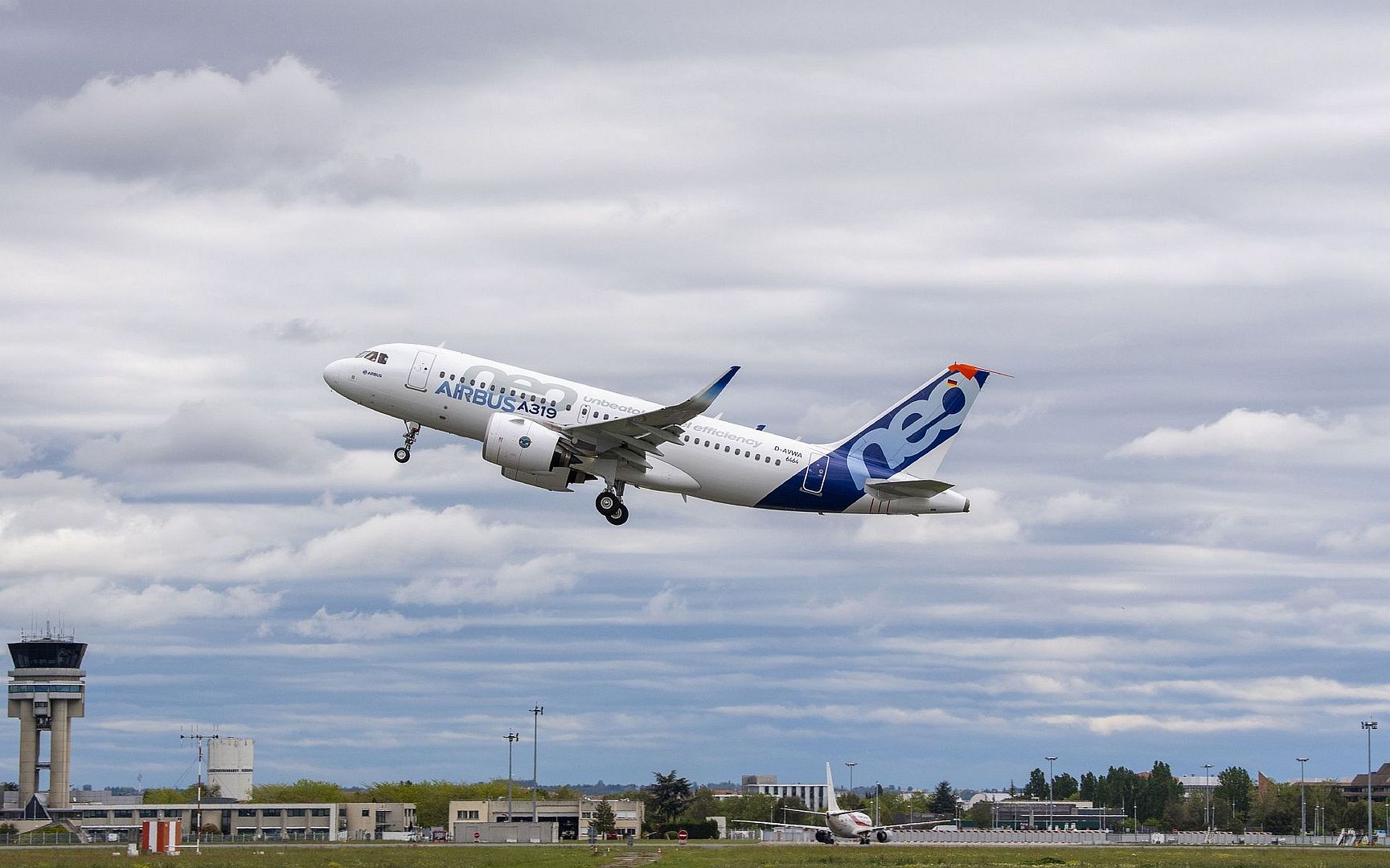
ROYAL Air Force fighter aircraft have arrived in Estonia this week to begin conducting the NATO Baltic Air Policing mission.
Four Typhoons from XI(F) Squadron based at RAF Coningsby in Lincolnshire arrived at ?mari Airbase in Estonia on 24 April to begin their four-month NATO mission to protect NATO Baltic airspace.
Leading the mission, the Commanding Officer of 121 Expeditionary Air Wing, Wing Commander Dave Boreham, said: ?As part of its assurance measures NATO has committed to protect Estonian airspace and the UK as a fully committed NATO partner regularly undertakes a turn of this duty.?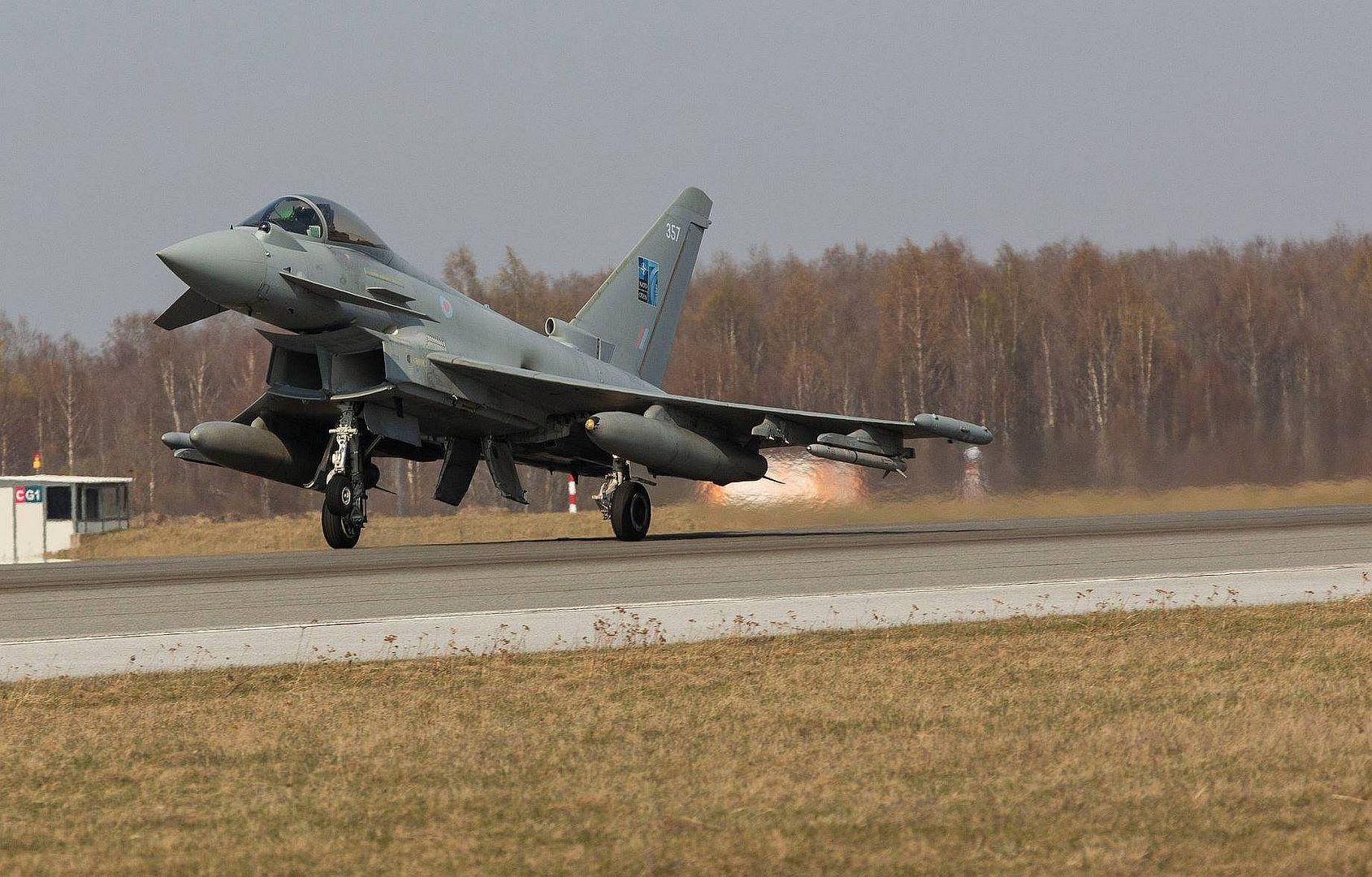
Explaining how QRA worked, one of the pilots, Squadron Leader Jamie Norris said: ?Crews are on permanent readiness to respond to any potential threat and can be scrambled on a 24/7 basis. Our role is to preserve peace and prevent conflict?.
From May the RAF will be at readiness to scramble if required to protect NATO airspace, replacing the German Typhoons who have been carrying out the duty for the last few months.
Sqn Ldr Norris added: ?Aircraft can be launched in a very short space of time; the role we are carrying out is identical to that performed by Typhoons back in the UK from their Coningsby or Lossiemouth bases.?
121 EAW comprises RAF personnel mainly drawn from RAF Coningsby and consists of a range of branches and trades needed to keep four state of the art aircraft operating for several months away from home.
Flying in support of NATO Air Policing missions is a regular duty for RAF Typhoon sqns who last operated from Estonia in 2016.
Wg Cdr Boreham added: ?The welcome we have had from our Estonian hosts and German partners has been superb and we look forward to 121 EAW working alongside its NATO allies to deliver a successful mission.?
-
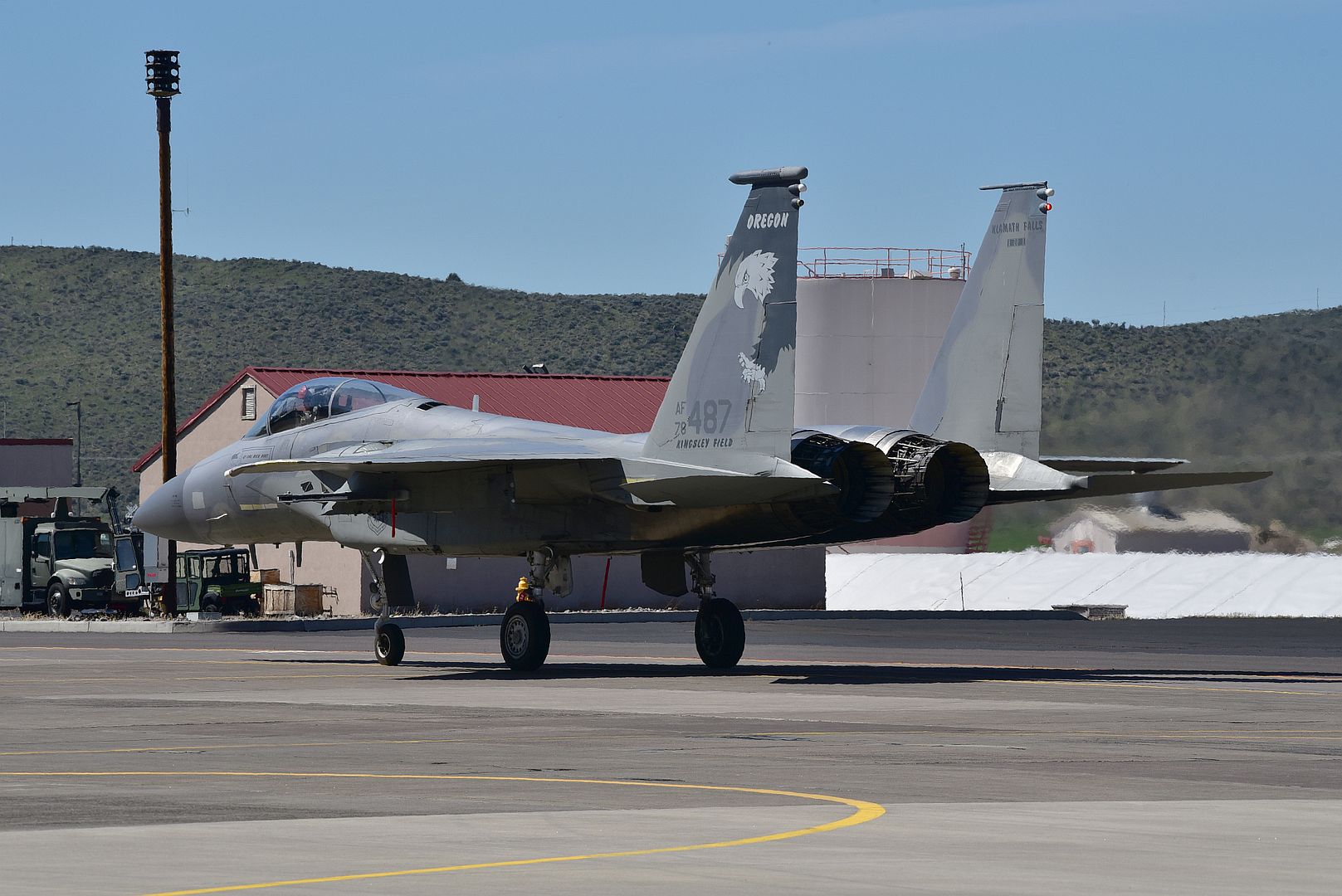
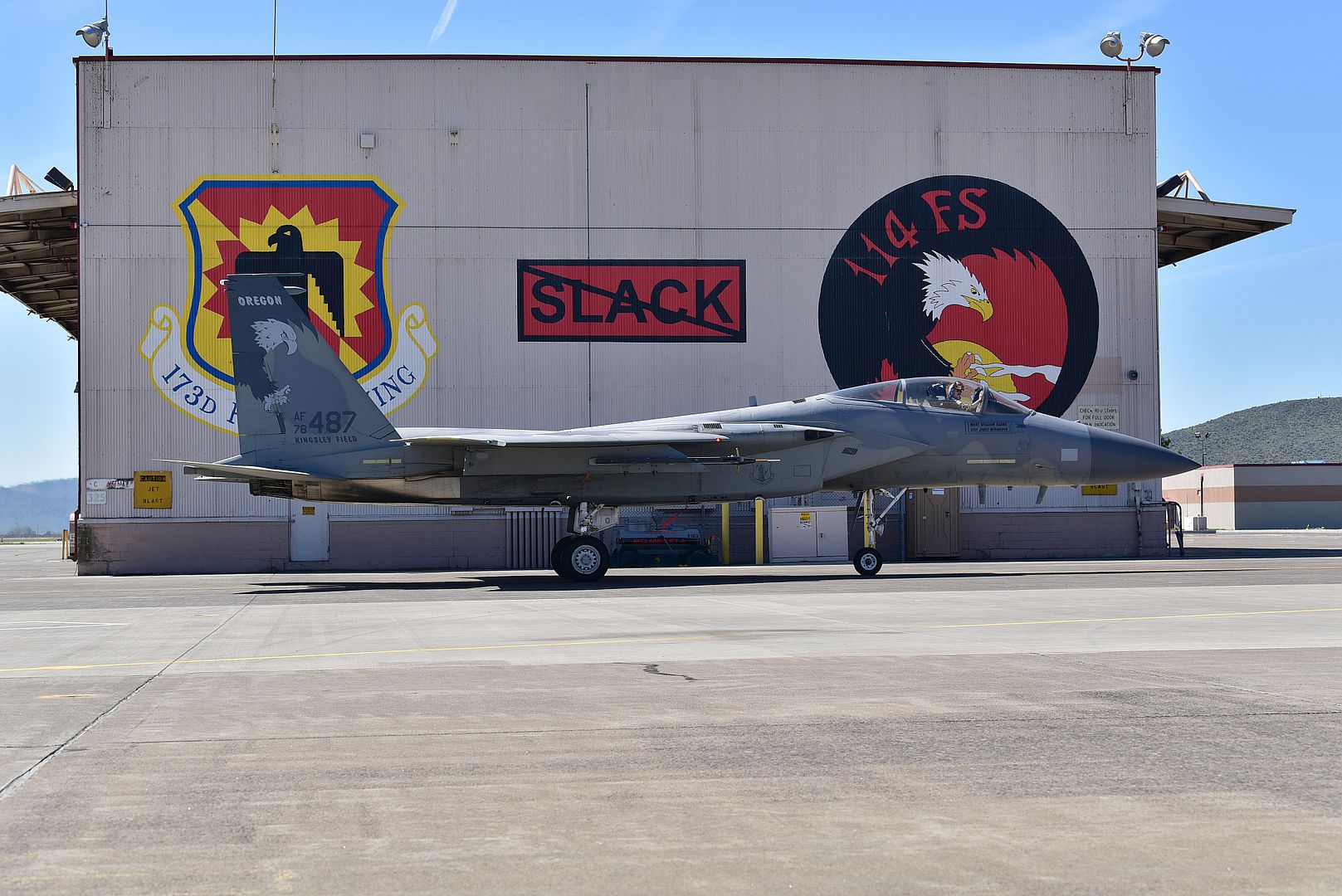
A U.S. Air Force F-15C Eagle from the 173rd Fighter Wing, Oregon Air National Guard, taxis to a parking spot on the ramp following a training mission at Kingsley Field in Klamath Falls, Oregon April 25, 2019. The 173rd FW is home to the sole F-15C training base for the United States Air Force. (U.S. Air National Guard photo's by Senior Master Sgt. Jennifer Shirar)
A U.S. Air Force KC-135 Stratotanker assigned to the 100th Air Refueling Wing on approach at RAF Mildenhall, England, in support of Mission Assurance exercise 19-1, April 24, 2019. The exercise was designed to emphasize the importance of combat skills effectiveness training and test 100th ARW and 48th Fighter Wing Airmen on their ability to survive and operate in wartime conditions (U.S. Air Force photo by Senior Airman Alexandria Lee)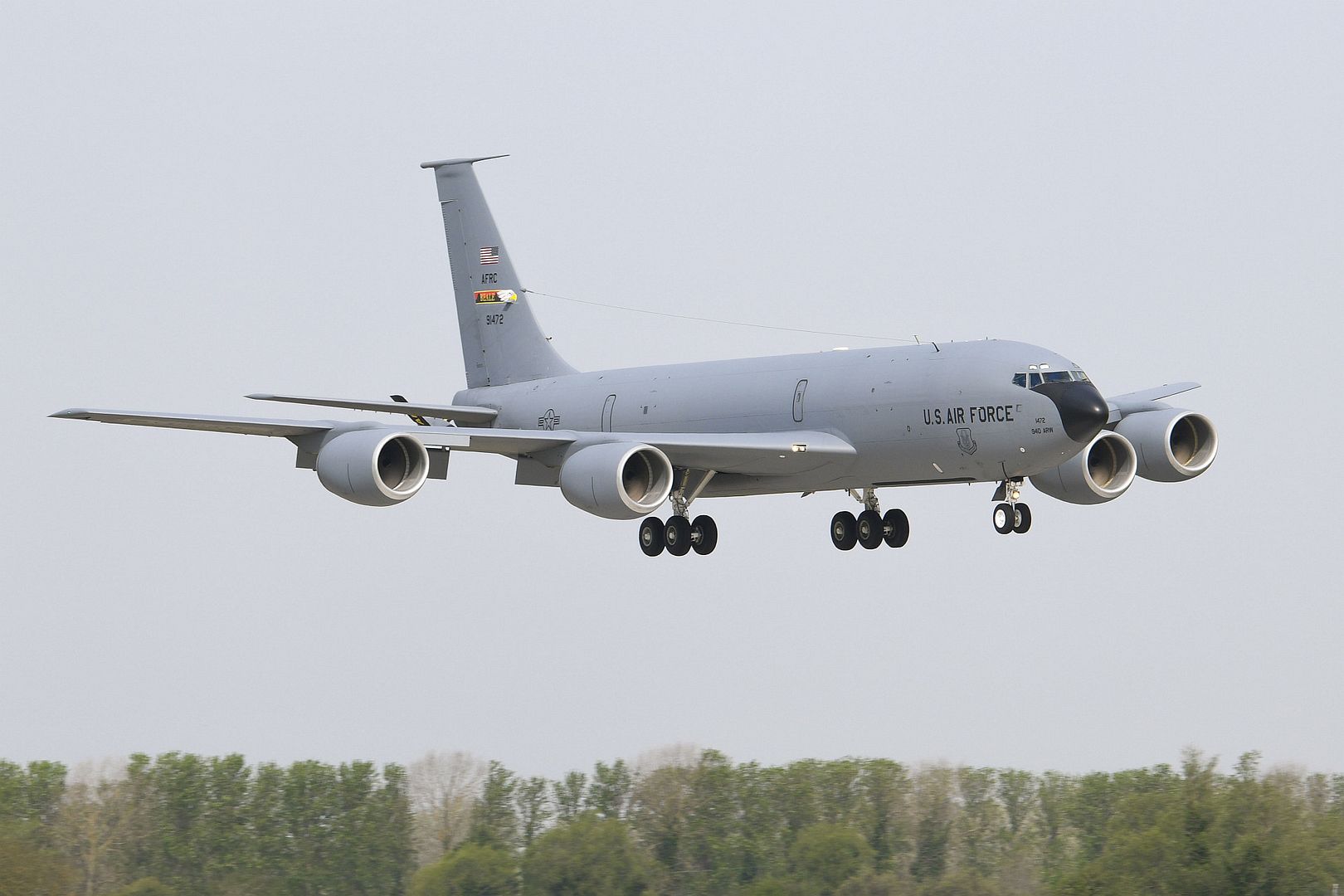
A U.S. Air Force RC-135 Rivet Joint, assigned to the 95th Reconnaissance Squadron, takes off the flightline at RAF Mildenhall, ,April 24, 2019. The RC-135 is a reconnaissance aircraft, hosting a myriad of technology behind the cockpit. (U.S. Air Force photo by Senior Airman Alexandria Lee)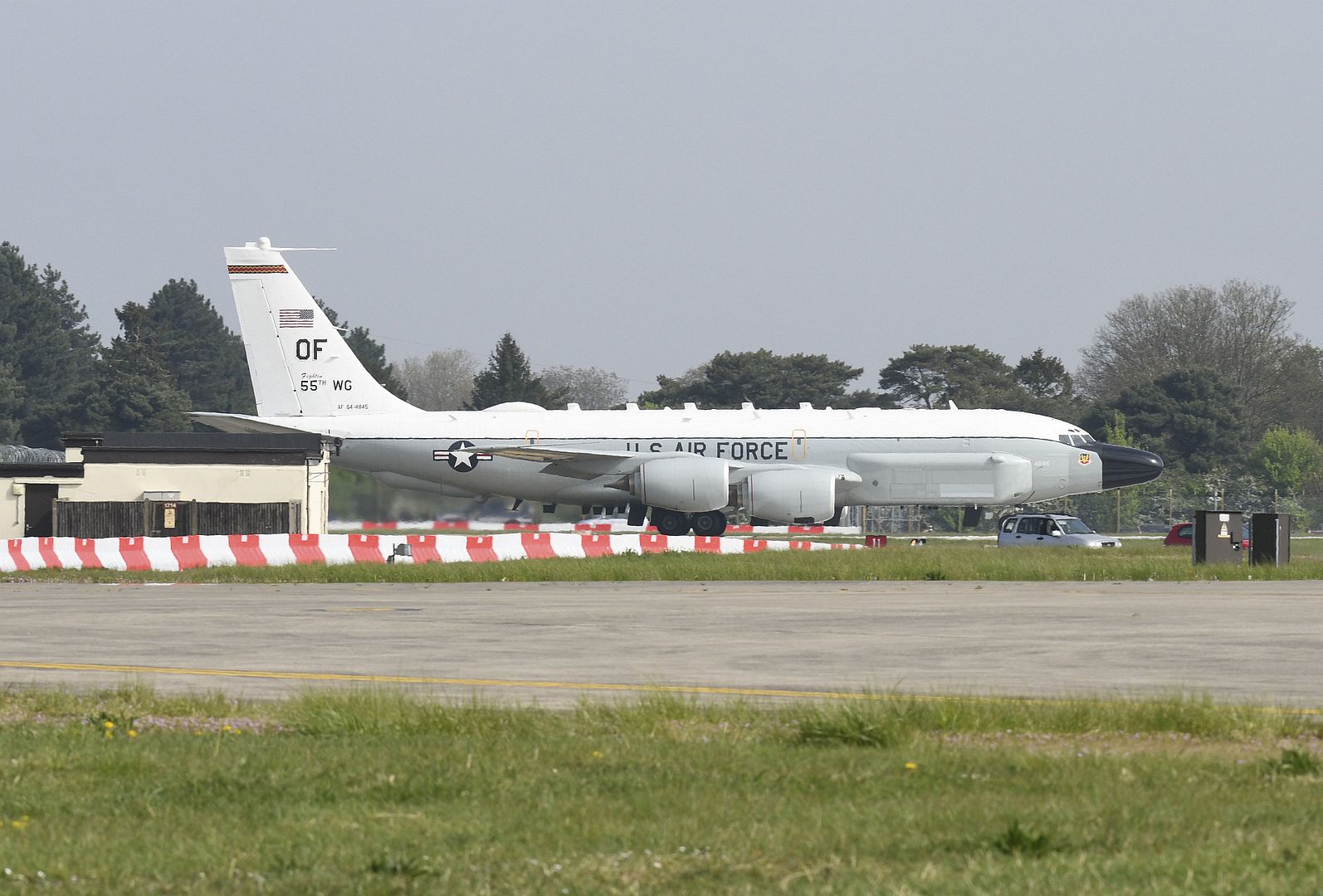
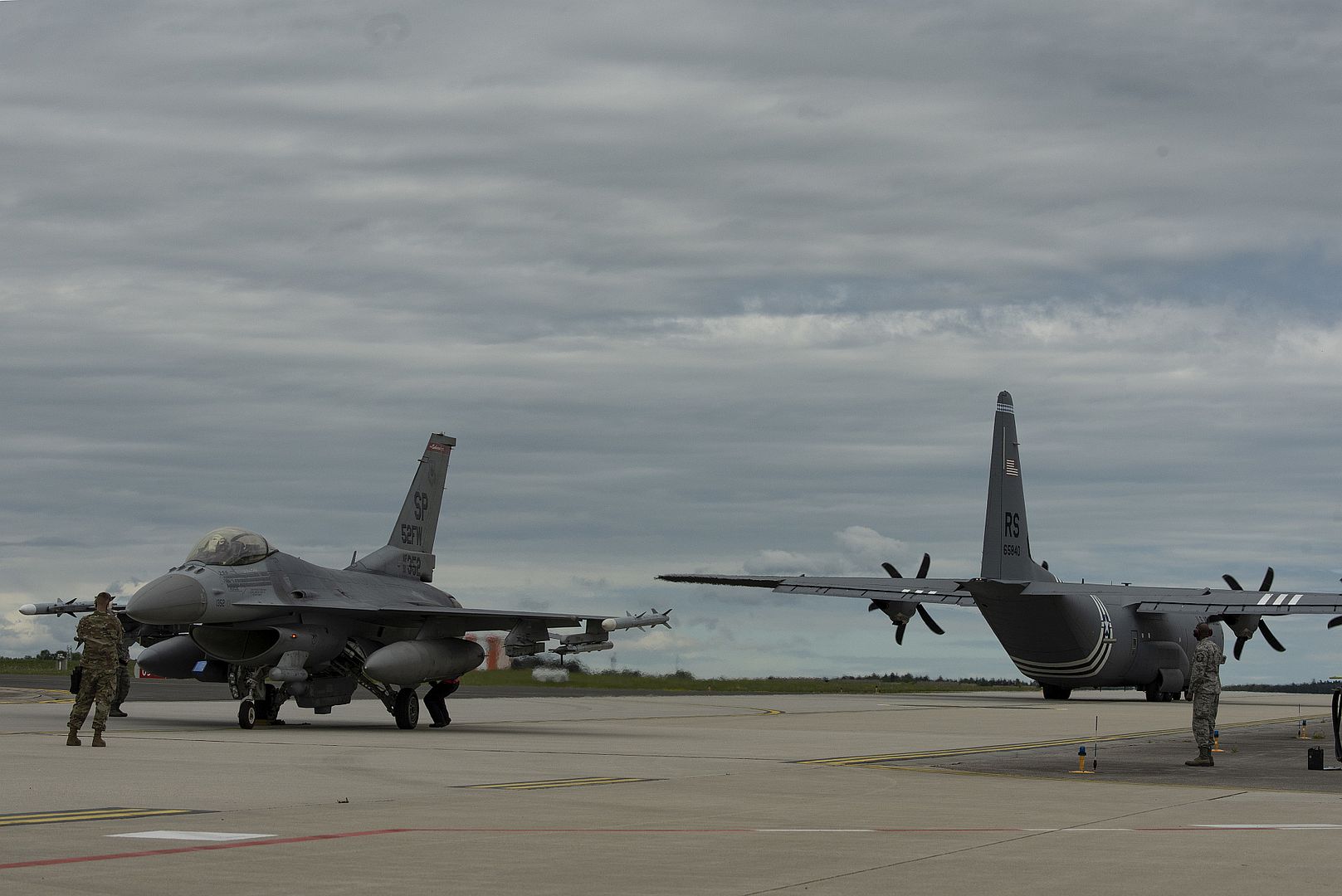
An F-16C Fighting Falcon assigned to the 480th Fighter Squadron sits on the ramp as a C-130J Super Hercules of the 37th Airlift Squadron, Ramstein Air Base, Germany, prepares to taxi during exercise Rapid Weasel at Spangdahlem Air Base, Germany, April 25, 2019. Both squadrons worked together to simulated and overcome challenges associated with operating in austere conditions. (U.S. Air Force Photo's by 1st Lt. Casey Rodriguez)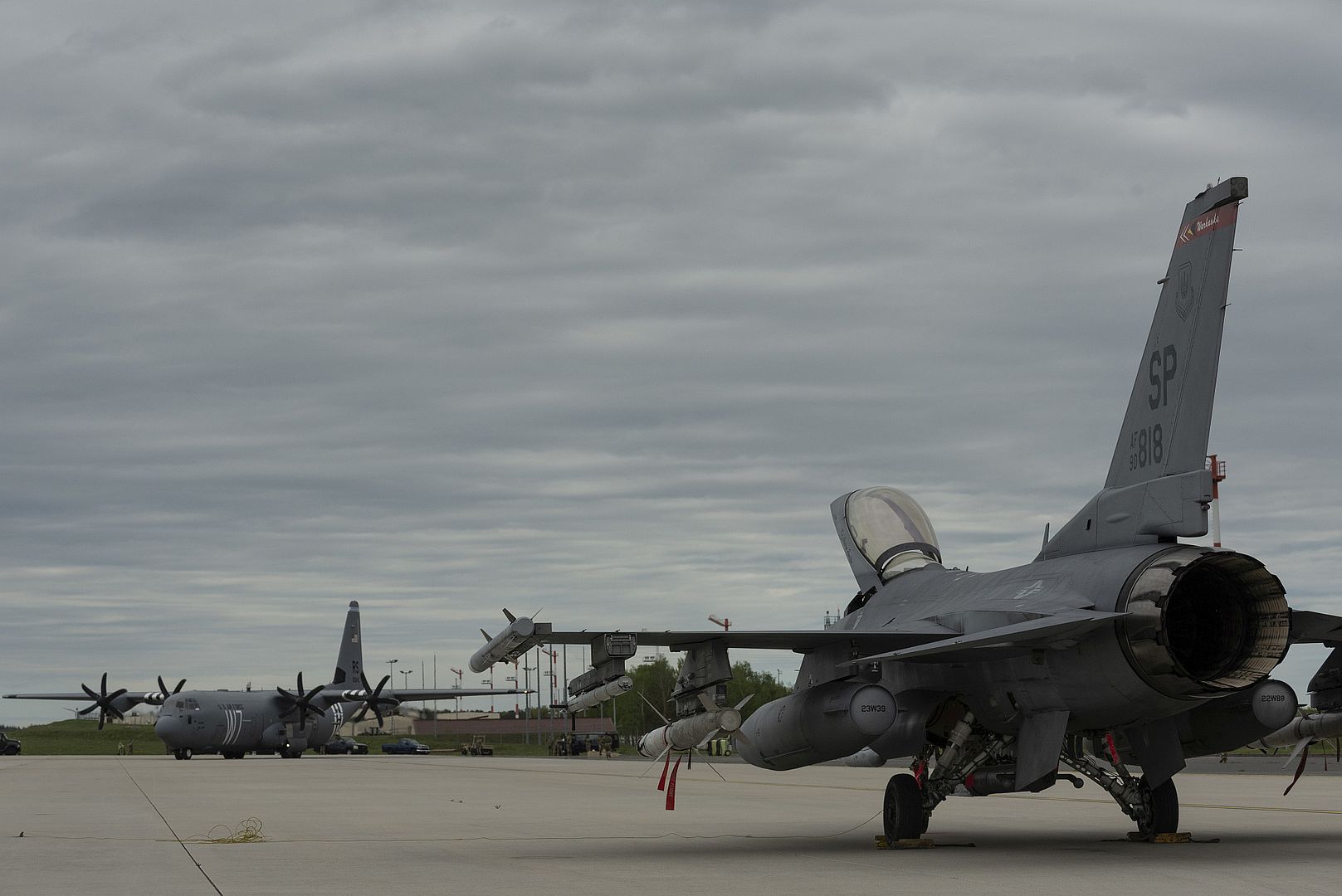
An F-22 Raptor, from Joint Base Pearl Harbor-Hickam, Hawaii, lands at Andersen Air Force Base, Guam, during exercise Resilient Typhoon, April 22, 2019. The exercise is designed to validate Pacific Air Forces ability to maintain readiness while adapting to rapidly evolving events such as inclement weather. The ?Hawaiian Raptors? are comprised of Airmen from Hawaii Air National Guard?s 154th Wing and their active-duty counterparts from the 15th Wing. (Air National Guard photo by Senior Airman John Linzmeier)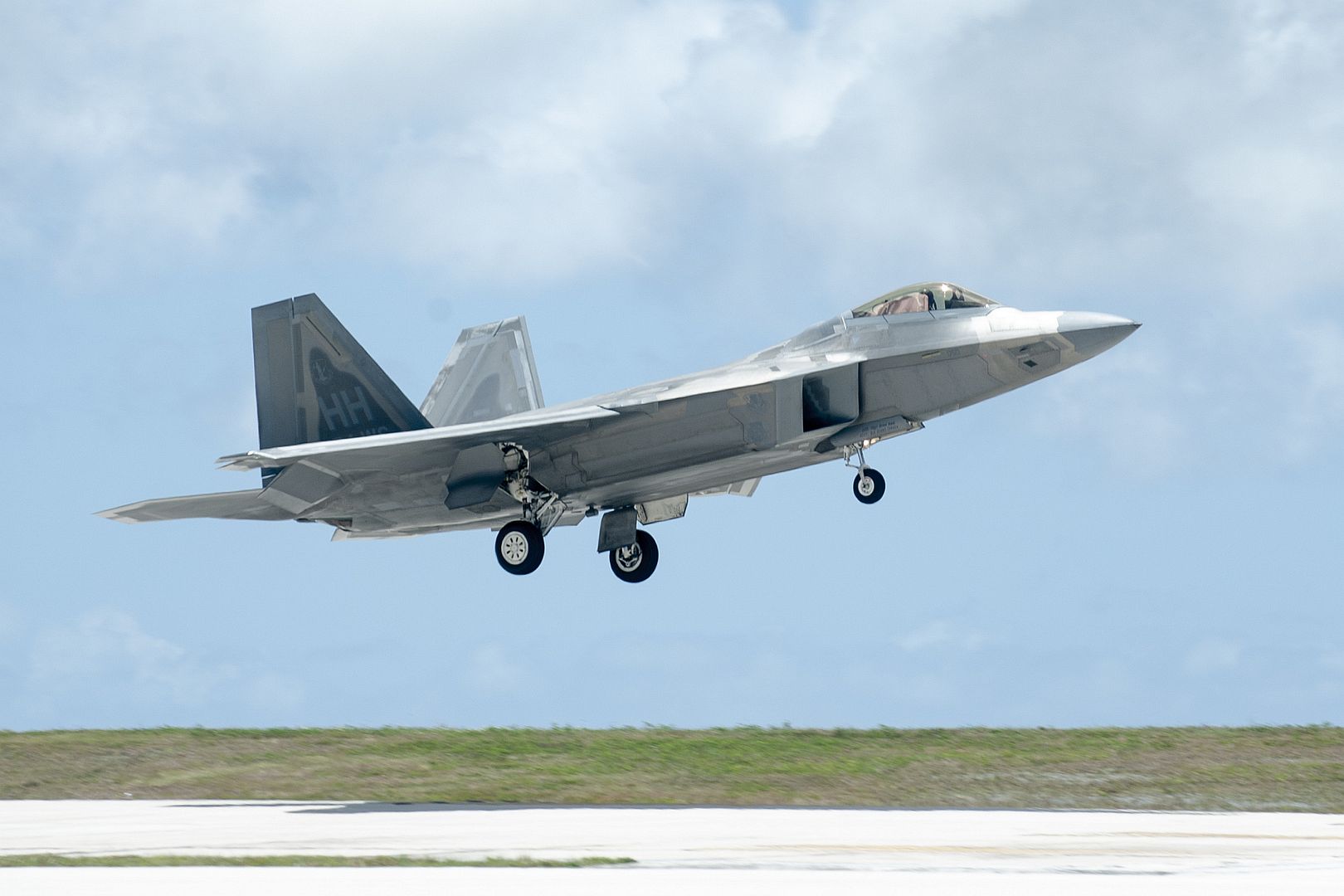
Leonardo announced today that it has signed a contract valued at approximately 380 mln EUR (1.65 bn PLN) that will significantly enhance the Polish Navy?s helicopter capability. Through its fully owned Polish company and main industrial presence in the country, PZL-?widnik, Leonardo will supply four AW101s and a comprehensive integrated logistics and training package to the Polish Ministry of National Defence (MoD).
PZL-?widnik, acting as the prime contractor and responsible for the entire contract execution, was selected in a multi-stage process, meeting all the requirements of the Polish MoD, and will deliver and support the most capable maritime multirole helicopter available on the market today. The helicopter is already in service in some of the most important NATO nations among others. The ?widnik facility plays a significant role in the production of all the AW101s ordered worldwide.
With deliveries expected to be completed by 2022 the AW101 will perform a range of missions including Anti-Submarine Warfare (ASW) and Combat Search and Rescue (CSAR). This contract signing for the AW101s and the relevant support package follows the Offset Agreement, valued at approx. 400 mln PLN (90 mln EUR) recently announced.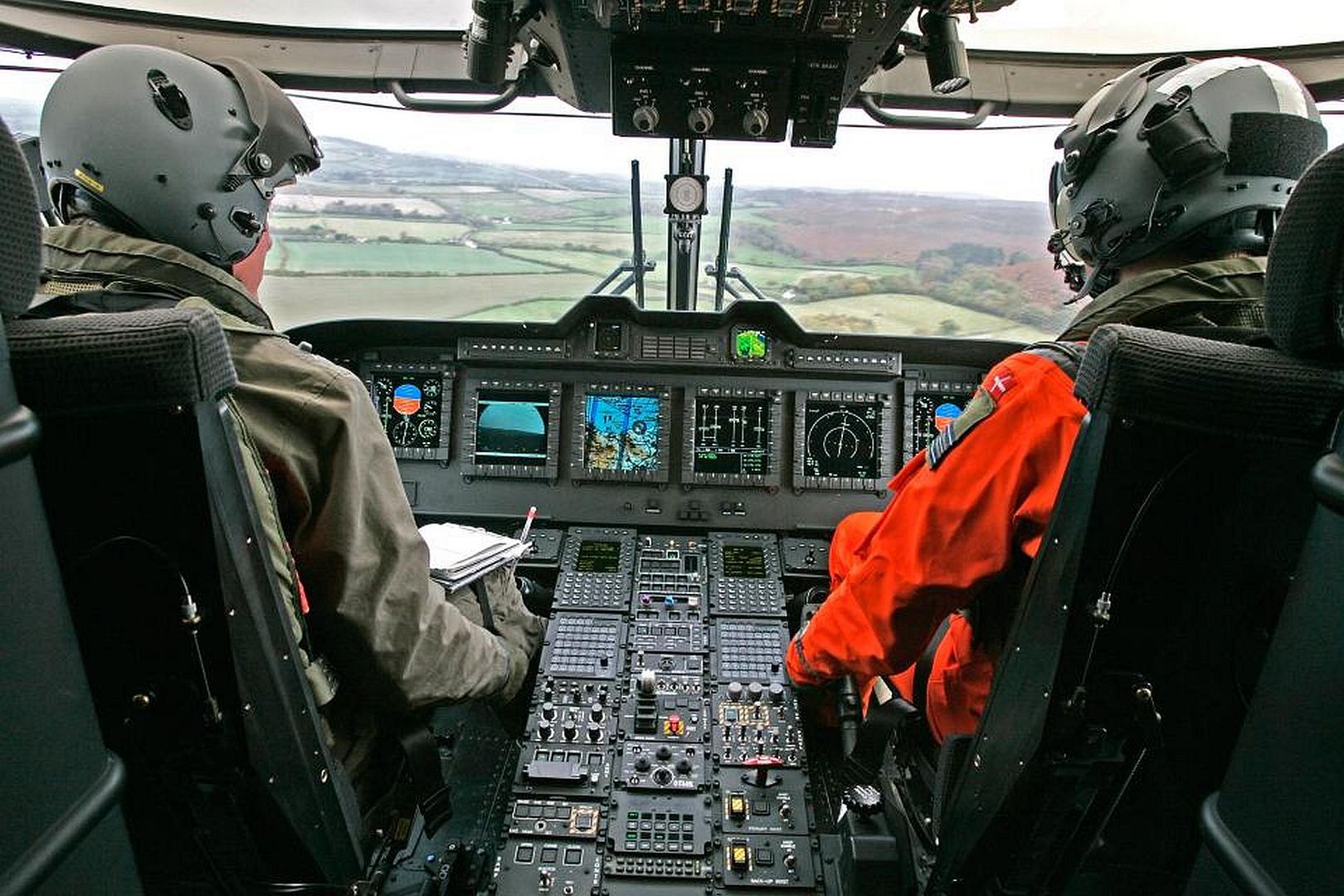
The contract was signed today in the presence of the Prime Minister of the Republic of Poland Mateusz Morawiecki, the Polish Minister of National Defence Mariusz B?aszczak and Leonardo CEO Alessandro Profumo, during a ceremony at Leonardo?s facility in ?widnik.
Alessandro Profumo, Leonardo CEO, said, ?We are proud that the Polish MoD has confirmed its trust in Leonardo as one of its key partners to collaborate on national defence, to support the modernization of the Armed Forces and boost technological and industrial growth. We are committed to further reinforcing our presence and contribution to Poland, one of Leonardo?s home countries where we see significant collaboration opportunities in the future.?
Gian Piero Cutillo, Leonardo Helicopters MD, added: ?The supply of the best-in-class maritime AW101s will allow the Polish Navy to meet its rigorous requirements for the protection of national security in the Baltic Sea and for NATO operations. It will also enable life-saving missions in demanding conditions with second-to-none effectiveness, leveraging Leonardo?s leading role in the maritime helicopter field. Also, the broad scope of industrial collaboration under the Offset Agreement will guarantee secure and independent fleet management.?
To further consolidate its presence and develop its business in Poland, Leonardo is establishing a new legal entity headquartered in Warsaw. Leonardo Poland will represent and promote the entire technological and product portfolio. It will support the customer during the programs? life cycle to develop partnerships with Polish industry, ensuring closeness to the customer and local stakeholders. Marco Lupo has been appointed President of Leonardo Poland, with the objective of tightening relations with Polish customers and stakeholders and reinforcing the already well-established position of Leonardo in the country.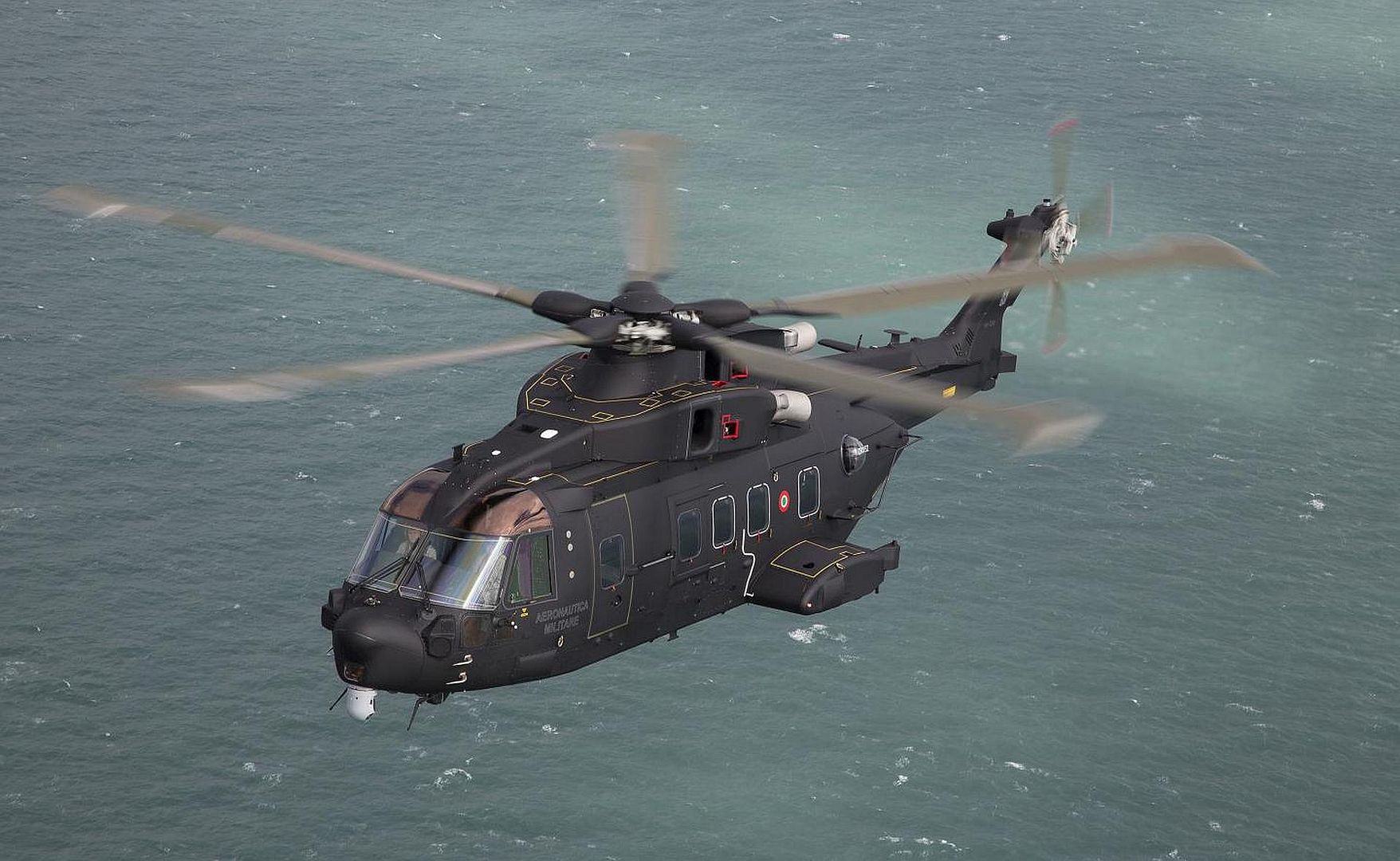
The Commonwealth of Australia has taken delivery of the first of three very long range Falcon 7X trijets it has acquired for government VIP service.
The other two aircraft, to be operated by the Royal Australian Air Force, will be handed over in the following months.
The VIP units are being delivered with the latest connectivity solutions, intended to provide seamless access to high speed broadband data anywhere in the world.
The Falcon 7X offers a combination of range, and operational flexibility that no other large cabin business jet can match. The 5,950 nm 7X can fly from Canberra to any point in Asia nonstop or link Canberra to Washington or London in one hop. It can land on short and challenging runways and operate across a wide range of environmental conditions, including extremely hot and humid and dry desert climates. And the aircraft?s three-engine design provides additional safety margin and frees operators of twin engine operating constraints when flying intercontinental transoceanic routes.
These characteristics explain the immense popularity the 7X has enjoyed since its service introduction more than a decade ago. More than 280 of the big trijets have been delivered to date around the world.
?We are extremely honoured that Australia has once again chosen to renew its confidence in our Falcon product line,? said Eric Trappier, Chairman & CEO of Dassault Aviation. ?The RAAF already has decades of successful experience operating Dassault aircraft, from the Mirage III fighter to the Falcon 20 and Falcon 900 business jets.?
Australia has been a key market for the Falcon for almost half century. The company?s first business jet, the Falcon 20, entered commercial service ?Down Under? in 1967, two years after its entry into service. The Falcon 20 entered the inventory of the RAAF the same year (under the name Myst?re 20) and served in the RAAF?s transport and utility wing for 22 years before being replaced by the Falcon 900. The five-aircraft Falcon 900 fleet remained in operation through the early 2000s.
More than 120 Falcon aircraft, including over 50 Falcon 7Xs, are currently flying with public and private operators in Australia and other Asia Pacific countries.
-
F/A-18F Super Hornets, assigned to the U.S. Navy?s Strike Fighter Squadron 32 based ashore at Naval Air Station Oceana, Virginia Beach, Virginia, take off from Gowen Field, Boise, Idaho on April 25, 2019. VFA-32 was training with the 190th Fighter Squadron, performing both day and night training sorties. (U.S. Air National Guard photo by Master Sgt. Joshua C. Allmaras)
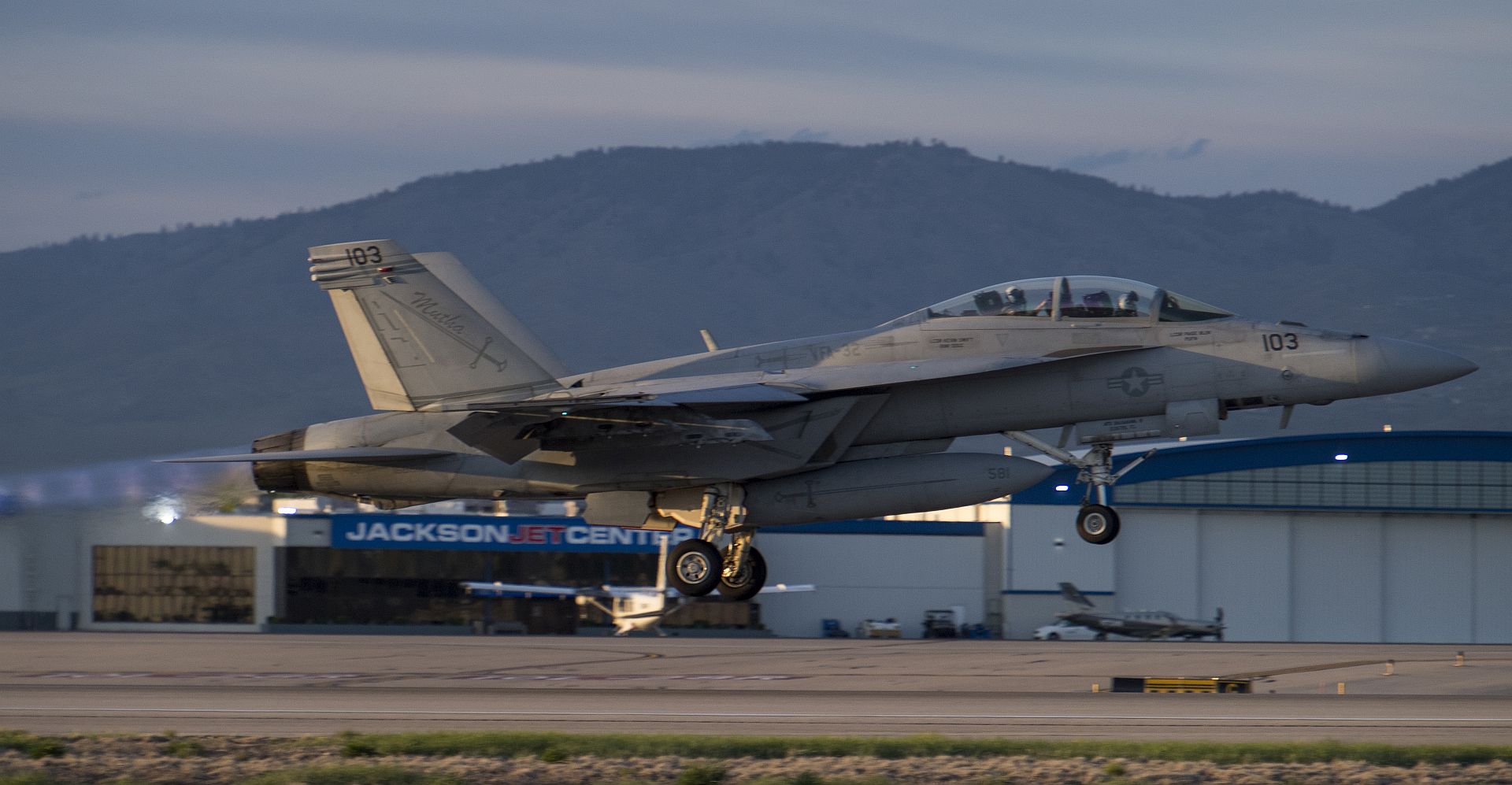
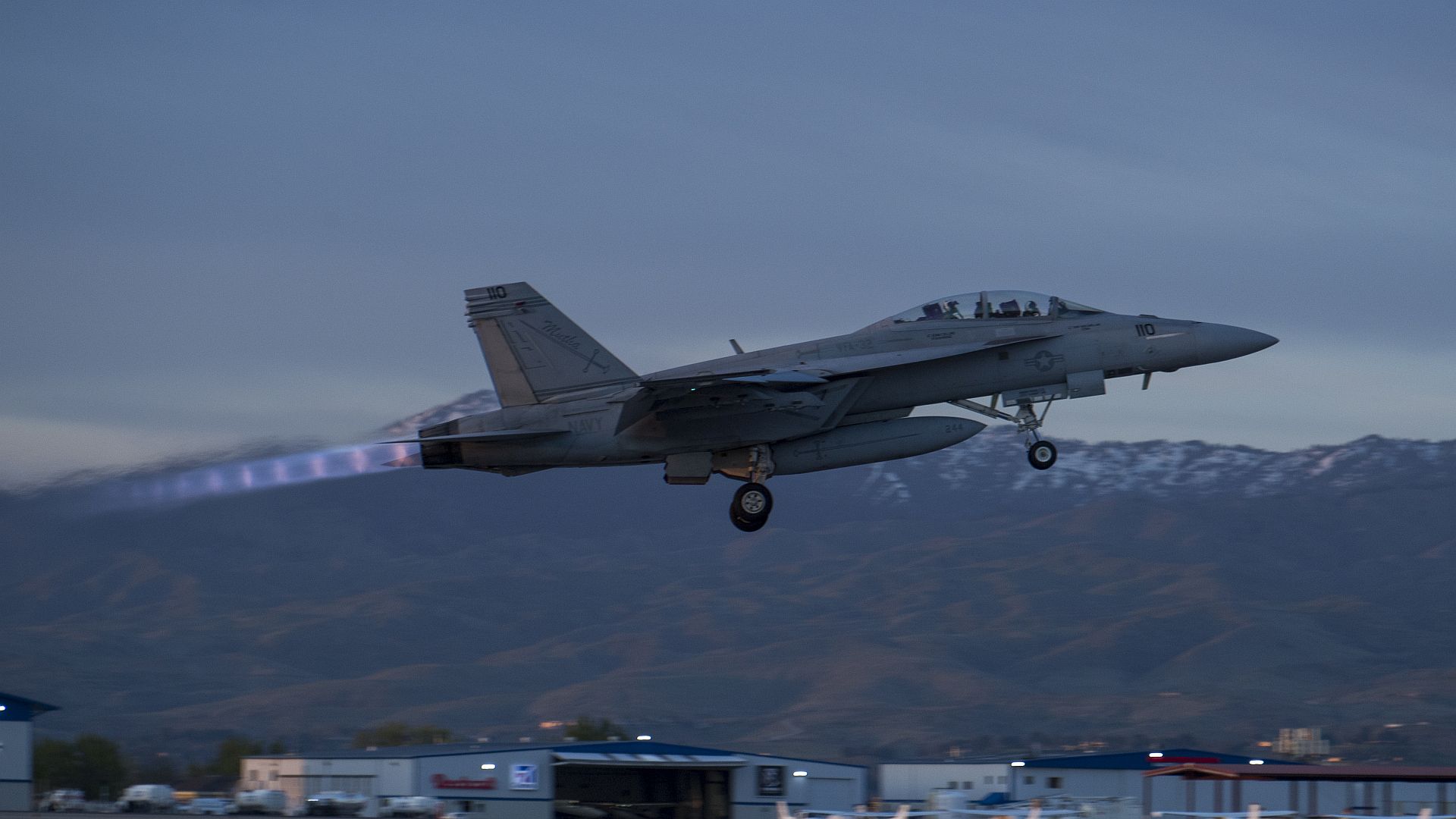
An F/A-18E Super Hornet assigned to the U.S. Navy?s Strike Fighter Squadron 83 based ashore at Naval Air Station Oceana, Virginia Beach, Virginia takes off from Gowen Field, Boise, Idaho on April 25, 2019. The aircraft were training with A-10 Thunderbolt IIs assigned to the 190th Fighter Squadron. (U.S. Air National Guard photo by Master Sgt. Joshua C. Allmaras)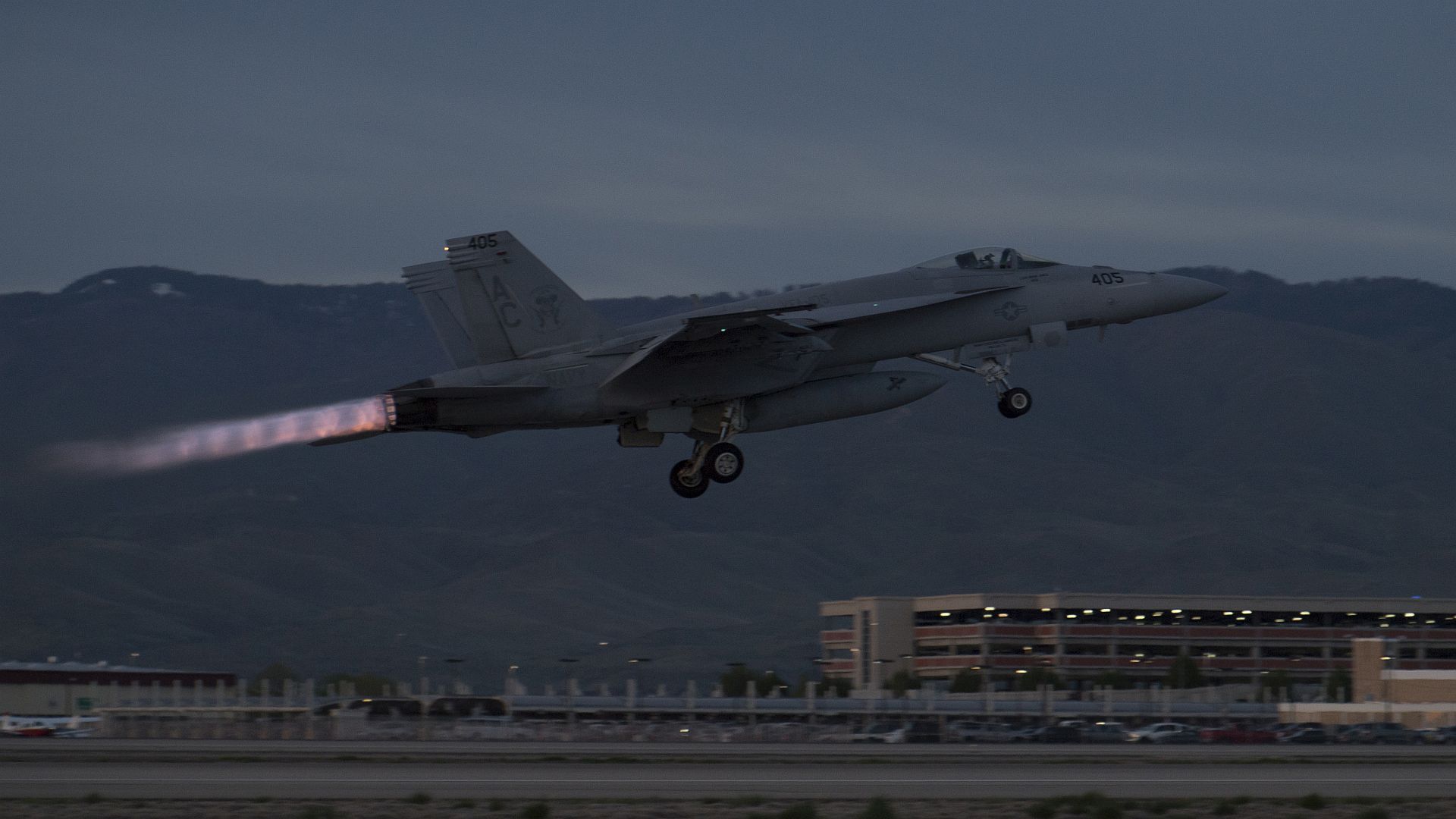
An F-15 Eagle from the 104th Fighter Wing takes off prior to training with the Royal Canadian Air Force April 25, 2019, at Barnes Air National Guard Base, Massachusetts. The 104th FW and the RCAF spent five days conducting dissimilar aircraft training together. (U.S. Air National Guard photo by Airman 1st Class Randy Burlingame)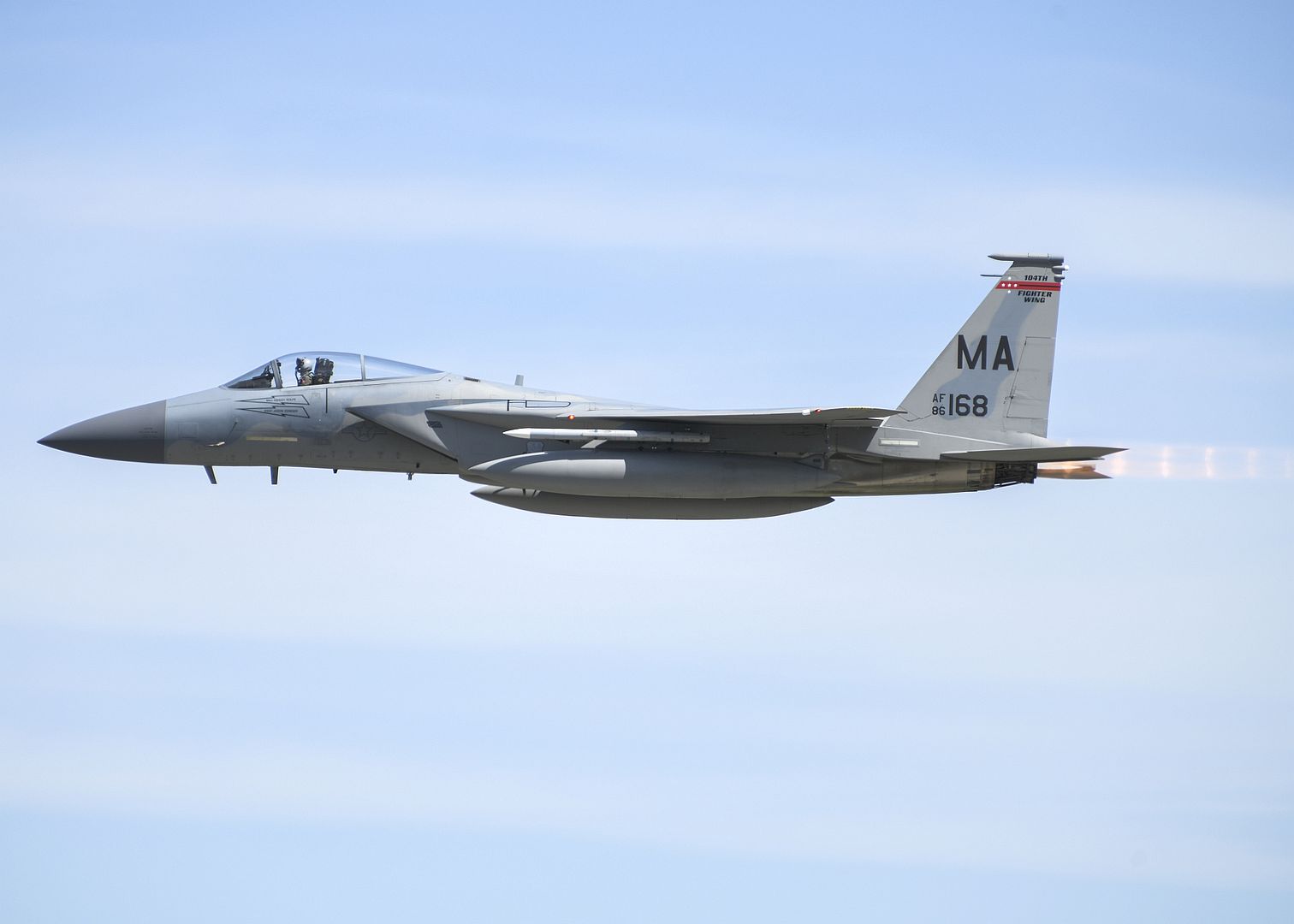
A CF-18 Hornet from the Royal Canadian Air Force takes off prior to training with the 104th Fighter Wing April 25, 2019, at Barnes Air National Guard Base, Massachusetts. The 104th FW and the RCAF spent five days conducting dissimilar aircraft training together. (U.S. Air National Guard photo by Airman 1st Class Randy Burlingame)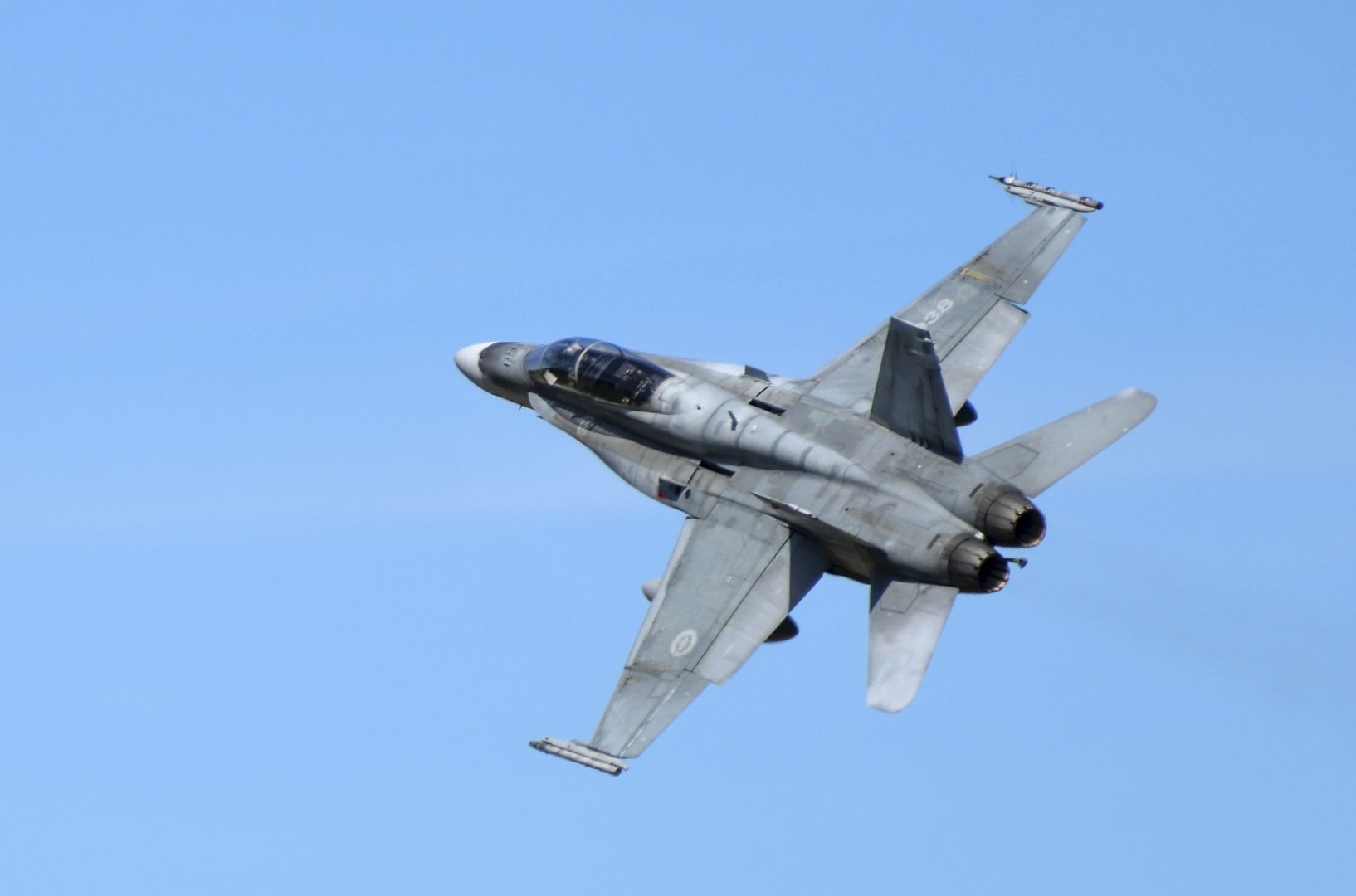
A U.S. Marine Corps AV-8B Harrier II taxies down the flightline during Desert Flag 19-2 at Al Dhafra Air Base, United Arab Emirates, April 28, 2019. Desert Flag is designed to exercise combined Air Forces in military operations to enhance competence and strengthen military-to-military relationships and regional security. (U.S. Air Force photo by Staff Sgt. Chris Drzazgowski)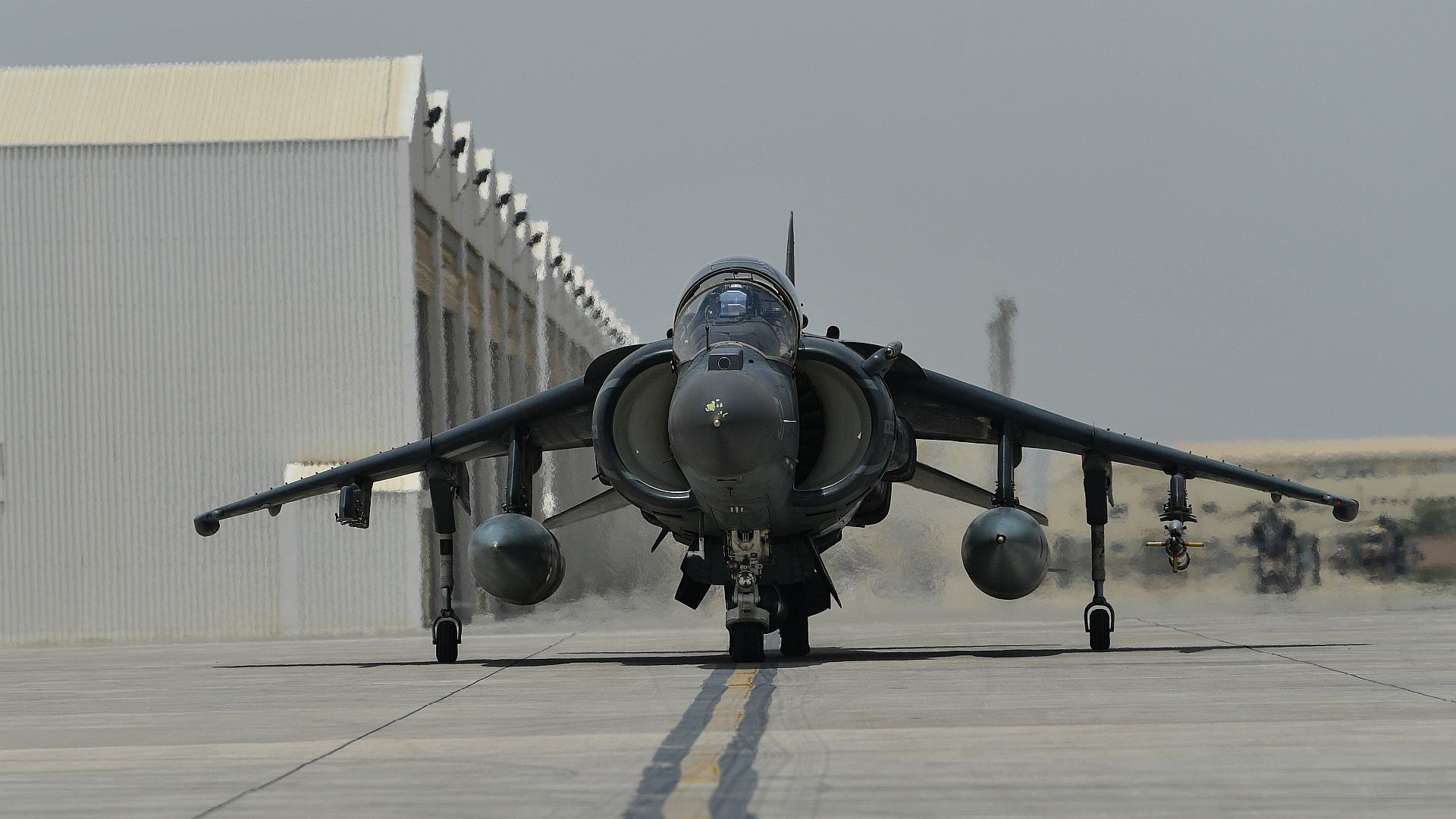
MEDITERRANEAN SEA (April 25, 2019) Two F/A-18E Super Hornets from the "Pukin' Dogs" of Strike Fighter Squadron (VFA) 143 launch from the flight deck of the Nimitz-class aircraft carrier USS Abraham Lincoln (CVN 72) to conduct a long-range strike exercise together with the John C. Stennis Carrier Strike Group, U.S. Air Force 603rd Air Control Squadron and the Romanian Air Force. Abraham Lincoln is deployed as part of the Abraham Lincoln Carrier Strike Group (ABECSG) in support of maritime security cooperation efforts in the U.S. 5th, U.S. 6th and U.S. 7th Fleet areas of operation. With Abraham Lincoln as the flagship, deployed strike group assets include staffs, ships and aircraft of Carrier Strike Group 12 (CSG 12), Destroyer Squadron 2 (DESRON 2), USS Leyte Gulf (CG 55) and Carrier Air Wing 7 (CVW 7); as well as ?lvaro de Baz?n-class frigate ESPS M?ndez N??ez (F 104). (U.S. Navy photo by Mass Communication Specialist 3rd Class Amber Smalley/Released)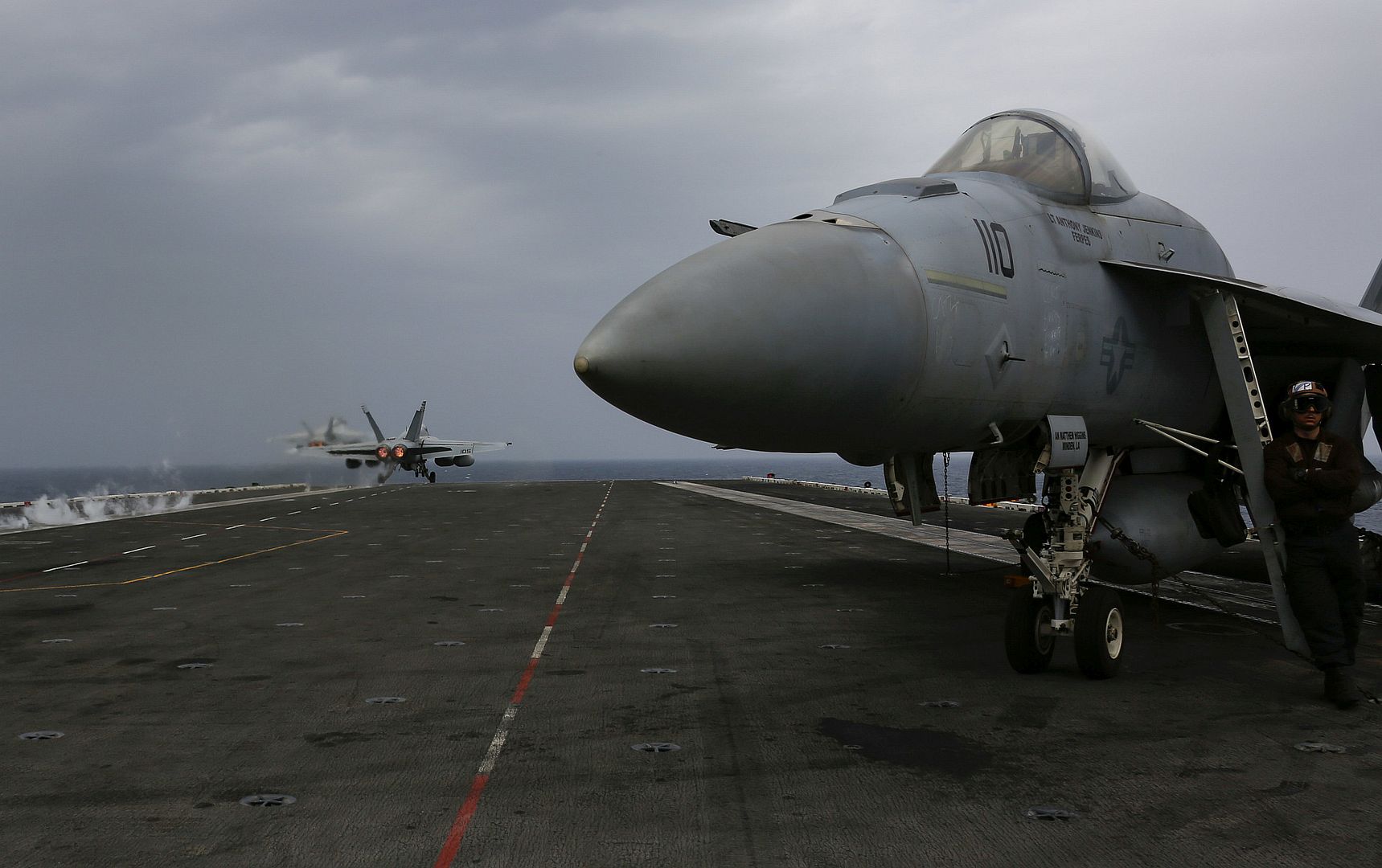
An F-35 Lightning II launches an AIM-120 missile released from an internal weapons storage bay over a controlled sea test range in the Pacific Ocean.The 412th Test Wing recently published the technical report on the F-35 Automatic Ground and Collision Avoidance System and have recommended it for fielding; seven years ahead of schedule. (U.S. Air Force photo's by Christopher Okula)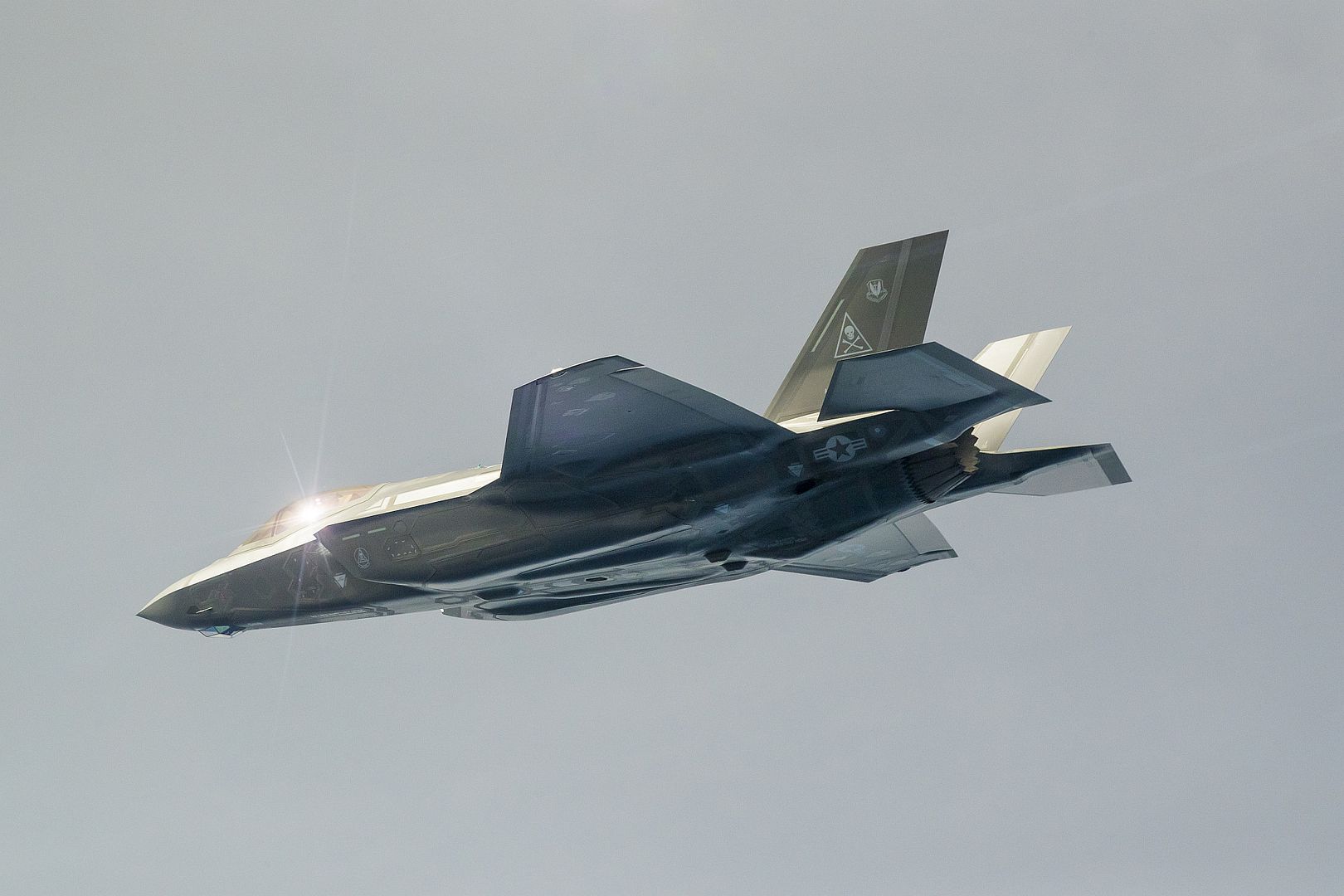
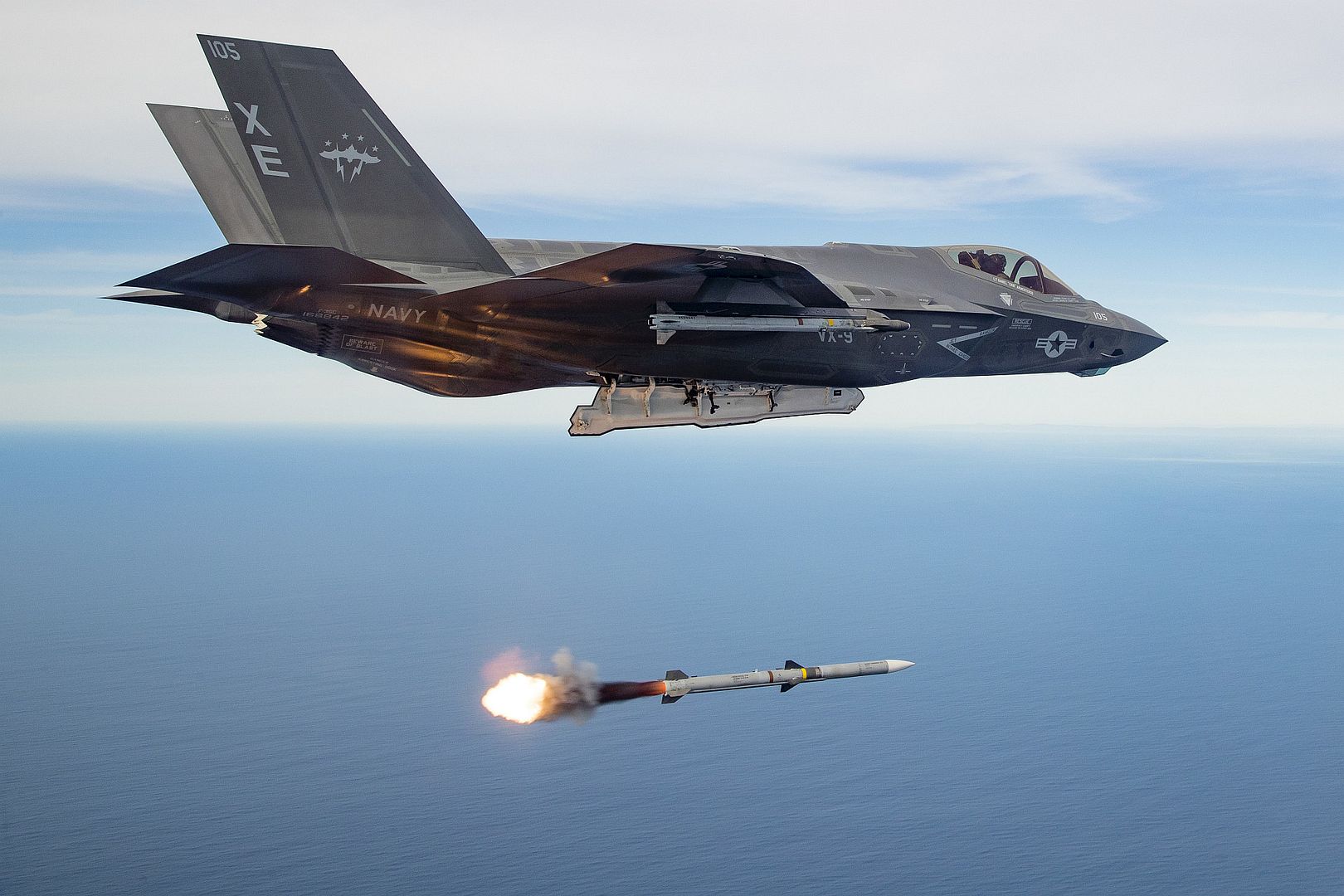
ROMANIA (April 25, 2019) Two F/A-18 Super Hornets from Carrier Air Wing 7 (CVW 7) fly in formation during a long-range strike exercise together with the John C. Stennis Carrier Strike Group, U.S. Air Force 603rd Air Control Squadron and the Romanian Air Force. Abraham Lincoln Carrier Strike Group deployment in support of maritime security cooperation efforts in the U.S. 5th, 6th and 7th Fleet areas of responsibility. With Abraham Lincoln as the flagship, deployed strike group assets include staffs, ships and aircraft of Carrier Strike Group CSG )12, Destroyer Squadron (DESRON) 2, the guided-missile cruiser USS Leyte Gulf (CG 55) and Carrier Air Wing (CVW) 7; as well as the Spanish navy Alvaro de Bazan-class frigate ESPS Mendez Nunez (F 104). (U.S. Navy photo by Capt. Nathan Ballou/Released)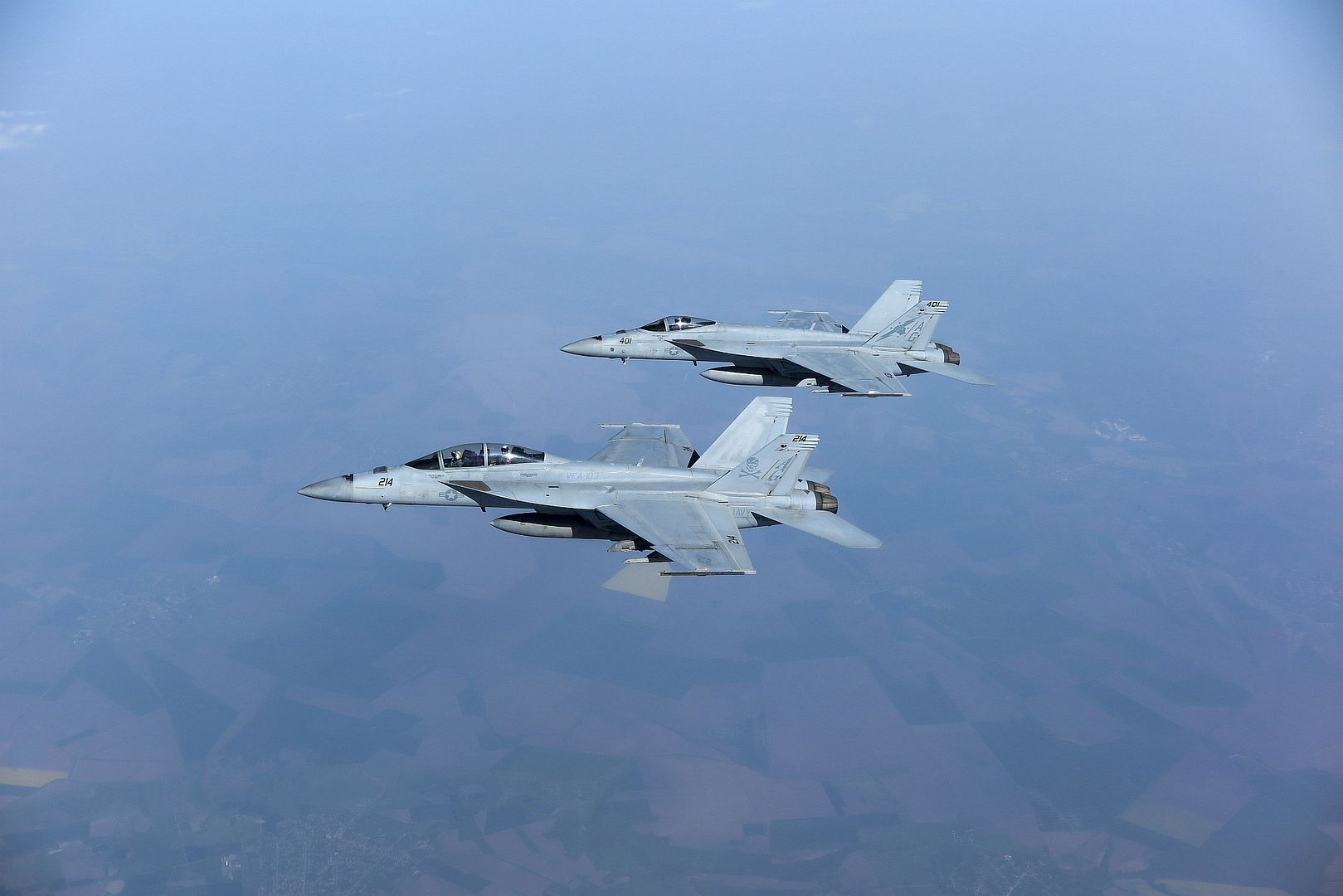
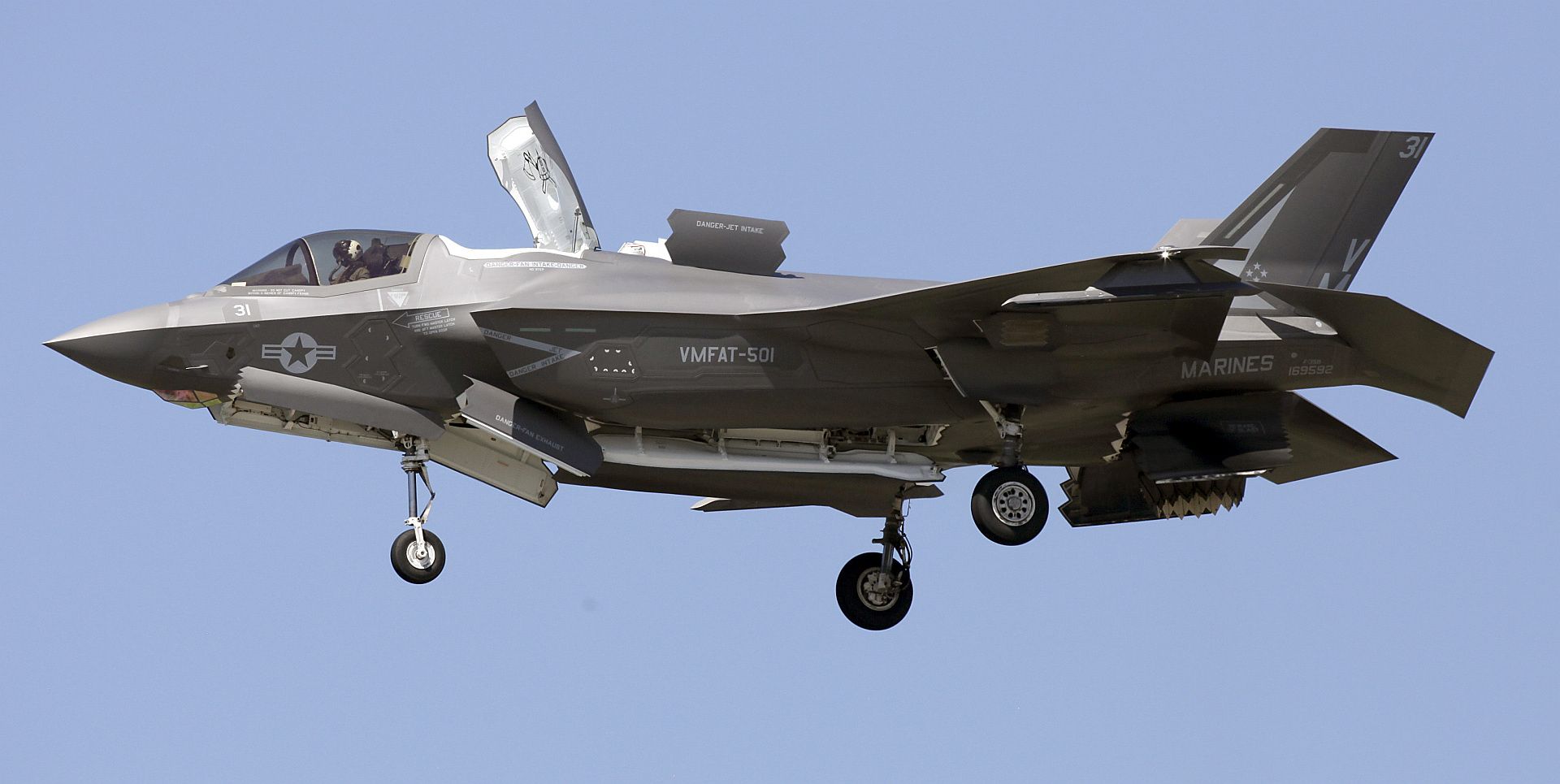
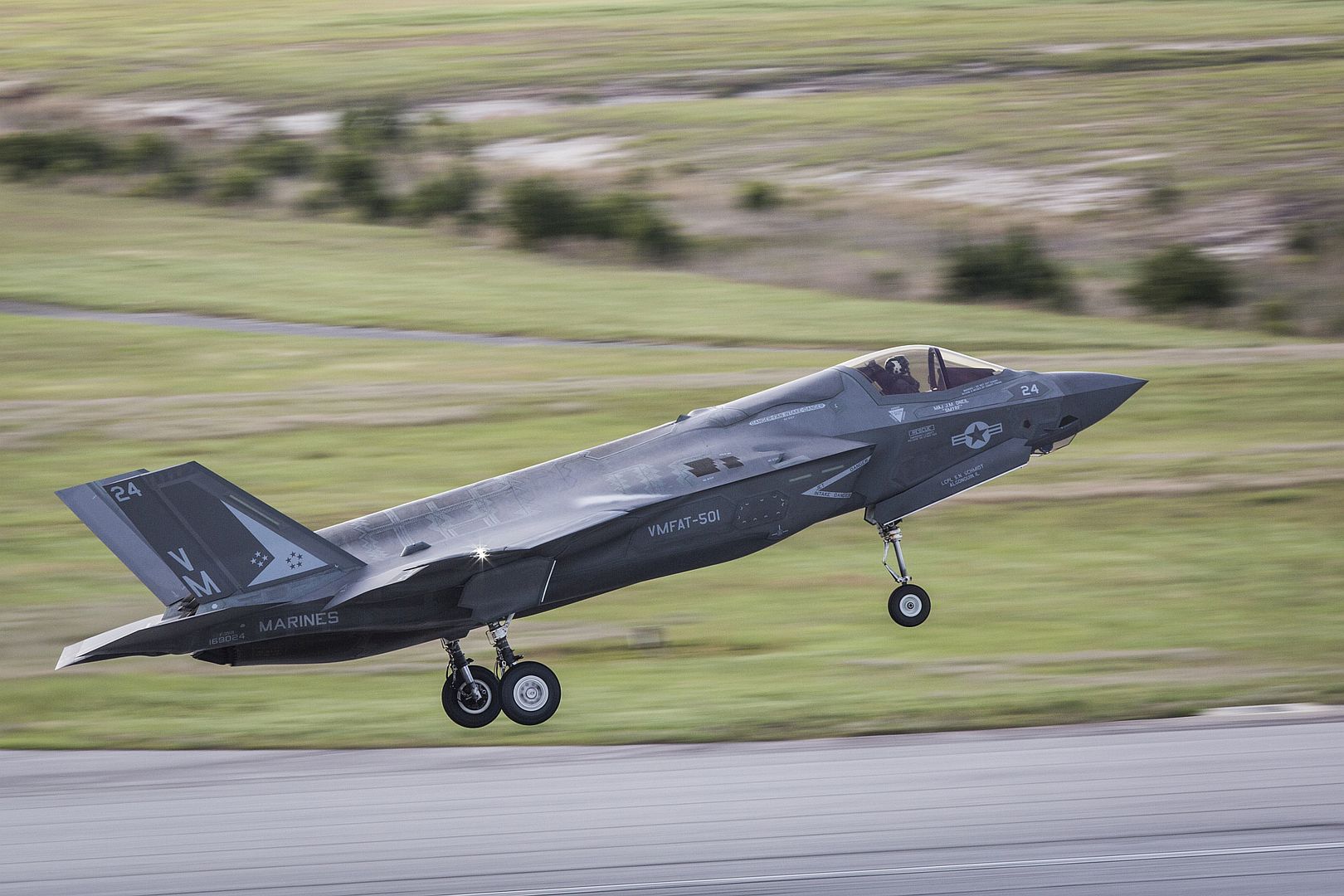
BEAUFORT, S.C. (April 27, 2019) Pilots assigned to Marine Fighter Attack Training Squadron (VMFAT) 501 fly the F-35B Lightning II during the Marine Corps Air Station (MCAS) Beaufort Air Show, April 27, 2019. MCAS Beaufort hosts the air show in order to bring the community together and demonstrate U.S. Marine Corps Aviation Combat Element and Marine Air-Ground Task Force capabilities. (U.S. Marine Corps photo's by Warrant Officer Bobby J. Yarbrough/Released)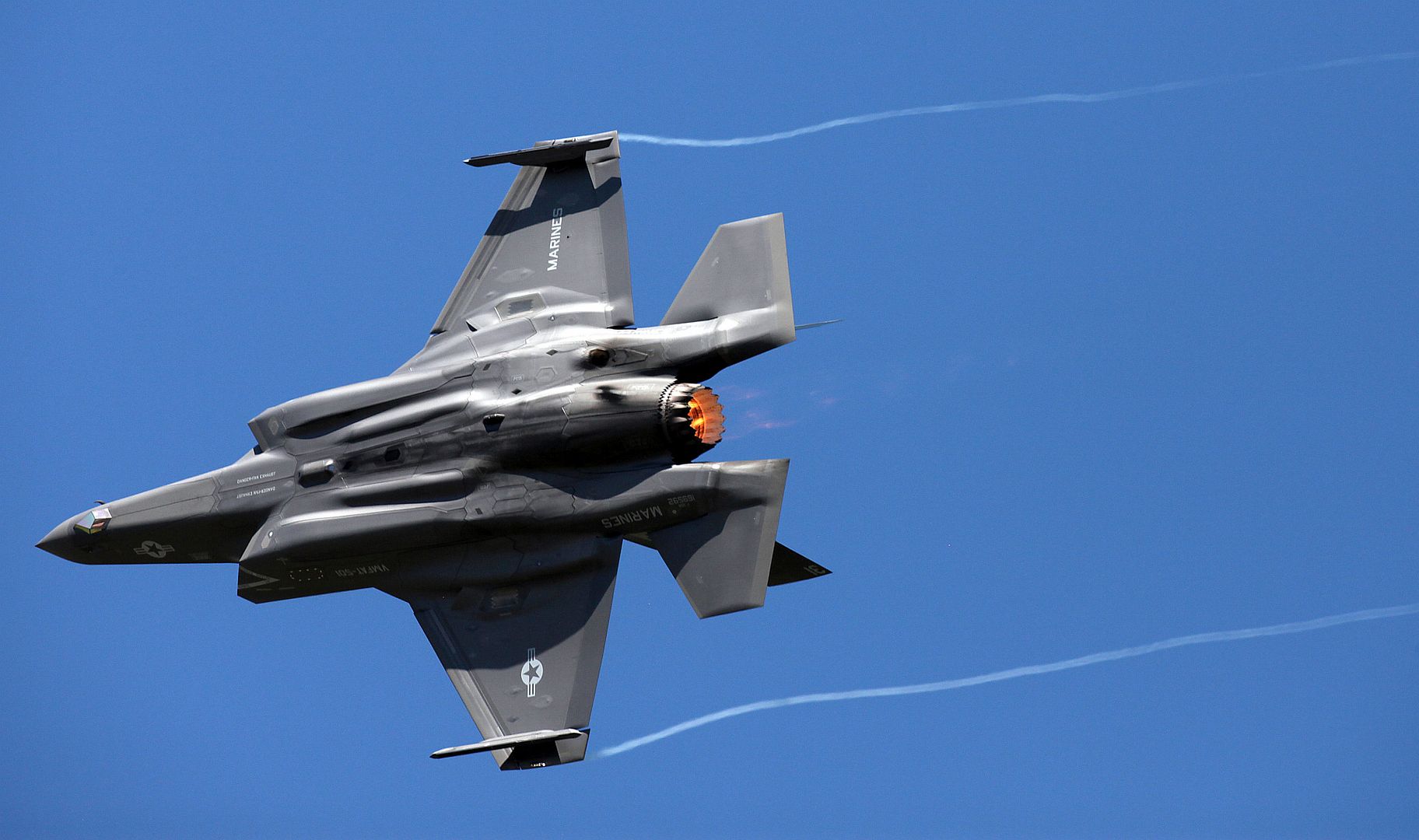
ATLANTIC OCEAN (April 27, 2019) An F/A-18E Super Hornet assigned to the "Warriors" of Strike Fighter Squadron (VFA) 106 performs a tounch-and-go landing on the flight deck of the aircraft carrier USS Dwight D. Eisenhower (CVN 69), April 27, 2019. Dwight D. Eisenhower is underway in the Atlantic Ocean conducting carrier qualifications while in the basic phase of the Optimized Fleet Response Plan (OFRP). (U.S. Navy photo by Mass Communication Specialist 3rd Class Kaleb Sarten/Released)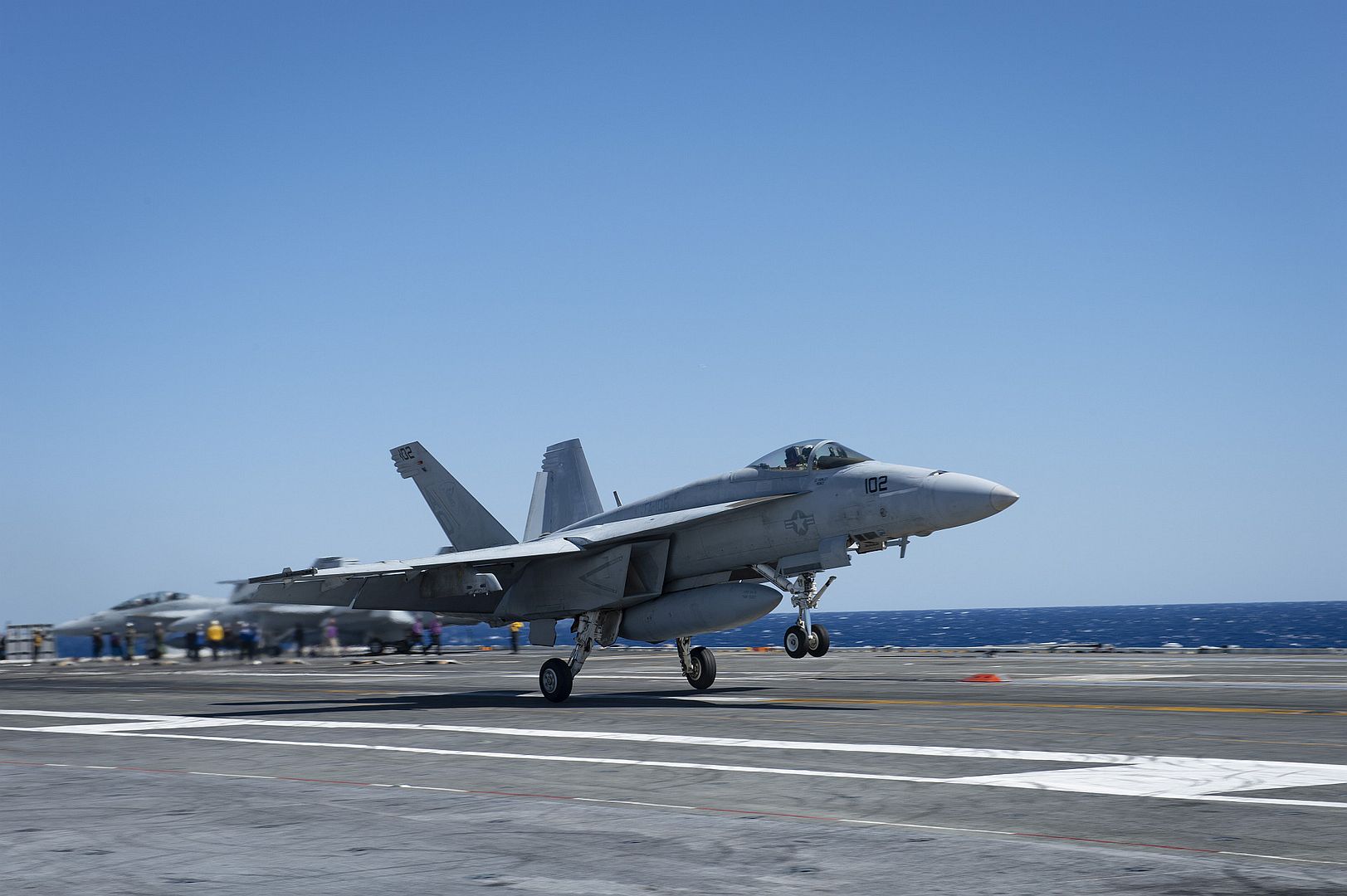
SAN DIEGO ? April 29, 2019 ? Northrop Grumman Corporation (NYSE: NOC) will be highlighting Firebird capabilities with potential suppliers and business partners at XPONENTIAL. Firebird is an ultra-flexible, proven airframe with autonomous mission capability. Available in manned, autonomous and optionally piloted configurations, Firebird is designed to provide ISR payload and cockpit flexibility through truly open architecture and plug-and-play payload integration. The system?s unique hardware- and software enable users to carry out a wide range of ISR missions for 30 plus hours at approximately 25,000 feet.
?At the heart of Firebird?s architecture are flexibility and rapid mission capability integration,? said Brian Chappel, vice president, autonomous systems, Northrop Grumman. ?This architecture has been flown with over two dozen payloads, from electro-optic and infrared cameras to radar and signals and communications payloads, with demonstrations of up to five sensors operating simultaneously. By working with new hardware and software partners, we can bring even greater capabilities to Firebird thanks to the systems? open architecture.?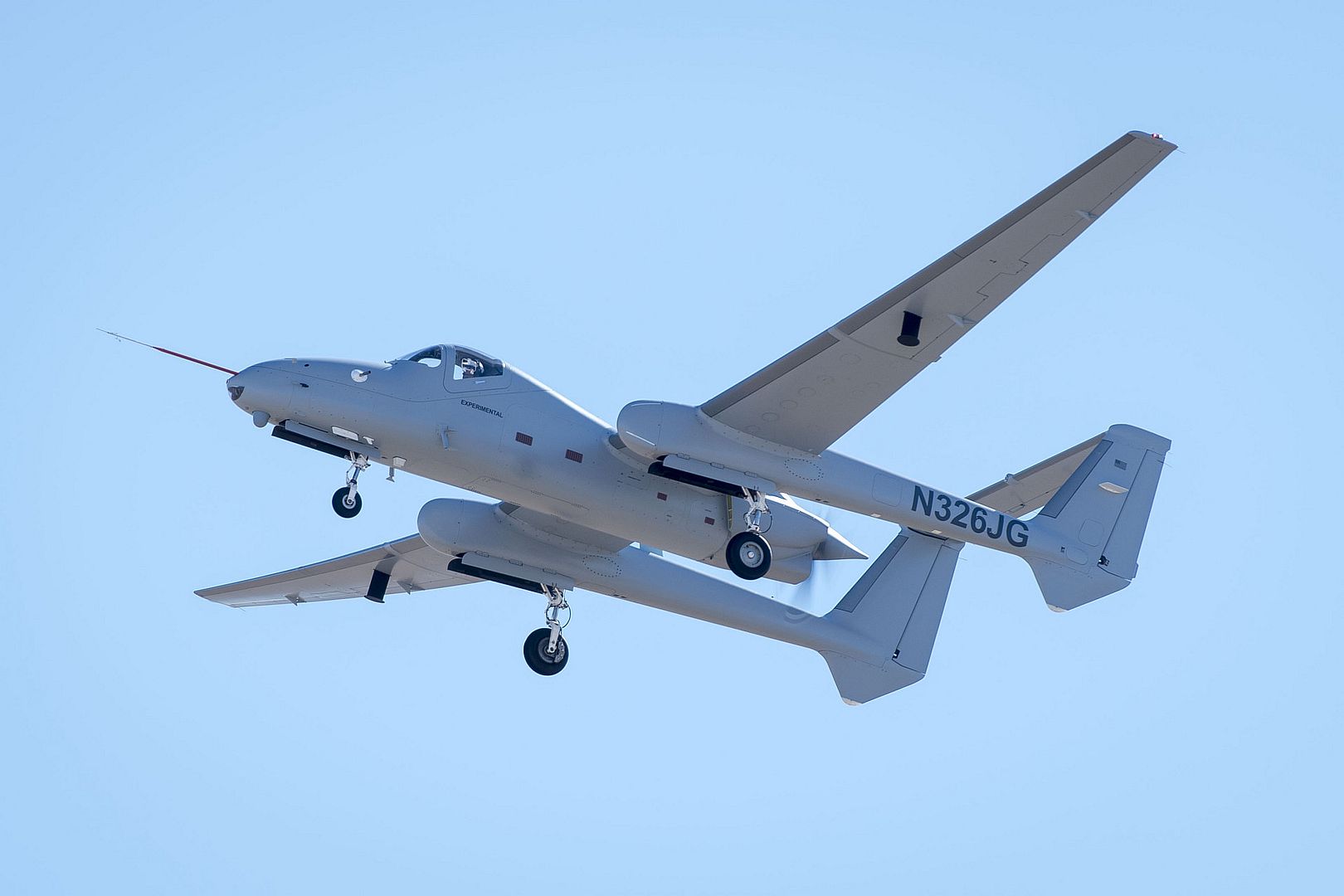
Chappel will be speaking at the Association for Unmanned Vehicle Systems International?s XPONENTIAL trade show in Chicago on April 29 at 3 p.m. CST. His Trending Topics discussion will be held in room S402a and will focus on how flexibility is driving the future of autonomous systems.
Firebird is equipped with wide band Line-of-Sight (LoS) and Beyond-Line-of-Sight (BLoS) data links, onboard storage and accessible processing for rapid data exploitation to ensure timely completion of missions. The system?s unique design allows sensors to be changed rapidly as plug-and-play devices, reducing ?first time? payload integration time from months to days and enabling rapid field changes in less than an hour to increase operational availability and tailored mission suitability.
Learn more about the Firebird product line at www.northropgrumman.com/firebird.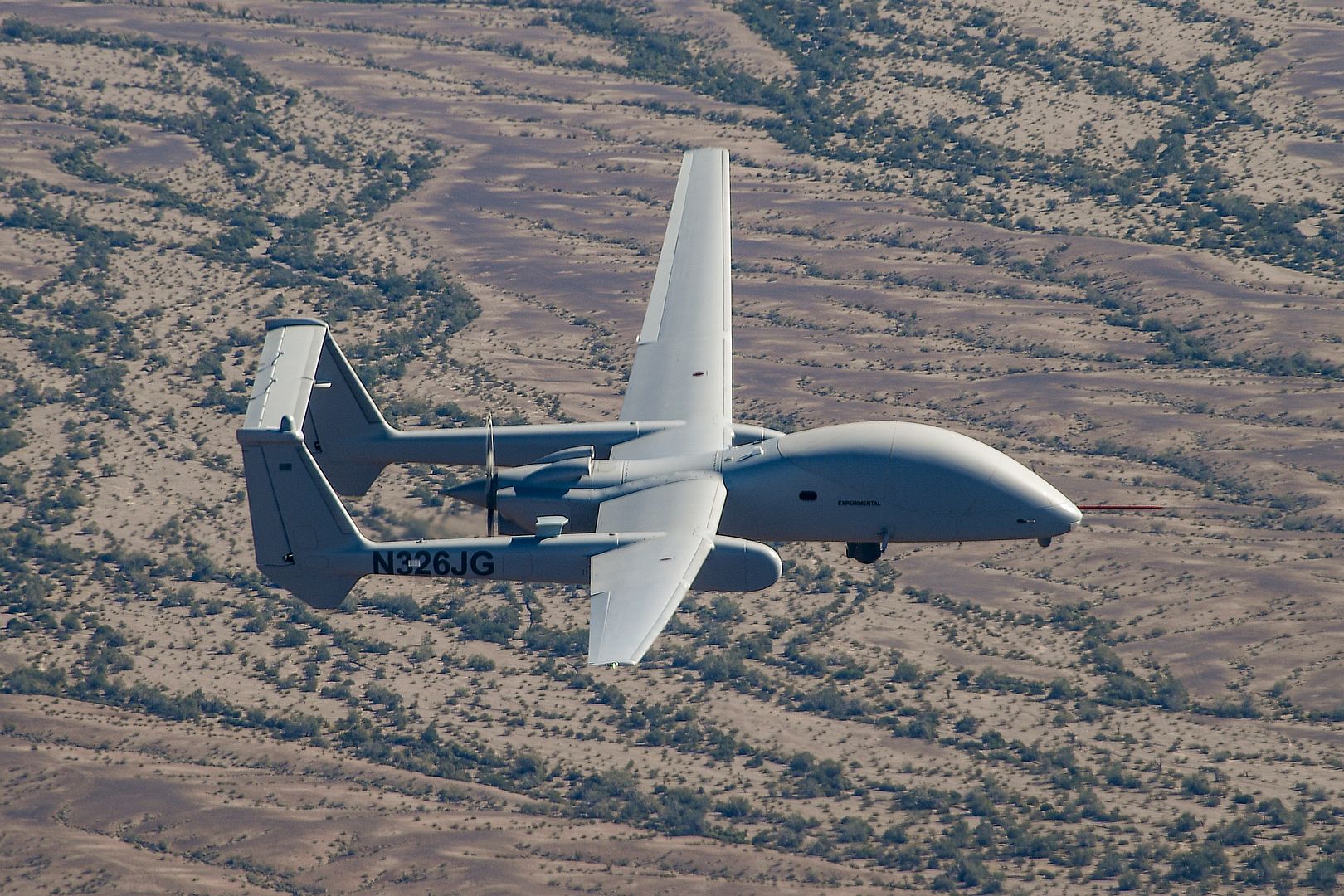
Air Macau has presented its first A320neo at a ceremony held at Macau International Airport. The aircraft is the 21st Airbus aircraft in Air Macau?s fleet that already includes four A319ceo, six A320ceo and 10 A321ceo aircraft.
In total, Air Macau will receive eight additional A320neo and A321neo aircraft under leasing agreement in order to meet its fleet renewal and expansion programme.
The new aircraft features 158 seats (eight business and 150 economy seats). Selected for its outstanding operational efficiency, comfort and range, the A320neo will be deployed by the career on its regional services.
Featuring the widest single-aisle cabin in the sky, the A320neo Family incorporates the very latest technologies including new generation engines and Sharklets, which together deliver at least 15 percent fuel savings at delivery and 20 percent by 2020. At the end of March 2019, the A320neo Family had received more than 6,500 firm orders from over 100 customers worldwide.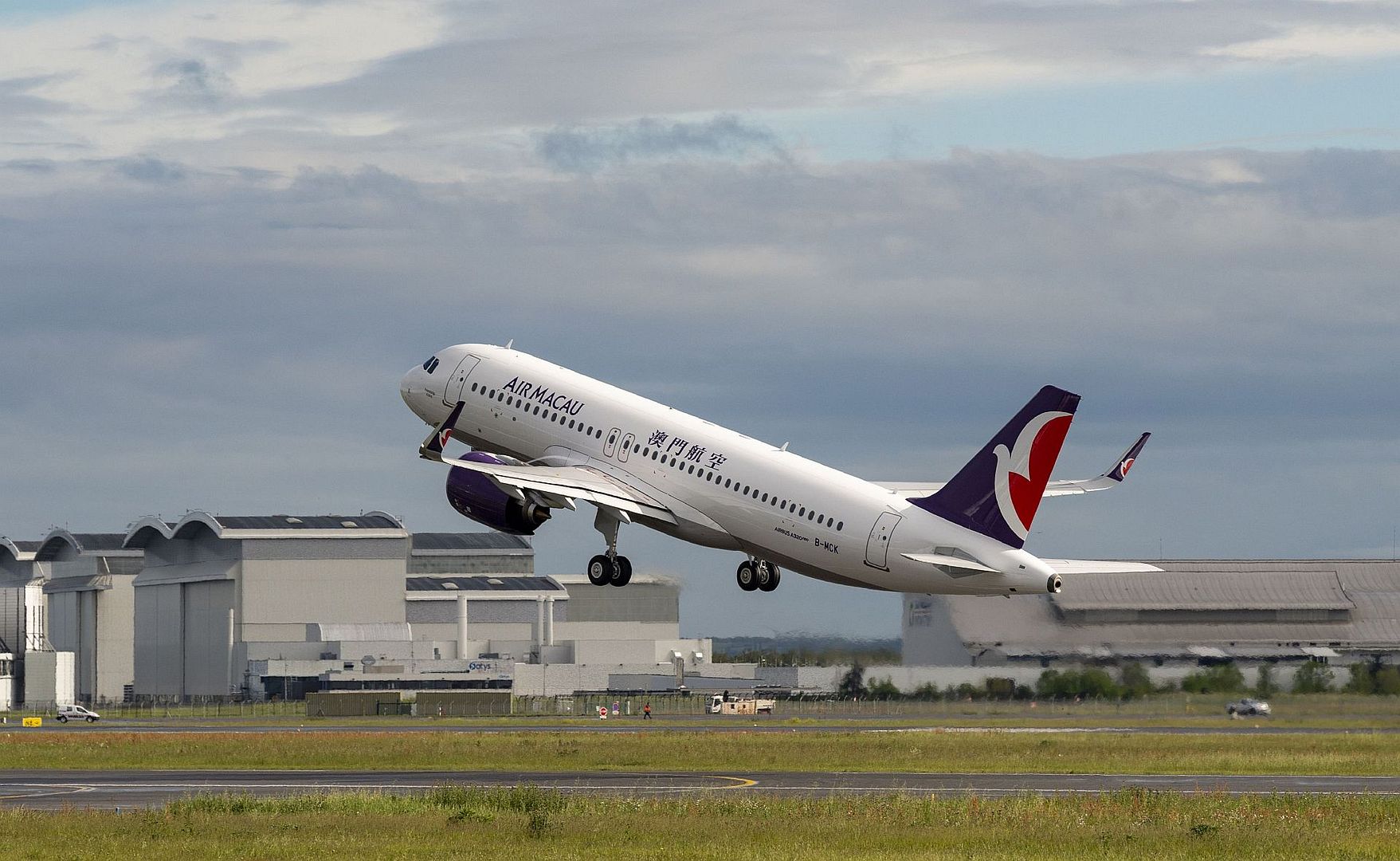
The first ACJ319neo successfully completed a 16-hr. and 10-min. test flight on 26th April, setting a new record for the longest A320 Family flight by an Airbus crew.
It flew from Toulouse to northern Greenland and back, in an endurance flight that included a simulated diversion under 180 min ETOPS rules, for which the A320 airliner family is already certified.
The aircraft is due to be delivered to K5 Aviation of Germany in the coming months, after ACJ319neo flight trials are completed.
?We want to fly customers to their destination using the quickest routes, as well as delivering unsurpassed comfort and service, and it?s impressive to see such long-range capability at first hand,? said K5 Aviation CEO and Chief Pilot Erik Scheidt, who participated in the flight.
The ACJ319neo is derived from the A320neo airliner family, which features new engines and wingtip-mounted Sharklets.
?Airbus? modern aircraft family takes the world in its stride with robust reliability, and corporate jet operators are natural beneficiaries of this airliner heritage, which also brings comparable operating costs to traditional business jets,? said ACJ President Benoit Defforge.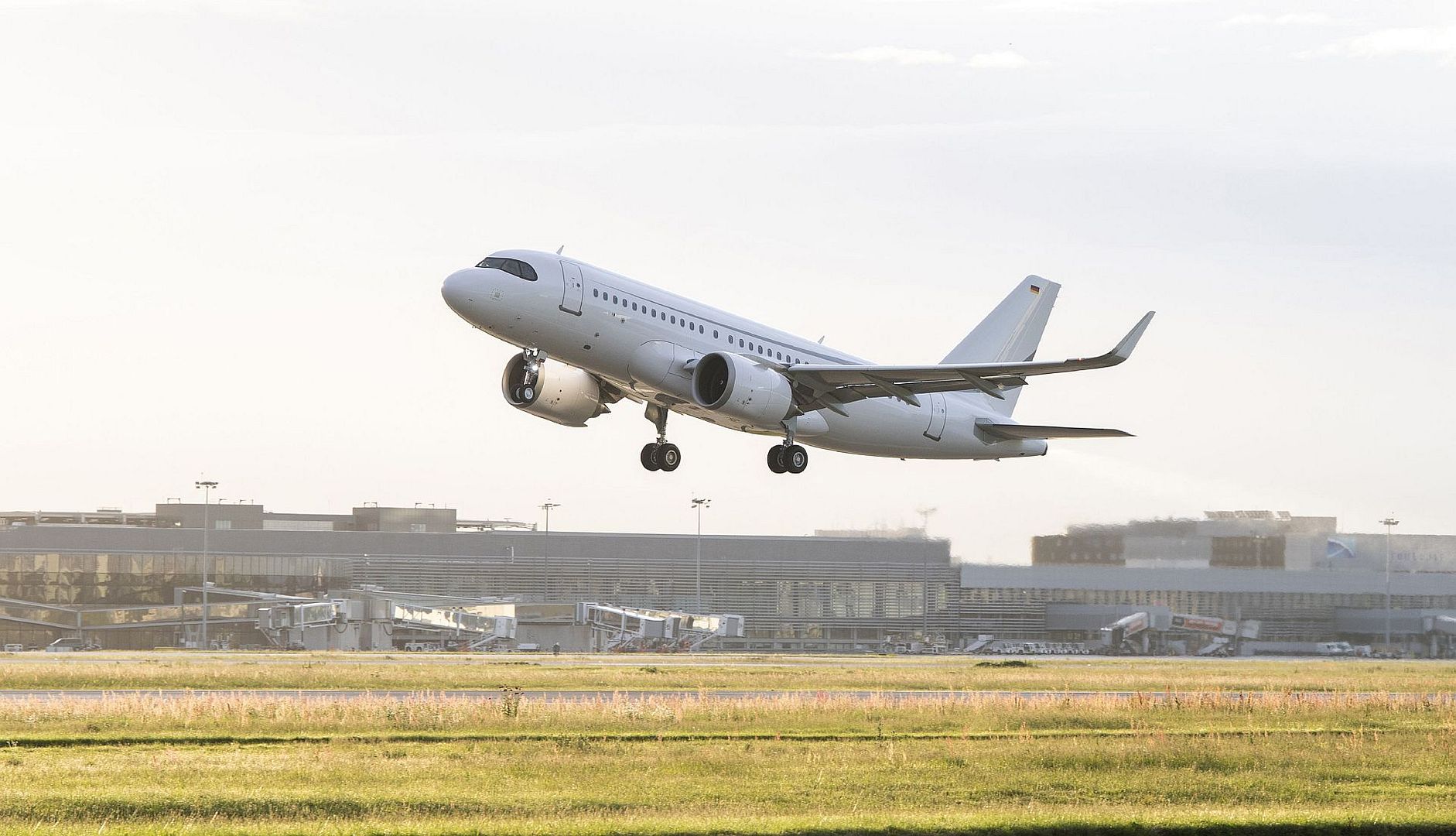
K5 Aviation?s ACJ319neo is fitted with five additional centre tanks (ACTs) in its cargo-hold, and includes improvements such as a lower cabin altitude for greater passenger comfort.
Corporate jet orders and commitments for A320neo Family-derived aircraft now total 14.
Airlines and corporate jet customers have ordered almost 15,000 A320 Family aircraft to date, with more than 700 of the new A320neo version already serving airlines worldwide.
Around 200 Airbus corporate jets are in service worldwide, flying on every continent, including Antarctica.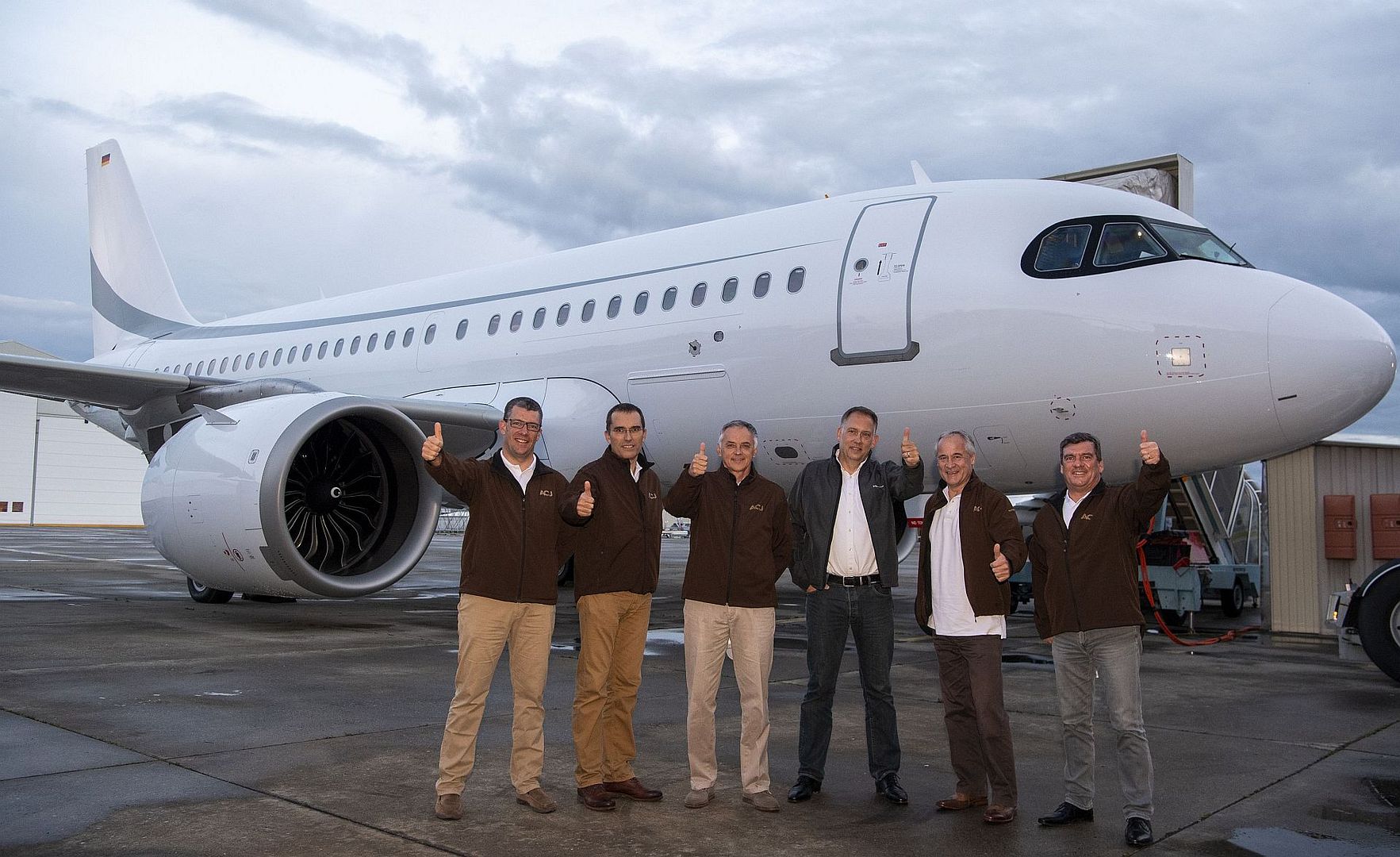
-
An F-16 Fighting Falcon lands at Aviano Air Base, Italy, April 30, 2019. The 510th Fighter Squadron deployed in support of Operations Freedom Sentinel and the NATO Resolute Support mission.
Photo by Airman 1st Class Caleb House.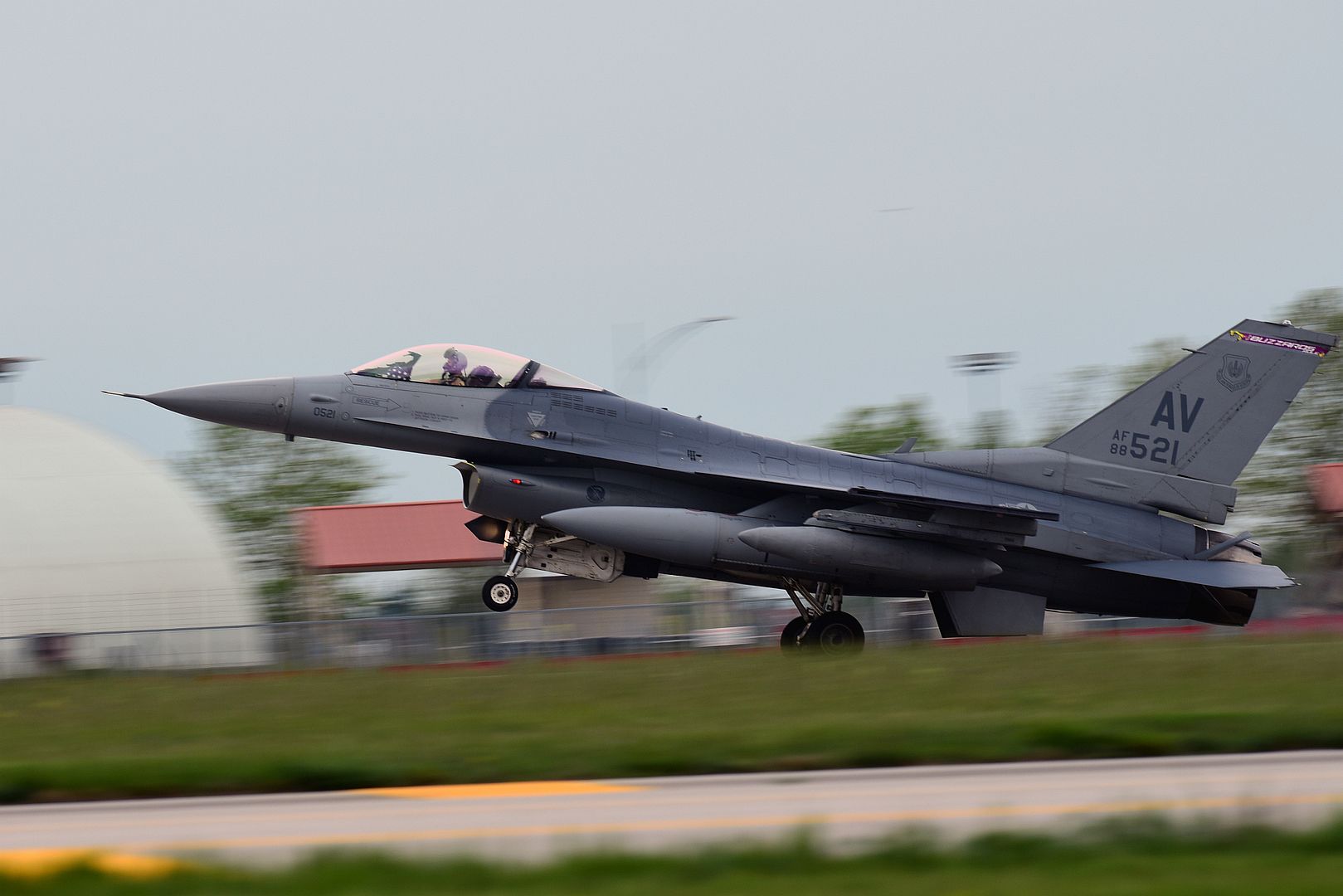
A U.S. Air Force KC-10 Extender refuels an F-35A Lightning II above an undisclosed location, April 30, 2019. The KC-10 and its crew were tasked to support aerial refueling operations for the F-35A's first air interdiction during its inaugural deployment to the U.S. Air Forces Central Command's area of responsibility. (U.S. Air Force photo by Staff Sgt. Chris Drzazgowski)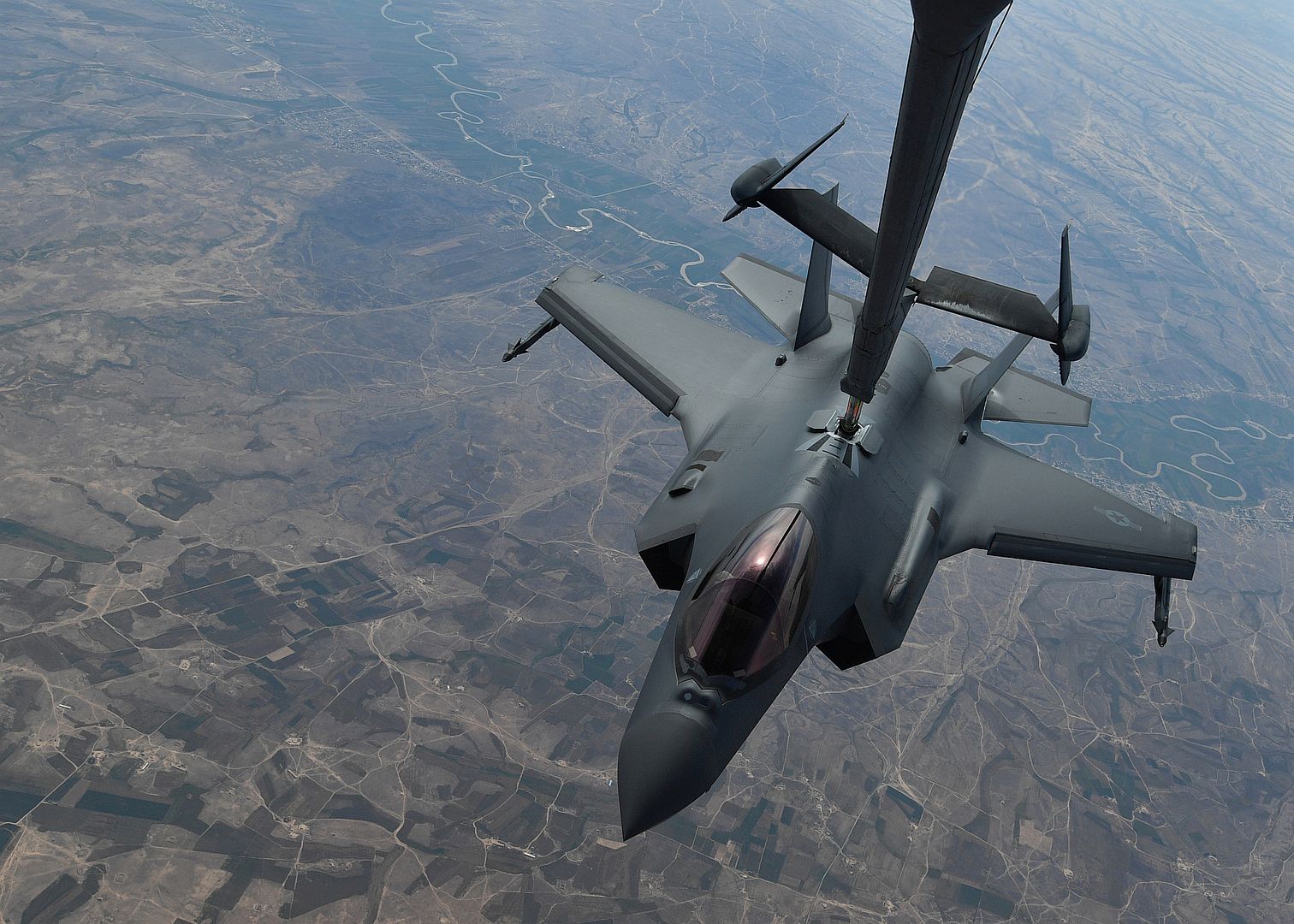
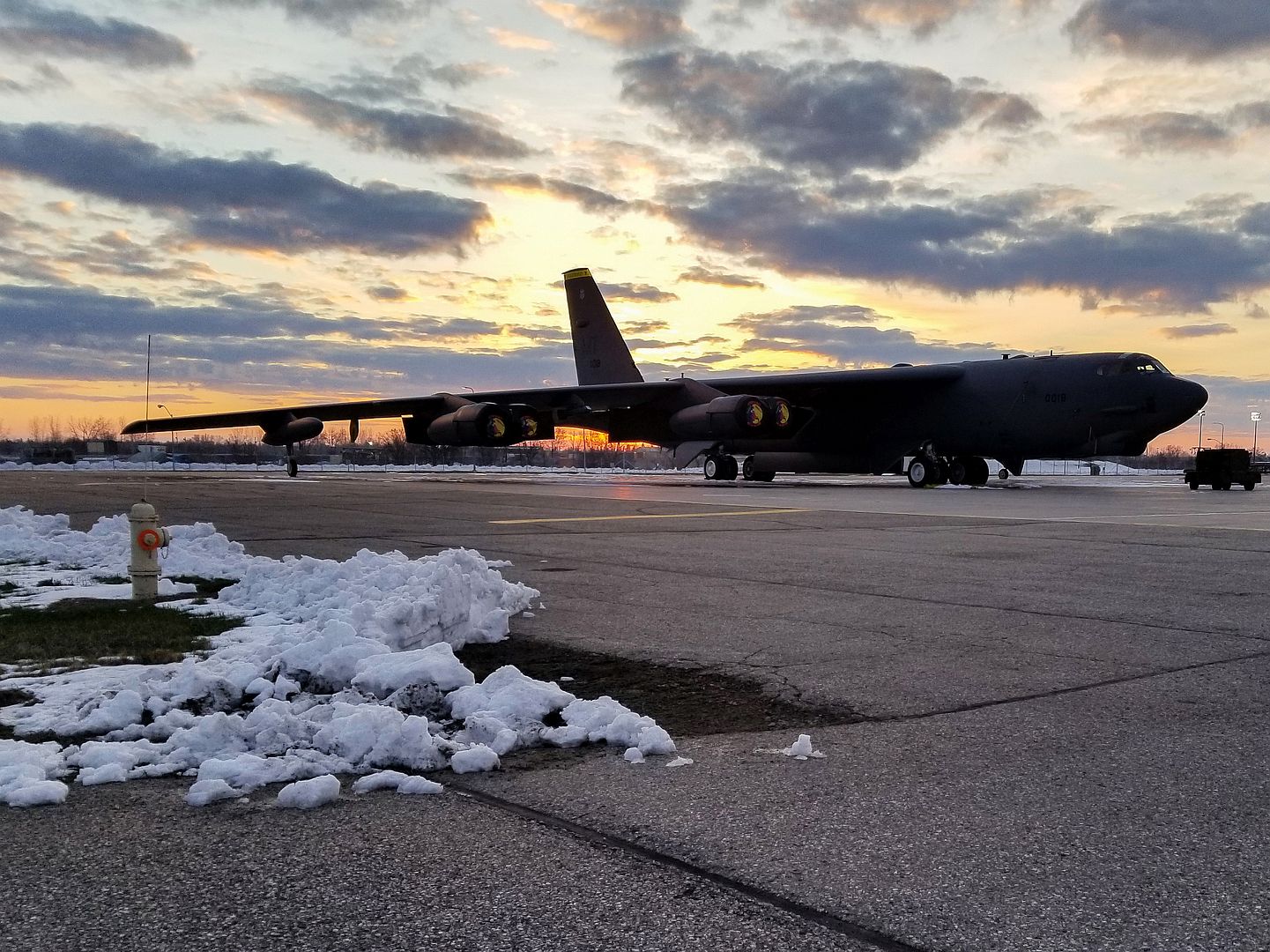
A B-52H Stratofortress sits on the flightline at Minot Air Force Base, North Dakota, April 30, 2019. For more than 67 years, the B-52 has been delivering precision-guided ordnance, all over the world, at a moment's notice. (U.S. Air Force photo's by Senior Airman Ashley Boster)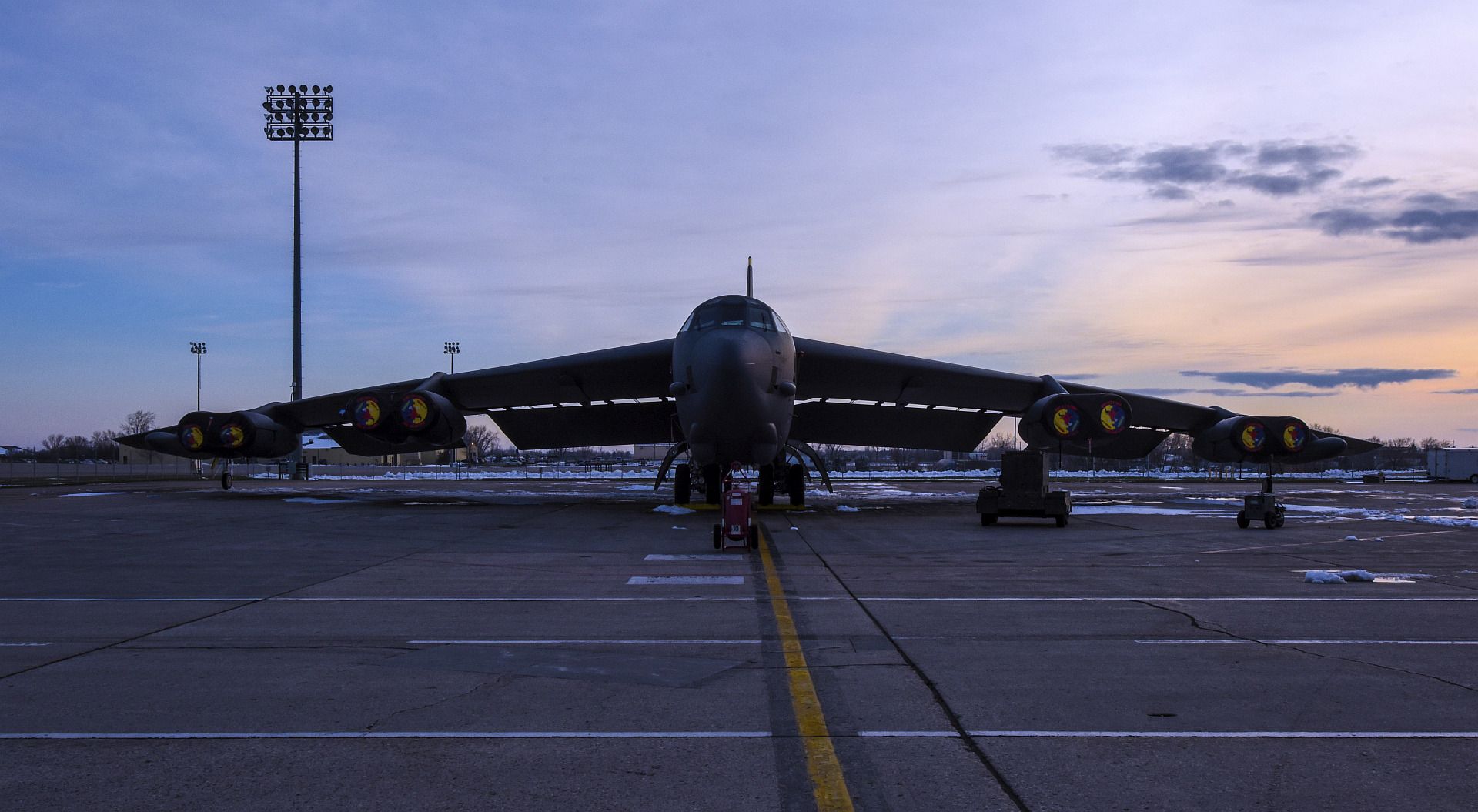
The first A350 XWB for Japan Airlines (JAL) has rolled out of the Airbus paint shop in Toulouse, France. The A350-900 is the first ever Airbus aircraft to be produced directly for JAL and features a special A350 XWB red logo on the fuselage.
The aircraft will now proceed to ground and flight tests, before delivery to JAL in early summer.
In total JAL has ordered 31 A350 XWB aircraft, comprising 18 A350-900s and 13 A350-1000s. The A350-900 will initially be operated on major domestic routes, with a three-class configuration seating 369 passengers.
The A350 XWB is the world?s most modern and eco-efficient aircraft family shaping the future of air travel. It is the long-range leader in the large widebody market (300 to 400+ seats). The A350 XWB offers by design unrivalled operational flexibility and efficiency for all market segments up to ultra-long haul (15,000 km).
The A350 XWB features the latest aerodynamic design, carbon fibre fuselage and wings, plus new fuel-efficient Rolls-Royce engines. Together, these latest technologies translate into unrivalled levels of operational efficiency, with a 25% reduction in fuel burn and emissions. The A350 XWB?s Airspace by Airbus cabin is the quietest of any twin-aisle and offers passengers and crews the most modern in-flight products for the most comfortable flying experience.
At the end of March 2019, the A350 XWB Family had received 890 firm orders from 50 customers worldwide, making it one of the most successful widebody aircraft ever.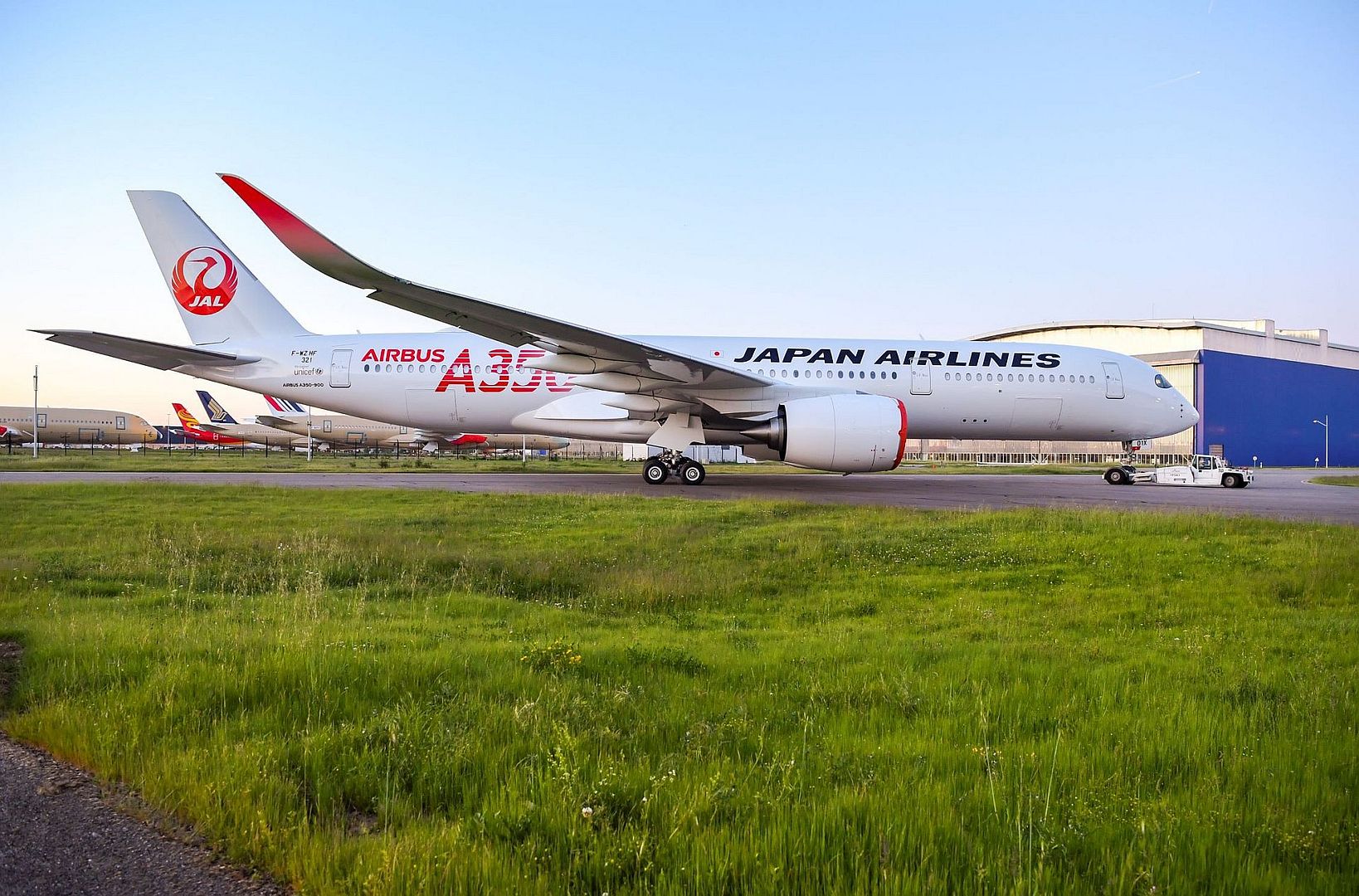
-
An F-16 Fighting Falcon lands at Aviano Air Base, Italy, April 30, 2019. The 510th Fighter Squadron deployed in support of Operations Freedom Sentinel and the NATO Resolute Support mission.
Photo by Airman 1st Class Caleb House.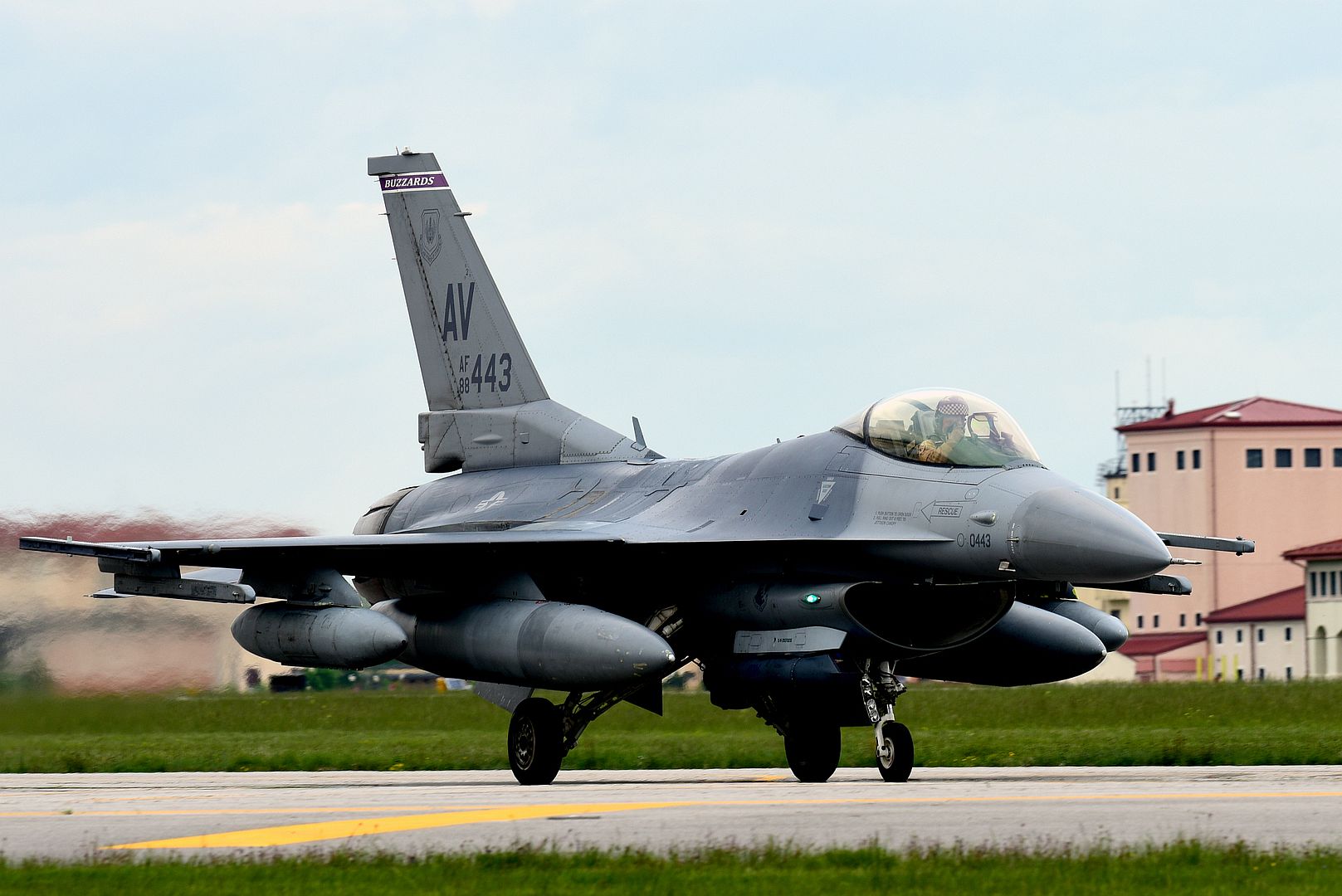
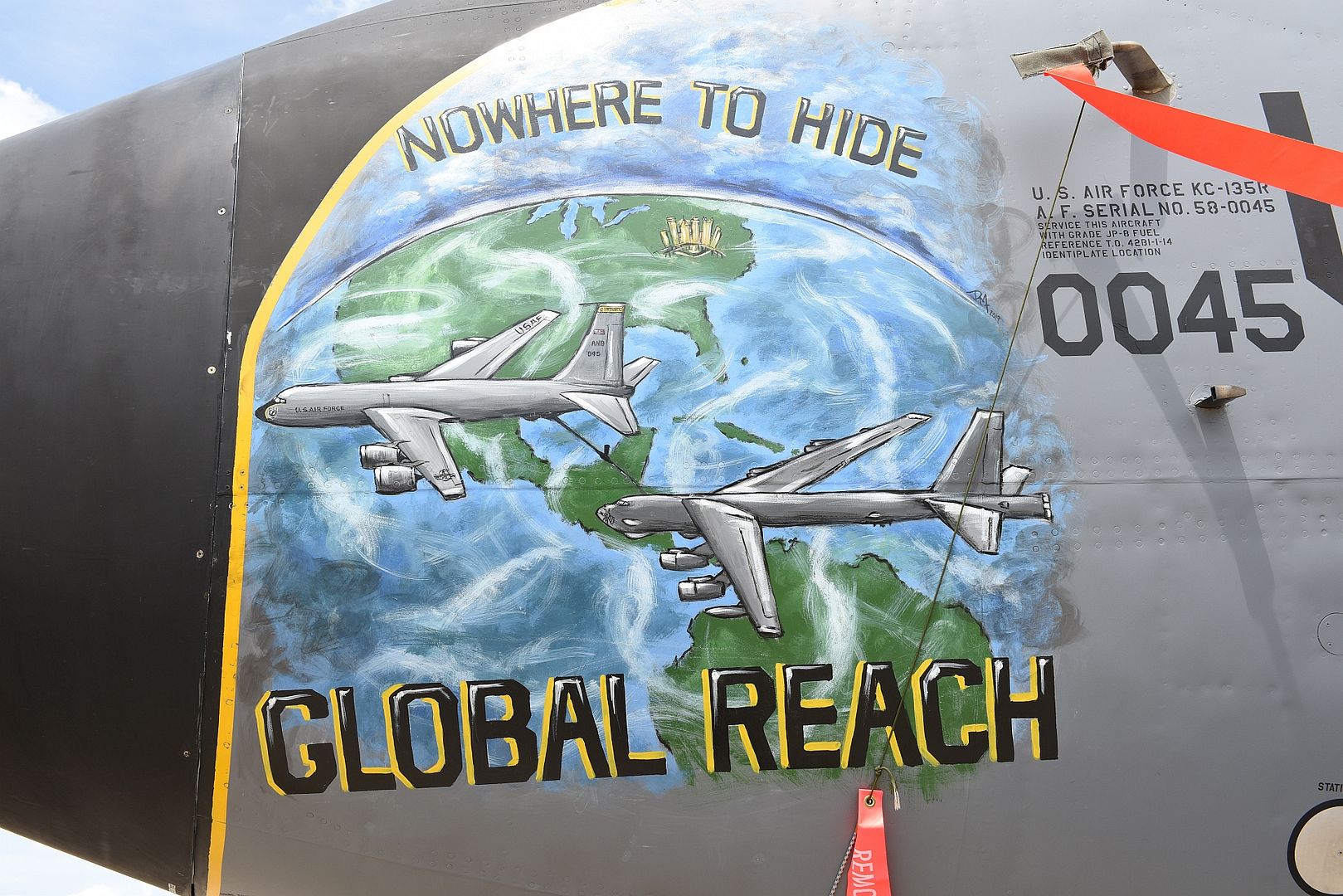
The long tradition of 171st Air Refueling Wing nose art continues with ?Global Reach,? the name of the most recent nose art to be added to the 171st. This KC-135 aircraft artwork was named and designed by its Crew Chief Master Sgt. Keven Clancy. ?Global reach is what we bring to the fight,? said Clancy when asked how he came up with his idea. Clancy has 35 years of service and has been serving with the 171st since the late 80s. Before that he served four years in the active duty Air Force working as an Engine Mechanic for F-15 and F-16 fighter jets. ?I love the game here, this isn't even a job to me?being a crew chief, it doesn't get any better.??(U.S. Air National Guard photo's by Senior Master Sgt. Shawn Monk)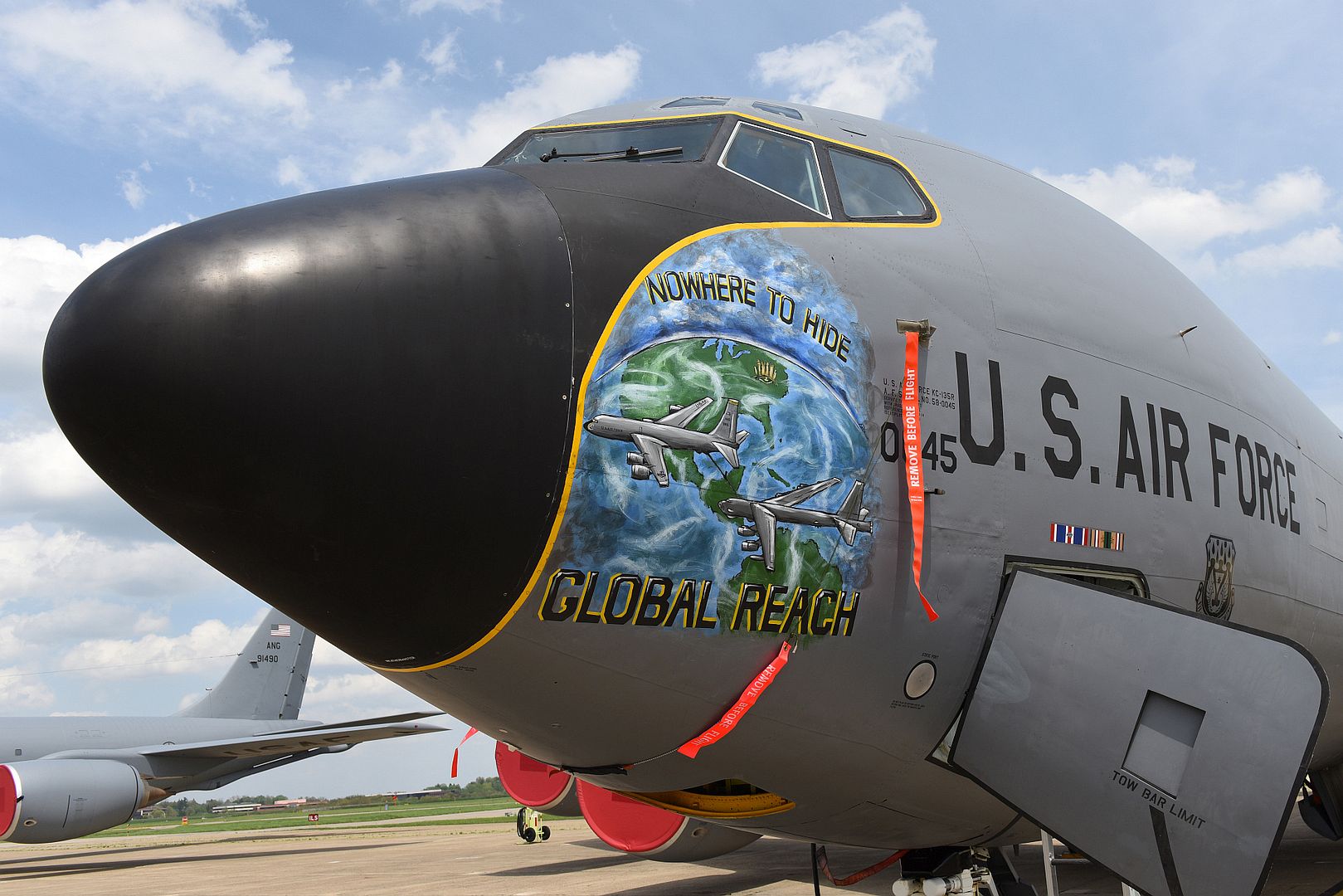
MEDITERRANEAN SEA (April 30, 2019) Aviation Boatswain's Mate (Equipment) Airman Apprentice Francisco Romero, left, from Fresno, Calif., and Aviation Boatswain's Mate (Equipment) Airman David Rodriguez, from Denver, Colo., prepare to launch a C-2A Greyhound from the "Rawhides" of Fleet Logistics Support Squadron (VRC) 40 from the flight deck of the Nimitz-class aircraft carrier USS Abraham Lincoln (CVN 72). Abraham Lincoln is deployed as part of the Abraham Lincoln Carrier Strike Group in support of maritime security cooperation efforts in the U.S. 5th, U.S. 6th and U.S. 7th Fleet areas of operation. With Abraham Lincoln as the flagship, deployed strike group assets include staffs, ships and aircraft of Carrier Strike Group (CSG) 12, Destroyer Squadron (DESRON) 2, the guided-missile cruiser USS Leyte Gulf (CG 55) and Carrier Air Wing 7 (CVW 7); as well as the Spanish navy Alvaro de Bazan-class frigate ESPS Mendez Nunez (F 104). (U.S. Navy photo by Mass Communication Specialist 3rd Class Garrett LaBarge/Released)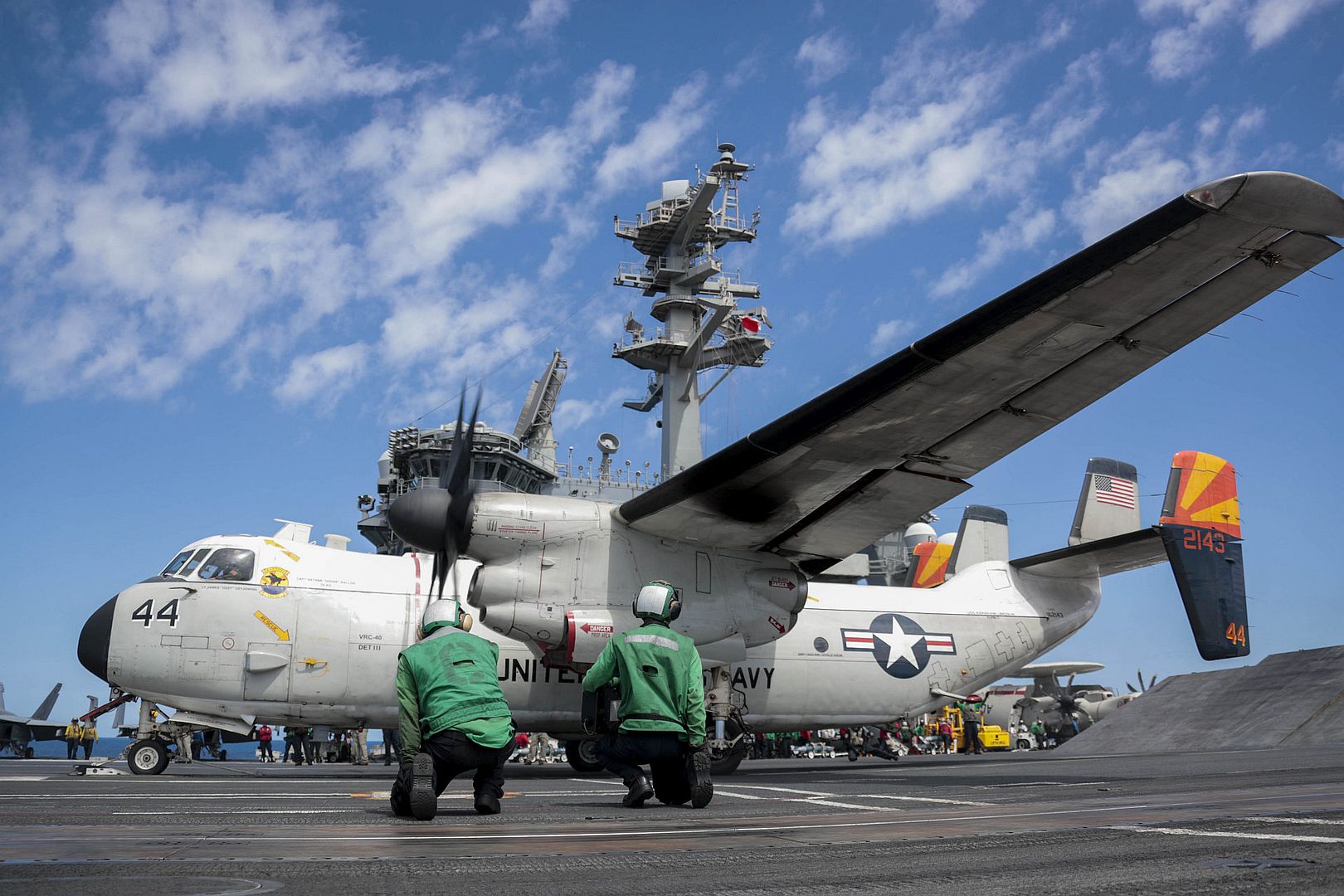
The Arm?e de l'air, reveal there new "Tiger scheme" for 2019, for there Rafale of the Escadron de Chasse 3/30 "Lorraine".
"In the early morning of June, 6th 1944, the Bostons of the ?Lorraine? flew very low above the shore of Normandy,
in order to deliver a curtain of smoke, thereby enabling the amphibious troops to land under cover.This year we celebrate the 75th anniversary of operation Smoke Screen. The Dark Tiger originates in the darkness of the night of the nights, and blows the wind of freedom.
It is symbolizing the union of the Tiger spirit and the mighty legacy of the Free French."
Photo Arm?e de l'air.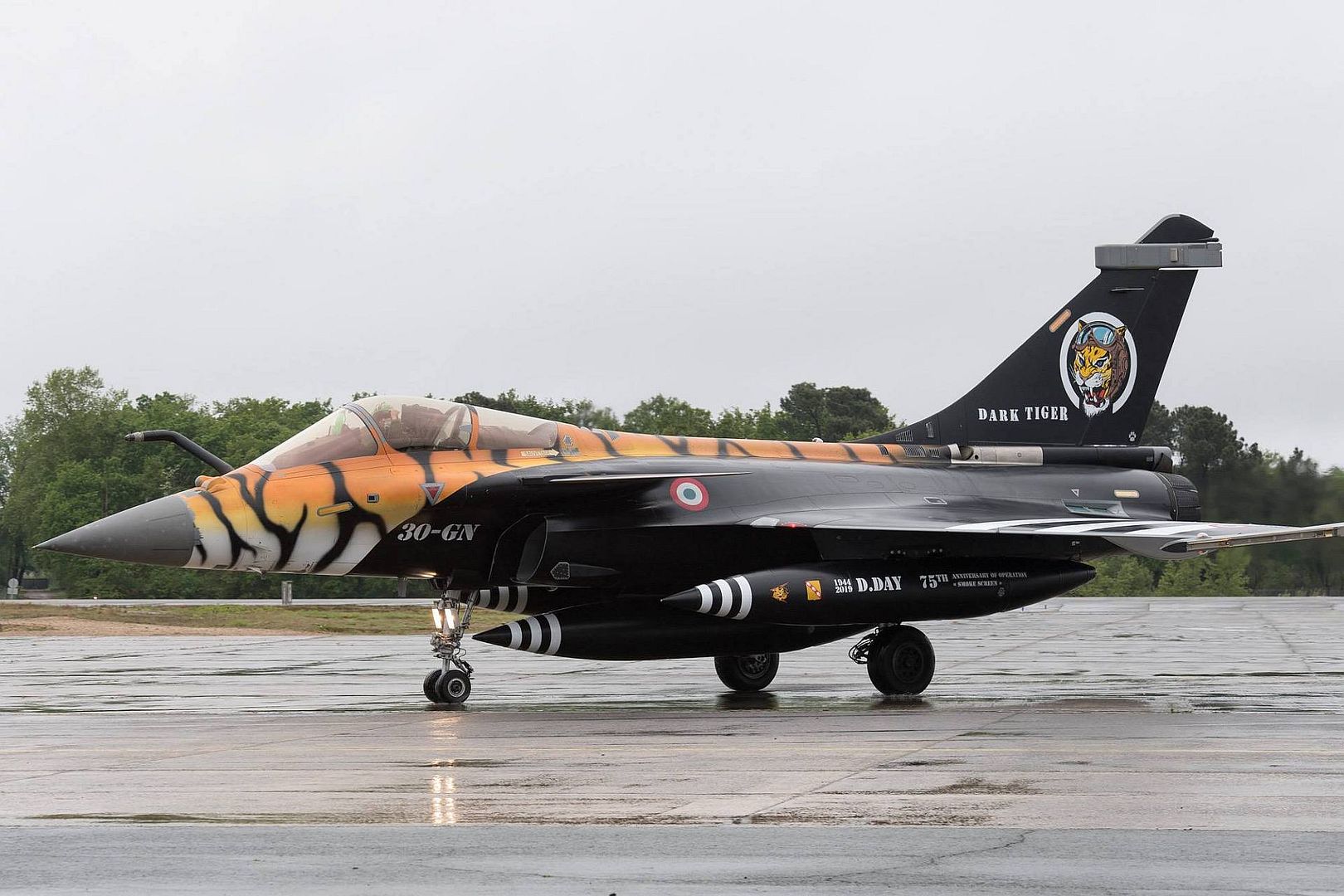
-
Marine Fighter Attack Training Squadron (VMFAT) 501 conducts a readiness exercise comprised of 20 F-35B Lightning II aircraft aboard Marine Corps Air Station Beaufort, May 1. The safe launch and recovery of the aircraft, affirms the squadron?s commitment to achieving and sustaining the highest level of readiness in order to train the next generation of F-35B pilots from the U.S. Marine Corps and partner nations.
Photo's by Cpl. Ashley Phillips.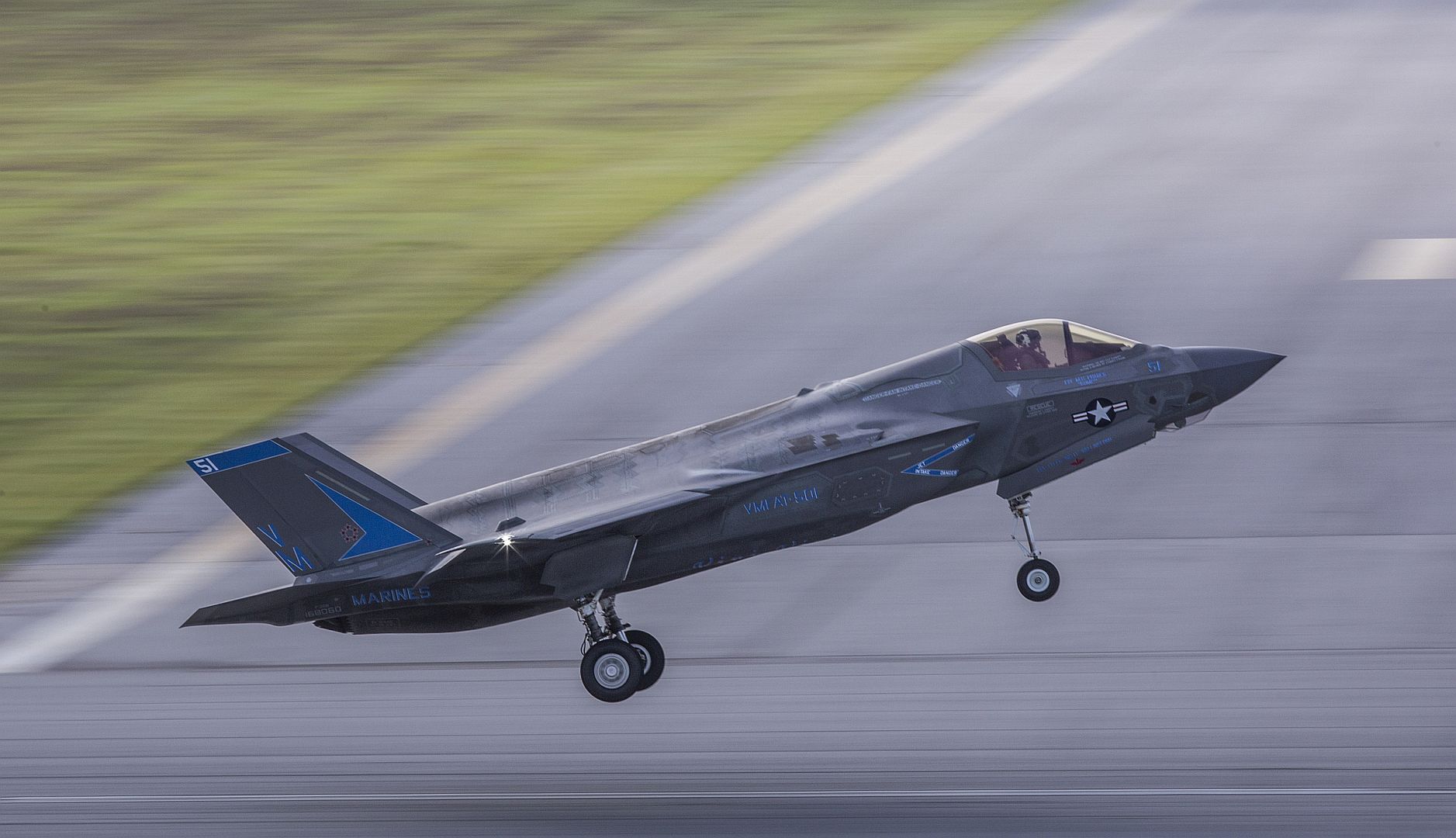
MARSEILLE, France (May, 2019) Sailors tow an F/A-18F Super Hornet assigned to Strike Fighter Squadron (VFA) 41 on the flight deck of the aircraft carrier USS John C. Stennis (CVN 74) while pulling out of Marseille, France, May 1, 2019. The John C. Stennis Carrier Strike Group is deployed in support of maritime security cooperation efforts in the U.S. 6th Fleet area of responsibility. (U.S. Navy photo by Mass Communication Specialist 3rd Class Ikenna Tanaka/Released)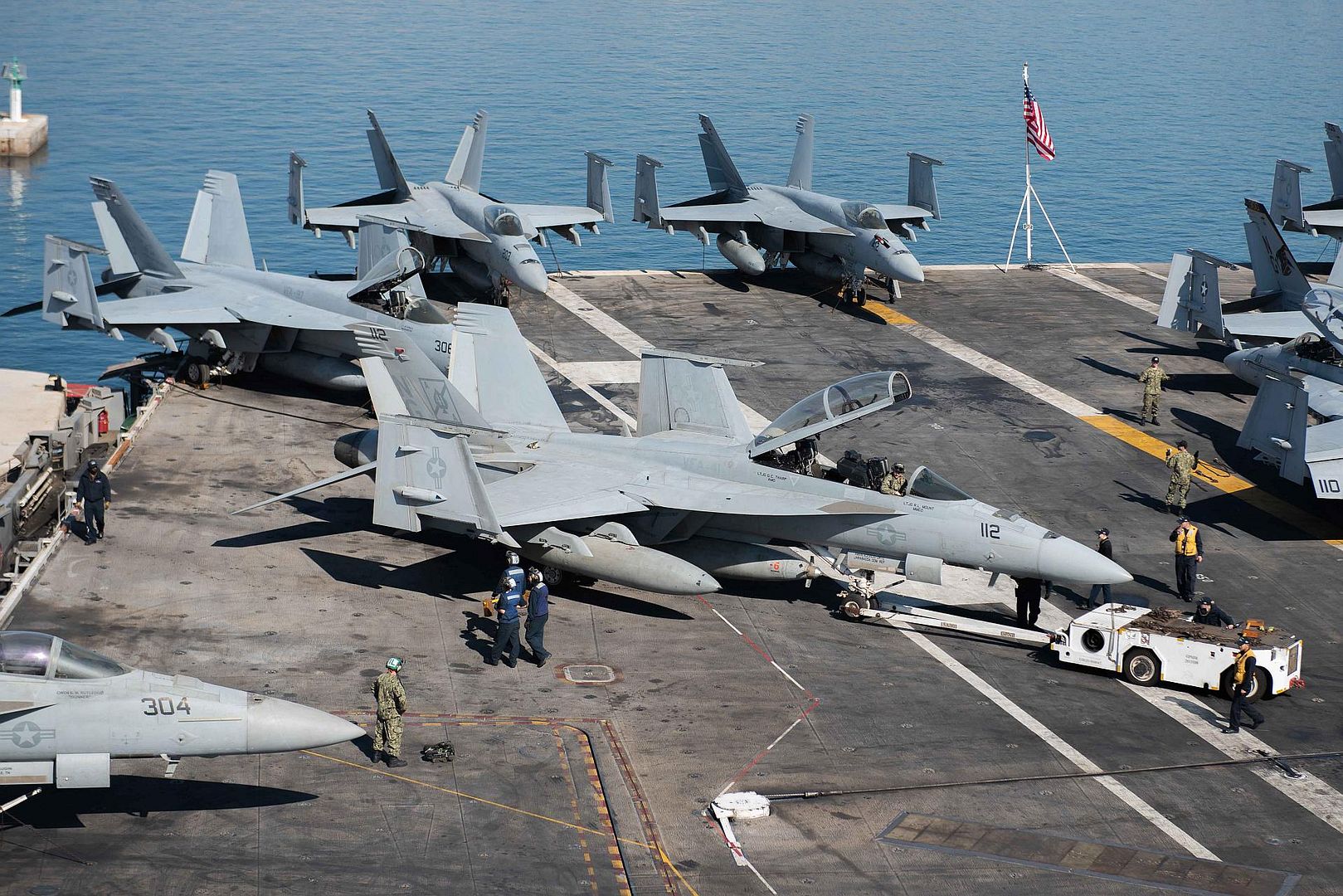
Fiji Airways has adopted the A350 XWB as part of its expansion plans to broaden its international network. Two A350-900s will be leased from Dubai-based DAE Capital, making Fiji Airways the newest operator and DAE Capital the latest customer.
With its common type rating with the A330 Family, the A350 XWB was the natural aircraft choice to seamlessly join the airline?s existing fleet of four A330s. The common rating between the A350 XWB and A330 means that pilots who are qualified and current on the A330 can already commence preparations to take the A350 XWB?s controls by undergoing ?differences training? only, meaning a significant cost savings and operational flexibility.
The aircraft will be configured with 33 full lie-flat Business Class and 301 Economy Class seats. The aircraft will be deployed to enhance existing long-haul services between Fiji, Australia and the U.S., and to provide the opportunity to open additional routes.
The A350 XWB is the world?s most modern and eco-efficient aircraft family shaping the future of air travel. It is the long-range leader in the large widebody market (300 to 400+ seats). The A350 XWB offers by design unrivalled operational flexibility and efficiency for all market segments up to ultra-long haul (9,700 nm). It features the latest aerodynamic design, carbon fibre fuselage and wings, plus new fuel-efficient Rolls-Royce engines. Together, these latest technologies translate into unrivalled levels of operational efficiency, with a 25% reduction in fuel burn and emissions. The A350 XWB?s Airspace by Airbus cabin is the quietest of any twin-aisle and offers passengers and crews the most modern in-flight products for the most comfortable flying experience. At the end of March 2019, the A350 XWB Family had received 890 firm orders from 50 customers worldwide, making it one of the most successful widebody aircraft ever.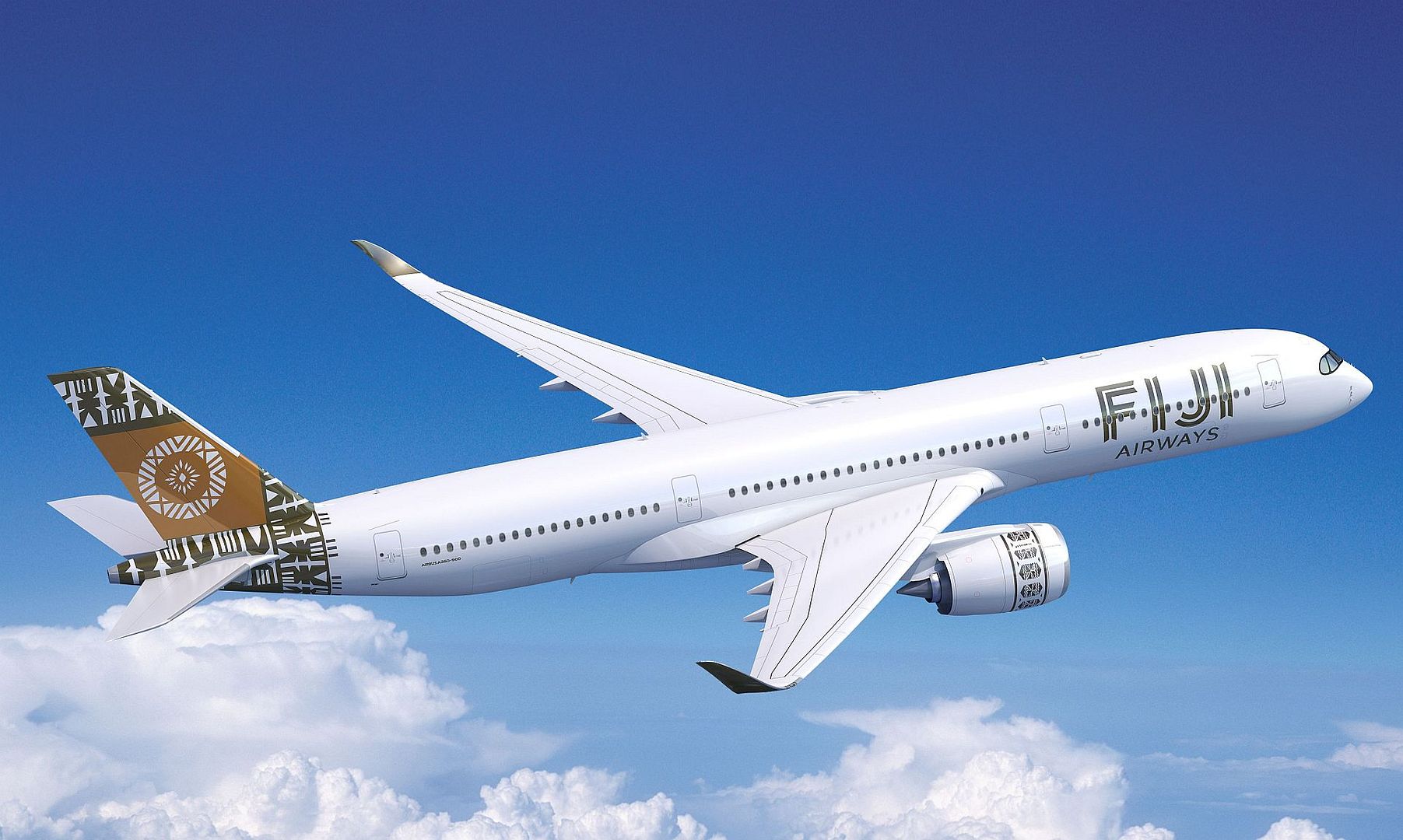
In a series of ground-breaking flight trials that took place in the skies above north-west Wales, the MAGMA unmanned aerial vehicle (UAV) demonstrated two innovative flow control technologies which could revolutionise future aircraft design.
MAGMA, designed and developed by researchers at The University of Manchester in collaboration with engineers from BAE Systems, successfully trialled the two ?flap-free? technologies earlier this month at the Llanbedr Airfield.
The technologies have been designed to improve the control and performance of aircraft. By replacing moving surfaces with a simpler ?blown air? solution, the trials have paved the way for engineers to create better performing aircraft that are lighter, more reliable and cheaper to operate. The technologies could also improve an aircraft?s stealth as they reduce the number of gaps and edges that currently make aircraft more observable on radar.
Developing such technologies helps to ensure the UK has the right technologies and skills in place for the future and could be applied to the development of a Future Combat Air System. It is the latest technological breakthrough to come from a number of BAE Systems collaborations with academia and industry, that will help the UK to deliver more advanced capability, more quickly, and through shared investment.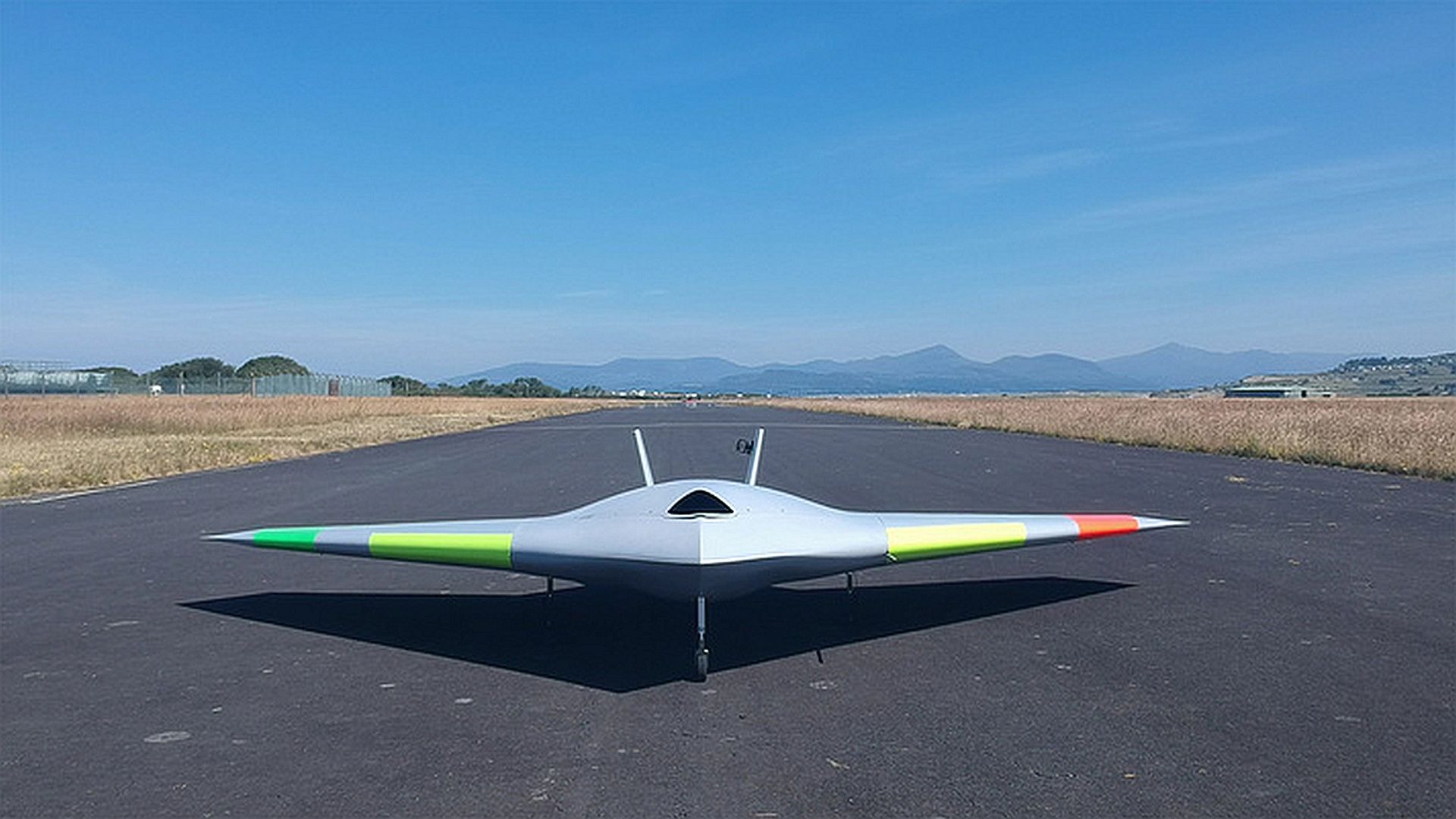
This morning the Standard of IX(B) Squadron was handed over to the new Officer Commanding, Wg Cdr Simon Batt, marking the re-role of the Sqn from Tornado to Typhoon.
There are now four front-line Typhoon Squadrons in Scotland at RAF Lossiemouth, delivering air power in operations worldwide.