Photo of the week
-
This weekends extra.
RAF pilots of No. 85 Squadron run from alert huts to their Hurricanes to meet a German attack during the Battle of Britain, July 1940.
-
This midweeks photo.
D.H.98, Mosquito PR Mk IV, DZ411, G-AGFV
Mosquito G-AGFV (ex.DZ411): Took off for Cargo flight to Stockholm /Bromma airport. 23/04/1943
During the flight was attacked at 14:10 hrs by Uffz Kienle of I/JG11. Damaged by FW 190 fighter enroute. It was recognised by Luftwaffe as a claim. Diverted to Barkarby with hydraulic trouble and made belly landing.
When Capt. Rae was attacked some time ago over enemy-occupied territory his aircraft was damaged by cannon fire and the undercarriage hydraulic system was put out of action. By the most skilful evasive tactics and exceptional coolness in a most hazardous situation, he was able to avoid further damage, to shake off his assailant, and eventually make a forced-landing in Sweden with the undercarriage retracted. The forced-landing was made with such skill that comparatively little damage was done to the aircraft. Repaired.
Crew:
Capt. (71751) Gilbert RAE OBE (pilot) BOAC /RAFO - Ok
R/O James Stanley PAYNE (nav.) BOAC – Ok -
This weekends photo taken Stateside..

LF Mk.XVIe, TE330. The aircraft was taken on charge by the RAF on June 14 1945 at 9 MU Cosford. From February 1947 it served with 601 RAuxAF at Hendon. From March 1950 through to July 1957 it passed through a number of maintenance units (6, 9, 29, 20, 5 MU) apart from a spell with 2 Civilian Anti-Aircraft Cooperation Unit in 1954-55. The aircraft was declared non-effective on July 16 1957. Used as a gate guard at RAF West Malling, the aircraft was swapped for another by the Historic Flight and used for the Battle of Britain Flypast in September 1957. The Historic Flight acquired two further aircraft and TE330 was subsequently presented to the USAF academy in Colorado Springs in July 1958. In 1961 the aircraft was moved for display in the USAF Museum in Dayton, Ohio. In 1996 the aircraft was sold to Hong Kong based businessman James Slade, registered as N75460, and in 1997 shipped to Don Subritzky in New Zealand for restoration work. In a rationalisation, the aircraft was acquired by Don and his associates in 1999.The airworthy aircraft was bought by Hong Kong businessman Yan-Ming Gao who donated it to the China Aviation Museum in Beijing,where it srvives to this day. -
This weekends extra.
And a couple of photos of KB29 44-27329 from the 301st Air Refueling Squadron at RNZAF Station Whenuapai.
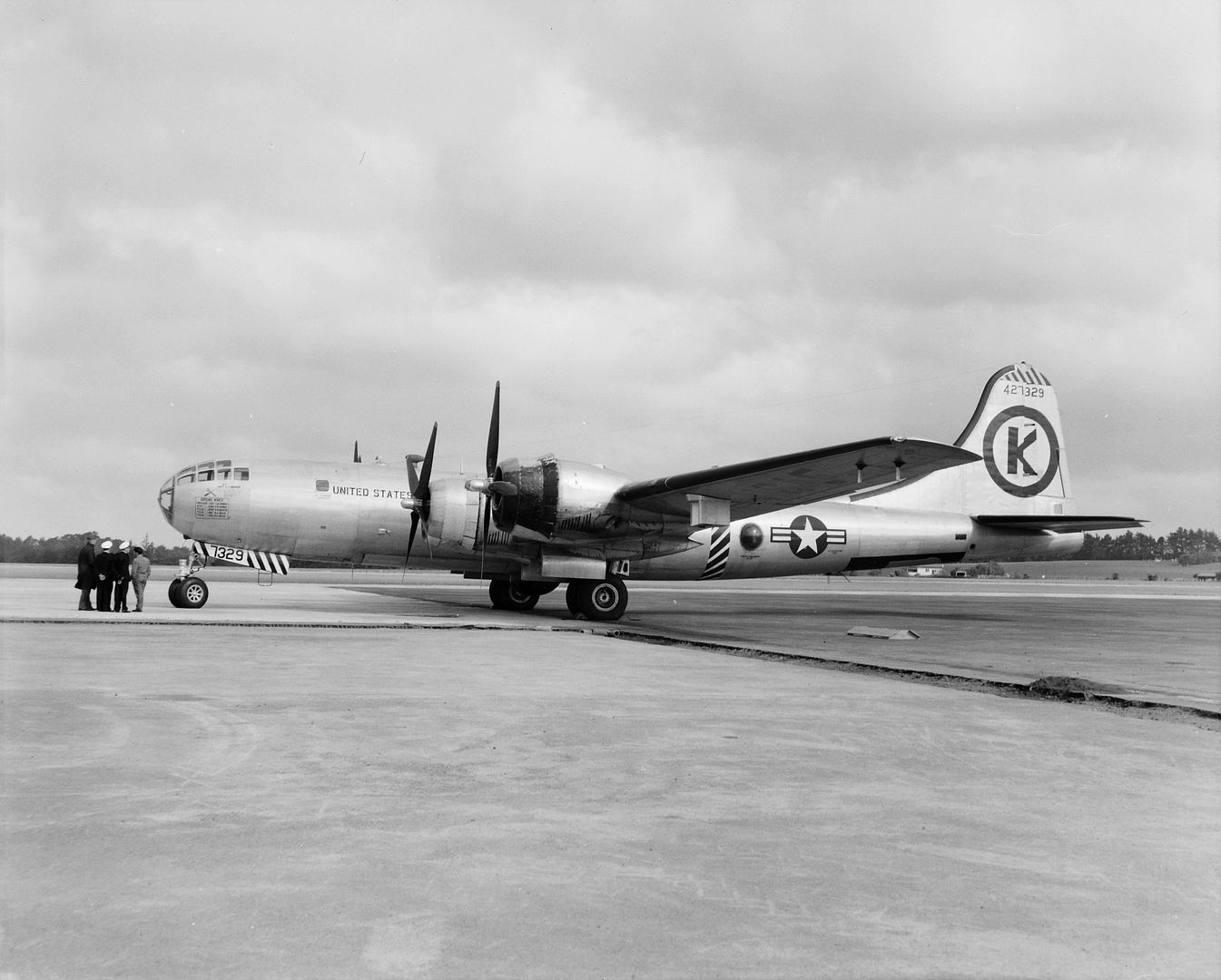
While primarily a tanker (KB-29), B-29s assigned to these units in the early 1950s frequently engaged in weather reconnaissance and special missions (such as monitoring for Soviet nuclear tests) in addition to refueling, particularly in the North Atlantic and Pacific theaters.
Note the pod under the wing and on top of the fuselage. -
This midweeks photo.
Focke-Wulf Fw 190F-8 from SG 2 Immelmann taken at Rab airfield Hungary in January of 1945.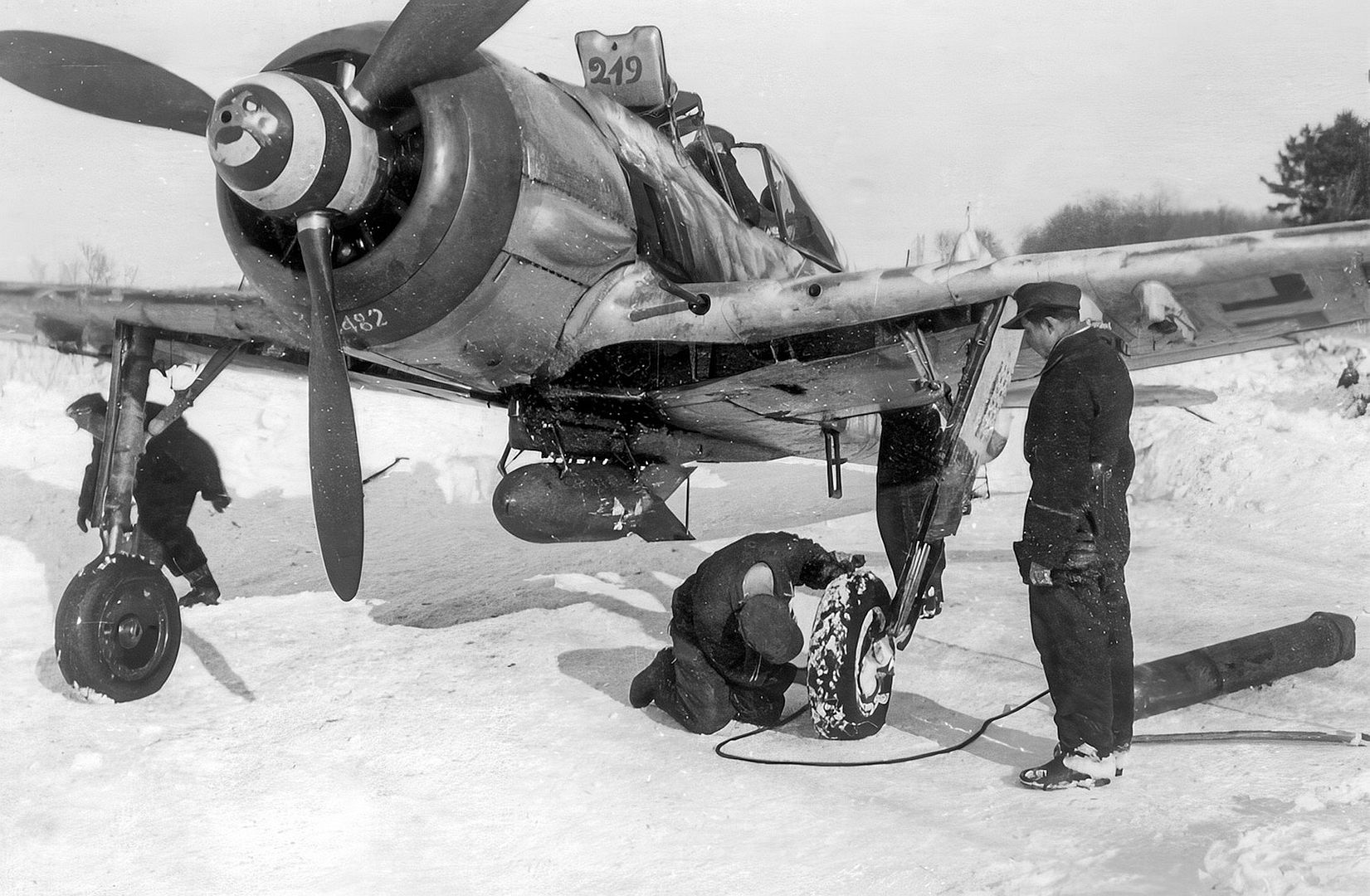
As one of only two Fw 190 equipped ground-attack unit on the Eastern Front, II./SG 2 took part in the 6-month Crimean campaign during 1944, and in addition to its usual ground-attack work flew numerous interception sorties, claiming some 247 Soviet aircraft shot down. -
This weekends photo.
At an airfield in Atar, Mauritania, a three-quarter view of the Potez 662 transporting French General Charles Huntziger, Secretary of State for War, during his inspection tour.
Huntziger was killed on 12 November 1941 when his Potez 662 ministerial aircraft crashed into the Cévennes, near Bréau, having fallen victim to icing upon encountering a cold front. All six passengers and the pilot were killed.
The Potez 662 was a higher powered and faster development of the Potez 661. Like its predecessor, it was a low wing, four engine monoplane carrying 12 passengers. Only one was built, serving with the French Air Ministry. -
This weekends extra.
And a wonderful air to air of S.45 Solent Mk IV, ZK-AML, "Aotearoa II".
Short Solent Mk IV seaplane built for Tasman Empire Airways Limited (TEAL). Launched in Belfast and christened "Aotearoa II" by Princess Elizabeth in 1949. Transported Queen Elizabeth II and Prince Philip to Fiji during the 1953-1954 Royal Tour. Withdrawn from New Zealand Registry in 1955 and sold to Aquila Airways, London. The aircraft was later bought by ARTOP, Portugal, and abandoned on a beach by the River Targus, Lisbon, and eventually broken up for scrap in 1971. -
This midweeks photo.
Ju 88 A-4 W.Nr. 4645 "5K+SH", of 1./KG 3. This aircraft was reported missing with its crew in the Boljoj area on July 3, 1942, cause undetermined.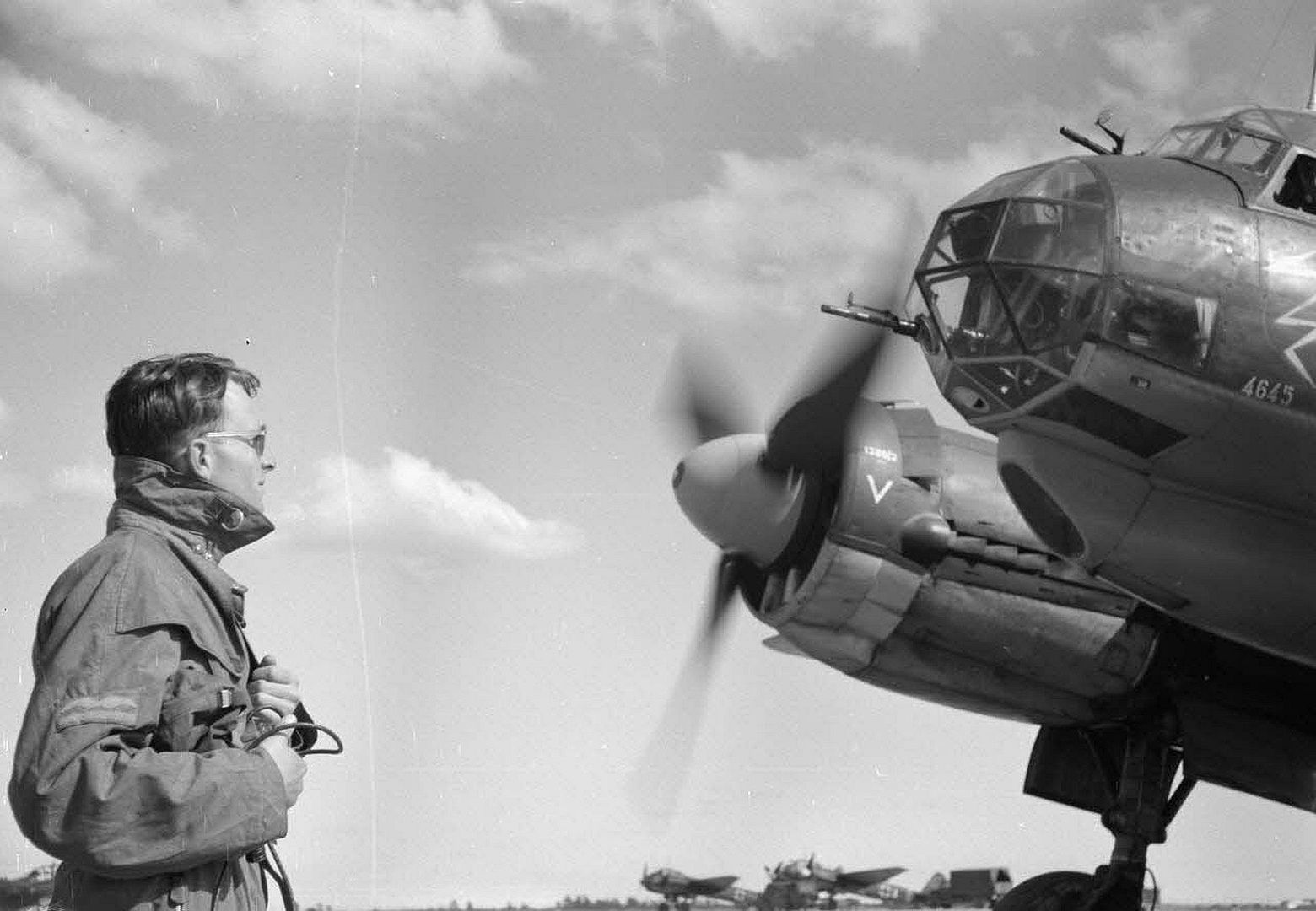
-
This weekends photo.
Dornier Do.17Z reconnaissance aircraft of the 606th Coastal Aviation Group (KuFlGr606),in the background Heinkel He-111 bomber, and Junkers Ju-52 transport aircraft,taken at Kiel-Holtenau airfield.
The aerodrome was built in 1914 on a plain area that had been created from material dug out during the construction of the Kiel Canal. In 1927, the Kiel Airport Company (German: Kieler Flughafengesellschaft) was founded, which operated the State Airport of Kiel (German: Landflughafen Kiel). During this time, there were 27 national and international destinations. In 1937, the airport was designated a military airbase. However, it continued to be used for civilian flights, such as scheduled flights to Braunschweig and Berlin (Tempelhof).
Its taxiways were extended in 1963, a first terminal was built in 1965. This terminal was used for scheduled flights to West Berlin operated by Pan Am.
In 1987, the terminal that is still used today was built. At the same time Lufthansa began offering scheduled flights to Frankfurt, and later to Cologne/Bonn, Munich, Copenhagen, Kaliningrad and Riga.
In 1995, the airport became a civilian airport again and in 1997, a new control tower that was operated by civilian staff was constructed. However, it continues to be used for military purposes. -
This weekends extra.
French Bombardment Group I/31 "Aunis" equipped with Junkers 88s.
Groupe de Bombardement I/31 "Aunis"
(GB I/31) was a French Air Force unit active during World War II, initially flying LeO 451 bombers in 1940. Reconstituted later in the war, it operated against German forces in Atlantic pockets using Junkers Ju 88 aircraft before being disbanded in July 1945,having lost 8 aircraft in accidents and two to anti-aircraft fire (flak) during its final campaign.